JP2021136898A - Alcoholic fermentation mash management method, alcoholic fermentation mash management program, alcoholic fermentation mash management device, and liquor production method - Google Patents
Alcoholic fermentation mash management method, alcoholic fermentation mash management program, alcoholic fermentation mash management device, and liquor production method Download PDFInfo
- Publication number
- JP2021136898A JP2021136898A JP2020036363A JP2020036363A JP2021136898A JP 2021136898 A JP2021136898 A JP 2021136898A JP 2020036363 A JP2020036363 A JP 2020036363A JP 2020036363 A JP2020036363 A JP 2020036363A JP 2021136898 A JP2021136898 A JP 2021136898A
- Authority
- JP
- Japan
- Prior art keywords
- molar concentration
- fermentation
- mash
- alcohol
- mol
- Prior art date
- Legal status (The legal status is an assumption and is not a legal conclusion. Google has not performed a legal analysis and makes no representation as to the accuracy of the status listed.)
- Pending
Links
Images

Landscapes
- Micro-Organisms Or Cultivation Processes Thereof (AREA)
- Alcoholic Beverages (AREA)
Abstract
【課題】アルコール度数及び日本酒度の少なくともいずれかが目標の値に達しないまま発酵が停止する発酵不良を抑制する、アルコール発酵醪の管理方法、管理プログラム、及び管理装置、並びに酒類の製造方法の提供。【解決手段】アルコール発酵の醪に含まれる溶質のモル濃度(mol/kg)を質量モル濃度としたとき、質量モル濃度と、発酵経過時間との関係を示す質量モル濃度線における質量モル濃度の最大値が、アルコール発酵の醪に使用する酵母が発酵の限界をむかえるときの質量モル濃度である限界質量モル濃度を超えないように発酵させたときにおける、発酵経過時間に対応した理想質量モル濃度の情報を予め取得し、アルコール発酵の開始から所定時間経過後に取得した醪の取得質量モル濃度Xと、所定時間に対応する理想質量モル濃度Yとを対比し、取得質量モル濃度Xが、1.02Y以上であるときは醪に水を追加する、発酵管理を行う工程を含む方法の提供。【選択図】図14PROBLEM TO BE SOLVED: To control a method for managing alcoholic fermentation, a management program, a management device, and a method for producing alcoholic beverages, which suppress fermentation defects in which fermentation is stopped without at least one of alcohol content and sake content reaching a target value. Provided. SOLUTION: When the molar concentration (mol / kg) of the solute contained in the alcohol fermentation is taken as the molar concentration, the molar concentration in the molar concentration line showing the relationship between the molar concentration and the elapsed fermentation time. The ideal molar concentration corresponding to the elapsed fermentation time when the maximum value is fermented so as not to exceed the limit molar concentration, which is the molar concentration when the yeast used for alcohol fermentation reaches the limit of fermentation. The acquired molar concentration X of the 醪 acquired after a predetermined time has elapsed from the start of alcohol fermentation is compared with the ideal molar concentration Y corresponding to the predetermined time, and the acquired molar concentration X is 1. Provided a method including a step of performing fermentation control, in which water is added to the molars when the concentration is 02Y or more. [Selection diagram] FIG. 14
Description
本発明は、アルコール発酵の醪の発酵を適切に管理するためのアルコール発酵醪の管理方法、アルコール発酵醪の管理プログラム、及びアルコール発酵醪の管理装置、並びに酒類の製造方法に関する。 The present invention relates to an alcoholic fermentation syrup management method for appropriately controlling the fermentation of alcoholic fermentation syrup, an alcoholic fermentation syrup management program, an alcoholic fermentation syrup management device, and a method for producing alcoholic beverages.
日本酒や焼酎、ビールなどの酒類のアルコール発酵の醪において高品質の酒を醸造するためには、発酵が理想的に経過するように醪の温度をコントロールし、場合によっては追水と言われる仕込水の追加を実施し、発酵終了日まで管理していくことが重要であることが知られている。 In order to brew high-quality sake in the alcohol-fermented mash of sake such as sake, shochu, and beer, the temperature of the mash is controlled so that the fermentation proceeds ideally, and in some cases, it is called additional water. It is known that it is important to add water and manage it until the end of fermentation.
アルコール発酵が理想的に経過しない場合は、目標のアルコール度数に至らないうちに発酵が終了して目標品質の酒類を醸造できないことがある。また、途中で発酵が鈍り、予定した発酵期間を延長しなければならないことがある。あるいは、発酵が理想的に進まないことによりアセトアルデヒド臭やダイアセチル臭のようなオフフレーバーを発生させたり酵母が死滅などして香味異常が起こったりして、品質が著しく損なわれることもある。 If the alcoholic fermentation does not proceed ideally, the fermentation may be completed before the target alcohol content is reached, making it impossible to brew alcoholic beverages of the target quality. In addition, fermentation may slow down in the middle and the planned fermentation period may have to be extended. Alternatively, if fermentation does not proceed ideally, off-flavors such as acetaldehyde odor and diacetyl odor may be generated, or yeast may die and flavor abnormalities may occur, resulting in a significant deterioration in quality.
アルコール発酵を理想的に経過させるために、定期的に醪の一部を採取して、その日本酒度、比重(ボーメ)、アルコール度数などを測定し、その値や変化量から発酵醪の状態を推定して、管理温度を決めることや、発酵途中で追加する仕込水(追水)を行うか否か、行うなら仕込水の数量を決めること(発酵管理)が行われている。 In order to allow the alcoholic fermentation to proceed ideally, a part of the mash is collected regularly, the sake content, specific gravity (bome), alcohol content, etc. are measured, and the state of the fermented mash is determined from the value and amount of change. It is estimated that the control temperature is determined, whether or not to add water to be added during fermentation (additional water), and if so, the quantity of water to be charged (fermentation control) is performed.
醪の発酵管理においては、発酵日数(醪日数、所定経過時間とも称することがある)を横軸に、ボーメと発酵日数の積であるBMDを縦軸にプロットし、その山の形であるBMD曲線から発酵経過の良し悪しの判断を行ったり、発酵終了日を予測したりするような管理方法がよく知られている(例えば、非特許文献1参照)。
また、横軸にアルコール分(アルコール度数)、縦軸にボーメ、又は日本酒度をプロットしたAB直線の変化を見ながら発酵予測を行う方法もよく知られている(例えば、非特許文献2参照)。
その他にも、日本酒度又はボーメと、アルコール度数とから求められる原エキス分によって醪の発酵状態を管理する方法も知られている(例えば、非特許文献3参照)。
In the fermentation management of mash, the number of days of fermentation (the number of days of mash, sometimes referred to as the predetermined elapsed time) is plotted on the horizontal axis, and the BMD, which is the product of the number of days of fermentation and the number of fermentation days, is plotted on the vertical axis. Well-known management methods include determining whether the fermentation process is good or bad from the curve and predicting the fermentation end date (see, for example, Non-Patent Document 1).
It is also well known that fermentation is predicted while observing changes in the AB straight line plotting alcohol content (alcohol content) on the horizontal axis and boume or sake content on the vertical axis (see, for example, Non-Patent Document 2). ..
In addition, there is also known a method of controlling the fermentation state of mash by the raw extract content obtained from the sake content or Baume and the alcohol content (see, for example, Non-Patent Document 3).
しかしながら、醪の発酵管理においては、使用する酵母の発酵能力、米麹の酵素力価、使用する原料米、その精米歩合、仕込配合、発酵温度などの条件によって米の溶け方が異なってしまうので、専門知識や技能を持つ熟練した醸造技術者であっても、BMD曲線やAB直線、原エキス曲線を参照するだけでは、判断を誤り、目標とする日本酒度及びアルコール度数の醪を醸造することが難しく、目標発酵時間に達する前に発酵が停止してしまうことがある。
理想的な温度設定や追水量を自動計算するコンピュータプログラムを使用しても、判断が適正でないことがあり、せっかくコンピュータを用いても、実使用に耐えないことがある。
However, in the fermentation management of sake, the way the rice melts differs depending on the conditions such as the fermentation capacity of the yeast used, the enzyme titer of the rice koji, the raw rice used, the rice polishing ratio, the brewing composition, and the fermentation temperature. Even a skilled brewing engineer with specialized knowledge and skills can make a mistake by simply referring to the BMD curve, AB straight line, and raw extract curve, and brew the target sake and alcohol content. Is difficult, and fermentation may stop before the target fermentation time is reached.
Even if you use a computer program that automatically calculates the ideal temperature setting and the amount of additional water, the judgment may not be correct, and even if you use a computer, it may not be able to withstand actual use.
本発明は、従来における前記諸問題を解決し、以下の目的を達成することを課題とする。即ち、本発明は、アルコール度数及び日本酒度の少なくともいずれかが目標の値に達しないまま発酵が停止する発酵不良を抑制するアルコール発酵醪の管理方法、アルコール発酵醪の管理プログラム、及びアルコール発酵醪の管理装置、並びに酒類の製造方法を提供することを目的とする。 An object of the present invention is to solve the above-mentioned problems in the past and to achieve the following object. That is, the present invention provides a method for managing an alcohol fermentation syrup, a management program for an alcohol fermentation syrup, and an alcohol fermentation syrup that suppresses fermentation failure in which fermentation is stopped without at least one of the alcohol content and the sake content reaching a target value. It is an object of the present invention to provide a management device for alcoholic beverages and a method for producing alcoholic beverages.
本発明者は、アルコール発酵において、発酵の状態が醪の濃さ(質量モル濃度(mol/kg))に決定的に影響することを発見した。アルコール発酵は、ブドウ糖(分子量180)などの糖類が酵母によってより低分子量のエタノール(分子量46)に分解される化学反応であり、例えば、ブドウ糖がアルコール発酵する場合は、1分子のブドウ糖から2分子のエタノールが生成される(C6H12O6 →2C2H5OH+2CO2)。
よって、発酵醪では発酵が継続している限り、醪中のモル数が増えるので質量モル濃度(mol/kg)は必ず上昇する。醪中の質量モル濃度(mol/kg)が上昇すると、発酵醪の浸透圧が上昇し、酵母の生理機能にストレスを与えると考えられる。本発明者らは、ある質量モル濃度(mol/kg)を超えると発酵が急激に衰えることを発見した。
特に、醪に使用する酵母が発酵の限界をむかえる前記質量モル濃度(以下、本明細書では「限界質量モル濃度」と称することがある)は、醪の醸造方法によって特異的な値をとり酵母の発酵能に大きな影響を与えることを発見した。本発明のアルコール発酵醪の発酵管理方法は、前記限界質量モル濃度を超えないように発酵させた場合の前記質量モル濃度(以下、本明細書では「理想質量モル濃度」と称することがある)を参照しながら発酵管理を行う方法である。
The present inventor has discovered that in alcoholic fermentation, the state of fermentation has a decisive effect on the concentration of the sardine (molar concentration (mol / kg)). Alcoholic fermentation is a chemical reaction in which sugars such as glucose (molecular weight 180) are decomposed by yeast into ethanol (molecular weight 46) having a lower molecular weight. For example, when glucose is alcohol-fermented, one molecule of glucose to two molecules Ethanol is produced (C 6 H 12 O 6 → 2 C 2 H 5 OH + 2CO 2 ).
Therefore, in the fermentation syrup, as long as the fermentation is continued, the number of moles in the syrup increases, so that the molar concentration (mol / kg) always rises. It is considered that when the molar concentration (mol / kg) in the yeast increases, the osmotic pressure of the fermented yeast increases, which stresses the physiological function of yeast. The present inventors have discovered that fermentation rapidly declines when a certain molar concentration (mol / kg) is exceeded.
In particular, the mass molar concentration at which the yeast used for mash reaches the limit of fermentation (hereinafter, may be referred to as "marginal molar concentration" in the present specification) takes a specific value depending on the brewing method of mash and yeast. It was discovered that it has a great effect on the fermentative ability of mash. The fermentation control method for alcoholic fermentation of the present invention is the mass molar concentration when fermented so as not to exceed the critical mass molar concentration (hereinafter, may be referred to as "ideal molar concentration" in the present specification). This is a method of controlling fermentation while referring to.
本発明は、本発明者らの前記知見に基づくものであり、前記課題を解決するための手段としては以下の通りである。即ち、
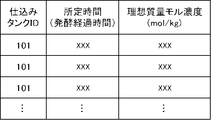
<1> アルコール発酵の醪に含まれる溶質のモル濃度(mol/kg)を質量モル濃度としたとき、前記質量モル濃度と、発酵経過時間との関係を示す質量モル濃度線における前記質量モル濃度の最大値が、前記アルコール発酵の前記醪に使用する酵母が発酵の限界をむかえるときの前記質量モル濃度である限界質量モル濃度を超えないように発酵させたときにおける、前記発酵経過時間に対応した理想質量モル濃度の情報を予め取得し、
前記アルコール発酵の開始から所定時間経過後に取得した前記醪の取得質量モル濃度Xと、前記所定時間に対応する前記理想質量モル濃度Yとを対比し、
前記取得質量モル濃度Xが、
1.02Y以上であるときは前記醪に対して水の追加する、発酵管理を行う発酵管理工程を含む、
ことを特徴とするアルコール発酵醪の管理方法である。
<2> 前記限界質量モル濃度が、下記条件を満たす、前記<1>に記載のアルコール発酵醪の管理方法である。
<条件>
一の時点と前記一の時点から24時間後の時点との、日本酒度(NS)及びアルコール度数(Alc)から算出される、
単位時間当たりの日本酒度の増加量ΔNSと、単位時間当たりのアルコール度数の増加量ΔAlcとが、下記式(I−a)及び式(I−b)を前記一の時点から24時間後の時点まで継続して満たしたときの前記一の時点から24時間後の時点の前記醪の質量モル濃度(mol/kg)
ΔNS≦1.0・・・式(I−a)
ΔAlc≦0.2・・式(I−b)
<3> 前記水の追加が、前記取得質量モル濃度の大きさに応じて行われる、前記<1>から<2>のいずれかに記載のアルコール発酵醪の管理方法である。
<4> 前記取得質量モル濃度Xが、前記所定時間の前記理想質量モル濃度Yよりも1.01Y以上1.02Y未満の値であるときも前記醪に対して水の追加を行う、前記<1>から<3>のいずれかに記載のアルコール発酵醪の管理方法である。
<5> 前記取得質量モル濃度が、前記醪の上清又はろ液における、エキス分(Ex)と、アルコール度数(Alc)とに基づき、次の式(1)から算出された推定値である、前記<1>から<4>のいずれかに記載のアルコール発酵醪の管理方法である。
取得質量モル濃度(推定値)=α×(Ex)+β×(Alc)−γ・・・式(1)
但し、α、β及びγは定数を表す。
<6> 前記アルコール発酵が日本酒発酵であり、
前記αが0.1013であり、
前記βが0.2962であり、
前記γが1.536である、前記<5>に記載のアルコール発酵醪の管理方法である。
<7> 前記<1>から<6>に記載のアルコール発酵醪の管理方法を用いて酒類を製造することを特徴とする酒類の製造方法である。
<8> アルコール発酵の醪に含まれる溶質のモル濃度(mol/kg)を質量モル濃度としたとき、前記質量モル濃度と、発酵経過時間との関係を示す質量モル濃度線における前記質量モル濃度の最大値が、前記アルコール発酵の前記醪に使用する酵母が発酵の限界をむかえるときの前記質量モル濃度である限界質量モル濃度を超えないように発酵させたときにおける、前記発酵経過時間に対応した理想質量モル濃度の情報を予め取得し、
前記アルコール発酵の開始から所定時間経過後に取得した前記醪の取得質量モル濃度Xと、前記所定時間に対応する前記理想質量モル濃度Yとを対比し、
前記取得質量モル濃度Xが、
1.02Y以上であるときは前記醪に対して水の追加する、発酵管理を行う処理を、コンピュータに行わせる、
ことを特徴とするアルコール発酵醪の管理プログラムである。
<9> アルコール発酵の醪に含まれる溶質のモル濃度(mol/kg)を質量モル濃度としたとき、前記質量モル濃度と、発酵経過時間との関係を示す質量モル濃度線における前記質量モル濃度の最大値が、前記アルコール発酵の前記醪に使用する酵母が発酵の限界をむかえるときの前記質量モル濃度である限界質量モル濃度を超えないように発酵させたときにおける、前記発酵経過時間に対応した理想質量モル濃度の情報を予め取得し、
前記アルコール発酵の開始から所定時間経過後に取得した前記醪の取得質量モル濃度Xと、前記所定時間に対応する前記理想質量モル濃度Yとを対比し、
前記取得質量モル濃度Xが、
1.02Y以上であるときは前記醪に対して水の追加する、発酵管理を行う発酵管理手段を有する、
ことを特徴とするアルコール発酵醪の管理装置である。
The present invention is based on the above-mentioned findings of the present inventors, and the means for solving the above-mentioned problems are as follows. That is,
<1> When the molar concentration (mol / kg) of the solute contained in the alcohol fermentation is taken as the molar concentration, the molar concentration on the molar concentration line showing the relationship between the molar concentration and the elapsed fermentation time. Corresponds to the elapsed fermentation time when the maximum value of is fermented so as not to exceed the limit molar concentration, which is the molar concentration when the yeast used for the alcohol fermentation reaches the limit of fermentation. Obtain the information of the ideal molar concentration in advance,
The acquired molar concentration X of the mash obtained after a lapse of a predetermined time from the start of the alcoholic fermentation is compared with the ideal molar concentration Y corresponding to the predetermined time.
The acquired molar concentration X is
When it is 1.02Y or more, water is added to the mash, including a fermentation control step of performing fermentation control.
This is a method for managing alcoholic fermentation mash, which is characterized by this.
<2> The method for managing alcoholic fermentation mash according to <1>, wherein the critical mass molar concentration satisfies the following conditions.
<Conditions>
Calculated from the sake content (NS) and alcohol content (Alc) at one time point and 24 hours after the first time point.
The increase amount ΔNS of the sake content per unit time and the increase amount ΔAlc of the alcohol content per unit time are the time points of the following formulas (Ia) and (Ib) 24 hours after the above-mentioned one time point. Molar concentration (mol / kg) of the sake at the time point 24 hours after the
ΔNS ≦ 1.0 ・ ・ ・ Equation (Ia)
ΔAlc ≦ 0.2 ・ ・ Equation (I−b)
<3> The method for managing alcoholic fermentation mash according to any one of <1> to <2>, wherein the addition of water is performed according to the magnitude of the obtained molar concentration.
<4> Water is added to the mash even when the acquired molar concentration X is 1.01Y or more and less than 1.02Y than the ideal molar concentration Y for the predetermined time. The method for managing alcoholic fermentation mash according to any one of 1> to <3>.
<5> The obtained mass molar concentration is an estimated value calculated from the following formula (1) based on the extract content (Ex) and the alcohol content (Alc) in the supernatant or filtrate of the mash. , The method for managing alcoholic fermentation mash according to any one of <1> to <4>.
Obtained molar concentration (estimated value) = α × (Ex) + β × (Alc) -γ ... Equation (1)
However, α, β and γ represent constants.
<6> The alcoholic fermentation is sake fermentation.
The α is 0.1013,
The β is 0.2962, and the β is 0.2962.
The method for managing alcoholic fermentation mash according to <5>, wherein the γ is 1.536.
<7> A method for producing alcoholic beverages, which comprises producing alcoholic beverages by using the method for controlling alcoholic fermentation mash according to the above <1> to <6>.
<8> When the molar concentration (mol / kg) of the solute contained in the alcohol fermentation is taken as the molar concentration, the molar concentration on the molar concentration line showing the relationship between the molar concentration and the elapsed fermentation time. Corresponds to the elapsed fermentation time when the maximum value of is fermented so as not to exceed the limit molar concentration, which is the molar concentration when the yeast used for the alcohol fermentation reaches the limit of fermentation. Obtain the information of the ideal molar concentration in advance,
The acquired molar concentration X of the mash obtained after a lapse of a predetermined time from the start of the alcoholic fermentation is compared with the ideal molar concentration Y corresponding to the predetermined time.
The acquired molar concentration X is
When it is 1.02Y or more, water is added to the mash, and the computer is made to perform the process of controlling fermentation.
It is a management program for alcoholic fermentation mash, which is characterized by this.
<9> When the molar concentration (mol / kg) of the solute contained in the alcohol fermentation is taken as the molar concentration, the molar concentration on the molar concentration line showing the relationship between the molar concentration and the elapsed fermentation time. Corresponds to the elapsed fermentation time when the maximum value of is fermented so as not to exceed the limit molar concentration, which is the molar concentration when the yeast used for the alcohol fermentation reaches the limit of fermentation. Obtain the information of the ideal molar concentration in advance,
The acquired molar concentration X of the mash obtained after a lapse of a predetermined time from the start of the alcoholic fermentation is compared with the ideal molar concentration Y corresponding to the predetermined time.
The acquired molar concentration X is
When it is 1.02Y or more, it has a fermentation control means for performing fermentation control by adding water to the mash.
It is a management device for alcoholic fermentation mash.
本発明によると、従来における前記諸問題を解決し、前記目的を達成することができ、アルコール度数及び日本酒度の少なくともいずれかが目標の値に達しないまま発酵が停止する発酵不良を抑制するアルコール発酵醪の管理方法、アルコール発酵醪の管理プログラム、及びアルコール発酵醪の管理装置、並びに酒類の製造方法を提供することができる。 According to the present invention, the above-mentioned problems in the prior art can be solved, the above-mentioned object can be achieved, and fermentation is stopped without at least one of the alcohol content and the sake content reaching the target value. It is possible to provide a method for managing fermented rice, a management program for alcohol fermented rice, a management device for alcohol fermented rice, and a method for producing alcoholic beverages.
本発明は、醪の質量モル濃度を制御することによってアルコール度数及び日本酒度の少なくともいずれかが目標の値に達しないまま発酵が停止する発酵不良を抑制し、かつ香味異常やオフフレーバーの発生を抑制するアルコール発酵醪の管理方法を見出した。 The present invention suppresses fermentation failure in which fermentation is stopped without at least one of the alcohol content and sake content reaching the target value by controlling the mass molar concentration of mash, and causes abnormal flavor and off-flavor. We have found a method for managing alcoholic fermentation mash to suppress it.
(アルコール発酵醪の管理方法、アルコール発酵醪の管理装置、及びアルコール発酵醪の管理プログラム)
本発明のアルコール発酵醪の管理方法は、
アルコール発酵の醪に含まれる溶質のモル濃度(mol/kg)を質量モル濃度としたとき、前記質量モル濃度と、発酵経過時間との関係を示す質量モル濃度線における前記質量モル濃度の最大値が、前記アルコール発酵の前記醪に使用する酵母が発酵の限界をむかえるときの前記質量モル濃度である限界質量モル濃度を超えないように発酵させたときにおける、前記発酵経過時間に対応した理想質量モル濃度の情報を予め取得し、
前記アルコール発酵の開始から所定時間経過後に取得した前記醪の取得質量モル濃度Xと、前記所定時間に対応する前記理想質量モル濃度Yとを対比し、
前記取得質量モル濃度Xが、
1.02Y以上であるときは前記醪に対して水の追加する、発酵管理を行う発酵管理工程を含み、更に必要に応じてその他の工程を含む。
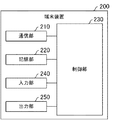
本発明のアルコール発酵醪の管理装置は、
アルコール発酵の醪に含まれる溶質のモル濃度(mol/kg)を質量モル濃度としたとき、前記質量モル濃度と、発酵経過時間との関係を示す質量モル濃度線における前記質量モル濃度の最大値が、前記アルコール発酵の前記醪に使用する酵母が発酵の限界をむかえるときの前記質量モル濃度である限界質量モル濃度を超えないように発酵させたときにおける、前記発酵経過時間に対応した理想質量モル濃度の情報を予め取得し、
前記アルコール発酵の開始から所定時間経過後に取得した前記醪の取得質量モル濃度Xと、前記所定時間に対応する前記理想質量モル濃度Yとを対比し、
前記取得質量モル濃度Xが、
1.02Y以上であるときは前記醪に対して水の追加する、発酵管理を行う発酵管理手段を有し、更に必要に応じてその他の手段を有する。
本発明のアルコール発酵醪の管理プログラムは、
アルコール発酵の醪に含まれる溶質のモル濃度(mol/kg)を質量モル濃度としたとき、前記質量モル濃度と、発酵経過時間との関係を示す質量モル濃度線における前記質量モル濃度の最大値が、前記アルコール発酵の前記醪に使用する酵母が発酵の限界をむかえるときの前記質量モル濃度である限界質量モル濃度を超えないように発酵させたときにおける、前記発酵経過時間に対応した理想質量モル濃度の情報を予め取得し、
前記アルコール発酵の開始から所定時間経過後に取得した前記醪の取得質量モル濃度Xと、前記所定時間に対応する前記理想質量モル濃度Yとを対比し、
前記取得質量モル濃度Xが、
1.02Y以上であるときは前記醪に対して水の追加する、発酵管理を行う処理を、コンピュータに行わせ、更に必要に応じてその他の処理を行わせる。
本発明のアルコール発酵醪の管理方法は、本発明のアルコール発酵醪の管理方法に係るアルコール発酵醪の管理装置により好適に行うことができ、発酵管理工程は発酵管理手段により好適に行うことができ、その他の工程はその他の手段により行うことができる。
(How to manage alcoholic fermentation mash, alcoholic fermentation mash management device, and alcoholic fermentation mash management program)
The method for managing the alcoholic fermentation mash of the present invention is
When the molar concentration (mol / kg) of the solute contained in the alcohol fermentation is taken as the molar concentration, the maximum value of the molar concentration on the molar concentration line showing the relationship between the molar concentration and the elapsed fermentation time. However, when the yeast used for the alcohol fermentation is fermented so as not to exceed the limit molar concentration, which is the molar concentration when the fermentation limit is reached, the ideal mass corresponding to the elapsed fermentation time. Obtain information on molar concentration in advance and
The acquired molar concentration X of the mash obtained after a lapse of a predetermined time from the start of the alcoholic fermentation is compared with the ideal molar concentration Y corresponding to the predetermined time.
The acquired molar concentration X is
When it is 1.02Y or more, it includes a fermentation control step of adding water to the mash to perform fermentation control, and further includes other steps as necessary.
The alcohol fermentation mash management device of the present invention
When the molar concentration (mol / kg) of the solute contained in the alcohol fermentation is taken as the molar concentration, the maximum value of the molar concentration on the molar concentration line showing the relationship between the molar concentration and the elapsed fermentation time. However, when the yeast used for the alcohol fermentation is fermented so as not to exceed the limit molar concentration, which is the molar concentration when the fermentation limit is reached, the ideal mass corresponding to the elapsed fermentation time. Obtain information on molar concentration in advance and
The acquired molar concentration X of the mash obtained after a lapse of a predetermined time from the start of the alcoholic fermentation is compared with the ideal molar concentration Y corresponding to the predetermined time.
The acquired molar concentration X is
When it is 1.02Y or more, it has a fermentation control means for performing fermentation control by adding water to the mash, and further has other means as needed.
The alcoholic fermentation mash management program of the present invention
When the molar concentration (mol / kg) of the solute contained in the alcohol fermentation is taken as the molar concentration, the maximum value of the molar concentration on the molar concentration line showing the relationship between the molar concentration and the elapsed fermentation time. However, when the yeast used for the alcohol fermentation is fermented so as not to exceed the limit molar concentration, which is the molar concentration when the fermentation limit is reached, the ideal mass corresponding to the elapsed fermentation time. Obtain information on molar concentration in advance and
The acquired molar concentration X of the mash obtained after a lapse of a predetermined time from the start of the alcoholic fermentation is compared with the ideal molar concentration Y corresponding to the predetermined time.
The acquired molar concentration X is
When it is 1.02Y or more, the computer is made to perform a process of adding water to the mash and performing fermentation control, and further, if necessary, another process is performed.
The method for managing the alcoholic fermentation mash of the present invention can be suitably performed by the alcoholic fermentation mash management device according to the method for managing the alcoholic fermentation mash of the present invention, and the fermentation control step can be preferably performed by the fermentation control means. , Other steps can be performed by other means.
本発明のアルコール発酵醪の管理装置における制御部等が行う制御は、本発明のアルコール発酵醪の管理方法を実施することと同義であるので、本発明のアルコール発酵醪の管理装置の説明を通じて本発明のアルコール発酵醪の管理方法の詳細についても明らかにする。また、本発明のアルコール発酵醪の管理プログラムは、ハードウェア資源としてのコンピュータ等を用いることにより、本発明のアルコール発酵醪の管理装置として実現させることから、本発明のアルコール発酵醪の管理装置の説明を通じて本発明のアルコール発酵醪の管理プログラムの詳細についても明らかにする。 The control performed by the control unit or the like in the alcohol fermentation mash management device of the present invention is synonymous with implementing the alcohol fermentation mash management method of the present invention. The details of the method for managing the alcoholic fermentation mash of the present invention will also be clarified. Further, since the alcohol fermentation mash management program of the present invention is realized as the alcohol fermentation mash management device of the present invention by using a computer or the like as a hardware resource, the alcohol fermentation mash management device of the present invention can be used. Through the explanation, the details of the alcoholic fermentation mash management program of the present invention will also be clarified.
<発酵管理工程及び発酵管理手段>
本発明のアルコール発酵醪の管理方法、アルコール発酵醪の管理装置、及びアルコール発酵醪の管理プログラムにおける、「質量モル濃度(mol/kg)」、「質量モル濃度線」、「限界質量モル濃度(mol/kg)」、及び「理想質量モル濃度(mol/kg)」についてまず説明する。
<Fermentation control process and fermentation control means>
In the alcohol fermentation syrup management method of the present invention, the alcohol fermentation syrup management device, and the alcohol fermentation syrup management program, "molar concentration (mol / kg)", "molar concentration line", "marginal molar concentration (marginal molar concentration) "Mol / kg)" and "ideal molar concentration (mol / kg)" will be described first.
−質量モル濃度(mol/kg)−
前記質量モル濃度(mol/kg)は、アルコール発酵の醪に含まれる溶質のモル濃度(mol/kg)の総和を意味する。
ここで、溶質には、通常、アルコール発酵の醪に含有されるものであれば特に制限はなく、例えば、エタノール、エキス分(グルコース、グリセロール、イソマルトース、αエチルグルコシド、イソマルトトリオースなどの糖類、乳酸、コハク酸などの有機酸、アラニン、アルギニン、グリシンなどのアミノ酸など不揮発性成分)が挙げられる。なお、「エキス分」については、下記説明において単位を付している場合には、「エキス分」の濃度を意味するものとする。
− Molar concentration (mol / kg) −
The mass molar concentration (mol / kg) means the total molar concentration (mol / kg) of the solute contained in the alcohol fermentation.
Here, the solute is not particularly limited as long as it is usually contained in alcoholic fermentation, and for example, ethanol, extracts (glucose, glycerol, isomaltose, α-ethylglucoside, isomalttriose, etc.) are used. Examples include sugars, organic acids such as lactic acid and succinic acid, and non-volatile components such as amino acids such as alanine, arginine and glycine). In addition, about "extract content", when a unit is attached in the following description, it means the concentration of "extract content".
前記醪の前記質量モル濃度(mol/kg)は、例えば、前記醪の「凝固点降下度」又は「浸透圧」から算出する方法、前記醪の「エタノール濃度(v/v%)」、前記醪の「グルコース濃度(g/100ml)」、及び前記醪の「エキス分Ex(g/100ml)」から算出する方法などが挙げられる。なお、「エタノール濃度(v/v%)」と「アルコール度数」は同様の意味の濃度単位であるが、本明細書において「アルコール度数」は、発酵醪及びその酒類のアルコールの濃度の単位として使用している。 The molar concentration (mol / kg) of the sardine is, for example, a method of calculating from the "freezing point depression" or "osmotic pressure" of the sardine, the "ethanol concentration (v / v%)" of the sardine, and the sardine. The method of calculating from the "glucose concentration (g / 100 ml)" of the above and the "extract Ex (g / 100 ml)" of the above-mentioned 醪 can be mentioned. Although "ethanol concentration (v / v%)" and "alcohol content" are concentration units having the same meaning, in the present specification, "alcohol content" is used as a unit of alcohol concentration of fermented liquor and its alcoholic beverages. I'm using it.
前記醪の「凝固点降下度」又は「浸透圧」から算出する方法、前記醪の「グルコース濃度(g/100ml)」、前記醪の「エタノール濃度(v/v%)」、及び前記醪の「エキス分Ex(g/100ml)」から算出する方法としては、例えば、以下の方法などが挙げられる。
(1)醪の「凝固点降下度」又は「浸透圧」を直接測定することによりエタノールに換算した醪の質量モル濃度(mol/kg)を算出する方法
(2)醪の「日本酒度(NS)」、醪の「アルコール度数(Alc)」、及び「エキス分(g/100ml)」から、醪の「エキス分Exの質量モル濃度(mol/kg)」及び醪の「エタノールの質量モル濃度(mol/kg)」を算出し、得られた「エキス分Exの質量モル濃度(mol/kg)」及び醪の「エタノールの質量モル濃度(mol/kg)」を加算することにより算出する方法
(3)「グルコース濃度(g/100ml)」及び「エタノール濃度(v/v%)」は測定値を、「エキス分(g/100ml)」は、醪の「日本酒度(NS)」、「アルコール度数(Alc)」から「エキス分の近似値Ex(g/100ml)」を算出し、得られた「グルコース濃度(g/100ml)」と「エタノール濃度(v/v%)」と「エキス分の近似値Ex(g/100ml)」とから醪の質量モル濃度(mol/kg)を算出する方法
The method of calculating from the "freezing point depression" or "osmotic pressure" of the mash, the "glucose concentration (g / 100 ml)" of the mash, the "ethanol concentration (v / v%)" of the mash, and the "ethanol concentration (v / v%)" of the mash. Examples of the method for calculating from "extract Ex (g / 100 ml)" include the following methods.
(1) Method of calculating the mass molar concentration (mol / kg) of 醪 converted to ethanol by directly measuring the "freezing point drop degree" or "osmotic pressure" of 醪 (2) "Japanese liquor degree (NS)" of 醪, The "alcohol content (Alc)" of the 醪, and the "extract (g / 100 ml)", the "mass molar concentration of the extract Ex (mol / kg)" of the 醪 and the "mass molar concentration of ethanol" of the 醪 ( A method of calculating "mol / kg)" and adding the obtained "mass-molar concentration of extract Ex (mol / kg)" and "mass-molar concentration of ethanol (mol / kg)" (mol / kg). 3) "Glucose concentration (g / 100 ml)" and "ethanol concentration (v / v%)" are measured values, and "extract content (g / 100 ml)" is "Japanese sake degree (NS)" and "alcohol". "Approximate value Ex (g / 100 ml) of extract content" was calculated from "frequency (Alc)", and the obtained "glucose concentration (g / 100 ml)", "ethanol concentration (v / v%)" and "extract content" Method of calculating the mass molar concentration (mol / kg) of the 醪 from the approximate value Ex (g / 100 ml) of
前記(1)醪の「凝固点降下度」又は「浸透圧」を直接測定することによりエタノールに換算した醪の質量モル濃度(mol/kg)を算出する方法について、以下説明する。
本発明者は、醪の「凝固点降下度」又は「浸透圧」を測定することにより、簡便に、醪の質量モル濃度の推定値(mol/kg)を算出することができることを見出した。
具体的には、本発明者は、醪の「凝固点降下度」又は「浸透圧」を測定することにより、エタノールに換算した醪の質量モル濃度(mol/kg)を算出し醪中の溶質のモル濃度の総和の推定値(mol/kg)を算出できることを見出した。
The method of calculating the molar concentration (mol / kg) of the sardine converted to ethanol by directly measuring the "freezing point depression" or "osmotic pressure" of the sardine (1) will be described below.
The present inventor has found that an estimated value (mol / kg) of the molar concentration of the sardine can be easily calculated by measuring the "freezing point depression" or the "osmotic pressure" of the sardine.
Specifically, the present inventor calculates the molar concentration (mol / kg) of the sardine converted to ethanol by measuring the "freezing point depression" or "osmotic pressure" of the sardine, and the solute in the sardine. It has been found that an estimated value (mol / kg) of the total molar concentration can be calculated.
前記(1)醪の「凝固点降下度」又は「浸透圧」を直接測定することによりエタノールに換算した醪の質量モル濃度(mol/kg)を算出する方法について、より詳細に説明する。
凝固点降下度や浸透圧は、存在する溶質分子の数だけに依存する性質(「束一的性質」と称することがある)である。溶質を溶媒に溶かすと溶媒の化学ポテンシャルが減少することを原因として、蒸気圧降下、沸点上昇、凝固点降下度、浸透圧といった現象が引き起こされる。溶質の濃度が十分に低ければ、溶媒の化学ポテンシャルの強度は溶質の種類に依存しなくなるため、束一的性質をもつ溶液は、溶質の種類によらず質量モル濃度(又はモル分率)の大小でその強度が決定付けられる。ファントホッフの法則としてよく知られるように、希薄溶液においては、浸透圧は溶質の種類に関わらず質量モル濃度に依存する。同じ束一的性質である凝固点降下度も同様に溶質の種類に関わらず質量モル濃度に依存する。
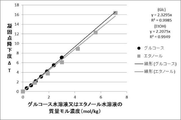
ここで、アルコール発酵醪は希薄溶液ではないが、発酵醪中に存在しうる濃度と同じ濃度の純粋のエタノール水溶液、及び発酵醪に存在しうる濃度と同じ濃度の純粋のグルコース水溶液の凝固点降下度と質量モル濃度はほぼ同じ挙動をとることが分かった(図1及び2参照)。なお、質量モル濃度に対する凝固点降下度の比例定数を実験的に求めたところ、エタノールは2.2075、グルコースは2.3295であった(図1参照)。なお、エタノールは発酵醪において「水」に次ぐ第二の主成分、グルコースは第三の主成分である。醪中の溶質の質量モル濃度としてエタノールとグルコースの合計は90%以上を占め、また両者の比例定数は、エタノールは2.2075、グルコースは2.329と類似していることから、醪の凝固点降下度から醪の溶質のモル濃度の総和をエタノール換算値として推定することができることを見出した。
なお、本発明者らが算出した日本酒の発酵醪中の主要成分の容量モル濃度(mol/L)と成分比率(%)の一例を下記表1に示す。
The method of calculating the molar concentration (mol / kg) of the sardine converted into ethanol by directly measuring the "freezing point depression" or the "osmotic pressure" of the sardine (1) will be described in more detail.
Freezing point depression and osmotic pressure are properties that depend only on the number of solute molecules present (sometimes referred to as "colligative properties"). Dissolving a solute in a solvent reduces the chemical potential of the solvent, causing phenomena such as vapor pressure drop, boiling point elevation, freezing point depression, and osmotic pressure. If the concentration of the solute is sufficiently low, the strength of the chemical potential of the solvent does not depend on the type of solute. Therefore, a solution having colligative properties has a mass molar concentration (or molar fraction) regardless of the type of solute. Its strength is determined by its size. As is well known as Van't Hoff's law, in dilute solutions, the osmotic pressure depends on the molar concentration regardless of the type of solute. The degree of freezing point depression, which has the same colligative property, also depends on the molar concentration regardless of the type of solute.
Here, the alcohol fermentation syrup is not a dilute solution, but the degree of freezing point drop of a pure ethanol aqueous solution having the same concentration as possible in the fermentation syrup and a pure glucose aqueous solution having the same concentration as possible in the fermentation syrup. It was found that the mass molar concentration behaves almost the same (see FIGS. 1 and 2). When the proportionality constant of the degree of freezing point depression with respect to the molar concentration was experimentally determined, it was 2.2075 for ethanol and 2.3295 for glucose (see FIG. 1). Ethanol is the second main component after "water" in fermentation mash, and glucose is the third main component. The total molar concentration of solute in the solute is 90% or more, and the proportionality constants of both are similar to 2.2075 for ethanol and 2.329 for glucose. Therefore, the freezing point of the solute. It was found that the sum of the molar concentrations of the solutes of the 醪 can be estimated as an ethanol equivalent value from the degree of depression.
Table 1 below shows an example of the volume molar concentration (mol / L) and the component ratio (%) of the main components in the fermentation mash of sake calculated by the present inventors.

この関係を利用して、アルコール発酵醪を遠心分離した上清、又はフィルターでろ過したろ液の凝固点降下度を測定し、図1に示すようなエタノール濃度の回帰直線からエタノールに換算した醪の質量モル濃度(mol/kg)の推定値を得ることができる。 Utilizing this relationship, the degree of freezing point depression of the supernatant obtained by centrifuging the alcoholic fermentation syrup or the filtrate filtered with a filter was measured, and the ethanol concentration regression line as shown in FIG. 1 was converted into ethanol. An estimated value of molar concentration (mol / kg) can be obtained.
凝固点降下度は、発酵醪の遠心分離上清又はフィルターでろ過したろ液を試験管などに取り、凝固点降下度より低い温度に冷却した不凍液に浸し、撹拌しながら冷却し、直接温度計で温度を測る。冷却によってその液が凝固したときの温度と純水の凝固点との差を凝固点降下度として測定することができる。
また、凝固点降下度は、市販の浸透圧計の出力値から測定することもできる(例えば、「日本臨床検査機器・試薬・システム振興協会」の「自動浸透圧測定装置 オズモステーション OM−6060」など参照)。
浸透圧は、市販の浸透圧計を使い、測定することができる。
For the degree of freezing point depression, take the filtrate filtered through the centrifugation supernatant of fermentation syrup or a filter in a test tube, immerse it in an antifreeze solution cooled to a temperature lower than the degree of freezing point depression, cool it with stirring, and heat it directly with a thermometer. To measure. The difference between the temperature at which the liquid solidifies by cooling and the freezing point of pure water can be measured as the degree of freezing point depression.
The degree of freezing point depression can also be measured from the output value of a commercially available osmotic pressure gauge (for example, refer to "Automatic osmotic pressure measuring device Ozmo Station OM-6060" of "Japan Clinical Testing Equipment / Reagents / Systems Promotion Association". ).
The osmotic pressure can be measured using a commercially available osmotic pressure gauge.
また、本発明者らは、醪の凝固点降下度は、上述したような直接測定する方法以外にも、醪の「エキス分(g/100ml)」(「エキス分の近似値Ex(g/100ml)」)と醪の「アルコール度数(Alc)」から推定値を算出することができることを見出した。以下、このことについて説明する。 In addition to the method of directly measuring the freezing point depression of mash, the present inventors have "extracted mash (g / 100 ml)" ("approximate value of extract Ex (g / 100 ml)". ) ”) And the“ alcohol content (Alc) ”of mash, it was found that the estimated value can be calculated. This will be described below.
前記「エキス分の近似値Ex(g/100ml)」は、アルコール発酵醪の上清又はろ液の日本酒度(NS)とアルコール度数(Alc)から下記式(1−1)によって得ることができる(西谷、山川、椎木、志垣、津川、佐川、日本醸造協会誌、63(8)、867(1968)参照)。
本発明者は、日本酒における発酵醪中の各種成分の濃度の測定値から前記醪の「凝固点降下度の推定値ΔT’」を、「エキス分の近似値Ex(g/100ml)」と、「アルコール度数(Alc)」を用いて以下の回帰式1により求めることができることを見出した。
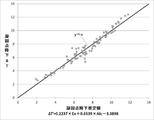
図2は、回帰式1から求められる凝固点降下度の推定値ΔT’と、実測値から求められた凝固点降下度ΔTとの関係を示す図である。図2に示す回帰式1においては、aを0.2237、bを0.6539、cを−3.3898である。
図2に示すように、上記回帰式1は凝固点降下度の実測値とほぼ相関し、かつ誤差が小さいことが分かった。
FIG. 2 is a diagram showing the relationship between the estimated value ΔT'of the freezing point depression degree obtained from the
As shown in FIG. 2, it was found that the
また、凝固点降下度の推定値ΔT’からエタノール換算の醪の質量モル濃度に変換する式は、図1のエタノールの質量モル濃度と醪の凝固点降下度との関係式より、
エタノール換算の醪の質量モル濃度=ΔT’/2.2075
=(0.2237×Ex+0.6539×Alc−3.3898)/2.2075
=0.1013×Ex+0.2962×Alc−1.536・・・式(1−2)
から算出することができる。
The formula for converting the estimated freezing point depression ΔT'to the molar concentration of ethanol in terms of ethanol is based on the relational expression between the molar concentration of ethanol and the freezing point depression in FIG.
Ethanol-equivalent mash mass molar concentration = ΔT'/2.2075
= (0.2237 x Ex + 0.6539 x Alc-3.3898) /2.2075
= 0.1013 x Ex + 0.2962 x Alc-1.536 ... Equation (1-2)
It can be calculated from.
したがって、醪の質量モル濃度(mol/kg)の推定値は、「凝固点降下度の推定値ΔT’」から導出された式(1−2)に基づいて、用いた醸造方法における醪の「エキス分(g/100ml)」(「エキス分の近似値Ex(g/100ml)」)と醪の「アルコール度数(Alc)」から下記式(1−3)で表すことができる。
醪の質量モル濃度(mol/kg)の推定値=α×(Ex)+β×(Alc)−γ・・・(式1−3)
但し、α、β及びγは定数を表す。
本発明においては、この「醪の質量モル濃度(mol/kg)の推定値」を後述する「取得質量モル濃度(推定値)」として用いることができる。
以下、本明細書では、式(1−3)から推定したこのエタノール換算の醪の質量モル濃度を「モル値」と称することがある。
Therefore, the estimated value of the molar concentration of mash (mol / kg) is based on the formula (1-2) derived from the "estimated value of freezing point depression ΔT'", and the "extract" of mash in the brewing method used. It can be expressed by the following formula (1-3) from "minutes (g / 100 ml)"("approximate value of extract content Ex (g / 100 ml)") and "alcohol concentration (Alc)" of mash.
Estimated value of molar concentration (mol / kg) of mash = α × (Ex) + β × (Alc) −γ ・ ・ ・ (Equation 1-3)
However, α, β and γ represent constants.
In the present invention, this "estimated value of molar concentration (mol / kg) of 醪" can be used as "acquired molar concentration (estimated value)" described later.
Hereinafter, in the present specification, the mass molar concentration of this ethanol-equivalent mash estimated from the formula (1-3) may be referred to as a “molar value”.
前記(2)醪の「日本酒度(NS)」、醪の「アルコール度数(Alc)」、及び「エキス分(g/100ml)」から、醪の「エキス分Exの質量モル濃度(mol/kg)」及び醪の「エタノールの質量モル濃度(mol/kg)」を算出し、得られた「エキス分Exの質量モル濃度(mol/kg)」及び醪の「エタノールの質量モル濃度(mol/kg)」を加算することにより算出する方法について、以下説明する。
醪中のエタノールの質量モル濃度(mol/kg)は、アルコール度数(Alc)から求めることができる。アルコール度数(Alc、vol%)とは、15℃における100ml中に存在するエタノールの容量(ml)であるので、エタノールの比重(15℃)を0.7942、エタノールの分子量を46.07すると、発酵醪のろ液1L中のエタノールのモル数は、Alc×0.7942×10/46.07(mol)である。
発酵醪の「比重(d)」(15℃)は、日本酒度(NS)の測定値から、下記式に基づいて求めることができる。
From the above (2) "Japanese sake degree (NS)" of the 醪, "alcohol content (Alc)" of the 醪, and "extract (g / 100 ml)", the molar concentration (mol / kg) of the "extract Ex" of the 醪) ”And“ Molar concentration of ethanol (mol / kg) ”are calculated, and the obtained“ Molar concentration of extract Ex (mol / kg) ”and“ Molar concentration of ethanol (mol / kg) ”are calculated. The method of calculating by adding "kg)" will be described below.
The molar concentration (mol / kg) of ethanol in the broth can be determined from the alcohol content (Alc). The alcohol content (Alc, vol%) is the volume (ml) of ethanol present in 100 ml at 15 ° C. Therefore, when the specific gravity of ethanol (15 ° C) is 0.7942 and the molecular weight of ethanol is 46.07, The number of moles of ethanol in 1 L of the filtrate of the fermentation broth is Alc × 0.7942 × 10 / 46.07 (mol).
The "specific gravity (d)" (15 ° C.) of the fermented mash can be obtained from the measured value of the sake degree (NS) based on the following formula.
前記「日本酒度(NS)」の測定方法としては、特に制限はなく、目的に応じて適宜選択することができ、例えば、浮ひょう法、振動式密度計法などが挙げられる(例えば、「国税庁所定分析法(国税庁)」P3参照)。
発酵醪のろ液1L中の水(溶媒)の重量(kg)は、ろ液の総重量1×d(kg)から、ろ液中のアルコール重量のAlc×0.7942/100(kg)、及びろ液中のエキス分(g/100ml)の重量のEx分/100(kg)を差し引いた、(d−0.007942×Alc―0.01×Ex分)である。
エキス分(g/100ml)は不揮発性の固形分のことを意味する。なお、発酵醪のろ液中の水及びエタノール以外の揮発性成分(沸点150℃以下の物質)は、総和しても1500mg/L程度の僅少であることが報告されている(例えば、非特許文献4を元に発明者が作成した下記表2参照)。そのため、発酵醪のろ液中の水及びエタノール以外の揮発性成分(沸点150℃以下の物質)は、水(溶媒)の重量を求めるに当たっては無視してもよい。
The method for measuring the "sake degree (NS)" is not particularly limited and may be appropriately selected depending on the purpose. Examples thereof include a floating method and a vibration densitometer method (for example, "National Tax Agency"). Prescribed analysis method (National Tax Agency) "see page 3).
The weight (kg) of water (solvent) in 1 L of the filtrate of the fermented liquor is from the total weight of the
The extract content (g / 100 ml) means a non-volatile solid content. It has been reported that the total amount of volatile components (substances having a boiling point of 150 ° C. or lower) other than water and ethanol in the filtrate of the fermentation broth is as small as about 1500 mg / L (for example, non-patent). See Table 2 below, which was created by the inventor based on Document 4). Therefore, volatile components (substances having a boiling point of 150 ° C. or lower) other than water and ethanol in the filtrate of the fermentation mash may be ignored when determining the weight of water (solvent).
よって、発酵醪中のエタノールの質量モル濃度(mol/kg)は次式(2−1)で求めることができる。なお、式中「Alc」は「アルコール度数」を、「d」は比重を、「Ex」はエキス分(g/100ml)を表す。 Therefore, the molar concentration (mol / kg) of ethanol in the fermentation mash can be calculated by the following formula (2-1). In the formula, "Alc" represents the "alcohol content", "d" represents the specific gravity, and "Ex" represents the extract content (g / 100 ml).
また、前記エキス分Exの平均分子量を185とすると、上述したエキス分を算出する式を用いて、前記エキス(Ex)分の質量モル濃度(mol/kg)は、下記式(2−2)により求めることができる。なお、式中「Alc」は「アルコール度数」を、「d」は比重を、「Ex」はエキス分(g/100ml)を表す。 Assuming that the average molecular weight of the extract Ex is 185, the molar concentration (mol / kg) of the extract (Ex) is determined by the following formula (2-2) using the formula for calculating the extract described above. Can be obtained by. In the formula, "Alc" represents the "alcohol content", "d" represents the specific gravity, and "Ex" represents the extract content (g / 100 ml).
以上、得られた「エキス(Ex)分の質量モル濃度(mol/kg)」と「エタノールの質量モル濃度(mol/kg)」とを足し合わせ、式を整理することによって、下記式(2−3)で表される醪の質量モル濃度(mol/kg)を得ることができる。なお、グルコースの質量モル濃度はエキス分の質量モル濃度(mol/kg)に含まれている。 By adding the obtained "molar concentration (mol / kg) of extract (Ex)" and "molar concentration of ethanol (mol / kg)" and rearranging the formula, the following formula (2) It is possible to obtain the molar concentration (mol / kg) of the sardine represented by -3). The molar concentration of glucose is included in the molar concentration (mol / kg) of the extract.
次に、前記(3)「グルコース濃度(g/100mL)」の測定値から得られる「グルコースの質量モル濃度(mol/kg)」の値と、「アルコール度数(Alc)」の測定値から得られる「エタノールの質量モル濃度(mol/kg)」及び「エキス分の近似値Ex」とから醪の質量モル濃度(mol/kg)を算出する方法について、以下説明する。 Next, it is obtained from the value of "molar concentration of glucose (mol / kg)" obtained from the measured value of (3) "glucose concentration (g / 100 mL)" and the measured value of "alcohol content (Alc)". The method of calculating the molar concentration (mol / kg) of the sardine from the "molar concentration of ethanol (mol / kg)" and the "approximate value Ex of the extract" will be described below.
この方法において、「グルコース濃度(g/100mL)」を直接測定する方法としては、特に制限はなく、目的に応じて適宜選択することができ、例えば、公知の酵素法やHPLC法などが挙げられる。
前記グルコースの濃度(g/100mL)を質量モル濃度(mol/kg)へ変換するには、下記式(3−1)を用いることで算出することができる。なお、式(3−1)中「Alc」は「アルコール度数」を、「d」は比重を、「Glc」は「グルコース濃度(g/100ml)」を、「Ex」はエキス分(g/100ml)を表す。
In this method, the method for directly measuring the "glucose concentration (g / 100 mL)" is not particularly limited and may be appropriately selected depending on the intended purpose. Examples thereof include known enzyme methods and HPLC methods. ..
In order to convert the glucose concentration (g / 100 mL) into a molar concentration (mol / kg), it can be calculated by using the following formula (3-1). In the formula (3-1), "Alc" is the "alcohol content", "d" is the specific gravity, "Glc" is the "glucose concentration (g / 100 ml)", and "Ex" is the extract content (g / g /). 100 ml).
なお、「アルコール度数(Alc)」の測定値から得られる「エタノールの質量モル濃度(mol/kg)」及びエキス分の近似値Exの質量モル濃度(mol/kg)」の算出方法は上述したものと同様の方法を用いることができる。 The method for calculating the "molar concentration of ethanol (mol / kg)" obtained from the measured value of "alcohol content (Alc)" and the molar concentration of the approximate value Ex of the extract (mol / kg) is described above. A method similar to that can be used.
また、「エタノール濃度(mol/kg)」及び「グルコース濃度(mol/kg)」を用いて醪の質量モル濃度(mol/kg)を求める場合には、「グルコース以外のエキス分の質量モル濃度(mol/kg)」を求めることにより算出することができる。
前記「グルコース以外のエキス分の質量モル濃度(mol/kg)」は、グルコース以外の平均分子量を190とすると、下記式(3−2)で求めることができる。なお、式(3−2)中「Alc」は「アルコール度数」を、「d」は比重を、「Glc」は「グルコース濃度(g/100ml)」を、「Ex」はエキス分(g/100ml)を表す。
In addition, when determining the molar concentration (mol / kg) of the sardine using "ethanol concentration (mol / kg)" and "glucose concentration (mol / kg)", "mass molar concentration of extracts other than glucose" (Mol / kg) ”can be calculated.
The "molar concentration (mol / kg) of the extract other than glucose" can be calculated by the following formula (3-2), assuming that the average molecular weight other than glucose is 190. In the formula (3-2), "Alc" is the "alcohol content", "d" is the specific gravity, "Glc" is the "glucose concentration (g / 100 ml)", and "Ex" is the extract content (g / g / 100 ml).
したがって、醪の質量モル濃度は、「エタノール濃度(mol/kg)」、「グルコース濃度(mol/kg)」、及び「グルコース以外のエキス分の質量モル濃度(mol/kg)」を足し合わせることにより求めることができる。 Therefore, the molar concentration of 醪 is the sum of "ethanol concentration (mol / kg)", "glucose concentration (mol / kg)", and "molar concentration of extracts other than glucose (mol / kg)". Can be obtained by.
以上説明したように、醪の質量モル濃度(の総和)は、上述した様々な方法により算出することができる。 As described above, the molar concentration of mash (total) can be calculated by the various methods described above.
−質量モル濃度線−
前記質量モル濃度線は、前記質量モル濃度と、発酵経過時間との関係を示すデータを意味する。前記質量モル濃度線は、前記質量モル濃度と、前記発酵経過時間と、の関係を示す個々のデータそのもの自体であってもよく、データの集合から導き出される関数であってもよい。
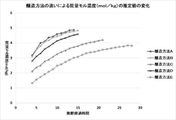
その詳細は明らかではないが、前記質量モル濃度線は、醸造方法により変化することが本発明者の研究により明らかにされた(図3参照)。
-Mole concentration line-
The molar concentration line means data showing the relationship between the molar concentration and the elapsed fermentation time. The mass molar concentration line may be the individual data itself indicating the relationship between the mass molar concentration and the elapsed fermentation time, or may be a function derived from a set of data.
Although the details are not clear, it was clarified by the research of the present inventor that the molar concentration line changes depending on the brewing method (see FIG. 3).
前記発酵経過時間の単位としては、特に制限はなく、目的に応じて適宜選択することができ、例えば、「秒(second)」、「分(minute)」、「時間(hour)」、「日(day)」、「週(week)」、「月(month)」、「年(year)」などが挙げられる。前記質量モル濃度線の信頼度を向上させるために、前記質量モル濃度線における前記質量モル濃度と、前記発酵経過時間との関係を示すデータは短時間の周期的に採取されたデータであると質量モル濃度線の信頼性を向上させることができる点で好ましい。 The unit of the elapsed fermentation time is not particularly limited and may be appropriately selected depending on the intended purpose. For example, "second", "minute", "hour", "day". (Day) ”,“ week ”,“ month ”,“ year ”and the like. In order to improve the reliability of the molar concentration line, the data showing the relationship between the molar concentration in the molar concentration line and the elapsed fermentation time is said to be data collected periodically for a short period of time. It is preferable in that the reliability of the molar concentration line can be improved.
−限界質量モル濃度(mol/kg)−
前記限界質量モル濃度は、前記醪に使用する酵母が発酵の限界をむかえる前記質量モル濃度(mol/kg)である。前記醪に使用する酵母が発酵の限界をむかえる前記質量モル濃度(mol/kg)とは、下記条件を満たすことを意味する。
<条件>
一の時点と前記一の時点から24時間後の時点との、日本酒度(NS)及びアルコール度数から算出される、
単位時間当たりの日本酒度の増加量ΔNSと、単位時間当たりのアルコール度数の増加量ΔAlcとが、下記式(I−a)及び式(I−b)を前記一の時点から24時間後の時点まで継続して満たしたときの24時間後の時点の前記醪の質量モル濃度(mol/kg)である。
ΔNS≦1.0・・・式(I−a)
ΔAlc≦0.2・・式(I−b)
-Limited molar concentration (mol / kg)-
The limit molar concentration is the molar concentration (mol / kg) at which the yeast used for the sardine reaches the limit of fermentation. The molar concentration (mol / kg) at which the yeast used for the mash reaches the limit of fermentation means that the following conditions are satisfied.
<Conditions>
Calculated from the sake content (NS) and alcohol content at one time point and 24 hours after the first time point.
The increase amount ΔNS of the sake content per unit time and the increase amount ΔAlc of the alcohol content per unit time are the time points of the following formulas (Ia) and (Ib) 24 hours after the above-mentioned one time point. It is the mass molar concentration (mol / kg) of the sake at the time point after 24 hours when it is continuously filled up to.
ΔNS ≦ 1.0 ・ ・ ・ Equation (Ia)
ΔAlc ≦ 0.2 ・ ・ Equation (I−b)
前記<条件>における、前記発酵醪の「質量モル濃度(M)(mol/kg)」、「日本酒度(NS)」、「アルコール度数(Alc)」の算出方法は上述した方法を用いて算出することができる。
前記「単位時間」としては、特に制限はなく、目的に応じて適宜選択することができ、例えば、「秒(second)」、「分(minute)」、「時間(hour)」、「日(day)」、「週(week)」、「月(month)」、「年(year)」などが挙げられる。
また、前記<条件>において、「式(I−a)及び式(I−b)を前記一の時点から24時間後の時点まで継続して満たす」とは、一の時点及び24時間後の時点において式(I−a)及び式(I−b)を満たしていればよく、一の時点から24時間後の時点の間、式(I−a)及び式(I−b)を維持していない場合をも含む。
The calculation method of "mass molar concentration (M) (mol / kg)", "sake degree (NS)", and "alcohol content (Alc)" of the fermentation syrup in the <condition> is calculated by using the above-mentioned method. can do.
The "unit time" is not particularly limited and may be appropriately selected depending on the purpose. For example, "second", "minute", "hour", "day (day)" Examples include "day", "week", "month", and "year".
Further, in the above <condition>, "the formula (Ia) and the formula (Ib) are continuously satisfied from the
前記<条件>について、本発明者らが検討したところ、醪の質量モル濃度(mol/kg)と、醪の日本酒度(NS)及び醪のアルコール度数(Alc)との関係は、下記表3のようになった。 When the present inventors examined the above <conditions>, the relationship between the molar concentration of mash (mol / kg), the sake content of mash (NS) and the alcohol content of mash (Alc) is shown in Table 3 below. It became like.
表3の結果から、醪の発酵が進むと、日本酒度の切れΔNS(日本酒度の一日当たりの増加分のこと)が非常に小さくなり、かつ一日当たりのアルコール度数の上昇ΔAlcも非常に小さくなることが分かった(表3の結果では、17日目から18日目)。具体的には、ΔNSが、1.0以下、かつΔAlcが、0.2以下の状態が一の時点と前記一の時点から24時間後の時点で継続して続いた。
これは、発酵が減衰し、酵母が発酵の限界をむかえていることを示唆する状態である。
一般的にはアルコール度数が高くなりすぎる、又は日本酒度が大きく(数字が大きく)なりすぎると酵母が発酵の限界をむかえると考えられている。確かに、同じ原料(米、米麹、水)を使用し、同じ温度、同じ仕込配合、同じ酵母で順調に発酵させれば、ほぼ類似した経過時間、アルコール度数、及び日本酒度で発酵の限界を迎えることが経験的に知られている。しかし、仕込配合、特に汲水歩合(総米に対する仕込水の割合)が変わると、発酵の限界となる経過時間、アルコール度数、日本酒度、及びエキス分は変化する。また、ほぼ同じような条件であっても、わずかな製造条件の差異によって、発酵の限界となる経過時間、アルコール度数、日本酒度、及びエキス分は異なる場合がある。
しかし、本発明者らは汲水歩合が変わっても発酵の限界をむかえる質量モル濃度はほぼ同じ値となることを発見した。下記表4に、酵母の種類(酵母A)及び米の種類を同じものを使用して、一段の日本酒の小仕込を行ったときの仕込配合を示す。簡単のため発酵温度は15℃で一定とした。
From the results in Table 3, as the fermentation of mash progresses, the cut-off ΔNS (increase in the degree of sake per day) becomes very small, and the increase in alcohol content per day ΔAlc also becomes very small. It was found (in the results of Table 3, days 17 to 18). Specifically, the state in which ΔNS was 1.0 or less and ΔAlc was 0.2 or less continued continuously at one time point and at a time point 24 hours after the first time point.
This is a condition that suggests that fermentation has diminished and yeast is reaching the limits of fermentation.
It is generally believed that yeast reaches the limit of fermentation when the alcohol content becomes too high or the sake content becomes too high (the number is large). Certainly, if the same raw materials (rice, rice jiuqu, water) are used and fermented smoothly with the same temperature, the same preparation composition, and the same yeast, the fermentation limit will be almost the same with similar elapsed time, alcohol content, and sake content. It is empirically known to welcome. However, when the preparation composition, especially the pumping ratio (ratio of the charged water to the total rice) changes, the elapsed time, alcohol content, sake content, and extract content, which are the limits of fermentation, change. Further, even under almost the same conditions, the elapsed time, alcohol content, sake content, and extract content, which are the limits of fermentation, may differ due to slight differences in production conditions.
However, the present inventors have found that even if the pumping rate is changed, the molar concentration toward the limit of fermentation is almost the same value. Table 4 below shows the preparation composition when a small amount of sake is brewed using the same type of yeast (yeast A) and the same type of rice. For simplicity, the fermentation temperature was kept constant at 15 ° C.
上記表4に示す条件で発酵を行ったところ、ΔNSが、1.0以下、かつΔAlcが、0.2以下の状態が一の時点と前記一の時点から24時間後の時点で継続して続いたときの分析値と質量モル濃度の推定値(mol/kg)は下記表5の通りであった。質量モル濃度の推定値(mol/kg)は上述した方法を用いて算出した。 When fermentation was carried out under the conditions shown in Table 4 above, the state in which ΔNS was 1.0 or less and ΔAlc was 0.2 or less was one time point and 24 hours after the first time point. The analytical values and the estimated values (mol / kg) of the molar concentration at the time of succession are as shown in Table 5 below. The estimated molar concentration (mol / kg) was calculated using the method described above.
各数値の変動係数(相対標準偏差)、即ち、標準偏差を平均値で除した百分率は質量モル濃度(日本酒度、アルコール度数、及びエキス分から推定したエタノール換算の醪の質量モル濃度)だけが特別に低く1%であり、表5中、製造条件1〜3のΔNSが、1.0以下、かつΔAlcが、0.2以下の状態が一の時点と前記一の時点から24時間後の時点で継続して続いたときの質量モル濃度はほぼ同じ値と言えるレベルであった。
The coefficient of variation (relative standard deviation) of each numerical value, that is, the percentage obtained by dividing the standard deviation by the average value, is special only in mass molar concentration (molar concentration of ethanol-equivalent 醪 estimated from Japanese liquor content, alcohol content, and extract content). In Table 5, the ΔNS of
ここで、日本酒製造に使用される清酒酵母の生存率は発酵の末期において徐々に低下することが知られている(例えば、非特許文献5参照)。
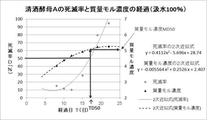
ここで、酵母の総個体数に対する死滅した酵母の個体数の割合を死滅率と称することにする。表5中の製造条件1の仕込におけるデータから、死滅率D(%)を発酵経過時間T(日)に対して、プロットしたものが図4である。回帰分析によりこの曲線を二次関数で近似したところ以下の式(4−1)を得た。
死滅率D(%)=0.4112T2-5.696T+28.74・・・式(4−1)
この式(4−1)から、死滅率D(%)が50%となる発酵経過時間をTD50としたとき、TD50を得るには、二次方程式、0.4112T2-5.696T+(28.74−50)=0をTについて解けばよい。即ち、TD50は以下のようになる。
Here, the ratio of the number of dead yeasts to the total number of yeasts will be referred to as the mortality rate. FIG. 4 is a plot of the mortality rate D (%) with respect to the elapsed fermentation time T (days) from the data in the preparation of the
Mortality D (%) = 0.4112T 2 -5.696T + 28.74 ··· formula (4-1)
From this equation (4-1), when mortality D (%) is set to
次に、TD50におけるモル値(質量モル濃度の推定値)を発酵経過時間T(日)に対して、プロットし、回帰分析により二次関数で近似したところ以下の式(4−2)を得た。 Next, the molar value (estimated value of mass molar concentration) in TD50 was plotted against the elapsed fermentation time T (day), and when approximated by a quadratic function by regression analysis, the following equation (4-2) was obtained. rice field.
この式から、死滅率が50%となる質量モル濃度(mol/kg)をMD50とすると、MD50を得るためには、上の式のTにTD50=16.91を代入すればよく、以下のようになる。
MD50(mol/L)
=−0.005564×(16.91)2+0.2526×16.91+2.407
=5.09
From this equation, assuming that the molar concentration (mol / kg) at which the mortality rate is 50% is MD50, in order to obtain MD50, TD50 = 16.91 may be substituted for T in the above equation. Will be.
MD50 (mol / L)
= -0.005564 x (16.91) 2 + 0.2526 x 16.91 + 2.407
= 5.09
このMD50の値は、ΔNSが、1.0以下、かつΔAlcが、0.2以下の状態が一の時点と前記一の時点から24時間後の時点で継続して続いたときの限界質量モル濃度の推定値(mol/kg)「4.99」を「0.1(2.0%)」上回る程度の数値である。この結果と、表5及び図4との結果から、「ΔNSが、1.0以下、かつΔAlcが、0.2以下の状態が一の時点と前記一の時点から24時間後の時点で継続して続いたときの限界質量モル濃度の推定値(mol/kg)」と「死滅率が50%となる質量モル濃度(mol/kg)」との間に密接な関係があることを示唆していることを見出した。
つまり、浸透圧ストレスによって質量モル濃度が上昇し、清酒酵母が死滅をはじめ、発酵が限界をむかえていることを示唆している。
よって、清酒酵母においては、酵母の死滅率と質量モル濃度の経過から、酵母が発酵の限界をむかえている質量モル濃度を求めることができる。
なお、清酒酵母ではない実験室酵母では、酵母が死滅するようなアルコール濃度に達する前に発酵を停止することが、例えば非特許文献5などにより報告されており、実験室酵母の場合においては、上記の方法では酵母が発酵の限界をむかえている質量モル濃度を求めることはできないものと考えられる。
本発明者らは、仕込配合が変わる現場スケールの実醸造でも発酵の限界を迎える質量モル濃度はほぼ同じ値となることを発見した。
下記表6に異なる仕込配合の総米3500kg〜6200kgの日本酒の仕込の配合を示す。
なお、酵母は前記上述の説明で使用したのと同じ酵母Aである。発酵醪の温度管理は、仕込み温度は6℃〜14℃とし、徐々に昇温させ、全発酵期間の中間日までに最高温度を10℃〜18℃とし、最高温度期間が終われば以降は上槽時期まで徐々に降温させた。最高温度期間は、最高温度を維持し続ける期間を意味し、発酵の進行度合いや目標発酵時間の長さなどにより適宜選択することができる。
また、降温させる温度についても同様に発酵の進行度合いや目標発酵時間の長さなどにより適宜選択することができる。
The value of MD50 is the limit mass molar when ΔNS is 1.0 or less and ΔAlc is 0.2 or less continuously at one time point and at a time point 24 hours after the first time point. It is a value that exceeds the estimated concentration (mol / kg) "4.99" by "0.1 (2.0%)". From this result and the results of Table 5 and FIG. 4, "the state where ΔNS is 1.0 or less and ΔAlc is 0.2 or less is continued at one time point and at a time point 24 hours after the first time point. It is suggested that there is a close relationship between the "estimated value of the critical mass molar concentration (mol / kg)" and the "mass molar concentration at which the mortality rate is 50% (mol / kg)". I found that.
In other words, it is suggested that the molar concentration increases due to osmotic stress, the sake yeast begins to die, and fermentation is reaching its limit.
Therefore, in sake yeast, the molar concentration at which the yeast reaches the limit of fermentation can be obtained from the course of the yeast mortality rate and the molar concentration.
It has been reported in
The present inventors have found that the molar concentration, which reaches the limit of fermentation, is almost the same even in the field-scale actual brewing in which the preparation composition is changed.
Table 6 below shows the formulations of sake preparations of 3500 kg to 6200 kg of rice with different preparation formulations.
The yeast is the same yeast A used in the above description. The temperature of the fermentation mash is controlled by setting the preparation temperature to 6 ° C to 14 ° C, gradually raising the temperature, and setting the maximum temperature to 10 ° C to 18 ° C by the middle day of the entire fermentation period. The temperature was gradually lowered until the tank time. The maximum temperature period means a period during which the maximum temperature is maintained, and can be appropriately selected depending on the degree of fermentation progress and the length of the target fermentation time.
Similarly, the temperature at which the temperature is lowered can be appropriately selected depending on the degree of fermentation progress and the length of the target fermentation time.
ΔNSが、1.0以下、かつΔAlcが、0.2以下の状態が一の時点と前記一の時点から24時間後の時点で継続して続いたときの分析値と質量モル濃度の推定値(mol/kg)は下記表7の通りであった。 Analytical values and estimated values of molar concentration when ΔNS is 1.0 or less and ΔAlc is 0.2 or less continuously at one time point and at a time point 24 hours after the first time point. (Mol / kg) is as shown in Table 7 below.
上記表7に示すように、各数値の変動係数(相対標準偏差)、即ち、標準偏差を平均値で除した百分率は質量モル濃度だけが非常に低く1.4%であり、イ〜ホの質量モル濃度はほぼ同じ値と言えるレベルであった。なお、アルコール度数の変動係数も小さいが質量モル濃度の変動係数よりは大きい。アルコール度数の変動係数が質量モル濃度以外の他の項目より小さいのは、日本酒度が高くエキス分が低い状態になると、上述した式(1)における質量モル濃度に対するエキス分の寄与が相対的に低下し、アルコール度数と質量モル濃度との相関が高くなるためであり、アルコール度数が本質であるからではない。 As shown in Table 7 above, the coefficient of variation (relative standard deviation) of each numerical value, that is, the percentage obtained by dividing the standard deviation by the average value, has a very low molar concentration of 1.4%, which is 1.4%. The molar concentration was at a level that could be said to be almost the same value. The coefficient of variation of alcohol content is also small, but larger than the coefficient of variation of mass molar concentration. The reason why the fluctuation coefficient of alcohol content is smaller than other items other than the molar concentration is that when the alcohol content is high and the extract content is low, the contribution of the extract content to the molar concentration in the above formula (1) is relatively relative. This is because the alcohol content decreases and the correlation between the alcohol content and the molar concentration increases, not because the alcohol content is essential.
酵母が発酵の限界をむかえるときには、醪の浸透圧が酵母の生理的限界になっているときと推定される。このときの醪の質量モル濃度(mol/kg)は、上記表7に示すのとおり、仕込配合や最終日本酒度や最終アルコール度数が異なるイ〜ホの醸造方法においてほぼ同じ値である。これは、イ〜ホの醸造方法における質量モル濃度と酵母の発酵の限界とが極めて密接な関係があること、そして、その質量モル濃度は醪の日本酒度(NS)及び醪のアルコール度数(Alc)によって推定できることを見出した。
この結果から、酵母の限界質量モル濃度(mol/kg)は、前記<条件>を満たす場合に、酵母が発酵の限界をむかえる前記質量モル濃度(mol/kg)であるとみなすことができることを見出した。
When yeast reaches the limit of fermentation, it is presumed that the osmotic pressure of mash is the physiological limit of yeast. As shown in Table 7 above, the molar concentration (mol / kg) of the sardine at this time is almost the same value in the brewing methods of i to e, which have different preparation formulations, final sake content, and final alcohol content. This is because the molar concentration of mash and the limit of fermentation of yeast in the brewing method of i-ho are extremely closely related, and the molar concentration of mash is the sake content (NS) of mash and the alcohol content of mash (Alc). ) Found that it can be estimated.
From this result, it can be considered that the molar molar concentration (mol / kg) of the yeast is the molar concentration (mol / kg) of the yeast reaching the limit of fermentation when the above <conditions> are satisfied. I found it.
−理想質量モル濃度(mol/kg)−
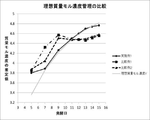
前記理想質量モル濃度(mol/kg)は、発酵期間中における前記醪の質量モル濃度(mol/kg)が前記限界質量モル濃度(mol/kg)を超えないように発酵させたときにおける、発酵経過時間に対応した前記醪の理想的な質量モル濃度(mol/kg)を意味する。前記理想質量モル濃度(mol/kg)の情報としては、個々のデータそのもの自体であってもよく、データの集合から導き出される関数であってもよい。ここでいう「理想的な」とは、所望の発酵日数(目標発酵時間)で前記醪のアルコール度数及び日本酒度の両方が所望の値に達し、かつ香味が良好な状態で発酵した場合を意味する。
前記理想質量モル濃度(mol/kg)は、原料(米品種、精米歩合、米麹、水ほか)、仕込配合、酵母、発酵温度などが異なると変化することがわかった(図3参照)。
前記理想質量モル濃度(mol/kg)の情報としては、過去に順調に発酵が推移し、目標品質になったときの、対応する醸造方法に応じた質量モル濃度のデータに基づいて、発酵経過時間に応じた理想質量モル濃度(mol/kg)を定めてもよい。また、原料(米品種、精米歩合、米麹、水ほか)、仕込配合、酵母、発酵温度などが異なる醸造方法であっても、以下のようなデータ加工を行うと質量モル濃度線はほぼ同一の曲線になることから理想質量モル濃度線を求め、使用することができる。
-Ideal molar concentration (mol / kg)-
The ideal molar concentration (mol / kg) is the fermentation when the molar concentration (mol / kg) of the sardine is fermented so as not to exceed the critical molar concentration (mol / kg) during the fermentation period. It means the ideal molar concentration (mol / kg) of the sardine corresponding to the elapsed time. The information on the ideal mass molar concentration (mol / kg) may be the individual data itself or a function derived from a set of data. The term "ideal" as used herein means a case where both the alcohol content and the sake content of the mash have reached the desired values in the desired fermentation days (target fermentation time) and the fermentation has a good flavor. do.
It was found that the ideal molar concentration (mol / kg) changes depending on the raw materials (rice variety, rice milling ratio, rice koji, water, etc.), preparation composition, yeast, fermentation temperature, and the like (see FIG. 3).
The information on the ideal molar concentration (mol / kg) is based on the data of the molar concentration according to the corresponding brewing method when the fermentation has progressed smoothly in the past and the target quality is reached. The ideal molar concentration (mol / kg) may be determined according to the time. In addition, even if the brewing method has different raw materials (rice variety, rice polishing ratio, rice jiuqu, water, etc.), preparation composition, yeast, fermentation temperature, etc., the mass molar concentration line is almost the same when the following data processing is performed. The ideal mass molar concentration line can be obtained and used from the curve of.
ここで、前記データ加工による「理想質量モル濃度線」の導出方法について具体的に説明する。
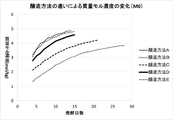
図5Aに異なる5つの醸造方法A、B、C、D、及びE、並びにその醸造方法における質量モル濃度の発酵期間中における変化を示す。説明をより簡潔にするために、5つ醸造方法しか記述しないが加工するデータの数としては、特に制限はなく、目的に応じて適宜選択することができる。
一の醸造方法Z(Zは醸造方法A、B、C、D、Eのいずれか)における発酵経過時間T日目の質量モル濃度をM0(Z,T)と表すこととする。
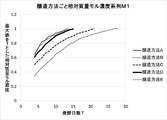
発酵醪の質量モル濃度の変化は、仕込水の追加を行わなければ、単調増加である。醪の最終期、つまり発酵終了の2日前から終了日までは仕込水の追加を行わないのが一般的であり、その場合、醪の最終日がその醸造方法における醪の質量モル濃度の最大値M0max(Z)である。この最大値M0max(Z)で当該質量モル濃度系列(各醸造方法における質量モル濃度の推移)を除すると、各系列は図5Bに示すように1.0を最大値とする相対質量モル濃度系列M1(Z,T)に変換される。
M1(Z,T)=M0(Z,T)/M0max(Z)・・・式(5−1)
Here, a method for deriving the "ideal mass molar concentration line" by the data processing will be specifically described.
FIG. 5A shows the five different brewing methods A, B, C, D, and E, and the changes in mass molar concentration of the brewing methods during the fermentation period. In order to simplify the explanation, only five brewing methods are described, but the number of data to be processed is not particularly limited and can be appropriately selected according to the purpose.
The mass molar concentration on the T day of the elapsed fermentation time in one brewing method Z (Z is any of the brewing methods A, B, C, D, and E) is expressed as M0 (Z, T).
The change in the molar concentration of fermented mash is monotonously increasing without the addition of water to be charged. In general, the mash water is not added from the final stage of mash, that is, from 2 days before the end of fermentation to the end date, in which case the final day of mash is the maximum value of the molar concentration of mash in the brewing method. It is M0max (Z). When the mass molar concentration series (transition of mass molar concentration in each brewing method) is divided by this maximum value M0max (Z), each series has a relative mass molar concentration series having a maximum value of 1.0 as shown in FIG. 5B. It is converted to M1 (Z, T).
M1 (Z, T) = M0 (Z, T) / M0max (Z) ... Equation (5-1)
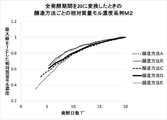
次に、相対質量モル濃度系列の横軸(発酵経過時間)をすべて同じになるように変換する。変換後の相対質量モル濃度系列をM2とする。ここでは横軸(発酵経過時間)の最大値が、20日間となるように、横軸の数値を変換するように発酵経過時間Tを次式(5−2)で変換する。
T’=T×20/全発酵期間・・・式(5−2)
M2(Z,T’)=M1(Z,T)・・・式(5−3)
このように相対質量モル濃度系列の全発酵期間を20日間に変換した相対モル濃度系列M2は、図5Cに示すようになる。
Next, the horizontal axis (fermentation elapsed time) of the relative mass molar concentration series is converted so that they are all the same. Let M2 be the relative mass molar concentration series after conversion. Here, the fermentation elapsed time T is converted by the following equation (5-2) so as to convert the numerical value on the horizontal axis so that the maximum value on the horizontal axis (fermentation elapsed time) is 20 days.
T'= T × 20 / total fermentation period ・ ・ ・ Equation (5-2)
M2 (Z, T') = M1 (Z, T) ... Equation (5-3)
The relative molar concentration series M2 obtained by converting the total fermentation period of the relative molar concentration series into 20 days is shown in FIG. 5C.
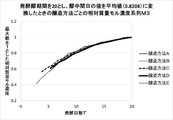
次に、ある醸造方法Zにおける醪の全発酵期間における中間日のM2の値を「Mmid(Z)」とする。使用原料(米品種、米麹、精米歩合)や仕込配合、使用酵母などが異なる18の醸造方法のMmid(Z)の平均値は下記表8に示すように、「0.8208」であった。 Next, the value of M2 on the intermediate day in the entire fermentation period of mash in a certain brewing method Z is defined as "Mmid (Z)". As shown in Table 8 below, the average value of Mid (Z) of 18 brewing methods with different raw materials (rice varieties, rice jiuqu, rice polishing ratio), preparation mix, yeast used, etc. was "0.8208". ..
ここで、例えば、系列M2(Z,T’)の中間日の値が平均の0.8208となるようにM2(Z,T’)を次式(5−4)で変換する。 Here, for example, M2 (Z, T') is converted by the following equation (5-4) so that the value of the intermediate day of the series M2 (Z, T') becomes an average of 0.8208.
このような変換を行うとすべての醸造方法の質量モル濃度系列は、図5Dに示すように、ほぼ同じ関数型となる。このように、どのような醸造方法を用いても、上述した変換を行うことによって、すべての醸造方法の質量モル濃度系列に共通して使用することができる理想的な発酵経過をたどる、理想質量モル濃度線を導出することができる。 When such a conversion is performed, the mass molar concentration series of all the brewing methods becomes almost the same functional type as shown in FIG. 5D. In this way, no matter what brewing method is used, the ideal mass that follows the ideal fermentation process that can be commonly used in the mass molar concentration series of all brewing methods by performing the above-mentioned conversion. A molar concentration line can be derived.
また、上述したものと同様な考え方により、「理想質量モル濃度線」の数式を導出する方法について以下説明する。
すべての醸造方法の質量モル濃度系列に共通の関数型を当てはめるため、M0(Z,T)からM3(Z,T’)までの変換を含む、次の数式モデルを立て、その計算値M4(Z,T)と実際の測定値M0(Z,T)との誤差の二乗和を最小にする定数A、B、Cの組合せを選択(最適化)することもできる。
M4(Z,T)=M0max(Z)×[A×{1−exp(B×T×20/全発酵期間+C)}]^{log(Mmid)/log(0.8208)}・・・式(5−5)
In addition, a method for deriving the mathematical formula of the "ideal mass molar concentration line" will be described below based on the same concept as described above.
In order to apply a common functional type to the mass molar concentration series of all brewing methods, the following mathematical model including the conversion from M0 (Z, T) to M3 (Z, T') was established and its calculated value M4 ( It is also possible to select (optimize) a combination of constants A, B, and C that minimizes the sum of squares of the error between Z, T) and the actual measured value M0 (Z, T).
M4 (Z, T) = M0max (Z) × [A × {1-exp (B × T × 20 / total fermentation period + C)}] ^ {log (Mid) / log (0.8208)} ... Equation (5-5)
前記式(5−5)中、「Mmid」は、ある醸造方法Zにおける醪の中間日のM2の値であり、使用した醸造方法における質量モル濃度(mol/kg)の実測値のデータベースを参照し、代入することができる。 In the above formula (5-5), "Mmid" is the value of M2 on the intermediate day of the brewing in a certain brewing method Z, and refers to the database of the measured values of the molar concentration (mol / kg) in the brewing method used. And can be substituted.
前記式(5−5)中、「T(所定時間)」は、発酵を開始してから経過した一の時点を指す。なお、「T」は、発酵経過時間と称することがある。
前記式(5−5)中、「全発酵期間(目標発酵時間)」は、発酵を開始してから終了させるまでに予定している期間を指す。
In the formula (5-5), "T (predetermined time)" refers to one time point after the start of fermentation. In addition, "T" may be referred to as fermentation elapsed time.
In the above formula (5-5), the "total fermentation period (target fermentation time)" refers to a period scheduled from the start to the end of fermentation.
上記式(5−5)の最適化法としては、例えば、Microsoft Excelの機能の一つであるソルバー法(ソルバー機能)を用い、誤差の二乗和を最小化するように、上記式(5−5)を解く方法などが挙げられる。
ソルバー法を使う場合について、より具体的に説明する。
ソルバー法を使用する場合には、初期値としては、A=1.0、B=−0.1、C=−0.3などを選び、それぞれ、たとえば、セル$A$1,セル$B$1,セル$C$1に入力する。
次に、発酵経過時間T(日)を、例えば、$A$3からA列に、M0(Z,T)を$B$3からB列に入力していく。次に、式(5−5)によって表されるM4(Z,T)を計算する式を、$C$3からC列に入力する。3行目からのB列とC列の差の二乗をD列に設け、これらを総和して誤差の二乗和を次式(5−6)で求めるセルを$D$1に作成する。
As the optimization method of the above equation (5-5), for example, the solver method (solver function) which is one of the functions of Microsoft Excel is used, and the above equation (5-5) is used so as to minimize the sum of squares of errors. Examples include a method of solving 5).
The case of using the solver method will be described more specifically.
When using the solver method, select A = 1.0, B = -0.1, C = -0.3, etc. as the initial values, and for example, cell $ A $ 1, cell $ B, respectively. Enter in $ 1, cell $ C $ 1.
Next, the fermentation elapsed time T (day) is input from, for example, $ A $ 3 to the A column, and M0 (Z, T) is input from $ B $ 3 to the B column. Next, the formula for calculating M4 (Z, T) represented by the formula (5-5) is input from $ C $ 3 to the C column. The square of the difference between columns B and C from the third row is provided in column D, and the cell for which the sum of squares of the error is calculated by the following equation (5-6) is created in $ D $ 1.
ソルバーを用いて、誤差二乗和のセル$D$1を最小化するように、Aのセル$A$1、Bのセル$B$1、Cのセル$C$1を変化させ最適解を得る。
この方法により求めた前記18通りの醸造方法を母集団とするデータにおける最適解は、A=1.084、B=−0.1127、C=−0.2671となった。ただし、得られる式(5−5)におけるA、B、及びCの最適解は母集団のデータにより異なるため、これに限定されるものではない。
また、M0の最大値M0max(Z)が、前記の発酵の限界となる限界質量モル濃度の約0.9〜約1.0倍の状態において醸造を終了させることにより、限界質量モル濃度に届く前に醸造を終了させるように管理できる。
Using the solver, change cell A $ A $ 1, cell B $ B $ 1, and cell C $ C $ 1 so as to minimize the error squared cell $ D $ 1 to obtain the optimum solution. obtain.
The optimum solutions in the data obtained by this method using the 18 brewing methods as the population were A = 1.084, B = -0.1127, and C = -0.2671. However, the optimum solutions of A, B, and C in the obtained formula (5-5) differ depending on the data of the population, and are not limited thereto.
Further, the maximum value M0max (Z) of M0 reaches the limit mass molar concentration by terminating the brewing in a state of about 0.9 to about 1.0 times the limit mass molar concentration which is the limit of fermentation. Can be managed to finish brewing before.
醪の発酵を理想質量モル濃度線に則って管理することができた場合、醸造(発酵)終了時の醪の質量モル濃度の推定値(モル値)(mol/kg)は、当該醸造方法の理想質量モル濃度の最大値(M0max)に一致する。
このとき、
モル値(mol/kg)=0.1013×Ex+0.2962×Alc−1.536
=M0max・・・式(5−7)
を満たしている。
式(5−7)を変形して、Exについて解くと、
At this time,
Molarity (mol / kg) = 0.1013 x Ex + 0.2962 x Alc-1.536
= M0max ... Equation (5-7)
Meet.
When Eq. (5-7) is transformed and solved for Ex,
この式の右辺を左辺に移項して、下記式(5−10)を得ることができる。 By transposing the right side of this equation to the left side, the following equation (5-10) can be obtained.
日本酒度NSが既知であれば、式(5−10)はアルコール度数Alcに関する二次方程式に変形できるので、式(5−10)のアルコール度数Alcは正の解として一意的に定まる。目標発酵時間において目標日本酒度に到達しておれば、アルコール度数Alcは自動的に1点に導かれる。
実用的な解法としては、Microsoft Excelの機能の一つであるソルバーを用い、アルコール度数の初期値をたとえば「15.0」として、セル$A$1に入力し、それを参照して式(5−10)の左辺を計算させる算式をセル$B$2に入力し、そのセル$B$2の値が「0」になるようにアルコール度数のセル$A$1を変更して最適化する。
当該醸造方法の理想質量モル濃度の最大値(M0max)が、「5.0」で日本酒度が「+3」であればアルコール度数は「20.11」として最適化される。目標発酵時間で目標日本酒度に到達しておれば、アルコール度数は「20.11」になることを示す。
所望の日本酒度と所望のアルコール度数のときの質量モル濃度が理想質量モル濃度線の最大値(M0max)となるように設定されていれば理想質量モル濃度線に則って発酵醪を管理でき、かつ日本酒度が所望の値になった場合は、自ずと所望のアルコール度数である酒を醸造できることになる。
また、所望の日本酒度と所望のアルコール度数のときの質量モル濃度よりも、理想質量モル濃度線の最大値(M0max)が高く設定された場合において、理想質量モル濃度線に則って発酵醪を管理でき、かつ日本酒度が所望の値になったときは、アルコール度数は当然に所望の値より高くなっているので上槽直前、つまり発酵醪と発酵粕の分離操作の直前に下式(5−11)に基づいて加水量を決めて加水することが好ましい。
If the sake degree NS is known, the formula (5-10) can be transformed into a quadratic equation for the alcohol content Alc, so that the alcohol content Alc in the formula (5-10) is uniquely determined as a positive solution. If the target sake level is reached at the target fermentation time, the alcohol content Alc is automatically derived to one point.
As a practical solution, a solver, which is one of the functions of Microsoft Excel, is used, and the initial value of the alcohol content is set to, for example, "15.0", entered in cell $ A $ 1, and the formula (referred to by that). Enter the formula to calculate the left side of 5-10) in cell $ B $ 2, and optimize by changing cell $ A $ 1 of alcohol content so that the value of cell $ B $ 2 becomes "0". do.
If the maximum value (M0max) of the ideal mass molar concentration of the brewing method is "5.0" and the sake content is "+3", the alcohol content is optimized as "20.11". If the target sake level is reached in the target fermentation time, the alcohol content will be "20.11".
If the mass molar concentration at the desired sake content and the desired alcohol content is set to be the maximum value (M0max) of the ideal mass molar concentration line, the fermentation brew can be managed according to the ideal mass molar concentration line. Moreover, when the sake content reaches a desired value, it is possible to brew sake having a desired alcohol content.
In addition, when the maximum value (M0max) of the ideal mass molar concentration line is set higher than the mass molar concentration at the desired sake content and the desired alcohol content, the fermentation fermented rice is fermented according to the ideal mass molar concentration line. When it can be managed and the sake content reaches the desired value, the alcohol content is naturally higher than the desired value, so the following formula (5) just before the upper tank, that is, just before the separation operation of fermentation syrup and fermentation lees. It is preferable to determine the amount of water added based on -11) and add water.
なお、上槽後であれば下式(5−12)に基づき加水量を決めて加水することが好ましい。 After the upper tank, it is preferable to determine the amount of water added based on the following formula (5-12) and add water.
もし、所望の日本酒度と所望のアルコール度数のときの質量モル濃度が、理想質量モル濃度線の最大値(M0max)より高い場合は理想質量モル濃度線を超えないと所望の発酵醪を得られない。理想質量モル濃度線の最大値が、前記の発酵の限界となる限界質量モル濃度と一致するように設定されているなら、これは、酵母の発酵限界を超えてしまうことを意味する。この場合、設定した所望のアルコール度数と日本酒度の組み合わせは実現不可能か、もし実現可能であっても酵母の死滅を伴うので異臭(オフフレーバー)や異味を有するものしか醸造することができないと推定することができる。
If the molar concentration at the desired sake content and the desired alcohol content is higher than the maximum value (M0max) of the ideal molar concentration line, the desired fermentation syrup can be obtained without exceeding the ideal molar concentration line. No. If the maximum value of the ideal molar concentration line is set to match the above-mentioned limit molar concentration that is the limit of fermentation, this means that the fermentation limit of yeast is exceeded. In this case, the combination of the desired alcohol content and sake content that was set is not feasible, or even if it is feasible, yeast will die, so only those with an off-flavor or off-flavor can be brewed. Can be estimated.
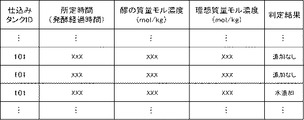
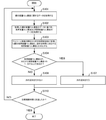
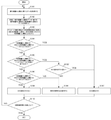
前記発酵管理工程において、前記アルコール発酵の開始から所定時間経過後に取得した前記醪の取得質量モル濃度X(mol/kg)と、前記所定時間の前記理想質量モル濃度Y(mol/kg)とを対比し、前記取得質量モル濃度X(mol/kg)が、1.02Y以上であるときは前記醪に対して水の追加する、処理を行う。
なお、前記取得質量モル濃度X(mol/kg)が、前記所定時間の前記理想質量モル濃度Yに対して、0.98Y超1.02Y未満の場合には、現状の発酵管理を継続して行ってもよいし、温度条件などを変更してもよいし水の追加を行ってもよい。また、前記取得質量モル濃度X(mol/kg)が、前記所定時間の前記理想質量モル濃度Y(mol/kg)よりも0.98Y以下であるときは、上述した水の追加を行わない以外にも、発酵醪の温度を上げるなどして質量モル濃度の上昇を促してもよい。
さらに、前記取得質量モル濃度X(mol/kg)が、前記所定時間の前記理想質量モル濃度Yに対して、0.980Y超1.010Y未満の値の場合にも、前記醪に対して水の追加を行ってもよい。発酵初期の取得質量モル濃度の上昇が急な段階において、米がよく溶けることが予想される場合には、前記取得質量モル濃度X(mol/kg)が、前記所定時間の前記理想質量モル濃度Yに対して、0.980Y超1.010Y未満の値の場合にも、前記醪に対して水の追加を行うことにより、より細かく前記醪の発酵制御を行うことができる。
なお、前記取得質量モル濃度X(mol/kg)が、前記所定時間の前記理想質量モル濃度Yに対して、0.98Y超1.02Y以下の範囲にある場合、前記醪の発酵は前記理想質量モル濃度線に沿った発酵管理がなされていると判断することができる。前記取得質量モル濃度X(mol/kg)が、前記所定時間の前記理想質量モル濃度Yに対して、0.98Y超1.02Y以下の範囲にあると、オフフレーバーの発生を抑制して醪を発酵させることができる。
In the fermentation control step, the acquired molar concentration X (mol / kg) of the sardine acquired after a lapse of a predetermined time from the start of the alcohol fermentation and the ideal molar concentration Y (mol / kg) of the predetermined time are obtained. In contrast, when the obtained molar concentration X (mol / kg) is 1.02Y or more, water is added to the sardine to perform a treatment.
If the acquired molar concentration X (mol / kg) is more than 0.98Y and less than 1.02Y with respect to the ideal molar concentration Y for the predetermined time, the current fermentation management is continued. It may be carried out, the temperature condition or the like may be changed, or water may be added. When the acquired molar concentration X (mol / kg) is 0.98Y or less than the ideal molar concentration Y (mol / kg) for the predetermined time, the above-mentioned addition of water is not performed. Alternatively, an increase in the molar concentration may be promoted by raising the temperature of the fermenter.
Further, even when the acquired molar concentration X (mol / kg) is more than 0.980Y and less than 1.010Y with respect to the ideal molar concentration Y for the predetermined time, water is added to the sardine. May be added. If it is expected that the rice will dissolve well at the stage where the acquired molar concentration at the initial stage of fermentation increases rapidly, the acquired molar concentration X (mol / kg) is the ideal molar concentration for the predetermined time. Even when the value of Y is more than 0.980Y and less than 1.010Y, the fermentation of the mole can be controlled more finely by adding water to the mole.
When the acquired molar concentration X (mol / kg) is in the range of more than 0.98Y and 1.02Y or less with respect to the ideal molar concentration Y for the predetermined time, the fermentation of the sardine is ideal. It can be judged that the fermentation is controlled along the molar concentration line. When the acquired molar concentration X (mol / kg) is in the range of more than 0.98Y and 1.02Y or less with respect to the ideal molar concentration Y for the predetermined time, off-flavour generation is suppressed and fermentation is performed. Can be fermented.
前記取得質量モル濃度X(mol/kg)を得る方法としては、特に制限はなく、目的に応じて適宜選択することができ、例えば、上述した質量モル濃度の算出方法(A)〜(C)を用いて算出することができる。 The method for obtaining the obtained molar concentration X (mol / kg) is not particularly limited and may be appropriately selected depending on the intended purpose. For example, the above-mentioned methods for calculating the molar concentration (A) to (C). Can be calculated using.
前記水の追加が、前記取得質量モル濃度X(mol/kg)の大きさに応じて行うことが好ましい。前記水の量としては、前記取得質量モル濃度X(mol/kg)が1.02Y以上の場合には、醪の体積(醪数量)をZ(L)として、(X/Y−1)/3×Z(L)以上が好ましい。ただし、(X/Y−1)/3×Z(L)が0.06×Z(L)を超えると発酵醪における酵母の環境の変化が著しくなるほか、取得質量モル濃度の増加が通常より鈍化した場合は結果として希釈超過となる恐れがあるため、一日(24時間)以内には0.06×Z(L)以下に留め、取得質量モル濃度が1.02Y未満となるまで、複数日繰り返すことが望ましい。なお、米が溶けにくい場合には、所得質量モル濃度の増加が通常より鈍化することがある。 It is preferable that the water is added according to the magnitude of the obtained molar concentration X (mol / kg). As for the amount of water, when the obtained molar concentration X (mol / kg) is 1.02Y or more, the volume (quantity) of the sardine is Z (L), and (X / Y-1) /. 3 × Z (L) or more is preferable. However, when (X / Y-1) / 3 × Z (L) exceeds 0.06 × Z (L), the change in the yeast environment in the fermentation process becomes remarkable, and the obtained molar concentration increases more than usual. If it slows down, it may result in excessive dilution. Therefore, keep it at 0.06 × Z (L) or less within one day (24 hours) until the obtained molar concentration is less than 1.02Y. It is desirable to repeat the day. If the rice is difficult to dissolve, the increase in the molar concentration of income may be slower than usual.
また、前記取得質量モル濃度X(mol/kg)が、前記所定時間の前記理想質量モル濃度Y(mol/kg)よりも1.01Y以上1.02Y未満の値であるときも前記醪に対して水の追加を行うことが好ましい。前記水の量としては、醪の体積(醪数量)をZ(L)として、(X/Y−1)/3×Z(L)以上0.05×Z(L)以下が好ましい。前記取得質量モル濃度X(mol/kg)が1.010Y以上1.015Y未満の場合には、(X/Y−1)/3×Z(L)以上0.04×Z(L)以下がより好ましい。
また、前記水の追加を、前記取得質量モル濃度X(mol/kg)が、前記所定時間の前記理想質量モル濃度Y(mol/kg)よりも0.980Y超1.010Y未満の値であるときも前記醪に対して水の追加を行うことにより、より細かく前記醪の発酵制御を行うことができる。特に、前記取得質量モル濃度の上昇が急である発酵前半期で米が溶けやすい場合は、0.980Y超1.000Y未満であっても前記醪に対して水の追加を行うことが好ましい場合がある。
Further, when the acquired molar concentration X (mol / kg) is a value of 1.01Y or more and less than 1.02Y than the ideal molar concentration Y (mol / kg) for the predetermined time, it is also relative to the sardine. It is preferable to add water. The amount of water is preferably (X / Y-1) / 3 × Z (L) or more and 0.05 × Z (L) or less, where the volume of mash (quantity of mash) is Z (L). When the obtained molar concentration X (mol / kg) is 1.010Y or more and less than 1.015Y, (X / Y-1) / 3 × Z (L) or more and 0.04 × Z (L) or less is obtained. More preferred.
Further, when the water is added, the obtained molar concentration X (mol / kg) is more than 0.980Y and less than 1.010Y than the ideal molar concentration Y (mol / kg) at the predetermined time. By adding water to the mole, the fermentation of the mole can be controlled more finely. In particular, when the rice is easily melted in the first half of fermentation in which the obtained molar concentration is rapidly increased, it is preferable to add water to the mash even if it is more than 0.980Y and less than 1.000Y. There is.
<醪>
前記醪は、酒母(酵母)、蒸米、麹、水を仕込み、原料が発酵したものをいう。
<Moromi>
The mash is made by adding sake mother (yeast), steamed rice, koji, and water, and fermenting the raw materials.
<<酵母>>
前記酵母としては、特に制限はなく、目的に応じて適宜選択することができ、例えば、清酒酵母、焼酎酵母、ワイン酵母、ビール酵母、パン酵母などが挙げられる。これらの中でも、清酒酵母が好ましい。
<< Yeast >>
The yeast is not particularly limited and may be appropriately selected depending on the intended purpose. Examples thereof include sake yeast, shochu yeast, wine yeast, brewer's yeast and baker's yeast. Among these, sake yeast is preferable.
前記酵母は、自然変異により得られたものを用いてもよいし、変異処理が施されたものを用いてもよい。
前記変異処理としては、特に制限はなく、公知の方法を適宜選択することができ、例えば、紫外線照射、放射線照射等の物理的変異処理、エチルメタンスルホネートの添加、N−メチル−N’−ニトロ−ニトロソグアニジンの添加等の化学的変異処理などが挙げられる。これらは、1種単独で使用してもよいし、2種以上を併用してもよい。
As the yeast, those obtained by natural mutation may be used, or those that have been subjected to mutation treatment may be used.
The mutation treatment is not particularly limited, and a known method can be appropriately selected. For example, physical mutation treatment such as ultraviolet irradiation and irradiation, addition of ethylmethanesulfonate, N-methyl-N'-nitro -Chemical mutation treatment such as addition of nitrosoguanidine can be mentioned. These may be used alone or in combination of two or more.
<<<培地>>>
前記培地としては、特に制限はなく、目的に応じて適宜選択することができ、例えば、一般に酵母の培養に用いられるものを使用することができ、必要に応じて更にその他の成分を含む。前記一般に酵母の培養に用いられる培地としては、特に制限はなく、目的に応じて適宜選択することができ、例えば、SD培地、YPD培地などが挙げられる。これらの中でも、YPD培地が好ましい。
前記培地におけるその他の成分としては、特に制限はなく、一般に酵母の培養に用いられる成分を目的に応じて適宜選択することができ、例えば、大豆粉、小麦胚芽、押し麦、ペプトン、綿実粕、酵母エキス、肉エキス、コーン・スティープ・リカー、硫酸アンモニウム、硝酸ナトリウム、尿素等の窒素源;トマトペースト、グリセリン、デンプン、グルコース、ガラクトース、デキストリン、バクトソイトン等の炭水化物、脂肪等の炭素源;塩、炭酸カルシウム等の無機塩;金属塩などが挙げられる。これらは、1種単独で使用してもよいし、2種以上を併用してもよい。
前記培地におけるその他の成分の含有量としては、特に制限はなく、目的に応じて適宜選択することができる。
<<< Medium >>
The medium is not particularly limited and may be appropriately selected depending on the intended purpose. For example, a medium generally used for yeast culture can be used, and further contains other components as needed. The medium generally used for culturing yeast is not particularly limited and may be appropriately selected depending on the intended purpose. Examples thereof include SD medium and YPD medium. Among these, YPD medium is preferable.
The other components in the medium are not particularly limited, and components generally used for yeast culture can be appropriately selected depending on the intended purpose. For example, soybean flour, wheat germ, pressed barley, peptone, cottonseed meal, etc. Nitrogen sources such as yeast extract, meat extract, corn steep liquor, ammonium sulfate, sodium nitrate, urea; carbohydrates such as tomato paste, glycerin, starch, glucose, galactose, dextrin, bactosoyton; carbon sources such as fat; salts, carbon dioxide Inorganic salts such as calcium; metal salts and the like can be mentioned. These may be used alone or in combination of two or more.
The content of the other components in the medium is not particularly limited and may be appropriately selected depending on the intended purpose.
前記培地の形態としては、特に制限はなく、目的に応じて適宜選択することができ、例えば、固体、液体などが挙げられる。 The form of the medium is not particularly limited and may be appropriately selected depending on the intended purpose. Examples thereof include solids and liquids.
<<<培養>>>
前記培養の条件としては、特に制限はなく、目的に応じて適宜選択することができる。
前記培養の温度としては、特に制限はなく、目的に応じて適宜選択することができ、例えば、10℃〜40℃などが挙げられる。
前記培養の期間としては、特に制限はなく、目的に応じて適宜選択することができ、例えば、1日間〜10日間などが挙げられる。
前記培養の方法としては、特に制限はなく、目的に応じて適宜選択することができ、例えば、静置培養、振盪培養などが挙げられる。
<<< Culture >>>
The culture conditions are not particularly limited and may be appropriately selected depending on the intended purpose.
The temperature of the culture is not particularly limited and may be appropriately selected depending on the intended purpose. Examples thereof include 10 ° C. to 40 ° C.
The period of the culture is not particularly limited and may be appropriately selected depending on the intended purpose. Examples thereof include 1 day to 10 days.
The culture method is not particularly limited and may be appropriately selected depending on the intended purpose. Examples thereof include static culture and shaking culture.
本発明のアルコール発酵醪の管理プログラムによる処理は、アルコール発酵醪の管理装置を構成する制御部を有するコンピュータを用いて実行することができる。
以下、アルコール発酵醪の管理装置のハードウェア構成、及び機能構成について説明する。
The processing by the alcohol fermentation mash management program of the present invention can be executed by using a computer having a control unit constituting the alcohol fermentation mash management device.
Hereinafter, the hardware configuration and the functional configuration of the alcohol fermentation mash management device will be described.
<アルコール発酵醪の管理装置のハードウェア構成>
図6は、アルコール発酵醪の管理装置100のハードウェア構成の一例を示すブロック図である。
図6で示すように、アルコール発酵醪の管理装置100は、CPU(Central Processing Unit)101、主記憶装置102、補助記憶装置103、通信インターフェイス104、入力装置105、出力装置106、の各部を有する。これらの各部は、バス107を介してそれぞれ接続されている。
CPU101は、種々の制御や演算を行う処理装置である。CPU101は、主記憶装置102などが記憶するOS(Operating System)やプログラムを実行することにより、種々の機能を実現する。即ち、CPU101は、本発明では、アルコール発酵醪の管理プログラムを実行することにより、アルコール発酵醪の管理装置100の制御部130として機能する。
また、CPU101は、アルコール発酵醪の管理装置100全体の動作を制御する。尚、本発明では、アルコール発酵醪の管理装置100全体の動作を制御する装置をCPU101としたが、これに限ることなく、例えば、FPGA(Field Programmable Gate Array)などとしてもよい。
<Hardware configuration of alcoholic fermentation mash management device>
FIG. 6 is a block diagram showing an example of the hardware configuration of the alcohol fermentation
As shown in FIG. 6, the alcoholic
The
In addition, the
アルコール発酵醪の管理プログラムや各種データベースは、必ずしも主記憶装置102や、補助記憶装置103などに記憶されていなくともよい。インターネット、LAN(Local Area Network)、WAN(Wide Area Network)などを介して、アルコール発酵醪の管理装置100に接続される他の情報処理装置などにアルコール発酵醪の管理プログラムや各種データベースを記憶させてもよい。アルコール発酵醪の管理装置100がこれら他の情報処理装置からアルコール発酵醪の管理プログラムや各種データベースを取得して実行するようにしてもよい。
主記憶装置102は、各種プログラムを記憶し、各種プログラムを実行するために必要なデータ等を記憶する。
主記憶装置102は、図示しない、ROM(Reed Only Memory)と、RAM(Random Access Memory)と、を有する。
ROMは、BIOS(Basic Input/Output System)等の各種プログラムなどを記憶している。
RAMは、ROMに記憶された各種プログラムがCPU101により実行される際に展開される作業範囲として機能する。RAMとしては、特に制限はなく、目的に応じて適宜選択することができる。RAMとしては、例えば、DRAM(Dynamic Random Access Memory)、SRAM(Static Random Access Memory)などが挙げられる。
補助記憶装置103としては、各種情報を記憶できれば特に制限はなく、目的に応じて適宜選択することができ、例えば、ソリッドステートドライブ、ハードディスクドライブなどが挙げられる。また、補助記憶装置103は、例えば、CD(Compact Disc)ドライブ、DVD(Digital Versatile Disc)ドライブ、BD(Blu−ray(登録商標) Disc)ドライブなどの可搬記憶装置としてもよい。
The alcohol fermentation mash management program and various databases do not necessarily have to be stored in the
The
The
The ROM stores various programs such as BIOS (Basic Input / Output System).
The RAM functions as a work range expanded when various programs stored in the ROM are executed by the
The
通信インターフェイス104は、特に制限はなく、適宜公知のものを用いることができ、例えば、無線又は有線を用いた通信デバイス(通信センサ)などが挙げられる。
The
入力装置105は、アルコール発酵醪の管理装置100に対する各種要求を受け付けることができれば、特に制限はなく、適宜公知のものを用いることができ、例えば、キーボード、マウス、タッチパネルなどが挙げられる。
出力装置106は、ディスプレイやスピーカーなどを用いることができる。ディスプレイとしては、特に制限はなく、適宜公知のものを用いることができ、例えば、液晶ディスプレイ、有機ELディスプレイが挙げられる。
以上のようなハードウェア構成によって、アルコール発酵醪の管理装置100の処理機能を実現することができる。
The
As the
With the above hardware configuration, the processing function of the alcohol fermentation
<アルコール発酵醪の管理装置の機能構成>
図7は、アルコール発酵醪の管理装置100の機能構成の一例を示す図である。
この図7に示すように、アルコール発酵醪の管理装置100は、入力部110、出力部120、通信部130、記憶部140、制御部150、を有する。
<Functional configuration of alcoholic fermentation mash management device>
FIG. 7 is a diagram showing an example of the functional configuration of the alcohol fermentation
As shown in FIG. 7, the alcohol fermentation
入力部110は、アルコール発酵醪の管理装置100に、醸造方法、醪の初期仕込み量などの情報の入力を受け付ける。
The
出力部120は、アルコール発酵醪の管理装置100が判定した処理を実行させる。
The
通信部130は、制御部150の指示に基づき、通信インターフェイス104を用いて、端末装置200から送信された発酵醪の情報を受信する。
The
記憶部140は、取得質量モル濃度データベース141と、限界質量モル濃度データベース142と、理想質量モル濃度データベース143と、判定結果データベース144と、を有する。以下、「データベース」を「DB」と称することもある。なお、記憶部に保存するデータは、揮発性及び不揮発性のいずれのメモリに記憶してもよい。メモリは「M」と称することもあり、「DB」と同様の意味で用いることもある。
なお、取得質量モル濃度DB141、限界質量モル濃度DB142、理想質量モル濃度DB143、及び判定結果DB144は、通信部130が受信した取得質量モル濃度データを取得質量モル濃度データ群として記憶する。
The
The acquired
図8は、取得質量モル濃度DB141が記憶する取得質量モル濃度データの一例を示す図である。
図8に示すように、取得質量モル濃度データは、「仕込みタンクID」、「取得日時(時刻)」、「日本酒度(NS)」、「アルコール度数(Alc)」、「凝固点降下度(ΔT)」、「浸透圧」、「比重(d)」、「(A)エタノールの質量モル濃度(mol/kg)」、「(B)エキス分の質量モル濃度(mol/kg)」、「(C)グルコースの質量モル濃度(mol/kg)」、「(D)グルコース以外の成分の質量モル濃度(mol/kg)」のデータ項目を含む。なお、「凝固点降下度(ΔT)」を取得する場合には「浸透圧」は取得してもしなくてもよく、「(A)エタノールの質量モル濃度(mol/kg)」及び「(B)エキス分の質量モル濃度(mol/kg)」を取得する場合には「(C)グルコースの質量モル濃度(mol/kg)」及び「(D)グルコース以外の成分の質量モル濃度(mol/kg)」は取得してもしなくてもよい。
FIG. 8 is a diagram showing an example of acquired mass molar concentration data stored in the acquired mass
As shown in FIG. 8, the acquired mass molar concentration data includes "preparation tank ID", "acquisition date and time (time)", "Japanese liquor degree (NS)", "alcohol content (Alc)", and "freezing point drop degree (ΔT)". ) ”,“ Osmotic pressure ”,“ Specific gravity (d) ”,“ (A) Molar concentration of ethanol (mol / kg) ”,“ (B) Molar concentration of extract (mol / kg) ”,“ ( Includes data items of "C) Molar concentration of glucose (mol / kg)" and "(D) Molar concentration of components other than glucose (mol / kg)". When the "freezing point drop degree (ΔT)" is acquired, the "osmotic pressure" may or may not be acquired, and "(A) molar concentration of ethanol (mol / kg)" and "(B)". When obtaining the "molar concentration of extract (mol / kg)", "(C) molar concentration of glucose (mol / kg)" and "(D) molar concentration of components other than glucose (mol / kg)" ) ”May be acquired or not.
「仕込みタンクID」のデータ項目は、端末装置200が搭載されている仕込みタンクを識別するためのデータであり、予め設定される。
「取得日時」のデータ項目は、端末装置200に搭載されているデジタル時計などにより取得される。
「日本酒度(NS)」及び「アルコール度数(Alc)」のデータ項目は、端末装置200により採取された発酵醪の試料から上清を抽出し、各データを上述した方法で測定した結果である。
「凝固点降下度(ΔT)」、「浸透圧」のデータ項目は、端末装置200により採取された発酵醪の試料から上清を抽出し、各データを上述した方法で測定した結果である。
「(A)エタノールの質量モル濃度(mol/kg)」、「(B)エキス分の質量モル濃度(mol/kg)」、「(C)グルコースの質量モル濃度(mol/kg)」、「(D)グルコース以外の成分の質量モル濃度(mol/kg)」のデータ項目は、取得した「日本酒度(NS)」及び「アルコール度数(Alc)」、「グルコースの濃度(mg/100ml)」などから上述した方法により算出した結果である。
The data item of the "preparation tank ID" is data for identifying the preparation tank in which the
The data item of "acquisition date and time" is acquired by a digital clock or the like mounted on the
The data items of "Sake degree (NS)" and "Alcohol content (Alc)" are the results of extracting the supernatant from the fermentation mash sample collected by the
The data items of "freezing point depression (ΔT)" and "osmotic pressure" are the results of extracting the supernatant from the fermentation syrup sample collected by the
"(A) Molar concentration of ethanol (mol / kg)", "(B) Molar concentration of extract (mol / kg)", "(C) Molar concentration of glucose (mol / kg)", " The data items of "(D) mass molar concentration of components other than glucose (mol / kg)" are the acquired "Japanese liquor degree (NS)", "alcohol content (Alc)", and "glucose concentration (mg / 100 ml)". It is a result calculated by the above-mentioned method from the above.
図9は、限界質量モル濃度DB142が記憶する取得質量モル濃度データの一例を示す図である。
図9に示すように、限界質量モル濃度データは、取得質量モル濃度DB141から得られた取得質量モル濃度データの内、『<条件>一の時点と前記一の時点から24時間後の時点との、日本酒度(NS)及びアルコール度数から算出される、
単位時間当たりの日本酒度の増加量ΔNSと、単位時間当たりのアルコール度数の増加量ΔAlcとが、下記式(I−a)及び式(I−b)を前記一の時点から24時間後の時点まで継続して満たしたときの24時間後の時点の前記醪の質量モル濃度(mol/kg)
ΔNS≦1.0・・・式(I−a)
ΔAlc≦0.2・・式(I−b)』である。
FIG. 9 is a diagram showing an example of acquired mass molar concentration data stored in the critical mass
As shown in FIG. 9, the critical mass molar concentration data is, among the acquired mass molar concentration data obtained from the acquired mass
The increase amount ΔNS of the sake content per unit time and the increase amount ΔAlc of the alcohol content per unit time are the time points of the following formulas (Ia) and (Ib) 24 hours after the above-mentioned one time point. Molar concentration (mol / kg) of the sake at 24 hours after continuous filling up to
ΔNS ≦ 1.0 ・ ・ ・ Equation (Ia)
ΔAlc≤0.2 ... Equation (Ib) ”.
図10は、理想質量モル濃度DB143が記憶する理想質量モル濃度データの一例を示す図である。
図10に示すように、理想質量モル濃度データは、発酵期間中における醪の質量モル濃度が限界質量モル濃度を超えないように発酵させたときにおける、発酵経過時間に対応した醪の理想的な質量モル濃度である。理想質量モル濃度データは、例えば、上述した式(5−5)を上述した入力部110からの情報、「取得質量モル濃度データ」、及び「限界質量モル濃度データ」に基づいて算出された結果である。
FIG. 10 is a diagram showing an example of ideal mass molar concentration data stored in the ideal mass molar concentration DB143.
As shown in FIG. 10, the ideal molar concentration data is ideal for the fermentation time corresponding to the elapsed fermentation time when the fermentation is performed so that the molar concentration of the sardine does not exceed the limit molar concentration during the fermentation period. Molar concentration. The ideal mass molar concentration data is, for example, the result of calculating the above formula (5-5) based on the information from the above-mentioned
図11は、判定結果DB144が記憶する判定結果データの一例を示す図である。
図11に示すように、判定結果データは、所定時間(発酵経過時間)と、醪の質量モル濃度と、理想質量モル濃度とを対応させ、醪の質量モル濃度が理想質量モル濃度に対して所定値以上であるか、又は所定値以下であるかを判定した結果である。
FIG. 11 is a diagram showing an example of determination result data stored in the
As shown in FIG. 11, the determination result data corresponds to a predetermined time (elapsed fermentation time), the molar concentration of the sardine, and the ideal mass molar concentration, and the mass molar concentration of the sardine is relative to the ideal mass molar concentration. This is the result of determining whether the value is greater than or equal to the predetermined value or less than or equal to the predetermined value.
制御部150は、情報取得部(抽出部)151と、対比部152と、判定部153と、を有する。制御部150は、アルコール発酵醪の管理装置100全体を制御する。
The
情報取得部(抽出部)151は、入力部110から入力された醸造方法、醪の初期仕込み量などの情報に基づき、アルコール発酵醪の管理条件と、通信部で受け付けた取得質量モル濃度データから醪の質量モル濃度のデータを作製し取得質量モル濃度DBへ記憶する。
また、得られた取得質量モル濃度データを用いて、限界質量モル濃度のデータを作製し、限界質量モル濃度DBへ記憶する。
さらに、得られた取得質量モル濃度データ及び限界質量モル濃度のデータを用いて、理想質量モル濃度データを作製し、理想質量モル濃度DBへ記憶する。なお、理想質量モル濃度データを作製する場合には、目標発酵時間の中間日に当たる理想質量モル濃度の過去のデータを用いて算出する(不図示)。
The information acquisition unit (extraction unit) 151 is based on the information such as the brewing method input from the
Further, using the obtained acquired mass molar concentration data, data on the critical mass molar concentration is prepared and stored in the critical mass molar concentration DB.
Further, the ideal mass molar concentration data is prepared using the obtained acquired mass molar concentration data and the critical mass molar concentration data, and stored in the ideal mass molar concentration DB. When the ideal mass molar concentration data is prepared, it is calculated using the past data of the ideal mass molar concentration corresponding to the intermediate day of the target fermentation time (not shown).
対比部152は、アルコール発酵の開始から所定時間経過後に取得した醪の取得質量モル濃度データと、所定時間に対応する理想質量モル濃度データとを対比する。
The
判定部153は、取得質量モル濃度データが、所定時間の理想質量モル濃度データよりも102%以上であるときは醪に対して水の追加をし、所定時間の理想質量モル濃度データよりも98%以下であるときは醪に対して水の追加を行わない、判定を行う。
When the acquired mass molar concentration data is 102% or more of the ideal mass molar concentration data at a predetermined time, the
次に、端末装置200のハードウェア構成及び機能構成について説明する。
Next, the hardware configuration and the functional configuration of the
端末装置200は、発酵醪の取得した情報をアルコール発酵醪の管理装置100に送信するために管理者などに使用される装置である。
The
<端末装置のハードウェア構成>
図12は、端末装置200のハードウェア構成の一例を示すブロック図である。
図12に示すように、端末装置200のハードウェア構成は、図6のアルコール発酵醪の管理装置100のハードウェア構成と同様であるため、説明を省略する。
<Hardware configuration of terminal device>
FIG. 12 is a block diagram showing an example of the hardware configuration of the
As shown in FIG. 12, the hardware configuration of the
<端末装置の機能構成>
図13は、端末装置200の機能構成の一例を示すブロック図である。
図13に示すように、端末装置200の機能構成としては、通信部210と、記憶部220と、制御部230と、入力部240と、出力部250と、を有する。
<Functional configuration of terminal device>
FIG. 13 is a block diagram showing an example of the functional configuration of the
As shown in FIG. 13, the functional configuration of the
通信部210は、制御部230の指示に基づき、通信インターフェイス204を用いて、指定した発酵醪の情報をアルコール発酵醪の管理装置100へ送信する。
さらに、通信部210は、アルコール発酵醪の管理装置100から情報を受け付ける。
記憶部220は、アルコール発酵醪の管理装置100から受信した情報を補助記憶装置203に記憶する。
また、制御部230は、アルコール発酵醪の管理装置200に入力された情報をデータ抽出装置100に送信する制御を行う。
Based on the instruction of the
Further, the
The
Further, the
次に、本発明のアルコール発酵醪の管理プログラムの処理手順を示す。図14は、アルコール発酵醪の管理装置100の制御部150におけるアルコール発酵醪の管理プログラムの処理手順の一例を示すフローチャートである。
Next, the processing procedure of the alcohol fermentation mash management program of the present invention is shown. FIG. 14 is a flowchart showing an example of the processing procedure of the alcohol fermentation mash management program in the
ステップS101では、アルコール発酵醪の管理装置100の制御部150の情報取得部151は、入力部110から入力された醸造方法や、端末装置から取得した情報に基づき、醪の質量モル濃度を取得し、処理をS102へ移行する。
ステップS102では、アルコール発酵醪の管理装置100の制御部150の情報取得部151は、取得した醪の取得質量モル濃度Xに基づき、限界質量モル濃度及び理想質量モル濃度Yのデータを取得し、処理をS103へ移行する。
ステップS103では、アルコール発酵の醪の開始から所定時間経過後に取得した醪の取得質量モル濃度Xと、経過した所定時間に対応する時間における理想質量モル濃度Yとを対比し、処理をS104へ移行する。
ステップS104では、取得質量モル濃度Xが、対応する理想質量モル濃度Yの1.02Y以上の値であるか判定し、前記取得質量モル濃度Xが、前記理想質量モル濃度Yの1.02Y以上の値であると判定した場合は、処理をS105へ移行する。一方、前記取得質量モル濃度Xが前記理想質量モル濃度Yの1.02Y以上の値でないと判定した場合は、処理をS107へ移行する。
ステップS107では、水の追加を行い、処理をS110へ移行する。
ステップS108では、水の追加を行わず、処理をS110へ移行する。
ステップS110では、目標発酵時間に到達したか否か判定し、到達していない場合には、処理をS101へ移行し、到達している場合には、データを記録し、本処理を終了する。
In step S101, the
In step S102, the
In step S103, the acquired mass molar concentration X of the mash acquired after a lapse of a predetermined time from the start of the alcoholic fermentation mash is compared with the ideal mass molar concentration Y at the time corresponding to the elapsed predetermined time, and the treatment is shifted to S104. do.
In step S104, it is determined whether the acquired molar concentration X is 1.02Y or more of the corresponding ideal molar concentration Y, and the acquired molar concentration X is 1.02Y or more of the ideal molar concentration Y. If it is determined that the value is, the process shifts to S105. On the other hand, when it is determined that the acquired molar concentration X is not a value of 1.02Y or more of the ideal molar concentration Y, the process is shifted to S107.
In step S107, water is added and the process shifts to S110.
In step S108, the process shifts to S110 without adding water.
In step S110, it is determined whether or not the target fermentation time has been reached, and if not, the process is shifted to S101, and if it has been reached, data is recorded and the present process is terminated.
次に、本発明のアルコール発酵醪の管理プログラムの処理手順の他の一例を示す。図15は、アルコール発酵醪の管理装置100の制御部150におけるアルコール発酵醪の管理プログラムの処理手順の他の一例を示すフローチャートである。
Next, another example of the processing procedure of the alcoholic fermentation mash management program of the present invention will be shown. FIG. 15 is a flowchart showing another example of the processing procedure of the alcohol fermentation mash management program in the
ステップS101からステップS104、ステップS107、ステップS108、及びステップS110は図14に示すアルコール発酵醪の管理プログラムの処理手順と同様である。
ステップS105では、取得質量モル濃度Xが、対応する理想質量モル濃度Yの1.01Y超1.02未満の値であるか判定し、前記取得質量モル濃度Xが、前記理想質量モル濃度Yの1.01Y超1.02未満の値であると判定した場合は、処理をS105’へ移行する。一方、前記取得質量モル濃度Xが、前記理想質量モル濃度Yの1.01Y超1.02未満の値でないと判定した場合は、処理をS106へ移行する。
ステップS105’では、水の追加を行うか否かを判定し、水の追加を行う場合には処理をS107へ移行する。一方、水の追加を行わない場合には、処理をS109へ移行する。
ステップS106では、取得質量モル濃度Xが、対応する理想質量モル濃度Yの0.98Y以下の値であるか判定し、前記取得質量モル濃度Xが、前記理想質量モル濃度Yの0.98Y以下の値であると判定した場合は、処理をS108へ移行する。一方、前記取得質量モル濃度Xが、前記理想質量モル濃度Yの0.98Y以下の値でないと判定した場合は、処理をS109へ移行する。
ステップS109では、品温を上げるか維持するように管理し、発酵を促し質量モル濃度の速やかな上昇を促し、処理をS110へ移行する。
Steps S101 to S104, S107, S108, and S110 are the same as the processing procedure of the alcohol fermentation mash management program shown in FIG.
In step S105, it is determined whether the acquired molar concentration X is a value of more than 1.01Y and less than 1.02 of the corresponding ideal molar concentration Y, and the acquired molar concentration X is the ideal molar concentration Y. If it is determined that the value is more than 1.01Y and less than 1.02, the process shifts to S105'. On the other hand, when it is determined that the acquired molar concentration X is not a value of more than 1.01Y and less than 1.02 of the ideal molar concentration Y, the process is shifted to S106.
In step S105', it is determined whether or not to add water, and if water is added, the process shifts to S107. On the other hand, when water is not added, the process shifts to S109.
In step S106, it is determined whether the acquired molar concentration X is 0.98Y or less of the corresponding ideal molar concentration Y, and the acquired molar concentration X is 0.98Y or less of the ideal molar concentration Y. If it is determined that the value is, the process shifts to S108. On the other hand, when it is determined that the acquired molar concentration X is not a value equal to or less than 0.98Y of the ideal molar concentration Y, the process proceeds to S109.
In step S109, the product temperature is controlled to be raised or maintained, fermentation is promoted, a rapid increase in molar concentration is promoted, and the treatment is shifted to S110.
<その他の工程>
前記その他の工程としては、本発明の効果を損なわない限り、特に制限はなく、目的に応じて適宜選択することができ、例えば、酸度分析工程、アミノ酸度分析工程などが挙げられる。
<Other processes>
The other steps are not particularly limited as long as the effects of the present invention are not impaired, and can be appropriately selected depending on the intended purpose. Examples thereof include an acidity analysis step and an amino acid degree analysis step.
<<酸度分析工程>>
前記酸度分析工程は、前記育種された酵母を用いて製造した日本酒の酸度を分析する工程である。
前記酸度は、国税庁所定分析法にしたがって分析することができる。
<< Acidity analysis process >>
The acidity analysis step is a step of analyzing the acidity of sake produced using the bred yeast.
The acidity can be analyzed according to the analysis method prescribed by the National Tax Agency.
<<アミノ酸度分析工程>>
前記アミノ酸度分析工程は、前記育種された酵母を用いて製造した日本酒のアミノ酸度を分析する工程である。
前記アミノ酸度は、国税庁所定分析法にしたがって分析することができる。
<< Amino acid degree analysis process >>
The amino acid degree analysis step is a step of analyzing the amino acid degree of sake produced using the bred yeast.
The amino acid content can be analyzed according to the analysis method prescribed by the National Tax Agency.
(酒類の製造方法)
本発明の酒類の製造方法は、上記した本発明のアルコール発酵醪の管理方法を用いる以外は、通常の酒類の製造方法を目的に応じて適宜選択することができる。
(Manufacturing method of alcoholic beverages)
As the method for producing alcoholic beverages of the present invention, a normal method for producing alcoholic beverages can be appropriately selected depending on the purpose, except that the method for controlling alcoholic fermentation mash of the present invention described above is used.
<酒類>
前記酒類としては、特に制限はなく、目的に応じて適宜選択することができ、例えば、日本酒、焼酎、ビール、ワインなどが挙げられる。これらの中でも、日本酒が好ましい。
<Alcoholic beverages>
The liquor is not particularly limited and may be appropriately selected depending on the intended purpose. Examples thereof include sake, shochu, beer and wine. Of these, sake is preferred.
本発明の酒類の製造方法によれば、上記した本発明のアルコール発酵醪の管理方法を用いるので、優れた品質の酒類を製造することができる。 According to the method for producing alcoholic beverages of the present invention, the above-mentioned method for controlling alcoholic fermentation mash of the present invention is used, so that alcoholic beverages of excellent quality can be produced.
以下、実施例を示して本発明を説明するが、本発明はこれらの実施例に何ら限定されるものではない。 Hereinafter, the present invention will be described with reference to Examples, but the present invention is not limited to these Examples.
(実施例1)
清酒酵母(Saccharomyces cerevisiae)A(白鶴酒造株式会社保有)を用いて、下記表9に示す醸造条件により醪Aを発酵させた。結果を図16Aに示す。
(Example 1)
Using sake yeast ( Saccharomyces cerevisiae ) A (owned by Hakutsuru Sake Brewery Co., Ltd.), mash A was fermented under the brewing conditions shown in Table 9 below. The results are shown in FIG. 16A.
醪Aの醸造においては、醪に含まれる溶質のモル濃度を質量モル濃度と、前記質量モル濃度と発酵経過時間との関係を示す質量モル濃度線における前記質量モル濃度の最大値が、前記アルコール発酵の前記醪に使用する酵母が発酵の限界をむかえるときの前記質量モル濃度である限界質量モル濃度を超えないように発酵させたときにおける、前記発酵経過時間に対応した理想質量モル濃度の情報と、を用いて、前記アルコール発酵の開始から所定時間経過後に取得した前記醪の取得質量モル濃度と、前記所定時間に対応する前記理想質量モル濃度とを対比し、前記取得質量モル濃度が、前記所定時間の前記理想質量モル濃度よりも102%以上であるときは前記醪に対して水の追加をし、前記所定時間の前記理想質量モル濃度よりも98%以下であるときは前記醪に対して水の追加を行わないようにして、水の追加の有無を見定めた。なお、追加した水の量としては下記表10の通りである。結果を表10及び図16Bに示す。 In the brewing of 醪 A, the maximum value of the mass molar concentration on the mass molar concentration line indicating the relationship between the molar concentration of the solute contained in the 醪 and the elapsed fermentation time is the alcohol. Information on the ideal molar concentration corresponding to the elapsed fermentation time when the yeast used for the fermentation is fermented so as not to exceed the limit molar concentration, which is the molar concentration when the yeast used for the fermentation limit is reached. And, the acquired molar concentration of the sardine acquired after a lapse of a predetermined time from the start of the alcohol fermentation is compared with the ideal molar concentration corresponding to the predetermined time, and the acquired molar concentration is determined by When it is 102% or more of the ideal molar concentration in the predetermined time, water is added to the sardine, and when it is 98% or less than the ideal mass molar concentration in the predetermined time, it is added to the sardine. On the other hand, we decided not to add water and determined whether or not water was added. The amount of added water is shown in Table 10 below. The results are shown in Table 10 and FIG. 16B.
(比較例1及び2)
実施例1において、下記表10に示すように理想質量モル濃度に応じた水の追加を行わなかったこと以外は、実施例1と同様にして、比較例1の醪B及び比較例2の醪Cを発酵させた。
(Comparative Examples 1 and 2)
In Example 1, the mash B of Comparative Example 1 and the mash of Comparative Example 2 were obtained in the same manner as in Example 1 except that water was not added according to the ideal mass molar concentration as shown in Table 10 below. C was fermented.
表10及び図16Bの結果から、アルコール発酵の担い手である酵母Aが発酵の限界をむかえるのは、発酵醪の質量モル濃度に大きく依存することが示された。
また、アルコール発酵中に醪の質量モル濃度が、理想質量モル濃度から外れてしまうと、発酵醪の浸透圧のストレスが強まり、酵母の発酵の限界が早く訪れ発酵が停止してしまう場合があることが示された。
実施例1においては、目標通り順調に発酵をさせることができた(日本酒度+11、アルコール度数19.8)。
比較例1においては理想質量モル濃度からは外れた値で発酵が進み、発酵経過9日目以降で発酵が停止した(日本酒度+2、アルコール度数18.7)。
また、比較例2においても理想質量モル濃度からは外れた値で発酵が進み、9日目以降で発酵が停滞したが、外れ方が軽度であったためか、最終的には日本酒度+6.0、アルコール度数19.0まで発酵した。
そのため、実施例1の方法を用いた場合において、下記表12及び図16Bに示す通り、目標通りの優良酒を製造するのに適する方法であることがわかった。
From the results in Table 10 and FIG. 16B, it was shown that yeast A, which is responsible for alcoholic fermentation, reaches the limit of fermentation largely depending on the mass molar concentration of fermentation mash.
In addition, if the molar concentration of mash deviates from the ideal molar concentration during alcoholic fermentation, the osmotic stress of the fermentation mash increases, and the limit of yeast fermentation may be reached early and fermentation may stop. Was shown.
In Example 1, the fermentation was successfully carried out according to the target (sake degree +11, alcohol content 19.8).
In Comparative Example 1, fermentation proceeded at a value deviating from the ideal molar concentration, and fermentation stopped after the 9th day of fermentation (sake degree +2, alcohol content 18.7).
Also, in Comparative Example 2, fermentation proceeded at a value deviating from the ideal molar concentration, and fermentation stagnated after the 9th day, but probably because the deviation was mild, the final sake level was +6.0. , Fermented to an alcohol content of 19.0.
Therefore, when the method of Example 1 was used, it was found that the method was suitable for producing excellent liquor according to the target, as shown in Table 12 and FIG. 16B below.
(実施例2)
清酒酵母(Saccharomyces cerevisiae)A(白鶴酒造株式会社保有)を用いて、下記表13に示す醸造条件により醪Dを発酵させた。結果を図17に示す。なお、実施例2においても、実施例1と同様に、醪に含まれる溶質のモル濃度を質量モル濃度と、前記質量モル濃度と発酵経過時間との関係を示す質量モル濃度線における前記質量モル濃度の最大値が、前記アルコール発酵の前記醪に使用する酵母が発酵の限界をむかえるときの前記質量モル濃度である限界質量モル濃度を超えないように発酵させた。
(Example 2)
Moromi D was fermented using sake yeast ( Saccharomyces cerevisiae ) A (owned by Hakutsuru Sake Brewery Co., Ltd.) under the brewing conditions shown in Table 13 below. The results are shown in FIG. In Example 2, as in Example 1, the molar concentration of the solute contained in the sardine is the molar concentration, and the molar concentration on the molar concentration line indicating the relationship between the molar concentration and the elapsed fermentation time. The maximum concentration was fermented so as not to exceed the limit molar concentration, which is the molar concentration when the yeast used for the alcohol fermentation reaches the limit of fermentation.
(実施例3)
下記表14に示すように理想質量モル濃度に応じた水の追加において、水の量を多く行ったこと以外は、実施例2と同様にして、醪Eを発酵させた。結果を図17に示す。
(Example 3)
As shown in Table 14 below, mash E was fermented in the same manner as in Example 2 except that the amount of water was increased in the addition of water according to the ideal mass molar concentration. The results are shown in FIG.
表14の結果から、実施例2及び実施例3とも、発酵終了日まで酵母が発酵の限界をむかえることなく良好に発酵し、目標日本酒度を超えた。しかし、下記表15に示すように、実施例2が目標アルコール度数を超えた15日目には、実施例3はアルコール度数が目標の19.5%を超えることができなかった。実施例3においては、発酵醪を続けて行ったところ、アルコール発酵が進み、18日目で目標のアルコール度数を超えることができた。
実施例3は、発酵終了日の15日目において、理想質量モル濃度Yに対する所得質量モル濃度Xの比率X/Yが、0.95となっており、理想質量モル濃度線を大きく下回ってしまったためである。実施例3において、最後の仕込水の追加を行った9日目の醪量Z(L)は12,320(L)であったが、追加した仕込水の量は800(L)であり、好ましい範囲の上限である0.06×Z(L)、すなわち739(L)を上回っていた。なお、実施例2において、最後の仕込水の追加を行った9日目の醪量Z(L)は12,320(L)であったが、追加した仕込水の量は200(L)であり、好ましい範囲の下限である(X/Y−1)/3×Z(L)、即ち、143(L)以上で、上限である0.06×Z(L)、すなわち739(L)以下であった。仕込水は一度に多量に行うことなく、醪の質量モル濃度が理想質量モル濃度線に沿うように少量を複数回に分けて行うのが望ましい。特に、米が溶けにくいような場合は、取得質量モル濃度の増加が通常より鈍化することがあるので仕込水が多すぎないように注意を要する。
From the results in Table 14, in both Example 2 and Example 3, yeast fermented well without reaching the limit of fermentation until the end date of fermentation, and exceeded the target sake level. However, as shown in Table 15 below, on the 15th day when Example 2 exceeded the target alcohol content, the alcohol content of Example 3 could not exceed the target 19.5%. In Example 3, when the fermentation mash was continued, alcoholic fermentation proceeded, and the target alcohol content could be exceeded on the 18th day.
In Example 3, on the 15th day of the completion date of fermentation, the ratio X / Y of the income mass molar concentration X to the ideal mass molar concentration Y was 0.95, which was far below the ideal mass molar concentration line. This is because of the fact. In Example 3, the amount of mash Z (L) on the 9th day when the last amount of charged water was added was 12,320 (L), but the amount of added water was 800 (L). It was above the upper limit of the preferred range of 0.06 × Z (L), i.e. 739 (L). In Example 2, the amount of mash Z (L) on the 9th day when the last amount of charged water was added was 12,320 (L), but the amount of added water was 200 (L). Yes, the lower limit of the preferable range (X / Y-1) / 3 × Z (L), that is, 143 (L) or more, and the upper limit of 0.06 × Z (L), that is, 739 (L) or less. Met. It is desirable not to prepare a large amount of water at one time, but to divide a small amount into a plurality of times so that the molar concentration of the mash is along the ideal molar concentration line. In particular, when rice is difficult to dissolve, the increase in the obtained molar concentration may be slower than usual, so care must be taken not to add too much water.
また、実施例3は、アセトアルデヒドが閾値の40ppmを超えて存在し、オフフレーバーを有していた。 Further, in Example 3, acetaldehyde was present above the threshold value of 40 ppm and had off-flavour.
また、実施例2及び実施例3について、オフフレーバーと質量モル濃度との関係を図18に示した。図18に示すように、醪の発酵経過において、理想質量モル濃度とほぼ同等の質量モル濃度で発酵をさせた場合はオフフレーバーがなかったのに対して、理想質量モル濃度から外れて発酵が進んでしまうと、オフフレーバーが発生する場合があることがわかった。 Further, with respect to Example 2 and Example 3, the relationship between the off-flavour and the molar concentration is shown in FIG. As shown in FIG. 18, in the fermentation process of 醪, when fermentation was performed at a molar concentration almost equal to the ideal molar concentration, there was no off-flavor, whereas the fermentation deviated from the ideal molar concentration. It turns out that off-flavors can occur as the process progresses.
以上の通り、実施例2の方法を用いて発酵醪の管理を行った場合には、実施例3の方法を用いて理想質量モル濃度を大きく下回る発酵醪の管理を行った場合に比べて、格段にオフフレーバーの発生を抑制することができた。 As described above, when the fermentation mash is managed by using the method of Example 2, the fermentation mash is controlled by using the method of Example 3 as compared with the case where the fermentation mash is significantly lower than the ideal molar concentration. We were able to significantly suppress the occurrence of off-flavor.
次に、5種の醸造方法において本発明のアルコール発酵醪の管理方法及び従来の発酵醪の管理方法を用いて製造した酒の「管理精度(目標とする日本酒度及びアルコール度数の値に対する誤差)」、「審査員による利き酒評価」、及び「オフフレーバーの発生率」を評価した。なお、5種の醸造方法において、本発明のアルコール発酵醪の管理方法及び従来の発酵醪の管理方法を用いた以外は、米品種、原料処理条件、温度管理条件などは特に統一せずに醸造した酒を製造し評価した。以下、本発明のアルコール発酵醪の管理方法を用いた例を参考実施例、従来の発酵醪の管理方法を用いた例を参考比較例と称する。 Next, in the five brewing methods, the "control accuracy (error with respect to the target sake degree and alcohol content)" of the liquor produced by using the alcohol fermentation mash management method of the present invention and the conventional fermentation mash management method. , "Evaluation of sake by judges", and "Occurrence rate of off-flavor" were evaluated. In addition, in the five brewing methods, except that the alcohol fermentation mash management method and the conventional fermentation mash management method of the present invention were used, rice varieties, raw material processing conditions, temperature control conditions, etc. were not particularly unified for brewing. The sake was produced and evaluated. Hereinafter, an example using the alcoholic fermentation mash management method of the present invention will be referred to as a reference example, and an example using the conventional fermentation mash management method will be referred to as a reference comparative example.
<管理精度(目標とする日本酒度及びアルコール度数の値に対する誤差)>
製造した酒の日本酒度及びアルコール度数を公知の方法で測定し、目標とする各日本酒度及びアルコール度数に対する誤差を算出した。結果を下記表16に示す。5種の醸造方法によって、目標とする日本酒度、アルコール度数は異なるが、以下の表17の通りである。
<Management accuracy (error with respect to the target sake and alcohol content)>
The sake content and alcohol content of the produced sake were measured by a known method, and the error with respect to each target sake content and alcohol content was calculated. The results are shown in Table 16 below. The target sake and alcohol content differ depending on the five brewing methods, as shown in Table 17 below.
実施例の方法を用いて発酵醪の管理を行った場合、アルコール発酵の主たる指標である日本酒度及びアルコール度数の管理精度が飛躍的に向上した。
なお、管理精度は、下記式により求められる。
When the fermentation mash was managed using the method of the example, the control accuracy of sake content and alcohol content, which are the main indicators of alcohol fermentation, was dramatically improved.
The management accuracy is calculated by the following formula.
<審査員による利き酒評価>
製造した酒を熟練の審査員(各回によって審査員数は異なるが熟練者から選抜した10〜15人(平均12.5人/回))により下記評価基準に基づき、その酒が「本来備えるべき固有の香りと味(香味)、色とつや(色沢)を有しているか」を基準に評価した。なお醸造方法によって「本来備わるべき固有の香味」は異なるので、醸造方法名は開示して行う。吟醸であるのに吟醸香がない場合、甘口の酒であるのに甘口に感じられない場合、高酸味の酒であるのに酸が足りない場合は欠点がありとして減点される。また香味異常やオフフレーバーがあれば、その種類と程度によって減点をされる。外観上も固有の色沢でない場合も減点される。日本酒度やアルコール度数、酸度、アミノ酸、香気成分含量などは開示せず、官能のみによって評価する。結果を表18に示す。
[評価基準]
1:欠点・問題が全くなく申し分ない香味である
2:欠点・問題がない香味である
3:許容できるわずかな欠点・問題がある香味である
4:許容できない欠点・問題がある香味である
5:許容できない複数の、または致命的な欠点・問題がある香味である
<Evaluation of sake by judges>
Based on the following evaluation criteria, the liquor produced is "unique to be originally prepared" by skilled judges (10 to 15 people selected from skilled people (12.5 people / time on average), although the number of judges varies depending on each time). The evaluation was based on "whether it has the scent and taste (flavor), and the color and luster (colors)". Since the "unique flavor that should be originally provided" differs depending on the brewing method, the name of the brewing method will be disclosed. If it is a ginjo but does not have a ginjo scent, if it is a sweet liquor but does not feel sweet, or if it is a highly sour liquor but lacks acid, it will be deducted as a drawback. Also, if there is an abnormal flavor or off-flavour, points will be deducted depending on the type and degree. Points will be deducted even if the appearance is not unique. Sake content, alcohol content, acidity, amino acids, aroma component content, etc. are not disclosed, and evaluation is based only on sensory properties. The results are shown in Table 18.
[Evaluation criteria]
1: It is a perfect flavor with no defects / problems 2: It is a flavor without defects / problems 3: It is a flavor with slight defects / problems that can be tolerated 4: It is a flavor that has unacceptable defects / problems 5 : Flavors with unacceptable multiple or fatal flaws / problems
実施例の方法を用いて発酵醪の管理を行った場合、利き酒評価の平均点が格段に改善された。 When the fermented mash was managed using the method of the example, the average score of the tasting sake evaluation was significantly improved.
<香味異常(オフフレーバー)の発生率>
製造した酒の利き酒評価における評点平均値が、1.10を下回るものについて、香味異常であると判定し、全試験に対する評点平均値が、1.10を下回る試験の割合(発生率)について算出した。結果を表19に示す。
<Incidence rate of abnormal flavor (off-flavour)>
If the average score of the produced sake is less than 1.10, it is judged that the flavor is abnormal, and the average score of all the tests is less than 1.10 (incidence rate). Calculated. The results are shown in Table 19.
Claims (9)
前記アルコール発酵の開始から所定時間経過後に取得した前記醪の取得質量モル濃度Xと、前記所定時間に対応する前記理想質量モル濃度Yとを対比し、
前記取得質量モル濃度Xが、
1.02Y以上であるときは前記醪に対して水の追加する、発酵管理を行う発酵管理工程を含む、
ことを特徴とするアルコール発酵醪の管理方法。 When the molar concentration (mol / kg) of the solute contained in the alcohol fermentation is taken as the molar concentration, the maximum value of the molar concentration on the molar concentration line showing the relationship between the molar concentration and the elapsed fermentation time. However, when the yeast used for the alcohol fermentation is fermented so as not to exceed the limit molar concentration, which is the molar concentration when the fermentation limit is reached, the ideal mass corresponding to the elapsed fermentation time. Obtain information on molar concentration in advance and
The acquired molar concentration X of the mash obtained after a lapse of a predetermined time from the start of the alcoholic fermentation is compared with the ideal molar concentration Y corresponding to the predetermined time.
The acquired molar concentration X is
When it is 1.02Y or more, water is added to the mash, including a fermentation control step of performing fermentation control.
A method of managing alcoholic fermentation mash, which is characterized by this.
<条件>
一の時点と前記一の時点から24時間後の時点との、日本酒度(NS)及びアルコール度数(Alc)から算出される、
単位時間当たりの日本酒度の増加量ΔNSと、単位時間当たりのアルコール度数の増加量ΔAlcとが、下記式(I−a)及び式(I−b)を前記一の時点から24時間後の時点まで継続して満たしたときの前記一の時点から24時間後の時点の前記醪の質量モル濃度(mol/kg)
ΔNS≦1.0・・・式(I−a)
ΔAlc≦0.2・・式(I−b) The method for managing alcoholic fermentation mash according to claim 1, wherein the critical mass molar concentration satisfies the following conditions.
<Conditions>
Calculated from the sake content (NS) and alcohol content (Alc) at one time point and 24 hours after the first time point.
The increase amount ΔNS of the sake content per unit time and the increase amount ΔAlc of the alcohol content per unit time are the time points of the following formulas (Ia) and (Ib) 24 hours after the above-mentioned one time point. Molar concentration (mol / kg) of the sake at the time point 24 hours after the time point 1 when it was continuously filled up to
ΔNS ≦ 1.0 ・ ・ ・ Equation (Ia)
ΔAlc ≦ 0.2 ・ ・ Equation (I−b)
取得質量モル濃度(推定値)=α×(Ex)+β×(Alc)−γ・・・式(1)
但し、α、β及びγは定数を表す。 The claimed mass molar concentration is an estimated value calculated from the following formula (1) based on the extract content (Ex) and the alcohol content (Alc) in the supernatant or filtrate of the mash. The method for managing alcoholic fermentation mash according to any one of 1 to 4.
Obtained molar concentration (estimated value) = α × (Ex) + β × (Alc) -γ ... Equation (1)
However, α, β and γ represent constants.
前記αが0.1013であり、
前記βが0.2962であり、
前記γが1.536である、請求項5に記載のアルコール発酵醪の管理方法。 The alcoholic fermentation is sake fermentation,
The α is 0.1013,
The β is 0.2962, and the β is 0.2962.
The method for managing alcoholic fermentation mash according to claim 5, wherein the γ is 1.536.
前記アルコール発酵の開始から所定時間経過後に取得した前記醪の取得質量モル濃度Xと、前記所定時間に対応する前記理想質量モル濃度Yとを対比し、
前記取得質量モル濃度Xが、
1.02Y以上であるときは前記醪に対して水の追加する、発酵管理を行う処理を、コンピュータに行わせる、
ことを特徴とするアルコール発酵醪の管理プログラム。 When the molar concentration (mol / kg) of the solute contained in the alcohol fermentation is taken as the molar concentration, the maximum value of the molar concentration on the molar concentration line showing the relationship between the molar concentration and the elapsed fermentation time. However, when the yeast used for the alcohol fermentation is fermented so as not to exceed the limit molar concentration, which is the molar concentration when the fermentation limit is reached, the ideal mass corresponding to the elapsed fermentation time. Obtain information on molar concentration in advance and
The acquired molar concentration X of the mash obtained after a lapse of a predetermined time from the start of the alcoholic fermentation is compared with the ideal molar concentration Y corresponding to the predetermined time.
The acquired molar concentration X is
When it is 1.02Y or more, water is added to the mash, and the computer is made to perform the process of controlling fermentation.
A management program for alcoholic fermentation mash, which is characterized by this.
前記アルコール発酵の開始から所定時間経過後に取得した前記醪の取得質量モル濃度Xと、前記所定時間に対応する前記理想質量モル濃度Yとを対比し、
前記取得質量モル濃度Xが、
1.02Y以上であるときは前記醪に対して水の追加する、発酵管理を行う発酵管理手段を有する、
ことを特徴とするアルコール発酵醪の管理装置。
When the molar concentration (mol / kg) of the solute contained in the alcohol fermentation is taken as the molar concentration, the maximum value of the molar concentration on the molar concentration line showing the relationship between the molar concentration and the elapsed fermentation time. However, when the yeast used for the alcohol fermentation is fermented so as not to exceed the limit molar concentration, which is the molar concentration when the fermentation limit is reached, the ideal mass corresponding to the elapsed fermentation time. Obtain information on molar concentration in advance and
The acquired molar concentration X of the mash obtained after a lapse of a predetermined time from the start of the alcoholic fermentation is compared with the ideal molar concentration Y corresponding to the predetermined time.
The acquired molar concentration X is
When it is 1.02Y or more, it has a fermentation control means for performing fermentation control by adding water to the mash.
A management device for alcoholic fermentation mash, which is characterized by this.
Priority Applications (1)
| Application Number | Priority Date | Filing Date | Title |
|---|---|---|---|
| JP2020036363A JP2021136898A (en) | 2020-03-04 | 2020-03-04 | Alcoholic fermentation mash management method, alcoholic fermentation mash management program, alcoholic fermentation mash management device, and liquor production method |
Applications Claiming Priority (1)
| Application Number | Priority Date | Filing Date | Title |
|---|---|---|---|
| JP2020036363A JP2021136898A (en) | 2020-03-04 | 2020-03-04 | Alcoholic fermentation mash management method, alcoholic fermentation mash management program, alcoholic fermentation mash management device, and liquor production method |
Publications (1)
| Publication Number | Publication Date |
|---|---|
| JP2021136898A true JP2021136898A (en) | 2021-09-16 |
Family
ID=77666686
Family Applications (1)
| Application Number | Title | Priority Date | Filing Date |
|---|---|---|---|
| JP2020036363A Pending JP2021136898A (en) | 2020-03-04 | 2020-03-04 | Alcoholic fermentation mash management method, alcoholic fermentation mash management program, alcoholic fermentation mash management device, and liquor production method |
Country Status (1)
| Country | Link |
|---|---|
| JP (1) | JP2021136898A (en) |
Cited By (3)
| Publication number | Priority date | Publication date | Assignee | Title |
|---|---|---|---|---|
| JP2021180993A (en) * | 2020-11-04 | 2021-11-25 | 株式会社三洋物産 | Game machine |
| JP2021180991A (en) * | 2020-09-08 | 2021-11-25 | 株式会社三洋物産 | Game machine |
| JP2021180994A (en) * | 2020-11-04 | 2021-11-25 | 株式会社三洋物産 | Game machine |
-
2020
- 2020-03-04 JP JP2020036363A patent/JP2021136898A/en active Pending
Cited By (3)
| Publication number | Priority date | Publication date | Assignee | Title |
|---|---|---|---|---|
| JP2021180991A (en) * | 2020-09-08 | 2021-11-25 | 株式会社三洋物産 | Game machine |
| JP2021180993A (en) * | 2020-11-04 | 2021-11-25 | 株式会社三洋物産 | Game machine |
| JP2021180994A (en) * | 2020-11-04 | 2021-11-25 | 株式会社三洋物産 | Game machine |
Similar Documents
| Publication | Publication Date | Title |
|---|---|---|
| Methner et al. | Investigation of non-Saccharomyces yeast strains for their suitability for the production of non-alcoholic beers with novel flavor profiles | |
| JP2021168694A (en) | How to enhance the richness of fermented malt beverages | |
| Fox | Starch in brewing applications | |
| KR102634560B1 (en) | Beer-flavored fermented malt beverage and method for producing the same, and method for alleviating the bland drinking sensation of the beer-flavored fermented malt beverage | |
| BRPI0617877A2 (en) | improved beer production | |
| Kucharczyk et al. | The effect of wort aeration on fermentation, maturation and volatile components of beer produced on an industrial scale | |
| JP2025107421A (en) | Beer-flavored fermented malt beverage | |
| Daudt et al. | Variations in some volatile acetate esters formed during grape juice fermentation. Effects of fermentation temperature, SO2, yeast strain, and grape variety | |
| JP7671137B2 (en) | Method for producing yeast strain with low 4-vinylguaiacol production | |
| CN112204125A (en) | Method for producing composite alcoholic beverage | |
| US20220306973A1 (en) | Method for Creating a Craft Beer with Low Alcohol Content | |
| US20230212488A1 (en) | Saccharomyces Uvarum Strain Conductive To Low Production Of Higher Alcohols And Strong Degradation Of Malic Acid And Application Thereof | |
| Kucharczyk et al. | The effect of yeast generations on fermentation, maturation and volatile compounds of beer. | |
| CN103004325B (en) | Control method for barley safe storage | |
| JP4079236B2 (en) | Production method and production process management method of malt alcoholic beverage | |
| Kucharczyk et al. | Effect of Wort Filling Time on Fermentation, Maturation and Acetaldehyde Content in Beer. | |
| KR101347440B1 (en) | Distilled Liquor and Preparation Method of the same | |
| JP6306314B2 (en) | Method for producing sugar-reduced sake and sake | |
| JP7827420B2 (en) | Beer-like fermented malt beverage | |
| WO2022054648A1 (en) | Method for producing foam-retaining fermented malt beverage | |
| Dalberto et al. | Cold mash in brewer wort with low carbohydrate content: a study of the mashing step | |
| Niimi et al. | Linking the sensory properties of Chardonnay grape Vitis vinifera cv. berries to wine characteristics | |
| JP6780218B2 (en) | How to make low-carbohydrate sake | |
| Niimi et al. | Linking the sensory properties of grape berries with wines for Vitis vinifera cv. Chardonnay | |
| Srečec et al. | Influence of hops pellets age on α-acids utilization and organoleptic quality of beer |
Legal Events
| Date | Code | Title | Description |
|---|---|---|---|
| RD03 | Notification of appointment of power of attorney |
Free format text: JAPANESE INTERMEDIATE CODE: A7423 Effective date: 20220523 |
|
| A621 | Written request for application examination |
Free format text: JAPANESE INTERMEDIATE CODE: A621 Effective date: 20230117 |
|
| A131 | Notification of reasons for refusal |
Free format text: JAPANESE INTERMEDIATE CODE: A131 Effective date: 20240213 |
|
| A521 | Request for written amendment filed |
Free format text: JAPANESE INTERMEDIATE CODE: A523 Effective date: 20240321 |
|
| A02 | Decision of refusal |
Free format text: JAPANESE INTERMEDIATE CODE: A02 Effective date: 20240521 |