JP2017193518A - Peptide, rare earth element recovery material, and rare earth element recovery method - Google Patents
Peptide, rare earth element recovery material, and rare earth element recovery method Download PDFInfo
- Publication number
- JP2017193518A JP2017193518A JP2016086294A JP2016086294A JP2017193518A JP 2017193518 A JP2017193518 A JP 2017193518A JP 2016086294 A JP2016086294 A JP 2016086294A JP 2016086294 A JP2016086294 A JP 2016086294A JP 2017193518 A JP2017193518 A JP 2017193518A
- Authority
- JP
- Japan
- Prior art keywords
- rare earth
- earth element
- peptide
- amino acid
- neodymium
- Prior art date
- Legal status (The legal status is an assumption and is not a legal conclusion. Google has not performed a legal analysis and makes no representation as to the accuracy of the status listed.)
- Granted
Links
Images


Classifications
-
- Y—GENERAL TAGGING OF NEW TECHNOLOGICAL DEVELOPMENTS; GENERAL TAGGING OF CROSS-SECTIONAL TECHNOLOGIES SPANNING OVER SEVERAL SECTIONS OF THE IPC; TECHNICAL SUBJECTS COVERED BY FORMER USPC CROSS-REFERENCE ART COLLECTIONS [XRACs] AND DIGESTS
- Y02—TECHNOLOGIES OR APPLICATIONS FOR MITIGATION OR ADAPTATION AGAINST CLIMATE CHANGE
- Y02P—CLIMATE CHANGE MITIGATION TECHNOLOGIES IN THE PRODUCTION OR PROCESSING OF GOODS
- Y02P10/00—Technologies related to metal processing
- Y02P10/20—Recycling
Landscapes
- Water Treatment By Sorption (AREA)
- Solid-Sorbent Or Filter-Aiding Compositions (AREA)
- Peptides Or Proteins (AREA)
- Manufacture And Refinement Of Metals (AREA)
Abstract
【課題】特定種類の希土類元素を効率よく回収できるペプチド、希土類元素回収材、及び希土類元素の回収方法を提供する。【解決手段】特定のアミノ酸配列、または特定のアミノ酸配列において1若しくは数個のアミノ酸が欠失、置換若しくは付加されたアミノ酸配列を有するペプチド、及び、ペプチドを含む希土類元素の回収を用途とする希土類元素回収材、並びに希土類元素回収材と、希土類元素を含む液体とを接触させる工程を含む希土類元素回収方法。【選択図】図2A peptide capable of efficiently recovering a specific kind of rare earth element, a rare earth element recovery material, and a method for recovering a rare earth element are provided. A peptide having a specific amino acid sequence, or an amino acid sequence in which one or several amino acids are deleted, substituted, or added in the specific amino acid sequence, and a rare earth for use in the recovery of rare earth elements containing the peptide A rare earth element recovery method including a step of bringing an element recovery material and a rare earth element recovery material into contact with a liquid containing a rare earth element. [Selection] Figure 2
Description
本発明は、ペプチド、希土類元素回収材、及び希土類元素回収方法に関する。 The present invention relates to a peptide, a rare earth element recovery material, and a rare earth element recovery method.
従来より、希土類元素を分離精製する方法として溶媒抽出が行われてきた。溶媒抽出とは、強酸性(低pH)で希土類元素を酸溶液に溶解させ、希土類元素を吸着分離するのに適切な抽出剤を用い、希土類金属が溶媒へ抽出される。さらに、前記と同様の工程を繰り返すことで、希土類元素の純度を上げていく分離精製手段である。 Conventionally, solvent extraction has been performed as a method for separating and purifying rare earth elements. In solvent extraction, a rare earth element is dissolved in an acid solution with a strong acidity (low pH), and an rare earth metal is extracted into a solvent using an extractant suitable for adsorption separation of the rare earth element. Furthermore, it is a separation and purification means for increasing the purity of rare earth elements by repeating the same steps as described above.
溶媒抽出によって希土類元素を分離する場合には、大量の溶媒及び有機抽出剤を使用する。また、抽出剤の選択性が低いため、目的とする希土類元素を高純度で得るには複雑な工程と繰り返し精製のサイクルが必要となる。このため、環境負荷が高いという問題がある。 When separating rare earth elements by solvent extraction, a large amount of solvent and organic extractant are used. In addition, since the extractant has low selectivity, a complex process and repeated purification cycle are required to obtain the target rare earth element with high purity. For this reason, there is a problem that the environmental load is high.
そこで、溶媒を用いることなく希土類元素を分離する方法として、選択吸着性のあるペプチドを用いて希土類元素を分離回収する工程が提案されている(特許文献1、2参照)。特許文献1では、希土類を金属選択的に吸着する部位をβシート構造で挟み込んだペプチド構造にすることで、希土類元素を選択的に吸着させ、希土類元素以外の金属を分離することが開示されている。また、特許文献2では、レアメタルを選択的に吸着するペプチド(4本のヘリックスバンドル構造)が開示されている。
Therefore, as a method for separating rare earth elements without using a solvent, a process for separating and collecting rare earth elements using a peptide having selective adsorption has been proposed (see
しかし、特許文献1、2に記載の方法では、ペプチドに特定種類の希土類元素(例えばネオジム)を選択的に吸着させることができない。
However, the methods described in
本発明は上記点に鑑み、特定種類の希土類元素を効率よく回収できるペプチド、希土類元素回収材、及び希土類元素の回収方法を提供することを目的とする。 An object of this invention is to provide the peptide which can collect | recover a specific kind of rare earth elements efficiently, a rare earth element collection | recovery material, and the collection method of rare earth elements in view of the said point.
上記目的を達成するため、請求項1に記載の発明のペプチドは、以下の(a)または(b)のいずれかのアミノ酸配列を有する。
In order to achieve the above object, the peptide of the invention according to
(a)配列番号1〜5のいずれかのアミノ酸配列。 (A) The amino acid sequence of any one of SEQ ID NOs: 1 to 5.
(b)配列番号1〜5のいずれかのアミノ酸配列において1若しくは数個のアミノ酸が欠失、置換若しくは付加されたアミノ酸配列。 (B) An amino acid sequence in which one or several amino acids are deleted, substituted or added in any one of the amino acid sequences of SEQ ID NOs: 1 to 5.
本発明のペプチドを用いれば、特定種類の希土類元素を効率よく回収することができる。 If the peptide of the present invention is used, a specific kind of rare earth element can be efficiently recovered.
本発明の希土類元素回収材は、上述したペプチドを含み、希土類元素の回収を用途とする。本発明の希土類元素回収材を用いれば、希土類元素を効率よく回収することができる。 The rare earth element recovery material of the present invention contains the above-described peptide and is used for recovery of rare earth elements. If the rare earth element recovery material of the present invention is used, the rare earth element can be efficiently recovered.
本発明の希土類元素回収方法は、上述した希土類元素回収材と、希土類元素を含む液体とを接触させる工程を含むことを特徴とする。本発明の希土類元素の回収方法を用いれば、希土類元素を効率よく回収することができる。 The rare earth element recovery method of the present invention includes a step of bringing the rare earth element recovery material described above into contact with a liquid containing a rare earth element. The rare earth element can be efficiently recovered by using the rare earth element recovery method of the present invention.
以下、本発明を適用した実施形態について説明する。 Embodiments to which the present invention is applied will be described below.
〔ペプチド〕
本実施形態のペプチドは、以下の(a)または(b)のいずれかのアミノ酸配列を有する。
〔peptide〕
The peptide of this embodiment has the following amino acid sequence of (a) or (b).
(a)配列番号1〜5のいずれかのアミノ酸配列。 (A) The amino acid sequence of any one of SEQ ID NOs: 1 to 5.
(b)配列番号1〜5のいずれかのアミノ酸配列において1若しくは数個のアミノ酸が欠失、置換若しくは付加されたアミノ酸配列。 (B) An amino acid sequence in which one or several amino acids are deleted, substituted or added in any one of the amino acid sequences of SEQ ID NOs: 1 to 5.
配列番号1のアミノ酸配列は、「Glu Gly His Thr Asp Ala Glu Asp Glu Tyr Glu His(EGHTDAEDEYEH)」である。配列番号2のアミノ酸配列は「Glu Leu Asn Thr Asp Ala Asp Asn Leu Tyr Asn Glu(ELNTDADNLYNE)」である。配列番号3のアミノ酸配列は「Glu Leu Asp Thr Glu Gly Thr Asn Asp Tyr Leu Asp(ELDTEGTNDYLD)」である。配列番号4のアミノ酸配列は「Glu Leu Glu Ala Glu Ala Glu Asn Glu Tyr Leu Glu(ELEAEAENEYLE)」である。配列番号5のアミノ酸配列は「Asp Leu Asp Ala Asp Ala Asp Asn Asp Tyr Leu Glu(DLDADADNDYLE)」である。 The amino acid sequence of SEQ ID NO: 1 is “Glu Gly His Thr Asp Ala Glu Asp Glu Tyr Glu His (EGHTDAEDEYEH)”. The amino acid sequence of SEQ ID NO: 2 is “Glu Leu Asn Thr Asp Ala Asp Asn Leu Tyr Asn Glu (ELNTDADNLYNE)”. The amino acid sequence of SEQ ID NO: 3 is “Glu Leu Asp Thr Glu Gly Thr Asn Asp Tyr Leu Asp (ELDTEGTNDYLD)”. The amino acid sequence of SEQ ID NO: 4 is “Glu Leu Glu Ala Glu Ala Glu Asn Glu Tyr Leu Glu (ELEAEAENEYLE)”. The amino acid sequence of SEQ ID NO: 5 is “Asp Leu Asp Ala Asp Ala Asp Asn Asp Tyr Leu Glu (DLDADADNDYLE)”.
本実施形態のペプチドは、特定種類の希土類元素と選択的に結合する特性を有する。ここで、「選択的に結合する」とは、本実施形態のペプチドが、特定種類の希土類元素(例えばネオジム)に対し、特定種類の希土類元素以外の所定の元素(例えば鉄等)よりも相対的に結合しやすいことを意味する。換言すれば、本実施形態のペプチドが、必ずしも特定種類の希土類元素以外の元素と全く結合しないことを意味するものではない。 The peptide of this embodiment has the characteristic of selectively binding to a specific type of rare earth element. Here, “selectively binds” means that the peptide of the present embodiment is relative to a specific type of rare earth element (eg, neodymium) relative to a predetermined element (eg, iron) other than the specific type of rare earth element. It means that it is easy to combine. In other words, it does not necessarily mean that the peptide of this embodiment does not necessarily bind to an element other than a specific type of rare earth element.
希土類元素は、周期表において、ランタン(原子番号57)からルテチウム(原子番号71)までの15元素のランタノイド、及びスカンジウム、イットリウムの総称である。本実施形態のペプチドは、特にネオジムと選択的に結合する性質を有する。このため、本実施形態のペプチドは、ネオジムを回収する用途に好適に用いることができる。 In the periodic table, the rare earth element is a generic name for lanthanoids of 15 elements from lanthanum (atomic number 57) to lutetium (atomic number 71), scandium, and yttrium. In particular, the peptide of this embodiment has a property of selectively binding to neodymium. For this reason, the peptide of this embodiment can be used suitably for the use which collect | recovers neodymium.
本実施形態のペプチドは、上記(a)、(b)のアミノ酸配列のみから構成されていてもよく、さらに他のアミノ酸配列も有していてもよい。また、本実施形態のペプチドは、上記(a)、(b)のアミノ酸配列を複数回繰り返したアミノ酸配列を有していてもよい。 The peptide of this embodiment may be comprised only from the amino acid sequence of said (a) and (b), and may also have another amino acid sequence. Moreover, the peptide of this embodiment may have an amino acid sequence in which the amino acid sequences of (a) and (b) are repeated a plurality of times.
本明細書において、ペプチドとは、2個以上のアミノ酸がペプチド結合によって結合したものを意味し、結合するアミノ酸の数は適宜設定できる。よって、本実施形態のペプチドは、ポリペプチドであってもよい。ただし、ペプチドにおけるアミノ酸の数(残基数)は、6〜48の範囲が好ましい。この範囲内であることにより、希土類元素を回収する効果が一層高くなる。 In the present specification, a peptide means a peptide in which two or more amino acids are bound by peptide bonds, and the number of bound amino acids can be appropriately set. Therefore, the peptide of this embodiment may be a polypeptide. However, the number of amino acids (residues) in the peptide is preferably in the range of 6 to 48. By being in this range, the effect of collecting rare earth elements is further enhanced.
本実施形態のペプチドにおけるC末端は特に限定されず、例えば、カルボキシ基、カルボキシレート、アミド、及びエステルのいずれであってもよい。 The C terminal in the peptide of this embodiment is not specifically limited, For example, any of a carboxy group, a carboxylate, an amide, and ester may be sufficient.
本実施形態のペプチドは塩を形成していてもよい。その塩としては、例えば、塩酸、硫酸、リン酸、酢酸、トリフルオロ酢酸、乳酸、酒石酸、マレイン酸、フマル酸、シュウ酸、リンゴ酸、クエン酸、オレイン酸、パルミチン酸等の酸との塩でもよく、ナトリウム、カリウム、カルシウム等のアルカリ金属若しくはアルカリ土類金属との塩でもよく、ルミニウムの水酸化物又は炭酸塩との塩でもよく、トリエチルアミン、ベンジルアミン、ジエタノールアミン、t−ブチルアミン、ジシクロヘキシルアミン、アルギニンとの塩でもよい。 The peptide of this embodiment may form a salt. Examples of the salt include salts with acids such as hydrochloric acid, sulfuric acid, phosphoric acid, acetic acid, trifluoroacetic acid, lactic acid, tartaric acid, maleic acid, fumaric acid, oxalic acid, malic acid, citric acid, oleic acid, and palmitic acid. It may be a salt with an alkali metal or alkaline earth metal such as sodium, potassium or calcium, a salt with a hydroxide or carbonate of luminium, triethylamine, benzylamine, diethanolamine, t-butylamine, dicyclohexylamine. Or a salt with arginine.
上記配列番号1〜5のアミノ酸配列は、本出願人が特開2016−47810号公報で開示した配列番号1のアミノ酸配列「Gly Leu His Thr Ser Ala Thr Asn Leu Tyr Leu His(GLHTSATNLYLH)」からなるペプチドをテンプレートとして作製することができる。このテンプレートペプチドに含まれるアミノ酸を置換することで、本実施形態の配列番号1〜5のアミノ酸配列を得ることができる。 The amino acid sequences of SEQ ID NOs: 1 to 5 consist of the amino acid sequence “Gly Leu His Thr Ser Ala Thr Asn Leu Tyr Leu His (GLHTSATNLYLH)” disclosed in Japanese Patent Application Laid-Open No. 2016-47810 by the applicant. Peptides can be made as templates. By substituting amino acids contained in this template peptide, the amino acid sequences of SEQ ID NOs: 1 to 5 of this embodiment can be obtained.
本実施形態のペプチドは、周知の方法で合成できる。その合成方法としては、例えば、Fmoc基やBoc基を使うペプチド固相合成法(Solid-phase peptide synthesis、SPPS)、液相合成法(liquid-phase peptide synthesis、LPPS)、無細胞蛋白質合成系 (Cell-free protein synthesis system)を用いた合成法、バクテリア発現系を用いた合成法等が挙げられる。 The peptide of this embodiment can be synthesized by a known method. For example, peptide-solid phase synthesis method (Solid-phase peptide synthesis (SPPS) using Fmoc group or Boc group), liquid-phase peptide synthesis (LPPS), cell-free protein synthesis system ( Examples include a synthesis method using a cell-free protein synthesis system) and a synthesis method using a bacterial expression system.
本実施形態のペプチドの構造は、以下の指針に基づいて設計されている。 The structure of the peptide of this embodiment is designed based on the following guidelines.
HSAB(Hard and Soft Acid and Bases)によれば、希土類元素イオンは硬い酸であり、硬い塩基との有用な結合が考えられる。例えば、カルボキシル基(−COOH)を多く含む硬い塩基のキレート剤(例えばEDTA、DTPA)は、ネオジムイオン(Nd3+)と安定錯体を形成する。このため、アミノ酸のうち、硬い塩基となるカルボキシ基を有するアスパラギン酸(Asp,D)およびグルタミン酸(Glu,E)が他のアミノ酸よりも希土類元素イオンとの結合に有用であると考えられる。 According to HSAB (Hard and Soft Acid and Bases), rare earth element ions are hard acids, and useful bonds with hard bases are conceivable. For example, a hard base chelating agent (for example, EDTA or DTPA) containing a large amount of carboxyl groups (—COOH) forms a stable complex with neodymium ions (Nd 3+ ). For this reason, it is considered that among the amino acids, aspartic acid (Asp, D) and glutamic acid (Glu, E) having a carboxy group serving as a hard base are more useful for binding rare earth element ions than other amino acids.
また、ネオジムイオンは9配位であり、配位子と6配位を形成し、水分子と3配位を形成する。このため、本実施形態のペプチドには、ネオジムイオンと配位可能な6個のカルボキシ基を有するアミノ酸が含まれていることが望ましい(参考文献:S. Cotton, Coordination Chemistry of the Lanthanides, in Lanthanide and Actinide Chemistry, John Wiley and Sons, Ltd., West Sussex, p.42-43 (2006))。 The neodymium ion is 9-coordinate, forms 6-coordination with the ligand, and forms 3-coordination with the water molecule. For this reason, it is desirable that the peptide of this embodiment contains an amino acid having six carboxy groups capable of coordinating with neodymium ions (reference: S. Cotton, Coordination Chemistry of the Lanthanides, in Lanthanide). and Actinide Chemistry, John Wiley and Sons, Ltd., West Sussex, p.42-43 (2006)).
また、本実施形態のペプチドは、EFハンドループのアミノ酸配列に基づく。EFハンドは、ヘリックス・ループ・ヘリックス構造であり、中央のループ領域にカルシウムイオン(Ca2+)が配位することが知られている(参考文献:F. Friedberg, Calcium binding protein families: The 'E-F Hand' family, Biochem. Edu 16(1) (1988).)。ループ領域は、カルシウム結合に関与する12アミノ酸残基程度の配列からなり、その配列には一定の規則性があることが知られている。 Moreover, the peptide of this embodiment is based on the amino acid sequence of EF hand loop. The EF hand has a helix-loop-helix structure, and it is known that calcium ions (Ca 2+ ) coordinate to the central loop region (reference: F. Friedberg, Calcium binding protein families: The ' EF Hand 'family, Biochem. Edu 16 (1) (1988).). The loop region consists of a sequence of about 12 amino acid residues involved in calcium binding, and it is known that the sequence has a certain regularity.
カルシウムイオンのイオン半径(0.99Å)は、希土類元素イオンのイオン半径(例えばネオジムイオンは0.98Å)に近いことから、本実施形態のペプチドをEFハンドループのアミノ酸配列に基づいて設計することで、希土類元素との結合性を向上させることができると考えられる。 Since the ion radius of calcium ions (0.990.9) is close to the ion radius of rare earth ions (for example, neodymium ions are 0.98Å), the peptide of this embodiment should be designed based on the amino acid sequence of the EF hand loop. Therefore, it is considered that the bondability with the rare earth element can be improved.
上述した事項を考慮して、本発明者等は、アミノ酸配列が以下の特徴を備えることでネオジムイオンとの結合性を向上させることができることを見いだした。すなわち、アミノ酸残基数12のアミノ酸配列において、1、3、5、7、9、12番目のアミノ酸がカルボキシル基を有するアスパラギン酸(Asp,D)およびグルタミン酸(Glu,E)のいずれかとし、1、3、5、7、9、12番目以外のアミノ酸、すなわち2、4、6、8、10、11番目のアミノ酸がアラニン(Ala,A)、ロイシン(Leu,L)、グルタミン酸(Glu,E)、テンプレートペプチド由来のアミノ酸のいずれかとする。テンプレートペプチド由来のアミノ酸は、2番目がロイシン(Leu,L)、4番目がトレオニン(Thr,T)、6番目がアラニン(Ala,A)、8番目がアスパラギン(Asn,N)、10番目がチロシン(Tyr,Y)、11番目がロイシン(Leu,L)である。 In consideration of the above-mentioned matters, the present inventors have found that the amino acid sequence has the following characteristics, so that the binding property with neodymium ions can be improved. That is, in the amino acid sequence having 12 amino acid residues, the first, third, fifth, seventh, ninth and twelfth amino acids are any of aspartic acid (Asp, D) and glutamic acid (Glu, E) having a carboxyl group, Amino acids other than the first, third, fifth, seventh, ninth and twelfth amino acids, that is, the second, fourth, sixth, eighth, tenth and eleventh amino acids are alanine (Ala, A), leucine (Leu, L), glutamic acid (Glu, E) One of the amino acids derived from the template peptide. The amino acids derived from the template peptides are leucine (Leu, L) at the second, threonine (Thr, T) at the fourth, alanine (Ala, A) at the sixth, asparagine (Asn, N) at the eighth, and tenth Tyrosine (Tyr, Y), 11th is leucine (Leu, L).
上記特徴を備えるアミノ酸配列を最終目的パターンとして、テンプレートペプチドに含まれるアミノ酸を置換することで、配列番号1〜5のアミノ酸配列をそれぞれ得ることができる。なお、配列番号4、5のアミノ酸配列が最終目的パターンのアミノ酸配列に相当する。 The amino acid sequences of SEQ ID NOs: 1 to 5 can be obtained by substituting amino acids contained in the template peptide using the amino acid sequence having the above characteristics as the final target pattern. The amino acid sequences of SEQ ID NOs: 4 and 5 correspond to the amino acid sequence of the final target pattern.
ここで、テンプレートペプチドを用いて本実施形態の配列番号1〜5のアミノ酸配列を作製する手順について説明する。 Here, the procedure for preparing the amino acid sequences of SEQ ID NOs: 1 to 5 of the present embodiment using the template peptide will be described.
テンプレートペプチドに対し、酸性アミノ酸を増加させることで、配列番号1のアミノ酸配列を得ることができる。酸性アミノ酸は、アスパラギン酸(Asp,D)およびグルタミン酸(Glu,E)である。配列番号1のアミノ酸に対し、酸性アミノ酸およびアスパラギン(Asn,N)を増加させることで、配列番号2のアミノ酸配列を得ることができる。配列番号1のアミノ酸に対し、酸性アミノ酸を増加させ、ヒスチジン(His,H)を減少させることで、配列番号3のアミノ酸配列を得ることができる。配列番号3のアミノ酸に対し、酸性アミノ酸を増加させ、二次構造になりやすいアミノ酸を増加させることで、配列番号4、5のアミノ酸配列を得ることが想定される。上述したアミノ酸に対し、二次構造になりやすいアミノ酸は、グルタミン酸(Glu,E)、ロイシン(Leu,L)およびアラニン(Ala,A)である。ただし、これらのアミノ酸は、必ずしも二次構造になるとは限らない。 By increasing the acidic amino acid with respect to the template peptide, the amino acid sequence of SEQ ID NO: 1 can be obtained. Acidic amino acids are aspartic acid (Asp, D) and glutamic acid (Glu, E). By increasing acidic amino acids and asparagine (Asn, N) with respect to the amino acid of SEQ ID NO: 1, the amino acid sequence of SEQ ID NO: 2 can be obtained. The amino acid sequence of SEQ ID NO: 3 can be obtained by increasing the acidic amino acid and decreasing histidine (His, H) with respect to the amino acid of SEQ ID NO: 1. It is assumed that the amino acid sequences of SEQ ID NOs: 4 and 5 are obtained by increasing acidic amino acids and increasing amino acids that tend to be secondary structures with respect to the amino acids of SEQ ID NO: 3. Amino acids that tend to have secondary structures with respect to the amino acids described above are glutamic acid (Glu, E), leucine (Leu, L), and alanine (Ala, A). However, these amino acids do not necessarily have a secondary structure.
〔希土類元素回収材〕
本実施形態の希土類元素回収材は、上述したペプチドを含む。希土類元素回収材は、希土類元素(特にネオジム)の回収を用途とする。希土類元素回収材は、上述したペプチドから成るもの(例えば、ペプチド以外の構成を実質的に含まないもの)であってもよいし、さらにペプチド以外の構成を含んでいてもよい。
[Rare earth element recovery material]
The rare earth element recovery material of the present embodiment includes the peptide described above. The rare earth element recovery material is used for recovery of rare earth elements (particularly neodymium). The rare earth element recovery material may be composed of the above-described peptide (for example, a material that does not substantially contain a composition other than a peptide), and may further contain a composition other than a peptide.
本実施形態の希土類元素回収材は、例えば、ペプチドを担持する固相担体を含んでいてもよい。固相担体の材料は適宜選択でき、例えば、ガラス、シリカ、ベンナイト等の無機物質、ポリスチレン、ポリエチレン、ポリプロピレン等の合成高分子物質、アガロースゲル、デキストランゲル、セルロース等の不溶性多糖、紙等が挙げられる。 The rare earth element recovery material of the present embodiment may include, for example, a solid support that supports a peptide. The material of the solid phase carrier can be appropriately selected, and examples thereof include inorganic substances such as glass, silica and bennite, synthetic polymer substances such as polystyrene, polyethylene and polypropylene, insoluble polysaccharides such as agarose gel, dextran gel and cellulose, and paper. It is done.
また、固相担体の形状は適宜選択でき、例えば、中空管状、球状、粒子状、棒状、シート状、板状、箱状等とすることができる。ペプチドを固相担体に担持する方法は、公知の方法から適宜選択することができ、例えば、共有結合、物理的吸着、イオン結合を介して担持することができる。 In addition, the shape of the solid phase carrier can be appropriately selected, and can be, for example, a hollow tubular shape, a spherical shape, a particle shape, a rod shape, a sheet shape, a plate shape, a box shape, or the like. The method for supporting the peptide on the solid phase carrier can be appropriately selected from known methods. For example, the peptide can be supported via a covalent bond, physical adsorption, or ionic bond.
本実施形態の希土類元素回収材は、例えば、コート蛋白質におけるN末端又はLys側鎖に上述したペプチドが結合したファージ(Phage)を含むことができる。ファージ(バクテリオファージ)とは、細菌に感染して増殖するウイルスの総称である。ファージは、核酸をコート蛋白質の殻でつつんだ構造を有する。 The rare earth element recovery material of the present embodiment can include, for example, a phage in which the above-described peptide is bound to the N-terminus or Lys side chain in the coat protein. A phage (bacteriophage) is a general term for viruses that infect bacteria and multiply. The phage has a structure in which a nucleic acid is wrapped in a coat protein shell.
ファージとしては、公知のファージの中から適宜選択することができ、例えば、M13ファージ等を用いることができる。ファージのコート蛋白質におけるN末端又はLys側鎖に上述したペプチドを結合する方法は、公知の方法の中から適宜選択することができ、例えば、アミノ基(−NH2)とカルボキシ基(−COOH)との脱水縮合反応又はアミンカップリング反応を利用する方法を用いることができる。 As a phage, it can select suitably from well-known phages, for example, M13 phage etc. can be used. A method for binding the above-described peptide to the N-terminus or Lys side chain in the phage coat protein can be appropriately selected from known methods, for example, an amino group (—NH 2 ) and a carboxy group (—COOH). A method utilizing a dehydration condensation reaction or an amine coupling reaction can be used.
この方法においては、まず、WSC (Water soluble carbodiimide)を用いて、上述したペプチドを常温で1時間静置し、ペプチドのカルボキシ基を活性させる。そして、野生株M13ファージのコート蛋白質における−NH2(N末端又はLys側鎖)と、ペプチドのカルボキシ基とにカップリング反応を生じさせる。その結果、ファージのコート蛋白質におけるN末端又はLys側鎖に上述したペプチドが結合する。また、ファージの遺伝子を組み換えることにより、ファージのコート蛋白質が、その一部として上述したペプチドを備えるようにしてもよい。 In this method, first, the above-described peptide is allowed to stand at room temperature for 1 hour using WSC (Water soluble carbodiimide) to activate the carboxy group of the peptide. Then, a coupling reaction is caused between —NH 2 (N-terminal or Lys side chain) in the coat protein of the wild strain M13 phage and the carboxy group of the peptide. As a result, the above-described peptide binds to the N-terminus or Lys side chain in the phage coat protein. Further, by recombining the phage gene, the phage coat protein may comprise the above-described peptide as a part thereof.
〔希土類元素の回収方法〕
本実施形態の希土類元素の回収方法は、上述した希土類元素回収材と、希土類元素を含む液体とを接触させる工程を含む。この工程において、希土類元素回収材(特に、希土類元素回収材に含まれるペプチド)は希土類元素と結合する。
[Recovery method of rare earth elements]
The rare earth element recovery method of the present embodiment includes a step of bringing the rare earth element recovery material described above into contact with a liquid containing a rare earth element. In this step, the rare earth element recovery material (particularly, the peptide contained in the rare earth element recovery material) is bonded to the rare earth element.
希土類元素と結合した希土類元素回収材は、例えば、遠心分離、濾過等の方法で、液体から取り出すことができる。その後、例えば、希土類元素回収材を焼却する、あるいは、希土類元素を希土類元素回収材から解離させる等の方法で、希土類元素を回収することができる。 The rare earth element recovery material combined with the rare earth element can be removed from the liquid by a method such as centrifugation or filtration. Thereafter, the rare earth element can be recovered by, for example, incinerating the rare earth element recovery material or dissociating the rare earth element from the rare earth element recovery material.
希土類元素(例えばネオジム)を含む液体は、例えば、希土類元素のイオンを含むことができる。希土類元素を含む液体は、希土類元素のみを含んでいてもよいし、希土類元素に加えて他の元素を含んでいてもよい。また、希土類元素を含む液体には、固形物(例えば粒子)が分散していてもよい。 The liquid containing a rare earth element (eg, neodymium) can contain, for example, ions of rare earth elements. The liquid containing the rare earth element may contain only the rare earth element, or may contain other elements in addition to the rare earth element. Moreover, solids (for example, particles) may be dispersed in the liquid containing the rare earth element.
希土類元素回収材と、希土類元素を含む液体とを接触させる工程の態様は、適宜選択できる。例えば、希土類元素を含む液体に、希土類元素回収材を投入することができる。また、希土類元素を含む液体を、希土類元素回収材に滴下してもよい。 The mode of the step of bringing the rare earth element recovery material into contact with the liquid containing the rare earth element can be appropriately selected. For example, a rare earth element recovery material can be introduced into a liquid containing a rare earth element. Further, a liquid containing a rare earth element may be dropped on the rare earth element recovery material.
また、希土類元素回収材が、固相担体と、それに担持されたペプチドとから成る場合、その希土類元素回収材を充填したカラムに、希土類元素を含む液体を注入してもよい。このとき、液体に含まれていた希土類元素は、カラム中の希土類元素回収材に結合する。一方、液体の成分のうち、ペプチドを結合しにくい成分は、カラムを通過する。その結果、液体中に含まれていた希土類元素を回収することができる。 In addition, when the rare earth element recovery material is composed of a solid phase carrier and a peptide supported thereon, a liquid containing the rare earth element may be injected into a column filled with the rare earth element recovery material. At this time, the rare earth element contained in the liquid is bonded to the rare earth element recovery material in the column. On the other hand, of the liquid components, the components that are difficult to bind the peptide pass through the column. As a result, the rare earth elements contained in the liquid can be recovered.
本実施形態の希土類元素の回収方法は、希土類元素を含む液体にキレート剤を加える工程を含むことが好ましい。その場合、希土類元素回収材が希土類元素と選択的に結合する特性が一層顕著になる。キレート剤としては、例えば、EDTA(エチレンジアミン四酢酸、エデト酸)、NTA(ニトリロ三酢酸ナトリウム)、IDA(イミノ二酢酸)等が挙げられる。キレート剤を液体に加えるタイミングは、希土類元素回収材と液体とを接触させる工程の前であってもよいし、同時であってもよいし、後であってもよい。液体におけるキレート剤の濃度は、例えば、液体における希土類元素の濃度と同等以上とすることができる。 The rare earth element recovery method of the present embodiment preferably includes a step of adding a chelating agent to the liquid containing the rare earth element. In that case, the characteristic that the rare earth element recovery material selectively binds to the rare earth element becomes more remarkable. Examples of the chelating agent include EDTA (ethylenediaminetetraacetic acid, edetic acid), NTA (sodium nitrilotriacetate), IDA (iminodiacetic acid), and the like. The timing of adding the chelating agent to the liquid may be before the step of bringing the rare earth element recovery material into contact with the liquid, may be simultaneous, or may be after. The concentration of the chelating agent in the liquid can be, for example, equal to or higher than the concentration of the rare earth element in the liquid.
(実施例1)
実施例1では、配列番号1〜5のアミノ酸配列からなるペプチドを用い、ネオジムの吸着性能を測定した。なお、配列番号1〜5のアミノ酸配列からなるペプチドをそれぞれNdDP01〜NdDP05とも称する。
Example 1
In Example 1, the adsorption performance of neodymium was measured using a peptide consisting of the amino acid sequences of SEQ ID NOs: 1 to 5. The peptides consisting of the amino acid sequences of SEQ ID NOs: 1 to 5 are also referred to as NdDP01 to NdDP05, respectively.
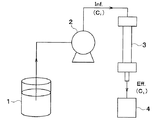
図1に示すように、実施例1では、容器1、ポンプ2、カラム3、フラクションコレクター4を備える評価装置を用いた。
As shown in FIG. 1, in Example 1, an evaluation apparatus including a
容器1には、ネオジムイオンを含む溶液が収容されている。溶液は、水を媒体とする液体であり、ネオジムイオンは、Nd(NO3)3・6H2O(和光純薬工業株式会社)を用いた。溶液中のネオジム濃度は、5mg/Lとした。
The
溶液には、緩衝剤としてPIPES(ピペラジン−N,N′−ビス(2−エタンスルホン酸)、株式会社同仁化学研究所)を10mM(=mmol/L)を調整し、pHを5.7に調整した。さらに溶液には、NaNO3(和光純薬工業株式会社)を0.3mMを調整した。 In the solution, 10 mM (= mmol / L) of PIPES (piperazine-N, N′-bis (2-ethanesulfonic acid), Dojindo Laboratories, Inc.) was adjusted as a buffer, and the pH was adjusted to 5.7. It was adjusted. Furthermore, 0.3 mM of NaNO 3 (Wako Pure Chemical Industries, Ltd.) was adjusted in the solution.
ポンプ2は、容器1の溶液をカラム3に送出する装置である。ポンプ2は、溶液を所定の流速でカラム3に流すことができる。
The
カラム3は、リガンド固定化用カップリングカラム「HiTrap NHS-activated HP columns(GEヘルスケア・ジャパン株式会社)」を用いた。カラム3には、希土類元素回収材として、固相担体のアガロースゲルにペプチドNdDP01〜NdDP05をそれぞれ担持させた。具体的には、N−ヒドロキシコハク酸イミドで修飾されたアガロースにアミンカップリング反応によってペプチドを担持させた。固相担体へのペプチド固定量は、1グラム当たり0.4〜1.0μmolとした。また、カラム3の体積は1mLである。
As the
上述した評価装置を用い、ポンプ2にて溶液を流速4〜5mL/hでカラム3に連続的に流し、フラクションコレクター4で30分毎にサンプリングした。溶液の温度は20〜27℃とした。
Using the evaluation apparatus described above, the solution was continuously flowed to the
評価装置では、カラム3を通過する前後の溶液中のネオジム濃度を測定した。ネオジム濃度は、誘導結合プラズマ発光分光分析法(ICP/AES)により測定した。ネオジム濃度の測定には、ICP発光分析装置「ICPS−7510(株式会社島津製作所)」を用いた。測定間隔は30分とした。なお、カラム3を通過する前のネオジム濃度Ciを初期濃度Ciともいい、カラム3を通過した後のネオジム濃度Ctを吸着後濃度Ctともいう。
In the evaluation apparatus, the neodymium concentration in the solution before and after passing through the
図2は、ネオジムの吸着破過曲線を示している。縦軸は吸着質分率であり、横軸は吸着時間である。吸着質分率は、吸着後濃度Ct/初期濃度Ciである。図2では、ペプチドを固定しないカラム3を用いた場合のネオジムの吸着破過曲線を比較例として示している。
FIG. 2 shows an adsorption breakthrough curve for neodymium. The vertical axis represents the adsorbate fraction, and the horizontal axis represents the adsorption time. The adsorbate fraction is the post-adsorption concentration Ct / initial concentration Ci. In FIG. 2, the adsorption breakthrough curve of neodymium when the
溶液中のネオジムがペプチドですべて吸着されている状態では、吸着後濃度Ctがゼロになり、Ct/Ci=0となる。ペプチドのネオジム吸着量が低下すると、吸着後濃度Ctが増加し、Ct/Ci>0となる。ペプチドでのネオジム吸着量が上限に到達して飽和状態になると、吸着後濃度Ct=初期濃度Ciとなり、Ct/Ci=1となる。 In a state where all the neodymium in the solution is adsorbed by the peptide, the post-adsorption concentration Ct becomes zero and Ct / Ci = 0. When the neodymium adsorption amount of the peptide decreases, the post-adsorption concentration Ct increases and Ct / Ci> 0. When the neodymium adsorption amount in the peptide reaches the upper limit and becomes saturated, the post-adsorption concentration Ct = initial concentration Ci and Ct / Ci = 1.
図2に示すように、ペプチドを用いない比較例では、ネオジム吸着能力が有効でなく、すぐに飽和状態に達している。これに対し、ペプチドNdDP01〜NdDP05を固定させたカラム3を用いた場合には、Ct/Ci=0となっている時間が長く(2〜4.5時間)、ネオジム吸着能力が高くなっている。
As shown in FIG. 2, in the comparative example using no peptide, the neodymium adsorption ability is not effective, and the saturation state is reached immediately. On the other hand, when
カラム3を通過する前後のネオジム濃度の差(Ci−Ct)に基づいて、ペプチドNdDP01〜NdDP05が飽和状態になるまでのネオジム吸着量を算出することができる。ペプチドNdDP01〜NdDP05によるネオジム吸着量q(mg/g)は、以下の数式(1)によって算出することができる。 Based on the difference in neodymium concentration before and after passing through the column 3 (Ci-Ct), the amount of neodymium adsorption until the peptides NdDP01 to NdDP05 are saturated can be calculated. The neodymium adsorption amount q (mg / g) by the peptides NdDP01 to NdDP05 can be calculated by the following mathematical formula (1).

図3は、数式2で算出したペプチドNdDP01〜NdDP05のネオジム吸着量qを示している。図3に示すように、ペプチドNdDP01〜NdDP05のネオジム吸着量は、NdDP02<NdDP01<NdDP3<NdDP04<NdDP05の順となっている。
FIG. 3 shows the neodymium adsorption amount q of the peptides NdDP01 to NdDP05 calculated by
(実施例2)
実施例2では、溶液として、ネオジムイオンおよび鉄イオンが含まれた混合溶液を用いた。溶液中のネオジム濃度は5mg/Lとし、溶液中の鉄濃度は15mg/Lとした。さらに溶液には、EDTAを添加している。溶液のpHは5.6に調整した。
(Example 2)
In Example 2, a mixed solution containing neodymium ions and iron ions was used as the solution. The neodymium concentration in the solution was 5 mg / L, and the iron concentration in the solution was 15 mg / L. Further, EDTA is added to the solution. The pH of the solution was adjusted to 5.6.
実施例2では、実施例1と同様の評価装置を用い、ポンプ2にて溶液を流速4.7mL/hでカラム3に連続的に流し、フラクションコレクター4で30分毎にサンプリングした。カラム3には、配列番号4のアミノ酸配列からなるペプチドNdDP04を固定した。
In Example 2, the same evaluation apparatus as in Example 1 was used, and the solution was continuously flowed through the
図4は、ネオジムおよび鉄の吸着破過曲線を示している。図4では、ペプチドを固定しないカラム3を用いた場合のネオジムおよび鉄の吸着破過曲線を比較例として示している。
FIG. 4 shows an adsorption breakthrough curve for neodymium and iron. In FIG. 4, the adsorption breakthrough curves of neodymium and iron when using the
図4に示すように、ペプチドを固定しない比較例では、ネオジム吸着能力および鉄吸着能力が有効でなく、すぐに飽和状態に達している。また、ペプチドNdDP04を固定させたカラム3を用いた場合においても、鉄の吸着破過曲線は比較例とほぼ同一となっており、すぐに飽和状態に達している。
As shown in FIG. 4, in the comparative example in which the peptide is not immobilized, the neodymium adsorption ability and the iron adsorption ability are not effective, and reach saturation immediately. Further, even when the
これに対し、ペプチドNdDP04を固定させたカラム3を用いた場合のネオジム濃度は、Ct/Ci=0となっている時間が長く(2.5時間)、ネオジム吸着能力が高くなっている。
In contrast, the neodymium concentration in the case of using the
実施例2によれば、ペプチドNdDP04を固定させたカラム3を用いることで、ネオジムおよび鉄の混合溶液からネオジムを選択的に吸着させることができた。
According to Example 2, neodymium could be selectively adsorbed from a mixed solution of neodymium and iron by using
また、実施例2では、ネオジムおよび鉄の混合溶液にEDTAを添加している。ネオジムイオンよりも鉄イオンの方がEDTAとより安定な錯体を形成する。このため、鉄イオンとネオジムイオンが存在する場合には、鉄イオンの方が優先的にEDTAと錯体を形成する。イオンの状態で存在するネオジムは、カラム3のペプチドで吸着され、EDTAと錯体を形成している鉄は、ペプチドで吸着されることなく、カラム3を通過することとなる。この結果、ペプチドによるネオジムの選択性を向上させることができる。
In Example 2, EDTA is added to a mixed solution of neodymium and iron. Iron ions form more stable complexes with EDTA than neodymium ions. For this reason, when iron ions and neodymium ions are present, iron ions preferentially form a complex with EDTA. Neodymium present in an ionic state is adsorbed by the peptide in the
(他の実施形態)
本発明は上述の実施形態に限定されることなく、本発明の趣旨を逸脱しない範囲内で、以下のように種々変形可能である。また、上記各実施形態に開示された手段は、実施可能な範囲で適宜組み合わせてもよい。
(Other embodiments)
The present invention is not limited to the above-described embodiment, and can be variously modified as follows without departing from the spirit of the present invention. Further, the means disclosed in each of the above embodiments may be appropriately combined within a practicable range.
(1)ペプチドNdDP01〜NdDP05の代わりに、配列番号1〜5のアミノ酸配列において1若しくは数個のアミノ酸が欠失、置換若しくは付加されたアミノ酸配列から成るペプチドを用いてもよい。 (1) Instead of the peptides NdDP01 to NdDP05, a peptide comprising an amino acid sequence in which one or several amino acids are deleted, substituted or added in the amino acid sequence of SEQ ID NOs: 1 to 5 may be used.
(2)ネオジムを吸着した希土類元素回収材を焼却して、ネオジムを単独で、又は、ネオジム酸化物として回収してもよい。 (2) The rare earth element recovery material adsorbing neodymium may be incinerated to recover neodymium alone or as neodymium oxide.
Claims (5)
(a)配列番号1〜5のいずれかのアミノ酸配列。
(b)配列番号1〜5のいずれかのアミノ酸配列において1若しくは数個のアミノ酸が欠失、置換若しくは付加されたアミノ酸配列。 The peptide which has an amino acid sequence of either the following (a) or (b).
(A) The amino acid sequence of any one of SEQ ID NOs: 1 to 5.
(B) An amino acid sequence in which one or several amino acids are deleted, substituted or added in any one of the amino acid sequences of SEQ ID NOs: 1 to 5.
Priority Applications (1)
| Application Number | Priority Date | Filing Date | Title |
|---|---|---|---|
| JP2016086294A JP6699322B2 (en) | 2016-04-22 | 2016-04-22 | Peptide, rare earth element recovery material and rare earth element recovery method |
Applications Claiming Priority (1)
| Application Number | Priority Date | Filing Date | Title |
|---|---|---|---|
| JP2016086294A JP6699322B2 (en) | 2016-04-22 | 2016-04-22 | Peptide, rare earth element recovery material and rare earth element recovery method |
Publications (2)
| Publication Number | Publication Date |
|---|---|
| JP2017193518A true JP2017193518A (en) | 2017-10-26 |
| JP6699322B2 JP6699322B2 (en) | 2020-05-27 |
Family
ID=60155386
Family Applications (1)
| Application Number | Title | Priority Date | Filing Date |
|---|---|---|---|
| JP2016086294A Active JP6699322B2 (en) | 2016-04-22 | 2016-04-22 | Peptide, rare earth element recovery material and rare earth element recovery method |
Country Status (1)
| Country | Link |
|---|---|
| JP (1) | JP6699322B2 (en) |
Cited By (3)
| Publication number | Priority date | Publication date | Assignee | Title |
|---|---|---|---|---|
| KR102248851B1 (en) * | 2019-12-09 | 2021-05-06 | 충북대학교 산학협력단 | Dna aptamer specifically binding to neodymium and using the same |
| CN114127104A (en) * | 2019-06-21 | 2022-03-01 | 银杏生物制品公司 | Rare Earth Element (REE) Binding Proteins |
| CN120861005A (en) * | 2025-09-25 | 2025-10-31 | 清华大学 | Material and device for separating rare earth elements and application thereof |
-
2016
- 2016-04-22 JP JP2016086294A patent/JP6699322B2/en active Active
Cited By (4)
| Publication number | Priority date | Publication date | Assignee | Title |
|---|---|---|---|---|
| CN114127104A (en) * | 2019-06-21 | 2022-03-01 | 银杏生物制品公司 | Rare Earth Element (REE) Binding Proteins |
| EP3986913A4 (en) * | 2019-06-21 | 2023-11-15 | Ginkgo Bioworks, Inc. | Rare earth element (ree)-binding proteins |
| KR102248851B1 (en) * | 2019-12-09 | 2021-05-06 | 충북대학교 산학협력단 | Dna aptamer specifically binding to neodymium and using the same |
| CN120861005A (en) * | 2025-09-25 | 2025-10-31 | 清华大学 | Material and device for separating rare earth elements and application thereof |
Also Published As
| Publication number | Publication date |
|---|---|
| JP6699322B2 (en) | 2020-05-27 |
Similar Documents
| Publication | Publication Date | Title |
|---|---|---|
| JP6862008B2 (en) | Mutant immunoglobulin binding polypeptide | |
| JP6051702B2 (en) | Rare earth metal specific peptide, rare earth metal separation and recovery material, separation and recovery method of rare earth metal, and mutual separation and recovery method of rare earth metal | |
| EP2655404B1 (en) | Novel alkali-resistant variants of protein a and their use in affinity chromatography | |
| Gaberc-Porekar et al. | Perspectives of immobilized-metal affinity chromatography | |
| JP6724000B2 (en) | Mutant immunoglobulin binding polypeptide | |
| JP2010254694A5 (en) | ||
| JP6504175B2 (en) | Rare earth material binding peptide and use thereof | |
| CN104211769B (en) | A kind of small molecular antibody affinity peptide and its application | |
| Huang et al. | Affinity purification of von Willebrand factor using ligands derived from peptide libraries | |
| JP5951509B2 (en) | Immunoglobulin GFc region binding polypeptide | |
| JP2016047810A (en) | Peptide, rare earth element recovering material, and recovering method for rare earth elements | |
| JP6699322B2 (en) | Peptide, rare earth element recovery material and rare earth element recovery method | |
| JP5943463B2 (en) | Artificial peptide having rare metal binding ability and use thereof | |
| JP5963248B2 (en) | Antibody purification carrier, production method thereof and use thereof | |
| JP6213453B2 (en) | Separation of rare earth ions | |
| EP3512869B1 (en) | Magnetic particle-binding peptides | |
| Chen et al. | Synthesis and chromatographic characteristics of iminodisuccinic acid-functionalized silica stationary phase | |
| JP6020886B2 (en) | Antibody recognition binding protein | |
| CN109776654B (en) | A kind of affinity peptide and its application | |
| JP6459483B2 (en) | Rare earth species capture peptide and use thereof | |
| CN113480613A (en) | Self-shearing protein label, modification method and application thereof | |
| US20250376489A1 (en) | Rare earth element binding protein | |
| CN107923889A (en) | Affiliation carrier and by the separated method of immunoglobulin | |
| CN101955510A (en) | Affinity peptide specific to herceptin and segment thereof | |
| KR101572589B1 (en) | polyacylamide gel stabilization electrophoresis containing peptide and method for preparing the thereof |
Legal Events
| Date | Code | Title | Description |
|---|---|---|---|
| A621 | Written request for application examination |
Free format text: JAPANESE INTERMEDIATE CODE: A621 Effective date: 20190304 |
|
| A131 | Notification of reasons for refusal |
Free format text: JAPANESE INTERMEDIATE CODE: A131 Effective date: 20200218 |
|
| A521 | Request for written amendment filed |
Free format text: JAPANESE INTERMEDIATE CODE: A523 Effective date: 20200318 |
|
| TRDD | Decision of grant or rejection written | ||
| A01 | Written decision to grant a patent or to grant a registration (utility model) |
Free format text: JAPANESE INTERMEDIATE CODE: A01 Effective date: 20200331 |
|
| A61 | First payment of annual fees (during grant procedure) |
Free format text: JAPANESE INTERMEDIATE CODE: A61 Effective date: 20200413 |
|
| R151 | Written notification of patent or utility model registration |
Ref document number: 6699322 Country of ref document: JP Free format text: JAPANESE INTERMEDIATE CODE: R151 |
|
| R250 | Receipt of annual fees |
Free format text: JAPANESE INTERMEDIATE CODE: R250 |
|
| R250 | Receipt of annual fees |
Free format text: JAPANESE INTERMEDIATE CODE: R250 |
|
| R250 | Receipt of annual fees |
Free format text: JAPANESE INTERMEDIATE CODE: R250 |