JP2017123797A - Method for searching biphenyl degrading bacterium, oligonucleotide, and biphenyl-degrading bacterium - Google Patents
Method for searching biphenyl degrading bacterium, oligonucleotide, and biphenyl-degrading bacterium Download PDFInfo
- Publication number
- JP2017123797A JP2017123797A JP2016004090A JP2016004090A JP2017123797A JP 2017123797 A JP2017123797 A JP 2017123797A JP 2016004090 A JP2016004090 A JP 2016004090A JP 2016004090 A JP2016004090 A JP 2016004090A JP 2017123797 A JP2017123797 A JP 2017123797A
- Authority
- JP
- Japan
- Prior art keywords
- biphenyl
- degrading
- bacteria
- bacterium
- degrading bacterium
- Prior art date
- Legal status (The legal status is an assumption and is not a legal conclusion. Google has not performed a legal analysis and makes no representation as to the accuracy of the status listed.)
- Pending
Links
Images

Landscapes
- Measuring Or Testing Involving Enzymes Or Micro-Organisms (AREA)
- Micro-Organisms Or Cultivation Processes Thereof (AREA)
Abstract
【課題】ビフェニル分解菌を効率よく、かつ精度よく探索することが可能なビフェニル分解菌の探索方法、それに用いるオリゴヌクレオチド、及びその方法により検出されたビフェニル分解菌を提供する。【解決手段】本発明の一形態に係るビフェニル分解菌の探索方法は、土壌から複数の菌を分離する工程を含む。ビフェニル及びその誘導体を分解することが可能なビフェニル分解菌の有するビフェニル分解酵素をコードするDNAにハイブリダイズすることが可能なオリゴヌクレオチドを、上記分離された複数の菌のDNAにハイブリダイズさせることで、上記分離された複数の菌からビフェニル分解菌候補が検出される。【選択図】図2The present invention provides a search method for a biphenyl-degrading bacterium capable of efficiently and accurately searching for a biphenyl-degrading bacterium, an oligonucleotide used therefor, and a biphenyl-degrading bacterium detected by the method. A method for searching for biphenyl-degrading bacteria according to an embodiment of the present invention includes a step of separating a plurality of bacteria from soil. By hybridizing an oligonucleotide capable of hybridizing to a DNA encoding a biphenyl degrading enzyme possessed by a biphenyl degrading bacterium capable of degrading biphenyl and its derivatives, to the DNA of a plurality of the separated bacteria. A biphenyl-degrading bacterium candidate is detected from the plurality of separated bacteria. [Selection] Figure 2
Description
本発明は、ビフェニル分解菌の探索方法、それに用いるオリゴヌクレオチド、及びその方法により検出されたビフェニル分解菌に関する。 The present invention relates to a search method for biphenyl-degrading bacteria, an oligonucleotide used therein, and a biphenyl-degrading bacterium detected by the method.
PCBsは、ビフェニルの1個以上の水素原子を塩素原子で置換した化合物の総称であり、ビフェニル誘導体の一つである。PCBsは、一般に、耐熱性、電気絶縁性、耐薬品性等に優れた性質を有し、このような優れた性質を活かして非常に多岐にわたる分野の製品に使用されてきたが、生体に対する毒性が高いことが判明している。これにより、現在ではPCBsの使用が規制されているが、PCBsは化学的な安定性が高いため、既に使用されている製品を介して生体や環境へ悪影響を及ぼすことが懸念されている。 PCBs is a general term for compounds in which one or more hydrogen atoms of biphenyl are substituted with chlorine atoms, and is one of biphenyl derivatives. PCBs generally have excellent properties such as heat resistance, electrical insulation, and chemical resistance, and have been used for products in a wide variety of fields by taking advantage of such excellent properties. Has been found to be expensive. As a result, the use of PCBs is currently regulated, but PCBs have high chemical stability, and there is concern that they may adversely affect the living body and the environment through already used products.
そこで、PCBs等のビフェニル誘導体を無害化する取り組みがなされている。
例えば、特許文献1には、微生物を含む組成物を用いてビフェニル又はその誘導体(例えばPCBs)を分解させる技術が記載されている。同文献には、PCBs分解用組成物の製造に使用し得る微生物のスクリーニング方法として、ビフェニルを単一の炭素現として生育し得る微生物からのスクリーニングを繰り返し行うことが記載されている(同文献の段落[0021]参照)。
Therefore, efforts have been made to render harmless biphenyl derivatives such as PCBs.
For example,
しかしながら、特許文献1に記載のスクリーニング方法によれば、ビフェニルを単一の炭素源として生育し得る微生物を繰り返しスクリーニングすることから、目的の微生物の探索に長時間を要していた。
また、ビフェニルを単一の炭素源として生育し得る微生物を培養し、増殖させようとした場合、目的とする微生物以外の微生物も増殖する可能性があった。このため、培養工程の後、多くの検体を試験対象とした代謝試験を実施する必要が生じ、目的の微生物を取得するまでさらに長時間を要する可能性があった。
さらに、特殊な環境で長時間微生物を培養した場合、遺伝的な偏りが生じ、当初の生物相から変化が生じる可能性もあった。
However, according to the screening method described in
In addition, when microorganisms that can grow using biphenyl as a single carbon source are cultured and proliferated, microorganisms other than the target microorganism may also proliferate. For this reason, after the culturing step, it is necessary to carry out a metabolic test using a large number of specimens as test subjects, and it may take a longer time to obtain the target microorganism.
Furthermore, when microorganisms were cultured for a long time in a special environment, genetic bias occurred, and there was a possibility that changes would occur from the original biota.
以上のような事情に鑑み、本発明の目的は、ビフェニル分解菌を効率よく、かつ精度よく探索することが可能なビフェニル分解菌の探索方法、それに用いるオリゴヌクレオチド、及びその方法により検出されたビフェニル分解菌を提供することにある。 In view of the circumstances as described above, an object of the present invention is to provide a method for searching biphenyl-degrading bacteria capable of efficiently and accurately searching for biphenyl-degrading bacteria, an oligonucleotide used therefor, and biphenyl detected by the method. It is to provide degrading bacteria.
上記目的を達成するため、本発明の一形態に係るビフェニル分解菌の探索方法は、土壌から複数の菌を分離する工程を含む。
ビフェニル及びその誘導体を分解することが可能なビフェニル分解菌の有するビフェニル分解酵素をコードするDNAにハイブリダイズすることが可能なオリゴヌクレオチドを、上記分離された複数の菌のDNAにハイブリダイズさせることで、上記分離された複数の菌からビフェニル分解菌候補が検出される。
上記ビフェニル分解菌の探索方法によれば、土壌から分離した菌に対して、上記オリゴヌクレオチドをハイブリダイズさせることにより、ビフェニル分解酵素をコードする遺伝子を有するビフェニル分解菌候補を簡便に、かつ効率よく検出することができる。さらに、ビフェニル分解酵素遺伝子の有無に基づいてビフェニル分解菌候補を検出できるため、ビフェニル分解菌の可能性が高いビフェニル分解菌候補を選抜することが可能となる。
In order to achieve the above object, a method for searching for biphenyl-degrading bacteria according to an embodiment of the present invention includes a step of separating a plurality of bacteria from soil.
By hybridizing an oligonucleotide capable of hybridizing to a DNA encoding a biphenyl degrading enzyme possessed by a biphenyl degrading bacterium capable of degrading biphenyl and its derivatives, to the DNA of a plurality of the separated bacteria. A biphenyl-degrading bacterium candidate is detected from the plurality of separated bacteria.
According to the method for searching for a biphenyl-degrading bacterium, a biphenyl-degrading bacterium candidate having a gene encoding a biphenyl-degrading enzyme can be easily and efficiently obtained by hybridizing the oligonucleotide to a bacterium isolated from soil. Can be detected. Furthermore, since a biphenyl-degrading bacterium candidate can be detected based on the presence or absence of a biphenyl-degrading enzyme gene, it becomes possible to select a biphenyl-degrading bacterium candidate that has a high possibility of being a biphenyl-degrading bacterium.
上記土壌は、植物根圏土壌であってもよい。
植物根圏土壌は、微生物を豊富に含むため、ビフェニル分解菌候補を検出できる確率を高めることができる。
The soil may be plant rhizosphere soil.
Since plant rhizosphere soil contains abundant microorganisms, the probability that biphenyl-degrading bacterium candidates can be detected can be increased.
上記ビフェニル分解酵素をコードするDNAは、複数の既知のビフェニル分解菌のビフェニル分解酵素のアミノ酸配列において相互に配列類似性の高いアミノ酸配列に対応する塩基配列を含んでいてもよい。
これにより、上記オリゴヌクレオチドの塩基配列を、多様な菌のビフェニル誘導体をコードするDNAに共通する配列に基づいて決定することができ、ビフェニル分解菌候補を精度よく検出することができる。
The DNA encoding the above-mentioned biphenyl degrading enzyme may contain a base sequence corresponding to an amino acid sequence having high sequence similarity among the amino acid sequences of biphenyl degrading enzymes of a plurality of known biphenyl degrading bacteria.
Thereby, the base sequence of the said oligonucleotide can be determined based on the sequence common to DNA which codes the biphenyl derivative of various bacteria, and a biphenyl degrading bacterium candidate can be detected accurately.
この場合、上記複数の既知のビフェニル分解菌は、5以上の既知のビフェニル分解菌を含んでいてもよい。
これにより、ビフェニル分解菌候補をより精度よく検出することができる。
In this case, the plurality of known biphenyl-degrading bacteria may include five or more known biphenyl-degrading bacteria.
Thereby, a biphenyl degrading bacterium candidate can be detected more accurately.
上記ビフェニル分解菌の探索方法は、さらに、
ビフェニル又はその誘導体を含む溶液中に上記検出されたビフェニル分解菌候補を添加して上記ビフェニル分解菌候補が上記溶液中のビフェニル誘導体又はその誘導体を分解するか否か判定し、分解すると判定された場合、上記ビフェニル分解菌候補をビフェニル分解菌と推定する工程を含んでいてもよい。
これにより、ビフェニル分解菌候補のうち、実際にビフェニル又はその誘導体を分解菌する菌をビフェニル分解菌と推定することができる。
The method for searching for the biphenyl-degrading bacterium further includes:
The biphenyl-degrading bacterium candidate was added to a solution containing biphenyl or a derivative thereof to determine whether the biphenyl-degrading bacterium candidate decomposes the biphenyl derivative or the derivative in the solution, and it was determined to decompose. In this case, the method may include a step of estimating the biphenyl-degrading bacterium candidate as a biphenyl-degrading bacterium.
Thereby, among biphenyl-degrading bacterium candidates, a bacterium that actually degrades biphenyl or a derivative thereof can be estimated as a biphenyl-degrading bacterium.
具体的には、上記ビフェニル誘導体は、PCBs(ポリ塩化ビフェニル類)であってもよい。 Specifically, the biphenyl derivative may be PCBs (polychlorinated biphenyls).
本発明の他の形態に係るオリゴヌクレオチドは、ビフェニル及びその誘導体を分解することが可能なビフェニル分解菌の有するビフェニル分解酵素をコードするDNAにハイブリダイズすることが可能である。 The oligonucleotide according to another aspect of the present invention can hybridize to DNA encoding a biphenyl degrading enzyme possessed by a biphenyl degrading bacterium capable of degrading biphenyl and its derivatives.
また、本発明のさらに他の形態に係るビフェニル分解菌は、
土壌から複数の菌を分離し、
ビフェニル及びその誘導体を分解することが可能なビフェニル分解菌の有するビフェニル分解酵素をコードするDNAにハイブリダイズすることが可能なオリゴヌクレオチドを、上記分離された複数の菌のDNAにハイブリダイズさせることで、上記分離された複数の菌からビフェニル分解菌候補を検出し、
ビフェニル又はその誘導体を含む溶液中に上記検出されたビフェニル分解菌候補を添加して上記ビフェニル分解菌候補が溶液中のビフェニル又はその誘導体を分解するか否か判定し、分解すると判定された場合、上記ビフェニル分解菌候補をビフェニル分解菌と推定する。
In addition, the biphenyl degrading bacterium according to still another embodiment of the present invention,
Isolate multiple bacteria from the soil,
By hybridizing an oligonucleotide capable of hybridizing to a DNA encoding a biphenyl degrading enzyme possessed by a biphenyl degrading bacterium capable of degrading biphenyl and its derivatives, to the DNA of a plurality of the separated bacteria. , Detecting a biphenyl-degrading bacterium candidate from the plurality of separated bacteria,
When the detected biphenyl-degrading bacterium candidate is added to a solution containing biphenyl or a derivative thereof to determine whether or not the biphenyl-degrading bacterium candidate decomposes biphenyl or a derivative thereof in the solution, The biphenyl-degrading bacterium candidate is estimated as a biphenyl-degrading bacterium.
以上のように、本発明によれば、ビフェニル分解菌を効率よく、かつ精度よく探索することが可能なビフェニル分解菌の探索方法、それに用いるオリゴヌクレオチド、及びその方法により検出されたビフェニル分解菌を提供することができる。 As described above, according to the present invention, a search method for biphenyl-degrading bacteria capable of efficiently and accurately searching for biphenyl-degrading bacteria, oligonucleotides used therefor, and biphenyl-degrading bacteria detected by the method are provided. Can be provided.
[本発明の概要]
本発明は、遺伝子マーカーを用いてビフェニル分解酵素遺伝子の有無を診断することで、PCBs等のビフェニル誘導体を分解することが可能なビフェニル分解菌を検出することを特徴とする。以下、詳細について説明する。
[Outline of the present invention]
The present invention is characterized by detecting biphenyl-degrading bacteria capable of degrading biphenyl derivatives such as PCBs by diagnosing the presence or absence of a biphenyl-degrading enzyme gene using a gene marker. Details will be described below.
[ビフェニル誘導体]
ビフェニル誘導体とは、ビフェニルを母体とし、ビフェニルに官能基の導入、酸化、還元、原子の置き換えなどの改変がなされた化合物をいう。ビフェニル誘導体は、一般に安定性が高く、生分解性が低い。
具体的には、ビフェニル誘導体は、後述するPCBs、アルキルビフェニル等が挙げられる。
[Biphenyl derivatives]
A biphenyl derivative refers to a compound in which biphenyl is used as a base and a modification such as introduction of a functional group, oxidation, reduction, or atom replacement is performed on biphenyl. Biphenyl derivatives generally have high stability and low biodegradability.
Specifically, examples of the biphenyl derivative include PCBs and alkylbiphenyl described later.
[PCBs]
PCBsは、上述のように、ビフェニルの1個以上の水素原子を塩素原子で置換した化合物の総称であり、一般式は、C12H(10−n)Cln (1≦n≦10)で表される。具体的には、PCBsとしては、3,4,4',5−テトラクロロビフェニール、3,3',4,4'−テトラクロロビフェニール、3,3',4,4',5−ペンタクロロビフェニール、2,3,3',4,4'−ペンタクロロビフェニール、2,3,4,4',5−ペンタクロロビフェニール、2,3',4,4',5−ペンタクロロビフェニール、2',3,4,4',5−ペンタクロロビフェニール等を挙げることができる。
PCBは、通常PCB単体の混合物として市販されており、これらがコンデンサやトランスに使用されている。その具体例としては、鐘淵化学(株)のKC−200(2塩化ビフェニル)、KC−300(3塩化ビフェニル)、KC−400(4塩化ビフェニル)、KC−500(5塩化ビフェニル)、KC−600(6塩化ビフェニル)、KC−1000(KC500/トリクロロベンゼン=60/40(質量比)の混合物)や、三菱モンサント(株)のアロクロール1254(54% Chlorine)等が挙げられる。
これらのPCBsは、ビフェニル分解菌により分解されることが知られている(特許文献1参照)。
[PCBs]
PCBs is a general term for compounds in which one or more hydrogen atoms of biphenyl are substituted with chlorine atoms as described above, and the general formula is C 12 H (10−n) Cl n (1 ≦ n ≦ 10). expressed. Specifically, PCBs include 3,4,4 ′, 5-tetrachlorobiphenyl, 3,3 ′, 4,4′-tetrachlorobiphenyl, 3,3 ′, 4,4 ′, 5-pentachloro. Biphenyl, 2,3,3 ′, 4,4′-pentachlorobiphenyl, 2,3,4,4 ′, 5-pentachlorobiphenyl, 2,3 ′, 4,4 ′, 5-pentachlorobiphenyl, 2 ', 3,4,4', 5-pentachlorobiphenyl and the like can be mentioned.
PCBs are usually marketed as a mixture of PCBs alone, and these are used for capacitors and transformers. Specific examples thereof include KC-200 (biphenyl dichloride), KC-300 (biphenyl trichloride), KC-400 (biphenyl tetrachloride), KC-500 (biphenyl pentachloride), KC of Kaneka Chemical Co., Ltd. -600 (biphenyl hexachloride), KC-1000 (mixture of KC500 / trichlorobenzene = 60/40 (mass ratio)), Arrochlor 1254 (54% Chlorine) of Mitsubishi Monsanto Co., Ltd., and the like.
These PCBs are known to be degraded by biphenyl-degrading bacteria (see Patent Document 1).
[ビフェニル分解菌]
ビフェニル分解菌は、ビフェニル分解酵素をコードするDNA(以下、ビフェニル分解酵素遺伝子とも称する)を有する真正細菌である。ビフェニル分解菌としては、例えば、アクロモバクター(Achromobacter)属、アルカニボラックス(Alcanivorax)属、バークホルデリア(Burkholderia)属、コマモナス(Comamonas)属、カプリアビダス(Cupriavidus)属、シュードモナス(Pseudomanas)属、及びシュードキサントモナス(Pseudoxanthomonas)等に属する真正細菌が挙げられるが、これに限定されない。
なお、以下の説明において単に「菌」という場合、真正細菌をいうものとする。
ビフェニル分解酵素は、ビフェニルを分解する酵素であり、さらにビフェニルを分解することで、PCBs等のビフェニル誘導体も分解することが可能である。ビフェニル分解菌としては、具体的には、ビフェニルジオキシゲナーゼ、ジヒドロジオールデヒドロゲナーゼ、2,3−ジヒドロキシビフェニルジオキシゲナーゼ、2−ヒドロキシル−6−オキソ−6−フェニルヘキサ−2,4−ジエン酸ヒドロラーゼ等を挙げることができる。
ビフェニル分解酵素遺伝子は、具体的には、ビフェニルジオキシゲナーゼをコードするBphA、ジハイドロジオールデヒドロゲナーゼをコードするBphB、2,3−ジヒドロキシビフェニルジオキシゲナーゼをコードするBphC、2−ヒドロキシル−6−オキソ−6−フェニルヘキサ−2,4−ジエン酸ヒドロラーゼをコードするBphD等が挙げられる。
[Biphenyl-degrading bacteria]
A biphenyl-degrading bacterium is an eubacteria having a DNA encoding a biphenyl-degrading enzyme (hereinafter also referred to as a biphenyl-degrading enzyme gene). Examples of biphenyl-degrading bacteria include the genus Achromobacter, Alcanivorax, Burkholderia, Comamonas, Cupriavidus, Pseudomanas And eubacteria belonging to Pseudoxanthomonas and the like, but are not limited thereto.
In the following description, when the term “bacteria” is simply used, it means an eubacteria.
A biphenyl degrading enzyme is an enzyme that degrades biphenyl, and further, biphenyl derivatives such as PCBs can be decomposed by decomposing biphenyl. Specific examples of biphenyl degrading bacteria include biphenyl dioxygenase, dihydrodiol dehydrogenase, 2,3-dihydroxybiphenyl dioxygenase, 2-hydroxyl-6-oxo-6-phenylhexa-2,4-dienoic acid hydrolase and the like. Can be mentioned.
Specifically, the biphenyl degrading enzyme gene includes BphA encoding biphenyl dioxygenase, BphB encoding dihydrodiol dehydrogenase, BphC encoding 2,3-dihydroxybiphenyl dioxygenase, 2-hydroxyl-6-oxo-6 -BphD encoding phenylhexa-2,4-dienoate hydrolase and the like.
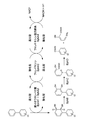
図1は、ビフェニル分解菌として知られているシュードモナス属細菌(Pseudomonas sp.)KKS102株におけるPCBsの分解経路を模式的に示す図である(例えば、Kikuchi Y. et al, Journal of Bacteriology, Vol.176, No.6, p.1689-1694, 1994参照)。なお、上述の分解経路は一例であり、他の細菌においては異なる経路をとり得る。
この経路において、PCBsは、まず、ビフェニルジオキシゲナーゼ(BphA酵素)により、2つの水酸基(OH)が付加される。BphA酵素は4つのサブユニット(BphA1、BphA2、BphA3、BphA4)から構成されている。そして、図1に示す通り、BphA1とBphA2とが複合体を形成し、基質との結合及び酸素添加反応を触媒し、フェレドキシンが電子伝達体として機能し、フェレドキシンリダクターゼがNAD又はNADPHとフェレドキシンの酸化還元反応を触媒する。
続いてジヒドロジオールジヒドロゲナーゼ(BphB酵素)によって、BphAの産物から2つの水素が除かれた後、2,3−ジヒドロキシビフェニルジオキシゲナーゼ(BphC酵素)により、BphB産物に酸素1分子が付加され、HOPDA(BphDの誘導基質)が生成する。ついで、2−ヒドロキシル−6−オキソ−6−フェニルヘキサ−2,4−ジエン酸ヒドロラーゼ(BphD酵素)が、HOPDAを安息香酸と2−ヒドロキシペンタ−2,4−ジエノエートとに分解する。
その後、図示はしないが、2−ヒドロキシペンタ−2,4−ジエノエートヒドラターゼ(BphE酵素)、4−ヒドロキシ−2−オキソバレレートアルドラーゼ(BphF酵素)及びアセトアルデヒドデヒドロゲナーゼ(BphG酵素)によりアセチルCoAとピルビン酸に転換されると考えられる。
FIG. 1 is a diagram schematically showing the degradation pathway of PCBs in Pseudomonas sp. KKS102 strain known as a biphenyl-degrading bacterium (for example, Kikuchi Y. et al, Journal of Bacteriology, Vol. 1). 176, No. 6, p.1689-1694, 1994). In addition, the above-mentioned degradation pathway is an example, and in other bacteria, a different pathway can be taken.
In this pathway, PCBs are first added with two hydroxyl groups (OH) by biphenyl dioxygenase (BphA enzyme). The BphA enzyme is composed of four subunits (BphA1, BphA2, BphA3, BphA4). As shown in FIG. 1, BphA1 and BphA2 form a complex, catalyze the binding to the substrate and the oxygenation reaction, ferredoxin functions as an electron carrier, and ferredoxin reductase acts as an oxidation of NAD or NADPH and ferredoxin. Catalyze the reduction reaction.
Subsequently, after dihydrogendiol dihydrogenase (BphB enzyme) removes two hydrogens from the product of BphA, 2,3-dihydroxybiphenyl dioxygenase (BphC enzyme) adds one molecule of oxygen to the BphB product, and HOPDA (BphD-derived substrate) is produced. Then 2-hydroxyl-6-oxo-6-phenylhexa-2,4-dienoic acid hydrolase (BphD enzyme) decomposes HOPDA into benzoic acid and 2-hydroxypenta-2,4-dienoate.
Thereafter, although not shown, acetyl-CoA was obtained by 2-hydroxypenta-2,4-dienoate hydratase (BphE enzyme), 4-hydroxy-2-oxovalerate aldolase (BphF enzyme) and acetaldehyde dehydrogenase (BphG enzyme). And converted to pyruvic acid.
[ビフェニル分解菌の探索方法]
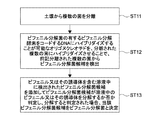
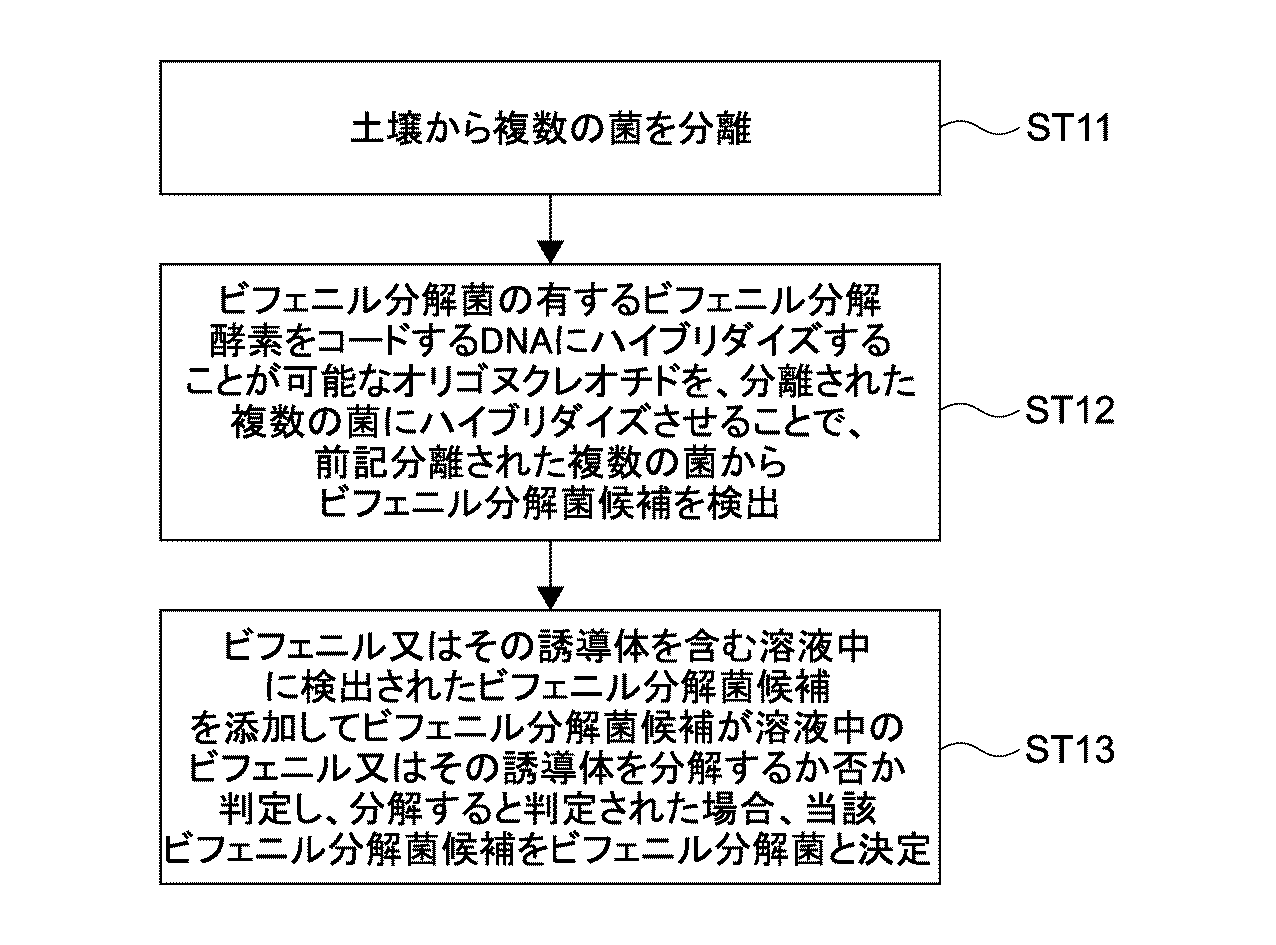
図2は、本発明に係るビフェニル分解菌の探索方法を示すフローチャートである。
同図に示すように、本発明に係るビフェニル分解菌の探索方法は、複数の菌を分離するステップ(ST11)と、ビフェニル分解菌候補を検出するステップ(ST12)と、ビフェニル分解菌候補に対してビフェニル分解試験を行い、ビフェニル分解菌を検出するステップ(ST13)と、を含む。以下、各ステップについて説明する。
[Search method for biphenyl-degrading bacteria]
FIG. 2 is a flowchart showing a method for searching for biphenyl degrading bacteria according to the present invention.
As shown in the figure, the method for searching for biphenyl-degrading bacteria according to the present invention comprises a step of separating a plurality of bacteria (ST11), a step of detecting biphenyl-degrading bacteria candidates (ST12), and biphenyl-degrading bacteria candidates. Performing a biphenyl degradation test and detecting a biphenyl degrading bacterium (ST13). Hereinafter, each step will be described.
まず、図2に示すように、土壌から複数の菌を分離する(ST11)。
ここでいう土壌は、PCBs等のビフェニル誘導体による汚染が疑われていない土壌でもよい。本発明は、ビフェニル分解菌を非常に効率よく検出できるため、汚染が疑われていない土壌からでもビフェニル分解菌を検出することができる。
また、ここでいう土壌は、例えば植物根圏土壌でもよい。植物根圏土壌は、植物の根の周囲の土壌をいい、植物の根の一部を含んでいてもよい。植物の根は、呼吸の作用や栄養分と水分を吸収する作用によって、周囲の土壌の栄養分組成を変化させるとともに、pHを変化させ得る。また、植物の根は、分泌物を分泌させるとともに、根毛を脱落させ得る。これにより、植物根圏土壌は、他の領域の土壌と比較して異なる組成を有し、一般に多くの微生物を含む。さらに、植物由来の化合物がビフェニル分解遺伝子を誘発させることが知られているため、このような化合物が存在し得る植物根圏土壌は、ビフェニル分解遺伝子を有するビフェニル分解菌を含む可能性がある。したがって、本発明の土壌として植物根圏土壌を用いることで、ビフェニル分解菌を検出する可能性を高めることができる。
なお、土壌は上記に限定されず、浄水場等の活性汚泥、PCBs等による汚染が疑われる土壌等でもよい。
First, as shown in FIG. 2, a plurality of bacteria are separated from the soil (ST11).
The soil here may be soil that is not suspected of being contaminated with biphenyl derivatives such as PCBs. Since the present invention can detect biphenyl-degrading bacteria very efficiently, biphenyl-degrading bacteria can be detected even from soil where contamination is not suspected.
The soil here may be, for example, plant rhizosphere soil. The plant rhizosphere soil refers to the soil around the root of the plant, and may include a part of the root of the plant. Plant roots can change the nutrient composition of the surrounding soil and change the pH by the action of respiration and the action of absorbing nutrients and moisture. In addition, the roots of plants can secrete secretions and drop root hairs. Thereby, plant rhizosphere soil has a different composition compared with the soil of another area | region, and generally contains many microorganisms. Furthermore, since plant-derived compounds are known to induce biphenyl degrading genes, plant rhizosphere soils in which such compounds may be present may include biphenyl degrading bacteria having biphenyl degrading genes. Therefore, the possibility of detecting biphenyl-degrading bacteria can be increased by using plant rhizosphere soil as the soil of the present invention.
The soil is not limited to the above, and may be activated sludge such as a water purification plant, soil suspected of being contaminated with PCBs, or the like.
このような土壌から複数の菌を分離するには、例えば、平板希釈法を適用することができる。具体的には、まず、採取された土壌を液体培地や滅菌水等で希釈する。例えば、植物の根を含む植物根圏土壌を採取した場合は、固形分である根などをすりつぶし、採取した土壌の重量の9倍の液体で希釈する。これを10倍希釈として、例えば10倍ずつ希釈していき、102倍、103倍、104倍…の土壌希釈液を生成する。この作業により生成された各土壌希釈液を、それぞれ寒天培地へ播種する。あるいは、既知の最適な希釈倍率の土壌希釈液のみを寒天培地へ播種してもよい。植物根圏土壌の場合、最適な土壌の希釈倍率は一例として108倍である。
寒天培地は、典型的には、シャーレを用いた平板培地であるが、これに限定されない。寒天培地は、滅菌処理したものを用いることができる。
そして、土壌希釈液を播種した寒天培地を1日〜10日ほど培養し、複数の菌のコロニーを形成させることで、複数の菌を分離する。培養条件は特に限定されず、通常の細菌培養に用いる条件を適用することができる。形成されたコロニーは、次ステップにおいて検体として用いられる。なお、次ステップで用いられるコロニーは、隣接するコロニーと分離して形成されたものが用いられる。これにより、異なる菌株のコンタミネーションを防止することができる。
In order to separate a plurality of bacteria from such soil, for example, a plate dilution method can be applied. Specifically, first, the collected soil is diluted with a liquid medium or sterilized water. For example, when plant rhizosphere soil containing plant roots is collected, the roots which are solid contents are ground and diluted with a liquid 9 times the weight of the collected soil. This as a 10-fold dilution, for example it will be diluted by 10-fold, 10 twice, 10 three times, to produce a 10 4 fold ... soil dilution. Each soil dilution produced by this work is seeded on an agar medium. Alternatively, only a soil dilution having a known optimum dilution ratio may be seeded on the agar medium. For plant rhizosphere soil, dilution optimum soil is 10 8 times as an example.
The agar medium is typically a plate medium using a petri dish, but is not limited thereto. As the agar medium, a sterilized one can be used.
And an agar medium seed | inoculated with the soil dilution liquid is culture | cultivated for about 1 to 10 days, and a several microbe is isolate | separated by forming the colony of a several microbe. The culture conditions are not particularly limited, and the conditions used for normal bacterial culture can be applied. The formed colony is used as a specimen in the next step. The colonies used in the next step are those formed separately from adjacent colonies. Thereby, contamination of different strains can be prevented.
続いて、ビフェニル及びその誘導体を分解することが可能なビフェニル分解菌の有するビフェニル分解酵素をコードするDNAにハイブリダイズすることが可能なオリゴヌクレオチドを、分離された複数の菌の遺伝子にハイブリダイズさせることで、上記分離された複数の菌からビフェニル分解菌候補を検出する(ST12)。
本ステップでは、上記オリゴヌクレオチドがハイブリダイズした遺伝子を有する菌を、ビフェニル分解菌候補として検出することができる。
ここでいうハイブリダイズは、本発明のオリゴヌクレオチドがビフェニル分解酵素遺伝子内の標的配列と相補的に結合することである。
また、ここでいう「ビフェニル分解酵素をコードするDNAにハイブリダイズする」とは、ビフェニル分解酵素遺伝子の一部のDNA配列にハイブリダイズすること、及びビフェニル分解酵素遺伝子の全体にハイブリダイズすることを含む。
本発明のオリゴヌクレオチドは、PCR(ポリメラーゼ連鎖反応)法のプライマー、ハイブリダイゼーション法の核酸プローブ、固相担体に結合された捕捉プローブ等、分子生物学的な種々の検出方法に用いることができる。なお、本発明のオリゴヌクレオチドは、標識化されずに用いられてもよいし、放射性物質や蛍光・発光物質、酵素や酵素基質等の標識物によって標識化して核酸プローブやプライマーとして用いることもできる。オリゴヌクレオチドの詳細については、後述する。
Subsequently, an oligonucleotide capable of hybridizing to a DNA encoding a biphenyl-degrading enzyme possessed by a biphenyl-degrading bacterium capable of degrading biphenyl and its derivative is hybridized to the genes of a plurality of isolated bacteria. Thus, a biphenyl-degrading bacterium candidate is detected from the plurality of separated bacteria (ST12).
In this step, a bacterium having a gene hybridized with the oligonucleotide can be detected as a biphenyl-degrading bacterium candidate.
Hybridization here means that the oligonucleotide of the present invention binds complementarily to the target sequence in the biphenyl degrading enzyme gene.
The term “hybridizes to DNA encoding biphenyl degrading enzyme” as used herein means to hybridize to a part of the DNA sequence of the biphenyl degrading enzyme gene and to hybridize to the entire biphenyl degrading enzyme gene. Including.
The oligonucleotide of the present invention can be used in various molecular biological detection methods such as PCR (polymerase chain reaction) primer, hybridization nucleic acid probe, and capture probe bound to a solid phase carrier. The oligonucleotide of the present invention may be used without being labeled, or may be used as a nucleic acid probe or primer after being labeled with a radioactive substance, a fluorescent / luminescent substance, a label such as an enzyme or an enzyme substrate. . Details of the oligonucleotide will be described later.
分離された複数の菌からビフェニル分解菌候補を検出するには、例えば、上記オリゴヌクレオチドをプライマーとしたPCR法により標的配列が増幅するか否か確認することができる。
具体的には、まず、前ステップにおいて形成されたコロニーに含まれる菌のDNAをテンプレートとして、PCR増幅用反応液を調製する。テンプレートDNAは、各コロニーに含まれる菌体からDNAを抽出したものとすることができる。PCR反応液は、テンプレートDNA、プライマー対、DNAポリメラーゼ、dNTP、PCR用反応バッファ、及び滅菌蒸留水等を混合したものとすることができる。あるいは、DNAポリメラーゼ、dNTP、PCR用反応バッファ等に替えて、予めこれらの試薬が混合された市販のPCR用酵素を用いることもできる。次に、サーマルサイクラー等を用いて熱変性反応、アニーリング反応、及び伸長反応を連続して行い、これを所定サイクル繰り返すことにより、PCR法による増幅反応を行う。PCR法における反応条件等は、使用するポリメラーゼの種類やプライマーのTm値等を考慮して、適宜決定することができる。そして、その反応後の反応液中の増幅産物を確認し、所望のDNA断片が増幅されているか否か確認する。このように、所望のDNA断片が増幅されている(陽性)菌を、ビフェニル分解菌候補として検出する。
増幅産物の確認方法も特に限定されず、例えば、アガロースゲル電気泳動法、キャピラリー電気泳動法、シーケンス解析による塩基配列を決定する方法等を適用することができる。このうち、アガロースゲル電気泳動法が簡便に増幅産物を確認でき、より好ましい。
In order to detect a biphenyl-degrading bacterium candidate from a plurality of separated bacteria, for example, it can be confirmed whether or not the target sequence is amplified by a PCR method using the oligonucleotide as a primer.
Specifically, first, a PCR amplification reaction solution is prepared using the bacterial DNA contained in the colony formed in the previous step as a template. Template DNA can be obtained by extracting DNA from bacterial cells contained in each colony. The PCR reaction solution may be a mixture of template DNA, primer pair, DNA polymerase, dNTP, PCR reaction buffer, sterilized distilled water, and the like. Alternatively, a commercially available PCR enzyme in which these reagents are mixed in advance can be used instead of DNA polymerase, dNTP, PCR reaction buffer, and the like. Next, a thermal denaturation reaction, an annealing reaction, and an extension reaction are successively performed using a thermal cycler or the like, and an amplification reaction by a PCR method is performed by repeating this for a predetermined cycle. The reaction conditions and the like in the PCR method can be appropriately determined in consideration of the type of polymerase used, the Tm value of the primer, and the like. Then, the amplification product in the reaction solution after the reaction is confirmed, and it is confirmed whether or not a desired DNA fragment is amplified. In this way, a bacterium in which a desired DNA fragment is amplified (positive) is detected as a biphenyl-degrading bacterium candidate.
The method for confirming the amplification product is not particularly limited, and for example, agarose gel electrophoresis, capillary electrophoresis, a method for determining a base sequence by sequence analysis, and the like can be applied. Of these, the agarose gel electrophoresis method is more preferable because the amplification product can be easily confirmed.
また、本ステップでは、1種類のビフェニル分解酵素に対応するオリゴヌクレオチドのみならず、異なるビフェニル分解酵素にハイブリダイズする複数のオリゴヌクレオチドを用いて、ビフェニル分解菌候補を検出してもよい。上述のように、通常、ビフェニル分解菌は、BphA,BphB,BphC及びBphD(BphA〜BphD)の分解酵素をコードするDNAを有していると考えられる。このため、例えば、S12のステップが以下のようなステップを含んでいてもよい。
まず、BphA〜BphDのうちの1つの酵素をコードするDNAにハイブリダイズすることが可能なオリゴヌクレオチドを、S11で分離された菌のDNAにハイブリダイズさせる。その後、S11で分離された菌、又は前ステップでハイブリダイズされた菌に、BphA〜BphDのうちの他の酵素をコードするDNAにハイブリダイズすることが可能なオリゴヌクレオチドをハイブリダイズさせる。
これにより、遺伝子診断によって実際にビフェニルの分解能を有する菌を精度よく検出することができる。
In this step, a candidate for biphenyl-degrading bacteria may be detected using not only oligonucleotides corresponding to one type of biphenyl-degrading enzyme but also a plurality of oligonucleotides that hybridize to different biphenyl-degrading enzymes. As described above, biphenyl-degrading bacteria are usually considered to have DNAs encoding BphA, BphB, BphC, and BphD (BphA to BphD) degrading enzymes. For this reason, for example, the step of S12 may include the following steps.
First, an oligonucleotide capable of hybridizing to DNA encoding one enzyme of BphA to BphD is hybridized to the bacterial DNA isolated in S11. Thereafter, an oligonucleotide capable of hybridizing to DNA encoding another enzyme of BphA to BphD is hybridized to the bacterium isolated in S11 or the bacterium hybridized in the previous step.
This makes it possible to accurately detect bacteria having biphenyl resolution by genetic diagnosis.
最後に、PCBsを含む溶液中に検出されたビフェニル分解菌候補を添加してビフェニル分解菌候補が溶液中のPCBsを分解するか否か判定し(ビフェニル分解試験)、分解すると判定された場合、当該ビフェニル分解菌候補をビフェニル分解菌と推定する(ST13)。
本ステップでは、まず、ビフェニル分解菌候補として検出された各菌を、ビフェニル又はその誘導体を添加した溶液に加え、ビフェニル又はその誘導体と反応させる。ビフェニルの誘導体としては、例えば、PCBs、アルキルビフェニル等を用いることができ、このうちPCBsとしては、上述の「PCBs」の説明で挙げた化合物等を用いることができる。また、ビフェニル又はその誘導体の溶液中の濃度としては、例えば0.05〜1000mg/L、好ましくは1〜100mg/L程度とすることができる。ビフェニル分解菌候補の添加量は特に限定されない。また、培地は、ビフェニル分解菌候補が培養可能な培養液を用いることができる。培養条件は特に限定されず、例えば温度が約20〜40℃、好ましくは25〜35℃、さらに好ましくは約30℃であり、pHは6〜9とすることができる。また、反応中、溶液を攪拌してもよい。反応期間は例えば1〜5日とすることができる。
続いて、各培養液中に添加したPCBsが分解されたか否か評価する。評価方法は、例えば、ガスクロマトグラフィ等を適用することができる。
Finally, the biphenyl-degrading bacterium candidate detected in the solution containing PCBs is added to determine whether the biphenyl-degrading bacterium candidate decomposes the PCBs in the solution (biphenyl degradation test). The biphenyl-degrading bacterium candidate is estimated as a biphenyl-degrading bacterium (ST13).
In this step, first, each bacterium detected as a biphenyl-degrading bacterium candidate is added to a solution to which biphenyl or a derivative thereof is added, and reacted with biphenyl or a derivative thereof. As the biphenyl derivative, for example, PCBs, alkylbiphenyl and the like can be used, and among these, as the PCBs, compounds described in the above description of “PCBs” can be used. Moreover, as a density | concentration in the solution of biphenyl or its derivative (s), it is 0.05-1000 mg / L, for example, Preferably it can be set as about 1-100 mg / L. The amount of biphenyl-degrading bacterium candidate added is not particularly limited. Moreover, the culture medium which can culture | cultivate a biphenyl degrading bacterium candidate can be used for a culture medium. The culture conditions are not particularly limited. For example, the temperature is about 20 to 40 ° C, preferably 25 to 35 ° C, more preferably about 30 ° C, and the pH can be 6 to 9. Further, the solution may be stirred during the reaction. The reaction period can be, for example, 1 to 5 days.
Subsequently, it is evaluated whether or not the PCBs added to each culture solution have been decomposed. As the evaluation method, for example, gas chromatography or the like can be applied.
以上の各ステップにより、ビフェニル分解菌を検出することができる。
なお、本発明のビフェニル分解菌の探索方法は、ST11及びST12のステップで精度よくビフェニル分解菌候補を検出できるならば、ST13のステップを有さなくてもよい。
By the above steps, biphenyl degrading bacteria can be detected.
Note that the biphenyl-degrading bacterium search method of the present invention does not need to include the step ST13 as long as the biphenyl-degrading bacterium candidate can be accurately detected in the steps ST11 and ST12.
さらに、ST13のステップでビフェニル分解菌候補を培養している間にDNA配列が変化する可能性がある場合には、以下に示すように再度遺伝子診断を行ってもよい。
すなわち、ST13のステップの後、ビフェニル及びその誘導体を分解することが可能なビフェニル分解菌の有するビフェニル分解酵素をコードするDNAにハイブリダイズすることが可能なオリゴヌクレオチドを、ST13で推定されたビフェニル分解菌の遺伝子にハイブリダイズさせることで、上記推定されたビフェニル分解菌がビフェニル分解菌であることを確認してもよい。本ステップは、ST12と同様に行うことができる。
また、本ステップにおけるオリゴヌクレオチドは、ST12で用いたものと同一のオリゴヌクレオチドでもよいし、異なるものでもよい。例えば、本ステップで用いるオリゴヌクレオチドは、ST12で用いたオリゴヌクレオチドがターゲットとするビフェニル分解酵素遺伝子とは異なるビフェニル分解酵素遺伝子をターゲットとするものでもよい。
これにより、ビフェニル分解能を有するビフェニル分解菌をより確実に探索することができる。
Furthermore, if there is a possibility that the DNA sequence may change while the biphenyl-degrading bacterium candidate is cultured in step ST13, genetic diagnosis may be performed again as shown below.
That is, after the step of ST13, the oligonucleotide capable of hybridizing to the DNA encoding the biphenyl-degrading enzyme possessed by the biphenyl-degrading bacterium capable of degrading biphenyl and its derivatives is converted into the biphenyl degrading estimated in ST13. It may be confirmed that the estimated biphenyl-degrading bacterium is a biphenyl-degrading bacterium by hybridizing with a bacterium gene. This step can be performed in the same manner as ST12.
Further, the oligonucleotide in this step may be the same as that used in ST12 or may be different. For example, the oligonucleotide used in this step may target a biphenyl degrading enzyme gene different from the biphenyl degrading enzyme gene targeted by the oligonucleotide used in ST12.
Thereby, it is possible to more reliably search for biphenyl-degrading bacteria having biphenyl resolution.
[オリゴヌクレオチド]
本発明のオリゴヌクレオチドは、ビフェニル及びその誘導体を分解することが可能なビフェニル分解菌の有するビフェニル分解酵素をコードするDNAにハイブリダイズすることができるものである。
上記DNAは、複数のビフェニル分解菌のビフェニル分解酵素のアミノ酸配列において相互に配列類似性の高いアミノ酸配列に対応する塩基配列を含んでいてもよい。当該複数のビフェニル分解菌としては、ビフェニル分解酵素遺伝子を有し、かつそのビフェニル分解酵素遺伝子のアミノ酸配列が既知の細菌を適用することができる。具体的には、例えば、アクロモバクター(Achromobacter)属、アルカニボラックス(Alcanivorax)属、バークホルデリア(Burkholderia)属、コマモナス(Comamonas)属、カプリアビダス(Cupriavidus)属、シュードモナス(Pseudomanas)属、及びシュードキサントモナス(Pseudoxanthomonas)等に属する既知のビフェニル分解菌が挙げられる。
また、配列類似性の比較対象となる複数のビフェニル分解菌は、例えば、5以上のビフェニル分解菌を含んでいてもよく、より好ましくは8以上のビフェニル分解菌を含んでいればよい。これにより、アミノ酸配列の相同性について精度よく検討することができる。
また、配列類似性の高いアミノ酸配列は、例えば、比較対象となる複数のビフェニル分解菌において、同一のアミノ酸が4以上連続する配列を含むアミノ酸配列をいうものとする。
例えば、オリゴヌクレオチドは、PCR用のプライマーの場合、上記アミノ酸配列に対応する塩基配列をそれぞれ有する複数のプライマーを混合した、いわゆる縮重プライマーとすることができる。これにより、上記アミノ酸配列に対応するコドンの揺らぎを考慮して、1回のPCRでより多くの菌株を検出することができる。また、複数のプライマーの数は、例えば128以下、好ましくは48以下、より好ましくは32以下とすることができる。これにより、PCR反応液中の実効的なプライマー濃度の低下を抑制し、プライマーの検出感度を維持することができる。
[Oligonucleotide]
The oligonucleotide of the present invention is capable of hybridizing to DNA encoding a biphenyl degrading enzyme possessed by a biphenyl degrading bacterium capable of degrading biphenyl and its derivatives.
The DNA may include a base sequence corresponding to an amino acid sequence having high sequence similarity among the amino acid sequences of biphenyl degrading enzymes of a plurality of biphenyl degrading bacteria. As the plurality of biphenyl degrading bacteria, a bacterium having a biphenyl degrading enzyme gene and a known amino acid sequence of the biphenyl degrading enzyme gene can be applied. Specifically, for example, Achromobacter (Achromobacter) genus, alkanyl borax (Alcanivorax) genus, Burkholderia (Burkholderia) genus Comamonas (Comamonas) genus Cupriavidus (Cupriavidus) genus Pseudomonas (Pseudomanas) genus, And known biphenyl-degrading bacteria belonging to Pseudoxanthomonas and the like.
In addition, the plurality of biphenyl degrading bacteria to be compared for sequence similarity may include, for example, 5 or more biphenyl degrading bacteria, and more preferably 8 or more biphenyl degrading bacteria. Thereby, the homology of amino acid sequences can be examined with high accuracy.
In addition, an amino acid sequence having high sequence similarity refers to, for example, an amino acid sequence including a sequence of four or more identical amino acids in a plurality of biphenyl-degrading bacteria to be compared.
For example, in the case of a primer for PCR, the oligonucleotide can be a so-called degenerate primer in which a plurality of primers each having a base sequence corresponding to the amino acid sequence are mixed. Thus, more strains can be detected by one PCR in consideration of codon fluctuation corresponding to the amino acid sequence. The number of the plurality of primers can be, for example, 128 or less, preferably 48 or less, more preferably 32 or less. Thereby, the fall of the effective primer density | concentration in PCR reaction liquid can be suppressed, and the detection sensitivity of a primer can be maintained.
[ビフェニル分解菌]
本発明のビフェニル分解菌は、土壌から複数の菌を分離し(ST11)、PCBsを分解することが可能なビフェニル分解菌の有するビフェニル分解酵素をコードするDNAにハイブリダイズすることが可能なオリゴヌクレオチドを、当該分離された複数の菌のDNAにハイブリダイズさせることで、当該分離された複数の菌からビフェニル分解菌候補を検出し(ST12)、ビフェニル又はその誘導体を含む溶液中に検出されたビフェニル分解菌候補を添加してビフェニル分解菌候補が溶液中のビフェニル又はその誘導体を分解するか否か判定し、分解すると判定された場合、ビフェニル分解菌候補をビフェニル分解菌と推定する(ST13)、ことで検出されたビフェニル分解菌である。すなわち、本発明のビフェニル分解菌は、上記オリゴヌクレオチドをハイブリダイズさせることが可能なDNAを有し、PCBsを分解することが可能な菌である。
なお、本発明のビフェニル分解菌は、特定された種や属に属するものではなく、上記各ステップを実施することにより検出されるものであればよい。
[Biphenyl-degrading bacteria]
The biphenyl-degrading bacterium of the present invention is an oligonucleotide capable of hybridizing to a DNA encoding a biphenyl-degrading enzyme possessed by a biphenyl-degrading bacterium capable of decomposing a plurality of bacteria from soil (ST11) and degrading PCBs. Is hybridized to the DNAs of the separated bacteria to detect biphenyl-degrading bacteria candidates from the separated bacteria (ST12), and biphenyl detected in a solution containing biphenyl or a derivative thereof A candidate for degrading bacteria is added to determine whether the candidate for biphenyl-degrading bacteria degrades biphenyl or a derivative thereof in the solution. If it is determined to be degraded, the candidate for biphenyl-degrading bacteria is estimated as a biphenyl-degrading bacterium (ST13). It is a biphenyl degrading bacterium detected by this. That is, the biphenyl-degrading bacterium of the present invention is a bacterium that has DNA that can hybridize with the above-mentioned oligonucleotide and can decompose PCBs.
Note that the biphenyl-degrading bacterium of the present invention does not belong to the specified species or genus, and may be any one that can be detected by carrying out the above steps.
[ビフェニル分解用組成物]
さらに、本発明のビフェニル分解菌は、ビフェニル又はその誘導体を分解するためのビフェニル分解用組成物に含まれていてもよい。この場合、ビフェニル分解用組成物には、ビフェニル分解菌を培養した培養物が含まれ得る。当該培養物は、菌体を含む培養液をそのまま粉体にしたものでもよい。また、当該培養物は、水や界面活性剤などで洗浄して菌体を回収したものでもよいし、遠心分離による集菌や密度勾配遠心法、二相分離法等により菌体を回収したものでもよい。
また、当該組成物が液剤である場合には、当該組成物は、必要に応じて、pH調整剤、保存剤、抗酸化剤、安定化剤、緩衝剤等を含んでいてもよい。
また、当該組成物が粉剤である場合には、上記培養物から得られる菌体を乾燥させ、粉末状にすることができる。また、当該組成物は、必要に応じて、スキムミルク等の保護剤、製剤化のための増量剤や賦形剤等を含んでいてもよい。
このようなビフェニル分解用組成物により、コンデンサやトランスその他の物品に含まれるPCBsを分解することで、PCBsを無害化することが可能となる。
[Composition for biphenyl decomposition]
Furthermore, the biphenyl degrading bacterium of the present invention may be contained in a composition for degrading biphenyl for degrading biphenyl or a derivative thereof. In this case, the composition for biphenyl degradation may include a culture in which biphenyl degrading bacteria are cultured. The culture may be a powder obtained by directly using a culture solution containing bacterial cells. In addition, the culture may be one obtained by washing the cells with water or a surfactant, etc., or by collecting the cells by centrifugation, density gradient centrifugation, two-phase separation, or the like. But you can.
Moreover, when the said composition is a liquid agent, the said composition may contain the pH adjuster, the preservative, the antioxidant, the stabilizer, the buffering agent, etc. as needed.
Moreover, when the said composition is a powder agent, the microbial cell obtained from the said culture can be dried and made into a powder form. In addition, the composition may contain a protective agent such as skim milk, a bulking agent or excipient for formulation, etc., as necessary.
By decomposing PCBs contained in capacitors, transformers, and other articles with such a biphenyl decomposition composition, PCBs can be rendered harmless.
[本発明の作用効果]
以下、本発明の作用効果を、比較例を示して説明する。
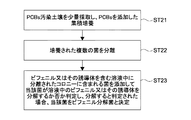
図3は、本発明の比較例に係るビフェニル分解菌の探索方法を示すフローチャートである。
同図に示すように、比較例においては、まずPCBs汚染土壌を少量採取し、PCBsを添加した集積培養を行う(ST21)。ビフェニル分解菌がビフェニルを単一の炭素源として生育し得るという特徴を鑑み、この集積培養は、所定濃度のビフェニルを炭素源として含む培地を用いて好気的に行うことができる(特許文献1参照)。これにより、ビフェニル耐性菌及びビフェニル資化菌を選択的に培養する。
続いて、培養された複数の菌を分離する(ST22)。本ステップでは、ST21において培養された培地又はその希釈液を寒天培地に塗布することで、寒天培地上にコロニーを形成させる。
続いて、本実施形態のST13と同様に、PCBsを含む溶液中に分離されたコロニーに含まれる菌を添加して当該菌が溶液中のPCBsを分解するか否か判定し、分解すると判定された場合、当該菌をビフェニル分解菌と推定する(ST23)。
[Operation and effect of the present invention]
Hereinafter, the operational effects of the present invention will be described with reference to comparative examples.
FIG. 3 is a flowchart showing a search method for biphenyl-degrading bacteria according to a comparative example of the present invention.
As shown in the figure, in the comparative example, first, a small amount of PCBs-contaminated soil is collected, and accumulation culture is performed by adding PCBs (ST21). In view of the feature that biphenyl-degrading bacteria can grow using biphenyl as a single carbon source, this enrichment culture can be performed aerobically using a medium containing a predetermined concentration of biphenyl as a carbon source (Patent Document 1). reference). Thereby, biphenyl resistant bacteria and biphenyl utilization bacteria are selectively cultured.
Subsequently, the cultured bacteria are separated (ST22). In this step, colonies are formed on the agar medium by applying the medium cultured in ST21 or a diluted solution thereof to the agar medium.
Subsequently, as in ST13 of this embodiment, it is determined whether or not the bacteria contained in the colonies separated in the solution containing PCBs are added to decompose the PCBs in the solution, and the bacteria are decomposed. If so, the bacterium is estimated to be a biphenyl-degrading bacterium (ST23).
上記比較例に係るビフェニル分解菌の探索方法においては、集積培養により目的の遺伝的特性を有する菌を選抜するため、ST21のステップに7日から30日程度要していた。また、ST22のステップはST11と同様の5日程度、ST23のステップはST13と同様の7日程度要していた。
一方で、本実施形態の探索方法では、DNAマーカーを用いて遺伝子診断を行うST22のステップに要する時間は、1〜2日程度である。すなわち、比較例の探索方法と比較して、全体の工程に要する時間を格段に短縮することが可能となる。
In the method for searching for biphenyl-degrading bacteria according to the above comparative example, the ST21 step takes about 7 to 30 days in order to select bacteria having the desired genetic characteristics by enrichment culture. Further, the step of ST22 took about 5 days as in ST11, and the step of ST23 took about 7 days as in ST13.
On the other hand, in the search method of this embodiment, the time required for the step ST22 in which genetic diagnosis is performed using a DNA marker is about 1-2 days. That is, the time required for the entire process can be significantly shortened as compared with the search method of the comparative example.
また、上記比較例に係るビフェニル分解菌の探索方法においては、ST23のビフェニル分解試験の対象となる菌が、集積培養されて分離された全ての菌となり得る。このため、網羅的に確認するためには、ビフェニル分解遺伝子の有無によらず集積培養されて分離された多数の菌に対して分解試験を行う必要があった。
一方で、本実施形態の探索方法では、ST12のステップで遺伝子診断を行うため、ビフェニル分解菌である可能性の高い菌のみ分解試験の対象とすることができる。これにより、ST13のステップにおける手数を大幅に減少させ、網羅的で、かつ非常に効率のよい選抜を行うことができる。また、分解試験に係るコストを低減できるとともに、全体のステップに要する時間をより一層短縮することができる。
In the method for searching for biphenyl-degrading bacteria according to the comparative example, the bacteria to be subjected to the biphenyl degradation test of ST23 can be all the bacteria that have been cultivated and separated. For this reason, in order to comprehensively confirm, it was necessary to perform a degradation test on a large number of bacteria that had been cultivated and separated regardless of the presence or absence of the biphenyl degradation gene.
On the other hand, in the search method of the present embodiment, since genetic diagnosis is performed in step ST12, only bacteria that are likely to be biphenyl-degrading bacteria can be subjected to degradation tests. As a result, the number of steps in step ST13 can be greatly reduced, and exhaustive and very efficient selection can be performed. Moreover, the cost concerning the decomposition test can be reduced, and the time required for the entire steps can be further shortened.
さらに、上記比較例に係るビフェニル分解菌の探索方法では、ビフェニル等の化合物を含む条件下で集積培養を行う際、ビフェニル資化菌のみならず、特殊な代謝系を有する菌が増加する可能性がある。これにより、生物相に偏りが生じる可能性があった。
一方で、本実施形態の探索方法では、培養期間が短いため、生物相の偏りに対するリスクを低減することができ、目的のビフェニル分解菌を容易に検出することができる。さらに、本実施形態の探索方法では、培養した菌のDNA配列が変異した可能性がある場合には、上記DNAマーカーを用いて再度遺伝子診断を行うことにより、確実にビフェニル分解菌を検出することが可能となる。
Furthermore, in the method for searching for biphenyl-degrading bacteria according to the comparative example, when enrichment culture is performed under conditions containing a compound such as biphenyl, not only biphenyl-utilizing bacteria but also bacteria having special metabolic systems may increase. There is. This could cause bias in the biota.
On the other hand, in the search method of the present embodiment, since the culture period is short, the risk for bias of biota can be reduced, and the target biphenyl-degrading bacterium can be easily detected. Furthermore, in the search method of the present embodiment, if there is a possibility that the DNA sequence of the cultured bacteria has been mutated, it is possible to reliably detect biphenyl-degrading bacteria by performing genetic diagnosis again using the DNA marker. Is possible.
なお、本発明のビフェニル分解菌の探索方法を応用して、ビフェニル又はその誘導体を蓄積することが可能なビフェニル蓄積菌を探索してもよい。
この場合は、ビフェニル分解酵素に替えてビフェニル又はその誘導体の蓄積に関与する酵素をコードするDNAにハイブリダイズすることが可能なオリゴヌクレオチドを、分離された複数の菌のDNAにハイブリダイズさせることで、これらの分離された複数の菌からビフェニル蓄積菌候補を検出することができる。
これによっても、ビフェニル及びその誘導体を処理することが可能な細菌を探索することができる。
In addition, you may search for the biphenyl storage microbe which can accumulate | store biphenyl or its derivative (s) by applying the search method of the biphenyl decomposing bacteria of this invention.
In this case, instead of biphenyl degrading enzyme, an oligonucleotide capable of hybridizing to DNA encoding an enzyme involved in accumulation of biphenyl or a derivative thereof is hybridized to DNA of a plurality of separated bacteria. A biphenyl-accumulating bacterium candidate can be detected from these separated bacteria.
This also makes it possible to search for bacteria capable of treating biphenyl and its derivatives.
以下、実施例を示し、本実施形態をより詳細に説明するが、本発明は実施例の記載に限定されるものではない。 Hereinafter, although an Example is shown and this embodiment is described in detail, this invention is not limited to description of an Example.
[実施例1:BphA遺伝子にハイブリダイズするプライマー対の作成]
(プライマーの準備)
まず、ビフェニル分解酵素であるBphAのアミノ酸配列が既知である菌を選択した。選択された細菌の一覧を、表1に示す。
[Example 1: Preparation of primer pair hybridizing to BphA gene]
(Preparation of primer)
First, bacteria having a known amino acid sequence of BphA, a biphenyl degrading enzyme, were selected. A list of selected bacteria is shown in Table 1.
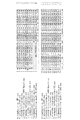
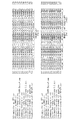
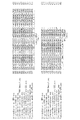
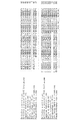
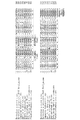
続いて、これらの細菌におけるBphAのアミノ酸配列をアライメントした。アミノ酸配列のアライメントには、GENETYX(登録商標)-MAC遺伝情報処理ソフトウェア(株式会社ゼネティックス製)を用いた。アライメントの結果を、図4、図5、図6及び図7に示す。同図中の「*」は、選択された複数の細菌において同一のアミノ酸となる配列を示す。
続いて、相互に配列類似性の高いアミノ酸配列を選択した。図4〜図7を参照し、例えば「*」が5以上連続する配列を選択した。この結果、フォワードプライマー候補(「Fwd1」、「Fwd2」、「Fwd3」)及びリバースプライマー候補(「Rev1」、「Rev2」、「Rev3」)の各アミノ酸配列が選択された。
Subsequently, the amino acid sequences of BphA in these bacteria were aligned. For alignment of amino acid sequences, GENETYX (registered trademark) -MAC genetic information processing software (manufactured by Genetics Co., Ltd.) was used. The alignment results are shown in FIG. 4, FIG. 5, FIG. 6 and FIG. In the figure, “*” indicates a sequence that becomes the same amino acid in a plurality of selected bacteria.
Subsequently, amino acid sequences having high sequence similarity were selected. With reference to FIGS. 4 to 7, for example, a sequence in which “*” is 5 or more consecutive was selected. As a result, the amino acid sequences of the forward primer candidates (“Fwd1”, “Fwd2”, “Fwd3”) and the reverse primer candidates (“Rev1”, “Rev2”, “Rev3”) were selected.
そして、選択されたプライマー候補のアミノ酸配列に対応する塩基配列及びプライマーとしての配列適性に基づいて、フォワードプライマー(Forward Primer)及びリバースプライマー(Reverse Primer)の塩基配列を決定した。決定された塩基配列を、表2に示す。なお、作成されたフォワードプライマー及びリバースプライマーは、いずれも、32種類の異なる配列のDNA断片を含む縮重プライマーである。また、表2中のフォワードプライマーのうちの1つと、リバースプライマーのうちの1つとからなるプライマーの組が、1つのプライマー対を構成し得る。 And based on the base sequence corresponding to the amino acid sequence of the selected primer candidate and the sequence suitability as a primer, the base sequence of the forward primer (Forward Primer) and the reverse primer (Reverse Primer) was determined. Table 2 shows the determined nucleotide sequences. The prepared forward primer and reverse primer are both degenerate primers containing 32 types of DNA fragments having different sequences. In addition, a set of primers composed of one of the forward primers and one of the reverse primers in Table 2 may constitute one primer pair.
[実施例2:プライマー対を用いたビフェニル分解菌の探索]
続いて、実施例1で作成されたプライマーを用いて、ビフェニル分解菌の探索を行った。
[Example 2: Search for biphenyl-degrading bacteria using primer pairs]
Subsequently, biphenyl-degrading bacteria were searched using the primer prepared in Example 1.
(複数の菌の分離)
まず、異なる場所の複数の植物根圏土壌を採取した。植物根圏土壌としては、例えば、ラベンダー、シソ、パセリ等の根及びその周囲の土壌を採取した。
採取された土壌を段階的に希釈して寒天培地に塗布し、コロニーを形成させた。このうち、108倍希釈の土壌希釈液を塗布した寒天培地に形成されたコロニーが、隣接するコロニーと分離しており、コロニー数も適当であった。
続いて、108倍希釈の土壌希釈液を塗布した寒天培地に形成されたコロニーのうち、コロニーの形状、色等の外観が異なる約3000個のコロニーを選択し、新しい寒天培地へ移植した。コロニーが移植された寒天培地を、マスタープレートと称する。移植されたコロニーは、識別のためナンバリングした。なお、同様の外観を有するコロニーは同一種である可能性が高いため、重複を避け、これらのうち1つのコロニーを選択するようにした。なお、本ステップは、約500個のコロニーを選択し、移植する作業を6回繰り返すことで行った。
(Separation of multiple bacteria)
First, a plurality of plant rhizosphere soils at different locations were collected. As plant rhizosphere soil, for example, roots such as lavender, perilla and parsley and surrounding soil were collected.
The collected soil was diluted stepwise and applied to an agar medium to form colonies. Among these, colonies formed on an agar medium coated with a 10 8 times diluted soil dilution were separated from adjacent colonies, and the number of colonies was also appropriate.
Then, out of the 10 8-fold dilution colonies soil dilutions formed coated agar medium, the shape of the colonies, the appearance of the color and the like to select a different approximately 3000 colonies were transplanted to a new agar medium. The agar medium in which the colonies are transplanted is called a master plate. Transplanted colonies were numbered for identification. In addition, since the colony which has the same external appearance has high possibility of being the same kind, duplication was avoided and it was made to select one colony among these. This step was performed by selecting about 500 colonies and repeating the transplanting operation six times.
(遺伝子マーカーによるビフェニル分解菌候補の検出)
マスタープレートに形成された各コロニーから菌を採取してマイクロプレートの各ウェルに付着させ、当該各ウェルにTE(Tris-EDTA)バッファを注入した。TEバッファは、10mMのTris-HCl(pH8.0)及び1mMのEDTAからなる。そして、TEバッファが注入されたマイクロプレートに対して95℃、5分の加熱処理を行い、菌体からDNAを溶出させた。
続いて、新たなPCR用マイクロプレートを準備し、実施例1で作成したフォワードプライマー(Forward Primer)1と、リバースプライマー(Reverse Primer)1をそれぞれ含むPCR反応液を分注した。このPCR反応液は、例えばフォワードプライマー、リバースプライマー、市販のPCR用酵素、滅菌水をそれぞれ含み、PCR用酵素の製品マニュアル及びプライマーの縮重を参照して調製された。分注には、マルチチャンネルの分注器を使用した。このPCR反応液に、ピンレプリケータを用いて溶出されたDNAを含むDNA溶液を少量混和させた。
続いて、調製したPCR反応液に対し、サーマルサイクラーを用いて、遺伝子増幅処理を行った。遺伝子増幅処理は、PCR用酵素の製品マニュアルを参照し、実施した。なお、アニーリング温度は、プライマーのTm値を考慮し、調整された。
続いて、反応後のPCR反応液から所定量を分取し、アガロースゲルで電気泳動を行った。電気泳動後、アガロースゲルを常法に従って染色し、紫外線(UV)ライトボックス上にてアガロースゲルを撮像した。撮像された画像に基づいてPCR増幅産物を確認した。プライマー対がハイブリダイズするDNA配列の塩基数から予測される長さのDNA断片が確認された場合、陽性と判定した。
その結果、約3000個の菌株のうち、約2%で陽性と判定した。陽性と判定された菌株を、ビフェニル分解菌候補とした。
なお、本ステップ(ST12)には、2日を要した。
(Detection of biphenyl-degrading bacteria candidates using genetic markers)
Bacteria were collected from each colony formed on the master plate and attached to each well of the microplate, and TE (Tris-EDTA) buffer was injected into each well. The TE buffer consists of 10 mM Tris-HCl (pH 8.0) and 1 mM EDTA. Then, the microplate into which the TE buffer was injected was subjected to a heat treatment at 95 ° C. for 5 minutes to elute the DNA from the cells.
Subsequently, a new PCR microplate was prepared, and PCR reaction solutions each containing the forward primer (Forward Primer) 1 and the reverse primer (Reverse Primer) 1 prepared in Example 1 were dispensed. This PCR reaction solution contained, for example, a forward primer, a reverse primer, a commercially available PCR enzyme, and sterilized water, respectively, and was prepared with reference to the PCR enzyme product manual and primer degeneracy. A multi-channel dispenser was used for dispensing. A small amount of a DNA solution containing DNA eluted using a pin replicator was mixed with this PCR reaction solution.
Subsequently, gene amplification treatment was performed on the prepared PCR reaction solution using a thermal cycler. The gene amplification treatment was performed with reference to the product manual for PCR enzymes. The annealing temperature was adjusted in consideration of the Tm value of the primer.
Subsequently, a predetermined amount was taken from the PCR reaction solution after the reaction, and electrophoresed on an agarose gel. After electrophoresis, the agarose gel was stained according to a conventional method, and the agarose gel was imaged on an ultraviolet (UV) light box. PCR amplification products were confirmed based on the captured images. When a DNA fragment having a length predicted from the number of bases in the DNA sequence to which the primer pair hybridizes was confirmed, it was determined to be positive.
As a result, about 2% of about 3000 strains were determined to be positive. A strain determined to be positive was defined as a biphenyl-degrading bacterium candidate.
Note that this step (ST12) took two days.
(ビフェニル分解試験及びビフェニル分解菌の検出)
続いて、ビフェニル分解菌候補を用いて、ビフェニル分解試験を行った。
まず、ビフェニル分解菌候補を少量の液体培地にそれぞれ播種し、この液体培地にアルキルビフェニルをそれぞれ添加した。液体培地は、R2A液体培地、ISP Medium No2、SCD培地(カゼインダイジェスト培地)、及び水を等量ずつ混合したものを用いた。なお、ISP Medium No2は、酵母エキス、麦芽エキス、グルコース等を含む培地である。ビフェニル分解菌候補については、直径1〜2mmのコロニーを2個程度播種した。アルキルビフェニルについては、2,2',5,5'-テトラメチルビフェニル、3,3',4,4'-テトラメチルビフェニル、3,3',5,5'-テトラメチルビフェニルをいずれも5 mg/lとなるように添加した。また、容器は、それぞれ25 mlの容量の共栓付試験管を用いた。
そして、これらのサンプルを30℃で4〜7日間振とう培養した。
続いて、サンプル中のアルキルビフェニルが分解されたか否かを判定するため、反応後の培養液中のアルキルビフェニルをヘキサンにより抽出し、GC(ガスクロマトグラフィ)−FIDにより分析した。
GC−FIDの条件は、以下の通りである。注入量は、2 μLであった。注入法は、スプリットレス注入法を適用した。注入口の温度は、250℃であった。加熱条件としては、オーブンセットポイントが100℃、そのまま1分維持し、その後20℃/分で200℃に達するまで温度を上昇させ、200℃から6℃/分で260℃に達するまで温度を上昇させ、260℃で1分間維持した。測定時間は、約17分であった。
なお、ビフェニル及び4,4'-ジメチルビフェニルは、内部標準物質として用いた。
評価方法としては、培養液に添加したアルキルビフェニルが半分以下に減少した菌株を、ビフェニル分解菌と推定した。
(Biphenyl degradation test and detection of biphenyl degrading bacteria)
Subsequently, a biphenyl degradation test was performed using biphenyl degrading bacterium candidates.
First, biphenyl-degrading bacterium candidates were seeded in a small amount of liquid medium, and alkylbiphenyl was added to the liquid medium. The liquid medium used was a mixture of R2A liquid medium, ISP Medium No2, SCD medium (casein digest medium), and water in equal amounts. ISP Medium No2 is a medium containing yeast extract, malt extract, glucose and the like. About the biphenyl degrading bacterium candidate, about 2 colonies having a diameter of 1 to 2 mm were seeded. For alkylbiphenyls, 2,2 ', 5,5'-tetramethylbiphenyl, 3,3', 4,4'-tetramethylbiphenyl, 3,3 ', 5,5'-tetramethylbiphenyl are all 5 It added so that it might become mg / l. As the container, a test tube with a stopper having a capacity of 25 ml was used.
These samples were cultured with shaking at 30 ° C. for 4 to 7 days.
Subsequently, in order to determine whether or not the alkylbiphenyl in the sample was decomposed, the alkylbiphenyl in the culture solution after the reaction was extracted with hexane and analyzed by GC (gas chromatography) -FID.
The conditions of GC-FID are as follows. The injection volume was 2 μL. As the injection method, a splitless injection method was applied. The inlet temperature was 250 ° C. As heating conditions, the oven set point is kept at 100 ° C for 1 minute, then the temperature is increased at 20 ° C / min until it reaches 200 ° C, and the temperature is increased from 200 ° C until it reaches 260 ° C at 6 ° C / min. And maintained at 260 ° C. for 1 minute. The measurement time was about 17 minutes.
Biphenyl and 4,4′-dimethylbiphenyl were used as internal standard substances.
As an evaluation method, a strain in which the alkylbiphenyl added to the culture solution was reduced to less than half was estimated as a biphenyl-degrading bacterium.
表3に、GC−FIDの分析結果の一例を示す。同表は、各サンプルのGC−FIDによって得られたクロマトグラム(分析波形)に基づいて算出した、各物質のピーク面積値(エリア面積値)を示す。なお、同一条件下で、同一物質のピーク面積値は試料量におよそ比例することが知られている。
同表では、異なるビフェニル分解菌候補を播種した4種類のサンプルを用いており、それぞれサンプル1〜4と記載している。また、「STD 0.5 ppm」は、培養液に添加したものと同種のアルキルビフェニルをそれぞれ0.5 ppm(0.5 mg/l)相当となるように添加した混合標準液の結果を示し、「NC」は、サンプルと同様にアルキルビフェニルを添加し、かつビフェニル分解菌候補を播種していない、ネガティブコントロール(Negative Control)の結果を示す。また、「操作BL」は、クロマトグラフのベースラインの値を示す。
同表に示すように、サンプル1〜3とNCの結果とを比較すると、各アルキルビフェニルとも、ピーク面積値が半減していた。この結果から、サンプル1〜3に播種したビフェニル分解菌候補は、いずれもビフェニル分解菌と推定することができた。
Table 3 shows an example of the GC-FID analysis result. The table shows the peak area value (area area value) of each substance calculated based on the chromatogram (analysis waveform) obtained by GC-FID of each sample. It is known that the peak area value of the same substance is approximately proportional to the sample amount under the same conditions.
In the table, four types of samples inoculated with different biphenyl-degrading bacterium candidates are used, and are described as
As shown in the table, when comparing the results of
さらに、推定されたビフェニル分解菌を用いて、再度実施例1で作成したプライマーによるPCRを行い、陽性が確認できた菌株を、ビフェニル分解菌として決定し、保存した。 Furthermore, using the estimated biphenyl-degrading bacterium, PCR was performed again with the primer prepared in Example 1, and the strain that was confirmed to be positive was determined as a biphenyl-degrading bacterium and stored.
なお、上述の説明においては、フォワードプライマー1と、リバースプライマー1をプライマー対としてPCRを行ったが、フォワードプライマー2及びリバースプライマー2、フォワードプライマー1及びリバースプライマー2、並びにフォワードプライマー2及びリバースプライマー1をそれぞれプライマー対として含むPCRを行った場合も、同様にビフェニル分解菌候補の決定及びビフェニル分解菌の推定を行うことができた。
In the above description, PCR was performed using forward
以上のように、実施例1で作成したプライマー対を用いて遺伝子診断をすることで、ビフェニル分解遺伝子を有すると推定されるビフェニル分解菌候補を選抜することができた。これにより、ビフェニル分解試験を実施する菌株数を大幅に減少させることができ、効率よくビフェニル分解菌を検出できることが確認された。 As described above, it was possible to select a biphenyl-degrading bacterium candidate presumed to have a biphenyl-degrading gene by performing genetic diagnosis using the primer pair prepared in Example 1. As a result, it was confirmed that the number of strains for conducting the biphenyl degradation test can be greatly reduced, and biphenyl-degrading bacteria can be detected efficiently.
[実施例3:BphD遺伝子にハイブリダイズするプライマー対の作成]
まず、ビフェニル分解酵素であるBphDのアミノ酸配列が既知である菌を選択した。選択された細菌の一覧を、表4に示す。
[Example 3: Preparation of primer pair hybridizing to BphD gene]
First, bacteria having a known amino acid sequence of BphD, a biphenyl degrading enzyme, were selected. A list of selected bacteria is shown in Table 4.
続いて、これらの細菌におけるBphDのアミノ酸配列をアライメントした。アライメントは、実施例1と同様に行った。アライメントの結果を、図8、図9及び図10に示す。同図中の「*」は、選択された複数の細菌において同一のアミノ酸となる配列を示す。
続いて、相互に配列類似性の高いアミノ酸配列を選択した。図8〜図10を参照し、例えば「*」が4以上連続する配列を選択した。この結果、フォワードプライマー候補(「Fwd1」、「Fwd2」)及びリバースプライマー候補(「Rev1」、「Rev2」)の各アミノ酸配列が選択された。
Subsequently, the amino acid sequences of BphD in these bacteria were aligned. The alignment was performed in the same manner as in Example 1. The alignment results are shown in FIG. 8, FIG. 9, and FIG. In the figure, “*” indicates a sequence that becomes the same amino acid in a plurality of selected bacteria.
Subsequently, amino acid sequences having high sequence similarity were selected. With reference to FIGS. 8 to 10, for example, a sequence in which “*” is 4 or more consecutive was selected. As a result, the amino acid sequences of the forward primer candidates (“Fwd1”, “Fwd2”) and the reverse primer candidates (“Rev1”, “Rev2”) were selected.
そして、選択されたプライマー候補のアミノ酸配列に対応する塩基配列に基づいて、フォワードプライマー(Forward Primer)及びリバースプライマー(Reverse Primer)の塩基配列を決定した。決定された塩基配列を、表5に示す。なお、作成されたフォワードプライマー及びリバースプライマーは、いずれも、48種類又は32種類の異なる配列のDNA断片を含む縮重プライマーである。また、表4中のフォワードプライマーのうちの1つと、リバースプライマーのうちの1つとからなるプライマーの組が、1つのプライマー対を構成し得る。 And based on the base sequence corresponding to the amino acid sequence of the selected primer candidate, the base sequence of a forward primer (Forward Primer) and a reverse primer (Reverse Primer) was determined. Table 5 shows the determined nucleotide sequence. The prepared forward primer and reverse primer are both degenerate primers containing 48 or 32 different DNA fragments of different sequences. In addition, a set of primers composed of one of the forward primers in Table 4 and one of the reverse primers can constitute one primer pair.
作成したこれらのプライマーを、実施例2で決定及び保存されたビフェニル分解菌を検体とするPCRに用い、プライマー対がハイブリダイズするDNA配列の塩基数から予測される長さのDNA断片が検出できることを確認した。なお、PCRは、実施例2の「遺伝子マーカーによるビフェニル分解菌候補の検出」で説明した手順で行った。
これにより、実施例3で作成したプライマーも、本発明のオリゴヌクレオチドとしてビフェニル分解菌候補の検出に用いることができることが確認された。
These prepared primers can be used in PCR using the biphenyl-degrading bacteria determined and stored in Example 2 as a sample, and a DNA fragment with a length predicted from the number of bases of the DNA sequence to which the primer pair hybridizes can be detected. It was confirmed. PCR was performed according to the procedure described in “Detection of biphenyl-degrading bacterium candidates using gene markers” in Example 2.
Thereby, it was confirmed that the primer created in Example 3 can also be used for detection of biphenyl-degrading bacterium candidates as the oligonucleotide of the present invention.
本発明は、ビフェニル分解菌の探索方法、それに用いるオリゴヌクレオチド、及びその方法により検出されたビフェニル分解菌に関する。 The present invention relates to a search method for biphenyl-degrading bacteria, an oligonucleotide used therein, and a biphenyl-degrading bacterium detected by the method.
PCBsは、ビフェニルの1個以上の水素原子を塩素原子で置換した化合物の総称であり、ビフェニル誘導体の一つである。PCBsは、一般に、耐熱性、電気絶縁性、耐薬品性等に優れた性質を有し、このような優れた性質を活かして非常に多岐にわたる分野の製品に使用されてきたが、生体に対する毒性が高いことが判明している。これにより、現在ではPCBsの使用が規制されているが、PCBsは化学的な安定性が高いため、既に使用されている製品を介して生体や環境へ悪影響を及ぼすことが懸念されている。 PCBs is a general term for compounds in which one or more hydrogen atoms of biphenyl are substituted with chlorine atoms, and is one of biphenyl derivatives. PCBs generally have excellent properties such as heat resistance, electrical insulation, and chemical resistance, and have been used for products in a wide variety of fields by taking advantage of such excellent properties. Has been found to be expensive. As a result, the use of PCBs is currently regulated, but PCBs have high chemical stability, and there is concern that they may adversely affect the living body and the environment through already used products.
そこで、PCBs等のビフェニル誘導体を無害化する取り組みがなされている。
例えば、特許文献1には、微生物を含む組成物を用いてビフェニル又はその誘導体(例えばPCBs)を分解させる技術が記載されている。同文献には、PCBs分解用組成物の製造に使用し得る微生物のスクリーニング方法として、ビフェニルを単一の炭素現として生育し得る微生物からのスクリーニングを繰り返し行うことが記載されている(同文献の段落[0021]参照)。
Therefore, efforts have been made to render harmless biphenyl derivatives such as PCBs.
For example,
しかしながら、特許文献1に記載のスクリーニング方法によれば、ビフェニルを単一の炭素源として生育し得る微生物を繰り返しスクリーニングすることから、目的の微生物の探索に長時間を要していた。
また、ビフェニルを単一の炭素源として生育し得る微生物を培養し、増殖させようとした場合、目的とする微生物以外の微生物も増殖する可能性があった。このため、培養工程の後、多くの検体を試験対象とした代謝試験を実施する必要が生じ、目的の微生物を取得するまでさらに長時間を要する可能性があった。
さらに、特殊な環境で長時間微生物を培養した場合、遺伝的な偏りが生じ、当初の生物相から変化が生じる可能性もあった。
However, according to the screening method described in
In addition, when microorganisms that can grow using biphenyl as a single carbon source are cultured and proliferated, microorganisms other than the target microorganism may also proliferate. For this reason, after the culturing step, it is necessary to carry out a metabolic test using a large number of specimens as test subjects, and it may take a longer time to obtain the target microorganism.
Furthermore, when microorganisms were cultured for a long time in a special environment, genetic bias occurred, and there was a possibility that changes would occur from the original biota.
以上のような事情に鑑み、本発明の目的は、ビフェニル分解菌を効率よく、かつ精度よく探索することが可能なビフェニル分解菌の探索方法、それに用いるオリゴヌクレオチド、及びその方法により検出されたビフェニル分解菌を提供することにある。 In view of the circumstances as described above, an object of the present invention is to provide a method for searching biphenyl-degrading bacteria capable of efficiently and accurately searching for biphenyl-degrading bacteria, an oligonucleotide used therefor, and biphenyl detected by the method. It is to provide degrading bacteria.
上記目的を達成するため、本発明の一形態に係るビフェニル分解菌の探索方法は、土壌から複数の菌を分離する工程を含む。
ビフェニル及びその誘導体を分解することが可能なビフェニル分解菌の有するビフェニル分解酵素をコードするDNAにハイブリダイズすることが可能なオリゴヌクレオチドを、上記分離された複数の菌のDNAにハイブリダイズさせることで、上記分離された複数の菌からビフェニル分解菌候補が検出される。
上記ビフェニル分解菌の探索方法によれば、土壌から分離した菌に対して、上記オリゴヌクレオチドをハイブリダイズさせることにより、ビフェニル分解酵素をコードする遺伝子を有するビフェニル分解菌候補を簡便に、かつ効率よく検出することができる。さらに、ビフェニル分解酵素遺伝子の有無に基づいてビフェニル分解菌候補を検出できるため、ビフェニル分解菌の可能性が高いビフェニル分解菌候補を選抜することが可能となる。
In order to achieve the above object, a method for searching for biphenyl-degrading bacteria according to an embodiment of the present invention includes a step of separating a plurality of bacteria from soil.
By hybridizing an oligonucleotide capable of hybridizing to a DNA encoding a biphenyl degrading enzyme possessed by a biphenyl degrading bacterium capable of degrading biphenyl and its derivatives, to the DNA of a plurality of the separated bacteria. A biphenyl-degrading bacterium candidate is detected from the plurality of separated bacteria.
According to the method for searching for a biphenyl-degrading bacterium, a biphenyl-degrading bacterium candidate having a gene encoding a biphenyl-degrading enzyme can be easily and efficiently obtained by hybridizing the oligonucleotide to a bacterium isolated from soil. Can be detected. Furthermore, since a biphenyl-degrading bacterium candidate can be detected based on the presence or absence of a biphenyl-degrading enzyme gene, it becomes possible to select a biphenyl-degrading bacterium candidate that has a high possibility of being a biphenyl-degrading bacterium.
上記土壌は、植物根圏土壌であってもよい。
植物根圏土壌は、微生物を豊富に含むため、ビフェニル分解菌候補を検出できる確率を高めることができる。
The soil may be plant rhizosphere soil.
Since plant rhizosphere soil contains abundant microorganisms, the probability that biphenyl-degrading bacterium candidates can be detected can be increased.
上記ビフェニル分解酵素をコードするDNAは、複数の既知のビフェニル分解菌のビフェニル分解酵素のアミノ酸配列において相互に配列類似性の高いアミノ酸配列に対応する塩基配列を含んでいてもよい。
これにより、上記オリゴヌクレオチドの塩基配列を、多様な菌のビフェニル誘導体をコードするDNAに共通する配列に基づいて決定することができ、ビフェニル分解菌候補を精度よく検出することができる。
The DNA encoding the above-mentioned biphenyl degrading enzyme may contain a base sequence corresponding to an amino acid sequence having high sequence similarity among the amino acid sequences of biphenyl degrading enzymes of a plurality of known biphenyl degrading bacteria.
Thereby, the base sequence of the said oligonucleotide can be determined based on the sequence common to DNA which codes the biphenyl derivative of various bacteria, and a biphenyl degrading bacterium candidate can be detected accurately.
この場合、上記複数の既知のビフェニル分解菌は、5以上の既知のビフェニル分解菌を含んでいてもよい。
これにより、ビフェニル分解菌候補をより精度よく検出することができる。
In this case, the plurality of known biphenyl-degrading bacteria may include five or more known biphenyl-degrading bacteria.
Thereby, a biphenyl degrading bacterium candidate can be detected more accurately.
上記ビフェニル分解菌の探索方法は、さらに、
ビフェニル又はその誘導体を含む溶液中に上記検出されたビフェニル分解菌候補を添加して上記ビフェニル分解菌候補が上記溶液中のビフェニル誘導体又はその誘導体を分解するか否か判定し、分解すると判定された場合、上記ビフェニル分解菌候補をビフェニル分解菌と推定する工程を含んでいてもよい。
これにより、ビフェニル分解菌候補のうち、実際にビフェニル又はその誘導体を分解菌する菌をビフェニル分解菌と推定することができる。
The method for searching for the biphenyl-degrading bacterium further includes:
The biphenyl-degrading bacterium candidate was added to a solution containing biphenyl or a derivative thereof to determine whether the biphenyl-degrading bacterium candidate decomposes the biphenyl derivative or the derivative in the solution, and it was determined to decompose. In this case, the method may include a step of estimating the biphenyl-degrading bacterium candidate as a biphenyl-degrading bacterium.
Thereby, among biphenyl-degrading bacterium candidates, a bacterium that actually degrades biphenyl or a derivative thereof can be estimated as a biphenyl-degrading bacterium.
具体的には、上記ビフェニル誘導体は、PCBs(ポリ塩化ビフェニル類)であってもよい。 Specifically, the biphenyl derivative may be PCBs (polychlorinated biphenyls).
本発明の他の形態に係るオリゴヌクレオチドは、ビフェニル及びその誘導体を分解することが可能なビフェニル分解菌の有するビフェニル分解酵素をコードするDNAにハイブリダイズすることが可能である。 The oligonucleotide according to another aspect of the present invention can hybridize to DNA encoding a biphenyl degrading enzyme possessed by a biphenyl degrading bacterium capable of degrading biphenyl and its derivatives.
また、本発明のさらに他の形態に係るビフェニル分解菌は、
土壌から複数の菌を分離し、
ビフェニル及びその誘導体を分解することが可能なビフェニル分解菌の有するビフェニル分解酵素をコードするDNAにハイブリダイズすることが可能なオリゴヌクレオチドを、上記分離された複数の菌のDNAにハイブリダイズさせることで、上記分離された複数の菌からビフェニル分解菌候補を検出し、
ビフェニル又はその誘導体を含む溶液中に上記検出されたビフェニル分解菌候補を添加して上記ビフェニル分解菌候補が溶液中のビフェニル又はその誘導体を分解するか否か判定し、分解すると判定された場合、上記ビフェニル分解菌候補をビフェニル分解菌と推定する。
In addition, the biphenyl degrading bacterium according to still another embodiment of the present invention,
Isolate multiple bacteria from the soil,
By hybridizing an oligonucleotide capable of hybridizing to a DNA encoding a biphenyl degrading enzyme possessed by a biphenyl degrading bacterium capable of degrading biphenyl and its derivatives, to the DNA of a plurality of the separated bacteria. , Detecting a biphenyl-degrading bacterium candidate from the plurality of separated bacteria,
When the detected biphenyl-degrading bacterium candidate is added to a solution containing biphenyl or a derivative thereof to determine whether or not the biphenyl-degrading bacterium candidate decomposes biphenyl or a derivative thereof in the solution, The biphenyl-degrading bacterium candidate is estimated as a biphenyl-degrading bacterium.
以上のように、本発明によれば、ビフェニル分解菌を効率よく、かつ精度よく探索することが可能なビフェニル分解菌の探索方法、それに用いるオリゴヌクレオチド、及びその方法により検出されたビフェニル分解菌を提供することができる。 As described above, according to the present invention, a search method for biphenyl-degrading bacteria capable of efficiently and accurately searching for biphenyl-degrading bacteria, oligonucleotides used therefor, and biphenyl-degrading bacteria detected by the method are provided. Can be provided.
[本発明の概要]
本発明は、遺伝子マーカーを用いてビフェニル分解酵素遺伝子の有無を診断することで、PCBs等のビフェニル誘導体を分解することが可能なビフェニル分解菌を検出することを特徴とする。以下、詳細について説明する。
[Outline of the present invention]
The present invention is characterized by detecting biphenyl-degrading bacteria capable of degrading biphenyl derivatives such as PCBs by diagnosing the presence or absence of a biphenyl-degrading enzyme gene using a gene marker. Details will be described below.
[ビフェニル誘導体]
ビフェニル誘導体とは、ビフェニルを母体とし、ビフェニルに官能基の導入、酸化、還元、原子の置き換えなどの改変がなされた化合物をいう。ビフェニル誘導体は、一般に安定性が高く、生分解性が低い。
具体的には、ビフェニル誘導体は、後述するPCBs、アルキルビフェニル等が挙げられる。
[Biphenyl derivatives]
A biphenyl derivative refers to a compound in which biphenyl is used as a base and a modification such as introduction of a functional group, oxidation, reduction, or atom replacement is performed on biphenyl. Biphenyl derivatives generally have high stability and low biodegradability.
Specifically, examples of the biphenyl derivative include PCBs and alkylbiphenyl described later.
[PCBs]
PCBsは、上述のように、ビフェニルの1個以上の水素原子を塩素原子で置換した化合物の総称であり、一般式は、C12H(10−n)Cln (1≦n≦10)で表される。具体的には、PCBsとしては、3,4,4',5−テトラクロロビフェニール、3,3',4,4'−テトラクロロビフェニール、3,3',4,4',5−ペンタクロロビフェニール、2,3,3',4,4'−ペンタクロロビフェニール、2,3,4,4',5−ペンタクロロビフェニール、2,3',4,4',5−ペンタクロロビフェニール、2',3,4,4',5−ペンタクロロビフェニール等を挙げることができる。
PCBは、通常PCB単体の混合物として市販されており、これらがコンデンサやトランスに使用されている。その具体例としては、鐘淵化学(株)のKC−200(2塩化ビフェニル)、KC−300(3塩化ビフェニル)、KC−400(4塩化ビフェニル)、KC−500(5塩化ビフェニル)、KC−600(6塩化ビフェニル)、KC−1000(KC500/トリクロロベンゼン=60/40(質量比)の混合物)や、三菱モンサント(株)のアロクロール1254(54% Chlorine)等が挙げられる。
これらのPCBsは、ビフェニル分解菌により分解されることが知られている(特許文献1参照)。
[PCBs]
As described above, PCBs is a general term for compounds in which one or more hydrogen atoms of biphenyl are substituted with chlorine atoms, and the general formula is represented by C12H (10-n) Cln (1 ≦ n ≦ 10). . Specifically, PCBs include 3,4,4 ′, 5-tetrachlorobiphenyl, 3,3 ′, 4,4′-tetrachlorobiphenyl, 3,3 ′, 4,4 ′, 5-pentachloro. Biphenyl, 2,3,3 ′, 4,4′-pentachlorobiphenyl, 2,3,4,4 ′, 5-pentachlorobiphenyl, 2,3 ′, 4,4 ′, 5-pentachlorobiphenyl, 2 ', 3,4,4', 5-pentachlorobiphenyl and the like can be mentioned.
PCBs are usually marketed as a mixture of PCBs alone, and these are used for capacitors and transformers. Specific examples thereof include KC-200 (biphenyl dichloride), KC-300 (biphenyl trichloride), KC-400 (biphenyl tetrachloride), KC-500 (biphenyl pentachloride), KC of Kaneka Chemical Co., Ltd. -600 (biphenyl hexachloride), KC-1000 (mixture of KC500 / trichlorobenzene = 60/40 (mass ratio)), Arrochlor 1254 (54% Chlorine) of Mitsubishi Monsanto Co., Ltd., and the like.
These PCBs are known to be degraded by biphenyl-degrading bacteria (see Patent Document 1).
[ビフェニル分解菌]
ビフェニル分解菌は、ビフェニル分解酵素をコードするDNA(以下、ビフェニル分解酵素遺伝子とも称する)を有する真正細菌である。ビフェニル分解菌としては、例えば、アクロモバクター(Achromobacter)属、アルカニボラックス(Alcanivorax)属、バークホルデリア(Burkholderia)属、コマモナス(Comamonas)属、カプリアビダス(Cupriavidus)属、シュードモナス(Pseudomanas)属、及びシュードキサントモナス(Pseudoxanthomonas)等に属する真正細菌が挙げられるが、これに限定されない。
なお、以下の説明において単に「菌」という場合、真正細菌をいうものとする。
ビフェニル分解酵素は、ビフェニルを分解する酵素であり、さらにビフェニルを分解することで、PCBs等のビフェニル誘導体も分解することが可能である。ビフェニル分解菌としては、具体的には、ビフェニルジオキシゲナーゼ、ジヒドロジオールデヒドロゲナーゼ、2,3−ジヒドロキシビフェニルジオキシゲナーゼ、2−ヒドロキシル−6−オキソ−6−フェニルヘキサ−2,4−ジエン酸ヒドロラーゼ等を挙げることができる。
ビフェニル分解酵素遺伝子は、具体的には、ビフェニルジオキシゲナーゼをコードするBphA、ジハイドロジオールデヒドロゲナーゼをコードするBphB、2,3−ジヒドロキシビフェニルジオキシゲナーゼをコードするBphC、2−ヒドロキシル−6−オキソ−6−フェニルヘキサ−2,4−ジエン酸ヒドロラーゼをコードするBphD等が挙げられる。
[Biphenyl-degrading bacteria]
A biphenyl-degrading bacterium is an eubacteria having a DNA encoding a biphenyl-degrading enzyme (hereinafter also referred to as a biphenyl-degrading enzyme gene). Examples of biphenyl-degrading bacteria include the genus Achromobacter, Alcanivorax, Burkholderia, Comamonas, Cupriavidus, Pseudomanas And eubacteria belonging to Pseudoxanthomonas and the like, but are not limited thereto.
In the following description, when the term “bacteria” is simply used, it means an eubacteria.
A biphenyl degrading enzyme is an enzyme that degrades biphenyl, and further, biphenyl derivatives such as PCBs can be decomposed by decomposing biphenyl. Specific examples of biphenyl degrading bacteria include biphenyl dioxygenase, dihydrodiol dehydrogenase, 2,3-dihydroxybiphenyl dioxygenase, 2-hydroxyl-6-oxo-6-phenylhexa-2,4-dienoic acid hydrolase and the like. Can be mentioned.
Specifically, the biphenyl degrading enzyme gene includes BphA encoding biphenyl dioxygenase, BphB encoding dihydrodiol dehydrogenase, BphC encoding 2,3-dihydroxybiphenyl dioxygenase, 2-hydroxyl-6-oxo-6 -BphD encoding phenylhexa-2,4-dienoate hydrolase and the like.
図1は、ビフェニル分解菌として知られているシュードモナス属細菌(Pseudomonas sp.)KKS102株におけるPCBsの分解経路を模式的に示す図である(例えば、Kikuchi Y. et al, Journal of Bacteriology, Vol.176, No.6, p.1689-1694, 1994参照)。なお、上述の分解経路は一例であり、他の細菌においては異なる経路をとり得る。
この経路において、PCBsは、まず、ビフェニルジオキシゲナーゼ(BphA酵素)により、2つの水酸基(OH)が付加される。BphA酵素は4つのサブユニット(BphA1、BphA2、BphA3、BphA4)から構成されている。そして、図1に示す通り、BphA1とBphA2とが複合体を形成し、基質との結合及び酸素添加反応を触媒し、フェレドキシンが電子伝達体として機能し、フェレドキシンリダクターゼがNAD又はNADPHとフェレドキシンの酸化還元反応を触媒する。
続いてジヒドロジオールジヒドロゲナーゼ(BphB酵素)によって、BphAの産物から2つの水素が除かれた後、2,3−ジヒドロキシビフェニルジオキシゲナーゼ(BphC酵素)により、BphB産物に酸素1分子が付加され、HOPDA(BphDの誘導基質)が生成する。ついで、2−ヒドロキシル−6−オキソ−6−フェニルヘキサ−2,4−ジエン酸ヒドロラーゼ(BphD酵素)が、HOPDAを安息香酸と2−ヒドロキシペンタ−2,4−ジエノエートとに分解する。
その後、図示はしないが、2−ヒドロキシペンタ−2,4−ジエノエートヒドラターゼ(BphE酵素)、4−ヒドロキシ−2−オキソバレレートアルドラーゼ(BphF酵素)及びアセトアルデヒドデヒドロゲナーゼ(BphG酵素)によりアセチルCoAとピルビン酸に転換されると考えられる。
FIG. 1 is a diagram schematically showing the degradation pathway of PCBs in Pseudomonas sp. KKS102 strain known as a biphenyl-degrading bacterium (for example, Kikuchi Y. et al, Journal of Bacteriology, Vol. 1). 176, No. 6, p.1689-1694, 1994). In addition, the above-mentioned degradation pathway is an example, and in other bacteria, a different pathway can be taken.
In this pathway, PCBs are first added with two hydroxyl groups (OH) by biphenyl dioxygenase (BphA enzyme). The BphA enzyme is composed of four subunits (BphA1, BphA2, BphA3, BphA4). As shown in FIG. 1, BphA1 and BphA2 form a complex, catalyze the binding to the substrate and the oxygenation reaction, ferredoxin functions as an electron carrier, and ferredoxin reductase acts as an oxidation of NAD or NADPH and ferredoxin. Catalyze the reduction reaction.
Subsequently, after dihydrogendiol dihydrogenase (BphB enzyme) removes two hydrogens from the product of BphA, 2,3-dihydroxybiphenyl dioxygenase (BphC enzyme) adds one molecule of oxygen to the BphB product, and HOPDA (BphD-derived substrate) is produced. Then 2-hydroxyl-6-oxo-6-phenylhexa-2,4-dienoic acid hydrolase (BphD enzyme) decomposes HOPDA into benzoic acid and 2-hydroxypenta-2,4-dienoate.
Thereafter, although not shown, acetyl-CoA was obtained by 2-hydroxypenta-2,4-dienoate hydratase (BphE enzyme), 4-hydroxy-2-oxovalerate aldolase (BphF enzyme) and acetaldehyde dehydrogenase (BphG enzyme). And converted to pyruvic acid.
[ビフェニル分解菌の探索方法]
図2は、本発明に係るビフェニル分解菌の探索方法を示すフローチャートである。
同図に示すように、本発明に係るビフェニル分解菌の探索方法は、複数の菌を分離するステップ(ST11)と、ビフェニル分解菌候補を検出するステップ(ST12)と、ビフェニル分解菌候補に対してビフェニル分解試験を行い、ビフェニル分解菌を検出するステップ(ST13)と、を含む。以下、各ステップについて説明する。
[Search method for biphenyl-degrading bacteria]
FIG. 2 is a flowchart showing a method for searching for biphenyl degrading bacteria according to the present invention.
As shown in the figure, the method for searching for biphenyl-degrading bacteria according to the present invention comprises a step of separating a plurality of bacteria (ST11), a step of detecting biphenyl-degrading bacteria candidates (ST12), and biphenyl-degrading bacteria candidates. Performing a biphenyl degradation test and detecting a biphenyl degrading bacterium (ST13). Hereinafter, each step will be described.
まず、図2に示すように、土壌から複数の菌を分離する(ST11)。
ここでいう土壌は、PCBs等のビフェニル誘導体による汚染が疑われていない土壌でもよい。本発明は、ビフェニル分解菌を非常に効率よく検出できるため、汚染が疑われていない土壌からでもビフェニル分解菌を検出することができる。
また、ここでいう土壌は、例えば植物根圏土壌でもよい。植物根圏土壌は、植物の根の周囲の土壌をいい、植物の根の一部を含んでいてもよい。植物の根は、呼吸の作用や栄養分と水分を吸収する作用によって、周囲の土壌の栄養分組成を変化させるとともに、pHを変化させ得る。また、植物の根は、分泌物を分泌させるとともに、根毛を脱落させ得る。これにより、植物根圏土壌は、他の領域の土壌と比較して異なる組成を有し、一般に多くの微生物を含む。さらに、植物由来の化合物がビフェニル分解遺伝子を誘発させることが知られているため、このような化合物が存在し得る植物根圏土壌は、ビフェニル分解遺伝子を有するビフェニル分解菌を含む可能性がある。したがって、本発明の土壌として植物根圏土壌を用いることで、ビフェニル分解菌を検出する可能性を高めることができる。
なお、土壌は上記に限定されず、浄水場等の活性汚泥、PCBs等による汚染が疑われる土壌等でもよい。
First, as shown in FIG. 2, a plurality of bacteria are separated from the soil (ST11).
The soil here may be soil that is not suspected of being contaminated with biphenyl derivatives such as PCBs. Since the present invention can detect biphenyl-degrading bacteria very efficiently, biphenyl-degrading bacteria can be detected even from soil where contamination is not suspected.
The soil here may be, for example, plant rhizosphere soil. The plant rhizosphere soil refers to the soil around the root of the plant, and may include a part of the root of the plant. Plant roots can change the nutrient composition of the surrounding soil and change the pH by the action of respiration and the action of absorbing nutrients and moisture. In addition, the roots of plants can secrete secretions and drop root hairs. Thereby, plant rhizosphere soil has a different composition compared with the soil of another area | region, and generally contains many microorganisms. Furthermore, since plant-derived compounds are known to induce biphenyl degrading genes, plant rhizosphere soils in which such compounds may be present may include biphenyl degrading bacteria having biphenyl degrading genes. Therefore, the possibility of detecting biphenyl-degrading bacteria can be increased by using plant rhizosphere soil as the soil of the present invention.
The soil is not limited to the above, and may be activated sludge such as a water purification plant, soil suspected of being contaminated with PCBs, or the like.
このような土壌から複数の菌を分離するには、例えば、平板希釈法を適用することができる。具体的には、まず、採取された土壌を液体培地や滅菌水等で希釈する。例えば、植物の根を含む植物根圏土壌を採取した場合は、固形分である根などをすりつぶし、採取した土壌の重量の9倍の液体で希釈する。これを10倍希釈として、例えば10倍ずつ希釈していき、102倍、103倍、104倍…の土壌希釈液を生成する。この作業により生成された各土壌希釈液を、それぞれ寒天培地へ播種する。あるいは、既知の最適な希釈倍率の土壌希釈液のみを寒天培地へ播種してもよい。植物根圏土壌の場合、最適な土壌の希釈倍率は一例として108倍である。
寒天培地は、典型的には、シャーレを用いた平板培地であるが、これに限定されない。寒天培地は、滅菌処理したものを用いることができる。
そして、土壌希釈液を播種した寒天培地を1日〜10日ほど培養し、複数の菌のコロニーを形成させることで、複数の菌を分離する。培養条件は特に限定されず、通常の細菌培養に用いる条件を適用することができる。形成されたコロニーは、次ステップにおいて検体として用いられる。なお、次ステップで用いられるコロニーは、隣接するコロニーと分離して形成されたものが用いられる。これにより、異なる菌株のコンタミネーションを防止することができる。
In order to separate a plurality of bacteria from such soil, for example, a plate dilution method can be applied. Specifically, first, the collected soil is diluted with a liquid medium or sterilized water. For example, when plant rhizosphere soil containing plant roots is collected, the roots which are solid contents are ground and diluted with a liquid 9 times the weight of the collected soil. As a 10-fold dilution, for example, 10-fold dilution is performed, and 102-fold, 103-fold, 104-fold, etc. soil dilutions are generated. Each soil dilution produced by this work is seeded on an agar medium. Alternatively, only a soil dilution having a known optimum dilution ratio may be seeded on the agar medium. In the case of plant rhizosphere soil, the optimum soil dilution ratio is 108 times as an example.
The agar medium is typically a plate medium using a petri dish, but is not limited thereto. As the agar medium, a sterilized one can be used.
And an agar medium seed | inoculated with the soil dilution liquid is culture | cultivated for about 1 to 10 days, and a several microbe is isolate | separated by forming the colony of a several microbe. The culture conditions are not particularly limited, and the conditions used for normal bacterial culture can be applied. The formed colony is used as a specimen in the next step. The colonies used in the next step are those formed separately from adjacent colonies. Thereby, contamination of different strains can be prevented.
続いて、ビフェニル及びその誘導体を分解することが可能なビフェニル分解菌の有するビフェニル分解酵素をコードするDNAにハイブリダイズすることが可能なオリゴヌクレオチドを、分離された複数の菌の遺伝子にハイブリダイズさせることで、上記分離された複数の菌からビフェニル分解菌候補を検出する(ST12)。
本ステップでは、上記オリゴヌクレオチドがハイブリダイズした遺伝子を有する菌を、ビフェニル分解菌候補として検出することができる。
ここでいうハイブリダイズは、本発明のオリゴヌクレオチドがビフェニル分解酵素遺伝子内の標的配列と相補的に結合することである。
また、ここでいう「ビフェニル分解酵素をコードするDNAにハイブリダイズする」とは、ビフェニル分解酵素遺伝子の一部のDNA配列にハイブリダイズすること、及びビフェニル分解酵素遺伝子の全体にハイブリダイズすることを含む。
本発明のオリゴヌクレオチドは、PCR(ポリメラーゼ連鎖反応)法のプライマー、ハイブリダイゼーション法の核酸プローブ、固相担体に結合された捕捉プローブ等、分子生物学的な種々の検出方法に用いることができる。なお、本発明のオリゴヌクレオチドは、標識化されずに用いられてもよいし、放射性物質や蛍光・発光物質、酵素や酵素基質等の標識物によって標識化して核酸プローブやプライマーとして用いることもできる。オリゴヌクレオチドの詳細については、後述する。
Subsequently, an oligonucleotide capable of hybridizing to a DNA encoding a biphenyl-degrading enzyme possessed by a biphenyl-degrading bacterium capable of degrading biphenyl and its derivative is hybridized to the genes of a plurality of isolated bacteria. Thus, a biphenyl-degrading bacterium candidate is detected from the plurality of separated bacteria (ST12).
In this step, a bacterium having a gene hybridized with the oligonucleotide can be detected as a biphenyl-degrading bacterium candidate.
Hybridization here means that the oligonucleotide of the present invention binds complementarily to the target sequence in the biphenyl degrading enzyme gene.
The term “hybridizes to DNA encoding biphenyl degrading enzyme” as used herein means to hybridize to a part of the DNA sequence of the biphenyl degrading enzyme gene and to hybridize to the entire biphenyl degrading enzyme gene. Including.
The oligonucleotide of the present invention can be used in various molecular biological detection methods such as PCR (polymerase chain reaction) primer, hybridization nucleic acid probe, and capture probe bound to a solid phase carrier. The oligonucleotide of the present invention may be used without being labeled, or may be used as a nucleic acid probe or primer after being labeled with a radioactive substance, a fluorescent / luminescent substance, a label such as an enzyme or an enzyme substrate. . Details of the oligonucleotide will be described later.
分離された複数の菌からビフェニル分解菌候補を検出するには、例えば、上記オリゴヌクレオチドをプライマーとしたPCR法により標的配列が増幅するか否か確認することができる。
具体的には、まず、前ステップにおいて形成されたコロニーに含まれる菌のDNAをテンプレートとして、PCR増幅用反応液を調製する。テンプレートDNAは、各コロニーに含まれる菌体からDNAを抽出したものとすることができる。PCR反応液は、テンプレートDNA、プライマー対、DNAポリメラーゼ、dNTP、PCR用反応バッファ、及び滅菌蒸留水等を混合したものとすることができる。あるいは、DNAポリメラーゼ、dNTP、PCR用反応バッファ等に替えて、予めこれらの試薬が混合された市販のPCR用酵素を用いることもできる。次に、サーマルサイクラー等を用いて熱変性反応、アニーリング反応、及び伸長反応を連続して行い、これを所定サイクル繰り返すことにより、PCR法による増幅反応を行う。PCR法における反応条件等は、使用するポリメラーゼの種類やプライマーのTm値等を考慮して、適宜決定することができる。そして、その反応後の反応液中の増幅産物を確認し、所望のDNA断片が増幅されているか否か確認する。このように、所望のDNA断片が増幅されている(陽性)菌を、ビフェニル分解菌候補として検出する。
増幅産物の確認方法も特に限定されず、例えば、アガロースゲル電気泳動法、キャピラリー電気泳動法、シーケンス解析による塩基配列を決定する方法等を適用することができる。このうち、アガロースゲル電気泳動法が簡便に増幅産物を確認でき、より好ましい。
In order to detect a biphenyl-degrading bacterium candidate from a plurality of separated bacteria, for example, it can be confirmed whether or not the target sequence is amplified by a PCR method using the oligonucleotide as a primer.
Specifically, first, a PCR amplification reaction solution is prepared using the bacterial DNA contained in the colony formed in the previous step as a template. Template DNA can be obtained by extracting DNA from bacterial cells contained in each colony. The PCR reaction solution may be a mixture of template DNA, primer pair, DNA polymerase, dNTP, PCR reaction buffer, sterilized distilled water, and the like. Alternatively, a commercially available PCR enzyme in which these reagents are mixed in advance can be used instead of DNA polymerase, dNTP, PCR reaction buffer, and the like. Next, a thermal denaturation reaction, an annealing reaction, and an extension reaction are successively performed using a thermal cycler or the like, and an amplification reaction by a PCR method is performed by repeating this for a predetermined cycle. The reaction conditions and the like in the PCR method can be appropriately determined in consideration of the type of polymerase used, the Tm value of the primer, and the like. Then, the amplification product in the reaction solution after the reaction is confirmed, and it is confirmed whether or not a desired DNA fragment is amplified. In this way, a bacterium in which a desired DNA fragment is amplified (positive) is detected as a biphenyl-degrading bacterium candidate.
The method for confirming the amplification product is not particularly limited, and for example, agarose gel electrophoresis, capillary electrophoresis, a method for determining a base sequence by sequence analysis, and the like can be applied. Of these, the agarose gel electrophoresis method is more preferable because the amplification product can be easily confirmed.
また、本ステップでは、1種類のビフェニル分解酵素に対応するオリゴヌクレオチドのみならず、異なるビフェニル分解酵素にハイブリダイズする複数のオリゴヌクレオチドを用いて、ビフェニル分解菌候補を検出してもよい。上述のように、通常、ビフェニル分解菌は、BphA,BphB,BphC及びBphD(BphA〜BphD)の分解酵素をコードするDNAを有していると考えられる。このため、例えば、S12のステップが以下のようなステップを含んでいてもよい。
まず、BphA〜BphDのうちの1つの酵素をコードするDNAにハイブリダイズすることが可能なオリゴヌクレオチドを、S11で分離された菌のDNAにハイブリダイズさせる。その後、S11で分離された菌、又は前ステップでハイブリダイズされた菌に、BphA〜BphDのうちの他の酵素をコードするDNAにハイブリダイズすることが可能なオリゴヌクレオチドをハイブリダイズさせる。
これにより、遺伝子診断によって実際にビフェニルの分解能を有する菌を精度よく検出することができる。
In this step, a candidate for biphenyl-degrading bacteria may be detected using not only oligonucleotides corresponding to one type of biphenyl-degrading enzyme but also a plurality of oligonucleotides that hybridize to different biphenyl-degrading enzymes. As described above, biphenyl-degrading bacteria are usually considered to have DNAs encoding BphA, BphB, BphC, and BphD (BphA to BphD) degrading enzymes. For this reason, for example, the step of S12 may include the following steps.
First, an oligonucleotide capable of hybridizing to DNA encoding one enzyme of BphA to BphD is hybridized to the bacterial DNA isolated in S11. Thereafter, an oligonucleotide capable of hybridizing to DNA encoding another enzyme of BphA to BphD is hybridized to the bacterium isolated in S11 or the bacterium hybridized in the previous step.
This makes it possible to accurately detect bacteria having biphenyl resolution by genetic diagnosis.
最後に、PCBsを含む溶液中に検出されたビフェニル分解菌候補を添加してビフェニル分解菌候補が溶液中のPCBsを分解するか否か判定し(ビフェニル分解試験)、分解すると判定された場合、当該ビフェニル分解菌候補をビフェニル分解菌と推定する(ST13)。
本ステップでは、まず、ビフェニル分解菌候補として検出された各菌を、ビフェニル又はその誘導体を添加した溶液に加え、ビフェニル又はその誘導体と反応させる。ビフェニルの誘導体としては、例えば、PCBs、アルキルビフェニル等を用いることができ、このうちPCBsとしては、上述の「PCBs」の説明で挙げた化合物等を用いることができる。また、ビフェニル又はその誘導体の溶液中の濃度としては、例えば0.05〜1000mg/L、好ましくは1〜100mg/L程度とすることができる。ビフェニル分解菌候補の添加量は特に限定されない。また、培地は、ビフェニル分解菌候補が培養可能な培養液を用いることができる。培養条件は特に限定されず、例えば温度が約20〜40℃、好ましくは25〜35℃、さらに好ましくは約30℃であり、pHは6〜9とすることができる。また、反応中、溶液を攪拌してもよい。反応期間は例えば1〜5日とすることができる。
続いて、各培養液中に添加したPCBsが分解されたか否か評価する。評価方法は、例えば、ガスクロマトグラフィ等を適用することができる。
Finally, the biphenyl-degrading bacterium candidate detected in the solution containing PCBs is added to determine whether the biphenyl-degrading bacterium candidate decomposes the PCBs in the solution (biphenyl degradation test). The biphenyl-degrading bacterium candidate is estimated as a biphenyl-degrading bacterium (ST13).
In this step, first, each bacterium detected as a biphenyl-degrading bacterium candidate is added to a solution to which biphenyl or a derivative thereof is added, and reacted with biphenyl or a derivative thereof. As the biphenyl derivative, for example, PCBs, alkylbiphenyl and the like can be used, and among these, as the PCBs, compounds described in the above description of “PCBs” can be used. Moreover, as a density | concentration in the solution of biphenyl or its derivative (s), it is 0.05-1000 mg / L, for example, Preferably it can be set as about 1-100 mg / L. The amount of biphenyl-degrading bacterium candidate added is not particularly limited. Moreover, the culture medium which can culture | cultivate a biphenyl degrading bacterium candidate can be used for a culture medium. The culture conditions are not particularly limited. For example, the temperature is about 20 to 40 ° C, preferably 25 to 35 ° C, more preferably about 30 ° C, and the pH can be 6 to 9. Further, the solution may be stirred during the reaction. The reaction period can be, for example, 1 to 5 days.
Subsequently, it is evaluated whether or not the PCBs added to each culture solution have been decomposed. As the evaluation method, for example, gas chromatography or the like can be applied.
以上の各ステップにより、ビフェニル分解菌を検出することができる。
なお、本発明のビフェニル分解菌の探索方法は、ST11及びST12のステップで精度よくビフェニル分解菌候補を検出できるならば、ST13のステップを有さなくてもよい。
By the above steps, biphenyl degrading bacteria can be detected.
Note that the biphenyl-degrading bacterium search method of the present invention does not need to include the step ST13 as long as the biphenyl-degrading bacterium candidate can be accurately detected in the steps ST11 and ST12.
さらに、ST13のステップでビフェニル分解菌候補を培養している間にDNA配列が変化する可能性がある場合には、以下に示すように再度遺伝子診断を行ってもよい。
すなわち、ST13のステップの後、ビフェニル及びその誘導体を分解することが可能なビフェニル分解菌の有するビフェニル分解酵素をコードするDNAにハイブリダイズすることが可能なオリゴヌクレオチドを、ST13で推定されたビフェニル分解菌の遺伝子にハイブリダイズさせることで、上記推定されたビフェニル分解菌がビフェニル分解菌であることを確認してもよい。本ステップは、ST12と同様に行うことができる。
また、本ステップにおけるオリゴヌクレオチドは、ST12で用いたものと同一のオリゴヌクレオチドでもよいし、異なるものでもよい。例えば、本ステップで用いるオリゴヌクレオチドは、ST12で用いたオリゴヌクレオチドがターゲットとするビフェニル分解酵素遺伝子とは異なるビフェニル分解酵素遺伝子をターゲットとするものでもよい。
これにより、ビフェニル分解能を有するビフェニル分解菌をより確実に探索することができる。
Furthermore, if there is a possibility that the DNA sequence may change while the biphenyl-degrading bacterium candidate is cultured in step ST13, genetic diagnosis may be performed again as shown below.
That is, after the step of ST13, the oligonucleotide capable of hybridizing to the DNA encoding the biphenyl-degrading enzyme possessed by the biphenyl-degrading bacterium capable of degrading biphenyl and its derivatives is converted into the biphenyl degrading estimated in ST13. It may be confirmed that the estimated biphenyl-degrading bacterium is a biphenyl-degrading bacterium by hybridizing with a bacterium gene. This step can be performed in the same manner as ST12.
Further, the oligonucleotide in this step may be the same as that used in ST12 or may be different. For example, the oligonucleotide used in this step may target a biphenyl degrading enzyme gene different from the biphenyl degrading enzyme gene targeted by the oligonucleotide used in ST12.
Thereby, it is possible to more reliably search for biphenyl-degrading bacteria having biphenyl resolution.
[オリゴヌクレオチド]
本発明のオリゴヌクレオチドは、ビフェニル及びその誘導体を分解することが可能なビフェニル分解菌の有するビフェニル分解酵素をコードするDNAにハイブリダイズすることができるものである。
上記DNAは、複数のビフェニル分解菌のビフェニル分解酵素のアミノ酸配列において相互に配列類似性の高いアミノ酸配列に対応する塩基配列を含んでいてもよい。当該複数のビフェニル分解菌としては、ビフェニル分解酵素遺伝子を有し、かつそのビフェニル分解酵素遺伝子のアミノ酸配列が既知の細菌を適用することができる。具体的には、例えば、アクロモバクター(Achromobacter)属、アルカニボラックス(Alcanivorax)属、バークホルデリア(Burkholderia)属、コマモナス(Comamonas)属、カプリアビダス(Cupriavidus)属、シュードモナス(Pseudomanas)属、及びシュードキサントモナス(Pseudoxanthomonas)等に属する既知のビフェニル分解菌が挙げられる。
また、配列類似性の比較対象となる複数のビフェニル分解菌は、例えば、5以上のビフェニル分解菌を含んでいてもよく、より好ましくは8以上のビフェニル分解菌を含んでいればよい。これにより、アミノ酸配列の相同性について精度よく検討することができる。
また、配列類似性の高いアミノ酸配列は、例えば、比較対象となる複数のビフェニル分解菌において、同一のアミノ酸が4以上連続する配列を含むアミノ酸配列をいうものとする。
例えば、オリゴヌクレオチドは、PCR用のプライマーの場合、上記アミノ酸配列に対応する塩基配列をそれぞれ有する複数のプライマーを混合した、いわゆる縮重プライマーとすることができる。これにより、上記アミノ酸配列に対応するコドンの揺らぎを考慮して、1回のPCRでより多くの菌株を検出することができる。また、複数のプライマーの数は、例えば128以下、好ましくは48以下、より好ましくは32以下とすることができる。これにより、PCR反応液中の実効的なプライマー濃度の低下を抑制し、プライマーの検出感度を維持することができる。
[Oligonucleotide]
The oligonucleotide of the present invention is capable of hybridizing to DNA encoding a biphenyl degrading enzyme possessed by a biphenyl degrading bacterium capable of degrading biphenyl and its derivatives.
The DNA may include a base sequence corresponding to an amino acid sequence having high sequence similarity among the amino acid sequences of biphenyl degrading enzymes of a plurality of biphenyl degrading bacteria. As the plurality of biphenyl degrading bacteria, a bacterium having a biphenyl degrading enzyme gene and a known amino acid sequence of the biphenyl degrading enzyme gene can be applied. Specifically, for example, Achromobacter genus, Alcanivorax genus, Burkholderia genus, Comamonas genus, Capriavidus genus, Pseudomanas genus, And known biphenyl-degrading bacteria belonging to Pseudoxanthomonas and the like.
In addition, the plurality of biphenyl degrading bacteria to be compared for sequence similarity may include, for example, 5 or more biphenyl degrading bacteria, and more preferably 8 or more biphenyl degrading bacteria. Thereby, the homology of amino acid sequences can be examined with high accuracy.
In addition, an amino acid sequence having high sequence similarity refers to, for example, an amino acid sequence including a sequence of four or more identical amino acids in a plurality of biphenyl-degrading bacteria to be compared.
For example, in the case of a primer for PCR, the oligonucleotide can be a so-called degenerate primer in which a plurality of primers each having a base sequence corresponding to the amino acid sequence are mixed. Thus, more strains can be detected by one PCR in consideration of codon fluctuation corresponding to the amino acid sequence. The number of the plurality of primers can be, for example, 128 or less, preferably 48 or less, more preferably 32 or less. Thereby, the fall of the effective primer density | concentration in PCR reaction liquid can be suppressed, and the detection sensitivity of a primer can be maintained.
[ビフェニル分解菌]
本発明のビフェニル分解菌は、土壌から複数の菌を分離し(ST11)、PCBsを分解することが可能なビフェニル分解菌の有するビフェニル分解酵素をコードするDNAにハイブリダイズすることが可能なオリゴヌクレオチドを、当該分離された複数の菌のDNAにハイブリダイズさせることで、当該分離された複数の菌からビフェニル分解菌候補を検出し(ST12)、ビフェニル又はその誘導体を含む溶液中に検出されたビフェニル分解菌候補を添加してビフェニル分解菌候補が溶液中のビフェニル又はその誘導体を分解するか否か判定し、分解すると判定された場合、ビフェニル分解菌候補をビフェニル分解菌と推定する(ST13)、ことで検出されたビフェニル分解菌である。すなわち、本発明のビフェニル分解菌は、上記オリゴヌクレオチドをハイブリダイズさせることが可能なDNAを有し、PCBsを分解することが可能な菌である。
なお、本発明のビフェニル分解菌は、特定された種や属に属するものではなく、上記各ステップを実施することにより検出されるものであればよい。
[Biphenyl-degrading bacteria]
The biphenyl-degrading bacterium of the present invention is an oligonucleotide capable of hybridizing to a DNA encoding a biphenyl-degrading enzyme possessed by a biphenyl-degrading bacterium capable of decomposing a plurality of bacteria from soil (ST11) and degrading PCBs. Is hybridized to the DNAs of the separated bacteria to detect biphenyl-degrading bacteria candidates from the separated bacteria (ST12), and biphenyl detected in a solution containing biphenyl or a derivative thereof A candidate for degrading bacteria is added to determine whether the candidate for biphenyl-degrading bacteria degrades biphenyl or a derivative thereof in the solution. If it is determined to be degraded, the candidate for biphenyl-degrading bacteria is estimated as a biphenyl-degrading bacterium (ST13). It is a biphenyl degrading bacterium detected by this. That is, the biphenyl-degrading bacterium of the present invention is a bacterium that has DNA that can hybridize with the above-mentioned oligonucleotide and can decompose PCBs.
Note that the biphenyl-degrading bacterium of the present invention does not belong to the specified species or genus, and may be any one that can be detected by carrying out the above steps.
[ビフェニル分解用組成物]
さらに、本発明のビフェニル分解菌は、ビフェニル又はその誘導体を分解するためのビフェニル分解用組成物に含まれていてもよい。この場合、ビフェニル分解用組成物には、ビフェニル分解菌を培養した培養物が含まれ得る。当該培養物は、菌体を含む培養液をそのまま粉体にしたものでもよい。また、当該培養物は、水や界面活性剤などで洗浄して菌体を回収したものでもよいし、遠心分離による集菌や密度勾配遠心法、二相分離法等により菌体を回収したものでもよい。
また、当該組成物が液剤である場合には、当該組成物は、必要に応じて、pH調整剤、保存剤、抗酸化剤、安定化剤、緩衝剤等を含んでいてもよい。
また、当該組成物が粉剤である場合には、上記培養物から得られる菌体を乾燥させ、粉末状にすることができる。また、当該組成物は、必要に応じて、スキムミルク等の保護剤、製剤化のための増量剤や賦形剤等を含んでいてもよい。
このようなビフェニル分解用組成物により、コンデンサやトランスその他の物品に含まれるPCBsを分解することで、PCBsを無害化することが可能となる。
[Composition for biphenyl decomposition]
Furthermore, the biphenyl degrading bacterium of the present invention may be contained in a composition for degrading biphenyl for degrading biphenyl or a derivative thereof. In this case, the composition for biphenyl degradation may include a culture in which biphenyl degrading bacteria are cultured. The culture may be a powder obtained by directly using a culture solution containing bacterial cells. In addition, the culture may be one obtained by washing the cells with water or a surfactant, etc., or by collecting the cells by centrifugation, density gradient centrifugation, two-phase separation, or the like. But you can.
Moreover, when the said composition is a liquid agent, the said composition may contain the pH adjuster, the preservative, the antioxidant, the stabilizer, the buffering agent, etc. as needed.
Moreover, when the said composition is a powder agent, the microbial cell obtained from the said culture can be dried and made into a powder form. In addition, the composition may contain a protective agent such as skim milk, a bulking agent or excipient for formulation, etc., as necessary.
By decomposing PCBs contained in capacitors, transformers, and other articles with such a biphenyl decomposition composition, PCBs can be rendered harmless.
[本発明の作用効果]
以下、本発明の作用効果を、比較例を示して説明する。
図3は、本発明の比較例に係るビフェニル分解菌の探索方法を示すフローチャートである。
同図に示すように、比較例においては、まずPCBs汚染土壌を少量採取し、PCBsを添加した集積培養を行う(ST21)。ビフェニル分解菌がビフェニルを単一の炭素源として生育し得るという特徴を鑑み、この集積培養は、所定濃度のビフェニルを炭素源として含む培地を用いて好気的に行うことができる(特許文献1参照)。これにより、ビフェニル耐性菌及びビフェニル資化菌を選択的に培養する。
続いて、培養された複数の菌を分離する(ST22)。本ステップでは、ST21において培養された培地又はその希釈液を寒天培地に塗布することで、寒天培地上にコロニーを形成させる。
続いて、本実施形態のST13と同様に、PCBsを含む溶液中に分離されたコロニーに含まれる菌を添加して当該菌が溶液中のPCBsを分解するか否か判定し、分解すると判定された場合、当該菌をビフェニル分解菌と推定する(ST23)。
[Operation and effect of the present invention]
Hereinafter, the operational effects of the present invention will be described with reference to comparative examples.
FIG. 3 is a flowchart showing a search method for biphenyl-degrading bacteria according to a comparative example of the present invention.
As shown in the figure, in the comparative example, first, a small amount of PCBs-contaminated soil is collected, and accumulation culture is performed by adding PCBs (ST21). In view of the feature that biphenyl-degrading bacteria can grow using biphenyl as a single carbon source, this enrichment culture can be performed aerobically using a medium containing a predetermined concentration of biphenyl as a carbon source (Patent Document 1). reference). Thereby, biphenyl resistant bacteria and biphenyl utilization bacteria are selectively cultured.
Subsequently, the cultured bacteria are separated (ST22). In this step, colonies are formed on the agar medium by applying the medium cultured in ST21 or a diluted solution thereof to the agar medium.
Subsequently, as in ST13 of this embodiment, it is determined whether or not the bacteria contained in the colonies separated in the solution containing PCBs are added to decompose the PCBs in the solution, and the bacteria are decomposed. If so, the bacterium is estimated to be a biphenyl-degrading bacterium (ST23).
上記比較例に係るビフェニル分解菌の探索方法においては、集積培養により目的の遺伝的特性を有する菌を選抜するため、ST21のステップに7日から30日程度要していた。また、ST22のステップはST11と同様の5日程度、ST23のステップはST13と同様の7日程度要していた。
一方で、本実施形態の探索方法では、DNAマーカーを用いて遺伝子診断を行うST22のステップに要する時間は、1〜2日程度である。すなわち、比較例の探索方法と比較して、全体の工程に要する時間を格段に短縮することが可能となる。
In the method for searching for biphenyl-degrading bacteria according to the above comparative example, the ST21 step takes about 7 to 30 days in order to select bacteria having the desired genetic characteristics by enrichment culture. Further, the step of ST22 took about 5 days as in ST11, and the step of ST23 took about 7 days as in ST13.
On the other hand, in the search method of this embodiment, the time required for the step ST22 in which genetic diagnosis is performed using a DNA marker is about 1-2 days. That is, the time required for the entire process can be significantly shortened as compared with the search method of the comparative example.
また、上記比較例に係るビフェニル分解菌の探索方法においては、ST23のビフェニル分解試験の対象となる菌が、集積培養されて分離された全ての菌となり得る。このため、網羅的に確認するためには、ビフェニル分解遺伝子の有無によらず集積培養されて分離された多数の菌に対して分解試験を行う必要があった。
一方で、本実施形態の探索方法では、ST12のステップで遺伝子診断を行うため、ビフェニル分解菌である可能性の高い菌のみ分解試験の対象とすることができる。これにより、ST13のステップにおける手数を大幅に減少させ、網羅的で、かつ非常に効率のよい選抜を行うことができる。また、分解試験に係るコストを低減できるとともに、全体のステップに要する時間をより一層短縮することができる。
In the method for searching for biphenyl-degrading bacteria according to the comparative example, the bacteria to be subjected to the biphenyl degradation test of ST23 can be all the bacteria that have been cultivated and separated. For this reason, in order to comprehensively confirm, it was necessary to perform a degradation test on a large number of bacteria that had been cultivated and separated regardless of the presence or absence of the biphenyl degradation gene.
On the other hand, in the search method of the present embodiment, since genetic diagnosis is performed in step ST12, only bacteria that are likely to be biphenyl-degrading bacteria can be subjected to degradation tests. As a result, the number of steps in step ST13 can be greatly reduced, and exhaustive and very efficient selection can be performed. Moreover, the cost concerning the decomposition test can be reduced, and the time required for the entire steps can be further shortened.
さらに、上記比較例に係るビフェニル分解菌の探索方法では、ビフェニル等の化合物を含む条件下で集積培養を行う際、ビフェニル資化菌のみならず、特殊な代謝系を有する菌が増加する可能性がある。これにより、生物相に偏りが生じる可能性があった。
一方で、本実施形態の探索方法では、培養期間が短いため、生物相の偏りに対するリスクを低減することができ、目的のビフェニル分解菌を容易に検出することができる。さらに、本実施形態の探索方法では、培養した菌のDNA配列が変異した可能性がある場合には、上記DNAマーカーを用いて再度遺伝子診断を行うことにより、確実にビフェニル分解菌を検出することが可能となる。
Furthermore, in the method for searching for biphenyl-degrading bacteria according to the comparative example, when enrichment culture is performed under conditions containing a compound such as biphenyl, not only biphenyl-utilizing bacteria but also bacteria having special metabolic systems may increase. There is. This could cause bias in the biota.
On the other hand, in the search method of the present embodiment, since the culture period is short, the risk for bias of biota can be reduced, and the target biphenyl-degrading bacterium can be easily detected. Furthermore, in the search method of the present embodiment, if there is a possibility that the DNA sequence of the cultured bacteria has been mutated, it is possible to reliably detect biphenyl-degrading bacteria by performing genetic diagnosis again using the DNA marker. Is possible.
なお、本発明のビフェニル分解菌の探索方法を応用して、ビフェニル又はその誘導体を蓄積することが可能なビフェニル蓄積菌を探索してもよい。
この場合は、ビフェニル分解酵素に替えてビフェニル又はその誘導体の蓄積に関与する酵素をコードするDNAにハイブリダイズすることが可能なオリゴヌクレオチドを、分離された複数の菌のDNAにハイブリダイズさせることで、これらの分離された複数の菌からビフェニル蓄積菌候補を検出することができる。
これによっても、ビフェニル及びその誘導体を処理することが可能な細菌を探索することができる。
In addition, you may search for the biphenyl storage microbe which can accumulate | store biphenyl or its derivative (s) by applying the search method of the biphenyl decomposing bacteria of this invention.
In this case, instead of biphenyl degrading enzyme, an oligonucleotide capable of hybridizing to DNA encoding an enzyme involved in accumulation of biphenyl or a derivative thereof is hybridized to DNA of a plurality of separated bacteria. A biphenyl-accumulating bacterium candidate can be detected from these separated bacteria.
This also makes it possible to search for bacteria capable of treating biphenyl and its derivatives.
以下、実施例を示し、本実施形態をより詳細に説明するが、本発明は実施例の記載に限定されるものではない。 Hereinafter, although an Example is shown and this embodiment is described in detail, this invention is not limited to description of an Example.
[実施例1:BphA遺伝子にハイブリダイズするプライマー対の作成]
(プライマーの準備)
まず、ビフェニル分解酵素であるBphAのアミノ酸配列が既知である菌を選択した。選択された細菌の一覧を、表1に示す。
[Example 1: Preparation of primer pair hybridizing to BphA gene]
(Preparation of primer)
First, bacteria having a known amino acid sequence of BphA, a biphenyl degrading enzyme, were selected. A list of selected bacteria is shown in Table 1.
続いて、これらの細菌におけるBphAのアミノ酸配列をアライメントした。アミノ酸配列のアライメントには、GENETYX(登録商標)-MAC遺伝情報処理ソフトウェア(株式会社ゼネティックス製)を用いた。アライメントの結果を、図4、図5、図6及び図7に示す。同図中の「*」は、選択された複数の細菌において同一のアミノ酸となる配列を示す。
続いて、相互に配列類似性の高いアミノ酸配列を選択した。図4〜図7を参照し、例えば「*」が5以上連続する配列を選択した。この結果、フォワードプライマー候補(「Fwd1」、「Fwd2」、「Fwd3」)及びリバースプライマー候補(「Rev1」、「Rev2」、「Rev3」)の各アミノ酸配列が選択された。
Subsequently, the amino acid sequences of BphA in these bacteria were aligned. For alignment of amino acid sequences, GENETYX (registered trademark) -MAC genetic information processing software (manufactured by Genetics Co., Ltd.) was used. The alignment results are shown in FIG. 4, FIG. 5, FIG. 6 and FIG. In the figure, “*” indicates a sequence that becomes the same amino acid in a plurality of selected bacteria.
Subsequently, amino acid sequences having high sequence similarity were selected. With reference to FIGS. 4 to 7, for example, a sequence in which “*” is 5 or more consecutive was selected. As a result, the amino acid sequences of the forward primer candidates (“Fwd1”, “Fwd2”, “Fwd3”) and the reverse primer candidates (“Rev1”, “Rev2”, “Rev3”) were selected.
そして、選択されたプライマー候補のアミノ酸配列に対応する塩基配列及びプライマーとしての配列適性に基づいて、フォワードプライマー(Forward Primer)及びリバースプライマー(Reverse Primer)の塩基配列を決定した。決定された塩基配列を、表2に示す。なお、作成されたフォワードプライマー及びリバースプライマーは、いずれも、32種類の異なる配列のDNA断片を含む縮重プライマーである。また、表2中のフォワードプライマーのうちの1つと、リバースプライマーのうちの1つとからなるプライマーの組が、1つのプライマー対を構成し得る。 And based on the base sequence corresponding to the amino acid sequence of the selected primer candidate and the sequence suitability as a primer, the base sequence of the forward primer (Forward Primer) and the reverse primer (Reverse Primer) was determined. Table 2 shows the determined nucleotide sequences. The prepared forward primer and reverse primer are both degenerate primers containing 32 types of DNA fragments having different sequences. In addition, a set of primers composed of one of the forward primers and one of the reverse primers in Table 2 may constitute one primer pair.
[実施例2:プライマー対を用いたビフェニル分解菌の探索]
続いて、実施例1で作成されたプライマーを用いて、ビフェニル分解菌の探索を行った。
[Example 2: Search for biphenyl-degrading bacteria using primer pairs]
Subsequently, biphenyl-degrading bacteria were searched using the primer prepared in Example 1.
(複数の菌の分離)
まず、異なる場所の複数の植物根圏土壌を採取した。植物根圏土壌としては、例えば、ラベンダー、シソ、パセリ等の根及びその周囲の土壌を採取した。
採取された土壌を段階的に希釈して寒天培地に塗布し、コロニーを形成させた。このうち、108倍希釈の土壌希釈液を塗布した寒天培地に形成されたコロニーが、隣接するコロニーと分離しており、コロニー数も適当であった。
続いて、108倍希釈の土壌希釈液を塗布した寒天培地に形成されたコロニーのうち、コロニーの形状、色等の外観が異なる約3000個のコロニーを選択し、新しい寒天培地へ移植した。コロニーが移植された寒天培地を、マスタープレートと称する。移植されたコロニーは、識別のためナンバリングした。なお、同様の外観を有するコロニーは同一種である可能性が高いため、重複を避け、これらのうち1つのコロニーを選択するようにした。なお、本ステップは、約500個のコロニーを選択し、移植する作業を6回繰り返すことで行った。
(Separation of multiple bacteria)
First, a plurality of plant rhizosphere soils at different locations were collected. As plant rhizosphere soil, for example, roots such as lavender, perilla and parsley and surrounding soil were collected.
The collected soil was diluted stepwise and applied to an agar medium to form colonies. Among these, colonies formed on the agar medium coated with 108-fold diluted soil solution were separated from adjacent colonies, and the number of colonies was also appropriate.
Subsequently, about 3000 colonies having different appearances such as the shape and color of the colonies were selected from the colonies formed on the agar medium coated with the 108-fold diluted soil diluent, and transplanted to a new agar medium. The agar medium in which the colonies are transplanted is called a master plate. Transplanted colonies were numbered for identification. In addition, since the colony which has the same external appearance has high possibility of being the same kind, duplication was avoided and it was made to select one colony among these. This step was performed by selecting about 500 colonies and repeating the transplanting operation six times.
(遺伝子マーカーによるビフェニル分解菌候補の検出)
マスタープレートに形成された各コロニーから菌を採取してマイクロプレートの各ウェルに付着させ、当該各ウェルにTE(Tris-EDTA)バッファを注入した。TEバッファは、10mMのTris-HCl(pH8.0)及び1mMのEDTAからなる。そして、TEバッファが注入されたマイクロプレートに対して95℃、5分の加熱処理を行い、菌体からDNAを溶出させた。
続いて、新たなPCR用マイクロプレートを準備し、実施例1で作成したフォワードプライマー(Forward Primer)1と、リバースプライマー(Reverse Primer)1をそれぞれ含むPCR反応液を分注した。このPCR反応液は、例えばフォワードプライマー、リバースプライマー、市販のPCR用酵素、滅菌水をそれぞれ含み、PCR用酵素の製品マニュアル及びプライマーの縮重を参照して調製された。分注には、マルチチャンネルの分注器を使用した。このPCR反応液に、ピンレプリケータを用いて溶出されたDNAを含むDNA溶液を少量混和させた。
続いて、調製したPCR反応液に対し、サーマルサイクラーを用いて、遺伝子増幅処理を行った。遺伝子増幅処理は、PCR用酵素の製品マニュアルを参照し、実施した。なお、アニーリング温度は、プライマーのTm値を考慮し、調整された。
続いて、反応後のPCR反応液から所定量を分取し、アガロースゲルで電気泳動を行った。電気泳動後、アガロースゲルを常法に従って染色し、紫外線(UV)ライトボックス上にてアガロースゲルを撮像した。撮像された画像に基づいてPCR増幅産物を確認した。プライマー対がハイブリダイズするDNA配列の塩基数から予測される長さのDNA断片が確認された場合、陽性と判定した。
その結果、約3000個の菌株のうち、約2%で陽性と判定した。陽性と判定された菌株を、ビフェニル分解菌候補とした。
なお、本ステップ(ST12)には、2日を要した。
(Detection of biphenyl-degrading bacteria candidates using genetic markers)
Bacteria were collected from each colony formed on the master plate and attached to each well of the microplate, and TE (Tris-EDTA) buffer was injected into each well. The TE buffer consists of 10 mM Tris-HCl (pH 8.0) and 1 mM EDTA. Then, the microplate into which the TE buffer was injected was subjected to a heat treatment at 95 ° C. for 5 minutes to elute the DNA from the cells.
Subsequently, a new PCR microplate was prepared, and PCR reaction solutions each containing the forward primer (Forward Primer) 1 and the reverse primer (Reverse Primer) 1 prepared in Example 1 were dispensed. This PCR reaction solution contained, for example, a forward primer, a reverse primer, a commercially available PCR enzyme, and sterilized water, respectively, and was prepared with reference to the PCR enzyme product manual and primer degeneracy. A multi-channel dispenser was used for dispensing. A small amount of a DNA solution containing DNA eluted using a pin replicator was mixed with this PCR reaction solution.
Subsequently, gene amplification treatment was performed on the prepared PCR reaction solution using a thermal cycler. The gene amplification treatment was performed with reference to the product manual for PCR enzymes. The annealing temperature was adjusted in consideration of the Tm value of the primer.
Subsequently, a predetermined amount was taken from the PCR reaction solution after the reaction, and electrophoresed on an agarose gel. After electrophoresis, the agarose gel was stained according to a conventional method, and the agarose gel was imaged on an ultraviolet (UV) light box. PCR amplification products were confirmed based on the captured images. When a DNA fragment having a length predicted from the number of bases in the DNA sequence to which the primer pair hybridizes was confirmed, it was determined to be positive.
As a result, about 2% of about 3000 strains were determined to be positive. A strain determined to be positive was defined as a biphenyl-degrading bacterium candidate.
Note that this step (ST12) took two days.
(ビフェニル分解試験及びビフェニル分解菌の検出)
続いて、ビフェニル分解菌候補を用いて、ビフェニル分解試験を行った。
まず、ビフェニル分解菌候補を少量の液体培地にそれぞれ播種し、この液体培地にアルキルビフェニルをそれぞれ添加した。液体培地は、R2A液体培地、ISP Medium No2、SCD培地(カゼインダイジェスト培地)、及び水を等量ずつ混合したものを用いた。なお、ISP Medium No2は、酵母エキス、麦芽エキス、グルコース等を含む培地である。ビフェニル分解菌候補については、直径1〜2mmのコロニーを2個程度播種した。アルキルビフェニルについては、2,2',5,5'-テトラメチルビフェニル、3,3',4,4'-テトラメチルビフェニル、3,3',5,5'-テトラメチルビフェニルをいずれも5 mg/lとなるように添加した。また、容器は、それぞれ25 mlの容量の共栓付試験管を用いた。
そして、これらのサンプルを30℃で4〜7日間振とう培養した。
続いて、サンプル中のアルキルビフェニルが分解されたか否かを判定するため、反応後の培養液中のアルキルビフェニルをヘキサンにより抽出し、GC(ガスクロマトグラフィ)−FIDにより分析した。
GC−FIDの条件は、以下の通りである。注入量は、2 μLであった。注入法は、スプリットレス注入法を適用した。注入口の温度は、250℃であった。加熱条件としては、オーブンセットポイントが100℃、そのまま1分維持し、その後20℃/分で200℃に達するまで温度を上昇させ、200℃から6℃/分で260℃に達するまで温度を上昇させ、260℃で1分間維持した。測定時間は、約17分であった。
なお、ビフェニル及び4,4'-ジメチルビフェニルは、内部標準物質として用いた。
評価方法としては、培養液に添加したアルキルビフェニルが半分以下に減少した菌株を、ビフェニル分解菌と推定した。
(Biphenyl degradation test and detection of biphenyl degrading bacteria)
Subsequently, a biphenyl degradation test was performed using biphenyl degrading bacterium candidates.
First, biphenyl-degrading bacterium candidates were seeded in a small amount of liquid medium, and alkylbiphenyl was added to the liquid medium. The liquid medium used was a mixture of R2A liquid medium, ISP Medium No2, SCD medium (casein digest medium), and water in equal amounts. ISP Medium No2 is a medium containing yeast extract, malt extract, glucose and the like. About the biphenyl degrading bacterium candidate, about 2 colonies having a diameter of 1 to 2 mm were seeded. For alkylbiphenyls, 2,2 ', 5,5'-tetramethylbiphenyl, 3,3', 4,4'-tetramethylbiphenyl, 3,3 ', 5,5'-tetramethylbiphenyl are all 5 It added so that it might become mg / l. As the container, a test tube with a stopper having a capacity of 25 ml was used.
These samples were cultured with shaking at 30 ° C. for 4 to 7 days.
Subsequently, in order to determine whether or not the alkylbiphenyl in the sample was decomposed, the alkylbiphenyl in the culture solution after the reaction was extracted with hexane and analyzed by GC (gas chromatography) -FID.
The conditions of GC-FID are as follows. The injection volume was 2 μL. As the injection method, a splitless injection method was applied. The inlet temperature was 250 ° C. As heating conditions, the oven set point is kept at 100 ° C for 1 minute, then the temperature is increased at 20 ° C / min until it reaches 200 ° C, and the temperature is increased from 200 ° C until it reaches 260 ° C at 6 ° C / min. And maintained at 260 ° C. for 1 minute. The measurement time was about 17 minutes.
Biphenyl and 4,4′-dimethylbiphenyl were used as internal standard substances.
As an evaluation method, a strain in which the alkylbiphenyl added to the culture solution was reduced to less than half was estimated as a biphenyl-degrading bacterium.
表3に、GC−FIDの分析結果の一例を示す。同表は、各サンプルのGC−FIDによって得られたクロマトグラム(分析波形)に基づいて算出した、各物質のピーク面積値(エリア面積値)を示す。なお、同一条件下で、同一物質のピーク面積値は試料量におよそ比例することが知られている。
同表では、異なるビフェニル分解菌候補を播種した4種類のサンプルを用いており、それぞれサンプル1〜4と記載している。また、「STD 0.5 ppm」は、培養液に添加したものと同種のアルキルビフェニルをそれぞれ0.5 ppm(0.5 mg/l)相当となるように添加した混合標準液の結果を示し、「NC」は、サンプルと同様にアルキルビフェニルを添加し、かつビフェニル分解菌候補を播種していない、ネガティブコントロール(Negative Control)の結果を示す。また、「操作BL」は、クロマトグラフのベースラインの値を示す。
同表に示すように、サンプル1〜3とNCの結果とを比較すると、各アルキルビフェニルとも、ピーク面積値が半減していた。この結果から、サンプル1〜3に播種したビフェニル分解菌候補は、いずれもビフェニル分解菌と推定することができた。
Table 3 shows an example of the GC-FID analysis result. The table shows the peak area value (area area value) of each substance calculated based on the chromatogram (analysis waveform) obtained by GC-FID of each sample. It is known that the peak area value of the same substance is approximately proportional to the sample amount under the same conditions.
In the table, four types of samples inoculated with different biphenyl-degrading bacterium candidates are used, and are described as
As shown in the table, when comparing the results of
さらに、推定されたビフェニル分解菌を用いて、再度実施例1で作成したプライマーによるPCRを行い、陽性が確認できた菌株を、ビフェニル分解菌として決定し、保存した。 Furthermore, using the estimated biphenyl-degrading bacterium, PCR was performed again with the primer prepared in Example 1, and the strain that was confirmed to be positive was determined as a biphenyl-degrading bacterium and stored.
なお、上述の説明においては、フォワードプライマー1と、リバースプライマー1をプライマー対としてPCRを行ったが、フォワードプライマー2及びリバースプライマー2、フォワードプライマー1及びリバースプライマー2、並びにフォワードプライマー2及びリバースプライマー1をそれぞれプライマー対として含むPCRを行った場合も、同様にビフェニル分解菌候補の決定及びビフェニル分解菌の推定を行うことができた。
In the above description, PCR was performed using forward
以上のように、実施例1で作成したプライマー対を用いて遺伝子診断をすることで、ビフェニル分解遺伝子を有すると推定されるビフェニル分解菌候補を選抜することができた。これにより、ビフェニル分解試験を実施する菌株数を大幅に減少させることができ、効率よくビフェニル分解菌を検出できることが確認された。 As described above, it was possible to select a biphenyl-degrading bacterium candidate presumed to have a biphenyl-degrading gene by performing genetic diagnosis using the primer pair prepared in Example 1. As a result, it was confirmed that the number of strains for conducting the biphenyl degradation test can be greatly reduced, and biphenyl-degrading bacteria can be detected efficiently.
[実施例3:BphD遺伝子にハイブリダイズするプライマー対の作成]
まず、ビフェニル分解酵素であるBphDのアミノ酸配列が既知である菌を選択した。選択された細菌の一覧を、表4に示す。
[Example 3: Preparation of primer pair hybridizing to BphD gene]
First, bacteria having a known amino acid sequence of BphD, a biphenyl degrading enzyme, were selected. A list of selected bacteria is shown in Table 4.
続いて、これらの細菌におけるBphDのアミノ酸配列をアライメントした。アライメントは、実施例1と同様に行った。アライメントの結果を、図8、図9及び図10に示す。同図中の「*」は、選択された複数の細菌において同一のアミノ酸となる配列を示す。
続いて、相互に配列類似性の高いアミノ酸配列を選択した。図8〜図10を参照し、例えば「*」が4以上連続する配列を選択した。この結果、フォワードプライマー候補(「Fwd1」、「Fwd2」)及びリバースプライマー候補(「Rev1」、「Rev2」)の各アミノ酸配列が選択された。
Subsequently, the amino acid sequences of BphD in these bacteria were aligned. The alignment was performed in the same manner as in Example 1. The alignment results are shown in FIG. 8, FIG. 9, and FIG. In the figure, “*” indicates a sequence that becomes the same amino acid in a plurality of selected bacteria.
Subsequently, amino acid sequences having high sequence similarity were selected. With reference to FIGS. 8 to 10, for example, a sequence in which “*” is 4 or more consecutive was selected. As a result, the amino acid sequences of the forward primer candidates (“Fwd1”, “Fwd2”) and the reverse primer candidates (“Rev1”, “Rev2”) were selected.
そして、選択されたプライマー候補のアミノ酸配列に対応する塩基配列に基づいて、フォワードプライマー(Forward Primer)及びリバースプライマー(Reverse Primer)の塩基配列を決定した。決定された塩基配列を、表5に示す。なお、作成されたフォワードプライマー及びリバースプライマーは、いずれも、48種類又は32種類の異なる配列のDNA断片を含む縮重プライマーである。また、表4中のフォワードプライマーのうちの1つと、リバースプライマーのうちの1つとからなるプライマーの組が、1つのプライマー対を構成し得る。 And based on the base sequence corresponding to the amino acid sequence of the selected primer candidate, the base sequence of a forward primer (Forward Primer) and a reverse primer (Reverse Primer) was determined. Table 5 shows the determined nucleotide sequence. The prepared forward primer and reverse primer are both degenerate primers containing 48 or 32 different DNA fragments of different sequences. In addition, a set of primers composed of one of the forward primers in Table 4 and one of the reverse primers can constitute one primer pair.
作成したこれらのプライマーを、実施例2で決定及び保存されたビフェニル分解菌を検体とするPCRに用い、プライマー対がハイブリダイズするDNA配列の塩基数から予測される長さのDNA断片が検出できることを確認した。なお、PCRは、実施例2の「遺伝子マーカーによるビフェニル分解菌候補の検出」で説明した手順で行った。
これにより、実施例3で作成したプライマーも、本発明のオリゴヌクレオチドとしてビフェニル分解菌候補の検出に用いることができることが確認された。
These prepared primers can be used in PCR using the biphenyl-degrading bacteria determined and stored in Example 2 as a sample, and a DNA fragment with a length predicted from the number of bases of the DNA sequence to which the primer pair hybridizes can be detected. It was confirmed. PCR was performed according to the procedure described in “Detection of biphenyl-degrading bacterium candidates using gene markers” in Example 2.
Thereby, it was confirmed that the primer created in Example 3 can also be used for detection of biphenyl-degrading bacterium candidates as the oligonucleotide of the present invention.
Forward primer of primer pair hybridized with BphA geneForward primer of primer pair hybridized with BphA gene
Forward primer of primer pair hybridized with BphA geneForward primer of primer pair hybridized with BphA gene
Reverse primer of primer pair hybridized with BphA geneReverse primer of primer pair hybridized with BphA gene
Reverse primer of primer pair hybridized with BphA geneReverse primer of primer pair hybridized with BphA gene
Forward primer of primer pair hybridized with BphD geneForward primer of primer pair hybridized with BphD gene
Forward primer of primer pair hybridized with BphD geneForward primer of primer pair hybridized with BphD gene
Reverse primer of primer pair hybridized with BphD geneReverse primer of primer pair hybridized with BphD gene
Reverse primer of primer pair hybridized with BphD geneReverse primer of primer pair hybridized with BphD gene
Claims (8)
ビフェニル及びその誘導体を分解することが可能なビフェニル分解菌の有するビフェニル分解酵素をコードするDNAにハイブリダイズすることが可能なオリゴヌクレオチドを、前記分離された複数の菌のDNAにハイブリダイズさせることで、前記分離された複数の菌からビフェニル分解菌候補を検出する
ビフェニル分解菌の探索方法。 Isolate multiple bacteria from the soil,
By hybridizing an oligonucleotide capable of hybridizing to a DNA encoding a biphenyl degrading enzyme possessed by a biphenyl-degrading bacterium capable of degrading biphenyl and its derivatives, to the DNA of a plurality of the separated bacteria A method for searching for biphenyl-degrading bacteria, wherein a candidate for biphenyl-degrading bacteria is detected from the plurality of separated bacteria.
前記土壌は、植物根圏土壌である
ビフェニル分解菌の探索方法。 A method for searching for biphenyl-degrading bacteria according to claim 1,
The method for searching for biphenyl-degrading bacteria, wherein the soil is a plant rhizosphere soil.
前記ビフェニル分解酵素をコードするDNAは、複数の既知のビフェニル分解菌のビフェニル分解酵素のアミノ酸配列において相互に配列類似性の高いアミノ酸配列に対応する塩基配列を含む
ビフェニル分解菌の探索方法。 A method for searching for a biphenyl-degrading bacterium according to claim 1 or 2,
The method of searching for a biphenyl degrading bacterium, wherein the DNA encoding the biphenyl degrading enzyme includes a base sequence corresponding to an amino acid sequence having high sequence similarity in the amino acid sequences of biphenyl degrading enzymes of a plurality of known biphenyl degrading bacteria.
前記複数の既知のビフェニル分解菌は、5以上の既知のビフェニル分解菌を含む
ビフェニル分解菌の探索方法。 A method for searching for a biphenyl-degrading bacterium according to claim 3,
The plurality of known biphenyl-degrading bacteria include five or more known biphenyl-degrading bacteria.
ビフェニル又はその誘導体を含む溶液中に前記検出されたビフェニル分解菌候補を添加して前記ビフェニル分解菌候補が前記溶液中のビフェニル誘導体又はその誘導体を分解するか否か判定し、分解すると判定された場合、前記ビフェニル分解菌候補をビフェニル分解菌と推定する
ビフェニル分解菌の探索方法。 The method for searching for a biphenyl-degrading bacterium according to any one of claims 1 to 4, further comprising:
The detected biphenyl-degrading bacterium candidate is added to a solution containing biphenyl or a derivative thereof to determine whether the biphenyl-degrading bacterium candidate decomposes the biphenyl derivative or the derivative in the solution, and is determined to be decomposed. In this case, the biphenyl-degrading bacterium candidate is estimated as a biphenyl-degrading bacterium.
前記ビフェニル誘導体は、PCBs(ポリ塩化ビフェニル類)である
ビフェニル分解菌の探索方法。 A method for searching for a biphenyl-degrading bacterium according to any one of claims 1 to 5,
The biphenyl derivative is PCBs (polychlorinated biphenyls).
ビフェニル及びその誘導体を分解することが可能なビフェニル分解菌の有するビフェニル分解酵素をコードするDNAにハイブリダイズすることが可能なオリゴヌクレオチドを、前記分離された複数の菌のDNAにハイブリダイズさせることで、前記分離された複数の菌からビフェニル分解菌候補を検出し、
ビフェニル又はその誘導体を含む溶液中に前記検出されたビフェニル分解菌候補を添加して前記ビフェニル分解菌候補が溶液中のビフェニル又はその誘導体を分解するか否か判定し、分解すると判定された場合、前記ビフェニル分解菌候補をビフェニル分解菌と推定する
ことで検出されたビフェニル分解菌。 Isolate multiple bacteria from the soil,
By hybridizing an oligonucleotide capable of hybridizing to a DNA encoding a biphenyl degrading enzyme possessed by a biphenyl-degrading bacterium capable of degrading biphenyl and its derivatives, to the DNA of a plurality of the separated bacteria , Detecting a biphenyl-degrading bacterium candidate from the plurality of separated bacteria,
When the detected biphenyl-degrading bacterium candidate is added to a solution containing biphenyl or a derivative thereof to determine whether the biphenyl-degrading bacterium candidate decomposes biphenyl or a derivative thereof in the solution, A biphenyl degrading bacterium detected by estimating the biphenyl degrading bacterium candidate as a biphenyl degrading bacterium.
Priority Applications (1)
| Application Number | Priority Date | Filing Date | Title |
|---|---|---|---|
| JP2016004090A JP2017123797A (en) | 2016-01-13 | 2016-01-13 | Method for searching biphenyl degrading bacterium, oligonucleotide, and biphenyl-degrading bacterium |
Applications Claiming Priority (1)
| Application Number | Priority Date | Filing Date | Title |
|---|---|---|---|
| JP2016004090A JP2017123797A (en) | 2016-01-13 | 2016-01-13 | Method for searching biphenyl degrading bacterium, oligonucleotide, and biphenyl-degrading bacterium |
Publications (1)
| Publication Number | Publication Date |
|---|---|
| JP2017123797A true JP2017123797A (en) | 2017-07-20 |
Family
ID=59363352
Family Applications (1)
| Application Number | Title | Priority Date | Filing Date |
|---|---|---|---|
| JP2016004090A Pending JP2017123797A (en) | 2016-01-13 | 2016-01-13 | Method for searching biphenyl degrading bacterium, oligonucleotide, and biphenyl-degrading bacterium |
Country Status (1)
| Country | Link |
|---|---|
| JP (1) | JP2017123797A (en) |
Cited By (1)
| Publication number | Priority date | Publication date | Assignee | Title |
|---|---|---|---|---|
| CN118360189A (en) * | 2024-03-29 | 2024-07-19 | 华南农业大学 | A copper-resistant Comamonas strain and its application |
-
2016
- 2016-01-13 JP JP2016004090A patent/JP2017123797A/en active Pending
Cited By (1)
| Publication number | Priority date | Publication date | Assignee | Title |
|---|---|---|---|---|
| CN118360189A (en) * | 2024-03-29 | 2024-07-19 | 华南农业大学 | A copper-resistant Comamonas strain and its application |
Similar Documents
| Publication | Publication Date | Title |
|---|---|---|
| Buchholz-Cleven et al. | Screening for genetic diversity of isolates of anaerobic Fe (II)-oxidizing bacteria using DGGE and whole-cell hybridization | |
| Houf et al. | Arcobacter cibarius sp. nov., isolated from broiler carcasses | |
| Muyzer et al. | Molecular methods to study the organization of microbial communities | |
| Dedysh et al. | Facultative and obligate methanotrophs: how to identify and differentiate them | |
| Rani et al. | Assessment of microbial diversity in effluent treatment plants by culture dependent and culture independent approaches | |
| Tortoli et al. | Survey of 150 strains belonging to the Mycobacterium terrae complex and description of Mycobacterium engbaekii sp. nov., Mycobacterium heraklionense sp. nov. and Mycobacterium longobardum sp. nov. | |
| Hurek et al. | Identification of grass-associated and toluene-degrading diazotrophs, Azoarcus spp., by analyses of partial 16S ribosomal DNA sequences | |
| Yuk et al. | Lelliottia jeotgali sp. nov., isolated from a traditional Korean fermented clam | |
| Abbasian et al. | The integration of sequencing and bioinformatics in metagenomics | |
| Smith et al. | Species diversity of uncultured and cultured populations of soil and marine ammonia oxidizing bacteria | |
| Liu et al. | Integrated methodological approach reveals microbial diversity and functions in aerobic groundwater microcosms adapted to vinyl chloride | |
| Martini et al. | Quantitative real-time PCR and high-resolution melting (HRM) analysis for strain-specific monitoring of fluorescent pseudomonads used as biocontrol agents against soil-borne pathogens of food crops | |
| Pinevich et al. | Testing culture purity in prokaryotes: criteria and challenges | |
| Williams et al. | Discovery and biosynthetic assessment of'Streptomyces ortus' sp. nov. isolated from a deep-sea sponge | |
| Gholami et al. | Advances in bacterial identification and characterization: methods and applications | |
| Dhalluin et al. | Genotypic differentiation of twelve Clostridium species by polymorphism analysis of the triosephosphate isomerase (tpi) gene | |
| CN116790777A (en) | Primer combination and kit for simultaneously detecting bacterial and mycoplasma pollution | |
| Abbas et al. | Isolation and molecular characterization of microorganisms producing novel antibiotics from soil sample | |
| Provost et al. | Molecular study of persistence of Nocardia asteroides and Nocardia otitidiscaviarum strains in patients with long-term nocardiosis | |
| Mahasneh et al. | Phenotypic and molecular analysis of dominant occurring antibiotic active-producing Streptomyces soil flora in Northern Jordan | |
| JP2017123797A (en) | Method for searching biphenyl degrading bacterium, oligonucleotide, and biphenyl-degrading bacterium | |
| Cantos-Parra et al. | Specific detection of “Clostridium autoethanogenum”, Clostridium ljungdahlii and Clostridium carboxidivorans in complex bioreactor samples | |
| Lübeck et al. | PCR technology and applications to zoonotic food-borne bacterial pathogens | |
| JPH10210980A (en) | Oligonucleotide for detecting lactic acid bacteria and method for detecting the bacteria | |
| Devi et al. | Relevance of microbial diversity in implicating soil restoration and health management |