JP2015211971A - Rice whitening - Google Patents
Rice whitening Download PDFInfo
- Publication number
- JP2015211971A JP2015211971A JP2015134604A JP2015134604A JP2015211971A JP 2015211971 A JP2015211971 A JP 2015211971A JP 2015134604 A JP2015134604 A JP 2015134604A JP 2015134604 A JP2015134604 A JP 2015134604A JP 2015211971 A JP2015211971 A JP 2015211971A
- Authority
- JP
- Japan
- Prior art keywords
- rice
- brown rice
- wetting agent
- additive
- less
- Prior art date
- Legal status (The legal status is an assumption and is not a legal conclusion. Google has not performed a legal analysis and makes no representation as to the accuracy of the status listed.)
- Pending
Links
- 235000007164 Oryza sativa Nutrition 0.000 title claims abstract description 201
- 235000009566 rice Nutrition 0.000 title claims abstract description 201
- 230000002087 whitening effect Effects 0.000 title claims abstract description 27
- 240000007594 Oryza sativa Species 0.000 title 1
- 241000209094 Oryza Species 0.000 claims abstract description 200
- 238000000034 method Methods 0.000 claims abstract description 57
- 235000021329 brown rice Nutrition 0.000 claims abstract description 52
- FAPWRFPIFSIZLT-UHFFFAOYSA-M Sodium chloride Chemical compound [Na+].[Cl-] FAPWRFPIFSIZLT-UHFFFAOYSA-M 0.000 claims abstract description 32
- 239000000654 additive Substances 0.000 claims abstract description 31
- XLYOFNOQVPJJNP-UHFFFAOYSA-N water Substances O XLYOFNOQVPJJNP-UHFFFAOYSA-N 0.000 claims abstract description 31
- 230000000996 additive effect Effects 0.000 claims abstract description 29
- 239000011780 sodium chloride Substances 0.000 claims abstract description 16
- 235000000346 sugar Nutrition 0.000 claims abstract description 14
- 150000005846 sugar alcohols Chemical class 0.000 claims abstract description 9
- 239000003795 chemical substances by application Substances 0.000 claims abstract description 3
- 238000003801 milling Methods 0.000 claims description 61
- 239000000080 wetting agent Substances 0.000 claims description 58
- 108090000790 Enzymes Proteins 0.000 claims description 13
- 102000004190 Enzymes Human genes 0.000 claims description 13
- 238000009736 wetting Methods 0.000 claims description 12
- FBPFZTCFMRRESA-FSIIMWSLSA-N D-Glucitol Natural products OC[C@H](O)[C@H](O)[C@@H](O)[C@H](O)CO FBPFZTCFMRRESA-FSIIMWSLSA-N 0.000 claims description 10
- 239000000600 sorbitol Substances 0.000 claims description 10
- 238000005498 polishing Methods 0.000 claims description 9
- 229920006395 saturated elastomer Polymers 0.000 claims description 8
- FBPFZTCFMRRESA-JGWLITMVSA-N D-glucitol Chemical compound OC[C@H](O)[C@@H](O)[C@H](O)[C@H](O)CO FBPFZTCFMRRESA-JGWLITMVSA-N 0.000 claims description 5
- 239000003595 mist Substances 0.000 claims description 3
- 239000007921 spray Substances 0.000 claims description 3
- 238000010923 batch production Methods 0.000 claims description 2
- 238000010924 continuous production Methods 0.000 claims description 2
- 239000003906 humectant Substances 0.000 claims 3
- 229940088598 enzyme Drugs 0.000 description 12
- 235000013339 cereals Nutrition 0.000 description 10
- 238000007373 indentation Methods 0.000 description 7
- 239000000243 solution Substances 0.000 description 6
- 239000007864 aqueous solution Substances 0.000 description 4
- 230000007423 decrease Effects 0.000 description 4
- 238000012545 processing Methods 0.000 description 4
- PEDCQBHIVMGVHV-UHFFFAOYSA-N Glycerine Chemical compound OCC(O)CO PEDCQBHIVMGVHV-UHFFFAOYSA-N 0.000 description 3
- 238000010586 diagram Methods 0.000 description 3
- 230000002255 enzymatic effect Effects 0.000 description 3
- HEBKCHPVOIAQTA-UHFFFAOYSA-N meso ribitol Natural products OCC(O)C(O)C(O)CO HEBKCHPVOIAQTA-UHFFFAOYSA-N 0.000 description 3
- 239000012047 saturated solution Substances 0.000 description 3
- 108010059892 Cellulase Proteins 0.000 description 2
- UNXHWFMMPAWVPI-UHFFFAOYSA-N Erythritol Natural products OCC(O)C(O)CO UNXHWFMMPAWVPI-UHFFFAOYSA-N 0.000 description 2
- LYCAIKOWRPUZTN-UHFFFAOYSA-N Ethylene glycol Chemical compound OCCO LYCAIKOWRPUZTN-UHFFFAOYSA-N 0.000 description 2
- 229940106157 cellulase Drugs 0.000 description 2
- OWEGMIWEEQEYGQ-UHFFFAOYSA-N 100676-05-9 Natural products OC1C(O)C(O)C(CO)OC1OCC1C(O)C(O)C(O)C(OC2C(OC(O)C(O)C2O)CO)O1 OWEGMIWEEQEYGQ-UHFFFAOYSA-N 0.000 description 1
- 241000117281 Aora Species 0.000 description 1
- FBPFZTCFMRRESA-KVTDHHQDSA-N D-Mannitol Chemical compound OC[C@@H](O)[C@@H](O)[C@H](O)[C@H](O)CO FBPFZTCFMRRESA-KVTDHHQDSA-N 0.000 description 1
- HEBKCHPVOIAQTA-QWWZWVQMSA-N D-arabinitol Chemical compound OC[C@@H](O)C(O)[C@H](O)CO HEBKCHPVOIAQTA-QWWZWVQMSA-N 0.000 description 1
- FBPFZTCFMRRESA-ZXXMMSQZSA-N D-iditol Chemical compound OC[C@@H](O)[C@H](O)[C@@H](O)[C@H](O)CO FBPFZTCFMRRESA-ZXXMMSQZSA-N 0.000 description 1
- UNXHWFMMPAWVPI-QWWZWVQMSA-N D-threitol Chemical compound OC[C@@H](O)[C@H](O)CO UNXHWFMMPAWVPI-QWWZWVQMSA-N 0.000 description 1
- 101710121765 Endo-1,4-beta-xylanase Proteins 0.000 description 1
- 239000004386 Erythritol Substances 0.000 description 1
- 229930091371 Fructose Natural products 0.000 description 1
- 239000005715 Fructose Substances 0.000 description 1
- RFSUNEUAIZKAJO-ARQDHWQXSA-N Fructose Chemical compound OC[C@H]1O[C@](O)(CO)[C@@H](O)[C@@H]1O RFSUNEUAIZKAJO-ARQDHWQXSA-N 0.000 description 1
- WQZGKKKJIJFFOK-GASJEMHNSA-N Glucose Natural products OC[C@H]1OC(O)[C@H](O)[C@@H](O)[C@@H]1O WQZGKKKJIJFFOK-GASJEMHNSA-N 0.000 description 1
- GUBGYTABKSRVRQ-PICCSMPSSA-N Maltose Natural products O[C@@H]1[C@@H](O)[C@H](O)[C@@H](CO)O[C@@H]1O[C@@H]1[C@@H](CO)OC(O)[C@H](O)[C@H]1O GUBGYTABKSRVRQ-PICCSMPSSA-N 0.000 description 1
- 229930195725 Mannitol Natural products 0.000 description 1
- 108010059820 Polygalacturonase Proteins 0.000 description 1
- JVWLUVNSQYXYBE-UHFFFAOYSA-N Ribitol Natural products OCC(C)C(O)C(O)CO JVWLUVNSQYXYBE-UHFFFAOYSA-N 0.000 description 1
- 229930006000 Sucrose Natural products 0.000 description 1
- CZMRCDWAGMRECN-UGDNZRGBSA-N Sucrose Chemical compound O[C@H]1[C@H](O)[C@@H](CO)O[C@@]1(CO)O[C@@H]1[C@H](O)[C@@H](O)[C@H](O)[C@@H](CO)O1 CZMRCDWAGMRECN-UGDNZRGBSA-N 0.000 description 1
- TVXBFESIOXBWNM-UHFFFAOYSA-N Xylitol Natural products OCCC(O)C(O)C(O)CCO TVXBFESIOXBWNM-UHFFFAOYSA-N 0.000 description 1
- 108010050181 aleurone Proteins 0.000 description 1
- WQZGKKKJIJFFOK-PHYPRBDBSA-N alpha-D-galactose Chemical compound OC[C@H]1O[C@H](O)[C@H](O)[C@@H](O)[C@H]1O WQZGKKKJIJFFOK-PHYPRBDBSA-N 0.000 description 1
- WQZGKKKJIJFFOK-VFUOTHLCSA-N beta-D-glucose Chemical compound OC[C@H]1O[C@@H](O)[C@H](O)[C@@H](O)[C@@H]1O WQZGKKKJIJFFOK-VFUOTHLCSA-N 0.000 description 1
- GUBGYTABKSRVRQ-QUYVBRFLSA-N beta-maltose Chemical compound OC[C@H]1O[C@H](O[C@H]2[C@H](O)[C@@H](O)[C@H](O)O[C@@H]2CO)[C@H](O)[C@@H](O)[C@@H]1O GUBGYTABKSRVRQ-QUYVBRFLSA-N 0.000 description 1
- 239000000919 ceramic Substances 0.000 description 1
- 238000001816 cooling Methods 0.000 description 1
- 238000011161 development Methods 0.000 description 1
- 150000002016 disaccharides Chemical class 0.000 description 1
- 230000000694 effects Effects 0.000 description 1
- 230000008030 elimination Effects 0.000 description 1
- 238000003379 elimination reaction Methods 0.000 description 1
- 235000019414 erythritol Nutrition 0.000 description 1
- UNXHWFMMPAWVPI-ZXZARUISSA-N erythritol Chemical compound OC[C@H](O)[C@H](O)CO UNXHWFMMPAWVPI-ZXZARUISSA-N 0.000 description 1
- 229940009714 erythritol Drugs 0.000 description 1
- 238000011156 evaluation Methods 0.000 description 1
- 108010093305 exopolygalacturonase Proteins 0.000 description 1
- 235000013305 food Nutrition 0.000 description 1
- FBPFZTCFMRRESA-GUCUJZIJSA-N galactitol Chemical compound OC[C@H](O)[C@@H](O)[C@@H](O)[C@H](O)CO FBPFZTCFMRRESA-GUCUJZIJSA-N 0.000 description 1
- 229930182830 galactose Natural products 0.000 description 1
- 239000008103 glucose Substances 0.000 description 1
- WGCNASOHLSPBMP-UHFFFAOYSA-N hydroxyacetaldehyde Natural products OCC=O WGCNASOHLSPBMP-UHFFFAOYSA-N 0.000 description 1
- 239000000832 lactitol Substances 0.000 description 1
- 235000010448 lactitol Nutrition 0.000 description 1
- VQHSOMBJVWLPSR-JVCRWLNRSA-N lactitol Chemical compound OC[C@H](O)[C@@H](O)[C@@H]([C@H](O)CO)O[C@@H]1O[C@H](CO)[C@H](O)[C@H](O)[C@H]1O VQHSOMBJVWLPSR-JVCRWLNRSA-N 0.000 description 1
- 229960003451 lactitol Drugs 0.000 description 1
- 238000002803 maceration Methods 0.000 description 1
- 239000000594 mannitol Substances 0.000 description 1
- 235000010355 mannitol Nutrition 0.000 description 1
- 238000004519 manufacturing process Methods 0.000 description 1
- 238000005259 measurement Methods 0.000 description 1
- 150000002772 monosaccharides Chemical class 0.000 description 1
- 238000005457 optimization Methods 0.000 description 1
- 239000000843 powder Substances 0.000 description 1
- 238000007781 pre-processing Methods 0.000 description 1
- 238000002310 reflectometry Methods 0.000 description 1
- 230000003252 repetitive effect Effects 0.000 description 1
- 238000011160 research Methods 0.000 description 1
- 230000000284 resting effect Effects 0.000 description 1
- HEBKCHPVOIAQTA-ZXFHETKHSA-N ribitol Chemical compound OC[C@H](O)[C@H](O)[C@H](O)CO HEBKCHPVOIAQTA-ZXFHETKHSA-N 0.000 description 1
- 238000000926 separation method Methods 0.000 description 1
- 238000007711 solidification Methods 0.000 description 1
- 230000008023 solidification Effects 0.000 description 1
- 239000005720 sucrose Substances 0.000 description 1
- 150000008163 sugars Chemical class 0.000 description 1
- 238000005406 washing Methods 0.000 description 1
- 239000000811 xylitol Substances 0.000 description 1
- 235000010447 xylitol Nutrition 0.000 description 1
- HEBKCHPVOIAQTA-SCDXWVJYSA-N xylitol Chemical compound OC[C@H](O)[C@@H](O)[C@H](O)CO HEBKCHPVOIAQTA-SCDXWVJYSA-N 0.000 description 1
- 229960002675 xylitol Drugs 0.000 description 1
Images

Classifications
-
- B—PERFORMING OPERATIONS; TRANSPORTING
- B02—CRUSHING, PULVERISING, OR DISINTEGRATING; PREPARATORY TREATMENT OF GRAIN FOR MILLING
- B02B—PREPARING GRAIN FOR MILLING; REFINING GRANULAR FRUIT TO COMMERCIAL PRODUCTS BY WORKING THE SURFACE
- B02B1/00—Preparing grain for milling or like processes
- B02B1/04—Wet treatment, e.g. washing, wetting, softening
-
- A—HUMAN NECESSITIES
- A23—FOODS OR FOODSTUFFS; TREATMENT THEREOF, NOT COVERED BY OTHER CLASSES
- A23L—FOODS, FOODSTUFFS OR NON-ALCOHOLIC BEVERAGES, NOT OTHERWISE PROVIDED FOR; PREPARATION OR TREATMENT THEREOF
- A23L7/00—Cereal-derived products; Malt products; Preparation or treatment thereof
- A23L7/10—Cereal-derived products
- A23L7/196—Products in which the original granular shape is maintained, e.g. parboiled rice
-
- A—HUMAN NECESSITIES
- A23—FOODS OR FOODSTUFFS; TREATMENT THEREOF, NOT COVERED BY OTHER CLASSES
- A23L—FOODS, FOODSTUFFS OR NON-ALCOHOLIC BEVERAGES, NOT OTHERWISE PROVIDED FOR; PREPARATION OR TREATMENT THEREOF
- A23L5/00—Preparation or treatment of foods or foodstuffs, in general; Food or foodstuffs obtained thereby; Materials therefor
- A23L5/40—Colouring or decolouring of foods
-
- A—HUMAN NECESSITIES
- A23—FOODS OR FOODSTUFFS; TREATMENT THEREOF, NOT COVERED BY OTHER CLASSES
- A23L—FOODS, FOODSTUFFS OR NON-ALCOHOLIC BEVERAGES, NOT OTHERWISE PROVIDED FOR; PREPARATION OR TREATMENT THEREOF
- A23L5/00—Preparation or treatment of foods or foodstuffs, in general; Food or foodstuffs obtained thereby; Materials therefor
- A23L5/40—Colouring or decolouring of foods
- A23L5/41—Retaining or modifying natural colour by use of additives, e.g. optical brighteners
Landscapes
- Health & Medical Sciences (AREA)
- Nutrition Science (AREA)
- Life Sciences & Earth Sciences (AREA)
- Chemical & Material Sciences (AREA)
- Engineering & Computer Science (AREA)
- Food Science & Technology (AREA)
- Polymers & Plastics (AREA)
- Adjustment And Processing Of Grains (AREA)
- Cereal-Derived Products (AREA)
- Cosmetics (AREA)
Abstract
Description
本発明は、特に白米の製造における米の精白に関する。 The present invention relates to rice whitening, particularly in the production of white rice.
従来型精米を行うと、達成可能な最高の上白米収率は約67%であり、その内約15%は「砕米」と呼ばれる砕米粒であり、残りは約52%の収率の非砕上白米である。図1は、アメリカ長粒米の従来型精米において達成可能な平均収率を示しているサンキーダイアグラムである[1]。 When conventional rice milling is performed, the highest achievable white rice yield is about 67%, of which about 15% is broken rice grains called “crushed rice”, and the rest is about 52% yield of non-crushed rice Upper white rice. FIG. 1 is a Sankey diagram showing the average yield achievable in conventional rice milling of American long grain rice [1].
本発明の目的は、所定の白度に対して低下した砕米率を提供する米の精白方法を提供することである。理解されるように、全世界で加工される米の量を前提にすると、砕米のパーセンテージの減少は、特に有意義である。 An object of the present invention is to provide a rice milling method that provides a reduced rate of broken rice for a given whiteness. As will be appreciated, given the amount of rice processed worldwide, the reduction in the percentage of broken rice is particularly significant.
当分野においては、高度に精製された米を達成するために水添加を使用することは公知である[2]。 It is known in the art to use water addition to achieve highly refined rice [2].
精米における酵素の使用もまた開発中である。Arora et al.[3]は、玄米(バスマティ米(Basmati))の精米における酵素による前処理の使用について開示しているが、この場合はセルラーゼが玄米上に噴霧され、引き続いて精米されると、砕米のパーセンテージの減少が生じる。Das et al.[4,5]は、ぬか層を分解させるためにキシラナーゼおよびセルラーゼを使用し、その後にゼラチン化プロセスを完了して残留酵素を不活化するために蒸気洗いを行う、玄米(バスマティ米)の酵素による前処理の使用について開示している。Hay et al.[6]は、ペクトリアーゼY−23を使用するアリューロンおよびサブアリューロン細胞の酵素的浸軟について開示している。 The use of enzymes in milled rice is also under development. Arolla et al. [3] discloses the use of an enzyme pretreatment in the polished rice of brown rice (Basmati rice), in this case the percentage of broken rice when cellulase is sprayed onto brown rice and subsequently polished. Decrease. Das et al. [4,5] is an enzyme of brown rice (basmati rice) that uses xylanase and cellulase to break down the bran layer, followed by steam washing to complete the gelatinization process and inactivate residual enzymes Discloses the use of pre-processing. Hay et al. [6] discloses the enzymatic maceration of aleurone and suballeurone cells using pectinase Y-23.
しかし酵素は高価であり、それらを様々な種類の米とともに使用することは、酵素の活性が例えば米の種類、酵素濃度、pH、バッファーのイオン強度、温度、接触時間および含水量を包含する多数の因子に依存するという事実によって、複雑化される。 However, enzymes are expensive and their use with various types of rice means that the activity of the enzyme is numerous, including for example the type of rice, enzyme concentration, pH, buffer ionic strength, temperature, contact time and water content. It is complicated by the fact that it depends on factors.
そこで本発明の特別な目的は、改良された精白方法、および特に酵素に基づく湿潤剤を必要としない方法を提供することである。 A particular object of the present invention is therefore to provide an improved whitening process and in particular a process which does not require an enzyme-based wetting agent.
1つの態様では、本発明は、米を精白するための方法であって:玄米を、好ましくは水と、糖または糖アルコールを包含するその誘導体、および塩化ナトリウムのうちの少なくとも1つから選択される添加物とを含む湿潤剤で湿潤させる工程と;および該湿潤させた玄米を、好ましくは該湿潤させる工程の直後に精白する工程とを含む方法を提供する。 In one aspect, the present invention is a method for whitening rice: selected from at least one of brown rice, preferably water and derivatives thereof including sugar or sugar alcohol, and sodium chloride. And a step of whitening the wet brown rice, preferably immediately after the moistening step.
1つの実施形態では、湿潤剤は水を含む。 In one embodiment, the wetting agent includes water.
1つの実施形態では、湿潤剤は酵素を含有しない。 In one embodiment, the wetting agent does not contain an enzyme.
1つの実施形態では、湿潤剤はさらに添加物を含む。 In one embodiment, the wetting agent further comprises an additive.
1つの実施形態では、湿潤剤は室温で添加物により100%飽和している。 In one embodiment, the wetting agent is 100% saturated with the additive at room temperature.
1つの実施形態では、湿潤剤は室温で添加物により少なくとも25%飽和しており、好ましくは室温で添加物により少なくとも50%飽和しており、好ましくは室温で添加物により少なくとも75%飽和している。 In one embodiment, the wetting agent is at least 25% saturated with the additive at room temperature, preferably at least 50% saturated with the additive at room temperature, preferably at least 75% saturated with the additive at room temperature. Yes.
1つの実施形態では、添加物は、湿潤剤の10重量%未満、好ましくは湿潤剤の5重量%未満を含んでいる。 In one embodiment, the additive comprises less than 10% by weight of the wetting agent, preferably less than 5% by weight of the wetting agent.
1つの実施形態では、添加物は、吸湿性添加物である。 In one embodiment, the additive is a hygroscopic additive.
1つの実施形態では、添加物は、糖または糖アルコールを包含するその誘導体、および塩化ナトリウムのうちの少なくとも1つを含んでいる。糖類には、グルコース、フルクトースおよびガラクトースを包含する単糖類、ならびにスクロースおよびマルトースを包含する二糖類が包含される。他の糖アルコール類には、グリコール、グリセロール、エリトリトール、トレイトール、アラビトール、キシリトール、リビトール、マンニトール、ズルシトール、イジトール、イオスマルト(iosmalt)、マリトール、ラクチトールおよびポリグリシトールが包含される。 In one embodiment, the additive comprises at least one of a sugar or derivative thereof including a sugar alcohol, and sodium chloride. Sugars include monosaccharides including glucose, fructose and galactose, and disaccharides including sucrose and maltose. Other sugar alcohols include glycol, glycerol, erythritol, threitol, arabitol, xylitol, ribitol, mannitol, dulcitol, iditol, iosmalt, malitol, lactitol and polyglycitol.
1つの実施形態では、添加物は、糖を含む。 In one embodiment, the additive includes sugar.
また別の実施形態では、添加物は、糖アルコール、好ましくはソルビトールを含む。 In another embodiment, the additive comprises a sugar alcohol, preferably sorbitol.
また別の実施形態では、添加物は、塩化ナトリウムを含む。 In yet another embodiment, the additive comprises sodium chloride.
1つの実施形態では、湿潤させる工程は、例えば玄米と湿潤剤を一緒に混合することによって、湿潤剤を玄米に適用する工程を含んでいる。 In one embodiment, the wetting step includes applying the wetting agent to the brown rice, for example, by mixing the brown rice and the wetting agent together.
1つの実施形態では、湿潤剤は、例えば1つの容器内で混合することによって、バッチプロセスで玄米に適用される。 In one embodiment, the wetting agent is applied to the brown rice in a batch process, for example by mixing in one container.
また別の実施形態では、湿潤剤は、例えば玄米および湿潤剤の連続供給物を混合することによって、連続プロセスで玄米に適用される。 In yet another embodiment, the wetting agent is applied to the brown rice in a continuous process, for example by mixing a continuous feed of brown rice and wetting agent.
1つの実施形態では、湿潤剤は、スプレーまたはミストとして適用される。 In one embodiment, the wetting agent is applied as a spray or mist.
1つの実施形態では、湿潤剤は、玄米に2分間未満、好ましくは1.5分間未満、好ましくは1分間未満、または約1分間適用される。 In one embodiment, the wetting agent is applied to the brown rice for less than 2 minutes, preferably less than 1.5 minutes, preferably less than 1 minute, or about 1 minute.
1つの実施形態では、湿潤させる工程は、湿潤剤を玄米に適用した後の静止期間を包含する。 In one embodiment, the wetting step includes a rest period after the wetting agent is applied to the brown rice.
1つの実施形態では、静止期間は、30分未満、好ましくは10分間未満、好ましくは2分間未満、好ましくは1分間未満、または約1分間である。 In one embodiment, the rest period is less than 30 minutes, preferably less than 10 minutes, preferably less than 2 minutes, preferably less than 1 minute, or about 1 minute.
1つの実施形態では、湿潤剤は、玄米に2重量%未満、好ましくは1重量%未満、好ましくは0.5重量%未満の量で加えられる。 In one embodiment, the wetting agent is added to the brown rice in an amount of less than 2 wt%, preferably less than 1 wt%, preferably less than 0.5 wt%.
1つの実施形態では、精白する工程は、40ケット(Kett)の白度を達成するために実施される。 In one embodiment, the whitening step is performed to achieve a 40-ket whiteness.
1つの実施形態では、精白する工程は湿潤させる工程の前に実施されない。 In one embodiment, the whitening step is not performed before the wetting step.
1つの実施形態では、湿潤させた玄米を精白する工程は、該湿潤させた玄米を機械的に精白する工程、好ましくは該湿潤させた玄米を研磨する工程を含んでいる。 In one embodiment, the step of whitening the wet brown rice includes the step of mechanically whitening the wet brown rice, preferably polishing the wet brown rice.
1つの実施形態では、本方法は、剥離されたぬかおよび砕米から上白米を分離する工程をさらに含んでいる。 In one embodiment, the method further comprises the step of separating fine white rice from exfoliated bran and broken rice.
以下では、本発明の好ましい実施形態について例示の目的のためだけに添付の図面を参照しながら説明する。 In the following, preferred embodiments of the present invention will be described by way of example only with reference to the accompanying drawings.
以下では、本発明について非限定的な実施例を参照しながら説明する。 In the following, the invention will be described with reference to non-limiting examples.
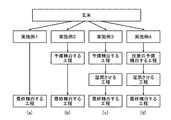
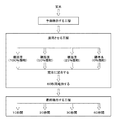
本実施例は、図2(a)に示したように、単一の精白する工程を含んでいる。 As shown in FIG. 2A, the present example includes a single whitening step.
本実施例では、下記の工程を実施した:
玄米(グラディオ(Gladio)米)500gの1バッチを精米機(McGill No.3精米機(米国Rapsco社))のカバー内に装填した。精米チャンバーをカバーが上部に来るまで回転させ、カバーをぴったり合わせ、精米チャンバーを固定した。
In this example, the following steps were performed:
One batch of 500 g of brown rice (Gladio rice) was loaded into the cover of a rice mill (McGill No. 3 rice mill (Rapsco, USA)). The rice milling chamber was rotated until the cover was at the top, the covers were aligned closely, and the rice milling chamber was fixed.
加圧キャップ、加圧レバー、おもりかけ、および既定のおもりをカバーに装着し、その後規定時間にわたって精米機を作動させた。この手順をバッチに対して5、7、10、12および15ポンドのおもり、および5、10、15、20および30秒間の精米時間で繰り返した。 A pressure cap, a pressure lever, a weight hook, and a predetermined weight were attached to the cover, and then the rice mill was operated for a specified time. This procedure was repeated with 5, 7, 10, 12 and 15 pound weights for the batch and rice milling times of 5, 10, 15, 20 and 30 seconds.
生じた米および剥離されたぬかを次にサンプルバッグ内に移し、冷却させた。 The resulting rice and exfoliated bran were then transferred into a sample bag and allowed to cool.
生じた米およびぬかは次に、1.12のメッシュサイズを有するふるいを備え、1分間にわたり350rpmで作動させたシフター(AS400シフター(Retsch社、ドイツ国))を用いて分離した。分離された米は、上白米および砕米を含んでいる。 The resulting rice and bran were then separated using a shifter (AS400 shifter (Retsch, Germany)) equipped with a sieve having a mesh size of 1.12 and operated at 350 rpm for 1 minute. The separated rice contains fine white rice and broken rice.
上白米は、次に砕米から、変速駆動装置(VLT−3003型(Danfoss社、スイス国))を有する選別機(Mini−Petkus選別機(Roeber社、ドイツ国))を使用して分離した。2mmの丸穴および振動ふるいを含む第1分類、ならびに5.5mmのくぼみおよび水平トラフを備える選別機スリーブを含む第2分類を備える単一通路を使用した。供給速度は最低とし、吸引は使用しなかった。 The white rice was then separated from the crushed rice using a sorter (Mini-Petkus sorter (Roeber, Germany)) having a variable speed drive (VLT-3003 (Danfoss, Switzerland)). A single passage with a first classification including a 2 mm round hole and a vibrating screen and a second classification including a sorter sleeve with a 5.5 mm indentation and horizontal trough was used. The feed rate was the lowest and suction was not used.
含水量および上白米の白度を次に決定した。含水量は、単粒水分検出器(PQ−5101−1型(Kett社、米国))を使用して決定した。白度は、白度計(C−300型(Kett社、米国))を使用して測定した。 The water content and whiteness of the top white rice were then determined. The water content was determined using a single grain moisture detector (PQ-5101-1 type (Kett, USA)). Whiteness was measured using a whiteness meter (C-300 type (Kett, USA)).
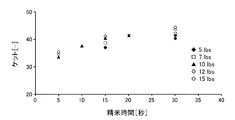
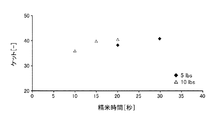
図3は、所定の精米重量に対する精米時間の関数としての白度のプロットを示している。観察されるように、白度は、精米時間の増加および精米重量の増加に伴って増加する。 FIG. 3 shows a plot of whiteness as a function of milling time for a given milled weight. As observed, whiteness increases with increasing milling time and milling weight.
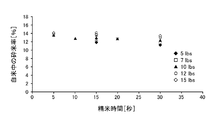
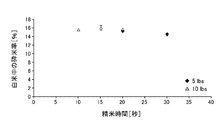
図4は、所定の精米重量に対する精米時間の関数としての砕米のパーセンテージのプロットを示している。観察されるように、砕米のパーセンテージは、精米重量の関数として増加する。同様に観察されるように、これとは反対に、砕米のパーセンテージは精米時間の増加に伴って減少する。この原因は、小砕米が粉末に粉砕されることにある。 FIG. 4 shows a plot of the percentage of broken rice as a function of the milling time for a given milled weight. As observed, the percentage of broken rice increases as a function of the milled rice weight. Similarly, as observed, the percentage of broken rice decreases with increasing milling time. The cause is that the pulverized rice is pulverized into powder.
約40ケットの白度に対しては、40.5±0.3ケットの白度、12.9±0.5%の砕米パーセンテージおよび8.5±0.3%の取り除かれたぬかのパーセンテージを前提に、最適な設定は10ポンドの精米重量および15秒間の精米時間であると決定された。 For whiteness of about 40 kets, whiteness of 40.5 ± 0.3 kets, percentage of broken rice of 12.9 ± 0.5% and percentage of removed bran of 8.5 ± 0.3% Given the above, the optimum settings were determined to be 10 pounds of milled weight and 15 seconds of milled time.
本実施例は、図2(b)に示したように、予備精白および最終精白する工程を含んでいる。 As shown in FIG. 2B, the present example includes preliminary whitening and final whitening steps.
本実施例では、下記の工程を実施した:
玄米(グラディオ米)700gの1バッチを精米機(McGill No.3精米機)のカバー内に装填した。精米チャンバーをカバーが上部に来るまで回転させ、カバーをぴったり合わせ、精米チャンバーを固定した。
In this example, the following steps were performed:
One batch of 700 g of brown rice (Gradio rice) was loaded into the cover of a rice mill (McGill No. 3 rice mill). The rice milling chamber was rotated until the cover was at the top, the covers were aligned closely, and the rice milling chamber was fixed.
加圧キャップ、加圧レバー、おもりかけ、および既定のおもりをカバーに装着し、その後規定時間にわたって精米機を作動させた。本実施例では、この手順を1ポンドの重量および5、10および30秒間の精米時間にわたって実施した。 A pressure cap, a pressure lever, a weight hook, and a predetermined weight were attached to the cover, and then the rice mill was operated for a specified time. In this example, this procedure was carried out over a 1 lb weight and a rice milling time of 5, 10 and 30 seconds.
生じた米および剥離されたぬかを次にサンプルバッグ内に移し、冷却させた。 The resulting rice and exfoliated bran were then transferred into a sample bag and allowed to cool.
生じた米およびぬかは次に、1.12のメッシュサイズを有するふるいを備え、1分間にわたり350rpmで作動させたシフター(AS400シフター)を用いて分離した。分離された米は、上白米および砕米を含んでいる。 The resulting rice and bran were then separated using a shifter (AS400 shifter) equipped with a sieve having a mesh size of 1.12 and operated at 350 rpm for 1 minute. The separated rice contains fine white rice and broken rice.
上白米は、次に砕米から、変速駆動装置(VLT−3003型)を有する選別機(Mini−Petkus選別機)を使用して分離した。2mmの丸穴および振動ふるいを含む第1分類、ならびに5.5mmのくぼみおよび水平トラフを備える選別機スリーブを含む第2分類を備える単一通路を使用した。供給速度は最低とし、吸引は使用しなかった。 The white rice was then separated from the crushed rice using a sorter (Mini-Petkus sorter) having a variable speed drive (VLT-3003 type). A single passage with a first classification including a 2 mm round hole and a vibrating screen and a second classification including a sorter sleeve with a 5.5 mm indentation and horizontal trough was used. The feed rate was the lowest and suction was not used.
含水量および上白米の白度を次に決定した。含水量は、単粒水分検出器(PQ−5101−1型)を使用して決定した。白度は、白度計(C−300型)を使用して測定した。 The water content and whiteness of the top white rice were then determined. The water content was determined using a single grain moisture detector (PQ-5101-1 type). Whiteness was measured using a whiteness meter (C-300 type).
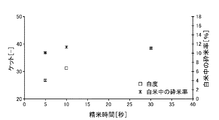
図5は、精米時間の関数としての白度および砕米のパーセンテージのプロットを示している。本実施例では予備精米において取り除かれたぬかのパーセンテージを白度の測定値(ケット値)から決定したが、白度と予備精米において取り除かれたぬかのパーセンテージとの間には相関関係があり、これは予備精米において取り除かれたぬかのパーセンテージを白度の測定値から決定することを可能にする。最適精米時間は5秒間と決定され、これは26.7±0.3ケットの白度、10.0±0.1%の砕米パーセンテージおよび4.5±0.1%の取り除かれたぬかのパーセンテージを提供する。 FIG. 5 shows a plot of whiteness and broken rice percentage as a function of rice milling time. In this example, the percentage of bran removed in preliminary rice was determined from the measured whiteness (ket value), but there is a correlation between the whiteness and the percentage of bran removed in preliminary rice. This makes it possible to determine from the whiteness measurement the percentage of bran removed in the preliminary milled rice. The optimal rice milling time was determined to be 5 seconds, which was 26.7 ± 0.3 ket whiteness, 10.0 ± 0.1% broken rice percentage and 4.5 ± 0.1% removed bran Provide a percentage.
サンプルバッチの一部を容器内の水平振とうにかけた。 A portion of the sample batch was subjected to horizontal shaking in the container.
予備精白した玄米500gの1バッチを次に精米機(McGill No.3精米機)のカバー内に装填した。精米チャンバーをカバーが上部に来るまで回転させ、カバーをぴったり合わせ、精米チャンバーを固定した。 One batch of 500 g of pre-milled brown rice was then loaded into the cover of a rice mill (McGill No. 3 rice mill). The rice milling chamber was rotated until the cover was at the top, the covers were aligned closely, and the rice milling chamber was fixed.
加圧キャップ、加圧レバー、おもりかけ、および既定のおもりをカバーに装着し、その後規定時間にわたって精米機を作動させた。本実施例では、バッチに対してこの手順を5および10ポンドの重量ならびに10、15、20および30秒間の精米時間にわたって実施した。 A pressure cap, a pressure lever, a weight hook, and a predetermined weight were attached to the cover, and then the rice mill was operated for a specified time. In this example, this procedure was performed on the batch over a 5 and 10 pound weight and a rice milling time of 10, 15, 20 and 30 seconds.
生じた米および剥離されたぬかを次にサンプルバッグ内に移し、冷却させた。 The resulting rice and exfoliated bran were then transferred into a sample bag and allowed to cool.
生じた米およびぬかは次に、1.12のメッシュサイズを有するふるいを備え、1分間にわたり350rpmで作動させたシフター(AS400シフター)を用いて分離した。分離された米は、上白米および砕米を含んでいる。 The resulting rice and bran were then separated using a shifter (AS400 shifter) equipped with a sieve having a mesh size of 1.12 and operated at 350 rpm for 1 minute. The separated rice contains fine white rice and broken rice.
上白米は、次に砕米から、変速駆動装置(VLT−3003型)を有する選別機(Mini−Petkus選別機)を使用して分離した。2mmの丸穴および振動ふるいを含む第1分類、ならびに5.5mmのくぼみおよび水平トラフを備える選別機スリーブを含む第2分類を備える単一通路を使用した。供給速度は最低とし、吸引は使用しなかった。 The white rice was then separated from the crushed rice using a sorter (Mini-Petkus sorter) having a variable speed drive (VLT-3003 type). A single passage with a first classification including a 2 mm round hole and a vibrating screen and a second classification including a sorter sleeve with a 5.5 mm indentation and horizontal trough was used. The feed rate was the lowest and suction was not used.
含水量および上白米の白度を次に決定した。含水量は、単粒水分検出器(PQ−5101−1型)を使用して決定した。白度は、白度計(C−300型)を使用して測定した。 The water content and whiteness of the top white rice were then determined. The water content was determined using a single grain moisture detector (PQ-5101-1 type). Whiteness was measured using a whiteness meter (C-300 type).
図6および7は各々、所定の精米重量に対する精米時間の関数としての予備精白した米の最終精白後の白度および砕米のパーセンテージのプロットを示している。観察されるように、白度は精米時間の関数として増加するが、これは実施例1についての結果と一致する。40ケットの白度に対しては、最適な精米パラメータは10ポンドの精米重量および15秒間の精米時間と決定され、その結果、39.6±0.1ケットの白度、16±0.6%の砕米パーセンテージおよび8.2±0.1%の取り除かれたぬかのパーセンテージが得られる。 FIGS. 6 and 7 each show a plot of whiteness and percentage of broken rice after final milling of pre-milled rice as a function of milling time for a given milled rice weight. As observed, whiteness increases as a function of rice milling time, which is consistent with the results for Example 1. For a whiteness of 40 kets, the optimum rice milling parameters were determined to be 10 pounds of milling weight and 15 seconds of milling time, resulting in a whiteness of 39.6 ± 0.1 ket, 16 ± 0.6 % Of broken rice and a percentage of removed bran of 8.2 ± 0.1% are obtained.
本実施例は、図2(c)に示したように、予備精白する工程、中間湿潤させる工程および最終精白する工程を含んでいる。 As shown in FIG. 2C, the present example includes a preliminary whitening step, an intermediate wetting step, and a final whitening step.
本実施例では、下記の工程を実施した:
玄米(グラディオ米)700gの1バッチを精米機(McGill No.3精米機)のカバー内に装填した。精米チャンバーをカバーが上部に来るまで回転させ、カバーをぴったり合わせ、精米チャンバーを固定した。
In this example, the following steps were performed:
One batch of 700 g of brown rice (Gradio rice) was loaded into the cover of a rice mill (McGill No. 3 rice mill). The rice milling chamber was rotated until the cover was at the top, the covers were aligned closely, and the rice milling chamber was fixed.
加圧キャップ、加圧レバー、おもりかけ、および既定のおもりをカバーに装着し、その後規定時間にわたって精米機を作動させた。本実施例では、予備精米する工程を1ポンドの重量で5秒間の精米時間にわたって実施した。 A pressure cap, a pressure lever, a weight hook, and a predetermined weight were attached to the cover, and then the rice mill was operated for a specified time. In this example, the step of pre-milling was carried out at a weight of 1 pound over a 5-second milling time.
生じた米および剥離されたぬかを次にサンプルバッグ内に移し、冷却させた。 The resulting rice and exfoliated bran were then transferred into a sample bag and allowed to cool.
生じた米およびぬかは次に、1.12のメッシュサイズを有するふるいを備え、1分間にわたり350rpmで作動させたシフター(AS400シフター)を用いて分離した。分離された米は、上白米および砕米を含んでいる。 The resulting rice and bran were then separated using a shifter (AS400 shifter) equipped with a sieve having a mesh size of 1.12 and operated at 350 rpm for 1 minute. The separated rice contains fine white rice and broken rice.
上白米は、次に砕米から、変速駆動装置(VLT−3003型)を有する選別機(Mini−Petkus選別機)を使用して分離した。2mmの丸穴および振動ふるいを含む第1分類、ならびに5.5mmのくぼみおよび水平トラフを備える選別機スリーブを含む第2分類を備える単一通路を使用した。供給速度は最低とし、吸引は使用しなかった。 The white rice was then separated from the crushed rice using a sorter (Mini-Petkus sorter) having a variable speed drive (VLT-3003 type). A single passage with a first classification including a 2 mm round hole and a vibrating screen and a second classification including a sorter sleeve with a 5.5 mm indentation and horizontal trough was used. The feed rate was the lowest and suction was not used.
この予備精白する工程後、分離した上白米500gの1バッチを1Lの容器内に装填し、電子式反復ピペットを使用して規定量の湿潤剤を加え、この容器を次に閉鎖して、既定接触時間にわたってこの場合は水平に振とうした。一部のサンプルバッチは、さらにその後の加工処理前に静止時間にかけた。 After this preliminary whitening step, a batch of 500 g of separated white rice is loaded into a 1 L container, a prescribed amount of wetting agent is added using an electronic repeat pipette, the container is then closed, Shake horizontally in this case over the contact time. Some sample batches were subjected to rest time before further processing.
様々なサンプルバッチを調製した:
(i)湿潤剤としての0.5重量%の水、1分間の接触時間、静止時間なし
(ii)湿潤剤としての1.0重量%の水、1分間の接触時間、静止時間なし
(iii)湿潤剤としての0.5重量%の水、2分間の接触時間、静止時間なし
(iv)湿潤剤としての1.0重量%の水、2分間の接触時間、静止時間なし
(v)湿潤剤としての0.5重量%の水、1分間の接触時間、29分間の静止時間
(vi)湿潤剤としての1.0重量%の水、1分間の接触時間、29分間の静止時間
Various sample batches were prepared:
(I) 0.5 wt% water as wetting agent, 1 minute contact time, no rest time (ii) 1.0 wt% water as wetting agent, 1 min contact time, no rest time (iii) ) 0.5 wt% water as wetting agent, 2 min contact time, no rest time (iv) 1.0 wt% water as wetting agent, 2 min contact time, no rest time (v) Wetting 0.5 wt% water as agent, 1 minute contact time, 29 minutes rest time (vi) 1.0 wt% water as wetting agent, 1 minute contact time, 29 minutes rest time
接触時間および任意の静止時間後、湿潤させた予備精白玄米のバッチをその後直ちに最終精白した。 After the contact time and any rest time, the batch of moistened pre-milled brown rice was then immediately final milled.
湿潤させた予備精白玄米のバッチを精米機(McGill No.3精米機)のカバー内に装填した。精米チャンバーをカバーが上部に来るまで回転させ、カバーをぴったり合わせ、精米チャンバーを固定した。 A batch of wet pre-milled brown rice was loaded into the cover of a rice mill (McGill No. 3 rice mill). The rice milling chamber was rotated until the cover was at the top, the covers were aligned closely, and the rice milling chamber was fixed.
加圧キャップ、加圧レバー、おもりかけ、および既定のおもりをカバーに装着し、その後規定時間にわたって精米機を作動させた。本実施例では、この手順を10ポンドの重量で15秒間の精米時間にわたって実施した。 A pressure cap, a pressure lever, a weight hook, and a predetermined weight were attached to the cover, and then the rice mill was operated for a specified time. In this example, this procedure was performed at a weight of 10 pounds for a 15 second milling time.
生じた米および剥離されたぬかを次にサンプルバッグ内に移し、冷却させた。 The resulting rice and exfoliated bran were then transferred into a sample bag and allowed to cool.
生じた米およびぬかは次に、1.12のメッシュサイズを有するふるいを備え、1分間にわたり350rpmで作動させたシフター(AS400シフター)を用いて分離した。分離された米は、上白米および砕米を含んでいた。 The resulting rice and bran were then separated using a shifter (AS400 shifter) equipped with a sieve having a mesh size of 1.12 and operated at 350 rpm for 1 minute. The separated rice contained fine white rice and broken rice.
上白米は、次に砕米から、変速駆動装置(VLT−3003型)を有する選別機(Mini−Petkus選別機)を使用して分離した。2mmの丸穴および振動ふるいを含む第1分類、ならびに5.5mmのくぼみおよび水平トラフを備える選別機スリーブを含む第2分類を備える単一通路を使用した。供給速度は最低とし、吸引は使用しなかった。 The white rice was then separated from the crushed rice using a sorter (Mini-Petkus sorter) having a variable speed drive (VLT-3003 type). A single passage with a first classification including a 2 mm round hole and a vibrating screen and a second classification including a sorter sleeve with a 5.5 mm indentation and horizontal trough was used. The feed rate was the lowest and suction was not used.
含水量および上白米の白度を次に決定した。含水量は、単粒水分検出器(PQ−5101−1型)を使用して決定した。白度は、白度計(C−300型)を使用して測定した。 The water content and whiteness of the top white rice were then determined. The water content was determined using a single grain moisture detector (PQ-5101-1 type). Whiteness was measured using a whiteness meter (C-300 type).
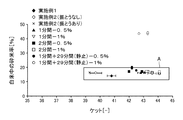
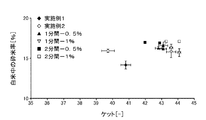
図8は、分離した上白米の精白度の関数としての砕米のパーセンテージのプロットを示している。観察されるように、湿潤させる工程は、穀粒間の増加した摩擦または研磨された米表面でのより高度の反射性によって説明できるより高い白度を提供する。さらに観察されるように、振とうする工程は、振とうを行う実施例2についての砕米のパーセンテージは、振とうなしの実施例2についての、砕米のパーセンテージについての標準偏差の範囲内にあることから、追加の砕米を誘発するとは思われない。さらに観察されるように、静止時間の提供は、砕米数の増加および白度の低下をもたらす。 FIG. 8 shows a plot of the percentage of broken rice as a function of the degree of milling of the separated white rice. As observed, the wetting process provides higher whiteness that can be explained by increased friction between the grains or higher reflectivity at the polished rice surface. As further observed, the step of shaking indicates that the percentage of broken rice for Example 2 with shaking is within the standard deviation for the percentage of broken rice for Example 2 without shaking. Therefore, it does not seem to induce additional broken rice. As further observed, providing rest time results in an increase in the number of broken rice and a decrease in whiteness.
図9は、図8におけるプロットの区域Aの拡大図である。観察されるように、2分間というより長い接触時間は、湿潤剤の量とは無関係に砕米のより高いパーセンテージを生じさせる。さらに、1分間の接触時間を有するサンプルについては、より高い1重量%の量の湿潤剤は精米装置におけるより高度の固化を生じさせた。 FIG. 9 is an enlarged view of the area A of the plot in FIG. As observed, a longer contact time of 2 minutes results in a higher percentage of broken rice regardless of the amount of wetting agent. In addition, for samples with a 1 minute contact time, a higher 1 wt% amount of wetting agent produced a higher degree of solidification in the rice mill.
本実施例は、図2(d)に示したように、予備精白する工程を伴う、および伴わない湿潤させる工程および最終精白する工程を含んでいる。 As shown in FIG. 2 (d), the present example includes a moistening step and a final whitening step with and without a preliminary whitening step.
本実施例では、下記の工程を実施した:
予備精白されたサンプルについて、玄米(グラディオ米)700gの1バッチを精米機(McGill No.3精米機)のカバー内に装填した。精米チャンバーをカバーが上部に来るまで回転させ、カバーをぴったり合わせ、精米チャンバーを固定した。
In this example, the following steps were performed:
For the pre-milled sample, 1 batch of 700 g of brown rice (Gradio rice) was loaded into the cover of a rice mill (McGill No. 3 rice mill). The rice milling chamber was rotated until the cover was at the top, the covers were aligned closely, and the rice milling chamber was fixed.
加圧キャップ、加圧レバー、おもりかけ、および既定のおもりをカバーに装着し、その後規定時間にわたって精米機を作動させた。本実施例では、この手順を1ポンドの重量で5秒間の精米時間にわたって実施した。 A pressure cap, a pressure lever, a weight hook, and a predetermined weight were attached to the cover, and then the rice mill was operated for a specified time. In this example, this procedure was performed at a weight of 1 lb for a 5 second milling time.
生じた米および剥離されたぬかを次にサンプルバッグ内に移し、冷却させた。 The resulting rice and exfoliated bran were then transferred into a sample bag and allowed to cool.
生じた米およびぬかは次に、1.12のメッシュサイズを有するふるいを備え、1分間にわたり350rpmで作動させたシフター(AS400シフター)を用いて分離した。分離された米は、上白米および砕米を含んでいる。 The resulting rice and bran were then separated using a shifter (AS400 shifter) equipped with a sieve having a mesh size of 1.12 and operated at 350 rpm for 1 minute. The separated rice contains fine white rice and broken rice.
上白米は、次に砕米から、変速駆動装置(VLT−3003型)を有する選別機(Mini−Petkus選別機)を使用して分離した。2mmの丸穴および振動ふるいを含む第1分類、ならびに5.5mmのくぼみおよび水平トラフを備える選別機スリーブを含む第2分類を備える単一通路を使用した。供給速度は最低とし、吸引は使用しなかった。 The white rice was then separated from the crushed rice using a sorter (Mini-Petkus sorter) having a variable speed drive (VLT-3003 type). A single passage with a first classification including a 2 mm round hole and a vibrating screen and a second classification including a sorter sleeve with a 5.5 mm indentation and horizontal trough was used. The feed rate was the lowest and suction was not used.
予備精白した上白米または予備精白する工程を実施しなかった玄米(グラディオ米)いずれかのバッチを1Lの容器内に装填し、電子式反復ピペットを使用して規定量の湿潤剤を加え、この容器を次に閉鎖して、既定接触時間にわたってこの場合は水平に振とうした。 A batch of either pre-milled white rice or brown rice that has not been pre-milled (Gradio rice) is loaded into a 1 L container, and a specified amount of wetting agent is added using an electronic repetitive pipette. The container was then closed and shaken horizontally in this case for a predetermined contact time.
様々なサンプルバッチを調製した:
(i)湿潤剤としての0.5重量%の水、1分間の接触時間
(ii)湿潤剤としての0.5重量%のCelluclast(RTM)溶液(0.3重量%のCelluclast(RTM)および0.2重量%の水)、1分間の接触時間
(iii)湿潤剤としての0.5重量%のViscozyme(RTM)溶液(0.3重量%のViscozyme(RTM)および0.2重量%の水)、1分間の接触時間
(iv)湿潤剤としての0.5重量%のNaCl溶液(5重量%のNaCl水溶液)、1分間の接触時間
(v)湿潤剤としての0.5重量%のNaCl溶液(10重量%のNaCl水溶液)、1分間の接触時間
(vi)湿潤剤としての0.5重量%のソルビトール溶液(5重量%のソルビトール水溶液)、1分間の接触時間
(vii)湿潤剤としての0.5重量%のソルビトール溶液(10重量%のソルビトール水溶液)、1分間の接触時間
Various sample batches were prepared:
(I) 0.5 wt% water as wetting agent, 1 minute contact time (ii) 0.5 wt% Celluclast (RTM) solution (0.3 wt% Celluclast (RTM) and 0.2 wt% water), 1 minute contact time (iii) 0.5 wt% Viscozyme (RTM) solution (0.3 wt% Viscozyme (RTM) and 0.2 wt% of wetting agent) Water) 1 minute contact time (iv) 0.5 wt% NaCl solution as wetting agent (5 wt% NaCl aqueous solution), 1 min contact time (v) 0.5 wt% as wetting agent NaCl solution (10 wt% NaCl aqueous solution), 1 minute contact time (vi) 0.5 wt% sorbitol solution (5 wt% sorbitol aqueous solution) as wetting agent, 1 minute contact time (v i) 0.5 wt% of sorbitol solution (10% by weight sorbitol aqueous solution as a wetting agent), a contact time of 1 minute
湿潤させた玄米のバッチを次に精米機(McGill No.3精米機)のカバー内に装填した。精米チャンバーをカバーが上部に来るまで回転させ、カバーをぴったり合わせ、精米チャンバーを固定した。 The batch of wet brown rice was then loaded into the cover of a rice mill (McGill No. 3 rice mill). The rice milling chamber was rotated until the cover was at the top, the covers were aligned closely, and the rice milling chamber was fixed.
加圧キャップ、加圧レバー、おもりかけ、および既定のおもりをカバーに装着し、その後規定時間にわたって精米機を作動させた。本実施例では、この手順を10ポンドの重量および15秒間の精米時間、ならびに1ポンドの重量および15秒間の精米時間の両方で実施した。 A pressure cap, a pressure lever, a weight hook, and a predetermined weight were attached to the cover, and then the rice mill was operated for a specified time. In this example, this procedure was performed with both a 10 pound weight and a 15 second milling time, and a 1 pound weight and a 15 second milling time.
生じた米および剥離されたぬかを次にサンプルバッグ内に移し、冷却させた。 The resulting rice and exfoliated bran were then transferred into a sample bag and allowed to cool.
生じた米およびぬかは次に、1.12のメッシュサイズを有するふるいを備え、1分間にわたり350rpmで作動させたシフター(AS400シフター)を用いて分離した。分離された米は、上白米および砕米を含んでいる。 The resulting rice and bran were then separated using a shifter (AS400 shifter) equipped with a sieve having a mesh size of 1.12 and operated at 350 rpm for 1 minute. The separated rice contains fine white rice and broken rice.
上白米は、次に砕米から、変速駆動装置(VLT−3003型)を有する選別機(Mini−Petkus選別機)を使用して分離した。2mmの丸穴および振動ふるいを含む第1分類、ならびに5.5mmのくぼみおよび水平トラフを備える選別機スリーブを含む第2分類を備える単一通路を使用した。供給速度は最低とし、吸引は使用しなかった。 The white rice was then separated from the crushed rice using a sorter (Mini-Petkus sorter) having a variable speed drive (VLT-3003 type). A single passage with a first classification including a 2 mm round hole and a vibrating screen and a second classification including a sorter sleeve with a 5.5 mm indentation and horizontal trough was used. The feed rate was the lowest and suction was not used.
含水量および分離した上白米の白度を次に決定した。含水量は、単粒水分検出器(PQ−5101−1型)を使用して決定した。白度は、白度計(C−300型)を使用して測定した。 The water content and the whiteness of the separated white rice were then determined. The water content was determined using a single grain moisture detector (PQ-5101-1 type). Whiteness was measured using a whiteness meter (C-300 type).
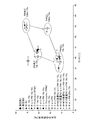
図10は、分離した上白米の精白度の関数としての砕米のパーセンテージのプロットを示している。 FIG. 10 shows a plot of the percentage of broken rice as a function of the degree of milling of the separated white rice.
観察されるように、最終精白する工程における精米量の減少は白度および砕米のパーセンテージの減少をもたらす(右上のクラウドから左上のクラウドへ、および右下のクラウドから左下のクラウドへ)。 As observed, the reduction in the amount of milled rice in the final milling process results in a decrease in whiteness and broken rice percentage (from the upper right cloud to the upper left cloud and from the lower right cloud to the lower left cloud).
さらに観察されるように、所定の精米重量に対する予備精白する工程の排除は、砕米のパーセンテージを有意に、そして白度をほんのわずかにのみ減少させる(右上のクラウドから右下のクラウドへ、および左上のクラウドから左下のクラウド)。 As further observed, the elimination of the pre-milling step for a given milled rice weight significantly reduces the percentage of broken rice and reduces the whiteness only slightly (from the upper right cloud to the lower right cloud, and the upper left). From the left cloud).
さらに観察されるように、塩化ナトリウムおよびソルビトールだけを含有する湿潤剤は、水だけの使用と比較して約1ケットの増加した白度を示し、酵素の使用は、塩化ナトリウムおよびソルビトールだけを含有する湿潤剤を比較して増加した白度または砕米のパーセンテージの減少を提供しない。 As further observed, wetting agents containing only sodium chloride and sorbitol show an increased whiteness of about 1 ket compared to the use of water alone, and the use of enzyme contains only sodium chloride and sorbitol. Does not provide increased whiteness or a reduced percentage of broken rice compared to the wetting agent.
40ケットの白度を達成するために、塩化ナトリウムまたはソルビトールを含有する湿潤剤の使用は、約3.8%の上白米の収率の増加を達成する。理解されるように、図1のサンキーダイアグラムを参照することによって、上白米収率におけるこの増加は、特に加工処理される米の量を前提にすると、極めて有意である。 The use of a wetting agent containing sodium chloride or sorbitol to achieve a 40-kettle whiteness achieves an increase in the yield of white rice of about 3.8%. As will be appreciated, by referring to the Sankey diagram of FIG. 1, this increase in white rice yield is extremely significant, especially given the amount of rice processed.
この結果は、酵素の非存在を前提にすると特に驚くべきことである。湿潤剤中のソルビトールおよび塩化ナトリウム添加物の利点は、最終精白後およびその後の冷却期中の穀粒表面での水利用率の減少にあると仮定されている。 This result is particularly surprising given the absence of enzyme. It is hypothesized that the advantage of sorbitol and sodium chloride additives in the wetting agent is a reduction in water utilization at the grain surface after final milling and during the subsequent cooling period.
本実施例は、図11に示したように、予備精白する工程、中間湿潤させる工程および最終精白する工程を含んでいる。 As shown in FIG. 11, the present example includes a preliminary whitening step, an intermediate wetting step, and a final whitening step.
本実施例では、下記の工程を実施した:
予備洗浄して脱穀した玄米(パーボイルド稲(parboiled paddy)、アンドラ・ポニ(Andhra Poni))100gのサンプルは、20秒間の精米時間にわたって研磨式精米機で精米した。
In this example, the following steps were performed:
A 100 g sample of pre-washed and threshed brown rice (parboiled paddy, Andhra Poni) was polished with a polishing rice mill for 20 seconds.
生じた米および剥離されたぬかを次にサンプルバッグ内に移し、冷却させ、および次にシフターを使用して分離した。 The resulting rice and peeled bran were then transferred into a sample bag, allowed to cool, and then separated using a shifter.
分離された米は上白米および砕米を含み、上白米はその後に砕米から分離された。 The separated rice contained upper white rice and crushed rice, which was then separated from the crushed rice.
この予備精白する工程後、分離した上白米のバッチを容器内に装填し、規定量の湿潤剤をそれにミストまたはスプレーとして適用し、この容器を次に閉鎖して、上白米および湿潤剤を完全に混合した。 After this preliminary whitening step, the separated batch of white rice is loaded into a container, a prescribed amount of wetting agent is applied to it as mist or spray, the container is then closed, and the white rice and wetting agent are completely removed. Mixed.
混合後、サンプルバッチは、次にその後の加工処理前の1分間の静止時間にかけた。 After mixing, the sample batch was then subjected to a 1 minute rest time before subsequent processing.
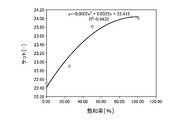
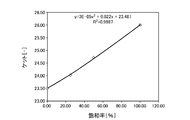
様々なサンプルバッチは、水単独(0%)、室温で25%の糖飽和溶液、室温で50%の糖飽和溶液、および室温で100%の糖飽和溶液を含む湿潤剤を用いて調製した。 Various sample batches were prepared using wetting agents containing water alone (0%), 25% sugar saturated solution at room temperature, 50% sugar saturated solution at room temperature, and 100% sugar saturated solution at room temperature.
静止時間後、湿潤させた予備精白玄米のバッチをその後直ちに最終精白した。 After the resting time, the batch of moistened pre-milled brown rice was immediately final milled immediately thereafter.
湿潤させた予備精白玄米のバッチは、10秒間、20秒間、30秒間および1分間の精米時間にわたって摩擦式精米機内で精米した。 The batch of moistened pre-milled brown rice was polished in a friction mill for 10 seconds, 20 seconds, 30 seconds and 1 minute.
生じた米および剥離されたぬかを次にサンプルバッグ内に移し、冷却させ、および次にシフターを使用して分離した。 The resulting rice and peeled bran were then transferred into a sample bag, allowed to cool, and then separated using a shifter.
分離された米は上白米および砕米を含み、上白米はその後で砕米から分離された。 The separated rice contained upper white rice and crushed rice, which was then separated from the crushed rice.
上白米の白度は、次に結果として生じるサンプル各々について決定した。 The whiteness of the top white rice was then determined for each resulting sample.
本実施例について測定した結果を以下に示した。 The results measured for this example are shown below.
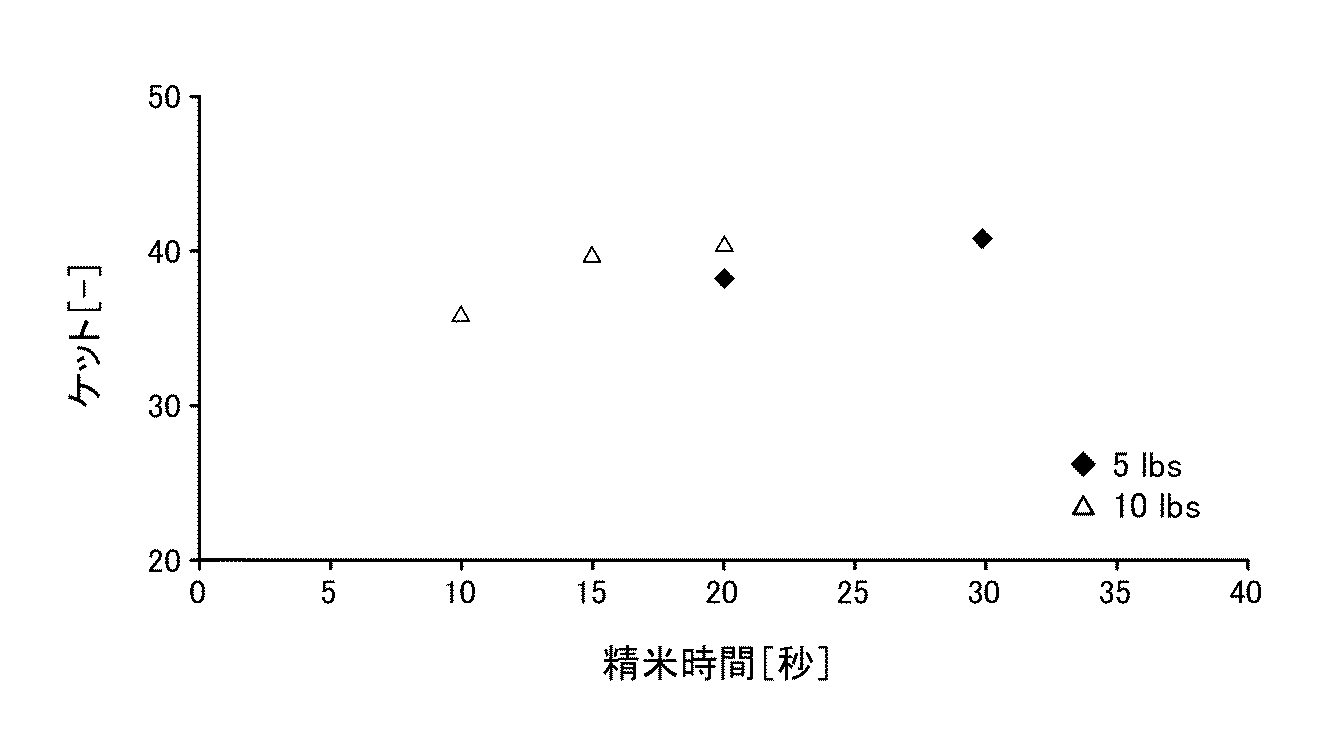
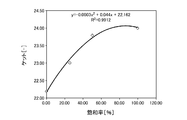
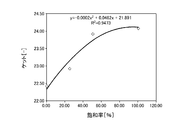
図12(a)〜図12(d)は、湿潤剤中の添加物の飽和率の関数としての白度のプロットを示している。観察されるように、水湿潤剤中の糖の飽和度が増加するにつれて白度が有意に増加する。 FIGS. 12 (a) -12 (d) show plots of whiteness as a function of the saturation rate of the additive in the wetting agent. As observed, the whiteness increases significantly as the saturation of the sugar in the water wetting agent increases.
最後に、本発明をその好ましい実施形態で記載してきたが、添付の特許請求の範囲によって規定される本発明の範囲から逸脱せずに多数の様々な方法で修飾できることを理解されたい。 Finally, while the invention has been described in its preferred embodiments, it is to be understood that it can be modified in a number of different ways without departing from the scope of the invention as defined by the appended claims.
[引用文献]
[1] Kunde, Karl−Heinz, Reis − seine Bedeutung und Bearbeitung, Die Muhle + Mischfuttertechnik, Heft 32/33, 124, Jahrgang, 1987
[2] Champagne, Elaine T, Rice: Chemistry and Technology (Third Edition), American Association of Cereal Chemists, Inc., St Paul, Minnesota, USA, 2004
[3] Arora, Gopika et al, Optimization of Process Parameters for Milling of Enzymatically Pretreated Basmati Rice, Journal of Food Engineering, 82, 2007
[4] Das, Mithu et al, Enzymatic Polishing of Rice − A New Processing Technology, LWT − Food Science and Technology, 41, 2008
[5] Das, Mithu et al, Evaluation of Physiochemical Properties of Enzyme Treated Brown Rice (Part B), LWT − Food Science and Technology, 41, 2007
[6] Hay, Jordan O et al, Mechanical and Enzymatic Separation of Ripening Rice Caryopsis Tissues, Seed Science Research, 16, 2006
[Cited document]
[1] Kunde, Karl-Heinz, Reis-seine Bedeund und Bearbeitung, Die Muhle + Mishfuttertechnik, Heft 32/33, 124, Jahrang, 1987
[2] Champagne, Elaine T, Rice: Chemistry and Technology (Third Edition), American Association of Ceramic Chemists, Inc. , St Paul, Minnesota, USA, 2004.
[3] Aora, Gopika et al, Optimization of Process Parameters for Milling of Enzymatically Preformed Basmati Ric, Journal of Food Eng.
[4] Das, Mithu et al, Enzymatic Polishing of Rice-A New Processing Technology, LWT-Food Science and Technology, 41, 2008
[5] Das, Mithu et al, Evaluation of Physiochemical Properties of Enzyme Treated Brown Rice (Part B), LWT-Food Science and
[6] Hay, Jordan O et al, Mechanical and Enzymatic Separation of Ripple Rice Caryopsis Tissues, Seed Science Research, 16, 2006
Claims (22)
玄米を、水と、糖または糖アルコールを包含するその誘導体、および塩化ナトリウムのうちの少なくとも1つを含む添加物とを含む湿潤剤で湿潤させる工程;および
前記湿潤させた玄米を前記湿潤させる工程後に機械的に精白する工程
を含む、方法。 A method for milling rice:
Moistening brown rice with a wetting agent comprising water and an additive comprising at least one of sugar or a derivative thereof including sugar alcohol and sodium chloride; and moistening the wet brown rice A method comprising the step of mechanically polishing later.
玄米を、水と、糖または糖アルコールを包含するその誘導体、および塩化ナトリウムのうちの少なくとも1つを含む添加物とを含む湿潤剤で湿潤させる工程;および Wetting brown rice with a wetting agent comprising water and an additive comprising at least one of sugar or a derivative thereof including sugar alcohol and sodium chloride; and
前記湿潤させた玄米を前記湿潤させる工程後に機械的に精白する工程 Step of mechanically whitening the wet brown rice after the wet step
を含み、Including
前記湿潤剤は、前記玄米に2重量%未満の量で加えられる、方法。 The method wherein the wetting agent is added to the brown rice in an amount of less than 2% by weight.
機械的に精白されていない玄米を湿潤させる工程であって、前記玄米は、水と、糖または糖アルコールを包含するその誘導体、および塩化ナトリウムのうちの少なくとも1つを含む添加物とを含む湿潤剤で湿潤される、工程;および A step of wetting brown rice that has not been mechanically refined, the brown rice comprising water and an additive comprising at least one of sugar or a derivative thereof including sugar alcohol, and sodium chloride. Wetted with an agent; and
前記湿潤させた玄米を前記湿潤させる工程後に機械的に精白する工程 Step of mechanically whitening the wet brown rice after the wet step
を含む、方法。Including a method.
Applications Claiming Priority (2)
| Application Number | Priority Date | Filing Date | Title |
|---|---|---|---|
| GB0916898.0 | 2009-09-25 | ||
| GB0916898A GB2473857A (en) | 2009-09-25 | 2009-09-25 | Rice whitening |
Related Parent Applications (1)
| Application Number | Title | Priority Date | Filing Date |
|---|---|---|---|
| JP2012530334A Division JP2013505715A (en) | 2009-09-25 | 2010-09-27 | Rice milling |
Related Child Applications (1)
| Application Number | Title | Priority Date | Filing Date |
|---|---|---|---|
| JP2017162834A Division JP2018012104A (en) | 2009-09-25 | 2017-08-25 | Rice whitening |
Publications (1)
| Publication Number | Publication Date |
|---|---|
| JP2015211971A true JP2015211971A (en) | 2015-11-26 |
Family
ID=41350409
Family Applications (3)
| Application Number | Title | Priority Date | Filing Date |
|---|---|---|---|
| JP2012530334A Pending JP2013505715A (en) | 2009-09-25 | 2010-09-27 | Rice milling |
| JP2015134604A Pending JP2015211971A (en) | 2009-09-25 | 2015-07-03 | Rice whitening |
| JP2017162834A Pending JP2018012104A (en) | 2009-09-25 | 2017-08-25 | Rice whitening |
Family Applications Before (1)
| Application Number | Title | Priority Date | Filing Date |
|---|---|---|---|
| JP2012530334A Pending JP2013505715A (en) | 2009-09-25 | 2010-09-27 | Rice milling |
Family Applications After (1)
| Application Number | Title | Priority Date | Filing Date |
|---|---|---|---|
| JP2017162834A Pending JP2018012104A (en) | 2009-09-25 | 2017-08-25 | Rice whitening |
Country Status (9)
| Country | Link |
|---|---|
| US (1) | US20130108759A1 (en) |
| EP (1) | EP2480096B1 (en) |
| JP (3) | JP2013505715A (en) |
| KR (2) | KR20120079106A (en) |
| CN (1) | CN102770032B (en) |
| ES (1) | ES2536484T3 (en) |
| GB (1) | GB2473857A (en) |
| PH (1) | PH12012500601A1 (en) |
| WO (1) | WO2011036464A1 (en) |
Families Citing this family (3)
| Publication number | Priority date | Publication date | Assignee | Title |
|---|---|---|---|---|
| CN104772173A (en) * | 2015-05-04 | 2015-07-15 | 东北农业大学 | Non-soaking composite enzyme method pre-treatment technology improving brown rice milling performance |
| CN107913754A (en) * | 2017-11-22 | 2018-04-17 | 安徽省东博米业有限公司 | A kind of brown rice atomizing-dampening system method for reducing broken rice rate |
| CN107774358A (en) * | 2017-11-22 | 2018-03-09 | 安徽省东博米业有限公司 | A kind of paddy processing glossing |
Citations (5)
| Publication number | Priority date | Publication date | Assignee | Title |
|---|---|---|---|---|
| JPS4820308B1 (en) * | 1970-11-11 | 1973-06-20 | ||
| JPS503847A (en) * | 1973-05-08 | 1975-01-16 | ||
| JPS55167052A (en) * | 1979-06-16 | 1980-12-26 | Akio Sugi | Riceecleaning method by rubbing under wet condition |
| JPS58175456A (en) * | 1982-04-07 | 1983-10-14 | Akio Sugi | Rice storage |
| JP2001078687A (en) * | 1999-09-16 | 2001-03-27 | Kodama:Kk | Embryo-ripening rice-polishing method |
Family Cites Families (22)
| Publication number | Priority date | Publication date | Assignee | Title |
|---|---|---|---|---|
| JPS5038584B1 (en) * | 1969-07-25 | 1975-12-10 | ||
| US3667523A (en) * | 1969-12-29 | 1972-06-06 | Food Eng Intern Inc | Apparatus and process for the removal of the germ and bran coat from cereal grains |
| JPS4834222B1 (en) * | 1970-08-10 | 1973-10-19 | ||
| US3960068A (en) * | 1975-01-29 | 1976-06-01 | Felipe Salete | Machine for whitening, polishing or pearling grains and cereals and more particularly rice |
| US4155295A (en) * | 1975-10-29 | 1979-05-22 | Toshihiko Satake | Rice pearling apparatus |
| GB2029193B (en) * | 1978-08-11 | 1983-03-09 | Tainsh J | Polishing brown rice |
| JPS56169554A (en) * | 1980-05-31 | 1981-12-26 | Satake Eng Co Ltd | Processing method of polished rice |
| US4483244A (en) * | 1982-12-13 | 1984-11-20 | Satake Engineering Co., Ltd. | Rice whitening apparatus |
| JPH0661229B2 (en) * | 1985-12-06 | 1994-08-17 | ハウス食品株式会社 | Dry rice manufacturing method |
| JPH0675685B2 (en) * | 1987-06-20 | 1994-09-28 | 株式会社東洋精米機製作所 | Finishing rice polishing method |
| US5275836A (en) * | 1992-04-10 | 1994-01-04 | Byron Agricultural Company Pty. Ltd. | Process for treating brown rice and product thereof |
| CN1098964A (en) * | 1993-08-20 | 1995-02-22 | 湖北省粮机厂研究设计所 | A kind of processing technology that brown rice is processed as clean rice |
| CN2189975Y (en) * | 1994-04-23 | 1995-02-22 | 肖庭贵 | Rice mill with a sprayer |
| CN1167510C (en) * | 2000-03-15 | 2004-09-22 | 株式会社佐竹 | A method and equipment for processing bran-free grains |
| JP4411647B2 (en) * | 2000-10-17 | 2010-02-10 | 株式会社サタケ | Milled rice processing method and apparatus |
| US6586036B1 (en) * | 2001-01-11 | 2003-07-01 | The United States Of America As Represented By The Secretary Of Agriculture | Process for increasing the rate of hydration of food crop seeds |
| JP3838425B2 (en) * | 2002-03-14 | 2006-10-25 | 株式会社サタケ | Germinated germ rice production equipment |
| JP4099036B2 (en) * | 2002-11-13 | 2008-06-11 | 株式会社サタケ | Instant rice manufacturing method and instant rice |
| CN1319469C (en) * | 2002-11-25 | 2007-06-06 | 株式会社林原生物化学研究所 | Method of producing rice flour and use thereof |
| DE102004051729A1 (en) * | 2004-10-22 | 2006-05-04 | Helmut Gollisch | Cereals e.g. wheat, cleaning device, has supply unit supplying cereals into container filled with brine of sodium-chloride, and discharging unit discharging cereals from container, where cereals are cleaned in bath with brine |
| JP4875553B2 (en) * | 2007-06-28 | 2012-02-15 | 株式会社クボタ | Rice milling equipment |
| KR100903488B1 (en) * | 2007-11-30 | 2009-06-18 | 씨제이제일제당 (주) | Manufacturing method of aseptic packaged rice using rice eye rice |
-
2009
- 2009-09-25 GB GB0916898A patent/GB2473857A/en not_active Withdrawn
-
2010
- 2010-09-27 KR KR1020127009767A patent/KR20120079106A/en not_active Ceased
- 2010-09-27 PH PH1/2012/500601A patent/PH12012500601A1/en unknown
- 2010-09-27 JP JP2012530334A patent/JP2013505715A/en active Pending
- 2010-09-27 CN CN201080053609.5A patent/CN102770032B/en not_active Expired - Fee Related
- 2010-09-27 WO PCT/GB2010/001809 patent/WO2011036464A1/en not_active Ceased
- 2010-09-27 KR KR1020187022390A patent/KR20180089578A/en not_active Withdrawn
- 2010-09-27 ES ES10779834.0T patent/ES2536484T3/en active Active
- 2010-09-27 EP EP10779834.0A patent/EP2480096B1/en not_active Not-in-force
- 2010-09-27 US US13/498,311 patent/US20130108759A1/en not_active Abandoned
-
2015
- 2015-07-03 JP JP2015134604A patent/JP2015211971A/en active Pending
-
2017
- 2017-08-25 JP JP2017162834A patent/JP2018012104A/en active Pending
Patent Citations (5)
| Publication number | Priority date | Publication date | Assignee | Title |
|---|---|---|---|---|
| JPS4820308B1 (en) * | 1970-11-11 | 1973-06-20 | ||
| JPS503847A (en) * | 1973-05-08 | 1975-01-16 | ||
| JPS55167052A (en) * | 1979-06-16 | 1980-12-26 | Akio Sugi | Riceecleaning method by rubbing under wet condition |
| JPS58175456A (en) * | 1982-04-07 | 1983-10-14 | Akio Sugi | Rice storage |
| JP2001078687A (en) * | 1999-09-16 | 2001-03-27 | Kodama:Kk | Embryo-ripening rice-polishing method |
Also Published As
| Publication number | Publication date |
|---|---|
| US20130108759A1 (en) | 2013-05-02 |
| CN102770032B (en) | 2017-10-17 |
| JP2013505715A (en) | 2013-02-21 |
| EP2480096A1 (en) | 2012-08-01 |
| ES2536484T3 (en) | 2015-05-25 |
| PH12012500601A1 (en) | 2019-03-25 |
| KR20180089578A (en) | 2018-08-08 |
| KR20120079106A (en) | 2012-07-11 |
| EP2480096B1 (en) | 2015-02-25 |
| GB0916898D0 (en) | 2009-11-11 |
| JP2018012104A (en) | 2018-01-25 |
| CN102770032A (en) | 2012-11-07 |
| GB2473857A (en) | 2011-03-30 |
| WO2011036464A1 (en) | 2011-03-31 |
Similar Documents
| Publication | Publication Date | Title |
|---|---|---|
| JP2018012104A (en) | Rice whitening | |
| US20090098265A1 (en) | Method for production of masa | |
| JP3076552B2 (en) | Method for producing rice flour as a substitute for flour and processed food using the rice flour | |
| JP6823947B2 (en) | Manufacturing method of fermented red bean food | |
| CN116832895B (en) | A method for high-purity separation of quinoa germ and wheat core | |
| CN110862460B (en) | Method for extracting corn starch by multi-enzyme synergistic soaking | |
| JPH08154655A (en) | Prodution of sake and sweet food | |
| CN1960643A (en) | Germinating brown rice | |
| US20240108038A1 (en) | Oat derived composition | |
| JP3841801B2 (en) | Method for producing germinated germ rice | |
| CN113244976B (en) | Corn embryo extraction processing technology | |
| US6440479B1 (en) | Processing of flaxseed | |
| CN1554285A (en) | A method of adding oyster shell superfine powder to produce oyster tablet | |
| JP7774785B2 (en) | Cereal flakes | |
| CN102461963A (en) | Processing method of waxy corn health-care beverage | |
| EP1161300B1 (en) | Processing of flaxseed | |
| JP2003274881A (en) | New method of producing rice flour from brown rice | |
| Li et al. | Cellulase-Xylanase Pretreatment Enhances Rice Milling Efficiency and Yields Moderately Milled Rice with Improved Cooking Quality | |
| JP4030466B2 (en) | Wheat wheat | |
| JP2016106546A (en) | Rice and boiled rice | |
| JP4227912B2 (en) | Diet wheat and method for producing the same | |
| JP2003061595A (en) | Processed rice and method for producing the same | |
| JP4642638B2 (en) | Method for producing γ-aminobutyric acid-containing wet corn flour | |
| CN104592401A (en) | Crushing process in process of producing starch by using corn | |
| JP2001017124A (en) | Chaff grain powder and its production |
Legal Events
| Date | Code | Title | Description |
|---|---|---|---|
| A131 | Notification of reasons for refusal |
Free format text: JAPANESE INTERMEDIATE CODE: A131 Effective date: 20160531 |
|
| A977 | Report on retrieval |
Free format text: JAPANESE INTERMEDIATE CODE: A971007 Effective date: 20160531 |
|
| A601 | Written request for extension of time |
Free format text: JAPANESE INTERMEDIATE CODE: A601 Effective date: 20160829 |
|
| A601 | Written request for extension of time |
Free format text: JAPANESE INTERMEDIATE CODE: A601 Effective date: 20161027 |
|
| A521 | Request for written amendment filed |
Free format text: JAPANESE INTERMEDIATE CODE: A523 Effective date: 20161130 |
|
| A02 | Decision of refusal |
Free format text: JAPANESE INTERMEDIATE CODE: A02 Effective date: 20170425 |
|
| A521 | Request for written amendment filed |
Free format text: JAPANESE INTERMEDIATE CODE: A523 Effective date: 20170825 |
|
| A521 | Request for written amendment filed |
Free format text: JAPANESE INTERMEDIATE CODE: A523 Effective date: 20171013 |
|
| A911 | Transfer to examiner for re-examination before appeal (zenchi) |
Free format text: JAPANESE INTERMEDIATE CODE: A911 Effective date: 20171102 |
|
| A912 | Re-examination (zenchi) completed and case transferred to appeal board |
Free format text: JAPANESE INTERMEDIATE CODE: A912 Effective date: 20171228 |