JP2010536601A - Work environment privacy equipment - Google Patents
Work environment privacy equipment Download PDFInfo
- Publication number
- JP2010536601A JP2010536601A JP2009517488A JP2009517488A JP2010536601A JP 2010536601 A JP2010536601 A JP 2010536601A JP 2009517488 A JP2009517488 A JP 2009517488A JP 2009517488 A JP2009517488 A JP 2009517488A JP 2010536601 A JP2010536601 A JP 2010536601A
- Authority
- JP
- Japan
- Prior art keywords
- door
- message
- messages
- allows
- office
- Prior art date
- Legal status (The legal status is an assumption and is not a legal conclusion. Google has not performed a legal analysis and makes no representation as to the accuracy of the status listed.)
- Withdrawn
Links
Images
Classifications
-
- G—PHYSICS
- G08—SIGNALLING
- G08B—SIGNALLING SYSTEMS, e.g. PERSONAL CALLING SYSTEMS; ORDER TELEGRAPHS; ALARM SYSTEMS
- G08B5/00—Visible signalling systems, e.g. visible personal calling systems or remote indication of seats occupied
-
- G—PHYSICS
- G08—SIGNALLING
- G08B—SIGNALLING SYSTEMS, e.g. PERSONAL CALLING SYSTEMS; ORDER TELEGRAPHS; ALARM SYSTEMS
- G08B5/00—Visible signalling systems, e.g. visible personal calling systems or remote indication of seats occupied
- G08B5/22—Visible signalling systems, e.g. visible personal calling systems or remote indication of seats occupied using electric transmission; using electromagnetic transmission
- G08B5/36—Visible signalling systems, e.g. visible personal calling systems or remote indication of seats occupied using electric transmission; using electromagnetic transmission using visible light sources
Landscapes
- Physics & Mathematics (AREA)
- General Physics & Mathematics (AREA)
- Electromagnetism (AREA)
- Time Recorders, Dirve Recorders, Access Control (AREA)
- Telephonic Communication Services (AREA)
- Management, Administration, Business Operations System, And Electronic Commerce (AREA)
Abstract
本発明は、開放的オフィス環境で働き、オフィスドアのプライバシを欠く従業員に対する双方向伝達システムである。このシステムは本物のドアと同じ機能を実行し、一日中介入されることなく、同僚に彼らの利用可能性状態を警告することを可能とする。さらに、利用者が内部のオフィスメモを記録することを可能にし、彼または彼女が席にいないとき、他の従業員が利用者のためメッセージを記録することを可能とする。この価値あるツールは開放的オフィス環境の人々に対して非常に有用であり、介入によって制限されていた仕事の生産性の質を大いに向上させる。
【選択図】図2The present invention is a two-way transmission system for employees working in an open office environment and lacking office door privacy. The system performs the same function as a real door and allows colleagues to be alerted of their availability status without being intervened throughout the day. In addition, it allows the user to record internal office notes and allows other employees to record messages for the user when he or she is not in the seat. This valuable tool is very useful for people in open office environments and greatly improves the quality of work productivity that has been limited by intervention.
[Selection] Figure 2
Description
本発明は、机の上で使用される装置に関し、この装置は、机での仕事の状況、個人の気分、およびこれらの利用可能性またはプライバシの必要性を伝達する。言葉を使わないこの情報の伝達能力は、不必要な介入を削除して、仕事の生産性を向上させる。さらに、机から離れるとき本発明を用いることによって、本発明の社内メッセージ記録装置の手段で個人は居場所と帰り時間を伝達することができ、不在時の訪問者からメッセージを取得することもできる。 The present invention relates to a device for use on a desk, which communicates the status of work at the desk, personal mood, and their availability or privacy needs. This language-free ability to communicate information eliminates unnecessary interventions and improves work productivity. Furthermore, by using the present invention when leaving the desk, an individual can transmit the whereabouts and the return time by means of the in-house message recording apparatus of the present invention, and can also obtain a message from a visitor when absent.
机で仕事をしているときの介入への対応は集中と生産性を破壊する。鍵がかけられたドアの部屋にいない限り、ほとんど全ての介入は言葉で回避しなければならない。机で働く人はどこでも、オフィスであろうと家であろうと、言葉を使わずに、気分、利用可能性またはプライバシーの必要性を伝達する能力が、高い仕事の効率を達成するため重要な意味を持つ。机での介入によって多くの影響を受ける層は、開放的オフィスで働く人で数が増え続け、アメリカだけで2000万人近くになっている。事実働く人のおよそ80%がパーティションで小さく区切った場所またはモジュール式の開放的オフィス環境の中で時間のほとんどを費やす。このタイプのオフィスデザインはよくても擬似的なプライバシーを提供するだけで、突発的に起こる介入を停止させることに貢献しない。 Responding to interventions when working at a desk destroys concentration and productivity. Almost all interventions must be avoided verbally unless in the locked door room. The ability to communicate the need for mood, availability or privacy, without using words, wherever a desk worker is, whether in the office or at home, is important for achieving high work efficiency. Have. The number of people working in open offices continues to grow, with nearly 20 million people in the United States alone being affected by desk intervention. In fact, approximately 80% of workers spend most of their time in partitions or modular open office environments. This type of office design, at best, only provides simulated privacy and does not contribute to stopping accidental interventions.
HRマガジンによって行われた調査では、開放的オフィスで働く人の1番の不平は、ランダムで突発的な伝達による介入である。オフィス調査会社であるBosti Associateは、開放的オフィスで働く人が、話し好きな訪問者または同僚からの個人間の自発的質問によって、日に平均16回介入を受けていることを報告している。調査はちょうど短い介入から集中を回復するため、約2.9分必要であることを示し、これは単に再集中だけでも日に1時間以上になり、介入の長さの時間を計算すればもっと多くの時間になる。 In a survey conducted by HR Magazine, the number one complaint of those working in open offices is a random and sudden communication intervention. Bosti Associate, an office research firm, reports that people working in open offices receive an average of 16 interventions a day with spontaneous questions from individuals who like talking or colleague. . The survey shows that it takes about 2.9 minutes to restore concentration from just a short intervention, which can be more than an hour a day just by re-concentration, and if you calculate the length of the intervention more It will be a lot of time.
40機関の13000人のデータベースからの調査で、Bosti Associateは仕事能力に関して最も重要な2つの予測を特定した。その1つは気を散らすものから離れて仕事を行う能力である。この要素が解決されたとき、個人の仕事能力は4−5%向上し、チームの能力は23%向上し、全ての仕事の満足感は23%まで上がった。場所の制約、柔軟性及び働く場所の費用効果の必要性から、仕事はモジュラ型または開放的オフィスデザインで続けられ、彼らの仕事の状況、利用可能性またはプライバシーの必要性を言葉を使用せずに伝達することが机で働く人にとって必要であり続ける。 In a survey from a database of 13,000 people from 40 institutions, Bosti Associate identified the two most important predictions regarding work ability. One is the ability to work away from distracting things. When this factor was resolved, the individual's work ability improved by 4-5%, the team's ability improved by 23% and the satisfaction of all work rose to 23%. Due to location constraints, flexibility and cost-effective needs of the work place, work continues in a modular or open office design, without using words to describe their work situation, availability or privacy needs It is still necessary for those who work at the desk to communicate.
本発明の目的は、個人の利用可能性またはプライバシの必要性を伝達することであり、フルサイズのオフィスドアと同じ効果を達成する。 The object of the present invention is to communicate personal availability or privacy needs and achieve the same effect as a full size office door.
ドアのない開放的オフィスの環境の多くで、日に1時間以上も働く人の効率を乱す介入が増え続け、個人の仕事の状況、利用可能性、プライバシの必要性を伝達する装置に大きな必要性が存在する。デスクドアはこの必要性に答え、オールインワンであり、言葉が不要な伝達システムで利用者に彼らの仕事の状況、利用可能性またはプライバシの必要性を彼らの集中を乱すことなく伝えることができる。このデスクドアで、1)ドアの開閉、2)装置内の消去可能な領域に個人のメッセージを書くこと、3)事前に書いた状態メッセージから挿入チップを選ぶこと、4)空白の挿入チップを利用して彼ら自身の状態メッセージを書くこと、5)社内の訪問者に聞かせるため彼ら自身の外向けメッセージを書くこと、を含む、これらに制限されないの少なくとも5つの形の外向きの伝達を、個人は利用すること及び組み合わせることができる。追加的に、利用者が彼または彼女の机から離れていることを状態メッセージが示しているとき、装置の音声記録特徴が、彼または彼女が席を離れているときに尋ねてきた同僚からの社内メッセージを取得することもできる。 In many open office environments with no doors, more and more interventions disrupt the efficiency of people who work for more than an hour a day, and there is a great need for devices that communicate the personal work situation, availability, and privacy needs Sex exists. Desk doors answer this need and are all-in-one, a verbal communication system that allows users to communicate their work status, availability or privacy needs without disturbing their concentration. With this desk door, 1) open and close the door, 2) write a personal message in an erasable area in the device, 3) choose an insert tip from the pre-written status message, 4) use a blank insert tip Writing their own status message, and 5) writing their own outgoing message to listen to internal visitors, including but not limited to at least five forms of outward communication, Individuals can use and combine. In addition, when the status message indicates that the user is away from his or her desk, the device's audio recording characteristics may be from a colleague who has asked when he or she is away from the seat. You can also get internal messages.
本発明のより完全な理解のため、言及が以下の記載と同封の図面によって行われる。 For a more complete understanding of the present invention, reference is made to the following description and accompanying drawings.
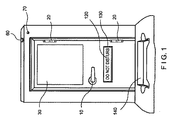
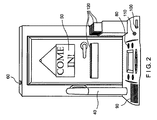
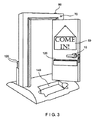
本発明の目的は、個人の利用可能性またはプライバシの必要性を伝達することであり、フルサイズのオフィスドアと同じ効果を達成する。規模を模倣したデスクドアはハンドル10を用いて開いたり閉じたりすることができ、ヒンジ20、磁石または同様な構造を介して取り付けられる。閉じたドアは忙しいこと及び煩わせるなを意味し(図1参照)、一方、開いたドアは他人に「どうぞお入りください」を意味し、他人を招待する(図3参照)。デスクドアは、オフィスドア、セキュリティ門、刑務所のドア、城のドア、庭の門または以下の追加の特徴を有する他の出入り口、門、または入口を含むがこれに制限されないドアタイプの様式を取ることもできる。追加の特徴は、
・消去可能な書き込み装置40でカスタマイズされたメッセージを書くためのドアの前面の書き込み表面30、及び図3のようにドアが開いた位置で表示されるドアの背面上に表示される「どうぞお入りください」50
・中に入ってくる社内メッセージを取得するためのマイクロフォン70を有する記録ボタン60、及び外に出る社内メッセージを記録するためのメモボタン80
・音声出力のレベルを制御するためのボリュームコントロール100を有するメッセージを再生するためのスピーカ90
・個人的な聴取を可能とするヘッドフォンジャック110
・利用者のプライバシまたは利用可能な状態を詳細に示す個別のメッセージのための空きのメッセージチップと同様に多種の事前に書かれたメッセージの両方を提供する状態メッセージ挿入チップ120の選択
・状態メッセージ挿入チップを表示するための状態ウィンドウ130
・名刺140を保持し、表示するトレイ
である。
The object of the present invention is to communicate personal availability or privacy needs and achieve the same effect as a full size office door. A desk door that mimics the scale can be opened and closed using the
• "Please see" on the
A
A
Selection of status
A tray that holds and displays the
本実施形態は音声録音機60を含んでおり、他の実施形態は録音機を欠いており、システムの複雑さとコストに柔軟性を与える。
This embodiment includes a
本実施形態は消去可能なメッセージ表面30を含んでおり、他の実施形態はコンピュータに接続可能なデジタルスクリーンを含んでいる。デジタルスクリーンは、インターネットからダウンロードしたイメージ、または追加のソフトウェアからのイメージを表示する。
This embodiment includes an
従って、本発明の基本の新規な特徴が示され、表示され、指摘されている限り、記載された装置の形状と細部の様々な省略及び置換及び変形、及びこれらの操作は、本発明の本質から逸脱することなく当業者によって、作られる可能性があることを理解する必要がある。例えば、同じ結果を得るため本質的の同じ方法で本質的に同じ機能を実行するこれらの要素及び/又は方法ステップの全ての結合は、本発明の範囲内である。さらに、本発明の開示された形状及び/又は実施形態と関連して表示及び/又は記載される構造及び/又は要素及び/又は方法は、他の形状または実施形態と組み合わせることができることも認識すべきである。従って、以下の付加された請求項の範囲によって示されることにのみに制限される。 Accordingly, as long as the basic novel features of the invention are shown, shown and pointed out, various omissions, substitutions and variations in the form and details of the apparatus described, and their operation, are essential to the invention. It should be understood that it can be made by those skilled in the art without departing from the invention. For example, all combinations of these elements and / or method steps that perform essentially the same function in essentially the same way to achieve the same result are within the scope of the invention. Further, it is recognized that the structures and / or elements and / or methods shown and / or described in connection with the disclosed shapes and / or embodiments of the invention can be combined with other shapes or embodiments. Should. Accordingly, it is limited only as indicated by the scope of the appended claims below.
10 ハンドル
20 ヒンジ
30 ドアの前面の書き込み表面
40 消去可能な書き込み装置
50 「どうぞお入りください」
60 記録ボタン
70 マイクロフォン
80 メモボタン
90 スピーカ
100 ボリュームコントロール
110 ヘッドフォンジャック
120 状態メッセージ挿入チップ
130 状態ウィンドウ
140 名刺
10
60
Claims (12)
Applications Claiming Priority (2)
| Application Number | Priority Date | Filing Date | Title |
|---|---|---|---|
| US81647706P | 2006-06-26 | 2006-06-26 | |
| PCT/IB2007/004533 WO2008129353A2 (en) | 2006-06-26 | 2007-08-25 | Workstation privacy apparatus |
Publications (1)
| Publication Number | Publication Date |
|---|---|
| JP2010536601A true JP2010536601A (en) | 2010-12-02 |
Family
ID=39876015
Family Applications (1)
| Application Number | Title | Priority Date | Filing Date |
|---|---|---|---|
| JP2009517488A Withdrawn JP2010536601A (en) | 2006-06-26 | 2007-08-25 | Work environment privacy equipment |
Country Status (3)
| Country | Link |
|---|---|
| US (1) | US20090285413A1 (en) |
| JP (1) | JP2010536601A (en) |
| WO (1) | WO2008129353A2 (en) |
Families Citing this family (1)
| Publication number | Priority date | Publication date | Assignee | Title |
|---|---|---|---|---|
| US8577711B2 (en) * | 2008-01-25 | 2013-11-05 | Herman Miller, Inc. | Occupancy analysis |
Family Cites Families (6)
| Publication number | Priority date | Publication date | Assignee | Title |
|---|---|---|---|---|
| US5960173A (en) * | 1995-12-22 | 1999-09-28 | Sun Microsystems, Inc. | System and method enabling awareness of others working on similar tasks in a computer work environment |
| WO2000031726A1 (en) * | 1998-11-20 | 2000-06-02 | Peter Eric J | Digital dictation card and method of use in business |
| US6965294B1 (en) * | 2002-02-28 | 2005-11-15 | Kimball International, Inc. | Workspace security system |
| US6992570B2 (en) * | 2002-05-29 | 2006-01-31 | Weinstein Ide Linda A | Rest room sound producing device |
| CA2552429A1 (en) * | 2004-01-16 | 2005-08-04 | Michael Owen | White board and white board display system |
| US20060122896A1 (en) * | 2004-12-08 | 2006-06-08 | Parsley Andrew J | Green touch display advertising kiosk system |
-
2007
- 2007-08-25 US US12/306,448 patent/US20090285413A1/en not_active Abandoned
- 2007-08-25 WO PCT/IB2007/004533 patent/WO2008129353A2/en not_active Ceased
- 2007-08-25 JP JP2009517488A patent/JP2010536601A/en not_active Withdrawn
Also Published As
| Publication number | Publication date |
|---|---|
| US20090285413A1 (en) | 2009-11-19 |
| WO2008129353A3 (en) | 2009-08-27 |
| WO2008129353A2 (en) | 2008-10-30 |
Similar Documents
| Publication | Publication Date | Title |
|---|---|---|
| Sacks | Lecture 1: Rules of conversational sequence | |
| Mirchandani | Practices of global capital: gaps, cracks and ironies in transnational call centres in India | |
| Yankelovich et al. | Meeting central: making distributed meetings more effective | |
| Nelson et al. | Quiet calls: talking silently on mobile phones | |
| Dare et al. | Co-creating visual representations of safe spaces with mental health service users using photovoice and zoom | |
| Woodruff et al. | The conversational role of electronic guidebooks | |
| Simon | Emotional labor, stressors, and librarians who work with the public | |
| Diethart et al. | Guidelines for virtual conferencing–inspired by the COPERNICUS Alliance Online Conference 2019 | |
| Lai et al. | Distributed work: communication in an ‘officeless firm’ | |
| JP2010536601A (en) | Work environment privacy equipment | |
| WO2004109633A2 (en) | Method and system for processing interactive communications | |
| Taskin et al. | The cost of managerial caring: Exploring identity work in the hybrid work context | |
| Dutta | Role of communication skills in effective management of library and information centres | |
| Domahidy et al. | The back stage is not the back room: How spatial arrangements affect the administration of public affairs | |
| JP2023038794A (en) | Meeting support device, meeting support method and meeting support program | |
| Kothakota et al. | AI: A Good or Evil in Building Rapport and Trust? Using AI responsibly requires caution and curiosity. | |
| Berardino et al. | Building the Speaking Skills Required in Today's Workplace. | |
| Hagenfeldt | Working from Home-the new Office: Communication and Leadership for a Stay-at-home Workforce | |
| Smithers et al. | Impasses of affective inquiry in pandemic times | |
| Molay | Best Practices for Webinars | |
| Arno | Redefining the office: Workplace design for Gen Z | |
| Fox | From the Region Presidents. | |
| Kraus et al. | Practice of application of latest digital technologies | |
| Uhlin et al. | Verbal, visual and affective work when chairing digital meetings: a micro-ethnographic study | |
| Youngmeyer | A crash course in online learning |
Legal Events
| Date | Code | Title | Description |
|---|---|---|---|
| A300 | Application deemed to be withdrawn because no request for examination was validly filed |
Free format text: JAPANESE INTERMEDIATE CODE: A300 Effective date: 20101102 |