JP2010143972A - Process for producing polyolefin and apparatus therefor - Google Patents
Process for producing polyolefin and apparatus therefor Download PDFInfo
- Publication number
- JP2010143972A JP2010143972A JP2008319949A JP2008319949A JP2010143972A JP 2010143972 A JP2010143972 A JP 2010143972A JP 2008319949 A JP2008319949 A JP 2008319949A JP 2008319949 A JP2008319949 A JP 2008319949A JP 2010143972 A JP2010143972 A JP 2010143972A
- Authority
- JP
- Japan
- Prior art keywords
- polymerization
- reactor
- polymer
- mass
- polyolefin
- Prior art date
- Legal status (The legal status is an assumption and is not a legal conclusion. Google has not performed a legal analysis and makes no representation as to the accuracy of the status listed.)
- Granted
Links
Images
Landscapes
- Polymerisation Methods In General (AREA)
- Addition Polymer Or Copolymer, Post-Treatments, Or Chemical Modifications (AREA)
Abstract
【課題】 特に2基以上の複数の重合反応器を直列に接続した多段重合において、インラインで各反応器での重合量とその量比とを正確に把握し、これらを迅速に制御することによって、所望のポリオレフィンを安定的かつ効率的に製造する方法及びその装置の提供。
【解決手段】 少なくとも1つの重合反応器を用いてポリオレフィンを連続気相重合法により製造する方法において
重合反応器にて生成した重合体を該重合反応器から静電容量式レベル計を備えた中間容器に間歇的に抜出す工程(A)と、抜出された重合体の質量および抜出し間隔を計測する工程(B)と、計測された質量および抜出し間隔から算出される重合体の抜出し平均質量流量に基づいて該重合反応器中の運転条件を制御する工程(C)とを含むことを特徴とするポリオレフィンの製造方法及びその装置による。
【選択図】図2
PROBLEM TO BE SOLVED: To accurately grasp the amount of polymerization and its ratio in each reactor in-line in multi-stage polymerization in which two or more polymerization reactors are connected in series, and to control them quickly And a method and an apparatus for producing a desired polyolefin stably and efficiently.
In a method for producing a polyolefin by a continuous gas phase polymerization method using at least one polymerization reactor, a polymer produced in the polymerization reactor is intermediately provided with a capacitance level meter from the polymerization reactor. Step (A) for intermittently extracting into a container, step (B) for measuring the mass of the extracted polymer and the extraction interval, and the average extraction mass of the polymer calculated from the measured mass and the extraction interval And a step (C) of controlling the operation conditions in the polymerization reactor based on the flow rate.
[Selection] Figure 2
Description
本発明は、ポリオレフィンの製造方法及びその装置に関し、特に2基以上の複数の重合反応器を直列に接続した多段重合において、インラインで各反応器での重合量と重合量比率とを正確に把握し、これらを迅速に制御することによって、所望のポリオレフィンを安定的かつ効率的に製造する方法及びその装置に関する。 The present invention relates to a method and apparatus for producing polyolefin, and in particular, in a multi-stage polymerization in which two or more polymerization reactors are connected in series, the polymerization amount and the polymerization rate ratio in each reactor are accurately grasped in-line. In addition, the present invention relates to a method and an apparatus for producing a desired polyolefin stably and efficiently by quickly controlling them.
遷移金属成分を含有する固体触媒を用いてオレフィン類、たとえばエチレン、プロピレンなどを重合する方法は広く一般的に知られている。これらのオレフィンの重合方法としては、不活性炭化水素溶媒中で重合を行うスラリー重合法、液化プロピレン等液化単量体中で重合を行うバルク重合法、実質的に液相の不存在下に気相中で重合を行う気相重合法が知られているが、重合触媒活性の向上が達成されてきたことに加え、エネルギーコストやプラント建設コストの観点から有利なこと、さらに、危険物保有量に対する安全確保の面からも、気相重合法が賞用されるに至っている。 A method for polymerizing olefins such as ethylene and propylene using a solid catalyst containing a transition metal component is widely known. These olefins are polymerized in a slurry polymerization method in which polymerization is performed in an inert hydrocarbon solvent, in a bulk polymerization method in which polymerization is performed in a liquefied monomer such as liquefied propylene, or in the absence of a liquid phase. A gas phase polymerization method is known in which polymerization is performed in the phase. In addition to the fact that the improvement of the polymerization catalyst activity has been achieved, it is advantageous from the viewpoint of energy cost and plant construction cost. From the aspect of ensuring safety, gas phase polymerization has been used award.
気相重合プロセスでは、実質的にモノマーや溶媒などの液体が存在しない状態において、竪型または横型の攪拌槽型反応器や、流動層型反応器が用いられている。反応器系には、連続的にモノマーガス、または、分子量調節剤としての水素が送入され、反応器には連続的に固体触媒成分や助触媒成分などが供給される。重合反応により得られた製品は、通常、粉体の形態として得られ、順次、反応器より抜出されて次工程に送られる。 In the gas phase polymerization process, a vertical or horizontal stirred tank reactor or a fluidized bed reactor is used in a state where substantially no liquid such as a monomer or a solvent is present. Monomer gas or hydrogen as a molecular weight regulator is continuously fed into the reactor system, and a solid catalyst component, a promoter component and the like are continuously fed into the reactor. The product obtained by the polymerization reaction is usually obtained in the form of powder, and is sequentially extracted from the reactor and sent to the next step.
重合反応は、製品の特性を制御するために、複数の反応器を連続的に接続し、それぞれの反応器で所望の重合条件を起用する、いわゆる多段重合が行われることがある。この場合、前段の反応器より抜出された製品は、その後、後段の反応器に送られたのち重合反応を継続し、この工程を必要段繰り返すことで最終的な製品となる。一般に、多段重合において、各段で重合されるポリマーのMFRやコモノマー含量などは互いに異なるのが一般的であり、そのため、各段で重合される重合量比率は品質管理上もっとも重要な指標のひとつである。 In order to control the properties of the product, the polymerization reaction may be so-called multistage polymerization in which a plurality of reactors are connected in series and desired polymerization conditions are used in each reactor. In this case, the product withdrawn from the former reactor is then sent to the latter reactor, and then the polymerization reaction is continued, and the final product is obtained by repeating this step as necessary. In general, in multistage polymerization, the MFR and comonomer content of the polymer polymerized in each stage are generally different from each other. Therefore, the polymerization amount ratio polymerized in each stage is one of the most important indicators for quality control. It is.
各段の重合量比率(以下、「量比、重合量比、重量比」等ともいう。)を知る方法としては、これまで、(1)最終製品の分析により各段の重合量比を逆算で求める方法、(2)各段で重合熱の除熱レートなどに基いて重合量を求める方法などが実用上用いられてきた。 As a method for knowing the polymerization amount ratio of each stage (hereinafter also referred to as “quantity ratio, polymerization ratio, weight ratio”, etc.), (1) the back calculation of the polymerization amount ratio of each stage by analyzing the final product. (2) A method for determining the amount of polymerization based on the heat removal rate of the polymerization heat at each stage has been used in practice.
(1)の方法は、例えば2段重合法において、前段反応器と後段反応器で大きく物性の異なる重合を行った場合に適用できるものである。例えば、結晶性の著しく異なる重合体を前後段の反応器で製造した場合、特許文献1に開示されている通り、昇温溶出分別法により互いの量比を測定することができる。また、前段と後段で著しく分子量の異なるポリマーを重合した場合、分子量、もしくはその分布を解析することで、各重合量比を求めることが可能である。
しかるに、これらの方法は、各段で重合するポリマーが十分に異なっている場合にのみ適用が可能であり、また、インライン的に値を得ることが困難なため、プロセス制御には用いることができない。
The method (1) can be applied, for example, in a two-stage polymerization method, in which polymerization is performed with greatly different physical properties in the former reactor and the latter reactor. For example, when polymers having significantly different crystallinity are produced in the upstream and downstream reactors, as disclosed in
However, these methods are applicable only when the polymer polymerized at each stage is sufficiently different, and cannot be used for process control because it is difficult to obtain values in-line. .
(2)の方法は、予め重合エンタルピーが既知であり、除熱レートが放熱ロスなどの外乱に対して十分精度よく計測ができれば、各段での重合レートの推定が可能となり、場合によっては、これを運転条件にフィードバックして制御を行うことも可能である。
しかし、あらゆる条件下で重合エンタルピーを予め求めておくことは作業上煩雑であり、特に中間試験プラントのように未知の重合反応に対応させることは事実上非常に困難である。また、重合量が小さい反応段や小スケールのプラントでは、必然的にヒートロスの影響が相対的に大きくなり、必要な精度の確保が難しいという問題もある。
In the method (2), if the polymerization enthalpy is known in advance and the heat removal rate can be measured with sufficient accuracy against disturbances such as heat loss, the polymerization rate at each stage can be estimated. It is also possible to perform control by feeding this back to operating conditions.
However, preliminarily determining the polymerization enthalpy under all conditions is complicated in work, and it is practically very difficult to cope with an unknown polymerization reaction as in an intermediate test plant. In addition, in a reaction stage or a small-scale plant with a small polymerization amount, there is a problem that the influence of heat loss inevitably becomes relatively large and it is difficult to ensure the required accuracy.
一方で、以上のような間接的な方法ではなく、(3)各段から抜出される製品流量から各段の重合量を求める方法も考えることができる。
各段から製品を抜出しながら多段重合反応を行うものとしては、例えば、レベル計を備えた反応器の下方にパージビンを配置し、流量調整弁を介して徐々に製造された粉体を取り出すものがある(特許文献2参照)。
しかし、この方法は、各段から抜出される製品流量を計測するものではなく、反応器内の粉体レベルを計測して流量調整弁の開度をコントロールすることにより、粉体が閉塞することなく効果的に抜出されるものであり、各段の重合量を直接計測し制御することを課題とせず、間接的に各段の重合量を計測できたとしても必要な精度の確保は難しく、重合量の制御も難しいという問題がある。
つまり、(3)の各段から抜出される製品流量を直接計測することにより各段の重合量を求める方法は、物理的にもっとも直接的な方法であるが、反応器から抜出される粉体質量を精度良く計測する流量計が存在せず、実用化がなされていなかった。
On the other hand, instead of the indirect method as described above, (3) a method of obtaining the polymerization amount of each stage from the product flow rate extracted from each stage can be considered.
For example, a multi-stage polymerization reaction is performed while removing the product from each stage, for example, a purge bottle is disposed below the reactor equipped with a level meter, and the produced powder is gradually removed through a flow control valve. Yes (see Patent Document 2).
However, this method does not measure the flow rate of the product withdrawn from each stage, and the powder level is blocked by measuring the powder level in the reactor and controlling the opening of the flow control valve. It is difficult to ensure the required accuracy even if the amount of polymerization at each stage can be measured indirectly, without the problem of directly measuring and controlling the amount of polymerization at each stage. There is a problem that it is difficult to control the polymerization amount.
That is, the method of obtaining the polymerization amount of each stage by directly measuring the product flow rate extracted from each stage of (3) is the physically most direct method, but the powder extracted from the reactor. There was no flow meter that accurately measured mass, and no practical application was made.
以上のように、連続重合における各反応器での重合量比を求める方法において満足できるものは存在しておらず、特に3段重合以上の多段重合において各反応器での重合量比を簡便に精度よく計測し、かつ、これをプロセス制御に用いることのできる方法が切望されていた。 As described above, there is no satisfactory method for determining the polymerization amount ratio in each reactor in continuous polymerization, and the polymerization amount ratio in each reactor can be easily determined particularly in multi-stage polymerization of three or more stages. There has been a strong demand for a method that can accurately measure and use this for process control.
本発明の目的は、上記従来技術の問題点に鑑み、特に2基以上の複数の重合反応器を直列に接続した多段重合において、インラインで各反応器での重合量とその量比とを正確に把握し、これらを迅速に制御することによって、所望のポリオレフィンを安定的かつ効率的に製造する方法及びその装置を提供することにある。 The object of the present invention is to accurately determine the amount of polymerization and the amount ratio in each reactor in-line, particularly in multistage polymerization in which two or more polymerization reactors are connected in series, in view of the problems of the prior art. It is an object of the present invention to provide a method and an apparatus for producing a desired polyolefin stably and efficiently by grasping the above and quickly controlling them.
本発明者は、上記目的を達成するために鋭意研究した結果、重合反応器から抜出される生成された重合体の量を特定のレベル計を用いて計測することによって、実用上十分な精度で、各反応器での重合量とその量比とを用いた運転制御が可能となり、所望のポリオレフィンを安定的かつ効率的に製造できることを見出し、本発明を完成するに至った。 As a result of earnest research to achieve the above object, the present inventor has measured the amount of the polymer extracted from the polymerization reactor using a specific level meter, with sufficient accuracy in practical use. The present inventors have found that the operation control using the polymerization amount in each reactor and the amount ratio thereof can be performed, and that a desired polyolefin can be produced stably and efficiently, and the present invention has been completed.
すなわち、本発明の第1の発明によれば、少なくとも1つの重合反応器を用いてポリオレフィンを連続気相重合法により製造する方法において、
重合反応器にて生成した重合体を該重合反応器から静電容量式レベル計を備えた中間容器に間歇的に抜出す工程(A)と、抜出された重合体の質量および抜出し間隔を計測する工程(B)と、計測された質量および抜出し間隔から算出される重合体の抜出し平均質量流量に基づいて該重合反応器中の運転条件を制御する工程(C)とを含むことを特徴とするポリオレフィンの製造方法が提供される。
That is, according to the first invention of the present invention, in a method for producing a polyolefin by a continuous gas phase polymerization method using at least one polymerization reactor,
A step (A) of intermittently extracting the polymer produced in the polymerization reactor from the polymerization reactor into an intermediate container equipped with a capacitance level meter, and the mass of the extracted polymer and the extraction interval; A step (B) of measuring, and a step (C) of controlling operating conditions in the polymerization reactor based on the average mass flow rate of the polymer calculated from the measured mass and the extraction interval. A method for producing the polyolefin is provided.
また、本発明の第2の発明によれば、第1の発明において、前記重合反応器の数が2以上のときは、その数に応じた回数だけ、工程(A)〜工程(C)を順次実施することを特徴とするポリオレフィンの製造方法が提供される。 Further, according to the second invention of the present invention, in the first invention, when the number of the polymerization reactors is 2 or more, the steps (A) to (C) are performed by the number corresponding to the number. A method for producing a polyolefin is provided, which is performed sequentially.
また、本発明の第3の発明によれば、第1又は2の発明の方法を行うためのポリオレフィンの製造装置であって、
オレフィンを用いて気相重合反応を行うための少なくとも1つの重合反応器と、生成した重合体を該重合反応器から間歇的に抜出し、抜出された重合体の質量および抜出し間隔を計測するための静電容量式レベル計を備えた中間容器と、計測された質量および抜出し間隔から算出される重合体の抜出し平均質量流量に基づいて該重合反応器中の運転条件を制御するフィードバック手段とを具備することを特徴とするポリオレフィンの製造装置が提供される。
According to a third invention of the present invention, there is provided a polyolefin production apparatus for performing the method of the first or second invention,
In order to measure at least one polymerization reactor for conducting a gas phase polymerization reaction using olefin, and intermittently withdraw the produced polymer from the polymerization reactor, and to measure the mass of the extracted polymer and the extraction interval An intermediate container equipped with a capacitance level meter, and feedback means for controlling the operating conditions in the polymerization reactor based on the average mass flow rate of the polymer calculated from the measured mass and the extraction interval. An apparatus for producing polyolefin is provided.
また、本発明の第4の発明によれば、第3の発明において、前記重合反応器の数が2以上のときは、その数に応じた個数の中間容器とフィードバック手段とを具備することを特徴とするポリオレフィンの製造装置が提供される。 According to a fourth aspect of the present invention, in the third aspect, when the number of the polymerization reactors is 2 or more, the number of intermediate containers and the feedback means corresponding to the number are provided. A featured polyolefin production apparatus is provided.
本発明のポリオレフィンの製造方法及びその装置によれば、最終的に得られた製品を分析することや、重合熱の除熱レートから重合量を推定するなどの間接的な方法によらずして、直接的にそれぞれの反応器からの平均抜出量や各反応器での重合量、および各反応器での重合分率をインラインで計測することができる。さらに、これらの値から、各反応器の重合条件等の運転条件へフィードバックを行うことで、所望のポリオレフィンを安定的かつ効率的に製造する運転を行うことが可能となる。 According to the method and apparatus for producing a polyolefin of the present invention, it is possible to analyze the finally obtained product or to perform an indirect method such as estimating the polymerization amount from the heat removal rate of the polymerization heat. The average withdrawal amount from each reactor, the polymerization amount in each reactor, and the polymerization fraction in each reactor can be directly measured in-line. Furthermore, by performing feedback from these values to operating conditions such as polymerization conditions of each reactor, it is possible to perform an operation for stably and efficiently producing a desired polyolefin.
1.重合反応器
本発明を適用するオレフィンの気相重合プロセスとしては、流動層反応器を用いるものや、攪拌機を備えた槽型反応器などを使用することができる。
流動層反応器では、竪型のベッセルに製品粉体を収容し、下部に備えた分散板を通じてモノマーを含んだガスを流通し、流動層条件下にて運転を行う方式である。反応器上部より取り出されたガスは、熱交換器や循環ガス圧縮機などを経て反応器に循環導入されるようになっている。また、流動層反応器には、攪拌機を備えることで、製品粉体やガスの混合状態を制御したり、反応器壁面のシーティング物の生成抑制を意図する場合もある。
一方、攪拌機を備えた槽型反応器としては、竪型ベッセルを用いる場合と、横型ベッセルを用いる場合が知られている。流動層の場合には、流動ガスにより均一な重合熱の除熱が期待できるが、この形式の反応器の場合にはガスによる顕熱除熱の寄与が少ないため、触媒に不活性な炭化水素溶媒や液化モノマーを重合粉体に噴霧、蒸発潜熱により除熱することが行われている。
本発明では、これらの気相重合反応器の種類や形態、および使用する固体触媒成分によらず、いずれの反応器も好適に使用することができる。また、2基以上の反応器を直列に接続して運転を行う、いわゆる多段重合に適用する場合にも、いずれの反応器も制約なく適用することができる。
1. Polymerization reactor As the olefin gas phase polymerization process to which the present invention is applied, a fluidized bed reactor or a tank reactor equipped with a stirrer can be used.
In the fluidized bed reactor, the product powder is accommodated in a vertical vessel, the gas containing the monomer is circulated through a dispersion plate provided at the lower part, and the operation is performed under fluidized bed conditions. The gas taken out from the upper part of the reactor is circulated and introduced into the reactor through a heat exchanger, a circulating gas compressor, and the like. Further, the fluidized bed reactor may be provided with a stirrer to control the mixing state of product powder and gas or to suppress the generation of the sheeting material on the reactor wall surface.
On the other hand, as a tank reactor equipped with a stirrer, a case where a vertical vessel is used and a case where a horizontal vessel is used are known. In the case of a fluidized bed, uniform removal of polymerization heat can be expected with a flowing gas, but in the case of this type of reactor, the contribution of sensible heat removal due to the gas is small, so hydrocarbons that are inert to the catalyst A solvent or a liquefied monomer is sprayed on a polymer powder and heat is removed by latent heat of vaporization.
In the present invention, any reactor can be suitably used regardless of the type and form of these gas phase polymerization reactors and the solid catalyst component used. In addition, when applying to so-called multistage polymerization in which two or more reactors are connected in series and operated, any reactor can be applied without restriction.
また、各重合反応器には、通常、生成した重合体を中間容器に抜出すための抜出弁が備えられる。さらに、抜出弁は、後述するフィードバック手段と接続され、抜出弁の開閉の制御等により抜出し流量が制御できるものであってもよい。 Each polymerization reactor is usually provided with an extraction valve for extracting the produced polymer into an intermediate container. Furthermore, the extraction valve may be connected to a feedback means to be described later, and the extraction flow rate may be controlled by controlling the opening / closing of the extraction valve.
2.中間容器
本発明において用いられる中間容器は、各反応器から生成した重合体を間歇的に中間容器に抜出し、上記生成した重合体の質量を計測するための静電容量式レベル計を備えたものであれば、いずれも制限なく使用することができる。
また、中間容器には、通常、抜出された重合体を取り出したり次段の反応器に移送するための抜出弁が備えられる。さらに、抜出弁は、後述するフィードバック手段と接続され、抜出弁の開閉の制御等により抜出し流量が制御できるものであってもよい。
2. Intermediate container The intermediate container used in the present invention is provided with a capacitance level meter for intermittently extracting the polymer produced from each reactor into the intermediate container and measuring the mass of the produced polymer. Any of them can be used without limitation.
In addition, the intermediate vessel is usually provided with an extraction valve for taking out the extracted polymer or transferring it to the next-stage reactor. Further, the extraction valve may be connected to a feedback means to be described later and the extraction flow rate can be controlled by controlling the opening / closing of the extraction valve.
3.静電容量式レベル計
次に本発明で用いるレベル計について説明する。上述のとおり、中間容器に設置でき、必要十分な計測精度を有するレベル計であれば問題なく用いることができるが、次に述べる理由から、静電容量式レベル計が、最も好適に用いることができる。
中間容器において粉体である重合体の質量を計測するという目的からして、もっとも一般的に考えられるのは、中間容器にロードセルを備える方法が挙げられる。しかるに、オレフィンの重合は1MPaGを越える高い圧力条件下にて行われるのが通常であり、中間容器に接続される配管は肉厚の金属配管を用いることとなり、受け入れた製品質量に感度を求めることは事実上できない。また、放射線レベル計などの起用も考えられるが、受け入れる粉体の嵩密度が製造する粉体や用いる触媒によって一定ではないため、容器全体に収容される製品粉体質量を安定的に計測できるとは言いがたい。以上に対して、静電容量式レベル計であれば、容器内部に挿入すべきセンサー部位は極めてシンプルであり、粉体の流動を阻害する懸念も小さく、原理的に容器全体に収容された製品粉体質量を反映した出力が期待できる。
3. Capacitance type level meter Next, the level meter used in the present invention will be described. As described above, any level meter that can be installed in an intermediate container and has sufficient and sufficient measurement accuracy can be used without any problem, but for the following reasons, a capacitance type level meter is most preferably used. it can.
For the purpose of measuring the mass of the polymer that is a powder in the intermediate container, the most commonly considered method is a method in which a load cell is provided in the intermediate container. However, the polymerization of olefins is usually carried out under high pressure conditions exceeding 1 MPaG, and the pipe connected to the intermediate vessel is a thick metal pipe, and sensitivity is required for the received product mass. Is virtually impossible. In addition, the use of a radiation level meter is also conceivable, but the bulk density of the powder to be received is not constant depending on the powder to be produced and the catalyst used, so that the mass of the product powder contained in the entire container can be stably measured. Is hard to say. On the other hand, in the case of a capacitance level meter, the sensor part to be inserted into the container is very simple, there is little fear of hindering the flow of powder, and in principle the product contained in the entire container An output reflecting the mass of the powder can be expected.
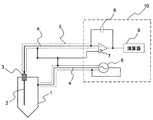
図1に、静電容量式レベル計の一態様として、センサープローブに金属棒を用いた場合の構成を示した。以下、その詳細について説明する。
図1において、符号1は反応器からの抜出しラインに設置する中間容器を示し、中間容器1と検出プローブ2は、絶縁ガスケット3によって互いに絶縁されている。制御演算部10は、中間容器1に交流電源を供給する発振器6、検出プローブ2から交流信号を受信する差動増幅器7、及び、差動増幅器7の出力電圧から粉体質量を演算する演算器9から構成されている。発振器6及び差動増幅器7は、本発明の粉体質量測定装置における静電容量測定部を構成する。検出プローブ2と、制御演算部10の差動増幅器7との間は、シールド芯線4によって接続される。中間容器1から延びる一方のシールド芯線4には、発振器6から交流電源が入力され、他方の検出プローブ2から延びるシールド芯線4は差動増幅器7の反転端子に接続される。差動増幅器7の非反転端子は、シールド(網線)5に接続される。差動増幅器7の出力端子と、その反転端子との間には、帰還コンデンサ8が接続される。差動増幅器7の出力は、演算器9に入力される。
FIG. 1 shows a configuration in the case where a metal rod is used for the sensor probe as one aspect of the capacitance level meter. The details will be described below.
In FIG. 1,
前記粉体質量測定装置において、発振器6の出力電流をEiとし、一対の検出プローブ(1と2)によって形成される静電容量をCX、帰還コンデンサ8の容量をCCとすると、差動増幅器7の出力端子に現れる出力電力E0は、次式で与えられる。
In the powder mass measuring apparatus, if the output current of the
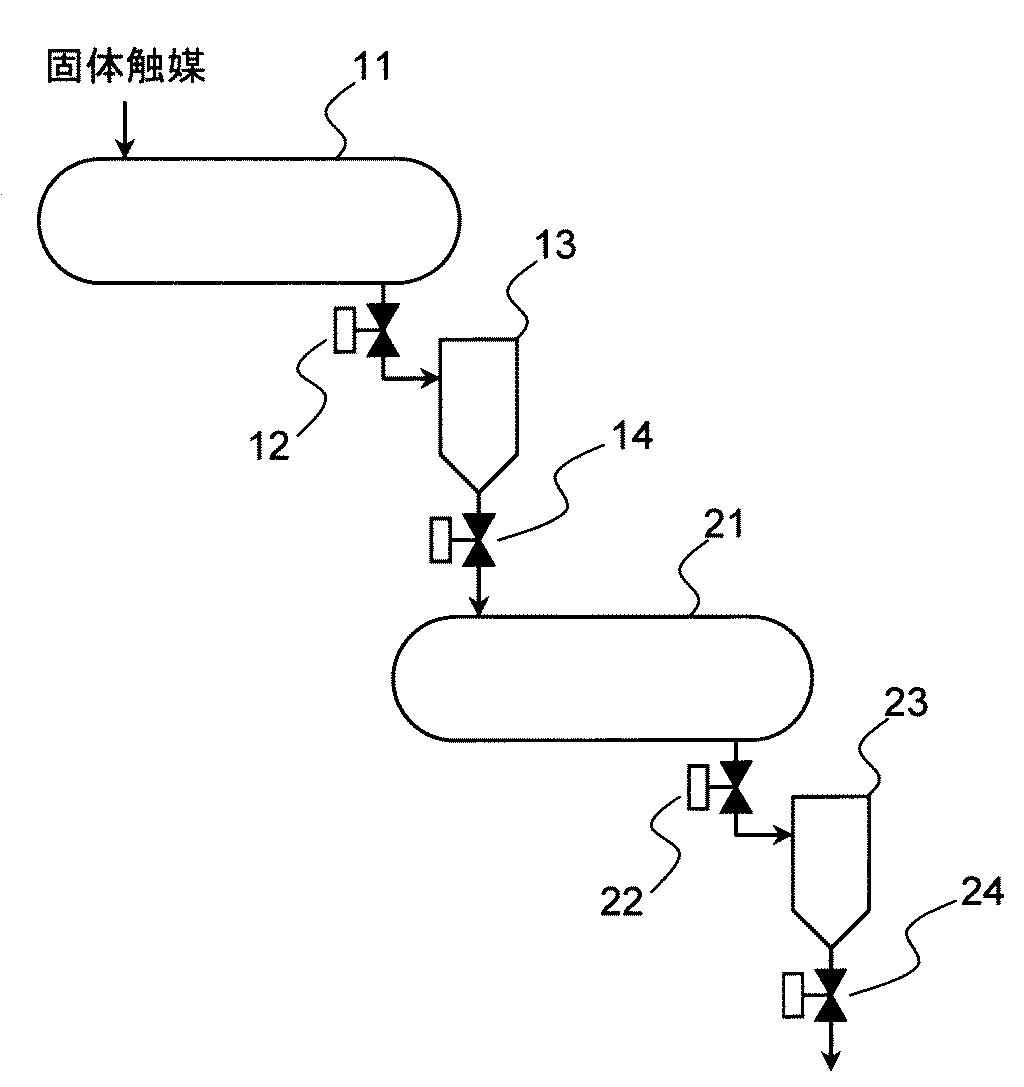
一般に、粉体は気体よりも大きな比誘電率を有することから、一対の検出プローブ(1と2)間の粉体質量に比例して、出力電圧E0が変化する。ここで、予め実測によって、出力電圧E0と容器内粉体質量との関係を求めておけば、差動増幅器7からの出力電圧E0に基いて容器内の粉体質量を求めることができる。このような粉体質量測定装置では、容器内の粉体の流動状態が変化して、見かけ上の粉面が上昇または下降しても、一対の検出プローブ(1と2)間に形成される静電容量はその質量によって定まることが期待できる。したがって、本実施態様例に示した粉体質量測定装置は、粉体の流動状態の如何にかかわらず、容器内の質量を正確に測定することが可能となる。 In general, since the powder has a relative dielectric constant greater than that of the gas, the output voltage E 0 changes in proportion to the powder mass between the pair of detection probes (1 and 2). Here, if the relationship between the output voltage E 0 and the powder mass in the container is obtained in advance by actual measurement, the powder mass in the container can be obtained based on the output voltage E 0 from the differential amplifier 7. . In such a powder mass measuring apparatus, even if the flow state of the powder in the container changes and the apparent powder level rises or falls, it is formed between the pair of detection probes (1 and 2). It can be expected that the capacitance is determined by its mass. Therefore, the powder mass measuring apparatus shown in the present embodiment example can accurately measure the mass in the container regardless of the flow state of the powder.
4.フィードバック手段
フィードバック手段は、計測された質量および抜出し間隔から算出される重合体の抜出し平均質量流量に基づいて該重合反応器中の運転条件を制御する手段である。
この場合の運転条件とは、反応器へ供給する触媒やモノマー原料の流量、および反応器の温度や圧力、平均滞留時間、反応制御剤の供給量などが挙げられる。これらの運転条件を制御するフィードバック手段は、運転条件を制御する手段であれば、どのようなものであってもよい。
4). Feedback means The feedback means is means for controlling the operating conditions in the polymerization reactor based on the average extraction mass flow rate of the polymer calculated from the measured mass and the extraction interval.
The operating conditions in this case include the flow rate of the catalyst and monomer raw material supplied to the reactor, the temperature and pressure of the reactor, the average residence time, the supply amount of the reaction control agent, and the like. The feedback means for controlling these operating conditions may be any means as long as it is a means for controlling the operating conditions.
例えば、上記運転条件が単一の重合反応器へ供給する触媒流量である場合には、運転条件を制御するフィードバックは、一例として、以下のように行うことができる。通常、連続気相重合におけるポリオレフィンの製造は、反応器に保有される製品の質量を一定にするよう排出系が制御される。従って、定常条件が成立していれば、重合体の抜出し平均質量流量は、前段反応器から受け入れた質量流量に当該反応器で生産されたレートを加算したものに等しいと見なすことができる。一方、それぞれの反応器で生産されるレートは、反応器の温度や圧力、滞留時間などの反応環境で決定する固有の重合活性(単位:kg/g触媒)に供給触媒量(単位:g触媒/h)を乗じたものとなる。したがって、計測された抜出し平均質量流量から供給する触媒流量へ制御ループを構成することにより、所望の抜出し平均流量にフィードバックを行うことができる。 For example, when the operating condition is a catalyst flow rate supplied to a single polymerization reactor, feedback for controlling the operating condition can be performed as follows as an example. Normally, in the production of polyolefin in continuous gas phase polymerization, the discharge system is controlled so that the mass of the product held in the reactor is constant. Therefore, if the steady conditions are met, the average polymer withdrawal mass flow rate can be considered equal to the mass flow rate received from the previous reactor plus the rate produced in that reactor. On the other hand, the rate produced in each reactor is the amount of catalyst supplied (unit: g catalyst) to the inherent polymerization activity (unit: kg / g catalyst) determined by the reaction environment such as reactor temperature, pressure and residence time. / H). Therefore, by constructing a control loop from the measured extracted average mass flow rate to the supplied catalyst flow rate, it is possible to perform feedback to a desired extracted average flow rate.
また、上記運転条件が反応制御剤の供給量である場合には、上記フィードバックは次のように行うことができる。ポリオレフィンの気相重合において、所望の重合レートや多段重合における重合量比に調節をすることを目的に、重合反応を制御する助剤を供給する場合が知られている。上述のとおり、反応器からの抜出し平均質量流量の値は、当該反応器における反応量に関与していることから、この値を反応制御剤の供給量にフィードバックを構成することにより、制御が可能となる。 When the operating condition is the supply amount of the reaction control agent, the feedback can be performed as follows. In the gas phase polymerization of polyolefin, there is known a case where an auxiliary agent for controlling a polymerization reaction is supplied for the purpose of adjusting a desired polymerization rate or a polymerization amount ratio in multistage polymerization. As described above, since the value of the average mass flow rate withdrawn from the reactor is related to the reaction amount in the reactor, this value can be controlled by configuring feedback to the supply amount of the reaction control agent. It becomes.
また、前記重合反応器の数が2以上のときは、その数に応じた個数の中間容器とフィードバック手段とを具備してもよく、複数設置されたフィードバック手段により、同時に複数の運転条件を制御してもよい。また、上記フィードバック手段は、互いに接続され、相互的に機能することにより、運転条件の制御が行われても良い。 Further, when the number of the polymerization reactors is 2 or more, the number of intermediate containers and feedback means corresponding to the number may be provided, and a plurality of feedback means are used to simultaneously control a plurality of operating conditions. May be. Further, the feedback means may be connected to each other and function mutually to control the operating conditions.
5.本発明の工程(A)〜(C)
本発明のポリオレフィンの製造方法は、以下に説明する工程(A)〜(C)を順次実施することにより構成される。
5). Steps (A) to (C) of the present invention
The polyolefin production method of the present invention is constituted by sequentially performing the steps (A) to (C) described below.
工程(A)は、重合反応器にて生成した重合体を該重合反応器から静電容量式レベル計を備えた中間容器に間歇的に抜出す工程である。
重合反応器、中間容器及び静電容量式レベル計については、上述したとおりである。これらを用いて、例えば、横型気相反応器にて重合体を生成し、これを該横型反応器から静電容量式レベル計を備えた中間容器に、抜出弁を操作して、間歇的に抜出す工程である。
Step (A) is a step of intermittently extracting the polymer produced in the polymerization reactor from the polymerization reactor into an intermediate container equipped with a capacitance level meter.
The polymerization reactor, intermediate container, and capacitance level meter are as described above. Using these, for example, a polymer is produced in a horizontal gas phase reactor, and this is intermittently operated from the horizontal reactor to an intermediate vessel equipped with a capacitance level meter by operating an extraction valve. It is a process of extracting.
工程(B)は、抜出された重合体の質量および抜出し間隔を計測する工程である。ここでは、工程(A)に引き続き、中間容器にて、工程(A)で間歇的に抜出された重合体の質量を、静電容量式レベル計を用いて、抜出しのそれぞれの回について計測し、同時に、抜出し間隔を計測する。 Step (B) is a step of measuring the mass of the extracted polymer and the extraction interval. Here, following the step (A), in the intermediate container, the mass of the polymer extracted intermittently in the step (A) is measured for each extraction using a capacitance level meter. At the same time, the extraction interval is measured.
工程(C)は、計測された質量および抜出し間隔から算出される重合体の抜出し平均質量流量に基づいて該重合反応器中の運転条件を制御する工程である。
この工程において、運転条件の制御としては、上述したとおり、反応器へ供給する触媒やモノマー原料の流量、および反応器の温度や圧力、平均滞留時間、反応制御剤の供給量などが挙げられ、例えば、反応制御剤の供給量を制御した場合、当該反応器における重合レートを所望の値となるよう運転することが可能となる。
また、反応器で生成する重合体の抜出し平均質量流量を制御した場合、後述する式により、所望の重合体を製造する運転を行うことが可能となる。具体的には、工程(C)は、工程(B)により計測された質量及び抜出間隔から、重合体の抜出し平均質量流量を、例えばkg/hといった単位にて算出し、後述する式を用いて、所望の段における重合体のポリオレフィン全体に対する重量分率(単位:wt%)を算出した後、運転条件のうち、任意の段の抜出し平均質量流量を変化させる制御を行い、所望の重量分率をもつポリオレフィンを得る工程である。
Step (C) is a step of controlling the operating conditions in the polymerization reactor based on the average extraction mass flow rate of the polymer calculated from the measured mass and the extraction interval.
In this step, as described above, the control of the operating conditions includes the flow rate of the catalyst and monomer raw material supplied to the reactor, the temperature and pressure of the reactor, the average residence time, the supply amount of the reaction control agent, and the like. For example, when the supply amount of the reaction control agent is controlled, it is possible to operate so that the polymerization rate in the reactor becomes a desired value.
In addition, when the average mass flow rate of the polymer produced in the reactor is controlled, an operation for producing a desired polymer can be performed according to the formula described later. Specifically, in the step (C), the average mass flow rate of the polymer is calculated from the mass measured in the step (B) and the extraction interval, for example, in units of kg / h, After calculating the weight fraction (unit: wt%) of the polymer in the desired stage with respect to the entire polyolefin, control is performed to change the average mass flow rate at any stage of the operating conditions, and the desired weight This is a step of obtaining a polyolefin having a fraction.
また、前記重合反応器の数が2以上のときは、その数に応じた回数だけ、工程(A)〜工程(C)を順次実施する。例えば、重合反応器の数が2のときは、第1反応器及び第1中間容器を用いて工程(A)、工程(B)、工程(C)をこの順で実施し、引き続き、第2反応器及び第2中間容器を用いて工程(A)、工程(B)、工程(C)をこの順で実施する。 Further, when the number of the polymerization reactors is 2 or more, the steps (A) to (C) are sequentially performed by the number corresponding to the number. For example, when the number of polymerization reactors is 2, the steps (A), (B), and (C) are performed in this order using the first reactor and the first intermediate vessel, and then the second reactor Step (A), step (B), and step (C) are performed in this order using the reactor and the second intermediate vessel.
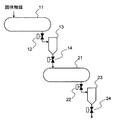
本発明は、主として、反応器からの製品抜出し流量をインラインで求める方法及びその装置を提供するものである。以下、実際の実施態様に基き、図2を用いて本発明を説明する。
図2に、横型気相反応器を2基備えた2段重合プロセスの概略フローシートを示す。攪拌機を備えた第1反応器11には、連続的にモノマーガスとともに固体触媒成分が供給され、製品として重合された粉体は、順次、第1反応器抜出弁12を経由して、第1中間容器13に送られる。第1反応器11には、重合粉体の量を計測するシステムを有しており、一定量となったことを検知して、第1反応器抜出弁12が開放される。第1中間容器13では、モノマーガスをパージしたり、更に次工程へ粉体を圧送するためにより高い圧力のガスを供給する操作を行う。第1中間容器に受け入れられた製品粉体は、第1反応器抜出弁を閉止したのち、第1中間容器抜出弁14を開放することで、次工程である第2反応器21に送られる。このように、実際には間歇的に中間容器に製品粉体を受入れ、これを次工程に送る操作を行うため、完全な連続的な粉体抜出しとはなっていない。第2反応器21では、第1反応器11と異なる運転条件を採用することが可能であり、例えば、重合体の分子量やコモノマー量を相互に変えた製品を製造することが可能である。第2反応器21からの製品粉体の抜出しも、第1反応器11と同様にして、第2中間容器23と抜出弁22および24を操作することで行われる。
The present invention mainly provides a method and apparatus for determining the product withdrawal flow rate from a reactor in-line. Hereinafter, the present invention will be described with reference to FIG. 2 based on actual embodiments.
FIG. 2 shows a schematic flow sheet of a two-stage polymerization process equipped with two horizontal gas phase reactors. A solid catalyst component is continuously supplied together with the monomer gas to the
このような2段重合を行う場合、所望の製品を得るためには、第1反応器11と第2反応器21で重合されるそれぞれの量比を知り、それを運転において制御することが必要である。本発明によれば、第1中間容器13と、第2中間容器23に、製品質量を計量できる静電容量式レベル計を付与することで、これらの値をインラインで計測し、さらに、運転条件への反映が可能となる。すなわち、上述のとおり、中間容器への抜出は間歇的であるため、ある一定時間に実質的に中間容器に受け入れた質量から、平均的な抜出し流量の決定が可能となる。この抜出し流量が、それぞれの反応器について把握することが可能であるから、例えば、最終製品中における、第2反応器にて重合された重量分率は、次のように求められる。
When performing such a two-stage polymerization, in order to obtain a desired product, it is necessary to know the respective ratios of polymerization in the
ここで、f2は第2反応器にて重合された重量分率(単位:wt%)、R1は第1反応器から抜出される平均製品流量(単位:kg/h)、R2は第2反応器から抜出される平均製品流量(単位:kg/h)、をそれぞれ示すものとする。 Here, f 2 is a weight fraction (unit: wt%) polymerized in the second reactor, R 1 is an average product flow rate (unit: kg / h) withdrawn from the first reactor, and R 2 is The average product flow rate (unit: kg / h) withdrawn from the second reactor is shown respectively.
ところで、これらの気相重合反応器では、内部に存在する製品粉体の量を何らかの方法で検出し、これを一定にするよう抜出すことで連続運転を行う。通常、反応器からの製品粉体の取り出しは、その流量を安定に制御することが技術的に困難であるため、弁操作により間歇抜出しを行う事が行われている。このような製品の平均抜出流量は、反応器内での平均滞留時間や、反応器を2基以上用いる多段重合における各段重合量比に影響するパラメータであり、運転制御上重要である。 By the way, in these gas phase polymerization reactors, the amount of the product powder existing inside is detected by some method, and the continuous operation is performed by extracting it so as to be constant. Usually, since it is technically difficult to stably control the flow rate of product powder from a reactor, intermittent extraction is performed by valve operation. The average withdrawal flow rate of such products is a parameter that affects the average residence time in the reactor and the ratio of each stage polymerization amount in multi-stage polymerization using two or more reactors, and is important for operation control.
従って、本発明による方法及び装置によれば、最終的に得られた製品を分析することや、重合熱の除熱レートから重合量を推定するなどの間接的な方法によらずして、直接的にそれぞれの反応器からの平均抜出量や各反応器での重合量および各反応器での重合分率をインラインで計測することができる。さらに、これらの値から、各反応器の重合条件等の運転条件へフィードバックを行うことで、所望の重合体を製造する運転を行うことが可能となる。 Therefore, according to the method and apparatus of the present invention, it is possible to directly analyze the finally obtained product without using an indirect method such as estimating the polymerization amount from the heat removal rate of the polymerization heat. Thus, it is possible to measure in-line the average withdrawal amount from each reactor, the polymerization amount in each reactor, and the polymerization fraction in each reactor. Furthermore, it is possible to perform an operation for producing a desired polymer by performing feedback from these values to an operation condition such as a polymerization condition of each reactor.
なお、以上説明した態様は、本発明の一態様を示したものであって、本発明は、前記した実施形態に限定されるものではなく、本発明の構成を備え、目的及び効果を達成できる範囲内での変形や改良が、本発明の内容に含まれるものであることはいうまでもない。また、本発明を実施する際における具体的な構造及び形状等は、本発明の目的及び効果を達成できる範囲内において、他の構造や形状等としても問題はない。
例えば、前記した態様では、重合反応器と中間容器とからなる一連の機器が2セット直列に配置された2段重合プロセスの例であるが、重合反応器と中間容器とからなる一連の機器が3セット直列に配置された3段重合プロセスであってもよい。
The aspect described above shows one aspect of the present invention, and the present invention is not limited to the above-described embodiment, and has the configuration of the present invention and can achieve the objects and effects. It goes without saying that modifications and improvements within the scope are included in the content of the present invention. Further, the specific structure, shape, etc. in carrying out the present invention are not problematic as other structures, shapes, etc., as long as the objects and effects of the present invention can be achieved.
For example, in the above-described embodiment, an example of a two-stage polymerization process in which two sets of devices including a polymerization reactor and an intermediate vessel are arranged in series is described. Three sets of three-stage polymerization processes arranged in series may be used.
以下に実施例を挙げて、本発明を更に具体的に説明するが、本発明は、その要旨を超えない限り、これらの実施例に制約されるものではない。なお、実施例で用いた測定方法は以下の通りである。 EXAMPLES Hereinafter, the present invention will be described more specifically with reference to examples. However, the present invention is not limited to these examples unless it exceeds the gist. The measurement methods used in the examples are as follows.
1.測定方法
(1)重量分率
実施例1及び2において、重合反応器を2基備える2段重合プロセスにおいて、最終製品中における、第2反応器にて重合された重量分率は、以下の式によって求めた。
1. Measurement method (1) Weight fraction In Examples 1 and 2, in the two-stage polymerization process including two polymerization reactors, the weight fraction polymerized in the second reactor in the final product is expressed by the following formula. Sought by.
ここで、f2は第2反応器にて重合された重量分率(単位:wt%)、R1は第1反応器から抜出される平均製品流量(単位:kg/h)、R2は第2反応器から抜出される平均製品流量(単位:kg/h)、をそれぞれ示すものとする。 Here, f 2 is a weight fraction (unit: wt%) polymerized in the second reactor, R 1 is an average product flow rate (unit: kg / h) withdrawn from the first reactor, and R 2 is The average product flow rate (unit: kg / h) withdrawn from the second reactor is shown respectively.
(2)昇温溶出分別法による重量分率
特開平9−278847に開示されている方法により測定した。
(2) Weight fraction by temperature rising elution fractionation method It measured by the method currently disclosed by Unexamined-Japanese-Patent No. 9-278847.
(実施例1)
マグネシウム担持型触媒を用いて、プロピレン系ブロック共重合体の重合を行った。基本的な反応器の構成は図2に示したものを用いた。すなわち、第1反応器、第2反応器とも、攪備えた内容積100リットルの横型重合反応器を用い、第1反応器では、プロピレンホモポリマーの重合を、第2反応器ではプロピレン−エチレン共重合体の重合を行った。それぞれの反応器からの製品粉体は、反応器内のレベルが50%に保持されるよう中間容器へ間歇的に抜出した。また、それぞれの中間容器には、静電容量式レベル計を備え、受け入れた製品粉体の質量がインラインで監視できるよう構成した。
第1反応器の運転条件としては、反応温度60℃、反応圧力2.1MPaGとし、プロピレンホモポリマーを重合した。第2反応器の運転条件としては、温度55℃、反応圧力1.9MPaG、反応ガスのエチレン/プロピレン比(モル比)0.39とし、プロピレン−エチレン共重合体を重合した。
静電容量式レベル計を用いて、各反応器からの平均抜出しレートを算出したところ、第1反応器からの抜出しが14kg/h、第2反応器からの抜出しが22kg/hであった。これらの結果より、最終製品中のプロピレン−エチレン共重合体の重量分率は式2より、36.4wt%と求められる。
一方、最終製品サンプルを用いて、昇温溶出分別法によるプロピレン−エチレン共重合体の重量分率を求めたところ、34wt%となり、式2より求めた値とよく一致した。
Example 1
The propylene block copolymer was polymerized using a magnesium supported catalyst. The basic reactor configuration shown in FIG. 2 was used. That is, both the first reactor and the second reactor are equipped with a horizontal polymerization reactor having an internal volume of 100 liters, the propylene homopolymer is polymerized in the first reactor, and the propylene-ethylene copolymer is used in the second reactor. Polymerization of the polymer was performed. Product powder from each reactor was withdrawn intermittently to an intermediate vessel so that the level in the reactor was maintained at 50%. Each intermediate container was equipped with a capacitance level meter so that the mass of the received product powder could be monitored in-line.
The operating conditions of the first reactor were a reaction temperature of 60 ° C. and a reaction pressure of 2.1 MPaG, and a propylene homopolymer was polymerized. The operating conditions of the second reactor were a temperature of 55 ° C., a reaction pressure of 1.9 MPaG, an ethylene / propylene ratio (molar ratio) of reaction gas of 0.39, and a propylene-ethylene copolymer was polymerized.
When the average extraction rate from each reactor was calculated using a capacitance level meter, the extraction from the first reactor was 14 kg / h, and the extraction from the second reactor was 22 kg / h. From these results, the weight fraction of the propylene-ethylene copolymer in the final product is determined to be 36.4 wt% from
On the other hand, using the final product sample, the weight fraction of the propylene-ethylene copolymer determined by the temperature rising elution fractionation method was 34 wt%, which was in good agreement with the value obtained from
(実施例2)
実施例1の運転中に、最終製品中のプロピレン−エチレン共重合体の重量分率を40.0wt%とするために、第2反応器からの抜出しを23kg/hとなるように第2反応器から中間容器へ重合体を抜出す抜出弁を調整した以外は、実施例1と同様にして引き続き運転を行い、最終製品を得た。
一方、上記最終製品サンプルを用いて、昇温溶出分別法によるプロピレン−エチレン共重合体の重量分率を求めたところ、39wt%となり、目的の重量分率をもった最終製品を迅速・効率的に製造することができた。
(Example 2)
During the operation of Example 1, in order to make the weight fraction of the propylene-ethylene copolymer in the final product 40.0 wt%, the second reaction was performed so that the extraction from the second reactor was 23 kg / h. A final product was obtained by continuing operation in the same manner as in Example 1 except that the extraction valve for extracting the polymer from the vessel to the intermediate container was adjusted.
On the other hand, when the weight fraction of the propylene-ethylene copolymer was determined by the temperature rising elution fractionation method using the above final product sample, it was 39 wt%, and the final product having the target weight fraction was quickly and efficiently obtained. Could be manufactured.
(比較例1)
実施例1で得られた最終製品サンプルを赤外線吸収スペクトル分析より求めたプロピレン−エチレン共重合体(第2反応器で重合した成分)中のエチレン含量は、35wt%であった。当該気相重合において、プロピレンの重合エンタルピーが580kcal/kg、エチレンの重合エンタルピーが930kcal/kgであることを用いると、エチレン含量35wt%のプロピレン−エチレン共重合体の重合エンタルピーは相加平均により703kcal/kgと推定できる。第1重合反応系の冷却水条件から計算した除熱負荷は、5800kcal/hであった。この値と、ホモポリマーの重合エンタルピー580kcal/kgを用いると、第1反応器での重合レートは、10kg/hと計算される。一方、第2重合反応系の冷却水条件から計算した除熱負荷は、2800kcal/hであった。この値と、当該プロピレン−エチレン共重合体の重合エンタルピー703kcal/kgを用いると、第2反応器での重合レートは、4.0kg/hと計算される。これらの値は、静電容量式レベル計から求めた抜出しレート(第1反応器:14kg/h、第2反応器:8kg/h)から、大きく相違することが認められる。また、除熱負荷より求めたプロピレン−エチレン共重合体の重量分率は、28.6wt%となり、昇温溶出分別法により分析した値と大きく異なるものであった。
(Comparative Example 1)
The ethylene content in the propylene-ethylene copolymer (component polymerized in the second reactor) obtained by infrared absorption spectrum analysis of the final product sample obtained in Example 1 was 35 wt%. In the gas phase polymerization, when the polymerization enthalpy of propylene is 580 kcal / kg and the polymerization enthalpy of ethylene is 930 kcal / kg, the polymerization enthalpy of the propylene-ethylene copolymer having an ethylene content of 35 wt% is 703 kcal by arithmetic mean. / Kg. The heat removal load calculated from the cooling water conditions of the first polymerization reaction system was 5800 kcal / h. Using this value and the homopolymer polymerization enthalpy of 580 kcal / kg, the polymerization rate in the first reactor is calculated to be 10 kg / h. On the other hand, the heat removal load calculated from the cooling water conditions of the second polymerization reaction system was 2800 kcal / h. Using this value and the polymerization enthalpy 703 kcal / kg of the propylene-ethylene copolymer, the polymerization rate in the second reactor is calculated to be 4.0 kg / h. It is recognized that these values are greatly different from the extraction rate (first reactor: 14 kg / h, second reactor: 8 kg / h) obtained from the capacitance level meter. Moreover, the weight fraction of the propylene-ethylene copolymer obtained from the heat removal load was 28.6 wt%, which was greatly different from the value analyzed by the temperature rising elution fractionation method.
3.評価
以上より明らかなように、本発明の製造方法及び装置によらない比較例1においては、最終製品の重量分率は昇温溶出分別法による実測値と大きく異なるのに比べて、本発明の製造方法及び装置による実施例1においては、それぞれの気相重合反応器からの抜出量の把握により求められる最終製品中の各反応器での重合体比率は昇温溶出分別法による重合体比率の実測値とよく一致した。さらに、実施例2においては、所望の重合体比率を持つ最終製品を得るために、実施例1の運転に引き続き、運転条件を調整して運転することにより、迅速に所望の重合体比率を持つ最終製品を得ることが可能であることが明らかになった。
したがって、本発明の製造方法及び装置は、インラインで各反応器での重合量とその量比とを正確に把握し、これらを迅速に制御することによって、所望のポリオレフィンを安定的かつ効率的に製造する方法及びその装置であるという点で、大きな技術的意義を持つことが明らかである。
3. Evaluation As is clear from the above, in Comparative Example 1 that does not depend on the production method and apparatus of the present invention, the weight fraction of the final product is significantly different from the actual measurement value by the temperature rising elution fractionation method. In Example 1 according to the production method and apparatus of the invention, the polymer ratio in each reactor in the final product obtained by grasping the amount extracted from each gas phase polymerization reactor is determined by the temperature rising elution fractionation method. It was in good agreement with the measured value of the coalescence ratio. Furthermore, in Example 2, in order to obtain a final product having a desired polymer ratio, the desired polymer ratio is quickly obtained by adjusting the operating conditions following the operation of Example 1. It became clear that it was possible to obtain the final product.
Therefore, the production method and apparatus of the present invention accurately grasps the polymerization amount in each reactor and the amount ratio thereof in-line, and controls these quickly, thereby stably and efficiently producing a desired polyolefin. It is clear that it has a great technical significance in that it is a manufacturing method and apparatus.
本発明のポリオレフィンの製造方法及びその装置によれば、最終的に得られた製品を分析することや、重合熱の除熱レートから重合量を推定するなどの間接的な方法によらずして、直接的にそれぞれの反応器からの平均抜出量や各反応器での重合量、および各反応器での重合分率をインラインで計測することができる。さらに、これらの値から、各反応器の重合条件等の運転条件へフィードバックを行うことで、所望のポリオレフィンを安定的かつ効率的に製造する運転を行うことが可能にし、産業上大いに有用である。 According to the method and apparatus for producing a polyolefin of the present invention, it is possible to analyze the finally obtained product or to perform an indirect method such as estimating the polymerization amount from the heat removal rate of the polymerization heat. The average withdrawal amount from each reactor, the polymerization amount in each reactor, and the polymerization fraction in each reactor can be directly measured in-line. Furthermore, feedback from these values to the operating conditions such as the polymerization conditions of each reactor makes it possible to perform an operation for stably and efficiently producing a desired polyolefin, which is very useful industrially. .
1 中間容器
2 検出プローブ
3 絶縁ガスケット
4 シールド芯線
5 シールド(網線)
6 発信機
7 差動増幅器
8 帰還コンデンサ
9 演算器
10 制御演算部
11 第1反応器
12 第1反応器抜出弁
13 第1中間容器
14 第1中間容器抜出弁
21 第2反応器
22 第2反応器抜出弁
23 第2中間容器
24 第2中間容器抜出弁
1
6 Transmitter 7
Claims (4)
重合反応器にて生成した重合体を該重合反応器から静電容量式レベル計を備えた中間容器に間歇的に抜出す工程(A)と、抜出された重合体の質量および抜出し間隔を計測する工程(B)と、計測された質量および抜出し間隔から算出される重合体の抜出し平均質量流量に基づいて該重合反応器中の運転条件を制御する工程(C)とを含むことを特徴とするポリオレフィンの製造方法。 In a process for producing a polyolefin by a continuous gas phase polymerization process using at least one polymerization reactor,
A step (A) of intermittently extracting the polymer produced in the polymerization reactor from the polymerization reactor into an intermediate container equipped with a capacitance level meter, and the mass of the extracted polymer and the extraction interval; A step (B) of measuring, and a step (C) of controlling operating conditions in the polymerization reactor based on the average mass flow rate of the polymer calculated from the measured mass and the extraction interval. A method for producing a polyolefin.
オレフィンを用いて気相重合反応を行うための少なくとも1つの重合反応器と、生成した重合体を該重合反応器から間歇的に抜出し、抜出された重合体の質量および抜出し間隔を計測するための静電容量式レベル計を備えた中間容器と、計測された質量および抜出し間隔から算出される重合体の抜出し平均質量流量に基づいて該重合反応器中の運転条件を制御するフィードバック手段とを具備することを特徴とするポリオレフィンの製造装置。 An apparatus for producing a polyolefin for performing the method according to claim 1,
In order to measure at least one polymerization reactor for conducting a gas phase polymerization reaction using olefin, and intermittently withdraw the produced polymer from the polymerization reactor, and to measure the mass of the extracted polymer and the extraction interval An intermediate container equipped with a capacitance level meter, and feedback means for controlling the operating conditions in the polymerization reactor based on the average mass flow rate of the polymer calculated from the measured mass and the extraction interval. An apparatus for producing polyolefin, comprising:
The apparatus for producing a polyolefin according to claim 3, wherein when the number of the polymerization reactors is 2 or more, the number of intermediate containers and feedback means corresponding to the number are provided.
Priority Applications (1)
| Application Number | Priority Date | Filing Date | Title |
|---|---|---|---|
| JP2008319949A JP5244574B2 (en) | 2008-12-16 | 2008-12-16 | Polyolefin production method and apparatus |
Applications Claiming Priority (1)
| Application Number | Priority Date | Filing Date | Title |
|---|---|---|---|
| JP2008319949A JP5244574B2 (en) | 2008-12-16 | 2008-12-16 | Polyolefin production method and apparatus |
Publications (2)
| Publication Number | Publication Date |
|---|---|
| JP2010143972A true JP2010143972A (en) | 2010-07-01 |
| JP5244574B2 JP5244574B2 (en) | 2013-07-24 |
Family
ID=42564723
Family Applications (1)
| Application Number | Title | Priority Date | Filing Date |
|---|---|---|---|
| JP2008319949A Active JP5244574B2 (en) | 2008-12-16 | 2008-12-16 | Polyolefin production method and apparatus |
Country Status (1)
| Country | Link |
|---|---|
| JP (1) | JP5244574B2 (en) |
Cited By (2)
| Publication number | Priority date | Publication date | Assignee | Title |
|---|---|---|---|---|
| JP2013133451A (en) * | 2011-12-27 | 2013-07-08 | Japan Polypropylene Corp | Method and apparatus for producing polyolefin |
| JP2024113002A (en) * | 2016-08-31 | 2024-08-21 | ヨコガワ フルエンス アナリティクス, インコーポレイテッド | Apparatus and method for effectively controlling the production of multi-stage polymer production - Patents.com |
Citations (4)
| Publication number | Priority date | Publication date | Assignee | Title |
|---|---|---|---|---|
| JPH07118342A (en) * | 1993-10-20 | 1995-05-09 | Asahi Chem Ind Co Ltd | Gas phase polymerization of olefins |
| JP2004144613A (en) * | 2002-10-24 | 2004-05-20 | Japan Polypropylene Corp | Apparatus for measuring powder amount and method for producing polyolefin |
| JP2006083202A (en) * | 2004-09-14 | 2006-03-30 | Sumitomo Chemical Co Ltd | Method for extracting polymer powder |
| JP2008157872A (en) * | 2006-12-26 | 2008-07-10 | Japan Polypropylene Corp | Powder mass measuring apparatus and polyolefin production method using the same |
-
2008
- 2008-12-16 JP JP2008319949A patent/JP5244574B2/en active Active
Patent Citations (4)
| Publication number | Priority date | Publication date | Assignee | Title |
|---|---|---|---|---|
| JPH07118342A (en) * | 1993-10-20 | 1995-05-09 | Asahi Chem Ind Co Ltd | Gas phase polymerization of olefins |
| JP2004144613A (en) * | 2002-10-24 | 2004-05-20 | Japan Polypropylene Corp | Apparatus for measuring powder amount and method for producing polyolefin |
| JP2006083202A (en) * | 2004-09-14 | 2006-03-30 | Sumitomo Chemical Co Ltd | Method for extracting polymer powder |
| JP2008157872A (en) * | 2006-12-26 | 2008-07-10 | Japan Polypropylene Corp | Powder mass measuring apparatus and polyolefin production method using the same |
Cited By (3)
| Publication number | Priority date | Publication date | Assignee | Title |
|---|---|---|---|---|
| JP2013133451A (en) * | 2011-12-27 | 2013-07-08 | Japan Polypropylene Corp | Method and apparatus for producing polyolefin |
| JP2024113002A (en) * | 2016-08-31 | 2024-08-21 | ヨコガワ フルエンス アナリティクス, インコーポレイテッド | Apparatus and method for effectively controlling the production of multi-stage polymer production - Patents.com |
| US12522674B2 (en) | 2016-08-31 | 2026-01-13 | Yokogawa Fluence Analytics, Inc. | Device and methods to actively control the production of multi-stage polymer production |
Also Published As
| Publication number | Publication date |
|---|---|
| JP5244574B2 (en) | 2013-07-24 |
Similar Documents
| Publication | Publication Date | Title |
|---|---|---|
| CN101720334B (en) | Method for on-line monitoring and control of polymerization processes and reactors to prevent interruptions | |
| BRPI0716543A2 (en) | Methods for real-time determination of resin stickiness using a melt initiation temperature depression model | |
| CN101511877B (en) | Method for Determining Temperature Values Indicative of Resin Adhesion from Data Produced by Polymerization Monitoring | |
| CN105631107B (en) | A kind of prediction technique and device of fluid catalytic cracking reaction | |
| US7133784B2 (en) | Process and method for chemical manufacturing using transformation of on-line instrumentation data | |
| US20040083028A1 (en) | Process control using on-line instrumentation and process models | |
| CN101477112A (en) | Product quality on-line soft-measuring method for industrial fluidized bed gas-phase polythene apparatus | |
| Nogueira et al. | Parameter estimation with estimability analysis applied to an industrial scale polymerization process | |
| Salas et al. | Framework design for weight-average molecular weight control in semi-batch polymerization | |
| JP5244574B2 (en) | Polyolefin production method and apparatus | |
| EP2205647B1 (en) | Method for controlling a solution process for the polymerization of olefins | |
| CN100340933C (en) | Control and control system for continuous chemical reactor production | |
| Vieira et al. | Control strategies for complex chemical processes. Applications in polymerization processes | |
| CN115166162A (en) | Olefin ternary gas phase copolymerization dynamics real-time monitoring device and monitoring method thereof | |
| WO2009020540A2 (en) | Monomer concentration prediction and control in a polymerization process | |
| JPH05140230A (en) | Operation-supporting apparatus for polymerization for producing polyolefin | |
| Wang et al. | Characterization of chaotic multiscale features on the time series of melt index in industrial propylene polymerization system | |
| JP3189333B2 (en) | Method for producing polyolefin | |
| JP3189339B2 (en) | Polymerization reaction operation support equipment for polyolefin production | |
| JP3189340B2 (en) | Method for producing polyolefin | |
| JPH05178907A (en) | Polymerization reaction operation support device for producing polyolefin | |
| CN119827706B (en) | A system and method for online detection of prepolymerization multiples of olefin polymerization catalysts | |
| CN116013439B (en) | Method for on-line prediction of crystallinity and density of ethylene high-pressure polymerization product | |
| Althunayan | Kinetic and Stochastic Modeling of The Microstructure of Low-Density Polyethylenes | |
| Emami et al. | Kinetic study on liquid propylene polymerization using a modified heat flow reaction calorimeter |
Legal Events
| Date | Code | Title | Description |
|---|---|---|---|
| A621 | Written request for application examination |
Free format text: JAPANESE INTERMEDIATE CODE: A621 Effective date: 20110225 |
|
| A977 | Report on retrieval |
Free format text: JAPANESE INTERMEDIATE CODE: A971007 Effective date: 20120924 |
|
| A131 | Notification of reasons for refusal |
Free format text: JAPANESE INTERMEDIATE CODE: A131 Effective date: 20121002 |
|
| TRDD | Decision of grant or rejection written | ||
| A01 | Written decision to grant a patent or to grant a registration (utility model) |
Free format text: JAPANESE INTERMEDIATE CODE: A01 Effective date: 20130319 |
|
| A61 | First payment of annual fees (during grant procedure) |
Free format text: JAPANESE INTERMEDIATE CODE: A61 Effective date: 20130408 |
|
| FPAY | Renewal fee payment (event date is renewal date of database) |
Free format text: PAYMENT UNTIL: 20160412 Year of fee payment: 3 |
|
| R150 | Certificate of patent or registration of utility model |
Free format text: JAPANESE INTERMEDIATE CODE: R150 Ref document number: 5244574 Country of ref document: JP Free format text: JAPANESE INTERMEDIATE CODE: R150 |
|
| R250 | Receipt of annual fees |
Free format text: JAPANESE INTERMEDIATE CODE: R250 |
|
| R250 | Receipt of annual fees |
Free format text: JAPANESE INTERMEDIATE CODE: R250 |
|
| R250 | Receipt of annual fees |
Free format text: JAPANESE INTERMEDIATE CODE: R250 |
|
| R250 | Receipt of annual fees |
Free format text: JAPANESE INTERMEDIATE CODE: R250 |
|
| R250 | Receipt of annual fees |
Free format text: JAPANESE INTERMEDIATE CODE: R250 |
|
| R250 | Receipt of annual fees |
Free format text: JAPANESE INTERMEDIATE CODE: R250 |
|
| R250 | Receipt of annual fees |
Free format text: JAPANESE INTERMEDIATE CODE: R250 |
|
| R250 | Receipt of annual fees |
Free format text: JAPANESE INTERMEDIATE CODE: R250 |
|
| R250 | Receipt of annual fees |
Free format text: JAPANESE INTERMEDIATE CODE: R250 |
|
| R250 | Receipt of annual fees |
Free format text: JAPANESE INTERMEDIATE CODE: R250 |
|
| R250 | Receipt of annual fees |
Free format text: JAPANESE INTERMEDIATE CODE: R250 |