JP2008009818A - Storehouse simulation system and method - Google Patents
Storehouse simulation system and method Download PDFInfo
- Publication number
- JP2008009818A JP2008009818A JP2006180959A JP2006180959A JP2008009818A JP 2008009818 A JP2008009818 A JP 2008009818A JP 2006180959 A JP2006180959 A JP 2006180959A JP 2006180959 A JP2006180959 A JP 2006180959A JP 2008009818 A JP2008009818 A JP 2008009818A
- Authority
- JP
- Japan
- Prior art keywords
- warehouse
- information
- simulation
- terminal
- message
- Prior art date
- Legal status (The legal status is an assumption and is not a legal conclusion. Google has not performed a legal analysis and makes no representation as to the accuracy of the status listed.)
- Pending
Links
- 238000004088 simulation Methods 0.000 title claims abstract description 66
- 238000000034 method Methods 0.000 title claims description 15
- 238000004891 communication Methods 0.000 claims abstract description 18
- 238000006243 chemical reaction Methods 0.000 claims abstract description 6
- 238000010586 diagram Methods 0.000 description 8
- 238000012546 transfer Methods 0.000 description 8
- 238000012545 processing Methods 0.000 description 7
- 230000005540 biological transmission Effects 0.000 description 6
- 238000007405 data analysis Methods 0.000 description 6
- 238000012856 packing Methods 0.000 description 5
- 241000109329 Rosa xanthina Species 0.000 description 3
- 235000004789 Rosa xanthina Nutrition 0.000 description 3
- 241000220317 Rosa Species 0.000 description 2
- 238000011161 development Methods 0.000 description 2
- 238000003754 machining Methods 0.000 description 2
- 238000004806 packaging method and process Methods 0.000 description 2
- 238000004590 computer program Methods 0.000 description 1
- 238000012790 confirmation Methods 0.000 description 1
- 230000006870 function Effects 0.000 description 1
- 238000009434 installation Methods 0.000 description 1
- 238000012423 maintenance Methods 0.000 description 1
- 238000007726 management method Methods 0.000 description 1
- 238000012795 verification Methods 0.000 description 1
Images
Landscapes
- Management, Administration, Business Operations System, And Electronic Commerce (AREA)
Abstract
Description
本発明は、倉庫のシミュレーション技術に関する。 The present invention relates to a warehouse simulation technique.
倉庫のコンサルタント業において、コンサルする担当者は、顧客の倉庫の大きさ等の条件に応じて、現状の倉庫運営が効率的となる様に、あるいは、新規設備投資効率が最大となるように、例えば、適切なフォークリフトの種類と台数を判断して提案する事で、顧客に適切な提案が行われることが望まれている。 In the consulting business of the warehouse, the person in charge of consulting will make the current warehouse operation efficient or maximize the new capital investment efficiency according to the conditions such as the size of the customer's warehouse. For example, it is desired that an appropriate proposal is made to a customer by determining and proposing an appropriate type and number of forklifts.
特許文献1には、物流システムの提案を支援する物流提案営業支援システムが記載されている。この物流提案営業支援システムは記憶装置と、中央演算装置、入力装置と、表示装置とを備えている。この物流提案営業支援システムは、入力された荷姿条件及び建屋条件と、選択された保管機器及び荷役機器とに応じて最適な保管機種と荷役機種とを算出し、算出された最適な保管機種と荷役機種とを表示装置に表示することを特徴とする。
特許文献2には、自動倉庫の貨物保管規模をシミュレーションする自動倉庫用シミュレーション装置及び方法が記載されている。
本発明の目的は、設定が簡単で、シミュレータの専門知識を必要としない倉庫シミュレーションシステム及び方法を提供することである。
本発明の他の目的は、倉庫シミュレーションを実行する既存のソフトウェアに対して、そのソフトウェアを大きく改変することなく使用を容易にする倉庫シミュレーションシステム及び方法を提供することである。
It is an object of the present invention to provide a warehouse simulation system and method that is simple to set up and does not require simulator expertise.
Another object of the present invention is to provide a warehouse simulation system and method that facilitates the use of existing software that executes a warehouse simulation without greatly modifying the software.
以下に、[発明を実施するための最良の形態]で使用される番号を括弧付きで用いて、課題を解決するための手段を説明する。これらの番号は、[特許請求の範囲]の記載と[発明を実施するための最良の形態]との対応関係を明らかにするために付加されたものである。ただし、それらの番号を、[特許請求の範囲]に記載されている発明の技術的範囲の解釈に用いてはならない。 In the following, means for solving the problem will be described using the numbers used in [Best Mode for Carrying Out the Invention] in parentheses. These numbers are added to clarify the correspondence between the description of [Claims] and [Best Mode for Carrying Out the Invention]. However, these numbers should not be used to interpret the technical scope of the invention described in [Claims].
本発明の倉庫シミュレーション方法は、GUI(Graphical User Interfaceの略:計算機の表示画面上にウィンドウやアイコンなどの画像を表示し、マウスやペンなどのポインティングデバイスでオペレーションを行うユーザーインターフェースの総称)を介した入力操作により倉庫と荷の設定情報を受け付ける入力ステップ(S1)と、設定情報をコンピュータによるモデル上での倉庫のモデリングと倉庫におけるにの運搬動作を指示する電文に変換する電文変換ステップ(S3)と、ユーザインターフェースを介して倉庫情報を収集して倉庫シミュレーションを行うソフトウェア(10)を動作させるため、設定情報に基づいて倉庫制御情報を生成して出力する倉庫制御情報児童設定ステップ(S4、S5)と、電文認識ステップにおいて変換された電文と倉庫制御情報とを通信回線を介して受け取り、倉庫シミュレーションのための必要な情報に置き換える電文認識ステップと、電文認識ステップに応答して生成された倉庫シミュレーションの結果を出力する出力ステップ(S8)とを備える。 The warehouse simulation method of the present invention is via GUI (abbreviation of Graphical User Interface: a general term for user interfaces that display images such as windows and icons on a display screen of a computer and operate with a pointing device such as a mouse or pen). An input step (S1) for receiving warehouse and load setting information by the input operation, and a message conversion step (S3) for converting the setting information into a message for instructing the modeling of the warehouse on the model by the computer and the transportation operation in the warehouse. ) And warehouse control information child setting step (S4,) for generating and outputting warehouse control information based on the setting information in order to operate the software (10) for collecting warehouse information and performing warehouse simulation via the user interface. S5) The message recognition step that receives the message and warehouse control information converted in the message recognition step via the communication line and replaces them with the necessary information for the warehouse simulation, and the result of the warehouse simulation generated in response to the message recognition step Output step (S8).
シミュレーションにおいて、倉庫の内部におけるフォークリフト又は作業者の作業状況を時系列的に示す稼動情報が生成される。倉庫シミュレーション方法はさらに、稼動情報に基づいて、所定の期間内における作業状況の時間を累計した統計情報を生成するステップ(S7)を備える。出力ステップにおいて、統計情報が出力される。 In the simulation, operation information is generated that shows the work status of the forklift or the worker in the warehouse in time series. The warehouse simulation method further includes a step (S7) of generating statistical information obtained by accumulating the work status time in a predetermined period based on the operation information. In the output step, statistical information is output.
本発明による倉庫シミュレーションシステムは、端末装置(2)とサーバ(4)を備える。端末装置(2)は、GUIを介した入力操作により倉庫と荷の設定情報を受け付ける入力部と、入力操作に応答して設定情報をコンピュータに対して動作を指示する電文に自動的に変換する電文変換部と、電文を通信ネットワークを介して送信する端末側通信部とを備える。サーバ(4)は、人の手による入力操作を介して倉庫情報を収集して倉庫のシミュレーションを行うソフトウェア(10)に対して、端末側通信部から受信した電文を倉庫情報に変換し、人の手による入力操作の代わりとしてソフトウェアに渡して倉庫のシミュレーションを実行させるモデリング言語自動認識部と、電文認識部の出力に応答して生成されたシミュレーションの結果を端末装置に送信するサーバ側通信部とを備える。 The warehouse simulation system according to the present invention includes a terminal device (2) and a server (4). The terminal device (2) automatically converts the setting information into a message instructing the operation to the computer in response to the input operation in response to the input operation, and an input unit that receives the setting information of the warehouse and the load by an input operation via the GUI. A message conversion unit; and a terminal-side communication unit that transmits the message via a communication network. The server (4) converts the message received from the communication unit on the terminal side into warehouse information for the software (10) that collects warehouse information and simulates the warehouse through an input operation by a human hand. Modeling language automatic recognition unit that passes the software to the software and executes warehouse simulation instead of manual input operation, and server-side communication unit that sends the simulation result generated in response to the output of the message recognition unit to the terminal device With.
シミュレーションにおいて、倉庫の内部におけるフォークリフト又は作業者の作業状況を時系列的に示す稼動情報が生成される。端末装置は更に、稼動情報に基づいて、所定の期間内における作業状況の時間を累計した統計情報を生成する統計情報生成部を備える。 In the simulation, operation information is generated that shows the work status of the forklift or the worker in the warehouse in time series. The terminal device further includes a statistical information generation unit that generates statistical information obtained by accumulating the work status time within a predetermined period based on the operation information.
本発明によれば、倉庫のシミュレーションを行うソフトウェアを動作させるために必要とされる細かな設定を、簡単な入力としたGUIによりまとめて分かり易く入力出来る。また、搬送の制御を設定するためには、シミュレーションソフトの専門知識を要するが、それを自動的に電文の形として自動設定できるため、入力設定が簡単で、専門知識を必要としない倉庫シミュレーションシステム及び方法が提供される。 According to the present invention, detailed settings required for operating the software for simulating the warehouse can be input in an easy-to-understand manner using a GUI that is a simple input. Also, in order to set the conveyance control, expert knowledge of simulation software is required, but since it can be automatically set as a telegram, it is easy to set the input and does not require specialized knowledge And methods are provided.
さらに本発明によれば、人の入力操作をそのまま電文に置き換えて倉庫シミュレータに命令が与えられる。倉庫シミュレータ側は、電文を人の操作に置き換えて認識させる事で、その認識部のみ機能追加する事で済み、倉庫ソフトウェアを大きく改変することなく使用を容易にする倉庫シミュレーションシステム及び方法が提供される。 Furthermore, according to the present invention, an instruction is given to the warehouse simulator by replacing a human input operation with a message as it is. On the warehouse simulator side, by replacing the message with a human operation and recognizing it, it is only necessary to add the function of the recognition unit, and a warehouse simulation system and method that facilitates use without greatly modifying the warehouse software is provided. The
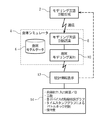
以下、本発明を実施するための最良の形態について説明する。図1は、本実施の形態における倉庫シミュレーションシステムの構成を示す。倉庫シミュレーションシステムは、端末2、サーバ4、統計情報出力部12を備える。端末2はパーソナルコンピュータ、サーバ4はサーバ装置によって実現することが可能である。端末2とサーバ4とはそれぞれ通信インターフェースを備え、情報通信回線によって接続される。端末2は、モデリング言語自動生成プログラムを格納する記憶装置を備え、そのモデリング言語自動生成プログラムは端末2の演算制御装置によって読み出されて実行される。
Hereinafter, the best mode for carrying out the present invention will be described. FIG. 1 shows a configuration of a warehouse simulation system in the present embodiment. The warehouse simulation system includes a
サーバ4は、モデリング言語自動認識部8と、倉庫モデリング実行部10とを備える。これらの機能ブロックは、サーバ4の記憶装置に格納されたコンピュータプログラムが、サーバ4の演算制御装置に読み出されて実行されることにより実現される。サーバ4は更に、記憶装置に倉庫モデルデータ6を格納する。統計情報出力部12は、統計情報14を出力する。統計情報出力部12としては、端末2が備えるディスプレイが好適に用いられる。
The server 4 includes a modeling language
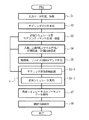
図2は、倉庫シミュレーションシステムの動作の概略を示すフローチャートである。営業マンは、顧客の提示する条件に基づいて、端末2を操作してデータの入力を行う。それに応答して、端末2は入力データの作成および解析を行う(ステップS1)。端末2は、モデリングデータを生成する(S2)。端末2は、生成したモデリングデータからモデリングコマンドを生成してサーバ4に送信する(ステップS3)。
FIG. 2 is a flowchart showing an outline of the operation of the warehouse simulation system. The salesman operates the
サーバ4はモデリングコマンドを受信する。モデリング言語自動認識部8は、受信したモデリングコマンドに基づいて、シミュレータのモデルを生成する。
更に端末2は、搬送対象の品物の情報として、品物毎の量、荷姿、大きさや重量、また品物の保管デバイス対象について、入庫および出庫XMLファイルを作成し、さらに初期在庫(シミュレーションのスタート時の各倉庫デバイスに置かれている初期の在庫の設定)と計画出庫(入出庫のタイミングの設定)の設定を行う(ステップS4)。
The server 4 receives the modeling command. The modeling language
In addition, the
前述の入力情報から搬送制御や倉庫の在庫管理制御のための倉庫制御情報に変換して制御コマンドを自動設定する(ステップS5)。 The control information is automatically set by converting the input information into warehouse control information for transport control and warehouse inventory management control (step S5).
これらの電文を(通信回線を介して)モデリング言語自動認識部8で受け取って、この受信したモデリングコマンドに基づいて、シミュレーションに必要な倉庫デバイスモデル(倉庫、入出庫場、昇降機、保管庫、搬送車など)の設定、搬送車や倉庫デバイスの制御コマンド設定を電文として受け取り、シミュレータのデータとして処理する(ステップS6−1)。 These electronic messages are received by the modeling language automatic recognition unit 8 (via a communication line), and based on the received modeling command, a warehouse device model (warehouse, entry / exit hall, elevator, storage, transport) required for the simulation is received. Vehicle etc.) and the control command settings of the transport vehicle and warehouse device are received as messages and processed as simulator data (step S6-1).
倉庫モデリング実行部10は、モデリング言語自動認識部8が生成したデータに基づいて倉庫モデリングを実行し、結果を出力する(ステップS6−2)。
The warehouse modeling execution unit 10 executes warehouse modeling based on the data generated by the modeling language
統計情報出力部12は、倉庫モデリング実行部10が出力した結果に基づいてデータ解析を行う(ステップS7)。端末2は表示装置にデータ解析の結果を出力する(ステップS8)。端末2を操作する営業マン(倉庫を効率化提案するコンサルタント者で以下営業マンと称す)は、この出力結果に基づいて顧客に倉庫システムに関する提案を行う。
The statistical
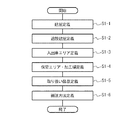
図3は、上記ステップS1に含まれる下位のステップを示すフローチャートである。端末2は、情報を収集するためにGUIの表示画面をディスプレイに表示する。営業マンはその表示画面を参照し、入力装置を用いてGUIを介して入力操作を行う。端末2は、入力操作に応答して、各種データの設定(定義)を行う。
FIG. 3 is a flowchart showing the lower steps included in step S1. The
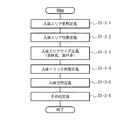
まず、シミュレーションが行われる対象である倉庫の建屋に関する情報が定義される(ステップS1−1)。追設建屋があれば、その情報も定義される(ステップS1−2)。倉庫に荷が搬入および搬出される場所である入出庫エリアの情報が定義される(ステップS1−3)。保管エリアおよび加工場の情報が定義される(ステップS1−4)。取り扱い品目が定義される(ステップS1−5)。搬送方法が定義される(ステップS1−6)。 First, the information regarding the warehouse building which is the object of the simulation is defined (step S1-1). If there is an additional building, the information is also defined (step S1-2). Information on the loading / unloading area, which is a place where the load is loaded into and unloaded from the warehouse, is defined (step S1-3). Storage area and processing site information is defined (step S1-4). A handling item is defined (step S1-5). A transport method is defined (step S1-6).
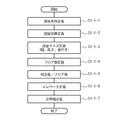
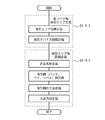
図4は、上記ステップS1−1に含まれるさらに下位のステップを示すフローチャートである。シミュレーションの対象である倉庫の名称が定義される(ステップS1−1−1)。シミュレーション空間における建屋の位置が定義される(ステップS1−1−2)。シミュレーション空間における建屋のサイズが定義される(ステップS1−1−3)。建屋の内部で倉庫として使用されるフロアの数が定義される(ステップS1−1−4)。 FIG. 4 is a flowchart showing further lower steps included in step S1-1. The name of the warehouse to be simulated is defined (step S1-1-1). The position of the building in the simulation space is defined (step S1-1-2). The size of the building in the simulation space is defined (step S1-1-3). The number of floors used as warehouses inside the building is defined (step S1-1-4).
各々のフロアにおける柱の数、位置、大きさが定義される(ステップS1−1−5)。この際、柱の周囲に搬送車(者)がぶつからないように柱壁面に沿って障害物が自動的に設定される。 The number, position, and size of pillars on each floor are defined (step S1-1-5). At this time, an obstacle is automatically set along the column wall so that the transport vehicle (person) does not collide with the column.
倉庫で用いられるエレベータに関して、以下の情報が定義される(ステップS1−1−6)。シミュレーション内の倉庫に対して、各フロア毎に、エレベータが指定された台数分生成される。エレベータは、各フロアの幅、奥行き、フロア高さを元に、建屋の相対的位置に作成される。エレベータの表示画面上における色と透明度が設定される。シミュレータが動作するように、各エレベータ間が接続コマンドで接続されるように設定される。エレベータの開放方位(東西南北の指定)が設定される。エレベータの速度が設定される。エレベータの使用有無を判断するための制御物体の設置についての情報が定義される。倉庫で用いられる昇降機に対しても、各種の情報が定義される(ステップS1−1−7)。 The following information is defined for the elevator used in the warehouse (step S1-1-6). The designated number of elevators are generated for each floor for the warehouse in the simulation. The elevator is created at the relative position of the building based on the width, depth, and floor height of each floor. The color and transparency on the elevator display screen are set. Each elevator is set to be connected with a connection command so that the simulator operates. The elevator opening direction (designation of east, west, south, and north) is set. The elevator speed is set. Information about installation of the control object for determining whether the elevator is used is defined. Various types of information are also defined for the elevators used in the warehouse (step S1-1-7).
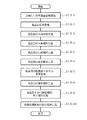
図5は、上記ステップS1−3に含まれるさらに下位のステップを示すフローチャートである。このステップS1−3では、倉庫に荷が搬入される場所である入庫エリアと、倉庫から荷が搬出される場所である出庫エリアとに関する情報が定義される。まず、入庫エリアの名称が定義される(ステップS1−3−1)。シミュレーション空間における入庫エリアの位置が定義される(ステップS1−3−2)。入庫エリアのサイズ(全体長と奥行きを含む)が定義される(ステップS1−3−3)。入庫エリアに停車できるトラックの列数が定義される(ステップS1−3−4)。入庫エリアの方位(トラック等が進入・退出するために開口している方向)が定義される(ステップS1−3−5)。その他の定義が行われる(ステップS1−3−6)。以上のステップS1−3−1〜S1−3−6の処理は、出庫エリアに関しても実行される。 FIG. 5 is a flowchart showing further lower steps included in step S1-3. In this step S1-3, information relating to a warehousing area where a load is carried into a warehouse and a warehousing area where a load is carried out from the warehouse is defined. First, the name of the warehousing area is defined (step S1-3-1). The position of the warehousing area in the simulation space is defined (step S1-3-2). The size (including the overall length and depth) of the warehousing area is defined (step S1-3-3). The number of rows of trucks that can stop in the warehousing area is defined (step S1-3-4). The direction of the warehousing area (the direction in which the truck or the like opens to enter / exit) is defined (step S1-3-5). Other definitions are made (step S1-3-6). The processing of the above steps S1-3-1 to S1-3-6 is also executed for the shipping area.
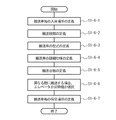
図6は、上記ステップS1−4に含まれるさらに下位のステップを示すフローチャートである。端末2は、ステップS1−1で定義されたフロアの各々について、荷を保管する保管エリアについての情報を定義する(ステップS1−4−1)。ここで保管エリアの位置と、保管デバイスの種類(棚などの荷を集積する設備の種類)が定義される。
FIG. 6 is a flowchart showing further lower steps included in step S1-4. The
ステップS1−4−1で定義された保管エリアの各々に対して、詳細な情報が定義される(ステップS1−4−2)。ここで、倉庫の名称、保管棚(バンク、ベイ、レベル)の数、保管棚の寸法および荷を入庫するために開口している方位が定義される。 Detailed information is defined for each of the storage areas defined in step S1-4-1 (step S1-4-2). Here, the name of the warehouse, the number of storage shelves (banks, bays, levels), the dimensions of the storage shelves, and the azimuth that opens to receive the load are defined.
図7は、上記ステップS1−5に含まれるさらに下位のステップを示すフローチャートである。日を単位として、個々の日に対応して、倉庫で取り扱われる代表品目の数が定義される(ステップS1−5−1)。各品目名が定義される(ステップS1−5−2)。各品目の一日当りの入庫数と出庫数が定義される(ステップS1−5−3)。 FIG. 7 is a flowchart showing lower steps included in step S1-5. The number of representative items handled in the warehouse is defined corresponding to each day, with the day as a unit (step S1-5-1). Each item name is defined (step S1-5-2). The number of goods received and the number of goods issued per day for each item is defined (step S1-5-3).
各品目の入庫場所が、ステップS1−3で定義された入庫エリアと紐付けされることにより定義される(S1−5−4)。各品目の出庫場所が、ステップS1−3で定義された出庫エリアと対応付けられることにより定義される(S1−5−5)。各品目の荷姿形状が定義される(S1−5−6)。各品目の各荷姿での寸法と重量が定義される(S1−5−7)。各品目の保管場所が、ステップS1−4で定義された保管エリアと対応づけられることにより定義される(S1−5−8)。各品目その他保管場所、加工場が定義される(S1−5−9)。保管場所毎に、一日単位で倉庫内に在庫として保管されている荷の初期在庫量が定義される(S1−5−10)。 The warehousing location of each item is defined by being associated with the warehousing area defined in step S1-3 (S1-5-4). The delivery location of each item is defined by being associated with the delivery area defined in step S1-3 (S1-5-5). The package shape of each item is defined (S1-5-6). The dimensions and weight of each item in each package are defined (S1-5-7). The storage location of each item is defined by being associated with the storage area defined in step S1-4 (S1-5-8). Each item, other storage location, and processing site are defined (S1-5-9). For each storage location, an initial stock quantity of loads stored as stock in the warehouse is defined on a daily basis (S1-5-10).
図8は、上記ステップS1−6に含まれるさらに下位のステップを示すフローチャートである。倉庫に荷を入庫する搬送車(トラック)毎に、入庫場所(ステップS1−3で定義された入庫エリア)が定義される(ステップS1−6−1)。搬送種類(人、フォークリフトなど入庫した荷を受け取る側の搬送手段の種類)が定義される(ステップS1−6−2)。搬送車の型式が定義される(ステップS1−6−3)。搬送車の詳細仕様が定義される(ステップS1−6−4)。搬送種類によって種類が指定された搬送手段の各々について台数が定義される(ステップS1−6−5)。入庫エリアのあるフロアから他のフロアに搬送する場合にエレベータを用いるか昇降機を用いるかが選択される(ステップS1−6−6)。搬送車毎に、搬送する荷を保管する保管場所(ステップS1−4で定義された保管エリア)が定義される(ステップS1−6−7)。 FIG. 8 is a flowchart showing lower steps included in step S1-6. A storage location (a storage area defined in step S1-3) is defined for each transport vehicle (truck) that stores a load in the warehouse (step S1-6-1). The transport type (the type of transport means on the side that receives the received goods such as a person and a forklift) is defined (step S1-6-2). The type of the transport vehicle is defined (step S1-6-3). Detailed specifications of the transport vehicle are defined (step S1-6-4). The number of units is defined for each of the conveying means whose type is specified by the type of conveyance (step S1-6-5). It is selected whether to use an elevator or an elevator when transporting from a floor with a warehousing area to another floor (step S1-6-6). For each transport vehicle, a storage location (storage area defined in step S1-4) for storing the load to be transported is defined (step S1-6-7).
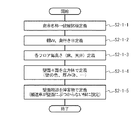
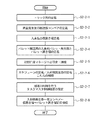
図9と図10は、ステップS2のモデリングデータを生成する処理の詳細を示すフローチャートである。倉庫シミュレーションシステムは、ステップS1の入力データに基づいて、倉庫の概略形状を示す3D画像を生成して表示する。この3D画像で表現された倉庫に対して、以下のような設定が行われる。 9 and 10 are flowcharts showing details of the process of generating the modeling data in step S2. The warehouse simulation system generates and displays a 3D image showing the schematic shape of the warehouse based on the input data in step S1. The following settings are made for the warehouse represented by this 3D image.
シミュレーション内の倉庫に掲げるために、倉庫の名称を表示する建屋銘板が定義される(ステップS2−1−1)。シミュレーション内の倉庫の幅Wと奥行きBが定義される(ステップS2−1−2)。各フロアに対して、床の高さと天井の高さが定義される(ステップS2−1−3)。各壁面が立方体によって定義される。壁の色と厚みの情報も定義される(ステップS2−1−4)。壁面周辺を障害物で定義する。これにより、シミュレーションにおいて搬送車が壁面にぶつからないように設定される(ステップS2−1−5)。 A building nameplate that displays the name of the warehouse is defined to be raised in the warehouse in the simulation (step S2-1-1). The width W and depth B of the warehouse in the simulation are defined (step S2-1-2). For each floor, the height of the floor and the height of the ceiling are defined (step S2-1-3). Each wall is defined by a cube. Information on the color and thickness of the wall is also defined (step S2-1-4). Define the periphery of the wall with obstacles. Thereby, it sets so that a conveyance vehicle may not collide with a wall surface in simulation (step S2-1-5).
さらに、個々の壁となる四角柱の建屋に対する相対位置設定、モデリングされた倉庫の表示画面上での回転方向(向き)の決定、中が見えるように透明に表示される壁の設定が行われる。さらに、レイヤ設定により、壁全体を表示と非表示のいずれかに切り替えることができる。さらに、シミュレーションにおいて搬送車(者)が建屋外に出ないようにするための障害物が壁面に沿って自動的に設定される。 In addition, the relative position with respect to the square pillar building that is the individual wall, the rotation direction (orientation) on the modeled warehouse display screen, and the setting of the transparent wall so that the inside can be seen are set. . Further, the entire wall can be switched between display and non-display by layer setting. Furthermore, obstacles for preventing the transport vehicle (person) from going outside the building in the simulation are automatically set along the wall surface.
図10を参照して、入庫部のトラック列が定義される(ステップS2−2−1)。商品発生後の搬送仮コンベアが定義される(ステップS2−2−2)。入庫品の仮置き場が定義される(ステップS2−2−3)。パレット搬送用の入庫部パレット発生器とパレット置き場が定義される(ステップS2−2−4)。初期在庫マネージャが設定され接続される(ステップS2−2−5)。スケジューラと、入荷物発生器とが定義され、接続される(ステップS2−2−6)。搬送の制御が行われる(ステップS2−2−7)。搬送制御機器が設定される(ステップS2−2−7)。入荷物発生器、仮コンベア、仮置き場およびパレット置き場が接続される(ステップS2−2−8)。
出庫側についても、出庫に必要なデバイスが、入庫部同様に設定されることになる。
Referring to FIG. 10, the truck train of the warehousing unit is defined (step S2-2-1). A temporary transport conveyor after the product is generated is defined (step S2-2-2). A temporary storage place for incoming goods is defined (step S2-2-3). A pallet generator for pallet transportation and a pallet storage are defined (step S2-2-4). An initial inventory manager is set and connected (step S2-2-5). A scheduler and a receipt generator are defined and connected (step S2-2-6). The conveyance is controlled (step S2-2-7). A transfer control device is set (step S2-2-7). The incoming luggage generator, temporary conveyor, temporary storage area, and pallet storage area are connected (step S2-2-8).
On the delivery side, devices necessary for delivery are set in the same manner as the warehousing unit.
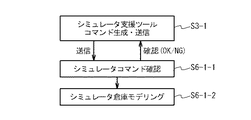
図11は、ステップS3とステップS6−1の間のやり取りの詳細を示すフローチャートである。端末2は、ステップS2で生成されたモデリングデータを、コンピュータに対して動作を指示する命令文からなるコマンドラインに変換し、サーバ4に送信する(ステップS3−1)。
サーバ4は、電文として受け取ったシミュレータコマンドを受信して、書式に合致しているか確認し、もし間違っていたらエラーを端末2にNG返信し、合致していればOKを返信する(ステップS6−1−1)。
さらにサーバ4は、この電文から倉庫を3Dモデルとして生成する(S6−1−2)。
FIG. 11 is a flowchart showing details of the exchange between step S3 and step S6-1. The
The server 4 receives the simulator command received as a message and checks whether it matches the format. If it is incorrect, the server 4 returns an error to the
Furthermore, the server 4 generates a warehouse as a 3D model from this message (S6-1-2).
例えば各フロアの色、床面、大きさの定義に対して、それぞれを指定するコマンドが生成される。各々の壁面の階、位置、大きさ、色、透明度等に対して、それぞれを指定するコマンドが生成される。端末2は、コマンドを生成すると、そのコマンドを含む電文をサーバ4に送信する。
For example, a command for designating each floor color, floor surface, and size is generated. Commands for designating the floor, position, size, color, transparency, etc. of each wall surface are generated. When the
サーバ4が端末2から電文を受信すると、モデリング言語自動認識部8は、その電文が予め設定された条件を満たしているか否か確認し、その結果を端末2に返信する。
確認の結果、電文が条件を満たしていれば、その電文を用いて倉庫モデリング実行部10によるモデリングを開始する(ステップS6−1−2)。
When the server 4 receives a message from the
As a result of the confirmation, if the message satisfies the condition, modeling by the warehouse modeling execution unit 10 is started using the message (step S6-1-2).
倉庫モデリング実行部10は、例えば倉庫シミュレーション用に市販されているソフトウェアプロダクトを使用することにより実現することができる。こうした倉庫シミュレータにおいては通常、オペレータは、シミュレータのGUIの表示画面を見ながら、その画面の指示に従って手操作でモデリングを行う。 The warehouse modeling execution unit 10 can be realized, for example, by using a software product that is commercially available for warehouse simulation. In such a warehouse simulator, the operator usually performs modeling manually by following the instructions on the screen while viewing the GUI display screen of the simulator.
本実施の形態においては、通常はオペレータが画面を参照しながら行う操作のそれぞれに対応するコマンドが、端末2で電文として自動生成される。モデリング言語自動認識部8は、そのコマンドを受信して認識し、そのコマンドの指示に従って倉庫モデリング実行部10の設定を行う。
In the present embodiment, a command corresponding to each of operations that an operator normally performs while referring to the screen is automatically generated as a message on the
そのため、人が設定するように開発されているシミュレータを、遠隔地から送信される電送コマンドによって自動的に設定することができる。そのため、シミュレータは各々の営業マンが持つ必要がなく、サーバ4に一つ置いておき、必要なときに遠隔地の端末2からつないで処理することができる。
Therefore, a simulator that has been developed to be set by a person can be automatically set by a transmission command transmitted from a remote place. Therefore, it is not necessary for each salesman to have a simulator, and one simulator can be placed on the server 4 and connected to the
シミュレータ(倉庫モデリング実行部10)に対して、人の操作の代わりに端末2で電送コマンドを発生させて、その電送コマンドを通信回線を通して送信して、シミュレータでモデリングすることができる。この事を実現するためには、シミュレータ側は、人の操作と同じだけの電送コマンドを用意するだけでよく、それ以上の特別の開発を必要としないため、開発・検証の手間が少なく、信頼性が高い。
A simulator (warehouse modeling execution unit 10) can generate a transmission command at the
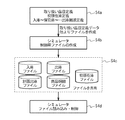
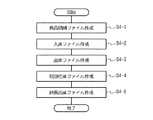
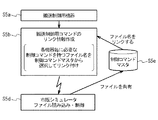
図12と図13は、ステップS4の詳細を説明するための図である。図12は、倉庫シミュレーションシステムのデータの流れの中でステップS4で生成される各種ファイルと設定のデータの位置を示す。特にS4bがステップS4のデータ生成を示す。図13は、ステップS4の詳細を示す。このステップS4において、モデリング言語自動認識部8は、端末2から受信した電文を、倉庫モデリング実行部10が倉庫のシミュレーションを実行するために収集する入力情報として自動認識し(ステップS6−1)、倉庫モデルデータ6として登録する。
12 and 13 are diagrams for explaining details of step S4. FIG. 12 shows the positions of various files and setting data generated in step S4 in the data flow of the warehouse simulation system. In particular, S4b indicates data generation in step S4. FIG. 13 shows details of step S4. In this step S4, the modeling language
端末2は、取り扱い品目定義や入庫〜保管庫〜…出庫を含む荷の移動の各段階での搬送についての定義情報をGUIから入力し(S4a)、そのGUIに示されている取り扱い品目の定義、初期在庫の定義、入庫〜保管庫〜…出庫を含む荷の移動の各段階での搬送についての定義から、倉庫モデリング実行部10の入力のための倉庫情報として、シミュレータ制御用ファイルを作成する(S4b)。
The
シミュレータ制御用ファイルとして、以下のファイルが図13に示されるように作成される:商品明細ファイル(ステップS4−1);入庫ファイル(ステップS4−2);出庫ファイル(ステップS4−3);初期在庫ファイル(ステップS4−4);そして計画出庫(ステップS4−5)ファイル(S4c)。 The following files are created as simulator control files as shown in FIG. 13: product detail file (step S4-1); warehousing file (step S4-2); warehousing file (step S4-3); initial Inventory file (step S4-4); and planned delivery (step S4-5) file (S4c).
商品明細ファイルは、取り扱う商品名に対する、使用明細を定義するファイルである。商品明細ファイルは、商品名、荷姿(箱、小箱、バラに分類される)、箱のサイズ(幅、高さ、奥行き、収納されるバラの数および重量の情報を含む)、小箱のサイズ(幅、高さ、奥行き、収納されるバラの数および重量の情報を含む)、バラのサイズ(幅、高さ、奥行き、バラの数および重量の情報を含む)を含む。 The product details file is a file that defines usage details for the product names to be handled. Product details file includes product name, packing style (classified as box, small box, rose), box size (including information on width, height, depth, number of roses stored and weight, and small box) Size (including information on width, height, depth, number of stored roses and weight), and rose size (including information on width, height, depth, number of roses and weight).
入庫ファイルは、入庫する商品の個数とそのときの荷姿と量を定義する。さらに、入庫開始日時の設定情報を含む。さらに、荷物発生スケジューラ制御機器(シミュレーション内において、何時、商品を発生させるかを制御しているスケジューラ)の名称の指定を含む。さらに、入荷物発生器(実際に荷物を発生させる機器名)の指定を含む。さらに、各々の商品に対して、商品名、個数、荷姿および商品格納先(保管エリア)を管理する初期在庫マネージャ名の指定を含む。 The warehousing file defines the number of goods to be warehousing, and the packing form and quantity at that time. Furthermore, the setting information of the warehousing start date is included. Further, it includes designation of the name of the package generation scheduler control device (scheduler that controls when a product is generated in the simulation). Further, it includes designation of a load generator (name of a device that actually generates a load). Furthermore, for each product, designation of an initial stock manager name for managing the product name, the number, the packing form, and the product storage destination (storage area) is included.
出庫ファイルは、出庫する商品の個数とそのときの荷姿と量を定義する。さらに、出庫開始日時の設定情報を含む。さらに、荷物発生スケジューラ制御機器の名称の指定を含む。さらに、保管庫からのピッキングを担当する搬送制御機器の指定を含む。さらに、各々の商品に対して、商品名、個数、荷姿および商品格納先(保管エリアの棚番地)を管理する初期在庫マネージャ名の指定を含む。 The delivery file defines the number of products to be delivered and the packaging and quantity at that time. Furthermore, the setting information of the delivery start date is included. Furthermore, the designation of the name of the package generation scheduler control device is included. Furthermore, it includes designation of a transfer control device in charge of picking from the storage. Further, for each product, designation of an initial stock manager that manages the product name, quantity, packaging, and product storage location (storage area shelf number) is included.
初期在庫ファイルは、初期在庫として設定される商品の個数とその保管先の場所(例えば棚番号であり、ステップS1−4で設定される保管エリアの情報に対応づけられる)を定義する。さらに、出庫開始日時の設定を含む。荷物発生スケジューラ制御機器の名称の指定を含む。保管庫からのピッキングを担当する搬送制御機器の指定を含む。さらに、各々の商品に対して、商品名、個数、荷姿および商品格納先(保管エリア)を管理する初期在庫マネージャ名の指定を含む。 The initial stock file defines the number of products set as the initial stock and the storage location (for example, the shelf number, which is associated with the storage area information set in step S1-4). Furthermore, the setting of the delivery start date and time is included. Includes designation of the name of the package generation scheduler control device. Includes designation of transport control equipment in charge of picking from the vault. Furthermore, for each product, designation of an initial stock manager name for managing the product name, the number, the packing form, and the product storage destination (storage area) is included.
計画出庫ファイルは、搬送する保管デバイス間の情報を定義する。さらに、保管元デバイス名、保管先デバイス名、ピッキング時期を管理するスケジューラ名、保管庫からピッキングを担当する搬送制御機器名、各デバイス毎の商品格納先を管理する初期在庫マネージャ名、倉庫を制御する自動倉庫コントローラ名、ピッキング対象の商品名、数量、ルート、行き先、エレベータまたは昇降機の利用の有無、出庫スタイル、ピッキング時刻などの定義を含む。 The planned delivery file defines information between the storage devices to be transported. In addition, storage device name, storage device name, scheduler name to manage picking time, transfer control device name in charge of picking from the storage, initial inventory manager name to manage the product storage location for each device, warehouse control This includes definitions of the name of the automatic warehouse controller, the name of the product to be picked, the quantity, the route, the destination, whether or not the elevator or elevator is used, the delivery style, and the picking time.
ステップS4cで生成された上記の諸ファイルは、倉庫モデリング実行部10に受け渡される。倉庫モデリング実行部10は、それらのファイルを読み込んでシミュレーションを実行する。
これらのファイルを端末側2とサーバ側4とで受け渡す方法としては、端末2側からサーバにFTP転送する方法やファイルの中身を電文コマンドとして送信する方法、あるいは、サーバ側で作ったファイルを置いているフォルダに共有を掛けて、サーバからそのフォルダを参照してファイルの中身を取出す方法が考えられる。
The various files generated in step S4c are delivered to the warehouse modeling execution unit 10. The warehouse modeling execution unit 10 reads these files and executes a simulation.
These files can be transferred between the
通常の倉庫シミュレータを利用する場合、シミュレータ制御用ファイルに相当する情報は、別途、編集エディタなどを使ってシミュレータが解読可能な(例えばXML形式の)ファイルを自分で作り上げて、これを利用するようにシミュレータに指示する必要がある。本実施の形態における倉庫シミュレーションシステムにより、これらのファイルを、端末2に入力される簡易的な入力データから自動的に作成することが可能である。これにより、ファイルの特別なフォーマット(例:XMLフォーマット)に合わせて人が出力する必要が無くなり、この手間を削減することができる。
When using a normal warehouse simulator, the information corresponding to the simulator control file is separately created by using an editing editor or the like to create a file (for example, in XML format) that can be decoded by the simulator. It is necessary to instruct the simulator. These files can be automatically created from simple input data input to the
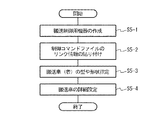
図14と図15は、ステップS5の詳細を説明するための図である。図14は、倉庫シミュレーションシステムの動作の中でステップS5の動作のデータの位置を示す。特にS5b、S5cがステップS5の制御コマンド生成を示す。図15は、ステップS5の詳細を示す。 14 and 15 are diagrams for explaining the details of step S5. FIG. 14 shows the data position of the operation in step S5 in the operation of the warehouse simulation system. In particular, S5b and S5c indicate control command generation in step S5. FIG. 15 shows details of step S5.
端末2は、搬送制御機器(シミュレーション内で搬送を制御する為に使用される機器)を、倉庫とは別の所にかためて配置されるように生成する。搬送制御機器は、現実の世界では存在しないため、倉庫シミュレーション時は、脇に置いて見えないように設定される。搬送制御機器が配置されるレイヤが設定される(S5a、S5−1)。必要に応じて、シミュレーション時にレイヤ設定を変更することで、制御機器を見ることが出来る。
The
次に端末2は、搬送制御機器を制御するための制御コマンドのリンク情報の生成を開始する。リンク付けされる制御コマンドのマスタは、倉庫モデリング実行部(例えば市販のシミュレータ)に事前に作成して登録したものが使用される(S5e)。端末2は、各々の搬送制御機器に対して必要な制御コマンドを持つファイル名を制御コマンドマスタから選択してリンク付けする(S5b、ステップS5−2)。制御コマンドマスタ内のファイルの選択は、例えば次のようなファイルに対して行われる。
パレット積載用コマンドファイル、
入庫制御コマンドファイル、
出庫制御コマンドファイル、
汎用コマンド入荷制御用、
汎用コマンド出荷制御用、
パレット補充要求制御コマンド、
積載物満載制御コマンド、
加工パターン定義コマンド、
加工制御コマンド、および
戻りジョブコマンド。
例えば、ある搬送車が、入庫部から倉庫の棚に保管する処理があったとすると、入庫部から品物を取出す動作を搬送制御機器にリンクさせた「入庫制御コマンドファイル」で、搬送制御動作をさせる(このファイルの中に入庫部から品物を取ってきて搬送するロジックの指示がされているので、そのような動きが可能となる。入庫の場所も、別途リンク情報として与える)。次に、汎用出荷制御用ファイルで、何処々の倉庫デバイスに品物を搬送しなさいという様にリンク情報を与えてやることで、入庫部から品物を取出し、指定された倉庫デバイス(例えば、棚)にその品物を保管する動作を作り出す事が出来る。
これら一連の動作制御を行うのが、搬送制御機器で、その具体的な動作は、リンクしたファイルの内容に従って動作する事になる。
Next, the terminal 2 starts to generate link information of a control command for controlling the transport control device. The master of the control command to be linked is the one created and registered in advance in the warehouse modeling execution unit (for example, a commercially available simulator) (S5e). The
Pallet loading command file,
Receipt control command file,
Issue control command file,
For general-purpose command arrival control,
For general-purpose command shipment control,
Pallet refill request control command,
Load full control command,
Machining pattern definition command,
Machining control commands and return job commands.
For example, if there is a process that a certain transport vehicle stores from the warehousing part to the warehouse shelf, the warehousing control command file that links the operation for taking out the goods from the warehousing part to the transportation control device causes the transportation control operation to be performed. (Since this file is instructed by the logic for picking up the goods from the warehousing section and transporting them, such a movement is possible. The location of the warehousing is also given as link information). Next, in the general purpose shipment control file, by giving link information such as where to deliver the item to the warehouse device, the item is taken out from the warehousing part, and the designated warehouse device (for example, shelf) You can create an action to store the item.
The series of operation control is performed by the transfer control device, and the specific operation is performed according to the contents of the linked file.
さらに、端末2の指令によって、搬送車(者)が生成される。搬送車(者)の形状が電送コマンドで指示され、サーバ側のモデリング言語自動認識部8で解釈され、搬送車(者)がシミュレータ内の画面に生成される。ここで作業者が指定された場合はさらに、人の大きさと性別が指定される(ステップS5−3)。搬送車が指定された場合はさらに、搬送車の種類(フォークリフトの種類で言えば、エンジン車かバッテリー車か、リーチ式、オーダピッカー車か等々)が指定され、搬送車の詳細情報(仕様)が選択され(ステップS5−4)、搬送器具が指定される。台数、人数により、新たな人や搬送車が生成される。以上で生成された制御コマンドは、倉庫モデルデータ6として登録される。
Further, a transport vehicle (person) is generated by the command of the
倉庫モデリング実行部10は、以上で生成された制御コマンドを読み込んでシミュレーションを実行する(S5d)。 The warehouse modeling execution unit 10 reads the control command generated above and executes a simulation (S5d).
通常の倉庫シミュレータを利用する場合、搬送の制御を行う搬送制御機器の設定は、専門知識を必要とし、シミュレータを稼動させるまで時間が多くかかっていた。本実施の形態においては、搬送が種類分別され、汎用化される事で、制御コマンドをいくつかのファイルとして、マスタ化する事で、それを選択して、関連付けるだけで、利用が可能である。こうした処理は倉庫シミュレーションシステムによって自動的に行われるため、熟練が必要とされず、シミュレータ生成の工数が大幅に低減する。 When a normal warehouse simulator is used, setting of a transfer control device that controls transfer requires specialized knowledge, and it takes a long time to operate the simulator. In this embodiment, by classifying and generalizing the conveyance, the control command can be mastered as several files, and can be used simply by selecting it and associating it. . Since such processing is automatically performed by the warehouse simulation system, no skill is required, and the number of steps for generating the simulator is greatly reduced.
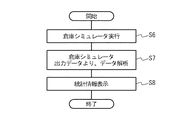
図16は、シミュレーションの実行以降の動作を示す。端末2から受信した電文に基づいてモデリング言語自動認識部8が作成した各種設定に基づいて、倉庫モデリング実行部10は倉庫シミュレーションを実行する(ステップS6−2)。この倉庫シミュレーションの実行は、端末2に所定の入力操作を行うことによって、遠隔で起動することができる。倉庫シミュレーションの結果、搬送車(者)の作業状況を示す稼動情報を時系列的に記録したLOGファイルが生成される。
FIG. 16 shows operations after the simulation is executed. Based on the various settings created by the modeling language
端末2は、そのLOGファイルに基づいて、データ解析を行う(ステップS7)。データ解析は、所定の期間内における作業車(者)の作業状況毎の時間を統計的に処理することにより行われる。作業状況は、例えば「荷を搬送中」、「待機中」等の作業の状態の種類を示す。データ解析により、例えば次のようなデータが生成される。
倉庫能力(1日当りの入出荷量)、
作業車(者)の稼動状況グラフ、工数、
各デバイスの稼動状況を示すグラフ、
タイムスタンプグラフ出力。
さらに、稼動実績に基づいて稼動予測が行われ、保守費が計算される。
The
Warehouse capacity (receipt / shipment amount per day),
Work vehicle (person) operating status graph, man-hours,
A graph showing the operating status of each device,
Timestamp graph output.
Furthermore, operation prediction is performed based on the operation results, and maintenance costs are calculated.
端末2は、データ解析の結果を出力装置に出力する。営業マンはその結果を参照して、顧客に適した倉庫システムを提案する。これにより、顧客の倉庫設備や入出庫量に対応して適切なフォークリフトの台数を提案することができる。
The
2…端末
4…サーバ
6…倉庫モデルデータ
8…モデリング言語自動認識部
10…倉庫モデリング実行部
12…統計情報出力部
14…統計情報
2 ... Terminal 4 ...
Claims (4)
前記設定情報をコンピュータによるモデル上での前記倉庫のモデリングと前記倉庫における前記荷の運搬動作を指示する電文に変換する電文変換ステップと、
電文によるユーザインターフェースを介して倉庫情報を収集して倉庫シミュレーションを行うソフトウェアを動作させるため、前記設定情報に基づいて倉庫制御情報を生成して出力する倉庫制御情報自動設定ステップと、
前記電文変換ステップにおいて変換された前記電文と前記倉庫制御情報とを通信回線を介して受け取り、倉庫シミュレーションのための必要な情報に置き換える電文認識ステップと、
前記電文認識ステップに応答して生成された前記倉庫シミュレーションの結果を出力する出力ステップ
とを具備する
倉庫シミュレーション方法。 An input step of receiving warehouse and load setting information by an input operation via a GUI (Graphical User Interface);
A message conversion step for converting the setting information into a message for instructing the modeling of the warehouse on a model by a computer and the transporting operation of the load in the warehouse;
Warehouse control information automatic setting step for generating and outputting warehouse control information based on the setting information in order to operate the software for collecting warehouse information and performing warehouse simulation via a user interface by electronic message,
A telegram recognition step for receiving the telegram converted in the telegram conversion step and the warehouse control information via a communication line and replacing them with necessary information for a warehouse simulation;
An output step of outputting the result of the warehouse simulation generated in response to the message recognition step.
前記シミュレーションにおいて、倉庫の内部におけるフォークリフト又は作業者の作業状況を時系列的に示す稼動情報が生成され、
更に、前記稼動情報に基づいて、所定の期間内における前記作業状況の時間を統計的に処理した統計情報を生成するステップを具備し、
前記出力ステップにおいて、前記統計情報が出力される
倉庫シミュレーション方法。 The warehouse simulation method according to claim 1,
In the simulation, operation information is generated in a time series indicating the work status of the forklift or the worker inside the warehouse,
Furthermore, based on the operation information, comprising the step of generating statistical information that statistically processed the time of the work situation within a predetermined period,
The warehouse simulation method in which the statistical information is output in the output step.
前記入力操作に応答して前記設定情報をコンピュータに対して動作を指示する電文に自動的に変換する電文変換部と、
前記電文を通信ネットワークを介して送信する端末側通信部
とを備える端末装置と、
人の手による入力操作を介して倉庫情報を収集して倉庫のシミュレーションを行うソフトウェアに対して、前記端末側通信部から受信した前記電文を前記倉庫情報に変換し、前記人の手による入力操作の代わりとして前記ソフトウェアに渡して前記倉庫のシミュレーションを実行させるモデリング言語自動認識部と、
前記倉庫のシミュレーションの結果を前記端末装置に送信するサーバ側通信部
とを備えるサーバ
とを具備する
倉庫シミュレーションシステム。 An input unit for receiving warehouse and load setting information through an input operation via a GUI;
A message conversion unit that automatically converts the setting information into a message that instructs the computer to operate in response to the input operation;
A terminal device comprising: a terminal-side communication unit that transmits the electronic message via a communication network;
For software that collects warehouse information via a manual input operation and simulates a warehouse, the telegram received from the terminal-side communication unit is converted into the warehouse information, and the manual input operation Instead of the modeling language automatic recognition unit that passes the software to execute the warehouse simulation,
A warehouse simulation system comprising: a server including a server-side communication unit that transmits a result of the warehouse simulation to the terminal device.
前記シミュレーションにおいて、倉庫の内部におけるフォークリフト又は作業者の作業状況を時系列的に示す稼動情報が生成され、
前記端末装置は更に、前記稼動情報に基づいて、所定の期間内における前記作業状況の時間を統計的に処理した統計情報を生成する統計情報生成部
を備える
倉庫シミュレーションシステム。 A warehouse simulation system according to claim 3, wherein
In the simulation, operation information is generated in a time series indicating the work status of the forklift or the worker inside the warehouse,
The said terminal device is further provided with the statistical information generation part which produces | generates the statistical information which statistically processed the time of the said work situation within the predetermined period based on the said operation information.
Priority Applications (1)
| Application Number | Priority Date | Filing Date | Title |
|---|---|---|---|
| JP2006180959A JP2008009818A (en) | 2006-06-30 | 2006-06-30 | Storehouse simulation system and method |
Applications Claiming Priority (1)
| Application Number | Priority Date | Filing Date | Title |
|---|---|---|---|
| JP2006180959A JP2008009818A (en) | 2006-06-30 | 2006-06-30 | Storehouse simulation system and method |
Publications (1)
| Publication Number | Publication Date |
|---|---|
| JP2008009818A true JP2008009818A (en) | 2008-01-17 |
Family
ID=39067949
Family Applications (1)
| Application Number | Title | Priority Date | Filing Date |
|---|---|---|---|
| JP2006180959A Pending JP2008009818A (en) | 2006-06-30 | 2006-06-30 | Storehouse simulation system and method |
Country Status (1)
| Country | Link |
|---|---|
| JP (1) | JP2008009818A (en) |
Cited By (9)
| Publication number | Priority date | Publication date | Assignee | Title |
|---|---|---|---|---|
| WO2011108945A3 (en) * | 2010-03-02 | 2012-01-19 | INRO Technologies Limited | Method and apparatus for simulating a physical environment to facilitate vehicle operation and task completion |
| CN107272678A (en) * | 2011-04-11 | 2017-10-20 | 克朗设备公司 | The method and apparatus that multiple automatic incomplete vehicles are effectively dispatched using coordinated path planner |
| CN110716452A (en) * | 2019-11-18 | 2020-01-21 | 江苏六维智能物流装备股份有限公司 | Dispatching simulation method based on intelligent stereoscopic warehouse of multilayer shuttle |
| US20220188767A1 (en) * | 2020-12-15 | 2022-06-16 | Target Brands, Inc. | Coordination platform for warehouse operations |
| JP7337439B1 (en) | 2022-05-10 | 2023-09-04 | 株式会社フクダ・アンド・パートナーズ | Information processing system, information processing method and program |
| CN117236037A (en) * | 2023-09-25 | 2023-12-15 | 中铁建电气化局集团第四工程有限公司 | Simulation system and method for evaluating catenary parts warehouse layout |
| US11981516B2 (en) | 2018-02-26 | 2024-05-14 | Kabushiki Kaisha Toshiba | Control apparatus, program, and system |
| WO2024237306A1 (en) * | 2023-05-17 | 2024-11-21 | パナソニックIpマネジメント株式会社 | Simulation model generation method, simulation model generation program, and simulation model generation system |
| JP7696111B1 (en) * | 2024-10-18 | 2025-06-20 | パナソニックIpマネジメント株式会社 | Management method, management system and program |
Citations (4)
| Publication number | Priority date | Publication date | Assignee | Title |
|---|---|---|---|---|
| JPH09102003A (en) * | 1995-10-03 | 1997-04-15 | Nippon Yusoki Co Ltd | Radio lan introduction effect calculation system |
| JP2004196553A (en) * | 2004-04-09 | 2004-07-15 | Penta Ocean Constr Co Ltd | Object movement management method, warehouse physical distribution management system, and program therefor |
| JP2004359452A (en) * | 2003-06-09 | 2004-12-24 | Murata Mach Ltd | Location arrangement method for flatly placing warehouse and flatly placing warehouse |
| JP2005139000A (en) * | 2003-10-14 | 2005-06-02 | Toyota Industries Corp | System and method for managing operating state of industrial vehicle |
-
2006
- 2006-06-30 JP JP2006180959A patent/JP2008009818A/en active Pending
Patent Citations (4)
| Publication number | Priority date | Publication date | Assignee | Title |
|---|---|---|---|---|
| JPH09102003A (en) * | 1995-10-03 | 1997-04-15 | Nippon Yusoki Co Ltd | Radio lan introduction effect calculation system |
| JP2004359452A (en) * | 2003-06-09 | 2004-12-24 | Murata Mach Ltd | Location arrangement method for flatly placing warehouse and flatly placing warehouse |
| JP2005139000A (en) * | 2003-10-14 | 2005-06-02 | Toyota Industries Corp | System and method for managing operating state of industrial vehicle |
| JP2004196553A (en) * | 2004-04-09 | 2004-07-15 | Penta Ocean Constr Co Ltd | Object movement management method, warehouse physical distribution management system, and program therefor |
Cited By (18)
| Publication number | Priority date | Publication date | Assignee | Title |
|---|---|---|---|---|
| US8508590B2 (en) | 2010-03-02 | 2013-08-13 | Crown Equipment Limited | Method and apparatus for simulating a physical environment to facilitate vehicle operation and task completion |
| WO2011108945A3 (en) * | 2010-03-02 | 2012-01-19 | INRO Technologies Limited | Method and apparatus for simulating a physical environment to facilitate vehicle operation and task completion |
| CN107272678A (en) * | 2011-04-11 | 2017-10-20 | 克朗设备公司 | The method and apparatus that multiple automatic incomplete vehicles are effectively dispatched using coordinated path planner |
| US9958873B2 (en) | 2011-04-11 | 2018-05-01 | Crown Equipment Corporation | System for efficient scheduling for multiple automated non-holonomic vehicles using a coordinated path planner |
| CN107272678B (en) * | 2011-04-11 | 2020-11-06 | 克朗设备公司 | Method and apparatus for efficiently scheduling multiple automated non-complete vehicles using a coordinated path planner |
| US11981516B2 (en) | 2018-02-26 | 2024-05-14 | Kabushiki Kaisha Toshiba | Control apparatus, program, and system |
| CN110716452A (en) * | 2019-11-18 | 2020-01-21 | 江苏六维智能物流装备股份有限公司 | Dispatching simulation method based on intelligent stereoscopic warehouse of multilayer shuttle |
| US20220188767A1 (en) * | 2020-12-15 | 2022-06-16 | Target Brands, Inc. | Coordination platform for warehouse operations |
| US12159260B2 (en) * | 2020-12-15 | 2024-12-03 | Target Brands, Inc. | Coordination platform for warehouse operations |
| JP2023166834A (en) * | 2022-05-10 | 2023-11-22 | 株式会社フクダ・アンド・パートナーズ | Information processing system, information processing method, and program |
| JP7337439B1 (en) | 2022-05-10 | 2023-09-04 | 株式会社フクダ・アンド・パートナーズ | Information processing system, information processing method and program |
| WO2024237306A1 (en) * | 2023-05-17 | 2024-11-21 | パナソニックIpマネジメント株式会社 | Simulation model generation method, simulation model generation program, and simulation model generation system |
| JP2024165587A (en) * | 2023-05-17 | 2024-11-28 | パナソニックIpマネジメント株式会社 | Simulation model generation method, simulation model generation program, and simulation model generation system |
| JP2024166087A (en) * | 2023-05-17 | 2024-11-28 | パナソニックIpマネジメント株式会社 | Simulation model generation method, simulation model generation program, and simulation model generation system |
| JP7611520B2 (en) | 2023-05-17 | 2025-01-10 | パナソニックIpマネジメント株式会社 | Simulation model generation method, simulation model generation program, and simulation model generation system |
| JP7624643B1 (en) * | 2023-05-17 | 2025-01-31 | パナソニックIpマネジメント株式会社 | Simulation model generation method, simulation model generation program, and simulation model generation system |
| CN117236037A (en) * | 2023-09-25 | 2023-12-15 | 中铁建电气化局集团第四工程有限公司 | Simulation system and method for evaluating catenary parts warehouse layout |
| JP7696111B1 (en) * | 2024-10-18 | 2025-06-20 | パナソニックIpマネジメント株式会社 | Management method, management system and program |
Similar Documents
| Publication | Publication Date | Title |
|---|---|---|
| TWI792873B (en) | Computer-implemented system and computer-implemented method for optimizing sorting and loading of packages | |
| JP6854966B2 (en) | Order processing methods and equipment, servers and storage media | |
| JP6857142B2 (en) | Picking system and control method of picking system | |
| US20210245956A1 (en) | System-Directed Robotic Cart Picking | |
| JP6677858B1 (en) | Automated warehouse optimization system | |
| CN109635132A (en) | A kind of Automatic Warehouse management method, system and terminal device | |
| CN106920060A (en) | A kind of warehouse management system | |
| CN114604544A (en) | Intelligent storage system, method and storage medium for electric power materials | |
| JP2001344004A (en) | Operation status management using a large display device | |
| CN110716452A (en) | Dispatching simulation method based on intelligent stereoscopic warehouse of multilayer shuttle | |
| US20220033186A1 (en) | System-Directed Single Line Pick Batching | |
| CN114219276A (en) | Warehouse logistics simulation method, device, equipment and storage medium | |
| CN114529236A (en) | Storage management method and device for goods shelf, electronic equipment and storage medium | |
| JP7450819B2 (en) | Warehouse management system, warehouse management device, warehouse management method and program | |
| CN113065816A (en) | An unmanned scheduling transportation control method and system for automatically generating transportation tasks | |
| CN113283826B (en) | Method and system for delivering articles out of warehouse | |
| CN207046202U (en) | A kind of automated warehousing sorting station | |
| US12145803B1 (en) | Item and container tracking with task planning | |
| JPH06332912A (en) | Work managing system | |
| JP2006315862A (en) | Computer-assisted feeding method for feeding components for elevator, escalator, and moving sidewalk, and corresponding delivery unit | |
| US12547976B1 (en) | Resource utilization based-modeling | |
| JPH08198413A (en) | Vehicle dispatch instruction system | |
| JP2002160812A (en) | Logistics management method, fixed place management method, fixed place management system, fixed place management apparatus, and recording medium | |
| JP2001155285A (en) | Equipment delivery management system | |
| Devenyi et al. | The Warehouse Revolution: Automate Or Terminate |
Legal Events
| Date | Code | Title | Description |
|---|---|---|---|
| A621 | Written request for application examination |
Free format text: JAPANESE INTERMEDIATE CODE: A621 Effective date: 20080829 |
|
| A131 | Notification of reasons for refusal |
Free format text: JAPANESE INTERMEDIATE CODE: A131 Effective date: 20110916 |
|
| A02 | Decision of refusal |
Free format text: JAPANESE INTERMEDIATE CODE: A02 Effective date: 20120206 |