JP2005299548A - Method of controlling process cyclically repeated in a cross head type large-sized piston engine - Google Patents
Method of controlling process cyclically repeated in a cross head type large-sized piston engine Download PDFInfo
- Publication number
- JP2005299548A JP2005299548A JP2004118560A JP2004118560A JP2005299548A JP 2005299548 A JP2005299548 A JP 2005299548A JP 2004118560 A JP2004118560 A JP 2004118560A JP 2004118560 A JP2004118560 A JP 2004118560A JP 2005299548 A JP2005299548 A JP 2005299548A
- Authority
- JP
- Japan
- Prior art keywords
- engine
- optimized
- operating conditions
- parameters
- parameter
- Prior art date
- Legal status (The legal status is an assumption and is not a legal conclusion. Google has not performed a legal analysis and makes no representation as to the accuracy of the status listed.)
- Pending
Links
- 238000000034 method Methods 0.000 title claims abstract description 88
- 238000013178 mathematical model Methods 0.000 claims abstract description 19
- 239000000446 fuel Substances 0.000 claims abstract description 17
- 230000004044 response Effects 0.000 claims description 15
- 230000003044 adaptive effect Effects 0.000 claims description 4
- 239000012080 ambient air Substances 0.000 claims description 3
- 239000004071 soot Substances 0.000 claims 1
- 239000000126 substance Substances 0.000 abstract 1
- 238000005457 optimization Methods 0.000 description 8
- 238000002485 combustion reaction Methods 0.000 description 5
- 238000002347 injection Methods 0.000 description 5
- 239000007924 injection Substances 0.000 description 5
- 238000013528 artificial neural network Methods 0.000 description 4
- 238000013461 design Methods 0.000 description 4
- 238000004886 process control Methods 0.000 description 4
- 238000007493 shaping process Methods 0.000 description 4
- 230000006978 adaptation Effects 0.000 description 2
- 238000012937 correction Methods 0.000 description 2
- 239000003570 air Substances 0.000 description 1
- 238000003491 array Methods 0.000 description 1
- 238000004364 calculation method Methods 0.000 description 1
- 238000004140 cleaning Methods 0.000 description 1
- 238000010586 diagram Methods 0.000 description 1
- 230000000694 effects Effects 0.000 description 1
- 238000005516 engineering process Methods 0.000 description 1
- 238000001746 injection moulding Methods 0.000 description 1
- 239000002184 metal Substances 0.000 description 1
- 238000012986 modification Methods 0.000 description 1
- 230000004048 modification Effects 0.000 description 1
- 238000003062 neural network model Methods 0.000 description 1
- 239000002245 particle Substances 0.000 description 1
- 230000000737 periodic effect Effects 0.000 description 1
- 230000000704 physical effect Effects 0.000 description 1
- 231100000614 poison Toxicity 0.000 description 1
- 238000003908 quality control method Methods 0.000 description 1
- 238000005096 rolling process Methods 0.000 description 1
- 230000001360 synchronised effect Effects 0.000 description 1
- 238000012360 testing method Methods 0.000 description 1
- 239000003440 toxic substance Substances 0.000 description 1
- 239000013598 vector Substances 0.000 description 1
- 238000011179 visual inspection Methods 0.000 description 1
Images
Landscapes
- Control Of Vehicle Engines Or Engines For Specific Uses (AREA)
- Combined Controls Of Internal Combustion Engines (AREA)
Abstract
Description
本発明は、クロスヘッド式の大型ピストンエンジン、特に2ストロークエンジンにおける周期的に繰り返されるプロセスの制御であって、当該エンジンが、プロセスに影響を及ぼすためアクチュエータ入力を提供するための複数の調整要素を有し、当該プロセスの数学的モデルが該調整要素を制御するため使用されるところの制御に関する。この数学的モデルは、所望のエンジン性能データ、実際のエンジン性能データ、当該プロセスに影響を及ぼすシステム入力等の複数の影響パラメータと、当該プロセスを表すプロセス出力等の複数のエンジン応答パラメータと、を含んでいる。 The present invention relates to the control of a cyclically repeated process in a crosshead large piston engine, in particular a two-stroke engine, wherein the engine provides a plurality of adjustment elements for providing an actuator input to influence the process. And a control where a mathematical model of the process is used to control the adjustment factor. The mathematical model includes desired engine performance data, actual engine performance data, multiple influence parameters such as system inputs that affect the process, and multiple engine response parameters such as process output representing the process. Contains.
大型ピストンエンジンは、例えば、遠洋航行船を推進するため使用される。そのような大型ピストンエンジンでは、該エンジンのための、最適な全体的作動条件及び性能データを得るため該エンジンにおいて多数のプロセスの各々を最適化することが非常に重要となる。該エンジンのための最適な全体的な作動条件は、地域的又は国家的要求に従って変動し得、又は、船の所有者又はオペレータにより画定される基準に依存し得る。国家的な要求は、地域的な環境を保護することを目的とし、エンジンからの有害且つ有毒な物質、特にNOX及び粒子の放出に幾つかの制限を設定することができる。そのような作動モードは、燃料消費に関して最も経済的なモードとはなり得ない。放出に関して厳重な制限が無いか又は全く無い国家管轄区外では、船の所有者又はオペレータは、低燃料消費を強調したモード、及び/又は、エンジン及びその構成部品上の機械的負荷を強調したモードでエンジンを駆動することが望ましい。 Large piston engines are used, for example, to propel ocean-going vessels. In such large piston engines, it is very important to optimize each of a number of processes in the engine in order to obtain optimal overall operating conditions and performance data for the engine. Optimal overall operating conditions for the engine may vary according to local or national requirements, or may depend on criteria defined by the ship owner or operator. National requirements are aimed at protecting the local environment and can set some limits on the release of harmful and toxic substances, especially NOx and particles, from the engine. Such an operating mode cannot be the most economical mode with respect to fuel consumption. Outside national jurisdictions with no or no strict restrictions on emissions, ship owners or operators emphasized modes that emphasize low fuel consumption and / or mechanical loads on the engine and its components. It is desirable to drive the engine in mode.
低速ピストンエンジンを、燃料経済、排出物及びその構成部品上への機械的負荷に関する要求に合致させるためには、サイクルプロセスが、その設計レイアウトに、運転中の数年後にも維持されるということがきわめて重要である。このことは非常に得がたいことが経験で示された。 In order for a low speed piston engine to meet the requirements for fuel economy, emissions and mechanical loads on its components, the cycle process will be maintained in its design layout even after several years of operation. Is very important. Experience has shown that this is very difficult to obtain.
エンジン構成部品の磨耗、燃料特性の変動及び周囲条件の変動は、全て、サイクルプロセスにゆっくりとした変化を生じさせることの要因となる。テスト中に、動作資格要員は、所望のサイクルプロセスが得られるまでエンジンを調整する。運転中に、技術指導者は、受容可能なサイクルプロセスを維持するため、確認し、要求された調整をなすことの責任を有する。これは、時間を浪費するプロセスであり、しばしば、どの調整手続き又は工程が正しいか明らかでないことがある。更には、ほとんどのサイクルプロセスの逸脱は、機械的な不具合を、少なくとも短期間では生じさせない。従って、望ましくないサイクルプロセスが定期的に評価されるという、かなりのリスクが存在する。 Engine component wear, variations in fuel characteristics, and variations in ambient conditions are all factors that cause slow changes in the cycle process. During testing, operational personnel adjust the engine until the desired cycle process is achieved. During operation, the technical leader is responsible for checking and making the required adjustments to maintain an acceptable cycle process. This is a time consuming process and often it is not clear which adjustment procedure or process is correct. Furthermore, most cycle process deviations do not cause mechanical failure at least in the short term. There is therefore a considerable risk that undesired cycle processes are regularly evaluated.
運転中にエンジンが調整されるとき、典型的には、それは、燃焼チャンバー内の圧力を測定若しくは推定し、それを設計レイアウト値と比較することにより、なされる。設計値は、通常、ISO基準条件に対して有効である。従って、他の状況下で実行された調整は、実際には、エンジン性能に負の効果を及ぼす。日常のオペレータが、いずれのサイクル圧力が与えられた作動ポイントで望ましいかを導出することはしばしば判り難い。これは、電子制御式エンジン、即ち多数の仕方でエンジン応答を変化させたカムシャフトが無いエンジンの導入で特に重要となる。
(各従来技術の説明)
DE4 203 649号は、内燃エンジンにある量の燃料を注入する方法に関し、該燃料の量は、連続的な燃料注入の間の作動パラメータに依存する。この注入プロセスは、エンジンの作動サイクルの間に変化する。
When the engine is tuned during operation, it is typically done by measuring or estimating the pressure in the combustion chamber and comparing it with design layout values. The design value is usually valid for ISO standard conditions. Thus, adjustments performed under other circumstances actually have a negative effect on engine performance. It is often confusing for routine operators to derive which cycle pressure is desirable at a given operating point. This is particularly important with the introduction of electronically controlled engines, ie engines without camshafts that have altered the engine response in a number of ways.
(Description of each conventional technology)
DE 4 203 649 relates to a method of injecting an amount of fuel into an internal combustion engine, the amount of fuel depending on the operating parameters during continuous fuel injection. This injection process changes during the engine operating cycle.
DE19 936 269号は、ディーゼルエンジンの燃料注入バルブ又はターボチャージャーブースト圧力を動的に調整する方法を開示している。この方法は、作動ポイントにおいて画定された制御状態で予備制御又はパイロット変数の動的修正を要求している。 DE 19 936 269 discloses a method for dynamically adjusting the fuel injection valve or turbocharger boost pressure of a diesel engine. This method requires preliminary control or dynamic modification of pilot variables with control conditions defined at the operating point.
DE19 914 277号は、システムのクラス又は後のプロセスに影響を及ぼすプロセス状態の登録に関する。多重センサーアレイが、状態ベクトル及びクラスを画定するため、ニューラルネットワーク又はファジー論理を使用した適応的学習プロセスで用いられる。 DE 19 914 277 relates to the registration of process states affecting the class of a system or a later process. Multiple sensor arrays are used in adaptive learning processes using neural networks or fuzzy logic to define state vectors and classes.
US5513097号は、調整システムにおけるプロセス制御に関し、各サイクルの前後でニューラルネットワークのパラメータと適合する工程を含んでいる。これは、周期的に繰り返されるプロセスではないが、幾つかの異なるシーケンスの時間変化技術的プロセス、例えば、金属の圧延工程である。 US Pat. No. 5,530,977 relates to process control in a regulation system and includes steps that match the parameters of the neural network before and after each cycle. This is not a periodically repeated process, but a number of different sequences of time-varying technical processes, such as a metal rolling step.
US5673368号は、少なくとも1つの予備計算プロセスパラメータが数学的モデルを使用して決定された、被制御システムにおけるプロセスを実行するための方法及び装置を開示している。この数学的モデルは、ニューラルネットワークのネットワーク応答に基づいて調整された可変モデルパラメータを有する。ニューラルネットワーク及び数学的モデルの組み合わせが使用される。 US Pat. No. 5,673,368 discloses a method and apparatus for performing a process in a controlled system in which at least one precomputed process parameter is determined using a mathematical model. This mathematical model has variable model parameters that are adjusted based on the network response of the neural network. A combination of neural network and mathematical model is used.
US6226557号は、特にICディーゼルエンジン注入のための非線形制御システムの調整に関する。それは、制御値の修正が線形制御法を生じさせるように、制御されたシステム状態に応じた修正値の選択を含んでいる。 US 6226557 relates to the adjustment of a non-linear control system, especially for IC diesel engine injection. It involves the selection of a correction value depending on the controlled system state so that the correction of the control value results in a linear control method.
US2002 0019674号は、モデル流れソフトウェアにより提供されたパラメータ設計閾値を備えるインテリジェント制御及び品質予測放射荷重ニューラルネットワークを使用した、プラスチック製造物を製造するための射出成形装置の品質制御に関する。
クロスヘッド式の大型ピストンエンジン、特に2ストロークエンジンにおける周期的に繰り返されるプロセスを制御するための本発明に係る方法では、プロセスの数学的モデルが、当該プロセスに影響を及ぼす調整要素を制御するため使用される。主要な数学的モデルに基づいて、当該プロセスを表す1組の所望のパラメータ値が得られ、少なくとも1つの代表パラメータの観察値が、偏差値を得るためその所望値と比較される。該偏差値に応じて、数学的サブモデルに基づいて、調整要素の少なくとも1つが偏差値を減少させるように調整される。 In the method according to the invention for controlling a periodically repeated process in a crosshead large piston engine, in particular a two-stroke engine, the mathematical model of the process controls the adjusting factors that influence the process. used. Based on the primary mathematical model, a set of desired parameter values representing the process is obtained, and the observed value of at least one representative parameter is compared with the desired value to obtain a deviation value. In response to the deviation value, at least one of the adjustment factors is adjusted to reduce the deviation value based on a mathematical submodel.
オペレータは、例えば、燃料経済又は排出物のために最適化された所望のエンジン性能データを入力することができる。
本発明の方法は、クロスヘッド式の電子制御式大型ピストンエンジンにおいて燃焼プロセスを制御するのに特に適している。
The operator can enter desired engine performance data, for example, optimized for fuel economy or emissions.
The method of the present invention is particularly suitable for controlling the combustion process in a crosshead electronically controlled large piston engine.
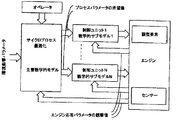
図1には、好ましくは、例えば2ストロークエンジン等のクロスヘッド式の電子制御式大型ピストンエンジンであるエンジンが示されている。当該エンジンは、クランクシャフトの回転と共に周期的に作動し、燃焼プロセス及びその多数のサブプロセスは、周期的であり、クランクシャフトの回転に同期化されている。 FIG. 1 shows an engine which is preferably a crosshead electronically controlled large piston engine such as a two-stroke engine. The engine operates periodically with crankshaft rotation, and the combustion process and its many sub-processes are periodic and synchronized to crankshaft rotation.
当該エンジンは、燃焼プロセスに影響を及ぼすようにアクチュエータ入力を提供するための幾つかの調整要素を有している。典型的には、調整要素は、次のもののうち1つ又はそれ以上を実行する。即ち、排気バルブ開放のタイミング及び/又はシェーピング、排気バルブ閉鎖のタイミング及び/又はシェーピング、及び、燃料注入のタイミング及び/又はシェーピングである。ここで、タイミングは、クランクシャフトの回転に関連し、成形は、関連するパラメータの強制的な一時的変化を意味している。 The engine has several adjustment elements for providing actuator inputs to influence the combustion process. Typically, the adjustment element performs one or more of the following. That is, exhaust valve opening timing and / or shaping, exhaust valve closing timing and / or shaping, and fuel injection timing and / or shaping. Here, timing is related to the rotation of the crankshaft, and shaping means a forced temporary change of the relevant parameters.
エンジンでは、多数のセンサーが、エンジン内の物理学的プロセスのパラメータを検出し、物理的プロセスを表す信号即ちエンジン応答パラメータの実際に観察された値を出力するため配置されている。これらのセンサーは、例えば、圧力、温度、流量、応力等々の物理的特性を検出することができる。エンジン応答パラメータの観察値は、サイクルプロセス最適化ユニットへの入力としてフィードバックされる。 In an engine, a number of sensors are arranged to detect physical process parameters in the engine and to output a signal representative of the physical process, i.e. the actually observed value of the engine response parameter. These sensors can detect physical properties such as pressure, temperature, flow rate, stress, and the like. The observed value of the engine response parameter is fed back as an input to the cycle process optimization unit.
1つ又はそれ以上の制御ユニットは、エンジン内の1つ又はそれ以上の要素を各々制御する。サイクルプロセス最適化ユニットからは、各制御ユニットは、プロセスパラメータの所望値を表す1つ又はそれ以上の信号、即ち、それを得ることが望ましいパラメータ値を受信する。エンジン内のセンサーは、プロセスのパラメータ及び当該プロセスを表す観察値の出力信号を検出する。エンジン応答パラメータの観察値は、関連する制御ユニットに、及び、サイクル最適化ユニットにフィードバックされる。関連する制御ユニットでは、観察値は、パラメータの対応する所望値と比較される。所望値と観察値との間で偏差が存在している場合、制御ユニットは、偏差の値に応じて、数学的サブモデルに基づき調整コマンドを出力し、該偏差を減少させるように1つ又はそれ以上の調整要素を調整する。このプロセスは、所望の組の値が達成されるか又は偏差が許容制限範囲内に収まるまで、幾つかのエンジンサイクルの間に継続され得る。 One or more control units each control one or more elements in the engine. From the cycle process optimization unit, each control unit receives one or more signals representing the desired value of the process parameter, i.e. the parameter value it is desired to obtain. Sensors in the engine detect process parameters and output signals of observations representing the process. The observed value of the engine response parameter is fed back to the associated control unit and to the cycle optimization unit. In the associated control unit, the observed value is compared with the corresponding desired value of the parameter. If there is a deviation between the desired value and the observed value, the control unit outputs an adjustment command based on the mathematical submodel, depending on the value of the deviation, and one or more to reduce the deviation. Adjust further adjustment factors. This process may continue for several engine cycles until the desired set of values is achieved or the deviation is within acceptable limits.
各制御ユニットは、エンジンの1つ以上のシリンダーを制御するシリンダー制御ユニット又は幾つかのシリンダー内で1つ以上のサブプロセスを制御するプロセス制御ユニットとすることができる。そのような制御ユニットの幾つかは、1つ以上のシリンダー制御ユニット及びプロセス制御ユニットを含む全エンジンを制御するエンジン制御ユニットにより制御することができる。各制御ユニットは、それが、プロセスを表すパラメータの関連する観察値のエンジンからのフィードバックを受け取る制御ループ内に配置されている。 Each control unit may be a cylinder control unit that controls one or more cylinders of the engine or a process control unit that controls one or more sub-processes within several cylinders. Some of such control units can be controlled by an engine control unit that controls the entire engine including one or more cylinder control units and a process control unit. Each control unit is placed in a control loop where it receives feedback from the engine of relevant observations of parameters representing the process.
サイクルプロセス最適化ユニットは、エンジンのセンサーからエンジン応答パラメータの上述した観察値を受け取る。そのような入力の例は、クーラー出口温度、清掃空気圧力、タービン入口温度、ターボチャージャー速度、NOx及び粒子排出物、及び、エンジンのその他の性能データである。更なるエンジンパラメータを計算し又は推定することができる。加えて、サイクルプロセス最適化ユニットは、周囲の影響パラメータを表す入力、即ち、エンジンの外部でエンジンのサイクルプロセスに影響を及ぼすパラメータを表す入力を受け取る。そのような周囲影響パラメータの例は、燃料特性、周囲空気の例えば温度、圧力、密度及び湿度等の特性である。これらは、実際の地域の気象条件、地理的位置及び1年のうちの時期に従って変動する。更には、サイクルプロセス最適化ユニットは、オペレータからの入力を受け取る。オペレータの入力は、例えば、所望のエンジン速度と、エンジンサイクルプロセスが例えば燃料経済、NOx及び粒子排出物並びにエンジン構成部品への機械的及び熱的負荷の観点で最適化されるところの所望の作動モードと、を含んでいる。 The cycle process optimization unit receives the above-described observations of engine response parameters from engine sensors. Examples of such inputs are cooler outlet temperature, cleaning air pressure, turbine inlet temperature, turbocharger speed, NOx and particulate emissions, and other performance data of the engine. Additional engine parameters can be calculated or estimated. In addition, the cycle process optimization unit receives input representing ambient influence parameters, i.e., input representing parameters affecting the cycle process of the engine outside the engine. Examples of such ambient influence parameters are fuel characteristics, ambient air characteristics such as temperature, pressure, density and humidity. These vary according to actual local weather conditions, geographical location and time of year. Furthermore, the cycle process optimization unit receives input from the operator. Operator input includes, for example, desired engine speed and desired operation where the engine cycle process is optimized in terms of, for example, fuel economy, NOx and particulate emissions, and mechanical and thermal loads on engine components Mode.
サイクルプロセス最適化ユニットは、エンジン及びサイクルプロセスの数学的主要モデルを使用し、該数学的主要モデルに基づいてその計算を実行する。該数学的主要モデルは、エンジンの作動条件及び性能データの間の関係の記述であり、特に、サイクルプロセスの特性を表す全ての関連するパラメータ、それらの互いに関する依存性、周囲条件及びオペレータからの入力に関する依存性を含んでいる。 The cycle process optimization unit uses a mathematical main model of the engine and cycle process and performs its calculation based on the mathematical main model. The mathematical key model is a description of the relationship between engine operating conditions and performance data, in particular all relevant parameters representing the characteristics of the cycle process, their dependence on each other, ambient conditions and from the operator. Includes input dependencies.
オペレータは、典型的には、例えばエンジン速度等のエンジン作動条件や、燃料経済又は排出物に関して最適化された所望の作動モード等を入力する。数学的主要モデルは、実際の周囲影響パラメータと、エンジン応答パラメータの観察値の組により表される実際のエンジン作動条件とを使用して、プロセスパラメータの新しい組の所望値を計算し、該所望値は、関連する制御ユニットに入力される。制御ユニットは、エンジンの調整要素の適切な設定を実行する。 The operator typically inputs engine operating conditions, such as engine speed, desired operating mode optimized for fuel economy or emissions, and the like. The mathematical main model uses the actual ambient influence parameters and the actual engine operating conditions represented by the observed set of engine response parameters to calculate a desired value for the new set of process parameters The value is input to the associated control unit. The control unit performs the appropriate setting of the engine adjustment factors.
周囲影響パラメータが、例えば周囲空気特性又は燃料経済における変化に起因して変化するとき、サイクルプロセス最適化ユニットは、数学的主要モデルを使用して、プロセスパラメータの所望値の組において適切な変化を形成し、これらは、関連する制御ユニットに入力される。該制御ユニットは、オペレータにより設定された所望作動条件が得られるように、エンジンの調整ユニットを設定する。 When ambient influence parameters change due to, for example, changes in ambient air characteristics or fuel economy, the cycle process optimization unit uses the mathematical key model to make appropriate changes in the desired set of process parameters. These are input to the associated control unit. The control unit sets the adjustment unit of the engine so that a desired operating condition set by the operator is obtained.
数学的モデルにおける不可避の不完全さに起因して、エンジン内のプロセスは、所望の結果を厳密に与えるように制御され得ない。従って、好ましくは、数学的モデルは適応モデルであるのがよい。この適応モデルは、手動又は自動のいずれかで実行されてもよい。両方の場合で、エンジン応答パラメータは、入力として使用され、適切な調整が、数学的モデルのアルゴリズムに対してなされる。 Due to the inevitable imperfections in the mathematical model, the processes in the engine cannot be controlled to give exactly the desired results. Therefore, preferably the mathematical model is an adaptive model. This adaptive model may be executed either manually or automatically. In both cases, engine response parameters are used as inputs and appropriate adjustments are made to the mathematical model algorithm.
適応が手動で実行される場合、オペレータ又は他の資格要員は、例えば視覚的検査により、1つ以上のエンジン応答パラメータを観察する。望ましくないパラメータ又は状態が観察された場合、彼は、ユーザーインターフェースを介して、1つ以上の調整を実行する。ユーザーインターフェースは、典型的には、高レベル調整手段を提供するコンピュータを備え、該コンピュータは、そのようなユーザー入力を、与えられた数学的モデルの適切な調整へと変換する。 If the adaptation is performed manually, an operator or other qualified personnel observes one or more engine response parameters, for example, by visual inspection. If an undesirable parameter or condition is observed, he performs one or more adjustments via the user interface. The user interface typically comprises a computer that provides a high level adjustment means that translates such user input into appropriate adjustments of a given mathematical model.
数学的モデルが自動的に適応される場合、エンジン応答パラメータが、測定又は推定され、当該モデルは、それ自体を適応させる。適応のための方法は既知である。 If the mathematical model is automatically adapted, engine response parameters are measured or estimated and the model adapts itself. Methods for adaptation are known.
Claims (16)
前記エンジンは、前記プロセスに影響を及ぼすための複数の調整要素を有しており、該プロセスの数学的モデルが、該調整要素を制御するため使用され、該数学的モデルは、所望のエンジン性能データ及び実際のエンジン性能データと、前記プロセスに影響を及ぼす複数の影響パラメータと、該プロセスを表す複数の代表プロセスパラメータと、を有し、
前記方法は、
主要数学的モデルに基づいて、前記代表プロセスパラメータの所望値の組を確立し、
少なくとも1つのエンジン応答パラメータの観察値を取得し、
前記少なくとも1つのエンジン応答パラメータの前記観察値を前記代表プロセスパラメータの前記所望値と比較し、該少なくとも1つの代表パラメータの該所望値からの偏差を表す偏差値を取得し、
前記偏差値に応じて、数学的サブモデルに基づいて、前記偏差を減少させるように前記調整要素の少なくとも1つを調整する、各工程を備える、方法。 A method for controlling a periodically repeated process in a crosshead large piston engine, particularly a two-stroke engine, comprising:
The engine has a plurality of tuning elements for influencing the process, and a mathematical model of the process is used to control the tuning elements, the mathematical model being a desired engine performance. Data and actual engine performance data, a plurality of influence parameters affecting the process, and a plurality of representative process parameters representing the process,
The method
Establishing a desired set of representative process parameters based on a key mathematical model;
Obtaining an observation of at least one engine response parameter;
Comparing the observed value of the at least one engine response parameter with the desired value of the representative process parameter to obtain a deviation value representing a deviation of the at least one representative parameter from the desired value;
A method comprising adjusting each of the adjustment elements to reduce the deviation based on a mathematical submodel in response to the deviation value.
Priority Applications (1)
| Application Number | Priority Date | Filing Date | Title |
|---|---|---|---|
| JP2004118560A JP2005299548A (en) | 2004-04-14 | 2004-04-14 | Method of controlling process cyclically repeated in a cross head type large-sized piston engine |
Applications Claiming Priority (1)
| Application Number | Priority Date | Filing Date | Title |
|---|---|---|---|
| JP2004118560A JP2005299548A (en) | 2004-04-14 | 2004-04-14 | Method of controlling process cyclically repeated in a cross head type large-sized piston engine |
Publications (1)
| Publication Number | Publication Date |
|---|---|
| JP2005299548A true JP2005299548A (en) | 2005-10-27 |
Family
ID=35331395
Family Applications (1)
| Application Number | Title | Priority Date | Filing Date |
|---|---|---|---|
| JP2004118560A Pending JP2005299548A (en) | 2004-04-14 | 2004-04-14 | Method of controlling process cyclically repeated in a cross head type large-sized piston engine |
Country Status (1)
| Country | Link |
|---|---|
| JP (1) | JP2005299548A (en) |
Cited By (2)
| Publication number | Priority date | Publication date | Assignee | Title |
|---|---|---|---|---|
| JP2017141814A (en) * | 2016-01-13 | 2017-08-17 | ヴィンタートゥール ガス アンド ディーゼル リミテッド | Method and system for optimizing fuel consumption of two stroke turbo supercharged low speed diesel engine |
| JP2018172990A (en) * | 2017-03-31 | 2018-11-08 | 国立研究開発法人 海上・港湾・航空技術研究所 | Engine exhaust control system and ship equipped with the same |
Citations (3)
| Publication number | Priority date | Publication date | Assignee | Title |
|---|---|---|---|---|
| JPH08284727A (en) * | 1995-04-19 | 1996-10-29 | Yamaha Motor Co Ltd | Cylinder deactivation control method and apparatus for internal combustion engine and internal combustion engine thereof |
| JPH10115233A (en) * | 1996-10-09 | 1998-05-06 | Yamaha Motor Co Ltd | In-cylinder injection two-stroke engine |
| JPH10131801A (en) * | 1996-10-28 | 1998-05-19 | Man B & W Diesel As | Internal combustion engine of multicylinder type |
-
2004
- 2004-04-14 JP JP2004118560A patent/JP2005299548A/en active Pending
Patent Citations (3)
| Publication number | Priority date | Publication date | Assignee | Title |
|---|---|---|---|---|
| JPH08284727A (en) * | 1995-04-19 | 1996-10-29 | Yamaha Motor Co Ltd | Cylinder deactivation control method and apparatus for internal combustion engine and internal combustion engine thereof |
| JPH10115233A (en) * | 1996-10-09 | 1998-05-06 | Yamaha Motor Co Ltd | In-cylinder injection two-stroke engine |
| JPH10131801A (en) * | 1996-10-28 | 1998-05-19 | Man B & W Diesel As | Internal combustion engine of multicylinder type |
Cited By (2)
| Publication number | Priority date | Publication date | Assignee | Title |
|---|---|---|---|---|
| JP2017141814A (en) * | 2016-01-13 | 2017-08-17 | ヴィンタートゥール ガス アンド ディーゼル リミテッド | Method and system for optimizing fuel consumption of two stroke turbo supercharged low speed diesel engine |
| JP2018172990A (en) * | 2017-03-31 | 2018-11-08 | 国立研究開発法人 海上・港湾・航空技術研究所 | Engine exhaust control system and ship equipped with the same |
Similar Documents
| Publication | Publication Date | Title |
|---|---|---|
| US10830164B2 (en) | Fresh air flow and exhaust gas recirculation control system and method | |
| EP3020940B1 (en) | A variable geometry turbocharger control method and system for an engine air system with a variable geometry turbocharger having adjustable vanes | |
| JP4832529B2 (en) | Method and apparatus for controlling the supercharged air of an internal combustion engine | |
| García-Nieto et al. | Nonlinear predictive control based on local model networks for air management in diesel engines | |
| US20160160787A1 (en) | Controller for controlling an internal combustion engine of a vehicle, in particular a commercial vehicle | |
| DE102015120372B4 (en) | ADAPTIVE ONLINE PID CONTROL OF AIR LOADING SYSTEMS | |
| JP2011094586A (en) | Engine control apparatus | |
| CA2623381A1 (en) | Model-based controller for auto-ignition optimization in a diesel engine | |
| CN113728159B (en) | Engine Control Systems | |
| CN102678361B (en) | Engine control system with algorithm for actuator control | |
| EP1215388A3 (en) | Method and system for controlling an internal combustion engine | |
| DE112015006302B4 (en) | METHOD AND DEVICE FOR CONTROLLING THE OPERATION OF AN COMBUSTION ENGINE | |
| CN106545396A (en) | A kind of aerofluxuss boundary control device of single-cylinder engine | |
| US7447587B2 (en) | Cylinder to cylinder variation control | |
| CN112196678B (en) | Method for determining at least one adaptive value of an exhaust gas recirculation rate | |
| EP3807511B1 (en) | Adaptive engine control | |
| Shutty et al. | Air system control for advanced diesel engines | |
| US20210180535A1 (en) | Method for the model-based control and regulation of an internal combustion engine | |
| US20220235721A1 (en) | Internal combustion engine controller | |
| KR100623282B1 (en) | Method for controlling cyclically repeated processes in crosshead large piston engines | |
| US6481414B2 (en) | Method of controlling an internal combustion engine | |
| CN113356999A (en) | Method for pre-controlling a fuel-air mixture of a combustion chamber of an internal combustion engine | |
| CN206256953U (en) | A kind of exhaust boundary Control device of single-cylinder engine | |
| Luján et al. | A comparison of different algorithms for boost pressure control in a heavy-duty turbocharged diesel engine | |
| Hardie et al. | Automated tuning of an engine management unit for an automotive engine |
Legal Events
| Date | Code | Title | Description |
|---|---|---|---|
| A131 | Notification of reasons for refusal |
Free format text: JAPANESE INTERMEDIATE CODE: A131 Effective date: 20061128 |
|
| A601 | Written request for extension of time |
Free format text: JAPANESE INTERMEDIATE CODE: A601 Effective date: 20070227 |
|
| A602 | Written permission of extension of time |
Free format text: JAPANESE INTERMEDIATE CODE: A602 Effective date: 20070302 |
|
| A521 | Written amendment |
Free format text: JAPANESE INTERMEDIATE CODE: A523 Effective date: 20070525 |
|
| A02 | Decision of refusal |
Free format text: JAPANESE INTERMEDIATE CODE: A02 Effective date: 20071204 |