JP2005298627A - Olefin polymerization catalyst component and process for producing olefin polymer - Google Patents
Olefin polymerization catalyst component and process for producing olefin polymer Download PDFInfo
- Publication number
- JP2005298627A JP2005298627A JP2004115249A JP2004115249A JP2005298627A JP 2005298627 A JP2005298627 A JP 2005298627A JP 2004115249 A JP2004115249 A JP 2004115249A JP 2004115249 A JP2004115249 A JP 2004115249A JP 2005298627 A JP2005298627 A JP 2005298627A
- Authority
- JP
- Japan
- Prior art keywords
- group
- carbon atoms
- polymerization catalyst
- olefin polymerization
- acetyl
- Prior art date
- Legal status (The legal status is an assumption and is not a legal conclusion. Google has not performed a legal analysis and makes no representation as to the accuracy of the status listed.)
- Pending
Links
Landscapes
- Transition And Organic Metals Composition Catalysts For Addition Polymerization (AREA)
Abstract
【課題】 新規なオレフィン重合触媒を提供すること。
【解決手段】 式(1)
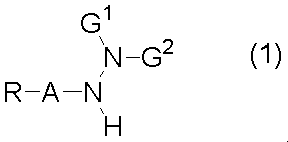
(式中、Aはカルボニル基又はスルホニル基を表し、Rは炭素数1〜10のアルキル基、炭素数6〜20のアリール基を表し、G1及びG2は同一又は相異なり、R−A−、水素原子、炭素数1〜10のアルキル基、炭素数6〜20のアリール基、又は炭素数1〜20の炭化水素で置換されたシリル基を表す。上記アルキル基、アリール基は、1個以上の同一又は相異なるハロゲン原子、炭素数1〜10のアルキル基、炭素数6〜20のアリール基、又は炭素数1〜20の炭化水素で置換されたシリル基で置換されてもよく、G2とG3は互いに結合して環を形成していてもよい。)
で示されるヒドラジン化合物と、周期表第8−10族の遷移金属を含む遷移金属化合物とを組合わせてなるオレフィン重合触媒成分。
【選択図】 なしPROBLEM TO BE SOLVED: To provide a novel olefin polymerization catalyst.
SOLUTION: Formula (1)
(In the formula, A represents a carbonyl group or a sulfonyl group, R represents an alkyl group having 1 to 10 carbon atoms and an aryl group having 6 to 20 carbon atoms, and G 1 and G 2 are the same or different, and R—A -Represents a hydrogen atom, an alkyl group having 1 to 10 carbon atoms, an aryl group having 6 to 20 carbon atoms, or a silyl group substituted with a hydrocarbon having 1 to 20 carbon atoms. May be substituted with two or more identical or different halogen atoms, an alkyl group having 1 to 10 carbon atoms, an aryl group having 6 to 20 carbon atoms, or a silyl group substituted with a hydrocarbon having 1 to 20 carbon atoms, G 2 and G 3 may be bonded to each other to form a ring.)
The olefin polymerization catalyst component which combines the hydrazine compound shown by these, and the transition metal compound containing a transition metal of Group 8-10 of a periodic table.
[Selection figure] None
Description
本発明は、新規な重合触媒成分、及びこれを用いたオレフィン重合体の製造方法に関する。 The present invention relates to a novel polymerization catalyst component and a method for producing an olefin polymer using the same.
ポリオレフィンは工業的に重要な材料であることから、その鍵となる触媒の研究が長年にわたり広くおこなわれてきた(例えば非特許文献1参照)。最近、後周期遷移金属を用いた触媒が官能基耐性を持つことから官能基の導入されたポリオレフィン製造の可能性があるとして活発に研究されており(例えば、非特許文献2参照)、例えば、ジイミンが配位したニッケル、パラジウム化合物を用いた触媒系(例えば、特許文献1参照)、モノイミン、アミン化合物を触媒成分とする触媒系(例えば、特許文献2参照)などが知られている。
オレフィン重合体はその用途が様々で、多岐にわたっているため、それを製造する触媒もまた多岐にわたり様々な構造の触媒が求められている。 Olefin polymers have a variety of uses and have a wide variety of applications, and therefore, catalysts for producing the polymers are also required to have a variety of structures.
本発明者らは、上記課題を解決するために鋭意検討した結果、新規なヒドラジン骨格を有する後周期金属触媒を見出し、本発明に至った。 As a result of intensive studies to solve the above problems, the present inventors have found a late-cycle metal catalyst having a novel hydrazine skeleton, and have reached the present invention.
すなわち本発明は、下記式(1)
で示されるヒドラジン化合物と、
周期表第8−10族の遷移金属を含む遷移金属化合物とを組合わせてなることを特徴とするオレフィン重合触媒成分及びこれを用いることを特徴とするオレフィン重合体の製造方法を提供するものである。
That is, the present invention provides the following formula (1):
A hydrazine compound represented by
An olefin polymerization catalyst component comprising a combination of a transition metal compound containing a transition metal of Group 8-10 of the periodic table and a method for producing an olefin polymer characterized by using the same. is there.
本発明の新規なヒドラジン骨格を有する重合触媒は、例えば、オレフィン重合体の製造に有用である。 The polymerization catalyst having a novel hydrazine skeleton of the present invention is useful, for example, for the production of olefin polymers.
以下、本発明について詳細に説明する。
式(1)で示されるで示されるヒドラジン化合物のR、G1及びG2における炭素原子数1〜10のアルキル基の具体例としては、メチル基、エチル基、n−プロピル基、イソプロピル基、n−ブチル基、sec−ブチル基、tert−ブチル基、n−ペンチル基、ネオペンチル基、アミル基 、n−ヘキシル基、シクロヘキシル基、n−オクチル基、n−デシル基及び、これらの基がハロゲン原子、アルキル基、アリール基もしくは炭化水素で置換されたシリル基で置換された置換基が例示され、その具体例としては、フルオロメチル基、ジフルオロメチル基、トリフルオロメチル基、フルオロエチル基、ジフルオロエチル基、トリフルオロエチル基、テトラフルオロエチル基、ペンタフルオロエチル基、パーフルオロプロピル基、パーフルオロブチル基、パーフルオロペンチル基、パーフルオロヘキシル基、トリクロロメチル基、ベンジル基、ジフェニルメチル基、トリフェニルメチル基、メチルトリメチルシリル基などが例示される。
Hereinafter, the present invention will be described in detail.
Specific examples of the alkyl group having 1 to 10 carbon atoms in R, G 1 and G 2 of the hydrazine compound represented by the formula (1) include a methyl group, an ethyl group, an n-propyl group, an isopropyl group, n-butyl group, sec-butyl group, tert-butyl group, n-pentyl group, neopentyl group, amyl group, n-hexyl group, cyclohexyl group, n-octyl group, n-decyl group, and these groups are halogen. Examples include substituents substituted with atoms, alkyl groups, aryl groups or silyl groups substituted with hydrocarbons. Specific examples thereof include fluoromethyl group, difluoromethyl group, trifluoromethyl group, fluoroethyl group, difluoro Ethyl group, trifluoroethyl group, tetrafluoroethyl group, pentafluoroethyl group, perfluoropropyl group, perf Orobuchiru group, perfluorobutyl group, perfluorohexyl group, a trichloromethyl group, a benzyl group, diphenylmethyl group, triphenylmethyl group, such as methyl trimethylsilyl groups.
炭素原子数1〜10のアルキル基のうち、メチル基、エチル基、イソプロピル基、 tert−ブチル基、アミル基等が好ましいものとして例示され、さらに好ましくはメチル基が挙げられる。 Among the alkyl groups having 1 to 10 carbon atoms, a methyl group, an ethyl group, an isopropyl group, a tert-butyl group, an amyl group, and the like are exemplified, and a methyl group is more preferable.
R、G1及びG2における炭素原子数6〜20のアリール基の具体例としては、フェニル基、ナフチル基、アントラセニル基等、及び、これらの基が、ハロゲン原子、アルキル基もしくは炭化水素で置換されたシリル基等で置換されたものが例示され、その具体例としては、2−トリル基、3−トリル基、4−トリル基、2,3−キシリル基、2,4−キシリル基、2,5−キシリル基、2,6−キシリル基、3,4−キシリル基、3,5−キシリル基、2,3,4−トリメチルフェニル基、2,3,5−トリメチルフェニル基、2,3,6−トリメチルフェニル基、2,4,6−トリメチルフェニル基、3,4,5−トリメチルフェニル基、2,3,4,5−テトラメチルフェニル基、2,3,4,6−テトラメチルフェニル基、2,3,5,6−テトラメチルフェニル基、ペンタメチルフェニル基、エチルフェニル基、n−プロピルフェニル基、イソプロピルフェニル基、n−ブチルフェニル基、sec−ブチルフェニル基、tert−ブチルフェニル基、 n−ペンチルフェニル基、 ネオペンチルフェニル基、 n−ヘキシルフェニル基、2−フルオロフェニル基、3−フルオロフェニル基、4−フルオロフェニル基、3,5−ジフルオロフェニル基、ペンタフルオロフェニル基、4−クロロフェニル基などが例示され、置換されていてもよい炭素原子数6〜20のアリール基の好ましいものとしては、フェニル基が挙げられる。 Specific examples of the aryl group having 6 to 20 carbon atoms in R, G 1 and G 2 include a phenyl group, a naphthyl group, an anthracenyl group and the like, and these groups are substituted with a halogen atom, an alkyl group or a hydrocarbon. Specific examples thereof include 2-tolyl group, 3-tolyl group, 4-tolyl group, 2,3-xylyl group, 2,4-xylyl group, and the like. , 5-xylyl group, 2,6-xylyl group, 3,4-xylyl group, 3,5-xylyl group, 2,3,4-trimethylphenyl group, 2,3,5-trimethylphenyl group, 2,3 , 6-trimethylphenyl group, 2,4,6-trimethylphenyl group, 3,4,5-trimethylphenyl group, 2,3,4,5-tetramethylphenyl group, 2,3,4,6-tetramethyl Phenyl group, 2, 3 5,6-tetramethylphenyl group, pentamethylphenyl group, ethylphenyl group, n-propylphenyl group, isopropylphenyl group, n-butylphenyl group, sec-butylphenyl group, tert-butylphenyl group, n-pentylphenyl Group, neopentylphenyl group, n-hexylphenyl group, 2-fluorophenyl group, 3-fluorophenyl group, 4-fluorophenyl group, 3,5-difluorophenyl group, pentafluorophenyl group, 4-chlorophenyl group, etc. Preferable examples of the aryl group having 6 to 20 carbon atoms which may be exemplified and substituted may include a phenyl group.
G1及びG2における炭素原子数1〜20の炭化水素で置換されたシリル基における炭化水素基としては、例えば、メチル基、エチル基、n−プロピル基、イソプロピル基、n−ブチル基、sec−ブチル基、tert−ブチル基、n−ペンチル基、ネオペンチル基、アミル基 、n−ヘキシル基、シクロヘキシル基などの炭素原子数1〜6のアルキル基、フェニル基、トリル基、キシリル基、ナフチル基、アントラセニル基などの炭素原子数6〜14のアリール基等が挙げられ、かかる炭素数1〜20の炭化水素で置換されたシリル基としては、例えば、メチルシリル基、エチルシリル基、フェニルシリル基などの1置換シリル基、ジメチルシリル基、ジエチルシリル基、ジフェニルシリル基などの2置換シリル基、トリメチルシリル基、トリエチルシリル基、トリ−n−プロピルシリル基、トリ−イソプロピルシリル基、トリ−n−ブチルシリル基、トリ−sec−ブチルシリル基、トリ−tert−ブチルシリル基、トリ−イソブチルシリル基、tert−ブチルジメチルシリル基、トリ−n−ペンチルシリル基、トリ−n−ヘキシルシリル基、トリシクロヘキシルシリル基、トリフェニルシリル基などの3置換シリル基等が挙げられ、置換されていてもよい炭素原子数1〜20の炭化水素で置換されたシリル基の好ましいものとしてはトリメチルシリル基、 tert−ブチルジメチルシリル基、トリフェニルシリル基等が挙げられる。 Examples of the hydrocarbon group in the silyl group substituted with a hydrocarbon having 1 to 20 carbon atoms in G 1 and G 2 include, for example, methyl group, ethyl group, n-propyl group, isopropyl group, n-butyl group, sec -Butyl group, tert-butyl group, n-pentyl group, neopentyl group, amyl group, n-hexyl group, cyclohexyl group and other alkyl groups having 1 to 6 carbon atoms, phenyl group, tolyl group, xylyl group, naphthyl group And an aryl group having 6 to 14 carbon atoms such as anthracenyl group. Examples of the silyl group substituted with the hydrocarbon having 1 to 20 carbon atoms include a methylsilyl group, an ethylsilyl group, and a phenylsilyl group. 1-substituted silyl group, dimethylsilyl group, diethylsilyl group, diphenylsilyl group and other 2-substituted silyl groups, trimethylsilyl group, Riethylsilyl group, tri-n-propylsilyl group, tri-isopropylsilyl group, tri-n-butylsilyl group, tri-sec-butylsilyl group, tri-tert-butylsilyl group, tri-isobutylsilyl group, tert-butyldimethylsilyl group , Tri-n-pentylsilyl group, tri-n-hexylsilyl group, tricyclohexylsilyl group, triphenylsilyl group, and the like, and the like. Preferred examples of the silyl group substituted with a hydrocarbon include a trimethylsilyl group, a tert-butyldimethylsilyl group, and a triphenylsilyl group.
また、G1とG2は互いに結合して環を形成していてもよい。 G 1 and G 2 may be bonded to each other to form a ring.
式(1)で示されるヒドラジン化合物の具体例としては、N−アセチル−N’−メチルヒドラジン、N−アセチル−N’−tert−ブチルヒドラジン、N−アセチル−N’−トリフルオロメチルヒドラジン、N−アセチル−N’−フェニルヒドラジン、N−アセチル−N’−o−トリルヒドラジン、N−アセチル−N’−m−トリルヒドラジン、N−アセチル−N’−p−トリルヒドラジン、N−アセチル−N’−2,6−ジメチルフェニルヒドラジン、N―アセチル−N’−メシチルヒドラジン、N−アセチル−N’−2,6−ジイソプロピルフェニルヒドラジン、N−アセチル−N’−ペンタフルオロフェニルヒドラジン、N−アセチル−N’−トリメチルシリルヒドラジン、N―アセチル−N’−tert−ブチルジメチルシリルヒドラジン、N,N’−ジアセチルヒドラジン、N−アセチル−N’−ベンゾイルヒドラジン、N−アセチル−N’−メシルヒドラジン、N−アセチル−N’−トシルヒドラジン、N−アセチル−N’−ベンゼンスルホニルヒドラジン、N−アセチル−N’−トリフルオロメタンスルホニルヒドラジン、 Specific examples of the hydrazine compound represented by the formula (1) include N-acetyl-N′-methylhydrazine, N-acetyl-N′-tert-butylhydrazine, N-acetyl-N′-trifluoromethylhydrazine, N -Acetyl-N'-phenylhydrazine, N-acetyl-N'-o-tolylhydrazine, N-acetyl-N'-m-tolylhydrazine, N-acetyl-N'-p-tolylhydrazine, N-acetyl-N '-2,6-dimethylphenylhydrazine, N-acetyl-N'-mesitylhydrazine, N-acetyl-N'-2,6-diisopropylphenylhydrazine, N-acetyl-N'-pentafluorophenylhydrazine, N- Acetyl-N′-trimethylsilylhydrazine, N-acetyl-N′-tert-butyldimethylsilylhydride Razine, N, N′-Diacetylhydrazine, N-acetyl-N′-benzoylhydrazine, N-acetyl-N′-mesylhydrazine, N-acetyl-N′-tosylhydrazine, N-acetyl-N′-benzenesulfonylhydrazine N-acetyl-N′-trifluoromethanesulfonylhydrazine,
N−アセチル−N’,N’−ジメチルヒドラジン、N−アセチル−N’−メチル−N’−tert−ブチルヒドラジン、N−アセチル−N’−メチル−N’−トリフルオロメチルヒドラジン、N−アセチル−N’−メチル−N’−フェニルヒドラジン、N−アセチル−N’−メチル−N’−o−トリルヒドラジン、N−アセチル−N’−メチル−N’−m−トリルヒドラジン、N−アセチル−N’−メチル−N’−p−トリルヒドラジン、N−アセチル−N’−メチル−N’−2,6−ジメチルフェニルヒドラジン、N―アセチル−N’−メチル−N’−メシチルヒドラジン、N−アセチル−N’−メチル−N’−2,6−ジイソプロピルフェニルヒドラジン、N−アセチル−N’−メチル−N’−ペンタフルオロフェニルヒドラジン、N−アセチル−N’−メチル−N’−トリメチルシリルヒドラジン、N―アセチル−N’−メチル−N’−tert−ブチルジメチルシリルヒドラジン、N,N’−ジアセチル−N’−メチルヒドラジン、N−アセチル−N’−メチル−N’−ベンゾイルヒドラジン、N−アセチル−N’−メチル−N’−メシルヒドラジン、N−アセチル−N’−メチル−N’−トシルヒドラジン、N−アセチル−N’−ベンゼンスルホニル−N’−メチルヒドラジン、N−アセチル−N’−メチル−N’−トリフルオロメタンスルホニルヒドラジン、 N-acetyl-N ′, N′-dimethylhydrazine, N-acetyl-N′-methyl-N′-tert-butylhydrazine, N-acetyl-N′-methyl-N′-trifluoromethylhydrazine, N-acetyl -N'-methyl-N'-phenylhydrazine, N-acetyl-N'-methyl-N'-o-tolylhydrazine, N-acetyl-N'-methyl-N'-m-tolylhydrazine, N-acetyl- N′-methyl-N′-p-tolylhydrazine, N-acetyl-N′-methyl-N′-2,6-dimethylphenylhydrazine, N-acetyl-N′-methyl-N′-mesitylhydrazine, N -Acetyl-N'-methyl-N'-2,6-diisopropylphenylhydrazine, N-acetyl-N'-methyl-N'-pentafluorophenylhydrazine, N- Cetyl-N′-methyl-N′-trimethylsilylhydrazine, N-acetyl-N′-methyl-N′-tert-butyldimethylsilylhydrazine, N, N′-diacetyl-N′-methylhydrazine, N-acetyl-N '-Methyl-N'-benzoylhydrazine, N-acetyl-N'-methyl-N'-mesylhydrazine, N-acetyl-N'-methyl-N'-tosylhydrazine, N-acetyl-N'-benzenesulfonyl- N′-methylhydrazine, N-acetyl-N′-methyl-N′-trifluoromethanesulfonylhydrazine,
N−アセチル−N’−フェニル−N’−tert−ブチルヒドラジン、N−アセチル−N’−フェニル−N’−トリフルオロメチルヒドラジン、N−アセチル−N’,N’−ジフェニルヒドラジン、N−アセチル−N’−フェニル−N’−o−トリルヒドラジン、N−アセチル−N’−フェニル−N’−m−トリルヒドラジン、N−アセチル−N’−フェニル−N’−p−トリルヒドラジン、N−アセチル−N’−フェニル−N’−2,6−ジメチルフェニルヒドラジン、N―アセチル−N’−フェニル−N’−メシチルヒドラジン、N−アセチル−N’−フェニル−N’−2,6−ジイソプロピルフェニルヒドラジン、N−アセチル−N’−フェニル−N’−ペンタフルオロフェニルヒドラジン、N−アセチル−N’−フェニル−N’−トリメチルシリルヒドラジン、N―アセチル−N’−フェニル−N’−tert−ブチルジメチルシリルヒドラジン、N,N’−ジアセチル−N’−フェニルヒドラジン、N−アセチル−N’−ベンゾイル−N’−フェニルヒドラジン、N−アセチル−N’−フェニル−N’−メシルヒドラジン、N−アセチル−N’−フェニル−N’−トシルヒドラジン、N−アセチル−N’−ベンゼンスルホニル−N’−フェニルヒドラジン、N−アセチル−N’−フェニル−N’−トリフルオロメタンスルホニルヒドラジン、 N-acetyl-N′-phenyl-N′-tert-butylhydrazine, N-acetyl-N′-phenyl-N′-trifluoromethylhydrazine, N-acetyl-N ′, N′-diphenylhydrazine, N-acetyl -N'-phenyl-N'-o-tolylhydrazine, N-acetyl-N'-phenyl-N'-m-tolylhydrazine, N-acetyl-N'-phenyl-N'-p-tolylhydrazine, N- Acetyl-N′-phenyl-N′-2,6-dimethylphenylhydrazine, N-acetyl-N′-phenyl-N′-mesitylhydrazine, N-acetyl-N′-phenyl-N′-2,6- Diisopropylphenylhydrazine, N-acetyl-N′-phenyl-N′-pentafluorophenylhydrazine, N-acetyl-N′-phenyl-N′-to Methylsilylhydrazine, N-acetyl-N′-phenyl-N′-tert-butyldimethylsilylhydrazine, N, N′-diacetyl-N′-phenylhydrazine, N-acetyl-N′-benzoyl-N′-phenylhydrazine N-acetyl-N′-phenyl-N′-mesylhydrazine, N-acetyl-N′-phenyl-N′-tosylhydrazine, N-acetyl-N′-benzenesulfonyl-N′-phenylhydrazine, N-acetyl -N'-phenyl-N'-trifluoromethanesulfonyl hydrazine,
N−アセチル−N’−tert−ブチル−N’−トリメチルシリルヒドラジン、N−アセチル−N’−トリフルオロメチル−N’−トリメチルシリルヒドラジン、N−アセチル−N’−トリメチルシリル−N’−o−トリルヒドラジン、N−アセチル−N’−トリメチルシリル−N’−m−トリルヒドラジン、N−アセチル−N’−トリメチルシリル−N’−p−トリルヒドラジン、N−アセチル−N’−2,6−ジメチルフェニル−N’−トリメチルシリルヒドラジン、N―アセチル−N’−メシチル−N’−トリメチルシリルヒドラジン、N−アセチル−N’−2,6−ジイソプロピルフェニル−N’−トリメチルシリルヒドラジン、N−アセチル−N’−ペンタフルオロフェニル−N’−トリメチルシリルヒドラジン、N,N’−ジアセチル−N’−トリメチルシリルヒドラジン、N−アセチル−N’−ベンゾイル−N’−トリメチルシリルヒドラジン、N−アセチル−N’−メシル−N’−トリメチルシリルヒドラジン、N−アセチル−N’−トシル−N’−トリメチルシリルヒドラジン、N−アセチル−N’−ベンゼンスルホニル−N’−トリメチルシリルヒドラジン、N−アセチル−N’−トリフルオロメタンスルホニル−N’−トリメチルシリルヒドラジン N-acetyl-N′-tert-butyl-N′-trimethylsilylhydrazine, N-acetyl-N′-trifluoromethyl-N′-trimethylsilylhydrazine, N-acetyl-N′-trimethylsilyl-N′-o-tolylhydrazine N-acetyl-N′-trimethylsilyl-N′-m-tolylhydrazine, N-acetyl-N′-trimethylsilyl-N′-p-tolylhydrazine, N-acetyl-N′-2,6-dimethylphenyl-N '-Trimethylsilylhydrazine, N-acetyl-N'-mesityl-N'-trimethylsilylhydrazine, N-acetyl-N'-2,6-diisopropylphenyl-N'-trimethylsilylhydrazine, N-acetyl-N'-pentafluorophenyl -N'-trimethylsilylhydrazine, N, N'-dia Tyl-N'-trimethylsilylhydrazine, N-acetyl-N'-benzoyl-N'-trimethylsilylhydrazine, N-acetyl-N'-mesyl-N'-trimethylsilylhydrazine, N-acetyl-N'-tosyl-N'- Trimethylsilylhydrazine, N-acetyl-N′-benzenesulfonyl-N′-trimethylsilylhydrazine, N-acetyl-N′-trifluoromethanesulfonyl-N′-trimethylsilylhydrazine
N,N’−ジアセチル−N’−tert−ブチルヒドラジン、N,N’−ジアセチル−N’−トリフルオロメチルヒドラジン、N,N’−ジアセチル−N’−o−トリルヒドラジン、N,N’−ジアセチル−N’−m−トリルヒドラジン、N,N’−ジアセチル−N’−p−トリルヒドラジン、N,N’−ジアセチル−2,6−ジメチルフェニルヒドラジン、N,N’−ジアセチル−N’−メシチルヒドラジン、N,N’−ジアセチル−N’−2,6−ジイソプロピルフェニルヒドラジン、N,N’−ジアセチル−N’−ペンタフルオロフェニルヒドラジン、トリアセチルヒドラジン、N,N’−ジアセチル−N’−ベンゾイルヒドラジン、N,N’−ジアセチル−N’−メシルヒドラジン、N,N’−ジアセチル−N’−トシルヒドラジン、N,N’−ジアセチル−N’−ベンゼンスルホニルヒドラジン、N,N’−ジアセチル−N’−トリフルオロメタンスルホニルヒドラジン N, N′-diacetyl-N′-tert-butylhydrazine, N, N′-diacetyl-N′-trifluoromethylhydrazine, N, N′-diacetyl-N′-o-tolylhydrazine, N, N′- Diacetyl-N′-m-tolylhydrazine, N, N′-diacetyl-N′-p-tolylhydrazine, N, N′-diacetyl-2,6-dimethylphenylhydrazine, N, N′-diacetyl-N′- Mesitylhydrazine, N, N′-diacetyl-N′-2,6-diisopropylphenylhydrazine, N, N′-diacetyl-N′-pentafluorophenylhydrazine, triacetylhydrazine, N, N′-diacetyl-N ′ -Benzoylhydrazine, N, N'-diacetyl-N'-mesylhydrazine, N, N'-diacetyl-N'-tosylhydrazine N, N'-diacetyl -N'- benzenesulfonyl hydrazine, N, N'-diacetyl -N'- trifluoromethanesulfonyl hydrazine
N−アセチル−N’−tert−ブチル−N’−トシルヒドラジン、N−アセチル−N’−トリフルオロメチル−N’−トシルヒドラジン、N−アセチル−N’−o−トリル−N’−トシルヒドラジン、N−アセチル−N’−m−トリル−N’−トシルヒドラジン、N−アセチル−N’−p−トリル−N’−トシルヒドラジン、N−アセチル−N’−2,6−ジメチルフェニル−N’−トシルヒドラジン、N―アセチル−N’−メシチル−N’−トシルヒドラジン、N−アセチル−N’−2,6−ジイソプロピルフェニル−N’−トシルヒドラジン、N−アセチル−N’−ペンタフルオロフェニル−N’−トシルヒドラジン、N,N’−ジアセチル−N’−トシルヒドラジン、N−アセチル−N’−ベンゾイル−N’−トシルヒドラジン、N−アセチル−N’−メシル−N’−トシルヒドラジン、N−アセチル−N’,N’−ジトシルヒドラジン、N−アセチル−N’−ベンゼンスルホニル−N’−トシルヒドラジン、N−アセチル−N’−トリフルオロメタンスルホニル−N’−トシルヒドラジンなどが例示されさらにN−アセチルをN−ベンゾイル、N−トシル、N−ベンゼンスルホニル、N−メシル、或いはN−トリフルオロメタンスルホニルとした化合物も同様に例示される。 N-acetyl-N′-tert-butyl-N′-tosylhydrazine, N-acetyl-N′-trifluoromethyl-N′-tosylhydrazine, N-acetyl-N′-o-tolyl-N′-tosylhydrazine N-acetyl-N′-m-tolyl-N′-tosylhydrazine, N-acetyl-N′-p-tolyl-N′-tosylhydrazine, N-acetyl-N′-2,6-dimethylphenyl-N '-Tosylhydrazine, N-acetyl-N'-mesityl-N'-tosylhydrazine, N-acetyl-N'-2,6-diisopropylphenyl-N'-tosylhydrazine, N-acetyl-N'-pentafluorophenyl -N'-tosylhydrazine, N, N'-diacetyl-N'-tosylhydrazine, N-acetyl-N'-benzoyl-N'-tosylhydrazine, N Acetyl-N′-mesyl-N′-tosylhydrazine, N-acetyl-N ′, N′-ditosylhydrazine, N-acetyl-N′-benzenesulfonyl-N′-tosylhydrazine, N-acetyl-N′- Examples thereof include trifluoromethanesulfonyl-N′-tosylhydrazine and the like, and compounds in which N-acetyl is N-benzoyl, N-tosyl, N-benzenesulfonyl, N-mesyl, or N-trifluoromethanesulfonyl are also exemplified. .
周期表第8−10族の遷移金属を含む遷移金属化合物における遷移金属としては、例えば、鉄、ルテニウム、オスミウム、コバルト、ロジウム、イリジウム、ニッケル、パラジウム、白金が挙げられ、好ましくは、鉄、コバルト、ニッケル、パラジウムであり、さらに好ましくはニッケル、パラジウムであり、最も好ましくはニッケルである。 Examples of the transition metal in the transition metal compound containing a transition metal of Group 8-10 of the periodic table include iron, ruthenium, osmium, cobalt, rhodium, iridium, nickel, palladium, and platinum, preferably iron, cobalt. , Nickel and palladium, more preferably nickel and palladium, and most preferably nickel.
遷移金属化合物はアニオン性の配位子を有していてもよく、かかるアニオン性配位子としては、ハロゲン、アルキル基、アリール基、アラルキル基、アルコキシ基、アリールオキシ基、アラルキルオキシ基、アミノ基、アシルオキシ基、スルホニオキシ基、1,3−ジケトナート基等が挙げられ、具体的には、塩素、臭素、ヨウ素、メチル基、エチル基、フェニル基、2−トリル基、3−トリル基、4−トリル基、ベンジル基、メトキシ基、エトキシ基、エチレンジオキシ基、フェノキシ基、2−メチルフェノキシ基、3−メチルフェノキシ基、4−メチルフェノキシ基、1,2−フェニレンジオキシ基、1,1’−ビナフチル−2,2’−ジオキシ基、ベンジルオキシ基、ジメチルアミノ基、ジエチルアミノ基、アセトキシ基、トリフルオロアセトキシ基、ベンゾイルオキシ基、メタンスルホニルオキシ基、ベンゼンスルホニルオキシ基、2−トルエンスルホニルオキシ基、3−トルエンスルホニルオキシ基、4−トルエンスルホニルオキシ基、アセチルアセトナート基、1,3−ジフェニル−1,3−プロパンジオナート基、3−メチル−2,4−ペンタンジオナート基が例示され、好ましくは、塩素、臭素、アセチルアセトナート基、3−メチル−2,4−ペンタンジオナート基であって、さらに好ましくはアセチルアセトナート基である。 The transition metal compound may have an anionic ligand. Examples of the anionic ligand include halogen, alkyl group, aryl group, aralkyl group, alkoxy group, aryloxy group, aralkyloxy group, amino group. Group, acyloxy group, sulfonioxy group, 1,3-diketonate group, etc., specifically, chlorine, bromine, iodine, methyl group, ethyl group, phenyl group, 2-tolyl group, 3-tolyl group, 4 -Tolyl group, benzyl group, methoxy group, ethoxy group, ethylenedioxy group, phenoxy group, 2-methylphenoxy group, 3-methylphenoxy group, 4-methylphenoxy group, 1,2-phenylenedioxy group, 1, 1'-binaphthyl-2,2'-dioxy group, benzyloxy group, dimethylamino group, diethylamino group, acetoxy group, trifluoro Acetoxy group, benzoyloxy group, methanesulfonyloxy group, benzenesulfonyloxy group, 2-toluenesulfonyloxy group, 3-toluenesulfonyloxy group, 4-toluenesulfonyloxy group, acetylacetonate group, 1,3-diphenyl-1 , 3-propanedionate group and 3-methyl-2,4-pentanedionate group, preferably chlorine, bromine, acetylacetonate group and 3-methyl-2,4-pentanedionate group. More preferably, it is an acetylacetonate group.
遷移金属化合物はまた、中性配位子を有していてもよい。 The transition metal compound may also have a neutral ligand.
かかる中性配位子としては、例えば、エーテル、スルフィド、アミン、ホスフィン、オレフィン、ニトリルなどの中性官能基を有する分子が挙げられ、また、分子内に複数箇所の配位官能基を有していてもよく、具体的には、ジメチルエーテル、ジエチルエーテル、メチル tert−ブチルエーテル、フラン、テトラヒドロフラン、ジメトキシエタン、ジメトキシエタン、ジメチルスルフィド、ジエチルスルフィド、メチル tert−ブチルスルフィド、チオフェン、テトラヒドロチオフェン、エチレンジチオール ジメチルスルフィド、エチレンジチオール ジエチルスルフィド、トリメチルアミン、トリエチルアミン、トリフェニルアミン、トリシクロヘキシルアミン、ピリジン、2,2’−ビピリジン、エチレンジアミン、テトラメチルエチレンジアミン、テトラエチルエチレンジアミン、トリフェニルホスフィン、トリシクロヘキシルホスフィン、トリ−tert−ブチルホスフィン、ビス(ジフェニルホスフィノ)メタン、ビス(ジフェニルホスフィノ)エタン、ビス(ジフェニルホスフィノ)プロパン、ビス(ジフェニルホスフィノ)ビナフチル、エチレン、プロピレン、ブテン、ブタジエン、オクテン、オクタジエン、シクロヘキセン、シクロヘキサジエン、ノルボルネン、ノルボルナジエン、ベンゾニトリル、アセトニトリル等が挙げられる。 Examples of such a neutral ligand include molecules having a neutral functional group such as ether, sulfide, amine, phosphine, olefin, and nitrile, and also having a plurality of coordination functional groups in the molecule. Specifically, dimethyl ether, diethyl ether, methyl tert-butyl ether, furan, tetrahydrofuran, dimethoxyethane, dimethoxyethane, dimethyl sulfide, diethyl sulfide, methyl tert-butyl sulfide, thiophene, tetrahydrothiophene, ethylenedithiol dimethyl Sulfide, ethylenedithiol diethylsulfide, trimethylamine, triethylamine, triphenylamine, tricyclohexylamine, pyridine, 2,2'-bipyridine, ethylenediamine, tetramethyl Ruethylenediamine, tetraethylethylenediamine, triphenylphosphine, tricyclohexylphosphine, tri-tert-butylphosphine, bis (diphenylphosphino) methane, bis (diphenylphosphino) ethane, bis (diphenylphosphino) propane, bis (diphenylphosphino) ) Binaphthyl, ethylene, propylene, butene, butadiene, octene, octadiene, cyclohexene, cyclohexadiene, norbornene, norbornadiene, benzonitrile, acetonitrile and the like.
かかる遷移金属化合物の具体例としては、二塩化鉄、三塩化鉄、ジメシチル鉄、鉄(II) アセチルアセトナート、鉄(III) アセチルアセトナート、ビス(トリフルオロアセトキシ)鉄、トリス(トリフルオロアセトキシ)鉄 Specific examples of such transition metal compounds include iron dichloride, iron trichloride, dimesityl iron, iron (II) acetylacetonate, iron (III) acetylacetonate, bis (trifluoroacetoxy) iron, tris (trifluoroacetoxy). )iron
二塩化ルテニウム、三塩化ルテニウム、テトラキス(トリフェニルホスフィン)ルテニウム ジヒドリド、ルテニウム(III) アセチルアセトナート Ruthenium dichloride, ruthenium trichloride, tetrakis (triphenylphosphine) ruthenium dihydride, ruthenium (III) acetylacetonate
二塩化コバルト、ジメシチルコバルト、トリメシチルコバルト、コバルト(II) アセチルアセトナート、コバルト(III) アセチルアセトナート、ビス(トリフルオロアセトキシ)コバルト、トリス(トリフルオロアセトキシ)コバルト
ビス(トリス[トリメチルシリル]メチル)コバルト、トリス(トリフェニルホスフィン)コバルト メチル
Cobalt dichloride, dimesityl cobalt, trimesityl cobalt, cobalt (II) acetylacetonate, cobalt (III) acetylacetonate, bis (trifluoroacetoxy) cobalt, tris (trifluoroacetoxy) cobalt bis (tris [trimethylsilyl] Methyl) cobalt, tris (triphenylphosphine) cobalt methyl
ニッケル(II) アセチルアセトナート、アリルニッケルクロライド、ニッケル(0) ジシクロオクタジエン、テトラキス(トリフェニルホスフィン) ニッケル、ビス(トリフェニルホスフィン)フェニルニッケルクロライド、ビス(トリメチルシリルメチル)ニッケル ジピリジン、ジメチルニッケル テトラメチルエチレンジアミン、ジブロモニッケル ジメトキシエタン、ビス(トリフルオロアセトキシ)ニッケル Nickel (II) acetylacetonate, allyl nickel chloride, nickel (0) dicyclooctadiene, tetrakis (triphenylphosphine) nickel, bis (triphenylphosphine) phenylnickel chloride, bis (trimethylsilylmethyl) nickel dipyridine, dimethylnickel tetra Methylethylenediamine, dibromonickel dimethoxyethane, bis (trifluoroacetoxy) nickel
パラジウム(II) アセチルアセトナート、(シクロオクタジエン)メチルパラジウム クロライド、(シクロオクテン)メチルパラジウム クロライド、(シクロオクタジエン)メチルパラジウム トリフラート、アリルパラジウム クロライド、ジメチルパラジウム テトラメチルエチレンジアミン Palladium (II) acetylacetonate, (cyclooctadiene) methylpalladium chloride, (cyclooctene) methylpalladium chloride, (cyclooctadiene) methylpalladium triflate, allylpalladium chloride, dimethylpalladium tetramethylethylenediamine
ビス(エチレンジアミン)白金(II)クロライド、シクロオクタジエン白金(II)ブロマイド、シクロオクタジエン白金(II)クロマイド、ビス(ベンゾニトリル)白金(II)クロライド、ビス(ピリジン)白金(II)クロライド、ビス(トリフェニルホスフィン)白金(II)クロライド等が例示され、好ましくはニッケル化合物、さらに好ましくはニッケル(II) アセチルアセトナートである。 Bis (ethylenediamine) platinum (II) chloride, cyclooctadiene platinum (II) bromide, cyclooctadiene platinum (II) chloride, bis (benzonitrile) platinum (II) chloride, bis (pyridine) platinum (II) chloride, bis (Triphenylphosphine) platinum (II) chloride and the like are exemplified, preferably a nickel compound, more preferably nickel (II) acetylacetonate.
本発明で用いられる重合触媒成分は式(1)で示されるo−ホスフィノアニリン化合物と周期表第8−10族の遷移金属を含む遷移金属化合物とを混合することにより調製される。 The polymerization catalyst component used in the present invention is prepared by mixing an o-phosphinoaniline compound represented by the formula (1) and a transition metal compound containing a transition metal of Group 8-10 of the periodic table.
式(1)で示されるo−ホスフィノアニリン化合物と周期表第8−10族の遷移金属を含む遷移金属化合物の混合モル比は特に限定されないが、1:0.1から1:10の範囲が好ましく、さらに好ましくは1:0.3から1:3の範囲である。 The mixing molar ratio of the o-phosphinoaniline compound represented by the formula (1) and the transition metal compound containing a transition metal of Group 8-10 of the periodic table is not particularly limited, but is in the range of 1: 0.1 to 1:10. Is more preferable, and the range of 1: 0.3 to 1: 3 is more preferable.
重合触媒成分の調製は、通常、溶媒中で行われる。かかる溶媒としては、例えばベンゼン、トルエンなどの芳香族炭化水素系溶媒、ヘキサン、ヘプタンなどの脂肪族炭化水素系溶媒、ジエチルエーテル、テトラヒドロフラン、1,4−ジオキサンなどのエーテル系溶媒、ヘキサメチルホスホリックアミド、ジメチルホルムアミドなどのアミド系溶媒、アセトニトリル、プロピオニトリル、アセトン、ジエチルケトン、メチルイソブチルケトン、シクロヘキサノンなどの極性溶媒、ジクロロメタン、ジクロロエタン、クロロベンゼン、ジクロロベンゼンなどのハロゲン系溶媒といった非プロトン性溶媒などが挙げられる。かかる溶媒はそれぞれ単独もしくは2種以上を混合して用いられ、溶媒の使用量は特に限定されない。 The polymerization catalyst component is usually prepared in a solvent. Examples of such solvents include aromatic hydrocarbon solvents such as benzene and toluene, aliphatic hydrocarbon solvents such as hexane and heptane, ether solvents such as diethyl ether, tetrahydrofuran and 1,4-dioxane, hexamethylphosphoric. Amide solvents such as amide and dimethylformamide, polar solvents such as acetonitrile, propionitrile, acetone, diethyl ketone, methyl isobutyl ketone and cyclohexanone, aprotic solvents such as halogen solvents such as dichloromethane, dichloroethane, chlorobenzene and dichlorobenzene Is mentioned. These solvents are used alone or in combination of two or more, and the amount of the solvent used is not particularly limited.
得られた反応混合物を、濃縮して固形物を析出させ、場合によっては再結晶精製するなどの手法により、重合触媒成分を取り出すことができるが、取り出すことなく重合に用いることもできる。 The obtained reaction mixture is concentrated to precipitate a solid, and in some cases, the polymerization catalyst component can be taken out by a technique such as recrystallization purification, but it can also be used for polymerization without taking it out.
かくして調製される重合触媒成分は、活性化共触媒と反応させることにより、重合に用いることができ、活性化共触媒としては、亜鉛化合物、アルミ化合物、ホウ素化合物など通常用いられる化合物が挙げられる。 The polymerization catalyst component thus prepared can be used for polymerization by reacting with an activated cocatalyst, and examples of the activated cocatalyst include compounds commonly used such as zinc compounds, aluminum compounds, and boron compounds.
好ましい活性化共触媒としては、アルミニウム化合物、遷移金属と対になってイオン対を形成する非アルミニウム化合物を挙げることができ、単独あるいは組み合わせた化合物と重合触媒成分とを反応させることにより、重合に用いることができる。 Preferred activating cocatalysts include aluminum compounds and non-aluminum compounds that form ion pairs in pairs with transition metals. By reacting a single or combined compound with a polymerization catalyst component, polymerization can be achieved. Can be used.
重合触媒成分、アルミニウム化合物、遷移金属と対になってイオン対を形成する非アルミニウム化合物を、重合時に任意の順序で仕込み、使用することができるが、任意の化合物の組合せを予め接触させて得られた反応物を用いることもできる。 A non-aluminum compound that forms an ion pair by pairing with a polymerization catalyst component, an aluminum compound, and a transition metal can be charged and used in any order at the time of polymerization. The reaction product obtained can also be used.
本発明において用いられるアルミニウム化合物としては、公知の有機アルミニウム化合物、例えば、次式(A1)、(A2)、(A3)で示される化合物、及びアルミネート化合物が挙げられ、単独、あるいは二種以上を組み合わせて使用することができる。
(A1): 式 E1 a Al(Z)3-a で示される有機アルミニウム化合物、
(A2): 式 {−Al(E2 )−O−}b で示される構造を有する環状のアルミノキサン、
(A3): 式 E3 {−Al(E3 )−O−}c Al(E3) 2 で示される構造を有する線状のアルミノキサン
(式中、E1 〜E3 は同一又は相異なり、炭素原子数1〜8の炭化水素基であり、Zは同一又は相異なり、水素原子又はハロゲン原子を表し、aは1、2又は3で、bは2以上の整数を、cは1以上の整数を表す。)
Examples of the aluminum compound used in the present invention include known organoaluminum compounds, for example, compounds represented by the following formulas (A1), (A2), and (A3), and aluminate compounds. Can be used in combination.
(A1): an organoaluminum compound represented by the formula E1 a Al (Z) 3-a,
(A2): a cyclic aluminoxane having a structure represented by the formula {-Al (E2) -O-} b;
(A3): a linear aluminoxane having a structure represented by the formula E3 {-Al (E3) -O-} c Al (E3) 2 (wherein E1 to E3 are the same or different and have 1 to 8 is a hydrocarbon group, Z is the same or different and represents a hydrogen atom or a halogen atom, a is 1, 2 or 3, b is an integer of 2 or more, and c is an integer of 1 or more.)
式 E1 a Al(Z)3-a で示される有機アルミニウム化合物(A1)の具体例としては、トリメチルアルミニウム、トリエチルアルミニウム、トリプロピルアルミニウム、トリイソブチルアルミニウム、トリヘキシルアルミニウム等のトリアルキルアルミニウム;ジメチルアルミニウムクロライド、ジエチルアルミニウムクロライド、ジプロピルアルミニウムクロライド、ジイソブチルアルミニウムクロライド、ジヘキシルアルミニウムクロライド等のジアルキルアルミニウムクロライド;メチルアルミニウムジクロライド、エチルアルミニウムジクロライド、プロピルアルミニウムジクロライド、イソブチルアルミニウムジクロライド、ヘキシルアルミニウムジクロライド等のアルキルアルミニウムジクロライド;ジメチルアルミニウムハイドライド、ジエチルアルミニウムハイドライド、ジプロピルアルミニウムハイドライド、ジイソブチルアルミニウムハイドライド、ジヘキシルアルミニウムハイドライド等のジアルキルアルミニウムハイドライド等を例示することができる。好ましくは、トリアルキルアルミニウムであり、より好ましくは、トリエチルアルミニウム、トリイソブチルアルミニウムが挙げられる。 Specific examples of the organoaluminum compound (A1) represented by the formula E1 a Al (Z) 3-a include trialkylaluminum such as trimethylaluminum, triethylaluminum, tripropylaluminum, triisobutylaluminum, trihexylaluminum; dimethylaluminum Dialkylaluminum chlorides such as chloride, diethylaluminum chloride, dipropylaluminum chloride, diisobutylaluminum chloride, dihexylaluminum chloride; alkylaluminum dichlorides such as methylaluminum dichloride, ethylaluminum dichloride, propylaluminum dichloride, isobutylaluminum dichloride, hexylaluminum dichloride; dimethyl Aluminum high Examples thereof include dialkylaluminum hydrides such as dride, diethylaluminum hydride, dipropylaluminum hydride, diisobutylaluminum hydride, and dihexylaluminum hydride. Trialkylaluminum is preferable, and triethylaluminum and triisobutylaluminum are more preferable.
式 {−Al(E2 )−O−}b で示される構造を有する環状のアルミノキサン(A2)又は、式 E3 {−Al(E3 )−O−}c Al(E3) 2 で示される構造を有する線状のアルミノキサン(A3)における、E2 、E3 の具体例としては、メチル基、エチル基、ノルマルプロピル基、イソプロピル基、ノルマルブチル基、イソブチル基、ノルマルペンチル基、ネオペンチル基等のアルキル基を例示することができる。bは2以上の整数であり、cは1以上の整数である。好ましくは、E2又はE3 はメチル基、イソブチル基であり、bは2〜40、cは1〜40である。これらの具体例としてはメチルアルミノキサン(MAO)、修飾メチルアルミノキサン(MMAO)、ブチルアルミノキサン(BAO)などが挙げられる。 A cyclic aluminoxane (A2) having a structure represented by the formula {-Al (E2) -O-} b or a structure represented by the formula E3 {-Al (E3) -O-} c Al (E3) 2 Specific examples of E2 and E3 in the linear aluminoxane (A3) include alkyl groups such as methyl group, ethyl group, normal propyl group, isopropyl group, normal butyl group, isobutyl group, normal pentyl group and neopentyl group. can do. b is an integer of 2 or more, and c is an integer of 1 or more. Preferably, E2 or E3 is a methyl group or an isobutyl group, b is 2 to 40, and c is 1 to 40. Specific examples thereof include methylaluminoxane (MAO), modified methylaluminoxane (MMAO), butylaluminoxane (BAO) and the like.
上記のアルミノキサンは市販品又は各種の方法により調製することができる。その方法については特に制限はなく、公知の方法に準じて造ればよい。例えば、トリアルキルアルミニウム(例えば、トリメチルアルミニウムなど)を適当な有機溶剤(ベンゼン、脂肪族炭化水素など)に溶かした溶液を水と接触させて造る。また、トリアルキルアルミニウム(例えば、トリメチルアルミニウムなど)を結晶水を含んでいる金属塩(例えば、硫酸銅水和物など)に接触させて造る方法が例示できる。 The above aluminoxane can be prepared commercially or by various methods. There is no restriction | limiting in particular about the method, What is necessary is just to produce according to a well-known method. For example, a solution in which trialkylaluminum (for example, trimethylaluminum) is dissolved in a suitable organic solvent (benzene, aliphatic hydrocarbon, etc.) is made by contacting with water. Moreover, the method of making a trialkylaluminum (for example, trimethylaluminum etc.) contact with the metal salt (for example, copper sulfate hydrate etc.) containing crystal water can be illustrated.
本発明で用いることのできるアルミネート化合物としては、例えば、トリフェニルカルベニウム テトラキス(ペンタフルオロフェニル)アルミネート、トリフェニルカルベニウム トリス(2,2’,2’’−ノナフルオロビフェニル)フルオロアルミネート、トリフェニルカルベニウム テトラキス(ペンタフルオロフェノキシ)アルミネート等が挙げられる。 Examples of the aluminate compound that can be used in the present invention include triphenylcarbenium tetrakis (pentafluorophenyl) aluminate, triphenylcarbenium tris (2,2 ′, 2 ″ -nonafluorobiphenyl) fluoroaluminate. And triphenylcarbenium tetrakis (pentafluorophenoxy) aluminate.
遷移金属と対になってイオン対を形成する非アルミニウム化合物としては、嵩高く、及び/又は電気吸引性の置換基を有し、遷移金属と対になってアニオン性を帯びる原子を有する化合物が挙げられ、かかる原子としてはホウ素原子を挙げることができ、例えば次式(B1)、(B2)、(B3)で示される化合物を挙げることができ、単独、あるいは二種以上を組み合わせて使用することができる。
(B1)式BQ1 Q2 Q3 で表されるホウ素化合物、
(B2)式Z+ (BQ1 Q2 Q3 Q4 )- で表されるホウ素化合物、
(B3)式(L−H)+ (BQ1 Q2 Q3 Q4 )- で表されるホウ素化合物
Non-aluminum compounds that form an ion pair by pairing with a transition metal include compounds that are bulky and / or have an electroattractive substituent and have an anionic atom paired with a transition metal. Examples of such atoms include boron atoms. For example, compounds represented by the following formulas (B1), (B2), and (B3) can be used, and they can be used alone or in combination of two or more. be able to.
(B1) a boron compound represented by the formula BQ1 Q2 Q3,
(B2) a boron compound represented by the formula Z + (BQ1 Q2 Q3 Q4)-
(B3) Boron compound represented by the formula (LH) + (BQ1 Q2 Q3 Q4)-
式 BQ1 Q2 Q3 で表されるホウ素化合物(B1)において、Bは3価の原子価状態のホウ素原子であり、Q1 〜Q3 はハロゲン原子、炭素数1〜20個の炭化水素基、炭素数1〜20個のハロゲン化炭化水素基、炭素数1〜20個の炭化水素で置換されたシリル基、炭素数1〜20個のアルコキシ基又は炭素数1〜20個の炭化水素で2置換されたアミノ基であり、それらは同じであっても異なっていてもよい。好ましいQ1 〜Q3 はハロゲン原子、炭素数1〜20個の炭化水素基、炭素数1〜20個のハロゲン化炭化水素基が挙げられる。 In the boron compound (B1) represented by the formula BQ1 Q2 Q3, B is a boron atom in a trivalent valence state, Q1 to Q3 are a halogen atom, a hydrocarbon group having 1 to 20 carbon atoms, a carbon number of 1 -20 halogenated hydrocarbon groups, silyl groups substituted with 1 to 20 carbon atoms, alkoxy groups having 1 to 20 carbon atoms or disubstituted with hydrocarbons having 1 to 20 carbon atoms An amino group, which may be the same or different. Preferred examples of Q1 to Q3 include a halogen atom, a hydrocarbon group having 1 to 20 carbon atoms, and a halogenated hydrocarbon group having 1 to 20 carbon atoms.
(B1)の具体例としては、トリス(ペンタフルオロフェニル)ボラン、トリス(2,3,5,6−テトラフルオロフェニル)ボラン、トリス(2,3,4,5−テトラフルオロフェニル)ボラン、トリス(3,4,5−トリフルオロフェニル)ボラン、トリス(2,3,4−トリフルオロフェニル)ボラン、フェニルビス(ペンタフルオロフェニル)ボラン等が挙げられるが、好ましくは、トリス(ペンタフルオロフェニル)ボランが挙げられる。 Specific examples of (B1) include tris (pentafluorophenyl) borane, tris (2,3,5,6-tetrafluorophenyl) borane, tris (2,3,4,5-tetrafluorophenyl) borane, and tris. (3,4,5-trifluorophenyl) borane, tris (2,3,4-trifluorophenyl) borane, phenylbis (pentafluorophenyl) borane, and the like are preferable, but tris (pentafluorophenyl) is preferable. For example, borane.
式Z+ (BQ1 Q2 Q3 Q4 )- で表されるホウ素化合物(B2)において、Z+ は無機又は有機のカチオンであり、Bは3価の原子価状態のホウ素原子であり、Q1 〜Q4 は上記の(B1)におけるQ1 〜Q3 と同様のものが挙げられる。 In the boron compound (B2) represented by the formula Z + (BQ1 Q2 Q3 Q4)-, Z + is an inorganic or organic cation, B is a boron atom in a trivalent valence state, and Q1 to Q4 are The same thing as Q1-Q3 in said (B1) is mentioned.
式 Z+ (BQ1 Q2 Q3 Q4 )- で表される化合物の具体例としては、無機のカチオンであるZ+ には、フェロセニウムカチオン、アルキル置換フェロセニウムカチオン、銀陽イオンなどが、有機のカチオンであるZ+ には、トリフェニルメチルカチオンなどが挙げられる。(BQ1 Q2 Q3 Q4 )- には、テトラキス(ペンタフルオロフェニル)ボレート、テトラキス(2,3,5,6−テトラフルオロフェニル)ボレート、テトラキス(2,3,4,5−テトラフルオロフェニル)ボレート、テトラキス(3,4,5−トリフルオロフェニル)ボレート、テトラキス(2,2,4−トリフルオロフェニル)ボレート、フェニルビス(ペンタフルオロフェニル)ボレ−ト、テトラキス(3,5−ビストリフルオロメチルフェニル)ボレートなどが挙げられる。 As a specific example of a compound represented by the formula Z + (BQ1 Q2 Q3 Q4)-, an inorganic cation Z + includes a ferrocenium cation, an alkyl-substituted ferrocenium cation, a silver cation, and the like. Examples of the cation Z + include triphenylmethyl cation. (BQ1 Q2 Q3 Q4)-includes tetrakis (pentafluorophenyl) borate, tetrakis (2,3,5,6-tetrafluorophenyl) borate, tetrakis (2,3,4,5-tetrafluorophenyl) borate, Tetrakis (3,4,5-trifluorophenyl) borate, tetrakis (2,2,4-trifluorophenyl) borate, phenylbis (pentafluorophenyl) borate, tetrakis (3,5-bistrifluoromethylphenyl) Examples include borate.
これらの具体的な組み合わせとしては、フェロセニウムテトラキス(ペンタフルオロフェニル)ボレート、1,1'−ジメチルフェロセニウムテトラキス(ペンタフルオロフェニル)ボレート、銀テトラキス(ペンタフルオロフェニル)ボレート、トリフェニルメチルテトラキス(ペンタフルオロフェニル)ボレート、トリフェニルメチルテトラキス(3,5−ビストリフルオロメチルフェニル)ボレートなどを挙げることができるが、好ましくは、トリフェニルメチルテトラキス(ペンタフルオロフェニル)ボレートが挙げられる。 Specific combinations of these include ferrocenium tetrakis (pentafluorophenyl) borate, 1,1'-dimethylferrocenium tetrakis (pentafluorophenyl) borate, silver tetrakis (pentafluorophenyl) borate, triphenylmethyl tetrakis (Pentafluorophenyl) borate, triphenylmethyltetrakis (3,5-bistrifluoromethylphenyl) borate and the like can be mentioned, and triphenylmethyltetrakis (pentafluorophenyl) borate is preferable.
また、式(L−H)+ (BQ1 Q2 Q3 Q4 )- で表されるホウ素化合物(B3)においては、Lは中性ルイス塩基であり、(L−H)+ はブレンステッド酸であり、Bは3価の原子価状態のホウ素原子であり、Q1 〜Q4 は上記の(B1)におけるQ1 〜Q3 と同様のものが挙げられる。 In the boron compound (B3) represented by the formula (LH) + (BQ1 Q2 Q3 Q4)-, L is a neutral Lewis base, (LH) + is a Bronsted acid, B is a boron atom in a trivalent valence state, and Q1 to Q4 are the same as Q1 to Q3 in (B1) above.
式(L−H)+ (BQ1 Q2 Q3 Q4 )- で表される化合物の具体例としては、ブレンステッド酸である(L−H)+ には、トリアルキル置換アンモニウム、N,N−ジアルキルアニリニウム、ジアルキルアンモニウム、トリアリールホスホニウムなどが挙げられ、(BQ1 Q2 Q3 Q4 )- には、前記と同様のものが挙げられる。 Specific examples of the compound represented by the formula (LH) + (BQ1 Q2 Q3 Q4)-include Bronsted acid (LH) + include trialkyl-substituted ammonium, N, N-dialkylaniline. Ni, dialkylammonium, triarylphosphonium and the like, and (BQ1 Q2 Q3 Q4)-include the same as described above.
これらの具体的な組み合わせとしては、トリエチルアンモニウムテトラキス(ペンタフルオロフェニル)ボレート、トリプロピルアンモニウムテトラキス(ペンタフルオロフェニル)ボレート、トリ(ノルマルブチル)アンモニウムテトラキス(ペンタフルオロフェニル)ボレート、トリ(ノルマルブチル)アンモニウムテトラキス(3,5−ビストリフルオロメチルフェニル)ボレート、N,N−ジメチルアニリニウムテトラキス(ペンタフルオロフェニル)ボレート、N,N−ジエチルアニリニウムテトラキス(ペンタフルオロフェニル)ボレート、N,N−2,4,6−ペンタメチルアニリニウムテトラキス(ペンタフルオロフェニル)ボレート、N,N−ジメチルアニリニウムテトラキス(3,5−ビストリフルオロメチルフェニル)ボレート、ジイソプロピルアンモニウムテトラキス(ペンタフルオロフェニル)ボレート、ジシクロヘキシルアンモニウムテトラキス(ペンタフルオロフェニル)ボレート、トリフェニルホスホニウムテトラキス(ペンタフルオロフェニル)ボレート、トリ(メチルフェニル)ホスホニウムテトラキス(ペンタフルオロフェニル)ボレート、トリ(ジメチルフェニル)ホスホニウムテトラキス(ペンタフルオロフェニル)ボレートなどを挙げることができるが、好ましくは、トリ(ノルマルブチル)アンモニウムテトラキス(ペンタフルオロフェニル)ボレート、N,N−ジメチルアニリニウムテトラキス(ペンタフルオロフェニル)ボレート等が挙げられる。 Specific combinations of these include triethylammonium tetrakis (pentafluorophenyl) borate, tripropylammonium tetrakis (pentafluorophenyl) borate, tri (normal butyl) ammonium tetrakis (pentafluorophenyl) borate, tri (normal butyl) ammonium Tetrakis (3,5-bistrifluoromethylphenyl) borate, N, N-dimethylanilinium tetrakis (pentafluorophenyl) borate, N, N-diethylanilinium tetrakis (pentafluorophenyl) borate, N, N-2,4 , 6-Pentamethylanilinium tetrakis (pentafluorophenyl) borate, N, N-dimethylanilinium tetrakis (3,5-bistrifluoromethylphenyl Borate, diisopropylammonium tetrakis (pentafluorophenyl) borate, dicyclohexylammonium tetrakis (pentafluorophenyl) borate, triphenylphosphonium tetrakis (pentafluorophenyl) borate, tri (methylphenyl) phosphonium tetrakis (pentafluorophenyl) borate, tri (dimethyl) Phenyl) phosphonium tetrakis (pentafluorophenyl) borate and the like can be mentioned. Preferably, tri (normal butyl) ammonium tetrakis (pentafluorophenyl) borate, N, N-dimethylanilinium tetrakis (pentafluorophenyl) borate, etc. Is mentioned.
本発明において用いられるホウ素化合物には、架橋基を介して分子内に2原子以上のホウ素原子を含むホウ素化合物も同様に含まれる。架橋基としては置換されていてもよいフェニレン基やイミダゾールなどの複素環を挙げることができ、具体例としては、ビス(トリフェニルカルベニウム) [2,3,5,6−テトラフルオロフェニレン−1,4−ビス[トリス(ペンタフルオロフェニル)ボレート]]、リチウム イミダゾール−ビス(トリス(ペンタフルオロフェニル)ボラン)付加体、トリエチルアンモニウム イミダゾール−ビス(トリス(ペンタフルオロフェニル)ボラン)付加体などが挙げられる。 The boron compound used in the present invention similarly includes a boron compound containing two or more boron atoms in the molecule via a crosslinking group. Examples of the crosslinking group include an optionally substituted phenylene group and a heterocyclic ring such as imidazole. Specific examples thereof include bis (triphenylcarbenium) [2,3,5,6-tetrafluorophenylene-1 , 4-bis [tris (pentafluorophenyl) borate]], lithium imidazole-bis (tris (pentafluorophenyl) borane) adduct, triethylammonium imidazole-bis (tris (pentafluorophenyl) borane) adduct, etc. It is done.
各触媒成分の使用量は、化合物(A)[前記(A1)−(A3)を総称して(A)とする]/前記重合触媒成分中の遷移金属とのモル比が0.1〜10000で、好ましくは5〜2000、化合物(B)/重合触媒成分中の遷移金属のモル比が0.01〜100で、好ましくは0.5〜10の範囲にあるように、各成分を用いることが望ましい。
各触媒成分を溶液状態で使う場合の濃度については、重合触媒成分中の遷移金属が、0.0001〜5ミリモル/リットルで、好ましくは、0.001〜1ミリモル/リットル、化合物(A)が、Al原子換算で、0.01〜500ミリモル/リットルで、好ましくは、0.1〜100ミリモル/リットル、化合物(B)は、0.0001〜5ミリモル/リットルで、好ましくは、0.001〜1ミリモル/リットルの範囲にあるように、各成分を用いることが望ましい。
The amount of each catalyst component used is such that the molar ratio of the compound (A) [the (A1)-(A3) is collectively referred to as (A)] / the transition metal in the polymerization catalyst component is 0.1 to 10,000. Preferably, each component is used so that the molar ratio of the transition metal in the compound (B) / polymerization catalyst component is 0.01-100, preferably 0.5-10. Is desirable.
Regarding the concentration when each catalyst component is used in a solution state, the transition metal in the polymerization catalyst component is 0.0001 to 5 mmol / liter, preferably 0.001 to 1 mmol / liter, and the compound (A) is In terms of Al atom, 0.01 to 500 mmol / liter, preferably 0.1 to 100 mmol / liter, and compound (B) is 0.0001 to 5 mmol / liter, preferably 0.001. It is desirable to use each component so that it is in the range of ˜1 mmol / liter.
本発明において、重合に使用するモノマーは、炭素原子数2〜20個からなるオレフィン、ジオレフィン等のいずれをも用いることができ、同時に2種類以上のモノマーを用いることもできる。かかるモノマーを以下に例示するが、本発明は下記化合物に限定されるものではない。かかるオレフィンの具体例としては、エチレン、プロピレン、ブテン−1、ペンテン−1、ヘキセン−1、ヘプテン−1、オクテン−1、ノネン−1、デセン−1、5−メチル−2−ペンテン−1、ビニルシクロヘキセン等が例示される。ジオレフィン化合物としては、炭化水素化合物の共役ジエン、非共役ジエンが挙げられ、かかる化合物の具体例としては、非共役ジエン化合物の具体例として、1,5−ヘキサジエン、1,4−ヘキサジエン、1,4−ペンタジエン、1,7−オクタジエン、1,8−ノナジエン、1,9−デカジエン、4−メチル−1,4−ヘキサジエン、5−メチル−1,4−ヘキサジエン、7−メチル−1,6−オクタジエン、5−エチリデン−2−ノルボルネン、ジシクロペンタジエン、5−ビニル−2−ノルボルネン、5−メチル−2−ノルボルネン、ノルボルナジエン、5−メチレン−2−ノルボルネン、1,5−シクロオクタジエン、5,8−エンドメチレンヘキサヒドロナフタレン等が例示され、共役ジエン化合物の具体例としては、1,3−ブタジエン、イソプレン、1,3−ヘキサジエン、1,3−オクタジエン、1,3−シクロオクタジエン、1,3−シクロヘキサジエン等を例示することができる。
共重合体を構成するモノマーの具体例としては、エチレンとプロピレン、エチレンとブテン−1、エチレンとヘキセン−1、プロピレンとブテン−1等、及びそれらにさらに5−エチリデン−2−ノルボルネンを使用する組み合わせ等が例示されるが、本発明は、上記化合物に限定されるものではない。
In the present invention, the monomer used for the polymerization may be any olefin or diolefin having 2 to 20 carbon atoms, and two or more types of monomers may be used at the same time. Such monomers are exemplified below, but the present invention is not limited to the following compounds. Specific examples of such olefins include ethylene, propylene, butene-1, pentene-1, hexene-1, heptene-1, octene-1, nonene-1, decene-1, 5-methyl-2-pentene-1, Vinylcyclohexene and the like are exemplified. Examples of the diolefin compound include conjugated dienes and nonconjugated dienes of hydrocarbon compounds. Specific examples of such compounds include 1,5-hexadiene, 1,4-hexadiene, 1 , 4-pentadiene, 1,7-octadiene, 1,8-nonadiene, 1,9-decadiene, 4-methyl-1,4-hexadiene, 5-methyl-1,4-hexadiene, 7-methyl-1,6 -Octadiene, 5-ethylidene-2-norbornene, dicyclopentadiene, 5-vinyl-2-norbornene, 5-methyl-2-norbornene, norbornadiene, 5-methylene-2-norbornene, 1,5-cyclooctadiene, 5 , 8-endomethylenehexahydronaphthalene and the like, and specific examples of the conjugated diene compound include 1,3 Butadiene, isoprene, 1,3-hexadiene, 1,3-octadiene, 1,3-cyclooctadiene, can be exemplified 1,3-cyclohexadiene and the like.
Specific examples of monomers constituting the copolymer include ethylene and propylene, ethylene and butene-1, ethylene and hexene-1, propylene and butene-1, and 5-ethylidene-2-norbornene. Combinations and the like are exemplified, but the present invention is not limited to the above compounds.
本発明では、モノマーとして芳香族ビニル化合物も用いることができる。芳香族ビニル化合物の具体例としては、スチレン、o−メチルスチレン、m−メチルスチレン、p−メチルスチレン、o,p−ジメチルスチレン、o−エチルスチレン、m−エチルスチレン、p−エチルスチレン、o−クロロスチレン、p−クロロスチレン、α−メチルスチレン、ジビニルベンゼン等が挙げられる。 In the present invention, an aromatic vinyl compound can also be used as a monomer. Specific examples of the aromatic vinyl compound include styrene, o-methylstyrene, m-methylstyrene, p-methylstyrene, o, p-dimethylstyrene, o-ethylstyrene, m-ethylstyrene, p-ethylstyrene, o -Chlorostyrene, p-chlorostyrene, α-methylstyrene, divinylbenzene and the like.
重合方法も、特に限定されるものではないが、例えば、ブタン、ペンタン、ヘキサン、ヘプタン、オクタン等の脂肪族炭化水素、ベンゼン、トルエン等の芳香族炭化水素、又はメチレンジクロライド等のハロゲン化炭化水素を溶媒として用いる溶媒重合、又はスラリー重合、ガス状のモノマー中での気相重合等が可能であり、また、連続重合、回分式重合のどちらでも可能である。 The polymerization method is not particularly limited. For example, aliphatic hydrocarbons such as butane, pentane, hexane, heptane, and octane, aromatic hydrocarbons such as benzene and toluene, or halogenated hydrocarbons such as methylene dichloride. Can be used for solvent polymerization, slurry polymerization, gas phase polymerization in a gaseous monomer, etc., and continuous polymerization or batch polymerization can be used.
重合温度は、−50℃〜200℃の範囲をとり得るが、特に、−20℃〜100℃程度の範囲が好ましく、重合圧力は、常圧〜6MPa(60kg/cm2 G)が好ましい。重合時間は、一般的に、目的とするポリマーの種類、反応装置により適宜選定されるが、1分間〜20時間の範囲をとることができる。また、本発明は共重合体の分子量を調節するために水素等の連鎖移動剤を添加することもできる。 The polymerization temperature can range from −50 ° C. to 200 ° C., but the range of about −20 ° C. to 100 ° C. is particularly preferable, and the polymerization pressure is preferably normal pressure to 6 MPa (60 kg / cm 2 G). In general, the polymerization time is appropriately selected depending on the kind of the target polymer and the reaction apparatus, but can be in the range of 1 minute to 20 hours. In the present invention, a chain transfer agent such as hydrogen may be added to adjust the molecular weight of the copolymer.
以下、実施例を挙げて、本発明をさらに詳しく説明するが、本発明はこれら実施例に限定されるものではない。 EXAMPLES Hereinafter, although an Example is given and this invention is demonstrated in more detail, this invention is not limited to these Examples.
[実施例1] [Example 1]
[配位子1を用いた重合]
配位子1:(N−アセチル−N’−2,6−ジメチルフェニルヒドラジン)の0.02Mトルエン溶液、ビス(アセチルアセトナート)ニッケル(II)0.02Mトルエン溶液を0.3mlずつバイアル瓶にサンプリングし、室温で2分間混合させた。
オートクレーブに窒素下で、トルエン5.0mLを仕込み、40℃で安定させた後、エチレンを0.60MPaまで加圧し安定させた。ここに、MMAO(0.25M、100μmol)、上記に記載の重合触媒成分溶液(ニッケル濃度0.01M、3μmol)を加え、1分間重合した。重合の結果、分子量(Mw)=82,000、分子量分布(Mw/Mn)=17.0のポリマーをニッケル1mol当たり、1時間当たり、4.6×105g製造した。
[Polymerization using ligand 1]
Ligand 1: 0.02M toluene solution of (N-acetyl-N′-2,6-dimethylphenylhydrazine) and bis (acetylacetonato) nickel (II) 0.02M toluene solution in 0.3 ml vials And mixed for 2 minutes at room temperature.
In an autoclave, 5.0 mL of toluene was charged under nitrogen and stabilized at 40 ° C. Then, ethylene was pressurized to 0.60 MPa and stabilized. MMAO (0.25 M, 100 μmol) and the polymerization catalyst component solution described above (nickel concentration 0.01 M, 3 μmol) were added thereto, and polymerization was performed for 1 minute. As a result of the polymerization, a polymer having a molecular weight (Mw) of 82,000 and a molecular weight distribution (Mw / Mn) of 17.0 was produced at 4.6 × 10 5 g per hour per 1 mol of nickel.
Claims (11)
で示されるヒドラジン化合物と、
周期表第8−10族の遷移金属を含む遷移金属化合物とを組合わせてなることを特徴とするオレフィン重合触媒成分。 Formula (1)
A hydrazine compound represented by
An olefin polymerization catalyst component comprising a combination of a transition metal compound containing a transition metal of Group 8-10 of the periodic table.
Priority Applications (1)
| Application Number | Priority Date | Filing Date | Title |
|---|---|---|---|
| JP2004115249A JP2005298627A (en) | 2004-04-09 | 2004-04-09 | Olefin polymerization catalyst component and process for producing olefin polymer |
Applications Claiming Priority (1)
| Application Number | Priority Date | Filing Date | Title |
|---|---|---|---|
| JP2004115249A JP2005298627A (en) | 2004-04-09 | 2004-04-09 | Olefin polymerization catalyst component and process for producing olefin polymer |
Publications (1)
| Publication Number | Publication Date |
|---|---|
| JP2005298627A true JP2005298627A (en) | 2005-10-27 |
Family
ID=35330565
Family Applications (1)
| Application Number | Title | Priority Date | Filing Date |
|---|---|---|---|
| JP2004115249A Pending JP2005298627A (en) | 2004-04-09 | 2004-04-09 | Olefin polymerization catalyst component and process for producing olefin polymer |
Country Status (1)
| Country | Link |
|---|---|
| JP (1) | JP2005298627A (en) |
Cited By (1)
| Publication number | Priority date | Publication date | Assignee | Title |
|---|---|---|---|---|
| US12234205B1 (en) | 2024-05-22 | 2025-02-25 | King Saud University | Sulfonylhydrazide derivatives as anticancer agents |
-
2004
- 2004-04-09 JP JP2004115249A patent/JP2005298627A/en active Pending
Cited By (1)
| Publication number | Priority date | Publication date | Assignee | Title |
|---|---|---|---|---|
| US12234205B1 (en) | 2024-05-22 | 2025-02-25 | King Saud University | Sulfonylhydrazide derivatives as anticancer agents |
Similar Documents
| Publication | Publication Date | Title |
|---|---|---|
| CN101616922B (en) | Novel fourth group transition metal compound having cyclopentadienyl ligand, method of preparing compound, and method of preparing olefin polymer using compound | |
| CN102659961B (en) | Cobalt catalyst and application thereof in 1,3-butadiene polymerization reaction | |
| BR112020012820B1 (en) | METAL COMPLEX COMPRISING CYCLOPENTADIENYL BINDERS FUSED TO THIOPHENE AND AMIDINE | |
| JP2005307021A (en) | Olefin polymerization catalyst component and process for producing olefin polymer | |
| JP2005298628A (en) | Olefin polymerization catalyst component and process for producing olefin polymer | |
| JP2005307022A (en) | Olefin polymerization catalyst component and process for producing olefin polymer | |
| JP2005290056A (en) | Olefin polymerization catalyst component and process for producing olefin polymer | |
| EP2077270B1 (en) | Transition metal complexes, and catalysts compositions for preparing ethylene homopolymers or copolymers | |
| JP2005306922A (en) | Process for producing olefin polymer | |
| JP4887613B2 (en) | Olefin polymerization catalysts containing transition metal complex ligands and transition metal complexes | |
| JP3960018B2 (en) | Transition metal complex, ligand, catalyst for olefin polymerization, and method for producing olefin polymer | |
| JP2005263840A (en) | Olefin polymerization catalyst composition and method for producing olefin polymer | |
| JP4389889B2 (en) | Transition metal complex, catalyst for olefin polymerization, and method for producing olefin polymer | |
| JP2005306979A (en) | Olefin polymerization catalyst component and process for producing olefin polymer | |
| JP2005298714A (en) | Olefin polymerization catalyst component and process for producing olefin polymer | |
| US7279537B2 (en) | Transition metal complexes and polymerization catalysts | |
| JP4432441B2 (en) | Transition metal complex, catalyst for olefin polymerization, and method for producing olefin polymer | |
| JP2005263841A (en) | Olefin polymerization catalyst composition and method for producing olefin polymer | |
| JP2005290057A (en) | Olefin polymerization catalyst component and process for producing olefin polymer | |
| KR20150002549A (en) | Catalyst compositon and preparation method of alpha-olefin | |
| JP2005298747A (en) | Olefin polymerization catalyst component and process for producing olefin polymer | |
| JP2005306978A (en) | Olefin polymerization catalyst component and process for producing olefin polymer | |
| JP2005263895A (en) | Olefin polymerization catalyst composition and method for producing olefin polymer | |
| JP2005179294A (en) | Transition metal complex, catalyst for olefin polymerization, and method for producing olefin polymer | |
| JP2005179322A (en) | Transition metal complex, catalyst for olefin polymerization, and method for producing olefin polymer |