JP2005298580A - Essential oil extraction method - Google Patents
Essential oil extraction method Download PDFInfo
- Publication number
- JP2005298580A JP2005298580A JP2004113587A JP2004113587A JP2005298580A JP 2005298580 A JP2005298580 A JP 2005298580A JP 2004113587 A JP2004113587 A JP 2004113587A JP 2004113587 A JP2004113587 A JP 2004113587A JP 2005298580 A JP2005298580 A JP 2005298580A
- Authority
- JP
- Japan
- Prior art keywords
- essential oil
- residue
- treatment
- fruit
- oil extraction
- Prior art date
- Legal status (The legal status is an assumption and is not a legal conclusion. Google has not performed a legal analysis and makes no representation as to the accuracy of the status listed.)
- Granted
Links
Images

Landscapes
- Seasonings (AREA)
- Fats And Perfumes (AREA)
Abstract
Description
この出願の発明は、精油抽出方法に関するものである。さらに詳しくは、この出願の発明は、精油抽出の前処理における反応条件の設定を簡単にでき、残滓から高収率で精油を抽出でき、また搾汁後の残滓果皮を効率よく堆肥化することのできる、新しい精油抽出方法に関するものである。 The invention of this application relates to an essential oil extraction method. More specifically, the invention of this application can simplify the setting of reaction conditions in the pretreatment of essential oil extraction, extract essential oil from the residue in high yield, and efficiently compost the residue fruit skin after squeezing. The present invention relates to a new essential oil extraction method.
一般に柑橘系の果実は、爽やかで、強い香りを有している。その中でも特に、柚子は世界的にもきわめてユニークで強烈な香りを有する柑橘系の果実である。このため、柚子の果皮精油は、生果においてはもとより、食品、香粧品、香水用の香料等として広く利用されている。最近は、アロマセラピーの面からも関心が寄せられている。また、その他の果実、特に柑橘系の果実の精油も、柚子の例と同様に広く利用されている。 In general, citrus fruits are refreshing and have a strong scent. Among them, coconut is a citrus fruit that has a very unique and intense scent in the world. For this reason, coconut skin essential oil is widely used not only in fresh fruits, but also in foods, cosmetics, perfumes and the like. Recently, there is interest from the aspect of aromatherapy. In addition, the essential oils of other fruits, especially citrus fruits, are widely used as in the case of the eggplant.
これら柑橘系をはじめとする果実の果汁や精油は、各種の搾汁装置等を利用することで得ることができる。しかしながら、果実を搾汁した後に残存する果皮(外果皮、内果皮)や種子等の残滓には、精油が多く残存している。そこで、従来より、たとえば、酵素製剤を用いることで酵素処理を行なうことで、残滓から精油を抽出する方法(特許文献1)が提案されている。この抽出方法は、果皮等の残滓に残存する精油は、果皮(たとえば、内果皮のアルベド)等に含まれるペクチン類に包まれているため、ペクチンを分解消化するために酵素処理を行い、有害な有機溶媒を使用することもなく精油の抽出を行っている。これによって、残滓の精油の含有率が減少するため、柚子等の多くの柑橘系果実由来の精油が有する抗菌作用による堆肥化のための微生物活性の阻害を抑えることができ、残滓を効率よく堆肥化することができるとしている。
しかしながら、上記の特許文献1記載の抽出方法では、これら酵素の活性を十分に発揮させるために至適な反応条件を検討して設定する必要がある。また、未だに抽出される精油の収集量は少ないという問題があった。 However, in the extraction method described in Patent Document 1, it is necessary to study and set the optimal reaction conditions in order to fully exhibit the activities of these enzymes. In addition, there is a problem that the amount of essential oil still extracted is small.
このため、上記のとおり果皮等の残滓に精油が残存していることから、多くの精油が有する抗菌作用により、堆肥化するための微生物活性が低下し、発酵(堆肥化)が行われにくいという問題点が依然としてあった。 For this reason, since essential oil remains in residues such as pericarp as described above, microbial activity for composting is reduced by the antibacterial action of many essential oils, and fermentation (composting) is difficult to be performed. There were still problems.
そこで、この出願の発明は、以上のとおりの事情に鑑みてなされたものであって、従来技術の問題点を解決し、精油抽出の前処理における反応条件の設定が簡単にでき、残滓から高収率で精油を抽出でき、また搾汁後の残滓果皮を効率よく堆肥化をすることのできる、新しい精油抽出方法を提供することを課題としている。 Therefore, the invention of this application has been made in view of the circumstances as described above, solves the problems of the prior art, makes it easy to set reaction conditions in the pretreatment of essential oil extraction, It is an object of the present invention to provide a new essential oil extraction method that can extract essential oils in a yield and can efficiently compost the residual fruit peel after squeezing.
この出願の発明は、前記の課題を解決するものとして、第1には、果実の搾汁後の残滓に酸処理を施して、常圧または減圧の水蒸気蒸留で残滓から精油を抽出することを特徴とする精油抽出方法を提供する。 In order to solve the above-mentioned problems, the invention of this application is that firstly, the residue after squeezing the fruit is subjected to an acid treatment, and the essential oil is extracted from the residue by steam distillation at normal pressure or reduced pressure. A featured essential oil extraction method is provided.
第2には、果実の搾汁後の残滓に超音波を印加しつつ、常圧または減圧の水蒸気蒸留で残滓から精油を抽出することを特徴とする精油抽出方法を提供する。 Secondly, an essential oil extraction method is provided, wherein essential oil is extracted from the residue by steam distillation at normal pressure or reduced pressure while applying ultrasonic waves to the residue after squeezing the fruit.
また、この出願の発明は、第3には、果実の搾汁後の残滓に酸処理を施して、超音波を印加しつつ常圧または減圧の水蒸気蒸留を行うことで残滓から精油を抽出することを特徴とする精油抽出方法を提供する。 In the third aspect of the present invention, the essential oil is extracted from the residue by performing acid treatment on the residue after squeezing the fruit and performing steam distillation at normal pressure or reduced pressure while applying ultrasonic waves. An essential oil extraction method is provided.
そして、第4には、酸は、ヘキサメタリン酸ナトリウム水溶液である精油抽出方法を、第5には、果実は、柑橘系果実である精油抽出方法を提供する。 And 4th, the acid provides the essential oil extraction method which is sodium hexametaphosphate aqueous solution, and 5th provides the essential oil extraction method whose fruit is a citrus fruit.
この出願の発明の精油抽出方法によって、精油抽出の前処理における反応条件の設定を簡単にでき、残滓から高収率で精油を抽出でき、また搾汁後の残滓果皮を効率よく堆肥化することができる。 By the essential oil extraction method of the invention of this application, the setting of reaction conditions in the pretreatment of essential oil extraction can be simplified, the essential oil can be extracted from the residue in high yield, and the residue peel after squeezing can be efficiently composted Can do.
また、果実を柑橘系果実とすることで、柑橘系の爽やかで強い香りを有する精油を効率よく得ることができる。 Moreover, the essential oil which has a refreshing and strong fragrance of a citrus type | system | group can be obtained efficiently by making a fruit a citrus type fruit.
この出願の発明は、上記のとおりの特徴をもつものであるが、以下にその実施の形態について詳しく説明する。 The invention of this application has the features as described above, and the embodiments thereof will be described in detail below.
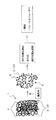
図1は、果実の搾汁工程を概略的に例示した概略図である。また、図2は、前処理として、酸処理を行なうことで精油を抽出する抽出工程を例示した模式図である。 FIG. 1 is a schematic view schematically illustrating a fruit squeezing process. FIG. 2 is a schematic view illustrating an extraction step of extracting essential oil by performing acid treatment as pretreatment.
柑橘系の果実をはじめとする多くの果実の搾汁工程は、図1に例示したように、搾汁装置を用いて搾汁し、果汁および精油を採取している。 As illustrated in FIG. 1, the squeezing process for many fruits including citrus fruits is squeezed using a squeezing device, and fruit juice and essential oil are collected.
この出願の発明の精油抽出方法は、この図1に例示したとおり、搾汁工程の際に発生する果皮や種子を含む残滓から、効率よく精油、さらにはフローラルウォーターを抽出することのできる精油抽出方法である。具体的には、果実の搾汁後に発生する果皮や種子等の残滓を精油の抽出原料とし、この残滓に酸による酸処理を前処理として施している。このとき、従来より行われている粉砕処理(ホモジネート)も施すことで、さらに効率よく精油を抽出することができるため好ましい。このような前処理を果皮や種子等の残滓に施すことで、図2に例示したように、果皮(たとえば、外果皮(フラベド)や内果皮のアルベド)(1)等に含まれるペクチン(2)やヘミセルロース(3)類の分子会合を破壊するとともに、このペクチン(2)やヘミセルロース(3)類の分子間に包まれた精油(4)を速やかに分離させることができる。そして、精油抽出の本工程として、定法にしたがい公知の常圧または減圧水蒸気蒸留法で、上記のとおりの前処理を施した残滓から精油(4)を効率よく抽出することができる。このとき、得られるのは精油だけでなく、スキンローションや入浴、食品等に利用することのできるフローラルウォーター(芳香蒸留水)も得ることができる。なお、酸処理に用いた酸水溶液は、ほとんど抽出されることはない。 In the essential oil extraction method of the invention of this application, as illustrated in FIG. 1, the essential oil extraction that can efficiently extract the essential oil and further the floral water from the residue including the skin and seeds generated during the squeezing process. Is the method. Specifically, residues such as pericarp and seeds generated after fruit squeezing are used as raw materials for extraction of essential oils, and the residue is subjected to acid treatment with acid as a pretreatment. At this time, it is preferable to perform the pulverization treatment (homogenate) that has been conventionally performed, because the essential oil can be extracted more efficiently. By performing such pretreatment on the residue such as pericarp and seeds, as illustrated in FIG. 2, pectin (2) contained in pericarp (for example, outer pericarp (flavedo) or inner pericarp albedo) (1), etc. ) And hemicellulose (3) molecules can be broken, and the essential oil (4) encapsulated between the pectin (2) and hemicellulose (3) molecules can be quickly separated. And as this process of essential oil extraction, an essential oil (4) can be efficiently extracted from the residue which gave the pre-treatment as mentioned above by a publicly known normal pressure or vacuum steam distillation method according to a usual method. At this time, not only essential oil but also floral water (aromatic distilled water) that can be used for skin lotion, bathing, food and the like can be obtained. The acid aqueous solution used for the acid treatment is hardly extracted.
このような特徴を有する、この出願の発明の精油抽出方法によって、精油抽出の前処理における反応条件の設定を簡単にでき、残滓から高収率で精油を抽出でき、また搾汁後の残滓果皮を効率よく堆肥化することをも実現できる。 With the essential oil extraction method of the invention of this application having such characteristics, it is possible to simplify the setting of reaction conditions in the pretreatment of essential oil extraction, extract essential oil from the residue in a high yield, and residual fruit peel after squeezing Can be composted efficiently.
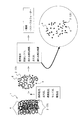
図3は、前処理として、粉砕処理または酵素処理、もしくは酸処理を行ない、超音波を印加しつつ水蒸気蒸留を行うことで精油を抽出する抽出工程を例示した模式図および超音波処理を施した残滓の状態を例示した模式図である。 FIG. 3 is a schematic diagram illustrating the extraction process of extracting essential oil by performing pulverization, enzyme treatment, or acid treatment as a pretreatment, and performing steam distillation while applying ultrasonic waves, and sonication was performed. It is the schematic diagram which illustrated the state of the residue.
この図3の例は、図2の例と基本的には同じだが、超音波処理を行う点で異なっている。具体的に説明すると、この図3に例示したように、この出願の発明は、果実の搾汁後の残滓に、粉砕処理(ホモジネート)、または、1種もしくは複数種の酵素製剤を用いた酵素処理を前処理として施した後、超音波を印加しつつ公知の常圧または減圧水蒸気蒸留を行うことで、従来の精油抽出方法と比べ、果皮(1)等の残滓から精油(4)を効率よく抽出することができる。 The example of FIG. 3 is basically the same as the example of FIG. 2, but differs in that ultrasonic processing is performed. Specifically, as illustrated in FIG. 3, the invention of this application relates to an enzyme that uses a pulverized treatment (homogenate) or one or more enzyme preparations for the residue after squeezing the fruit. After the treatment is performed as a pretreatment, the known oil (4) is efficiently removed from the residue such as the peel (1) by performing known atmospheric or reduced pressure steam distillation while applying ultrasonic waves, compared with the conventional essential oil extraction method. Can be extracted well.
さらに、図3の例は、精油抽出の前処理として酸処理を施した後に、さらに超音波を印加しつつ水蒸気蒸留を行なう精油抽出工程も例示している。なお、この酸処理とともに従来の粉砕処理も施すことで、さらに効率よく精油抽出を行うことができる。具体的には、この図3に例示したように、酸処理を行い、また好ましくは粉砕処理も行うことで、ペクチン(2)やヘミセルロース(3)類を分解して精油(4)を速やかに分離させることができる。そして、超音波処理を行いつつ、定法にしたがって、公知の常圧または減圧水蒸気蒸留を行うことで従来の精油抽出方法よりも、さらに効率よく、搾汁後の果皮や種子等の残滓から精油、フローラルウォーターを抽出することができる。このように、超音波を印加しつつ、常圧または減圧水蒸気蒸留を行うことは、超音波によってペクチン(2)やヘミセルロース(3)類の分子が展開し、より多くの精油が分離される。なお、このとき、図2の例と同様に酸処理で用いた酸水溶液が抽出されることはほとんどない。 Furthermore, the example of FIG. 3 also illustrates an essential oil extraction process in which steam distillation is performed while applying ultrasonic waves after performing acid treatment as a pretreatment of essential oil extraction. In addition, by performing the conventional pulverization process together with this acid process, the essential oil can be extracted more efficiently. Specifically, as illustrated in FIG. 3, acid treatment is performed, and pulverization is also preferably performed, so that pectin (2) and hemicellulose (3) are decomposed and the essential oil (4) is rapidly removed. Can be separated. And while performing ultrasonic treatment, according to a conventional method, it is more efficient than the conventional essential oil extraction method by performing known atmospheric pressure or reduced pressure steam distillation, essential oil from residues such as peels and seeds after squeezing, Floral water can be extracted. In this way, performing atmospheric pressure or reduced pressure steam distillation while applying ultrasonic waves expands the molecules of pectin (2) and hemicellulose (3) by ultrasonic waves, and more essential oil is separated. At this time, the acid aqueous solution used in the acid treatment is hardly extracted as in the example of FIG.
この出願の発明の精油抽出方法に用いられる酸は、特に限定されるものではない。たとえば、ヘキサメタリン酸ナトリウム(SHMP)等のリン酸塩水溶液等を使用することができ、また、リン酸や硫酸等の不揮発性酸も用いることができる。上記のとおり、これら酸(もしくは、酸水溶液)は、精油を抽出する際に利用する常圧または減圧水蒸気蒸留の過程で除去される。 The acid used in the essential oil extraction method of the invention of this application is not particularly limited. For example, an aqueous phosphate solution such as sodium hexametaphosphate (SHMP) can be used, and a non-volatile acid such as phosphoric acid or sulfuric acid can also be used. As described above, these acids (or acid aqueous solutions) are removed in the process of atmospheric or vacuum steam distillation used when extracting the essential oil.
以上のように、この出願の発明の精油抽出方法は、残滓から効率よく、高収率で精油を得ることができるため、残滓に残存する精油の量は減少することとなり、微生物活性を利用した残滓の堆肥化において、精油が有する抗菌作用による微生物活性への影響を減らして、堆肥化を促進されることができる。 As described above, since the essential oil extraction method of the invention of this application can obtain the essential oil efficiently from the residue in a high yield, the amount of the essential oil remaining in the residue is reduced, and the microbial activity is utilized. In the composting of the residue, composting can be promoted by reducing the influence on the microbial activity due to the antibacterial action of the essential oil.
なお、酵素は、ペクチンやヘミセルロース類を効果的に分解消化することのできるものであれば、特に限定されない。たとえば、ペクチナーゼ3S、ペクチナーゼHL、マセロチーム等を使用することができる。 The enzyme is not particularly limited as long as it can effectively decompose and digest pectin and hemicelluloses. For example, pectinase 3S, pectinase HL, maceroteam and the like can be used.
この出願の発明の精油抽出方法が、対象とする果実は、その種類や由来は特に限定されるものではないが、爽やかで強い香り等を有している柑橘系果実であることが好ましい。柑橘系果実としては、たとえば、柚子をはじめ、蜜柑、伊予柑、金柑、橙、すだち、ゆこう、たんかん、ぽんかん、でこぽん、文旦、八朔、檸檬、グレープフルーツ、オレンジ、ネーブル、カボス等、種々の柑橘系果実を対象にすることができる。 The fruit targeted by the essential oil extraction method of the invention of this application is not particularly limited in its type or origin, but is preferably a citrus fruit having a refreshing and strong aroma. Citrus fruits include, for example, yuzu, mandarin oranges, Iyokan, Kinkan, orange, sudachi, yuko, mandarin oranges, ponkan, dekopon, bundan, yaman, strawberry, grapefruit, orange, navel, kabosu, etc. Can target citrus fruits.
水蒸気蒸留法を行う前には、一般的に残滓を粉砕(ホモジネート)するが、多くの柑橘系果実は、その果皮(外果皮や内果皮等)にペクチンやセミロース等の不溶性成分を他の果実よりも多量に含んでいる。そのため、柑橘系果実を粉砕(ホモジネート)すると、きわめて粘凋性が高くなり、精油はペクチン分子等の高分子化合物に包含されることになり、収率が低下する。このような精油抽出において困難な特徴を有する柑橘系果実でも、この出願の発明の精油抽出方法によって、簡単で、しかも高収率で精油を抽出することができる。 Before performing the steam distillation method, the residue is generally crushed (homogenated), but many citrus fruits have insoluble components such as pectin and semirose in their fruit skins (outer skin and inner skin). Contains more than. Therefore, when a citrus fruit is pulverized (homogenated), the viscosity becomes extremely high, and the essential oil is included in a polymer compound such as a pectin molecule, resulting in a decrease in yield. Even for citrus fruits having characteristics that are difficult in such essential oil extraction, the essential oil can be extracted in a simple and high yield by the essential oil extraction method of the invention of this application.
以下に実施例を説明し、さらに詳しくこの出願の発明について説明する。もちろん、以下の例によって発明が限定されることはない。 Examples will be described below, and the invention of this application will be described in more detail. Of course, the invention is not limited by the following examples.
実施例1:前処理として酸を利用した精油抽出(酸処理)
精油抽出の対象果実として、柑橘系果実である柚子を使用した。この柚子を搾汁した後に残存する果皮や種子等の残滓を精油抽出の試料(原料)とした。
Example 1: Extraction of essential oil using acid as a pretreatment (acid treatment)
As a target fruit of the essential oil extraction, citrus fruit coconut was used. Residues such as pericarp and seeds remaining after squeezing this coconut juice were used as essential oil extraction samples (raw materials).
この残滓に、精油抽出の前処理として酸処理を行った。酸としては、5%(w/w)ヘキサメタリン酸ナトリウム(SHMP、塩酸でpH 2.0に調整)溶液を使用した。具体的には、残滓(柚子果皮残滓)50gと5%SHMPを加えて粉砕(ホモジネート)して、37℃、1時間インキュベーションして前処理とした。そして、精油抽出の本工程として、常圧水蒸気蒸留法を行って精油を抽出し、これを精油含量測定試料とした。この測定結果は、表1に示した。なお、酸処理の反応条件は、実施例1に示した条件に制限されるものではなく、温度や時間等は厳密な規定はない。たとえば、反応温度は室温でもよく、また反応時間についても特に規定されない。
比較例1:前処理を行わない精油抽出(無処理)
酸処理(SHMP)を行わず、また酵素処理も行なわない無処理、つまり粉砕処理(ホモジネート)のみの場合の精油抽出をコントロールとし、精油含量測定試料とした。測定結果は、表1に示した。なお、精油抽出の本工程は、実施例1と同様に常圧水蒸気蒸留法で行った。
比較例2:前処理として酵素を利用した精油抽出(酵素処理)
残滓の酵素処理には、ペクチナーゼ3S(E-1)(ヤクルト薬品工業株式会社)、ペクチナーゼHL(E-2)(ヤクルト薬品工業株式会社)およびマセロチームA(E-3)(ヤクルト薬品工業株式会社)の3種類の酵素製剤を使用した。
The residue was subjected to acid treatment as a pretreatment for essential oil extraction. As the acid, a 5% (w / w) sodium hexametaphosphate (SHMP, adjusted to pH 2.0 with hydrochloric acid) solution was used. Specifically, 50 g of residue (coconut skin residue) and 5% SHMP were added and pulverized (homogenated), and incubated at 37 ° C. for 1 hour for pretreatment. And as this process of essential oil extraction, an atmospheric steam distillation method was performed, essential oil was extracted, and this was made into the essential oil content measurement sample. The measurement results are shown in Table 1. The reaction conditions for the acid treatment are not limited to the conditions shown in Example 1, and there are no strict rules for temperature, time, and the like. For example, the reaction temperature may be room temperature, and the reaction time is not particularly specified.
Comparative Example 1: Extraction of essential oil without pretreatment (no treatment)
Essential oil extraction in the case of no treatment without acid treatment (SHMP) and no enzyme treatment, that is, only pulverization treatment (homogenate) was used as a control and used as a sample for measuring essential oil content. The measurement results are shown in Table 1. In addition, this process of essential oil extraction was performed by the atmospheric pressure steam distillation method similarly to Example 1.
Comparative Example 2: Essential oil extraction using enzyme as a pretreatment (enzyme treatment)
For enzyme treatment of residue, pectinase 3S (E-1) (Yakult Pharmaceutical Co., Ltd.), pectinase HL (E-2) (Yakult Pharmaceutical Co., Ltd.) and Macero Team A (E-3) (Yakult Pharmaceutical Co., Ltd.) 3) Enzyme preparations were used.
まず、残滓(柚子搾汁)50gと水200gで粉砕(ホモジネート)した。これにE-1またはE-2を0.1%加え、pH 3.5-4.0に調整した。E-3の場合は、0.5%加えてpH 5.0に調整した。そして、それぞれの酵素を加えた残滓を、37℃、1時間インキュベーションして精油含量測定試料とした。測定結果は、表1に示した。なお、精油抽出の本工程は、実施例1と同様に常圧水蒸気蒸留法で行った。 First, it was pulverized (homogenated) with 50 g of residue (sushi juice) and 200 g of water. To this, 0.1% of E-1 or E-2 was added to adjust the pH to 3.5-4.0. In the case of E-3, the pH was adjusted to 5.0 by adding 0.5%. And the residue which added each enzyme was incubated at 37 degreeC for 1 hour, and it was set as the essential oil content measuring sample. The measurement results are shown in Table 1. In addition, this process of essential oil extraction was performed by the atmospheric pressure steam distillation method similarly to Example 1.
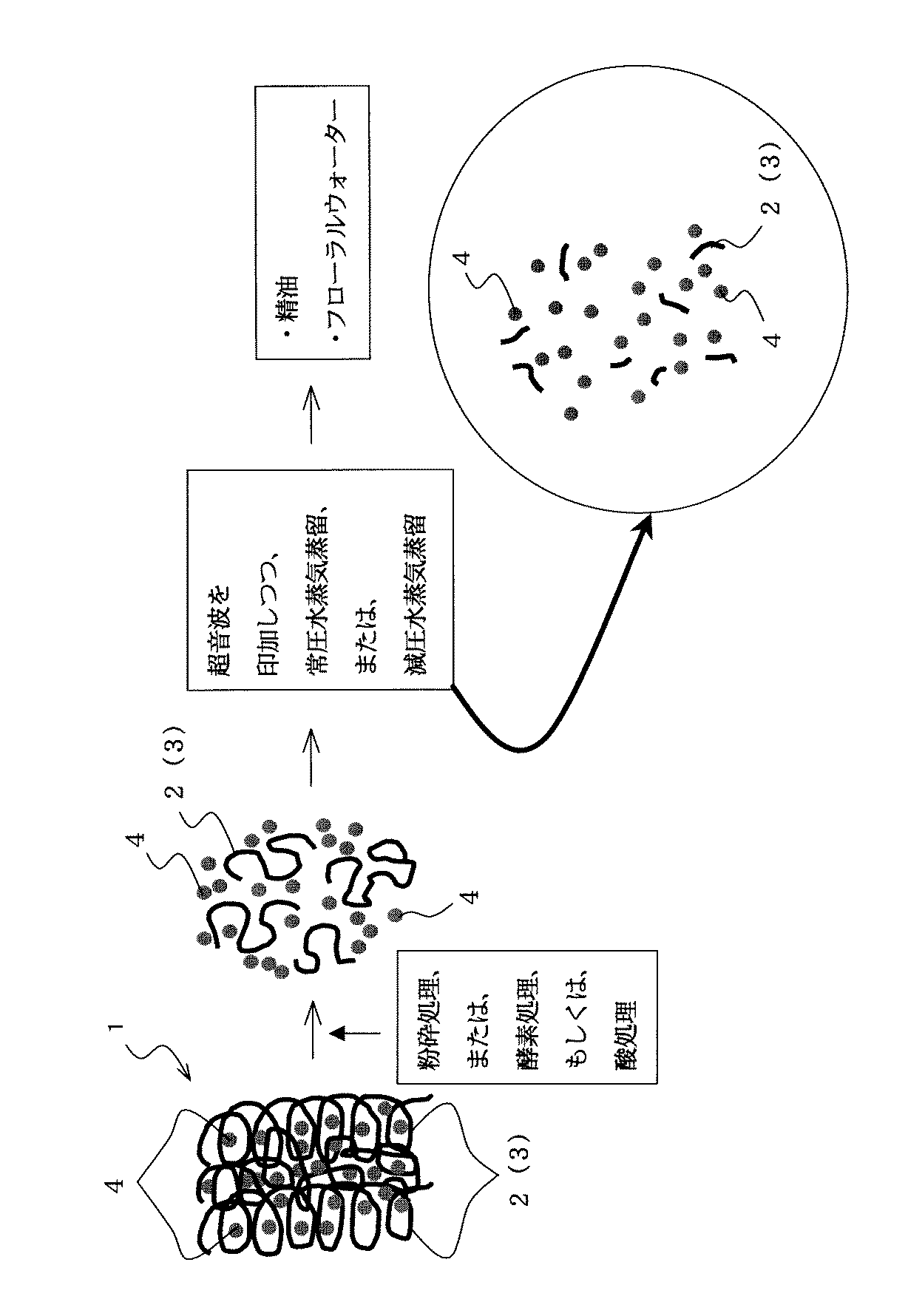
この結果から、前処理が粉砕処理のみの場合よりも高収率で、また、酵素処理のように温度やpHの調整、反応時間等の反応条件(たとえば、多くの酵素反応の至適条件は、温度37℃、反応時間1時間以上である)を厳密に規定する必要もなく、精油を取得できることが確認できた。
実施例2:超音波処理と減圧水蒸気蒸留による精油抽出(超音波蒸留)
(1)精油抽出
実施例2における精油抽出の本工程は、定法にしたがって減圧水蒸気蒸留法で行った。残滓(柚子果皮)250gと水750gを粉砕処理(ホモジネート)し、2L容の丸底フラスコに入れ、42℃で超音波を印加しつつ減圧蒸留(20-30 mmHg)した。超音波発生装置は、超音波洗浄機(UT-205HS;シャープ株式会社)を用いて、発振周波数35 kHzで行った。蒸留液は、-40℃で捕集した。蒸留液を分液ロートに移し、塩化ナトリウム50 gを加えてよく振盪し、低温室で一晩放置した後、上層の精油を取り秤量した。結果は、表2に示した。
(2)精油分析
精油含量測定装置は、日本薬局方一般分析法における公定分析用の精油定量装置(柴田科学株式会社)を使用した。試料は、果汁の場合は250g、残滓の場合は残滓50gと水200gの混合試料をそれぞれ粉砕(ホモジネート)とした。次に、1L容の丸底フラスコに沸騰石を入れ、電気マッフルを用いて(40 Vに調整)2.5時間、加熱沸騰させた。そして、ビューレットに流出した精油を分離し秤量した。
From this result, it can be seen that the pretreatment is higher in yield than the case of only the pulverization treatment, and the reaction conditions such as temperature and pH adjustment, reaction time, etc. as in the enzyme treatment (for example, the optimum conditions for many enzyme reactions It was confirmed that the essential oil could be obtained without the need to strictly define the temperature of 37 ° C. and the reaction time of 1 hour or more.
Example 2: Extraction of essential oil by ultrasonic treatment and vacuum steam distillation (ultrasonic distillation)
(1) Essential oil extraction This process of essential oil extraction in Example 2 was performed by a vacuum steam distillation method according to a conventional method. 250 g of residue (coconut peel) and 750 g of water were pulverized (homogenated), placed in a 2 L round bottom flask, and distilled under reduced pressure (20-30 mmHg) while applying ultrasonic waves at 42 ° C. The ultrasonic generator was performed using an ultrasonic cleaner (UT-205HS; Sharp Corporation) at an oscillation frequency of 35 kHz. The distillate was collected at -40 ° C. The distillate was transferred to a separatory funnel, 50 g of sodium chloride was added, shaken well, and allowed to stand overnight in a low temperature room, and then the upper essential oil was taken and weighed. The results are shown in Table 2.
(2) Essential oil analysis The essential oil content measuring apparatus used was an essential oil quantitative apparatus (Shibata Kagaku Co., Ltd.) for official analysis in the Japanese Pharmacopoeia general analysis method. Samples were pulverized (homogenate) by mixing 250 g in the case of fruit juice and 50 g of residue and 200 g of water in the case of residue. Next, a boiling stone was placed in a 1 L round bottom flask, and heated and boiled for 2.5 hours using an electric muffle (adjusted to 40 V). And the essential oil which flowed into the burette was separated and weighed.
分析装置として、ガスクロマトグラフ(GC-14A;株式会社島津製作所)およびガスクロマトグラフ-質量分析計(GC-MS QP-5000;株式会社島津製作所)を使用した。分析カラムは、いずれも石英溶融キャピラリーカラムDB-WaxおよびDB-1(60 m x 0.22 mm、0.2 μm膜厚;J & A Scientific社)を使用した。カラム温度は、70℃(2 min、一定)〜(2℃昇温)〜230℃(20 min)とし、カラムスプリット比は、1:50とした。精油の同定は、Kovats Indexおよび質量スペクトルで行った。この結果を表3に示した。
比較例3:減圧水蒸気蒸留のみによる精油抽出(通常蒸留)
(1)精油抽出
精油抽出の工程は、超音波処理は行なわずに減圧水蒸気蒸留法のみで行った。減圧水蒸気蒸留法は、実施例2(1)と同様に定法にしたがって行い、その結果を表2に示した。
(2)精油分析
精油分析については、実施例2(2)と同様の方法で行った。その結果を表3にて示し、実施例2の結果と比較した。
As an analyzer, a gas chromatograph (GC-14A; Shimadzu Corporation) and a gas chromatograph-mass spectrometer (GC-MS QP-5000; Shimadzu Corporation) were used. As analytical columns, quartz fused capillary columns DB-Wax and DB-1 (60 mx 0.22 mm, 0.2 μm film thickness; J & A Scientific) were used. The column temperature was 70 ° C. (2 min, constant) to (2 ° C. raised) to 230 ° C. (20 min), and the column split ratio was 1:50. The essential oil was identified by Kovats Index and mass spectrum. The results are shown in Table 3.
Comparative Example 3: Extraction of essential oil only by vacuum steam distillation (normal distillation)
(1) Essential oil extraction The essential oil extraction step was performed only by the vacuum steam distillation method without performing ultrasonic treatment. The vacuum steam distillation method was performed according to a conventional method in the same manner as in Example 2 (1), and the results are shown in Table 2.
(2) Essential oil analysis The essential oil analysis was performed in the same manner as in Example 2 (2). The results are shown in Table 3 and compared with the results of Example 2.
また、蒸留液として回収される水は、スキンローションや入浴、食品等に活用できるフローラルウォーターとして利用することができる。柚子の場合、ほのかな柚子香が漂う蒸留液、すなわちフローラルウォーターを採取できる。 The water recovered as the distillate can be used as floral water that can be used for skin lotions, bathing, foods, and the like. In the case of an eggplant, a distillate with a faint eggplant smell, that is, floral water can be collected.
超音波蒸留では、linalool、terpinen-4-ol、α-terpineol等のアルコール類の割合が高かった。一方、通常蒸留では、α-pinene、β-pinene、sabinene、myrcene、α-phellandrene、α-terpinene、β-phellandrene、p-cymene等のモノテルペン炭化水素の割合が超音波蒸留に比べて高かった。このことは、親水性の高いアルコール類等の含酸素化合物を含む液体に超音波を負荷することにより、水溶液から分子の脱離が促進され気化しやすい状態が作られたためと考えられる。したがって、減圧水蒸気蒸留に超音波を負荷させることにより、精油収率を向上させることができ、得られる精油は炭化水素類の比較的少なく、含酸素化合物の多い、香り豊かな(フローラルな)精油を得ることができた。
実施例3:酸処理および超音波処理による精油抽出(酸処理+超音波処理)
柚子の残滓(果皮残滓)を試料として用いて、精油の抽出を酸処理および超音波処理を利用して行なった。酸処理は、ヘキサメタリン酸ナトリウム水溶液で果皮残滓を実施例1と同様に処理した。その後、実施例2(1)と同様に超音波をかけながら減圧水蒸気蒸留(超音波蒸留)をすることによって精油を抽出して得た。
In ultrasonic distillation, the proportion of alcohols such as linalool, terpinen-4-ol, and α-terpineol was high. On the other hand, in normal distillation, the proportion of monoterpene hydrocarbons such as α-pinene, β-pinene, sabinene, myrcene, α-phellandrene, α-terpinene, β-phellandrene, and p-cymene was higher than in ultrasonic distillation. . This is presumably because the application of ultrasonic waves to a liquid containing oxygen-containing compounds such as highly hydrophilic alcohols facilitated the desorption of molecules from the aqueous solution and facilitated vaporization. Therefore, by applying ultrasonic waves to vacuum steam distillation, the yield of essential oil can be improved, and the resulting essential oil is relatively low in hydrocarbons, rich in oxygenated compounds and rich in fragrance (floral). Could get.
Example 3: Extraction of essential oil by acid treatment and sonication (acid treatment + sonication)
Extraction of essential oil was performed using acid treatment and sonication using the residue of persimmon residue (pericarp residue) as a sample. In the acid treatment, the skin residue was treated in the same manner as in Example 1 with an aqueous solution of sodium hexametaphosphate. Thereafter, the essential oil was extracted by subjecting to vacuum distillation (ultrasonic distillation) while applying ultrasonic waves in the same manner as in Example 2 (1).
結果は表4に示したとおり、精油収率は0.27%であった。このことから、酸処理と超音波蒸留を併用することにより、実施例2の超音波蒸留単独よりも収率向上することが確認できた。
比較例4:酵素処理および超音波処理による精油抽出(酵素処理+超音波処理)
実施例3の比較実験として、柚子の残滓(果皮残滓)から、精油の抽出を酵素処理および超音波処理を利用して行なった。
As a result, as shown in Table 4, the yield of essential oil was 0.27%. From this fact, it was confirmed that the combined use of acid treatment and ultrasonic distillation improved the yield over the ultrasonic distillation of Example 2 alone.
Comparative Example 4: Essential oil extraction by enzyme treatment and sonication (enzyme treatment + sonication)
As a comparative experiment of Example 3, the essential oil was extracted from the residue of coconut residue (pericarp residue) using enzyme treatment and ultrasonic treatment.
比較例2の結果の表1において、前処理として酵素処理で用いた酵素製剤は、ペクチナーゼHLが精油抽出の前処理にもっとも効率がよかった。そこで、比較例2と同様に、このペクチナーゼHLを酵素処理に使用して、残滓(果皮残滓)の前処理を行った。その後に、実施例2(1)と同様に超音波をかけながら減圧水蒸気蒸留を行った。 In Table 1 of the results of Comparative Example 2, pectinase HL was most effective for pretreatment of essential oil extraction in the enzyme preparation used as the pretreatment. Therefore, in the same manner as in Comparative Example 2, the pectinase HL was used for the enzyme treatment, and the residue (fruit skin residue) was pretreated. Thereafter, vacuum distillation was performed under reduced pressure while applying ultrasonic waves as in Example 2 (1).
結果は表4に示したとおりであった。この比較例4での精油収率は0.18%であり、酵素処理のみの場合と比べると、その効果に差異は見られなかった。 The results were as shown in Table 4. The yield of essential oil in Comparative Example 4 was 0.18%, and no difference was seen in its effect compared to the case of enzyme treatment alone.
1 果皮
2 ペクチン
3 ヘミセルロース
4 精油
1
Claims (5)
The essential oil extraction method according to any one of claims 1 to 4, wherein the fruit is a citrus fruit.
Priority Applications (1)
| Application Number | Priority Date | Filing Date | Title |
|---|---|---|---|
| JP2004113587A JP3842794B2 (en) | 2004-04-07 | 2004-04-07 | Essential oil extraction method |
Applications Claiming Priority (1)
| Application Number | Priority Date | Filing Date | Title |
|---|---|---|---|
| JP2004113587A JP3842794B2 (en) | 2004-04-07 | 2004-04-07 | Essential oil extraction method |
Publications (2)
| Publication Number | Publication Date |
|---|---|
| JP2005298580A true JP2005298580A (en) | 2005-10-27 |
| JP3842794B2 JP3842794B2 (en) | 2006-11-08 |
Family
ID=35330526
Family Applications (1)
| Application Number | Title | Priority Date | Filing Date |
|---|---|---|---|
| JP2004113587A Expired - Lifetime JP3842794B2 (en) | 2004-04-07 | 2004-04-07 | Essential oil extraction method |
Country Status (1)
| Country | Link |
|---|---|
| JP (1) | JP3842794B2 (en) |
Cited By (10)
| Publication number | Priority date | Publication date | Assignee | Title |
|---|---|---|---|---|
| JP2006089543A (en) * | 2004-09-22 | 2006-04-06 | Shiseido Co Ltd | Method for producing natural perfume |
| JP2007112892A (en) * | 2005-10-20 | 2007-05-10 | Sakamoto Koryo Kk | Manufacturing process of essential oil from citrus fruits |
| JP2010094607A (en) * | 2008-10-16 | 2010-04-30 | Kochi Univ | Method of cleaning waste water containing pectin |
| CN102911514A (en) * | 2012-08-23 | 2013-02-06 | 高伟 | Method for extracting pigment from tangerine peel |
| CN102936425A (en) * | 2012-11-12 | 2013-02-20 | 江南大学 | A kind of method for preparing tangerine peel powder vegetable dye |
| KR101463399B1 (en) * | 2012-12-27 | 2014-11-26 | 농업회사법인 주식회사 휴먼아일랜드 | A method for purifying essential oil from citrus using ultrasonic purification |
| CN111454767A (en) * | 2020-04-27 | 2020-07-28 | 合肥学院 | Method for extracting folium artemisiae argyi essential oil |
| US10870866B2 (en) | 2015-09-25 | 2020-12-22 | Ajinomoto Co., Inc. | Method of producing linalool using a microorganism |
| US10941420B2 (en) | 2015-09-25 | 2021-03-09 | Ajinomoto Co., Inc. | Linalool composition and method of producing therefor |
| CN116179274A (en) * | 2022-12-30 | 2023-05-30 | 海南大学 | Green golden orange peel essential oil and preparation method thereof |
Families Citing this family (1)
| Publication number | Priority date | Publication date | Assignee | Title |
|---|---|---|---|---|
| CN104498188B (en) * | 2014-11-26 | 2017-06-06 | 苏州科技学院 | Fragrant green vegetables Extraction Process of Volatile Oil and application |
Citations (6)
| Publication number | Priority date | Publication date | Assignee | Title |
|---|---|---|---|---|
| JPS58185695A (en) * | 1982-04-26 | 1983-10-29 | 小見 正芳 | Oil extraction from soybean or like |
| JPH0260997A (en) * | 1988-08-29 | 1990-03-01 | Mayekawa Mfg Co Ltd | Extraction of oil of false arborvitae or the like |
| JPH0873886A (en) * | 1994-09-08 | 1996-03-19 | T Hasegawa Co Ltd | Method for producing high-quality and stable aroma recovery products |
| JPH08168355A (en) * | 1994-12-20 | 1996-07-02 | T Hasegawa Co Ltd | New vanilla extract manufacturing method |
| JP2001329290A (en) * | 2000-05-23 | 2001-11-27 | Naris Cosmetics Co Ltd | Cosmetic preparation |
| JP2004018737A (en) * | 2002-06-18 | 2004-01-22 | Umajimura Nogyo Kyodo Kumiai | Method for extracting essential oil from filtration residue of citrus fruit juice with vibrating screen |
-
2004
- 2004-04-07 JP JP2004113587A patent/JP3842794B2/en not_active Expired - Lifetime
Patent Citations (6)
| Publication number | Priority date | Publication date | Assignee | Title |
|---|---|---|---|---|
| JPS58185695A (en) * | 1982-04-26 | 1983-10-29 | 小見 正芳 | Oil extraction from soybean or like |
| JPH0260997A (en) * | 1988-08-29 | 1990-03-01 | Mayekawa Mfg Co Ltd | Extraction of oil of false arborvitae or the like |
| JPH0873886A (en) * | 1994-09-08 | 1996-03-19 | T Hasegawa Co Ltd | Method for producing high-quality and stable aroma recovery products |
| JPH08168355A (en) * | 1994-12-20 | 1996-07-02 | T Hasegawa Co Ltd | New vanilla extract manufacturing method |
| JP2001329290A (en) * | 2000-05-23 | 2001-11-27 | Naris Cosmetics Co Ltd | Cosmetic preparation |
| JP2004018737A (en) * | 2002-06-18 | 2004-01-22 | Umajimura Nogyo Kyodo Kumiai | Method for extracting essential oil from filtration residue of citrus fruit juice with vibrating screen |
Cited By (11)
| Publication number | Priority date | Publication date | Assignee | Title |
|---|---|---|---|---|
| JP2006089543A (en) * | 2004-09-22 | 2006-04-06 | Shiseido Co Ltd | Method for producing natural perfume |
| JP2007112892A (en) * | 2005-10-20 | 2007-05-10 | Sakamoto Koryo Kk | Manufacturing process of essential oil from citrus fruits |
| JP2010094607A (en) * | 2008-10-16 | 2010-04-30 | Kochi Univ | Method of cleaning waste water containing pectin |
| CN102911514A (en) * | 2012-08-23 | 2013-02-06 | 高伟 | Method for extracting pigment from tangerine peel |
| CN102911514B (en) * | 2012-08-23 | 2013-11-13 | 高伟 | Method for extracting pigment from tangerine peel |
| CN102936425A (en) * | 2012-11-12 | 2013-02-20 | 江南大学 | A kind of method for preparing tangerine peel powder vegetable dye |
| KR101463399B1 (en) * | 2012-12-27 | 2014-11-26 | 농업회사법인 주식회사 휴먼아일랜드 | A method for purifying essential oil from citrus using ultrasonic purification |
| US10870866B2 (en) | 2015-09-25 | 2020-12-22 | Ajinomoto Co., Inc. | Method of producing linalool using a microorganism |
| US10941420B2 (en) | 2015-09-25 | 2021-03-09 | Ajinomoto Co., Inc. | Linalool composition and method of producing therefor |
| CN111454767A (en) * | 2020-04-27 | 2020-07-28 | 合肥学院 | Method for extracting folium artemisiae argyi essential oil |
| CN116179274A (en) * | 2022-12-30 | 2023-05-30 | 海南大学 | Green golden orange peel essential oil and preparation method thereof |
Also Published As
| Publication number | Publication date |
|---|---|
| JP3842794B2 (en) | 2006-11-08 |
Similar Documents
| Publication | Publication Date | Title |
|---|---|---|
| Kimbaris et al. | Comparison of distillation and ultrasound-assisted extraction methods for the isolation of sensitive aroma compounds from garlic (Allium sativum) | |
| Chakravarty et al. | Current trends in essential oil (EO) production | |
| Liang et al. | Modern technologies for extraction of aroma compounds from fruit peels: A review | |
| Tuan et al. | One step extraction of essential oils and pectin from pomelo (Citrus grandis) peels | |
| Périno-Issartier et al. | A comparison of essential oils obtained from lavandin via different extraction processes: Ultrasound, microwave, turbohydrodistillation, steam and hydrodistillation | |
| Sawamura | Citrus essential oils: flavor and fragrance | |
| Lucchesi et al. | An original solvent free microwave extraction of essential oils from spices | |
| Bousbia et al. | A new process for extraction of essential oil from Citrus peels: Microwave hydrodiffusion and gravity | |
| Farhat et al. | Microwave steam diffusion for extraction of essential oil from orange peel: Kinetic data, extract’s global yield and mechanism | |
| Veillet et al. | Ultrasound assisted maceration: An original procedure for direct aromatisation of olive oil with basil | |
| Leão et al. | Odor potency, aroma profile and volatiles composition of cold pressed oil from industrial passion fruit residues | |
| Jiang et al. | Differences in the volatile components and their odor characteristics of green and ripe fruits and dried pericarp of Japanese pepper (Xanthoxylum piperitum DC.) | |
| Boulanger et al. | Identification of the aroma components of acerola (Malphigia glabra L.): free and bound flavour compounds | |
| Tripathi et al. | Analysis of free and bound aroma compounds of pomegranate (Punica granatum L.) | |
| Angoy et al. | Development of a green innovative semi-industrial scale pilot combined microwave heating and centrifugal force to extract essential oils and phenolic compounds from orange peels | |
| Liang et al. | Optimizing extraction method of aroma compounds from grape pomace | |
| JP3842794B2 (en) | Essential oil extraction method | |
| Kusuma et al. | Comparison of two isolation methods for essential oils from orange peel (Citrus auranticum L.) as a growth promoter for fish: microwave steam distillation and conventional steam distillation. | |
| Hedayati et al. | Mint (Mentha spp.) essential oil extraction: from conventional to emerging technologies | |
| Supriyadi et al. | Changes in the volatile compounds and in the chemical and physical properties of snake fruit (Salacca edulis Reinw) Cv. Pondoh during maturation | |
| Li et al. | Characterization of the aldehydes and their transformations induced by UV irradiation and air exposure of white guanxi honey pummelo (Citrus grandis (L.) Osbeck) essential oil | |
| Dregus et al. | Volatile constituents of uncooked rhubarb (Rheum rhabarbarum L.) stalks | |
| Asfaw et al. | Green chemistry in Ethiopia: the cleaner extraction of essential oils from Artemisia afra: a comparison of clean technology with conventional methodology | |
| AU2005258148A1 (en) | Solvent based plant extracts | |
| Chemat et al. | Techniques for oil extraction |
Legal Events
| Date | Code | Title | Description |
|---|---|---|---|
| A977 | Report on retrieval |
Free format text: JAPANESE INTERMEDIATE CODE: A971007 Effective date: 20060420 |
|
| A131 | Notification of reasons for refusal |
Free format text: JAPANESE INTERMEDIATE CODE: A131 Effective date: 20060502 |
|
| A521 | Request for written amendment filed |
Free format text: JAPANESE INTERMEDIATE CODE: A523 Effective date: 20060619 |
|
| TRDD | Decision of grant or rejection written | ||
| A01 | Written decision to grant a patent or to grant a registration (utility model) |
Free format text: JAPANESE INTERMEDIATE CODE: A01 Effective date: 20060718 |
|
| A61 | First payment of annual fees (during grant procedure) |
Free format text: JAPANESE INTERMEDIATE CODE: A61 Effective date: 20060810 |
|
| R150 | Certificate of patent or registration of utility model |
Ref document number: 3842794 Country of ref document: JP Free format text: JAPANESE INTERMEDIATE CODE: R150 Free format text: JAPANESE INTERMEDIATE CODE: R150 |
|
| FPAY | Renewal fee payment (event date is renewal date of database) |
Free format text: PAYMENT UNTIL: 20090818 Year of fee payment: 3 |
|
| FPAY | Renewal fee payment (event date is renewal date of database) |
Free format text: PAYMENT UNTIL: 20100818 Year of fee payment: 4 |
|
| R250 | Receipt of annual fees |
Free format text: JAPANESE INTERMEDIATE CODE: R250 |
|
| FPAY | Renewal fee payment (event date is renewal date of database) |
Free format text: PAYMENT UNTIL: 20110818 Year of fee payment: 5 |
|
| R250 | Receipt of annual fees |
Free format text: JAPANESE INTERMEDIATE CODE: R250 |
|
| FPAY | Renewal fee payment (event date is renewal date of database) |
Free format text: PAYMENT UNTIL: 20110818 Year of fee payment: 5 |
|
| FPAY | Renewal fee payment (event date is renewal date of database) |
Free format text: PAYMENT UNTIL: 20120818 Year of fee payment: 6 |
|
| R250 | Receipt of annual fees |
Free format text: JAPANESE INTERMEDIATE CODE: R250 |
|
| FPAY | Renewal fee payment (event date is renewal date of database) |
Free format text: PAYMENT UNTIL: 20130818 Year of fee payment: 7 |
|
| R250 | Receipt of annual fees |
Free format text: JAPANESE INTERMEDIATE CODE: R250 |
|
| R250 | Receipt of annual fees |
Free format text: JAPANESE INTERMEDIATE CODE: R250 |
|
| R250 | Receipt of annual fees |
Free format text: JAPANESE INTERMEDIATE CODE: R250 |
|
| S533 | Written request for registration of change of name |
Free format text: JAPANESE INTERMEDIATE CODE: R313533 |
|
| R350 | Written notification of registration of transfer |
Free format text: JAPANESE INTERMEDIATE CODE: R350 |
|
| R250 | Receipt of annual fees |
Free format text: JAPANESE INTERMEDIATE CODE: R250 |
|
| R250 | Receipt of annual fees |
Free format text: JAPANESE INTERMEDIATE CODE: R250 |
|
| R250 | Receipt of annual fees |
Free format text: JAPANESE INTERMEDIATE CODE: R250 |
|
| R250 | Receipt of annual fees |
Free format text: JAPANESE INTERMEDIATE CODE: R250 |
|
| R250 | Receipt of annual fees |
Free format text: JAPANESE INTERMEDIATE CODE: R250 |
|
| R250 | Receipt of annual fees |
Free format text: JAPANESE INTERMEDIATE CODE: R250 |
|
| R250 | Receipt of annual fees |
Free format text: JAPANESE INTERMEDIATE CODE: R250 |
|
| R250 | Receipt of annual fees |
Free format text: JAPANESE INTERMEDIATE CODE: R250 |
|
| R250 | Receipt of annual fees |
Free format text: JAPANESE INTERMEDIATE CODE: R250 |
|
| EXPY | Cancellation because of completion of term |