JP2005296715A - Method for manufacturing microcapsule, microcapsule and recoding material - Google Patents
Method for manufacturing microcapsule, microcapsule and recoding material Download PDFInfo
- Publication number
- JP2005296715A JP2005296715A JP2004112599A JP2004112599A JP2005296715A JP 2005296715 A JP2005296715 A JP 2005296715A JP 2004112599 A JP2004112599 A JP 2004112599A JP 2004112599 A JP2004112599 A JP 2004112599A JP 2005296715 A JP2005296715 A JP 2005296715A
- Authority
- JP
- Japan
- Prior art keywords
- microcapsule
- polymer component
- capsule wall
- monomer
- polymer
- Prior art date
- Legal status (The legal status is an assumption and is not a legal conclusion. Google has not performed a legal analysis and makes no representation as to the accuracy of the status listed.)
- Pending
Links
- 239000003094 microcapsule Substances 0.000 title claims abstract description 140
- 238000000034 method Methods 0.000 title claims abstract description 61
- 239000000463 material Substances 0.000 title claims abstract description 51
- 238000004519 manufacturing process Methods 0.000 title claims abstract description 43
- 229920000642 polymer Polymers 0.000 claims abstract description 162
- 239000002775 capsule Substances 0.000 claims abstract description 93
- 239000000178 monomer Substances 0.000 claims abstract description 79
- 239000007788 liquid Substances 0.000 claims abstract description 46
- 239000000203 mixture Substances 0.000 claims abstract description 30
- 239000002245 particle Substances 0.000 claims abstract description 21
- 230000000379 polymerizing effect Effects 0.000 claims abstract description 21
- 230000008961 swelling Effects 0.000 claims abstract description 10
- 238000000576 coating method Methods 0.000 claims description 57
- 239000011248 coating agent Substances 0.000 claims description 55
- 239000004793 Polystyrene Substances 0.000 claims description 18
- 229920001490 poly(butyl methacrylate) polymer Polymers 0.000 claims description 11
- 239000004814 polyurethane Substances 0.000 claims description 7
- 229920002396 Polyurea Polymers 0.000 claims description 6
- 229920003229 poly(methyl methacrylate) Polymers 0.000 claims description 5
- 239000004926 polymethyl methacrylate Substances 0.000 claims description 5
- 229920005593 poly(benzyl methacrylate) Polymers 0.000 claims description 4
- 229920003226 polyurethane urea Polymers 0.000 claims description 4
- 229920005553 polystyrene-acrylate Polymers 0.000 claims description 3
- 238000004040 coloring Methods 0.000 abstract description 4
- 206010057040 Temperature intolerance Diseases 0.000 abstract 1
- 230000001419 dependent effect Effects 0.000 abstract 1
- 230000008543 heat sensitivity Effects 0.000 abstract 1
- -1 isocyanate polyol Chemical class 0.000 description 24
- 239000000126 substance Substances 0.000 description 24
- 239000004094 surface-active agent Substances 0.000 description 24
- 239000000243 solution Substances 0.000 description 21
- SOGAXMICEFXMKE-UHFFFAOYSA-N Butylmethacrylate Chemical compound CCCCOC(=O)C(C)=C SOGAXMICEFXMKE-UHFFFAOYSA-N 0.000 description 18
- 239000006185 dispersion Substances 0.000 description 18
- 238000005755 formation reaction Methods 0.000 description 18
- 238000003756 stirring Methods 0.000 description 17
- 238000006116 polymerization reaction Methods 0.000 description 15
- 229920002223 polystyrene Polymers 0.000 description 15
- 230000015572 biosynthetic process Effects 0.000 description 14
- 239000007864 aqueous solution Substances 0.000 description 13
- 229920000159 gelatin Polymers 0.000 description 13
- 239000003960 organic solvent Substances 0.000 description 13
- 239000000725 suspension Substances 0.000 description 13
- XLYOFNOQVPJJNP-UHFFFAOYSA-N water Substances O XLYOFNOQVPJJNP-UHFFFAOYSA-N 0.000 description 13
- 108010010803 Gelatin Proteins 0.000 description 12
- PPBRXRYQALVLMV-UHFFFAOYSA-N Styrene Chemical compound C=CC1=CC=CC=C1 PPBRXRYQALVLMV-UHFFFAOYSA-N 0.000 description 12
- 239000008273 gelatin Substances 0.000 description 12
- 235000019322 gelatine Nutrition 0.000 description 12
- 235000011852 gelatine desserts Nutrition 0.000 description 12
- 239000003505 polymerization initiator Substances 0.000 description 12
- YGSDEFSMJLZEOE-UHFFFAOYSA-N salicylic acid Chemical compound OC(=O)C1=CC=CC=C1O YGSDEFSMJLZEOE-UHFFFAOYSA-N 0.000 description 12
- 239000000975 dye Substances 0.000 description 11
- 238000012695 Interfacial polymerization Methods 0.000 description 10
- 239000008346 aqueous phase Substances 0.000 description 10
- 238000006243 chemical reaction Methods 0.000 description 10
- 229920001577 copolymer Polymers 0.000 description 10
- 239000000839 emulsion Substances 0.000 description 10
- 239000010410 layer Substances 0.000 description 10
- XEKOWRVHYACXOJ-UHFFFAOYSA-N Ethyl acetate Chemical compound CCOC(C)=O XEKOWRVHYACXOJ-UHFFFAOYSA-N 0.000 description 9
- 239000012948 isocyanate Substances 0.000 description 9
- 239000012071 phase Substances 0.000 description 9
- 230000008569 process Effects 0.000 description 9
- 239000007787 solid Substances 0.000 description 9
- 150000001875 compounds Chemical class 0.000 description 8
- 150000003839 salts Chemical class 0.000 description 8
- 229920003169 water-soluble polymer Polymers 0.000 description 8
- 239000010419 fine particle Substances 0.000 description 7
- 238000010438 heat treatment Methods 0.000 description 7
- 150000002513 isocyanates Chemical class 0.000 description 7
- 238000002360 preparation method Methods 0.000 description 7
- 239000002904 solvent Substances 0.000 description 7
- 239000004372 Polyvinyl alcohol Substances 0.000 description 6
- 229910052751 metal Inorganic materials 0.000 description 6
- 239000002184 metal Substances 0.000 description 6
- FJKROLUGYXJWQN-UHFFFAOYSA-N papa-hydroxy-benzoic acid Natural products OC(=O)C1=CC=C(O)C=C1 FJKROLUGYXJWQN-UHFFFAOYSA-N 0.000 description 6
- 229920002451 polyvinyl alcohol Polymers 0.000 description 6
- 229960004889 salicylic acid Drugs 0.000 description 6
- 125000002091 cationic group Chemical group 0.000 description 5
- 230000000052 comparative effect Effects 0.000 description 5
- 125000000524 functional group Chemical group 0.000 description 5
- 230000009477 glass transition Effects 0.000 description 5
- USHAGKDGDHPEEY-UHFFFAOYSA-L potassium persulfate Chemical compound [K+].[K+].[O-]S(=O)(=O)OOS([O-])(=O)=O USHAGKDGDHPEEY-UHFFFAOYSA-L 0.000 description 5
- 239000000047 product Substances 0.000 description 5
- 230000035945 sensitivity Effects 0.000 description 5
- 238000003860 storage Methods 0.000 description 5
- IJGRMHOSHXDMSA-UHFFFAOYSA-N Atomic nitrogen Chemical compound N#N IJGRMHOSHXDMSA-UHFFFAOYSA-N 0.000 description 4
- 229920000877 Melamine resin Polymers 0.000 description 4
- CERQOIWHTDAKMF-UHFFFAOYSA-M Methacrylate Chemical compound CC(=C)C([O-])=O CERQOIWHTDAKMF-UHFFFAOYSA-M 0.000 description 4
- 125000000129 anionic group Chemical group 0.000 description 4
- RWCCWEUUXYIKHB-UHFFFAOYSA-N benzophenone Chemical compound C=1C=CC=CC=1C(=O)C1=CC=CC=C1 RWCCWEUUXYIKHB-UHFFFAOYSA-N 0.000 description 4
- 239000012965 benzophenone Substances 0.000 description 4
- 238000009835 boiling Methods 0.000 description 4
- 239000006103 coloring component Substances 0.000 description 4
- 238000011161 development Methods 0.000 description 4
- 239000003999 initiator Substances 0.000 description 4
- 239000011859 microparticle Substances 0.000 description 4
- 239000004014 plasticizer Substances 0.000 description 4
- 229920005862 polyol Polymers 0.000 description 4
- 241000894007 species Species 0.000 description 4
- UHOVQNZJYSORNB-UHFFFAOYSA-N Benzene Chemical compound C1=CC=CC=C1 UHOVQNZJYSORNB-UHFFFAOYSA-N 0.000 description 3
- YMWUJEATGCHHMB-UHFFFAOYSA-N Dichloromethane Chemical compound ClCCl YMWUJEATGCHHMB-UHFFFAOYSA-N 0.000 description 3
- OKKJLVBELUTLKV-UHFFFAOYSA-N Methanol Chemical compound OC OKKJLVBELUTLKV-UHFFFAOYSA-N 0.000 description 3
- VVQNEPGJFQJSBK-UHFFFAOYSA-N Methyl methacrylate Chemical compound COC(=O)C(C)=C VVQNEPGJFQJSBK-UHFFFAOYSA-N 0.000 description 3
- 125000005396 acrylic acid ester group Chemical group 0.000 description 3
- 230000002776 aggregation Effects 0.000 description 3
- 238000004220 aggregation Methods 0.000 description 3
- ISAOCJYIOMOJEB-UHFFFAOYSA-N benzoin Chemical compound C=1C=CC=CC=1C(O)C(=O)C1=CC=CC=C1 ISAOCJYIOMOJEB-UHFFFAOYSA-N 0.000 description 3
- 239000001913 cellulose Substances 0.000 description 3
- 229920002678 cellulose Polymers 0.000 description 3
- 239000000084 colloidal system Substances 0.000 description 3
- 238000004945 emulsification Methods 0.000 description 3
- 230000002209 hydrophobic effect Effects 0.000 description 3
- 125000001165 hydrophobic group Chemical group 0.000 description 3
- 125000005397 methacrylic acid ester group Chemical group 0.000 description 3
- VLKZOEOYAKHREP-UHFFFAOYSA-N n-Hexane Chemical compound CCCCCC VLKZOEOYAKHREP-UHFFFAOYSA-N 0.000 description 3
- 229920000139 polyethylene terephthalate Polymers 0.000 description 3
- 239000005020 polyethylene terephthalate Substances 0.000 description 3
- 229920002635 polyurethane Polymers 0.000 description 3
- 239000002243 precursor Substances 0.000 description 3
- NHARPDSAXCBDDR-UHFFFAOYSA-N propyl 2-methylprop-2-enoate Chemical compound CCCOC(=O)C(C)=C NHARPDSAXCBDDR-UHFFFAOYSA-N 0.000 description 3
- 239000011241 protective layer Substances 0.000 description 3
- 239000000344 soap Substances 0.000 description 3
- 229910052708 sodium Inorganic materials 0.000 description 3
- 239000011734 sodium Substances 0.000 description 3
- 230000008542 thermal sensitivity Effects 0.000 description 3
- 125000000391 vinyl group Chemical group [H]C([*])=C([H])[H] 0.000 description 3
- IAUKWGFWINVWKS-UHFFFAOYSA-N 1,2-di(propan-2-yl)naphthalene Chemical compound C1=CC=CC2=C(C(C)C)C(C(C)C)=CC=C21 IAUKWGFWINVWKS-UHFFFAOYSA-N 0.000 description 2
- RTTZISZSHSCFRH-UHFFFAOYSA-N 1,3-bis(isocyanatomethyl)benzene Chemical compound O=C=NCC1=CC=CC(CN=C=O)=C1 RTTZISZSHSCFRH-UHFFFAOYSA-N 0.000 description 2
- OZAIFHULBGXAKX-UHFFFAOYSA-N 2-(2-cyanopropan-2-yldiazenyl)-2-methylpropanenitrile Chemical compound N#CC(C)(C)N=NC(C)(C)C#N OZAIFHULBGXAKX-UHFFFAOYSA-N 0.000 description 2
- NIXOWILDQLNWCW-UHFFFAOYSA-N 2-Propenoic acid Natural products OC(=O)C=C NIXOWILDQLNWCW-UHFFFAOYSA-N 0.000 description 2
- XFCMNSHQOZQILR-UHFFFAOYSA-N 2-[2-(2-methylprop-2-enoyloxy)ethoxy]ethyl 2-methylprop-2-enoate Chemical compound CC(=C)C(=O)OCCOCCOC(=O)C(C)=C XFCMNSHQOZQILR-UHFFFAOYSA-N 0.000 description 2
- BQZJOQXSCSZQPS-UHFFFAOYSA-N 2-methoxy-1,2-diphenylethanone Chemical compound C=1C=CC=CC=1C(OC)C(=O)C1=CC=CC=C1 BQZJOQXSCSZQPS-UHFFFAOYSA-N 0.000 description 2
- NJWGQARXZDRHCD-UHFFFAOYSA-N 2-methylanthraquinone Chemical compound C1=CC=C2C(=O)C3=CC(C)=CC=C3C(=O)C2=C1 NJWGQARXZDRHCD-UHFFFAOYSA-N 0.000 description 2
- KUDUQBURMYMBIJ-UHFFFAOYSA-N 2-prop-2-enoyloxyethyl prop-2-enoate Chemical compound C=CC(=O)OCCOC(=O)C=C KUDUQBURMYMBIJ-UHFFFAOYSA-N 0.000 description 2
- KWOLFJPFCHCOCG-UHFFFAOYSA-N Acetophenone Chemical compound CC(=O)C1=CC=CC=C1 KWOLFJPFCHCOCG-UHFFFAOYSA-N 0.000 description 2
- HPMRQLISXIZERB-UHFFFAOYSA-N B(O)(O)O.C1(=CC=CC=C1)C(CCC(=O)O)(C1=CC=CC=C1)C1=CC=CC=C1 Chemical compound B(O)(O)O.C1(=CC=CC=C1)C(CCC(=O)O)(C1=CC=CC=C1)C1=CC=CC=C1 HPMRQLISXIZERB-UHFFFAOYSA-N 0.000 description 2
- CURLTUGMZLYLDI-UHFFFAOYSA-N Carbon dioxide Chemical compound O=C=O CURLTUGMZLYLDI-UHFFFAOYSA-N 0.000 description 2
- 239000004640 Melamine resin Substances 0.000 description 2
- BAPJBEWLBFYGME-UHFFFAOYSA-N Methyl acrylate Chemical compound COC(=O)C=C BAPJBEWLBFYGME-UHFFFAOYSA-N 0.000 description 2
- GRYLNZFGIOXLOG-UHFFFAOYSA-N Nitric acid Chemical group O[N+]([O-])=O GRYLNZFGIOXLOG-UHFFFAOYSA-N 0.000 description 2
- NBIIXXVUZAFLBC-UHFFFAOYSA-N Phosphoric acid Chemical group OP(O)(O)=O NBIIXXVUZAFLBC-UHFFFAOYSA-N 0.000 description 2
- 229920003171 Poly (ethylene oxide) Chemical group 0.000 description 2
- 239000004952 Polyamide Substances 0.000 description 2
- 244000028419 Styrax benzoin Species 0.000 description 2
- 235000000126 Styrax benzoin Nutrition 0.000 description 2
- 235000008411 Sumatra benzointree Nutrition 0.000 description 2
- 229920001807 Urea-formaldehyde Polymers 0.000 description 2
- LXEKPEMOWBOYRF-UHFFFAOYSA-N [2-[(1-azaniumyl-1-imino-2-methylpropan-2-yl)diazenyl]-2-methylpropanimidoyl]azanium;dichloride Chemical compound Cl.Cl.NC(=N)C(C)(C)N=NC(C)(C)C(N)=N LXEKPEMOWBOYRF-UHFFFAOYSA-N 0.000 description 2
- 125000000217 alkyl group Chemical group 0.000 description 2
- 125000003277 amino group Chemical group 0.000 description 2
- 229920006318 anionic polymer Polymers 0.000 description 2
- 239000003945 anionic surfactant Substances 0.000 description 2
- DUZWNKDFSDMOHT-UHFFFAOYSA-N benzene-1,3-diol;formaldehyde;urea Chemical compound O=C.NC(N)=O.OC1=CC=CC(O)=C1 DUZWNKDFSDMOHT-UHFFFAOYSA-N 0.000 description 2
- 229960002130 benzoin Drugs 0.000 description 2
- AOJOEFVRHOZDFN-UHFFFAOYSA-N benzyl 2-methylprop-2-enoate Chemical compound CC(=C)C(=O)OCC1=CC=CC=C1 AOJOEFVRHOZDFN-UHFFFAOYSA-N 0.000 description 2
- 230000005540 biological transmission Effects 0.000 description 2
- 125000005619 boric acid group Chemical group 0.000 description 2
- 125000000484 butyl group Chemical group [H]C([*])([H])C([H])([H])C([H])([H])C([H])([H])[H] 0.000 description 2
- 125000003178 carboxy group Chemical group [H]OC(*)=O 0.000 description 2
- 238000005354 coacervation Methods 0.000 description 2
- 238000001816 cooling Methods 0.000 description 2
- 235000014113 dietary fatty acids Nutrition 0.000 description 2
- 239000000194 fatty acid Substances 0.000 description 2
- 229930195729 fatty acid Natural products 0.000 description 2
- 238000004817 gas chromatography Methods 0.000 description 2
- 235000019382 gum benzoic Nutrition 0.000 description 2
- 238000009775 high-speed stirring Methods 0.000 description 2
- 238000011065 in-situ storage Methods 0.000 description 2
- FPYJFEHAWHCUMM-UHFFFAOYSA-N maleic anhydride Chemical compound O=C1OC(=O)C=C1 FPYJFEHAWHCUMM-UHFFFAOYSA-N 0.000 description 2
- 125000002496 methyl group Chemical class [H]C([H])([H])* 0.000 description 2
- LVHBHZANLOWSRM-UHFFFAOYSA-N methylenebutanedioic acid Natural products OC(=O)CC(=C)C(O)=O LVHBHZANLOWSRM-UHFFFAOYSA-N 0.000 description 2
- 239000011259 mixed solution Substances 0.000 description 2
- 229910052757 nitrogen Inorganic materials 0.000 description 2
- 239000002736 nonionic surfactant Substances 0.000 description 2
- XNGIFLGASWRNHJ-UHFFFAOYSA-N o-dicarboxybenzene Natural products OC(=O)C1=CC=CC=C1C(O)=O XNGIFLGASWRNHJ-UHFFFAOYSA-N 0.000 description 2
- 125000001997 phenyl group Chemical group [H]C1=C([H])C([H])=C(*)C([H])=C1[H] 0.000 description 2
- 229920002647 polyamide Polymers 0.000 description 2
- 229920000768 polyamine Polymers 0.000 description 2
- 229920000515 polycarbonate Polymers 0.000 description 2
- 239000004417 polycarbonate Substances 0.000 description 2
- 229920000728 polyester Polymers 0.000 description 2
- 238000000710 polymer precipitation Methods 0.000 description 2
- 150000003077 polyols Chemical class 0.000 description 2
- 235000019422 polyvinyl alcohol Nutrition 0.000 description 2
- 230000001681 protective effect Effects 0.000 description 2
- WQGWDDDVZFFDIG-UHFFFAOYSA-N pyrogallol Chemical compound OC1=CC=CC(O)=C1O WQGWDDDVZFFDIG-UHFFFAOYSA-N 0.000 description 2
- 238000010526 radical polymerization reaction Methods 0.000 description 2
- 150000003254 radicals Chemical class 0.000 description 2
- GHMLBKRAJCXXBS-UHFFFAOYSA-N resorcinol Chemical compound OC1=CC=CC(O)=C1 GHMLBKRAJCXXBS-UHFFFAOYSA-N 0.000 description 2
- DAJSVUQLFFJUSX-UHFFFAOYSA-M sodium;dodecane-1-sulfonate Chemical compound [Na+].CCCCCCCCCCCCS([O-])(=O)=O DAJSVUQLFFJUSX-UHFFFAOYSA-M 0.000 description 2
- 238000001694 spray drying Methods 0.000 description 2
- QAOWNCQODCNURD-UHFFFAOYSA-N sulfuric acid group Chemical group S(O)(O)(=O)=O QAOWNCQODCNURD-UHFFFAOYSA-N 0.000 description 2
- HJUGFYREWKUQJT-UHFFFAOYSA-N tetrabromomethane Chemical compound BrC(Br)(Br)Br HJUGFYREWKUQJT-UHFFFAOYSA-N 0.000 description 2
- FAGUFWYHJQFNRV-UHFFFAOYSA-N tetraethylenepentamine Chemical compound NCCNCCNCCNCCN FAGUFWYHJQFNRV-UHFFFAOYSA-N 0.000 description 2
- 238000012719 thermal polymerization Methods 0.000 description 2
- 125000003866 trichloromethyl group Chemical group ClC(Cl)(Cl)* 0.000 description 2
- JNELGWHKGNBSMD-UHFFFAOYSA-N xanthone Chemical compound C1=CC=C2C(=O)C3=CC=CC=C3OC2=C1 JNELGWHKGNBSMD-UHFFFAOYSA-N 0.000 description 2
- DNNTVWFUEVZBLE-UHFFFAOYSA-N (1-methyl-2h-benzo[e][1,3]benzothiazol-2-yl)-phenylmethanone Chemical compound S1C2=CC=C3C=CC=CC3=C2N(C)C1C(=O)C1=CC=CC=C1 DNNTVWFUEVZBLE-UHFFFAOYSA-N 0.000 description 1
- FYADHXFMURLYQI-UHFFFAOYSA-N 1,2,4-triazine Chemical compound C1=CN=NC=N1 FYADHXFMURLYQI-UHFFFAOYSA-N 0.000 description 1
- MYWOJODOMFBVCB-UHFFFAOYSA-N 1,2,6-trimethylphenanthrene Chemical compound CC1=CC=C2C3=CC(C)=CC=C3C=CC2=C1C MYWOJODOMFBVCB-UHFFFAOYSA-N 0.000 description 1
- UYEDESPZQLZMCL-UHFFFAOYSA-N 1,2-dimethylthioxanthen-9-one Chemical compound C1=CC=C2C(=O)C3=C(C)C(C)=CC=C3SC2=C1 UYEDESPZQLZMCL-UHFFFAOYSA-N 0.000 description 1
- MSAHTMIQULFMRG-UHFFFAOYSA-N 1,2-diphenyl-2-propan-2-yloxyethanone Chemical compound C=1C=CC=CC=1C(OC(C)C)C(=O)C1=CC=CC=C1 MSAHTMIQULFMRG-UHFFFAOYSA-N 0.000 description 1
- YJTKZCDBKVTVBY-UHFFFAOYSA-N 1,3-Diphenylbenzene Chemical group C1=CC=CC=C1C1=CC=CC(C=2C=CC=CC=2)=C1 YJTKZCDBKVTVBY-UHFFFAOYSA-N 0.000 description 1
- UICXTANXZJJIBC-UHFFFAOYSA-N 1-(1-hydroperoxycyclohexyl)peroxycyclohexan-1-ol Chemical compound C1CCCCC1(O)OOC1(OO)CCCCC1 UICXTANXZJJIBC-UHFFFAOYSA-N 0.000 description 1
- LOZBSNNVCOJWGN-UHFFFAOYSA-N 1-benzylanthracene-9,10-dione Chemical compound C1=CC=C2C(=O)C3=CC=CC=C3C(=O)C2=C1CC1=CC=CC=C1 LOZBSNNVCOJWGN-UHFFFAOYSA-N 0.000 description 1
- DXUMYHZTYVPBEZ-UHFFFAOYSA-N 2,4,6-tris(trichloromethyl)-1,3,5-triazine Chemical compound ClC(Cl)(Cl)C1=NC(C(Cl)(Cl)Cl)=NC(C(Cl)(Cl)Cl)=N1 DXUMYHZTYVPBEZ-UHFFFAOYSA-N 0.000 description 1
- BTJPUDCSZVCXFQ-UHFFFAOYSA-N 2,4-diethylthioxanthen-9-one Chemical compound C1=CC=C2C(=O)C3=CC(CC)=CC(CC)=C3SC2=C1 BTJPUDCSZVCXFQ-UHFFFAOYSA-N 0.000 description 1
- RXAYEPUDXSKVHS-UHFFFAOYSA-N 2-(2-chlorophenyl)-4,5-bis(3-methoxyphenyl)-1h-imidazole Chemical compound COC1=CC=CC(C2=C(NC(=N2)C=2C(=CC=CC=2)Cl)C=2C=C(OC)C=CC=2)=C1 RXAYEPUDXSKVHS-UHFFFAOYSA-N 0.000 description 1
- NSWNXQGJAPQOID-UHFFFAOYSA-N 2-(2-chlorophenyl)-4,5-diphenyl-1h-imidazole Chemical compound ClC1=CC=CC=C1C1=NC(C=2C=CC=CC=2)=C(C=2C=CC=CC=2)N1 NSWNXQGJAPQOID-UHFFFAOYSA-N 0.000 description 1
- UIHRWPYOTGCOJP-UHFFFAOYSA-N 2-(2-fluorophenyl)-4,5-diphenyl-1h-imidazole Chemical compound FC1=CC=CC=C1C1=NC(C=2C=CC=CC=2)=C(C=2C=CC=CC=2)N1 UIHRWPYOTGCOJP-UHFFFAOYSA-N 0.000 description 1
- SMZOUWXMTYCWNB-UHFFFAOYSA-N 2-(2-methoxy-5-methylphenyl)ethanamine Chemical compound COC1=CC=C(C)C=C1CCN SMZOUWXMTYCWNB-UHFFFAOYSA-N 0.000 description 1
- XIOGJAPOAUEYJO-UHFFFAOYSA-N 2-(2-methoxyphenyl)-4,5-diphenyl-1h-imidazole Chemical class COC1=CC=CC=C1C1=NC(C=2C=CC=CC=2)=C(C=2C=CC=CC=2)N1 XIOGJAPOAUEYJO-UHFFFAOYSA-N 0.000 description 1
- XMNIXWIUMCBBBL-UHFFFAOYSA-N 2-(2-phenylpropan-2-ylperoxy)propan-2-ylbenzene Chemical compound C=1C=CC=CC=1C(C)(C)OOC(C)(C)C1=CC=CC=C1 XMNIXWIUMCBBBL-UHFFFAOYSA-N 0.000 description 1
- JAHNSTQSQJOJLO-UHFFFAOYSA-N 2-(3-fluorophenyl)-1h-imidazole Chemical compound FC1=CC=CC(C=2NC=CN=2)=C1 JAHNSTQSQJOJLO-UHFFFAOYSA-N 0.000 description 1
- SNFCQJAJPFWBDJ-UHFFFAOYSA-N 2-(4-methoxyphenyl)-4,5-diphenyl-1h-imidazole Chemical compound C1=CC(OC)=CC=C1C1=NC(C=2C=CC=CC=2)=C(C=2C=CC=CC=2)N1 SNFCQJAJPFWBDJ-UHFFFAOYSA-N 0.000 description 1
- QTUVQQKHBMGYEH-UHFFFAOYSA-N 2-(trichloromethyl)-1,3,5-triazine Chemical compound ClC(Cl)(Cl)C1=NC=NC=N1 QTUVQQKHBMGYEH-UHFFFAOYSA-N 0.000 description 1
- TXBCBTDQIULDIA-UHFFFAOYSA-N 2-[[3-hydroxy-2,2-bis(hydroxymethyl)propoxy]methyl]-2-(hydroxymethyl)propane-1,3-diol Chemical compound OCC(CO)(CO)COCC(CO)(CO)CO TXBCBTDQIULDIA-UHFFFAOYSA-N 0.000 description 1
- ZCDADJXRUCOCJE-UHFFFAOYSA-N 2-chlorothioxanthen-9-one Chemical compound C1=CC=C2C(=O)C3=CC(Cl)=CC=C3SC2=C1 ZCDADJXRUCOCJE-UHFFFAOYSA-N 0.000 description 1
- VMSBGXAJJLPWKV-UHFFFAOYSA-N 2-ethenylbenzenesulfonic acid Chemical compound OS(=O)(=O)C1=CC=CC=C1C=C VMSBGXAJJLPWKV-UHFFFAOYSA-N 0.000 description 1
- KMNCBSZOIQAUFX-UHFFFAOYSA-N 2-ethoxy-1,2-diphenylethanone Chemical compound C=1C=CC=CC=1C(OCC)C(=O)C1=CC=CC=C1 KMNCBSZOIQAUFX-UHFFFAOYSA-N 0.000 description 1
- WFUGQJXVXHBTEM-UHFFFAOYSA-N 2-hydroperoxy-2-(2-hydroperoxybutan-2-ylperoxy)butane Chemical compound CCC(C)(OO)OOC(C)(CC)OO WFUGQJXVXHBTEM-UHFFFAOYSA-N 0.000 description 1
- FLFWJIBUZQARMD-UHFFFAOYSA-N 2-mercapto-1,3-benzoxazole Chemical compound C1=CC=C2OC(S)=NC2=C1 FLFWJIBUZQARMD-UHFFFAOYSA-N 0.000 description 1
- CWBWZRTUSSENGW-UHFFFAOYSA-N 2-methoxy-4,6-bis(trichloromethyl)-1,3,5-triazine Chemical compound COC1=NC(C(Cl)(Cl)Cl)=NC(C(Cl)(Cl)Cl)=N1 CWBWZRTUSSENGW-UHFFFAOYSA-N 0.000 description 1
- MUZDXNQOSGWMJJ-UHFFFAOYSA-N 2-methylprop-2-enoic acid;prop-2-enoic acid Chemical compound OC(=O)C=C.CC(=C)C(O)=O MUZDXNQOSGWMJJ-UHFFFAOYSA-N 0.000 description 1
- AXYQEGMSGMXGGK-UHFFFAOYSA-N 2-phenoxy-1,2-diphenylethanone Chemical compound C=1C=CC=CC=1C(=O)C(C=1C=CC=CC=1)OC1=CC=CC=C1 AXYQEGMSGMXGGK-UHFFFAOYSA-N 0.000 description 1
- 125000003903 2-propenyl group Chemical group [H]C([*])([H])C([H])=C([H])[H] 0.000 description 1
- YTPSFXZMJKMUJE-UHFFFAOYSA-N 2-tert-butylanthracene-9,10-dione Chemical compound C1=CC=C2C(=O)C3=CC(C(C)(C)C)=CC=C3C(=O)C2=C1 YTPSFXZMJKMUJE-UHFFFAOYSA-N 0.000 description 1
- CDOUZKKFHVEKRI-UHFFFAOYSA-N 3-bromo-n-[(prop-2-enoylamino)methyl]propanamide Chemical compound BrCCC(=O)NCNC(=O)C=C CDOUZKKFHVEKRI-UHFFFAOYSA-N 0.000 description 1
- DBCAQXHNJOFNGC-UHFFFAOYSA-N 4-bromo-1,1,1-trifluorobutane Chemical compound FC(F)(F)CCCBr DBCAQXHNJOFNGC-UHFFFAOYSA-N 0.000 description 1
- OZAIFHULBGXAKX-VAWYXSNFSA-N AIBN Substances N#CC(C)(C)\N=N\C(C)(C)C#N OZAIFHULBGXAKX-VAWYXSNFSA-N 0.000 description 1
- 244000215068 Acacia senegal Species 0.000 description 1
- GDALETGZDYOOGB-UHFFFAOYSA-N Acridone Natural products C1=C(O)C=C2N(C)C3=CC=CC=C3C(=O)C2=C1O GDALETGZDYOOGB-UHFFFAOYSA-N 0.000 description 1
- 239000004342 Benzoyl peroxide Substances 0.000 description 1
- 229930185605 Bisphenol Natural products 0.000 description 1
- LSNNMFCWUKXFEE-UHFFFAOYSA-M Bisulfite Chemical compound OS([O-])=O LSNNMFCWUKXFEE-UHFFFAOYSA-M 0.000 description 1
- DKPFZGUDAPQIHT-UHFFFAOYSA-N Butyl acetate Natural products CCCCOC(C)=O DKPFZGUDAPQIHT-UHFFFAOYSA-N 0.000 description 1
- 229920002134 Carboxymethyl cellulose Polymers 0.000 description 1
- VGGSQFUCUMXWEO-UHFFFAOYSA-N Ethene Chemical compound C=C VGGSQFUCUMXWEO-UHFFFAOYSA-N 0.000 description 1
- IMROMDMJAWUWLK-UHFFFAOYSA-N Ethenol Chemical compound OC=C IMROMDMJAWUWLK-UHFFFAOYSA-N 0.000 description 1
- JIGUQPWFLRLWPJ-UHFFFAOYSA-N Ethyl acrylate Chemical compound CCOC(=O)C=C JIGUQPWFLRLWPJ-UHFFFAOYSA-N 0.000 description 1
- 239000005977 Ethylene Substances 0.000 description 1
- 229920000084 Gum arabic Polymers 0.000 description 1
- 229920000663 Hydroxyethyl cellulose Polymers 0.000 description 1
- 239000004354 Hydroxyethyl cellulose Substances 0.000 description 1
- 229920001479 Hydroxyethyl methyl cellulose Polymers 0.000 description 1
- DGAQECJNVWCQMB-PUAWFVPOSA-M Ilexoside XXIX Chemical compound C[C@@H]1CC[C@@]2(CC[C@@]3(C(=CC[C@H]4[C@]3(CC[C@@H]5[C@@]4(CC[C@@H](C5(C)C)OS(=O)(=O)[O-])C)C)[C@@H]2[C@]1(C)O)C)C(=O)O[C@H]6[C@@H]([C@H]([C@@H]([C@H](O6)CO)O)O)O.[Na+] DGAQECJNVWCQMB-PUAWFVPOSA-M 0.000 description 1
- 229930194542 Keto Natural products 0.000 description 1
- CERQOIWHTDAKMF-UHFFFAOYSA-N Methacrylic acid Chemical compound CC(=C)C(O)=O CERQOIWHTDAKMF-UHFFFAOYSA-N 0.000 description 1
- 229910019142 PO4 Inorganic materials 0.000 description 1
- 229930040373 Paraformaldehyde Natural products 0.000 description 1
- JPYHHZQJCSQRJY-UHFFFAOYSA-N Phloroglucinol Natural products CCC=CCC=CCC=CCC=CCCCCC(=O)C1=C(O)C=C(O)C=C1O JPYHHZQJCSQRJY-UHFFFAOYSA-N 0.000 description 1
- 229920002319 Poly(methyl acrylate) Polymers 0.000 description 1
- 229920002472 Starch Polymers 0.000 description 1
- ZJCCRDAZUWHFQH-UHFFFAOYSA-N Trimethylolpropane Chemical compound CCC(CO)(CO)CO ZJCCRDAZUWHFQH-UHFFFAOYSA-N 0.000 description 1
- DAKWPKUUDNSNPN-UHFFFAOYSA-N Trimethylolpropane triacrylate Chemical compound C=CC(=O)OCC(CC)(COC(=O)C=C)COC(=O)C=C DAKWPKUUDNSNPN-UHFFFAOYSA-N 0.000 description 1
- QYKIQEUNHZKYBP-UHFFFAOYSA-N Vinyl ether Chemical class C=COC=C QYKIQEUNHZKYBP-UHFFFAOYSA-N 0.000 description 1
- MVQCKZYPQJNPDN-UHFFFAOYSA-N [2,3-bis(dimethylamino)phenyl]-phenylmethanone Chemical compound CN(C)C1=CC=CC(C(=O)C=2C=CC=CC=2)=C1N(C)C MVQCKZYPQJNPDN-UHFFFAOYSA-N 0.000 description 1
- BRHJUILQKFBMTL-UHFFFAOYSA-N [4,4-bis(dimethylamino)cyclohexa-1,5-dien-1-yl]-phenylmethanone Chemical compound C1=CC(N(C)C)(N(C)C)CC=C1C(=O)C1=CC=CC=C1 BRHJUILQKFBMTL-UHFFFAOYSA-N 0.000 description 1
- ARNIZPSLPHFDED-UHFFFAOYSA-N [4-(dimethylamino)phenyl]-(4-methoxyphenyl)methanone Chemical compound C1=CC(OC)=CC=C1C(=O)C1=CC=C(N(C)C)C=C1 ARNIZPSLPHFDED-UHFFFAOYSA-N 0.000 description 1
- BEUGBYXJXMVRFO-UHFFFAOYSA-N [4-(dimethylamino)phenyl]-phenylmethanone Chemical compound C1=CC(N(C)C)=CC=C1C(=O)C1=CC=CC=C1 BEUGBYXJXMVRFO-UHFFFAOYSA-N 0.000 description 1
- 239000000205 acacia gum Substances 0.000 description 1
- 235000010489 acacia gum Nutrition 0.000 description 1
- FZEYVTFCMJSGMP-UHFFFAOYSA-N acridone Chemical compound C1=CC=C2C(=O)C3=CC=CC=C3NC2=C1 FZEYVTFCMJSGMP-UHFFFAOYSA-N 0.000 description 1
- 150000003926 acrylamides Chemical class 0.000 description 1
- 125000003647 acryloyl group Chemical group O=C([*])C([H])=C([H])[H] 0.000 description 1
- 230000009471 action Effects 0.000 description 1
- 239000000654 additive Substances 0.000 description 1
- 230000000996 additive effect Effects 0.000 description 1
- 230000004931 aggregating effect Effects 0.000 description 1
- GZCGUPFRVQAUEE-SLPGGIOYSA-N aldehydo-D-glucose Chemical compound OC[C@@H](O)[C@@H](O)[C@H](O)[C@@H](O)C=O GZCGUPFRVQAUEE-SLPGGIOYSA-N 0.000 description 1
- 239000000783 alginic acid Substances 0.000 description 1
- 235000010443 alginic acid Nutrition 0.000 description 1
- 229920000615 alginic acid Polymers 0.000 description 1
- 229960001126 alginic acid Drugs 0.000 description 1
- 150000004781 alginic acids Chemical class 0.000 description 1
- 150000004996 alkyl benzenes Chemical class 0.000 description 1
- 229920003180 amino resin Polymers 0.000 description 1
- 239000012736 aqueous medium Substances 0.000 description 1
- 150000008378 aryl ethers Chemical class 0.000 description 1
- 125000005235 azinium group Chemical group 0.000 description 1
- 230000008901 benefit Effects 0.000 description 1
- DMSMPAJRVJJAGA-UHFFFAOYSA-N benzo[d]isothiazol-3-one Chemical compound C1=CC=C2C(=O)NSC2=C1 DMSMPAJRVJJAGA-UHFFFAOYSA-N 0.000 description 1
- 235000019400 benzoyl peroxide Nutrition 0.000 description 1
- GCTPMLUUWLLESL-UHFFFAOYSA-N benzyl prop-2-enoate Chemical compound C=CC(=O)OCC1=CC=CC=C1 GCTPMLUUWLLESL-UHFFFAOYSA-N 0.000 description 1
- RFVHVYKVRGKLNK-UHFFFAOYSA-N bis(4-methoxyphenyl)methanone Chemical compound C1=CC(OC)=CC=C1C(=O)C1=CC=C(OC)C=C1 RFVHVYKVRGKLNK-UHFFFAOYSA-N 0.000 description 1
- IISBACLAFKSPIT-UHFFFAOYSA-N bisphenol A Chemical compound C=1C=C(O)C=CC=1C(C)(C)C1=CC=C(O)C=C1 IISBACLAFKSPIT-UHFFFAOYSA-N 0.000 description 1
- 150000001639 boron compounds Chemical class 0.000 description 1
- 150000001642 boronic acid derivatives Chemical class 0.000 description 1
- 229940043232 butyl acetate Drugs 0.000 description 1
- CQEYYJKEWSMYFG-UHFFFAOYSA-N butyl acrylate Chemical compound CCCCOC(=O)C=C CQEYYJKEWSMYFG-UHFFFAOYSA-N 0.000 description 1
- 239000001569 carbon dioxide Substances 0.000 description 1
- 229910002092 carbon dioxide Inorganic materials 0.000 description 1
- 239000001768 carboxy methyl cellulose Substances 0.000 description 1
- 235000010948 carboxy methyl cellulose Nutrition 0.000 description 1
- 150000001733 carboxylic acid esters Chemical class 0.000 description 1
- 239000008112 carboxymethyl-cellulose Substances 0.000 description 1
- 230000008859 change Effects 0.000 description 1
- 239000011247 coating layer Substances 0.000 description 1
- 239000000470 constituent Substances 0.000 description 1
- 238000013461 design Methods 0.000 description 1
- 125000005520 diaryliodonium group Chemical class 0.000 description 1
- 239000012954 diazonium Substances 0.000 description 1
- POSWICCRDBKBMH-UHFFFAOYSA-N dihydroisophorone Natural products CC1CC(=O)CC(C)(C)C1 POSWICCRDBKBMH-UHFFFAOYSA-N 0.000 description 1
- 239000000539 dimer Substances 0.000 description 1
- 125000002147 dimethylamino group Chemical group [H]C([H])([H])N(*)C([H])([H])[H] 0.000 description 1
- 235000019329 dioctyl sodium sulphosuccinate Nutrition 0.000 description 1
- ZUOUZKKEUPVFJK-UHFFFAOYSA-N diphenyl Chemical group C1=CC=CC=C1C1=CC=CC=C1 ZUOUZKKEUPVFJK-UHFFFAOYSA-N 0.000 description 1
- VFHVQBAGLAREND-UHFFFAOYSA-N diphenylphosphoryl-(2,4,6-trimethylphenyl)methanone Chemical compound CC1=CC(C)=CC(C)=C1C(=O)P(=O)(C=1C=CC=CC=1)C1=CC=CC=C1 VFHVQBAGLAREND-UHFFFAOYSA-N 0.000 description 1
- 239000002612 dispersion medium Substances 0.000 description 1
- KGGOIDKBHYYNIC-UHFFFAOYSA-N ditert-butyl 4-[3,4-bis(tert-butylperoxycarbonyl)benzoyl]benzene-1,2-dicarboperoxoate Chemical compound C1=C(C(=O)OOC(C)(C)C)C(C(=O)OOC(C)(C)C)=CC=C1C(=O)C1=CC=C(C(=O)OOC(C)(C)C)C(C(=O)OOC(C)(C)C)=C1 KGGOIDKBHYYNIC-UHFFFAOYSA-N 0.000 description 1
- 230000000694 effects Effects 0.000 description 1
- 230000001804 emulsifying effect Effects 0.000 description 1
- 238000007720 emulsion polymerization reaction Methods 0.000 description 1
- 150000002148 esters Chemical class 0.000 description 1
- DECIPOUIJURFOJ-UHFFFAOYSA-N ethoxyquin Chemical compound N1C(C)(C)C=C(C)C2=CC(OCC)=CC=C21 DECIPOUIJURFOJ-UHFFFAOYSA-N 0.000 description 1
- 229940093499 ethyl acetate Drugs 0.000 description 1
- STVZJERGLQHEKB-UHFFFAOYSA-N ethylene glycol dimethacrylate Substances CC(=C)C(=O)OCCOC(=O)C(C)=C STVZJERGLQHEKB-UHFFFAOYSA-N 0.000 description 1
- 238000011156 evaluation Methods 0.000 description 1
- 150000004665 fatty acids Chemical class 0.000 description 1
- 238000001914 filtration Methods 0.000 description 1
- YLQWCDOCJODRMT-UHFFFAOYSA-N fluoren-9-one Chemical compound C1=CC=C2C(=O)C3=CC=CC=C3C2=C1 YLQWCDOCJODRMT-UHFFFAOYSA-N 0.000 description 1
- 239000007789 gas Substances 0.000 description 1
- FUZZWVXGSFPDMH-UHFFFAOYSA-N hexanoic acid Chemical compound CCCCCC(O)=O FUZZWVXGSFPDMH-UHFFFAOYSA-N 0.000 description 1
- 229920001519 homopolymer Polymers 0.000 description 1
- 230000007062 hydrolysis Effects 0.000 description 1
- 238000006460 hydrolysis reaction Methods 0.000 description 1
- 125000002887 hydroxy group Chemical group [H]O* 0.000 description 1
- 235000019447 hydroxyethyl cellulose Nutrition 0.000 description 1
- 230000001771 impaired effect Effects 0.000 description 1
- 229920000831 ionic polymer Polymers 0.000 description 1
- XEEYBQQBJWHFJM-UHFFFAOYSA-N iron Substances [Fe] XEEYBQQBJWHFJM-UHFFFAOYSA-N 0.000 description 1
- 229910052742 iron Inorganic materials 0.000 description 1
- JMMWKPVZQRWMSS-UHFFFAOYSA-N isopropanol acetate Natural products CC(C)OC(C)=O JMMWKPVZQRWMSS-UHFFFAOYSA-N 0.000 description 1
- 229940011051 isopropyl acetate Drugs 0.000 description 1
- GWYFCOCPABKNJV-UHFFFAOYSA-N isovaleric acid Chemical compound CC(C)CC(O)=O GWYFCOCPABKNJV-UHFFFAOYSA-N 0.000 description 1
- 239000004816 latex Substances 0.000 description 1
- 229920000126 latex Polymers 0.000 description 1
- 229920005610 lignin Polymers 0.000 description 1
- 125000005647 linker group Chemical group 0.000 description 1
- 238000005259 measurement Methods 0.000 description 1
- 239000002609 medium Substances 0.000 description 1
- FQPSGWSUVKBHSU-UHFFFAOYSA-N methacrylamide Chemical class CC(=C)C(N)=O FQPSGWSUVKBHSU-UHFFFAOYSA-N 0.000 description 1
- 125000005395 methacrylic acid group Chemical group 0.000 description 1
- GPKUICFDWYEPTK-UHFFFAOYSA-N methoxycyclohexatriene Chemical group COC1=CC=C=C[CH]1 GPKUICFDWYEPTK-UHFFFAOYSA-N 0.000 description 1
- 239000001923 methylcellulose Substances 0.000 description 1
- 235000010981 methylcellulose Nutrition 0.000 description 1
- 229940073584 methylene chloride Drugs 0.000 description 1
- 238000002156 mixing Methods 0.000 description 1
- 230000004048 modification Effects 0.000 description 1
- 238000012986 modification Methods 0.000 description 1
- 230000002794 monomerizing effect Effects 0.000 description 1
- YKYONYBAUNKHLG-UHFFFAOYSA-N n-Propyl acetate Natural products CCCOC(C)=O YKYONYBAUNKHLG-UHFFFAOYSA-N 0.000 description 1
- 150000002790 naphthalenes Chemical class 0.000 description 1
- 229920005615 natural polymer Polymers 0.000 description 1
- 229930014626 natural product Natural products 0.000 description 1
- 230000003287 optical effect Effects 0.000 description 1
- 150000001451 organic peroxides Chemical class 0.000 description 1
- AUONHKJOIZSQGR-UHFFFAOYSA-N oxophosphane Chemical compound P=O AUONHKJOIZSQGR-UHFFFAOYSA-N 0.000 description 1
- 125000005704 oxymethylene group Chemical group [H]C([H])([*:2])O[*:1] 0.000 description 1
- 239000012188 paraffin wax Substances 0.000 description 1
- WXZMFSXDPGVJKK-UHFFFAOYSA-N pentaerythritol Chemical compound OCC(CO)(CO)CO WXZMFSXDPGVJKK-UHFFFAOYSA-N 0.000 description 1
- PNJWIWWMYCMZRO-UHFFFAOYSA-N pent‐4‐en‐2‐one Natural products CC(=O)CC=C PNJWIWWMYCMZRO-UHFFFAOYSA-N 0.000 description 1
- 230000035699 permeability Effects 0.000 description 1
- 150000002989 phenols Chemical class 0.000 description 1
- QCDYQQDYXPDABM-UHFFFAOYSA-N phloroglucinol Chemical compound OC1=CC(O)=CC(O)=C1 QCDYQQDYXPDABM-UHFFFAOYSA-N 0.000 description 1
- 229960001553 phloroglucinol Drugs 0.000 description 1
- 239000010452 phosphate Substances 0.000 description 1
- 150000003014 phosphoric acid esters Chemical class 0.000 description 1
- 229920001483 poly(ethyl methacrylate) polymer Polymers 0.000 description 1
- 229920000172 poly(styrenesulfonic acid) Polymers 0.000 description 1
- 229920001515 polyalkylene glycol Polymers 0.000 description 1
- ODGAOXROABLFNM-UHFFFAOYSA-N polynoxylin Chemical compound O=C.NC(N)=O ODGAOXROABLFNM-UHFFFAOYSA-N 0.000 description 1
- 229920006324 polyoxymethylene Polymers 0.000 description 1
- 229920001451 polypropylene glycol Polymers 0.000 description 1
- 229940005642 polystyrene sulfonic acid Drugs 0.000 description 1
- 229920000036 polyvinylpyrrolidone Polymers 0.000 description 1
- 239000001267 polyvinylpyrrolidone Substances 0.000 description 1
- 235000013855 polyvinylpyrrolidone Nutrition 0.000 description 1
- 239000000843 powder Substances 0.000 description 1
- 239000002244 precipitate Substances 0.000 description 1
- 230000001737 promoting effect Effects 0.000 description 1
- 229940090181 propyl acetate Drugs 0.000 description 1
- 125000001436 propyl group Chemical group [H]C([*])([H])C([H])([H])C([H])([H])[H] 0.000 description 1
- 229940079877 pyrogallol Drugs 0.000 description 1
- 230000035484 reaction time Effects 0.000 description 1
- 229920005989 resin Polymers 0.000 description 1
- 239000011347 resin Substances 0.000 description 1
- 229960001755 resorcinol Drugs 0.000 description 1
- 230000001235 sensitizing effect Effects 0.000 description 1
- 229920002545 silicone oil Polymers 0.000 description 1
- MNCGMVDMOKPCSQ-UHFFFAOYSA-M sodium;2-phenylethenesulfonate Chemical compound [Na+].[O-]S(=O)(=O)C=CC1=CC=CC=C1 MNCGMVDMOKPCSQ-UHFFFAOYSA-M 0.000 description 1
- SFCHYEPDOJAOQZ-UHFFFAOYSA-M sodium;4-octan-3-yloxy-4-oxobutanoate Chemical compound [Na+].CCCCCC(CC)OC(=O)CCC([O-])=O SFCHYEPDOJAOQZ-UHFFFAOYSA-M 0.000 description 1
- 230000003595 spectral effect Effects 0.000 description 1
- 230000000087 stabilizing effect Effects 0.000 description 1
- 239000008107 starch Substances 0.000 description 1
- 235000019698 starch Nutrition 0.000 description 1
- 150000003440 styrenes Chemical class 0.000 description 1
- 150000005846 sugar alcohols Polymers 0.000 description 1
- BDHFUVZGWQCTTF-UHFFFAOYSA-M sulfonate Chemical compound [O-]S(=O)=O BDHFUVZGWQCTTF-UHFFFAOYSA-M 0.000 description 1
- 230000002194 synthesizing effect Effects 0.000 description 1
- 229920001059 synthetic polymer Polymers 0.000 description 1
- 238000012360 testing method Methods 0.000 description 1
- DZLFLBLQUQXARW-UHFFFAOYSA-N tetrabutylammonium Chemical class CCCC[N+](CCCC)(CCCC)CCCC DZLFLBLQUQXARW-UHFFFAOYSA-N 0.000 description 1
- QEMXHQIAXOOASZ-UHFFFAOYSA-N tetramethylammonium Chemical class C[N+](C)(C)C QEMXHQIAXOOASZ-UHFFFAOYSA-N 0.000 description 1
- CZMILNXHOAKSBR-UHFFFAOYSA-N tetraphenylazanium Chemical class C1=CC=CC=C1[N+](C=1C=CC=CC=1)(C=1C=CC=CC=1)C1=CC=CC=C1 CZMILNXHOAKSBR-UHFFFAOYSA-N 0.000 description 1
- YRHRIQCWCFGUEQ-UHFFFAOYSA-N thioxanthen-9-one Chemical compound C1=CC=C2C(=O)C3=CC=CC=C3SC2=C1 YRHRIQCWCFGUEQ-UHFFFAOYSA-N 0.000 description 1
- DWWMSEANWMWMCB-UHFFFAOYSA-N tribromomethylsulfonylbenzene Chemical compound BrC(Br)(Br)S(=O)(=O)C1=CC=CC=C1 DWWMSEANWMWMCB-UHFFFAOYSA-N 0.000 description 1
- NQPDZGIKBAWPEJ-UHFFFAOYSA-N valeric acid Chemical compound CCCCC(O)=O NQPDZGIKBAWPEJ-UHFFFAOYSA-N 0.000 description 1
- 229920001567 vinyl ester resin Polymers 0.000 description 1
- 229920002554 vinyl polymer Polymers 0.000 description 1
Landscapes
- Heat Sensitive Colour Forming Recording (AREA)
- Manufacturing Of Micro-Capsules (AREA)
Abstract
Description
本発明はカプセル諸性能を自由に設計することが可能なマイクロカプセルの製造方法、及びマイクロカプセル、並びに記録材料に関し、特に、感熱記録材料等に好適に用いられる、保存性や耐光性、湿度依存性等のカプセル性能を自由に制御できる簡便なマイクロカプセルの製造方法、及びマイクロカプセル、並びに記録材料に関する。 The present invention relates to a method for producing a microcapsule capable of freely designing various capsule performances, a microcapsule, and a recording material, and in particular, storage stability, light resistance, and humidity dependence, which are preferably used for a heat-sensitive recording material and the like. The present invention relates to a simple microcapsule production method capable of freely controlling capsule performance such as properties, a microcapsule, and a recording material.
マイクロカプセルの形成方法については、従来より種々の方法、例えば、親水性壁形成材料のコアセルベーションを利用した方法(例えば、特許文献1参照)や、界面重合法(例えば、特許文献2〜4参照)、ポリマー析出による方法(例えば、特許文献5参照)、イソシアネートポリオール壁材料を用いる方法(例えば、特許文献6参照)、イソシアネート壁材料を用いる方法(例えば、特許文献7参照)、尿素−ホルムアルデヒド系、尿素ホルムアルデヒド−レゾルシノール系壁形成材料を用いる方法(例えば、特許文献8参照)、メラミン−ホルムアルデヒド樹脂、ヒドロキシブロビルセルロース等の壁形成材料を用いる方法(例えば、特許文献9参照)、モノマー重合によるin situ法(例えば、特許文献10参照)、電解分散冷却法(例えば、特許文献11参照)、スプレードライング法(例えば、特許文献12参照)、等が知られている。 Various methods for forming microcapsules are conventionally used, for example, a method using coacervation of a hydrophilic wall-forming material (for example, see Patent Document 1) or an interfacial polymerization method (for example, Patent Documents 2 to 4). A method using polymer precipitation (for example, see Patent Document 5), a method using an isocyanate polyol wall material (for example, see Patent Document 6), a method using an isocyanate wall material (for example, see Patent Document 7), urea-formaldehyde System, a method using a urea formaldehyde-resorcinol wall forming material (for example, see Patent Document 8), a method using a wall forming material such as melamine-formaldehyde resin, hydroxybrovir cellulose (for example, see Patent Document 9), monomer polymerization In situ method (for example, see Patent Document 10), electrolytic dispersion A cooling method (for example, see Patent Document 11), a spray drying method (for example, see Patent Document 12), and the like are known.
具体的には、上記界面重合法による方法では、芯をなす物質が疎水性有機溶媒に溶解又は分散された油相を、水溶性高分子を含む水相と混合し、ホモジナイザー等によって乳化分散した後加温して油水界面で高分子形成反応を起こさせる。これにより、高分子物質からなるマイクロカプセル壁を形成し、カプセル化することができる。この界面重合法は、保存性能の良好なマイクロカプセルを短時間でかつ均一な粒径にて得ることができる等の利点から広く利用されている。 Specifically, in the method using the interfacial polymerization method, an oil phase in which a core substance is dissolved or dispersed in a hydrophobic organic solvent is mixed with an aqueous phase containing a water-soluble polymer, and emulsified and dispersed by a homogenizer or the like. After heating, a polymer formation reaction is caused at the oil / water interface. Thereby, a microcapsule wall made of a polymer substance can be formed and encapsulated. This interfacial polymerization method is widely used because of the advantage that microcapsules having good storage performance can be obtained in a short time and with a uniform particle size.
一方、マイクロカプセルの製造においては、利用分野に合せてカプセルの性能を所望通りに制御できることが必要である。
マイクロカプセルの水分や湿度に対する耐性を高める技術としては、アミノ樹脂よりなる第一次壁とカチオン性ポリアミド−エピハロヒドリン樹脂及びポリスチレンスルホン酸のポリイオンコンプレックスよりなる第二次壁との二重壁マイクロカプセルが提案されている。(例えば、特許文献13参照)。しかしながら、所望の性能に対する選択幅が小さいという問題があり、更に簡便に諸性能を制御できるマイクロカプセルの製造方法が求められていた。
On the other hand, in the manufacture of microcapsules, it is necessary that the performance of the capsules can be controlled as desired according to the field of application.
As a technology for increasing the resistance of the microcapsule to moisture and humidity, there is a double-walled microcapsule composed of a primary wall made of an amino resin and a secondary wall made of a polyion complex of a cationic polyamide-epihalohydrin resin and polystyrenesulfonic acid. Proposed. (For example, refer to Patent Document 13). However, there is a problem that the selection range for desired performance is small, and a method for manufacturing microcapsules capable of easily controlling various performances has been demanded.
また、壁膜が特定のメラミン樹脂からなり、更に壁膜の表面に耐熱性微粒子とシリコーンオイルとからなる耐熱層を被覆してなる耐熱性マイクロカプセルが提案されている(例えば、特許文献14参照。)。しかし、かかる耐熱性マイクロカプセルの生成方法は、特殊な環境下での調整が必要となるという問題があり、汎用的な方法の開発が求められていた。
本発明は上述の状況に鑑み成されたものであり、被覆性能に優れ、カプセル特性(保存性、耐光性、熱感度、着色、又は湿度依存性等)を自由に設計することが可能で、しかも簡便なマイクロカプセルの製造方法、及び該製造方法により製造されたマイクロカプセル、並びに該マイクロカプセルを用いた記録材料を提供することを目的とする。 The present invention has been made in view of the above-described situation, and is excellent in coating performance, and can be freely designed with capsule characteristics (such as storage stability, light resistance, thermal sensitivity, coloring, or humidity dependence), And it aims at providing the manufacturing method of a simple microcapsule, the microcapsule manufactured by this manufacturing method, and the recording material using this microcapsule.
前記の課題を解決するための本発明の手段は以下の通りである。
<1> (1)液組成物中で第1のポリマー成分によってカプセル壁を形成するカプセル壁形成工程と、(2)これにより得られた液組成物に第2のポリマー成分を有する粒子を添加して上記カプセル壁面を被覆する工程と、(3)上記第2のポリマー成分によって被覆されたカプセル壁面にモノマーを膨潤させて重合することにより第3のポリマー成分を形成する工程と、を含むことを特徴とするマイクロカプセルの製造方法。
Means of the present invention for solving the above-mentioned problems are as follows.
<1> (1) Capsule wall forming step of forming a capsule wall with the first polymer component in the liquid composition, and (2) adding particles having the second polymer component to the liquid composition thus obtained And (3) forming a third polymer component by swelling and polymerizing the monomer on the capsule wall surface coated with the second polymer component. A method for producing a microcapsule.
<2> (1)液組成物中で第1のポリマー成分によってカプセル壁を形成するカプセル壁形成工程と、(2)これにより得られた液組成物にモノマーを添加して該モノマーを重合することにより第2のポリマー成分で上記カプセル壁面を被覆する工程と、(3)上記第2のポリマー成分によって被覆されたカプセル壁面にモノマーを膨潤させて重合することにより第3のポリマー成分を形成する工程と、を含むことを特徴とするマイクロカプセルの製造方法。 <2> (1) Capsule wall forming step of forming a capsule wall with the first polymer component in the liquid composition, and (2) adding a monomer to the liquid composition thus obtained to polymerize the monomer A step of coating the capsule wall surface with the second polymer component, and (3) forming a third polymer component by swelling and polymerizing the monomer on the capsule wall surface covered with the second polymer component. A process for producing a microcapsule comprising the steps of:
<3> 前記第2のポリマー成分でカプセル壁面を被覆する工程の後に、該被覆されたカプセル壁面の表面に平坦化処理を行う工程を含むことを特徴とする<1>又は<2>に記載のマイクロカプセルの製造方法。
<4> 前記第1のポリマー成分によって形成されるカプセル壁が、ポリウレタン及び/又はポリウレアを主成分とすることを特徴とする<1>〜<3>の何れか1つに記載のマイクロカプセルの製造方法。
<3> The method according to <1> or <2>, further comprising a step of performing a planarization treatment on a surface of the coated capsule wall surface after the step of coating the capsule wall surface with the second polymer component. Of manufacturing microcapsules.
<4> The microcapsule according to any one of <1> to <3>, wherein the capsule wall formed of the first polymer component is mainly composed of polyurethane and / or polyurea. Production method.
<5> 前記第2及び/又は第3のポリマー成分が、エチレン性不飽和結合を有するモノマーを重合させることにより形成されることを特徴とする<1>〜<4>の何れか1つに記載のマイクロカプセルの製造方法。
<6> 前記第3のポリマー成分を形成するエチレン性不飽和結合を有するモノマーが、温度100℃以下において液状であることを特徴とする<1>〜<5>の何れか1つに記載のマイクロカプセルの製造方法。
<5> Any one of <1> to <4>, wherein the second and / or third polymer component is formed by polymerizing a monomer having an ethylenically unsaturated bond. The manufacturing method of the microcapsule of description.
<6> The monomer according to any one of <1> to <5>, wherein the monomer having an ethylenically unsaturated bond forming the third polymer component is liquid at a temperature of 100 ° C. or lower. Manufacturing method of microcapsule.
<7> 前記第2のポリマーが、ポリメタクリル酸ブチル又はポリメタクリル酸ベンジルであることを特徴とする<1>〜<6>の何れか1つに記載のマイクロカプセルの製造方法。
<8> 前記第3のポリマーが、ポリスチレン又はポリメタクリル酸メチルであることを特徴とする請求項1〜7の何れか1項に記載のマイクロカプセルの製造方法。
<7> The method for producing a microcapsule according to any one of <1> to <6>, wherein the second polymer is polybutyl methacrylate or polybenzyl methacrylate.
<8> The method for producing a microcapsule according to any one of claims 1 to 7, wherein the third polymer is polystyrene or polymethyl methacrylate.
<9> 感熱記録材料に用いるマイクロカプセルを製造することを特徴とする<1>〜<8>の何れか1つに記載のマイクロカプセルの製造方法。
<10> <1>〜<9>の何れか1つに記載のマイクロカプセルの製造方法により製造されたマイクロカプセル。
<11> <10>に記載のマイクロカプセルを用いた記録材料。
<9> The method for producing a microcapsule according to any one of <1> to <8>, wherein a microcapsule used for a heat-sensitive recording material is produced.
<10> A microcapsule produced by the method for producing a microcapsule according to any one of <1> to <9>.
<11> A recording material using the microcapsule according to <10>.
本発明によれば、カプセル諸性能(保存性、耐光性、熱感度、着色、及び湿度依存性等)を自由に設計することが可能であり、簡便且つ容易な製造方法で製造が可能であるマイクロカプセルの製造方法、及び該製造方法により製造されたマイクロカプセル、並びに該マイクロカプセルを用いた記録材料を提供することができる。 According to the present invention, it is possible to freely design various capsule performances (storage stability, light resistance, thermal sensitivity, coloring, humidity dependency, etc.), and it is possible to manufacture by a simple and easy manufacturing method. A microcapsule production method, a microcapsule produced by the production method, and a recording material using the microcapsule can be provided.
第1の本発明のマイクロカプセルの製造方法は、液組成物中で第1のポリマー成分によってカプセル壁を形成するカプセル壁形成工程と、(2)これにより得られた液組成物に第2のポリマー成分を有する粒子を添加して上記カプセル壁面を被覆する工程と、(3)上記第2のポリマー成分によって被覆されたカプセル壁面にモノマーを膨潤させて重合することにより第3のポリマー成分を形成する工程と、を含むことを特徴とする。 The method for producing a microcapsule according to the first aspect of the present invention comprises a capsule wall forming step of forming a capsule wall with a first polymer component in a liquid composition, and (2) Adding a particle having a polymer component to coat the capsule wall surface; and (3) forming a third polymer component by swelling and polymerizing the monomer on the capsule wall surface covered with the second polymer component. And a step of performing.
第2の本発明のマイクロカプセルの製造方法は、(1)液組成物中で第1のポリマー成分によってカプセル壁を形成するカプセル壁形成工程と、(2)これにより得られた液組成物にモノマーを添加して該モノマーを重合することにより第2のポリマー成分で上記カプセル壁面を被覆する工程と、(3)上記第2のポリマー成分によって被覆されたカプセル壁面にモノマーを膨潤させて重合することにより第3のポリマー成分を形成する工程と、を含むことを特徴とする。 The method for producing a microcapsule of the second aspect of the present invention comprises (1) a capsule wall forming step of forming a capsule wall with a first polymer component in a liquid composition, and (2) a liquid composition obtained thereby. Adding the monomer and polymerizing the monomer to coat the capsule wall surface with the second polymer component; and (3) polymerizing the monomer by swelling the capsule wall surface covered with the second polymer component. Forming a third polymer component.
本発明のマイクロカプセルの製造方法(以下、「本発明の製造方法」と略称することがある。)によれば、第1のポリマー成分で形成されるカプセル壁が第2のポリマー成分によって被覆されている、更には第3のポリマー成分によって被覆されているマイクロカプセルを容易に且つ簡便に製造できる。従って、第1〜第3のポリマー成分の種類や添加量等を適宜に組み合わせることによって、例えば、耐熱性や耐光性、熱感度、着色、又は湿度依存性等のカプセル諸性能を容易に且つ簡便に制御することができ、広汎な用途(例えば、感熱記録材料や感圧記録材料等)に応じた所望の性能を付与したマイクロカプセルを提供することができる。 According to the method for producing microcapsules of the present invention (hereinafter sometimes abbreviated as “production method of the present invention”), the capsule wall formed of the first polymer component is covered with the second polymer component. In addition, the microcapsules coated with the third polymer component can be easily and conveniently produced. Therefore, by appropriately combining the types and addition amounts of the first to third polymer components, capsule performances such as heat resistance, light resistance, thermal sensitivity, coloring, or humidity dependence can be easily and easily achieved. Therefore, it is possible to provide a microcapsule having desired performance according to a wide range of uses (for example, a heat-sensitive recording material or a pressure-sensitive recording material).
また、本発明のマイクロカプセルの製造方法においては、第2及び第3のポリマー成分として、本発明におけるモノマーを添加もしくは膨潤させて重合することにより形成するので、容易に且つ簡便にカプセル壁の表面を第2及び第3のポリマー成分で被覆することができる。この為、従来より公知のマイクロカプセルの製造方法を利用して、本発明のマイクロカプセルを容易に且つ簡便に製造することができる。
更に、本発明の製造方法によれば、上述の第1のポリマー成分で形成されるカプセル壁を第2のポリマー成分によって被覆した後に平坦化処理等を加えることもできる。平坦化処理等を加えることにより、第3のポリマー成分によるカプセル壁の被覆率を向上させたり、第3のポリマー成分による被覆状態を良好なものにすることもできる。
Further, in the microcapsule manufacturing method of the present invention, the second and third polymer components are formed by adding or swelling the monomer in the present invention and polymerizing, so that the surface of the capsule wall can be easily and simply Can be coated with the second and third polymer components. For this reason, the microcapsules of the present invention can be easily and simply manufactured using a conventionally known method for manufacturing microcapsules.
Furthermore, according to the manufacturing method of the present invention, a flattening treatment or the like can be applied after the capsule wall formed of the first polymer component is covered with the second polymer component. By adding a flattening treatment or the like, the coverage of the capsule wall with the third polymer component can be improved, or the covering state with the third polymer component can be improved.
ここで、上記「液組成物中で第1のモノマー成分によってカプセル壁を形成するマイクロカプセル壁の形成工程」とは、例えば、多官能イソシアネートや芯物質等を含有している油相液組成物が、水媒体中に懸濁し、加熱されることによって界面重合が進行し、ポリウレタン/ポリウレア等を構成成分とするカプセル壁が形成され、芯物質がカプセル内部に包含される状態をいう。この様に包含される状態はスポンジ状でもよいがコア/シェル状態が望ましい。 Here, the above-mentioned “microcapsule wall forming step for forming a capsule wall with the first monomer component in the liquid composition” means, for example, an oil-phase liquid composition containing a polyfunctional isocyanate, a core substance or the like However, when suspended in an aqueous medium and heated, interfacial polymerization proceeds to form a capsule wall containing polyurethane / polyurea or the like as a constituent component, and the core substance is included in the capsule. The state to be included in this way may be sponge-like, but a core / shell state is desirable.
本発明における液組成物としては、このようにカプセル壁になり得る第1のポリマー成分で形成できる化合物、及び、色素前駆体、有機溶媒、補助溶剤、界面活性剤等の内包物が溶解している液状の組成物、又は水に分散されている液状の化合物等が挙げられる。 As the liquid composition in the present invention, the compound that can be formed by the first polymer component that can be a capsule wall and the inclusions such as the dye precursor, the organic solvent, the auxiliary solvent, and the surfactant are dissolved. Or a liquid compound dispersed in water.
また、上記「マイクロカプセル壁表面が第2及び第3のポリマー成分によって被覆されている」ということは、第1のポリマー成分を含んで形成されたマイクロカプセル壁の表面が、第2のポリマー成分によって被覆されてなり、更に第3のポリマー成分を形成するモノマーを第1及び第2のポリマー成分中に膨潤させ重合することにより第3のポリマーを形成させて、第2及び第3のポリマー成分による被覆壁が構築されている状態をいう。第2及び第3のポリマー成分は必ずしもマイクロカプセル壁の全体を被覆している必要はないが、マイクロカプセルの本来の性能(例えば、透過性など)を著しく損なわない範囲でマイクロカプセル壁の略全面に第2及び第3のポリマー成分が付着していることが望ましく、第2のポリマー又は第3のポリマー、もしくは第2及び第3のポリマー成分が両方共にマイクロカプセル壁の全面を被覆していることが更に望ましい。 Further, the above-mentioned “the microcapsule wall surface is covered with the second and third polymer components” means that the surface of the microcapsule wall formed containing the first polymer component is the second polymer component. And the monomer forming the third polymer component is swelled into the first and second polymer components and polymerized to form the third polymer, thereby forming the second and third polymer components. The state where the covering wall by is constructed. The second and third polymer components do not necessarily have to cover the entire microcapsule wall, but are substantially the entire surface of the microcapsule wall as long as the original performance (for example, permeability) of the microcapsule is not significantly impaired. It is desirable that the second and third polymer components are attached to each other, and the second polymer or the third polymer, or both the second and third polymer components both cover the entire surface of the microcapsule wall. It is further desirable.
本発明におけるマイクロカプセルは、特に制限はなくマイクロカプセルが用いられる広汎な分野において使用することができ、例えば、記録材料、特に、感熱記録材料や感圧記録材料等において、発色成分等を内包するマイクロカプセルとして好適に用いられる。 The microcapsules in the present invention are not particularly limited and can be used in a wide range of fields in which the microcapsules are used. For example, in a recording material, particularly a heat-sensitive recording material or a pressure-sensitive recording material, a color developing component is included. It is suitably used as a microcapsule.
(カプセル壁の形成工程)
本発明においてカプセル壁の形成工程は、(a)液組成物中でポリマー成分によってカプセル壁を形成する工程、(b)モノマーを膨潤させて重合することによりポリマー成分を形成する工程、(c)モノマーを添加して重合することによりポリマー成分でカプセル壁面を被覆する工程、がある。
本発明において上記のカプセル壁の形成には、従来より公知のマイクロカプセル化方法を用いることができ、例えば、米国特許第2800457号、同28000458号に記載の親水性壁形成材料のコアセルベーションを利用した方法、米国特許第3287154号、英国特許第990443号、特公昭38−19574号、同42−446号、同42−771号等に記載の界面重合法、米国特許第3418250号、同3660304号に記載のポリマー析出による方法、米国特許第3796669号に記載のイソシアネートポリオール壁材料を用いる方法、米国特許第3914511号に記載のイソシアネート壁材料を用いる方法、米国特許第4001140号、同4087376号、同4089802号に記載の尿素−ホルムアルデヒド系、尿素ホルムアルデヒド−レゾルシノール系壁形成材料を用いる方法、米国特許第4025455号に記載のメラミン−ホルムアルデヒド樹脂、ヒドロキシブロビルセルロース等の壁形成材料を用いる方法、特公昭36−9168号、特開昭51−9079号に記載のモノマーの重合によるin situ法、英国特許第952807号、同965074号に記載の電解分散冷却法、米国特許第3111407号、英国特許第930422号に記載のスプレードライング法、特公平7−73069号、特開平4−101885号、特開平9−263057号に記載の方法等を適宜に選定して用いることができる。
(Capsule wall formation process)
In the present invention, the capsule wall forming step includes (a) a step of forming a capsule wall with a polymer component in the liquid composition, (b) a step of forming a polymer component by swelling and polymerizing the monomer, and (c). There is a step of coating a capsule wall surface with a polymer component by adding and polymerizing a monomer.
In the present invention, for the formation of the capsule wall, a conventionally known microencapsulation method can be used. For example, coacervation of the hydrophilic wall forming material described in US Pat. Nos. 2,800,457 and 2,800,458 is performed. Method used, interfacial polymerization method described in U.S. Pat. No. 3,287,154, British Patent No. 990443, Japanese Patent Publication Nos. 38-19574, 42-446, 42-771, U.S. Pat. Nos. 3,418,250, 3660304 A method using a polymer precipitation described in US Pat. No. 3,796,669, a method using an isocyanate polyol wall material described in US Pat. No. 3,796,669, a method using an isocyanate wall material described in US Pat. No. 3,914,511, US Pat. Urea-formalde described in JP 4089802 , A method using a urea formaldehyde-resorcinol wall forming material, a method using a wall forming material such as melamine-formaldehyde resin and hydroxybrovir cellulose described in US Pat. No. 4,025,455, Japanese Patent Publication No. 36-9168, JP In situ method by polymerization of monomer described in JP-A-51-9079, electrolytic dispersion cooling method described in British Patent Nos. 952807 and 965074, spray drying method described in US Pat. No. 3,111,407 and British Patent No. 930422 The methods described in JP-B-7-73069, JP-A-4-101858 and JP-A-9-263057 can be appropriately selected and used.
本発明においてカプセル壁形成方法(マイクロカプセル化する方法)は、これらに限定されるものではないが、界面重合法を好適に採用することができる。該界面重合法とは、カプセルの芯となる芯物質(例えば、発色成分等)を疎水性の有機溶媒に溶解又は分散させて調製した油相液を、水溶性高分子等を溶解した水相媒体中に投入して、ホモジナイザー等の高速攪拌手段によって乳化分散した後、加温することでその油滴界面で高分子形成反応を起させ、高分子物質(例えば、第1のポリマー成分)のマイクロカプセル壁を形成させる方法である。上記界面重合法は、短時間内に微細で均一な粒径のカプセルを形成することができ、本発明を記録材料等に適用した場合に、優れた生保存性を得ることができる。
以下、界面重合法を例に取り、本発明のカプセル壁の形成方法(マイクロカプセル化方法)について具体的に説明する。
In the present invention, the capsule wall forming method (method of microencapsulation) is not limited to these, but an interfacial polymerization method can be suitably employed. The interfacial polymerization method refers to an oil phase solution prepared by dissolving or dispersing a core substance (for example, a coloring component) serving as a capsule core in a hydrophobic organic solvent, and an aqueous phase in which a water-soluble polymer or the like is dissolved. It is put into a medium, emulsified and dispersed by a high-speed stirring means such as a homogenizer, and then heated to cause a polymer-forming reaction at the oil droplet interface, and a polymer substance (for example, the first polymer component) This is a method of forming a microcapsule wall. The interfacial polymerization method can form capsules having a fine and uniform particle size within a short time, and can provide excellent raw storage stability when the present invention is applied to a recording material or the like.
Hereinafter, taking the interfacial polymerization method as an example, the capsule wall forming method (microencapsulation method) of the present invention will be specifically described.
感熱記録材料等において好適に用いることができるマイクロカプセルとしては、常温では、カプセル壁の物質隔離作用によりカプセル内外の物質の接触が妨げられ、閾値以上に熱及び/又は圧力等が加えられた場合のみ、カプセル内外の物質の接触が可能となるようなものが挙げられる。この現象は、カプセル壁の材料、カプセル芯物質(カプセルに内包される物質)、添加剤等を適宜に選択することによって、カプセルの特性の変化として自由に制御することができる。 As microcapsules that can be suitably used in heat-sensitive recording materials, etc., at normal temperature, contact between substances inside and outside the capsule is hindered by the substance isolating action of the capsule wall, and heat and / or pressure is applied above the threshold. Only those that allow contact between the inside and outside of the capsule. This phenomenon can be freely controlled as a change in capsule characteristics by appropriately selecting a material for the capsule wall, a capsule core substance (substance contained in the capsule), an additive, and the like.
本発明において、第1のポリマー成分により形成されるカプセル壁材としては、例えば、ポリウレタン、ポリウレア、ポリアミド、ポリエステル、ポリカーボネート、尿素−ホルムアルデヒド樹脂、メラミン樹脂、ポリスチレン、スチレン−メタクリレート共重合体、スチレン−アクリレート共重合体等を用いることができる。これらの中でも、ポリウレタン、ポリウレア、ポリアミド、ポリエステル、ポリカーボネートが好ましく、ポリウレタン、ポリウレアが更に好ましい。尚、第1のポリマー成分は、2種以上を併用して用いることもできる。 In the present invention, examples of the capsule wall material formed by the first polymer component include polyurethane, polyurea, polyamide, polyester, polycarbonate, urea-formaldehyde resin, melamine resin, polystyrene, styrene-methacrylate copolymer, styrene- An acrylate copolymer or the like can be used. Among these, polyurethane, polyurea, polyamide, polyester, and polycarbonate are preferable, and polyurethane and polyurea are more preferable. In addition, the 1st polymer component can also be used in combination of 2 or more types.
界面重合法によれば、本発明のマイクロカプセルは、芯物質を疎水性の有機溶媒に溶解又は分散させて調製した油相液を、水相液に投入して乳化分散した後、通常は加熱などして形成される。この際、上記油相を乳化分散する水相には、水溶性高分子を溶解した水溶液を使用する。該水相に含まれる水溶性高分子としては、例えば、ゼラチン、ポリビニルピロリドン、ポリビニルアルコール等を挙げることができるが、詳細については後述する。 According to the interfacial polymerization method, the microcapsules of the present invention are usually heated after an oil phase liquid prepared by dissolving or dispersing a core substance in a hydrophobic organic solvent is introduced into an aqueous phase liquid and emulsified and dispersed. Etc. are formed. At this time, an aqueous solution in which a water-soluble polymer is dissolved is used for the aqueous phase in which the oil phase is emulsified and dispersed. Examples of the water-soluble polymer contained in the aqueous phase include gelatin, polyvinyl pyrrolidone, polyvinyl alcohol and the like. Details will be described later.
本発明においてカプセル壁材となる第1のポリマー成分としては、イソシアネートを用いて形成されることが好ましい。例えば、ポリウレタンをカプセル壁材として用いる場合には、多価イソシアネート及びそれと反応してカプセル壁を形成する第2物質(例えば、ポリオールやポリアミン等)を水溶性高分子溶液(水相)又はカプセル化すべき油性溶媒(油相)中に混合し、水相中に乳化分散した後、加温することによって、油滴界面で高分子形成反応を起させ、カプセル壁を形成することができる。 In the present invention, the first polymer component serving as the capsule wall material is preferably formed using isocyanate. For example, when polyurethane is used as the capsule wall material, a water-soluble polymer solution (aqueous phase) or an encapsulated polyvalent isocyanate and a second substance that reacts therewith to form a capsule wall (for example, polyol and polyamine) are encapsulated. By mixing in an oily solvent (oil phase), emulsifying and dispersing in an aqueous phase, and heating, a polymer forming reaction can be caused at the oil droplet interface to form a capsule wall.
上記多価イソシアネート及びそれと反応する相手のポリオール及びポリアミンとしては、例えば、米国特許第3281383号、同3773695号、同3793268号、特公昭48−40347号、同49−24159号、特開昭48−80191号、同48−84086号に記載のものを使用することもできる。 Examples of the polyvalent isocyanate and the polyol and polyamine which are reacted with the polyvalent isocyanate include, for example, U.S. Pat. Nos. 3,281,383, 3,773,695, 3,793,268, JP-B-48-40347, JP-A-49-24159, Those described in 80191 and 48-84086 can also be used.
本発明において、発色成分を内包するマイクロカプセルを形成する際、内包する発色成分は、該カプセル中に溶液状態で存在していても、固体状態で存在していてもよい。
感熱記録材料等を作製する場合において、発色成分を溶液状態でカプセルに内包させる場合には、発色成分である例えば電子供与性無色染料やジアゾニウム塩化合物等を有機溶媒に溶解した状態でカプセル化すればよい。
In the present invention, when forming the microcapsules encapsulating the color developing component, the color developing component to be encapsulated may be present in the capsule or in the solid state.
When producing a thermosensitive recording material or the like, if the color developing component is encapsulated in a solution state, it is encapsulated in a state in which the color developing component such as an electron donating colorless dye or a diazonium salt compound is dissolved in an organic solvent. That's fine.
上記有機溶媒としては、一般に、高沸点有機溶媒の中から適宜に選択することができ、例えば、リン酸エステル、フタル酸エステル、アクリル酸エステル、メタクリル酸エステル、その他のカルボン酸エステル、脂肪酸アミド、アルキル化ビフェニル、アルキル化ターフェニル、塩素化パラフィン、アルキル化ナフタレン、ジアリルエタン、常温で固体の化合物、オリゴマーオイル、ポリマーオイル等が用いられる。
具体的には、特開昭59−178451〜同59−178455号、同59−178457号、同60−242094号、同63−85633号、特開平6−194825号、同7−13310号〜同7−13311号、同9−106039号、及び特開昭63−45084号の各公報に記載の有機溶剤が挙げられる。
また、カプセル化の際には、上記の有機溶媒を使用せずに、所謂オイルレスカプセルとしてもよい。
上記有機溶媒の使用量としては、発色成分100質量部に対し、1〜500質量部が好ましい。
In general, the organic solvent can be appropriately selected from high-boiling organic solvents, such as phosphoric acid ester, phthalic acid ester, acrylic acid ester, methacrylic acid ester, other carboxylic acid ester, fatty acid amide, Alkylated biphenyl, alkylated terphenyl, chlorinated paraffin, alkylated naphthalene, diallyl ethane, compounds solid at room temperature, oligomer oil, polymer oil, and the like are used.
Specifically, JP-A-59-178451, JP-A-59-178455, JP-A-59-178457, JP-A-60-242894, JP-A-63-85633, JP-A-6-194825, JP-A-7-13310 and the like. Examples thereof include organic solvents described in JP-A-7-13311, JP-A-9-106039, and JP-A-63-45084.
Further, when encapsulating, a so-called oilless capsule may be used without using the organic solvent.
As the usage-amount of the said organic solvent, 1-500 mass parts is preferable with respect to 100 mass parts of coloring components.
また、カプセルに内包しようとする発色成分の上記有機溶媒に対する溶解性が低い場合には、更に補助溶剤として、溶解性の高い低沸点有機溶媒を併用することもできる。また、有機溶媒を使用せずに低沸点溶媒だけを使用することもできる。
上記低沸点溶媒としては、例えば、酢酸エチル、酢酸プロピル、酢酸イソプロピル、酢酸ブチル、メチレンクロライド等が挙げられる。
Moreover, when the solubility of the coloring component to be encapsulated in the organic solvent is low, a low-boiling organic solvent having high solubility can be used in combination as an auxiliary solvent. Moreover, only a low boiling point solvent can be used without using an organic solvent.
Examples of the low boiling point solvent include ethyl acetate, propyl acetate, isopropyl acetate, butyl acetate, methylene chloride and the like.
上記水相液中に上記油相液を投入した後、ホモジナイザー等の高速攪拌手段により乳化分散を行うが、上述の水相に添加される水溶性高分子は、分散を均一かつ容易にしうる保護コロイドとしての作用を有すると共に、乳化分散した分散液を安定化させる分散媒としても作用する。上記保護コロイドとして含有させる水溶性高分子としては、公知のアニオン性高分子、ノニオン性高分子、両性高分子の中から適宜に選択することができる。 After the oil phase liquid is put into the aqueous phase liquid, emulsification and dispersion are performed by a high-speed stirring means such as a homogenizer. The water-soluble polymer added to the aqueous phase is a protection that can make the dispersion uniform and easy. While acting as a colloid, it also acts as a dispersion medium for stabilizing the emulsified and dispersed dispersion. The water-soluble polymer to be contained as the protective colloid can be appropriately selected from known anionic polymers, nonionic polymers, and amphoteric polymers.
上記アニオン性高分子としては、天然、合成のいずれのものも用いることができ、例えば、−COO−、−SO2−等の連結基を有するものが挙げられる。
具体的には、アラビヤゴム、アルギン酸、ベクチン等の天然物;カルボキシメチルセルロース、フタル化ゼラチン等のゼラチン誘導体、硫酸化デンプン、硫酸化セルロース、リグニンスルホン酸等の半合成品;無水マレイン酸系(加水分解物を含む)共重合体、アクリル酸系(メタクリル酸系)重合体及び共重合体、ビニルベンゼンスルホン酸系重合体及び共重合体、カルボキシ変成ポリビニルアルコール等の合成品が挙げられる。
As the anionic polymer, any of natural and synthetic polymers can be used, and examples thereof include those having a linking group such as —COO— or —SO 2 —.
Specifically, natural products such as gum arabic, alginic acid, and bectin; gelatin derivatives such as carboxymethyl cellulose and phthalated gelatin; semi-synthetic products such as sulfated starch, sulfated cellulose, and lignin sulfonic acid; maleic anhydride (hydrolysis) And synthetic products such as copolymers, acrylic acid (methacrylic acid) polymers and copolymers, vinylbenzenesulfonic acid polymers and copolymers, and carboxy-modified polyvinyl alcohol.
上記ノニオン性高分子としては、ポリビニルアルコール、ヒドロキシエチルセルロース、メチルセルロース等が挙げられる。
上記両性高分子としては、ゼラチン、ゼラチン誘導体等が挙げられる。
中でも、ゼラチン、ゼラチン誘導体、ポリビニルアルコールが好ましい。
上記水溶性高分子は、0.01〜10質量%の水溶液として用いられる。
Examples of the nonionic polymer include polyvinyl alcohol, hydroxyethyl cellulose, and methyl cellulose.
Examples of the amphoteric polymer include gelatin and gelatin derivatives.
Of these, gelatin, gelatin derivatives, and polyvinyl alcohol are preferable.
The water-soluble polymer is used as an aqueous solution of 0.01 to 10% by mass.
また、乳化分散を更に均一に行い、より安定な分散液とするために、油相或いは水相の少なくとも一方に界面活性剤を添加することができる。
上記界面活性剤としては、公知の乳化用界面活性剤の中から適宜選択することができ、例えば、アニオン性又はノニオン性の界面活性剤の中から、上記のように保護コロイドと作用し、沈殿や凝集を起こさないものを適宜選択して使用することができる。
具体的には、アルキルベンゼンスルホン酸ナトリウム、アルキル硫酸ナトリウム、スルホコハク酸ジオクチルナトリウム塩、ポリアルキレングリコール(例えば、ポリオキシエチレンノニルフェニルエーテル)等が挙げられる。
上記界面活性剤の添加量としては、油相質量に対し、0.1%〜5%が好ましく、0.5%〜2%が更に好ましい。
In addition, a surfactant can be added to at least one of the oil phase and the aqueous phase in order to more uniformly emulsify and disperse to obtain a more stable dispersion.
The surfactant can be appropriately selected from known surfactants for emulsification. For example, an anionic or nonionic surfactant can act as a protective colloid as described above and precipitate. And those that do not cause aggregation can be appropriately selected and used.
Specific examples include sodium alkylbenzene sulfonate, sodium alkyl sulfate, dioctyl sodium sulfosuccinate, polyalkylene glycol (for example, polyoxyethylene nonylphenyl ether), and the like.
The addition amount of the surfactant is preferably 0.1% to 5%, more preferably 0.5% to 2%, based on the mass of the oil phase.
乳化分散後は、カプセル壁形成反応を促進させる目的で、乳化分散物を温度30〜70℃に加温することが望ましい。これにより、液組成物中で第1のポリマー成分からなるカプセル壁を形成することができる。また、反応中はカプセル同士の凝集を防止するために、加水してカプセル同士の衝突確率を低下させたり、十分な攪拌を行う等の必要がある。
また、反応中に、別途、凝集防止用の分散物を添加してもよい。
上記カプセル壁形成反応の終点は、重合反応の進行に伴って炭酸ガスの発生が観測され、その発生の終息をもって凡その終点とみなすことができる。
通常、数10分から数時間反応を行うことにより、発色成分を内包するマイクロカプセルを得ることができる。
After the emulsification dispersion, it is desirable to warm the emulsified dispersion to a temperature of 30 to 70 ° C. for the purpose of promoting the capsule wall formation reaction. Thereby, the capsule wall which consists of a 1st polymer component in a liquid composition can be formed. Further, during the reaction, in order to prevent the capsules from aggregating, it is necessary to add water to reduce the collision probability between the capsules or to perform sufficient stirring.
Further, a dispersion for preventing aggregation may be added separately during the reaction.
The end point of the capsule wall formation reaction is observed as the carbon dioxide gas is generated as the polymerization reaction proceeds, and the end of the generation can be regarded as the approximate end point.
Usually, a microcapsule encapsulating a coloring component can be obtained by reacting for several tens of minutes to several hours.
本発明を感熱記録材料等に用いる場合、第2及び第3のポリマー成分によって被覆される前のマイクロカプセルの平均粒子径としては、20μm以下が好ましく、高解像度を得る観点からは、5μm以下がより好ましい。
また、形成したマイクロカプセルの粒径が小さ過ぎると、一定固形分に対する表面積が大きくなり多量の壁材が必要となることから、上記平均粒子径は0.1μm以上であることが好ましい。
When the present invention is used for a heat-sensitive recording material or the like, the average particle diameter of the microcapsules before being coated with the second and third polymer components is preferably 20 μm or less, and from the viewpoint of obtaining high resolution, 5 μm or less. More preferred.
Moreover, since the surface area with respect to fixed solid content will become large if the particle size of the formed microcapsule is too small, a large amount of wall materials are required, so the average particle size is preferably 0.1 μm or more.
(第2のポリマー成分による被覆工程)
本発明における第2のポリマー成分カプセル壁面を被覆する被覆工程としては、上述のカプセル壁が形成(マイクロカプセル化)された液組成物中に、(a)本発明における第2のポリマー成分を有する粒子を添加して上記カプセル壁面を被覆する工程、及び(b)本発明におけるモノマーを添加して該モノマーを重合することにより上記カプセル壁面を第2ポリマー成分で被覆する工程、の2方式が挙げられる。
また、本発明における第3のポリマー成分の形成工程は、上記第2ポリマー成分で被覆されたカプセル壁面に、重合することにより、本発明における第3のポリマー成分となるモノマーを上記カプセル壁面に膨潤させて重合し、第3のポリマー成分の形成(被覆)する工程である。
(Coating step with second polymer component)
As a coating process for coating the second polymer component capsule wall surface in the present invention, the liquid composition in which the capsule wall is formed (microencapsulated) has (a) the second polymer component in the present invention. There are two methods: a step of coating the capsule wall surface by adding particles, and a step of (b) coating the capsule wall surface with the second polymer component by adding the monomer in the present invention and polymerizing the monomer. It is done.
In addition, the third polymer component forming step in the present invention is performed by polymerizing the capsule wall surface coated with the second polymer component to swell the monomer serving as the third polymer component in the present invention in the capsule wall surface. And polymerizing and forming (coating) the third polymer component.
第2のポリマー成分は、第1のポリマー成分と同種のポリマーであってもよいし、異種のポリマーであってもよい。本発明の効果であるカプセル性能の制御という観点からは、異種のポリマーを用いることが好ましく、ガラス転移温度の異なるポリマーを用いるのがさらに好ましい。この際、2種のモノマー間のガラス転移温度の差としては、5℃以上離れていることが好ましく、10℃以上離れているのが好ましい。 The second polymer component may be the same type of polymer as the first polymer component, or may be a different type of polymer. From the viewpoint of controlling the capsule performance, which is an effect of the present invention, it is preferable to use different polymers, and it is more preferable to use polymers having different glass transition temperatures. In this case, the difference in glass transition temperature between the two monomers is preferably 5 ° C. or more, and preferably 10 ° C. or more.
本発明における第2のポリマー成分は、本発明における該ポリマー成分を有する粒子を添加して被覆するか、或いは本発明におけるモノマーを添加して該モノマーを重合することにより形成される。
本発明における上記モノマーとしては、エチレン性不飽和結合を有するモノマーが挙げられ、その具体例としては、アクリル酸およびその塩、アクリル酸エステル類(例えば、アクリル酸メチル、アクリル酸エチル、アクリル酸ブチル、アクリル酸ベンジル)、アクリルアミド類、メタクリル酸及びその塩、メタクリル酸エステル類(例えば、メタクリル酸メチル、メタクリル酸プロピル、メタクリル酸ブチル、メタクリル酸ベンジル)、メタクリルアミド類、無水マレイン酸、マレイン酸エステル類;イタコン酸、イタコン酸エステル類、スチレン類(例えば、スチレン)、ビニルエーテル類、ビニルエステル類、N−ビニル複素環類、アリールエーテル類、アリルエステル類等が挙げられる。
The second polymer component in the present invention is formed by adding and coating particles having the polymer component in the present invention, or by adding the monomer in the present invention and polymerizing the monomer.
Examples of the monomer in the present invention include monomers having an ethylenically unsaturated bond, and specific examples thereof include acrylic acid and salts thereof, acrylic esters (for example, methyl acrylate, ethyl acrylate, butyl acrylate). Benzyl acrylate), acrylamides, methacrylic acid and salts thereof, methacrylic esters (eg, methyl methacrylate, propyl methacrylate, butyl methacrylate, benzyl methacrylate), methacrylamides, maleic anhydride, maleic esters Itaconic acid, itaconic acid esters, styrenes (for example, styrene), vinyl ethers, vinyl esters, N-vinyl heterocycles, aryl ethers, allyl esters and the like.
本発明における上記第2のポリマー成分としては、上記のモノマーの単独重合体及び任意の共重合体等(例えば、ポリアクリル酸メチル、ポリメタクリル酸エチル、ポリメタクリル酸ブチル、ポリメタクリル酸ベンジル、ポリスチレン、(メタクリル酸メチル/メタクリル酸ブチル)共重合体、(メタクリル酸プロピル/スチレン)共重合体、(メタクリル酸ブチル/スチレン)共重合体)が挙げられる。 Examples of the second polymer component in the present invention include homopolymers and arbitrary copolymers of the above monomers (for example, polymethyl acrylate, polyethyl methacrylate, polybutyl methacrylate, polybenzyl methacrylate, polystyrene). , (Methyl methacrylate / butyl methacrylate) copolymer, (propyl methacrylate / styrene) copolymer, (butyl methacrylate / styrene) copolymer).
上記の中でも、分子内に複数のビニル基を有するモノマーを使用することが好ましく、この様なモノマーとしては、例えば、トリメチロールプロパンやペンタエリスリトール等の多価アルコール類のアクリル酸エステルやメタクリル酸エステル;レゾルシノール、ピロガロール、フロログルシノール等の多価フエノール類やビスフエノール類のアクリル酸エステルやメタクリル酸エステル;及び、アクリレート又はメタクリレート末端エポキシ樹脂、アクリレート又はメタクリレート末端ポリエステル等が挙げられる。 Among the above, it is preferable to use a monomer having a plurality of vinyl groups in the molecule. Examples of such a monomer include acrylic acid esters and methacrylic acid esters of polyhydric alcohols such as trimethylolpropane and pentaerythritol. An acrylic acid ester or a methacrylic acid ester of polyhydric phenols such as resorcinol, pyrogallol, or phloroglucinol, or a bisphenol;
特に、エチレングリコールジアクリレート、エチレングリコールジメタクリレート、トリメチロールプロパントリアクリレート、ペンタエリスリトールテトラアクリレート、ジペンタエリスリトールヒドロキシペンタアクリレート、ヘキサンジオール−1,6−ジメタクリレート及びジエチレングリコールジメタクリレート等が好ましい。 In particular, ethylene glycol diacrylate, ethylene glycol dimethacrylate, trimethylolpropane triacrylate, pentaerythritol tetraacrylate, dipentaerythritol hydroxypentaacrylate, hexanediol-1,6-dimethacrylate, diethylene glycol dimethacrylate, and the like are preferable.
また、第2のポリマー成分におけるカプセル壁の被覆率を更に向上させる観点から、本発明における上記モノマーのガラス転移温度(Tg)は、80℃未満が好ましく、60℃未満が更に好ましい。 Further, from the viewpoint of further improving the capsule wall coverage of the second polymer component, the glass transition temperature (Tg) of the monomer in the present invention is preferably less than 80 ° C, and more preferably less than 60 ° C.
本発明における上記モノマーの分子量としては、特に限定はなく所望の目的に応じて選択すればよいが、例えば、該分子量としては、約100〜5000が好ましく、約300〜約2000がより好ましい。
本発明における第2のポリマー成分は、ポリメタクリル酸ブチル又はポリメタクリル酸ベンジルが特に好ましい。
The molecular weight of the monomer in the present invention is not particularly limited and may be selected according to the desired purpose. For example, the molecular weight is preferably about 100 to 5000, and more preferably about 300 to about 2000.
The second polymer component in the present invention is particularly preferably polybutyl methacrylate or polybenzyl methacrylate.
本発明の製造方法においては、カプセル壁が形成された液組成物中に、本発明における上記モノマーを添加し、重合させることで、本発明におけるモノマーによって形成された第2のポリマー成分をカプセル壁に付着ないし修飾させることができる。本発明におけるモノマーの重合方法は、公知の重合方法を適宜に選定することができ、中でもラジカル重合(ラテックス作製時に使用される乳化重合)が好ましい。 In the production method of the present invention, the above-mentioned monomer in the present invention is added to the liquid composition in which the capsule wall is formed and polymerized, whereby the second polymer component formed by the monomer in the present invention is converted into the capsule wall. Can be attached or modified. As the polymerization method of the monomer in the present invention, a known polymerization method can be appropriately selected. Among them, radical polymerization (emulsion polymerization used at the time of latex preparation) is preferable.
本発明におけるモノマーの重合反応における反応温度は、本発明におけるモノマーの種類やカプセル壁材(第1のポリマー成分)の種類等によっても異なるが、通常40〜100℃程度が好ましく、50〜80℃程度がより好ましい。また、反応時間も同様に本発明におけるモノマーの種類等によって異なるが、通常、5〜15時間程度が好ましく、5〜10時間程度が更に好ましい。 The reaction temperature in the polymerization reaction of the monomer in the present invention varies depending on the type of monomer in the present invention, the type of the capsule wall material (first polymer component), etc., but is usually preferably about 40 to 100 ° C, and preferably 50 to 80 ° C The degree is more preferable. Moreover, although reaction time similarly changes with kinds etc. of the monomer in this invention, about 5 to 15 hours are preferable normally and about 5 to 10 hours are still more preferable.
また、上記本発明におけるモノマーの添加量は、発明の目的を十分に発揮させる観点からマイクロカプセルの質量に対して1〜50質量%が好ましく、5〜30質量%が更に好ましい。 Moreover, the addition amount of the monomer in the present invention is preferably 1 to 50% by mass, and more preferably 5 to 30% by mass with respect to the mass of the microcapsule from the viewpoint of sufficiently achieving the object of the invention.
上記被覆工程において、本発明における第2のポリマー成分により被覆する形態は、別途に重合し形成させたポリマー微小粒子は、第1のポリマー成分の壁形成反応の終了後の乳化液、分散液又は懸濁液のままで添加してもよく、また濾過などでポリマー微粒子そのものを精製してその固体粉末を添加してもよく、更にモノマーから重合により形成させてもよい。 In the above coating step, the form of coating with the second polymer component in the present invention is such that the polymer microparticles separately polymerized and formed are the emulsion, dispersion, or liquid after completion of the wall formation reaction of the first polymer component. The suspension may be added as it is, or the polymer fine particles themselves may be purified by filtration or the like, and the solid powder may be added, or may be formed from a monomer by polymerization.
別途に重合し形成させたポリマー微小粒子を添加する場合は、乳化液のままで添加することが好ましい。該乳化液全体に対する第2のポリマー成分の濃度に制限はないが、20質量%〜5質量%が好ましい。また重合により形成させる場合はモノマーをそのまま添加することが好ましい。乳化液又はモノマーを添加する温度に制限はないが、凝集を抑える観点より、特に室温以下で加えることが好ましい。 In the case of adding polymer microparticles separately polymerized, it is preferable to add the emulsion as it is. Although there is no restriction | limiting in the density | concentration of the 2nd polymer component with respect to this whole emulsion, 20 mass%-5 mass% are preferable. Moreover, when forming by superposition | polymerization, it is preferable to add a monomer as it is. Although there is no restriction | limiting in the temperature which adds an emulsion or a monomer, It is preferable to add especially below room temperature from a viewpoint of suppressing aggregation.
上記被覆工程において、液組成物に本発明における第2のポリマーを別途に重合し形成させたポリマー微粒子乳化液を用いる場合は、添加するタイミングとしては上記マイクロカプセル壁工程におけるマイクロカプセル壁の形成後であれば、特に限定はなく、例えば、マイクロカプセル壁の形成後に連続してポリマー微小粒子を添加してもよい。また第2のポリマー成分は単独種又は2種以上のいずれであってもよく、所望の性能に応じて適宜に決定することができる。更に、必要に応じて複数回の処理を行ってもよい。 In the coating step, when using the polymer fine particle emulsion obtained by separately polymerizing and forming the second polymer in the present invention in the liquid composition, the timing of addition is after the formation of the microcapsule wall in the microcapsule wall step. If it is, there is no limitation in particular, For example, you may add a polymer microparticle continuously after formation of a microcapsule wall. The second polymer component may be a single species or two or more species, and can be appropriately determined according to desired performance. Further, a plurality of processes may be performed as necessary.
ポリマー微小粒子を添加する場合、上記被覆工程におけるポリマー微小粒子の粒径は、上記マイクロカプセル壁工程におけるマイクロカプセル壁形成後の粒径よりも小さければよいが、マイクロカプセル粒子径の上限は1/2以下が好ましく、1/20以下が更に好ましい。下限としては10nm以上が好ましい。
上記第2のポリマー成分による被覆工程の撹拌方法は通常の撹拌機を使用することができ、ホモジナイザー等での撹拌もできる。また、上記被覆工程の温度は乳化物が耐えうる範囲なら制限はなく、撹拌時間も制限はない。
When polymer fine particles are added, the particle size of the polymer fine particles in the coating step may be smaller than the particle size after the formation of the microcapsule wall in the microcapsule wall step, but the upper limit of the microcapsule particle size is 1 / 2 or less is preferable, and 1/20 or less is more preferable. The lower limit is preferably 10 nm or more.
As the stirring method in the coating step with the second polymer component, a normal stirrer can be used, and stirring with a homogenizer or the like can also be performed. The temperature of the coating step is not limited as long as the emulsion can withstand, and the stirring time is not limited.
上記被覆工程において液組成物に本発明における第2のポリマーをモノマーから重合により形成させる場合は、添加するタイミングとしては上記マイクロカプセル壁工程におけるマイクロカプセル壁の形成後であれば、特に限定はなく、例えば、マイクロカプセル壁の形成後に連続してモノマーを添加してもよい。また第2のポリマー成分は単独種又は2種以上のいずれであってもよく、所望の性能に応じて適宜に決定することができる。更に、必要に応じて複数回の処理を行ってもよい。
モノマーを添加する場合、上記被覆工程におけるモノマーの形態は限定しないが、液状及び固体状のモノマーを直接添加してもよく、固体状のモノマーを溶媒に溶かした状態で添加してもよい。
When the second polymer in the present invention is formed from a monomer by polymerization in the liquid composition in the coating step, the timing of addition is not particularly limited as long as it is after the formation of the microcapsule wall in the microcapsule wall step. For example, you may add a monomer continuously after formation of a microcapsule wall. The second polymer component may be a single species or two or more species, and can be appropriately determined according to desired performance. Further, a plurality of processes may be performed as necessary.
When the monomer is added, the form of the monomer in the coating step is not limited, but liquid and solid monomers may be added directly, or the solid monomers may be added in a state dissolved in a solvent.
また、重合開始剤を投入するタイミングはモノマーを添加した後に、一括投入又は連続投入ができる。投入する形態としては、粉末状の開始剤をそのまま投入してもよく、溶媒に溶かした状態で投入してもよい。
モノマーを添加する場合の重合による被覆工程の撹拌法は、通常の撹拌機を使用することができ、ホモジナイザー等での撹拌もできる。また、上記被覆工程の温度は乳化物が耐えうる範囲なら制限はなく、撹拌時間も制限はない。
Further, the timing of adding the polymerization initiator can be charged all at once or continuously after the monomer is added. As a form to be charged, the powdery initiator may be charged as it is, or may be charged in a solvent state.
As a stirring method in the coating step by polymerization in the case of adding a monomer, a normal stirrer can be used, and stirring with a homogenizer or the like can also be performed. The temperature of the coating step is not limited as long as the emulsion can withstand, and the stirring time is not limited.
上記被覆工程における第2のポリマー成分による被覆量は特に限定はないが、上記マイクロカプセル壁工程における第1のポリマー成分の300質量%以下が好ましく、200質量%以下が更に好ましい。また下限としては50質量%以上が好ましい。 The amount of coating with the second polymer component in the coating step is not particularly limited, but is preferably 300% by mass or less, and more preferably 200% by mass or less of the first polymer component in the microcapsule wall step. Moreover, as a minimum, 50 mass% or more is preferable.
また、上述の第2のポリマー成分でカプセル壁面を被覆する工程の後に、必要に応じて、該被覆されたカプセル壁面の表面に平坦化処理を行ってもよい。この様な平坦化処理は、マイクロカプセルが第2のポリマー粒子により被覆されることで、被覆マイクロカプセル表面に凹凸がある状態となっているものを、加熱処理や可塑剤処理によって、被覆マイクロカプセル表面を凹凸がない状態にすることをいう。その平坦化処理工程において、処理を行うタイミングは上記被覆工程における被覆マイクロカプセルの形成後であれば、特に限定はなく、例えば被覆マイクロカプセル形成後に連続して加熱処理や可塑剤処理を行ってもよい。中でも特に加熱処理が好ましい。 Further, after the step of coating the capsule wall surface with the second polymer component described above, the surface of the coated capsule wall surface may be flattened as necessary. Such flattening treatment is carried out by coating the microcapsules with the second polymer particles so that the surface of the coated microcapsules has irregularities by heat treatment or plasticizer treatment. This refers to making the surface free of irregularities. In the flattening process, the timing for performing the treatment is not particularly limited as long as it is after the formation of the coated microcapsules in the coating process. Good. Of these, heat treatment is particularly preferred.
上記の加熱処理を行う場合、第2のポリマー成分のガラス転移温度(Tg)以上に上げることが好ましいため、被覆する第2のポリマーは100℃以下のガラス転移温度であることが望ましい。加熱温度及び時間は乳化物が耐えうる範囲なら制限はない。 When performing the above heat treatment, it is preferable to raise the glass transition temperature (Tg) or higher of the second polymer component, so that the second polymer to be coated preferably has a glass transition temperature of 100 ° C. or lower. The heating temperature and time are not limited as long as the emulsion can withstand.
上記の可塑剤処理を行う場合は、第2のポリマー成分を膨潤する必要がある。例えばフタル酸エステル系化合物、脂肪酸エステル系化合物、リン酸エステル系化合物がある。可塑剤処理温度及び時間は乳化物が耐えうる範囲なら制限はない。可塑剤は第2のポリマー成分の50質量%以下が好ましく、20質量%以下が更に好ましい。また下限としては2質量%以上が好ましい。 When performing the above plasticizer treatment, it is necessary to swell the second polymer component. For example, there are phthalic acid ester compounds, fatty acid ester compounds, and phosphoric acid ester compounds. The plasticizer treatment temperature and time are not limited as long as the emulsion can withstand. The plasticizer is preferably 50% by mass or less, more preferably 20% by mass or less of the second polymer component. Moreover, as a minimum, 2 mass% or more is preferable.
(第3ポリマー成分の形成被覆工程)
第3のポリマー成分を形成するモノマーは第2のポリマー成分形成するモノマーとして挙げたものの中から、適宜に選択することができるが、第2の成分のポリマー中に膨潤され、重合させる必要があるため、温度100℃以下において液状であることが好ましく、更に温度30℃以下で液状であることがより好ましい。
本発明における第3のポリマー成分は、ポリスチレン又はポリメタクリル酸メチルであることが特に好ましい。
本発明において第3のポリマー成分を形成させる際に必要な重合開始剤や界面活性剤は第2のポリマー成分を形成させるために挙げたものの中から適宜選択することができる。
(Formation coating step of the third polymer component)
The monomer for forming the third polymer component can be appropriately selected from those listed as the monomer for forming the second polymer component, but it must be swollen in the polymer of the second component and polymerized. Therefore, it is preferably liquid at a temperature of 100 ° C. or lower, and more preferably liquid at a temperature of 30 ° C. or lower.
The third polymer component in the present invention is particularly preferably polystyrene or polymethyl methacrylate.
In the present invention, a polymerization initiator and a surfactant necessary for forming the third polymer component can be appropriately selected from those listed for forming the second polymer component.
前記第3のポリマー成分は、エチレン性不飽和結合を有するモノマーを重合させることにより形成されることが好ましく、該エチレン性不飽和結合を有するモノマーが温度100℃以下において液状であることがより好ましい。
また、本発明においては、前記第2及び/又は第3のポリマー成分が、エチレン性不飽和結合を有するモノマーを重合させることにより形成されることが好ましい。
The third polymer component is preferably formed by polymerizing a monomer having an ethylenically unsaturated bond, and the monomer having an ethylenically unsaturated bond is more preferably liquid at a temperature of 100 ° C. or lower. .
Moreover, in this invention, it is preferable that the said 2nd and / or 3rd polymer component is formed by polymerizing the monomer which has an ethylenically unsaturated bond.
上記被覆工程において、本発明における第3のポリマー成分により被覆する工程は、マイクロカプセル壁を被覆した第2のポリマー成分に、モノマーを膨潤させて、そのまま重合することにより形成させる。第3のポリマー成分を形成するモノマーは液状で添加してもよいが、例えば温度100℃以下の加熱により液状に変化するものであれば、固体のまま添加してもよい。特に、液状の状態で添加することが望ましい。 In the coating step, the step of coating with the third polymer component in the present invention is formed by swelling the monomer in the second polymer component covering the microcapsule wall and polymerizing it as it is. The monomer forming the third polymer component may be added in a liquid state, but may be added as a solid as long as it changes to a liquid state by heating at a temperature of 100 ° C. or lower. In particular, it is desirable to add in a liquid state.
また上記形成工程において、液組成物に本発明における第3のポリマーを添加するタイミングとしては、上記マイクロカプセル壁の形成後に第2のポリマー成分で被覆されている状態であれば、特に限定はなく、例えばマイクロカプセル壁に第2のポリマー成分による被覆層を形成した後に連続してモノマーを添加し重合してもよい。また第3のポリマー成分は単独種又は2種以上のいずれであってもよく、所望の性能に応じて適宜に決定することができる。更に、必要に応じて、複数回に分けて添加と重合を繰り返すこともできる。 Moreover, in the said formation process, as the timing which adds the 3rd polymer in this invention to a liquid composition, if it is the state coat | covered with the 2nd polymer component after formation of the said microcapsule wall, there will be no limitation in particular. For example, after forming a coating layer of the second polymer component on the microcapsule wall, a monomer may be continuously added for polymerization. Further, the third polymer component may be a single species or two or more species, and can be appropriately determined according to the desired performance. Furthermore, if necessary, addition and polymerization can be repeated in a plurality of times.
上記第3のポリマー成分による被覆工程の撹拌法は、通常の撹拌機を使用することができ、ホモジナイザー等での撹拌もできる。また、上記被覆工程の温度は乳化物が耐えうる範囲なら制限はなく、撹拌時間も制限はない。
上記形成工程における第3のポリマー成分による被覆量は特に限定はないが、上記マイクロカプセル壁工程における第2のポリマー成分の200質量%以下が好ましく、100質量%以下が更に好ましい。また下限としては30質量%以上が好ましい。
For the stirring method in the coating step with the third polymer component, a normal stirrer can be used, and stirring with a homogenizer or the like can also be performed. The temperature of the coating step is not limited as long as the emulsion can withstand, and the stirring time is not limited.
The amount of coating with the third polymer component in the forming step is not particularly limited, but is preferably 200% by mass or less, and more preferably 100% by mass or less of the second polymer component in the microcapsule wall step. Moreover, as a minimum, 30 mass% or more is preferable.
(重合開始剤及び界面活性剤)
本発明においては、本発明におけるモノマーを重合させる際に反応効率を向上させるため、重合開始剤や界面活性剤を用いることができる。また、本発明におけるポリマー微粒子の合成方法は、公知の重合法を適宜に選定することができ、中でもラジカル重合が好ましい。
上記重合開始剤としては、光重合開始剤、熱重合開始剤のいずれも用いることができ、具体的には以下のものが好適に挙げられる。
(Polymerization initiator and surfactant)
In the present invention, a polymerization initiator or a surfactant can be used in order to improve the reaction efficiency when the monomer in the present invention is polymerized. In addition, as a method for synthesizing the polymer fine particles in the present invention, a known polymerization method can be appropriately selected, and radical polymerization is particularly preferable.
As the polymerization initiator, any of a photopolymerization initiator and a thermal polymerization initiator can be used, and specific examples thereof include the following.
上記光重合開始剤としては、ベンゾフェノン、4,4−ビス(ジメチルアミノ)ベンゾフェノン、4−メトキシ−4’−ジメチルアミノベンゾフェノン、4,4’−ジメトキシベンゾフェノン、4−ジメチルアミノベンゾフェノン、4−ジメチルアミノアセトフェノン、ベンジルアントラキノン、2−tert−ブチルアントラキノン、2−メチルアントラキノン、キサントン、チオキサントン、2−クロルチオキサントン、2,4−ジエチルチオキサントン、フルオレノン、アクリドン、ビス(2,4,6−トリメチルベンゾイル)−フェニルフォスフィンオキサイド等のビスアシルフォスフィンオキサイド類、2,4,6−トリメチルベンゾイル−ジフェニルフォスフィンオキサイド等のアシルフォスフィンオキサイド類等の芳香族ケトン類; Examples of the photopolymerization initiator include benzophenone, 4,4-bis (dimethylamino) benzophenone, 4-methoxy-4′-dimethylaminobenzophenone, 4,4′-dimethoxybenzophenone, 4-dimethylaminobenzophenone, 4-dimethylamino. Acetophenone, benzylanthraquinone, 2-tert-butylanthraquinone, 2-methylanthraquinone, xanthone, thioxanthone, 2-chlorothioxanthone, 2,4-diethylthioxanthone, fluorenone, acridone, bis (2,4,6-trimethylbenzoyl) -phenyl Aromatic keto such as bisacylphosphine oxides such as phosphine oxide and acylphosphine oxides such as 2,4,6-trimethylbenzoyl-diphenylphosphine oxide Kind;
ベンゾインメチルエーテル、ベンゾインエチルエーテル、ベンゾインイソプロピルエーテル、ベンゾインフェニルエーテル等のベンゾイン及びベンゾインエーテル類;2−(o−クロロフェニル)−4,5−ジフェニルイミダゾール二重体、2−(o−クロロフェニル)−4,5−ジ(m−メトキシフェニル)イミダゾール二重体、2−(o−フルオロフェニル)−4,5−ジフェニルイミダゾール二重体、2−(o−メトキシフェニル)−4,5−ジフェニルイミダゾール二量体、2−(p−メトキシフェニル)−4,5−ジフェニルイミダゾール二重体等の2,4,6−トリアリールイミダゾール二重体;四臭化炭素、フェニルトリブロモメチルスルホン、フェニルトリクロロメチルケトン等のポリハロゲン化合物;特開昭59−133428号、特公昭57−1819号、特公昭57−6096号、米国特許第3615455号明細書に記載の化合物; Benzoin and benzoin ethers such as benzoin methyl ether, benzoin ethyl ether, benzoin isopropyl ether and benzoin phenyl ether; 2- (o-chlorophenyl) -4,5-diphenylimidazole duplex, 2- (o-chlorophenyl) -4, 5-di (m-methoxyphenyl) imidazole duplex, 2- (o-fluorophenyl) -4,5-diphenylimidazole duplex, 2- (o-methoxyphenyl) -4,5-diphenylimidazole dimer, 2,4,6-triarylimidazole duplexes such as 2- (p-methoxyphenyl) -4,5-diphenylimidazole duplexes; polyhalogens such as carbon tetrabromide, phenyltribromomethylsulfone, phenyltrichloromethylketone Compound; JP 59-133 No. 28, JP-B-57-1819, JP-B-57-6096, compounds described in U.S. Patent No. 3,615,455;
2,4,6−トリス(トリクロロメチル)−S−トリアジン、2−メトキシ−4,6−ビス(トリクロロメチル)−S−トリアジン、2−アミノ−4,6−ビス(トリクロロメチル)−S−トリアジン、2−(P−メトキシスチリル)−4,6−ビス(トリクロロメチル)−S−トリアジン等の特開昭58−29803号記載のトリハロゲン置換メチル基を有するS−トリアジン誘導体; 2,4,6-tris (trichloromethyl) -S-triazine, 2-methoxy-4,6-bis (trichloromethyl) -S-triazine, 2-amino-4,6-bis (trichloromethyl) -S- S-triazine derivatives having a trihalogen-substituted methyl group described in JP-A No. 58-29803, such as triazine and 2- (P-methoxystyryl) -4,6-bis (trichloromethyl) -S-triazine;
メチルエチルケトンパーオキサイド、シクロヘキサノンパーオキサイド、3,3,5−トリメチルシクロヘキサノンパーオキサイド、ベンゾイルパーオキサイド、ジターシャリ−ブチルジパーオキシイソフタレート、2,5−ジメチル−2,5−ジ(ベンゾイルバーオキシ)ヘキサン、ターシャリ−ブチルバーオキシベンゾエート、a,a’−ビス(ターシャリ−ブチルバーオキシイソプロピル)ベンゼン、ジクミルパーオキサイド、3,3’,4,4’−テトラ−(ターシャリイブチルパーオキシカルボニル)ベンゾフェノン等の特開昭59−189340号記載の有機過酸化物; Methyl ethyl ketone peroxide, cyclohexanone peroxide, 3,3,5-trimethylcyclohexanone peroxide, benzoyl peroxide, ditertiary-butyldiperoxyisophthalate, 2,5-dimethyl-2,5-di (benzoylberoxy) hexane, Tertiary butyl baroxybenzoate, a, a′-bis (tertiary butyl baroxyisopropyl) benzene, dicumyl peroxide, 3,3 ′, 4,4′-tetra- (tertiary butyl peroxycarbonyl) benzophenone, etc. An organic peroxide described in JP-A-59-189340;
米国特許第4743530号明細書に記載のアジニウム塩化合物;トリフェニールブチールボレートのテトラメチルアンモニウム塩、トリフェニールブチールボレートのテトラブチルアンモニウム塩、トリ(P−メトキシフェニール)ブチールボレートのテトラメチルアンモニウム塩等のヨーロッパ特許第0223587号明細書に記載の有機ホウ素化合物;その他ジアリールヨードニウム塩類や鉄アレン錯体等が挙げられる。 Azinium salt compounds described in US Pat. No. 4,743,530; tetraphenylammonium salt of triphenylbutyrate borate, tetrabutylammonium salt of triphenylbutyrate borate, tetramethylammonium salt of tri (P-methoxyphenyl) butyrateborate, etc. And organic boron compounds described in European Patent No. 023587; other diaryliodonium salts and iron allene complexes.
また、2種又はそれ以上の化合物を組合わせたものも知られており、これらも本発明に使用することができる。
2種又はそれ以上の化合物の組合せの例としては、2,4,5−トリアリールイミダゾール二量体とメルカプトベンズオキサゾール等との組合せ、米国特許第3427161号明細書に記載の4,4’−ビス(ジメチルアミノ)ベンゾフェノンとベンゾフェノン又はベンゾインメチルエーテルとの組合せ、米国特許第4239850号明細書に記載のベンゾイル−N−メチルナフトチアゾリンと2,4−ビス(トリクロロメチル)−6−(4’−メトキシフェニル)−トリアゾールとの組合せ、特開昭57−23602号明細書に記載のジアルキルアミノ安息香酸エステルとジメチルチオキサントンとの組合せ、特開昭59−78339号明細書の4,4’−ビス(ジメチルアミノ)ベンゾフェノンとベンゾフェノンとポリハロゲン化メチル化合物との三種の組合わせ等が挙げられる。
Moreover, what combined 2 or more types of compounds is also known, and these can also be used for this invention.
Examples of the combination of two or more compounds include a combination of 2,4,5-triarylimidazole dimer and mercaptobenzoxazole, etc., 4,4′- described in US Pat. No. 3,427,161. A combination of bis (dimethylamino) benzophenone and benzophenone or benzoin methyl ether, benzoyl-N-methylnaphthothiazoline and 2,4-bis (trichloromethyl) -6- (4′-) described in US Pat. No. 4,239,850 A combination of methoxyphenyl) -triazole, a combination of a dialkylaminobenzoate and dimethylthioxanthone described in JP-A-57-23602, 4,4′-bis (JP-A-59-78339, Dimethylamino) benzophenone and benzophenone and polyhalogenated methyl compounds The combination or the like of the three types can be cited with.
その他の光重合開始剤としては、特開昭62−143044号、特開平9−188685号、特開平9−188686号、特開平9−188710号等に記載の有機ボレート化合物、又はカチオン性色素から得られる分光増感色素系ボレート化合物等が挙げられる。 Other photopolymerization initiators include organic borate compounds or cationic dyes described in JP-A-62-143044, JP-A-9-18885, JP-A-9-188686, JP-A-9-188710, and the like. Examples thereof include a spectral sensitizing dye-based borate compound.
また、上記熱重合開始剤としては、2,2’−アゾビス−4−メトキシ−2,4−ジメチルバレロニトリル(AIVN)、2,2’−アゾビス−2−アミジノプロパン二塩酸塩、1,1’アゾビスシクロヘキサン−1−カルボニトリル、2,2’−アゾビス−2,4−ジメチルバレロニトリル、2,2’−アゾビス−2−メチルプロパンニトリル(AIBN)が好適に挙げられるが、本発明はこれらに限定されるものではない。 Examples of the thermal polymerization initiator include 2,2′-azobis-4-methoxy-2,4-dimethylvaleronitrile (AIVN), 2,2′-azobis-2-amidinopropane dihydrochloride, 1,1 Preferred examples include 'azobiscyclohexane-1-carbonitrile, 2,2'-azobis-2,4-dimethylvaleronitrile, and 2,2'-azobis-2-methylpropanenitrile (AIBN). It is not limited to these.
上記重合開始剤の添加量としては、本発明におけるモノマー1質量部に対して、0.001〜0.1質量部が好ましく、0.01〜0.05質量部が更に好ましい。更に、界面活性剤として後述する重合性界面活性剤を用いる場合には、該重合性界面活性剤と反対電荷を有する水溶性の重合開始剤を用いるのが好ましい。
以下に、上記重合開始剤の具体例を挙げる。
As addition amount of the said polymerization initiator, 0.001-0.1 mass part is preferable with respect to 1 mass part of monomers in this invention, and 0.01-0.05 mass part is still more preferable. Furthermore, when a polymerizable surfactant described later is used as the surfactant, it is preferable to use a water-soluble polymerization initiator having a charge opposite to that of the polymerizable surfactant.
Specific examples of the polymerization initiator are given below.
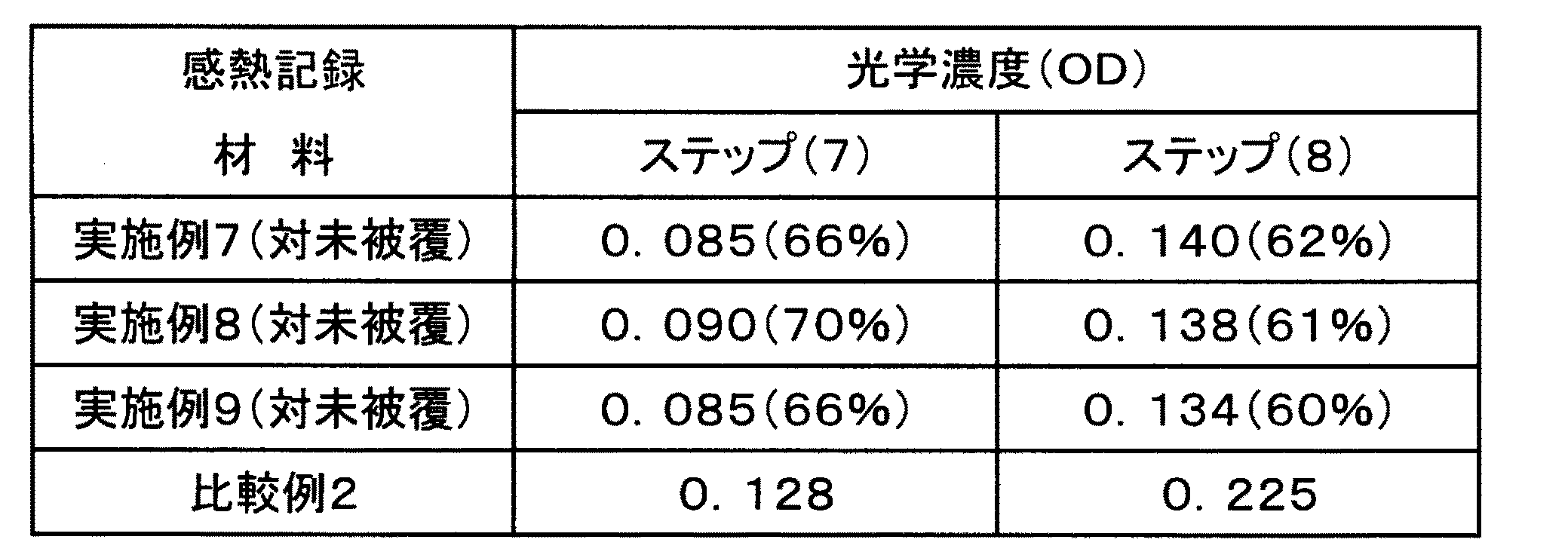
上記重合開始剤の親水性官能基としては、例えば、硫酸基、硝酸基、リン酸基、ホウ酸基、カルボキシル基等のアニオン性基、アミノ基等のカチオン性基、またはポリオキシエチレン、ポリオキシメチレン、ポリオキシプロピレン等のポリオキシアルキレン鎖構造等や水酸基等が挙げられ、疎水性基としてはアルキル基、フェニル基等が挙げられる。これらは単独で用いてもよいし、2種類以上を組み合わせて用いてもよい。
上記界面活性剤の含有量としては、本発明におけるモノマー1質量%に対して0.01〜30質量%が望ましく、0.01〜1質量%がさらに望ましい。
Examples of the hydrophilic functional group of the polymerization initiator include anionic groups such as sulfuric acid group, nitric acid group, phosphoric acid group, boric acid group and carboxyl group, cationic groups such as amino group, polyoxyethylene, poly Examples include polyoxyalkylene chain structures such as oxymethylene and polyoxypropylene, hydroxyl groups, and the like, and examples of the hydrophobic group include an alkyl group and a phenyl group. These may be used alone or in combination of two or more.
As content of the said surfactant, 0.01-30 mass% is desirable with respect to 1 mass% of monomers in this invention, and 0.01-1 mass% is further more desirable.
上記界面活性剤としては、特に重合性基を含有した重合性界面活性剤を用いることが好ましい。上記重合性界面活性剤を用いると、界面活性剤がカプセル壁表面に付近に多く存在しやすくなるため、該重合性界面活性剤と反対電荷を有する重合開始剤を選択することで、第2及び第3のポリマー成分を効率よくカプセル壁に修飾させることができる。 As the surfactant, it is particularly preferable to use a polymerizable surfactant containing a polymerizable group. When the above-mentioned polymerizable surfactant is used, a large amount of the surfactant is likely to be present in the vicinity of the capsule wall surface. Therefore, by selecting a polymerization initiator having a charge opposite to that of the polymerizable surfactant, the second and The third polymer component can be efficiently modified on the capsule wall.
上記重合性界面活性剤の重合性基としては、ラジカル重合性の二重結合が挙げられる。該二重結合としては、例えば、ビニル基、又は(メタ)アクリロイル基等が挙げられる。また、上記重合性界面活性剤の親水性官能基としては、例えば、硫酸基、硝酸基、燐酸基、ホウ酸基、カルボキシル基等のアニオン性基、アミノ基等のカチオン性基、又はポリオキシエチレン、ポリオキシメチレン、ポリオキシプロピレン等のポリオキシアルキレン鎖構造等や水酸基等が挙げられ、、疎水性基としてはアルキル基、フェニル基等が挙げられる。該重合性界面活性剤は、上記親水性官能基の種類等によってアニオン性、ノニオン性、カチオン性、又は両性にすることができる。更に、上記重合性界面活性剤の分子構造中のラジカル重合性の二重結合、親水性官能基及び疎水性基については、複数の種の構造、官能基を有していてもよい。
以下に、上記重合性界面活性剤の具体例を挙げる。
Examples of the polymerizable group of the polymerizable surfactant include a radical polymerizable double bond. Examples of the double bond include a vinyl group or a (meth) acryloyl group. Examples of the hydrophilic functional group of the polymerizable surfactant include an anionic group such as a sulfuric acid group, a nitric acid group, a phosphoric acid group, a boric acid group and a carboxyl group, a cationic group such as an amino group, and a polyoxy group. Examples include a polyoxyalkylene chain structure such as ethylene, polyoxymethylene, and polyoxypropylene, and a hydroxyl group. Examples of the hydrophobic group include an alkyl group and a phenyl group. The polymerizable surfactant can be anionic, nonionic, cationic, or amphoteric depending on the type of the hydrophilic functional group. Furthermore, the radical polymerizable double bond, hydrophilic functional group and hydrophobic group in the molecular structure of the polymerizable surfactant may have a plurality of types of structures and functional groups.
Specific examples of the polymerizable surfactant will be given below.
また、上記重合性界面活性剤としては、アニオン界面活性剤として、アデカリアソープSE(旭電化工業(株))、アクアロンHS,BC,KH(第一工業製薬(株))、アントックスMS(日本乳化剤(株))、アデカリアソープSDXやPP(旭電化工業(株))、ラテムルS(花王(株))、ハイテノールA(第一工業製薬(株))、エレミノールRS(三洋化成工業(株))、スピノマー(東洋曹達工業(株))等、非イオン界面活性剤として、アクアロンRN、ノイゲンN(第一工業製薬(株))、アデカリアソープNE(旭電化工業(株))など市販品を好適に用いることができる。これらは、単独で用いてもよいし、2種類以上を組み合わせて用いてもよい。 In addition, as the above-mentioned polymerizable surfactants, as anionic surfactants, Adekaria soap SE (Asahi Denka Kogyo Co., Ltd.), Aqualon HS, BC, KH (Daiichi Kogyo Seiyaku Co., Ltd.), Antox MS ( Nippon Emulsifier Co., Ltd.), Adekaria Soap SDX and PP (Asahi Denka Kogyo Co., Ltd.), Latemul S (Kao Co., Ltd.), Haitenol A (Daiichi Kogyo Seiyaku Co., Ltd.), Eleminol RS (Sanyo Chemical Industries) ), Spinomer (Toyo Soda Kogyo Co., Ltd.), etc. As nonionic surfactants, Aqualon RN, Neugen N (Daiichi Kogyo Seiyaku Co., Ltd.), Adekaria Soap NE (Asahi Denka Kogyo Co., Ltd.) A commercially available product can be suitably used. These may be used alone or in combination of two or more.
上記界面活性剤の含有量としては、本発明におけるモノマー1質量部に対して、1〜30質量部が好ましく、1〜20質量部が更に好ましい。 As content of the said surfactant, 1-30 mass parts is preferable with respect to 1 mass part of monomers in this invention, and 1-20 mass parts is still more preferable.
また、上記被覆ないし修飾工程において液組成物に本発明におけるモノマーを添加するタイミングとしては、上記カプセル壁形成工程におけるカプセル壁の形成後であれば特に限定はなく、例えば、カプセル壁形成後(乳化重合後)連続してモノマーを添加してもよい。また、第2及び第3のポリマー成分は単独種及び2種以上のいずれであってもよく、所望の性能に応じて適宜決定することができる。更に、必要に応じて、本発明におけるモノマーの重合反応途中に、該本発明におけるモノマーとは異なる種類の本発明におけるモノマーを更に添加し、異なる2種の第2及び第3のポリマー成分でヘテロ型にカプセル壁を修飾してもよい。 The timing for adding the monomer in the present invention to the liquid composition in the coating or modification step is not particularly limited as long as it is after the capsule wall is formed in the capsule wall forming step. Monomers may be added continuously after polymerization). Further, the second and third polymer components may be either a single species or two or more species, and can be appropriately determined according to desired performance. Furthermore, if necessary, during the polymerization reaction of the monomer in the present invention, a monomer of the present invention of a different type from the monomer of the present invention is further added, so that the heterogeneity of two different second and third polymer components The capsule wall may be modified in the mold.
上述した本発明の第1及び第2のマイクロカプセルの製造方法により製造された発明に係わるマイクロカプセルは、既述の如く、記録材料、特に感熱記録材料等において、発色剤を内包するマイクロカプセルとして好適に用いることができる。本発明のマイクロカプセルを用いて作製される感熱記録材料については、例えば、特開平8−337727号公報、特開2002−19304号公報、同2003−72241号公報、同2003−112479号公報、同2004−74728号公報等に詳しい。 As described above, the microcapsules according to the invention manufactured by the above-described first and second microcapsule manufacturing methods of the present invention are microcapsules containing a color former in a recording material, particularly a heat-sensitive recording material. It can be used suitably. As for the heat-sensitive recording material produced using the microcapsule of the present invention, for example, JP-A-8-337727, JP-A-2002-19304, 2003-72241, 2003-112479, Details are disclosed in, for example, 2004-74728.
以下、実施例により本発明を説明するが、本発明はこれらの実施例に限定されるものではない。尚、以下の実施例中の「部」及び「%」は総て「質量部」及び「質量%」を表す。 EXAMPLES Hereinafter, although an Example demonstrates this invention, this invention is not limited to these Examples. In the following examples, “part” and “%” all represent “part by mass” and “% by mass”.
[実施例1]
(マイクロカプセル壁の形成工程)
酢酸エチル16.2gにシアン発色の下記電子供与性無色染料(1)6.8gを溶解して、マイクロカプセル壁材として、商品名「タケネートD−110N」(三井武田ケミカル(株)製)14.2gとジイソプロピルナフタレン(呉羽科学工業(株)製の商品名「KMC−113」)5.4gを添加した。得られた溶液を、ポリビニルアルコール((株)クラレ製の商品名「PVA−217C」、8%水溶液)52.7gとドデシルスルホン酸ナトリウム(東京化成工業(株)製)0.39gと水8.5gの混合液中に添加した後、温度20℃で乳化分散して、乳化分散液を得た。次いで室温で、得られた乳化分散物に水61gとテトラエチレンペンタミン0.13gの混合液を加え、撹拌しながら温度65℃に加熱して3時間経過後に、電子供与性無色染料(1)を芯に含む平均粒径が0.4μmのマイクロカプセル含有液(I)を得た。尚、下記電子供与性無色染料(1)中、Prはプロピル基を表す。
[Example 1]
(Microcapsule wall formation process)
The following electron donating colorless dye (1) 6.8 g of cyan color was dissolved in 16.2 g of ethyl acetate, and the product name “Takenate D-110N” (manufactured by Mitsui Takeda Chemical Co., Ltd.) 14 was used as a microcapsule wall material. .2 g and 5.4 g of diisopropylnaphthalene (trade name “KMC-113” manufactured by Kureha Science Co., Ltd.) were added. 52.7 g of polyvinyl alcohol (trade name “PVA-217C” manufactured by Kuraray Co., Ltd., 8% aqueous solution), 0.39 g of sodium dodecyl sulfonate (manufactured by Tokyo Chemical Industry Co., Ltd.) and water 8 After adding to 5 g of the mixed solution, it was emulsified and dispersed at a temperature of 20 ° C. to obtain an emulsified dispersion. Next, at room temperature, a mixture of 61 g of water and 0.13 g of tetraethylenepentamine was added to the obtained emulsified dispersion, heated to 65 ° C. with stirring, and after 3 hours, an electron donating colorless dye (1) A microcapsule-containing liquid (I) having an average particle diameter of 0.4 μm was obtained. In the electron donating colorless dye (1) below, Pr represents a propyl group.
(第2のポリマー成分の被覆工程)
撹拌羽根、モノマー導入管、窒素導入管、及びキューラーを付属している三口フラスコに、水115gを入れ、スチレンスルホン酸ナトリウム(和光純薬工業(株)製)86mgを溶解させた。この溶液にブチルメタクリレート(東京化成工業(株)製)6gを滴下した。回転数300rpmで撹拌しながら、オイルバスにより反応溶液を温度70℃に加熱した。この懸濁液に過硫酸カリウム(和光純薬工業(株)製)114mgの水溶液2mLを滴下した。滴下が終了した後、6時間撹拌してポリマー微粒子懸濁液(II)を得た。ガスクロマトグラフィー(GC、島津製作所(株)製)により残存モノマーが無いことを確認した後、このポリマー粒子の粒径測定(堀場製作所(株)製の「LB−500」)を行ったところ、0.084μmであった。三角フラスコに上記から得られたマイクロカプセル液(I)10gを水26gに希釈し、上記から得られたポリマー微小粒子懸濁液(II)15.4gを滴下した後、温度70℃において4時間撹拌して、被覆マイクロカプセル懸濁液(III)を得た。
上記で得られた懸濁液(III)を少量採取し、走査型電子顕微鏡(SEM)によりその被覆状態を確認したところ、マイクロカプセルの表面がブチルメタクリレートにより均一に被覆されていることが確認できた。
(Second polymer component coating step)
In a three-necked flask equipped with a stirring blade, a monomer introduction tube, a nitrogen introduction tube, and a curler, 115 g of water was added, and 86 mg of sodium styrenesulfonate (manufactured by Wako Pure Chemical Industries, Ltd.) was dissolved. 6 g of butyl methacrylate (manufactured by Tokyo Chemical Industry Co., Ltd.) was added dropwise to this solution. While stirring at a rotation speed of 300 rpm, the reaction solution was heated to a temperature of 70 ° C. with an oil bath. To this suspension, 2 mL of an aqueous solution of 114 mg of potassium persulfate (manufactured by Wako Pure Chemical Industries, Ltd.) was added dropwise. After completion of dropping, the mixture was stirred for 6 hours to obtain a polymer fine particle suspension (II). After confirming that there was no residual monomer by gas chromatography (GC, manufactured by Shimadzu Corporation), particle size measurement of this polymer particle ("LB-500" manufactured by Horiba, Ltd.) was performed. It was 0.084 μm. In an Erlenmeyer flask, 10 g of the microcapsule liquid (I) obtained from the above was diluted with 26 g of water, and 15.4 g of the polymer microparticle suspension (II) obtained from the above was dropped, and then the temperature was 70 ° C. for 4 hours. Stirring gave a coated microcapsule suspension (III).
A small amount of the suspension (III) obtained above was collected, and when the coating state was confirmed with a scanning electron microscope (SEM), it was confirmed that the surface of the microcapsule was uniformly coated with butyl methacrylate. It was.
(第3のポリマー成分の形成(被覆)工程)
上記の被覆マイクロカプセル懸濁液(III)を室温まで冷却して、スチレン0.77gを添加し1時間撹拌した。ここに過硫酸カリウム20mg(和光純薬工業(株)製)の水溶液2mLを滴下した。この懸濁液を温度70℃まで昇温させて、4時間反応させた。得られたポリブチルメタクリレート/ポリスチレン被覆マイクロカプセルの少量を採取し、走査型電子顕微鏡(SEM)及び透過型電子顕微鏡(TEM)によりその被覆状態を確認したところ、マイクロカプセルの表面がポリブチルメタクリレート及びポリスチレンにより被覆されていることが確認できた。
(Step of forming (coating) third polymer component)
The coated microcapsule suspension (III) was cooled to room temperature, 0.77 g of styrene was added, and the mixture was stirred for 1 hour. 2 mL of an aqueous solution of 20 mg of potassium persulfate (manufactured by Wako Pure Chemical Industries, Ltd.) was added dropwise thereto. The suspension was heated to 70 ° C. and reacted for 4 hours. A small amount of the obtained polybutylmethacrylate / polystyrene coated microcapsules was collected, and the coating state was confirmed by a scanning electron microscope (SEM) and a transmission electron microscope (TEM). It was confirmed that it was coated with polystyrene.
[実施例2]
(マイクロカプセル壁の形成工程)
酢酸エチル16.2gにシアン発色の前記電子供与性無色染料(1)6.8gを溶解し、マイクロカプセル壁材として、商品名「タケネートD−110N」(三井武田ケミカル(株)製)14.2gとジイソプロピルナフタレン(呉羽化学工業(株)製の商品名「KMC−113」)5.4gを添加した。得られた溶液をポリビニルアルコール((株)クラレ製の商品名「PVA−217C」、8%水溶液、)52.7gとドデシルスルホン酸ナトリウム(東京化成製工業(株)製)0.39gと水8.5gの混合液中に添加した後、温度20℃で乳化分散して、乳化分散液を得た。次いで、室温で得られた乳化分散物に水61g、テトラエチレンペンタミン0.13gの混合液を加え、撹拌しながら温度65℃に加熱して3時間経過後に、電子供与性無色染料(1)を芯に含む平均粒径0.4μmのマイクロカプセル液(I)を得た。
[Example 2]
(Microcapsule wall formation process)
6.8 g of the above-mentioned electron-donating colorless dye (1) of cyan color development is dissolved in 16.2 g of ethyl acetate, and the product name “Takenate D-110N” (manufactured by Mitsui Takeda Chemical Co., Ltd.) is used as a microcapsule wall material. 2 g and 5.4 g of diisopropyl naphthalene (trade name “KMC-113” manufactured by Kureha Chemical Industry Co., Ltd.) were added. 52.7 g of polyvinyl alcohol (trade name “PVA-217C” manufactured by Kuraray Co., Ltd., 8% aqueous solution) and 0.39 g of sodium dodecyl sulfonate (manufactured by Tokyo Chemical Industry Co., Ltd.) and water were obtained. After adding to 8.5 g of the mixed solution, it was emulsified and dispersed at a temperature of 20 ° C. to obtain an emulsified dispersion. Next, a mixture of 61 g of water and 0.13 g of tetraethylenepentamine was added to the emulsified dispersion obtained at room temperature, heated to 65 ° C. with stirring, and after 3 hours, an electron donating colorless dye (1) A microcapsule liquid (I) having an average particle diameter of 0.4 μm was obtained.
(第2のポリマー成分の被覆工程)
撹拌羽、モノマー導入管、窒素導入管、及びキューラーを付属している三口フラスコに、上記から得られたマイクロカプセル液(I)10gを入れ、水26gで希釈し、ブチルメタクリレート0.95g(東京化成工業(株)製)を滴下した。回転数300rpmで撹拌しながら、オイルバスにより反応溶液を温度70℃に加熱した。その懸濁液に過硫酸カリウム18mg(和光純薬工業(株)製)の水溶液2mLを滴下した。滴下が終了した後、6時間撹拌して被覆マイクロカプセル懸濁液(IV)を得た。ガスクロマトグラフィー
(GC、島津製作所製)により残存モノマーが無いことを確認した。
上記から得られた懸濁液(IV)を少量採取し、走査型電子顕微鏡(SEM)によりその
被覆状態を確認したところ、マイクロカプセルの表面がブチルメタクリレートにより均一に被覆されていることが確認できた。
(Second polymer component coating step)
Into a three-necked flask equipped with a stirring blade, a monomer introduction tube, a nitrogen introduction tube, and a curler, 10 g of the microcapsule liquid (I) obtained above is diluted with 26 g of water, and 0.95 g of butyl methacrylate (Tokyo) Kasei Kogyo Co., Ltd.) was added dropwise. While stirring at a rotation speed of 300 rpm, the reaction solution was heated to a temperature of 70 ° C. with an oil bath. 2 mL of an aqueous solution of 18 mg potassium persulfate (manufactured by Wako Pure Chemical Industries, Ltd.) was added dropwise to the suspension. After completion of dropping, the mixture was stirred for 6 hours to obtain a coated microcapsule suspension (IV). It was confirmed by gas chromatography (GC, manufactured by Shimadzu Corporation) that there was no residual monomer.
When a small amount of the suspension (IV) obtained from the above was collected and the coating state was confirmed with a scanning electron microscope (SEM), it was confirmed that the surface of the microcapsule was uniformly coated with butyl methacrylate. It was.
(第3のポリマー成分の形成工程)
上記の被覆マイクロカプセル懸濁液(IV)を室温まで冷却し、スチレン0.77gを添
加し1時間撹拌した。そこに過硫酸カリウム20mg(和光純薬工業(株)製)の水溶液2mLを滴下した。この懸濁液を温度70℃まで昇温させ、4時間反応させた。得られたポリブチルメタクリレート/ポリスチレン被覆マイクロカプセルの少量を採取し、走査型電子顕微鏡(SEM)及び透過型電子顕微鏡(TEM)によりその被覆状態を確認したところ、マイクロカプセルの表面がポリブチルメタクリレート及びポリスチレンにより被覆されていることが確認できた。
(Formation process of the third polymer component)
The coated microcapsule suspension (IV) was cooled to room temperature, 0.77 g of styrene was added, and the mixture was stirred for 1 hour. 2 mL of an aqueous solution of 20 mg potassium persulfate (manufactured by Wako Pure Chemical Industries, Ltd.) was added dropwise thereto. The suspension was heated to a temperature of 70 ° C. and reacted for 4 hours. A small amount of the obtained polybutylmethacrylate / polystyrene coated microcapsules was collected, and the coating state was confirmed by a scanning electron microscope (SEM) and a transmission electron microscope (TEM). It was confirmed that it was coated with polystyrene.
[実施例3]
実施例1において、本発明におけるモノマーとして、ブチルメタクリレートに代えて、ベンジルメタクリレートを同量用いたこと以外は、実施例1と同様にして反応させ、ポリプロピルメタクリレートとポリスチレンで被覆されたマイクロカプセルを得た。実施例1と同様の手法により、ポリプロピルメタクリレート及びポリスチレンで被覆されたマイクロカプセルであることが確認できた。
[Example 3]
In Example 1, as a monomer in the present invention, a microcapsule coated with polypropyl methacrylate and polystyrene was reacted in the same manner as in Example 1 except that the same amount of benzyl methacrylate was used instead of butyl methacrylate. Obtained. In the same manner as in Example 1, it was confirmed that the microcapsule was coated with polypropyl methacrylate and polystyrene.
[実施例4]
実施例1において、本発明におけるモノマーとして、ブチルメタクリレートに代えて、プロピルメタクリレートを同量用いたこと以外は、実施例1と同様にして反応させ、ポリプロピルメタクリレートとポリスチレンで被覆されたマイクロカプセルを得た。実施例1と同様の手法により、ポリプロピルメタクリレート及びポリスチレンで被覆されたマイクロカプセルであることが確認できた。
[Example 4]
In Example 1, a microcapsule coated with polypropyl methacrylate and polystyrene was reacted in the same manner as in Example 1 except that the same amount of propyl methacrylate was used instead of butyl methacrylate as the monomer in the present invention. Obtained. In the same manner as in Example 1, it was confirmed that the microcapsule was coated with polypropyl methacrylate and polystyrene.
[実施例5]
実施例1において、本発明におけるモノマーとして、スチレンに代えて、メタクリル酸メチルを同量用いたこと以外は、実施例1と同様にして反応させ、ポリブチルメタクリレート/ポリメタクリル酸メチルで被覆されたマイクロカプセルを得た。実施例1と同様の手法により、ポリブチルメタクリレート及びポリメタクリル酸メチルで被覆されたマイクロカプセルであることが確認できた。
[Example 5]
In Example 1, instead of styrene as the monomer in the present invention, the reaction was carried out in the same manner as in Example 1 except that the same amount of methyl methacrylate was used, and it was coated with polybutyl methacrylate / polymethyl methacrylate. Microcapsules were obtained. In the same manner as in Example 1, it was confirmed that the microcapsule was coated with polybutyl methacrylate and polymethyl methacrylate.
[実施例6]
実施例1において、過硫酸カリウムに代えて、「V−50」(和光純薬工業(株)製)を同量用いたこと以外は、実施例1と同様にして反応させ、ポリブチルメタクリレート/ポリスチレンで被覆されたマイクロカプセルを得た。実施例1と同様の手法により、ポリブチルメタクリレートとポリスチレンで被覆されたマイクロカプセルであることが確認できた。
[Example 6]
In Example 1, instead of potassium persulfate, the reaction was carried out in the same manner as in Example 1 except that the same amount of “V-50” (manufactured by Wako Pure Chemical Industries, Ltd.) was used. Microcapsules coated with polystyrene were obtained. In the same manner as in Example 1, it was confirmed that the microcapsule was coated with polybutyl methacrylate and polystyrene.
[比較例1]
実施例1において得られたマイクロカプセル含有液(I)に対して、第2及び第3のポリマーによる被覆工程を行なわず、マイクロカプセルとして第2及び第3のポリマーによる被覆がないマイクロカプセルを用いた。
[Comparative Example 1]
The microcapsule-containing liquid (I) obtained in Example 1 is not subjected to the coating step with the second and third polymers, and the microcapsules without the coating with the second and third polymers are used as the microcapsules. It was.
[実施例7]
(感熱記録材料の作製)
(1)フタル化ゼラチン水溶液の調製
フタル化ゼラチン(新田ゼラチン(株)製の商品名「#801ゼラチン」)32部、1,2−ベンゾチアゾリン−3−オン(大東化学工業所(株)製、3.5%メタノール溶液)0.9143部、及びイオン交換水367.1部を混合し、温度40℃にて溶解して、フタル化ゼラチン水溶液を得た。
[Example 7]
(Preparation of thermal recording material)
(1) Preparation of aqueous solution of phthalated gelatin Phtalinated gelatin (trade name “# 801 gelatin” manufactured by Nitta Gelatin Co., Ltd.) 32 parts, 1,2-benzothiazolin-3-one (Daito Chemical Industry Co., Ltd.) Manufactured, 3.5% methanol solution) 0.9143 parts and ion-exchanged water 367.1 parts were mixed and dissolved at a temperature of 40 ° C. to obtain a phthalated gelatin aqueous solution.
(2)サリチル酸金属塩分散液の調製
上記より得たフタル化ゼラチン水溶液3.75部に、イオン交換水10.02部、下記サリチル酸金属塩(電子受容性化合物)5.0部、及び2−エチルヘキシルコハク酸ナトリウムの2%水溶液1.25部を混合して、ボールミルを用いて一晩かけて分散させ、サリチル酸金属塩分散液を得た。この分散液中で分散状態にあるサリチル酸金属塩の平均粒子径は、粒径測定器「LA−910」(堀場製作所(株)製)を用いて測定したところ、0.5μmであり、固形分濃度は26.3%であった。
(2) Preparation of Salicylic Acid Metal Salt Dispersion To 3.75 parts of the phthalated gelatin aqueous solution obtained above, 10.02 parts of ion-exchanged water, 5.0 parts of the following salicylic acid metal salt (electron-accepting compound), and 2- 1.25 parts of a 2% aqueous solution of sodium ethylhexyl succinate was mixed and dispersed overnight using a ball mill to obtain a salicylic acid metal salt dispersion. The average particle diameter of the salicylic acid metal salt in a dispersed state in this dispersion is 0.5 μm when measured using a particle size measuring device “LA-910” (manufactured by Horiba, Ltd.), The concentration was 26.3%.
(3)感熱記録層用塗布液の調製
実施例1で得られたポリブチルメタクリレート/ポリスチレン被覆の電子供与性無色染料内包マイクロカプセル液と上記サリチル酸金属塩分散液とを、電子供与性染料前駆体/サリチル酸金属塩の質量比が1/20となる様に混合して、感熱記録層用塗布液を得た。
(3) Preparation of coating solution for thermosensitive recording layer The polybutyl methacrylate / polystyrene-coated electron-donating colorless dye-encapsulated microcapsule solution obtained in Example 1 and the above salicylic acid metal salt dispersion were used as the electron-donating dye precursor. / The salicylic acid metal salt was mixed so that the mass ratio was 1/20 to obtain a thermal recording layer coating solution.
(4)保護層用塗布液の調製
ビニルアルコール/アルキルビニルエーテル共重合体(電気化学工業(株)製の商品名「EP−130」)160部、アルキルスルホン酸ナトリウムとポリオキシエチレンアルキルエーテル燐酸エステルとの混合物(東邦化学工業(株)製の商品名「ネオスコアCM−57」、54%水溶液)8.74部、及びイオン交換水3832部を混合して、温度90℃の下で1時間溶解して、均一な保護層用塗布液を得た。
(4) Preparation of coating solution for protective layer 160 parts of vinyl alcohol / alkyl vinyl ether copolymer (trade name “EP-130” manufactured by Denki Kagaku Kogyo Co., Ltd.), sodium alkyl sulfonate and polyoxyethylene alkyl ether phosphate (Mixed with Toho Chemical Co., Ltd., trade name “Neoscore CM-57”, 54% aqueous solution) and 3832 parts of ion-exchanged water, dissolved at 90 ° C. for 1 hour. Thus, a uniform protective layer coating solution was obtained.
(5)感熱記録材料の作製
支持体として75μm厚のポリエチレンテレフタレート(PET)支持体を用意し、該PET支持体上に、メイヤーバーを用いて、上記の感熱記録層用塗布液を電子供与性染料前駆体の固形塗布量が0.361g/cm2となる様に塗布し乾燥して、感熱記録層を形成した。次いで、該感熱記録層上に、上記の保護層用塗布液を固形塗布量が1.39g/cm2となる様に塗布し乾燥して、実施例1のマイクロカプセルを用いた感熱記録材料(1)を得た。
(5) Preparation of thermosensitive recording material A 75 μm-thick polyethylene terephthalate (PET) support is prepared as a support, and the above thermal recording layer coating solution is electron donated onto the PET support using a Mayer bar. The dye precursor was applied in a solid coating amount of 0.361 g / cm 2 and dried to form a heat-sensitive recording layer. Next, on the heat-sensitive recording layer, the protective layer coating solution is applied so that the solid coating amount is 1.39 g / cm 2 and dried, and the heat-sensitive recording material using the microcapsules of Example 1 ( 1) was obtained.
[実施例8]
実施例7において、実施例1で得られた電子供与性無色染料内包マイクロカプセル液の代りに、実施例2で得られたポリブチルメタクリレート/ポリスチレン被覆の電子供与性無色染料内包マイクロカプセル液を用いて感熱記録層用塗布液を調製したこと以外は、実施例7と同様にして感熱記録材料(2)を得た。
[Example 8]
In Example 7, instead of the electron-donating colorless dye-encapsulated microcapsule solution obtained in Example 1, the polybutylmethacrylate / polystyrene-coated electron-donating colorless dye-encapsulated microcapsule solution obtained in Example 2 was used. Thus, a thermosensitive recording material (2) was obtained in the same manner as in Example 7 except that the thermosensitive recording layer coating solution was prepared.
[実施例9]
実施例7において、実施例1で得られた電子供与性無色染料内包マイクロカプセル液の代りに、実施例3で得られたポリプロピルメタクリレート/ポリスチレン被覆の電子供与性無色染料内包マイクロカプセル液を用いて感熱記録層用塗布液を調製したこと以外は、実施例7と同様にして感熱記録材料(3)を得た。
[Example 9]
In Example 7, instead of the electron-donating colorless dye-encapsulated microcapsule solution obtained in Example 1, the polypropylmethacrylate / polystyrene-coated electron-donating colorless dye-encapsulated microcapsule solution obtained in Example 3 was used. Thus, a thermosensitive recording material (3) was obtained in the same manner as in Example 7 except that the thermosensitive recording layer coating solution was prepared.
[比較例2]
実施例7において、実施例1で得られた電子供与性無色染料内包マイクロカプセル液の代りに、比較例1で得られたポリマー被覆のない電子供与性無色染料内包マイクロカプセル液を用いて感熱記録層用塗布液を調製したこと以外は、実施例7と同様にして比較例の感熱記録材料(4)を得た。
[Comparative Example 2]
In Example 7, instead of the electron-donating colorless dye-encapsulated microcapsule liquid obtained in Example 1, the electron-donating colorless dye-encapsulated microcapsule liquid without polymer coating obtained in Comparative Example 1 was used for thermal recording. A comparative heat-sensitive recording material (4) was obtained in the same manner as in Example 7 except that the layer coating solution was prepared.
(試験評価)
上記で作製した各感熱記録材料にパルス幅1ms、解像度150dpi(R=2471Ω、V=23.9V)の条件で20ステップのエネルギーを印加して、画像を形成した。この際、各ステップにおいて感熱記録層上に形成された画像のODを反射濃度計(Xライト社製の商品名「X−rite310TR」)により測定した。各感熱記録材料について、足感度(ステップ7(56.3mJ/mm2)及びステップ8(64.5mJ/mm2))の光学濃度(OD)を比較した結果を下記の表1に示す。ここで、足感度は低いほど好ましい。
(Test evaluation)
An image was formed by applying 20-step energy to each of the heat-sensitive recording materials prepared above under the conditions of a pulse width of 1 ms and a resolution of 150 dpi (R = 2471Ω, V = 23.9V). At this time, the OD of the image formed on the heat-sensitive recording layer in each step was measured with a reflection densitometer (trade name “X-rite 310TR” manufactured by X-Light). Table 1 below shows the results of comparing the optical density (OD) of foot sensitivity (step 7 (56.3 mJ / mm 2 ) and step 8 (64.5 mJ / mm 2 )) for each heat-sensitive recording material. Here, the lower the foot sensitivity, the better.
上記の表1から分かるように、実施例7〜9と比較例2との比較から、本発明の製法で得られたマイクロカプセルを用いた感熱記録材料(1〜3)は、足感度が低いことが判明し、この為、低温領域での発色が抑えられ、発色感度の傾きが大きくなり、発色の濁りの少ない鮮やかな画像を得ることができた。この様に、本発明によれば、マイクロカプセルを所望のポリマー成分によって被覆(修飾)することで、形成されたマイクロカプセルに足感度の低下など所望の性能を付与することができる。 As can be seen from Table 1 above, from the comparison between Examples 7 to 9 and Comparative Example 2, the heat-sensitive recording materials (1 to 3) using the microcapsules obtained by the production method of the present invention have low foot sensitivity. As a result, color development in a low temperature region was suppressed, the slope of color development sensitivity was increased, and a vivid image with less color turbidity could be obtained. As described above, according to the present invention, by coating (modifying) the microcapsule with a desired polymer component, desired performance such as a decrease in foot sensitivity can be imparted to the formed microcapsule.
Claims (11)
Priority Applications (1)
| Application Number | Priority Date | Filing Date | Title |
|---|---|---|---|
| JP2004112599A JP2005296715A (en) | 2004-04-06 | 2004-04-06 | Method for manufacturing microcapsule, microcapsule and recoding material |
Applications Claiming Priority (1)
| Application Number | Priority Date | Filing Date | Title |
|---|---|---|---|
| JP2004112599A JP2005296715A (en) | 2004-04-06 | 2004-04-06 | Method for manufacturing microcapsule, microcapsule and recoding material |
Publications (1)
| Publication Number | Publication Date |
|---|---|
| JP2005296715A true JP2005296715A (en) | 2005-10-27 |
Family
ID=35328914
Family Applications (1)
| Application Number | Title | Priority Date | Filing Date |
|---|---|---|---|
| JP2004112599A Pending JP2005296715A (en) | 2004-04-06 | 2004-04-06 | Method for manufacturing microcapsule, microcapsule and recoding material |
Country Status (1)
| Country | Link |
|---|---|
| JP (1) | JP2005296715A (en) |
Cited By (1)
| Publication number | Priority date | Publication date | Assignee | Title |
|---|---|---|---|---|
| JP2007244935A (en) * | 2006-03-13 | 2007-09-27 | Kagoshima Univ | Method for producing microcapsules |
-
2004
- 2004-04-06 JP JP2004112599A patent/JP2005296715A/en active Pending
Cited By (1)
| Publication number | Priority date | Publication date | Assignee | Title |
|---|---|---|---|---|
| JP2007244935A (en) * | 2006-03-13 | 2007-09-27 | Kagoshima Univ | Method for producing microcapsules |
Similar Documents
| Publication | Publication Date | Title |
|---|---|---|
| JP2004337839A (en) | Microcapsule and its production method | |
| US8058320B2 (en) | Thermally foamable microsphere, production method thereof, use thereof, composition containing the same, and article | |
| US8071214B2 (en) | Particle with selected permeance wall | |
| Minami et al. | Preparation of hollow polymer particles with a single hole in the shell by SaPSeP | |
| CN115532185B (en) | A polyaniline double-layer microcapsule with barrier properties | |
| JP2003527241A (en) | Method for producing microcapsules with improved wall properties | |
| JP4620812B2 (en) | Method for producing foamable microspheres | |
| JPS62209524A (en) | Photosensitive material | |
| JPH03170506A (en) | Dispersing agent for forming amine-formal- dehyde microcapsule, microcapsule using said despersing agent, image forming sheet and formation of microcapsule | |
| CN103073663B (en) | A kind of polymer emulsion containing infrared absorbing dye and preparation method thereof | |
| JPS63221340A (en) | Microcapsule sealed photosensitive composition using image formation initiator | |
| JP4025630B2 (en) | Electrophotographic developer | |
| US4882259A (en) | Photosensitive imaging material employing photosensitive microcapsules containing a solid diluent | |
| JPS6087321A (en) | Improved photosensitive microcapsule and manufacture thereof | |
| JP2007041440A (en) | Microcapsule-housing capsule, composition containing microcapsule-housing capsule, method for producing microcapsule-housing capsule and image forming method | |
| JP2003280183A (en) | Photosensitive microcapsule, method for producing the same and image forming sheet having the same | |
| JPH0651110B2 (en) | Oil drop of hydrophobic substance and its preparation method, and microcapsule and its preparation method | |
| JP2004361557A (en) | Recording material | |
| JP2702004B2 (en) | Recording material | |
| JP2007323027A (en) | Method for manufacturing toner for electrostatic image development, and toner for electrostatic image development and developer for electrostatic image development manufactured by using the same | |
| JP2005138369A (en) | Thermal recording material | |
| JP3391588B2 (en) | Antihalation layer and photosensitive / thermosensitive recording material using the same | |
| JPH04138461A (en) | Manufacture of fine photosensitive particles, microcapsules, and transfer recording medium | |
| JPH04201288A (en) | Pressure-sensitive recording sheet | |
| JPH06106051A (en) | Microcapsule manufacturing method |
Legal Events
| Date | Code | Title | Description |
|---|---|---|---|
| A711 | Notification of change in applicant |
Free format text: JAPANESE INTERMEDIATE CODE: A712 Effective date: 20070217 |