JP2004040780A - Method of scrambling video signal and canceling scramble, system for performing the method, coder, decoder, broadcast server and data medium - Google Patents
Method of scrambling video signal and canceling scramble, system for performing the method, coder, decoder, broadcast server and data medium Download PDFInfo
- Publication number
- JP2004040780A JP2004040780A JP2003143298A JP2003143298A JP2004040780A JP 2004040780 A JP2004040780 A JP 2004040780A JP 2003143298 A JP2003143298 A JP 2003143298A JP 2003143298 A JP2003143298 A JP 2003143298A JP 2004040780 A JP2004040780 A JP 2004040780A
- Authority
- JP
- Japan
- Prior art keywords
- video signal
- scrambling
- tattooing
- key
- descrambling
- Prior art date
- Legal status (The legal status is an assumption and is not a legal conclusion. Google has not performed a legal analysis and makes no representation as to the accuracy of the status listed.)
- Granted
Links
Images
Classifications
-
- H—ELECTRICITY
- H04—ELECTRIC COMMUNICATION TECHNIQUE
- H04N—PICTORIAL COMMUNICATION, e.g. TELEVISION
- H04N21/00—Selective content distribution, e.g. interactive television or video on demand [VOD]
- H04N21/40—Client devices specifically adapted for the reception of or interaction with content, e.g. set-top-box [STB]; Operations thereof
- H04N21/43—Processing of content or additional data, e.g. demultiplexing additional data from a digital video stream; Elementary client operations, e.g. monitoring of home network or synchronising decoder's clock; Client middleware
- H04N21/44—Processing of video elementary streams, e.g. splicing a video clip retrieved from local storage with an incoming video stream or rendering scenes according to encoded video stream scene graphs
- H04N21/4408—Processing of video elementary streams, e.g. splicing a video clip retrieved from local storage with an incoming video stream or rendering scenes according to encoded video stream scene graphs involving video stream encryption, e.g. re-encrypting a decrypted video stream for redistribution in a home network
-
- G—PHYSICS
- G06—COMPUTING OR CALCULATING; COUNTING
- G06T—IMAGE DATA PROCESSING OR GENERATION, IN GENERAL
- G06T1/00—General purpose image data processing
- G06T1/0021—Image watermarking
- G06T1/0085—Time domain based watermarking, e.g. watermarks spread over several images
-
- H—ELECTRICITY
- H04—ELECTRIC COMMUNICATION TECHNIQUE
- H04N—PICTORIAL COMMUNICATION, e.g. TELEVISION
- H04N19/00—Methods or arrangements for coding, decoding, compressing or decompressing digital video signals
- H04N19/48—Methods or arrangements for coding, decoding, compressing or decompressing digital video signals using compressed domain processing techniques other than decoding, e.g. modification of transform coefficients, variable length coding [VLC] data or run-length data
-
- H—ELECTRICITY
- H04—ELECTRIC COMMUNICATION TECHNIQUE
- H04N—PICTORIAL COMMUNICATION, e.g. TELEVISION
- H04N19/00—Methods or arrangements for coding, decoding, compressing or decompressing digital video signals
- H04N19/60—Methods or arrangements for coding, decoding, compressing or decompressing digital video signals using transform coding
- H04N19/61—Methods or arrangements for coding, decoding, compressing or decompressing digital video signals using transform coding in combination with predictive coding
-
- H—ELECTRICITY
- H04—ELECTRIC COMMUNICATION TECHNIQUE
- H04N—PICTORIAL COMMUNICATION, e.g. TELEVISION
- H04N21/00—Selective content distribution, e.g. interactive television or video on demand [VOD]
- H04N21/20—Servers specifically adapted for the distribution of content, e.g. VOD servers; Operations thereof
- H04N21/23—Processing of content or additional data; Elementary server operations; Server middleware
- H04N21/234—Processing of video elementary streams, e.g. splicing of video streams or manipulating encoded video stream scene graphs
- H04N21/2347—Processing of video elementary streams, e.g. splicing of video streams or manipulating encoded video stream scene graphs involving video stream encryption
- H04N21/23476—Processing of video elementary streams, e.g. splicing of video streams or manipulating encoded video stream scene graphs involving video stream encryption by partially encrypting, e.g. encrypting the ending portion of a movie
-
- H—ELECTRICITY
- H04—ELECTRIC COMMUNICATION TECHNIQUE
- H04N—PICTORIAL COMMUNICATION, e.g. TELEVISION
- H04N21/00—Selective content distribution, e.g. interactive television or video on demand [VOD]
- H04N21/40—Client devices specifically adapted for the reception of or interaction with content, e.g. set-top-box [STB]; Operations thereof
- H04N21/43—Processing of content or additional data, e.g. demultiplexing additional data from a digital video stream; Elementary client operations, e.g. monitoring of home network or synchronising decoder's clock; Client middleware
- H04N21/44—Processing of video elementary streams, e.g. splicing a video clip retrieved from local storage with an incoming video stream or rendering scenes according to encoded video stream scene graphs
- H04N21/4405—Processing of video elementary streams, e.g. splicing a video clip retrieved from local storage with an incoming video stream or rendering scenes according to encoded video stream scene graphs involving video stream decryption
-
- H—ELECTRICITY
- H04—ELECTRIC COMMUNICATION TECHNIQUE
- H04N—PICTORIAL COMMUNICATION, e.g. TELEVISION
- H04N21/00—Selective content distribution, e.g. interactive television or video on demand [VOD]
- H04N21/40—Client devices specifically adapted for the reception of or interaction with content, e.g. set-top-box [STB]; Operations thereof
- H04N21/43—Processing of content or additional data, e.g. demultiplexing additional data from a digital video stream; Elementary client operations, e.g. monitoring of home network or synchronising decoder's clock; Client middleware
- H04N21/44—Processing of video elementary streams, e.g. splicing a video clip retrieved from local storage with an incoming video stream or rendering scenes according to encoded video stream scene graphs
- H04N21/4405—Processing of video elementary streams, e.g. splicing a video clip retrieved from local storage with an incoming video stream or rendering scenes according to encoded video stream scene graphs involving video stream decryption
- H04N21/44055—Processing of video elementary streams, e.g. splicing a video clip retrieved from local storage with an incoming video stream or rendering scenes according to encoded video stream scene graphs involving video stream decryption by partially decrypting, e.g. decrypting a video stream that has been partially encrypted
-
- H—ELECTRICITY
- H04—ELECTRIC COMMUNICATION TECHNIQUE
- H04N—PICTORIAL COMMUNICATION, e.g. TELEVISION
- H04N21/00—Selective content distribution, e.g. interactive television or video on demand [VOD]
- H04N21/80—Generation or processing of content or additional data by content creator independently of the distribution process; Content per se
- H04N21/83—Generation or processing of protective or descriptive data associated with content; Content structuring
- H04N21/835—Generation of protective data, e.g. certificates
- H04N21/8358—Generation of protective data, e.g. certificates involving watermark
-
- H—ELECTRICITY
- H04—ELECTRIC COMMUNICATION TECHNIQUE
- H04N—PICTORIAL COMMUNICATION, e.g. TELEVISION
- H04N7/00—Television systems
- H04N7/16—Analogue secrecy systems; Analogue subscription systems
- H04N7/167—Systems rendering the television signal unintelligible and subsequently intelligible
- H04N7/1675—Providing digital key or authorisation information for generation or regeneration of the scrambling sequence
-
- G—PHYSICS
- G06—COMPUTING OR CALCULATING; COUNTING
- G06T—IMAGE DATA PROCESSING OR GENERATION, IN GENERAL
- G06T2201/00—General purpose image data processing
- G06T2201/005—Image watermarking
- G06T2201/0052—Embedding of the watermark in the frequency domain
Landscapes
- Engineering & Computer Science (AREA)
- Multimedia (AREA)
- Signal Processing (AREA)
- Computer Security & Cryptography (AREA)
- Physics & Mathematics (AREA)
- General Physics & Mathematics (AREA)
- Theoretical Computer Science (AREA)
- Two-Way Televisions, Distribution Of Moving Picture Or The Like (AREA)
Abstract
Description
媒体
【技術分野】
【0001】
本発明は、一斉送信サーバによって送信される視聴覚情報へのアクセスを制御するために、暗号化キーを使用してビデオ信号にスクランブルをかける方法に関する。
【0002】
本発明は、ビデオ信号をスクランブル解除する方法、および、前記方法を実施するためのシステム、符号化器、復号化器、一斉送信サーバ、および、データ媒体も提供する。
【背景技術】
【0003】
視聴覚情報へのアクセスを制御するために実施されるスクランブル方法は数多く存在する。例えば、1つの解決策は、デジタルビデオ一斉送信(DVB)協議会のDVBスクランブリング法によって提供される。
【0004】
これらの方法は、ビデオ信号にスクランブルをかけるために暗号化キーを一般に利用する。スクランブル化は、一般に、スクランブルをかけていないストリームと暗号化キーとの間に排他OR(XOR)操作を行うことに基づく。
【0005】
例えば、番組を一斉送信することに関して、視聴覚情報へのアクセスを所望するユーザは、スクランブルがかけられた信号を、中でも暗号化キーと関連した暗号解読キーを搬送するMPEG−2 伝送ストリーム(MPEG−2 TS)パケットを表す権利付与制御メッセージ(Entitlement Control Message(ECM))型のメッセージとともに受信する。ビデオをスクランブル解除するために使用するのは暗号解読キーである。
【0006】
残念ながら、このタイプのスクランブル化の方法は、結果として、スクランブルがかけられているが視聴できないビデオ信号をユーザに供給することになる。スクランブルがかけられたビデオ信号は、スクランブル解除の前にユーザが視聴覚コンテンツについて何らかのヒントを得ることを可能にしない。
【考案の開示】
【発明が解決しようとする課題】
【0007】
本発明は、ビデオコンテンツにスクランブルをかけることを可能にする一方、それにもかかわらず、コンテンツがある程度は可視のままであることを確実にするビデオ信号のスクランブル解除法を提供することによって、この欠点を救済しようと試みる。
【0008】
この目的のために、本発明は、暗号化キーから導出されるマーキングキーを使用して、ビデオ信号にタトゥーイング関数を適用することによってビデオ信号にスクランブルをかけ、前記タトゥーイング関数が、ビデオ信号におけるタトゥーイングの可視性の調整を可能にするタトゥーイングの振幅を調節するためのパラメータを含むことを特徴とする上記に詳述したタイプのスクランブルをかける方法を提供する。
【課題を解決するための手段】
【0009】
本発明のスクランブをかける方法は、1つまたは複数の以下の特徴をさらに含むことができる。
−視聴覚情報が一斉送信サーバからアクセス可能であること。
−視聴覚情報が読出しのためにアクセス可能であるデータ媒体に保存されること。
−タトゥーイング関数が、ビデオ信号を符号化することによって得られる動きベクトルに適用されること。
−タトゥーイング関数が前記動きベクトルの周波数表示に適用されること。
−スクランブルをかけることが以下のステップを含むこと。
・ビデオ信号を符号化することによって得られる動きベクトルのセットから動きベクトルを選択するステップと、
・選択されたベクトルの横軸成分および縦軸成分を、それぞれ横軸ベクトルおよび縦軸ベクトルと呼ぶ2つのベクトルに分離するステップと、
・一次元離散余弦変換(DCT)型変換を前記2つのベクトルの各々に適用するステップと、
・マーキングキーを使用して、タトゥーイング関数を横軸ベクトルおよび縦軸ベクトルのDCT変換の成分に適用するステップ、および、
・タトゥーイングの後に、選択された動きベクトルに対して新しい値を提供するために、横軸ベクトルおよび縦軸ベクトルに逆DCT変換を行い、それらのベクトルを再結合させるステップ。
−動きベクトルが、符号化されたビデオストリームから直接抽出され、符号化された後にビデオ信号にスクランブルをかけられること。
−ビデオ信号を符号化する間に動きベクトルが選択され、ビデオ信号が符号化される間にビデオ信号にスクランブルがかけられること。
−スクランブルをかけることが、オーサの権利に関する情報を含むタトゥーイングキーを使用してタトゥーイング関数を適用することによって、ビデオ信号の不可視タトゥーイングに組み合されること。
−オーサの権利の情報がビデオの識別子を含み、オーサの識別子がビデオに対する権利を有すること。
−ビデオ信号にスクランブルをかけるために、マーキングキーの代わりに使用される新しいマーキングキーを生成するための一対一対応を提供する関数を使用して、前記タトゥーイングキーがマーキングキーに結合されること。
−ビデオ信号がMPEG−2またはMPEG−4に準拠して符号化されること。
−マーキングキーにスペクトル拡散が行われること。および、
−先行する画像のマーキングキーの置換によって得られるマーキングキーによって、各画像にスクランブルをかけること。
【0010】
本発明は、暗号解読キーを使用してビデオ信号のスクランブルを解除する方法であって、スクランブル解除が上記に説明したスクランブルをかける方法によって、スクランブルをかけられた信号に行われることを特徴とするスクランブル解除方法も提供する。
【0011】
スクランブル解除の方法は1つまたは複数の以下の特徴を含むことができる。
−本方法が以下のステップを含むこと。
・ビデオ信号を符号化することによって得られる動きベクトルのセットから動きベクトルを選択するステップ。
・選択されたベクトルの横軸成分および縦軸成分を、それぞれ横軸ベクトルおよび縦軸ベクトルと呼ぶ2つのベクトルに分離するステップ。
・一次元DCT型変換を前記2つのベクトルの各々に適用するステップ。
・暗号解除キーから導出されるマーキングキーを使用して、タトゥーイング関数を横軸ベクトルおよび縦軸ベクトルのDCT変換の成分に適用するステップ。および、
・横軸ベクトルおよび縦軸ベクトルに逆DCT変換を適用し、選択された動きベクトルの新しい値を作成するためにそれらのベクトルを再結合させるステップ。
−先行する画像のマーキングキーの置換によって得られるマーキングキーによって、各画像がスクランブル解除されること。
【0012】
本発明は、動きを解析するための手段を含む符号化器であって、上記に説明したスクランブル方法を実施することによって、ビデオ信号にスクランブルをかけるための手段をさらに含むことを特徴とする符号化器も提供する。
【0013】
本発明は、上記に説明したスクランブル解除方法を実施することによって、ビデオ信号をスクランブル解除するための手段を含むことを特徴とする復号化器も提供する。
【0014】
本発明は、ビデオ信号を一斉送信するためのサーバであって、上記に説明したスクランブル方法を実施することによって、ビデオ信号にスクランブルをかけるための手段を含むことを特徴とするサーバも提供する。
【0015】
本発明は、情報伝送ネットワークに一斉送信されるビデオ信号を受信するための前記ネットワークへの接続のためのアクセスターミナルであって、上記に説明したスクランブル解除の方法を実施することによって、ビデオ信号をスクランブル解除するための手段を含むことを特徴とするターミナルも提供する。
【0016】
本発明は、上記に説明したスクランブル方法を使用して、スクランブルがかけられたビデオ信号を保存するための手段を含むことを特徴とするコンピュータ読出し可能なデータ媒体も提供する。
【0017】
最後に、本発明は、視聴覚情報へのアクセスを制御するために暗号化キーを使用して、ビデオ信号にスクランブルをかけ、スクランブルを解除するシステムであって、ビデオ信号を保存するための保存手段に関連するビデオ信号を一斉送信するための一斉送信サーバを含み、ビデオ信号を一斉送信するための情報伝送ネットワークに接続され、上記に説明したスクランブルをかける方法を実施することによって、ビデオ信号にスクランブルをかけるための手段を含むことを特徴とするシステムも提供する。
【0018】
本発明のスクランブルをかけ、スクランブルを解除するシステムは、情報伝送ネットワークに接続されるアクセスターミナルを含み、前記アクセスターミナルが、上記に説明したスクランブル解除の方法を実施することによって、ビデオ信号をスクランブル解除するための手段を含むという特徴も含むことができる。
【0019】
本発明は、純粋に実施例として与え、添付の図面を参照して行う以下の説明からさらに良く理解される。
【発明を実施するための最良の形態】
【0020】
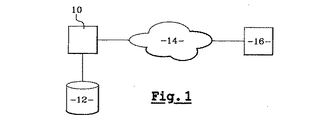
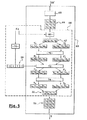
図1に示すシステムは、システムに接続されたデータベース12内に保存される視聴覚情報を一斉送信するためのサーバ10を含む。
【0021】
一斉送信サーバ10は従来型のものであり、例えば、一斉送信される視聴覚情報にスクランブルをかける方法を実施するためのランダムアクセスメモリ(RAM)および読出し専用メモリ(ROM)に接続される中央演算処理装置(CPU)を含む。
【0022】
一斉送信サーバ10は、インターネットなどの情報伝送ネットワーク14にも接続される。したがって、スクランブルをかけられた視聴覚情報は、このネットワークを介して少なくとも1つの識別されたクライアントターミナル16に送信することができる。
【0023】
従来のプロトコルを使用する安全なデータ交換のための手段は、一斉送信サーバ10に、および、クライアントターミナル16にも組み込まれる。
【0024】
そのような安全なデータ交換手段の組み込みは、図4を参照して以下に説明する機密データを交換する方法を実施するために必要である。
【0025】
図2に示すスクランブルをかける方法は、一斉送信サーバ10のソフトウエアおよびハードウエア手段を使用して一斉送信サーバ10によって実施される。一斉送信サーバ10の機能は、スクランブルをかけるためにビデオ信号を処理することである。
【0026】
この実施において、一斉送信サーバ10は、入力としてソースビデオ信号(S)を受信し、出力としてネットワーク14を介して一斉送信される前に変調される準備が整っている符号化された二進信号を送出するように構成される、例えば、MPEG−2符号化器などの符号化器20を含む。
【0027】
この場合、クライアントターミナル16には、ソース信号Sを復号化して表示することを可能にするために、MPEG−2型の復号化器が設けられる。
【0028】
一斉送信サーバ10は、MPEG−4規格の符号化器も使用することができ、その場合、クライアントターミナル復号化器16も、同様にMPEG−4規格に準拠しなければならない。時間成分を含む多次元シーケンスにおける動きを走査する他のいかなる符号化器を使用することも可能である。
【0029】
従来の方法では、符号化器20は、動きベクトル24のマトリクスをビデオ信号Sの所与の画像に関連付ける、動きを評価するためのモジュール22を有する。
【0030】
動きベクトルのこのマトリクスは、例えば動きベクトルに応じてビデオ信号の先行する画像の画素のマクロブロックを動かすことによってビデオ信号の先行する画像に基づいて、問題の画像の予測される画像を生成するために機能する。
【0031】
結果として、復号化器が、考慮する画像を復元することを可能にするために、動きベクトルのマトリクス24、および、考慮する画像とその予測される画像との間の差を取った結果である残存画像の内容のみを送信することが可能になる。先行する画像から開始すると、動きベクトルのマトリクス24を使用して復号化する際に、予測される画像を再構成することが可能になり、したがって、送信された残存画像を予測される画像に加算することによって考慮する画像を復元することが可能になる。この従来の方法は、ビデオ信号Sを効率的に圧縮することを可能にする。
【0032】
この図に示す動きベクトルのマトリクス24は9個の動きベクトルV1〜V9を含む。当然、動きベクトルの数は一般にこれより多い。以下の説明を明確にするために9個のみを示す。
【0033】
ステップ26で、一斉送信サーバ10は、ビデオ信号Sに関連した暗号化キーKTを生成する。このキーは、対応する視聴覚データとともにデータベース12に保存される。
【0034】
その後、ステップ28で、一斉送信サーバ10は、前記暗号化キーから疑似無作為的な方法で、マトリクス24の動きベクトルから動きベクトルのセット30を選択する。この例において、動きベクトルの選択されたセットはベクトルV6、V5、V2、V9によって構成される。
【0035】
その後、サーバ10は、選択されたベクトルの横軸成分および縦軸成分を、それぞれ横軸ベクトルVxおよび縦軸ベクトルVyと呼ぶ2つのベクトルに分離する。したがって、ベクトルVxは、以下のように、セット30における4個のベクトルの横軸を表す4個の成分を含む。
Vx=(V6x,V5x,V2x,V9x)
【0036】
同様に、Vyは、以下のように、セット30の4個のベクトルの縦軸から取られた4個の成分を含む。
Vy=(V6y,V5y,V2y,V9y)
【0037】
以下のステップ32で、一斉送信サーバ10は,一次元DCT型の変換をこれらの2個のベクトルの各々に適用する。
【0038】
これは、ベクトルVxおよびVyをそれぞれ表す2個のベクトルFxおよびFyを作成するが、周波数領域におけるものである。
【0039】
これらの2個の新しいベクトルは以下の成分を有する。
Fx=(F6x,F5x,F2x,F9x)、および、Fy=(F6y,F5y,F2y,F9y)
【0040】
暗号化キーを生成するステップ26に続くステップ34で、一斉送信サーバ10は、ゼロの値が値−1によって置き換えられる暗号化キーKTの二進法版を表すマーキングキー36を生成する。
【0041】
スクランブルをさらに強固にするために、マーキングキー36のスペクトルを拡散することが有利である。これを行うために、マーキングキーはオーバーサンプルされ、続いて、ランダムノイズがこれに加えられる。したがって、マーキングキーに冗長性が作られ、さらに、マーキングキーは、このノイズによってスクランブルがかけられる。
【0042】
マーキングキーは、ステップ28で選択された動きベクトルが存在する数と同じ数の二進成分を有する。すなわち、マーキングキー36はベクトルFxおよびFyの各々と同じ数の成分を有する。この例では、4個の二進成分を有するマーキングキー36が示され、最初および最後の成分は値−1を有し、第2および第3の成分は値1を有する。
【0043】
ステップ34で得られるマーキングキー36は、ステップ38で、以下のタトゥーイング関数を適用することによって、選択された動きベクトルに挿入される。
もしWi=−1であれば、F'Xi=FXi+Wiα、および、F'Yi=FYi、
さもなければ、F'Xi=FXi、および、F'Yi=FYi+Wiα、
ここで、Wi、FXi、FYi、F'Xi、および、F'Yiは、マーキングキー36の、ベクトルFxおよびFyの、および、タトゥーイングの後のベクトルFxおよびFyに対する新しい値FxおよびFyのそれぞれi番目の成分を表す。
【0044】
αはあらかじめ選択される係数であり、マーキングの強さを表す。αの値が大きくなるにつれ、選択された動きベクトルの周波数成分に対する修正も大きくなり、ビデオ信号においてスクランブルが可視となる程度も高くなる。
【0045】
この操作の結果、ステップ38を終了する際に、以下の2個のベクトルが得られる。
Fx=(F6x,F5x,F2x,F9x)、および、Fy=(F6y,F5y,F2y,F9y)
【0046】
続いて、本方法はステップ40に移り、ここで、全ての成分がベクトルVxおよびVyの成分とは異なる2つのベクトルVxおよびVyを出力するために、一斉送信サーバ10が、ベクトルFxおよびFyに逆DCT変換を適用する。したがって、選択された動きベクトルへのマーキングキー36の挿入が、動きベクトルの全ての成分にわたって拡散していることが分かる。
【0047】
その後、サーバ10は、最初に選択されたベクトルV6、V5、V2、V9に対するスクランブルをかけられた値に対応する4個の動きベクトルのセット42を再構成するために、ベクトルVxおよびVyの新しい成分を結合する。
【0048】
これらの新しい動きベクトルはV6、V5、V2、および、V9と書かれる。
【0049】
これらの新しいベクトルV6、V5、V2、および、V9は、動きベクトルの新しいマトリクス44を提供するために、ベクトルV6、V5、V2、および、V9を置き換える。この新しいマトリクス44は、復号化に際して、考慮する最初の画像のスクランブル版を得ることを可能にする。
【0050】
マトリクス44を動きベクトルのマトリクス24から生成することを可能にするステップのセット、すなわち、ステップ26、28、32、34、38、および、40によって構成されるセットは、以下、スクランブラモジュールと呼ばれ、全体を通じた参照番号46が与えられる。
【0051】
符号化器20において、従来の方法では、動きベクトルの全てのマトリクスにスクランブルをかけ、かつ、ネットワーク14を介して一斉送信する前にデータベース12に保存することができる、スクランブルがかけられた二進信号BS'を符号化器20からの出力において得るために、ビデオ信号Sの各画像について動きの評価が繰り返される。
【0052】
各繰り返しにおいて、マーキングキーをさらに検出困難にするために、後続のビデオ画像にマーキングキーを挿入する前に、マーキングキーに従来の置換を実施することが可能である。
【0053】
あるいは、上述の方法は、ビデオ信号Sの不可視タトゥーイングの(図示しない)ステップを含む。
【0054】
このタトゥーイングは従来の方法で行われ、例えば、上記に説明したものと同様であるが、タトゥーイングが不可視であるために十分低いαの値を備える関数などのタトゥーイング関数を信号に適用し、かつ第2のマーキングキーを使用する。この第2のマーキングキーは「タトゥーイングキー」と呼び、例えばビデオに権利を有するオーサの識別子によって構成される。
【0055】
タトゥーイングのステップは、スクランブルとは独立に、かつ、スクランブラモジュール46の前または後のいずれかで行うことができる。
【0056】
タトゥーイングのステップはスクランブルをかけることと結合することもできる。「タトゥーされたマーキングキー」と呼ぶ新しいマーキングキーを生成するために、XOR関数などの一対一対応を提供する関数を使用して、タトゥーイングキーとマーキングキー36を相関させることが可能である。したがって、このタトゥーされたマーキングキーは、マーキングキー36の代わりにスクランブラモジュール46によって使用される。
【0057】
相関関数の一対一の関係は、信号のタトゥーイングを必ずしも除去せずに、信号をスクランブル解除することができることを確実にすることを可能にする。
【0058】
図3は、図2に示すスクランブルをかける方法の第2の実施を示す。
【0059】
上記の実施例では、スクランブラモジュール46を符号化器20の一体化された部分であるとして、および、動き評価のステップ22の後に動作するとして示すのに対し、図3の実施は、符号化器20とは独立したスクランブラモジュール46を示す。
【0060】
この実施において、ビデオ信号Sは、符号化器20の出力において二進信号BSを供給するために符号化器20によって最初に処理される。
【0061】
続いて、二進信号BSは、動きベクトルのマトリクス24を自動的に抽出することが可能であるシンタックス分析器58に入力される。以前と同様に、スクランブルがかけられた新しいマトリクス44をスクランブラモジュール46の出力において得るために、このマトリクス24はスクランブラモジュール46に入力される。
【0062】
最後に、最後のステップ60で、新しいマトリクス44は、スクランブルがかけられた二進信号BS'を供給するために、二進信号BSに再導入され、古いマトリクス24を置き換える。この操作は、二進信号BSにおける動きベクトルのマトリクスの全てについて行われる。
【0063】
この実施において、上述のタトゥーイングのステップは、スクランブラモジュール46とは独立に、または、スクランブルをかけることと組み合わせてのいずれでも同様に行うことができる。
【0064】
クライアントターミナル16には、MEPG−2規格と互換性を持つ復号化器が設けられているため、一斉送信サーバ10によって一斉送信される二進信号BS'を復号化することが可能である。
【0065】
加えて、もしクライアントターミナル16が暗号化キーKTを所有していれば、これは、上述したように、スクランブラモジュール46の双対である方法を実施することによって、スクランブルをかけられた動きベクトルの本来の値を再構成することも可能である。スクランブル解除の方法と呼ぶ、この双対の方法を図5を参照して以下に詳細に説明する。
【0066】
クライアントターミナル16がスクランブル解除を行うことを可能にするために、暗号化キーKTを送信する方法を図4を参照して説明する。
【0067】
第1のステップ50で、クライアントターミナル16は、一斉送信サーバ10からスクランブルがかけられた二進ビデオ信号BS'をダウンロードする。
【0068】
続くステップ52で、ユーザターミナル16は、一斉送信サーバ10に、関心のあるビデオの内容を見るためにスクランブル解除のアプリケーションをダウンロードするように要求する。
【0069】
この要求を受信すると、一斉送信サーバ10は、識別子UID、および、識別子UIDおよびマスターキーKPにハッシング関数を適用することによって得られる秘密キーKSを生成する。
【0070】
続くステップ54で、一斉送信サーバはクライアントターミナル16によって要求されたスクランブル解除のアプリケーションを送出する。安全な方法では、このアプリケーションは識別子UIDおよび秘密キーKSを含む。キーKSは、安全な方法でユーザターミナルによって保存される。したがって、ユーザはこれにアクセスできない。
【0071】
したがって、ステップ56で、ビデオを見るための権利を購入する方法が、クライアントターミナル16と一斉送信サーバ10との間で実施される。購入が行われれば、一斉送信サーバ10は、ビデオコンテンツをスクランブル解除することを可能にする暗号化キーKTをデータベース12から抽出し、一斉送信サーバ10は、秘密キーKSに依存する暗号化関数EXSを使用して暗号化キーKTを暗号化する。
【0072】
これは暗号化された暗号化キーKSCを作成する。
【0073】
最後に、最後のステップ58で、一斉送信サーバ10は暗号化された暗号化キーをクライアントターミナル16に送信する。
【0074】
クライアントターミナルは、暗号化関数EKSの双対である暗号解読関数DKSを使用して、ダウンロードされたアプリケーションに保存された暗号化された暗号化キーおよび秘密キーKSから暗号化キーKTを復元することができる。
【0075】
クライアントターミナル16は図5に示す復号化器60を含む。
【0076】
復号化器60は、入力として、スクランブルがかけられた二進ビデオ信号BS'を受信し、クライアントターミナル16の表示画面に表示のために準備が整った、スクランブル解除され、復号化された信号Sを出力する。
【0077】
復号化器60は、動きベクトルを抽出するために特にモジュール62を含む。この抽出モジュール62は、マトリクス44と同一の動きベクトルのマトリクス64を出力する。
【0078】
このマトリクス64の少なくとも一部は、復号化器60のスクランブル解除モジュール66の入力に送出する、スクランブルがかけられた動きベクトルを含む。スクランブル解除モジュール66は、動きベクトルの疑似無作為選択のための第1のステップ68を含む方法を実施するための従来のソフトウエア手段を有する。このステップで、選択は、ステップ28におけるのと同じ方法で暗号化キーKTを使用して、すなわち、同じ疑似無作為選択アルゴリズムを使用して実施される。結果として、このステップで選択されるベクトルは、ステップ28で選択されたベクトルと同じベクトルである。これはベクトルV6、V5、V2、および、V9のセット42を構成する。
【0079】
その後、これらの4個のベクトルの横軸成分および縦軸成分は、それぞれ横軸ベクトルVxおよび縦軸ベクトルVyと呼ぶ2つのベクトルに分離される。
【0080】
続くステップ70で、一次元DCT型変換が、これらの2つのベクトルVxおよびVyの各々に適用される。
【0081】
これは、周波数領域におけるベクトルVxおよびVyの各々を表す2つの上述のベクトルFxおよびFyを作成する。
【0082】
ステップ34と同一のステップ72で、クライアントターミナル16は、暗号化キーKTからマーキングキー36を生成する。上記と同様の方法で、スペクトル拡散を、マーキングキー36にも行うことができる。
【0083】
ステップ70に続くステップ72で、ビデオ信号Sにスクランブルをかける間に選択された動きベクトルの成分に挿入されたマーキングキー36が、上述のタトゥーイング関数の双対である以下の関数を適用することによって、次に、前記ベクトルから除去される。
もしWi=−1であれば、F'Xi=FXi−Wiα、および、F'Yi=FYi、
さもなければ、F'Xi=FXi、および、F'Yi=FYi−Wiα、
【0084】
この操作の結果として、ステップ72を終了する際に、以下の2つのベクトルが得られる。
Fx=(F6x,F5x,F2x,F9x)、および、Fy=(F6y,F5y,F2y,F9y)
【0085】
本方法は、続いて、ステップ74に移り、ここで、スクランブル解除され、選択された動きベクトルの横軸成分および縦軸成分をそれぞれ含む2つのベクトルVxおよびVyを得るために、ベクトルFxおよびFyに逆DCT変換が適用される。
【0086】
その後、ベクトルVxおよびVyの成分は結合され、動きベクトルV6、V5、V2、および、V9を含むセット30を再構成する。
【0087】
結果として、スクランブル解除モジュール66からの出力において、スクランブル解除された動きベクトルのマトリクス24が供給される。
【0088】
符号化の間に信号Sにスクランブルをかけることに関して、スクランブル解除は、図3を参照して説明した方法の双対である方法によって、復号化とは独立に行うことができる。
【0089】
ビデオ信号にスクランブルをかけるための本発明の方法は、送信されるビデオ信号にスクランブルをかることを可能にするが、潜在的に関心を持つユーザがそのコンテンツを見ることを妨害することのないようにすることによって、有料視聴覚コンテンツの一斉送信を改善することが明らかに分かる。
【0090】
上述の発明の他の長所は、これが、ビデオコンテンツの不可視タトゥーイングが、ビデオコンテンツにスクランブルをかけることと組み合わされることを可能にすることである。
【図面の簡単な説明】
【0091】
【図1】本発明の方法を使用してビデオ信号を一斉送信するためのシステム構成を示す模式図である。
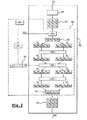
【図2】本発明のスクランブルをかける方法の第1の実施の様々なステップを示す図である。
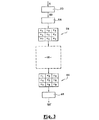
【図3】本発明のスクランブルをかける方法の第2の実施の様々なステップを示す図である。
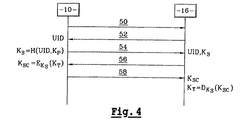
【図4】本発明の方法を使用してスクランブルがかけられたビデオ信号をスクランブル解除するためのキーを交換する方法を示す図である。
【図5】本発明のスクランブル解除の方法の様々なステップを示す図である。
【符号の説明】
【0092】
10 一斉送信サーバ
12 データベース
14 情報伝送ネットワーク
16 クライアントターミナル
20 符号化器
24、44、64 マトリクス
36 マーキングキー
42 4つの動きベクトルのセット
46 スクランブラモジュール
60 復号化器
62 抽出モジュール
66 スクランブル解除モジュールMedium
【Technical field】
[0001]
The present invention relates to a method for scrambling a video signal using an encryption key to control access to audiovisual information transmitted by a broadcast server.
[0002]
The present invention also provides a method for descrambling a video signal, and a system, an encoder, a decoder, a broadcast server, and a data medium for implementing the method.
[Background Art]
[0003]
There are many scrambling methods implemented to control access to audiovisual information. For example, one solution is provided by the Digital Video Broadcasting (DVB) Council's DVB scrambling method.
[0004]
These methods generally utilize an encryption key to scramble the video signal. Scrambling is generally based on performing an exclusive OR (XOR) operation between the unscrambled stream and the encryption key.
[0005]
For example, with respect to broadcasting a program, a user desiring access to audiovisual information may use a scrambled signal, especially an MPEG-2 transport stream (MPEG-Transport Stream) that carries a decryption key associated with an encryption key. 2 TS) packet together with a rights grant control message (Entitlement Control Message (ECM)) type message. It is the decryption key that is used to descramble the video.
[0006]
Unfortunately, this type of scrambling method results in providing the user with a scrambled but unviewable video signal. The scrambled video signal does not allow the user to get any hints about the audiovisual content before descrambling.
[Disclosure of Invention]
[Problems to be solved by the invention]
[0007]
The present invention overcomes this disadvantage by providing a method of descrambling the video signal that allows the video content to be scrambled while nevertheless ensuring that the content remains partially visible. Try to rescue you.
[0008]
To this end, the present invention uses a marking key derived from an encryption key to scramble a video signal by applying a tattooing function to the video signal, said tattooing function comprising: A scrambling method of the type detailed above, comprising a parameter for adjusting the amplitude of the tattooing, which allows for the adjustment of the visibility of the tattooing in the method.
[Means for Solving the Problems]
[0009]
The scrambling method of the present invention may further include one or more of the following features.
-The audiovisual information is accessible from the broadcast server.
The audiovisual information is stored on a data medium accessible for reading.
The tattooing function is applied to the motion vectors obtained by encoding the video signal.
A tattooing function is applied to the frequency representation of the motion vector.
-Scrambling includes the following steps:
Selecting a motion vector from a set of motion vectors obtained by encoding the video signal;
Separating the horizontal axis component and the vertical axis component of the selected vector into two vectors called a horizontal axis vector and a vertical axis vector, respectively;
Applying a one-dimensional discrete cosine transform (DCT) type transform to each of the two vectors;
Applying a tattooing function to the components of the DCT transform of the horizontal and vertical vectors using the marking keys; and
After tattooing, performing an inverse DCT transform on the horizontal and vertical vectors to provide new values for the selected motion vectors and recombining the vectors.
The motion vectors are extracted directly from the coded video stream and the video signal is scrambled after being coded.
A motion vector is selected during the encoding of the video signal, and the video signal is scrambled while the video signal is encoded.
The scrambling is combined with the invisible tattooing of the video signal by applying a tattooing function using a tattooing key containing information on the author's rights.
The information of the author's rights includes the identifier of the video, and the identifier of the author has rights to the video.
The tattooing key is coupled to the marking key using a function that provides a one-to-one correspondence to generate a new marking key used in place of the marking key to scramble the video signal. .
The video signal is coded according to MPEG-2 or MPEG-4.
-Spread spectrum on the marking keys. and,
Scrambling each image with a marking key obtained by replacing the marking key of the preceding image.
[0010]
The present invention provides a method for descrambling a video signal using a decryption key, wherein the descrambling is performed on the scrambled signal by the scrambling method described above. A descrambling method is also provided.
[0011]
The method of descrambling may include one or more of the following features.
The method comprises the following steps:
Selecting a motion vector from a set of motion vectors obtained by encoding the video signal;
Separating the horizontal axis component and the vertical axis component of the selected vector into two vectors called a horizontal axis vector and a vertical axis vector, respectively.
Applying a one-dimensional DCT-type transform to each of the two vectors;
Applying a tattooing function to the components of the DCT transform of the horizontal and vertical vectors using a marking key derived from the decryption key. and,
Applying an inverse DCT transform to the horizontal and vertical vectors and recombining the vectors to create new values of the selected motion vectors.
Each image is descrambled by a marking key obtained by replacing the marking key of the preceding image.
[0012]
The present invention is an encoder comprising means for analyzing motion, further comprising means for scrambling a video signal by implementing the scrambling method described above. A gasifier is also provided.
[0013]
The present invention also provides a decoder comprising means for descrambling a video signal by implementing the descrambling method described above.
[0014]
The present invention also provides a server for broadcasting a video signal, the server including means for scrambling the video signal by performing the scrambling method described above.
[0015]
The present invention is an access terminal for connection to a network for receiving a video signal broadcast over an information transmission network, wherein the video signal is transmitted by implementing the descrambling method described above. A terminal is also provided that includes means for descrambling.
[0016]
The present invention also provides a computer readable data medium comprising means for storing a scrambled video signal using the scrambling method described above.
[0017]
Finally, the present invention relates to a system for scrambling and descrambling a video signal using an encryption key to control access to audiovisual information, the storage means for storing the video signal. Including a broadcast server for broadcasting video signals related to the video signal, connected to an information transmission network for broadcasting the video signal, and performing the scrambling method described above to scramble the video signal. There is also provided a system characterized in that it comprises means for applying.
[0018]
The scrambling and descrambling system of the present invention includes an access terminal connected to an information transmission network, wherein the access terminal descrambles a video signal by performing the descrambling method described above. It can also include the feature of including means for performing
[0019]
The invention will be better understood from the following description, given purely by way of example and made with reference to the accompanying drawings, in which:
BEST MODE FOR CARRYING OUT THE INVENTION
[0020]
The system shown in FIG. 1 includes a
[0021]
The
[0022]
The
[0023]
Means for secure data exchange using conventional protocols are incorporated into the
[0024]
The incorporation of such secure data exchange means is necessary to implement the method of exchanging confidential data described below with reference to FIG.
[0025]
The scrambling method shown in FIG. 2 is performed by the
[0026]
In this implementation, the
[0027]
In this case, the
[0028]
The
[0029]
In a conventional manner, the
[0030]
This matrix of motion vectors is used to generate a predicted image of the image in question based on the previous image of the video signal, for example by moving macroblocks of pixels of the previous image of the video signal in response to the motion vector. To work.
[0031]
As a result, the decoder takes the
[0032]
The
[0033]
At
[0034]
Thereafter, in
[0035]
Thereafter, the
V x = (V 6x , V 5x , V 2x , V 9x )
[0036]
Similarly, V y Contains four components taken from the vertical axis of the four vectors of
V y = (V 6y , V 5y , V 2y , V 9y )
[0037]
In
[0038]
This is the vector V x And V y Two vectors F each representing x And F y , But in the frequency domain.
[0039]
These two new vectors have the following components:
F x = (F 6x , F 5x , F 2x , F 9x ) And F y = (F 6y , F 5y , F 2y , F 9y )
[0040]
In a
[0041]
To further enhance the scrambling, it is advantageous to spread the spectrum of the marking
[0042]
The marking key has as many binary components as there are motion vectors selected in
[0043]
The marking key 36 obtained in
If W i = -1 then F'X i = FX i + W i α and F'Y i = FY i ,
Otherwise, F'X i = FX i , And F'Y i = FY i + W i α,
Where W i , FX i , FY i , F'X i , And F'Y i Is the vector F of the marking key 36 x And F y Vector F after tattooing x And F y New value F for x And F y Represents the i-th component.
[0044]
α is a coefficient selected in advance and represents the strength of the marking. As the value of α increases, the correction to the frequency component of the selected motion vector increases, and the degree to which scrambling becomes visible in the video signal increases.
[0045]
As a result of this operation, at the end of
F x = (F 6x , F 5x , F 2x , F 9x ) And F y = (F 6y , F 5y , F 2y , F 9y )
[0046]
Subsequently, the method moves to step 40, where all components are vectors V x And V y Two vectors V different from the components of x And V y To output the vector F x And F y To the inverse DCT transform. Therefore, it can be seen that the insertion of the marking key 36 into the selected motion vector is spread over all components of the motion vector.
[0047]
Thereafter, the
[0048]
These new motion vectors are V 6 , V 5 , V 2 , And V 9 Is written.
[0049]
These new vectors V 6 , V 5 , V 2 , And V 9 Sets the vector V to provide a new matrix of
[0050]
The set of steps that allows the
[0051]
In the
[0052]
At each iteration, to make the marking keys more difficult to detect, it is possible to perform a conventional substitution on the marking keys before inserting them into a subsequent video image.
[0053]
Alternatively, the method described above includes a step (not shown) of invisible tattooing of the video signal S.
[0054]
This tattooing is performed in a conventional manner, for example, by applying a tattooing function to the signal, such as a function similar to that described above, but with a value of α sufficiently low that tattooing is invisible. And a second marking key is used. This second marking key is called a "tattooing key" and is constituted, for example, by the identifier of the author having rights to the video.
[0055]
The tattooing step can be performed independently of scrambling and either before or after the
[0056]
The tattooing step can be combined with scrambling. To create a new marking key, referred to as a "tattooed marking key", it is possible to correlate the tattooing key with the marking
[0057]
The one-to-one relationship of the correlation functions makes it possible to ensure that the signal can be descrambled without necessarily removing the tattooing of the signal.
[0058]
FIG. 3 shows a second implementation of the scrambling method shown in FIG.
[0059]
While the above embodiment shows the
[0060]
In this implementation, the video signal S is first processed by the
[0061]
Subsequently, the binary signal BS is input to a
[0062]
Finally, in a
[0063]
In this implementation, the tattooing steps described above can be performed either independently of the
[0064]
Since the
[0065]
In addition, if the
[0066]
To enable the
[0067]
In a
[0068]
In a following
[0069]
Upon receiving this request, the
[0070]
In a following
[0071]
Thus, at
[0072]
This is the encrypted encryption key K SC Create
[0073]
Finally, in a
[0074]
The client terminal uses the encryption function E KS Decryption function D which is the dual of KS Using the encrypted encryption key and private key K stored in the downloaded application S From the encryption key K T Can be restored.
[0075]
The
[0076]
The
[0077]
The
[0078]
At least a portion of this
[0079]
Thereafter, the horizontal axis component and the vertical axis component of these four vectors are respectively expressed by a horizontal axis vector V x And the vertical axis vector V y Are separated into two vectors.
[0080]
In a following
[0081]
This is the vector V in the frequency domain. x And V y The two above-mentioned vectors F representing each of x And F y Create
[0082]
In
[0083]
In
If W i = -1 then F'X i = FX i -W i α and F'Y i = FY i ,
Otherwise, F'X i = FX i , And F'Y i = FY i -W i α,
[0084]
As a result of this operation, at the end of
F x = (F 6x , F 5x , F 2x , F 9x ) And F y = (F 6y , F 5y , F 2y , F 9y )
[0085]
The method then continues to step 74, where the two vectors V scrambled and respectively include the horizontal and vertical components of the selected motion vector. x And V y To obtain the vector F x And F y To the inverse DCT transform.
[0086]
Then, the vector V x And V y Are combined and the motion vector V 6 , V 5 , V 2 , And V 9 Is reconstructed.
[0087]
As a result, at the output from the
[0088]
With respect to scrambling the signal S during encoding, descrambling can be performed independently of decoding by a method that is a dual of the method described with reference to FIG.
[0089]
The method of the present invention for scrambling a video signal allows the transmitted video signal to be scrambled, but does not prevent potentially interested users from viewing the content. It can clearly be seen that this improves the simultaneous transmission of paid audiovisual content.
[0090]
Another advantage of the invention described above is that it allows invisible tattooing of video content to be combined with scrambling the video content.
[Brief description of the drawings]
[0091]
FIG. 1 is a schematic diagram showing a system configuration for broadcasting a video signal using the method of the present invention.
FIG. 2 illustrates various steps of a first implementation of the scrambling method of the present invention.
FIG. 3 illustrates various steps of a second implementation of the scrambling method of the present invention.
FIG. 4 illustrates a method of exchanging a key for descrambling a video signal scrambled using the method of the present invention.
FIG. 5 illustrates the various steps of the descrambling method of the present invention.
[Explanation of symbols]
[0092]
10 Broadcast server
12 Database
14 Information transmission network
16 Client Terminal
20 encoder
24, 44, 64 matrix
36 Marking key
42 Set of 4 motion vectors
46 Scrambler module
60 Decoder
62 Extraction module
66 Scramble release module
Claims (24)
前記ビデオ信号を符号化することによって得られる動きベクトルのセット(24)から動きベクトル(V6,V5,V2,V9)を選択する(28)ステップと、
前記選択されたベクトルの横軸成分および縦軸成分を、それぞれ横軸ベクトル(Vx)および縦軸ベクトル(Vy)と呼ぶ2つのベクトルに分離するステップと、
一次元DCT型変換を前記2つのベクトルの各々に適用する(32)ステップと、
前記マーキングキー(36)を使用して、前記タトゥーイング関数を前記横軸ベクトルおよび前記縦軸ベクトルのDCT変換の成分(Fx,Fy)に適用する(38)ステップと、
タトゥーイングの後に、前記選択された動きベクトルに対して新しい値を提供するために、前記横軸ベクトルおよび前記縦軸ベクトルに逆DCT変換を行い、それらのベクトルを再結合させるステップを含むことを特徴とする請求項5に記載のスクランブルをかける方法。Applying the scramble,
Selecting a motion vector (V 6 , V 5 , V 2 , V 9 ) from a set of motion vectors (24) obtained by encoding the video signal (28);
And separating the horizontal axis component and the vertical axis component of said selected vector, the two vectors is referred to as a horizontal axis vector respectively (V x) and the vertical axis vector (V y),
Applying (32) a one-dimensional DCT type transform to each of the two vectors;
Applying the tattooing function to the components (F x , F y ) of the DCT transform of the horizontal axis vector and the vertical axis vector using the marking key (36);
After tattooing, performing an inverse DCT transform on the horizontal axis vector and the vertical axis vector to provide a new value for the selected motion vector, and recombining the vectors. 6. The method of scrambling according to claim 5, wherein:
前記ビデオ信号を符号化することによって得られる動きベクトルのセットから動きベクトル(V6,V5,V2,V9)を選択するステップと、
前記選択されたベクトルの横軸成分および縦軸成分を、それぞれ横軸ベクトル(Vx)および縦軸ベクトル(Vy)と呼ぶ2つのベクトルに分離するステップと、
一次元DCT型変換を前記2つのベクトルの各々に適用するステップと、
前記暗号解除キーから導出されるマーキングキー(36)を使用して、タトゥーイング関数を前記横軸ベクトルおよび前記縦軸ベクトルのDCT変換の成分(Fx,Fy)に適用するステップと、
前記横軸ベクトルおよび前記縦軸ベクトルに逆DCT変換を適用し、前記選択された動きベクトルの新しい値を作成するためにそれらのベクトルを再結合させるステップと、
を含むことを特徴とする請求項15に記載のスクランブル解除方法。The descrambling is
Selecting a motion vector (V 6 , V 5 , V 2 , V 9 ) from a set of motion vectors obtained by encoding the video signal;
And separating the horizontal axis component and the vertical axis component of said selected vector, the two vectors is referred to as a horizontal axis vector respectively (V x) and the vertical axis vector (V y),
Applying a one-dimensional DCT type transform to each of the two vectors;
Applying a tattooing function to the DCT transform components (F x , F y ) of the horizontal axis vector and the vertical axis vector using a marking key (36) derived from the decryption key;
Applying an inverse DCT transform to the horizontal axis vector and the vertical axis vector, and recombining the selected motion vectors to create new values of the motion vectors;
The descrambling method according to claim 15, comprising:
Applications Claiming Priority (1)
| Application Number | Priority Date | Filing Date | Title |
|---|---|---|---|
| FR0206405A FR2840147B1 (en) | 2002-05-24 | 2002-05-24 | VIDEO INTERFERENCE AND SCRAMBLING METHODS, SYSTEM, DECODER, BROADCAST SERVER, DATA MEDIUM FOR CARRYING OUT SAID METHODS |
Publications (2)
| Publication Number | Publication Date |
|---|---|
| JP2004040780A true JP2004040780A (en) | 2004-02-05 |
| JP4519422B2 JP4519422B2 (en) | 2010-08-04 |
Family
ID=29286650
Family Applications (1)
| Application Number | Title | Priority Date | Filing Date |
|---|---|---|---|
| JP2003143298A Expired - Fee Related JP4519422B2 (en) | 2002-05-24 | 2003-05-21 | Method of scrambling and descrambling a video signal, and system, encoder, decoder, broadcast server, and data medium for implementing this method |
Country Status (6)
| Country | Link |
|---|---|
| US (1) | US7577842B2 (en) |
| EP (1) | EP1365589B1 (en) |
| JP (1) | JP4519422B2 (en) |
| KR (1) | KR100933363B1 (en) |
| CA (1) | CA2429212C (en) |
| FR (1) | FR2840147B1 (en) |
Families Citing this family (8)
| Publication number | Priority date | Publication date | Assignee | Title |
|---|---|---|---|---|
| FR2846505B1 (en) * | 2002-10-25 | 2005-02-11 | Medialive | DEVICE FOR TRANSFORMING MULTIMEDIA AND AUDIOVISUAL CONTENTS OF THE MPEG-2 TYPE IN SECURE CONTENTS OF THE SAME TYPE |
| US7702103B2 (en) | 2002-10-25 | 2010-04-20 | Nagra France | Device for the transformation of MPEG 2-type multimedia and audiovisual contents into secured contents of the same type |
| KR100987776B1 (en) * | 2004-02-04 | 2010-10-13 | 삼성전자주식회사 | Scramble Device and Method Using Substitution of Motion Vector Information of Image |
| US8971305B2 (en) | 2007-06-05 | 2015-03-03 | Qualcomm Incorporated | Pseudo-random sequence mapping in wireless communications |
| US8666079B2 (en) * | 2008-05-29 | 2014-03-04 | Broadcom Corporation | Decoding and encoding data |
| ES2398803T3 (en) | 2009-06-29 | 2013-03-21 | Nds Limited | Removing the content protection message |
| FR2957737B1 (en) * | 2010-03-17 | 2012-08-10 | Bouygues Telecom Sa | METHOD AND SYSTEM FOR SECURE DIFFUSION OF A DIGITAL DATA STREAM |
| CN115842927B (en) * | 2023-02-24 | 2023-06-06 | 湖北芯擎科技有限公司 | Video stream safety display method and device and electronic equipment |
Citations (3)
| Publication number | Priority date | Publication date | Assignee | Title |
|---|---|---|---|---|
| WO2001075794A2 (en) * | 2000-04-05 | 2001-10-11 | Sony United Kingdom Limited | Identifying material |
| WO2002039383A2 (en) * | 2000-11-07 | 2002-05-16 | Koninklijke Philips Electronics N.V. | Method and arrangement for embedding a watermark in an information signal |
| WO2003067886A1 (en) * | 2002-02-06 | 2003-08-14 | Sony United Kingdom Limited | Modifying bitstreams |
Family Cites Families (30)
| Publication number | Priority date | Publication date | Assignee | Title |
|---|---|---|---|---|
| US5185794A (en) * | 1990-08-06 | 1993-02-09 | Nec Home Electronics, Ltd. | System and method for scrambling and/or descrambling a video signal |
| US5091938B1 (en) * | 1990-08-06 | 1997-02-04 | Nippon Denki Home Electronics | Digital data cryptographic system |
| US5166976A (en) * | 1990-08-06 | 1992-11-24 | Nec Home Electronics, Ltd. | System and method for detection of a pulse within a video signal |
| EP0542261B1 (en) * | 1991-11-12 | 1998-10-21 | Nippon Hoso Kyokai | Method of performing high efficiency coding of image signal and system therefor |
| DE69332529T2 (en) * | 1992-07-21 | 2003-08-14 | Matsushita Electric Industrial Co., Ltd. | encryptor |
| KR0184313B1 (en) * | 1993-04-09 | 1999-05-01 | 모리시타 요이찌 | Scramble transmission device for transmitting scrambled and descrambled digital video signals |
| US5459516A (en) * | 1993-07-16 | 1995-10-17 | Goldstar Co., Ltd. | Video motion compensation apparatus |
| JPH09168006A (en) * | 1995-12-15 | 1997-06-24 | Hitachi Ltd | Communication device and communication method |
| US6957350B1 (en) * | 1996-01-30 | 2005-10-18 | Dolby Laboratories Licensing Corporation | Encrypted and watermarked temporal and resolution layering in advanced television |
| US5809139A (en) * | 1996-09-13 | 1998-09-15 | Vivo Software, Inc. | Watermarking method and apparatus for compressed digital video |
| DE69840308D1 (en) * | 1997-02-24 | 2009-01-22 | Nec Corp | System for encoding digital data |
| US5960081A (en) * | 1997-06-05 | 1999-09-28 | Cray Research, Inc. | Embedding a digital signature in a video sequence |
| KR100323441B1 (en) * | 1997-08-20 | 2002-06-20 | 윤종용 | Mpeg2 motion picture coding/decoding system |
| JP3696723B2 (en) * | 1997-09-02 | 2005-09-21 | ソニー株式会社 | Image data processing apparatus and method |
| RU2000111530A (en) * | 1997-10-02 | 2002-05-27 | Каналь+Сосьетэ Аноним | METHOD AND DEVICE FOR ENCRYPTED DATA STREAM TRANSLATION |
| JPH11308595A (en) * | 1998-04-20 | 1999-11-05 | Matsushita Electric Ind Co Ltd | Broadcast receiver |
| JP3201347B2 (en) * | 1998-05-15 | 2001-08-20 | 日本電気株式会社 | Image attribute change device and digital watermark device |
| US6249548B1 (en) * | 1998-07-10 | 2001-06-19 | U.S. Phillips Corporation | Motion vector processing |
| JP4083302B2 (en) * | 1998-08-12 | 2008-04-30 | 株式会社東芝 | Video scrambling / descrambling device |
| JP3768705B2 (en) * | 1998-11-27 | 2006-04-19 | キヤノン株式会社 | Digital watermark embedding device, output control device, and computer-readable storage medium |
| US6505299B1 (en) * | 1999-03-01 | 2003-01-07 | Sharp Laboratories Of America, Inc. | Digital image scrambling for image coding systems |
| US6944296B1 (en) * | 1999-03-24 | 2005-09-13 | Intel Corporation | Video bit scrambling |
| JP2001111808A (en) * | 1999-10-05 | 2001-04-20 | Nec Corp | Electronic watermark data inserting system and device |
| US6839468B1 (en) * | 2000-06-28 | 2005-01-04 | International Business Machines Corporation | Scaling of multi-dimensional data in a hybrid domain |
| AU2001284910B2 (en) * | 2000-08-16 | 2007-03-22 | Dolby Laboratories Licensing Corporation | Modulating one or more parameters of an audio or video perceptual coding system in response to supplemental information |
| JP4269501B2 (en) * | 2000-09-07 | 2009-05-27 | ソニー株式会社 | Information recording apparatus, information reproducing apparatus, information recording method, information reproducing method, information recording medium, and program providing medium |
| AU2001269957A1 (en) * | 2000-09-20 | 2002-04-02 | The University Of Maryland | Dynamic key management architecture for ensuring conditional access to secure multimedia multicast |
| US6891958B2 (en) * | 2001-02-27 | 2005-05-10 | Microsoft Corporation | Asymmetric spread-spectrum watermarking systems and methods of use |
| JP3888422B2 (en) * | 2001-04-04 | 2007-03-07 | 日本電気株式会社 | Video data transfer control system and video data transfer control method |
| JP2003195759A (en) * | 2001-12-25 | 2003-07-09 | Hitachi Ltd | Encrypted data generation method, recording device, recording medium, decryption method, recording medium reproduction device, transmission device, and reception device |
-
2002
- 2002-05-24 FR FR0206405A patent/FR2840147B1/en not_active Expired - Fee Related
-
2003
- 2003-05-14 US US10/437,177 patent/US7577842B2/en not_active Expired - Fee Related
- 2003-05-21 EP EP03291205A patent/EP1365589B1/en not_active Expired - Lifetime
- 2003-05-21 CA CA2429212A patent/CA2429212C/en not_active Expired - Fee Related
- 2003-05-21 JP JP2003143298A patent/JP4519422B2/en not_active Expired - Fee Related
- 2003-05-23 KR KR1020030032914A patent/KR100933363B1/en not_active Expired - Fee Related
Patent Citations (3)
| Publication number | Priority date | Publication date | Assignee | Title |
|---|---|---|---|---|
| WO2001075794A2 (en) * | 2000-04-05 | 2001-10-11 | Sony United Kingdom Limited | Identifying material |
| WO2002039383A2 (en) * | 2000-11-07 | 2002-05-16 | Koninklijke Philips Electronics N.V. | Method and arrangement for embedding a watermark in an information signal |
| WO2003067886A1 (en) * | 2002-02-06 | 2003-08-14 | Sony United Kingdom Limited | Modifying bitstreams |
Non-Patent Citations (1)
| Title |
|---|
| JPN6009030624, Jun Zhang,Jiegu Li,Ling Zhang, "Video watermark technique in motion vector", Proc. of 14th Brazilian Symp. on Computer Graphics and Image Processing, 200110, P.179−182 * |
Also Published As
| Publication number | Publication date |
|---|---|
| EP1365589B1 (en) | 2013-04-03 |
| FR2840147A1 (en) | 2003-11-28 |
| US20040037422A1 (en) | 2004-02-26 |
| JP4519422B2 (en) | 2010-08-04 |
| KR100933363B1 (en) | 2009-12-22 |
| KR20030091772A (en) | 2003-12-03 |
| US7577842B2 (en) | 2009-08-18 |
| EP1365589A1 (en) | 2003-11-26 |
| CA2429212C (en) | 2012-02-07 |
| FR2840147B1 (en) | 2004-08-27 |
| CA2429212A1 (en) | 2003-11-24 |
Similar Documents
| Publication | Publication Date | Title |
|---|---|---|
| CN1170227C (en) | Apparatus and method for protecting copyright data in computer system | |
| KR101545631B1 (en) | Cryptographic processing of content | |
| US6668246B1 (en) | Multimedia data delivery and playback system with multi-level content and privacy protection | |
| JP4080039B2 (en) | Method for protecting information items transmitted from a security element to a decoder and protection system using such a method | |
| EP1134977A1 (en) | Method and system for providing copies of scrambled content with unique watermarks, and system for descrambling scrambled content | |
| US8782688B2 (en) | Process and system for the secure broadcasting of protected audiovisual streams to a dynamic group of receivers | |
| JP2001320360A (en) | Reinforcement for continuity of stream | |
| JP3910364B2 (en) | System and method for preventing duplication of digital signals | |
| JP5437073B2 (en) | Method and apparatus for managing keys and method and apparatus for acquiring keys | |
| EP1011269B1 (en) | System for processing an information signal | |
| CN103283176B (en) | For transmitting the method with receiving multimedia content | |
| JP4519422B2 (en) | Method of scrambling and descrambling a video signal, and system, encoder, decoder, broadcast server, and data medium for implementing this method | |
| KR100977969B1 (en) | How to send and receive data on the network | |
| FR3003670A1 (en) | METHOD AND DEVICE FOR GENERATING PROTECTED DATA, METHOD AND DEVICE FOR RECOVERING TATUE SOURCE DATA AND CORRESPONDING COMPUTER PROGRAM | |
| CN112153417B (en) | A kind of content scrambling protection method and system for streaming media content copyright | |
| Kwon et al. | Multimedia digital right management using selective scrambling for mobile handset | |
| TWI271081B (en) | Digital data streaming transmission method under encryption | |
| JP2004172870A (en) | Stream media data scramble broadcasting system | |
| KR20060058606A (en) | Multimedia content coding device using watermarking and selective encryption and multimedia content decoding device using watermarking and selective decryption | |
| KR20070110695A (en) | Image data encryption and decryption method and apparatus | |
| Lemma et al. | Secure Embedding of Forensic Watermarks in MPEG-2 Bitstreams | |
| JP2006129535A (en) | Scramble broadcasting system of stream media data | |
| WO2014117851A1 (en) | Proxy modules | |
| WO2002019529A2 (en) | Non-standard coding systems | |
| HK1028514B (en) | System for processing an information signal |
Legal Events
| Date | Code | Title | Description |
|---|---|---|---|
| A621 | Written request for application examination |
Free format text: JAPANESE INTERMEDIATE CODE: A621 Effective date: 20060517 |
|
| A131 | Notification of reasons for refusal |
Free format text: JAPANESE INTERMEDIATE CODE: A131 Effective date: 20090623 |
|
| A601 | Written request for extension of time |
Free format text: JAPANESE INTERMEDIATE CODE: A601 Effective date: 20090917 |
|
| A602 | Written permission of extension of time |
Free format text: JAPANESE INTERMEDIATE CODE: A602 Effective date: 20090925 |
|
| A521 | Request for written amendment filed |
Free format text: JAPANESE INTERMEDIATE CODE: A523 Effective date: 20091216 |
|
| A131 | Notification of reasons for refusal |
Free format text: JAPANESE INTERMEDIATE CODE: A131 Effective date: 20100302 |
|
| A521 | Request for written amendment filed |
Free format text: JAPANESE INTERMEDIATE CODE: A523 Effective date: 20100408 |
|
| TRDD | Decision of grant or rejection written | ||
| A01 | Written decision to grant a patent or to grant a registration (utility model) |
Free format text: JAPANESE INTERMEDIATE CODE: A01 Effective date: 20100427 |
|
| A01 | Written decision to grant a patent or to grant a registration (utility model) |
Free format text: JAPANESE INTERMEDIATE CODE: A01 |
|
| A61 | First payment of annual fees (during grant procedure) |
Free format text: JAPANESE INTERMEDIATE CODE: A61 Effective date: 20100519 |
|
| FPAY | Renewal fee payment (event date is renewal date of database) |
Free format text: PAYMENT UNTIL: 20130528 Year of fee payment: 3 |
|
| R150 | Certificate of patent or registration of utility model |
Free format text: JAPANESE INTERMEDIATE CODE: R150 |
|
| FPAY | Renewal fee payment (event date is renewal date of database) |
Free format text: PAYMENT UNTIL: 20130528 Year of fee payment: 3 |
|
| R250 | Receipt of annual fees |
Free format text: JAPANESE INTERMEDIATE CODE: R250 |
|
| LAPS | Cancellation because of no payment of annual fees |