EP4583577A1 - Übergabeverfahren und kommunikationsvorrichtung - Google Patents
Übergabeverfahren und kommunikationsvorrichtung Download PDFInfo
- Publication number
- EP4583577A1 EP4583577A1 EP23870502.4A EP23870502A EP4583577A1 EP 4583577 A1 EP4583577 A1 EP 4583577A1 EP 23870502 A EP23870502 A EP 23870502A EP 4583577 A1 EP4583577 A1 EP 4583577A1
- Authority
- EP
- European Patent Office
- Prior art keywords
- cell
- candidate
- cell group
- configuration information
- handover
- Prior art date
- Legal status (The legal status is an assumption and is not a legal conclusion. Google has not performed a legal analysis and makes no representation as to the accuracy of the status listed.)
- Pending
Links
Images



Classifications
-
- H—ELECTRICITY
- H04—ELECTRIC COMMUNICATION TECHNIQUE
- H04W—WIRELESS COMMUNICATION NETWORKS
- H04W36/00—Hand-off or reselection arrangements
-
- H—ELECTRICITY
- H04—ELECTRIC COMMUNICATION TECHNIQUE
- H04W—WIRELESS COMMUNICATION NETWORKS
- H04W36/00—Hand-off or reselection arrangements
- H04W36/0005—Control or signalling for completing the hand-off
- H04W36/0011—Control or signalling for completing the hand-off for data sessions of end-to-end connection
- H04W36/0033—Control or signalling for completing the hand-off for data sessions of end-to-end connection with transfer of context information
-
- H—ELECTRICITY
- H04—ELECTRIC COMMUNICATION TECHNIQUE
- H04W—WIRELESS COMMUNICATION NETWORKS
- H04W36/00—Hand-off or reselection arrangements
- H04W36/0005—Control or signalling for completing the hand-off
- H04W36/0055—Transmission or use of information for re-establishing the radio link
-
- H—ELECTRICITY
- H04—ELECTRIC COMMUNICATION TECHNIQUE
- H04W—WIRELESS COMMUNICATION NETWORKS
- H04W36/00—Hand-off or reselection arrangements
- H04W36/0005—Control or signalling for completing the hand-off
- H04W36/0055—Transmission or use of information for re-establishing the radio link
- H04W36/0058—Transmission of hand-off measurement information, e.g. measurement reports
-
- H—ELECTRICITY
- H04—ELECTRIC COMMUNICATION TECHNIQUE
- H04W—WIRELESS COMMUNICATION NETWORKS
- H04W36/00—Hand-off or reselection arrangements
- H04W36/0005—Control or signalling for completing the hand-off
- H04W36/0083—Determination of parameters used for hand-off, e.g. generation or modification of neighbour cell lists
- H04W36/00835—Determination of neighbour cell lists
-
- H—ELECTRICITY
- H04—ELECTRIC COMMUNICATION TECHNIQUE
- H04W—WIRELESS COMMUNICATION NETWORKS
- H04W36/00—Hand-off or reselection arrangements
- H04W36/0005—Control or signalling for completing the hand-off
- H04W36/0083—Determination of parameters used for hand-off, e.g. generation or modification of neighbour cell lists
- H04W36/0085—Hand-off measurements
-
- H—ELECTRICITY
- H04—ELECTRIC COMMUNICATION TECHNIQUE
- H04W—WIRELESS COMMUNICATION NETWORKS
- H04W36/00—Hand-off or reselection arrangements
- H04W36/08—Reselecting an access point
-
- H—ELECTRICITY
- H04—ELECTRIC COMMUNICATION TECHNIQUE
- H04W—WIRELESS COMMUNICATION NETWORKS
- H04W36/00—Hand-off or reselection arrangements
- H04W36/08—Reselecting an access point
- H04W36/087—Reselecting an access point between radio units of access points
Definitions
- Embodiments of this application provide a handover method and a communication apparatus, to reduce an interruption delay and ensure a throughput of a communication system.
- an embodiment of this application provides a handover method.
- a terminal device receives configuration information of a first candidate cell group from a first distributed unit DU, where the configuration information of the first candidate cell group includes configuration information of a first cell and identification information of the first candidate cell group; the terminal device sends a measurement result of the first candidate cell group to the first DU, and receives a handover command from the first DU, where the handover command includes the identification information of the first candidate cell group; and the terminal device performs a handover to the first cell based on the identification information of the first candidate cell group.
- the source DU may directly send, to the terminal device, a handover command indicating the terminal device to perform a cell handover, and the CU does not need to request a user resource or the like based on the measurement report. Therefore, operation steps between sending the measurement report by the terminal device and receiving the handover command by the terminal device are reduced, an interruption delay in a cell handover procedure is shortened, and a throughput of a communication system is ensured.
- the terminal device performs data transmission based on the configuration information of the first cell via the first cell and a second DU corresponding to the first cell.
- the configuration information of the first candidate cell group is encrypted.
- network security can be improved.
- the terminal device receives first indication information from the first DU, where the first indication information indicates consecutive handovers after a single handover, the configuration information of the first candidate cell group is used for one handover in the single handover, and the configuration information of the first candidate cell group is used for a plurality of handovers in the consecutive handovers.
- the network side does not need to deliver the configuration information to the terminal device each time the handover is performed, so that communication resources are saved.
- the first indication information indicates the single handover, adaptation between the configuration information delivered by the network side and the terminal device during each handover can be improved.
- the first cell is a candidate primary cell in the first candidate cell group
- the terminal device receives first activation indication information from the first DU, where the first activation indication information indicates an initial status and/or an initial status of a BWP of at least one candidate secondary cell in the first candidate cell group, and the initial status includes an active state or an inactive state.
- the terminal device may quickly perform CA activation (that is, activate the secondary cell) based on the service requirement of the terminal device, to ensure that a throughput after the handover is close to or the same as a throughput before the handover, thereby ensuring communication transmission stability.
- the source DU may directly send, to the terminal device, a handover command indicating the terminal device to perform a cell handover, and the CU does not need to request a user resource or the like based on the measurement report. Therefore, operation steps between sending the measurement report by the terminal device and receiving the handover command by the terminal device are reduced, an interruption delay in a cell handover procedure is shortened, and a throughput of a communication system is ensured.
- the handover command further includes a first index, and the first index indicates to perform the handover to the first cell.
- the terminal device and the network side can identify the unique cell only based on the cell index, and do not need to expose the cell global identifier of the cell to the terminal device. This avoids the security risk in the handover procedure.
- a bit of the first index is smaller than a bit of a cell global identifier of the first cell, or is smaller than a bit of a PCI of the first cell.
- the configuration information of the first candidate cell group is encrypted.
- network security can be improved.
- the first message further includes the identification information of the first candidate cell group. It may be understood that the first message includes both the configuration information of the first candidate cell group and the identification information of the first candidate cell group.
- the configuration information of the first candidate cell group needs to be sent to the terminal device, and the first DU does not parse the configuration information of the first candidate cell group.
- the first DU may allocate a first resource based on the identification information of the first candidate cell group, so that the measurement result of the first candidate cell group is transmitted via a dedicated resource.
- the measurement result does not need to include the identification information of the candidate cell group, and the first DU may also know a correspondence between the measurement result and the candidate cell group. This saves communication transmission resources.
- the first DU receives the measurement result of the first candidate cell group from the terminal device via the first resource; and determines the first candidate cell group based on the association relationship between the first resource and the first candidate cell group.
- the first DU receives the measurement result of the first candidate cell group from the terminal device via the first resource, where the measurement result of the first candidate cell group includes a measurement result of the first cell; determines the first cell based on the association relationship between the first resource and the first cell; and determines the first candidate cell group based on the first cell.
- the measurement result of the first candidate cell group is the measurement result of the first cell
- the measurement result of the first cell includes the first index and a group identifier of the first candidate group.
- the measurement result of the first candidate cell group is obtained based on the measurement result of the first cell and a measurement result of a second cell, the second cell belongs to the first candidate cell group, and the measurement result of the first candidate cell group includes the identification information of the first candidate cell group.
- the first DU sends first indication information to the terminal device, where the first indication information indicates a single handover or consecutive handovers, the configuration information of the first candidate cell group is used for one handover in the single handover, and the configuration information of the first candidate cell group is used for a plurality of handovers in the consecutive handovers.
- the configuration information of the first cell includes first configuration information of the first cell serving as a candidate primary cell and second configuration information of the first cell serving as a candidate secondary cell.
- the first DU receives a first request message from the CU, where the first request message is used to obtain an activation status and/or an activation status of a bandwidth part BWP of a secondary cell of the terminal device in the first DU.
- the first DU sends a first response message to the CU, where the first response message indicates the activation status and/or the activation status of the BWP of the secondary cell of the terminal device in the first DU.
- the first message further includes the identification information of the first candidate cell group.
- the CU receives first indication information from the second DU, where the first indication information indicates a single handover or consecutive handovers, the configuration information of the first candidate cell group is used for one handover in the single handover, and the configuration information of the first candidate cell group is used for a plurality of handovers in the consecutive handovers; and sends the first indication information to the terminal device.
- the CU sends a first request message to the first DU, where the first request message is used to obtain an activation status and/or an activation status of a BWP of a secondary cell of the terminal device in the first DU; receives a first response message from the first DU, where the first response message indicates the activation status and/or the activation status of the BWP of the secondary cell of the terminal device in the first DU; and sends candidate secondary cell activation status information to the second DU, where the candidate secondary cell activation status information is determined based on the first response message.
- the configuration information of the first cell includes configuration information corresponding to a cell type of the first cell, and the cell type includes a candidate primary cell, a first candidate secondary cell, or a second candidate secondary cell.
- this application provides a communication apparatus.
- the apparatus may be an apparatus in a terminal device, or an apparatus that can be used together with the terminal device.
- the communication apparatus may alternatively be a chip system.
- the communication apparatus may perform the method in the first aspect.
- Functions of the communication apparatus may be implemented by hardware, or may be implemented by hardware executing corresponding software.
- the hardware or the software includes one or more units corresponding to the foregoing functions.
- the unit may be software and/or hardware.
- this application provides a communication apparatus.
- the apparatus may be an apparatus in a second DU, or an apparatus that can be used together with the second DU.
- the communication apparatus may alternatively be a chip system.
- the communication apparatus may perform the method in the fourth aspect.
- Functions of the communication apparatus may be implemented by hardware, or may be implemented by hardware executing corresponding software.
- the hardware or the software includes one or more units corresponding to the foregoing functions.
- the unit may be software and/or hardware.
- this application provides a computer-readable storage medium, where the computer-readable storage medium is configured to store computer executable instructions.
- the computer executable instructions When the computer executable instructions are executed, the method performed by the terminal device in the method in the first aspect is implemented; or the method performed by the first DU in the method in the second aspect is implemented; or the method performed by the CU in the method in the third aspect is implemented; or the method performed by the second DU in the method in the fourth aspect is implemented.
- this application provides a communication system.
- the communications system includes any one or more of a communication apparatus corresponding to the terminal device, a communication apparatus corresponding to the first DU, a communication apparatus corresponding to the CU, and a communication apparatus corresponding to the second DU.
- At least one (item) means one or more
- a plurality of means two or more
- at least two (items) means two or three or more
- and "and/or” is used to describe an association relationship between associated objects, which indicates that three relationships may exist.
- a and/or B may indicate the following three cases: Only A exists, only B exists, and both A and B exist, where A and B may be singular or plural.
- a character “/” usually indicates an "or” relationship between the associated objects.
- At least one of the following items (pieces) or a similar expression thereof refers to any combination of these items, including any combination of singular items (pieces) or plural items (pieces).
- At least one of a, b, or c may indicate a, b c, "a and b", “a and c", “b and c", or "a, b, and c", where a, b, and c may be singular or plural.
- a 4th generation (4th generation, 4G) communication system like a long term evolution (long term evolution, LTE) system, an LTE frequency division duplex (frequency division duplex, FDD) system, and an LTE time division duplex (time division duplex, TDD) system
- a 5th generation (5th generation, 5G) communication system like a new radio (new radio, NR) system
- a communication system evolved after 5G like a 6th generation (6th generation, 6G) communication system.
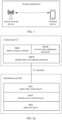
- FIG. 1 is a diagram of a system architecture according to an embodiment of this application.
- the system architecture shown in FIG. 1 includes a terminal device and an access network device. The following describes in detail the terminal device and the access network device in the system architecture in FIG. 1 .
- the terminal device includes a device that provides voice and/or data connectivity for a user.
- the terminal device is a device that has a wireless transceiver function, and may be deployed on land, including an indoor device or an outdoor device, a handheld device, a wearable device, or a vehicle-mounted device; or may be deployed on a water surface (for example, on a ship); or may be deployed in the air (for example, on an airplane, a balloon, or a satellite).
- the terminal device may be a mobile phone (mobile phone), a tablet computer (Pad), a computer having a wireless transceiver function, a virtual reality (virtual reality, VR) terminal, an augmented reality (augmented reality, AR) terminal, a wireless terminal in industrial control (industrial control), a vehicle-mounted terminal, a wireless terminal in self-driving (self-driving), a wireless terminal in remote medical (remote medical), a wireless terminal in a smart grid (smart grid), a wireless terminal in transportation safety (transportation safety), a wireless terminal in a smart city (smart city), a wireless terminal in a smart home (smart home), a wearable terminal, or the like.
- An application scenario is not limited in embodiments of this application.
- the access network device may be any device having a wireless transceiver function, including but not limited to: a next generation NodeB (next generation NodeB, gNB) in a 5G communication system, an evolved NodeB (evolved NodeB, eNB), a next generation evolved NodeB (next generation eNB, ng-eNB), a radio backhaul device, a radio network controller (radio network controller, RNC), a NodeB (NodeB, NB), a home NodeB ((home evolved NodeB, HeNB) or (home NodeB, HNB)), a remote radio unit (remote radio unit, RRU), a baseband unit (baseBand unit, BBU), a transmission reception point (transmission reception point, TRP), a transmission point (transmission point, TP), a mobile switching center, a device that undertakes a base station function in device-to-device (Device-to-Device, D2D), vehicle-to-every
- a control plane protocol layer structure may include a radio resource control (radio resource control, RRC) layer, a packet data convergence protocol (packet data convergence protocol, PDCP) layer, a radio link control (radio link control, RLC) layer, a media access control (media access control, MAC) layer, and a physical layer (physical layer, PHY layer).
- RRC radio resource control
- PDCP packet data convergence protocol
- RLC radio link control
- MAC media access control
- PHY layer physical layer
- a user plane protocol layer structure may include a PDCP layer, an RLC layer, a MAC layer, and a physical layer.
- a service data adaptation protocol (service data adaptation protocol, SDAP) layer above the PDCP layer may be further included.
- SDAP service data adaptation protocol
- the SDAP layer, the PDCP layer, the RLC layer, the MAC layer, and the physical layer may be collectively referred to as an access stratum.
- a radio interface layer may be divided into three protocol layers: a physical layer (also referred to as L1), a data link layer (also referred to as L2), and a network layer (also referred to as L3).
- the L1 includes the PHY layer;
- the L2 includes the MAC layer, the RLC layer, a broadcast/multicast control (broadcast/multicast control, BMC) layer, and the PDCP layer;
- the L3 includes the RRC layer in the access stratum, and mobility management (mobility management, MM) and call control (call control, CC) in a non-access stratum.
- the access network device may include one or more CUs and one or more DUs, and a plurality of DUs may be controlled by one CU in a centralized manner.
- an interface between the CU and the DU may be referred to as an F1 interface.
- a control plane (control panel, CP) interface may be an F1-C interface
- a user plane (user panel, UP) interface may be an F1-U interface.
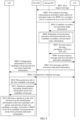
- Division may be performed for the CU and the DU based on protocol layers of a radio network. For example, as shown in FIG. 2a , functions of the PDCP layer and a protocol layer above the PDCP layer are set on the CU, and functions of protocol layers (for example, the RLC layer and the MAC layer) below the PDCP layer are set on the DU.
- the functions of the CU may be implemented by one entity, or may be implemented by different entities.
- the functions of the CU may be further divided, to be specific, a control plane and a user plane are split, and are implemented by using different entities: a control plane CU entity (namely, a CU-CP entity) and a user plane CU entity (namely, a CU-UP entity).
- the CU-CP entity and the CU-UP entity may be coupled to the DU, to jointly complete the function of the access network device.
- An interface between the CU-CP entity and the CU-UP entity may be an E1 interface.
- An interface between the CU-CP entity and the DU may be an F1-C interface.
- the source DU sends a UE context modification response message (namely, a UE CONTEXT MODIFICATION RESPONSE message) to the CU.
- a UE context modification response message namely, a UE CONTEXT MODIFICATION RESPONSE message
- S309 The CU sends an RRC reconfiguration message to the UE.
- the CU sends the RRC reconfiguration message to the source DU, so that the source DU sends the RRC reconfiguration message to the UE.
- the RRC reconfiguration message carries a target frequency, the PCI of the target cell, and the cell radio network temporary identifier (Cell Radio Network Temporary Identifier, CRNTI) and a dedicated preamble (preamble) that are configured for the UE.
- CRNTI Cell Radio Network Temporary Identifier
- preamble dedicated preamble
- S310 The UE sends a non-contention-based random access request message (for example, MSG1) to the target DU corresponding to the target cell, where the random access request message carries the dedicated preamble.
- a non-contention-based random access request message for example, MSG1
- the UE sends the RRC reconfiguration complete message to the target DU, and the target DU sends the RRC reconfiguration complete message to the CU.
- the RRC reconfiguration complete message indicates that the UE has accessed to the target cell.
- the CU sends a UE context release command message (namely, a UE context release command message) to the source DU, where the UE context release command message indicates the source cell of the source DU to release a context of the handed-over UE.
- a UE context release command message namely, a UE context release command message
- the CU sends an RRC reconfiguration message (also referred to as an RRC Reconfiguration message) to the UE.
- RRC reconfiguration message also referred to as an RRC Reconfiguration message
- the CU sends the RRC reconfiguration message to the target DU, so that the target DU sends the RRC reconfiguration message to the UE, and when the candidate UE is handed over from the target cell, the candidate UE performs measurement based on the RRC reconfiguration message.
- the RRC reconfiguration message carries measurement control information corresponding to the target cell, and the measurement control information includes a measurement object, a measurement reporting configuration, and a generic access profile (Generic Access Profile, GAP) configuration.
- GAP Generic Access Profile
- the UE sends the RRC reconfiguration complete message to the target DU, so that the target DU forwards the RRC reconfiguration complete message to the CU.
- the target DU and the source DU may be a same DU, that is, the source cell and the target cell corresponds to the same DU.
- the cell handover in FIG. 3 is also referred to as an L3 signaling-based handover.
- the UE after sending the measurement report, the UE further needs to perform steps S304 to S309 before initiating random access to the target cell to perform the cell handover. This takes long time, and causes a long interruption delay, so that a throughput of a communication system is reduced.
- the terminal device receives configuration information of a first candidate cell group from the first DU, where the configuration information of the first candidate cell group includes configuration information of a first cell and identification information of the first candidate cell group corresponding to the first cell.
- the first DU sends an RRC reconfiguration message to the terminal device via a cell managed by the first DU.
- the RRC reconfiguration message includes configuration information of at least one candidate cell group.
- the terminal device accesses a cell a (a primary cell) and a cell b (a secondary cell) that are managed by the first DU.
- the first DU may send the RRC reconfiguration message to the terminal device via the cell a (or the cell b).
- the RRC reconfiguration message includes the configuration information of the at least one candidate cell group.
- the candidate cell group includes a plurality of candidate cells (for example, the first candidate cell group includes the first cell), and configuration information of the candidate cell group includes identification information of the candidate cell group and configuration information of each candidate cell in the candidate cell group.
- the configuration information of the candidate cell includes one or more of the following information: RLC configuration information, MAC configuration information (for example, scheduling request (scheduling request, SR) configuration information, configured grant (configured grant, CG) configuration information, PUCCH configuration information, discontinuous reception (discontinuous reception, DRX) configuration information), and PHY configuration information (for example, search space configuration information, control resource set (CORESET) configuration information, and C-RNTI configuration information).
- different candidate cell groups in the at least one candidate cell group belong to different DUs, and these different DUs are different from the first DU.
- configuration information of three candidate cell groups sent by the first DU to the terminal device is shown in Table 1.
- One row of information in Table 1 is configuration information of one candidate cell group.
- configuration information of a candidate cell group G1 includes identification information of the candidate cell group G1 and configuration information of candidate cells (namely, a cell 1 to a cell 3) in the candidate cell group G1.
- Table 1 Identification information of a candidate cell group Candidate cells included in the candidate cell group Candidate cell group G1 Configuration information of a cell 1 (candidate primary cell) Configuration information of a cell 2 (candidate secondary cell) Configuration information of a cell 3 (candidate secondary cell) Candidate cell group G2 Configuration information of a cell 4 (candidate primary cell) Configuration information of a cell 5 (candidate secondary cell) - Candidate cell group G3 Configuration information of a cell 7 (candidate primary cell) Configuration information of a cell 8 (candidate secondary cell) Configuration information of a cell 9 (candidate secondary cell)
- the configuration information of the first candidate cell group further includes a first index, and the first index identifies the first cell in the first candidate cell group. It may be understood that the first cell has the first index in the first candidate cell group, and the first index may be understood as an identity of the first cell in the first candidate cell group.
- different candidate cells may use a same index in different candidate cell groups.
- an index of the cell 1 in the candidate cell group G1 may be 00
- an index of the cell 4 in the candidate cell group G2 may also be 00.
- a unique candidate cell may be determined based on an index of the candidate cell and identification information of a candidate cell group corresponding to the candidate cell.
- the cell 1 in the candidate cell group G1 may be determined based on the identification information of the candidate cell group G1 and the index 00.
- a bit corresponding to the first index of the first cell is smaller than (or understood as less than) a bit corresponding to a CGI of the first cell, or is smaller than a bit corresponding to a PCI of the first cell.
- the configuration information of the first candidate cell group is encrypted.
- the terminal device may further receive first indication information from the first DU, where the first indication information indicates consecutive handovers or a single handover.
- the configuration information of the first candidate cell group may be used for a plurality of handovers.
- the configuration information of the first candidate cell group is applicable to only one handover (namely, a current handover).
- the configuration information of the first candidate cell group includes the first indication information.
- the identification information of the candidate cell group mentioned in this application may be a candidate index (candidate index), and the candidate index is associated with configuration information of one candidate primary cell and configuration information of at least one candidate secondary cell.
- the terminal device sends a measurement result of the first candidate cell group to the first DU.
- the terminal device measures a candidate cell included in the at least one candidate cell group, and sends a measurement result to the first DU.
- the following describes in detail content of the measurement result that is of the first candidate cell group and that is indicated by the terminal device in the following two cases.
- Case 1 The identification information of the first candidate cell group in the measurement result of the first candidate cell group
- the candidate cell group (namely, the first candidate cell group) to which the first cell belongs is explicitly indicated by the identification information of the first candidate cell group.
- the measurement result of the first candidate cell group is a measurement result of the first cell.
- the measurement result of the first cell in addition to the identification information of the first candidate cell group, if the measurement result of the first cell further includes the first index of the first cell in the first candidate cell group, the first cell is a cell corresponding to the first index in the first candidate cell group.
- the measurement result of the first cell does not include the first index, it may be understood that the first cell is a primary cell in the first candidate cell group or a cell corresponding to a default index (for example, a minimum index value).
- the measurement result of the first candidate cell group may further include the first index of the first cell and a second index of the second cell in the first candidate cell group.
- the candidate cell group G1 includes the cell 1 and the cell 2
- the candidate cell group G2 includes the cell 3 and the cell 4.
- the first DU respectively allocates the first resource and the second resource to the candidate cell group G1 and the candidate cell group G2.
- the first resource is used to transmit a measurement result corresponding to the candidate cell group G1
- the second resource is used to transmit a measurement result corresponding to the candidate cell group G2.
- the first DU further indicates that a resource 1 in the first resource is used to transmit a measurement result of the cell 1, a resource 2 in the first resource is used to transmit a measurement result of the cell 2, a resource 3 in the second resource is used to transmit a measurement result of the cell 3, and a resource 4 in the second resource is used to transmit a measurement result of the cell 4.
- the terminal device when the terminal device sends the measurement result to the first DU via the resource 1 in the first resource, although the measurement result includes only the RSRP/RSRQ, after receiving the measurement result, the first DU may determine, based on the correspondence between the cell and the resource used to transmit the measurement result, that the cell corresponding to the measurement result is the cell 1 in the candidate cell group G1.
- the measurement result of the first candidate cell group is obtained based on the measurement result of the first cell and a measurement result of a second cell, and the second cell belongs to the first candidate cell group.
- the first candidate cell group includes a candidate primary cell (the cell 1) and candidate secondary cells (the cell 2 and the cell 3).
- a resource indication message carries indication information a and indication information b.
- the indication information a indicates that a resource used to transmit the measurement result of the first candidate cell group is the first resource
- the indication information b indicates that a resource used to transmit a measurement result of a second candidate cell group is a second resource.
- the measurement result of the first candidate cell group may include one or more of the following information: the identification information of the first candidate cell group, the first index, or the RSRP/RSRQ of the first cell.
- S502 The CU receives a second response message from the second DU, where the second response message includes configuration information of the first cell.
- the CU sends a first message to the first DU, where the first message includes configuration information of the first candidate cell group, and the configuration information of the first candidate cell group includes the configuration information of the first cell and the identification information of the first candidate cell group.
- the first message may be a downlink radio resource control message transfer (downlink radio resource control message transfer, DL RRC message transfer) message
- the DL RRC message transfer message includes an RRC reconfiguration message
- the RRC reconfiguration message includes the configuration information of the first candidate cell group
- the configuration information of the first candidate cell group includes the configuration information of the first cell and the identification information of the first candidate cell group.
- the configuration information of the first candidate cell group is encrypted.
- the CU encrypts the configuration information of the first candidate cell group by using a key (a key obtained through negotiation with the terminal device), so that after subsequently receiving the configuration information of the first candidate cell group, the terminal device may decrypt the configuration information of the first candidate cell group by using the key.
- the second request message in S501 further includes consecutive handover indication information, where the consecutive handover indication information is used to request the configuration information of the first candidate cell group for a plurality of handovers. If the second DU agrees that the configuration information of the first candidate cell group is used for a plurality of handovers, the second response message in S502 further includes first indication information indicating consecutive handovers. Alternatively, if the second DU does not agree that the configuration information of the first candidate cell group is used for a plurality of handovers, the second response message in S502 further includes first indication information indicating a single handover; and the CU sends the first indication information to the first DU.
- the first indication information may be included in the first message (for example, the configuration information of the first candidate cell group further includes the first indication information).
- the second request message in S501 further includes the identification information of the first candidate cell group. It may be understood that before sending the second request message to the second DU, the CU determines (or allocates) identification information of a candidate cell group corresponding to the second DU (that is, the identification information of the first candidate cell group), and determines identification information of a plurality of cells (that is, a plurality of CGIs) corresponding to the candidate cell group corresponding to the second DU. Further, when the CU sends the second request message to the second DU, the CU indicates, to the second DU, the identification information of the candidate cell group corresponding to the second DU and the plurality of CGIs associated with (or referred to as corresponding to) the identification information of the candidate cell group.
- the CU after receiving the second response message from the second DU in S502, the CU associates the identification information of the candidate cell group with candidate cell configuration information included in the second response message, determines the RRC reconfiguration message, and sends, to the first DU, the first message including the RRC reconfiguration message.
- the second request message in S501 does not include the identification information of the first candidate cell group, but indicates CGIs of a plurality of candidate cells managed by the second DU.
- the CU allocates the identification information of the first candidate cell group to the candidate cell corresponding to the second DU. Further, after receiving the second response message from the second DU in S502, the CU associates the identification information of the candidate cell group with candidate cell configuration information included in the second response message, determines the RRC reconfiguration message, and sends, to the first DU, the first message including the RRC reconfiguration message.
- the first DU sends the configuration information of the first candidate cell group to the terminal device, where the configuration information of the first candidate cell group includes the configuration information of the first cell and the identification information of the first candidate cell group.
- the terminal device sends a configuration complete message to the first DU, so that the first DU sends the configuration complete message to the CU.
- the configuration complete message indicates that the terminal device completes the configuration.
- S506 The terminal device sends a measurement result of the first candidate cell group to the first DU.
- the terminal device receives a handover command from the first DU.
- the handover command includes the identification information of the first candidate cell group.
- the terminal device performs the handover to the first cell based on the identification information of the first candidate cell group.
- steps S506 to S508 refer to the foregoing descriptions of the implementations of S402 to S404. Details are not described herein again.
- the CU may determine, based on a service requirement of the terminal device, that the terminal device subsequently performs a cell handover through L1/L2 signaling (that is, the terminal device sends the measurement report to the source DU), so that the CU requests a user resource of a target cell from the target DU in advance, and the source DU can directly send the handover command to the terminal device after receiving the measurement report from the terminal device.
- L1/L2 signaling that is, the terminal device sends the measurement report to the source DU
- the CU in which after the terminal device sends the measurement report to the CU, the CU can send the handover command to the terminal device only after the CU requests the user resource from the target DU, this reduces operation steps between sending the measurement report by the terminal device and receiving the handover command by the terminal device, shortens an interruption delay in a cell handover procedure, and ensures a throughput of a communication system.
- Scenario 1 A handover between cells in a same cell group.
- a serving cell of the terminal device before the handover and a serving cell of the terminal device after the handover are cells in a same cell group.
- a cell group 1 includes a primary cell (a cell 1) and a plurality of secondary cells (a cell 2, a cell 3, and a cell 4).
- a primary cell of a terminal device 1 before the handover is the cell 1 and secondary cells are the cell 2 and the cell 3
- the primary cell of the terminal device 1 after the handover is the cell 1 and the secondary cells are the cell 3 and the cell 4
- the terminal device 1 performs the handover in a same cell group.
- a cell handover between different cell groups (cell groups managed by different DUs) (which may be referred to as an inter-group handover for short) may be understood as a scenario in which a primary cell and a secondary cell that are managed by a first DU are handed over to a primary cell and a secondary cell that are managed by a second DU.
- a cell group 1 includes a primary cell (a cell 1) and a plurality of secondary cells (a cell 2, a cell 3, and a cell 4)
- a cell group 2 includes a cell 5 to a cell 8, and each of the cell 5 to the cell 8 may be used as a primary cell of a terminal device 2, or may be used as a secondary cell of the terminal device 2.
- a primary cell of a terminal device 1 before the handover is the cell 5 and secondary cells are the cell 6 and the cell 7, and the primary cell of the terminal device 1 after the handover is the cell 1 and the secondary cells are the cell 3 and the cell 4, it may be understood that the terminal device 1 performs the handover between different cell groups. It may be understood that, if configuration information of a cell in a cell group is sufficient to support the terminal device to perform data transmission before and after the handover, it may be considered as an intra-group handover. If configuration information of a cell in a cell group is insufficient to support the terminal device to perform data transmission before and after the handover, that is, the terminal device needs configuration information of a new cell, an inter-group handover is required.
- a cell group 1 includes a primary cell (a cell 1) and a plurality of secondary cells (a cell 2, a cell 3, and a cell 4).
- a terminal device 3 accesses only one cell (namely, a cell 10) before the handover, and the terminal device 3 accesses the cell group 1 after the handover, that is, the terminal device 3 accesses a plurality of cells after completing the handover: the cell 1 (the primary cell) and the cell 3 (the secondary cell), it may be understood that the terminal device 1 performs the handover from the single cell to the cell group.
- the following describes in detail how to determine a cell type of the target cell (that is, determine the first cell as the primary cell or the secondary cell) when the terminal device connected to a plurality of cells performs the cell handover.
- FIG. 6 is a schematic flowchart of another handover method according to an embodiment of this application.
- a source DU referred to as a first DU in the following
- a target DU referred to as a second DU in the following
- the handover method may alternatively be performed by a chip in the first DU, a chip in the second DU, a chip in the terminal device, and a chip in the CU.
- the CU sends a second request message to the second DU, where the second request message is used to request to set up or modify a context for the terminal device, the second request message includes a CGI of a first cell, the second request message further indicates a cell type of the first cell, and the cell type of the first cell is a candidate primary cell or a candidate secondary cell.
- the second request information further indicates the cell type of the first cell.
- the second request message when the second request message includes the CGI of the first cell and indicates that the first cell is the candidate primary cell, it may be understood that the second request message is used to request the second DU to allocate a user resource used when the first cell is a primary cell.
- the second request message includes the CGI of the first cell and indicates that the first cell is the candidate secondary cell, it may be understood that the second request message is used to request the second DU to allocate a user resource used when the first cell is a secondary cell.
- the CU sends the second request message to the second DU, where the second request message includes a CGI of one candidate primary cell, a CGI of at least one first candidate secondary cell, and a CGI of at least one second candidate secondary cell.
- the first candidate secondary cell is used for an initial secondary cell handover
- the second candidate secondary cell is used for a plurality of secondary cell handovers.
- the CGIs of the candidate cells and a cell type of each candidate cell in the second request message are shown in Table 3.
- Table 3 Candidate primary cell First candidate secondary cell Second candidate secondary cell CGI 1 CGI 2 CGI 5 CGI 3 CGI 6 CGI 4 CGI 7
- the first candidate secondary cell is used for the initial secondary cell handover may be understood as that when the terminal device accesses a first candidate cell group for a first time, the terminal device is connected to a candidate primary cell in the first candidate cell group and is connected to the first candidate secondary cell.
- That the second candidate secondary cell is used for a plurality of secondary cell handovers may be understood as that after the terminal device accesses the first candidate secondary cell, if the terminal device detects that signal quality (for example, RSRP/RSRQ) of the second candidate secondary cell is better than that of the first candidate secondary cell, the terminal device may perform a secondary cell handover in the first candidate cell group, that is, perform a handover from the first candidate secondary cell to the second candidate secondary cell.
- signal quality for example, RSRP/RSRQ
- the first candidate cell group includes a cell c (the candidate primary cell), a cell d (the first candidate secondary cell), and a cell f (the second candidate secondary cell).
- the terminal device accesses the first candidate cell group for the first time, and is connected to the cell c and the cell d (that is, performs data transmission via the cell c and the cell d). Then, if the terminal device detects, through measurement, that signal quality of the cell f is better than that of the cell d, the terminal device sends a measurement result to the second DU corresponding to the first candidate cell group.
- the measurement result is a measurement result of the cell f (for example, includes an index of the cell f and the signal quality of the cell f).
- the second DU sends a handover command (L1/L2 signaling) to the terminal device.
- the handover command includes identification information of the first candidate cell group and the index of the cell f, and the handover command indicates the terminal device to perform a handover to the cell f.
- the terminal device sends a handover acknowledgment message to the second DU based on the handover command, to perform the handover to the cell f (namely, the second candidate secondary cell) in the first candidate cell group.
- the cell handover in this case belongs to the cell handover in the cell group in the foregoing scenario 1. After the handover is completed, the terminal device performs data transmission via the cell c and the cell f.
- S602 The CU receives a second response message from the second DU, where the second response message includes configuration information corresponding to the cell type of the first cell.
- the configuration information of the first cell included in the second response message corresponds to the cell type of the first cell.
- the second request message includes the CGI of the first cell and indicates that the first cell is the candidate primary cell
- the second response message includes first configuration information of the first cell serving as the primary cell.
- the first configuration information includes but is not limited to one or more of the following configuration information: RLC configuration information, MAC configuration information (for example, scheduling request (scheduling request, SR) configuration information, configured grant (configured grant, CG) configuration information, PUCCH configuration information, discontinuous reception (discontinuous reception, DRX) configuration information), and PHY configuration information (for example, search space configuration information, control resource set (CORESET) configuration information, and C-RNTI configuration information) that correspond to the first cell.
- RLC configuration information for example, scheduling request (scheduling request, SR) configuration information, configured grant (configured grant, CG) configuration information, PUCCH configuration information, discontinuous reception (discontinuous reception, DRX) configuration information
- PHY configuration information for example, search space configuration information, control resource set (CORESET) configuration information, and C-RNTI configuration information
- the second response message includes second configuration information of the first cell serving as the secondary cell.
- the second configuration information includes RLC configuration information, PHY configuration information, or the like, and the second configuration information does not include a PUCCH configuration in the first configuration information.
- the CU sends the second request message to the second DU, where the second request message includes CGIs (namely, a CGI 1 to a CGI 7) corresponding to a candidate cell group, and the second request message further indicates cell types of the CGI 1 to the CGI 7.
- the CGI 1 is a candidate primary cell in the candidate cell group
- the CGI 2 and the CGI 3 are first candidate secondary cells in the candidate cell group
- the CGI 4 to the CGI 7 are second candidate secondary cells in the candidate cell group.
- the second DU determines whether a cell indicated by the CGI can be subsequently used as the cell type indicated in the second request message to provide a service for the terminal device.
- the second DU allocates, to the cell corresponding to the CGI, the configuration information corresponding to the cell type indicated in the second request message; otherwise, the second DU notifies the CU that the cell corresponding to the CGI cannot be added as the candidate secondary cell.
- the terminal device receives a handover command from the first DU.
- the handover command includes the identification information of the first candidate cell group and second indication information, and the second indication information indicates that the first cell is the primary cell or the secondary cell.
- the terminal device performs the handover to the first cell based on the identification information of the first candidate cell group.
- S708 For a specific implementation of S708, refer to the descriptions of the embodiment manner of S404. Details are not described herein again.
- a difference between S708 and S404 lies in that after performing the handover to the first cell based on the handover command, the terminal device performs communication based on configuration information corresponding to a cell type (the primary cell or the secondary cell) that is of the first cell and that is indicated by the handover command.
- the terminal device performs communication based on the first configuration information of the first cell after performing the handover to the first cell; or if the second indication information in the handover command indicates that the first cell is the secondary cell, the terminal device performs communication based on the second configuration information of the first cell after performing the handover to the first cell.
- the terminal device when sending the handover command to the terminal device, the first DU indicates a cell type of the target cell. Therefore, based on the handover method shown in FIG. 5 , the terminal device can further perform the primary cell handover and/or the secondary cell handover in the cell handover procedure, to meet a service requirement and ensure the throughput of the communication system.
- FIG. 8 is a schematic flowchart of another handover method according to an embodiment of this application.
- a source DU referred to as a first DU in the following
- a target DU referred to as a second DU in the following
- the handover method may alternatively be performed by a chip in the first DU, a chip in the second DU, a chip in the terminal device, and a chip in the CU.
- the CU sends a first request message to the first DU, where the first request message is used to obtain an activation status and/or an activation status of a bandwidth part (bandwidth part, BWP) of a secondary cell of the terminal device in the first DU.
- a bandwidth part bandwidth part (bandwidth part, BWP) of a secondary cell of the terminal device in the first DU.
- one secondary cell corresponds to a plurality of BWPs.
- the activation statuses and/or the statuses of the BWP of the secondary cell in the first DU may also be different.
- cells managed by the first DU include a PCell, an SCell 1, and an SCell 2, where the SCell 1 corresponds to a BWP 1 and a BWP 2, and all terminal devices 1 to 3 access the PCell managed by the first DU.
- activation statuses and activation statuses of BWPs of the secondary cells in the first DU are shown in Table 6.
- the first response message includes one or more of the following information: a quantity of secondary cells in the active state (or a quantity of secondary cells in the inactive state) that correspond to the terminal device and that are in the first DU, CGIs of the secondary cells in the active state (or CGIs of the secondary cells in the inactive state) that correspond to the terminal device and that are in the first DU, and a quantity of active BWPs (or a quantity of inactive BWPs) of the secondary cells in the active state of the terminal device in the first DU, or identifiers of active BWPs (or identifiers of inactive BWPs) of the secondary cells in the active state of the terminal device in the first DU.
- the first DU sends the first response message to the CU.
- the first response message may indicate that there is one secondary cell in the active state of the terminal device 1 in the first DU and the secondary cell in the active state has one active BWP.
- S803 The CU sends candidate secondary cell activation status information to the second DU, where the secondary cell candidate activation status information is determined based on the first response message.
- the CU determines the candidate secondary cell activation status information based on the activation status and/or the activation status of the BWP, indicated by the first response message, of the secondary cell of the terminal device in the first DU.
- the candidate secondary cell activation status information may be the activation status and/or the activation status of the BWP of the secondary cell of the terminal device in the first DU.
- the candidate secondary cell activation status information may be an indicated quantity of secondary cells in the active state and/or an indicated quantity of BWPs in the active state of the terminal device in the second DU.
- the second DU determines first activation indication information based on the candidate secondary cell activation status information, where the first activation indication information indicates an initial status and/or an initial status of a BWP of at least one candidate secondary cell in a candidate cell group corresponding to the second DU, and the initial status includes an active state or an inactive state.
- the second DU determines a quantity of candidate secondary cells in the active state (or a quantity of candidate secondary cells in the inactive state) in the candidate cell group of the terminal device, CGIs of the candidate secondary cells in the active state (or CGIs of the candidate secondary cells in the inactive state) of the terminal device in the second DU, and a quantity of active BWPs (or a quantity of inactive BWPs) of the candidate secondary cells in the active state of the terminal device in the second DU or identifiers of active BWPs (or identifiers of inactive BWPs) of the candidate secondary cells in the active state of the terminal device in the second DU based on a quantity of active secondary cells and/or a quantity of active BWPs, where the quantity of active secondary cells and the quantity of active BWPs are indicated in the candidate secondary cell activation status information.
- a quantity of secondary cells in the active state of the terminal device after the cell handover should be the same as or close to the quantity of secondary cells in the active state before the handover, or a quantity of BWPs in the active state of the terminal device after the handover should be the same as or close to the quantity of BWPs in the active state before the handover.
- the quantity, indicated by the first activation indication information, of candidate secondary cells in the active state is the same as or close to the quantity of secondary cells in the active state of the terminal device in the first DU, or the quantity, indicated by the first activation indication information, of BWPs in the active state is the same as or close to the quantity of BWPs in the active state of the terminal device in the first DU.
- the CU sends a second request message to the second DU, where the second request message is used to request to set up a context for the terminal device, and the second request message includes a CGI of a first cell.
- the second DU sends a second response message and the first activation indication information to the CU, where the second response message includes configuration information of the first cell.
- the second response message includes the first activation indication information.
- the second response message includes the configuration information of the first cell
- the second response message in S806 may further indicate an activation status of and/or an activation status of a BWP of at least one candidate secondary cell (including a first candidate secondary cell and a second candidate secondary cell) corresponding to the second DU.
- the CU sends a first message and the first activation indication information to the first DU, where the first message includes configuration information of the first candidate cell group, and the configuration information of the first candidate cell group includes identification information of the first candidate cell group and the configuration information of the first cell.
- the first message includes the first activation indication information (for example, the configuration information of the first candidate cell group further includes the first activation indication information).
- first message refer to the descriptions of the specific implementation of S503, S603, or S703.
- the first DU sends the configuration information of the first candidate cell group and the first activation indication information to the terminal device, where the configuration information of the first candidate cell group includes the configuration information of the first cell and the identification information of the first candidate cell group.
- the configuration information of the first candidate cell group includes the first activation indication information.
- S808 refer to the descriptions of the specific implementation of S401, S504, S604, or S704.
- a difference between S808 and S401 (or S504, S604, or S704) lies in that the first DU further indicates, to the terminal device, an activation status and/or an activation status of the BWP of at least one candidate secondary cell (including the first candidate secondary cell and the second candidate secondary cell) in the first candidate cell group.
- the terminal device sends a configuration complete message to the first DU, so that the first DU sends the configuration complete message to the CU.
- the configuration complete message indicates that the terminal device completes the configuration.
- the terminal device sends a measurement result of the first candidate cell group to the first DU.
- the terminal device receives a handover command from the first DU.
- the handover command includes the identification information of the first candidate cell group.
- S810 and S81 refer to the descriptions of the specific implementations of S402 and S403 (or S506 and S507, or S606 and S607, or S706 and S707).
- the terminal device performs the handover to the first cell based on the identification information of the first candidate cell group, and activates the at least one candidate secondary cell and/or the BWP in the first candidate cell group based on the first activation indication information.
- the terminal device For a manner in which the terminal device performs the handover to the first cell based on the identification information of the first candidate cell group, refer to the foregoing descriptions of the specific implementation of S404 (or S508, S608, or S708).
- the terminal device activates the at least one candidate secondary cell and/or the BWP in the first candidate cell group based on an indication of the first activation indication information.
- the quantity of secondary cells in the active state of the terminal device after the cell handover is the same as or close to the quantity of secondary cells in the active state before the handover, or the quantity of BWPs in the active state of the terminal device after the handover is the same as or close to the quantity of BWPs in the active state before the handover.
- the terminal device performs a CA handover.
- the terminal device is in a CA connection before the handover (the terminal device is connected to a plurality of cells, including a primary cell and a secondary cell), and the terminal device is also in the CA connection after the handover, so that a quantity of cells connected to the terminal device before the handover is the same as or close to a quantity of cells connected to the terminal device after the handover, or a quantity of BWPs activated by the terminal device before the handover is the same as or close to a quantity of BWPs activated by the terminal device after the handover. This avoids a throughput decrease of the terminal device before and after the handover.
- the terminal device may perform fast CA activation after performing the cell handover, to ensure that a throughput after the cell handover is the same as or close to a throughput before the cell handover, thereby meeting a service requirement.
- this application further provides a format of a handover command.
- the format of the handover command may be used to transmit the handover commands in FIG. 4 to FIG. 8 .
- the handover command is a MAC control element (Control Element, CE), and the handover command may include one or more of the following fields.
- FIG. 9 is a diagram of a structure of a communication apparatus according to an embodiment of this application.
- the communication apparatus shown in FIG. 9 may be configured to implement some or all functions of the terminal device in embodiment corresponding to the foregoing handover method, or configured to implement some or all functions of the first DU in the foregoing embodiments.
- the communication apparatus shown in FIG. 9 may be configured to implement some or all functions of the terminal device in the method embodiments described in FIG. 4 to FIG. 8 .
- the apparatus may be a terminal device, or may be an apparatus in the terminal device, or may be an apparatus that can be used together with the terminal device.
- the communication apparatus may alternatively be a chip system.
- the communication apparatus shown in FIG. 9 may include a communication module 901 and a processing module 902.
- the communication module 901 is configured to: receive configuration information of a first candidate cell group from a first distributed unit DU, where the configuration information of the first candidate cell group includes configuration information of a first cell and identification information of the first candidate cell group; send a measurement result of the first candidate cell group to the first DU; and receive a handover command from the first DU, where the handover command includes the identification information of the first candidate cell group.
- the processing module 902 is configured to perform a handover to the first cell based on the identification information of the first candidate cell group.
- the processing module 902 is configured to perform data transmission based on the configuration information of the first cell via the first cell and a second DU corresponding to the first cell.
- the processing module 902 is further configured to perform the handover to the first cell and a third cell in the first candidate cell group based on the identification information of the first candidate cell group, where the first cell is a primary cell in the first candidate cell group, the third cell is a secondary cell in the first candidate cell group, and the first candidate cell group is different from a cell group of the terminal device before the handover.
- the configuration information of the first candidate cell group includes a first index, and the first index identifies the first cell in the first candidate cell group.
- the configuration information of the first candidate cell group is encrypted.
- the measurement result of the first candidate cell group is a measurement result of the first cell
- the measurement result of the first cell includes the first index and a group identifier of the first candidate group.
- the processor in embodiments of this application may be a central processing unit (central processing unit, CPU), or may be another general-purpose processor, a digital signal processor (digital signal processor, DSP), an application-specific integrated circuit (application-specific integrated circuit, ASIC), a field programmable gate array (field programmable gate array, FPGA) or another programmable logic device, a transistor logic device, a hardware component, or any combination thereof.
- the general-purpose processor may be a microprocessor or any regular processor.
- An embodiment of this application further provides a computer-readable storage medium.
- the computer-readable storage medium stores computer-executable instructions, and when the computer-executable instructions are executed, the methods performed by the terminal device or the access network device in the foregoing method embodiments are implemented.
- An embodiment of this application further provides a computer program product.
- the computer program product includes a computer program, and when the computer program is executed, the methods performed by the terminal device or the access network device in the foregoing method embodiments are implemented.
- B corresponding to A indicates that B is associated with A, and B may be determined based on A.
- determining B based on A does not mean that B is determined based only on A.
- B may alternatively be determined based on A and/or other information.
- the terminal and/or the access network device may perform some or all steps in embodiments of this application. These steps or operations are merely examples. In embodiments of this application, other operations or variations of various operations may be further performed. In addition, the steps may be performed in a sequence different from a sequence presented in embodiments of this application, and not all the operations in embodiments of this application may be performed.
Landscapes
- Engineering & Computer Science (AREA)
- Computer Networks & Wireless Communication (AREA)
- Signal Processing (AREA)
- Mobile Radio Communication Systems (AREA)
Applications Claiming Priority (2)
| Application Number | Priority Date | Filing Date | Title |
|---|---|---|---|
| CN202211214371.0A CN117858175A (zh) | 2022-09-30 | 2022-09-30 | 一种切换方法及通信装置 |
| PCT/CN2023/119854 WO2024067270A1 (zh) | 2022-09-30 | 2023-09-19 | 一种切换方法及通信装置 |
Publications (2)
| Publication Number | Publication Date |
|---|---|
| EP4583577A1 true EP4583577A1 (de) | 2025-07-09 |
| EP4583577A4 EP4583577A4 (de) | 2025-12-10 |
Family
ID=90476209
Family Applications (1)
| Application Number | Title | Priority Date | Filing Date |
|---|---|---|---|
| EP23870502.4A Pending EP4583577A4 (de) | 2022-09-30 | 2023-09-19 | Übergabeverfahren und kommunikationsvorrichtung |
Country Status (4)
| Country | Link |
|---|---|
| US (1) | US20250227563A1 (de) |
| EP (1) | EP4583577A4 (de) |
| CN (1) | CN117858175A (de) |
| WO (1) | WO2024067270A1 (de) |
Family Cites Families (3)
| Publication number | Priority date | Publication date | Assignee | Title |
|---|---|---|---|---|
| EP3923628A4 (de) * | 2019-02-13 | 2022-03-02 | Guangdong Oppo Mobile Telecommunications Corp., Ltd. | Verfahren und vorrichtung zur zellumschaltung |
| CN109756942B (zh) * | 2019-03-05 | 2021-06-22 | 维沃移动通信有限公司 | 一种切换方法、终端及网络设备 |
| CN113518417B (zh) * | 2020-04-09 | 2025-02-25 | 华为技术有限公司 | 一种通信方法和装置 |
-
2022
- 2022-09-30 CN CN202211214371.0A patent/CN117858175A/zh active Pending
-
2023
- 2023-09-19 WO PCT/CN2023/119854 patent/WO2024067270A1/zh not_active Ceased
- 2023-09-19 EP EP23870502.4A patent/EP4583577A4/de active Pending
-
2025
- 2025-03-28 US US19/093,615 patent/US20250227563A1/en active Pending
Also Published As
| Publication number | Publication date |
|---|---|
| US20250227563A1 (en) | 2025-07-10 |
| WO2024067270A1 (zh) | 2024-04-04 |
| EP4583577A4 (de) | 2025-12-10 |
| CN117858175A (zh) | 2024-04-09 |
Similar Documents
| Publication | Publication Date | Title |
|---|---|---|
| US11184886B2 (en) | Method, base station, and user equipment for implementing carrier aggregation | |
| CN113873586B (zh) | 一种通信路径切换方法、装置及系统 | |
| US12452831B2 (en) | Communication method, communications apparatus, and communications system | |
| CN112889320A (zh) | 一种寻呼方法及装置 | |
| US20250016647A1 (en) | 5G NR Handover Schemes | |
| EP4301023A1 (de) | Verfahren und vorrichtung zur wiederherstellung eines strahlausfalls und lesbares speichermedium | |
| EP3771260B1 (de) | Ressourcenzuweisungsverfahren und -vorrichtung | |
| US20240397556A1 (en) | Method for initial access to support redcap ue using restricted prach occasions shared with nr ue | |
| US12452830B2 (en) | Information processing method based on network slide identity information in access procedure, and terminal device | |
| US10212609B2 (en) | Method and apparatus for constructing multi-cell network in mobile communication system | |
| EP4401488A1 (de) | Kommunikationsverfahren und -vorrichtung | |
| WO2024045858A1 (zh) | 一种通信方法及装置 | |
| US20250331031A1 (en) | Communication method and communication apparatus | |
| US20250016633A1 (en) | 5G New Radio Mobility Enhancements | |
| CN113826419B (zh) | 提供和使用隐式PSCell | |
| WO2021017016A1 (zh) | 随机接入方法及相关设备 | |
| CN115669037B (zh) | 5g新空口双连接中的带宽部分切换的方法及其基站 | |
| CN117296386A (zh) | 通信方法及通信装置 | |
| US20240196396A1 (en) | Communication method and apparatus | |
| EP4583577A1 (de) | Übergabeverfahren und kommunikationsvorrichtung | |
| WO2025152174A1 (zh) | 无线通信方法及装置 | |
| WO2021087801A1 (zh) | 一种通信方法,通信装置及通信系统 | |
| US20260046713A1 (en) | Cell handover method, terminal device, and network device | |
| US20250070923A1 (en) | Data transmission method, first device, and second device | |
| US20250203484A1 (en) | Configuration method and apparatus |
Legal Events
| Date | Code | Title | Description |
|---|---|---|---|
| STAA | Information on the status of an ep patent application or granted ep patent |
Free format text: STATUS: THE INTERNATIONAL PUBLICATION HAS BEEN MADE |
|
| PUAI | Public reference made under article 153(3) epc to a published international application that has entered the european phase |
Free format text: ORIGINAL CODE: 0009012 |
|
| STAA | Information on the status of an ep patent application or granted ep patent |
Free format text: STATUS: REQUEST FOR EXAMINATION WAS MADE |
|
| 17P | Request for examination filed |
Effective date: 20250403 |
|
| AK | Designated contracting states |
Kind code of ref document: A1 Designated state(s): AL AT BE BG CH CY CZ DE DK EE ES FI FR GB GR HR HU IE IS IT LI LT LU LV MC ME MK MT NL NO PL PT RO RS SE SI SK SM TR |
|
| A4 | Supplementary search report drawn up and despatched |
Effective date: 20251111 |
|
| RIC1 | Information provided on ipc code assigned before grant |
Ipc: H04W 36/00 20090101AFI20251105BHEP Ipc: H04W 36/08 20090101ALI20251105BHEP |
|
| DAV | Request for validation of the european patent (deleted) | ||
| DAX | Request for extension of the european patent (deleted) |