EP4583576A1 - Kommunikationsverfahren und zugehörige vorrichtung - Google Patents
Kommunikationsverfahren und zugehörige vorrichtung Download PDFInfo
- Publication number
- EP4583576A1 EP4583576A1 EP23870362.3A EP23870362A EP4583576A1 EP 4583576 A1 EP4583576 A1 EP 4583576A1 EP 23870362 A EP23870362 A EP 23870362A EP 4583576 A1 EP4583576 A1 EP 4583576A1
- Authority
- EP
- European Patent Office
- Prior art keywords
- access network
- network device
- candidate
- identifier
- cell
- Prior art date
- Legal status (The legal status is an assumption and is not a legal conclusion. Google has not performed a legal analysis and makes no representation as to the accuracy of the status listed.)
- Pending
Links
Images





Classifications
-
- H—ELECTRICITY
- H04—ELECTRIC COMMUNICATION TECHNIQUE
- H04W—WIRELESS COMMUNICATION NETWORKS
- H04W36/00—Hand-off or reselection arrangements
- H04W36/0005—Control or signalling for completing the hand-off
- H04W36/0055—Transmission or use of information for re-establishing the radio link
-
- H—ELECTRICITY
- H04—ELECTRIC COMMUNICATION TECHNIQUE
- H04W—WIRELESS COMMUNICATION NETWORKS
- H04W36/00—Hand-off or reselection arrangements
- H04W36/03—Reselecting a link using a direct mode connection
-
- H—ELECTRICITY
- H04—ELECTRIC COMMUNICATION TECHNIQUE
- H04W—WIRELESS COMMUNICATION NETWORKS
- H04W92/00—Interfaces specially adapted for wireless communication networks
- H04W92/16—Interfaces between hierarchically similar devices
- H04W92/18—Interfaces between hierarchically similar devices between terminal devices
-
- H—ELECTRICITY
- H04—ELECTRIC COMMUNICATION TECHNIQUE
- H04B—TRANSMISSION
- H04B17/00—Monitoring; Testing
- H04B17/30—Monitoring; Testing of propagation channels
- H04B17/309—Measuring or estimating channel quality parameters
- H04B17/318—Received signal strength
- H04B17/328—Reference signal received power [RSRP]; Reference signal received quality [RSRQ]
-
- H—ELECTRICITY
- H04—ELECTRIC COMMUNICATION TECHNIQUE
- H04B—TRANSMISSION
- H04B17/00—Monitoring; Testing
- H04B17/30—Monitoring; Testing of propagation channels
- H04B17/309—Measuring or estimating channel quality parameters
- H04B17/336—Signal-to-interference ratio [SIR] or carrier-to-interference ratio [CIR]
-
- H—ELECTRICITY
- H04—ELECTRIC COMMUNICATION TECHNIQUE
- H04W—WIRELESS COMMUNICATION NETWORKS
- H04W36/00—Hand-off or reselection arrangements
- H04W36/0005—Control or signalling for completing the hand-off
- H04W36/0055—Transmission or use of information for re-establishing the radio link
- H04W36/0058—Transmission of hand-off measurement information, e.g. measurement reports
-
- H—ELECTRICITY
- H04—ELECTRIC COMMUNICATION TECHNIQUE
- H04W—WIRELESS COMMUNICATION NETWORKS
- H04W36/00—Hand-off or reselection arrangements
- H04W36/0005—Control or signalling for completing the hand-off
- H04W36/0083—Determination of parameters used for hand-off, e.g. generation or modification of neighbour cell lists
- H04W36/00835—Determination of neighbour cell lists
-
- H—ELECTRICITY
- H04—ELECTRIC COMMUNICATION TECHNIQUE
- H04W—WIRELESS COMMUNICATION NETWORKS
- H04W36/00—Hand-off or reselection arrangements
- H04W36/0005—Control or signalling for completing the hand-off
- H04W36/0083—Determination of parameters used for hand-off, e.g. generation or modification of neighbour cell lists
- H04W36/0085—Hand-off measurements
-
- H—ELECTRICITY
- H04—ELECTRIC COMMUNICATION TECHNIQUE
- H04W—WIRELESS COMMUNICATION NETWORKS
- H04W36/00—Hand-off or reselection arrangements
- H04W36/03—Reselecting a link using a direct mode connection
- H04W36/033—Reselecting a link using a direct mode connection in pre-organised networks
-
- H—ELECTRICITY
- H04—ELECTRIC COMMUNICATION TECHNIQUE
- H04W—WIRELESS COMMUNICATION NETWORKS
- H04W36/00—Hand-off or reselection arrangements
- H04W36/24—Reselection being triggered by specific parameters
- H04W36/30—Reselection being triggered by specific parameters by measured or perceived connection quality data
-
- H—ELECTRICITY
- H04—ELECTRIC COMMUNICATION TECHNIQUE
- H04W—WIRELESS COMMUNICATION NETWORKS
- H04W84/00—Network topologies
- H04W84/02—Hierarchically pre-organised networks, e.g. paging networks, cellular networks, WLAN [Wireless Local Area Network] or WLL [Wireless Local Loop]
- H04W84/04—Large scale networks; Deep hierarchical networks
- H04W84/042—Public Land Mobile systems, e.g. cellular systems
- H04W84/047—Public Land Mobile systems, e.g. cellular systems using dedicated repeater stations
-
- H—ELECTRICITY
- H04—ELECTRIC COMMUNICATION TECHNIQUE
- H04W—WIRELESS COMMUNICATION NETWORKS
- H04W88/00—Devices specially adapted for wireless communication networks, e.g. terminals, base stations or access point devices
- H04W88/02—Terminal devices
- H04W88/04—Terminal devices adapted for relaying to or from another terminal or user
Definitions
- a terminal device may be handed over from an indirect link to a direct link. For example, the terminal device is handed over from communicating with an access network device through a relay terminal to communicating with the access network device directly.
- the terminal device may alternatively be handed over from the direct link to the indirect link.
- the terminal device is handed over from communicating with the access network device directly to communicating with the access network device through the relay terminal.
- the terminal device is handed over in a same access network device. In other words, a problem of how to hand over the terminal device in different access network devices still needs to be resolved.
- a communication method including: A first access network device receives a first message sent by a second access network device, where the first message includes a first candidate information list and/or a second candidate information list, the first candidate information list includes information about one or more candidate relay terminals, the one or more candidate relay terminals are located in one or more cells served by the first access network device, and the second candidate information list includes information about one or more candidate cells served by the first access network device; the first access network device determines first configuration information based on the first candidate information list and/or the second candidate information list, where the first configuration information is used by a terminal device to communicate with the first access network device through a first target relay terminal, and the first target relay terminal is one of the one or more candidate relay terminals; or the first configuration information is used by a terminal device to communicate with the first access network device in a first target cell, and the first target cell is a cell in the one or more candidate cells; and the first access network device sends the first configuration information to the second access network device.
- the first access network device may receive the first message sent by the second access network device to determine the first configuration information based on the first candidate information list and/or the second candidate information list that are/is included in the first message.
- the first configuration information is used by the terminal device to communicate with the first access network device through the first target relay terminal.
- the first access network device may participate in selection of a target relay terminal in a target cell by using the first candidate information list, in other words, the first access network device may determine that a link to which the terminal device needs to be handed over is an indirect link.
- the first configuration information is used by the terminal device to communicate with the first access network device in the first target cell, and the first access network device may participate in selection of a target cell by using the second candidate information list, in other words, the first access network device may determine that a link to which the terminal device needs to be handed over is a direct link. In this way, a better switching link can be selected for the terminal device, so that the success rate of link switching of the terminal device in different access network devices can be improved.
- the first configuration information is sent to the second access network device, so that the terminal device can obtain the first configuration information from the second access network device, and further can communicate with the second access network device.
- information about a candidate relay terminal may include at least one of the following: an identifier of the candidate relay terminal, signal quality on a link between the terminal device and the candidate relay terminal, or an identifier of a serving cell of the candidate relay terminal.
- the identifier of the candidate relay terminal may include, for example, one or more of the following: a system architecture evolution temporary mobile subscriber identity (system architecture evolution, SAE, temporary mobile station identifier, S-TMSI), a globally unique temporary identity (globally unique temporary identity, GUTI), a subscriber permanent identifier (subscription permanent identifier, SUPI), an access network temporary identifier (radio network temporary identifier, RNTI), a layer-2 identifier (layer-2 ID), and a local identifier allocated by a network device to the candidate relay terminal.
- SAE system architecture evolution temporary mobile subscriber identity
- S-TMSI globally unique temporary identity
- GUTI globally unique temporary identity
- GUTI globally unique temporary identity
- SUPI subscriber permanent identifier
- SUPI subscriber permanent identifier
- an access network temporary identifier radio network temporary identifier
- RNTI radio network temporary identifier
- layer-2 ID layer-2 ID
- the signal quality on the link between the terminal device and the candidate relay terminal may include at least one of the following: reference signal received power (reference signal received power, RSRP), reference signal received quality (reference signal received quality, RSRQ), or a signal to interference plus noise ratio (signal to interference plus noise ratio, SINR).
- the link between the terminal device and the candidate relay terminal is a sidelink (sidelink, SL).
- the signal quality on the sidelink between the terminal device and the candidate relay terminal may also be referred to as signal quality on a PC5 interface between the terminal device and the candidate relay terminal.
- the identifier of the serving cell of the candidate relay terminal may include, for example, at least one of the following: a new radio cell identity (NR cell identity, NCI) or an NR cell global identifier (NR cell global identifier, NCGI).
- NR cell identity NCI
- NR cell global identifier NCGI
- That a plurality of candidate relay terminals are located in one or more cells served by the first access network device may be understood as one of the following: The plurality of candidate relay terminals are located in one cell served by the first access network device, different candidate relay terminals in the plurality of candidate relay terminals are located in different cells served by the first access network device, and some of the plurality of candidate relay terminals are located in one cell served by the first access network device and some other of the plurality of candidate relay terminals are located in another cell served by the first access network device. It should be understood that a protocol may limit that candidate relay terminals in the first candidate information list have to be located in one cell, or may not limit that candidate relay terminals in the first candidate information list have to be located in one cell.
- the information about the candidate cell in the second candidate information list may be the same as or partially the same as the information about the corresponding candidate cell reported by the terminal device.
- the first configuration information may include, for example, an end-to-end bearer configuration between the terminal device and the first access network device, a radio link control (radio link control, RLC) bearer configuration between the terminal device and the first target relay terminal, and a mapping relationship between an end-to-end bearer and an RLC bearer.
- RLC radio link control
- the RLC bearer is a protocol entity and a configuration below an RLC layer, is a lower-layer part of a radio bearer (radio bearer, RB), and includes a series of resources such as an RLC layer entity and a logical channel.
- the RLC bearer may be classified as an RLC bearer between a terminal device and an access network device and an RLC bearer between terminal devices.
- the end-to-end bearer is a protocol entity and a configuration above an RLC layer, is an upper-layer part of an RB, and includes a series of resources such as a packet data convergence protocol (packet data convergence protocol, PDCP) layer entity.
- PDCP packet data convergence protocol
- the first identifier includes at least one of the following: the identifier predefined in the protocol, the identifier of the cell in which any one of the one or more candidate relay terminals reported by the terminal device is located, the identifier of the cell recommended by the second access network device to the first access network device, or the random value determined by the second access network device.
- the identifier of the cell in which any one of the one or more candidate relay terminals reported by the terminal device is located may be included in the first candidate information list.
- the identifier of the cell recommended by the second access network device to the first access network device may be an identifier of a cell in which one or more of the candidate relay terminals reported by the terminal device are located.
- an identifier of a cell in which one or more of the candidate relay terminals reported by the terminal device are located may be included in the first candidate information list.
- the second access network device determines a second candidate information list based on the information about the one or more candidate relay terminals reported by the terminal device and/or the information about the one or more candidate cells reported by the terminal device may be understood that the second access network device determines the second candidate information list based on the information about the one or more candidate cells reported by the terminal device or the second access network device determines the second candidate information list based on the information about the one or more candidate relay terminals reported by the terminal device and the information about the one or more candidate cells reported by the terminal device.
- the first message further includes a first identifier.
- the first identifier includes at least one of the following: an identifier predefined in a protocol, an identifier of a cell in which any one of one or more candidate relay terminals reported by the terminal device is located, an identifier of any candidate cell reported by the terminal device, an identifier of a cell recommended by the second access network device to the first access network device, or a random value determined by the second access network device.
- the first message further includes first indication information.
- the first indication information indicates that the first identifier is the identifier predefined in the protocol; or the first indication information indicates that the first identifier is the identifier of the cell in which any one of the one or more candidate relay terminals reported by the terminal device is located; or the first indication information indicates that the first identifier is the identifier of any candidate cell reported by the terminal device; or the first indication information indicates that the first identifier is the identifier of the cell recommended by the second access network device to the first access network device; or the first indication information indicates that the first identifier is the random value determined by the second access network device.
- a communication method including: A terminal device reports information about one or more candidate relay terminals and information about one or more candidate cells to a second access network device; the terminal device receives first configuration information sent by the second access network device; and the terminal device communicates with a first access network device through a first target relay terminal based on the first configuration information, or the terminal device communicates with the first access network device in a first target cell based on the first configuration information, where the first configuration information is determined by the first access network device based on a first message sent by the second access network device, the first message includes a first candidate information list and/or a second candidate information list, the first candidate information list is determined by the second access network device based on the information about the one or more candidate relay terminals reported by the terminal device, and the second candidate information list is determined by the second access network device based on the information about the one or more candidate cells reported by the terminal device; the first candidate information list includes information about one or more candidate relay terminals, the one or more candidate relay terminals are located in
- the first message further includes a first identifier.
- the first identifier includes at least one of the following: an identifier predefined in a protocol, an identifier of a cell in which any one of the one or more candidate relay terminals reported by the terminal device is located, an identifier of any candidate cell reported by the terminal device, an identifier of a cell recommended by the second access network device to the first access network device, or a random value determined by the second access network device.
- a communication method including: A second access network device receives information about one or more candidate relay terminals reported by a terminal device and/or information about one or more candidate cells reported by the terminal device; the second access network device determines a first candidate information list and/or a second candidate information list based on the information about the one or more candidate relay terminals reported by the terminal device and/or the information about the one or more candidate cells reported by the terminal device, where the first candidate information list includes information about one or more candidate relay terminals, the one or more candidate relay terminals are located in one or more cells served by a first access network device, and the second candidate information list includes information about one or more candidate cells served by the first access network device; the second access network device sends a first message to the first access network device, where the first message includes the first candidate information list and/or the second candidate information list; the first access network device determines first configuration information based on the first candidate information list and/or the second candidate information list, where the first configuration information is used by the terminal device to communicate with the
- the method further includes: The first access network device determines the first target relay terminal based on the first candidate information list, where a serving cell of the first target relay terminal is one of the one or more cells.
- the method before the first access network device determines the first configuration information based on the first candidate information list and/or the second candidate information list, the method further includes: The first access network device determines the first target cell based on the second candidate information list.
- the first access network device determines the first target relay terminal based on the first candidate information list includes: The first access network device determines the first target relay terminal based on the first candidate information list and a cell indicated by the first identifier.
- the first access network device determines the first target cell based on the second candidate information list includes: The first access network device determines the first target cell based on the second candidate information list and the cell indicated by the first identifier.
- a communication apparatus including a processor.
- the processor is coupled to a memory.
- the memory stores a computer program.
- the processor is configured to invoke the computer program in the memory, so that the communication apparatus performs the method according to any one of the first aspect, the second aspect, the third aspect, or the fourth aspect.
- the communication apparatus may be a chip or a device including a chip that implements the method according to the first aspect, the second aspect, the third aspect, or the fourth aspect.
- a computer-readable storage medium stores a computer program or instructions.
- the method according to any one of the first aspect, the second aspect, the third aspect, or the fourth aspect is implemented.
- a relay terminal may perform sidelink communication with the terminal device 30.
- the SL is defined for direct communication between terminal devices, in other words, is a link by using which the terminal devices directly communicate with each other without forwarding by a base station.
- An interface between terminal devices is used for direct communication between the terminal devices, and the interface between the terminal devices may be referred to as a PC5 interface.
- FIG. 1 is merely a diagram, and does not constitute a limitation on an application scenario of the technical solutions provided in this application.
- the source access network device 10 or the target access network device 20 may be an apparatus that is deployed in a radio access network (radio access network, RAN) and that provides a wireless communication function for a terminal device, for example, may be a transmission reception point (transmission reception point, TRP), a base station, or a control node in various forms, for example, a network controller, a radio controller, or a radio controller in a cloud radio access network (cloud radio access network, CRAN) scenario.
- RAN radio access network
- TRP transmission reception point
- base station or a control node in various forms, for example, a network controller, a radio controller, or a radio controller in a cloud radio access network (cloud radio access network, CRAN) scenario.
- cloud radio access network cloud radio access network
- the source access network device 10 or the target access network device 20 may be a macro base station, a micro base station (also referred to as a small station), a relay station, an access point (access point, AP), a radio network controller (radio network controller, RNC), a NodeB (NodeB, NB), a base station controller (base station controller, BSC), a base transceiver station (base transceiver station, BTS), a home base station (for example, a home evolved NodeB or a home NodeB, HNB), a baseband unit (baseBand unit, BBU), a transmission point (transmitting and receiving point, TRP), a transmitting point (transmitting point, TP), a mobile switching center, a satellite, an uncrewed aerial vehicle, or the like in various forms, or may be an antenna panel of a base station.
- RNC radio network controller
- NodeB NodeB
- BSC base station controller
- base transceiver station base transceiver station
- the control node may be connected to a plurality of base stations, and configure resources for a plurality of terminals covered by the plurality of base stations.
- names of devices with the base station function may be different.
- the access network device may be a gNB in 5G, a network side device in a network after 5G, an access network device in a future evolved public land mobile (communication) network (public land mobile network, PLMN), or a device that has a base station function in device-to-device (Device-to-Device, D2D) communication, machine-to-machine (Machine-to-Machine, M2M) communication, or internet of vehicles communication.
- PLMN public land mobile network
- M2M machine-to-machine
- a specific name of the access network device is not limited in this application.
- the source access network device 10 or the target access network device 20 may further include a distributed unit (distributed unit, DU) and a central unit (central unit, CU).
- a target relay terminal for example, the target relay terminal 40 or the target relay terminal 50
- a candidate relay terminal for example, the relay terminal 50 or the relay terminal 60
- the terminal device 30 in FIG. 1 is an entity that is on a user side and that is configured to receive a signal, or send a signal, or receive and send a signal.
- the target relay terminal, the candidate relay terminal, the relay terminal, or the terminal device 30 is configured to provide one or more of a voice service and a data connectivity service for a user.
- the target relay terminal, the candidate relay terminal, the relay terminal, or the terminal device 30 may be a device that includes a wireless transceiver function and that can cooperate with an access network device to provide a communication service for a user.
- the target relay terminal, the candidate relay terminal, the relay terminal, or the terminal device 30 may be user equipment (user equipment, UE), an access terminal, a subscriber unit, a subscriber station, a mobile station, a remote station, a remote terminal, a mobile device, a terminal, a wireless communication device, a user agent, or a user apparatus.
- user equipment user equipment
- UE user equipment
- an access terminal a subscriber unit, a subscriber station, a mobile station, a remote station, a remote terminal, a mobile device, a terminal, a wireless communication device, a user agent, or a user apparatus.
- the relay terminal or the terminal device may alternatively be an uncrewed aerial vehicle, an internet of things (internet of things, IoT) device, a station (station, ST) in a WLAN, a cellular phone (cellular phone), a smartphone (smartphone), a cordless phone, a wireless data card, a tablet computer, a session initiation protocol (session initiation protocol, SIP) phone, a wireless local loop (wireless local loop, WLL) station, a personal digital assistant (personal digital assistant, PDA) device, a laptop computer (laptop computer), a machine type communication (machine type communication, MTC) terminal, a handheld device with a wireless communication function, a computing device or another processing device connected to a wireless modem, a vehicle-mounted device, a wearable device (also referred to as a wearable intelligent device), a virtual reality (virtual reality, VR) terminal, an augmented reality (augmented reality, AR) terminal, a wireless terminal in industrial control (industrial control), a wireless terminal in self driving (self
- the target relay terminal, the candidate relay terminal, the relay terminal, or the terminal device 30 may alternatively be a device-to-device (device to device, D2D) device, for example, an electric meter or a water meter.
- the target relay terminal, the candidate relay terminal, the relay terminal, or the terminal device 30 may be a terminal in a 5G system, or may be a terminal in a next-generation communication system. This is not limited in this embodiment of this application.
- the devices for example, the source access network device 10, the target access network device 20, the terminal device 30, the target relay terminal (for example, the target relay terminal 40 or the target relay terminal 50), the candidate relay terminal, and the relay terminal (for example, the relay terminal 50 or the relay terminal 60)) in FIG. 1 may be implemented by one device, or may be implemented by a plurality of devices together, or may be a functional module in one device.
- the foregoing function may be a network element in a hardware device, a software function running on dedicated hardware, or a virtualization function instantiated on a platform (for example, a cloud platform).
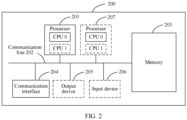
- each device in FIG. 1 may be implemented by a communication apparatus 200 in FIG. 2.
- FIG. 2 is a diagram of a hardware structure of a communication apparatus applicable to an embodiment of this application.
- the communication apparatus 200 includes at least one processor 201, a communication line 202, a memory 203, and at least one communication interface 204.
- the processor 201 may be a general-purpose central processing unit (central processing unit, CPU), a microprocessor, an application-specific integrated circuit (application-specific integrated circuit, ASIC), or one or more integrated circuits configured to control execution of programs in the solutions in this application.
- CPU central processing unit
- ASIC application-specific integrated circuit
- the communication line 202 may include a path, and the path is used to transmit information between the foregoing components.
- the communication interface 204 may be any apparatus (such as an antenna) such as a transceiver, and is configured to communicate with another device or a communication network.
- the communication network may be an Ethernet, a RAN, a wireless local area network (wireless local area network, WLAN), or the like.
- the memory 203 may be a read-only memory (read-only memory, ROM) or another type of static storage device that can store static information and instructions, a random access memory (random access memory, RAM) or another type of dynamic storage device that can store information and instructions, an electrically erasable programmable read-only memory (electrically erasable programmable read-only memory, EEPROM), a compact disc read-only memory (compact disc read-only memory, CD-ROM) or another optical disc storage, an optical disk storage (including a compact optical disc, a laser disc, an optical disc, a digital versatile optical disc, a Blu-ray disc, and the like), a magnetic disk storage medium or another magnetic storage device, or any other medium capable of carrying or storing desired program code in a form of instructions or a data structure and capable of being accessed by a computer, but the memory is not limited thereto.
- the memory may exist independently, and is connected to the processor through the communication line 202. The memory may alternatively be integrated with the processor.
- the memory
- the memory 203 is configured to store computer-executable instructions for executing the solutions in this application, and the processor 201 controls the execution.
- the processor 201 is configured to execute the computer-executable instructions stored in the memory 203 to implement the method provided in the following embodiments of this application.
- the computer-executable instructions in this embodiment of this application may also be referred to as application program code. This is not specifically limited in this embodiment of this application.
- the processor 201 may include one or more CPUs, for example, a CPU 0 and a CPU 1 in FIG. 2 .
- the communication apparatus 200 may include a plurality of processors, for example, the processor 201 and a processor 207 in FIG. 2 .
- Each of the processors may be a single-core (single-CPU) processor or a multi-core (multi-CPU) processor.
- the processor herein may be one or more devices, circuits, and/or processing cores configured to process data (for example, computer program instructions).
- the communication apparatus 200 may further include an output device 205 and an input device 206.
- the output device 205 communicates with the processor 201, and may display information in a plurality of manners.
- the output device 205 may be a liquid crystal display (liquid crystal display, LCD), a light emitting diode (light emitting diode, LED) display device, a cathode ray tube (cathode ray tube, CRT) display device, or a projector (projector).
- the input device 206 communicates with the processor 201, and may receive an input from a user in a plurality of manners.
- the input device 206 may be a mouse, a keyboard, a touchscreen device, or a sensor device.
- the foregoing communication apparatus 200 may be a general-purpose device or a special-purpose device.
- the communication apparatus 200 may be a desktop computer, a portable computer, a network server, a personal digital assistant (personal digital assistant, PDA), a mobile phone, a tablet computer, a wireless terminal device, an embedded device, or a device having a structure similar to that in FIG. 2 .
- PDA personal digital assistant
- a type of the communication apparatus 200 is not limited in this embodiment of this application.
- the first access network device may be referred to as a target access network device
- the second access network device may be referred to as a source access network device, or another name may be used.
- a source access network device in FIG. 3A to FIG. 3E may be, for example, the source access network device 10 in FIG. 1
- a target access network device in FIG. 3A to FIG. 3E may be, for example, the target access network device 20 in FIG. 1
- a terminal device in FIG. 3A to FIG. 3E may be, for example, the terminal device 30 in FIG. 1
- a candidate relay terminal in FIG. 3A to FIG. 3E may be, for example, the candidate relay terminal in FIG.
- a target relay terminal in FIG. 3A to FIG. 3E may be, for example, the target relay terminal in FIG. 1 ; and a relay terminal in FIG. 3A to FIG. 3E may be, for example, the relay terminal in FIG. 1 .
- FIG. 3A is a schematic flowchart of a communication method according to an embodiment of this application. As shown in FIG. 3A , the method includes but is not limited to the following steps.
- a terminal device reports information about one or more candidate relay terminals and/or information about one or more candidate cells to a source access network device.
- the source access network device receives the information about the one or more candidate relay terminals reported by the terminal device and/or the information about the one or more candidate cells reported by the terminal device.
- step 301 may include: When link quality of a direct link on which the terminal device communicates with the source access network device is less than or equal to a first preset threshold, or link quality of an indirect link on which the terminal device communicates with the source access network device through a relay terminal is less than or equal to a second preset threshold, the terminal device reports the information about the one or more candidate relay terminals and/or the information about the one or more candidate cells to the source access network device.
- the three candidate relay terminals are located in one cell served by the target access network device.
- the candidate relay terminal 1 is located in a cell 1 served by the target access network device
- the candidate relay terminal 2 is located in a cell 2 served by the target access network device
- the candidate relay terminal 3 is located in a cell 3 served by the target access network device.
- the candidate relay terminal 1 and the candidate relay terminal 2 are located in the cell 1 served by the target access network device
- the candidate relay terminal 3 is located in the cell 2 served by the target access network device.
- the identifier of the candidate relay terminal may include, for example, one or more of the following: an S-TMSI, a GUTI, an SUPI, an RNTI, a layer-2 identifier, a local identifier allocated by a network device to the candidate relay terminal, and the like.
- the signal quality on the link between the terminal device and the candidate relay terminal may include at least one of the following: a reference signal received power, reference signal received quality, or a signal to interference plus noise ratio.
- the link between the terminal device and the candidate relay terminal is an SL.
- Signal quality on the SL between the terminal device and the candidate relay terminal may also be referred to as signal quality on a PC5 interface between the terminal device and the candidate relay terminal.
- an identifier of a serving cell of the candidate relay terminal may include, for example, at least one of the following: an NCI or an NCGI.
- the quantity of the candidate cells reported by the terminal device to the source access network device may be one or more.
- information about a candidate cell may include at least one of the following: an identifier of the candidate cell or signal quality between the terminal device and the target access network device in the candidate cell.
- the signal quality between the terminal device and the target access network device in the candidate cell may include at least one of the following: a reference signal received power, reference signal received quality, or a signal to interference plus noise ratio. It should be understood that the signal quality between the terminal device and the target access network device in the candidate cell may also be referred to as signal quality between the terminal device and the target access network device on a Uu interface in the candidate cell.
- An identifier of the candidate cell may include, for example, at least one of the following: an NCI or an NCGI.
- the method may further include: The terminal device receives measurement configuration information sent by the source access network device; and the terminal device measures signal quality on a link between the terminal device and one or more candidate relay terminals based on the measurement configuration information, and measures signal quality between the terminal device and the target access network device in one or more candidate cells.
- the terminal device may first perform a relay discovery process. In other words, the terminal device needs to receive a discovery message sent by a surrounding relay terminal, and then measure the signal quality on the link between the terminal device and the one or more candidate relay terminals based on the discovery message.
- the target access network device determines, based on the first candidate information list and/or the second candidate information list, to hand over the terminal device to a direct link, and the target access network device determines a target cell based on the second candidate information list; or the target access network device determines, based on the first candidate information list and/or the second candidate information list, to hand over the terminal device to an indirect link, and the target access network device determines a target relay terminal in a target cell based on the first candidate information list.
- the information about the candidate relay terminal in the first candidate information list may be, for example, information about all candidate relay terminals reported by the terminal device, or the information about the candidate relay terminal in the first candidate information list may be, for example, information about some candidate relay terminals in the candidate relay terminals reported by the terminal device.
- the terminal device reports information about 10 candidate relay terminals to the source access network device
- the first candidate information list may include the information about the 10 candidate relay terminals
- the first candidate information list may include information about 5 of the 10 candidate relay terminals.
- the information about the candidate relay terminal in the first candidate information list may be the same as or partially the same as the information about the corresponding candidate relay terminal reported by the terminal device.
- information about a candidate relay terminal A in the first candidate information list includes an identifier of the candidate relay terminal A, signal quality on a link between the terminal device and the candidate relay terminal A, and an identifier of a serving cell of the candidate relay terminal A; and information about the candidate relay terminal A reported by the terminal device includes the identifier of the candidate relay terminal A, the signal quality on the link between the terminal device and the candidate relay terminal A, and the identifier of the serving cell of the candidate relay terminal A.
- information about the candidate relay terminal A in the first candidate information list is the same as the information about the candidate relay terminal A reported by the terminal device.
- information about the candidate relay terminal A in the first candidate information list includes the identifier of the candidate relay terminal A and the identifier of the serving cell of the candidate relay terminal A; and information about the candidate relay terminal A reported by the terminal device includes the identifier of the candidate relay terminal A, the signal quality on the link between the terminal device and the candidate relay terminal A, and the identifier of the serving cell of the candidate relay terminal A. Therefore, it can be learned that the information about the candidate relay terminal A in the first candidate information list is partially the same as the information about the candidate relay terminal A reported by the terminal device.
- an arrangement order of information about candidate relay terminals in the first candidate information list may be determined by the source access network device based on signal quality on sidelinks between the terminal device and a plurality of candidate relay terminals.
- the arrangement order of the information about the candidate relay terminals in the first candidate information list may be a sequence determined by the source access network device by sorting signal quality of the sidelinks between the terminal device and the plurality of candidate relay terminals in descending order of the signal quality.
- the arrangement order of the information about the candidate relay terminals in the first candidate information list may be a sequence determined by the source access network device by sorting signal quality of the sidelinks between the terminal device and the plurality of candidate relay terminals in ascending order of the signal quality.
- a specific rule used by the source access network device to determine the arrangement order of the information about the candidate relay terminals in the first candidate information list may be predefined in a protocol, or may be fixed, or may be negotiated by the target access network device and the source access network device. This is not limited herein.
- the second candidate information list includes information about one or more candidate cells served by the target access network device.
- information about candidate cells in the second candidate information list may be, for example, information about all candidate cells reported by the terminal device, or information about candidate cells in the second candidate information list may be, for example, information about some candidate cells in the candidate cells reported by the terminal device.
- the terminal device reports information about 10 candidate cells to the source access network device, and the second candidate information list may include the information about the 10 candidate cells, or the second candidate information list may include information about 5 of the 10 candidate cells.
- the information about the candidate cell in the second candidate information list may be the same as or partially the same as the information about the corresponding candidate cell reported by the terminal device.
- information about a candidate cell A in the second candidate information list includes an identifier of the candidate cell A, or signal quality between the terminal device and the target access network device in the candidate cell A and an identifier of the candidate cell A; and information about the candidate cell A reported by the terminal device includes the identifier of the candidate cell A, or the signal quality between the terminal device and the target access network device in the candidate cell A and the identifier of the candidate cell A. Therefore, it can be learned that the information about the candidate cell A in the second candidate information list is the same as the information about the candidate cell A reported by the terminal device.
- an arrangement order of information about candidate cells in the second candidate information list may be determined by the source access network device based on signal quality between the terminal device and the target access network device in one or more candidate cells.
- the arrangement order of the information about the candidate cells in the second candidate information list may be a sequence determined by the source access network device by sorting the signal quality between the terminal device and the target access network device in the one or more candidate cells in descending order of the signal quality.
- the arrangement order of the information about the candidate cells in the second candidate information list may be a sequence determined by the source access network device by sorting the signal quality between the terminal device and the target access network device in the one or more candidate cells in ascending order of the signal quality.
- a specific rule used by the source access network device to determine the arrangement order of the information about the candidate cells in the second candidate information list may be predefined in a protocol, or may be fixed, or may be negotiated by the target access network device and the source access network device. This is not limited herein.
- the first candidate information list may be referred to as a candidate relay terminal information list (candidate relay UE info list), and the second candidate information list may be referred to as a candidate cell information list (candidate cell info list).
- the source access network device determines, based on the information about the one or more candidate relay terminals reported by the terminal device, to hand over the terminal device to the indirect link, determines the first candidate information list, and sends the first candidate information list to the target access network device, but the target access network device determines the target relay terminal in the target cell.
- the target access network device determines the target relay terminal in the target cell.
- the source access network device determines, based on the information about the one or more candidate relay terminals reported by the terminal device and the information about the one or more candidate cells reported by the terminal device, to hand over the terminal device to the indirect link, determines the first candidate information list, and sends the first candidate information list to the target access network device, but the target access network device determines the target relay terminal in the target cell. Refer to the solution shown in FIG. 3A .
- the source access network device determines, based on the information about the one or more candidate relay terminals reported by the terminal device and the information about the one or more candidate cells reported by the terminal device, to hand over the terminal device to the direct link, for example, because the signal quality on the sidelink between the terminal device and the candidate relay terminal in the information about the one or more candidate relay terminals reported by the terminal device is lower than the signal quality between the terminal device in the candidate cell and the target access network device in the information about the one or more candidate cells reported by the terminal device, the source access network device determines to hand over the terminal device to the direct link.
- the source access network device determines to hand over the terminal device to the indirect link.
- step 301 if the source access network device determines to hand over the terminal device to the direct link, and the source access network device determines the target cell, for details, refer to the solution shown in FIG. 3B .
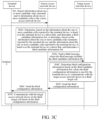
- step 301 if the source access network device determines to hand over the terminal device to the direct link, but the target access network device determines the target cell, for details, refer to the solution shown in FIG. 3C .
- step 301 if the source access network device determines to hand over the terminal device to the indirect link, and the source access network device determines the target relay terminal in the target cell, for details, refer to the solution shown in FIG. 3D .
- step 301 if the source access network device determines to hand over the terminal device to the indirect link, the source access network device determines the target cell, but the target access network device determines the target relay terminal in the target cell, for details, refer to the solution shown in FIG. 3E .
- the source access network device determines the first candidate information list and/or the second candidate information list based on the information about the one or more candidate relay terminals reported by the terminal device and/or the information about the one or more candidate cells reported by the terminal device.
- That the source access network device determines the first candidate information list based on the information about the one or more candidate relay terminals reported by the terminal device and/or the information about the one or more candidate cells reported by the terminal device may be understood that the source access network device determines the first candidate information list based on the information about the one or more candidate relay terminals reported by the terminal device or the source access network device determines the first candidate information list based on the information about the one or more candidate relay terminals reported by the terminal device and the information about the one or more candidate cells reported by the terminal device.
- the source access network device determines the second candidate information list based on the information about the one or more candidate relay terminals reported by the terminal device and/or the information about the one or more candidate cells reported by the terminal device may be understood that the source access network device determines the second candidate information list based on the information about the one or more candidate cells reported by the terminal device or the source access network device determines the second candidate information list based on the information about the one or more candidate relay terminals reported by the terminal device and the information about the one or more candidate cells reported by the terminal device.
- step 302A may be replaced with that the source access network device determines, based on the information about the one or more candidate relay terminals reported by the terminal device, to hand over the terminal device to the indirect link, and determines the first candidate information list; or the source access network device determines, based on the information about the one or more candidate relay terminals reported by the terminal device and the information about the one or more candidate cells reported by the terminal device, to hand over the terminal device to the indirect link, and determines the first candidate information list.
- the source access network device sends a first message to the target access network device, where the first message includes the first candidate information list and/or the second candidate information list.
- the target access network device receives the first message sent by the source access network device.
- the first message may be, for example, a handover request (handover request) message.
- the first candidate information list includes information about a plurality of candidate relay terminals, and the plurality of candidate relay terminals are located in one or more cells served by the target access network device.
- the target access network device may learn of information, namely, the first candidate information list, required for handing over the terminal device to the indirect link. Therefore, the target access network device may determine, based on the first candidate information list, to hand over the terminal device to the indirect link.
- the second candidate information list includes information about one or more candidate cells served by the target access network device. This means that the target access network device may learn of information, namely, the second candidate information list, required for handing over the terminal device to the direct link.
- the target access network device may determine to hand over the terminal device to the direct link.
- the target access network device may learn of information required for handing over the terminal device to the direct link or the indirect link. Therefore, the target access network device may determine to hand over the terminal device to the direct link or the indirect link.
- the first identifier includes at least one of the following: the identifier predefined in the protocol, the identifier of the cell in which any one of the one or more candidate relay terminals reported by the terminal device is located, the identifier of any candidate cell reported by the terminal device, the identifier of the cell recommended by the source access network device to the target access network device, or the random value determined by the source access network device.
- the identifier of any candidate cell reported by the terminal device may be included in the second candidate information list.
- the identifier of the cell recommended by the source access network device to the target access network device may be an identifier of a candidate cell reported by the terminal device.
- information about a candidate cell reported by the terminal device may be included in the second candidate information list.
- the first identifier includes at least one of the following: the identifier predefined in the protocol, the identifier of any candidate cell reported by the terminal device, the identifier of the cell recommended by the source access network device to the target access network device, or the random value determined by the source access network device.
- the identifier of the cell in which any one of the one or more candidate relay terminals reported by the terminal device is located may be included in the first candidate information list, and the identifier of any candidate cell reported by the terminal device may be included in the second candidate information list.
- the identifier of the cell recommended by the source access network device to the target access network device may include an identifier of a cell in which one or more of the candidate relay terminals reported by the terminal device are located and an identifier of a candidate cell reported by the terminal device.
- information about a cell in which one or more of the candidate relay terminals reported by the terminal device are located may be included in the first candidate information list, and information about a candidate cell reported by the terminal device may be included in the second candidate information list.
- the target access network device ignores a cell indicated by the first identifier. In this way, when participating in selection of a target relay terminal in a target cell or participating in selection of a target cell, the target access network device ignores the cell indicated by the first identifier.
- the second candidate information list includes information about one or more candidate cells served by the target access network device, and the first target cell is a cell in the one or more candidate cells.
- signal quality between the terminal device and the target access network device in the first target cell may be highest signal quality between the terminal device and the target access network device in the one or more candidate cells.
- the second candidate information list includes information about three candidate cells: information about a candidate cell 1, information about a candidate cell 2, and information about a candidate cell 3.
- the source access network device receives the first configuration information sent by the target access network device.
- the source access network device sends the first configuration information to the terminal device.
- the first configuration information may be, for example, carried in a radio resource control reconfiguration message (RRC reconfiguration message).
- the terminal device communicates with the target access network device based on the first configuration information.
- step 307A may include: The terminal device communicates with the target access network device through the first target relay terminal based on the first configuration information. It should be understood that before the terminal device communicates with the target access network device through the first target relay terminal based on the first configuration information, the method may further include: If the terminal device does not establish a link to the first target relay terminal, the terminal device establishes the link to the first target relay terminal, and sends a radio resource control reconfiguration complete message (RRC reconfiguration complete message) to the first target relay terminal on the link.
- RRC reconfiguration complete message radio resource control reconfiguration complete message
- the first target relay terminal forwards the radio resource control reconfiguration complete message to the target access network device.
- the radio resource control reconfiguration complete message indicates that the bearer on which the terminal device communicates with the target access network device through the first target relay terminal has been successfully established.
- step 307A may include: The terminal device communicates with the target access network device in the first target cell based on the first configuration information. It should be understood that before the terminal device communicates with the target access network device in the first target cell based on the first configuration information, the method may further include: The terminal device accesses the first target cell through random access, and sends a radio resource control reconfiguration complete message (RRC reconfiguration complete message) to the target access network device, where the radio resource control reconfiguration complete message indicates that a bearer between the terminal device and the target access network device in the first target cell has been successfully established.
- RRC reconfiguration complete message radio resource control reconfiguration complete message
- the target access network device may participate in selection of a target relay terminal in a target cell by using the first candidate information list from the source access network device, or the target access network device may participate in selection of the target cell by using the second candidate information list from the source access network device. In this way, a better switching link can be selected for the terminal device, so that the success rate of link switching of the terminal device in different access network devices can be increased.
- An embodiment of this application further describes a solution in which a source access network device determines to hand over a terminal device to a direct link and the source access network device determines a target cell.
- the source access network device determines, based on information about one or more candidate cells reported by the terminal device, to hand over the terminal device to the direct link, and determines a second target cell; or the source access network device determines, based on information about one or more candidate relay terminals reported by the terminal device and information about one or more candidate cells reported by the terminal device, to hand over the terminal device to the direct link, and determines a second target cell.
- signal quality between the terminal device and a target access network device in the second target cell may be, for example, highest signal quality in the information about the one or more candidate cells reported by the terminal device.
- the source access network device sends a second message to the target access network device, where the second message includes an identifier of the second target cell, and the second message is used to request the target access network device to allow the terminal device to communicate with the target access network device in the second target cell.
- the target access network device receives the second message sent by the source access network device.
- the second message may be, for example, a handover request message.
- the identifier of the second target cell may be, for example, a target cell global identifier.
- the target access network device sends a response message of the second message to the source access network device, where the response message of the second message includes second configuration information, the second configuration information is used by the terminal device to communicate with the target access network device in the second target cell, and the response message of the second message indicates that the terminal device is allowed to communicate with the target access network device in the second target cell.
- the source access network device receives the response message that is of the second message and that is sent by the target access network device, where the response message of the second message may be, for example, a handover request acknowledge message.
- the second configuration information is similar to the first configuration information used by the terminal device to communicate with the target access network device in the first target cell in the solution in the embodiment described in FIG. 3A . Details are not described herein again.
- the terminal device receives the second configuration information sent by the source access network device.
- the source access network device sends the second configuration information to the terminal device.
- the second configuration information may be, for example, carried in a radio resource control reconfiguration message.
- the terminal device communicates with the target access network device in the second target cell based on the second configuration information.
- Step 306B is similar to step 306A in which the terminal device communicates with the target access network device in the first target cell based on the first configuration information. Details are not described herein again.
- the source access network device when the source access network device determines, based on the information about the one or more candidate cells reported by the terminal device, to hand over the terminal device to the direct link, or when the source access network device determines, based on the information about the one or more candidate relay terminals reported by the terminal device and the information about the one or more candidate cells reported by the terminal device, to hand over the terminal device to the direct link, the source access network device may participate in selection of the target cell based on the information about the one or more candidate cells reported by the terminal device.
- the source access network device may request the target access network device to allow the terminal device to communicate with the target access network device in the second target cell, so that the terminal device can communicate with the target access network device in the second target cell after being allowed, thereby increasing the success rate of link switching of the terminal device in different access network devices.
- the target access network device ignores the cell indicated by the second identifier may be understood that when the target access network device obtains the third message, and the third message includes the second identifier, the target access network device ignores or does not refer to the cell indicated by the second identifier. Further, it may alternatively be understood that when determining the target relay terminal or the target cell, the target access network device ignores or does not refer to the cell indicated by the second identifier.
- the source access network device sends the fifth configuration information to the terminal device.
- the fifth configuration information may be, for example, carried in a radio resource control reconfiguration message.
- the terminal device communicates with the target access network device through the target relay terminal in the fifth target cell based on the fifth configuration information.
- Step 306E is similar to step 306A in which the terminal device communicates with the target access network device through the first target relay terminal based on the first configuration information. Details are not described herein again.
- the source access network device can determine the target cell, and the target access network device can determine the target relay terminal in the target cell, so that the target access network device can participate in selection of the target relay terminal. In this way, a better target relay terminal can be selected for the terminal device.
- each device includes a corresponding hardware structure and/or software module for performing each function.
- a person skilled in the art should easily be aware that in combination with units and algorithm steps of the examples described in embodiments disclosed in this specification, this application can be implemented by hardware or a combination of hardware and computer software. Whether a function is performed by hardware or hardware driven by computer software depends on particular applications and design constraints of the technical solutions. A person skilled in the art may use different methods to implement the described functions for each particular application, but it should not be considered that such an implementation goes beyond the scope of this application.
- a target access network device, a source access network device, or a terminal device may be divided into functional modules based on the foregoing method examples.
- each functional module may be obtained through division based on a corresponding function, or two or more functions may be integrated into one processing module.
- the integrated module may be implemented in a form of hardware, or may be implemented in a form of a software functional module. It should be noted that the module division in embodiments of this application is an example, and is merely logical function division. During actual implementation, another division manner may be used.
- FIG. 4 is a diagram of a structure of a communication apparatus according to an embodiment of this application.
- the communication apparatus 400 may be used in the method shown in any one of the embodiments in FIG. 3A to FIG. 3E .
- the communication apparatus 400 includes a processing module 401 and a transceiver module 402.
- the processing module 401 may be one or more processors
- the transceiver module 402 may be a transceiver or a communication interface.
- the communication apparatus may be configured to implement the target access network device, the source access network device, or the terminal device in any one of the foregoing method embodiments, or may be configured to implement a function of the network element in any one of the foregoing method embodiments.
- the network element or network function may be a network element in a hardware device, a software function running on dedicated hardware, or a virtualization function instantiated on a platform (for example, a cloud platform).
- the communication apparatus 400 may further include a storage module 403, configured to store program code and data of the communication apparatus 400.
- the communication apparatus when the communication apparatus is used as a target access network device or a chip used in a target access network device, the communication apparatus performs the steps performed by the target access network device in the foregoing method embodiment.
- the transceiver module 402 is configured to support communication with the source access network device, the terminal device, the relay terminal, or the like.
- the transceiver module specifically performs a sending and/or receiving action performed by the target access network device in any one of the embodiments in FIG. 3A to FIG. 3E , for example, supports the target access network device in performing one or more steps such as step 305A and step 304B, and/or another process of the technology described in this specification.
- the processing module 401 may be configured to support the communication apparatus 400 in performing a processing action in the foregoing method embodiments, for example, support the target access network device in performing one or more steps such as step 304A and step 304C, and/or another process of the technology described in this specification.
- the transceiver module 402 is configured to receive a first message sent by the source access network device, where the first message includes a first candidate information list and/or a second candidate information list; the first candidate information list includes information about a plurality of candidate relay terminals, and the plurality of candidate relay terminals are located in one or more cells served by the target access network device; and the second candidate information list includes information about one or more candidate cells served by the target access network device.
- the processing module 401 is configured to determine first configuration information based on the first candidate information list and/or the second candidate information list, where the first configuration information is used by the terminal device to communicate with the target access network device through a first target relay terminal, and the first target relay terminal is one of the plurality of candidate relay terminals; or the first configuration information is used by the terminal device to communicate with the target access network device in the first target cell, and the first target cell is a cell in the one or more candidate cells.
- the target access network device sends first configuration information to the source access network device.
- the processing module 401 is further configured to determine the first target relay terminal based on the first candidate information list, where a serving cell of the first target relay terminal is one of the one or more cells.
- the processing module 401 is further configured to determine the first target cell based on the second candidate information list.
- the first message further includes a first identifier.
- the first identifier includes at least one of the following: an identifier predefined in a protocol, an identifier of a cell in which any one of the one or more candidate relay terminals reported by the terminal device is located, an identifier of any candidate cell reported by the terminal device, an identifier of a cell recommended by the source access network device to the target access network device, or a random value determined by the source access network device.
- the processing module 401 is further configured to ignore a cell indicated by the first identifier.
- the processing module 401 is further configured to ignore the cell indicated by the first identifier.
- the processing module 401 when determining the first target relay terminal based on the first candidate information list, is configured to determine the first target relay terminal based on the first candidate information list and the cell indicated by the first identifier.
- the first message further includes first indication information.
- the first indication information indicates that the first identifier is the identifier predefined in the protocol; or the first indication information indicates that the first identifier is the identifier of the cell in which any one of the one or more candidate relay terminals reported by the terminal device is located; or the first indication information indicates that the first identifier is the identifier of any candidate cell reported by the terminal device; or the first indication information indicates that the first identifier is the identifier of the cell recommended by the source access network device to the target access network device; or the first indication information indicates that the first identifier is the random value determined by the source access network device.
- the communication apparatus when the communication apparatus is used as a source access network device or a chip used in a source access network device, the communication apparatus performs the steps performed by the source access network device in the foregoing method embodiment.
- the transceiver module 402 is configured to support communication with the target access network device, the terminal device, the relay terminal, or the like.
- the transceiver module specifically performs a sending and/or receiving action performed by the source access network device in any one of the embodiments in FIG. 3A to FIG. 3E , for example, supports the source access network device in performing one or more steps such as step 303A and step 303B, and/or another process of the technology described in this specification.
- the processing module 401 may be configured to support the communication apparatus 400 in performing a processing action in the foregoing method embodiments, for example, support the source access network device in performing one or more steps such as step 302A and step 302B, and/or another process of the technology described in this specification.
- the transceiver module 402 is configured to receive the information about the one or more candidate relay terminals reported by the terminal device and/or the information about the one or more candidate cells reported by the terminal device.
- the processing module 401 is configured to determine the first candidate information list and/or the second candidate information list based on the information about the one or more candidate relay terminals reported by the terminal device and/or the information about the one or more candidate cells reported by the terminal device.
- the first candidate information list includes information about a plurality of candidate relay terminals, and the plurality of candidate relay terminals are located in one or more cells served by the target access network device.
- the second candidate information list includes information about the one or more candidate cells served by the target access network device.
- the transceiver module 402 is further configured to send the first message to the target access network device.
- the first message includes the first candidate information list and/or the second candidate information list.
- the transceiver module 402 is further configured to receive the first configuration information sent by the target access network device.
- the first configuration information is used by the terminal device to communicate with the target access network device through the first target relay terminal, and the first target relay terminal is one of the plurality of candidate relay terminals; or the first configuration information is used by the terminal device to communicate with the target access network device in the first target cell, and the first target cell is a cell in the one or more candidate cells.
- the transceiver module 402 is further configured to send the first configuration information to the terminal device.
- the first message further includes a first identifier.
- the first identifier includes at least one of the following: an identifier predefined in a protocol, an identifier of a cell in which any one of the one or more candidate relay terminals reported by the terminal device is located, an identifier of any candidate cell reported by the terminal device, an identifier of a cell recommended by the source access network device to the target access network device, or a random value determined by the source access network device.
- the first message further includes first indication information.
- the first indication information indicates that the first identifier is the identifier predefined in the protocol; or the first indication information indicates that the first identifier is the identifier of the cell in which any one of the one or more candidate relay terminals reported by the terminal device is located; or the first indication information indicates that the first identifier is the identifier of any candidate cell reported by the terminal device; or the first indication information indicates that the first identifier is the identifier of the cell recommended by the source access network device to the target access network device; or the first indication information indicates that the first identifier is the random value determined by the source access network device.
- the communication apparatus when the communication apparatus is used as a terminal device or a chip used in a terminal device, the communication apparatus performs the steps performed by the terminal device in the foregoing method embodiments.
- the transceiver module 402 is configured to support communication with the target access network device, the source access network device, the relay terminal, or the like.
- the transceiver module specifically performs a sending and/or receiving action performed by the terminal device in any one of the embodiments in FIG. 3A to FIG. 3E , for example, supports the terminal device in performing one or more steps such as step 301 and step 306A, and/or another process of the technology described in this specification.
- the processing module 401 may be configured to support the communication apparatus 400 in performing a processing action in the foregoing method embodiments, for example, support the terminal device in performing one or more steps such as step 307A and step 306B, and/or another process of the technology described in this specification.
- the transceiver module 402 is configured to report information about one or more candidate relay terminals and/or information about one or more candidate cells to the source access network device.
- the transceiver module 402 is further configured to receive the first configuration information sent by the source access network device.
- the processing module 401 is configured to communicate with the target access network device through the first target relay terminal based on the first configuration information or communicate with the target access network device in the first target cell based on the first configuration information.
- the first configuration information is determined by the target access network device based on the first message sent by the source access network device.
- the first message includes the first candidate information list and/or the second candidate information list.
- the first candidate information list is determined by the source access network device based on the information about the one or more candidate relay terminals reported by the terminal device.
- the second candidate information list is determined by the source access network device based on the information about the one or more candidate cells reported by the terminal device.
- the first candidate information list includes information about a plurality of candidate relay terminals.
- the plurality of candidate relay terminals are located in one or more cells served by the target access network device.
- the first target relay terminal is one of the plurality of candidate relay terminals.
- the second candidate information list includes information about the one or more candidate cells served by the target access network device.
- the first target cell is a cell in the one or more candidate cells.
- the first message further includes a first identifier.
- the first identifier includes at least one of the following: an identifier predefined in a protocol, an identifier of a cell in which any one of the one or more candidate relay terminals reported by the terminal device is located, an identifier of any candidate cell reported by the terminal device, an identifier of a cell recommended by the source access network device to the target access network device, or a random value determined by the source access network device.
- the first message further includes first indication information.
- the first indication information indicates that the first identifier is the identifier predefined in the protocol; or the first indication information indicates that the first identifier is the identifier of the cell in which any one of the one or more candidate relay terminals reported by the terminal device is located; or the first indication information indicates that the first identifier is the identifier of any candidate cell reported by the terminal device; or the first indication information indicates that the first identifier is the identifier of the cell recommended by the source access network device to the target access network device; or the first indication information indicates that the first identifier is the random value determined by the source access network device.
- the transceiver module 402 may be a communication interface, a pin, a circuit, or the like.
- the communication interface may be configured to input to-be-processed data into a processor, and may output a processing result of the processor to the outside.
- the communication interface may be a general-purpose input/output (general-purpose input/output, GPIO) interface, and may be connected to a plurality of peripheral devices (for example, a display (LCD), a camera (camera), a radio frequency (radio frequency, RF) module, and an antenna).
- the communication interface is connected to the processor through a bus.
- the processing module 401 may be a processor.
- the processor may execute computer-executable instructions stored in a storage module, so that the chip performs the method according to any one of the embodiments in FIG. 3A to FIG. 3E .
- the processor may include a controller, an arithmetic unit, and a register.
- the controller is mainly responsible for decoding instructions, and transmitting a control signal for operations corresponding to the instructions.
- the arithmetic unit is mainly responsible for performing a fixed-point or floating-point arithmetic operation, a shift operation, a logic operation, and the like, and may also perform an address operation and address translation.
- the register is mainly responsible for saving a quantity of register operations, intermediate operation results, and the like that are temporarily stored during instruction execution.
- a hardware architecture of the processor may be an application-specific integrated circuit (application-specific integrated circuits, ASIC) architecture, a microprocessor without interlocked piped stages architecture (microprocessor without interlocked piped stages architecture, MIPS), an advanced reduced instruction set computing machine (advanced RISC machines, ARM) architecture, a network processor (network processor, NP) architecture, or the like.
- ASIC application-specific integrated circuits
- MIPS microprocessor without interlocked piped stages architecture
- an advanced reduced instruction set computing machine advanced reduced instruction set computing machine
- NP network processor
- the processor may be a single-core or multi-core processor.
- the storage module may be a storage module inside the chip, for example, a register or a cache.
- the storage module may be a storage module located outside the chip, for example, a read-only memory (Read-Only Memory, ROM), another type of static storage device that can store static information and instructions, or a random access memory (Random Access Memory, RAM).
- ROM Read-Only Memory
- RAM Random Access Memory
- a function corresponding to each of the processor and the interface may be implemented by using a hardware design, may be implemented by using a software design, or may be implemented by a combination of software and hardware. This is not limited herein.
- FIG. 5 is a simplified diagram of a structure of a terminal device according to an embodiment of this application.
- the terminal device includes at least one processor, and may further include a radio frequency circuit, an antenna, and an input/output apparatus.
- the processor may be configured to process a communication protocol and communication data, and may be further configured to control the terminal device, execute a software program, process data of the software program, and so on.
- the terminal device may further include a memory.
- the memory is mainly configured to store a software program and data. These related programs may be loaded into the memory when the communication apparatus is delivered from a factory, or may be loaded into the memory when needed later.
- the radio frequency circuit is mainly configured to: perform conversion between a baseband signal and a radio frequency signal, and process the radio frequency signal.
- the antenna is mainly configured to receive/send a radio frequency signal in an electromagnetic wave form, and the antenna is the antenna provided in embodiments of this application.
- the input/output apparatus for example, a touchscreen, a display, or a keyboard, is mainly configured to: receive data input by a user and output the data to the user. It should be noted that some types of terminal devices may have no input/output apparatus.
- the processor When needing to send data, after performing baseband processing on the to-be-sent data, the processor outputs a baseband signal to the radio frequency circuit; and the radio frequency circuit performs radio frequency processing on the baseband signal and then sends the radio frequency signal to the outside in a form of an electromagnetic wave through the antenna.
- the radio frequency circuit receives the radio frequency signal through the antenna, converts the radio frequency signal into a baseband signal, and outputs the baseband signal to the processor.
- the processor converts the baseband signal into data, and processes the data.
- FIG. 5 shows only one memory and one processor. In an actual terminal device product, there may be one or more processors and one or more memories.
- the memory may also be referred to as a storage medium, a storage device, or the like.
- the memory may be disposed independent of the processor, or may be integrated with the processor. This is not limited in this embodiment of this application.
- an antenna having sending and receiving functions and the radio frequency circuit may be considered as a receiving unit and a sending unit (which may also be collectively referred to as a transceiver unit) of the terminal device, and a processor having a processing function may be considered as a processing unit of the terminal device.
- the terminal device includes a receiving module 31, a processing module 32, and a sending module 33.
- the receiving module 31 may also be referred to as a receiver, a receiving machine, a receiver circuit, or the like.
- the sending module 33 may also be referred to as a sender, a transmitter, a transmitter machine, a transmitter circuit, or the like.
- the processing module 32 may also be referred to as a processor, a processing board, a processing apparatus, or the like.
- the processing module 32 is configured to perform a function of the terminal device in any one of the embodiments in FIG. 3A to FIG. 3E .
- FIG. 6 is a simplified diagram of a structure of an access network device according to an embodiment of this application.
- the access network device includes a baseband part 42 and a part for radio frequency signal transmission/reception and conversion.
- the part for radio frequency signal transmission/reception and conversion further includes a receiving module 41 and a sending module 43 (which may also be collectively referred to as a transceiver module).
- the part for radio frequency signal transmission/reception and conversion is mainly configured to: send/receive a radio frequency signal and perform conversion between the radio frequency signal and a baseband signal.
- the baseband part 42 is mainly configured to: perform baseband processing, control the access network device, and so on.
- the receiving module 41 may also be referred to as a receiver, a receiving machine, a receiver circuit, or the like.
- the sending module 43 may also be referred to as a sender, a transmitter, a transmitter machine, a transmitter circuit, or the like.
- the baseband part 42 is usually a control center of the access network device, may also be referred to as a processing module, and is configured to perform the steps performed by the access network device (for example, the target access network device or the source access network device) in any one of the embodiments in FIG. 3A to FIG. 3E .
- the access network device for example, the target access network device or the source access network device
- the baseband part 42 may include one or more boards. Each board may include one or more processors and one or more memories.
- the processor is configured to read and execute a program in the memory to implement a baseband processing function and control the access network device. If there are a plurality of boards, the boards may be interconnected to improve a processing capability.
- the plurality of boards may share one or more processors, or the plurality of boards share one or more memories, or the plurality of boards share one or more processors at the same time.
- the sending module 43 is configured to perform a function of the access network device (for example, the target access network device or the source access network device) in any one of the embodiments in FIG. 3A to FIG. 3E .
- the access network device for example, the target access network device or the source access network device
- An embodiment of this application further provides a communication apparatus, including a processor.
- the processor is coupled to a memory, and the memory stores a computer program.
- the processor is configured to invoke the computer program in the memory, so that the communication apparatus performs the method according to any one of the embodiments in FIG. 3A to FIG. 3E .
- An embodiment of this application further provides a communication apparatus, including a processor and an interface circuit.
- the interface circuit is configured to: receive a signal from another communication apparatus other than the communication apparatus and transmit the signal to the processor, or send a signal from the processor to another communication apparatus other than the communication apparatus.
- the processor implements the method according to any one of the embodiments in FIG. 3A to FIG. 3E by using a logic circuit or by executing code instructions.
- An embodiment of this application further provides a computer-readable storage medium.
- the storage medium stores a computer program or instructions.
- the computer program or instructions are executed by a computer, the method according to any one of the embodiments in FIG. 3A to FIG. 3E is implemented.
- An embodiment of this application further provides a computer program product.
- a computer reads and executes the computer program product, the computer is enabled to perform the method according to any one of the embodiments in FIG. 3A to FIG. 3E .
- the foregoing units described as separate parts may or may not be physically separate. Parts displayed as units may or may not be physical units, and may be located in one position or may be distributed on a plurality of network units. Some or all of the units may be selected based on an actual requirement to achieve the objectives of the solutions in embodiments of this application.
- the network element units in embodiments of this application may be integrated into one processing unit, or each of the units may exist alone physically, or two or more units are integrated into one unit.
- the integrated unit may be implemented in a form of hardware, or may be implemented in a form of a software network element unit.
- the integrated unit When implemented in the form of a software network element unit and sold or used as an independent product, the integrated unit may be stored in a computer-readable storage medium. Based on such an understanding, an essentially contributing part in the technical solutions of this application, or all or some of the technical solutions may be embodied in a form of a software product.
- the computer software product is stored in a storage medium and includes several instructions for instructing a computer device (which may be a personal computer, a terminal device, a cloud server, a network device, or the like) to perform all or some of the steps of the method in embodiments of this application.
- the foregoing storage medium includes any medium that can store program code, such as a USB flash drive, a removable hard disk drive, a read-only memory (ROM, Read-Only Memory), a random access memory (RAM, Random Access Memory), a magnetic disk, or an optical disc.
- program code such as a USB flash drive, a removable hard disk drive, a read-only memory (ROM, Read-Only Memory), a random access memory (RAM, Random Access Memory), a magnetic disk, or an optical disc.
Landscapes
- Engineering & Computer Science (AREA)
- Computer Networks & Wireless Communication (AREA)
- Signal Processing (AREA)
- Quality & Reliability (AREA)
- Physics & Mathematics (AREA)
- Electromagnetism (AREA)
- Mobile Radio Communication Systems (AREA)
Applications Claiming Priority (2)
| Application Number | Priority Date | Filing Date | Title |
|---|---|---|---|
| CN202211193807.2A CN117835339A (zh) | 2022-09-28 | 2022-09-28 | 一种通信方法及相关装置 |
| PCT/CN2023/118811 WO2024067126A1 (zh) | 2022-09-28 | 2023-09-14 | 一种通信方法及相关装置 |
Publications (2)
| Publication Number | Publication Date |
|---|---|
| EP4583576A1 true EP4583576A1 (de) | 2025-07-09 |
| EP4583576A4 EP4583576A4 (de) | 2025-12-03 |
Family
ID=90476106
Family Applications (1)
| Application Number | Title | Priority Date | Filing Date |
|---|---|---|---|
| EP23870362.3A Pending EP4583576A4 (de) | 2022-09-28 | 2023-09-14 | Kommunikationsverfahren und zugehörige vorrichtung |
Country Status (6)
| Country | Link |
|---|---|
| US (1) | US20250227575A1 (de) |
| EP (1) | EP4583576A4 (de) |
| JP (1) | JP2025532282A (de) |
| KR (1) | KR20250076619A (de) |
| CN (1) | CN117835339A (de) |
| WO (1) | WO2024067126A1 (de) |
Families Citing this family (1)
| Publication number | Priority date | Publication date | Assignee | Title |
|---|---|---|---|---|
| US20240323744A1 (en) * | 2023-03-21 | 2024-09-26 | Qualcomm Incorporated | Thermal-based ue aggregation for vehicular communication |
Family Cites Families (7)
| Publication number | Priority date | Publication date | Assignee | Title |
|---|---|---|---|---|
| CN101534533B (zh) * | 2008-03-10 | 2011-12-21 | 上海贝尔阿尔卡特股份有限公司 | 用于控制移动台进行切换的方法以及基站 |
| CN103002527B (zh) * | 2011-09-13 | 2015-04-08 | 华为技术有限公司 | 一种中继节点切换方法、基站、和通讯系统 |
| WO2017201741A1 (zh) * | 2016-05-27 | 2017-11-30 | 华为技术有限公司 | 一种切换到中继节点的方法、相关设备及系统 |
| CN113453291A (zh) * | 2020-03-25 | 2021-09-28 | 维沃移动通信有限公司 | 一种接入节点切换方法、终端设备及网络设备 |
| CN119584222A (zh) * | 2020-06-30 | 2025-03-07 | 华为技术有限公司 | 一种通信路径切换方法、装置及系统 |
| CN114339907B (zh) * | 2020-10-10 | 2024-03-08 | 大唐移动通信设备有限公司 | 一种切换方法、终端、网络设备及中继 |
| CN114828148A (zh) * | 2021-01-18 | 2022-07-29 | 大唐移动通信设备有限公司 | 一种目标中继终端的选择方法、装置、网络设备及终端 |
-
2022
- 2022-09-28 CN CN202211193807.2A patent/CN117835339A/zh active Pending
-
2023
- 2023-09-14 WO PCT/CN2023/118811 patent/WO2024067126A1/zh not_active Ceased
- 2023-09-14 JP JP2025518378A patent/JP2025532282A/ja active Pending
- 2023-09-14 KR KR1020257013849A patent/KR20250076619A/ko active Pending
- 2023-09-14 EP EP23870362.3A patent/EP4583576A4/de active Pending
-
2025
- 2025-03-27 US US19/092,097 patent/US20250227575A1/en active Pending
Also Published As
| Publication number | Publication date |
|---|---|
| JP2025532282A (ja) | 2025-09-29 |
| WO2024067126A1 (zh) | 2024-04-04 |
| KR20250076619A (ko) | 2025-05-29 |
| US20250227575A1 (en) | 2025-07-10 |
| CN117835339A (zh) | 2024-04-05 |
| EP4583576A4 (de) | 2025-12-03 |
Similar Documents
| Publication | Publication Date | Title |
|---|---|---|
| US11483743B2 (en) | Handover method, apparatus, and system | |
| KR101870850B1 (ko) | D2d 관련 정보 지시 및 d2d 송신 자원 확정 방법 및 장치 | |
| US20230156564A1 (en) | Communication path switching method, apparatus, and system | |
| EP4061024A1 (de) | D2d-kommunikationsverfahren, -gerät und -system | |
| WO2022007647A1 (zh) | 通信方法、设备和存储介质 | |
| US20240179776A1 (en) | Relay communication method, communication apparatus, and communication system | |
| US20230189102A1 (en) | Communication Method and Apparatus | |
| US20250227575A1 (en) | Communication method and related apparatus | |
| EP4333490A1 (de) | Kommunikationsverfahren und vorrichtung zur erfassung von lastinformationen | |
| US20240022380A1 (en) | Communication method and apparatus | |
| US20230098982A1 (en) | Handover method and apparatus | |
| EP4589892A1 (de) | Kommunikationsvorrichtung, verfahren und vorrichtung, speichermedium, chip, produkt und programm | |
| US12470999B2 (en) | Communication method, device, and system | |
| US20250142646A1 (en) | Wireless communication method and device | |
| WO2023272669A1 (zh) | 一种寻呼方法及相关装置 | |
| US20250280376A1 (en) | Communication method and apparatus | |
| EP4629695A1 (de) | Zellenübergabeverfahren und -vorrichtung | |
| US20240276310A1 (en) | Indication information transmission method, message transmission method, and related apparatus | |
| US20250365100A1 (en) | Communication method and apparatus | |
| EP4583609A1 (de) | Kommunikationsverfahren und -vorrichtung | |
| CN118540752A (zh) | 接入方法及装置 | |
| WO2025152726A1 (zh) | 小区接入方法及装置 | |
| EP4569755A1 (de) | Verbesserungen von direktzugriffskanalberichten | |
| WO2023088343A1 (zh) | Psfch传输方法及装置、通信设备 | |
| CN121397687A (zh) | 通信方法及装置 |
Legal Events
| Date | Code | Title | Description |
|---|---|---|---|
| STAA | Information on the status of an ep patent application or granted ep patent |
Free format text: STATUS: THE INTERNATIONAL PUBLICATION HAS BEEN MADE |
|
| PUAI | Public reference made under article 153(3) epc to a published international application that has entered the european phase |
Free format text: ORIGINAL CODE: 0009012 |
|
| STAA | Information on the status of an ep patent application or granted ep patent |
Free format text: STATUS: REQUEST FOR EXAMINATION WAS MADE |
|
| 17P | Request for examination filed |
Effective date: 20250403 |
|
| AK | Designated contracting states |
Kind code of ref document: A1 Designated state(s): AL AT BE BG CH CY CZ DE DK EE ES FI FR GB GR HR HU IE IS IT LI LT LU LV MC ME MK MT NL NO PL PT RO RS SE SI SK SM TR |
|
| A4 | Supplementary search report drawn up and despatched |
Effective date: 20251030 |
|
| RIC1 | Information provided on ipc code assigned before grant |
Ipc: H04W 36/00 20090101AFI20251024BHEP |
|
| DAV | Request for validation of the european patent (deleted) | ||
| DAX | Request for extension of the european patent (deleted) |