EP4582452A1 - Neuartiger chimärer anti-pd-l1-antigenrezeptor und immunzellen zur expression davon - Google Patents
Neuartiger chimärer anti-pd-l1-antigenrezeptor und immunzellen zur expression davon Download PDFInfo
- Publication number
- EP4582452A1 EP4582452A1 EP23860837.6A EP23860837A EP4582452A1 EP 4582452 A1 EP4582452 A1 EP 4582452A1 EP 23860837 A EP23860837 A EP 23860837A EP 4582452 A1 EP4582452 A1 EP 4582452A1
- Authority
- EP
- European Patent Office
- Prior art keywords
- seq
- group
- amino acid
- cancer
- serine
- Prior art date
- Legal status (The legal status is an assumption and is not a legal conclusion. Google has not performed a legal analysis and makes no representation as to the accuracy of the status listed.)
- Pending
Links
Images


Classifications
-
- A—HUMAN NECESSITIES
- A61—MEDICAL OR VETERINARY SCIENCE; HYGIENE
- A61P—SPECIFIC THERAPEUTIC ACTIVITY OF CHEMICAL COMPOUNDS OR MEDICINAL PREPARATIONS
- A61P35/00—Antineoplastic agents
-
- A—HUMAN NECESSITIES
- A61—MEDICAL OR VETERINARY SCIENCE; HYGIENE
- A61K—PREPARATIONS FOR MEDICAL, DENTAL OR TOILETRY PURPOSES
- A61K35/00—Medicinal preparations containing materials or reaction products thereof with undetermined constitution
- A61K35/12—Materials from mammals; Compositions comprising non-specified tissues or cells; Compositions comprising non-embryonic stem cells; Genetically modified cells
- A61K35/14—Blood; Artificial blood
- A61K35/15—Cells of the myeloid line, e.g. granulocytes, basophils, eosinophils, neutrophils, leucocytes, monocytes, macrophages or mast cells; Myeloid precursor cells; Antigen-presenting cells, e.g. dendritic cells
-
- A—HUMAN NECESSITIES
- A61—MEDICAL OR VETERINARY SCIENCE; HYGIENE
- A61K—PREPARATIONS FOR MEDICAL, DENTAL OR TOILETRY PURPOSES
- A61K35/00—Medicinal preparations containing materials or reaction products thereof with undetermined constitution
- A61K35/12—Materials from mammals; Compositions comprising non-specified tissues or cells; Compositions comprising non-embryonic stem cells; Genetically modified cells
- A61K35/14—Blood; Artificial blood
- A61K35/17—Lymphocytes; B-cells; T-cells; Natural killer cells; Interferon-activated or cytokine-activated lymphocytes
-
- A—HUMAN NECESSITIES
- A61—MEDICAL OR VETERINARY SCIENCE; HYGIENE
- A61K—PREPARATIONS FOR MEDICAL, DENTAL OR TOILETRY PURPOSES
- A61K40/00—Cellular immunotherapy
- A61K40/10—Cellular immunotherapy characterised by the cell type used
- A61K40/15—Natural-killer [NK] cells; Natural-killer T [NKT] cells
-
- A—HUMAN NECESSITIES
- A61—MEDICAL OR VETERINARY SCIENCE; HYGIENE
- A61K—PREPARATIONS FOR MEDICAL, DENTAL OR TOILETRY PURPOSES
- A61K40/00—Cellular immunotherapy
- A61K40/30—Cellular immunotherapy characterised by the recombinant expression of specific molecules in the cells of the immune system
- A61K40/31—Chimeric antigen receptors [CAR]
-
- A—HUMAN NECESSITIES
- A61—MEDICAL OR VETERINARY SCIENCE; HYGIENE
- A61K—PREPARATIONS FOR MEDICAL, DENTAL OR TOILETRY PURPOSES
- A61K40/00—Cellular immunotherapy
- A61K40/40—Cellular immunotherapy characterised by antigens that are targeted or presented by cells of the immune system
- A61K40/41—Vertebrate antigens
- A61K40/42—Cancer antigens
- A61K40/4202—Receptors, cell surface antigens or cell surface determinants
- A61K40/421—Immunoglobulin superfamily
-
- C—CHEMISTRY; METALLURGY
- C07—ORGANIC CHEMISTRY
- C07K—PEPTIDES
- C07K14/00—Peptides having more than 20 amino acids; Gastrins; Somatostatins; Melanotropins; Derivatives thereof
- C07K14/435—Peptides having more than 20 amino acids; Gastrins; Somatostatins; Melanotropins; Derivatives thereof from animals; from humans
- C07K14/705—Receptors; Cell surface antigens; Cell surface determinants
- C07K14/70503—Immunoglobulin superfamily
- C07K14/7051—T-cell receptor (TcR)-CD3 complex
-
- C—CHEMISTRY; METALLURGY
- C07—ORGANIC CHEMISTRY
- C07K—PEPTIDES
- C07K16/00—Immunoglobulins [IG], e.g. monoclonal or polyclonal antibodies
- C07K16/18—Immunoglobulins [IG], e.g. monoclonal or polyclonal antibodies against material from animals or humans
- C07K16/28—Immunoglobulins [IG], e.g. monoclonal or polyclonal antibodies against material from animals or humans against receptors, cell surface antigens or cell surface determinants
- C07K16/2803—Immunoglobulins [IG], e.g. monoclonal or polyclonal antibodies against material from animals or humans against receptors, cell surface antigens or cell surface determinants against the immunoglobulin superfamily
- C07K16/2827—Immunoglobulins [IG], e.g. monoclonal or polyclonal antibodies against material from animals or humans against receptors, cell surface antigens or cell surface determinants against the immunoglobulin superfamily against B7 molecules, e.g. CD80, CD86
-
- A—HUMAN NECESSITIES
- A61—MEDICAL OR VETERINARY SCIENCE; HYGIENE
- A61K—PREPARATIONS FOR MEDICAL, DENTAL OR TOILETRY PURPOSES
- A61K39/00—Medicinal preparations containing antigens or antibodies
- A61K2039/505—Medicinal preparations containing antigens or antibodies comprising antibodies
-
- A—HUMAN NECESSITIES
- A61—MEDICAL OR VETERINARY SCIENCE; HYGIENE
- A61K—PREPARATIONS FOR MEDICAL, DENTAL OR TOILETRY PURPOSES
- A61K2239/00—Indexing codes associated with cellular immunotherapy of group A61K40/00
- A61K2239/10—Indexing codes associated with cellular immunotherapy of group A61K40/00 characterized by the structure of the chimeric antigen receptor [CAR]
- A61K2239/11—Antigen recognition domain
- A61K2239/13—Antibody-based
-
- A—HUMAN NECESSITIES
- A61—MEDICAL OR VETERINARY SCIENCE; HYGIENE
- A61K—PREPARATIONS FOR MEDICAL, DENTAL OR TOILETRY PURPOSES
- A61K2239/00—Indexing codes associated with cellular immunotherapy of group A61K40/00
- A61K2239/46—Indexing codes associated with cellular immunotherapy of group A61K40/00 characterised by the cancer treated
- A61K2239/49—Breast
-
- A—HUMAN NECESSITIES
- A61—MEDICAL OR VETERINARY SCIENCE; HYGIENE
- A61K—PREPARATIONS FOR MEDICAL, DENTAL OR TOILETRY PURPOSES
- A61K2239/00—Indexing codes associated with cellular immunotherapy of group A61K40/00
- A61K2239/46—Indexing codes associated with cellular immunotherapy of group A61K40/00 characterised by the cancer treated
- A61K2239/55—Lung
-
- C—CHEMISTRY; METALLURGY
- C07—ORGANIC CHEMISTRY
- C07K—PEPTIDES
- C07K2317/00—Immunoglobulins specific features
- C07K2317/60—Immunoglobulins specific features characterized by non-natural combinations of immunoglobulin fragments
- C07K2317/62—Immunoglobulins specific features characterized by non-natural combinations of immunoglobulin fragments comprising only variable region components
- C07K2317/622—Single chain antibody (scFv)
Definitions
- the present invention relates to a novel antibody or an antigen-binding fragment thereof that specifically binds to PD-L1, a chimeric antigen receptor comprising the antigen-binding fragment of the antibody, an immune cell expressing the chimeric antigen receptor, and a pharmaceutical composition comprising the immune cell.
- Still another object of the present invention is to provide a pharmaceutical composition for treating cancer using the immune cell.
- amino acid sequence has 90% or more, 91% or more, 92% or more, 93% or more, 94% or more, 95% or more, 96% or more, 97% or more, 98% or more, 99% or more, or 99.5% or more homology with the amino acid sequence described above, but is not limited thereto.
- variable region is an antibody site that has specificity for an antigen, and may be divided into a heavy chain variable region (may be abbreviated as VH) and a light chain variable region (may be abbreviated as VL).
- the variable region may include three complementary-determining regions (CDRs) and four framework regions (FRs).
- CDR may be a ring-shaped site involved in recognition of an antigen, and specificity for the antigen may be determined according to an amino acid sequence of the CDR.
- the CDRs may be referred to as CDR1, CDR2, and CDR3 according to the order thereof, and may be referred to as CDR-H1, CDR-H2, and CDR-H3 for the heavy chain variable regions and CDR-L1, CDR-L2, and CDR-L3 for the light chain variable regions, depending on whether the CDR is of a heavy chain or light chain polypeptide.
- the FRs may be referred to as FR-H1, FR-H2, FR-H3, and FR-H4 for the heavy chain variable regions, and may be referred to as FR-L1, FR-L2, FR-L3, and FR-L4 for the light chain variable regions.
- the CDRs and the FRs may be arranged in the following order in each variable region.
- the chimeric antigen receptor is expressed on the surface of the immune cell, and recognizes and binds to a specific antigen, for example, an antigen specifically expressed on a surface of a cancer cell, through an antigen binding site included in the extracellular binding domain, thereby causing signal transduction in the immune cell and changing the activity of the immune cell, and thus inducing an immune response targeting only the specific antigen.
- a specific antigen for example, an antigen specifically expressed on a surface of a cancer cell
- the chimeric antigen receptor (CAR) of the present invention contains: an extracellular binding domain containing an antigen binding site that specifically binds to PD-L1; a transmembrane domain; and an intracellular signaling domain.
- the extracellular binding domain may further include at least one selected from the group consisting of a hinge domain and a spacer domain.
- the antigen binding site of the extracellular binding domain may be linked to the transmembrane domain through the hinge domain and/or the spacer domain.
- the hinge domain is a part that enables the antigen binding site to be physically spaced apart from the surface of the immune cell on which the chimeric antigen receptor is expressed, so as to allow appropriate cell/cell contact, binding of an appropriate antigen/antigen binding site, and activation of an appropriate chimeric antigen receptor, and may play an important role in determining the position of the extracellular binding domain.
- the chimeric antigen receptor may contain one or more hinge domains between the extracellular binding domain and the transmembrane domain.
- the hinge domain may be derived from a natural, synthetic, semi-synthetic, or recombinant source.
- the hinge domain may contain an amino acid sequence of a naturally occurring immunoglobulin hinge region or a modified immunoglobulin hinge region.
- the modified hinge region refers to (a) a naturally occurring hinge region having an amino acid modification of up to 30% (for example: amino acid substitution or deletion of up to 25%, 20%, 15%, 10%, or 5%), (b) a part of the naturally occurring hinge region of at least 10 amino acids (for example: at least 12, 13, 14, or 15 amino acids) in length, which has an amino acid modification of up to 30% (for example: amino acid substitution or deletion of up to 25%, 20%, 15%, 10%, or 5%), or (c) a part of the naturally occurring hinge region including a core hinge region (which may be 4, 5, 6, 7, 8, 9, 10, 11, 12, 13, 14, or 15, or at least 4, 5, 6, 7, 8, 9, 10, 11, 12, 13, 14, or 15 amino acids in length).
- a core hinge region which may be 4, 5, 6, 7, 8, 9, 10, 11, 12, 13, 14, or 15, or at least 4, 5, 6, 7, 8, 9, 10, 11, 12, 13, 14, or 15 amino acids in length).
- one or more cysteine residues in the naturally occurring immunoglobulin hinge region may be substituted with one or more other amino acid residues (for example, one or more serine residues).
- the modified immunoglobulin hinge region may alternatively or additionally have another amino acid residue such as a proline residue of a wild-type immunoglobulin hinge region substituted with cysteine.
- the hinge domain may be a hinge region derived from an extracellular binding domain of a type 1 membrane protein such as CD8, CD4, CD28, or CD7, but any hinge domain may be used without limitation as long as the antigen binding site, the transmembrane domain, and the intracellular signaling domain may be linked via the cell membrane.
- the hinge domain may be a wild-type hinge region from these molecules or may be modified.
- the hinge domain and/or the spacer domain may be at least one selected from the group consisting of a Myc epitope, a CD8 hinge domain, and an Fc, and specifically, may include a Myc epitope and a CD8 hinge domain. More specifically, the Myc epitope may contain an amino acid sequence of SEQ ID NO: 17, and the CD8 hinge domain may contain an amino acid sequence of SEQ ID NO: 18 or SEQ ID NO: 19.
- the transmembrane domain refers to a partial region that serves to link and fuse the extracellular binding domain and the intracellular signaling domain to each other and to fix the chimeric antigen receptor to a plasma membrane of the immune cell.
- the transmembrane domain may be derived from a natural, synthetic, semi-synthetic, or recombinant source.
- the transmembrane domain may be any one selected from the group consisting of an alpha ( ⁇ ), beta ( ⁇ ), or zeta ( ⁇ ) chain of a T-cell receptor (TCR), CD28, CD3 epsilon ( ⁇ ), CD45, CD4, CD5, CD8, CD9, CD16, CD22, CD33, CD37, CD64, CD80, CD86, CD134, CD137, and CD154, but is not limited thereto.
- the transmembrane domain may be attached to the extracellular binding domain via a linker.
- the linker may be a short oligopeptide or polypeptide linker having a length of 2 to 10 amino acids, for example, a glycine (G)-serine (S) doublet, but is not limited thereto.
- the intracellular signaling domain corresponds to a portion that serves to transmit a signal generated according to the binding of the chimeric antigen receptor and the antigen into the immune cell in order to induce the function of the immune cell (for example, activation including the release of cytotoxicity (or cytolytic activity) factors to the target cell in which the chimeric antigen receptor and antigen are bound, cytokine production, proliferation and cytotoxicity or cytolytic activity, or other cellular responses induced by the antigen binding).
- the intracellular signaling domain may be a part of a protein that transmits an effector function signal and directs the cell to perform a special function.
- the intracellular signaling domain an intracellular signaling domain which has been used in the development process of the existing chimeric antigen receptor may be used.
- the intracellular signaling domain may contain only CD3 ⁇ used in the first-generation chimeric antigen receptor (CAR).
- CD3 ⁇ used in the first-generation chimeric antigen receptor
- the form in which a co-stimulatory domain (CD28 or CD137/4-1BB) and CD3 ⁇ are bound may be used to improve the responsiveness to immune cells.
- co-stimulatory domains may be used as used in the third-generation CAR, and in this case, the co-stimulatory domains may be bound to 4-1BB, CD28, or OX40, and the like, to achieve extension and persistence of an immune cell containing the CAR in vivo.
- an additional gene encoding a cytokine such as IL-12 or IL-15 may be contained so that a CAR-based immune protein of the cytokine may be further expressed
- an interleukin receptor chain for example, IL-2R ⁇ may be further contained to enhance the immune cell.
- the chimeric antigen receptor of the present invention When the chimeric antigen receptor of the present invention is expressed on the surface of the immune cell, and recognizes and binds to PD-L1, the cytotoxicity or cytolytic activity of the immune cell may be improved, or the secretion of cytokines by the immune cell may be induced. Therefore, when the antigen binding site of the chimeric antigen receptor recognizes and binds to an antigen when a cancer cell expressing PD-L1 is present, the cytotoxicity or cytolytic activity of the immune cell and/or cytokine secretion may be induced through signal transduction, and thus, the chimeric antigen receptor may be usefully used as a chimeric antigen receptor having excellent cytotoxicity or cytolytic efficacy for attacking cancer cells.
- Another aspect of the present invention provides a polynucleotide and an expression vector for expressing the chimeric antigen receptor.
- the polynucleotide contains a base sequence encoding the chimeric antigen receptor.
- polynucleotide in the present invention comprehensively includes DNA (gDNA and cDNA) and RNA molecules, and the nucleotide, which is a basic structural unit, includes not only a natural nucleotide but also an analogue having a sugar or a base site modified.
- Encoding the chimeric antigen receptor means that the polynucleotide encodes genetic information that may synthesize a protein containing the amino acid sequence of the chimeric antigen receptor of the present invention through a typical protein expression process such as transcription and translation.
- the scope of the present invention may include even a polynucleotide that encodes not only a protein containing an amino acid sequence completely identical to that of the chimeric antigen receptor, but also a protein containing an amino acid sequence substantially identical to that of the protein as described above or a protein having the identical and/or similar activity to that of the protein.
- the polynucleotide of the present invention may contain a base sequence encoding an antigen-binding variable fragment of the anti-PD-L1 antibody that specifically binds to PD-L1, and more specifically, may contain a base sequence of SEQ ID NO: 11, SEQ ID NO: 12, SEQ ID NO: 7, SEQ ID NO: 13, SEQ ID NO: 14, or SEQ ID NO: 15.
- polynucleotide of the present invention may contain a base sequence encoding the antigen-binding variable fragment as well as a base sequence encoding another extracellular binding domain portion linked thereto, the transmembrane domain, and/or the intracellular signaling domain.
- the polynucleotide of the present invention may contain a base sequence substantially identical to the base sequences listed above.
- the substantially identical base sequence includes, for example, a case in which the same amino acid may be synthesized when transcribed and translated, and may be a base sequence having 90% or more, 91% or more, 92% or more, 93% or more, 94% or more, 95% or more, 96% or more, 97% or more, 98% or more, 99% or more, or 99.5% or more homology with the base sequences listed above, but is not limited thereto.
- the polynucleotide encoding the chimeric antigen receptor may contain an optimized base sequence depending on the type of organism into which the polynucleotide is introduced and expressed, and an expression system such as transcription or translation of the organism. This is due to degeneracy of a codon, and accordingly, various combinations of nucleotide sequences that may encode the protein expressed thereby may exist, all of which fall within the scope of the present invention.
- the modification of the polynucleotide according to the codon optimization may be determined according to the type of organism in which the chimeric antigen receptor of the present invention is expressed and applied, and for example, the polynucleotide of the present invention may be a polynucleotide modified by being optimized for selection of a codon of a mammal or a primate, and more specifically, may be modified by being optimized to be suitable for the expression and action from a human.
- the expression vector of the present invention contains the polynucleotide.
- the expression vector containing the polynucleotide may be used to express and produce the chimeric antigen receptor, and may serve to transfer the polynucleotide to a specific cell or organism or may be used to keep and store the polynucleotide so that the chimeric antigen receptor may be expressed.
- the expression vector may be constructed using a prokaryotic cell or a eukaryotic cell as a host.
- the expression vector when the expression vector uses a prokaryotic cell as a host, the expression vector generally contains a strong promoter capable of advancing transcription (for example, tac promoter, lac promoter, lacUV5 promoter, lpp promoter, pL ⁇ , promoter, pR ⁇ promoter, rac5 promoter, amp promoter, recA promoter, SP6 promoter, trp promoter, T7 promoter, or the like), a ribosome binding site for initiating translation, and a transcription/translation termination sequence.
- a promoter and operator site of an E when E. coli (for example, HB101, BL21, DH5 ⁇ , or the like) is used as a host cell, a promoter and operator site of an E.
- coli tryptophan biosynthesis pathway Yanofsky, C, J Bacteriol, (1984) 158:1018-1024
- a leftward promoter of phage ⁇ pL ⁇ promoter; Herskowitz, I and Hagen, D, Ann Rev Genet, (1980) 14:399-445
- a promoter of toxin protein gene of Bacillus thuringiensis Appl Environ Microbiol (1998) 64:3932-3938 ; Mol Gen Genet (1996) 250:734-741 ) or any promoter that may be expressed in Bacillus bacteria may be used as a regulatory site.
- the expression vector may be produced by manipulating a plasmid (for example, pCL, pSC101, pGV1106, pACYC177, ColE1, pKT230, pME290, pBR322, pUC8/9, pUC6, pBD9, pHC79, pIJ61, pLAFR1, pHV14, pGEX series, pET series, pUC19, or the like), a phage (for example, ⁇ gt4 ⁇ B, ⁇ -Charon, ⁇ z1, M13, or the like), or a virus (for example, SV40 or the like), which is often used in the art.
- a plasmid for example, pCL, pSC101, pGV1106, pACYC177, ColE1, pKT230, pME290, pBR322, pUC8/9, pUC6, pBD9, pHC79, pIJ61, pLAFR1, pHV14
- the expression vector may be fused with other sequences to facilitate purification of the antibody expressed therefrom.
- sequences to be fused include glutathione S-transferase (Pharmacia, USA), maltose binding protein (NEB, USA), FLAG (IBI, USA), and 6x His (hexahistidine; Quiagen, USA).
- the protein expressed by the expression vector of the present invention is a chimeric antigen receptor, the expressed protein may be easily purified through a protein A column or the like without an additional sequence for purification in consideration of characteristics thereof.
- the expression vector contains an antibiotic resistance gene conventionally used in the art as a selectable marker, and may contain, for example, resistance genes against ampicillin, gentamicin, carbenicillin, chloramphenicol, streptomycin, kanamycin, geneticin, neomycin, and tetracycline.
- Another aspect of the present invention provides an immune cell that exhibits improved cytotoxicity or cytolytic activity against a cancer cell expressing PD-L1.
- the immune cell expresses the chimeric antigen receptor of the present invention described above on a surface thereof.
- the immune cell of the present invention expresses a chimeric antigen receptor on a cell surface, the chimeric antigen receptor containing, as an extracellular binding domain, an antigen-binding variable fragment (scFv) of an antibody capable of specifically recognizing and binding to PD-L1 that may be specifically expressed in a cancer cell. Therefore, when the cancer cell expressing PD-L1 is present, signal transduction may occur through the chimeric antigen receptor, thereby further improving the cytotoxicity or cytolytic activity of immune cells and increasing the amount of cytokines secreted. Thus, the immune cell of the present invention may have the activity of attacking and treating cancer cells.
- an antigen-binding variable fragment scFv
- cancer in the present invention is used in the same sense as “tumor”, and refers to or means a physiological condition of a mammal, typically characterized by unregulated cell growth/proliferation.
- treatment in the present invention refers to inhibition of development of cancer and alleviation or elimination of symptoms.
- composition for treating cancer of the present invention may further contain a pharmaceutically acceptable carrier.
- pharmaceutically acceptable means that a substance does not inhibit activity of an active ingredient and does not have toxicity beyond what an application (prescription) target is adaptable to, and the "carrier” is defined as a compound that facilitates addition of a compound into cells or tissue.
- the liquid formulation includes water, a solution such as a propylene glycol solution, a suspension, an emulsion, and the like, but is not limited thereto, and may be prepared by adding an appropriate colorant, flavoring agent, stabilizer, thickener, and the like.
- a powder may be prepared by simply mixing a tri-hydroxy derivative of a polysaturated fatty acid, which is an active ingredient of the present invention, with an appropriate pharmaceutically acceptable carrier such as lactose, starch, or microcrystalline cellulose.
- the pharmaceutical composition may be administered at a daily dosage of about 0.0001 mg/kg to about 10 g/kg, and may be administered at a daily dosage of about 0.001 mg/kg to about 1 g/kg.
- the dosage may vary depending on a degree of purification of the mixture, a patient's condition (age, gender, weight, or the like), and severity of the condition being treated. If necessary, for convenience, the total daily dosage may be administered in divided doses several times throughout a day.
- Still another aspect of the present invention provides a use of the immune cell for preventing or treating cancer.
- E1 scFv was designed to include a heavy chain variable region (V H ) containing a heavy chain CDR1 containing an amino acid sequence of SEQ ID NO: 11, a heavy chain CDR2 containing an amino acid sequence of SEQ ID NO: 12, and a heavy chain CDR3 containing an amino acid sequence of SEQ ID NO: 7, and a light chain variable region (V L ) containing a light chain CDR1 containing an amino acid sequence of SEQ ID NO: 13, a light chain CDR2 containing an amino acid sequence of SEQ ID NO: 14, and a light chain CDR3 containing an amino acid sequence of SEQ ID NO: 15.
- V H heavy chain variable region
- V L light chain variable region
- C4 scFv was designed to include a heavy chain variable region (V H ) containing a heavy chain CDR1 containing an amino acid sequence of SEQ ID NO: 16, a heavy chain CDR2 containing an amino acid sequence of SEQ ID NO: 17, and a heavy chain CDR3 containing an amino acid sequence of SEQ ID NO: 3, and a light chain variable region (V L ) containing a light chain CDR1 containing an amino acid sequence of SEQ ID NO: 18, a light chain CDR2 containing an amino acid sequence of SEQ ID NO: 19, and a light chain CDR3 containing an amino acid sequence of SEQ ID NO: 20.
- V H heavy chain variable region
- V L light chain variable region
- E7 scFv was designed to include a heavy chain variable region (V H ) containing a heavy chain CDR1 containing an amino acid sequence of SEQ ID NO: 21, a heavy chain CDR2 containing an amino acid sequence of SEQ ID NO: 22, and a heavy chain CDR3 containing an amino acid sequence of SEQ ID NO: 4, and a light chain variable region (V L ) containing a light chain CDR1 containing an amino acid sequence of SEQ ID NO: 23, a light chain CDR2 containing an amino acid sequence of SEQ ID NO: 24, and a light chain CDR3 containing an amino acid sequence of SEQ ID NO: 25.
- V H heavy chain variable region
- V L light chain variable region
- E8 scFv was designed to include a heavy chain variable region (V H ) containing a heavy chain CDR1 containing an amino acid sequence of SEQ ID NO: 26, a heavy chain CDR2 containing an amino acid sequence of SEQ ID NO: 27, and a heavy chain CDR3 containing an amino acid sequence of SEQ ID NO: 5, and a light chain variable region (V L ) containing a light chain CDR1 containing an amino acid sequence of SEQ ID NO: 28, a light chain CDR2 containing an amino acid sequence of SEQ ID NO: 29, and a light chain CDR3 containing an amino acid sequence of SEQ ID NO: 30.
- V H heavy chain variable region
- V L light chain variable region
- C8 scFv was designed to include a heavy chain variable region (V H ) containing a heavy chain CDR1 containing an amino acid sequence of SEQ ID NO: 31, a heavy chain CDR2 containing an amino acid sequence of SEQ ID NO: 32, and a heavy chain CDR3 containing an amino acid sequence of SEQ ID NO: 6, and a light chain variable region (V L ) containing a light chain CDR1 containing an amino acid sequence of SEQ ID NO: 33, a light chain CDR2 containing an amino acid sequence of SEQ ID NO: 34, and a light chain CDR3 containing an amino acid sequence of SEQ ID NO: 35.
- V H heavy chain variable region
- V L light chain variable region
- a chimeric antigen receptor was designed to contain an extracellular binding domain containing the five types of scFvs designed as described above as antigen binding sites and to be introduced into a natural killer cell.
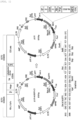
- the chimeric antigen receptor of the present invention was designed as follows: The extracellular binding domain containing the scFv of the E1 as an antigen binding site was linked to CD28 as a transmembrane domain via Myc and a hinge domain.
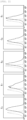
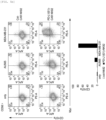
- the natural killer cells expressing "PD-L1_E1 CAR”, “PD-L1_C4 CAR”, “PD-L1_E7 CAR”, “PD-L1_E8 CAR”, and “PD-L1_C8 CAR” produced and selected as described above (referred to as “PD-L1_E1 CAR NK cells”, “PD-L1_C4 CAR NK cells”, “PD-L1_E7 CAR NK cells”, “PD-L1_E8 CAR NK cells”, and “PD-L1_C8 CAR NK cells”, respectively, and collectively referred to as "PD-L1 CAR-NK cells”) were treated with an anti-myc antibody (CST; 9B11) that specifically binds to myc of PD-L1 CAR (4°C, in the dark for 30 minutes), and the expression of Myc was confirmed by flow cytometry. At this time, the original natural killer cells not expressing PD-L1 CAR were used as a control group.
- CST anti-
- a natural killer cell expressing the chimeric antigen receptor of the present invention on a surface thereof contains scFv that specifically binds to PD-L1 as an antigen binding site.
- cytolytic activity (cell lysis) against cancer cells expressing PD-L1 was confirmed.
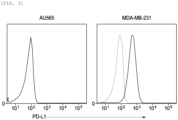
- MDA-MB-231 cells which are a breast cancer cell line, were selected as cancer cells expressing PD-L1, and AU565 cells, which are another breast cancer cell line, were selected as cancer cells that do not express PD-L1, the selected cells were treated with an anti-PD-L1 antibody (BD Biosciences) in an amount of 1 ul/100 ul, and a reaction was allowed to proceed (4°C, in the dark for 30 minutes), and expression levels of PD-L1 in the two cell lines were confirmed using a flow cytometer.
- an anti-PD-L1 antibody BD Biosciences
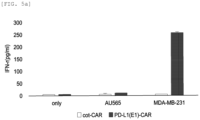
- MDA-MB-231 cells and AU565 cells were treated with natural killer cells into which cot-CAR was introduced as a control group and PD-L1_E1 CAR NK cells as an experimental group at 1:1 and allowed to react (16 hours under 37°C and 5% CO2 conditions), and then, a supernatant was collected to confirm interferon- ⁇ (IFN- ⁇ ) present in the supernatant through ELISA.
- IFN- ⁇ interferon- ⁇
- the amount of cytokines secreted solely from natural killer cells into which cot-CAR was introduced hereinafter, referred to as "cot-CAR NK cells" and PD-L1_E1 CAR NK cells was used as a control group.
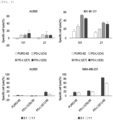
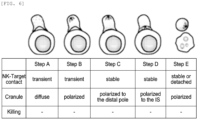
- PD-L1_E1 CAR NK cells For PD-L1_E1 CAR NK cells, a formation rate of immune synapses, which are contact points where immune cells come into contact with cancer cells and secrete cytokines and granules important for cancer cell death, and a rate of cancer cell death relative to immune cell contact were confirmed.
- stage A a process from the formation of the immune synapses (stage A) to the death of cancer cells (stage E) was divided into a total of five stages including the stages A to E (see FIG. 6 ).
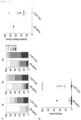
- MDA-MB-231 cell lines expressing PD-L1 were treated with native natural killer cells (PURO-92) as a control group and PD-L1_E1 CAR NK cells, respectively.
- PURO-92 cells and PD-L1_E1 CAR NK cells were labeled by a treatment with 1 ug/ml of LysoSensor Green DND-153 (Invitrogen), which is a pH sensing reagent, respectively
- MDA-MB-231 cells were labeled by a reaction with 10 ug/ml of CellTrace Far Red DDAO-SE (ThermoFisher) at 37°C for 15 minutes.
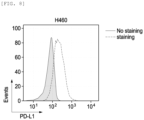
- H460 which is a lung cancer cell line
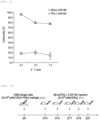
- H460 cells were treated with PD-L1_E1 CAR NK cells as an experimental group and dEcto CAR NK cells as a control group at E:T ratios of 4:1, 2:1, and 1:1 in the same manner as described in Example [3-2].
- E:T ratios 4:1, 2:1, and 1:1 in the same manner as described in Example [3-2].
- Cancer cells and NK cells as a control group and an experimental group were injected using the above method, and the tumor sizes were compared at intervals of 2 to 5 days from day 5 to day 27. Until 13 days had elapsed, the tumor sizes were similar in the case where the NK cells as the control group or the experimental group were injected, but from day 18, a significant difference in tumor size began to be observed in the case where the NK cells as the experimental group were injected, and after day 27, the tumor size was about 500 mm 3 in the case where the NK cells as the experimental group were injected, whereas there was a difference in tumor volume exceeding 1,500 mm 3 , which was about 3 times larger, in the case where the NK cells as the control group were injected (see FIG. 11 ).
- the weight of the tumor was measured after day 32, the weight was only about 700 mg when the NK cells as the experimental group were injected, but the weight reached 2,500 mg when the NK cells as the control group were injected (see FIG. 12B ).
Landscapes
- Health & Medical Sciences (AREA)
- Life Sciences & Earth Sciences (AREA)
- Immunology (AREA)
- Chemical & Material Sciences (AREA)
- General Health & Medical Sciences (AREA)
- Veterinary Medicine (AREA)
- Public Health (AREA)
- Animal Behavior & Ethology (AREA)
- Organic Chemistry (AREA)
- Medicinal Chemistry (AREA)
- Epidemiology (AREA)
- Cell Biology (AREA)
- Zoology (AREA)
- Pharmacology & Pharmacy (AREA)
- Hematology (AREA)
- Biophysics (AREA)
- Molecular Biology (AREA)
- Proteomics, Peptides & Aminoacids (AREA)
- Genetics & Genomics (AREA)
- Biochemistry (AREA)
- Developmental Biology & Embryology (AREA)
- Engineering & Computer Science (AREA)
- Biotechnology (AREA)
- Biomedical Technology (AREA)
- Virology (AREA)
- Toxicology (AREA)
- Gastroenterology & Hepatology (AREA)
- Chemical Kinetics & Catalysis (AREA)
- General Chemical & Material Sciences (AREA)
- Nuclear Medicine, Radiotherapy & Molecular Imaging (AREA)
- Peptides Or Proteins (AREA)
Applications Claiming Priority (2)
| Application Number | Priority Date | Filing Date | Title |
|---|---|---|---|
| KR1020220111672A KR102534281B1 (ko) | 2022-09-02 | 2022-09-02 | 신규한 항-pd-l1 키메릭 항원 수용체 및 이를 발현하는 면역세포 |
| PCT/KR2023/012785 WO2024049161A1 (ko) | 2022-09-02 | 2023-08-29 | 신규한 항-pd-l1 키메릭 항원 수용체 및 이를 발현하는 면역세포 |
Publications (2)
| Publication Number | Publication Date |
|---|---|
| EP4582452A1 true EP4582452A1 (de) | 2025-07-09 |
| EP4582452A4 EP4582452A4 (de) | 2026-04-01 |
Family
ID=86529661
Family Applications (1)
| Application Number | Title | Priority Date | Filing Date |
|---|---|---|---|
| EP23860837.6A Pending EP4582452A4 (de) | 2022-09-02 | 2023-08-29 | Neuartiger chimärer anti-pd-l1-antigenrezeptor und immunzellen zur expression davon |
Country Status (3)
| Country | Link |
|---|---|
| EP (1) | EP4582452A4 (de) |
| KR (1) | KR102534281B1 (de) |
| WO (1) | WO2024049161A1 (de) |
Families Citing this family (1)
| Publication number | Priority date | Publication date | Assignee | Title |
|---|---|---|---|---|
| KR102534281B1 (ko) * | 2022-09-02 | 2023-05-30 | 한국생명공학연구원 | 신규한 항-pd-l1 키메릭 항원 수용체 및 이를 발현하는 면역세포 |
Family Cites Families (6)
| Publication number | Priority date | Publication date | Assignee | Title |
|---|---|---|---|---|
| CN108112254B (zh) * | 2015-03-13 | 2022-01-28 | 西托姆克斯治疗公司 | 抗-pdl1抗体、可活化的抗-pdl1抗体、及其使用方法 |
| WO2017201281A1 (en) * | 2016-05-18 | 2017-11-23 | Mayo Foundation For Medical Education And Research | Targeting pd-l1 on tumor cells |
| KR102845020B1 (ko) * | 2017-12-28 | 2025-08-12 | 난징 레전드 바이오테크 씨오., 엘티디. | Pd-l1에 대한 항체 및 변이체 |
| GB201811403D0 (en) * | 2018-07-12 | 2018-08-29 | F Star Beta Ltd | Antibody molecules |
| KR20240162586A (ko) * | 2018-10-31 | 2024-11-15 | 난트퀘스트, 인크. | Pd-l1 키메라 항원 수용체-발현 nk 세포에 의한 pd-l1-양성 악성종양의 제거 |
| KR102534281B1 (ko) * | 2022-09-02 | 2023-05-30 | 한국생명공학연구원 | 신규한 항-pd-l1 키메릭 항원 수용체 및 이를 발현하는 면역세포 |
-
2022
- 2022-09-02 KR KR1020220111672A patent/KR102534281B1/ko active Active
-
2023
- 2023-08-29 WO PCT/KR2023/012785 patent/WO2024049161A1/ko not_active Ceased
- 2023-08-29 EP EP23860837.6A patent/EP4582452A4/de active Pending
Also Published As
| Publication number | Publication date |
|---|---|
| EP4582452A4 (de) | 2026-04-01 |
| KR102534281B1 (ko) | 2023-05-30 |
| WO2024049161A1 (ko) | 2024-03-07 |
Similar Documents
| Publication | Publication Date | Title |
|---|---|---|
| US11859004B2 (en) | Anti-human 4-1BB antibodies and uses thereof | |
| US20250296970A1 (en) | Cd19-directed chimeric antigen receptors and uses thereof in immunotherapy | |
| CN112088167B (zh) | 特异性针对人类连接蛋白4的抗体 | |
| JP7418346B2 (ja) | 4-1BBLを含むHer2標的化抗原結合分子 | |
| JP6895890B2 (ja) | ヒト化抗muc1* 抗体 | |
| CN115232209B (zh) | 靶向gprc5d的抗体及其用途 | |
| JP2017506217A (ja) | 標的TGFβ阻害 | |
| US20240335538A1 (en) | Novel chimeric antigen receptor and immune cells expressing same | |
| EP4332118A1 (de) | Neuartiger chimärer anti-cd5-antigenrezeptor und immunzelle zur expression davon | |
| KR20230022422A (ko) | 항-her2 어피바디 및 이를 스위치 분자로 이용하는 스위처블 키메라 항원 수용체 | |
| KR20240046224A (ko) | 이중특이성 항체 및 그 용도 | |
| CN117362434A (zh) | 靶向b7-h3的抗体及其用途 | |
| US20240190989A1 (en) | Anti-cea and anti-cd137 multispecific antibodies and methods of use | |
| EP4582452A1 (de) | Neuartiger chimärer anti-pd-l1-antigenrezeptor und immunzellen zur expression davon | |
| JP7726496B2 (ja) | 新規な抗EphA2キメラ抗原受容体及びそれを発現する免疫細胞 | |
| EP4501964A1 (de) | Hla-g-spezifischer antikörper und verwendung davon | |
| KR20230021391A (ko) | 신규한 항-b7h3 키메릭 항원 수용체 및 이를 발현하는 면역세포 | |
| CA3210650A1 (en) | Bispecific antibodies enhancing cell mediated immune responses | |
| US20250188195A1 (en) | Antibody or antigen-binding fragment thereof that targets cotinine, chimeric antigen receptor comprising same, and uses thereof | |
| RU2815451C2 (ru) | Her-2-направленные антигенсвязывающие молекулы, содержащие 4-1bbl | |
| KR20250017160A (ko) | 신규한 항-gpc3 키메릭 항원 수용체 및 이를 발현하는 면역세포 | |
| EA051337B1 (ru) | НОВЫЙ ХИМЕРНЫЙ РЕЦЕПТОР АНТИГЕНА ПРОТИВ EphA2 И ЭКСПРЕССИРУЮЩИЕ ЕГО ИММУНОЦИТЫ | |
| WO2026022767A1 (ko) | B7-h3을 표적하는 항체, 및 이를 포함하는 키메라 항원 수용체 | |
| EA052561B1 (ru) | Терапевтические средства на основе il-2 и анти-pd-1 и способы их применения | |
| EA047248B1 (ru) | Мультиспецифическое антитело |
Legal Events
| Date | Code | Title | Description |
|---|---|---|---|
| STAA | Information on the status of an ep patent application or granted ep patent |
Free format text: STATUS: THE INTERNATIONAL PUBLICATION HAS BEEN MADE |
|
| PUAI | Public reference made under article 153(3) epc to a published international application that has entered the european phase |
Free format text: ORIGINAL CODE: 0009012 |
|
| STAA | Information on the status of an ep patent application or granted ep patent |
Free format text: STATUS: REQUEST FOR EXAMINATION WAS MADE |
|
| 17P | Request for examination filed |
Effective date: 20250402 |
|
| AK | Designated contracting states |
Kind code of ref document: A1 Designated state(s): AL AT BE BG CH CY CZ DE DK EE ES FI FR GB GR HR HU IE IS IT LI LT LU LV MC ME MK MT NL NO PL PT RO RS SE SI SK SM TR |
|
| DAV | Request for validation of the european patent (deleted) | ||
| DAX | Request for extension of the european patent (deleted) | ||
| A4 | Supplementary search report drawn up and despatched |
Effective date: 20260227 |