EP4582393A2 - Fluidbehandlungsmodul - Google Patents
Fluidbehandlungsmodul Download PDFInfo
- Publication number
- EP4582393A2 EP4582393A2 EP25177209.1A EP25177209A EP4582393A2 EP 4582393 A2 EP4582393 A2 EP 4582393A2 EP 25177209 A EP25177209 A EP 25177209A EP 4582393 A2 EP4582393 A2 EP 4582393A2
- Authority
- EP
- European Patent Office
- Prior art keywords
- fluid treatment
- light source
- pipe
- inlet
- source module
- Prior art date
- Legal status (The legal status is an assumption and is not a legal conclusion. Google has not performed a legal analysis and makes no representation as to the accuracy of the status listed.)
- Pending
Links
Images







Classifications
-
- C—CHEMISTRY; METALLURGY
- C02—TREATMENT OF WATER, WASTE WATER, SEWAGE, OR SLUDGE
- C02F—TREATMENT OF WATER, WASTE WATER, SEWAGE, OR SLUDGE
- C02F1/00—Treatment of water, waste water, or sewage
- C02F1/30—Treatment of water, waste water, or sewage by irradiation
- C02F1/32—Treatment of water, waste water, or sewage by irradiation with ultraviolet light
- C02F1/325—Irradiation devices or lamp constructions
-
- A—HUMAN NECESSITIES
- A61—MEDICAL OR VETERINARY SCIENCE; HYGIENE
- A61L—METHODS OR APPARATUS FOR STERILISING MATERIALS OR OBJECTS IN GENERAL; DISINFECTION, STERILISATION OR DEODORISATION OF AIR; CHEMICAL ASPECTS OF BANDAGES, DRESSINGS, ABSORBENT PADS OR SURGICAL ARTICLES; MATERIALS FOR BANDAGES, DRESSINGS, ABSORBENT PADS OR SURGICAL ARTICLES
- A61L9/00—Disinfection, sterilisation or deodorisation of air
- A61L9/16—Disinfection, sterilisation or deodorisation of air using physical phenomena
- A61L9/18—Radiation
- A61L9/20—Ultraviolet radiation
-
- A—HUMAN NECESSITIES
- A61—MEDICAL OR VETERINARY SCIENCE; HYGIENE
- A61L—METHODS OR APPARATUS FOR STERILISING MATERIALS OR OBJECTS IN GENERAL; DISINFECTION, STERILISATION OR DEODORISATION OF AIR; CHEMICAL ASPECTS OF BANDAGES, DRESSINGS, ABSORBENT PADS OR SURGICAL ARTICLES; MATERIALS FOR BANDAGES, DRESSINGS, ABSORBENT PADS OR SURGICAL ARTICLES
- A61L9/00—Disinfection, sterilisation or deodorisation of air
- A61L9/16—Disinfection, sterilisation or deodorisation of air using physical phenomena
- A61L9/18—Radiation
- A61L9/20—Ultraviolet radiation
- A61L9/205—Ultraviolet radiation using a photocatalyst or photosensitiser
-
- F—MECHANICAL ENGINEERING; LIGHTING; HEATING; WEAPONS; BLASTING
- F21—LIGHTING
- F21V—FUNCTIONAL FEATURES OR DETAILS OF LIGHTING DEVICES OR SYSTEMS THEREOF; STRUCTURAL COMBINATIONS OF LIGHTING DEVICES WITH OTHER ARTICLES, NOT OTHERWISE PROVIDED FOR
- F21V29/00—Protecting lighting devices from thermal damage; Cooling or heating arrangements specially adapted for lighting devices or systems
- F21V29/50—Cooling arrangements
- F21V29/502—Cooling arrangements characterised by the adaptation for cooling of specific components
- F21V29/503—Cooling arrangements characterised by the adaptation for cooling of specific components of light sources
-
- F—MECHANICAL ENGINEERING; LIGHTING; HEATING; WEAPONS; BLASTING
- F21—LIGHTING
- F21V—FUNCTIONAL FEATURES OR DETAILS OF LIGHTING DEVICES OR SYSTEMS THEREOF; STRUCTURAL COMBINATIONS OF LIGHTING DEVICES WITH OTHER ARTICLES, NOT OTHERWISE PROVIDED FOR
- F21V29/00—Protecting lighting devices from thermal damage; Cooling or heating arrangements specially adapted for lighting devices or systems
- F21V29/50—Cooling arrangements
- F21V29/70—Cooling arrangements characterised by passive heat-dissipating elements, e.g. heat-sinks
-
- A—HUMAN NECESSITIES
- A61—MEDICAL OR VETERINARY SCIENCE; HYGIENE
- A61L—METHODS OR APPARATUS FOR STERILISING MATERIALS OR OBJECTS IN GENERAL; DISINFECTION, STERILISATION OR DEODORISATION OF AIR; CHEMICAL ASPECTS OF BANDAGES, DRESSINGS, ABSORBENT PADS OR SURGICAL ARTICLES; MATERIALS FOR BANDAGES, DRESSINGS, ABSORBENT PADS OR SURGICAL ARTICLES
- A61L2209/00—Aspects relating to disinfection, sterilisation or deodorisation of air
- A61L2209/10—Apparatus features
-
- C—CHEMISTRY; METALLURGY
- C02—TREATMENT OF WATER, WASTE WATER, SEWAGE, OR SLUDGE
- C02F—TREATMENT OF WATER, WASTE WATER, SEWAGE, OR SLUDGE
- C02F2201/00—Apparatus for treatment of water, waste water or sewage
- C02F2201/32—Details relating to UV-irradiation devices
- C02F2201/322—Lamp arrangement
- C02F2201/3222—Units using UV-light emitting diodes [LED]
-
- C—CHEMISTRY; METALLURGY
- C02—TREATMENT OF WATER, WASTE WATER, SEWAGE, OR SLUDGE
- C02F—TREATMENT OF WATER, WASTE WATER, SEWAGE, OR SLUDGE
- C02F2201/00—Apparatus for treatment of water, waste water or sewage
- C02F2201/32—Details relating to UV-irradiation devices
- C02F2201/322—Lamp arrangement
- C02F2201/3227—Units with two or more lamps
-
- C—CHEMISTRY; METALLURGY
- C02—TREATMENT OF WATER, WASTE WATER, SEWAGE, OR SLUDGE
- C02F—TREATMENT OF WATER, WASTE WATER, SEWAGE, OR SLUDGE
- C02F2201/00—Apparatus for treatment of water, waste water or sewage
- C02F2201/32—Details relating to UV-irradiation devices
- C02F2201/322—Lamp arrangement
- C02F2201/3228—Units having reflectors, e.g. coatings, baffles, plates, mirrors
-
- C—CHEMISTRY; METALLURGY
- C02—TREATMENT OF WATER, WASTE WATER, SEWAGE, OR SLUDGE
- C02F—TREATMENT OF WATER, WASTE WATER, SEWAGE, OR SLUDGE
- C02F2303/00—Specific treatment goals
- C02F2303/04—Disinfection
-
- C—CHEMISTRY; METALLURGY
- C02—TREATMENT OF WATER, WASTE WATER, SEWAGE, OR SLUDGE
- C02F—TREATMENT OF WATER, WASTE WATER, SEWAGE, OR SLUDGE
- C02F2305/00—Use of specific compounds during water treatment
- C02F2305/10—Photocatalysts
-
- F—MECHANICAL ENGINEERING; LIGHTING; HEATING; WEAPONS; BLASTING
- F21—LIGHTING
- F21Y—INDEXING SCHEME ASSOCIATED WITH SUBCLASSES F21K, F21L, F21S and F21V, RELATING TO THE FORM OR THE KIND OF THE LIGHT SOURCES OR OF THE COLOUR OF THE LIGHT EMITTED
- F21Y2115/00—Light-generating elements of semiconductor light sources
- F21Y2115/10—Light-emitting diodes [LED]
Definitions
- Embodiments of the present invention relate to a fluid treatment module.
- Embodiments of the present invention provide a device capable of efficiently treating a fluid, such as air or water.
- a fluid treatment module includes: a pipe providing a flow channel in which fluid flows, the pipe having an inlet and an outlet; a light source module including a substrate and at least one light emitting diode disposed on an upper surface of the substrate and emitting light into the pipe to treat the fluid; a reflector disposed inside the pipe to reflect the light emitted from the light source module and having higher reflectivity with respect to the light than the pipe; and a heat dissipation plate contacting a rear surface of the substrate to dissipate heat from the light source module.
- At least one of the inlet and the outlet is provided in plural to allow a flow speed and a flow direction of the fluid flowing into the pipe to be controlled, and the heat dissipation plate has higher thermal conductivity than the substrate.
- the heat dissipation plate may have a larger area than the substrate.
- the heat dissipation plate may be formed of a metal.
- the inlet and the outlet may be provided in different numbers.
- the inlet and the outlet may be disposed at different end sides.
- the inlet and the outlet may be connected to the pipe in the same direction, with a center of the pipe disposed therebetween, when viewed in the longitudinal direction of the pipe.
- the inlet and the outlet may be connected to the pipe in different directions when viewed in the longitudinal direction of the pipe.
- the fluid treatment module may further include a reflector disposed inside the pipe and reflecting light emitted from the light source module.
- the reflector may have higher reflectivity with respect to the light than the pipe.
- the reflector may include a first reflector disposed on an inner wall of the pipe and a second reflector disposed on the substrate of the light source module.
- the second reflector may have an opening exposing the light emitting diode and an inner surface of the opening may be an inclined surface.
- the reflector may be formed of a porous material and may have a reflectivity of 80% or more.
- the inlet may be provided as a pair and the outlet may be provided singularly.
- the inlet and the outlet may have the same diameter or different diameters.
- the fluid treatment module may be employed by a water supply device, which includes a reservoir receiving water and a water treatment device connected to the reservoir and treating the water.
- Embodiments of the present invention provide a fluid treatment module having high treatment efficiency and high reliability.
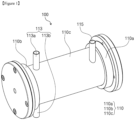
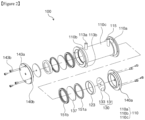
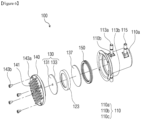
- Figure 1 is a perspective view of a fluid treatment module according to an embodiment of the present invention and Figure 2 is an exploded perspective view of the fluid treatment module according to the embodiment of the present invention.
- Figure 3 is a perspective longitudinal sectional view of the fluid treatment module shown in Figure 1 .
- fluid treatment module refers to an object to be treated using the fluid treatment module and may include water (especially running water) or air.
- treatment of the fluid includes, for example, sterilizing, purifying, and deodorizing the fluid through the fluid treatment module.
- treatment of the fluid is not limited thereto and may include other possible treatment carried out using the fluid treatment module described below.
- a fluid treatment module 100 includes a pipe 110, in which fluid flows, and a light source module 130 emitting light towards the fluid in the pipe 110.
- the pipe 110 extends in one direction and has a shape open at opposite ends thereof.
- the pipe 110 may include a body 110c, which extends in a longitudinal direction thereof, and a first end 110a and a second end 110b disposed in the longitudinal direction of the body 110c.
- the body 110c has a hollow pipe shape having a predetermined diameter.
- the first end 110a and the second end 110b are connected to the opposite ends of the body 110c and may have the same diameter as or a larger diameter than the body 110c.
- the pipe 110 provides an interior space, that is, a flow channel, in which the fluid flows while being treated.
- a direction in which the pipe 110 extends will be referred to as an extension direction of the pipe 110 or the longitudinal direction of the pipe 110.
- the pipe 110 may have a substantially cylindrical shape.
- a cross-section crossing a longitudinal direction of the cylindrical shape has a circular shape.
- the pipe 110 is not limited thereto and may have various cross-sectional shapes, for example, an elliptical shape, a rectangular shape, a semicircular shape, and the like.
- the pipe 110 may be formed of a material having high reflectivity and/or a metal having high thermal conductivity.
- the pipe 110 may be formed of a material having high reflectivity, such as stainless steel, aluminum, magnesium oxide, and the like, or may be formed of a material having high thermal conductivity, such as stainless steel, aluminum, silver, gold, copper, and alloys thereof. Metals having high thermal conductivity can effectively discharge heat from the pipe 110.
- the pipe 110 is not limited thereto and may be formed of a material that transmits at least part of light emitted from the light source module 130 such that the light can reach the fluid inside the pipe 110, when the light source module 130 is disposed outside the pipe 110.
- the material capable of transmitting light may include various types of polymer resins, quartz, glass, and the like.
- the entirety of the pipe 110 or a portion of the pipe 110 adjacent to the light source module 130 may be formed of a transparent material to allow the light emitted from the light source module 130 to reach the fluid.
- the pipe 110 is provided with an inlet 113 through which the fluid enter the pipe 110 and an outlet 115 through which the fluid is discharged therefrom after treatment.
- the inlet 113 and/or the outlet 115 may be provided to at least one region of the pipe 110 selected from among the body 110c, the first end 110a, and the second end 110b.
- the inlet 113 is connected to the pipe 110.
- a connecting direction of the inlet 113 may be different from the extension direction of the pipe 110.
- the connecting direction of the inlet 113 may be inclined or perpendicular to the extension direction of the pipe 110 such that the fluid enters the pipe 110 in a direction inclined or perpendicular thereto and flows in the extension direction of the pipe 110.
- the fluid flowing into the pipe 110 through inlet 113 is a fluid to be treated in the pipe 110, for example, an object that requires sterilization, purification, or deodorization treatment.
- the outlet 115 may be disposed at a location separated from the inlet 113 and may be connected to the pipe 110.
- a connecting direction of the outlet 115 may be inclined or perpendicular to the extension direction of the pipe 110 such that the fluid can be discharged from the pipe 110 in a direction inclined or perpendicular thereto after flowing in the extension direction of the pipe 110.
- the fluid discharged from the pipe 110 through the outlet 115 is a fluid treated in the pipe 110, for example, an object subjected to sterilization, purification, or deodorization treatment.
- the inlet 113 when viewed in a direction perpendicular to the longitudinal direction of the pipe 110, the inlet 113 may be provided to at least one end side selected from among the opposite ends of the pipe 110 and the outlet 115 may also be provided to at least one end side selected from among the opposite ends of the pipe 110.
- each of the inlet 113 and the outlet 115 may be provided to at least one end side selected from among the first end 110a and the second end 110b or may be provided to both the first end 110a side and the second end 110b side.
- the inlet 113 may be provided to the first end 110a side and the outlet 115 may be provided to the second end 110b side.
- the inlet 113 may be provided to the second end 110b side and the outlet 115 may be provided to the first end 110a side.
- the locations of the inlet 113 and the outlet 115 are not limited thereto.
- the inlet 113 and/or the outlet 115 may be disposed at a center of the pipe 110 instead of the opposite ends thereof.
- the inlet 113 and the outlet 115 may be disposed in various ways when viewed in the longitudinal direction of the pipe 110.
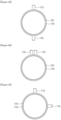
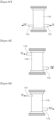
- Figure 4a to Figure 4c are sectional views of some components of the fluid treatment module according to the embodiment of the present invention, particularly illustrating the pipe 110, the inlet 113, and the outlet 115, in which each of the inlet 113 and the outlet 115 is provided singularly.
- reference numeral 121 indicates a first reflector.
- the inlet 113 and the outlet 115 may be connected to the pipe 110 to face each other with the center of the pipe 110 disposed therebetween, when viewed in a cross-section perpendicular to the extension direction of the pipe 110. That is, the inlet 113 and the outlet 115 may be disposed at symmetric locations with the center of the pipe 110 disposed therebetween. However, it should be understood that the inlet 113 and the outlet 115 are not required to be completely symmetric about the center of the pipe 110.
- the inlet 113 and the outlet 115 may be connected to the pipe 110 at the same side with reference to the center of the pipe 110.
- the inlet 113 and the outlet 115 may be separated from the pipe 110. That is, the inlet 113 and the outlet 115 may be collinearly or non-collinearly disposed in the extension direction of the pipe 110. Alternatively, the inlet 113 and the outlet 115 may be disposed to overlap each other. Referring to Figure 4c , the inlet 113 and the outlet 115 may be connected to the pipe 110 to be perpendicular to each other.
- the locations of the inlet 113 and the outlet 115 may be changed depending upon the kind of apparatus adopting the fluid treatment module.
- the locations of the inlet and the outlet may be set in various ways depending upon a fluid treatment amount or a degree of fluid sterilization required by the apparatus.
- each of the inlet 113 and the outlet 115 is provided singularly in the drawings, it should be understood that this structure is provided for illustration of a positional relationship between the inlet 113 and the outlet 115. Accordingly, when one of the inlet 113 and the outlet 115 is provided in plural, the inlets 113 or the outlets 115 may be individually disposed at different locations. For example, for the fluid treatment module including two inlets 113, that is, a first inlet 113a and a second inlet 113b, the first inlet 113a is disposed at a side opposite the outlet 115 and the second inlet 113b may be disposed at the same side as the outlet 115 when viewed in the extension direction of the pipe 110.
- the inlet 113 and the outlet 115 may have a circular or elliptical cross-section, without being limited thereto.
- the inlet 113 and the outlet 115 may have various shapes, for example, a polygonal shape.
- the cross-section of each of the inlet 113 and the outlet 115 may be taken in the extension direction of the inlet 113 or in a direction crossing a direction in which the flow channel is formed.
- the inlet 113 and/or the outlet 115 may be provided with a separate pipe.
- the separate pipe may be connected to the inlet 113 and the outlet 115 through a nozzle.
- the nozzle may be coupled to the inlet 113 and/or the outlet 115 in various ways, for example, by screw coupling.
- the flow amount or speed of the fluid supplied through the inlet 113 and the flow amount or speed of the fluid discharged through the outlet 115 may be controlled depending upon the number and diameter of the inlets 113 and the outlets 115.
- the inlet 113 and the outlet 115 may have the same diameter or different diameters. According to the embodiment, although the inlet 113 having the same diameter as the outlet 115 can provide good fluid treatment efficiency, the inlet 113 having a larger diameter than the outlet 115 can provide better fluid treatment efficiency.
- the inlet 113 and the outlet 115 may be provided in plural.
- the inlet 113 may be provided in plural and the outlet 115 may be provided singularly.
- the inlet 113 may be provided singularly and the outlet 115 may be provided in plural or both the inlet 113 and the outlet 115 may be provided in plural.
- the inlets 113 and the outlets 115 may be provided in one-to-one correspondence.
- the fluid treatment device including two inlets 113 and one outlet 115 can have improved fluid treatment efficiency.
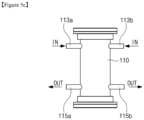
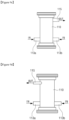
- Figure 5a to Figure 5c are side sectional views of the fluid treatment module according to the embodiment of the present invention, particularly illustrating the pipe, the inlet and the outlet thereof.
- each of the inlet and the outlet may be provided in various numbers.
- the fluid treatment module may include multiple inlets (that is, a first inlet 113a and a second inlet 113b) and a single outlet 115, as shown in Figure 5a ; a single inlet 113 and multiple outlets (that is, a first outlet 115a and a second outlet 115b), as shown in Figure 5b ; or multiple inlets (that is, a first inlet 113a and a second inlet 113b) and multiple outlets (that is, a first outlet 115a and a second outlet 115b), as shown in Figure 5c .
- the first and second inlets 113a, 113b when viewed in the direction perpendicular to the extension direction of the pipe 110, the first and second inlets 113a, 113b may be provided to the second end 110b side and the outlet 115 may be provided to the first end 110a side, and when viewed in the extension direction of the pipe 110, the first inlet 113a may be disposed at an opposite side to the outlet 115, with the center of the pipe 110 disposed therebetween, and the second inlet 113b may be disposed at the same side as the outlet 115 with reference to the center of the pipe 110.
- the light source module 130 emits light and may be disposed at one side selected from among the first end 110a and the second end 110b of the pipe 110.
- the light source module 130 is provided to both the first end 110a and the second end 110b by way of example.
- the location of the light source module 130 is not limited thereto and may be provided to one of the opposite ends of the pipe 110 in the longitudinal direction thereof. It should be understood that the location of the light source module 130 in this embodiment is provided for illustration only and is not to be construed in any way as limiting the present invention and that the light source module 130 may be disposed at any location so long as the light source module 130 can irradiate the interior of the pipe 10.
- the light source module 130 may be disposed outside the pipe 110, without being limited thereto.
- the light source module 130 may include a substrate 131 and a light emitting diode 133 mounted on the substrate 131.
- the substrate 131 may be provided in various forms, for example, in the form of a disk having a diameter corresponding to the pipe 10. Multiple light emitting diodes 133 may be arranged in a predetermined direction on the substrate 131.
- the substrate 31 may be provided with an opening through which a wire is connected to the light emitting diode 133 to supply power thereto.
- the light emitting diodes 133 may emit light in the same wavelength band or in different wavelength bands. For example, in one embodiment, all of the light emitting diodes 133 may emit UV light having the same or similar wavelength. In another embodiment, some light emitting diodes 133 may emit light in some UV wavelength bands and the other light emitting diodes 133 may emit light in other UV wavelength bands.
- the light emitting diodes 133 may be arranged in various sequences. For example, light emitting diodes 133 emitting light in a first wavelength band and light emitting diodes 133 emitting light in a second wavelength band different from the first wavelength band may be alternately arranged.
- the light source module 130 may emit light in various wavelength bands.
- the light source module 130 may emit light in the visible spectrum, light in the UV spectrum, or light in other wavelength bands.
- light emitted from the light source module 130 may have various wavelengths depending upon the type of fluid to be treated or the type of object to be treated (for example, germs, bacteria, and the like).
- the light source module 130 may emit light having a germicidal wavelength.
- the light source module 130 may emit light in the UV spectrum.
- the light source module 130 may emit light in the wavelength band of about 100 nm to about 420 nm, which is germicidal to microorganisms.
- the light source module 130 may emit light in the wavelength band of about 100 nm to about 280 nm. In another embodiment, the light source module 130 may emit light in the wavelength band of about 180 nm to about 280 nm. In a further embodiment, the light source module 130 may emit light in the wavelength band of about 250 nm to about 260 nm.
- UV light in the above wavelength bands has high germicidal efficacy. For example, irradiation with UV light at an intensity of 100 ⁇ W/cm 2 can kill about 99% of bacteria, such as Escherichia coli, Diphtheria bacillus, and Dysentery bacillus.
- UV light in the above wavelength bands can kill bacteria that cause food poisoning, such as pathogenic Escherichia coli, Staphylococcus aureus, Salmonella Weltevreden, S. Typhimurium, Enterococcus faecalis, Bacillus cereus, Pseudomonas aeruginosa, Vibrio parahaemolyticus, Listeria monocytogenes, Yersinia enterocolitica, Clostridium perfringens, Clostridium botulinum, Campylobacter jejuni, or Enterobacter sakazakii.
- bacteria that cause food poisoning such as pathogenic Escherichia coli, Staphylococcus aureus, Salmonella Weltevreden, S. Typhimurium, Enterococcus faecalis, Bacillus cereus, Pseudomonas aeruginosa, Vibrio parahaemolyticus, Listeria monocytogenes, Yersin
- the light source module 130 may emit light having various wavelengths and at least part of the light source module 130 may include a material that causes a catalytic reaction in response to light emitted from the light source module 130.
- a photocatalytic layer formed of a photocatalytic material may be disposed on the entirety or a portion of an inner surface and/or an outer surface of the pipe 10 according to the present invention.
- the photocatalytic layer may be disposed in any region so long as the light emitted from the light source module 130 can reach the region.
- a photocatalyst refers to a material causing a catalytic reaction with light emitted from a light source.
- the photocatalyst can react with light in various wavelength bands depending on substances constituting the photocatalyst.
- a material causing photocatalytic reaction with light in the UV wavelength band among various wavelength bands may be used.
- the photocatalyst is not limited thereto and other photocatalysts having the same or similar mechanism may be used depending on light emitted from the light source.
- the photocatalyst is activated by UV light to cause chemical reaction, thereby decomposing various pollutants and bacteria in the fluid, which contacts the photocatalyst, through redox reaction.
- the fluid treatment module 100 may further include a drive circuit connected to the light source module 130 and an interconnect portion connecting the drive circuit to the light source module 130.
- the drive circuit may supply electric power to at least one light source module 130.
- the drive circuit may be provided to the fluid treatment module 100 having two light source modules 130 to independently supply electric power to each of the light source modules 130. Accordingly, the light source modules 130 may be selectively driven such that all of the two light source modules 130 can be turned on or off, or one light source module 130 can be turned on, with the other light source module 130 turned off.
- the transmissive window 137 serves to protect the substrate 131 and the light source and may be formed of a transparent, electrically insulating material. However, it should be understood that the present invention is not limited thereto and the transmissive window 137 may be formed of various other materials.
- the transmissive window 37 may be formed of quartz or an organic polymer.
- the organic polymer since the wavelength of light absorbed by/transmitted through the organic polymer depends on the type of monomers for the organic polymer, a method of forming the organic polymer, and conditions in which the organic polymer material is formed, the organic polymer may be selected in consideration of wavelengths of light emitted from the light sources.
- the substrate 131 and the transmissive window 137 may correspond to the pipe 110 in terms of shape and size.
- the elastic material forming the sealing members 151a, 151b may include a silicone resin, it will be understood that the present invention is not limited thereto and the sealing members 151a, 151b may be formed of any other suitable material.
- natural or synthetic rubber or other elastic organic polymers may be used as the elastic material.
- the first heat dissipation plate 140a is disposed at the first end 110a of the pipe 110 to be fastened to the pipe 110.
- the first heat dissipation plate 140a is formed with stepped portions having different outer diameters to be inserted into and fastened to the pipe 110.
- a portion of the first heat dissipation plate 140a facing the first end 110a of the pipe 110 has an outer diameter corresponding to the inner diameter of the pipe 110.
- the pipe 110 and the second heat dissipation plate 140b may be provided with fastening members for coupling the pipe 110 to the second heat dissipation plate 140b.
- the pipe 110 and the second heat dissipation plate 140b may be provided with fastening holes 143a such that the pipe 110 can be coupled to the second heat dissipation plate 140b by coupling fastening bolts 143b to the fastening holes 143a of the pipe 110 and the second heat dissipation plate 140b.
- the first and second heat dissipation plates 140a, 140b are used not only as heat dissipation members for dissipation of heat generated from the light source module 130, but also as tools for encapsulating the pipe 110, that is, as the first and second caps.
- encapsulating members for encapsulating the pipe 110 may be further provided as separate components from the first and second heat dissipation plates 140a, 140b.
- the separate encapsulating members may also be formed of a material having high thermal conductivity to allow efficient dissipation of heat from the first and second heat dissipation plates 140a, 140b.
- the fluid treatment module according to the embodiments of the present invention may be modified in various shapes without departing from the concept of the present invention.
- a fluid treatment module 100 includes a pipe 110, in which fluid flows, and a light source module 130 emitting light towards the fluid in the pipe 110.
- the pipe 110 extends in one direction and has a shape closed at one end thereof and open at the other end thereof.
- the first end 110a has a closed shape having no inlet and the second end 110b has an open shape.
- the pipe 110 is provided with an inlet 113 through which the fluid enter the pipe 110 and an outlet 115 through which the fluid is discharged therefrom after treatment.
- the inlet 113 may be provided to an open end side, that is, to the second end 110b side
- the outlet 115 may be provided to a closed end side, that is, to the first end 110a side.
- the inlet 113 may be provided in plural, for example, as a first inlet 113a and a second inlet 113b. In this embodiment, both the first inlet 113a and the second inlet 113b may be provided to the second end 110b side.
- the light source module 130 supplies light suitable for treatment of the fluid.
- the light source module 130 may be disposed at the second end 110b side among the first end 110a and the second end 110b of the pipe 110.
- the light source module 130 is not disposed at the first end 110a side, which does not include an opening.
- the light source module 130 may include a substrate 131 and a light emitting diode 133 mounted on the substrate 131.
- a transmissive window 137 may be further disposed between the light source module 130 and a fluid treatment space inside the pipe 110 to transmit light emitted from the light source module 130 to the interior of the pipe 110.
- the heat dissipation plate 140 is formed of a material having higher thermal conductivity than the substrate 131 of the light source module 130, and serves to discharge heat, which is generated from the light source module 130, particularly from the light emitting diode 133, and is transferred through the substrate 131. To this end, the heat dissipation plate 140 directly contacts the rear surface of the substrate 131 of the light source module 130.
- the heat dissipation plate 140 may have a larger area than the substrate 131 to allow efficient dissipation of heat from the substrate 131.
- the substrate 131 is disposed inside the pipe 110 and may have a diameter corresponding to the pipe 110, and the heat dissipation plate 140 may have a larger diameter than the substrate 131.
- the heat dissipation plate 140 may have a larger diameter than the body 110c of the pipe 110. Since the heat dissipation plate 140 may disposed at the second end 110b of the pipe 110, the heat dissipation plate 140 can be formed to protrude from the second end 110b of the pipe 110 and can be easily formed to have a larger diameter.
- the heat dissipation plate 140 may include a protrusion 141 protruding from a surface thereof to allow easy dissipation of heat as much as possible.
- the protrusion 141 may be provided in plural, whereby the surface area of the heat dissipation plate 140 can be remarkably increased thereby, as compared with the heat dissipation plate 140 not including the protrusions 141. As the surface area of the heat dissipation plate 140 is increased, a contact area between the heat dissipation plate 140 and external air is increased, thereby enabling efficient dissipation of heat from the heat dissipation plate 140.
- the protrusions 141 have a plate shape extending in one direction and may be spaced apart from each other.
- the protrusions 141 are not limited thereto and may have any shape without limitation so long as the protrusions can increase the surface area of the heat dissipation plate 140.
- the heat dissipation plate 140 including the protrusions 141 may be provided as an integrated structure. With this structure, the heat dissipation plate 140 allows easier heat transfer than a structure wherein the heat dissipation plate 140 is not integrally formed therewith.
- the heat dissipation plate 140 enables easier dissipation of heat from a light source. As a result, the light source is prevented from being deteriorated due to heat from the light source, thereby providing a stable sterilization effect of the fluid treatment module 100 while improving reliability thereof.
- the body 110c is blocked at the first end 110a thereof and the fluid enters the pipe through one side of the pipe and is discharged from the pipe through the other side thereof, an eddy can be easily generated at a blocked portion inside the body 110c. A time that the fluid stays in the body 100c is increased by the eddy. As a result, the exposure time of the fluid to light emitted from the light source module 130 is sufficiently increased and the fluid treatment effect is also finally improved.
- the body 110c may have a shorter length than the body according to the above embodiment. When the body 110c has a short distance, an eddy can be more easily generated inside the body 110c.
- the fluid treatment module 100 can omit a reflector reflecting light to travel inside the pipe 110, for example, the reflector surrounding the inner wall of the pipe 110, unlike the above embodiment.
- the reflector 120 does not include the first reflector 121 (see Figure 2 and Figure 3 ) inside the pipe 110 and may include only the second reflector 123 disposed near the light source module 130.
- the second reflector 123 is disposed on the substrate 131 along the periphery of the mounting region of the light emitting diodes 133.
- the second reflector 123, the light emitting diode 133 has an opening exposing the mounting region of the light emitting diodes 133 and is disposed on the substrate 131 in a ring shape penetrated through upper and lower portions thereof.
- the fluid treatment module 100 may be provided with a sealing member to tightly fasten the pipe 10 to the heat dissipation plate 140 while preventing the fluid from leaking out of the fluid treatment module.
- the fluid treatment module 100 according to the embodiment shown in Figure 2 and Figure 3 is provided with two sealing members, the fluid treatment module 100 according to this embodiment may be provided with a single sealing member.
- the sealing member 150 is disposed near the fluid treatment space while surrounding an end of the transmissive window 137 in an angled-C shape.
- the heat dissipation plate 140 may be used as a cap encapsulating the second end 110b of the pipe 110. Accordingly, in this embodiment, the heat dissipation plate 140 may have a fastening portion coupled to the pipe 110.
- the pipe 110 and the heat dissipation plate 140 may be provided with fastening members for coupling the pipe 110 to the heat dissipation plate 140.
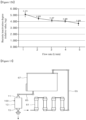
- Figure 13 is a schematic view of an apparatus, for example, a water treatment apparatus, adopting the fluid treatment module according to the fluid treatment module according to the embodiment of the present invention.
Landscapes
- Health & Medical Sciences (AREA)
- Life Sciences & Earth Sciences (AREA)
- Engineering & Computer Science (AREA)
- Chemical & Material Sciences (AREA)
- Organic Chemistry (AREA)
- Environmental & Geological Engineering (AREA)
- Water Supply & Treatment (AREA)
- Hydrology & Water Resources (AREA)
- Toxicology (AREA)
- General Health & Medical Sciences (AREA)
- Animal Behavior & Ethology (AREA)
- Epidemiology (AREA)
- Public Health (AREA)
- Veterinary Medicine (AREA)
- General Engineering & Computer Science (AREA)
- Chemical Kinetics & Catalysis (AREA)
- Physical Water Treatments (AREA)
- Apparatus For Disinfection Or Sterilisation (AREA)
- Instantaneous Water Boilers, Portable Hot-Water Supply Apparatuses, And Control Of Portable Hot-Water Supply Apparatuses (AREA)
Applications Claiming Priority (4)
| Application Number | Priority Date | Filing Date | Title |
|---|---|---|---|
| KR20180129936 | 2018-10-29 | ||
| KR1020190005797A KR20200049434A (ko) | 2018-10-29 | 2019-01-16 | 유체 처리 모듈 |
| EP19879809.2A EP3889114A4 (de) | 2018-10-29 | 2019-10-25 | Fluidbehandlungsmodul |
| PCT/KR2019/014173 WO2020091318A1 (ko) | 2018-10-29 | 2019-10-25 | 유체 처리 모듈 |
Related Parent Applications (1)
| Application Number | Title | Priority Date | Filing Date |
|---|---|---|---|
| EP19879809.2A Division EP3889114A4 (de) | 2018-10-29 | 2019-10-25 | Fluidbehandlungsmodul |
Publications (2)
| Publication Number | Publication Date |
|---|---|
| EP4582393A2 true EP4582393A2 (de) | 2025-07-09 |
| EP4582393A3 EP4582393A3 (de) | 2025-09-03 |
Family
ID=70677928
Family Applications (2)
| Application Number | Title | Priority Date | Filing Date |
|---|---|---|---|
| EP25177209.1A Pending EP4582393A3 (de) | 2018-10-29 | 2019-10-25 | Fluidbehandlungsmodul |
| EP19879809.2A Ceased EP3889114A4 (de) | 2018-10-29 | 2019-10-25 | Fluidbehandlungsmodul |
Family Applications After (1)
| Application Number | Title | Priority Date | Filing Date |
|---|---|---|---|
| EP19879809.2A Ceased EP3889114A4 (de) | 2018-10-29 | 2019-10-25 | Fluidbehandlungsmodul |
Country Status (4)
| Country | Link |
|---|---|
| US (1) | US12398051B2 (de) |
| EP (2) | EP4582393A3 (de) |
| KR (2) | KR20200049434A (de) |
| CN (3) | CN117720165A (de) |
Families Citing this family (7)
| Publication number | Priority date | Publication date | Assignee | Title |
|---|---|---|---|---|
| US11926423B2 (en) | 2020-02-05 | 2024-03-12 | The Boeing Company | Aircraft air duct system for providing light, data, electrical power, and sanitized air |
| US11613362B2 (en) * | 2020-02-05 | 2023-03-28 | The Boeing Company | Aircraft air duct system for transmitting sanitized air |
| US11230383B2 (en) | 2020-02-05 | 2022-01-25 | The Boeing Company | Aircraft air duct system for transmitting electrical power and visible light |
| KR102308110B1 (ko) * | 2021-05-12 | 2021-10-05 | 퀀텀매트릭스 주식회사 | 살균 장치 |
| KR102364990B1 (ko) * | 2021-05-20 | 2022-02-18 | 주식회사 에이텍코리아 | 흐르는 물을 살균하는 uvc led 리액터 |
| KR102449427B1 (ko) | 2021-12-31 | 2022-09-29 | 원상희 | 3차원 형태로 유수배관에 자외선을 조사하는 유수살균장치 |
| KR102697576B1 (ko) | 2022-07-06 | 2024-08-23 | 주식회사 아이유케어 | 모듈레이션이 가능한 센서와 IoT 장치가 포함된 스마트 LED 자외선 유수살균장치 |
Family Cites Families (27)
| Publication number | Priority date | Publication date | Assignee | Title |
|---|---|---|---|---|
| GB1424489A (en) * | 1974-01-28 | 1976-02-11 | Georgia Tech Res Inst | Device for separating solid or liquid particles from a gaseous medium |
| US5942110A (en) * | 1997-12-29 | 1999-08-24 | Norris; Samuel C | Water treatment apparatus |
| US7875247B2 (en) | 2002-11-27 | 2011-01-25 | Novatron, Inc. | UV flux multiplication system for sterilizing air, medical devices and other materials |
| TWI301074B (en) * | 2003-10-27 | 2008-09-21 | Hermannus Gerhardus Maria Silderhuis | Air treatment device |
| CN101551094B (zh) * | 2008-03-31 | 2012-08-29 | 强茂股份有限公司 | 兼具热对流及热传导的发光二极管灯具及其散热模组 |
| KR101070406B1 (ko) * | 2009-03-19 | 2011-10-06 | 주식회사 승광 | 탱크형 냉온 정수기 |
| US9592102B2 (en) * | 2009-05-18 | 2017-03-14 | Kavo Dental Technologies, Llc | Dental hand tool with disinfection reactor |
| JP2013184141A (ja) * | 2012-03-09 | 2013-09-19 | Junkosha Co Ltd | 光触媒反応装置 |
| WO2013176736A1 (en) * | 2012-05-21 | 2013-11-28 | Uvcleaning Systems, Inc. | Uva germicidal device |
| CN103011448B (zh) * | 2012-11-28 | 2014-04-16 | 秦皇岛莱特流体设备制造有限公司 | 一种组合式双旋流高效浊水净化装置 |
| EP2999669B1 (de) * | 2013-05-22 | 2017-02-08 | Merck Patent GmbH | Vorrichtung zur flüssigkeitsdesinfektion mittels ultravioletter strahlung |
| CN105684170B (zh) * | 2013-08-09 | 2019-09-03 | 株式会社光波 | 发光装置 |
| WO2015069680A1 (en) | 2013-11-08 | 2015-05-14 | Mag Aerospace Industries, Llc | Point of use water treatment device |
| KR20160018915A (ko) * | 2014-08-07 | 2016-02-18 | 전자부품연구원 | 자외선 발광 다이오드를 이용한 유체 살균 장치 |
| JP6373792B2 (ja) * | 2015-04-22 | 2018-08-15 | 日機装株式会社 | 殺菌装置 |
| US20160346758A1 (en) * | 2015-06-01 | 2016-12-01 | Cetamax Ventures Ltd. | Systems and methods for processing fluids |
| JP6571460B2 (ja) * | 2015-09-07 | 2019-09-04 | 日機装株式会社 | 殺菌装置 |
| JP6549456B2 (ja) * | 2015-09-25 | 2019-07-24 | 日機装株式会社 | 流体殺菌装置 |
| JP2017064610A (ja) | 2015-09-29 | 2017-04-06 | 日機装株式会社 | 照射装置および流体殺菌方法 |
| JP6080937B1 (ja) * | 2015-12-08 | 2017-02-15 | 日機装株式会社 | 流体殺菌装置 |
| KR101840747B1 (ko) * | 2015-12-16 | 2018-03-21 | 이승영 | 중대형 역삼투압 정수기용 정수제어장치 |
| CN107619086A (zh) * | 2016-07-13 | 2018-01-23 | 紫岳科技有限公司 | 紫外消毒系统 |
| US10961132B2 (en) * | 2016-09-08 | 2021-03-30 | 3M Innovative Properties Company | Water purification cartridge |
| JP6698496B2 (ja) * | 2016-10-19 | 2020-05-27 | 日機装株式会社 | 紫外光照射装置 |
| CN106629989B (zh) * | 2016-11-18 | 2023-09-15 | 青岛杰生电气有限公司 | 过流式轴向翻转出水杀菌消毒装置及净水设备 |
| JP6798327B2 (ja) | 2017-01-24 | 2020-12-09 | 東芝ライテック株式会社 | 流体殺菌装置 |
| KR101872887B1 (ko) * | 2017-03-14 | 2018-06-29 | 부경대학교 산학협력단 | 자외선 led를 이용한 수조용 살균 장치 |
-
2019
- 2019-01-16 KR KR1020190005797A patent/KR20200049434A/ko not_active Ceased
- 2019-10-25 CN CN202311665388.2A patent/CN117720165A/zh not_active Withdrawn
- 2019-10-25 CN CN202010170437.5A patent/CN111470579A/zh active Pending
- 2019-10-25 EP EP25177209.1A patent/EP4582393A3/de active Pending
- 2019-10-25 EP EP19879809.2A patent/EP3889114A4/de not_active Ceased
- 2019-10-25 CN CN201980003018.8A patent/CN111386245A/zh active Pending
-
2021
- 2021-04-29 US US17/244,425 patent/US12398051B2/en active Active
-
2025
- 2025-01-31 KR KR1020250012558A patent/KR20250020575A/ko active Pending
Also Published As
| Publication number | Publication date |
|---|---|
| KR20200049434A (ko) | 2020-05-08 |
| KR20250020575A (ko) | 2025-02-11 |
| CN117720165A (zh) | 2024-03-19 |
| CN111470579A (zh) | 2020-07-31 |
| EP4582393A3 (de) | 2025-09-03 |
| EP3889114A1 (de) | 2021-10-06 |
| EP3889114A4 (de) | 2022-07-27 |
| US20210323840A1 (en) | 2021-10-21 |
| US12398051B2 (en) | 2025-08-26 |
| CN111386245A (zh) | 2020-07-07 |
Similar Documents
| Publication | Publication Date | Title |
|---|---|---|
| US12398051B2 (en) | Fluid treatment module | |
| US8506886B2 (en) | Ultraviolet photoreactor for the purification of fluids | |
| US7683344B2 (en) | In-line treatment of liquids and gases by light irradiation | |
| US20180201521A1 (en) | UV-LED Radiation Photoreactor | |
| US11939240B2 (en) | Sterilizing device | |
| PL245611B1 (pl) | Urządzenie do uzdatniania płynów | |
| KR20150080489A (ko) | 자외선 살균 장치 및 살균 방법 | |
| US11572290B2 (en) | Fluid treatment apparatus | |
| JP2018019670A (ja) | 液体の殺菌方法及び殺菌装置 | |
| CN114620797A (zh) | 流体处理装置 | |
| KR102716353B1 (ko) | 유체 처리 장치 | |
| KR102641966B1 (ko) | 유체 처리 장치 | |
| KR200399286Y1 (ko) | 자외선과 미세기포를 이용한 살균장치 | |
| US20240207480A1 (en) | Fluid treatment module and fluid treatment apparatus comprising same | |
| CN114641453A (zh) | 光照射装置 | |
| KR102660075B1 (ko) | 유체 처리 장치 | |
| KR102777052B1 (ko) | 살균 모듈 및 이를 포함하는 살균 장치 | |
| TW201350437A (zh) | 光線殺菌裝置 |
Legal Events
| Date | Code | Title | Description |
|---|---|---|---|
| PUAI | Public reference made under article 153(3) epc to a published international application that has entered the european phase |
Free format text: ORIGINAL CODE: 0009012 |
|
| STAA | Information on the status of an ep patent application or granted ep patent |
Free format text: STATUS: REQUEST FOR EXAMINATION WAS MADE |
|
| 17P | Request for examination filed |
Effective date: 20250519 |
|
| AC | Divisional application: reference to earlier application |
Ref document number: 3889114 Country of ref document: EP Kind code of ref document: P |
|
| AK | Designated contracting states |
Kind code of ref document: A2 Designated state(s): AL AT BE BG CH CY CZ DE DK EE ES FI FR GB GR HR HU IE IS IT LI LT LU LV MC MK MT NL NO PL PT RO RS SE SI SK SM TR |
|
| REG | Reference to a national code |
Ref country code: DE Ref legal event code: R079 Free format text: PREVIOUS MAIN CLASS: C02F0001320000 Ipc: A61L0009200000 |
|
| PUAL | Search report despatched |
Free format text: ORIGINAL CODE: 0009013 |
|
| AK | Designated contracting states |
Kind code of ref document: A3 Designated state(s): AL AT BE BG CH CY CZ DE DK EE ES FI FR GB GR HR HU IE IS IT LI LT LU LV MC MK MT NL NO PL PT RO RS SE SI SK SM TR |
|
| RIC1 | Information provided on ipc code assigned before grant |
Ipc: A61L 9/20 20060101AFI20250730BHEP Ipc: C02F 1/32 20230101ALI20250730BHEP |