EP4582234A1 - Geopolymer composition manufacturing method - Google Patents
Geopolymer composition manufacturing method Download PDFInfo
- Publication number
- EP4582234A1 EP4582234A1 EP23860444.1A EP23860444A EP4582234A1 EP 4582234 A1 EP4582234 A1 EP 4582234A1 EP 23860444 A EP23860444 A EP 23860444A EP 4582234 A1 EP4582234 A1 EP 4582234A1
- Authority
- EP
- European Patent Office
- Prior art keywords
- water
- mixing
- charged
- alkali
- mixer
- Prior art date
- Legal status (The legal status is an assumption and is not a legal conclusion. Google has not performed a legal analysis and makes no representation as to the accuracy of the status listed.)
- Pending
Links
Images


Classifications
-
- C—CHEMISTRY; METALLURGY
- C04—CEMENTS; CONCRETE; ARTIFICIAL STONE; CERAMICS; REFRACTORIES
- C04B—LIME, MAGNESIA; SLAG; CEMENTS; COMPOSITIONS THEREOF, e.g. MORTARS, CONCRETE OR LIKE BUILDING MATERIALS; ARTIFICIAL STONE; CERAMICS; REFRACTORIES; TREATMENT OF NATURAL STONE
- C04B28/00—Compositions of mortars, concrete or artificial stone, containing inorganic binders or the reaction product of an inorganic and an organic binder, e.g. polycarboxylate cements
- C04B28/006—Compositions of mortars, concrete or artificial stone, containing inorganic binders or the reaction product of an inorganic and an organic binder, e.g. polycarboxylate cements containing mineral polymers, e.g. geopolymers of the Davidovits type
-
- C—CHEMISTRY; METALLURGY
- C04—CEMENTS; CONCRETE; ARTIFICIAL STONE; CERAMICS; REFRACTORIES
- C04B—LIME, MAGNESIA; SLAG; CEMENTS; COMPOSITIONS THEREOF, e.g. MORTARS, CONCRETE OR LIKE BUILDING MATERIALS; ARTIFICIAL STONE; CERAMICS; REFRACTORIES; TREATMENT OF NATURAL STONE
- C04B12/00—Cements not provided for in groups C04B7/00 - C04B11/00
- C04B12/005—Geopolymer cements, e.g. reaction products of aluminosilicates with alkali metal hydroxides or silicates
-
- C—CHEMISTRY; METALLURGY
- C04—CEMENTS; CONCRETE; ARTIFICIAL STONE; CERAMICS; REFRACTORIES
- C04B—LIME, MAGNESIA; SLAG; CEMENTS; COMPOSITIONS THEREOF, e.g. MORTARS, CONCRETE OR LIKE BUILDING MATERIALS; ARTIFICIAL STONE; CERAMICS; REFRACTORIES; TREATMENT OF NATURAL STONE
- C04B40/00—Processes, in general, for influencing or modifying the properties of mortars, concrete or artificial stone compositions, e.g. their setting or hardening ability
- C04B40/0028—Aspects relating to the mixing step of the mortar preparation
-
- Y—GENERAL TAGGING OF NEW TECHNOLOGICAL DEVELOPMENTS; GENERAL TAGGING OF CROSS-SECTIONAL TECHNOLOGIES SPANNING OVER SEVERAL SECTIONS OF THE IPC; TECHNICAL SUBJECTS COVERED BY FORMER USPC CROSS-REFERENCE ART COLLECTIONS [XRACs] AND DIGESTS
- Y02—TECHNOLOGIES OR APPLICATIONS FOR MITIGATION OR ADAPTATION AGAINST CLIMATE CHANGE
- Y02P—CLIMATE CHANGE MITIGATION TECHNOLOGIES IN THE PRODUCTION OR PROCESSING OF GOODS
- Y02P40/00—Technologies relating to the processing of minerals
- Y02P40/10—Production of cement, e.g. improving or optimising the production methods; Cement grinding
Definitions
- the present invention relates to a method for producing a geopolymer composition for use in forming a structure in, for example, civil engineering or construction.
- a geopolymer composition is a hardened body obtained by mixing and reacting an alkali-active amorphous powder (active filler) such as fly ash (coal ash), metakaolin, and blast furnace slag, with an alkali solution for activating it.
- Geopolymer concrete achieves a composition that develops strength comparable to that of cement concrete by further adding fine aggregate, coarse aggregate, and the like to an alkali-active amorphous powder and an alkali solution(see Table 1).
- FA JIS Type-I fly ash
- BS denotes blast furnace slag fine powder (Blaine's value: 4000 cm 2 /g)
- produced water glass is produced by mixing and dissolving KOH and SiO 2 in water.
- geopolymer concrete is conventionally produced by first charging materials such as a powder (active filler) such as coal ash, blast furnace slag, and metakaolin and aggregate (fine aggregate, coarse aggregate) into a mixer (S1), stirring the resultant for a predetermined time (e.g., 2 minutes) (S2), then adding an alkali solution such as water glass (S3), mixing the resultant in the mixer for a predetermined time (e.g., 5 minutes) (S4), and completing the mixing. Then, the mixed product is poured into a formwork, cured for several hours, and then demolded after hardening to form a structure (see, for example, Patent Literature 1).
- a powder active filler
- S3 an alkali solution
- S4 mixing the resultant in the mixer for a predetermined time (e.g., 5 minutes)
- Patent Literature 1 Japanese Patent No. 5091519
- the water glass added in step S2 in the above production method is one having a molar ratio (alkali amount/water amount) of 0.1 or more so that the composition to be produced has a predetermined strength, but in this case, the water glass has high temperature dependency and viscosity. This requires great efforts in the steps of storage, measurement, charging, and mixing of the alkali solution in the production process, which is a major problem for mass production of a geopolymer concrete product.
- the present invention is directed to a method for producing a geopolymer composition containing, as raw materials, an active filler, an alkali activator, and aggregate, part or all of the alkali activator being a combination of an alkali powder and mixing water, the method including an alkali powder pulverization step in which all or part of the aggregate is first charged into a mixer, part or all of the mixing water in a primary water amount is charged, and a resultant is mixed to allow a surface of the aggregate in the mixer to hold water, the alkali powder is then charged into the mixer, and a resultant is mixed to pulverize the alkali powder, wherein the residual materials are charged and mixed after the alkali powder pulverization step.
- the alkali powder is finely pulverized in the alkali powder pulverization step to have an increased specific surface area, and therefore its dissolution rate in water increases, thereby increasing the speed of a chemical reaction.
- geopolymer concrete can be mixed better as compared to the case of conventional mixing, and therefore the dissolution rate of the alkali powder in water increases, thereby increasing the speed of a chemical reaction. Therefore, even when the alkali solution is replaced with an alkali powder and water, strength developability of geopolymer concreate can be improved, which makes it possible to significantly reduce time and effort required for curing. Further, since geopolymer concrete is mixed better as compared to the case of conventional mixing, the concrete has a high slump and high flowability, which makes it possible to improve workability.
- geopolymer concrete having high strength developability can be obtained, which makes it possible to eliminate the need for large storage facilities such as a tank for temporarily storing the water glass and measuring tools and to reduce the cost of materials used for geopolymer concrete due to a reduction in the amount of the expensive water glass to be used.
- Figure 1 to Figure 4 show, as an embodiment of the present invention, a method for producing a geopolymer composition for use in a structure in, for example, civil engineering or construction.
- a geopolymer composition of the present embodiment contains, as raw materials, an active filler, an alkali activator, and aggregate, and part or all of the alkali activator is a combination of an alkali powder and mixing water.
- the active filler is a powder activated and solidified by mixing with an alkali activator, and is composed of, for example, an alkali-active amorphous powder, such as fly ash (coal ash), metakaolin, and blast furnace slag.
- an alkali-active amorphous powder such as fly ash (coal ash), metakaolin, and blast furnace slag.
- the alkali activator is composed of an alkali powder and mixing water, and the alkali powder is a powder of sodium silicate, potassium silicate, sodium hydroxide, or the like.
- the aggregate is composed of sand, gravel, artificial aggregate, or the like, and is classified into fine aggregate and coarse aggregate according to the size of particles.
- An alkaline agent used for geopolymer concrete is originally a solid (e.g., a powder or granules), but in a geopolymer concrete production process, the alkaline agent needs to be dissolved in water to be chemically reacted with an active filler.
- an active filler there are various active fillers, and all the active fillers are in the form of powder and are brought into contact with an alkali solution in mixed geopolymer concrete and then hardened through chemical reaction. Therefore, a high-speed chemical reaction between the alkali powder and the active filler due to their small particle size and large specific surface area is advantageous for development of strength.
- the use of an active filler having a too small particle size and a too large specific surface area is disadvantageous to achieve workability (flowability) for pouring mixed geopolymer concrete into a formwork and molding it.
- materials to be mixed are charged in divided portions (primary mixing step and secondary mixing step), and mixing water to be charged is divided into primary water and secondary water.
- a mixer to be used is one with a mixing volume of 0.45 m 3 or more for use in industrial production.
- Steps S10 to S14 correspond to an alkali powder pulverization step.
- the first mixing time T1 is set to 10 seconds or longer and 90 seconds or shorter (preferably 15 seconds or longer and 90 seconds or shorter)
- the second mixing time T2 is set to 15 seconds or longer and 120 seconds or shorter (preferably 30 seconds or longer and 90 seconds or shorter)
- the third mixing time T3 is set to 15 seconds or longer and 120 seconds or shorter (preferably 30 seconds or longer and 120 seconds or shorter)
- the fourth mixing time T4 is set to 60 seconds or longer and 360 seconds or shorter (preferably 90 seconds or longer and 240 seconds or shorter).
- the ratio of water that fine aggregate can adsorb to its surface depends on the characteristics of the fine aggregate, and is therefore previously determined by a centrifugal test (e.g., Japan Railway Construction, Transport and Technology Agency, Sprayed Concrete Design and Construction Guideline (Proposal), pp. 36 to 39, Sep. 2011 ).
- a primary water amount W1 (kg/m 3 ) of mixing water charged in the alkali powder pulverization step is preferably set to a water amount determined by the following formula (1).
- W 1 ⁇ ⁇ i ⁇ Fi + S ⁇ ⁇ OH
- ⁇ i represents the capillary water ratio (%) of a powder i
- Fi represents the quantity of the powder i per unit volume of concrete (kg/m 3 )
- S represents the quantity of fine aggregate per unit volume of concrete (kg/m 3 )
- ⁇ OH represents the surface adsorbed water ratio (%) of the fine aggregate.
- water is charged in a primary water amount W1 (kg/m 3 ) equal to the above-described quantity of water per unit volume of concrete in the alkali powder pulverization step, the active filler is charged in a primary active filler amount F1 in the filler charging and mixing step, and then the active filler is charged in a residual active filler amount F2 in the residual material charging and mixing step.
- the present embodiment includes an alkali powder pulverization step in which all or part of aggregate is first charged into a mixer, part (or all) of mixing water in a primary water amount is charged and the resultant is mixed to allow the surface of the aggregate in the mixer to evenly hold water, and an alkali powder is charged into the mixer and the resultant is mixed to pulverize the alkali powder, which is followed by charging the residual materials including the active filler and mixing the resultant to form a geopolymer composition. Therefore, the alkali powder is finely pulverized in the alkali powder pulverization step to have an increased specific surface area, which makes it possible to increase the speed of a chemical reaction.
- geopolymer concrete having high strength developability can be obtained, which makes it possible to eliminate the need for large storage facilities such as a tank for temporarily storing the water glass and measuring tools and to reduce the cost of materials used for geopolymer concrete due to a reduction in the amount of the expensive water glass to be used.
- the alkali powder pulverization step all or part of the active filler is charged into the mixer and the resultant is mixed in the filler mixing step, which makes it possible to bring the active filler into contact with the alkali solution adhering to the surface of the aggregate and to mix the resultant with a high shearing force, thereby further improving geopolymer concrete strength developability due to an increase in the speed of a chemical reaction. This makes it possible to further reduce time and effort required for curing.
- the alkali activator is a combination of an alkali powder and mixing water
- the alkali activator may be a combination of an alkali powder, mixing water, and a relatively small amount of water glass.
- the above embodiment is an example of the present invention, and the present invention is not limited to the above embodiment.
- the compressive strength in Table 3 represents the result of a strength test at a material age of 7 days, and the upper value represents a compressive strength measured under curing conditions of a heating temperature of 60°C, 90%RH, a temperature rise time of 2 hours, a constant temperature for 68 hours, and a temperature drop time of 2 hours, and the lower value represents a compressive strength measured under curing conditions of a heating temperature of 60°C, 90%RH, a temperature rise time of 2 hours, and a constant temperature for 3 hours without controlling a temperature drop time.
- the result confirmed that the compressive strength was higher in the case of double mixing irrespective of curing time.
Landscapes
- Chemical & Material Sciences (AREA)
- Engineering & Computer Science (AREA)
- Ceramic Engineering (AREA)
- Materials Engineering (AREA)
- Organic Chemistry (AREA)
- Structural Engineering (AREA)
- General Life Sciences & Earth Sciences (AREA)
- Life Sciences & Earth Sciences (AREA)
- Chemical Kinetics & Catalysis (AREA)
- Environmental & Geological Engineering (AREA)
- Geochemistry & Mineralogy (AREA)
- Geology (AREA)
- Inorganic Chemistry (AREA)
- Curing Cements, Concrete, And Artificial Stone (AREA)
- Preparation Of Clay, And Manufacture Of Mixtures Containing Clay Or Cement (AREA)
Abstract
Description
- The present invention relates to a method for producing a geopolymer composition for use in forming a structure in, for example, civil engineering or construction.
- Conventionally, in civil engineering, construction, and the like, structures have generally been formed using concrete or mortar. However, geopolymer compositions have received attention in recent years as an alternative material to concrete or mortar, and the application of geopolymer concrete to railroad ties, wall materials for buildings, and the like has been examined.
- A geopolymer composition is a hardened body obtained by mixing and reacting an alkali-active amorphous powder (active filler) such as fly ash (coal ash), metakaolin, and blast furnace slag, with an alkali solution for activating it. Geopolymer concrete achieves a composition that develops strength comparable to that of cement concrete by further adding fine aggregate, coarse aggregate, and the like to an alkali-active amorphous powder and an alkali solution(see Table 1).
[Table 1] Quantity of material per unit volume of concrete (kg/m3) FA BS KOH SiO2 Water Fine aggregate Coarse aggregate 456 24 140 47 109 659 850 Produced water glass = 296 - It should be noted that in Table 1, FA denotes JIS Type-I fly ash, BS denotes blast furnace slag fine powder (Blaine's value: 4000 cm2/g), and produced water glass is produced by mixing and dissolving KOH and SiO2 in water.
- Generally, as shown in
Figure 6 , geopolymer concrete is conventionally produced by first charging materials such as a powder (active filler) such as coal ash, blast furnace slag, and metakaolin and aggregate (fine aggregate, coarse aggregate) into a mixer (S1), stirring the resultant for a predetermined time (e.g., 2 minutes) (S2), then adding an alkali solution such as water glass (S3), mixing the resultant in the mixer for a predetermined time (e.g., 5 minutes) (S4), and completing the mixing. Then, the mixed product is poured into a formwork, cured for several hours, and then demolded after hardening to form a structure (see, for example, Patent Literature 1). - Patent Literature 1:
Japanese Patent No. 5091519 - Meanwhile, the water glass added in step S2 in the above production method is one having a molar ratio (alkali amount/water amount) of 0.1 or more so that the composition to be produced has a predetermined strength, but in this case, the water glass has high temperature dependency and viscosity. This requires great efforts in the steps of storage, measurement, charging, and mixing of the alkali solution in the production process, which is a major problem for mass production of a geopolymer concrete product.
- Therefore, attempts have been made to produce geopolymer concrete by replacing part or all of the water glass with "alkali powder and water". However, strength developability of geopolymer concrete is reduced due to the low dissolution rate of the alkali powder, which causes a problem that curing requires time and effort.
- In light of such problems, it is an object of the present invention to provide a method for producing a geopolymer composition that does not cause a reduction in strength developability even when an alkali solution added in its production process is replaced with an alkali powder and water.
- In order to achieve the above object, the present invention is directed to a method for producing a geopolymer composition containing, as raw materials, an active filler, an alkali activator, and aggregate, part or all of the alkali activator being a combination of an alkali powder and mixing water, the method including an alkali powder pulverization step in which all or part of the aggregate is first charged into a mixer, part or all of the mixing water in a primary water amount is charged, and a resultant is mixed to allow a surface of the aggregate in the mixer to hold water, the alkali powder is then charged into the mixer, and a resultant is mixed to pulverize the alkali powder, wherein the residual materials are charged and mixed after the alkali powder pulverization step.
- In this case, the alkali powder is finely pulverized in the alkali powder pulverization step to have an increased specific surface area, and therefore its dissolution rate in water increases, thereby increasing the speed of a chemical reaction.
- According to the present invention, geopolymer concrete can be mixed better as compared to the case of conventional mixing, and therefore the dissolution rate of the alkali powder in water increases, thereby increasing the speed of a chemical reaction. Therefore, even when the alkali solution is replaced with an alkali powder and water, strength developability of geopolymer concreate can be improved, which makes it possible to significantly reduce time and effort required for curing. Further, since geopolymer concrete is mixed better as compared to the case of conventional mixing, the concrete has a high slump and high flowability, which makes it possible to improve workability. Further, even when almost all of the conventional water glass (alkali solution) is replaced with "alkali powder and water", geopolymer concrete having high strength developability can be obtained, which makes it possible to eliminate the need for large storage facilities such as a tank for temporarily storing the water glass and measuring tools and to reduce the cost of materials used for geopolymer concrete due to a reduction in the amount of the expensive water glass to be used.
-
-
Figure 1 is a diagram showing production steps of a composition according to an embodiment of the present invention. -
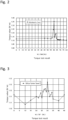
Figure 2 is a diagram showing a torque test result. -
Figure 3 is a diagram showing a torque test result. -
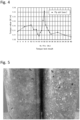
Figure 4 is a diagram showing a torque test result. -
Figure 5 is a photograph for comparing geopolymer concrete test specimens different in their mixing method. -
Figure 6 is a diagram showing production steps of a conventional geopolymer composition. -
Figure 1 to Figure 4 show, as an embodiment of the present invention, a method for producing a geopolymer composition for use in a structure in, for example, civil engineering or construction. - A geopolymer composition of the present embodiment contains, as raw materials, an active filler, an alkali activator, and aggregate, and part or all of the alkali activator is a combination of an alkali powder and mixing water.
- The active filler is a powder activated and solidified by mixing with an alkali activator, and is composed of, for example, an alkali-active amorphous powder, such as fly ash (coal ash), metakaolin, and blast furnace slag.
- The alkali activator is composed of an alkali powder and mixing water, and the alkali powder is a powder of sodium silicate, potassium silicate, sodium hydroxide, or the like.
- The aggregate is composed of sand, gravel, artificial aggregate, or the like, and is classified into fine aggregate and coarse aggregate according to the size of particles.
- An alkaline agent used for geopolymer concrete is originally a solid (e.g., a powder or granules), but in a geopolymer concrete production process, the alkaline agent needs to be dissolved in water to be chemically reacted with an active filler. On the other hand, there are various active fillers, and all the active fillers are in the form of powder and are brought into contact with an alkali solution in mixed geopolymer concrete and then hardened through chemical reaction. Therefore, a high-speed chemical reaction between the alkali powder and the active filler due to their small particle size and large specific surface area is advantageous for development of strength. However, the use of an active filler having a too small particle size and a too large specific surface area is disadvantageous to achieve workability (flowability) for pouring mixed geopolymer concrete into a formwork and molding it.
- Therefore, in the present embodiment, materials to be mixed are charged in divided portions (primary mixing step and secondary mixing step), and mixing water to be charged is divided into primary water and secondary water. Hereinafter, the method for producing a geopolymer composition according to the present embodiment will be described with reference to
Figure 1 . It should be noted that a mixer to be used is one with a mixing volume of 0.45 m3 or more for use in industrial production. - First, part of aggregate is first charged into a mixer (S10), part of mixing water in a primary water amount is then charged (S11), and the resultant is mixed until a predetermined first mixing time T1 elapses (S12). In this way, the surface of the aggregate in the mixer is allowed to evenly hold water. Then, an alkali powder is charged into the mixer (S13) and the resultant is mixed until a predetermined second mixing time T2 elapses (S14). In this way, the alkali powder is pulverized by rubbing it with the aggregate. Steps S10 to S14 correspond to an alkali powder pulverization step.
- Then, part of an active filler is charged into the mixer (S15) and the resultant is mixed until a predetermined third mixing time T3 elapses (S16). Steps S15 to S16 correspond to a filler charging and mixing step. It should be noted that the alkali powder pulverization step (S10 to S14) and the filler charging and mixing step (S15 to S16) correspond to a primary mixing step.
- Then, the residual materials (e.g., the residual active filler, alkali water, secondary water, the residual aggregate, an admixture) are charged (S17) and the resultant is mixed until a predetermined fourth mixing time T4 elapses (S18). In this way, the mixing step of a geopolymer composition is completed (S19), and the resultant is poured into a formwork or the like and hardened to form a structure made of geopolymer concrete. It should be noted that the residual material charging and mixing step (S17 to S19) correspond to a secondary mixing step.
- Here, in the above steps, the first mixing time T1 is set to 10 seconds or longer and 90 seconds or shorter (preferably 15 seconds or longer and 90 seconds or shorter), the second mixing time T2 is set to 15 seconds or longer and 120 seconds or shorter (preferably 30 seconds or longer and 90 seconds or shorter), the third mixing time T3 is set to 15 seconds or longer and 120 seconds or shorter (preferably 30 seconds or longer and 120 seconds or shorter), and the fourth mixing time T4 is set to 60 seconds or longer and 360 seconds or shorter (preferably 90 seconds or longer and 240 seconds or shorter).
- Further, in the above mixing step, the water/powder ratio of the active filler (W/F (%)) is preferably set so that a state close to a capillary state is achieved to exert a high mixing force (shearing force) in the mixer to promote a chemical reaction. The capillary state is one of phases that depend on the amount of a liquid when a powder is mixed with the liquid. In the capillary state, the binding force between particles is maximum and a mixing torque is also maximum.
- It should be noted that the water/powder ratios of active fillers required to achieve a capillary state (capillary water ratios: α) depend on the characteristics of the active fillers, and are therefore previously determined by a torque test (e.g., Japan Railway Construction, Transport and Technology Agency, Sprayed Concrete Design and Construction Guideline (Proposal), pp. 35 to 36, Sep. 2011).
- For example,
Figure 2 shows a torque test result of metakaolin (MK), and a maximum torque is obtained when the water/powder ratio (W/MK (%)) is 60%.Figure 3 shows a torque test result of silica fume (SF), and a maximum torque is obtained when the water/powder ratio (W/SF (%)) is 30%.Figure 4 shows a torque test result of fly ash (FA), and a maximum torque is obtained when the water/powder ratio (W/FA (%)) is 29%. - The ratio of water that fine aggregate can adsorb to its surface (surface adsorbed water ratio: βOH) depends on the characteristics of the fine aggregate, and is therefore previously determined by a centrifugal test (e.g., Japan Railway Construction, Transport and Technology Agency, Sprayed Concrete Design and Construction Guideline (Proposal), pp. 36 to 39, Sep. 2011).
- Specifically, in order to exert a high mixing force (shearing force) in the mixer, a primary water amount W1 (kg/m3) of mixing water charged in the alkali powder pulverization step is preferably set to a water amount determined by the following formula (1).

- When the capillary water ratio of the active filler is higher than that of a usual powder, the primary water amount W1 (kg/m3) determined by the above formula (1) may be larger than a predetermined quantity of water per unit volume of concrete. In this case, a primary active filler amount corresponding to W1 equal to the quantity of water per unit volume of concrete is calculated backwards and defined as F1, and a residual active filler amount is defined as F2.
- Specifically, water is charged in a primary water amount W1 (kg/m3) equal to the above-described quantity of water per unit volume of concrete in the alkali powder pulverization step, the active filler is charged in a primary active filler amount F1 in the filler charging and mixing step, and then the active filler is charged in a residual active filler amount F2 in the residual material charging and mixing step.
- As described above, the present embodiment includes an alkali powder pulverization step in which all or part of aggregate is first charged into a mixer, part (or all) of mixing water in a primary water amount is charged and the resultant is mixed to allow the surface of the aggregate in the mixer to evenly hold water, and an alkali powder is charged into the mixer and the resultant is mixed to pulverize the alkali powder, which is followed by charging the residual materials including the active filler and mixing the resultant to form a geopolymer composition. Therefore, the alkali powder is finely pulverized in the alkali powder pulverization step to have an increased specific surface area, which makes it possible to increase the speed of a chemical reaction. This makes it possible to better mix geopolymer concrete as compared to the case of conventional mixing, thereby increasing the dissolution rate of the alkali powder in water. Therefore, even when the alkali solution is replaced with an alkali powder and water, strength developability of geopolymer concreate can be improved, which makes it possible to significantly reduce time and effort required for curing. Further, since geopolymer concrete is better mixed as compared to the case of conventional mixing, the concrete has a high slump and high flowability, which makes it possible to improve workability.
- Further, even when almost all of the water glass (alkali solution) is replaced with "alkali powder and water", geopolymer concrete having high strength developability can be obtained, which makes it possible to eliminate the need for large storage facilities such as a tank for temporarily storing the water glass and measuring tools and to reduce the cost of materials used for geopolymer concrete due to a reduction in the amount of the expensive water glass to be used.
- Further, after the alkali powder pulverization step, all or part of the active filler is charged into the mixer and the resultant is mixed in the filler mixing step, which makes it possible to bring the active filler into contact with the alkali solution adhering to the surface of the aggregate and to mix the resultant with a high shearing force, thereby further improving geopolymer concrete strength developability due to an increase in the speed of a chemical reaction. This makes it possible to further reduce time and effort required for curing.
- In this case, in the alkali powder pulverization step, mixing water is charged in a primary water amount W1 calculated according to the type of active filler used so that the water/powder ratio (capillary water ratio) of the active filler is set to achieve a state close to a capillary state, and therefore even when any one of active fillers different in characteristics is used, a high mixing force (shearing force) can always be exerted in the mixer to enhance the effect of promoting a chemical reaction.
- It should be noted that the above embodiment has been described with reference to a case where part of mixing water is charged as primary water in the alkali powder pulverization step, but all of the mixing water may be charged.
- Further, the above embodiment has been described with reference to a case where part of the active filler is charged in the filler mixing step, but all of the active filler may be charged.
- It should be noted that the above embodiment has been described with reference to a case where the alkali activator is a combination of an alkali powder and mixing water, but the alkali activator may be a combination of an alkali powder, mixing water, and a relatively small amount of water glass.
- The above embodiment is an example of the present invention, and the present invention is not limited to the above embodiment.
- A test was performed under conditions shown below in Table 2, in which a mixing method was changed without changing the composition of geopolymer concrete. As can be seen from the results shown in Table 3, the slump, slump flow, and concrete temperature after mixing of the obtained double-mixing geopolymer concrete (present invention) are higher than those of the obtained conventional single-mixing geopolymer concrete (conventional example) even when the mixing time is the same, which indicates that the geopolymer concrete is better mixed in the case of double mixing. Further, the results also confirmed that in the case of double mixing, the 350 mm flow time was short and therefore the flow rate of the geopolymer concrete became higher, which was advantageous for production due to a reduction in time required to fill geopolymer concrete into a formwork. It should be noted that the compressive strength in Table 3 represents the result of a strength test at a material age of 7 days, and the upper value represents a compressive strength measured under curing conditions of a heating temperature of 60°C, 90%RH, a temperature rise time of 2 hours, a constant temperature for 68 hours, and a temperature drop time of 2 hours, and the lower value represents a compressive strength measured under curing conditions of a heating temperature of 60°C, 90%RH, a temperature rise time of 2 hours, and a constant temperature for 3 hours without controlling a temperature drop time. The result confirmed that the compressive strength was higher in the case of double mixing irrespective of curing time.
[Table 2] Conditions of geopolymer concrete mixing test (A 55-liter twin-shaft forced mixing test mixer was used.) Water/binder ratio W/B(%) 75.0 Active filler Mixture of two types of active fillers (B) Alkaline agent Alkali powder (AP) + Alkali solution (AS) Other materials Water (W), Fine aggregate (S), Coarse aggregate (G) Mixing method Double mixing: G+S+W+AS → 15-second mixing → AP → 45-second mixing → B → 180-second mixing → Discharge Conventional single mixing: G+B+AP+S → 30-second mixing → W+AS → 210-second mixing → Discharge [Table 3] Conditions of geopolymer concrete after mixing Mixing method Slump (cm) Slump flow (mm) Air content (%) Concrete temperature after mixing (°C) Room temperature (°C) Flow time to 350 mm (sec) Compressive strength (N/mm2) Double mixing 23 390 x 385 (Average 388) 2.8 28.7 21.6 14 66.6 49.4 Conventional single mixing 21.5 355 x 347 (Average 351) 2.9 27.1 21.3 37.3 63.3 49.2 -
Figure 5 shows images of cylindrical geopolymer concrete test specimens after demolding to compare double mixing (present invention) and conventional single mixing (conventional example). As can be seen from the images, the number of white spots (alkali powder) on the surface of the test specimen obtained by double mixing (left) is much smaller than that obtained by conventional single mixing (right), which indicates that the geopolymer concrete is better mixed in the case of double mixing (present invention). - S10 to S14 Alkali powder pulverization step, S15 to S16 Filler mixing step
Claims (6)
- A method for producing a geopolymer composition comprising, as raw materials, an active filler, an alkali activator, and aggregate,
part or all of the alkali activator being a combination of an alkali powder and mixing water, the method comprising:an alkali powder pulverization step in which all or part of the aggregate is first charged into a mixer, part or all of the mixing water in a primary water amount is charged, and a resultant is mixed to allow a surface of the aggregate in the mixer to hold water, the alkali powder is then charged into the mixer, and a resultant is mixed to pulverize the alkali powder,wherein the residual materials including the active filler are charged and mixed after the alkali powder pulverization step. - The method for producing a geopolymer composition according to claim 1, comprising after the alkali powder pulverization step, a filler mixing step in which part or all of the active filler is charged into the mixer and a resultant is mixed,
wherein the residual materials are charged and mixed after the filler mixing step. - The method for producing a geopolymer composition according to claim 2, whereinin the alkali powder pulverization step, all or part of the aggregate is charged into the mixer, part or all of the mixing water is charged and a resultant is mixed until a predetermined first mixing time elapses, and then the alkali powder is charged into the mixer and a resultant is mixed until a predetermined second mixing time elapses, andin the filler charging and mixing step, the active filler is charged into the mixer and a resultant is mixed until a predetermined third mixing time elapses, and the residual materials are charged and a resultant is mixed until a predetermined fourth mixing time elapses.
- The method for producing a geopolymer composition according to claim 3, whereinthe mixer is a mixer having a mixing volume of 0.45 m3 or more,the first mixing time is set to 10 seconds or longer and 90 seconds or shorter, the second mixing time is set to 15 seconds or longer and 120 seconds or shorter, the third mixing time is set to 15 seconds or longer and 120 seconds or shorter, and the fourth mixing time is set to 60 seconds or longer and 360 seconds or shorter.
- The method for producing a geopolymer composition according to any one of claims 1 to 4, wherein in the alkali powder pulverization step, water is charged in a primary water amount W1 (kg/m3) determined by the following formula (1):

- The method for producing a geopolymer composition according to claim 5, whereinwhen a capillary water ratio of the active filler is higher than that of a usual powder and a primary water amount W1 (kg/m3) determined by the above formula (1) is larger than a predetermined quantity of water per unit volume, a primary active filler amount corresponding to a primary water amount W1 equal to the quantity of water per unit volume is calculated backwards and defined as F1, and a residual active filler amount is defined as F2, andwater is charged in a primary water amount W1 (kg/m3) equal to the quantity of water per unit volume of concrete in the alkali powder pulverization step, and the active filler is charged in a primary active filler amount F1 in the filler charging and mixing step, and then the active filler is charged in a residual active filler amount F2 in the residual material charging and mixing step.
Applications Claiming Priority (2)
| Application Number | Priority Date | Filing Date | Title |
|---|---|---|---|
| JP2022137991A JP2024034011A (en) | 2022-08-31 | 2022-08-31 | Method for producing geopolymer composition |
| PCT/JP2023/031622 WO2024048682A1 (en) | 2022-08-31 | 2023-08-30 | Geopolymer composition manufacturing method |
Publications (2)
| Publication Number | Publication Date |
|---|---|
| EP4582234A1 true EP4582234A1 (en) | 2025-07-09 |
| EP4582234A4 EP4582234A4 (en) | 2026-02-18 |
Family
ID=90099789
Family Applications (1)
| Application Number | Title | Priority Date | Filing Date |
|---|---|---|---|
| EP23860444.1A Pending EP4582234A4 (en) | 2022-08-31 | 2023-08-30 | METHOD FOR PRODUCING A GEOPOLYMER COMPOSITION |
Country Status (3)
| Country | Link |
|---|---|
| EP (1) | EP4582234A4 (en) |
| JP (1) | JP2024034011A (en) |
| WO (1) | WO2024048682A1 (en) |
Family Cites Families (7)
| Publication number | Priority date | Publication date | Assignee | Title |
|---|---|---|---|---|
| JP5091519B2 (en) | 2007-03-28 | 2012-12-05 | 公益財団法人鉄道総合技術研究所 | Geopolymer composition and method for producing the same |
| NZ707001A (en) * | 2012-11-13 | 2019-02-22 | Cement Australia Pty Ltd | Geopolymer cement |
| US9266783B2 (en) * | 2014-01-20 | 2016-02-23 | Council Of Scientific & Industrial Research | Process for the preparation of geopolymeric functional materials in a solid form |
| US11186520B2 (en) * | 2016-10-13 | 2021-11-30 | Sika Technology Ag | Plasticizer for geopolymers |
| NL2020447B1 (en) * | 2018-02-15 | 2019-08-22 | Concr3De B V | Additive manufacturing of an inorganic geopolymer object |
| JP7436837B2 (en) * | 2020-05-11 | 2024-02-22 | 日本製鉄株式会社 | Geopolymer manufacturing method |
| CN113003968B (en) * | 2021-05-07 | 2023-02-28 | 中国矿业大学 | A kind of geopolymer dry powder material and preparation method thereof |
-
2022
- 2022-08-31 JP JP2022137991A patent/JP2024034011A/en active Pending
-
2023
- 2023-08-30 EP EP23860444.1A patent/EP4582234A4/en active Pending
- 2023-08-30 WO PCT/JP2023/031622 patent/WO2024048682A1/en not_active Ceased
Also Published As
| Publication number | Publication date |
|---|---|
| EP4582234A4 (en) | 2026-02-18 |
| WO2024048682A1 (en) | 2024-03-07 |
| JP2024034011A (en) | 2024-03-13 |
Similar Documents
| Publication | Publication Date | Title |
|---|---|---|
| JP2001270746A (en) | Method for producing slag hardened body | |
| TWI701228B (en) | Concrete composition and method for producing the same | |
| JP4384902B2 (en) | Manufacturing method of mortar and concrete | |
| JP3366617B2 (en) | Plastic injection material | |
| JP5440905B2 (en) | Ultra-early strong cement composition and manufacturing method thereof | |
| JP2011063488A (en) | Self-repair concrete admixture, method for producing the same, and self-repair concrete material using the admixture | |
| JP2000211956A (en) | Cement composition | |
| KR0145101B1 (en) | Method of manufacturing high flowing cement | |
| JP3382754B2 (en) | Cement composition, hardened cement body using the same, and method for producing the same | |
| CN113735481A (en) | Composite early strength mineral admixture and preparation method and application thereof | |
| JP2023177020A (en) | Concrete and concrete manufacturing methods | |
| JP2020128316A (en) | Construction method of tunnel lining concrete | |
| JP7081939B2 (en) | concrete | |
| JPH0131466B2 (en) | ||
| JPH0215506B2 (en) | ||
| JP5403321B2 (en) | Cement-based material | |
| WO2024048682A1 (en) | Geopolymer composition manufacturing method | |
| JP2001323403A (en) | Road pavement plate made of steelmaking slag | |
| JPH07267700A (en) | Two-part grout composition | |
| KR20190046456A (en) | Method for constructing mass concrete of architecture having improved chracteristics using two types of concrete composition mixture | |
| JP6729875B2 (en) | Construction method of support structure | |
| EP4582400A1 (en) | Geopolymer composition, production method therefor, and concrete structure | |
| JP2000026151A (en) | Grout wood | |
| JP7187090B1 (en) | concrete composition | |
| JP2015027922A (en) | Hydrated cured body |
Legal Events
| Date | Code | Title | Description |
|---|---|---|---|
| STAA | Information on the status of an ep patent application or granted ep patent |
Free format text: STATUS: THE INTERNATIONAL PUBLICATION HAS BEEN MADE |
|
| PUAI | Public reference made under article 153(3) epc to a published international application that has entered the european phase |
Free format text: ORIGINAL CODE: 0009012 |
|
| STAA | Information on the status of an ep patent application or granted ep patent |
Free format text: STATUS: REQUEST FOR EXAMINATION WAS MADE |
|
| 17P | Request for examination filed |
Effective date: 20250303 |
|
| AK | Designated contracting states |
Kind code of ref document: A1 Designated state(s): AL AT BE BG CH CY CZ DE DK EE ES FI FR GB GR HR HU IE IS IT LI LT LU LV MC ME MK MT NL NO PL PT RO RS SE SI SK SM TR |
|
| DAV | Request for validation of the european patent (deleted) | ||
| DAX | Request for extension of the european patent (deleted) | ||
| A4 | Supplementary search report drawn up and despatched |
Effective date: 20260121 |
|
| RIC1 | Information provided on ipc code assigned before grant |
Ipc: B28C 7/04 20060101AFI20260115BHEP Ipc: C04B 28/26 20060101ALI20260115BHEP Ipc: C04B 12/00 20060101ALI20260115BHEP Ipc: C04B 40/00 20060101ALI20260115BHEP |