EP4582225A2 - Überwachungsvorrichtung, überwachungsverfahren und system - Google Patents
Überwachungsvorrichtung, überwachungsverfahren und system Download PDFInfo
- Publication number
- EP4582225A2 EP4582225A2 EP24217449.8A EP24217449A EP4582225A2 EP 4582225 A2 EP4582225 A2 EP 4582225A2 EP 24217449 A EP24217449 A EP 24217449A EP 4582225 A2 EP4582225 A2 EP 4582225A2
- Authority
- EP
- European Patent Office
- Prior art keywords
- monitoring
- vehicle
- mobile body
- sensor
- degree
- Prior art date
- Legal status (The legal status is an assumption and is not a legal conclusion. Google has not performed a legal analysis and makes no representation as to the accuracy of the status listed.)
- Pending
Links
Images





Classifications
-
- G—PHYSICS
- G05—CONTROLLING; REGULATING
- G05B—CONTROL OR REGULATING SYSTEMS IN GENERAL; FUNCTIONAL ELEMENTS OF SUCH SYSTEMS; MONITORING OR TESTING ARRANGEMENTS FOR SUCH SYSTEMS OR ELEMENTS
- G05B19/00—Program-control systems
- G05B19/02—Program-control systems electric
- G05B19/04—Program control other than numerical control, i.e. in sequence controllers or logic controllers
- G05B19/042—Program control other than numerical control, i.e. in sequence controllers or logic controllers using digital processors
- G05B19/0428—Safety, monitoring
-
- G—PHYSICS
- G05—CONTROLLING; REGULATING
- G05D—SYSTEMS FOR CONTROLLING OR REGULATING NON-ELECTRIC VARIABLES
- G05D1/00—Control of position, course, altitude or attitude of land, water, air or space vehicles, e.g. using automatic pilots
- G05D1/60—Intended control result
- G05D1/617—Safety or protection, e.g. defining protection zones around obstacles or avoiding hazards
-
- G—PHYSICS
- G05—CONTROLLING; REGULATING
- G05B—CONTROL OR REGULATING SYSTEMS IN GENERAL; FUNCTIONAL ELEMENTS OF SUCH SYSTEMS; MONITORING OR TESTING ARRANGEMENTS FOR SUCH SYSTEMS OR ELEMENTS
- G05B19/00—Program-control systems
- G05B19/02—Program-control systems electric
- G05B19/418—Total factory control, i.e. centrally controlling a plurality of machines, e.g. direct or distributed numerical control [DNC], flexible manufacturing systems [FMS], integrated manufacturing systems [IMS] or computer integrated manufacturing [CIM]
- G05B19/4189—Total factory control, i.e. centrally controlling a plurality of machines, e.g. direct or distributed numerical control [DNC], flexible manufacturing systems [FMS], integrated manufacturing systems [IMS] or computer integrated manufacturing [CIM] characterised by the transport system
- G05B19/41895—Total factory control, i.e. centrally controlling a plurality of machines, e.g. direct or distributed numerical control [DNC], flexible manufacturing systems [FMS], integrated manufacturing systems [IMS] or computer integrated manufacturing [CIM] characterised by the transport system using automatic guided vehicles [AGV]
-
- B—PERFORMING OPERATIONS; TRANSPORTING
- B25—HAND TOOLS; PORTABLE POWER-DRIVEN TOOLS; MANIPULATORS
- B25J—MANIPULATORS; CHAMBERS PROVIDED WITH MANIPULATION DEVICES
- B25J9/00—Program-controlled manipulators
- B25J9/16—Program controls
- B25J9/1674—Program controls characterised by safety, monitoring, diagnostic
- B25J9/1676—Avoiding collision or forbidden zones
-
- G—PHYSICS
- G05—CONTROLLING; REGULATING
- G05B—CONTROL OR REGULATING SYSTEMS IN GENERAL; FUNCTIONAL ELEMENTS OF SUCH SYSTEMS; MONITORING OR TESTING ARRANGEMENTS FOR SUCH SYSTEMS OR ELEMENTS
- G05B19/00—Program-control systems
- G05B19/02—Program-control systems electric
- G05B19/18—Numerical control [NC], i.e. automatically operating machines, in particular machine tools, e.g. in a manufacturing environment, so as to execute positioning, movement or co-ordinated operations by means of program data in numerical form
- G05B19/406—Numerical control [NC], i.e. automatically operating machines, in particular machine tools, e.g. in a manufacturing environment, so as to execute positioning, movement or co-ordinated operations by means of program data in numerical form characterised by monitoring or safety
- G05B19/4061—Avoiding collision or forbidden zones
-
- G—PHYSICS
- G05—CONTROLLING; REGULATING
- G05B—CONTROL OR REGULATING SYSTEMS IN GENERAL; FUNCTIONAL ELEMENTS OF SUCH SYSTEMS; MONITORING OR TESTING ARRANGEMENTS FOR SUCH SYSTEMS OR ELEMENTS
- G05B19/00—Program-control systems
- G05B19/02—Program-control systems electric
- G05B19/418—Total factory control, i.e. centrally controlling a plurality of machines, e.g. direct or distributed numerical control [DNC], flexible manufacturing systems [FMS], integrated manufacturing systems [IMS] or computer integrated manufacturing [CIM]
- G05B19/41805—Total factory control, i.e. centrally controlling a plurality of machines, e.g. direct or distributed numerical control [DNC], flexible manufacturing systems [FMS], integrated manufacturing systems [IMS] or computer integrated manufacturing [CIM] characterised by assembly
-
- G—PHYSICS
- G05—CONTROLLING; REGULATING
- G05B—CONTROL OR REGULATING SYSTEMS IN GENERAL; FUNCTIONAL ELEMENTS OF SUCH SYSTEMS; MONITORING OR TESTING ARRANGEMENTS FOR SUCH SYSTEMS OR ELEMENTS
- G05B19/00—Program-control systems
- G05B19/02—Program-control systems electric
- G05B19/418—Total factory control, i.e. centrally controlling a plurality of machines, e.g. direct or distributed numerical control [DNC], flexible manufacturing systems [FMS], integrated manufacturing systems [IMS] or computer integrated manufacturing [CIM]
- G05B19/4185—Total factory control, i.e. centrally controlling a plurality of machines, e.g. direct or distributed numerical control [DNC], flexible manufacturing systems [FMS], integrated manufacturing systems [IMS] or computer integrated manufacturing [CIM] characterised by the network communication
-
- G—PHYSICS
- G05—CONTROLLING; REGULATING
- G05D—SYSTEMS FOR CONTROLLING OR REGULATING NON-ELECTRIC VARIABLES
- G05D1/00—Control of position, course, altitude or attitude of land, water, air or space vehicles, e.g. using automatic pilots
- G05D1/20—Control system inputs
- G05D1/22—Command input arrangements
- G05D1/221—Remote-control arrangements
- G05D1/225—Remote-control arrangements operated by off-board computers
-
- G—PHYSICS
- G05—CONTROLLING; REGULATING
- G05D—SYSTEMS FOR CONTROLLING OR REGULATING NON-ELECTRIC VARIABLES
- G05D1/00—Control of position, course, altitude or attitude of land, water, air or space vehicles, e.g. using automatic pilots
- G05D1/20—Control system inputs
- G05D1/24—Arrangements for determining position or orientation
- G05D1/247—Arrangements for determining position or orientation using signals provided by artificial sources external to the vehicle, e.g. navigation beacons
- G05D1/249—Arrangements for determining position or orientation using signals provided by artificial sources external to the vehicle, e.g. navigation beacons from positioning sensors located off-board the vehicle, e.g. from cameras
-
- G—PHYSICS
- G07—CHECKING-DEVICES
- G07C—TIME OR ATTENDANCE REGISTERS; REGISTERING OR INDICATING THE WORKING OF MACHINES; GENERATING RANDOM NUMBERS; VOTING OR LOTTERY APPARATUS; ARRANGEMENTS, SYSTEMS OR APPARATUS FOR CHECKING NOT PROVIDED FOR ELSEWHERE
- G07C5/00—Registering or indicating the working of vehicles
- G07C5/02—Registering or indicating driving, working, idle, or waiting time only
-
- B—PERFORMING OPERATIONS; TRANSPORTING
- B62—LAND VEHICLES FOR TRAVELLING OTHERWISE THAN ON RAILS
- B62D—MOTOR VEHICLES; TRAILERS
- B62D65/00—Designing, manufacturing, e.g. assembling, facilitating disassembly, or structurally modifying motor vehicles or trailers, not otherwise provided for
- B62D65/02—Joining sub-units or components to, or positioning sub-units or components with respect to, body shell or other sub-units or components
- B62D65/18—Transportation, conveyor or haulage systems specially adapted for motor vehicle or trailer assembly lines
-
- G—PHYSICS
- G05—CONTROLLING; REGULATING
- G05B—CONTROL OR REGULATING SYSTEMS IN GENERAL; FUNCTIONAL ELEMENTS OF SUCH SYSTEMS; MONITORING OR TESTING ARRANGEMENTS FOR SUCH SYSTEMS OR ELEMENTS
- G05B2219/00—Program-control systems
- G05B2219/20—Pc systems
- G05B2219/24—Pc safety
- G05B2219/24024—Safety, surveillance
-
- G—PHYSICS
- G05—CONTROLLING; REGULATING
- G05B—CONTROL OR REGULATING SYSTEMS IN GENERAL; FUNCTIONAL ELEMENTS OF SUCH SYSTEMS; MONITORING OR TESTING ARRANGEMENTS FOR SUCH SYSTEMS OR ELEMENTS
- G05B2219/00—Program-control systems
- G05B2219/20—Pc systems
- G05B2219/25—Pc structure of the system
- G05B2219/25196—Radio link, transponder
-
- G—PHYSICS
- G05—CONTROLLING; REGULATING
- G05B—CONTROL OR REGULATING SYSTEMS IN GENERAL; FUNCTIONAL ELEMENTS OF SUCH SYSTEMS; MONITORING OR TESTING ARRANGEMENTS FOR SUCH SYSTEMS OR ELEMENTS
- G05B2219/00—Program-control systems
- G05B2219/20—Pc systems
- G05B2219/26—Pc applications
- G05B2219/2637—Vehicle, car, auto, wheelchair
-
- G—PHYSICS
- G05—CONTROLLING; REGULATING
- G05B—CONTROL OR REGULATING SYSTEMS IN GENERAL; FUNCTIONAL ELEMENTS OF SUCH SYSTEMS; MONITORING OR TESTING ARRANGEMENTS FOR SUCH SYSTEMS OR ELEMENTS
- G05B2219/00—Program-control systems
- G05B2219/30—Nc systems
- G05B2219/40—Robotics, robotics mapping to robotics vision
- G05B2219/40202—Human robot coexistence
-
- G—PHYSICS
- G05—CONTROLLING; REGULATING
- G05D—SYSTEMS FOR CONTROLLING OR REGULATING NON-ELECTRIC VARIABLES
- G05D2105/00—Specific applications of the controlled vehicles
- G05D2105/45—Specific applications of the controlled vehicles for manufacturing, maintenance or repairing
-
- G—PHYSICS
- G05—CONTROLLING; REGULATING
- G05D—SYSTEMS FOR CONTROLLING OR REGULATING NON-ELECTRIC VARIABLES
- G05D2107/00—Specific environments of the controlled vehicles
- G05D2107/70—Industrial sites, e.g. warehouses or factories
-
- G—PHYSICS
- G05—CONTROLLING; REGULATING
- G05D—SYSTEMS FOR CONTROLLING OR REGULATING NON-ELECTRIC VARIABLES
- G05D2109/00—Types of controlled vehicles
- G05D2109/10—Land vehicles
-
- G—PHYSICS
- G05—CONTROLLING; REGULATING
- G05D—SYSTEMS FOR CONTROLLING OR REGULATING NON-ELECTRIC VARIABLES
- G05D2111/00—Details of signals used for control of position, course, altitude or attitude of land, water, air or space vehicles
- G05D2111/10—Optical signals
Definitions
- the present disclosure relates to a monitoring device, a monitoring method, and a system.
- JP 2017-538619 A discloses a technique for causing a vehicle to travel via unmanned driving in a vehicle manufacturing process.
- a function or characteristics of the mobile body may be changed by a component being assembled to the mobile body.
- the safety performance requested for the mobile body may be changed as the manufacturing process progresses.
- a first aspect of the present disclosure provides a monitoring device.
- the monitoring device includes a monitoring unit.
- the monitoring unit is configured to execute monitoring related to safety of a mobile body that is movable within a manufacturing process via unmanned driving.
- An aspect of the monitoring of the monitoring unit when the mobile body is in a first process is different from an aspect of the monitoring of the monitoring unit when the mobile body is in a second process.
- the monitoring unit may be configured to, at a predetermined cycle, determine whether or not communication is interrupted, and the cycle in the first process may be shorter than the cycle in the second process.
- the monitoring related to the safety of the mobile body the monitoring related to the interruption of the communication can be appropriately executed.
- the monitoring unit may be configured to execute the monitoring by using a safety sensor mounted in the mobile body, and the monitoring unit may be configured to, in the second process, execute the monitoring by using the safety sensor with a higher degree of use than a degree of use of the safety sensor in the first process.
- the monitoring using the safety sensor can be appropriately executed.
- the number of the safety sensors mounted in the mobile body in the second process may be larger than the number of the safety sensors mounted in the mobile body in the first process.
- the degree of use of the safety sensor in the monitoring can be increased in accordance with the number of the safety sensors mounted in the mobile body, and the mounted safety sensor can be more effectively used in the monitoring.
- the monitoring unit may be configured to monitor a motor torque of the mobile body, the monitoring unit may be configured to determine that the mobile body is not in a normal state when a degree of change in the motor torque exceeds an allowable range, and the allowable range of the degree of change in the motor torque in the first process may be narrower than the allowable range in the second process.
- the monitoring related to the safety of the mobile body the monitoring of the motor torque can be more appropriately executed.
- the monitoring unit may be configured to monitor approach between the mobile body and an object outside the mobile body by using an external sensor located outside the mobile body, and the monitoring unit may be configured to, in the first process, monitor the approach between the mobile body and the object outside the mobile body by using the external sensor with a higher degree of use than a degree of use of the external sensor in the second process.
- the monitoring related to the safety of the mobile body the monitoring of the approach using the external sensor can be more appropriately executed.
- the monitoring unit may be configured to monitor approach between the mobile body and an object outside the mobile body by using an internal sensor mounted in the mobile body, and the monitoring unit may be configured to, in the second process, monitor the approach between the mobile body and the object outside the mobile body by using the internal sensor with a higher degree of use than a degree of use of the internal sensor in the first process.
- the monitoring related to the safety of the mobile body the monitoring of the approach using the internal sensor can be more appropriately executed.
- the monitoring unit may be configured to execute monitoring related to a steering angle of a vehicle as the mobile body, and the monitoring unit may be configured to, in the first process, execute the monitoring related to the steering angle of the vehicle by using a smaller control gain of the steering angle than a control gain of the steering angle in the second process.
- the monitoring related to the safety of the mobile body the monitoring related to the steering angle can be more appropriately executed.
- the monitoring unit may be configured to execute monitoring related to a steering angle of a vehicle as the mobile body, and the monitoring unit may be configured to, in the first process, determine a traveling abnormality of the vehicle by using a smaller upper limit value of the steering angle than an upper limit value of the steering angle in the second process.
- the monitoring related to the safety of the mobile body the monitoring related to the steering angle can be more appropriately executed.
- the monitoring unit may be configured to monitor a movement speed of the mobile body, the monitoring unit may be configured to, in the first process, determine that a movement state of the mobile body is abnormal when the movement speed of the mobile body exceeds a first maximum movement speed threshold value, the monitoring unit may be configured to, in the second process, determine that the movement state of the mobile body is abnormal when the movement speed of the mobile body exceeds a second maximum movement speed threshold value, and the first maximum movement speed threshold value may be smaller than the second maximum movement speed threshold value.
- the monitoring related to the safety of the mobile body the monitoring of the movement speed can be more appropriately executed.
- a degree of coexistence of the mobile body with a person may be higher in the first process than in the second process.
- the monitoring can be appropriately executed in accordance with the change in the degree of coexistence with a person in the manufacturing process.
- a maximum movement speed of the mobile body may be lower in the first process than in the second process.
- the monitoring can be appropriately executed in accordance with the change in the maximum movement speed in the manufacturing process.
- a roaming frequency of the mobile body may be lower in the first process than in the second process.
- the number of sensors mounted in the mobile body may be smaller in the first process than in the second process.
- the monitoring can be appropriately executed in accordance with the change in the number of the mounted sensors in the manufacturing process.
- the monitoring can be appropriately executed depending on whether the mobile body is completed or not completed in the manufacturing process.
- the vehicle controller 115 as the first monitoring unit or the remote controller 210 as the second monitoring unit executes at least any one of restriction processing and abnormality processing in the monitoring.
- the restriction processing is processing of restricting the operation of the vehicle 100 such that no abnormality occurs in the monitoring.
- the abnormality processing is processing of executing predetermined processing related to the abnormality in a case where the abnormality is detected in the monitoring. It is preferable that the abnormality processing includes at least any one of stop processing and notification processing.
- the stop processing is processing of stopping the vehicle 100.
- a position at which the vehicle 100 is stopped by the stop processing may be, for example, a position at which the vehicle 100 can be stopped more quickly or a predetermined evacuation place in the factory FC.
- the vehicle controller 115 functioning as the first monitoring unit executes the abnormality processing in the communication monitoring, the safety sensor monitoring, the motor torque monitoring, and the internal sensor monitoring.
- the remote controller 210 functioning as the second monitoring unit executes the abnormality processing in the external sensor monitoring and executes the restriction processing in the steering angle monitoring and the traveling speed monitoring.
- the remote controller 210 executes feedback control or feedforward control using, for example, the vehicle speed detected by the vehicle speed sensor or the like to generate the traveling control signal such that the traveling speed of the vehicle 100 does not exceed the maximum traveling speed, thereby controlling the traveling speed of the vehicle 100.
- the remote controller 210 executes feedback control or feedforward control using, for example, the steering angle detected by the steering angle sensor or the like to generate the traveling control signal such that the control gain of the steering angle does not exceed the threshold value and the steering angle does not exceed the upper limit value, thereby controlling the steering angle of the vehicle 100.
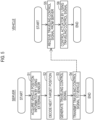
- the vehicle controller 115 as the first monitoring unit executes the first monitoring Mr1 by using the first monitoring data MD1 stored in the memory 112.
- First aspect information representing the aspect of each monitoring included in the first monitoring Mr1 is included in the first monitoring data MD1.
- the difference in the aspect of the monitoring in the first monitoring Mr1 is implemented by updating the first monitoring data MD1 in response to the update instruction from the server 200.
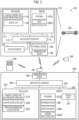
- FIG. 5 is a flowchart showing a processing procedure of traveling control of the vehicle 100 according to the first embodiment.
- the processor 201 of the server 200 executes the program PG2 to function as the remote controller 210.
- the processor 111 of the vehicle 100 executes the program PG1 to function as the vehicle controller 115.
- the remote controller 210 executes the second monitoring Mr2 as the second monitoring unit.
- the vehicle controller 115 executes the first monitoring Mr1 as the first monitoring unit.
- the processor 201 detects an outer shape of the vehicle 100 from, for example, the captured image, calculates coordinates of positioning points of the vehicle 100 in a captured image coordinate system, that is, in a local coordinate system, and converts the calculated coordinates into the coordinates in the global coordinate system GC to acquire the position of the vehicle 100.
- the outer shape of the vehicle 100 included in the captured image can be detected, for example, by inputting the captured image to a detection model DM1 utilizing artificial intelligence (AI).
- the detection model DM1 is prepared, for example, inside the system 50 or outside the system 50, and is stored in advance in the memory 202 of the server 200.
- Examples of the detection model DM1 include a trained machine learning model that has been trained to implement any one of semantic segmentation and instance segmentation.
- the machine learning model for example, a convolutional neural network (CNN) that has been trained by supervised learning using a training data set can be used.
- the training data set has, for example, a plurality of training images including the vehicle 100 and a label indicating whether each area in the training image is an area indicating the vehicle 100 or an area indicating an area other than the vehicle 100.
- the CNN it is preferable that parameters of the CNN are updated such that an error between an output result of the detection model DM1 and the label is reduced by backpropagation (error backpropagation method).
- the processor 201 can acquire the direction of the vehicle 100 by performing the estimation based on a direction of a movement vector of the vehicle 100 calculated from a positional change in a feature point of the vehicle 100 between frames of the captured image by using, for example, an optical flow method.
- step S2 the processor 201 of the server 200 decides a target position to which the vehicle 100 should head next.
- the target position is represented by the coordinates of X, Y, and Z in the global coordinate system GC.
- a reference route RR that is a route along which the vehicle 100 should travel is stored in advance in the memory 202 of the server 200.
- the route is represented by a node indicating a departure point, a node indicating a passing point, a node indicating a destination, and a link connecting the respective nodes.
- the processor 201 decides the target position to which the vehicle 100 should head next by using the vehicle position information and the reference route RR.
- the processor 201 decides the target position on the reference route RR ahead of the current position of the vehicle 100.
- step S3 the processor 201 of the server 200 generates the traveling control signal for causing the vehicle 100 to travel toward the decided target position.
- the processor 201 calculates the traveling speed of the vehicle 100 from the transition of the position of the vehicle 100, and compares the calculated traveling speed with a target speed. As a whole, the processor 201 decides the acceleration such that the vehicle 100 is accelerated when the traveling speed is lower than the target speed, and decides the acceleration such that the vehicle 100 is decelerated when the traveling speed is higher than the target speed.
- the processor 201 decides the steering angle and the acceleration such that the vehicle 100 does not deviate from the reference route RR when the vehicle 100 is located on the reference route RR, and decides the steering angle and the acceleration such that the vehicle 100 returns to the reference route RR when the vehicle 100 is not located on the reference route RR, in other words, when the vehicle 100 deviates from the reference route RR.
- the traveling speed of the vehicle 100 may be acquired by using the internal sensor 140, such as the vehicle speed sensor or the wheel speed sensor.
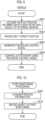
- FIG. 6 is a flowchart showing a processing procedure of monitoring processing for implementing a monitoring method according to the present embodiment.
- the monitoring processing of FIG. 6 is executed by the processor 201 at a predetermined cycle, for example.
- step S105 the process information acquisition unit 225 acquires the process information of the vehicle 100.
- step S110 the remote controller 210 functioning as the second monitoring unit decides the aspect of the second monitoring Mr2 by referring to the second monitoring data MD2 based on the process information acquired in step S105. Specifically, in step S110, the remote controller 210 starts the execution of the second monitoring Mr2 using the second aspect information corresponding to the process information acquired in step S105. That is, in the present embodiment, when the vehicle 100 is in the first process in step S105 of the previous monitoring processing, and the vehicle 100 is in the second process in step S105 of the current monitoring processing, the aspect of the second monitoring Mr2 is changed in step S110.
- step S115 the update instruction unit 220 generates the update instruction and transmits the generated update instruction to the vehicle 100. Specifically, in step S 115, the update instruction unit 220 generates the update instruction based on the update data UD by referring to the process information acquired in step S105, and transmits the generated update instruction to the vehicle 100.
- step S120 the update unit 116 of the vehicle 100 determines whether or not the update instruction is received from the server 200. In a case where the update instruction is received in step S120, in step S125, the update unit 116 updates the first monitoring data MD1 by using the received update instruction.
- step S 130 the vehicle controller 115 functioning as the first monitoring unit decides the aspect of the monitoring in the first monitoring Mr1 by using the updated first monitoring data MD1.
- step S130 the vehicle controller 115 starts the execution of the first monitoring Mr1 using the updated first monitoring data MD1. That is, in the present embodiment, when the vehicle 100 is in the first process in step S105 of the previous monitoring processing, and the vehicle 100 is in the second process in step S105 of the present monitoring processing, the aspect of the first monitoring Mr1 is changed in step S130.
- the update instruction may be generated and transmitted.
- the aspect of the monitoring related to the safety of the vehicle 100 is different between when the vehicle 100 is in the first process and when the vehicle 100 is in the second process. Therefore, the monitoring of the vehicle 100 in which the vehicle situation is sequentially changed within the manufacturing process MP can be more appropriately executed than in a case where the monitoring is uniformly executed.
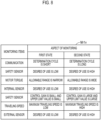
- the first monitoring Mr1 includes the communication monitoring, and the aspect of the communication monitoring is different between the first process and the second process in that the determination cycle in the first process is shorter than the determination cycle in the second process. Therefore, the communication monitoring can be appropriately executed.
- the interruption of the communication can be detected with higher sensitivity in accordance with the fact that the vehicle 100 is not completed, the fact that the degree of coexistence with a person is higher, the fact that the roaming frequency is lower, the fact that the traveling place is indoors, the fact that the number of the mounted internal sensors is smaller, or the fact that the number of the assembled exterior components is smaller, and thus the safety of the unmanned driving of the vehicle 100 can be further improved.
- the interruption of the communication can be detected with the sensitivity suitable for securing the productivity of the vehicle 100 in accordance with the fact that the vehicle 100 is completed, the fact that the degree of coexistence with a person is lower, the fact that the roaming frequency is higher, the fact that the traveling place is outdoors, the fact that the number of the mounted internal sensors is larger, or the fact that the number of the assembled exterior components is larger, and thus the reduction in the productivity of the vehicle 100 can be suppressed.
- the first monitoring Mr1 includes the safety sensor monitoring, and the aspect of the safety sensor monitoring is different between the first process and the second process in that the degree of use of the safety sensor is higher in the second process than in the first process. Therefore, the safety sensor monitoring can be appropriately executed.
- the number of the mounted safety sensors in the second process is larger than the number of the mounted safety sensors in the first process. Therefore, the degree of use of the safety sensor in the safety sensor monitoring can be increased in accordance with the number of the safety sensors mounted in the vehicle 100, and the safety sensor mounted in the vehicle 100 can be more effectively used in the monitoring.
- the motor torque monitoring is included in the first monitoring Mr1, and the aspect of the motor torque monitoring is different between the first process and the second process in that the allowable range of the motor torque change is narrower in the first process than in the second process. Therefore, the motor torque monitoring can be appropriately executed.
- the abnormality of the motor torque can be detected with higher sensitivity in accordance with the fact that the vehicle 100 is not completed, the fact that the degree of coexistence with a person is higher, the fact that the traveling place is indoors, the fact that the number of the mounted internal sensors is smaller, or the fact that the number of the assembled exterior components is smaller, and thus the safety of the unmanned driving of the vehicle 100 can be further improved.
- the abnormality of the motor torque can be detected with the sensitivity suitable for securing the productivity of the vehicle 100 in accordance with the fact that the vehicle 100 is completed, the fact that the degree of coexistence with a person is lower, the fact that the traveling place is outdoors, the fact that the number of the mounted internal sensors is larger, or the fact that the number of the assembled exterior components is larger, and thus the reduction in the productivity of the vehicle 100 can be suppressed.
- the external sensor monitoring is included in the second monitoring Mr2, and the aspect of the external sensor monitoring is different between the first process and the second process in that the degree of use of the external sensor 300 is higher in the first process than in the second process. Therefore, the external sensor monitoring can be appropriately executed.
- the first process the approach between the vehicle 100 and a person can be detected by using the external sensor 300 with a higher degree of use in accordance with the fact that the number of the mounted internal sensors is smaller, and the safety of the unmanned driving of the vehicle 100 can be further improved.
- the degree of use of the external sensor 300 can be suppressed in accordance with the fact that the number of the mounted internal sensors is larger. Therefore, as compared to a case where the external sensors 300 are used with a uniform degree of use, the number of the external sensors 300 to be installed can be further reduced, and the cost of constructing the factory FC or the system 50 can be further reduced.
- the first monitoring Mr1 includes the internal sensor monitoring, and the aspect of the internal sensor monitoring is different between the first process and the second process in that the degree of use of the internal sensor 140 is higher in the second process than in the first process. Therefore, the internal sensor monitoring can be appropriately executed. Specifically, in the present embodiment, in the second process, the degree of use of the internal sensor 140 can be increased in accordance with the fact that the number of the mounted internal sensors 140 is larger, and the mounted internal sensors 140 can be more effectively used in the monitoring.
- the steering angle monitoring is included in the second monitoring Mr2, and the aspect of the steering angle monitoring is different between the first process and the second process in that the control gain of the steering angle in the first process is smaller than the control gain of the steering angle in the second process. Therefore, the steering angle monitoring can be appropriately executed.
- the sudden change in the steering angle of the vehicle 100 can be suppressed in accordance with the fact that the vehicle 100 is not completed, the fact that the degree of coexistence with a person is higher, the fact that the traveling place is indoors, the fact that the number of the mounted internal sensors is smaller, or the fact that the number of the assembled exterior components is smaller, and thus the safety of the unmanned driving of the vehicle 100 can be further improved.
- the vehicle 100 can be caused to travel via the unmanned driving in a state where the restriction in the steering angle control for the vehicle 100 is relaxed, in accordance with the fact that the vehicle 100 is completed, the fact that the degree of coexistence with a person is lower, the fact that the traveling place is outdoors, the fact that the number of the mounted internal sensors is larger, or the fact that the number of the assembled exterior components is larger, and thus the reduction in the productivity of the vehicle 100 can be suppressed.
- the aspect of the steering angle monitoring is different between the first process and the second process in that the upper limit value of the steering angle in the first process is smaller than the upper limit value of the steering angle in the second process. Therefore, the steering angle monitoring can be appropriately executed.
- the significant change in the steering angle of the vehicle 100 can be suppressed in accordance with the fact that the vehicle 100 is not completed, the fact that the degree of coexistence with a person is higher, the fact that the traveling place is indoors, the fact that the number of the mounted internal sensors is smaller, or the fact that the number of the assembled exterior components is smaller, and thus the safety of the unmanned driving of the vehicle 100 can be further improved.
- the vehicle 100 can be caused to travel via the unmanned driving in a state where the restriction in the steering angle control for the vehicle 100 is relaxed, in accordance with the fact that the vehicle 100 is completed, the fact that the degree of coexistence with a person is lower, the fact that the traveling place is outdoors, the fact that the number of the mounted internal sensors is larger, or the fact that the number of the assembled exterior components is larger, and thus the reduction in the productivity of the vehicle 100 can be suppressed.
- the second monitoring Mr2 includes the traveling speed monitoring, and the aspect of the traveling speed monitoring is different between the first process and the second process in that the maximum traveling speed in the first process is lower than the maximum traveling speed in the second process. Therefore, the traveling speed monitoring can be appropriately executed.
- the traveling speed monitoring can be appropriately executed.
- the approach between the vehicle 100 and a person due to a high traveling speed of the vehicle 100 can be suppressed in accordance with the fact that the vehicle 100 is not completed, the fact that the degree of coexistence with a person is higher, the fact that the traveling place is indoors, the fact that the number of the mounted internal sensors is smaller, or the fact that the number of the assembled exterior components is smaller, and thus the safety of the unmanned driving of the vehicle 100 can be further improved.
- the vehicle 100 can be caused to travel via the unmanned driving in a state where the restriction in the traveling speed of the vehicle 100 is relaxed, in accordance with the fact that the vehicle 100 is completed, the fact that the degree of coexistence with a person is lower, the fact that the traveling place is outdoors, the fact that the number of the mounted internal sensors is larger, or the fact that the number of the assembled exterior components is larger, and thus the reduction in the productivity of the vehicle 100 can be suppressed.
- the external sensor monitoring and the internal sensor monitoring are executed, the degree of use of the external sensor 300 in the first process is higher than the degree of use of the external sensor 300 in the second process, and the degree of use of the internal sensor 140 in the first process is lower than the degree of use of the internal sensor 140 in the second process. Therefore, the external sensor 300 and the internal sensor 140 can be effectively cooperated in the monitoring. Specifically, for example, in a relatively early stage of the manufacturing process MP, in a case where the number of the internal sensors 140 assembled to the vehicle 100 is smaller, the external sensors 300 can be used preferentially to monitor the approach between the vehicle 100 and the external object.
- the degree of use of the internal sensors 140 can be increased to cause the vehicle 100 to travel more safely via the unmanned driving and to reduce the degree of use of the external sensor 300.
- the change in the aspect of the first monitoring Mr1 is implemented by updating the first monitoring data MD1 in response to the update instruction.
- the capacity of the data needed to change the aspect of the first monitoring Mr1 can be reduced as compared with a case where the change in the aspect of the first monitoring Mr1 is implemented by using, for example, data in which the aspects of the monitoring in both the first process and the second process are stored. Therefore, the capacity of the memory 112 can be further reduced.
- FIG. 7 is a block diagram showing a configuration of the system 50 according to a second embodiment.
- the system 50 according to the present embodiment does not include the server 200, unlike the first embodiment.
- the vehicle according to the present embodiment can travel via the autonomous control of the vehicle. Since the device configuration of the vehicle according to the present embodiment is the same as the device configuration of the vehicle 100 according to the first embodiment, the vehicle according to the present embodiment is also referred to as the vehicle 100 for convenience.
- the portions not particularly described are the same as the portions in the first embodiment.
- the communication device 130 of the vehicle 100 can communicate with the external sensor 300.
- the processor 111 of the vehicle control device 110 executes the program PG1 stored in the memory 112 to function as a vehicle controller 115v and the process information acquisition unit 225.
- the vehicle controller 115v can acquire the output result of the sensor, generate the traveling control signal by using the output result, and output the generated traveling control signal to operate the actuator group 120, thereby causing the vehicle 100 to travel via the autonomous control.
- the detection model DM1, the reference route RR, or first monitoring data MD1v is stored in the memory 112 in advance, in addition to the program PG1.
- the vehicle control device 110 according to the second embodiment corresponds to the first monitoring device and corresponds to the "monitoring device" according to the present disclosure, as in the first embodiment.
- FIG. 8 is a diagram showing the monitoring according to the present embodiment.
- the first monitoring Mr1 according to the present embodiment is different from the first monitoring Mr1 according to the first embodiment in that the external sensor monitoring is included.
- the first monitoring data MD1v shown in FIG. 7 includes each process of the vehicle 100 and the first aspect information associated with each process.
- the change in the aspect of the monitoring of the first monitoring Mr1v is implemented by referring to the first monitoring data MD1v based on the process information, instead of the update of the first monitoring data MD1v.
- FIG. 9 is a flowchart showing a processing procedure of traveling control of the vehicle 100 according to the second embodiment.
- the processor 111 of the vehicle 100 executes the program PG1 to function as the vehicle controller 115v.
- the vehicle controller 115v executes the first monitoring Mr1 as the first monitoring unit.
- step S901 the processor 111 of the vehicle control device 110 acquires the vehicle position information by using the detection result output from the camera as the external sensor 300.
- step S902 the processor 111 decides the target position to which the vehicle 100 should head next.
- step S903 the processor 111 generates the traveling control signal for causing the vehicle 100 to travel toward the decided target position.
- step S904 the processor 111 controls the actuator group 120 by using the generated traveling control signal, to cause the vehicle 100 to travel in accordance with the parameters represented by the traveling control signal.
- the processor 111 repeatedly executes, at a predetermined cycle, the acquisition of the vehicle position information, the decision of the target position, the generation of the traveling control signal, and the control of the actuator.
- the vehicle 100 can be caused to travel via the autonomous control of the vehicle 100 without the need for the server 200 to remotely control the vehicle 100.
- FIG. 10 is a flowchart showing a processing procedure of monitoring processing for implementing a monitoring method according to the present embodiment.
- the monitoring processing of FIG. 10 is executed by the processor 111 at a predetermined cycle, for example.
- step S205 the process information acquisition unit 225 of the vehicle 100 acquires the process information of the vehicle 100 as in step S105 of FIG. 6 .
- step S210 the vehicle controller 115v functioning as the first monitoring unit decides the aspect of the first monitoring Mr1v by referring to the first monitoring data MD1v based on the process information acquired in step S205. Specifically, in step S210, the vehicle controller 115v starts the execution of the first monitoring Mr1v using the first aspect information corresponding to the process information acquired in step S205.
- the aspect of the monitoring is different between when the vehicle 100 is in the first process and when the vehicle 100 is in the second process, and thus the monitoring of the vehicle 100 of which the state is sequentially changed within the manufacturing process MP can be appropriately executed.
- the monitoring includes the communication monitoring, the safety sensor monitoring, the motor torque monitoring, the internal sensor monitoring, the steering angle monitoring, the traveling speed monitoring, and the external sensor monitoring.
- the monitoring need not include all of the monitoring items described above, may include solely any one of the monitoring items, or may include solely any two or more of the monitoring items.
- the monitoring may include other monitoring items in addition to or instead of the above-described items.
- the monitoring may include accelerator pedal monitoring, brake pedal monitoring, and acceleration monitoring.
- the accelerator pedal monitoring is monitoring of an operation amount of an accelerator pedal of the vehicle 100.
- the difference in the aspect of the monitoring in the accelerator pedal monitoring may include a difference in an accelerator pedal intervention threshold value.
- the accelerator pedal intervention threshold value is a threshold value for deciding whether or not the vehicle 100 executes an acceleration operation in response to an operation of the accelerator pedal in the vehicle 100 during the unmanned driving. Specifically, in the vehicle 100 during the unmanned driving, when the operation amount of the accelerator pedal exceeds the accelerator pedal intervention threshold value, the vehicle 100 during the unmanned driving executes the acceleration operation in response to the operation of the accelerator pedal.
- the traveling state of the vehicle 100 during the unmanned driving can be prevented from being unstable. Therefore, for example, in a case where the number of people getting on the vehicle 100 per unit time is larger in the first process than in the second process, from the viewpoint of preventing the traveling state of the vehicle 100 from being unstable, it is preferable that the accelerator pedal intervention threshold value in the first process is higher than the accelerator pedal intervention threshold value in the second process.
- the brake pedal monitoring is monitoring of an operation amount of a brake pedal of the vehicle 100.
- the difference in the aspect of the monitoring of the brake pedal monitoring may include a difference in a brake pedal intervention threshold value.
- the brake pedal intervention threshold value is a threshold value for deciding whether or not the vehicle 100 executes a braking operation in response to an operation of the brake pedal in the vehicle 100 during the unmanned driving. Specifically, in the vehicle 100 during the unmanned driving, when the operation amount of the brake pedal exceeds the brake pedal intervention threshold value, the vehicle 100 during the unmanned driving executes the braking operation in response to the operation of the brake pedal.
- the traveling state of the vehicle 100 during the unmanned driving can be prevented from being unstable.
- the brake pedal intervention threshold value in the first process is higher than the brake pedal intervention threshold value in the second process.
- the acceleration monitoring is monitoring of the acceleration of the vehicle 100.
- the difference in the aspect of the monitoring in the acceleration monitoring may include a difference in an upper limit value of the acceleration.
- the acceleration includes both the acceleration generated by the vehicle 100 being accelerated and the acceleration generated by the vehicle 100 being decelerated.
- the traveling state of the vehicle 100 can be prevented from being unstable due to sudden acceleration or deceleration of the vehicle 100. Therefore, in a case where the work is performed by the operator getting on the vehicle 100, the operator can be prevented from losing balance due to the sudden acceleration or deceleration of the vehicle 100.
- a possibility that the vehicle 100 and the external object approach each other more than needed can be reduced.
- the upper limit value of the acceleration in the first process is lower than the upper limit value of the acceleration in the second process.
- the differences in the aspects of the monitoring in the communication monitoring, the safety sensor monitoring, the motor torque monitoring, the internal sensor monitoring, the steering angle monitoring, the traveling speed monitoring, and the external sensor monitoring respectively include the difference in the determination cycle, the difference in the degree of use of the safety sensor, the difference in the allowable range of the change in the motor torque, the difference in the degree of use of the internal sensor 140, the difference in the control gain of the steering angle, the difference in the maximum traveling speed, and the difference in the degree of use of the external sensor 300.
- the difference in the aspect of the monitoring of each monitoring included in the monitoring may include another difference in addition to or instead of the above-described differences.
- the difference in the aspect of the monitoring in the traveling speed monitoring or the acceleration monitoring may include a difference in a control gain related to longitudinal control of the vehicle 100.
- the longitudinal control is control related to movement of the vehicle 100 in a front-rear direction.
- the control gain related to the longitudinal control may be a control gain for controlling the speed of the vehicle 100 or may be a control gain for controlling the acceleration of the vehicle 100.
- the vehicle 100 in a case where the vehicle 100 is not completed, in a case where the degree of coexistence with a person is higher, in a case where the roaming frequency is lower, in a case where the traveling place is indoors, in a case where the number of the mounted internal sensors is smaller, or in a case where the number of the assembled exterior components is smaller, the vehicle 100 can be caused to travel more safely via the unmanned driving by reducing the control gain related to the longitudinal control.
- the time required for the vehicle 100 to reach the target speed can be shortened by increasing the control gain related to the longitudinal control, and thus the vehicle 100 can be caused to move efficiently.
- Control related to movement of the vehicle 100 in a right-left direction is also referred to as lateral control.
- the control gain of the steering angle corresponds to the control gain related to the lateral control.
- the control gain changed by updating unmanned driving information may be a control gain related to the feedback control or may be a control gain of the feedforward control.
- the control gain changed by updating the unmanned driving information may be a control gain for controlling the motor torque or may be a control gain for controlling a rotation angle of the motor.
- the manufacturing stage of the vehicle 100, the degree of coexistence with a person, the roaming frequency, the number of the mounted internal sensors, the number of the mounted safety sensors, and the number of the assembled exterior components, and the traveling place are different between the first process and the second process.
- all of the vehicle situations need not be different between the first process and the second process, solely any one of the vehicle situations may be different, or solely any two or more of the vehicle situations may be different.
- both the first process and the second process may be processes in which the vehicle 100 is not completed, or both the first process and the second process may be processes in which the vehicle 100 is completed.
- the first process is a process until the vehicle 100 is completed after the vehicle 100 is constructed to a state where the vehicle 100 can travel via the unmanned driving
- the second process is a process after the vehicle 100 is completed, but the present disclosure is not limited thereto.
- another vehicle situation may be different between the first process and the second process in addition to or instead of each of the above-described vehicle situations.
- the first process may be defined as, for example, a process in which the degree of coexistence with a person is lower than in the second process.
- the degree of coexistence with a person may be evaluated by using, for example, an evaluation score representing a predetermined degree of coexistence for each process executed on the vehicle 100.
- the evaluation score may be defined as the number of people who can exist within a predetermined distance range from the vehicle 100 per unit time. For example, the evaluation score of a process of executing the assembling of the component to the vehicle 100 by a person is higher than the evaluation score of a process of not executing the work on the vehicle 100 by a person.
- the evaluation score of a process in which the number of people who execute the work is larger or a process in which a work time is relatively long may be higher.
- the evaluation score may take into account, for example, the proximity of the track on which the vehicle 100 travels to a sidewalk, or the number of times or frequency with which a person appears at the traveling place of the vehicle 100.
- the evaluation score need solely be defined such that the degree of coexistence is higher as a distance between the track and the sidewalk is shorter and as the number of times or frequency with which the person appears at the traveling place is higher.
- the degree of use of the internal sensor 140 or the degree of use of the safety sensor in the process having a higher degree of coexistence is lower than each degree of use thereof in the process having a lower degree of coexistence, but the present disclosure is not limited thereto.
- each degree of use thereof in a process having a higher degree of coexistence may be higher than each degree of use thereof in a process having a lower degree of coexistence.
- the internal sensor monitoring or the safety sensor monitoring can be more appropriately executed in accordance with a higher degree of coexistence.
- the internal sensor monitoring or the safety sensor monitoring can be effectively executed.
- the roaming frequency may be different between the first process and the second process.
- the first process may be defined as, for example, a process in which the roaming frequency is lower than in the second process.
- the roaming frequency in each process can be calculated based on the installation interval of the access points AP or the traveling speed of the vehicle 100.
- the number of the mounted internal sensors may be different between the first process and the second process.
- the first process may be defined as, for example, a process in which the number of the mounted internal sensors is smaller than in the second process.
- the second process may be defined as, for example, a process after predetermined one or more internal sensors 140 are mounted in the vehicle 100 from the first process.
- the use of the internal sensor 140 or the safety sensor newly mounted in the vehicle 100 between the first process and the second process may be started. In this way, the sensors that are mounted in the vehicle 100 one by one in the manufacturing process MP can be used for the monitoring more appropriately.
- the first process may be defined as, for example, a process in which the number of the assembled exterior components is smaller than in the second process.
- the traveling place may be different between the first process and the second process.
- the first process may be defined as, for example, a process in which the traveling place is different from the second process.
- the "traveling place is different" may be, for example, a difference in whether the vehicle 100 travels outdoors or indoors, or a difference in a traveling area in which the vehicle 100 travels.
- Each traveling area is determined in advance as, for example, each section on the track within the factory FC.
- the first process may be defined as a process before a predetermined inspection process is executed, and the second process may be defined as a process after the inspection process is executed.
- the inspection process in this case may be, for example, a process of inspecting whether or not an assembly state or a connection state of a predetermined component with respect to the vehicle 100 is appropriate.
- the allowable range in the motor torque monitoring may be narrowed. With such control, the vehicle 100 can be prevented from continuing to travel in a state where the component of the vehicle 100 or a connector of a wire harness is detached due to the contact between the vehicle 100 and the external object or the riding of the vehicle 100 on the external object.
- the gain of the steering angle or the upper limit value of the steering angle in the steering angle monitoring may be reduced, the gain of the traveling speed or the maximum traveling speed in the traveling speed monitoring may be reduced, or the gain of the acceleration or the upper limit value of the acceleration in the acceleration monitoring may be reduced.
- the component of the vehicle 100 or the connector of the wire harness can be prevented from being detached due to the sudden acceleration or deceleration of the vehicle 100 or a sudden change in direction.
- the first process may be defined as a process in which the road width of the track on which the vehicle 100 travels is narrower or a process in which the vehicle 100 travels through more curves than in the second process.
- the gain of the steering angle or the upper limit value of the steering angle in the steering angle monitoring may be reduced, the gain of the traveling speed or the maximum traveling speed in the traveling speed monitoring may be reduced, or the gain of the acceleration or the upper limit value of the acceleration in the acceleration monitoring may be reduced.
- the vehicle 100 can be caused to travel more safely via the unmanned driving even in a case where the road width of the track is narrower or the number of curves on the track is larger.
- the vehicle 100 in a case where the road width of the track is wide or in a case where the number of curves on the track is small, the vehicle 100 can be caused to travel more efficiently.
- the first process may be defined as a process in which there are more places that may be blind spots in the body detection using the internal sensor 140 or the abnormality detection using the safety sensor than in the second process.
- the degree of use of the external sensor 300 in the external sensor monitoring may be increased such that the external sensor 300 can cover a place that may be the blind spot in the body detection using the internal sensor 140 or the abnormality detection using the safety sensor.
- Examples of the process in which there are many places that may be the blind spots include a process in which the road width of the track is wider, a process in which the vehicle 100 travels through more curves, and a process in which the number or volume of bodies, such as structures or devices, disposed in the vicinity of the track on which the vehicle 100 travels is larger.
- the first process may be defined as, for example, a process in which a weight of the vehicle 100 is smaller than in the second process.
- the probability that the number of the components assembled to the vehicle 100 or the number of the sensors mounted in the vehicle 100 is smaller is higher than when the weight of the vehicle 100 is larger.
- the first monitoring Mr1 includes the communication monitoring, the safety sensor monitoring, the motor torque monitoring, and the internal sensor monitoring
- the second monitoring Mr2 includes the external sensor monitoring, the steering angle monitoring, and the traveling speed monitoring, but the present disclosure is not limited thereto. That is, for example, a part or all of the communication monitoring, the safety sensor monitoring, the motor torque monitoring, and the internal sensor monitoring may be executed by the server 200, or a part or all of the external sensor monitoring, the steering angle monitoring, and the traveling speed monitoring may be executed by the vehicle 100 as in the second embodiment.
- the system 50 is configured such that the vehicle 100 transmits a response to the server 200 within a predetermined time when the server 200 transmits predetermined information to the vehicle 100, whereby the server 200 can execute the communication monitoring.
- the server 200 can transmit the predetermined information to the vehicle 100 and determine that the communication is interrupted in a case where the response from the vehicle 100 cannot be received within the predetermined time.
- the server 200 executes the safety sensor monitoring, the motor torque monitoring, and the internal sensor monitoring
- the server 200 need solely acquire a detection value of the safety sensor, a detection value of the motor torque, and a detection result of the internal sensor 140 from the vehicle 100.
- the server 200 may acquire a detection value of the steering angle or a detection value of the traveling speed from the vehicle 100, or may execute the steering angle monitoring or the traveling speed monitoring based on a traveling history of the vehicle 100, a generation history of the traveling control signal, an acquisition history of the vehicle position information, or the like.
- a computer different from the server 200 or the vehicle 100 may function as the monitoring device, and a processor of the computer may function as the monitoring unit.
- the change in the aspect of the first monitoring Mr1 is implemented by updating the first monitoring data MD1 in response to the update instruction.
- the change in the aspect of the first monitoring Mr1 need not be implemented by updating the first monitoring data MD1.
- the vehicle 100 may implement the change in the aspect of the first monitoring Mr1 by referring to the database based on the process information as in the second embodiment.
- the process information may be acquired by the server 200 and transmitted to the vehicle 100, or may be acquired by the vehicle 100 without passing through the server 200.
- the same monitoring item may be executed by the first monitoring unit and the second monitoring unit.
- any one of the restriction processing and the abnormality processing related to the same monitoring item may be executed by the first monitoring unit, and the other may be executed by the second monitoring unit.
- the restriction processing may be executed by the second monitoring unit, and the abnormality processing may be executed by the first monitoring unit.
- each of the case where the traveling speed is expected to exceed the maximum traveling speed, the case where the steering angle control gain is expected to exceed the threshold value, and the case where the steering angle is expected to exceed the upper limit value may include a case where an inappropriate traveling control signal for causing the abnormality in each monitoring to occur is transmitted from the server 200 to the vehicle 100.
- the abnormality processing may be executed by the second monitoring unit, and the restriction processing may be executed by the first monitoring unit.
- the external sensor 300 is not limited to the camera, and may be, for example, a distance measurement device.
- the distance measurement device is, for example, a light detection and ranging (LiDAR).
- the detection result output by the external sensor 300 may be three-dimensional point cloud data representing the vehicle 100.
- the server 200 or the vehicle 100 may acquire the vehicle position information via template matching using the three-dimensional point cloud data as the detection result, and reference point cloud data prepared in advance.
- the process management device 400 need not be provided in the system 50.
- the function implemented by the process management device 400 may be implemented by another device in the system 50.
- the server 200 may function as the process management device 400.
- the server 200 executes the processing from the acquisition of the vehicle position information to the generation of the traveling control signal.
- the vehicle 100 may execute at least a part of the processing from the acquisition of the vehicle position information to the generation of the traveling control signal.
- the following forms (1) to (3) may be used.
- the server 200 may acquire the vehicle position information, decide the target position to which the vehicle 100 should head next, and generate the route from the current position of the vehicle 100 represented by the acquired vehicle position information to the target position.
- the server 200 may generate a route to the target position between the current position and the destination or may generate a route to the destination.
- the server 200 may transmit the generated route to the vehicle 100.
- the vehicle 100 may generate the traveling control signal for causing the vehicle 100 to travel on the route received from the server 200, and control the actuator group 120 by using the generated traveling control signal.
- the server 200 may acquire the vehicle position information and transmit the acquired vehicle position information to the vehicle 100.
- the vehicle 100 may decide the target position to which the vehicle 100 should head next, generate the route from the current position of the vehicle 100 represented by the received vehicle position information to the target position, generate the traveling control signal such that the vehicle 100 travels on the generated route, and control the actuator group 120 by using the generated traveling control signal.
- the server 200 may acquire the detection result of the internal sensor 140 and reflect the detection result of the internal sensor 140 in the route when the route is generated.
- the vehicle 100 may acquire the detection result of the internal sensor 140 and reflect the detection result of the internal sensor 140 to the traveling control signal when the traveling control signal is generated.
- the vehicle 100 may acquire the detection result of the internal sensor 140 and reflect the detection result of the internal sensor 140 to the route when the route is generated.
- the vehicle 100 may acquire the detection result of the internal sensor 140 and reflect the detection result of the internal sensor 140 to the traveling control signal when the traveling control signal is generated.
- the detection result output from the internal sensor 140 may be used for at least one of the generation of the route and the generation of the traveling control signal.
- the vehicle 100 may acquire the detection result of the internal sensor 140 and reflect the detection result of the internal sensor 140 to the route when the route is generated.
- the vehicle 100 may acquire the detection result of the internal sensor 140 and reflect the detection result of the internal sensor 140 to the traveling control signal when the traveling control signal is generated.
- the vehicle 100 acquires the vehicle position information by using the detection result of the external sensor 300.
- the vehicle 100 may acquire the vehicle position information by using the detection result of the internal sensor 140, decide the target position to which the vehicle 100 should head next, generate the route from the current position of the vehicle 100 represented by the acquired vehicle position information to the target position, generate the traveling control signal for traveling on the generated route, and control the actuator group 120 by using the generated traveling control signal.
- the vehicle 100 can travel without using the detection result of the external sensor 300 at all.
- the vehicle 100 may acquire a target arrival time or traffic jam information from the outside of the vehicle 100 and reflect the target arrival time or the traffic jam information to at least one of the route and the traveling control signal.
- all of the functions of the system 50 may be provided in the vehicle 100. That is, the processing implemented by the system 50 according to the present disclosure may be implemented by the vehicle 100 alone.
- the server 200 automatically generates the traveling control signal to be transmitted to the vehicle 100.
- the server 200 may generate the traveling control signal to be transmitted to the vehicle 100 in response to an operation of an external operator who is located outside the vehicle 100.
- the external operator may operate an operation device including a display that displays the captured image output from the external sensor 300, a steering wheel, an accelerator pedal, and a brake pedal for remotely operating the vehicle 100, and a communication device that communicates with the server 200 via wired communication or wireless communication, and the server 200 may generate the traveling control signal in response to the operation applied to the operation device.
- the vehicle 100 need solely have a configuration capable of moving via the unmanned driving, and may have, for example, a form of a platform having a configuration described below.
- the vehicle 100 need solely include at least the vehicle control device 110 and the actuator group 120, in order to exhibit the three functions of "traveling", "turning", and "stopping" via the unmanned driving.
- the vehicle 100 need solely further include the communication device 130.
- the vehicle 100 that can move via the unmanned driving need not be mounted with at least a part of the interior components, such as the driver's seat and the dashboard, need not be mounted with at least a part of the exterior components, such as the bumper and the fender mirror, and need not be mounted with the bodyshell.
- the remaining components, such as the bodyshell may be mounted in the vehicle 100 before the vehicle 100 is shipped from a factory FC, or the remaining components, such as the bodyshell, may be mounted in the vehicle 100 after the vehicle 100 is shipped from the factory FC in a state where the remaining components, such as the bodyshell, are not mounted in the vehicle 100.
- Each component may be mounted from any direction, such as the upper side, the lower side, the front side, the rear side, the right side, or the left side of the vehicle 100, and may be mounted from the same direction or different directions.
- the position decision can be made for the form of the platform in the same manner as the vehicle 100 according to the first embodiment.
- the vehicle 100 may be manufactured by combining a plurality of modules.
- the module means a unit configured by one or more components assembled depending on the configuration or the function of the vehicle 100.
- the platform of the vehicle 100 may be manufactured by combining a front module that constitutes a front portion of the platform, a center module that constitutes a center portion of the platform, and a rear module that constitutes a rear portion of the platform.
- the number of the modules constituting the platform is not limited to three, and may be two or less or four or more.
- a portion of the vehicle 100 that is different from the platform may be modularized.
- modules may include any exterior component, such as a bumper or a grille, or any interior component, such as a seat or a console.
- a mobile body of any aspect may be manufactured by combining the modules.
- Such a module may be manufactured, for example, by joining the components via welding, a fastener, or the like, or may be manufactured by integrally molding at least a part of the modules as one component via casting.
- a molding method of integrally molding at least a part of the modules as one component is also called giga casting or mega casting.
- giga casting each unit of the mobile body that has been formed by joining a plurality of components in the related art can be formed as one component.
- the front module, the center module, and the rear module may be manufactured by using giga casting.
- the transport of the vehicle 100 using the traveling of the vehicle 100 via the unmanned driving is also referred to as "autonomous transport”.
- a configuration for implementing the autonomous transport is also referred to as “vehicle remote control autonomous driving transport system”.
- a production method of producing the vehicle 100 by using the autonomous transport is also referred to as “autonomous production”.
- autonomous production for example, at the factory FC that manufactures the vehicle 100, at least a part of the transport of the vehicle 100 is implemented by the autonomous transport.
- the present disclosure is not limited to the above-described embodiments, and can be implemented with various configurations without departing from the gist of the present disclosure.
- the technical features in the embodiments corresponding to the technical features in the respective forms described in SUMMARY OF THE INVENTION can be replaced or combined as appropriate to solve a part or all of the above-described objects, or to achieve a part or all of the above-described effects.
- the technical features are not described as being always needed in the present specification, the features can be deleted as appropriate.
Landscapes
- Engineering & Computer Science (AREA)
- Physics & Mathematics (AREA)
- General Physics & Mathematics (AREA)
- Automation & Control Theory (AREA)
- Manufacturing & Machinery (AREA)
- Aviation & Aerospace Engineering (AREA)
- Radar, Positioning & Navigation (AREA)
- Remote Sensing (AREA)
- General Engineering & Computer Science (AREA)
- Quality & Reliability (AREA)
- Robotics (AREA)
- Mechanical Engineering (AREA)
- Human Computer Interaction (AREA)
- Control Of Position, Course, Altitude, Or Attitude Of Moving Bodies (AREA)
- Alarm Systems (AREA)
- General Factory Administration (AREA)
- Automobile Manufacture Line, Endless Track Vehicle, Trailer (AREA)
- Injection Moulding Of Plastics Or The Like (AREA)
- Vehicle Body Suspensions (AREA)
Applications Claiming Priority (1)
| Application Number | Priority Date | Filing Date | Title |
|---|---|---|---|
| JP2023217974A JP2025101255A (ja) | 2023-12-25 | 2023-12-25 | 監視装置、監視方法、および、システム |
Publications (2)
| Publication Number | Publication Date |
|---|---|
| EP4582225A2 true EP4582225A2 (de) | 2025-07-09 |
| EP4582225A3 EP4582225A3 (de) | 2025-09-24 |
Family
ID=93799709
Family Applications (1)
| Application Number | Title | Priority Date | Filing Date |
|---|---|---|---|
| EP24217449.8A Pending EP4582225A3 (de) | 2023-12-25 | 2024-12-04 | Überwachungsvorrichtung, überwachungsverfahren und system |
Country Status (4)
| Country | Link |
|---|---|
| US (1) | US20250208627A1 (de) |
| EP (1) | EP4582225A3 (de) |
| JP (1) | JP2025101255A (de) |
| CN (1) | CN120215323A (de) |
Families Citing this family (1)
| Publication number | Priority date | Publication date | Assignee | Title |
|---|---|---|---|---|
| US20220266862A1 (en) * | 2021-02-25 | 2022-08-25 | Autonomous Solutions, Inc. | Intelligent urgent stop system for an autonomous vehicle |
Citations (1)
| Publication number | Priority date | Publication date | Assignee | Title |
|---|---|---|---|---|
| JP2017538619A (ja) | 2014-11-26 | 2017-12-28 | ローベルト ボツシユ ゲゼルシヤフト ミツト ベシユレンクテル ハフツングRobert Bosch Gmbh | 車両を動作させるための方法及び製造システムを稼働させるための方法 |
Family Cites Families (3)
| Publication number | Priority date | Publication date | Assignee | Title |
|---|---|---|---|---|
| JP7047749B2 (ja) * | 2018-12-20 | 2022-04-05 | トヨタ自動車株式会社 | 自動車の製造方法 |
| JP2021062790A (ja) * | 2019-10-16 | 2021-04-22 | トヨタ自動車株式会社 | 車両の移送システム |
| US11720095B2 (en) * | 2020-06-23 | 2023-08-08 | Ford Global Technologies, Llc | Remote controlled flexible modular platform system |
-
2023
- 2023-12-25 JP JP2023217974A patent/JP2025101255A/ja active Pending
-
2024
- 2024-12-03 US US18/966,413 patent/US20250208627A1/en active Pending
- 2024-12-04 EP EP24217449.8A patent/EP4582225A3/de active Pending
- 2024-12-23 CN CN202411905372.9A patent/CN120215323A/zh active Pending
Patent Citations (1)
| Publication number | Priority date | Publication date | Assignee | Title |
|---|---|---|---|---|
| JP2017538619A (ja) | 2014-11-26 | 2017-12-28 | ローベルト ボツシユ ゲゼルシヤフト ミツト ベシユレンクテル ハフツングRobert Bosch Gmbh | 車両を動作させるための方法及び製造システムを稼働させるための方法 |
Also Published As
| Publication number | Publication date |
|---|---|
| JP2025101255A (ja) | 2025-07-07 |
| EP4582225A3 (de) | 2025-09-24 |
| US20250208627A1 (en) | 2025-06-26 |
| CN120215323A (zh) | 2025-06-27 |
Similar Documents
| Publication | Publication Date | Title |
|---|---|---|
| EP4582225A2 (de) | Überwachungsvorrichtung, überwachungsverfahren und system | |
| US20240317340A1 (en) | Control system, server, and vehicle | |
| EP4579208B1 (de) | Überwachungsvorrichtung und -verfahren | |
| US20250175847A1 (en) | Communication control system, server device, and communication control method | |
| US20250269919A1 (en) | Control device, system, mounting device, and moving object | |
| US20260080772A1 (en) | Vehicle control device, notification device, and vehicle control method | |
| US20260010162A1 (en) | Control device | |
| EP4567433B1 (de) | Überwachungseinrichtung zur überwachung eines fahrzeugs | |
| JP7568049B1 (ja) | 遠隔制御装置、制御装置、移動体、制御システムおよび制御方法 | |
| EP4535117B1 (de) | Steuerung | |
| US20250208632A1 (en) | Control device, system, and method | |
| US20250262697A1 (en) | Vehicle manufacturing system, vehicle manufacturing method, and nontransitory computer readable medium | |
| EP4471527B1 (de) | Steuerungsvorrichtung, bewegliches objekt und steuerungsverfahren | |
| US20250162668A1 (en) | Calculation device, calculation system, and calculation method | |
| US20250238034A1 (en) | Control device | |
| US20260062876A1 (en) | System | |
| US20250265068A1 (en) | Updating device | |
| US20250244777A1 (en) | Control device | |
| US20250256793A1 (en) | System, assembly device, and moving object | |
| JP2025109285A (ja) | 車両の製造方法、車両の製造を支援するサーバ、車両、及び、システム | |
| JP2024173610A (ja) | 遠隔制御装置、制御装置、移動体、制御システムおよび制御方法 | |
| JP2026031112A (ja) | 制御システム | |
| JP2024173583A (ja) | 制御装置 | |
| CN119781452A (zh) | 控制装置和控制方法 |
Legal Events
| Date | Code | Title | Description |
|---|---|---|---|
| PUAI | Public reference made under article 153(3) epc to a published international application that has entered the european phase |
Free format text: ORIGINAL CODE: 0009012 |
|
| STAA | Information on the status of an ep patent application or granted ep patent |
Free format text: STATUS: REQUEST FOR EXAMINATION WAS MADE |
|
| 17P | Request for examination filed |
Effective date: 20241221 |
|
| AK | Designated contracting states |
Kind code of ref document: A2 Designated state(s): AL AT BE BG CH CY CZ DE DK EE ES FI FR GB GR HR HU IE IS IT LI LT LU LV MC ME MK MT NL NO PL PT RO RS SE SI SK SM TR |
|
| PUAL | Search report despatched |
Free format text: ORIGINAL CODE: 0009013 |
|
| AK | Designated contracting states |
Kind code of ref document: A3 Designated state(s): AL AT BE BG CH CY CZ DE DK EE ES FI FR GB GR HR HU IE IS IT LI LT LU LV MC ME MK MT NL NO PL PT RO RS SE SI SK SM TR |
|
| RIC1 | Information provided on ipc code assigned before grant |
Ipc: B25J 9/16 20060101AFI20250820BHEP Ipc: G05B 19/4061 20060101ALI20250820BHEP Ipc: G05B 19/418 20060101ALI20250820BHEP Ipc: G05D 1/227 20240101ALI20250820BHEP |