EP4581938A2 - Tierfutterzusammensetzungen und verwendungen davon - Google Patents
Tierfutterzusammensetzungen und verwendungen davon Download PDFInfo
- Publication number
- EP4581938A2 EP4581938A2 EP25169797.5A EP25169797A EP4581938A2 EP 4581938 A2 EP4581938 A2 EP 4581938A2 EP 25169797 A EP25169797 A EP 25169797A EP 4581938 A2 EP4581938 A2 EP 4581938A2
- Authority
- EP
- European Patent Office
- Prior art keywords
- seq
- polypeptide
- sequence identity
- muramidase
- amino acids
- Prior art date
- Legal status (The legal status is an assumption and is not a legal conclusion. Google has not performed a legal analysis and makes no representation as to the accuracy of the status listed.)
- Pending
Links
Images
Classifications
-
- C—CHEMISTRY; METALLURGY
- C12—BIOCHEMISTRY; BEER; SPIRITS; WINE; VINEGAR; MICROBIOLOGY; ENZYMOLOGY; MUTATION OR GENETIC ENGINEERING
- C12N—MICROORGANISMS OR ENZYMES; COMPOSITIONS THEREOF; PROPAGATING, PRESERVING, OR MAINTAINING MICROORGANISMS; MUTATION OR GENETIC ENGINEERING; CULTURE MEDIA
- C12N9/00—Enzymes; Proenzymes; Compositions thereof; Processes for preparing, activating, inhibiting, separating or purifying enzymes
- C12N9/14—Hydrolases (3)
- C12N9/24—Hydrolases (3) acting on glycosyl compounds (3.2)
- C12N9/2402—Hydrolases (3) acting on glycosyl compounds (3.2) hydrolysing O- and S- glycosyl compounds (3.2.1)
- C12N9/2462—Lysozyme (3.2.1.17)
-
- A—HUMAN NECESSITIES
- A23—FOODS OR FOODSTUFFS; TREATMENT THEREOF, NOT COVERED BY OTHER CLASSES
- A23K—FODDER
- A23K10/00—Animal feeding-stuffs
- A23K10/20—Animal feeding-stuffs from material of animal origin
- A23K10/22—Animal feeding-stuffs from material of animal origin from fish
-
- A—HUMAN NECESSITIES
- A23—FOODS OR FOODSTUFFS; TREATMENT THEREOF, NOT COVERED BY OTHER CLASSES
- A23K—FODDER
- A23K10/00—Animal feeding-stuffs
- A23K10/20—Animal feeding-stuffs from material of animal origin
- A23K10/26—Animal feeding-stuffs from material of animal origin from waste material, e.g. feathers, bones or skin
-
- A—HUMAN NECESSITIES
- A23—FOODS OR FOODSTUFFS; TREATMENT THEREOF, NOT COVERED BY OTHER CLASSES
- A23K—FODDER
- A23K20/00—Accessory food factors for animal feeding-stuffs
- A23K20/10—Organic substances
- A23K20/105—Aliphatic or alicyclic compounds
-
- A—HUMAN NECESSITIES
- A23—FOODS OR FOODSTUFFS; TREATMENT THEREOF, NOT COVERED BY OTHER CLASSES
- A23K—FODDER
- A23K20/00—Accessory food factors for animal feeding-stuffs
- A23K20/10—Organic substances
- A23K20/142—Amino acids; Derivatives thereof
-
- A—HUMAN NECESSITIES
- A23—FOODS OR FOODSTUFFS; TREATMENT THEREOF, NOT COVERED BY OTHER CLASSES
- A23K—FODDER
- A23K20/00—Accessory food factors for animal feeding-stuffs
- A23K20/10—Organic substances
- A23K20/142—Amino acids; Derivatives thereof
- A23K20/147—Polymeric derivatives, e.g. peptides or proteins
-
- A—HUMAN NECESSITIES
- A23—FOODS OR FOODSTUFFS; TREATMENT THEREOF, NOT COVERED BY OTHER CLASSES
- A23K—FODDER
- A23K20/00—Accessory food factors for animal feeding-stuffs
- A23K20/10—Organic substances
- A23K20/158—Fatty acids; Fats; Products containing oils or fats
-
- A—HUMAN NECESSITIES
- A23—FOODS OR FOODSTUFFS; TREATMENT THEREOF, NOT COVERED BY OTHER CLASSES
- A23K—FODDER
- A23K20/00—Accessory food factors for animal feeding-stuffs
- A23K20/10—Organic substances
- A23K20/174—Vitamins
-
- A—HUMAN NECESSITIES
- A23—FOODS OR FOODSTUFFS; TREATMENT THEREOF, NOT COVERED BY OTHER CLASSES
- A23K—FODDER
- A23K20/00—Accessory food factors for animal feeding-stuffs
- A23K20/10—Organic substances
- A23K20/189—Enzymes
-
- A—HUMAN NECESSITIES
- A23—FOODS OR FOODSTUFFS; TREATMENT THEREOF, NOT COVERED BY OTHER CLASSES
- A23K—FODDER
- A23K50/00—Feeding-stuffs specially adapted for particular animals
- A23K50/30—Feeding-stuffs specially adapted for particular animals for swines
-
- A—HUMAN NECESSITIES
- A23—FOODS OR FOODSTUFFS; TREATMENT THEREOF, NOT COVERED BY OTHER CLASSES
- A23K—FODDER
- A23K50/00—Feeding-stuffs specially adapted for particular animals
- A23K50/40—Feeding-stuffs specially adapted for particular animals for carnivorous animals, e.g. cats or dogs
-
- A—HUMAN NECESSITIES
- A23—FOODS OR FOODSTUFFS; TREATMENT THEREOF, NOT COVERED BY OTHER CLASSES
- A23K—FODDER
- A23K50/00—Feeding-stuffs specially adapted for particular animals
- A23K50/70—Feeding-stuffs specially adapted for particular animals for birds
- A23K50/75—Feeding-stuffs specially adapted for particular animals for birds for poultry
-
- A—HUMAN NECESSITIES
- A23—FOODS OR FOODSTUFFS; TREATMENT THEREOF, NOT COVERED BY OTHER CLASSES
- A23K—FODDER
- A23K50/00—Feeding-stuffs specially adapted for particular animals
- A23K50/80—Feeding-stuffs specially adapted for particular animals for aquatic animals, e.g. fish, crustaceans or molluscs
-
- C—CHEMISTRY; METALLURGY
- C12—BIOCHEMISTRY; BEER; SPIRITS; WINE; VINEGAR; MICROBIOLOGY; ENZYMOLOGY; MUTATION OR GENETIC ENGINEERING
- C12Y—ENZYMES
- C12Y302/00—Hydrolases acting on glycosyl compounds, i.e. glycosylases (3.2)
- C12Y302/01—Glycosidases, i.e. enzymes hydrolysing O- and S-glycosyl compounds (3.2.1)
- C12Y302/01017—Lysozyme (3.2.1.17)
Definitions
- Muramidase has been classified into five different glycoside hydrolase (GH) families (CAZy, www.cazy.org): hen egg-white muramidase (GH22), goose egg-white muramidase (GH23), bacteriophage T4 muramidase (GH24), Sphingomonas flagellar protein (GH73) and Chalaropsis muramidases (GH25).
- GH glycoside hydrolase
- the present invention relates to a composition
- a composition comprising one or more polypeptides having muramidase activity and one or more essential oils.
- the present invention further relates to a method of decreasing intestinal permeability in an animal comprising administering to an animal the composition or the animal feed of the present invention.
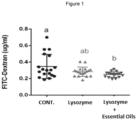
- Figure 1 Intestinal integrity assessed by passage of Dextran-FITC. Each point represents an animal and the crossbars represent the mean of each group. Different letters differ by Tukey test (P ⁇ 0.05).
- Animal refers to any animal except humans.
- animals are monogastric animals, including but not limited to pigs or swine (including, but not limited to, piglets, growing pigs, and sows); poultry such as turkeys, ducks, quail, guinea fowl, geese, pigeons (including squabs) and chicken (including but not limited to broiler chickens (referred to herein as broiles), chicks, layer hens (referred to herein as layers)); pets such as cats and dogs; horses (including but not limited to hotbloods, coldbloods and warm bloods) crustaceans (including but not limited to shrimps and prawns) and fish (including but not limited to amberjack, arapaima, barb, bass, bluefish, bocachico, bream, bullhead, cachama, carp, catfish, catla, chanos, char, cichlid, cobia, cod, crappie,
- Animal feed refers to any compound, preparation, or mixture suitable for, or intended for intake by an animal.
- Animal feed for a monogastric animal typically comprises concentrates as well as vitamins, minerals, enzymes, direct fed microbial, amino acids and/or other feed ingredients (such as in a premix) whereas animal feed for ruminants generally comprises forage (including roughage and silage) and may further comprise concentrates as well as vitamins, minerals, enzymes direct fed microbial, amino acid and/or other feed ingredients (such as in a premix).
- Concentrates means feed with high protein and energy concentrations, such as fish meal, molasses, oligosaccharides, sorghum, seeds and grains (either whole or prepared by crushing, milling, etc. from e.g. corn, oats, rye, barley, wheat), oilseed press cake (e.g. from cottonseed, safflower, sunflower, soybean (such as soybean meal), rapeseed/canola, peanut or groundnut), palm kernel cake, yeast derived material and distillers grains (such as wet distillers grains (WDS) and dried distillers grains with solubles (DDGS)).
- high protein and energy concentrations such as fish meal, molasses, oligosaccharides, sorghum, seeds and grains (either whole or prepared by crushing, milling, etc. from e.g. corn, oats, rye, barley, wheat), oilseed press cake (e.g. from cottonseed, safflower, sunflower, soybean (such as soybean meal
- Body Weight Gain means an increase in live weight of an animal during a given period of time e.g. the increase in weight from day 1 to day 21.
- FCR Feed Conversion Ratio
- Feed efficiency means the amount of weight gain per unit of feed when the animal is fed ad-libitum or a specified amount of food during a period of time.
- increase feed efficiency it is meant that the use of a feed additive composition according the present invention in feed results in an increased weight gain per unit of feed intake compared with an animal fed without said feed additive composition being present.
- Forage further includes crop residues from grain production (such as corn stover; straw from wheat, barley, oat, rye and other grains); residues from vegetables like beet tops; residues from oilseed production like stems and leaves form soy beans, rapeseed and other legumes; and fractions from the refining of grains for animal or human consumption or from fuel production or other industries.
- fragment means a polypeptide or a catalytic domain having one or more ( e.g ., several) amino acids absent from the amino and/or carboxyl terminus of a mature polypeptide or domain; wherein the fragment has muramidase activity.
- a fragment of a GH24 muramidase (such as one of SEQ ID NO: 63 to 71) comprises at least 230 amino acids, such as at least 235 amino acids, at least 240 amino acids, or at least 245 amino acids and has muramidase activity.
- a fragment of a GH24 muramidase (such as one of SEQ ID NO: 63 to 71) comprises at least 90% of the length of the mature polypeptide, such as at least 92%, at least 94%, at least 96%, at least 98% or at least 99% of the length of the mature polypeptide and has muramidase activity.
- a fragment of a GH25 muramidase (such as one of SEQ ID NO: 1 to 72) comprises at least 180 amino acids, such as at least 185 amino acids, at least 190 amino acids, at least 195 amino acids, at least 200 amino acids, at least 205 amino acids or at least 210 amino acids and has muramidase activity.
- a fragment of a GH25 muramidase (such as one of SEQ ID NO: 1 to 72) comprises at least 90% of the length of the mature polypeptide, such as at least 92%, at least 94%, at least 96%, at least 98% or at least 99% of the length of the mature polypeptide and has muramidase activity.
- Isolated means a substance in a form or environment that does not occur in nature.
- isolated substances include (1) any non-naturally occurring substance, (2) any substance including, but not limited to, any enzyme, variant, nucleic acid, protein, peptide or cofactor, that is at least partially removed from one or more or all of the naturally occurring constituents with which it is associated in nature; (3) any substance modified by the hand of man relative to that substance found in nature; or (4) any substance modified by increasing the amount of the substance relative to other components with which it is naturally associated ( e.g ., multiple copies of a gene encoding the substance; use of a stronger promoter than the promoter naturally associated with the gene encoding the substance).
- An isolated substance may be present in a fermentation broth sample.
- Muramidase activity means the enzymatic hydrolysis of the 1,4-beta-linkages between N -acetylmuramic acid and N -acetyl-D-glucosamine residues in a peptidoglycan or between N -acetyl-D-glucosamine residues in chitodextrins, resulting in bacteriolysis due to osmotic pressure.
- Muramidase belongs to the enzyme class EC 3.2.1.17.
- Muramidase activity is typically measured by turbidimetric determination. The method is based on the changes in turbidity of a suspension of Micrococcus luteus ATCC 4698 induced by the lytic action of muramidase.
- muramidase activity is determined according to the turbidity assay described in example 1 ("Determination of Muramidase Activity") and the polypeptidehas muramidase activity if it shows activity against one or more bacteria, such as Micrococcus luteus ATCC 4698 and/or Exiguobacterium undea (DSM14481).
- the GH25 muramidase of the present invention has at least 20%, e.g.
- the GH24 muramidase of the present invention have at least 20%, e.g. , at least 40%, at least 50%, at least 60%, at least 70%, at least 80%, at least 90%, at least 95%, or at least 100% of the muramidase activity of SEQ ID NO: 63.
- Mature polypeptide means a polypeptide in its final form following translation and any post-translational modifications, such as N-terminal processing, C-terminal truncation, glycosylation, phosphorylation, etc.
- the mature polypeptide may be amino acids 1 to 208 of SEQ ID NO: 1, amino acids 1 to 213 of SEQ ID NO: 2, amino acids 1 to 218 of SEQ ID NO: 3, amino acids 1 to 208 of SEQ ID NO: 4, amino acids 1 to 215 of SEQ ID NO: 5, amino acids 1 to 207 of SEQ ID NO: 6, amino acids 1 to 201 of SEQ ID NO: 7, amino acids 1 to 201 of SEQ ID NO: 8, amino acids 1 to 203 of SEQ ID NO: 9, amino acids 1 to 208 of SEQ ID NO: 10, amino acids 1 to 207 of SEQ ID NO: 11, amino acids 1 to 208 of SEQ ID NO: 12, amino acids 1 to 207 of SEQ ID NO: 13, amino acids 1 to 207 of SEQ ID NO: 14, amino acids 1 to 207 of SEQ ID NO: 15, amino acids 1 to 208 of SEQ ID NO: 16, amino acids 1 to 208 of SEQ ID NO: 17, amino acids 1 to 206 of SEQ ID NO: 18, amino acids 1 to 207 of SEQ ID NO: 1,
- the term "obtained or obtainable from” means that the polypeptide may be found in an organism from a specific taxonomic rank.
- the polypeptide is obtained or obtainable from the kingdom Fungi, wherein the term kingdom is the taxonomic rank. More preferably, the polypeptide is obtained or obtainable from the phylum Ascomycota, wherein the term phylum is the taxonomic rank. More preferably, the polypeptide is obtained or obtainable from the subphylum Pezizomycotina, wherein the term subphylum is the taxonomic rank. More preferably, the polypeptide is obtained or obtainable from the class Eurotiomycetes, wherein the term class is the taxonomic rank.
- the sequence identity between two amino acid sequences is determined using the Needleman-Wunsch algorithm ( Needleman and Wunsch, 1970, J. Mol. Biol. 48: 443-453 ) as implemented in the Needle program of the EMBOSS package ( EMBOSS: The European Molecular Biology Open Software Suite, Rice et al., 2000, Trends Genet. 16: 276-277 ), preferably version 5.0.0 or later.
- the parameters used are gap open penalty of 10, gap extension penalty of 0.5, and the EBLOSUM62 (EMBOSS version of BLOSUM62) substitution matrix.
- a muramidase variant may comprise from 1 to 10 alterations, i.e. 1, 2, 3, 4, 5, 6, 7, 8, 9 or 10 alterations and have at least 20%, e.g ., at least 40%, at least 50%, at least 60%, at least 70%, at least 80%, at least 90%, at least 95%, or at least 100% of the muramidase activity of the parent muramidase, such as SEQ ID NO: 1 or SEQ ID NO: 63.
- essential oils means a concentrated liquid containing aroma compounds, obtained by steam distillation from plants.
- Example of the essential oils include but are not limited to guajacol, turmeric, 3-methylphenol, eugenol, eucalyptol, L-menthol, thymol, capsaicin, tannin, piperine, caravacrol, trimethylamine, 3,4-xylenol, furfuryl alcohol, propylidene, butylidene, phtalides, gingerol, lavender oil, deca-/undeca-dodecalactones, ionones, irone, resorcinol, peppermint oil, alpha-pinene; limonene, anethol, linalool, methyl dihydrojasmonate, carvacrol, propionic, acetic or butyric acid, rosemary oil, clove oil, geraniol, terpineol, citronellol, amyl and/
- composition comprising a muramidase (preferably a fungal muramidase) and an essential oil gives an additional performance benefit in animals.
- the invention relates to a composition
- a composition comprising one or more polypeptides having muramidase activity and one or more essential oils.
- the muramidase may be a GH24 muramidase, preferably a fungal GH24 muramidase, preferably obtained or obtainable from the phylum Ascomycota, more preferably from the class Eurotiomycetes.
- the muramidase may also be a GH25 muramidase, preferably a fungal GH25 muramidase, preferably obtained or obtainable from the phylum Ascomycota, more preferably from the class Eurotiomycetes.
- the essential oil may be thymol, eugenol, meta-cresol, vaniline, salicylate, resorcine, guajacol, gingerol, 3-methylphenol, L-menthol, capsaicin, piperine, lavender oil, ionones, irone, eucalyptol, menthol, peppermint oil, alpha-pinene; limonene, anethol, linalool, methyl dihydrojasmonate, carvacrol, propionic acid/propionate, acetic acid/acetate, butyric acid/butyrate, rosemary oil, clove oil, geraniol, terpineol, citronellol, amyl and/or benzyl salicylate, cinnamaldehyde, plant polyphenol (tannin), turmeric, curcuma extract and/or mixture thereof.
- the muramidase is a GH24 muramidase, more preferably a fungal GH24 muramidase, and the essential oil is guajacol, turmeric, 3-methylphenol, eugenol, eucalyptol, L-menthol, thymol, capsaicin, tannin, piperine or mixture thereof.
- the muramidase is a GH25 muramidase, preferably a fungal GH25 muramidase, and the essential oil is guajacol, turmeric, 3-methylphenol, eugenol, eucalyptol, L-menthol, thymol, capsaicin, tannin, piperine or mixture thereof.
- the invention relates to a composition
- a composition comprising one or more polypeptides having muramidase activity and one or more essential oils, wherein the polypeptide having muramidase activity activity is selected from the group consisting of:
- conservative substitutions are within the groups of basic amino acids (arginine, lysine and histidine), acidic amino acids (glutamic acid and aspartic acid), polar amino acids (glutamine and asparagine), hydrophobic amino acids (leucine, isoleucine and valine), aromatic amino acids (phenylalanine, tryptophan and tyrosine), and small amino acids (glycine, alanine, serine, threonine and methionine).
- Amino acid substitutions that do not generally alter specific activity are known in the art and are described, for example, by H. Neurath and R.L. Hill, 1979, In, The Proteins, Academic Press, New York .
- Preparation methods include known granule formulation technologies, e.g.:
- the core may include additional materials such as fillers, fibre materials (cellulose or synthetic fibres), stabilizing agents, solubilizing agents, suspension agents, viscosity regulating agents, light spheres, plasticizers, salts, lubricants and fragrances.
- additional materials such as fillers, fibre materials (cellulose or synthetic fibres), stabilizing agents, solubilizing agents, suspension agents, viscosity regulating agents, light spheres, plasticizers, salts, lubricants and fragrances.
- the core may include a binder, such as synthetic polymer, wax, fat, or carbohydrate.
- a binder such as synthetic polymer, wax, fat, or carbohydrate.
- the core may include a salt of a multivalent cation, a reducing agent, an antioxidant, a peroxide decomposing catalyst and/or an acidic buffer component, typically as a homogenous blend.
- the core may comprise a material selected from the group consisting of salts (such as calcium acetate, calcium benzoate, calcium carbonate, calcium chloride, calcium citrate, calcium sorbate, calcium sulfate, potassium acetate, potassium benzoate, potassium carbonate, potassium chloride, potassium citrate, potassium sorbate, potassium sulfate, sodium acetate, sodium benzoate, sodium carbonate, sodium chloride, sodium citrate, sodium sulfate, zinc acetate, zinc benzoate, zinc carbonate, zinc chloride, zinc citrate, zinc sorbate, zinc sulfate), starch or a sugar or sugar derivative (such as e.g.
- salts such as calcium acetate, calcium benzoate, calcium carbonate, calcium chloride, calcium citrate, calcium sorbate, calcium sulfate, potassium acetate, potassium benzoate, potassium carbonate, potassium chloride, potassium citrate, potassium sorbate, potassium sulfate, sodium acetate, sodium benzoate, sodium carbonate
- sucrose, dextrin, glucose, lactose, sorbitol sugar or sugar derivative (such as e.g. sucrose, dextrin, glucose, lactose, sorbitol), small organic molecules, starch, flour, cellulose and minerals and clay minerals (also known as hydrous aluminium phyllosilicates).
- the core comprises a clay mineral such as kaolinite or kaolin.
- the core may also include an inert particle with the enzyme absorbed into it, or applied onto the surface, e.g., by fluid bed coating.
- the core may have a diameter of 20-2000 ⁇ m, particularly 50-1500 ⁇ m, 100-1500 ⁇ m or 250-1200 ⁇ m.
- the core may be surrounded by at least one coating, e.g., to improve the storage stability, to reduce dust formation during handling, or for coloring the granule.
- the optional coating(s) may include a salt and/or wax and/or flour coating, or other suitable coating materials.
- the coating may be applied in an amount of at least 0.1% by weight of the core, e.g., at least 0.5%, 1% or 5%.
- the amount may be at most 100%, 70%, 50%, 40% or 30% by weight of the core.
- the coating is preferably at least 0.1 ⁇ m thick, particularly at least 0.5 ⁇ m, at least 1 ⁇ m or at least 5 ⁇ m. In some embodiments the thickness of the coating is below 100 ⁇ m, such as below 60 ⁇ m, or below 40 ⁇ m.
- the coating should encapsulate the core unit by forming a substantially continuous layer.
- a substantially continuous layer is to be understood as a coating having few or no holes, so that the core unit is encapsulated or enclosed with few or no uncoated areas.
- the layer or coating should in particular be homogeneous in thickness.
- the coating can further contain other materials as known in the art, e.g., fillers, antisticking agents, pigments, dyes, plasticizers and/or binders, such as titanium dioxide, kaolin, calcium carbonate or talc.
- fillers e.g., fillers, antisticking agents, pigments, dyes, plasticizers and/or binders, such as titanium dioxide, kaolin, calcium carbonate or talc.
- the enzyme granules of the invention may comprise a core comprising the enzymes of the invention, one or more salt coatings and one or more wax coatings.
- a core comprising the enzymes of the invention, one or more salt coatings and one or more wax coatings.
- Examples of enzyme granules with multiple coatings are shown in WO1993/07263 , WO1997/23606 and WO2016/149636 .
- the salt coating may comprise at least 60% by weight of a salt, e.g., at least 65%, at least 70%, at least 75%, at least 80%, at least 85%, at least 90%, at least 95% or at least 99% by weight.
- the salt coating may be as described in WO1997/05245 , WO1998/54980 , WO1998/55599 , WO2000/70034 , WO2006/034710 , WO2008/017661 , WO2008/017659 , WO2000/020569 , WO2001/004279 , WO1997/05245 , WO2000/01793 , WO2003/059086 , WO2003/059087 , WO2007/031483 , WO2007/031485 , WO2007/044968 , WO2013/192043 , WO2014/014647 and WO2015/197719 or polymer coating such as described in WO 2001/00042 .
- the salt in the coating may have a constant humidity at 20°C above 60%, particularly above 70%, above 80% or above 85%, or it may be another hydrate form of such a salt (e.g., anhydrate).
- the salt may be an inorganic salt, e.g., salts of sulfate, sulfite, phosphate, phosphonate, nitrate, chloride or carbonate or salts of simple organic acids (less than 10 carbon atoms, e.g., 6 or less carbon atoms) such as citrate, malonate or acetate.
- simple organic acids e.g., 6 or less carbon atoms
- Examples of cations in these salts are alkali or earth alkali metal ions, the ammonium ion or metal ions of the first transition series, such as sodium, potassium, magnesium, calcium, zinc or aluminium.
- anions include chloride, bromide, iodide, sulfate, sulfite, bisulfite, thiosulfate, phosphate, monobasic phosphate, dibasic phosphate, hypophosphite, dihydrogen pyrophosphate, tetraborate, borate, carbonate, bicarbonate, metasilicate, citrate, malate, maleate, malonate, succinate, sorbate, lactate, formate, acetate, butyrate, propionate, benzoate, tartrate, ascorbate or gluconate.
- alkali- or earth alkali metal salts of sulfate, sulfite, phosphate, phosphonate, nitrate, chloride or carbonate or salts of simple organic acids such as citrate, malonate or acetate may be used.
- the salt may be in anhydrous form, or it may be a hydrated salt, i.e. a crystalline salt hydrate with bound water(s) of crystallization, such as described in WO 99/32595 .
- Specific examples include anhydrous sodium sulfate (Na2SO4), anhydrous magnesium sulfate (MgSO4), magnesium sulfate heptahydrate (MgSO4.7H2O), zinc sulfate heptahydrate (ZnSO4.7H2O), sodium phosphate dibasic heptahydrate (Na2HPO4.7H2O), magnesium nitrate hexahydrate (Mg(NO3)2(6H2O)), sodium citrate dihydrate and magnesium acetate tetrahydrate.
- Na2SO4 anhydrous sodium sulfate
- MgSO4 magnesium sulfate heptahydrate
- ZnSO4.7H2O zinc sulfate heptahydrate
- a wax coating may comprise at least 60% by weight of a wax, e.g., at least 65%, at least 70%, at least 75%, at least 80%, at least 85%, at least 90%, at least 95% or at least 99% by weight.
- waxes are polyethylene glycols; polypropylenes; Carnauba wax; Candelilla wax; bees wax; hydrogenated plant oil or animal tallow such as polyethylene glycol (PEG), methyl hydroxy-propyl cellulose (MHPC), polyvinyl alcohol (PVA), hydrogenated ox tallow, hydrogenated palm oil, hydrogenated cotton seeds and/or hydrogenated soy bean oil; fatty acid alcohols; mono-glycerides and/or di-glycerides, such as glyceryl stearate, wherein stearate is a mixture of stearic and palmitic acid; micro-crystalline wax; paraffin's; and fatty acids, such as hydrogenated linear long chained fatty acids and derivatives thereof.
- a preferred wax is palm oil or hydrogenated palm oil.
- the granulate of the present invention may also be produced as a non-dusting granulate, e.g., as disclosed in U.S. Patent Nos. 4,106,991 and 4,661,452 and may optionally be coated by methods known in the art.
- the coating materials can be waxy coating materials and film-forming coating materials.
- waxy coating materials are poly(ethylene oxide) products (polyethyleneglycol, PEG) with mean molar weights of 1000 to 20000; ethoxylated nonylphenols having from 16 to 50 ethylene oxide units; ethoxylated fatty alcohols in which the alcohol contains from 12 to 20 carbon atoms and in which there are 15 to 80 ethylene oxide units; fatty alcohols; fatty acids; and mono- and di- and triglycerides of fatty acids.
- PEG poly(ethylene oxide) products
- PEG polyethyleneglycol
- the granulate may further comprise one or more additional enzymes. Each enzyme will then be present in more granules securing a more uniform distribution of the enzymes, and also reduces the physical segregation of different enzymes due to different particle sizes. Methods for producing multi-enzyme co-granulates is disclosed in the ip.com disclosure IPCOM000200739D.
- the present invention also relates to protected enzymes prepared according to the method disclosed in EP 238,216 .
- the present invention provides a granule, which comprises:
- the coating comprises a salt coating as described herein.
- the coating comprises a wax coating as described herein. More preferably, the coating comprises a salt coating followed by a wax coating as described herein. Even more preferably, the essential oil and the polypeptide having muramidase activity are co-granulated.
- the composition may further comprise one or more components selected from the list consisting of one or more carriers.
- the carrier may be selected from the group consisting of water, glycerol, ethylene glycol, 1, 2-propylene glycol or 1, 3-propylene glycol, sodium chloride, sodium benzoate, potassium sorbate, sodium sulfate, potassium sulfate, magnesium sulfate, sodium thiosulfate, calcium carbonate, sodium citrate, dextrin, maltodextrin, glucose, sucrose, sorbitol, lactose, wheat flour, wheat bran, corn gluten meal, starch, kaolin and cellulose or any combination thereof.
- the present invention relates to an animal feed comprising an animal feed additive, one or more protein sources and one or more energy sources characterised in that the animal feed further comprises one or more polypeptides having muramidase activity and one or more essential oils as defined above.
- Animal feed compositions or diets have a relatively high content of protein.
- Poultry and pig diets can be characterised as indicated in Table B of WO 01/58275 , columns 2-3.
- Fish diets can be characterised as indicated in column 4 of this Table B. Furthermore such fish diets usually have a crude fat content of 200-310 g/kg.
- An animal feed composition according to the invention has a crude protein content of 50-800 g/kg.
- the protein source may be vegetable protein source and/or animial protein.
- the vegetable proteins may be derived from vegetable protein sources, such as legumes and cereals, for example, materials from plants of the families Fabaceae ( Leguminosae ) , Cruciferaceae, Chenopodiaceae, and Poaceae, such as soy bean meal, lupin meal, rapeseed meal, and combinations thereof.
- the protein content of the vegetable proteins is at least 10, 20, 30, 40, 50, 60, 70, 80, or 90% (w/w).
- the vegetable protein source may be material from one or more plants of the family Fabaceae, e.g., soybean, lupine, pea, or bean.
- the vegetable protein source may also be material from one or more plants of the family Chenopodiaceae, e.g. beet, sugar beet, spinach or quinoa.
- Other examples of vegetable protein sources are rapeseed, and cabbage.
- soybean is a preferred vegetable protein source.
- Other examples of vegetable protein sources are cereals such as barley, wheat, rye, oat, maize (corn), rice, and sorghum.
- the animal feed of the invention may also contain animal protein, such as Meat and Bone Meal, Feather meal, and/or Fish Meal, typically in an amount of 0-25%.
- animal feed of the invention may also comprise Dried Distillers Grains with Solubles (DDGS), typically in amounts of 0-30%.
- DDGS Dried Distillers Grains with Solubles
- the animal feed composition of the invention may have a content of metabolisable energy of 10-30 MJ/kg.
- the energy source may be selected from the group consisting of maize, corn, sorghum, barley, wheat, oats, rice, triticale, rye, beet, sugar beet, spinach, potato, cassava, quinoa, cabbage, switchgrass, millet, pearl millet, foxtail millet or in a processed form such as milled corn, milled maize, potato starch, cassava starch, milled sorghum, milled switchgrass, milled millet, milled foxtail millet, milled pearl millet, or any combination thereof.
- the animal feed composition of the invention may have a content of calcium of 0.1-200 g/kg; and/or a content of available phosphorus of 0.1-200 g/kg; and/or a content of methionine of 0.1-100 g/kg; and/or a content of methionine plus cysteine of 0.1-150 g/kg; and/or a content of lysine of 0.5-50 g/kg.
- the content of metabolisable energy, crude protein, calcium, phosphorus, methionine, methionine plus cysteine, and/or lysine may be within any one of ranges 2, 3, 4 or 5 in Table B of WO 01/58275 (R. 2-5).
- the nitrogen content is determined by the Kjeldahl method ( A.O.A.C., 1984, Official Methods of Analysis 14th ed., Association of Official Analytical Chemists, Washington DC ).
- Metabolisable energy can be calculated on the basis of the NRC publication Nutrient requirements in swine, ninth revised edition 1988, subcommittee on swine nutrition, committee on animal nutrition, board of agriculture, national research council. National Academy Press, Washington, D.C., pp. 2-6 , and the European Table of Energy Values for Poultry Feed-stuffs, Spelderholt centre for poultry research and extension, 7361 DA Beekbergen, The Netherlands. Grafisch bedrijf Ponsen & looijen bv, Wageningen. ISBN 90-71463-12-5 .
- the animal feed of the invention contains 0-80% maize; and/or 0-80% sorghum; and/or 0-70% wheat; and/or 0-70% Barley; and/or 0-30% oats; and/or 0-40% soybean meal; and/or 0-25% fish meal; and/or 0-25% meat and bone meal; and/or 0-20% whey.
- Animal feed can e.g. be manufactured as mash feed (non-pelleted) or pelleted feed.
- the milled feed-stuffs are mixed and sufficient amounts of essential vitamins and minerals are added according to the specifications for the species in question.
- Enzymes can be added as solid or liquid enzyme formulations.
- a solid or liquid enzyme formulation may be added before or during the ingredient mixing step.
- the (liquid or solid) essential oil / muramidase / enzyme preparation may also be added before or during the feed ingredient step.
- Cylactin ® DSM Nutritional Products
- Alterion Adisseo
- Enviva PRO DuPont Animal Nutrition
- Ecobiol ® and Fecinor ® Norel/Evonik
- GutCare ® PY1 Evonik
- Prebiotics are substances that induce the growth or activity of microorganisms (e.g., bacteria and fungi) that contribute to the well-being of their host.
- Prebiotics are typically non-digestible fiber compounds that pass undigested through the upper part of the gastrointestinal tract and stimulate the growth or activity of advantageous bacteria that colonize the large bowel by acting as substrate for them.
- prebiotics increase the number or activity of bifidobacteria and lactic acid bacteria in the GI tract.
- Yeast derivatives inactivated whole yeasts or yeast cell walls
- prebiotics can also be considered as prebiotics. They often comprise mannan-oligosaccharids, yeast beta-glucans or protein contents and are normally derived from the cell wall of the yeast, Saccharomyces cerevisiae.
- the amount of prebiotics may be 0.001% to 10% by weight of the composition.
- yeast products are Yang ® and Agrimos (Lallemand Animal Nutrition).
- Organic acids are widely distributed in nature as normal constituents of plants or animal tissues. They are also formed through microbial fermentation of carbohydrates mainly in the large intestine. They are often used in swine and poultry production as a replacement of antibiotic growth promoters since they have a preventive effect on the intestinal problems like necrotic enteritis in chickens and Escherichia coli infection in young pigs.
- Organic acids can be sold as mono component or mixtures of typically 2 or 3 different organic acids. Examples of organic acids are short chain fatty acids (e.g. formic acid, acetic acid, propionic acid, butyric acid), medium chain fatty acids (e.g.
- caproic acid caprylic acid, capric acid, lauric acid
- di/tri-carboxylic acids e.g. fumaric acid
- hydroxy acids e.g. lactic acid
- aromatic acids e.g. benzoic acid
- citric acid sorbic acid, malic acid, and tartaric acid or their salt (typically sodium or potassium salt such as potassium diformate or sodium butyrate).
- the amount of organic acid may be 0.001% to 10% by weight of the composition.
- examples of commercial products are VevoVitall ® (DSM Nutritional Products), Amasil ® , Luprisil ® , Lupro-Grain ® , Lupro-Cid ® , Lupro-Mix ® (BASF), n-Butyric Acid AF (OXEA) and Adimix Precision (Nutriad).
- composition or the animal feed of the invention may further comprise one or more amino acids.
- amino acids which are used are lysine, alanine, beta-alanine, threonine, methionine and tryptophan.
- the amount of amino acid may be 0.001% to 10% by weight of the composition or the animal feed.
- the composition or the animal feed may include one or more vitamins, such as one or more fat-soluble vitamins and/or one or more water-soluble vitamins.
- the composition or the animal feed may optionally include one or more minerals, such as one or more trace minerals and/or one or more macro minerals.
- fat- and water-soluble vitamins, as well as trace minerals form part of a so-called premix intended for addition to the feed, whereas macro minerals are usually separately added to the feed.
- Non-limiting examples of fat-soluble vitamins include vitamin A, vitamin D3, vitamin E, and vitamin K, e.g ., vitamin K3.
- Non-limiting examples of water-soluble vitamins include vitamin C, vitamin B12, biotin and choline, vitamin B1, vitamin B2, vitamin B6, niacin, folic acid and panthothenate, e.g ., Ca-D-panthothenate.
- Non-limiting examples of trace minerals include boron, cobalt, chloride, chromium, copper, fluoride, iodine, iron, manganese, molybdenum, iodine, selenium and zinc.
- Non-limiting examples of macro minerals include calcium, magnesium, phosphorus, potassium and sodium.
- the amount of vitamins may be 0.001% to 10% by weight of the composition or the animal feed.
- the amount of minerals is 0.001% to 10% by weight of the composition or the animal feed.
- Nutritional requirement means that these components should be provided in the diet in the concentrations indicated.
- the composition or the animal feed of the invention comprises at least one of the below vitamins, preferably to provide an in-feed-concentration within the ranges specified in the below Table 1 (for piglet diets, and broiler diets, respectively).
- Table 1 Typical vitamin recommendations Vitamin Piglet diet Broiler diet Vitamin A 10,000-15,000 IU/kg feed 8-12,500 IU/kg feed Vitamin D3 1800-2000 IU/kg feed 3000-5000 IU/kg feed Vitamin E 60-100 mg/kg feed 150-240 mg/kg feed Vitamin K3 2-4 mg/kg feed 2-4 mg/kg feed Vitamin B1 2-4 mg/kg feed 2-3 mg/kg feed Vitamin B2 6-10 mg/kg feed 7-9 mg/kg feed Vitamin B6 4-8 mg/kg feed 3-6 mg/kg feed Vitamin B12 0.03-0.05 mg/kg feed 0.015-0.04 mg/kg feed Niacin (Vitamin B3) 30-50 mg/kg feed 50-80 mg/kg feed Pantothenic acid 20-40 mg/kg feed 10-18 mg/kg feed Folic acid 1-2 mg/kg
- colouring agents are carotenoids such as beta-carotene, astaxanthin, and lutein.
- aroma compounds/flavourings are creosol, anethol, deca-, undeca-and/or dodeca-lactones, ionones, irone, gingerol, piperidine, propylidene phatalide, butylidene phatalide, capsaicin and tannin.
- antimicrobial peptides examples include CAP18, Leucocin A, Tritrpticin, Protegrin-1, Thanatin, Defensin, Lactoferrin, Lactoferricin, and Ovispirin such as Novispirin (Robert Lehrer, 2000), Plectasins, and Statins, including the compounds and polypeptides disclosed in WO 03/044049 and WO 03/048148 , as well as variants or fragments of the above that retain antimicrobial activity.
- polyunsaturated fatty acids are C18, C20 and C22 polyunsaturated fatty acids, such as arachidonic acid, docosohexaenoic acid, eicosapentaenoic acid and gamma-linoleic acid.
- reactive oxygen generating species are chemicals such as perborate, persulphate, or percarbonate; and enzymes such as an oxidase, an oxygenase or a syntethase.
- Antioxidants can be used to limit the number of reactive oxygen species which can be generated such that the level of reactive oxygen species is in balance with antioxidants.
- the improvement is compared to the same feed but excluding the muramidase.
- the intestinal permeability may be decreased by at least 1%, such as by at least 1.5%, at least 2.0%, at least 2.5%, at least 3%, at least 3.5%, at least 4% or at least 5%.
- the EPEF is improved by between 1% and 15%, such as between 1% and 12%, between 1% and 10%, 1.5% and 8%, 2.0% and 7%, or any combination of these intervals.
- the essential oil may be dosed at a level of 0.1 to 20 mg per kg animal feed, such as 0.2 to 15 mg, 0.3 to 10 mg per kg animal feed, or any combination of these intervals.
- the polypeptide having muramidase activity may be dosed at a level of 100 to 1000 mg enzyme protein per kg animal feed, such as 200 to 900 mg, 300 to 800 mg, 400 to 700 mg or 500 to 600 mg enzyme protein per kg animal feed, or any combination of these intervals.
- the invention further relates to use of a composition or an animal feed in decreasing intestinal permeability of a mono-gastric animal, wherein the composition and the animal feed comprise one or more polypeptides having muramidase activity and one or more essential oils as defined above.
- the intestinal permeability may be decreased by at least 1%, such as by at least 1.5%, at least 2.0%, at least 2.5%, at least 3%, at least 3.5%, at least 4% or at least 5%.
- the EPEF is improved by between 1% and 15%, such as between 1% and 12%, between 1% and 10%, 1.5% and 8%, 2.0% and 7%, or any combination of these intervals.
- the activity of muramidase was determined by measuring the decrease (drop) in absorbance/optical density of a solution of suspended Micrococcus lysodeikticus ATTC No. 4698 (Sigma-Aldrich M3770) measured in a microplate reader (Tecan Infinite M200) at 450 nm.
- OD absorbance/optical density
- the muramidase activity against Micrococcus lysodeikticus was determined as ⁇ absorbance at 450 nm (start value - end value) of each well after 1 hour. Significance was calculated using Dunnett's with control test p level 0.05 in JMP ® version 12.1.0 statistical software package from SAS Institute Inc.
- Table 2 Composition and nutrient contents of the basal experimental diets Ingredients, % Starter Grower Finisher 1-21 days 22-35 days 36-42 days CORN 553.130 606.860 606.140 SOYBEAN MEAL 388.000 336.000 314.000 SALT 4.800 4.300 4.100 CHOLINE CHLORIDE 0.800 0.600 0.500 SOYBEAN OIL 24.000 28.000 45.000 DICALCIUM PHOSPHATE 10.000 6.800 4.500 LIMESTONE 12.000 10.800 9.900 DL-METHIONINE 2.970 2.670 2.480 L-LYSINE 0.910 0.590 0.030 L-THREONINE 0.100 0.090 0.140 PX ROVIMIX AVES (DSM)* 1.500 1.500 1.000 PX ROLIGOMIX AVES (DSM)** 0.500 0.500 0.500 HiPhos GT 0.100 0.100 0.100 RONOZYME WX 2000 0.050 0.050 0.050 BHT 0.100 0.100 0.100 CAROPHYLL ® yellow 10% 0.0
- Performance data considering the total experimental period in the different treatments are represented in Table 3. Table 3. Performance of broilers in a period of 1-42 days of age.
- GIT gastrointestinal tract
- Another TGl-related function is the formation of a natural protective barrier, maintained by a balanced dynamic between the mucosal layer, enterocytes, cells of the immune system and by the intestinal microbiota (Sugiharto, 2016).
- Intestinal integrity is an indicator of efficiency for the protective barrier formed by TGI, which prevents the paracellular translocation of unwanted compounds such as bacterial toxins and microorganisms from the lumen of the intestine to the lamina intestinal and later into the blood (Jeurissen et al., 2002). Integrity of the intestinal wall is ensured by a continuous layer of epithelial cells, joined by occlusion junctions, and by a mucosal layer above the epithelium.
- muramidase and essential oils resulted in better body weight gain, feed conversion compared to control.
- the improvement in performance may be related to improved gut functionality due to better mucosal integrity index and higher nutrient absorption.
Landscapes
- Life Sciences & Earth Sciences (AREA)
- Chemical & Material Sciences (AREA)
- Polymers & Plastics (AREA)
- Engineering & Computer Science (AREA)
- Zoology (AREA)
- Food Science & Technology (AREA)
- Animal Husbandry (AREA)
- Health & Medical Sciences (AREA)
- Organic Chemistry (AREA)
- Biotechnology (AREA)
- Molecular Biology (AREA)
- Biomedical Technology (AREA)
- Proteomics, Peptides & Aminoacids (AREA)
- Genetics & Genomics (AREA)
- Wood Science & Technology (AREA)
- Bioinformatics & Cheminformatics (AREA)
- Physiology (AREA)
- General Health & Medical Sciences (AREA)
- General Engineering & Computer Science (AREA)
- Biochemistry (AREA)
- Birds (AREA)
- Marine Sciences & Fisheries (AREA)
- Medicinal Chemistry (AREA)
- Microbiology (AREA)
- Medicines That Contain Protein Lipid Enzymes And Other Medicines (AREA)
- Fodder In General (AREA)
- Enzymes And Modification Thereof (AREA)
Applications Claiming Priority (3)
| Application Number | Priority Date | Filing Date | Title |
|---|---|---|---|
| EP18194834 | 2018-09-17 | ||
| PCT/EP2019/074775 WO2020058225A1 (en) | 2018-09-17 | 2019-09-17 | Animal feed compositions and uses thereof |
| EP19773756.2A EP3853359A1 (de) | 2018-09-17 | 2019-09-17 | Tierfutterzusammensetzungen und verwendungen davon |
Related Parent Applications (1)
| Application Number | Title | Priority Date | Filing Date |
|---|---|---|---|
| EP19773756.2A Division EP3853359A1 (de) | 2018-09-17 | 2019-09-17 | Tierfutterzusammensetzungen und verwendungen davon |
Publications (2)
| Publication Number | Publication Date |
|---|---|
| EP4581938A2 true EP4581938A2 (de) | 2025-07-09 |
| EP4581938A3 EP4581938A3 (de) | 2025-08-20 |
Family
ID=63637746
Family Applications (2)
| Application Number | Title | Priority Date | Filing Date |
|---|---|---|---|
| EP25169797.5A Pending EP4581938A3 (de) | 2018-09-17 | 2019-09-17 | Tierfutterzusammensetzungen und verwendungen davon |
| EP19773756.2A Ceased EP3853359A1 (de) | 2018-09-17 | 2019-09-17 | Tierfutterzusammensetzungen und verwendungen davon |
Family Applications After (1)
| Application Number | Title | Priority Date | Filing Date |
|---|---|---|---|
| EP19773756.2A Ceased EP3853359A1 (de) | 2018-09-17 | 2019-09-17 | Tierfutterzusammensetzungen und verwendungen davon |
Country Status (5)
| Country | Link |
|---|---|
| US (1) | US12439939B2 (de) |
| EP (2) | EP4581938A3 (de) |
| BR (1) | BR112021004812A2 (de) |
| MX (1) | MX2021003040A (de) |
| WO (1) | WO2020058225A1 (de) |
Families Citing this family (3)
| Publication number | Priority date | Publication date | Assignee | Title |
|---|---|---|---|---|
| CA3197578A1 (en) * | 2020-12-04 | 2022-06-09 | Lucta, S.A. | A feed additive for increasing omega-3/omega-6 polyunsaturated fatty acids ratio in aquatic animals |
| WO2022175263A2 (en) * | 2021-02-16 | 2022-08-25 | Dsm Ip Assets B.V. | Methods of selectively promoting animal welfare through modulation of microbiome |
| WO2023131629A1 (en) * | 2022-01-06 | 2023-07-13 | Novozymes A/S | Animal feed composition and use thereof |
Citations (47)
| Publication number | Priority date | Publication date | Assignee | Title |
|---|---|---|---|---|
| US4016040A (en) | 1969-12-10 | 1977-04-05 | Colgate-Palmolive Company | Preparation of enzyme-containing beads |
| GB1483591A (en) | 1973-07-23 | 1977-08-24 | Novo Industri As | Process for coating water soluble or water dispersible particles by means of the fluid bed technique |
| US4106991A (en) | 1976-07-07 | 1978-08-15 | Novo Industri A/S | Enzyme granulate composition and process for forming enzyme granulates |
| EP0170360A1 (de) | 1984-05-29 | 1986-02-05 | Novo Nordisk A/S | Enzyme enthaltende Granulate, die zur Verwendung als Detergens-Zusätze geeignet sind |
| EP0238216A1 (de) | 1986-02-20 | 1987-09-23 | Albright & Wilson Limited | Geschützte Enzymsysteme |
| US4713245A (en) | 1984-06-04 | 1987-12-15 | Mitsui Toatsu Chemicals, Incorporated | Granule containing physiologically-active substance, method for preparing same and use thereof |
| EP0304332A2 (de) | 1987-08-21 | 1989-02-22 | Novo Nordisk A/S | Enzymhaltiges Granulat und dessen Herstellungsverfahren |
| EP0304331A2 (de) | 1987-08-21 | 1989-02-22 | Novo Nordisk A/S | Verfahren zur Herstellung eines Enzymgranulats |
| WO1990009428A1 (en) | 1989-02-20 | 1990-08-23 | Novo Nordisk A/S | Detergent additive granulate and method for production thereof |
| WO1990009440A1 (en) | 1989-02-20 | 1990-08-23 | Novo Nordisk A/S | Enzyme containing granulate and method for production thereof |
| WO1993007263A2 (en) | 1991-10-07 | 1993-04-15 | Genencor International, Inc. | Coated enzyme containing granule |
| WO1994001459A1 (en) | 1992-07-10 | 1994-01-20 | Novo Nordisk A/S | A fungicidally active compound |
| WO1997005245A1 (en) | 1995-07-28 | 1997-02-13 | Gist-Brocades B.V. | Salt-stabilized enzyme preparations |
| WO1997023606A1 (en) | 1995-12-22 | 1997-07-03 | Genencor International, Inc. | Enzyme containing coated granules |
| WO1997039116A1 (en) | 1996-04-12 | 1997-10-23 | Novo Nordisk A/S | Enzyme-containing granules and process for the production thereof |
| WO1998028408A1 (en) | 1996-12-20 | 1998-07-02 | Novo Nordisk A/S | Peniophora phytase |
| WO1998054980A2 (en) | 1997-06-04 | 1998-12-10 | Dsm N.V. | Carbohydrate-based enzyme granulates |
| WO1999032595A1 (en) | 1997-12-20 | 1999-07-01 | Genencor International, Inc. | Granule with hydrated barrier material |
| WO2000001793A1 (en) | 1998-06-30 | 2000-01-13 | Novozymes A/S | A new improved enzyme containing granule |
| WO2000020569A1 (en) | 1998-10-02 | 2000-04-13 | Novozymes A/S | Solid phytase compositions |
| WO2000043503A1 (en) | 1999-01-22 | 2000-07-27 | Novozymes A/S | Improved phytases |
| WO2000070034A1 (de) | 1999-05-18 | 2000-11-23 | Basf Aktiengesellschaft | Enzym-instantformulierungen für die tierernährung |
| WO2001000042A1 (de) | 1999-06-25 | 2001-01-04 | Basf Aktiengesellschaft | Polymerbeschichtete, granulierte enzymhaltige futtermittelzusätze und verfahren zu deren herstellung |
| WO2001004279A1 (en) | 1999-07-09 | 2001-01-18 | Novozymes A/S | A process for preparing an enzyme containing granule |
| WO2001058275A2 (en) | 2000-02-08 | 2001-08-16 | F Hoffmann-La Roche Ag | Use of acid-stable subtilisin proteases in animal feed |
| WO2002090384A2 (en) | 2001-05-04 | 2002-11-14 | Novozymes A/S | Antimicrobial polypeptide from aspergillus niger |
| WO2003044049A1 (en) | 2001-11-20 | 2003-05-30 | Novozymes A/S | Antimicrobial polypeptides from pseudoplectania nigrella |
| WO2003048148A2 (en) | 2001-12-03 | 2003-06-12 | Novozymes A/S | Statin-like compounds |
| WO2003059086A1 (en) | 2002-01-15 | 2003-07-24 | Basf Ag | Granulates containing feed-enzymes |
| WO2003059087A1 (en) | 2002-01-15 | 2003-07-24 | Basf Ag | Granulates containing feed-enzymes |
| WO2003066847A2 (en) | 2002-02-08 | 2003-08-14 | Novozymes A/S | Phytase variants |
| WO2005080559A1 (en) | 2004-02-25 | 2005-09-01 | Novozymes A/S | Fungall cell wall degrading enzyme |
| WO2006034710A1 (en) | 2004-09-27 | 2006-04-06 | Novozymes A/S | Enzyme granules |
| WO2007031485A1 (de) | 2005-09-12 | 2007-03-22 | Basf Aktiengesellschaft | Phytasehaltiges enzymgranulat ii |
| WO2007031483A1 (de) | 2005-09-12 | 2007-03-22 | Basf Aktiengesellschaft | Phytasehaltiges enzymgranulat i |
| WO2007044968A2 (en) | 2005-10-12 | 2007-04-19 | Genencor International, Inc. | Stable, durable granules with active agents |
| WO2008017661A1 (en) | 2006-08-07 | 2008-02-14 | Novozymes A/S | Enzyme granules for animal feed |
| WO2008017659A1 (en) | 2006-08-07 | 2008-02-14 | Novozymes A/S | Enzyme granules for animal feed |
| WO2009102755A1 (en) | 2008-02-11 | 2009-08-20 | Danisco Us Inc., Genencor Division | Enzyme with microbial lysis activity from trichoderma reesei |
| WO2011104339A1 (en) | 2010-02-25 | 2011-09-01 | Novozymes A/S | Variants of a lysozyme and polynucleotides encoding same |
| WO2013076253A1 (en) | 2011-11-25 | 2013-05-30 | Novozymes A/S | Polypeptides having lysozyme activity and polynucleotides encoding same |
| WO2013188331A1 (en) | 2012-06-11 | 2013-12-19 | The Procter & Gamble Company | Detergent composition |
| WO2013192043A1 (en) | 2012-06-20 | 2013-12-27 | Danisco Us Inc. | Sandwich granule |
| WO2014014647A1 (en) | 2012-07-18 | 2014-01-23 | Danisco Us Inc. | Melt-delayed granule |
| WO2015197719A1 (en) | 2014-06-24 | 2015-12-30 | Dupont Nutrition Biosciences Aps | Composition and use thereof |
| WO2016149636A1 (en) | 2015-03-19 | 2016-09-22 | Danisco Us Inc | Stable granules with low internal water activity |
| WO2017000922A1 (en) | 2015-07-02 | 2017-01-05 | Novozymes A/S | Animal feed compositions and uses thereof |
Family Cites Families (7)
| Publication number | Priority date | Publication date | Assignee | Title |
|---|---|---|---|---|
| PL2042041T3 (pl) * | 2007-06-29 | 2015-02-27 | Dsm Ip Assets Bv | Zastosowanie kwasu benzoesowego i tymolu, eugenolu i piperyny w żywieniu zwierząt |
| AU2016288515B2 (en) | 2015-07-02 | 2020-09-10 | Novonesis Animal Biosolutions Ag | Methods of improving animal performance |
| EP3316699B1 (de) * | 2015-07-02 | 2021-09-08 | Novozymes A/S | Tierfutterzusammensetzungen enthaltend gh25 lysozym und 4-phytase und verwendungen davon |
| WO2017064092A1 (en) * | 2015-10-13 | 2017-04-20 | Dsm Ip Assets B.V. | Feed additives for aquatic animals comprising essential oils and lysozyme |
| AU2017380488B2 (en) * | 2016-12-21 | 2023-09-14 | Novozymes A/S | Polypeptides having lysozyme activity, polynucleotides encoding same and uses and compositions thereof |
| BR112020012058B1 (pt) * | 2017-12-20 | 2024-01-02 | Dsm Ip Assets B.V. | Composições de ração animal e usos das mesmas |
| CN109007371A (zh) * | 2018-08-31 | 2018-12-18 | 上海新农饲料股份有限公司 | 一种提高猪只抗病能力的饲料添加剂及其使用方法 |
-
2019
- 2019-09-17 EP EP25169797.5A patent/EP4581938A3/de active Pending
- 2019-09-17 BR BR112021004812-0A patent/BR112021004812A2/pt unknown
- 2019-09-17 WO PCT/EP2019/074775 patent/WO2020058225A1/en not_active Ceased
- 2019-09-17 US US17/275,903 patent/US12439939B2/en active Active
- 2019-09-17 EP EP19773756.2A patent/EP3853359A1/de not_active Ceased
- 2019-09-17 MX MX2021003040A patent/MX2021003040A/es unknown
Patent Citations (49)
| Publication number | Priority date | Publication date | Assignee | Title |
|---|---|---|---|---|
| US4016040A (en) | 1969-12-10 | 1977-04-05 | Colgate-Palmolive Company | Preparation of enzyme-containing beads |
| GB1483591A (en) | 1973-07-23 | 1977-08-24 | Novo Industri As | Process for coating water soluble or water dispersible particles by means of the fluid bed technique |
| US4106991A (en) | 1976-07-07 | 1978-08-15 | Novo Industri A/S | Enzyme granulate composition and process for forming enzyme granulates |
| EP0170360A1 (de) | 1984-05-29 | 1986-02-05 | Novo Nordisk A/S | Enzyme enthaltende Granulate, die zur Verwendung als Detergens-Zusätze geeignet sind |
| US4661452A (en) | 1984-05-29 | 1987-04-28 | Novo Industri A/S | Enzyme containing granulates useful as detergent additives |
| US4713245A (en) | 1984-06-04 | 1987-12-15 | Mitsui Toatsu Chemicals, Incorporated | Granule containing physiologically-active substance, method for preparing same and use thereof |
| EP0238216A1 (de) | 1986-02-20 | 1987-09-23 | Albright & Wilson Limited | Geschützte Enzymsysteme |
| EP0304332A2 (de) | 1987-08-21 | 1989-02-22 | Novo Nordisk A/S | Enzymhaltiges Granulat und dessen Herstellungsverfahren |
| EP0304331A2 (de) | 1987-08-21 | 1989-02-22 | Novo Nordisk A/S | Verfahren zur Herstellung eines Enzymgranulats |
| WO1990009428A1 (en) | 1989-02-20 | 1990-08-23 | Novo Nordisk A/S | Detergent additive granulate and method for production thereof |
| WO1990009440A1 (en) | 1989-02-20 | 1990-08-23 | Novo Nordisk A/S | Enzyme containing granulate and method for production thereof |
| WO1993007263A2 (en) | 1991-10-07 | 1993-04-15 | Genencor International, Inc. | Coated enzyme containing granule |
| WO1994001459A1 (en) | 1992-07-10 | 1994-01-20 | Novo Nordisk A/S | A fungicidally active compound |
| WO1997005245A1 (en) | 1995-07-28 | 1997-02-13 | Gist-Brocades B.V. | Salt-stabilized enzyme preparations |
| WO1997023606A1 (en) | 1995-12-22 | 1997-07-03 | Genencor International, Inc. | Enzyme containing coated granules |
| WO1997039116A1 (en) | 1996-04-12 | 1997-10-23 | Novo Nordisk A/S | Enzyme-containing granules and process for the production thereof |
| WO1998028408A1 (en) | 1996-12-20 | 1998-07-02 | Novo Nordisk A/S | Peniophora phytase |
| WO1998054980A2 (en) | 1997-06-04 | 1998-12-10 | Dsm N.V. | Carbohydrate-based enzyme granulates |
| WO1998055599A2 (en) | 1997-06-04 | 1998-12-10 | Dsm N.V. | High-activity phytase granulate |
| WO1999032595A1 (en) | 1997-12-20 | 1999-07-01 | Genencor International, Inc. | Granule with hydrated barrier material |
| WO2000001793A1 (en) | 1998-06-30 | 2000-01-13 | Novozymes A/S | A new improved enzyme containing granule |
| WO2000020569A1 (en) | 1998-10-02 | 2000-04-13 | Novozymes A/S | Solid phytase compositions |
| WO2000043503A1 (en) | 1999-01-22 | 2000-07-27 | Novozymes A/S | Improved phytases |
| WO2000070034A1 (de) | 1999-05-18 | 2000-11-23 | Basf Aktiengesellschaft | Enzym-instantformulierungen für die tierernährung |
| WO2001000042A1 (de) | 1999-06-25 | 2001-01-04 | Basf Aktiengesellschaft | Polymerbeschichtete, granulierte enzymhaltige futtermittelzusätze und verfahren zu deren herstellung |
| WO2001004279A1 (en) | 1999-07-09 | 2001-01-18 | Novozymes A/S | A process for preparing an enzyme containing granule |
| WO2001058275A2 (en) | 2000-02-08 | 2001-08-16 | F Hoffmann-La Roche Ag | Use of acid-stable subtilisin proteases in animal feed |
| WO2002090384A2 (en) | 2001-05-04 | 2002-11-14 | Novozymes A/S | Antimicrobial polypeptide from aspergillus niger |
| WO2003044049A1 (en) | 2001-11-20 | 2003-05-30 | Novozymes A/S | Antimicrobial polypeptides from pseudoplectania nigrella |
| WO2003048148A2 (en) | 2001-12-03 | 2003-06-12 | Novozymes A/S | Statin-like compounds |
| WO2003059086A1 (en) | 2002-01-15 | 2003-07-24 | Basf Ag | Granulates containing feed-enzymes |
| WO2003059087A1 (en) | 2002-01-15 | 2003-07-24 | Basf Ag | Granulates containing feed-enzymes |
| WO2003066847A2 (en) | 2002-02-08 | 2003-08-14 | Novozymes A/S | Phytase variants |
| WO2005080559A1 (en) | 2004-02-25 | 2005-09-01 | Novozymes A/S | Fungall cell wall degrading enzyme |
| WO2006034710A1 (en) | 2004-09-27 | 2006-04-06 | Novozymes A/S | Enzyme granules |
| WO2007031485A1 (de) | 2005-09-12 | 2007-03-22 | Basf Aktiengesellschaft | Phytasehaltiges enzymgranulat ii |
| WO2007031483A1 (de) | 2005-09-12 | 2007-03-22 | Basf Aktiengesellschaft | Phytasehaltiges enzymgranulat i |
| WO2007044968A2 (en) | 2005-10-12 | 2007-04-19 | Genencor International, Inc. | Stable, durable granules with active agents |
| WO2008017661A1 (en) | 2006-08-07 | 2008-02-14 | Novozymes A/S | Enzyme granules for animal feed |
| WO2008017659A1 (en) | 2006-08-07 | 2008-02-14 | Novozymes A/S | Enzyme granules for animal feed |
| WO2009102755A1 (en) | 2008-02-11 | 2009-08-20 | Danisco Us Inc., Genencor Division | Enzyme with microbial lysis activity from trichoderma reesei |
| WO2011104339A1 (en) | 2010-02-25 | 2011-09-01 | Novozymes A/S | Variants of a lysozyme and polynucleotides encoding same |
| WO2013076253A1 (en) | 2011-11-25 | 2013-05-30 | Novozymes A/S | Polypeptides having lysozyme activity and polynucleotides encoding same |
| WO2013188331A1 (en) | 2012-06-11 | 2013-12-19 | The Procter & Gamble Company | Detergent composition |
| WO2013192043A1 (en) | 2012-06-20 | 2013-12-27 | Danisco Us Inc. | Sandwich granule |
| WO2014014647A1 (en) | 2012-07-18 | 2014-01-23 | Danisco Us Inc. | Melt-delayed granule |
| WO2015197719A1 (en) | 2014-06-24 | 2015-12-30 | Dupont Nutrition Biosciences Aps | Composition and use thereof |
| WO2016149636A1 (en) | 2015-03-19 | 2016-09-22 | Danisco Us Inc | Stable granules with low internal water activity |
| WO2017000922A1 (en) | 2015-07-02 | 2017-01-05 | Novozymes A/S | Animal feed compositions and uses thereof |
Non-Patent Citations (17)
Also Published As
| Publication number | Publication date |
|---|---|
| BR112021004812A2 (pt) | 2021-06-08 |
| EP4581938A3 (de) | 2025-08-20 |
| WO2020058225A1 (en) | 2020-03-26 |
| US20210289818A1 (en) | 2021-09-23 |
| EP3853359A1 (de) | 2021-07-28 |
| US12439939B2 (en) | 2025-10-14 |
| MX2021003040A (es) | 2021-07-15 |
Similar Documents
| Publication | Publication Date | Title |
|---|---|---|
| US12133542B2 (en) | Animal feed compositions and uses thereof | |
| EP3316699B1 (de) | Tierfutterzusammensetzungen enthaltend gh25 lysozym und 4-phytase und verwendungen davon | |
| US20200305465A1 (en) | Animal feed compositions comprising muramidase and uses thereof | |
| WO2019121930A1 (en) | Animal feed compositions and uses thereof | |
| US12439939B2 (en) | Animal feed compositions and uses thereof | |
| US20210292725A1 (en) | Animal feed compositions and uses thereof | |
| US20240122209A1 (en) | Animal feed compositions and uses thereof | |
| US20220040271A1 (en) | Animal feed compositions and uses thereof | |
| AU2019341519A1 (en) | Animal feed compositions and uses thereof | |
| WO2021078839A1 (en) | Animal feed composition |
Legal Events
| Date | Code | Title | Description |
|---|---|---|---|
| PUAI | Public reference made under article 153(3) epc to a published international application that has entered the european phase |
Free format text: ORIGINAL CODE: 0009012 |
|
| STAA | Information on the status of an ep patent application or granted ep patent |
Free format text: STATUS: REQUEST FOR EXAMINATION WAS MADE |
|
| 17P | Request for examination filed |
Effective date: 20250410 |
|
| AC | Divisional application: reference to earlier application |
Ref document number: 3853359 Country of ref document: EP Kind code of ref document: P |
|
| AK | Designated contracting states |
Kind code of ref document: A2 Designated state(s): AL AT BE BG CH CY CZ DE DK EE ES FI FR GB GR HR HU IE IS IT LI LT LU LV MC MK MT NL NO PL PT RO RS SE SI SK SM TR |
|
| REG | Reference to a national code |
Ref country code: DE Ref legal event code: R079 Free format text: PREVIOUS MAIN CLASS: A23K0050750000 Ipc: A23K0020105000 |
|
| PUAL | Search report despatched |
Free format text: ORIGINAL CODE: 0009013 |
|
| AK | Designated contracting states |
Kind code of ref document: A3 Designated state(s): AL AT BE BG CH CY CZ DE DK EE ES FI FR GB GR HR HU IE IS IT LI LT LU LV MC MK MT NL NO PL PT RO RS SE SI SK SM TR |
|
| RIC1 | Information provided on ipc code assigned before grant |
Ipc: A23K 20/105 20160101AFI20250714BHEP Ipc: A23K 20/147 20160101ALI20250714BHEP Ipc: A23K 20/158 20160101ALI20250714BHEP Ipc: A23K 20/189 20160101ALI20250714BHEP Ipc: A23K 50/75 20160101ALI20250714BHEP Ipc: C12N 9/36 20060101ALI20250714BHEP Ipc: A61K 38/47 20060101ALI20250714BHEP |