EP4580230A1 - Kommunikationsverfahren und -vorrichtung - Google Patents
Kommunikationsverfahren und -vorrichtung Download PDFInfo
- Publication number
- EP4580230A1 EP4580230A1 EP23867414.7A EP23867414A EP4580230A1 EP 4580230 A1 EP4580230 A1 EP 4580230A1 EP 23867414 A EP23867414 A EP 23867414A EP 4580230 A1 EP4580230 A1 EP 4580230A1
- Authority
- EP
- European Patent Office
- Prior art keywords
- information
- function
- sub
- terminal device
- capability
- Prior art date
- Legal status (The legal status is an assumption and is not a legal conclusion. Google has not performed a legal analysis and makes no representation as to the accuracy of the status listed.)
- Pending
Links
Images

Classifications
-
- H—ELECTRICITY
- H04—ELECTRIC COMMUNICATION TECHNIQUE
- H04W—WIRELESS COMMUNICATION NETWORKS
- H04W8/00—Network data management
- H04W8/22—Processing or transfer of terminal data, e.g. status or physical capabilities
- H04W8/24—Transfer of terminal data
-
- H—ELECTRICITY
- H04—ELECTRIC COMMUNICATION TECHNIQUE
- H04W—WIRELESS COMMUNICATION NETWORKS
- H04W24/00—Supervisory, monitoring or testing arrangements
- H04W24/02—Arrangements for optimising operational condition
-
- G—PHYSICS
- G06—COMPUTING OR CALCULATING; COUNTING
- G06N—COMPUTING ARRANGEMENTS BASED ON SPECIFIC COMPUTATIONAL MODELS
- G06N20/00—Machine learning
-
- G—PHYSICS
- G06—COMPUTING OR CALCULATING; COUNTING
- G06N—COMPUTING ARRANGEMENTS BASED ON SPECIFIC COMPUTATIONAL MODELS
- G06N3/00—Computing arrangements based on biological models
- G06N3/02—Neural networks
- G06N3/04—Architecture, e.g. interconnection topology
- G06N3/045—Combinations of networks
-
- G—PHYSICS
- G06—COMPUTING OR CALCULATING; COUNTING
- G06N—COMPUTING ARRANGEMENTS BASED ON SPECIFIC COMPUTATIONAL MODELS
- G06N3/00—Computing arrangements based on biological models
- G06N3/02—Neural networks
- G06N3/04—Architecture, e.g. interconnection topology
- G06N3/0464—Convolutional networks [CNN, ConvNet]
-
- G—PHYSICS
- G06—COMPUTING OR CALCULATING; COUNTING
- G06N—COMPUTING ARRANGEMENTS BASED ON SPECIFIC COMPUTATIONAL MODELS
- G06N3/00—Computing arrangements based on biological models
- G06N3/02—Neural networks
- G06N3/06—Physical realisation, i.e. hardware implementation of neural networks, neurons or parts of neurons
- G06N3/063—Physical realisation, i.e. hardware implementation of neural networks, neurons or parts of neurons using electronic means
-
- G—PHYSICS
- G06—COMPUTING OR CALCULATING; COUNTING
- G06N—COMPUTING ARRANGEMENTS BASED ON SPECIFIC COMPUTATIONAL MODELS
- G06N3/00—Computing arrangements based on biological models
- G06N3/02—Neural networks
- G06N3/08—Learning methods
-
- G—PHYSICS
- G06—COMPUTING OR CALCULATING; COUNTING
- G06N—COMPUTING ARRANGEMENTS BASED ON SPECIFIC COMPUTATIONAL MODELS
- G06N5/00—Computing arrangements using knowledge-based models
- G06N5/04—Inference or reasoning models
- G06N5/043—Distributed expert systems; Blackboards
-
- H—ELECTRICITY
- H04—ELECTRIC COMMUNICATION TECHNIQUE
- H04L—TRANSMISSION OF DIGITAL INFORMATION, e.g. TELEGRAPHIC COMMUNICATION
- H04L41/00—Arrangements for maintenance, administration or management of data switching networks, e.g. of packet switching networks
- H04L41/16—Arrangements for maintenance, administration or management of data switching networks, e.g. of packet switching networks using machine learning or artificial intelligence
-
- H—ELECTRICITY
- H04—ELECTRIC COMMUNICATION TECHNIQUE
- H04W—WIRELESS COMMUNICATION NETWORKS
- H04W88/00—Devices specially adapted for wireless communication networks, e.g. terminals, base stations or access point devices
- H04W88/08—Access point devices
- H04W88/085—Access point devices with remote components
Definitions
- This application relates to the field of communication technologies, and in particular, to a communication method and apparatus.
- An artificial intelligence (artificial intelligence, AI) technology is a technology that has been proposed in the 1950s to simulate a human brain for complex computing. With improvement of data storage and computing capabilities, AI is increasingly used.
- 3rd generation partnership project 3rd generation partnership project, 3GPP proposes that the AI can be applied to a new radio (new radio, NR) system. Network performance and user experience can be improved through intelligent data collection and analysis.
- the base station may first query a capability of the UE. After receiving a query request, the UE may send, to the base station, all AI capability information supported by the UE. All the AI capability information may include all AI functions supported by the UE and a capability parameter that can be provided by the UE for each AI function. However, the base station may need only a part of AI capabilities of the UE, and does not need all AI capabilities of the UE. The UE sends all the AI capability information to the base station. Consequently, the base station receives much redundant information, and transmission overheads are also increased.
- UE user equipment
- Embodiments of this application provide a communication method and apparatus, to reduce overheads for sending capability information by a terminal device.
- a first communication method may be performed by a first communication apparatus, may be performed by another device including a function of the first communication apparatus, or may be performed by a chip system (or a chip) or another functional module, where the chip system or the functional module can implement the function of the first communication apparatus, and the chip system or the functional module is, for example, disposed in the first communication apparatus.
- the first communication apparatus is an access network device, a CU, a CU-CP, or a CU-CP 2.
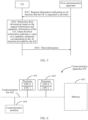
- the method includes: receiving first information, where the first information includes first sub-information, and the first sub-information indicates a first AI function supported by a terminal device; determining second information based on the first information, where the second information indicates an AI function that the terminal device is requested to provide; sending the second information to the terminal device; and receiving third information from the terminal device, where the third information includes a capability parameter corresponding to the AI function indicated by the second information.
- the first communication apparatus may perform screening (or filtering) based on an AI function supported by the terminal device, to determine the second information.
- the second information may indicate an AI function that a network side actually needs the terminal device to provide, and in this case, the terminal device only needs to send a corresponding capability parameter to the first communication apparatus based on the second information. It can be learned that the terminal device in this embodiment of this application does not need to send all AI capability parameters to the network side. Because of a screening process on the network side, the terminal device only needs to send, to the network side, a capability parameter actually needed by the network side, to reduce redundant information and transmission overheads.
- the first sub-information further indicates one or more of the following: a collaboration level corresponding to the first AI function; a capability corresponding to the first AI function; an AI algorithm corresponding to the first AI function; or an AI model corresponding to the first AI function.
- the first sub-information may indicate the first AI function supported by the terminal device and indicate the collaboration level corresponding to the first AI function, so that a capability of the terminal device is indicated more clearly.
- the second information further indicates one or more of the following: a collaboration level corresponding to the AI function that the terminal device is requested to provide; a capability corresponding to the AI function that the terminal device is requested to provide; an AI algorithm corresponding to the AI function that the terminal device is requested to provide; or an AI model corresponding to the AI function that the terminal device is requested to provide.
- the third information further includes one or more of the following: a capability parameter corresponding to the collaboration level indicated by the second information; a capability parameter corresponding to the capability indicated by the second information; a capability parameter corresponding to the AI algorithm indicated by the second information; or a capability parameter corresponding to the AI model indicated by the second information.
- the receiving first information includes: receiving the first information from the terminal device; or receiving the first information from a second communication apparatus, where the second communication apparatus is a neighboring access network device of the first communication apparatus or a core network device.
- the first information may be from the terminal device, or may be from the neighboring access network device, the core network device, or the like.
- a specific source is not limited.
- the first communication apparatus is an access network device; the first communication apparatus is a CU; the first communication apparatus is a CU-CP; the first communication apparatus is a CU-CP 2; the first communication apparatus is an LMF; or the first communication apparatus is an AMF.
- the first communication apparatus is the CU, the CU-CP, or the CU-CP 2
- the determining second information based on the first information includes: sending the first information to a DU, and receiving the second information from the DU; receiving first AI function requirement information from a DU, and determining the second information based on the first AI function requirement information and the first information, where the first AI function requirement information includes second sub-information, and the second sub-information indicates a second AI function that the DU requests the terminal device to provide; or determining the second information based on second AI function requirement information and the first information, where the second AI function requirement information includes third sub-information, and the third sub-information indicates a third AI function that the first communication apparatus requests the terminal device to provide, or the third sub-information indicates a third AI function that the first communication apparatus requests the terminal device to provide, and further indicates one or more of the following: a collaboration level corresponding to the third AI function, a capability corresponding to the third AI function, an AI algorithm corresponding to the third AI function, or an
- the DU needs the AI function supported by the terminal device.
- the DU may perform screening (or filtering) based on the AI function supported by the terminal device, to determine the second information.
- the DU may send a requirement (for example, the first AI function requirement information) of the DU to the first communication apparatus, and the first communication apparatus performs screening (or filtering) based on the requirement of the DU and the AI function supported by the terminal device, to determine the second information.
- the first communication apparatus may need the AI function supported by the terminal device. In this case, the first communication apparatus may perform screening (or filtering) based on a requirement of the first communication apparatus and the AI function supported by the terminal device, to determine the second information.
- the second sub-information further indicates one or more of the following: a collaboration level corresponding to the second AI function; a capability corresponding to the second AI function; an AI algorithm corresponding to the second AI function; or an AI model corresponding to the second AI function.
- the determining the second information based on the first AI function requirement information and the first information includes one or more of the following: if the first AI function and the second AI function are a same AI function, the first sub-information further indicates that the collaboration level corresponding to the first AI function is a first level, and the second sub-information indicates that the collaboration level corresponding to the second AI function requested by the DU is a second level, and if that the terminal device supports the first level includes supporting the second level, determining that the second information includes the first sub-information; if the first AI function includes the second AI function, determining that the second information includes the second sub-information; or if the first AI function and the second AI function are a same AI function, and the first information does not indicate the collaboration level corresponding to the first AI function, determining that the second information includes the second sub-information.
- the first communication apparatus may determine the second information in a plurality of manners. This is flexible.
- the method further includes: sending the third information to the DU. If the DU needs the AI function supported by the terminal device, the first communication apparatus may send the third information to the DU, so that the DU clarifies the AI function provided by the terminal device.
- the third information includes fourth sub-information, where the fourth sub-information indicates a fourth AI function provided by the terminal device and a value of a capability parameter corresponding to the fourth AI function, or the fourth sub-information indicates a fourth AI function provided by the terminal device, and further indicates one or more of the following: a collaboration level corresponding to the fourth AI function, a capability corresponding to the fourth AI function, an AI algorithm corresponding to the fourth AI function, an AI model corresponding to the fourth AI function, or a value of a capability parameter corresponding to the fourth AI function.
- the third information includes fourth sub-information and includes a maximum value of a capability parameter supported by the terminal device, where the fourth sub-information indicates a fourth AI function provided by the terminal device, or the fourth sub-information indicates a fourth AI function provided by the terminal device, and further indicates one or more of the following: a collaboration level corresponding to the fourth AI function, a capability corresponding to the fourth AI function, an AI algorithm corresponding to the fourth AI function, or an AI model corresponding to the fourth AI function.
- the third information may include a plurality of pieces of sub-information, and each piece of sub-information may include one AI function provided by the terminal device and a value of a capability parameter corresponding to the AI function, so that the third information indicates an AI capability provided by the terminal device more clearly.
- the third information may include a plurality of pieces of sub-information, and each piece of sub-information does not include a value of a capability parameter, but the third information further includes the maximum value of the capability parameter supported by the terminal device. Therefore, overheads of the third information can be reduced.
- the capability parameter includes one or more of the following: a computing capability parameter of the terminal device, an energy consumption parameter of the terminal device, a storage capability parameter of the terminal device, a battery level parameter of the terminal device, a processing delay of the terminal device, an AI model supported by the terminal device, or an AI algorithm supported by the terminal device.
- the capability parameter may further include another corresponding parameter. This is not specifically limited.
- the first AI function includes at least one sub-function, or the first AI function is a sub-function of one AI function.
- An AI function indicated by one piece of sub-information may be one sub-function, or may be an AI function including at least one sub-function.
- a second communication method may be performed by a terminal device, may be performed by another device including a function of the terminal device, or may be performed by a chip system (or a chip) or another functional module, where the chip system or the functional module can implement the function of the terminal device, and the chip system or the functional module is, for example, disposed in the terminal device.
- the method includes: receiving second information from a first communication apparatus, where the second information indicates an AI function that the terminal device is requested to provide; and sending third information to the first communication apparatus, where the third information includes a capability parameter corresponding to the AI function indicated by the second information.
- the second information further indicates one or more of the following: a collaboration level corresponding to the AI function that the terminal device is requested to provide; a capability corresponding to the AI function that the terminal device is requested to provide; an AI algorithm corresponding to the AI function that the terminal device is requested to provide; or an AI model corresponding to the AI function that the terminal device is requested to provide.
- the third information further includes one or more of the following: a capability parameter corresponding to the collaboration level indicated by the second information; a capability parameter corresponding to the capability indicated by the second information; a capability parameter corresponding to the AI algorithm indicated by the second information; or a capability parameter corresponding to the AI model indicated by the second information.
- the method further includes: sending first information to the first communication apparatus, where the first information includes first sub-information, the first sub-information indicates a first AI function supported by the terminal device, and the second information is related to the first information.
- the first sub-information further indicates one or more of the following: a collaboration level corresponding to the first AI function; a capability corresponding to the first AI function; an AI algorithm corresponding to the first AI function; or an AI model corresponding to the first AI function.
- the first AI function includes at least one sub-function, or the first AI function is a sub-function of one AI function.
- the third information includes fourth sub-information, where the fourth sub-information indicates a fourth AI function provided by the terminal device and a value of a capability parameter corresponding to the fourth AI function, or the fourth sub-information indicates a fourth AI function provided by the terminal device, and further indicates one or more of the following: a collaboration level corresponding to the fourth AI function, a capability corresponding to the fourth AI function, an AI algorithm corresponding to the fourth AI function, an AI model corresponding to the fourth AI function, or a value of a capability parameter corresponding to the fourth AI function.
- the third information includes fourth sub-information and includes a maximum value of a capability parameter supported by the terminal device, where the fourth sub-information indicates a fourth AI function provided by the terminal device, or the fourth sub-information indicates a fourth AI function provided by the terminal device, and further indicates one or more of the following: a collaboration level corresponding to the fourth AI function, a capability corresponding to the fourth AI function, an AI algorithm corresponding to the fourth AI function, or an AI model corresponding to the fourth AI function.
- the capability parameter includes one or more of the following: a computing capability parameter of the terminal device, an energy consumption parameter of the terminal device, a storage capability parameter of the terminal device, a battery level parameter of the terminal device, a processing delay of the terminal device, an AI model supported by the terminal device, or an AI algorithm supported by the terminal device.
- a third communication method may be performed by a terminal device, may be performed by another device including a function of the terminal device, or may be performed by a chip system (or a chip) or another functional module, where the chip system or the functional module can implement the function of the terminal device, and the chip system or the functional module is, for example, disposed in the terminal device.
- the method includes: receiving request information from a first communication apparatus, where the request information indicates an AI function that the terminal device is requested to provide; determining third information based on the request information and capability information of the terminal device, where the third information includes a capability parameter corresponding to the AI function indicated by the request information; and sending the third information to the first communication apparatus.
- the terminal device may determine AI capability information that actually needs to be provided by the terminal device, so that the terminal device can send a corresponding capability parameter to a network side, and does not need to send, to the network side, a capability parameter that is not needed by the network side, to reduce redundant information and transmission overheads.
- a process of filtering the capability information of the terminal device is performed on a UE side, and the UE side does not need to send the first information described above to the network side in advance, so that the transmission overheads can be further reduced.
- the request information further indicates to request one or more of the following: a collaboration level corresponding to the AI function provided by the terminal device, a capability corresponding to the AI function provided by the terminal device, an AI algorithm corresponding to the AI function provided by the terminal device, or an AI model corresponding to the AI function provided by the terminal device.
- the third information further includes one or more of the following: a capability parameter corresponding to the collaboration level indicated by the request information, a capability parameter corresponding to the capability indicated by the request information, a capability parameter corresponding to the AI algorithm indicated by the request information, or a capability parameter corresponding to the AI model indicated by the request information.
- the request information includes fifth sub-information, where the fifth sub-information indicates a second AI function that the terminal device is requested to provide, or the fifth sub-information indicates a second AI function that the terminal device is requested to provide, and further indicates to request one or more of the following: a collaboration level corresponding to the second AI function, a capability corresponding to the second AI function, an AI algorithm corresponding to the second AI function, or an AI model corresponding to the second AI function; and/or the capability information includes sixth sub-information, where the sixth sub-information indicates a first AI function supported by the terminal device, or the sixth sub-information indicates a first AI function supported by the terminal device, and further indicates one or more of the following: a collaboration level corresponding to the first AI function, a capability corresponding to the first AI function, an AI algorithm corresponding to the first AI function, or an AI model corresponding to the first AI function.
- the request information may include one or more pieces of sub-information, and each piece of sub-information may indicate one AI function that the terminal device is requested to provide, or indicate one AI function that the terminal device is requested to provide and a collaboration level corresponding to the AI function.
- the capability information may include one or more pieces of sub-information, and each piece of sub-information may indicate one AI function supported by the terminal device, or indicate one AI function supported by the terminal device and a collaboration level corresponding to the AI function.
- the determining third information based on the request information and capability information of the terminal device includes: if the first AI function and the second AI function are a same AI function, the sixth sub-information indicates that the collaboration level corresponding to the first AI function is a first level, and the fifth sub-information indicates that the collaboration level corresponding to the second AI function is a second level, and if that the terminal device supports the first level includes supporting the second level, determining that the third information includes the fifth sub-information; and/or if the first AI function includes the second AI function, determining that the third information includes the fifth sub-information.
- the terminal device determines the third information in a plurality of manners. This is flexible.
- the third information includes fourth sub-information, where the fourth sub-information indicates a fourth AI function provided by the terminal device and a value of a capability parameter corresponding to the fourth AI function, or the fourth sub-information indicates a fourth AI function provided by the terminal device, and further indicates one or more of the following: a collaboration level corresponding to the fourth AI function, a capability corresponding to the fourth AI function, an AI algorithm corresponding to the fourth AI function, an AI model corresponding to the fourth AI function, or a value of a capability parameter corresponding to the fourth AI function.
- the third information includes fourth sub-information and includes a maximum value of a capability parameter supported by the terminal device, where the fourth sub-information indicates a fourth AI function provided by the terminal device, or the fourth sub-information indicates a fourth AI function provided by the terminal device, and further indicates one or more of the following: a collaboration level corresponding to the fourth AI function, a capability corresponding to the fourth AI function, an AI algorithm corresponding to the fourth AI function, or an AI model corresponding to the fourth AI function.
- the capability parameter includes one or more of the following: a computing capability parameter of the terminal device, an energy consumption parameter of the terminal device, a storage capability parameter of the terminal device, a battery level parameter of the terminal device, a processing delay of the terminal device, an AI model supported by the terminal device, or an AI algorithm supported by the terminal device.
- a fourth communication method may be performed by a first communication apparatus, may be performed by another device including a function of the first communication apparatus, or may be performed by a chip system (or a chip) or another functional module, where the chip system or the functional module can implement the function of the first communication apparatus, and the chip system or the functional module is, for example, disposed in the first communication apparatus.
- the first communication apparatus is an access network device, a CU, a CU-CP, or a CU-CP 2.
- the method includes: sending request information to a terminal device, where the request information indicates an AI function that the terminal device is requested to provide; and receiving third information from the terminal device, where the third information includes a capability parameter corresponding to the AI function indicated by the request information.
- the request information further indicates to request one or more of the following: a collaboration level corresponding to the AI function provided by the terminal device, a capability corresponding to the AI function provided by the terminal device, an AI algorithm corresponding to the AI function provided by the terminal device, or an AI model corresponding to the AI function provided by the terminal device.
- the third information further includes one or more of the following: a capability parameter corresponding to the collaboration level indicated by the request information, a capability parameter corresponding to the capability indicated by the request information, a capability parameter corresponding to the AI algorithm indicated by the request information, or a capability parameter corresponding to the AI model indicated by the request information.
- the first communication apparatus is an access network device; the first communication apparatus is a CU; the first communication apparatus is a CU-CP; the first communication apparatus is an LMF; or the first communication apparatus is an AMF.
- the first communication apparatus is the CU or the CU-CP
- the method further includes: receiving the request information from a DU; or determining the request information based on second AI function requirement information, where the second AI function requirement information indicates the AI function that the terminal device is requested to provide, or the second AI function requirement information indicates the AI function that the terminal device is requested to provide, and further indicates one or more of the following: the collaboration level corresponding to the AI function provided by the terminal device, the capability corresponding to the AI function provided by the terminal device, the AI algorithm corresponding to the AI function provided by the terminal device, or the AI model corresponding to the AI function provided by the terminal device.
- the method further includes: sending the third information to the DU.
- the third information includes fourth sub-information, where the fourth sub-information indicates a fourth AI function provided by the terminal device and a value of a capability parameter corresponding to the fourth AI function, or the fourth sub-information indicates a fourth AI function provided by the terminal device, and further indicates one or more of the following: a collaboration level corresponding to the fourth AI function, a value of a capability parameter corresponding to the fourth AI function, a capability corresponding to the fourth AI function, an AI algorithm corresponding to the fourth AI function, or an AI model corresponding to the fourth AI function.
- the third information includes fourth sub-information and includes a maximum value of a capability parameter supported by the terminal device, where the fourth sub-information indicates a fourth AI function provided by the terminal device, or the fourth sub-information indicates a fourth AI function provided by the terminal device, and further indicates one or more of the following: a collaboration level corresponding to the fourth AI function, a capability corresponding to the fourth AI function, an AI algorithm corresponding to the fourth AI function, or an AI model corresponding to the fourth AI function.
- the capability parameter includes one or more of the following: a computing capability parameter of the terminal device, an energy consumption parameter of the terminal device, a storage capability parameter of the terminal device, a battery level parameter of the terminal device, a processing delay of the terminal device, an AI model supported by the terminal device, or an AI algorithm supported by the terminal device.
- a communication apparatus may be the first communication apparatus according to any one of the first aspect to the fourth aspect.
- the communication apparatus has a function of the foregoing first communication apparatus.
- the communication apparatus is, for example, the first communication apparatus, a large device including the first communication apparatus, or a functional module in the first communication apparatus, for example, a baseband apparatus or a chip system.
- the communication apparatus includes a baseband apparatus and a radio frequency apparatus.
- the communication apparatus includes a processing unit (sometimes also referred to as a processing module) and a transceiver unit (sometimes also referred to as a transceiver module).
- the transceiver unit can implement a sending function and a receiving function.
- the transceiver unit When the transceiver unit implements the sending function, the transceiver unit may be referred to as a sending unit (sometimes also referred to as a sending module). When the transceiver unit implements the receiving function, the transceiver unit may be referred to as a receiving unit (sometimes also referred to as a receiving module).
- the sending unit and the receiving unit may be a same functional module, the functional module is referred to as a transceiver unit, and the functional module can implement the sending function and the receiving function.
- the sending unit and the receiving unit may be different functional modules, and the transceiver unit is a general term for these functional modules.
- the transceiver unit (or the receiving unit) is configured to receive first information, where the first information includes first sub-information, and the first sub-information indicates a first AI function supported by a terminal device.
- the processing unit is configured to determine second information based on the first information, where the second information indicates an AI function that the terminal device is requested to provide.
- the transceiver unit (or the sending unit) is configured to send the second information to the terminal device.
- the transceiver unit (or the receiving unit) is further configured to receive third information from the terminal device, where the third information includes a capability parameter corresponding to the AI function indicated by the second information.
- the transceiver unit (or the sending unit) is configured to send request information to the terminal device, where the request information indicates the AI function that the terminal device is requested to provide.
- the transceiver unit (or the receiving unit) is configured to receive third information from the terminal device, where the third information includes a capability parameter corresponding to the AI function indicated by the request information.
- the communication apparatus further includes a storage unit (sometimes also referred to as a storage module).
- the processing unit is configured to: be coupled to the storage unit, and execute a program or instructions in the storage unit, so that the communication apparatus is enabled to perform a function of the first communication apparatus according to any one of the first aspect to the fourth aspect.
- a communication apparatus may be the terminal device according to any one of the first aspect to the fourth aspect.
- the communication apparatus has a function of the foregoing terminal device.
- the communication apparatus is, for example, a terminal device, a large device including the terminal device, or a functional module in the terminal device, for example, a baseband apparatus or a chip system.
- the communication apparatus includes a baseband apparatus and a radio frequency apparatus.
- the communication apparatus includes a processing unit (sometimes also referred to as a processing module) and a transceiver unit (sometimes also referred to as a transceiver module).
- a processing unit sometimes also referred to as a processing module
- a transceiver unit sometimes also referred to as a transceiver module.
- the transceiver unit (or a receiving unit) is configured to receive second information from a first communication apparatus, where the second information indicates an AI function that the terminal device is requested to provide.
- the transceiver unit (or a sending unit) is configured to send third information to the first communication apparatus, where the third information includes a capability parameter corresponding to the AI function indicated by the second information.
- the transceiver unit (or the receiving unit) is configured to receive request information from the first communication apparatus, where the request information indicates the AI function that the terminal device is requested to provide.
- the processing unit is configured to determine the third information based on the request information and capability information of the terminal device, where the third information includes a capability parameter corresponding to the AI function indicated by the request information.
- the transceiver unit (or the sending unit) is configured to send the third information to the first communication apparatus.
- the communication apparatus further includes a storage unit (sometimes also referred to as a storage module).
- the processing unit is configured to: be coupled to the storage unit, and execute a program or instructions in the storage unit, so that the communication apparatus is enabled to perform a function of the terminal device according to any one of the first aspect to the fourth aspect.
- a communication system including a first communication apparatus and a terminal device.
- the first communication apparatus is configured to perform the method performed by the first communication apparatus according to the first aspect or the second aspect
- the terminal device is configured to perform the method performed by the terminal device according to the first aspect or the second aspect.
- the first communication apparatus is configured to perform the method performed by the first communication apparatus according to the third aspect or the fourth aspect
- the terminal device is configured to perform the method performed by the terminal device according to the third aspect or the fourth aspect.
- a computer program product including instructions is provided.
- the methods according to the foregoing aspects are implemented.
- a chip system including a processor and an interface.
- the processor is configured to: invoke instructions from the interface and run the instructions, so that the chip system implements the methods according to the foregoing aspects.
- Technical solutions provided in embodiments of this application may be applied to a 4th generation (4th generation, 4G) mobile communication technology system, for example, a long term evolution (long term evolution, LTE) system, may be applied to a 5th generation (5th generation, 5G) mobile communication technology system, for example, an NR system, or may be applied to a next generation mobile communication system or another similar communication system, for example, a 6th generation (6th generation, 6G) mobile communication technology system.
- 4th generation (4th generation, 4G) mobile communication technology system for example, a long term evolution (long term evolution, LTE) system
- 5th generation (5th generation, 5G) mobile communication technology system for example, an NR system
- a next generation mobile communication system or another similar communication system for example, a 6th generation (6th generation, 6G) mobile communication technology system.
- 6th generation (6th generation, 6G) mobile communication technology system This is not specifically limited.
- the technical solutions provided in embodiments of this application may be further applied to a device-to-device (device-to-device, D2D) scenario, for example, an NR-D2D scenario, or may be applied to a vehicle to everything (vehicle to everything, V2X) scenario, for example, an NR-V2X scenario, or a field like intelligent driving, assisted driving, or intelligent connected vehicles.
- D2D device-to-device
- V2X vehicle to everything
- both communication parties may be UEs.
- a non-D2D scenario one party of communication may be a UE, and the other party may be a network device (for example, an access network device), or both communication parties may be network devices.
- a network device for example, an access network device
- a quantity of nouns indicates "a singular noun or a plural noun", that is, "one or more".
- At least one means one or more
- a plurality of means two or more.
- the term “and/or” describes an association relationship between associated objects and represents that three relationships may exist. For example, A and/or B may represent the following three cases: Only A exists, both A and B exist, and only B exists. A and B may be singular or plural.
- the character “/" generally indicates an "or” relationship between the associated objects. For example, A/B indicates A or B.
- At least one of the following items (pieces) or a similar expression thereof refers to any combination of these items, including any combination of singular items (pieces) or plural items (pieces).
- at least one item (piece) of a, b, or c indicates a, b, c, a and b, a and c, b and c, or a, b, and c, where a, b, and c may be singular or plural.
- ordinal numbers such as “first” and "second” in embodiments of this application are intended to distinguish between a plurality of objects, but are not intended to limit sizes, content, an order, a time sequence, priorities, importance degrees, or the like of the plurality of obj ects.
- a first resource unit and a second resource unit may be a same resource unit, or may be different resource units.
- this name does not indicate different locations, sizes, application scenarios, priorities, importance degrees, or the like of the two resource units.
- step numbers in embodiments described in this application are merely intended to distinguish between different steps, but are not intended to limit a sequence of the steps.
- S401 may be performed before S402, may be performed after S402, or may be simultaneously performed with S402.
- the RAN node in embodiments of this application may alternatively include a central unit control plane (CU-CP) node and/or a central unit user plane (CU-UP) node.
- CU-CP central unit control plane
- CU-UP central unit user plane
- the CU-CP is responsible for a control plane function, and mainly includes RRC and PDCP-control (control, C).
- the PDCP-C is mainly responsible for data encryption and decryption, integrity protection, data transmission, and the like on a control plane.
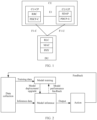
- the control plane CU-CP of the CU further includes a further split architecture. In other words, an existing CU-CP is further split into a CU-CP 1 and a CU-CP 2.
- the CU-CP 1 includes various radio resource management functions, and the CU-CP 2 includes only an RRC function and a PDCP-C function (namely, a basic function of control plane signaling at a PDCP layer).
- the CU-UP is responsible for user plane functions, and mainly includes the SDAP and a PDCP-user (user, U).
- the SDAP is mainly responsible for processing data of the core network and mapping a flow (flow) to a bearer (bearer).
- the PDCP-U is responsible for data plane encryption and decryption, integrity protection, header compression, sequence number maintenance, data transmission, and the like.
- the CU-CP and the CU-UP are connected through an E1 interface.
- the CU-CP may represent the RAN node, is connected to the core network through the NG interface, and is connected to the DU through an F1-C (control plane).
- the PDCP-C is alternatively disposed on the CU-UP.
- a communication apparatus configured to implement a function of the network device may be a network device, or may be an apparatus, for example, a chip system, that can support the network device in implementing the function.
- the apparatus may be installed in the network device.
- an example in which the apparatus configured to implement the function of the network device is a network device is used to describe the technical solutions provided in embodiments of this application.
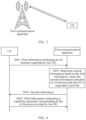
- a data source may store data from a gNB, a gNB-CU, a gNB-DU, a UE, or another management entity.
- the data source may be used as a database for AI model training and data analysis and inference.
- "data collection" in FIG. 2 may represent the data source.
- a model training host model training host
- model inference host uses the AI model to provide, based on the data provided by the data source, AI-based reasonable prediction on network running, or guide a network to perform policy adjustment.
- model inference box in FIG. 2 may represent the model inference host.
- Related policy adjustments are planned by an actor (actor) entity in a unified manner and sent to a plurality of network entities for operation.
- specific performance information about the network is input to the data source again for storage.
- the AI model is also called an AI algorithm (or an AI operator), is a collective name of mathematical algorithms built based on artificial intelligence principles, and is a basis for solving a specific problem using AI.
- a type of the AI model is not limited in embodiments of this application.
- the AI model may be a machine learning model, a deep learning model, or a reinforcement learning model.
- Machine learning is a method for implementing the artificial intelligence.
- An objective of the method is to design and analyze some algorithms (that is, models) that enable a computer to automatically "learn".
- the designed algorithms may be referred to as machine learning models.
- the machine learning model is a type of algorithm that automatically analyzes data to obtain a rule and uses the rule to predict unknown data.
- Deep learning is a new technology field generated in a research process of the machine learning.
- the deep learning is a method for performing in-depth representation learning on data in the machine learning.
- the deep learning interprets the data by establishing a neural network that simulates a human brain to perform analysis and learning.
- a machine learning method almost all features need to be determined by an industry expert, and then the features are encoded.
- the deep learning algorithm attempts to learn a feature from data.
- An algorithm designed based on a deep learning idea is called a deep learning model.
- Reinforcement learning is a special field in the machine learning, and is a process of continuously learning an optimal policy, making a sequence decision, and obtaining a maximum return through interaction between an agent and environment.
- the reinforcement learning is to learn "what to do (that is, how to map a current situation to an action) to maximize a digitalized benefit signal".
- the agent is not told what action to take, but needs to attempt to find out which actions may produce the most generous benefits.
- the reinforcement learning is different from the supervised learning and unsupervised learning in the machine learning field.
- the supervised learning is a process (a task-driven type) of learning from externally provided training data with a label
- the unsupervised learning is a process (a data-driven type) of searching for an implicit structure in unlabeled data.
- the reinforcement learning is a process of finding a better solution through "probing”.
- the agent needs to develop existing experience to gain benefits, as well as to perform probing, so that better action selection space (in other words, learning from a mistake) can be obtained in the future.
- An algorithm designed based on the reinforcement learning is called a reinforcement learning model.
- AI model training is a process in which the training data is calculated by using a specified initial model, and a parameter in the initial model is adjusted by using a method based on a calculation result, so that the model gradually learns of a rule and has a specific function.
- an AI model with a stable function can be used for inference.
- AI model inference is a process of calculating input data by using a trained AI model to obtain a predicted inference result (also referred to as output data).
- AI function or AI-based use case (use case)
- CSI channel state information
- RS reference signal
- beam management enhancement beam management enhancement
- positioning accuracy enhancement positioning accuracy enhancement
- CSI is a channel attribute of a communication link, and is channel quality information sent by the UE to an access network device.
- the UE sends downlink CSI to the access network device, so that the access network device can select a more appropriate modulation and coding scheme (modulation and coding scheme, MCS) for the UE based on the downlink CSI, to better adapt to a transformed radio channel.
- MCS modulation and coding scheme
- the CSI sent by the UE may include one or more of the following: a channel quality indicator (channel quality indicator, CQI), a precoding matrix indicator (precoding matrix indicator, PMI), a CSI-RS resource indicator (CSI-RS resource indicator, CRI), an SS/PCH block resource indicator (SS/PBCH block resource indicator, SSBRI), a layer indicator (layer indicator, LI), a rank indicator (rank indicator, RI), or a layer 1 reference signal received power (layer 1 reference signal receiver power, L1-RSRP).
- the rank (rank) is a rank in an antenna matrix in a multiple-input multiple-output (multiple-input multiple-output, MIMO) solution, and represents one or more parallel valid data streams.
- the RI indicates a quantity of valid data layers of a physical downlink shared channel (physical downlink shared channel, PDSCH).
- the CSI-RS feedback enhancement may further include sub-scenarios such as CSI compression, CSI prediction, and CSI-RS configuration signaling reduction.
- the CSI compression may further include compression in at least one domain of a space domain, a time domain, or a frequency domain.
- the CSI-RS compression is used as an example, an implementation procedure is as follows.
- the access network device trains a model in advance based on factors such as a capability of the UE and a requirement of the access network device.
- the model includes, for example, an encoder (encoder) model and a corresponding decoder (decoder) model.
- the access network device may send the encoder model to the UE, and may also send a tool like a quantizer (quantizer) to the UE.
- the quantizer is configured to perform quantization processing on a compressed signal.
- the UE may obtain a first matrix based on a measured downlink channel matrix and an encoder network.
- the UE may input the measured downlink channel matrix into the encoder network, to obtain the first matrix output by the encoder network.
- the UE may preprocess the measured downlink channel matrix, and then input a preprocessed downlink channel matrix into the encoder network, to obtain the first matrix output by the encoder network.
- the UE may compress the first matrix by using an existing dictionary, and may perform quantization processing on a compressed signal by using the quantizer, and then send a quantization result to the access network device.
- A3 The access network device performs reverse restoration to obtain an original downlink channel matrix based on the dictionary, the decoder network, and the quantization result from the UE.
- AI-based beam management enhancement may include sub-scenarios such as beam scanning matrix prediction and optimal beam prediction.
- An implementation procedure of the beam management enhancement is as follows.
- B1 Generate an initial model.
- a specific quantity of UEs perform omnidirectional beam scanning on a synchronization signal and physical broadcast channel (physical broadcast channel, PBCH) block (synchronization signal and PBCH block, SSB), and these UEs may send scanning results to the access network device.
- the scanning results include, for example, received signal quality information on each beam.
- the access network device may perform training based on the scanning results of these UEs, to obtain a sparse scanning matrix, or referred to as a sparse model. This type of matrix is usually unique to a cell.
- the sparse model may include information about a better beam.
- AI-based positioning accuracy enhancement is for improving a positioning accuracy.
- An implementation procedure of the positioning accuracy enhancement is as follows.
- C1 Collect original data by using a reference (reference) UE controlled by an operator.
- the original data includes, for example, information such as coordinate information of the UE and/or a line of sight (line of sight, LOS)/non-line of sight (non-line of sight, NLOS) status.
- line of sight line of sight
- NLOS non-line of sight
- a location management function location management function, LMF
- LMF location management function
- the access network device separately train a model.
- a model trained by the LMF may be used to infer final positioning information of the UE (for example, information such as a longitude and a latitude of the UE) based on the original data, and a model trained by a gNB may be used to infer a LOS/NLOS determining result based on the original data.
- An AI function indicated by one piece of sub-information in the N pieces of sub-information may include at least one sub-function; and/or an AI function indicated by another piece of sub-information in the N pieces of sub-information may be one sub-function included in one AI function.
- an AI function indicated by another piece of sub-information in the N pieces of sub-information may be one sub-function included in one AI function.
- the DU determines (filters or screens) the second information based on the first AI function requirement information and the first information.
- the following provides some examples, but is not limited to the following examples.
- the DU may determine the second information in one or more of the following Manner A to Manner F.
- the first AI function requirement information includes the sub-information 1 and the sub-information 2, where the sub-information 1 indicates [the CSI-1 and the collaboration level 1], and the sub-information 2 indicates [the BM and the collaboration level 2].
- the first information includes the sub-information 3, sub-information 4 and sub-information 5, where the sub-information 3 indicates [the CSI-1 and the collaboration level 1], the sub-information 4 indicates [the CSI-3 and the collaboration level 1], and the sub-information 5 indicates [the BM and the collaboration level 2].
- the sub-information 1 is the same as the sub-information 3, and the sub-information 2 is the same as the sub-information 5. Therefore, the sub-information 1 and the sub-information 2 are an intersection set of the first AI function requirement information and the first information, so that the DU can determine that the second information includes the sub-information 1 and the sub-information 2.
- Manner B If the first AI function requirement information and the first information have pieces of sub-information that do not completely overlap, the second information may be determined depending on whether the UE supports a collaboration level.
- the first information includes the foregoing first sub-information
- the first AI function requirement information includes the foregoing second sub-information.
- the first sub-information indicates the first AI function supported by the UE, and indicates that the collaboration level corresponding to the first AI function is a first level.
- the second sub-information indicates the second AI function that the DU requests the UE to provide, and indicates that a collaboration level corresponding to the second AI function is a second level. If the first AI function and the second AI function are a same AI function, and the first level is different from the second level, it indicates that the first sub-information and the second sub-information are pieces of sub-information that do not completely overlap.
- the second information may include the first sub-information.
- the first level is higher than the second level. If it is specified that a UE supporting a high collaboration level can also support a low collaboration level, the UE can support the second level provided that the UE can support the first level.
- the second information may include neither the first sub-information nor the second sub-information.
- the first level is lower than the second level.
- a UE supporting the low collaboration level does not necessarily support the high collaboration level
- the UE may not necessarily support the second level when supporting the first level.
- the first level is higher than the second level.
- the UE may not necessarily support the second level when supporting the first level.
- the first AI function requirement information includes the sub-information 1 and the sub-information 2, where the sub-information 1 indicates [the CSI-1 and the collaboration level 1], and the sub-information 2 indicates [the BM and the collaboration level 2] ⁇ .
- the first information includes the sub-information 3 to the sub-information 5, where the sub-information 3 indicates [the CSI-1 and the collaboration level 2], the sub-information 4 indicates [the CSI-3 and the collaboration level 1], and the sub-information 5 indicates [the BM and the collaboration level 2].
- the sub-information 2 is the same as the sub-information 5, and the sub-information 1 and the sub-information 3 are pieces of sub-information that do not completely overlap.
- the collaboration level 2 is higher than the collaboration level 1.
- the second information may include the sub-information 1 and the sub-information 5.
- the second information may include the sub-information 5 but does not include the sub-information 3.
- Manner C If one piece of sub-information in the first information indicates a complete AI function (or a general AI function, to be specific, the AI function includes at least one sub-function), and one piece of sub-information in the first AI function requirement information indicates one AI sub-function of the AI function, the second information may include the sub-information in the first AI function requirement information.
- the first information includes the foregoing first sub-information
- the first AI function requirement information includes the foregoing second sub-information.
- the first sub-information indicates the first AI function supported by the UE, and optionally further indicates that the collaboration level corresponding to the first AI function is the first level.
- the second sub-information indicates the second AI function that the DU requests the UE to provide, and optionally further indicates that the collaboration level corresponding to the second AI function is the second level. If the first AI function includes the second AI function, or the second AI function is one sub-function of the first AI function, the second information may include the second sub-information.
- the first AI function requirement information includes the sub-information 1, where the sub-information 1 indicates [the CSI-1 and the collaboration level 1].
- the first information includes the sub-information 2 to the sub-information 4, where the sub-information 2 indicates [the CSI and the collaboration level 1], the sub-information 3 indicates [the CSI-3 and the collaboration level 2], and the sub-information 4 indicates [the BM and the collaboration level 2].
- the sub-information 2 indicates a CSI function
- the sub-information 1 indicates one sub-function (the CSI-1) of the CSI function.
- the second information may include the sub-information 1.
- Manner D If one piece of sub-information in the first AI function requirement information indicates a complete AI function (or a general AI function, to be specific, the AI function includes at least one sub-function), and one piece of sub-information in the first information indicates one AI sub-function of the AI function, the second information may include the sub-information in the first information. In this case, although the UE cannot provide a complete AI function needed by the DU, the UE can provide a part of the AI function needed by the DU.
- the first information includes the foregoing first sub-information
- the first AI function requirement information includes the foregoing second sub-information.
- the first sub-information indicates the first AI function supported by the UE, and optionally further indicates that the collaboration level corresponding to the first AI function is the first level.
- the second sub-information indicates the second AI function that the DU requests the UE to provide, and optionally further indicates that the collaboration level corresponding to the second AI function is the second level. If the second AI function includes the first AI function, or the first AI function is one sub-function of the second AI function, the second information may include the first sub-information.
- the first information includes the sub-information 1, where the sub-information 1 indicates [the CSI-1 and the collaboration level 1].
- the first AI function requirement information includes the sub-information 2 to the sub-information 4, where the sub-information 2 indicates [the CSI and the collaboration level 1], the sub-information 3 indicates [the CSI-3 and the collaboration level 2], and the sub-information 4 indicates [the BM and the collaboration level 2].
- the sub-information 2 indicates a CSI function
- the sub-information 1 indicates one sub-function (the CSI-1) of the CSI function.
- the second information may include the sub-information 1.
- the first AI function requirement information includes the sub-information 1 and the sub-information 2, where the sub-information 1 indicates [the CSI, the collaboration level 0, and the collaboration level 2, the inference and training, and [an AI algorithm 1 and an AI model 1]], and the sub-information 2 indicates [the beam management, the collaboration level 2, the training and inference, [the AI algorithm 1, the AI model 1, and an AI model 2], and [an AI algorithm 2 and the AI model 2]].
- That the UE determines (filters or screens) the third information based on the capability information and the request information may include one or more of Manner A to Manner F described in S402 in the embodiment shown in FIG. 4 . Therefore, refer to the foregoing descriptions. Details are not described herein again.
- the third information may include (or indicate) the value of the capability parameter corresponding to the AI function indicated by the request information, or the third information may include (or indicate) the values of the capability parameters corresponding to the AI function and the collaboration level that are indicated by the request information.
- the third information refer to S404 in the embodiment shown in FIG. 4 .
- the network element that needs the UE to provide the AI capability is a DU
- the first communication apparatus is, for example, a CU, a CU-CP, or a CU-CP 2
- the first communication apparatus may further send the third information to the DU
- the DU may receive the third information from the first communication apparatus, so that the DU obtains the AI capability information of the UE.
- the UE may determine AI capability information that the UE actually needs to provide, so that the UE can send a corresponding capability parameter to a network side, and does not need to send, to the network side, a capability parameter that is not needed by the network side, to reduce redundant information and transmission overheads.
- a process of filtering the AI capability information is performed on a UE side, and the UE side does not need to send the first information described in the embodiment shown in FIG. 4 to the network side in advance, so that the transmission overheads can be further reduced.
- FIG. 6 is a diagram of a structure of a communication apparatus according to an embodiment of this application.
- the communication apparatus 600 may be the first communication apparatus or a circuit system of the first communication apparatus according to either the embodiment shown in FIG. 4 or the embodiment shown in the FIG. 5 , and is configured to implement the method corresponding to the first communication apparatus in the foregoing method embodiments.
- the communication apparatus 600 may be a circuit system of the UE according to either the embodiment shown in FIG. 4 or the embodiment shown in FIG. 5 , and is configured to implement the method corresponding to the UE in the foregoing method embodiments.
- a circuit system is a chip system.
- the communication apparatus 600 includes at least one processor 601.
- the processor 601 may be configured to perform internal processing of the apparatus to implement a specific control processing function.
- the processor 601 includes instructions.
- the processor 601 may store data.
- different processors may be independent components, may be located at different physical locations, or may be located on different integrated circuits.
- different processors may be integrated into one or more processors, for example, integrated into one or more integrated circuits.
- the communication apparatus 600 includes one or more memories 603.
- the memory 603 is configured to store instructions.
- the memory 603 may further store data.
- the processor and the memory may be separately disposed, or may be integrated together.
- the communication apparatus 600 includes a communication line 602 and at least one communication interface 604. Because the memory 603, the communication line 602, and the communication interface 604 are all optional, they are all represented by dashed lines in FIG. 6 .
- the communication apparatus 600 may further include a transceiver and/or an antenna.
- the transceiver may be configured to send information to another apparatus or receive information from another apparatus.
- the transceiver may be referred to as a transceiver, a transceiver circuit, an input/output interface, or the like, and is configured to implement a receiving and sending function of the communication apparatus 600 via the antenna.
- the transceiver includes a transmitter (transmitter) and a receiver (receiver).
- the transmitter may be configured to generate a radio frequency (radio frequency) signal based on a baseband signal
- the receiver may be configured to convert the radio frequency signal into the baseband signal.
- the processor 601 may include a general-purpose central processing unit (central processing unit, CPU), a microprocessor, an application-specific integrated circuit (application-specific integrated circuit, ASIC), or one or more integrated circuits configured to control program execution of the solutions in this application.
- CPU central processing unit
- ASIC application-specific integrated circuit
- the communication line 602 may include a path for information transmission between the foregoing components.
- the communication interface 604 uses any apparatus like a transceiver, and is configured to communicate with another device or a communication network, for example, an ethernet, a radio access network (radio access network, RAN), a wireless local area network (wireless local area network, WLAN), or a wired access network.
- a radio access network radio access network
- WLAN wireless local area network
- the memory 603 may be a read-only memory (read-only memory, ROM) or another type of static storage device that can store static information and instructions, or a random access memory (random access memory, RAM) or another type of dynamic storage device that can store information and instructions, or may be an electrically erasable programmable read-only memory (electrically erasable programmable read-only memory, EEPROM), a compact disc read-only memory (compact disc read-only memory, CD-ROM) or another compact disc storage, an optical disc storage (including a compact disc, a laser disc, an optical disc, a digital versatile disc, a Blu-ray optical disc, and the like), a magnetic disk storage medium or another magnetic storage device, or any other medium that can be used to carry or store expected program code in a form of instructions or a data structure and that can be accessed by a computer.
- the memory 603 is not limited thereto.
- the memory 603 may exist independently, and is connected to the processor 601 through the communication line 602. Alternatively, the
- the memory 603 is configured to store computer-executable instructions for performing the solutions in this application, and the processor 601 controls execution.
- the processor 601 is configured to execute the computer-executable instructions stored in the memory 603, to implement the steps performed by the first communication apparatus according to either the embodiment shown in FIG. 4 or the embodiment shown in FIG. 5 , or implement the steps performed by the terminal device according to either the embodiment shown in FIG. 4 or the embodiment shown in FIG. 5 .
- the computer-executable instructions in this embodiment of this application may also be referred to as application program code. This is not specifically limited in this embodiment of this application.
- the processor 601 may include one or more CPUs, for example, a CPU 0 and a CPU 1 in FIG. 6 .
- the communication apparatus 600 may include a plurality of processors, for example, the processor 601 and a processor 605 in FIG. 6 .
- Each of the processors may be a single-core (single-CPU) processor, or may be a multi-core (multi-CPU) processor.
- the processor herein may be one or more devices, circuits, and/or processing cores configured to process data (for example, computer program instructions).
- the chip includes the processor 601 (which may further include the processor 605), the communication line 602, and the communication interface 604.
- the chip may include the memory 603.
- the communication interface 604 may be an input interface, a pin, a circuit, or the like.
- the memory 603 may be a register, a cache, or the like.
- the processor 601 and the processor 605 may be a general-purpose CPU, a microprocessor, an ASIC, or one or more integrated circuits configured to control program execution of the communication method according to any one of the foregoing embodiments.
- the apparatus may be divided into functional modules based on the foregoing method examples.
- each functional module may be obtained through division based on each corresponding function, or two or more functions may be integrated into one processing module.
- the integrated module may be implemented in a form of hardware, or may be implemented in a form of a software functional module.
- module division is an example, and is merely a logical function division. In actual implementation, another division manner may be used.
- FIG. 7 is a diagram of an apparatus.
- the apparatus 700 may be the first communication apparatus or the UE in the foregoing method embodiments, or a chip in the first communication apparatus or a chip in the UE.
- the apparatus 700 includes a sending unit 701, a processing unit 702, and a receiving unit 703.
- the apparatus 700 may be configured to implement the steps performed by the first communication apparatus or the UE in the communication method in embodiments of this application.
- the apparatus 700 may be configured to implement the steps performed by the first communication apparatus or the UE in the communication method in embodiments of this application.
- functions/implementation processes of the sending unit 701, the receiving unit 703, and the processing unit 702 in FIG. 7 may be implemented by the processor 601 in FIG. 6 invoking the computer-executable instructions stored in the memory 603.
- functions/implementation processes of the processing unit 702 in FIG. 7 may be implemented by the processor 601 in FIG. 6 invoking the computer-executable instructions stored in the memory 603, and the functions/implementation processes of the sending unit 701 and the receiving unit 703 in FIG. 7 may be implemented through the communication interface 604 in FIG. 6 .
- the computer instructions may be transmitted from a website, computer, server, or data center to another website, computer, server, or data center in a wired (for example, a coaxial cable, an optical fiber, or a digital subscriber line (DSL)) or wireless (for example, infrared, radio, or microwave) manner.
- the computer-readable storage medium may be any usable medium accessible by the computer, or a data storage device, for example, a server or a data center, integrating one or more usable media.
- Steps of the methods or algorithms described in embodiments of this application may be directly embedded into hardware, a software unit executed by a processor, or a combination thereof.
- the software unit may be stored in a RAM, a flash memory, a ROM, an erasable programmable read-only memory (erasable programmable read-only memory, EPROM), an EEPROM, a register, a hard disk, a removable magnetic disk, a CD-ROM, or any other form of storage medium in the art.
- the storage medium may connect to a processor, so that the processor can read information from the storage medium and write information into the storage medium.
- the storage medium may be integrated into a processor.
- the processor and the storage medium may be disposed in an ASIC, and the ASIC may be disposed in a terminal device.
- the processor and the storage medium may be disposed in different components of a terminal device.
- the first communication apparatus or the UE may perform some or all steps in embodiments of this application. These steps or operations are merely examples. In embodiments of this application, other operations or variations of various operations may be further performed. In addition, the steps may be performed in a sequence different from a sequence presented in embodiments of this application, and not all operations in embodiments of this application need to be performed.
Landscapes
- Engineering & Computer Science (AREA)
- Theoretical Computer Science (AREA)
- Physics & Mathematics (AREA)
- Software Systems (AREA)
- Artificial Intelligence (AREA)
- Evolutionary Computation (AREA)
- Mathematical Physics (AREA)
- General Physics & Mathematics (AREA)
- General Engineering & Computer Science (AREA)
- Computing Systems (AREA)
- Data Mining & Analysis (AREA)
- Biomedical Technology (AREA)
- Computational Linguistics (AREA)
- Biophysics (AREA)
- Life Sciences & Earth Sciences (AREA)
- Health & Medical Sciences (AREA)
- Computer Networks & Wireless Communication (AREA)
- Signal Processing (AREA)
- Molecular Biology (AREA)
- General Health & Medical Sciences (AREA)
- Computer Vision & Pattern Recognition (AREA)
- Medical Informatics (AREA)
- Databases & Information Systems (AREA)
- Neurology (AREA)
- Mobile Radio Communication Systems (AREA)
- Telephonic Communication Services (AREA)
Applications Claiming Priority (3)
| Application Number | Priority Date | Filing Date | Title |
|---|---|---|---|
| CN202211168801 | 2022-09-24 | ||
| CN202311103713.6A CN117768875A (zh) | 2022-09-24 | 2023-08-30 | 一种通信方法及装置 |
| PCT/CN2023/119099 WO2024061125A1 (zh) | 2022-09-24 | 2023-09-15 | 一种通信方法及装置 |
Publications (2)
| Publication Number | Publication Date |
|---|---|
| EP4580230A1 true EP4580230A1 (de) | 2025-07-02 |
| EP4580230A4 EP4580230A4 (de) | 2025-12-31 |
Family
ID=90313172
Family Applications (1)
| Application Number | Title | Priority Date | Filing Date |
|---|---|---|---|
| EP23867414.7A Pending EP4580230A4 (de) | 2022-09-24 | 2023-09-15 | Kommunikationsverfahren und -vorrichtung |
Country Status (4)
| Country | Link |
|---|---|
| US (1) | US20250247721A1 (de) |
| EP (1) | EP4580230A4 (de) |
| CN (1) | CN117768875A (de) |
| WO (1) | WO2024061125A1 (de) |
Families Citing this family (8)
| Publication number | Priority date | Publication date | Assignee | Title |
|---|---|---|---|---|
| WO2025208386A1 (zh) * | 2024-04-02 | 2025-10-09 | Oppo广东移动通信有限公司 | 无线通信方法、终端设备及网络设备 |
| CN120835314A (zh) * | 2024-04-16 | 2025-10-24 | 华为技术有限公司 | 一种通信方法及装置 |
| CN120881791A (zh) * | 2024-04-30 | 2025-10-31 | 华为技术有限公司 | 一种通信方法及通信装置 |
| CN120880620A (zh) * | 2024-04-30 | 2025-10-31 | 华为技术有限公司 | 通信方法及相关装置 |
| CN120935643A (zh) * | 2024-05-10 | 2025-11-11 | 华为技术有限公司 | 通信方法和通信装置 |
| CN120956594A (zh) * | 2024-05-14 | 2025-11-14 | 华为技术有限公司 | 一种通信方法及通信装置 |
| CN121218150A (zh) * | 2024-06-24 | 2025-12-26 | 华为技术有限公司 | 一种通信方法及相关装置 |
| CN121367646A (zh) * | 2024-07-19 | 2026-01-20 | 华为技术有限公司 | 通信系统中模型功能对齐的方法和通信装置 |
Family Cites Families (8)
| Publication number | Priority date | Publication date | Assignee | Title |
|---|---|---|---|---|
| WO2020076144A1 (ko) * | 2018-10-12 | 2020-04-16 | 엘지전자 주식회사 | 무선 통신 시스템에서 복수개의 무선 접속 방식을 지원하는 단말의 능력을 네트워크에 설정하는 방법 및 이를 위한 장치 |
| US10461421B1 (en) * | 2019-05-07 | 2019-10-29 | Bao Tran | Cellular system |
| WO2021217519A1 (zh) * | 2020-04-29 | 2021-11-04 | 华为技术有限公司 | 用于调整神经网络的方法和装置 |
| CN113747462B (zh) * | 2020-05-30 | 2024-07-19 | 华为技术有限公司 | 一种信息处理方法及相关设备 |
| WO2021243619A1 (zh) * | 2020-06-03 | 2021-12-09 | 北京小米移动软件有限公司 | 信息传输方法、装置、通信设备及存储介质 |
| CN114143799B (zh) * | 2020-09-03 | 2025-07-11 | 华为技术有限公司 | 通信方法及装置 |
| MX2023007597A (es) * | 2020-12-24 | 2023-07-10 | Huawei Tech Co Ltd | Aparato y metodo para comunicar dci de dos etapas. |
| CN114845293B (zh) * | 2021-02-02 | 2024-04-05 | 荣耀终端有限公司 | 一种ue能力上报的方法以及装置 |
-
2023
- 2023-08-30 CN CN202311103713.6A patent/CN117768875A/zh active Pending
- 2023-09-15 EP EP23867414.7A patent/EP4580230A4/de active Pending
- 2023-09-15 WO PCT/CN2023/119099 patent/WO2024061125A1/zh not_active Ceased
-
2025
- 2025-03-21 US US19/087,175 patent/US20250247721A1/en active Pending
Also Published As
| Publication number | Publication date |
|---|---|
| US20250247721A1 (en) | 2025-07-31 |
| WO2024061125A1 (zh) | 2024-03-28 |
| EP4580230A4 (de) | 2025-12-31 |
| CN117768875A (zh) | 2024-03-26 |
Similar Documents
| Publication | Publication Date | Title |
|---|---|---|
| EP4580230A1 (de) | Kommunikationsverfahren und -vorrichtung | |
| US20240422587A1 (en) | Method and device for o-ran-based performance optimization and configuration | |
| EP4122169B1 (de) | Funktionelle architektur und schnittstelle für nicht-echtzeit ran intelligente steuerung | |
| US20240346384A1 (en) | Communication method and apparatus | |
| CN113873538A (zh) | 一种模型数据传输方法及通信装置 | |
| US20250337659A1 (en) | Communication method, network device, and terminal device | |
| US20250211311A1 (en) | Beam management method | |
| WO2024169522A1 (zh) | 通信方法和装置 | |
| KR20240134185A (ko) | 근본 원인 오류 결정 방법 및 장치 | |
| US20250373397A1 (en) | Communication method, apparatus, and system | |
| US20250202560A1 (en) | Communication method and apparatus | |
| CN117336820A (zh) | 通信方法、通信装置和系统 | |
| WO2025092797A1 (zh) | 一种通信方法及装置 | |
| EP4369253A1 (de) | Datensatzteilung von übertragungsanweisungen für getrenntes doppelseitiges ki/ml-basiertes modelltraining | |
| CN120873515A (zh) | 通信方法、装置和系统 | |
| WO2025060349A1 (en) | Methods, devices, and computer readable medium for artificial intelligence (ai) service | |
| US20250148370A1 (en) | Method and apparatus for intelligent operating of communication system | |
| US20250159504A1 (en) | Communication method and apparatus | |
| US20260032060A1 (en) | Communication method and apparatus | |
| WO2025209354A1 (zh) | 发送信息的方法和通信装置 | |
| WO2025232206A1 (zh) | 一种通信方法及装置 | |
| WO2026007858A1 (zh) | 一种csi上报方法、装置以及系统 | |
| WO2026026573A1 (zh) | 通信方法及装置 | |
| WO2026026576A1 (zh) | 通信方法及装置 | |
| CN118193003A (zh) | 模型更新方法、装置、设备及存储介质 |
Legal Events
| Date | Code | Title | Description |
|---|---|---|---|
| STAA | Information on the status of an ep patent application or granted ep patent |
Free format text: STATUS: THE INTERNATIONAL PUBLICATION HAS BEEN MADE |
|
| PUAI | Public reference made under article 153(3) epc to a published international application that has entered the european phase |
Free format text: ORIGINAL CODE: 0009012 |
|
| STAA | Information on the status of an ep patent application or granted ep patent |
Free format text: STATUS: REQUEST FOR EXAMINATION WAS MADE |
|
| 17P | Request for examination filed |
Effective date: 20250328 |
|
| AK | Designated contracting states |
Kind code of ref document: A1 Designated state(s): AL AT BE BG CH CY CZ DE DK EE ES FI FR GB GR HR HU IE IS IT LI LT LU LV MC ME MK MT NL NO PL PT RO RS SE SI SK SM TR |
|
| A4 | Supplementary search report drawn up and despatched |
Effective date: 20251128 |
|
| DAV | Request for validation of the european patent (deleted) | ||
| DAX | Request for extension of the european patent (deleted) | ||
| RIC1 | Information provided on ipc code assigned before grant |
Ipc: H04W 8/24 20090101AFI20251124BHEP |