EP4580183A1 - Verfahren und vorrichtungen zur codierung und decodierung - Google Patents
Verfahren und vorrichtungen zur codierung und decodierung Download PDFInfo
- Publication number
- EP4580183A1 EP4580183A1 EP23862001.7A EP23862001A EP4580183A1 EP 4580183 A1 EP4580183 A1 EP 4580183A1 EP 23862001 A EP23862001 A EP 23862001A EP 4580183 A1 EP4580183 A1 EP 4580183A1
- Authority
- EP
- European Patent Office
- Prior art keywords
- substream
- bits
- coding unit
- encoding
- decoding
- Prior art date
- Legal status (The legal status is an assumption and is not a legal conclusion. Google has not performed a legal analysis and makes no representation as to the accuracy of the status listed.)
- Pending
Links
Images



Classifications
-
- H—ELECTRICITY
- H04—ELECTRIC COMMUNICATION TECHNIQUE
- H04N—PICTORIAL COMMUNICATION, e.g. TELEVISION
- H04N19/00—Methods or arrangements for coding, decoding, compressing or decompressing digital video signals
- H04N19/10—Methods or arrangements for coding, decoding, compressing or decompressing digital video signals using adaptive coding
- H04N19/134—Methods or arrangements for coding, decoding, compressing or decompressing digital video signals using adaptive coding characterised by the element, parameter or criterion affecting or controlling the adaptive coding
- H04N19/146—Data rate or code amount at the encoder output
-
- H—ELECTRICITY
- H04—ELECTRIC COMMUNICATION TECHNIQUE
- H04N—PICTORIAL COMMUNICATION, e.g. TELEVISION
- H04N19/00—Methods or arrangements for coding, decoding, compressing or decompressing digital video signals
- H04N19/10—Methods or arrangements for coding, decoding, compressing or decompressing digital video signals using adaptive coding
- H04N19/102—Methods or arrangements for coding, decoding, compressing or decompressing digital video signals using adaptive coding characterised by the element, parameter or selection affected or controlled by the adaptive coding
- H04N19/13—Adaptive entropy coding, e.g. adaptive variable length coding [AVLC] or context adaptive binary arithmetic coding [CABAC]
-
- H—ELECTRICITY
- H04—ELECTRIC COMMUNICATION TECHNIQUE
- H04N—PICTORIAL COMMUNICATION, e.g. TELEVISION
- H04N19/00—Methods or arrangements for coding, decoding, compressing or decompressing digital video signals
- H04N19/10—Methods or arrangements for coding, decoding, compressing or decompressing digital video signals using adaptive coding
- H04N19/102—Methods or arrangements for coding, decoding, compressing or decompressing digital video signals using adaptive coding characterised by the element, parameter or selection affected or controlled by the adaptive coding
- H04N19/124—Quantisation
-
- H—ELECTRICITY
- H04—ELECTRIC COMMUNICATION TECHNIQUE
- H04N—PICTORIAL COMMUNICATION, e.g. TELEVISION
- H04N19/00—Methods or arrangements for coding, decoding, compressing or decompressing digital video signals
- H04N19/10—Methods or arrangements for coding, decoding, compressing or decompressing digital video signals using adaptive coding
- H04N19/134—Methods or arrangements for coding, decoding, compressing or decompressing digital video signals using adaptive coding characterised by the element, parameter or criterion affecting or controlling the adaptive coding
- H04N19/136—Incoming video signal characteristics or properties
- H04N19/14—Coding unit complexity, e.g. amount of activity or edge presence estimation
-
- H—ELECTRICITY
- H04—ELECTRIC COMMUNICATION TECHNIQUE
- H04N—PICTORIAL COMMUNICATION, e.g. TELEVISION
- H04N19/00—Methods or arrangements for coding, decoding, compressing or decompressing digital video signals
- H04N19/10—Methods or arrangements for coding, decoding, compressing or decompressing digital video signals using adaptive coding
- H04N19/134—Methods or arrangements for coding, decoding, compressing or decompressing digital video signals using adaptive coding characterised by the element, parameter or criterion affecting or controlling the adaptive coding
- H04N19/146—Data rate or code amount at the encoder output
- H04N19/15—Data rate or code amount at the encoder output by monitoring actual compressed data size at the memory before deciding storage at the transmission buffer
-
- H—ELECTRICITY
- H04—ELECTRIC COMMUNICATION TECHNIQUE
- H04N—PICTORIAL COMMUNICATION, e.g. TELEVISION
- H04N19/00—Methods or arrangements for coding, decoding, compressing or decompressing digital video signals
- H04N19/10—Methods or arrangements for coding, decoding, compressing or decompressing digital video signals using adaptive coding
- H04N19/169—Methods or arrangements for coding, decoding, compressing or decompressing digital video signals using adaptive coding characterised by the coding unit, i.e. the structural portion or semantic portion of the video signal being the object or the subject of the adaptive coding
- H04N19/17—Methods or arrangements for coding, decoding, compressing or decompressing digital video signals using adaptive coding characterised by the coding unit, i.e. the structural portion or semantic portion of the video signal being the object or the subject of the adaptive coding the unit being an image region, e.g. an object
- H04N19/174—Methods or arrangements for coding, decoding, compressing or decompressing digital video signals using adaptive coding characterised by the coding unit, i.e. the structural portion or semantic portion of the video signal being the object or the subject of the adaptive coding the unit being an image region, e.g. an object the region being a slice, e.g. a line of blocks or a group of blocks
-
- H—ELECTRICITY
- H04—ELECTRIC COMMUNICATION TECHNIQUE
- H04N—PICTORIAL COMMUNICATION, e.g. TELEVISION
- H04N19/00—Methods or arrangements for coding, decoding, compressing or decompressing digital video signals
- H04N19/10—Methods or arrangements for coding, decoding, compressing or decompressing digital video signals using adaptive coding
- H04N19/169—Methods or arrangements for coding, decoding, compressing or decompressing digital video signals using adaptive coding characterised by the coding unit, i.e. the structural portion or semantic portion of the video signal being the object or the subject of the adaptive coding
- H04N19/184—Methods or arrangements for coding, decoding, compressing or decompressing digital video signals using adaptive coding characterised by the coding unit, i.e. the structural portion or semantic portion of the video signal being the object or the subject of the adaptive coding the unit being bits, e.g. of the compressed video stream
-
- H—ELECTRICITY
- H04—ELECTRIC COMMUNICATION TECHNIQUE
- H04N—PICTORIAL COMMUNICATION, e.g. TELEVISION
- H04N19/00—Methods or arrangements for coding, decoding, compressing or decompressing digital video signals
- H04N19/90—Methods or arrangements for coding, decoding, compressing or decompressing digital video signals using coding techniques not provided for in groups H04N19/10-H04N19/85, e.g. fractals
- H04N19/91—Entropy coding, e.g. variable length coding [VLC] or arithmetic coding
Definitions
- This application relates to the field of video coding technologies, and in particular, to an encoding method and apparatus, and a decoding method and apparatus.
- a video is a sequence including a plurality of consecutive frames of images, and one frame corresponds to one image. Because the plurality of consecutive frames are highly similar, to facilitate storage and transmission, coding-based compression is performed on the video.
- a plurality of entropy encoders interleave a plurality of substreams corresponding to coding units corresponding to an image, to obtain a bit stream (or bitstream) corresponding to the coding units.
- a rate control module uses a number of coded bits of data content corresponding to the coding unit as an input, to implement rate control in video coding. However, data packets corresponding to different substreams have substream header bits corresponding to the substreams.
- This application provides an encoding method and apparatus, and a decoding method and apparatus, to resolve a problem that accuracy of rate control is affected, and quality of video coding is low because an error occurs when a rate control module performs rate control based on only a number of coded bits corresponding to a coding unit.
- an embodiment of this application provides an encoding method.
- the encoding method is applied to a video coding system.
- the encoding method is performed by an encoding device included in the video coding system.
- the encoding method includes: The encoding device obtains at least one substream of a coding unit of a to-be-encoded image, and performs entropy encoding on the at least one substream to obtain a first number of bits. Further, the encoding device encodes the at least one substream based on the first number of bits to output a bitstream of the coding unit.
- the first number of bits includes a number of coded bits and a number of estimated bits. The number of coded bits indicates a number of bits occupied by data subject content included in the at least one substream, and the number of estimated bits indicates a substream header bit of each substream in the at least one substream.
- the encoding device may encode the coding unit based on the number of coded bits corresponding to the coding unit and the number of estimated bits indicating substream header bits corresponding to a plurality of substreams. This avoids a problem that accuracy of rate control is affected because an error occurs when a rate control module performs rate control based on only the number of coded bits corresponding to the coding unit, and helps improve video coding quality.
- the encoding device considers a number of bits occupied by the substream header bits, the substream header bits are also considered in a video coding process.
- a substream segment corresponding to each substream includes a substream segment data subject and a substream index of each substream.
- the substream segment data subject refers to data subject content carried in the substream segment
- the substream index refers to a substream header bit carried in the substream segment.
- the substream segment is also referred to as a data packet corresponding to a substream, and the data packet carries data subject content and a substream header bit.
- that the encoding device performs entropy encoding on the at least one substream to obtain a first number of bits includes: The encoding device performs entropy encoding on the at least one substream to obtain the number of coded bits; and for a substream segment corresponding to each substream in the at least one substream, the encoding device estimates a substream header bit number of each substream, and determines the number of estimated bits based on at least one substream header bit number corresponding to the at least one substream. Further, the encoding device obtains the first number of bits based on the number of coded bits and the number of estimated bits.
- the encoding device separately obtains the number of coded bits and the number of estimated bits in the first number of bits.
- the number of estimated bits does not merely indicate a substream header bit corresponding to a substream, and substream header bits of all substreams corresponding to the coding unit are considered. This further avoids a problem that the QP value is excessively small because the substream header bits are not considered by the code rate control module, and helps improve a bit rate of video coding and improve image quality corresponding to video content in the bitstream.
- the encoding device includes at least one encoding substream buffer.
- the at least one encoding substream buffer includes a first buffer, and the first buffer is configured to temporarily store a substream segment corresponding to the first historical substream and the substream segment corresponding to the first substream.
- the encoding method provided in this embodiment of this application further includes: The encoding device updates, based on the second number, a number of substream segments stored in the first buffer.
- each time the encoding device updates the number of substream header bits the encoding device updates a number of encoded data packets in the encoding substream buffer. Therefore, in a process in which the encoding device encodes an undecoded substream segment in the encoding substream buffer, the encoding device updates substream header bits corresponding to the substream. This improves accuracy of the first number of bits required for QP decision, and helps improve video coding quality.
- the foregoing number of estimated bits may be a sum of at least one substream header bit number corresponding to the coding unit.
- the substream segment corresponding to the substream includes data subject content and a substream header bit corresponding to the substream
- the number of coded bits indicates the data content
- the number of estimated bits indicates the substream header bit (substream index). Therefore, a problem that the QP value is excessively small because the substream header bits are not considered by the rate control module is avoided, and a bit rate of video coding and image quality corresponding to video content in the bitstream are improved.
- the encoding device may further consider another preset flag bit in the number of estimated bits.
- the flag bit may be used to implement a specific function required by the user.
- the flag bit is also used as an input of the rate control module by the encoding device. This improves accuracy of QP value decision and further improves video coding quality.
- that the encoding device outputs a bitstream of the coding unit includes: The encoding device sends the bitstream corresponding to the coding unit. For example, the encoding device sends the bitstream to a storage device included in the video coding system, or the encoding device sends the bitstream to a decoding device included in the video coding system. Because the encoding device considers the substream header bits of the plurality of substreams when generating the bitstream corresponding to the coding unit, these substream header bits are also considered for the QP value required for encoding. This avoids a problem of image quality deterioration caused by an excessively small QP value, and helps improve video coding quality.
- a substream segment corresponding to each substream includes a substream segment data subject and a substream index of each substream.
- the decoding device includes at least one decoding substream buffer.
- the at least one decoding substream buffer includes a first buffer, and the first buffer is configured to temporarily store a substream segment corresponding to the first historical substream and the substream segment corresponding to the first substream.
- the decoding method provided in this embodiment of this application further includes: The decoding device updates, based on the second number, a number of substream segments stored in the first buffer.
- the number of estimated bits is a sum of at least one substream header bit number corresponding to the at least one substream of the to-be-encoded unit.
- a substream segment corresponding to each substream in the at least one substream further includes a preset flag bit, and the number of estimated bits further indicates the flag bit.
- that the decoding device decodes the at least one substream based on the first number of bits to output a reconstructed image of the coding unit includes: The decoding device determines a QP value of the coding unit based on the first number of bits, and decodes the at least one substream based on the QP value to output the reconstructed image corresponding to the coding unit.
- that the decoding device outputs a reconstructed image corresponding to the coding unit includes: The decoding device displays the reconstructed image corresponding to the coding unit.
- the decoding device may display one or more frames of images, to view image information carried in the bitstream. This facilitates display of video content and the like.
- an embodiment of this application provides an encoding apparatus.
- the encoding apparatus includes a module configured to implement the encoding method provided in any implementation of the first aspect.
- the encoding apparatus includes an obtaining module, a bit number determining module, and an encoding module.
- the obtaining module is configured to obtain at least one substream of a coding unit of a to-be-encoded image.
- the bit number determining module is configured to perform entropy encoding on the at least one substream to obtain a first number of bits.
- the first number of bits includes a number of coded bits and a number of estimated bits.
- the number of coded bits indicates a number of bits occupied by data subject content included in the at least one substream, and the number of estimated bits indicates a substream header bit of each substream in the at least one substream.
- the encoding module is configured to encode the at least one substream based on the first number of bits to output a bitstream of the coding unit.
- the bit number determining module is specifically configured to: perform entropy encoding on the at least one substream to obtain the number of coded bits; for a substream segment corresponding to each substream in the at least one substream, estimate a substream header bit number of each substream, and determine the number of estimated bits based on at least one substream header bit number corresponding to the at least one substream; and obtain the first number of bits based on the number of coded bits and the number of estimated bits.
- the bit number determining module is specifically configured to: obtain, based on a number of coded bits of a first historical substream in a historical coding unit, a first number of substream segments before a first substream is encoded, where the first substream is a substream corresponding to the first historical substream in the at least one substream; and update a substream header bit number of the first substream based on the first number and a substream index length of a substream segment corresponding to the first substream.
- the bit number determining module is specifically configured to: obtain a second number based on a number of coded bits of the first substream, and obtain a difference between the second number and the first number; and update the substream header bit number of the first substream based on the difference and the substream index length of the substream segment corresponding to the first substream.
- the second number indicates a second number of encoded substream segments corresponding to the first substream.
- the encoding device includes at least one encoding substream buffer.
- the at least one encoding substream buffer includes a first buffer, and the first buffer is configured to temporarily store a substream segment corresponding to the first historical substream and the substream segment corresponding to the first substream.
- the encoding apparatus provided in this embodiment of this application further includes an update module, configured to update, based on the second number, a number of substream segments stored in the first buffer.
- the substream segment corresponding to each substream includes a substream segment data subject and a substream index of each substream.
- the number of estimated bits is a sum of at least one substream header bit number.
- a substream segment corresponding to each substream in the at least one substream further includes a preset flag bit, and the number of estimated bits further indicates the flag bit.
- the encoding module is specifically configured to: determine a QP value of the coding unit based on the first number of bits; and encode the at least one substream based on the QP value to output the bitstream of the coding unit.
- the encoding module is specifically configured to send the bitstream of the coding unit.
- an embodiment of this application provides a decoding apparatus.
- the decoding apparatus includes units configured to implement the decoding method provided in any implementation of the second aspect.
- the decoding apparatus includes an obtaining unit, a bit number determining unit, and a decoding unit.
- the obtaining unit is configured to obtain, based on a bitstream, at least one substream corresponding to a coding unit.
- the bit number determining unit is configured to perform entropy decoding on the at least one substream to obtain a first number of bits.
- the first number of bits includes a number of coded bits and a number of estimated bits.
- the number of coded bits indicates a number of bits occupied by data subject content included in the at least one substream
- the number of estimated bits indicates a substream header bit of each substream in the at least one substream.
- the decoding unit is configured to decode the at least one substream based on the first number of bits to output a reconstructed image of the coding unit.
- the bit number determining unit is specifically configured to: perform entropy decoding on the at least one substream to obtain the number of coded bits; and for a substream segment corresponding to each substream in the at least one substream, estimate a substream header bit number of each substream, and determine the number of estimated bits based on at least one substream header bit number corresponding to the at least one substream.
- the bit number determining unit is further specifically configured to obtain the first number of bits based on the number of coded bits and the number of estimated bits.
- the bit number determining unit is specifically configured to: obtain, based on a number of coded bits of a first historical substream in a historical coding unit, a first number of substream segments before a first substream is decoded; and update a substream header bit number of the first substream based on the first number and a substream index length of a substream segment corresponding to the first substream.
- the first substream is a substream corresponding to the first historical substream in the at least one substream.
- the bit number determining unit is specifically configured to: obtain a second number based on a number of coded bits of the first substream, and obtain a difference between the second number and the first number.
- the second number indicates a second number of undecoded substream segments corresponding to the first substream.
- the bit number determining unit is further specifically configured to update the substream header bit number of the first substream based on the difference and the substream index length of the substream segment corresponding to the first substream.
- the decoding device includes at least one decoding substream buffer.
- the at least one decoding substream buffer includes a first buffer, and the first buffer is configured to temporarily store a substream segment corresponding to the first historical substream and the substream segment corresponding to the first substream.
- the decoding apparatus provided in this embodiment of this application further includes an updating unit, configured to update, based on the second number, a number of substream segments stored in the first buffer.
- the substream segment corresponding to each substream includes a substream segment data subject and a substream index of each substream.
- the number of estimated bits is a sum of at least one substream header bit number.
- a substream segment corresponding to each substream in the at least one substream further includes a preset flag bit, and the number of estimated bits further indicates the flag bit.
- the coding unit is specifically configured to: determine a QP value of the coding unit based on the first number of bits, and decode the at least one substream based on the QP value to output the reconstructed image corresponding to the coding unit.
- an embodiment of this application provides an electronic device, including a processor and an interface circuit.
- the interface circuit is configured to receive a signal from a device other than the electronic device and transmit the signal to the processor, or send a signal from the processor to a device other than the electronic device.
- the processor is configured to implement, through a logic circuit or by executing code instructions, the method according to any implementation of the first aspect or the method according to any implementation of the second aspect.
- an embodiment of this application provides a coding system, including an encoding device and a decoding device.
- the encoding device is communicatively connected to the decoding device, the decoding device is configured to implement the method according to any implementation of the second aspect, and the encoding device is configured to implement the method according to any implementation of the first aspect.
- an embodiment of this application provides a computer-readable storage medium.
- the storage medium stores a computer program or instructions, and the computer program or the instructions are executed by an electronic device, to implement the method according to any implementation of the first aspect, or implement the method according to any implementation of the second aspect.
- a decoding device may decode the bitstream output by the encoding device, to achieve beneficial effect similar to that on an encoding side. For example, the decoding device considers the number of bits occupied by the substream header bits, so that the substream header bits are also considered in a video decoding process. This avoids a problem that a QP value is excessively small because the substream header bits are not considered by the rate control module, and helps improve image quality of video content obtained by parsing the bitstream by the decoding device.
- a bit stream is a binary stream generated after an image or a video is encoded. In some cases, the bit stream is also referred to as a bitstream.
- a syntax element is data obtained after typical encoding operations such as prediction and transformation are performed on an image block, and the syntax element is main input content of an entropy encoding module.
- An entropy encoder is an encoder module that converts an input syntax element into a bit stream.
- a substream is a part of a bit stream.
- Bit streams output by a same entropy encoder are defined as a same substream.
- a substream segment is a basic unit of substream interleaving, and a segment of data with a fixed length of N bits.
- the substream segment includes a substream segment data subject (substream_segment_data) and a substream index (substream_index).
- the substream segment data subject is data subject content carried in a substream segment
- the substream index is a substream header bit carried in the substream segment.
- the substream segment is also referred to as a data packet corresponding to a substream, and the data packet carries data subject content and a substream header bit.
- a length of a substream segment is related to a bit depth and an image format, and includes a 2-bit (bit) substream index value (indicates a substream to which a current substream segment belongs) and a 512-bit substream segment data subject.
- bit bit
- Substream interleaving is an operation of combining a plurality of substreams into a bit stream, and is also referred to as multiplexing (multiplexing). In some cases, interleaving of a plurality of substreams is also referred to as combination of the plurality of substreams.
- Substream de-interleaving is an operation of splitting different substreams from a bit stream, and is also referred to as demultiplexing (demultiplexing).
- de-interleaving of a plurality of substreams is also referred to as substream reassembly of the plurality of substreams.
- An encoding substream buffer is a first in first out (first in first out, FIFO) buffer. Each substream has a one-to-one corresponding encoding substream buffer.
- the encoding substream buffer stores data of a corresponding substream generated after entropy encoding (for example, a substream segment data subject other than a substream index in a substream segment).
- a decoding substream buffer is an FIFO buffer.
- Each substream has a one-to-one corresponding decoding substream buffer, and the decoding substream buffer stores data of each substream after substream de-interleaving is performed on a bit stream.
- Substream header bit indicates a bit length occupied by header information of a substream to which the substream fragment belongs.
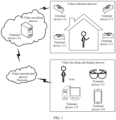
- FIG. 1 is a diagram of a video transmission system according to an embodiment of this application.
- a video processing process includes video collection, video encoding, video transmission, and video decoding and display processes.
- the video transmission system includes a plurality of terminal devices (such as a terminal device 111 to a terminal device 115 shown in FIG. 1 ) and a network.
- the network may implement a video transmission function.
- the network may include one or more network devices.
- the network device may be a router, a switch, or the like.
- the terminal device shown in FIG. 1 may be, but is not limited to, user equipment (user equipment, UE), a mobile station (mobile station, MS), a mobile terminal (mobile terminal, MT), and the like.
- the terminal device may be a mobile phone (for example, the terminal device 114 shown in FIG. 1 ), a tablet computer, a computer with a wireless transceiver function (for example, the terminal device 115 shown in FIG. 1 ), a virtual reality (Virtual Reality, VR) terminal device (for example, the terminal device 113 shown in FIG.
- an augmented reality (Augmented Reality, AR) terminal device a wireless terminal in industrial control (industrial control), a wireless terminal in self-driving (self-driving), a wireless terminal in a smart city (smart city), a wireless terminal in a smart home (smart home), and the like.
- terminal devices are different.
- the terminal device 111 may be a camera apparatus (for example, a video camera or a camera) used for road surveillance, or a mobile phone, a tablet computer, or an intelligent wearable device that has a video collection function.
- the terminal device 112 may be a server, or may be a data center.
- the data center may include one or more physical devices having an encoding function, for example, a server, a mobile phone, a tablet computer, or another encoding device.
- the terminal device 113 may be VR glasses, and a user may control a viewing angle range through turning; the terminal device 114 may be a mobile phone, and the user may control a viewing angle range on the mobile phone 114 through a touch operation, an air gesture operation, or the like; and the terminal device 115 may be a personal computer, and the user may control a viewing angle range displayed on a display screen via an input device like a mouse or a keyboard.
- a video is a general term, the video is a sequence including a plurality of consecutive frames of images, and one frame corresponds to one image.
- a panoramic video may be a 360° video, or may be a 180° video.
- the panoramic video may alternatively be a "large" range video that exceeds a viewing angle range (110° to 120°) of a human eye, for example, a 270° video.
- FIG. 1 is merely a diagram.
- the video transmission system may further include another device that is not shown in FIG. 1 .
- a number and types of terminal devices included in the system are not limited in embodiments of this application.
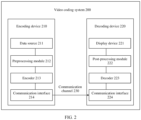
- the encoding device 210 may implement a video encoding function. As shown in FIG. 1 , the encoding device 210 may be the terminal device 112, or the encoding device 210 may be a data center having a video encoding capability. For example, the data center includes a plurality of servers.
- the encoding device 210 may include a data source 211, a preprocessing module 212, an encoder 213, and a communication interface 214.
- the data source 211 may include or may be any type of electronic device configured to collect a video, and/or any type of source video generation device, for example, a computer graphics processor configured to generate a computer animation scene or any type of device configured to obtain and/or provide a source video, and a computer-generated source video.
- the data source 211 may be any type of internal memory or memory that stores the source video.
- the source video may include a plurality of video streams or images collected by a plurality of video collection apparatuses (like video cameras).
- the preprocessing module 212 is configured to receive the source video, and preprocess the source video to obtain a panoramic video or a plurality of frames of images.
- preprocessing performed by the preprocessing module 212 may include color format conversion (for example, conversion from RGB to YCbCr), octree structuring, and video stitching.
- the encoder 213 is configured to receive a video or an image, and encode the videoor the image to obtain encoded data. For example, the encoder 213 encodes the video to obtain a basic layer code stream and an enhancement layer code stream. In some optional cases, a code stream obtained through encoding may also be referred to as a bitstream, a bit stream, or the like.
- the communication interface 214 in the encoding device 210 may be configured to receive the encoded data and send the encoded data (or a version of the encoded data obtained through any other processing) to another device, for example, the decoding device 220, or any other device, through the communication channel 230 for storage, display, direct reconstruction, or the like.
- the encoding device 210 includes a bitstream buffer, and the bitstream buffer is configured to store a bitstream corresponding to one or more coding units.
- the decoding device 220 may implement a function of image decoding or video decoding. As shown in FIG. 1 , the decoding device 220 may be any one of the terminal device 113 to the terminal device 115 shown in FIG. 1 .
- the decoding device 220 may include a display device 221, a post-processing module 222, a decoder 223, and a communication interface 224.
- the communication interface 224 in the decoding device 220 is configured to receive encoded data (or a version of the encoded data obtained through any other processing) from the encoding device 210 or from any other encoding device like a storage device.
- the communication interface 214 and the communication interface 224 may be configured to send or receive the encoded data through a direct communication link between the encoding device 210 and the decoding device 220, for example, through a direct wired or wireless connection, or via any type of network like a wired or wireless network or any combination thereof, or any type of private and public network, or any type of combination thereof.
- the communication interface 224 corresponds to the communication interface 214, and may be configured to, for example, receive transmitted data, and process the transmitted data through any type of corresponding transmission decoding or processing and/or decapsulation to obtain the encoded data.
- the communication interface 224 and the communication interface 214 each may be configured as a unidirectional communication interface indicated by an arrow, in FIG. 2 , that corresponds to the communication channel 230 and that is directed from the encoding device 210 to the decoding device 220, or a bidirectional communication interface, and may be configured to: send/receive a message or the like to establish a connection, and determine and exchange any other information related to a communication link or data transmission like transmission of encoded compressed data, and the like.
- the decoder 223 is configured to receive the encoded data, and decode the encoded data to obtain decoded data (an image, a video, or the like).
- the post-processing module 222 is configured to perform post-processing on the decoded data obtained through decoding to obtain post-processed data (for example, a to-be-displayed image, a reconstructed image, or a decoded image).
- Post-processing performed by the post-processing module 222 may include, for example, color format conversion (for example, from YCbCr to RGB), octree reconstruction, video splitting and fusion, or any other processing for generating data for display, for example, by the display device 221.
- the display device 221 is configured to receive the post-processed data for display to a user, a viewer, or the like.
- the display device 221 may be or include any type of display for representing the reconstructed image, for example, an integrated or external display screen or display.
- the display may include a liquid crystal display (liquid crystal display, LCD), an organic light emitting diode (organic light emitting diode, OLED) display, a plasma display, a projector, a micro LED display, a liquid crystal on silicon (liquid crystal on silicon, LCoS) display, a digital light processor (digital light processor, DLP), or any type of other display.
- the encoding device 210 and the decoding device 220 may transmit the encoded data via a data forwarding device.
- the data forwarding device may be a router or a switch.
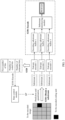
- FIG. 3 is a schematic flowchart 1 of an image encoding method according to an embodiment of this application.
- the image encoding method includes the following steps S310 to S330.
- the encoding device obtains at least one substream of a coding unit of a to-be-encoded image.
- the to-be-encoded image may include one or more coding units.
- the to-be-encoded image includes one coding unit, and the coding unit includes all image regions of the to-be-encoded image.
- the to-be-encoded image includes a plurality of coding units, and one coding unit corresponds to one image sub-region (for example, a small black square in FIG. 3 ) of the to-be-encoded image.
- one coding unit may correspond to one or more substreams.
- one coding unit corresponds to one substream.
- the coding unit has only a substream corresponding to a luminance component, for example, the substream is in a YUV400 format.
- one coding unit corresponds to a plurality of substreams, for example, three substreams: a substream 1, a substream 2, and a substream 3.
- the substream 1 is also referred to as a first substream
- the substream 2 is also referred to as a second substream
- the substream 3 is also referred to as a third substream.
- the substream 1 is represented by Substream[0]
- the substream 2 is represented by Substream[1]
- the substream 3 is represented by Substream[2].
- the substream 1 indicates a luminance component corresponding to the coding unit
- the substream 2 and the substream 3 indicate chrominance components corresponding to the coding unit.
- the substream 2 indicates the luminance component of the coding unit
- the substream 1 and the substream 3 indicate the chrominance component of the coding unit. This is not limited in this application.
- a substream segment corresponding to a substream is sent to an encoding substream buffer.
- a substream segment corresponding to the substream 1 is stored in an encoding substream buffer 1
- a substream segment corresponding to the substream 2 is stored in an encoding substream buffer 2
- a substream segment corresponding to the substream 3 is stored in an encoding substream buffer 3.
- S320 The encoding device performs entropy encoding on the at least one substream to obtain a first number of bits.
- the first number of bits includes a number of coded bits and a number of estimated bits.
- the first number of bits is also referred to as a total number of bits required in a rate control process of the coding unit.
- the number of coded bits herein indicates a number of bits occupied by data subject content included in the at least one substream.
- a substream segment corresponding to a substream includes a substream segment data subject and a substream index.
- content of the substream segment data subject and the substream index refer to the descriptions of the foregoing related technology. Details are not described herein again.
- a number of coded bits of the at least one substream may include numbers of bits occupied by substream segment data subjects included in substream segments corresponding to all the substreams corresponding to the coding unit in S310.
- the number of estimated bits indicates a substream header bit of each substream in the at least one substream.
- the number of estimated bits includes numbers of substream header bits occupied by substream indexes included in substream segments corresponding to all the substreams corresponding to the coding unit in S310.
- the number of estimated bits is a sum of the at least one substream header bit number.
- that the encoding device encodes, based on the first number of bits, the at least one substream to output a bitstream of the coding unit may include the following content:
- the encoding device determines the QP value of the coding unit based on the first number of bits, and encodes the at least one substream based on the QP value to output the bitstream of the coding unit.
- the QP value herein is determined by the rate control module included in the encoding device.
- the encoding device determines the QP value of the coding unit based on the first number of bits.
- the substream valid data length counter records a total number of actually coded bits (SubstreamBits) corresponding to each substream.
- SubstreamBits is an array whose length is K, K represents a number of substreams, and
- SubstreamBits[i] represents a total number of actually encoded (or decoded) bits of the i th substream.
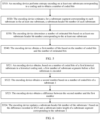
- the encoding device obtains a second number based on a number of coded bits of the substream 1.
- the substream segment 1 includes a data subject and N-bit substream header information (header information for short). A total number of bits of the data subject and the substream header information is M.
- N bits are also referred to as a substream index length of a substream segment.
- S523 The encoding device obtains a difference between the second number and the first number.
- a physical meaning represented by the difference is a number of substream segments corresponding to the substream 1.
- S524 The encoding device updates a substream header bit number of the substream 1 based on the difference recorded in S523 and a substream index length of the substream segment corresponding to the substream 1.
- the encoding device determines, based on the number of coded bits of the first historical substream in the historical coding unit, the first number of substream segments before the first substream is encoded, to update the number of substream header bits included in the first substream. This helps avoid a problem that the number of substream header bits is incorrectly estimated, improve accuracy of the first number of bits, improve accuracy of QP decision based on the first number of bits, and improve quality of video coding based on the QP value obtained through decision.
- a number of encoding substream buffers included in the encoding device is consistent with a number of entropy encoders included in the encoding device, and one encoding substream buffer is configured to temporarily store a substream segment that needs to be processed by one entropy encoder.
- data content stored in one encoding substream buffer is a substream segment data subject included in a substream segment.
- the encoding device divides the coding unit into a plurality of substreams, and sends different substreams to different encoding substream buffers based on substream index values in substream segments corresponding to the substreams.
- a substream index length of each substream segment is 2 bits (for example, 2 binary bits).
- a substream index value '00' represents that a current substream segment belongs to the first substream
- a value '01' represents that the current substream segment belongs to the second substream
- a value '10' represents that the current substream segment belongs to the third substream.
- a value of SubstreamIndex is equal to a value of substream_index converted to a 2-bit unsigned integer.
- the value of SubstreamIndex cannot be 3. If image_format is set to '000', the value of SubstreamIndex cannot be 1, 2, or 3.
- each time the encoding device updates the number of substream header bits the encoding device updates a number of encoded data packets in the encoding substream buffer. Therefore, in a process in which the encoding device encodes an undecoded substream segment in the encoding substream buffer, the encoding device updates substream header bits corresponding to the substream. This improves accuracy of the first number of bits required for QP decision, and helps improve video coding quality.
- the encoding device determines the number of estimated bits based on at least one substream header bit number corresponding to the at least one substream.
- the number of estimated bits may be a sum of all substream header bit numbers corresponding to the at least one substream.
- the substream segment corresponding to the substream includes data subject content and a substream header bit corresponding to the substream
- the number of coded bits indicates the data content
- the number of estimated bits indicates the substream header bit (substream index). Therefore, a problem that a QP value is excessively small because the substream header bits are not considered by the rate control module is avoided, and a bit rate of video coding and image quality corresponding to video content in the bitstream are improved.
- the encoding device obtains the first number of bits based on the number of coded bits and the number of estimated bits.
- the encoding device separately obtains the number of coded bits and the number of estimated bits in the first number of bits.
- the number of estimated bits does not merely indicate a substream header bit corresponding to a substream, and substream header bits of all substreams corresponding to the coding unit are considered. This further avoids a problem that the QP value is excessively small because the substream header bits are not considered by the code rate control module, and helps improve a bit rate of video coding and improve image quality corresponding to video content in the bitstream.
- the decoding device first obtains at least one substream of the coding unit based on the bitstream, estimates the first number of bits of the at least one substream, performs QP decision on the coding unit based on the first number of bits, and performs dequantization and prediction based on QP value obtained through decision to output a reconstructed image corresponding to the coding unit.
- FIG. 8 is a schematic flowchart of an image decoding method according to an embodiment of this application.
- the decoding method may be performed by the decoding device 220, or may be performed by a decoding side that supports a function of the decoding device 220.
- the decoding device 220 implements the decoding method is used for description.
- the decoding method includes the following steps S810 to S830.
- bitstream herein may be a bitstream output in the embodiment corresponding to the foregoing encoding method.
- the decoding device performs entropy decoding on the at least one substream to obtain a first number of bits.
- the first number of bits includes a number of coded bits and a number of estimated bits.
- the number of coded bits indicates a number of bits occupied by data subject content included in the at least one substream, and the number of estimated bits indicates a substream header bit of each substream in the at least one substream.
- the decoding device obtains the number of coded bits, the number of estimated bits, and the first number of bits, for corresponding examples and beneficial effect, refer to corresponding descriptions in the foregoing encoding method embodiment. Details are not described herein again.
- the decoding device decodes the at least one substream based on the first number of bits to output a reconstructed image of the coding unit.
- the number of estimated bits is a sum of at least one substream header bit number.
- the encoding apparatus 900 may be configured to implement operation steps corresponding to the methods in the foregoing encoding method embodiments, and therefore can also implement corresponding beneficial effect. Details are not described herein again.
- the obtaining module 910, the bit number determining module 920, and the encoding module 930 refer to the content of the foregoing encoding method embodiment. Details are not described herein again.
- FIG. 10 is a diagram of a structure of a decoding apparatus according to an embodiment of this application.
- the decoding apparatus may be configured to implement a function of the decoding device in the foregoing method embodiment, and therefore can also implement beneficial effect of the foregoing decoding method embodiment.
- the decoding apparatus may be any one of the terminal device 113 to the terminal device 115 shown in FIG. 1 , or may be the decoding device 220 shown in FIG. 2 , or may be a module (for example, a chip) used in a decoding device.
- the bit number determining unit 1020 is specifically configured to: perform entropy decoding on the at least one substream to obtain the number of coded bits; and for a substream segment corresponding to each substream in the at least one substream, estimate a substream header bit number of each substream, and determine the number of estimated bits based on at least one substream header bit number corresponding to the at least one substream.
- the bit number determining unit 1020 is further specifically configured to obtain the first number of bits based on the number of coded bits and the number of estimated bits.
- the decoding device includes at least one decoding substream buffer.
- the at least one decoding substream buffer includes a first buffer, and the first buffer is configured to temporarily store a substream segment corresponding to the first historical substream and the substream segment corresponding to the first substream.
- the number of estimated bits is a sum of at least one substream header bit number.
- the encoding apparatus or the decoding apparatus refer to related descriptions in embodiments shown in the foregoing accompanying drawings. Details are not described herein again. It may be understood that the encoding apparatus or the decoding apparatus shown in the foregoing accompanying drawings is merely an example provided in this embodiment. The encoding apparatus or the decoding apparatus may include more or fewer units. This is not limited in this application.
- the hardware may be implemented by using a processor or a chip.
- the chip includes an interface circuit and a control circuit.
- the interface circuit is configured to: receive data from a device other than the processor and transmit the data to the control circuit, or send data from the control circuit to a device other than the processor.
- FIG. 11 is a diagram of a structure of an electronic device according to an embodiment of this application.
- the electronic device 1100 includes a processor 1110, a bus 1120, a memory 1130, an internal memory unit 1150 (which may also be referred to as a main memory (main memory) unit), and a communication interface 1140.
- the processor 1110, the memory 1130, the internal memory unit 1150, and the communication interface 1140 are connected through the bus 1120.
Landscapes
- Engineering & Computer Science (AREA)
- Multimedia (AREA)
- Signal Processing (AREA)
- Compression Or Coding Systems Of Tv Signals (AREA)
Applications Claiming Priority (3)
| Application Number | Priority Date | Filing Date | Title |
|---|---|---|---|
| CN202211097579 | 2022-09-08 | ||
| CN202211698950.7A CN117676146A (zh) | 2022-09-08 | 2022-12-28 | 一种编解码方法及装置 |
| PCT/CN2023/103257 WO2024051300A1 (zh) | 2022-09-08 | 2023-06-28 | 一种编解码方法及装置 |
Publications (2)
| Publication Number | Publication Date |
|---|---|
| EP4580183A1 true EP4580183A1 (de) | 2025-07-02 |
| EP4580183A4 EP4580183A4 (de) | 2025-12-24 |
Family
ID=90074009
Family Applications (1)
| Application Number | Title | Priority Date | Filing Date |
|---|---|---|---|
| EP23862001.7A Pending EP4580183A4 (de) | 2022-09-08 | 2023-06-28 | Verfahren und vorrichtungen zur codierung und decodierung |
Country Status (4)
| Country | Link |
|---|---|
| US (1) | US20250211749A1 (de) |
| EP (1) | EP4580183A4 (de) |
| CN (2) | CN118632001A (de) |
| WO (1) | WO2024051300A1 (de) |
Families Citing this family (1)
| Publication number | Priority date | Publication date | Assignee | Title |
|---|---|---|---|---|
| WO2025209718A1 (en) * | 2024-04-05 | 2025-10-09 | Huawei Technologies Co., Ltd. | Method and apparatus for substream signalling in a bitstream |
Family Cites Families (9)
| Publication number | Priority date | Publication date | Assignee | Title |
|---|---|---|---|---|
| US5790196A (en) * | 1997-02-14 | 1998-08-04 | Mitsubishi Electric Information Technology Center America, Inc. | Adaptive video coding method |
| EP1145566A1 (de) * | 1999-10-21 | 2001-10-17 | Koninklijke Philips Electronics N.V. | Wiedergabeanlage und verfahren zur wiedergabe von einem aufnahmenträger |
| CA2679767C (en) * | 2007-03-14 | 2013-06-25 | Nippon Telegraph And Telephone Corporation | Encoding bit-rate control method and apparatus, program therefor, and storage medium which stores the program |
| JP4552210B2 (ja) * | 2008-03-28 | 2010-09-29 | 日本ビクター株式会社 | 音声符号化方法及び音声復号方法 |
| HUE039299T2 (hu) * | 2010-09-09 | 2018-12-28 | Fraunhofer Ges Forschung | Entrópia kódolási és dekódolási séma |
| KR102158629B1 (ko) * | 2011-12-29 | 2020-09-22 | 엘지전자 주식회사 | 비디오 인코딩 및 디코딩 방법과 이를 이용하는 장치 |
| US9749661B2 (en) * | 2012-01-18 | 2017-08-29 | Qualcomm Incorporated | Sub-streams for wavefront parallel processing in video coding |
| US10855989B2 (en) * | 2016-06-09 | 2020-12-01 | Qualcomm Incorporated | Substream multiplexing for display stream compression |
| US10743032B2 (en) * | 2017-05-24 | 2020-08-11 | Qualcomm Incorporated | Substream multiplexing for display stream compression |
-
2022
- 2022-12-28 CN CN202410643699.7A patent/CN118632001A/zh active Pending
- 2022-12-28 CN CN202211698950.7A patent/CN117676146A/zh active Pending
-
2023
- 2023-06-28 EP EP23862001.7A patent/EP4580183A4/de active Pending
- 2023-06-28 WO PCT/CN2023/103257 patent/WO2024051300A1/zh not_active Ceased
-
2025
- 2025-03-07 US US19/073,696 patent/US20250211749A1/en active Pending
Also Published As
| Publication number | Publication date |
|---|---|
| CN118632001A (zh) | 2024-09-10 |
| CN117676146A (zh) | 2024-03-08 |
| WO2024051300A1 (zh) | 2024-03-14 |
| US20250211749A1 (en) | 2025-06-26 |
| EP4580183A4 (de) | 2025-12-24 |
Similar Documents
| Publication | Publication Date | Title |
|---|---|---|
| CN116320409B (zh) | 一种帧内预测的方法、装置、设备和存储介质 | |
| US10587897B2 (en) | Specifying visual dynamic range coding operations and parameters | |
| CN109831668B (zh) | 数据压缩方法及装置、数据编码/解码方法及装置 | |
| CN102905132B (zh) | 无线视频传输的压缩和解压缩装置 | |
| CN113826396B (zh) | 对视频数据进行编码或解码的方法和装置 | |
| US20250211749A1 (en) | Encoding method and apparatus, and decoding method and apparatus | |
| CN103533358B (zh) | 自适用图像采集传输显示装置 | |
| CN104935944A (zh) | 一种视频数据编码、解码的方法和装置 | |
| CN111246208B (zh) | 视频处理方法、装置及电子设备 | |
| CN101237583B (zh) | 一种实现多分屏的编解码方法和装置 | |
| WO2025060705A1 (zh) | 点云处理方法、装置、存储介质及电子设备 | |
| WO2018192231A1 (zh) | 图像处理的方法、装置和终端设备 | |
| US10484714B2 (en) | Codec for multi-camera compression | |
| CN119094790A (zh) | 基于帧间差值的图像传输方法和系统 | |
| EP4564814A1 (de) | Codierungsverfahren und -vorrichtung sowie decodierungsverfahren und -vorrichtung | |
| US11606605B1 (en) | Standard dynamic range (SDR) / hybrid log-gamma (HLG) with high dynamic range (HDR) 10+ | |
| WO2023024832A1 (zh) | 数据处理方法、装置、计算机设备和存储介质 | |
| KR20190081413A (ko) | 영상을 송수신하는 장치 및 방법 | |
| WO2021238735A1 (zh) | 视频传输方法和设备 | |
| CN111131857A (zh) | 图像压缩方法、装置及电子设备 | |
| US12356015B2 (en) | Method and apparatus for signaling CMAF switching sets in ISOBMFF | |
| US20260065448A1 (en) | Image processing method and related device | |
| CN111669541A (zh) | 预监画面显示方法及显示系统 | |
| WO2025152668A1 (zh) | 多媒体的元数据编解码方法 | |
| WO2025087078A1 (zh) | 熵编解码方法及装置 |
Legal Events
| Date | Code | Title | Description |
|---|---|---|---|
| STAA | Information on the status of an ep patent application or granted ep patent |
Free format text: STATUS: THE INTERNATIONAL PUBLICATION HAS BEEN MADE |
|
| PUAI | Public reference made under article 153(3) epc to a published international application that has entered the european phase |
Free format text: ORIGINAL CODE: 0009012 |
|
| STAA | Information on the status of an ep patent application or granted ep patent |
Free format text: STATUS: REQUEST FOR EXAMINATION WAS MADE |
|
| 17P | Request for examination filed |
Effective date: 20250325 |
|
| AK | Designated contracting states |
Kind code of ref document: A1 Designated state(s): AL AT BE BG CH CY CZ DE DK EE ES FI FR GB GR HR HU IE IS IT LI LT LU LV MC ME MK MT NL NO PL PT RO RS SE SI SK SM TR |
|
| REG | Reference to a national code |
Ref country code: DE Ref legal event code: R079 Free format text: PREVIOUS MAIN CLASS: H04N0019146000 Ipc: H04N0019184000 |
|
| DAV | Request for validation of the european patent (deleted) | ||
| DAX | Request for extension of the european patent (deleted) | ||
| A4 | Supplementary search report drawn up and despatched |
Effective date: 20251121 |
|
| RIC1 | Information provided on ipc code assigned before grant |
Ipc: H04N 19/184 20140101AFI20251117BHEP Ipc: H04N 19/124 20140101ALI20251117BHEP Ipc: H04N 19/174 20140101ALI20251117BHEP Ipc: H04N 19/15 20140101ALI20251117BHEP Ipc: H04N 19/91 20140101ALN20251117BHEP |