EP4579346A2 - Verbindung zur bildung eines metallhaltigen films, zusammensetzung zur bildung eines metallhaltigen films und strukturierungsverfahren - Google Patents
Verbindung zur bildung eines metallhaltigen films, zusammensetzung zur bildung eines metallhaltigen films und strukturierungsverfahren Download PDFInfo
- Publication number
- EP4579346A2 EP4579346A2 EP24221389.0A EP24221389A EP4579346A2 EP 4579346 A2 EP4579346 A2 EP 4579346A2 EP 24221389 A EP24221389 A EP 24221389A EP 4579346 A2 EP4579346 A2 EP 4579346A2
- Authority
- EP
- European Patent Office
- Prior art keywords
- group
- film
- metal
- forming
- pattern
- Prior art date
- Legal status (The legal status is an assumption and is not a legal conclusion. Google has not performed a legal analysis and makes no representation as to the accuracy of the status listed.)
- Pending
Links
Images
Classifications
-
- C—CHEMISTRY; METALLURGY
- C07—ORGANIC CHEMISTRY
- C07F—ACYCLIC, CARBOCYCLIC OR HETEROCYCLIC COMPOUNDS CONTAINING ELEMENTS OTHER THAN CARBON, HYDROGEN, HALOGEN, OXYGEN, NITROGEN, SULFUR, SELENIUM OR TELLURIUM
- C07F7/00—Compounds containing elements of Groups 4 or 14 of the Periodic Table
- C07F7/28—Titanium compounds
-
- C—CHEMISTRY; METALLURGY
- C07—ORGANIC CHEMISTRY
- C07F—ACYCLIC, CARBOCYCLIC OR HETEROCYCLIC COMPOUNDS CONTAINING ELEMENTS OTHER THAN CARBON, HYDROGEN, HALOGEN, OXYGEN, NITROGEN, SULFUR, SELENIUM OR TELLURIUM
- C07F7/00—Compounds containing elements of Groups 4 or 14 of the Periodic Table
-
- C—CHEMISTRY; METALLURGY
- C07—ORGANIC CHEMISTRY
- C07F—ACYCLIC, CARBOCYCLIC OR HETEROCYCLIC COMPOUNDS CONTAINING ELEMENTS OTHER THAN CARBON, HYDROGEN, HALOGEN, OXYGEN, NITROGEN, SULFUR, SELENIUM OR TELLURIUM
- C07F7/00—Compounds containing elements of Groups 4 or 14 of the Periodic Table
- C07F7/003—Compounds containing elements of Groups 4 or 14 of the Periodic Table without C-Metal linkages
-
- G—PHYSICS
- G03—PHOTOGRAPHY; CINEMATOGRAPHY; ANALOGOUS TECHNIQUES USING WAVES OTHER THAN OPTICAL WAVES; ELECTROGRAPHY; HOLOGRAPHY
- G03F—PHOTOMECHANICAL PRODUCTION OF TEXTURED OR PATTERNED SURFACES, e.g. FOR PRINTING, FOR PROCESSING OF SEMICONDUCTOR DEVICES; MATERIALS THEREFOR; ORIGINALS THEREFOR; APPARATUS SPECIALLY ADAPTED THEREFOR
- G03F1/00—Originals for photomechanical production of textured or patterned surfaces, e.g., masks, photo-masks, reticles; Mask blanks or pellicles therefor; Containers specially adapted therefor; Preparation thereof
- G03F1/68—Preparation processes not covered by groups G03F1/20 - G03F1/50
- G03F1/80—Etching
-
- G—PHYSICS
- G03—PHOTOGRAPHY; CINEMATOGRAPHY; ANALOGOUS TECHNIQUES USING WAVES OTHER THAN OPTICAL WAVES; ELECTROGRAPHY; HOLOGRAPHY
- G03F—PHOTOMECHANICAL PRODUCTION OF TEXTURED OR PATTERNED SURFACES, e.g. FOR PRINTING, FOR PROCESSING OF SEMICONDUCTOR DEVICES; MATERIALS THEREFOR; ORIGINALS THEREFOR; APPARATUS SPECIALLY ADAPTED THEREFOR
- G03F7/00—Photomechanical, e.g. photolithographic, production of textured or patterned surfaces, e.g. printing surfaces; Materials therefor, e.g. comprising photoresists; Apparatus specially adapted therefor
- G03F7/004—Photosensitive materials
-
- G—PHYSICS
- G03—PHOTOGRAPHY; CINEMATOGRAPHY; ANALOGOUS TECHNIQUES USING WAVES OTHER THAN OPTICAL WAVES; ELECTROGRAPHY; HOLOGRAPHY
- G03F—PHOTOMECHANICAL PRODUCTION OF TEXTURED OR PATTERNED SURFACES, e.g. FOR PRINTING, FOR PROCESSING OF SEMICONDUCTOR DEVICES; MATERIALS THEREFOR; ORIGINALS THEREFOR; APPARATUS SPECIALLY ADAPTED THEREFOR
- G03F7/00—Photomechanical, e.g. photolithographic, production of textured or patterned surfaces, e.g. printing surfaces; Materials therefor, e.g. comprising photoresists; Apparatus specially adapted therefor
- G03F7/004—Photosensitive materials
- G03F7/0042—Photosensitive materials with inorganic or organometallic light-sensitive compounds not otherwise provided for, e.g. inorganic resists
-
- G—PHYSICS
- G03—PHOTOGRAPHY; CINEMATOGRAPHY; ANALOGOUS TECHNIQUES USING WAVES OTHER THAN OPTICAL WAVES; ELECTROGRAPHY; HOLOGRAPHY
- G03F—PHOTOMECHANICAL PRODUCTION OF TEXTURED OR PATTERNED SURFACES, e.g. FOR PRINTING, FOR PROCESSING OF SEMICONDUCTOR DEVICES; MATERIALS THEREFOR; ORIGINALS THEREFOR; APPARATUS SPECIALLY ADAPTED THEREFOR
- G03F7/00—Photomechanical, e.g. photolithographic, production of textured or patterned surfaces, e.g. printing surfaces; Materials therefor, e.g. comprising photoresists; Apparatus specially adapted therefor
- G03F7/004—Photosensitive materials
- G03F7/075—Silicon-containing compounds
- G03F7/0752—Silicon-containing compounds in non photosensitive layers or as additives, e.g. for dry lithography
-
- G—PHYSICS
- G03—PHOTOGRAPHY; CINEMATOGRAPHY; ANALOGOUS TECHNIQUES USING WAVES OTHER THAN OPTICAL WAVES; ELECTROGRAPHY; HOLOGRAPHY
- G03F—PHOTOMECHANICAL PRODUCTION OF TEXTURED OR PATTERNED SURFACES, e.g. FOR PRINTING, FOR PROCESSING OF SEMICONDUCTOR DEVICES; MATERIALS THEREFOR; ORIGINALS THEREFOR; APPARATUS SPECIALLY ADAPTED THEREFOR
- G03F7/00—Photomechanical, e.g. photolithographic, production of textured or patterned surfaces, e.g. printing surfaces; Materials therefor, e.g. comprising photoresists; Apparatus specially adapted therefor
- G03F7/004—Photosensitive materials
- G03F7/075—Silicon-containing compounds
- G03F7/0755—Non-macromolecular compounds containing Si-O, Si-C or Si-N bonds
-
- G—PHYSICS
- G03—PHOTOGRAPHY; CINEMATOGRAPHY; ANALOGOUS TECHNIQUES USING WAVES OTHER THAN OPTICAL WAVES; ELECTROGRAPHY; HOLOGRAPHY
- G03F—PHOTOMECHANICAL PRODUCTION OF TEXTURED OR PATTERNED SURFACES, e.g. FOR PRINTING, FOR PROCESSING OF SEMICONDUCTOR DEVICES; MATERIALS THEREFOR; ORIGINALS THEREFOR; APPARATUS SPECIALLY ADAPTED THEREFOR
- G03F7/00—Photomechanical, e.g. photolithographic, production of textured or patterned surfaces, e.g. printing surfaces; Materials therefor, e.g. comprising photoresists; Apparatus specially adapted therefor
- G03F7/004—Photosensitive materials
- G03F7/09—Photosensitive materials characterised by structural details, e.g. supports, auxiliary layers
- G03F7/091—Photosensitive materials characterised by structural details, e.g. supports, auxiliary layers characterised by antireflection means or light filtering or absorbing means, e.g. anti-halation, contrast enhancement
-
- G—PHYSICS
- G03—PHOTOGRAPHY; CINEMATOGRAPHY; ANALOGOUS TECHNIQUES USING WAVES OTHER THAN OPTICAL WAVES; ELECTROGRAPHY; HOLOGRAPHY
- G03F—PHOTOMECHANICAL PRODUCTION OF TEXTURED OR PATTERNED SURFACES, e.g. FOR PRINTING, FOR PROCESSING OF SEMICONDUCTOR DEVICES; MATERIALS THEREFOR; ORIGINALS THEREFOR; APPARATUS SPECIALLY ADAPTED THEREFOR
- G03F7/00—Photomechanical, e.g. photolithographic, production of textured or patterned surfaces, e.g. printing surfaces; Materials therefor, e.g. comprising photoresists; Apparatus specially adapted therefor
- G03F7/004—Photosensitive materials
- G03F7/09—Photosensitive materials characterised by structural details, e.g. supports, auxiliary layers
- G03F7/094—Multilayer resist systems, e.g. planarising layers
-
- G—PHYSICS
- G03—PHOTOGRAPHY; CINEMATOGRAPHY; ANALOGOUS TECHNIQUES USING WAVES OTHER THAN OPTICAL WAVES; ELECTROGRAPHY; HOLOGRAPHY
- G03F—PHOTOMECHANICAL PRODUCTION OF TEXTURED OR PATTERNED SURFACES, e.g. FOR PRINTING, FOR PROCESSING OF SEMICONDUCTOR DEVICES; MATERIALS THEREFOR; ORIGINALS THEREFOR; APPARATUS SPECIALLY ADAPTED THEREFOR
- G03F7/00—Photomechanical, e.g. photolithographic, production of textured or patterned surfaces, e.g. printing surfaces; Materials therefor, e.g. comprising photoresists; Apparatus specially adapted therefor
- G03F7/004—Photosensitive materials
- G03F7/09—Photosensitive materials characterised by structural details, e.g. supports, auxiliary layers
- G03F7/11—Photosensitive materials characterised by structural details, e.g. supports, auxiliary layers having cover layers or intermediate layers, e.g. subbing layers
-
- G—PHYSICS
- G03—PHOTOGRAPHY; CINEMATOGRAPHY; ANALOGOUS TECHNIQUES USING WAVES OTHER THAN OPTICAL WAVES; ELECTROGRAPHY; HOLOGRAPHY
- G03F—PHOTOMECHANICAL PRODUCTION OF TEXTURED OR PATTERNED SURFACES, e.g. FOR PRINTING, FOR PROCESSING OF SEMICONDUCTOR DEVICES; MATERIALS THEREFOR; ORIGINALS THEREFOR; APPARATUS SPECIALLY ADAPTED THEREFOR
- G03F7/00—Photomechanical, e.g. photolithographic, production of textured or patterned surfaces, e.g. printing surfaces; Materials therefor, e.g. comprising photoresists; Apparatus specially adapted therefor
- G03F7/20—Exposure; Apparatus therefor
-
- G—PHYSICS
- G03—PHOTOGRAPHY; CINEMATOGRAPHY; ANALOGOUS TECHNIQUES USING WAVES OTHER THAN OPTICAL WAVES; ELECTROGRAPHY; HOLOGRAPHY
- G03F—PHOTOMECHANICAL PRODUCTION OF TEXTURED OR PATTERNED SURFACES, e.g. FOR PRINTING, FOR PROCESSING OF SEMICONDUCTOR DEVICES; MATERIALS THEREFOR; ORIGINALS THEREFOR; APPARATUS SPECIALLY ADAPTED THEREFOR
- G03F7/00—Photomechanical, e.g. photolithographic, production of textured or patterned surfaces, e.g. printing surfaces; Materials therefor, e.g. comprising photoresists; Apparatus specially adapted therefor
- G03F7/20—Exposure; Apparatus therefor
- G03F7/2002—Exposure; Apparatus therefor with visible light or UV light, through an original having an opaque pattern on a transparent support, e.g. film printing, projection printing; by reflection of visible or UV light from an original such as a printed image
- G03F7/2004—Exposure; Apparatus therefor with visible light or UV light, through an original having an opaque pattern on a transparent support, e.g. film printing, projection printing; by reflection of visible or UV light from an original such as a printed image characterised by the use of a particular light source, e.g. fluorescent lamps or deep UV light
-
- G—PHYSICS
- G03—PHOTOGRAPHY; CINEMATOGRAPHY; ANALOGOUS TECHNIQUES USING WAVES OTHER THAN OPTICAL WAVES; ELECTROGRAPHY; HOLOGRAPHY
- G03F—PHOTOMECHANICAL PRODUCTION OF TEXTURED OR PATTERNED SURFACES, e.g. FOR PRINTING, FOR PROCESSING OF SEMICONDUCTOR DEVICES; MATERIALS THEREFOR; ORIGINALS THEREFOR; APPARATUS SPECIALLY ADAPTED THEREFOR
- G03F7/00—Photomechanical, e.g. photolithographic, production of textured or patterned surfaces, e.g. printing surfaces; Materials therefor, e.g. comprising photoresists; Apparatus specially adapted therefor
- G03F7/70—Microphotolithographic exposure; Apparatus therefor
- G03F7/70008—Production of exposure light, i.e. light sources
- G03F7/70033—Production of exposure light, i.e. light sources by plasma extreme ultraviolet [EUV] sources
-
- H—ELECTRICITY
- H10—SEMICONDUCTOR DEVICES; ELECTRIC SOLID-STATE DEVICES NOT OTHERWISE PROVIDED FOR
- H10P—GENERIC PROCESSES OR APPARATUS FOR THE MANUFACTURE OR TREATMENT OF DEVICES COVERED BY CLASS H10
- H10P50/00—Etching of wafers, substrates or parts of devices
- H10P50/20—Dry etching; Plasma etching; Reactive-ion etching
- H10P50/28—Dry etching; Plasma etching; Reactive-ion etching of insulating materials
- H10P50/282—Dry etching; Plasma etching; Reactive-ion etching of insulating materials of inorganic materials
- H10P50/283—Dry etching; Plasma etching; Reactive-ion etching of insulating materials of inorganic materials by chemical means
- H10P50/285—Dry etching; Plasma etching; Reactive-ion etching of insulating materials of inorganic materials by chemical means of materials not containing Si, e.g. PZT or Al2O3
-
- H—ELECTRICITY
- H10—SEMICONDUCTOR DEVICES; ELECTRIC SOLID-STATE DEVICES NOT OTHERWISE PROVIDED FOR
- H10P—GENERIC PROCESSES OR APPARATUS FOR THE MANUFACTURE OR TREATMENT OF DEVICES COVERED BY CLASS H10
- H10P50/00—Etching of wafers, substrates or parts of devices
- H10P50/73—Etching of wafers, substrates or parts of devices using masks for insulating materials
-
- H—ELECTRICITY
- H10—SEMICONDUCTOR DEVICES; ELECTRIC SOLID-STATE DEVICES NOT OTHERWISE PROVIDED FOR
- H10P—GENERIC PROCESSES OR APPARATUS FOR THE MANUFACTURE OR TREATMENT OF DEVICES COVERED BY CLASS H10
- H10P76/00—Manufacture or treatment of masks on semiconductor bodies, e.g. by lithography or photolithography
-
- H—ELECTRICITY
- H10—SEMICONDUCTOR DEVICES; ELECTRIC SOLID-STATE DEVICES NOT OTHERWISE PROVIDED FOR
- H10P—GENERIC PROCESSES OR APPARATUS FOR THE MANUFACTURE OR TREATMENT OF DEVICES COVERED BY CLASS H10
- H10P76/00—Manufacture or treatment of masks on semiconductor bodies, e.g. by lithography or photolithography
- H10P76/20—Manufacture or treatment of masks on semiconductor bodies, e.g. by lithography or photolithography of masks comprising organic materials
- H10P76/204—Manufacture or treatment of masks on semiconductor bodies, e.g. by lithography or photolithography of masks comprising organic materials of organic photoresist masks
- H10P76/2041—Photolithographic processes
Definitions
- the present invention relates to: a compound for forming a metal-containing film, usable for fine patterning according to a multilayer resist method in a semiconductor device manufacturing process; a composition for forming a metal-containing film, containing the compound; and a patterning process using the composition.
- EUV extreme ultraviolet ray
- An extreme ultraviolet ray (EUV) having a wavelength of 13.5 nm has a short wavelength, being less than 1/10 of the wavelength of an ArF excimer laser, being 193 nm. Therefore, EUV lithography has a high contrast of light, and high resolution is expected.
- EUV has a short wavelength and has a high energy density, and therefore, an acid generator is sensitive to a small amount of photons.
- the number of photons in EUV exposure is said to be 1/14 of the number in ArF exposure.
- LWR line width roughness
- CDU critical dimension uniformity
- LWR can be reduced by lowering the post exposure baking (PEB) temperature, but this degrades the sensitivity of the EUV resist. Furthermore, LWR is also reduced by increasing the added amount of a quencher, but sensitivity is also degraded in this method. To put EUV resists to practical use, it is necessary to break the trade-off relationship between sensitivity and LWR.
- PEB post exposure baking
- Non Patent Document 1 SPIE, Vol. 3331, p. 531 (1998 )
- An object of the present invention is to provide: a compound for forming a metal-containing film to be used for forming a metal-containing film that can contribute to the improvement of sensitivity while maintaining the LWR of the upper layer resist; a composition for forming a metal-containing film, containing the compound; and a patterning process using the composition.
- the present invention provides a compound for forming a metal-containing film, comprising:
- Such a compound for forming a metal-containing film makes it possible to obtain a composition for forming a resist underlayer film or middle layer film that can contribute to the improvement of sensitivity while maintaining the LWR of the upper layer resist.
- the compound (b) preferably contains any of structures represented by the following general formulae (b-1) to (b-4), wherein R 1 to R 3 each represent a hydrogen atom or a monovalent organic group having 1 to 30 carbon atoms and optionally containing a fluorine atom, a vinyl group, an allyl group, an allyloxy group, an ethynyl group, a propargyl group, a propargyloxy group, an epoxy group, an oxetanyl group, a nitrile group, or a vinylidene group; R 4 and R 5 each represent a hydrogen atom or a monovalent organic group having 1 to 30 carbon atoms and optionally containing a fluorine atom, a vinyl group, an allyl group, an allyloxy group, an ethynyl group, a propargyl group, a propargyloxy group, an epoxy group, an oxetanyl group, a nitrile group, or
- Such a compound for forming a metal-containing film makes it possible to obtain a composition for forming a resist underlayer film or middle layer film that can contribute to the improvement of sensitivity while maintaining the LWR of the upper layer resist.
- the compounds represented by the general formulae (b-1) to (b-4) preferably contain at least one of an aromatic ring, a heteroaromatic ring, and an alicyclic structure.
- Such a compound for forming a metal-containing film has excellent heat resistance, and therefore, the amount of sublimation product when forming a metal oxide film can be reduced, and it is also possible to form a metal oxide film that contains many fluorine atoms.
- Such a compound for forming a metal-containing film has excellent heat resistance, and therefore, the amount of sublimation product when forming a metal oxide film can be reduced, and it is also possible to form a metal oxide film that contains many fluorine atoms.
- Such a compound for forming a metal-containing film has excellent stability, and the storage life stability of a composition for forming a resist underlayer film or middle layer film can be improved.
- the compound for forming a metal-containing film is preferably a reaction product between: a metal-containing compound containing one or more selected from a metal compound represented by the following formula (3) and a hydrolysis product, condensate, and hydrolysis condensate of the metal compound represented by the following formula (3); and the compound represented by any of the formulae (b-1) to (b-4), L a MX b (3) wherein M represents any of Ti, Zr, and Hf, L represents a monodentate ligand having 1 to 30 carbon atoms or a polydentate ligand having 1 to 30 carbon atoms, X represents a hydrolysable group selected from a halogen atom, an alkoxy group, a carboxylate group, an acyloxy group, and -NR a R b , R a and R b each independently represent a hydrogen atom or a monovalent organic group having 1 to 20 carbon atoms, and a+b is 2 to 4, "a" and "b" each representing an integer of
- the present invention provides a composition for forming a metal-containing film, the composition functioning as a resist underlayer film material or a resist middle layer film material used in manufacturing a semiconductor, the composition comprising:
- Such a composition for forming a metal-containing film makes it possible to form a resist underlayer film or middle layer film that can contribute to the improvement of sensitivity while maintaining the LWR of the upper layer resist.
- composition preferably further comprises one or more of (C) a crosslinking agent, (D) an acid generator, and (E) a surfactant.
- composition for forming a metal-containing film containing one or more of the additives has better coating property, dry etching resistance, and filling and/or planarizing property.
- the organic solvent (B) is preferably a mixture of one or more kinds of organic solvent having a boiling point of lower than 180°C and one or more kinds of (B') a high-boiling-point solvent, being an organic solvent having a boiling point of 180°C or higher.
- the present invention provides a patterning process for forming a pattern in a substrate to be processed, comprising the steps of:
- the patterning process by way of the two-layer resist process makes it possible to form fine patterns on the body to be processed (substrate to be processed).
- the patterning process by way of the three-layer resist process makes it possible to form fine patterns on the body to be processed with high accuracy.
- the present invention also provides a patterning process for forming a pattern in a substrate to be processed, comprising the steps of:
- the patterning process by way of the multilayer resist process makes it possible to form fine patterns on the body to be processed with high accuracy.
- the pattern exposure in the step (I-3) is preferably performed using EUV light.
- the pattern exposure in the step (II-4) is preferably performed using EUV light.
- the pattern exposure in the step (III-5) is preferably performed using EUV light.
- the pattern exposure in the step (IV-5) is preferably performed using EUV light.
- the inventive compound for forming a metal-containing film contains a fluorine atom, having high light absorption, in addition to a metal atom having high light absorption, and therefore, it is possible to form a resist underlayer film or middle layer film that can contribute to improvement in sensitivity while maintaining the LWR of the upper layer resist in EUV lithography.
- the inventive compound for forming a metal-containing film contains a fluorine atom, having high light absorption, in addition to a metal atom having high light absorption, and therefore, has a characteristic that a sensitizing effect can be expected by virtue of secondary electrons generated from the atoms during exposure in EUV lithography.
- a metal-containing film obtained by the present invention can achieve high etching selectivity relative to an organic material, and therefore, a formed photoresist pattern can be transferred successively to a metal-containing film and an organic underlayer film or a CVD organic hard mask by using a dry etching process.
- a dry etching process in recent semiconductor device manufacturing processes, in which miniaturization has progressed, there is a tendency to reduce the film thickness of photoresist films to prevent pattern collapse after development, and this has made it difficult to transfer patterns to resist underlayer films.
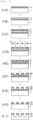
- FIG. 1 is a flow diagram showing the inventive patterning process.
- the present invention is a compound for forming a metal-containing film, comprising:
- a silicon-containing compound (c) may be contained besides the compound (b') for forming a ligand.
- the amount of the ligand derived from any of the structures represented by the formulae (b-1) to (b-4) contained in the inventive compound for forming a metal-containing film is preferably 10 mol% to 100 mol%, more preferably 20 mol% to 80 mol%, and further preferably 25 mol% to 75 mol% of the total amount of ligands coordinated to the metal atoms.
- the method for synthesizing the inventive compound for forming a metal-containing film is not particularly limited.
- a metal alkoxide, a metal carboxylate, or a metal acetylacetonate (acac) can be used as the metal-containing compound (a'), and the compound for forming a metal-containing film can be obtained by allowing the alkoxy, carboxy, or acac metal to react with the ligand derived from a compound represented by any of the formulae (b-1) to (b-4).
- the metal-containing compound (a') may be subjected to hydrolysis condensation and then the product may be allowed to react with the ligand derived from the compound represented by any of the formulae (b-1) to (b-4), or the metal-containing compound (a') may be allowed to react with the ligand derived from the compound represented by any of the formulae (b-1) to (b-4) and then the product may be subjected to hydrolysis condensation. If it is difficult to control the hydrolysis condensation, the reaction with the ligand derived from the compound represented by any of the formulae (b-1) to (b-4) may be performed in a non-hydrous environment.
- the solvent used in the synthesis reaction of the inventive compound for forming a metal-containing film is not particularly limited, and for example, a solvent given as an example of the organic solvent (B) described later can be used.
- Typical solvents and solvent mixtures contain an ester, ether, or alcohol functional group, and examples thereof include a mixture of propylene glycol monomethyl ether acetate (PGMEA) and propylene glycol monomethyl ether (PGME) at 70/30 by volume.
- An acid generator (D) can be contained in the inventive composition for forming a metal-containing film in order to promote further the curing reaction of the compound (A) for forming a metal-containing film.
- Acid generators can be classified into those that generate an acid by thermal decomposition and those that generate an acid by optical irradiation; however, any acid generator can be contained. Specific examples of the acid generator include the materials disclosed in paragraphs [0061] to [0085] of JP2007-199653A , but are not limited thereto.
- the contained amount is preferably 0.05 to 50 parts, more preferably 0.1 to 10 parts based on 100 parts by mass of the compound (A) for forming a metal-containing film.
- the present invention provides a method of using the above-described composition for forming a metal-containing film to form a resist underlayer film or middle layer film of a multilayer resist film used in lithography or a filling film that serves as a planarizing film for manufacturing a semiconductor.
- a substrate to be processed may also be coated with the inventive composition for forming a metal-containing film by spin-coating or the like in the same manner as described above, and then the composition for forming a metal-containing film may be baked and cured under an atmosphere having an oxygen concentration of 0.1 volume % or more and 21 volume % or less to form a metal-containing film.
- the present invention provides, as a patterning process according to a two-layer resist process using the above-described composition for forming a metal-containing film, a patterning process including the steps of:
- the resist upper layer film in the two-layer resist process described above exhibits etching resistance with respect to chlorine-based gas. Therefore, the dry etching of the metal-containing film that is performed while using the resist upper layer film as a mask in the two-layer resist process is preferably performed using an etching gas mainly containing a chlorine-based gas.
- an adhesive film may be formed between the resist upper layer film and the metal-containing film of the present invention.
- the adhesive film it is possible to use an organic film or a silicon-containing film containing polysiloxane.
- a patterning process according to a resist process using the inventive composition for forming a metal-containing film is useful for enhancing the exposure sensitivity of a resist upper layer film, and therefore, it is preferable to use the composition for an underlayer film that is at a short distance from the resist upper layer film, and it is more preferable to use the composition directly under the resist upper layer film.
- the adhesive film preferably has a film thickness of 20 nm or less, more preferably 15 nm or less, and further preferably 10 nm or less. The thinner the adhesive film, the greater the proportion of the contribution of the metal-containing film to the improvement of the exposure sensitivity of the resist upper layer film, which is preferable.
- the present invention also provides, as a patterning process according to a three-layer resist process using the above-described composition for forming a metal-containing film, a patterning process including the steps of:
- the metal-containing film 3 is dry-etched while using the resist upper layer film pattern 4a as a mask to form a metal-containing film pattern 3a (I-G).
- the resist upper layer film pattern 4a is removed, and then the organic resist underlayer film 2 is dry-etched while using the metal-containing film pattern 3a as a mask to form an organic resist underlayer film pattern 2a (I-H).
- the metal-containing film pattern 3a is removed, and then the substrate 1 to be processed is etched while using the organic resist underlayer film pattern 2a as a mask to form a pattern 1a (I-I).
- the metal-containing film in the three-layer resist process described above exhibits etching resistance with respect to oxygen-based gas. Therefore, the dry etching of the organic resist underlayer film that is performed while using the metal-containing film as a mask in the three-layer resist process is preferably performed using an etching gas mainly containing an oxygen-based gas.
- organic resist underlayer film material that can be used for the organic resist underlayer film, it is possible to use: materials already known as materials for an underlayer film for three-layer resist methods or two-layer resist methods using a silicon resist composition; 4,4'-(9-fluorenylidene) bisphenol novolak resin (molecular weight: 11,000) disclosed in JP2005-128509A ; and also many resins including novolak resins, known as resist underlayer film materials for two-layer resist methods and three-layer resist methods.
- a polycyclic skeleton can be introduced, as in a 6,6'-(9-fluorenylidene)-di(2-naphthol) novolak resin, and furthermore, a polyimide-based resin can also be selected (e.g. JP2004-153125A ).
- the organic resist underlayer film can be formed on the substrate to be processed by using a composition solution and by a spin-coating method or the like in the same manner as the photoresist composition. After forming the organic resist underlayer film by a spin-coating method or the like, it is desirable to bake the film in order to evaporate the organic solvent.
- the baking temperature is preferably 80 to 400°C, and the baking time is preferably 10 to 300 seconds.
- organic resist underlayer film instead of the organic resist underlayer film, it is also possible to adopt an organic hard mask formed by a CVD method or an ALD method.
- the patterning process according to the three-layer resist process using the above-described composition for forming a metal-containing film may be a patterning process including:
- the present invention also provides, as a patterning process according to a four-layer resist process using the above-described composition for forming a metal-containing film, a patterning process including the steps of:
- the inorganic hard mask middle layer film is preferably formed by a CVD method or an ALD method.
- a silicon oxide film, a silicon nitride film, and a silicon oxynitride film can be formed by a CVD method, an ALD method, etc.
- the method for forming the silicon nitride film is disclosed, for example, in JP2002-334869A and WO2004/066377A1 .
- the film thickness of the inorganic hard mask is preferably 5 to 200 nm, more preferably 10 to 100 nm.
- the SiON film which has a high function as an antireflective film, is the most favorably used as the inorganic hard mask.
- the metal oxide film may be deposited by PECVD or PEALD, for example, by using a Lam Vector (registered trademark) tool, separating the Sn oxide precursor from ⁇ precursor/plasma in the ALD implementation.
- Deposition temperature is preferably 50°C to 600°C.
- Deposition pressure is preferably between 100 and 6000 mTorr.
- Precursor liquid flow rates for metal-oxide-containing film e.g., an organotin oxide precursor
- gas flow rates CO 2 , CO, Ar, and N 2
- Plasma powers can be 200 to 1000 W per 300 mm wafer station, using a highfrequency plasma (e.g., 13.56 MHz, 27.1 MHz, or higher).
- Deposited thickness is preferably 100 to 2000 ⁇ .
- the organic middle layer film can be formed on the substrate to be processed by using a composition solution and by a spin-coating method or the like in the same manner as the photoresist composition. After forming the organic underlayer film by a spin-coating method or the like, it is desirable to bake the film in order to evaporate the organic solvent.
- the baking temperature is preferably 80 to 400°C, and the baking time is preferably 10 to 300 seconds.
- metal source M As a metal source M, the following metal compounds were used.
- Crosslinking agents (XL-1) and (XL-2), used in compositions for forming a metal-containing film, are shown below.
- the compound (A-1) for forming a metal-containing film was dissolved in a mixed solvent of propylene glycol monomethyl ether acetate (PGMEA) and propylene glycol monomethyl ether (PGME) in the proportion shown in Table 4, and the solution was filtered through a 0.02- ⁇ m membrane filter to prepare a composition (UDL-1) for forming a metal-containing film.
- PGMEA propylene glycol monomethyl ether acetate
- PGME propylene glycol monomethyl ether
- Each chemical liquid was prepared in the same manner as UDL-1, except that the type and the contained amount of each component were as shown in Table 4. In Table 4, "-" indicates that the component was not used.
- a resist material obtained by dissolving the following components in the proportion of Table 5 was applied to the metal-containing film by spin-coating and prebaked using a hot plate at 105°C for 60 seconds to prepare a resist film having a film thickness of 60 nm.
- the resist film was exposed using an EUV scanner NXE3300 (manufactured by ASML, NA: 0.33, ⁇ : 0.9/0.6, quadrupole illumination, with a mask having a hole pattern with a pitch of 46 nm and +20% bias (on-wafer size)), followed by PEB on a hot plate at 100°C for 60 seconds and development with a 2.38 mass% aqueous solution of TMAH for 30 seconds to obtain a hole pattern with a size of 23 nm.
Landscapes
- Physics & Mathematics (AREA)
- General Physics & Mathematics (AREA)
- Chemical & Material Sciences (AREA)
- Organic Chemistry (AREA)
- Engineering & Computer Science (AREA)
- Architecture (AREA)
- Structural Engineering (AREA)
- Plasma & Fusion (AREA)
- Spectroscopy & Molecular Physics (AREA)
- Materials For Photolithography (AREA)
- Exposure And Positioning Against Photoresist Photosensitive Materials (AREA)
- Organic Low-Molecular-Weight Compounds And Preparation Thereof (AREA)
- Photosensitive Polymer And Photoresist Processing (AREA)
- Manufacturing Of Printed Wiring (AREA)
Applications Claiming Priority (1)
| Application Number | Priority Date | Filing Date | Title |
|---|---|---|---|
| JP2023219246A JP2025102051A (ja) | 2023-12-26 | 2023-12-26 | 金属含有膜形成用化合物、金属含有膜形成用組成物、パターン形成方法 |
Publications (2)
| Publication Number | Publication Date |
|---|---|
| EP4579346A2 true EP4579346A2 (de) | 2025-07-02 |
| EP4579346A3 EP4579346A3 (de) | 2025-09-03 |
Family
ID=93926423
Family Applications (1)
| Application Number | Title | Priority Date | Filing Date |
|---|---|---|---|
| EP24221389.0A Pending EP4579346A3 (de) | 2023-12-26 | 2024-12-19 | Verbindung zur bildung eines metallhaltigen films, zusammensetzung zur bildung eines metallhaltigen films und strukturierungsverfahren |
Country Status (7)
| Country | Link |
|---|---|
| US (1) | US20250208511A1 (de) |
| EP (1) | EP4579346A3 (de) |
| JP (1) | JP2025102051A (de) |
| KR (1) | KR20250100557A (de) |
| CN (1) | CN120209022A (de) |
| IL (1) | IL317927A (de) |
| TW (1) | TW202535896A (de) |
Citations (6)
| Publication number | Priority date | Publication date | Assignee | Title |
|---|---|---|---|---|
| JP2002334869A (ja) | 2001-02-07 | 2002-11-22 | Tokyo Electron Ltd | シリコン窒化膜の形成方法、形成装置及びこの形成装置の洗浄前処理方法 |
| JP2004153125A (ja) | 2002-10-31 | 2004-05-27 | Fujitsu Ltd | 加工用マスクの形成方法及び半導体装置の製造方法 |
| WO2004066377A1 (ja) | 2003-01-24 | 2004-08-05 | Tokyo Electron Limited | 被処理基板上にシリコン窒化膜を形成するcvd方法 |
| JP2005128509A (ja) | 2003-10-03 | 2005-05-19 | Shin Etsu Chem Co Ltd | フォトレジスト下層膜形成材料及びパターン形成方法 |
| JP2007199653A (ja) | 2005-12-27 | 2007-08-09 | Shin Etsu Chem Co Ltd | フォトレジスト下層膜形成材料及びパターン形成方法 |
| JP2009269953A (ja) | 2008-05-01 | 2009-11-19 | Shin Etsu Chem Co Ltd | 新規光酸発生剤並びにこれを用いたレジスト材料及びパターン形成方法 |
Family Cites Families (4)
| Publication number | Priority date | Publication date | Assignee | Title |
|---|---|---|---|---|
| JP5121196B2 (ja) * | 2006-09-15 | 2013-01-16 | 株式会社Adeka | 金属アルコキシド化合物、薄膜形成用原料及び薄膜の製造方法 |
| WO2013012068A1 (ja) * | 2011-07-20 | 2013-01-24 | 日産化学工業株式会社 | チタン及びシリコン含有リソグラフィー用薄膜形成組成物 |
| EP2754638B1 (de) * | 2011-09-05 | 2018-11-07 | Tosoh Corporation | Filmbildendes material, gruppe-iv-metalloxidfilm und vinylendiamidkomplexen |
| SG11202106923XA (en) * | 2019-02-22 | 2021-07-29 | Merck Patent Gmbh | Spin-on compositions comprising an inorganic oxide component and an alkynyloxy substituted spin-on carbon component useful as hard masks and filling materials with improved shelf life |
-
2023
- 2023-12-26 JP JP2023219246A patent/JP2025102051A/ja active Pending
-
2024
- 2024-12-19 EP EP24221389.0A patent/EP4579346A3/de active Pending
- 2024-12-20 US US18/991,029 patent/US20250208511A1/en active Pending
- 2024-12-22 IL IL317927A patent/IL317927A/en unknown
- 2024-12-23 KR KR1020240194634A patent/KR20250100557A/ko active Pending
- 2024-12-24 TW TW113150314A patent/TW202535896A/zh unknown
- 2024-12-25 CN CN202411919666.7A patent/CN120209022A/zh active Pending
Patent Citations (6)
| Publication number | Priority date | Publication date | Assignee | Title |
|---|---|---|---|---|
| JP2002334869A (ja) | 2001-02-07 | 2002-11-22 | Tokyo Electron Ltd | シリコン窒化膜の形成方法、形成装置及びこの形成装置の洗浄前処理方法 |
| JP2004153125A (ja) | 2002-10-31 | 2004-05-27 | Fujitsu Ltd | 加工用マスクの形成方法及び半導体装置の製造方法 |
| WO2004066377A1 (ja) | 2003-01-24 | 2004-08-05 | Tokyo Electron Limited | 被処理基板上にシリコン窒化膜を形成するcvd方法 |
| JP2005128509A (ja) | 2003-10-03 | 2005-05-19 | Shin Etsu Chem Co Ltd | フォトレジスト下層膜形成材料及びパターン形成方法 |
| JP2007199653A (ja) | 2005-12-27 | 2007-08-09 | Shin Etsu Chem Co Ltd | フォトレジスト下層膜形成材料及びパターン形成方法 |
| JP2009269953A (ja) | 2008-05-01 | 2009-11-19 | Shin Etsu Chem Co Ltd | 新規光酸発生剤並びにこれを用いたレジスト材料及びパターン形成方法 |
Non-Patent Citations (1)
| Title |
|---|
| SPIE, vol. 3331, 1998, pages 531 |
Also Published As
| Publication number | Publication date |
|---|---|
| JP2025102051A (ja) | 2025-07-08 |
| IL317927A (en) | 2025-07-01 |
| TW202535896A (zh) | 2025-09-16 |
| CN120209022A (zh) | 2025-06-27 |
| KR20250100557A (ko) | 2025-07-03 |
| US20250208511A1 (en) | 2025-06-26 |
| EP4579346A3 (de) | 2025-09-03 |
Similar Documents
| Publication | Publication Date | Title |
|---|---|---|
| US11609494B2 (en) | Semiconductor photoresist composition and method of forming patterns using the composition | |
| EP4398036A1 (de) | Verbindung zur bildung eines metallhaltigen films, zusammensetzung zur bildung eines metallhaltigen films und strukturierungsverfahren | |
| JP7802711B2 (ja) | 金属含有膜形成用化合物、金属含有膜形成用組成物、及びパターン形成方法 | |
| EP4524655A1 (de) | Verbindung zur bildung eines metallhaltigen films, zusammensetzung zur bildung eines metallhaltigen films und strukturierungsverfahren | |
| KR20250098982A (ko) | 금속 함유막 형성용 화합물, 금속 함유막 형성용 조성물, 패턴 형성 방법 | |
| EP4579346A2 (de) | Verbindung zur bildung eines metallhaltigen films, zusammensetzung zur bildung eines metallhaltigen films und strukturierungsverfahren | |
| EP4579348A2 (de) | Verbindung zur bildung eines metallhaltigen films, zusammensetzung zur bildung eines metallhaltigen films und strukturierungsverfahren | |
| EP4579347A2 (de) | Verbindung zur bildung eines metallhaltigen films, zusammensetzung zur bildung eines metallhaltigen films und strukturierungsverfahren | |
| CN118496262A (zh) | 含金属的膜形成用化合物、含金属的膜形成用组成物、图案形成方法 | |
| EP4589383A2 (de) | Verbindung zur bildung eines metallhaltigen films, zusammensetzung zur bildung eines metallhaltigen films und strukturierungsverfahren | |
| TWI913067B (zh) | 含金屬之膜形成用化合物、含金屬之膜形成用組成物、圖案形成方法 | |
| EP4647840A2 (de) | Verbindung zur bildung eines metallhaltigen films, zusammensetzung zur bildung eines metallhaltigen films und strukturierungsverfahren | |
| EP4435516A1 (de) | Verfahren zur bildung eines resistunterschichtfilms und strukturierungsverfahren | |
| EP4653955A2 (de) | Verbindung zur bildung eines metallhaltigen films, zusammensetzung zur bildung eines metallhaltigen films und strukturierungsverfahren | |
| KR102939481B1 (ko) | 금속 함유막 형성용 화합물, 금속 함유막 형성용 조성물, 패턴 형성 방법, 및 금속 함유막 형성용 화합물의 제조 방법 | |
| EP4425260A1 (de) | Verbindung zur bildung eines metallhaltigen films, zusammensetzung zur bildung eines metallhaltigen films und strukturierungsverfahren | |
| KR20250098977A (ko) | 금속 함유막 형성용 화합물, 금속 함유막 형성용 조성물, 패턴 형성 방법 | |
| JP2024132848A (ja) | レジスト下層膜形成方法、及びパターン形成方法 | |
| KR20250115331A (ko) | 금속 함유막 형성용 조성물, 패턴 형성 방법 | |
| CN120370627A (zh) | 含金属的膜形成用组成物、图案形成方法 | |
| JP2024175717A (ja) | 金属含有膜形成用化合物、金属含有膜形成用組成物、金属含有膜形成用化合物の製造方法、及びパターン形成方法 |
Legal Events
| Date | Code | Title | Description |
|---|---|---|---|
| PUAI | Public reference made under article 153(3) epc to a published international application that has entered the european phase |
Free format text: ORIGINAL CODE: 0009012 |
|
| STAA | Information on the status of an ep patent application or granted ep patent |
Free format text: STATUS: THE APPLICATION HAS BEEN PUBLISHED |
|
| AK | Designated contracting states |
Kind code of ref document: A2 Designated state(s): AL AT BE BG CH CY CZ DE DK EE ES FI FR GB GR HR HU IE IS IT LI LT LU LV MC ME MK MT NL NO PL PT RO RS SE SI SK SM TR |
|
| PUAL | Search report despatched |
Free format text: ORIGINAL CODE: 0009013 |
|
| AK | Designated contracting states |
Kind code of ref document: A3 Designated state(s): AL AT BE BG CH CY CZ DE DK EE ES FI FR GB GR HR HU IE IS IT LI LT LU LV MC ME MK MT NL NO PL PT RO RS SE SI SK SM TR |
|
| RIC1 | Information provided on ipc code assigned before grant |
Ipc: G03F 7/075 20060101AFI20250728BHEP Ipc: G03F 7/09 20060101ALI20250728BHEP |
|
| STAA | Information on the status of an ep patent application or granted ep patent |
Free format text: STATUS: REQUEST FOR EXAMINATION WAS MADE |
|
| 17P | Request for examination filed |
Effective date: 20250925 |
|
| REG | Reference to a national code |
Ref country code: DE Ref legal event code: R079 Free format text: PREVIOUS MAIN CLASS: G03F0007075000 Ipc: G03F0007090000 |
|
| GRAP | Despatch of communication of intention to grant a patent |
Free format text: ORIGINAL CODE: EPIDOSNIGR1 |
|
| STAA | Information on the status of an ep patent application or granted ep patent |
Free format text: STATUS: GRANT OF PATENT IS INTENDED |
|
| RIC1 | Information provided on ipc code assigned before grant |
Ipc: G03F 7/09 20060101AFI20260121BHEP Ipc: G03F 7/11 20060101ALI20260121BHEP Ipc: G03F 7/075 20060101ALI20260121BHEP Ipc: C07F 7/00 20060101ALI20260121BHEP Ipc: C07F 7/28 20060101ALI20260121BHEP Ipc: H10P 50/28 20260101ALI20260121BHEP Ipc: H10P 50/00 20260101ALI20260121BHEP |
|
| INTG | Intention to grant announced |
Effective date: 20260211 |