EP4579000A2 - Kupferfolie und verfahren zur herstellung davon - Google Patents
Kupferfolie und verfahren zur herstellung davon Download PDFInfo
- Publication number
- EP4579000A2 EP4579000A2 EP24220070.7A EP24220070A EP4579000A2 EP 4579000 A2 EP4579000 A2 EP 4579000A2 EP 24220070 A EP24220070 A EP 24220070A EP 4579000 A2 EP4579000 A2 EP 4579000A2
- Authority
- EP
- European Patent Office
- Prior art keywords
- copper foil
- electrolyte
- component
- copper
- kinetic friction
- Prior art date
- Legal status (The legal status is an assumption and is not a legal conclusion. Google has not performed a legal analysis and makes no representation as to the accuracy of the status listed.)
- Pending
Links
Images

Classifications
-
- H—ELECTRICITY
- H01—ELECTRIC ELEMENTS
- H01M—PROCESSES OR MEANS, e.g. BATTERIES, FOR THE DIRECT CONVERSION OF CHEMICAL ENERGY INTO ELECTRICAL ENERGY
- H01M4/00—Electrodes
- H01M4/02—Electrodes composed of, or comprising, active material
- H01M4/13—Electrodes for accumulators with non-aqueous electrolyte, e.g. for lithium-accumulators; Processes of manufacture thereof
-
- C—CHEMISTRY; METALLURGY
- C25—ELECTROLYTIC OR ELECTROPHORETIC PROCESSES; APPARATUS THEREFOR
- C25D—PROCESSES FOR THE ELECTROLYTIC OR ELECTROPHORETIC PRODUCTION OF COATINGS; ELECTROFORMING; APPARATUS THEREFOR
- C25D1/00—Electroforming
- C25D1/04—Wires; Strips; Foils
-
- C—CHEMISTRY; METALLURGY
- C25—ELECTROLYTIC OR ELECTROPHORETIC PROCESSES; APPARATUS THEREFOR
- C25D—PROCESSES FOR THE ELECTROLYTIC OR ELECTROPHORETIC PRODUCTION OF COATINGS; ELECTROFORMING; APPARATUS THEREFOR
- C25D3/00—Electroplating: Baths therefor
- C25D3/02—Electroplating: Baths therefor from solutions
- C25D3/38—Electroplating: Baths therefor from solutions of copper
-
- C—CHEMISTRY; METALLURGY
- C25—ELECTROLYTIC OR ELECTROPHORETIC PROCESSES; APPARATUS THEREFOR
- C25D—PROCESSES FOR THE ELECTROLYTIC OR ELECTROPHORETIC PRODUCTION OF COATINGS; ELECTROFORMING; APPARATUS THEREFOR
- C25D5/00—Electroplating characterised by the process; Pretreatment or after-treatment of workpieces
- C25D5/48—After-treatment of electroplated surfaces
-
- C—CHEMISTRY; METALLURGY
- C25—ELECTROLYTIC OR ELECTROPHORETIC PROCESSES; APPARATUS THEREFOR
- C25D—PROCESSES FOR THE ELECTROLYTIC OR ELECTROPHORETIC PRODUCTION OF COATINGS; ELECTROFORMING; APPARATUS THEREFOR
- C25D9/00—Electrolytic coating other than with metals
- C25D9/04—Electrolytic coating other than with metals with inorganic materials
-
- H—ELECTRICITY
- H01—ELECTRIC ELEMENTS
- H01M—PROCESSES OR MEANS, e.g. BATTERIES, FOR THE DIRECT CONVERSION OF CHEMICAL ENERGY INTO ELECTRICAL ENERGY
- H01M10/00—Secondary cells; Manufacture thereof
- H01M10/05—Accumulators with non-aqueous electrolyte
- H01M10/052—Li-accumulators
- H01M10/0525—Rocking-chair batteries, i.e. batteries with lithium insertion or intercalation in both electrodes; Lithium-ion batteries
-
- H—ELECTRICITY
- H01—ELECTRIC ELEMENTS
- H01M—PROCESSES OR MEANS, e.g. BATTERIES, FOR THE DIRECT CONVERSION OF CHEMICAL ENERGY INTO ELECTRICAL ENERGY
- H01M4/00—Electrodes
- H01M4/02—Electrodes composed of, or comprising, active material
- H01M4/13—Electrodes for accumulators with non-aqueous electrolyte, e.g. for lithium-accumulators; Processes of manufacture thereof
- H01M4/139—Processes of manufacture
-
- H—ELECTRICITY
- H01—ELECTRIC ELEMENTS
- H01M—PROCESSES OR MEANS, e.g. BATTERIES, FOR THE DIRECT CONVERSION OF CHEMICAL ENERGY INTO ELECTRICAL ENERGY
- H01M4/00—Electrodes
- H01M4/02—Electrodes composed of, or comprising, active material
- H01M4/64—Carriers or collectors
- H01M4/66—Selection of materials
- H01M4/661—Metal or alloys, e.g. alloy coatings
-
- H—ELECTRICITY
- H01—ELECTRIC ELEMENTS
- H01M—PROCESSES OR MEANS, e.g. BATTERIES, FOR THE DIRECT CONVERSION OF CHEMICAL ENERGY INTO ELECTRICAL ENERGY
- H01M4/00—Electrodes
- H01M4/02—Electrodes composed of, or comprising, active material
- H01M4/64—Carriers or collectors
- H01M4/66—Selection of materials
- H01M4/665—Composites
- H01M4/667—Composites in the form of layers, e.g. coatings
-
- Y—GENERAL TAGGING OF NEW TECHNOLOGICAL DEVELOPMENTS; GENERAL TAGGING OF CROSS-SECTIONAL TECHNOLOGIES SPANNING OVER SEVERAL SECTIONS OF THE IPC; TECHNICAL SUBJECTS COVERED BY FORMER USPC CROSS-REFERENCE ART COLLECTIONS [XRACs] AND DIGESTS
- Y02—TECHNOLOGIES OR APPLICATIONS FOR MITIGATION OR ADAPTATION AGAINST CLIMATE CHANGE
- Y02E—REDUCTION OF GREENHOUSE GAS [GHG] EMISSIONS, RELATED TO ENERGY GENERATION, TRANSMISSION OR DISTRIBUTION
- Y02E60/00—Enabling technologies; Technologies with a potential or indirect contribution to GHG emissions mitigation
- Y02E60/10—Energy storage using batteries
Definitions
- the present disclosure relates to a copper foil, an electrode including the same, a secondary battery including the same, and a method of manufacturing the same. More specifically, the present disclosure relates to a copper foil having excellent strength while slipping is prevented during a manufacturing process, an electrode including the same, a secondary battery including the same, and a method of manufacturing the same.
- a copper foil is used to manufacture a variety of products such as an anode for a secondary battery, a flexible printed circuit board (FPCB), and the like.
- FPCB flexible printed circuit board
- a copper foil is produced in a roll-to-roll process in a foil manufacturing apparatus, and a process of coating an active material during an anode manufacturing process of a secondary battery is also performed in a roll-to-roll process.
- an ultra-thin copper foil is used to increase the capacity of the secondary battery, but when a thickness of the copper foil is reduced below 10 ⁇ m, a slipping phenomenon frequently occurs between a roll and the copper foil.
- the slipping phenomenon occurs, since the copper foil is wrinkled or torn and thus a continuous process becomes impossible, workability or handleability in an electrode forming process for a secondary battery deteriorates, and in severe cases, electrode manufacturing itself becomes impossible.
- the present disclosure relates to a copper foil capable of preventing problems caused by the above limitations and disadvantages of the related art, an electrode including the same, a secondary battery including the same, and a method of manufacturing the same.
- One embodiment of the present disclosure provides a copper foil including a copper film having a matte surface and a shiny surface, and a protective layer disposed on the copper film, wherein the copper film has a first surface in a direction of the matte surface and a second surface in a direction of the shiny surface, and Equation 1 below is satisfied. 3.0 kgf/mm 2 ⁇ tensile strength x average kinetic friction coefficient ⁇ 8.0 kgf/mm 2 , or 29419950 N/m 2 ⁇ tensile strength x average kinetic friction coefficient ⁇ 78453200 N/m 2 .
- the average kinetic friction coefficient in Equation 1 means an average value of kinetic friction coefficients of the first surface and the second surface.
- the kinetic friction coefficient of the first surface may be 0.05 to 0.15, and/or the kinetic friction coefficient of the second surface may be 0.1 to 0.2.
- a difference between the kinetic friction coefficients of the first surface and the second surface may be 0.1 or less.
- the protective layer may include at least one of a chromium compound, a silane compound, and a nitrogen compound.
- Another embodiment of the present disclosure provides a method of manufacturing a copper foil, e.g. a copper foil according to any one of the herein described embodiments, the method including: preparing an electrolyte including copper ions, forming a copper film, and forming a protective layer on the copper film, wherein the forming of the copper film includes allowing a cathode plate and a rotating anode drum disposed to be spaced apart from each other in an electrolyte in an electrolytic cell to conduct current to form the copper film on the rotating anode drum, the electrolyte includes 70 to 150 g/L of copper ions, 80 to 150 g/L of sulfuric acid, 15 to 25 ppm of chlorine (Cl), and an organic additive, the organic additive includes a polishing agent (component A), a moderator (component B), and a leveling agent (component C), and the leveling agent (component C) includes a polyethylene glycol (PEG)-polypropylene glycol (PPG) derivative.
- the polishing agent (component A) may include sulfonic acid or a metal salt thereof.
- the moderator (component B) may include a non-ionic water-soluble polymer.
- an end group may be substituted with a saturated hydrocarbon or a functional group.
- the functional group may be at least one of an ethylene group, an acrylic group, and a bisphenol group.
- the preparing of the electrolyte may include filtering a first electrolyte transferred from a storage tank using carbon to form a second electrolyte.
- the preparing of the electrolyte may include adding the leveling agent (component C) to the second electrolyte to form the electrolyte.
- Still embodiment of the present disclosure provides an electrode for a secondary battery including a copper foil, in particular a copper foil according to any one of the herein described embodiments, and an active material layer disposed on at least one surface of the copper foil.
- spatially relative terms such as “below,” “beneath,” “lower,” “above,” “upper” and the like, may be used herein for ease of description to describe one element or component's relationship to another element(s) or component(s) as illustrated in the drawings. It will be understood that the spatially relative terms are intended to include different orientations of the element in use or operation in addition to the orientation illustrated in the drawings. For example, when an element in the drawings is turned over, an element described as being “above” or “upper” relative to another element will then be “below” or “lower” relative to the other element. Thus, the exemplary term “below” may include both above and below orientations. Likewise, the exemplary terms “above” or “upper” may include both above and below orientations.
- first In order to describe various components, terms such as “first,” “second,” and the like are used, but these components are not limited by these terms. These terms are only used to distinguish one component from another component. Therefore, a first component described below may be a second component within the technical idea of the present disclosure.
- At least one should be understood to include all possible combinations from one or more related items.
- the meaning of “at least one of first, second, and third items” may mean all combinations of two or more items of the first, second and third items as well as each of the first, second and third items.
- the copper film 111 may be formed on a rotating anode drum through electroplating and may have a shiny surface 111b that is in direct contact with the rotating anode drum in an electroplating process and a matte surface 111a at an opposite side of the shiny surface 111b.
- the protective layer 112 is formed by electrodepositing an anticorrosion material on the copper film 111.
- the anticorrosion material may include at least one of a chromium compound, a silane compound, and a nitrogen compound.
- the protective layer 112 increases a lifespan of the copper foil 110 itself as well as a lifespan of a final product including the same by preventing oxidation and corrosion of the copper film 111 and enhancing heat resistance.
- the copper foil 110 has a first surface S1 in a direction of the matte surface 111a of the copper film 111 and a second surface S2 in a direction of the shiny surface 111b.
- the copper foil 110 according to one embodiment of the present disclosure may satisfy Equation 1 below. 3.0 kgf/mm 2 ⁇ tensile strength ⁇ average kinetic friction coefficient ⁇ 8 .0 kgf/mm 2
- the copper foil 110 when the copper foil 110 according to one embodiment of the present disclosure satisfies Equation 1, the copper foil 110 may have excellent tensile strength while slipping is prevented in a manufacturing process, and the wrinkles or tears are prevented from occurring in the copper foil.
- Equation 1 when a value of Equation 1 is less than 3.0 kgf/mm 2 , since the tensile strength excessively decreases, mechanical properties of the copper foil may deteriorate, and since an average kinetic friction coefficient excessively decreases, slipping occurs during the manufacturing process of the copper foil and thus the wrinkles or tears may occur in the copper foil.
- Equation 1 when the value of Equation 1 exceeds 8.0 kgf/mm 2 , the slipping of the copper foil may be prevented or suppressed from occurring, but since a surface of the copper foil becomes excessively rough, when an active material is coated on the copper foil, the coating may become uneven. Furthermore, when the tensile strength is excessively large even when the kinetic friction coefficient maintains a constant value, since brittleness of the copper foil 110 itself may be increased, and thus the copper foil 110 may not be stretched in response to a force applied to the copper foil 110 in the roll-to-roll process, tears may occur in the copper foil 110.
- the tensile strength in Equation 1 was measured by a universal tester (UTM) according to the specifications of the IPC-TM-650 Test Method Manual. Specifically, the tensile strength of the copper foil 110 at room temperature (25t3°C) was measured using an Instron's universal tester from. A width of a sample is 12.7 mm, a distance between grips is 50 mm, and a measurement speed is 50 mm/min.
- the average kinetic friction coefficient in Equation 1 means an average value of kinetic friction coefficients of the first surface S1 and the second surface S2 of the copper foil 110. Specifically, the average kinetic friction coefficient in Equation 1 means a value of a half of the sum of the kinetic friction coefficients of the first surface S1 and the second surface S2.
- the kinetic friction coefficients of the first surface S1 and the second surface S2 of the copper foil 110 may be measured by WithLab's WL2100C according to the specifications of ASTM D1894. Specifically, the kinetic friction coefficient of the copper foil 110 may be measured by bringing a stainless steel ball (SUS ball) into contact with the copper foil 110 and moving the stainless steel ball (SUS ball) while applying a load to the stainless steel ball (SUS ball). In this case, a stainless steel ball (SUS ball) with a diameter of 10 mm is used, and the kinetic friction coefficient of the copper foil 110 may be measured under conditions of a speed of 150 mm/min, a vertical load of 1.96 N (200 g), and a load cell of 29 N. The kinetic friction coefficient is measured three times, and an average value is used.
- the kinetic friction coefficient of the first surface S1 of the copper foil 110 may be 0.05 to 0.15, and the kinetic friction coefficient of the second surface S2 may be 0.1 to 0.2. Specifically, when the kinetic friction coefficients of the first surface S1 and the second surface S2 of the copper foil 110 satisfy the above range, slipping is prevented in the manufacturing process of the copper foil, and wrinkles or tears may be prevented from occurring in the copper foil.
- the kinetic friction coefficient of the first surface S1 is less than 0.05 or the kinetic friction coefficient of the second surface S2 is less than 0.1, since slipping may occur in the manufacturing process of the copper foil 110, wrinkles or tears may occur in the copper foil 110.
- the kinetic friction coefficient of the first surface S1 exceeds 0.15 or the kinetic friction coefficient of the second surface S2 exceeds 0.2, since the surface of the copper foil 110 may become excessively rough even when slipping can be suppressed from occurring in the manufacturing process of the copper foil 110, when the active material is coated on the copper foil, the coating may become uneven.
- a difference between the kinetic friction coefficients of the first surface S1 and the second surface S2 of the copper foil 110 may be 0.1 or less. Specifically, when the difference between the kinetic friction coefficients of the first surface S1 and the second surface S2 of the copper foil 110 is 0.1 or less, since a difference between surface properties of the first surface S1 and the second surface S2 is small, it may be possible to uniformly coat the active material on both surfaces of the copper foil 110.
- the copper foil 110 has a thickness of 4 ⁇ m to 35 ⁇ m.
- the copper foil 110 is used as a current collector of an electrode in a secondary battery, as the thickness of the copper foil 110 becomes smaller, more current collectors can be accommodated in the same space, which is advantageous for high capacity of the secondary battery.
- the manufacture of the copper foil 110 having a thickness of less than 4 ⁇ m causes a decrease in workability.
- an electrode 100 including the copper foil 110 of the present disclosure and a secondary battery including the electrode 100 will be described in detail.
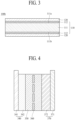
- FIG. 2 is a cross-sectional view of an electrode 100a for a secondary battery according to one embodiment of the present disclosure.
- FIG. 3 is a cross-sectional view of an electrode 100b for a secondary battery according to another embodiment of the present disclosure.
- the electrode 100a for a secondary battery includes the copper foil 110 of one of the above-described embodiments of the present disclosure and an active material layer 120.
- FIG. 2 illustrates a configuration in which the active material layer 120 is formed on one surface of the copper foil 110.
- the present disclosure is not limited thereto, and referring to FIG. 3 , the active material layer 120 may be formed on each of both surfaces of the copper foil 110.
- an aluminum foil is used as a cathode current collector coupled to a cathode active material
- the copper foil 110 is used as an anode current collector coupled to an anode active material
- the electrode 100 for a secondary battery is an anode
- the copper foil 110 is used as an anode current collector
- the active material layer 120 includes an anode active material
- the active material layer 120 of the present disclosure may be formed of a composite of carbon and metal.
- the metal may include, for example, at least one of silicon (Si), germanium (Ge), tin (Sn), lithium (Li), zinc (Zn), magnesium (Mg), cadmium (Cd), cerium (Ce), nickel (Ni), and iron (Fe), and preferably, may include Si and/or Sn.
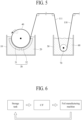
- FIG. 4 is a schematic cross-sectional view of a secondary battery according to one embodiment of the present disclosure.
- the secondary battery includes a cathode 370, an anode 340, an electrolyte 350 disposed between the cathode 370 and the anode 340 to provide an environment in which ions are movable, and a separator 360 electrically insulating the cathode 370 and the anode 340.
- the ions moving between the cathode 370 and the anode 340 are, for example, lithium ions.
- the separator 360 separates the cathode 370 and the anode 340 in order to prevent charges generated in one electrode from being uselessly consumed by moving to another electrode through the inside of the secondary battery. Referring to FIG. 5 , the separator 360 is disposed in the electrolyte 350.
- the cathode 370 includes a cathode current collector 371 and a cathode active material layer 372, and an aluminum foil may be used as the cathode current collector 371.
- the anode 340 includes an anode current collector 341 and an anode active material layer 342, and the copper foil 110 may be used as the anode current collector 341.
- the copper foil 110 disclosed in FIG. 1 may be used as the anode current collector 341.
- the electrode 100a or 100b for a secondary battery illustrated in FIG. 2 or 3 may be used as the anode 340 of the secondary battery illustrated in FIG. 4 .
- the method for manufacturing the copper foil 110 of the present disclosure includes forming a copper film 111, and forming a protective layer 112 on the copper film 111.
- the method of the present disclosure includes forming the copper film 111 on a rotating anode drum 40 by electrically conducting a cathode plate 30 and the rotating anode drum 40, which are disposed to be spaced apart from each other in an electrolyte 20 in an electrolytic cell 10.
- the cathode plate 30 may include first and second cathode plates 31 and 32 electrically insulated from each other.
- the forming of the copper film 111 may be performed by forming a seed layer through electrical conduction between the first cathode plate 31 and the rotating anode drum 40, and then growing the seed layer through electrical conduction between the second cathode plate 32 and the rotating anode drum 40.
- a current density provided by each of the first and second cathode plates 31 and 32 may be 30 to 130 ASD (A/dm2).
- the surface characteristics of the copper film 111 may be changed according to a buffing or polishing degree of a surface of the rotating anode drum 40.
- the surface of the rotating anode drum 40 may be polished using a polishing brush having a grit of #800 to #3000.
- the electrolyte 20 is maintained at a temperature of 40 °C to 60 °C. More specifically, the temperature of the electrolyte 20 may be maintained at 50 °C or higher. At this time, the physical, chemical, and electrical characteristics of the copper film 111 may be controlled by adjusting a composition of the electrolyte 20.
- an electrolyte 20 may include copper ions, sulfuric acid, chlorine (Cl), and an organic additive.
- a concentration of copper ions and a concentration of sulfuric acid in the electrolyte 20 are respectively adjusted to 70 to 150 g/L and 80 to 150 g/L.
- chlorine (Cl) includes both chlorine ions (Cl-) and chlorine atoms present in the molecule.
- Chlorine (Cl) may be used, for example, to remove silver (Ag) ions introduced into the electrolyte 20 in a process of forming the copper film 111.
- chlorine (Cl) may precipitate silver (Ag) ions in the form of silver chloride (AgCl). This silver chloride (AgCl) may be removed by filtering.
- the concentration of chlorine (Cl) is adjusted to a range of 15 to 25 ppm.
- the electrolyte 20 may include an organic additive.
- the organic additive included in the electrolyte 20 includes a polishing agent (component A), a moderator (component B), and a leveling agent (component C).
- the polishing agent (component A) includes sulfonic acid or a metal salt thereof.
- the polishing agent (component A) may have a concentration of 1 to 20 ppm in the electrolyte 20.
- the polishing agent (component A) may increase the charge amount of the electrolyte 20 to increase an electrodeposition rate of the copper, improve curl characteristics of the copper foil, and enhance the gloss of the copper foil 110.
- concentration of the polishing agent (component A) is less than 1 ppm, the gloss of the copper foil 110 is reduced, and when the concentration of the polishing agent (component A) exceeds 20 ppm, the weight of the copper foil 110 changes after immersion, or surface roughness changes may occur.
- the polishing agent may include at least one of, for example, bis-(3-sulfopropyl)-disulfide disodium salt, 3-mercapto-1-propanesulfonic acid, 3-(N,N-dimethylthiocarbamoyl)-thiopropanesulfonate sodium salt, 3-[(amino-iminomethyl)thio]-1-propanesulfonate sodium salt, o-ethyldithiocarbonato-S-(3-sulfopropyl)-ester sodium salt, 3-(benzothiazolyl-2-mercapto)-propyl-sulfonic acid sodium salt, and ethylenedithiodipropylsulfonic acid sodium salt.
- bis-(3-sulfopropyl)-disulfide disodium salt 3-mercapto-1-propanesulfonic acid, 3-(N,N-dimethylthiocarbamoyl)-thiopropanes
- the moderator (component B) includes a non-ionic water-soluble polymer.
- the moderator (component B) may have a concentration of 1 to 10 ppm in the electrolyte 20.
- the concentration of the moderator (component B) When the concentration of the moderator (component B) is less than 1 ppm, the roughness of the copper foil 110 rapidly increases, and a problem of a change in the surface condition of the copper foil 110 may occur. On the other hand, even when the concentration of the moderator (component B) exceeds 10 ppm, there is almost no change in the physical properties of the copper foil 110, such as appearance, gloss, roughness, strength, elongation rate, and the like. Accordingly, the concentration of the moderator (component B) may be adjusted to a range of 1 to 10 ppm without increasing manufacturing costs and wasting raw materials by unnecessarily increasing the concentration of the moderator (component B).
- the leveling agent (component C) includes a polyethylene glycol (PEG)-polypropylene glycol (PPG) derivative.
- the leveling agent (component C) may have a concentration of 0.1 to 10 ppm in the electrolyte 20.
- the leveling agent (component C) prevents excessively high peaks or excessively large protrusions from being generated on the copper film 111 so that the copper film 111 becomes macroscopically flat.
- the leveling agent (component C) may have a concentration of 0.1 to 10 ppm in the electrolyte 20.
- an end group may be substituted with a saturated hydrocarbon or a functional group.
- the functional group may include at least one of an ethylene group, an acrylic group, and a bisphenol group.
- PEG means polyethylene glycol and PPG means polypropylene glycol.
- a hydroxyl group (-OH) is present as an end group, and the hydroxyl group (-OH) which is present as an end group may react with other additives added in the electrolyte such that the properties of the copper foil may deteriorate.
- the end group of the PEG-PPG derivative when the end group of the PEG-PPG derivative is substituted with a saturated hydrocarbon or a functional group including at least one of an ethylene group, an acrylic group, and a bisphenol group, since the end group of the PEG-PPG derivative is stabilized, an effect caused by various by-products in the electrolyte due to long-term use may be small. Specifically, there is an advantage in that defects in plating such as pinholes and the like may be reduced compared to an unsubstituted PEG-PPG derivative.
- the concentration of the leveling agent (component C) is less than 0.1 ppm, the strength of the copper foil 110 deteriorates, making it difficult to manufacture a high-strength copper foil 110.
- the concentration of the leveling agent (component C) exceeds 10 ppm, since the surface roughness of the copper foil 110 excessively increases, the strength may deteriorate, and since pinholes or curls occur in the surface of the copper foil 110, it may be difficult to separate the copper foil 110 from a winder WR after manufacturing the copper foil 110.
- the leveling agent (component C) may include, for example, at least one of PEG-PPG-isodecyl ether, PEG-PPG-glyceryl ether, PEG-PPG-butyl ether, PEG-PPG-hexylene glycol, PEG-PPG-trimethylolpropane, PEG-PPG-allylether, PEG-PPG-methacrylate, PEG-PPG-acrylate, PEG-PPG-bisphenol A ether.
- a flow rate of the electrolyte 20 supplied to an electrolytic cell 10 may be 41 to 45 m 3 /hour.
- FIG. 6 is a schematic diagram illustrating a circulation process of the electrolyte according to the present disclosure.
- an operation of preparing the electrolyte may include an operation of filtering (C/F) a first electrolyte transferred from a storage tank using carbon to form a second electrolyte, and an operation of adding the leveling agent (component C) to the filtered second electrolyte to form the electrolyte.
- C/F filtering
- component C leveling agent
Landscapes
- Chemical & Material Sciences (AREA)
- Engineering & Computer Science (AREA)
- Chemical Kinetics & Catalysis (AREA)
- Electrochemistry (AREA)
- Materials Engineering (AREA)
- Metallurgy (AREA)
- Organic Chemistry (AREA)
- General Chemical & Material Sciences (AREA)
- Manufacturing & Machinery (AREA)
- Inorganic Chemistry (AREA)
- Cell Electrode Carriers And Collectors (AREA)
- Other Surface Treatments For Metallic Materials (AREA)
- Physical Vapour Deposition (AREA)
- Automation & Control Theory (AREA)
- Parts Printed On Printed Circuit Boards (AREA)
Applications Claiming Priority (1)
| Application Number | Priority Date | Filing Date | Title |
|---|---|---|---|
| KR1020230197787A KR20250104929A (ko) | 2023-12-29 | 2023-12-29 | 동박, 그것을 포함하는 전극, 그것을 포함하는 이차전지, 및 그것의 제조방법 |
Publications (2)
| Publication Number | Publication Date |
|---|---|
| EP4579000A2 true EP4579000A2 (de) | 2025-07-02 |
| EP4579000A3 EP4579000A3 (de) | 2025-10-15 |
Family
ID=93924473
Family Applications (1)
| Application Number | Title | Priority Date | Filing Date |
|---|---|---|---|
| EP24220070.7A Pending EP4579000A3 (de) | 2023-12-29 | 2024-12-16 | Kupferfolie und verfahren zur herstellung davon |
Country Status (7)
| Country | Link |
|---|---|
| US (1) | US20250215594A1 (de) |
| EP (1) | EP4579000A3 (de) |
| JP (1) | JP2025105531A (de) |
| KR (1) | KR20250104929A (de) |
| CN (1) | CN120231105A (de) |
| CA (1) | CA3259257A1 (de) |
| TW (1) | TWI902591B (de) |
Family Cites Families (7)
| Publication number | Priority date | Publication date | Assignee | Title |
|---|---|---|---|---|
| WO2015104999A1 (ja) * | 2014-01-07 | 2015-07-16 | 古河電気工業株式会社 | 電解銅箔、リチウムイオン二次電池用負極電極及びリチウムイオン二次電池、プリント配線板並びに電磁波シールド材 |
| JP2017014608A (ja) * | 2015-07-06 | 2017-01-19 | 古河電気工業株式会社 | 電解銅箔、リチウムイオン二次電池用負極電極及びリチウムイオン二次電池、プリント配線板並びに電磁波シールド材 |
| CN110880603B (zh) * | 2018-09-05 | 2023-02-17 | Sk纳力世有限公司 | 可使用性和充/放电特性改进的铜箔,包括其的电极,包括其的二次电池,及其制造方法 |
| KR20210056073A (ko) * | 2019-11-08 | 2021-05-18 | 에스케이넥실리스 주식회사 | 찢김 또는 주름 불량을 방지할 수 있는 전해동박, 그것을 포함하는 전극, 그것을 포함하는 이차전지, 및 그것의 제조방법 |
| TWI715424B (zh) * | 2020-01-22 | 2021-01-01 | 長春石油化學股份有限公司 | 電解銅箔、電極及包含其之鋰離子電池 |
| KR20220096493A (ko) * | 2020-12-31 | 2022-07-07 | 에스케이넥실리스 주식회사 | 말림, 찢김 또는 주름 불량을 방지할 수 있는 전해동박, 그것을 포함하는 전극, 그것을 포함하는 이차전지, 및 그것의 제조방법 |
| KR20230104321A (ko) * | 2021-12-30 | 2023-07-10 | 에스케이넥실리스 주식회사 | 열처리 시 연신율 증가율이 우수한 전해동박, 그것을 포함하는 전극, 그것을 포함하는 이차전지 및 그것의 제조방법 |
-
2023
- 2023-12-29 KR KR1020230197787A patent/KR20250104929A/ko active Pending
-
2024
- 2024-12-12 CA CA3259257A patent/CA3259257A1/en active Pending
- 2024-12-16 EP EP24220070.7A patent/EP4579000A3/de active Pending
- 2024-12-17 US US18/984,118 patent/US20250215594A1/en active Pending
- 2024-12-23 JP JP2024226097A patent/JP2025105531A/ja active Pending
- 2024-12-27 CN CN202411948085.6A patent/CN120231105A/zh active Pending
- 2024-12-27 TW TW113151207A patent/TWI902591B/zh active
Also Published As
| Publication number | Publication date |
|---|---|
| TWI902591B (zh) | 2025-10-21 |
| KR20250104929A (ko) | 2025-07-08 |
| CN120231105A (zh) | 2025-07-01 |
| CA3259257A1 (en) | 2025-10-30 |
| JP2025105531A (ja) | 2025-07-10 |
| US20250215594A1 (en) | 2025-07-03 |
| TW202532592A (zh) | 2025-08-16 |
| EP4579000A3 (de) | 2025-10-15 |
Similar Documents
| Publication | Publication Date | Title |
|---|---|---|
| CA3220490C (en) | Copper foil, electrode comprising the same, secondary battery comprising the same, and method for manufacturing the same | |
| EP4579000A2 (de) | Kupferfolie und verfahren zur herstellung davon | |
| JP7629508B2 (ja) | 破裂またはシワ不良を防止できる銅箔、それを含む電極、それを含む二次電池、およびその製造方法 | |
| US20240194890A1 (en) | Copper foil, electrode comprising the same, secondary battery comprising the same, and method for manufacturing the same | |
| JP2024095599A (ja) | 銅箔、それを含む電極、それを含む二次電池、およびその製造方法 | |
| EP4579001A2 (de) | Kupferfolie und verfahren zur herstellung davon | |
| EP4579002A2 (de) | Kupferfolie, elektrode damit, sekundärbatterie damit und verfahren zur herstellung davon | |
| EP4578996A2 (de) | Kupferfolie, elektrode damit, sekundärbatterie damit und verfahren zur herstellung davon | |
| EP4624634A1 (de) | Kupferfolie, elektrode damit, sekundärbatterie damit und herstellungsverfahren dafür | |
| US20250215595A1 (en) | Copper foil, electrode comprising the same, secondary battery comprising the same, and method for manufacturing the same | |
| EP4640926A1 (de) | Kupferfolie zur verhinderung von tränen- oder faltendefekten, elektrode damit, sekundärbatterie damit und herstellungsverfahren dafür | |
| KR20240078587A (ko) | 동박, 그것을 포함하는 전극, 그것을 포함하는 이차전지, 및 그것의 제조방법 | |
| KR20240106945A (ko) | 동박, 그것을 포함하는 전극, 그것을 포함하는 이차전지, 및 그것의 제조방법 |
Legal Events
| Date | Code | Title | Description |
|---|---|---|---|
| PUAI | Public reference made under article 153(3) epc to a published international application that has entered the european phase |
Free format text: ORIGINAL CODE: 0009012 |
|
| STAA | Information on the status of an ep patent application or granted ep patent |
Free format text: STATUS: REQUEST FOR EXAMINATION WAS MADE |
|
| 17P | Request for examination filed |
Effective date: 20241216 |
|
| AK | Designated contracting states |
Kind code of ref document: A2 Designated state(s): AL AT BE BG CH CY CZ DE DK EE ES FI FR GB GR HR HU IE IS IT LI LT LU LV MC ME MK MT NL NO PL PT RO RS SE SI SK SM TR |
|
| PUAL | Search report despatched |
Free format text: ORIGINAL CODE: 0009013 |
|
| AK | Designated contracting states |
Kind code of ref document: A3 Designated state(s): AL AT BE BG CH CY CZ DE DK EE ES FI FR GB GR HR HU IE IS IT LI LT LU LV MC ME MK MT NL NO PL PT RO RS SE SI SK SM TR |
|
| RIC1 | Information provided on ipc code assigned before grant |
Ipc: C25D 1/04 20060101AFI20250905BHEP Ipc: C25D 3/38 20060101ALI20250905BHEP Ipc: C25D 5/48 20060101ALI20250905BHEP |