EP4576307A1 - Elektrolyt für lithiumsekundärbatterie und lithiumsekundärbatterie damit - Google Patents
Elektrolyt für lithiumsekundärbatterie und lithiumsekundärbatterie damit Download PDFInfo
- Publication number
- EP4576307A1 EP4576307A1 EP24220813.0A EP24220813A EP4576307A1 EP 4576307 A1 EP4576307 A1 EP 4576307A1 EP 24220813 A EP24220813 A EP 24220813A EP 4576307 A1 EP4576307 A1 EP 4576307A1
- Authority
- EP
- European Patent Office
- Prior art keywords
- secondary battery
- electrolyte
- formula
- lithium secondary
- lithium
- Prior art date
- Legal status (The legal status is an assumption and is not a legal conclusion. Google has not performed a legal analysis and makes no representation as to the accuracy of the status listed.)
- Pending
Links
Images

Classifications
-
- H—ELECTRICITY
- H01—ELECTRIC ELEMENTS
- H01M—PROCESSES OR MEANS, e.g. BATTERIES, FOR THE DIRECT CONVERSION OF CHEMICAL ENERGY INTO ELECTRICAL ENERGY
- H01M10/00—Secondary cells; Manufacture thereof
- H01M10/05—Accumulators with non-aqueous electrolyte
- H01M10/056—Accumulators with non-aqueous electrolyte characterised by the materials used as electrolytes, e.g. mixed inorganic/organic electrolytes
- H01M10/0564—Accumulators with non-aqueous electrolyte characterised by the materials used as electrolytes, e.g. mixed inorganic/organic electrolytes the electrolyte being constituted of organic materials only
- H01M10/0566—Liquid materials
- H01M10/0567—Liquid materials characterised by the additives
-
- C—CHEMISTRY; METALLURGY
- C07—ORGANIC CHEMISTRY
- C07F—ACYCLIC, CARBOCYCLIC OR HETEROCYCLIC COMPOUNDS CONTAINING ELEMENTS OTHER THAN CARBON, HYDROGEN, HALOGEN, OXYGEN, NITROGEN, SULFUR, SELENIUM OR TELLURIUM
- C07F9/00—Compounds containing elements of Groups 5 or 15 of the Periodic Table
- C07F9/02—Phosphorus compounds
- C07F9/06—Phosphorus compounds without P—C bonds
- C07F9/062—Organo-phosphoranes without P-C bonds
-
- H—ELECTRICITY
- H01—ELECTRIC ELEMENTS
- H01M—PROCESSES OR MEANS, e.g. BATTERIES, FOR THE DIRECT CONVERSION OF CHEMICAL ENERGY INTO ELECTRICAL ENERGY
- H01M10/00—Secondary cells; Manufacture thereof
- H01M10/05—Accumulators with non-aqueous electrolyte
- H01M10/052—Li-accumulators
-
- H—ELECTRICITY
- H01—ELECTRIC ELEMENTS
- H01M—PROCESSES OR MEANS, e.g. BATTERIES, FOR THE DIRECT CONVERSION OF CHEMICAL ENERGY INTO ELECTRICAL ENERGY
- H01M10/00—Secondary cells; Manufacture thereof
- H01M10/05—Accumulators with non-aqueous electrolyte
- H01M10/052—Li-accumulators
- H01M10/0525—Rocking-chair batteries, i.e. batteries with lithium insertion or intercalation in both electrodes; Lithium-ion batteries
-
- H—ELECTRICITY
- H01—ELECTRIC ELEMENTS
- H01M—PROCESSES OR MEANS, e.g. BATTERIES, FOR THE DIRECT CONVERSION OF CHEMICAL ENERGY INTO ELECTRICAL ENERGY
- H01M10/00—Secondary cells; Manufacture thereof
- H01M10/05—Accumulators with non-aqueous electrolyte
- H01M10/056—Accumulators with non-aqueous electrolyte characterised by the materials used as electrolytes, e.g. mixed inorganic/organic electrolytes
- H01M10/0564—Accumulators with non-aqueous electrolyte characterised by the materials used as electrolytes, e.g. mixed inorganic/organic electrolytes the electrolyte being constituted of organic materials only
- H01M10/0566—Liquid materials
- H01M10/0568—Liquid materials characterised by the solutes
-
- H—ELECTRICITY
- H01—ELECTRIC ELEMENTS
- H01M—PROCESSES OR MEANS, e.g. BATTERIES, FOR THE DIRECT CONVERSION OF CHEMICAL ENERGY INTO ELECTRICAL ENERGY
- H01M10/00—Secondary cells; Manufacture thereof
- H01M10/05—Accumulators with non-aqueous electrolyte
- H01M10/056—Accumulators with non-aqueous electrolyte characterised by the materials used as electrolytes, e.g. mixed inorganic/organic electrolytes
- H01M10/0564—Accumulators with non-aqueous electrolyte characterised by the materials used as electrolytes, e.g. mixed inorganic/organic electrolytes the electrolyte being constituted of organic materials only
- H01M10/0566—Liquid materials
- H01M10/0569—Liquid materials characterised by the solvents
-
- H—ELECTRICITY
- H01—ELECTRIC ELEMENTS
- H01M—PROCESSES OR MEANS, e.g. BATTERIES, FOR THE DIRECT CONVERSION OF CHEMICAL ENERGY INTO ELECTRICAL ENERGY
- H01M10/00—Secondary cells; Manufacture thereof
- H01M10/42—Methods or arrangements for servicing or maintenance of secondary cells or secondary half-cells
- H01M10/4235—Safety or regulating additives or arrangements in electrodes, separators or electrolyte
-
- H—ELECTRICITY
- H01—ELECTRIC ELEMENTS
- H01M—PROCESSES OR MEANS, e.g. BATTERIES, FOR THE DIRECT CONVERSION OF CHEMICAL ENERGY INTO ELECTRICAL ENERGY
- H01M4/00—Electrodes
- H01M4/02—Electrodes composed of, or comprising, active material
- H01M4/13—Electrodes for accumulators with non-aqueous electrolyte, e.g. for lithium-accumulators; Processes of manufacture thereof
- H01M4/131—Electrodes based on mixed oxides or hydroxides, or on mixtures of oxides or hydroxides, e.g. LiCoOx
-
- H—ELECTRICITY
- H01—ELECTRIC ELEMENTS
- H01M—PROCESSES OR MEANS, e.g. BATTERIES, FOR THE DIRECT CONVERSION OF CHEMICAL ENERGY INTO ELECTRICAL ENERGY
- H01M4/00—Electrodes
- H01M4/02—Electrodes composed of, or comprising, active material
- H01M4/13—Electrodes for accumulators with non-aqueous electrolyte, e.g. for lithium-accumulators; Processes of manufacture thereof
- H01M4/136—Electrodes based on inorganic compounds other than oxides or hydroxides, e.g. sulfides, selenides, tellurides, halogenides or LiCoFy
-
- H—ELECTRICITY
- H01—ELECTRIC ELEMENTS
- H01M—PROCESSES OR MEANS, e.g. BATTERIES, FOR THE DIRECT CONVERSION OF CHEMICAL ENERGY INTO ELECTRICAL ENERGY
- H01M4/00—Electrodes
- H01M4/02—Electrodes composed of, or comprising, active material
- H01M4/36—Selection of substances as active materials, active masses, active liquids
- H01M4/48—Selection of substances as active materials, active masses, active liquids of inorganic oxides or hydroxides
- H01M4/52—Selection of substances as active materials, active masses, active liquids of inorganic oxides or hydroxides of nickel, cobalt or iron
- H01M4/525—Selection of substances as active materials, active masses, active liquids of inorganic oxides or hydroxides of nickel, cobalt or iron of mixed oxides or hydroxides containing iron, cobalt or nickel for inserting or intercalating light metals, e.g. LiNiO2, LiCoO2 or LiCoOxFy
-
- H—ELECTRICITY
- H01—ELECTRIC ELEMENTS
- H01M—PROCESSES OR MEANS, e.g. BATTERIES, FOR THE DIRECT CONVERSION OF CHEMICAL ENERGY INTO ELECTRICAL ENERGY
- H01M4/00—Electrodes
- H01M4/02—Electrodes composed of, or comprising, active material
- H01M4/36—Selection of substances as active materials, active masses, active liquids
- H01M4/58—Selection of substances as active materials, active masses, active liquids of inorganic compounds other than oxides or hydroxides, e.g. sulfides, selenides, tellurides, halogenides or LiCoFy; of polyanionic structures, e.g. phosphates, silicates or borates
- H01M4/5825—Oxygenated metallic salts or polyanionic structures, e.g. borates, phosphates, silicates, olivines
-
- H—ELECTRICITY
- H01—ELECTRIC ELEMENTS
- H01M—PROCESSES OR MEANS, e.g. BATTERIES, FOR THE DIRECT CONVERSION OF CHEMICAL ENERGY INTO ELECTRICAL ENERGY
- H01M4/00—Electrodes
- H01M4/02—Electrodes composed of, or comprising, active material
- H01M2004/026—Electrodes composed of, or comprising, active material characterised by the polarity
- H01M2004/028—Positive electrodes
-
- H—ELECTRICITY
- H01—ELECTRIC ELEMENTS
- H01M—PROCESSES OR MEANS, e.g. BATTERIES, FOR THE DIRECT CONVERSION OF CHEMICAL ENERGY INTO ELECTRICAL ENERGY
- H01M2300/00—Electrolytes
- H01M2300/0017—Non-aqueous electrolytes
- H01M2300/0025—Organic electrolyte
-
- H—ELECTRICITY
- H01—ELECTRIC ELEMENTS
- H01M—PROCESSES OR MEANS, e.g. BATTERIES, FOR THE DIRECT CONVERSION OF CHEMICAL ENERGY INTO ELECTRICAL ENERGY
- H01M2300/00—Electrolytes
- H01M2300/0017—Non-aqueous electrolytes
- H01M2300/0025—Organic electrolyte
- H01M2300/0028—Organic electrolyte characterised by the solvent
- H01M2300/0037—Mixture of solvents
-
- Y—GENERAL TAGGING OF NEW TECHNOLOGICAL DEVELOPMENTS; GENERAL TAGGING OF CROSS-SECTIONAL TECHNOLOGIES SPANNING OVER SEVERAL SECTIONS OF THE IPC; TECHNICAL SUBJECTS COVERED BY FORMER USPC CROSS-REFERENCE ART COLLECTIONS [XRACs] AND DIGESTS
- Y02—TECHNOLOGIES OR APPLICATIONS FOR MITIGATION OR ADAPTATION AGAINST CLIMATE CHANGE
- Y02E—REDUCTION OF GREENHOUSE GAS [GHG] EMISSIONS, RELATED TO ENERGY GENERATION, TRANSMISSION OR DISTRIBUTION
- Y02E60/00—Enabling technologies; Technologies with a potential or indirect contribution to GHG emissions mitigation
- Y02E60/10—Energy storage using batteries
Definitions
- Embodiments of the present disclosure relate generally to an electrolyte for a lithium secondary battery and a lithium secondary battery including the same, and more specifically, to an electrolyte for a lithium secondary battery which includes a solvent and an electrolyte salt, and a lithium secondary battery including the electrolyte. More specifically, the embodiments of the present disclosure relate to an improved electrolyte that improves the safety, and performance characteristics of a lithium secondary battery.
- a secondary battery is a battery which can be repeatedly charged and discharged. With rapid progress of the information and communication, and display industries, the secondary battery has been widely applied to various portable electronic telecommunication devices such as a camcorder, a mobile phone, a laptop computer as a power source thereof. Recently, a battery pack including the secondary battery has also been developed and applied to an eco-friendly automobile such as an electric vehicle, a hybrid vehicle, and the like., as a power source thereof.
- the secondary battery may include a lithium secondary battery, a nickel-cadmium battery, a nickel-hydrogen battery and the like.
- the lithium secondary battery has a high operating voltage and a high energy density per unit weight, and is advantageous in terms of a charging speed and its light weight, such that development thereof has proceeded in this regard.
- a lithium secondary battery may include an electrode assembly including a cathode, an anode, and a separation membrane (separator) disposed between the anode and cathode.
- the lithium secondary battery also includes an electrolyte in which the electrode assembly is impregnated.
- the lithium secondary battery may further include a housing, for example, a pouch-shaped outer case in which the electrode assembly and the electrolyte are housed.
- a lithium secondary battery having longer lifespan, high capacity, and operational stability is required as the application range thereof is expanded. Accordingly, a lithium secondary battery which provides uniform output and capacity even during repeated charging and discharging is preferable.
- the repeated charging and discharging may reduce the output and capacity due to damage to the surface of the nickel-based lithium metal oxide used as a cathode active material, and a side reaction between the nickel-based lithium metal oxide and the electrolyte may occur. Also, stability of the battery may be deteriorated in a severe environment of high or low temperature. Thus, a lithium secondary battery having a longer lifespan, high capacity, enhanced safety, and operational stability is required.
- An embodiment of the present disclosure provides a lithium secondary battery with improved safety and performance characteristics.
- An embodiment of the present disclosure provides an electrolyte for a lithium secondary battery which may impart improved initial characteristics and improved low-temperature and hightemperature characteristics.
- Another embodiment of the present disclosure provides a lithium secondary battery including the electrolyte, which has improved initial characteristics, and low-temperature and hightemperature characteristics.
- an electrolyte for a lithium secondary battery including an organic solvent; a lithium salt; and a phosphate-based additive which comprises a compound represented by Formula 1 below:
- L 1 , L 2 and L 3 may be each independently an alkylene group having 1 to 8 carbon atoms.
- R 1 may be a heterocycloalkyl group having 2 to 8 carbon atoms
- R 2 may be a cyano group
- R 3 may be a heterocycloalkyl group having 2 to 8 carbon atoms or a cyano group.
- R 1 may be a heterocycloalkyl group having 2 to 8 carbon atoms, which includes oxygen.
- R 1 may be a tetrahydrofuran group.
- R 1 and R 3 may be the same as each other, and R 1 and R 3 may be heterocycloalkyl groups.
- R 2 and R 3 may be the same as each other, and R 2 and R 3 may be cyano groups.
- the phosphate-based additive may include at least one of a compound represented by Formula 1-1 below and a compound represented by Formula 1-2 below:
- the phosphate-based additive may include a compound represented by Formula 1-1 and a compound represented by Formula 1-2.
- a weight ratio of the compound represented by Formula 1-2 to the compound represented by Formula 1-1 may be 0.1 to 9.
- the phosphate-based additive may be included in an amount of 0.01 % by weight to 10% by weight based on a total weight of the electrolyte.
- the electrolyte may further include at least one auxiliary additive selected from the group consisting of a cyclic carbonate compound, a fluorine-substituted cyclic carbonate compound, a sultone compound, a cyclic sulfate compound, a phosphate compound and an borate phosphate compound.
- at least one auxiliary additive selected from the group consisting of a cyclic carbonate compound, a fluorine-substituted cyclic carbonate compound, a sultone compound, a cyclic sulfate compound, a phosphate compound and an borate phosphate compound.
- the auxiliary additive may be included in an amount of 0.01 % by weight to 5% by weight based on the total weight of the electrolyte.
- the organic solvent may include at least one selected from the group consisting of a carbonate solvent, an ester solvent, a ketone solvent, an alcohol solvent and an aprotic solvent.
- the lithium salt may include at least one selected from the group consisting of lithium tetrafluoroborate (LiBF 4 ), lithium hexafluorophosphate (LiPF 6 ) and lithium difluorophosphate (LiPO 2 F 2 ).
- a lithium secondary battery including a cathode; an anode disposed to face the cathode; and the above-described electrolyte for a lithium secondary battery.
- the cathode may include lithium iron phosphate (LiFePO 4 , LFP).
- the cathode may include a lithium-nickel metal oxide.
- the electrolyte for a lithium secondary battery according to embodiments of the present disclosure may include a phosphate-based additive, thereby improving initial capacity characteristics and other capacity characteristics.
- the lithium secondary battery according to embodiments of the present disclosure may include the electrolyte for a secondary battery, thereby improving capacity characteristics at low and high temperatures.
- the electrolyte for a lithium secondary battery and the lithium secondary battery of the present disclosure may be widely applied to green technology fields such as an electric vehicle, and a battery charging station, as well as other solar power generation and wind power generation using the batteries.
- the electrolyte for a lithium secondary battery and the secondary battery of the present disclosure may be used in an eco-friendly electric vehicle, and a hybrid vehicle, etc., which are intended to prevent climate change by suppressing air pollution from greenhouse gas emissions.
- an electrolyte for a secondary battery including a phosphate-based additive, and a secondary battery including the electrolyte for a secondary battery.
- the inventive electrolyte is suitable for a secondary battery, and in particular for a lithium secondary battery.
- the electrolyte may include an organic solvent, an electrolyte substance such as a lithium salt, and a phosphate-based additive.
- the phosphate-based additive may include a compound represented by Formula 1.
- L 1 , L 2 and L 3 may each independently be an alkylene group having 1 to 8, 1 to 6, or 1 to 4 carbon atoms.
- R 2 may be a cyano group.
- the cathode active material By preventing the cathode active material from being deformed even at a high temperature (e.g., 60°C) and low temperature (e.g., -10°C) through the phosphate-based additive, stable capacity characteristics and lifespan characteristics of the secondary battery may be acquired.
- a high temperature e.g. 60°C
- low temperature e.g., -10°C
- heterocycloalkyl group is used to mean a compound in which a carbon atom (C) of a ring structure formed of a saturated hydrocarbon is substituted with an atom other than the carbon atom.
- the heterocycloalkyl group may include all structures in which the carbon atom of a ring structure formed of a saturated hydrocarbon is substituted with an oxygen atom (O), a nitrogen atom (N), a phosphorus atom (P) or the like.
- a stable protective layer may be formed at a high temperature by a phosphate group included in the phosphate compound represented by Formula 1. Accordingly, the phosphate compound represented by Formula 1 may stably protect an active material, such that the high-temperature lifespan characteristics and high-temperature capacity characteristics of the secondary battery may be improved.
- the phosphate compound represented by Formula 1 includes a cyano group and a heterocycloalkyl group, such that a solid electrolyte interface (SEI) film or a cathode electrolyte interface (CEI) film may be stably formed on the surface of an anode or a cathode while the secondary battery is charged/discharged. Accordingly, a decrease in lifespan due to expansion and contraction of the anode active material may be suppressed, and an internal resistance of the secondary battery may be reduced.
- SEI solid electrolyte interface
- CEI cathode electrolyte interface
- the compound represented by Formula 1 may include both an alkyl group whose terminal is substituted with a heterocycloalkyl group and an alkyl group whose terminal is substituted with a cyano group. Accordingly, the compound represented by Formula 1 includes both the heterocycloalkyl group and the cyano group at the terminals thereof, such that the high-temperature and low-temperature characteristics may be improved together.
- R 1 may be a heterocycloalkyl group having 2 to 8, 2 to 6, or 3 to 5 carbon atoms, which includes oxygen.
- the compound represented by Formula 1 may stably form a hydrogen bond by the oxygen included in the heterocycloalkyl group even at a low temperature. Accordingly, the film may be stably maintained, and the low-temperature characteristics of the lithium secondary battery may be improved.
- R 1 may be a tetrahydrofuran group. Accordingly, the film may be more stably maintained by the hydrogen bond of the tetrahydrofuran even at a low temperature, and the low-temperature characteristics may be further improved.
- R 1 and R 3 may be the same as each other. In some embodiments, R 2 and R 3 may be the same as each other. Accordingly, the initial capacity characteristics, and low-temperature and high-temperature characteristics of a secondary battery including the compound represented by Formula 1 may be further improved.
- R 1 and R 3 may be heterocycloalkyl groups having the same number of carbon atoms and the same structure. Accordingly, the low-temperature characteristics of the secondary battery including the compound represented by Formula 1 may be further improved.
- R 2 and R 3 may be cyano groups. Accordingly, the high-temperature characteristics of the secondary battery including the compound represented by Formula 1 may be further improved.
- the phosphate-based additive may include at least one of a compound represented by Formula 1-1 below and a compound represented by Formula 1-2 below.
- the phosphate-based additive may include a compound represented by Formula 1-1 below.
- the internal resistance of a secondary battery including the compound represented by Formula 1-1 may be reduced, and high-temperature characteristics may be improved.
- the phosphate-based additive may include a compound represented by Formula 1-2 below.
- the internal resistance of a secondary battery including the compound represented by Formula 1-2 may be reduced, and the low-temperature characteristics may be improved.
- the phosphate-based additive may include both the compound represented by Formula 1-1 and the compound represented by Formula 1-2. Accordingly, the high-temperature and low-temperature characteristics of the secondary battery including the phosphate-based additive may be improved.
- a weight ratio of the compound represented by Formula 1-2 to the compound represented by Formula 1-1 may be 0.1 to 9, 0.25 to 4, 0.42 to 2.34, 0.5 to 2, or 0.67 to 1.5.
- the hightemperature and low-temperature characteristics of the secondary battery including the phosphate-based additive may be improved together.
- a content of the phosphate-based additive may be 0.01 % by weight ("wt%") to 10 wt%, 0.1 wt% to 10 wt%, or 0.1 wt% to 8 wt% based on a total weight of the electrolyte.
- the phosphate-based additive may form a protective film on the cathode active material or the anode active material to be stabilized. Accordingly, the output characteristics and lifespan characteristics of the secondary battery may be improved.
- the content of the phosphate-based additive may be 0.1 wt% to 5 wt%, 0.1 wt% to 3 wt%, or 0.1 wt% to 2 wt% based on the total weight of the electrolyte.
- the output characteristics and lifespan characteristics of the secondary battery including the phosphate-based additive may be further improved.
- the organic solvent may include an organic compound which has sufficient solubility to the lithium salt and the phosphate-based additive, and does not have reactivity in the lithium secondary battery.
- the organic solvent may include, for example, at least one of a carbonate solvent, an ester solvent, an ether solvent, a ketone solvent, an alcohol solvent and an aprotic solvent. These may be used alone or in combination of two or more thereof.
- the carbonate solvent may include, for example, propylene carbonate (PC), ethylene carbonate (EC), butylene carbonate, diethyl carbonate (DEC), dimethyl carbonate (DMC), ethyl methyl carbonate (EMC), methyl propyl carbonate, ethyl propyl carbonate, dipropyl carbonate, vinylene carbonate and the like.
- PC propylene carbonate
- EC ethylene carbonate
- DEC diethyl carbonate
- DMC dimethyl carbonate
- EMC ethyl methyl carbonate
- methyl propyl carbonate ethyl propyl carbonate
- dipropyl carbonate vinylene carbonate and the like.
- the ester solvent may include, for example, methyl acetate (MA), ethyl acetate (EA), n-propylacetate (n-PA), 1,1-dimethylethyl acetate (DMEA), methyl propionate (MP), ethyl propionate (EP), fluoroethyl acetate (FEA), difluoroethyl acetate (DFEA), trifluoroethyl acetate (TFEA), ⁇ -butyrolactone (GBL), decanolide, valerolactone, mevalonolactone, caprolactone, and the like.
- MA methyl acetate
- EA ethyl acetate
- n-PA 1,1-dimethylethyl acetate
- DMEA 1,1-dimethylethyl acetate
- MP methyl propionate
- EP ethyl propionate
- FFA fluoroethyl acetate
- the ether organic solvent may include, for example, dibutyl ether, tetraethylene glycol dimethyl ether (TEGDME), diethylene glycol dimethyl ether (DEGDME), dimethoxy ethane, diethoxy ethane, tetrahydrofuran (THF), and 2-methyltetrahydrofuran, and the like.
- TEGDME tetraethylene glycol dimethyl ether
- DEGDME diethylene glycol dimethyl ether
- dimethoxy ethane dimethoxy ethane
- diethoxy ethane diethoxy ethane
- THF tetrahydrofuran
- 2-methyltetrahydrofuran 2-methyltetrahydrofuran
- the ketone solvent may include, for example, cyclohexanone.
- the alcohol solvent may include, for example, ethyl alcohol, isopropyl alcohol, and the like.
- the aprotic solvent may include, for example, dimethyl sulfoxide, acetonitrile, sulfolane, and propylene sulfite, and the like.
- the carbonate solvent may be used as the organic solvent.
- the organic solvent at least one of ethylene carbonate (EC), ethyl methyl carbonate (EMC), dimethyl carbonate (DMC), and diethyl carbonate (DEC) may be used.
- ethylene carbonate (EC), ethyl methyl carbonate (EMC), dimethyl carbonate (DMC) and diethyl carbonate (DEC) may be used as the organic solvent.
- two or more of ethylene carbonate (EC), ethyl methyl carbonate (EMC), dimethyl carbonate (DMC) and diethyl carbonate (DEC) may be used in combination.
- the organic solvent may be used as a balance or remainder except for the components included in the electrolyte, which will be described below.
- the lithium salt is represented by, for example, Li + X - , and as an anion (X) of the lithium salt, F - , Cl - , Br, I - , NO 3 - , N(CN) 2 - , BF 4 - , ClO 4 - , PF 6 - , (CF 3 ) 2 PF 4 - , (CF 3 ) 3 PF 3 - , (CF 3 ) 4 PF 2 - , (CF 3 ) 5 PF - , (CF 3 ) 6 P - , CF 3 SO 3 - , CF 3 CF 2 SO 3 - , (CF 3 SO 2 ) 2 N - , (FSO 2 ) 2 N - , CF 3 CF 2 (CF 3 ) 2 CO - , (CF 3 SO 2 ) 2 CH - , (SF 5 ) 3 C - , (CF 3 SO 2 ) 3 C - , CF 3 (CF 2 )
- the lithium salt may include at least one selected from the group consisting of lithium tetrafluoroborate (LiBF 4 ), lithium hexafluorophosphate (LiPF 6 ), and lithium difluorophosphate (LiPO 2 F 2 ).
- LiBF 4 lithium tetrafluoroborate
- LiPF 6 lithium hexafluorophosphate
- LiPO 2 F 2 lithium difluorophosphate
- the lithium salt may be included in a concentration of 0.01 M to 5 M, 0.01 M to 2 M, or 0.1 M to 2 M based on the organic solvent.
- the transfer of lithium ions and/or electrons during charging and discharging of the lithium secondary battery may be accelerated, thereby improving the capacity characteristics.
- the electrolyte may further include an auxiliary additive.
- the auxiliary additives may include, for example, a cyclic carbonate compound, a fluorine-substituted cyclic carbonate compound, a sultone compound, a cyclic sulfate compound, a phosphate compound, and a borate compound. These may be used alone or in combination of two or more thereof.
- the cyclic carbonate compound may include vinylene carbonate (VC), vinyl ethylene carbonate (VEC), and the like.
- the fluorine-substituted cyclic carbonate compound may include fluoroethylene carbonate (FEC), and the like.
- the sultone compound may include 1,3-propane sultone, 1,3-propene sultone, 1,4-butane sultone, and the like.
- the cyclic sulfate compound may include 1,2-ethylene sulfate, 1,2-propylene sulfate, and the like.
- the cyclic sulfite compound may include ethylene sulfite, butylene sulfite, and the like.
- the phosphate compound may include lithium difluoro bis-oxalato phosphate, lithium difluoro phosphate, and the like.
- the borate compound may include lithium bis(oxalate) borate, and the like.
- the auxiliary additive may be included in an amount of 0.01 wt% to 5 wt%, 0.05 wt% to 5 wt%, 0.1 wt% to 5 wt%, 0.1 wt% to 3 wt%, or 0.1 wt% to 2 wt%.
- the protective film may be formed on the cathode active material or the anode active material together with the above-described phosphate-based additive, and the durability of the protective film may be improved. Accordingly, the lifespan characteristics and capacity characteristics of the secondary battery including the auxiliary additive may be further improved.
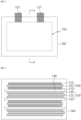
- FIGS. 1 and 2 are respectively, schematic plan and cross-sectional views of a lithium secondary battery according to embodiments of the present disclosure.
- FIG. 2 is a cross-sectional view taken on line I-I' in FIG. 1 .
- the lithium secondary battery may include a cathode 100 and an anode 130 disposed to face the cathode 100.
- the cathode 100 may include a cathode current collector 105 and a cathode active material layer 110 on the cathode current collector 105.
- the cathode current collector 105 may include stainless steel, nickel, aluminum, titanium or an alloy thereof.
- the cathode current collector 105 may also include aluminum or stainless steel subjected to surface treatment with carbon, nickel, titanium or silver.
- the cathode current collector 105 may have a thickness of 10 to 50 ⁇ m, but the thickness is not limited thereto.
- the cathode active material layer 110 may include a cathode active material.
- the cathode active material may include a compound capable of reversibly intercalating and deintercalating lithium ions.
- the cathode active material may include a lithium-nickel metal oxide.
- the lithium-nickel metal oxide may further include at least one of cobalt (Co), manganese (Mn) and aluminum (Al).
- the cathode active material or the lithium-nickel metal oxide may include a layered structure or a crystal structure represented by Formula 2 below.
- Formula 2 Li x Ni a M b O 2+z
- x, a, b and z may be in a range of 0.9 ⁇ x ⁇ 1.2, 0.6 ⁇ a ⁇ 0.99, 0.01 ⁇ b ⁇ 0.4, -0.5 ⁇ z ⁇ 0.1, respectively.
- M may include Co, Mn and/or Al.
- the chemical structure represented by Formula 2 indicates a bonding relationship between elements included in the layered structure or crystal structure of the cathode active material, and does not exclude other additional elements.
- M includes Co and/or Mn
- Co and/or Mn may be provided as main active elements of the cathode active material together with Ni.
- Formula 2 is provided to express the bonding relationship between the main active elements, and is a formula encompassing introduction and substitution of the additional elements.
- the inventive material may further include auxiliary elements which are added to the main active elements, thus, to enhance chemical stability of the cathode active material or the layered structure/crystal structure.
- the auxiliary element may be incorporated into the layered structure/crystal structure together to form a bond, and it should be understood that this case is also included within the chemical structure range represented by Formula 2.
- the auxiliary element may include, for example, at least one of Na, Mg, Ca, Y, Ti, Hf, V, Nb, Ta, Cr, Mo, W, Fe, Cu, Ag, Zn, B, Al, Ga, C, Si, Sn, Sr, Ba, Ra, P or Zr.
- the auxiliary element may act as an auxiliary active element which contributes to the capacity/output activity of the cathode active material together with Co or Mn like Al.
- the cathode active material or the lithium-nickel metal oxide may include a layered structure or crystal structure represented by Formula 2-1 below.
- Formula 2-1 Li x Ni a M1 b1 M2 b2 O2 +z
- M1 may include Co, Mn and/or Al.
- M2 may include the above-described auxiliary elements.
- x, a, b1, b2 and z may be in a range of 0.9 ⁇ x ⁇ 1.2, 0.6 ⁇ a ⁇ 0.99, 0.01 ⁇ b1+b2 ⁇ 0.4,-0.5 ⁇ z ⁇ 0.1, respectively.
- the cathode active material may further include a coating element or a doping element.
- a coating element or a doping element elements which are substantially the same as or similar to the above-described auxiliary elements may be used as the coating element or the doping element.
- the above-described elements may be used alone or in combination of two or more thereof as the coating element or the doping element.
- the coating element or the doping element may exist on the surface of the lithium-nickel metal oxide particles, or may penetrate through the surface of the lithium-nickel metal composite oxide particles to be included in the bonding structure represented by the Formula 2 or Formula 2-1 above.
- the cathode active material may include a nickel-cobalt-manganese (NCM)-based lithium oxide.
- NCM nickel-cobalt-manganese
- an NCM-based lithium oxide with an increased content of nickel may be used.
- Ni may be provided as a transition metal related to the output and capacity of the lithium secondary battery. Therefore, as described above, by employing a high-content (High-Ni) composition in the cathode active material, a high-capacity cathode and a high-capacity lithium secondary battery may be provided.
- High-Ni high-content
- the life-span stability and capacity retention characteristics may be improved through Mn while maintaining electrical conductivity by including Co.
- the above-described phosphate-based additive may stabilize an interface of the cathode active material including a high content of nickel, such that the high-temperature lifespan characteristics may be improved, and the resistance may be reduced.
- a content ofNi (e.g., a mole fraction of nickel based on the total moles of nickel, cobalt and manganese) in the NCM-based lithium oxide may be 0.6 or more, 0.7 or more, or 0.8 or more. In some embodiments, the content of Ni may be 0.8 to 0.95, 0.82 to 0.95, 0.83 to 0.95, 0.84 to 0.95, 0.85 to 0.95, or 0.88 to 0.95.
- the cathode active material may include a lithium cobalt oxide-based active material, a lithium manganese oxide-based active material, or a lithium nickel oxide-based active material.
- the cathode active material may include a lithium iron phosphate (LFP)-based active material represented by Formula 3 below.
- the LFP active material may be LiFePO 4 .
- the LFP active material is structurally more stable than an NCM-based active material, such that high lifespan characteristics and stability may be secured.
- the secondary battery using the LFP active material as a cathode active material includes the above-described phosphate-based additive, the lifespan characteristics may be further improved, and the resistance may be further reduced.
- t may be in a range of 0 ⁇ t ⁇ 1, and Q may include at least one of Na, Mg, Ca, Y. Ti, Hf, V, Nb, Ta, Cr, Mo, W, Cu, Ag, Zn, B, Al, Ga, C, Si, Sn, Sr, Ba, Ra, P or Zr.
- the cathode active material may include, for example, a Mn-rich active material, a Li-rich layered oxide (LLO)/over-lithiated oxide (OLO)-based active material, or a Co-less active material, which have a chemical structure or crystal structure represented by Formula 4 below.
- a Mn-rich active material Li-rich layered oxide (LLO)/over-lithiated oxide (OLO)-based active material
- a Co-less active material which have a chemical structure or crystal structure represented by Formula 4 below.
- p and q may be in a range of 0 ⁇ p ⁇ 1, 0.9 ⁇ q ⁇ 12, respectively, and J may include at least one element of Mn, Ni, Co, Fe, Cr, V, Cu, Zn Ti, Al, Mg and B.
- the cathode active material may be mixed in a solvent to prepare a cathode slurry.
- the cathode current collector 105 may be coated with the cathode slurry, followed by drying and pressing the same to prepare the cathode active material layer 110.
- the coating process may be performed by a method such as gravure coating, slot die coating, simultaneous multilayer die coating, imprinting, doctor blade coating, dip coating, bar coating, or casting, but the coating process is not limited thereto.
- the cathode active material layer 110 may further include a binder, and optionally may further include a conductive material, a thickener or the like.
- N-methyl-2-pyrrolidone NMP
- dimethylformamide dimethylacetamide
- N,N-dimethylaminopropylamine ethylene oxide
- tetrahydrofuran and the like
- the binder may include polyvinylidene fluoride (PVDF), poly(vinylidene fluoride-co-hexafluoropropylene), polyacrylonitrile, polymethylmethacrylate, acrylonitrile butadiene rubber (NBR), polybutadiene rubber (BR), styrene-butadiene rubber (SBR), and the like.
- PVDF polyvinylidene fluoride
- NBR acrylonitrile butadiene rubber
- BR polybutadiene rubber
- SBR styrene-butadiene rubber
- a PVDF-based binder may be used as the cathode binder.
- the conductive material may be added to the cathode active material layer 110 in order to enhance the conductivity thereof and/or the mobility of lithium ions or electrons.
- the conductive material may include a carbon-based conductive material such as graphite, carbon black, acetylene black, Ketjen black, graphene, carbon nanotubes, vapor-grown carbon fibers (VGCFs), carbon fibers, and/or a metal-based conductive material including tin, tin oxide, titanium oxide, or a perovskite material such as LaSrCoOs, and LaSrMnOs, but the conductive material is not limited thereto
- the cathode active material layer 110 may further include a thickener and/or dispersant.
- the cathode active material layer 110 may include a thickener such as carboxy methyl cellulose (CMC).
- the anode 130 may include an anode current collector 125 and an anode active material layer 120 formed on at least one surface of the anode current collector 125.
- anode current collector 125 As a non-limiting enbodiment of the anode current collector 125, a copper foil, a nickel foil, a stainless steel foil, a titanium foil, a nickel foam, a copper foam, a polymer substrate coated with conductive metal, and the like may be utilized.
- the anode current collector 125 may have a thickness, for example, of 10 ⁇ m to 50 ⁇ m, but the thickness is not limited thereto.
- the anode active material layer 120 may include an anode active material.
- anode active material a material capable of intercalating and deintercalating lithium ions may be used.
- carbon-based materials such as crystalline carbon, amorphous carbon, a carbon composite, or a carbon fiber, and the like; lithium metal; a lithium alloy; a silicon (Si)-containing material or a tin (Sn)-containing material, and the like may be used.
- amorphous carbon examples include hard carbon, soft carbon, cokes, mesocarbon microbead (MCMB), mesophase pitch-based carbon fiber (MPCF), and the like.
- Examples of the crystalline carbon may include graphite-based carbon such as natural graphite, artificial graphite, graphite cokes, graphite MCMB, graphite MPCF, and the like.
- lithium metal pure lithium metal or lithium metal having a protective layer formed thereon for suppressing dendrite growth, and the likem may be utilized.
- a lithium metal-containing layer deposited or coated on the anode current collector 125 may be used as the anode active material layer 120.
- a lithium thin film layer may also be used as the anode active material layer 120.
- lithium alloy aluminum, zinc, bismuth, cadmium, antimony, silicon, lead, tin, gallium, or indium, and the like may be utilized.
- the silicon-containing material may provide increased capacity characteristics.
- the silicon-containing material may include Si, SiO x (0 ⁇ x ⁇ 2), metal-doped SiO x (0 ⁇ x ⁇ 2), a silicon-carbon composite, and the like.
- the metal may include lithium and/or magnesium, and the metal-doped SiO x (0 ⁇ x ⁇ 2) may include metal silicate.
- the anode active material may be mixed in a solvent to prepare an anode slurry.
- the anode slurry may be coated/deposited on the anode current collector 125, followed by drying and pressing the same to prepare the anode active material layer 120.
- the coating process may be performed by a method such as gravure coating, slot die coating, simultaneous multilayer die coating, imprinting, doctor blade coating, dip coating, bar coating, casting, and the like., but the coating process is not limited thereto.
- the anode active material layer 120 may further include a binder, and optionally may further include a conductive material, a thickener or the like.
- the anode 130 may include the anode active material layer 120 in the form of lithium metal formed through the deposition/coating process.
- the solvent for the anode active material layer 120 water, pure water, deionized water, distilled water, ethanol, isopropanol, methanol, acetone, n-propanol, t-butanol, and the like may be utilized.
- the binder conductive material and thickener for the anode
- the above-described materials that can be used in the preparation of the cathode may also be used.
- anode binder a styrene-butadiene rubber (SBR)-based binder, a carboxymethyl cellulose (CMC) -based binder , a polyacrylic acid-based binder, a poly(3,4-ethylenedioxythiophene, PEDOT)-based binder, and the like may be used.
- SBR styrene-butadiene rubber
- CMC carboxymethyl cellulose
- PEDOT poly(3,4-ethylenedioxythiophene)-based binder
- a separation membrane 140 may be interposed between the cathode 100 and the anode 130.
- the separation membrane 140 may be configured to prevent an electrical short between the cathode and the anode, and to allow a flow of ions to occur.
- the separation membrane 140 may have a thickness of 10 ⁇ m to 20 ⁇ m, but, in the present disclosure, the separation membrane is not limited thereto.
- the separation membrane 140 may include a porous polymer film or a porous nonwoven fabric.
- the porous polymer film may include a polyolefin polymer such as an ethylene polymer, a propylene polymer, an ethylene/butene copolymer, an ethylene/hexene copolymer, and an ethylene/methacrylate copolymer, and the like.
- the porous nonwoven fabric may include glass fibers having a high melting point, polyethylene terephthalate fibers and the like.
- the separation membrane 140 may also include a ceramic-based material. For example, inorganic particles may be applied to the polymer film or dispersed within the polymer film to improve heat resistance.
- the separation membrane 140 may have a single-layer or multi-layer structure including the above-described polymer film and/or non-woven fabric.
- electrode tabs may protrude from the cathode current collector 105 and the anode current collector 125, respectively, and extend to one side of the case 160.
- the electrode tabs may be fused together with the one side of the case 160 and connected to electrode leads (a cathode lead 107 and an anode lead 127) which extend or are exposed to an outside of the case 160.
- a pouch-shaped case a square case, a cylindrical case, a coin-shaped case, and the like may be used.
- reaction intermediate After the reaction was completed, the mixture was washed with distilled water and a saturated sodium chloride aqueous solution to obtain a reaction intermediate.
- reaction intermediate 9.7 mL (100 mmol) of tetrahydrofurfinyl alcohol, and 200 mL of methylene chloride (MC) were added into the round bottom flask to prepare a second mixture, followed by cooling the same to 0 °C.
- MC methylene chloride
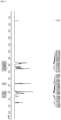
- FIG. 3 is a graph illustrating results measured by 1H-nuclear magnetic resonance (NMR) of a phosphate-based additive according to embodiments of the present disclosure.
- reaction intermediate After the reaction was completed, the mixture was washed with distilled water and a saturated sodium chloride aqueous solution to obtain a reaction intermediate.
- reaction intermediate 6.8 mL (100 mmol) of ethylene cyanohydrin, and 200 mL of methylene chloride (MC) were added into the round bottom flask to prepare a second mixture, followed by cooling the same to 0 °C.
- MC methylene chloride
- FIG. 4 is a graph illustrating results measured by 1H-nuclear magnetic resonance (NMR) of a phosphate-based additive according to embodiments of the present disclosure.
- a 1.2 M LiPF 6 solution (a mixed solvent of EC/EMC in a volume ratio of 25:75) was prepared. 1 wt% of fluoroethylene carbonate (FEC) and 2 wt% of vinylene carbonate (VC) were added into the LiPF 6 solution based on a total weight of the electrolyte, and 0.3 wt% of the compound represented by Formula 1-1 was mixed as a phosphate-based additive.
- FEC fluoroethylene carbonate
- VC vinylene carbonate
- a slurry was prepared by mixing LiFePO 4 as a cathode active material, carbon nanotubes (CNTs) as a conductive material, and polyvinylidene fluoride (PVdF) as a binder in a weight ratio of 97:1:2.
- the prepared slurry was uniformly applied to an aluminum foil having a thickness of 12 ⁇ m, followed by vacuum drying and pressing the same at 130°C to prepare a cathode for a lithium secondary battery.
- An anode slurry was prepared by mixing 95 wt% of an anode active material in which artificial graphite and natural graphite are mixed in a weight ratio of 7:3, 3 wt% of graphite as a conductive material, and 2 wt% of styrene-butadiene rubber (SBR) as a binder and carboxymethyl cellulose (CMC) as a thickener mixed in a weight ratio of 1: 1.
- SBR styrene-butadiene rubber
- CMC carboxymethyl cellulose
- the prepared anode slurry was uniformly applied to a region of a copper foil (thickness 15 ⁇ m) having a protrusion part (anode tab) on one side except for a protrusion part, followed by drying and pressing the same to prepare an anode.
- the cathode and the anode prepared as described above were cut into a predetermined size and stacked, and a separator (polyethylene, thickness 20 ⁇ m) was interposed between the cathode and the anode to form an electrode assembly, and then tab parts of the cathode and the anode were welded, respectively.
- a separator polyethylene, thickness 20 ⁇ m
- the electrode assembly was put into a pouch, followed by sealing three sides of the pouch except for an electrolyte injection side. At this time, a portion having the electrode tab was included in the sealing part. After injecting the electrolyte solution prepared in (1) above through the remaining side except for the sealing part, and the remaining side was also sealed, followed by impregnation for 12 hours or more to manufacture a lithium secondary battery sample.
- a slurry was prepared by mixing and dispersing LiNi 0.88 Co 0.06 Mn 0.06 O 2 as a cathode active material, CNTs as a conductive material, and PVdF as a binder in N-methyl-2-pyrrolidone in a weight ratio of 98:1:1.
- the prepared slurry was uniformly applied to an aluminum foil having athickness of 12 ⁇ m, followed by vacuum drying and pressing the same at 130°C to prepare a cathode for a lithium secondary battery.
- Lithium secondary batteries were manufactured according to the same procedures as described in Example 1, except that the type and content of the phosphate-based additive and the type and content of cathode active material were set as shown in Table 1 below, and the cathode was prepared as in (4) above when using LiNi 0.88 Co 0.06 Mn 0.06 O 2 as the cathode active material TABLE 1 Electrolyte Type and content of cathode active material (wt%) Type and content of the phosphate-based additive Content (wt%) B C
- Example 5 A1 (Formula 1-1) 0.05 100 - Example 6 A1 (Formula 1-1) 7 100 - Example 7 A1 (Formula 1-1) 10 100 - Example 8 A1 (Formula 1-1) 15 100 - Example 9 A1 (For
- the lithium secondary batteries of the examples and comparative examples were subjected to 0.2 C-rate CC/CV charge (3.65 V, 0.05 C cut-off) at 25 °C, then 0.5 C-rate CC discharge (2.5 V cut-off), and then initial discharge capacities were measured.
- the lithium secondary batteries of the examples and comparative examples were left in a chamber at - 10 °C for 4 hours, and then low-temperature internal resistances (C_DCIR and D_DCIR) were measured in the same manner as 1-2) above.
- the lithium secondary batteries of the examples and comparative examples were subjected to 0.5 C-rate CC/CV charge (3.65 V 0.05 C CUT-OFF) in a chamber at -10 °C, then 0.5 C-rate CC discharge (2.5 V cut-off), and then low-temperature discharge capacities were measured.
- the low-temperature capacity retention rate was calculated by converting the discharge capacity measured in 2-2) into a percentage compared to the initial discharge capacity measured in 1-1) according to the following equation.
- Low-temperature capacity retention rate (%) (Lowtemperature discharge capacity/Initial discharge capacity) ⁇ 100
- the lithium secondary batteries of the examples and comparative examples charged as in 1-1) were stored in a constant temperature and humidity chamber at 60 °C for 8 weeks, and then thicknesses of the batteries were measured using a plate thickness measuring device (Mitutoyo, 543-490B).
- Thickness increase rate (Battery thickness measured after storage/Battery thickness measured before storage) ⁇ 100
- D_DCIR high-temperature internal resistances
- High temperature internal resistance increase rate was calculated by converting the measured high-temperature internal resistance (DCIR) into a percentage compared to the internal resistance (D _DCIR) measured in 1-2) according to the following equation.
- High temperature internal resistance increase rate (%) (High-temperature internal resistance (D_DCIR)/Internal resistance (D_DCIR) ⁇ 100
- the lithium secondary batteries of the examples and comparative examples stored at high temperatures as described above were subjected to 0.5 C-rate CC discharge (2.5 V cut-off), and then discharge capacities after high-temperature storage were measured.
- High temperature storage capacity retention rate (Discharge capacity after high-temperature storage/Initial discharge capacity) ⁇ 100
- High-temperature storage capacity recovery rate was calculated by converting the discharge capacity after the capacity retention rate measurement into a percentage compared to the initial discharge capacity measured in 1-1) according to the following equation.
- High-temperature storage capacity recovery rate (%) (Discharge capacity after capacity retention rate measurement/Initial discharge capacity) ⁇ 100
- the lithium secondary batteries of the examples and comparative examples were subjected to 1 C-rate CC/CV charge (3.65 V 0.05 C cut-off) at 45 °C, then 1C-rate CC discharge(2.5V cut-off), and then initial high-temperature discharge capacities were measured.
- High temperature capacity retention rate (High-temperature discharge capacity/Initial high- temperature discharge capacity) ⁇ 100
- Example 1 1,093 56.5 46.6 234.8 158.8 482 44.1
- Example 2 1,099 64.6 54.6 249.5 159.7 481 43.8
- Example 3 1,085 29.8 27.1 131.5 111.7 795 73.2
- Example 4 1,089 31.8 30.2 142.7 112.1 760 70.5
- Example 5 1,091 66.3 61.3 251.6 162.5 465 42.5
- Example 6 1,090 68.2 62.7 250.3 161.9 470 43.1
- Example 7 1,087 70.9 66.9 265.4 164.8 466 42.9
- Example 8 1,079 71.1 68.5 271.7 167.1 452 41.9
- Example 9 1,104 51.0 40.6 227.5 152.6 517 46.8
- Example 10 1,101 56.1 44.7 234.8 156.9 484 44.1
- Example 11 1,101 53.2 43.1 229.7 155.8 485 43.9
- Comparative Example 1 1,072 78.8 76.2 286.9 180.3
- Comparative Example 2 1,072 35.3 37.3 15
- the room-temperature initial discharge capacity was 1,079 mAh/g or more
- the room-temperature resistance (C _DCIR) and the room-temperature resistance (D _DCIR) were 71.1 m ⁇ or less and 68.5 m ⁇ or less, respectively.
- the low-temperature resistance (C _DCIR) and the low-temperature resistance (D_DCIR) were 271.7 m ⁇ or less and 167.1 m ⁇ or less, respectively, and the low-temperature capacity retention rate was 41.9% or more.
- Example 5 in which the content of additive in the electrolyte was reduced compared to Example 1, and in Examples 6 to 8 in which the content of additive in the electrolyte was increased compared to Example 1, the room-temperature and low-temperature resistances (C_DCIR and D _DCIR) were slightly increased, and the capacity retention rate was slightly decreased.
- C_DCIR and D _DCIR room-temperature and low-temperature resistances
- Example 10 and 11 in which the compound represented by Formula 1-1 and the compound represented by Formula 1-2 were used together as the additive in the electrolyte, but the weight ratio of the compound represented by Formula 1-2 to the compound represented by Formula 1-1 was less than 0.25 or greater than 4, the room temperature and low-temperature resistances (C _DCIR and D _DCIR) were slightly increased compared to Example 9, and the capacity retention rate was slightly decreased.
- C _DCIR and D _DCIR room temperature and low-temperature resistances
- the room-temperature initial discharge capacity was decreased, the room temperature and lowtemperature resistance (C _DCIR and D _DCIR) were increased, and the capacity retention rate was decreased compared to the examples in which other conditions were set to be the same.
- Example 1 97 141.1 88.7 84.9 1,024 88.6
- Example 2 97 134.2 85.0 84.2 1,017 87.7
- Example 3 115 110.3 82.3 81.6 923 84.7
- Example 4 120 105.7 82.0 80.7 921 84.6
- Example 5 100 146.2 81.8 81.6 931 85.3
- Example 6 99 148.9 84.0 83.9 940 85.8
- Example 7 98 152.7 83.7 82.4 906 83.4
- Example 8 100 152.6 82.5 81.9 893 82.9
- Example 9 95 130.2 89.6 87.7 1,032 89.2
- Example 10 96 132.7 89.0 85.4 1,024 88.6
- Comparative Example 2 134 121.2 81.2 80.0 858 82.0
- Comparative Example 3 101 155.7 79.7 78.6 874
- the high-temperature resistance increase rate was 152.7% or less
- the high-temperature storage capacity retention rate was 81.8% or more
- the high-temperature storage capacity recovery rate was 80.7% or more.
- the high-temperature capacity retention rate was 82.9% or more.
- Example 5 in which the content of the additive in the electrolyte was reduced compared to Example 1, and in Examples 6 to 8 in which the content of the additive in the electrolyte was increased compared to Example 1, the hightemperature resistance increase rate was slightly increased, and the hightemperature storage capacity retention rate, high-temperature storage capacity recovery rate and high-temperature capacity retention rate were slightly decreased.
- Example 10 and 11 in which the compound represented by Formula 1-1 and the compound represented by Formula 1-2 were used together as the additive in the electrolyte, and the weight ratio of the compound represented by Formula 1-2 to the compound represented by Formula 1-1 was less than 0.25 or greater than 4, the high-temperature resistance increase rate was slightly increased compared to Example 9, while the high-temperature storage capacity retention rate, high-temperature storage capacity recovery rate and high-temperature capacity retention rate were slightly decreased.
- the high-temperature resistance retention rate was increased, and the high-temperature storage capacity retention rate, hightemperature storage capacity recovery rate and hightemperature capacity retention rate were decreased compared to examples in which other conditions were set to be the same.
Landscapes
- Chemical & Material Sciences (AREA)
- Engineering & Computer Science (AREA)
- Chemical Kinetics & Catalysis (AREA)
- Electrochemistry (AREA)
- General Chemical & Material Sciences (AREA)
- Manufacturing & Machinery (AREA)
- Inorganic Chemistry (AREA)
- General Physics & Mathematics (AREA)
- Condensed Matter Physics & Semiconductors (AREA)
- Physics & Mathematics (AREA)
- Materials Engineering (AREA)
- Organic Chemistry (AREA)
- Crystallography & Structural Chemistry (AREA)
- Health & Medical Sciences (AREA)
- Life Sciences & Earth Sciences (AREA)
- Biochemistry (AREA)
- General Health & Medical Sciences (AREA)
- Molecular Biology (AREA)
- Secondary Cells (AREA)
Applications Claiming Priority (1)
| Application Number | Priority Date | Filing Date | Title |
|---|---|---|---|
| KR1020230184832A KR20250094216A (ko) | 2023-12-18 | 2023-12-18 | 리튬 이차 전지용 전해액 및 이를 포함하는 리튬 이차 전지 |
Publications (1)
| Publication Number | Publication Date |
|---|---|
| EP4576307A1 true EP4576307A1 (de) | 2025-06-25 |
Family
ID=93926563
Family Applications (1)
| Application Number | Title | Priority Date | Filing Date |
|---|---|---|---|
| EP24220813.0A Pending EP4576307A1 (de) | 2023-12-18 | 2024-12-17 | Elektrolyt für lithiumsekundärbatterie und lithiumsekundärbatterie damit |
Country Status (4)
| Country | Link |
|---|---|
| US (1) | US20250201922A1 (de) |
| EP (1) | EP4576307A1 (de) |
| KR (1) | KR20250094216A (de) |
| CN (1) | CN120184373A (de) |
Citations (1)
| Publication number | Priority date | Publication date | Assignee | Title |
|---|---|---|---|---|
| WO2023224187A1 (ko) * | 2022-05-20 | 2023-11-23 | 삼성에스디아이 주식회사 | 리튬 이차 전지용 전해질 및 이를 포함하는 리튬 이차 전지 |
-
2023
- 2023-12-18 KR KR1020230184832A patent/KR20250094216A/ko active Pending
-
2024
- 2024-12-17 EP EP24220813.0A patent/EP4576307A1/de active Pending
- 2024-12-18 US US18/985,030 patent/US20250201922A1/en active Pending
- 2024-12-18 CN CN202411865601.9A patent/CN120184373A/zh active Pending
Patent Citations (1)
| Publication number | Priority date | Publication date | Assignee | Title |
|---|---|---|---|---|
| WO2023224187A1 (ko) * | 2022-05-20 | 2023-11-23 | 삼성에스디아이 주식회사 | 리튬 이차 전지용 전해질 및 이를 포함하는 리튬 이차 전지 |
Also Published As
| Publication number | Publication date |
|---|---|
| US20250201922A1 (en) | 2025-06-19 |
| CN120184373A (zh) | 2025-06-20 |
| KR20250094216A (ko) | 2025-06-25 |
Similar Documents
| Publication | Publication Date | Title |
|---|---|---|
| US11764402B2 (en) | Electrolytic solution for lithium secondary battery, and lithium secondary battery comprising same | |
| EP4517857A1 (de) | Kathodenaktivmaterial für lithiumsekundärbatterie und lithiumsekundärbatterie damit | |
| KR20260013170A (ko) | 리튬 이차 전지용 전해질 및 이를 포함하는 리튬 이차 전지 | |
| US20230231194A1 (en) | Electrolyte solution for lithium secondary battery and lithium secondary battery including the same | |
| KR20240038580A (ko) | 리튬 이차 전지용 전해액 및 이를 포함하는 리튬 이차 전지 | |
| EP4576307A1 (de) | Elektrolyt für lithiumsekundärbatterie und lithiumsekundärbatterie damit | |
| KR20240092897A (ko) | 리튬 이차 전지 | |
| KR20230100270A (ko) | 비수 전해액 및 이를 포함하는 리튬 이차 전지 | |
| EP4651253A1 (de) | Elektrolyt für lithiumsekundärbatterie und lithiumsekundärbatterie damit | |
| CN114447434A (zh) | 用于锂二次电池的电解液及包括其的锂二次电池 | |
| EP4651256A1 (de) | Elektrolyt für lithiumsekundärbatterie und lithiumsekundärbatterie damit | |
| EP4712169A1 (de) | Elektrolyt für lithiumsekundärbatterie und lithiumsekundärbatterie damit | |
| US20250349893A1 (en) | Electrolyte for Lithium Secondary Battery and Lithium Secondary Battery Including the Same | |
| EP4366019A1 (de) | Elektrolytlösung für lithiumsekundärbatterie und lithiumsekundärbatterie damit | |
| EP4503226B1 (de) | Elektrolyt für lithiumsekundärbatterie und lithiumsekundärbatterie damit | |
| EP4398346B1 (de) | Elektrolyt für lithiumsekundärbatterie und lithiumsekundärbatterie damit | |
| EP4579802A1 (de) | Kathodenaktivmaterial für lithiumsekundärbatterie und lithiumsekundärbatterie damit | |
| EP4517856A1 (de) | Kathode für lithiumsekundärbatterie und lithiumsekundärbatterie damit | |
| US20260081210A1 (en) | Lithium secondary battery | |
| EP4645494A1 (de) | Elektrolyt für lithiumsekundärbatterie und lithiumsekundärbatterie damit | |
| EP4579790A1 (de) | Anode für lithiumsekundärbatterie und lithiumsekundärbatterie damit | |
| KR20260039225A (ko) | 리튬 이차 전지 | |
| EP4715938A1 (de) | Nichtwässrige elektrolytlösung und lithiumsekundärbatterie damit | |
| KR20250027034A (ko) | 리튬 이차 전지용 전해액 및 이를 포함하는 리튬 이차 전지 | |
| KR20250108518A (ko) | 이차 전지용 음극 및 이를 포함하는 이차 전지 |
Legal Events
| Date | Code | Title | Description |
|---|---|---|---|
| PUAI | Public reference made under article 153(3) epc to a published international application that has entered the european phase |
Free format text: ORIGINAL CODE: 0009012 |
|
| STAA | Information on the status of an ep patent application or granted ep patent |
Free format text: STATUS: REQUEST FOR EXAMINATION WAS MADE |
|
| 17P | Request for examination filed |
Effective date: 20241217 |
|
| AK | Designated contracting states |
Kind code of ref document: A1 Designated state(s): AL AT BE BG CH CY CZ DE DK EE ES FI FR GB GR HR HU IE IS IT LI LT LU LV MC ME MK MT NL NO PL PT RO RS SE SI SK SM TR |
|
| GRAP | Despatch of communication of intention to grant a patent |
Free format text: ORIGINAL CODE: EPIDOSNIGR1 |
|
| STAA | Information on the status of an ep patent application or granted ep patent |
Free format text: STATUS: GRANT OF PATENT IS INTENDED |
|
| RIC1 | Information provided on ipc code assigned before grant |
Ipc: H01M 10/0567 20100101AFI20260122BHEP |
|
| INTG | Intention to grant announced |
Effective date: 20260202 |