EP4575857A2 - Sicherung von softwareroutinen - Google Patents
Sicherung von softwareroutinen Download PDFInfo
- Publication number
- EP4575857A2 EP4575857A2 EP25174086.6A EP25174086A EP4575857A2 EP 4575857 A2 EP4575857 A2 EP 4575857A2 EP 25174086 A EP25174086 A EP 25174086A EP 4575857 A2 EP4575857 A2 EP 4575857A2
- Authority
- EP
- European Patent Office
- Prior art keywords
- software
- data
- code block
- software routine
- stored
- Prior art date
- Legal status (The legal status is an assumption and is not a legal conclusion. Google has not performed a legal analysis and makes no representation as to the accuracy of the status listed.)
- Pending
Links
Images




Classifications
-
- G—PHYSICS
- G06—COMPUTING OR CALCULATING; COUNTING
- G06F—ELECTRIC DIGITAL DATA PROCESSING
- G06F21/00—Security arrangements for protecting computers, components thereof, programs or data against unauthorised activity
- G06F21/10—Protecting distributed programs or content, e.g. vending or licensing of copyrighted material ; Digital rights management [DRM]
- G06F21/12—Protecting executable software
-
- G—PHYSICS
- G06—COMPUTING OR CALCULATING; COUNTING
- G06F—ELECTRIC DIGITAL DATA PROCESSING
- G06F21/00—Security arrangements for protecting computers, components thereof, programs or data against unauthorised activity
- G06F21/10—Protecting distributed programs or content, e.g. vending or licensing of copyrighted material ; Digital rights management [DRM]
- G06F21/12—Protecting executable software
- G06F21/121—Restricting unauthorised execution of programs
- G06F21/125—Restricting unauthorised execution of programs by manipulating the program code, e.g. source code, compiled code, interpreted code, machine code
-
- G—PHYSICS
- G06—COMPUTING OR CALCULATING; COUNTING
- G06F—ELECTRIC DIGITAL DATA PROCESSING
- G06F21/00—Security arrangements for protecting computers, components thereof, programs or data against unauthorised activity
- G06F21/50—Monitoring users, programs or devices to maintain the integrity of platforms, e.g. of processors, firmware or operating systems
- G06F21/52—Monitoring users, programs or devices to maintain the integrity of platforms, e.g. of processors, firmware or operating systems during program execution, e.g. stack integrity ; Preventing unwanted data erasure; Buffer overflow
- G06F21/53—Monitoring users, programs or devices to maintain the integrity of platforms, e.g. of processors, firmware or operating systems during program execution, e.g. stack integrity ; Preventing unwanted data erasure; Buffer overflow by executing in a restricted environment, e.g. sandbox or secure virtual machine
-
- G—PHYSICS
- G06—COMPUTING OR CALCULATING; COUNTING
- G06F—ELECTRIC DIGITAL DATA PROCESSING
- G06F21/00—Security arrangements for protecting computers, components thereof, programs or data against unauthorised activity
- G06F21/50—Monitoring users, programs or devices to maintain the integrity of platforms, e.g. of processors, firmware or operating systems
- G06F21/52—Monitoring users, programs or devices to maintain the integrity of platforms, e.g. of processors, firmware or operating systems during program execution, e.g. stack integrity ; Preventing unwanted data erasure; Buffer overflow
- G06F21/54—Monitoring users, programs or devices to maintain the integrity of platforms, e.g. of processors, firmware or operating systems during program execution, e.g. stack integrity ; Preventing unwanted data erasure; Buffer overflow by adding security routines or objects to programs
-
- G—PHYSICS
- G06—COMPUTING OR CALCULATING; COUNTING
- G06F—ELECTRIC DIGITAL DATA PROCESSING
- G06F21/00—Security arrangements for protecting computers, components thereof, programs or data against unauthorised activity
- G06F21/50—Monitoring users, programs or devices to maintain the integrity of platforms, e.g. of processors, firmware or operating systems
- G06F21/55—Detecting local intrusion or implementing counter-measures
- G06F21/56—Computer malware detection or handling, e.g. anti-virus arrangements
- G06F21/562—Static detection
- G06F21/564—Static detection by virus signature recognition
-
- G—PHYSICS
- G06—COMPUTING OR CALCULATING; COUNTING
- G06F—ELECTRIC DIGITAL DATA PROCESSING
- G06F21/00—Security arrangements for protecting computers, components thereof, programs or data against unauthorised activity
- G06F21/50—Monitoring users, programs or devices to maintain the integrity of platforms, e.g. of processors, firmware or operating systems
- G06F21/55—Detecting local intrusion or implementing counter-measures
- G06F21/56—Computer malware detection or handling, e.g. anti-virus arrangements
- G06F21/566—Dynamic detection, i.e. detection performed at run-time, e.g. emulation, suspicious activities
-
- G—PHYSICS
- G06—COMPUTING OR CALCULATING; COUNTING
- G06F—ELECTRIC DIGITAL DATA PROCESSING
- G06F21/00—Security arrangements for protecting computers, components thereof, programs or data against unauthorised activity
- G06F21/50—Monitoring users, programs or devices to maintain the integrity of platforms, e.g. of processors, firmware or operating systems
- G06F21/57—Certifying or maintaining trusted computer platforms, e.g. secure boots or power-downs, version controls, system software checks, secure updates or assessing vulnerabilities
- G06F21/577—Assessing vulnerabilities and evaluating computer system security
-
- G—PHYSICS
- G06—COMPUTING OR CALCULATING; COUNTING
- G06F—ELECTRIC DIGITAL DATA PROCESSING
- G06F21/00—Security arrangements for protecting computers, components thereof, programs or data against unauthorised activity
- G06F21/10—Protecting distributed programs or content, e.g. vending or licensing of copyrighted material ; Digital rights management [DRM]
- G06F21/12—Protecting executable software
- G06F21/121—Restricting unauthorised execution of programs
-
- G—PHYSICS
- G06—COMPUTING OR CALCULATING; COUNTING
- G06F—ELECTRIC DIGITAL DATA PROCESSING
- G06F21/00—Security arrangements for protecting computers, components thereof, programs or data against unauthorised activity
- G06F21/10—Protecting distributed programs or content, e.g. vending or licensing of copyrighted material ; Digital rights management [DRM]
- G06F21/12—Protecting executable software
- G06F21/14—Protecting executable software against software analysis or reverse engineering, e.g. by obfuscation
-
- G—PHYSICS
- G06—COMPUTING OR CALCULATING; COUNTING
- G06F—ELECTRIC DIGITAL DATA PROCESSING
- G06F21/00—Security arrangements for protecting computers, components thereof, programs or data against unauthorised activity
- G06F21/60—Protecting data
-
- G—PHYSICS
- G06—COMPUTING OR CALCULATING; COUNTING
- G06F—ELECTRIC DIGITAL DATA PROCESSING
- G06F21/00—Security arrangements for protecting computers, components thereof, programs or data against unauthorised activity
- G06F21/60—Protecting data
- G06F21/62—Protecting access to data via a platform, e.g. using keys or access control rules
-
- G—PHYSICS
- G06—COMPUTING OR CALCULATING; COUNTING
- G06F—ELECTRIC DIGITAL DATA PROCESSING
- G06F21/00—Security arrangements for protecting computers, components thereof, programs or data against unauthorised activity
- G06F21/60—Protecting data
- G06F21/62—Protecting access to data via a platform, e.g. using keys or access control rules
- G06F21/6209—Protecting access to data via a platform, e.g. using keys or access control rules to a single file or object, e.g. in a secure envelope, encrypted and accessed using a key, or with access control rules appended to the object itself
-
- H—ELECTRICITY
- H04—ELECTRIC COMMUNICATION TECHNIQUE
- H04L—TRANSMISSION OF DIGITAL INFORMATION, e.g. TELEGRAPHIC COMMUNICATION
- H04L9/00—Cryptographic mechanisms or cryptographic arrangements for secret or secure communications; Network security protocols
- H04L9/08—Key distribution or management, e.g. generation, sharing or updating, of cryptographic keys or passwords
- H04L9/088—Usage controlling of secret information, e.g. techniques for restricting cryptographic keys to pre-authorized uses, different access levels, validity of crypto-period, different key- or password length, or different strong and weak cryptographic algorithms
Definitions
- the present invention relates to methods of securing software routines, a method of executing such secured software routines, as well as corresponding apparatus and computer programs.
- items of software run in browsers, or interpreters may often be vulnerable to these sorts of re-running attacks.
- the item of software is typically provided in the form of a high-level programming or scripting language and typically run in an execution environment (such as an interpreter) that provides for some debugging/interrogation of the code of the software, and its execution flow.
- an execution environment such as an interpreter
- Such attacks are also possible on compiled software running in a more traditional execution environment, for example through the use of debugging tools which offer similar functionality.
- a software routine in a software instance executing in an execution environment comprising: executing a code block of the software instance, said executing the code block comprising the code block: invoking the software routine using a reference to the software routine, the reference to the software routine stored as part of initialization of the code block such that the stored reference is inaccessible to code outside of the code block; and upon determining that the software routine has been invoked by the code block a predetermined number of times, modifying the stored reference so as to prevent further invocation of the software routine by the code block.
- the reference to the software routine may be stored by executing a further code block which, once executed, cannot be accessed by code outside the further code block, and wherein the code block is defined by the further code block.
- the software routine data may comprise data used by the software routine and/or data generated by the software routine
- applying the stored corruption data to modify data for the software routine may comprise any one or more of: (a) applying the stored corruption data to one or more inputs of the software routine; (b) applying the stored corruption data to one or more outputs of the software routine; and (c) applying, as part of the software routine, the stored corruption data to intermediate data of the software routine.
- applying the fix-up data to data for the software routine comprises any one or more of: (a) applying the fix-up data to one or more inputs of the software routine; (b) applying the fix-up data to one or more outputs of the software routine; and (c) applying, as part of the software routine, the fix-up data to intermediate data of the software routine.
- the corruption data may be stored by executing a further code block which, once executed, cannot be accessed by code outside the further code block, and wherein the code block is defined by the further code block.
- the execution environment implements a boundary as part of the closure, thereby preventing code outside the further code block from interrogating the closure.
- the execution environment may comprise any of: (a) a JavaScript virtual machine and the software is implemented at least in part in JavaScript; (b) a Java virtual machine and the software is implemented at least in part in Java; (c) a LISP interpreter and the software is implemented at least in part in LISP; and (d) a Python interpreter and the software is implemented at least in part in Python.
- a method of securing software comprising: receiving software comprising at least one software routine; modifying said software such that, when executed as a software instance in a runtime environment, said software instance secures the at least one software routine by carrying out any of the methods as described previously.
- a system comprising one or more processors and a memory coupled to the one or more processors which are configured to execute programmed instructions stored in the memory comprising the steps of any embodiment of the first to fourth aspects of the invention
- a computer program which, when executed by one or more processors, causes the one or more processors to carry out a method according to any embodiment of the first to fourth aspects of the invention.
- the computer program may be stored on a computer-readable medium. Said computer readable medium may be non-transitory.
- FIG. 1 schematically illustrates an example of a computer system 100.
- the system 100 comprises a computer 102.
- the computer 102 comprises: a storage medium 104, a memory 106, a processor 108, an interface 110, a user output interface 112, a user input interface 114 and a network interface 116, which may be linked together over one or more communication buses 118.
- the storage medium 104 may be any form of non-volatile data storage device such as one or more of a hard disk drive, a magnetic disc, an optical disc, a solid-state-storage device, a ROM, etc.
- the storage medium 104 may store an operating system for the processor 108 to execute in order for the computer 102 to function.
- the storage medium 104 may also store one or more computer programs (or software).
- the memory 106 may be any random access memory (storage unit or volatile storage medium) suitable for storing data and/or computer programs (or software).
- the processor 108 may be any data processing unit suitable for executing one or more computer programs (such as those stored on the storage medium 104 and/or in the memory 106), some of which may be computer programs according to embodiments of the invention or computer programs that, when executed by the processor 108, cause the processor 108 to carry out a method according to an embodiment of the invention and configure the system 100 to be a system according to an embodiment of the invention.
- the processor 108 may comprise a single data processing unit or multiple data processing units operating in parallel, separately or in cooperation with each other.
- the processor 108 in carrying out data processing operations for embodiments of the invention, may store data to and/or read data from the storage medium 104 and/or the memory 106.
- the interface 110 may be any unit for providing an interface to a device 122 external to, or removable from, the computer 102.
- the device 122 may be a data storage device, for example, one or more of an optical disc, a magnetic disc, a solid-state-storage device, etc.
- the device 122 may have processing capabilities - for example, the device may be a smart card.
- the interface 110 may therefore access data from, or provide data to, or interface with, the device 122 in accordance with one or more commands that it receives from the processor 108.
- the user input interface 114 is arranged to receive input from a user, or operator, of the system 100.
- the user may provide this input via one or more input devices of the system 100, such as a mouse (or other pointing device) 126 and/or a keyboard 124, that are connected to, or in communication with, the user input interface 114.
- the user may provide input to the computer 102 via one or more additional or alternative input devices (such as a touch screen).
- the computer 102 may store the input received from the input devices via the user input interface 114 in the memory 106 for the processor 108 to subsequently access and process, or may pass it straight to the processor 108, so that the processor 108 can respond to the user input accordingly.
- the user output interface 112 is arranged to provide a graphical/visual and/or audio output to a user, or operator, of the system 100.
- the processor 108 may be arranged to instruct the user output interface 112 to form an image/video signal representing a desired graphical output, and to provide this signal to a monitor (or screen or display unit) 120 of the system 100 that is connected to the user output interface 112.
- the processor 108 may be arranged to instruct the user output interface 112 to form an audio signal representing a desired audio output, and to provide this signal to one or more speakers 121 of the system 100 that is connected to the user output interface 112.
- the network interface 116 provides functionality for the computer 102 to download data from and/or upload data to one or more data communication networks.
- the architecture of the system 100 illustrated in figure 1 and described above is merely exemplary and that other computer systems 100 with different architectures (for example with fewer components than shown in figure 1 or with additional and/or alternative components than shown in figure 1 ) may be used in embodiments of the invention.
- the computer system 100 could comprise one or more of: a personal computer; a server computer; a mobile telephone; a tablet; a laptop; a television set; a set top box; a games console; other mobile devices or consumer electronics devices; etc.
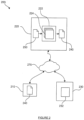
- FIG. 2 schematically illustrates an example system 200 according to some embodiments of the invention.
- the system 200 comprises a computer system (or client system or user system) 210, a protection system 220, an optional enforcement system 230 and a network 270.
- the computer system 210 is arranged to execute or process an item of software 240.
- the item of software 240 is a protected item of software - the nature of the "protection" that has been applied to the item of software 240 (or which the item of software 240 incorporates or uses) shall be described in more detail later.
- the protection system 220 is responsible for generating the protected item of software 240 based on an initial item of software 250.
- the optional enforcement system 230 may be used, during execution of the protected item of software 240, to enforce integrity of the protected item of software 240 (or at least to enforce integrity of some or all of the protected item of software 240). Such enforcing may include participation in (or helping with) one or more of the protections applied to the protected item of software 240.
- the system 200 enables protection of an initial item of software 250, so that the resulting protected item of software 240 may be executed on a computer system 210.
- this may also include the enforcement system 230 enforcing integrity of some or all of the protected item of software 240 during execution of the protected item of software 240 on the computer system 210.
- the computer system 210, the protection system 220 and optionally the enforcement system 230 may be arranged to communicate with each other over, or via, the network 270.
- the network 270 may be any kind of network suitable for transmitting or communicating data from any one of the computer system 210, the protection system 220 and the enforcement system 230 to another one of the computer system 210, the protection system 220 and the enforcement system 230.
- the network 270 could comprise one or more of: a local area network, a wide area network, a metropolitan area network, the internet, a wireless communications network, a cable network, a digital broadcast network, a satellite communication network, a telephone network, etc.
- the computer system 210, the protection system 220 and the enforcement system 230 may communicate over the network 270 via any suitable communication mechanism/protocol in order to communicate data with each other. However, it will be appreciated that other communication scenarios are possible.
- figure 2 illustrates a single computer system 210, a single protection system 220 and a single enforcement system 230, it will be appreciated that there may be multiple computer systems 210 and/or multiple protection systems 220 and/or multiple enforcement systems 230 and that figure 2a has been simplified for ease of illustration.
- the computer system 210, the protection system 220 and the enforcement system 230 may each be, or may each comprise, one or more computer systems 100 as described above with reference to figure 1 .
- the computer system 210 may be a personal computer, a server computer, a laptop, a mobile telephone, a tablet computer, a television, etc.
- the protection system 220 and the enforcement system 230 may, for example, each comprise one or more server computers.
- the protection system 220 and the enforcement system 230 may be operated by separate entities, or may be operated by the same entity.
- the protection system 220 and the enforcement system 230 may be physically separate from each other, or they may share one or more computer systems 100 (e.g. they may be implemented, at least in part, using one or more common servers).
- An operator of the computer system 210 may be an attacker, in that the operator may wish to launch an attack against (or based on or using) an item of software executed on the computer system 210.
- the item of software may contain, or generate, secret information that the attacker wishes to obtain (such as one or more cryptographic keys, one or more secret keys, data of other users, etc.) via the attack;
- the attacker may try to use the item of software (in a manner not initially intended or authorized by the creator of the item of software) to achieve functionality to which the attacker is not entitled or authorized, such as by circumventing or thwarting security checks;
- the attacker may wish to achieve new/alternative functionality not originally intended with the item of software;
- the attacker may wish to use the item of software to try to gain unauthorized access to functionality or data from one or more servers (e.g. a server hosting a website associated with a webpage providing or comprising the item of software); etc.
- a so-called "white-box” attack environment is an attack model for the execution of an item of software, in which the model identifies that an attacker has various capabilities as described in more detail below (i.e. the attacker can carry out certain actions/operations and has access to certain data). Therefore, if an attacker would have those capabilities when the item of software is actually being executed in a particular execution environment (e.g. using a particular computer/processor etc.) then one may say that the item of software is executing in a "white-box” environment.
- the attacker of the item of software is assumed to have full access to, and visibility of, the data being operated on (including intermediate values), memory contents and execution/process/control flow of the item of software.
- the attacker is assumed to be able to modify the data being operated on, the memory contents and the execution/process/control flow of the item of software, for example by using a debugger - in this way, the attacker can experiment on, and try to manipulate the operation of, the item of software, with the aim of circumventing initially intended functionality and/or identifying secret information and/or for other purposes.
- the item of software may need to use or store or generate secret information (e.g. one or more cryptographic keys or identifiers), where this information needs to remain hidden from, or unusable/inaccessible by, the attacker (except as part of the correct/intended functionality of the item of software); the item of software may need to execute different portions of code based on particular decision logic, where it is important to ensure that an attacker cannot force the software to execute one portion of code instead of another portion of code in contradiction to the decision logic; etc.
- secret information e.g. one or more cryptographic keys or identifiers
- the set-up, configuration and capabilities of the computer system 210 are not necessarily known (or fully known) to, and/or are not controllable (or fully controllable) by, the provider of the item of software, and so it can be assumed that the item of software may end up being executed in a white-box attack environment. This is particularly relevant when the item of software is written in a scripted or interpreted language, such as JavaScript, due to the human-readable nature of scripted or interpreted languages (as opposed to, say, compiled binary executable files) - the user of the computer system 210 can view, monitor and modify execution of such items of software (e.g.
- the initial item of software 250 has one or more software protection techniques applied to it by the protection system 220, resulting in the protected item of software 240. It is this protected item of software 240 which is executed on the computer system 210.
- the protection techniques applied in order to generate the protected item of software 240 aim to make it difficult for an attacker to carry out a successful attack on the protected item of software 240, and/or aim to reduce/mitigate the consequences of such an attack by an attacker - i.e. the protection techniques aim to secure the initial item of software 250 against the white-box attack environment.
- the protection system 220 comprises, or is arranged to execute, a protection application 222.
- the protection application 222 receives the initial item of software 250 and applies one or more "protections" to the item of software 250 to thereby generate and output the protected item of software 240.
- the protection application 222 comprises one or more protector modules or components 224 that is/are arranged to apply one or more "protections" to the initial item of software 250, or to a version of the item of software 250 that has already had one or more of these protections applied by one or more of the protector modules 224 (as shall be described in more detail later).
- the enforcement system 230 comprises, or is arranged to execute, an integrity enforcement application 232.
- the execution of the protected item of software 240 may be dependent on enforcement data (or an enforcement value/data, or an enforcement result) received from the integrity enforcement application 232 via the network 270.
- the integrity enforcement application 232 may generate the enforcement data in dependence on behaviour of the protected item of software 240 during execution (such as observed or received data from the protected item of software 240).
- the protected item of software 240 receives (or acquires or otherwise obtains) fix-up data (the nature of which will be described shortly) from the integrity checking application 232 via the network 270.
- the integrity checking application 232 may provide the fix-up data contingent (or in requirement of) the protected item of software satisfying one or more integrity verification checks.
- the initial item of software 250 and the protected item of software 240 may each comprise one or more computer programs (or software or modules) that may be stored as one or more files. Each file can contain or implement one or more functions.
- the initial item of software 250 and the protected item of software 240 may each be, or implement, one or more entire software applications, or one or more components for a software application (e.g. a library file), or a smaller component (e.g. a code snippet).
- the initial item of software 250 may comprise source code written in one or more languages, one or more of which may be the same as the language(s) for the protected item of software 240, although this is not necessary.
- the initial item of software 250 and the protected item of software 240 may each comprise compiled/executable code and/or source code (or interpreted code).
- the initial item of software 250 and the protected item of software 240 may comprise compiled code for execution as (part of) a native application at the computer system 210.
- the initial item of software 250 and the protected item of software 240 may comprise code for execution within a virtual machine executing on the computer system 210.
- the initial item of software 250 and the protected item of software 240 may comprise code for execution within a browser executing on the computer system 210 (e.g. as a webapp or code of a webpage).
- a software element of (or for) an item of software may comprises (a) one or more pieces of code (e.g. one or more instructions/commands) of (or for) the item of software, and/or (b) one or more pieces of data or other resources of (or for) the item of software, and/or (c) one or more code blocks (as described shortly below).
- code e.g. one or more instructions/commands
- b one or more pieces of data or other resources of (or for) the item of software
- code blocks as described shortly below.
- the operator of the computer system 210 might have been able to launch a successful attack and thereby access or use the functionality or data processing in an unintended or unauthorised manner.
- the protected item of software 240 may, due to processing by the protector module(s) 224, generate or use or access or operate on/with secret information (such as a cryptographic key or an identifier) that is represented in an encoded (or protected/obfuscated) form, using protected or obfuscated operations - this makes it more difficult (if not impossible) for an attacker to deduce or access that secret information (whereas such information may have been deducible or accessible from the initial item of software 250 without the protections having been applied).
- secret information such as a cryptographic key or an identifier
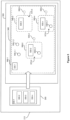
- the code block 530-1 may start being executed by the execution environment 500.
- An instruction in the code block 530-1 may be reached which causes the further code block 530-2 to be invoked using the corresponding stored reference 535-2.
- the execution, as a result, may then jump to the further code block 530-2 and the execution of said further code block 530-2 may begin.
- An instruction in the further code block 530-2 may cause the addition of the variable 539-1,1 to the further variable 539-2,1, storing the result in the other variable 539-1,2.
- An instruction in the code block 530-1 may be reached which causes another further code block 530-3 to be invoked using the corresponding stored reference 535-2.
- wrapper code block 530-4 may be arranged to pass any inputs (or arguments) (such as input or arguments provided directly to the software routine 530-4) to the software routine 530-2 upon invocation of the software routine 530-2.
- wrapper code block 530-4 may be arranged to pass any outputs (or returned values) from the software routine 530-2 as outputs (or returned values) of the wrapper code block 530-4 when the software routine returns (or terminates or otherwise completes).
- the protected item software 240 comprises a further code block 530-99.
- the further code block 530-99 is typically executed at the same point in the code that it is defined.
- the further code block 530-99 is not callable as no reference to the further code block 530-99 is stored as part of the software instance.
- Such a further code block 530-99 is typically referred to as an anonymous function (or lambda function).
- an anonymous function or lambda function
- the further code block 530-99 may have (or be associated with) a boundary 595-99 that logically encompasses the code block 530-99, as described previously.
- the further code block forms part of an object 570-99 as described previously (such as a closure).
- the further code block 530-99 may be arranged to define the wrapper code block 530-4. In this way the wrapper code block 530-4 is within the boundary 595-99 of the further code block 530-99 so can access the reference 535-2 to the software routine 530-2.
- the software instance 540 is arranged to store the reference 535-4 to the wrapper code block 530-4 so that the reference 535-4 is not accessible to code outside of the further code block 530-99.
- the reference 535-2 to the software routine 530-2 may be stored inside the boundary 595-99 of the further code block 530-99 (typically such that no further boundary 595 separates the reference 535-2 to the software routine 530-1 and the further code block 530-99), as an alternative to storing the reference 535-2 inside the boundary 595-4 of the wrapper code block 530-4.
- the reference 535-1 to the software routine 530-2 may be stored as a private variable such as a variable 539 that forms part of the object 570-99. It will be appreciated that as there is no reference to the further code block 530-99 (or the corresponding object 570-99) code outside the further code block 530-99 cannot access the reference 535-2 to the software routine 530-2. As the wrapper code block 530-4 is inside the boundary 595-99 of the further code block 530-99 the reference 535-1 to the software routine 530-2 may still be accessed by the wrapper code block 530-4.
- the entire listing is the code block 530-1; the function add ( ) (including the code between the braces) is the software routine 530-2.
- the anonymous function executed in the assignment to sec_add is the further code block 530-99; func is the stored reference 535-2; the function returned by the anonymous function is the code block 530-4 and sec_add is the stored reference to the code bock 530-4.
- the software routine 530-2 add ( ) is a referenced function so the additional reference stored in add is nullified.
- the software routine 530-2 add ( ) may be created without an explicit reference, such as an anonymous function.
- Figure 7a shows an initialization method 700 for use by a protected item of software 240 during execution, such as the protected item of software 240 described in relation to figure 6 above.
- the method 700 typically involves securing a software routine 350-2 implemented in a software instance 540 executing in an execution environment 500.
- the method comprises the following steps.
- a step 710 comprises initializing code block 530-4 (such as the wrapper code block discussed above) of the software instance 540 with a reference 535-2 to the software routine 530-2.
- Step 710 comprises storing the reference such that the stored reference is inaccessible to code of the software instance outside of the wrapper code block 530-4.
- Step 710 may comprise a further code block 530-99 (such as an anonymous function) storing the reference 535-2 to the software routine 530-2.
- the reference 535-2 may be stored as part of a closure object of the anonymous function.
- Figure 8 schematically illustrates an example of a protected item of software 240 executed (or run) on a system such as the system 210 of figures 2a or 2b.
- the protected item of software 240 may be a protected item of software 250 corresponding to the initial item of software 240 described above with reference to figure 5 having been protected using a second protection method.
- like numerals indicate like elements and the description in relation to figures 5 and 6 applies equally to figure 7 except for in the following respects.
- the software instance is arranged to store corruption data 531-4 such that the stored corruption data 531-4 is inaccessible to code (or instructions) outside of the wrapper code block 530-4.
- the corruption data 531-4 is typically stored as, or in a variable 539 as described previously.
- the corruption data 531-4 may be stored inside the boundary 595-4 of the wrapper code block 530-4 (typically such that no further boundary 595-n separates the reference 535-2 to the software routine 530-1 and the wrapper code block 530-4). Where the wrapper code block 530-4 is part of an object 570-4 (such as a closure) the corruption data 531-4 may be stored as a private variable 539 that forms part of the object 570-4.
- the wrapper code block 530-4 is arranged to, upon invocation of the wrapper code block 530-4, invoke the software routine 530-2 using the stored reference 535-2 to the software routine 530-2.
- the wrapper code block 530-4 is arranged to apply the stored corruption data 531-4 (usually as part of the invocation of the software routine 530-2) to modify software routine data.
- the wrapper code block 530-4 is also arranged to update the stored corruption data 531-4 based on invocation of the software routine 530-2.
- the fix-up data may be applied before the corruption data is applied.
- the corruption data may cancel an effect of the fix-up data on the software data.
- the application of the fix-up data and the corruption data may cause an additional operation (or processing) to be carried out on the software data.
- one or more different software routines 530-2 of the software instance 540 may generate and/or provide the fix-up data. This may be generated based on a previous execution of the different software routine. This may be done based on an expected sequence of calls to the software routine 530-2 and the one or more different software routines 530-2. As such, if the software routine 530-2 is called out of the expected sequence (i.e. if the call graph is disrupted) the generated fix-up will not match the corruption data and the software instance will not function correctly.
- the protected item software 240 comprises a further code block 530-99 as set out previously.
- the software instance 540 is arranged to store the corruption data 531-4 to the wrapper code block 530-4 so that is not accessible to code outside of the further code block 530-99.
- the corruption data 531-4 may be stored inside the boundary 595-99 of the further code block 530-99 (typically such that no further boundary 595 separates the corruption data 531-4 and the further code block 530-99), as an alternative to storing the corruption data 531-4 inside the boundary 595-4 of the wrapper code block 530-4.
- the further code block 530-99 is part of an object 570-99 (such as a closure) the corruption data 531-4 may be stored as a private variable such as a variable 539 that forms part of the object 570-99.
- the wrapper code block 530-4 is inside the boundary 595-99 of the further code block 530-99 the corruption data 531-4 may still be accessed by the wrapper code block 530-4.
- Figure 9a shows an initialization method 900 for use by a protected item of software 240 during execution, such as the protected item of software 240 described in relation to figure 8 above.
- the method 900 typically involves securing a software routine 350-2 implemented in a software instance 540 executing in an execution environment 500.
- the method comprises the following steps.
- a step 910 comprises initializing a wrapper code block 530-4 of the software instance 540 with corruption data 531-4.
- step 910 comprises storing the corruption data 531-4 such that the stored corruption data 531-4 is inaccessible to code of the software instance outside of the wrapper code block 530-4.
- Step 910 may comprise a further code block 530-99 (such as an anonymous function) storing the corruption data 531-4.
- the corruption data 531-4 may be stored as part of a closure object of the anonymous function.
- a step 920 comprises returning a reference 535-4, where the reference 535-4 is to the wrapper code block 530-4.
- the step 920 may comprise returning the reference 535-4 to the wrapper code block 530-4 to the software instance 540.
- the step 920 may comprise the further code block 530-99 returning the reference 535-4.
- the reference 535-4 to the wrapper code block 530-4 is accessible to code of the software instance outside of the wrapper code block 530-4.
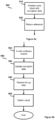
- Figure 9b shows a method 950 for use by a protected item of software 240 during execution, such as the protected item of software 240 described in relation to figure 8 above.
- the method 950 typically follows an initialization method, such as method 900.
- the method 950 may be thought of as executing a wrapper code block 530-4 of the software instance 540 and comprises the following steps.
- a step 952 comprises invoking the software routine 530-2.
- the step 952 comprises using the reference 535-2 to the software routine 530-2 for invoking the software routine 530-2.
- the step 952 comprises applying the stored corruption data 531-4 to modify software routine data, as described previously.
- a step 954 comprises updating the stored corruption data 531-4 based on the invocation of the software routine.
- a step 956 comprises receiving fix-up data from an integrity enforcement application 232.
- embodiments of the invention may be implemented using a variety of different information processing systems.
- the figures and the discussion thereof provide an exemplary computing system and methods, these are presented merely to provide a useful reference in discussing various aspects of the invention.
- Embodiments of the invention may be carried out on any suitable data processing device, such as a personal computer, laptop, personal digital assistant, mobile telephone, set top box, television, server computer, etc.
- suitable data processing devices may include embedded devices. Examples of such devices may include (but are not limited to) embedded processing systems in cars.
- the description of the systems and methods has been simplified for purposes of discussion, and they are just one of many different types of system and method that may be used for embodiments of the invention.
- the boundaries between logic blocks are merely illustrative and that alternative embodiments may merge logic blocks or elements, or may impose an alternate decomposition of functionality upon various logic blocks or elements.
- the above-mentioned functionality may be implemented as one or more corresponding modules as hardware and/or software.
- the above-mentioned functionality may be implemented as one or more software components for execution by a processor of the system.
- the above-mentioned functionality may be implemented as hardware, such as on one or more field-programmable-gate-arrays (FPGAs), and/or one or more application-specific-integrated-circuits (ASICs), and/or one or more digital-signal-processors (DSPs), and/or other hardware arrangements.
- FPGAs field-programmable-gate-arrays
- ASICs application-specific-integrated-circuits
- DSPs digital-signal-processors
- program may be a sequence of instructions designed for execution on a computer system, and may include a subroutine, a function, a procedure, a module, an object method, an object implementation, an executable application, an applet, a servlet, source code, object code, byte code, a shared library, a dynamic linked library, and/or other sequences of instructions designed for execution on a computer system, potentially with data and/or other resources.
Landscapes
- Engineering & Computer Science (AREA)
- Computer Security & Cryptography (AREA)
- Software Systems (AREA)
- Theoretical Computer Science (AREA)
- Computer Hardware Design (AREA)
- General Engineering & Computer Science (AREA)
- Physics & Mathematics (AREA)
- General Physics & Mathematics (AREA)
- Health & Medical Sciences (AREA)
- Virology (AREA)
- Technology Law (AREA)
- Multimedia (AREA)
- General Health & Medical Sciences (AREA)
- Computing Systems (AREA)
- Storage Device Security (AREA)
- Stored Programmes (AREA)
Applications Claiming Priority (3)
| Application Number | Priority Date | Filing Date | Title |
|---|---|---|---|
| US16/545,925 US11263316B2 (en) | 2019-08-20 | 2019-08-20 | Securing software routines |
| PCT/EP2020/073226 WO2021032792A1 (en) | 2019-08-20 | 2020-08-19 | Securing software routines |
| EP20758206.5A EP4018341B1 (de) | 2019-08-20 | 2020-08-19 | Sichern von softwareunterprogrammen |
Related Parent Applications (2)
| Application Number | Title | Priority Date | Filing Date |
|---|---|---|---|
| EP20758206.5A Division EP4018341B1 (de) | 2019-08-20 | 2020-08-19 | Sichern von softwareunterprogrammen |
| EP20758206.5A Division-Into EP4018341B1 (de) | 2019-08-20 | 2020-08-19 | Sichern von softwareunterprogrammen |
Publications (2)
| Publication Number | Publication Date |
|---|---|
| EP4575857A2 true EP4575857A2 (de) | 2025-06-25 |
| EP4575857A3 EP4575857A3 (de) | 2025-08-06 |
Family
ID=72148143
Family Applications (2)
| Application Number | Title | Priority Date | Filing Date |
|---|---|---|---|
| EP20758206.5A Active EP4018341B1 (de) | 2019-08-20 | 2020-08-19 | Sichern von softwareunterprogrammen |
| EP25174086.6A Pending EP4575857A3 (de) | 2019-08-20 | 2020-08-19 | Sicherung von softwareroutinen |
Family Applications Before (1)
| Application Number | Title | Priority Date | Filing Date |
|---|---|---|---|
| EP20758206.5A Active EP4018341B1 (de) | 2019-08-20 | 2020-08-19 | Sichern von softwareunterprogrammen |
Country Status (4)
| Country | Link |
|---|---|
| US (2) | US11263316B2 (de) |
| EP (2) | EP4018341B1 (de) |
| CN (1) | CN114556336B (de) |
| WO (1) | WO2021032792A1 (de) |
Families Citing this family (5)
| Publication number | Priority date | Publication date | Assignee | Title |
|---|---|---|---|---|
| CN111813407B (zh) * | 2019-10-28 | 2022-02-18 | 厦门雅基软件有限公司 | 游戏开发方法、游戏运行方法、装置和电子设备 |
| US11403392B2 (en) * | 2020-01-06 | 2022-08-02 | International Business Machines Corporation | Security handling during application code branching |
| US12052282B2 (en) * | 2021-08-25 | 2024-07-30 | Paypal, Inc. | Automatic detection of proxy-based phishing sites |
| US20230195860A1 (en) * | 2021-12-20 | 2023-06-22 | International Business Machines Corporation | Selective on-demand execution encryption |
| CN119516641A (zh) | 2023-08-24 | 2025-02-25 | 爱迪德技术有限公司 | 数字钥匙控制系统 |
Citations (11)
| Publication number | Priority date | Publication date | Assignee | Title |
|---|---|---|---|---|
| US6594761B1 (en) | 1999-06-09 | 2003-07-15 | Cloakware Corporation | Tamper resistant software encoding |
| US6779114B1 (en) | 1999-08-19 | 2004-08-17 | Cloakware Corporation | Tamper resistant software-control flow encoding |
| US7350085B2 (en) | 2000-04-12 | 2008-03-25 | Cloakware Corporation | Tamper resistant software-mass data encoding |
| US7395433B2 (en) | 2001-06-08 | 2008-07-01 | Cloakware Corporation | Method and system for sustainable digital watermarking |
| US7397916B2 (en) | 2000-12-08 | 2008-07-08 | Cloakware Corporation | System and method for protecting computer software from a white box attack |
| WO2009140774A1 (en) | 2008-05-23 | 2009-11-26 | Cloakware Corporation | System and method for generating white-box implementations of software applications |
| WO2011120123A1 (en) | 2010-03-31 | 2011-10-06 | Irdeto Canada Corporation | A system and method for encapsulating and enabling protection through diverse variations in software libraries |
| WO2012126077A1 (en) | 2011-03-21 | 2012-09-27 | Irdeto Canada Corporation | System and method for securely binding and node-locking program execution to a trusted signature authority |
| WO2013142983A1 (en) | 2012-03-30 | 2013-10-03 | Irdeto Canada Corporation | Securing accessible systems using cross-linking |
| WO2015150376A1 (en) | 2014-03-31 | 2015-10-08 | Irdeto B.V. | Optimizing and protecting software |
| WO2015150391A1 (en) | 2014-03-31 | 2015-10-08 | Irdeto B.V. | Software protection |
Family Cites Families (20)
| Publication number | Priority date | Publication date | Assignee | Title |
|---|---|---|---|---|
| CA2025197C (en) * | 1989-10-19 | 1998-04-21 | Michael H. Kelley | Method and system for dynamically controlling the operation of a program |
| WO1999014881A2 (en) * | 1997-09-16 | 1999-03-25 | Information Resource Engineering, Inc. | Cryptographic co-processor |
| US6295606B1 (en) * | 1999-07-26 | 2001-09-25 | Motorola, Inc. | Method and apparatus for preventing information leakage attacks on a microelectronic assembly |
| WO2002044850A2 (en) * | 2000-11-29 | 2002-06-06 | Entropia, Inc. | System and method for securing an application for execution on a computer |
| US7225439B2 (en) * | 2003-03-21 | 2007-05-29 | Sun Microsystems, Inc. | Combining write-barriers within an inner loop with fixed step |
| US8479283B2 (en) * | 2006-11-28 | 2013-07-02 | Microsoft Corporation | Generating security validation code automatically |
| US20080250054A1 (en) * | 2007-02-20 | 2008-10-09 | Donald Bert Nickel | Object based heuristics database platform |
| US8752032B2 (en) * | 2007-02-23 | 2014-06-10 | Irdeto Canada Corporation | System and method of interlocking to protect software-mediated program and device behaviours |
| GB2478098B (en) * | 2008-11-19 | 2013-07-10 | Secure Works Inc | System and method for run-time attack prevention |
| CA2761065C (en) * | 2009-05-06 | 2018-01-02 | Irdeto Canada Corporation | Interlocked binary protection using whitebox cryptography |
| US8997040B2 (en) * | 2010-03-24 | 2015-03-31 | Microsoft Technology Licensing, Llc | Variable closure |
| CA2831369C (en) * | 2011-03-31 | 2019-04-30 | Irdeto B.V. | Method of securing non-native code |
| FR2974207B1 (fr) * | 2011-04-14 | 2013-05-24 | In Webo Technologies | Procede et systeme de securisation d'un logiciel |
| TW201403375A (zh) * | 2012-04-20 | 2014-01-16 | 歐樂岡科技公司 | 用於安全購買之安全區 |
| US20140007117A1 (en) * | 2012-06-13 | 2014-01-02 | Bluebox | Methods and apparatus for modifying software applications |
| US11222096B2 (en) * | 2014-03-28 | 2022-01-11 | Irdeto B.V. | Protecting an item of software |
| EP2966587A1 (de) * | 2014-07-11 | 2016-01-13 | Thomson Licensing | Verfahren zum Schutz von Softwareprogrammen durch korrupte Speicherstücke und Vorrichtung zur Durchführung des Verfahrens |
| US9887969B1 (en) * | 2015-05-01 | 2018-02-06 | F5 Networks, Inc. | Methods for obfuscating javascript and devices thereof |
| US10740452B2 (en) * | 2017-09-15 | 2020-08-11 | Arm Limited | Call path dependent authentication |
| US11171983B2 (en) * | 2018-06-29 | 2021-11-09 | Intel Corporation | Techniques to provide function-level isolation with capability-based security |
-
2019
- 2019-08-20 US US16/545,925 patent/US11263316B2/en active Active
-
2020
- 2020-08-19 CN CN202080073364.6A patent/CN114556336B/zh active Active
- 2020-08-19 EP EP20758206.5A patent/EP4018341B1/de active Active
- 2020-08-19 EP EP25174086.6A patent/EP4575857A3/de active Pending
- 2020-08-19 WO PCT/EP2020/073226 patent/WO2021032792A1/en not_active Ceased
-
2022
- 2022-01-21 US US17/580,694 patent/US11755724B2/en active Active
Patent Citations (15)
| Publication number | Priority date | Publication date | Assignee | Title |
|---|---|---|---|---|
| US6594761B1 (en) | 1999-06-09 | 2003-07-15 | Cloakware Corporation | Tamper resistant software encoding |
| US6842862B2 (en) | 1999-06-09 | 2005-01-11 | Cloakware Corporation | Tamper resistant software encoding |
| US6779114B1 (en) | 1999-08-19 | 2004-08-17 | Cloakware Corporation | Tamper resistant software-control flow encoding |
| US7350085B2 (en) | 2000-04-12 | 2008-03-25 | Cloakware Corporation | Tamper resistant software-mass data encoding |
| US7397916B2 (en) | 2000-12-08 | 2008-07-08 | Cloakware Corporation | System and method for protecting computer software from a white box attack |
| US7395433B2 (en) | 2001-06-08 | 2008-07-01 | Cloakware Corporation | Method and system for sustainable digital watermarking |
| WO2009140774A1 (en) | 2008-05-23 | 2009-11-26 | Cloakware Corporation | System and method for generating white-box implementations of software applications |
| WO2011120123A1 (en) | 2010-03-31 | 2011-10-06 | Irdeto Canada Corporation | A system and method for encapsulating and enabling protection through diverse variations in software libraries |
| WO2012126077A1 (en) | 2011-03-21 | 2012-09-27 | Irdeto Canada Corporation | System and method for securely binding and node-locking program execution to a trusted signature authority |
| WO2013142983A1 (en) | 2012-03-30 | 2013-10-03 | Irdeto Canada Corporation | Securing accessible systems using cross-linking |
| WO2013142979A1 (en) | 2012-03-30 | 2013-10-03 | Irdeto Canada Corporation | Securing accessible systems using dynamic data mangling |
| WO2013142980A1 (en) | 2012-03-30 | 2013-10-03 | Irdeto Canada Corporation | Securing accessible systems using variable dependent coding |
| WO2013142981A1 (en) | 2012-03-30 | 2013-10-03 | Irdeto Canada Corporation | Securing accessible systems using base function encoding |
| WO2015150376A1 (en) | 2014-03-31 | 2015-10-08 | Irdeto B.V. | Optimizing and protecting software |
| WO2015150391A1 (en) | 2014-03-31 | 2015-10-08 | Irdeto B.V. | Software protection |
Non-Patent Citations (2)
| Title |
|---|
| S. CHOW ET AL.: "A White-box DES Implementation for DRM Applications", DIGITAL RIGHTS MANAGEMENT, ACM CCS-9 WORKSHOP, DRM 2002, LECTURE NOTES IN COMPUTER SCIENCE, vol. 2696, 2003, pages 1 - 15, XP002462504 |
| S. CHOW ET AL.: "Selected Areas in Cryptography, 9th Annual International Workshop, SAC 2002, Lecture Notes in Computer Science", vol. 2595, 2003, article "White-Box Cryptography and an AES Implementation", pages: 250 - 270 |
Also Published As
| Publication number | Publication date |
|---|---|
| US20220147618A1 (en) | 2022-05-12 |
| US11263316B2 (en) | 2022-03-01 |
| EP4018341A1 (de) | 2022-06-29 |
| US20210056201A1 (en) | 2021-02-25 |
| CN114556336B (zh) | 2025-09-30 |
| EP4575857A3 (de) | 2025-08-06 |
| CN114556336A (zh) | 2022-05-27 |
| EP4018341C0 (de) | 2025-10-08 |
| EP4018341B1 (de) | 2025-10-08 |
| US11755724B2 (en) | 2023-09-12 |
| WO2021032792A1 (en) | 2021-02-25 |
Similar Documents
| Publication | Publication Date | Title |
|---|---|---|
| US11755724B2 (en) | Securing software routines | |
| US11281769B2 (en) | Software integrity verification | |
| US11675880B2 (en) | Securing webpages, webapps and applications | |
| EP2430584B1 (de) | Vernetzter binärschutz mit weissbox-kryptographie | |
| AU2020220465B2 (en) | Securing virtual-machine software applications | |
| US20170116410A1 (en) | Software protection | |
| Haupert et al. | Honey, i shrunk your app security: The state of android app hardening | |
| US10503931B2 (en) | Method and apparatus for dynamic executable verification | |
| US20240104194A1 (en) | Method for associating an executable software program with a computing platform | |
| EP3127037A1 (de) | Schutz eines software-elements | |
| US20170109525A1 (en) | Protecting an item of software | |
| US10546155B2 (en) | Protecting an item of software | |
| US11074339B2 (en) | Software protection through code and control flow data hiding and obfuscation |
Legal Events
| Date | Code | Title | Description |
|---|---|---|---|
| PUAI | Public reference made under article 153(3) epc to a published international application that has entered the european phase |
Free format text: ORIGINAL CODE: 0009012 |
|
| STAA | Information on the status of an ep patent application or granted ep patent |
Free format text: STATUS: THE APPLICATION HAS BEEN PUBLISHED |
|
| AC | Divisional application: reference to earlier application |
Ref document number: 4018341 Country of ref document: EP Kind code of ref document: P |
|
| AK | Designated contracting states |
Kind code of ref document: A2 Designated state(s): AL AT BE BG CH CY CZ DE DK EE ES FI FR GB GR HR HU IE IS IT LI LT LU LV MC MK MT NL NO PL PT RO RS SE SI SK SM TR |
|
| REG | Reference to a national code |
Ref country code: DE Ref legal event code: R079 Free format text: PREVIOUS MAIN CLASS: G06F0021540000 Ipc: G06F0021120000 |
|
| PUAL | Search report despatched |
Free format text: ORIGINAL CODE: 0009013 |
|
| AK | Designated contracting states |
Kind code of ref document: A3 Designated state(s): AL AT BE BG CH CY CZ DE DK EE ES FI FR GB GR HR HU IE IS IT LI LT LU LV MC MK MT NL NO PL PT RO RS SE SI SK SM TR |
|
| RIC1 | Information provided on ipc code assigned before grant |
Ipc: G06F 21/12 20130101AFI20250627BHEP Ipc: G06F 21/53 20130101ALI20250627BHEP Ipc: G06F 21/54 20130101ALI20250627BHEP |
|
| STAA | Information on the status of an ep patent application or granted ep patent |
Free format text: STATUS: REQUEST FOR EXAMINATION WAS MADE |