EP4575459A1 - Vorrichtung und verfahren zur analyse biologischer zellen - Google Patents
Vorrichtung und verfahren zur analyse biologischer zellen Download PDFInfo
- Publication number
- EP4575459A1 EP4575459A1 EP24220899.9A EP24220899A EP4575459A1 EP 4575459 A1 EP4575459 A1 EP 4575459A1 EP 24220899 A EP24220899 A EP 24220899A EP 4575459 A1 EP4575459 A1 EP 4575459A1
- Authority
- EP
- European Patent Office
- Prior art keywords
- candidate
- cell
- biological cells
- zone
- biological
- Prior art date
- Legal status (The legal status is an assumption and is not a legal conclusion. Google has not performed a legal analysis and makes no representation as to the accuracy of the status listed.)
- Pending
Links
Images




Classifications
-
- G—PHYSICS
- G01—MEASURING; TESTING
- G01N—INVESTIGATING OR ANALYSING MATERIALS BY DETERMINING THEIR CHEMICAL OR PHYSICAL PROPERTIES
- G01N15/00—Investigating characteristics of particles; Investigating permeability, pore-volume or surface-area of porous materials
- G01N15/10—Investigating individual particles
- G01N15/14—Optical investigation techniques, e.g. flow cytometry
- G01N15/1484—Optical investigation techniques, e.g. flow cytometry microstructural devices
-
- G—PHYSICS
- G01—MEASURING; TESTING
- G01N—INVESTIGATING OR ANALYSING MATERIALS BY DETERMINING THEIR CHEMICAL OR PHYSICAL PROPERTIES
- G01N33/00—Investigating or analysing materials by specific methods not covered by groups G01N1/00 - G01N31/00
- G01N33/48—Biological material, e.g. blood, urine; Haemocytometers
- G01N33/50—Chemical analysis of biological material, e.g. blood, urine; Testing involving biospecific ligand binding methods; Immunological testing
- G01N33/53—Immunoassay; Biospecific binding assay; Materials therefor
- G01N33/569—Immunoassay; Biospecific binding assay; Materials therefor for microorganisms, e.g. protozoa, bacteria, viruses
-
- B—PERFORMING OPERATIONS; TRANSPORTING
- B01—PHYSICAL OR CHEMICAL PROCESSES OR APPARATUS IN GENERAL
- B01L—CHEMICAL OR PHYSICAL LABORATORY APPARATUS FOR GENERAL USE
- B01L3/00—Containers or dishes for laboratory use, e.g. laboratory glassware; Droppers
- B01L3/50—Containers for the purpose of retaining a material to be analysed, e.g. test tubes
- B01L3/502—Containers for the purpose of retaining a material to be analysed, e.g. test tubes with fluid transport, e.g. in multi-compartment structures
- B01L3/5027—Containers for the purpose of retaining a material to be analysed, e.g. test tubes with fluid transport, e.g. in multi-compartment structures by integrated microfluidic structures, i.e. dimensions of channels and chambers are such that surface tension forces are important, e.g. lab-on-a-chip
- B01L3/502761—Containers for the purpose of retaining a material to be analysed, e.g. test tubes with fluid transport, e.g. in multi-compartment structures by integrated microfluidic structures, i.e. dimensions of channels and chambers are such that surface tension forces are important, e.g. lab-on-a-chip specially adapted for handling suspended solids or molecules independently from the bulk fluid flow, e.g. for trapping or sorting beads or physically stretching molecules
-
- G—PHYSICS
- G01—MEASURING; TESTING
- G01N—INVESTIGATING OR ANALYSING MATERIALS BY DETERMINING THEIR CHEMICAL OR PHYSICAL PROPERTIES
- G01N15/00—Investigating characteristics of particles; Investigating permeability, pore-volume or surface-area of porous materials
- G01N15/10—Investigating individual particles
- G01N15/14—Optical investigation techniques, e.g. flow cytometry
- G01N15/1429—Signal processing
- G01N15/1433—Signal processing using image recognition
-
- G—PHYSICS
- G01—MEASURING; TESTING
- G01N—INVESTIGATING OR ANALYSING MATERIALS BY DETERMINING THEIR CHEMICAL OR PHYSICAL PROPERTIES
- G01N33/00—Investigating or analysing materials by specific methods not covered by groups G01N1/00 - G01N31/00
- G01N33/48—Biological material, e.g. blood, urine; Haemocytometers
- G01N33/50—Chemical analysis of biological material, e.g. blood, urine; Testing involving biospecific ligand binding methods; Immunological testing
- G01N33/53—Immunoassay; Biospecific binding assay; Materials therefor
- G01N33/543—Immunoassay; Biospecific binding assay; Materials therefor with an insoluble carrier for immobilising immunochemicals
- G01N33/54366—Apparatus specially adapted for solid-phase testing
- G01N33/54386—Analytical elements
-
- B—PERFORMING OPERATIONS; TRANSPORTING
- B01—PHYSICAL OR CHEMICAL PROCESSES OR APPARATUS IN GENERAL
- B01L—CHEMICAL OR PHYSICAL LABORATORY APPARATUS FOR GENERAL USE
- B01L2300/00—Additional constructional details
- B01L2300/06—Auxiliary integrated devices, integrated components
- B01L2300/0627—Sensor or part of a sensor is integrated
- B01L2300/0636—Integrated biosensor, microarrays
-
- B—PERFORMING OPERATIONS; TRANSPORTING
- B01—PHYSICAL OR CHEMICAL PROCESSES OR APPARATUS IN GENERAL
- B01L—CHEMICAL OR PHYSICAL LABORATORY APPARATUS FOR GENERAL USE
- B01L2300/00—Additional constructional details
- B01L2300/08—Geometry, shape and general structure
- B01L2300/0809—Geometry, shape and general structure rectangular shaped
- B01L2300/0816—Cards, e.g. flat sample carriers usually with flow in two horizontal directions
-
- B—PERFORMING OPERATIONS; TRANSPORTING
- B01—PHYSICAL OR CHEMICAL PROCESSES OR APPARATUS IN GENERAL
- B01L—CHEMICAL OR PHYSICAL LABORATORY APPARATUS FOR GENERAL USE
- B01L2300/00—Additional constructional details
- B01L2300/08—Geometry, shape and general structure
- B01L2300/0861—Configuration of multiple channels and/or chambers in a single devices
- B01L2300/087—Multiple sequential chambers
-
- B—PERFORMING OPERATIONS; TRANSPORTING
- B01—PHYSICAL OR CHEMICAL PROCESSES OR APPARATUS IN GENERAL
- B01L—CHEMICAL OR PHYSICAL LABORATORY APPARATUS FOR GENERAL USE
- B01L2400/00—Moving or stopping fluids
- B01L2400/08—Regulating or influencing the flow resistance
- B01L2400/084—Passive control of flow resistance
- B01L2400/086—Passive control of flow resistance using baffles or other fixed flow obstructions
-
- B—PERFORMING OPERATIONS; TRANSPORTING
- B01—PHYSICAL OR CHEMICAL PROCESSES OR APPARATUS IN GENERAL
- B01L—CHEMICAL OR PHYSICAL LABORATORY APPARATUS FOR GENERAL USE
- B01L3/00—Containers or dishes for laboratory use, e.g. laboratory glassware; Droppers
- B01L3/50—Containers for the purpose of retaining a material to be analysed, e.g. test tubes
- B01L3/502—Containers for the purpose of retaining a material to be analysed, e.g. test tubes with fluid transport, e.g. in multi-compartment structures
- B01L3/5027—Containers for the purpose of retaining a material to be analysed, e.g. test tubes with fluid transport, e.g. in multi-compartment structures by integrated microfluidic structures, i.e. dimensions of channels and chambers are such that surface tension forces are important, e.g. lab-on-a-chip
- B01L3/502746—Containers for the purpose of retaining a material to be analysed, e.g. test tubes with fluid transport, e.g. in multi-compartment structures by integrated microfluidic structures, i.e. dimensions of channels and chambers are such that surface tension forces are important, e.g. lab-on-a-chip characterised by the means for controlling flow resistance, e.g. flow controllers, baffles or throttle valves
-
- G—PHYSICS
- G01—MEASURING; TESTING
- G01N—INVESTIGATING OR ANALYSING MATERIALS BY DETERMINING THEIR CHEMICAL OR PHYSICAL PROPERTIES
- G01N15/00—Investigating characteristics of particles; Investigating permeability, pore-volume or surface-area of porous materials
- G01N15/10—Investigating individual particles
- G01N2015/1006—Investigating individual particles for cytology
-
- G—PHYSICS
- G01—MEASURING; TESTING
- G01N—INVESTIGATING OR ANALYSING MATERIALS BY DETERMINING THEIR CHEMICAL OR PHYSICAL PROPERTIES
- G01N15/00—Investigating characteristics of particles; Investigating permeability, pore-volume or surface-area of porous materials
- G01N15/10—Investigating individual particles
- G01N2015/1027—Determining speed or velocity of a particle
Definitions
- the present description relates to a device and a method for analysis of biological cells.
- Label free analysis of biological cells is important, especially in case the cells are used for post-labeling steps.
- the cells may be analyzed at one time-point or during several time-points.
- image analysis is used which identifies and optionally over time tracks individual cells to give information on the cells.
- the methods often require time consuming manual corrections of the tracking, to get correct data of the cells.
- the tracked cells may interact with other cells or with the cell analysis chamber such that events happen which are not relevant for the analysis, or which causes events in the tracking wrongly interpreted as an event of interest.
- An objective of the present description is to enable analysis of biological cells. It is a further object of the present description to enable advanced analysis of biological cells, having high reliability.
- a device for analyzing biological cells comprising:
- the device enables analysis of biological cells.
- the device enables analysis of label-free biological cells passing the at least one zone.
- the analysis of the biological cells may be combined with other processes of the biological cells, such as cell sorting of the biological cells.
- the device is configured to cause movement of biological cells to be affected by the CMM surface.
- a track of the biological cell is affected by modified movements caused by the CMM surface, such that the track may hold information of cell category of the biological cells.
- the track of the biological cells may be affected not only by specific modified movements caused by the CMM surface. Rather, a path followed by a biological cell may be affected in other ways that may generate a risk that a track is incorrectly determined to correspond to a biological cell of interest.
- the device When analyzing biological cells, it is of importance that the information which is basis for the analysis is reliable. Since the biological cells are in motion over the zone and since there are several biological cells being detected simultaneously and continuously, several potential errors may appear. Those errors may affect the outcome of the analysis and it is of importance for the analysis that the errors are disregarded before or during the analysis. It is a realization of the inventors that the device according to the first aspect can analyze biological cells with a higher accuracy thanks to the removal of incorrect events from the tracking of the biological cells.
- Cells may be characterized by the molecules they comprise, e.g. the molecules comprised in the cell membrane.
- Molecules comprised in the cell membrane may e.g. be antigens.
- a way of checking whether a cell comprises a certain cell membrane molecule may be to let the cell react with a molecule that binds specifically to said cell membrane molecule.
- an antigen may correspond to one or more antibodies, where the antigen and antibody bind specifically to each other. Consequently, cells may be assigned into cell categories depending on which cell membrane molecules they comprise or which molecules the cells bind to.
- the antigen CD4 (cluster of differentiation 4) molecule in cell membranes is a glycoprotein which binds to anti-CD4 antibodies.
- Cells that bind to anti-CD4 antibodies may form one cell category. Such cells may be detected based on their modified movements when they travel through a zone with a CMM surface coated by anti-CD4 antibodies. Analogously, cells that bind to anti-CD8 (cluster of differentiation 8) antibodies (CD8 positive cells) may form another cell category. Such cells may be detected based on their modified movements when they travel through a zone with a CMM surface coated by anti-CD8 antibodies. Thus, a cell category may be a category of cells which binds to a specific molecule such as an antibody.
- a biological cell may be assigned to more than one cell category.
- the cell membrane of a cell may have antigens against several molecules.
- a cell may for instance be both CD4 positive and CD8 positive.
- There are several antigens on a cell membrane and a combination of antibodies, or other biomarkers, against those antigens may be used to categorize cells within a larger group of cells.
- the cells comprised in the cell line may belong to one, two, three, four or even more cell categories.
- Cell categories may also overlap, such that some of the cells belonging to a first cell category may have another marker belonging to a second cell category.
- the second cell category may comprise of cells belonging to the first category and other cells belonging to a third cell category.
- a cell category may be a category of cells that may have differences in the expression level of a certain molecule comprised in the cell membrane. Different cells may have different levels of expression of a molecule on the cell membrane, this may be relevant to be able to categorize the cell. Even further, a cell may have different molecules expressed on the cell membrane. A combination of molecules expressed on the cell membrane and the number of molecules expressed on the cell membrane may place the cell in several cell categories, which may render a certain categorization. Each cell may belong to different combinations of cell categories.
- the device may comprise more than one zone, wherein each zone may be coated with molecules having an affinity and a specificity to a respective cell category. Then, biological cells passing the multiple zones may interact with none, one or several of the CMM surfaces depending on the biomarkers on the surface of the biological cell.
- each track comprises correct information.
- a CD4 positive cell may get stuck at a position in the zone due to a defect in the zone. Then, the tracking of that cell may not give correct information and an event corresponding to the cell being stuck in the zone should be disregarded.
- Another example is if a CD4 positive cell changes shape, orientation, or size for an unknown reason during the passage through the zone. Then, the event related information of the size change or shape change may indicate that the event need to be disregarded.
- An even further example is if a CD4 positive cell and a CD4 negative cell passes the zone simultaneously.
- the processor may form a track wherein the tracked cell changes from the CD4 positive cell to the CD4 negative cell within the track. This would give information from both the CD4 positive cell and the CD4 negative cell in one track. Such incorrect information should be disregarded. Even more examples of tracking errors will be discussed throughout the application.
- the molecules coating at least one CMM surface of the at least one zone of the flow channel may comprise at least one of: antibodies, aptamers, antibody fragments, peptides, molecularly imprinted polymers, receptors or lectins.
- Antibodies, aptamers, antibody fragments, peptides, molecularly imprinted polymers, receptors or lectins may have an affinity to specific cell categories but not to other cell categories.
- Antibodies, aptamers, antibody fragments, peptides, molecularly imprinted polymers, receptors or lectins may bind to specific cell categories but not to other cell categories.
- Antibodies, aptamers, antibody fragments, peptides, molecularly imprinted polymers, receptors or lectins may have a high sensitivity in binding to a cell category. Thus, the percentage of true positive binding events may be high. Antibodies, aptamers, antibody fragments, peptides, molecularly imprinted polymers, receptors or lectins may have a high specificity in binding to a cell category. Thus, the percentage of false positive binding events may be low.
- the molecules coating at least one CMM surface of the at least one zone of the flow channel may comprise other molecules than antibodies, aptamers, antibody fragments, peptides, molecularly imprinted polymers, receptors and lectins, e.g. comprise other molecules that binds specifically to a cell membrane molecule.
- a CMM surface may be configured to modify the movement of the cell belonging to the associated cell category of the zone by modifying e.g. the speed, direction or path of cells comprised in the cell category.
- the at least one CMM surface of at least one zone of the flow channel may be configured to modify the movement of the cell belonging to the associated cell category of the zone by slowing down the speed of the cell movement. This may be made by the molecules binding and releasing to the cell belonging to the cell category such that the speed slows down.
- the at least one CMM surface of at least one zone of the flow channel may be configured to modify the movement of the cell belonging to the associated cell category of the zone by binding and releasing the cell belonging to the associated cell category of the zone.
- Such a movement may be termed a bind-release movement.
- the CMM surface may be configured not to bind a cell indefinitely. Binding and releasing the cell may temporarily halt the cell along its travel. Such a modified motion in the form of a modified speed may be detectable by the at least one detector.
- the cell may not necessarily bind and release at the same point of the CMM surface.
- the CMM surface may be configured to let a cell bind to the CMM surface, roll a distance along the CMM surface, and then release from the CMM surface in a bind-roll-release movement.
- the cell may e.g. roll along a surface in a direction different from the direction of the flow of liquid.
- the direction or path of a cell belonging to a category associated with the CMM surface may be different from the path of a cell belonging to a category not associated with the CMM surface.
- Such a modified motion in the form of a modified direction or path may be detectable by the at least one detector.
- the flow channel may comprise more than one zone.
- the at least one zone of the flow channel may comprise at least a first zone and a second zone, wherein a composition of the molecules coating the at least one CMM surface of the first zone differs from a composition of the molecules coating the at least one CMM surface of the second zone.
- the second zone may be arranged downstream from the first zone.
- zones with different CMM surfaces may enable modified movements of the cells belonging to multiple cell categories.
- the combination of information regarding the modified movements of cells in different zones may also enable complex analysis of the cells.
- a biological cell may be subject to modified movements in several zones and different biological cells may be distinguished from each other based on in which combination of zones the biological cells are subject to modified movements.
- the information on the biological cells passing through the zone and thereby having a modified movement is detected by the detector and the information is further received by the processor.
- the processor is processing the information to analyze the modified movement. For this analysis to be accurate, removing of potential non-specific modified movements from the tracks such that the non-specific modified movements are not included in the analysis may greatly improve accuracy of the analysis.
- the at least one detector is configured to detect information representing the biological cells passing the at least one zone.
- the at least one detector may be configured to acquire images of the biological cells in the flow channel.
- the at least one detector may be configured to acquire an image series representing a time-sequence of images of the biological cell. From the images, the processor may process information regarding the biological cells.
- the image acquired by the detector may be a 2D array of intensities, such as a hologram.
- the hologram may then include information of the area detected by the detector.
- the hologram may be used to reconstruct an image for the user to see.
- the processor may use the information in the hologram without reconstructing an image,
- the detector may comprise multiple image sensors.
- the multiple image sensors may image a larger area than a single image sensor could.
- Each image sensor may have its own light source.
- two or more image sensors may share a light source.
- the field of view of an image sensor may or may not overlap with the field of view of another image sensor.
- the processor is configured to receive the information detected by the at least one detector.
- the processor may be configured to analyze a time-sequence of information of the biological cells and detect the cell as exhibiting the at least one modified movement based on the time-sequence of information.
- the processor may be configured to detect one modified movement of a cell in a zone, e.g. one bind and release event, a halt of motion, a change of speed, a change of direction, or a change of path, from the information received from the detector, and thereby identify the cell as belonging to the cell category associated with the zone.
- the processor may be configured to process the information from the at least one detector and identify a threshold number of modified movements of a cell in a zone, e.g. the cell displaying at least 2, at least 5, or at least 10 bind and release events within the zone, and thereby identify the cell as belonging to the cell category associated with the zone.
- the processor may be configured to identify modified movements of two or more cells simultaneously, as they move across a CMM surface of the flow channel.
- the candidate biological cells are identified from the information detected by the at least one detector.
- the candidate biological cells may be biological cells belonging to the cell category of the zone.
- the candidate biological cells may be a biological cell not belonging to the cell category of the zone.
- the candidate biological cell may however also be non-cell.
- the non-cell could be a debris in the flow of liquid, a dead or injured cell, an artefact in the CMM surface of the zone or an imaging artefact interpreted by the detector as a cell.
- the processor of the device is configured such that it processes information acquired by the detector such that it may decide the probability that a candidate biological cell is actually a biological cell or not. It may further process the information such that it may decide the probability if it is a biological cell of interest or a biological cell not of interest.
- the analysis may for instance only be interested in CD4 positive cells.
- the CD4 negative cells may be removed from the analysis as bological cells not of interest.
- the CD4 negative cells may be identified based on its behavior while passing the zone. For instance, the CD4 negative cells may have a more undisrupted and faster passage through the zone than the CD4 positive cell.
- Each candidate biological cell may be represented by a track that defines a path of a movement of the candidate biological cell through the at least one zone of the flow channel.
- the track may represent the position of a detected candidate biological cell in the flow channel over a time-sequence during which the candidate biological cell passes the zone.
- the movements of the each of the candidate biological cell passing the zone is tracked as well as the time the candidate biological cell spends in the zone.
- the track may represent a set of data points, where each data point represents a timepoint and the position of the candidate biological cell at least in two dimensions but even in three dimensions.
- each track comprises information of x, y, and optionally z, and t, where x, y and z are spatial coordinates and t are the timepoint.
- the detector acquires information on movement in space and time of the candidate biological cell and may provide such information to the processor.
- the processor may further acquire information of other properties of the candidate biological cells.
- the information may for instance be size, shape and solidity.
- the information may give the processor, through the detector, enough information to decide the probability that a candidate biological cell is a biological cell of interest, a biological cell not of interest or a non-cell.
- information about the morphological properties such as morphology of the candidate biological cell for each time may be acquired and processed by the processor.
- the information about the morphological properties such as morphology of the candidate biological cell may be acquired for one time point or several time points, but it need not necessarily be acquired for all time points.
- the morphology event may be a size, shape, orientation, granularity, homogeneity, smoothness, patchiness, transparency, scattering, brightness or solidity of the candidate biological cells.
- the morphology event may as well be a change in size, shape, orientation, granularity, homogeneity, smoothness, patchiness, transparency, scattering, brightness or solidity of the candidate biological cells.
- the morphology event may for instance indicate clustering of cells, i.e. that several cells are stuck together for a shorter or longer time.
- the morphology event may as well indicate that a cell is stuck to debris in the flow channel.
- the morphology event may indicate that something has affected the candidate biological cells in a way such that the tracking is not correct. Thus, if it can be determined that the morphology event is not necessarily caused by the CMM surface, part of a track, including the morphology event, or a full track which includes the morphology event not necessarily caused by the CMM surface can be removed.
- candidate modified movements are identified as events.
- a candidate modified movement may be a movement induced by a biological cell belonging to the associated biological cell category of the zone and thereby the candidate modified movement is a specific modified movement caused by the cell passing the CMM surface.
- the candidate biological cell is a biological cell matching the cell category of the specific zone and the candidate modified movement is a modified movement caused by the CMM surface.
- a candidate modified movement may however also be an event in the track that may be mistaken for a modified movement caused by the CMM surface but which is in fact not caused by the CMM surface. It may for instance be a candidate biological cell not belonging to the associated cell category, which moves over the zone making random movements. It may further be a candidate biological cell being a non-cell, such as a debris in the flow of liquid. The non-cell may move over the zone, without being affected by the CMM surface. All of those movements will be tracked, and the information will be analyzed, together with the tracks from the biological cells belonging to the associated biological cell category of the zone, if it is not removed.
- any movement through the at least one zone may be identified as a candidate modified movement.
- the candidate modified movements are identified as events in each of the tracks.
- a track may comprise very few, such as 0 or 1 event. This may occur if the cell passes the zone with an even speed and without any interaction.
- Each track may comprise several events. It may for instance comprise 2, 10 or 50 events.
- Each event may represent different candidate modified movements of the candidate biological cells. For instance, a candidate biological cell may change its movement several times while passing the zone. This may render several events of candidate modified movements.
- event related information associated with the event comprises at least one of a sensed property of the candidate biological cells and/or a property defining a relation between events of at least two tracks from candidate biological cells.
- event related information it should be understood that it may be an actual property of the candidate biological cell or a property defining the relation between events of at least two tracks from two candidate biological cells or it may be a change in the sensed property of the candidate biological cell or a change in the property defining the relation between events of at least two tracks from two candidate biological cells.
- candidate non-specific modified movements are identified. The identification is made based on the event related information where the event related information indicates that the event is not necessarily caused by the CMM surface. In other words, candidate modified movements not necessarily caused by the CMM surface are identified as non-specific modified movements.
- candidate modified movements not necessarily caused by the CMM surface are identified as non-specific modified movements.
- candidate modified movements caused by the CMM surface, but where the track further comprises events not caused by the CMM surface may also be identified as non-specific modified movements.
- the candidate non-specific modified movements are removed from the candidate modified movements for each track.
- the remaining candidate modified movements for each track have an increased portion of specific modified movements, that is modified movement that actually correspond to the movement of the biological cell being modified by the CMM surface.
- each track may comprise several events originating from specific modified movements but also events originating from non-specific modified movements.
- the events from the non-specific modified movements may be removed.
- the device allows for analysis of biological cells where the remaining modified movements in the tracks correspond only or at least to a high degree to movements of the biological cells being modified by the CMM surface.
- events registered as not being from biological cells having a modified movement caused by the CMM surface are removed.
- the proportion of specific modified movements among the events in the tracks increases.
- a track representing movement of a biological cell that does not belong to the cell category associated with the at least one zone or a track representing movement of non-cells may have no or very few remaining events and may therefore allow correct determination of the tracks as not belonging to a biological cell of interest.
- the device allows information of interest, that is information corresponding to specific modified movements, to be distinguished from non-specific modified movements and/or irrelevant tracks or parts of tracks.
- the removing of the candidate non-specific modified movements from events in the tracks and/or the removing of tracks or parts of tracks based on morphology events may be viewed as removing noise from the tracks.
- the processing of the information may further comprise: analyzing each of the remaining part of the tracks based on remaining candidate modified movements of the track to determine whether the track represents movements of the biological cell belonging to the associated biological cell category of the zone.
- Analysis of the remaining part of the tracks may correspond to determining a number of events remaining in the tracks, such as comparing the number of events to a threshold. For instance, if the number of events is larger or equal to the threshold, the track may be determined as representing movements of the biological cell belonging to the associated biological cell category of the zone.
- the processor may not necessarily perform such analysis.
- the processor may be configured to improve a signal-to-noise ratio relating to information of the tracks based on removing candidate non-specific modified movements.
- the information of the tracks may be transmitted to an external unit for further processing and analysis therein.
- information of the tracks after the non-specific modified movements have been removed may be displayed to a user for manual analysis of the tracks.
- the manual analysis may then be greatly augmented by the signal-to-noise ratio of the tracks being improved.
- the processing of the information may give options for a further processing.
- the processing may result in a decision to analyze this cell again, thus send it again though the device, or decide to measure it in a different way.
- the processing may result in a decision to remove the track from the analysis.
- This may for instance be used in a QC (quality control) application to determine which fraction of cells is positive for the at least one zone. This may for instance be a ratio between the number of cells associated to the cell category divided total number of candidate biological cells.
- the device is further complemented with a cell sorter or cell selector arranged after the analysis zone, this may require a high yield of cells associated with the cell category of the zone.
- the at least one detector may be an optical sensor or the device may further comprise an optical sensor.
- the processor may be configured to process information detected by the optical sensor for determining an optical property of each of the candidate biological cells.
- the property of the candidate biological cells may comprise an optical property of the candidate biological cell.
- the optical property of the candidate biological cell may be event related information used to identify candidate non-specific modified movements.
- the optical sensor may be a CMOS image sensor.
- the information detected by the optical sensor may be a one-time measurement of the optical property or the information may be a time-sequence of information such that a change in the optical property may be determined.
- the processor may be configured to identify tracks in the information detected by the at least one detector. This may be performed based on optical detection of information, such that the optical sensor may be used both for detecting the information to allow tracks to be determined as well as for detecting optical properties of the candidate biological cells. However, it should be realized that information relating to tracks may be acquired by detecting changes in electrical properties in the flow channel associated with movements of objects therethrough. In such case, the optical sensor may be used for detecting additional information of the candidate biological cell.
- the optical property may provide information of the candidate biological cell. For instance, morphology of the candidate biological cell may be determined, which may be used as information allowing determination whether the track represents the biological cell of interest.
- the sensed optical property of the biological cell may change.
- the biological cell may be thin and difficult to distinguish in the time-sequence of images such that the biological cell may be temporarily not visible in the time-sequence.
- the sensed optical property may correspond to determining a, disappearing, a temporarily disappearing or fading of the biological cell from the time-sequence allowing a non-specific modified movement based on such disappearing or fading to be identified.
- the optical property of the candidate biological cells may comprise the size, shape, orientation, granularity, homogeneity, smoothness, patchiness, transparency, scattering, brightness or solidity of the candidate biological cells.
- the optical property may be used to determine the event related information associated with each event of each track.
- the optical property may be used to determine if the event is likely caused by an interaction between the candidate biological cell and the CMM surface, or if the event is likely caused by any other non-specific modified movement.
- the optical property may for instance be used to determine relations between at least two cells.
- the at least one detector may be an electrical sensor or the device may further comprise an electrical sensor.
- the processor may be configured to process information detected by the electrical sensor for determining an electrical property of each of the candidate biological cells.
- the property of the candidate biological cells may comprise an electrical property of the candidate biological cell.
- the electrical sensor may be an electrical impedance sensor.
- the electrical sensor may register electrical signals as a response from the candidate biological cells after an external electrical stimulation is applied.
- the electrical property may be used to determine the event related information associated with each event of each track.
- the electrical property may be used to determine if the event is caused by an interaction between the candidate biological cell and the CMM surface, or if the event is caused by any other non-specific modified movement.
- the electrical property may for instance be used to determine a change in size, shape or morphology of the candidate biological cell.
- a change in size, shape, morphology may cause a modified movement, and therefore the identification of the change in size, shape, morphology before the modified movement may help in determining that the modified movement is not caused by interaction with the CMM surface.
- the electrical property may for instance be used to determine relations between at least two cells.
- the electrical property of the candidate biological cells may comprise the electrical impedance, at one or more frequencies of an applied AC field, of the candidate biological cells, wherein the electrical impedance of the candidate biological cells is used to determine e.g. the size, membrane capacitance or cytoplasm conductivity of the candidate biological cells.
- an AC electric field may be applied, e.g. between a 2D array of electrodes at the bottom of the zone and a counter electrode at the top of the flow channel. This may allow for measurement of the impedance of the liquid as well as any candidate biological cells being between each electrode and the counter-electrode.
- the candidate biological cell may be identified as a biological cell of interest, a biological cell not of interest or a non-cell, based on the event related information comprising the property of the candidate biological cells.
- determining event related information may comprise determining a spatial and/or temporal property of the event, and determining a relation between events of at least two tracks from candidate biological cells may comprise comparing spatial and/or temporal properties of events of the at least two tracks.
- the event related information may have information on where or when the event happened.
- the event related information can reveal if two or more candidate biological cells have been at the same position at the same time or if two or more candidate biological cells were very close to each other at the same time.
- the event related information can reveal if an event happens at the same position but at different times for several candidate biological cells or if an event happens at the same time but at different positions for several candidate biological cells.
- an event happening at the same time for several candidate biological cells may be due to a sudden flow instability.
- an event happing for several candidate biological cells at the same location may be the result of inaccuracies in the flow cell.
- the information may be used to determine if there are large and/or fast changes in the position of the candidate biological cells. This may give a large change in spatial position and thus be comprised in a spatial property of the event.
- the information may be used to identify sudden changes in orientation. This may be comprised in the spatial property of the event.
- This information may be used to determine events that are not necessarily caused by the CMM surface. The information may then be used to reduce the number of events which otherwise falsely would have been characterized as a specific modified movement.
- determining event related information may comprise determining a property based on the candidate biological cells for at least two tracks being within a spatial distance to each other smaller than a threshold.
- the event related information may indicate that at least two candidate biological cells have been close to each other. This may indicate that the candidate biological cells have interacted with each other.
- the interaction between the at least two cells may wrongfully be interpreted as a specific modified movement caused by the CMM surface, leading to an error of the tracking.
- the determination of the interaction between the at least two candidate biological cells may reduce the number of false events based on interactions.
- the threshold may be measured as a center-to-center distance, thus as the distance between the center point of each of the candidate biological cells.
- the threshold may then be 1x or 1.5x or 2x or 5x of the diameter of the candidate biological cells being close to each other.
- the diameter of the candidate biological cells may be 8-10 ⁇ m.
- the threshold may on the other hand be 10 or 15 or 20 or 50 ⁇ m.
- the threshold may be measured as a edge-to-edge distance, thus as the distance between the edge of each of the candidate biological cells.
- the threshold may then be 0.1x or 0.5x or 1x or 5x of the diameter of the candidate biological cells being close to each other.
- the diameter of the candidate biological cells may be 8-10 ⁇ m.
- the threshold may on the other hand be 1 or 5 or 10 or 20 ⁇ m.
- the property defining a relation between events of at least two tracks from candidate biological cells may indicate encountering of at least two candidate biological cells.
- the encountering could be between two biological cells, between one biological cell and debris or an imaging artefact, or between two parts of debris. All of those encounters may otherwise be identified as a specific modified movement.
- the encountering may include two candidate biological cells interacting with each other, or moving above and below each other.
- removal of the candidate non-specific modified movements identified from the property defining a relation between events of at least two tracks may lead to removal of candidate non-specific modified movements from one of the tracks or from several tracks in the relation.
- the removal may be from one, two, three or more tracks.
- not all tracks involved in an encounter may have parts removed. Thus, it may be such that all information form one track may be left without a removal, while another track has parts removed.
- the property defining a relation between events may indicate that an association between a particular track and a particular candidate biological cell is lost or generated inside the zone.
- the track representing a candidate biological cell before the event may move to another candidate biological cell after the event.
- the track may for instance in two images following each other move from a first candidate biological cell to a second candidate biological cell based on that the second candidate biological cell in the second image is at a location close to where the first candidate biological cell was in the first image. This would of course render all of the previous or following events of the two tracks being wrong, since each of the tracks now represent another candidate biological cell than in the first place.
- one candidate biological cell may accidentally be moved to another candidate biological cell which have not yet been assigned with a tracking. This will give rise to the same problems as identified above, i.e., that one tracking may comprise information of two (or more) candidate biological cells.
- a tracking may, in the same way, move from a candidate biological cell to a debris. Again, this would make the tracking comprise information from more than the candidate biological cell identified at the start of the tracking.
- the processor may additionally identify the length of each track. Thus, the actual length a candidate biological cell has moved when being tracked. This may be used to remove tracks comprising errors. For instance, a very short length of a track may indicate that a tracking was interrupted during the passage of the candidate biological cell through the at least one zone. This may occur due to a cell is fainting in the images during the passage of the at least one zone.
- the processor may further gather information on the start and/or end of the tracking. If this appears to be away from the entrance and/or exit of the at least one zone, it may further indicate that a candidate biological cell has lost its tracking while passing through the at least one cell and the information of the tracking may comprise errors leading to it being disregarded.
- determining event related information may comprise determining whether a multitude, such as at least four, of events in respective tracks share a spatial and/or a temporal property.
- the tracks of a plurality of candidate biological cells have events at the same location of the zone. This may indicate that there is an invisible defect, debris or stuck cell at the specific location. Thus, events happening at that location would not be specific modified movements caused by the CMM surface and may be removed from each of the tracks.
- a specific time-point in the track may be removed if the event related information determines with a high probability that the event was not caused by the CMM surface.
- the entire tracks may be removed as each of the tracks do not longer comprise information from one cell, but from at least two cells. This may alternatively remove the part of the track after the event where the switch of tracks are identified, as the tracking before the switch may comprise correct and relevant information of the candidate biological cell.
- the interference pattern may be used for reconstructing images of the flow channel.
- reconstructed images may be provided to the processor as information representing the biological cells carried by the flow of liquid.
- the processor may be able to identify the candidate biological cells and the tracks therefrom in the time-sequence of interference patterns without the interference patterns being converted to reconstructed images.
- the detector may use imaging with a lens to detect cells exhibiting modified movements.
- the detector may detect an image series representing a time-sequence of a cell in the flow channel instead of a time-sequence of interference patterns of the cell.
- This aspect may generally present the same or corresponding advantages as the former aspect.
- the method allows for analysis of biological cells with high accuracy and high throughput.
- the method allows for removal of the events of each track which may comprise event information not being related to the modified movements induced by the CMM surface.
- Figs 1a and 1b illustrate a flow channel 10 of a device 1 for analyzing biological cells 4.
- the flow channel 10 is configured to pass a flow 2 of liquid carrying the cells 4 to be analyzed.
- the flow channel 10 may be a microfluidics channel.
- the flow channel 10 may be defined by conventional lithography and sealed with a transparent cover slide, e.g. glass, PDMS, or polycarbonate.
- the top part of the flow channel 10 may be covered with a cover slide, e.g. a glass slide, bonded to the PDMS.
- the bottom part of the flow channel 10 may be at least partially transparent. It may comprise glass or quartz.
- the CMM surfaces 14 of the zone 12 are coated by molecules having an affinity to biological cells 4' of a first category.
- the zone 12 may be considered to be associated with the first category.
- the CMM surfaces 14 of the first zone 12' are coated by molecules having an affinity to cells 4' of a first category.
- the first zone 12' may be considered to be associated with the first category.
- the CMM surfaces 14 of the second zone 12" are coated by molecules having an affinity to cells 4" of a second category.
- the second zone 12" may be considered to be associated with the second category.
- the device 1 may be configured in the same way regardless of the device 1 having one or several zones 12. It should be understood that the device may have more than two zones.
- the molecules of the CMM surfaces 14 may be e.g. antibodies, aptamers, antibody fragments, peptides, molecularly imprinted polymers, receptors or lectins.
- the molecules of the CMM surface 14 of the first zone 12' may be anti-CD4 antibodies and the molecules of the CMM surface 14 of the second zone 12" may be anti-CD8 antibodies.
- a first cell category may be defined as biological cells 4' having a cell membrane comprising CD4 antigens ("CD4 positive cells") and a second cell category may be defined as biological cells 4" having a cell membrane comprising CD8 antigens ("CD8 positive cells").
- CMM surfaces may be provided on side walls or on the top surface of the flow channel instead or in addition to on bottom part of the channel 10.
- the molecules of the CMM surfaces 14 may modify the speed of the movement of the cells 4.
- the modified movements may be expressed as cells 4 have a reduced speed if they interact with the CMM surfaces 14 of a zone 12.
- a biological cell 4' of the first category have a slower speed in the zone 12 compared to the speed of the biological cell 4" of the second category.
- one candidate biological cell 4', 4" may belong to more than one cell category.
- one candidate biological cell 4', 4" may belong to both the associated cell category with the first zone 12' and the second zone 12".
- the molecules may bind and release a cell 4 belonging to the associated cell category of the zone 12.
- an anti-CD4 antibody may bind to a cell 4 having a cell membrane comprising CD4 antigens, and subsequently release the cell.
- the speed of a biological cell 4' of the first category moving through the first zone 12' may be reduced such that it is possible to identify the cell as belonging to the first category.
- the movements of a biological cell 4" of the second category moving through the second zone 12" may change analogously.
- the biological cell When a biological cell belongs to a category associated with a zone the biological cell may, in that zone, exhibit e.g. a bind and release event, a halt of motion, a change of speed, a change of direction, or a change of path.
- a bind and release event e.g. a bind and release event, a halt of motion, a change of speed, a change of direction, or a change of path.
- Fig. 2a and 1b illustrates a flow channel 10 of a device 1 for analyzing biological cells 4.
- the device 1 have many similarities to the device 1 described in Figs. 1a and 1b , thus only differences between the figures will be disclosed.
- Fig. 2a the illustrated flow channel 10 comprises one zone 12.
- the flow 2 of liquid and the biological cells 4 passes the zone 12.
- the zone 12 comprises obstacles 16, in the figure obstacles 16 in the form of pillars 17.
- the illustrated flow channel 10 comprises two zones 12.
- the flow 2 of liquid and the biological cells 4 first passes a first zone 12' and then a second zone 12".
- Each zone 12 comprises obstacles 16, in the figure obstacles 16 in the form of pillars 17.
- the device 1 may be configured in the same way regardless of the device 1 having one or several zones 12. It should be understood that the device may have more than two zones.
- the side walls of the pillars 17 form lateral surfaces that obstruct the path of the biological cells 4.
- the biological cells 4 repeatedly hit the side walls of the pillars 17 during their travel through the flow channel 10.
- the side walls of the pillars 17 form cell movement modifying (CMM) surfaces 14.
- the CMM surfaces 14 comprise molecules having an affinity to a cell category.
- the CMM surfaces 14 of the zone 12 are coated by molecules having an affinity to biological cells 4' of a first category.
- the zone 12 may be considered to be associated with the first category.
- the CMM surfaces 14 of the first zone 12' are coated by molecules having an affinity to cells 4' of a first category.
- the first zone 12' may be considered to be associated with the first category.
- the CMM surfaces 14 of the second zone 12" are coated by molecules having an affinity to cells 4" of a second category.
- the second zone 12" may be considered to be associated with the second category.
- the molecules of the CMM surfaces 14 may modify the movement of the cells 4.
- the modified movements may be expressed as cells 4 taking a characteristic type of path if they interact with the CMM surfaces 14 of a zone 12.
- a biological cell 4' of the first category takes a more undulating path in the zone 12 compared to the path of the biological cell 4" of the second category.
- a biological cell 4' of the first category takes a more undulating path in the first zone 12' than in the second zone 12".
- a biological cell 4" of the second category takes a more undulating path in the second zone 12" than in the first zone 12'.
- the molecules may bind and release a cell 4 belonging to the associated cell category of the zone 12.
- an anti-CD4 antibody may bind to a cell 4 having a cell membrane comprising CD4 antigens, and subsequently release the cell.
- the movements of a biological cell 4' of the first category moving through the first zone 12' may change in a characteristic way that makes it possible to identify the cell as belonging to the first category.
- the movements of a biological cell 4" of the second category moving through the second zone 12" may change analogously.
- a biological cell belongs to a category associated with a zone the biological cell may, in that zone, exhibit e.g. a bind and release event, a halt of motion, a change of speed, a change of direction, or a change of path.
- a biological cell that is observed to stick for a short time to a pillar in the first zone 12' may be regarded as a cell 4' of the first category.
- a biological cell that is observed to stick for a short time to a threshold number, e.g. 10, of pillars in the first zone 12' may be regarded as a cell 4' of the first category.
- biological cells that exhibit bind-roll-release type of movements in the first zone 12' may be regarded as a cell 4' of the first category.
- Fig. 2a and 1b illustrates a cell 4' of the first category which, in the first zone 12', follows the curvature of the pillars 17 to an extent that indicates that the cell does not merely follow the flow 2 of liquid.
- a modified movement may be detected at a specific location of the zone 12, e.g. the biological cell 4 following the CMM surface 14 of a single pillar 17 of the zone 12 in a characteristic way.
- a modified movement may be detected over the entire zone 12 or over an area of the zone 12, e.g. the cell 4 taking an undulating path when interacting with several obstacles 16 of the zone 12.
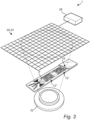
- Fig. 3 illustrates a device 1 comprising a detector 20, being an image sensor 24 and a light source 22.
- the illustrated light source 22 illuminates the zones 12 of the flow channel 10.
- the flow channel 10 of the device 1 in Fig. 3 is the flow channel 10 depicted in Fig. 2b .
- the detector 20 is configured to detect information representing the biological cells 4, carried by the flow of liquid 2, passing the at least one zone 12.
- the at least one detector 20 may be configured to detect information of at least one property of the biological cells 4.
- the property may be the size, shape or solidity of the biological cells 4.
- the at least one detector 20 may be an optical sensor or the device 1 may further comprise an optical sensor.
- the at least one detector 20 may be an electrical sensor or the device 1 may further comprise an electrical sensor.
- the device 1 further comprises a processor 26 which is configured to receive the information detected by the at least one detector 20.
- the processor 26 may e.g. perform a holographic reconstruction of two interference patterns detected by the detector 20 in the time-sequence of interference patterns. Said two reconstructions may depict e.g. a biological cell 4 in contact with a CMM surface 14. If both reconstructed images show the biological cell 4 at the same location it may be deduced that the biological cell is stuck to the CMM surface and therefore has an affinity to the CMM surface 14. If both reconstructed images show the biological cell 4 in contact with the CMM surface but at different locations, it may be deduced that the cell has stuck to the CMM surface 14 and thereafter rolled along the CMM surface 14. In either case, the biological cell 4 may be detected as exhibiting a modified movement.
- the processor 26 may not necessarily perform a full holographic reconstruction of two interference patterns in the time-sequence of interference patterns.
- the cell 4 may be detected as exhibiting a modified movement based on two, or more, interference patterns in the time-sequence of interference patterns or partial holographic reconstructions of the two, or more, interference patterns.
- the processor 26 may be configured to detect one or a plurality of modified movement(s) of a biological cell 4 in a zone 12, e.g. one bind and release event, a halt of motion, a change of speed, a change of direction, or a change of path, from the information received from the at least one detector 20, and thereby identify the biological cell 4 as belonging to the cell category associated with the zone 12.
- the processor 26 may be configured to process the information from the at least one detector 20 and identify a threshold number of modified movements of a biological cell 4 in a zone 12, e.g. the biological cell 4 displaying at least 2, at least 5, or at least 10 bind and release events within the zone, and thereby identify the biological cell 4 as belonging to the cell category associated with the zone 12.
- the processor 26 may be configured to identify modified movements of two or more biological cells 4 simultaneously, as they move across a CMM surface of the flow channel.
- the device 1 may be configured to detect modified movements of biological cells carried by the flow of liquid in a manner described in WO2022/241138 A1 , which is hereby incorporated by reference.
- the processor 26 is configured to process the information received from the at least one detector 20. The processing of the information will now be discussed in relation to Fig. 4a to g.
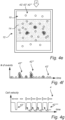
- the processing of the information comprises identifying candidate biological cells 4, as illustrated in Fig 4a where the candidate biological cells 4', 4" and 4′′′ are identified. These may be identified in information at a single point in time from the at least one detector 20.
- the candidate biological cells 4 may be biological cells 4 belonging to the cell category of the zone 12. For instance, the candidate biological cell 4' of Fig. 2b belongs to the associated cell category with the first zone 12', while the candidate biological cell 4" belongs to the associated cell category of the second zone 12". However, one candidate biological cell 4', 4" may belong to more than one cell category. Thus, one candidate biological cell 4', 4" may belong to both the associated cell category with the first zone 12' and the second zone 12".
- the optical property may for instance further affect the movement, such as the velocity, of the candidate biological cell 4.
- This is illustrated in Fig. 4d , illustrating the velocity of the candidate biological cell 4', 4" and 4′′′ over time.
- the candidate biological cell 4' has the same shape and velocity over the entire time, giving rise to no event.
- the candidate biological cell 4" also has the same shape over the time period, however the velocity is decreased during a short time giving rise to an event 42".
- This event 42" is very likely connected to an interaction between the candidate biological cell 4" and the CMM surface 14.
- this event 42" may comprise relevant information for the characterization of the candidate biological cell 4".
- the candidate biological cell 4′′′ however, has a change in morphology at the same time-point as the change in velocity.
- the processor 26 may be configured to process information detected by an electrical sensor for determining an electrical property of each of the candidate biological cells 4.
- the electrical sensor may be an array of electrical sensors.
- the electrical property of the candidate biological cells 4 comprises the electrical impedance, at one or more frequencies, of the candidate biological cells 4, wherein the electrical impedance of the candidate biological cells 4 is used to determine the size, membrane capacitance or cytoplasm conductivity of the candidate biological cells 4.
- Determining a relation between events 42', 42", 42′′′ of at least two tracks 41', 41", 41′′′ from candidate biological cells 4 comprises comparing spatial and/or temporal properties of events 42', 42", 42′′′ of the at least two tracks 41', 41", 41′′′.
- Determining event related information may comprise determining whether a multitude, such as at least four, of events 42', 42", 42′′′ in respective tracks 41', 41", 41′′′ share a spatial and/or a temporal property.
- the multitude of events 42', 42", 42′′′ may be 2, 10, 100 or 1000 depending on the experiment. This may include the examples as disclosed above, where the determination of the spatial or temporal property is made by comparing two or more tracks 41', 41", 41′′′. Then, regularity between events 42', 42", 42′′′ in space or time may be found.
- the candidate biological cells 4 may interact such that the track 41', 41", 41′′′ may shift between the candidate biological cells 4. This may happen if the candidate biological cells 4 changes place with each other such that the processor 26 believes that the associated candidate biological cell 4 is still in one place while it actually is a second candidate biological cell taking its place. Then, the information of the tracking 41', 41", 41′′′ is acquired from two candidate biological cells 4 if the tracking 41', 41", 41′′′ is not corrected. The candidate biological cell 4', 4", 4′′′ may push each other such that a non-specific modified movement is detected.
- the candidate non-specific modified movement may as well be a tracking error, such that the tracking 41', 41", 41′′′ of one candidate biological cell 4 moves to another candidate biological cell 4.
- the candidate biological cell 4 may have a specific modified movement, but the tracking 41', 41", 41′′′ may for a short while be attached to the wrong candidate biological cell 4.
- the processor 26 may be configured to determine that an entire track 41', 41", 41′′′ is to be disregarded based on the determined event related information of one or more events of the track 41', 41", 41′′′. Thus, if the track 41', 41", 41′′′ includes such errors that it may not be of relevance to analyze or if the candidate biological cell 4 is identified as a non-cell 4′′′ the entire track 41', 41", 41′′′ may be removed.
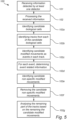
- Fig. 5 illustrates a flow chart of a method 100 for analyzing biological cells 4, 4', 4", 4′′′.
- the method 100 comprises receiving 101 information detected by at least one detector 20 representing biological cells 4, 4', 4", 4'", carried by a flow of liquid 2, to be analyzed passing at least one zone 12, 12', 12" in a flow channel 10.
- the processing 102 of the information further comprises identifying 102b tracks 41', 41", 41′′′ from each of the candidate biological cells 4, 4', 4", 4'".
- each of the identified 102a candidate biological cells 4, 4', 4", 4′′′ receives a track 41', 41", 41′′′ which follows the movements of the candidate biological cell 4, 4', 4", 4'".
- the track 41', 41", 41′′′ acquires information on movements of the candidate biological cells 4, 4', 4", 4′′′ as well as other properties of the candidate biological cells 4, 4', 4", 4'".
- the processing 102 of the information further comprises identifying 102e candidate non-specific modified movements among the candidate modified movements for each track 41', 41", 41′′′ based on the event related information indicating that the event 42', 42", 42′′′ is not necessarily caused by the CMM surface 14.
- the processing 102 of the information further comprises removing 102f the candidate non-specific modified movements from the candidate modified movements for each track 41', 41", 41′′′.
- the remaining candidate modified movements for each track 41', 41", 41′′′ then has an increased portion of specific modified movements.
- errors from the tracking 41', 41", 41′′′ may be removed, such that the data is more correct.
- the processing 102 of the information further comprises analyzing 102g the remaining part of the tracks 41', 41", 41′′′ based on remaining candidate modified movements of the track 41', 41", 41′′′ to determine whether the track 41', 41", 41′′′ represents movements of the biological cell 4, 4', 4", 4′′′ belonging to the associated biological cell category of the zone.
- the processing 102 may further comprise a repetition of 102c, 102d, 102e, 102f and/or 102g to increase the proportion of tracks 41', 41", 41′′′ representing movements of the biological cell 4, 4', 4", 4′′′ belonging to the associated biological cell category of the zone.
- the method 100 provides with an analysis which allows for high throughput and low hands on from the user but still with a high precision of the analysis. Errors occurring in the tracking 41', 41", 41′′′ are handled in the processing 102 of the information and the final analysis 102g of the data allows for a more precise analysis with reduced errors.
Landscapes
- Health & Medical Sciences (AREA)
- Life Sciences & Earth Sciences (AREA)
- Chemical & Material Sciences (AREA)
- Immunology (AREA)
- Engineering & Computer Science (AREA)
- Hematology (AREA)
- Physics & Mathematics (AREA)
- Urology & Nephrology (AREA)
- Analytical Chemistry (AREA)
- General Health & Medical Sciences (AREA)
- Molecular Biology (AREA)
- Biomedical Technology (AREA)
- Biochemistry (AREA)
- Pathology (AREA)
- General Physics & Mathematics (AREA)
- Biotechnology (AREA)
- Cell Biology (AREA)
- Microbiology (AREA)
- Dispersion Chemistry (AREA)
- Food Science & Technology (AREA)
- Medicinal Chemistry (AREA)
- Virology (AREA)
- Tropical Medicine & Parasitology (AREA)
- Clinical Laboratory Science (AREA)
- Signal Processing (AREA)
- Fluid Mechanics (AREA)
- Chemical Kinetics & Catalysis (AREA)
- Investigating Or Analysing Biological Materials (AREA)
- Apparatus Associated With Microorganisms And Enzymes (AREA)
Applications Claiming Priority (1)
| Application Number | Priority Date | Filing Date | Title |
|---|---|---|---|
| EP23219766 | 2023-12-22 |
Publications (1)
| Publication Number | Publication Date |
|---|---|
| EP4575459A1 true EP4575459A1 (de) | 2025-06-25 |
Family
ID=89321819
Family Applications (1)
| Application Number | Title | Priority Date | Filing Date |
|---|---|---|---|
| EP24220899.9A Pending EP4575459A1 (de) | 2023-12-22 | 2024-12-18 | Vorrichtung und verfahren zur analyse biologischer zellen |
Country Status (2)
| Country | Link |
|---|---|
| US (1) | US20250208132A1 (de) |
| EP (1) | EP4575459A1 (de) |
Citations (1)
| Publication number | Priority date | Publication date | Assignee | Title |
|---|---|---|---|---|
| WO2022241138A1 (en) | 2021-05-13 | 2022-11-17 | Janssen Biotech, Inc. | Device and method for sorting biological cells |
-
2024
- 2024-12-18 EP EP24220899.9A patent/EP4575459A1/de active Pending
- 2024-12-19 US US18/987,770 patent/US20250208132A1/en active Pending
Patent Citations (1)
| Publication number | Priority date | Publication date | Assignee | Title |
|---|---|---|---|---|
| WO2022241138A1 (en) | 2021-05-13 | 2022-11-17 | Janssen Biotech, Inc. | Device and method for sorting biological cells |
Also Published As
| Publication number | Publication date |
|---|---|
| US20250208132A1 (en) | 2025-06-26 |
Similar Documents
| Publication | Publication Date | Title |
|---|---|---|
| JP6767978B2 (ja) | 細胞分泌プロファイルの分析およびスクリーニング | |
| CN106687810B (zh) | 一种非诊断目的的有核红细胞报警方法、装置及流式细胞分析仪 | |
| Di Cataldo et al. | Computer-aided techniques for chromogenic immunohistochemistry: status and directions | |
| EP3871183B1 (de) | Abstandsbasierte gewebezustandsbestimmung | |
| Chen et al. | Multivariate video analysis and Gaussian process regression model based soft sensor for online estimation and prediction of nickel pellet size distributions | |
| US11321585B2 (en) | Imaging device and morphological feature data display method | |
| CA2597295A1 (en) | Method for analyzing a sample on a test element and analysis system | |
| EP4097631A1 (de) | Systematische charakterisierung von objekten in einer biologischen probe | |
| KR102500220B1 (ko) | 3차원 굴절률 영상과 인공지능을 이용한 세포의 세부 분류 구분 방법 및 장치 | |
| Tumuklu Ozyer et al. | A hybrid IMM-JPDAF algorithm for tracking multiple sperm targets and motility analysis | |
| EP4575459A1 (de) | Vorrichtung und verfahren zur analyse biologischer zellen | |
| CN105986003A (zh) | 一种白细胞计数方法、装置及细胞分析仪 | |
| ES2974024T3 (es) | Análisis de biomarcadores para datos multiplex de diagnóstico de alto rendimiento | |
| US10679038B2 (en) | Method and apparatus for determining temporal behaviour of an object in image data | |
| Georgantzoglou et al. | Neutrophil motion in numbers: How to analyse complex migration patterns | |
| EP4575460A1 (de) | Vorrichtung und verfahren zur charakterisierung biologischer zellen | |
| Belyaev et al. | Automated characterisation of neutrophil activation phenotypes in ex vivo human Candida blood infections | |
| US20250131750A1 (en) | Biological fluid analyser with light-setting-based cell classification | |
| EP4685463A1 (de) | Vorrichtung und verfahren zur verfolgung biologischer zellen | |
| EP4685462A1 (de) | Vorrichtung und verfahren zum sortieren von biologischen zellen | |
| CN115356479A (zh) | 一种金免疫层析检测方法和系统 | |
| JP2020509347A (ja) | 細胞分析方法及び装置 | |
| Ali et al. | Blood cell characterization based on deep learning and diffraction phase microscopy | |
| KR20260033182A (ko) | 신경망 기반의 세포 특성 분석 및 치료 성공 예측 방법 및 장치 | |
| Priya et al. | Detection of Tumor-Infiltrating Lymphocytes in the Images of Immunohistochemistry using Deep Learning Techniques |
Legal Events
| Date | Code | Title | Description |
|---|---|---|---|
| PUAI | Public reference made under article 153(3) epc to a published international application that has entered the european phase |
Free format text: ORIGINAL CODE: 0009012 |
|
| STAA | Information on the status of an ep patent application or granted ep patent |
Free format text: STATUS: THE APPLICATION HAS BEEN PUBLISHED |
|
| AK | Designated contracting states |
Kind code of ref document: A1 Designated state(s): AL AT BE BG CH CY CZ DE DK EE ES FI FR GB GR HR HU IE IS IT LI LT LU LV MC ME MK MT NL NO PL PT RO RS SE SI SK SM TR |
|
| STAA | Information on the status of an ep patent application or granted ep patent |
Free format text: STATUS: REQUEST FOR EXAMINATION WAS MADE |
|
| 17P | Request for examination filed |
Effective date: 20251209 |