EP4574158A2 - Mischung aus hmos und bifidobakterien - Google Patents
Mischung aus hmos und bifidobakterien Download PDFInfo
- Publication number
- EP4574158A2 EP4574158A2 EP25167156.6A EP25167156A EP4574158A2 EP 4574158 A2 EP4574158 A2 EP 4574158A2 EP 25167156 A EP25167156 A EP 25167156A EP 4574158 A2 EP4574158 A2 EP 4574158A2
- Authority
- EP
- European Patent Office
- Prior art keywords
- infantis
- infant
- composition
- longum subsp
- bifidobacteria
- Prior art date
- Legal status (The legal status is an assumption and is not a legal conclusion. Google has not performed a legal analysis and makes no representation as to the accuracy of the status listed.)
- Pending
Links
Images


Classifications
-
- A—HUMAN NECESSITIES
- A23—FOODS OR FOODSTUFFS; TREATMENT THEREOF, NOT COVERED BY OTHER CLASSES
- A23L—FOODS, FOODSTUFFS OR NON-ALCOHOLIC BEVERAGES, NOT OTHERWISE PROVIDED FOR; PREPARATION OR TREATMENT THEREOF
- A23L33/00—Modifying nutritive qualities of foods; Dietetic products; Preparation or treatment thereof
- A23L33/10—Modifying nutritive qualities of foods; Dietetic products; Preparation or treatment thereof using additives
- A23L33/135—Bacteria or derivatives thereof, e.g. probiotics
-
- A—HUMAN NECESSITIES
- A23—FOODS OR FOODSTUFFS; TREATMENT THEREOF, NOT COVERED BY OTHER CLASSES
- A23C—DAIRY PRODUCTS, e.g. MILK, BUTTER OR CHEESE; MILK OR CHEESE SUBSTITUTES; PREPARATION THEREOF
- A23C9/00—Milk preparations; Milk powder or milk powder preparations
- A23C9/20—Dietetic milk products not covered by groups A23C9/12 - A23C9/18
-
- A—HUMAN NECESSITIES
- A23—FOODS OR FOODSTUFFS; TREATMENT THEREOF, NOT COVERED BY OTHER CLASSES
- A23C—DAIRY PRODUCTS, e.g. MILK, BUTTER OR CHEESE; MILK OR CHEESE SUBSTITUTES; PREPARATION THEREOF
- A23C9/00—Milk preparations; Milk powder or milk powder preparations
- A23C9/20—Dietetic milk products not covered by groups A23C9/12 - A23C9/18
- A23C9/203—Dietetic milk products not covered by groups A23C9/12 - A23C9/18 containing bifidus-active substances, e.g. lactulose; containing oligosaccharides
-
- A—HUMAN NECESSITIES
- A23—FOODS OR FOODSTUFFS; TREATMENT THEREOF, NOT COVERED BY OTHER CLASSES
- A23L—FOODS, FOODSTUFFS OR NON-ALCOHOLIC BEVERAGES, NOT OTHERWISE PROVIDED FOR; PREPARATION OR TREATMENT THEREOF
- A23L33/00—Modifying nutritive qualities of foods; Dietetic products; Preparation or treatment thereof
- A23L33/10—Modifying nutritive qualities of foods; Dietetic products; Preparation or treatment thereof using additives
- A23L33/125—Modifying nutritive qualities of foods; Dietetic products; Preparation or treatment thereof using additives containing carbohydrate syrups; containing sugars; containing sugar alcohols; containing starch hydrolysates
-
- A—HUMAN NECESSITIES
- A23—FOODS OR FOODSTUFFS; TREATMENT THEREOF, NOT COVERED BY OTHER CLASSES
- A23L—FOODS, FOODSTUFFS OR NON-ALCOHOLIC BEVERAGES, NOT OTHERWISE PROVIDED FOR; PREPARATION OR TREATMENT THEREOF
- A23L33/00—Modifying nutritive qualities of foods; Dietetic products; Preparation or treatment thereof
- A23L33/20—Reducing nutritive value; Dietetic products with reduced nutritive value
- A23L33/21—Addition of substantially indigestible substances, e.g. dietary fibres
-
- A—HUMAN NECESSITIES
- A23—FOODS OR FOODSTUFFS; TREATMENT THEREOF, NOT COVERED BY OTHER CLASSES
- A23L—FOODS, FOODSTUFFS OR NON-ALCOHOLIC BEVERAGES, NOT OTHERWISE PROVIDED FOR; PREPARATION OR TREATMENT THEREOF
- A23L33/00—Modifying nutritive qualities of foods; Dietetic products; Preparation or treatment thereof
- A23L33/40—Complete food formulations for specific consumer groups or specific purposes, e.g. infant formula
-
- A—HUMAN NECESSITIES
- A61—MEDICAL OR VETERINARY SCIENCE; HYGIENE
- A61K—PREPARATIONS FOR MEDICAL, DENTAL OR TOILETRY PURPOSES
- A61K31/00—Medicinal preparations containing organic active ingredients
- A61K31/70—Carbohydrates; Sugars; Derivatives thereof
- A61K31/702—Oligosaccharides, i.e. having three to five saccharide radicals attached to each other by glycosidic linkages
-
- A—HUMAN NECESSITIES
- A61—MEDICAL OR VETERINARY SCIENCE; HYGIENE
- A61K—PREPARATIONS FOR MEDICAL, DENTAL OR TOILETRY PURPOSES
- A61K35/00—Medicinal preparations containing materials or reaction products thereof with undetermined constitution
- A61K35/66—Microorganisms or materials therefrom
- A61K35/74—Bacteria
- A61K35/741—Probiotics
- A61K35/744—Lactic acid bacteria, e.g. enterococci, pediococci, lactococci, streptococci or leuconostocs
- A61K35/745—Bifidobacteria
-
- A—HUMAN NECESSITIES
- A61—MEDICAL OR VETERINARY SCIENCE; HYGIENE
- A61K—PREPARATIONS FOR MEDICAL, DENTAL OR TOILETRY PURPOSES
- A61K45/00—Medicinal preparations containing active ingredients not provided for in groups A61K31/00 - A61K41/00
- A61K45/06—Mixtures of active ingredients without chemical characterisation, e.g. antiphlogistics and cardiaca
-
- A—HUMAN NECESSITIES
- A61—MEDICAL OR VETERINARY SCIENCE; HYGIENE
- A61P—SPECIFIC THERAPEUTIC ACTIVITY OF CHEMICAL COMPOUNDS OR MEDICINAL PREPARATIONS
- A61P1/00—Drugs for disorders of the alimentary tract or the digestive system
-
- A—HUMAN NECESSITIES
- A23—FOODS OR FOODSTUFFS; TREATMENT THEREOF, NOT COVERED BY OTHER CLASSES
- A23V—INDEXING SCHEME RELATING TO FOODS, FOODSTUFFS OR NON-ALCOHOLIC BEVERAGES AND LACTIC OR PROPIONIC ACID BACTERIA USED IN FOODSTUFFS OR FOOD PREPARATION
- A23V2002/00—Food compositions, function of food ingredients or processes for food or foodstuffs
-
- A—HUMAN NECESSITIES
- A23—FOODS OR FOODSTUFFS; TREATMENT THEREOF, NOT COVERED BY OTHER CLASSES
- A23V—INDEXING SCHEME RELATING TO FOODS, FOODSTUFFS OR NON-ALCOHOLIC BEVERAGES AND LACTIC OR PROPIONIC ACID BACTERIA USED IN FOODSTUFFS OR FOOD PREPARATION
- A23V2400/00—Lactic or propionic acid bacteria
- A23V2400/51—Bifidobacterium
- A23V2400/529—Infantis
Definitions
- the present invention relates to a composition for infants or young children comprising at least one probiotic bacterial strain, said probiotic bacterial strain belonging to bifidobacteria and a prebiotic mixture of human milk oligosaccharides (HMO) consisting of 2'-fucosyllactose (2FL), difucosyllactose (DFL), 3'-sialyllactose (3SL), 6'-sialyllactose (6SL) and lacto-N-tetraose (LNT), and optionally 3-fucosyllactose (3FL) and applications of the mixtures in human health.
- HMO human milk oligosaccharides
- HMOs human milk oligosaccharides
- Mammalian milk contains at least 130 of these complex oligosaccharides ( Urashima et al, Milk Oligosaccharides, Nova Biomedical Books, New York, 2011, ISBN: 978-1-61122-831-1 ).
- microbiota the resident community of microbes
- the human host can suffer consequences.
- Recent research has implicated intestinal microbiota imbalances in individual disorders as diverse as cancer, obesity, inflammatory bowel disease, psoriasis, asthma, and possibly even autism.
- Individual non-digestible fibres, including HMOs are believed to positively modulate the microbiota, and they are of increasing interest for treating one or more of such disorders.
- Infancy especially the first weeks, 3 months, 6 months or 12 months of life is a critical period for the establishment of a balanced gut microbiota.
- the modulation of the gut microbiota during infancy can prospectively have a significant influence in the future health status of the body.
- the gut microbiome can have an influence on the development of a strong immune system later in life, as well as normal growth, and even on the development of obesity later in life.
- the gut microbiome and its evolution during the development of the infant is, however, a fine balance between the presence and prevalence (amount) of many populations of gut bacteria.
- Some gut bacteria are classified as “generally positive” while others are “generally negative” (or pathogenic) regarding their effect on the overall health of the infant.
- Certain species of "generally positive” bacteria, such as bifidobacteria may be under-represented in infants fed conventional infant formula in comparison to breastfed infants. Similarly, some bacterial populations are considered pathogenic and should remain at a low prevalence in the gut microbiota.
- Bifidobacterium longum subsp. infantis has been demonstrated to predominate in the gut microbiota of breastfed infants and to benefit the host by accelerating maturation of the immune response, balancing the immune system to suppress inflammation, improving intestinal barrier function, and increasing short-chain fatty acid production.
- Reduced abundance of Bifidobacterium species in infants has been correlated to chronic diseases, including asthma and obesity, as well as to lower vaccine response.
- researchers have postulated that loss of Bifidobacterium species in the infant gut in populations of developed countries is linked to increased incidence of allergic and autoimmune diseases.
- Lactic and acetic acid contribute to decreasing stool pH and providing colonization resistance against pathogens in infants ( Duar RM, Kyle D and Casaburi G, Colonization Resistance in the Infant Gut: The Role of B. infantis in Reducing pH and Preventing Pathogen Growth; High-Throughput, 2020 ). Both acids can serve as substrates for other members of the microbiota that produce other short-chain fatty acids (SCFA). SCFA are especially produced by microbial fermentation of dietary fibers in the colon.
- a first aspect of this invention relates to a composition for infants or young children comprising at least one probiotic bacterial strain, said probiotic bacterial strain being bifidobacteria and a prebiotic mixture of human milk oligosaccharides consisting of 2'-fucosyllactose (2FL), 3'-sialyllactose (3SL), difucosyllactose (DFL), 6'-sialyllactose (6SL), lacto-N-tetraose (LNT) and optionally 3-fucosyllactose (3FL).
- 2FL 2'-fucosyllactose
- 3SL 3'-sialyllactose
- DFL difucosyllactose
- 6SL 6'-sialyllactose
- LNT lacto-N-tetraose
- 3-fucosyllactose 3FL
- the present inventors have surprisingly found that a synergistic effect is obtained when this HMO mix is used in combination with Bifidobacterium, in particularthe combination of the probiotic, for instance B. longum subsp. infantis, with the HMO mix synergistically promotes a healthier gut environment due to the enhancement of beneficial fermentative metabolites such as short chain fatty acids and the growth stimulation of healthy commensal gut bacteria such as bifidobacteria.
- the present invention relates to a composition wherein the bifodobacteria is Bifidobacterium animalis subsp. lactis and the prebiotic oligosaccharides mixture consists of 2'-fucosyllactose (2FL), lactodifucotetraose/difucosyllactose (DFL), lacto-N-tetraose (LNT), 6'-sialyllactose (6SL), and 3'-sialyllactose (3SL).
- 2FL 2'-fucosyllactose
- DFL lactodifucotetraose/difucosyllactose
- LNT lacto-N-tetraose
- 6SL 6'-sialyllactose
- 3SL 3'-sialyllactose
- the present invention relates to a composition wherein the bifodobacteria is a combination of Bifidobacterium animalis subsp. lactis and Bifidobacterium longum subsp. infantis and the prebiotic oligosaccharides mixture consists of 2'-fucosyllactose (2FL), lactodifucotetraose/difucosyllactose (DFL), lacto-N-tetraose (LNT), 6'-sialyllactose (6SL), and 3'-sialyllactose (3SL).
- 2FL 2'-fucosyllactose
- DFL lactodifucotetraose/difucosyllactose
- LNT lacto-N-tetraose
- 6SL 6'-sialyllactose
- 3SL 3'-sialyllactose
- the present invention relates to a composition for infants or young children comprising at least one probiotic bacterial strain, said probiotic bacterial strain being bifidobacteria, and a prebiotic oligosaccharides mixture consisting of 2'-fucosyllactose (2FL), lactodifucotetraose/difucosyllactose (DFL), lacto-N-tetraose (LNT), 6'-sialyllactose (6SL), and 3'-sialyllactose (3SL) and optionally 3-fucosyllactose (3FL); wherein the bifidobacteria comprises Bifidobacterium longum subsp.
- 2FL 2'-fucosyllactose
- DFL lactodifucotetraose/difucosyllactose
- LNT lacto-N-tetraose
- 6SL 6'-sialyllacto
- ANI Average Nucleotide Identity
- the present invention relates to a nutritional composition selected from the list consisting of an infant formula, a starter infant formula, a follow-on or follow-up formula, a baby food, an infant cereal composition, growing-up-milk, a fortifier such as a human milk fortifier, or a supplement.
- the present invention relates to a nutrional composition as defined above for use in: i) preventing and/or treating bacterial infections in an infant or a young child; ii) modulating the microbiota of an infant or a young child; and/or iii) preventing and/or treating allergy of an infant or a young child.
- the present invention relates to a composition as defined above for use for modulating the microbiota of an infant or a young child and administration of said composition results in abundance of Bifidobacteriaceae and/or Bifidobacterium longum subsp. infantis being increased.
- the present invention relates to a composition as defined above for modulating the microbiota of an infant or a young child; and/or preventing and/or treating allergy of an infant or a young child by increasing intestinal short-chain fatty acids (SCFA) production in such infant or young child.
- SCFA intestinal short-chain fatty acids
- the present invention relates to a method of modulating the microbiota of an infant or a young child to increase the abundance of Bifidobacteriacea and/or Bifidobacterium longum subsp. infantis, the method comprising:
- infant means a child under the age of 12 months.
- young child means a child aged between one and three years, also called toddler.
- compositions for infants or young children and "a composition to be administered to infants or young children” can be used interchangeably.
- the composition comprising the HMOs mixture according to the invention is a nutritional composition.
- the expression "nutritional composition” means a composition which nourishes a subject. This nutritional composition is usually to be taken orally or intravenously, and it usually includes a lipid or fat source and a protein source. In a particular embodiment, the nutritional composition is a synthetic nutritional composition.
- infant formula refers to a foodstuff intended for particular nutritional use by infants during the first months of life and satisfying by itself the nutritional requirements of this category of person (Article 2(c) of the European Commission Directive 91/321/EEC 2006/141/EC of 22 December 2006 on infant formulae and follow-on formulae). It also refers to a nutritional composition intended for infants and as defined in Codex Alimentarius (Codex STAN 72-1981) and Infant Specialities (incl. Food for Special Medical Purpose).
- infant formula encompasses both "starter infant formula” and “follow-up formula” or “follow-on formula”.
- a “follow-up formula” or “follow-on formula” is given from the 6th month onwards. It constitutes the principal liquid element in the progressively diversified diet of this category of person.
- baby food means a foodstuff intended for particular nutritional use by infants or young children during the first years of life.
- infant cereal composition means a foodstuff intended for particular nutritional use by infants or young children during the first years of life.
- the term "fortifier” refers to liquid or solid nutritional compositions suitable for mixing with breast milk or infant formula.
- the aqueous composition according to the present invention is a milk fortifier.
- the aqueous composition of the invention may be packed in single doses.
- supply means a foodstuff containing specific nutrients and/or probiotics intended to supplement a diet.
- the present invention is a supplement in form of powder or an oil.
- the composition of the invention is administered as a standalone composition, or combined with other ingredients such as maltodextrin.
- growing-up milk refers to a milk-based drink generally with added vitamins and minerals, that is intended for young children or children.
- HMO Human Milk Oligosaccharides
- the HMOs that are added to foodstuffs are typically obtained from cow milk, by chemical synthesis or by a biotechnological production process.
- SCFA short chain fatty acid(s).
- increasing SCFA production means that the amount of systemic and/or colonic SCFA, is higher in an individual fed with the nutritional composition according to the present invention in comparison with a standard.
- the SCFA production may be measured by techniques known by the skilled person such as by Gas-Liquid Chromatography.
- the "Average Nucleotide Identity (ANI)" is a measure of nucleotide-level genomic similarity between the coding regions of two genomes. Average Nucleotide Identity can be assessed as describe here: Yoon SH, Ha SM, Lim J, Kwon S, Chun J. A large-scale evaluation of algorithms to calculate average nucleotide identity. Antonie Van Leeuwenhoek. 2017 Oct;110(10):1281-1286 .
- the strain Bifidobacterium longum subsp. infantis LMG 11588 also known as ATCC 17930
- longum subsp. infantis LMG 11588 can be found in PATRIC (https://www.patricbrc.org), genome ID 1678.111 (strain C).
- the Bifidobacterium longum subsp. infantis strain does not harbour potentially transferable antibiotic resistances.
- the HMO and bifidobacteria mixture of this invention can:
- the effect on bifidobacteria and SCFA of the HMO and bifidobacteria mixture is greater than expected from the effects of bifidobacteria or HMO mix alone.
- the HMO and bifidobacteria mixture of this invention has thus a surprising synergistic effect.
- HMO and bifidobacteria mixture may prevent and/or treat conditions such as allergies, bacterial infections, inflammatory bowel disease, irritable bowel syndrome, obesity and other conditions associated with inflammation and impaired barrier function.
- the bifidobacteria is Bifidobacterium longum subsp. infantis LMG 11588 or a strain having an Average Nucleotide Identity (ANI) of at least 99.9% with this strain.
- ANI Average Nucleotide Identity
- the bifidobacteria is Bifidobacterium animalis subsp. lactis CNCM I-3446.
- the HMO mixture of this invention consists essentially of:
- the HMO mixture of this invention consists essentially of:
- the HMO mixture of this invention consists essentially of:
- the HMO mixture of this invention consists essentially of:
- the HMO and bifidobacteria mixture can be administered to a human in any suitable form such as, for example, a nutritional composition in a unit dosage form (for example, a tablet, a capsule, a sachet of powder, etc.).
- a nutritional composition in a unit dosage form (for example, a tablet, a capsule, a sachet of powder, etc.).
- the HMO and bifidobacteria mixture of this invention can also be added to a nutritional composition.
- a nutritional composition can be for example an infant formula, a starter infant formula, a follow-on or follow-up formula, a baby food, an infant cereal composition, a fortifier such as a human milk fortifier, or a supplement.
- the composition of the invention is an infant formula, a fortifier or a supplement that may be intended for the first 4 or 6 months of age.
- the nutritional composition of the invention is an infant formula.
- the nutritional composition of the present invention is a fortifier.
- the fortifier can be a breast milk fortifier (e.g. a human milk fortifier) or a formula fortifier such as an infant formula fortifier or a follow-on/follow-up formula fortifier.
- Edible fats include, for example, coconut oil, soy oil and monoglycerides and diglycerides.
- Carbohydrates include, for example, glucose, edible lactose and hydrolysed corn starch.
- Proteins include, for example, soy protein, whey, and skim milk.
- Vitamins and minerals e. g. calcium, phosphorus, potassium, sodium, chloride, magnesium, manganese, iron, copper, zinc, selenium, iodine, and Vitamins A, E, D, C, and B complex
- Vitamins A, E, D, C, and B complex can also be included in such a nutritional composition.
- the nutritional composition may be prepared in any suitable manner.
- a composition will now be described by way of example.
- a formula such as an infant formula may be prepared by blending together the protein source, the carbohydrate source and the fat source in appropriate proportions. If used, the emulsifiers may be included at this point. The vitamins and minerals may be added at this point but they are usually added later to avoid thermal degradation. Any lipophilic vitamins, emulsifiers and the like may be dissolved into the fat source prior to blending. Water, preferably water which has been subjected to reverse osmosis, may then be mixed in to form a liquid mixture. The temperature of the water is conveniently in the range between about 50°C and about 80°C to aid dispersal of the ingredients. Commercially available liquefiers may be used to form the liquid mixture.
- the HMO mixture of the present invention may be added at this stage, especially if the final product is to have a liquid form. If the final product is to be a powder, they may likewise be added at this stage if desired.
- the liquid mixture is then homogenised, for example in two stages.
- the liquid mixture may then be thermally treated to reduce bacterial loads, by rapidly heating the liquid mixture to a temperature in the range between about 80°C and about 150°C for a duration between about 5 seconds and about 5 minutes, for example.
- This may be carried out by means of steam injection, an autoclave or a heat exchanger, for example a plate heat exchanger.
- the liquid mixture may be cooled to between about 60°C and about 85°C for example by flash cooling.
- the liquid mixture may then be again homogenised, for example in two stages between about 10 MPa and about 30 MPa in the first stage and between about 2 MPa and about 10 MPa in the second stage.
- the homogenised mixture may then be further cooled to add any heat sensitive components, such as vitamins and minerals.
- the pH and solids content of the homogenised mixture are conveniently adjusted at this point.
- the homogenised mixture is transferred to a suitable drying apparatus such as a spray dryer or freeze dryer and converted to powder.
- the powder should have a moisture content of less than about 5% by weight.
- the HMO mixture of the present invention may also or alternatively be added at this stage by dry-mixing along with the probiotic strain(s) in powder.
- Fecal material was collected from 10 approximately 3-month-old donors in Belgium. 4 donors were born by C-section and 6 were vaginally born. One donor was breast-fed, the other 9 donors were infant formula fed in the week before sampling. Fecal suspensions were prepared, mixed with cryoprotectant, aliquoted, flash frozen and then preserved at -80°C. Just before the experiment, fecal samples were defrosted and immediately used in the experiments.
- the fecal material was used to perform short-term batch fermentation experiments that mimic the infant colon. These experiments represent a simplified simulation of the continuous Simulator of the Human Microbial Ecosystem (SHIME ® ).
- SHIME ® Human Microbial Ecosystem
- test ingredients were added to a sugar-depleted nutritional medium containing basal nutrients of the colon. Because nutrients of this sugar-depleted nutritional medium will also be fermented by the colonic microbiota, a blank containing only the sugar-depleted nutritional medium (without product) was included for each donor.
- fecal inocula of the infant donors were added. Five treatments and one blank were tested per donor, resulting in 60 independent experiments. Treatments were as follows:
- the single HMO was 2'-fucosyllactose (2FL).
- the HMO mix consisted of 5 HMOs in the following ratio in the dry mix: 23% LNT, 9% 6SL, 2% 3SL, 52% 2FL & 14% DFL. Therefore the addition rate of 2FL was the same in the single HMO and HMO mix treatment.
- Reactors were incubated for 48h at 37°C, under shaking and anaerobic conditions. The incubations were performed in fully independent reactors with sufficiently high volume to not only ensure robust microbial fermentation, but also to allow the collection of multiple samples over time. Sample collection enables assessment of metabolite production and thus to understand the complex microbial interactions that are taking place.
- SCFA short chain fatty acids
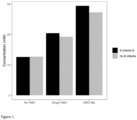
- Figure 1 shows the short chain fatty acid (SCFA) concentration obtained in the colonic fermentations averaged over 8 faecal donors.
- SCFA short chain fatty acid
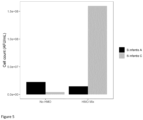
- Figure 2 shows the cell count of the Bifidobacteriaceae family obtained in the colonic fermentations averaged over 8 faecal donors.
- Bifidobacterium longum subsp. infantis LMG 11588 was added at a level of 1x10 7 CFU/ml in the variants where it was added.
- no HMO, no B. infantis a small increase in Bifidobacteriaceae compared to the control (no HMO, no B. infantis) was observed.
- the single HMO 2FL an increase in Bifidobacteriaceae versus the control could be seen; this increase was even greater with the HMO mix.
- Fecal material was collected from a 3-month-old baby donor in Belgium. The donor was different from the 10 donors in Example 1. The experiment was similar to Example 1, but all colonic fermentations were carried out in triplicate and the test ingredients differed. Five treatments and one blank were tested, resulting in 18 experiments in total. Treatments were as follows:
- B. longum subsp. infantis A is the strain ATCC 15697, which is the type strain of the subspecies and shares less than 99.9% ANI (98.2%) with B. longum subsp. infantis LMG 11588.
- the strain B . longum subsp. infantis C has more than 99.9% ANI with B. longum subsp. infantis LMG 11588 and is thus closely related with the LMG 11588 strain.
- the HMO mix consisted of 5 HMOs in the following ratio in the dry mix: 23% LNT, 9% 6SL, 2% 3SL, 52% 2FL & 14% DFL.
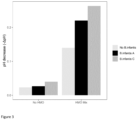
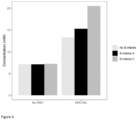
- FIGS 3 and 4 show that the addition of either B. longum subsp. infantis strain alone did not have an impact on acidification or SCFA production in this donor.
- the addition of the HMO mix alone resulted in a marked increase in SCFAs. Production of SCFAs could be further increased with the combination of the HMO mix with either B. longum subsp. infantis strain.
- the best effect was achieved with the combination of the HMO mix with B. longum subsp. infantis C - the strain that has more than 99.9% ANI with B. longum subsp. infantis LMG 11588.
- the effects of the HMO mix and B. longum subsp. infantis combinations versus the control was greater than the sum of the effects of single ingredients versus the control, thus showing a clear synbiotic effect. This synbiotic effect was more pronounced with B. longum subsp. infantis C than with B. longum subsp. infantis A.
- Fecal material was collected from 6 donors in Belgium at about 3 months of age (infants) and from same donors at about 12 months of age (toddlers). 3 donors were born by C-section and 3 were vaginally born. One donor was breast-fed, the other 5 donors were infant formula fed in the week before the first sampling. The experiment was similar to Example 1. Five treatments and one blank were tested per donor at two ages, resulting in 72 independent experiments. Treatments were as follows:
- SCFA short chain fatty acids
- Figure 6 shows the short chain fatty acid (SCFA) concentration obtained in the colonic fermentations at 24h averaged over 6 faecal donors at the two different ages.
- SCFA short chain fatty acid
Landscapes
- Health & Medical Sciences (AREA)
- Life Sciences & Earth Sciences (AREA)
- Chemical & Material Sciences (AREA)
- Mycology (AREA)
- Engineering & Computer Science (AREA)
- Polymers & Plastics (AREA)
- Nutrition Science (AREA)
- Food Science & Technology (AREA)
- Pharmacology & Pharmacy (AREA)
- Animal Behavior & Ethology (AREA)
- Veterinary Medicine (AREA)
- Medicinal Chemistry (AREA)
- Public Health (AREA)
- General Health & Medical Sciences (AREA)
- Epidemiology (AREA)
- Molecular Biology (AREA)
- Microbiology (AREA)
- Pediatric Medicine (AREA)
- Bioinformatics & Cheminformatics (AREA)
- Chemical Kinetics & Catalysis (AREA)
- General Chemical & Material Sciences (AREA)
- Nuclear Medicine, Radiotherapy & Molecular Imaging (AREA)
- Organic Chemistry (AREA)
- Medicines Containing Material From Animals Or Micro-Organisms (AREA)
- Pharmaceuticals Containing Other Organic And Inorganic Compounds (AREA)
- Coloring Foods And Improving Nutritive Qualities (AREA)
- Micro-Organisms Or Cultivation Processes Thereof (AREA)
Applications Claiming Priority (3)
| Application Number | Priority Date | Filing Date | Title |
|---|---|---|---|
| EP21154300 | 2021-01-29 | ||
| EP22702425.4A EP4284193B1 (de) | 2021-01-29 | 2022-01-21 | Mischung von hmos- und bifidobakterien |
| PCT/EP2022/051336 WO2022161865A1 (en) | 2021-01-29 | 2022-01-21 | Mixture of hmos and bifidobacteria |
Related Parent Applications (3)
| Application Number | Title | Priority Date | Filing Date |
|---|---|---|---|
| EP22702425.4A Division-Into EP4284193B1 (de) | 2021-01-29 | 2022-01-21 | Mischung von hmos- und bifidobakterien |
| EP22702425.4A Division EP4284193B1 (de) | 2021-01-29 | 2022-01-21 | Mischung von hmos- und bifidobakterien |
| PCT/EP2022/051336 Previously-Filed-Application WO2022161865A1 (en) | 2021-01-29 | 2022-01-21 | Mixture of hmos and bifidobacteria |
Publications (2)
| Publication Number | Publication Date |
|---|---|
| EP4574158A2 true EP4574158A2 (de) | 2025-06-25 |
| EP4574158A3 EP4574158A3 (de) | 2025-07-02 |
Family
ID=74561693
Family Applications (3)
| Application Number | Title | Priority Date | Filing Date |
|---|---|---|---|
| EP25167155.8A Pending EP4574157A3 (de) | 2021-01-29 | 2022-01-21 | Mischung aus hmos und bifidobakterien |
| EP25167156.6A Pending EP4574158A3 (de) | 2021-01-29 | 2022-01-21 | Mischung aus hmos und bifidobakterien |
| EP22702425.4A Active EP4284193B1 (de) | 2021-01-29 | 2022-01-21 | Mischung von hmos- und bifidobakterien |
Family Applications Before (1)
| Application Number | Title | Priority Date | Filing Date |
|---|---|---|---|
| EP25167155.8A Pending EP4574157A3 (de) | 2021-01-29 | 2022-01-21 | Mischung aus hmos und bifidobakterien |
Family Applications After (1)
| Application Number | Title | Priority Date | Filing Date |
|---|---|---|---|
| EP22702425.4A Active EP4284193B1 (de) | 2021-01-29 | 2022-01-21 | Mischung von hmos- und bifidobakterien |
Country Status (12)
| Country | Link |
|---|---|
| US (1) | US20240306690A1 (de) |
| EP (3) | EP4574157A3 (de) |
| CN (2) | CN116847741B (de) |
| AU (2) | AU2022214135B2 (de) |
| CL (1) | CL2023002125A1 (de) |
| ES (1) | ES3031278T3 (de) |
| FI (1) | FI4284193T3 (de) |
| HR (1) | HRP20251128T1 (de) |
| HU (1) | HUE072963T2 (de) |
| MX (1) | MX2023008202A (de) |
| PT (1) | PT4284193T (de) |
| WO (1) | WO2022161865A1 (de) |
Families Citing this family (19)
| Publication number | Priority date | Publication date | Assignee | Title |
|---|---|---|---|---|
| CN115011532B (zh) * | 2022-08-08 | 2022-11-15 | 东北农业大学 | 一种副干酪乳杆菌jy062制剂及其制备方法和应用 |
| TW202428293A (zh) * | 2022-09-27 | 2024-07-16 | 瑞士商雀巢製品股份有限公司 | 長雙歧桿菌過渡微生物之用途 |
| CN121263195A (zh) * | 2023-03-03 | 2026-01-02 | 科·汉森有限公司 | 包含长双歧杆菌婴儿亚种、短双歧杆菌和2'-岩藻糖基乳糖的组合物 |
| EP4676501A1 (de) * | 2023-03-03 | 2026-01-14 | Chr. Hansen A/S | Zusammensetzung mit bifidobacterium animalis subsp. lactis-stamm und 2'-fucosyllactose |
| WO2024200719A2 (en) * | 2023-03-30 | 2024-10-03 | Société des Produits Nestlé S.A. | Composition for use |
| CN116439377A (zh) * | 2023-04-21 | 2023-07-18 | 合生元(广州)健康产品有限公司 | 一种用于缓解婴幼儿菌群失调的营养组合物及其用途 |
| EP4701443A1 (de) * | 2023-04-28 | 2026-03-04 | Société des Produits Nestlé S.A. | Ernährungszusammensetzung |
| WO2024240925A1 (en) * | 2023-05-25 | 2024-11-28 | Société des Produits Nestlé S.A. | Combination of vitamins, 2'-fucosyllactose and a probiotic for enhancing bone growth and/or bone strength |
| WO2025068416A1 (en) | 2023-09-26 | 2025-04-03 | N.V. Nutricia | 3-fucosyllactose and butyrate for food allergy |
| CN117814491A (zh) * | 2023-11-23 | 2024-04-05 | 武汉泰澳生物技术有限公司 | 促进微生物代谢功能的组合物 |
| WO2025149453A1 (en) * | 2024-01-10 | 2025-07-17 | Société des Produits Nestlé S.A. | Uses of bifidobacterium longum transitional microorganism |
| DK202430092A1 (en) * | 2024-02-23 | 2025-08-29 | Dsm Ip Assets Bv | Hmo mixture and its use in reducing c. difficile toxins |
| WO2025190541A1 (en) * | 2024-03-13 | 2025-09-18 | Société des Produits Nestlé S.A. | Promoting butyrate-producing bacteria in the gut microbiome |
| WO2025190540A1 (en) * | 2024-03-13 | 2025-09-18 | Société des Produits Nestlé S.A. | Promoting butyrate-producing bacteria in the gut microbiome |
| DK202430231A1 (en) * | 2024-04-19 | 2025-10-29 | Danstar Ferment Ag | Nutritional composition comprising bifidobacterium longum ssp. infantis r0033 and human milk oligosaccharides |
| DK202430232A1 (en) * | 2024-04-19 | 2025-11-04 | Danstar Ferment Ag | Nutritional composition comprising bifidobacterium bifidum r0071 and human milk oligosaccharides |
| WO2025219496A1 (en) | 2024-04-19 | 2025-10-23 | Dsm Ip Assets B.V. | Nutritional composition comprising bifidobacterium longum ssp. infantis r0033 and human milk oligosaccharides |
| CN120000695B (zh) * | 2025-02-24 | 2025-11-04 | 合生元(广州)健康产品有限公司 | 2’-岩藻糖基乳糖和益生菌的组合物及其应用和产品 |
| CN121160580A (zh) * | 2025-11-20 | 2025-12-19 | 合生元(广州)健康产品有限公司 | 一种长双歧杆菌婴儿亚种及应用和产品 |
Family Cites Families (15)
| Publication number | Priority date | Publication date | Assignee | Title |
|---|---|---|---|---|
| CA2604338A1 (en) * | 2005-04-13 | 2006-10-19 | Nestec S.A. | Infant formula with probiotics |
| EP2072052A1 (de) | 2007-12-17 | 2009-06-24 | Nestec S.A. | Verhinderung opportunistischer Infektionen bei Personen mit schwachem Immunsystem |
| WO2013154725A1 (en) | 2012-04-13 | 2013-10-17 | Trustees Of Boston College | Prebiotic compositions and methods of use |
| RU2016123515A (ru) | 2013-11-15 | 2017-12-20 | Нестек С.А. | Композиции для применения в целях профилактики или лечения некротизирующего энтероколита у детей грудного и младшего возраста |
| RU2697650C1 (ru) | 2013-11-15 | 2019-08-16 | Сосьете Де Продюи Нестле С.А. | Композиции для профилактики или лечения аллергий у младенцев, рожденных или вскармливаемых матерями несекреторного типа, путем обеспечения фукозилированными олигосахаридами, в частности среди младенцев, подверженных риску или рожденных с помощью кесарева сечения |
| US10820616B2 (en) | 2014-09-25 | 2020-11-03 | Societe Des Produits Nestle S.A. | Infant formula system with adaptive levels of human milk oligosaccharides (HMOs) |
| BR112018010505B1 (pt) | 2015-12-15 | 2021-11-16 | Société des Produits Nestlé S.A. | Composições para bebês e crianças pequenas, e uso de uma mistura sintética de hmos |
| CN106923345B (zh) * | 2017-03-19 | 2021-02-26 | 北京罗诺强施医药技术研发中心有限公司 | 稳定的益生菌组合物 |
| RU2769462C2 (ru) | 2017-05-09 | 2022-03-31 | Сосьете Де Продюи Нестле С.А. | Синергетическая выработка бутирата, связанная со сложностью смеси огм для применения у младенцев или детей младшего возраста в медицинских целях |
| US11260067B2 (en) * | 2017-05-24 | 2022-03-01 | Societe Des Produits Nestle S.A. | Methods and compositions for decreasing concentrations of detrimental proteolytic metabolites, treating health disorders, and/or promoting health benefits in infants or young children |
| US20220232870A1 (en) | 2017-12-08 | 2022-07-28 | Chr. Hansen HMO GmbH | Spray-dried lacto-n-fucopentaose |
| MY203053A (en) * | 2018-03-29 | 2024-06-06 | Morinaga Milk Industry Co Ltd | Nutritional composition, food/drink composition using nutritional composition, and modified milk powder using nutritional composition |
| EP3646739A1 (de) | 2018-11-01 | 2020-05-06 | N.V. Nutricia | Ernährungszusammensetzung mit harnstoff und nichtverdaulichen oligosacchariden |
| MX2021006188A (es) * | 2018-12-21 | 2021-07-02 | Nestle Sa | Una composicion nutricional que comprende metabolitos de hmo para mejorar la barrera gastrointestinal. |
| CN112075637B (zh) * | 2020-04-27 | 2023-05-23 | 合生元(广州)健康产品有限公司 | 一种减少肠道气体产生的组合物 |
-
2022
- 2022-01-21 CN CN202280010715.8A patent/CN116847741B/zh active Active
- 2022-01-21 MX MX2023008202A patent/MX2023008202A/es unknown
- 2022-01-21 AU AU2022214135A patent/AU2022214135B2/en active Active
- 2022-01-21 HR HRP20251128TT patent/HRP20251128T1/hr unknown
- 2022-01-21 HU HUE22702425A patent/HUE072963T2/hu unknown
- 2022-01-21 EP EP25167155.8A patent/EP4574157A3/de active Pending
- 2022-01-21 CN CN202510825640.4A patent/CN120660883A/zh active Pending
- 2022-01-21 WO PCT/EP2022/051336 patent/WO2022161865A1/en not_active Ceased
- 2022-01-21 FI FIEP22702425.4T patent/FI4284193T3/fi active
- 2022-01-21 EP EP25167156.6A patent/EP4574158A3/de active Pending
- 2022-01-21 EP EP22702425.4A patent/EP4284193B1/de active Active
- 2022-01-21 US US18/263,174 patent/US20240306690A1/en active Pending
- 2022-01-21 PT PT227024254T patent/PT4284193T/pt unknown
- 2022-01-21 ES ES22702425T patent/ES3031278T3/es active Active
-
2023
- 2023-07-21 CL CL2023002125A patent/CL2023002125A1/es unknown
-
2025
- 2025-07-31 AU AU2025210837A patent/AU2025210837A1/en active Pending
Non-Patent Citations (11)
| Title |
|---|
| "DNA Structures Part A: Synthesis and Physical Analysis of DNA", ACADEMIC PRESS |
| AUSUBEL, F.M. ET AL.: "Current Protocols in Molecular Biology", 1995, JOHN WILEY & SONS |
| DUAR RMKYLE DCASABURI G: "Colonization Resistance in the Infant Gut: The Role of B. infantis in Reducing pH and Preventing Pathogen Growth", HIGH-THROUGHPUT, 2020 |
| GAIT, M.J.: "Oligonucleotide Synthesis: A Practical Approach", 1984, IRL PRESS |
| LILLEY, D.M.DAHLBERG, J.E., METHODS IN ENZYMOLOGY, 1992 |
| NYLUND L ET AL.: "Severity of Atopic disease inversely correlates with intestinal microbiota diversity and butyrate-producing bacteria", ALLERGY, 2015 |
| POLAK, J.M.MCGEE, J.O'D.: "In Situ Hybridization: Principles and Practice", 1990, OXFORD UNIVERSITY PRESS |
| ROE, B.CRABTREE, J.KAHN, A.: "DNA Isolation and Sequencing: Essential Techniques", 1996, JOHN WILEY & SONS |
| SAMBROOK, J., FRITSCH, E.F., MANIATIS, T.: "Molecular Cloning: A Laboratory Manual", 1989, COLD SPRING HARBOR LABORATORY PRESS |
| URASHIMA ET AL.: "Milk Oligosaccharides", 2011, NOVA BIOMEDICAL BOOKS |
| YOON SHHA SMLIM JKWON SCHUN J: "A large-scale evaluation of algorithms to calculate average nucleotide identity", ANTONIE VAN LEEUWENHOEK, vol. 110, no. 10, October 2017 (2017-10-01), pages 1281 - 1286, XP036321321, DOI: 10.1007/s10482-017-0844-4 |
Also Published As
| Publication number | Publication date |
|---|---|
| CN120660883A (zh) | 2025-09-19 |
| EP4284193B1 (de) | 2025-05-07 |
| MX2023008202A (es) | 2023-07-18 |
| PT4284193T (pt) | 2025-06-20 |
| CN116847741A (zh) | 2023-10-03 |
| EP4284193A1 (de) | 2023-12-06 |
| CN116847741B (zh) | 2025-06-17 |
| AU2022214135B2 (en) | 2025-05-15 |
| HUE072963T2 (hu) | 2025-12-28 |
| EP4574157A3 (de) | 2025-07-02 |
| AU2025210837A1 (en) | 2025-08-21 |
| EP4574158A3 (de) | 2025-07-02 |
| WO2022161865A1 (en) | 2022-08-04 |
| FI4284193T3 (fi) | 2025-07-10 |
| ES3031278T3 (en) | 2025-07-07 |
| US20240306690A1 (en) | 2024-09-19 |
| AU2022214135A1 (en) | 2023-07-06 |
| HRP20251128T1 (hr) | 2025-11-21 |
| CL2023002125A1 (es) | 2024-02-23 |
| EP4574157A2 (de) | 2025-06-25 |
| AU2022214135A9 (en) | 2024-08-01 |
Similar Documents
| Publication | Publication Date | Title |
|---|---|---|
| EP4284193B1 (de) | Mischung von hmos- und bifidobakterien | |
| US20220354876A1 (en) | Human milk oligosaccharides to promote growth of beneficial bacteria | |
| Whisner et al. | Prebiotics, bone and mineral metabolism | |
| Duncan et al. | Probiotics and prebiotics and health in ageing populations | |
| US11998577B2 (en) | Methods for increasing growth of beneficial bacteria in the gastrointestinal tract | |
| Macfarlane | Prebiotics in the gastrointestinal tract | |
| TW201242518A (en) | Oligosaccharide mixture and food product comprising this mixture, especially infant formula | |
| CN103763940A (zh) | 促进有益微生物群生长的益生菌和人乳寡糖的合益素组合 | |
| BRPI0707620A2 (pt) | mistura de oligossacarÍdeo | |
| JP2007507214A (ja) | プレバイオティック効果の分析 | |
| RU2858987C2 (ru) | Смесь огм и бифидобактерий | |
| HK40127991A (en) | Mixture of hmos and bifidobacteria | |
| HK40107644A (en) | Mixture of hmos and bifidobacteria | |
| HK40107644B (en) | Mixture of hmos and bifidobacteria | |
| CN109475165A (zh) | 发酵的婴儿配方物 | |
| Mera et al. | Biotechnological innovations in pro-, pre-, and synbiotics | |
| Crittenden et al. | Modifying the human intestinal microbiota with prebiotics | |
| TW201244721A (en) | Methods for decreasing the incidence of necrotizing enterocolitis in infants, toddlers, or children using human milk oligosaccharides | |
| Chaluvadi | Technical feasibility for commercialization of synbiotic matrices | |
| MX2008010261A (en) | Oligosaccharide mixture |
Legal Events
| Date | Code | Title | Description |
|---|---|---|---|
| PUAI | Public reference made under article 153(3) epc to a published international application that has entered the european phase |
Free format text: ORIGINAL CODE: 0009012 |
|
| STAA | Information on the status of an ep patent application or granted ep patent |
Free format text: STATUS: THE APPLICATION HAS BEEN PUBLISHED |
|
| REG | Reference to a national code |
Ref country code: DE Ref legal event code: R079 Free format text: PREVIOUS MAIN CLASS: A61K0031745000 Ipc: A23L0033135000 |
|
| PUAL | Search report despatched |
Free format text: ORIGINAL CODE: 0009013 |
|
| AC | Divisional application: reference to earlier application |
Ref document number: 4284193 Country of ref document: EP Kind code of ref document: P |
|
| AK | Designated contracting states |
Kind code of ref document: A2 Designated state(s): AL AT BE BG CH CY CZ DE DK EE ES FI FR GB GR HR HU IE IS IT LI LT LU LV MC MK MT NL NO PL PT RO RS SE SI SK SM TR |
|
| AK | Designated contracting states |
Kind code of ref document: A3 Designated state(s): AL AT BE BG CH CY CZ DE DK EE ES FI FR GB GR HR HU IE IS IT LI LT LU LV MC MK MT NL NO PL PT RO RS SE SI SK SM TR |
|
| RIC1 | Information provided on ipc code assigned before grant |
Ipc: A61K 31/745 20060101ALI20250528BHEP Ipc: A61K 31/702 20060101ALI20250528BHEP Ipc: A23L 33/00 20160101ALI20250528BHEP Ipc: A23L 33/21 20160101ALI20250528BHEP Ipc: A23L 33/135 20160101AFI20250528BHEP |
|
| STAA | Information on the status of an ep patent application or granted ep patent |
Free format text: STATUS: REQUEST FOR EXAMINATION WAS MADE |
|
| STAA | Information on the status of an ep patent application or granted ep patent |
Free format text: STATUS: EXAMINATION IS IN PROGRESS |
|
| 17P | Request for examination filed |
Effective date: 20260102 |
|
| 17Q | First examination report despatched |
Effective date: 20260205 |