EP4572243A1 - Verfahren und vorrichtung zur datenerfassung - Google Patents
Verfahren und vorrichtung zur datenerfassung Download PDFInfo
- Publication number
- EP4572243A1 EP4572243A1 EP22954653.6A EP22954653A EP4572243A1 EP 4572243 A1 EP4572243 A1 EP 4572243A1 EP 22954653 A EP22954653 A EP 22954653A EP 4572243 A1 EP4572243 A1 EP 4572243A1
- Authority
- EP
- European Patent Office
- Prior art keywords
- data
- information
- model
- csi
- generation portion
- Prior art date
- Legal status (The legal status is an assumption and is not a legal conclusion. Google has not performed a legal analysis and makes no representation as to the accuracy of the status listed.)
- Pending
Links
Images




Classifications
-
- H—ELECTRICITY
- H04—ELECTRIC COMMUNICATION TECHNIQUE
- H04B—TRANSMISSION
- H04B7/00—Radio transmission systems, i.e. using radiation field
- H04B7/02—Diversity systems; Multi-antenna system, i.e. transmission or reception using multiple antennas
- H04B7/04—Diversity systems; Multi-antenna system, i.e. transmission or reception using multiple antennas using two or more spaced independent antennas
- H04B7/06—Diversity systems; Multi-antenna system, i.e. transmission or reception using multiple antennas using two or more spaced independent antennas at the transmitting station
- H04B7/0613—Diversity systems; Multi-antenna system, i.e. transmission or reception using multiple antennas using two or more spaced independent antennas at the transmitting station using simultaneous transmission
- H04B7/0615—Diversity systems; Multi-antenna system, i.e. transmission or reception using multiple antennas using two or more spaced independent antennas at the transmitting station using simultaneous transmission of weighted versions of same signal
- H04B7/0619—Diversity systems; Multi-antenna system, i.e. transmission or reception using multiple antennas using two or more spaced independent antennas at the transmitting station using simultaneous transmission of weighted versions of same signal using feedback from receiving side
- H04B7/0621—Feedback content
- H04B7/0626—Channel coefficients, e.g. channel state information [CSI]
-
- H—ELECTRICITY
- H04—ELECTRIC COMMUNICATION TECHNIQUE
- H04B—TRANSMISSION
- H04B7/00—Radio transmission systems, i.e. using radiation field
- H04B7/02—Diversity systems; Multi-antenna system, i.e. transmission or reception using multiple antennas
- H04B7/04—Diversity systems; Multi-antenna system, i.e. transmission or reception using multiple antennas using two or more spaced independent antennas
- H04B7/0413—MIMO systems
- H04B7/0456—Selection of precoding matrices or codebooks, e.g. using matrices antenna weighting
- H04B7/0478—Special codebook structures directed to feedback optimisation
- H04B7/048—Special codebook structures directed to feedback optimisation using three or more PMIs
-
- G—PHYSICS
- G06—COMPUTING OR CALCULATING; COUNTING
- G06N—COMPUTING ARRANGEMENTS BASED ON SPECIFIC COMPUTATIONAL MODELS
- G06N3/00—Computing arrangements based on biological models
- G06N3/02—Neural networks
- G06N3/04—Architecture, e.g. interconnection topology
- G06N3/045—Combinations of networks
- G06N3/0455—Auto-encoder networks; Encoder-decoder networks
-
- G—PHYSICS
- G06—COMPUTING OR CALCULATING; COUNTING
- G06N—COMPUTING ARRANGEMENTS BASED ON SPECIFIC COMPUTATIONAL MODELS
- G06N3/00—Computing arrangements based on biological models
- G06N3/02—Neural networks
- G06N3/08—Learning methods
- G06N3/084—Backpropagation, e.g. using gradient descent
-
- G—PHYSICS
- G06—COMPUTING OR CALCULATING; COUNTING
- G06N—COMPUTING ARRANGEMENTS BASED ON SPECIFIC COMPUTATIONAL MODELS
- G06N3/00—Computing arrangements based on biological models
- G06N3/02—Neural networks
- G06N3/08—Learning methods
- G06N3/09—Supervised learning
-
- H—ELECTRICITY
- H04—ELECTRIC COMMUNICATION TECHNIQUE
- H04B—TRANSMISSION
- H04B7/00—Radio transmission systems, i.e. using radiation field
- H04B7/02—Diversity systems; Multi-antenna system, i.e. transmission or reception using multiple antennas
- H04B7/04—Diversity systems; Multi-antenna system, i.e. transmission or reception using multiple antennas using two or more spaced independent antennas
- H04B7/0413—MIMO systems
- H04B7/0456—Selection of precoding matrices or codebooks, e.g. using matrices antenna weighting
-
- H—ELECTRICITY
- H04—ELECTRIC COMMUNICATION TECHNIQUE
- H04L—TRANSMISSION OF DIGITAL INFORMATION, e.g. TELEGRAPHIC COMMUNICATION
- H04L25/00—Baseband systems
- H04L25/02—Details ; arrangements for supplying electrical power along data transmission lines
- H04L25/0202—Channel estimation
- H04L25/024—Channel estimation channel estimation algorithms
- H04L25/0254—Channel estimation channel estimation algorithms using neural network algorithms
-
- H—ELECTRICITY
- H04—ELECTRIC COMMUNICATION TECHNIQUE
- H04B—TRANSMISSION
- H04B7/00—Radio transmission systems, i.e. using radiation field
- H04B7/02—Diversity systems; Multi-antenna system, i.e. transmission or reception using multiple antennas
- H04B7/04—Diversity systems; Multi-antenna system, i.e. transmission or reception using multiple antennas using two or more spaced independent antennas
- H04B7/06—Diversity systems; Multi-antenna system, i.e. transmission or reception using multiple antennas using two or more spaced independent antennas at the transmitting station
- H04B7/0613—Diversity systems; Multi-antenna system, i.e. transmission or reception using multiple antennas using two or more spaced independent antennas at the transmitting station using simultaneous transmission
- H04B7/0615—Diversity systems; Multi-antenna system, i.e. transmission or reception using multiple antennas using two or more spaced independent antennas at the transmitting station using simultaneous transmission of weighted versions of same signal
- H04B7/0619—Diversity systems; Multi-antenna system, i.e. transmission or reception using multiple antennas using two or more spaced independent antennas at the transmitting station using simultaneous transmission of weighted versions of same signal using feedback from receiving side
- H04B7/0658—Feedback reduction
Definitions
- Embodiments of the present disclosure relate to the technical field of communication.
- Multi-antenna technology has been widely applied in LTE, LTE-A and 5G NR systems.
- a massive antenna technology (massive MIMO) is supported very well in the 5G Standard. It may be predicted that in 5G-Advanced stage and 6G stage, the massive MIMO technology will be used more widely, massive and ultra-massive antenna technologies with enhanced performance are also research focuses of a next generation mobile communication system.
- AI artificial intelligence
- ML machine learning
- CSI channel state information
- an AI/ML model is used to generate CSI feedback information, and after transmitting the same to a network side via an air interface, the network side receives the CSI feedback information, and restores original CSI via a corresponding AI/ML model.
- CSI feedback overhead may be reduced, or quality of feedbacks may be improved, thereby improving the communication quality.
- a transmitting side (a network device or a terminal equipment)
- the information is transmitted to a receiving side (a terminal equipment or a network device) via an air interface
- the receiving side uses a model corresponding to the AI/ML model of the transmitting side to recover information of the AI/ML model inputted by the transmitting side.
- this type of AI/ML model may be called a two-sided model.
- an AI/ML model includes an information generation portion located in a first device and an information reconstruction portion located in a second device, and the method includes:
- an apparatus for acquiring data configured in a second device, wherein an AI/ML model includes an information generation portion located in a first device and an information reconstruction portion located in the second device, and the apparatus for acquiring data includes:
- an AI/ML model includes an information generation portion located in a first device and an information reconstruction portion located in a second device, and the method includes:
- an apparatus for acquiring data configured in a first device, wherein an AI/ML model includes an information generation portion located in the first device and an information reconstruction portion located in a second device, and the apparatus includes:
- an AI/ML model includes a CSI generation portion located in a terminal equipment and a CSI reconstruction portion located in a network device, and the system includes:
- the second device acquires first data X that are inputted to the information generation portion; and the second device acquires second data Y corresponding to the first data X and outputted from the information generation portion.
- suitable data may be obtained at a smaller cost to support a two-sided network model architecture.
- first and second are used to distinguish different elements in terms of appellation, but do not represent a spatial arrangement or time sequence, etc. of these elements, and these elements should not be limited by these terms.
- the term “and/or” includes any and all combinations of one or more of the associated listed terms.
- the terms “include”, “comprise” and “have”, etc. refer to the presence of stated features, elements, members or components, but do not preclude the presence or addition of one or more other features, elements, members or components.
- a communication network or “a wireless communication network” may refer to a network that meets any of the following communication standards, such as Long Term Evolution (LTE), LTE- Advanced (LTE-A), Wideband Code Division Multiple Access (WCDMA), High-Speed Packet Access (HSPA) and so on.
- LTE Long Term Evolution
- LTE-A LTE- Advanced
- WCDMA Wideband Code Division Multiple Access
- HSPA High-Speed Packet Access
- communication between devices in a communication system may be carried out according to a communication protocol at any stage, for example may include but be not limited to the following communication protocols: 1G (generation), 2G, 2.5G, 2.75G, 3G, 4G, 4.5G, and 5G, New Radio (NR), future 6G and so on, and/or other communication protocols that are currently known or will be developed in the future.
- 1G generation
- 2G 2.5G, 2.75G
- 5G New Radio (NR), future 6G and so on
- NR New Radio
- a network device refers to, for example, a device that accesses a terminal equipment in a communication system to a communication network and provides services to the terminal equipment.
- the network device may include but be not limited to the following devices: a Base Station (BS), an Access Point (AP), a Transmission Reception Point (TRP), a broadcast transmitter, a Mobile Management Entity (MME), a gateway, a server, a Radio Network Controller (RNC), a Base Station Controller (BSC) and so on.
- BS Base Station
- AP Access Point
- TRP Transmission Reception Point
- MME Mobile Management Entity
- RNC Radio Network Controller
- BSC Base Station Controller
- the base station may include but be not limited to: a node B (NodeB or NB), an evolution node B (eNodeB or eNB), a 5G base station (gNB) and an IAB donor, etc., and may further includes a Remote Radio Head (RRH), a Remote Radio Unit (RRU), a relay or a low power node (such as femeto, pico, etc.).
- a node B NodeB or NB
- eNodeB or eNB evolution node B
- gNB 5G base station
- IAB donor etc.
- RRH Remote Radio Head
- RRU Remote Radio Unit
- relay or a low power node such as femeto, pico, etc.
- base station may include their some or all functions, each base station may provide communication coverage to a specific geographic region.
- the term "cell” may refer to a BS and/or its coverage area, which depends on the context in which this term is used.
- the term "User Equipment (UE)” or “Terminal Equipment (TE) or Terminal Device” refers to, for example, a device that accesses a communication network and receives network services through a network device.
- the terminal equipment may be fixed or mobile, and may also be referred to as Mobile Station (MS), a terminal, Subscriber Station (SS), Access Terminal (AT) and a station and so on.
- MS Mobile Station
- SS Subscriber Station
- AT Access Terminal
- the terminal equipment may include but be not limited to the following devices: a Cellular Phone, a Personal Digital Assistant (PDA), a wireless modem, a wireless communication device, a handheld device, a machine-type communication device, a laptop computer, a cordless phone, a smart phone, a smart watch, a digital camera and so on.
- PDA Personal Digital Assistant
- the terminal equipment may also be a machine or apparatus for monitoring or measurement, for example may include but be not limited to: a Machine Type Communication (MTC) terminal, a vehiclemounted communication terminal, a Device to Device (D2D) terminal, a Machine to Machine (M2M) terminal and so on.
- MTC Machine Type Communication
- D2D Device to Device
- M2M Machine to Machine
- a network side or “a network device side” refers to a side of a network, may be a base station, and may include one or more network devices as described above.
- a user side or “a terminal side” or “a terminal equipment side” refers to a side of a user or terminal, may be a UE, and may include one or more terminal equipments as described above. If it is not specifically mentioned herein, "a device” may refer to a network device, or may refer to a terminal equipment.
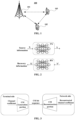
- FIG. 1 is a schematic diagram of a communication system in the embodiments of the present disclosure, schematically describes situations by taking a terminal equipment and a network device as examples, as shown in FIG. 1 , a communication system 100 may include a network device 101 and terminal equipments 102, 103.
- FIG. 1 only takes two terminal equipments and one network device as examples for description, however the embodiments of the present disclosure are not limited to this.
- transmission of existing or further implementable services may be carried out between the network device 101 and the terminal equipments 102, 103.
- these services may include but be not limited to: enhanced Mobile Broadband (eMBB), massive Machine Type Communication (mMTC), Ultra-Reliable and Low-Latency Communication (URLLC) and so on.
- eMBB enhanced Mobile Broadband
- mMTC massive Machine Type Communication
- URLLC Ultra-Reliable and Low-Latency Communication
- FIG. 1 shows that two terminal equipments 102 and 103 are within the coverage of network device 101, but the present disclosure is not limited to this.
- the two terminal equipments 102 and 103 may be outside the coverage of the network device 101, or one terminal equipment 102 may be within the coverage of the network device 101 and the other terminal equipment 103 may be outside the coverage of the network device 101.
- high layer signaling may be e.g. radio resource control (RRC) signaling; for example, is called an RRC message, for example includes an MIB, system information, or a dedicated RRC message; or is called an RRC information element (RRC IE).
- RRC radio resource control
- the high layer signaling for example, may further be Medium Access Control (MAC) signaling; or called a MAC control element (MAC CE).
- MAC Medium Access Control
- MAC CE Medium Access Control
- the present disclosure is not limited to this.
- one or more AI/ML models may be configured and run in a network device and/or a terminal equipment.
- the AI/ML model may be used for various signal processing functions of wireless communication, such as CSI estimation and reporting, beam management and beam prediction, etc.; the present disclosure is not limited to this.
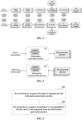
- FIG. 2 is an example diagram of a two-sided model in the embodiments of the present disclosure.
- a part of the AI/ML model is at the transmitting side TX, and the other part thereof is at the receiving side RX.
- information Y is generated after source information X is inputted into the model, and the information Y is transmitted to the receiving side.
- information Y' transmitted via a channel is inputted into the model, and then generates recovery information X'.
- f ( ⁇ ) is a transfer function of a neural network at the TX side
- X is source information of the neural network at TX
- Y is its output signal
- h ( ⁇ ) is a channel response coefficient between TX and RX
- n is Gaussian noise
- g ( ⁇ ) is a transfer function of the neural network at RX side
- Y' is an input signal of the neural network at RX
- X' is its output signal.
- a loss function makes X' as close as possible to X, i.e. ⁇ X-X' ⁇ 0.
- the loss function may use cosine similarity, NMSE, or MSE as a metric.
- the TX neural network and the RX neural network are deployed at the TX side (such as a UE side) and the RX side (such as a gNB side) respectively, and communicate with each other via an air interface.
- a two-sided model may be applied to CSI generation and reporting.
- FIG. 3 is another example diagram of a two-sided model in the embodiments of the present disclosure.
- the two-sided model includes a CSI generation portion (which may also called a CSI encoder) at a terminal equipment side and a CSI reconstruction portion (which may also called a CSI decoder) at a network device side.
- a CSI generation portion which may also called a CSI encoder
- a CSI reconstruction portion which may also called a CSI decoder
- input of the CSI generation portion is channel coefficient information, may be a channel coefficient vector or matrix generated by channel estimation, or a channel feature vector or singular vector generated by matrix decomposition of the channel coefficient matrix.
- Output of the CSI generation portion is a CSI bit sequence formed upon feature extraction, information compression and quantization. This bit sequence as a part of uplink control information (UCI) is carried on an uplink control channel or an uplink data channel, and is transmitted to the network side.
- UCI uplink control information
- the network device extracts a corresponding CSI bit sequence from received UCI and inputs it to the CSI reconstruction portion.
- Output of the CSI reconstruction portion is a reconstructed channel coefficient vector or matrix, or a channel feature vector or singular vector, which specifically is corresponding to the input of the CSI generation portion.
- the two-sided model may further replace traditional signal processing methods, and is used in modules processed in pairs in a communication system.
- FIG. 4 is another example diagram of a two-sided model in the embodiments of the present disclosure.
- source coding/decoding of a source signal for example, source coding/decoding of a source signal, channel coding/decoding, channel modulation/demodulation, multi-antenna module mimo/de-mimo (specifically, it may include corresponding paired signal processing at both transmitting side and receiving side for mimo multi-data stream multiplexing, mimo space-time coding, mimo precoding/ beamforming, etc., a transmitting network portion of other transmitting side from multiple data streams to multiple antenna ports, a receiving network portion corresponding to a receiving side), waveforming/de-waveforming of a transmitting waveform, etc.
- signal processing flows or functions of both a transmitting side and a receiving side of communication may be combined, and a neural network model may be introduced to implement original signal processing.
- FIG. 5 is another example diagram of a two-sided model in the embodiments of the present disclosure. Both the transmitting side and the receiving side may be shown in FIG. 5 , the transmitting side is provided with an information generation portion, and the receiving side is provided with an information reconstruction portion, thereby a two-sided model may be used for paired signal processing.
- construction and upgrading of this two-sided model need to be completed by joint training, that is, the information generation portion and the information reconstruction portion need to complete joint initial training, joint fine tuning, joint retraining and joint model upgrading.
- All the joint training related processes of said two-sided model include offline operations or online operations.
- one side may transmit its matched model to the other side.
- the network side transmits a CSI generation portion that matches a CSI reconstruction portion to the terminal side via an air interface, and the terminal side uses the CSI generation portion to work after reception.
- this requires the terminal side to have AI/ML receiving and upgrading capabilities, and requirements on its hardware and software are very high.
- an AI/ML model at the terminal side or the network side may be updated, so that models at both sides may be paired and work jointly.
- joint training needs to be performed on AI/ML model(s) at one side or both sides.
- a data set is required for model training, and a label data set is further required for supervised learning.
- joint training brings very large air interface overhead, including overhead for outputting a relevant data set, and overhead of inputs and outputs corresponding to a back-and-forth iterative process, it is difficult to support such process in an air interface of mobile communication.
- embodiments of the present disclosure proposes a scheme of using shared paired data sets to achieve independent training, and provides a method and an apparatus for reducing a dimension of a shared data set and reducing overhead of an air interface for acquiring data.
- Joint training includes a process in which model portions at two sides of a two-sided model need to jointly perform training (including initial training, retraining, online training, offline training, fine tuning, etc., also including necessary sub-processes of model verification and model testing in a training model).
- Separate training includes a process in which model portions at two sides of a two-sided model may separately perform training (including initial training, retraining, online training, offline training, fine tuning, etc., also including necessary sub-processes of model verification and model testing in a training model).
- Embodiments of the present disclosure provide a method for acquiring data, which is described from a second device side.
- An AI/ML model includes an information generation portion located in a first device and an information reconstruction portion located in a second device.
- the second device may be a network device, the first device is a terminal equipment; the second device may further be a terminal equipment, the first device is a network device.
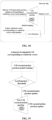
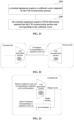
- FIG. 6 is a schematic diagram of a method for acquiring data in the embodiments of the present disclosure. As shown in FIG. 6 , the method includes:
- FIG. 6 is only schematic description of the embodiments of the present disclosure, but the present disclosure is not limited to this.
- an execution step of each operation may be adjusted appropriately, moreover other some operations may be added or one or more operations may be removed.
- Persons skilled in the art may make appropriate modifications according to the above contents, not limited to the records in the above FIG. 6 .
- AI/ML models may be run respectively for different signal processing functions. For example, for AI/ML models for CSI reporting, there may have different model group identifiers, model identifiers, and version identifiers. For AI/ML models for beam management, there may have additional model group identifiers, model identifiers, and version identifiers.
- the AI/ML model is a two-sided model and has a model identifier and a version identifier
- the information generation portion and the information reconstruction portion of the same AI/ML model use the same model identifier and version identifier
- the information generation portion and the information reconstruction portion have different sub-identifiers.
- one two-sided model has one model identifier (which may be an one-level identifier or a multi-level identifier) and version identifier, which may distinguish two different two-sided models (for example, there are differences in the number of layers, number of nodes, hyper-parameters, input and output signal formats, pre-processing and post-processing configurations, etc.).
- the information generation portion and the information reconstruction portion of the same two-sided model have the same model identifier and version identifier.
- a sub-identifier may be used to distinguish it is an information generation portion or an information reconstruction portion.
- the model identifier is an one-level identifier XXXXX (single-level model identifier).Vxx (version identifier);
- the model identifier is a multi-level identifier: first level XXX-second level XXXX-nth level XXXX (multi-level model identifier). Vxxx (version identifier).
- a 1-bit sub-identifier may be used to distinguish a generation portion and a reconstruction portion.
- the information generation portion is: model identifier. version identifier. 0; the information reconstruction portion is model identifier. version identifier. 1.
- Table. 1 shows an example of data in the embodiments of the present disclosure.
- Table 1 Input of the information generation portion Output of the information generation portion Input of the information reconstruction portion Output of the information reconstruction portion Model identifi er ⁇ X ( data index
- the second device inputs the second data Y into the information reconstruction portion and trains the information reconstruction portion by taking the first data X as label data.
- the information generation portion in the first device and the information reconstruction portion in the second device perform training by using the first data X and the second data Y respectively; when the first data X are inputted, the trained information generation portion in the first device outputs data that are the second data Y or data that are similar to the second data Y, and when the second data Y are inputted, the trained information reconstruction portion in the second device outputs data that are the first data X or data similar to the first data X.
- an information reconstruction portion in a network device and an information generation portion in a terminal equipment perform training by using the same common paired datasets ⁇ X ⁇ and ⁇ Y ⁇ respectively.
- the information reconstruction portion of the network device outputs ⁇ X ⁇ or one that is similar to ⁇ X ⁇ ;
- the information generation portion of the terminal equipment outputs ⁇ Y ⁇ or one that is similar to ⁇ Y ⁇ ;
- a format of X and Y is predefined or configured, such as a symbol format, the number of bits, etc.
- the first data X and the second data Y are paired datasets, the paired datasets having model identification information.
- One first data X may correspond to multiple second data Y.
- one X may correspond to multiple Y (e.g. Y1, Y2), and a format of Y1, Y2 is predefined or configured.
- Paired datasets are: ⁇ X ⁇ Y1 ⁇ , ⁇ X ⁇ Y2 ⁇ , or ⁇ X ⁇ Y1 ⁇ Y2 ⁇ , for example, may be used in multiple first devices and one second device.
- FIG. 8 is a schematic diagram of j oint training in the embodiments of the present disclosure.
- a model of the information generation portion needs to perform joint training with a model of the information reconstruction portion. After multiple iterations, backward propagation, parameter upgrading and other steps, the training is completed.
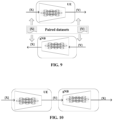
- FIG. 9 is a schematic diagram of separate training in the embodiments of the present disclosure.
- the first data X and the second data Y are prepared in advance, X and Y are in a paired relation, multiple X and corresponding multiple Y constitute paired datasets, wherein a format of X and Y are predefined or configured, such as a symbol format, the number of bits, etc.
- One X may correspond to multiple Y (e.g. Y1, Y2), and a format of Y1, Y2 is predefined or configured.
- paired datasets are: ⁇ X ⁇ Y1 ⁇ , ⁇ X ⁇ Y2 ⁇ , or ⁇ X ⁇ Y1 ⁇ Y2 ⁇ .
- the prepared datasets may be extracted from various typical channels through simulation analysis.
- one X may correspond to multiple Y (e.g. Y1, Y2), and a format of Y1, Y2 is predefined or configured, such as a symbol format, the number of bits, the number of corresponding ports, port configuration, a data length, a dimension, etc.
- Paired datasets are: ⁇ X ⁇ Y1 ⁇ , ⁇ X ⁇ Y2 ⁇ , or ⁇ X ⁇ Y1 ⁇ Y2 ⁇ , for example, may be used in multiple first devices and one second device.
- ⁇ X ⁇ of the common paired datasets serves as input data for a UE side model portion
- ⁇ Y ⁇ serves as reference data or label data for the output.
- the purpose of training is to make the output be Y or very close to Y when each X is inputted after training.
- the same datasets are also shared to a gNB side model portion, ⁇ Y ⁇ serves as input data of the gNB side model portion, ⁇ X ⁇ serves as reference data or label data for the output.
- the purpose of training is to make the output be X or very close to X when each Y is inputted after training.
- the same data recovery effect may be achieved as the joint training.
- FIG. 10 is a schematic diagram after separate training in the embodiments of the present disclosure. As shown in FIG. 10 , when the dataset ⁇ X ⁇ is sufficient to characterize the features of a wireless channel applied by a model, it can work very well when it is applied to a communication system.
- model retraining or fine tuning may be performed respectively using datasets based on channel updates, so as to ensure adaptability of the model to a new application environment.
- model retraining or fine tuning may be performed respectively using datasets based on channel updates, so as to ensure adaptability of the model to a new application environment.
- Said method may be used for initial training, retraining, off-line training, online training, fine tuning and other training processes of a model.
- online-based and air interface-based approaches may be adopted.
- FIG. 11 is a schematic diagram of application of a two-sided model in a gNB and a UE in the embodiments of the present disclosure, in which many possible situations are taken into account.
- a training process of a model may be started, model portions at both sides perform interactive and independent training based on the above principle of common paired datasets by using newly collected data.
- the trained model may be used as an updated model after the performance reaches a standard by using an air interface and performance monitoring to perform model inference. This avoids problems faced by joint training and model transmission.
- a trained and air interface-tested model may register a channel model ID or a new version ID, which may be uploaded to a core network, a remote server, an OTT server, or transferred to other gNB, and so on.
- the first data X are a part or all of data of a specific dataset inputted into the information generation portion
- the second data Y are corresponding data generated after the first data X are inputted into the information generation portion.
- the specific dataset may be a dataset that corresponds to a current generation portion model and may be generated based on a predefined rule, or may be a dataset shared by all information generation portion models, such as all possible channel information quantization vectors.
- the second device obtains the first data X and/or the second data Y from interior of the second device or from exterior of the second device according to identification information related to the information generation portion.
- the interior of the second device may include memory, disk and other storage devices; the exterior of the second device may include a device connected with the second device, such as a core network, a cloud, a third-party server, an OTT server, a cloud storage device, and so on.
- a device connected with the second device such as a core network, a cloud, a third-party server, an OTT server, a cloud storage device, and so on.
- the identification information related to the information generation portion includes: a model identifier and/or version information to which the information generation portion corresponds, and/or data configuration information of a model to which the information generation portion corresponds.
- the present disclosure is not limited to this, for example, it may further be other identifier.
- the second data Y are carried by a control channel or a data channel and transmitted via an air interface, or the second data Y are generated via a data index according to a predefined rule, or an index of the second data Y is transmitted by the first device to the second device via an air interface.
- the first data X are pre-stored in the second device, or the first data X are generated via a data index according to a predefined rule, or the first data X are transmitted by the first device to the second device via an air interface, or an index of the first data X is transmitted by the first device to the second device via an air interface.
- the information generation portion or the information reconstruction portion performs initial training or off-line training.
- the information generation portion and the information reconstruction portion agree on input data configuration and corresponding output data configuration.
- the configurations may include data dimensions, formats, etc. Then, the training is performed respectively, and a specific training method is not limited.
- the information generation portion performs training first, and in order to facilitate training, during the process, it may perform training together with model portions that are paired with it. After the training is completed, the information generation portion shares all or part of its input datasets and corresponding final output datasets to the reconstruction portion.
- the information reconstruction portion uses the output datasets as inputs and the input datasets as label sets for outputs. Upon training, its model outputs approximate the label datasets. In this way, model pairing of the information reconstruction portion to the information generation portion is completed.
- the information reconstruction portion may be trained first, a model portion paired with it may be used during its training process to facilitate training. After the training is completed, the information reconstruction portion shares all or part of its input and output datasets to the information generation portion for the training of the information generation portion, so that the outputs of the information generation portion approximates the inputs of the information reconstruction portion.
- the above process may be completed in an offline manner. Preceding and later descriptions of said training are only for the convenience of narration, and may also be performed on both sides at the same time.
- Input and output formats of the information generation portion and the information reconstruction portion are agreed or predefined, the input and output formats may be aligned, so that the two may be trained respectively.
- After training, all or part of the input and output datasets may be shared with each other to form an aggregated dataset for retraining at both sides.
- the input dataset of the information generation portion and the output dataset of the information reconstruction portion use a common dataset (the common dataset may be agreed by both parties in advance, or pre-stored, or the dataset may be generated by a predefined method, etc.).
- the information generation portion uses the common dataset as an input dataset for training, and shares its output dataset to the information reconstruction portion after the training is completed.
- the information reconstruction portion takes the common dataset as a label dataset.
- the training purpose is to make the output dataset under the input dataset approximate the label dataset. Pairing of the information reconstruction portion to the information generation portion is completed. Process of pairing of the information generation portion to the information reconstruction portion is similar and is not repeated here.
- a dataset sharing mode of the information generation portion and the information reconstruction portion is not limited, and may be realized via remote network transmission and other means. After completion of pairing by using the above possible modes, the corresponding information generation portion and information reconstruction portion form a two-sided model.
- a corresponding model ID and version ID may be registered at a network side.
- a dataset for training used by it and a common dataset may be bound to the model ID.
- suitable data may be obtained at a smaller cost to support a two-sided network model architecture.
- the dataset may further be uploaded to the network side.
- a problem of model mismatch will be encountered in running. For example, after a terminal equipment moves to a cell, the network side or terminal side finds that two-sided model IDs corresponding to the two are different, or the IDs are the same but version information is different. Pairing may be achieved by an air interface or other means.
- X and Y may be shared.
- a transmitting device may transmit all or part of the input dataset ⁇ X(data configuration, data index
- the dataset may be carried via a control channel or a data channel.
- the information reconstruction portion of the receiving device uses ⁇ Y (data configuration, data index
- the information generation portion may remain unchanged, and a model of the information reconstruction portion may be retrained and updated. If the performance of the model retraining meets requirements, for example after or without further testing via an air interface, the information reconstruction portion marks a model corresponding to the retraining and update as the model ID (including version identifier).
- Y may be shared.
- a transmitting device (such as a terminal equipment or a network device) may transmit all or part of datasets of the information generation portion for output ⁇ Y(data configuration, data index
- the dataset may be carried via a control channel or a data channel.
- the information reconstruction portion of the receiving device uses ⁇ Y (data configuration, data index
- a mode for acquiring a receiving device may have been stored on the receiving device, acquired via a model ID, or acquired from a remote server via a model ID, or, corresponding data is generated by a data index according to a predefined rule.
- the information generation portion may remain unchanged, and a model of the information reconstruction portion may be retrained and updated. If the performance of the model retraining meets requirements, after further testing via (or without) an air interface, the information reconstruction portion may mark a model corresponding to the retraining and update as the model ID (including version identifier).
- a transmitting device (such as a terminal equipment or a network device) transmits a model ID (including a version) corresponding to the information generation portion, and/or input data configuration information corresponding to the model to a receiving device (such as a network device or a terminal equipment) via an air interface.
- the model ID and/or the input data configuration information corresponding to the model may be carried via a control channel or data channel.
- the receiving device may obtain ⁇ Y(data configuration, data index
- data) ⁇ corresponding to the model ID of the information generation portion is obtained from a memory or downloaded from a remote server, and for ⁇ X (data configuration, data index
- the information generation portion may remain unchanged, and a model of the information reconstruction portion may be retrained and updated. If the performance of the model retraining meets requirements, after further testing via (or without) an air interface, the information reconstruction portion marks a model corresponding to the retraining and update as the model ID (including version identifier).
- the second device transmits an AI/ML-related capability query to the first device; and the second device receives an AI/ML-related capability response fed back by the first device.
- the AI/ML-related capability includes at least one of the following: signal processing module information, AI/ML support information, AI/ML model identification information, version information, data configuration information, AI/ML support training capability information, or AI/ML upgrade capability information.
- the second device when the second device determines that the first device has an AI/ML capability but the model identifier and/or version information of the information generation portion is/are different from the model identifier and/or version information of the information reconstruction portion, the second device acquires the first data and/or the second data corresponding to the model identifier and/or version information of the information generation portion of the first device.
- the second device sets the model identifier and/or version information of the information reconstruction portion to be identical to the model identifier and/or version information of the information generation portion.
- the second device transmits acknowledgement information to the first device acknowledging that the information generation portion of the first device is available, and/or transmits indication information enabling the information generation portion and/or the information reconstruction portion.
- That the information generation portion is deployed in a terminal equipment, and the information reconstruction portion is deployed in a network device is taken as an example.
- the network device makes an AI/ ML-related capability query to the terminal equipment, the query may include one or more of the following: signal processing module information, AI/ML support information, AI/ML model identification information, version information, AI/ML model data configuration information, and so on.
- the terminal equipment makes corresponding response and reporting.
- the network device may configure the terminal equipment to report: when a predefined X1 dataset or a pre-configured first dataset serves as input of the information generation portion, data configuration information of a Y1 dataset corresponding to output, such as size, structure and other information.
- a format in which the above information is reported is predefined.
- the network device when the network device finds that a corresponding module reported by the terminal equipment has an AI/ML capability, the model ID of its information generation portion is same as that of the information reconstruction portion of the network device, but their versions are different, the network device configures the terminal equipment to report: when a predefined X11 dataset or a pre-configured first dataset serves as input of the generation portion, data configuration information of a Y11 dataset corresponding to output, such as information including a dataset size, dataset structure information (e.g., multiple dataset blocks), etc.
- a format in which the above information is reported is predefined.
- X11 and Y11 are parts of X1 and Y1, respectively.
- the network device configures or schedules the terminal equipment to report the Y1 dataset or Y11 dataset according to data configuration information reported by the terminal equipment.
- the Y1 dataset or Y11 dataset is included in uplink control information (UCI) or reported by AI/ML data auxiliary information (via an RRC message).
- UCI uplink control information
- AI/ML data auxiliary information via an RRC message.
- the network device After receiving the Y1 or Y11 dataset reported by the terminal equipment, the network device uses the Y1 or Y11 dataset as input data of its information reconstruction portion.
- the network device stores X1 or X11 dataset corresponding to the Y1 or Y11 dataset, or the network device may download the corresponding X1 or X11 dataset from a remote server.
- the information reconstruction portion of the network device uses the X1 or X11 dataset as a label dataset to retrain the information reconstruction portion.
- the network device stores the trained neural network model and parameters, and takes the model ID and version information of the information generation portion as identifiers of the neural network model and parameters. The network device then notifies the terminal equipment to enable the information generation portion with the model ID and version information.
- the network device may configure or schedule the terminal equipment to report Y2 dataset or Y21 dataset.
- the Y21 dataset is part of the Y2 dataset.
- the network device stores the trained neural network model and parameters, and takes the model ID and version information of the information generation portion as identifiers of the neural network model and parameters.
- the network device notifies the terminal equipment to enable the information generation portion with the model ID and version information.
- the network device informs the terminal equipment that the model ID and version cannot be used.
- the network device makes an AI/ML-related capability query to the terminal equipment, the query may include one or more of the following: signal processing module information, AI/ML support information, AI/ML model identification information, version information, AI/ML model data configuration information, and so on.
- the terminal equipment makes corresponding response and reporting.
- the network device uses the model ID and version information of the information generation portion, looks up an input dataset and an output dataset of the information generation portion corresponding to the model ID and version, an input dataset and an output dataset of the information reconstruction portion, or a common two-side dataset.
- the network device performs training based on the input and output datasets. When the performance of the information reconstruction portion reaches a corresponding performance requirement after training, the training of the information reconstruction portion ends.
- the network device stores the trained neural network model and parameters, and takes the model ID and version information of the information generation portion as identifiers of the neural network model and parameters.
- the network device may notify the terminal equipment to enable the information generation portion with the model ID and version information.
- each of the above embodiments is only illustrative for the present disclosure, but the present disclosure is not limited to this, appropriate modifications may be further made based on the above each embodiment.
- each of the above embodiments may be used individually, or one or more of the above embodiments may be combined.
- the second device acquires first data X that are inputted to the information generation portion; and the second device acquires second data Y corresponding to the first data X and outputted from the information generation portion.
- suitable data may be obtained at a smaller cost to support a two-sided network model architecture.
- the embodiments of the present disclosure provide a method for acquiring data, which is described from a first device side, the contents same as the embodiments of the first aspect are not repeated.
- FIG. 12 is a schematic diagram of a method for acquiring data in the embodiments of the present disclosure, as shown in FIG. 12 , the method includes:
- FIG. 12 is only schematic description of the embodiments of the present disclosure, but the present disclosure is not limited to this.
- an execution step of each operation may be adjusted appropriately, moreover other some operations may be added or one or more operations may be removed.
- Persons skilled in the art may make appropriate modifications according to the above contents, not limited to the records in the above FIG. 12 .
- the first device inputs the first data X into the information generation portion and trains the information generation portion by taking the second data Y as label data.
- the second data Y are data inputted into the information reconstruction portion and corresponding to the first data X
- the first data X are a part or all of a specific dataset and are generated after the second data Y are inputted into the information reconstruction portion.
- the information generation portion in the first device and the information reconstruction portion in the second device perform training by using the first data X and the second data Y respectively; when the first data X are inputted, the trained information generation portion in the first device outputs data that are the second data Y or data that are similar to the second data Y, and when the second data Y are inputted, the trained information reconstruction portion in the second device outputs data that are the first data X or data similar to the first data X.
- the first data X and the second data Y are paired datasets, the paired datasets having model identification information.
- one first data X corresponds to multiple second data Y.
- the first device obtains the second data and/or the first data from interior of the first device or from exterior of the first device according to identification information related to the information reconstruction portion.
- the identification information related to the information reconstruction portion includes: a model identifier and/or version information to which the information reconstruction portion corresponds, and/or data configuration information of a model to which the information reconstruction portion corresponds.
- the second data Y are carried by a control channel or a data channel and transmitted via an air interface, or the second data Y are generated via a data index according to a predefined rule, or an index of the second data Y is transmitted by the second device to the first device via an air interface.
- the first data X are pre-stored in the first device, or the first data X are generated via a data index according to a predefined rule, or the first data X are transmitted by the second device to the first device via an air interface, or an index of the first data X is transmitted by the second device to the first device via an air interface.
- the AI/ML model has a model identifier and a version identifier
- the information generation portion and the information reconstruction portion of the same AI/ML model use the same model identifier and version identifier
- the information generation portion and the information reconstruction portion have different sub-identifiers.
- a transmitting device may transmit the information reconstruction portion's input ⁇ Y(data configuration, data index
- the dataset may be carried via a control channel or a data channel.
- the information generation portion of the receiving device uses ⁇ X (data configuration, data index
- a mode for acquiring a receiving device may have been stored on the receiving device, acquired via a model ID, or acquired from a remote server via a model ID, or, corresponding data is generated by a data index according to a predefined rule.
- the information reconstruction portion may remain unchanged, and a model of the information generation portion may be retrained and updated. If the performance of the model retraining meets requirements, after or without further testing via an air interface, the information generation portion marks a model corresponding to the retraining and update as the model ID (including version identifier).
- the first device transmits an AI/ML-related capability query to the second device; and the first device receives an AI/ML-related capability response fed back by the second device.
- the AI/ML-related capability includes at least one of the following: signal processing module information, AI/ML support information, AI/ML model identification information, version information, data configuration information, AI/ML support training capability information, or AI/ML upgrade capability information.
- the first device when the first device determines that the second device has an AI/ML capability but the model identifier and/or version information of the information generation portion is/are different from the model identifier and/or version information of the information reconstruction portion, the first device acquires the first data and/or the second data corresponding to the model identifier and/or version information of the information reconstruction portion of the second device.
- the first device sets the model identifier and/or version information of the information generation portion to be identical to the model identifier and/or version information of the information reconstruction portion.
- the first device transmits acknowledgement information to the second device acknowledging that the information reconstruction portion of the second device is available, and/or indication information enabling the information generation portion and/or the information reconstruction portion.
- each of the above embodiments is only illustrative for the present disclosure, but the present disclosure is not limited to this, appropriate modifications may be further made based on the above each embodiment.
- each of the above embodiments may be used individually, or one or more of the above embodiments may be combined.
- the first device acquires first data X outputted by the information reconstruction portion; and the first device acquires second data Y inputted into the information reconstruction portion and corresponding to the first data X.
- suitable data may be obtained at a smaller cost to support a two-sided network model architecture.
- An AI/ML model includes a CSI generation portion located in a terminal equipment and a CSI reconstruction portion located in a network device, the contents same as those in the first and second aspects are not repeated here.
- a common paired dataset utilizes a standard predefined codebook, or a DFT matrix similar to a codebook structure to generate an approximation channel matrix or a channel matrix eigenvector, which greatly reduces the overhead of a dataset, in particular if a dataset needs to be transmitted directly or indirectly via an air interface.
- FIG. 13 is an example diagram of building a dataset in the embodiments of the present disclosure, exemplarily showing that a dataset corresponding to channel eigenvectors by using a codebook.
- the codebook may approximate a channel matrix eigenvector with high resolution via a linear combination of DFT vectors, and by using the codebook or codebook vectors, a codebook matrix may approximate eigenvectors that need to be fed back, or an eigenvector matrix.
- Table 2 Table 5.2.2.2.1-2 Supported configurations of ( N 1 , N 2 ) and ( O 1 , O 2 ) Number of CSI-RS antenna ports, P CSI-RS ( N 1 , N 2 ) ( O 1 , O 2 ) 4 (2,1) (4,1) 8 (2,2) (4,4) (4,1) (4,1) 12 (3,2) (4,4) (6,1) (4,1) 16 (4,2) (4,4) (8,1) (4,1) 24 (4,3) (4,4) (6,2) (4,4) (12,1) (4,1) 32 (4,4) (4,4) (8,2) (4,4) (16,1) (4,1) (4,1)
- Table 2 schematically shows configuration information of the different number of CSI-RS ports, corresponding to configuration information of a codebook.
- Table 3 schematically describes PMI of codebook type2.
- PMI i.e, such indexes i 1, , q 1 , q 2, n 1, n 2 , ..., a codebook vector or a codebook matrix may be built, and principles of other types of codebooks are similar, relevant technologies may be referred to, without further description here.
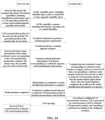
- FIG. 14 is a schematic diagram of a method for acquiring data in the embodiments of the present disclosure, as shown in FIG. 14 , the method includes:
- FIG. 14 is only schematic description of the embodiments of the present disclosure, but the present disclosure is not limited to this.
- an execution step of each operation may be adjusted appropriately, moreover other some operations may be added or one or more operations may be removed.
- Persons skilled in the art may make appropriate modifications according to the above contents, not limited to the records in the above FIG. 14 .
- the AI/ML model is a two-sided model and has a model identifier and a version identifier; the CSI generation portion and the CSI reconstruction portion of the two-sided model have the same model identifier and version identifier, and the CSI generation portion and the CSI reconstruction portion have different sub-identifiers.
- a terminal equipment that includes the CSI generation portion AE-x and a network device that includes the CSI reconstruction portion DE-y are not jointly trained.
- the network device inputs the CSI bit information into the CSI reconstruction portion and trains the CSI reconstruction portion by taking the codebook vector as label data.
- the codebook vector (X) is data inputted to the CSI generation portion;
- the CSI bit information (Y) is a bit sequence generated after the codebook vector (X) is inputted to the CSI generation portion.
- Table 4 is a codebook generation table of eType, a codebook vector or codebook matrix may also be generated based on this Table by using corner mark indexes of W.
- eType a codebook vector or codebook matrix may also be generated based on this Table by using corner mark indexes of W.
- the CSI bit information is carried by a control channel or a data channel and transmitted via an air interface, and/or, the codebook vector is generated via a data index according to a predefined rule.
- a precoding vector set ⁇ V AE-x ( i 1, i 2, ..., in ) ⁇ generated by using a codebook serves as inputs of an AI/ML model of a CSI generation portion AE-x, ⁇ C AE-x ( i 1, i 2, . . , in ) ⁇ is a corresponding output bit sequence set.
- ( i 1, i 2, ... , in ) is an index of a corresponding codebook, or called PMI, or called an indication sequence, according to definitions of different types of codebooks, here is just a schematic description.
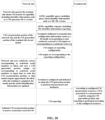
- FIG. 15 is an example diagram of acquiring data by a CSI reconstruction portion in the embodiments of the present disclosure.
- a terminal equipment containing a CSI generation portion AE-x transmits a sequence set or PMI set ⁇ x1, x 2, ..., xn ⁇ corresponding to a generation portion input sequence set ⁇ V AE-x (x1, x 2, ... , xn ) ⁇ , and a corresponding output sequence ⁇ C AE-x ( x 1, x 2, . . , xn ) ⁇ to a network device containing a CSI reconstruction portion DE-y.
- DE-y takes ⁇ C AE-x (x1, x 2, . . , xn ) ⁇ as its input sequence set, because the codebook sequence set or PMI set ⁇ x1, x 2, . .
- DE-y may generate a corresponding codebook vector set ⁇ V AE-x ( x 1, x 2, ... , xn ) ⁇ according to a generation rule of a corresponding codebook of NR.
- FIG. 16 is an example diagram of training by a CSI reconstruction portion in the embodiments of the present disclosure.
- DE-y train its AI/ML model by using ⁇ C AE-x ( x 1, x 2, . . , xn ) ⁇ and ⁇ V AE-x ( i 1, i 2, ... , in ) ⁇ as datasets.
- the purpose of training is that when the input is C AE-x ( x 1, x2, .., xn), an output vector approximates V AE-x ( i 1, i 2, ..., in ).
- a pairing process of AE-x and DE-y is completed.
- the network device obtains the CSI bit information and/or the codebook vector from interior of the network device or from exterior of the network device according to identification information related to the CSI generation portion.
- the identification information related to the CSI generation portion includes: a model identifier and/or version information to which the CSI generation portion corresponds, and/or data configuration information of a model to which the CSI generation portion corresponds, and/or a data index of the CSI generation portion, and/or an indication sequence of a codebook vector or DFT vector of the CSI generation portion.
- corresponding input and output datasets are obtained according to the model ID or version information of the CSI generation portion.
- a dataset corresponding to the model ID and version may be obtained from internal storage or from a remote server, etc. the dataset is, for example, a codebook sequence set ⁇ x1, x 2, ... , xn ⁇ and an output set ⁇ C AE-x ( x 1, x2 , . . , xn ) ⁇ of the CSI generation portion. Both of them are bit sequences, so the amount of storage is greatly reduced.
- a codebook vector ⁇ V AE-x ( x 1, x 2, ... , xn ) ⁇ may be generated according to a corresponding generation rule. Thereby, training of the CSI reconstruction portion may be performed. After that, the model ID and version information of the CSI generation portion are used to label corresponding model parameters when the training of the CSI reconstruction portion is completed.
- FIG. 17 is another example diagram of acquiring data by a CSI reconstruction portion in the embodiments of the present disclosure.
- a precoding vector set ⁇ V AE-x ( i 1, i 2, ... , in ) ⁇ generated by using a codebook serves as inputs of an AI/ML model of a CSI generation portion AE-x
- ⁇ C AE-x ( i 1, i 2, . . , in ) ⁇ is a corresponding output bit sequence set.
- ( i 1, i 2, ... , in ) is an index sequence, or an indication sequence, or PMI of a corresponding codebook, an arrangement order of which is predefined or pre-configured, or configured.
- a terminal equipment containing a CSI generation portion AE-x transmits an output sequence ⁇ C AE-x ( i 1, i 2, . . , in ) ⁇ to a network device containing a CSI reconstruction portion DE-y.
- FIG. 18 is a further example diagram of training by a CSI reconstruction portion in the embodiments of the present disclosure.
- FIG. 19 is a further example diagram of training by a CSI reconstruction portion in the embodiments of the present disclosure.
- DE-y takes ⁇ C AE-x ( i 1, i 2, . . , in ) ⁇ as its input sequence set, because an order ( i 1, i 2, . . , in ) of codebook indexes or flags is known, DE-y may generate a corresponding codebook vector set ⁇ V AE-x ( i 1, i 2, ... , in ) ⁇ according to a generation rule of a corresponding codebook of NR. DE-y train its AI/ML model by using ⁇ C AE-x ( i 1, i 2, . . , in ) ⁇ and ⁇ V AE-x ( i 1, i 2, ... , in ) ⁇ as datasets.
- the purpose of training is that when the input is C AE-x ( i 1, i 2, . . , in ), an output vector approximates V AE-x ( i 1, i 2, ... , in ). After the training is completed, a pairing process of AE-x and DE-y is completed.
- the network device transmits a model training indication and configuration information for a model identifier to the terminal equipment; the configuration information including an indication sequence of a codebook vector or a DFT matrix vector for training; the network device receives an indication sequence for indicating a codebook vector or a DFT vector transmitted by the terminal equipment, and a CSI generation portion output bit sequence corresponding to the vector.
- the network device generates a corresponding codebook vector or DFT matrix vector based on the indication sequence and according to a predefined rule.
- the network device receives a resource request from the terminal equipment; and the network device configures one or more uplink resources for the terminal equipment, such that the terminal equipment transmits the indication sequence and the CSI generation portion output bit sequence.
- the network device transmits an AI/ML-related capability query to the terminal equipment; and the network device receives an AI/ML-related capability response fed back by the terminal equipment.
- the AI/ML-related capability includes at least one of the following: signal processing module information, AI/ML support information, AI/ML model identification information, version information, data configuration information, AI/ML training capability information, or AI/ML upgrade capability information.
- the network device when the network device determines that the terminal equipment has an AI/ML capability but the model identifier and/or version information of the CSI generation portion is/are different from the model identifier and/or version information of the CSI reconstruction portion, the network device indicates or configures the terminal equipment to transmit a CSI bit sequence and/or a corresponding codebook vector for training, corresponding to the model identifier and/or version information of the CSI generation portion.
- the network device sets the model identifier and/or version information of the CSI reconstruction portion to be identical to the model identifier and/or version information of the CSI generation portion.
- the network device transmits indication information enabling the CSI generation portion and/or the CSI reconstruction portion to the terminal equipment, and/or transmits acknowledgement information acknowledging that the CSI generation portion may be used.
- FIG. 20 is a signaling schematic diagram of training by a CSI reconstruction portion in the embodiments of the present disclosure.
- the network side lets the terminal side report an AI/ML capability of CSI feedback, which may include an inquiry of model information such as AI/ML model ID and version, etc.
- the terminal side reports relevant capability information, including an indication of model information, such as an AI/ML model ID, version, used by its CSI generation portion. If the network side has a CSI reconstruction portion model with a corresponding ID and version, it enters a joint work phase.
- the network side may configure the terminal side to report corresponding data and train the CSI reconstruction portion.
- the network side may query format information related to a bit sequence outputted by the CSI generation portion of the terminal side, and the terminal side reports output bit information of its CSI generation portion according to a predefined format, such as the number of output information bits corresponding to each codebook vector or matrix.
- the network side may indicate the terminal side to transmit data configuration information (such as a bit length corresponding to each codebook vector) of a CSI output set corresponding to a codebook vector set, and transmit CSI output set reporting configuration.
- the terminal side may report the corresponding CSI output set according to the configuration/indication.
- the network side uses codebook vectors corresponding to codebook serial numbers as label data, and uses CSI generator outputs corresponding to the codebook serial numbers as input data to train a model of the CSI reconstruction portion, so that the model outputs approximate the label data.
- the model is updated and the model flag information is updated.
- the network side may configure and indicate the terminal side to use the CSI generation portion to perform CSI measurement and feedback; according to a configured CSI measurement resource, the terminal side generates CSI for a measurement result by using the CSI generation portion, and reports the CSI according to the configured resource.
- the network side may reconstruct received CSI by using the updated CSI reconstruction portion.
- FIG. 20 is only schematic description of the embodiments of the present disclosure, but the present disclosure is not limited to this.
- an execution step of each operation may be adjusted appropriately, moreover other some operations may be added or one or more operations may be removed.
- Persons skilled in the art may make appropriate modifications according to the above contents, not limited to the records in the above FIG. 20 .
- the CSI generation portion may take a channel matrix based on channel estimation as an input, and take one or more eigenvectors of the channel matrix after the channel estimation as an input.
- the number of input eigenvectors may be selected according to a rank, or the eigenvectors may be based on a single layer.
- the CSI generation portion or CSI reconstruction portion needs to communicate possible configuration information of inputs and outputs of the CSI generation portion or CSI reconstruction portion, such as input data length, input data dimension, and so on, during the process of acquiring the dataset, retraining and fine tuning.
- a format and/or size of the CSI is/are predefined, or the format and/or size of the CSI is/are configured by the network device.
- the network side needs to know through inquiry that the CSI generation portion may generate multiple CSI bit lengths, and the network side may configure the terminal side to feed back outputs of the CSI generation portion with a certain bit length, or multiple bit lengths, or outputs of the CSI generation portion with all bit lengths.
- Table 5 is an example of information related to the CSI generation portion that needs to be fed back by the terminal side.
- Table 5 Codebook indication bit (PMI) Codebook vector CSI generation portion Bit 1 CSI generation portion Bit 2 CSI generation portion Bit 3 A1 A2 A3 A4 A5 B1 B2 B3 B4 B5
- the network device extends the codebook vector and takes the expanded codebook vector as the label data.
- codebooks already defined by NR such as codebooks defined by Rel-15
- codebooks defined by Rel-15 16, 17, 18, generated codebook vectors may not be enough to complete training of an AI/ML network, and more datasets are needed for training.
- a codebook set that is more suitable for the CSI generation portion and the CSI reconstruction portion needs to be selected.
- the number of selectable beams of W1 is up to 6, 8, 10, 12, 16; W2 has a mapping angle of up to 5 bits and an amplitude of up to 5 bits.
- a mapping angle of an existing W2 is 2 or 3 bits and an amplitude thereof is 3 bits, which may be extended to an angle being 4 bits and an amplitude being 4 bits, etc. Larger numbers than those supported by the current standard may be further adopted for M.
- the above codebook set for CSI model training may be configured to obtain a full set of codebook vectors that can be generated by one of the codebooks (Rel-15, 16, 17, 18, etc.) defined by the current standard, or a subset according to a certain rule. Or, an extended codebook set may further be obtained via configuration, and a subset is selected according to a rule. Or the above possible codebook sets are called using other codebook index sequences, a mode of calling a codebook sequence is known by both the CSI generation portion and the CSI reconstruction portion.
- the CSI generation portion when the network device finds that the terminal equipment has inconsistent models, the CSI generation portion performs online training and upgrading to match the CSI reconstructing portion, or the CSI reconstructing portion performs online training and upgrading to match the CSI generation portion.
- the network side may communicate with the terminal side about configuration information of the CSI reconstruction portion.
- the network side may schedule the terminal side to transmit an index of a codebook vector determined to be used by the CSI generation portion, and a corresponding output of the CSI generation portion.
- the calling may be carried out in batches; for example, part of data is called first, and the other part of a dataset is scheduled if a training effect is not up to the standard. The training is completed through multiple times of calling.
- a vector generated based on the above Rel-16 or Rel-17 codebook matrix its all possible codeword vectors are arranged in a predefined order.
- DFT is based on a predefined rule. More W cascading modes may be used to form a basis function of spatial, frequency and time domain feature mapping of a channel.
- Subsets may be obtained by indexing, and the subsets are used for training. Multiple subsets of the full set may be called multiple times for training.
- Calling of a subset is indicated by an index or a bitmap of an index set. Lengths of the bitmap correspond to lengths of all serial numbers in the Table one by one from left to right. 0 in the bitmap represents that the vector is used, and 1 represents that the vector is not used.
- the index set here may correspond to different sub bands, representing indexes corresponding to different sub bands. Table 7 Sub band1 Sub band2 Sub band3 Sub band4 PMI-1 0 0 1 1 PMI-2 1 1 0 0 PMI-3 1 1 0 0 PMI-4 1 1 1 0 PMI-5 0 1 1 0
- the terminal side or the network side may, after data screening and collection, extract PMI corresponding to a typical channel vector to form a dataset, and index codebook vector correspondence of a spatial domain and a frequency domain of the channel through an indication of the bitmap.
- Table 8 Delay 1 Delay 2 Delay 3 Delay 4 Angle-1 1 1 0 0 Angle -2 1 1 1 0 Angle -3 1 0 0 0 Angle -4 1 0 0 0 0
- a dataset corresponding to broadband CSI may further be formed according to configuration, or a dataset corresponding to channel features is formed in other ways. These datasets may be bound with model IDs, or further bound by means of a cell model ID, or bound by means of a UE model ID, according to configuration of a network, or identified according to other rules.
- the common paired dataset may reflect features of a channel spatial domain, frequency domain and time domain, its identification mode may reflect these features accordingly, which is convenient for a terminal or base station side to apply a dataset more suitable for a current channel condition to perform training when channel feature information can be obtained.
- a corresponding generation portion compressed information dataset is further needed. that is, all channel vector datasets with a bitmap being 1. Thereby, a paired dataset is formed.
- a terminal side transmits the above bitmap set selected by its generation portion and a corresponding generation portion output set to the network side.
- the air interface overhead is too large. If the terminal side and the network side may obtain the common paired dataset, interface interaction may be realized by transfering IDs of the dataset via an air interface, so that the air interface overhead is small.
- a base station device determines a model for a certain model ID (including version information) by monitoring CSI feedback performance, or performance of a CSI model in use is not good, or the base station decides to start model training of the CSI reconstruction portion based on other conditions.
- the base station configures the terminal equipment to transmit index identifier information (such as bitmap information) related to the CSI generation portion and channel state information (CSI), and indication information and configuration information of a codebook vector or DFT matrix vector for relevant training.
- index identifier information such as bitmap information
- CSI channel state information
- the terminal equipment Based on the model ID of the CSI generation portion currently in use or the model ID configured by the base station, as well as the above vector indication and configuration information, the terminal equipment transmits the index identifier information (such as bitmap information) related to the CSI generation portion and the channel state information (CSI) corresponding to the model, or an index identifier information set to the base station.
- the index identifier information such as bitmap information
- CSI channel state information
- the base station receives the index information or the index information set, and obtains an input information set required by the CSI reconstruction portion of the model ID according to the model ID in use or its configured model ID. For the model ID (including version information) and according to the index or index set, the base station obtains a corresponding CSI generation portion output vector set from its interior or a remote server, and generates a corresponding CSI generation portion input vector set according to the index or index set.
- the CSI generation portion output vector set is taken as input data of the CSI reconstruction portion, and the CSI generation portion input vector set is taken as label data of the CSI reconstruction portion to train the CSI reconstruction portion.
- the base station may, for a model ID and version, transmit codebook matrix or DFT matrix indication and configuration information, as well as corresponding index information or an index information set to the terminal equipment, the terminal equipment downloads the corresponding CSI generation portion (or CSI reconstruction portion) input vector set (output vector set, codebook or DFT transformation matrix corresponding vectors) and output vector set (input vector set) locally or from a remote server.
- codebook matrix or DFT matrix indication and configuration information as well as corresponding index information or an index information set to the terminal equipment
- the terminal equipment downloads the corresponding CSI generation portion (or CSI reconstruction portion) input vector set (output vector set, codebook or DFT transformation matrix corresponding vectors) and output vector set (input vector set) locally or from a remote server.
- the CSI generation portion and the CSI reconstruction portion have multiple datasets for training for different channel environments.
- W W 1 ⁇ W ⁇ 2 ⁇ W f H
- the base station and the terminal equipment may obtain a training dataset required by the CSI reconstruction portion or the CSI generation portion.
- the base station may configure the terminal equipment to transmit the above dataset serial number of the CSI generation portion, or the CSI generation portion dataset serial number for model ID version information, and obtain a training dataset required by the CSI reconstruction portion based on the information.
- the base station may transmit a training indication, the codebook or DFT matrix indication and configuration information, as well as the dataset serial number of the CSI reconstruction portion, or the CSI reconstruction portion dataset serial number for model ID version information to the terminal equipment.
- the terminal equipment obtains the dataset for training, and transmits training completion information to the base station after the training is completed.
- a training completion output dataset may be used to update a corresponding dataset of a server.
- each of the above embodiments is only illustrative for the present disclosure, but the present disclosure is not limited to this, appropriate modifications may be further made based on the above each embodiment.
- each of the above embodiments may be used individually, or one or more of the above embodiments may be combined.
- the network device acquires a specific codebook vector inputted into the CSI generation portion, and the network device acquires CSI bit information outputted from the CSI generation portion and corresponding to the codebook vector.
- suitable data may be obtained at a smaller cost to support a two-sided network model architecture.
- An AI/ML model includes a CSI generation portion located in a terminal equipment and a CSI reconstruction portion located in a network device, the contents same as those in the first to third aspects are not repeated here.
- FIG. 21 is a schematic diagram of a method for acquiring data in the embodiments of the present disclosure, as shown in FIG. 21 , the method includes:
- the AI/ML model is a two-sided model and has a model identifier and a version identifier; the CSI generation portion and the CSI reconstruction portion of the same AI/ML model have the same model identifier and version identifier, and the CSI generation portion and the CSI reconstruction portion have different sub-identifiers.
- the CSI bit information (Y) is information inputted to the CSI reconstruction portion and corresponding to the codebook vector; the codebook vector (X) is part or all of data of a specific dataset, and is generated by the CSI bit information (Y) after being inputted to the CSI reconstruction portion.
- the CSI bit information is carried by a control channel or a data channel and transmitted via an air interface, and/or, the codebook vector is generated via a data index according to a predefined rule.
- the terminal equipment obtains the CSI bit information and/or the codebook vector from a memory or interior of the terminal equipment or from exterior of the terminal equipment according to identification information related to the CSI reconstruction portion.
- the identification information related to the CSI reconstruction portion includes: a model identifier and/or version information to which the CSI reconstruction portion corresponds, and/or data configuration information of a model to which the CSI reconstruction portion corresponds, and/or a data index of the CSI reconstruction portion, and/or an indication sequence of a codebook vector or DFT vector of the CSI reconstruction portion.
- the terminal equipment receives a model training indication and configuration information for a model identifier, transmitted by the network device; the configuration information including an indication sequence of a codebook vector or a DFT matrix vector for training, and a CSI reconstruction portion input bit sequence corresponding to the vector.
- the terminal equipment generates a corresponding codebook vector or DFT matrix vector based on the indication sequence and according to a predefined rule.
- the terminal equipment receives resource configuration of the network device; and the terminal equipment receives the indication sequence and the CSI reconstruction portion input bit sequence according to the resource configuration.
- FIG. 22 is an example diagram of acquiring data by a CSI generation portion in the embodiments of the present disclosure.
- the network side may transmit a CSI dataset corresponding to a codebook vector to the terminal equipment.
- data or other modes of acquisition refer to the previous embodiments.
- the terminal equipment inputs the codebook vector into the CSI generation portion and trains the CSI generation portion by taking the CSI bit information as label data.
- FIG. 23 is a further example diagram of training by a CSI generation portion in the embodiments of the present disclosure.
- a codebook vector set corresponding to codebook vector serial numbers may be used as input, and a CSI dataset corresponding to the codebook vector set may be used as label data to train the CSI generation portion.
- the terminal equipment receives an AI/ML-related capability query transmitted by the network device; and the terminal equipment feeds back an AI/ML-related capability response to the network device.
- the AI/ML-related capability includes at least one of the following: signal processing module information, AI/ML support information, AI/ML model identification information, version information, data configuration information, AI/ML training capability information, or AI/ML upgrade capability information.
- the network device when the network device determines that the terminal equipment has an AI/ML capability but the model identifier and/or version information of the CSI generation portion is/are different from the model identifier and/or version information of the CSI reconstruction portion, the network device indicates or configures the terminal equipment to receive CSI bit information and/or a codebook vector corresponding to the model identifier and/or version information of the CSI reconstruction portion.
- the terminal equipment sets the model identifier and/or version information of the CSI generation portion to be identical to the model identifier and/or version information of the CSI reconstruction portion.
- the terminal equipment transmits acknowledgement information to the network device acknowledging that its CSI generation portion is available, and/or indication information indicating that the CSI generation portion update is completed.
- FIG. 24 is a signaling schematic diagram of training by a CSI generation portion in the embodiments of the present disclosure.
- the network side lets the terminal side report an AI/ML capability of CSI feedback, which may include an inquiry of model information such as AI/ML model ID and version, etc.
- the terminal side reports relevant capability information, including an indication of an AI/ML model ID, version and other model information used by its CSI generation portion. If the network side has a CSI reconstruction portion model with a corresponding ID and version, it enters a joint work phase.
- the network side knows that the ID and version of the AI/ML model used by the CSI generation portion of the terminal side do not match one or more CSI reconstruction portions at the network side, it indicates that AI/ML models at both sides of communication cannot work jointly.
- the network side may indicate the terminal side to perform training upgrade, and train the CSI generation portion.
- the terminal side may transmit a training upgrade response.
- the network side may form input information of the CSI reconstruction portion corresponding to an output codebook vector into a dataset.
- the dataset may also possibly preexist at the network side.
- the network side may transmit codebook-related indication information, a CSI dataset corresponding to a codebook sequence, model identification information, etc., to the terminal side.
- the terminal side uses codebook vectors corresponding to codebook serial numbers as inputs, and uses CSI data corresponding to the codebook serial numbers received from the network side as label data to train the CSI generation portion, so that the model outputs approximate the label data.
- the model and the model identification information are updated. Then, completion of model update may be indicated, and model pairing is completed.
- the network side may configure and indicate the terminal side to use the CSI generation portion to perform CSI measurement and feedback; according to a configured CSI measurement resource, the terminal side generates CSI for a measurement result by using the updated CSI generation portion, and reports the CSI according to the configured resource.
- the network side may reconstruct received CSI by using the CSI reconstruction portion.
- FIG. 24 is only schematic description of the embodiments of the present disclosure, but the present disclosure is not limited to this.
- an execution step of each operation may be adjusted appropriately, moreover other some operations may be added or one or more operations may be removed.
- Persons skilled in the art may make appropriate modifications according to the above contents, not limited to the records in the above FIG. 24 .
- a format and/or size of the CSI is/are predefined, or the format and/or size of the CSI is/are configured by the network device.
- the terminal equipment extends the codebook vector and takes the expanded codebook vector as the label data.
- the number of selectable beams of W1 is up to 6, 8, 10, 12, 16; W2 has a mapping angle of up to 5 bits and an amplitude of up to 5 bits.
- the terminal equipment receives model training indication information transmitted by the network device, and/or CSI reconstruction portion model dataset indication information.
- the terminal equipment acquires a corresponding dataset (locally or from a remote server) as an output dataset for training of the CSI generation portion, and acquires or generates a CSI generation portion input dataset according to dataset serial numbers.
- the training indication information may include model ID information, version information, codebook matrix or DFT transformation matrix indication and configuration information, dataset indication information, indicating a data subset corresponding to the model ID and version.
- the terminal equipment may train the CSI generation portion according to these data.
- the terminal equipment transmits training dataset continue requesting information to the network device.
- the network device continues to transmit the above CSI reconstruction portion model dataset indication information to indicate other datasets.
- the terminal equipment acquires a corresponding dataset (locally or from a remote server) as an output dataset for training of the CSI generation portion, and acquires or generates a CSI generation portion input dataset according to dataset serial numbers. The above process may continue until the model training test performance meets a requirement, the terminal equipment transmits training completion indication information to the network device.
- the network device may, for a model ID and version, transmit codebook matrix or DFT matrix indication and configuration information, as well as corresponding index information or an index information set to the terminal equipment, the terminal equipment downloads the corresponding CSI generation portion (CSI reconstruction portion) input vector set (output vector set, codebook or DFT transformation matrix corresponding vectors) and output vector set (input vector set) locally or from a remote server.
- the terminal equipment may train the CSI generation portion according to these data.
- the terminal equipment transmits training dataset continue requesting information to the network device, and the network device transmits other codebook matrix or DFT matrix indication and configuration information, and corresponding index information or index information set.
- the terminal equipment continues training after acquiring a corresponding dataset, until test performance of the model training meets the requirement, the terminal equipment transmits the training completion indication information to the network device.
- each of the above embodiments is only illustrative for the present disclosure, but the present disclosure is not limited to this, appropriate modifications may be further made based on the above each embodiment.
- each of the above embodiments may be used individually, or one or more of the above embodiments may be combined.
- the terminal equipment acquires a codebook vector outputted by the CSI reconstruction portion, and the terminal equipment acquires CSI bit information inputted into the CSI reconstruction portion and corresponding to the codebook vector.
- suitable data may be obtained at a smaller cost to support a two-sided network model architecture.
- Embodiments of the present disclosure provide an apparatus for acquiring data.
- the apparatus may be the aforementioned second device (terminal equipment or network device), or may be one or more parts or components configured in the second device.
- the contents same as the embodiments of the first to fourth aspect are not repeated.
- FIG. 25 is a schematic diagram of an apparatus for acquiring data in the embodiments of the present disclosure.
- An AI/ML model includes an information generation portion located in a first device and an information reconstruction portion located in the second device.
- the apparatus 2500 for acquiring data includes:
- the apparatus 2500 for acquiring data may further include: a first training unit 2503 configured to input the second data Y into the information reconstruction portion and train the information reconstruction portion by taking the first data X as label data.
- the first data X are a part or all of data of a specific dataset inputted into the information generation portion
- the second data Y are corresponding data generated after the first data X are inputted into the information generation unit.
- the information generation portion in the first device and the information reconstruction portion in the second device perform training by using the first data X and the second data Y respectively; and when the first data X are inputted, the trained information generation portion in the first device outputs data that are the second data Y or data that are similar to the second data Y, and when the second data Y are inputted, the trained information reconstruction portion in the second device outputs data that are the first data X or data similar to the first data X.
- the first data X and the second data Y are paired datasets, the paired datasets having model identification information.
- one first data X corresponds to multiple second data Y.
- the first acquiring unit 2501 or the second acquiring unit 2502 obtains the first data X and/or the second data Y from interior of the second device or from exterior of the second device according to identification information related to the information generation portion.
- the identification information related to the information generation portion includes: a model identifier and/or version information to which the information generation portion corresponds, and/or data configuration information of a model to which the information generation portion corresponds.
- the second data Y are carried by a control channel or a data channel and transmitted via an air interface, or the second data Y are generated via a data index according to a predefined rule, or an index of the second data Y is transmitted by the first device to the second device via an air interface.
- the first data X are pre-stored in the second device, or the first data X are generated via a data index according to a predefined rule, or the first data X are transmitted by the first device to the second device via an air interface, or an index of the first data X is transmitted by the first device to the second device via an air interface.
- the AI/ML model has a model identifier and a version identifier
- the information generation portion and the information reconstruction portion of the same AI/ML model use the same model identifier and version identifier
- the information generation portion and the information reconstruction portion have different sub-identifiers.
- the apparatus further includes:
- the AI/ML-related capability includes at least one of the following: signal processing module information, AI/ML support information, AI/ML model identification information, version information, data configuration information, AI/ML support training capability information, or AI/ML upgrade capability information.
- the first acquiring unit or the second acquiring unit acquires the first data and/or the second data corresponding to the model identifier and/or version information of the information generation portion of the first device.
- the model identifier and/or version information of the information reconstruction portion is/are set to be identical to the model identifier and/or version information of the information generation portion.
- the transmitting unit further transmits acknowledgement information to the first device acknowledging that the information generation portion of the first device is available, and/or transmits indication information enabling the information generation portion and/or the information reconstruction portion.
- the second device is a network device, and an AI/ML model includes a CSI generation portion located in a terminal equipment and a CSI reconstruction portion located in a network device.
- the first acquiring unit 2501 acquires a specific codebook vector inputted into the CSI generation portion
- the second acquiring unit 2502 acquires CSI bit information outputted from the CSI generation portion and corresponding to the codebook vector.
- the first training unit 2503 inputs the CSI bit information into the CSI reconstruction portion and trains the CSI reconstruction portion by taking the codebook vector as label data.
- the codebook vector (X) is data inputted to the CSI generation portion;
- the CSI bit information (Y) is a bit sequence generated after the codebook vector (X) is inputted to the CSI generation portion.
- the CSI bit information is carried by a control channel or a data channel and transmitted via an air interface, and/or, the codebook vector is generated via a data index according to a predefined rule.
- the network device obtains the CSI bit information and/or the codebook vector from interior of the network device or from exterior of the network device according to identification information related to the CSI generation portion.
- the identification information related to the CSI generation portion includes: a model identifier and/or version information to which the CSI generation portion corresponds, and/or data configuration information of a model to which the CSI generation portion corresponds, and/or a data index of the CSI generation portion, and/or an indication sequence of a codebook vector or DFT vector of the CSI generating portion.
- the network device transmits a model training indication and configuration information for a model identifier to the terminal equipment; the configuration information including an indication sequence of a codebook vector or a DFT matrix vector for training; the network device receives an indication sequence for indicating a codebook vector or a DFT vector transmitted by the terminal equipment, and a CSI generation part output bit sequence corresponding to the vector.
- the network device generates a corresponding codebook vector or DFT matrix vector based on the indication sequence and according to a predefined rule.
- the network device receives a resource request from the terminal equipment; and the network device configures uplink resources for the terminal equipment, such that the terminal equipment transmits the indication sequence and the CSI generation part output bit sequence.
- the AI/ML model is a two-sided model and has a model identifier and a version identifier; the CSI generation portion and the CSI reconstruction portion of one two-sided model have the same model identifier and version identifier, and the CSI generation portion and the CSI reconstruction portion have different sub-identifiers.
- the network device transmits an AI/ML-related capability query to the terminal equipment; and the network device receives an AI/ML-related capability response fed back by the terminal equipment.
- the AI/ML-related capability includes at least one of the following: signal processing module information, AI/ML support information, AI/ML model identification information, version information, data configuration information, AI/ML training capability information, or AI/ML upgrade capability information.
- the network device when the network device determines that the terminal equipment has an AI/ML capability but the model identifier and/or version information of the CSI generation portion is/are different from the model identifier and/or version information of the CSI reconstruction portion, the network device indicates or configures the terminal equipment to transmit a CSI bit sequence and/or a corresponding codebook vector for training, corresponding to the model identifier and/or version information of the CSI generation portion.
- a format and/or size of the CSI is/are predefined, or the format and/or size of the CSI is/are configured by the network device.
- the network device sets the model identifier and/or version information of the CSI reconstruction portion to be identical to the model identifier and/or version information of the CSI generation portion.
- the network device transmits indication information enabling the CSI generation portion and/or the CSI reconstruction portion to the terminal equipment, and/or transmits acknowledgement information acknowledging that the CSI generation portion may be used.
- the network device extends the codebook vector and takes the expanded codebook vector as the label data.
- the number of selectable beams of W1 is up to 6, 8, 10, 12, 16; W2 has a mapping angle of up to 5 bits and an amplitude of up to 5 bits.
- each of the above embodiments is only illustrative for the present disclosure, but the present disclosure is not limited to this, appropriate modifications may be further made based on the above each embodiment.
- each of the above embodiments may be used individually, or one or more of the above embodiments may be combined.
- the apparatus 2500 for acquiring data may further include other components or modules.
- relevant technologies can be referred to.
- FIG. 25 only exemplarily shows a connection relationship or signal direction between components or modules, however persons skilled in the art should know that various relevant technologies such as bus connection may be used.
- the above components or modules may be realized by a hardware facility such as a processor, a memory, a transmitter, a receiver, etc.
- the embodiments of the present disclosure have no limitation to this.
- the second device acquires first data X that are inputted to the information generation portion; and the second device acquires second data Y corresponding to the first data X and outputted from the information generation portion.
- suitable data may be obtained at a smaller cost to support a two-sided network model architecture.
- Embodiments of the present disclosure provide an apparatus for acquiring data.
- the apparatus may be the aforementioned first device (terminal equipment or network device), or may be one or more parts or components configured in the first device.
- the contents same as the embodiments of the first to fourth aspect are not repeated.
- FIG. 26 is a schematic diagram of an apparatus for acquiring data in the embodiments of the present disclosure.
- An AI/ML model includes an information generation portion located in a first device and an information reconstruction portion located in the second device.
- the apparatus 2600 for acquiring data includes:
- the apparatus 2600 for acquiring data may further include: a second training unit 2603 configured to input the first data X into the information generation portion and train the information generation portion by taking the second data Y as label data.
- the second data Y are data inputted into the information reconstruction portion and corresponding to the first data X
- the first data X are a part or all of a specific dataset and are generated after the second data Y are inputted into the information reconstruction portion.
- the information generation portion in the first device and the information reconstruction portion in the second device perform training by using the first data X and the second data Y respectively; and when the first data X are inputted, the trained information generation portion in the first device outputs data that are the second data Y or data that are similar to the second data Y, and when the second data Y are inputted, the trained information reconstruction portion in the second device outputs data that are the first data X or data similar to the first data X.
- the first data X and the second data Y are paired datasets, the paired datasets having model identification information.
- the one first data X corresponds to the multiple second data Y.
- the first device obtains the second data and/or the first data from interior of the first device or from exterior of the first device according to identification information related to the information reconstruction portion.
- the identification information related to the information reconstruction portion includes: a model identifier and/or version information to which the information reconstruction portion corresponds, and/or data configuration information of a model to which the information reconstruction portion corresponds.
- the second data Y are carried by a control channel or a data channel and transmitted via an air interface, or the second data Y are generated via a data index according to a predefined rule, or an index of the second data Y is transmitted by the second device to the first device via an air interface.
- the first data X are pre-stored in the first device, or the first data X are generated via a data index according to a predefined rule, or the first data X are transmitted by the second device to the first device via an air interface, or an index of the first data X is transmitted by the second device to the first device via an air interface.
- the AI/ML model has a model identifier and a version identifier
- the information generation portion and the information reconstruction portion of the same AI/ML model use the same model identifier and version identifier
- the information generation portion and the information reconstruction portion have different sub-identifiers.
- the apparatus further includes:
- the AI/ML-related capability includes at least one of the following: signal processing module information, AI/ML support information, AI/ML model identification information, version information, data configuration information, AI/ML support training capability information, or AI/ML upgrade capability information.
- the first device when the first device determines that the second device has an AI/ML capability but the model identifier and/or version information of the information generation portion is/are different from the model identifier and/or version information of the information reconstruction portion, the first device acquires the first data and/or the second data corresponding to the model identifier and/or version information of the information reconstruction portion of the second device.
- the first device sets the model identifier and/or version information of the information generation portion to be identical to the model identifier and/or version information of the information reconstruction portion.
- the transmitting unit transmits acknowledgement information to the second device acknowledging that the information reconstruction portion of the second device is available, and/or indication information enabling the information generation portion and/or the information reconstruction portion.
- An AI/ML model includes a CSI generation portion located in a terminal equipment and a CSI reconstruction portion located in a network device.
- the third acquiring unit 2601 acquires a codebook vector outputted by the CSI reconstruction portion, and the fourth acquiring unit 2602 acquires CSI bit information inputted into the CSI reconstruction portion and corresponding to the codebook vector.
- the second training unit 2603 inputs the codebook vector into the CSI generation portion and trains the CSI generation portion by taking the CSI bit information as label data.
- the CSI bit information (Y) is information inputted to the CSI reconstruction portion and corresponding to the codebook vector; the codebook vector (X) is part or all of data of a specific dataset, and is generated by the CSI bit information (Y) after being inputted to the CSI reconstruction portion.
- the CSI bit information is carried by a control channel or a data channel and transmitted via an air interface, and/or, the codebook vector is generated via a data index according to a predefined rule.
- the terminal equipment obtains the CSI bit information and/or the codebook vector from a memory or interior of the terminal equipment or from exterior of the terminal equipment according to identification information related to the CSI reconstruction portion.
- the identification information related to the CSI reconstruction portion includes: a model identifier and/or version information to which the CSI reconstruction portion corresponds, and/or data configuration information of a model to which the CSI reconstruction portion corresponds, and/or a data index of the CSI reconstruction portion, and/or an indication sequence of a codebook vector or DFT vector of the CSI reconstruction portion.
- the terminal equipment receives a model training indication and configuration information for a model identifier, transmitted by the network device; the configuration information including an indication sequence of a codebook vector or a DFT matrix vector for training, and a CSI reconstruction portion input bit sequence corresponding to the vector.
- the terminal equipment generates a corresponding codebook vector or DFT matrix vector based on the indication sequence and according to a predefined rule.
- the terminal equipment receives resource configuration of the network device; and the terminal equipment receives the indication sequence and the CSI reconstruction portion input bit sequence according to the resource configuration.
- the AI/ML model is a two-sided model and has a model identifier and a version identifier; the CSI generation portion and the CSI reconstruction portion of the same AI/ML model have the same model identifier and version identifier, and the CSI generation portion and the CSI reconstruction portion have different sub-identifiers.
- the terminal equipment receives an AI/ML-related capability query transmitted by the network device; and the terminal equipment feeds back an AI/ML-related capability response to the network device.
- the AI/ML-related capability includes at least one of the following: signal processing module information, AI/ML support information, AI/ML model identification information, version information, data configuration information, AI/ML training capability information, or AI/ML upgrade capability information.
- the network device when the network device determines that the terminal equipment has an AI/ML capability but the model identifier and/or version information of the CSI generation portion is/are different from the model identifier and/or version information of the CSI reconstruction portion, the network device indicates or configures the terminal equipment to receive CSI bit information and/or a codebook vector corresponding to the model identifier and/or version information of the CSI reconstruction portion.
- a format and/or size of the CSI is/are predefined, or the format and/or size of the CSI is/are configured by the network device.
- the terminal equipment sets the model identifier and/or version information of the CSI generation portion to be identical to the model identifier and/or version information of the CSI reconstruction portion.
- the terminal equipment transmits acknowledgement information to the network device acknowledging that its CSI generation portion is available, and/or indication information indicating that the CSI generation portion update is completed.
- the terminal equipment extends the codebook vector and takes the expanded codebook vector as the label data.
- the number of selectable beams of W1 is up to 6, 8, 10, 12, 16; W2 has a mapping angle of up to 5 bits and an amplitude of up to 5 bits.
- each of the above embodiments is only illustrative for the present disclosure, but the present disclosure is not limited to this, appropriate modifications may be further made based on the above each embodiment.
- each of the above embodiments may be used individually, or one or more of the above embodiments may be combined.
- the apparatus 2600 for acquiring data may further include other components or modules.
- relevant technologies can be referred to.
- FIG. 26 only exemplarily shows a connection relationship or signal direction between components or modules, however persons skilled in the art should know that various relevant technologies such as bus connection may be used.
- the above components or modules may be realized by a hardware facility such as a processor, a memory, a transmitter, a receiver, etc.
- the embodiments of the present disclosure have no limitation to this.
- the first device acquires first data X outputted by the information reconstruction portion; and the first device acquires second data Y inputted into the information reconstruction portion and corresponding to the first data X.
- suitable data may be obtained at a smaller cost to support a two-sided network model architecture.
- FIG. 1 may be referred to, the contents same as the embodiments of the first to sixth aspects are not repeated.
- an AI/ML model includes an information generation portion located in a first device and an information reconstruction portion located in a second device
- the communication system 100 at least may include:
- an AI/ML model includes a CSI generation portion located in a terminal equipment and a CSI reconstruction portion located in a network device; the communication system 100 at least may include:
- the embodiments of the present disclosure further provide a network device, for example may be a base station, but the present disclosure is not limited to this, it may also be other network device.
- a network device for example may be a base station, but the present disclosure is not limited to this, it may also be other network device.
- FIG. 27 is a composition schematic diagram of a network device in the embodiments of the present disclosure.
- the network device 2700 may include: a processor 2710 (such as a central processing unit (CPU)) and a memory 2720; the memory 2720 is coupled to the processor 2710.
- the memory 2720 may store various data; moreover, also stores a program 2730 for information processing, and executes the program 2730 under the control of the processor 2710.
- the processor 2710 may be configured to execute a program to implement the method for acquiring data as described in the embodiments of the first aspect.
- the processor 2710 may be configured to perform the following control: acquire first data X that are inputted to the information generation portion; and acquire second data Y corresponding to the first data X and outputted from the information generation portion.
- the processor 2710 may be configured to execute a program to implement the method for acquiring data as described in the embodiments of the second aspect.
- the processor 2710 may be configured to perform the following control: acquire first data X outputted by the information reconstruction portion; and acquire second data Y inputted into the information reconstruction portion and corresponding to the first data X.
- the processor 2710 may be configured to execute a program to implement the method for acquiring data as described in the embodiments of the third aspect.
- the processor 2710 may be configured to perform the following control: acquire a specific codebook vector inputted into the CSI generation portion, and acquire CSI bit information outputted from the CSI generation portion and corresponding to the codebook vector.
- the network device 2700 may further include: a transceiver 2740 and an antenna 2750, etc.; wherein the functions of said components are similar to relevant arts, which are not repeated here. It's worth noting that the network device 2700 does not have to include all the components shown in FIG. 27 . Moreover, the network device 2700 may further include components not shown in FIG. 27 , relevant arts may be referred to.
- the embodiments of the present disclosure further provide a terminal equipment, but the present disclosure is not limited to this, it may also be other device.
- FIG. 28 is a schematic diagram of a terminal equipment in the embodiments of the present disclosure.
- the terminal equipment 2800 may include a processor 2810 and a memory 2820; the memory 2820 stores data and programs, and is coupled to the processor 2810. It's worth noting that this figure is exemplary; other types of structures can also be used to supplement or replace this structure, so as to realize a telecommunication function or other functions.
- the processor 2810 may be configured to execute a program to implement the method for acquiring data as described in the embodiments of the first aspect.
- the processor 2810 may be configured to perform the following control: acquire first data X that are inputted to the information generation portion; and acquire second data Y corresponding to the first data X and outputted from the information generation portion.
- the processor 2810 may be configured to execute a program to implement the method for acquiring data as described in the embodiments of the second aspect.
- the processor 2810 may be configured to perform the following control: acquire first data X outputted by the information reconstruction portion; and acquire second data Y inputted into the information reconstruction portion and corresponding to the first data X.
- the processor 2810 may be configured to execute a program to implement the method for acquiring data as described in the embodiments of the fourth aspect.
- the processor 2810 may be configured to perform the following control: acquire a codebook vector outputted by the CSI reconstruction portion, and acquire CSI bit information inputted into the CSI reconstruction portion and corresponding to the codebook vector.
- the terminal equipment 2800 may further include: a communication module 2830, an input unit 2840, a display 2850 and a power source 2860.
- the functions of said components are similar to relevant arts, which are not repeated here. It's worth noting that the terminal equipment 2800 does not have to include all the components shown in FIG. 28 , said components are not indispensable.
- the terminal equipment 2800 may further include components not shown in FIG. 28 , relevant arts can be referred to.
- the embodiments of the present disclosure further provide a computer program, wherein when a terminal equipment executes the program, the program enables the terminal equipment to execute the method for acquiring data described in the embodiments of the first, second and fourth aspects.
- the embodiments of the present disclosure further provide a storage medium in which a computer program is stored, wherein the computer program enables a terminal equipment to execute the method for acquiring data described in the embodiments of the first, second and fourth aspects.
- the embodiments of the present disclosure further provide a computer program, wherein when a network device executes the program, the program enables the network device to execute the method for acquiring data described in the embodiments of the first, second and third aspects.
- the embodiments of the present disclosure further provide a storage medium in which a computer program is stored, wherein the computer program enables a network device to execute the method for acquiring data described in the embodiments of the first, second and third aspects.
- the apparatus and method in the present disclosure may be realized by hardware, or may be realized by combining hardware with software.
- the present disclosure relates to such a computer readable program, when the program is executed by a logic component, the computer readable program enables the logic component to realize the device described in the above text or a constituent component, or enables the logic component to realize various methods or steps described in the above text.
- the present disclosure further relates to a storage medium storing the program, such as a hard disk, a magnetic disk, an optical disk, a DVD, a flash memory and the like.
- one or more in the functional block diagram or one or more combinations in the functional block diagram as shown in the drawings may correspond to software modules of a computer program flow, and may also correspond to hardware modules. These software modules may respectively correspond to the steps as shown in the drawings. These hardware modules may be realized by solidifying these software modules e.g. using a field-programmable gate array (FPGA).
- FPGA field-programmable gate array
- the software module may be stored in the MEGA-SIM card or the flash memory apparatus with a large capacity.
- One or more in the functional block diagram or one or more combinations in the functional block diagram as described in the drawings may be implemented as a general-purpose processor for performing the functions described in the present disclosure, a digital signal processor (DSP), an application-specific integrated circuit (ASIC), a field-programmable gate array (FPGA) or other programmable logic device, discrete gate or transistor logic device, discrete hardware components or any combination thereof.
- DSP digital signal processor
- ASIC application-specific integrated circuit
- FPGA field-programmable gate array
- One or more in the functional block diagram or one or more combinations in the functional block diagram as described in the drawings may further be implemented as a combination of computer equipments, such as a combination of a DSP and a microprocessor, a plurality of microprocessors, one or more microprocessors combined and communicating with the DSP or any other such configuration.
Landscapes
- Engineering & Computer Science (AREA)
- Theoretical Computer Science (AREA)
- Physics & Mathematics (AREA)
- Signal Processing (AREA)
- Computer Networks & Wireless Communication (AREA)
- Evolutionary Computation (AREA)
- Artificial Intelligence (AREA)
- General Health & Medical Sciences (AREA)
- General Physics & Mathematics (AREA)
- Computational Linguistics (AREA)
- Biophysics (AREA)
- Molecular Biology (AREA)
- Computing Systems (AREA)
- General Engineering & Computer Science (AREA)
- Data Mining & Analysis (AREA)
- Mathematical Physics (AREA)
- Software Systems (AREA)
- Biomedical Technology (AREA)
- Health & Medical Sciences (AREA)
- Life Sciences & Earth Sciences (AREA)
- Power Engineering (AREA)
- Mobile Radio Communication Systems (AREA)
Applications Claiming Priority (1)
| Application Number | Priority Date | Filing Date | Title |
|---|---|---|---|
| PCT/CN2022/112299 WO2024031701A1 (zh) | 2022-08-12 | 2022-08-12 | 数据获取方法与装置 |
Publications (2)
| Publication Number | Publication Date |
|---|---|
| EP4572243A1 true EP4572243A1 (de) | 2025-06-18 |
| EP4572243A4 EP4572243A4 (de) | 2025-11-26 |
Family
ID=89850316
Family Applications (1)
| Application Number | Title | Priority Date | Filing Date |
|---|---|---|---|
| EP22954653.6A Pending EP4572243A4 (de) | 2022-08-12 | 2022-08-12 | Verfahren und vorrichtung zur datenerfassung |
Country Status (4)
| Country | Link |
|---|---|
| US (1) | US20250192849A1 (de) |
| EP (1) | EP4572243A4 (de) |
| CN (1) | CN119586082A (de) |
| WO (1) | WO2024031701A1 (de) |
Families Citing this family (1)
| Publication number | Priority date | Publication date | Assignee | Title |
|---|---|---|---|---|
| US20240154709A1 (en) * | 2022-11-03 | 2024-05-09 | Apple Inc. | Method of life cycle management using model id and model function |
Family Cites Families (4)
| Publication number | Priority date | Publication date | Assignee | Title |
|---|---|---|---|---|
| KR102904546B1 (ko) * | 2020-09-24 | 2025-12-29 | 한국전자통신연구원 | 단말과 엣지 클라우드 서버 간의 분산 훈련 방법 |
| CN114679355A (zh) * | 2020-12-24 | 2022-06-28 | 华为技术有限公司 | 通信方法和装置 |
| CN114697984A (zh) * | 2020-12-28 | 2022-07-01 | 中国移动通信有限公司研究院 | 信息传输方法、终端及网络设备 |
| CN114726413A (zh) * | 2021-01-04 | 2022-07-08 | 中国移动通信有限公司研究院 | 信道信息获取方法、装置及相关设备 |
-
2022
- 2022-08-12 WO PCT/CN2022/112299 patent/WO2024031701A1/zh not_active Ceased
- 2022-08-12 EP EP22954653.6A patent/EP4572243A4/de active Pending
- 2022-08-12 CN CN202280098380.XA patent/CN119586082A/zh active Pending
-
2025
- 2025-01-17 US US19/029,817 patent/US20250192849A1/en active Pending
Also Published As
| Publication number | Publication date |
|---|---|
| WO2024031701A1 (zh) | 2024-02-15 |
| CN119586082A (zh) | 2025-03-07 |
| EP4572243A4 (de) | 2025-11-26 |
| US20250192849A1 (en) | 2025-06-12 |
Similar Documents
| Publication | Publication Date | Title |
|---|---|---|
| CN114747250B (zh) | 信道状态信息的反馈 | |
| WO2020221118A1 (zh) | 指示和确定预编码矩阵的方法以及通信装置 | |
| WO2021083068A1 (zh) | 上报信道状态信息的方法和通信装置 | |
| CN114642019A (zh) | 一种信道信息获取的方法 | |
| WO2020221117A1 (zh) | 一种用于构建预编码矩阵的系数指示方法和通信装置 | |
| US12476675B2 (en) | Providing channel state information (CSI) feedback | |
| WO2018202071A1 (zh) | 数据传输方法、终端设备和网络设备 | |
| US20240154670A1 (en) | Method and apparatus for feedback channel status information based on machine learning in wireless communication system | |
| EP4466799A1 (de) | Hybride modelllernlösung für csi-meldung | |
| US20250192849A1 (en) | Method and apparatus for acquiring data | |
| WO2021155609A1 (zh) | 信号发送方法及装置 | |
| US20240013031A1 (en) | Method and apparatus for artificial neural network based feedback | |
| WO2024046288A1 (zh) | 通信方法和装置 | |
| US20250183968A1 (en) | METHOD FOR FEEDBACK of CHANNEL STATE INFORMATION, DATA TRANSMISSION METHOD, APPARATUS AND SYSTEM | |
| US20240048207A1 (en) | Method and apparatus for transmitting and receiving feedback information based on artificial neural network | |
| WO2022151064A1 (zh) | 信息发送方法、信息接收方法、装置、设备及介质 | |
| CN117678257A (zh) | 信息处理方法、模型生成方法及设备 | |
| US20250047524A1 (en) | Csi compression and decompression | |
| US20250055526A1 (en) | Givens rotation matrix parameterization pre-processing for channel state information feedback enhancement in a communication network | |
| WO2025171595A1 (en) | Systems and methods of uplink control information transmission and/or retransmission for artificial intelligence/machine learning based time- spatial-frequency domain compression | |
| US20250053874A1 (en) | Method and apparatus for sequential learning of two-sided artificial intelligence/machine learning model for feedback of channel state information in communication system | |
| US20250240075A1 (en) | Channel information feedback method, transmitting end device, and receiving end device | |
| US20250038795A1 (en) | Methods and apparatuses for transmitting and receiving parameter and communication system | |
| EP4597957A1 (de) | Verfahren und vorrichtung für kanalstatusinformationsfeedback | |
| WO2025072002A1 (en) | Methods and apparatus for two-sided model pairing |
Legal Events
| Date | Code | Title | Description |
|---|---|---|---|
| STAA | Information on the status of an ep patent application or granted ep patent |
Free format text: STATUS: THE INTERNATIONAL PUBLICATION HAS BEEN MADE |
|
| PUAI | Public reference made under article 153(3) epc to a published international application that has entered the european phase |
Free format text: ORIGINAL CODE: 0009012 |
|
| STAA | Information on the status of an ep patent application or granted ep patent |
Free format text: STATUS: REQUEST FOR EXAMINATION WAS MADE |
|
| 17P | Request for examination filed |
Effective date: 20250206 |
|
| AK | Designated contracting states |
Kind code of ref document: A1 Designated state(s): AL AT BE BG CH CY CZ DE DK EE ES FI FR GB GR HR HU IE IS IT LI LT LU LV MC MK MT NL NO PL PT RO RS SE SI SK SM TR |
|
| RIC1 | Information provided on ipc code assigned before grant |
Ipc: H04L 25/02 20060101AFI20250801BHEP Ipc: G06N 20/00 20190101ALI20250801BHEP Ipc: H04B 7/0456 20170101ALI20250801BHEP Ipc: H04B 7/06 20060101ALN20250801BHEP |
|
| DAV | Request for validation of the european patent (deleted) | ||
| DAX | Request for extension of the european patent (deleted) | ||
| A4 | Supplementary search report drawn up and despatched |
Effective date: 20251028 |
|
| RIC1 | Information provided on ipc code assigned before grant |
Ipc: H04L 25/02 20060101AFI20251022BHEP Ipc: G06N 20/00 20190101ALI20251022BHEP Ipc: H04B 7/0456 20170101ALI20251022BHEP Ipc: H04B 7/06 20060101ALN20251022BHEP |
|
| RAP1 | Party data changed (applicant data changed or rights of an application transferred) |
Owner name: 1FINITY INC. |