EP4570898A1 - Verfahren zur gewinnung eines biokatalytisch hergestellten produkts aus einem organischen fluidstrom - Google Patents
Verfahren zur gewinnung eines biokatalytisch hergestellten produkts aus einem organischen fluidstrom Download PDFInfo
- Publication number
- EP4570898A1 EP4570898A1 EP23216809.6A EP23216809A EP4570898A1 EP 4570898 A1 EP4570898 A1 EP 4570898A1 EP 23216809 A EP23216809 A EP 23216809A EP 4570898 A1 EP4570898 A1 EP 4570898A1
- Authority
- EP
- European Patent Office
- Prior art keywords
- organic
- fluid stream
- product
- phase
- liquid
- Prior art date
- Legal status (The legal status is an assumption and is not a legal conclusion. Google has not performed a legal analysis and makes no representation as to the accuracy of the status listed.)
- Withdrawn
Links
Images






Classifications
-
- C—CHEMISTRY; METALLURGY
- C12—BIOCHEMISTRY; BEER; SPIRITS; WINE; VINEGAR; MICROBIOLOGY; ENZYMOLOGY; MUTATION OR GENETIC ENGINEERING
- C12M—APPARATUS FOR ENZYMOLOGY OR MICROBIOLOGY; APPARATUS FOR CULTURING MICROORGANISMS FOR PRODUCING BIOMASS, FOR GROWING CELLS OR FOR OBTAINING FERMENTATION OR METABOLIC PRODUCTS, i.e. BIOREACTORS OR FERMENTERS
- C12M47/00—Means for after-treatment of the produced biomass or of the fermentation or metabolic products, e.g. storage of biomass
- C12M47/10—Separation or concentration of fermentation products
-
- C—CHEMISTRY; METALLURGY
- C12—BIOCHEMISTRY; BEER; SPIRITS; WINE; VINEGAR; MICROBIOLOGY; ENZYMOLOGY; MUTATION OR GENETIC ENGINEERING
- C12M—APPARATUS FOR ENZYMOLOGY OR MICROBIOLOGY; APPARATUS FOR CULTURING MICROORGANISMS FOR PRODUCING BIOMASS, FOR GROWING CELLS OR FOR OBTAINING FERMENTATION OR METABOLIC PRODUCTS, i.e. BIOREACTORS OR FERMENTERS
- C12M47/00—Means for after-treatment of the produced biomass or of the fermentation or metabolic products, e.g. storage of biomass
- C12M47/12—Purification
Definitions
- the present disclosure relates to a method for product recovery from a fluid stream (S0) originating from a biocatalytic reactor system.
- biocatalytic processes include amongst others biocatalytic processes. It is known in the art to produce organic substances by biocatalytic processes such as fermentation and cell free conversions. In such a fermentation process, micro-organisms are used to convert a suitable substrate into an organic substance of interest. In a cell free conversion, enzymes convert a substrate into an organic substance of interest.
- Second and third generation biomass may contain contaminants, which can be inhibiting and/or toxic to the micro-organism as well. They pose a limit on how efficient a biocatalytic process can be related to the overall production rate possible and also on product concentration being reached.
- biocatalytic production systems such as fermentation production systems
- experiencing diluted product streams, inhibition, equilibrium limited, and/or product stability constrained systems benefit from in situ or integrated product removal.
- Product removal can occur through a continuous phase in and out flow. Often this has the form of a gas stripping or liquid phase extraction, depending on product volatility.
- an auxiliary liquid phase may be used to extract the product from the aqueous biocatalytic phase, preferably green solvents, non-hazardous and non-toxic.
- This auxiliary liquid phase is typically a compound or mixture of compounds that is at least substantially insoluble in water.
- the product recovery phase is usually chosen based on the organic substance that is to be recovered, i.e. it is a phase for which the produced substance has a higher affinity than for the aqueous phase in which the product recovery phase is dispersed.
- the organic substance of interest is removed from the aqueous phase by phase affinity difference.
- Suitable phases can be selected for an organic substance of interest based on common general knowledge or empirically.
- a further property to consider when choosing the product recovery phase is the density of the product recovery phase. A difference in density with the aqueous phase is desirable because this allows separation by gravitation or centrifuging.
- auxiliary liquid phase are organic liquids, in particular hydrophobic organic liquids, which form a phase separate from the aqueous phase of the reaction mixture.
- the typical biocatalytic separation processes i.e. downstream processing, are water based processes, focussed on recovering substances in very low concentrations from large fractions of water, e.g. evaporation of water, chromatography, ultrafiltration. These processes are cost intensive, both as result of the technique used as well as the low concentration of substance to be recovered resulting in low driving force for separation.
- WO2021/010822 describes a way to produce organic substances biocatalytically in an economically feasible manner by using an integrated multiphase reactor system, wherein in a reaction section an organic substance is biocatalytically produced in an aqueous reaction mixture and wherein the produced organic substance is transferred to a product recovery phase or forms a product recovery phase itself, and which product recovery phase is dispersed in the aqueous reaction mixture.
- the system further comprises a separation section, wherein the product recovery phase is separated from the aqueous reaction mixture.
- WO2021/010822 further describes that using an auxiliary liquid phase with a boiling point higher than water, to extract the product from the aqueous biocatalytic phase is beneficial for downstream processing, especially from a stream size/concentration and energy utilization perspective.
- the inventors realized that there remains a need for a method for downstream processing for product recovery from a fluid stream (S0), bioreactor system effluent stream, sometimes referred to as product recovery or harvest stream. More specifically there is a need for a downstream processing methodology for a fluid stream (S0) enriched in organic substance(s), including biocatalytically produced product and optionally an organic extractant. Said need includes organic phase treating or handling techniques or processing steps. Continuing upstream biocatalytic process innovation is driving the need for innovations in downstream processing of organic process streams containing biocatalytically produced product, instead of typical aqueous streams.
- the present disclosure addresses this need.
- the present disclosure addresses this need for recovery of a biocatalytically produced substance from a fluid stream taken from a bioreactor system comprising both a reaction compartment wherein the biocatalytic production is carried out (typically in an aqueous reaction mixture) and a separation compartment wherein the fluid stream comprising the biocatalytically produced product is separated off from the reaction mixture.
- the present disclosure provides a recovery process of a biocatalytically produced organic product from a fluid stream originating from a bioreactor system, wherein the fluid stream not only comprises a major amount of an organic phase, comprising the biocatalytically produced product and optionally one or more other organic substances (such as extraction solvent, side-products, unconverted organic substrate, organic nutrient)), but also minor amounts of an aqueous phase and of solid matter, such as biocatalyst material (which can comprise intact/living biocatalyst material or parts thereof, e.g. debris (such as cell walls), biological derived material (such as extracellular proteins), inorganic solid matter, solidified extractant, solidified (by)-product).
- biocatalyst material which can comprise intact/living biocatalyst material or parts thereof, e.g. debris (such as cell walls), biological derived material (such as extracellular proteins), inorganic solid matter, solidified extractant, solidified (by)-product).
- Typical biocatalytic separation processes i.e. downstream processing, conventionally used in the art are water based processes, focussed on recovering substances in very low concentrations from large fractions of water, e.g. evaporation of water, chromatography, ultrafiltration. These processes are complex, cost intensive, energy intensive and generate waste streams, both as result of the technique used as well as the low concentration of substance to be recovered resulting in low driving force for separation.
- the present disclosure also addresses one or more of these drawbacks.
- the present invention relates to a method according to any of the claims 1-27.
- (at least) substantial(ly)” or “essentially” is generally used herein to indicate that it has the general character or function of that which is specified. When referring to a quantifiable feature, this term is in particular used to indicate that it is at least 50 %, more in particular more than 75 %, even more in particular more than 90 % of the maximum that feature.
- ⁇ essentially free' is generally used herein to indicate that a substance is not present (below the detection limit achievable with analytical technology as available on the effective filing date) or present in such a low amount that it does not significantly affect the property of the product that is essentially free of said substance.
- a product is usually considered essentially free of a substance, if the content of the substance is 0 - 1 wt.%, in particular 0 - 0.5 wt.%, more in particular 0 - 0.1 wt.%.
- the term "about” means generally a deviation of 10 % or less from the given value, in particular a deviation of 5% or less, more in particular a deviation of 2% or less.
- organic refers to any organic substance (such as biocatalytically produced product that is chemically oxidisable, as can be determined by the Chemical Oxygen Demand (COD) test, as described in ISO 6060:1989.
- the biocatalytically produced organic product can be any organic chemical substance or mixture of organic chemical substance that can be produced biocatalytically, in particular fermentatively, in particular any such substance or group of substances mentions in the prior art cited herein.
- the method of the present disclosure is generally particularly advantageous for the recovery of a biocatalytically produced substance having a limited solubility in water, due to the substance's hydrophobic or lipophilic nature.
- the aqueous solubility is less than 85 g/l, in particular less than 10 g/l, preferably 0-1 g/l, at least at the temperature(s) at which it is contacted with the biocatalytic reaction mixture and/or at ambient temperature (25 degrees C).
- the biocatalytically produced product has a higher affinity for a lipid, such as a liquid triglyceride (in particular a vegetable oil like sunflower oil or castor oil) or a liquid hydrocarbon, such as hexane or the like, relative to water.
- the organic substance can be a substance having 1 carbon or more carbons and at least 1 hydrogen.
- the organic substance, in particular the biocatalytically produced product has at least 3 carbons, in particular at least 4 carbons, more in particular at least 5 carbons.
- the organic substance, in particular the biocatalytically produced product can have over a 1000 carbons (such as in case of produced biopolymers. In an embodiment the organic substance has up to 100, up to 50, up to 30 , up to 25 carbons, up to 20 carbons, up to 15 carbons or up to 12 carbons.
- the method according to the present disclosure can be used to produce one or more organic substances selected from the group consisting of hydrocarbons, in particular monoterpenes, sesquiterpenes, aromatic hydrocarbons; isoprenoids (terpenoids); organic acids, in particular C5-C24 fatty acids, more in particular C12-C20 fatty acids; alcohols, in particular alcohols having at least 4 carbon atoms; ketones, in particular ketones having at least 5 carbon atoms; aldehydes in particular aldehydes having at least 5 carbon atoms; cyclic carboxylic esters, in particular lactones; non-cyclic esters, in particular non-cyclic esters having at least 5 carbon atoms; lipids in particular glycerides; ethers; pyridines; imines; imides; amines; amino acids; and peptides.
- hydrocarbons in particular monoterpenes, sesquiterpenes, aromatic hydrocarbons
- isoprenoids terpenoids
- organic acids
- a liquid organic substance for extracting the produced product of interest forms a phase separate from the biocatalytic liquid phase in the bioreactor can be present in S0 or used in the method according to the present disclosure.
- the aqueous solubility of an extractant is less than 85 g/l, in particular less than 10 g/l, preferably 0-1 g/l, at least at the temperature(s) at which it is contacted with the fermentation medium and/or at ambient temperature (25 0 C).
- Particularly suitable liquids for the product recovery phase are organic liquids, in particular hydrophobic organic liquids.
- alkanes may in particular comprise one or more compounds selected from the group of hydrocarbons, organic acids, alcohols, ketones, aldehydes, cyclic carboxylic esters, non-cyclic esters, lipids, amines, including mixtures thereof.
- Preferred are alkanes, triglycerides and hydrophobic alcohols.
- Particularly preferred alkanes have 6 carbons (C6) or more, more preferably C7-C25, e.g. C7-C15.
- Particular examples of particularly suitable liquid alkanes are hexanes, heptanes, octanes, nonanes, decanes, dodecanes and pentacosane.
- the alkane may be linear or branched or cyclic.
- liquid hydrophobic alcohols are particularly suitable.
- the alcohol is selected from C8 alcohols and higher, more preferably C10-C20 alcohols.
- the alcohol may be linear or branched or cyclic.
- particularly suitable alcohols are an octanol, a decanol, a dodecanol, oleyl alcohol and isomeric mixtures thereof.
- liquid triglycerides are particularly suitable, preferably vegetable oils. Particularly preferred examples are castor oil, sunflower oil and soy(bean) oil.
- the various examples of liquids for the recovery phase that are given are not or poorly soluble in water. Furthermore they typically show good biocompatibility, which is of interest when using a living cell for the biocatalysis and using these liquids in the bioreactor system.
- biocatalytical(ly)' is generally known in the art to describe methods wherein at least one reaction step in the method is catalysed by a biological material or moiety derived from a biological source, for instance an organism or a biomolecule derived there from.
- the biocatalyst may in particular comprise one or more enzymes.
- the biocatalyst may be used in any form.
- one or more enzymes are used isolated from the natural environment (isolated from the organism it has been produced in), for instance as a solution, an emulsion, a dispersion, (a suspension of) freeze-dried cells, as a lysate, or immobilised on a support.
- one or more enzymes form part of a living organism (such as living whole cells). Particularly good results have been achieved with living cells, in particular with yeast cells and with bacterial cells. Processes wherein the biocatalyst comprises a living cells are also referred to in the art as 'fermentative' methods. The present method can be used for anaerobic processes, aerobic processes and anoxic processes.
- the biocatalyst comprises a micro-organism selected from the group of bacteria, archaea and fungi, preferably selected from the genera Pseudomonas, Gluconobacter, Rhodobacter, Clostridium, Escherichia, Paracoccus, Methanococcus, Methanobacterium, Methanocaldococcus , Methanosarcina, Aspergillus, Penicillium, Saccharomyces, Kluyveromyces, Pichia, Candida, Hansenula, Bacillus, Corynebacterium, Blakeslea, Phaffia (Xanthophyllomyces), Yarrowia, Schizosaccharomyces, Zygosaccharomyces, Saccharopolyspora and Zymomonas more preferably from the group of Corynebacterium glutamicum, Escherichia coli, Bacillus subtilis , Bacillus methanolicus, Pse
- Differences between the traditional biocatalytic separation and recovery of the substance from the organic liquid stream in accordance with embodiments of the present disclosure include one or more of the following (1) Recovery from an organic stream versus aqueous stream with different physical properties like boiling and melting point, (2) Lower concentration, and for some species much lower, or even absence of typical by-products/contaminants, like acids, ethanol, salts, due to selective extraction and phase separation in accordance with the present disclosure, reducing the number of separation steps required and the complexity, (3) higher biocatalytical product concentration (in any one or more of S0, L1 and S1), resulting in higher driving force for separation (specifically in step c), (4) degree of freedom in selection of the organic liquid, both with respect to physical properties in relation to the biocatalytically produced product, as with respect to separation technique perspective, from an affinity/concentration perspective, to facilitate easy and more intensified downstream processing.
- biocatalytically produced product concentration in effluent streams from bioreactor systems is usually lower than in effluent streams from chemical industry unit operations, which may also be considered prejudicial to using downstream processing techniques from the chemical industry, like distillation.
- biocatalytically produced products and extractants itself is different which for instance can be more thermally sensitive.
- the inventors realisation of the relevance of the presence of an aqueous phase (including remains of reaction mixtures, such as fermentation broth), solids (such as biocatalyst or remains thereof) and optionally gas in organic streams, containing biocatalytically produced product, taken from a bioreactor system, and the removal thereof.
- This realisation in accordance with the present disclosure, surprisingly allows advantageous use of separation processes for product recovery from an organic fluid stream originating from a biocatalytic process, which are technically mature, widely applied in chemical industry, suitable for continuous (stable) operation, resource efficient (e.g. energy, auxiliary materials and equipment).
- existing infrastructure can be used in the transition from petrochemical to biobased production.
- fluid stream S0 originating from the biocatalytic reactor system comprises (i) an organic liquid phase L1, (ii) an aqueous liquid phase L2, and (iii) solids matter.
- the solids matter typically comprises, in particular at least substantially consists, of biocatalyst material, such as cellular material (cells, parts of cells, etc.) used for a fermentative production of the product.
- Solids material can be dispersed or suspended in L1, L2 or both in L1 and L2. Solids material may be present at an interface between L1 and L2.
- the solids material can be distinguished (and separated) from L1 and L2 in that a substantial fraction of the solid material does not pass a filter having a pore size of 0.2 micrometre.
- a solid matter content can also be derived using such a filter.
- An content of L1 in S0 can be derived by centrifugation and/or decantation and/or evaporation of L2.
- a content of L2 in S0 can e.g. be determined by mass balancing after separation of L2, in lab often by centrifugation and/or after removal of solid content by filtration.
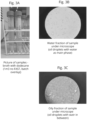
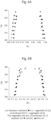
- Figures 1A and 1B illustrate how after centrifugation a sample of S0 separates in a L1 layer, a L2 layer and a solids layer.
- Volumes can be determined and then weight % calculated from it or integral volumes can be weighed to obtain an amount of the fractions of L1, L2 and solid matter.
- L1 and/or L2 can be present in the form of an emulsion or at a certain degree of emulsification in fluid stream S0.
- the fluid stream optionally comprises a gas), which gas can be dissolved in the organic liquid, the aqueous liquid or form a separate gaseous phase.
- the method of the present disclosure is used for recovery of biocatalytically produced product from a bioreactor effluent stream having a high content of organic phase (L1).
- Obtaining a fluid mixture containing the produced product with such high content (more than 50 wt.%), is generally not achieved with commonly employed fermentative processes, such as overlay fermentation, as the reaction mixture in a typical overlay fermentation contains up to 20% organic phase and not selectively withdrawn from the system.
- the organic fluid stream S0 is derived from a biocatalytic system that has the capability of selectively withdrawn the organic phase obtaining a high organic content (more than 50 wt.%).
- the content of the organic liquid phase L1 is in the range of about 55 to about 99 wt.% based on total weight of the fluid stream S0, in particular in the range of 70-98.5 wt.%, based on total weight of the fluid stream S0, more in particular in the range of 75-98.0 wt.%, based on total weight of the fluid stream S0, even more in particular in the range of 80-97.5 wt.% based on total weight of the fluid stream S0.
- the organic liquid phase L1 may at least substantially consist of biocatalytically produced product. This is the case when the produced product is highly hydrophobic and is produced in sufficient amounts whereby it forms a sufficient volume of separate phase in the bioreactor system over time.
- the biocatalytically produced organic product provides more than 50 wt. % of the organic substance content, preferably at least 70 wt. %, in particular at least 80 wt. %, more in particular at least 90 wt. % of the organic liquid phase L1.
- some other organic substances may still be present also when the product forms its own phase in the bioreactor system, e.g.
- the biocatalytically produced product content in L1 will usually be more than 50 wt.% and less than 100 wt.%, in particular 99.9 wt.% or less, more in particular up to 99 wt.%, up to 98 wt. %, up to 97 wt.%, up to 96 wt. % or up to 95 wt.%.
- the organic liquid phase (L1) comprises an organic extractant solvent wherein the biocatalytically produced organic substance is present.
- extractant(s) adds to flexibility in products that can be recovered effectively or efficiently, yet add complexity in recovery of the product from bioreactor effluents and thus a challenge in obtaining satisfactory effectivity (yield) or efficiency of the method.
- the present disclosure also addresses such challenge in particular.
- the relative amount of product in L1 when an extractant is used can vary widely. Usually the extractant forms the major component, when used. In particular, the extractant content can be in the range of 50 and 99.5 wt.% of L1, more in particular between 75 and 99 wt.% of L1, even more in particular between 85 and 99 wt.%.
- the biocatalytically produced product content can be in the range of 0.5 and 50 wt.% of L1, preferably between 1.0 and 25 wt.%, in particular between 1 and 15 wt.%.
- the summed content of extractant and biocatalytically produced product is 100 wt.% or close to, in particular between 95 and 99.5 wt.%.
- the balance (up 100 wt.%) can be formed by organic side product and dissolved organic substance(s) from the reaction mixture (such as nutrient, side-product), etc..
- the fluid stream (S0) is obtained in a device (apparatus) comprising a reaction section and a separation section and/or biocatalytic system that allows selective withdrawal of S0.
- a device apparatus
- the reaction section and the separation section form a single device or part of a single device, which may also be referred to as an integrated bioreactor system, containing a reaction compartment and separate therefrom a separation compartment.
- Suitable integrated bioreactor systems can e.g. be based on PCT/NL2023/050445 or WO2021/010822 , of which the contents - in particular the claims, Figures and figure descriptions of the devices - are incorporated by reference.
- a method according to the present disclosure is particularly suited for product recovery processes from a fluid stream (S0) taken from an at least substantially continuous extractive fermentation.
- S0 fluid stream
- a product recovery phase comprising biocatalytically produced organic substance is separated from a reaction mixture wherein the product has been produced.
- a reaction mixture is provided, wherein the product is produced biocatalytically (using cells, such as micro-organisms like yeasts, bacteria, archaea, or cultures of cells from multicellular organisms).
- the reaction mixture comprises an aqueous phase, in which the biocatalyst is preferably dispersed or dissolved, which aqueous phase comprises a substrate for the biocatalyst.
- Further droplets of a fluid product recovery phase (comprising the produced product and optionally an extractant) are dispersed in the continuous aqueous phase, into which droplets produced product migrates.
- the product recovery phase comprising the produced product and the aqueous phase are subjected a separation, whereby a fluid stream enriched (compared to the contents of the reaction mixture in the reaction section) in organic phase (product recovery phase), comprising the produced product (and extractant if extractant is used), is obtained, but also some water and solid matter (in particular biocatalyst material, such as cells, cell parts etc) , and a fluid stream enriched in aqueous phase.
- the fluid stream enriched in organic phase is then taken as fluid stream S0 for processing in the method according to the disclosure.
- Production of the organic product and the separation of the product recovery phase are advantageously carried out in a single apparatus comprising a reaction section, containing the reaction mixture wherein the product is biocatalytically produced, and a separation section wherein the fluid stream enriched in organic phase comprising the produced product (and the extractant, if used) is separated from the aqueous phase.
- the advantageous at least substantially continuous extractive fermentation comprises a simultaneous production and separation stage,
- the method of the present disclosure also offers a possibility to preferentially remove damaged cells and other cellular material that has reduced desired biocatalytic activity or no significant desired biocatalytic activity anymore from a fermentative bioreactor system from which the fluid stream S0, comprising the biocatalytic product is taken.
- the present disclosure also allows to carry out fermentation under conditions that are more stressful to the biocatalyst (whereby cells may be e.g. damaged), yet that may be desired in some cases.
- higher turbulent conditions in the reaction mixture could cause increased shearing, yet smaller droplets of product recovery phase, thereby increasing interface area between product recovery phase and aqueous phase; e.g. varying temperature.
- the method of the present disclosure can contribute to keeping the content of undesired material derived from the biocatalyst (dead cells, debris etc) in the reaction mixture in the bioreactor at favorably low levels.
- the method for product recovery can be of particular benefit for product recovery from organic liquid streams, more specifically organic streams that are used for extraction of biocatalytically produced product or biocatalytically produced product(s) that form their own liquid phase and form the bulk component (more than 50 wt.%, based on total weight of the organic liquid phase). Even more specifically, in case of extraction, organic streams that are used for continuous extraction and removal of biocatalytically produced product from a biocatalytic reactor system. In a preferred embodiment the process for recovery of the biocatalytically produced product is continuous and there is an additional step for product purification.
- downstream processing in accordance with the present disclosure is carried out with an enriched organic fluid stream (S0), comprising more than 50 percent in weight of organic liquid phase, advantageously originating directly from a biocatalytic reactor system, i.e. advantageously without further having been subjected to separation steps downstream of the separation section of the biocatalytic reactor system .
- S0 enriched organic fluid stream
- this stream there is a need for solid content and aqueous phase removal, as well as for product recovery.
- Solid content removal has multiple benefits, such as (1) solids, e.g. cell material like proteins, stabilize emulsions and removing the solids content enhances liquid-liquid separation, (2) limiting biological activity, in case of living cell fermentation removal of solids content limits the biological activity 'zone', thereby also preventing biological based reactions, such as corrosion and/or other equipment and product integrity issues downstream (3) product purification, (4) prevention of fouling of downstream process equipment.
- solids e.g. cell material like proteins
- (2) limiting biological activity in case of living cell fermentation removal of solids content limits the biological activity 'zone', thereby also preventing biological based reactions, such as corrosion and/or other equipment and product integrity issues downstream
- product purification (4) prevention of fouling of downstream process equipment.
- Solid content in the enriched organic fluid stream (S0) is typically at least 0.1 wt.%.
- Solid content in the enriched organic fluid stream (S0) is typically up to 5 wt%, preferably in the range of 0.1 - 4.5 wt.%, more preferably in the range of 0.5 - 4.0 wt% .
- 50-100 wt.%, in particular at least 80 wt.%, more in particular at least 90 wt.% of the solids content is composed of biocatalyst material, preferably cellular material, such as intact (living) cells, cell parts or a combination thereof.
- the cell concentration in the broth and thus in the aqueous product stream is 50-100 g/L ( ⁇ 5 - 10 wt%).
- the solids content is typically lower than typical aqueous product streams from biocatalytic processes this changes solids separation operation as the solid load per volume is different.
- the solid matter removed in the fluid stream (S0) is relatively high with regard to water content.
- the biocatalyst material in particular cellular material, may be present in a content of more than 10 wt.% relative to the total water content in S0, in particular 15-50 wt.%, more in particular 20-40 wt.%, relative to the total water content in S0. It was found that a portion of this fraction is usually non-productive material, such as dead cell matter, which floats/goes to the water/organic surface/interface. This is different behaviour compared to the living active cells, which stay dispersed in the broth and do not, in significant quantities, go with the fluid stream (S0).
- Aqueous phase removal take place in a preferred embodiment after solid content removal as it enhances the liquid-liquid separation.
- Aqueous phase removal has multiple benefits, such as (1) product purification, e.g. removing acids and salts via the aqueous phase, (2) prevention of fouling of downstream process equipment by for example salts (3) limiting corrosion issues downstream, e.g. as result of free water containing acids (4) preventing issues with distillation column as result of free water in the feed, e.g. slugs of free water can cause steam explosion and cause damage to distillation column internals.
- the fluid stream (S0) from which product is recovered comprises an aqueous phase.
- the content of the aqueous liquid phase (L2) is less than 50.0 wt.% of the total weight of the fluid stream, preferably 45.0 wt% or less, more preferably 30 wt.% or less, in particular 20 wt.% or less, more in particular as low as 1 wt.%.
- Aqueous phase removal is different from traditional biocatalytic product streams as in traditional biocatalytic product streams the aqueous phase (broth) is the bulk phase (more than 50% in weight of the total fluid stream), whilst in the method according to the present disclosure the aqueous liquid phase is less than 50 wt.% of the fluid stream (S0), preferably 30 wt.% or less, more preferably 20 wt.% or less.
- the aqueous liquid phase (L2) content is lower than typical aqueous product streams from biocatalytic processes. This allows utilisation of the aqueous phase to enhance separation and purification, by for example an acid/base wash.
- the fluid stream (S0) originating from a biocatalytic reactor is subjected to an acid wash and/or a base wash, optionally after (a) removal of solid matter.
- This offers an important advantage of the present method, compared to performing a base wash and/or an acid wash on the organic liquid phase L1 (after separating from the aqueous phase in step b; before or after removing solid matter) or on the organic fluid stream S 1 (after step c), because the aqueous phase L2 can help to wash one or more impurities from the organic phase, improving effectivity and/or efficiency.
- the properties of the organic liquid phase start to govern the fluid stream properties, such as viscosity, changing techniques or equipment type suitable for phase separation.
- Product recovery step c is advantageously applied. It is usually applied at least if the biocatalytically produced product is not the bulk component ( ⁇ 50 wt.% of total weight) in the organic fluid stream S1. If the biocatalytically produced product is the bulk component S1 may be subjected to step c or directly further processed (e.g. purified) or used, if desired.
- Product recovery preferably uses techniques that are more cost effective than commonly used recovery techniques from fermentation broths, sustainable and more typical to the chemical industry, like distillation, extraction, crystallization, evaporation, precipitation.
- a preferred distillation technique is vacuum distillation (from 0.005 to less than 1.0 bara), preferably molecular distillation, in particular short path, centrifugal or falling film evaporation under ultra deep vacuum (5-200 mbara).
- Distillation is a preferred technique for product recovery from L1 in particular when L1 comprises an extractant, more in particular when S0 is obtained from an at least substantially continuous extractive fermentation. Distillation is particularly preferred when the organic fluid stream (S1) comprises less than 50 wt.% biocatalytically produced product and more than 50 wt.% of extracting solvent and the biocatalytically produced product is more volatile than the extracting solvent. Stripping with a gas, e.g. steam, is particularly useful for efficient recovery.
- a gas e.g. steam
- the distillation temperature is lowered by means of steam distillation and/or vacuum distillation and can even go to ultra deep vacuum, like molecular distillation.
- distillation is typical for the chemical industry it's not widely applied in biotechnology, especially not for lipophilic compounds, as due to their inhibiting nature they are typically present in trace amounts (0.1 - 1.0 g/L, i.e. -0.01-0.1 wt%, 100-1000 wppm)) in biocatalytic aqueous product streams and therefore regular distillation would not be feasible.
- the organic fluid stream (S1) however the product concentrations are higher (often ⁇ 1.0 - 5.0 wt% when using an extractant, there can be exceptions on the higher side) than typical for biotechnology. Although often still lower than typical for chemical industry (10 wt% - 50 wt%).
- vacuum distillation or steam stripping can advantageously be employed for recovery of biocatalytically produced product from S1 wherein the content of biocatalytically produced product is up to 50 wt.%, in particular between about 1 and about 25 wt. %, more in particular between about 1 and about 15 wt. %; in a specifically preferred embodiment vacuum distillation is applied for recovery of biocatalytically produced product from S1 wherein the content of biocatalytically produced product is between about 1 and about 15 wt.%
- the biocatalytically produced product can be recovered by extraction, in this case a back-extraction from the organic fluid stream (S1).
- the back-extraction comprises a Liquid-Liquid extraction step in which the product is recovered by an auxiliary liquid phase (L3).
- the product can subsequently be recovered from the auxiliary liquid phase by evaporation (of the auxiliary phase) and/or precipitation of the product and/or crystallization of the product.
- the biocatalytically produced product can be recovered by means of distillation and/or liquid-liquid extraction, but is not limited to these techniques. Also other techniques may be an option, such as evaporation and/or crystallization and/or precipitation and/or acidification and/or basification and/or a reaction like esterification and/or complexation. Of course due to the wide applicability range the product recovery step can be a combination and/or repeat of techniques in any order, depending on product and organic fluid stream/substances characteristics.
- step c there is also a step in which the product is further purified.
- Any of the techniques used for product recovery can also be used for purification, including distillation. But also techniques more typical to water based biotechnology downstream processing may be used, like chromatography, ultrafiltration.
- the method of the present disclosure has also the effect that the total volume of the organic fluid stream obtained after step c) is considerably smaller and more concentrated in product than the crude fluid stream taken from the bioreactor system. This contributes to efficiency and sustainability impact, also when using such techniques for further purification. Separation methodology choices to be made usually depends upon: type of separation process(es), order of separation steps, separation process setup (T,P,x,) if applicable extractant.
- Typical order of known separation processes start with the easiest separations and preferably largest fractions/stream size reductions first.
- Easiest separations are fractions that are already in a different phase, e.g. solid, liquid, gas, at given conditions (T,P,x).
- T,P,x e.g. solid, liquid, gas
- T,P,x e.g. solid, liquid, gas
- the organic product In case of product extraction, the organic product is typically in the same phase as the extractant, therefore not an easy phase separation.
- the simplest separation choice for product recovery from an organic phase is distillation. Typically this is beneficial when the product is more volatile than the organic phase and there is a sufficient difference in boiling point. If distillation is not possible due to non-volatile products and/or low difference in boiling point of substance and organic liquid or either the substance or organic liquid is thermally instable or for another reason distillation is not preferred/feasible, other separation techniques like extraction can be applied. Extraction is more complex than distillation as it requires an auxiliary liquid phase, which forms a 2 phase system with the organic liquid stream and has a sufficiently high affinity for the product.
- This disclosures enables product recovery from an organically enriched fluid stream (S0).
- This stream which in a preferred embodiment is typically higher boiling than water, comprises an organic phase, containing lower impurities and higher product concentration (than the biocatalytic medium/broth it's originating from), there are a number of benefits. These benefits include (1) lower energy requirement per product, (2) relatively smaller equipment size and lower number of unit operations resulting in lower capital requirement per product, (3) enabling more diverse DSP unit operations, e.g. more typical to chemical industry, (4) sustainability benefits, i.e. lower waste streams, lower energy requirement, (5) product integrity by non-water based process, different T, P, x, with early stage biocatalytic activity removal and substantially less water based catalytic conversion of product possible.
- Separation of solid matter can be performed in a manner known per se in particular by means of filtration, e.g. microfiltration, ultrafiltration, nanofiltration, membrane filtration, and/or centrifugation, e.g. disc stack centrifuge, decanter centrifuge, and/or flocculation.
- the inventors realised that the solid matter can have an adverse effect on the effective or efficient recovery or further purification of the biocatalytically produced product.
- the solid matter can e.g. stabilize emulsions, e.g. Pickering emulsion by proteins, and therefore the removal of a small fraction (solid matter) can aid the separation of a larger fraction (organic liquid phase).
- the solid content is separated first from S0 before separating the aqueous liquid phase.
- the removal of solid content before separation of the aqueous phase L2 aids the liquid-liquid phase (water - organic) separation.
- Removal of solid content, in particular solid matter comprising cell material, more in particular selected from cell debris, cell components, extracellular protein from cells, destabilises emulsions, dispersions, suspensions (if present), reduces the chance of formation of an emulsion, dispersion or suspension.
- Emulsions, dispersions or suspensions make it more difficult to remove aqueous phase or may adversely affect product recovery or further downstream purification.
- water now more readily separates from the organic phase, often facilitating simple decanting.
- aqueous phase (L2) is separated from the fluid stream (S0), preferrably by means of gravity or centrifugal force, otherwise intermolecular force based techniques like adsorption , absorption, precipitation or surface force related coalescence and/or size exclusion and/or evaporation and/or separation based on polarity and/or chemical affinity by adding auxiliary components and/or changing pressure/temperature.
- the disclosure provides a method for product recovery by means of distillation, in particular a method for product recovery by means of stream distillation and/or vacuum distillation.
- Steam distillation preferred by steam (or other gas) stripping is typically used to lower the volatility and enhance the separation, in particular in case of relatively low product concentration.
- the volatility e.g. vapor pressure
- Vacuum distillation more preferably applied in case of high boiling organic extractant, e.g. vegetable oils ((refined) sunflower oil, castor oil, olive oil, palm oil, rapeseed oil, cotton seed oil, corn oil, linseed oil), or organic extractants having a similar or higher boiling point than vegetable oils, such as sunflower oil or castor oil, is especially beneficial in case the product and/or the organic extractant have thermal constraints, e.g. like a smoke point.
- Vacuum distillation is currently applied in purification of vegetable oils in their production process in order to remove impurities, but not in the use as extractant for the recovery of product.
- Distillation can also be combined with (back)-extraction in case of low relative volatility, i.e. extractive distillation. Extractive distillation is different from extraction as it's involving V-L-L equilibria versus L-L equilibria and requiring a lower number of unit operations (thus capital).
- any moisture still present in a small fraction and/or dissolved in the organic liquid stream (S1) is separated as well.
- water forms a two phase system with respectively the product and/or extractant (depending on properties and where the water goes in the distillation)
- water can be separated by settling (gravity/buoyancy).
- settling gravitation/buoyancy
- the method in accordance with the present disclosure can make use of a single or multistep extraction process.
- the biocatalytically produced product is recovered from the organic fluid stream (S1) by means of liquid-liquid extraction with an auxiliary liquid (L3) as back-extracting agent.
- auxiliary liquid L3 as back-extracting agent.
- Such method is particularly suitable also in case of an unstable or thermally sensitive product and/or bulk organic fluid stream (S1), and/or in case the product has a higher boiling product than the substance(s) from which it is to be separated, especially when the biocatalytically produced product is not the bulk of the organic fluid stream (S1), i.e. forms less than 50 wt.% of S1.
- the biocatalytically produced product is recovered by a multistep extraction process, comprising
- This method is especially suitable also when the second auxiliary liquid (L4) is unsuitable as an extractant for extraction of the biocatalytically produced product in the biocatalytic reactor for one or more of the following reasons: biocompatibility, volatility, emulsification behaviour with broth/water, miscibility with water and the second auxiliary liquid L4 is not a suitable extractant as a first auxiliary liquid, for reasons of miscibility and/or compatibility.
- L1 comprises an organic extractant used in the bioreactor system to recover biocatalytically produced product and in which L3 is more volatile than said extractant.
- L1 comprises an organic extractant used in the bioreactor system to recover biocatalytically produced product and in which L4 is more volatile than said extractant and L3.
- the product is recovered from the auxiliary liquid phase following the liquid-liquid extraction by evaporation and/or or wherein the product isolated by precipitation, in particular by crystallization, e.g. by reducing the temperature to a temperature at which the organic substance solidifies, whilst the back-extraction liquid remains liquid, and/or variations thereof.
- L1 comprises an organic extractant used in the bioreactor system to recover biocatalytically produced product and said extractant in L1 is a vegetable oil, preferably selected from the group consisting of sunflower oil, canola oil, soybean oil, olive oil, palm oil, rapeseed oil, cotton seed oil, corn oil, linseed oil, including mixtures thereof and L3 is a short chain alcohol, preferably ethanol or methanol.
- L1 comprises an organic extractant used in the bioreactor system to recover biocatalytically produced product and L1 is a vegetable oil, more specifically Castor Oil, and L3 is an alkane, preferably hexane.
- L1 comprises an organic extractant used in the bioreactor system to recover biocatalytically produced product and said extractant in L1 is an ester, L3 is a vegetable oil and L4 is a short chain alcohol, preferably ethanol or methanol.
- Liquid-Liquid extraction is at least a two step process by itself and includes at least a step where the two liquids are mixed to allow for transfer of the substance from one liquid to the other. And at least a step where the two liquids are separated from each other. Miscibility of the two liquids can be changed by changing P, T, x to enhance contact and/or separation. For example cooling of two extractant mixture creates a two phase system allowing separation of extractant and (co- or auxiliary) extractant.
- the inventors realized that it would be desirable to more specifically provide a method for product recovery from vegetable oils and/or esters.
- Inventors found that by combining vegetable oils and short chain alcohols, preferably ethanol or methanol, for most vegetable oils there is a temperature range where the mixture is miscible and there is a temperature where the mixture is not miscible.
- the invention enables the use of a water soluble extractant further in the process and expends the range of auxiliary species that can be used in product concentration and purification unit operations.
- This can advantageously provide extraction of product from the vegetable oil and subsequent phase separation between the vegetable oil and the short chain alcohol.
- an ester is typically miscible with short chain alcohols and not miscible with vegetable oils.
- the ester is first brought into contact with the vegetable oil, before using the short chain alcohol to extract the product from the vegetable oil.
- biobased vegetable oils, short chain alcohols and/or extractants approved for food processing is preferred for such processes.
- L1 is a vegetable oil, preferably, sunflower oil, canola oil, soybean oil, olive oil, palm oil, rapeseed oil, cotton seed oil, corn oil, linseed oil, including mixtures thereof and L3 is a short chain alcohol, preferably ethanol or methanol.
- L1 is vegetable oil, more specifically Castor Oil and L3 is an alkane, preferably hexane.
- the product can be recovered from the last extractant/auxiliary liquid phase by evaporation (of the auxiliary phase) and/or precipitation of the product and/or crystallization of the product.
- L1 is an ester
- L3 is a vegetable oil
- L4 is a short chain alcohol, preferably ethanol or methanol.
- phase behavior for the production of castor oil purification has a L-L phase separation window close to fermentation and ambient conditions. Modest cooling step will allow L-L phase separation.
- partition and phase separation will allow recovery of ternary component from the solvent of choice. Selection by means of affinity study of ternary component to both solvents is possible and will allow selection of liquid pairs enabling both extraction from broth by primary/first solvent, while also having an auxiliary/2 nd solvent that can extract the ternary (product) component from the first solvent with adequate efficiency.
Landscapes
- Life Sciences & Earth Sciences (AREA)
- Engineering & Computer Science (AREA)
- Biotechnology (AREA)
- Wood Science & Technology (AREA)
- Zoology (AREA)
- Organic Chemistry (AREA)
- Chemical & Material Sciences (AREA)
- Bioinformatics & Cheminformatics (AREA)
- Health & Medical Sciences (AREA)
- Sustainable Development (AREA)
- Microbiology (AREA)
- Biochemistry (AREA)
- General Engineering & Computer Science (AREA)
- General Health & Medical Sciences (AREA)
- Genetics & Genomics (AREA)
- Biomedical Technology (AREA)
- Preparation Of Compounds By Using Micro-Organisms (AREA)
Priority Applications (2)
| Application Number | Priority Date | Filing Date | Title |
|---|---|---|---|
| EP23216809.6A EP4570898A1 (de) | 2023-12-14 | 2023-12-14 | Verfahren zur gewinnung eines biokatalytisch hergestellten produkts aus einem organischen fluidstrom |
| PCT/NL2024/050668 WO2025127930A1 (en) | 2023-12-14 | 2024-12-13 | Method for the recovery of a biocatalytically produced product from an organic fluid stream |
Applications Claiming Priority (1)
| Application Number | Priority Date | Filing Date | Title |
|---|---|---|---|
| EP23216809.6A EP4570898A1 (de) | 2023-12-14 | 2023-12-14 | Verfahren zur gewinnung eines biokatalytisch hergestellten produkts aus einem organischen fluidstrom |
Publications (1)
| Publication Number | Publication Date |
|---|---|
| EP4570898A1 true EP4570898A1 (de) | 2025-06-18 |
Family
ID=89223091
Family Applications (1)
| Application Number | Title | Priority Date | Filing Date |
|---|---|---|---|
| EP23216809.6A Withdrawn EP4570898A1 (de) | 2023-12-14 | 2023-12-14 | Verfahren zur gewinnung eines biokatalytisch hergestellten produkts aus einem organischen fluidstrom |
Country Status (2)
| Country | Link |
|---|---|
| EP (1) | EP4570898A1 (de) |
| WO (1) | WO2025127930A1 (de) |
Citations (3)
| Publication number | Priority date | Publication date | Assignee | Title |
|---|---|---|---|---|
| US20130072701A1 (en) * | 2010-03-02 | 2013-03-21 | Streamline Automation, Llc | Method and Apparatus for Iterative Lysis and Extraction of Algae |
| US20170159006A1 (en) * | 2014-07-11 | 2017-06-08 | Archer Daniels Midland Company | SYSTEM AND METHOD FOR EXTRACTING ETHANOL FROM A FERMENTATION BROTh |
| WO2021010822A1 (en) | 2019-07-18 | 2021-01-21 | Delft Advanced Biofuels B.V. | Integrated system for biocatalytically producing and recovering an organic substance |
-
2023
- 2023-12-14 EP EP23216809.6A patent/EP4570898A1/de not_active Withdrawn
-
2024
- 2024-12-13 WO PCT/NL2024/050668 patent/WO2025127930A1/en active Pending
Patent Citations (3)
| Publication number | Priority date | Publication date | Assignee | Title |
|---|---|---|---|---|
| US20130072701A1 (en) * | 2010-03-02 | 2013-03-21 | Streamline Automation, Llc | Method and Apparatus for Iterative Lysis and Extraction of Algae |
| US20170159006A1 (en) * | 2014-07-11 | 2017-06-08 | Archer Daniels Midland Company | SYSTEM AND METHOD FOR EXTRACTING ETHANOL FROM A FERMENTATION BROTh |
| WO2021010822A1 (en) | 2019-07-18 | 2021-01-21 | Delft Advanced Biofuels B.V. | Integrated system for biocatalytically producing and recovering an organic substance |
Non-Patent Citations (1)
| Title |
|---|
| TEKE GEORGE M. ET AL: "The liquid-liquid extractive fermentation of L-lactic acid in a novel semi-partition bioreactor (SPB)", JOURNAL OF BIOTECHNOLOGY, vol. 360, 1 December 2022 (2022-12-01), Amsterdam NL, pages 55 - 61, XP093090537, ISSN: 0168-1656, Retrieved from the Internet <URL:https://www.sciencedirect.com/science/article/pii/S0168165622002619/pdfft?md5=1cc0d0aa7e10a158bb65b0f50286cd87&pid=1-s2.0-S0168165622002619-main.pdf> DOI: 10.1016/j.jbiotec.2022.10.017 * |
Also Published As
| Publication number | Publication date |
|---|---|
| WO2025127930A1 (en) | 2025-06-19 |
Similar Documents
| Publication | Publication Date | Title |
|---|---|---|
| JP7539732B2 (ja) | 有機物質を生物触媒的に製造及び回収する統合システム | |
| CA2226427C (en) | Extraction of triglycerides from microorganisms | |
| US9359580B2 (en) | Method for extraction and purification of oils from microalgal biomass using high-pressure CO2 as a solute | |
| US8450111B2 (en) | Lipid extraction from microalgae using a single ionic liquid | |
| Rocha et al. | Recovery of volatile fatty acids from water using medium-chain fatty acids and a cosolvent | |
| Braune et al. | A downstream processing cascade for separation of caproic and caprylic acid from maize silage-based fermentation broth | |
| Martins et al. | Comparison of two different strategies for tocopherols enrichment using a molecular distillation process | |
| Chaichol et al. | Advances in in situ and in-line liquid–liquid extraction for bioprocess intensification | |
| CN103189118B (zh) | 用于由水性混合物中提取有机化合物的方法 | |
| Hayyan et al. | Application of natural deep eutectic solvents in bulk liquid membrane system for removal of free glycerol from crude fatty acid methyl ester | |
| Li et al. | A highly efficient and recoverable enzymatic method for removing phospholipids from soybean oil via an ionic liquid-based three-liquid-phase | |
| WO2025127930A1 (en) | Method for the recovery of a biocatalytically produced product from an organic fluid stream | |
| Babalou et al. | Integrated systems involving pervaporation and applications | |
| WO2019030007A1 (en) | PROCESS FOR RECOVERING FERMENTATION PRODUCTS | |
| Cheong et al. | Ionic liquid as a green solvent for lipid processing | |
| WO2013037135A1 (en) | Process for reclaiming methacrylic acid from a high-boiler phase and an aqueous phase | |
| Lai et al. | Deacidification of palm oil using solvent extraction integrated with membrane technology | |
| Sanda et al. | SOLVENT EXTRACTION OF ACETIC ACID FROM AQUEOUS MEDIA USING TRIOCTYL PHOSPHINE OXIDE (TOPO)–BASED SOLVENT SYSTEMS | |
| Bouranene et al. | Extraction of ethanol from aqueous solutions by emulsion liquid membrane: optimization of operating conditions and influence of salts in the feed phase | |
| Tshindane | Application of membrane technology for purifying tyre derived oil | |
| US8747673B2 (en) | Methods for recovering a solvent from a fluid volume and methods of removing at least one compound from a nonpolar solvent | |
| Saengsen et al. | Mass transfer in membrane contactors for separating levulinic acid, formic acid, and furfural from biomass hydrolysate with physical organic solvents | |
| Weatherley et al. | Process Intensification of Enzymatic Biotransformation Processes | |
| JPS61176698A (ja) | 油脂と脂肪酸の分離方法 | |
| Trusty et al. | 2, 3-Butanediol recovery from fermentation broth using membrane pertraction |
Legal Events
| Date | Code | Title | Description |
|---|---|---|---|
| PUAI | Public reference made under article 153(3) epc to a published international application that has entered the european phase |
Free format text: ORIGINAL CODE: 0009012 |
|
| STAA | Information on the status of an ep patent application or granted ep patent |
Free format text: STATUS: THE APPLICATION HAS BEEN PUBLISHED |
|
| AK | Designated contracting states |
Kind code of ref document: A1 Designated state(s): AL AT BE BG CH CY CZ DE DK EE ES FI FR GB GR HR HU IE IS IT LI LT LU LV MC ME MK MT NL NO PL PT RO RS SE SI SK SM TR |
|
| STAA | Information on the status of an ep patent application or granted ep patent |
Free format text: STATUS: THE APPLICATION IS DEEMED TO BE WITHDRAWN |
|
| 18D | Application deemed to be withdrawn |
Effective date: 20251219 |