EP4570815A1 - Bakterium der gattung corynebacterium und seine kosmetische verwendungen - Google Patents
Bakterium der gattung corynebacterium und seine kosmetische verwendungen Download PDFInfo
- Publication number
- EP4570815A1 EP4570815A1 EP23307177.8A EP23307177A EP4570815A1 EP 4570815 A1 EP4570815 A1 EP 4570815A1 EP 23307177 A EP23307177 A EP 23307177A EP 4570815 A1 EP4570815 A1 EP 4570815A1
- Authority
- EP
- European Patent Office
- Prior art keywords
- skin
- bacterium
- cassirii
- nov
- bacteria
- Prior art date
- Legal status (The legal status is an assumption and is not a legal conclusion. Google has not performed a legal analysis and makes no representation as to the accuracy of the status listed.)
- Pending
Links
Images


Classifications
-
- C—CHEMISTRY; METALLURGY
- C12—BIOCHEMISTRY; BEER; SPIRITS; WINE; VINEGAR; MICROBIOLOGY; ENZYMOLOGY; MUTATION OR GENETIC ENGINEERING
- C12N—MICROORGANISMS OR ENZYMES; COMPOSITIONS THEREOF; PROPAGATING, PRESERVING, OR MAINTAINING MICROORGANISMS; MUTATION OR GENETIC ENGINEERING; CULTURE MEDIA
- C12N1/00—Microorganisms; Compositions thereof; Processes of propagating, maintaining or preserving microorganisms or compositions thereof; Processes of preparing or isolating a composition containing a microorganism; Culture media therefor
- C12N1/20—Bacteria; Culture media therefor
- C12N1/205—Bacterial isolates
-
- A—HUMAN NECESSITIES
- A61—MEDICAL OR VETERINARY SCIENCE; HYGIENE
- A61K—PREPARATIONS FOR MEDICAL, DENTAL OR TOILETRY PURPOSES
- A61K35/00—Medicinal preparations containing materials or reaction products thereof with undetermined constitution
- A61K35/66—Microorganisms or materials therefrom
- A61K35/74—Bacteria
-
- A—HUMAN NECESSITIES
- A61—MEDICAL OR VETERINARY SCIENCE; HYGIENE
- A61K—PREPARATIONS FOR MEDICAL, DENTAL OR TOILETRY PURPOSES
- A61K8/00—Cosmetics or similar toiletry preparations
- A61K8/18—Cosmetics or similar toiletry preparations characterised by the composition
- A61K8/96—Cosmetics or similar toiletry preparations characterised by the composition containing materials, or derivatives thereof of undetermined constitution
- A61K8/99—Cosmetics or similar toiletry preparations characterised by the composition containing materials, or derivatives thereof of undetermined constitution from microorganisms other than algae or fungi, e.g. protozoa or bacteria
-
- A—HUMAN NECESSITIES
- A61—MEDICAL OR VETERINARY SCIENCE; HYGIENE
- A61Q—SPECIFIC USE OF COSMETICS OR SIMILAR TOILETRY PREPARATIONS
- A61Q19/00—Preparations for care of the skin
-
- A—HUMAN NECESSITIES
- A61—MEDICAL OR VETERINARY SCIENCE; HYGIENE
- A61Q—SPECIFIC USE OF COSMETICS OR SIMILAR TOILETRY PREPARATIONS
- A61Q19/00—Preparations for care of the skin
- A61Q19/02—Preparations for care of the skin for chemically bleaching or whitening the skin
-
- A—HUMAN NECESSITIES
- A61—MEDICAL OR VETERINARY SCIENCE; HYGIENE
- A61Q—SPECIFIC USE OF COSMETICS OR SIMILAR TOILETRY PREPARATIONS
- A61Q19/00—Preparations for care of the skin
- A61Q19/08—Anti-ageing preparations
-
- C—CHEMISTRY; METALLURGY
- C07—ORGANIC CHEMISTRY
- C07K—PEPTIDES
- C07K14/00—Peptides having more than 20 amino acids; Gastrins; Somatostatins; Melanotropins; Derivatives thereof
- C07K14/195—Peptides having more than 20 amino acids; Gastrins; Somatostatins; Melanotropins; Derivatives thereof from bacteria
-
- C—CHEMISTRY; METALLURGY
- C12—BIOCHEMISTRY; BEER; SPIRITS; WINE; VINEGAR; MICROBIOLOGY; ENZYMOLOGY; MUTATION OR GENETIC ENGINEERING
- C12N—MICROORGANISMS OR ENZYMES; COMPOSITIONS THEREOF; PROPAGATING, PRESERVING, OR MAINTAINING MICROORGANISMS; MUTATION OR GENETIC ENGINEERING; CULTURE MEDIA
- C12N1/00—Microorganisms; Compositions thereof; Processes of propagating, maintaining or preserving microorganisms or compositions thereof; Processes of preparing or isolating a composition containing a microorganism; Culture media therefor
- C12N1/20—Bacteria; Culture media therefor
-
- C—CHEMISTRY; METALLURGY
- C12—BIOCHEMISTRY; BEER; SPIRITS; WINE; VINEGAR; MICROBIOLOGY; ENZYMOLOGY; MUTATION OR GENETIC ENGINEERING
- C12N—MICROORGANISMS OR ENZYMES; COMPOSITIONS THEREOF; PROPAGATING, PRESERVING, OR MAINTAINING MICROORGANISMS; MUTATION OR GENETIC ENGINEERING; CULTURE MEDIA
- C12N15/00—Mutation or genetic engineering; DNA or RNA concerning genetic engineering, vectors, e.g. plasmids, or their isolation, preparation or purification; Use of hosts therefor
- C12N15/09—Recombinant DNA-technology
- C12N15/63—Introduction of foreign genetic material using vectors; Vectors; Use of hosts therefor; Regulation of expression
- C12N15/74—Vectors or expression systems specially adapted for prokaryotic hosts other than E. coli, e.g. Lactobacillus, Micromonospora
- C12N15/77—Vectors or expression systems specially adapted for prokaryotic hosts other than E. coli, e.g. Lactobacillus, Micromonospora for Corynebacterium; for Brevibacterium
-
- C—CHEMISTRY; METALLURGY
- C12—BIOCHEMISTRY; BEER; SPIRITS; WINE; VINEGAR; MICROBIOLOGY; ENZYMOLOGY; MUTATION OR GENETIC ENGINEERING
- C12P—FERMENTATION OR ENZYME-USING PROCESSES TO SYNTHESISE A DESIRED CHEMICAL COMPOUND OR COMPOSITION OR TO SEPARATE OPTICAL ISOMERS FROM A RACEMIC MIXTURE
- C12P1/00—Preparation of compounds or compositions, not provided for in groups C12P3/00 - C12P39/00, by using microorganisms or enzymes
- C12P1/04—Preparation of compounds or compositions, not provided for in groups C12P3/00 - C12P39/00, by using microorganisms or enzymes by using bacteria
-
- C—CHEMISTRY; METALLURGY
- C12—BIOCHEMISTRY; BEER; SPIRITS; WINE; VINEGAR; MICROBIOLOGY; ENZYMOLOGY; MUTATION OR GENETIC ENGINEERING
- C12Q—MEASURING OR TESTING PROCESSES INVOLVING ENZYMES, NUCLEIC ACIDS OR MICROORGANISMS; COMPOSITIONS OR TEST PAPERS THEREFOR; PROCESSES OF PREPARING SUCH COMPOSITIONS; CONDITION-RESPONSIVE CONTROL IN MICROBIOLOGICAL OR ENZYMOLOGICAL PROCESSES
- C12Q1/00—Measuring or testing processes involving enzymes, nucleic acids or microorganisms; Compositions therefor; Processes of preparing such compositions
- C12Q1/02—Measuring or testing processes involving enzymes, nucleic acids or microorganisms; Compositions therefor; Processes of preparing such compositions involving viable microorganisms
-
- C—CHEMISTRY; METALLURGY
- C12—BIOCHEMISTRY; BEER; SPIRITS; WINE; VINEGAR; MICROBIOLOGY; ENZYMOLOGY; MUTATION OR GENETIC ENGINEERING
- C12Q—MEASURING OR TESTING PROCESSES INVOLVING ENZYMES, NUCLEIC ACIDS OR MICROORGANISMS; COMPOSITIONS OR TEST PAPERS THEREFOR; PROCESSES OF PREPARING SUCH COMPOSITIONS; CONDITION-RESPONSIVE CONTROL IN MICROBIOLOGICAL OR ENZYMOLOGICAL PROCESSES
- C12Q1/00—Measuring or testing processes involving enzymes, nucleic acids or microorganisms; Compositions therefor; Processes of preparing such compositions
- C12Q1/02—Measuring or testing processes involving enzymes, nucleic acids or microorganisms; Compositions therefor; Processes of preparing such compositions involving viable microorganisms
- C12Q1/04—Determining presence or kind of microorganism; Use of selective media for testing antibiotics or bacteriocides; Compositions containing a chemical indicator therefor
-
- A—HUMAN NECESSITIES
- A23—FOODS OR FOODSTUFFS; TREATMENT THEREOF, NOT COVERED BY OTHER CLASSES
- A23L—FOODS, FOODSTUFFS OR NON-ALCOHOLIC BEVERAGES, NOT OTHERWISE PROVIDED FOR; PREPARATION OR TREATMENT THEREOF
- A23L33/00—Modifying nutritive qualities of foods; Dietetic products; Preparation or treatment thereof
- A23L33/10—Modifying nutritive qualities of foods; Dietetic products; Preparation or treatment thereof using additives
- A23L33/135—Bacteria or derivatives thereof, e.g. probiotics
-
- C—CHEMISTRY; METALLURGY
- C12—BIOCHEMISTRY; BEER; SPIRITS; WINE; VINEGAR; MICROBIOLOGY; ENZYMOLOGY; MUTATION OR GENETIC ENGINEERING
- C12R—INDEXING SCHEME ASSOCIATED WITH SUBCLASSES C12C - C12Q, RELATING TO MICROORGANISMS
- C12R2001/00—Microorganisms ; Processes using microorganisms
- C12R2001/01—Bacteria or Actinomycetales ; using bacteria or Actinomycetales
- C12R2001/15—Corynebacterium
Definitions
- the present invention relates to the cosmetic use of a bacterial species of the genus Corynebacterium , a strain of which has been newly isolated.
- the skin is an ecosystem inhabited by a plethora of microorganisms as diverse as bacteria, archaea, fungi, and small arthropods. Together, they constitute the skin microbiota. This microbiota is subject to numerous parameters of variation, both intrinsic and extrinsic. Recent studies have identified correlations between changes in the composition of skin commensal populations and the physiological state of this environment, influenced by factors such as aging.
- Culturomics can help overcome the drawbacks of metagenomics. This technique relies on multiplying the culture conditions of microorganisms, thus allowing the growth of a greater diversity of bacteria, yeasts, or fungi, some of which are considered uncultivable. These species are not necessarily a minority in this habitat and their influence is largely unknown.
- One of the main difficulties of culturomics, however, is determining the isolation and culture conditions favorable to the growth of certain previously unknown bacterial strains. Indeed, depending on the skin area considered, there are differences in temperature, humidity, or pH, which can influence the bacterial composition of the microbiota.
- the inventors have managed to isolate a strain of a new bacterial species, the presence of which is correlated with the state of aging of the skin. This strain has been deposited at the National Collection of Microorganism Cultures (CNCM, Pasteur Institute, 25-28 rue du Dondel Roux, 75015 Paris, France) on May 4, 2021 under number I-5678.
- An object of the invention is a bacterium, said bacterium belonging to the species Corynebacterium cassudi sp. nov. characterized in that its genome i) contains an rpoB gene having at least 95.9% identity with the nucleotide sequence SEQ ID NO: 1 and/or ii) has an average nucleotide identity (ANI) of at least 95% with the complete genomic sequence of said strain deposited at the CNCM under number I-5678.
- ANI average nucleotide identity
- the bacterium is the strain isolated and deposited at the National Collection of Microorganism Cultures (CNCM, Pasteur Institute, 25-28 rue du Dondel Roux, 75015 Paris, France) on May 4, 2021 under number I-5678.
- CNCM National Collection of Microorganism Cultures
- the useful bacteria according to the invention may be in whole, viable, inactivated, or dead form.
- Another subject of the invention relates to the lysate, or lysate fraction(s) of this bacterium, or its secretome.
- the invention also generally relates to the cosmetic use of said bacterium, for skin care, said bacterium being used in whole and viable, inactivated, or dead form, or in the form of lysate, or fraction(s) of lysate, or in the form of one or more of its metabolites, preferably in the form of its secretome.
- a cosmetic composition for topical use comprising said isolated bacterium, in whole, viable, inactivated, or dead form, or said lysate or lysate fraction(s), and optionally further comprising at least one anti-aging active other than said bacterium.
- a cosmetic composition for topical use comprising one or more metabolites of said bacterium, preferably its secretome, and optionally further comprising at least one other anti-aging active.
- said compositions are useful for any skin care, or for an anti-aging cosmetic effect or a moisturizing cosmetic effect.
- they are particularly useful for combating, that is to say preventing and/or treating the signs of skin aging.
- composition used according to the invention can be applied to at least one area of the body of a person showing signs of skin aging (for example at least 30 years old, or even at least 40 years old), and more particularly to the face, neck and/or Vietnamese taste. Alternatively, it can be applied to the hands or body.
- Another object of the invention is a cosmetic method of skin care, comprising the topical application to the skin of such a composition.
- Yet another subject of the invention is a method for screening substances capable of exhibiting an anti-aging cosmetic effect, said method comprising bringing healthy human skin into contact with a candidate substance, and monitoring the presence and/or quantification of said bacterium of the species Corynebacterium cassudi sp. nov., on the surface of the skin, whereby a substance which stimulates the proliferation of the bacterium on the surface of the skin is identified as capable of exhibiting an anti-aging cosmetic effect.
- the invention also provides a method for assessing the aging state of human skin, said method comprising the identification and/or quantification of said bacterium of the species Corynebacterium cassudi sp. nov., on the surface of the skin, the presence of said bacterium being correlated with young and/or wrinkle-free and/or spot-free skin.
- the invention relates to the use of said bacterium of the species Corynebacterium cassudi sp. nov. as a marker of skin aging, it being understood that the presence of said bacterium is correlated with young skin and/or without wrinkles and/or without spots.
- This bacterium of the genus Corynebacterium, is the species C. cassudi sp. nov., a newly isolated strain of which was deposited at the CNCM on May 4, 2021 under number I-5678.
- the membership of a bacterium in this species is defined in that its genome i) contains an rpoB gene exhibiting at least 95.9% identity with the nucleotide sequence SEQ ID NO: 1 and/or ii) exhibits an average nucleotide identity (ANI) of at least 95% relative to the complete genome of the strain deposited with the CNCM on May 4, 2021 under number I-5678.
- ANI average nucleotide identity
- sequence identity refers to the number (%) of matches (identical nucleotides) in the positions of an alignment of two nucleotide sequences. Sequence identity is determined by comparing the sequences when they are aligned in a way that maximizes overlap and identity while minimizing sequence gaps. In particular, sequence identity can be determined using a number of mathematical global or local alignment algorithms, depending on the length of the two sequences.
- Sequences of similar length are preferably aligned using a global alignment algorithm (e.g., the Needleman and Wunsch algorithm; Needleman and Wunsch, J Mol Biol, 1970;48(3):443-53 ) that aligns sequences optimally along the entire length, while sequences of significantly different length are preferably aligned using a local alignment algorithm (e.g., the Smith and Waterman algorithm ( Smith and Waterman, J Mol Biol, 1981; 147(1):195-7 .) or Altschul's algorithm ( Altschul et al, Nucleic Acids Res. 1997;25(17):3389-402 ; Altschul et al, FEBS J, 2005;272(20):5101-9 ).
- a global alignment algorithm e.g., the Needleman and Wunsch algorithm; Needleman and Wunsch, J Mol Biol, 1970;48(3):443-53
- a local alignment algorithm e.g., the Smith and Waterman algorithm ( Smith and Waterman, J Mol Biol, 1981; 147(1):19
- Alignment for the purpose of determining the percentage identity of nucleotide sequences can be performed in various ways within the art, for example, by using publicly available software available on websites such as https://blast.ncbi.nlm.nih.gov/Blast.cgi or http://www.ebi.ac.uk/Tools/emboss/.
- One skilled in the art can determine appropriate parameters for measuring alignment, including the algorithms necessary to achieve maximum alignment across the entire length of the sequences being compared.
- Sequencing of the rpoB gene is a simple method to discriminate species of the genus Corynebacterium ( Khamis et al, J. Clin. Microbiology, 2005, 1934-1936 ).
- the rpoB gene sequence can be amplified in particular using degenerate primers with sequences SEQ ID NO: 2 and SEQ ID NO: 3, described below.
- degenerate primers are a way of describing, using a single sequence, a mixture of several non-degenerate primers with different sequences.
- the international nomenclature includes the normal bases G (Guanine), A (Adenine), C (Cytosine) and T (Thymine) which allow the sequence of non-degenerate primers to be written.
- G Guanine
- A Adine
- C Cytosine
- T Thymine
- a sequence containing the degenerate base R will result in a product in which approximately 50% of the DNA strands will have a G in this position and the other 50% will have an A.
- So-called degenerate primers which are in reality mixtures of sequences of non-degenerate primers, allow to have in the mixture all the primers likely to hybridize to the rpoB gene of all Corynebacteria.
- Forward primer sequence (5' ⁇ 3')
- Antisense primer sequence (5' ⁇ 3') CGWATGAACATYGGBCAGGT (SEQ ID NO: 2)
- TCCATYTCRCCRAARCGCTG SEQ ID NO:3
- the bacterium contains an rpoB gene having at least 95.9%, preferably at least 96%, or at least 96.5%, at least 97%, at least 97.5%, at least 98%, at least 98.5%, at least 99%, at least 99.5%, or even at least 99.8% identity with the nucleotide sequence SEQ ID NO: 1.
- ANI is a reference method for pairwise comparison of whole-genome bacterial sequences, working on both complete and partially completed genomes, to determine the level of genetic relatedness between bacterial strains and define bacterial species.
- the ANI between two bacterial genomes is calculated by pairwise comparison of all similar sequences between the two genomes and can be determined, for example, using any of the publicly available ANI calculation software, including, but not limited to, OrthoANI ( Lee et al, Int J Syst Evol Microbiol. 2016, 66(2):1100-1103 ) and JSpeciesWS ( Richter et al, Bioinformatics, 2016, 32(6):929-931 ).
- genomes of bacterial strains belonging to the same species have an ANI greater than or equal to 95% while genomes of bacterial strains belonging to the same genus have an ANI greater than or equal to 80% ( Jain et al, Nat Commun. 2018;9:5114 ).
- the sequence size obtained by alignment of the 20 scaffolds is compatible with the size of the genomes of the genus Corynebacterium and is therefore representative of the entire genome.
- sequences SEQ ID NO: 4 to 23 thus allow the pairwise comparison of bacterial sequences over the entire genome, for the calculation of the ANI.
- the bacterium has an average nucleotide identity (ANI) of at least 95%, preferably at least 95.5%, preferably at least 96%, or at least 96.5%, at least 97%, at least 97.5%, at least 98%, at least 98.5%, at least 99%, at least 99.5%, or even at least 99.8% compared to the complete genome of the strain deposited with the CNCM on May 4, 2021 under number I-5678.
- ANI average nucleotide identity
- DDH DNA-DNA hybridization
- the useful bacterium of the invention is typically in isolated form.
- isolated encompasses any entity, herein a bacterium, outside its natural habitat, which has been (1) separated from at least some of the components with which it was associated during its initial production (whether in nature or in an experimental setting) and/or (2) produced, prepared, purified and/or manufactured by human hand.
- the isolated bacteria may be separated from at least 10%, 20%, 30%, 40%, 50%, 60%, 70%, 80%, 90% or more of the other components with which they were initially associated.
- said bacterium may in particular be provided in whole form, in particular viable and/or inactivated, in particular dead, and/or in lysate form, and/or in the form of one or more of its fractions and/or in the form of one or more of its metabolites, preferably its secretome.
- the bacteria according to the invention can be isolated or associated with its fermentation and/or culture medium.
- the bacteria according to the invention is associated with its fermentation and/or culture medium.
- isolated means the fact of not being mixed with one or more compounds capable of being associated with it in its fermentation and/or growth medium.
- whole form means its native form, a form in which the bacterial envelope is intact, as opposed to a lysed form.
- the bacterium Corynebacterium cassudi sp. nov. may be viable, inactivated, or dead.
- viable means a Corynebacterium cassudi sp. nov. bacterium according to the present invention capable of forming colonies in culture.
- TSA tryptone soy agar
- TBS tryptone soy broth
- BHI medium Brain Heart Agar
- MH medium Mueller-Hinton Agar
- inactivated means a Corynebacterium cassudi sp. nov. bacterium according to the present invention which is no longer capable, preferably permanently, of forming colonies in culture.
- the inactivation of the bacterium Corynebacterium cassudi sp. nov. may be carried out using any method conventionally known to those skilled in the art. In particular, it may be inactivated by irradiation, heat treatment or, under certain conditions, by freeze-drying, high-pressure treatment or extrusion.
- thermal inactivation can be carried out by incubating the bacterium Corynebacterium cassiana sp. nov. for a given period of time, advantageously from approximately 10s to 90 min, preferably from approximately 15 minutes to one hour, and at a temperature advantageously from approximately 60°C to 150°C. Preferably, it will be incubated for approximately 30 minutes at approximately 80°C.
- “dead” means a Corynebacterium cassudi sp. nov. bacterium according to the present invention which is no longer capable, definitively, of forming colonies in culture.
- lysate means a material obtained following the destruction or dissolution of biological cells by a phenomenon known as cell lysis, thus causing the release of intracellular biological constituents naturally contained in the bacterial cells in question and fragments of components of the bacterial wall and the cytoplasmic membrane.
- the lysate used is therefore formed overall by the intracellular biological constituents and constituents of the walls and cytoplasmic membranes of the bacterium C. cassudi sp. nov. according to the invention.
- the lysate can be obtained by any method conventionally known to those skilled in the art. It may in particular be obtained by osmotic shock, thermal shock, ultrasound, enzymatic lysis, tyndallization, or even under mechanical stress such as centrifugation, or by increasing the pressure or combinations of these different technologies. Protocols are given in Example 4.
- the lysate is obtained by a combination of mechanical action and increased pressure.
- the lysate is associated with the culture and/or fermentation medium of the bacteria.
- fractions means a fragment of the bacterium Corynebacterium cassudi sp. nov. according to the present invention having a cosmetic effect, in particular for combating the signs of skin aging.
- This fraction corresponds to a non-total part of the intracellular biological constituents and the constituents of the cell walls and membranes obtained by lysis of the bacterium Corynebacterium cassudi sp. nov. according to the invention.
- the fractions can be the protoplasm of the bacteria.
- the fractions are associated with the culture and/or fermentation medium of the bacteria.
- the term "metabolites” means one or more organic and/or inorganic molecules derived from the metabolism of the bacterium Corynebacterium cassiata sp. nov. according to the present invention and also having anti-aging cosmetic properties.
- it is the secretome of the bacterium Corynebacterium cassudi sp. nov. according to the invention.
- the metabolites are associated with the culture and/or fermentation medium of the bacteria.
- secretome means all of the organic and/or inorganic molecules secreted by the bacterium Corynebacterium cassudi sp. nov. according to the present invention.
- the secretome can be obtained by any method conventionally known to those skilled in the art.
- the secretome is associated with the culture and/or fermentation medium of the bacteria.
- the bacterium Corynebacterium cassudi sp. nov. according to the invention is used in whole viable form and/or in lysate form.
- the bacterium according to the invention may be in dry form, i.e. in powder form, advantageously in maltodextrin, preferably in a bacteria content of 10% to 80% (w/w) by weight of the bacterium, preferably 30% to 70% (w/w), still advantageously 40 to 60% (w/w) by weight of the bacterium relative to the total weight of powder.
- the whole living form according to the invention can be used diluted in a solvent.
- this solvent contains less than 20% (v/v) by volume of water, even more preferably less than 5% (v/v) by volume of water, even more preferably the solvent does not contain water.
- this solvent is a cosmetically acceptable oil.
- the bacterium according to the invention may be in dry form, i.e. in powder form, advantageously in maltodextrin, preferably in a bacteria content of 5% to 80% (w/w) by weight of the bacterium, preferably of 10% to 70% (w/w) by weight of the bacterium, very preferably of approximately 20% to 50% (w/w) by weight of the bacterium relative to the total weight of powder, still advantageously of 10% to 50% (w/w) by weight of the bacterium relative to the total weight of powder.
- the inactivated whole forms, in particular dead, and/or the lysates, and/or the fractions can be used soluble and/or diluted in a solvent, in particular polar, such as water, an alcohol, a polyol, a glycol such as pentylene glycol and/or hexylene glycol and/or caprylyl glycol, or one of their mixtures, preferably a hydroglycolic or hydroalcoholic mixture, still preferably comprising a glycol chosen from hexylene glycol, caprylyl glycol and their mixtures.
- a solvent in particular polar, such as water, an alcohol, a polyol, a glycol such as pentylene glycol and/or hexylene glycol and/or caprylyl glycol, or one of their mixtures, preferably a hydroglycolic or hydroalcoholic mixture, still preferably comprising a glycol chosen from hexylene glycol, caprylyl glycol and their mixtures.
- the bacterium according to the invention can be used alone, in the form of an active ingredient and/or in a cosmetic composition intended for topical application.
- the bacterium according to the invention, or its lysate or lysate fraction(s) can be incorporated into a cosmetic composition comprising at least one cosmetically acceptable excipient.
- a cosmetic composition for topical use comprising the isolated bacteria or a lysate, or fraction(s) of lysate is thus also provided.
- the invention also relates to the use for cosmetic purposes of one or more metabolites of said bacterium, preferably its secretome.
- the term "cosmetic use and/or composition” means a non-pharmaceutical use and/or composition, i.e. one which is not intended for therapeutic use and is applied to a so-called healthy part of the body, in particular to a so-called healthy area of skin.
- the term "healthy skin” means an area of skin to which the bacteria according to the invention is applied and deemed “non-pathological" by a dermatologist, i.e. not presenting any infection, scar, disease or skin condition such as candidiasis, impetigo, psoriasis, eczema, acne or dermatitis, or wounds or injuries.
- an anti-aging effect is understood to mean the ability to combat, prevent and/or treat the signs of skin aging, in particular to reduce wrinkles and/or the presence of spots, or to maintain and/or increase the firmness and/or elasticity of the skin.
- Aging can typically be chrono-induced aging, which is found for example in so-called mature skin, that is to say the skin of people over 40 years old.
- the bacteria according to the invention can be used alone, in the form of an active ingredient and/or in a cosmetic composition intended for topical application.
- the bacteria according to the invention may be in dry form, i.e. in powder form, advantageously in maltodextrin, preferably in a bacteria content of 10% to 80% (w/w) by weight of the bacteria, preferably 30% at 70% (w/w), still advantageously from 40 to 60% (w/w) by weight of the bacteria relative to the total weight of powder.
- the whole living form according to the invention may be used in suspension in a solvent.
- this solvent contains less than 20% (v/v) by volume of water, even more preferably less than 5% (v/v) by volume of water, even more preferably the solvent does not contain water.
- this solvent is a cosmetically acceptable oil.
- the bacterium according to the invention When used in whole inactivated form, in particular dead, and/or in lysate form, and/or in the form of one or more of its fractions, and/or in the form of one or more of its metabolites, in particular its secretome, and when used alone in the form of active ingredient, the bacterium according to the invention may be in dry form, i.e.
- in powder form advantageously in maltodextrin, preferably in a bacteria content of 5% to 80% (w/w) by weight of the bacterium, preferably of 10% to 70% (w/w) by weight of the bacterium, very preferably of approximately 20% to 50% (w/w) by weight of the bacterium relative to the total weight of powder, still advantageously of 10% to 50% (w/w) by weight of the bacterium relative to the total weight of powder.
- the inactivated whole forms, in particular dead, and/or the lysates, and/or the fractions, and/or the metabolites, in particular the secretome according to the invention can be used in suspension, soluble and/or diluted in a solvent, in particular polar, such as water, an alcohol, a polyol, a glycol such as pentylene glycol and/or hexylene glycol and/or caprylyl glycol, or one of their mixtures, preferably a hydroglycolic or hydroalcoholic mixture, still preferably comprising a glycol chosen from hexylene glycol, caprylyl glycol and their mixtures.
- a solvent in particular polar, such as water, an alcohol, a polyol, a glycol such as pentylene glycol and/or hexylene glycol and/or caprylyl glycol, or one of their mixtures, preferably a hydroglycolic or hydroalcoholic mixture, still preferably comprising a glycol chosen from hexy
- the bacteria according to the invention can be incorporated into a cosmetic composition comprising at least one cosmetically acceptable excipient.
- the term “cosmetically acceptable” excipient means a topically acceptable compound and/or solvent, i.e. one which does not induce an allergic response on contact with the skin, is non-toxic, non-chemically unstable.
- the bacteria according to the invention is present in the cosmetic composition in a content of between 1 ⁇ 10 -4 % and 10% (v/v) by volume, preferably between 1 ⁇ 10 -4 % and 5% (v/v) by volume, still advantageously between 1 ⁇ 10 -3 % and 3% (v/v) by volume, more preferably between 0.1% and 2% (v/v) by volume, relative to the total volume of the composition, said composition further comprising at least one cosmetically acceptable excipient.
- the bacterium according to the invention is present in the cosmetic composition, at a concentration of 1 ⁇ 10 -4 % to 10% by weight, preferably between 1 ⁇ 10 -4 % and 5% by weight, still advantageously between 1 ⁇ 10 -3 % and 0.5% by weight, still preferably from 0.001 to 0.1%, relative to the total weight of the composition, said composition further comprising at least one cosmetically acceptable excipient.
- a concentration of 1 ⁇ 10 -4 % to 10% by weight preferably between 1 ⁇ 10 -4 % and 5% by weight, still advantageously between 1 ⁇ 10 -3 % and 0.5% by weight, still preferably from 0.001 to 0.1%, relative to the total weight of the composition, said composition further comprising at least one cosmetically acceptable excipient.
- the bacterium according to the invention when used in the form of one or more of its metabolites, in particular its secretome, it is present in the cosmetic and/or dermatological composition, at a concentration of 0.01% to 10%, preferably 0.05 to 5%, more preferably 0.05 to 0.5% by weight, even more preferably at a concentration of approximately 0.1% by weight, relative to the total weight of the composition, said composition further comprising at least one cosmetically acceptable excipient.
- the cosmetic composition of the invention may be a solid, liquid or semi-solid formulation such as creams, milks, balms, mousses, lotions, serums, gels or cream gels.
- the bacteria or lysate, lysate fractions, metabolites and secretome
- an aqueous phase comprises water and/or, for example, at least one constituent chosen from polyols and aqueous gelling agents.
- the fatty phase may comprise one or more volatile and/or non-volatile oils, in particular vegetable oils.
- composition may further contain different constituents which may be dispersed in the fatty phase and/or in the aqueous phase, provided that these are compatible with topical application to the skin.
- oil-in-water or water-in-oil emulsifier generally non-ionic, such as polyoxyethylene esters, optionally polyethoxylated sorbitan esters, optionally polyethoxylated fatty acid and glycerol esters, fatty alcohol and sugar ethers such as alkyl glucosides, and their mixtures.
- Emulsifiers can represent from 2 to 10% and preferably from 4 to 6% of the total weight of the composition.
- composition may also comprise one or more powdery fillers, which are advantageously in the form of porous or hollow microparticles, preferably porous.
- composition may further comprise additives chosen in particular from organic and/or inorganic photoprotective agents, active in blue light and/or UVA and/or UVB; film-forming polymers based on polysaccharides, capable of forming an anti-pollution protective film, such as the products marketed by SOLABIA under the trade names Pollustop ® and Solashield ® ; desquamating agents such as ⁇ - and ⁇ -hydroxy acids; exfoliating particles; perfumes; anti-oxidant agents; sequestering agents; pH adjusters; preservatives; pigments; dyes; and mixtures thereof.
- additives chosen in particular from organic and/or inorganic photoprotective agents, active in blue light and/or UVA and/or UVB; film-forming polymers based on polysaccharides, capable of forming an anti-pollution protective film, such as the products marketed by SOLABIA under the trade names Pollustop ® and Solashield ® ; desquamating agents such as ⁇ - and ⁇ -hydroxy
- the composition may thus also contain at least one cosmetic active ingredient, in particular another active ingredient suitable for preventing and/or treating wrinkles, sagging skin and/or the formation of pigment spots, which may in particular be chosen from anti-free radical agents, agents stimulating the differentiation and/or proliferation of keratinocytes and/or fibroblasts; agents stimulating the synthesis of glycosaminoglycans and/or collagen and/or dermo-epidermal anchoring fibrils and/or elastic fibers; agents preventing the degradation of collagen and/or glycosaminoglycans and/or dermo-epidermal anchoring fibrils and/or elastic fibers; anti-glycation agents; depigmenting agents and/or agents inhibiting melanogenesis; and mixtures thereof.
- at least one cosmetic active ingredient in particular another active ingredient suitable for preventing and/or treating wrinkles, sagging skin and/or the formation of pigment spots, which may in particular be chosen from anti-free radical agents, agents stimulating the differentiation and/or proliferation of keratinocytes
- anti-aging active ingredients include: ascorbic acid, its salts, ethers and esters, including ascorbyl glucoside; adenosine; ribose; honey extracts; proteins and glycoproteins, extracted in particular from sweet almond; hydrolyzed plant proteins, in particular from rice, hibiscus seeds or lupin; polypeptides and pseudodipeptides, such as carcinine hydrochloride, palmitoyl pentapeptide-4 (Pal-Lys-Thr-Thr-Lys-Ser) and palmitoyl tripeptide-38 marketed in particular by SEDERMA under the trade names Matrixyl ® 3000 and Matrixyl ® Synthe'6, respectively, palmitoyl tripeptide-8 marketed by the company LUCAS MEYER under the trade name Nutrazen ® , pentapeptide-18 marketed by the LIPOTEC company under the trade name Leuphasyl ® Solution, sh-decapeptide-9
- the composition used according to the invention may comprise at least one tightening agent.
- This may be a tightening polymer, capable of tightening the skin by mechanical action and thus reducing the appearance of wrinkles and fine lines, in particular a polysaccharide, in particular an extract of algae or marine plankton or a plant gum.
- an extract of Acmella oleracea marketed under the name Gatuline ® Expression by the company GATTEFOSSE
- an extract of hibiscus seeds marketed under the name Myoxinol ® LS9736 by the company BASF BCS or a peptide of the Acetyl Hexapeptide-8 type marketed under the name Argireline ® by the company Li potée.
- the bacterium Corynebacterium cassudi sp. nov. (or lysate, lysate fractions, metabolites and secretome), or the composition of the invention is intended to be applied to all or part of the body and/or the face and/or the scalp, preferably the legs, thighs, arms, stomach, Vietnameselleté, neck, armpits, even more preferably all or part of the face, and preferably the cheeks, forehead, chin, lips, and eye contour.
- the bacteria or lysate, lysate fractions, metabolites and secretome
- the composition comprising it is intended to be applied to an area of healthy skin presenting wrinkles or fine lines, sagging and/or an area of healthy sagging skin and/or an area of healthy skin lacking tone.
- the cosmetic composition is intended for topical application to healthy skin.
- the Corynebacterium cassudi sp. nov. bacterium according to the invention preferably in the form of a cosmetic composition according to the invention, is used in regular topical application and preferably at least once a day, advantageously twice a day, for at least 10 days, preferably for 20 days, and even more preferably for at least 28 days.
- composition used according to the invention makes it possible to combat the signs of skin aging, in particular wrinkles, sagging skin, loss of suppleness and/or elasticity of the skin, and thinning of the skin, in particular of the epidermis, the appearance of pigment spots or an uneven complexion.
- composition used according to the invention also makes it possible to improve skin hydration, in particular it helps to combat dryness of the skin.
- wrinkles is meant furrows due to an alteration of the dermal structures, in particular to a reduction in the number and/or diameter of elastic fibers in the papillary dermis and/or to a reduction in subcutaneous adipose tissue, the appearance of which can be reduced by a thickening of the skin obtained in particular, according to the invention, by an increase in the proliferation of epidermal cells.
- topical route or “topical application” means the direct local application and/or vaporization of the Corynebacterium cassudi sp. nov. bacterium (or lysate, lysate fractions, metabolites and secretome), or of the composition according to the invention on the surface of the healthy skin area.
- the cosmetic compositions can be applied to women or men, preferably women.
- the subject can advantageously be an adult over 30 years old, or over 40 years old, over 50 years old, or between 55 and 70 years old.
- results obtained highlight the potential of the new species of the invention as a marker of young skin.
- the presence of said bacteria on the surface of healthy skin is correlated with young skin and/or without wrinkles and/or without spots.
- an object of the invention relates to a method of screening substances capable of exhibiting an anti-aging cosmetic effect.
- These may be, for example, small synthetic molecules, alone or in combination, or natural extracts, particularly natural plant extracts.
- This method involves the topical application of the candidate substances to an area of skin, and the determination or monitoring of the presence and/or quantity of bacteria of this new species.
- Determination of the presence and/or quantity of bacteria on the skin surface can be advantageously carried out by amplification of bacterial genomic DNA, for example by quantitative PCR (qPCR).
- qPCR quantitative PCR
- the bacterial ferredoxin gene is amplified, for example using the PCR primers described in Example 1.
- a candidate substance that stimulates the proliferation of bacteria on the skin surface is identified as likely to exhibit an anti-aging cosmetic effect.
- the aging state of human skin can also be evaluated by determining the presence and/or quantity of bacteria of this new species of the invention, on an area of healthy skin, the presence of said bacteria being correlated with young skin and/or without wrinkles and/or without spots.
- the quantity of bacteria found on the surface of the skin decreases while the skin presents an increasingly marked state of aging.
- Example 1 Isolation of a new bacterial species (clinical study)
- the results obtained from 47 volunteers for the analysis of forehead samples are divided into 23 volunteers from the young group and 24 volunteers from the elderly group.
- a group of 62 women was included (named Registry), consisting of 33 women from the elderly group and 29 women from the young group who were sampled from the forehead.
- the forehead areas sampled were 10 cm 2 . Samples were collected using sterile swabs soaked in Culture Top ® Transport Media (C-top Ae-Ana, Eurobio, France) and in a Z-Stroked manner. 2 swabs were used simultaneously for the forehead for culturomics. Air-shaken swabs were used as a negative control. Samples were immediately cultured for culturomics. Volunteers in the Registry group were collected using the same method but with a single Fecal Transwab ® swab (Sigma-Aldrich, Saint-Quentin Fallavier, France). After collection, these were immediately stored at -80 °C before DNA extraction.
- the isolated microorganisms were identified using the MALDI-TOF technique.
- the bacteria were directly deposited on the MSP96 target (Bruker Daltonics, GmbH, Bremen, Germany) with a positive control (Escherichia coli ) and a negative control (the matrix), this method is called "direct deposition”.
- Data acquisition was performed on the MALDI Biotyper (Microflex LT system; Bruker Daltonics GmbH, Bremen, Germany) using the Flex ControlTM software and the MALDI BioTyper RTC identification software (Bruker Daltonics GmbH, Bremen, Germany).
- three successive subcultures of the bacteria are carried out in order to purify it as much as possible.
- sequencing via Next Generation Sequencing methods is performed with IlluminaMiseq (Illumina Inc., San Diego, CA, USA) and the Oxford Nanopore method (Oxford Nanopore Technologies, Inc, Oxford, UK).
- Genomic DNA (gDNA) of Corynebacterium cassiata sp. nov. was extracted in two steps: first, mechanical treatment was performed with acid-washed glass beads (G4649 Sigma, St Louis, MO, USA) using the FastPrep-24 TM 5G Grinder (mpBio, Santa Ana, CA, USA) with a maximum rotation speed (6.5 m/s) for a time of 90s. Then, after 30 minutes of lysozyme incubation at 37°C, DNA was extracted on the EZ1 biorobot (QIAGEN, Valencia, CA, USA) with the EZ1 DNA Tissues kit.
- the Oxford Nanopore approach was performed for genomic DNA sequencing via the 1D method via Minlon technology using the SQK-LSK109 kit.
- the library was constructed from 1 ⁇ g of genomic DNA without fragmentation or end repair. Adapters were ligated to both ends of the genomic DNA. After purification on AMPure XP beads (Beckman Coulter Inc, Fullerton, CA, USA), the library was quantified by a high-sensitivity Qubit assay (Life technologies, Carlsbad, CA, USA). 1353 active pores were detected for sequencing and the WIMP workflow was chosen for live bioinformatics analysis. 655K reads as raw data were generated.
- Genome sequence data were uploaded to the Type (Strain) Genome Server (TYGS), which is a free bioinformatics platform available online (https://tygs.dsmz.de) to perform a comprehensive genome-based taxonomic analysis.
- TYGS Type (Strain) Genome Server
- the determination of the closest type strain genomes was performed in two complementary ways. First, the genome of Corynebacterium cassudi sp. nov.
- strain of the invention was compared with all type strain genomes available in the TYGS database via the MASH algorithm, which allows a rapid approximation of intergenomic relatedness, and the selection of the ten type strains with the smallest distances.
- the degree of genomic similarity of the strain of the invention with closely related species was estimated using OrthoANI software using default parameters.
- Antibiotic resistance genes and the presence of pathogenesis-related proteins were investigated using ABRicate tools integrating the CARD and VFDB databases using the Online Galaxy platform.
- Analysis of secondary metabolite synthesis was performed by AntiSmash software and then supported by protein sequence analysis from the Kyoto Encyclopedia of Genes and Genomes Pathway (KEGG) database using BLASTp with an e-value threshold of 1E -3 .
- DNA from 62 forehead skin swab samples was extracted using the QlAamp 96 DNA QIAcube HT Kit following the supplier's recommendations (Qiagen).
- qPCR was performed with the LightCycler ® 480 Probes Master Kit. (Roche Life Science, Germany) according to the supplier's recommendations.
- the qPCR system was designed using PrimerBlast+ software and verified using the BlastN tool against the nr database.
- Table 1 below describes the PCR system, comprising a specific primer pair and a probe, designed to specifically amplify Corynebacterium cassudi sp. nov. genomic DNA by targeting the ferredoxin gene.
- ⁇ b>Table ⁇ /b> 1 qPCR system designed to specifically amplify the DNA of ⁇ i>Corynebacterium cassudi ⁇ /i> sp. nov.
- Target bacteria Target gene Primer meaning Antisense primer Probe Corynebacterium cassudi sp. nov.
- the cultivable strain of Corynebacterium cassudi sp. nov. was deposited at the CNCM (national collection of microorganism cultures of the Pasteur Institute) under the number CNCM-I-5678.
- Example 2 Study of correlations between the presence of Corynebacterium cassudi sp. nov. and clinical parameters
- the primary objective of the study was to analyze the presence of Corynebacterium cassudi sp. nov. bacteria on the facial skin of adult women.
- the secondary objective was to study the variations of this bacterial species according to age and clinical characteristics of the skin.
- Skin microbiota samples were taken from the foreheads of 108 volunteers, divided into 52 volunteers from the young group (18-30 years) and 56 volunteers from the elderly group (55-70 years). From these samples, detection of bacteria of the species Corynebacterium cassudi sp. nov. was carried out using the quantitative PCR technique. Clinical assessments of skin condition and measurements of clinical parameters such as sebum level, hydration level, transepidermal water loss and measurements of skin biomechanical properties were carried out on the faces of all volunteers.
- Correlation analyses were performed between clinical data, the age of the volunteer subjects and the quantity of bacteria of the species Corynebacterium cassudi sp. nov. found on the surface of the facial skin.
- Skin microbiota was sampled from a 25 cm2 area on the forehead. Samples were collected using a swab (Transwab ® ) for each area, gently rubbing the swab on the forehead skin.
- a swab Transwab ®
- High-resolution digital photographs of the face were taken using a HeadScan repositioning table and CameraScan software (Orion Concept) at the COSNAT elle laboratory. Standardized acquisitions of the volunteer subjects were performed by a clinical technician, from the front and profile (45° left and 45° right) and with crossed polarized and parallel polarized filters, during the evaluation visit. The acquisitions then served as visual support for the clinical scoring performed at the end of the study.
- Clinical data were formatted and checked for error using R v4.2.1 software. All statistical analyses were performed in R software. Analysis of clinical variation between young and old groups was performed for all continuous variables using the Wilcoxon signed-rank test, and p-values were adjusted by the Benjamini-Hochberg method. Correlations between continuous variables were also investigated using the Pearson correlation coefficient and the results adjusted using the same method. Potential outliers were investigated using the Z-score test.
- a multilinear regression model was then constructed, based on the continuous variables (clinical data and quantitative PCR values) using the 'lm' function of the R software and the parameters 'age ⁇ all continuous variables' in order to observe which variables explain most of the differences observed between the different age groups and take into account any confounding elements.
- Cutometer measurements also reveal that the skin of subjects in the elderly group is on average significantly less firm (increasing R6 values, indicating greater skin viscosity, associated with collagen loss) and less elastic (increasing R1 value (poorer elastic return) and decreasing R2, R5 and R7 values (elasticity parameters)) (Table 3).
- Table 3 Statistical analysis of clinical variations between groups of young and old subjects. Variations are expressed as a percentage for instrumental measurements or in points for clinical scores (scores can range from 1 to 5) (Wilcoxon signed-rank test with adjustment of p values by the Benjamini-Hochberg method). The significance threshold is set at 0.05 of the p value. ****p ⁇ 0.0001.
- Example 3 Interactions between Corynebacterium cassudi sp. nov. and skin assessed using co-culture models
- the objective of this experiment was to understand the interactions of the Corynebacterium cass sculpture sp. nov. strain with the skin using a C. cassaffir sp. nov.-reconstructed skin co-culture model.
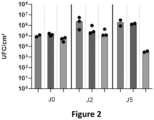
- the inventors monitored its ability to grow on the model, demonstrating its adaptation to this environment.
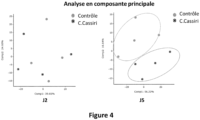
- transcriptomic analysis of the reconstructed skin aimed to observe the influence of the bacteria on the expression of cutaneous genes.
- a metabolomic analysis of these models was conducted to detect the metabolic modifications caused by the bacteria-skin co-culture.
- the C. cassaffir sp. nov. strain was cultured on Tryptone Soy Agar (TSA) + 1% Tween 80 (T80) at 32°C for 3 days. A few colonies were picked, suspended in peptone-salt and then placed in liquid preculture in Tryptone Soy Broth (TSB) + 1% T80 at 32°C with shaking (180rpm) for 24 hours. Then a liquid culture using the same growth medium was carried out by inoculating 5% of the preculture in fresh medium. Bacteria in the exponential growth phase were used to inoculate the 3D skin models.
- TSA Tryptone Soy Agar
- T80 Tryptone Soy Broth
- the Labskin reconstructed skin model (Innovenn, York, England) was cultured upon receipt in the supplier's culture medium for 24 hours at 37°C, 5% CO2. The following day, 10 2 CFU/cm 2 or 10 5 CFU/cm 2 of C. cassudi sp. nov. were inoculated onto the skin surface and coculture was continued for 2 or 5 days. Models without bacteria, on which only the growth medium of the bacteria was added to the surface, were used as a control.
- the bacterial suspension was cascade diluted by a factor of 10 up to the 10-8 dilution and 100 ⁇ l of each dilution were inoculated onto 1% TSA + T80 agar plates and incubated for 3 days at 32°C. The visible colonies counted for each dilution allowed quantification in each sample.
- RNA was reverse transcribed, amplified, and labeled with cyanine 3 (Cy3) using the Agilent Low Input Quick Amp One-Color Labeling Kit (Agilent Technologies, Les Ulis, France).
- the labeled cRNA was hybridized to Agilent SurePrint G3 Human Gene Expression 8x60K v2 arrays using the reagents provided in the Agilent hybridization kit. Slides were scanned using the Agilent SureScan microarray scanning system. One-color images of the arrays were extracted using Feature Extraction software (v12.0.0.7) for background subtraction and quality control.
- IPA Ingenuity Pathway Analysis
- a third aliquot was analyzed under basic conditions optimized for negative ions using a dedicated C18 column.
- Basic extracts were eluted using a methanol-water gradient, with 6.5 mM ammonium bicarbonate at pH 8.
- the fourth aliquot was analyzed by negative ionization after elution from a HILIC column (Waters UPLC BEH Amide 2.1x150 mm, 1.7 ⁇ m) using a water-acetonitrile gradient with 10 mM ammonium formate, pH 10.8.
- MS mass spectrometry
- Proprietary software was used to match ions to an internal library of analytical standards for metabolite identification and for metabolite quantification by calculating the area under the peak.
- the hardware and software foundations of these computing components are LAN backbone and database servers running Oracle 10.2.0.1 Enterprise Edition.
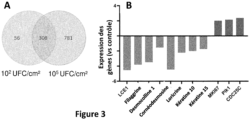
- Transcriptomic analysis using Ingenuity Pathway (IPA) and Genespring software revealed that bacteria at 10 5 CFU/cm 2 specifically upregulated the expression of 1089 genes compared to 364 for the 10 2 CFU/cm 2 inoculated condition. While 308 genes were upregulated by both bacterial concentrations, 781 were specifically upregulated by the high concentration while 56 were specific to the low concentration ( Figure 3A ). For example, of the 29 genes involved in stratum corneum formation and regulated by the high concentration, only 5 are also regulated by the low concentration. The inoculation condition of 10 5 CFU/cm 2 was therefore chosen for further transcriptomic analysis.
- the amounts of lysophopholipids, ceramides, cholesterol, free fatty acids, monoacylglycerols and diacylglycerols are significantly lower in skin models with C. cassudi sp. nov. compared to the control model at D5, because their production increased more strongly with time in the control model.
- the example of ceramide d16:1/24:1, d18:1/22:1 is illustrated in Figure 5 This indicates a slowdown in epidermal differentiation compared to control skin.
- the Figure 5 also illustrates a significantly higher amount of cysteine-glutathione disulfide in the presence of the bacteria, which declines more rapidly in control models over time and suggests an increase in oxidative stress in the presence of the bacteria.
- cell proliferation itself generates reactive oxygen species (ROS) via energy production mediated by oxidative phosphorylation.
- ROS reactive oxygen species
- adenosine was found to be the most highly increased molecule in skins inoculated with C. cassudi sp. nov. ( Figure 5 ). It has been shown that this promotes the proliferation of normal human epidermal keratinocytes and, through this pathway, promotes healing.
- the increase in oxidation observed in skin inoculated with C. cassudi sp. nov. could be explained by a higher level of proliferation compared to control skin, as confirmed by transcriptomic analysis.
- osmolytes were produced in significantly greater quantities over time in control skins, but among these, hypotaurine was specifically increased in skins inoculated with C. cassudi sp. nov.
- hypotaurine was specifically increased in skins inoculated with C. cassudi sp. nov.
- several other functions have been described for osmolytes, including improving tight junction integrity, stabilizing proteins, and protecting against UV-induced cell damage. This osmolyte production supports the use of the bacterium to alter osmotic balance, leading to improved water retention and skin hydration.
- Precultures were prepared in 10 mL of MH medium, supplemented with 0.2% Tween 80 from a cryobead of C. cassudi sp. nov. stored at -80°C. The preculture was incubated for 72 hours at 32°C, with shaking at 180 rpm.
- a culture of C. cassudi sp. nov. is prepared in a Falcon tube by inoculating 10 to 20 mL of MH broth with 400 ⁇ L of preculture. The culture is incubated at 32°C for 24 hours with shaking at 180 rpm.
- the culture is centrifuged for 30 min at 4°C with shaking at 4000 rpm.
- the pellet is taken up in 20 mL of sterile milliQ water.
- a second wash is carried out (centrifugation for 30 min at 4°C 4000 rpm).
- the pellet is taken up in 6 mL of sterile milliQ water.
- the bacterial suspension is stored on ice until use.
- the bacterial suspension is aliquoted for treatment (lysis and/or inactivation).
- Treated samples are stored at 4°C until bacterial inactivation is verified.
- Heat treatment A short pasteurization treatment was implemented for bacterial inactivation: A sample of bacterial suspension is placed in a water bath at 60°C for 20 min or 70°C for 10 min. The sample is cooled in ice for 5 min.
- Freezing and thawing cycles were also tested: A sample of bacterial suspension was subjected to 5 cycles of freezing at -70°C and thawing at room temperature.
- Ultrasound treatment A sample of bacterial suspension is placed in the ultrasonic tank and subjected to ultrasonic treatment for 80 min.
- UVC treatment also possible.
- Ball mill treatment A sample of bacterial suspension is placed in a 2mL tube containing 0.1mm diameter glass beads.
- the grinding step consists of 21 cycles of 30sec of mechanical grinding at 5000rpm.
- Treatment by high pressure homogenizer A sample of bacterial suspension is placed in the device to be subjected to a pressure between 1500 and 2000 Bar, preferably 2000 Bar.
- Osmotic shock treatment A sample of bacterial suspension is transferred into a hypotonic medium. To restore osmotic balance, water enters the bacteria, which burst by rupturing their plasma membrane.
- mice Microscopic examination : treated and untreated samples are observed under a microscope in phase contrast (GTx1000) and after Gram staining (GTx1000) to visualize the appearance of the suspension (integral bacteria or fragmented bacteria).
- GTx1000 phase contrast
- GTx1000 Gram staining
- Scanning electron microscopy methods can also be used to visualize the impact of treatments on bacteria.
- Macroscopic examination a COS agar plate is inoculated with the treated and untreated samples and incubated at 32°C for up to 96 hours. The absence of culture allows the inactivation of the bacteria to be reported.
- the measurement of extracellular DNA concentration using the NanoDrop is carried out using a treated sample and an untreated sample: the treated sample is centrifuged at 16,000g for 10 min for analysis using the NanoDrop.
- the difference in extracellular DNA concentration between the two samples makes it possible to assess the integrity of the bacteria or their total or partial lysis after treatment.
- Example 5 Examples of cosmetic composition such as face cream comprising the bacterium Corynebacterium cassudi sp. nov. according to the invention
- O/W emulsifiers 6.00% Fatty body 15.00% Hydrophilic gelling agents 3.00% Polyols 3.50% Additional anti-aging active ingredients 5.50% Anti-seborrheic active ingredients 3.00% Sodium hydroxide 1.00% Essential oil 0.03% Plant extract 0.50% Perfumes Qs Conservatives Qs Antioxidants Qs Water Qsp Encapsulated bacteria 10 -3 %
- Example 6 Examples of cosmetic composition such as facial oil comprising the bacterium Corynebacterium cassudi sp. nov. according to the invention
Landscapes
- Health & Medical Sciences (AREA)
- Life Sciences & Earth Sciences (AREA)
- Chemical & Material Sciences (AREA)
- Organic Chemistry (AREA)
- Engineering & Computer Science (AREA)
- Zoology (AREA)
- General Health & Medical Sciences (AREA)
- Genetics & Genomics (AREA)
- Wood Science & Technology (AREA)
- Biotechnology (AREA)
- Bioinformatics & Cheminformatics (AREA)
- Biochemistry (AREA)
- General Engineering & Computer Science (AREA)
- Microbiology (AREA)
- Molecular Biology (AREA)
- Proteomics, Peptides & Aminoacids (AREA)
- Animal Behavior & Ethology (AREA)
- Veterinary Medicine (AREA)
- Public Health (AREA)
- Biophysics (AREA)
- Biomedical Technology (AREA)
- Medicinal Chemistry (AREA)
- Tropical Medicine & Parasitology (AREA)
- Dermatology (AREA)
- Physics & Mathematics (AREA)
- Analytical Chemistry (AREA)
- Immunology (AREA)
- Epidemiology (AREA)
- Virology (AREA)
- Mycology (AREA)
- General Chemical & Material Sciences (AREA)
- Toxicology (AREA)
- Pharmacology & Pharmacy (AREA)
- Gastroenterology & Hepatology (AREA)
- Plant Pathology (AREA)
- Chemical Kinetics & Catalysis (AREA)
- Gerontology & Geriatric Medicine (AREA)
- Birds (AREA)
- Cosmetics (AREA)
Priority Applications (2)
| Application Number | Priority Date | Filing Date | Title |
|---|---|---|---|
| EP23307177.8A EP4570815A1 (de) | 2023-12-11 | 2023-12-11 | Bakterium der gattung corynebacterium und seine kosmetische verwendungen |
| PCT/EP2024/085546 WO2025125251A1 (fr) | 2023-12-11 | 2024-12-10 | Bactérie du genre corynebacterium, et ses utilisations cosmétiques |
Applications Claiming Priority (1)
| Application Number | Priority Date | Filing Date | Title |
|---|---|---|---|
| EP23307177.8A EP4570815A1 (de) | 2023-12-11 | 2023-12-11 | Bakterium der gattung corynebacterium und seine kosmetische verwendungen |
Publications (1)
| Publication Number | Publication Date |
|---|---|
| EP4570815A1 true EP4570815A1 (de) | 2025-06-18 |
Family
ID=89430372
Family Applications (1)
| Application Number | Title | Priority Date | Filing Date |
|---|---|---|---|
| EP23307177.8A Pending EP4570815A1 (de) | 2023-12-11 | 2023-12-11 | Bakterium der gattung corynebacterium und seine kosmetische verwendungen |
Country Status (2)
| Country | Link |
|---|---|
| EP (1) | EP4570815A1 (de) |
| WO (1) | WO2025125251A1 (de) |
Citations (1)
| Publication number | Priority date | Publication date | Assignee | Title |
|---|---|---|---|---|
| FR2861743A1 (fr) * | 2003-11-04 | 2005-05-06 | Univ Aix Marseille Ii | Identification moleculaire des bacteries du genre corynebacterium |
-
2023
- 2023-12-11 EP EP23307177.8A patent/EP4570815A1/de active Pending
-
2024
- 2024-12-10 WO PCT/EP2024/085546 patent/WO2025125251A1/fr active Pending
Patent Citations (1)
| Publication number | Priority date | Publication date | Assignee | Title |
|---|---|---|---|---|
| FR2861743A1 (fr) * | 2003-11-04 | 2005-05-06 | Univ Aix Marseille Ii | Identification moleculaire des bacteries du genre corynebacterium |
Non-Patent Citations (14)
| Title |
|---|
| "Atlas du vieillissement cutanée", vol. 1, 2007, article "Ridules sous oculaires selon l'Atlas BAZIN", pages: 40 |
| "Rides de la patte d'oie selon l'Atlas BAZIN", ATLAS DU VIEILLISSEMENT CUTANÉE, vol. 1 |
| "Taches pigmentaires selon l'Atlas BAZIN", SKIN AGING ATLAS, vol. 2, 2010, pages 93 |
| AKIRA OTSUKA: "Fermented Cosmetics and Metabolites of Skin Microbiota-A New Approach to Skin Health", FERMENTATION, vol. 8, no. 12, 2 December 2022 (2022-12-02), pages 703, XP093157377, ISSN: 2311-5637, DOI: 10.3390/fermentation8120703 * |
| ALTSCHUL ET AL., FEBS J, vol. 272, no. 20, 2005, pages 5101 - 9 |
| ALTSCHUL ET AL., NUCLEIC ACIDS RES., vol. 25, no. 17, 1997, pages 3389 - 402 |
| GORIS ET AL., INT. J. OF SYSTEMATIC AND EVOLUTIONARY MICROBIOLOGY, vol. 57, 2007, pages 81 - 91 |
| JAIN ET AL., NAT COMMUN., vol. 9, 2018, pages 5114 |
| KHAMIS ET AL., J. CLIN. MICROBIOLOGY, 2005, pages 1934 - 1936 |
| LEE ET AL., INT J SYST EVOL MICROBIOL., vol. 66, no. 2, 2016, pages 1100 - 1103 |
| NEEDLEMANWUNSCH, J MOL BIOL, vol. 48, no. 3, 1970, pages 443 - 53 |
| RICHTER ET AL., BIOINFORMATICS, vol. 32, no. 6, 2016, pages 929 - 931 |
| SMITHWATERMAN, J MOL BIOL, vol. 147, no. 1, 1981, pages 195 - 7 |
| WILLIAMSONKLIGMAN: "Williamson P, Kligman AM. A new method for the quantitative investigation of cutaneous bacteria.", J INVEST DERMATOL., vol. 45, no. 6, December 1965 (1965-12-01), pages 498 - 503 |
Also Published As
| Publication number | Publication date |
|---|---|
| WO2025125251A1 (fr) | 2025-06-19 |
Similar Documents
| Publication | Publication Date | Title |
|---|---|---|
| EP3512606B1 (de) | Kosmetische und/oder nutrazeutische oder dermatologische verwendung eines hefeextrakts | |
| EP2662072B1 (de) | Aus Cichorium intybus erhaltener Wirkstoff, der eine Vitamin-D-ähnliche Wirkung auf die Barrierefunktion der Haut ausüben soll | |
| EP3370832B1 (de) | Kosmetische oder dermatologische zubereitung enthaltend einen extrakt aus jania rubens und ein ätherisches immortellenöl und verwendungen davon | |
| EP3910053A1 (de) | Zusammensetzung zur stärkung der hautbarriere, zur befeuchtung der haut oder gegen hautalterung | |
| US20220047495A1 (en) | Rosewood extract | |
| EP2618808A1 (de) | Kosmetische verwendung von dermicidin und analoga oder fragmente davon | |
| EP3917492A1 (de) | Neuartige kosmetische verwendungen eines rosenextrakts | |
| EP3897569A1 (de) | Zusammensetzung mit einem lactobacillus-rhamnosus-extrakt | |
| EP2763652B1 (de) | Verwendung von aus prunus persica gewonnenen glucanen als kosmetische anti-aging-mittel | |
| KR102806712B1 (ko) | 항균, 피부 보습, 피부 장벽 강화, 항아토피, 항염증 및 항산화 활성을 갖는 신규한 락티카제이바실러스 람노서스 균주 및 이의 용도 | |
| CN114917152A (zh) | 包含酵母水解产物的化妆品组合物 | |
| WO2025125251A1 (fr) | Bactérie du genre corynebacterium, et ses utilisations cosmétiques | |
| FR3071742A1 (fr) | Procede d'utilisation d'un inhibiteur de let-7b en cosmetique et/ou en nutraceutique | |
| WO2023156745A1 (fr) | Composition comprenant un extrait de myrte et un extrait de tripterygium wilfordii pour lutter contre l'acné des zones non lésionnelles de la peau acnéique | |
| EP3797835B1 (de) | Kosmetischer wirkstoff, der aus der biokonversion seines ursprungssubstrats durch lactobacillus arizonensis erhalten wird, herstellungsverfahren, diesen enthaltende zusammensetzung und seine verwendungen | |
| FR3143369A1 (fr) | Composition cosmétique comprenant un extrait de levure Metschnikowia rubicola | |
| CN118695846A (zh) | 包括自发酵步骤的获得植物提取物的方法、包含此类提取物的组合物及其化妆品用途 | |
| FR3119770A1 (fr) | Extrait de Pichia naganishii et ses utilisations cosmétiques | |
| WO2020127577A1 (fr) | Effet pro-vitaminique d'un extrait d'un microorganisme probiotique | |
| CN113736682A (zh) | 用于增强皮肤屏障、保湿皮肤或抗老化的组合物 | |
| WO2025242925A1 (fr) | Nouvel extrait riche en gaba et son utilisation en cosmetique et/ou en dermatologie | |
| KR102544440B1 (ko) | 피부 상재균으로부터 유래된 엔테로박터 에어로게네스 j2k-739 균주 및 피부 상재균 유래 엔테로박터속을 자극원으로 처리하는 신규한 항주름평가 방법 | |
| CN119679655B (zh) | 含棕榈酰三肽-5的组合物、护肤品和用途 | |
| WO2020065213A1 (fr) | Utilisation d'un extrait d'agave pour renforcer la fonction barrière de la peau, du cuir chevelu et/ou des muqueuses et moduler le microbiote cutané | |
| EP4722390A1 (de) | Bakterium der gattung brevundimonas und seine kosmetische verwendungen |
Legal Events
| Date | Code | Title | Description |
|---|---|---|---|
| PUAI | Public reference made under article 153(3) epc to a published international application that has entered the european phase |
Free format text: ORIGINAL CODE: 0009012 |
|
| STAA | Information on the status of an ep patent application or granted ep patent |
Free format text: STATUS: THE APPLICATION HAS BEEN PUBLISHED |
|
| AK | Designated contracting states |
Kind code of ref document: A1 Designated state(s): AL AT BE BG CH CY CZ DE DK EE ES FI FR GB GR HR HU IE IS IT LI LT LU LV MC ME MK MT NL NO PL PT RO RS SE SI SK SM TR |
|
| STAA | Information on the status of an ep patent application or granted ep patent |
Free format text: STATUS: REQUEST FOR EXAMINATION WAS MADE |
|
| 17P | Request for examination filed |
Effective date: 20251217 |