EP4570792A1 - Verbindung auf basis eines isoindolinsubstituierten glutarimid-backbone und verwendung davon - Google Patents
Verbindung auf basis eines isoindolinsubstituierten glutarimid-backbone und verwendung davon Download PDFInfo
- Publication number
- EP4570792A1 EP4570792A1 EP23851910.2A EP23851910A EP4570792A1 EP 4570792 A1 EP4570792 A1 EP 4570792A1 EP 23851910 A EP23851910 A EP 23851910A EP 4570792 A1 EP4570792 A1 EP 4570792A1
- Authority
- EP
- European Patent Office
- Prior art keywords
- methyl
- dione
- biphenyl
- piperidine
- oxoisoindolin
- Prior art date
- Legal status (The legal status is an assumption and is not a legal conclusion. Google has not performed a legal analysis and makes no representation as to the accuracy of the status listed.)
- Pending
Links
Images
Classifications
-
- C—CHEMISTRY; METALLURGY
- C07—ORGANIC CHEMISTRY
- C07D—HETEROCYCLIC COMPOUNDS
- C07D471/00—Heterocyclic compounds containing nitrogen atoms as the only ring hetero atoms in the condensed system, at least one ring being a six-membered ring with one nitrogen atom, not provided for by groups C07D451/00 - C07D463/00
- C07D471/02—Heterocyclic compounds containing nitrogen atoms as the only ring hetero atoms in the condensed system, at least one ring being a six-membered ring with one nitrogen atom, not provided for by groups C07D451/00 - C07D463/00 in which the condensed system contains two hetero rings
- C07D471/04—Ortho-condensed systems
-
- C—CHEMISTRY; METALLURGY
- C07—ORGANIC CHEMISTRY
- C07D—HETEROCYCLIC COMPOUNDS
- C07D401/00—Heterocyclic compounds containing two or more hetero rings, having nitrogen atoms as the only ring hetero atoms, at least one ring being a six-membered ring with only one nitrogen atom
- C07D401/02—Heterocyclic compounds containing two or more hetero rings, having nitrogen atoms as the only ring hetero atoms, at least one ring being a six-membered ring with only one nitrogen atom containing two hetero rings
- C07D401/04—Heterocyclic compounds containing two or more hetero rings, having nitrogen atoms as the only ring hetero atoms, at least one ring being a six-membered ring with only one nitrogen atom containing two hetero rings directly linked by a ring-member-to-ring-member bond
-
- A—HUMAN NECESSITIES
- A61—MEDICAL OR VETERINARY SCIENCE; HYGIENE
- A61K—PREPARATIONS FOR MEDICAL, DENTAL OR TOILETRY PURPOSES
- A61K31/00—Medicinal preparations containing organic active ingredients
- A61K31/33—Heterocyclic compounds
- A61K31/395—Heterocyclic compounds having nitrogen as a ring hetero atom, e.g. guanethidine or rifamycins
- A61K31/435—Heterocyclic compounds having nitrogen as a ring hetero atom, e.g. guanethidine or rifamycins having six-membered rings with one nitrogen as the only ring hetero atom
- A61K31/44—Non condensed pyridines; Hydrogenated derivatives thereof
- A61K31/445—Non condensed piperidines, e.g. piperocaine
- A61K31/4523—Non condensed piperidines, e.g. piperocaine containing further heterocyclic ring systems
- A61K31/454—Non condensed piperidines, e.g. piperocaine containing further heterocyclic ring systems containing a five-membered ring with nitrogen as a ring hetero atom, e.g. pimozide, domperidone
-
- A—HUMAN NECESSITIES
- A61—MEDICAL OR VETERINARY SCIENCE; HYGIENE
- A61K—PREPARATIONS FOR MEDICAL, DENTAL OR TOILETRY PURPOSES
- A61K31/00—Medicinal preparations containing organic active ingredients
- A61K31/33—Heterocyclic compounds
- A61K31/395—Heterocyclic compounds having nitrogen as a ring hetero atom, e.g. guanethidine or rifamycins
- A61K31/435—Heterocyclic compounds having nitrogen as a ring hetero atom, e.g. guanethidine or rifamycins having six-membered rings with one nitrogen as the only ring hetero atom
- A61K31/44—Non condensed pyridines; Hydrogenated derivatives thereof
- A61K31/445—Non condensed piperidines, e.g. piperocaine
- A61K31/4523—Non condensed piperidines, e.g. piperocaine containing further heterocyclic ring systems
- A61K31/4545—Non condensed piperidines, e.g. piperocaine containing further heterocyclic ring systems containing a six-membered ring with nitrogen as a ring hetero atom, e.g. pipamperone, anabasine
-
- A—HUMAN NECESSITIES
- A61—MEDICAL OR VETERINARY SCIENCE; HYGIENE
- A61K—PREPARATIONS FOR MEDICAL, DENTAL OR TOILETRY PURPOSES
- A61K31/00—Medicinal preparations containing organic active ingredients
- A61K31/33—Heterocyclic compounds
- A61K31/395—Heterocyclic compounds having nitrogen as a ring hetero atom, e.g. guanethidine or rifamycins
- A61K31/495—Heterocyclic compounds having nitrogen as a ring hetero atom, e.g. guanethidine or rifamycins having six-membered rings with two or more nitrogen atoms as the only ring heteroatoms, e.g. piperazine or tetrazines
- A61K31/496—Non-condensed piperazines containing further heterocyclic rings, e.g. rifampin, thiothixene or sparfloxacin
-
- A—HUMAN NECESSITIES
- A61—MEDICAL OR VETERINARY SCIENCE; HYGIENE
- A61K—PREPARATIONS FOR MEDICAL, DENTAL OR TOILETRY PURPOSES
- A61K45/00—Medicinal preparations containing active ingredients not provided for in groups A61K31/00 - A61K41/00
- A61K45/06—Mixtures of active ingredients without chemical characterisation, e.g. antiphlogistics and cardiaca
-
- A—HUMAN NECESSITIES
- A61—MEDICAL OR VETERINARY SCIENCE; HYGIENE
- A61K—PREPARATIONS FOR MEDICAL, DENTAL OR TOILETRY PURPOSES
- A61K9/00—Medicinal preparations characterised by special physical form
- A61K9/0012—Galenical forms characterised by the site of application
- A61K9/0053—Mouth and digestive tract, i.e. intraoral and peroral administration
-
- A—HUMAN NECESSITIES
- A61—MEDICAL OR VETERINARY SCIENCE; HYGIENE
- A61P—SPECIFIC THERAPEUTIC ACTIVITY OF CHEMICAL COMPOUNDS OR MEDICINAL PREPARATIONS
- A61P35/00—Antineoplastic agents
-
- C—CHEMISTRY; METALLURGY
- C07—ORGANIC CHEMISTRY
- C07D—HETEROCYCLIC COMPOUNDS
- C07D401/00—Heterocyclic compounds containing two or more hetero rings, having nitrogen atoms as the only ring hetero atoms, at least one ring being a six-membered ring with only one nitrogen atom
- C07D401/14—Heterocyclic compounds containing two or more hetero rings, having nitrogen atoms as the only ring hetero atoms, at least one ring being a six-membered ring with only one nitrogen atom containing three or more hetero rings
-
- C—CHEMISTRY; METALLURGY
- C07—ORGANIC CHEMISTRY
- C07D—HETEROCYCLIC COMPOUNDS
- C07D405/00—Heterocyclic compounds containing both one or more hetero rings having oxygen atoms as the only ring hetero atoms, and one or more rings having nitrogen as the only ring hetero atom
- C07D405/14—Heterocyclic compounds containing both one or more hetero rings having oxygen atoms as the only ring hetero atoms, and one or more rings having nitrogen as the only ring hetero atom containing three or more hetero rings
-
- C—CHEMISTRY; METALLURGY
- C07—ORGANIC CHEMISTRY
- C07D—HETEROCYCLIC COMPOUNDS
- C07D407/00—Heterocyclic compounds containing two or more hetero rings, at least one ring having oxygen atoms as the only ring hetero atoms, not provided for by group C07D405/00
- C07D407/14—Heterocyclic compounds containing two or more hetero rings, at least one ring having oxygen atoms as the only ring hetero atoms, not provided for by group C07D405/00 containing three or more hetero rings
-
- C—CHEMISTRY; METALLURGY
- C07—ORGANIC CHEMISTRY
- C07D—HETEROCYCLIC COMPOUNDS
- C07D409/00—Heterocyclic compounds containing two or more hetero rings, at least one ring having sulfur atoms as the only ring hetero atoms
- C07D409/14—Heterocyclic compounds containing two or more hetero rings, at least one ring having sulfur atoms as the only ring hetero atoms containing three or more hetero rings
-
- C—CHEMISTRY; METALLURGY
- C07—ORGANIC CHEMISTRY
- C07D—HETEROCYCLIC COMPOUNDS
- C07D413/00—Heterocyclic compounds containing two or more hetero rings, at least one ring having nitrogen and oxygen atoms as the only ring hetero atoms
- C07D413/14—Heterocyclic compounds containing two or more hetero rings, at least one ring having nitrogen and oxygen atoms as the only ring hetero atoms containing three or more hetero rings
-
- C—CHEMISTRY; METALLURGY
- C07—ORGANIC CHEMISTRY
- C07D—HETEROCYCLIC COMPOUNDS
- C07D417/00—Heterocyclic compounds containing two or more hetero rings, at least one ring having nitrogen and sulfur atoms as the only ring hetero atoms, not provided for by group C07D415/00
- C07D417/14—Heterocyclic compounds containing two or more hetero rings, at least one ring having nitrogen and sulfur atoms as the only ring hetero atoms, not provided for by group C07D415/00 containing three or more hetero rings
-
- C—CHEMISTRY; METALLURGY
- C07—ORGANIC CHEMISTRY
- C07D—HETEROCYCLIC COMPOUNDS
- C07D471/00—Heterocyclic compounds containing nitrogen atoms as the only ring hetero atoms in the condensed system, at least one ring being a six-membered ring with one nitrogen atom, not provided for by groups C07D451/00 - C07D463/00
- C07D471/02—Heterocyclic compounds containing nitrogen atoms as the only ring hetero atoms in the condensed system, at least one ring being a six-membered ring with one nitrogen atom, not provided for by groups C07D451/00 - C07D463/00 in which the condensed system contains two hetero rings
- C07D471/08—Bridged systems
-
- C—CHEMISTRY; METALLURGY
- C07—ORGANIC CHEMISTRY
- C07D—HETEROCYCLIC COMPOUNDS
- C07D471/00—Heterocyclic compounds containing nitrogen atoms as the only ring hetero atoms in the condensed system, at least one ring being a six-membered ring with one nitrogen atom, not provided for by groups C07D451/00 - C07D463/00
- C07D471/02—Heterocyclic compounds containing nitrogen atoms as the only ring hetero atoms in the condensed system, at least one ring being a six-membered ring with one nitrogen atom, not provided for by groups C07D451/00 - C07D463/00 in which the condensed system contains two hetero rings
- C07D471/10—Spiro-condensed systems
-
- C—CHEMISTRY; METALLURGY
- C07—ORGANIC CHEMISTRY
- C07D—HETEROCYCLIC COMPOUNDS
- C07D487/00—Heterocyclic compounds containing nitrogen atoms as the only ring hetero atoms in the condensed system, not provided for by groups C07D451/00 - C07D477/00
- C07D487/02—Heterocyclic compounds containing nitrogen atoms as the only ring hetero atoms in the condensed system, not provided for by groups C07D451/00 - C07D477/00 in which the condensed system contains two hetero rings
- C07D487/04—Ortho-condensed systems
-
- C—CHEMISTRY; METALLURGY
- C07—ORGANIC CHEMISTRY
- C07D—HETEROCYCLIC COMPOUNDS
- C07D487/00—Heterocyclic compounds containing nitrogen atoms as the only ring hetero atoms in the condensed system, not provided for by groups C07D451/00 - C07D477/00
- C07D487/02—Heterocyclic compounds containing nitrogen atoms as the only ring hetero atoms in the condensed system, not provided for by groups C07D451/00 - C07D477/00 in which the condensed system contains two hetero rings
- C07D487/08—Bridged systems
-
- C—CHEMISTRY; METALLURGY
- C07—ORGANIC CHEMISTRY
- C07D—HETEROCYCLIC COMPOUNDS
- C07D487/00—Heterocyclic compounds containing nitrogen atoms as the only ring hetero atoms in the condensed system, not provided for by groups C07D451/00 - C07D477/00
- C07D487/02—Heterocyclic compounds containing nitrogen atoms as the only ring hetero atoms in the condensed system, not provided for by groups C07D451/00 - C07D477/00 in which the condensed system contains two hetero rings
- C07D487/10—Spiro-condensed systems
Definitions
- the present disclosure relates to a compound of Formula (I) or salts, enantiomers, diastereoisomer, isotopically enriched analogs, solvates, prodrugs, or polymorphs thereof and uses thereof, especially their use in the prevention and/or treatment of diseases or disorders associated with cereblon protein (CRBN).
- CRBN cereblon protein
- Thalidomide, lenalidomide and other phthalimide immunomodulatory drugs have shown significant efficacy in the treatment of multiple myeloma and autoimmune diseases
- IiDs E3 ubiquitin ligase cereblon
- CRBN E3 ubiquitin ligase cereblon
- molecular glue protein degraders Compared with traditional small molecule inhibitors, molecular glue protein degraders have natural mechanism advantages: the former works by occupying the functional domain of the target protein for a long time to inhibit its function, while the protein degraders directly degrade and eliminate the entire target protein, often having a much greater efficacy than traditional small molecule inhibitors.
- the protein degraders can target "non-drugable" targets and have low requirements for binding force, catalytic capacity and low concentration, which can overcome the clinical drug resistance problem of traditional small molecules.
- molecular glue degraders usually have small molecular weights and desirable druggability, so the research and development of such drugs have received great attention.
- the present invention develops more novel, highly efficient, low-toxic, stable, and cost-effective molecular glue degraders based on the fused phenyl-glutarimide skeleton through rational design to meet the demands of clinical applications.
- the objectives of the present disclosure are to provide novel molecular glue protein degraders, their applications and usage methods.
- the present disclosure provides a compound of Formula (I):
- the present disclosure provides a pharmaceutical composition
- a pharmaceutical composition comprising the compound of Formula (I) or pharmaceutically acceptable salts, stereoisomers (including enantiomers, diastereoisomers), solvates, isotopically enriched analogs, prodrugs, or polymorphs thereof, and at least one pharmaceutically acceptable carrier.
- the present disclosure further provides a medicine kit or reagent kit comprising: the compound of Formula (I) or a pharmaceutically acceptable salt thereof, or the pharmaceutical composition comprising the same.
- the present disclosure provides the compound of Formula (I) or pharmaceutically acceptable salts, enantiomers, diastereoisomers, solvates, prodrugs, or polymorphs thereof, for use as a medicament.
- the present disclosure provides the compound of Formula (I) or pharmaceutically acceptable salts, stereoisomers (including enantiomers, diastereoisomers), solvates, isotopically enriched analogs, prodrugs, or polymorphs thereof, or the pharmaceutical composition of the present disclosure for use in the prevention or treatment of diseases or disorders associated with cereblon protein.
- the present disclosure provides use of the compound of Formula (I) or pharmaceutically acceptable salts, stereoisomers (including enantiomers, diastereoisomers), solvates, isotopically enriched analogs, prodrugs, or polymorphs thereof, or the pharmaceutical composition of the present disclosure for the manufacture of a medicament for the prevention or treatment of diseases or disorders associated with cereblon protein.
- the present disclosure provides a method for treating or preventing diseases or disorders associated with cereblon protein in a subject, comprising administering to the subject a therapeutically effective amount of the compound of Formula (I) or pharmaceutically acceptable salts, stereoisomers (including enantiomers, diastereoisomers), solvates, isotopically enriched analogs, prodrugs, or polymorphs thereof, or the pharmaceutical composition.
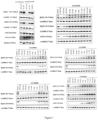
- Figure 1 illustrates the study on the degradation of IKZF1/3 proteins and GSPT1 protein by the compound of the present invention in Human peripheral blood mononuclear cells (hPBMC).
- hPBMC Human peripheral blood mononuclear cells
- the present disclosure provides a compound of Formula (I) or salts (including pharmaceutically acceptable salts), stereoisomers (including enantiomers, diastereoisomers), solvates, isotopically enriched analogs, prodrugs, or polymorphs thereof: wherein R b1 , R b2 , R b3 , R b4 , R b5 , (R a ) n , X, L 1 , X 1 , X 2 and R a1 are as defined in the compounds of Formula (I) above and its various embodiments herein.
- the compounds of Formula (I) or salts (including pharmaceutically acceptable salts), stereoisomers (including enantiomers), solvates, isotopically enriched analogs, prodrugs, or polymorphs thereof of the present disclosure exhibit binding affinity to CRBN, thereby facilitating the recruitment of substrate proteins.
- the compounds of Formula (I) or salts (including pharmaceutically acceptable salts), stereoisomers (including enantiomers), solvates, isotopically enriched analogs, prodrugs, or polymorphs thereof of the present disclosure are also capable of degrading substrate proteins (e.g., IKZF1/2/3/4 proteins, WEE1 protein, CK1 ⁇ protein, GSPT1 protein, ZFP91 protein, etc.).
- the compounds of Formula (I) or salts (including pharmaceutically acceptable salts), stereoisomers (including enantiomers), solvates, isotopically enriched analogs, prodrugs, or polymorphs thereof of the present disclosure demonstrate anti-tumor activity or possess excellent pharmacokinetic properties, making them suitable for use as a therapeutic agent for cancer patients.
- R b1 , R b2 , R b3 , R b4 and R b5 are the same or different and each independently represent hydrogen, deuterium, or C 1-3 alkyl (e.g., methyl, ethyl, or propyl).
- R b1 , R b2 , R b3 , R b4 and R b5 are the same or different and each independently represent H.
- R b1 , R b2 , R b3 , R b4 and R b5 are the same or different and each independently represent D.
- R p1 , R b2 , R b3 and R b4 each independently represent H
- R b5 represents H, D or C 1-3 alkyl (e.g., methyl, ethyl, or propyl).
- X represents C(O).
- X represents CH 2 .
- (R a ) n indicates that benzene ring in Formula (I) is optionally substituted with n R a , where R a represents deuterium, halogen (e.g., fluorine, chlorine, bromine, or iodine), hydroxy, mercapto, nitro, amino, cyano, optionally deuterated C 1-6 alkyl (e.g., optionally deuterated C 1-4 alkyl or optionally deuterated C 1-3 alkyl, such as methyl, CD 3 , ethyl, propyl, isopropyl, butyl, sec-butyl or tert-butyl), optionally deuterated C 1-6 alkoxy (e.g., optionally deuterated C 1-4 alkoxy or optionally deuterated C 1-3 alkoxy, such as methoxy, ethoxy, or propoxy), or halogenated C 1-6 alkyl (e.g., halogenated fluorine, chlorine, bromine
- n represents an integer of 0. In some sub-embodiments of the present disclosure, n represents an integer of 1. In some sub-embodiments of the present disclosure, n represents an integer of 2. In some sub-embodiments of the present disclosure, n represents an integer of 3.
- the number of substituents is not limited in principle, or is automatically limited by the size of the building units.
- (b4) X 1 represents the following divalent groups: wherein symbol # indicates the point of attachment to L 1 .
- L 1 represents a bond
- X 1 represents optionally substituted nitrogen-containing bridged heterocyclylene (e.g., optionally substituted 5- to 20-membered nitrogen-containing bridged heterocyclylene or optionally substituted 5- to 15-membered nitrogen-containing bridged heterocyclylene).
- (c1) L 1 represents a bond
- X 1 represents optionally substituted 5- to 20-membered nitrogen-containing bridged heterocyclylene, wherein the 5-to 20-membered nitrogen-containing bridged heterocyclylene is optionally substituted with one or more (e.g., 1-15, 1-10, 1-9, 1-8, 1-7, 1-6, 1-5, 1-4, 1-3 or 1-2, or 1) substituents selected from the group consisting of D, optionally deuterated C 1-4 alkyl (e.g., optionally deuterated C 1-3 alkyl, such as methyl, CD 3 , ethyl, propyl, isopropyl, butyl, sec-butyl or tert-butyl), hydroxy, amino, mercapto, halogen (e.g., fluorine, chlorine, bromine, or iodine), cyano, oxo, C 1-4 alkoxy (e.g., C 1-3 al
- (c2) L 1 represents a bond
- X 1 represents the following divalent groups: 3-azabicyclo[3.1.0]hexylene, 3-azabicyclo[3.1.1]heptanylene, 2-azabicyclo[2.2.1]heptanylene, 6-azabicyclo[3.1.1]heptanylene, 2-azabicyclo[2.2.2]octylene, 2,5-diazabicyclo[2.2.1]heptanylene, 3,6-diazabicyclo[3.1.1]heptanylene, 3-azabicyclo[3.2.1]octylene, 3,8-diazabicyclo[3.2.1]octylene, or 2,5-diazabicyclo[2.2.2]octylene, which are optionally substituted with one or more (e.g., 1-10, 1-9, 1-8, 1-7, 1-6, 1-5, 1-4, 1-3 or 1-2, or 1) substituents selected from the group consisting of D, optionally deuterated C
- L 1 represents a bond
- X 1 represents the following divalent groups: wherein symbol # indicates the point of attachment to L 1 .
- X 2 represents a bond, and when X 2 represents a bond, L 1 is not a bond.
- X 2 represents the following groups: C(O), optionally substituted C 1-5 alkylene (e.g., optionally substituted C 1-4 alkylene or optionally substituted C 1-3 alkylene), optionally substituted C 3-8 cycloalkylene, optionally substituted C 1-2 alkylene-N(R c2 )-, -N(R c2 )-optionally substituted C 1-2 alkylene, or N(R c3 ), where R c2 and R c3 each independently represent H or C 1-3 alkyl (e.g., methyl, ethyl, or propyl),
- X 2 represents C(O), -CH 2 -, -(CH 2 ) 2 -, -(CH 2 ) 3 -, 1,1-cyclopropylene, NH, -CH 2 -NH-, -(CH 2 ) 2 -NH-, -NH-(CH 2 ) 2 -, or -NH-CH 2 -.
- R a1 represents the following structure:
- R a1 represents the following structure:
- ring A represents the following divalent groups: cyclopropylene, cyclobutylene, cyclopentylene, cyclopentenylene, cyclohexylene, cyclohexenylene, cycloheptylene, cyclooctylene, decalinylene, octahydropentalenylene, octahydro-1H-indenylene, spiro[3.3]heptylene, spiro[2.5]octylene, spiro[3.5]nonylene, spiro[4.4]nonylene, spiro[4.5]decylene, spiro[5.5]undecylene, p-menthanylene, m-menthanylene, quinuclidinylene, adamantanylene, noradamantanylene, norbomylene, bicyclo[2.2.1]heptylene, 2-oxobicyclo[2.2.1]h
- ring B represents the following groups: cyclopropyl, cyclobutyl, cyclopentyl, cyclopentenyl, cyclohexyl, cyclohexenyl, cycloheptyl, cyclooctyl, decalinyl, octahydropentalenyl, octahydro-1H-indenyl, spiro[3.3]heptanyl, spiro[2.5]octyl, spiro[3.5]nonyl, spiro[4.4]nonyl, spiro[4.5]decyl, spiro[5.5]undecyl, p -menthanyl, m-menthanyl, quinuclidinyl, adamantanyl, noradamantanyl, bornyl, bicyclo[2.2.1]heptanyl, 2-oxobicyclo[2.2.1]heptyl
- ring A represents the following divalent groups: wherein symbol ** indicates the point of attachment to ring B.
- ring B represents the following groups:
- R a1 represents the following structures:
- -X 1 -X 2 -R a1 in the compounds of Formula (I) represents the following structures:
- the compound of Formula (I) is also of Formula (II) or Formula (III): wherein R b1 , R b2 , R b3 , R b4 , R b5 , (R a ) n , X, L 1 , X 1 , X 2 and R a1 are as defined in the compounds of Formula (I) above and its various embodiments herein.
- the compound of Formula (I) is also of Formula (Ia), Formula (Ib), Formula (Ic), Formula (Id), Formula (IIa), Formula (IIb), Formula (IIc), Formula (IId), Formula (IIIa), Formula (IIIb), Formula (IIIc), or Formula (IIId): wherein R b1 , R b2 , R b3 , R b4 , R b5 , (R a ) n , X, L 1 , X 1 , X 2 and R a1 are as defined in the compounds of Formula (I) above and its various embodiments herein.
- the compounds of the present invention and their salts are provided.
- Table 1 the compounds of the present invention and their salts (especially pharmaceutically acceptable salts, such as hydrochloride, etc.), enantiomers, diastereomers, solvates, or polymorphs thereof in Table 1 below are provided.
- Table 1 The compounds of the present invention Compo und No.
- the compounds of the present disclosure have the structures of any one of Formula (I), Formula (II), Formula (III), Formula (Ia), Formula (Ib), Formula (Ic), Formula (Id), Formula (IIa), Formula (IIb), Formula (IIc), Formula (IId), Formula (IIIa), Formula (IIIb), Formula (IIIc), or Formula (IIId).
- references to the compounds of the present disclosure also include compounds of any one of Formula (I), Formula (II), Formula (III), Formula (Ia), Formula (Ib), Formula (Ic), Formula (Id), Formula (IIa), Formula (IIb), Formula (IIc), Formula (IId), Formula (IIIa), Formula (IIIb), Formula (IIIc), or Formula (IIId) and specific compounds within the scope of these general formulae.
- compounds of the present disclosure may have a stereo-configuration and thus can exist in more than one stereoisomeric form.
- optically enriched compounds having a stereo-configuration, e.g., greater than about 90% enantiomeric/diastereomeric excess (“ee"), such as about 95% ee or 97% ee, or greater than 99% ee, and mixtures thereof, including racemic mixtures.
- ee enantiomeric/diastereomeric excess
- optically enriched means that a mixture of enantiomers consists of a significantly greater proportion of one enantiomer, and can be described by enantiomeric excess (ee%).
- Purification of isomers and separation of mixtures of isomers can be accomplished by standard techniques known in the art (e.g., column chromatography, preparative TLC, preparative HPLC, asymmetric synthesis (e.g., by using chiral intermediates) and/or or chiral resolution, etc.).
- salts of the compounds of the present disclosure can be pharmaceutically acceptable salts including, but not limited to, hydrochlorides, sulfates, citrates, maleates, sulfonates, citrates, lactates, tartrates, fumarates, phosphates, dihydrophosphates, pyrophosphates, metaphosphates, oxalates, malonates, benzoates, mandelates, succinates, trifluoroacetates, hydroxyacetates, or p- toluenesulfonates, etc.
- the compounds of the present disclosure can exist as non-solvated or solvated forms in pharmaceutically acceptable solvents such as water, ethanol, and the like.
- compounds of the present disclosure can be prepared as prodrugs or precursor drugs. Prodrugs can be converted into parent drugs in the body to play their role.
- isotopically-labeled compounds of the present disclosure are also provided, examples of which include deuterium (D or 2 H).
- the present disclosure provides a pharmaceutical composition
- a pharmaceutical composition comprising as an active ingredient the compound of the present disclosure or a pharmaceutically acceptable salt, solvate, isotopically enriched analog, polymorph, prodrug, stereoisomer (including enantiomer), or mixture of stereoisomers thereof, and at least one pharmaceutically acceptable carrier.
- pharmaceutically acceptable carriers include, but are not limited to, fillers, stabilizers, dispersants, suspending agents, diluents, excipients, thickeners, colorants, solvents, or encapsulating materials.
- Each carrier must be "acceptable” in the sense of being compatible with the other ingredients of the formulation (including the compounds useful in the present disclosure) and not injurious to the patient.
- materials that can be used as pharmaceutically acceptable carriers include: sugars such as lactose, glucose, and sucrose; starches such as corn starch and potato starch; cellulose and its derivatives such as sodium carboxymethyl cellulose, ethyl cellulose and cellulose acetate; powdered tragacanth; malt; gelatin; talc; excipients such as cocoa butter and suppository wax; oils such as peanut oil, cottonseed oil, safflower oil, sesame oil, olive oil, corn oil and soybean oil; glycols such as propylene glycol; polyols such as glycerol, sorbitol, mannitol, and polyethylene glycol; esters such as ethyl oleate and ethyl laurate; agar; buffers such as magnesium hydroxide and aluminum hydroxide; surfactant phosphate buffer solution; polyethylene oxide, polyvinylpyrrolidone, polyacrylamide, poloxamer; and other common
- the pharmaceutical composition of the present disclosure can further comprise at least one second therapeutic agent, e.g., an anticancer agent.
- the second therapeutic agent may be used in combination with the compounds of Formula (I) of the present disclosure to treat the diseases or disorders as disclosed herein.
- the second therapeutic agent includes, but is not limited to, chemotherapeutic agents, immunotherapeutic agents, gene therapy agents, and the like.
- composition of the present disclosure comprising, as an active ingredient, the compounds of Formula (I) of the present disclosure or a pharmaceutically acceptable salt thereof can be formulated into any suitable formulations such as sprays, patches, tablets (such as conventional tablets, dispersible tablets, orally disintegrating tablets), capsules (such as soft capsules, hard capsules, enteric-coated capsules), dragees, troches, powders, granules, powder injections, suppositories, or liquid formulations (such as suspensions (e.g., aqueous or oily suspensions), solutions, emulsions, or syrups), or conventional injection dosage forms such as injectable solutions (e.g., sterile injectable solutions formulated according to methods known in the art using water, Ringer's solution, or isotonic sodium chloride solution or the like as a vehicle or solvent) or lyophilized injectable formulation and the like, depending upon a suitable route of administration (including, but not limited to, nasal administration, inhalation administration, topical administration, oral administration
- the compounds of Formula (I) of the present disclosure as an active ingredient, is contained in the pharmaceutically acceptable carrier or diluent in an amount sufficient to deliver to a subject a therapeutically effective amount for the indication to be treated, without causing serious toxic effects in the subject treated.
- a dosage of the active compound for all diseases or disorders mentioned herein ranges, for example, from about 5ng/kg to 500mg/kg, from about 10ng/kg to 300mg/kg per day, such as from 0.1 to 100 mg/kg, or from 0.5 to about 25mg per kilogram body weight of the subject per day.
- Suitable unit dosage form specifications include, but are not limited to, less than 1mg, 1mg to 3000mg, 5mg to 1000mg, for example, 5 to 500mg, 25 to 250mg of active ingredient per unit dosage form.
- the compounds of Formula (I) or a pharmaceutically acceptable salt, solvate, isotopically enriched analog, polymorph, prodrug, stereoisomer (including enantiomer), or mixture of stereoisomers thereof is used as a medicament.
- the medicament of the present disclosure or the pharmaceutical composition of the present disclosure may be presented in a kit/packaged product.
- the kit/packaged product may include a package or container including, but not limited to, ampoules, blister packs, pharmaceutical plastic bottles, vials, pharmaceutical glass bottles, containers, syringes, laminated flexible packaging, co-extruded film infusion containers, test tubes and dispensing devices, and the like.
- the kit/packaged product may contain instructions for use of the product.
- the compounds of Formula (I) or a pharmaceutically acceptable salt, solvate, isotopically enriched analog, polymorph, prodrug, stereoisomer (including enantiomer), or mixture of stereoisomers thereof can be used as a medicament.
- the compounds of Formula (I) or a pharmaceutically acceptable salt, solvate, isotopically enriched analog, polymorph, prodrug, stereoisomer (including enantiomer), or mixture of stereoisomers thereof can be used for the manufacture of a medicament for the prevention and/or treatment of diseases or disorders associated with cereblon protein.
- the diseases or disorders associated with cereblon protein comprise: tumor, infectious disease, inflammatory disease, autoimmune disease, anemia, hemorrhagic shock, transplant rejection, multiple organ dysfunction syndrome (MODS), sarcoidosis, adult respiratory distress syndrome, cardiovascular disease, Richter syndrome (RS), acute liver failure, or diabetes.
- the diseases or disorders associated with cereblon protein include, but are not limited to, tumor, infectious disease, inflammatory disease, autoimmune disease, anemia, hemorrhagic shock, transplant rejection, multiple organ dysfunction syndrome (MODS), sarcoidosis, adult respiratory distress syndrome, cardiovascular disease, Richter syndrome (RS), acute liver failure, or diabetes.
- the diseases or disorders associated with cereblon protein include, but are not limited to, myeloma, including multiple myeloma, plasma cell myeloma, smoldering myeloma, smoldering multiple myeloma; myelofibrosis; bone marrow disease; myelodysplastic syndrome (MDS); previously treated myelodysplastic syndrome; transplantation-related cancer; neutropenia; leukemia, including acute myeloid leukemia, chronic myelogenous leukemia, B-cell chronic lymphocytic leukemia, leukemia-associated anemia, acute myeloid leukemia (AML); lymphoma, including diffuse large B-cell lymphoma, non-Hodgkin's lymphoma, Hodgkin's lymphoma, anaplastic lymphoma, anaplastic large cell lymphoma, CD20 positive lymphoma, mantle cell lymphoma, primary lymphoma,
- the present disclosure provides a method for preventing and/or treating diseases or disorders associated with cereblon protein, comprising administering to a subject a therapeutically effective amount of the compounds of Formula (I) of the present disclosure or a pharmaceutically acceptable salt thereof, or the pharmaceutical composition of the present disclosure comprising as an active ingredient the compounds of Formula (I) of the present disclosure or a pharmaceutically acceptable salt thereof.
- the diseases or disorders associated with cereblon protein comprise: tumor, infectious disease, inflammatory disease, autoimmune disease, anemia, hemorrhagic shock, transplant rejection, multiple organ dysfunction syndrome (MODS), sarcoidosis, adult respiratory distress syndrome, cardiovascular disease, Richter syndrome (RS), acute liver failure, or diabetes.
- the diseases or disorders associated with cereblon protein include, but are not limited to, myeloma, including multiple myeloma, plasma cell myeloma, smoldering myeloma, smoldering multiple myeloma; myelofibrosis; bone marrow disease; myelodysplastic syndrome (MDS); previously treated myelodysplastic syndrome; transplantation-related cancer; neutropenia; leukemia, including acute myeloid leukemia, chronic myelogenous leukemia, B-cell chronic lymphocytic leukemia, leukemia-associated anemia, acute myeloid leukemia (AML); lymphoma, including diffuse large B-cell lymphoma, non-Hodgkin's lymphoma, Hodgkin's lymphoma, anaplastic lymphoma, anaplastic large cell lymphoma, CD20 positive lymphoma, mantle cell lymphoma, primary lymphoma,
- the compound of Formula (I) of the present disclosure or the pharmaceutical composition comprising as an active ingredient the compound of Formula (I) of the present disclosure is administered to the subject through at least one mode of administration selected from the group consisting of nasal administration, inhalation administration, topical administration, oral administration, oral mucosal administration, rectal administration, pleural cavity administration, peritoneal administration, vaginal administration, intramuscular administration, subcutaneous, transdermal, epidural, intrathecal, and intravenous administration.
- treatment refers to the administration of the compound of Formula (I) or a pharmaceutically acceptable salt thereof according to the present disclosure, or the pharmaceutical composition containing, as an active ingredient, the compound of Formula (I) or a pharmaceutically acceptable salt thereof, to a subject to mitigate (alleviate) undesirable diseases or conditions, such as the development of a cancer or tumor.
- beneficial or desired clinical results of the present disclosure include, but are not limited to: alleviating symptoms, reducing the severity of the disease, stabilizing the state of the disease, slowing down or delaying the progression of the disease, improving or alleviating the condition, and alleviating the disease.
- a “therapeutic effective amount” of the compound of the present disclosure depends on a variety of factors, including the activity of the specific compound used, the metabolic stability of the compound and the duration of its action, the age, sex and weight of the patient, the patient's current medical condition, the route and duration of administration, the excretion rate, the combined administration of additional drugs, and the progression of the diseases or conditions of the patient being treated. Those skilled in the art will be able to determine appropriate dosages based on these and other factors.
- the term "patient” or “subject” to be treated refers to animal, for example mammal, including but not limited to primate (such as human being), cow, sheep, goat, horse, dog, cat, rabbit, guinea pig, rat, mice, etc.
- the term "about” used alone or in combination refers to approximately, roughly, nearly, or around.
- the term “about” modifies that range by extending the boundaries above and below the stated numerical value.
- the term “about” can modify a numerical value above and below the stated value by an upward or downward (increasing or decreasing) variation, e.g., 10%, 5%, 2%, or 1%.
- the wording "...represents a bond” used alone or in combination means that the referenced group is a bond linker (that is, the referenced group is absent).
- the wording "L 1 represents a bond” means that L 1 is a bond linker.
- the group X 1 in the structure of Formula (I) is directly connected to benzene ring in the structure of Formula (I).
- the wording "X 2 represents a bond” means that X 2 is a bond linker.
- the group R a1 in the structure of Formula (I) is directly connected to the group X 1 in the compound of Formula (I).
- the term "optionally substituted” used alone or in combination means that the referenced group may be unsubstituted or substituted with one or more substituents as defined here.
- the wording "optionally substituted with" and “unsubstituted or substituted” can be used interchangeably.
- substituted generally indicates that one or more hydrogens in the referenced structure are replaced by the same or different specific substituents.
- the number of substituents is not theoretically limited in any way, or is automatically limited by the size of the building units (i.e., the total number of replaceable hydrogen atoms in the building units), or as clearly defined herein.
- a bond interrupted by a wavy line shows the point of attachment of the depicted group to the rest of the molecule.
- the group R a1 depicted below shows the point of attachment of ring A in said group to X 2 .
- the symbol # indicates the point of attachment of the atom N to the group L 1 , while another atom N is connected to the group X 2 .
- either end of the group e.g., CH 2
- group X 1 of the compound of Formula (I) can be attached to group R a1 .
- halogen atom or halogen, used alone or in combination, refers to fluorine, chlorine, bromine, or iodine.
- alkyl used alone or in combination, refers to a linear or branched alkyl group.
- C x -C y alkyl or “C x-y alkyl” (x and y each being an integer) refers to a linear or branched alkyl group containing from x to y carbon atoms.
- C 1-6 alkyl used alone or in combination in the present disclosure refers to a linear or branched alkyl group containing from 1 to 6 carbon atoms, examples of which include C 1 -C 5 alkyl, C 1 -C 4 alkyl, and C 1 -C 3 alkyl and the like.
- C 1-4 alkyl used alone or in combination in the present disclosure refers to a linear or branched alkyl group containing from 1 to 4 carbon atoms.
- Examples of the C 1-6 alkyl of the present disclosure may include a C 1 -C 5 alkyl, C 1 -C 4 alkyl, C 1 -C 3 alkyl, C 1 -C 2 alkyl and methyl.
- C 1-6 alkyl include methyl, ethyl, n-propyl, isopropyl, n-butyl, isobutyl, sec-butyl, tert-butyl, pentyl, isopentyl, neopentyl, tert-pentyl, and hexyl.
- C 1-4 alkyl used alone or in combination in the present disclosure refers to a linear or branched alkyl group containing from 1 to 4 carbon atoms. Examples of the C 1-4 alkyl of the present disclosure may include C 1 -C 4 alkyl, C 1 -C 3 alkyl, C 1 -C 2 alkyl and methyl.
- C 1-4 alkyl include methyl, ethyl, n-propyl, isopropyl, n-butyl, isobutyl, sec-butyl, and tert-butyl.
- C 1-3 alkyl or “C 1 -C 3 alkyl” in the present disclosure refers to an alkyl group containing from 1 to 3 carbon atoms, and representative examples of which include methyl, ethyl, n-propyl, and isopropyl.
- halogenated alkyl or “haloalkyl”, used alone or in combination, refers to a linear or branched alkyl group substituted with one or more halogens, wherein one or more hydrogen atom(s) of the alkyl group are replaced with one or more halogens.
- halogenated C x-Cy alkyl or “halogenated C x-y alkyl” (x and y are each an integer) refers to a linear or branched alkyl containing from x to y carbon atoms substituted with one or more halogens.
- halogenated C 1-6 alkyl used alone or in combination in the present disclosure refers to a linear or branched alkyl group containing from 1 to 6 carbon atoms substituted with one or more halogens.
- halogenated C 1-6 alkyl group of the present disclosure include halogenated C 1-6 alkyl group, halogenated C 1-5 alkyl group, halogenated C 1-4 alkyl group, halogenated C 1-3 alkyl, halogenated C 1-2 alkyl, and halogenated methyl.
- halogenated C 1-6 alkyl group include halomethyl, haloethyl, halo-n-propyl, haloisopropyl, halo-n-butyl, haloisobutyl, halo-sec-butyl, halo-tert-butyl, halopentyl, haloisoamyl, haloneopentyl, halo-tert-pentyl, and halohexyl, including in particular, for example, F 3 C-, FCH 2 -, F 2 CH-, ClCH 2 -, Cl 2 CH-, CF 3 CF 2 -, CF 3 CHF-, CHF 2 CF 2 -, CHF 2 CHF-, CF 3 CH 2 - and CH 2 ClCH 2 -.
- halo-C 1-3 alkyl or "halo-C 1- C 3 alkyl” of the present disclosure refers to an alkyl group containing from 1 to 3 carbon atoms substituted with one or more halogens, and its representative examples include halomethyl, haloethyl, halo-n-propyl and haloisopropyl, including in particular, for example, F 3 C-, FCH 2 -, F 2 CH-, ClCH 2 -, Cl 2 CH-, CF 3 CF 2 -, CF 3 CHF-, CHF 2 CF 2 -, CHF 2 CHF-, CF 3 CH 2 -and CH 2 ClCH 2 -.
- deuterated used alone or in combination, means that one or more hydrogen atom(s) of the referenced group are replaced with deuterium atoms (i.e., D).
- deuterated C x-Cy alkyl or “deuterated C x-y alkyl” (x and y are each an integer) refers to a linear or branched alkyl containing from x to y carbon atoms substituted with one or more deuterium atoms.
- deuterated C 1-6 alkyl used alone or in combination in the present disclosure refers to a linear or branched alkyl group containing from 1 to 6 carbon atoms substituted with one or more deuterium atoms.
- deuterated C 1-3 alkyl or “deuterated C 1 -C 3 alkyl” of the present disclosure refers to an alkyl group containing from 1 to 3 carbon atoms substituted with one or more deuterium atoms, and its representative examples include perdeuterated methyl (CD 3 ) and perdeuterated ethyl (CD 3 CD 2 ).
- C 1 -C 5 alkylene refers to a linear or branched alkylene group containing from 1 to 5 carbon atoms, examples of which include C 2 -C 5 alkylene, C 1 -C 4 alkylene, C 1 -C 3 alkylene, C 1 -C 2 alkylene, and methylene.
- Representative examples include, but are not limited to, methylene, ethylene, propylene, isopropylene, butylene, isobutylene, sec-butylene, tert-butylene, n-pentylene, isopentylene, neopentylidene, and tert-pentylene.
- alkylene is optionally substituted with one or more (e.g., 1-10, 1-6, 1-5, 1-4, 1-3, 2-3 or 1) substituents optionally selected from D, optionally deuterated C 1-4 alkyl, C 3-6 cycloalkyl, hydroxy, amino, mercapto, halogen, cyano, C 1 -C 4 alkoxy, C 1 -C 4 alkylamino, halogenated C 1 -C 4 alkyl, aminoC 1-4 alkylene, C 1-4 alkyl-NHC(O)-, C 1-4 alkyl-C(O)NH- and any combination thereof.
- substituents optionally selected from D, optionally deuterated C 1-4 alkyl, C 3-6 cycloalkyl, hydroxy, amino, mercapto, halogen, cyano, C 1 -C 4 alkoxy, C 1 -C 4 alkylamino, halogenated C 1 -C 4 alkyl, aminoC 1-4 alky
- halogenated alkoxy refers to a alkoxy group substituted with one or more halogen atoms.
- the alkyl portion of the alkoxy group may contain 1-10 carbon atoms.
- halogenated alkoxy include, but are not limited to, halogenated C 1-6 alkoxy or halogenated C 1-4 alkoxy.
- Representative examples include, but are not limited to, F 3 C-O-, FCH 2 -O-, F 2 CH-O-, ClCH 2 -O-, Cl 2 CH-O-, CF 3 CF 2 -O-, CF 3 CHF-O-, CHF 2 CF 2 -O-, CHF 2 CHF-O-, CF 3 CH 2 -O-, and CH 2 ClCH 2 -O-.
- alkyl-NH- refers to a linear or branched alkyl-NH-, wherein alkyl is as defined above.
- the alkyl portion of the alkyl-NH-group may contain 1-6 carbon atoms, i.e., C 1-6 alkyl-NH-.
- alkyl-NH- include, but are not limited to, methyl-NH-, ethyl-NH-, n-propyl-NH-, isopropyl-NH-, n-butyl-NH-, isobutyl-NH-, tert-butyl-NH-, pentyl-NH-, and hexyl-NH-, etc.
- C 1 -C 4 alkyl-NH- or "C 1-4 alkyl-NH-” refers to a linear or branched alkyl-NH- group containing from 1 to 4 carbon atoms.
- C 1-4 alkyl-NH- include, but are not limited to, methyl-NH-, ethyl-NH-, n-propyl-NH-, isopropyl-NH-, n-butyl-NH-, sec-butyl-NH- and tert-butyl-NH-.
- NH 2 -alkylene refers to a linear or branched alkylene group substituted with amino, wherein alkylene is as defined above.
- the alkylene portion of the "NH 2 -alkylene” group may contain 1-6 carbon atoms.
- NH 2 -C 1-4 alkylene or “amino-C 1-4 alkylene-” refers to a linear or branched alkylene group containing from 1 to 4 carbon atoms which is substituted with amino.
- Representative examples of NH 2 -C 1-4 alkylene include, but are not limited to, NH 2 -CH 2 -, NH 2 -CH 2 CH 2 -, and NH 2 -CH 2 CH 2 CH 2 -.
- alkyl-NHC(O)- refers to a linear or branched alkyl-NHC(O)- group, wherein alkyl is as defined above.
- the alkyl portion of the alkyl-NHC(O)- group may contain 1-6 carbon atoms.
- C 1-4 alkyl-NHC(O)- or "C 1 -C 4 alkyl-NHC(O)-” refers to a linear or branched alkyl-NHC(O)- group containing from 1 to 4 carbon atoms.
- C 1-4 alkyl-NHC(O)- include, but are not limited to, CH 3 -NHC(O)-, CH 3 CH 2 -NHC(O)-, and CH 3 CH 2 CH 2 -NHC(O)-.
- alkyl-C(O)NH- refers to a linear or branched alkyl-C(O)NH- group, wherein alkyl is as defined above.
- the alkyl portion of the alkyl-C(O)NH- group may contain 1-6 carbon atoms.
- C 1-4 alkyl-C(O)NH- or "C 1 -C 4 alkyl-C(O)NH-” refers to a linear or branched alkyl-C(O)NH- group containing from 1 to 4 carbon atoms.
- C 1-4 alkyl-C(O)NH- include, but are not limited to, CH 3 -C(O)NH-, CH 3 CH 2 -C(O)NH-, and CH 3 CH 2 CH 2 -C(O)NH-.
- heteroaryl refers to a 5- to 20-membered (e.g., 5- to 15-membered, 5- to 12-membered, 5- to 11-membered, 5- to 10-membered, 5- to 9-membered, 5- to 8-membered, 5- to 7-membered, 5- to 6-membered, 6- to 15-membered, or 6- to 9-membered) monocyclic, bicyclic, or polycyclic cyclic radical containing at least one aromatic ring having one or more (e.g., from 1 to 6, or from 1 to 5, or from 1 to 4, or from 1 to 3) heteroatoms independently selected from the group consisting of oxygen, nitrogen, and sulfur.
- 5- to 20-membered e.g., 5- to 15-membered, 5- to 12-membered, 5- to 11-membered, 5- to 10-membered, 5- to 9-membered, 5- to 8-membered, 5- to 7-membered, 5- to 6-membered, 6- to 15-membered
- Bicyclic or polycyclic heteroaryl groups include bicyclic, tricyclic or tetracyclic heteroaryl groups, which contain one aromatic ring having one or more heteroatoms independently selected from O, S and N, and the remaining rings which may be a saturated, partially unsaturated or aromatic ring and can be carbocyclic ring or contain one or more heteroatoms independently selected from O, S and N.
- monocyclic heteroaryl groups include, but are not limited to, furanyl, oxazolyl, isoxazolyl, oxadiazolyl, thienyl, thiazolyl, isothiazolyl, thiadiazolyl, pyrrolyl, imidazolyl, pyrazolyl, triazolyl, pyridyl, pyrimidinyl, pyridazinyl, pyrazinyl, tetrazolyl, and triazinyl.
- bicyclic heteroaryl groups include, but are not limited to, indolyl, isoindolyl, isoindolinyl, benzofuranyl, isobenzofuranyl, benzothienyl, indazolyl, benzimidazolyl, benzoxazolyl, benzisoxazolyl, benzothiazolyl, benzisothiazolyl, benzotriazolyl, benzo[2,1,3]oxadiazolyl, benzo[2,1,3]thiadiazolyl, benzo[1,2,3]thiadiazolyl, quinolinyl, isoquinolinyl, naphthyridinyl, cinnolinyl, quinazolinyl, quinoxalinyl, phthalazinyl, oxazolopyridyl, furopyridyl, pteridyl, purinyl, pyridopyridyl, pyrazolo[1,
- tricyclic or polycyclic heteroaryl groups include, but are not limited to, acridinyl, benzindolyl, carbazolyl, dibenzofuranyl, and xanthyl.
- the heteroaryl group may be unsubstituted or substituted.
- a substituted heteroaryl refers to heteroaryl substituted one or more times (e.g., 1-4, 1-3, or 1-2 times) by a substituent(s) optionally selected from the group consisting of C 1-3 alkyl, C 3-6 cycloalkyl, hydroxy, amino, mercapto, halogen, C 1-3 alkoxy, C 1-3 alkylamino, halogenated C 1-3 alkyl, amino-substituted C 1-3 alkylene, C 1-3 alkyl-NHC(O)-, C 1-3 alkyl-C(O)NH-, cyano, or any combination thereof.
- heteroarylene refers to a 5- to 20-membered (e.g., 5- to 15-membered, 5- to 12-membered, 5- to 11-membered, 5- to 10-membered, 5- to 9-membered, 5- to 8-membered, 5- to 7-membered, 5- to 6-membered, 6- to 15-membered, or 6- to 9-membered) bivalent monocyclic, bicyclic, or polycyclic cyclic aromatic ring radical containing at least one aromatic ring having one or more (e.g., from 1 to 6, or from 1 to 5, or from 1 to 4, or from 1 to 3) heteroatoms independently selected from the group consisting of oxygen, nitrogen, and sulfur.
- 5- to 20-membered e.g., 5- to 15-membered, 5- to 12-membered, 5- to 11-membered, 5- to 10-membered, 5- to 9-membered, 5- to 8-membered, 5- to 7-membered, 5- to 6-membered, 6- to
- Bicyclic or polycyclic heteroarylene groups include bicyclic, tricyclic or tetracyclic heteroarylene groups, which contain one aromatic ring having one or more heteroatoms independently selected from O, S and N, and the remaining ring(s) which may be a saturated, partially unsaturated or aromatic ring and can be carbocyclic ring or contain one or more heteroatoms independently selected from O, S and N.
- Examples of monocyclic heteroarylene groups include, but are not limited to, furanylene, oxazolylene, isoxazolylene, oxadiazolylene, thienylene, thiazolylene, isothiazolylene, thiadiazolylene, pyrrolylene, imidazolylene, pyrazolylene, triazolylene, pyridylene, pyrimidinylene, pyridazinylene, pyrazinylene, tetrazolylene, and triazinylene.
- bicyclic heteroarylene groups include, but are not limited to, indolylene, isoindolylene, isoindolinylene, benzofuranylene, isobenzofuranylene, benzothienylene, indazolylene, benzimidazolylene, benzoxazolylene, benzisoxazolylene, benzothiazolylene, benzisothiazolylene, benzotriazolylene, benzo[2,1,3]oxadiazolylene, benzo[2,1,3]thiadiazolylene, benzo[1,2,3]thiadiazolylene, quinolinylene, isoquinolinylene, naphthyridinylene, cinnolinylene, quinazolinylene, quinoxalinylene, phthalazinylene, oxazolopyridylene, furopyridylene, pteridylene, purinylene, pyridopyridylene, pyrazolo[1,
- tricyclic or polycyclic heteroarylene groups include, but are not limited to, acridinylene, benzindolylene, carbazolylene, dibenzofuranylene, and xanthylene.
- the heteroarylene group may be unsubstituted or substituted.
- a substituted heteroarylene refers to heteroarylene substituted one or more times (e.g., 1-4, 1-3, or 1-2 times) by a substituent(s) optionally selected from the group consisting of C 1-3 alkyl, C 3-6 cycloalkyl, hydroxy, amino, mercapto, halogen, C 1-3 alkoxy, C 1-3 alkylamino, halogenated C 1-3 alkyl, amino-substituted C 1-3 alkylene, C 1-3 alkyl-NHC(O)-, C 1-3 alkyl-C(O)NH-, cyano, or any combination thereof.
- aryl used alone or in combination, refers to a monovalent aromatic hydrocarbon group containing from 5 to 14 carbon atoms and optionally one or more fused rings, such as phenyl group, naphthyl group, or fluorenyl group. As used herein, the "aryl” is optionally substituted.
- a substituted aryl group refers to an aryl group substituted one or more times (e.g., 1-4, 1-3, or 1-2 times) with a substituent(s).
- aryl is mono-, di-, or tri-substituted with a substituent(s) optionally selected from e.g., optionally deuterated C 1 -C 6 alkyl, optionally deuterated C 3-6 cycloalkyl, hydroxy, amino, mercapto, halogen, cyano, oxo, optionally deuterated C 1 -C 6 alkoxy, C 1 -C 4 alkylamino, halogenated C 1 -C 6 alkyl, amino-substituted C 1-6 alkylene, C 1-4 alkyl-NHC(O)-, C 1-4 alkyl-C(O)NH- and any combination thereof.
- a substituent(s) optionally selected from e.g., optionally deuterated C 1 -C 6 alkyl, optionally deuterated C 3-6 cycloalkyl, hydroxy, amino, mercapto, halogen, cyano, oxo, optionally deuterated C
- arylene used alone or in combination, refers to a divalent aromatic hydrocarbon group containing from 5 to 14 carbon atoms and optionally one or more fused rings, such as phenylene, naphthylene, or fluorenylene. As used herein, the "arylene” is optionally substituted.
- a substituted arylene refers to an arylene group optionally substituted one or more times (e.g., 1-4, 1-3, or 1-2 times) with a substituent(s).
- arylene is mono-, di-, or tri-substituted with a substituent(s) optionally selected from e.g., deuterium, optionally deuterated C 1 -C 6 alkyl, optionally deuterated C 3-6 cycloalkyl, hydroxy, amino, mercapto, halogen, cyano, oxo, optionally deuterated C 1 -C 6 alkoxy, C 1 -C 4 alkylamino, halogenated C 1 -C 6 alkyl, amino-substituted C 1-6 alkylene, C 1-4 alkyl-NHC(O)-, C 1-4 alkyl-C(O)NH- and any combination thereof.
- a substituent(s) optionally selected from e.g., deuterium, optionally deuterated C 1 -C 6 alkyl, optionally deuterated C 3-6 cycloalkyl, hydroxy, amino, mercapto, halogen, cyano, ox
- cycloalkyl refers to a saturated or partially unsaturated (i.e., containing one or more double bonds, but not having a fully conjugated ⁇ -electron system) monocyclic or bicyclic or polycyclic cyclic hydrocarbon radical, which in some embodiments contains from 3 to 20 carbon atoms (i.e., C 3-20 cycloalkyl), or from 3 to 15 carbon atoms (i.e., C 3-15 cycloalkyl), or from 3 to 12 carbon atoms (i.e., C 3-12 cycloalkyl), or from 3 to 11 carbon atoms (i.e., C 3-11 cycloalkyl), or from 3 to 10 carbon atoms (i.e., C 3-10 cycloalkyl), or from 3 to 8 carbon atoms ( i.e., C 3-8 cycloalkyl), or from 3 to 7 carbon atoms (i.e., C 3-7 cycl
- cycloalkyl includes monocyclic, bicyclic, tricyclic or polycyclic cyclic hydrocarbon radical having from 3 to 20 carbon atoms.
- monocyclic cycloalkyl groups include, but are not limited to, cyclopropyl, cyclobutyl, cyclopentyl, cyclopentenyl, cyclohexyl, cyclohexenyl, cycloheptyl, and cyclooctyl.
- Bicyclic, tricyclic and polycyclic cycloalkyl groups include bridged cycloalkyl (e.g., C 5-20 bridged cycloalkyl, C 5-15 bridged cycloalkyl and C 7-15 bridged cycloalkyl), fused cycloalkyl (e.g., C 5-20 fused cycloalkyl, C 5-15 fused cycloalkyl, C 6-20 fused cycloalkyl, C 6-15 fused cycloalkyl, C 7-20 fused cycloalkyl, C 7-15 fused cycloalkyl and C 8-15 fused cycloalkyl) and spiro-cycloalkyl groups (e.g., C 5-20 spiro-cycloalkyl, C 5-15 spiro-cycloalkyl, C 6-20 spiro-cycloalkyl, C 6-15 spiro-cycloalkyl, C 7-20 spiro-cycloalkyl
- cycloalkyl is optionally mono- or poly-substituted, such as, but not limited to, 2,2-, 2,3-, 2,4-, 2,5-, or 2,6-disubstituted cyclohexyl.
- the substituents of the substituted "cycloalkyl” can be optionally one or more (e.g., 1-5, 1-4, 1-3, 1-2, or 1) substituents selected from the group consisting of deuterium, optionally deuterated C 1 -C 6 alkyl, optionally deuterated C 3-6 cycloalkyl, hydroxy, amino, mercapto, halogen, cyano, oxo, optionally deuterated C 1 -C 6 alkoxy, C 1 -C 4 alkylamino, halogenated C 1 -C 6 alkyl, amino-substituted C 1-6 alkylene, C 1-4 alkyl-NHC(O)-, C 1-4 alkyl-C(O)NH- and any combination thereof.
- C 3-6 cycloalkyl include, but are not limited to, cyclopropyl, cyclobutyl, cyclopentyl, cyclopentenyl, cyclohexenyl, and cyclohexyl.
- cycloalkylene refers to a saturated or partially unsaturated (i.e., containing one or more double bonds, but not having a fully conjugated ⁇ -electron system) monocyclic, bicyclic, tricyclic or polycyclic divalent cyclic hydrocarbon radical containing from 3 to 20 carbon atoms (e.g., 3-15, 3-12, 3-11, 3-10, 3-8, 3-7, 3-6 carbon atoms).
- cycloalkylene includes monocyclic, bicyclic, tricyclic or polycyclic divalent cyclic hydrocarbon radical having from 3 to 20 (e.g., 3-15 or 3-12) carbon atoms.
- monocyclic cycloalkylene groups include, but are not limited to, cyclopropylene, cyclobutylene, cyclopentylene, cyclopentenylene, cyclohexylene, cyclohexenylene, cycloheptylene, and cyclooctylene.
- Bicyclic, tricyclic and polycyclic cycloalkylene groups include bridged cycloalkylene (e.g., C 5-20 bridged cycloalkylene, C 5-15 bridged cycloalkylene and C 7-15 bridged cycloalkylene), fused cycloalkylene (e.g., C 5-20 fused cycloalkylene, C 5-15 fused cycloalkylene, C 6-20 fused cycloalkylene, C 6-15 fused cycloalkylene, C 7-20 fused cycloalkylene, C 7-15 fused cycloalkylene and C 8-15 fused cycloalkylene) and spiro-cycloalkylene groups (e.g., C 5-20 spiro-cycloalkylene, C 5-15 spiro-cycloalkylene, C 6-20 spiro-cycloalkylene, C 6-15 spiro-cycloalkylene, C 7-20 spiro-cycloalkylene
- cycloalkylene is optionally mono- or poly-substituted, such as, but not limited to, 2,2-, 2,3-, 2,4-, 2,5-, or 2,6-disubstituted cyclohexylene.
- the substituents of the substituted "cycloalkylene” can be optionally one or more substituents selected from the group consisting of deuterium, optionally deuterated C 1 -C 6 alkyl, optionally deuterated C 3-6 cycloalkyl, hydroxy, amino, mercapto, halogen, cyano, oxo, optionally deuterated C 1 -C 6 alkoxy, C 1 -C 4 alkylamino, halogenated C 1 -C 6 alkyl, amino-substituted C 1-6 alkylene, C 1-4 alkyl-NHC(O)-, C 1-4 alkyl-C(O)NH- and any combination thereof.
- C x-y spiro-cycloalkylene (x and y each being an integer), used alone or in combination, refers to a spiro-cycloalkylene group containing from x to y carbon atoms.
- C 7-11 spiro-cycloalkylene used alone or in combination, refers to a spiro-cycloalkylene group containing from 7 to 11 carbon atoms (e.g., 7-10, 7-9 carbon atoms).
- C 5-20 spiro-cycloalkylene includes “C 5-15 spiro-cycloalkylene", “C 7-15 spiro-cycloalkylene” and “C 7-20 spiro-cycloalkylene”.
- Representative examples of "C 7-11 spiro-cycloalkylene” include, but are not limited to, spiro[3.3]heptylene, spiro[2.5]octylene, spiro[3.5]nonylene, spiro[4.4]nonylene, spiro[4.5]decylene, or spiro[5.5]undecylene.
- C 7-11 spiro-cycloalkylene is optionally substituted with one or more substituents selected from the group consisting of deuterium, optionally deuterated C 1 -C 6 alkyl, optionally deuterated C 3-6 cycloalkyl, hydroxy, amino, mercapto, halogen, cyano, oxo, optionally deuterated C 1 -C 6 alkoxy, C 1 -C 4 alkylamino, halogenated C 1 -C 6 alkyl, amino-substituted C 1-6 alkylene, C 1-4 alkyl-NHC(O)-, C 1-4 alkyl-C(O)NH- and any combination thereof.
- substituents selected from the group consisting of deuterium, optionally deuterated C 1 -C 6 alkyl, optionally deuterated C 3-6 cycloalkyl, hydroxy, amino, mercapto, halogen, cyano, oxo, optionally deuterated C 1 -
- heterocyclyl or “heterocyclic group”, used alone or in combination, refers to a 3- to 20-membered saturated or partially unsaturated (i.e., containing one or more double bonds, but not having a fully conjugated ⁇ -electron system) monocyclic, bicyclic, tricyclic or polycyclic cyclic hydrocarbon group containing one or more (e.g., from 1 to 5, or from 1 to 4, from 1 to 3, from 1 to 2, or 1) heteroatoms independently selected from sulfur, oxygen, and nitrogen.
- heterocyclyl may refer to a 3- to 15-membered (e.g., 3- to 14-membered, 3- to 12-membered, 3- to 11-membered, 3- to 10-membered, 3- to 9-membered, 3- to 8-membered, 3- to 7-membered, 3- to 6-membered, 3- to 5-membered, or 4- to 9-membered) saturated or partially unsaturated (i.e., containing one or more double bonds, but not having a fully conjugated ⁇ -electron system) monocyclic cyclic hydrocarbon group containing one or more (e.g., from 1 to 5, or from 1 to 4, from 1 to 3, from 1 to 2, or 1) heteroatoms independently selected from sulfur, oxygen, and nitrogen.
- monocyclic cyclic hydrocarbon group containing one or more (e.g., from 1 to 5, or from 1 to 4, from 1 to 3, from 1 to 2, or 1) heteroatoms independently selected from sulfur, oxygen, and nitrogen.
- heterocyclyl groups include, but not limited to, monocyclic heterocyclyl (e.g., 4- to 20-membered monocyclic heterocyclyl, and 4- to 15-membered monocyclic heterocyclyl), bridged heterocyclyl (e.g., 5- to 20-membered bridged heterocyclyl, 5- to 15-membered bridged heterocyclyl, 7- to 20-membered bridged heterocyclyl, and 7- to 15-membered bridged heterocyclyl), fused heterocyclyl (e.g., 5- to 20-membered fused heterocyclyl, and 5- to 15-membered fused heterocyclyl), spiro-heterocyclyl groups (e.g., 5- to 20-membered spiro-heterocyclyl, and 5- to 15-membered spiro-heterocyclyl), cyclic ester group (i.e., (Lactone), such as 4- to 15-membered,
- lactams group such as 4- to 15-membered, 4- to 14-membered, 4- to 13-membered, 4- to 12-membered, 4- to 11-membered, 4- to 10-membered, 4- to 9-membered, 4- to 8-membered, 5- to 15-membered, 5- to 10-membered, 5- to 8-membered, 6- to 15-membered, or 6- to 10-membered cyclic amide groups).
- monocyclic heterocyclyl include, but are not limited to, azetidinyl, oxetanyl, pyrrolidinyl, imidazolidinyl, pyrazolidyl, tetrahydrofuranyl, tetrahydropyranyl, tetrahydrothienyl, tetrahydrothiopyranyl, oxazolidinyl, thiazolidinyl, piperidinyl, piperazinyl, morpholinyl, thiomorpholinyl, dioxacyclohexyl, azacycloheptyl, azacyclooctyl, diazacycloheptanyl (e.g., 1,4-diazacycloheptan-1-yl) and diazacyclooctyl.
- Bicyclic, tricyclic and polycyclic heterocyclyl groups include bridged heterocyclyl, fused heterocyclyl and spiro-heterocyclyl groups, representative examples of which include, but not limited to, 6-azabicyclo[3.1.1]heptan-3-yl, 2,5-diazabicyclo[2.2.1]heptan-2-yl, 3,6-diazabicyclo[3.1.1]heptan-3-yl, 3-azabicyclo[3.2.1]octan-8-yl, 3,8-diazabicyclo[3.2.1]octan-8-yl, 3,8-diazabicyclo[3.2.1]octan-3-yl, 2,5-diazabicyclo[2.2.2]octan-2-yl, and azaspirocycloalkyl (e.g., 5- to 20-membered azaspirocycloalkyl, such as 3-azaspiro[5.5]undecan-3-yl).
- the heterocyclyl may be unsubstituted or substituted as explicitly defined (e.g., mono-, di-, tri-, or poly-substituted) by a substituent(s) optionally selected from the group consisting of deuterium, hydroxy, amino, mercapto, nitro, halogen, cyano, oxo, optionally deuterated C 1-6 alkyl, halogenated C 1-6 alkyl, optionally deuterated C 3-6 cycloalkyl, optionally deuterated C 1-6 alkoxy, C 1-4 alkyl-NH-, NH 2 -C 1-6 alkylene, C 1-4 alkyl-NHC(O)-, C 1-4 alkyl-C(O)NH- and any combination thereof.
- a substituent(s) optionally selected from the group consisting of deuterium, hydroxy, amino, mercapto, nitro, halogen, cyano, oxo, optionally deuterated C 1-6 alkyl,
- nitrogen-containing monocyclic heterocyclyl refers to 3- to 20-membered (e.g., 3- to 15-membered, 3- to 14-membered, 3- to 12-membered, 3- to 11-membered, 3- to 10-membered, 3- to 9-membered, 3- to 8-membered, 3- to 7-membered, 3- to 6-membered, 3- to 5-membered, or 4- to 9-membered) saturated or partially unsaturated (i.e., containing one or more double bonds, but not having a fully conjugated ⁇ -electron system) monocyclic monovalent cyclic hydrocarbon group containing one nitrogen atom and optionally one or more (e.g., from 1 to 5, or from 1 to 4, from 1 to 3, from 1 to 2, or 1) heteroatoms independently selected from sulfur, oxygen, and nitrogen.
- monocyclic monovalent cyclic hydrocarbon group containing one nitrogen atom and optionally one or more (e.g., from 1 to 5, or from 1 to 4, from 1 to 3, from 1
- nitrogen-containing monocyclic heterocyclyl include, but are not limited to, azetidinyl, pyrrolidinyl, imidazolidinyl, pyrazolidyl, oxazolidinyl, thiazolidinyl, piperidinyl, piperazinyl, morpholinyl, thiomorpholinyl, azacycloheptyl, azacyclooctyl, diazacycloheptanyl (e.g., 1,4-diazacycloheptan-1-yl), and diazacyclooctyl.
- the nitrogen-containing monocyclic heterocyclyl may be unsubstituted or substituted as explicitly defined (e.g., mono-, di-, tri-, or poly-substituted) by a substituent(s) optionally selected from the group consisting of deuterium, hydroxy, amino, mercapto, nitro, halogen, cyano, oxo, optionally deuterated C 1-6 alkyl, halogenated C 1-6 alkyl, optionally deuterated C 3-6 cycloalkyl, optionally deuterated C 1-6 alkoxy, C 1-4 alkyl-NH-, NH 2 -C 1-6 alkylene, C 1-4 alkyl-NHC(O)-, C 1-4 alkyl-C(O)NH-and any combination thereof.
- a substituent(s) optionally selected from the group consisting of deuterium, hydroxy, amino, mercapto, nitro, halogen, cyano, oxo, optionally deuterated C
- nitrogen-containing bridged heterocyclyl refers to 3- to 20-membered (e.g., 3- to 15-membered, 3- to 14-membered, 3- to 12-membered, 3- to 11-membered, 3- to 10-membered, 3- to 9-membered, 3- to 8-membered, 3- to 7-membered, 3- to 6-membered, 3- to 5-membered, or 4- to 9-membered) saturated or partially unsaturated (i.e., containing one or more double bonds, but not having a fully conjugated ⁇ -electron system) monovalent tricyclic cyclic hydrocarbon group containing one nitrogen atom and optionally one or more (e.g., from 1 to 5, or from 1 to 4, from 1 to 3, from 1 to 2, or 1) heteroatoms independently selected from sulfur, oxygen, and nitrogen.
- 3- to 20-membered e.g., 3- to 15-membered, 3- to 14-membered, 3- to 12-membered, 3- to 11-membered, 3-
- Tricyclic heterocyclyl includes bridged heterocyclyl, e.g., but not limited to, 6-azabicyclo[3.1.1]hept-3-yl, 2,5-diazabicyclo[2.2.1]hept-2-yl, 3,6-diazabicyclo[3.1.1]hept-3-yl, 3-azabicyclo[3.2.1]octan-8-yl, 3,8-diazabicyclo[3.2.1]octan-8-yl, 3,8-diazabicyclo[3.2.1]octan-3-yl and 2,5-diazabicyclo[2.2.2]octan-2-yl.
- bridged heterocyclyl e.g., but not limited to, 6-azabicyclo[3.1.1]hept-3-yl, 2,5-diazabicyclo[2.2.1]hept-2-yl, 3,6-diazabicyclo[3.1.1]hept-3-yl, 3-azabicyclo[3.2.1]octan
- the nitrogen-containing bridged heterocyclyl may be unsubstituted or substituted as explicitly defined (e.g., mono-, di-, tri-, or poly-substituted) by a substituent(s) optionally selected from the group consisting of deuterium, hydroxy, amino, mercapto, nitro, halogen, cyano, oxo, optionally deuterated C 1-6 alkyl, halogenated C 1-6 alkyl, optionally deuterated C 3-6 cycloalkyl, optionally deuterated C 1-6 alkoxy, C 1-4 alkyl-NH-, NH 2 -C 1-6 alkylene, C 1-4 alkyl-NHC(O)-, C 1-4 alkyl-C(O)NH- and any combination thereof.
- a substituent(s) optionally selected from the group consisting of deuterium, hydroxy, amino, mercapto, nitro, halogen, cyano, oxo, optionally deuterated C
- heterocyclylene refers to a 3- to 20-membered saturated or partially unsaturated (i.e., containing one or more double bonds, but not having a fully conjugated ⁇ -electron system) monocyclic, bicyclic, tricyclic or polycyclic bivalent cyclic hydrocarbon group containing one or more (e.g., from 1 to 5, or from 1 to 4, from 1 to 3, from 1 to 2, or 1) heteroatoms independently selected from sulfur, oxygen, and nitrogen.
- heterocyclylene may refer to e.g., a 3- to 15-membered (optionally 3- to 14-membered, 3- to 12-membered, 3- to 11-membered, 3- to 10-membered, 3- to 9-membered, 3- to 8-membered, 3- to 7-membered, 3- to 6-membered, 3- to 5-membered, or 4- to 9-membered) saturated or partially unsaturated (i.e., containing one or more double bonds, but not having a fully conjugated ⁇ -electron system) monocyclic bivalent cyclic hydrocarbon group containing one or more (e.g., from 1 to 5, or from 1 to 4, from 1 to 3, from 1 to 2, or 1) heteroatoms independently selected from sulfur, oxygen, and nitrogen.
- monocyclic bivalent cyclic hydrocarbon group containing one or more (e.g., from 1 to 5, or from 1 to 4, from 1 to 3, from 1 to 2, or 1) heteroatoms independently selected from sulfur, oxygen, and nitrogen.
- heterocyclylene groups include, but not limited to, monocyclic heterocyclylene (e.g., 4- to 20-membered monocyclic heterocyclylene, and 4- to 15-membered monocyclic heterocyclylene), bridged heterocyclylene (e.g., 5- to 20-membered bridged heterocyclylene, 5- to 15-membered bridged heterocyclylene, 7- to 20-membered bridged heterocyclylene, and 7- to 15-membered bridged heterocyclylene), fused heterocyclylene (e.g., 5- to 20-membered fused heterocyclylene, and 5- to 15-membered fused heterocyclylene), spiro-heterocyclylene groups (e.g., 5- to 20-membered spiro-heterocyclylene, and 5- to 15-membered spiro-heterocyclylene), bivalent cyclic ester group (i.e., (Lactone), such as 4- to 15-membere, (
- bivalent lactams group such as 4- to 15-membered, 4- to 14-membered, 4- to 13-membered, 4- to 12-membered, 4- to 11-membered, 4- to 10-membered, 4- to 9-membered, 4- to 8-membered, 5- to 15-membered, 5- to 10-membered, 5- to 8-membered, 6- to 15-membered, or 6- to 10-membered bivalent cyclic amide groups).
- monocyclic heterocyclylene include, but are not limited to, azetidinylene, oxetanylene, pyrrolidinylene, imidazolidinylene, pyrazolidylene, tetrahydrofuranylene, tetrahydropyranylene, tetrahydrothienylene, tetrahydrothiopyranylene, oxazolidinylene, thiazolidinylene, piperidinylene, piperazinylene, morpholinylene, thiomorpholinylene, dioxacyclohexylene, and diazacycloheptanylene (e.g., 1,4-diazacycloheptanylene, 4,5-diazacycloheptanylene, 1,3-diazacycloheptanylene).
- azetidinylene etrahydrofuranylene
- tetrahydropyranylene tetrahydrothienylene
- Bicyclic, tricyclic and polycyclic heterocyclylene groups include bridged heterocyclylene, fused heterocyclylene and spiro-heterocyclylene groups, representative examples of which include, but not limited to, 6-azabicyclo[3.1.1]heptanylene, 2,5-diazabicyclo[2.2.1]heptanylene, 3,6-diazabicyclo[3.1.1]heptanylene, 3-azabicyclo[3.2.1]octanylene, 3,8-diazabicyclo[3.2.1]octanylene, 3,8-diazabicyclo[3.2.1]octanylene, 2,5-diazabicyclo[2.2.2]octanylene, and azaspirocycloalkylene (e.g., 5- to 20-membered azaspirocycloalkylene, such as 3-azaspiro[5.5]undecanylene).
- azaspirocycloalkylene e.g., 5- to 20-membered
- the heterocyclylene may be unsubstituted or substituted as explicitly defined (e.g., mono-, di-, tri-, or poly-substituted) by a substituent(s) optionally selected from the group consisting of deuterium, hydroxy, amino, mercapto, nitro, halogen, cyano, oxo, optionally deuterated C 1-6 alkyl, halogenated C 1-6 alkyl, optionally deuterated C 3-6 cycloalkyl, optionally deuterated C 1-6 alkoxy, C 1-4 alkyl-NH-, NH 2 -C 1-6 alkylene, C 1-4 alkyl-NHC(O)-, C 1-4 alkyl-C(O)NH- and any combination thereof.
- a substituent(s) optionally selected from the group consisting of deuterium, hydroxy, amino, mercapto, nitro, halogen, cyano, oxo, optionally deuterated C 1-6 alkyl,
- nitrogen-containing monocyclic heterocyclylene refers to 3- to 20-membered (e.g., 3- to 15-membered, 3- to 14-membered, 3- to 12-membered, 3- to 11-membered, 3- to 10-membered, 3- to 9-membered, 3- to 8-membered, 3- to 7-membered, 3- to 6-membered, 3- to 5-membered, or 4- to 9-membered) saturated or partially unsaturated (i.e., containing one or more double bonds, but not having a fully conjugated ⁇ -electron system) monocyclic bivalent cyclic hydrocarbon group containing one nitrogen atom and optionally one or more (e.g., from 1 to 5, or from 1 to 4, from 1 to 3, from 1 to 2, or 1) heteroatoms independently selected from sulfur, oxygen, and nitrogen.
- monocyclic bivalent cyclic hydrocarbon group containing one nitrogen atom and optionally one or more (e.g., from 1 to 5, or from 1 to 4, from 1 to 3, from 1
- nitrogen-containing monocyclic heterocyclylene include, but are not limited to, piperidinylene, piperazinylene, morpholinylene, azetidinylene, pyrrolidinylene, imidazolidinylene, pyrazolidylene, oxazolidinylene, thiazolidinylene, thiomorpholinylene, azacycloheptylene, diazacycloheptanylene, azacyclooctylene, and diazacyclooctylene.
- the nitrogen-containing monocyclic heterocyclylene may be unsubstituted or substituted as explicitly defined (e.g., mono-, di-, tri-, or poly-substituted) by a substituent(s) optionally selected from the group consisting of deuterium, hydroxy, amino, mercapto, nitro, halogen, cyano, oxo, optionally deuterated C 1-6 alkyl, halogenated C 1-6 alkyl, optionally deuterated C 3-6 cycloalkyl, optionally deuterated C 1-6 alkoxy, C 1-4 alkyl-NH-, NH 2 -C 1-6 alkylene, C 1-4 alkyl-NHC(O)-, C 1-4 alkyl-C(O)NH- and any combination thereof.
- a substituent(s) optionally selected from the group consisting of deuterium, hydroxy, amino, mercapto, nitro, halogen, cyano, oxo, optionally deuterated C
- nitrogen-containing bridged heterocyclylene refers to 3- to 20-membered (optionally 3- to 15-membered, 3- to 14-membered, 3- to 12-membered, 3- to 11-membered, 3- to 10-membered, 3- to 9-membered, 3- to 8-membered, 3- to 7-membered, 3- to 6-membered, 3- to 5-membered, or 4- to 9-membered) saturated or partially unsaturated (i.e., containing one or more double bonds, but not having a fully conjugated ⁇ -electron system) tricyclic bivalent cyclic hydrocarbon group containing one nitrogen atom and optionally one or more (e.g., from 1 to 5, or from 1 to 4, from 1 to 3, from 1 to 2, or 1) heteroatoms independently selected from sulfur, oxygen, and nitrogen.
- tricyclic bivalent cyclic hydrocarbon group containing one nitrogen atom and optionally one or more (e.g., from 1 to 5, or from 1 to 4, from 1 to 3, from 1 to 2, or 1)
- Tricyclic heterocyclylene groups include bridged heterocyclylene, such as but not limited to, 6-azabicyclo[3.1.1]heptanylene, 2,5-diazabicyclo[2.2.1]heptanylene, 3,6-diazabicyclo[3.1.1]heptanylene, 3-azabicyclo[3.2.1]octanylene, 3,8-diazabicyclo[3.2.1]octanylene, 3,8-diazabicyclo[3.2.1]octanylene, and 2,5-diazabicyclo[2.2.2]octanylene.
- bridged heterocyclylene such as but not limited to, 6-azabicyclo[3.1.1]heptanylene, 2,5-diazabicyclo[2.2.1]heptanylene, 3,6-diazabicyclo[3.1.1]heptanylene, 3-azabicyclo[3.2.1]octanylene, 3,8-diazabicyclo[3.2.1]octanylene, 3,8-diazabicyclo
- the nitrogen-containing bridged heterocyclylene may be unsubstituted or substituted as explicitly defined (e.g., mono-, di-, tri-, or poly-substituted) by a substituent(s) optionally selected from the group consisting of deuterium, hydroxy, amino, mercapto, nitro, halogen, cyano, oxo, optionally deuterated C 1-6 alkyl, halogenated C 1-6 alkyl, optionally deuterated C 3-6 cycloalkyl, optionally deuterated C 1-6 alkoxy, C 1-4 alkyl-NH-, NH 2 -C 1-6 alkylene, C 1-4 alkyl-NHC(O)-, C 1-4 alkyl-C(O)NH- and any combination thereof.
- a substituent(s) optionally selected from the group consisting of deuterium, hydroxy, amino, mercapto, nitro, halogen, cyano, oxo, optionally deuterated C
- alkenylene used alone or in combination, refers to a linear or branched divalent hydrocarbon group containing from 2 to 8 (e.g., from 2 to 6, from 2 to 5, from 2 to 4, from 2 to 3, or 2) carbon atoms and having one or more (e.g., from 1 to 3, from 1 to 2, or 1) carbon-carbon double bonds.
- 1-propenylene allylidene
- 2-butenylene 2-butenylene
- 3-butenylene isobutenylene
- pentenylene n-pent-2,4-dien
- bornylane or “bornane” (also known as 1,7,7-trimethylbicyclo[2.2.1]heptane; camphane; bornylane) has a definition known to those skilled in the art.
- camphanyl or “bornyl” refers to a monovalent group of bornane, i.e., the group remaining after any one of the hydrogens in bornane is removed.
- bornyl include, but are not limited to, 1,7,7-trimethylbicyclo[2.2.1]heptan-2-yl, 1,7,7-trimethylbicyclo[2.2.1]heptan-3-yl, 1,7,7-trimethylbicyclo[2.2.1]heptan-4-yl, 1,7,7-trimethylbicyclo[2.2.1]heptan-5-yl, 1,7,7-trimethylbicyclo[2.2.1]heptan-6-yl,
- bicyclo[2.2.1]heptane also known as “norbomane” has a definition known to those skilled in the art.
- bicyclo[2.2.1]heptyl or “norbornyl” refers to a monovalent group of bicyclo[2.2.1]heptane, i.e., the group remaining after any hydrogen in bicyclo[2.2.1]heptane is removed.
- bicyclo[2.2.1]heptyl include, but are not limited to, bicyclo[2.2.1]heptan-2-yl, bicyclo[2.2.1]heptan-3-yl, bicyclo[2.2.1]heptan-4-yl, bicyclo[2.2.1]heptan-5-yl, or bicyclo[2.2.1]heptan-6-yl.
- bicyclo[2.2.1]heptene has a definition known to those skilled in the art.
- bicyclo[2.2.1]heptenyl refers to a monovalent group of bicyclo[2.2.1]heptene, i.e., the group remaining after any hydrogen in bicyclo[2.2.1]heptene is removed.
- Representative examples of "bicyclo[2.2.1]heptenyl” include, but are not limited to, bicyclo[2.2.1]hept-5-en-2-yl, bicyclo[2.2.1]hept-5-en-3-yl, or bicyclo[2.2.1]hept-5-en-7-yl.
- adamantane (also known as tricyclo[3.3.1.1 3,7 ]decane) has a definition known to those skilled in the art, and its structural formula is e.g., as follows:
- adamantanyl refers to a monovalent group of adamantane, that is, the group remaining after any hydrogen in adamantane is removed.
- adamantanyl include, but are not limited to, 1-adamantanyl, 2-adamantanyl, 3-adamantanyl, 4-adamantanyl, 5-adamantanyl, 6-adamantanyl, 7-adamantanyl, 8-adamantanyl, 9-adamantanyl, or 10-adamantanyl.
- noradamantane also known as octahydro-2,5-methanopentalen
- its structural formula is e.g., as follows:
- noradamantane refers to a monovalent group of noradamantane, that is, the group remaining after any hydrogen in noradamantane is removed.
- noradamantanyl include, but are not limited to, 1-noradamantanyl, 2-noradamantanyl, 3-noradamantanyl, 4-noradamantanyl, 5-noradamantanyl, 6-noradamantanyl, 7-noradamantanyl, 8-noradamantanyl or 9-noradamantanyl.
- Salts or pharmaceutically acceptable salts, enantiomers, stereoisomers, solvates, polymorphs of the compounds of Formula (I), Formula (II) or Formula (III) of the present disclosure are also encompassed within the scope of the present disclosure.
- the salts or pharmaceutically acceptable salts of the compounds of Formula (I), Formula (II) or Formula (III) refer to non-toxic inorganic or organic acid and/or base addition salts.
- examples include: sulfates, hydrohalides (including hydrochlorides and hydrobromates), maleates, sulfonates, citrates, lactates, lactobionates, L-tartrates, fumarates, L-malates, L-lactates, ⁇ -ketoglutarates, hippurates, D-glucuronates, D-gluconates, ⁇ -D-glucoheptates, glycolates, mucates, L-ascorbates, orotates, picrates, glycinates, alaninates, argininates, cinnamates, laurates, pamoates, sebacates, benzenesulfonates, methanesulfonates, ethanesulfonates,
- “Pharmaceutically acceptable carrier” refers to a pharmaceutically acceptable material, such as a filler, stabilizer, dispersant, suspending agent, diluent, excipient, thickener, solvent, or encapsulating material, with which the useful compounds according to the present disclosure are carried or transported into or administered to a patient so that they can perform their intended function. Generally, such constructs are carried or transported from one organ or part of the body to another organ or part of the body.
- the carrier is compatible with the other ingredients of the formulation, including the compounds useful in the present disclosure, and is not harmful to the patient, and the carrier must be "acceptable”.
- materials that can be used as pharmaceutically acceptable carriers include sugars such as lactose, glucose, and sucrose; starches such as corn starch and potato starch; cellulose and its derivatives such as sodium carboxymethyl cellulose, ethyl cellulose and cellulose acetate; powdered tragacanth; malt; gelatin; talc; excipients such as cocoa butter and suppository wax; oils such as peanut oil, cottonseed oil, safflower oil, sesame oil, olive oil, corn oil and soybean oil; glycols such as propylene glycol; polyols such as glycerol, sorbitol, mannitol, and polyethylene glycol; esters such as ethyl oleate and ethyl laurate; agar; buffers such as magnesium hydroxide and aluminum hydroxide; surfactant phosphate buffer solution; and other common non-toxic compatible substances used in pharmaceutical formulations.
- sugars such as lactose, glucose, and suc
- room temperature refers to the ambient temperature, such as 20-30°C.
- stereoisomer refers to a compound with the same chemical structural formula, but a different arrangement of atoms or groups in space. Stereoisomers include enantiomers, diastereomers, conformational isomers (rotational isomers), geometric isomers (cis/trans isomers), atropisomers, and so on.
- solvate refers to an association or complex formed by the interaction between one or more solvent molecules and compounds of the present invention.
- solvents include water, isopropanol, ethanol, methanol, DMSO, ethyl acetate, acetic acid and ethanolamine.
- hydrate means that a complex formed with water.
- chiral refers to a molecule that is nonsuperimposable on its mirror image; whereas “achiral” refers to a molecule that can be superimposed on its mirror image.
- enantiomers refers to two isomers of a compound that are nonsuperimposable mirror images.
- diastereomers refers to stereoisomers that have two or more chiral centers but are not mirror images of each other.
- the diastereomers have different physical properties, such as melting point, boiling point, spectral properties and reactivity.
- the diastereomeric mixture can be separated by high-resolution analytical operations such as electrophoresis and chromatography, such as HPLC.
- C x-y spiro-cycloalkyl (x and y each being an integer), used alone or in combination, refers to a spiro-cycloalkyl group containing from x to y carbon atoms.
- C 7-11 spiro-cycloalkyl used alone or in combination, refers to a spiro-cycloalkyl group containing from 7 to 11 carbon atoms.
- C 5-15 spiro-cycloalkyl includes “C 7-11 spiro-cycloalkyl", representative examples of which include, but are not limited to, spiro[3.3]heptyl, spiro[2.5]octyl, spiro[3.5]nonyl, spiro[4.4]nonyl, spiro[4.5]decyl, or spiro[5.5]undecyl.
- C 7-11 spiro-cycloalkyl is optionally further substituted with one or more substituents selected from the group consisting of C 1-3 alkyl, halogenated C 1-3 alkyl, C 1-3 alkoxy, deuterated C 1-3 alkoxy, C 1-3 alkylamino, amino, oxo, halogen, hydroxy, cyano, or any combination thereof.
- C x-y bridged cycloalkyl (x and y each being an integer), used alone or in combination, refers to a bridged cycloalkyl group containing from x to y carbon atoms.
- C 7-11 bridged cycloalkyl used alone or in combination, refers to a bridged cycloalkyl group containing from 7 to 11 carbon atoms.
- Representative examples of "C 7-11 bridged cycloalkyl” include, but are not limited to, adamantanyl, noradamantanyl, norbornyl (also named as bicyclo[2.2.1]heptyl by the IUPAC system), and cubanyl.
- bridged cycloalkyl is optionally substituted with 1-10 substituents selected from the group consisting of C 1-3 alkyl, deuterated C 1-3 alkyl, C 1-3 alkoxy, halogen, halogenated C 1-3 alkyl, C 1-3 alkylamino, amino, hydroxy, cyano, oxo, or any combination thereof.
- p -menthane has the definitions known to those skilled in the art, and its structural formula is e.g., as follows:
- p -menthanyl refers to a monovalent group of p -menthane, that is, the group remaining after any hydrogen in p -menthane is removed.
- Representative examples of “ p -menthanyl” include, but are not limited to,
- m -menthane has the definitions known to those skilled in the art, and its structural formula is e.g., as follows:
- m -menthanyl refers to a monovalent group of m -menthane, that is, the group remaining after any hydrogen in m -menthane is removed.
- Representative examples of “ m -menthanyl” include, but are not limited to,
- Quinuclidine also known as 1-azabicyclo[2.2.2]octane
- its structural formula is e.g., as follows:
- quinuclidinyl refers to a monovalent group of Quinuclidine, that is, the group remaining after any hydrogen in Quinuclidine is removed. Representative examples of “quinuclidinyl” include, but are not limited to,
- LC-MS spectrum was recorded on a Sciex API 2000 mass spectrometer equipped with an Agilent 1100 binary pump and DAD, as well as an ELSD, or on an Agilent 1260-6125B single quadrupole liquid-mass spectrometer equipped with an Agilent 1260 quadrupole pump, DAD, and ELSD; HPLC preparation was measured on a SHIMADZU LC-20AP type instrument, and HPLC purity was measured on a SHIMADZU LC-30AP or Waters 1525 type instrument. Unless otherwise specified, all reactions were performed in the air atmosphere. The reactions were monitored via TLC or LC-MS.
- Solvents and reagents are processed as follows: the solvents used in the reactions such as DCM, DMF, anhydrous EtOH, and anhydrous MeOH were all purchased from Sinopharm Group; HPLC preparation uses preparation grade CH 3 CN and deionized water; Other reaction substrates, reagents and drugs can be commercially available without special instructions, or can be synthesized using or according to methods known in the art.
- ring A, (F d1 ) m1 , ring B, (Ra 2 ) m2 , (R a ) n , and X are as defined in the compound of Formula (I) of the present disclosure above and its various sub-embodiments herein, wherein ring A preferably represents cycloalkylene, heterocyclylene, heteroarylene or arylene.
- the group U of substrate 1-1 represents a group capable of undergoing amine alkylation with an amino group, such as Br, Cl, I, -OMs, -OTs, or -ONs.
- the amine alkylation reaction in Scheme 1 can be carried out using conventional techniques and methods well known to those skilled in the art.
- the amine alkylation can be carried out in the presence of DIEA and sodium iodide, or triethylamine and sodium iodide at room temperature to 80°C.
- the procedure of Scheme 1 can be as follows: To a solution of substrate 1-1 (1.3 eq.) and substrate 1-2 (1.0 eq.) in DMF were added triethylamine (3.0 eq.) and sodium iodide (1.0 eq.). The reaction solution was stirred at 50 °C for 0.5-24 hours. After monitoring the reaction via LCMS and confirming its completion, the reaction solution was filtered. The filtrate was subjected to a preparative HPLC for separation and purification, yielding the target compound.
- ring A, (F d1 ) m1 , ring B, (R d2 ) m2 , (R a ) n , and X are as defined in the compound of Formula (I) of the present disclosure above and its various sub-embodiments herein.
- the ring C of substrate 2-1 corresponds to the optionally substituted nitrogen-containing heterocyclyl represented by X 1 in the compound of formula (I) of the present disclosure.
- the group U of substrate 2-2 represents a group capable of undergoing amine alkylation with an amino group, such as Br, Cl, I, OMs, OTs, or ONs.
- the amine alkylation reaction in Scheme 2 can be carried out using conventional techniques and methods well known to those skilled in the art.
- the amine alkylation can be carried out in the presence of DIEA and sodium iodide, or triethylamine and sodium iodide at room temperature to 80°C.
- the procedure of Scheme 2 can be as follows: To a solution of substrate 2-2 (1.3 eq.) and substrate 2-1 (1.0 eq.) in DMF were added triethylamine (3.0 eq.) and sodium iodide (1.0 eq.). The reaction solution was stirred at 50 °C for 0.5-24 hours. After monitoring the reaction via LCMS and confirming its completion, the reaction solution was filtered. The filtrate was subjected to a preparative HPLC for separation and purification, yielding the target compound.
- ring A, (F d1 ) m1 , ring B, (Ra 2 ) m2 , (R a ) n , and X are as defined in the compound of Formula (I) of the present disclosure above and its various sub-embodiments herein.
- the ring D of compound 2-1 corresponds to the optionally substituted C 6-10 arylene represented by L 1 of the compound of Formula (I) of the present disclosure
- the ring C corresponds to the optionally substituted nitrogen-containing heterocyclyl represented by X 1 of the compound of Formula (I) of the present disclosure.
- the group W 1 of substrate 3-2 represents a group capable of undergoing amine alkylation with an amino group, such as Br, Cl, I, OMs, OTs, or ONs.
- the amine alkylation reaction in Scheme 3 can be carried out using conventional techniques and methods well known to those skilled in the art.
- the amine alkylation can be carried out in the presence of DIEA and sodium iodide, or triethylamine and sodium iodide at room temperature to 80°C.
- the procedure of Scheme 3 can be as follows: To a solution of substrate 3-2 (1.3 eq.) and substrate 3-1 (1.0 eq.) in DMF were added triethylamine (3.0 eq.) and sodium iodide (1.0 eq.). The reaction solution was stirred at 50 °C for 0.5-24 hours. After monitoring the reaction via LCMS and confirming its completion, the reaction solution was filtered. The filtrate was subjected to a preparative HPLC for separation and purification, yielding the target compound.
- ring A, (R d1 ) m1 , ring B, (Ra 2 ) m2 , (R a ) n , and X are as defined in the compound of Formula (I) of the present disclosure above and its various sub-embodiments herein.
- the ring D of compound 4-1 corresponds to the optionally substituted C 6-10 arylene represented by L 1 of the compound of Formula (I) of the present disclosure
- the ring C corresponds to the optionally substituted nitrogen-containing heterocyclyl represented by X 1 of the compound of Formula (I) of the present disclosure.
- reaction substrates, reaction conditions (including reaction dosage, temperature, duration, etc.), and work up in Scheme 4 can be appropriately modified and adjusted using techniques and methods well known to those skilled in the art to obtain the target compounds.
- ring D may be absent.
- the reductive amination reaction in Scheme 4 can be a conventional technique and method well known to those skilled in the art.
- the reductive amination reaction can be carried out in the presence of sodium triacetoxyborohydride and 1,2-dichloroethane, or sodium cyanoborohydride and 1,2-dichloroethane at room temperature to 80 °C.
- the procedure of scheme 4 can be as follows: To a solution of the aldehyde substrate 4-2 (1.3 eq.) and the substrate 4-1 (1.0 eq.) in anhydrous 1,2-dichloroethane was added acetic acid (1 drop). The reaction solution was stirred at 50 °C for 1 hour, followed by the addition of sodium borohydride acetate (2.0 eq.) to the solution. The reaction solution was stirred for another 1-24 hours. After monitoring the reaction via LCMS and confirming its completion, the reaction solution was filtered. The filtrate was subjected to a preparative HPLC for separation and purification, yielding the target compound.
- ring A, (R d1 ) m1 , ring B, (Ra 2 ) m2 , (R a ) n , and X are as defined in the compound of Formula (I) of the present disclosure above and its various sub-embodiments herein, wherein ring A is preferably a cyclic hydrocarbon group having unsaturated double bonds, such as heteroaryl, aryl, or cycloalkyl with unsaturated double bonds (e.g., cyclohexenyl).
- the ring C of substrate 5-2 corresponds to the optionally substituted heterocyclyl or cycloalkyl with a carbonyl group represented by X 1 of the compound of Formula (I) of the present disclosure.
- the reductive amination reaction in Scheme 5 can be a conventional technique and method well known to those skilled in the art.
- the reductive amination reaction can be carried out in the presence of sodium triacetoxyborohydride and 1,2-dichloroethane, or sodium cyanoborohydride and 1,2-dichloroethane at room temperature to 80 °C.
- ring A, (R d1 ) m1 , ring B, (Ra 2 ) m2 , (R a ) n , and X are as defined in the compound of Formula (I) of the present disclosure above and its various sub-embodiments herein, wherein ring A is preferably a cyclic hydrocarbon group having unsaturated double bonds, such as heteroaryl, aryl, or cycloalkyl with unsaturated double bonds (e.g., cyclohexenyl).
- the ring C of substrate 6-2 corresponds to the optionally substituted nitrogen-containing heterocyclyl represented by X 1 of the compound of Formula (I) of the present disclosure.
- the substrate 6-2 can be in the form of a free base or its salt (e.g., hydrochloride, trifluoroacetate).
- the amide condensation reaction in Scheme 6 can be a conventional technique and method well-known to those skilled in the art.
- the amide condensation reaction can be carried out in the presence of HATU, DIEA, and DMF, or HOAt, EDCI, TEA, and DCM at room temperature to 80°C.
- the procedure of scheme 6 can be as follows: To a solution of the acid substrate 6-1 (1.05 eq.) and the substrate 6-2 (1.0 eq.) in DMF were added HATU (1.5 eq.) and triethylamine (3.0 eq.). The reaction solution was stirred at 50 °C for 1-24 hours. After monitoring the reaction via LCMS and confirming its completion, the reaction solution was filtered. The filtrate was subjected to a preparative HPLC for separation and purification, yielding the target compound.
- Br can be located at the 4-, 5-, 6-, or 7-position on the phenyl ring of the isoindolinyl moiety, and the hydroxymethyl group of the resulting product is correspondingly located at the 4-, 5-, 6-, or 7-position on the phenyl ring of the isoindolinyl moiety.
- A is as defined in the compounds of Formula (I) herein.
- R a indicates that the phenyl ring is substituted with n R a groups, where each R a is the same or different and each independently represents deuterium, fluorine, hydroxy protected with a protective group, thiol protected with a protective group, nitro, amino protected with a protective group, cyano, optionally deuterated C 1-6 alkyl, optionally deuterated C 1-6 alkoxy, halogenated C 1-6 alkyl, optionally substituted C 3-6 cycloalkyl, C 2-6 alkenyl, or C 2-6 alkynyl; and n represents an integer of 0, 1, 2, or 3.
- X is as defined in the compound of Formula (I) of the present disclosure above and its various sub-embodiments herein.
- the coupling reaction in Step 1 of Scheme 7 can be a conventional technique and method well-known to those skilled in the art.
- the coupling reaction can be carried out in the presence of tetrakis(triphenylphosphine)palladium and DMF at 40°C to 100°C.
- the esterification reaction in Step 2 of Scheme 7 can also be a conventional technique and method well-known to those skilled in the art.
- the reactant MsCl in Step 2 can be replaced with TsCl or NsCl as needed, and the compound 7-2 can undergo esterification with TsCl or NsCl to produce the corresponding target compound with an OTs or ONs group.
- Br can be located at the 4-, 5-, 6-, or 7-position on the phenyl ring of the isoindolinyl moiety.
- R a ) n indicates that the phenyl ring is substituted with n R a groups, where each R a is the same or different and each independently represents deuterium, fluorine, hydroxy protected with a protective group, thiol protected with a protective group, nitro, amino protected with a protective group, cyano, optionally deuterated C 1-6 alkyl, optionally deuterated C 1-6 alkoxy, halogenated C 1-6 alkyl, optionally substituted C 3-6 cycloalkyl, C 2-6 alkenyl, or C 2-6 alkynyl; and n represents an integer of 0, 1, 2, or 3.
- X is as defined in the compound of Formula (I) of the present disclosure above and its various sub-embodiments herein.
- the coupling reaction in Step 1 of Scheme 8 can be a conventional technique and method well-known to those skilled in the art.
- the coupling reaction can be carried out in the presence of palladium catalyst and cesium carbonate at 40°C to 100°C.
- Br can be located at the 4-, 5-, 6-, or 7-position on the phenyl ring of the isoindolinyl moiety.
- R a ) n indicates that the phenyl ring is substituted with n R a groups, where each R a is the same or different and each independently represents deuterium, fluorine, hydroxy protected with a protective group, thiol protected with a protective group, nitro, amino protected with a protective group, cyano, optionally deuterated C 1-6 alkyl, optionally deuterated C 1-6 alkoxy, halogenated C 1-6 alkyl, optionally substituted C 3-6 cycloalkyl, C 2-6 alkenyl, or C 2-6 alkynyl; and n represents an integer of 0, 1, 2, or 3.
- X is as defined in the compound of Formula (I) of the present disclosure above and its various sub-embodiments herein.
- the Suzuki coupling reaction and hydrogenation reduction reaction in steps 1-3 of Scheme 9 can be conventional techniques and methods well-known to those skilled in the art.
- (R a ) n and X are as defined in the compound of Formula (I) of the present disclosure above and its various sub-embodiments herein.
- the group U in the substrate 10-1 represents a group capable of undergoing Suzuki coupling with the boronic acid (ester) substrate 10-2, such as Br, Cl, I, or OT f .
- the group Y in the boronic acid (ester) substrate 10-2 represents H or alkyl.
- Ring D corresponds to the optionally substituted C 6-10 arylene represented by L 1 in the compound of Formula (I) of the present disclosure
- ring C corresponds to the optionally substituted nitrogen-containing heterocyclyl represented by X 1 in the compound of Formula (I) of the present disclosure.
- the Suzuki coupling reaction can be carried out using conventional techniques and methods well known to those skilled in the art, for example, in the presence of Pd(dppf)Cl 2 and K 2 CO 3 at 60°C to 80°C.
- ring A, (F d1 ) m1 , ring B, and (R a2 ) m2 are as defined in the compound of Formula (I) of the present disclosure above and its various sub-embodiments herein, wherein ring A is preferably a cyclic hydrocarbon group having unsaturated double bonds, such as heteroaryl, aryl, or cycloalkyl with unsaturated double bonds (e.g., cyclohexenyl).
- the group W of ester substrate 14-1 represents a group capable of undergoing Suzuki coupling with the boronic acid (ester) substrate 14-2, such as Br, Cl, I, or OT f .
- the group Y of the boronic acid (ester) substrate 14-2 represents H or alkyl.
- ring A, (R d1 ) m1 , ring B, and (R a2 ) m2 are as defined in the compound of Formula (I) of the present disclosure above and its various sub-embodiments herein, wherein ring A is preferably a cyclic hydrocarbon group having unsaturated double bonds, such as heteroaryl, aryl, or cycloalkyl with unsaturated double bonds (e.g., cyclohexenyl).
- the group W of ester substrate 15-1 represents a group capable of undergoing Suzuki coupling with the boronic acid (ester) substrate 15-2, such as Br, Cl, I, or OT f .
- the group Y of the boronic acid (ester) substrate 15-2 represents H or alkyl.
- the amino group of the amine substrate 15-1 can be protected with a protecting group (e.g., Boc), and the resulting product 15-3 can also be further deprotected. Deprotection can be carried out under conditions of HCl and ethyl acetate, or TFA and DCM.
- a protecting group e.g., Boc
- Deprotection can be carried out under conditions of HCl and ethyl acetate, or TFA and DCM.
- ring A, (R d1 ) m1 , ring B, and (R a2 ) m2 are as defined in the compound of Formula (I) of the present disclosure above and its various sub-embodiments herein, wherein ring A preferably represents cycloalkylene, heterocyclylene, heteroarylene or arylene.
- the group W of the substrate 16-1 represents a group capable of undergoing Suzuki coupling with the boronic acid (ester) substrate 16-2, such as Br, Cl, I, or OT f .
- the group Y of the boronic acid (ester) substrate 16-2 represents H or alkyl.
- the ring C of substrate 16-5 represents the optionally substituted nitrogen-containing heterocyclyl, and corresponds to the group X 1 in the compound of Formula (I) of the present disclosure.
- ring A, (R d1 ) m1 , ring B, and (R a2 ) m2 are as defined in the compound of Formula (I) of the present disclosure above and its various sub-embodiments herein, wherein ring A preferably represents cycloalkylene, heterocyclylene, heteroarylene or arylene.
- the ring C of substrate 17-3 represents the optionally substituted nitrogen-containing heterocyclyl, and corresponds to the group X 1 in the compound of Formula (I) of the present disclosure.
- the reductive amination reaction in step 1 and deprotection in step 2 of Scheme 17 can be a conventional technique and method well-known to those skilled in the art.
- the reductive amination reaction can be carried out in the presence of sodium triacetoxyborohydride and 1,2-dichloroethane at room temperature to 80 °C.
- Deprotection can be carried out in the presence of TFA and DCM, or HCl and ethyl acetate.
- ring A, (R d1 ) m1 , ring B, and (R d2 ) m2 are as defined in the compound of Formula (I) of the present disclosure above and its various sub-embodiments herein, wherein ring A preferably represents cycloalkylene, heterocyclylene, heteroarylene or arylene.
- the ring C of the substrate 18-3 represents the optionally substituted nitrogen-containing heterocyclyl, and corresponds to the group X 1 in the compound of Formula (I) of the present disclosure.
- the oxidation reaction in Step 1 of Scheme 18 can be carried out using conventional techniques and methods well known to those skilled in the art.
- the oxidation reaction can be performed in the presence of sodium hypochlorite, sodium dihydrogen phosphate dihydrate, and hydrogen peroxide.
- the amide condensation reaction and deprotection in Step 2 of Scheme 18 can also be carried out using conventional techniques and methods well known to those skilled in the art.
- the amide condensation reaction can be conducted in the presence of HATU and DIEA at room temperature to 80°C.
- the deprotection can be carried out in the presence of TFA and DCM.
- Br can be located at the 4-, 5-, 6-, or 7-position on the phenyl ring of the isoindolinyl moiety.
- R a ) n indicates that the phenyl ring is substituted with n R a groups, where each R a is the same or different and each independently represents deuterium, fluorine, hydroxy protected with a protective group, thiol protected with a protective group, nitro, amino protected with a protective group, cyano, optionally deuterated C 1-6 alkyl, optionally deuterated C 1-6 alkoxy, halogenated C 1-6 alkyl, optionally substituted C 3-6 cycloalkyl, C 2-6 alkenyl, or C 2-6 alkynyl; and n represents an integer of 0, 1, 2, or 3.
- X is as defined in the compound of Formula (I) of the present disclosure above and its various sub-embodiments herein.
- the coupling reaction and deprotection reaction in Steps 1-2 of Scheme 19 can be a conventional technique and method well-known to those skilled in the art.
- reaction substrates including reaction dosage, temperature, duration, etc.
- work up, etc. can be appropriately modified and adjusted by techniques and methods well known to those skilled in the art to obtain the desired target compounds.
- the obtained target compounds can be further modified by the substituents and the like to obtain subsequent target compounds through methods well known to those skilled in the art.
- Step 2 Preparation of 4'-fluoro-5,5-dimethyl-3,4,5,6-tetrahydro-[1,1'-biphenyl]-2-carbaldehyde
- reaction solution was concentrated, and the residue was washed with water (100 mL) and extracted with ethyl acetate (100 mL ⁇ 3). The combined organic phases were washed with saturated saline solution (50 mL ⁇ 1), dried over anhydrous sodium sulfate, and filtered.
- Step 1 Preparation of tert-butyl 4-((4'-chloro-[1,1'-biphenyl]-2-yl)methyl)piperazine-1-carboxylate
- Step 1 Preparation of tert-butyl 4-(4-(2-(2,6-dioxopiperidin-3-yl)-1-oxoisoindolin-5-yl)benzyl)piperazine-1-carboxylate
- reaction flask was purged with N 2 three times, and the reaction solution was heated to 90 °C and stirred for 18 hours. After monitoring the reaction via TLC and confirming its completion, the reaction solution was filtered. The filtrate was concentrated under reduced pressure, and the residue was washed with water (100 mL) and extract with DCM (100 mL ⁇ 3). The combined organic phases were washed with saturated saline solution (50 mL ⁇ 1), dried over anhydrous sodium sulfate, and filtered.
- Step 2 Preparation of 3-(1-oxo-5-(4-(piperazin-1-ylmethyl)phenyl)isoindolin-2-yl)piperidine-2,6-dione
- reaction solution was quenched with saturated sodium bicarbonate solution (30 mL), and adjusted to pH 8, resulting in the precipitation of a black solid.
- the resulting mixture was filtered, and the filter cake was washed with ethyl acetate.
- the solid was collected to obtain the intermediate product tert-butyl 4-((2-(2,6-dioxopiperidin-3-yl)-1-oxoisoindolin-5-yl)amino)piperidine-1-carboxylate as black solid (2.4 g, yield: 70%).
- reaction mixture was stirred and reacted for one minute, followed by addition of triethylamine (7.764 mL, 55.702 mmol).
- the reaction flask was purged with nitrogen three times, and the reaction solution was heated to 100°C and stirred for 3 hours. After monitoring the reaction via TLC and confirming its completion, the reaction solution was filtered to remove solids, and the filtrate was concentrated to obtain the crude product.
- the crude product was slurried in dichloromethane, filtered, washed with water, and dried under vacuum to obtain GTC00260 as white solid (5.96 g, yield 74.24%).
- Step 2(1) At room temperature, a 100 mL single-necked flask was charged with a solution of 4'-chloro-5,5-dimethyl-3,4,5,6-tetrahydro-[1,1'-biphenyl]-2-carboxylic acid (1.1 g, 4.16 mmol) and tert-butyl piperazine-1-carboxylate (0.85 g, 4.57 mmol) in N,N-dimethylformamide (20 mL), followed by sequential addition of benzotriazol-1-yl-oxytripyrrolidinophosphonium hexafluorophosphate (2.37 g, 4.57 mmol) and N,N-diisopropylethylamine (1.61 g, 12.46 mmol).
- the flask was purged with nitrogen gas three times, and the reaction solution was stirred at room temperature overnight. After monitoring the reaction via TLC and confirming its completion, the reaction solution was washed with water (40 mL) and extracted with ethyl acetate (100 mL ⁇ 3). The combined organic phases were dried over anhydrous sodium sulfate, and filtered.
- Step 2(2) At room temperature, a 100 mL single-necked flask was charged with a solution of tert-butyl 4-(4'-chloro-5,5-dimethyl-3,4,5,6-tetrahydro-[1,1'-biphenyl]-2-carbonyl)piperazine-1-carboxylate (1.3 g, 3.00 mmol) in ethyl acetate (20 mL) and a solution of hydrochloric acid in ethyl acetate (40 mL, 3M). The flask was purged with nitrogen gas once, and the reaction solution was stirred at room temperature for 3 hours.
- GTC 0096 2 (4'-fluoro-5,5-dimethyl-3,4,5,6-tetrahydro-[1,1'-biphenyl]-2-yl)(2,7-diazaspiro[3.
- 5]nonan-7-yl)methanone (4'-fluoro-5,5-dimethyl-3,4,5,6-tetrahydro-[1,1'-biphenyl]-2-yl)(2,7-diazaspiro[3.
- N-(4'-chloro-[1,1'-biphenyl]-2-yl)piperidin-4-amine hydrochloride was prepared by referring to the method of Scheme 20.
- the target product GT-03355 was prepared according to the synthetic method described in Scheme 1.
- the target product GT-03356 was prepared according to the synthetic method described in Scheme 3.
- the target compound GT-03361 was prepared using 3-(1-oxo-5-(piperidin-4-ylmethyl)isoindolin-2-yl)piperidine-2,6-dione (GT-3423) and 2-(bromomethyl)-4'-chloro-1,1'-biphenyl ( CAS No.: 1001754-57-9 ) as starting materials.
- the compound (GT-03361) was obtained as white solid (17 mg, yield: 40%).
- the target product GT-03367 was prepared according to the synthetic method described in Scheme 4.
- the target compound GT-03368 was prepared using 3-(1-oxo-5-(piperidin-4-ylmethyl)isoindolin-2-yl)piperidine-2,6-dione (GT-3423) and 4'-chloro-5,5-dimethyl-3,4,5,6-tetrahydro-[1,1'-biphenyl]-2-carbaldehyde as starting materials.
- the compound (GT-03368) was obtained as white solid (8 mg, yield: 16%).
- the target product GT-03453 was prepared according to the synthetic method described in Scheme 4.
- the target compound GT-03454 was prepared using 3-(1-oxo-5-(piperazin-1-ylmethyl)isoindolin-2-yl)piperidine-2,6-dione, prepared according to Intermediate Example 18, and 4'-fluoro-5,5-dimethyl-3,4,5,6-tetrahydro-[1,1'-biphenyl]-2-carbaldehyde, prepared according to Intermediate Example 2, as the starting materials.
- the compound (GT-03454) was obtained as white solid (6 mg, yield: 12%).
- the target compound GT-03455 was prepared using 3-(1-oxo-5-(piperidin-4-ylmethyl)isoindolin-2-yl)piperidine-2,6-dione and 4'-fluoro-5,5-dimethyl-3,4,5,6-tetrahydro-[1,1'-biphenyl]-2-carbaldehyde, prepared according to Intermediate Example 2, as the starting materials.
- the compound (GT-03455) was obtained as white solid (4 mg, yield: 10%).
- Example 8 Preparation of 3-(5-((4-((4'-chloro-5,5-dimethyl-3,4,5,6-tetrahydro-[1,1'-biphenyl]-2-yl)methyl)piperazin-1-yl)methyl)-4-fluoro-1-oxoisoindolin-2-yl)piperidine-2,6-dione (GT-03468)
- the target product GT-03468 was prepared by referring to the synthetic methods of Scheme 1 or Example 1.
- the target compound GT-03469 was prepared using (2-(2,6-dioxopiperidin-3-yl)-7-fluoro-1-oxoisoindolin-5-yl)methyl methanesulfonate, obtained according to Intermediate Example 8, and 1-((4'-chloro-5,5-dimethyl-3,4,5,6-tetrahydro-[1,1'-biphenyl]-2-yl)methyl)piperazine ( CAS No.: 1228780-72-0 ) as the starting materials.
- the compound (GT-03469) was obtained as white solid (18 mg, yield: 56%).
- the target compound GT-03492 was prepared using (2-(2,6-dioxopiperidin-3-yl)-1-oxoisoindolin-5-yl)methyl methanesulfonate, obtained according to Intermediate Example 5, and 3-((4'-chloro-5,5-dimethyl-3,4,5,6-tetrahydro-[1,1'-biphenyl]-2-yl)methyl)-3,6-diazabicyclo[3.1.1]heptane, obtained according to Intermediate Example 13, as the starting materials.
- the compound (GT-03492) was obtained as white solid (8 mg, yield: 24%).
- the target product GT-03493 was prepared using (2-(2,6-dioxopiperidin-3-yl)-4-fluoro-1-oxoisoindolin-5-yl)methyl methanesulfonate, obtained according to Intermediate Example 6, and 3-((4'-chloro-5,5-dimethyl-3,4,5,6-tetrahydro-[1,1'-biphenyl]-2-yl)methyl)-3,6-diazabicyclo[3.1.1]heptane, obtained according to Intermediate Example 13, as the starting materials.
- the compound (GT-03493) was obtained as white solid (8 mg, yield: 24%).
- the target product GT-03578 was prepared using (2-(2,6-dioxopiperidin-3-yl)-6-fluoro-1-oxoisoindolin-5-yl)methyl methanesulfonate, obtained according to Intermediate Example 7, and 1-((4'-chloro-5,5-dimethyl-3,4,5,6-tetrahydro-[1,1'-biphenyl]-2-yl)methyl)piperazine ( CAS No.: 1228780-72-0 ) as the starting materials.
- the compound (GT-03578) was obtained as white solid (36 mg, yield: 45%).
- the target product GT-03649 was prepared using (2-(2,6-dioxopiperidin-3-yl)-1-oxoisoindolin-4-yl)methyl methanesulfonate, obtained according to Intermediate Example 9, and 1-((4'-chloro-5,5-dimethyl-3,4,5,6-tetrahydro-[1,1'-biphenyl]-2-yl)methyl)piperazine ( CAS No.: 1228780-72-0 ) as the starting materials.
- the compound (GT-03649) was obtained as white solid (41 mg, yield: 45%).
- the target product GT-03694 was prepared using (2-(2,6-dioxopiperidin-3-yl)-4-fluoro-1-oxoisoindolin-5-yl)methyl methanesulfonate, obtained according to Intermediate Example 6, and 1-((4'-chloro-[1,1'-biphenyl]-2-yl)methyl)piperazine ( CAS No.: 870812-97-8 ), obtained according to Intermediate Example 3, as the starting materials.
- the compound (GT-03694) was obtained as white solid (40 mg, yield: 76%).
- the target product GT-03695 was prepared using (2-(2,6-dioxopiperidin-3-yl)-6-fluoro-1-oxoisoindolin-5-yl)methyl methanesulfonate, obtained according to Intermediate Example 7, and 1-((4'-chloro-[1,1'-biphenyl]-2-yl)methyl)piperazine as the starting materials.
- the compound (GT-03695) was obtained as white solid (39 mg, yield: 83%).
- the target product GT-03696 was prepared using (2-(2,6-dioxopiperidin-3-yl)-7-fluoro-1-oxoisoindolin-5-yl)methyl methanesulfonate, obtained according to Intermediate Example 8, and 1-((4'-chloro-[1,1'-biphenyl]-2-yl)methyl)piperazine as the starting materials.
- the compound (GT-03696) was obtained as white solid (39 mg, yield: 74%).
- the target product GT-03876 was prepared using (2-(2,6-dioxopiperidin-3-yl)-1-oxoisoindolin-4-yl)methyl methanesulfonate, obtained according to Intermediate Example 9, and 1-((4'-chloro-[1,1'-biphenyl]-2-yl)methyl)piperazine as the starting materials.
- the compound (GT-03876) was obtained as white solid (16 mg, yield: 24%).
- the target product GT-03877 was prepared using 3-(1-oxo-5-(piperidin-4-ylamino)isoindolin-2-yl)piperidine-2,6-dione, obtained according to Intermediate Example 19, and 2-(bromomethyl)-4'-chloro-1,1'-biphenyl ( CAS No.: 1001754-57-9 ) as the starting materials.
- the compound (GT-03877) was obtained as white solid (30 mg, yield: 52%).
- the target product GT-03878 was prepared using 3-(5-(3,8-diazabicyclo[3.2.1]octan-8-yl)-1-oxoisoindolin-2-yl)piperidine-2,6-dione, obtained according to Intermediate Example 17, and 2-(bromomethyl)-4'-chloro-1,1'-biphenyl as the starting materials.
- the compound (GT-03878) was obtained as white solid (22 mg, yield: 37%).
- the target product GT-03880 was prepared using 3-(5-(hydroxy(3-hydroxyazetidin-3-yl)methyl)-1-oxoisoindolin-2-yl)piperidine-2,6-dione, obtained according to Intermediate Example 15, and 2-(bromomethyl)-4'-chloro-1,1'-biphenyl ( CAS No.: 1001754-57-9 ) as the starting materials.
- the compound (GT-03880) was obtained as white solid (13 mg, yield: 22%).
- the target product GT-03881 was prepared using 3-(5-(azetidin-3-ylidenemethyl)-1-oxoisoindolin-2-yl)piperidine-2,6-dione, obtained according to Intermediate Example 13, and 2-(bromomethyl)-4'-chloro-1,1'-biphenyl ( CAS No.: 1001754-57-9 ) as the starting materials.
- the compound (GT-03881) was obtained as white solid (11 mg, yield: 20%).
- the target product GT-03887 was prepared using (2-(2,6-dioxopiperidin-3-yl)-1-oxoisoindolin-5-yl)methyl methanesulfonate, obtained according to Intermediate Example 5, and (1R,4R)-2-((4'-chloro-5,5-dimethyl-3,4,5,6-tetrahydro-[1,1'-biphenyl]-2-yl)methyl)-2,5-diazabicyclo[2.2.1]heptane as the starting materials.
- the compound (GT-03887) was obtained as white solid (42 mg, yield: 63%).
- the target product GT-03888 was prepared using (2-(2,6-dioxopiperidin-3-yl)-4-fluoro-1-oxoisoindolin-5-yl)methyl methanesulfonate, obtained according to Intermediate Example 6, and (1R,4R)-2-((4'-chloro-5,5-dimethyl-3,4,5,6-tetrahydro-[1,1'-biphenyl]-2-yl)methyl)-2,5-diazabicyclo[2.2.1]heptane as the starting materials.
- the compound (GT-03888) was obtained as white solid (43 mg, yield: 66%).
- the target product GT-03889 was prepared using (2-(2,6-dioxopiperidin-3-yl)-1-oxoisoindolin-5-yl)methyl methylsulfonate, obtained according to Intermediate Example 5, and 3-((4'-chloro-5,5-dimethyl-3,4,5,6-tetrahydro-[1,1'-biphenyl]-2-yl)methyl)-3,8-diazabicyclo[3.2.1]octane, obtained according to Intermediate Example 93, as the starting materials.
- the compound (GT-03889) was obtained as white solid (26 mg, yield: 38%).
- the target product GT-03890 was prepared using (2-(2,6-dioxopiperidin-3-yl)-4-fluoro-1-oxoisoindolin-5-yl)methyl methylsulfonate, obtained according to Intermediate Example 6, and 3-((4'-chloro-5,5-dimethyl-3,4,5,6-tetrahydro-[1,1'-biphenyl]-2-yl)methyl)-3,8-diazabicyclo[3.2.1]octane, obtained according to Intermediate Example 93, as the starting materials.
- the compound (GT-03890) was obtained as white solid (21 mg, yield: 31%).
- the target product GT-03891 was prepared by referring to the synthetic method of Scheme 6.
- the target product GT-03922 was prepared using 3-(5-(azetidin-3-ylmethyl)-1-oxoisoindolin-2-yl)piperidine-2,6-dione, obtained according to Intermediate Example 14, and 4'-chloro-[1,1'-biphenyl]-2-carboxylic acid ( CAS No.: 7079-15-4 ), as the starting materials.
- the compound (GT-03922) was obtained as white solid (35 mg, yield: 57%).
- the target product GT-03923 was prepared using 3-(5-(azetidin-3-ylmethyl)-1-oxoisoindolin-2-yl)piperidine-2,6-dione prepared according to Intermediate Example 14 and 2-(bromomethyl)-4'-chloro-1,1'-biphenyl ( CAS No.: 1001754-57-9 ) as the starting materials.
- the compound (GT-03923) was obtained as white solid (38 mg, yield: 63%).
- the target product GT-03995 was prepared using (2-(2,6-dioxopiperidin-3-yl)-1-oxoisoindolin-5-yl)methyl methanesulfonate prepared according to Intermediate Example 5 and 6-((4'-chloro-5,5-dimethyl-3,4,5,6-tetrahydro-[1,1'-biphenyl]-2-yl)methyl)-3,6-diazabicyclo[3.1.1]heptane prepared according to Intermediate Example 14 as the starting materials.
- the compound (GT-03995) was obtained as white solid (8 mg, yield: 12%).
- the target product GT-03996 was prepared using (2-(2,6-dioxopiperidin-3-yl)-1-oxoisoindolin-5-yl)methyl methanesulfonate and 8-((4'-chloro-5,5-dimethyl-3,4,5,6-tetrahydro-[1,1'-biphenyl]-2-yl)methyl)-3,8-diazabicyclo[3.2.1]octane prepared according to Intermediate Example 94 as the starting materials.
- the compound (GT-03996) was obtained as white solid (32 mg, yield: 42%).
- Example 32 Preparation of 3-(5-(((1R,5S)-6-((4'-chloro-5,5-dimethyl-3,4,5,6-tetrahydro-[1,1'-biphenyl]-2-yl)methyl)-3,6-diazabicyclo[3.1.1]heptan-3-yl)methyl)-1-oxoisoindolin-2-yl)piperidine-2,6-dione (GT-06194)
- the target product GT-06194 was prepared as white solid (8 mg, yield: 12%).
- Example 33 Preparation of 3-(5-(((1S,4S)-5-((4'-chloro-5,5-dimethyl-3,4,5,6-tetrahydro-[1,1'-biphenyl]-2-yl)methyl)-2,5-diazabicyclo[2.2.1]heptan-2-yl)methyl)-1-oxoisoindolin-2-yl)piperidine-2,6-dione (GT-03997)
- the target product GT-02785 was prepared using (2-(2,6-dioxopiperidin-3-yl)-1-oxoisoindolin-5-yl)methyl methanesulfonate prepared according to Intermediate example 5 and 1-((4'-chloro-5,5-dimethyl-3,4,5,6-tetrahydro-[1,1'-biphenyl]-2-yl)methyl)piperazine (CAS No.: 1228780-72-0) as starting materials.
- the target product GT-02785 was prepared as white solid (20 mg, yield: 62%).
- the target product GT-04252 was prepared using 3-(1-oxo-5-(piperazin-1-ylamino)isoindolin-2-yl)piperidine-2,6-dione prepared according to Intermediate example 11 and 4'-chloro-5,5-dimethyl-3,4,5,6-tetrahydro-[1,1'-biphenyl]-2-carbaldehyde (CAS No.: 1228837-05-5) as starting materials.
- the target product GT-04252 was prepared as white solid (15 mg, yield: 17%).
- Example 36 Preparation of 3-(5-((5-((4'-chloro-5,5-dimethyl-3,4,5,6-tetrahydro-[1,1'-biphenyl]-2-yl)methyl)-2,5-diazabicyclo[2.2.2]octan-2-yl)methyl)-1-oxoisoindolin-2-yl)piperidine-2,6-dione (GT-04167)
- the target product GT-04167 was prepared using (2-(2,6-dioxopiperidin-3-yl)-1-oxoisoindolin-5-yl)methyl methanesulfonate prepared according to Intermediate example 5 and 2-((4'-chloro-5,5-dimethyl-3,4,5,6-tetrahydro-[1,1'-biphenyl]-2-yl)methyl)-2,5-diazabicyclo[2.2.2]octane (GTC00247) as starting materials.
- the target product GT-04167 was prepared as white solid (29 mg, yield: 42%).
- Example 37 Preparation of 3-(5-((5-((4'-chloro-5,5-dimethyl-3,4,5,6-tetrahydro-[1,1'-biphenyl]-2-yl)methyl)-2,5-diazabicyclo [2.2.2] octan-2-yl)methyl)-4-fluoro-1-oxoisoindolin-2-yl)piperidine-2,6-dione (GT-04168)
- the target product GT-04168 was prepared using (2-(2,6-dioxopiperidin-3-yl)-4-fluoro-1-oxoisoindolin-5-yl)methyl methanesulfonate prepared according to Intermediate example 6 and 2-((4'-chloro-5,5-dimethyl-3,4,5,6-tetrahydro-[1,1'-biphenyl]-2-yl)methyl)-2,5-diazabicyclo[2.2.2]octane as starting materials.
- the target product GT-04168 was prepared as white solid (26 mg, yield: 37%).
- the target product GT-04224 was prepared using 3-(1-oxo-5-(piperazin-1-ylmethyl)isoindolin-2-yl)piperidine-2,6-dione prepared according to Intermediate example 18 and 4'-chloro-5,5-dimethyl-3,4,5,6-tetrahydro-[1,1'-biphenyl]-2-carboxylic acid ( CAS No.: 2716235-85-5 ) as starting materials.
- the target product GT-04224 was prepared as white solid (27 mg, yield: 43%).
- the target product GT-04196 was prepared using 3-(1-oxo-5-(piperazin-1-ylamino)isoindolin-2-yl)piperidine-2,6-dione prepared according to Intermediate example 11 and 2-(bromomethyl)-4'-chloro-1,1'-biphenyl ( CAS No.: 1001754-57-9 ) as starting materials.
- the target product GT-04196 was prepared as white solid (34 mg, yield: 56%).
- the target product GT-04204 was prepared using 3-(5-(azetidin-3-ylamino)-6-fluoro-1-oxoisoindolin-2-yl)piperidine-2,6-dione prepared according to Intermediate example 12 and 2-(bromomethyl)-4'-chloro-1,1'-biphenyl ( CAS No.: 1001754-57-9 ) as starting materials.
- the target product GT-04204 was prepared as white solid (10 mg, yield: 19%).
- the target product GT-04275 was prepared using 3-(1-oxo-5-(piperazin-1-ylmethyl)isoindolin-2-yl)piperidine-2,6-dione and 4-(chloromethyl)-3-(4-chlorophenyl)pyridine prepared according to Intermediate example 64 as starting materials.
- the target product GT-04275 was prepared as white solid (36 mg, yield: 49%).
- the target product GT-04222 was prepared using 3-(1-oxo-5-(piperazin-1-ylmethyl)isoindolin-2-yl)piperidine-2,6-dione prepared according to Intermediate example 18 and 3-(4-chlorophenyl)isonicotinic acid (CAS No.: 883107-39-9) as starting materials.
- the target product GT-04222 was prepared as white solid (23 mg, yield: 36%).
- the target product GT-04256 was prepared using 3-(1-oxo-5-(piperazin-1-ylmethyl)isoindolin-2-yl)piperidine-2,6-dione prepared according to Intermediate example 18 and 2-(bromomethyl)-4'-chloro-1,1'-biphenyl ( CAS No.: 1001754-57-9 ) as starting materials.
- the target product GT-04256 was prepared as white solid (28 mg, yield: 44%).
- the target product GT-04194 was prepared using 3-(1-oxo-5-(piperazin-1-ylmethyl)isoindolin-2-yl)piperidine-2,6-dione prepared according to Intermediate example 18 and 4'-fluoro-[1,1'-biphenyl]-2-carboxylic acid ( CAS No.: 1841-57-2 ) as starting materials.
- the target product GT-04194 was prepared as white solid (10 mg, yield: 16%).
- the target product GT-04193 was prepared using (2-(2,6-dioxopiperidin-3-yl)-1-oxoisoindolin-5-yl)methyl methanesulfonate prepared according to Intermediate example 5 and 1-((4'-fluoro-3,4,5,6-tetrahydro-[1,1'-biphenyl]-2-yl)methyl)piperazine as starting materials.
- the target product GT-04193 was prepared as white solid (30 mg, yield: 46%).
- the target product GT-04170 was prepared using (2-(2,6-dioxopiperidin-3-yl)-1-oxoisoindolin-5-yl)methyl methanesulfonate prepared according to Intermediate example 5 and (4'-fluoro-3,4,5,6-tetrahydro-[1,1'-biphenyl]-2-yl)(piperazin-1-yl)methanone prepared according to Intermediate example 24 as starting materials.
- the target product GT-04170 was prepared as white solid (42 mg, yield: 63%).
- the target product GT-04169 was prepared using (2-(2,6-dioxopiperidin-3-yl)-1-oxoisoindolin-5-yl)methyl methanesulfonate prepared according to Intermediate example 5 and (3,6-diazabicyclo[3.1.1]heptan-3-yl)(4'-fluoro-3,4,5,6-tetrahydro-[1,1'-biphenyl]-2-yl)methanone prepared according to Intermediate example 25 as starting materials.
- the target product GT-04169 was prepared as white solid (37 mg, yield: 54%).
- the target product (GT-05672) was prepared as white solid (15 mg, yield 20.85%).
- LCMS calcd for C 32 H 38 ClN
- the target product (GT-05363) was prepared as white solid (10 mg, yield 10%).
- the target product (GT-05360) was prepared as white solid (31 mg, yield 30%).
- Example 51 Preparation of 3-(5-(2-(4-((4'-chloro-5,5-dimethyl-3,4,5,6-tetrahydro-[1,1'-biphenyl]-2-yl)methyl)piperazin-1-yl)ethyl)-1-oxoisoindolin-2-yl)piperidine-2,6-dione (GT-05361)
- the target product (GT-05361) was prepared as white solid (28 mg, yield 26%).
- LCMS ESI
- the target product (GT-05362) was prepared as white solid (28 mg, yield 33%).
- the target product (GT-05390) was prepared as white solid (29 mg, yield 32%).
- LCMS ESI
- Example 54 Preparation of 3-(6-fluoro-5-((4-((4'-fluoro-5,5-dimethyl-3,4,5,6-tetrahydro-[1,1'-biphenyl]-2-yl)methyl)piperazin-1-yl)methyl)-1-oxoisoindolin-2-yl)piperidine-2,6-dione (GT-05391)
- the target product (GT-05391) was prepared as white solid (34 mg, yield 38%).
- the target product (GT-05392) was prepared as white solid (7 mg, yield 8%).
- LCMS calcd for C 33 H 39 F 2 N 4
- the target product (GT-05393) was prepared as white solid (10 mg, yield 11%).
- LCMS ESI
- Example 58 Preparation of 3-(5-((4-((4'-chloro-5,5-dimethyl-3,4,5,6-tetrahydro-[1,1'-biphenyl]-2-yl)methyl)-1,4-diazepan-1-yl)methyl)-1-oxoisoindolin-2-yl)piperidine-2,6-dione (GT-05396)
- the target product (GT-05529) was prepared as white solid (23 mg, yield 26%).
- LCMS ESI
- Example 60 Preparation of 3-(5-((8-((4'-chloro-5,5-dimethyl-3,4,5,6-tetrahydro-[1,1'-biphenyl]-2-yl)methyl)-3,8-diazabicyclo [3.2.1] octan-3-yl)methyl)-4-fluoro-1-oxoisoindolin-2-yl)piperidine-2,6-dione (GT-05534)
- the target product (GT-05534) was prepared as white solid (13 mg, yield 45%).
- Example 61 Preparation of 3-(5-((3-((4'-chloro-5,5-dimethyl-3,4,5,6-tetrahydro-[1,1'-biphenyl]-2-yl)methyl)-3,6-diazabicyclo[3.1.1]heptan-6-yl)methyl)-6-fluoro-1-oxoisoindolin-2-yl)piperidine-2,6-dione (GT-05367)
- Example 62 Preparation of 3-(5-((6-((4'-chloro-5,5-dimethyl-3,4,5,6-tetrahydro-[1,1'-biphenyl]-2-yl)methyl)-3,6-diazabicyclo[3.1.1]heptan-3-yl)methyl)-6-fluoro-1-oxoisoindolin-2-yl)piperidine-2,6-dione (GT-05530)
- the target product (GT-05530) was prepared as white solid (25 mg, yield 29%).
- Example 63 Preparation of 3-(5-((8-((4'-chloro-5,5-dimethyl-3,4,5,6-tetrahydro-[1,1'-biphenyl]-2-yl)methyl)-3,8-diazabicyclo [3.2.1] octan-3-yl)methyl)-6-fluoro-1-oxoisoindolin-2-yl)piperidine-2,6-dione (GT-05535)
- the target product (GT-05535) was prepared as white solid (11 mg, yield 38%).
- Example 64 Preparation of 3-(5-((3-((4'-chloro-5,5-dimethyl-3,4,5,6-tetrahydro-[1,1'-biphenyl]-2-yl)methyl)-3,6-diazabicyclo[3.1.1]heptan-6-yl)methyl)-7-fluoro-1-oxoisoindolin-2-yl)piperidine-2,6-dione (GT-05383)
- the target product (GT-05383) was prepared as white solid (30 mg, yield 30%).
- LCMS ESI
- Example 65 Preparation of 3-(5-((6-((4'-chloro-5,5-dimethyl-3,4,5,6-tetrahydro-[1,1'-biphenyl]-2-yl)methyl)-3,6-diazabicyclo[3.1.1]heptan-3-yl)methyl)-7-fluoro-1-oxoisoindolin-2-yl)piperidine-2,6-dione (GT-05531)
- the target product (GT-05531) was prepared as white solid (22 mg, yield 25%).
- Example 66 Preparation of 3-(5-((8-((4'-chloro-5,5-dimethyl-3,4,5,6-tetrahydro-[1,1'-biphenyl]-2-yl)methyl)-3,8-diazabicyclo [3.2.1] octan-3-yl)methyl)-7-fluoro-1-oxoisoindolin-2-yl)piperidine-2,6-dione (GT-05536)
- the target product (GT-05536) was prepared as white solid (12 mg, yield 42%).
- the target product (GT-05525) was prepared as white solid (6 mg, yield 7%).
- LCMS ESI
- the target product (GT-05526) was prepared as white solid (11 mg, yield 13%).
- the target product (GT-05527) was prepared as white solid (5 mg, yield 6%).
- Example 70 Preparation of 3-(4-((4-(4'-chloro-5,5-dimethyl-3,4,5,6-tetrahydro-[1,1'-biphenyl]-2-carbonyl)piperazin-1-yl)methyl)-1-oxoisoindolin-2-yl)piperidine-2,6-dione (GT-05528)
- the target product (GT-05528) was prepared as white solid (9 mg, yield 11%).
- the target product (GT-05359) was prepared as white solid (11 mg, yield 16%).
- Example 72 Preparation of 3-(5-((3-(4'-chloro-5,5-dimethyl-3,4,5,6-tetrahydro-[1,1'-biphenyl]-2-carbonyl)-3,6-diazabicyclo[3.1.1]heptan-6-yl)methyl)-1-oxoisoindolin-2-yl)piperidine-2,6-dione (GT-05521)
- the target product (GT-05521) was prepared as white solid (10 mg, yield 12%).
- the target product (GT-05522) was prepared as white solid (12 mg, yield 15%).
- the target product (GT-05523) was prepared as white solid (12 mg, yield 15%).
- Example 75 Preparation of 3-(5-((5-(4'-chloro-5,5-dimethyl-3,4,5,6-tetrahydro-[1,1'-biphenyl]-2-carbonyl)-2,5-diazabicyclo[2.2.1]heptan-2-yl)methyl)-1-oxoisoindolin-2-yl)piperidine-2,6-dione (GT-05524)
- the target product (GT-05524) was prepared as white solid (10 mg, yield 12%).
- the target compound (GT-05541) (51 mg, yield 60%) was prepared by undergoing an amide condensation reaction between the starting materials 2-(2,6-dioxopiperidin-3-yl)-1-oxoisoindoline-5-carboxylic acid and 2-((4'-chloro-5,5-dimethyl-3,4,5,6-tetrahydro-[1,1'-biphenyl]-2-yl)methyl)-2,5-diazabicyclo[2.2.1]heptane.
- the target product (GT-05876) was prepared as white solid (37 mg, yield 50%).
- the target product (GT-05861) was prepared as white solid (41 mg, yield 45%).
- LCMS ESI
- the target product (GT-05382) was prepared as white solid (12 mg, yield 19%).
- the target product (GT-05618) was prepared as white solid (54 mg, yield 62%).
- the target product (GT-05619) was prepared as white solid (40 mg, yield 46%).
- the target product (GT-05629) was prepared as white solid (33 mg, yield 37%).
- LCMS ESI
- the target product (GT-05597) was prepared as white solid (52 mg, yield 56%).
- the target product (GT-05733) was prepared as white solid (31 mg, yield 32%).
- the target product (GT-05598) was prepared as white solid (45 mg, yield 50%).
- LCMS ESI
- the target product (GT-05872) was prepared as white solid (39 mg, yield 44%).
- LCMS ESI
- the target product (GT-05640) was prepared as white solid (9 mg, yield 10%).
- LCMS ESI
- the target product (GT-05693) was prepared as white solid (58 mg, yield 61%).
- LCMS ESI
- the target product (GT-05624) was prepared as white solid (29 mg, yield 31%).
- the target product (GT-05694) was prepared as white solid (34 mg, yield 37%).
- LCMS ESI
- the target product (GT-05627) was prepared as white solid (27 mg, yield 28%).
- the target product (GT-05620) was prepared as white solid (52 mg, yield 62%).
- the target product (GT-05875) was prepared as white solid (34 mg, yield 52%).
- the target product (GT-05542) was prepared as white solid (60 mg, yield 70%).
- the target product (GT-05543) was prepared as white solid (51 mg, yield 60%).
- the target product (GT-05621) was prepared as white solid (31 mg, yield 35%).
- the target product (GT-05622) was prepared as white solid (27 mg, yield 30%).
- Example 114 Preparation of 3-(5-((5-((4'-fluoro-5,5-dimethyl-3,4,5,6-tetrahydro-[1,1'-biphenyl]-2-yl)methyl)hexahydropyrrolo[3,4-c]pyrrol-2(1H)-yl)methyl)-1-oxoisoindolin-2-yl)piperidine-2,6-dione (GT-05398)
- the target product (GT-05398) was prepared as white solid (22 mg, yield 26%).
- the target product (GT-05399) was prepared as white solid (10 mg, yield 12%).
- the target product (GT-05400) was prepared as white solid (9 mg, yield 11%).
- the target product (GT-05520) was prepared as white solid (11 mg, yield 13%).
- the target product (GT-05404) was prepared as white solid (15 mg, yield 18%).
- Example 120 Preparation of 3-(5-((5-(4'-fluoro-5,5-dimethyl-3,4,5,6-tetrahydro-[1,1'-biphenyl]-2-carbonyl)hexahydropyrrolo[3,4-c]pyrrol- 2(1H)-yl)methyl)-1-oxoisoindolin-2-yl)piperidine-2,6-dione (GT-05405)
- the target product (GT-05405) was prepared as white solid (12 mg, yield 14%).
- Example 121 Preparation of 3-(5-((5-(4'-fluoro-5,5-dimethyl-3,4,5,6-tetrahydro-[1,1'-biphenyl]-2-carbonyl)-2,5-diazabicyclo[2.2.2]octan-2-yl)methyl)-1-oxoisoindolin-2-yl)piperidine-2,6-dione (GT-05402)
- the target product (GT-05402) was prepared as white solid (13 mg, yield 16%).
- LCMS ESI
- Example 122 Preparation of 3-(5-((5-(4'-fluoro-5,5-dimethyl-3,4,5,6-tetrahydro-[1,1'-biphenyl]-2-carbonyl)-2,5-diazabicyclo[2.2.1]heptan-2-yl)methyl)-1-oxoisoindolin-2-yl)piperidine-2,6-dione (GT-05403)
- Example 125 Preparation of 4-((4-((4'-chloro-5,5-dimethyl-3,4,5,6-tetrahydro-[1,1'-biphenyl]-2-yl)methyl)piperazin-1-yl)methyl)-2-(2,6-dioxopiperidin-3-yl)isoindoline-1,3-dione (GT-05365)
- the target product (GT-05862) was prepared as white solid (50 mg, yield 53%).
- LCMS ESI
- Example 127 Preparation of 5-((4-((4'-chloro-5,5-dimethyl-3,4,5,6-tetrahydro-[1,1'-biphenyl]-2-yl)methyl)-1,4-diazepan-1-yl)methyl)-2-(2,6-dioxopiperidin-3-yl)isoindoline-1,3-dione (GT-05397)
- the target product (GT-05397) was prepared as white solid (8 mg, yield 10%).
- Example 128 Preparation of 5-((3-((4'-chloro-5,5-dimethyl-3,4,5,6-tetrahydro-[1,1'-biphenyl]-2-yl)methyl)-3,6-diazabicyclo[3.1.1]heptan-6-yl)methyl)-2-(2,6-dioxopiperidin-3-yl)isoindoline-1,3-dione (GT-05368)
- the target product (GT-05368) was prepared as white solid (8 mg, yield 10%).
- Example 129 Preparation of 5-((6-((4'-chloro-5,5-dimethyl-3,4,5,6-tetrahydro-[1,1'-biphenyl]-2-yl)methyl)-3,6-diazabicyclo[3.1.1]heptan-3-yl)methyl)-2-(2,6-dioxopiperidin-3-yl)isoindoline-1,3-dione (GT-05532)
- the target product (GT-05532) was prepared as white solid (22 mg, yield 25%).
- LCMS ESI
- the target product (GT-05537) was prepared as white solid (10 mg, yield 35%).
- LCMS ES
- Example 132 Preparation of 2-(2,6-dioxopiperidin-3-yl)-5-((4-((4'-fluoro-5,5-dimethyl-3,4,5,6-tetrahydro-[1,1'-biphenyl]-2-yl)methyl)piperazin-1-yl)methyl)isoindoline-1,3-dione (GT-05395)
- the target product (GT-05395) was prepared as white solid (30 mg, yield 31%).
- LCMS ESI
- the target product (GT-05630) was prepared as white solid (40 mg, yield 43%).
- LCMS ESI
- the target product (GT-05634) was prepared as white solid (35 mg, yield 36%).
- the target product (GT-05545) was prepared as white solid (31 mg, yield 32%).
- LCMS ESI
- the target product (GT-05626) was prepared as white solid (38 mg, yield 42%).
- LCMS ESI
- the target product (GT-05628) was prepared as white solid (31 mg, yield 32%).
- LCMS ESI
- the target product (GT-05600) was prepared as white solid (39 mg, yield 41%).
- the target product (GT-05375) was prepared as white solid (8 mg, yield 12%).
- Example 144 Preparation of 5-(8-((4'-chloro-5,5-dimethyl-3,4,5,6-tetrahydro-[1,1'-biphenyl]-2-yl)methyl)-3,8-diazabicyclo[3.2.1]octan-3-yl)-2-(2,6-dioxopiperidin-3-yl)isoindoline-1,3-dione (GT-05376)
- the target product (GT-05376) was prepared as white solid (3 mg, yield 5%).
- Example 145 Preparation of 5-(3-((4'-chloro-5,5-dimethyl-3,4,5,6-tetrahydro-[1,1'-biphenyl]-2-yl)methyl)-3,6-diazabicyclo[3.1.1]heptan-6-yl)-2-(2,6-dioxopiperidin-3-yl)isoindoline-1,3-dione (GT-05377)
- the target product (GT-05377) was prepared as white solid (11 mg, yield 16%).
- Example 146 Preparation of 5-(6-((4'-chloro-5,5-dimethyl-3,4,5,6-tetrahydro-[1,1'-biphenyl]-2-yl)methyl)-3,6-diazabicyclo[3.1.1]heptan-3-yl)-2-(2,6-dioxopiperidin-3-yl)isoindoline-1,3-dione (GT-05378)
- the target product (GT-05378) was prepared as white solid (3 mg, yield 5%).
- the target product (GT-05379) was prepared as white solid (3 mg, yield 5%).
- the target product (GT-05370) was prepared as white solid (5 mg, yield 8%).
- 1 H NMR 400 MHz, DMSO-d6) ⁇ 11.07 (s, 1H), 7.64 - 7.60 (m, 1H), 7.48 - 7.40 (m, 3H), 7.43 - 7.31 (m, 3H), 7.31 - 7.15 (m, 3H), 7.11 - 7.04 (m, 1H), 5.18 - 5.00 (m, 1H), 4.63 - 4.58 (m, 1H), 4.49 - 4.45 (m, 1H), 4.20 - 4.16 (m, 1H), 3.34 - 3.29 (m, 2H), 3.06 - 3.01 (m, 1H), 2.95 - 2.82 (m, 1H), 2.71 - 2.55 (m, 2H), 2.35 - 2.31 (m, 1H), 2.23 - 2.17 (m, 2H), 2.12 - 1.94 (m, 2H), 1.83 - 1.78 (m,
- the target product (GT-05371) was prepared as white solid (8 mg, yield 13%).
- Example 150 Preparation of 5-(3-((4'-chloro-[1,1'-biphenyl]-2-yl)methyl)-3,6-diazabicyclo[3.1.1]heptan-6-yl)-2-(2,6-dioxopiperidin-3-yl)isoindoline-1,3-dione (GT-05372)
- the target product (GT-05372) was prepared as white solid (11 mg, yield 17%).
- Example 151 Preparation of 5-(6-((4'-chloro-[1,1'-biphenyl]-2-yl)methyl)-3,6-diazabicyclo[3.1.1]heptan-3-yl)-2-(2,6-dioxopiperidin-3-yl)isoindoline-1,3-dione (GT-05373)
- the target product (GT-05373) was prepared as white solid (11 mg, yield 17%).
- Example 152 Preparation of 5-(5-((4'-chloro-[1,1'-biphenyl]-2-yl)methyl)-2,5-diazabicyclo[2.2.2]octan-2-yl)-2-(2,6-dioxopiperidin-3-yl)isoindoline-1,3-dione (GT-05374)
- the target product (GT-05374) was prepared as white solid (5 mg, yield 8%).
- 1 H NMR 400 MHz, DMSO-d6) ⁇ 11.08 (s, 1H), 7.72 - 7.65 (m, 1H), 7.62 - 7.58 (m, 2H), 7.57 - 7.53 (m, 2H), 7.49 - 7.41 (m, 2H), 7.41 - 7.30 (m, 3H), 6.95 - 6.92 (m, 1H), 5.12 - 5.05 (m, 1H), 4.50 - 4.31 (m, 2H), 3.55 - 3.53 (m, 1H), 3.48 - 3.42 (m, 2H), 3.03 - 2.80 (m, 4H), 2.67 - 2.53 (m, 2H), 2.06 - 1.94 (m, 1H), 1.94 - 1.69 (m, 2H), 0.96 - 0.92 (m, 2H).
- LCMS ESI
- the target product (GT-05384) was prepared as white solid (10 mg, yield 15%).
- Example 154 Preparation of 2-(2,6-dioxopiperidin-3-yl)-5-(8-((4'-fluoro-5,5-dimethyl-3,4,5,6-tetrahydro-[1,1'-biphenyl]-2-yl)methyl)-3,8-diazabicyclo[3.2.1]octan-3-yl)isoindoline-1,3-dione (GT-05385)
- the target product (GT-05385) was prepared as white solid (6 mg, yield 9%).
- the target product (GT-05386) was prepared as white solid (12 mg, yield 19%).
- Example 156 Preparation of 2-(2,6-dioxopiperidin-3-yl)-5-(6-((4'-fluoro-5,5-dimethyl-3,4,5,6-tetrahydro-[1,1'-biphenyl]-2-yl)methyl)-3,6-diazabicyclo[3.1.1]heptan-3-yl)isoindoline-1,3-dione (GT-05387)
- the target product (GT-05387) was prepared as white solid (10 mg, yield 16%).
- LCMS ESI
- the target product (GT-05388) was prepared as white solid (3 mg, yield 5%).
- 1 H NMR 400 MHz, DMSO-d6) ⁇ 11.08 (s, 1H), 7.72 - 7.65 (m, 1H), 7.30 - 7.16 (m, 2H), 7.10 - 7.07 (m, 2H), 7.01 - 6.92 (m, 2H), 5.13 - 5.04 (m, 1H), 4.46 - 4.42 (m, 1H), 3.76 - 3.60 (m, 3H), 3.29 - 3.20 (m, 3H), 3.13 - 3.03 (m, 1H), 3.00 - 2.83 (m, 2H), 2.65 - 2.53 (m, 3H), 2.33 - 2.25 (m, 2H), 2.10 - 1.96 (m, 3H), 1.92 - 1.86 (m, 2H), 1.49 - 1.44 (m, 2H), 0.96 (s, 6H).
- LCMS ESI
- Example 158 Preparation of 3-(5-((3-((4'-chloro-5,5-dimethyl-3,4,5,6-tetrahydro-[1,1'-biphenyl]-2-yl)methyl)-3,8-diazabicyclo [3.2.1] octan-8-yl)methyl)-6-fluoro-1-oxoisoindolin-2-yl)piperidine-2,6-dione (GT-05494)
- the target product (GT-05494) was prepared as white solid (34 mg, yield 37.88 %).
- Example 159 Preparation of 3-(5-((3-((4'-chloro-5,5-dimethyl-3,4,5,6-tetrahydro-[1,1'-biphenyl]-2-yl)methyl)-3,8-diazabicyclo [3.2.1] octan-8-yl)methyl)-7-fluoro-1-oxoisoindolin-2-yl)piperidine-2,6-dione (GT-05495)
- Example 160 Preparation of 3-(6-((3-((4'-chloro-5,5-dimethyl-3,4,5,6-tetrahydro-[1,1'-biphenyl]-2-yl)methyl)-3,8-diazabicyclo [3.2.1] octan-8-yl)methyl)-1-oxoisoindolin-2-yl)piperidine-2,6-dione (GT-05459)
- the target product (GT-05459) was prepared as white solid (15 mg, yield GT-05459 %).
- 1 H NMR 400 MHz, DMSO
- Example 161 Preparation of 5-((3-((4'-chloro-5,5-dimethyl-3,4,5,6-tetrahydro-[1,1'-biphenyl]-2-yl)methyl)-3,8-diazabicyclo[3.2.1]octan-8-yl)methyl)-2-(2,6-dioxopiperidin-3-yl)isoindoline-1,3-dione (GT-04719)
- the target product (GT-04719) was prepared as white solid (21 mg, yield 58.87 %).
- Example 162 Preparation of 3-(5-((5-((4'-chloro-5,5-dimethyl-3,4,5,6-tetrahydro-[1,1'-biphenyl]-2-yl)methyl)-2,5-diazabicyclo [2.2.2] octan-2-yl)methyl)-6-fluoro-1-oxoisoindolin-2-yl)piperidine-2,6-dione (GT-05460)
- Example 163 Preparation of 3-(5-((5-((4'-chloro-5,5-dimethyl-3,4,5,6-tetrahydro-[1,1'-biphenyl]-2-yl)methyl)-2,5-diazabicyclo [2.2.2] octan-2-yl)methyl)-7-fluoro-1-oxoisoindolin-2-yl)piperidine-2,6-dione (GT-05781)
- the target product (GT-05781) was prepared as white solid (28 mg, yield 39.00%).
- LCMS ESI
- Example 164 Preparation of 3-(4-((5-((4'-chloro-5,5-dimethyl-3,4,5,6-tetrahydro-[1,1'-biphenyl]-2-yl)methyl)-2,5-diazabicyclo [2.2.2] octan-2-yl)methyl)-1-oxoisoindolin-2-yl)piperidine-2,6-dione (GT-05461)
- the target product (GT-05461) was prepared as white solid (18 mg, yield 41.31%).
- LCMS ESI
- Example 165 Preparation of 3-(6-((5-((4'-chloro-5,5-dimethyl-3,4,5,6-tetrahydro-[1,1'-biphenyl]-2-yl)methyl)-2,5-diazabicyclo [2.2.2] octan-2-yl)methyl)-1-oxoisoindolin-2-yl)piperidine-2,6-dione (GT-05485)
- the target product (GT-05485) was prepared as white solid (5 mg, yield 9.56%).
- 1 H NMR 400 MHz, DMSO
- LCMS ESI
- Example 166 Preparation of 5-((5-((4'-chloro-5,5-dimethyl-3,4,5,6-tetrahydro-[1,1'-biphenyl]-2-yl)methyl)-2,5-diazabicyclo[2.2.2]octan-2-yl)methyl)-2-(2,6-dioxopiperidin-3-yl)isoindoline-1,3-dione (GT-05463)
- the target product (GT-05465) was prepared as white solid (13 mg, yield 26.89%).
- the target product (GT-05464) was prepared as white solid (21 mg, yield 42.32%).
- LCMS ESI
- Example 170 Preparation of 3-(4-fluoro-5-((4-(4'-fluoro-3,4,5,6-tetrahydro-[1,1'-biphenyl]-2-carbonyl)piperazin-1-yl)methyl)-1-oxoisoindolin-2-yl)piperidine-2,6-dione (GT-05472)
- Example 171 Preparation of 3-(6-fluoro-5-((4-(4'-fluoro-3,4,5,6-tetrahydro-[1,1'-biphenyl]-2-carbonyl)piperazin-1-yl)methyl)-1-oxoisoindolin-2-yl)piperidine-2,6-dione (GT-05473)
- the target product (GT-05473) was prepared as white solid (25mg, yield 32.03%).
- 1 H NMR 400 MHz, DMSO
- LCMS ESI
- Example 172 Preparation of 3-(7-fluoro-5-((4-(4'-fluoro-3,4,5,6-tetrahydro-[1,1'-biphenyl]-2-carbonyl)piperazin-1-yl)methyl)-1-oxoisoindolin-2-yl)piperidine-2,6-dione (GT-05474)
- the target product (GT-05471) was prepared as white solid (26 mg, yield 34.41%).
- Example 176 Preparation of 3-(4-fluoro-5-((3-(4'-fluoro-3,4,5,6-tetrahydro-[1,1'-biphenyl]-2-carbonyl)-3,6-diazabicyclo[3.1.1]heptan-6-yl)methyl)-1-oxoisoindolin-2-yl)piperidine-2,6-dione (GT-05475)
- Example 177 Preparation of 3-(6-fluoro-5-((3-(4'-fluoro-3,4,5,6-tetrahydro-[1,1'-biphenyl]-2-carbonyl)-3,6-diazabicyclo[3.1.1]heptan-6-yl)methyl)-1-oxoisoindolin-2-yl)piperidine-2,6-dione (GT-05476)
- Example 178 Preparation of 3-(7-fluoro-5-((3-(4'-fluoro-3,4,5,6-tetrahydro-[1,1'-biphenyl]-2-carbonyl)-3,6-diazabicyclo[3.1.1]heptan-6-yl)methyl)-1-oxoisoindolin-2-yl)piperidine-2,6-dione (GT-05477)
- the target product (GT-05478) was prepared as white solid (32 mg, yield 38.37%).
- LCMS ESI
- Example 180 Preparation of 3-(6-((3-(4'-fluoro-3,4,5,6-tetrahydro-[1,1'-biphenyl]-2-carbonyl)-3,6-diazabicyclo[3.1.1]heptan-6-yl)methyl)-1-oxoisoindolin-2-yl)piperidine-2,6-dione (GT-05479)
- Example 181 Preparation of 3-(7-((3-(4'-fluoro-3,4,5,6-tetrahydro-[1,1'-biphenyl]-2-carbonyl)-3,6-diazabicyclo[3.1.1]heptan-6-yl)methyl)-1-oxoisoindolin-2-yl)piperidine-2,6-dione (GT-05480)
- the target product (GT-05481) was prepared as white solid (30 mg, yield 31.59%).
- 1 H NMR 400 MHz, DMSO
- LCMS ESI
- the target product (GT-05673) was prepared as white solid (15 mg, yield 20.36%).
- the target product (GT-05782) was prepared as white solid (20 mg, yield 21.62%).
- the target product (GT-05783) was prepared as white solid (25 mg, yield 28.17%).
- the target product (GT-05785) was prepared as white solid (20 mg, yield 20.79%).
- Example 190 Preparation of 3-(5-((1-(4'-fluoro-5,5-dimethyl-3,4,5,6-tetrahydro-[1,1'-biphenyl]-2-carbonyl)piperidin-4-yl)amino)-1-oxoisoindolin-2-yl)piperidine-2,6-dione (GT-05786)
- the target product (GT-05786) was prepared as white solid (25 mg, yield 27.10%).
- Example 194 Preparation of 3-(5-((1-((4'-fluoro-5,5-dimethyl-3,4,5,6-tetrahydro-[1,1'-biphenyl]-2-yl)methyl)azetidin-3-yl)methyl)-1-oxoisoindolin-2-yl)piperidine-2,6-dione (GT-05493)
- the target product (GT-05493) was prepared as white solid (18 mg, yield 21.30%).
- Example 195 Preparation of 3-(5-((1-((4'-fluoro-5,5-dimethyl-3,4,5,6-tetrahydro-[1,1'-biphenyl]-2-yl)methyl)azetidin-3-ylidene)methyl)-1-oxoisoindolin-2-yl)piperidine-2,6-dione (GT-05483)
- Example 196 Preparation of 3-(5-(3-((4'-fluoro-5,5-dimethyl-3,4,5,6-tetrahydro-[1,1'-biphenyl]-2-yl)methyl)-3,8-diazabicyclo[3.2.1]octan-8-yl)-1-oxoisoindolin-2-yl)piperidine-2,6-dione (GT-05498)
- the target product (GT-05500) was prepared as white solid (20 mg, yield 24.84%).
- Example 200 Preparation of 3-(5-((1-(4'-fluoro-5,5-dimethyl-3,4,5,6-tetrahydro-[1,1'-biphenyl]-2-carbonyl)azetidin-3-yl)methyl)-1-oxoisoindolin-2-yl)piperidine-2,6-dione (GT-05488)
- the target product (GT-05488) was prepared as white solid (18 mg, yield 20.56%).
- Example 201 Preparation of 3-(5-((1-(4'-fluoro-5,5-dimethyl-3,4,5,6-tetrahydro-[1,1'-biphenyl]-2-carbonyl)azetidin-3-ylidene)methyl)-1-oxoisoindolin-2-yl)piperidine-2,6-dione (GT-05489)
- the target product (GT-05489) was prepared as white solid (13 mg, yield 15.00%).
- Example 202 Preparation of 3-(5-((1-(4'-fluoro-5,5-dimethyl-3,4,5,6-tetrahydro-[1,1'-biphenyl]-2-carbonyl)-3-hydroxyazetidin-3-yl)(hydroxy)methyl)-1-oxoisoindolin-2-yl)piperidine-2,6-dione (GT-05490)
- the target product (GT-05490) was prepared as white solid (8 mg, yield 8.60%).
- Example 203 Preparation of 3-(5-(8-(4'-fluoro-5,5-dimethyl-3,4,5,6-tetrahydro-[1,1'-biphenyl]-2-carbonyl)-3,8-diazabicyclo [3.2.1] octan-3-yl)-1-oxoisoindolin-2-yl)piperidine-2,6-dione (GT-05491)
- the target product (GT-05491) was prepared as white solid (14 mg, yield 14.86%).
- Example 204 Preparation of 3-(5-(3-(4'-fluoro-5,5-dimethyl-3,4,5,6-tetrahydro-[1,1'-biphenyl]-2-carbonyl)-3,8-diazabicyclo [3.2.1] octan-8-yl)-1-oxoisoindolin-2-yl)piperidine-2,6-dione (GT-05492)
- the target product (GT-05492) was prepared as white solid (18 mg, yield 19.11%).
- Example 205 Preparation of 3-(5-((6-((4'-chloro-5,5-dimethyl-3,4,5,6-tetrahydro-[1,1'-biphenyl]-2-yl)methyl)-2,6-diazaspiro[3.3]heptan-2-yl)methyl)-1-oxoisoindolin-2-yl)piperidine-2,6-dione (GT-05685)
- Example 206 Preparation of 5-((6-((4'-chloro-5,5-dimethyl-3,4,5,6-tetrahydro-[1,1'-biphenyl]-2-yl)methyl)-2,6-diazaspiro[3.3]heptan-2-yl)methyl)-2-(2,6-dioxopiperidin-3-yl)isoindoline-1,3-dione (GT-05675)
- Example 207 Preparation of 5-(6-((4'-chloro-5,5-dimethyl-3,4,5,6-tetrahydro-[1,1'-biphenyl]-2-yl)methyl)-2,6-diazaspiro[3.3]heptane-2-carbonyl)-2-(2,6-dioxopiperidin-3-yl)isoindoline-1,3-dione (GT-05676)
- Example 208 Preparation of 3-(5-((7-((4'-chloro-5,5-dimethyl-3,4,5,6-tetrahydro-[1,1'-biphenyl]-2-yl)methyl)-2,7-diazaspiro[3.5]nonan-2-yl)methyl)-1-oxoisoindolin-2-yl)piperidine-2,6-dione (GT-05677)
- the target product (GT-05677) was prepared as white solid (10 mg, yield 14.59%).
- the target product (GT-05678) was prepared as white solid (20 mg, yield 28.17%).
- Example 210 Preparation of 5-(7-((4'-chloro-5,5-dimethyl-3,4,5,6-tetrahydro-[1,1'-biphenyl]-2-yl)methyl)-2,7-diazaspiro[3.5]nonane-2-carbonyl)-2-(2,6-dioxopiperidin-3-yl)isoindoline-1,3-dione (GT-05679)
- the target product (GT-05679) was prepared as white solid (12 mg, yield 16.74%).
Landscapes
- Chemical & Material Sciences (AREA)
- Organic Chemistry (AREA)
- Health & Medical Sciences (AREA)
- General Health & Medical Sciences (AREA)
- Veterinary Medicine (AREA)
- Pharmacology & Pharmacy (AREA)
- Life Sciences & Earth Sciences (AREA)
- Animal Behavior & Ethology (AREA)
- Medicinal Chemistry (AREA)
- Public Health (AREA)
- Epidemiology (AREA)
- Chemical Kinetics & Catalysis (AREA)
- General Chemical & Material Sciences (AREA)
- Nuclear Medicine, Radiotherapy & Molecular Imaging (AREA)
- Nutrition Science (AREA)
- Physiology (AREA)
- Pharmaceuticals Containing Other Organic And Inorganic Compounds (AREA)
- Medicines That Contain Protein Lipid Enzymes And Other Medicines (AREA)
Applications Claiming Priority (2)
| Application Number | Priority Date | Filing Date | Title |
|---|---|---|---|
| CN202210956783 | 2022-08-10 | ||
| PCT/CN2023/112130 WO2024032689A1 (zh) | 2022-08-10 | 2023-08-10 | 基于异吲哚啉取代戊二酰亚胺骨架的化合物及其应用 |
Publications (1)
| Publication Number | Publication Date |
|---|---|
| EP4570792A1 true EP4570792A1 (de) | 2025-06-18 |
Family
ID=89850926
Family Applications (1)
| Application Number | Title | Priority Date | Filing Date |
|---|---|---|---|
| EP23851910.2A Pending EP4570792A1 (de) | 2022-08-10 | 2023-08-10 | Verbindung auf basis eines isoindolinsubstituierten glutarimid-backbone und verwendung davon |
Country Status (7)
| Country | Link |
|---|---|
| US (1) | US20260028326A1 (de) |
| EP (1) | EP4570792A1 (de) |
| JP (1) | JP2025528804A (de) |
| KR (1) | KR20250046321A (de) |
| CN (1) | CN117881668A (de) |
| AU (1) | AU2023320900A1 (de) |
| WO (1) | WO2024032689A1 (de) |
Families Citing this family (6)
| Publication number | Priority date | Publication date | Assignee | Title |
|---|---|---|---|---|
| CN120813578A (zh) * | 2023-04-28 | 2025-10-17 | 北京诺诚健华医药科技有限公司 | 杂环类gspt1降解剂 |
| WO2025016359A1 (zh) * | 2023-07-14 | 2025-01-23 | 标新生物医药科技(上海)有限公司 | 戊二酰亚胺基异吲哚啉酮骨架的化合物 |
| CN120787222A (zh) * | 2024-02-04 | 2025-10-14 | 标新生物医药科技(上海)有限公司 | 基于取代的异吲哚啉酮新颖骨架化合物、含有其的双功能蛋白降解剂及它们的应用 |
| CN120787219A (zh) * | 2024-02-04 | 2025-10-14 | 标新生物医药科技(上海)有限公司 | 具有取代的戊二酰亚胺基异吲哚啉酮新颖骨架的化合物及其应用 |
| WO2026026773A1 (zh) * | 2024-07-29 | 2026-02-05 | 杭州胶联生物医药科技有限公司 | 作为vav1蛋白靶点降解剂的新型取代杂环类化合物 |
| WO2026041138A1 (zh) * | 2024-08-22 | 2026-02-26 | 武汉人福创新药物研发中心有限公司 | 作为vav1降解剂的苯并杂环类化合物及其用途 |
Family Cites Families (17)
| Publication number | Priority date | Publication date | Assignee | Title |
|---|---|---|---|---|
| TWI793151B (zh) * | 2017-08-23 | 2023-02-21 | 瑞士商諾華公司 | 3-(1-氧異吲哚啉-2-基)之氫吡啶-2,6-二酮衍生物及其用途 |
| JP7585034B2 (ja) * | 2017-10-18 | 2024-11-18 | ノバルティス アーゲー | 選択的タンパク質分解のための組成物及び方法 |
| KR20250020690A (ko) * | 2018-06-29 | 2025-02-11 | 다나-파버 캔서 인스티튜트 인크. | 세레블론(crbn)에 대한 리간드 |
| JP7623943B2 (ja) * | 2018-11-30 | 2025-01-29 | カイメラ セラピューティクス, インコーポレイテッド | Irak分解剤およびそれらの使用 |
| US12384776B2 (en) * | 2019-01-29 | 2025-08-12 | Foghorn Therapeutics Inc. | Compounds and uses thereof |
| EP3917517A4 (de) * | 2019-01-29 | 2023-01-25 | Foghorn Therapeutics Inc. | Verbindungen und verwendungen davon |
| KR102758231B1 (ko) * | 2019-06-12 | 2025-01-23 | 상하이테크 유니버시티 | Alk 단백질 조절제 및 이의 항종양 용도 |
| WO2021022163A2 (en) * | 2019-07-31 | 2021-02-04 | Foghorn Therapeutics Inc. | Compounds and uses thereof |
| WO2021083328A1 (zh) * | 2019-10-30 | 2021-05-06 | 中国科学院上海药物研究所 | 多取代异吲哚啉类化合物、其制备方法、药物组合物及用途 |
| CR20220234A (es) * | 2019-10-30 | 2022-07-19 | Dana Farber Cancer Inst Inc | Degradadores de moléculas pequeñas de helios y procedimientos de uso |
| KR20220147109A (ko) * | 2020-02-27 | 2022-11-02 | 노파르티스 아게 | 키메라 항원 수용체 발현 세포의 제조 방법 |
| CN116583509A (zh) * | 2020-10-07 | 2023-08-11 | 上海睿跃生物科技有限公司 | 治疗癌症的化合物和方法 |
| CN114685429A (zh) * | 2020-12-31 | 2022-07-01 | 江苏恒瑞医药股份有限公司 | 碳链环己二酰亚胺类化合物、其制备方法及其在医药上的应用 |
| CN117355299A (zh) * | 2021-04-29 | 2024-01-05 | 尼奥莫夫公司 | 取代的2-(2,6-二氧代哌啶-3-基)-5-(1-哌啶-4-基)异吲哚啉-1,3-二酮衍生物及其用途 |
| WO2022235715A1 (en) * | 2021-05-03 | 2022-11-10 | Nurix Therapeutics, Inc. | Compounds for inhibiting or degrading itk, compositions, comprising the same methods of their making and methods of their use |
| WO2023023941A1 (en) * | 2021-08-24 | 2023-03-02 | Biofront Ltd (Cayman) | Hpk1 degraders, compositions comprising the hpki degrader, and methods of using the same |
| CA3253296A1 (en) * | 2022-03-17 | 2023-09-21 | Gilead Sciences, Inc. | Zinc Finger Degradation Agents of the Ikaros Family and Their Uses |
-
2023
- 2023-08-10 EP EP23851910.2A patent/EP4570792A1/de active Pending
- 2023-08-10 KR KR1020257007698A patent/KR20250046321A/ko active Pending
- 2023-08-10 WO PCT/CN2023/112130 patent/WO2024032689A1/zh not_active Ceased
- 2023-08-10 US US18/996,772 patent/US20260028326A1/en active Pending
- 2023-08-10 JP JP2025507454A patent/JP2025528804A/ja active Pending
- 2023-08-10 AU AU2023320900A patent/AU2023320900A1/en active Pending
- 2023-08-10 CN CN202380010568.9A patent/CN117881668A/zh active Pending
Also Published As
| Publication number | Publication date |
|---|---|
| WO2024032689A1 (zh) | 2024-02-15 |
| CN117881668A (zh) | 2024-04-12 |
| AU2023320900A1 (en) | 2025-02-13 |
| JP2025528804A (ja) | 2025-09-02 |
| KR20250046321A (ko) | 2025-04-02 |
| US20260028326A1 (en) | 2026-01-29 |
Similar Documents
| Publication | Publication Date | Title |
|---|---|---|
| EP4570792A1 (de) | Verbindung auf basis eines isoindolinsubstituierten glutarimid-backbone und verwendung davon | |
| US20250320193A1 (en) | Oxoisoindolinyl substituted piperidinedione derivative and use thereof | |
| JP2024539269A (ja) | Crbn e3リガーゼリガンド化合物、当該リガンド化合物に基づいて開発したタンパク質分解剤及びそれらの応用 | |
| EP4678638A1 (de) | Neuer e3-ubiquitinligase-ligand, proteinabbaumittel und verwendung davon | |
| EP4144728A1 (de) | Heterocyclische verbindung auf glutarimidgerüstbasis und anwendungen davon | |
| EP3630744B1 (de) | Pyrazol-magl-hemmer | |
| JP6110787B2 (ja) | ピリミドジアゼピノン化合物 | |
| US20230303539A1 (en) | Immunoregulatory compound and antitumor application thereof | |
| US20250268906A1 (en) | Molecular glue compound based on cereblon protein design and use thereof | |
| EP4722207A1 (de) | Oxoisoindolinylsubstituiertes tetrahydropyrimidindionderivat und verwendung davon | |
| EP4644382A1 (de) | Verbindung auf basis eines schwefel-/sauerstoffsubstituierten glutarimidbasierten isoindolinongerüsts und verwendung davon | |
| US20240425475A1 (en) | Compound based on quinazoline-substituted glutarimide skeleton and use thereof | |
| US20250144223A1 (en) | Protein degradation compound based on nampt target protein and application thereof | |
| JP2025526433A (ja) | 治療に使用するためのparp14の標的化タンパク質分解 | |
| WO2025140369A1 (zh) | 具有双氮杂环取代的异吲哚啉酮骨架的化合物及其应用 | |
| WO2025016351A1 (zh) | 基于硫代的戊二酰亚胺基异吲哚啉酮骨架的化合物及其应用 | |
| EP4393919A1 (de) | Lsd1-modulatoren | |
| AU2024294043A1 (en) | Glutarimide isoindolinone skeleton-based compound | |
| WO2025162221A1 (zh) | 基于取代的异吲哚啉酮新颖骨架化合物、含有其的双功能蛋白降解剂及它们的应用 | |
| CN119768392A (zh) | 芳基或杂芳基取代的戊二酰亚胺衍生物及其应用 | |
| CN121605108A (zh) | 含有硫/氧取代戊二酰亚胺基异吲哚啉酮骨架的双功能蛋白降解剂及它们的应用 | |
| HK40032870B (en) | Spirocycle compounds and methods of making and using same | |
| HK40032870A (en) | Spirocycle compounds and methods of making and using same | |
| HK40010192B (en) | Piperazine carbamates as modulators of magl and/or abhd6 and their use | |
| HK40010192A (en) | Piperazine carbamates as modulators of magl and/or abhd6 and their use |
Legal Events
| Date | Code | Title | Description |
|---|---|---|---|
| STAA | Information on the status of an ep patent application or granted ep patent |
Free format text: STATUS: THE INTERNATIONAL PUBLICATION HAS BEEN MADE |
|
| PUAI | Public reference made under article 153(3) epc to a published international application that has entered the european phase |
Free format text: ORIGINAL CODE: 0009012 |
|
| STAA | Information on the status of an ep patent application or granted ep patent |
Free format text: STATUS: REQUEST FOR EXAMINATION WAS MADE |
|
| 17P | Request for examination filed |
Effective date: 20250128 |
|
| AK | Designated contracting states |
Kind code of ref document: A1 Designated state(s): AL AT BE BG CH CY CZ DE DK EE ES FI FR GB GR HR HU IE IS IT LI LT LU LV MC ME MK MT NL NO PL PT RO RS SE SI SK SM TR |
|
| DAV | Request for validation of the european patent (deleted) | ||
| DAX | Request for extension of the european patent (deleted) |