EP4563084A1 - Auswertungsvorrichtung, auswertungsverfahren und auswertungsprogramm - Google Patents
Auswertungsvorrichtung, auswertungsverfahren und auswertungsprogramm Download PDFInfo
- Publication number
- EP4563084A1 EP4563084A1 EP23859975.7A EP23859975A EP4563084A1 EP 4563084 A1 EP4563084 A1 EP 4563084A1 EP 23859975 A EP23859975 A EP 23859975A EP 4563084 A1 EP4563084 A1 EP 4563084A1
- Authority
- EP
- European Patent Office
- Prior art keywords
- foot
- index value
- flat
- evaluation device
- subject
- Prior art date
- Legal status (The legal status is an assumption and is not a legal conclusion. Google has not performed a legal analysis and makes no representation as to the accuracy of the status listed.)
- Pending
Links
Images







Classifications
-
- A—HUMAN NECESSITIES
- A43—FOOTWEAR
- A43D—MACHINES, TOOLS, EQUIPMENT OR METHODS FOR MANUFACTURING OR REPAIRING FOOTWEAR
- A43D1/00—Foot or last measuring devices; Measuring devices for shoe parts
- A43D1/02—Foot-measuring devices
-
- A—HUMAN NECESSITIES
- A61—MEDICAL OR VETERINARY SCIENCE; HYGIENE
- A61B—DIAGNOSIS; SURGERY; IDENTIFICATION
- A61B5/00—Measuring for diagnostic purposes; Identification of persons
- A61B5/103—Measuring devices for testing the shape, pattern, colour, size or movement of the body or parts thereof, for diagnostic purposes
- A61B5/107—Measuring physical dimensions, e.g. size of the entire body or parts thereof
- A61B5/1074—Foot measuring devices
-
- A—HUMAN NECESSITIES
- A61—MEDICAL OR VETERINARY SCIENCE; HYGIENE
- A61B—DIAGNOSIS; SURGERY; IDENTIFICATION
- A61B5/00—Measuring for diagnostic purposes; Identification of persons
- A61B5/103—Measuring devices for testing the shape, pattern, colour, size or movement of the body or parts thereof, for diagnostic purposes
- A61B5/107—Measuring physical dimensions, e.g. size of the entire body or parts thereof
- A61B5/1077—Measuring of profiles
-
- A—HUMAN NECESSITIES
- A61—MEDICAL OR VETERINARY SCIENCE; HYGIENE
- A61B—DIAGNOSIS; SURGERY; IDENTIFICATION
- A61B5/00—Measuring for diagnostic purposes; Identification of persons
- A61B5/103—Measuring devices for testing the shape, pattern, colour, size or movement of the body or parts thereof, for diagnostic purposes
- A61B5/107—Measuring physical dimensions, e.g. size of the entire body or parts thereof
- A61B5/1079—Measuring physical dimensions, e.g. size of the entire body or parts thereof using optical or photographic means
-
- G—PHYSICS
- G16—INFORMATION AND COMMUNICATION TECHNOLOGY [ICT] SPECIALLY ADAPTED FOR SPECIFIC APPLICATION FIELDS
- G16H—HEALTHCARE INFORMATICS, i.e. INFORMATION AND COMMUNICATION TECHNOLOGY [ICT] SPECIALLY ADAPTED FOR THE HANDLING OR PROCESSING OF MEDICAL OR HEALTHCARE DATA
- G16H40/00—ICT specially adapted for the management or administration of healthcare resources or facilities; ICT specially adapted for the management or operation of medical equipment or devices
- G16H40/60—ICT specially adapted for the management or administration of healthcare resources or facilities; ICT specially adapted for the management or operation of medical equipment or devices for the operation of medical equipment or devices
- G16H40/63—ICT specially adapted for the management or administration of healthcare resources or facilities; ICT specially adapted for the management or operation of medical equipment or devices for the operation of medical equipment or devices for local operation
-
- G—PHYSICS
- G16—INFORMATION AND COMMUNICATION TECHNOLOGY [ICT] SPECIALLY ADAPTED FOR SPECIFIC APPLICATION FIELDS
- G16H—HEALTHCARE INFORMATICS, i.e. INFORMATION AND COMMUNICATION TECHNOLOGY [ICT] SPECIALLY ADAPTED FOR THE HANDLING OR PROCESSING OF MEDICAL OR HEALTHCARE DATA
- G16H50/00—ICT specially adapted for medical diagnosis, medical simulation or medical data mining; ICT specially adapted for detecting, monitoring or modelling epidemics or pandemics
- G16H50/30—ICT specially adapted for medical diagnosis, medical simulation or medical data mining; ICT specially adapted for detecting, monitoring or modelling epidemics or pandemics for calculating health indices; for individual health risk assessment
-
- A—HUMAN NECESSITIES
- A61—MEDICAL OR VETERINARY SCIENCE; HYGIENE
- A61B—DIAGNOSIS; SURGERY; IDENTIFICATION
- A61B5/00—Measuring for diagnostic purposes; Identification of persons
- A61B5/103—Measuring devices for testing the shape, pattern, colour, size or movement of the body or parts thereof, for diagnostic purposes
- A61B5/107—Measuring physical dimensions, e.g. size of the entire body or parts thereof
- A61B5/1071—Measuring physical dimensions, e.g. size of the entire body or parts thereof measuring angles, e.g. using goniometers
-
- A—HUMAN NECESSITIES
- A61—MEDICAL OR VETERINARY SCIENCE; HYGIENE
- A61B—DIAGNOSIS; SURGERY; IDENTIFICATION
- A61B5/00—Measuring for diagnostic purposes; Identification of persons
- A61B5/103—Measuring devices for testing the shape, pattern, colour, size or movement of the body or parts thereof, for diagnostic purposes
- A61B5/107—Measuring physical dimensions, e.g. size of the entire body or parts thereof
- A61B5/1072—Measuring physical dimensions, e.g. size of the entire body or parts thereof measuring distances on the body, e.g. measuring length, height or thickness
Definitions
- the present disclosure relates to an evaluation device, an evaluation method, and an evaluation program.
- NPL discloses a technique for evaluating whether a subject's foot is a flat foot or not by irradiating the foot with X-rays.
- NPL 1 The Japanese Orthopaedic Association, "Screening Symptoms/Diseases", [online], [searched on August 4, 2022], Internet ⁇ URL: https://www.joa.or.jp/public/sick/condition/adult_period_flatfoot.html>
- the subject's foot needs to be irradiated with X-rays. This may cause a problem that a burden such as X-ray irradiation on the subject increases.
- the present disclosure has been made to solve the above-described problems, and an object of an aspect is to evaluate a flat-foot level of a foot of a subject while suppressing a burden on the subject.
- An evaluation device of the present disclosure evaluates a shape of a foot of a subject.
- the evaluation device includes a memory and a processor.
- the memory stores three-dimensional data of the shape of the foot of the subject measured by a measurement device.
- the processor computes an index value specifying the shape of the foot from the three-dimensional data read from the memory.
- the processor is configured to compute, from the three-dimensional data, at least one index value among an index value related to a frontal plane of the foot, an index value related to a sagittal plane of the foot, and an index value related to a horizontal plane of the foot. Further, the processor is configured to evaluate a flat-foot level of the foot of the subject based on the at least one index value.
- An evaluation method of the present disclosure is a method of evaluating a shape of a foot of a subject.
- the evaluation method includes computing, from three-dimensional data of the shape of the foot of the subject measured by a measurement device, at least one index value among an index value related to a frontal plane of the foot, an index value related to a sagittal plane of the foot, and an index value related to a horizontal plane of the foot. Further, the evaluation method includes evaluating a flat-foot level of the foot of the subject based on the at least one index value.
- An evaluation program of the present disclosure is a program for evaluating a shape of a foot of a subject.
- the evaluation program causes a computer to perform computing, from three-dimensional data of the shape of the foot of the subject measured by a measurement device, at least one index value among an index value related to a frontal plane of the foot, an index value related to a sagittal plane of the foot, and an index value related to a horizontal plane of the foot. Further, the evaluation program causes the computer to perform evaluating a flat-foot level of the foot of the subject based on the at least one index value.
- the flat-foot level of the foot of the subject can be evaluated while suppressing a burden on the subject.
- Fig. 1 is a schematic diagram showing a configuration of an evaluation system 100 according to the first embodiment.
- the evaluation system 100 includes an evaluation device 1, a measurement device 2, and a display 3.
- the measurement device 2 is, for example, a three-dimensional foot shape scanner with laser measurement, and includes a top plate 21 and a laser measurement unit 22 disposed to sandwich the top plate.
- a subject places his/her foot L on the top plate 21. While the laser measurement unit 22 moves from a toe to a heel of the foot L, the measurement device 2 measures the shape of the foot of the subject who is standing still. The measurement device 2 outputs the three-dimensional data of the shape of the subject's foot that has been acquired by the laser measurement unit 22 to the evaluation device 1.
- the evaluation device 1 evaluates the flat-foot level of the subject's foot based on eight index values, which will be described later.
- the flat-foot level is, for example, information indicating the flat foot degree.
- the flat-foot level is information indicating whether or not the foot is a flat foot.
- the evaluation device 1 generates an evaluation result regarding the flat-foot level.
- the evaluation result is information indicating whether the subject's foot belongs to a flat foot group or a non-flat foot group.
- the "flat foot” is characterized in that an arch of the sole of the foot L collapses, so that the foot sole becomes flat.
- the "groups" are classified based on the shape of the arch of the foot of each subject.
- the evaluation device 1 may generate a proposal result based on the eight index values.
- the "proposal result" is information indicating at least one of: a shoe to be fitted to the subject's foot L; a shoe last to be fitted to the subject's foot L; a sockliner of the shoe to be fitted to the subject's foot L; foot care suitable for the subject's foot L; and training (heel raise and the like) suitable for the subject.
- the evaluation device 1 outputs the evaluation result and the proposal result to the display 3.
- the display 3 shows an image formed based on the evaluation result and the proposal result. For example, when the evaluation result indicates, "the subject's feet L are flat feet", the display 3 shows an image indicating that the foot L is a flat foot.
- Fig. 1 shows an example in which the display 3 shows a character image stating, "you have flat feet”.
- the display 3 shows an image indicating that the foot L is not a flat foot.
- Fig. 2 is a diagram showing an example of a hardware configuration of the evaluation device 1.
- the evaluation device 1 includes a processor 11, a memory 12, a storage 13, an interface 14, and a media reader 15. These components are connected to each other via a processor bus 17.
- the storage 13 is implemented, for example, by a nonvolatile storage device such as a hard disk drive (HDD) or a solid state drive (SSD).
- the storage 13 stores an evaluation program 131, an operating system (OS) 132, and a range group 133.
- OS operating system
- the evaluation program 131 is a program for executing a process of evaluating the flat-foot level of the subject's foot L based on eight index values, which will be described later.
- the range group 133 includes a first range to an eighth range (described later) and an overall threshold value.
- the processor 11 is a computer that reads the evaluation program 131 and the OS (operating system) 132 stored in the storage 13, deploys the read program onto the memory 12, and executes the program.
- the processor 11 is implemented, for example, by a central processing unit (CPU), a field programmable gate array (FPGA), a graphics processing unit (GPU), a multi-processing unit (MPU), or the like.
- the processor 11 may be implanted by processing circuitry.
- the memory 12 is implemented by a volatile memory such as a dynamic random access Memory (DRAM) or a static random access memory (SRAM), a nonvolatile memory such as a read only memory (ROM) or a flash memory, or the like. As will be described later, the memory 12 temporarily stores the three-dimensional data transmitted from the measurement device 2.
- DRAM dynamic random access Memory
- SRAM static random access memory
- ROM read only memory
- flash memory or the like.
- the interface 14 transmits and receives data to and from other devices through wired or wireless communication.
- the evaluation device 1 receives (acquires) three-dimensional data from the measurement device 2 via the interface 14. Further, the evaluation device 1 transmits the evaluation result to the display 3 via the interface 14.
- the media reader 15 receives a recording medium such as a removable disk 18, and acquires data stored in the removable disk 18.
- the evaluation program 131 may be provided as a program product that can be downloaded by an information provider through the Internet.
- the processor 11 reads the evaluation program 131 through the Internet.
- the evaluation program 131 stored in a recording medium may be distributed.
- This recording medium is a non-transitory medium from which a computer can read the evaluation program 131 stored in the recording medium.
- the recording medium is, for example, a digital versatile disk read only memory (DVD-ROM), a compact disc read-only memory (CD-ROM), and the like.
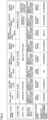
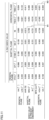
- Fig. 3 is a diagram showing eight index values in the present embodiment.
- the evaluation device 1 evaluates the flat-foot level based on these eight index values. These eight index values specify the shape of a foot.
- the example in Fig. 3 shows an index value name, a plane type of the foot L, a part type of the foot L, a relation with a flat foot, a corresponding range, and a specific example of a center value in the corresponding range.
- the eight index values include: a heel angle (HA); a leg heel angle (LHA); an arch height ratio (AHR); a medial arch angle (MAA); an instep angle (IA); a medial protrusion area (MPA); a heel center angle (HCA); and a curve angle (CA).
- HA heel angle
- LHA leg heel angle
- AHR arch height ratio
- MAA medial arch angle
- IA instep angle
- MPA medial protrusion area
- HCA heel center angle
- CA curve angle
- the heel angle is also referred to as "HA”.
- the leg heel angle is also referred to as “LHA”.
- the arch height ratio is also referred to as “AHR”.
- the medial arch angle is also referred to as "MAA”.
- the instep angle is also referred to as "IA”.
- the medial protrusion area is also referred to as “MPA”.
- the heel center angle is also referred to as “HCA”.
- the curve angle is also referred to as "CA”.
- the HA and the LHA each are an "index value related to a frontal plane of a foot”.
- the AHR, the MAA, and the IA each are an “index value related to a sagittal plane of a foot”.
- the MPA, the HCA, and the CA each are an "index value related to a horizontal plane of a foot”.
- the HA, the LHA, and the HCA each are an index value related to a rearfoot portion of a foot.
- the AHR, the MAA, the IA, and the MPA each are an index value related to a midfoot portion of a foot.
- the CA is an index value related to a forefoot portion and a rearfoot portion of a foot.
- the physical quantities of the HA, the LHA, the MAA, the IA, the HCA, and the CA are angles and the physical quantity of the MPA is a "square millimeter".
- the AHR is expressed in percentage (%).
- the HA, the LHA, and the MPA each are an index value having a tendency that a larger value indicates a shape closer to a flat foot.
- the AHR, the MAA, the IA, the HCA, and the CA each are an index value having a tendency that a smaller value indicates a shape closer to a flat foot.
- the HA, the LHA, the AHR, the MAA, the IA, the MPA, the HCA, and the CA are compared with the first range, the second range, the third range, the fourth range, the fifth range, the sixth range, the seventh range, and the eighth range, respectively. This comparison will be described later.
- the center value of the first range is 2 degrees, and the center value of the second range is 9 degrees.
- the center value of the third range is 14%, and the center value of the fourth range is 30 degrees.
- the center value of the fifth range is 23 degrees, and the center value of the sixth range is 200 square millimeters.
- the center value of the seventh range is 10 degrees, and the center value of the eighth range is 16 degrees.
- the upper limit value of each range is defined by adding a prescribed value to the center value of the corresponding range
- the lower limit value of each range is defined by subtracting the prescribed value from the center value of the corresponding range.
- the first range is 1 degree or more and 3 degrees or less when the prescribed value is set as 1 degree.
- the center value of the first range may be any value from 0 degrees to 5 degrees.
- the center value of the second range may be any value from 5 degrees to 10 degrees.
- the center value of the third range may be any value from 10% to 15%.
- the center value of the fourth range may be any value from 25 degrees to 30 degrees.
- the center value of the fifth range may be any value from 20 degrees to 25 degrees.
- the center value of the sixth range may be any value from 195 square millimeters to 205 square millimeters.
- the center value of the seventh range may be any value from 5 degrees to 10 degrees.
- the center value of the eighth range may be any value from 15 degrees to 20 degrees.
- the prescribed value of each range is set by a measuring person or the like. Note that "A to B" indicates, for example, a range of A or more and B or less.
- FIG. 4 is a diagram for illustrating the HA and the LHA, each of which is an index value related to a frontal plane.
- a heel portion of the right foot of the subject is shown as the foot L.
- Fig. 4 shows a medial side and a lateral side of the right foot (the foot L).
- Fig. 4(A) is a diagram for illustrating the HA.
- Fig. 4(A) shows a heel midline M1 and a vertical axis M2 of the foot.
- the heel midline M1 will be described later with reference to Fig. 4(C) .
- the vertical axis M2 is an axis orthogonal to a ground contact surface P of the foot L.
- the HA is an angle formed between the heel midline M1 and the vertical axis M2.
- Fig. 4(B) is a diagram for illustrating the LHA.
- Fig. 4(B) shows the heel midline M1 and a leg axis M3.
- the leg axis M3 will be described later with reference to Fig. 4(D) .
- the LHA is an angle formed between the heel midline M1 and the leg axis M3. Further, as described with reference to Fig. 3 , the HA and the LHA each are an index value having a tendency that a larger value is determined to indicate a shape closer to a flat foot.
- the expression "A% of the foot length (A is a real number)" indicates the "position of the length at A% of the foot length from the heel portion of the foot L". Further, A% includes approximately A%.
- the "foot length” is, for example, the length between the heel point and the point where the tip end of the longest toe falls on the center line of the foot. Further, A% may be a value different from the value disclosed in the present embodiment, for example, within a range in which the evaluation device 1 can make an appropriate evaluation about a flat foot.
- Fig. 4(C) is a diagram for illustrating the heel midline M1.
- Fig. 4(C) shows a curved line M11.
- the curved line M11 is a contour line of a prescribed cross section of the foot on the frontal plane at any position of 0% to 10% of the foot length.
- Fig. 4(C) shows straight lines M12 and M13.
- the straight line M12 is a straight line parallel to the ground contact surface P and located on the above-mentioned prescribed cross section at a position at any length of 20% to 30% of the foot length from the ground contact surface P of the foot L.
- the straight line M13 is a straight line parallel to the ground contact surface P and located on the above-mentioned prescribed cross section at a position at any length of 1% to 10% of the foot length from the ground contact surface P of the foot L.
- a midpoint between two points at which the straight line M12 intersects with the curved line M11 is defined as a midpoint M12a. Further, a point at which a perpendicular line passing through a heel point M14 among perpendicular lines of the straight line M13 intersects with the straight line M13 is defined as an intersection point M13a.
- the heel midline M1 is a straight line connecting the midpoint M12a and the intersection point M13a.
- Fig. 4(D) is a diagram for illustrating the leg axis M3.
- Fig. 4(D) shows a curved line M21.
- the curved line M21 is a contour line of the ankle.
- Fig. 4(D) shows straight lines M22 and M23.
- the straight line M22 is a straight line parallel to the ground contact surface P and located at a position at any length of 50% to 60% of the foot length from the ground contact surface P of the foot L.
- the straight line M23 is a straight line parallel to the ground contact surface P and located at a position at any length of 30% to 40% of the foot length from the ground contact surface P of the foot L.
- a midpoint between two points at which the straight line M22 intersects with the curved line M21 is defined as a midpoint M22a.
- a midpoint between two points at which the straight line M23 intersects with the curved line M21 is defined as a midpoint M23a.
- the leg axis M3 is a straight line connecting the midpoint M12a and the intersection point M13a.
- Fig. 5 is a diagram for illustrating the AHR, the MAA, and the IA, each of which is an index value related to a sagittal plane.
- the medial foot-side portion of the right foot of the subject is shown as the foot L.
- Fig. 5(A) is a diagram for illustrating the AHR.
- Fig. 5(A) shows V31 and V32.
- V31 denotes a distance between a navicular bone tubercle Q and the ground contact surface P of the foot L.
- V32 denotes a value of the foot length.
- the AHR denotes a value obtained by dividing V31 by V32 (a ratio of V31 to V32).
- Fig. 5(B) is a diagram for illustrating the MAA.
- an arch line M4 is used for the MAA.
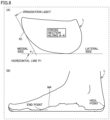
- the arch line M4 is a boundary line of a shadow appearing, for example, when light (irradiation light in Fig. 8(A) ) having an inclination at any angle of 45 degrees to 65 degrees is applied from the ground contact surface P to the medial foot-side portion of the foot L.
- the arch line M4 is an "apparent arch line" of the foot L.
- Fig. 5(B) shows straight lines M41 and M42.
- the straight line M41 is formed by a front portion of the arch line M4 of the foot L.
- the front portion of the arch line M4 is a portion extending from a position B at any of 50% to 59% of the foot length to a position A at any of 60% to 70% of the foot length.
- the "straight line (the straight line M41) formed by the front portion of the arch line M4" is a straight line approximated from a curved line located at the front portion of the arch line M4.
- the straight line M42 is formed by a rear portion of the arch line M4 of the foot L.
- the rear portion of the arch line M4 is a portion extending from a position D at any of 20% to 29% of the foot length to a position C at any of 30% to 40% of the foot length.
- the "straight line (the straight line M42) formed by the rear portion of the arch line M4" is a straight line approximated from a curved line located at the rear portion of the arch line M4.
- Fig. 5(B) shows a front part angle V41 and a rear part angle V42.
- the front part angle V41 is an angle formed between the straight line M41 and a horizontal line P1.
- the horizontal line P1 is a straight line parallel to the ground contact surface P.
- the rear part angle V42 is an angle formed between the straight line M42 and the horizontal line P1.
- the MAA is calculated by summing the front part angle V41 and the rear part angle V42. In other words, the MAA is a total angle of the front part angle V41 and the rear part angle V42.
- Fig. 5(C) is a diagram for illustrating the IA.
- Fig. 5(C) shows a straight line M5, the horizontal line P1, a point M51, and a point M52.
- the straight line M5 is formed by an instep part La of the foot L. Specifically, the straight line M5 connects the points M51 and M52.
- the point M51 is a foot height measurement point.
- the foot height measurement point is a point located in the instep part La at the position A at any of 50% to 60% of the foot length.
- the point M52 is the highest point of the first metatarsal head.
- the highest point of the first metatarsal head is a point located in the instep part La at the position B at any of 70% to 80% of the foot length.
- the IA is an angle formed between the straight line M5 and the horizontal line P1.
- the AHH and the MAA each are an example of an arch index value related to the arch of the foot L.
- the IA is an example of a non-arch index value different from the arch index value.
- Fig. 6 is a diagram for illustrating the MPA, the HCA, and the CA, each of which is an index value related to a horizontal plane.
- Fig. 6 shows a sole portion of the right foot of the subject as the foot L.
- Fig. 6(A) is a diagram for illustrating the MPA.
- Fig. 6(A) shows a straight line M6.
- the straight line M6 connects points M61 and M62.
- the point M61 is a contour point indicating the heel width of the foot in a plan view along the horizontal plane of the foot. In other words, the point M61 is a heel width measurement point.
- the heel width measurement point is specifically a point on the contour of the foot L that is located at any of 10% to 20% of the foot length.
- the point M62 is a contour point on a midfoot portion of the foot. In other words, the contour point on the midfoot portion of the foot is a point on the contour of the foot L that is located at any of 50% to 60% of the foot length.
- the MPA is an area of a portion located on the medial side of the foot L from the straight line M6 in a plan view along the horizontal plane of the foot. In Fig. 6(A) , this portion is hatched.
- Fig. 6(B) is a diagram for illustrating the HCA.
- Fig. 6(B) shows straight lines M7 and M8.
- the straight line M7 is a center line of the entire foot L in a plan view along the horizontal plane of the foot L.
- the straight line M8 is a center line of the rearfoot portion of the foot L.
- the rearfoot portion of the foot L corresponds to a portion extending from the heel portion of the foot to the position A at any of 40% to 50% of the foot length.
- the forefoot portion (describe later) of the foot L corresponds to a portion extending from the heel portion of the foot to the position B at any of 60% to 70% of the foot length.
- the HCA is an angle formed between the straight lines M7 and M8.
- the HCA corresponds to a "rearfoot portion angle" of the present disclosure.
- Fig. 6(C) is a diagram for illustrating the CA.
- Fig. 6(C) also shows a straight line M9 in addition to the straight lines M7 and M8.
- the straight line M9 is a center line of the forefoot portion of the foot L.
- An angle formed between the straight lines M7 and M9 is defined as an angle V8.
- the CA is calculated by summing the HCA (see Fig. 6(B) ) and the angle V8. In other words, the CA is the total angle of the HCA and the angle V8.
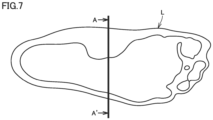
- a cross-sectional view of the foot L is used to illustrate the arch line M4.
- Fig. 7 is a diagram for illustrating this cross-sectional view. As shown in Fig. 7 , in the present embodiment, a cross section of the foot L along a line A-A' (a cross section in the frontal plane) is used.
- Fig. 8 is a diagram for illustrating the arch line M4.
- R1 denotes a contact point between a line (a medial a-degree line) inclined by "a" degrees toward the medial side of the foot from the ground and the outer shape of the medial side of the foot in the cross section of the foot along the line A-A'.
- "a" is any angle between 45 degrees and 60 degrees.
- the contact points R1 are acquired at prescribed intervals (for example, at each 1 mm) in the foot length direction, and a line connecting the plurality of acquired contact points R1 is defined as the arch line M4 in Fig. 5(B) .
- Fig. 9 is a functional block diagram of the evaluation device 1.
- the evaluation device 1 includes an acquisition unit 112, a conversion unit 114, a generation unit 116, and a storage unit 118.
- the acquisition unit 112, the conversion unit 114, and the generation unit 116 correspond to the processor 11.
- the storage unit 118 is implemented by integrating a storage area of the memory 12 and a storage area of the storage 13.
- the storage unit 118 stores the first range to the eighth range and the overall threshold value that constitute the range group 133 (see Fig. 2 ).
- the three-dimensional data is transmitted from the measurement device 2 (see also Fig. 1 ) to the evaluation device 1, the three-dimensional data is temporarily stored in the storage unit 118. Then, the acquisition unit 112 reads the three-dimensional data stored in the storage unit 118 and thereby acquires the three-dimensional data. Further, the acquisition unit 112 computes eight index values from the three-dimensional data.
- the eight index values are HA, LHA, AHR, MAA, IA, MPA, HCA, and CA described with reference to Figs. 3 and the like. These eight index values are output to the conversion unit 114.
- the position of the navicular bone tubercle Q ( Fig. 5(A) ) is specified.
- the position of the navicular bone tubercle Q may be specified, for example, by marking the position of the navicular bone tubercle Q through conducting palpation and visual inspection of the subject's foot L by an inspector.
- the acquisition unit 112 calculates the V31 based on the marking and then outputs the AHR. Further, the acquisition unit 112 may estimate the position of the navicular bone tubercle Q, for example, by what is called artificial intelligence (AI).
- AI artificial intelligence
- the estimation of the position of the navicular bone tubercle Q is disclosed, for example, in " WO2020/261434A1 ". Further, the seven index values other than the AHR are acquired by the acquisition unit 112 based on the three-dimensional data without conducting palpation and visual inspection of the subject's foot L by the inspector.
- the conversion unit 114 generates and outputs the n-th (n is an integer of 1 to 8) score based on the comparison between the n-th index value and the n-th range.
- the n-th score includes a first score C1, a second score C2, a third score C3, a fourth score C4, a fifth score C5, a sixth score C6, a seventh score C7, and an eighth score C8.
- These eight scores are values each indicating the flat foot degree.
- each of the scores is one of a positive value, zero, and a negative value. As the score having a positive value is larger, the foot shape tends to be closer to a flat foot.
- the foot shape tends to be closer to a flat foot or a cavus foot.
- the "cavus foot” is a feature of the foot opposite to the flat foot, characterized in that the arch of the sole of the foot L is extremely high. The following describes a specific example of the conversion method by the conversion unit 114.
- the case where the n-th (n is an integer of 1 to 8) index value is larger than the n-th range means that the n-th index value is larger than the upper limit value of the n-th range.
- the case where the n-th (n is an integer of 1 to 8) index value is less than the n-th range means that the n-th index value is smaller than the lower limit value of the n-th range.
- the "difference between the n-th index value and the n-th range" indicates a difference, for example, between the n-th index value and the center value of the n-th range.
- the HA is an index value having a tendency that a larger value indicates a shape closer to a flat foot.
- the conversion unit 114 compares the HA with the first range. When the HA is larger than the first range, the conversion unit 114 outputs a positive first score C1 corresponding to the difference between the HA and the first range. In this case, the "positive n-th score C corresponding to the difference" indicates that the positive n-th score increases as the difference increases.
- the conversion unit 114 When the HA is less than the first range, the conversion unit 114 outputs a negative first score C1 corresponding to the difference between the HA and the first range.
- the "negative n-th (n is an integer of 1 to 8) score C corresponding to the difference” indicates that the negative n-th score decreases as the difference increases.
- the conversion unit 114 When the HA belongs to the first range, the conversion unit 114 outputs zero as the first score C1.
- the LHA is an index value having a tendency that a larger value indicates a shape closer to a flat foot.
- the conversion unit 114 compares the LHA with the second range. When the LHA is larger than the second range, the conversion unit 114 outputs a positive second score C2 corresponding to the difference between the LHA and the second range. Further, when the LHA is less than the second range, the conversion unit 114 outputs a negative second score C2 corresponding to the difference between the LHA and the second range. When the LHA belongs to the second range, the conversion unit 114 outputs zero as the second score C2.
- the AHR is an index value having a tendency that a smaller value indicates a shape closer to a flat foot.
- the conversion unit 114 compares the AHR with the third range. Then, when the AHR is less than the third range, the conversion unit 114 outputs a positive third score C3 corresponding to the difference between the AHR and the third range. Further, when the AHR is larger than the third range, the conversion unit 114 outputs a negative third score C3 corresponding to the difference between the AHR and the third range. When the AHR belongs to the third range, the conversion unit 114 outputs zero as the third score C3.
- the MAA is an index value having a tendency that a smaller value indicates a shape closer to a flat foot.
- the conversion unit 114 compares the MAA with the fourth range. Then, when the MAA is less than the fourth range, the conversion unit 114 outputs a positive fourth score C4 corresponding to the difference between the MAA and the fourth range. Further, when the MAA is larger than the fourth range, the conversion unit 114 outputs a negative fourth score C4 corresponding to the difference between the MAA and the fourth range. When the MAA belongs to the fourth range, the conversion unit 114 outputs zero as the fourth score C4.
- the IA is an index value having a tendency that a smaller value indicates a shape closer to a flat foot.
- the conversion unit 114 compares the IA with the fifth range. Then, when the IA is less than the fifth range, the conversion unit 114 outputs a positive fifth score C5 corresponding to the difference between the IA and the fifth range. Further, when the IA is larger than the fifth range, the conversion unit 114 outputs a negative fifth score C5 corresponding to the difference between the IA and the fifth range. When the IA belongs to the fifth range, the conversion unit 114 outputs zero as the fifth score C5.
- the MPA is an index value having a tendency that a larger value indicates a shape closer to a flat foot.
- the conversion unit 114 compares the MPA with the sixth range. Then, when the MPA is larger than the sixth range, the conversion unit 114 outputs a positive sixth score C6 corresponding to the difference between the MPA and the sixth range. When the MPA is less than the sixth range, the conversion unit 114 outputs a negative sixth score C6 corresponding to the difference between the MPA and the sixth range. When the MPA belongs to the sixth range, the conversion unit 114 outputs zero as the sixth score C6.
- the HCA is an index value having a tendency that a smaller value indicates a shape closer to a flat foot.
- the conversion unit 114 compares the HCA with the seventh range. Then, when the HCA is less than the seventh range, the conversion unit 114 outputs a positive seventh score C7 corresponding to the difference between the HCA and the seventh range. When the HCA is larger than the seventh range, the conversion unit 114 outputs a negative seventh score C7 corresponding to the difference between the HCA and the seventh range. When the HCA belongs to the seventh range, the conversion unit 114 outputs zero as the seventh score C7.
- the CA is an index value having a tendency that a smaller value indicates a shape closer to a flat foot.
- the conversion unit 114 compares the CA with the eighth range. Then, when the CA is less than the eighth range, the conversion unit 114 outputs a positive eighth score C8 corresponding to the difference between the CA and the eighth range. When the CA is larger than the eighth range, the conversion unit 114 outputs a negative eighth score C8 corresponding to the difference between the CA and the eighth range. When the CA belongs to the eighth range, the conversion unit 114 outputs zero as the eighth score C8.
- the first score C1 to the eighth score C8 output from the conversion unit 114 are input to the generation unit 116.
- the generation unit 116 calculates a total score that is a total value of the first score C1 to the eighth score C8.
- the total score corresponds to a flat-foot level of the present disclosure.
- the generation unit 116 compares the total score with the overall threshold value.
- the center value of the overall threshold value is, for example, zero.
- the generation unit 116 evaluates that the subject's foot L is a flat foot, and then generates evaluation information indicating this evaluation.
- the generation unit 116 evaluates that the subject's foot L is not a flat foot, and generates evaluation information indicating this evaluation.
- the generation unit 116 After generating the evaluation result, the generation unit 116 outputs the data indicating the evaluation result to the display 3.
- the display 3 shows an image based on the data.
- Document 1 is " Correlation of Foot Posture Index With Plantar Pressure and Radiographic Measurements in Pediatric Flatfoot” by Lee, J. S., Kim, K. B., Jeong, J. O., Kwon, N. Y., Jeong, S. M., M. (Annals of Rehabilitation Medicine 39(1), 10-17 (2015), DOI: 10.5535/arm.2015.39.1.10 ).
- Document 2 is "A protocol for classifying normal and flat arched foot posture for research studies using clinical and radiographic measurements" by Murley G. S. S., Menz, H. B Landorf1, K. B. (Journal of Foot and Ankle Research 2009, 2 22, 2009 DOI: 10.1186/1757 1146 2 22 ).
- the above-mentioned seven X-ray index values include an X-ray index value in the frontal plane, an X-ray index value in the sagittal plane, and an X-ray index value in the horizontal plane.
- the X-ray index value in the frontal plane is a heel tibia angle (HTA).
- the X-ray index values in the sagittal plane are a calcaneal pitch (CP), a calcaneal first metatarsal angle (C1MA), a Meary's angle (MA), and a navicular index (NI).
- CP calcaneal pitch
- C1MA calcaneal first metatarsal angle
- MA Meary's angle
- NI navicular index
- the X-ray index values in the horizontal plane are a talo-navicular coverage angle (TNCA) and a talo-second metatarsal angle (T2MA).
- these seven X-ray index values are considered as being accurate in evaluating whether or not the subject's foot L is a flat foot.
- all of the seven X-ray index values are angles related to foot bones, and are index values based on the premise that the subject's foot is irradiated with X-rays.
- the subject's foot needs to be irradiated with X-rays in order to use these seven X-ray index values, and this may cause a problem that a burden such as X-ray irradiation on the subject increases.
- the inventors have examined index values highly correlated with seven X-ray index values among the index values that can be computed from the three-dimensional data. As a result of the examination, the inventors have found the above-mentioned eight index values.
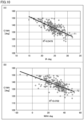
- Fig. 10 is a diagram showing a correlation between the index values in the present embodiment and the X-ray index values.
- Fig. 10(A) is a diagram showing a correlation between the C1MA as an X-ray index value and the IA as an index value in the present embodiment.
- a plurality of plots and a regression line F1 for the plurality of plots are shown.
- the example in Fig. 10(A) shows a negative correlation and indicates that the square value (a determination coefficient) of a correlation coefficient R is 0.5478. Note that the method of calculating the correlation coefficient in the example in Fig. 10 is directed to a plurality of feet. Further, the correlation coefficient (the determination coefficient) in Fig.
- Fig. 10(B) is a diagram showing a correlation between the C1MA as an X-ray index value and the MAA as an index value in the present embodiment.
- the example in Fig. 10(B) shows a plurality of plots and a regression line F2 for the plurality of plots.
- the example in Fig. 10(B) shows a negative correlation and indicates that the square value of the correlation coefficient R is 0.4702.
- Fig. 11 is a diagram of an examples showing correlation coefficients between eight index values in the present embodiment and seven X-ray index values.
- the correlation coefficient R between the HA as an index value in the present embodiment and the HTA as an X-ray index value is 0.282.
- index values whose correlation coefficients with the X-ray index values were high to some extent were selected by the inventors as the eight index values in the present embodiment.
- the correlation coefficients for the MAA and the IA are relatively higher than those in the case of other index values.
- the correlation coefficients for the HCA and the CA are relatively high at the angle of the horizontal plane.
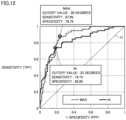
- Fig. 12 is a diagram showing examples of receiver operating characteristic (ROC) curves of the above-mentioned MAA and the IA having high correlation coefficients.
- the ROC curve of the IA is shown with a solid line and the ROC curve of the MAA is shown with a dashed line. Note that the ROC curves were created for a plurality of feet.
- ROC curves in Fig. 12 the vertical axis represents sensitivity (true positive fraction: TPF) while the horizontal axis represents 1-specificity (false positive fraction: FPF). Further, Fig. 12 shows a straight line H along which the TPF and the FPF have the same value.
- a plot indicating the maximum distance to the straight line H (hereinafter also referred to as a "maximum plot") is a plot corresponding to a highly accurate threshold value (a cutoff value).
- the maximum plot of the IA shows a sensitivity of 74.1%, a specificity of 82%, and a cutoff value of 23 degrees. This cutoff value of 23 degrees is adopted as a threshold value of the IA (the fifth threshold value in Fig. 3 ). Further, the maximum plot of the MAA shows a sensitivity of 87.9%, a specificity of 76.7%, and a cutoff value of 30 degrees. This cutoff value of 30 degrees is adopted as the threshold value of the MAA (the fourth threshold value in Fig. 3 ).
- the inventors also created ROC curves for other index values (HA, LHA, AHR, MPA, HCA, and CA), and determined threshold values corresponding to these other index values.
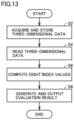
- Fig. 13 is a flowchart illustrating a main process of the evaluation device 1.
- the evaluation device 1 acquires three-dimensional data from the measurement device 2 and temporarily stores the three-dimensional data in the memory 12 (the storage unit 118 in Fig. 9 ).
- step S4 the evaluation device 1 reads the three-dimensional data from the memory 12.
- step S6 the evaluation device 1 computes (acquires) eight index values from the three-dimensional data that has been read.
- step S8 the evaluation device 1 generates an evaluation result based on the eight index values and outputs the generated evaluation result to the display 3.
- the display 3 shows an image based on the result.
- the evaluation device 1 computes specific index values other than the above-mentioned eight index values from the three-dimensional data.
- the specific index values are a foot length, a shape of a finger, and the like.
- the evaluation device 1 detects at least one of: a shoe to be fitted to the subject; a shoe last (last) to be fitted to the subject; a sockliner to be fitted to the subject; foot care suitable for the subject; training suitable for the subject; and the like. Then, the evaluation device 1 outputs the detected details as a proposal result to the display 3.
- the display 3 shows a proposed image based on the proposal result.
- the measuring person visually checks the proposed image and proposes a product based on the proposed image to the subject.
- the proposed image is an image showing shoes to be fitted to the subject.
- the measuring person makes a proposal to the subject about purchase of the shoes.
- the evaluation device 1 In the method of irradiating the subject's foot with X-rays to evaluate whether or not the subject's foot is a flat foot (the X-ray irradiation method), the subject's foot needs to be irradiated with X-rays. This may cause a problem that a burden such as X-ray irradiation on the subject increases.
- the evaluation device 1 in the present embodiment computes eight types of index values from the three-dimensional data measured by the measurement device, and then, evaluates the flat-foot level (for example, the above-mentioned total score) of the subject's foot based on the index values. Therefore, since there is no need to irradiate the subject with X-rays, the evaluation device 1 can evaluate the flat-foot level of the subject's foot while it can suppress a burden on the subject.
- an inspector visually checks an X-ray radiograph created by the X-ray irradiation to inspect whether or not the subject's foot is a flat foot. This however may cause a problem that the inspector may be limited to some specialists such as doctors.
- the evaluation device 1 in the present embodiment the measuring person visually checks the evaluation result and thereby can specify whether or not the subject's foot is a flat foot. Therefore, not only some few specialists but also general measuring persons can specify whether or not the subject's foot is a flat foot.
- the accuracy in inspecting whether or not the subject's foot is a flat foot depends on the quality of an X-ray radiograph.
- the evaluation device 1 in the present embodiment performs an evaluation about a flat foot without using an X-ray radiograph, it allows the measuring person to perform a highly reproducible evaluation.
- the X-ray irradiation method may depend on the inspection skill of the inspector.
- the evaluation device 1 in the present embodiment allows a general measuring person to specify an evaluation result, it allows the measuring person to perform a highly reproducible evaluation.
- the index value related to the sagittal plane includes an arch index value related to the arch of the foot (the AHR and the MAA in Fig. 5 ) and a non-arch index value (the IA in Fig. 5 ) different from the arch index value.
- whether or not the subject's foot is a flat foot is attributed to the arch structure of the foot.
- a specific subject is, for example, a person having a foot skeleton, foot bones, muscles of the foot sole, and the like that are well developed more than those of a person having an ordinary foot.
- the evaluation device 1 in the present embodiment uses not only the arch index value but also the non-arch index value to evaluate whether or not the subject's foot L is a flat foot. Therefore, the evaluation device 1 can perform multifaceted evaluations. Accordingly, even when the subject is a specific subject as described above, the evaluation device 1 can make an accurate evaluation about a flat foot.
- the non-arch index value also includes IA.
- the IA is an index value having a large correlation coefficient with a highly accurate X-ray index value. Therefore, the evaluation device 1 can perform a highly accurate evaluation by making an evaluation about a flat foot with use of the non-arch index value including the IA.
- the arch index value includes MAA.
- the MAA is an index value having a large correlation coefficient with a highly accurate X-ray index value, as indicated by frame W1 in Fig. 11 . Therefore, the evaluation device 1 can perform a highly accurate evaluation by making an evaluation about a flat foot with use of the arch index value including the MAA.
- the arch index value includes AHR.
- the AHR is an arch height ratio and indicates an index value that is directly attributed to whether or not the subject's foot is a flat foot. Therefore, the evaluation device 1 can perform a highly accurate evaluation by making an evaluation about a flat foot with use of the arch index value including the AHR.
- the index value related to the horizontal plane includes HCA.
- the HCA is an index value having a relatively large correlation coefficient with a highly accurate X-ray index value. Therefore, the evaluation device 1 can perform a highly accurate evaluation by making an evaluation about a flat foot with use of the index value including the HCA.
- the index value related to the horizontal plane includes CA.
- the CA is an index value having a relatively large correlation coefficient with a highly accurate X-ray index value, as indicated by frame W2 in Fig. 11 . Therefore, the evaluation device 1 can perform a highly accurate evaluation by making an evaluation about a flat foot with use of the index value including the CA.
- the index value related to the horizontal plane includes MPA.
- the physical quantity of the MPA is an area. Therefore, since the evaluation device 1 makes an evaluation about a flat foot based on the area that is a physical quantity different from the angle, it can perform multifaceted evaluations.
- the index value related to the frontal plane includes HA. Therefore, the evaluation device 1 can perform an evaluation about a flat foot based on the index value related to the frontal plane. Further, the index value related to the frontal plane includes LHA. Therefore, the evaluation device 1 can perform an evaluation about a flat foot based on the index value related to the frontal plane.
- the evaluation device 1 proposes at least one of a shoe for the subject, a shoe last for the subject, and a sockliner of the shoe for the subject. Therefore, the evaluation device 1 can propose a shoe, a shoe last, and a sockliner in which the evaluation about a flat foot for the subject's foot has been reflected. In this way, the evaluation device 1 of the present disclosure can apply the eight index values (or the flat-foot level) not only to the evaluation about a flat foot but also to industrial techniques such as making a proposal to the subject.
- the first embodiment has been described above with regard to a configuration in which the flat-foot level is information indicating whether or not the subject's foot is a flat foot.
- the flat-foot level in the second embodiment is defined as information quantitatively indicating a feature of a foot.
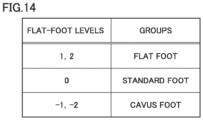
- Fig. 14 is an example of a table showing a correspondence relation between the flat-foot levels and groups.
- the flat-foot levels are quantitatively shown in five stages (-2, -1, 0, 1, 2).
- the groups in Fig. 14 include a group of cavus feet (high arch) mentioned above and a group of standard feet.
- the "standard foot” indicates a feature of a foot not corresponding to a flat foot and a cavus foot. Note that this table is stored, for example, in the storage unit 118 (see Fig. 9 ).
- a flat-foot level of 1 or 2 is associated with the group of flat feet. Further, a flat-foot level of 0 is associated with the group of standard feet. Further, a flat-foot level of -1 or -2 is associated with the group of cavus feet.
- the generation unit 116 converts the above-described total score into a flat-foot level in five stages. Further, the generation unit 116 refers to the table in Fig. 14 to specify the group corresponding to each flat-foot level. Then, the generation unit 116 generates an evaluation result corresponding to each group and causes the display 3 to show the evaluation result. For example, when the flat-foot level is -1 or -2, the evaluation device 1 causes the display 3 to show a character image stating, "You have cavus feet". When the flat-foot level is 0, the evaluation device 1 causes the display 3 to show a character image stating, "You have standard feet".
- the evaluation device 1 not only can evaluate whether or not the subject's foot is a flat foot, but also can evaluate whether the subject's foot is a standard foot or a cavus foot. Therefore, the evaluation device 1 can more specifically evaluate the subject's foot.
- the flat foot group may be further divided.
- a flat-foot level of "1” may be classified as a “low flat foot group” and a flat-foot level of "2" may be classified as a "high flat foot group”.
- the cavus foot group may be further divided.
- a flat-foot level of "-1” may be classified as a "low cavus foot group”
- a flat-foot level of "2” may be classified as a "high cavus foot group”.
- the three groups into which the foot shape is classified may be any one group or any two groups.
- the flat-foot level is a concept including at least one of a level indicating a flat foot, a level indicating a cavus foot, and a level indicating a standard foot.
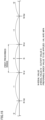
- Fig. 15 is a diagram for illustrating the first prescribed range.
- the center value (a reference value) of the first prescribed range is an ideal value N of the first value, which will be described later.
- the ideal value N is a value that is ideal (not biased) in terms of the skeleton shape of the foot.
- the ideal value N of the index value (HA, LHA) in the frontal plane is a value obtained when varus/valgus of the calcaneus bone is in an ideal state, i.e., obtained when neither varus nor valgus occurs.
- the ideal value N of the index value (AHR, MAA, IA) in the sagittal plane is a value obtained when the arch height is in an ideal state, i.e., obtained when the foot has neither a high arch nor a low arch.
- the ideal value N of the index value (MPA, HCA, CA) in the horizontal plane is a value obtained when the curve of the foot is in an ideal state, i.e., obtained when the foot is not in an excessively curved or straight state.
- the lower limit value of the first prescribed range is a value obtained by subtracting d from N (N-d).
- the upper limit value of the first prescribed range is a value obtained by adding d to N (N+d).
- "d" is a value calculated by subtracting a cutoff value C of the first value V1 from the ideal value of a first value V1. The first value V1 will be described later.
- the preferable index value to which the first prescribed range is applied is at least one of the HA, the AHR, and the MPA. At least one of the HA, the AHR, and the MPA corresponds to the "first value" of the present disclosure.
- the first value is also referred to as the "first value V1".
- the HA, the AHR, and the MPA for the first prescribed range since the ideal value N of each of the HA, the AHR, and the MPA is easily derived. Specifically, it is preferable to apply the HA to the first prescribed range since the measured values of the HA extend over the positive and negative values, and thus, the ideal value N can be set at 0 degrees.
- the ideal value N can be set at the average value of the values for the high arch and the low arch. For example, when the cut-off value for the high arch is 20 degrees and the cut-off value for the low arch is 10 degrees, the ideal value N of the AHR is 15 degrees.
- the MPA it is preferable to apply the MPA to the first prescribed range since the measured values of the MPA extend over the positive and negative values, and thus, the ideal value N can be set at 0 mm 2 .
- the acquisition unit 112 acquires the first value V1 (at least one of the HA, the AHR, and the MPA)
- the flat-foot level is evaluated based on whether or not the first value V1 belongs to the first prescribed range.
- the conversion unit 114 sets the first score C1 at "-2".
- the conversion unit 114 sets the first score C1 at "-1".
- the conversion unit 114 sets the first score C1 at "0". When the first value V1 is equal to or greater than N+d and is less than N+3d, the conversion unit 114 sets the first score C1 at "+1". When the first value V1 is equal to or greater than N+3d, the conversion unit 114 sets the first score C1 at "+2".
- the scores in Fig. 15 i.e., -2, -1, +1, and +2 result in +2, +1, -1, and -2, respectively.
- the scores are the same as those in Fig. 15 .
- the evaluation device 1 sets the reference in the first prescribed range as the ideal value of the first value V1
- the flat-foot level can be evaluated based on the skeleton shape of the foot without being influenced, for example, by the parameters of the population of the subjects.
- the evaluation device 1 can apply the first prescribed range defined based on the ideal value as a reference to the index value (the HA, the AHR, and the MPA) from which the ideal value is easily derived.
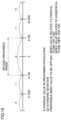
- Fig. 16 is a diagram for illustrating the second prescribed range.
- the center value (a reference value) of the second prescribed range is a previously calculated average value A of the second values (described later) in a prescribed population.
- the population is, for example, a group constituted of a certain number of (for example, 200) subjects.
- the lower limit value of the second prescribed range is a value obtained by subtracting SD from the average value A (average value A-SD).
- the upper limit value of the second prescribed range is a value obtained by adding SD to the average value A (average value A+SD).
- the "SD" indicates the standard deviation in the above-mentioned population.
- the second prescribed range is a range conforming to a normal distribution.
- the preferable index value to which the second prescribed range is applied is at least one of the index value related to the frontal plane and the index value related to the horizontal plane. At least one of the index value related to the frontal plane and the index value related to the horizontal plane corresponds to the "second value" of the present disclosure.
- the second value is also referred to as a "second value V2".
- the index value related to the frontal plane is at least one of the HA and the LHA, as shown in Fig. 3 .
- the index value related to the horizontal plane is at least one of the MPA, the HCA, and the CA, as shown in Fig. 3 .
- the evaluation device 1 can apply the second prescribed range not employing a cut-off value for the index value with a low discrimination ability for a flat foot (AUC).
- the flat-foot level is evaluated based on whether or not the second value V2 belongs to the second prescribed range.
- the conversion unit 114 sets the first score C1 at "-2".
- the conversion unit 114 sets the first score C1 at "-1".
- the conversion unit 114 sets the first score C1 at "0".
- the conversion unit 114 sets the first score C1 at "+1".
- the conversion unit 114 sets the first score C1 at "+2”.
- the scores in Fig. 16 i.e., -2, -1, +1, and +2 result in +2, +1, -1, and -2, respectively.
- the scores are the same as those in Fig. 16 .
- the second prescribed range is defined by adding or subtracting the standard deviation SD to or from the upper limit value and the lower limit value of the second prescribed range, assuming that the reference is the average value of the second values V2 in the population. Therefore, since the evaluation device 1 evaluates the flat-foot level according to the normal distribution, it can evaluate where the subject is located in the normal distribution. Further, the evaluation device 1 can apply the second prescribed range not employing a cut-off value to each of the index values (the index value related to the frontal plane and the index value related to the horizontal plane) with a low discrimination ability for a flat foot (AUC).
- Fig. 17 is a diagram for illustrating the third prescribed range.
- the cutoff value C of the third value (described later) in a prescribed population is defined as a reference value.
- the population is, for example, a group constituted of a certain number of (for example, 200) subjects.
- the lower limit value of the third prescribed range is the cutoff value C.
- the upper limit value of the third prescribed range is a value obtained by adding 2SD to the cutoff value C (cutoff value C+2SD). Further, "SD" indicates the standard deviation of the third values in the above-mentioned population.
- the preferable index value to which the third prescribed range is applied is the index value related to the sagittal plane.
- the index value related to the sagittal plane corresponds to the "third value" of the present disclosure.
- the third value is also referred to as a "third value V3". Note that the index value related to the sagittal plane is at least one of the AHR, the MAA, and the IA, as shown in Fig. 3 .
- the evaluation device 1 can improve the accuracy in determination about a flat foot by applying the third prescribed range defined based on the cut-off value as a reference to the index value (the index value related to the sagittal plane) with a high discrimination ability for a flat foot.
- the flat-foot level is evaluated based on whether or not the third value V3 belongs to the third prescribed range.
- the conversion unit 114 sets the third score C3 at "+2".
- the conversion unit 114 sets the third score C3 at "+1".
- the conversion unit 114 sets the third score C3 at "0".
- the conversion unit 114 sets the third score C3 at "-1".
- the conversion unit 114 sets the third score C3 at "-2".
- the scores are the same as those in Fig. 17 .
- the value to be added to or subtracted from the reference value may be another value.
- a value to be added or subtracted may be the standard deviation SD on condition that the ideal value N is set as the center value.
- the cutoff value C may be set as a center value.
- Fig. 18 is an example showing scores and the like calculated with use of the above-mentioned first to third prescribed ranges for each of the eight index values.
- Fig. 18 shows an example in which the first score C1 to the eighth score C8 are "1", "0", “1", “1", 1", “2", “1", and "1".
- the post-optimization scores are shown.
- the post-optimization scores are calculated for each plane (a frontal plane, a sagittal plane, and a horizontal plane) of the foot.
- the post-optimization scores are typically normalized scores.
- the generation unit 116 calculates the flat-foot level by substituting the post-optimization score of each plane into the following equation (1).
- Flat-foot level 1 ⁇ post-optimization score of frontal plane + 3 ⁇ post-optimization score of sagittal plane + 1 ⁇ post-optimization score of horizontal plane
- the post-optimization score of the sagittal plane in Fig. 18 corresponds to the "first index value score" of the present disclosure. Further, each of the post-optimization score of the frontal plane and the post-optimization score of the horizontal plane in Fig. 18 corresponds to the "second index value score" of the present disclosure.
- the first coefficient multiplied by the post-optimization score of the sagittal plane (the first index value score) is "3".
- the second coefficient multiplied by each of the post-optimization score of the frontal plane and the post-optimization score of the horizontal plane (the second index value score) is "1".
- the first coefficient is larger than the second coefficient.
- the generation unit 116 in the present embodiment evaluates (calculates) the flat-foot level with a weight placed more on the first index value score than on the second index value score. Therefore, the evaluation device 1 can evaluate the flat-foot level with emphasis placed more on the sagittal plane highly correlated with the flat foot than on the frontal plane and the horizontal plane. In the case where each of the scores in Fig. 18 is substituted into the above-mentioned equation (1), the flat-foot level is about 4.8.
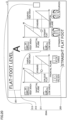
- Fig. 19 is a diagram for illustrating an example of the display screen on the display 3.
- a flat-foot level image 201 and a flat-foot type image 204 are displayed.
- the flat-foot level image 201 is an image showing a flat-foot level.
- the generation unit 116 calculates the flat-foot level, for example, with use of the above-mentioned equation (1).
- a symbol "A" corresponding to the flat-foot level is displayed.
- the flat-foot type image 204 is an image showing a flat-foot type.
- the flat-foot type is typically information generated based on at least two index values among three index values including: an index value related to the frontal plane; an index value related to the sagittal plane; and an index value related to the horizontal plane. It is preferable that the at least two index values include the index value related to the sagittal plane highly correlated with a flat foot. In the present embodiment, the flat-foot type is generated using all of the at least two index values.
- the flat-foot type is more specifically the information defined by the features of each of the three index values.
- the features about the index value related to the frontal plane are valgus and varus.
- the features about the index value related to the sagittal plane are a low arch and a high arch.
- the features about the index value related to the horizontal plane are a straight state and a curved state.
- the flat-foot type image 204 includes a feature image 202 and a name image 203.
- the feature image 202 relates to the feature of each of the three index values described above.
- the name image 203 shows the name of a flat-foot type.
- the flat-foot type in the example in Fig. 19 is information generated when the scores are as shown in the example in Fig. 18 .
- the post-optimization score of the frontal plane is +1/4.
- the feature image 202 shows an image indicating the level closer to valgus as a feature of the frontal plane.
- the post-optimization score of the sagittal plane is +3/6.
- the feature image 202 shows an image indicating the level closer to a low arch as a feature of the sagittal plane.
- the post-optimization score of the sagittal plane is +4/6. Accordingly, the feature image 202 shows an image indicating the level closer to a straight state as a feature of the sagittal plane.
- Fig. 20 is a diagram for illustrating an example of a flat-foot type image 204A or the like as another flat-foot type image.
- the flat-foot type image 204A includes a first coordinate image 211, a second coordinate image 212, and a third coordinate image 213.
- Fig. 20 shows the third coordinate image 213 that is replaced with a square image.
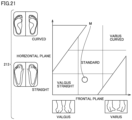
- Fig. 21 is a diagram showing an example of the third coordinate image 213.
- the first coordinate image 211, the second coordinate image 212, and the third coordinate image 213 are images in which the features of two index values among the above-mentioned three index values are represented in a plane defined by an X axis and a Y axis.
- the X axis corresponds to the feature of the frontal plane
- the Y axis corresponds to the feature of the sagittal plane.
- the X axis corresponds to the feature of the horizontal plane
- the Y axis corresponds to the feature of the sagittal plane.
- the X axis corresponds to the feature of the frontal plane
- the Y axis corresponds to the feature of the horizontal plane.
- an image M shows an index value specified in the subject. Based on this image M, a subject who has visually checked the first coordinate image 211, the second coordinate image 212, and the third coordinate image 213 can recognize the features in the above-mentioned three index values for the subject.
- the evaluation device 1 in the present embodiment can evaluate the flat-foot type based on at least two of the index values related to the frontal plane, the sagittal plane, and the horizontal plane.
- a flat foot typically indicates the state in which the foot arch generally lowers (a morphological change on the sagittal plane).
- the evaluation device 1 evaluates at least one of the horizontal plane and the frontal plane about the lowered arch and thereby can perform multifaceted evaluations. In other words, the evaluation device 1 can estimate what caused such a lowered arch.
- the above-mentioned at least two index values include an index value related to the sagittal plane for evaluating whether or not the arch lowers. Therefore, the evaluation device 1 can evaluate the flat-foot type in a multifaceted manner.
- the evaluation device 1 causes the display 3 to show the flat-foot level image 201 in Figs. 19 and 20 and the flat-foot type image 204 that indicates the features of the above-mentioned at least two index values. Therefore, the evaluation device 1 allows the subject to recognize his/her flat-foot level and his/her flat-foot type.
- Figs. 20 and 21 have been described with regard to the screen on which two index values among the index values in the three planes are two-dimensionally displayed.
- the display 3 may three-dimensionally show the index values in the three planes.
- the skeleton of the foot is different depending on the attribute of the subject.
- the skeleton of the foot is different between Japanese females and American males.
- the evaluation device 1 employs the same prescribed range for the same index value in the case where the subject is a Japanese female and the case where the subject is an American male, the accuracy in evaluation of the flat-foot level may not be able to be improved.
- the evaluation device 1 in the fifth embodiment evaluates the flat-foot level of the subject with use of the prescribed range corresponding to the attributes of the subject.
- the attributes of the subject include, for example, gender, race, height, weight, age, and the like.
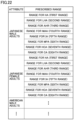
- Fig. 22 is an example of a database (DB) defining the correspondences between the attributes and the ranges applied to the index values.
- the storage unit 118 in the fifth embodiment stores the DB.
- the range includes, for example, the first range to the eighth range (see Fig. 3 ).
- This DB corresponds to "range information" of the present disclosure.
- the first to eighth ranges corresponding to Japanese adult males are stored, and the first to eighth ranges corresponding to Japanese adult females (attribute) are stored.
- the ranges corresponding to other attributes are not described.
- the acquisition unit 112 acquires the attribute of the subject.
- the evaluation device 1 displays an attribute input screen (not shown) and causes the subject to input his/her attribute through the input screen, and then, the acquisition unit 112 acquires the attribute of the subject.
- the conversion unit 114 refers to the DB in Fig. 22 to specify a prescribed range corresponding to the acquired attribute.
- the flat-foot level is evaluated based on whether or not at least one index value belongs to the specified prescribed range.
- the method in the third embodiment is used as an evaluation method.
- the evaluation device 1 in the present embodiment evaluates the flat-foot level based on whether or not at least one index value belongs to a prescribed range corresponding to the attribute of the subject. Therefore, the evaluation device 1 can improve the accuracy in evaluation of the flat-foot level as compared with the configuration in which the same prescribed range is used irrespective of the attribute of the subject.
- the prescribed range in Fig. 22 includes a range conforming to the normal distribution (see Fig. 16 ), it is possible to evaluate where the subject is located in the normal distribution corresponding to the attribute of the subject.
- An evaluation device of the present disclosure evaluates a shape of a foot of a subject.
- the evaluation device includes a memory and a processor.
- the memory stores three-dimensional data of the shape of the foot of the subject measured by a measurement device.
- the processor computes an index value specifying the shape of the foot from the three-dimensional data read from the memory.
- the processor is configured to compute, from the three-dimensional data, at least one index value among an index value related to a frontal plane of the foot, an index value related to a sagittal plane of the foot, and an index value related to a horizontal plane of the foot, the at least one index value being computed as the index value specifying the shape of the foot. Further, the processor is configured to evaluate a flat-foot level of the foot of the subject based on the at least one index value.
- the evaluation device can evaluate the flat-foot level of the foot of the subject while it can suppress a burden on the subject.
- (Clause 2) The evaluation device described in Clause 1, wherein the index value related to the sagittal plane includes: an arch index value related to an arch of the foot; and a non-arch index value different from the arch index value, and the processor is configured to compute at least the index value related to the sagittal plane of the foot from the three-dimensional data.
- the evaluation device performs an evaluation about a flat foot and a cavus foot with use not only of the arch index value but also of the non-arch index value. Therefore, the evaluation device can perform multifaceted evaluations.
- this angle is an index value having a large correlation coefficient with a highly accurate X-ray index value
- the evaluation device can perform a highly accurate evaluation.
- the arch index value includes a total angle of: an angle formed between a straight line formed by a front portion of an arch line of the foot and a horizontal line of the foot; and an angle formed between a straight line formed by a rear portion of the arch line and the horizontal line of the foot.
- the evaluation device can perform a highly accurate evaluation.
- the arch height ratio is an index value that is directly attributed to whether or not the subject's foot is a flat foot/a cavus foot. Therefore, the evaluation device can perform a highly accurate evaluation.
- the evaluation device can perform a highly accurate evaluation.
- the evaluation device can perform a highly accurate evaluation.
- the evaluation device since the evaluation device performs an evaluation about a flat foot and a cavus foot based on the area that is different in physical quantity from the angle, it can perform multifaceted evaluations.
- the evaluation device can perform an evaluation about a flat foot based on the index value related to the frontal plane.
- the evaluation device can perform an evaluation about a flat foot based on the index value related to the frontal plane.
- the evaluation device can allow a measuring person to recognize the group to which the subject's foot belongs.
- the evaluation device can allow the measuring person to recognize a group to which the subject's foot belongs, among at least two groups of the group indicating a flat foot, the group indicating a cavus foot, and the group indicating a standard foot.
- the evaluation device can make at least one of proposals of: a shoe for the subject; a shoe last for the subject; a sockliner of the shoe for the subject; foot care for the subject; and training for the subject.
- the flat-foot type can be evaluated based on at least two of the index values related to the frontal plane, the sagittal plane, and the horizontal plane.
- the flat-foot type can be evaluated based on the index value related to the sagittal plane correlated with a flat foot.
- the image indicating the flat-foot type includes information about features of the at least two index values.
- the subject is allowed to recognize not only the flat-foot level but also the flat-foot type indicating the features of the at least two index values.
- the flat-foot level can be evaluated with emphasis placed more on the sagittal plane correlated with a flat foot than on the frontal plane and the horizontal plane.
- the processor is configured to evaluate the flat-foot level based on whether or not the first value belongs to a first prescribed range.
- the first prescribed range is defined based on an ideal value of the first value as a reference.
- the flat-foot level can be evaluated based on the skeleton shape of the foot without being influenced, for example, by the parameters of the population of the subjects.
- the first value includes at least one of: as the index value related to the frontal plane, an angle formed between a vertical axis of the foot and a heel midline of the foot; as the index value related to the sagittal plane, an arch height ratio; and as the index value related to the horizontal plane, an area of a portion located on a medial side of the foot from a straight line connecting a contour point indicating a heel width of the foot and a contour point of a midfoot portion of the foot in a plan view along the horizontal plane of the foot.
- the first prescribed range defined based on the ideal value as a reference can be applied to the index value from which this ideal value is easily derived.
- the processor is configured to evaluate the flat-foot level based on whether or not the second value belongs to a second prescribed range.
- the second prescribed range is defined based on, as a reference, an average value of the second values in a prescribed population.
- the inventors have found that the index value related to the frontal plane and the index value related to the horizontal plane were low in discrimination ability for a flat foot (AUC).
- AUC discrimination ability for a flat foot
- the processor is configured to evaluate the flat-foot level based on whether or not the third value belongs to a third prescribed range.
- the third prescribed range is defined based on, as a reference, a cutoff value of the third value in a prescribed population.
- the flat-foot level is evaluated based on the cut-off value, the flat-foot level can be evaluated based on the skeleton shape of the foot while also considering the variation in the distribution of the population of the subjects.
- the inventors have found that the index value related to the sagittal plane was high in discrimination ability for a flat foot.
- the third prescribed range employing a cut-off value can be applied to the index value with a high discrimination ability for a flat foot.
- the flat-foot level can be evaluated based on the attribute of the subject.
Landscapes
- Health & Medical Sciences (AREA)
- Life Sciences & Earth Sciences (AREA)
- Engineering & Computer Science (AREA)
- Medical Informatics (AREA)
- Biomedical Technology (AREA)
- Public Health (AREA)
- General Health & Medical Sciences (AREA)
- Pathology (AREA)
- Biophysics (AREA)
- Molecular Biology (AREA)
- Veterinary Medicine (AREA)
- Animal Behavior & Ethology (AREA)
- Dentistry (AREA)
- Oral & Maxillofacial Surgery (AREA)
- Physics & Mathematics (AREA)
- Surgery (AREA)
- Heart & Thoracic Surgery (AREA)
- Epidemiology (AREA)
- Primary Health Care (AREA)
- General Business, Economics & Management (AREA)
- Business, Economics & Management (AREA)
- Databases & Information Systems (AREA)
- Data Mining & Analysis (AREA)
- Measurement Of The Respiration, Hearing Ability, Form, And Blood Characteristics Of Living Organisms (AREA)
Applications Claiming Priority (2)
| Application Number | Priority Date | Filing Date | Title |
|---|---|---|---|
| JP2022136115 | 2022-08-29 | ||
| PCT/JP2023/028614 WO2024048207A1 (ja) | 2022-08-29 | 2023-08-04 | 評価装置、評価方法、および評価プログラム |
Publications (2)
| Publication Number | Publication Date |
|---|---|
| EP4563084A1 true EP4563084A1 (de) | 2025-06-04 |
| EP4563084A4 EP4563084A4 (de) | 2025-11-12 |
Family
ID=90099281
Family Applications (1)
| Application Number | Title | Priority Date | Filing Date |
|---|---|---|---|
| EP23859975.7A Pending EP4563084A4 (de) | 2022-08-29 | 2023-08-04 | Auswertungsvorrichtung, auswertungsverfahren und auswertungsprogramm |
Country Status (4)
| Country | Link |
|---|---|
| EP (1) | EP4563084A4 (de) |
| JP (1) | JPWO2024048207A1 (de) |
| CN (1) | CN119816248A (de) |
| WO (1) | WO2024048207A1 (de) |
Families Citing this family (1)
| Publication number | Priority date | Publication date | Assignee | Title |
|---|---|---|---|---|
| CN120021976A (zh) * | 2025-03-04 | 2025-05-23 | 北京童康汇网络科技有限公司 | 儿童身高测量及发育隐患排查设备、方法、装置及介质 |
Family Cites Families (7)
| Publication number | Priority date | Publication date | Assignee | Title |
|---|---|---|---|---|
| JP3921453B2 (ja) * | 2003-04-04 | 2007-05-30 | 株式会社アシックス | 足の傾角測定方法、靴または靴用中敷選択方法、靴または靴用中敷製造方法、および、足の傾角測定装置 |
| CN104366906B (zh) * | 2014-11-11 | 2017-02-22 | 广州励途健康科技有限公司 | 足弓外形检测方法和系统 |
| KR102258070B1 (ko) * | 2019-04-16 | 2021-05-27 | 연세대학교 산학협력단 | 발의 유형 평가 방법 및 이를 이용한 발의 유형 평가용 디바이스 |
| EP3797633A4 (de) | 2019-06-26 | 2022-01-26 | ASICS Corporation | Vorrichtung, verfahren und programm zur schätzung von fussabmessungen ohne marker |
| KR20210046944A (ko) * | 2019-10-21 | 2021-04-29 | 디파인드 주식회사 | 이동통신단말을 이용하는 신발 주문제작 시스템 및 그 방법 |
| CN111713806A (zh) * | 2020-06-18 | 2020-09-29 | 广东足迹鞋业有限公司 | 基于深度相机的鞋垫选配方法、系统、智能终端及存储介质 |
| CN112353383A (zh) * | 2020-09-28 | 2021-02-12 | 吴志龙 | 一种脚部形态的检测方法和脚型扫描仪 |
-
2023
- 2023-08-04 JP JP2024544071A patent/JPWO2024048207A1/ja active Pending
- 2023-08-04 CN CN202380062485.4A patent/CN119816248A/zh active Pending
- 2023-08-04 EP EP23859975.7A patent/EP4563084A4/de active Pending
- 2023-08-04 WO PCT/JP2023/028614 patent/WO2024048207A1/ja not_active Ceased
Also Published As
| Publication number | Publication date |
|---|---|
| CN119816248A (zh) | 2025-04-11 |
| WO2024048207A1 (ja) | 2024-03-07 |
| EP4563084A4 (de) | 2025-11-12 |
| JPWO2024048207A1 (de) | 2024-03-07 |
Similar Documents
| Publication | Publication Date | Title |
|---|---|---|
| Razeghi et al. | Foot type classification: a critical review of current methods | |
| Collan et al. | The biomechanics of the first metatarsal bone in hallux valgus: a preliminary study utilizing a weight bearing extremity CT | |
| Louie et al. | Talonavicular joint coverage and bone morphology between different foot types | |
| de Carvalho et al. | Comparison between Weightbearing-CT semiautomatic and manual measurements in Hallux Valgus | |
| Gutierrez-Vilahu et al. | Reliability and validity of the footprint assessment method using Photoshop CS5 Software | |
| Richter et al. | Combination of pedCAT® for 3D imaging in standing position with pedography shows no statistical correlation of bone position with force/pressure distribution | |
| Shoukry et al. | Evaluation of the normal calcaneal angles in Egyptian population | |
| Bernasconi et al. | Weightbearing CT assessment of foot and ankle joints in Pes Planovalgus using distance mapping | |
| Mei et al. | Toward improved understanding of foot shape, foot posture, and foot biomechanics during running: A narrative review | |
| Patel et al. | Relationship between foot posture index and weight bearing computed tomography 3D biometrics to define foot alignment | |
| EP4563084A1 (de) | Auswertungsvorrichtung, auswertungsverfahren und auswertungsprogramm | |
| Sinclair et al. | Sex differences in tibiocalcaneal kinematics | |
| De Mits et al. | Reliability and validity of the INFOOT three-dimensional foot digitizer for patients with rheumatoid arthritis | |
| Benedetti et al. | Clinicoradiographic assessment of flexible flatfoot in children | |
| Uhan et al. | Using surface markers to describe the kinematics of the medial longitudinal arch | |
| Jiao et al. | Analysis of hallux valgus angles automatically extracted from 3D foot scans taken in North America, Europe, and Asia | |
| Djun et al. | The Association Between Foot Structure and Foot Kinematics During Slow Running | |
| CN113057623A (zh) | 平足症筛查鞋垫以及平足症筛查步态分析系统 | |
| Telfer et al. | Foot Type Biomechanics | |
| Kido et al. | The influence of hallux valgus and flatfoot deformity on metatarsus primus elevatus: a radiographic study | |
| Wibowo et al. | Correlation of loaded and unloaded foot area with arch index in younger flatfoot | |
| Panaet et al. | 607 Distribution of plantar pressures under static conditions, in va-rious areas of the pediatric flatfoot in sensitive period of deve-lopment–pilot study | |
| Michelson et al. | Quantitative relationship of first metatarsophalangeal head morphology to hallux rigidus and hallux valgus | |
| Soares et al. | Radiological and anatomical evaluation of first metatarsal pronation in hallux valgus deformity: a comparison between three different methods | |
| Krautwurst et al. | Three-dimensional evaluation of heel raise test in pediatric planovalgus feet and normal feet |
Legal Events
| Date | Code | Title | Description |
|---|---|---|---|
| STAA | Information on the status of an ep patent application or granted ep patent |
Free format text: STATUS: THE INTERNATIONAL PUBLICATION HAS BEEN MADE |
|
| PUAI | Public reference made under article 153(3) epc to a published international application that has entered the european phase |
Free format text: ORIGINAL CODE: 0009012 |
|
| STAA | Information on the status of an ep patent application or granted ep patent |
Free format text: STATUS: REQUEST FOR EXAMINATION WAS MADE |
|
| 17P | Request for examination filed |
Effective date: 20250228 |
|
| AK | Designated contracting states |
Kind code of ref document: A1 Designated state(s): AL AT BE BG CH CY CZ DE DK EE ES FI FR GB GR HR HU IE IS IT LI LT LU LV MC ME MK MT NL NO PL PT RO RS SE SI SK SM TR |
|
| A4 | Supplementary search report drawn up and despatched |
Effective date: 20251013 |
|
| RIC1 | Information provided on ipc code assigned before grant |
Ipc: A61B 5/107 20060101AFI20251007BHEP Ipc: G16H 40/63 20180101ALI20251007BHEP Ipc: G16H 50/30 20180101ALI20251007BHEP |
|
| DAV | Request for validation of the european patent (deleted) | ||
| DAX | Request for extension of the european patent (deleted) |