EP4560554A1 - Sichere tokentransaktionseinheit, zahlungstransaktionssender, -empfänger und -system und verfahren zur bereitstellung einer nicht-wiederveröffentbaren zahlungstransaktion zwischen teilnehmern in einem elektronischen zahlungstransaktionssystem - Google Patents
Sichere tokentransaktionseinheit, zahlungstransaktionssender, -empfänger und -system und verfahren zur bereitstellung einer nicht-wiederveröffentbaren zahlungstransaktion zwischen teilnehmern in einem elektronischen zahlungstransaktionssystem Download PDFInfo
- Publication number
- EP4560554A1 EP4560554A1 EP23211140.1A EP23211140A EP4560554A1 EP 4560554 A1 EP4560554 A1 EP 4560554A1 EP 23211140 A EP23211140 A EP 23211140A EP 4560554 A1 EP4560554 A1 EP 4560554A1
- Authority
- EP
- European Patent Office
- Prior art keywords
- token
- transaction
- unit
- combined
- secure
- Prior art date
- Legal status (The legal status is an assumption and is not a legal conclusion. Google has not performed a legal analysis and makes no representation as to the accuracy of the status listed.)
- Pending
Links
Images




Classifications
-
- G—PHYSICS
- G06—COMPUTING OR CALCULATING; COUNTING
- G06Q—INFORMATION AND COMMUNICATION TECHNOLOGY [ICT] SPECIALLY ADAPTED FOR ADMINISTRATIVE, COMMERCIAL, FINANCIAL, MANAGERIAL OR SUPERVISORY PURPOSES; SYSTEMS OR METHODS SPECIALLY ADAPTED FOR ADMINISTRATIVE, COMMERCIAL, FINANCIAL, MANAGERIAL OR SUPERVISORY PURPOSES, NOT OTHERWISE PROVIDED FOR
- G06Q20/00—Payment architectures, schemes or protocols
- G06Q20/38—Payment protocols; Details thereof
- G06Q20/382—Payment protocols; Details thereof insuring higher security of transaction
- G06Q20/3829—Payment protocols; Details thereof insuring higher security of transaction involving key management
-
- G—PHYSICS
- G06—COMPUTING OR CALCULATING; COUNTING
- G06Q—INFORMATION AND COMMUNICATION TECHNOLOGY [ICT] SPECIALLY ADAPTED FOR ADMINISTRATIVE, COMMERCIAL, FINANCIAL, MANAGERIAL OR SUPERVISORY PURPOSES; SYSTEMS OR METHODS SPECIALLY ADAPTED FOR ADMINISTRATIVE, COMMERCIAL, FINANCIAL, MANAGERIAL OR SUPERVISORY PURPOSES, NOT OTHERWISE PROVIDED FOR
- G06Q20/00—Payment architectures, schemes or protocols
- G06Q20/04—Payment circuits
- G06Q20/06—Private payment circuits, e.g. involving electronic currency used among participants of a common payment scheme
- G06Q20/065—Private payment circuits, e.g. involving electronic currency used among participants of a common payment scheme using e-cash
-
- G—PHYSICS
- G06—COMPUTING OR CALCULATING; COUNTING
- G06Q—INFORMATION AND COMMUNICATION TECHNOLOGY [ICT] SPECIALLY ADAPTED FOR ADMINISTRATIVE, COMMERCIAL, FINANCIAL, MANAGERIAL OR SUPERVISORY PURPOSES; SYSTEMS OR METHODS SPECIALLY ADAPTED FOR ADMINISTRATIVE, COMMERCIAL, FINANCIAL, MANAGERIAL OR SUPERVISORY PURPOSES, NOT OTHERWISE PROVIDED FOR
- G06Q20/00—Payment architectures, schemes or protocols
- G06Q20/04—Payment circuits
- G06Q20/06—Private payment circuits, e.g. involving electronic currency used among participants of a common payment scheme
- G06Q20/065—Private payment circuits, e.g. involving electronic currency used among participants of a common payment scheme using e-cash
- G06Q20/0655—Private payment circuits, e.g. involving electronic currency used among participants of a common payment scheme using e-cash e-cash managed centrally
-
- G—PHYSICS
- G06—COMPUTING OR CALCULATING; COUNTING
- G06Q—INFORMATION AND COMMUNICATION TECHNOLOGY [ICT] SPECIALLY ADAPTED FOR ADMINISTRATIVE, COMMERCIAL, FINANCIAL, MANAGERIAL OR SUPERVISORY PURPOSES; SYSTEMS OR METHODS SPECIALLY ADAPTED FOR ADMINISTRATIVE, COMMERCIAL, FINANCIAL, MANAGERIAL OR SUPERVISORY PURPOSES, NOT OTHERWISE PROVIDED FOR
- G06Q20/00—Payment architectures, schemes or protocols
- G06Q20/30—Payment architectures, schemes or protocols characterised by the use of specific devices or networks
- G06Q20/36—Payment architectures, schemes or protocols characterised by the use of specific devices or networks using electronic wallets or electronic money safes
- G06Q20/367—Payment architectures, schemes or protocols characterised by the use of specific devices or networks using electronic wallets or electronic money safes involving electronic purses or money safes
- G06Q20/3678—Payment architectures, schemes or protocols characterised by the use of specific devices or networks using electronic wallets or electronic money safes involving electronic purses or money safes e-cash details, e.g. blinded, divisible or detecting double spending
-
- G—PHYSICS
- G06—COMPUTING OR CALCULATING; COUNTING
- G06Q—INFORMATION AND COMMUNICATION TECHNOLOGY [ICT] SPECIALLY ADAPTED FOR ADMINISTRATIVE, COMMERCIAL, FINANCIAL, MANAGERIAL OR SUPERVISORY PURPOSES; SYSTEMS OR METHODS SPECIALLY ADAPTED FOR ADMINISTRATIVE, COMMERCIAL, FINANCIAL, MANAGERIAL OR SUPERVISORY PURPOSES, NOT OTHERWISE PROVIDED FOR
- G06Q20/00—Payment architectures, schemes or protocols
- G06Q20/38—Payment protocols; Details thereof
- G06Q20/382—Payment protocols; Details thereof insuring higher security of transaction
- G06Q20/3823—Payment protocols; Details thereof insuring higher security of transaction combining multiple encryption tools for a transaction
-
- H—ELECTRICITY
- H04—ELECTRIC COMMUNICATION TECHNIQUE
- H04L—TRANSMISSION OF DIGITAL INFORMATION, e.g. TELEGRAPHIC COMMUNICATION
- H04L9/00—Cryptographic mechanisms or cryptographic arrangements for secret or secure communications; Network security protocols
- H04L9/32—Cryptographic mechanisms or cryptographic arrangements for secret or secure communications; Network security protocols including means for verifying the identity or authority of a user of the system or for message authentication, e.g. authorization, entity authentication, data integrity or data verification, non-repudiation, key authentication or verification of credentials
- H04L9/3247—Cryptographic mechanisms or cryptographic arrangements for secret or secure communications; Network security protocols including means for verifying the identity or authority of a user of the system or for message authentication, e.g. authorization, entity authentication, data integrity or data verification, non-repudiation, key authentication or verification of credentials involving digital signatures
-
- H—ELECTRICITY
- H04—ELECTRIC COMMUNICATION TECHNIQUE
- H04L—TRANSMISSION OF DIGITAL INFORMATION, e.g. TELEGRAPHIC COMMUNICATION
- H04L2209/00—Additional information or applications relating to cryptographic mechanisms or cryptographic arrangements for secret or secure communication H04L9/00
- H04L2209/56—Financial cryptography, e.g. electronic payment or e-cash
Definitions
- the invention relates to a secure token transaction unit within an electronic payment transaction system.
- the invention also relates to a service provider unit designed as a payment transaction sender and a service provider unit designed as a payment transaction receiver within an electronic payment transaction system.
- the invention also relates to a payment transaction system.
- the invention also relates to a method of providing a non-repudiable payment transaction between participants in an electronic payment transaction system.
- a token can represent a digital asset, such as a digital asset, electronic coin, coin data set value note, in particular a digital currency, preferably a central bank digital currency, in short CBDC.
- tokens are merely cryptographically secured by the central bank unit and the cryptographically secured tokens are exchanged directly between token transaction units - also referred to as secure wallets and/or secure elements - of the participants in the electronic payment system in an encrypted manner.
- the exchanged token may also be stored in an encrypted manner.
- the token transaction units can verify the authenticity of the tokens based on the cryptographic security, such as keys and signatures, and for example checks a certificate from the central bank and/or the other token transaction units for validity within the certificate hierarchy in advance via online access or following the offline protocol of the system.
- tokens are stored in a centralized or decentralized blockchain/distributed ledger of the payment transaction system, e.g., organized by a central bank unit.
- a payment transaction an ownership of a token record changes in the blockchain for which a lot of information (sender/recipient/amount) is required and/or even published.
- Sender and recipient of the token need an online access to the blockchain at the time of the transaction.
- tokens are stored in token transaction units (also called wallets or payment application units or secure elements) to be directly exchanged between users of an electronic payment transaction system.
- token transaction units also called wallets or payment application units or secure elements
- a central token reference register stores token references of all valid tokens without knowing the tokens itself. So, the user can check validity of a received token with dedicated requests send to the token reference register.
- the token reference register only stores token references of the corresponding token.
- Tokens can be further modified by each user of the token transaction system, e.g., ownership of tokens can be switched from one user to another user (SWITCH modification), tokens can be split into plural tokens, e.g., for obtaining a token with a reduced monetary value (SPLIT modification) and/or plural tokens can be merged to a single token, e.g., for obtaining a token with a higher monetary value (MERGE modification). Digital signatures are used to further enhance the security.
- WO 2023/036458 A1 describes a transaction system in which participants carry out transactions using a unique protocol. This protocol ensures the seamless transfer of assets and/or information between parties. It uses cryptographic techniques to validate and authenticate transactions, ensuring the integrity and security of the process.
- the system is powerful, it does not address potential fraud issues where participants may dispute a transaction, claiming it never occurred or has been altered, and the system may not have adequate measures to conclusively address such claims.
- An electronic payment system is a secure digital system that facilitates the exchange of value or data between parties, i.e. participants in the electronic payment system, over a network.
- This may include financial systems for transferring money, e-commerce platforms for buying and selling goods, or any other system where digital transactions are carried out. These systems provide the necessary infrastructure to initiate, process and record token transactions. Examples include digital wallet platforms, online banking systems or blockchain-based payment networks.
- a participant in/user of the electronic payment transaction system is associated with a technical entity such as a secure element, a terminal, a system, or a software program involved in the execution of electronic transactions of tokens.
- the participant is a user within the transaction unit that is represented by a secure token transaction unit that is hosted at a Financial Service Provider (FSP).
- FSP also includes a service customer and a service provider entity. Participants interact with each other to perform token transactions such as electronic fund transfers.
- secure token transaction units also known as token management units.
- a secure token transaction unit may be referred to as a wallet, which is a digital container that stores information used to make payments, redeem rewards, or access other services.
- the secure token transaction unit may be a token transaction unit, which can be used to locally manage the token in a secure element itself, to modify the tokens and to register the token in the electronic transaction system.
- the secure token transaction unit also referred to as a secure account management unit, may be used to manage tokens in a decentralized ledger, such as a blockchain, or a centralized ledger, such as a database, that stores the token centrally in the electronic transaction system.
- a decentralized ledger such as a blockchain
- a centralized ledger such as a database
- the management, modification and/or registration of the tokens in the electronic transaction system may be initiated by the token transaction unit.
- the token transaction or token storage may be performed remotely by another secure element or a service provider unit.
- the secure token transaction unit is preferably hosted at a service provider unit. There may be a plurality of wallets hosted by the service provider unit, each may be dedicated to one participant in the transaction unit. Such secure token transaction units are referred to as hosted wallets.
- the secure token transaction unit may be hosted within a terminal device, such as a smart phone. There may be one or more wallets hosted within the terminal device, all of them may be dedicated to one participant in the transaction unit. Such secure token transaction units are referred to as device wallets. These device wallets may be software applications in an application runtime environment. Additional security features, such as a trusted execution environment (hardware or software) may be used.
- the terminal device may refer to a computing device such as a smartphone, laptop, mobile tablet, or, where applicable, a desktop or mainframe, which is connectable to other devices or networks.
- the token transaction unit is in an operational state, which preferably means that the terminal provides the token transaction unit with the requirements necessary for the operation of the token transaction unit, such as power supply, physical housing, mechanical protection.
- secure token transaction units When it is referred to secure token transaction units herein, it is referred to hosted wallets or device wallets.
- Token transaction units can be software-based or hardware-based and can be used to store a variety of information, including tokens, asset values, credit card numbers, loyalty card numbers, boarding pass numbers and other relevant data.
- a token transaction unit can be implemented as a software application, or as a hardware device, such as a USB drive or a smartcard / chipcard.
- a service provider unit can be a financial service provider, such as a commercial bank or a fintech company. Additionally, a service provider unit can be an official authority or a mobile communication service provider unit. It can also be any other regulated or nonregulated party that participates in the electronic transaction system, including a payment transaction involving a central bank digital currency (CBDC) as authorized by the token issuing authority.
- CBDC central bank digital currency
- a secure token transaction unit is provided within an electronic payment transaction system.
- the secure token transaction unit may be a hosted wallet, e.g. within a service provider unit, or a device wallet, hosted in a terminal device.
- the token transaction unit may be connected or connectable to a terminal or a service provider unit.
- the token transaction unit is connectable to another transaction unit within the payment transaction system.
- it is specifically connectable to a secure token transaction unit to perform payment transactions.
- the secure token transaction unit is configured to send a token to another token transaction unit within the electronic payment transaction system, e.g. by means of the terminal device or the service provider unit.
- This secure token transaction unit is the sender of a token transaction within the payment token transaction system.
- the secure token transaction unit may comprise a secure memory for storing data, such as tokens or transaction data.
- a control module of the token transaction unit is adapted to perform a dual key control mechanism.
- the dual key control mechanism comprises generating a unique cryptographic key pair comprising a private key and a public key, preferably by means of a random number generator.
- the private key is a secret and unique cryptographic key held by the secure token transaction unit, preferably stored in the secure memory.
- the public key is not kept secret but is exchanged between the communication parties involved.
- the dual key control mechanism comprises receiving a public key from the other token transaction unit. This enables implementing the dual key control mechanism and enables sharing its benefits.
- the data transfers may be performed via communication interfaces between the token transaction unit and the terminal device/ service provider unit.
- the dual key control mechanism comprises generating a replacement request including an input token reference uniquely assigned to a token of the secure token transaction unit and a combined token reference as an output token reference.
- the combined token reference includes a combined public key.
- the combined public key is a combination of the public key of the transaction unit and the public key of the other transaction unit.
- the transaction unit may request a switching of the input token reference to the combined token reference at the token reference register.
- Switching means replacing the input token reference to the combined token reference without any change on a monetary value of the token (reference). With a switching, the ownership of a monetary value (of a token) is changed from one participant to another participant within the payment transaction system.
- the transaction unit may use a variant of the switching/ splitting where payment is made on two token references. So, it is not switched on a sum of token references but on the pair, each resulting in a combined token reference.
- a combined public key is the result of the combination of two public keys, here the public key of the transaction unit and the public key of the second transaction unit.
- the combination can be any logical linking, such as an addition, a concatenation, or a logical operation.
- the replacement request is provided to the token reference register.
- Each public key has a corresponding private key and both public key and private key are a cryptographic key pair.
- the chosen combination to create the combined public key may be the same for combining the respective private keys, here the private key of the transaction unit and the private key of the second transaction unit.
- Each transaction unit or the service provider unit that hosts the transaction unit or the device terminal that hosts the transaction unit may further comprise a transmission key pair having a transmission public key and a transmission private key as a signing key pair.
- Each transfer between participants may be signed by the transmission private key from the sender or the receiver. This ensures that all direct transfer messages between participants are digitally signed which provides an additional security guarantee (e.g., when an attacker obtains access to a transport layer certificate and may change information) and it provides a more robust implementation of the transfer protocol (no if/else on code level, because the signature can now be checked).
- the dual key control mechanism can thus contribute to provide enhanced security that the transaction cannot be tampered with to provide non-repudiable proof of the transaction.
- neither the transaction unit nor the other transaction unit can spend a token that is assigned to this combined token reference.
- the public key received from the other transaction unit is digitally signed using a transmission private key of the other transaction unit or a transmission private key of a service provider unit. Such a signature provides proof of the origin of the public key from the (receiving) other transaction unit.
- a secure token transaction unit such as a wallet, hosted within a service provider unit or a device terminal within an electronic payment transaction system (comprising a token reference register) is configured to receive a token from another token transaction unit within the electronic payment transaction system.
- This secure token transaction unit is the receiver of a token transaction within the payment token transaction system.
- This secure token transaction unit comprising a control module adapted to perform a (the other part of the) dual key control mechanism comprising generating a unique cryptographic key pair comprising a private key and a public key, preferably by means of a random number generator, sending the public key to the other transaction unit, receiving from the other secure token transaction unit, a token reference register acknowledgement confirming that the token reference register has i) verified the authenticity and correctness of a combined token reference, and ii) replaced an input token reference with the combined token reference in its records, the acknowledgement serving as a non-repudiable proof of transaction.
- the dual key control mechanism (for this transaction unit) further comprise receiving a private key from the other transaction unit to enable generating a combined private key, wherein the combined private key is a combination of the private key generated by the secure token transaction unit and the private key received from the other token transaction unit to control the monetary value associated with the combined token reference.
- the combination can be any logical linking, such as an addition, a concatenation, or a logical operation.
- the chosen combination to create the combined private key may be the same for combining the respective public keys, here the public key of the transaction unit and the public key of the second transaction unit.
- the public key Prior to sending the public key, the public key is digitally signed using a transmission private key of the other transaction unit or a transmission private key of a service provider unit.
- the dual key control mechanism may further comprise receiving from the other transaction unit a proof of payment comprising the acknowledgement of the token reference register, an acknowledgement signature, preferably being a digital signature by using a transmission private key of the token transaction unit and more preferably at least one of i) transaction data, and ii) the combined token reference, and validating the authenticity and integrity of the acknowledgement of the token reference register, preferably by verifying the acknowledgement signature by means of a transmission public key of the other secure transaction unit.
- a service provider unit is provided that is configured to host a plurality of second secure token transaction units.
- the service provider unit may further comprise a secure memory for storing data, a control module, such as a processor, microprocessor, or microcontroller, preferably for performing its own operations or controlling operations of other hardware or software components within the transaction unit, a communication module, and a secure memory.
- a control module such as a processor, microprocessor, or microcontroller, preferably for performing its own operations or controlling operations of other hardware or software components within the transaction unit, a communication module, and a secure memory.
- the acknowledgement contributes to the implementation of the dual key control mechanism, serving as a non-repudiable proof of transaction.
- the dual key control mechanism further comprises receiving an acknowledgement from the token reference register in case, the combined token reference is registered within the token reference register successfully, the acknowledgement preferably comprising i) transaction data such as at least one of transaction ID, reference number, timestamp, and/or ii) a digital signature on the combined token reference and/or the replacement request.
- the acknowledgement of the token reference register confirms that the token reference register has i) verified the authenticity and correctness of the combined token reference, and ii) replaced the input token reference with the combined token reference in its records, thereby providing indisputable evidence of the transaction.
- the dual key control mechanism may further comprise: providing the private key to the second transaction unit, thereby enabling the second transaction unit to generate a combined private key to control the monetary value associated with the combined public key via the combined token reference
- the dual key control mechanism may further comprise generating a digital signature on the combined token reference by means of the transmission private key of the secure token transaction unit, and/or via providing the digital signature of the combined token reference.
- the dual key control mechanism may further comprise receiving transaction data that comprise at least one of a transfer ID, sender wallet ID, recipient wallet ID, and timestamp.
- the dual key control mechanism may further comprise generating the combined token reference that preferably comprises the monetary value, the combined public key and optionally the transaction data.
- the token reference is a publicly available reference to a token, and is described at least by the public key corresponding to the private key, and v is the denomination, monetary value or amount of the token.
- the public key may be determined using a cryptographic function, using a generator point within elliptic curve cryptography.
- the token reference serves as a public proof of the existence and value of a specific token without revealing the private key required to spend it.
- the token reference can be understood as a public cryptographic representation or identifier of a specific value or asset, i.e., a specific amount of digital currency.
- the token comprises a private key known only to the owner, and a monetary value.
- the private key grants ownership / control over the associated monetary value.
- an electronic payment transaction system comprising at least one terminal or service provider unit designed as a sender of payment transactions as described above, and at least one terminal or service provider unit designed as a receiver of payment transactions as described above.
- a method for providing a non-repudiable payment transaction between participants in an electronic payment transaction system.
- the participants include at least one sender (preferably a transaction unit or a service provider unit or a terminal device) and at least one receiver (preferably a transaction unit or a service provider unit or a terminal device) of payment transactions.
- the method defines a transaction protocol and comprises a set or sequence of steps described below.
- the sender performs:
- the receiver performs:
- the sender performs:
- the token reference register performs:
- the sender performs:
- the method ensures that the transaction cannot be tampered with, to enable a non-repudiable proof of transaction.
- the token reference register may act as a trusted entity to validate the legitimacy of tokens in the system. By embedding it in the transaction protocol, it ensures that tokens used in transactions are genuine and not counterfeit or double used. This centralized validation mechanism adds integrity and trustworthiness to the entire transaction process.
- acknowledgement and the proof of payment serve as evidence of the legitimacy and validity of a token in a transaction.
- acknowledgement / proof acts as a guarantee of the token's authenticity, allowing them to trust the transaction.
- a non-transitory computer readable storage medium for tangibly storing computer program instructions capable of being executed by a processor.
- the computer program instructions implement / execute the steps of the method described above.
- the entities of the present invention are secure entities.
- the term "secure” can be explained by means of some examples.
- a secure communication interface of the transaction unit may be adapted to provide data from the transaction unit to the terminal and to obtain data from the terminal.
- “obtaining” and “providing” may refer to enabling data transfer from the terminal to the transaction unit (obtaining), and vice versa (providing).
- the secure communication interface is adapted to enable data exchange between the transaction unit and the terminal.
- the terms “obtaining” and “providing” are used for data transfers via the communication interface, whereas the terms “sending” and “receiving” are used for data transfers via the communication module.
- the control module is adapted to control the data transfers performed via both the communication interface and the communication module.
- the secure communication interface of the transaction unit is connected or connectable to the secure communication interface of the sender / receiver, thereby establishing a data connection between the transaction unit and the sender / receiver via the respective communication interfaces.
- the data transmitted to the service provider unit is either processed within the service provider unit and then further transmitted from the service provider unit to another service provider unit or is directly further transmitted.
- the service provider unit may be communicatively connectable or connected to another token transaction unit having similar and/or complementary features to the token transaction unit described herein.
- the communication between the service provider units may be provided via internet and/or wireless (mobile) communication.
- secure communication interface may enable secure token transaction units to interact with service provider units in a secure manner, thereby enhancing data security during transactions.
- the benefit is enhanced system security, minimizing potential breaches during data exchange.
- the secure memory may maintain data integrity by protecting it from unauthorized access or modifications.
- the benefit is a robust system that can reliably store and retrieve data, increasing confidence in the system.
- the concept of the invention based on the aspects described comprises several features, such as the dual key control mechanism, the token reference, the validation by the token reference register and the proof of validity, which are common to the specific aspects, and which are responsible for the effects and advantages of the concept. At least one of these features, described in more detail below, is common to all aspects of the invention, thereby linking the specific aspects to form a single general inventive concept.
- the dual control mechanism concerns both the generation of specific cryptographic tools and the use of the tools.
- the generation process involves the creation of unique cryptographic key pairs and the formation of a combined public key, where public keys of receiver and sender is combined.
- the combined public key serves as a unique identifier for the dual key control mechanism and ensures the security and uniqueness of each transaction.
- transactions can be carried out and verified in a secure manner. For example, once the combined public key is generated, an input token reference can be switched or updated to the combined token reference within the token reference register. This switching process ensures that the transaction is associated with both parties involved and provides non-repudiable proof of the transaction.
- the combined token reference together with acknowledgements or digital signatures, provide a secure and verifiable record of the transaction, ensuring its integrity and authenticity.
- the dual key control mechanism allows a shared understanding to be established that cooperation between two parties is required for the successful completion of a secure electronic payment.
- This mechanism involves the creation of a combined public key by combining the public keys of two different entities. This divides the control of the associated monetary value between the two parties. The transaction can only proceed with the active participation of both entities, thereby enhancing security, reducing the risk of unauthorized access, and ensuring that transactions are tamper-proof and verifiable.
- a token reference implies the generation of a unique token for each transaction, the token comprising a combined public key and significant transaction data.
- the token reference allows a unique identifier to be provided for each transaction, ensuring that each operation is traceable and distinguishable from others.
- the token reference makes it easier to track and reference specific transactions, promoting efficient record-keeping and reducing ambiguity.
- the token reference undergoes a verification process by an independent entity, the token reference register. Upon receiving a validation request from the sender, this entity verifies the authenticity of the token reference. On the one hand, this adds an extra layer of security to the legitimacy and non-repudiation of a transaction. On the other hand, by only confirming the transaction after successful verification, it acts as a barrier to fraudulent activity or potential tampering.
- both the sender and receiver After validation, both the sender and receiver receive proof of the validity of the transaction, which is then stored by both parties. This creates a permanent, verifiable record of the transaction. This record acts as a shield against potential disputes and ensures that both parties have an undeniable reference to the transaction, contributing to the non-repudiation of a transaction and/or promoting accountability and transparency in the transactional relationship.
- the dual key control mechanism may comprise generating an acknowledgement on the combined token reference, the acknowledgement preferably comprising i) transaction data such as at least one of transaction ID, reference number, timestamp, and/or ii) a digital signature on the initial token reference, and/or the replacement request.
- the dual key control mechanism may comprise generating a digital signature over the combined token reference by means of the sender private key and/or via the communication interface providing the digital signature of the combined token reference. This provides a robust verification mechanism that confirms the authenticity and integrity of the transaction.
- the dual key control mechanism may comprise obtaining, via the communication interface, transaction data comprising at least one of a transfer ID, a sender wallet ID, a receiver wallet ID, and a timestamp. This allows participants in the transaction system to track and verify the sequence and parties involved in the transaction, thereby promoting transparency.
- the dual key control mechanism may comprise generating a combined token reference, preferably comprising the monetary value, the combined public key and optionally the transaction data, and digitally signing the combined token reference using the sender private key or a transmission sender private key. This allows a complete, tamper-proof record to be achieved, thereby ensuring the integrity and verifiability of the entire transaction.
- control module of the receiver may be adapted to, for each payment transaction via the communication module, receive from the sender a proof of payment, preferably comprising the acknowledgement of the token reference register, an acknowledgement signature and at least one of i) transaction data and ii) the combined token reference, and validate the authenticity and integrity of the acknowledgement of the token reference register. This ensures that each transaction is supported by verifiable evidence and that all payment details are genuine, thereby minimizing potential disputes.
- the validation of the authenticity and integrity of the acknowledgement may be performed by verifying the acknowledgement signature using a public key of the token reference register, pre-distributed to participants of the electronic payment transaction system, and/or of the sender and/or of the receiver. This enhances the security and credibility of the transaction by ensuring that acknowledgements are consistently verified against a known and trusted source.
- an acknowledgement may comprise i) the combined token reference and/or transaction data including one of a transaction ID and a timestamp. This provides both parties with a record of the transaction, thereby enhancing transparency and mutual assurance in the process.
- the sender and the receiver may integrate with the PKI system of the transaction system to authenticate the certificate association with the sender and receiver by verifying a certificate chain and an issuer ID in a certificate serial number, thereby increasing the security of the transaction by ensuring the legitimacy of the sender certificate in the payment protocol.
- the use of a robust external authentication system ensures that the sender's certificate is valid and traceable.
- receiving from the token reference register via the communication module an acknowledgement confirms that the token reference register has replaced the input token reference with the combined token reference (as output token reference of the replacement request) in its records, and sending the acknowledgement, e.g. including the replacement request, to the receiver via the communication module and/or storing the acknowledgement.
- a sending of a proof of payment preferably comprising the acknowledgement of the token reference register, an acknowledgement signature and at least one of i) transaction data and ii) monetary value.
- This proof comprising acknowledgement and transaction data, assures the receiver of the true intent of the sender and the legitimacy of the transaction, thereby minimizing misunderstandings or potential disputes.
- each payment transaction there is an obtaining of a sender private key via a communication interface. This ensures mutual participation in the finalization of the transaction, thereby increasing the security of the transaction and reinforcing the collaborative aspect of the transaction process.
- Fig. 1 shows an example of a secure electronic token transaction system TS with secure transaction units TU according to the prior art.
- the secure electronic token transaction system TS of Fig. 1 e.g., a payment transaction system, corresponds with the third approach as indicated above.
- the transaction system TS comprises a register layer Reg-LAY in which a token reference register T-Reg is arranged.
- the TS further comprises a direct transaction layer TU-LAY in which a plurality of transaction units TU may be provided, as an example, two transaction units TU1 and TU2 are shown in Fig. 1 .
- TU1 and the TU2 have control means configured to generate replacement requests RR, also referred to as registration requests RR, that comprise modification-commands CO concerning a modification of a token, here T a of the secure transaction unit TU1 and T c of the secure transaction unit TU2.
- replacement requests RR also referred to as registration requests RR
- modification-commands CO concerning a modification of a token, here T a of the secure transaction unit TU1 and T c of the secure transaction unit TU2.
- the transaction units TU of the transaction system TS are arranged to exchange 15 tokens T directly with each other.
- T old , T a and T c are payment tokens, which are also referred to as digital coins, preferably CBDC.
- Each token T in the TS is generated by a transaction unit TU-I of a specific token issuer (not shown in Fig. 1 ).
- Each token T can be modified, such as split, merged or switched, by applying modification-commands CO by each transaction unit TU.
- Each token T can be generated by a transaction unit TUI of a token issuer and can also be deleted.
- a transaction unit TU-I of a token issuer is, for example, a commercial bank or a financial service provider unit FSP.
- Modification-commands CO are compliant with the above described third approach and it is refrained from repeating these modifications here again.
- a token T also referred to as value note, is uniquely represented by a monetary value v as well as a random number r.
- each token T in this TS has at least two token elements.
- the monetary value v as a first mandatory token element can be specified in a range of values from 1 to 2 31 -1.
- the random number r may be a number in the range of 0 to 2 256 - 1, i.e., the order of an elliptic curve, for example secp256r1.
- the token value v is a 32-bit token element of type integer.
- the random number r as a second mandatory token element is a private key of a token-individual key pair.
- the random number r is unique and secret in the transaction system TS and may not be published or reused. The generation of the random number r must be unpredictable.
- the random number r is a 32-Byte token element of type integer.
- a transaction unit TU has exclusive access to a storage unit (vault) or includes a token memory in a data store of the transaction units TU.
- a token reference TR can be stored in the token reference register T-Reg.
- the token reference TR comprises the monetary value v (of the token T) and a public key R that corresponds to the private key r of the token-individual key pair.
- the token reference TR of the token T can be viewed at any time in the register T-Reg of the transaction system TS.
- TU1 is in possession of T old that comprises a monetary value v a as well as a random number r old .
- TU1 switches T old to T a with a switch-modification in step 16a.
- T a comprises the monetary value v a (of the T old ) as well as a newly generated random number r a .
- the TU1 generates a TR a that is uniquely assigned to the T a .
- This token reference TR a can be sent 31 to the token reference register T-Reg in form of a registration request RR by the TU1 (being generated in step 22a), if necessary, together with a command CO.
- the registration request RR is signed with the private key r old . Signing makes it possible to verify that TU1 is in possession/knowledge of the token T old , further enhancing security in the transaction system TS.
- the registration request RR generated 22a in TU1 relating to a switch-modification in Fig. 1 includes the modification command CO, the output token references TR a of token T a to be registered and the input token reference TR old of the token T old to be removed from the token reference register T-Reg.
- the registration request RR also comprises a signed registration request RR sig_old , which is the RR that is signed with the private part r old of the token T old .
- This RR may be sent to T-Reg in step 31 to register TR a in the T-Reg. Every TU in the TS that receives the token T a from TU1 can now verify whether T a is a valid token T in the TS.
- the token T a (and maybe also TR a and/or the RR e.g., as a proof) may be transmitted 15 from TU1 to TU2, e.g., when performing a token transaction, such as a payment transaction.
- TU2 now performs a switch-modification to switch the token T a from TU1 to become a token T c of TU2. Therefore, a new random number r c is generated at TU2 in step 16a.
- v a remains the same token element also in the new T c .
- a token reference TR c is generated based on T c in step 21 by TU2. Since v a is not changed, no money has been generated or deleted.
- This token reference TR c can be sent 31 to T-Reg as another registration request RR by the TU2 (being generated in step 22a), together with a command CO.
- the RR is signed with the private key r a . Signing makes it possible to verify that TU2 is in possession of the (old) token T a , further enhancing security in the TS.
- the registration request RR generated 22a in TU2 relating to the switch-modification includes the switch-modification command CO, one output token reference TR c of a token T c to be registered and one input token reference TR a of the token T a to be removed from the token reference register T-Reg.
- the registration request RR s also comprises a signed registration request RR sig_a , which is the RR that is signed with the private part r a of the token T a .
- Each TU may store the RR as a so-called PROOF in case, no data connection to the T-Reg is available or is not desired, e.g., in an offline token transaction.
- RR are sent 31 to the T-Reg.
- RR is received in the T-Reg.
- the TR a is removed from the T-Reg and TR c is stored in the T-Reg in step 41.
- the TR c replaces the TR a so, the RR can also be referred to as replacement request.
- the token T c is registered in the TS.
- Each TR is uniquely assigned to a T in the TS and the TR is used to register T in the TS.
- the TR is therefore the public representation of T from the direct transaction layer TU-LAY. Sole knowledge or possession of the TR alone does not allow the T to be transferred and is not equivalent to the TU being in possession of the T.
- the TR is used to prevent multiple spending attempts and checks whether token values v have been generated in an improper manner. Therefore, the TR and, if applicable, the history (the proofs) about the tokens T and the RR from TU(s) are stored in the T-Reg.
- T may be stored, for example, in a secure wallet, as the TU.
- These wallets are, for example, software applications within a terminal device in which the TU is operationally embedded.
- a wallet may be set up as an application on a smartphone, smartcard, or payment terminal.
- the wallet is used to securely manage tokens T of the TU, generate token references TR, modify tokens T, and/or exchange tokens T.
- Wallets are used to communicate with the token reference register T-Reg, generate registration requests RR to the token reference register T-Reg, modify tokens T (switch, merge, split) and/or perform transaction of token T to another TU.
- a transaction within the TU-Lay does not require a communication link to the T-Reg of the TS.
- the TS is set up to perform a transaction offline, i.e., without a communication link to the T-Reg.
- a corresponding registration of token T may therefore be temporally downstream of a transfer of token T to a TU.
- the T-Reg is a unit within the transaction system TS and is either a central register or database of the transaction system TS or a decentralized register or database (DLT) of the transaction system TS.
- DLT decentralized register or database
- the public part R of the token individual key pair (as part of the TR) is generated by applying a cryptographic function to the private part r of the token individual key pair.
- the subject name of a hardware TU (smart card) and a hosted TU (within a Service Provider Unit (not shown in Fig. 1 )) may be the TU-ID.
- the TU-ID may need to fulfil some or all the following criteria:
- the TU-ID may need to convey if it is a wallet certificate, or CA certificate or admin-CA end-entity certificate.
- the TU-ID may need to be small to be transferred and stored in a hardware wallet, e.g., a smart card.
- the TU-ID may need to fit into the subject field of a certificate, e.g., a length of 16 bytes should not be exceeded.
- the TU-ID may need to remain stable across changes to certificates.
- the TU-ID may need to contain information about an SPU, e.g., a financial service provider unit, FSP, that issued the TU, so that the token transaction processors can use to route data to other token transaction processors, e.g., to find the IP address of the token transaction processor.
- SPU e.g., a financial service provider unit, FSP
- FSP financial service provider unit
- the TU-ID may need to contain an identifier within the FSP.
- TU1 comprises a secure token transaction unit identifier TU1-ID.
- TU1-ID uniquely assigns the TU1 of the user within the TS.
- TU2 comprises a secure token transaction unit identifier TU2-ID.
- TU2-ID uniquely assigns the TU2 of the user within the TS.
- This P-Reg stores protocol data PROT that are generated in step 23 by each transaction unit TU after a transaction has been made.
- the PROT may include the TU1-ID, the TU2-ID and one or more token elements of the token T that is part of the token transfer 15. It can be defined that either the sender (TU1) or the receiver (TU2) or both generate the PROT in respective steps 23 and provide the PROT to the P-Reg in step 32a.
- This P-Reg is considered as a pure protocol unit and should not contain any token element of tokens T on which basis, the P-Reg would be in the position of the token T.
- the random number r (or the private key r) of each token T is not part of the PROT.
- the monetary value v of each token T may be part of the PROT to protocol the amount of monetary value v being transferred between TU1 and TU2.
- the situation may arise when the token receiver TU2 is able to interrupt a communication of the token sender TU1 with a token reference register T-Reg. For instance, following scenario is possible:
- Non-repudiation refers to the ability of the sender to provide indisputable proof of payment in the event of a dispute.
- the problem at hand is that in the known protocol, when money is transferred between two participants within the TS, there is no provision for the sender to retain proof of payment. This is due to an oversight in the design of the known protocol and its failure to consider garbage collection on the token reference register.
- the concept proposes a solution where the receiver of a transfer signs the token reference, allowing the sender to later prove the correct destination of the transfer. It also addresses the risk of a malicious receiver exploiting the money before the sender stores the proof by splitting the process of validating the key of the target token reference into two parts, each generated by the sender and the receiver. The sender transfers money to the token reference with the combined public key, and only after storing the proof does the sender share his half of the private key.
- the concept also preserves the privacy of the proof of payment and does not reveal the sender's wallet balance. To achieve this, a mechanism is provided to generate a proof for one of the split targets without revealing information about other values used in the split.
- the concept also provides for the retrieval of a proof of payment.
- This proof contains various data points such as the transfer ID, transaction amount, sender wallet ID, recipient wallet ID, the public part of the generated key pair, a signature of the data using the respective transmission private key, and the proof of the validity of the value note from the token reference register.
- the cryptographic operations used in this approach are robust and secure against possible attacks. For example, even if an attacker intercepts the connection and steals one key, he will not be able to find the other.
- neither party may have access to the combined token reference TR (R, v) without agreement from the other party since the final combined private key r is the sum (addition or concatenation) of the contributions of both parties R1 and R2 and neither party knows the private key r of the other transmission party (participant).
- Sender TU1 can prove that he has correctly executed the transaction by revealing his private key r1 together with the acknowledgement from the token reference register T-Reg. This means that the proof can be verified by computing the combined public key R and verifying it with the acknowledgement from the token reference register.
- the acknowledgement may additionally be digitally signed using a token reference register private key.
- the equation above allows TU1 to create the combined private key r' for the token T by adding the private key r1 to the private key r2 obtained from TU2 only after the acknowledgement has been received at TU2 from the T-Reg.
- the solution may ensure non-repudiation by generating combined keys, and by integrating the token reference register in the verification and authentication process.
- the combined private keys can only be used when both parts come together, ensuring that neither party can act maliciously without the other party being able to prove the transaction.
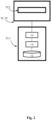
- Fig. 2 shows an exemplary embodiment of a secure token transaction unit TU1 within an electronic payment transaction system TS (not shown in this figure).
- the secure token transaction unit TU1 may be a hosted wallet.
- the token transaction unit TU1 may be hosted within a service provider unit (or terminal) 20, 30 by means of which the token transaction unit TU1 is in an operative state, and to a second transaction unit TU2 of the electronic payment transaction system TS.
- the secure token transaction unit TU1 may comprise a secure memory 12 for storing data; a secure communication interface 16 adapted to provide data to the service provider unit (or terminal) 20, 30 and to obtain data from the service provider unit (or terminal) 20, 30; and an optional control module 14, such as a processor, a microprocessor, or a microcontroller.
- the secure memory 12, the communication interface 16 and the control module 14 is obsolete, if TU1 is a software application that is executable in a runtime environment of the service provider unit (or terminal) 20, 30.
- the TU1 is adapted to perform a dual key control mechanism comprising:
- the dual key control mechanism thereby enhancing the security that the transaction cannot be tampered with, to enable a non-repudiable proof of transaction.
- the mechanism implemented by the TU1 can thus contribute to the implementation of the dual key control mechanism and use the powerful signature verification based on this mechanism to provide enhanced security that the transaction cannot be tampered with to provide non-repudiable proof of the transaction.
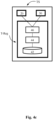
- Fig. 3a shows an exemplary embodiment of a service provider unit (or terminal) 20 designed to host a TU2 as a payment transaction receiver within an electronic payment transaction system TS (not shown in this figure) comprising the token reference register T-Reg and at least one transaction unit TU2, to which the 20 is connected or connectable.
- Fig. 3a also shows one service provider unit (or terminal) 3 designed to host a TU1 as a payment transaction sender of payment transactions.
- the service provider unit (or terminal) 20 designed to host a TU2 as a payment transaction receiver may comprise a secure communication interface 26 connected or connectable to the transaction unit TU2 and, in a connected state, adapted to provide data to the transaction unit TU2 and to obtain data from the transaction unit TU2; a communication module 28 communicatively connected or connectable to the sender 30; a secure memory 22; and a control module 24, such as a processor, a microprocessor, or a microcontroller.
- the secure memory communication interface 26 may be obsolete, if TU2 is a software application that is executable in a runtime environment of the service provider unit (or terminal) 20, 30.
- Fig. 3b shows an exemplary embodiment a service provider unit (or terminal) 30 designed to host a TU1 as a payment transaction sender within an electronic payment transaction system TS (not shown in this figure) comprising a token reference register T-Reg and at least one secure token transaction unit TU1, to which the service provider unit (or terminal) 30 is connected or connectable.
- a service provider unit (or terminal) 30 designed to host a TU1 as a payment transaction sender within an electronic payment transaction system TS (not shown in this figure) comprising a token reference register T-Reg and at least one secure token transaction unit TU1, to which the service provider unit (or terminal) 30 is connected or connectable.
- the service provider unit (or terminal) 30 may comprise a secure communication interface 36 connected or connectable to the transaction unit TU1 and, in a connected state, adapted to provide data to the transaction unit TU1 and to obtain data from the transaction unit TU1; a communication module 38 connected or connectable to the receiver 20; a secure memory 32; and a control module 34, such as a processor, a microprocessor, or a microcontroller.
- the secure memory communication interface 36 may be obsolete, if TU1 is a software application that is executable in a runtime environment of the service provider unit (or terminal) 20, 30.
- Fig. 4a shows an exemplary embodiment of an electronic payment transaction system TS.
- the electronic payment transaction system TS may comprise:
- Fig. 4b shows an exemplary embodiment of an electronic payment transaction system TS comprising a token reference register T-Reg
- Fig. 4c shows the token reference register T-Reg of the electronic payment transaction system TS.
- the token reference register T-Reg may be communicatively connected to the at least one sender 30 and the at least one receiver 20 of the payment transaction system TS.
- the token reference register T-Reg may comprise a secure memory 42, a communication module 48, a control module 44, such as a processor, a microprocessor, or a microcontroller.
- the control module 44 may be adapted to perform via the communication module 48, receiving from the sender 30 a replacement request RR comprising a combined token reference TR comb (v, R'), storing the combined token reference TR comb (v, R') and, via the communication module 48, sending to the sender 30 an acknowledgement confirming that the input token reference TR0 (v, R0) has been replaced by the combined token reference TR comb (v, R'), thereby enhancing the security that the transaction cannot be tampered with, to enable a non-repudiable proof of transaction.
- Fig. 5 shows a symbol diagram of the method 100 of providing a non-repudiable payment transaction between participants in an electronic payment transaction system TS according to the invention.
- the participants include at least one sender 30 and at least one receiver 20 of payment transactions.
- the method 100 may comprise:
Landscapes
- Business, Economics & Management (AREA)
- Accounting & Taxation (AREA)
- Engineering & Computer Science (AREA)
- Finance (AREA)
- General Physics & Mathematics (AREA)
- General Business, Economics & Management (AREA)
- Physics & Mathematics (AREA)
- Strategic Management (AREA)
- Theoretical Computer Science (AREA)
- Computer Security & Cryptography (AREA)
- Computer Networks & Wireless Communication (AREA)
- Signal Processing (AREA)
- Financial Or Insurance-Related Operations Such As Payment And Settlement (AREA)
Priority Applications (2)
| Application Number | Priority Date | Filing Date | Title |
|---|---|---|---|
| EP23211140.1A EP4560554A1 (de) | 2023-11-21 | 2023-11-21 | Sichere tokentransaktionseinheit, zahlungstransaktionssender, -empfänger und -system und verfahren zur bereitstellung einer nicht-wiederveröffentbaren zahlungstransaktion zwischen teilnehmern in einem elektronischen zahlungstransaktionssystem |
| PCT/EP2024/074267 WO2025108592A1 (en) | 2023-11-21 | 2024-08-30 | Secure token transaction unit, payment transaction sender, receiver and system, and method of providing a non-repudiable payment transaction between participants in an electronic payment transaction system |
Applications Claiming Priority (1)
| Application Number | Priority Date | Filing Date | Title |
|---|---|---|---|
| EP23211140.1A EP4560554A1 (de) | 2023-11-21 | 2023-11-21 | Sichere tokentransaktionseinheit, zahlungstransaktionssender, -empfänger und -system und verfahren zur bereitstellung einer nicht-wiederveröffentbaren zahlungstransaktion zwischen teilnehmern in einem elektronischen zahlungstransaktionssystem |
Publications (1)
| Publication Number | Publication Date |
|---|---|
| EP4560554A1 true EP4560554A1 (de) | 2025-05-28 |
Family
ID=88921068
Family Applications (1)
| Application Number | Title | Priority Date | Filing Date |
|---|---|---|---|
| EP23211140.1A Pending EP4560554A1 (de) | 2023-11-21 | 2023-11-21 | Sichere tokentransaktionseinheit, zahlungstransaktionssender, -empfänger und -system und verfahren zur bereitstellung einer nicht-wiederveröffentbaren zahlungstransaktion zwischen teilnehmern in einem elektronischen zahlungstransaktionssystem |
Country Status (2)
| Country | Link |
|---|---|
| EP (1) | EP4560554A1 (de) |
| WO (1) | WO2025108592A1 (de) |
Citations (8)
| Publication number | Priority date | Publication date | Assignee | Title |
|---|---|---|---|---|
| WO2020079534A1 (en) * | 2018-10-17 | 2020-04-23 | nChain Holdings Limited | Computer-implemented system and method including public key combination verification |
| US20200295935A1 (en) * | 2017-10-27 | 2020-09-17 | Coinplus Sa | Method and system for securely registering cryptographic keys on a physical medium for cryptographic keys, and physical medium produced |
| WO2020212331A1 (de) | 2019-04-15 | 2020-10-22 | Giesecke+Devrient Gmbh | Gerät zum direkten übertragen von elektronischen münzdatensätzen an ein anderes gerät sowie bezahlsystem |
| WO2022238065A1 (en) * | 2021-05-10 | 2022-11-17 | Nchain Licensing Ag | Multi-party blockchain address scheme |
| US20220405749A1 (en) * | 2019-09-17 | 2022-12-22 | nChain Holdings Limited | Allocation of a digital asset using blockchain transactions |
| WO2023036458A1 (de) | 2021-09-08 | 2023-03-16 | Giesecke+Devrient Advance52 Gmbh | Verfahren und transaktionssystem zum übertragen von token in einem elektronischen transaktionssystems |
| US20230267426A1 (en) * | 2020-07-08 | 2023-08-24 | Giesecke+Devrient Advance52 Gmbh | Payment system, coin register, participant unit, transaction register, monitoring register and method for payment with electronic coin data sets |
| EP4236188A2 (de) * | 2018-04-13 | 2023-08-30 | nChain Licensing AG | Computerimplementiertes system und verfahren zur erhöhung der sicherheit von unmittelbaren blockchain-offline-transaktionen |
-
2023
- 2023-11-21 EP EP23211140.1A patent/EP4560554A1/de active Pending
-
2024
- 2024-08-30 WO PCT/EP2024/074267 patent/WO2025108592A1/en active Pending
Patent Citations (8)
| Publication number | Priority date | Publication date | Assignee | Title |
|---|---|---|---|---|
| US20200295935A1 (en) * | 2017-10-27 | 2020-09-17 | Coinplus Sa | Method and system for securely registering cryptographic keys on a physical medium for cryptographic keys, and physical medium produced |
| EP4236188A2 (de) * | 2018-04-13 | 2023-08-30 | nChain Licensing AG | Computerimplementiertes system und verfahren zur erhöhung der sicherheit von unmittelbaren blockchain-offline-transaktionen |
| WO2020079534A1 (en) * | 2018-10-17 | 2020-04-23 | nChain Holdings Limited | Computer-implemented system and method including public key combination verification |
| WO2020212331A1 (de) | 2019-04-15 | 2020-10-22 | Giesecke+Devrient Gmbh | Gerät zum direkten übertragen von elektronischen münzdatensätzen an ein anderes gerät sowie bezahlsystem |
| US20220405749A1 (en) * | 2019-09-17 | 2022-12-22 | nChain Holdings Limited | Allocation of a digital asset using blockchain transactions |
| US20230267426A1 (en) * | 2020-07-08 | 2023-08-24 | Giesecke+Devrient Advance52 Gmbh | Payment system, coin register, participant unit, transaction register, monitoring register and method for payment with electronic coin data sets |
| WO2022238065A1 (en) * | 2021-05-10 | 2022-11-17 | Nchain Licensing Ag | Multi-party blockchain address scheme |
| WO2023036458A1 (de) | 2021-09-08 | 2023-03-16 | Giesecke+Devrient Advance52 Gmbh | Verfahren und transaktionssystem zum übertragen von token in einem elektronischen transaktionssystems |
Non-Patent Citations (2)
| Title |
|---|
| ANONYMOUS: "How can the Diffie-Hellman key exchange be extended to three parties? - Cryptography Stack Exchange", 30 August 2012 (2012-08-30), XP093147329, Retrieved from the Internet <URL:https://crypto.stackexchange.com/questions/3682/how-can-the-diffie-hellman-key-exchange-be-extended-to-three-parties> [retrieved on 20240403] * |
| MUT-PUIGSERVER MACI� ET AL: "Blockchain-Based Fair Certified Notifications", 7 September 2018, SAT 2015 18TH INTERNATIONAL CONFERENCE, AUSTIN, TX, USA, SEPTEMBER 24-27, 2015; [LECTURE NOTES IN COMPUTER SCIENCE; LECT.NOTES COMPUTER], SPRINGER, BERLIN, HEIDELBERG, PAGE(S) 20 - 37, ISBN: 978-3-540-74549-5, XP047484661 * |
Also Published As
| Publication number | Publication date |
|---|---|
| WO2025108592A1 (en) | 2025-05-30 |
Similar Documents
| Publication | Publication Date | Title |
|---|---|---|
| JP7244537B2 (ja) | 即時オフラインのブロックチェイントランザクションのセキュリティを高めるのに適しているコンピュータにより実装されるシステム及び方法 | |
| US20230344649A1 (en) | Offline interaction system and method | |
| US20240303635A1 (en) | Token-based off-chain interaction authorization | |
| US10535065B2 (en) | Secure payment transactions based on the public bankcard ledger | |
| CN111062717B (zh) | 一种数据转移处理方法、装置和计算机可读存储介质 | |
| CN117769707A (zh) | 用于在电子交易系统中传输令牌的方法和交易系统 | |
| Christodorescu et al. | Towards a two-tier hierarchical infrastructure: an offline payment system for central bank digital currencies | |
| US10657523B2 (en) | Reconciling electronic transactions | |
| WO2021144888A1 (ja) | 決済処理装置、決済処理プログラムおよび決済処理システム | |
| JP6521421B1 (ja) | 通貨情報処理装置および通貨情報処理システム | |
| US12147952B2 (en) | Method, terminal, monitoring entity, and payment system for managing electronic coin datasets | |
| Park et al. | OPERA: A Complete Offline and Anonymous Digital Cash Transaction System with a One-Time Readable Memory | |
| EP4560554A1 (de) | Sichere tokentransaktionseinheit, zahlungstransaktionssender, -empfänger und -system und verfahren zur bereitstellung einer nicht-wiederveröffentbaren zahlungstransaktion zwischen teilnehmern in einem elektronischen zahlungstransaktionssystem | |
| CN120070047A (zh) | 一种利用未花费的交易输出默克尔树数据结构进行区块链分布式账本交易的方法和系统 | |
| EP4379631A1 (de) | Digitale geldbörsenvorrichtung und duales offline-transaktionsverfahren dafür | |
| Yang et al. | DOPS: A Practical Dual Offline Payment Scheme of CBDC for Mobile Devices | |
| EP4471695A1 (de) | Sichere transaktionseinheit, token-referenzregister, elektronisches zahlungstransaktionssystem und verfahren zum registrieren von token in einem token-referenzregister | |
| US20240354722A1 (en) | Recovery unit, secure transaction unit, token reference register and electronic payment transaction system | |
| EP4451192A1 (de) | Sichere transaktionseinheit, tokenreferenzregister, elektronisches zahlungstransaktionssystem und verfahren zur registrierung eines tokens | |
| EP4462336A1 (de) | Transaktionseinheit mit geringer sicherheit, transaktionseinheit mit hoher sicherheitsstufe, elektronisches transaktionssystem und verfahren zum austausch von token | |
| EP4488822A1 (de) | Sichere dienstanbietereinheit, sichere transaktionseinheit, elektronisches tokentransaktionssystem und verfahren für sichere tokentransaktion | |
| EP4435700A1 (de) | Verfahren zur registrierung eines tokens, tokenreferenzregister, sichere transaktionseinheit und elektronisches zahlungstransaktionssystem | |
| EP4435699A1 (de) | Sichere transaktionseinheit, tokenreferenzregister, elektronisches zahlungstransaktionssystem und verfahren zur registrierung eines tokens | |
| EP4524856A1 (de) | Sichere tokentransaktionseinheit in einem elektronischen zahlungstransaktionssystem | |
| EP4440029A1 (de) | Bereitstellung eines kryptographischen dienstes |
Legal Events
| Date | Code | Title | Description |
|---|---|---|---|
| PUAI | Public reference made under article 153(3) epc to a published international application that has entered the european phase |
Free format text: ORIGINAL CODE: 0009012 |
|
| STAA | Information on the status of an ep patent application or granted ep patent |
Free format text: STATUS: THE APPLICATION HAS BEEN PUBLISHED |
|
| AK | Designated contracting states |
Kind code of ref document: A1 Designated state(s): AL AT BE BG CH CY CZ DE DK EE ES FI FR GB GR HR HU IE IS IT LI LT LU LV MC ME MK MT NL NO PL PT RO RS SE SI SK SM TR |
|
| STAA | Information on the status of an ep patent application or granted ep patent |
Free format text: STATUS: REQUEST FOR EXAMINATION WAS MADE |
|
| 17P | Request for examination filed |
Effective date: 20250611 |
|
| STAA | Information on the status of an ep patent application or granted ep patent |
Free format text: STATUS: EXAMINATION IS IN PROGRESS |
|
| 17Q | First examination report despatched |
Effective date: 20251015 |