EP4236188A2 - Computerimplementiertes system und verfahren zur erhöhung der sicherheit von unmittelbaren blockchain-offline-transaktionen - Google Patents
Computerimplementiertes system und verfahren zur erhöhung der sicherheit von unmittelbaren blockchain-offline-transaktionen Download PDFInfo
- Publication number
- EP4236188A2 EP4236188A2 EP23163310.8A EP23163310A EP4236188A2 EP 4236188 A2 EP4236188 A2 EP 4236188A2 EP 23163310 A EP23163310 A EP 23163310A EP 4236188 A2 EP4236188 A2 EP 4236188A2
- Authority
- EP
- European Patent Office
- Prior art keywords
- key
- transaction
- private key
- computer
- output
- Prior art date
- Legal status (The legal status is an assumption and is not a legal conclusion. Google has not performed a legal analysis and makes no representation as to the accuracy of the status listed.)
- Pending
Links
Images

Classifications
-
- H—ELECTRICITY
- H04—ELECTRIC COMMUNICATION TECHNIQUE
- H04L—TRANSMISSION OF DIGITAL INFORMATION, e.g. TELEGRAPHIC COMMUNICATION
- H04L9/00—Cryptographic mechanisms or cryptographic arrangements for secret or secure communications; Network security protocols
- H04L9/32—Cryptographic mechanisms or cryptographic arrangements for secret or secure communications; Network security protocols including means for verifying the identity or authority of a user of the system or for message authentication, e.g. authorization, entity authentication, data integrity or data verification, non-repudiation, key authentication or verification of credentials
- H04L9/3247—Cryptographic mechanisms or cryptographic arrangements for secret or secure communications; Network security protocols including means for verifying the identity or authority of a user of the system or for message authentication, e.g. authorization, entity authentication, data integrity or data verification, non-repudiation, key authentication or verification of credentials involving digital signatures
-
- G—PHYSICS
- G06—COMPUTING OR CALCULATING; COUNTING
- G06Q—INFORMATION AND COMMUNICATION TECHNOLOGY [ICT] SPECIALLY ADAPTED FOR ADMINISTRATIVE, COMMERCIAL, FINANCIAL, MANAGERIAL OR SUPERVISORY PURPOSES; SYSTEMS OR METHODS SPECIALLY ADAPTED FOR ADMINISTRATIVE, COMMERCIAL, FINANCIAL, MANAGERIAL OR SUPERVISORY PURPOSES, NOT OTHERWISE PROVIDED FOR
- G06Q20/00—Payment architectures, schemes or protocols
- G06Q20/38—Payment protocols; Details thereof
- G06Q20/382—Payment protocols; Details thereof insuring higher security of transaction
- G06Q20/3829—Payment protocols; Details thereof insuring higher security of transaction involving key management
-
- H—ELECTRICITY
- H04—ELECTRIC COMMUNICATION TECHNIQUE
- H04L—TRANSMISSION OF DIGITAL INFORMATION, e.g. TELEGRAPHIC COMMUNICATION
- H04L9/00—Cryptographic mechanisms or cryptographic arrangements for secret or secure communications; Network security protocols
- H04L9/32—Cryptographic mechanisms or cryptographic arrangements for secret or secure communications; Network security protocols including means for verifying the identity or authority of a user of the system or for message authentication, e.g. authorization, entity authentication, data integrity or data verification, non-repudiation, key authentication or verification of credentials
- H04L9/3218—Cryptographic mechanisms or cryptographic arrangements for secret or secure communications; Network security protocols including means for verifying the identity or authority of a user of the system or for message authentication, e.g. authorization, entity authentication, data integrity or data verification, non-repudiation, key authentication or verification of credentials using proof of knowledge, e.g. Fiat-Shamir, GQ, Schnorr, ornon-interactive zero-knowledge proofs
-
- G—PHYSICS
- G06—COMPUTING OR CALCULATING; COUNTING
- G06Q—INFORMATION AND COMMUNICATION TECHNOLOGY [ICT] SPECIALLY ADAPTED FOR ADMINISTRATIVE, COMMERCIAL, FINANCIAL, MANAGERIAL OR SUPERVISORY PURPOSES; SYSTEMS OR METHODS SPECIALLY ADAPTED FOR ADMINISTRATIVE, COMMERCIAL, FINANCIAL, MANAGERIAL OR SUPERVISORY PURPOSES, NOT OTHERWISE PROVIDED FOR
- G06Q20/00—Payment architectures, schemes or protocols
- G06Q20/04—Payment circuits
- G06Q20/06—Private payment circuits, e.g. involving electronic currency used among participants of a common payment scheme
- G06Q20/065—Private payment circuits, e.g. involving electronic currency used among participants of a common payment scheme using e-cash
-
- G—PHYSICS
- G06—COMPUTING OR CALCULATING; COUNTING
- G06Q—INFORMATION AND COMMUNICATION TECHNOLOGY [ICT] SPECIALLY ADAPTED FOR ADMINISTRATIVE, COMMERCIAL, FINANCIAL, MANAGERIAL OR SUPERVISORY PURPOSES; SYSTEMS OR METHODS SPECIALLY ADAPTED FOR ADMINISTRATIVE, COMMERCIAL, FINANCIAL, MANAGERIAL OR SUPERVISORY PURPOSES, NOT OTHERWISE PROVIDED FOR
- G06Q20/00—Payment architectures, schemes or protocols
- G06Q20/08—Payment architectures
- G06Q20/10—Payment architectures specially adapted for electronic funds transfer [EFT] systems; specially adapted for home banking systems
- G06Q20/105—Payment architectures specially adapted for electronic funds transfer [EFT] systems; specially adapted for home banking systems involving programming of a portable memory device, e.g. IC cards, "electronic purses"
-
- G—PHYSICS
- G06—COMPUTING OR CALCULATING; COUNTING
- G06Q—INFORMATION AND COMMUNICATION TECHNOLOGY [ICT] SPECIALLY ADAPTED FOR ADMINISTRATIVE, COMMERCIAL, FINANCIAL, MANAGERIAL OR SUPERVISORY PURPOSES; SYSTEMS OR METHODS SPECIALLY ADAPTED FOR ADMINISTRATIVE, COMMERCIAL, FINANCIAL, MANAGERIAL OR SUPERVISORY PURPOSES, NOT OTHERWISE PROVIDED FOR
- G06Q20/00—Payment architectures, schemes or protocols
- G06Q20/30—Payment architectures, schemes or protocols characterised by the use of specific devices or networks
- G06Q20/36—Payment architectures, schemes or protocols characterised by the use of specific devices or networks using electronic wallets or electronic money safes
- G06Q20/367—Payment architectures, schemes or protocols characterised by the use of specific devices or networks using electronic wallets or electronic money safes involving electronic purses or money safes
-
- G—PHYSICS
- G06—COMPUTING OR CALCULATING; COUNTING
- G06Q—INFORMATION AND COMMUNICATION TECHNOLOGY [ICT] SPECIALLY ADAPTED FOR ADMINISTRATIVE, COMMERCIAL, FINANCIAL, MANAGERIAL OR SUPERVISORY PURPOSES; SYSTEMS OR METHODS SPECIALLY ADAPTED FOR ADMINISTRATIVE, COMMERCIAL, FINANCIAL, MANAGERIAL OR SUPERVISORY PURPOSES, NOT OTHERWISE PROVIDED FOR
- G06Q20/00—Payment architectures, schemes or protocols
- G06Q20/30—Payment architectures, schemes or protocols characterised by the use of specific devices or networks
- G06Q20/36—Payment architectures, schemes or protocols characterised by the use of specific devices or networks using electronic wallets or electronic money safes
- G06Q20/367—Payment architectures, schemes or protocols characterised by the use of specific devices or networks using electronic wallets or electronic money safes involving electronic purses or money safes
- G06Q20/3678—Payment architectures, schemes or protocols characterised by the use of specific devices or networks using electronic wallets or electronic money safes involving electronic purses or money safes e-cash details, e.g. blinded, divisible or detecting double spending
-
- G—PHYSICS
- G06—COMPUTING OR CALCULATING; COUNTING
- G06Q—INFORMATION AND COMMUNICATION TECHNOLOGY [ICT] SPECIALLY ADAPTED FOR ADMINISTRATIVE, COMMERCIAL, FINANCIAL, MANAGERIAL OR SUPERVISORY PURPOSES; SYSTEMS OR METHODS SPECIALLY ADAPTED FOR ADMINISTRATIVE, COMMERCIAL, FINANCIAL, MANAGERIAL OR SUPERVISORY PURPOSES, NOT OTHERWISE PROVIDED FOR
- G06Q20/00—Payment architectures, schemes or protocols
- G06Q20/38—Payment protocols; Details thereof
- G06Q20/382—Payment protocols; Details thereof insuring higher security of transaction
- G06Q20/3821—Electronic credentials
- G06Q20/38215—Use of certificates or encrypted proofs of transaction rights
-
- G—PHYSICS
- G06—COMPUTING OR CALCULATING; COUNTING
- G06Q—INFORMATION AND COMMUNICATION TECHNOLOGY [ICT] SPECIALLY ADAPTED FOR ADMINISTRATIVE, COMMERCIAL, FINANCIAL, MANAGERIAL OR SUPERVISORY PURPOSES; SYSTEMS OR METHODS SPECIALLY ADAPTED FOR ADMINISTRATIVE, COMMERCIAL, FINANCIAL, MANAGERIAL OR SUPERVISORY PURPOSES, NOT OTHERWISE PROVIDED FOR
- G06Q20/00—Payment architectures, schemes or protocols
- G06Q20/38—Payment protocols; Details thereof
- G06Q20/382—Payment protocols; Details thereof insuring higher security of transaction
- G06Q20/3825—Use of electronic signatures
-
- G—PHYSICS
- G06—COMPUTING OR CALCULATING; COUNTING
- G06Q—INFORMATION AND COMMUNICATION TECHNOLOGY [ICT] SPECIALLY ADAPTED FOR ADMINISTRATIVE, COMMERCIAL, FINANCIAL, MANAGERIAL OR SUPERVISORY PURPOSES; SYSTEMS OR METHODS SPECIALLY ADAPTED FOR ADMINISTRATIVE, COMMERCIAL, FINANCIAL, MANAGERIAL OR SUPERVISORY PURPOSES, NOT OTHERWISE PROVIDED FOR
- G06Q40/00—Finance; Insurance; Tax strategies; Processing of corporate or income taxes
- G06Q40/04—Trading; Exchange, e.g. stocks, commodities, derivatives or currency exchange
-
- H—ELECTRICITY
- H04—ELECTRIC COMMUNICATION TECHNIQUE
- H04L—TRANSMISSION OF DIGITAL INFORMATION, e.g. TELEGRAPHIC COMMUNICATION
- H04L9/00—Cryptographic mechanisms or cryptographic arrangements for secret or secure communications; Network security protocols
- H04L9/08—Key distribution or management, e.g. generation, sharing or updating, of cryptographic keys or passwords
- H04L9/0816—Key establishment, i.e. cryptographic processes or cryptographic protocols whereby a shared secret becomes available to two or more parties, for subsequent use
- H04L9/0819—Key transport or distribution, i.e. key establishment techniques where one party creates or otherwise obtains a secret value, and securely transfers it to the other(s)
- H04L9/0825—Key transport or distribution, i.e. key establishment techniques where one party creates or otherwise obtains a secret value, and securely transfers it to the other(s) using asymmetric-key encryption or public key infrastructure [PKI], e.g. key signature or public key certificates
-
- H—ELECTRICITY
- H04—ELECTRIC COMMUNICATION TECHNIQUE
- H04L—TRANSMISSION OF DIGITAL INFORMATION, e.g. TELEGRAPHIC COMMUNICATION
- H04L9/00—Cryptographic mechanisms or cryptographic arrangements for secret or secure communications; Network security protocols
- H04L9/30—Public key, i.e. encryption algorithm being computationally infeasible to invert or user's encryption keys not requiring secrecy
- H04L9/3066—Public key, i.e. encryption algorithm being computationally infeasible to invert or user's encryption keys not requiring secrecy involving algebraic varieties, e.g. elliptic or hyper-elliptic curves
-
- H—ELECTRICITY
- H04—ELECTRIC COMMUNICATION TECHNIQUE
- H04L—TRANSMISSION OF DIGITAL INFORMATION, e.g. TELEGRAPHIC COMMUNICATION
- H04L9/00—Cryptographic mechanisms or cryptographic arrangements for secret or secure communications; Network security protocols
- H04L9/32—Cryptographic mechanisms or cryptographic arrangements for secret or secure communications; Network security protocols including means for verifying the identity or authority of a user of the system or for message authentication, e.g. authorization, entity authentication, data integrity or data verification, non-repudiation, key authentication or verification of credentials
- H04L9/3247—Cryptographic mechanisms or cryptographic arrangements for secret or secure communications; Network security protocols including means for verifying the identity or authority of a user of the system or for message authentication, e.g. authorization, entity authentication, data integrity or data verification, non-repudiation, key authentication or verification of credentials involving digital signatures
- H04L9/3252—Cryptographic mechanisms or cryptographic arrangements for secret or secure communications; Network security protocols including means for verifying the identity or authority of a user of the system or for message authentication, e.g. authorization, entity authentication, data integrity or data verification, non-repudiation, key authentication or verification of credentials involving digital signatures using DSA or related signature schemes, e.g. elliptic based signatures, ElGamal or Schnorr schemes
-
- H—ELECTRICITY
- H04—ELECTRIC COMMUNICATION TECHNIQUE
- H04L—TRANSMISSION OF DIGITAL INFORMATION, e.g. TELEGRAPHIC COMMUNICATION
- H04L9/00—Cryptographic mechanisms or cryptographic arrangements for secret or secure communications; Network security protocols
- H04L9/50—Cryptographic mechanisms or cryptographic arrangements for secret or secure communications; Network security protocols using hash chains, e.g. blockchains or hash trees
-
- G—PHYSICS
- G06—COMPUTING OR CALCULATING; COUNTING
- G06Q—INFORMATION AND COMMUNICATION TECHNOLOGY [ICT] SPECIALLY ADAPTED FOR ADMINISTRATIVE, COMMERCIAL, FINANCIAL, MANAGERIAL OR SUPERVISORY PURPOSES; SYSTEMS OR METHODS SPECIALLY ADAPTED FOR ADMINISTRATIVE, COMMERCIAL, FINANCIAL, MANAGERIAL OR SUPERVISORY PURPOSES, NOT OTHERWISE PROVIDED FOR
- G06Q20/00—Payment architectures, schemes or protocols
- G06Q20/08—Payment architectures
- G06Q20/20—Point-of-sale [POS] network systems
- G06Q20/204—Point-of-sale [POS] network systems comprising interface for record bearing medium or carrier for electronic funds transfer or payment credit
-
- G—PHYSICS
- G06—COMPUTING OR CALCULATING; COUNTING
- G06Q—INFORMATION AND COMMUNICATION TECHNOLOGY [ICT] SPECIALLY ADAPTED FOR ADMINISTRATIVE, COMMERCIAL, FINANCIAL, MANAGERIAL OR SUPERVISORY PURPOSES; SYSTEMS OR METHODS SPECIALLY ADAPTED FOR ADMINISTRATIVE, COMMERCIAL, FINANCIAL, MANAGERIAL OR SUPERVISORY PURPOSES, NOT OTHERWISE PROVIDED FOR
- G06Q20/00—Payment architectures, schemes or protocols
- G06Q20/30—Payment architectures, schemes or protocols characterised by the use of specific devices or networks
- G06Q20/32—Payment architectures, schemes or protocols characterised by the use of specific devices or networks using wireless devices
- G06Q20/326—Payment applications installed on the mobile devices
-
- G—PHYSICS
- G06—COMPUTING OR CALCULATING; COUNTING
- G06Q—INFORMATION AND COMMUNICATION TECHNOLOGY [ICT] SPECIALLY ADAPTED FOR ADMINISTRATIVE, COMMERCIAL, FINANCIAL, MANAGERIAL OR SUPERVISORY PURPOSES; SYSTEMS OR METHODS SPECIALLY ADAPTED FOR ADMINISTRATIVE, COMMERCIAL, FINANCIAL, MANAGERIAL OR SUPERVISORY PURPOSES, NOT OTHERWISE PROVIDED FOR
- G06Q2220/00—Business processing using cryptography
-
- H—ELECTRICITY
- H04—ELECTRIC COMMUNICATION TECHNIQUE
- H04L—TRANSMISSION OF DIGITAL INFORMATION, e.g. TELEGRAPHIC COMMUNICATION
- H04L2209/00—Additional information or applications relating to cryptographic mechanisms or cryptographic arrangements for secret or secure communication H04L9/00
- H04L2209/56—Financial cryptography, e.g. electronic payment or e-cash
-
- H—ELECTRICITY
- H04—ELECTRIC COMMUNICATION TECHNIQUE
- H04L—TRANSMISSION OF DIGITAL INFORMATION, e.g. TELEGRAPHIC COMMUNICATION
- H04L9/00—Cryptographic mechanisms or cryptographic arrangements for secret or secure communications; Network security protocols
- H04L9/08—Key distribution or management, e.g. generation, sharing or updating, of cryptographic keys or passwords
- H04L9/0861—Generation of secret information including derivation or calculation of cryptographic keys or passwords
- H04L9/0869—Generation of secret information including derivation or calculation of cryptographic keys or passwords involving random numbers or seeds
Definitions
- This specification relates generally to computer-implemented methods and systems suitable for implementation of a cryptographic protocol.
- the cryptographic protocol enables one party to derive a valid private key when a second private key is revealed.
- One application of such a cryptographic protocol is for increasing the security of instant off-line transactions using a blockchain network.
- the invention is particularly suited, but not limited, to use with the Bitcoin blockchain.
- blockchain to include all forms of electronic, computer-based, distributed ledgers. These include consensus-based blockchain and transaction-chain technologies, permissioned and un-permissioned ledgers, shared ledgers and variations thereof.
- the most widely known application of blockchain technology is the Bitcoin ledger, although other blockchain implementations have been proposed and developed. While Bitcoin may be referred to herein for the purpose of convenience and illustration, it should be noted that the invention is not limited to use with the Bitcoin blockchain and alternative blockchain implementations and protocols fall within the scope of the present invention.
- a blockchain is a consensus-based, electronic ledger which is implemented as a computer-based decentralised, distributed system made up of blocks which in turn are made up of transactions and other information.
- each transaction is a data structure that encodes the transfer of control of a digital asset between participants in the blockchain system, and includes at least one input and at least one output.
- Each block contains a hash of the previous block to that blocks become chained together to create a permanent unalterable record of all transactions which have been written to the blockchain since its inception.
- Transactions contain small programs known as scripts embedded into their inputs and outputs, which specify how and by whom the outputs of the transactions can be accessed. On the Bitcoin platform, these scripts are written using a stack-based scripting language.
- Validation In order for a transaction to be written to the blockchain, it must be "validated". Some network nodes act as miners and perform work to ensure that each transaction is valid, with invalid transactions rejected from the network. For example, software clients installed on the nodes perform this validation work on transactions that reference unspent transaction outputs (UTXO). Validation may be performed by executing its locking and unlocking scripts. If execution of the locking and unlocking scripts evaluate to TRUE and, if certain other conditions are met, the transaction is valid and the transaction may be written to the blockchain.
- a transaction in order for a transaction to be written to the blockchain, it must be i) validated by a node that receives the transaction - if the transaction is validated, the node relays it to the other nodes in the network; and ii) added to a new block built by a miner; and iii) mined, i.e. added to the public ledger of past transactions.
- the transaction is considered to be confirmed when a sufficient number of blocks are added to the blockchain to make the transaction practically irreversible.
- Smart contracts are computer programs designed to automate the execution of the terms of a machine-readable contract or agreement.
- a smart contract is a machine executable program which comprises rules that can process inputs in order to produce results, which can then cause actions to be performed dependent upon those results.
- a computer-implemented method for a prover to implement a cryptographic protocol comprising:
- a computer-implemented method for a verifier to implement a cryptographic protocol comprising:
- Cryptographic assets associated with the second public key ( PK 2 ) can be time-locked for a lock-time T whereby the cryptographic assets can only be accessed after the lock-time T expires.
- the cryptographic proof can be a non-interactive zero knowledge proof.
- Such a non-interactive zero knowledge proof can be based on a zero-knowledge sigma ( ⁇ ) protocol converted to a non-interactive zero knowledge proof through application of a Fiat-Shamir heuristic.
- the cryptographic proof can be constructed by:
- the verifier :
- the spend output can be configured such that to transfer funds from the spend output requires a transaction signature based on a fixed ephemeral key ( k ) .
- the spend output can be a fixed-r-pay-to-public-key (FR-P2PK) output such that to transfer funds from the spend output requires a transaction signature utilizing a pre-specified r value.
- FR-P2PK fixed-r-pay-to-public-key
- the deposit output can be larger than the spend output to increase the security of the system.
- Embodiments of the present invention can be provided in a variety of forms.
- a computer readable storage medium can be provided which comprises computer-executable instructions which, when executed, configure one or more processors to perform the method as described herein.
- An electronic device can also be provided which comprises: an interface device; one or more processor(s) coupled to the interface device; and a memory coupled to the one or more processor(s), the memory having stored thereon computer executable instructions which, when executed, configure the one or more processor(s) to perform the method as described herein.
- a node of a blockchain network can also be provided, the node configured to perform the method as described herein.
- This specification describes a system and method that enables bitcoin signed transactions to be accepted as a payment for goods and services instantly and off-line, without the need to wait for confirmation that the transaction is included in a valid block, or even for confirmation that a transaction has been received by the network.
- this method involves a payer providing the payee with a special compensation key at the point-of-sale which can be used to claim a time-locked deposit output when combined with a 'revealed' private key, if (and only if) a double-spend is perpetrated by the payee.
- this compensation key is guaranteed via a novel type of zero-knowledge-proof, which is highly efficient: the proof can be generated in ⁇ 5 milliseconds and can be verified in ⁇ 30 milliseconds.
- the use of this system in a retail setting would allow vendors to accept instant cryptocurrency payments off-line for high value items without aggregated risk of loss, and without the need to trust a third party service.
- the invention of Bitcoin provided the first completely decentralised solution to the problem of double-spending a digital token, by adding valid transactions to an append only immutable ledger that is replicated on every node in the network: the blockchain.
- a transaction in order to be appended to this ledger, a transaction must be confirmed within a block, and have sufficient proof-of-work (via block depth) added to it to be considered irreversible.
- This system has proven to be highly secure and reliable, however it takes a significant amount of time: a new block is mined in the Bitcoin network only every 10 minutes (on average) and there is no guarantee that a particular transaction will be included in the next block (especially if there is high demand and a limited block size).
- This slow confirmation time prevents the secure use of Bitcoin in many applications, particularly in a retail setting and at point-of-sale (POS), where in order to compete with cash and credit/debit card payments, secure transactions should be completed in a matter of seconds or less. It may be noted that the specification for contactless card payments states they must be completed and confirmed in less than 500 milliseconds.
- ZCT zero-confirmation transactions
- a retailer may choose to accept a ZCT as payment for goods/services, but in doing so they must accept a risk that the funds may be double-spent: i.e. that a separate valid transaction spending the same UTXO is confirmed in the blockchain first. This would invalidate the retailer's transaction and they would lose the corresponding funds.
- This is known as a double-spending attack (or race attack) and would be perpetrated by a customer, who is then effectively stealing the goods/services they receive in the point-of-sale exchange.
- the ultimate aim of this attack is to get the double-spend (attack) transaction confirmed (mined) first, before the transaction paying to the retailer.
- a valid transaction is broadcast to the Bitcoin network it is added into to the mempool of individual mining nodes (the list of unconfirmed transactions that a miner can choose from to include in a new block).
- Mining nodes are free to include or exclude any valid transactions they wish, but since they follow economic incentives, transactions are usually prioritized based on the fee they offer. Therefore, an attacker can incentivise a miner to prioritise a transaction by paying a higher fee, even if a conflicting transaction was received first. This takes place automatically, with the Replace-By-Fee (RBF) feature in the Bitcoin Core client. This is discussed in more detail in a later section of this specification.
- RBF Replace-By-Fee
- the Lightning Network requires pre-funded payment channels linking the customer and the retailer via intermediate payment hubs: this payment routing is an unsolved technical problem, but both the payer and payee must be on-line and it is likely to take at least 5-10 seconds to negotiate a funded route through the network and confirm a payment (if it works at all).
- UXOs unspent transaction outputs
- EDSA elliptic curve digital signature algorithm
- Transaction outputs typically pay to an address (which is a hash of a public key) and can be 'spent' (unlocked) by a transaction input that provides the corresponding public key and a valid signature (which authorises the transaction and can only be generated using the corresponding private key).
- the signature of a message m (e.g. the Bitcoin transaction) is generated as follows:
- a valid signature proves that the private key ( d ) was used to authorise a message, without revealing any information about the key. As described below, this is true only if the value k is also kept secret, and that different signatures use different random values of k.
- the ECDSA signature scheme has a well-known vulnerability (that is also shared with most other popular schemes such as DSA, Schnorr and ElGamal) where two different signatures (of two different messages, but using the same private key) can be used to derive the private key if the same ephemeral key ( k ) is used for both signatures.
- the double-spending customer then risks losing the entirety of the funds in the UTXO to a third party.
- the customer In order for this disincentive mechanism to work, the customer must use the same ephemeral key ( k ) to generate both signatures. This can be enforced by getting the customer to commit to the r -value of the signature in advance ( r depends only on k ) by creating a special type of transaction output: the so-called Fixed- r Pay-to-Public-Key (described below). The customer must set this up in advance: they must choose a k value (and securely store it, along with their private key) and pay sufficient funds into an output that requires a signature with an r value corresponding to the committed k.
- FR-P2PK Fixed- r Pay-to-Public-Key
- the customer To spend this output, the customer must produce a signature that uses the same r value committed to in the funding transaction. To produce the signature, the customer must then know the corresponding k value and private key d . Producing (and broadcasting) a second signature (on a different transaction) will then reveal the private key.
- the dynamics of a double spending attack in this context depends on the way that mining nodes deal with (i.e. prioritise and/or relay) conflicting transactions, which is independent of the network consensus rules and depends only on the client implementation that the miner is running.
- the client may operate on a 'first seen' rule - that is the first valid transaction they receive is added to the mempool and subsequent transactions referring to the same outputs are simply ignored.
- different miners may have different transactions in their mempool depending on the way the two conflicting transactions are propagated around the network. But all miners monitoring the network can still get the private key from the broadcast conflicting transaction and create their own transaction to be included in a block - they are incentivised to do so.
- a different client rule (which is implemented in the current Bitcoin Core client version 0.12 [released in February 2016] and later) is the 'replace-by-fee' (RBF) feature, which is intended to help people 'bump' stuck transactions that have insufficient fees.
- RBF mining clients will replace any transaction in their mempool with another spending the same UTXO but which include a higher miner fee.
- miners are both ⁇ honest' and run a ⁇ seen first' client rule, 1 and 2 have similar likelihoods, depending on the timing of the attack and the network topology. If miners act according to economic incentives, or operate a RBF client rule, then the end result is always that a miner will claim the full FR-P2PK output, and the retailer has zero chance of compensation.
- the attack transaction will of course confirm first.
- the retailer can then obtain the private key from the signature they possess and signature on the blockchain - but this will be of no use once the funds have been spent.
- ⁇ protocol is a type of interactive zero-knowledge proof system, that involves a number of messages between the prover and verifier.
- ⁇ protocols typically involve 3 moves : the prover sends an initial commitment to the verifier ( a ), the verifier then responds with a random challenge ( x ) and then the prover answers with a final response ( z ). The verifier then accepts or rejects the statement based on the transcript ( a , x, z ) .
- ⁇ protocols are used to prove knowledge of, or statements about, a witness ( w ) that is known only to the prover [Damgard 2010].
- the protocol is zero-knowledge if it does not reveal any information about the witness to the verifier, except for the fact that a statement related to the witness is true [Bootle 2015].
- the protocol described in the next section is derived from the basic Schnorr protocol for proving knowledge of a discrete logarithm [Schnorr 1990] and the sigma protocol for proving the equivalence of the discrete logarithms [Bootle 2015] of two group elements, employing a one-way function with homomorphic properties (in an embodiment, this can be elliptic curve point multiplication).
- An interactive ⁇ protocol can be converted to a non-interactive scheme by applying the Fiat-Shamir heuristic [Fiat 1986]: this simply replaces the random challenge value ( x ) with the output of a hash of the commitment made by the prover.
- the prover cannot cheat, and the verifier can check the validity of the challenge value generated.
- the ⁇ complete scheme' provides a method that enables one party (and one party only) to derive a valid private key (corresponding to a known public key) when a second private key (corresponding to a second known public key) is publically revealed.
- the first party must be provided with a unique piece of information (which we call a compensation key) along with a cryptographic proof that this piece of information will enable them to derive the valid private key when combined with the revealed private key.
- This proof is based on a zero-knowledge ⁇ protocol, converted into a non-interactive proof through application of the Fiat-Shamir heuristic.
- Both P and V agree on an asymmetric cryptographic function and specification. In general this will consist of a group of order n with a generator G , in which the discrete logarithm problem is assumed to be intractable.
- this specification can be the secp256k1 elliptic curve [SEC 2010], which includes the base generator point G (of order n ). We denote point multiplication on the elliptic curve with the ⁇ symbol.
- Each party employs cryptographically secure pseudo random number generators (CSPRNG) with an adequate source of entropy. Both parties agree on a cryptographic hash function H (e.g. SHA-256).
- the prover initially generates two secure random private keys: sk 1 ⁇ Z n sk 2 ⁇ Z n
- PK 1 sk 1 ⁇ G
- PK 2 sk 2 ⁇ G
- these can then be used as addresses on the Bitcoin blockchain that are used to control digital assets (as described in the next section).
- One aim is for the prover to enable the verifier (by securely sending them a key ck ) to have the ability to compute sk 2 in the event that sk 1 is revealed, and for the verifier to authenticate (verify) that they have this ability (given the key ck and the public keys). This is achieved as follows:
- the method as described above can be employed in a larger scheme that enables instant trustless zero-confirmation payments to be made at point-of-sale, with protections for the retailer against double-spend attacks that overcomes the significant shortcomings of the existing FR-P2PK one-time-signature scheme.
- the scheme relies on a 'spender' or customer sending funds to a FR-P2PK output, as well as a 'deposit' amount to a time-locked output, from the same transaction - in advance of wanting to perform an 'instant' POS purchase.
- the customer signs a transaction spending from the FR-P2PK output paying to a retailer address, and sends this signed transaction to the retailer along with a compensation key and corresponding validity proof for claiming the parallel time-locked output if the FR-P2PK key is revealed from a double spending attempt. If a double-spend attempt is made (even if it is successful), the retailer can then claim the time-locked output funds after the lock-time. If no double-spend attempt is made, the customer can re-claim the time-locked output.
- the retailer does not need to be online or monitor the propagation of their transaction through the network to allow a purchase to proceed: even if a double spend attack transaction is confirmed first, they can still claim compensation.
- the scheme requires the customer to perform a set-up transaction in advance of the instant purchase, which involves funding both a FR-P2PK output (to cover the expected purchase amount) and a deposit output, which is time-locked for the period in which the instant purchase can be made.
- the amount locked-up in the deposit output will depend on the requirements of the retailer - they may demand a deposit amount that is equal to or greater than the purchase price in order to proceed with a purchase. They may also require a minimum remaining time on the locked deposit (if they are off-line) - the lock time (T) will then be decided upon by the customer based on their spending plans and personal cash-flow. For example, an individual may be planning on making a large purchase over the weekend, so they would lock the deposit funds for 48 hours (or their wallet would do this automatically based on their spending habits).
- the funding transaction ( Tx 0 ) would then contain two outputs with the following locking conditions:
- the customers instant-spend wallet securely stores the value of k S used to generate the PK FR-P2PK, the secret key sk S (corresponding to public key PK S ) and sk D (corresponding to public key PK D ).
- This can be implemented as a smartphone app, which communicates with the retailer via QR codes or NFC radio.
- the customer then makes purchase with a retailer, before the time T .
- a retailer need to be on-line at the time of the purchase, but the retailer must have a recent copy of the UTXO set (that contains the set-up transaction) and be able to broadcast and have the POS transaction confirmed before the time T .
- the transaction then proceeds as follows, with the communication between the customer and retailer occurring via NFC radio (i.e. the customer's smart-phone running the wallet app and the retailer's card reader) or some other secure communication channel.
- NFC radio i.e. the customer's smart-phone running the wallet app and the retailer's card reader
- the retailer then broadcasts the Tx R transaction to the Bitcoin network in advance of the time T (allowing for the confirmation time). After the time T, the customer can then spend the deposit output to a new address.
- a double-spend attempt occurs if the customer broadcasts a second attack transaction Tx A at any point (either before or after the POS purchase) that spends the FR-P2PK output. If the retailer has yet to broadcast Tx R , then Tx A will be confirmed on the blockchain first. If Tx R and Tx A are broadcast at the same time, then the private key sk S can be calculated from the two signatures, and miners may front run their own transaction for inclusion in a block. If the attack transaction is broadcast after Tx R is confirmed (due to a botched attack) the retailer can also claim the deposit (as well as receiving the purchase price). Either way, if the retailer observes a conflicting transaction either in the mempool or confirmed in the blockchain, before time T , they can calculate sk S from the Tx R and Tx A signatures.
- the presented scheme offers a way for one party to pay any other party with a bitcoin transaction instantly and off-line, without requiring either the transaction to be broadcast to the network or any block confirmations, all while being protected from losses due to a double spend transaction. No payment channels are required between the two parties, and the payee need only verify a simple proof to accept the payment with confidence.
- the scheme has some downsides: firstly, a deposit amount is required to be locked for a length of time by the payer - which temporarily reduces the customer's available funds and liquidity. In addition, the payer is required to perform an additional on-chain transaction to set-up the system, and this transaction is relatively large in size (due to the signature masks).
- the instant off-line transaction must be set-up in advance - although this could be automated by wallet applications, and in anticipation of significant purchases.
- a proof system is said to be complete if the verifier will always be convinced by the prover that a statement is true, if it is indeed true.
- a proof system is said to be sound if it is impossible for the prover to convince the verifier of a statement that is not true.
- the system is statistically sound if a cheating prover will fail to convince the verifier that a false statement is true with overwhelming probability.
- a proof-system is said to be zero-knowledge if the transcripts of the protocol (i.e. the communications) can be simulated and leak no information (specifically the witness sk 1 and sk 2 ). This can be done under the assumption of Special-Honest Verifier Zero Knowledge (SHVZK), that the challenge x is honestly randomly generated by the verifier.
- SHVZK Special-Honest Verifier Zero Knowledge
- the aim is to demonstrate the existence of a simulator ( S ) that given a random challenge can produce a transcript that is indistinguishable from a real one (created by the prover with knowledge of the witness).
- the simulator does not know the witness, but has full control over the verifier (and can ⁇ re-wind' the interaction - and therefore know the challenge in advance).
- the simulation can produce a valid transcript as follows.
- the assumption of an honest verifier can be removed by the use of Fiat-Shamir and by replacing the challenge value with the output from a hash function.
- This section shows an example of the form of the set-up transaction Tx 0 .
- the output scripts are pay to public keys in this example, but they can be easily modified to pay to addresses (public key hashes) and require the public key on the stack.
- the transaction can also be constructed as a pay-to-script-hash (P2SH) with the two output scripts supplied as redeem scripts (if isStandard() rules are enforced).
- P2SH pay-to-script-hash
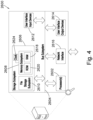
- FIG. 4 is a schematic diagram illustrates a computing environment in which various embodiments can be implemented.
- a computing device 2600 that may be used to practice at least one embodiment of the present disclosure.
- the computing device 2600 may be used to implement any of the systems illustrated and described above.
- the computing device 2600 may be configured for use as a data server, a web server, a portable computing device, a personal computer, or any electronic computing device.
- the computing device 2600 may include one or more processors with one or more levels of cache memory and a memory controller (collectively labelled 2602) that can be configured to communicate with a storage subsystem 2606 that includes main memory 2608 and persistent storage 2610.
- the main memory 2608 can include dynamic random-access memory (DRAM) 2618 and read-only memory (ROM) 2620 as shown.
- DRAM dynamic random-access memory
- ROM read-only memory
- the storage subsystem 2606 and the cache memory 2602 may be used for storage of information, such as details associated with transactions and blocks as described in the present disclosure.
- the processor(s) 2602 may be utilized to provide the steps or functionality of any embodiment as described in the present disclosure.
- the processor(s) 2602 can also communicate with one or more user interface input devices 2612, one or more user interface output devices 2614, and a network interface subsystem 2616.
- a bus subsystem 2604 may provide a mechanism for enabling the various components and subsystems of computing device 2600 to communicate with each other as intended. Although the bus subsystem 2604 is shown schematically as a single bus, alternative embodiments of the bus subsystem may utilize multiple busses.
- the network interface subsystem 2616 may provide an interface to other computing devices and networks.
- the network interface subsystem 2616 may serve as an interface for receiving data from, and transmitting data to, other systems from the computing device 2600.
- the network interface subsystem 2616 may enable a data technician to connect the device to a network such that the data technician may be able to transmit data to the device and receive data from the device while in a remote location, such as a data centre.
- the user interface input devices 2612 may include one or more user input devices such as a keyboard; pointing devices such as an integrated mouse, trackball, touchpad, or graphics tablet; a scanner; a barcode scanner; a touch screen incorporated into the display; audio input devices such as voice recognition systems, microphones; and other types of input devices.
- user input devices such as a keyboard; pointing devices such as an integrated mouse, trackball, touchpad, or graphics tablet; a scanner; a barcode scanner; a touch screen incorporated into the display; audio input devices such as voice recognition systems, microphones; and other types of input devices.
- input device is intended to include all possible types of devices and mechanisms for inputting information to the computing device 2600.
- the one or more user interface output devices 2614 may include a display subsystem, a printer, or non-visual displays such as audio output devices, etc.
- the display subsystem may be a cathode ray tube (CRT), a flat-panel device such as a liquid crystal display (LCD), light emitting diode (LED) display, or a projection or other display device.
- CTR cathode ray tube
- LCD liquid crystal display
- LED light emitting diode
- output device is intended to include all possible types of devices and mechanisms for outputting information from the computing device 2600.
- the one or more user interface output devices 2614 may be used, for example, to present user interfaces to facilitate user interaction with applications performing processes described and variations therein, when such interaction may be appropriate.
- the storage subsystem 2606 may provide a computer-readable storage medium for storing the basic programming and data constructs that may provide the functionality of at least one embodiment of the present disclosure.
- the applications programs, code modules, instructions
- the storage subsystem 2606 may additionally provide a repository for storing data used in accordance with the present disclosure.
- the main memory 2608 and cache memory 2602 can provide volatile storage for program and data.
- the persistent storage 2610 can provide persistent (non-volatile) storage for program and data and may include flash memory, one or more solid state drives, one or more magnetic hard disk drives, one or more floppy disk drives with associated removable media, one or more optical drives (e.g. CD-ROM or DVD or Blue-Ray) drive with associated removable media, and other like storage media.
- Such program and data can include programs for carrying out the steps of one or more embodiments as described in the present disclosure as well as data associated with transactions and blocks as described in the present disclosure.
- the computing device 2600 may be of various types, including a portable computer device, tablet computer, a workstation, or any other device described below. Additionally, the computing device 2600 may include another device that may be connected to the computing device 2600 through one or more ports (e.g., USB, a headphone jack, Lightning connector, etc.). The device that may be connected to the computing device 2600 may include a plurality of ports configured to accept fibre-optic connectors. Accordingly, this device may be configured to convert optical signals to electrical signals that may be transmitted through the port connecting the device to the computing device 2600 for processing. Due to the ever-changing nature of computers and networks, the description of the computing device 2600 depicted in FIG. 4 is intended only as a specific example for purposes of illustrating the preferred embodiment of the device. Many other configurations having more or fewer components than the system depicted in FIG. 4 are possible.
- any reference signs placed in parentheses shall not be construed as limiting the claims.
- the word “comprising” and “comprises”, and the like, does not exclude the presence of elements or steps other than those listed in any claim or the specification as a whole.
- “comprises” means “includes or consists of” and “comprising” means “including or consisting of'.
- the singular reference of an element does not exclude the plural reference of such elements and vice-versa.
- the invention may be implemented by means of hardware comprising several distinct elements, and by means of a suitably programmed computer. In a device claim enumerating several means, several of these means may be embodied by one and the same item of hardware.
- the mere fact that certain features are recited in mutually different dependent claims does not indicate that a combination of these measures cannot be used to advantage.
Landscapes
- Engineering & Computer Science (AREA)
- Business, Economics & Management (AREA)
- Accounting & Taxation (AREA)
- Finance (AREA)
- Computer Security & Cryptography (AREA)
- Theoretical Computer Science (AREA)
- Computer Networks & Wireless Communication (AREA)
- Physics & Mathematics (AREA)
- General Physics & Mathematics (AREA)
- General Business, Economics & Management (AREA)
- Strategic Management (AREA)
- Signal Processing (AREA)
- Development Economics (AREA)
- Economics (AREA)
- Computing Systems (AREA)
- Pure & Applied Mathematics (AREA)
- Mathematical Physics (AREA)
- Mathematical Optimization (AREA)
- Mathematical Analysis (AREA)
- Algebra (AREA)
- Marketing (AREA)
- Technology Law (AREA)
- Financial Or Insurance-Related Operations Such As Payment And Settlement (AREA)
- Hardware Redundancy (AREA)
- Telephonic Communication Services (AREA)
Applications Claiming Priority (3)
| Application Number | Priority Date | Filing Date | Title |
|---|---|---|---|
| GBGB1806112.7A GB201806112D0 (en) | 2018-04-13 | 2018-04-13 | Computer-implemented system and method |
| PCT/IB2019/052398 WO2019197926A1 (en) | 2018-04-13 | 2019-03-25 | Computer-implemented system and method suitable for increasing the security of instant off-line blockchain transactions |
| EP19721768.0A EP3777023B1 (de) | 2018-04-13 | 2019-03-25 | Computerimplementiertes system und verfahren zur erhöhung der sicherheit von unmittelbaren blockchain-offline-transaktionen |
Related Parent Applications (2)
| Application Number | Title | Priority Date | Filing Date |
|---|---|---|---|
| EP19721768.0A Division EP3777023B1 (de) | 2018-04-13 | 2019-03-25 | Computerimplementiertes system und verfahren zur erhöhung der sicherheit von unmittelbaren blockchain-offline-transaktionen |
| EP19721768.0A Division-Into EP3777023B1 (de) | 2018-04-13 | 2019-03-25 | Computerimplementiertes system und verfahren zur erhöhung der sicherheit von unmittelbaren blockchain-offline-transaktionen |
Publications (2)
| Publication Number | Publication Date |
|---|---|
| EP4236188A2 true EP4236188A2 (de) | 2023-08-30 |
| EP4236188A3 EP4236188A3 (de) | 2023-09-13 |
Family
ID=62203416
Family Applications (2)
| Application Number | Title | Priority Date | Filing Date |
|---|---|---|---|
| EP23163310.8A Pending EP4236188A3 (de) | 2018-04-13 | 2019-03-25 | Computerimplementiertes system und verfahren zur erhöhung der sicherheit von unmittelbaren blockchain-offline-transaktionen |
| EP19721768.0A Active EP3777023B1 (de) | 2018-04-13 | 2019-03-25 | Computerimplementiertes system und verfahren zur erhöhung der sicherheit von unmittelbaren blockchain-offline-transaktionen |
Family Applications After (1)
| Application Number | Title | Priority Date | Filing Date |
|---|---|---|---|
| EP19721768.0A Active EP3777023B1 (de) | 2018-04-13 | 2019-03-25 | Computerimplementiertes system und verfahren zur erhöhung der sicherheit von unmittelbaren blockchain-offline-transaktionen |
Country Status (9)
| Country | Link |
|---|---|
| US (1) | US12086798B2 (de) |
| EP (2) | EP4236188A3 (de) |
| JP (3) | JP7244537B2 (de) |
| KR (1) | KR20200141502A (de) |
| CN (1) | CN111971930B (de) |
| GB (1) | GB201806112D0 (de) |
| SG (1) | SG11202008752TA (de) |
| TW (1) | TWI818005B (de) |
| WO (1) | WO2019197926A1 (de) |
Cited By (1)
| Publication number | Priority date | Publication date | Assignee | Title |
|---|---|---|---|---|
| EP4560554A1 (de) * | 2023-11-21 | 2025-05-28 | Giesecke+Devrient advance52 GmbH | Sichere tokentransaktionseinheit, zahlungstransaktionssender, -empfänger und -system und verfahren zur bereitstellung einer nicht-wiederveröffentbaren zahlungstransaktion zwischen teilnehmern in einem elektronischen zahlungstransaktionssystem |
Families Citing this family (33)
| Publication number | Priority date | Publication date | Assignee | Title |
|---|---|---|---|---|
| US11151558B2 (en) * | 2018-12-12 | 2021-10-19 | American Express Travel Related Services Company, Inc | Zero-knowledge proof payments using blockchain |
| CN109816422B (zh) * | 2018-12-13 | 2022-11-18 | 深圳市先河系统技术有限公司 | 区块链节点设备的补偿方法、节点设备和装置 |
| CN110084050B (zh) * | 2019-04-23 | 2023-03-24 | 武汉大学 | 一种基于区块链的属性基加密微网交易方法 |
| GB2583766A (en) | 2019-05-10 | 2020-11-11 | Nchain Holdings Ltd | Methods and devices for recording work history and proving reputation in a blockchain network |
| GB2583770A (en) | 2019-05-10 | 2020-11-11 | Nchain Holdings Ltd | Methods and devices for registering and authenticating miner identity in a blockchain network |
| GB201907344D0 (en) | 2019-05-24 | 2019-07-10 | Nchain Holdings Ltd | Multi-input transactions |
| GB2588072A (en) | 2019-05-24 | 2021-04-21 | Nchain Holdings Ltd | Malleability of transactions for inclusion in a blockchain |
| GB2593779A (en) * | 2020-04-03 | 2021-10-06 | Nchain Licensing Ag | Methods and devices for double-spend relay in a blockchain network |
| CN111861741A (zh) * | 2020-06-23 | 2020-10-30 | 广东贝莱蔻生物科技有限公司 | 一种基于区块链的供应链债权流转及追溯方法和系统 |
| CN111865582B (zh) * | 2020-07-20 | 2023-05-09 | 陕西合友网络科技有限公司 | 基于零知识证明的私钥离线存储方法、系统及存储介质 |
| CN111899007B (zh) * | 2020-08-10 | 2024-01-26 | 天翼电子商务有限公司 | 数字货币双离线支付方法及支付系统 |
| GB2598111A (en) * | 2020-08-18 | 2022-02-23 | Nchain Holdings Ltd | Digital signatures |
| TWI748627B (zh) * | 2020-09-01 | 2021-12-01 | 林庠序 | 物流資訊管理系統與相關的電腦程式產品 |
| US11922404B2 (en) | 2020-09-25 | 2024-03-05 | LINE Plus Corporation | Method and system for payment for central bank digital currency |
| CN112184244A (zh) * | 2020-09-29 | 2021-01-05 | 壹链盟生态科技有限公司 | 基于区块链的共识达成方法、装置及存储介质 |
| CN112288434B (zh) * | 2020-11-20 | 2023-07-25 | 网易(杭州)网络有限公司 | 隐私交易方法、装置、零知识证明系统和隐私交易架构模型 |
| CN112801659B (zh) * | 2021-01-25 | 2024-09-03 | 矩阵元技术(深圳)有限公司 | 基于智能合约的隐私交易处理方法、装置及存储介质 |
| WO2022162695A1 (en) * | 2021-01-27 | 2022-08-04 | Cubic Corporation | Mobility as a service (maas) platform |
| CN112926967B (zh) * | 2021-03-18 | 2024-02-02 | 上海零数众合信息科技有限公司 | 一种用于区块链平台的计量与付费的方法 |
| CN113393225B (zh) * | 2021-06-30 | 2022-10-28 | 杭州链网科技有限公司 | 数字货币加密支付方法及系统 |
| CN113592651B (zh) * | 2021-08-02 | 2023-05-30 | 杭州复杂美科技有限公司 | 延时交易方法、计算机设备和存储介质 |
| CN113592469B (zh) * | 2021-08-02 | 2024-09-24 | 南京呗茵特互联网科技有限公司 | 基于零知识证明的红包处理方法、计算机设备和存储介质 |
| KR102582974B1 (ko) * | 2021-08-19 | 2023-09-25 | 한양대학교 산학협력단 | 영지식 증명 기반의 전방향 안전 서명 방법 및 서명 결합 방법 |
| CN114095823B (zh) * | 2021-11-15 | 2025-01-24 | 歌尔科技有限公司 | 耳机泄漏补偿方法、装置、设备及存储介质 |
| US12225111B2 (en) * | 2022-03-08 | 2025-02-11 | SanDisk Technologies, Inc. | Authorization requests from a data storage device to multiple manager devices |
| US12323513B1 (en) * | 2022-03-30 | 2025-06-03 | Ntt Research, Inc. | Enhanced security for public key cryptosystems from augmented random oracles |
| CN115456623A (zh) * | 2022-08-11 | 2022-12-09 | 深圳前海环融联易信息科技服务有限公司 | 区块链交易验证方法、装置、存储介质及电子设备 |
| EP4411618A1 (de) * | 2023-02-06 | 2024-08-07 | Mastercard International Incorporated | Verteiltes offline-transaktionsvalidierungsverfahren |
| CN116757849B (zh) * | 2023-08-14 | 2023-10-20 | 中资科技(江苏)有限公司 | 基于区块链的资产管理系统及方法 |
| CN117353937A (zh) * | 2023-10-11 | 2024-01-05 | 中国科学院软件研究所 | 一种可验证时间适配器签名方法及系统 |
| WO2025083096A1 (fr) * | 2023-10-17 | 2025-04-24 | Banks And Acquirers International Holding | Protocole niable a apport de connaissance nulle |
| US20250200571A1 (en) * | 2023-12-18 | 2025-06-19 | Secretarium Ltd | System and method for facilitating and verifying offline digital asset transactions |
| CN120358026B (zh) * | 2025-06-23 | 2025-10-24 | 复旦大学 | 一种基于后量子签名的区块链公钥存储优化方法 |
Family Cites Families (31)
| Publication number | Priority date | Publication date | Assignee | Title |
|---|---|---|---|---|
| ATE197656T1 (de) * | 1988-03-16 | 2000-12-15 | Digicash Inc | Blindunterschriftensysteme mit einer einzigen vorlage |
| JPH0752460B2 (ja) * | 1989-04-03 | 1995-06-05 | 日本電信電話株式会社 | 電子現金実施方法及びその装置 |
| US6389136B1 (en) * | 1997-05-28 | 2002-05-14 | Adam Lucas Young | Auto-Recoverable and Auto-certifiable cryptosystems with RSA or factoring based keys |
| DE69720971T2 (de) | 1997-05-28 | 2003-10-30 | Siemens Ag | Computersystem und Verfahren zum Schutz von Software |
| US6282295B1 (en) * | 1997-10-28 | 2001-08-28 | Adam Lucas Young | Auto-recoverable and auto-certifiable cryptostem using zero-knowledge proofs for key escrow in general exponential ciphers |
| US6243466B1 (en) * | 1997-08-29 | 2001-06-05 | Adam Lucas Young | Auto-escrowable and auto-certifiable cryptosystems with fast key generation |
| US8924728B2 (en) * | 2004-11-30 | 2014-12-30 | Intel Corporation | Apparatus and method for establishing a secure session with a device without exposing privacy-sensitive information |
| EP1842128B1 (de) * | 2005-01-18 | 2011-11-09 | Certicom Corp. | Beschleunigte verifikation digitaler signaturen und öffentlicher schlüssel |
| CN102045709B (zh) * | 2009-10-13 | 2013-11-06 | 中兴通讯股份有限公司 | 移动终端应用数据的下载方法、系统及移动终端 |
| EP2326041A1 (de) * | 2009-11-19 | 2011-05-25 | Gemalto SA | Gegenmaßnahmen gegen Stromverbrauchsangriffe zur Randomisierung des Exponenten |
| US8667292B2 (en) * | 2011-05-19 | 2014-03-04 | Microsoft Corporation | Privacy-preserving metering with low overhead |
| WO2014024956A1 (ja) * | 2012-08-08 | 2014-02-13 | 株式会社 東芝 | 再暗号化鍵生成装置、再暗号化装置、暗号化装置、復号装置及びプログラム |
| CN104717067B (zh) * | 2013-12-17 | 2018-02-23 | 中国移动通信集团辽宁有限公司 | 基于非交互式零知识的安全验证方法、设备及系统 |
| US9509502B2 (en) * | 2014-03-13 | 2016-11-29 | Intel Corporation | Symmetric keying and chain of trust |
| WO2015142765A1 (en) * | 2014-03-17 | 2015-09-24 | Coinbase, Inc | Bitcoin host computer system |
| CN104009837B (zh) * | 2014-04-28 | 2017-12-12 | 小米科技有限责任公司 | 密钥更新方法、装置及终端 |
| EP3140979A4 (de) * | 2014-05-09 | 2017-12-27 | Veritaseum Inc. | Vorrichtungen, systeme und verfahren zur ermöglichung von werttransfer mit niedrigem vertrauen und null vertrauen |
| US20150332224A1 (en) | 2014-05-19 | 2015-11-19 | OX Labs Inc. | System and method for rendering virtual currency related services |
| US10489757B2 (en) * | 2014-05-19 | 2019-11-26 | OX Labs Inc. | System and method for rendering virtual currency related services |
| US9818092B2 (en) * | 2014-06-04 | 2017-11-14 | Antti Pennanen | System and method for executing financial transactions |
| EP3872666A1 (de) * | 2015-01-30 | 2021-09-01 | Enrico Maim | Systeme und verfahren zur verwaltung von vernetzten verpflichtungen von sicheren einheiten |
| US10257176B2 (en) * | 2015-03-04 | 2019-04-09 | Ssh Communications Security Oyj | Replacing keys in a computer system |
| US9641341B2 (en) * | 2015-03-31 | 2017-05-02 | Duo Security, Inc. | Method for distributed trust authentication |
| US11140171B1 (en) * | 2015-06-05 | 2021-10-05 | Apple Inc. | Establishing and verifying identity using action sequences while protecting user privacy |
| US9923721B2 (en) * | 2015-06-22 | 2018-03-20 | Intel IP Corporation | Key agreement and authentication for wireless communication |
| US9948467B2 (en) * | 2015-12-21 | 2018-04-17 | Mastercard International Incorporated | Method and system for blockchain variant using digital signatures |
| US11057198B2 (en) * | 2016-03-04 | 2021-07-06 | Assured Enterprises, Inc. | Utilization of a proxy technique in escrow encryption key usage |
| TW201810989A (zh) * | 2016-05-18 | 2018-03-16 | 納格維遜股份有限公司 | 用以保護密碼指數的方法及系統 |
| CN106296138A (zh) * | 2016-08-09 | 2017-01-04 | 西安电子科技大学 | 基于部分盲签名技术的比特币支付系统及其方法 |
| KR101883156B1 (ko) * | 2016-08-10 | 2018-07-30 | 삼성에스디에스 주식회사 | 인증 시스템 및 방법과 이를 수행하기 위한 사용자 단말, 인증 서버 및 서비스 서버 |
| US11310060B1 (en) * | 2018-02-15 | 2022-04-19 | Blockstream Corporation | Atomic cross-chain swaps using equivalent secret values |
-
2018
- 2018-04-13 GB GBGB1806112.7A patent/GB201806112D0/en not_active Ceased
-
2019
- 2019-03-25 SG SG11202008752TA patent/SG11202008752TA/en unknown
- 2019-03-25 EP EP23163310.8A patent/EP4236188A3/de active Pending
- 2019-03-25 KR KR1020207032761A patent/KR20200141502A/ko not_active Ceased
- 2019-03-25 WO PCT/IB2019/052398 patent/WO2019197926A1/en not_active Ceased
- 2019-03-25 EP EP19721768.0A patent/EP3777023B1/de active Active
- 2019-03-25 CN CN201980025691.1A patent/CN111971930B/zh active Active
- 2019-03-25 US US17/047,318 patent/US12086798B2/en active Active
- 2019-03-25 JP JP2020554473A patent/JP7244537B2/ja active Active
- 2019-04-02 TW TW108111719A patent/TWI818005B/zh active
-
2023
- 2023-03-09 JP JP2023036708A patent/JP7451797B2/ja active Active
-
2024
- 2024-03-06 JP JP2024033812A patent/JP2024073505A/ja active Pending
Non-Patent Citations (7)
| Title |
|---|
| 2010: "Certicom Research", article "Standards for Efficient Cryptography (SEC" |
| AMOS FIATADI SHAMIR: "How to Prove Yourself: Practical Solutions to Identification and Signature Problems.", CRYPTO, 1986, pages 186 - 194 |
| BOOTLE, JONATHAN ET AL.: "Foundations of Security Analysis and Design VIII", 2015, SPRINGER, CHAM, article "Efficient zero-knowledge proof systems.", pages: 1 - 31 |
| C P SCHNORR: "Advances in Cryptology - Crypto '89", vol. 435, 1990, SPRINGER-VERLAG, article "Efficient identification and signatures for smart cards", pages: 239 - 252 |
| DAMGARD, IVAN: "On Σ-protocols, 2010. url: www. cs. au. dk/ivan.", SIGMA |
| LINDELL, YEHUDA: "An Efficient Transform from Sigma Protocols to NIZK with a CRS and Non-Programmable Random Oracle", TCC, vol. 1, 2015 |
| PEREZ-SOLA, CRISTINA ET AL.: "Double-spending Prevention for Bitcoin zero-confirmation transactions", IACR CRYPTOLOGY EPRINT ARCHIVE 2017, 2017, pages 394 |
Cited By (2)
| Publication number | Priority date | Publication date | Assignee | Title |
|---|---|---|---|---|
| EP4560554A1 (de) * | 2023-11-21 | 2025-05-28 | Giesecke+Devrient advance52 GmbH | Sichere tokentransaktionseinheit, zahlungstransaktionssender, -empfänger und -system und verfahren zur bereitstellung einer nicht-wiederveröffentbaren zahlungstransaktion zwischen teilnehmern in einem elektronischen zahlungstransaktionssystem |
| WO2025108592A1 (en) * | 2023-11-21 | 2025-05-30 | Giesecke+Devrient Advance52 Gmbh | Secure token transaction unit, payment transaction sender, receiver and system, and method of providing a non-repudiable payment transaction between participants in an electronic payment transaction system |
Also Published As
| Publication number | Publication date |
|---|---|
| EP3777023A1 (de) | 2021-02-17 |
| JP2024073505A (ja) | 2024-05-29 |
| SG11202008752TA (en) | 2020-10-29 |
| EP4236188A3 (de) | 2023-09-13 |
| CN111971930A (zh) | 2020-11-20 |
| EP3777023B1 (de) | 2023-06-07 |
| JP2023071977A (ja) | 2023-05-23 |
| JP7451797B2 (ja) | 2024-03-18 |
| KR20200141502A (ko) | 2020-12-18 |
| TWI818005B (zh) | 2023-10-11 |
| JP2021520732A (ja) | 2021-08-19 |
| GB201806112D0 (en) | 2018-05-30 |
| TW201944757A (zh) | 2019-11-16 |
| US12086798B2 (en) | 2024-09-10 |
| JP7244537B2 (ja) | 2023-03-22 |
| US20210150522A1 (en) | 2021-05-20 |
| WO2019197926A1 (en) | 2019-10-17 |
| CN111971930B (zh) | 2024-08-30 |
Similar Documents
| Publication | Publication Date | Title |
|---|---|---|
| EP3777023B1 (de) | Computerimplementiertes system und verfahren zur erhöhung der sicherheit von unmittelbaren blockchain-offline-transaktionen | |
| US12307447B2 (en) | Computer-implemented system and method for exchange of data | |
| CN104717067B (zh) | 基于非交互式零知识的安全验证方法、设备及系统 | |
| WO2020154576A1 (en) | Cryptographic transactions supporting real world requirements | |
| HK40098003A (en) | Computer-implemented system and method suitable for increasing the security of instant off-line blockchain transactions | |
| HK40038544A (en) | Computer-implemented system and method suitable for increasing the security of instant off-line blockchain transactions | |
| HK40038544B (en) | Computer-implemented system and method suitable for increasing the security of instant off-line blockchain transactions | |
| Yang et al. | DOPS: A Practical Dual Offline Payment Scheme of CBDC for Mobile Devices | |
| WO2021033026A1 (en) | Techniques for enhanced data privacy in smart contracts for royalty distribution via a distributed ledger network | |
| CN113486408B (zh) | 基于区块链的存单管理系统和方法 | |
| Luo et al. | An e-cash Scheme with Multiple Denominations and Transferability | |
| Zhang et al. | Transferable conditional e‐cash with optimal anonymity in the standard model | |
| WO2025094278A1 (ja) | 情報処理装置、情報システム、情報処理方法、及びプログラム | |
| Fan et al. | Privacy enhancement for fair PayWord‐based micropayment |
Legal Events
| Date | Code | Title | Description |
|---|---|---|---|
| PUAI | Public reference made under article 153(3) epc to a published international application that has entered the european phase |
Free format text: ORIGINAL CODE: 0009012 |
|
| STAA | Information on the status of an ep patent application or granted ep patent |
Free format text: STATUS: THE APPLICATION HAS BEEN PUBLISHED |
|
| PUAL | Search report despatched |
Free format text: ORIGINAL CODE: 0009013 |
|
| AC | Divisional application: reference to earlier application |
Ref document number: 3777023 Country of ref document: EP Kind code of ref document: P |
|
| AK | Designated contracting states |
Kind code of ref document: A2 Designated state(s): AL AT BE BG CH CY CZ DE DK EE ES FI FR GB GR HR HU IE IS IT LI LT LU LV MC MK MT NL NO PL PT RO RS SE SI SK SM TR |
|
| AK | Designated contracting states |
Kind code of ref document: A3 Designated state(s): AL AT BE BG CH CY CZ DE DK EE ES FI FR GB GR HR HU IE IS IT LI LT LU LV MC MK MT NL NO PL PT RO RS SE SI SK SM TR |
|
| RIC1 | Information provided on ipc code assigned before grant |
Ipc: G06Q 20/36 20120101ALI20230809BHEP Ipc: G06Q 20/10 20120101ALI20230809BHEP Ipc: G06Q 20/06 20120101ALI20230809BHEP Ipc: H04L 9/32 20060101ALI20230809BHEP Ipc: H04L 9/00 20220101AFI20230809BHEP |
|
| P01 | Opt-out of the competence of the unified patent court (upc) registered |
Effective date: 20230912 |
|
| STAA | Information on the status of an ep patent application or granted ep patent |
Free format text: STATUS: REQUEST FOR EXAMINATION WAS MADE |
|
| REG | Reference to a national code |
Ref country code: HK Ref legal event code: DE Ref document number: 40098003 Country of ref document: HK |
|
| 17P | Request for examination filed |
Effective date: 20240305 |
|
| RBV | Designated contracting states (corrected) |
Designated state(s): AL AT BE BG CH CY CZ DE DK EE ES FI FR GB GR HR HU IE IS IT LI LT LU LV MC MK MT NL NO PL PT RO RS SE SI SK SM TR |