EP4560337A1 - Apparatus and method for inspecting defect of battery cell, and system comprising same - Google Patents
Apparatus and method for inspecting defect of battery cell, and system comprising same Download PDFInfo
- Publication number
- EP4560337A1 EP4560337A1 EP24823514.5A EP24823514A EP4560337A1 EP 4560337 A1 EP4560337 A1 EP 4560337A1 EP 24823514 A EP24823514 A EP 24823514A EP 4560337 A1 EP4560337 A1 EP 4560337A1
- Authority
- EP
- European Patent Office
- Prior art keywords
- battery cell
- heat generation
- metal portion
- defect inspection
- difference
- Prior art date
- Legal status (The legal status is an assumption and is not a legal conclusion. Google has not performed a legal analysis and makes no representation as to the accuracy of the status listed.)
- Pending
Links
Images




Classifications
-
- G—PHYSICS
- G01—MEASURING; TESTING
- G01R—MEASURING ELECTRIC VARIABLES; MEASURING MAGNETIC VARIABLES
- G01R31/00—Arrangements for testing electric properties; Arrangements for locating electric faults; Arrangements for electrical testing characterised by what is being tested not provided for elsewhere
- G01R31/36—Arrangements for testing, measuring or monitoring the electrical condition of accumulators or electric batteries, e.g. capacity or state of charge [SoC]
- G01R31/392—Determining battery ageing or deterioration, e.g. state of health
-
- G—PHYSICS
- G01—MEASURING; TESTING
- G01N—INVESTIGATING OR ANALYSING MATERIALS BY DETERMINING THEIR CHEMICAL OR PHYSICAL PROPERTIES
- G01N27/00—Investigating or analysing materials by the use of electric, electrochemical, or magnetic means
- G01N27/02—Investigating or analysing materials by the use of electric, electrochemical, or magnetic means by investigating impedance
-
- G—PHYSICS
- G01—MEASURING; TESTING
- G01N—INVESTIGATING OR ANALYSING MATERIALS BY DETERMINING THEIR CHEMICAL OR PHYSICAL PROPERTIES
- G01N27/00—Investigating or analysing materials by the use of electric, electrochemical, or magnetic means
- G01N27/02—Investigating or analysing materials by the use of electric, electrochemical, or magnetic means by investigating impedance
- G01N27/04—Investigating or analysing materials by the use of electric, electrochemical, or magnetic means by investigating impedance by investigating resistance
- G01N27/041—Investigating or analysing materials by the use of electric, electrochemical, or magnetic means by investigating impedance by investigating resistance of a solid body
-
- G—PHYSICS
- G01—MEASURING; TESTING
- G01N—INVESTIGATING OR ANALYSING MATERIALS BY DETERMINING THEIR CHEMICAL OR PHYSICAL PROPERTIES
- G01N27/00—Investigating or analysing materials by the use of electric, electrochemical, or magnetic means
- G01N27/02—Investigating or analysing materials by the use of electric, electrochemical, or magnetic means by investigating impedance
- G01N27/04—Investigating or analysing materials by the use of electric, electrochemical, or magnetic means by investigating impedance by investigating resistance
- G01N27/14—Investigating or analysing materials by the use of electric, electrochemical, or magnetic means by investigating impedance by investigating resistance of an electrically-heated body in dependence upon change of temperature
-
- G—PHYSICS
- G01—MEASURING; TESTING
- G01N—INVESTIGATING OR ANALYSING MATERIALS BY DETERMINING THEIR CHEMICAL OR PHYSICAL PROPERTIES
- G01N27/00—Investigating or analysing materials by the use of electric, electrochemical, or magnetic means
- G01N27/02—Investigating or analysing materials by the use of electric, electrochemical, or magnetic means by investigating impedance
- G01N27/04—Investigating or analysing materials by the use of electric, electrochemical, or magnetic means by investigating impedance by investigating resistance
- G01N27/20—Investigating the presence of flaws
-
- G—PHYSICS
- G01—MEASURING; TESTING
- G01R—MEASURING ELECTRIC VARIABLES; MEASURING MAGNETIC VARIABLES
- G01R31/00—Arrangements for testing electric properties; Arrangements for locating electric faults; Arrangements for electrical testing characterised by what is being tested not provided for elsewhere
- G01R31/36—Arrangements for testing, measuring or monitoring the electrical condition of accumulators or electric batteries, e.g. capacity or state of charge [SoC]
- G01R31/3644—Constructional arrangements
-
- G—PHYSICS
- G01—MEASURING; TESTING
- G01R—MEASURING ELECTRIC VARIABLES; MEASURING MAGNETIC VARIABLES
- G01R31/00—Arrangements for testing electric properties; Arrangements for locating electric faults; Arrangements for electrical testing characterised by what is being tested not provided for elsewhere
- G01R31/36—Arrangements for testing, measuring or monitoring the electrical condition of accumulators or electric batteries, e.g. capacity or state of charge [SoC]
- G01R31/389—Measuring internal impedance, internal conductance or related variables
-
- G—PHYSICS
- G01—MEASURING; TESTING
- G01R—MEASURING ELECTRIC VARIABLES; MEASURING MAGNETIC VARIABLES
- G01R31/00—Arrangements for testing electric properties; Arrangements for locating electric faults; Arrangements for electrical testing characterised by what is being tested not provided for elsewhere
- G01R31/36—Arrangements for testing, measuring or monitoring the electrical condition of accumulators or electric batteries, e.g. capacity or state of charge [SoC]
- G01R31/396—Acquisition or processing of data for testing or for monitoring individual cells or groups of cells within a battery
-
- H—ELECTRICITY
- H01—ELECTRIC ELEMENTS
- H01M—PROCESSES OR MEANS, e.g. BATTERIES, FOR THE DIRECT CONVERSION OF CHEMICAL ENERGY INTO ELECTRICAL ENERGY
- H01M10/00—Secondary cells; Manufacture thereof
- H01M10/42—Methods or arrangements for servicing or maintenance of secondary cells or secondary half-cells
-
- H—ELECTRICITY
- H01—ELECTRIC ELEMENTS
- H01M—PROCESSES OR MEANS, e.g. BATTERIES, FOR THE DIRECT CONVERSION OF CHEMICAL ENERGY INTO ELECTRICAL ENERGY
- H01M10/00—Secondary cells; Manufacture thereof
- H01M10/42—Methods or arrangements for servicing or maintenance of secondary cells or secondary half-cells
- H01M10/4285—Testing apparatus
-
- H—ELECTRICITY
- H05—ELECTRIC TECHNIQUES NOT OTHERWISE PROVIDED FOR
- H05B—ELECTRIC HEATING; ELECTRIC LIGHT SOURCES NOT OTHERWISE PROVIDED FOR; CIRCUIT ARRANGEMENTS FOR ELECTRIC LIGHT SOURCES, IN GENERAL
- H05B1/00—Details of electric heating devices
- H05B1/02—Automatic switching arrangements specially adapted to apparatus ; Control of heating devices
- H05B1/0227—Applications
- H05B1/023—Industrial applications
-
- H—ELECTRICITY
- H05—ELECTRIC TECHNIQUES NOT OTHERWISE PROVIDED FOR
- H05B—ELECTRIC HEATING; ELECTRIC LIGHT SOURCES NOT OTHERWISE PROVIDED FOR; CIRCUIT ARRANGEMENTS FOR ELECTRIC LIGHT SOURCES, IN GENERAL
- H05B6/00—Heating by electric, magnetic or electromagnetic fields
- H05B6/02—Induction heating
-
- H—ELECTRICITY
- H05—ELECTRIC TECHNIQUES NOT OTHERWISE PROVIDED FOR
- H05B—ELECTRIC HEATING; ELECTRIC LIGHT SOURCES NOT OTHERWISE PROVIDED FOR; CIRCUIT ARRANGEMENTS FOR ELECTRIC LIGHT SOURCES, IN GENERAL
- H05B6/00—Heating by electric, magnetic or electromagnetic fields
- H05B6/02—Induction heating
- H05B6/10—Induction heating apparatus, other than furnaces, for specific applications
- H05B6/101—Induction heating apparatus, other than furnaces, for specific applications for local heating of metal pieces
-
- G—PHYSICS
- G01—MEASURING; TESTING
- G01N—INVESTIGATING OR ANALYSING MATERIALS BY DETERMINING THEIR CHEMICAL OR PHYSICAL PROPERTIES
- G01N27/00—Investigating or analysing materials by the use of electric, electrochemical, or magnetic means
- G01N27/02—Investigating or analysing materials by the use of electric, electrochemical, or magnetic means by investigating impedance
- G01N27/026—Dielectric impedance spectroscopy
-
- Y—GENERAL TAGGING OF NEW TECHNOLOGICAL DEVELOPMENTS; GENERAL TAGGING OF CROSS-SECTIONAL TECHNOLOGIES SPANNING OVER SEVERAL SECTIONS OF THE IPC; TECHNICAL SUBJECTS COVERED BY FORMER USPC CROSS-REFERENCE ART COLLECTIONS [XRACs] AND DIGESTS
- Y02—TECHNOLOGIES OR APPLICATIONS FOR MITIGATION OR ADAPTATION AGAINST CLIMATE CHANGE
- Y02E—REDUCTION OF GREENHOUSE GAS [GHG] EMISSIONS, RELATED TO ENERGY GENERATION, TRANSMISSION OR DISTRIBUTION
- Y02E60/00—Enabling technologies; Technologies with a potential or indirect contribution to GHG emissions mitigation
- Y02E60/10—Energy storage using batteries
Definitions
- the present invention relates to an apparatus and method of inspecting a battery cell for defects, and a system including the apparatus, and more particularly, to an apparatus and method of inspecting a battery cell for defects, and a system including the apparatus, for inspecting defects occurring in a metal portion of a battery cell.
- Lithium secondary batteries are being applied to various industrial fields from mobile application devices to vehicles, robots and energy storage devices, as a response to today's environmental regulations and high oil price issues. Meanwhile, lithium batteries are easily exposed to external shocks, vibrations, etc.
- defect inspection is essential for lithium batteries to ensure high performance and stability.
- a defect occurs in a metal portion of the battery that is electrically connected to the outside, performance and safety are greatly reduced, so inspection of the metal portion for defects is essential.
- defect inspection of metal portions may include inspection of tab disconnection and inspection of weld defects.
- Conventional defect inspection of metal portions may involve disassembling a battery cell that has been manufactured and performing a vision inspection, or using CT imaging for non-destructive inspection to visually determine defects.
- the weld inspection method using a probe pin has a disadvantage in that the weld surface is curved due to welding, making contact with the probe pin difficult, resulting in a high incidence of mis-inspection.
- the change in resistance is small, causing a disadvantage of being incorrectly detected as a normal battery cell.
- embodiments of the present disclosure provide a method of inspecting a battery cell for defects.
- embodiments of the present disclosure provide a defect inspection apparatus of a battery cell.
- embodiments of the present disclosure also provide a defect inspection system of a battery cell.
- a method of inspecting a battery cell for defects may include calculating a difference between resistance values measured before and after inducing heat generation of a metal portion in the battery cell; and comparing the difference with a predetermined reference value to determine whether a defect occurs in the metal portion.
- the calculating the difference between the resistance values may include obtaining a first resistance value of the metal portion before inducing the heat generation; inducing heat generation in the metal portion according to heat generation condition; obtaining a second resistance value of the metal portion where the heat generation is induced; and comparing the first resistance value and the second resistance value to calculate the difference.
- the heat generation condition may include at least one condition value that ensures that a temperature change of an electrolyte in the battery cell is maintained below a predetermined reference level.
- the inducing heat generation in the metal portion according to the heat generation condition may include inducing heat generation in the metal portion by charging and discharging the battery cell according to the heat generation condition.
- the heat generation condition may include at least one of a magnitude of a charge/discharge current, a charge/discharge time, and external temperature, for charging and discharging the battery cell.
- the heat generation condition may differ according to information on attributes of the battery cell.
- the resistance values may be values of real part in impedance values measured at a predefined frequency.
- the comparing the difference with a predetermined reference value to determine whether a defect occurs in the metal portion may include, upon the difference being greater than or equal to the reference value, determining that a defect has occurred in the metal portion; and upon the difference being less than the reference value, determining that the battery cell is normal.
- a defect inspection apparatus of a battery cell may include at least one processor; and a memory configured to store at least one instruction executed by the at least one processor, and the at least one instruction may include an instruction to calculate a difference between resistance values measured before and after inducing heat generation of a metal portion in the battery cell; and an instruction to compare the difference with a predetermined reference value to determine whether a defect occurs in the metal portion.
- the instruction to calculate the difference between the resistance values may include an instruction to obtain a first resistance value of the metal portion before inducing the heat generation; an instruction to induce heat generation in the metal portion according to heat generation condition; an instruction to obtain a second resistance value of the metal portion where the heat generation is induced; and an instruction to compare the first resistance value and the second resistance value to calculate the difference.
- the heat generation condition may include at least one condition value that ensures that a temperature change of an electrolyte in the battery cell is maintained below a predetermined reference level.
- the instruction to induce heat generation in the metal portion according to the heat generation condition may include an instruction to induce heat generation in the metal portion by charging and discharging the battery cell according to the heat generation condition.
- the heat generation condition includes at least one of a magnitude of a charge/discharge current, a charge/discharge time, and external temperature, for charging and discharging the battery cell.
- the heat generation condition may vary according to information on attributes of the battery cell.
- the resistance values may be values of real part in impedance values measured at a predefined frequency.
- the instruction to compare the difference with a predetermined reference value to determine whether a defect occurs in the metal portion includes: an instruction to, upon the difference being greater than or equal to the reference value, determine that a defect has occurred in the metal portion; and an instruction to, upon the difference being less than the reference value, determine that the battery cell is normal.
- the defect inspection apparatus of a battery cell may further be configured to: obtain a first resistance value of the metal portion from the impedance measuring device before inducing heat in the metal portion; transmit heat generation condition to the heat generation device to induce heat generation in the metal portion; obtain a second resistance value of the metal portion in which the heat generation is induced from the impedance measuring device; and compare the first resistance value and the second resistance value to calculate the difference, to determine whether a defect occurs in the metal portion.
- the heat generation condition may include at least one condition value that ensures that a temperature change of an electrolyte in the battery cell is maintained below a predetermined reference level.
- the heat generation device may include a charging/discharging device.
- the resistance values may be values of real part in impedance values measured at a predefined frequency.
- An apparatus and method for inspecting defective battery cells may induce heat generation in a battery cell to be inspected and compare impedance measurement values before and after heat generation, so that resistance change of a metal portion inside a defective battery cell increases due to the heat generation, thereby providing a highly reliable inspection for defects.
- first, second, A, B, and the like may be used herein to describe various elements, these elements should not be limited by these terms. These terms are only used to distinguish one element from another. For example, a first element could be termed a second element, and, similarly, a second element could be termed a first element, without departing from the scope of the present invention.
- the term "and/or" includes combinations of a plurality of associated listed items or any of the plurality of associated listed items.
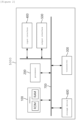
- FIG. 1 is a block diagram of a defect inspection system of battery cells according to embodiments of the invention.
- the defect inspection system (S) of a battery cell may induce heat generation in a battery cell to be inspected and detect at least one defect occurring in a metal portion inside the battery cell.
- the defect inspection system of a battery cell may include an impedance measurement device (Electrochemical Impedance Spectroscopy: EIS) 1000, a heat generation device 3000, and a defect inspection apparatus of a battery cell 5000.
- EIS Electrical Impedance Spectroscopy
- the impedance measurement device 1000 may measure resistance values of a battery cell before and after the heat generation.
- the impedance measurement device 1000 may be connected to the anode and the cathode of the battery cell to be inspected, respectively.
- the battery cell may be located on a fixture that includes a plurality of measurement pins. More specifically, the battery cell may be positioned on the fixture with its positive and negative electrodes respectively in contact with one end of the plurality of measurement pins. Accordingly, the impedance measuring device 1000 may be connected to the other ends of a plurality of measurement pins, one ends of which are in contact with the positive and negative electrodes of the battery cell, respectively. Accordingly, the impedance measuring device 1000 may be electrically connected to the positive and negative electrodes of the battery cell, respectively.
- the shape of the fixture may be provided in various forms that can improve fixing force depending on a shape of the battery cell to be measured such as a cylindrical, a pouch, or a stacked type.
- the impedance measuring device 1000 may apply alternating voltage or alternating current to the battery cell, before and after heat generation. Accordingly, the impedance measurement device 1000 may measure changes in an amplitude and a phase of the alternating voltage or the alternating current passing through the battery cell and calculate impedance values for each frequency. For example, alternating voltage or the alternating current may be provided in the form of a sinusoidal wave.
- the heat generation device 3000 may be a device that induces heat generation in a metal portion within the battery cell.
- the heat generation device 3000 may be electrically or physically connected to the battery cell and may induce heat generation in the metal portion according to predefined heat generation conditions.
- the heat generation condition may be information on condition setting for minimizing temperature change in the electrolyte within the battery cell.
- the defect inspection system of battery cells may induce heat generation which is limited to the metal portion within the battery cell so that the temperature change of the electrolyte in the battery cell can be minimized according to heat generation conditions. Therefore, the defect inspection system of battery cells can prevent side reactions from occurring due to temperature changes in the electrolyte when inspecting the battery cell for defects.
- heat generation conditions may vary depending on attribute information of the battery cell.
- the attribute information of a battery cell is an element that determines a battery model and may include a type, material of the metal portion, number of tabs, etc.
- the heat generation device 3000 may be provided as a charging/discharging device.
- the charging/discharging device like the impedance measuring device 1000, may be connected to the other ends of a plurality of measurement pins, one ends of which are in contact with the positive and negative electrodes of the battery cell.
- the charging/discharging device may be electrically connected to the positive and negative electrodes of the battery cell, respectively.
- the charge/discharge device may charge and discharge the battery cell according to predefined heat generation conditions. Accordingly, the metal portion within the battery cell may generate heat.
- the heat generation condition may include at least one condition information of a magnitude of the charge/discharge current, a charge/discharge time, and an external temperature to minimize the temperature change of the electrolyte in the battery cell.
- the magnitude of the charge/discharge current may vary depending on a number and a size of tabs which are metal portions in the battery cell.
- the heat generation device 3000 is not limited to the disclosed charging/discharging device, and may be applied as various devices that can induce heat generation in one or more metal portions within a battery cell.
- the defect inspection apparatus 5000 may be connected with at least one of the impedance measurement device 1000 and the heat generation device 3000. Accordingly, the defect inspection apparatus 5000 may obtain a first resistance value and a second resistance value measured before and after heat generation of a battery cell from the impedance measurement device 1000.
- the first resistance value may be a real part of an impedance value corresponding to a predefined frequency among the frequency-specific impedance values measured on the battery cell by the impedance measurement device 1000 before the heat generation.
- the second resistance value may be a real part of an impedance value corresponding to a predefined frequency among the frequency-specific impedance values measured by the impedance measurement device 1000 after generating heat in the battery cell.
- the predefined frequency may be defined as a specific frequency higher than a predefined reference frequency.
- the first resistance value and the second resistance values may be real parts of the impedance values at 850Hz, which is one of the frequencies in the high frequency range above 600Hz, the reference frequency.
- the defect inspection apparatus 5000 may compare the first resistance value and the second resistance value to determine whether a defect occurs in the metal portion within the battery cell.
- the metal portion may include at least one of a tab and a lead inside the battery cell. Additionally, defects in the metal portion may include at least one of welding defects between tabs, welding defects between tabs and leads, and disconnection of tabs.
- the resistance value may increase.
- a welding defect such as a welding defect between tabs or a welding defect between a tab and a lead
- a complete disconnection such as a tab disconnection
- the resistance value may increase by a larger amount (approximately 1 ⁇ 3% in the case of a disconnection) compared to a normal battery cell.
- the defect inspection apparatus may measure the impedance change of a metal portion in a battery cell before and after heat generation and amplify the micro-resistance values in weak welds and tab disconnections that are difficult to detect, thereby enabling stable detect of these defects.
- the defect inspection apparatus 5000 may include heat generation conditions according to attribute information of the battery cell. Accordingly, when heat is induced in a metal portion within a battery cell, the defect inspection apparatus 5000 may transmit a heat generation condition corresponding to attribute information of the battery cell to the heat generation device 3000. Thus, the heat generation device 3000 may generate heat in the metal portion of the battery cell under predefined condition values that minimize the temperature change of electrolyte in the battery cell.
- FIG. 2 is a block diagram of a processor in the defect inspection apparatus according to embodiments of the present invention.
- the defect inspection apparatus 5000 may include a memory 100, a processor 200, a transceiver 300, an input interface 400, an output interface 500, and a storage device 600.
- respective components (100, 200, 300, 400, 500, 600) included in the defect inspection apparatus 5000 may be connected by a bus 700 to communicate with each other.
- the memory 100 and the storage device 600 among the components (100, 200, 300, 400, 500, 600) of the defect inspection apparatus 5000 may include at least one of a volatile storage medium and a non-volatile storage medium.
- the memory 100 and the storage device 600 may include at least one of read only memory (ROM) and random access memory (RAM).
- the memory 100 may include at least one instruction executed by the processor 200.
- the at least one instruction may include an instruction to calculate a difference between resistance values measured before and after inducing heat generation of a metal portion in the battery cell; and an instruction to compare the difference with a predetermined reference value to determine whether a defect occurs in the metal portion.
- the instruction to calculate the difference between the resistance values may include an instruction to obtain a first resistance value of the metal portion before inducing the heat generation; an instruction to induce heat generation in the metal portion according to heat generation condition; an instruction to obtain a second resistance value of the metal portion where the heat generation is induced; and an instruction to compare the first resistance value and the second resistance value to calculate the difference.
- the heat generation condition may include at least one condition value that ensures that a temperature change of an electrolyte in the battery cell is maintained below a predetermined reference level.
- the instruction to induce heat generation in the metal portion according to the heat generation condition may include an instruction to induce heat generation in the metal portion by charging and discharging the battery cell according to the heat generation condition.
- the heat generation condition includes at least one of a magnitude of a charge/discharge current, a charge/discharge time, and external temperature, for charging and discharging the battery cell.
- the heat generation condition may vary according to information on attributes of the battery cell.
- the resistance values may be values of real part in impedance values measured at a predefined frequency.
- the instruction to compare the difference with a predetermined reference value to determine whether a defect occurs in the metal portion includes: an instruction to, upon the difference being greater than or equal to the reference value, determine that a defect has occurred in the metal portion; and an instruction to, upon the difference being less than the reference value, determine that the battery cell is normal.
- the processor 200 may mean a central processing unit (CPU), a graphics processing unit (GPU), or a dedicated processor on which methods according to embodiments of the present invention are performed.
- CPU central processing unit
- GPU graphics processing unit
- dedicated processor on which methods according to embodiments of the present invention are performed.
- the processor 200 may execute at least one program command stored in the memory 100 as described above.
- FIG. 3 is a flowchart for explaining a method of inspecting a battery cell for defects using a defect inspection apparatus according to embodiments of the present invention.
- the processor 200 in the defect inspection apparatus 5000 may obtain a first resistance value measured from the battery cell which is an inspection target (S1000).
- the battery cell may be a battery cell in which heat generation is not induced in the metal portion.
- the first resistance value may be a real part of an impedance value corresponding to a predefined frequency.
- the predefined frequency may be defined as a specific frequency higher than a predefined reference frequency.
- the specific frequency may be 850Hz, which is one of the frequencies in a high frequency range above the reference frequency of 600Hz.
- the processor 200 may receive impedance values for each frequency from the impedance measurement device 1000 through a transceiver 300. Thereafter, the processor 200 may obtain the first resistance value by obtaining the real part of the impedance measured at the predefined frequency among the received impedance values.
- the processor 200 may receive and obtain the first resistance value, which is the real part of the impedance value corresponding to the predefined frequency, from the impedance measurement device 1000 through the transceiver 300.
- the processor 200 may operate the heat generation device 3000 to induce heat generation in the metal portion within the battery cell (S3000).
- the processor 200 may transmit at least one heat generation condition and an operation signal to the heat generation device 3000 using the transceiver 300.
- the heat generation condition may be predefined condition values to minimize the temperature change of the electrolyte within the battery cell.
- the heat generation condition may include at least one of a magnitude of the charging/discharging current, charging/discharging time, and the external temperature which are predefined to minimize the temperature change of the electrolyte in the battery cell.
- the heat generation condition may be pre-stored in the memory 100 in the form of a table of at least one condition value according to attribute information of the battery cell. Accordingly, the processor 200 may obtain heat generation condition corresponding to attribute information of the battery cell which is an inspection target and transmit the heat generation condition to the heat generation device 3000.
- the processor 200 may obtain a second resistance value measured from the heat-generating battery cell (S5000).
- the battery cell may be in a state which heat generation from a metal portion within the battery cell is intentionally induced by the heat generation device 3000.
- the second resistance value may be real part of an impedance value corresponding to a predefined frequency.
- the predefined frequency may be defined as a specific frequency higher than a predefined reference frequency.
- the specific frequency may be 850Hz, which is one of the frequencies in the high frequency range above the reference frequency of 600Hz.
- the processor 200 may receive frequency-specific impedance values of the battery cell in which a metal portion generates heat, which are measured by the impedance measurement device 1000, through the transceiver 300. Thereafter, the processor 200 may obtain the second resistance value by obtaining the real part of the impedance measured at the predefined frequency among the received impedance values.
- the processor 200 may receive the second resistance value, which is the real part of the impedance value corresponding to the predefined frequency among frequency-specific impedance values of a battery cell in which a metal portion generates heat, from the impedance measurement device 1000 through the transceiver 300.
- the processor 200 may compare the first resistance value and the second resistance value to determine whether the metal portion within the battery cell is defective (S7000).
- the processor 200 may calculate the difference between the first resistance value and the second resistance value. Thereafter, the processor 200 may compare the difference with a predefined reference value.
- the reference values may vary depending on the number of and sizes of tabs, which may be metal portions, in the battery cell. For example, the reference value may be 0.007m ⁇ .
- the processor 200 may determine that a defect has occurred in the metal portion of the battery cell.
- the processor 200 may determine that there is no abnormality in the metal portion of the battery cell.
- FIG. 4 is a conceptual diagram of a defect inspection system for inspecting a pouch-type battery cell according to an experimental example of the present invention.
- normal cells and defective battery cells of the same model including 20 tabs were prepared and provided in the form of a pouch.
- the defective battery cell is a battery cell with a 35mm disconnection in the tab.
- a normal battery cell was fixed to a jig-shaped fixture. Afterwards, using the impedance measurement device 1000, an alternating voltage was applied to both terminals of the electrodes of the normal battery cell. Thereafter, while changing the frequency from 1Khz to 400hz, an impedance value at a predefined reference frequency was first measured before heat generation.
- the heat generation condition corresponding to the attribute information of the normal battery cell was determined using the charging/discharging device which is a heat generation device 3000.
- the external temperature was set to 22°C, and charging and discharging was performed by applying charging and discharging currents of 60A for 5 seconds, respectively.
- the impedance value at the predefined reference frequency of the normal battery cell was again measured for the second time.
- the impedance values at the predefined reference frequency of the defective battery cell before and after heat generation were measured, respectively.
- defect inspection apparatus 5000 normal battery cells and defective battery cells were inspected for defects in the metal portions, respectively.
- FIG. 5 is an image measuring the temperature of a defective battery cell when heat is induced according to an experimental example of the present invention.
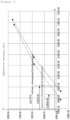
- FIG. 6 is a graph of impedance measurement results per frequency of a normal battery cell before and after heat generation according to an experimental example of the present invention.
- FIG. 7 is a graph of impedance measurement results per frequency of a defective battery cell before and after heat generation according to another experimental example of the present invention.
- FIG. 8 is a table summarizing resistance values before and after heat generation of normal battery cells and defective battery cells according to experimental examples of the present invention.
- FIGS. 6 to 8 according to the impedance measurement graphs for each frequency of a normal battery cell and a defective battery cell, a clear difference is shown in the real part value of the impedance before the charging/discharging and the real part value of the impedance after the charging/discharging, in the high frequency region above the reference frequency (fs).
- the difference before and after inducing heat using the charging and discharging device was examined.
- the real part value of impedance of the normal battery cell before charging/discharging was 0.862m ⁇
- the real part value of the impedance of the defective battery cell before charging/discharging was 0.866m ⁇ .
- the real part of the impedance of the defective battery cell before charging/ discharging is larger by 0.004 m ⁇ than the real part of the impedance of the normal battery cell before charging/discharging.
- the real part of the impedance of a normal battery cell after charging/discharging is 0.871m ⁇ and the real part of the impedance of a defective battery cell before charging/discharging is 0.881m ⁇ , by which can be understood and the real part of the impedance of a defective battery cell after charging/discharging is larger by 0.01m ⁇ than that of a normal battery cell.
- the increase in the real part of the impedance of a normal battery cell before and after charging and discharging is 0.009m ⁇ whereas the increase in the real part of the impedance of a defective battery cell before and after charging and discharging is 0.015m ⁇ , which means that the increase in the real part of the impedance of a defective battery cell is larger by 0.006m ⁇ than the increase in the real part of the impedance of a normal battery cell.
- the difference (0.01 m ⁇ ) between the normal battery cell and the defective battery cell in the real part of the impedance measured after inducing heat in the metal portion by charging/discharging has increased by 2.5 times compared to the difference (0.004m ⁇ ) between the normal battery cell and the defective battery in the real part of the impedance measured without inducing heat generation in the metal portion.
- the difference of change (0.006m ⁇ ) in the real part of the impedance before and after charging/discharging of the normal battery cell and the change in the real part of the impedance before and after charging/discharging of the defective battery cell shows 1.5 times greater than the difference of change (0.004m ⁇ ) between the normal battery cell and the defective battery cell in the real part of the impedance measured without inducing any heat.
- the impedance difference between a normal battery cell and a defective battery cell shows the largest difference in the real part value of the impedance measured at the reference frequency range after heat generation is induced in the metal portion.
- the method for inspecting defective battery cells may intentionally induce heat generation in the metal portion of a battery cell and determine whether the metal portion of the battery cell is defective based on the amount of change in the real part of the impedance before and after the heat generation, thereby enabling detection of a defect in the metal portion with high precision.
- the apparatus and method for inspecting defective battery cells may induce heat generation in metal portion of a battery cell using a heat generation device and determine whether the metal portion of the battery cell is defective based on the amount of change in the impedance before and after the heat generation, and thus, detection ability can be improved even for micro defects such as weak welding or disconnection of a tab portion by increasing the resistance value of the metal portion where a defect occurred due to heat generation.
- the operations of the method according to the embodiments and experimental examples of the present invention may be implemented as a computer-readable program or code on a computer-readable recording medium.
- the computer-readable recording medium includes all types of recording devices in which data readable by a computer system is stored.
- the computer-readable recording medium may be distributed in a network-connected computer system to store and execute computer-readable programs or codes in a distributed manner.
- the computer-readable recording medium may include hardware devices specially configured to store and execute program instructions, such as ROM, RAM, flash memory, etc.
- the program instructions may include not only machine language code created by a compiler, but also high-level language code that can be executed by a computer using an interpreter.
- a block or apparatus corresponds to a method step or feature of a method step.
- aspects described in the context of a method may also represent a feature of a corresponding block or item or a corresponding apparatus.
- Some or all of the method steps may be performed by (or using) a hardware device, such as, for example, a microprocessor, a programmable computer, or an electronic circuit. In some embodiments, one or more of the most important method steps may be performed by such an apparatus.
Landscapes
- Physics & Mathematics (AREA)
- General Physics & Mathematics (AREA)
- Chemical & Material Sciences (AREA)
- Electrochemistry (AREA)
- Chemical Kinetics & Catalysis (AREA)
- Analytical Chemistry (AREA)
- Pathology (AREA)
- Life Sciences & Earth Sciences (AREA)
- Health & Medical Sciences (AREA)
- Biochemistry (AREA)
- General Health & Medical Sciences (AREA)
- Immunology (AREA)
- Electromagnetism (AREA)
- Engineering & Computer Science (AREA)
- Manufacturing & Machinery (AREA)
- General Chemical & Material Sciences (AREA)
- Secondary Cells (AREA)
- Testing Electric Properties And Detecting Electric Faults (AREA)
- Tests Of Electric Status Of Batteries (AREA)
Abstract
Description
- This application claims priority to and the benefit of
Korean Patent Application No.10-2023-0077226 filed in the Korean Intellectual Property Office on June 16, 2023 - The present invention relates to an apparatus and method of inspecting a battery cell for defects, and a system including the apparatus, and more particularly, to an apparatus and method of inspecting a battery cell for defects, and a system including the apparatus, for inspecting defects occurring in a metal portion of a battery cell.
- As depletion of fossil fuels proceeds and interest in environmental pollution increases, a demand for secondary batteries as an eco-friendly alternative energy source is rapidly increasing. Among various alternative energy sources, demand for rechargeable lithium secondary batteries is rapidly increasing.
- Lithium secondary batteries are being applied to various industrial fields from mobile application devices to vehicles, robots and energy storage devices, as a response to today's environmental regulations and high oil price issues. Meanwhile, lithium batteries are easily exposed to external shocks, vibrations, etc.
- Accordingly, defect inspection is essential for lithium batteries to ensure high performance and stability. Among them, if a defect occurs in a metal portion of the battery that is electrically connected to the outside, performance and safety are greatly reduced, so inspection of the metal portion for defects is essential.
- In general, defect inspection of metal portions may include inspection of tab disconnection and inspection of weld defects.
- Conventional defect inspection of metal portions may involve disassembling a battery cell that has been manufactured and performing a vision inspection, or using CT imaging for non-destructive inspection to visually determine defects.
- However, when visually determining whether a metal portion is defective, there is a disadvantage that it is difficult to accurately judge quality because the judgment criteria are ambiguous. Additionally, the method of inspecting defective in metal portions through CT imaging has a disadvantage of requiring a long time for imaging and determination.
- Recently, an inspection method that determines defects by measuring the resistance between welded surfaces using a probe pin has been used. However, the weld inspection method using a probe pin has a disadvantage in that the weld surface is curved due to welding, making contact with the probe pin difficult, resulting in a high incidence of mis-inspection. In addition, in the case of defects such as weak welding and partial disconnection of tabs, the change in resistance is small, causing a disadvantage of being incorrectly detected as a normal battery cell.
- To obviate one or more problems of the related art, embodiments of the present disclosure provide a method of inspecting a battery cell for defects.
- To obviate one or more problems of the related art, embodiments of the present disclosure provide a defect inspection apparatus of a battery cell.
- To obviate one or more problems of the related art, embodiments of the present disclosure also provide a defect inspection system of a battery cell.
- In order to achieve the objective of the present disclosure, a method of inspecting a battery cell for defects may include calculating a difference between resistance values measured before and after inducing heat generation of a metal portion in the battery cell; and comparing the difference with a predetermined reference value to determine whether a defect occurs in the metal portion.
- The calculating the difference between the resistance values may include obtaining a first resistance value of the metal portion before inducing the heat generation; inducing heat generation in the metal portion according to heat generation condition; obtaining a second resistance value of the metal portion where the heat generation is induced; and comparing the first resistance value and the second resistance value to calculate the difference.
- Here, the heat generation condition may include at least one condition value that ensures that a temperature change of an electrolyte in the battery cell is maintained below a predetermined reference level.
- In addition, the inducing heat generation in the metal portion according to the heat generation condition may include inducing heat generation in the metal portion by charging and discharging the battery cell according to the heat generation condition.
- For example, the heat generation condition may include at least one of a magnitude of a charge/discharge current, a charge/discharge time, and external temperature, for charging and discharging the battery cell.
- Here, the heat generation condition may differ according to information on attributes of the battery cell.
- Meanwhile, the resistance values may be values of real part in impedance values measured at a predefined frequency.
- In addition, the comparing the difference with a predetermined reference value to determine whether a defect occurs in the metal portion may include, upon the difference being greater than or equal to the reference value, determining that a defect has occurred in the metal portion; and upon the difference being less than the reference value, determining that the battery cell is normal.
- According to another embodiment of the present disclosure, a defect inspection apparatus of a battery cell may include at least one processor; and a memory configured to store at least one instruction executed by the at least one processor, and the at least one instruction may include an instruction to calculate a difference between resistance values measured before and after inducing heat generation of a metal portion in the battery cell; and an instruction to compare the difference with a predetermined reference value to determine whether a defect occurs in the metal portion.
- Here, the instruction to calculate the difference between the resistance values may include an instruction to obtain a first resistance value of the metal portion before inducing the heat generation; an instruction to induce heat generation in the metal portion according to heat generation condition; an instruction to obtain a second resistance value of the metal portion where the heat generation is induced; and an instruction to compare the first resistance value and the second resistance value to calculate the difference.
- Here, the heat generation condition may include at least one condition value that ensures that a temperature change of an electrolyte in the battery cell is maintained below a predetermined reference level.
- In addition, the instruction to induce heat generation in the metal portion according to the heat generation condition may include an instruction to induce heat generation in the metal portion by charging and discharging the battery cell according to the heat generation condition.
- For, example, the heat generation condition includes at least one of a magnitude of a charge/discharge current, a charge/discharge time, and external temperature, for charging and discharging the battery cell.
- Here, the heat generation condition may vary according to information on attributes of the battery cell.
- Meanwhile, the resistance values may be values of real part in impedance values measured at a predefined frequency.
- Furthermore, the instruction to compare the difference with a predetermined reference value to determine whether a defect occurs in the metal portion includes: an instruction to, upon the difference being greater than or equal to the reference value, determine that a defect has occurred in the metal portion; and an instruction to, upon the difference being less than the reference value, determine that the battery cell is normal.
- According to another embodiment of the present disclosure, a defect inspection system of a battery cell may include an impedance measurement device configured to measure a resistance value of a battery cell; a heat generation device configured to induce heat generation from a metal portion of the battery cell; and a defect inspection apparatus of a battery cell configured to determine whether a defect occurs in the metal portion of the battery cell, wherein the defect inspection apparatus of a battery cell is further configured to: calculate difference between resistance values which are measured before and after inducing heat in the metal portion by the impedance measuring device; and compare the difference with a predetermined reference value to check whether a defect occurs in the metal portion.
- Here, the defect inspection apparatus of a battery cell may further be configured to: obtain a first resistance value of the metal portion from the impedance measuring device before inducing heat in the metal portion; transmit heat generation condition to the heat generation device to induce heat generation in the metal portion; obtain a second resistance value of the metal portion in which the heat generation is induced from the impedance measuring device; and compare the first resistance value and the second resistance value to calculate the difference, to determine whether a defect occurs in the metal portion.
- Here, the heat generation condition may include at least one condition value that ensures that a temperature change of an electrolyte in the battery cell is maintained below a predetermined reference level.
- Meanwhile, the heat generation device may include a charging/discharging device.
- Furthermore, the resistance values may be values of real part in impedance values measured at a predefined frequency.
- An apparatus and method for inspecting defective battery cells according to embodiments and experimental examples of the present invention, and a system including the same, may induce heat generation in a battery cell to be inspected and compare impedance measurement values before and after heat generation, so that resistance change of a metal portion inside a defective battery cell increases due to the heat generation, thereby providing a highly reliable inspection for defects.
-
-
FIG. 1 is a block diagram of a defect inspection system of battery cells according to embodiments of the invention. -
FIG. 2 is a block diagram of a processor in the defect inspection apparatus according to embodiments of the present invention. -
FIG. 3 is a flowchart for explaining a method of inspecting a battery cell for defects using a defect inspection apparatus according to embodiments of the present invention. -
FIG. 4 is a conceptual diagram of a defect inspection system for inspecting a pouch-type battery cell according to an experimental example of the present invention. -
FIG. 5 is an image measuring the temperature of a defective battery cell when heat is induced according to an experimental example of the present invention. -
FIG. 6 is a graph of impedance measurement results per frequency of a normal battery cell before and after heat generation according to an experimental example of the present invention. -
FIG. 7 is a graph of impedance measurement results per frequency of a defective battery cell before and after heat generation according to another experimental example of the present invention. -
FIG. 8 is a table summarizing resistance values before and after heat generation of normal battery cells and defective battery cells according to experimental examples of the present invention. - 1000:
- impedance measurement device
- 3000:
- heat generation device
- 5000:
- defect inspection apparatus
- 100:
- memory
- 200:
- processor
- 300:
- transceiver
- 400:
- input interface
- 500:
- output interface
- 600:
- storage device
- 700:
- bus
- The present invention may be modified in various forms and have various embodiments, and specific embodiments thereof are shown by way of example in the drawings and will be described in detail below. It should be understood, however, that there is no intent to limit the present invention to the specific embodiments, but on the contrary, the present invention is to cover all modifications, equivalents, and alternatives falling within the spirit and technical scope of the present invention. Like reference numerals refer to like elements throughout the description of the figures.
- It will be understood that, although the terms such as first, second, A, B, and the like may be used herein to describe various elements, these elements should not be limited by these terms. These terms are only used to distinguish one element from another. For example, a first element could be termed a second element, and, similarly, a second element could be termed a first element, without departing from the scope of the present invention. As used herein, the term "and/or" includes combinations of a plurality of associated listed items or any of the plurality of associated listed items.
- It will be understood that when an element is referred to as being "coupled" or "connected" to another element, it can be directly coupled or connected to the other element or an intervening element may be present. In contrast, when an element is referred to as being "directly coupled" or "directly connected" to another element, there is no intervening element present.
- Terms used in the present application are used only to describe specific embodiments, and are not intended to limit the present invention. A singular form includes a plural form if there is no clearly opposite meaning in the context. In the present application, it should be understood that the term "include" or "have" indicates that a feature, a number, a step, an operation, a component, a part or the combination thereof described in the specification is present, but does not exclude a possibility of presence or addition of one or more other features, numbers, steps, operations, components, parts or combinations thereof, in advance.
- Unless otherwise defined, all terms used herein, including technical and scientific terms, have the same meanings as commonly understood by one skilled in the art to which the present invention belongs. It will be further understood that terms, such as those defined in commonly used dictionaries, should be interpreted as having meanings that are consistent with their meanings in the context of the relevant art and will not be interpreted in an idealized or overly formal sense unless expressly so defined herein.
- Hereinafter, preferred embodiments according to the present invention will be described in more detail with reference to the attached drawings.
-
FIG. 1 is a block diagram of a defect inspection system of battery cells according to embodiments of the invention. - Referring to
FIG. 1 , the defect inspection system (S) of a battery cell according to embodiments of the present invention may induce heat generation in a battery cell to be inspected and detect at least one defect occurring in a metal portion inside the battery cell. - To be more specific, the defect inspection system of a battery cell may include an impedance measurement device (Electrochemical Impedance Spectroscopy: EIS) 1000, a
heat generation device 3000, and a defect inspection apparatus of abattery cell 5000. - The
impedance measurement device 1000 may measure resistance values of a battery cell before and after the heat generation. - To be described in more detail according to embodiments, the
impedance measurement device 1000 may be connected to the anode and the cathode of the battery cell to be inspected, respectively. - For example, the battery cell may be located on a fixture that includes a plurality of measurement pins. More specifically, the battery cell may be positioned on the fixture with its positive and negative electrodes respectively in contact with one end of the plurality of measurement pins. Accordingly, the
impedance measuring device 1000 may be connected to the other ends of a plurality of measurement pins, one ends of which are in contact with the positive and negative electrodes of the battery cell, respectively. Accordingly, theimpedance measuring device 1000 may be electrically connected to the positive and negative electrodes of the battery cell, respectively. Here, the shape of the fixture may be provided in various forms that can improve fixing force depending on a shape of the battery cell to be measured such as a cylindrical, a pouch, or a stacked type. - Thereafter, the
impedance measuring device 1000 may apply alternating voltage or alternating current to the battery cell, before and after heat generation. Accordingly, theimpedance measurement device 1000 may measure changes in an amplitude and a phase of the alternating voltage or the alternating current passing through the battery cell and calculate impedance values for each frequency. For example, alternating voltage or the alternating current may be provided in the form of a sinusoidal wave. - The
heat generation device 3000 may be a device that induces heat generation in a metal portion within the battery cell. To be more specific, theheat generation device 3000 may be electrically or physically connected to the battery cell and may induce heat generation in the metal portion according to predefined heat generation conditions. Here, the heat generation condition may be information on condition setting for minimizing temperature change in the electrolyte within the battery cell. - In other words, the defect inspection system of battery cells according to embodiments of the present invention may induce heat generation which is limited to the metal portion within the battery cell so that the temperature change of the electrolyte in the battery cell can be minimized according to heat generation conditions. Therefore, the defect inspection system of battery cells can prevent side reactions from occurring due to temperature changes in the electrolyte when inspecting the battery cell for defects.
- Meanwhile, heat generation conditions may vary depending on attribute information of the battery cell. For example, the attribute information of a battery cell is an element that determines a battery model and may include a type, material of the metal portion, number of tabs, etc.
- According to embodiments, the
heat generation device 3000 may be provided as a charging/discharging device. For example, the charging/discharging device, like theimpedance measuring device 1000, may be connected to the other ends of a plurality of measurement pins, one ends of which are in contact with the positive and negative electrodes of the battery cell. In other words, the charging/discharging device may be electrically connected to the positive and negative electrodes of the battery cell, respectively. Thereafter, the charge/discharge device may charge and discharge the battery cell according to predefined heat generation conditions. Accordingly, the metal portion within the battery cell may generate heat. Here, the heat generation condition may include at least one condition information of a magnitude of the charge/discharge current, a charge/discharge time, and an external temperature to minimize the temperature change of the electrolyte in the battery cell. Here, the magnitude of the charge/discharge current may vary depending on a number and a size of tabs which are metal portions in the battery cell. - The
heat generation device 3000 is not limited to the disclosed charging/discharging device, and may be applied as various devices that can induce heat generation in one or more metal portions within a battery cell. - The
defect inspection apparatus 5000 may be connected with at least one of theimpedance measurement device 1000 and theheat generation device 3000. Accordingly, thedefect inspection apparatus 5000 may obtain a first resistance value and a second resistance value measured before and after heat generation of a battery cell from theimpedance measurement device 1000. - According to embodiments, the first resistance value may be a real part of an impedance value corresponding to a predefined frequency among the frequency-specific impedance values measured on the battery cell by the
impedance measurement device 1000 before the heat generation. - Additionally, the second resistance value may be a real part of an impedance value corresponding to a predefined frequency among the frequency-specific impedance values measured by the
impedance measurement device 1000 after generating heat in the battery cell. - Here, the predefined frequency may be defined as a specific frequency higher than a predefined reference frequency. For example, the first resistance value and the second resistance values may be real parts of the impedance values at 850Hz, which is one of the frequencies in the high frequency range above 600Hz, the reference frequency.
- Thereafter, the
defect inspection apparatus 5000 may compare the first resistance value and the second resistance value to determine whether a defect occurs in the metal portion within the battery cell. Here, the metal portion may include at least one of a tab and a lead inside the battery cell. Additionally, defects in the metal portion may include at least one of welding defects between tabs, welding defects between tabs and leads, and disconnection of tabs. - In the case of metals, as the temperature increases, the number of collisions of electrons increases, the frequency of atoms increases, and the resistance value may increase. Here, according to one embodiment, when a welding defect (such as a welding defect between tabs or a welding defect between a tab and a lead) or a complete disconnection (such as a tab disconnection) occurs in a metal portion, which leads to a contact resistance between the tabs or the tab and the lead, the resistance value may increase by a larger amount (approximately 1~3% in the case of a disconnection) compared to a normal battery cell. Thus, the defect inspection apparatus according to embodiments of the present invention may measure the impedance change of a metal portion in a battery cell before and after heat generation and amplify the micro-resistance values in weak welds and tab disconnections that are difficult to detect, thereby enabling stable detect of these defects.
- Meanwhile, the
defect inspection apparatus 5000 may include heat generation conditions according to attribute information of the battery cell. Accordingly, when heat is induced in a metal portion within a battery cell, thedefect inspection apparatus 5000 may transmit a heat generation condition corresponding to attribute information of the battery cell to theheat generation device 3000. Thus, theheat generation device 3000 may generate heat in the metal portion of the battery cell under predefined condition values that minimize the temperature change of electrolyte in the battery cell. -
FIG. 2 is a block diagram of a processor in the defect inspection apparatus according to embodiments of the present invention. - Referring to
FIG. 2 , thedefect inspection apparatus 5000 may include amemory 100, aprocessor 200, atransceiver 300, aninput interface 400, anoutput interface 500, and astorage device 600. - According to embodiments, respective components (100, 200, 300, 400, 500, 600) included in the
defect inspection apparatus 5000 may be connected by abus 700 to communicate with each other. - The
memory 100 and thestorage device 600 among the components (100, 200, 300, 400, 500, 600) of thedefect inspection apparatus 5000 may include at least one of a volatile storage medium and a non-volatile storage medium. For example, thememory 100 and thestorage device 600 may include at least one of read only memory (ROM) and random access memory (RAM). - Among them, the
memory 100 may include at least one instruction executed by theprocessor 200. - According to embodiments, the at least one instruction may include an instruction to calculate a difference between resistance values measured before and after inducing heat generation of a metal portion in the battery cell; and an instruction to compare the difference with a predetermined reference value to determine whether a defect occurs in the metal portion.
- Here, the instruction to calculate the difference between the resistance values may include an instruction to obtain a first resistance value of the metal portion before inducing the heat generation; an instruction to induce heat generation in the metal portion according to heat generation condition; an instruction to obtain a second resistance value of the metal portion where the heat generation is induced; and an instruction to compare the first resistance value and the second resistance value to calculate the difference.
- Here, the heat generation condition may include at least one condition value that ensures that a temperature change of an electrolyte in the battery cell is maintained below a predetermined reference level.
- In addition, the instruction to induce heat generation in the metal portion according to the heat generation condition may include an instruction to induce heat generation in the metal portion by charging and discharging the battery cell according to the heat generation condition.
- For, example, the heat generation condition includes at least one of a magnitude of a charge/discharge current, a charge/discharge time, and external temperature, for charging and discharging the battery cell.
- Here, the heat generation condition may vary according to information on attributes of the battery cell.
- Meanwhile, the resistance values may be values of real part in impedance values measured at a predefined frequency.
- Furthermore, the instruction to compare the difference with a predetermined reference value to determine whether a defect occurs in the metal portion includes: an instruction to, upon the difference being greater than or equal to the reference value, determine that a defect has occurred in the metal portion; and an instruction to, upon the difference being less than the reference value, determine that the battery cell is normal.
- Meanwhile, the
processor 200 may mean a central processing unit (CPU), a graphics processing unit (GPU), or a dedicated processor on which methods according to embodiments of the present invention are performed. - The
processor 200 may execute at least one program command stored in thememory 100 as described above. -
FIG. 3 is a flowchart for explaining a method of inspecting a battery cell for defects using a defect inspection apparatus according to embodiments of the present invention. - Referring to
FIG. 3 , theprocessor 200 in thedefect inspection apparatus 5000 may obtain a first resistance value measured from the battery cell which is an inspection target (S1000). Here, the battery cell may be a battery cell in which heat generation is not induced in the metal portion. - In addition, the first resistance value may be a real part of an impedance value corresponding to a predefined frequency. Here, the predefined frequency may be defined as a specific frequency higher than a predefined reference frequency. For example, the specific frequency may be 850Hz, which is one of the frequencies in a high frequency range above the reference frequency of 600Hz.
- According to an embodiment, the
processor 200 may receive impedance values for each frequency from theimpedance measurement device 1000 through atransceiver 300. Thereafter, theprocessor 200 may obtain the first resistance value by obtaining the real part of the impedance measured at the predefined frequency among the received impedance values. - According to another embodiment, the
processor 200 may receive and obtain the first resistance value, which is the real part of the impedance value corresponding to the predefined frequency, from theimpedance measurement device 1000 through thetransceiver 300. - Thereafter, the
processor 200 may operate theheat generation device 3000 to induce heat generation in the metal portion within the battery cell (S3000). - According to embodiments, the
processor 200 may transmit at least one heat generation condition and an operation signal to theheat generation device 3000 using thetransceiver 300. Here, the heat generation condition may be predefined condition values to minimize the temperature change of the electrolyte within the battery cell. According to embodiments, when theheat generation device 3000 is a charging/discharging device, the heat generation condition may include at least one of a magnitude of the charging/discharging current, charging/discharging time, and the external temperature which are predefined to minimize the temperature change of the electrolyte in the battery cell. - For example, the heat generation condition may be pre-stored in the
memory 100 in the form of a table of at least one condition value according to attribute information of the battery cell. Accordingly, theprocessor 200 may obtain heat generation condition corresponding to attribute information of the battery cell which is an inspection target and transmit the heat generation condition to theheat generation device 3000. - Thereafter, the
processor 200 may obtain a second resistance value measured from the heat-generating battery cell (S5000). In other words, the battery cell may be in a state which heat generation from a metal portion within the battery cell is intentionally induced by theheat generation device 3000. - The second resistance value may be real part of an impedance value corresponding to a predefined frequency. Here, the predefined frequency may be defined as a specific frequency higher than a predefined reference frequency. For example, the specific frequency may be 850Hz, which is one of the frequencies in the high frequency range above the reference frequency of 600Hz.
- According to one embodiment, the
processor 200 may receive frequency-specific impedance values of the battery cell in which a metal portion generates heat, which are measured by theimpedance measurement device 1000, through thetransceiver 300. Thereafter, theprocessor 200 may obtain the second resistance value by obtaining the real part of the impedance measured at the predefined frequency among the received impedance values. - According to another embodiment, the
processor 200, may receive the second resistance value, which is the real part of the impedance value corresponding to the predefined frequency among frequency-specific impedance values of a battery cell in which a metal portion generates heat, from theimpedance measurement device 1000 through thetransceiver 300. - Thereafter, the
processor 200 may compare the first resistance value and the second resistance value to determine whether the metal portion within the battery cell is defective (S7000). - In more detail, the
processor 200 may calculate the difference between the first resistance value and the second resistance value. Thereafter, theprocessor 200 may compare the difference with a predefined reference value. Here, the reference values may vary depending on the number of and sizes of tabs, which may be metal portions, in the battery cell. For example, the reference value may be 0.007mΩ. - According to one embodiment, when the difference is greater than or equal to the reference value, the
processor 200 may determine that a defect has occurred in the metal portion of the battery cell. - According to another embodiment, when the difference is less than the reference value, the
processor 200 may determine that there is no abnormality in the metal portion of the battery cell. -
FIG. 4 is a conceptual diagram of a defect inspection system for inspecting a pouch-type battery cell according to an experimental example of the present invention. - As shown in
FIG. 4 , normal cells and defective battery cells of the same model including 20 tabs were prepared and provided in the form of a pouch. Here, the defective battery cell is a battery cell with a 35mm disconnection in the tab. - First, a normal battery cell was fixed to a jig-shaped fixture. Afterwards, using the
impedance measurement device 1000, an alternating voltage was applied to both terminals of the electrodes of the normal battery cell. Thereafter, while changing the frequency from 1Khz to 400hz, an impedance value at a predefined reference frequency was first measured before heat generation. - Afterwards, the heat generation condition corresponding to the attribute information of the normal battery cell was determined using the charging/discharging device which is a
heat generation device 3000. - According to the heat generation condition, the external temperature was set to 22°C, and charging and discharging was performed by applying charging and discharging currents of 60A for 5 seconds, respectively.
- Thereafter, using the
impedance measurement device 1000, the impedance value at the predefined reference frequency of the normal battery cell was again measured for the second time. - Thereafter, under the same conditions as the normal battery cell, the impedance values at the predefined reference frequency of the defective battery cell before and after heat generation were measured, respectively.
- Thereafter, using the
defect inspection apparatus 5000, normal battery cells and defective battery cells were inspected for defects in the metal portions, respectively. -
FIG. 5 is an image measuring the temperature of a defective battery cell when heat is induced according to an experimental example of the present invention. - Referring to
FIG. 5 , as a result of measuring temperatures of the entire metal tabs of a normal battery cell after charging and discharging, 25.038°C was obtained as an average temperature whereas as a result of measuring temperatures of the entire tabs of a defective battery cell after charging and discharging, 26.393°C was obtained as an average temperature. In other words, it can be understood that the average temperature after charging and discharging of the defective battery cell is 1.355°C higher than the average temperature after charging and discharging of the normal battery cell. -
FIG. 6 is a graph of impedance measurement results per frequency of a normal battery cell before and after heat generation according to an experimental example of the present invention.FIG. 7 is a graph of impedance measurement results per frequency of a defective battery cell before and after heat generation according to another experimental example of the present invention.FIG. 8 is a table summarizing resistance values before and after heat generation of normal battery cells and defective battery cells according to experimental examples of the present invention. - In
FIGS. 6 to 8 , according to the impedance measurement graphs for each frequency of a normal battery cell and a defective battery cell, a clear difference is shown in the real part value of the impedance before the charging/discharging and the real part value of the impedance after the charging/discharging, in the high frequency region above the reference frequency (fs). - Accordingly, based on the value of the real part of the impedance at a predefined frequency in the normal battery cell and the value of the real part of the impedance at a predefined frequency in the defective battery cell, the difference before and after inducing heat using the charging and discharging device was examined. The real part value of impedance of the normal battery cell before charging/discharging was 0.862mΩ, and the real part value of the impedance of the defective battery cell before charging/discharging was 0.866mΩ. In other words, it can be understood that the real part of the impedance of the defective battery cell before charging/ discharging is larger by 0.004 mΩ than the real part of the impedance of the normal battery cell before charging/discharging.
- In addition, the real part of the impedance of a normal battery cell after charging/discharging is 0.871mΩ and the real part of the impedance of a defective battery cell before charging/discharging is 0.881mΩ, by which can be understood and the real part of the impedance of a defective battery cell after charging/discharging is larger by 0.01mΩ than that of a normal battery cell.
- In addition, the increase in the real part of the impedance of a normal battery cell before and after charging and discharging is 0.009mΩ whereas the increase in the real part of the impedance of a defective battery cell before and after charging and discharging is 0.015mΩ, which means that the increase in the real part of the impedance of a defective battery cell is larger by 0.006mΩ than the increase in the real part of the impedance of a normal battery cell.
- Accordingly, as a result of comparing the impedance difference between a normal battery cell and a defective battery cell, it can be understood that the difference (0.01 mΩ) between the normal battery cell and the defective battery cell in the real part of the impedance measured after inducing heat in the metal portion by charging/discharging has increased by 2.5 times compared to the difference (0.004mΩ) between the normal battery cell and the defective battery in the real part of the impedance measured without inducing heat generation in the metal portion. In addition, the difference of change (0.006mΩ) in the real part of the impedance before and after charging/discharging of the normal battery cell and the change in the real part of the impedance before and after charging/discharging of the defective battery cell shows 1.5 times greater than the difference of change (0.004mΩ) between the normal battery cell and the defective battery cell in the real part of the impedance measured without inducing any heat.
- In summary, it can be understood that the impedance difference between a normal battery cell and a defective battery cell shows the largest difference in the real part value of the impedance measured at the reference frequency range after heat generation is induced in the metal portion.
- Therefore, the method for inspecting defective battery cells according to experimental examples of the present invention may intentionally induce heat generation in the metal portion of a battery cell and determine whether the metal portion of the battery cell is defective based on the amount of change in the real part of the impedance before and after the heat generation, thereby enabling detection of a defect in the metal portion with high precision.
- An apparatus and method for inspecting defective battery cells according to embodiments and experimental examples of the present invention, and a system including the apparatus have been described.
- The apparatus and method for inspecting defective battery cells according to embodiments and experimental examples of the present invention, and a system including the apparatus, may induce heat generation in metal portion of a battery cell using a heat generation device and determine whether the metal portion of the battery cell is defective based on the amount of change in the impedance before and after the heat generation, and thus, detection ability can be improved even for micro defects such as weak welding or disconnection of a tab portion by increasing the resistance value of the metal portion where a defect occurred due to heat generation.
- The operations of the method according to the embodiments and experimental examples of the present invention may be implemented as a computer-readable program or code on a computer-readable recording medium. The computer-readable recording medium includes all types of recording devices in which data readable by a computer system is stored. In addition, the computer-readable recording medium may be distributed in a network-connected computer system to store and execute computer-readable programs or codes in a distributed manner.
- In addition, the computer-readable recording medium may include hardware devices specially configured to store and execute program instructions, such as ROM, RAM, flash memory, etc. The program instructions may include not only machine language code created by a compiler, but also high-level language code that can be executed by a computer using an interpreter.
- Although some aspects of the invention have been described in the context of the apparatus, it may also represent a description according to a corresponding method, wherein a block or apparatus corresponds to a method step or feature of a method step. Similarly, aspects described in the context of a method may also represent a feature of a corresponding block or item or a corresponding apparatus. Some or all of the method steps may be performed by (or using) a hardware device, such as, for example, a microprocessor, a programmable computer, or an electronic circuit. In some embodiments, one or more of the most important method steps may be performed by such an apparatus.
- In the forgoing, the present invention has been described with reference to the exemplary embodiment of the present invention, but those skilled in the art may appreciate that the present invention may be variously corrected and changed within the range without departing from the spirit and the area of the present invention described in the appending claims.
Claims (21)
- A defect inspection method of a battery cell, the defect inspection method of the battery cell comprising:calculating a difference between resistance values measured before and after inducing heat generation of a metal portion in the battery cell; andcomparing the difference with a predetermined reference value to determine whether a defect occurs in the metal portion.
- The defect inspection method of the battery cell of claim 1, wherein the calculating the difference between the resistance values includes:obtaining a first resistance value of the metal portion before inducing the heat generation;inducing heat generation in the metal portion according to heat generation condition;obtaining a second resistance value of the metal portion where the heat generation is induced; andcomparing the first resistance value and the second resistance value to calculate the difference.
- The defect inspection method of the battery cell of claim 1, wherein the heat generation condition includes at least one condition value that ensures that a temperature change of an electrolyte in the battery cell is maintained below a predetermined reference level.
- The defect inspection method of the battery cell of claim 2, wherein the inducing heat generation in the metal portion according to the heat generation condition includes inducing heat generation in the metal portion by charging and discharging the battery cell according to the heat generation condition.
- The defect inspection method of the battery cell of claim 4, wherein the heat generation condition includes at least one of a magnitude of a charge/discharge current, a charge/discharge time, and external temperature, for charging and discharging the battery cell.
- The defect inspection method of the battery cell of claim 3, wherein the heat generation condition differs according to information on attributes of the battery cell.
- The defect inspection method of the battery cell of claim 1, wherein the resistance values are values of real part in impedance values measured at a predefined frequency.
- The defect inspection method of the battery cell of claim 1, wherein the comparing the difference with a predetermined reference value to determine whether a defect occurs in the metal portion includes:upon the difference being greater than or equal to the reference value, determining that a defect has occurred in the metal portion; andupon the difference being less than the reference value, determining that the battery cell is normal.
- A defect inspection apparatus of a battery cell comprising:at least one processor; anda memory configured to store at least one instruction executed by the at least one processor,wherein the at least one instruction includes:an instruction to calculate a difference between resistance values measured before and after inducing heat generation of a metal portion in the battery cell; andan instruction to compare the difference with a predetermined reference value to determine whether a defect occurs in the metal portion.
- The defect inspection apparatus of the battery cell of claim 9, wherein the instruction to calculate the difference between the resistance values includes:an instruction to obtain a first resistance value of the metal portion before inducing the heat generation;an instruction to induce heat generation in the metal portion according to heat generation condition;an instruction to obtain a second resistance value of the metal portion where the heat generation is induced; andan instruction to compare the first resistance value and the second resistance value to calculate the difference.
- The defect inspection apparatus of the battery cell of claim 9, wherein the heat generation condition includes at least one condition value that ensures that a temperature change of an electrolyte in the battery cell is maintained below a predetermined reference level.
- The defect inspection apparatus of the battery cell of claim 10, wherein the instruction to induce heat generation in the metal portion according to the heat generation condition includes an instruction to induce heat generation in the metal portion by charging and discharging the battery cell according to the heat generation condition.
- The defect inspection apparatus of the battery cell of claim 12, wherein the heat generation condition includes at least one of a magnitude of a charge/discharge current, a charge/discharge time, and external temperature, for charging and discharging the battery cell.
- The defect inspection apparatus of the battery cell of claim 11, wherein the heat generation condition differs according to information on attributes of the battery cell.
- The defect inspection apparatus of the battery cell of claim 9, wherein the resistance values are values of real part in impedance values measured at a predefined frequency.
- The defect inspection apparatus of the battery cell of claim 9, wherein the instruction to compare the difference with a predetermined reference value to determine whether a defect occurs in the metal portion includes:an instruction to, upon the difference being greater than or equal to the reference value, determine that a defect has occurred in the metal portion; andan instruction to, upon the difference being less than the reference value, determine that the battery cell is normal.
- A defect inspection system of a battery cell comprising:an impedance measurement device configured to measure a resistance value of a battery cell;a heat generation device configured to induce heat generation from a metal portion of the battery cell; anda defect inspection apparatus of a battery cell configured to determine whether a defect occurs in the metal portion of the battery cell,wherein the defect inspection apparatus of a battery cell is further configured to:calculate difference between resistance values which are measured before and after inducing heat in the metal portion by the impedance measuring device; andcompare the difference with a predetermined reference value to check whether a defect occurs in the metal portion.
- The defect inspection system of the battery cell of claim 17, wherein the defect inspection apparatus of a battery cell is further configured to:obtain a first resistance value of the metal portion from the impedance measuring device before inducing heat in the metal portion;transmit heat generation condition to the heat generation device to induce heat generation in the metal portion;obtain a second resistance value of the metal portion in which the heat generation is induced from the impedance measuring device; andcompare the first resistance value and the second resistance value to calculate the difference, to determine whether a defect occurs in the metal portion.
- The defect inspection system of the battery cell of claim 18, wherein the heat generation condition includes at least one condition value that ensures that a temperature change of an electrolyte in the battery cell is maintained below a predetermined reference level.
- The defect inspection system of the battery cell system of claim 17, wherein the heat generation device includes a charging/discharging device.
- The defect inspection system of the battery cell system of claim 17, wherein the resistance values are values of real part in impedance values measured at a predefined frequency.
Applications Claiming Priority (2)
| Application Number | Priority Date | Filing Date | Title |
|---|---|---|---|
| KR1020230077226A KR20240176516A (en) | 2023-06-16 | 2023-06-16 | Apparatus and method for inspecting defect of battery cell and system using the same |
| PCT/KR2024/002443 WO2024257992A1 (en) | 2023-06-16 | 2024-02-26 | Apparatus and method for inspecting defect of battery cell, and system comprising same |
Publications (2)
| Publication Number | Publication Date |
|---|---|
| EP4560337A1 true EP4560337A1 (en) | 2025-05-28 |
| EP4560337A4 EP4560337A4 (en) | 2025-12-31 |
Family
ID=93852054
Family Applications (1)
| Application Number | Title | Priority Date | Filing Date |
|---|---|---|---|
| EP24823514.5A Pending EP4560337A4 (en) | 2023-06-16 | 2024-02-26 | DEVICE AND METHOD FOR INSPECTING A DEFECT IN A BATTERY CELL AND SYSTEM TO THAT ARE |
Country Status (6)
| Country | Link |
|---|---|
| US (1) | US20260003006A1 (en) |
| EP (1) | EP4560337A4 (en) |
| JP (1) | JP2025528240A (en) |
| KR (1) | KR20240176516A (en) |
| CN (1) | CN119866452A (en) |
| WO (1) | WO2024257992A1 (en) |
Family Cites Families (16)
| Publication number | Priority date | Publication date | Assignee | Title |
|---|---|---|---|---|
| JPH03295455A (en) * | 1990-04-13 | 1991-12-26 | Sumitomo Metal Ind Ltd | Method and device for detecting freezing of road surface |
| JP3179394B2 (en) * | 1997-11-28 | 2001-06-25 | 富山日本電気株式会社 | Electrical inspection device and electrical inspection method for printed wiring board |
| KR20030045454A (en) | 2001-12-04 | 2003-06-11 | 비오이 하이디스 테크놀로지 주식회사 | Dispersion color filter have lcd |
| JP2006278762A (en) * | 2005-03-29 | 2006-10-12 | Tdk Corp | Inspection method and inspection apparatus for multilayered substrate |
| JP2007333494A (en) * | 2006-06-14 | 2007-12-27 | Shikoku Electric Power Co Inc | Storage battery deterioration diagnosis method and deterioration diagnosis apparatus |
| JP6156035B2 (en) * | 2013-10-01 | 2017-07-05 | 株式会社豊田自動織機 | Storage module abnormality detection method and abnormality detection apparatus |
| JP6442822B2 (en) * | 2013-10-01 | 2018-12-26 | 株式会社Gsユアサ | Abnormality judgment device |
| KR102749310B1 (en) * | 2018-08-08 | 2025-01-02 | 주식회사 민테크 | Apparatus for battery diagnosis |
| JP7235553B2 (en) * | 2019-03-26 | 2023-03-08 | 株式会社Subaru | Automotive battery abnormality detection device |
| KR102709601B1 (en) * | 2019-07-22 | 2024-09-26 | 주식회사 엘지에너지솔루션 | Apparatus and method for diagnosing battery cell |
| JP2021032671A (en) * | 2019-08-23 | 2021-03-01 | 日置電機株式会社 | Board inspection equipment and board inspection method |
| KR102742036B1 (en) * | 2019-10-01 | 2024-12-13 | 주식회사 엘지에너지솔루션 | Appratus and method for calculating battery power |
| KR20220054127A (en) * | 2020-10-23 | 2022-05-02 | 주식회사 엘지에너지솔루션 | Apparatus and method for detecting fault of battery |
| KR102952285B1 (en) * | 2021-07-13 | 2026-04-13 | 주식회사 엘지에너지솔루션 | Method for inspection of welding state of battery |
| KR102899995B1 (en) * | 2021-09-03 | 2025-12-12 | 주식회사 엘지에너지솔루션 | Battery module welding inspection device |
| KR102654675B1 (en) | 2021-11-25 | 2024-04-03 | 유윤종 | Sole-replaceable shoes |
-
2023
- 2023-06-16 KR KR1020230077226A patent/KR20240176516A/en active Pending
-
2024
- 2024-02-26 JP JP2025510416A patent/JP2025528240A/en active Pending
- 2024-02-26 EP EP24823514.5A patent/EP4560337A4/en active Pending
- 2024-02-26 WO PCT/KR2024/002443 patent/WO2024257992A1/en not_active Ceased
- 2024-02-26 CN CN202480004046.2A patent/CN119866452A/en active Pending
- 2024-02-26 US US19/112,086 patent/US20260003006A1/en active Pending
Also Published As
| Publication number | Publication date |
|---|---|
| CN119866452A (en) | 2025-04-22 |
| US20260003006A1 (en) | 2026-01-01 |
| EP4560337A4 (en) | 2025-12-31 |
| JP2025528240A (en) | 2025-08-26 |
| WO2024257992A1 (en) | 2024-12-19 |
| KR20240176516A (en) | 2024-12-24 |
Similar Documents
| Publication | Publication Date | Title |
|---|---|---|
| Gulsoy et al. | In-situ temperature monitoring of a lithium-ion battery using an embedded thermocouple for smart battery applications | |
| EP4119962B1 (en) | Secondary battery diagnosis apparatus and method | |
| CN105122073B (en) | Battery status decision maker | |
| EP4227697B1 (en) | Battery diagnosing apparatus and method | |
| Wassiliadis et al. | Experimental investigation of the influence of electrical contact resistance on lithium-ion battery testing for fast-charge applications | |
| JP5071747B2 (en) | Secondary battery inspection device, secondary battery inspection method, secondary battery manufacturing method | |
| JP7501831B2 (en) | Device and method for inspecting electrode tabs of battery cells for breaks | |
| EP4632408A1 (en) | Diagnosis device for secondary battery and diagnosis method for secondary battery | |
| EP3995844B1 (en) | Battery defect screening device and method | |
| JP2000028692A (en) | Probe, and detection apparatus for secondary battery using the same | |
| EP4113113A1 (en) | Big data-based battery inspection method | |
| JP2024504394A (en) | Battery cell electrode tab disconnection inspection device | |
| JP2010160055A (en) | Battery inspection method | |
| EP4560337A1 (en) | Apparatus and method for inspecting defect of battery cell, and system comprising same | |
| Zhang et al. | Artificial Neural Network–Based Multisensor Monitoring System for Collision Damage Assessment of Lithium‐Ion Battery Cells | |
| JP5928815B2 (en) | Method for producing non-aqueous electrolyte secondary battery | |
| US20240386544A1 (en) | Deformation analysis device and method for secondary battery | |
| US20250329006A1 (en) | Method and system for performing electrode tab folding inspection | |
| EP4692821A1 (en) | Apparatus and method for diagnosing battery | |
| EP4644928A1 (en) | Apparatus and method for diagnosing battery | |
| Pettinger | Production test procedures | |
| KR20250018883A (en) | Apparatus for inspecting battery and operating method thereof | |
| Fiorentis et al. | Lithium-Ion battery state of health estimation enhanced with faults indicator | |
| KR20260019127A (en) | Apparatus and method for diagnosing batteries | |
| CN121232051A (en) | Battery voltage abnormality analysis method, device, equipment and storage medium |
Legal Events
| Date | Code | Title | Description |
|---|---|---|---|
| STAA | Information on the status of an ep patent application or granted ep patent |
Free format text: STATUS: THE INTERNATIONAL PUBLICATION HAS BEEN MADE |
|
| PUAI | Public reference made under article 153(3) epc to a published international application that has entered the european phase |
Free format text: ORIGINAL CODE: 0009012 |
|
| STAA | Information on the status of an ep patent application or granted ep patent |
Free format text: STATUS: REQUEST FOR EXAMINATION WAS MADE |
|
| 17P | Request for examination filed |
Effective date: 20250219 |
|
| AK | Designated contracting states |
Kind code of ref document: A1 Designated state(s): AL AT BE BG CH CY CZ DE DK EE ES FI FR GB GR HR HU IE IS IT LI LT LU LV MC ME MK MT NL NO PL PT RO RS SE SI SK SM TR |
|
| A4 | Supplementary search report drawn up and despatched |
Effective date: 20251202 |
|
| RIC1 | Information provided on ipc code assigned before grant |
Ipc: G01R 31/392 20190101AFI20251126BHEP Ipc: G01R 31/389 20190101ALI20251126BHEP Ipc: G01N 27/02 20060101ALI20251126BHEP Ipc: H05B 1/02 20060101ALI20251126BHEP Ipc: H05B 6/02 20060101ALI20251126BHEP Ipc: G01R 31/396 20190101ALI20251126BHEP Ipc: H05B 6/10 20060101ALI20251126BHEP Ipc: H01M 10/42 20060101ALI20251126BHEP |