EP4560214A1 - Prediction system, prediction method, and program - Google Patents
Prediction system, prediction method, and program Download PDFInfo
- Publication number
- EP4560214A1 EP4560214A1 EP23859766.0A EP23859766A EP4560214A1 EP 4560214 A1 EP4560214 A1 EP 4560214A1 EP 23859766 A EP23859766 A EP 23859766A EP 4560214 A1 EP4560214 A1 EP 4560214A1
- Authority
- EP
- European Patent Office
- Prior art keywords
- data
- drain pump
- controller
- prediction
- anomaly
- Prior art date
- Legal status (The legal status is an assumption and is not a legal conclusion. Google has not performed a legal analysis and makes no representation as to the accuracy of the status listed.)
- Pending
Links
Images



Classifications
-
- F—MECHANICAL ENGINEERING; LIGHTING; HEATING; WEAPONS; BLASTING
- F24—HEATING; RANGES; VENTILATING
- F24F—AIR-CONDITIONING; AIR-HUMIDIFICATION; VENTILATION; USE OF AIR CURRENTS FOR SCREENING
- F24F11/00—Control or safety arrangements
- F24F11/30—Control or safety arrangements for purposes related to the operation of the system, e.g. for safety or monitoring
- F24F11/32—Responding to malfunctions or emergencies
- F24F11/38—Failure diagnosis
-
- F—MECHANICAL ENGINEERING; LIGHTING; HEATING; WEAPONS; BLASTING
- F24—HEATING; RANGES; VENTILATING
- F24F—AIR-CONDITIONING; AIR-HUMIDIFICATION; VENTILATION; USE OF AIR CURRENTS FOR SCREENING
- F24F11/00—Control or safety arrangements
- F24F11/30—Control or safety arrangements for purposes related to the operation of the system, e.g. for safety or monitoring
- F24F11/32—Responding to malfunctions or emergencies
-
- F—MECHANICAL ENGINEERING; LIGHTING; HEATING; WEAPONS; BLASTING
- F24—HEATING; RANGES; VENTILATING
- F24F—AIR-CONDITIONING; AIR-HUMIDIFICATION; VENTILATION; USE OF AIR CURRENTS FOR SCREENING
- F24F11/00—Control or safety arrangements
- F24F11/62—Control or safety arrangements characterised by the type of control or by internal processing, e.g. using fuzzy logic, adaptive control or estimation of values
- F24F11/63—Electronic processing
- F24F11/64—Electronic processing using pre-stored data
-
- F—MECHANICAL ENGINEERING; LIGHTING; HEATING; WEAPONS; BLASTING
- F24—HEATING; RANGES; VENTILATING
- F24F—AIR-CONDITIONING; AIR-HUMIDIFICATION; VENTILATION; USE OF AIR CURRENTS FOR SCREENING
- F24F13/00—Details common to, or for air-conditioning, air-humidification, ventilation or use of air currents for screening
- F24F13/22—Means for preventing condensation or evacuating condensate
- F24F13/222—Means for preventing condensation or evacuating condensate for evacuating condensate
-
- F—MECHANICAL ENGINEERING; LIGHTING; HEATING; WEAPONS; BLASTING
- F24—HEATING; RANGES; VENTILATING
- F24F—AIR-CONDITIONING; AIR-HUMIDIFICATION; VENTILATION; USE OF AIR CURRENTS FOR SCREENING
- F24F11/00—Control or safety arrangements
- F24F11/30—Control or safety arrangements for purposes related to the operation of the system, e.g. for safety or monitoring
- F24F11/49—Control or safety arrangements for purposes related to the operation of the system, e.g. for safety or monitoring ensuring correct operation, e.g. by trial operation or configuration checks
-
- F—MECHANICAL ENGINEERING; LIGHTING; HEATING; WEAPONS; BLASTING
- F24—HEATING; RANGES; VENTILATING
- F24F—AIR-CONDITIONING; AIR-HUMIDIFICATION; VENTILATION; USE OF AIR CURRENTS FOR SCREENING
- F24F2110/00—Control inputs relating to air properties
- F24F2110/10—Temperature
-
- F—MECHANICAL ENGINEERING; LIGHTING; HEATING; WEAPONS; BLASTING
- F24—HEATING; RANGES; VENTILATING
- F24F—AIR-CONDITIONING; AIR-HUMIDIFICATION; VENTILATION; USE OF AIR CURRENTS FOR SCREENING
- F24F2110/00—Control inputs relating to air properties
- F24F2110/20—Humidity
Definitions
- the present disclosure relates to a prediction system, a prediction method, and a program.
- a technique for determining the degree of contamination of the drain pump is known. For example, a technique of detecting a current value or the number of revolutions of a drain pump and determining that contamination of the drain pump is at a level requiring maintenance when the current value of the drain pump is greater than or equal to a predetermined value or the number of revolutions of the drain pump is less than or equal to a predetermined value is known (See, for example, Patent Document 1).
- Patent Document 1 Japanese Laid-open Patent Application Publication No. 2005-283057
- the current value (or the number of revolutions) of the drain pump fluctuates significantly from drain pump to drain pump, and thus there is a problem that erroneous detection is likely to occur if only the anomaly is determined based on the instantaneous value of the current value (or the number of revolutions) as in the related art.
- the present disclosure enables an anomaly of a drain pump provided in an air conditioner to be predicted with higher accuracy.
- a prediction system is a prediction system including an air conditioner including a drain pump and a controller.
- the controller is configured to acquire data of a number of revolutions of the drain pump or a current value of the drain pump, and output a prediction result indicating that an anomaly of the drain pump is predicted, based on a change in data for a predetermined period in the data.
- the anomaly of the drain pump provided in the air conditioner can be predicted with higher accuracy.
- a second aspect of the present disclosure is the prediction system as described in the first aspect, and the controller outputs the prediction result based on a representative value of the data for the predetermined period.
- a third aspect of the present disclosure is the prediction system as described in the first aspect or the second aspect, and the controller predicts the anomaly of the drain pump based on an average value of data for a first predetermined period in the data and an average value of data for a second predetermined period in the data.
- the second predetermined period is shorter than the first predetermined period.
- a fourth aspect of the present disclosure is the prediction system as described in the third aspect, and the controller outputs the prediction result indicating that the anomaly of the drain pump is predicted, when a divergence between the average value of the data for the first predetermined period and the average value of the data for the second predetermined period exceeds a threshold.
- a fifth aspect of the present disclosure is the prediction system as described in any one of the first to fourth aspects, and the controller predicts the anomaly of the drain pump based on environmental data.
- the environmental data includes temperature data or humidity data. With this, the prediction system can predict the anomaly of the drain pump with higher accuracy.
- a sixth aspect of the present disclosure is the prediction system as described in any one of the first to fifth aspects, and when the air conditioner or the drain pump is not operating, the controller predicts the anomaly of the drain pump, using, instead of data for a period during which the air conditioner or the drain pump is not operating in the data, data before the period in the data. With this, the prediction system can predict the anomaly of the drain pump with higher accuracy.
- a seventh aspect of the present disclosure is the prediction system as described in the sixth aspect, and the controller determines the period during which the drain pump is not operating, based on environmental data.
- the environmental data includes temperature data or humidity data.
- An eighth aspect of the present disclosure is the prediction system as described in any one of the first to fifth aspects, and the controller determines, from environmental data, whether drain water is generated, the environmental data including temperature data or humidity data, and predicts the anomaly of the drain pump, excluding data for a period during which the drain water is not generated in the data of the number of revolutions of the drain pump or the current value of the drain pump.
- a ninth aspect of the present disclosure is the prediction system as described in the eighth aspect, and the controller further uses information indicating whether the air conditioner is operating in a predetermined mode to determine whether the drain water is generated.
- a tenth aspect of the present disclosure is the prediction system as described in any one of the first to ninth aspects, and the prediction system includes an edge device configured to collect the data from the air conditioner, and the controller acquires data obtained by the air conditioner or the edge device averaging the data.
- An eleventh aspect of the present disclosure is the prediction system as described in the first aspect, and the controller predicts the anomaly of the drain pump by using a learned prediction model obtained by performing machine learning using data when the drain pump is in a normal state in the data and data when the drain pump is in an anomaly state in the data as training data.
- a twelfth aspect of the present disclosure is the prediction system as described in the first aspect, and the controller predicts the anomaly of the drain pump by using a learned prediction model obtained by performing machine learning using an image representing data when the drain pump is in a normal state in the data and an image representing data when the drain pump is an anomaly state in the data as training data.
- a prediction method includes, in a prediction system including an air conditioner that includes a drain pump; and a controller, acquiring, by the controller, data of a number of revolutions of the drain pump or a current value of the drain pump, and outputting, by the controller, a prediction result indicating that an anomaly of the drain pump is predicted, based on a change in data for a predetermined period in the data.
- a program causes a computer to perform a process in a prediction system including an air conditioner and a controller, and the air conditioner includes a drain pump.
- the process includes acquiring data of a number of revolutions of the drain pump or a current value of the drain pump, and outputting a prediction result indicating that an anomaly of the drain pump is predicted, based on a change in data for a predetermined period in the data.
- Another aspect of the present disclosure is realized by a recording medium in which the program according to the fourteenth aspect is recorded.
- FIG. 1 is a diagram illustrating an example of a system configuration of a prediction system according to an embodiment.
- the prediction system 1 includes an air conditioner 10 including a drain pump 11 and a controller 101.
- the prediction system 1 is a system in which the controller 101 acquires data of the number of revolutions (or a current value) of the drain pump 11 and predicts an anomaly of the drain pump based on a change in data for a predetermined period.
- the prediction system 1 includes a local controller 20 communicably connected to the air conditioner 10 via a predetermined communication interface and configured to control the air conditioner 10. Additionally, the prediction system 1 includes a prediction server 100 including the controller 101 and configured to communicate with the local controller 20 via a communication network 2, such as the Internet or a local area network (LAN).
- a communication network 2 such as the Internet or a local area network (LAN).
- the local controller 20 may include the controller 101, for example.
- the prediction server 100 may include multiple information processing devices.
- the following description will be provided on the assumption that the prediction server 100 includes the controller 101.
- the air conditioner 10 is configured such that, for example, during a cooling operation, condensation water (drain) is generated by a heat exchanger provided in the air conditioner 10, and the generated condensation water accumulates in a saucer called a drain pan.
- condensation water drain
- the drain pump 11 is a pump configured to suction up the condensation water accumulated in the drain pan, and discharges it to the outside via a drain hose.
- the condensation water accumulates inside the air conditioner 10, and when the amount of the accumulated condensation water exceeds an allowable range, the air conditioner 10 detects an anomaly (a drain pump failure) and stops operation.
- the prediction system 1 outputs a prediction result indicating that the anomaly of the drain pump is predicted in advance so that, for example, a service person or the like can respond to the problem on the spot before the drain pump 11 is completely clogged.
- the local controller 20 has a computer configuration, for example, and controls the air conditioner 10 by executing a predetermined program recorded (stored) in a recording medium. Additionally, the local controller 20 according to the present embodiment has a function of acquiring measurement data including the number of revolutions of the drain pump 11 or the current value of the drain pump 11, which is measured by the air conditioner 10 periodically (for example, every minute), every predetermined time (for example, every hour). Furthermore, the local controller 20 has a function of transmitting measurement data (second measurement data) obtained by averaging the measurement data (first measurement data) acquired from the air conditioner 10 every predetermined time, to the prediction server 100 via the communication network 2.
- the local controller 20 is an example of an edge device.
- the air conditioner 10 may average the measurement data every predetermined time, and the local controller 20 may acquire the averaged measurement data from the air conditioner 10.
- the first measurement data acquired by the local controller 20 from the air conditioner 10 and the second measurement data transmitted by the local controller 20 to the prediction server 100 may be the same data.
- the prediction server 100 has a computer configuration, and performs a prediction process for predicting the anomaly of the drain pump 11 by executing a predetermined program recorded (stored) in a recording medium.
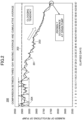
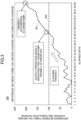
- FIGS. 2 and 3 are graphs for explaining an outline of the prediction process according to the embodiment.
- the horizontal axis represents the number of days elapsed since the measurement has started, and the vertical axis represents the number of revolutions of the drain pump 11.
- measurement data (raw data) 201 of the number of revolutions of the drain pump 11, a cumulative average 202 of the measurement data 201, and a three-day moving average 203 of the measurement data 201 are plotted.
- the number of revolutions of the drain pump for example, the number of pulses are measured, and the number of revolutions can be calculated from the measured number of pulses. In this case, for example, if 1 pulse is 24 rpm, the number of revolutions is measured at 24 rpm intervals. Additionally, the measurement data 201 of the number of revolutions includes, for example, a measurement fluctuation 204 of ⁇ 48 rpm ( ⁇ 2 pulses) as illustrated in FIG. 2 .
- the measurement data 201 of the number of revolutions of the drain pump 11 has a large fluctuation, and there is also a fluctuation (individual difference) for each drain pump 11, and thus there is a problem that erroneous detection is likely to occur if the anomaly is determined only by the instantaneous value of the number of revolutions as in the related art.
- the controller 101 stores (accumulates) the measurement data 201 transmitted by the local controller 20 every 1 hour in a storage unit, for example.
- the storage unit for storing the measurement data 201 may be, for example, a storage device provided by the prediction server 100, or a storage server or the like outside of the prediction server 100.
- the controller 101 calculates the cumulative average 202 of the measurement data 201 stored in the storage unit and the three-day moving average 203 of the measurement data 201.
- the three-day moving average 203 is an average value (a moving average) of the measurement data 201 for the most recent three days.
- three days are an example of a predetermined period (a second predetermined period) used for predicting the anomaly of the drain pump 11.
- the second predetermined period may be a number of days other than three days (for example, 1 to 5 days).
- the cumulative average 202 is, for example, an average value of the measurement data 201 for a first predetermined period sufficiently longer than the second predetermined period.
- the cumulative average 202 may be, for example, an average value (a moving average value) of the measurement data 201 for the most recent 30 days, a cumulative moving average value from the time of starting the measurement, or the like.
- the following description will be provided on the assumption that the cumulative average 202 is an average value of the measurement data 201 for 30 days.
- the cumulative average 202 is an average value for a period sufficiently longer than three days, a change in the value is less than the change in the three-day moving average 203.
- the controller 101 outputs a prediction result indicating that the anomaly of the drain pump 11 is predicted, based on the cumulative average 202 (the average value of the data for the first predetermined period) and the three-day moving average 203 (the average value of the data for the second predetermined period that is shorter than the first predetermined period). For example, if a divergence between the cumulative average 202 (the average value of the data for the first predetermined period) and the three-day moving average 203 (the average value of the data for the second predetermined period) exceeds a threshold, the controller 101 outputs a prediction result indicating that the anomaly of the drain pump 11 is predicted.
- the controller 101 calculates a difference 301 between the three-day moving average 203 and the cumulative average 202, and outputs a prediction result indicating that the anomaly of the drain pump 11 is predicted, when the calculated difference 301 exceeds a threshold 302.
- the threshold 302 is determined in advance based on, for example, how many days before the anomaly of the drain pump 11 the prediction result is output, or the like.
- the anomaly of the drain pump 11 provided in the air conditioner 10 can be predicted with higher accuracy.
- the number of revolutions of the drain pump 11 (the number of revolutions of a motor provided in the drain pump) is used as the measurement data 201, but the measurement data 201 may be the current value of the drain pump 11 (the current value flowing in the drain pump 11).
- the controller 101 only needs to output a prediction result indicating that the anomaly of the drain pump 11 is predicted, when a divergence between the three-day moving average 203 of the measurement data 201 and the cumulative average 202 of the measurement data 201 exceeds a threshold.
- the prediction result indicating that the anomaly of the drain pump 11 is predicted may, for example, be provided by notification to the air conditioner 10 or the local controller 20 to perform a predetermined display, or may be provided by notification to the manager or the like who manages the air conditioner 10. Additionally, the prediction result may be, for example, a message such as "The drain pump is contaminated, so please check it.”, information indicating a period until an anomaly occurs in the drain pump 11, or the like.
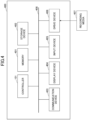
- the prediction server 100 and the local controller 20 have a hardware configuration of a computer 400 as illustrated in FIG. 4 , for example.
- the prediction server 100 may be configured by multiple computers 400.
- FIG. 4 is a diagram illustrating an example of a hardware configuration of a computer according to the embodiment.
- the computer 400 includes, for example, the controller 101, a memory 401, a storage device 402, a communication device 403, a display device 404, an input device 405, a drive device 406, a bus 408, and the like.
- the controller 101 is, for example, a processor, such as a central processing unit (CPU) that realizes various functions by executing predetermined programs stored in a storage medium (recording medium), such as the storage device 402 or the memory 401.
- the controller 101 may include a processor such as a graphics processing unit (GPU) or a digital signal processor (DSP).
- the controller 101 may be, for example, a device such as an application specific integrated circuit (ASIC) or a field programmable gate array (FPGA).
- ASIC application specific integrated circuit
- FPGA field programmable gate array
- the memory 401 includes, for example, a random access memory (RAM), which is a volatile memory used as a work area or the like of the controller 101, and a read only memory (ROM), which is a nonvolatile memory for storing a program for starting the controller 101 and the like.
- the storage device 402 is a large-capacity storage device for storing programs, such as an operating system (OS) and applications, various data, information, and the like, and is realized by, for example, a solid state drive (SSD) or a hard disk drive (HDD).
- OS operating system
- HDD hard disk drive
- the communication device 403 includes one or more communication interfaces or communication devices for communicating with external devices.
- the communication device 403 includes a network interface card (NIC) or the like for connecting the computer 400 to the communication network 2 and communicating with other devices.
- the communication device 403 may include, for example, a communication interface or the like for connecting the air conditioner 10 or the like to the computer 400.
- the display device 404 is a display device or apparatus for displaying a display screen.
- the input device 405 is, for example, an input device for receiving an external input, such as a keyboard, a pointing device, or a touch panel.
- the display device 404 and the input device 405 may be an integrated display input device, such as a touch panel display.
- the drive device 406 is a device for connecting, to the computer 400, a recording medium 407 in which a predetermined program is recorded (stored).
- the recording medium 407 herein includes, for example, a medium for recording information optically, electrically, or magnetically, such as a CD-ROM, a flexible disk, or a magneto-optical disk. Additionally, the recording medium 407 may include, for example, a semiconductor memory or the like for recording information electrically, such as a ROM or a flash memory.
- the bus 408 is commonly connected to the above-described components, and transmits, for example, address signals, data signals, various control signals, and the like.
- FIG. 5 is a sequence diagram illustrating an example of a process of a prediction system according to a first embodiment. This process indicates an example of the prediction process repeatedly performed by the prediction system 1 described with reference to FIG. 1 .
- step S501 the air conditioner 10 collects the measurement data including the number of revolutions of the drain pump 11 provided in the air conditioner 10 or the current value of the drain pump.
- the air conditioner 10 periodically (for example, every minute) measures the number of revolutions of the drain pump 11 and stores it in a storage unit or the like provided in the air conditioner 10.
- step S502 the local controller 20 requests the air conditioner 10 to acquire the data.
- the air conditioner 10 transmits the collected measurement data (the first measurement data) to the local controller 20.
- the local controller 20 transmits a data acquisition request to the air conditioner 10 at a predetermined time interval (for example, every hour).
- the air conditioner 10 transmits, to the local controller, the measurement data for the most recent predetermined period (for example, 1 hour) as the first measurement data.
- the air conditioner 10 may calculate an average value of the measurement data for the most recent predetermined period and transmit, to the local controller 20, the calculated average value as the first measurement data.
- step S504 the local controller 20 transmits, to the prediction server 100, the average value of the measurement data for the most recent predetermined period as the second measurement data, based on the data (the first measurement data) received from the air conditioner 10. For example, when the first measurement data received from the air conditioner 10 is the measurement data for the most recent predetermined period, the local controller 20 calculates the average value of the first measurement data and transmits, to the prediction server 100, the calculated average value as the second measurement data. Additionally, when the first measurement data received from the air conditioner 10 is the average value of the measurement data for the most recent predetermined period, the local controller 20 transmits, to the prediction server 100, the first measurement data as the second measurement data.
- step S505 the controller 101 of the prediction server 100 stores (accumulates) the data (the second measurement data) received from the local controller 20 or data obtained by processing the received data in the storage unit, such as the storage device 402, for example.
- the controller 101 may replace the data for the period during which the drain pump 11 is not operating with data before this period, and store the data in the storage unit.
- the controller 101 may replace the one-day portion of data during which the drain pump 11 has been stopped with the data mentioned above, and store the data in the storage unit. Additionally, if the drain pump 11 has been stopped for one hour, the controller 101 may replace the one-hour portion of data during which the drain pump 11 has been stopped with data for the preceding one-hour portion, and store the data in the storage unit.
- the controller 101 may store the data received from the local controller 20 in the storage unit without modification. In this case, for example, the controller 101 may exclude the data for the period while the drain pump 11 has been stopped and calculate the cumulative average 202 or the three-day moving average 203.
- step S506 the controller 101 calculates the cumulative average 202 and the three-day moving average 203 from the numbers of revolutions (or the current values) of the drain pump 11 included in the data stored in the storage unit, and calculates the difference 301 between the cumulative average 202 and the three-day moving average 203.
- step S507 the controller 101 outputs the prediction result indicating that the anomaly of the drain pump 11 is predicted.
- the prediction system 1 can output the prediction result indicating that the anomaly of the drain pump 11 is predicted, before the anomaly occurs in the drain pump 11 with higher accuracy.
- FIG. 6 is a sequence diagram illustrating an example of a process of a prediction system according to a first embodiment. This process indicates another example of the prediction process repeatedly performed by the prediction system 1 described with reference to FIG. 1 .
- the basic flow of the process is substantially the same as that of the first embodiment, and thus a detailed description of the process contents that are substantially the same as those of the first embodiment will be omitted here.
- the air conditioner 10 collects the measurement data including the number of revolutions of the drain pump 11 provided in the air conditioner 10 or the current value of the drain pump, environmental data, and operation data.
- the environmental data includes, for example, temperature data indicating a room temperature, humidity data indicating relative humidity, and the like.
- the operation data includes, for example, data indicating the operation mode (cooling, dehumidification, heating, and the like) of the air conditioner 10 and data such as evaporation temperature measured by a temperature sensor of a heat exchanger of the air conditioner 10.
- the data of the evaporation temperature may be included in the environmental data.
- step S602 the local controller 20 requests the air conditioner 10 to acquire the data.
- step S603 the air conditioner 10 transmits, to the local controller 20, data including the collected measurement data (the first measurement data), the environmental data, the operation data, and the like.
- step S604 the local controller 20 transmits, to the prediction server 100, data including the second measurement data, which is the average value of the first measurement data received from the air conditioner 10, the environmental data, and the operation data.
- step S605 the controller 101 of the prediction server 100 stores (accumulates) the data received from the local controller 20 or data obtained by processing the received data in the storage unit, such as the storage device 402.
- step S606 the controller 101 determines a period during which no drain water is present from the data stored in the storage unit. For example, the controller 101 performs a drain water determination process as illustrated in FIG. 7 .
- FIG. 7 is a flowchart illustrating an example of the drain water determination process according to the second embodiment. This process indicates, for example, an example of the process performed by the controller 101 in step S606 of FIG. 6 .
- the controller 101 performs, for example, the process illustrated in FIG. 7 on data during the cooling operation of the air conditioner 10 in the data stored in the storage unit.
- step S701 the controller 101 calculates the dew point temperature (the temperature at which dew condensation occurs) using the temperature data and the humidity data, or the temperature data. For example, the controller 101 calculates a water vapor pressure from the temperature data indicating the room temperature and the humidity data indicating relative humidity, and calculates a temperature at which the water vapor pressure becomes the saturated water vapor pressure.
- the controller 101 calculates the dew point temperature by temporarily assuming a value of the relative humidity.
- step S702 the controller 102 obtains an evaporation temperature from the operation data.
- the evaporation temperature is the temperature of the heat exchanger measured by the sensor of the heat exchanger of the air conditioner 10.
- step S703 the controller 101 determines whether the evaporation temperature is less than or equal to the calculated dew point temperature. If the evaporation temperature is less than or equal to the dew point temperature, dew condensation occurs, and thus in step S704, the controller 101 determines that the drain water is present. If the evaporation temperature is not less than or equal to the dew point, in step S705, the controller 101 determines that no drain water is present.
- step S607 the controller 101 excludes the data for the period during which no drain water is present, from the measurement data stored in the storage unit (for example, the number of revolutions of the drain pump 11), and calculates the difference 301 between the cumulative average 202 and the three-day moving average 203. This is because when no drain water is present, the drain pump 11 becomes unloaded and the number of revolutions of the drain pump 11 increases. Therefore, by excluding the data for the period during which no drain water is present, the prediction accuracy for predicting the anomaly of the drain pump 11 can be further improved.
- step S608 the controller 101 outputs the prediction result indicating that the anomaly of the drain pump 11 is predicted.
- the prediction system 1 can further increase the accuracy of the prediction result indicating that the anomaly of the drain pump 11 is predicted.
- the controller 101 outputs the prediction result indicating that the anomaly of the drain pump 11 is predicted, when the divergence between the cumulative average 202 and the three-day moving average 203 of the measurement data of the numbers of revolutions (or current values) of the drain pump 11 exceeds the threshold.
- a third embodiment an example of a case where the controller 101 predicts the anomaly of the drain pump 11, using a learned prediction model obtained by performing machine learning using data for a predetermined period during which the drain pump 11 is in a normal state and data for a predetermined period during which the drain pump 11 is in an anomaly state as training data, will be described.
- FIG. 8 is a diagram illustrating an example of a system configuration of a prediction system according to the third embodiment.
- the prediction system 1 according to the third embodiment includes a prediction model 801 in addition to the system configuration of the prediction system 1 described with reference to FIG. 1 .
- the prediction model 801 is a learned prediction model obtained by performing machine learning to predict the anomaly of the drain pump 11, using data for a predetermined period during which the drain pump 11 is in a normal state and data for a predetermined period during which the drain pump 11 is in an anomaly state as training data.
- the controller 101 can obtain a prediction result indicating whether an anomaly will occur in the drain pump 11 by inputting, into the prediction model 801, measurement data for a predetermined period (for example, the cumulative average 202 and the three-day moving average 203) stored in the storage unit.
- the measurement data for the predetermined period may be only the three-day moving average 203.
- the learning of the prediction model 801 may be performed by the prediction server 100 using the data stored by the controller 101 in the storage unit, or the prediction model 801 on which the learning has been performed by another information processing device may be set in the prediction server 100.
- FIG. 9 is a sequence diagram illustrating an example of a process of the prediction system according to the third embodiment. This process indicates an example of the prediction process repeatedly performed by the prediction system 1 described with reference to FIG. 8 .
- the basic flow of the process is substantially the same as that of the process of the prediction system according to the first embodiment described with reference to FIG. 5 , and thus a detailed description of the process contents that are substantially the same as those of the first embodiment will be omitted here.
- step S901 the air conditioner 10 collects the measurement data including the number of revolutions of the drain pump 11 provided in the air conditioner 10 or the current value of the drain pump.
- step S902 the local controller 20 requests the air conditioner 10 to acquire the data.
- step S903 the air conditioner 10 transmits the collected measurement data (the first measurement data) to the local controller 20.
- step S904 the local controller 20 transmits, to the prediction server 100, the average value of the measurement data for the most recent predetermined period as the second measurement data, based on the data (the first measurement data) received from the air conditioner 10.
- step S905 the controller 101 of the prediction server 100 stores (accumulates) the data (the second measurement data) received from the local controller 20 or data obtained by processing the received data, in the storage unit, such as the storage device 402.
- step S906 the controller 101 inputs, into the learned prediction model 801, the measurement data for the predetermined period stored in the storage unit. For example, the controller 101 calculates the cumulative average 202 and the three-day moving average 203 of the measurement data of the number of revolutions (or the current value) of the drain pump 11 stored in the storage unit, and inputs the calculated data into the learned prediction model 801. With this, the learned prediction model 801 outputs a prediction result indicating whether an anomaly will occur in the drain pump 11.
- step S907 the controller 101 outputs the prediction result indicating that the anomaly of the drain pump 11 is predicted.
- the prediction system 1 may predict the anomaly of the drain pump 11 by using the learned prediction model 801 obtained by performing machine learning using the data when the drain pump 11 is in a normal state and the data when the drain pump 11 is in an anomaly state as the training data.
- the process described with reference to FIG. 9 is an example.
- the anomaly of the drain pump 11 may be predicted by excluding the data for the period during which no drain water is present from the data stored in the storage unit.
- the prediction model 801 is subjected to machine learning using the data when the drain pump 11 is in a normal state and the data when the drain pump 11 is in an anomaly state as the training data.
- the prediction model 801 is a learned prediction model obtained by performing machine learning using an image representing data when the drain pump 11 is in a normal state and an image representing data when the drain pump 11 is in an anomaly state as the training data.
- an image of the graph 200 in which the data of the cumulative average 202 and the three-day moving average 203 are plotted can be applied.
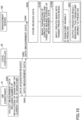
- FIG. 10 is a sequence diagram illustrating an example of a process of the prediction system according to the fourth embodiment. This process indicates another example of the prediction process repeatedly performed by the prediction system 1 described with reference to FIG. 8 .
- the processing of steps S901 to S905 and S907 are substantially the same as the processing of the prediction system according to the third embodiment described with reference to FIG. 9 , and thus the description thereof is omitted here.
- step S1001 the controller 101 images the transitions of the cumulative average 202 and the three-day moving average 203 of the measurement data (for example, the numbers of revolutions of the drain pump 11) stored in the storage unit. For example, the controller 101 creates an image of the graph 200 illustrated in FIG. 2 .
- step S1002 the controller 101 inputs the created image into the learned prediction model 801. With this, the learned prediction model 801 outputs a prediction result indicating whether an anomaly will occur in the drain pump 11.
- step S907 the controller 101 performs the processing of step S907.
- the prediction system 1 may predict the anomaly of the drain pump 11, using the learned prediction model 801 obtained by performing machine learning using the image of the data when the drain pump 11 is in the normal state and the image of the data when the drain pump 11 is in the anomaly state as the training data.
- the anomaly of the drain pump 11 may be predicted by excluding the data for the period during which no drain water is present from the data stored in the storage unit.
- the anomaly of the drain pump 11 provided in the air conditioner 10 can be predicted with higher accuracy.
- the anomaly of the drain pump 11 is predicted using the average value, such as the cumulative average 202 and the three-day moving average.
- the embodiments are not limited thereto, and the average value may be another representative value, such as a median value or a modal value, for example.
- the prediction server 100 includes the controller 101, but the local controller 20 may include the controller 101. Additionally, the controller 101 may be implemented by, for example, a virtual computer on a cloud or the like.
Landscapes
- Engineering & Computer Science (AREA)
- Chemical & Material Sciences (AREA)
- Combustion & Propulsion (AREA)
- Mechanical Engineering (AREA)
- General Engineering & Computer Science (AREA)
- Signal Processing (AREA)
- Biomedical Technology (AREA)
- Health & Medical Sciences (AREA)
- Physics & Mathematics (AREA)
- Fuzzy Systems (AREA)
- Mathematical Physics (AREA)
- Air Conditioning Control Device (AREA)
- Testing And Monitoring For Control Systems (AREA)
- Devices For Blowing Cold Air, Devices For Blowing Warm Air, And Means For Preventing Water Condensation In Air Conditioning Units (AREA)
Abstract
Description
- The present disclosure relates to a prediction system, a prediction method, and a program.
- In an air conditioner including a drain pump, a technique for determining the degree of contamination of the drain pump is known. For example, a technique of detecting a current value or the number of revolutions of a drain pump and determining that contamination of the drain pump is at a level requiring maintenance when the current value of the drain pump is greater than or equal to a predetermined value or the number of revolutions of the drain pump is less than or equal to a predetermined value is known (See, for example, Patent Document 1).
- [Patent Document 1]
Japanese Laid-open Patent Application Publication No. 2005-283057 - However, the current value (or the number of revolutions) of the drain pump fluctuates significantly from drain pump to drain pump, and thus there is a problem that erroneous detection is likely to occur if only the anomaly is determined based on the instantaneous value of the current value (or the number of revolutions) as in the related art.
- The present disclosure enables an anomaly of a drain pump provided in an air conditioner to be predicted with higher accuracy.
- A prediction system according to a first aspect of the present disclosure is a prediction system including an air conditioner including a drain pump and a controller. The controller is configured to acquire data of a number of revolutions of the drain pump or a current value of the drain pump, and output a prediction result indicating that an anomaly of the drain pump is predicted, based on a change in data for a predetermined period in the data.
- According to the first aspect of the present disclosure, the anomaly of the drain pump provided in the air conditioner can be predicted with higher accuracy.
- A second aspect of the present disclosure is the prediction system as described in the first aspect, and the controller outputs the prediction result based on a representative value of the data for the predetermined period.
- A third aspect of the present disclosure is the prediction system as described in the first aspect or the second aspect, and the controller predicts the anomaly of the drain pump based on an average value of data for a first predetermined period in the data and an average value of data for a second predetermined period in the data. The second predetermined period is shorter than the first predetermined period.
- A fourth aspect of the present disclosure is the prediction system as described in the third aspect, and the controller outputs the prediction result indicating that the anomaly of the drain pump is predicted, when a divergence between the average value of the data for the first predetermined period and the average value of the data for the second predetermined period exceeds a threshold.
- A fifth aspect of the present disclosure is the prediction system as described in any one of the first to fourth aspects, and the controller predicts the anomaly of the drain pump based on environmental data. The environmental data includes temperature data or humidity data. With this, the prediction system can predict the anomaly of the drain pump with higher accuracy.
- A sixth aspect of the present disclosure is the prediction system as described in any one of the first to fifth aspects, and when the air conditioner or the drain pump is not operating, the controller predicts the anomaly of the drain pump, using, instead of data for a period during which the air conditioner or the drain pump is not operating in the data, data before the period in the data. With this, the prediction system can predict the anomaly of the drain pump with higher accuracy.
- A seventh aspect of the present disclosure is the prediction system as described in the sixth aspect, and the controller determines the period during which the drain pump is not operating, based on environmental data. The environmental data includes temperature data or humidity data.
- An eighth aspect of the present disclosure is the prediction system as described in any one of the first to fifth aspects, and the controller determines, from environmental data, whether drain water is generated, the environmental data including temperature data or humidity data, and predicts the anomaly of the drain pump, excluding data for a period during which the drain water is not generated in the data of the number of revolutions of the drain pump or the current value of the drain pump.
- A ninth aspect of the present disclosure is the prediction system as described in the eighth aspect, and the controller further uses information indicating whether the air conditioner is operating in a predetermined mode to determine whether the drain water is generated.
- A tenth aspect of the present disclosure is the prediction system as described in any one of the first to ninth aspects, and the prediction system includes an edge device configured to collect the data from the air conditioner, and the controller acquires data obtained by the air conditioner or the edge device averaging the data.
- An eleventh aspect of the present disclosure is the prediction system as described in the first aspect, and the controller predicts the anomaly of the drain pump by using a learned prediction model obtained by performing machine learning using data when the drain pump is in a normal state in the data and data when the drain pump is in an anomaly state in the data as training data.
- A twelfth aspect of the present disclosure is the prediction system as described in the first aspect, and the controller predicts the anomaly of the drain pump by using a learned prediction model obtained by performing machine learning using an image representing data when the drain pump is in a normal state in the data and an image representing data when the drain pump is an anomaly state in the data as training data.
- A prediction method according to a thirteen aspect of the present disclosure includes, in a prediction system including an air conditioner that includes a drain pump; and a controller, acquiring, by the controller, data of a number of revolutions of the drain pump or a current value of the drain pump, and outputting, by the controller, a prediction result indicating that an anomaly of the drain pump is predicted, based on a change in data for a predetermined period in the data.
- A program according to a fourteenth aspect of the present disclosure causes a computer to perform a process in a prediction system including an air conditioner and a controller, and the air conditioner includes a drain pump. The process includes acquiring data of a number of revolutions of the drain pump or a current value of the drain pump, and outputting a prediction result indicating that an anomaly of the drain pump is predicted, based on a change in data for a predetermined period in the data.
- Another aspect of the present disclosure is realized by a recording medium in which the program according to the fourteenth aspect is recorded.
-
- [
FIG. 1] FIG. 1 is a diagram illustrating an example of a system configuration of a prediction system according to an embodiment. - [
FIG. 2] FIG. 2 is a graph (1) for explaining an outline of a prediction process according to the embodiment. - [
FIG. 3] FIG. 3 is a graph (2) for explaining the outline of the prediction process according to the embodiment. - [
FIG. 4] FIG. 4 is a diagram illustrating an example of a computer hardware configuration according to the embodiment. - [
FIG. 5] FIG. 5 is a sequence diagram illustrating an example of a process of a prediction system according to a first embodiment. - [
FIG. 6] FIG. 6 is a sequence diagram illustrating an example of a process of a prediction system according to a second embodiment. - [
FIG. 7] FIG. 7 is a flowchart illustrating an example of a drain water determination process according to the second embodiment. - [
FIG. 8] FIG. 8 is a diagram illustrating an example of a system configuration of a prediction system according to a third embodiment. - [
FIG. 9] FIG. 9 is a sequence diagram illustrating an example of a process of a prediction system according to the third embodiment. - [
FIG. 10] FIG. 10 is a sequence diagram illustrating an example of a process of a prediction system according to a fourth embodiment. - In the following, embodiments will be described below with reference to the attached drawings. Here, in the present specification and the drawings, components having substantially the same functional configuration will be denoted by the same reference numerals, and duplicate description will be omitted.
-
FIG. 1 is a diagram illustrating an example of a system configuration of a prediction system according to an embodiment. Theprediction system 1 includes anair conditioner 10 including adrain pump 11 and acontroller 101. Theprediction system 1 is a system in which thecontroller 101 acquires data of the number of revolutions (or a current value) of thedrain pump 11 and predicts an anomaly of the drain pump based on a change in data for a predetermined period. - In the example illustrated in
FIG. 1 , theprediction system 1 includes alocal controller 20 communicably connected to theair conditioner 10 via a predetermined communication interface and configured to control theair conditioner 10. Additionally, theprediction system 1 includes aprediction server 100 including thecontroller 101 and configured to communicate with thelocal controller 20 via acommunication network 2, such as the Internet or a local area network (LAN). - Here, the system configuration of the
prediction system 1 illustrated inFIG. 1 is an example. Thelocal controller 20 may include thecontroller 101, for example. Additionally, theprediction server 100 may include multiple information processing devices. Here, as an example, the following description will be provided on the assumption that theprediction server 100 includes thecontroller 101. - The
air conditioner 10 is configured such that, for example, during a cooling operation, condensation water (drain) is generated by a heat exchanger provided in theair conditioner 10, and the generated condensation water accumulates in a saucer called a drain pan. - The
drain pump 11 is a pump configured to suction up the condensation water accumulated in the drain pan, and discharges it to the outside via a drain hose. When an anomaly occurs in the drain pump, the condensation water accumulates inside theair conditioner 10, and when the amount of the accumulated condensation water exceeds an allowable range, theair conditioner 10 detects an anomaly (a drain pump failure) and stops operation. - When the drain pump failure occurs, the user cannot use the cooling operation. Thus, the
prediction system 1 outputs a prediction result indicating that the anomaly of the drain pump is predicted in advance so that, for example, a service person or the like can respond to the problem on the spot before thedrain pump 11 is completely clogged. - The
local controller 20 has a computer configuration, for example, and controls theair conditioner 10 by executing a predetermined program recorded (stored) in a recording medium. Additionally, thelocal controller 20 according to the present embodiment has a function of acquiring measurement data including the number of revolutions of thedrain pump 11 or the current value of thedrain pump 11, which is measured by theair conditioner 10 periodically (for example, every minute), every predetermined time (for example, every hour). Furthermore, thelocal controller 20 has a function of transmitting measurement data (second measurement data) obtained by averaging the measurement data (first measurement data) acquired from theair conditioner 10 every predetermined time, to theprediction server 100 via thecommunication network 2. Here, thelocal controller 20 is an example of an edge device. - As another example, the
air conditioner 10 may average the measurement data every predetermined time, and thelocal controller 20 may acquire the averaged measurement data from theair conditioner 10. In this case, the first measurement data acquired by thelocal controller 20 from theair conditioner 10 and the second measurement data transmitted by thelocal controller 20 to theprediction server 100 may be the same data. - The
prediction server 100 has a computer configuration, and performs a prediction process for predicting the anomaly of thedrain pump 11 by executing a predetermined program recorded (stored) in a recording medium. -
FIGS. 2 and3 are graphs for explaining an outline of the prediction process according to the embodiment. In agraph 200 illustrated inFIG. 2 , the horizontal axis represents the number of days elapsed since the measurement has started, and the vertical axis represents the number of revolutions of thedrain pump 11. Additionally, in thegraph 200, measurement data (raw data) 201 of the number of revolutions of thedrain pump 11, acumulative average 202 of themeasurement data 201, and a three-day moving average 203 of themeasurement data 201 are plotted. - As for the number of revolutions of the drain pump, for example, the number of pulses are measured, and the number of revolutions can be calculated from the measured number of pulses. In this case, for example, if 1 pulse is 24 rpm, the number of revolutions is measured at 24 rpm intervals. Additionally, the
measurement data 201 of the number of revolutions includes, for example, ameasurement fluctuation 204 of ±48 rpm (±2 pulses) as illustrated inFIG. 2 . - As described above, the
measurement data 201 of the number of revolutions of thedrain pump 11 has a large fluctuation, and there is also a fluctuation (individual difference) for eachdrain pump 11, and thus there is a problem that erroneous detection is likely to occur if the anomaly is determined only by the instantaneous value of the number of revolutions as in the related art. - Therefore, the
controller 101 according to the present embodiment stores (accumulates) themeasurement data 201 transmitted by thelocal controller 20 every 1 hour in a storage unit, for example. Here, the storage unit for storing themeasurement data 201 may be, for example, a storage device provided by theprediction server 100, or a storage server or the like outside of theprediction server 100. - Additionally, the
controller 101 calculates thecumulative average 202 of themeasurement data 201 stored in the storage unit and the three-day moving average 203 of themeasurement data 201. Here, the three-day moving average 203 is an average value (a moving average) of themeasurement data 201 for the most recent three days. Here, three days are an example of a predetermined period (a second predetermined period) used for predicting the anomaly of thedrain pump 11. The second predetermined period may be a number of days other than three days (for example, 1 to 5 days). - Additionally, the
cumulative average 202 is, for example, an average value of themeasurement data 201 for a first predetermined period sufficiently longer than the second predetermined period. Thecumulative average 202 may be, for example, an average value (a moving average value) of themeasurement data 201 for the most recent 30 days, a cumulative moving average value from the time of starting the measurement, or the like. Here, the following description will be provided on the assumption that thecumulative average 202 is an average value of themeasurement data 201 for 30 days. - When the
drain pump 11 has a tendency to become clogged, as illustrated inFIG. 2 , the number of revolutions of the drain pump gradually decreases, and the value of the three-day moving average 203 gradually decreases. In contrast, thecumulative average 202 is an average value for a period sufficiently longer than three days, a change in the value is less than the change in the three-day moving average 203. - Therefore, the
controller 101 according to the present embodiment outputs a prediction result indicating that the anomaly of thedrain pump 11 is predicted, based on the cumulative average 202 (the average value of the data for the first predetermined period) and the three-day moving average 203 (the average value of the data for the second predetermined period that is shorter than the first predetermined period). For example, if a divergence between the cumulative average 202 (the average value of the data for the first predetermined period) and the three-day moving average 203 (the average value of the data for the second predetermined period) exceeds a threshold, thecontroller 101 outputs a prediction result indicating that the anomaly of thedrain pump 11 is predicted. - As a specific example, as illustrated in
FIG. 3 , thecontroller 101 calculates adifference 301 between the three-day moving average 203 and thecumulative average 202, and outputs a prediction result indicating that the anomaly of thedrain pump 11 is predicted, when thecalculated difference 301 exceeds athreshold 302. Here, thethreshold 302 is determined in advance based on, for example, how many days before the anomaly of thedrain pump 11 the prediction result is output, or the like. - By using the above-described process, according to the
prediction system 1 of the present embodiment, the anomaly of thedrain pump 11 provided in theair conditioner 10 can be predicted with higher accuracy. - Here, in the above description, the number of revolutions of the drain pump 11 (the number of revolutions of a motor provided in the drain pump) is used as the
measurement data 201, but themeasurement data 201 may be the current value of the drain pump 11 (the current value flowing in the drain pump 11). - Here, when the
drain pump 11 has a tendency to become clogged, the number of revolutions of thedrain pump 11 decreases and the current value of thedrain pump 11 increases. In either case, thecontroller 101 only needs to output a prediction result indicating that the anomaly of thedrain pump 11 is predicted, when a divergence between the three-day moving average 203 of themeasurement data 201 and thecumulative average 202 of themeasurement data 201 exceeds a threshold. - Here, the prediction result indicating that the anomaly of the
drain pump 11 is predicted may, for example, be provided by notification to theair conditioner 10 or thelocal controller 20 to perform a predetermined display, or may be provided by notification to the manager or the like who manages theair conditioner 10. Additionally, the prediction result may be, for example, a message such as "The drain pump is contaminated, so please check it.", information indicating a period until an anomaly occurs in thedrain pump 11, or the like. - The
prediction server 100 and thelocal controller 20 have a hardware configuration of acomputer 400 as illustrated inFIG. 4 , for example. Here, theprediction server 100 may be configured bymultiple computers 400. -
FIG. 4 is a diagram illustrating an example of a hardware configuration of a computer according to the embodiment. Thecomputer 400 includes, for example, thecontroller 101, amemory 401, astorage device 402, acommunication device 403, adisplay device 404, aninput device 405, adrive device 406, abus 408, and the like. - The
controller 101 is, for example, a processor, such as a central processing unit (CPU) that realizes various functions by executing predetermined programs stored in a storage medium (recording medium), such as thestorage device 402 or thememory 401. Here, in addition to the CPU, thecontroller 101 may include a processor such as a graphics processing unit (GPU) or a digital signal processor (DSP). Additionally, thecontroller 101 may be, for example, a device such as an application specific integrated circuit (ASIC) or a field programmable gate array (FPGA). - The
memory 401 includes, for example, a random access memory (RAM), which is a volatile memory used as a work area or the like of thecontroller 101, and a read only memory (ROM), which is a nonvolatile memory for storing a program for starting thecontroller 101 and the like. Thestorage device 402 is a large-capacity storage device for storing programs, such as an operating system (OS) and applications, various data, information, and the like, and is realized by, for example, a solid state drive (SSD) or a hard disk drive (HDD). - The
communication device 403 includes one or more communication interfaces or communication devices for communicating with external devices. For example, thecommunication device 403 includes a network interface card (NIC) or the like for connecting thecomputer 400 to thecommunication network 2 and communicating with other devices. Additionally, thecommunication device 403 may include, for example, a communication interface or the like for connecting theair conditioner 10 or the like to thecomputer 400. - The
display device 404 is a display device or apparatus for displaying a display screen. Theinput device 405 is, for example, an input device for receiving an external input, such as a keyboard, a pointing device, or a touch panel. Here, thedisplay device 404 and theinput device 405 may be an integrated display input device, such as a touch panel display. - The
drive device 406 is a device for connecting, to thecomputer 400, arecording medium 407 in which a predetermined program is recorded (stored). Therecording medium 407 herein includes, for example, a medium for recording information optically, electrically, or magnetically, such as a CD-ROM, a flexible disk, or a magneto-optical disk. Additionally, therecording medium 407 may include, for example, a semiconductor memory or the like for recording information electrically, such as a ROM or a flash memory. Thebus 408 is commonly connected to the above-described components, and transmits, for example, address signals, data signals, various control signals, and the like. - Next, a flow of a process of a prediction method according to the present embodiment will be described by illustrating multiple embodiments.
-
FIG. 5 is a sequence diagram illustrating an example of a process of a prediction system according to a first embodiment. This process indicates an example of the prediction process repeatedly performed by theprediction system 1 described with reference toFIG. 1 . - In step S501, the
air conditioner 10 collects the measurement data including the number of revolutions of thedrain pump 11 provided in theair conditioner 10 or the current value of the drain pump. For example, theair conditioner 10 periodically (for example, every minute) measures the number of revolutions of thedrain pump 11 and stores it in a storage unit or the like provided in theair conditioner 10. - In step S502, the
local controller 20 requests theair conditioner 10 to acquire the data. In response, in step S503, theair conditioner 10 transmits the collected measurement data (the first measurement data) to thelocal controller 20. For example, thelocal controller 20 transmits a data acquisition request to theair conditioner 10 at a predetermined time interval (for example, every hour). Additionally, when receiving the data acquisition request, theair conditioner 10 transmits, to the local controller, the measurement data for the most recent predetermined period (for example, 1 hour) as the first measurement data. Alternatively, when receiving the data acquisition request, theair conditioner 10 may calculate an average value of the measurement data for the most recent predetermined period and transmit, to thelocal controller 20, the calculated average value as the first measurement data. - In step S504, the
local controller 20 transmits, to theprediction server 100, the average value of the measurement data for the most recent predetermined period as the second measurement data, based on the data (the first measurement data) received from theair conditioner 10. For example, when the first measurement data received from theair conditioner 10 is the measurement data for the most recent predetermined period, thelocal controller 20 calculates the average value of the first measurement data and transmits, to theprediction server 100, the calculated average value as the second measurement data. Additionally, when the first measurement data received from theair conditioner 10 is the average value of the measurement data for the most recent predetermined period, thelocal controller 20 transmits, to theprediction server 100, the first measurement data as the second measurement data. - In step S505, the
controller 101 of theprediction server 100 stores (accumulates) the data (the second measurement data) received from thelocal controller 20 or data obtained by processing the received data in the storage unit, such as thestorage device 402, for example. - For example, when the
drain pump 11 is not operating (stopped), themeasurement data 201 of the number of revolutions and the current value of thedrain pump 11 becomes 0 (zero). Therefore, if thecumulative average 202 or the three-day moving average is calculated using the data for the period during which thedrain pump 11 is not operating, there is a possibility that a correct prediction result cannot be obtained. Therefore, as an example, when thedrain pump 11 is not operating, thecontroller 101 may replace the data for the period during which thedrain pump 11 is not operating with data before this period, and store the data in the storage unit. - For example, if the operation of the
drain pump 11 has been stopped for one day due to a holiday, absence, or the like, thecontroller 101 may replace the one-day portion of data during which thedrain pump 11 has been stopped with the data mentioned above, and store the data in the storage unit. Additionally, if thedrain pump 11 has been stopped for one hour, thecontroller 101 may replace the one-hour portion of data during which thedrain pump 11 has been stopped with data for the preceding one-hour portion, and store the data in the storage unit. - However, this is one suitable example, and the
controller 101 may store the data received from thelocal controller 20 in the storage unit without modification. In this case, for example, thecontroller 101 may exclude the data for the period while thedrain pump 11 has been stopped and calculate thecumulative average 202 or the three-day moving average 203. - In step S506, the
controller 101 calculates thecumulative average 202 and the three-day moving average 203 from the numbers of revolutions (or the current values) of thedrain pump 11 included in the data stored in the storage unit, and calculates thedifference 301 between thecumulative average 202 and the three-day moving average 203. - Additionally, when the
calculated difference 301 exceeds thepreset threshold 302, thecontroller 101 performs the processing of step S507. In step S507, thecontroller 101 outputs the prediction result indicating that the anomaly of thedrain pump 11 is predicted. - By the process illustrated in
FIG. 5 , for example, as illustrated inFIG. 3 , theprediction system 1 can output the prediction result indicating that the anomaly of thedrain pump 11 is predicted, before the anomaly occurs in thedrain pump 11 with higher accuracy. - In a second embodiment, an example of a process in which the
controller 101 predicts the anomaly of thedrain pump 11 based also on environmental data including temperature data or humidity data will be described. -
FIG. 6 is a sequence diagram illustrating an example of a process of a prediction system according to a first embodiment. This process indicates another example of the prediction process repeatedly performed by theprediction system 1 described with reference toFIG. 1 . Here, the basic flow of the process is substantially the same as that of the first embodiment, and thus a detailed description of the process contents that are substantially the same as those of the first embodiment will be omitted here. - In step S601, the
air conditioner 10 collects the measurement data including the number of revolutions of thedrain pump 11 provided in theair conditioner 10 or the current value of the drain pump, environmental data, and operation data. Here, the environmental data includes, for example, temperature data indicating a room temperature, humidity data indicating relative humidity, and the like. Here, if theair conditioner 10 cannot acquire the humidity data, the environmental data may include only the temperature data. Additionally, the operation data includes, for example, data indicating the operation mode (cooling, dehumidification, heating, and the like) of theair conditioner 10 and data such as evaporation temperature measured by a temperature sensor of a heat exchanger of theair conditioner 10. Here, the data of the evaporation temperature may be included in the environmental data. - In step S602, the
local controller 20 requests theair conditioner 10 to acquire the data. In response to this, in step S603, theair conditioner 10 transmits, to thelocal controller 20, data including the collected measurement data (the first measurement data), the environmental data, the operation data, and the like. - In step S604, the
local controller 20 transmits, to theprediction server 100, data including the second measurement data, which is the average value of the first measurement data received from theair conditioner 10, the environmental data, and the operation data. - In step S605, the
controller 101 of theprediction server 100 stores (accumulates) the data received from thelocal controller 20 or data obtained by processing the received data in the storage unit, such as thestorage device 402. - In step S606, the
controller 101 determines a period during which no drain water is present from the data stored in the storage unit. For example, thecontroller 101 performs a drain water determination process as illustrated inFIG. 7 . -
FIG. 7 is a flowchart illustrating an example of the drain water determination process according to the second embodiment. This process indicates, for example, an example of the process performed by thecontroller 101 in step S606 ofFIG. 6 . Thecontroller 101 performs, for example, the process illustrated inFIG. 7 on data during the cooling operation of theair conditioner 10 in the data stored in the storage unit. - In step S701, the
controller 101 calculates the dew point temperature (the temperature at which dew condensation occurs) using the temperature data and the humidity data, or the temperature data. For example, thecontroller 101 calculates a water vapor pressure from the temperature data indicating the room temperature and the humidity data indicating relative humidity, and calculates a temperature at which the water vapor pressure becomes the saturated water vapor pressure. Here, when there is no humidity data, thecontroller 101 calculates the dew point temperature by temporarily assuming a value of the relative humidity. - In step S702, the controller 102 obtains an evaporation temperature from the operation data. Here, the evaporation temperature is the temperature of the heat exchanger measured by the sensor of the heat exchanger of the
air conditioner 10. - In step S703, the
controller 101 determines whether the evaporation temperature is less than or equal to the calculated dew point temperature. If the evaporation temperature is less than or equal to the dew point temperature, dew condensation occurs, and thus in step S704, thecontroller 101 determines that the drain water is present. If the evaporation temperature is not less than or equal to the dew point, in step S705, thecontroller 101 determines that no drain water is present. - Returning to
FIG. 6 , the description of the sequence diagram is continued. In step S607, thecontroller 101 excludes the data for the period during which no drain water is present, from the measurement data stored in the storage unit (for example, the number of revolutions of the drain pump 11), and calculates thedifference 301 between thecumulative average 202 and the three-day moving average 203. This is because when no drain water is present, thedrain pump 11 becomes unloaded and the number of revolutions of thedrain pump 11 increases. Therefore, by excluding the data for the period during which no drain water is present, the prediction accuracy for predicting the anomaly of thedrain pump 11 can be further improved. - Subsequently, when the
calculated difference 301 exceeds thepreset threshold 302, thecontroller 101 performs the processing of step S608. In step S608, thecontroller 101 outputs the prediction result indicating that the anomaly of thedrain pump 11 is predicted. - By the process of
FIG. 6 , theprediction system 1 can further increase the accuracy of the prediction result indicating that the anomaly of thedrain pump 11 is predicted. - In the first and second embodiments, the
controller 101 outputs the prediction result indicating that the anomaly of thedrain pump 11 is predicted, when the divergence between thecumulative average 202 and the three-day moving average 203 of the measurement data of the numbers of revolutions (or current values) of thedrain pump 11 exceeds the threshold. - In a third embodiment, an example of a case where the
controller 101 predicts the anomaly of thedrain pump 11, using a learned prediction model obtained by performing machine learning using data for a predetermined period during which thedrain pump 11 is in a normal state and data for a predetermined period during which thedrain pump 11 is in an anomaly state as training data, will be described. -
FIG. 8 is a diagram illustrating an example of a system configuration of a prediction system according to the third embodiment. As illustrated inFIG. 8 , theprediction system 1 according to the third embodiment includes aprediction model 801 in addition to the system configuration of theprediction system 1 described with reference toFIG. 1 . - The
prediction model 801 is a learned prediction model obtained by performing machine learning to predict the anomaly of thedrain pump 11, using data for a predetermined period during which thedrain pump 11 is in a normal state and data for a predetermined period during which thedrain pump 11 is in an anomaly state as training data. Thecontroller 101 can obtain a prediction result indicating whether an anomaly will occur in thedrain pump 11 by inputting, into theprediction model 801, measurement data for a predetermined period (for example, thecumulative average 202 and the three-day moving average 203) stored in the storage unit. Here, the measurement data for the predetermined period may be only the three-day moving average 203. - Here, the learning of the
prediction model 801 may be performed by theprediction server 100 using the data stored by thecontroller 101 in the storage unit, or theprediction model 801 on which the learning has been performed by another information processing device may be set in theprediction server 100. -
FIG. 9 is a sequence diagram illustrating an example of a process of the prediction system according to the third embodiment. This process indicates an example of the prediction process repeatedly performed by theprediction system 1 described with reference toFIG. 8 . Here, the basic flow of the process is substantially the same as that of the process of the prediction system according to the first embodiment described with reference toFIG. 5 , and thus a detailed description of the process contents that are substantially the same as those of the first embodiment will be omitted here. - In step S901, the
air conditioner 10 collects the measurement data including the number of revolutions of thedrain pump 11 provided in theair conditioner 10 or the current value of the drain pump. - In step S902, the
local controller 20 requests theair conditioner 10 to acquire the data. In response, in step S903, theair conditioner 10 transmits the collected measurement data (the first measurement data) to thelocal controller 20. - In step S904, the
local controller 20 transmits, to theprediction server 100, the average value of the measurement data for the most recent predetermined period as the second measurement data, based on the data (the first measurement data) received from theair conditioner 10. - In step S905, the
controller 101 of theprediction server 100 stores (accumulates) the data (the second measurement data) received from thelocal controller 20 or data obtained by processing the received data, in the storage unit, such as thestorage device 402. - In step S906, the
controller 101 inputs, into the learnedprediction model 801, the measurement data for the predetermined period stored in the storage unit. For example, thecontroller 101 calculates thecumulative average 202 and the three-day moving average 203 of the measurement data of the number of revolutions (or the current value) of thedrain pump 11 stored in the storage unit, and inputs the calculated data into the learnedprediction model 801. With this, the learnedprediction model 801 outputs a prediction result indicating whether an anomaly will occur in thedrain pump 11. - Subsequently, if it is predicted that an anomaly will occur in the
drain pump 11, thecontroller 101 performs the processing of step S907. In step S907, thecontroller 101 outputs the prediction result indicating that the anomaly of thedrain pump 11 is predicted. - As described, the
prediction system 1 may predict the anomaly of thedrain pump 11 by using the learnedprediction model 801 obtained by performing machine learning using the data when thedrain pump 11 is in a normal state and the data when thedrain pump 11 is in an anomaly state as the training data. - Here, the process described with reference to
FIG. 9 is an example. For example, in the process of the prediction system according to the third embodiment, as in the second embodiment described with reference toFIG. 6 , the anomaly of thedrain pump 11 may be predicted by excluding the data for the period during which no drain water is present from the data stored in the storage unit. - In the third embodiment, the
prediction model 801 is subjected to machine learning using the data when thedrain pump 11 is in a normal state and the data when thedrain pump 11 is in an anomaly state as the training data. - In the fourth embodiment, the
prediction model 801 is a learned prediction model obtained by performing machine learning using an image representing data when thedrain pump 11 is in a normal state and an image representing data when thedrain pump 11 is in an anomaly state as the training data. - Here, as the image representing the data when the
drain pump 11 is in the normal state and the image representing the data when thedrain pump 11 is in the anomaly state, for example, as illustrated inFIG. 2 , an image of thegraph 200 in which the data of thecumulative average 202 and the three-day moving average 203 are plotted can be applied. -
FIG. 10 is a sequence diagram illustrating an example of a process of the prediction system according to the fourth embodiment. This process indicates another example of the prediction process repeatedly performed by theprediction system 1 described with reference toFIG. 8 . Here, in the processing illustrated inFIG. 10 , the processing of steps S901 to S905 and S907 are substantially the same as the processing of the prediction system according to the third embodiment described with reference toFIG. 9 , and thus the description thereof is omitted here. - In step S1001, the
controller 101 images the transitions of thecumulative average 202 and the three-day moving average 203 of the measurement data (for example, the numbers of revolutions of the drain pump 11) stored in the storage unit. For example, thecontroller 101 creates an image of thegraph 200 illustrated inFIG. 2 . - In step S1002, the
controller 101 inputs the created image into the learnedprediction model 801. With this, the learnedprediction model 801 outputs a prediction result indicating whether an anomaly will occur in thedrain pump 11. - Subsequently, if it is predicted that an anomaly will occur in the
drain pump 11, thecontroller 101 performs the processing of step S907. - As described, the
prediction system 1 may predict the anomaly of thedrain pump 11, using the learnedprediction model 801 obtained by performing machine learning using the image of the data when thedrain pump 11 is in the normal state and the image of the data when thedrain pump 11 is in the anomaly state as the training data. - Here, in the process of the prediction system according to the fourth embodiment, as in the second embodiment described with reference to
FIG. 6 , the anomaly of thedrain pump 11 may be predicted by excluding the data for the period during which no drain water is present from the data stored in the storage unit. - As described above, according to the embodiments of the present disclosure, the anomaly of the
drain pump 11 provided in theair conditioner 10 can be predicted with higher accuracy. - Although the embodiments have been described above, it will be understood that various changes in the form and details can be made without departing from the spirit and scope of the claims.
- For example, in the above-described embodiments, the anomaly of the
drain pump 11 is predicted using the average value, such as thecumulative average 202 and the three-day moving average. However, the embodiments are not limited thereto, and the average value may be another representative value, such as a median value or a modal value, for example. - Additionally, in the above-described embodiments, the
prediction server 100 includes thecontroller 101, but thelocal controller 20 may include thecontroller 101. Additionally, thecontroller 101 may be implemented by, for example, a virtual computer on a cloud or the like. - This application claims the priority to Basic Application No.
2022-136193 filed with the Japan Patent Office on August 29, 2022 -
- 1
- prediction system
- 2
- communication network
- 10
- air conditioner
- 11
- drain pump
- 20
- local controller
- 100
- prediction server
- 101
- controller
- 200
- graph
- 202
- cumulative average
- 203
- three-day moving average
- 302
- threshold
- 400
- computer
- 407
- recording medium
- 801
- prediction model
Claims (14)
- A prediction system comprising:an air conditioner including a drain pump; anda controller,wherein the controller is configured to:acquire data of a number of revolutions of the drain pump or a current value of the drain pump; andoutput a prediction result indicating that an anomaly of the drain pump is predicted, based on a change in data for a predetermined period in the data.
- The prediction system as claimed in claim 1, wherein the controller outputs the prediction result based on a representative value of the data for the predetermined period.
- The prediction system as claimed in claim 1 or 2, wherein the controller predicts the anomaly of the drain pump based on an average value of data for a first predetermined period in the data and an average value of data for a second predetermined period in the data, the second predetermined period being shorter than the first predetermined period.
- The prediction system as claimed in claim 3, wherein the controller outputs the prediction result indicating the anomaly of the drain pump when a divergence between the average value of the data for the first predetermined period and the average value of the data for the second predetermined period exceeds a threshold.
- The prediction system as claimed in any one of claims 1 to 4, wherein the controller predicts the anomaly of the drain pump based on environmental data, the environmental data including temperature data or humidity data.
- The prediction system as claimed in any one of claims 1 to 5, wherein when the air conditioner or the drain pump is not operating, the controller predicts the anomaly of the drain pump, using, instead of data for a period during which the air conditioner or the drain pump is not operating in the data, data before the period in the data.
- The prediction system as claimed in claim 6, wherein the controller determines the period during which the drain pump is not operating, based on environmental data, the environmental data including temperature data or humidity data.
- The prediction system as claimed in any one of claims 1 to 5, wherein the controller determines, from environmental data, whether drain water is generated, the environmental data including temperature data or humidity data, and predicts the anomaly of the drain pump, excluding data for a period during which the drain water is not generated in the data of the number of revolutions of the drain pump or the current value of the drain pump.
- The prediction system as claimed in claim 8, wherein the controller further uses information indicating whether the air conditioner is operating in a predetermined mode to determine whether the drain water is generated.
- The prediction system as claimed in any one of claims 1 to 9,wherein the prediction system comprises an edge device configured to collect the data from the air conditioner, andwherein the controller acquires data obtained by the air conditioner or the edge device averaging the data.
- The prediction system as claimed in claim 1, wherein the controller predicts the anomaly of the drain pump by using a learned prediction model obtained by performing machine learning using data when the drain pump is in a normal state in the data and data when the drain pump is in an anomaly state in the data as training data.
- The prediction system as claimed in claim 1, wherein the controller predicts the anomaly of the drain pump by using a learned prediction model obtained by performing machine learning using an image representing data when the drain pump is in a normal state in the data and an image representing data when the drain pump is an anomaly state in the data as training data.
- A prediction method in a prediction system including an air conditioner that includes a drain pump; and a controller, the prediction method comprising:acquiring, by the controller, data of a number of revolutions of the drain pump or a current value of the drain pump; andoutputting, by the controller, a prediction result indicating that an anomaly of the drain pump is predicted, based on a change in data for a predetermined period in the data.
- A program for causing a computer to perform a process in a prediction system including an air conditioner and a controller, the air conditioner including a drain pump, and the process including:acquiring data of a number of revolutions of the drain pump or a current value of the drain pump; andoutputting a prediction result indicating that an anomaly of the drain pump is predicted, based on a change in data for a predetermined period in the data.
Applications Claiming Priority (2)
| Application Number | Priority Date | Filing Date | Title |
|---|---|---|---|
| JP2022136193A JP7518409B2 (en) | 2022-08-29 | 2022-08-29 | Prediction system, prediction method, and program |
| PCT/JP2023/021242 WO2024047996A1 (en) | 2022-08-29 | 2023-06-07 | Prediction system, prediction method, and program |
Publications (2)
| Publication Number | Publication Date |
|---|---|
| EP4560214A1 true EP4560214A1 (en) | 2025-05-28 |
| EP4560214A4 EP4560214A4 (en) | 2025-11-19 |
Family
ID=90099336
Family Applications (1)
| Application Number | Title | Priority Date | Filing Date |
|---|---|---|---|
| EP23859766.0A Pending EP4560214A4 (en) | 2022-08-29 | 2023-06-07 | FORECASTING SYSTEM, FORECASTING METHOD AND PROGRAM |
Country Status (5)
| Country | Link |
|---|---|
| US (1) | US20260055910A1 (en) |
| EP (1) | EP4560214A4 (en) |
| JP (1) | JP7518409B2 (en) |
| CN (1) | CN119790271A (en) |
| WO (1) | WO2024047996A1 (en) |
Family Cites Families (7)
| Publication number | Priority date | Publication date | Assignee | Title |
|---|---|---|---|---|
| JPH05141686A (en) * | 1991-11-25 | 1993-06-08 | Matsushita Seiko Co Ltd | Drain water level detector for air conditioner |
| JP4155765B2 (en) | 2001-06-29 | 2008-09-24 | 三洋電機株式会社 | Air conditioning apparatus and defrosting operation canceling method thereof |
| JP4247435B2 (en) | 2004-03-31 | 2009-04-02 | 日立アプライアンス株式会社 | Air conditioner with drainage device |
| JP5295189B2 (en) * | 2010-09-01 | 2013-09-18 | 三菱電機株式会社 | Air conditioner |
| CN109960105B (en) | 2017-12-26 | 2024-06-18 | Hoya株式会社 | Photomask blank, method for manufacturing photomask, and method for manufacturing display device |
| JP6944962B2 (en) | 2019-02-27 | 2021-10-06 | ダイキン工業株式会社 | Dirt information estimation system |
| JP7348887B2 (en) | 2020-09-24 | 2023-09-21 | ダイキン工業株式会社 | air handling unit |
-
2022
- 2022-08-29 JP JP2022136193A patent/JP7518409B2/en active Active
-
2023
- 2023-06-07 CN CN202380062083.4A patent/CN119790271A/en active Pending
- 2023-06-07 WO PCT/JP2023/021242 patent/WO2024047996A1/en not_active Ceased
- 2023-06-07 EP EP23859766.0A patent/EP4560214A4/en active Pending
- 2023-06-07 US US19/105,234 patent/US20260055910A1/en active Pending
Also Published As
| Publication number | Publication date |
|---|---|
| JP2024032510A (en) | 2024-03-12 |
| CN119790271A (en) | 2025-04-08 |
| JP7518409B2 (en) | 2024-07-18 |
| US20260055910A1 (en) | 2026-02-26 |
| EP4560214A4 (en) | 2025-11-19 |
| WO2024047996A1 (en) | 2024-03-07 |
Similar Documents
| Publication | Publication Date | Title |
|---|---|---|
| JP4572251B2 (en) | Computer system, computer system failure sign detection method and program | |
| KR101221081B1 (en) | Host device | |
| CN109738884B (en) | Object detection method and device and computer equipment | |
| JP6438124B2 (en) | Operation management system and operation management method | |
| CN109408386B (en) | Software aging streaming type monitoring system and monitoring method thereof | |
| JP2012172930A (en) | Air conditioning facility maintenance system | |
| JPWO2020183539A1 (en) | Failure diagnosis system, failure prediction method, and failure prediction program | |
| CN117055718B (en) | System, method, device, equipment and storage medium for detecting power consumption of server | |
| JP2018005855A (en) | Diagnosis device, diagnosis system, diagnosis method and program | |
| US11844002B2 (en) | Environmental information management system | |
| CN111750925A (en) | Equipment aging prediction system, method and device | |
| US11113364B2 (en) | Time series data analysis control method and analysis control device | |
| US20260055910A1 (en) | Prediction system, prediction method, and program | |
| CN115218432A (en) | Air conditioner control method, air conditioner and medium | |
| EP4254111A1 (en) | Fault diagnosis apparatus, method, computer program, and non-transitory computer-readable recording medium | |
| EP3546892A1 (en) | Voltage differential transducer (vdt) fault detection | |
| AU2020432994B2 (en) | State detection system | |
| JP2017049142A (en) | Weighing meter state change detection device and program | |
| JP7297240B2 (en) | User state estimation device | |
| CN117785607A (en) | Server failure prediction method, device, equipment and storage medium | |
| JP6163823B2 (en) | Cooling monitoring device, cooling monitoring method and program | |
| KR102320878B1 (en) | Integrated control method and integrated control device | |
| JP2025116579A (en) | Data processing system, operating condition evaluation method, operating condition evaluation system, data collection device, operating condition evaluation method, operating condition evaluation system, program provision method, maintenance planning method, maintenance plan provision method and billing method | |
| JP2022138807A (en) | Abnormality determination method and abnormality determination program | |
| WO2024062690A1 (en) | Data processing device, physical quantity measuring device, data processing system, and data processing method |
Legal Events
| Date | Code | Title | Description |
|---|---|---|---|
| STAA | Information on the status of an ep patent application or granted ep patent |
Free format text: STATUS: THE INTERNATIONAL PUBLICATION HAS BEEN MADE |
|
| PUAI | Public reference made under article 153(3) epc to a published international application that has entered the european phase |
Free format text: ORIGINAL CODE: 0009012 |
|
| STAA | Information on the status of an ep patent application or granted ep patent |
Free format text: STATUS: REQUEST FOR EXAMINATION WAS MADE |
|
| 17P | Request for examination filed |
Effective date: 20250220 |
|
| AK | Designated contracting states |
Kind code of ref document: A1 Designated state(s): AL AT BE BG CH CY CZ DE DK EE ES FI FR GB GR HR HU IE IS IT LI LT LU LV MC ME MK MT NL NO PL PT RO RS SE SI SK SM TR |
|
| P01 | Opt-out of the competence of the unified patent court (upc) registered |
Free format text: CASE NUMBER: UPC_APP_3796_4560214/2025 Effective date: 20250820 |
|
| A4 | Supplementary search report drawn up and despatched |
Effective date: 20251022 |
|
| RIC1 | Information provided on ipc code assigned before grant |
Ipc: F24F 11/38 20180101AFI20251016BHEP Ipc: F24F 13/22 20060101ALI20251016BHEP Ipc: F24F 110/10 20180101ALI20251016BHEP Ipc: F24F 110/20 20180101ALI20251016BHEP Ipc: F24F 11/32 20180101ALI20251016BHEP Ipc: F24F 11/49 20180101ALI20251016BHEP |
|
| DAV | Request for validation of the european patent (deleted) | ||
| DAX | Request for extension of the european patent (deleted) |