EP4559996A1 - Verfahren zur herstellung eines trennmittels, ein trennmittel und verwendung des trennmittels - Google Patents
Verfahren zur herstellung eines trennmittels, ein trennmittel und verwendung des trennmittels Download PDFInfo
- Publication number
- EP4559996A1 EP4559996A1 EP24213629.9A EP24213629A EP4559996A1 EP 4559996 A1 EP4559996 A1 EP 4559996A1 EP 24213629 A EP24213629 A EP 24213629A EP 4559996 A1 EP4559996 A1 EP 4559996A1
- Authority
- EP
- European Patent Office
- Prior art keywords
- release agent
- polymer
- carboxylic acid
- containing monomer
- monomer component
- Prior art date
- Legal status (The legal status is an assumption and is not a legal conclusion. Google has not performed a legal analysis and makes no representation as to the accuracy of the status listed.)
- Granted
Links
Images
Classifications
-
- B—PERFORMING OPERATIONS; TRANSPORTING
- B28—WORKING CEMENT, CLAY, OR STONE
- B28B—SHAPING CLAY OR OTHER CERAMIC COMPOSITIONS; SHAPING SLAG; SHAPING MIXTURES CONTAINING CEMENTITIOUS MATERIAL, e.g. PLASTER
- B28B7/00—Moulds; Cores; Mandrels
- B28B7/38—Treating surfaces of moulds, cores, or mandrels to prevent sticking
- B28B7/384—Treating agents
-
- C—CHEMISTRY; METALLURGY
- C09—DYES; PAINTS; POLISHES; NATURAL RESINS; ADHESIVES; COMPOSITIONS NOT OTHERWISE PROVIDED FOR; APPLICATIONS OF MATERIALS NOT OTHERWISE PROVIDED FOR
- C09D—COATING COMPOSITIONS, e.g. PAINTS, VARNISHES OR LACQUERS; FILLING PASTES; CHEMICAL PAINT OR INK REMOVERS; INKS; CORRECTING FLUIDS; WOODSTAINS; PASTES OR SOLIDS FOR COLOURING OR PRINTING; USE OF MATERIALS THEREFOR
- C09D135/00—Coating compositions based on homopolymers or copolymers of compounds having one or more unsaturated aliphatic radicals, each having only one carbon-to-carbon double bond, and at least one being terminated by a carboxyl radical, and containing at least another carboxyl radical in the molecule, or of salts, anhydrides, esters, amides, imides or nitriles thereof; Coating compositions based on derivatives of such polymers
-
- B—PERFORMING OPERATIONS; TRANSPORTING
- B28—WORKING CEMENT, CLAY, OR STONE
- B28B—SHAPING CLAY OR OTHER CERAMIC COMPOSITIONS; SHAPING SLAG; SHAPING MIXTURES CONTAINING CEMENTITIOUS MATERIAL, e.g. PLASTER
- B28B7/00—Moulds; Cores; Mandrels
- B28B7/38—Treating surfaces of moulds, cores, or mandrels to prevent sticking
- B28B7/388—Treating surfaces of moulds, cores, or mandrels to prevent sticking with liquid material, e.g. lubricating
-
- C—CHEMISTRY; METALLURGY
- C08—ORGANIC MACROMOLECULAR COMPOUNDS; THEIR PREPARATION OR CHEMICAL WORKING-UP; COMPOSITIONS BASED THEREON
- C08F—MACROMOLECULAR COMPOUNDS OBTAINED BY REACTIONS ONLY INVOLVING CARBON-TO-CARBON UNSATURATED BONDS
- C08F222/00—Copolymers of compounds having one or more unsaturated aliphatic radicals, each having only one carbon-to-carbon double bond, and at least one being terminated by a carboxyl radical and containing at least one other carboxyl radical in the molecule; Salts, anhydrides, esters, amides, imides, or nitriles thereof
- C08F222/02—Acids; Metal salts or ammonium salts thereof, e.g. maleic acid or itaconic acid
-
- C—CHEMISTRY; METALLURGY
- C10—PETROLEUM, GAS OR COKE INDUSTRIES; TECHNICAL GASES CONTAINING CARBON MONOXIDE; FUELS; LUBRICANTS; PEAT
- C10M—LUBRICATING COMPOSITIONS; USE OF CHEMICAL SUBSTANCES EITHER ALONE OR AS LUBRICATING INGREDIENTS IN A LUBRICATING COMPOSITION
- C10M145/00—Lubricating compositions characterised by the additive being a macromolecular compound containing oxygen
- C10M145/02—Macromolecular compounds obtained by reactions only involving carbon-to-carbon unsaturated bonds
- C10M145/10—Macromolecular compounds obtained by reactions only involving carbon-to-carbon unsaturated bonds containing monomers having an unsaturated radical bound to a carboxyl radical, e.g. acrylate
- C10M145/16—Macromolecular compounds obtained by reactions only involving carbon-to-carbon unsaturated bonds containing monomers having an unsaturated radical bound to a carboxyl radical, e.g. acrylate polycarboxylic
-
- C—CHEMISTRY; METALLURGY
- C10—PETROLEUM, GAS OR COKE INDUSTRIES; TECHNICAL GASES CONTAINING CARBON MONOXIDE; FUELS; LUBRICANTS; PEAT
- C10M—LUBRICATING COMPOSITIONS; USE OF CHEMICAL SUBSTANCES EITHER ALONE OR AS LUBRICATING INGREDIENTS IN A LUBRICATING COMPOSITION
- C10M173/00—Lubricating compositions containing more than 10% water
- C10M173/02—Lubricating compositions containing more than 10% water not containing mineral or fatty oils
-
- C—CHEMISTRY; METALLURGY
- C10—PETROLEUM, GAS OR COKE INDUSTRIES; TECHNICAL GASES CONTAINING CARBON MONOXIDE; FUELS; LUBRICANTS; PEAT
- C10M—LUBRICATING COMPOSITIONS; USE OF CHEMICAL SUBSTANCES EITHER ALONE OR AS LUBRICATING INGREDIENTS IN A LUBRICATING COMPOSITION
- C10M2201/00—Inorganic compounds or elements as ingredients in lubricant compositions
- C10M2201/02—Water
-
- C—CHEMISTRY; METALLURGY
- C10—PETROLEUM, GAS OR COKE INDUSTRIES; TECHNICAL GASES CONTAINING CARBON MONOXIDE; FUELS; LUBRICANTS; PEAT
- C10M—LUBRICATING COMPOSITIONS; USE OF CHEMICAL SUBSTANCES EITHER ALONE OR AS LUBRICATING INGREDIENTS IN A LUBRICATING COMPOSITION
- C10M2205/00—Organic macromolecular hydrocarbon compounds or fractions, whether or not modified by oxidation as ingredients in lubricant compositions
- C10M2205/02—Organic macromolecular hydrocarbon compounds or fractions, whether or not modified by oxidation as ingredients in lubricant compositions containing acyclic monomers
- C10M2205/028—Organic macromolecular hydrocarbon compounds or fractions, whether or not modified by oxidation as ingredients in lubricant compositions containing acyclic monomers containing aliphatic monomers having more than four carbon atoms
-
- C—CHEMISTRY; METALLURGY
- C10—PETROLEUM, GAS OR COKE INDUSTRIES; TECHNICAL GASES CONTAINING CARBON MONOXIDE; FUELS; LUBRICANTS; PEAT
- C10M—LUBRICATING COMPOSITIONS; USE OF CHEMICAL SUBSTANCES EITHER ALONE OR AS LUBRICATING INGREDIENTS IN A LUBRICATING COMPOSITION
- C10M2205/00—Organic macromolecular hydrocarbon compounds or fractions, whether or not modified by oxidation as ingredients in lubricant compositions
- C10M2205/04—Organic macromolecular hydrocarbon compounds or fractions, whether or not modified by oxidation as ingredients in lubricant compositions containing aromatic monomers, e.g. styrene
-
- C—CHEMISTRY; METALLURGY
- C10—PETROLEUM, GAS OR COKE INDUSTRIES; TECHNICAL GASES CONTAINING CARBON MONOXIDE; FUELS; LUBRICANTS; PEAT
- C10M—LUBRICATING COMPOSITIONS; USE OF CHEMICAL SUBSTANCES EITHER ALONE OR AS LUBRICATING INGREDIENTS IN A LUBRICATING COMPOSITION
- C10M2209/00—Organic macromolecular compounds containing oxygen as ingredients in lubricant compositions
- C10M2209/02—Macromolecular compounds obtained by reactions only involving carbon-to-carbon unsaturated bonds
- C10M2209/04—Macromolecular compounds obtained by reactions only involving carbon-to-carbon unsaturated bonds containing monomers having an unsaturated radical bound to an alcohol or ester thereof; bound to an aldehyde, ketonic, ether, ketal or acetal radical
-
- C—CHEMISTRY; METALLURGY
- C10—PETROLEUM, GAS OR COKE INDUSTRIES; TECHNICAL GASES CONTAINING CARBON MONOXIDE; FUELS; LUBRICANTS; PEAT
- C10M—LUBRICATING COMPOSITIONS; USE OF CHEMICAL SUBSTANCES EITHER ALONE OR AS LUBRICATING INGREDIENTS IN A LUBRICATING COMPOSITION
- C10M2209/00—Organic macromolecular compounds containing oxygen as ingredients in lubricant compositions
- C10M2209/02—Macromolecular compounds obtained by reactions only involving carbon-to-carbon unsaturated bonds
- C10M2209/08—Macromolecular compounds obtained by reactions only involving carbon-to-carbon unsaturated bonds containing monomers having an unsaturated radical bound to a carboxyl radical, e.g. acrylate type
-
- C—CHEMISTRY; METALLURGY
- C10—PETROLEUM, GAS OR COKE INDUSTRIES; TECHNICAL GASES CONTAINING CARBON MONOXIDE; FUELS; LUBRICANTS; PEAT
- C10M—LUBRICATING COMPOSITIONS; USE OF CHEMICAL SUBSTANCES EITHER ALONE OR AS LUBRICATING INGREDIENTS IN A LUBRICATING COMPOSITION
- C10M2209/00—Organic macromolecular compounds containing oxygen as ingredients in lubricant compositions
- C10M2209/02—Macromolecular compounds obtained by reactions only involving carbon-to-carbon unsaturated bonds
- C10M2209/08—Macromolecular compounds obtained by reactions only involving carbon-to-carbon unsaturated bonds containing monomers having an unsaturated radical bound to a carboxyl radical, e.g. acrylate type
- C10M2209/084—Acrylate; Methacrylate
-
- C—CHEMISTRY; METALLURGY
- C10—PETROLEUM, GAS OR COKE INDUSTRIES; TECHNICAL GASES CONTAINING CARBON MONOXIDE; FUELS; LUBRICANTS; PEAT
- C10M—LUBRICATING COMPOSITIONS; USE OF CHEMICAL SUBSTANCES EITHER ALONE OR AS LUBRICATING INGREDIENTS IN A LUBRICATING COMPOSITION
- C10M2209/00—Organic macromolecular compounds containing oxygen as ingredients in lubricant compositions
- C10M2209/02—Macromolecular compounds obtained by reactions only involving carbon-to-carbon unsaturated bonds
- C10M2209/08—Macromolecular compounds obtained by reactions only involving carbon-to-carbon unsaturated bonds containing monomers having an unsaturated radical bound to a carboxyl radical, e.g. acrylate type
- C10M2209/086—Macromolecular compounds obtained by reactions only involving carbon-to-carbon unsaturated bonds containing monomers having an unsaturated radical bound to a carboxyl radical, e.g. acrylate type polycarboxylic, e.g. maleic acid
-
- C—CHEMISTRY; METALLURGY
- C10—PETROLEUM, GAS OR COKE INDUSTRIES; TECHNICAL GASES CONTAINING CARBON MONOXIDE; FUELS; LUBRICANTS; PEAT
- C10N—INDEXING SCHEME ASSOCIATED WITH SUBCLASS C10M RELATING TO LUBRICATING COMPOSITIONS
- C10N2040/00—Specified use or application for which the lubricating composition is intended
- C10N2040/36—Release agents or mold release agents
Definitions
- the invention relates to a process for producing an improved release agent, an improved release agent and the use of the release agent.
- Mineral building material mixtures for example comprising concrete, mortar and/or sand-lime brick, are used, for example, in the construction of buildings, in the construction of tunnels, bridges and retaining walls or foundations or of individual walls, ceilings, columns or ring beams, but also in the production of furniture or works of art.
- mold elements preferably formwork, which determine the shape of the resulting mineral molded body.
- the mold elements, preferably formwork are typically removed again after setting and/or hardening.
- a release agent on at least one surface of the form element, preferably on at least one surface of the formwork, before it is contacted with a flowable or plastic building material mixture, for example fresh concrete.
- the release agent ensures the adhesion between Building material mixture and mold element, preferably formwork, is reduced and damage to the mineral mold body and the at least one surface of the mold element, preferably the at least one surface of the formwork, is avoided.
- the at least one surface of the molded element can be designed to be absorbent and/or non-absorbent or provided in such a manner.
- the at least one absorbent surface of the molded element, preferably the formwork can be based on biogenic materials, in particular wood.
- the at least one surface, in particular the absorbent surface can be rough, in particular sawn-rough, planed, flamed, and/or blasted.
- the at least one non-absorbent surface of the mold element can be made of metal, in particular steel, tempered wood, plastic, in particular tempered plastic, and/or a structural matrix.
- the at least one surface, in particular the non-absorbent surface can be heated or unheated, for example, and/or coated with a plastic and/or rubber film and/or coating, or combinations thereof.
- release agents are known from the prior art. These can be in the form of, for example, water-insoluble formwork oils, formwork pastes, formwork waxes, chemically reacting release agents, or release agent emulsions. Release agents typically contain at least one oil component.
- the oil component refers to various classes of substances or their mixtures. These classes of substances can include, for example, mineral oils, waxes, or fats and their derivatives. The oil component usually forms the predominant proportion, based on the weight of the release agent before it is applied to the mold element, preferably to the formwork.
- Release agents in the form of an aqueous emulsion typically contain, in addition to the oil component, emulsifiers, for example ionic surfactants and/or non-ionic surfactants, which distribute the oil component in an aqueous solvent in the form of droplets.
- emulsifiers for example ionic surfactants and/or non-ionic surfactants, which distribute the oil component in an aqueous solvent in the form of droplets.
- the release agents known from the prior art have various disadvantages. Mineral oils, as the oil component, exhibit insufficient biodegradability. In addition, release agents containing at least one oil component or emulsifiers are typically classified as hazardous to water and therefore have low environmental compatibility.
- release agents in the form of aqueous emulsions can lead to re-emulsification due to the presence of emulsifiers at the interface with alkaline mineral building material mixtures.
- the release agent at least partially penetrates the surface formed by the mineral building material mixture. The penetrated release agent can cause problems with the adhesion of paints or plasters during subsequent processing.
- Release agents containing at least one oil component require more extensive cleaning of the mineral molded body or molded element, preferably the formwork, after demolding. This is because they are difficult to remove completely with water. Furthermore, oil components of the release agent can discolor the surface of the mineral molded body, thus undesirably affecting or impairing its visual appearance.
- the object is achieved by a release agent, preferably according to claim 15, wherein the release agent, in particular produced according to the process of one of the preceding claims 1 to 14, comprises a solvent at least partially dissolved polymer, wherein the polymer has a carboxylic acid-containing monomer component comprising itaconic acid and/or itaconic acid derivatives, and wherein CO 2 can be released from the release agent, preferably the polymer of the release agent, by decarboxylation.
- the release agent in particular produced according to the process of one of the preceding claims 1 to 14 comprises a solvent at least partially dissolved polymer, wherein the polymer has a carboxylic acid-containing monomer component comprising itaconic acid and/or itaconic acid derivatives, and wherein CO 2 can be released from the release agent, preferably the polymer of the release agent, by decarboxylation.
- the object is achieved, in particular by claim 16, by the use of a release agent, in particular a release agent produced according to one of claims 1 to 14, in the production of mineral molded bodies, wherein the release agent is arranged on at least one surface of a molded element, preferably on at least one surface of a formwork, and is contacted with a flowable or plastically deformable mineral building material mixture, wherein the mineral building material mixture comprises water and at least one mineral binder, and wherein CO 2 can be released from the release agent, preferably the polymer of the release agent, by decarboxylation.
- a release agent in particular a release agent produced according to one of claims 1 to 14
- the release agent is arranged on at least one surface of a molded element, preferably on at least one surface of a formwork, and is contacted with a flowable or plastically deformable mineral building material mixture, wherein the mineral building material mixture comprises water and at least one mineral binder, and wherein CO 2 can be released from the release agent, preferably the polymer of the
- the present process makes it possible to provide a release agent that contains an at least partially dissolved polymer.
- the release agent according to the invention does not require any additional emulsifiers or oil components. By omitting these emulsifiers or oil components in the release agent according to the invention, the aforementioned disadvantages that can occur with release agents are avoided. Furthermore, this reduces any disposal costs that may arise.
- a further advantage is that, unlike the release agents known in the prior art, the polymer at least partially dissolved in the release agent according to the invention can be produced from biological raw materials.
- the amount of petroleum-based monomers can be reduced.
- itaconic acid, used as a monomer can be obtained biotechnologically through the fermentation of molasses or synthesized from pyruvic acid. This results in a more sustainable product. Due to the availability of raw materials, a release agent comprising the polymer can also be produced cost-effectively.
- the polymer comprised by the release agent comprises at least itaconic acid and/or itaconic acid derivatives.
- a layer forms on at least one surface of the mold element, preferably on at least one surface of the formwork.
- the molecular structure of the polymer can change through a preferably ionically catalyzed decarboxylation.
- the decarboxylation of the polymer can be initiated thermally.
- Decarboxylation is understood to mean the elimination of carbon dioxide ( CO2 ).
- CO2 is eliminated from the itaconic acid comprised by the polymer, in particular with the formation of a lactone and/or the elimination of a carboxylic acid.
- reaction equation (1) shows a possible reaction pathway for the decarboxylation of polyitaconic acid (left) and the resulting release of CO2 (right).
- the possible product (right) exhibits a ring closure within the molecule:
- the release agent according to the invention prevents interactions between the mineral building material mixture and the form element, preferably the formwork. Furthermore, the release agent leaves little or no residue on the surface of the form element, preferably on the surface of the formwork, or on the mineral molded body after demolding. Any residues on the surface can be removed using only water—i.e., without the use of surfactants, solvents, or chemical cleaners—and a regular cloth.
- the reactive mixture is prepared, which comprises a carboxylic acid-containing monomer component.
- the carboxylic acid-containing monomer component comprises and/or consists of itaconic acid and/or itaconic acid derivatives.
- Step a) is carried out at the beginning of the process.
- the carboxylic acid-containing monomer component of the reactive mixture comprises and/or is provided with at least one further carboxylic acid-containing monomer component in addition to itaconic acid and/or itaconic acid derivatives, which is selected individually or in combination from the group consisting of acrylic acid, methacrylic acid and maleic acid.
- Preferred derivatives of itaconic acid in the carboxylic acid-containing monomer component are the anhydride of itaconic acid, the methoxy ester of itaconic acid, and/or the ethoxy ester of itaconic acid.
- the itaconic acid derivative of the carboxylic acid-containing monomer component is preferably derivatized with a maximum of one carboxylic acid and is present, for example, as an itaconic acid monoester.
- the proportion of monomer of the carboxylic acid-containing monomer component is and/or will be selected from a range of 10 wt.% to 60 wt.%, preferably from 20 wt.% to 50 wt.%, more preferably from 30 wt.% to 40 wt.%.
- Carboxylic acid-containing means that a molecule, for example a monomer, is present which contains at least one functional unit of the type -COOH.
- non-carboxylic acid-containing means a molecule, for example, a monomer, that does not contain a functional unit of the -COOH type.
- This definition therefore includes, for example, unsaturated hydrocarbons and/or unsaturated aromatic hydrocarbons, as well as carboxylates and carboxylic acid derivatives.
- soluble means that a salt or molecule, for example a monomer or a polymer, has a solubility of at least 60 g/l in the solvent present at standard conditions in equilibrium. If a molecule has a lower solubility at standard conditions in equilibrium, it is understood to be “insoluble.” If the solubility is related to a solvent in the form of water, the salt or molecule, for example a monomer or a polymer, can be “water-soluble.” Thus, “water-soluble” is preferably understood to mean that a salt or molecule, for example a monomer or a polymer, has a solubility of at least 60 g/l in water at standard conditions in equilibrium. If a molecule has a lower water solubility at standard conditions in equilibrium, it is understood to be “water-insoluble.” Standard conditions are understood to mean a temperature of 20 °C and an air pressure of 1 bar.
- the reactive mixture may comprise or be provided with at least one non-carboxylic acid-containing monomer component.
- the non-carboxylic acid-containing monomer component individually or in combination, is selected from the group consisting of acrylamide and its derivatives, esters of acrylic acid, esters of methacrylic acid, esters of itaconic acid, esters of maleic acid, maleic anhydride, terpenes, preferably myrcene, styrene, isoprene, butadiene, vinyl ethers, and/or combinations thereof.
- the non-carboxylic acid-containing monomer component is selected from the group consisting of acrylamide and its derivatives, esters of acrylic acid, esters of methacrylic acid, esters of itaconic acid, terpenes, or combinations thereof. More preferably, the non-carboxylic acid-containing monomer component is selected from the group consisting of acrylamide and its derivatives, esters of itaconic acid, terpenes, or combinations thereof.
- the proportion of monomer of the non-carboxylic acid-containing monomer component, based on the total mass of the reactive mixture, is and/or is selected from a range of more than 0 wt.% to 30 wt.%, preferably from more than 0 wt.% to 20 wt.%, more preferably from more than 0 wt.% to 15 wt.%.
- non-carboxylic acid-containing monomer component comprises at least 80 wt.%, preferably 100 wt.%, of water-soluble monomers.
- carboxylic acid-containing monomer component and/or the non-carboxylic acid-containing monomer component and/or the polymer and/or the release agent comprise and/or consist of biogenic components and/or are provided with them.
- the carboxylic acid-containing monomer component and/or the non-carboxylic acid-containing monomer component and/or the polymer and/or the release agent are biodegradable.
- the carboxylic acid-containing monomer component and/or the non-carboxylic acid-containing monomer component and/or the polymer and/or the release agent can be compostable.
- Biodegradable means the decomposition of a chemical compound or an organic material, for example the carboxylic acid-containing monomer component and/or the non-carboxylic acid-containing monomer component and/or the polymer and/or the release agent, by microorganisms, for example fungi and/or bacteria, in the presence of oxygen into carbon dioxide, water and salts of other elements present (mineralization) and in particular biomass, or in the absence of oxygen into carbon dioxide, methane, mineral salts, and in particular biomass.
- microorganisms for example fungi and/or bacteria
- Compostable is to be understood in particular as meaning that the carboxylic acid-containing monomer component and/or the non-carboxylic acid-containing monomer component and/or the polymer and/or the release agent is degraded during composting by biological processes during composting to carbon dioxide, water, salts of other elements present and in particular biomass at a rate that is consistent with that of other known compostable materials and, in particular, leaves no visible, detectable and/or toxic residues apart from the biomass.
- the carboxylic acid-containing monomer component and/or the non-carboxylic acid-containing monomer component and/or the polymer and/or the release agent comply with DIN EN 13432:2000-12 (issue date: 12/2000, "Packaging - Requirements for the recovery of packaging by composting and biodegradation - Test scheme and assessment criteria for the classification of packaging; German version EN 13432:2000”) and/or the Australian standard AS 4736:2006 (issue date: 2006, "Biodegradable plastics - Biodegradable plastics suitable for composting and other microbial treatment") and/or the US standard ASTM D6400 (issue date: 05/1999, "Standard Specification for Compostable Plastic") and/or the ISO standard ISO17088:2008 (issue date: 06/2012, "Specifications for compostable plastics”).
- the release agent preferably a polymer
- the release agent must comply with the respective limit values for heavy metals.
- the organic material released by the release agent, preferably a polymer after 12 weeks of composting under industrial and/or semi-industrial composting conditions and After subsequent sieving through a 2 mm mesh sieve, no more than 10 wt.% dry matter remains, based on the original weight.
- no negative impacts on the composting process may occur.
- an ecotoxicity analysis should be conducted at the end of the sieve. A positive result requires that no negative effect of the resulting compost on plant growth is evident compared to other composts (agronomic test).
- the reactive mixture may comprise or be provided with a solvent, preferably an organic solvent, selected individually or as mixtures from the group consisting of ethanol, 1-propanol, 2-propanol, acetone, 2-butanone (MEK), acetate, in particular ethyl acetate, and lactyl acetate.
- a solvent preferably an organic solvent, selected individually or as mixtures from the group consisting of ethanol, 1-propanol, 2-propanol, acetone, 2-butanone (MEK), acetate, in particular ethyl acetate, and lactyl acetate.
- MEK 2-butanone
- the organic solvent is miscible with water under standard conditions, preferably in a 1:1 ratio.
- the reactive mixture may comprise and/or be provided with a solvent that comprises and/or consists of water.
- the solvent of the reactive mixture is preferably water.
- the reactive mixture prefferably has and/or be provided with a pH selected from a range of 3 to 14, preferably from 5 to 12, more preferably from 6 to 9.
- the above pH increases the solubility of the monomer and/or polymer in the solvent and promotes polymerization.
- the reactive mixture may comprise dissolved hydroxides of the alkali metals of main group 1 of the Periodic Table, preferably NaOH and/or KOH.
- the proportion of the solvent is selected and/or is selected from a range of 10 wt% to 90 wt%, preferably from 30 wt% to 80 wt%, more preferably from 40 wt% to 60 wt%.
- a solvent is understood to be a medium in which the other components of the reactive mixture, the polymer solution, and/or the release agent are diluted. Preferably, the solvent is not consumed during the reaction of the components of the reactive mixture to form the polymer of the polymer solution.
- a solvent preferably has a boiling point of at most 200°C.
- An organic solvent is understood to be a solvent that has at least one carbon atom in its molecular structure.
- the reactive mixture comprises and/or is provided with an initiator, preferably an initiator for a radical polymerization.
- the proportion of initiator is and/or will be selected from a range of 0.05 wt.% to 2.5 wt.%, preferably from 0.1 wt.% to 1.5 wt.%, more preferably from 0.5 wt.% to 1.2 wt.%.
- the initiator is and/or is selected from the group consisting of azo compounds, peroxides or mixtures thereof.
- An additive is understood to mean a component that is added to have a defined effect and/or to impart a property, for example, to a mixture, mass and/or solution, wherein the additive has a proportion of 1.5 wt.% or less, in each case based on the total weight of the mixture, mass or solution.
- the initiator, the solvent, the carboxylic acid-containing monomer component and/or the non-carboxylic acid-containing are not considered as an additive.
- additives can improve the processability of the reactive mixture, polymer, and/or release agent. Furthermore, the resistance of the release agent or a resulting layer to mechanical and chemical influences is increased.
- a reactive mixture suitable for the process according to the invention has and/or is provided with the following composition, wherein the details of the individual components are each based on the total mass of the reactive mixture and wherein the components are selected so that they add up to 100% by weight:
- Carboxylic acid-containing monomer component 10 wt% - 60 wt%
- Non-carboxylic acid-containing monomer component 0 wt% - 30 wt%
- Solvent 10 wt% - 90 wt%
- Initiator 0.05 wt% - 2.5 wt%
- Carboxylic acid-containing monomer component 20 wt% - 50 wt%
- Non-carboxylic acid-containing monomer component 0 wt% - 20 wt%
- Solvent 30 wt% - 80 wt%
- Initiator 0.1 wt% - 1.5 wt%
- a polymer solution is obtained from the reactive mixture provided in step a).
- the polymer solution comprises a polymer that has at least the carboxylic acid-containing monomer component, in particular the monomer components of the reactive mixture provided in step a).
- the polymer has at least itaconic acid and/or itaconic acid derivatives as a monomer unit, in particular as a carboxylic acid-containing monomer unit.
- the polymer solution also comprises a solvent.
- the polymer is at least partially dissolved in the solvent, preferably in the form of water.
- Step b) is preferably carried out after step a).
- step b) is carried out at a temperature of the reactive mixture selected from a range of 20 °C to 110 °C, preferably from 40 °C to 85 °C, more preferably from 50 °C to 70 °C.
- step b) the solvent of the reactive mixture is separated after the polymer has been obtained, for example, selected from the group consisting of filtration, suction extraction, evaporation, vacuum drying, exposure to IR radiation, or freezing, or combinations thereof. Furthermore, it is then possible for the polymer to be added to another solvent. In other words, it is possible for the solvent of the reactive mixture to be a different solvent than the solvent of the polymer solution.
- the solvent of the polymer solution comprises and/or consists essentially of water.
- the polymer is water-soluble.
- the polymer especially before decarboxylation, contains the carboxylic acid-containing monomer component, preferably itaconic acid and/or Itaconic acid derivatives, more preferably itaconic acid, selected from a range of 25 wt.% to 99.95 wt.%, preferably from 40 wt.% to 99.95 wt.%, more preferably from 55 wt.% to 99.95 wt.%.
- the carboxylic acid-containing monomer component consists of itaconic acid and/or itaconic acid derivatives, preferably itaconic acid.
- the polymer in particular before decarboxylation, comprises the non-carboxylic acid-containing monomer component selected from a range of more than 0 wt% to 75 wt%, preferably from 0 wt% to 60 wt%, more preferably from 0 wt% to 45 wt%.
- the polymer especially before decarboxylation, comprises the initiator selected from a range of 0.05 wt% to 2 wt%, preferably from 0.1 wt% to 1.5 wt%, more preferably from 0.5 wt% to 1.1 wt%.
- the polymer in particular before decarboxylation, preferably has a number average molar mass value selected from a range of 500 g/mol to 500,000 g/mol, preferably from 750 g/mol to 100,000 g/mol, more preferably from 1,000 g/mol to 50,000 g/mol, even more preferably from 1,500 g/mol to 20,000 g/mol.
- the carboxylic acid-containing monomer component comprising the polymer to comprise, in addition to itaconic acid and/or itaconic acid derivatives, at least one further carboxylic acid-containing monomer component selected individually or in combination from the group consisting of acrylic acid, methacrylic acid, and maleic acid.
- the proportion of the carboxylic acid-containing monomer component, in particular of itaconic acid and/or itaconic acid derivatives, in the polymer, based on the total mass of the polymer is in particular selected from the range of 2.5 wt.% to 100 wt.%. preferably from 5 wt% to 80 wt%, more preferably from 10 wt% to 50 wt%, especially before decarboxylation.
- the polymer preferably comprises at least one non-carboxylic acid-containing monomer component, the component or derivatives of which are selected individually or in combination from the group consisting of acrylamide, esters of acrylic acid, esters of methacrylic acid, esters of itaconic acid, esters of maleic acid, maleic anhydride, terpenes, myrcene, styrene, isoprene, butadiene, and vinyl ethers.
- non-carboxylic acid-containing monomer component the component or derivatives of which are selected individually or in combination from the group consisting of acrylamide, esters of acrylic acid, esters of methacrylic acid, esters of itaconic acid, esters of maleic acid, maleic anhydride, terpenes, myrcene, styrene, isoprene, butadiene, and vinyl ethers.
- the proportion of the non-carboxylic acid-containing monomer component, based on the total mass of the polymer, is preferably selected from the range from more than 0% by weight to 97.5% by weight, preferably from 5% by weight to 90% by weight, more preferably from 15% by weight to 85% by weight, especially before decarboxylation.
- the polymer in particular before decarboxylation, may have a glass transition temperature value selected from a range of -20°C to 110°C, preferably from -20°C to 50°C, more preferably from -10°C to 25°C.
- a release agent is obtained.
- the release agent comprises the polymer solution containing the polymer obtained in step b).
- the release agent preferably the polymer, is preferably in a state in which no decarboxylation has yet taken place before its use, i.e., before being arranged as a layer on at least one surface of a mold element, preferably on at least one surface of a formwork, and is at least partially decarboxylable.
- CO2 is released from the polymer of the release agent during or after use of the release agent. By decarboxylation, the CO2 is split off from the polymer and released. The amount of polymer released depends on the polymer structure.
- carboxylic acid-containing monomer component preferably itaconic acid and/or Itaconic acid derivative, at least partially, releases CO2 through decarboxylation. It is possible that the length of the polymer chains and/or the polymer mass is reduced.
- the release agent preferably releases the CO2 after and/or during contact with a mineral building material mixture. More preferably, the release agent releases the CO2 during at least partial solidification and/or hardening of the contacted mineral building material mixture.
- the building material mixture is in particular flowable or plastically deformable.
- the building material mixture comprises water and at least one mineral binder.
- the release agent preferably a polymer, to release and/or decarboxylate the CO2 after being arranged on at least one surface of a shaped element, preferably a formwork, preferably before it comes into contact with the mineral building material mixture.
- the decarboxylation of the release agent, in particular the polymer, is preferably initiated by contacting the release agent with a flowable or plastically deformable mineral building material mixture.
- the release agent can be contacted, preferably sprayed and/or poured over, with a volume of liquid which has the above anions and/or cations and is alkaline.
- a porous matrix of a mineral shaped body is produced by the CO 2 at the contact point of the mineral building material mixture and the surface of the shaped element, preferably the formwork on which the release agent is arranged.
- decarboxylation of the polymer may reduce the chain length and/or polymer mass. This allows the water-soluble components of the polymer, in particular, to diffuse into the mineral building material mixture. Preferably, the water-soluble components of the polymer can promote the formation of the porous matrix in the mineral molded body.
- the resulting porous matrix of the mineral molded body exhibits lower strength than the standard strength of the mineral building material mixture. This reduces the bond strength between the formwork and the concrete, allowing the mineral molded body to be easily demolded.
- the standard strength, or compressive strength can be assigned to different concrete strength classes, with a different strength class and, accordingly, a different compressive strength resulting depending on the requirements.
- the CO2 can react on the surface of the mineral building material mixture to form carbonic acid.
- the carbonic acid can react, particularly with Ca(OH) 2 dissolved in the liquid volume of the pores of the mineral building material mixture, resulting in the precipitation of calcium carbonate. This reaction is preferably referred to as carbonation.
- Calcium hydroxide has a larger volume than calcium carbonate, which can result in a volume increase of up to 11%. This makes it possible to reduce the pore volume of the mineral building material mixture. Furthermore, it is possible to obtain an interface between the surface of the formed element, preferably formwork, which has a more uniform and/or smoother surface than the mineral building material mixture before carbonation. In other words, a type of stone skin is formed.
- the contact area between the mineral building material mixture and the surface of the formed element, preferably the formwork can be reduced, which improves the separation of the formed element, preferably formwork, from the mineral formed body.
- the active principle of the release agent is therefore based in particular on the released CO2 .
- the CO2 can create a porous matrix in the mineral building material mixture on the surface of the mineral building material mixture facing the mold element, as described above, and/or reduce the pore volume and create a smoother interface.
- the release agent preferably leaves no residues on the surface of the mold element, preferably on the surface of the formwork. Should residues remain, these can be mechanically removed with water and a normal cloth. It is possible that all of the described effects of the released CO2 are present in the production of a mineral molded body and/or that one of the effects is preferentially present. For example, it is possible that the porous matrix is retained on the side of the smoother interface facing the mold element, preferably the formwork, thereby achieving a particularly good release effect.
- the flowable or plastically deformable building material mixture comprises at least one component that catalyzes the decarboxylation.
- the decarboxylation is catalyzed ionically, particularly alkaline. It is possible for the decarboxylation to be catalyzed thermally.
- the flowable or plastically deformable building material mixture comprises divalent or polyvalent cations of at least one metal, wherein the at least one metal is preferably selected from the group consisting of Mg, Ca, Sr, Ba, Al, Fe, Co, or mixtures thereof.
- the cations are preferably present in the form of water-soluble salts.
- divalent or polyvalent cations can catalyze the decarboxylation of the polymer, preferably of itaconic acid and/or itaconic acid derivatives.
- alkali metals of the 1st main group of the periodic table such as sodium or potassium
- other monovalent ions such as ammonium, for example in an alkaline solution
- the release agent is stable towards alkali metals of the 1st main group of the periodic table, since these do not initiate decarboxylation.
- alkaline is preferably understood that the flowable or plastically deformable mineral building material mixture and/or a solution has a pH value selected from a range of 8 to 14, preferably from 10 to 14, more preferably from 12 to 14.
- the mineral building material mixture preferably comprises or consists of concrete, mortar, sand-lime brick, silicate ceramic, or a combination thereof.
- the at least one mineral binder comprises a hydraulic binder, a non-hydraulic binder, or a mixture thereof.
- the at least one mineral binder it is possible for the at least one mineral binder to be selected from the group consisting of calcium silicate hydrates, cement, lime, clay, gypsum, loam, magnesia binder, and combinations thereof.
- the release agent releases CO2 from the polymer structure after step i), in step ii) and/or in step iii).
- the release agent is preferably applied to the at least one surface of the mold element, preferably to the at least one surface of the formwork, using a method selected from the group consisting of spraying methods, brushing methods, or roller methods, or combinations thereof.
- the release agent is preferably applied over the entire surface of the at least one surface of the mold element, preferably to the at least one surface of the formwork.
- the release agent is preferably applied over the entire surface of all surfaces of the mold element, preferably to the at least one surface of the formwork, that come into contact with the mineral building material mixture.
- the application quantity of the release agent is preferably selected from a range of 50 g/m 2 to 400 g/m 2 , preferably from 100 g/m 2 to 250 g/m 2 , more preferably from 125 g/m 2 to 175 g/m 2 , based on a non-absorbent formwork.
- the release agent in the form of a layer, can act as a release agent regardless of the moisture content of the release agent, i.e., it has a releasing effect.
- the decarboxylation of the release agent, preferably the polymer can occur regardless of the moisture content of the release agent, and/or the CO2 can be released from the release agent, preferably the polymer, regardless of the moisture content. This allows the release agent to function in both the dry and wet states.
- the dry state is understood to mean a dry layer, preferably after arrangement, which preferably contains a proportion of components having a boiling point of lower than 110 °C, selected from a range of 0 wt% to 10 wt%, preferably from 0 wt% to 8 wt%, more preferably from 0 wt.% to 5 wt.%, based on the total mass of the constituents of the layer. Drying is preferably carried out until the mass of the constituents of the layer is constant.
- the moist state refers to the release agent before use, preferably as provided in step c), wherein the release agent comprises the polymer solution.
- the release agent comprises or is provided with an indicator, whereby the release agent has a different color impression in the dry state compared to the wet state.
- the release agent comprising the polymer solution exhibits a different color appearance compared to a dry layer.
- the indicator it is possible for the indicator to exhibit a color appearance when the release agent is wet and to be colorless when the release agent is dry. In the dry state, the indicator is therefore preferably not visible to an observer.
- a suitable indicator is preferably selected from one or more leuco dyes.
- the indicator offers the advantage that when applying the layer to the at least one surface of the mold element, preferably to the at least one surface of the formwork, it is possible to identify where the release agent has already been applied. This enables a particularly uniform application.
- the release agent comprises and/or is provided with a flow control additive, preferably selected from a range of more than 0 wt% to 10 wt%, more preferably from more than 0 wt% to 7.5 wt%, even more preferably from more than 0 wt% to 5.5 wt%, each based on the total weight of the release agent.
- the leveling additive enables the formation of uniform films and layers.
- the total weight of the release agent is understood to mean the moist state and/or the total weight of the release agent with which the release agent is obtained in step c) and before its use.
- the release agent may comprise and/or be provided with a thickener, preferably selected from a range of more than 0 wt.% to 2 wt.%, more preferably from more than 0 wt.% to 1.5 wt.%, even more preferably from more than 0 wt.% to 1.2 wt.%, in each case based on the total weight of the release agent.
- the thickener enables a uniform layer thickness, even on vertical surfaces.
- the release agent of step c) comprises the polymer solution of step b).
- the release agent comprises the polymer solution selected from a range of 0.01 wt.% to 100 wt.%, preferably from 0.01 wt.% to 50 wt.%, more preferably from 0.01 wt.% to 20 wt.%, and/or is provided in this manner, in each case based on the total weight of the release agent.
- the release agent of step c) comprises, in particular, the polymer solution of step b).
- the polymer solution preferably comprises the polymer selected from a range of 0.005 wt.% to 50 wt.%, preferably from 0.005 wt.% to 25 wt.%, more preferably from 0.005 wt.% to 10 wt.%, and/or is provided in this manner, in each case based on the total weight of the release agent.
- the solvent comprises the release agent water and/or consists essentially thereof.
- the release agent comprises and/or is provided with solvent, preferably in the form of water, selected from a range of more than 0 wt.% to 99.99 wt.%, preferably from 50 wt.% to 99.99 wt.%, more preferably from 80 wt.% to 99.99 wt.%, in each case based on the total weight of the release agent.
- solvent preferably in the form of water, selected from a range of more than 0 wt.% to 99.99 wt.%, preferably from 50 wt.% to 99.99 wt.%, more preferably from 80 wt.% to 99.99 wt.%, in each case based on the total weight of the release agent.
- a release agent according to the invention has the following composition and/or is provided with it, wherein the details of the individual components are each based on the total weight of the release agent and/or with which it is provided, and wherein the components are selected so that they add up to 100% by weight: Polymer solution: 0.01 wt% - 100 wt%, Solvent: 0 wt% - 99.99 wt%, Leveling additive: 0 wt% - 10 wt%, Thickener: 0 wt% - 2 wt%, Further preferred: Polymer solution: 0.01 wt% - 50 wt%, Solvent: 50 wt% - 99.99 wt%, Leveling additive: 0 wt% - 7.5 wt%, Thickener: 0 wt% - 1.5 wt%, Even more preferred: Polymer solution: 0.01 wt% - 20 wt%, Solvent: 80 wt% - 99.99 wt%
- the dynamic viscosity is and/or is preferably selected from a range of 1 mPas to 300 Pas, preferably from 2 mPas to 200 mPas, more preferably from 3 mPas to 150 mPas, even more preferably from 3 mPas to 100 mPas.
- the release agent when arranged on a vertical surface, has a dynamic viscosity selected from a range of 50 mPas to 300 mPas, preferably from 75 mPas to 200 mPas, more preferably from 100 mPas to 150 mPas.
- the release agent when applied to a horizontal surface, has a dynamic viscosity selected from a range of 1 mPas to 300 mPas, preferably from 2 mPas to 200 mPas, more preferably from 3 mPas to 100 mPas.
- the dynamic viscosity is preferably determined according to the method of viscosity determination using a rotational viscometer described in DIN EN ISO 2884-1:2006-09 (date of issue: 2006-09, "Paints and varnishes - Determination of viscosity using rotational viscometers - Part 1: Cone-and-plate viscometer at high velocity gradient (ISO 2884-1:1999); German version EN ISO 2884-1:2006”), in particular using a cone-and-plate viscometer from Thermo Scientific, model Haake Mars 60 with a cone-and-plate measuring geometry.
- the cone-plate viscometer is a measuring device for determining viscosity, particularly dynamic viscosity, and essentially consists of a measuring head and a stationary holder for the medium to be measured.
- the measuring head also contains an upper temperature control module and a measuring axis for holding a rotor, which is designed to accommodate various cone plates.
- a cone plate is essentially a round measuring plate with a small tip in its center. is arranged.
- the cone diameter is usually 24 mm with a cone angle of 0.5 ° (+/- 2'), especially from the tip to the measuring plate.
- the upper and lower temperature control modules ensure that the rotor and the medium to be measured have the same temperature.
- the medium to be measured is introduced into the stationary holder.
- the stationary holder can have a plate.
- the cone plate rests on the medium, forming a certain gap and can therefore move freely in the medium.
- the gap is the distance from the tip of the cone plate to the lower stationary holder.
- Cone plate viscometers work with an electric motor that drives the cone plate at a constant speed so that its tip touches a rigid, temperature-controlled plate. The torque can be measured mechanically or electronically.
- Cone plate viscometers are often used for routine viscosity measurements at high velocity gradients.
- the device is designed so that the unit, consisting of cone plate and motor, can be easily lifted, first when the test liquid is poured onto the plate, and later to allow thorough cleaning after each measurement.
- the cone plate viscometer preferably operates at a speed of 750 rpm (+/- 10 rpm) in a viscosity range from 0 Pas to 1 Pas.
- the medium to be measured is preferably tested at a shear rate of 9000 s -1 to 12000 s -1 . In particular, the above specifications result in a shear rate of 9000 s- 1 .
- the velocity gradient must be the same when comparing the viscosities of coating materials. Unless otherwise agreed, the determination must be carried out at (23 ⁇ 0.2)°C. The value obtained provides information about the resistance of the material, in particular the release agent, when applied by brushing, spraying and rolling.
- the surface of the mineral molded body contacted by the release agent after the at least partial solidification and/or hardening of the mineral molded body is preferably designed such that the area of voids, based on the total area, is less than 5%, preferably less than 3%, particularly preferably less than 1.5%.
- a mineral molded article is considered to be at least partially set when it has reached at least 50% of its standard strength.
- a mineral molded article for example one based on cement paste, preferably sets over a period of twelve hours.
- a mineral molded article is preferably at least partially hardened when it has reached 95% of its standard strength. Concrete hardens over several days. During the hardening phase, for example, in concrete or mortar, a transformation from cement paste to hardened cement takes place. Under normal temperature and humidity conditions, cement preferably reaches its standard strength after 28 days.
- Cavities are defined as holes, air pockets, and/or defects in the surface of the mineral molded body, preferably when viewed perpendicular to the plane formed by the molded body surface. Cavities can arise, for example, from the release agent being applied too thickly or from the release agent penetrating the molded body.
- a desired molded body surface is characterized by the presence of as few cavities and/or as small cavities as possible.
- the number and size of cavities can be considered and analyzed as a quality indicator for the molded body surface.
- the protruding area of voids is determined as follows.
- a mold element preferably a formwork, in the form of a plastic cube with an edge length of 150 mm is provided.
- the release agent is applied to the surfaces of the mold element, preferably the surfaces of the formwork, using a spray gun at a coating weight of 150 g/ m2 , and then dried.
- the concrete is then poured into the form element, preferably into the formwork.
- the filling height is preferably at least 9 cm.
- the side parts i.e., the vertical surfaces of the mineral form element, are used for the analysis, but not the bottom side, i.e., the horizontal surface.
- the image processing program Fiji (version ImageJ 1.53c) is used to determine the size and number of blowholes.
- Fiji version ImageJ 1.53c
- a first step an image of the area to be analyzed is taken.
- the photographed area is preferably at least 15 cm x 9 cm.
- An inner sub-area is then created from the photographed area by removing at least 2 cm from each edge of the photographed area, starting from the edge. This eliminates edge effects, such as chipping or blowholes located at the edge, from the analysis.
- the inner sub-area is preferably at least 7 cm x 7 cm.
- a binary color image is first created from the inner partial area. Then, the color values of the image are The closed area, i.e., the void-free area, is set to be solid color, and the voids are displayed colorless. The image processing program then determines the area percentages of the colorless portions, i.e., the total area of all voids. The area of the voids is related to the total area, preferably to the inner part of the area, and is expressed as a percentage.
- the release agent does not contain polychlorinated biphenyls.
- the release agent does not contain any dispersion additive and/or emulsion additive and/or is provided without them. It is possible that the polymer has an emulsifying effect.
- the release agent does not contain, and/or is provided without, refined oils and/or fats, biogenic oils and/or fats.
- the carboxylic acid-containing monomer component and optionally the non-carboxylic acid-containing monomer component of step a), as well as the polymer obtained in step b), are not considered to contain, refined oils and/or fats, biogenic oils and/or fats.
- the above-mentioned material characteristics can also be applied equivalently in a process or the above-mentioned process characteristics can be applied in a product.
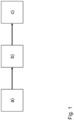
- Fig. 1 shows schematically a process for producing the release agent 2 according to the invention.
- the process comprises at least the following steps a), b) and c).
- step a) of Fig. 1 The reactive mixture is provided, which comprises a carboxylic acid-containing monomer component, wherein this carboxylic acid-containing monomer component comprises and/or consists of itaconic acid and/or itaconic acid derivatives.
- Step a) is carried out at the beginning of the process.
- the carboxylic acid-containing monomer component of the reactive mixture Fig. 1 in addition to itaconic acid and/or itaconic acid derivatives, at least one further carboxylic acid-containing monomer component is present and/or provided therewith, which is selected individually or in combination from the group consisting of acrylic acid, methacrylic acid, and maleic acid.
- Preferred derivatives of itaconic acid in the carboxylic acid-containing monomer component are the anhydride of itaconic acid, the methoxy ester of itaconic acid, and/or the ethoxy ester of itaconic acid.
- the itaconic acid derivative of the carboxylic acid-containing monomer component is preferably derivatized with a maximum of one carboxylic acid and is present, for example, as an itaconic acid monoester.
- the proportion of monomer of the carboxylic acid-containing monomer component is and/or will be selected from a range of 10 wt.% to 60 wt.%, preferably from 20 wt.% to 50 wt.%, more preferably from 30 wt.% to 40 wt.%.
- the reactive mixture is prepared according to the method of Fig. 1 comprises or is provided with at least one non-carboxylic acid-containing monomer component which is selected individually or in combination from the group consisting of acrylamide and its derivatives, esters of acrylic acid, esters of methacrylic acid, esters of itaconic acid, esters of maleic acid, maleic anhydride, terpenes, preferably myrcene, styrene, isoprene, butadiene, vinyl ethers and/or combinations thereof.
- non-carboxylic acid-containing monomer component which is selected individually or in combination from the group consisting of acrylamide and its derivatives, esters of acrylic acid, esters of methacrylic acid, esters of itaconic acid, esters of maleic acid, maleic anhydride, terpenes, preferably myrcene, styrene, isoprene, butadiene, vinyl ethers and/or combinations thereof.
- the non-carboxylic acid-containing monomer component is selected from the group consisting of acrylamide and its derivatives, esters of acrylic acid, esters of methacrylic acid, esters of itaconic acid, terpenes or combinations thereof. More preferably, the non-carboxylic acid-containing monomer component is selected from the group consisting of acrylamide and its derivatives, esters of itaconic acid, terpenes or combinations thereof.
- the proportion of monomer of the non-carboxylic acid-containing monomer component, based on the total mass of the reactive mixture, is and/or is selected from a range of more than 0 wt.% to 30 wt.%, preferably from more than 0 wt.% to 20 wt.%, more preferably from more than 0 wt.% to 15 wt.%.
- non-carboxylic acid-containing monomer component comprises at least 80 wt.%, preferably 100 wt.%, of water-soluble monomers.
- carboxylic acid-containing monomer component and/or the non-carboxylic acid-containing monomer component and/or the polymer and/or the release agent 2 comprise and/or consist of biogenic components and/or are provided with them.
- the carboxylic acid-containing monomer component and/or the non-carboxylic acid-containing monomer component and/or the polymer and/or the release agent 2 are biodegradable.
- the carboxylic acid-containing monomer component and/or the non-carboxylic acid-containing monomer component and/or the polymer and/or the release agent 2 can be compostable.
- the reactive mixture is prepared according to the method of Fig. 1 a solvent, preferably an organic solvent, which is selected individually or as mixtures from the group consisting of ethanol, 1-propanol, 2-propanol, acetone, 2-butanone (MEK), acetate, in particular ethyl acetate, and lactyl acetate.
- the organic solvent is miscible with water under standard conditions, preferably in a 1:1 ratio with water.
- the reactive mixture may comprise and/or be provided with a solvent that comprises and/or consists of water.
- the solvent of the reactive mixture is preferably water.
- the reactive mixture prefferably has and/or be provided with a pH value selected from a range of 3 to 14, preferably from 5 to 12, more preferably from 6 to 9. It is possible for the reactive mixture to comprise dissolved hydroxides of the alkali metals of the 1st main group of the Periodic Table, preferably NaOH and/or KOH.
- the proportion of the solvent is selected and/or is selected from a range of 10 wt% to 90 wt%, preferably from 30 wt% to 80 wt%, more preferably from 40 wt% to 60 wt%.
- the reactive mixture according to the method of Fig. 1 an initiator, preferably an initiator for a radical polymerization, and/or is provided with it.
- the proportion of initiator is and/or will be selected from a range of 0.05 wt.% to 2.5 wt.%, preferably from 0.1 wt.% to 1.5 wt.%, more preferably from 0.5 wt.% to 1.2 wt.%.
- the initiator is and/or is selected from the group consisting of azo compounds, peroxides or mixtures thereof.
- the reactive mixture according to the process of Fig. 1 has and/or is provided with the following composition, the details of the individual components being based on the total mass of the reactive mixture and the components being selected so that they add up to 100% by weight: Carboxylic acid-containing monomer component: 10 wt% - 60 wt%, Non-carboxylic acid-containing monomer component: 0 wt% - 30 wt%, Solvent: 10 wt% - 90 wt%, Initiator: 0.05 wt% - 2.5 wt%, Further preferred: Carboxylic acid-containing monomer component: 20 wt% - 50 wt%, Non-carboxylic acid-containing monomer component: 0 wt% - 20 wt%, Solvent: 30 wt% - 80 wt%, Initiator: 0.1 wt% - 1.5 wt%, Even more preferred: Carboxylic acid-containing monomer component: 30 wt%
- a polymer solution is obtained from the reactive mixture provided in step a).
- the polymer solution comprises a polymer that has at least the carboxylic acid-containing monomer component, in particular the monomer components of the reactive mixture provided in step a).
- the polymer solution also comprises a solvent.
- the polymer is at least partially dissolved in the solvent, preferably in the form of water. It is possible for the polymer to be dissolved in the solvent, preferably in the form of water, to an extent of at least 30 g/l, preferably at least 60 g/l, under standard climate conditions in the equilibrium state in the solvent, preferably in the form of water.
- Step b) is preferably carried out after step a).
- step b) is carried out at a temperature of the reactive mixture selected from a range of 20 °C to 110 °C, preferably from 40 °C to 85 °C, more preferably from 50 °C to 70 °C.
- step b) according to the procedure of Fig. 1 the solvent of the reactive mixture is separated after the polymer has been obtained, for example selected from the group consisting of filtration, suction, evaporation, vacuum drying, exposure to IR radiation, or freezing or combinations thereof. Further, it is then It is possible that the polymer is added to another solvent. In other words, it is possible that the solvent of the reactive mixture is a different solvent than the solvent of the polymer solution.
- step b) the polymer is washed with a further, preferably organic solvent, which has a lower boiling point than the solvent which is and/or will be comprised by the reactive mixture.
- the solvent of the polymer solution comprises and/or consists essentially of water.
- the polymer is water-soluble.
- the polymer especially prior to decarboxylation, to comprise the carboxylic acid-containing monomer component, preferably itaconic acid and/or itaconic acid derivatives, more preferably itaconic acid, selected from a range of 25 wt.% to 99.95 wt.%, preferably 40 wt.% to 99.95 wt.%, more preferably 55 wt.% to 99.95 wt.%.
- the carboxylic acid-containing monomer component consists of itaconic acid and/or itaconic acid derivatives, preferably itaconic acid.
- the polymer in particular before decarboxylation, comprises the non-carboxylic acid-containing monomer component, in particular selected from a range of more than 0 wt% to 75 wt%, preferably from more than 0 wt% to 60 wt%, more preferably from more than 0 wt% to 45 wt%.
- the polymer especially before decarboxylation, comprises the initiator selected from a range of 0.05 wt% to 2 wt%, preferably from 0.1 wt% to 1.5 wt%, more preferably from 0.5 wt% to 1.1 wt%.
- the polymer in particular before decarboxylation, preferably has a number average molar mass value selected from a range of 500 g/mol to 500,000 g/mol, preferably from 750 g/mol to 100,000 g/mol, more preferably from 1,000 g/mol to 50,000 g/mol, even more preferably from 1,500 g/mol to 20,000 g/mol.
- carboxylic acid-containing monomer component comprising the polymer to comprise, in addition to itaconic acid and/or itaconic acid derivatives, at least one further carboxylic acid-containing monomer component selected individually or in combination from the group consisting of acrylic acid, methacrylic acid, and maleic acid.
- the proportion of the carboxylic acid-containing monomer component, in particular of itaconic acid and/or itaconic acid derivatives, in the polymer, based on the total mass of the polymer, is in particular selected from the range from 2.5 wt.% to 100 wt.%, preferably from 5 wt.% to 80 wt.%, more preferably from 10 wt.% to 50 wt.%, in particular before decarboxylation.
- the polymer preferably comprises at least one non-carboxylic acid-containing monomer component, the component or derivatives of which are selected individually or in combination from the group consisting of acrylamide, esters of acrylic acid, esters of methacrylic acid, esters of itaconic acid, esters of maleic acid, maleic anhydride, terpenes, myrcene, styrene, isoprene, butadiene, and vinyl ethers.
- non-carboxylic acid-containing monomer component the component or derivatives of which are selected individually or in combination from the group consisting of acrylamide, esters of acrylic acid, esters of methacrylic acid, esters of itaconic acid, esters of maleic acid, maleic anhydride, terpenes, myrcene, styrene, isoprene, butadiene, and vinyl ethers.
- the proportion of the non-carboxylic acid-containing monomer component, based on the total mass of the polymer, is preferably selected from the range from more than 0% by weight to 97.5% by weight, preferably from 5% by weight to 90% by weight, more preferably from 15% by weight to 85% by weight, especially before decarboxylation.
- the polymer especially before decarboxylation, may have a glass transition temperature value selected from a range of - 20 °C to 110 °C, preferably from -20 °C to 50 °C, more preferably from -10 °C to 25 °C.
- a release agent 2 is obtained.
- the release agent 2 comprises the polymer solution which has the polymer obtained in step b).
- the release agent 2, preferably the polymer, is preferably in a state in which no decarboxylation has yet taken place before its use, i.e. before being arranged as a layer on at least one surface of a mold element 1, preferably on at least one surface of a formwork, and is at least partially decarboxylable.
- CO2 is released from the polymer of the release agent 2 during or after the use of the release agent 2.
- the decarboxylation splits off the CO2 from the polymer and releases it.
- the amount of polymer released depends on the polymer structure. It is possible that CO2 is released at least partially from the carboxylic acid-containing monomer component, preferably itaconic acid and/or itaconic acid derivative, by decarboxylation.
- the release agent 2 preferably releases the CO 2 after and/or during contact with a mineral building material mixture 3. More preferably, the release agent 2 releases the CO 2 during at least partial solidification and/or hardening of the contacted mineral building material mixture 3.
- the building material mixture 3 is in particular flowable or plastically deformable.
- the building material mixture 3 comprises water and at least one mineral binder.
- the release agent 2, preferably a polymer it is also possible for the release agent 2, preferably a polymer, to release and/or decarboxylate the CO 2 after being arranged on at least one surface of a shaped element 1, preferably a formwork, preferably before it comes into contact with the mineral building material mixture 3.
- the release agent 2 can act as a release agent 2 in the form of a layer, regardless of the moisture content of the release agent 2.
- the decarboxylation of the release agent 2, preferably the polymer can occur regardless of the moisture content of the release agent 2, and/or the CO2 can be released from the release agent 2, preferably the polymer, regardless of the moisture content. This allows the release agent 2 to act in both the dry and the moist state.
- the release agent 2 comprises or is provided with an indicator, whereby the release agent 2 has a different color impression in the dry state compared to the wet state.
- the release agent 2 comprising the polymer solution has a different color impression compared to a dry layer.
- the indicator it is possible for the indicator to have a color appearance when the release agent 2 is wet and for the indicator to be colorless when the release agent 2 is dry. In the dry state, the indicator is therefore preferably not visible to an observer.
- a suitable indicator is preferably selected from one or more leuco dyes.
- the release agent 2 may comprise and/or be provided with a leveling additive, preferably selected from a range of more than 0 wt.% to 10 wt.%, more preferably from more than 0 wt.% to 7.5 wt.%, even more preferably from more than 0 wt.% to 5.5 wt.%, in each case based on the total weight of the release agent 2.
- a leveling additive preferably selected from a range of more than 0 wt.% to 10 wt.%, more preferably from more than 0 wt.% to 7.5 wt.%, even more preferably from more than 0 wt.% to 5.5 wt.%, in each case based on the total weight of the release agent 2.
- the total weight of the release agent 2 is understood to mean the moist state and/or the total weight of the release agent 2 with which the release agent is obtained in step c) and before its use.
- the release agent 2 may comprise and/or be provided with a thickener, preferably selected from a range of more than 0 wt.% to 2 wt.%, more preferably from more than 0 wt.% to 1.5 wt.%, even more preferably from more than 0 wt.% to 1.2 wt.%, in each case based on the total weight of the release agent 2.
- a thickener preferably selected from a range of more than 0 wt.% to 2 wt.%, more preferably from more than 0 wt.% to 1.5 wt.%, even more preferably from more than 0 wt.% to 1.2 wt.%, in each case based on the total weight of the release agent 2.
- the release agent 2 of step c) comprises the polymer solution from step b).
- the release agent 2 comprises the polymer solution selected from a range of 0.01 wt.% to 100 wt.%, preferably from 0.01 wt.% to 50 wt.%, more preferably from 0.01 wt.% to 20 wt.%, and/or is provided in this manner, in each case based on the total weight of the release agent 2.
- the release agent 2 of step c) comprises, in particular, the polymer solution of step b).
- the polymer solution preferably comprises the polymer selected from a range of 0.005 wt.% to 50 wt.%, preferably from 0.005 wt.% to 25 wt.%, more preferably from 0.005 wt.% to 10 wt.%, and/or is provided in this manner, in each case based on the total weight of the release agent 2.
- the solvent comprises the release agent 2 water and/or consists essentially thereof.
- the release agent 2 according to the method according to Fig. 1 Solvent, preferably in the form of water, selected from a range of more than 0 wt.% to 99.99 wt.%, preferably from 50 wt.% to 99.99 wt.%, more preferably from 80 wt.% to 99.99 wt.%, and/or is provided therewith, in each case based on the total weight of the release agent 2.
- Solvent preferably in the form of water, selected from a range of more than 0 wt.% to 99.99 wt.%, preferably from 50 wt.% to 99.99 wt.%, more preferably from 80 wt.% to 99.99 wt.%, and/or is provided therewith, in each case based on the total weight of the release agent 2.
- a release agent 2 has the following composition and/or is provided therewith, wherein the details of the individual components are each based on the total weight of the release agent 2 and/or with which it is provided, and wherein the components are selected such that they add up to 100% by weight: Polymer solution: 0.01 wt% - 100 wt%, Solvent: 0 wt% - 99.99 wt%, Leveling additive: 0 wt% - 10 wt%, Thickener: 0 wt% - 2 wt%, Further preferred: Polymer solution: 0.01 wt% - 50 wt%, Solvent: 50 wt% - 99.99 wt%, Leveling additive: 0 wt% - 7.5 wt%, Thickener: 0 wt% - 1.5 wt%, Even more preferred: Polymer solution: 0.01 wt% - 20 wt%, Solvent: 80 wt% - 99.99 w
- the dynamic viscosity is and/or is preferably selected from a range of 1 mPas to 300 Pas, preferably from 2 mPas to 200 mPas, more preferably from 3 mPas to 150 mPas, even more preferably from 3 mPas to 100 mPas.
- the release agent 2 when arranged on a vertical surface, has a dynamic viscosity which ranges from 50 mPas to 300 mPas, preferably from 75 mPas to 200 mPas, more preferably from 100 mPas to 150 mPas.
- the release agent 2 when applied to a horizontal surface, has a dynamic viscosity selected from a range of 1 mPas to 300 mPas, preferably from 2 mPas to 200 mPas, more preferably from 3 mPas to 100 mPas.
- the dynamic viscosity is preferably determined according to the method of viscosity determination using a rotational viscometer described in DIN EN ISO 2884-1:2006-09 (date of issue: 2006-09, "Paints and varnishes - Determination of viscosity using rotational viscometers - Part 1: Cone-and-plate viscometer at high velocity gradient (ISO 2884-1:1999); German version EN ISO 2884-1:2006”), in particular using a cone-and-plate viscometer from Thermo Scientific, model Haake Mars 60 with a cone-and-plate measuring geometry.
- the surface of the mineral shaped body 4 contacted by the release agent 2 after the at least partial solidification and/or hardening of the mineral shaped body 4 is preferably designed such that the area of voids, based on the total area, is less than 5%, preferably less than 3%, particularly preferably less than 1.5%.
- the release agent 2 does not contain any polychlorinated biphenyls.
- the release agent 2 does not contain any dispersion additive and/or emulsion additive and/or is provided without them. It is possible that the polymer has an emulsifying effect.
- the release agent 2 does not contain any refined oils and/or fats, biogenic oils and/or fats and/or is provided without them.
- the carboxylic acid-containing monomer component and optionally the non-carboxylic acid-containing The monomer component of step a) and the polymer obtained in step b) are not understood as refined oils and/or fats, biogenic oils and/or fats.
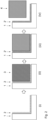
- Fig. 2 shows a schematic representation of the use of the release agent 2 according to the invention or of the release agent 2 which is produced according to claim 1, in a process by means of which a mineral shaped body 4 is obtained.
- step i) at least one mold element 1, preferably a formwork, is provided.
- the release agent 2 according to the invention or the release agent 2 obtained by the process according to the invention in step c) is arranged in the form of a layer on at least one surface of the mold element 1, preferably the formwork.
- the release agent 2 is preferably applied to the at least one surface of the mold element 1, preferably to the at least one surface of the formwork, by a method selected from the group consisting of spraying methods, brushing methods, or roller methods, or combinations thereof.
- the release agent 2 is applied over the entire surface of the at least one surface of the mold element 1, preferably to the at least one surface of the formwork.
- the release agent 2 is applied over the entire surface of all surfaces of the mold element 1, preferably to the at least one surface of the formwork, that come into contact with the mineral building material mixture 3.
- the application quantity of the release agent 2 is preferably selected from a range of 50 g/m 2 to 400 g/m 2 , preferably from 100 g/m 2 to 250 g/m 2 , more preferably from 125 g/m 2 to 175 g/m 2 , based on a non-absorbent formwork.
- a particularly flowable or plastically deformable mineral building material mixture 3 which comprises water and at least one mineral binder, is arranged on the at least one surface of the mold element 1, preferably the formwork, coated with the release agent 2.
- the mineral building material mixture 3 preferably comprises, or consists of, concrete, mortar, sand-lime brick, silicate ceramic, or a combination thereof.
- the at least one mineral binder comprises a hydraulic binder, a non-hydraulic binder, or a mixture thereof.
- the at least one mineral binder it is possible for the at least one mineral binder to be selected from the group consisting of calcium silicate hydrates, cement, lime, clay, gypsum, loam, magnesia binder, and combinations thereof.
- step iii) after Fig. 2 The mineral building material mixture 3 solidifies at least partially, resulting in a dimensionally stable, mineral green body.
- the mineral building material mixture 3 hardens further, preferably the dimensionally stable, mineral green body.
- step iv) it is shown that the mold element 1, preferably the formwork, is removed from the mineral building material mixture 3. A mineral molded body 4 is obtained.
- the release agent 2 releases CO2 from the polymer structure after step i), in step ii) and/or in step iii).
- the release agent 2 releases the CO2 after and/or during contact with a mineral building material mixture 3.
- the release agent 2 releases the CO2 during at least partial solidification and/or hardening of the contacted mineral building material mixture 3.
- the decarboxylation of the release agent 2, in particular of the porous structure, is preferably initiated by contacting the release agent 2 with a flowable or plastically deformable mineral building material mixture 3.
- the release agent 2 can be contacted, preferably sprayed and/or poured over, with a volume of liquid which has the above anions and/or cations and is alkaline.
- the flowable or plastically deformable building material mixture 3 comprises at least one component that catalyzes the decarboxylation.
- the decarboxylation is catalyzed ionically, in particular alkaline. It is possible for the decarboxylation to be catalyzed thermally.
- the flowable or plastically deformable building material mixture 3 comprises divalent or polyvalent cations of at least one metal, wherein the at least one metal is preferably selected from the group consisting of Mg, Ca, Sr, Ba, Al, Fe, Co, or mixtures thereof.
- the cations are preferably present in the form of water-soluble salts.
- two or more valent cations can catalyze the decarboxylation of the polyitaconic acid.
- a porous matrix of a mineral shaped body 4 is produced by the CO 2 at the contact point of the mineral building material mixture 3 and the surface of the shaped element 1, preferably the formwork on which the release agent 2 is arranged.
- the decarboxylation of the polymer reduces the chain length and/or polymer mass of the polymer. It is possible that, in particular, the water-soluble components of the polymer diffuse into the mineral building material mixture 3. Preferably, the water-soluble components of the polymer can promote the formation of the porous matrix in the mineral molded body.
- the resulting porous matrix of the mineral molded body 4 exhibits a lower strength compared to the standard strength of the mineral building material mixture 3.
- the bond strength between the formwork and the concrete is reduced, allowing the mineral molded body 4 to be easily demolded.
- CO 2 it is possible, in particular as a second mode of action of the CO 2 , for CO 2 to react at the surface of the mineral building material mixture 3 to form carbonic acid and for carbonation to take place as above, for example in equations (2) to (5).
- the contact area between the mineral building material mixture 3 and the surface of the shaped element 1, preferably the formwork can be reduced, which improves the separation of the shaped element 1, preferably formwork, from the mineral shaped body 4.
- the release agent 2 preferably leaves no residues on the surface of the molded element 1, preferably on the surface of the formwork. Should residues remain, they can be mechanically removed with water and a regular cloth.
- the porous matrix is obtained on the side of the smoother interface facing the mold element 1, preferably formwork, whereby a particularly good separation effect is achieved.
- step a To obtain a reactive mixture according to step a), 50 g of distilled water were placed in a round-bottomed flask, and 15.8 g of potassium hydroxide (KOH, Carl Roth, 85%) were dissolved at room temperature (20 °C) with constant stirring. An alkaline pH was established. 36.65 g of itaconic acid (Thermo Scientific Chemicals, 99+%) were slowly added to this solution as a carboxylic acid-containing monomer component. The alkaline pH of the solution improved the solubility of the itaconic acid. After the itaconic acid had completely dissolved in the solution, 13.35 g of acrylamide (Sigma Aldrich, 99+%) were added as a non-carboxylic acid-containing monomer component. The solution was then purged with argon for 5 minutes.
- KOH potassium hydroxide
- the resulting reactive mixture was then heated from room temperature to 50 °C while stirring, and 1.12 g of an initiator (Fujifilm Wako Chemicals Europe GmbH, azo polymerization initiator V-50 (radical initiator)) was added.
- the reactive mixture was obtained after step a).
- the reactive mixture was further heated to 60°C with continued stirring and stirred for 12 hours. After cooling to room temperature, an aqueous polymer solution was obtained according to step b).
- the polymer solution had a solids content of 50 wt.% based on the dry weight of the polymer solution.
- a release agent 2 was prepared from the polymer solution obtained in step b) according to step c).
- the composition of release agent 2 corresponded to 1.84 g of polymer solution (2 wt.%), 0.184 g of leveling additive (1 wt.%, BYK-Chemie GmbH, Wesel, BYK-Dynwet 800N), 1.38 g of thickener (7 wt.%, Dow Chemical, Midland, Walocell MW40000), and 90.16 g of distilled water (90 wt.%).
- the components of release agent 2 were stirred until a homogeneous solution was obtained.
- the oil-based release agent Master Finish RL 419 (Masterbuilders Solutions, St.furt) was provided as a comparison example.
- mineral molded bodies 4 were created.
- the release agent 2 according to the invention according to Example 1 and the oil-based release agent according to the comparative example were applied to the surfaces of the molded element 1, preferably to the surfaces of the formwork, using a spray gun (Einhell, Landau/Isar) at a coating weight of 120 g/ m2 , and then dried.
- a spray gun Euhell, Landau/Isar
- the mineral building material mixture 3 or the concrete was then poured into the plastic cube.
- the filling height was at least 9 cm. Only the sides, i.e., the vertical surfaces of the cube, were used for the analysis, but not the bottom side, i.e., the horizontal surface.
- a desired molded body surface is characterized by the presence of as few and/or as small a number of cavities as possible.
- the number and size of the cavities can be considered and analyzed as a quality indicator for the molded body surface.
- the size and number of cavities were determined as described above.
- Table 1 Results of the analysis of the void formation of the release agent according to Example 1 and the release agent according to the comparative example Release agent Example 1 Comparison example Area holes / pixels 1144 7797 Area of holes / % 0.311 2,024 Area of holes / cm 2 0.375 2,553 Total sample area / cm 2 120.53 126.15 Number of holes / - 312 905 Diameter of holes / pixels 3,667 8,615 Holes per area / 1/cm 2 2.59 7.17
- the cleanliness of the formwork surface is an important factor, as it indicates the amount of cleaning required for the surface of the mold element 1 after demolding the mineral mold body 4.
- the residue of the release agent 2 according to Example 1 could be easily removed with the cloth, whereas the release agent of the comparative example left a residue on the surface of the mold element 1.
- Sanding i.e. the detachment of fine particles from a mineral molded body surface due to insufficient structural bonding, was tested using an adhesive strip (Tesa) in an adhesion test.
- Tesa adhesive strip
- a 14 mm wide Tesa film 4104 was used, which was pressed onto the molded body surface by applying it three times with the tip of the thumb, without creating any bubbles.
- the Tesa film was quickly peeled off manually at an angle of 45° to 60° away from the molded body. The angle was measured in particular between the planes formed by the Tesa film.
- the adhesive strip was then applied to a white piece of paper in order to visually determine the degree of sanding.
Landscapes
- Chemical & Material Sciences (AREA)
- Organic Chemistry (AREA)
- Engineering & Computer Science (AREA)
- Chemical Kinetics & Catalysis (AREA)
- General Chemical & Material Sciences (AREA)
- Oil, Petroleum & Natural Gas (AREA)
- Manufacturing & Machinery (AREA)
- Mechanical Engineering (AREA)
- Ceramic Engineering (AREA)
- Life Sciences & Earth Sciences (AREA)
- Materials Engineering (AREA)
- Wood Science & Technology (AREA)
- Polymers & Plastics (AREA)
- Medicinal Chemistry (AREA)
- Health & Medical Sciences (AREA)
- Addition Polymer Or Copolymer, Post-Treatments, Or Chemical Modifications (AREA)
- Polymerisation Methods In General (AREA)
- Compositions Of Macromolecular Compounds (AREA)
Abstract
Description
- Die Erfindung betrifft ein Verfahren zur Herstellung eines verbesserten Trennmittels, ein verbessertes Trennmittel und die Verwendung des Trennmittels.
- Mineralische Baustoff-Mischungen, beispielsweise umfassend Beton, Mörtel und/oder Kalksandstein, werden beispielsweise bei der Herstellung von Gebäuden, bei der Errichtung von Tunneln, Brücken und Stützwände oder Gründungen oder von einzelnen Wänden, Decken, Stützen oder Ringankern, aber auch bei der Herstellung von Möbeln oder Kunstwerken verwendet.
- Hierzu werden fließfähige oder plastische mineralische Baustoff-Mischungen in Formelemente, bevorzugt in Schalungen, eingebracht, die die Form eines daraus zu erhaltenen mineralischen Formkörpers vorgeben. Die Formelemente, bevorzugt Schalungen, werden nach einem Erstarren und/oder Erhärten typischerweise wieder entfernt.
- Um eine zerstörungsfreie Trennung zwischen der Baustoff-Mischung und dem Formelement, bevorzugt der Schalung, zu erreichen, besteht die Möglichkeit auf zumindest einer Oberfläche des Formelements, bevorzugt auf zumindest einer Oberfläche der Schalung, ein Trennmittel anzuordnen, bevor diese mit einer fließfähigen oder plastischen Baustoff-Mischung, beispielsweise Frischbeton, kontaktiert wird. Durch das Trennmittel wird die Haftung zwischen Baustoff-Mischung und Formelement, bevorzugt Schalung, reduziert und Schaden an dem mineralischen Formkörper und der zumindest einen Oberfläche des Formelements, bevorzugt der zumindest einen Oberfläche der Schalung, vermieden.
- Die zumindest eine Oberfläche des Formelements, bevorzugt der Schalung, kann saugend und/oder nicht-saugend ausgestaltet sein oder derart bereitgestellt werden. Die eine zumindest eine saugende Oberfläche des Formelements, bevorzugt der Schalung, kann auf Basis von biogenen Materialien, insbesondere Holz, bestehen. Weiter kann die zumindest eine Oberfläche, insbesondere saugende Oberfläche, rau, insbesondere säge-rau, gehobelt, geflammt und/oder gestrahlt derart bereitgestellt werden.
- Alternativ kann die zumindest eine nicht-saugende Oberfläche des Formelements, bevorzugt der Schalung, auf Basis von Metall, insbesondere auf Basis von Stahl, vergütetem Holz, Kunststoff, insbesondere vergütetem Kunststoff, und/oder einer Strukturmatrize bestehen. Weiter kann die zumindest eine Oberfläche, insbesondere nicht-saugende Oberfläche, beispielsweise beheizt oder unbeheizt, und/oder mit einem Kunststoff und/oder Gummi befilmt und/oder beschichtet, oder Kombinationen davon, sein.
- Aus dem Stand der Technik sind unterschiedliche Trennmittel bekannt. Diese können beispielsweise in Form von wasserunlöslichen Schalungsölen, Schalungspasten, Schalungswachsen, chemisch reagierenden Trennmitteln oder Trennmittelemulsionen vorliegen. Typischerweise enthalten Trennmittel zumindest eine Ölkomponente. Als Ölkomponente werden verschiedene Stoffklassen bzw. deren Mischungen verstanden. Diese Stoffklassen können beispielsweise Mineralöle, Wachse oder Fette und deren Derivate umfassen. Die Ölkomponente bildet hierbei meist den überwiegenden Anteil, bezogen auf das Gewicht des Trennmittels vor dem Anordnen auf dem Formelement, bevorzugt auf der Schalung.
- Trennmittel, die in Form einer wässrigen Emulsion vorliegen, weisen typischerweise neben der Ölkomponente Emulgatoren, beispielsweise ionische Tenside und/oder nicht-ionische Tenside, auf, die die Ölkomponente in einem wässrigen Lösemittel in Form von Tröpfchen verteilen.
- Die aus dem Stand der Technik bekannten Trennmittel haben verschiedene Nachteile. So weisen Mineralöle als Ölkomponente eine unzureichend biologische Abbaubarkeit auf. Zusätzlich sind Trennmittel, die zumindest eine Ölkomponente oder Emulgatoren aufweisen, typischerweise als wassergefährdend eingestuft und weisen damit eine geringe Umweltverträglichkeit auf.
- Außerdem kann es durch Verseifung der Ölkomponente oder Emulgatoren durch alkalische Bestandteile der mineralischen Baustoff-Mischung zur unbeabsichtigten Ausfällung von Calciumseifen kommen. Dies wiederum führt zu Abbindestörungen und Gefügestörungen der mineralischen Baustoff-Mischung und resultiert in einem Fehlerbild, welches als Absanden bezeichnet wird. Absanden verursacht bei der Weiterbearbeitung der mineralischen Baustoff-Mischung Haftungsprobleme bspw. bei der Haftung von Anstrichen oder Putzen.
- Weiter kann es bei Trennmitteln in Form wässriger Emulsionen durch eingesetzte Emulgatoren an einer Grenzfläche zu alkalischen mineralischen Baustoff-Mischungen zu Re-Emulgierung führen. Hierbei dringt das Trennmittel zumindest teilweise in die Oberfläche ein, die durch die mineralische Baustoff-Mischung gebildet wird. Das eingedrungene Trennmittel kann bei einer späteren Weiterverarbeitung zu Problemen bei der Haftung von Anstrichen oder Putzen führen.
- Bei Trennmitteln, die zumindest eine Ölkomponente aufweisen, ist nach dem Entschalen ein größerer Reinigungsaufwand des mineralischen Formkörpers oder des Formelements, bevorzugt der Schalung, nötig. Dies, da diese mit Wasser nur schwierig rückstandslos entfernbar sind. Außerdem können Ölkomponenten des Trennmittels die Oberfläche des mineralischen Formkörpers verfärben und so das optische Erscheinungsbild unerwünscht beeinflussen bzw. verschlechtern.
- Es ist nun eine Aufgabe der Erfindung, ein Verfahren zur Herstellung eines verbesserten Trennmittels, ein verbessertes Trennmittel und die Verwendung des verbesserten Trennmittels bereitzustellen, wobei das Trennmittel eine gute Umweltverträglichkeit und gute Trenneigenschaften aufweist.
- Die Aufgabe wird gelöst durch ein Verfahren zur Herstellung eines Trennmittels, insbesondere nach einem der Ansprüche 1 bis 14, wobei das Verfahren zumindest die folgenden Schritte umfasst, wobei insbesondere die Schritte in der angegebenen Reihenfolge durchgeführt werden:
- a) Bereitstellen einer reaktiven Mischung, umfassend eine carbonsäurehaltige Monomer-Komponente, die Itaconsäure und/oder Itaconsäurederivate umfasst, bevorzugt daraus besteht,
- b) Polymerisation der reaktiven Mischung zu einer Polymerlösung, wobei die Polymerlösung ein in einem Lösemittel zumindest teilweise gelöstes Polymer umfasst, das die carbonsäurehaltige Monomer-Komponente aufweist,
- c) Erhalt eines Trennmittels umfassend die Polymerlösung, wobei aus dem Trennmittel, bevorzugt dem Polymer des Trennmittels, durch Decarboxylierung CO2 freisetzbar ist.
- Weiter wird die Aufgabe gelöst durch ein Trennmittel, bevorzugt nach Anspruch 15, wobei das Trennmittel, insbesondere hergestellt nach dem Verfahren eines der vorstehenden Ansprüche 1 bis 14, ein in einem Lösemittel zumindest teilweise gelöstes Polymer aufweist, wobei das Polymer eine carbonsäurehaltige Monomer-Komponente aufweist, die Itaconsäure und/oder Itaconsäurederivate umfasst, und wobei aus dem Trennmittel, bevorzugt dem Polymer des Trennmittels, durch Decarboxylierung CO2 freisetzbar ist.
- Weiter wird die Aufgabe gelöst, insbesondere durch Anspruch 16, durch die Verwendung eines Trennmittels, insbesondere eines Trennmittels hergestellt nach einem der Ansprüche 1 bis 14, bei der Herstellung von mineralischen Formkörpern, wobei das Trennmittel auf zumindest einer Oberfläche eines Formelements, bevorzugt auf zumindest einer Oberfläche einer Schalung, angeordnet wird und mit einer fließfähigen oder plastisch verformbaren mineralischen Baustoff-Mischung kontaktiert wird, wobei die mineralische Baustoff-Mischung Wasser und wenigstens ein mineralisches Bindemittel umfasst, und wobei aus dem Trennmittel, bevorzugt dem Polymer des Trennmittels, durch Decarboxylierung CO2 freisetzbar ist.
- Weiter ist es möglich, ein Verfahren zu der Herstellung von mineralischen Formkörpern bereitzustellen, wobei das Trennmittel hergestellt nach einem der Ansprüche 1 bis 14, auf zumindest einer Oberfläche eines Formelements, bevorzugt auf zumindest einer Oberfläche einer Schalung, angeordnet wird, welche mit einer mineralischen Baustoff-Mischung kontaktiert wird.
- Durch das vorliegende Verfahren wird es ermöglicht, ein Trennmittel bereitzustellen, das ein zumindest teilweise gelöstes Polymer aufweist. Jedoch benötigt das erfindungsgemäße Trennmittel keine weiteren Emulgatoren oder Ölkomponenten. Durch den Verzicht auf diese Emulgatoren oder Ölkomponenten im erfindungsgemäßen Trennmittel werden die bereits oben genannten Nachteile, die Trennmittel aufweisen können, vermieden. Außerdem werden hierdurch etwaig anfallende Entsorgungskosten reduziert.
- Ein weiterer Vorteil ist, dass das im erfindungsgemäßen Trennmittel zumindest teilweise gelöste Polymer im Gegensatz zu den im Stand der Technik bekannten Trennmitteln, auf Basis von biologischen Rohstoffen erzeugt werden kann. Mit anderen Worten kann die Menge der auf Erdöl basierenden Monomere reduziert werden. So kann beispielsweise die als Monomer herangezogene Itaconsäure biotechnologisch durch die Fermentation von Melasse erlangt oder aus Brenztraubensäure synthetisiert werden. Dies führt zu einem nachhaltigeren Produkt. Aufgrund der Verfügbarkeit der Rohstoffe kann ein Trennmittel umfassend das Polymer außerdem kostengünstig produziert werden.
- Das vom Trennmittel umfasste Polymer weist zumindest Itaconsäure und/oder Itaconsäurederivate auf. Durch die Applikation des Trennmittels, beispielsweise durch ein Sprühverfahren, Pinselverfahren oder Rollenverfahren, bildet sich eine Schicht auf der zumindest einen Oberfläche des Formelements, bevorzugt auf der zumindest einen Oberfläche der Schalung. Durch eine bevorzugt ionisch katalysierte Decarboxylierung kann sich die molekulare Struktur des Polymers ändern. Alternativ oder zusätzlich kann die Decarboxylierung des Polymers thermisch initiiert werden. Unter Decarboxylierung wird die Abspaltung von Kohlendioxid (CO2) verstanden. Insbesondere wird das CO2 aus der vom Polymer umfassten Itaconsäure abgespalten, insbesondere unter Bildung eines Lactons und/oder der Abspaltung einer Carbonsäure.
- In der folgenden Reaktionsgleichung (1) ist ein möglicher Reaktionsweg der Decarboxylierung von Polyitaconsäure (links) gezeigt und die resultierende Freisetzung von CO2 (rechts). Durch die Reaktion weist das mögliche Produkt (rechts) einen Ringschluss innerhalb des Moleküls auf:

- Durch das erfindungsgemäße Trennmittel werden Wechselwirkungen zwischen der mineralischen Baustoff-Mischung und dem Formelement, bevorzugt der Schalung, verhindert. Weiter hinterlässt das Trennmittel nach dem Entschalen keine oder nur geringe Rückstände auf der Oberfläche des Formelements, bevorzugt auf der Oberfläche der Schalung, oder dem mineralischen Formkörper. Etwaige Rückstände auf der Oberfläche lassen sich durch den Einsatz von lediglich Wasser, also ohne Einsatz von Tensiden, Lösemitteln oder chemischen Reinigern, und einem gewöhnlichen Lappen entfernen.
- Weitere vorteilhafte Ausgestaltungen der Erfindung sind in den Unteransprüchen bezeichnet.
- In Schritt a) wird die reaktive Mischung bereitgestellt, die eine carbonsäurehaltige Monomer-Komponente aufweist. Die carbonsäurehaltige Monomer-Komponente umfasst und/oder besteht aus Itaconsäure und/oder Itaconsäurederivaten. Schritt a) wird zu Beginn des Verfahrens durchgeführt. Die Zusammensetzung der Bestandteile der reaktiven Mischung ist derart gewählt, dass die Summe der Bestandteile 100 Gew.-% (Gew.-% = Gewichtsprozent) bezogen auf das Gesamtgewicht der reaktiven Masse ergeben.
- Vorzugsweise weist die carbonsäurehaltige Monomer-Komponente der reaktiven Mischung neben Itaconsäure und/oder Itaconsäurederivaten zumindest eine weitere carbonsäurehaltige Monomer-Komponente auf und/oder wird damit bereitgestellt, die aus der Gruppe einzeln oder in Kombination ausgewählt ist, die aus Acrylsäure, Methacrylsäure und Maleinsäure, besteht.
- Bevorzugte Derivate der Itaconsäure der carbonsäurehaltigen Monomer-Komponente sind das Anhydrid der Itaconsäure, der Methoxyester der Itaconsäure und/oder Ethoxyester der Itaconsäure. Vorzugsweise ist das Itaconsäurederivat der carbonsäurehaltigen Monomer-Komponente maximal an einer Carbonsäure derivatisiert und liegt beispielsweise als Itaconsäuremonoester vor.
- Es ist möglich, dass der Anteil an Monomer der carbonsäurehaltigen Monomer-Komponente, bezogen auf die Gesamtmasse der reaktiven Mischung, aus einem Bereich von 10 Gew.-% bis 60 Gew.-%, bevorzugt von 20 Gew.-% bis 50 Gew.-%, weiter bevorzugt von 30 Gew.-% bis 40 Gew.-%, ausgewählt ist und/oder wird.
- Vorzugsweise wird unter "carbonsäurehaltig" verstanden, dass ein Molekül, beispielsweise ein Monomer, vorliegt, das zumindest eine funktionelle Einheit des Typs -COOH enthält.
- Vorzugsweise wird unter "nicht-carbonsäurehaltig" verstanden, dass ein Molekül, beispielsweise ein Monomer, vorliegt, das keine funktionelle Einheit des Typs -COOH enthält. Unter diese Definition fallen somit beispielsweise neben ungesättigten Kohlenwasserstoffen und/oder ungesättigten aromatischen Kohlenwasserstoffen auch beispielsweise Carboxylate und Carbonsäurederivate.
- Vorzugsweise wird unter "löslich" verstanden, dass ein Salz oder Molekül, beispielsweise ein Monomer oder ein Polymer, eine Löslichkeit von zumindest 60 g/l bei Normklima im Gleichgewichtszustand in dem vorliegenden Lösemittel aufweist. Weist ein Molekül eine geringere Löslichkeit bei Normklima im Gleichgewichtszustand auf, so wird dieses als "unlöslich" verstanden. Wird die Löslichkeit auf ein Lösemittel in Form von Wasser bezogen, so kann das Salz oder Molekül, beispielsweise ein Monomer oder Polymer, "wasserlöslich" sein. Unter "wasserlöslich" wird somit vorzugsweise verstanden, dass ein Salz oder Molekül, beispielsweise ein Monomer oder ein Polymer, eine Löslichkeit von zumindest 60 g/l bei Normklima im Gleichgewichtszustand in Wasser aufweist. Weist ein Molekül eine geringere Wasserlöslichkeit bei Normklima im Gleichgewichtszustand auf, so wird dieses als "wasserunlöslich" verstanden. Unter Normklima wird eine Temperatur von 20 °C und ein Luftdruck von 1 bar verstanden.
- Es ist möglich, dass die reaktive Mischung zumindest eine nicht-carbonsäurehaltige Monomer-Komponente aufweist oder mit dieser bereitgestellt wird. Vorzugsweise ist die nicht-carbonsäurehaltige Monomer-Komponente, einzeln oder in Kombination, ausgewählt aus der Gruppe, die aus Acrylamid und dessen Derivate, Estern der Acrylsäure, Estern der Methacrylsäure, Estern der Itaconsäure, Estern der Maleinsäure, Maleinsäureanhydrid, Terpenen, bevorzugt Myrcen, Styrol, Isopren, Butadien, Vinylether und/oder Kombinationen davon, besteht. Bevorzugt ist die nicht-carbonsäurehaltige Monomer-Komponente ausgewählt aus der Gruppe, die aus Acrylamid und dessen Derivate, Estern der Acrylsäure, Ester der Methacrylsäure, Estern der Itaconsäure, Terpenen oder Kombinationen davon, besteht. Weiter bevorzugt ist die nicht-carbonsäurehaltige Monomer-Komponente ausgewählt aus der Gruppe, die aus Acrylamid und dessen Derivate, Estern der Itaconsäure, Terpenen oder Kombinationen davon, besteht.
- Vorzugsweise ist und/oder wird der Anteil an Monomer der nicht-carbonsäurehaltigen Monomer-Komponente bezogen auf die Gesamtmasse der reaktiven Mischung ausgewählt aus einem Bereich von mehr als 0 Gew.-% bis 30 Gew.-%, bevorzugt von mehr als 0 Gew.-% bis 20 Gew.-%, weiter bevorzugt von mehr als 0 Gew.-% bis 15 Gew.-%.
- Es ist möglich, dass die nicht-carbonsäurehaltige Monomer-Komponente zumindest zu 80 Gew.-%, bevorzugt zu 100 Gew.-%, wasserlösliche Monomere umfasst.
- Es ist möglich, dass die carbonsäurehaltige Monomer-Komponente und/oder die nicht-carbonsäurehaltige Monomer-Komponente und/oder das Polymer und/oder das Trennmittel biogene Bestandteile umfassen und/oder daraus bestehen, und/oder mit diesen bereitgestellt werden.
- Vorzugsweise sind die carbonsäurehaltige Monomer-Komponente und/oder die nicht-carbonsäurehaltige Monomer-Komponente und/oder das Polymer und/oder das Trennmittel biologisch abbaubar. Die carbonsäurehaltige Monomer-Komponente und/oder die nicht-carbonsäurehaltige Monomer-Komponente und/oder das Polymer und/oder das Trennmittel können kompostierbar sein.
- Unter "biologisch abbaubar" wird die Zerlegung einer chemischen Verbindung oder eines organischen Materials, beispielsweise die carbonsäurehaltige Monomer-Komponente und/oder die nicht-carbonsäurehaltige Monomer-Komponente und/oder das Polymer und/oder das Trennmittel, durch Mikroorganismen, beispielsweise Pilze und/oder Bakterien, in Gegenwart von Sauerstoff in Kohlenstoffdioxid, Wasser und Salze anderer vorhandener Elemente (Mineralisation) und insbesondere Biomasse, oder in Abwesenheit von Sauerstoff in Kohlenstoffdioxid, Methan, Mineralsalze, und insbesondere Biomasse, verstanden.
- Unter "kompostierbar" soll dabei insbesondere verstanden werden, dass die carbonsäurehaltige Monomer-Komponente und/oder die nicht-carbonsäurehaltige Monomer-Komponente und/oder das Polymer und/oder das Trennmittel bei der Kompostierung durch biologische Prozesse während der Kompostierung zu Kohlenstoffdioxid, Wasser, Salze anderer vorhandener Elemente und insbesondere Biomasse in einer Geschwindigkeit abgebaut wird, die mit der anderer bekannter kompostierbarer Materialien übereinstimmt und, insbesondere neben der Biomasse, keine sichtbaren, erkennbaren und/oder toxischen Rückstände hinterlässt. Insbesondere genügt die carbonsäurehaltige Monomer-Komponente und/oder die nicht-carbonsäurehaltige Monomer-Komponente und/oder das Polymer und/oder das Trennmittel der DIN EN 13432:2000-12 (Ausgabedatum: 12.2000, "Verpackung - Anforderungen an die Verwertung von Verpackungen durch Kompostierung und biologischen Abbau - Prüfschema und Bewertungskriterien für die Einstufung von Verpackungen; Deutsche Fassung EN 13432:2000") und/oder der australischen Norm AS 4736:2006 (Ausgabedatum: 2006, "Biodegradable plastics - Biodegradable plastics suitable for composting and other microbial treatment") und/oder der US-Norm ASTM D6400 (Ausgabedatum: 05.1999, "Standard Specification for Compostable Plastic") und/oder dem ISO-Standard ISO17088:2008 (Ausgabedatum: 06.2012, "Festlegungen für kompostierbare Kunststoffe").
- Die genannten Normen umfassen eine chemische Prüfung und Offenlegung aller Inhaltsstoffe. Insbesondere hält hierbei das Trennmittel, bevorzugt Polymer, jeweilige Grenzwerte für Schwermetalle ein. Zusätzlich ist es für das Trennmittel, bevorzugt Polymer, nachweisbar, dass mindestens 90 Gew.-% des organischen Materials in 180 Tagen in CO2 umgewandelt werden (bzw. mindestens 60 Gew.-% nach ASTM D6400). Weiter ist es möglich, dass das von dem Trennmittel, bevorzugt Polymer, nach 12 Wochen Kompostierung in industriellen und/oder halbindustriellen Kompostierbedingungen und anschließender Absiebung durch ein Sieb mit 2 mm-Maschenweite nicht mehr als 10 Gew.-% Trockenmasse bezogen auf ursprüngliche Einwaage verbleiben. Dabei dürfen insbesondere keine negativen Auswirkungen auf den Kompostierprozess erfolgen. Vorzugsweise ist abschließend eine Ökotoxitätsanalyse durchzuführen, wobei für ein positives Ergebnis kein negativer Effekt von resultierenden Komposten auf das Pflanzenwachstum im Vergleich zu weiteren Komposten (agronomischer Test) ersichtlich sein darf.
- Es ist möglich, dass die reaktive Mischung ein Lösemittel, bevorzugt ein organisches Lösemittel, aufweist oder mit diesem bereitgestellt wird, das einzeln oder als Mischungen ausgewählt ist, aus der Gruppe, die aus Ethanol, 1-Propanol, 2-Propanol, Aceton, 2-Butanon (MEK), Acetat, insbesondere Ethylacetat und Lactylacetat, besteht. Das organische Lösemittel ist bei Normklima mit Wasser mischbar, bevorzugt in einem 1:1 Verhältnis mit Wasser mischbar.
- Alternativ oder zusätzlich ist es möglich, dass die reaktive Mischung ein Lösemittel aufweist und/oder mit diesem bereitgestellt wird, das Wasser umfasst und/oder daraus besteht. Bevorzugt ist das Lösemittel der reaktiven Mischung Wasser.
- Es ist möglich, dass die reaktive Mischung einen pH-Wert aufweist, der ausgewählt ist aus einem Bereich von 3 bis 14, bevorzugt von 5 bis 12, weiter bevorzugt von 6 bis 9, und/oder mit diesem bereitgestellt wird. Durch den vorstehenden pH-Wert wird die Löslichkeit des Monomers und/oder des Polymers im Lösemittel erhöht und die Polymerisation gefördert. Es ist möglich, dass die reaktive Mischung gelöste Hydroxide der Alkalimetalle der 1. Hauptgruppe des Periodensystems umfasst, bevorzugt NaOH und/oder KOH.
- Es ist möglich, dass der Anteil des Lösemittels, bezogen auf die Gesamtmasse der reaktiven Mischung, ausgewählt ist und/oder wird aus einem Bereich von 10 Gew.-% bis 90 Gew.-%, bevorzugt von 30 Gew.-% bis 80 Gew.-%, weiter bevorzugt von 40 Gew.-% bis 60 Gew.-%.
- Unter Lösemittel wird ein Medium verstanden, in dem die weiteren Bestandteile der reaktiven Mischung, der Polymerlösung und/oder des Trennmittels verdünnt werden. Bevorzugt wird das Lösemittel bei der Reaktion der Bestandteile der reaktiven Mischung zum Polymer der Polymerlösung nicht verbraucht. Vorzugsweise weist ein Lösemittel einen Siedepunkt von höchstens 200°C auf. Als organisches Lösemittel wird ein Lösemittel verstanden, das zumindest ein Kohlenstoffatom in dessen molekularer Struktur aufweist.
- Vorzugsweise weist die reaktive Mischung einen Initiator, bevorzugt einen Initiator für eine radikalische Polymerisation, auf und/oder wird mit diesem bereitgestellt.
- Es ist möglich, dass der Anteil an Initiator, bezogen auf die Gesamtmasse der reaktiven Mischung, aus einem Bereich von 0,05 Gew.-% bis 2,5 Gew.-%, bevorzugt von 0,1 Gew.-% bis 1,5 Gew.-%, weiter bevorzugt von 0,5 Gew.-% bis 1,2 Gew.-%, ausgewählt ist und/oder wird.
- Vorzugsweise ist und/oder wird der Initiator ausgewählt aus der Gruppe, die aus Azoverbindungen, Peroxiden oder Mischungen davon, besteht.
- Unter Additiv wird ein Bestandteil verstanden, der zugesetzt wird, um eine definierte Wirkung zu haben und/oder eine Eigenschaft beispielsweise einer Mischung, Masse und/oder Lösung zu erteilen, wobei das Additiv einen Anteil von 1,5 Gew.-% oder weniger, jeweils bezogen auf das Gesamtgewicht der Mischung, Masse oder Lösung, aufweist. Der Initiator, das Lösemittel die carbonsäurehaltige Monomer-Komponente und/oder die nicht-carbonsäurehaltige Monomer-Komponente und/oder das daraus erhaltene Polymer werden nicht als Additiv verstanden.
- Durch die Verwendung von Additiven kann die Verarbeitbarkeit der reaktiven Mischung, des Polymers und/oder des Trennmittels verbessert werden. Weiter wird damit die Beständigkeit des Trennmittels oder einer daraus erhaltenen Schicht gegenüber mechanischen und chemischen Einflüssen erhöht.
- Vorzugsweise weist eine für das erfindungsgemäße Verfahren geeignete reaktive Mischung folgende Zusammensetzung auf und/oder wird damit bereitgestellt, wobei die Angaben der einzelnen Bestandteile jeweils bezogen auf die Gesamtmasse der reaktiven Mischung sind und wobei die Bestandteile so ausgewählt werden, dass sie in Summe 100 Gew.-% ergeben:
Carbonsäurehaltige Monomer-Komponente: 10 Gew.-% - 60 Gew.-%, Nicht-carbonsäurehaltige Monomer-Komponente: 0 Gew.-% - 30 Gew.-%, Lösemittel: 10 Gew.-% - 90 Gew.-%, Initiator: 0,05 Gew.-% - 2,5 Gew.-%, Weiter bevorzugt: Carbonsäurehaltige Monomer-Komponente: 20 Gew.-% - 50 Gew.-%, Nicht-carbonsäurehaltige Monomer-Komponente: 0 Gew.-% - 20 Gew.-%, Lösemittel: 30 Gew.-% - 80 Gew.-%, Initiator: 0,1 Gew.-% - 1,5 Gew.-%, Noch weiter bevorzugt: Carbonsäurehaltige Monomer-Komponente: 30 Gew.-% - 40 Gew.-%, Nicht-carbonsäurehaltige Monomer-Komponente: 0 Gew.-% - 15 Gew.-%, Lösemittel: 40 Gew.-% - 60 Gew.-%, Initiator: 0,5 Gew.-% - 1,2 Gew.-%. - In Schritt b) wird aus der in Schritt a) bereitgestellten reaktiven Mischung eine Polymerlösung erhalten. Die Polymerlösung umfasst ein Polymer, dass zumindest die carbonsäurehaltige Monomer-Komponente, insbesondere die Monomer-Komponenten der in Schritt a) bereitgestellten reaktiven Mischung, aufweist. Das Polymer weist als Monomereinheit, insbesondere als carbonsäurehaltige Monomereinheit, zumindest Itaconsäure und/oder Itaconsäurederivate auf. Weiter weist die Polymerlösung ein Lösemittel auf. Das Polymer ist zumindest teilweise in dem Lösemittel, bevorzugt in Form von Wasser, gelöst. Es ist möglich, dass das Polymer im Lösemittel, bevorzugt in Form von Wasser, zu zumindest 30 g/l, bevorzugt zu zumindest 60 g/l, bei Normklima im Gleichgewichtszustand im Lösemittel, bevorzugt in Form von Wasser, gelöst vorliegt. Schritt b) wird bevorzugt nach Schritt a) durchgeführt.
- Es ist möglich, dass Schritt b) bei einer Temperatur der reaktiven Mischung durchgeführt wird, die ausgewählt ist aus einem Bereich von 20 °C bis 110 °C, bevorzugt von 40 °C und 85 °C, weiter bevorzugt von 50 °C bis 70 °C.
- Es ist möglich, dass in Schritt b) das Lösemittel der reaktiven Mischung nach dem das Polymer erhalten wurde, abgetrennt wird, beispielsweise ausgewählt aus der Gruppe, die aus Filtration, Absaugen, Verdampfen, Vakuumtrocknen, Beaufschlagen mit IR-Strahlung, oder Ausgefrieren oder Kombinationen davon, besteht. Weiter ist es dann möglich, dass das Polymer einem weiteren Lösemittel zugeführt wird. Mit anderen Worten ist es möglich, dass das Lösemittel der reaktiven Mischung ein anderes Lösemittel ist im Vergleich zu dem Lösemittel der Polymerlösung ist.
- Vorzugsweise umfasst das Lösemittel der Polymerlösung Wasser und/oder besteht im Wesentlich daraus. Insbesondere ist das Polymer wasserlöslich.
- Es ist möglich, dass das Polymer, insbesondere vor der Decarboxylierung, die carbonsäurehaltige Monomer-Komponente, bevorzugt Itaconsäure und/oder Itaconsäurederivate, weiter bevorzugt Itaconsäure, ausgewählt aus einem Bereich von 25 Gew.-% bis 99,95 Gew.-%, bevorzugt von 40 Gew.-% bis 99,95 Gew.-%, weiter bevorzugt von 55 Gew.-% bis 99,95 Gew.-%, aufweist. Vorzugweise besteht die carbonsäurehaltige Monomer-Komponente aus Itaconsäure und/oder Itaconsäurederivaten, bevorzugt Itaconsäure.
- Es ist möglich, dass das Polymer, insbesondere vor der Decarboxylierung, die nicht-carbonsäurehaltige Monomer-Komponente, ausgewählt aus einem Bereich von mehr als 0 Gew.-% bis 75 Gew.-%, bevorzugt von 0 Gew.-% bis 60 Gew.-%, weiter bevorzugt von 0 Gew.-% bis 45 Gew.-%, aufweist.
- Insbesondere weist das Polymer, insbesondere vor der Decarboxylierung, den Initiator, ausgewählt aus einem Bereich von 0,05 Gew.-% bis 2 Gew.-%, bevorzugt von 0,1 Gew.-% bis 1,5 Gew.-%, weiter bevorzugt von 0,5 Gew.-% bis 1,1 Gew.-%, auf.
- Das Polymer, insbesondere vor der Decarboxylierung, weist bevorzugt einen Wert für das Zahlenmittel der molaren Masse auf, der ausgewählt ist aus einem Bereich von 500 g/mol bis 500.000 g/mol, bevorzugt von 750 g/mol bis 100.000 g/mol, weiter bevorzugt von 1000 g/mol bis 50.000 g/mol, noch weiter bevorzugt von 1500 g/mol bis 20.000 g/mol.
- Es ist möglich, dass die carbonsäurehaltige Monomer-Komponente, die das Polymer aufweist, neben Itaconsäure und/oder Itaconsäurederivaten zumindest eine weitere carbonsäurehaltige Monomer-Komponente aufweist, die aus der Gruppe einzeln oder in Kombination ausgewählt ist, die aus Acrylsäure, Methacrylsäure, Maleinsäure, besteht. Der Anteil der carbonsäurehaltigen Monomer-Komponente, insbesondere von Itaconsäure und/oder Itaconsäurederivaten, im Polymer bezogen auf die Gesamtmasse des Polymers ist insbesondere ausgewählt aus dem Bereich von 2,5 Gew.-% bis 100 Gew.-%, bevorzugt von 5 Gew.-% bis 80 Gew.-%, weiter bevorzugt von 10 Gew.-% bis 50 Gew.-%, insbesondere vor der Decarboxylierung.
- Bevorzugt weist das Polymer zumindest eine nicht-carbonsäurehaltige Monomer-Komponente auf, deren Komponente oder Derivate einzeln oder in Kombination aus der Gruppe ausgewählt ist, die aus Acrylamid, Estern der Acrylsäure, Estern der Methacrylsäure, Estern der Itaconsäure, Estern der Maleinsäure, Maleinsäureanhydrid, Terpenen, Myrcen, Styrol, Isopren, Butadien, Vinylethern, besteht. Der Anteil der nicht-carbonsäurehaltigen Monomer-Komponente bezogen auf die Gesamtmasse des Polymers ist vorzugweise ausgewählt aus dem Bereich von mehr als 0 Gew.-% bis 97,5 Gew.-%, bevorzugt von 5 Gew.-% bis 90 Gew.-%, weiter bevorzugt von 15 Gew.-% bis 85 Gew.-%, insbesondere vor der Decarboxylierung.
- Das Polymer, insbesondere vor der Decarboxylierung, kann einen Wert für die Glasübergangstemperatur aufweisen, der ausgewählt aus einem Bereich von - 20 °C bis 110 °C, bevorzugt von -20 °C bis 50 °C, weiter bevorzugt von -10 °C bis 25 °C, ist.
- In Schritt c) wird ein Trennmittel erhalten. Das Trennmittel umfasst die Polymerlösung, die das in Schritt b) erhaltene Polymer aufweist. Das Trennmittel, bevorzugt das Polymer, liegt vorzugsweise vor seiner Verwendung, also dem Anordnen als Schicht auf zumindest einer Oberfläche eines Formelements, bevorzugt auf zumindest einer Oberfläche einer Schalung, in einem Zustand vor, in dem noch keine Decarboxylierung erfolgte und ist zumindest teilweise decarboxylierbar. Insbesondere wird CO2 aus dem Polymer des Trennmittels während oder nach der Verwendung des Trennmittels freigesetzt. Durch die Decarboxylierung wird das CO2 vom Polymer abgespalten und freigesetzt. Die Menge des freigesetzten Polymers ist abhängig von der Polymerstruktur. Es ist möglich, dass aus der carbonsäurehaltige Monomer-Komponente, bevorzugt Itaconsäure und/oder Itaconsäurederivat, zumindest teilweise, durch Decarboxylierung CO2 freigesetzt wird. Es ist hierbei möglich, dass die Länge der Polymerketten und/oder die Polymermasse reduziert wird.
- Bevorzugt setzt das Trennmittel das CO2 nach und/oder während einem Kontaktieren mit einer mineralischen Baustoff-Mischung frei. Weiter bevorzugt setzt das Trennmittel das CO2 während einem zumindest teilweisen Erstarren und/oder Erhärten der kontaktierten mineralischen Baustoff-Mischung frei. Die Baustoff-Mischung ist insbesondere fließfähig oder plastisch verformbar. Weiter weist die Baustoff-Mischung Wasser und wenigstens ein mineralisches Bindemittel auf. Alternativ oder zusätzlich ist es auch möglich, dass das Trennmittel, bevorzugt Polymer, das CO2 nach einem Anordnen auf zumindest einer Oberfläche eines Formelements, vorzugsweise einer Schalung, freisetzt und/oder decarboxyliert, bevorzugt bevor es mit der mineralischen Baustoff-Mischung kontaktiert wird.
- Die Decarboxylierung des Trennmittels, insbesondere des Polymers, wird bevorzugt durch das Kontaktieren des Trennmittels mit einer fließfähigen oder plastisch verformbaren mineralischen Baustoff-Mischung initiiert.
- Alternativ oder zusätzlich kann das Trennmittel mit einem Flüssigkeitsvolumen kontaktiert, bevorzugt besprüht und/oder übergossen, werden, das die vorstehenden Anionen und/oder Kationen aufweist und alkalisch ist.
- Es ist möglich, dass, insbesondere als eine erste mögliche Wirkweise des freigesetzten CO2, durch das CO2 an der Kontaktstelle der mineralischen Baustoff-Mischung und der Oberfläche des Formelements, bevorzugt der Schalung, auf der das Trennmittel angeordnet ist, eine poröse Matrix eines mineralischen Formkörpers erzeugt wird.
- Zusätzlich ist es möglich, dass durch die Decarboxylierung des Polymers die Kettenlänge und/oder Polymermasse des Polymers reduziert wird. Hierdurch ist es möglich, dass insbesondere die wasserlöslichen Anteile des Polymers in die mineralische Baustoff-Mischung diffundieren. Vorzugsweise können die die wasserlöslichen Anteile des Polymers die Erzeugung der porösen Matrix im mineralischen Formkörpers fördern.
- Die erhaltene poröse Matrix des mineralischen Formkörpers weist im Vergleich zu der Normfestigkeit der mineralischen Baustoff-Mischung eine geringere Festigkeit auf. Somit wird die Haftkraft zwischen Schalung und Beton herabgesetzt, so dass der mineralische Formkörper sich leicht entschalen lässt. Die Normfestigkeit oder auch Druckfestigkeit kann unterschiedlichen Beton-Festigkeitsklassen zugeordnet werden, wobei sich je nach Anforderung eine andere Festigkeitsklasse und daraus entsprechend eine andere Druckfestigkeit ergibt.
- Alternativ oder zusätzlich ist es möglich, insbesondere als eine zweite Wirkweise des freigesetzten CO2, dass das CO2 an der Oberfläche der mineralischen Baustoff-Mischung zu Kohlensäure reagiert. Die Kohlensäure kann insbesondere im Flüssigkeitsvolumen von Poren der mineralischen Baustoff-Mischung gelöst vorliegendem Ca(OH)2 reagieren, wobei Calciumcarbonat ausfällt. Vorstehende Reaktion wird bevorzugt als Carbonatisierung bezeichnet.
- Die vorstehende, insbesondere eine zweite, Wirkweise kann durch die Teilschritte, die in den Gleichungen (2), (3) und (4) gezeigt sind, beschrieben werden. In Gleichung (5) sind die Teilschritte zusammengefasst:
Ca(OH)2 ⇄ Ca 2+ + 2OH- (2)
CO 2 + H 2 O ⇄ H 2 CO 3 (3)
Ca(OH) 2 + H 2 CO 3 ⇄ CaCO 3 + 2H 2 O (4)
Ca(OH) 2 + CO 2 ⇄ CaCO 3 + H 2 O (5)
- Calciumhydroxid weist im Vergleich zu Calciumcarbonat ein größeres Volumen auf, wobei sich insbesondere eine Volumenzunahme von 11 % ergeben kann. Hierdurch ist es möglich, dass das Porenvolumen der mineralischen Baustoff-Mischung reduziert wird. Weiter ist es möglich, dass eine Grenzfläche zwischen Oberfläche des Formelements, bevorzugt Schalung, erhalten wird, die im Vergleich zur mineralischen Baustoff-Mischung vor der Carbonatisierung und eine gleichmäßigere und/oder glattere Oberfläche aufweist. Mit anderen Worten bildet sich eine Art Steinhaut aus. Vorzugweise kann die Kontaktfläche zwischen der mineralischen Baustoff-Mischung und der Oberfläche des Formelements, bevorzugt der Schalung, reduziert werden, was die Trennung des Formelements, bevorzugt Schalung, von dem mineralischen Formkörper verbessert.
- Das Wirkprinzip des Trennmittels basiert somit insbesondere auf dem freigesetzten CO2. Das CO2 kann an der dem Formelement zugewandten Oberfläche der mineralischen Baustoff-Mischung wie oben beschrieben eine poröse Matrix in der mineralischen Baustoff-Mischung erzeugen und/oder das Porenvolumen reduzieren und eine glattere Grenzfläche erzeugen. Dabei hinterlässt das Trennmittel bevorzugt keine Rückstände auf der Oberfläche des Formelements, bevorzugt auf der Oberfläche der Schalung. Sollten Rückstände verbleiben, so können diese mit Wasser und einem gewöhnlichen Lappen mechanisch entfernt werden. Es ist möglich, dass alle der beschriebenen Wirkweisen des freigesetzten CO2 bei der Herstellung eines mineralischen Formkörpers vorliegen und/oder dass eine der Wirkweisen bevorzugt vorliegt. Beispielsweise ist es möglich, dass die poröse Matrix auf der dem Formelement, bevorzugt Schalung, zugewandten Seite der glatteren Grenzfläche erhalten wird, wodurch eine besonders gute Trennwirkung erreicht wird.
- Insbesondere umfasst die fließfähige oder plastisch verformbare Baustoff-Mischung zumindest einen Bestandteil, der die Decarboxylierung katalysiert. Vorzugsweise wird die Decarboxylierung ionisch, insbesondere alkalisch, katalysiert. Es ist möglich, dass die Decarboxylierung thermisch katalysiert wird.
- Vorzugsweise weist die fließfähige oder plastisch verformbare Baustoff-Mischung zweiwertige oder mehrwertige Kationen zumindest eines Metalls auf, wobei das zumindest eine Metall vorzugsweise ausgewählt ist aus der Gruppe, die aus Mg, Ca, Sr, Ba, Al, Fe, Co, oder Mischungen davon, besteht. Bevorzugt liegen die Kationen in Form von wasserlöslichen Salzen vor.
- Die Erfinder haben überraschenderweise festgestellt, dass bei Anwesenheit von zweiwertigen oder mehrwertigen Kationen die Decarboxylierung und die Freisetzung von CO2 besonders gut durchgeführt werden kann. Vorzugsweise können zwei oder mehrwertige Kationen die Decarboxylierung des Polymers, bevorzugt der Itaconsäure und/oder Itaconsäurederivate, katalysieren. Die Anwesenheit von Alkalimetallen der 1. Hauptgruppe des Periodensystems, wie Natrium oder Kalium, sowie andere einwertige Ionen, wie Ammonium, beispielsweise in einer alkalischen Lösung, haben keinen wesentlichen Einfluss auf die Decarboxylierung. Es ist möglich, dass sich entsprechende Salze der Itaconsäure bilden, die eine höhere Wasserlöslichkeit aufweisen im Vergleich zur Itaconsäure. Mit anderen Worten ist das Trennmittel stabil gegenüber Alkalimetallen der 1. Hauptgruppe des Periodensystems, da diese keine Decarboxylierung initiieren.
- Unter "alkalisch" wird vorzugsweise verstanden, dass die fließfähige oder plastisch verformbare mineralische Baustoff-Mischung und/oder eine Lösung einen pH-Wert ausgewählt aus einem Bereich von 8 bis 14, bevorzugt von 10 bis 14, weiter bevorzugt von 12 bis 14, aufweist.
- Die mineralische Baustoff-Mischung umfasst bevorzugt Beton, Mörtel, Kalksandstein, Silikat-Keramik oder eine Kombination davon, oder daraus besteht. Vorzugsweise umfasst das wenigstens eine mineralische Bindemittel ein hydraulisches Bindemittel, ein nicht-hydraulisches Bindemittel oder eine Mischung davon. Weiter ist es möglich, dass das wenigstens eine mineralische Bindemittel aus der Gruppe ausgewählt wird, die aus Calciumsilikathydraten, Zement, Kalk, Ton, Gips, Lehm, Magnesiabinder und Kombinationen davon, besteht.
- Ein Verfahren zur Herstellung eines mineralischen Formkörpers, in dem das Trennmittel verwendet werden kann, weist zumindest die folgenden Teilschritte auf, die insbesondere in der angegebenen Reihenfolge durchgeführt werden:
- i) Bereitstellen wenigstens eines Formelements, vorzugsweise einer Schalung, mit zumindest einer Oberfläche, auf der das erfindungsgemäße Trennmittel und/oder nach dem erfindungsgemäßen Verfahren in Schritt c) erhaltene Trennmittel in Form einer Schicht angeordnet ist,
- ii) Applizieren einer fließfähigen oder plastisch verformbaren, mineralischen Baustoff-Mischung, die Wasser und wenigstens ein mineralisches Bindemittel umfasst, auf der zumindest einen mit dem Trennmittel beschichteten Oberfläche des Formelements, vorzugsweise der Schalung,
- iii) Zumindest teilweises Erstarren der mineralischen Baustoff-Mischung unter Erhalt eines formstabilen, mineralischen Grünkörpers, und Erhärten der mineralischen Baustoff-Mischung, bevorzugt des formstabilen, mineralischen Grünkörpers,
- iv) Entfernen des Formelements, bevorzugt der Schalung, von der mineralischen Baustoff-Mischung und Erhalt eines mineralischen Formkörpers.
- Bevorzugt spaltet das Trennmittel nach Schritt i), in Schritt ii) und/oder in Schritt iii) CO2 aus der Polymerstruktur ab.
- Das Trennmittel wird bevorzugt auf der zumindest einen Oberfläche des Formelements, bevorzugt auf der zumindest einen Oberfläche der Schalung, durch ein Verfahren, das ausgewählt ist aus der Gruppe, die aus Sprühverfahren, Pinselverfahren oder Rollenverfahren oder Kombinationen davon, besteht, angeordnet. Vorzugsweise wird das Trennmittel vollflächig auf der zumindest einen Oberfläche des Formelements, bevorzugt auf der zumindest einen Oberfläche der Schalung, angeordnet. Bevorzugt wird das Trennmittel auf allen Oberflächen des Formelements, bevorzugt auf der zumindest einen Oberfläche der Schalung, die mit der mineralischen Baustoff-Mischung kontaktiert werden vollflächig angeordnet.
- Vorzugsweist wird die Auftragsmenge des Trennmittels ausgewählt aus einem Bereich von 50 g/m2 bis 400 g/m2, bevorzugt von 100 g/m2 bis 250 g/m2, weiter bevorzugt von 125 g/m2 bis 175 g/m2, bezogen auf eine nicht-saugende Schalung.
- Das Trennmittel kann in Form einer Schicht unabhängig von einem Feuchtegehalt des Trennmittels als Trennmittel wirken, d. h. weist eine trennende Wirkung auf. Mit anderen Worten kann die Decarboxylierung des Trennmittels, bevorzugt Polymers, unabhängig vom Feuchtegehalt des Trennmittels erfolgen und/oder das CO2 ist aus dem Trennmittel, bevorzugt Polymer, unabhängig vom Feuchtegehalt freisetzbar. Hierdurch kann das Trennmittel im trockenen Zustand wie auch im feuchten Zustand wirken.
- Unter dem trockenen Zustand wird eine trockene Schicht, bevorzugt nach dem Anordnen, verstanden, die bevorzugt einen Anteil an Bestandteilen, die einen Siedepunkt von niedriger als 110 °C aufweisen, ausgewählt aus einem Bereich von 0 Gew.-% bis 10 Gew.-%, vorzugsweise von 0 Gew.-% bis 8 Gew.-%, weiter bevorzugt von 0 Gew.-% bis 5 Gew.-%, umfasst, bezogen auf die Gesamtmasse der Bestandteile der Schicht. Ein Trocknen wird vorzugsweise bis zur Massenkonstanz der Bestandteile der Schicht durchgeführt. Unter dem feuchten Zustand wird das Trennmittel vor der Verwendung verstanden, bevorzugt wie in Schritt c) bereitgestellt wird, wobei das Trennmittel die Polymerlösung aufweist.
- Vorzugweise weist das Trennmittel einen Indikator auf oder wird damit bereitgestellt, wodurch das Trennmittel im trockenen Zustand einen anderen Farbeindruck aufweist im Vergleich zum feuchten Zustand.
- Das Trennmittel weist somit vor der Verwendung, umfassend die Polymerlösung, einen anderen Farbeindruck im Vergleich zu einer trockenen Schicht auf. Beispielsweise ist es möglich, dass der Indikator, im feuchten Zustand des Trennmittels einen Farbeindruck aufweist und der Indikator im trockenen Zustand des Trennmittels farblos ist. Im trockenen Zustand ist der Indikator somit für einen Betrachter vorzugsweise nicht erkennbar.
- Ein geeigneter Indikator ist bevorzugt aus ein oder mehreren Leukofarbstoffen ausgewählt.
- Der Indikator bietet den Vorteil, dass beim Anordnen der Schicht auf der zumindest einen Oberfläche des Formelements, bevorzugt auf der zumindest einen Oberfläche der Schalung, erkennbar ist, wo bereits das Trennmittel angeordnet wurde. Hierdurch kann ein besonders gleichmäßiger Auftrag ermöglicht werden.
- Es ist möglich, dass das Trennmittel ein Verlaufsadditiv umfasst und/oder damit bereitgestellt wird, bevorzugt ausgewählt aus einem Bereich von mehr als 0 Gew.-% bis 10 Gew.-%, weiter bevorzugt von mehr als 0 Gew.-% bis 7,5 Gew.-%, noch weiter bevorzugt von mehr als 0 Gew.-% bis 5,5 Gew.-%, jeweils bezogen auf das Gesamtgewicht des Trennmittels. Das Verlaufsadditiv ermöglicht das Ausbilden von gleichmäßigen Filmen und Schichten.
- Unter dem Gesamtgewicht des Trennmittels wird der feuchte Zustand und/oder das Gesamtgewicht des Trennmittels verstanden mit dem das Trennmittel in Schritt c) erhalten wird und vor dessen Verwendung.
- Es ist auch möglich, dass das Trennmittel einen Verdicker umfasst und/oder damit bereitgestellt wird, bevorzugt ausgewählt aus einem Bereich von mehr als 0 Gew.-% bis 2 Gew.-%, weiter bevorzugt von mehr als 0 Gew.-% bis 1,5 Gew.-%, noch weiter bevorzugt von mehr als 0 Gew.-% bis 1,2 Gew.-%, jeweils bezogen auf das Gesamtgewicht des Trennmittels. Durch den Verdicker wird eine gleichmäßige Schichtstärke der Schicht auch an vertikalen Oberflächen ermöglicht.
- Das Trennmittel von Schritt c) weist die Polymerlösung von Schritt b) auf. Vorzugsweise umfasst das Trennmittel die Polymerlösung ausgewählt aus einem Bereich von 0,01 Gew.-% bis 100 Gew.-%, bevorzugt von 0,01 Gew.-% bis 50 Gew.-%, weiter bevorzugt von 0,01 Gew.-% bis 20 Gew.-% und/oder wird derart bereitgestellt, jeweils bezogen auf das Gesamtgewicht des Trennmittels.
- Das Trennmittel von Schritt c) weist insbesondere die Polymerlösung von Schritt b) auf. Vorzugsweise umfasst bei einer bevorzugten Ausführungsform die Polymerlösung das Polymer ausgewählt aus einem Bereich von 0,005 Gew.-% bis 50 Gew.-%, bevorzugt von 0,005 Gew.-% bis 25 Gew.-%, weiter bevorzugt von 0,005 Gew.-% bis 10 Gew.-% und/oder wird derart bereitgestellt, jeweils bezogen auf das Gesamtgewicht des Trennmittels.
- Vorzugsweise umfasst das Lösemittel das Trennmittel Wasser und/oder besteht im Wesentlich daraus.
- Vorzugsweise weist das Trennmittel Lösemittel, bevorzugt in Form von Wasser, ausgewählt aus einem Bereich von mehr als 0 Gew.-% bis 99,99 Gew.-%, bevorzugt von 50 Gew.-% bis 99,99 Gew.-%, weiter bevorzugt von 80 Gew.-% bis 99,99 Gew.-%, auf und/oder wird damit bereitgestellt, jeweils bezogen auf das Gesamtgewicht des Trennmittels.
- Vorzugsweise weist ein erfindungsgemäßes Trennmittel folgende Zusammensetzung auf und/oder wird damit bereitgestellt, wobei die Angaben der einzelnen Bestandteile jeweils bezogen auf das Gesamtgewicht des Trennmittels sind und/oder mit dem es bereitgestellt wird, und wobei die Bestandteile so ausgewählt werden, dass sie in Summe 100 Gew.-% ergeben:
Polymerlösung: 0,01 Gew.-% - 100 Gew.-%, Lösemittel: 0 Gew.-% - 99,99 Gew.-%, Verlaufsadditiv: 0 Gew.-% - 10 Gew.-%, Verdicker: 0 Gew.-% - 2 Gew.-%, Weiter bevorzugt: Polymerlösung: 0,01 Gew.-% - 50 Gew.-%, Lösemittel: 50 Gew.-% - 99,99 Gew.-%, Verlaufsadditiv: 0 Gew.-% - 7,5 Gew.-%, Verdicker: 0 Gew.-% - 1,5 Gew.-%, Noch weiter bevorzugt: Polymerlösung: 0,01 Gew.-% - 20 Gew.-%, Lösemittel: 80 Gew.-% - 99,99 Gew.-%, Verlaufsadditiv: 0 Gew.-% - 5,5 Gew.-%, Verdicker: 0 Gew.-% - 1,2 Gew.-%. - Die dynamische Viskosität ist und/oder wird bevorzugt ausgewählt aus einem Bereich von 1 mPas bis 300 Pas, bevorzugt von 2 mPas bis 200 mPas, weiter bevorzugt von 3 mPas bis 150 mPas, noch weiter bevorzugt von 3 mPas bis 100 mPas.
- Insbesondere beim Anordnen auf einer vertikalen Oberfläche weist das Trennmittel eine dynamische Viskosität auf, die aus einem Bereich von 50 mPas bis 300 mPas, bevorzugt von 75 mPas bis 200 mPas, weiter bevorzugt von 100 mPas bis 150 mPas, ausgewählt ist.
- Insbesondere beim Aufbringen auf einer horizontalen Oberfläche weist das Trennmittel eine dynamische Viskosität auf, die aus einem Bereich von 1 mPas bis 300 mPas, bevorzugt von 2 mPas bis 200 mPas, weiter bevorzugt von 3 mPas bis 100 mPas, ausgewählt ist.
- Die dynamische Viskosität wird jeweils bevorzugt nach der in DIN EN ISO 2884-1:2006-09 (Ausgabedatum: 2006-09, "Beschichtungsstoffe - Bestimmung der Viskosität mit Rotationsviskosimetern - Teil 1: Kegel-Platte-Viskosimeter bei hohem Geschwindigkeitsgefälle (ISO 2884-1:1999); Deutsche Fassung EN ISO 2884-1:2006") beschriebenen Methode der Viskositätsbestimmung mittels Rotationsviskosimeter, insbesondere unter Verwendung eines Kegelplattenviskosimeter der Fa. Thermo Scientific, Modell Haake Mars 60 mit einer Kegel-Platte Messgeometrie, bestimmt.
- Das Kegelplattenviskosimeter ist ein Messgerät zur Bestimmung der Viskosität, insbesondere dynamischen Viskosität, und besteht im Wesentlichen aus einem Messkopf und einer stationären Aufnahme für ein zu messendes Medium. In dem Messkopf befinden sich außerdem ein oberes Temperiermodul und eine Messachse, zur Aufnahme eines Rotors, wobei der Rotor zur Aufnahme verschiedener Kegelplatten ausgebildet ist. Eine Kegelplatte ist im Wesentlichen eine runde Messplatte in deren Zentrum eine kleine Spitze angeordnet ist. Der Kegeldurchmesser liegt in der Regel bei 24 mm mit einem Kegelwinkel von 0,5 ° (+/- 2'), insbesondere von der Spitze zur Messplatte. Des Weiteren befindet sich in der stationären Aufnahme ein unteres Temperiermodul. Das obere und untere Temperiermodul sorgen dafür, dass der Rotor und das zu messende Medium die gleiche Temperatur haben. Das zu messende Medium wird in die stationäre Aufnahme eingebracht. Die stationäre Aufnahme kann eine Platte aufweisen. Die Kegelplatte liegt unter Ausbildung eines gewissen Spaltmaßes auf dem Medium auf und kann sich somit frei in dem Medium bewegen. Unter dem Spaltmaß wird der Abstand von der Spitze der Kegelplatte zur unteren stationären Aufnahme verstanden. Kegelplattenviskosimeter arbeiten mit einem Elektromotor, der mit konstanter Drehzahl die Kegelplatte antreibt, sodass dessen Spitze eine starre temperaturgeregelte Platte berührt. Das Drehmoment kann mechanisch oder elektronisch gemessen werden. Für die routinemäßige Messung der Viskosität bei hohem Geschwindigkeitsgefälle werden Kegelplattenviskosimeter häufig verwendet. Das Gerät ist so konstruiert, dass die Einheit, die aus Kegelplatte und Motor besteht, leicht angehoben werden kann, zuerst, wenn die Prüfflüssigkeit auf die Platte gegeben wird, und später, um nach jeder Messung gründliches Reinigen zu ermöglichen. Wenn die Flüssigkeit, bevorzugt das zu messende Medium, verwendet wird, füllt diese nur den kleinen Spalt zwischen der Platte und dem Kegel aus. Das Kegelplattenviskosimeter arbeitet bevorzugt bei einer Drehzahl von 750 U/min (+/- 10 U/min) in einem Viskositätsbereich von 0 Pas bis 1 Pas. Dabei wird vorzugsweise mit einer Schergeschwindigkeit von 9000 s-1 bis 12000 s-1 das zu messende Medium geprüft. Speziell ergibt sich aus den oben genannten Angaben eine Schergeschwindigkeit von 9000 s-1. Das Geschwindigkeitsgefälle muss gleich sein, wenn die Viskositäten von Beschichtungsstoffen verglichen werden. Falls nicht anders vereinbart, muss die Bestimmung insbesondere bei (23 ± 0,2)°C durchgeführt werden. Der erhaltene Wert gibt Auskunft über den Widerstand des Stoffes, insbesondere des Trennmittels, beim Auftragen durch Streichen, Spritzen und Rollen.
- Die von dem Trennmittel kontaktierte Oberfläche des mineralischen Formkörpers nach dem zumindest teilweisen Erstarren und/oder Erhärten des mineralischen Formkörpers, ist bevorzugt derart gestaltet, dass die Fläche von Lunkern, bezogen auf die Gesamtfläche weniger als 5 %, bevorzugt weniger als 3 %, besonders bevorzugt weniger als 1,5 %, beträgt.
- Ein mineralischer Formkörper wird als zumindest teilweise erstarrt gewertet, wenn er zumindest 50 % seiner Normfestigkeit erreicht hat. Vorzugsweise erstarrt ein mineralischer Formkörper, beispielsweise auf Basis von Zementleim, über eine Dauer von zwölf Stunden. Ein mineralischer Formkörper ist vorzugsweise zumindest teilweise erhärtet, wenn er 95 % seiner Normfestigkeit erreicht hat. Die Aushärtung von Beton erfolgt über mehrere Tage. In der Phase des Aushärtens findet beispielsweise in Beton oder Mörtel eine Umwandlung von Zementleim zu Zementstein statt. Bei normalen Temperatur- und Feuchtigkeitsbedingungen erreicht Zement vorzugsweise nach 28 Tagen die Normfestigkeit.
- Unter Lunkern werden Löcher, Lufteinschlüsse und/oder Fehlstellen in der Oberfläche des mineralischen Formkörpers verstanden, bevorzugt bei senkrechter Betrachtung auf die von der Formkörperoberfläche gebildeten Ebene. Lunker können beispielsweise dadurch entstehen, dass das Trennmittel zu dick aufgetragen wird oder dass das Trennmittel in den Formkörper eindringt.
- Eine angestrebte Formkörperoberfläche zeichnet sich dadurch aus, dass eine möglichst geringe Anzahl an Lunkern und/oder möglichst kleine Lunker vorhanden sind. Die Anzahl und Größe der Lunker kann als ein Qualitätsindikator für die Formkörperoberfläche betrachtet und analysiert werden.
- Die Bestimmung der vorstehenden Fläche an Lunkern wird wie folgt durchgeführt. Es wird ein Formelement, bevorzugt eine Schalung, in Form eines Kunststoffwürfels mit einer Kantenlänge von 150 mm bereitgestellt. Auf den Oberflächen des Formelements, bevorzugt auf den Oberflächen der Schalung, wird das Trennmittel mit einer Sprühpistole und einem Auftragsgewicht von 150 g/m2 angeordnet und anschließend getrocknet.
- Als mineralische Baustoff-Mischung werden 1935 g Kies (Fraktion: 2 mm bis 8 mm), 2565 g Sand (Fraktion: 0 mm bis 2 mm) und 900 g CEM II/A-LL 42,5 N (Portlandkalksteinzement) miteinander vermengt und diese Mischung mit 450 g Wasser zu einem homogenen Betongemisch verrührt.
- Der Beton wird anschließend in das Formelement, bevorzugt in die Schalung, gefüllt. Die Füllhöhe beträgt bevorzugt zumindest 9 cm. Zur Analyse werden die Seitenteile, d. h., die vertikalen Flächen des mineralischen Formkörpers, jedoch nicht die Bodenseite, d. h., die horizontale Fläche, des mineralischen Formkörpers herangezogen.
- Um die Größe und Anzahl der Lunker zu ermitteln wird das Bildverarbeitungsprogramm Fiji (Version ImageJ 1.53c) verwendet. In einem ersten Schritt wird ein Bild der zu analysierenden Fläche aufgenommen. Vorzugsweise beträgt die fotografierte Fläche zumindest 15 cm x 9 cm. Anschließend wird aus der fotografierten Fläche eine innere Teilfläche erstellt, indem zumindest an jeder Kante der fotografierten Fläche jeweils von der Kante ausgehend zumindest 2 cm entfernt werden. Hierdurch werden Randeffekte, wie beispielsweise Abplatzungen oder am Rand gelegene Lunker, von der Analyse ausgeschlossen. Die innere Teilfläche beträgt bevorzugt zumindest 7 cm x 7 cm.
- In dem Bildverarbeitungsprogramm wird aus der inneren Teilfläche zuerst ein binäres Farbbild erstellt. Anschließend werden die Farbwerte des Bildes so eingestellt, dass die geschlossene Fläche, d. h., die lunkerfreie Fläche, einfarbig ist und die Lunker farblos dargestellt werden. Durch das Bildverarbeitungsprogramm werden anschließend Flächenanteile der farblosen Anteile, also die Gesamtfläche aller Lunker, ermittelt. Die Fläche der Lunker wird auf die Gesamtfläche, bevorzugt auf die innere Teilfläche, bezogen und wird in Prozent angegeben.
- Das Trennmittel weist insbesondere keine polychlorierten Biphenyle auf. Das Trennmittel weist kein Dispersionsadditiv und/oder Emulsionsadditiv auf, und/oder wird ohne diese bereitgestellt. Es ist möglich, dass das Polymer eine emulgierende Wirkung aufweist.
- Das Trennmittel weist keine raffinierten Öle und/oder Fette, biogene Öle und/oder Fette auf und/oder wird ohne diese bereitgestellt. Die carbonsäurehaltige Monomer-Komponente und optional die nicht-carbonsäurehaltige Monomer-Komponente von Schritt a), sowie das Polymer in Schritt b) erhaltene Polymer werden nicht als raffinierte Öle und/oder Fette, biogene Öle und/oder Fette verstanden.
- Selbstverständlich können auch obig angeführte Sachmerkmale äquivalent in einem Verfahren oder angeführte Verfahrensmerkmale in einem Produkt angewendet werden.
- Im Folgenden wird die Erfindung anhand von mehreren Ausführungsbeispielen unter Zuhilfenahme der beiliegenden Zeichnungen beispielhaft erläutert. Die gezeigten Ausführungsbeispiele sind daher nicht einschränkend zu verstehen.
- Fig. 1
- zeigt schematisch das Verfahren zur Herstellung eines Trennmittels
- Fig. 2
- zeigt eine schematische Darstellung der Anwendung des Trennmittels.
-
Fig. 1 zeigt schematisch ein Verfahren zur Herstellung des erfindungsgemäßen Trennmittels 2. Das Verfahren weist zumindest die folgenden Schritte a), b) und c) auf. - In Schritt a) von
Fig. 1 wird die reaktive Mischung bereitgestellt, die eine carbonsäurehaltige Monomer-Komponente aufweist, wobei diese carbonsäurehaltige Monomer-Komponente Itaconsäure und/oder Itaconsäurederivate umfasst und/oder daraus besteht. Schritt a) wird zu Beginn des Verfahrens durchgeführt. Die Zusammensetzung der Bestandteile der reaktiven Mischung ist derart gewählt, dass die Summe der Bestandteile 100 Gew.-% (Gew.-% = Gewichtsprozent) bezogen auf das Gesamtgewicht der reaktiven Masse ergeben. - Vorzugsweise weist die carbonsäurehaltige Monomer-Komponente der reaktiven Mischung nach
Fig. 1 neben Itaconsäure und/oder Itaconsäurederivaten zumindest eine weitere carbonsäurehaltige Monomer-Komponente auf und/oder wird damit bereitgestellt, die aus der Gruppe einzeln oder in Kombination ausgewählt ist, die aus Acrylsäure, Methacrylsäure, und Maleinsäure, besteht. - Bevorzugte Derivate der Itaconsäure der carbonsäurehaltigen Monomer-Komponente sind das Anhydrid der Itaconsäure, der Methoxyester der Itaconsäure und/oder Ethoxyester der Itaconsäure. Vorzugsweise ist das Itaconsäurederivat der carbonsäurehaltigen Monomer-Komponente maximal an einer Carbonsäure derivatisiert und liegt beispielsweise als Itaconsäuremonoester vor.
- Es ist möglich, dass der Anteil an Monomer der carbonsäurehaltigen Monomer-Komponente, bezogen auf die Gesamtmasse der reaktiven Mischung, aus einem Bereich von 10 Gew.-% bis 60 Gew.-%, bevorzugt von 20 Gew.-% bis 50 Gew.-%, weiter bevorzugt von 30 Gew.-% bis 40 Gew.-%, ausgewählt ist und/oder wird.
- Es ist möglich, dass die reaktive Mischung nach dem Verfahren von
Fig. 1 zumindest eine nicht-carbonsäurehaltige Monomer-Komponente aufweist oder mit dieser bereitgestellt wird, die einzeln oder in Kombination aus der Gruppe ausgewählt ist, die aus Acrylamid und dessen Derivate, Estern der Acrylsäure, Estern der Methacrylsäure, Estern der Itaconsäure, Estern der Maleinsäure, Maleinsäureanhydrid, Terpenen, bevorzugt Myrcen, Styrol, Isopren, Butadien, Vinylether und/oder Kombinationen davon, besteht. Bevorzugt ist die nicht-carbonsäurehaltige Monomer-Komponente ausgewählt aus der Gruppe, die aus Acrylamid und dessen Derivate, Estern der Acrylsäure, Ester der Methacrylsäure, Estern der Itaconsäure, Terpenen oder Kombinationen davon, besteht. Weiter bevorzugt ist die nicht-carbonsäurehaltige Monomer-Komponente ausgewählt aus der Gruppe, die aus Acrylamid und dessen Derivate, Estern der Itaconsäure, Terpenen oder Kombinationen davon, besteht. - Vorzugsweise ist und/oder wird der Anteil an Monomer der nicht-carbonsäurehaltigen Monomer-Komponente bezogen auf die Gesamtmasse der reaktiven Mischung ausgewählt aus einem Bereich von mehr als 0 Gew.-% bis 30 Gew.-%, bevorzugt von mehr als 0 Gew.-% bis 20 Gew.-%, weiter bevorzugt von mehr als 0 Gew.-% bis 15 Gew.-%.
- Es ist möglich, dass die nicht-carbonsäurehaltige Monomer-Komponente zumindest zu 80 Gew.-%, bevorzugt zu 100 Gew.-%, wasserlösliche Monomere umfasst.
- Es ist möglich, dass die carbonsäurehaltige Monomer-Komponente und/oder die nicht-carbonsäurehaltige Monomer-Komponente und/oder das Polymer und/oder das Trennmittel 2 biogene Bestandteile umfassen und/oder daraus bestehen, und/oder mit diesen bereitgestellt werden.
- Vorzugsweise sind die carbonsäurehaltige Monomer-Komponente und/oder die nicht-carbonsäurehaltige Monomer-Komponente und/oder das Polymer und/oder das Trennmittel 2 biologisch abbaubar. Die carbonsäurehaltige Monomer-Komponente und/oder die nicht-carbonsäurehaltige Monomer-Komponente und/oder das Polymer und/oder das Trennmittel 2 können kompostierbar sein.
- Es ist möglich, dass die reaktive Mischung nach dem Verfahren von
Fig. 1 ein Lösemittel, bevorzugt ein organisches Lösemittel, aufweist oder mit diesem bereitgestellt wird, das einzeln oder als Mischungen ausgewählt ist, aus der Gruppe, die aus Ethanol, 1-Propanol, 2-Propanol, Aceton, 2-Butanon (MEK), Acetat, insbesondere Ethylacetat und Lactylacetat, besteht. Das organische Lösemittel ist bei Normklima mit Wasser mischbar, bevorzugt in einem 1:1 Verhältnis mit Wasser mischbar. - Alternativ oder zusätzlich ist es möglich, dass die reaktive Mischung ein Lösemittel aufweist und/oder mit diesem bereitgestellt wird, dass Wasser umfasst, und/oder daraus besteht. Bevorzugt ist das Lösemittel der reaktiven Mischung Wasser.
- Es ist möglich, dass die reaktive Mischung einen pH-Wert aufweist, der ausgewählt ist aus einem Bereich von 3 bis 14, bevorzugt von 5 bis 12, weiter bevorzugt von 6 bis 9, und/oder mit diesem bereitgestellt wird. Es ist möglich, dass die reaktive Mischung gelöste Hydroxide der Alkalimetallen der 1. Hauptgruppe des Periodensystems umfasst, bevorzugt NaOH und/oder KOH.
- Es ist möglich, dass der Anteil des Lösemittels, bezogen auf die Gesamtmasse der reaktiven Mischung, ausgewählt ist und/oder wird aus einem Bereich von 10 Gew.-% bis 90 Gew.-%, bevorzugt von 30 Gew.-% bis 80 Gew.-%, weiter bevorzugt von 40 Gew.-% bis 60 Gew.-%.
- Vorzugsweise weist die reaktive Mischung nach dem Verfahren nach
Fig. 1 einen Initiator, bevorzugt einen Initiator für eine radikalische Polymerisation, auf und/oder wird mit diesem bereitgestellt. - Es ist möglich, dass der Anteil an Initiator, bezogen auf die Gesamtmasse der reaktiven Mischung, aus einem Bereich von 0,05 Gew.-% bis 2,5 Gew.-%, bevorzugt von 0,1 Gew.-% bis 1,5 Gew.-%, weiter bevorzugt von 0,5 Gew.-% bis 1,2 Gew.-%, ausgewählt ist und/oder wird.
- Vorzugsweise ist und/oder wird der Initiator ausgewählt aus der Gruppe, die aus Azoverbindungen, Peroxiden oder Mischungen davon, besteht.
- Vorzugsweise weist die reaktive Mischung nach dem Verfahren von
Fig. 1 folgende Zusammensetzung auf und/oder wird damit bereitgestellt, wobei die Angaben der einzelnen Bestandteile jeweils bezogen auf die Gesamtmasse der reaktiven Mischung sind und wobei die Bestandteile so ausgewählt werden, dass sie in Summe 100 Gew.-% ergeben:Carbonsäurehaltige Monomer-Komponente: 10 Gew.-% - 60 Gew.-%, Nicht-carbonsäurehaltige Monomer-Komponente: 0 Gew.-% - 30 Gew.-%, Lösemittel: 10 Gew.-% - 90 Gew.-%, Initiator: 0,05 Gew.-% - 2,5 Gew.-%, Weiter bevorzugt: Carbonsäurehaltige Monomer-Komponente: 20 Gew.-% - 50 Gew.-%, Nicht-carbonsäurehaltige Monomer-Komponente: 0 Gew.-% - 20 Gew.-%, Lösemittel: 30 Gew.-% - 80 Gew.-%, Initiator: 0,1 Gew.-% - 1,5 Gew.-%, Noch weiter bevorzugt: Carbonsäurehaltige Monomer-Komponente: 30 Gew.-% - 40 Gew.-%, Nicht-carbonsäurehaltige Monomer-Komponente: 0 Gew.-% - 15 Gew.-%, Lösemittel: 40 Gew.-% - 60 Gew.-%, Initiator: 0,5 Gew.-% - 1,2 Gew.-%. - In Schritt b) nach dem Verfahren nach
Fig. 1 wird aus der in Schritt a) bereitgestellten reaktiven Mischung eine Polymerlösung erhalten. Die Polymerlösung umfasst ein Polymer, dass zumindest die carbonsäurehaltige Monomer-Komponente, insbesondere die Monomer-Komponenten der in Schritt a) bereitgestellten reaktiven Mischung, aufweist. Weiter weist die Polymerlösung ein Lösemittel auf. Das Polymer ist zumindest teilweise in dem Lösemittel, bevorzugt in Form von Wasser, gelöst. Es ist möglich, dass das Polymer im Lösemittel, bevorzugt in Form von Wasser, zu zumindest 30 g/l, bevorzugt zu zumindest 60 g/l, bei Normklima im Gleichgewichtszustand im Lösemittel, bevorzugt in Form von Wasser, gelöst vorliegt. Schritt b) wird bevorzugt nach Schritt a) durchgeführt. - Es ist möglich, dass Schritt b) bei einer Temperatur der reaktiven Mischung durchgeführt wird, die ausgewählt ist aus einem Bereich von 20 °C bis 110 °C, bevorzugt von 40 °C und 85 °C, weiter bevorzugt von 50 °C bis 70 °C.
- Es ist möglich, dass in Schritt b) nach dem Verfahren nach
Fig. 1 das Lösemittel der reaktiven Mischung nach dem das Polymer erhalten wurde, abgetrennt wird, beispielsweise ausgewählt aus der Gruppe, die aus Filtration, Absaugen, Verdampfen, Vakuumtrocknen, Beaufschlagen mit IR-Strahlung, oder Ausgefrieren oder Kombinationen davon, besteht. Weiter ist es dann möglich, dass das Polymer einem weiteren Lösemittel zugeführt wird. Mit anderen Worten ist es möglich, dass das Lösemittel der reaktiven Mischung ein anderes Lösemittel ist im Vergleich zu dem Lösemittel der Polymerlösung. - Zusätzlich ist es möglich, dass in Schritt b) das Polymer mit einem weiteren, bevorzugt organischen Lösemittel, gewaschen wird, welches einen niedrigeren Siedepunkt aufweist, als das Lösemittel, das von der reaktiven Mischung umfasst ist und/oder wird.
- Vorzugsweise umfasst das Lösemittel der Polymerlösung Wasser und/oder besteht im Wesentlich daraus. Insbesondere ist das Polymer wasserlöslich.
- Es ist möglich, dass das Polymer, insbesondere vor der Decarboxylierung, die carbonsäurehaltige Monomer-Komponente, bevorzugt Itaconsäure und/oder Itaconsäurederivate, weiter bevorzugt Itaconsäure, ausgewählt aus einem Bereich von 25 Gew.-% bis 99,95 Gew.-%, bevorzugt von 40 Gew.-% bis 99,95 Gew.-%, weiter bevorzugt von 55 Gew.-% bis 99,95 Gew.-%, aufweist. Vorzugweise besteht die carbonsäurehaltige Monomer-Komponente aus Itaconsäure und/oder Itaconsäurederivaten, bevorzugt Itaconsäure.
- Es ist möglich, dass das Polymer, insbesondere vor der Decarboxylierung, die nicht-carbonsäurehaltige Monomer-Komponente aufweist, insbesondere ausgewählt aus einem Bereich von mehr als 0 Gew.-% bis 75 Gew.-%, bevorzugt von mehr als 0 Gew.-% bis 60 Gew.-%, weiter bevorzugt von mehr als 0 Gew.-% bis 45 Gew.-%.
- Insbesondere weist das Polymer, insbesondere vor der Decarboxylierung, den Initiator, ausgewählt aus einem Bereich von 0,05 Gew.-% bis 2 Gew.-%, bevorzugt von 0,1 Gew.-% bis 1,5 Gew.-%, weiter bevorzugt von 0,5 Gew.-% bis 1,1 Gew.-%, auf.
- Das Polymer, insbesondere vor der Decarboxylierung, weist bevorzugt einen Wert für das Zahlenmittel der molaren Masse auf, der ausgewählt ist aus einem Bereich von 500 g/mol bis 500.000 g/mol, bevorzugt von 750 g/mol bis 100.000 g/mol, weiter bevorzugt von 1000 g/mol bis 50.000 g/mol, noch weiter bevorzugt von 1500 g/mol bis 20.000 g/mol.
- Es ist möglich, dass die carbonsäurehaltige Monomer-Komponente, die das Polymer aufweist, neben Itaconsäure und/oder Itaconsäurederivaten zumindest eine weitere carbonsäurehaltige Monomer-Komponente aufweist, die aus der Gruppe einzeln oder in Kombination ausgewählt ist, die aus Acrylsäure, Methacrylsäure, Maleinsäure, besteht. Der Anteil der carbonsäurehaltigen Monomer-Komponente, insbesondere von Itaconsäure und/oder Itaconsäurederivaten, im Polymer bezogen auf die Gesamtmasse des Polymers ist insbesondere ausgewählt aus dem Bereich von 2,5 Gew.-% bis 100 Gew.-%, bevorzugt von 5 Gew.-% bis 80 Gew.-%, weiter bevorzugt von 10 Gew.-% bis 50 Gew.-%, insbesondere vor der Decarboxylierung.
- Bevorzugt weist das Polymer zumindest eine nicht-carbonsäurehaltige Monomer-Komponente auf, deren Komponente oder Derivate einzeln oder in Kombination aus der Gruppe ausgewählt ist, die aus Acrylamid, Estern der Acrylsäure, Estern der Methacrylsäure, Ester der Itaconsäure, Ester der Maleinsäure, Maleinsäureanhydrid, Terpenen, Myrcen, Styrol, Isopren, Butadien, Vinylethern, besteht. Der Anteil der nicht-carbonsäurehaltigen Monomer-Komponente bezogen auf die Gesamtmasse des Polymers ist vorzugweise ausgewählt aus dem Bereich von mehr als 0 Gew.-% bis 97,5 Gew.-%, bevorzugt von 5 Gew.-% bis 90 Gew.-%, weiter bevorzugt von 15 Gew.-% bis 85 Gew.-%, insbesondere vor der Decarboxylierung.
- Das Polymer, insbesondere vor der Decarboxylierung, kann einen Wert für die Glasübergangstemperatur aufweisen, der ausgewählt aus einem Bereich von - 20 °C bis 110 °C, bevorzugt von -20 °C bis 50 °C, weiter bevorzugt von -10 °C bis 25 °C, ist.
- In Schritt c) nach dem Verfahren nach
Fig. 1 wird ein Trennmittel 2 erhalten. Das Trennmittel 2 umfasst die Polymerlösung, die das in Schritt b) erhaltene Polymer aufweist. Das Trennmittel 2, bevorzugt das Polymer, liegt vorzugsweise vor seiner Verwendung, also dem Anordnen als Schicht auf zumindest einer Oberfläche eines Formelements 1, bevorzugt auf zumindest einer Oberfläche einer Schalung, in einem Zustand vor, in dem noch keine Decarboxylierung erfolgte und ist zumindest teilweise decarboxylierbar. Insbesondere wird CO2 aus dem Polymer des Trennmittels 2 während oder nach der Verwendung des Trennmittels 2 freigesetzt. Durch die Decarboxylierung wird das CO2 vom Polymer abgespalten und freigesetzt. Die Menge des freigesetzten Polymers ist abhängig von der Polymerstruktur. Es ist möglich, dass aus der carbonsäurehaltige Monomer-Komponente, bevorzugt Itaconsäure und/oder Itaconsäurederivat, zumindest teilweise, durch Decarboxylierung CO2 freigesetzt wird. - Bevorzugt setzt das Trennmittel 2, das CO2 nach und/oder während einem Kontaktieren mit einer mineralischen Baustoff-Mischung 3 frei. Weiter bevorzugt setzt das Trennmittel 2 das CO2 während einem zumindest teilweisen Erstarren und/oder Erhärten der kontaktierten mineralischen Baustoff-Mischung 3 frei. Die Baustoff-Mischung 3 ist insbesondere fließfähig oder plastisch verformbar. Weiter weist die Baustoff-Mischung 3 Wasser und wenigstens ein mineralisches Bindemittel auf. Alternativ oder zusätzlich ist es auch möglich, dass das Trennmittel 2, bevorzugt Polymer, das CO2 nach einem Anordnen auf zumindest einer Oberfläche eines Formelements 1, vorzugsweise einer Schalung, freisetzt und/oder decarboxyliert, bevorzugt bevor es mit der mineralischen Baustoff-Mischung 3 kontaktiert wird.
- Das Trennmittel 2 kann in Form einer Schicht unabhängig von einem Feuchtegehalt des Trennmittels 2 als Trennmittel 2 wirken. Mit anderen Worten kann die Decarboxylierung des Trennmittels 2, bevorzugt Polymers, unabhängig vom Feuchtegehalt des Trennmittels 2 erfolgen und/oder das CO2 ist aus dem Trennmittel 2, bevorzugt Polymer, unabhängig vom Feuchtegehalt freisetzbar. Hierdurch kann das Trennmittel 2 im trockenen Zustand wie auch im feuchten Zustand wirken.
- Vorzugweise weist das Trennmittel 2 einen Indikator auf oder wird damit bereitgestellt, wodurch das Trennmittel 2 im trockenen Zustand einen anderen Farbeindruck aufweist im Vergleich zum feuchten Zustand. Das Trennmittel 2 weist somit vor der Verwendung, umfassend die Polymerlösung einen anderen Farbeindruck im Vergleich zu einer trockenen Schicht auf.
- Beispielsweise ist es möglich, dass der Indikator, im feuchten Zustand des Trennmittels 2 einen Farbeindruck aufweist und der Indikator im trockenen Zustand des Trennmittels 2 farblos ist. Im trockenen Zustand ist der Indikator somit für einen Betrachter vorzugsweise nicht erkennbar.
- Ein geeigneter Indikator ist bevorzugt aus einem oder mehreren Leukofarbstoffen ausgewählt.
- Es ist möglich, dass der Trennmittel 2 ein Verlaufsadditiv umfasst und/oder damit bereitgestellt wird, bevorzugt ausgewählt aus einem Bereich von mehr als 0 Gew.-% bis 10 Gew.-%, weiter bevorzugt von mehr als 0 Gew.-% bis 7,5 Gew.-%, noch weiter bevorzugt von mehr als 0 Gew.-% bis 5,5 Gew.-%, jeweils bezogen auf das Gesamtgewicht des Trennmittels 2.
- Unter dem Gesamtgewicht des Trennmittels 2 wird der feuchte Zustand und/oder das Gesamtgewicht des Trennmittels 2 verstanden mit dem das Trennmittel in Schritt c) erhalten wird und vor dessen Verwendung.
- Es ist auch möglich, dass das Trennmittel 2 einen Verdicker umfasst und/oder damit bereitgestellt wird, bevorzugt ausgewählt aus einem Bereich von mehr als 0 Gew.-% bis 2 Gew.-%, weiter bevorzugt von mehr als 0 Gew.-% bis 1,5 Gew.-%, noch weiter bevorzugt von mehr als 0 Gew.-% bis 1,2 Gew.-%, jeweils bezogen auf das Gesamtgewicht des Trennmittels 2.
- Das Trennmittel 2 von Schritt c) weist die Polymerlösung von Schritt b) auf. Vorzugsweise umfasst das Trennmittel 2 die Polymerlösung ausgewählt aus einem Bereich von 0,01 Gew.-% bis 100 Gew.-%, bevorzugt von 0,01 Gew.-% bis 50 Gew.-%, weiter bevorzugt von 0,01 Gew.-% bis 20 Gew.-% und/oder wird derart bereitgestellt, jeweils bezogen auf das Gesamtgewicht des Trennmittels 2.
- Das Trennmittel 2 von Schritt c) weist insbesondere die Polymerlösung von Schritt b) auf. Vorzugsweise umfasst bei einer bevorzugten Ausführungsform die Polymerlösung das Polymer ausgewählt aus einem Bereich von 0,005 Gew.-% bis 50 Gew.-%, bevorzugt von 0,005 Gew.-% bis 25 Gew.-%, weiter bevorzugt von 0,005 Gew.-% bis 10 Gew.-% und/oder wird derart bereitgestellt, jeweils bezogen auf das Gesamtgewicht des Trennmittels 2.
- Vorzugsweise umfasst das Lösemittel das Trennmittel 2 Wasser und/oder besteht im Wesentlich daraus.
- Vorzugsweise weist das Trennmittel 2 nach dem Verfahren nach
Fig. 1 Lösemittel, bevorzugt in Form von Wasser, ausgewählt aus einem Bereich von mehr als 0 Gew.-% bis 99,99 Gew.-%, bevorzugt von 50 Gew.-% bis 99,99 Gew.-%, weiter bevorzugt von 80 Gew.-% bis 99,99 Gew.-%, auf und/oder wird damit bereitgestellt, jeweils bezogen auf das Gesamtgewicht des Trennmittels 2. - Vorzugsweise weist ein erfindungsgemäßes Trennmittel 2 folgende Zusammensetzung auf und/oder wird damit bereitgestellt, wobei die Angaben der einzelnen Bestandteile jeweils bezogen auf das Gesamtgewicht des Trennmittels 2 sind und/oder mit dem es bereitgestellt wird, und wobei die Bestandteile so ausgewählt werden, dass sie in Summe 100 Gew.-% ergeben:
Polymerlösung: 0,01 Gew.-% - 100 Gew.-%, Lösemittel: 0 Gew.-% - 99,99 Gew.-%, Verlaufsadditiv: 0 Gew.-% - 10 Gew.-%, Verdicker: 0 Gew.-% - 2 Gew.-%, Weiter bevorzugt: Polymerlösung: 0,01 Gew.-% - 50 Gew.-%, Lösemittel: 50 Gew.-% - 99,99 Gew.-%, Verlaufsadditiv: 0 Gew.-% - 7,5 Gew.-%, Verdicker: 0 Gew.-% - 1,5 Gew.-%, Noch weiter bevorzugt: Polymerlösung: 0,01 Gew.-% - 20 Gew.-%, Lösemittel: 80 Gew.-% - 99,99 Gew.-%, Verlaufsadditiv: 0 Gew.-% - 5,5 Gew.-%, Verdicker: 0 Gew.-% - 1,2 Gew.-%. - Die dynamische Viskosität ist und/oder wird bevorzugt ausgewählt aus einem Bereich von 1 mPas bis 300 Pas, bevorzugt von 2 mPas bis 200 mPas, weiter bevorzugt von 3 mPas bis 150 mPas, noch weiter bevorzugt von 3 mPas bis 100 mPas.
- Insbesondere beim Anordnen auf einer vertikalen Oberfläche weist das Trennmittel 2 eine dynamische Viskosität auf, die aus einem Bereich von 50 mPas bis 300 mPas, bevorzugt von 75 mPas bis 200 mPas, weiter bevorzugt von 100 mPas bis 150 mPas, ausgewählt ist.
- Insbesondere beim Aufbringen auf einer horizontalen Oberfläche weist das Trennmittel 2 eine dynamische Viskosität auf, die aus einem Bereich von 1 mPas bis 300 mPas, bevorzugt von 2 mPas bis 200 mPas, weiter bevorzugt von 3 mPas bis 100 mPas, ausgewählt ist.
- Die dynamische Viskosität wird jeweils bevorzugt nach der in DIN EN ISO 2884-1:2006-09 (Ausgabedatum: 2006-09, "Beschichtungsstoffe - Bestimmung der Viskosität mit Rotationsviskosimetern - Teil 1: Kegel-Platte-Viskosimeter bei hohem Geschwindigkeitsgefälle (ISO 2884-1:1999); Deutsche Fassung EN ISO 2884-1:2006") beschriebenen Methode der Viskositätsbestimmung mittels Rotationsviskosimeter, insbesondere unter Verwendung eines Kegelplattenviskosimeter der Fa. Thermo Scientific, Modell Haake Mars 60 mit einer Kegel-Platte Messgeometrie, bestimmt.
- Die von dem Trennmittel 2 kontaktierte Oberfläche des mineralischen Formkörpers 4 nach dem zumindest teilweisen Erstarren und/oder Erhärten des mineralischen Formkörpers 4, ist bevorzugt derart gestaltet, dass die Fläche von Lunkern, bezogen auf die Gesamtfläche weniger als 5 %, bevorzugt weniger als 3 %, besonders bevorzugt weniger als 1,5 %, beträgt.
- Das Trennmittel 2 weist insbesondere keine polychlorierten Biphenyle auf. Das Trennmittel 2 weist kein Dispersionsadditiv und/oder Emulsionsadditiv auf, und/oder wird ohne diese bereitgestellt. Es ist möglich, dass das Polymer eine emulgierende Wirkung aufweist.
- Das Trennmittel 2 weist keine raffinierten Öle und/oder Fette, biogene Öle und/oder Fette auf und/oder wird ohne diese bereitgestellt. Die carbonsäurehaltige Monomer-Komponente und optional die nicht-carbonsäurehaltige Monomer-Komponente von Schritt a), sowie das Polymer in Schritt b) erhaltene Polymer werden nicht als raffinierte Öle und/oder Fette, biogene Öle und/oder Fette verstanden.
-
Fig. 2 zeigt eine schematische Darstellung der Verwendung des erfindungsgemäßen Trennmittels 2 bzw. des Trennmittels 2, der nach Anspruch 1 hergestellt wird, in einem Verfahren mittels dessen ein mineralischer Formkörper 4 erhalten wird. - In Schritt i) wird wenigstens ein Formelement 1, bevorzugt eine Schalung bereitgestellt. Auf zumindest einer Oberfläche des Formelements 1, bevorzugt der Schalung, ist das erfindungsgemäße Trennmittel 2 oder der nach dem erfindungsgemäßen Verfahren in Schritt c) erhaltene Trennmittel 2 in Form einer Schicht angeordnet.
- Das Trennmittel 2 wird bevorzugt auf der zumindest einen Oberfläche des Formelements 1, bevorzugt auf der zumindest einen Oberfläche der Schalung, durch ein Verfahren, das ausgewählt ist aus der Gruppe, die aus Sprühverfahren, Pinselverfahren oder Rollenverfahren oder Kombinationen davon, besteht, angeordnet. Vorzugsweise wird das Trennmittel 2 vollflächig auf der zumindest einen Oberfläche des Formelements 1, bevorzugt auf der zumindest einen Oberfläche der Schalung, angeordnet. Bevorzugt wird das Trennmittel 2 auf allen Oberflächen des Formelements 1, bevorzugt auf der zumindest einen Oberfläche der Schalung, die mit der mineralischen Baustoff-Mischung 3 kontaktiert werden, vollflächig angeordnet.
- Vorzugsweist wird die Auftragsmenge des Trennmittels 2 ausgewählt aus einem Bereich von 50 g/m2 bis 400 g/m2, bevorzugt von 100 g/m2 bis 250 g/m2, weiter bevorzugt von 125 g/m2 bis 175 g/m2, bezogen auf eine nicht-saugende Schalung.
- Anschließend wird in Schritt ii) eine insbesondere fließfähige oder plastisch verformbare mineralischen Baustoff-Mischung 3, die Wasser und wenigstens ein mineralisches Bindemittel umfasst, auf der zumindest einen mit dem Trennmittel 2 beschichteten Oberfläche des Formelements 1, vorzugsweise der Schalung, angeordnet.
- Die mineralische Baustoff-Mischung 3 umfasst bevorzugt Beton, Mörtel, Kalksandstein, Silikat-Keramik oder eine Kombination davon, oder daraus besteht. Vorzugsweise umfasst das wenigstens eine mineralische Bindemittel ein hydraulisches Bindemittel, ein nicht-hydraulisches Bindemittel oder eine Mischung davon. Weiter ist es möglich, dass das wenigstens eine mineralische Bindemittel aus der Gruppe ausgewählt wird, die aus Calciumsilikathydraten, Zement, Kalk, Ton, Gips, Lehm, Magnesiabinder und Kombinationen davon besteht.
- In Schritt iii) nach
Fig. 2 erstarrt die mineralischen Baustoff-Mischung 3 zumindest teilweise und es wird ein formstabiler, mineralischer Grünkörper erhalten. Weiter erhärtet die mineralische Baustoff-Mischung 3, bevorzugt der formstabile, mineralische Grünkörper. - In Schritt iv) ist gezeigt, dass das Formelement 1, bevorzugt die Schalung, von der mineralischen Baustoff-Mischung 3 entfernt wird. Es wird ein mineralischer Formkörper 4 erhalten.
- Bevorzugt spaltet das Trennmittel 2 nach Schritt i), in Schritt ii) und/oder in Schritt iii) CO2 aus der Polymerstruktur ab. Mit anderen Worten setzt das Trennmittel 2 das CO2 nach und/oder während einem Kontaktieren mit einer mineralischen Baustoff-Mischung 3 frei. Weiter bevorzugt setzt das Trennmittel 2 das CO2 während einem zumindest teilweisen Erstarren und/oder Erhärten der kontaktierten mineralischen Baustoff-Mischung 3 frei.
- Die Decarboxylierung des Trennmittels 2, insbesondere der porösen Struktur, wird bevorzugt durch das Kontaktieren des Trennmittels 2 mit einer fließfähigen oder plastisch verformbaren mineralischen Baustoff-Mischung 3 initiiert.
- Alternativ oder zusätzlich kann das Trennmittel 2 mit einem Flüssigkeitsvolumen kontaktiert, bevorzugt besprüht und/oder übergossen, werden, das die vorstehenden Anionen und/oder Kationen aufweist und alkalisch ist.
- Insbesondere umfasst die fließfähige oder plastisch verformbare Baustoff-Mischung 3 zumindest einen Bestandteil, der die Decarboxylierung katalysiert. Vorzugsweise wird die Decarboxylierung ionisch, insbesondere alkalisch, katalysiert. Es ist möglich, dass die Decarboxylierung thermisch katalysiert wird.
- Vorzugsweise weist die fließfähige oder plastisch verformbare Baustoff-Mischung 3 zweiwertige oder mehrwertige Kationen zumindest eines Metalls auf, wobei das zumindest eine Metall vorzugsweise ausgewählt ist aus der Gruppe, die aus Mg, Ca, Sr, Ba, Al, Fe, Co, oder Mischungen davon, besteht. Bevorzugt liegen die Kationen in Form von wasserlöslichen Salzen vor.
- Vorzugsweise können zwei oder mehrwertige Kationen die Decarboxylierung der Polyitaconsäure katalysieren.
- Es ist möglich, dass, insbesondere als eine erste mögliche Wirkweise des freigesetzten CO2, durch das CO2 an der Kontaktstelle der mineralischen Baustoff-Mischung 3 und der Oberfläche des Formelements 1, bevorzugt der Schalung, auf der das Trennmittel 2 angeordnet ist, eine poröse Matrix eines mineralischen Formkörpers 4 erzeugt wird.
- Zusätzlich ist es möglich, dass durch die Decarboxylierung des Polymers die Kettenlänge und/oder Polymermasse des Polymers reduziert wird. Hierdurch ist es möglich, dass insbesondere die wasserlöslichen Anteile des Polymers in die mineralische Baustoff-Mischung 3 diffundieren. Vorzugweise können die wasserlöslichen Anteile des Polymers die Erzeugung der porösen Matrix im mineralischen Formkörpers fördern.
- Die erhaltene poröse Matrix des mineralischen Formkörpers 4 weist im Vergleich zu der Normfestigkeit der mineralischen Baustoff-Mischung 3 eine geringere Festigkeit auf. Somit wird die Haftkraft zwischen Schalung und Beton herabgesetzt, so dass der mineralische Formkörper 4 sich leicht entschalen lässt.
- Alternativ oder zusätzlich ist es möglich, insbesondere als eine zweite Wirkweise des CO2, dass CO2 an der Oberfläche der mineralischen Baustoff-Mischung 3 zu Kohlensäure reagiert und wie oben, beispielsweise in den Gleichungen (2) bis (5) eine Carbonatisierung stattfindet. Hierdurch ist es möglich, dass das Porenvolumen der mineralischen Baustoff-Mischung 3 reduziert wird und eine Grenzfläche zwischen Oberfläche des Formelements 1, bevorzugt Schalung, erhalten wird, die im Vergleich zur mineralischen Baustoff-Mischung 3 vor der Carbonatisierung und eine gleichmäßigere und/oder glattere Oberfläche aufweist. Vorzugsweise kann die Kontaktfläche zwischen der mineralischen Baustoff-Mischung 3 und der Oberfläche des Formelements 1, bevorzugt der Schalung, reduziert werden, was die Trennung des Formelements 1, bevorzugt Schalung, von dem mineralischen Formkörper 4 verbessert.
- Es ist möglich, dass alle der beschriebenen Wirkweisen bei der Herstellung eines mineralischen Formkörpers 4 vorliegen und/oder dass eine der Wirkweisen bevorzugt vorliegt. Dabei hinterlässt das Trennmittel 2 bevorzugt keine Rückstände auf der Oberfläche des Formelements 1, bevorzugt auf der Oberfläche der Schalung. Sollten Rückstände verbleiben, so können diese mit Wasser und einem gewöhnlichen Lappen mechanisch entfernt werden.
- Beispielsweise ist es möglich, dass die poröse Matrix auf der dem Formelement 1, bevorzugt Schalung, zugewandten Seite der glatteren Grenzfläche erhalten wird, wodurch eine besonders gute Trennwirkung erreicht wird.
- In einem Rundkolben wurden, um eine reaktive Mischung nach Schritt a) zu erhalten, 50 g destilliertes Wasser vorgelegt und 15,8 g Kaliumhydroxid (KOH, Fa. Carl Roth, 85 %) bei Raumtemperatur (20 °C) unter konstantem Rühren gelöst. Es stellte sich ein alkalischer pH-Wert ein. Zu dieser Lösung wurden langsam 36,65 g Itaconsäure (Fa. Thermo Scientific Chemicals, 99+ %) als carbonsäurehaltige Monomer-Komponente hinzugefügt. Durch den alkalischen pH-Wert der Lösung wurde die Löslichkeit der Itaconsäure verbessert. Nach dem vollständigen Lösen der Itaconsäure in der Lösung wurden 13,35 g Acrylamid (Fa. Sigma Aldrich, 99+ %) als eine nicht-carbonsäurehaltige Monomer-Komponente hinzugegeben. Anschließend wurde die Lösung für 5 Minuten mit Argon gespült.
- Im Anschluss wird die erhaltene reaktive Mischung unter Rühren von Raumtemperatur auf 50 °C erwärmt und 1,12 g eines Initiators zugegeben (Fa. Fujifilm Wako Chemicals Europe GmbH, Azo-Polymerisationsinitiatiors V-50 (Radikalstarter)). Erhalten wurde die reaktive Mischung nach Schritt a).
- Die reaktive Mischung wurde weiter auf 60°C unter weiterem Rühren erwärmt und für 12 Stunden gerührt. Nach einem Abkühlen auf Raumtemperatur wurde eine wässrige Polymerlösung nach Schritt b) erhalten. Die Polymerlösung wies einen Festkörpergehalt von 50 Gew.-% bezogen auf das Trockengewicht der Polymerlösung auf.
- Aus der Polymerlösung nach Schritt b) wurde ein Trennmittel 2 nach Schritt c) angerührt. Dabei entsprach die Zusammensetzung des Trennmittels 2 1,84 g Polymerlösung (2 Gew.-%), 0,184 g Verlaufsadditiv (1 Gew.-%, Fa. BYK-Chemie GmbH, Wesel, BYK-Dynwet 800N), 1,38 g Verdicker (7 Gew.-%, Fa. Dow Chemical, Midland, Walocell MW40000) und 90,16 g destilliertes Wasser (90 Gew.-%). Die Bestandteile des Trennmittels 2 wurden verrührt, bis eine homogene Lösung vorlag.
- Als Vergleichsbeispiel wurde das ölhaltige Trennmittel Master Finish RL 419 (Fa. MasterBuilders Solutions, Staßfurt) bereitgestellt.
- Um die Wirksamkeit und Eigenschaften des Trennmittels 2 zu beurteilen, wurden mineralische Formkörper 4 erstellt. Hierzu wurde ein Formelement 1, bevorzugt eine Schalung, in Form eines Kunststoffwürfels mit einer Kantenlänge von 150 mm bereitgestellt. Auf den Oberflächen des Formelements 1, bevorzugt auf den Oberflächen der Schalung, wurde das erfindungsgemäße Trennmittel 2 nach Beispiel 1 und das ölhaltige Trennmittel nach dem Vergleichsbeispiel mit einer Sprühpistole (Fa. Einhell, Landau/Isar) und einem Auftragsgewicht von 120 g/m2 aufgetragen und anschließend getrocknet.
- Als mineralische Baustoff-Mischung 3 wurden 1935 g Kies (Fraktion: 2 mm bis 8 mm), 2565 g Sand (Fraktion: 0 mm bis 2 mm) und 900 g CEM II/A-LL 42,5 N (Portlandkalksteinzement) miteinander vermengt und diese Mischung mit 450 g Wasser zu einem homogenen Betongemisch verrührt.
- Der mineralische Baustoff-Mischung 3 bzw. der Beton wurden anschließend in den Kunststoffwürfel gefüllt. Die Füllhöhe betrug zumindest 9 cm. Zur Analyse wurden nur die Seitenteile, d. h., die vertikalen Flächen des Würfels, jedoch nicht die Bodenseite, d. h., die horizontale Fläche, des Würfels herangezogen.
- Eine angestrebte Formkörperoberfläche zeichnet sich dadurch aus, dass eine möglichst geringe Anzahl an Lunkern und/oder möglichst kleine Lunker vorhanden sind. Die Anzahl und Größe der Lunker kann als ein Qualitätsindikator für die Formkörperoberfläche betrachtet und analysiert werden. Die Ermittlung der Größe und der Anzahl der Lunker wurde wie bereits weiter oben beschrieben durchgeführt.
- Die Ergebnisse sind in Tabelle 1 dargestellt. Es zeigt sich, dass bei dem Trennmittel nach Beispiel 1 im Vergleich zum Vergleichsbeispiel eine deutlich kleinere Anzahl an Lunkern (Löchern) erhalten wurde und die Löcher zudem einen deutlich geringeren Durchmesser aufweisen. Weiter ist auch die absolute Fläche der Lunker reduziert. Dies kann gegebenenfalls damit erklärt werden, dass das ölhaltige Trennmittel in den noch nicht erstarten Beton eindringt und es so zu einer vermehrten Lunkerbildung kommt. Weiter ist es möglich, dass ein erfindungsgemäßes Trennmittel 2 durch Carbonatisierung die Größe und/oder Anzahl der Lunker reduziert.
Tabelle 1: Ergebnisse der Analyse der Lunkerbildung des Trennmittels nach Beispiel 1 und dem Trennmittel nach dem Vergleichsbeispiel Trennmittel Beispiel 1 Vergleichsbeispiel Fläche Löcher / Pixel 1144 7797 Fläche Löcher / % 0,311 2,024 Fläche Löcher / cm2 0,375 2,553 Gesamtfläche Probe / cm2 120,53 126,15 Anzahl der Löcher / - 312 905 Durchmesser Löcher / Pixel 3,667 8,615 Löcher pro Fläche / 1/cm2 2,59 7,17 - Die Sauberkeit der Schalungsoberfläche ist ein wichtiger Punkt, da dies aussagt, wie groß der Reinigungsaufwand der Oberfläche des Formelements 1 nach dem Entschalen des mineralischen Formkörpers 4 ist. Um die Sauberkeit der Oberflächen der verwendeten würfelförmigen Formelemente 1 zu erfassen, wurden diese mit einem feuchten Lappen abgewischt. Der Rückstand des Trennmittels 2 nach Beispiel 1 konnte einfach mit dem Lappen entfernt werden, während das Trennmittel des Vergleichsbeispiels auf der Oberfläche des Formelements 1 hinterließ.
- Das Absanden, d. h. das Ablösen feiner Partikel von einer mineralischen Formkörperoberfläche auf Grund zu geringer Gefügeverbindung, der Formkörperoberflächen wurde mit einem Klebstreifen (Fa. Tesa) mittels eines Haftungstest überprüft. Beim Haftungstest wird ein Tesafilm 4104 mit 14 mm Breite verwendet, der blasenfrei durch dreimaliges Aufstreichen mit der Daumenkuppe auf die Formkörperoberfläche angedrückt wird. Nach dem Aufstreichen wird der Tesafilm zügig in einem Winkel von 45° bis 60° manuell weg vom Formkörper abgezogen. Der Winkel wird insbesondere zwischen den vom Tesafilm gebildeten Ebenen gemessen. Der Klebstreifen wurde dann wiederrum auf ein weißes Papier appliziert, um den Grad des Absandens optisch zu ermitteln. Es zeigte sich, dass der Klebestreifen, der von der Formkörperoberfläche, die durch das Trennmittel nach Beispiel 1 erhalten wurde, eine geringere Menge an Partikeln optisch wahrnehmbar war, im Vergleich zu der Formkörperoberfläche, die durch das Trennmittel des Vergleichsbeispiels erhalten wurde. Dies ist möglicherweise durch ein Eindringen des ölhaltigen Trennmittels in die mineralische Baustoff-Mischung 3 erklärbar, welches hierbei zu Abbindestörungen und Gefügestörungen führt. Weiter ist es möglich, dass durch ein erfindungsgemäßes Trennmittel 2 eine glattere Grenzfläche, die beispielhaft als eine Art Haut beschrieben werden kann, erhalten wird.
- Zusammengefasst ist es möglich durch das erfindungsgemäße Verfahren ein verbessertes Trennmittel 2 bereitzustellen, das einerseits eine verbesserte Umweltverträglichkeit und andererseits eine gute Trennmittelwirkung aufweist.
- Selbstverständlich können die aufgeführten Ausführungsvarianten beliebig miteinander kombiniert werden und stellen keine Limitierung dar.
-
- 1
- Formelement
- 2
- Trennmittel
- 2'
- Trennmittel mit decarboxylierten Polymer
- 3
- mineralische Baustoff-Mischung
- 4
- mineralischer Formkörper
Claims (16)
- Verfahren zur Herstellung eines Trennmittels (2),
dadurch gekennzeichnet,
dass das Verfahren zumindest die folgenden Schritte umfasst:a) Bereitstellen einer reaktiven Mischung, umfassend eine carbonsäurehaltige Monomer-Komponente, die Itaconsäure und/oder Itaconsäurederivate umfasst, bevorzugt daraus besteht,b) Polymerisation der reaktiven Mischung zu einer Polymerlösung, wobei die Polymerlösung ein in einem Lösemittel zumindest teilweise gelöstes Polymer umfasst, das die carbonsäurehaltige Monomer-Komponente aufweist,c) Erhalt eines Trennmittels (2) umfassend die Polymerlösung, wobei aus dem Trennmittel (2), bevorzugt dem Polymer des Trennmittels (2), durch Decarboxylierung CO2 freisetzbar ist. - Verfahren nach einem der vorstehenden Ansprüche,
dadurch gekennzeichnet,dass die Polymerlösung und/oder das Trennmittel (2), insbesondere das Polymer, biogene Bestandteile umfassen und/oder daraus bestehen und/oder biologisch abbaubar und/oder kompostierbar sind,
und/oderdass das Trennmittel (2) das CO2 nach einem Anordnen auf zumindest einer Oberfläche eines Formelements (1), vorzugsweise auf zumindest einer Oberfläche einer Schalung,und bevorzugt nach einem Kontaktieren mit einer fließfähigen oder plastisch verformbaren mineralischen Baustoff-Mischung (3), die Wasser und wenigstens ein mineralisches Bindemittel umfasst,und weiter bevorzugt während einem zumindest teilweisen Erstarren und/oder Erhärten der fließfähigen oder plastisch verformbaren mineralischen Baustoff-Mischung (3), ausbildet. - Verfahren nach einem der vorstehenden Ansprüche,
dadurch gekennzeichnet,dass die carbonsäurehaltige Monomer-Komponente der reaktiven Mischung neben Itaconsäure und/oder Itaconsäurederivaten zumindest eine weitere carbonsäurehaltige Monomer-Komponente aufweist, die aus der Gruppe einzeln oder in Kombination ausgewählt ist, die aus Acrylsäure, Methacrylsäure, Fumarsäure und Maleinsäure, besteht,
und/oderdass der Anteil an Monomer der carbonsäurehaltigen Monomer-Komponente, bezogen auf die Gesamtmasse der reaktiven Mischung, aus einem Bereich von 2,5 Gew.-% bis 65 Gew.-%, bevorzugt von 5 Gew.-% bis 50 Gew.-%, weiter bevorzugt von 10 Gew.-% bis 35 Gew.-%, ausgewählt ist. - Verfahren nach einem der vorstehenden Ansprüche,
dadurch gekennzeichnet,dass die reaktive Mischung zumindest eine nicht-carbonsäurehaltige Monomer-Komponente aufweist, die einzeln oder in Kombination aus der Gruppe ausgewählt ist, die aus Acrylamid, Estern der Acrylsäure, Estern der Methacrylsäure, Estern der Itaconsäure, Estern der Maleinsäure, Maleinsäureanhydrid, Terpenen, bevorzugt Myrcen, Styrol, Isopren, Butadien, Vinylether und/oder Kombinationen davon, besteht,
und/oderdass der Anteil an Monomer der nicht-carbonsäurehaltigen Monomer-Komponente bezogen auf die Gesamtmasse der reaktiven Mischung ausgewählt aus einem Bereich von 5 Gew.-% bis 50 Gew.-%, bevorzugt von 10 Gew.-% bis 35 Gew.-%, weiter bevorzugt von 15 Gew.-% bis 30 Gew.-%, ist,
und/oderdass die carbonsäurehaltige Monomer-Komponente und/oder die nicht-carbonsäurehaltige Monomer-Komponente biogene Bestandteile umfassen und/oder daraus bestehen, und/oder biologisch abbaubar sind und/oder kompostierbar sind. - Verfahren nach einem der vorstehenden Ansprüche,
dadurch gekennzeichnet,dass die reaktive Mischung ein Lösemittel, bevorzugt ein organisches Lösemittel aufweist, das einzeln oder als Mischungen ausgewählt ist, aus der Gruppe, die aus Ethanol, 1-Propanol, 2-Propanol, Aceton, 2-Butanon (MEK), Acetat, insbesondere Ethylacetat und Lactylacetat, besteht, und/oderdass die reaktive Mischung ein Lösemittel aufweist, das Wasser umfasst und/oder daraus besteht,
und/oderdass der Anteil des Lösemittels, bezogen auf die Gesamtmasse der reaktiven Mischung, ausgewählt ist aus einem Bereich von 15 Gew.-% bis 95 Gew.-%, bevorzugt von 30 Gew.-% bis 85 Gew.-%, weiter bevorzugt von 40 Gew.-% bis 70 Gew.-%, noch weiter bevorzugt von 45 Gew.-% bis 55 Gew.-%. - Verfahren nach einem der vorstehenden Ansprüche,
dadurch gekennzeichnet,dass die reaktive Mischung einen Initiator, bevorzugt einen Initiator für eine radikalische Polymerisation, umfasst,
und/oderdass der Anteil an Initiator, bezogen auf die Gesamtmasse der reaktiven Mischung, aus einem Bereich von 0,05 Gew.-% bis 1,5 Gew.-%, bevorzugt von 0,1 Gew.-% bis 1 Gew.-%, weiter bevorzugt von 0,25 Gew.-% bis 0,5 Gew.-%, ausgewählt ist,
und/oderdass der Initiator aus der Gruppe, die aus Azoverbindungen, Peroxiden oder Mischungen davon, besteht, ausgewählt ist,
und/oderdass Schritt b) bei einer Temperatur der reaktiven Mischung ausgewählt aus einem Bereich von 20 °C bis 110 °C, bevorzugt von 40 °C und 85 °C, weiter bevorzugt von 50 °C bis 70 °C, durchgeführt wird. - Verfahren nach einem der vorstehenden Ansprüche,
dadurch gekennzeichnet,dass das Lösemittel der Polymerlösung Wasser umfasst und/oder im Wesentlich daraus besteht,
und/oderdass das Polymer wasserlöslich ist, insbesondere wobei mindestens 30 g/l Polymer, bevorzugt mindestens 60 g/l Polymer, bei Normklima in Wasser im Gleichgewichtszustand löslich ist. - Verfahren nach einem der vorstehenden Ansprüche,
dadurch gekennzeichnet,dass das Polymer die carbonsäurehaltige Monomer-Komponente, bevorzugt Itaconsäure und/oder Itaconsäurederivate, weiter bevorzugt Itaconsäure, ausgewählt aus einem Bereich von 25 Gew.-% bis 100 Gew.-%, bevorzugt von 40 Gew.-% bis 100 Gew.-%, weiter bevorzugt von 55 Gew.-% bis 100 Gew.-%, aufweist,
und/oderdass das Polymer die nicht-carbonsäurehaltige Monomer-Komponente, ausgewählt aus einem Bereich von mehr als 0 Gew.-% bis 75 Gew.-%, bevorzugt von mehr als 0 Gew.-% bis 60 Gew.-%, weiter bevorzugt von mehr als 0 Gew.-% bis 45 Gew.-%, aufweist,
und/oderdass das Polymer den Initiator, ausgewählt aus einem Bereich von 0,05 Gew.-% bis 2 Gew.-%, bevorzugt von 0,1 Gew.-% bis 1,5 Gew.-%, weiter bevorzugt von 0,5 Gew.-% bis 1,1 Gew.-%, aufweist. - Verfahren nach einem der vorstehenden Ansprüche,
dadurch gekennzeichnet,dass das Polymer einen Wert für eine Glasübergangstemperatur aufweist, der ausgewählt aus einem Bereich von -20 °C bis 110 °C, bevorzugt von -20 °C bis 50 °C, weiter bevorzugt von -10 °C bis 25 °C, ist, und/oderdass aus dem Trennmittel (2) unabhängig von dessen Feuchtegehalt CO2 freisetzbar ist. - Verfahren nach einem der vorstehenden Ansprüche,
dadurch gekennzeichnet,dass das Trennmittel (2) einen Indikator aufweist, wodurch das Trennmittel (2) in einem trockenen Zustand einen anderen Farbeindruck aufweist im Vergleich zu einem feuchten Zustand,
und/oderdass der Indikator im feuchten Zustand des Trennmittels (2) einen Farbeindruck aufweist und der Indikator im trockenen Zustand des Trennmittels (2) farblos ist,
und/oderdass der Indikator aus ein oder mehreren Leukofarbstoffen ausgewählt ist. - Verfahren nach einem der vorstehenden Ansprüche,
dadurch gekennzeichnet,dass das Trennmittel (2) ein Verlaufsadditiv umfasst, bevorzugt ausgewählt aus einem Bereich von mehr als 0 Gew.-% bis 10 Gew.-%, weiter bevorzugt von mehr als 0 Gew.-% bis 7,5 Gew.-%, noch weiter bevorzugt von mehr als 0 Gew.-% bis 5,5 Gew.-%, jeweils bezogen auf das Gesamtgewicht des Trennmittels (2),
und/oderdass das Trennmittel (2) einen Verdicker umfasst, bevorzugt ausgewählt aus einem Bereich von mehr als 0 Gew.-% bis 2 Gew.-%, weiter bevorzugt von mehr als 0 Gew.-% bis 1,5 Gew.-%, noch weiter bevorzugt von mehr als 0 Gew.-% bis 1,2 Gew.-%, jeweils bezogen auf das Gesamtgewicht des Trennmittels (2),
und/oderdass das Trennmittel (2) die Polymerlösung ausgewählt aus einem Bereich von 0,01 Gew.-% bis 100 Gew.-%, bevorzugt von 0,01 Gew.-% bis 50 Gew.-%, weiter bevorzugt von 0,01 Gew.-% bis 20 Gew.-%, umfasst, jeweils bezogen auf das Gesamtgewicht des Trennmittels (2). - Verfahren nach einem der vorstehenden Ansprüche,
dadurch gekennzeichnet,dass das Lösemittel des Trennmittels (2) Wasser umfasst und/oder im Wesentlich daraus besteht,
und/oderdass das Trennmittel (2) Lösemittel, bevorzugt in Form von Wasser, ausgewählt aus einem Bereich von mehr als 0 Gew.-% bis 99,99 Gew.-%, bevorzugt von 50 Gew.-% bis 99,99 Gew.-%, weiter bevorzugt von 80 Gew.-% bis 99,99 Gew.-%, umfasst, jeweils bezogen auf das Gesamtgewicht des Trennmittels (2). - Verfahren nach einem der vorstehenden Ansprüche,
dadurch gekennzeichnet,dass das Trennmittel 2 eine dynamische Viskosität aufweist, die ausgewählt aus einem Bereich von 1 mPas bis 300 Pas, bevorzugt von 2 mPas bis 200 mPas, weiter bevorzugt von 3 mPas bis 150 mPas, noch weiter bevorzugt von 3 mPas bis 100 mPas, ist, insbesondere bestimmt nach der in DIN EN ISO 2884-1:2006-09 beschriebenen Methode der Viskositätsbestimmung mittels Rotationsviskosimeter,
und/oderdass das Trennmittel (2) kein Dispersionsadditiv und/oder Emulsionsadditiv aufweist und/oder dass das Trennmittel (2) keine polychlorierten Biphenyle aufweist und/oder dass das Trennmittel (2) keine raffinierten Öle und/oder Fette, biogene Öle und/oder Fette aufweist, und/oderdass die von dem Trennmittel (2) kontaktierte Oberfläche eines mineralischen Formkörpers (4) nach dem zumindest teilweisen Erstarren und/oder Erhärten des mineralischen Formkörpers (4), derart gestaltet ist, dass die Fläche von Löchern und/oder Lunkern, bezogen auf die Gesamtfläche weniger als 5 %, bevorzugt weniger als 3 %, besonders bevorzugt weniger als 1,5 %, beträgt. - Verfahren nach einem der vorstehenden Ansprüche,
dadurch gekennzeichnet,dass die Decarboxylierung des Trennmittels (2) durch das Kontaktieren des Trennmittels (2) mit einer fließfähigen oder plastisch verformbaren mineralischen Baustoff-Mischung (3) initiiert wird, insbesondere dass die fließfähige oder plastisch verformbaren mineralischen Baustoff-Mischung (3) zumindest einen Bestandteil aufweist, der die Decarboxylierung katalysiert,
und/oderdass das Trennmittel (2`) die Decarboxylierung ionisch, insbesondere alkalisch, katalysiert wird. - Trennmittel (2), insbesondere hergestellt nach dem Verfahren eines der vorstehenden Ansprüche,
dadurch gekennzeichnet,dass das Trennmittel (2) ein in einem Lösemittel zumindest teilweise gelöstes Polymer aufweist, wobei das Polymer eine carbonsäurehaltigen Monomer-Komponente aufweist, die Itaconsäure und/oder Itaconsäurederivate umfasst,und wobei aus dem Trennmittel (2) durch Decarboxylierung CO2 freisetzbar ist. - Verwendung eines Trennmittels (2), insbesondere eines Trennmittels (2) hergestellt nach einem Verfahren nach einem der Ansprüche 1 bis 14, bei der Herstellung von mineralischen Formkörpern (4)
dadurch gekennzeichnet,
dass das Trennmittel (2) auf zumindest einer Oberfläche eines Formelements (1), bevorzugt auf zumindest einer Oberfläche einer Schalung, angeordnet wird und mit einer fließfähigen oder plastisch verformbaren mineralischen Baustoff-Mischung (3) kontaktiert wird, wobei die mineralische Baustoff-Mischung (3) Wasser und wenigstens ein mineralisches Bindemittel umfasst, und wobei aus dem Trennmittel (2) durch Decarboxylierung CO2 freisetzbar ist.
Applications Claiming Priority (1)
| Application Number | Priority Date | Filing Date | Title |
|---|---|---|---|
| DE102023132594.9A DE102023132594B4 (de) | 2023-11-22 | 2023-11-22 | Verfahren zur Herstellung eines Trennmittels, ein Trennmittel und Verwendung des Trennmittels |
Publications (2)
| Publication Number | Publication Date |
|---|---|
| EP4559996A1 true EP4559996A1 (de) | 2025-05-28 |
| EP4559996B1 EP4559996B1 (de) | 2026-04-29 |
Family
ID=93566279
Family Applications (1)
| Application Number | Title | Priority Date | Filing Date |
|---|---|---|---|
| EP24213629.9A Active EP4559996B1 (de) | 2023-11-22 | 2024-11-18 | Verfahren zur herstellung eines trennmittels, ein trennmittel und verwendung des trennmittels |
Country Status (4)
| Country | Link |
|---|---|
| US (1) | US20250163292A1 (de) |
| EP (1) | EP4559996B1 (de) |
| CN (1) | CN120025488A (de) |
| DE (1) | DE102023132594B4 (de) |
Citations (2)
| Publication number | Priority date | Publication date | Assignee | Title |
|---|---|---|---|---|
| EP2970542B1 (de) * | 2013-03-15 | 2019-07-24 | Lubrizol Advanced Materials, Inc. | Itaconsäurecopolymere |
| US20200032074A1 (en) * | 2017-03-22 | 2020-01-30 | Wooram Coating Co.,Ltd. | Mold coating agent with adjusted acid value having function as concrete releasing agent |
-
2023
- 2023-11-22 DE DE102023132594.9A patent/DE102023132594B4/de active Active
-
2024
- 2024-11-15 US US18/948,621 patent/US20250163292A1/en active Pending
- 2024-11-18 EP EP24213629.9A patent/EP4559996B1/de active Active
- 2024-11-21 CN CN202411669312.1A patent/CN120025488A/zh active Pending
Patent Citations (2)
| Publication number | Priority date | Publication date | Assignee | Title |
|---|---|---|---|---|
| EP2970542B1 (de) * | 2013-03-15 | 2019-07-24 | Lubrizol Advanced Materials, Inc. | Itaconsäurecopolymere |
| US20200032074A1 (en) * | 2017-03-22 | 2020-01-30 | Wooram Coating Co.,Ltd. | Mold coating agent with adjusted acid value having function as concrete releasing agent |
Non-Patent Citations (2)
| Title |
|---|
| "Beschichtungsstoffe - Bestimmung der Viskosität mit Rotationsviskosimetern", ISO 2884-1:1999, September 2006 (2006-09-01) |
| BRYCE E TATE: "The Decarboxylation of Itaconic Acid Polymers", DIE MAKROMOLEKULARE CHEMIE, 1 January 1967 (1967-01-01), pages 176 - 193, XP055550084, Retrieved from the Internet <URL:...> * |
Also Published As
| Publication number | Publication date |
|---|---|
| CN120025488A (zh) | 2025-05-23 |
| DE102023132594A1 (de) | 2025-05-22 |
| EP4559996B1 (de) | 2026-04-29 |
| US20250163292A1 (en) | 2025-05-22 |
| DE102023132594B4 (de) | 2025-07-10 |
Similar Documents
| Publication | Publication Date | Title |
|---|---|---|
| DE2531895A1 (de) | Impraegnieren und grundieren von saugfaehigen substraten mit kunststoffdispersionen | |
| EP0710680A2 (de) | Wässrige Polymerisatdispersion | |
| EP1907480B1 (de) | O/w wachsdispersionen und hieraus erhältliche gipsprodukte | |
| DE2730356B2 (de) | Verfahren zum Beschichten zementartiger Massen | |
| DE1771962A1 (de) | Trockene Polymer-Zementmasse | |
| EP1518846B1 (de) | Betonformkörper mit hohem Glanz, Verfahren zu deren Herstellung und deren Verwendung | |
| EP1114806B2 (de) | Verwendung wässriger Polymerdispersionen zur Modifizierung mineralischer Beschichtungen für Betondachsteine | |
| DE102023132594B4 (de) | Verfahren zur Herstellung eines Trennmittels, ein Trennmittel und Verwendung des Trennmittels | |
| WO2013045106A1 (de) | Mittel und verfahren zur herstellung von bauteilen mit einer qualitativ hochwertigen betonrandzone und betonoberfläche | |
| DE102008032083B4 (de) | Verfahren zur Verbesserung der Frühschlagregenfestigkeit von Beschichtungsmassen | |
| EP0100892B2 (de) | Wässrige Polyvinylester-Dispersion, Verfahren zu ihrer Herstellung und ihre Verwendung | |
| DE2363257B2 (de) | Verfahren zum impraegnieren von anorganischen poroesen baumaterialien | |
| EP2313351B1 (de) | Pulverförmige baustoffzusammensetzungen enthaltend langkettige dialkylether | |
| EP0941977A1 (de) | Verfahren zur Beschichtung mineralischer Formkörper | |
| DE102009035267A1 (de) | Wasserbasiertes Beschichtungsmittel | |
| DE3590374T (de) | Emulsion zur Modifizierung anorganischer Formteile und Verfahren zu deren Herstellung | |
| EP0982279A1 (de) | Wässrige Zubereitungen, die ein Polymer als filmbildenden Bestandteil und einen anionischen Emulgator enthalten | |
| AT390608B (de) | Verfahren zum impraegnieren von zementprodukten sowie nach diesem verfahren hergestellte produkte | |
| EP3294682B1 (de) | Zusammensetzung zur oberflächenbehandlung | |
| DE3048818C2 (de) | ||
| DE1927019B2 (de) | Fixier- und/oder bindemittel fuer ungebrannt zu dekorierende glasuren, engoben oder emaillen | |
| EP1419203B1 (de) | Oberflächenfilm mit depotfunktion, dessen herstellung und verwendung | |
| DE102023105871B4 (de) | Holzmassezusammensetzung für den 3D-Druck von Holzobjekten, Herstellungsverfahren und Verwendung | |
| EP1315687A1 (de) | Formkörper mit einer tonmineralischen beschichtung | |
| DE1770395A1 (de) | Verseifungsfeste,waessrige Kunstharzdispersionen |
Legal Events
| Date | Code | Title | Description |
|---|---|---|---|
| PUAI | Public reference made under article 153(3) epc to a published international application that has entered the european phase |
Free format text: ORIGINAL CODE: 0009012 |
|
| STAA | Information on the status of an ep patent application or granted ep patent |
Free format text: STATUS: THE APPLICATION HAS BEEN PUBLISHED |
|
| AK | Designated contracting states |
Kind code of ref document: A1 Designated state(s): AL AT BE BG CH CY CZ DE DK EE ES FI FR GB GR HR HU IE IS IT LI LT LU LV MC ME MK MT NL NO PL PT RO RS SE SI SK SM TR |
|
| STAA | Information on the status of an ep patent application or granted ep patent |
Free format text: STATUS: REQUEST FOR EXAMINATION WAS MADE |
|
| 17P | Request for examination filed |
Effective date: 20250903 |
|
| GRAJ | Information related to disapproval of communication of intention to grant by the applicant or resumption of examination proceedings by the epo deleted |
Free format text: ORIGINAL CODE: EPIDOSDIGR1 |
|
| GRAP | Despatch of communication of intention to grant a patent |
Free format text: ORIGINAL CODE: EPIDOSNIGR1 |
|
| GRAP | Despatch of communication of intention to grant a patent |
Free format text: ORIGINAL CODE: EPIDOSNIGR1 |
|
| STAA | Information on the status of an ep patent application or granted ep patent |
Free format text: STATUS: GRANT OF PATENT IS INTENDED |
|
| INTG | Intention to grant announced |
Effective date: 20260102 |
|
| GRAS | Grant fee paid |
Free format text: ORIGINAL CODE: EPIDOSNIGR3 |
|
| GRAA | (expected) grant |
Free format text: ORIGINAL CODE: 0009210 |
|
| STAA | Information on the status of an ep patent application or granted ep patent |
Free format text: STATUS: THE PATENT HAS BEEN GRANTED |
|
| AK | Designated contracting states |
Kind code of ref document: B1 Designated state(s): AL AT BE BG CH CY CZ DE DK EE ES FI FR GB GR HR HU IE IS IT LI LT LU LV MC ME MK MT NL NO PL PT RO RS SE SI SK SM TR |
|
| REG | Reference to a national code |
Ref country code: CH Ref legal event code: F10 Free format text: ST27 STATUS EVENT CODE: U-0-0-F10-F00 (AS PROVIDED BY THE NATIONAL OFFICE) Effective date: 20260429 Ref country code: GB Ref legal event code: FG4D Free format text: NOT ENGLISH |
|
| REG | Reference to a national code |
Ref country code: CH Ref legal event code: R17 Free format text: ST27 STATUS EVENT CODE: U-0-0-R10-R17 (AS PROVIDED BY THE NATIONAL OFFICE) Effective date: 20260505 |