EP4559761A1 - A method and apparatus for handling excursion far-side load cases without use of a tunnel console - Google Patents
A method and apparatus for handling excursion far-side load cases without use of a tunnel console Download PDFInfo
- Publication number
- EP4559761A1 EP4559761A1 EP23211285.4A EP23211285A EP4559761A1 EP 4559761 A1 EP4559761 A1 EP 4559761A1 EP 23211285 A EP23211285 A EP 23211285A EP 4559761 A1 EP4559761 A1 EP 4559761A1
- Authority
- EP
- European Patent Office
- Prior art keywords
- airbag
- passenger
- vehicle
- inflate
- driver
- Prior art date
- Legal status (The legal status is an assumption and is not a legal conclusion. Google has not performed a legal analysis and makes no representation as to the accuracy of the status listed.)
- Pending
Links
Images




Classifications
-
- B—PERFORMING OPERATIONS; TRANSPORTING
- B60—VEHICLES IN GENERAL
- B60R—VEHICLES, VEHICLE FITTINGS, OR VEHICLE PARTS, NOT OTHERWISE PROVIDED FOR
- B60R21/00—Arrangements or fittings on vehicles for protecting or preventing injuries to occupants or pedestrians in case of accidents or other traffic risks
- B60R21/02—Occupant safety arrangements or fittings, e.g. crash pads
- B60R21/16—Inflatable occupant restraints or confinements designed to inflate upon impact or impending impact, e.g. air bags
- B60R21/23—Inflatable members
- B60R21/231—Inflatable members characterised by their shape, construction or spatial configuration
-
- B—PERFORMING OPERATIONS; TRANSPORTING
- B60—VEHICLES IN GENERAL
- B60R—VEHICLES, VEHICLE FITTINGS, OR VEHICLE PARTS, NOT OTHERWISE PROVIDED FOR
- B60R21/00—Arrangements or fittings on vehicles for protecting or preventing injuries to occupants or pedestrians in case of accidents or other traffic risks
- B60R21/02—Occupant safety arrangements or fittings, e.g. crash pads
- B60R21/16—Inflatable occupant restraints or confinements designed to inflate upon impact or impending impact, e.g. air bags
- B60R21/23—Inflatable members
- B60R21/231—Inflatable members characterised by their shape, construction or spatial configuration
- B60R21/23138—Inflatable members characterised by their shape, construction or spatial configuration specially adapted for side protection
-
- B—PERFORMING OPERATIONS; TRANSPORTING
- B60—VEHICLES IN GENERAL
- B60R—VEHICLES, VEHICLE FITTINGS, OR VEHICLE PARTS, NOT OTHERWISE PROVIDED FOR
- B60R21/00—Arrangements or fittings on vehicles for protecting or preventing injuries to occupants or pedestrians in case of accidents or other traffic risks
- B60R21/02—Occupant safety arrangements or fittings, e.g. crash pads
- B60R21/16—Inflatable occupant restraints or confinements designed to inflate upon impact or impending impact, e.g. air bags
- B60R21/23—Inflatable members
-
- B—PERFORMING OPERATIONS; TRANSPORTING
- B60—VEHICLES IN GENERAL
- B60R—VEHICLES, VEHICLE FITTINGS, OR VEHICLE PARTS, NOT OTHERWISE PROVIDED FOR
- B60R21/00—Arrangements or fittings on vehicles for protecting or preventing injuries to occupants or pedestrians in case of accidents or other traffic risks
- B60R21/01—Electrical circuits for triggering passive safety arrangements, e.g. airbags, safety belt tighteners, in case of vehicle accidents or impending vehicle accidents
- B60R21/013—Electrical circuits for triggering passive safety arrangements, e.g. airbags, safety belt tighteners, in case of vehicle accidents or impending vehicle accidents including means for detecting collisions, impending collisions or roll-over
- B60R21/0136—Electrical circuits for triggering passive safety arrangements, e.g. airbags, safety belt tighteners, in case of vehicle accidents or impending vehicle accidents including means for detecting collisions, impending collisions or roll-over responsive to actual contact with an obstacle, e.g. to vehicle deformation, bumper displacement or bumper velocity relative to the vehicle
-
- B—PERFORMING OPERATIONS; TRANSPORTING
- B60—VEHICLES IN GENERAL
- B60R—VEHICLES, VEHICLE FITTINGS, OR VEHICLE PARTS, NOT OTHERWISE PROVIDED FOR
- B60R21/00—Arrangements or fittings on vehicles for protecting or preventing injuries to occupants or pedestrians in case of accidents or other traffic risks
- B60R21/01—Electrical circuits for triggering passive safety arrangements, e.g. airbags, safety belt tighteners, in case of vehicle accidents or impending vehicle accidents
- B60R21/015—Electrical circuits for triggering passive safety arrangements, e.g. airbags, safety belt tighteners, in case of vehicle accidents or impending vehicle accidents including means for detecting the presence or position of passengers, passenger seats or child seats, and the related safety parameters therefor, e.g. speed or timing of airbag inflation in relation to occupant position or seat belt use
-
- B—PERFORMING OPERATIONS; TRANSPORTING
- B60—VEHICLES IN GENERAL
- B60R—VEHICLES, VEHICLE FITTINGS, OR VEHICLE PARTS, NOT OTHERWISE PROVIDED FOR
- B60R21/00—Arrangements or fittings on vehicles for protecting or preventing injuries to occupants or pedestrians in case of accidents or other traffic risks
- B60R21/01—Electrical circuits for triggering passive safety arrangements, e.g. airbags, safety belt tighteners, in case of vehicle accidents or impending vehicle accidents
- B60R21/015—Electrical circuits for triggering passive safety arrangements, e.g. airbags, safety belt tighteners, in case of vehicle accidents or impending vehicle accidents including means for detecting the presence or position of passengers, passenger seats or child seats, and the related safety parameters therefor, e.g. speed or timing of airbag inflation in relation to occupant position or seat belt use
- B60R21/01512—Passenger detection systems
-
- B—PERFORMING OPERATIONS; TRANSPORTING
- B60—VEHICLES IN GENERAL
- B60R—VEHICLES, VEHICLE FITTINGS, OR VEHICLE PARTS, NOT OTHERWISE PROVIDED FOR
- B60R21/00—Arrangements or fittings on vehicles for protecting or preventing injuries to occupants or pedestrians in case of accidents or other traffic risks
- B60R21/01—Electrical circuits for triggering passive safety arrangements, e.g. airbags, safety belt tighteners, in case of vehicle accidents or impending vehicle accidents
- B60R21/015—Electrical circuits for triggering passive safety arrangements, e.g. airbags, safety belt tighteners, in case of vehicle accidents or impending vehicle accidents including means for detecting the presence or position of passengers, passenger seats or child seats, and the related safety parameters therefor, e.g. speed or timing of airbag inflation in relation to occupant position or seat belt use
- B60R21/01512—Passenger detection systems
- B60R21/01516—Passenger detection systems using force or pressure sensing means
-
- B—PERFORMING OPERATIONS; TRANSPORTING
- B60—VEHICLES IN GENERAL
- B60R—VEHICLES, VEHICLE FITTINGS, OR VEHICLE PARTS, NOT OTHERWISE PROVIDED FOR
- B60R21/00—Arrangements or fittings on vehicles for protecting or preventing injuries to occupants or pedestrians in case of accidents or other traffic risks
- B60R21/02—Occupant safety arrangements or fittings, e.g. crash pads
- B60R21/16—Inflatable occupant restraints or confinements designed to inflate upon impact or impending impact, e.g. air bags
- B60R21/20—Arrangements for storing inflatable members in their non-use or deflated condition; Arrangement or mounting of air bag modules or components
- B60R21/207—Arrangements for storing inflatable members in their non-use or deflated condition; Arrangement or mounting of air bag modules or components in vehicle seats
-
- B—PERFORMING OPERATIONS; TRANSPORTING
- B60—VEHICLES IN GENERAL
- B60R—VEHICLES, VEHICLE FITTINGS, OR VEHICLE PARTS, NOT OTHERWISE PROVIDED FOR
- B60R21/00—Arrangements or fittings on vehicles for protecting or preventing injuries to occupants or pedestrians in case of accidents or other traffic risks
- B60R21/02—Occupant safety arrangements or fittings, e.g. crash pads
- B60R21/16—Inflatable occupant restraints or confinements designed to inflate upon impact or impending impact, e.g. air bags
- B60R21/23—Inflatable members
- B60R21/231—Inflatable members characterised by their shape, construction or spatial configuration
- B60R21/2334—Expansion control features
- B60R21/2338—Tethers
-
- B—PERFORMING OPERATIONS; TRANSPORTING
- B60—VEHICLES IN GENERAL
- B60R—VEHICLES, VEHICLE FITTINGS, OR VEHICLE PARTS, NOT OTHERWISE PROVIDED FOR
- B60R21/00—Arrangements or fittings on vehicles for protecting or preventing injuries to occupants or pedestrians in case of accidents or other traffic risks
- B60R21/02—Occupant safety arrangements or fittings, e.g. crash pads
- B60R21/16—Inflatable occupant restraints or confinements designed to inflate upon impact or impending impact, e.g. air bags
- B60R21/23—Inflatable members
- B60R21/231—Inflatable members characterised by their shape, construction or spatial configuration
- B60R2021/23107—Inflatable members characterised by their shape, construction or spatial configuration the bag being integrated in a multi-bag system
-
- B—PERFORMING OPERATIONS; TRANSPORTING
- B60—VEHICLES IN GENERAL
- B60R—VEHICLES, VEHICLE FITTINGS, OR VEHICLE PARTS, NOT OTHERWISE PROVIDED FOR
- B60R21/00—Arrangements or fittings on vehicles for protecting or preventing injuries to occupants or pedestrians in case of accidents or other traffic risks
- B60R21/02—Occupant safety arrangements or fittings, e.g. crash pads
- B60R21/16—Inflatable occupant restraints or confinements designed to inflate upon impact or impending impact, e.g. air bags
- B60R21/23—Inflatable members
- B60R21/231—Inflatable members characterised by their shape, construction or spatial configuration
- B60R21/23138—Inflatable members characterised by their shape, construction or spatial configuration specially adapted for side protection
- B60R2021/23146—Inflatable members characterised by their shape, construction or spatial configuration specially adapted for side protection seat mounted
-
- B—PERFORMING OPERATIONS; TRANSPORTING
- B60—VEHICLES IN GENERAL
- B60R—VEHICLES, VEHICLE FITTINGS, OR VEHICLE PARTS, NOT OTHERWISE PROVIDED FOR
- B60R21/00—Arrangements or fittings on vehicles for protecting or preventing injuries to occupants or pedestrians in case of accidents or other traffic risks
- B60R21/02—Occupant safety arrangements or fittings, e.g. crash pads
- B60R21/16—Inflatable occupant restraints or confinements designed to inflate upon impact or impending impact, e.g. air bags
- B60R21/23—Inflatable members
- B60R21/231—Inflatable members characterised by their shape, construction or spatial configuration
- B60R21/2334—Expansion control features
- B60R21/2338—Tethers
- B60R2021/23382—Internal tether means
- B60R2021/23384—Internal tether means having ends which are movable or detachable during deployment
Definitions
- the present disclosure relates to the field of airbags, in particular airbags used in conjunction with vehicles.
- Airbags are an essential part of vehicle safety systems.
- a vehicle safety system may include a sensor to detect when a vehicle has experienced a crash event or collision. The vehicle safety system may determine whether the crash event is a front-end crash event, a far-side crash event or any other category of crash event based on sensor data. Once a crash event has been detected, the vehicle safety system may deploy one or more airbags, such as a driver airbag and/or a passenger airbag, depending on the type of crash event.
- the inboard of a vehicle is the area toward a center line of the vehicle, where the center line runs between the front and rear of the vehicle. Therefore, in the front area of a vehicle the inboard side is the area between a driver area and a passenger area of the vehicle.
- Near-side and far-side crash events can be distinguished by resulting trajectory of a vehicle occupant.
- a vehicle driver would have an outboard trajectory (towards the driver door) in a near-side crash event and inboard trajectory (towards a vehicle center) in far-side crash event.
- far-side crash event and near-side crash event are relative to the vehicle occupant.
- a near-side crash event for a driver would be a far-side crash event for a front passenger.
- a far-side crash event will mean a far-side crash event from the perspective of the driver such that the point of contact of the vehicle in a crash event may be a passenger side of the vehicle.
- Far-side crash events include the risk of a head-to-head interaction between a driver and a passenger.
- An additional risk includes driver excursion when there is no front passenger in the vehicle. Excursion occurs when there is nothing to prevent the driver from a lateral trajectory into a passenger area of the vehicle, which may result in injury to the driver.
- An inboard side airbag may reduce and/or prevent injury to the driver and/or front passenger during lateral crash events.
- An inboard side airbag is commonly positioned in the inboard side of a driver seat.
- the inboard side airbag is configured to reduce the risk of head-to-head contact between a driver and a passenger and/or excursion of a driver.
- a vital part of preventing driver excursion is to provide support for the inboard side airbag from a vehicle's tunnel console.
- an airbag arrangement for a vehicle may comprise a driver area and a passenger area, the airbag arrangement may comprise a first airbag configured to inflate in the passenger area; a second airbag configured to inflate between an inboard side of the driver area and the inflated first airbag, such that when the first airbag and the second airbag are inflated the first airbag provides support for the second airbag such that the first airbag inhibits a movement of the second airbag into the passenger area. Inflating the first airbag to provide support for the second airbag reduces or prevents driver excursion in the event of a far-side crash event.
- Vehicles without a tunnel console require other means of providing support for the inboard side airbag.
- Providing support for an inboard side airbag with a passenger side airbag prevents or reduces excursion during far-side crash events in vehicles without a tunnel console.
- the airbag arrangement reduces the risk of injury to a driver in far-side crash events without a front passenger in the vehicle. Therefore, the airbag arrangement no longer requires a tunnel console to provide support for an inboard side airbag in far-side crash events.
- the first airbag and the second airbag may include an inflator configured to provide gas to inflate the first and second airbags.
- the inflator may be activated in response to a crash event to inflate the first and second airbags.
- a person of skill in the art would understand that any means of inflating airbags may be present in the disclosed airbag arrangement.
- the first airbag is installed in a dashboard of the vehicle. Installing the first airbag in the dashboard allows the first airbag to deploy from the dashboard and extend toward a passenger seat in a passenger area of the vehicle.
- the second airbag is installed in an inboard side of a driver seat.
- Installing the second airbag on the inboard side of a driver seat allows a vehicle to include an inboard side airbag for vehicles without a tunnel console. Additionally, installing the second airbag on the inboard side of the driver seat allows the second airbag to inflate in an inboard area of the vehicle.
- the first airbag comprises at least one strap and is configured to inflate to a first size or a second size, wherein the second size is longer than the first size.
- the first airbag configured to inflate to two different volumes or sizes allows a single airbag to adapt to different scenarios.
- the first airbag may inflate to a first size when a passenger occupies the passenger area of the vehicle or inflate to a longer second size when there is not a passenger in the passenger area.
- the second size may extend to a longer length as compared to the first size, and extend from the vehicle dashboard to a backseat of the passenger seat to provide support for an inboard airbag.
- the first airbag comprises at least one strap and is configured to inflate to a first volume or a second volume, wherein the second volume is greater than the first volume.
- the first airbag may be configured to inflate to two different volumes allows a single airbag to adapt to different scenarios.
- the second volume may be greater than the first volume to substantially fill the passenger area when there is not a front passenger in the vehicle.
- the at least one strap is configured to release such that the first airbag inflates to the second size.
- the first airbag may include a fastener configured to break or move upon activation. Upon breaking or moving, the fastener may release the at least one strap such that the strap extends to a longer length as compared to when the fastener is intact or in place. The released strap allows the first airbag to inflate to the second size such that the first airbag provides support for the second airbag.
- the at least one strap is configured to tear such that the first airbag inflates to the second volume or size.
- the strap is configured to tear in the absence of a passenger to allow the airbag to inflate to the larger size such that a sufficient portion of the passenger area is occupied by the first airbag to provide support for the second airbag.
- the at least one strap is configured to tear pyrotechnically.
- a pyrotechnic cutter may be installed on the at least one strap.
- the pyrotechnic cutter may be activated in the scenario where a passenger is not in the vehicle.
- the pyrotechnic cutter may use energetic materials, which when ignited, may release energy to force a cutting blade to sever the at least one strap.
- the first airbag may inflate to the larger size when the one or more straps are torn.
- the first airbag is configured to inflate before the second airbag during a crash event. Inflating the first airbag before inflating the second airbag may ensure that the first airbag is in place to support the second airbag as the second airbag inflates.
- the airbag arrangement is configured to inhibit movement of a vehicle driver from the driver area to the passenger area when the first airbag and the second airbag are inflated. Supporting the second airbag with the first airbag prevents or inhibits movement of the second airbag into the passenger area. Therefore, reducing the risk or preventing excursion of the driver and reducing or preventing injury to a driver in a far-side crash event.
- an airbag system comprising the previously described airbag arrangement further comprising: a first sensor configured to detect a passenger in the passenger area; a second sensor configured to detect a crash event; a controller configured to inflate the first airbag and inflate the second airbag in response to the detection of the crash event and the detection of the passenger.
- a vehicle may be equipped with sensors, such as one or more weight sensors, configured to detect a passenger in the passenger seat.
- the controller may be configured to adapt to the presence or absence of a passenger in the vehicle based on the output of the one or more sensors.
- Other types of sensors may also be configured to detect a passenger. For example, cameras, radars, belt sensors or any combination of sensors may be configured to detect a passenger.
- a vehicle may be equipped with sensors, such as one or more crash sensors, configured to detect a crash event.
- the controller may be configured to adapt to the type of crash event detected such as a front-end crash event or far-side crash event.
- the controller includes a processor, wherein the processor receives a first output from the first sensor and a second output from a second sensor.
- the controller may be configured to process the output signal of the first sensor and/or the output signal of the second sensor and generate a command to deploy the airbag arrangement based on the first output signal and the second output signal.
- the processor is configured to determine an absence of the passenger based on the first output and the controller is further configured to inflate the first airbag and inflate the second airbag in response the determination of the absence of the passenger. Determining whether a front passenger is present allows the controller to adapt the size of the first airbag based on the determination. When a passenger is present, the first airbag should be inflated to a smaller first size. When a passenger is not present, the first airbag should be inflated to a larger second size to provide support for the second airbag.
- the processor is configured to determine that the crash event is a far-side crash event based on the second output and the controller is further configured to inflate the first airbag and inflate the second airbag in response the determination of the far-side crash event. Determining a far-side crash event allows the controller to adapt whether to deploy the first airbag. For example, the controller may not deploy the second airbag in response to determining a front-end crash event. As another example, the controller may inflate the second airbag and inflate the first airbag to its second size in response to determining a far-side crash event and determining that a passenger is absent.
- the processor of the controller may be configured to determine whether a passenger, such as a front passenger, is present based on a first sensor output signal.
- the processor of the controller may be further configured to determine a far-side crash event based on a second sensor output signal.
- the controller may be configured to activate the pyrotechnic cutter in response to the determination that a passenger is not present and that the crash event is a far-side crash event. This allows the first airbag to inflate to a second size from the dashboard to the seatback of a passenger seat.
- the one or more straps are configured to tear or release in the absence of a passenger and the first airbag is configured to inflate to the second volume to extend from a vehicle dashboard to a passenger seat back. Inflating the first airbag from the dashboard of the vehicle to the passenger seat back provides a surface of the first airbag which is sufficient to provide support for the second airbag such that the first airbag prevents the second airbag from moving into the passenger area.
- the one or more straps are configured to tear mechanically.
- the straps may be configured to tear in the absence of a passenger.
- the first airbag may encounter resistance from the body of the passenger as it inflates. The resistance may prevent the straps from tearing.
- the first airbag will not encounter resistance and the straps will tear such that the first airbag inflates to a second volume such that the first airbag extends from the dashboard to the passenger seat back.
- the inboard side of the driver area does not overlap with the passenger area.
- Configuring the first airbag to inflate in a passenger area and the second airbag to inflate in an inboard area without any overlap prevents the first airbag and second airbag from interfering with each other as they inflate.
- the controller can inflate the first airbag and second airbag simultaneously or concurrently without them interfering with each other.
- the second output includes force information for a crash event.
- the force information may include a magnitude and a direction of the force.
- the processor may be configured to receive the force information from one or more crash sensors and determine if the crash event is a far-side crash event and if the force is large enough to deploy the airbag arrangement.
- a method of preventing a vehicle driver from moving into a passenger are of a vehicle during a crash event the method comprising: inflating a first airbag in a passenger area of the vehicle; and inflating a second airbag in an inboard area of the vehicle, wherein the inboard area is between a driver area and the passenger area of the vehicle. Inflating the first and second airbags fills the far-side space in the vehicle relative to the vehicle driver such that the airbags prevent the vehicle driver from moving into the far-side space or passenger area.
- the present disclosure is directed to an airbag arrangement of a vehicle comprising a first airbag and a second airbag.
- the first airbag is configured to inflate in a passenger area of the vehicle and the second airbag is configured to inflate in an inboard area of the vehicle such that first airbag prevents the second airbag from moving into the passenger area of the vehicle.
- the airbag arrangement may be deployed during a far-side load crash event to prevent far-side excursion of a vehicle driver.
- FIG. 1 is a front view of vehicle interior 100 during a far-side crash event.
- Vehicle interior 100 may include driver seat 106, passenger seat 108, tunnel console 110, and inboard airbag 104.
- Vehicle driver 102 may occupy driver seat 106.
- an airbag system of the vehicle may be configured to deploy inboard airbag 104 to prevent far-side excursion of vehicle driver 102.
- Inboard airbag 104 may be installed in tunnel console 110.
- Tunnel console 110 may provide inboard airbag 104 with support to prevent vehicle driver 102 from moving into a passenger area of the vehicle. The forces of a far-side load crash event may move vehicle driver 102 toward the passenger area of the vehicle.
- Tunnel console 110 may provide support to inboard airbag 104 such that when vehicle driver 102 makes contact with inboard airbag 104 during a far-side crash event, vehicle driver 102 does not move into the passenger area of the vehicle.
- FIG. 2 is a front view of vehicle interior 100 without a tunnel console.
- the front area of the vehicle interior 100 may include inboard side 202, passenger area 204, and driver area 206.
- Passenger area 204 may include passenger seat 108.
- Driver area 206 may include driver seat 106.
- Inboard side 202 may include the space between driver seat 106 and passenger seat 108.
- Inboard side 202 may be centered around a center line of a vehicle.
- Vehicle interior 100 without a tunnel console may require alternative support for inboard airbag 104.
- FIG. 3 is a front view of vehicle interior 100 without a tunnel console during a far-side crash event.
- Inboard airbag 104 may be installed on an inboard side of driver seat 106.
- an airbag system of the vehicle may deploy and inflate inboard airbag 104.
- driver seat 106 Without a tunnel console or a passenger in passenger seat 108, the only support for inboard airbag 104 may be driver seat 106. This may not be sufficient support to prevent excursion of vehicle driver 102 during a far-side crash event.
- driver 102 is in contact with inboard airbag 104 during the crash event. Without additional support for inboard airbag 104, vehicle driver 102 and/or inboard airbag 104 may move into passenger area 204. During such an event, driver 102 may experience a far-side excursion event and suffer an injury.
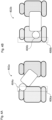
- FIGS. 4A and 4B are front views of vehicle driver experiences of a far-side excursion event.
- FIG. 4A is a front view of minor excursion event 402a.
- driver head 404a moves into space 406a of the passenger area. Excursion of a vehicle driver may not be completely preventable and FIG. 4A may depict an acceptable amount of excursion.
- FIG. 4B is a front view of a major excursion event 402b.
- driver head 404b moves into space 406b of the passenger area.
- Both excursion event 402a and excursion event 402b pose a risk of injury to a vehicle driver.
- the greater the excursion event the greater the risk of injury to the vehicle driver.
- excursion event 402b poses a greater risk of injury as compared to excursion event 402a. Preventing or reducing excursion of the vehicle driver reduces the risk of injury to the vehicle driver.
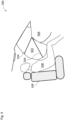
- FIG. 5 is a passenger side view of vehicle interior 500.
- Vehicle interior 500 may include passenger airbag 502, vehicle dashboard 506, and passenger seat 108.
- Passenger airbag 502 may include one or more straps 504.
- Passenger 508 may occupy passenger seat 108.
- Passenger airbag 502 may be configured to deploy and inflate in response to a crash event to protect passenger 508 from injury. For example, during a front-end crash event, passenger 508 may move toward dashboard 506 and passenger airbag 502 may inflate between passenger 508 and dashboard 506 to prevent passenger 508 from hitting dashboard 506.
- passenger airbag may extend from dashboard 506 to passenger 508.
- one or more straps 504 may stay intact to inflate airbag 502 to a desired size, shape, and volume.
- the desired size, shape, and volume may be configured to protect passenger 508 from injury during a front-end crash event.
- FIG. 6 is a passenger side view of vehicle interior 500.
- Passenger seat 108 may be unoccupied.
- Passenger airbag 502 may be configured to deploy and inflate in response to a crash event to provide support for an inboard airbag. For example, during a far-side crash event where passenger seat 108 is unoccupied, passenger airbag 502 may inflate between a seat back of passenger seat 108 and dashboard 506 to provide sufficient support to an inboard airbag. Together the inboard airbag and passenger airbag 502 may prevent far-side excursion of a vehicle driver.
- One or more straps 504 may be configured to tear or extend in response to a far-side crash event.
- One or more straps 504 may be configured to tear in response to the far-side crash event.
- the one or more straps 504 may tear to allow passenger airbag 502 to inflate to a desired size, shape, and volume. Tears 510 in straps 504 allow passenger airbag 502 to extend to an increased size, shape, and/or volume.
- the desired size, shape, and/or volume may be configured to inflate from dashboard 506 to a seat back of passenger seat 108.
- one or more straps 504 may include a pyrotechnic cutter.
- the pyrotechnic cutter may be activated in response to a far-side crash event and/or an absence of a passenger in passenger seat 108.
- the activated pyrotechnic cutter may cut one or more straps 504 at tears 510. Cutting one or more straps 504 allows passenger airbag 502 to inflate to a larger size, shape, and/or volume as compared to inflating passenger airbag 502 with intact one or more straps 504.
- one or more straps 504 may be configured to extend its length in response to a far-side crash event.
- One or more straps 504 may include other means of tearing or extending to inflate passenger airbag 502 to multiple sizes.
- the one or more straps 504 may include tear seams or other appropriate means known to a person of skill in art.
- FIG. 7 is a front view of vehicle interior 100 during a far-side crash event.
- passenger airbag 502 is inflated in the passenger area to provide support for inboard airbag 104.
- Inboard airbag 104 may be installed on an inboard side of driver seat 106 and inflate in between driver seat 104 and passenger seat 108. Together passenger airbag 502 and inboard airbag 104 prevent or reduce far-side excursion of vehicle driver 102.
- Vehicle driver 102 may move toward the far-side or passenger area 204 of the vehicle during far-side excursion. As vehicle driver 102 comes into contact with inboard airbag 104, inboard airbag 104 inhibits the lateral movement of vehicle driver 102.
- Passenger airbag 502 is inflated to a size that fills a portion of passenger area 204 from the dashboard to a seat back of passenger seat 108. Inboard airbag 104 may come into contact with passenger airbag 502 because of a lateral movement of vehicle driver 102. The combination of inflated passenger airbag 502 and inflated inboard airbag 104 prevents vehicle driver 102 from moving into the passenger area 204 because the volume of passenger airbag 502 occupies a portion of the passenger area which supports inboard airbag 104.
- process step 812 may further include controlling the mechanism to tear or extend the straps.
- the controller may generate a message or signal to deploy the airbags and control the straps and transmit the message or signal to a further controller.
- the controller of process 800 may directly control one or more airbags in the airbag system.
- the controller may indirectly control the one or more airbags in the airbag system by transmitting a control signal to further controller.
- process 800 may end. If the controller determines that a passenger is present in the vehicle at process step 808, process 800 may end. If the controller determines that the crash event is not a far-side crash event at process step 804, process 800 may end. If the controller determines that only one of the conditions is satisfied at process step 810, process 800 may end. For example, the process may end without deploying both the inboard airbag and the passenger airbag because only one condition is satisfied. Such as when a passenger is not present, but the crash event is a front-end crash event or when the crash event is a far-side crash event, but a passenger is present in the passenger seat.
- FIG. 9 is a method 900 of deploying an airbag arrangement.
- Step 902 includes receiving or obtaining a passenger sensor signal, such as a weight sensor signal, including passenger information.
- Step 904 includes receiving or obtaining a sensor signal, such as a crash sensor signal, including crash event information.
- Step 906 includes determining whether a passenger is present in a vehicle based on the information included on the received or obtained signal of step 902.
- Step 908 includes determining whether a crash event is a far-side crash event based on the information included on the received or obtained signal of step 904.
- Step 910 includes deploying an inboard airbag in response to determining that a passenger is absent from step 906 and determining a far-side crash event from step 908.
- Step 912 includes deploying a passenger airbag in response to determining that a passenger is absent from step 906 and determining a far-side crash event from step 908. It should be understood that the steps of method 900 are not restricted to the order shown.
Landscapes
- Engineering & Computer Science (AREA)
- Mechanical Engineering (AREA)
- Air Bags (AREA)
Abstract
An airbag arrangement for a vehicle comprising a driver area and a passenger area, the airbag arrangement comprising: a first airbag configured to inflate in the passenger area; a second airbag configured to inflate between an inboard side of the driver area and the inflated first airbag, such that when the first airbag and the second airbag are inflated the first airbag provides support for the second airbag such that the first airbag inhibits a movement of the second airbag into the passenger area.
Description
- The present disclosure relates to the field of airbags, in particular airbags used in conjunction with vehicles.
- Airbags are an essential part of vehicle safety systems. A vehicle safety system may include a sensor to detect when a vehicle has experienced a crash event or collision. The vehicle safety system may determine whether the crash event is a front-end crash event, a far-side crash event or any other category of crash event based on sensor data. Once a crash event has been detected, the vehicle safety system may deploy one or more airbags, such as a driver airbag and/or a passenger airbag, depending on the type of crash event.
- Vehicle safety systems may include one or more airbags to reduce the risk of injury to the driver and/or passengers of the vehicle. Frontal airbags, such as a driver airbag and a front passenger airbag may be frontal airbags located in front of the occupants, such as the vehicle dashboard, and are activated and/or inflated in response to determination of a front-end crash event. Vehicle safety systems may further include side airbags located on the outboard and inboard sides of a vehicle occupant, and are activated and/or inflated in response to a lateral crash event, such as a near-side and/or a far-side crash event.
- The inboard of a vehicle is the area toward a center line of the vehicle, where the center line runs between the front and rear of the vehicle. Therefore, in the front area of a vehicle the inboard side is the area between a driver area and a passenger area of the vehicle.
- Near-side and far-side crash events can be distinguished by resulting trajectory of a vehicle occupant. For example, a vehicle driver would have an outboard trajectory (towards the driver door) in a near-side crash event and inboard trajectory (towards a vehicle center) in far-side crash event. It is understood by a person of skill in the art that the terms far-side crash event and near-side crash event are relative to the vehicle occupant. For example, a near-side crash event for a driver would be a far-side crash event for a front passenger. For the purpose of this disclosure, a far-side crash event will mean a far-side crash event from the perspective of the driver such that the point of contact of the vehicle in a crash event may be a passenger side of the vehicle.
- Far-side crash events, include the risk of a head-to-head interaction between a driver and a passenger. An additional risk includes driver excursion when there is no front passenger in the vehicle. Excursion occurs when there is nothing to prevent the driver from a lateral trajectory into a passenger area of the vehicle, which may result in injury to the driver. An inboard side airbag may reduce and/or prevent injury to the driver and/or front passenger during lateral crash events.
- An inboard side airbag is commonly positioned in the inboard side of a driver seat. The inboard side airbag is configured to reduce the risk of head-to-head contact between a driver and a passenger and/or excursion of a driver. A vital part of preventing driver excursion is to provide support for the inboard side airbag from a vehicle's tunnel console.
- However, there is a trend within the automotive industry to reduce the size of or eliminate tunnel consoles in vehicles. Therefore, it would be desirable in the field of vehicle safety to provide an alternative support for the inboard side airbag to prevent driver excursion in the event of a far-side crash event when there is not a front passenger in the vehicle.
- The background section relating to airbags in vehicle safety systems is merely intended to provide a contextual overview of some current issues and is not intended to be exhaustive. Other contextual information may become apparent to a person of skill in the art upon review of the following detailed description.
- According to an embodiment, an airbag arrangement for a vehicle may comprise a driver area and a passenger area, the airbag arrangement may comprise a first airbag configured to inflate in the passenger area; a second airbag configured to inflate between an inboard side of the driver area and the inflated first airbag, such that when the first airbag and the second airbag are inflated the first airbag provides support for the second airbag such that the first airbag inhibits a movement of the second airbag into the passenger area. Inflating the first airbag to provide support for the second airbag reduces or prevents driver excursion in the event of a far-side crash event.
- Vehicles without a tunnel console require other means of providing support for the inboard side airbag. Providing support for an inboard side airbag with a passenger side airbag prevents or reduces excursion during far-side crash events in vehicles without a tunnel console. As a result, the airbag arrangement reduces the risk of injury to a driver in far-side crash events without a front passenger in the vehicle. Therefore, the airbag arrangement no longer requires a tunnel console to provide support for an inboard side airbag in far-side crash events.
- The first airbag and the second airbag may include an inflator configured to provide gas to inflate the first and second airbags. The inflator may be activated in response to a crash event to inflate the first and second airbags. A person of skill in the art would understand that any means of inflating airbags may be present in the disclosed airbag arrangement.
- According to an embodiment, the first airbag is installed in a dashboard of the vehicle. Installing the first airbag in the dashboard allows the first airbag to deploy from the dashboard and extend toward a passenger seat in a passenger area of the vehicle.
- According to an embodiment, the second airbag is installed in an inboard side of a driver seat. Installing the second airbag on the inboard side of a driver seat allows a vehicle to include an inboard side airbag for vehicles without a tunnel console. Additionally, installing the second airbag on the inboard side of the driver seat allows the second airbag to inflate in an inboard area of the vehicle.
- According to an embodiment, the first airbag comprises at least one strap and is configured to inflate to a first size or a second size, wherein the second size is longer than the first size. The first airbag configured to inflate to two different volumes or sizes allows a single airbag to adapt to different scenarios. For example, the first airbag may inflate to a first size when a passenger occupies the passenger area of the vehicle or inflate to a longer second size when there is not a passenger in the passenger area. For example, the second size may extend to a longer length as compared to the first size, and extend from the vehicle dashboard to a backseat of the passenger seat to provide support for an inboard airbag.
- According to an embodiment, the first airbag comprises at least one strap and is configured to inflate to a first volume or a second volume, wherein the second volume is greater than the first volume. The first airbag may be configured to inflate to two different volumes allows a single airbag to adapt to different scenarios. For example, the second volume may be greater than the first volume to substantially fill the passenger area when there is not a front passenger in the vehicle.
- According to an embodiment, the at least one strap is configured to release such that the first airbag inflates to the second size. The first airbag may include a fastener configured to break or move upon activation. Upon breaking or moving, the fastener may release the at least one strap such that the strap extends to a longer length as compared to when the fastener is intact or in place. The released strap allows the first airbag to inflate to the second size such that the first airbag provides support for the second airbag.
- According to an embodiment, the at least one strap is configured to tear such that the first airbag inflates to the second volume or size. The strap is configured to tear in the absence of a passenger to allow the airbag to inflate to the larger size such that a sufficient portion of the passenger area is occupied by the first airbag to provide support for the second airbag.
- According to an embodiment, the at least one strap is configured to tear pyrotechnically. A pyrotechnic cutter may be installed on the at least one strap. The pyrotechnic cutter may be activated in the scenario where a passenger is not in the vehicle. The pyrotechnic cutter may use energetic materials, which when ignited, may release energy to force a cutting blade to sever the at least one strap. The first airbag may inflate to the larger size when the one or more straps are torn.
- According to an embodiment, the first airbag is configured to inflate before the second airbag during a crash event. Inflating the first airbag before inflating the second airbag may ensure that the first airbag is in place to support the second airbag as the second airbag inflates.
- According to an embodiment, the airbag arrangement is configured to inhibit movement of a vehicle driver from the driver area to the passenger area when the first airbag and the second airbag are inflated. Supporting the second airbag with the first airbag prevents or inhibits movement of the second airbag into the passenger area. Therefore, reducing the risk or preventing excursion of the driver and reducing or preventing injury to a driver in a far-side crash event.
- According to an embodiment, an airbag system comprising the previously described airbag arrangement further comprising: a first sensor configured to detect a passenger in the passenger area; a second sensor configured to detect a crash event; a controller configured to inflate the first airbag and inflate the second airbag in response to the detection of the crash event and the detection of the passenger.
- A vehicle may be equipped with sensors, such as one or more weight sensors, configured to detect a passenger in the passenger seat. The controller may be configured to adapt to the presence or absence of a passenger in the vehicle based on the output of the one or more sensors. Other types of sensors may also be configured to detect a passenger. For example, cameras, radars, belt sensors or any combination of sensors may be configured to detect a passenger.
- A vehicle may be equipped with sensors, such as one or more crash sensors, configured to detect a crash event. The controller may be configured to adapt to the type of crash event detected such as a front-end crash event or far-side crash event.
- According to an embodiment, the controller includes a processor, wherein the processor receives a first output from the first sensor and a second output from a second sensor. The controller may be configured to process the output signal of the first sensor and/or the output signal of the second sensor and generate a command to deploy the airbag arrangement based on the first output signal and the second output signal.
- According to an embodiment, the processor is configured to determine an absence of the passenger based on the first output and the controller is further configured to inflate the first airbag and inflate the second airbag in response the determination of the absence of the passenger. Determining whether a front passenger is present allows the controller to adapt the size of the first airbag based on the determination. When a passenger is present, the first airbag should be inflated to a smaller first size. When a passenger is not present, the first airbag should be inflated to a larger second size to provide support for the second airbag.
- According to an embodiment, the processor is configured to determine that the crash event is a far-side crash event based on the second output and the controller is further configured to inflate the first airbag and inflate the second airbag in response the determination of the far-side crash event. Determining a far-side crash event allows the controller to adapt whether to deploy the first airbag. For example, the controller may not deploy the second airbag in response to determining a front-end crash event. As another example, the controller may inflate the second airbag and inflate the first airbag to its second size in response to determining a far-side crash event and determining that a passenger is absent.
- The processor of the controller may be configured to determine whether a passenger, such as a front passenger, is present based on a first sensor output signal. The processor of the controller may be further configured to determine a far-side crash event based on a second sensor output signal. The controller may be configured to activate the pyrotechnic cutter in response to the determination that a passenger is not present and that the crash event is a far-side crash event. This allows the first airbag to inflate to a second size from the dashboard to the seatback of a passenger seat.
- According to an embodiment, the one or more straps are configured to tear or release in the absence of a passenger and the first airbag is configured to inflate to the second volume to extend from a vehicle dashboard to a passenger seat back. Inflating the first airbag from the dashboard of the vehicle to the passenger seat back provides a surface of the first airbag which is sufficient to provide support for the second airbag such that the first airbag prevents the second airbag from moving into the passenger area.
- According to an embodiment, the one or more straps are configured to tear mechanically. The straps may be configured to tear in the absence of a passenger. In the presence of a passenger, the first airbag may encounter resistance from the body of the passenger as it inflates. The resistance may prevent the straps from tearing. Alternatively, in the absence of a passenger the first airbag will not encounter resistance and the straps will tear such that the first airbag inflates to a second volume such that the first airbag extends from the dashboard to the passenger seat back.
- According to an embodiment, the inboard side of the driver area does not overlap with the passenger area. Configuring the first airbag to inflate in a passenger area and the second airbag to inflate in an inboard area without any overlap prevents the first airbag and second airbag from interfering with each other as they inflate. Additionally, the controller can inflate the first airbag and second airbag simultaneously or concurrently without them interfering with each other.
- According to an embodiment, the first output includes weight information for a passenger seat. The processor may be configured to receive the weight information from one or more weight sensors to determine if a passenger is present in the vehicle.
- According to an embodiment, the second output includes force information for a crash event. The force information may include a magnitude and a direction of the force. The processor may be configured to receive the force information from one or more crash sensors and determine if the crash event is a far-side crash event and if the force is large enough to deploy the airbag arrangement.
- According to an embodiment, a method of preventing a vehicle driver from moving into a passenger are of a vehicle during a crash event the method comprising: inflating a first airbag in a passenger area of the vehicle; and inflating a second airbag in an inboard area of the vehicle, wherein the inboard area is between a driver area and the passenger area of the vehicle. Inflating the first and second airbags fills the far-side space in the vehicle relative to the vehicle driver such that the airbags prevent the vehicle driver from moving into the far-side space or passenger area.
- The disclosure will now be described in further detail with reference to the drawings that shows one embodiment of the present disclosure:
-
FIG. 1 illustrates a front view of a vehicle interior during a far-side crash event according to at least one example of the disclosure; -
FIG. 2 illustrates a front view of a vehicle interior without a tunnel console according to at least one example of the disclosure; -
FIG. 3 illustrates a front view of vehicle interior without a tunnel console during a far-side crash event according to at least one example of the disclosure; -
FIGS. 4A and 4B illustrate front views of a vehicle driver experiencing a far-side excursion according to at least one example of the disclosure; -
FIG. 5 illustrates a passenger side view of a vehicle interior according to at least one example of the disclosure; -
FIG. 6 illustrates a passenger side view of a vehicle interior according to at least one example of the disclosure; -
FIG. 7 illustrates a front view of a vehicle interior during a far-side crash event according to at least one example of the disclosure; -
FIG. 8 illustrates a process of deploying an airbag arrangement according to at least one example of the disclosure; -
FIG. 9 illustrates a method of deploying an airbag arrangement according to at least one example of the disclosure. - The present disclosure is directed to an airbag arrangement of a vehicle comprising a first airbag and a second airbag. The first airbag is configured to inflate in a passenger area of the vehicle and the second airbag is configured to inflate in an inboard area of the vehicle such that first airbag prevents the second airbag from moving into the passenger area of the vehicle. The airbag arrangement may be deployed during a far-side load crash event to prevent far-side excursion of a vehicle driver.
-
FIG. 1 is a front view of vehicle interior 100 during a far-side crash event.Vehicle interior 100 may includedriver seat 106,passenger seat 108,tunnel console 110, andinboard airbag 104.Vehicle driver 102 may occupydriver seat 106. - During a far-side crash event, an airbag system of the vehicle may be configured to deploy
inboard airbag 104 to prevent far-side excursion ofvehicle driver 102.Inboard airbag 104 may be installed intunnel console 110.Tunnel console 110 may provideinboard airbag 104 with support to preventvehicle driver 102 from moving into a passenger area of the vehicle. The forces of a far-side load crash event may movevehicle driver 102 toward the passenger area of the vehicle.Tunnel console 110 may provide support toinboard airbag 104 such that whenvehicle driver 102 makes contact withinboard airbag 104 during a far-side crash event,vehicle driver 102 does not move into the passenger area of the vehicle. -
FIG. 2 is a front view ofvehicle interior 100 without a tunnel console. The front area of thevehicle interior 100 may includeinboard side 202,passenger area 204, anddriver area 206.Passenger area 204 may includepassenger seat 108.Driver area 206 may includedriver seat 106.Inboard side 202 may include the space betweendriver seat 106 andpassenger seat 108.Inboard side 202 may be centered around a center line of a vehicle.Vehicle interior 100 without a tunnel console may require alternative support forinboard airbag 104. -
FIG. 3 is a front view ofvehicle interior 100 without a tunnel console during a far-side crash event.Inboard airbag 104 may be installed on an inboard side ofdriver seat 106. During a far-side crash event an airbag system of the vehicle may deploy and inflateinboard airbag 104. Without a tunnel console or a passenger inpassenger seat 108, the only support forinboard airbag 104 may bedriver seat 106. This may not be sufficient support to prevent excursion ofvehicle driver 102 during a far-side crash event. As shown inFIG. 3 ,driver 102 is in contact withinboard airbag 104 during the crash event. Without additional support forinboard airbag 104,vehicle driver 102 and/orinboard airbag 104 may move intopassenger area 204. During such an event,driver 102 may experience a far-side excursion event and suffer an injury. -
FIGS. 4A and 4B are front views of vehicle driver experiences of a far-side excursion event.FIG. 4A is a front view ofminor excursion event 402a. Inexcursion event 402a,driver head 404a moves intospace 406a of the passenger area. Excursion of a vehicle driver may not be completely preventable andFIG. 4A may depict an acceptable amount of excursion.FIG. 4B is a front view of amajor excursion event 402b. Inexcursion event 402b driver head 404b moves intospace 406b of the passenger area. Bothexcursion event 402a andexcursion event 402b pose a risk of injury to a vehicle driver. The greater the excursion event, the greater the risk of injury to the vehicle driver. For example,excursion event 402b poses a greater risk of injury as compared toexcursion event 402a. Preventing or reducing excursion of the vehicle driver reduces the risk of injury to the vehicle driver. -
FIG. 5 is a passenger side view ofvehicle interior 500.Vehicle interior 500 may includepassenger airbag 502,vehicle dashboard 506, andpassenger seat 108.Passenger airbag 502 may include one ormore straps 504.Passenger 508 may occupypassenger seat 108. -
Passenger airbag 502 may be configured to deploy and inflate in response to a crash event to protectpassenger 508 from injury. For example, during a front-end crash event,passenger 508 may move towarddashboard 506 andpassenger airbag 502 may inflate betweenpassenger 508 anddashboard 506 to preventpassenger 508 from hittingdashboard 506. - During a front-end crash event where
passenger 508 occupiespassenger seat 108, passenger airbag may extend fromdashboard 506 topassenger 508. During a front-end crash event one ormore straps 504 may stay intact to inflateairbag 502 to a desired size, shape, and volume. The desired size, shape, and volume may be configured to protectpassenger 508 from injury during a front-end crash event. -
FIG. 6 is a passenger side view ofvehicle interior 500.Passenger seat 108 may be unoccupied.Passenger airbag 502 may be configured to deploy and inflate in response to a crash event to provide support for an inboard airbag. For example, during a far-side crash event wherepassenger seat 108 is unoccupied,passenger airbag 502 may inflate between a seat back ofpassenger seat 108 anddashboard 506 to provide sufficient support to an inboard airbag. Together the inboard airbag andpassenger airbag 502 may prevent far-side excursion of a vehicle driver. - One or
more straps 504 may be configured to tear or extend in response to a far-side crash event. One ormore straps 504 may be configured to tear in response to the far-side crash event. The one ormore straps 504 may tear to allowpassenger airbag 502 to inflate to a desired size, shape, and volume. Tears 510 instraps 504 allowpassenger airbag 502 to extend to an increased size, shape, and/or volume. The desired size, shape, and/or volume may be configured to inflate fromdashboard 506 to a seat back ofpassenger seat 108. - Alternatively, one or
more straps 504 may include a pyrotechnic cutter. The pyrotechnic cutter may be activated in response to a far-side crash event and/or an absence of a passenger inpassenger seat 108. The activated pyrotechnic cutter may cut one ormore straps 504 at tears 510. Cutting one ormore straps 504 allowspassenger airbag 502 to inflate to a larger size, shape, and/or volume as compared to inflatingpassenger airbag 502 with intact one ormore straps 504. - Alternatively, one or
more straps 504 may be configured to extend its length in response to a far-side crash event. One ormore straps 504 may include other means of tearing or extending to inflatepassenger airbag 502 to multiple sizes. For example, the one ormore straps 504 may include tear seams or other appropriate means known to a person of skill in art. -
FIG. 7 is a front view of vehicle interior 100 during a far-side crash event. In the absence of a passenger inpassenger seat 108,passenger airbag 502 is inflated in the passenger area to provide support forinboard airbag 104.Inboard airbag 104 may be installed on an inboard side ofdriver seat 106 and inflate in betweendriver seat 104 andpassenger seat 108. Togetherpassenger airbag 502 andinboard airbag 104 prevent or reduce far-side excursion ofvehicle driver 102. -
Vehicle driver 102 may move toward the far-side orpassenger area 204 of the vehicle during far-side excursion. Asvehicle driver 102 comes into contact withinboard airbag 104,inboard airbag 104 inhibits the lateral movement ofvehicle driver 102. -
Passenger airbag 502 is inflated to a size that fills a portion ofpassenger area 204 from the dashboard to a seat back ofpassenger seat 108.Inboard airbag 104 may come into contact withpassenger airbag 502 because of a lateral movement ofvehicle driver 102. The combination ofinflated passenger airbag 502 and inflatedinboard airbag 104 preventsvehicle driver 102 from moving into thepassenger area 204 because the volume ofpassenger airbag 502 occupies a portion of the passenger area which supportsinboard airbag 104. -
FIG. 8 is aprocess 800 for a controller of a vehicle airbag system. The controller may receive an output signal from one or more sensors of a vehicle. The vehicle may have one or more crash sensors configure to output a signal including crash detection information. The controller may receive the signal with crash detection information atprocess step 802 and determine whether a crash event is a far-side crash event based on the crash event detection information atprocess step 804. The vehicle may have one or more sensors configured to output a signal including passenger information. The controller may receive the output signal with passenger detection information atprocess step 806 and determine whether there is a passenger in the passenger seat of the vehicle based on the passenger detection information atprocess step 808. If the controller determines atprocess step 810 that there is not a passenger in the passenger seat and that the crash event is a far-side then the controller may deploy the inboard airbag and the passenger airbag atprocess step 812. - Additionally, if the passenger airbag includes an electronically controlled mechanism to tear or expand the passenger airbag straps,
process step 812 may further include controlling the mechanism to tear or extend the straps. The controller may generate a message or signal to deploy the airbags and control the straps and transmit the message or signal to a further controller. - For example, the controller of
process 800 may directly control one or more airbags in the airbag system. Alternatively, the controller may indirectly control the one or more airbags in the airbag system by transmitting a control signal to further controller. - If the controller determines that a passenger is present in the vehicle at
process step 808,process 800 may end. If the controller determines that the crash event is not a far-side crash event atprocess step 804,process 800 may end. If the controller determines that only one of the conditions is satisfied atprocess step 810,process 800 may end. For example, the process may end without deploying both the inboard airbag and the passenger airbag because only one condition is satisfied. Such as when a passenger is not present, but the crash event is a front-end crash event or when the crash event is a far-side crash event, but a passenger is present in the passenger seat. -
FIG. 9 is amethod 900 of deploying an airbag arrangement. Step 902 includes receiving or obtaining a passenger sensor signal, such as a weight sensor signal, including passenger information. Step 904 includes receiving or obtaining a sensor signal, such as a crash sensor signal, including crash event information. Step 906 includes determining whether a passenger is present in a vehicle based on the information included on the received or obtained signal ofstep 902. Step 908 includes determining whether a crash event is a far-side crash event based on the information included on the received or obtained signal ofstep 904. Step 910 includes deploying an inboard airbag in response to determining that a passenger is absent fromstep 906 and determining a far-side crash event fromstep 908. Step 912 includes deploying a passenger airbag in response to determining that a passenger is absent fromstep 906 and determining a far-side crash event fromstep 908. It should be understood that the steps ofmethod 900 are not restricted to the order shown. - While the disclosure has been described with reference to exemplary embodiments, it will be understood by those skilled in the art that various changes may be made and equivalents may be substituted for elements thereof without departing from the scope of the disclosure. In addition, many modifications may be made to adapt a particular situation or material to the teachings of the disclosure without departing from the essential scope thereof. Therefore, it is intended that the disclosure not be limited to the particular embodiments disclosed, but that the disclosure will include all embodiments falling within the scope of the appended claims.
Claims (15)
- An airbag arrangement for a vehicle comprising a driver area (206) and a passenger area (204), the airbag arrangement comprising:a first airbag (502) configured to inflate in the passenger area (204);a second airbag (104) configured to inflate between an inboard side (202) of the driver area and the inflated first airbag (502), such that when the first airbag and the second airbag are inflated the first airbag provides support for the second airbag such that the first airbag inhibits a movement of the second airbag (104) into the passenger area (206).
- The airbag arrangement of claim 1, wherein the first airbag (502) is installed in a dashboard of the vehicle.
- The airbag arrangement of claim 1 or 2, wherein the second airbag (104) is installed in an inboard side of a driver seat (106).
- The airbag arrangement of any of claims 1-3, wherein the first airbag (502) comprises at least one strap (504) and is configured to inflate to a first size or a second size, wherein the second size is longer than the first size.
- The airbag arrangement of any of claims 4 wherein the at least one strap (504) is configured to release such that the first airbag (502) inflates to the second size.
- The airbag arrangement of any of claims 4 or 5, wherein the at least one strap (504) is configured to release pyrotechnically.
- The airbag arrangement of any of claims 1-6, wherein the first airbag (502) is configured to inflate before the second airbag during a crash event.
- The airbag arrangement of any of claims 1-7, wherein the airbag arrangement is configured to prevent movement of a vehicle driver (102) from the driver area (206) to the passenger area (204) when the first airbag (502) and the second airbag (104) are inflated.
- An airbag system comprising the airbag arrangement of claims 4-8, further comprising:a first sensor configured to detect a passenger (508) in the passenger area (504);a second sensor configured to detect a crash event; anda controller configured to inflate the first airbag (502) and inflate the second airbag (104) in response to the detection of the crash event and the detection of the passenger (508).
- The airbag system of claim 9, wherein the controller includes a processor, wherein the processor receives a first output from the first sensor and a second output from a second sensor.
- The airbag system of claim 10, wherein the processor is configured to determine an absence of the passenger (508) based on the first output and the controller is further configured to inflate the first airbag (502) and inflate the second airbag (104) in response to the determination of the absence of the passenger (508).
- The airbag system of claim 10 or 11, wherein the processor is configured to determine that the crash event is a far side crash event based on the second output and the controller is further configured to inflate the first airbag (502) and inflate the second airbag (104) in response the determination of the far side crash event.
- The airbag system of claim 11, wherein the one or more straps (504) are configured to release in the absence of a passenger (508) and the first airbag (502) is configured to inflate to the second size to extend from a vehicle dashboard (506) to a passenger seat back.
- The airbag system of claim 13, wherein the one or more straps (504) are configured to release mechanically.
- The airbag system of any of claims 9-14, wherein the inboard side (202) of the driver area does not overlap with the passenger area (204).
Priority Applications (3)
| Application Number | Priority Date | Filing Date | Title |
|---|---|---|---|
| EP23211285.4A EP4559761A1 (en) | 2023-11-21 | 2023-11-21 | A method and apparatus for handling excursion far-side load cases without use of a tunnel console |
| CN202411537358.8A CN120024300A (en) | 2023-11-21 | 2024-10-31 | Method and apparatus for handling drifting far-side load conditions without using a port console |
| US18/937,766 US12447923B2 (en) | 2023-11-21 | 2024-11-05 | Handling excursion far-side load cases without use of a tunnel console |
Applications Claiming Priority (1)
| Application Number | Priority Date | Filing Date | Title |
|---|---|---|---|
| EP23211285.4A EP4559761A1 (en) | 2023-11-21 | 2023-11-21 | A method and apparatus for handling excursion far-side load cases without use of a tunnel console |
Publications (1)
| Publication Number | Publication Date |
|---|---|
| EP4559761A1 true EP4559761A1 (en) | 2025-05-28 |
Family
ID=88921091
Family Applications (1)
| Application Number | Title | Priority Date | Filing Date |
|---|---|---|---|
| EP23211285.4A Pending EP4559761A1 (en) | 2023-11-21 | 2023-11-21 | A method and apparatus for handling excursion far-side load cases without use of a tunnel console |
Country Status (3)
| Country | Link |
|---|---|
| US (1) | US12447923B2 (en) |
| EP (1) | EP4559761A1 (en) |
| CN (1) | CN120024300A (en) |
Citations (6)
| Publication number | Priority date | Publication date | Assignee | Title |
|---|---|---|---|---|
| US8882138B1 (en) * | 2014-03-26 | 2014-11-11 | Autoliv Asp, Inc. | Center airbag |
| US9227587B1 (en) * | 2015-01-26 | 2016-01-05 | Ford Global Technologies, Llc | Vehicle oblique impact absorbing system |
| US9550469B2 (en) * | 2014-12-05 | 2017-01-24 | Honda Motor Co., Ltd. | Airbag device |
| US9796354B1 (en) * | 2016-03-30 | 2017-10-24 | Toyoda Gosei Co., Ltd. | Airbag device for front passenger seat |
| US10358106B2 (en) * | 2014-08-04 | 2019-07-23 | Autoliv Development Ab | Airbag apparatus |
| US10457234B2 (en) * | 2016-09-08 | 2019-10-29 | Toyota Jidosha Kabushiki Kaisha | Vehicle front passenger seat airbag device |
Family Cites Families (7)
| Publication number | Priority date | Publication date | Assignee | Title |
|---|---|---|---|---|
| US6832778B2 (en) * | 2002-07-19 | 2004-12-21 | Delphi Technologies, Inc. | Air bag restraint including selectively operable venting elements |
| JP5979111B2 (en) * | 2013-09-30 | 2016-08-24 | 豊田合成株式会社 | Crew protection device |
| JP6536963B2 (en) * | 2014-01-21 | 2019-07-03 | ジョイソン セイフティ システムズ アクイジション エルエルシー | Passenger side airbag |
| JP6361600B2 (en) * | 2015-07-17 | 2018-07-25 | トヨタ自動車株式会社 | Airbag device for vehicle |
| US9566929B1 (en) * | 2015-12-15 | 2017-02-14 | Ford Global Technologies, Llc | Vehicle oblique impact absorbing system |
| US10407015B2 (en) * | 2017-06-27 | 2019-09-10 | Ford Global Technologies, Llc | Restraint system |
| US10471919B2 (en) * | 2017-07-21 | 2019-11-12 | Ford Global Technologies, Llc | Vehicle airbag system |
-
2023
- 2023-11-21 EP EP23211285.4A patent/EP4559761A1/en active Pending
-
2024
- 2024-10-31 CN CN202411537358.8A patent/CN120024300A/en active Pending
- 2024-11-05 US US18/937,766 patent/US12447923B2/en active Active
Patent Citations (6)
| Publication number | Priority date | Publication date | Assignee | Title |
|---|---|---|---|---|
| US8882138B1 (en) * | 2014-03-26 | 2014-11-11 | Autoliv Asp, Inc. | Center airbag |
| US10358106B2 (en) * | 2014-08-04 | 2019-07-23 | Autoliv Development Ab | Airbag apparatus |
| US9550469B2 (en) * | 2014-12-05 | 2017-01-24 | Honda Motor Co., Ltd. | Airbag device |
| US9227587B1 (en) * | 2015-01-26 | 2016-01-05 | Ford Global Technologies, Llc | Vehicle oblique impact absorbing system |
| US9796354B1 (en) * | 2016-03-30 | 2017-10-24 | Toyoda Gosei Co., Ltd. | Airbag device for front passenger seat |
| US10457234B2 (en) * | 2016-09-08 | 2019-10-29 | Toyota Jidosha Kabushiki Kaisha | Vehicle front passenger seat airbag device |
Also Published As
| Publication number | Publication date |
|---|---|
| US12447923B2 (en) | 2025-10-21 |
| US20250162533A1 (en) | 2025-05-22 |
| CN120024300A (en) | 2025-05-23 |
Similar Documents
| Publication | Publication Date | Title |
|---|---|---|
| US10668887B2 (en) | Vehicle seat with side airbag device | |
| US11535185B2 (en) | Roof-mounted occupant restraint system | |
| KR102614143B1 (en) | Frontal airbag for vehicle and airbag deployment system using same | |
| JP3919819B2 (en) | Low aggressiveness variable volume variable inflatable airbag system | |
| US10377337B2 (en) | Vehicle occupant restraining system | |
| EP3280620B1 (en) | Airbag assemblies for vehicles with generous leg room | |
| US8702123B2 (en) | Safety arrangement | |
| KR102614144B1 (en) | Airbag for table of vehicles | |
| CN110325408B (en) | Vehicle occupant restraint device and method for operating a vehicle occupant restraint device | |
| CN102209649A (en) | Vehicle seat | |
| EP3530526B1 (en) | Airbag apparatus for vehicle | |
| US8684403B2 (en) | Active airbag venting system | |
| US7213837B2 (en) | Airbag module | |
| JP2004521014A (en) | Occupant restraint system with belt tightening force limiter | |
| US12304416B2 (en) | Airbag apparatus for vehicle | |
| CN105857133A (en) | Method for presetting seat before collision | |
| JP2002234414A (en) | Vehicle airbag device | |
| US8430424B1 (en) | Far side impact protection for driver | |
| US12296780B2 (en) | Front airbag for a vehicle occupant, vehicle occupant protection system, and method for operating a vehicle occupant protection system | |
| CN116353534B (en) | Safety airbag installed on door and control method for deploying the safety airbag | |
| CN120024300A (en) | Method and apparatus for handling drifting far-side load conditions without using a port console | |
| JPH11278196A (en) | Automotive airbag device | |
| JP2018090009A (en) | Airbag device | |
| US12172593B2 (en) | Occupant protection device | |
| US12157429B1 (en) | Airbag cushion including a pusher chamber |
Legal Events
| Date | Code | Title | Description |
|---|---|---|---|
| PUAI | Public reference made under article 153(3) epc to a published international application that has entered the european phase |
Free format text: ORIGINAL CODE: 0009012 |
|
| STAA | Information on the status of an ep patent application or granted ep patent |
Free format text: STATUS: THE APPLICATION HAS BEEN PUBLISHED |
|
| AK | Designated contracting states |
Kind code of ref document: A1 Designated state(s): AL AT BE BG CH CY CZ DE DK EE ES FI FR GB GR HR HU IE IS IT LI LT LU LV MC ME MK MT NL NO PL PT RO RS SE SI SK SM TR |
|
| STAA | Information on the status of an ep patent application or granted ep patent |
Free format text: STATUS: REQUEST FOR EXAMINATION WAS MADE |
|
| 17P | Request for examination filed |
Effective date: 20251128 |