EP4555892A1 - A hair styling device - Google Patents
A hair styling device Download PDFInfo
- Publication number
- EP4555892A1 EP4555892A1 EP24168106.3A EP24168106A EP4555892A1 EP 4555892 A1 EP4555892 A1 EP 4555892A1 EP 24168106 A EP24168106 A EP 24168106A EP 4555892 A1 EP4555892 A1 EP 4555892A1
- Authority
- EP
- European Patent Office
- Prior art keywords
- styling device
- hair styling
- hair
- heater
- treatment surface
- Prior art date
- Legal status (The legal status is an assumption and is not a legal conclusion. Google has not performed a legal analysis and makes no representation as to the accuracy of the status listed.)
- Withdrawn
Links
Images


Classifications
-
- A—HUMAN NECESSITIES
- A45—HAND OR TRAVELLING ARTICLES
- A45D—HAIRDRESSING OR SHAVING EQUIPMENT; EQUIPMENT FOR COSMETICS OR COSMETIC TREATMENTS, e.g. FOR MANICURING OR PEDICURING
- A45D1/00—Curling-tongs, i.e. tongs for use when hot; Curling-irons, i.e. irons for use when hot; Accessories therefor
- A45D1/02—Curling-tongs, i.e. tongs for use when hot; Curling-irons, i.e. irons for use when hot; Accessories therefor with means for internal heating, e.g. by liquid fuel
- A45D1/04—Curling-tongs, i.e. tongs for use when hot; Curling-irons, i.e. irons for use when hot; Accessories therefor with means for internal heating, e.g. by liquid fuel by electricity
-
- A—HUMAN NECESSITIES
- A45—HAND OR TRAVELLING ARTICLES
- A45D—HAIRDRESSING OR SHAVING EQUIPMENT; EQUIPMENT FOR COSMETICS OR COSMETIC TREATMENTS, e.g. FOR MANICURING OR PEDICURING
- A45D1/00—Curling-tongs, i.e. tongs for use when hot; Curling-irons, i.e. irons for use when hot; Accessories therefor
- A45D1/06—Curling-tongs, i.e. tongs for use when hot; Curling-irons, i.e. irons for use when hot; Accessories therefor with two or more jaws
-
- A—HUMAN NECESSITIES
- A45—HAND OR TRAVELLING ARTICLES
- A45D—HAIRDRESSING OR SHAVING EQUIPMENT; EQUIPMENT FOR COSMETICS OR COSMETIC TREATMENTS, e.g. FOR MANICURING OR PEDICURING
- A45D1/00—Curling-tongs, i.e. tongs for use when hot; Curling-irons, i.e. irons for use when hot; Accessories therefor
- A45D1/06—Curling-tongs, i.e. tongs for use when hot; Curling-irons, i.e. irons for use when hot; Accessories therefor with two or more jaws
- A45D1/12—Curling-tongs, i.e. tongs for use when hot; Curling-irons, i.e. irons for use when hot; Accessories therefor with two or more jaws of helical or zig-zag shape
-
- A—HUMAN NECESSITIES
- A45—HAND OR TRAVELLING ARTICLES
- A45D—HAIRDRESSING OR SHAVING EQUIPMENT; EQUIPMENT FOR COSMETICS OR COSMETIC TREATMENTS, e.g. FOR MANICURING OR PEDICURING
- A45D1/00—Curling-tongs, i.e. tongs for use when hot; Curling-irons, i.e. irons for use when hot; Accessories therefor
- A45D1/28—Curling-tongs, i.e. tongs for use when hot; Curling-irons, i.e. irons for use when hot; Accessories therefor with means for controlling or indicating the temperature
-
- A—HUMAN NECESSITIES
- A45—HAND OR TRAVELLING ARTICLES
- A45D—HAIRDRESSING OR SHAVING EQUIPMENT; EQUIPMENT FOR COSMETICS OR COSMETIC TREATMENTS, e.g. FOR MANICURING OR PEDICURING
- A45D2/00—Hair-curling or hair-waving appliances ; Appliances for hair dressing treatment not otherwise provided for
- A45D2/001—Hair straightening appliances
-
- A—HUMAN NECESSITIES
- A45—HAND OR TRAVELLING ARTICLES
- A45D—HAIRDRESSING OR SHAVING EQUIPMENT; EQUIPMENT FOR COSMETICS OR COSMETIC TREATMENTS, e.g. FOR MANICURING OR PEDICURING
- A45D6/00—Details of, or accessories for, hair-curling or hair-waving devices
- A45D6/20—Devices for controlling the temperature of hair curlers
Definitions
- the invention relates to hair styling devices or appliances.
- a typical hair styling device uses temperature sensors to detect a change of a heating plate temperature, and compensate for any heat loss due to heating the hair by increasing the heater's temperature, or when the heating plate temperature is too high, it turns off the power to the heater until the temperature falls within the target range again.
- a disadvantages of this kind of control is the time delay between when the heating plate temperature changes, and when the sensor starts responding to that change, which makes it impossible for the product to accurately and timely control the temperature of the product on the hair, especially at the high range of the temperature. As a result, the heating plate's temperature will be over the maximum setup so that hair damage occurs.
- a hair styling device comprising:
- the first material comprises any one of the following: cooper, cooper alloy, brass, silver, and silver alloy.
- the second material comprises any one of the following: aluminum, and aluminum alloy.
- the temperature sensor comprises a negative temperature coefficient thermistor.
- the heater comprises positive temperature coefficient heater.
- the first part of heat conduction unit is thinner than the second part of heat conduction unit.
- a controller adapted to control the heater based on the sensed temperature.
- a first side of the first part and a second side of the second part together forms the treatment surface.
- the treatment surface is formed by a material coated on or covered on a first side of the first part and a second side of the second part.
- the temperature sensor is coupled to a third side of the first part that is opposite to the treatment surface.
- the treatment surface is flat surface, and the hair styling device being a hair straightener.
- the treatment surface is waved surface, and the hair styling device being a hair volumizer.
- the treatment surface is curved surface
- the hair styling device being a hair curler
- the hair styling device may be for example, a hair straightener 10, or hair volumizer 20, or hair curler 30, etc.
- the hair styling device comprises a heating assembly.
- the heating assembly includes a heater 104 and a heat conduction unit 105.
- the heater 104 is thermally coupled with the heat conduction unit 105 for conducting heat to a treatment surface 106 for receiving and treating hair.
- the heat conduction unit 105 comprises a first part 101 and a second part 102.
- the first part 101 is made of a material that has a higher thermal conductivity than the material of the second part 102.
- the material of the first part 101 may be cooper, cooper alloy, brass, silver, and silver alloy.
- the material of the second part 102 may be normally used heat conduction material, such as: aluminum or aluminum alloy, etc.
- the heating assembly further comprises a temperature sensor 103 which is thermally coupled with the first part 101 of the heat conduction unit 105 for sensing the temperature of the first part 101 of the heat conduction unit 105.
- the temperature of the first part 101 changes faster than the second part 102 when the conduction unit 105 absorbs heat from the heater, or when the hair absorb heat from the conduction unit 105 via treatment surface 106.
- the hair styling device can sense the temperature change of the heat conduction unit 105 quicker.
- the first part 101 may be a small strip as long as the temperature sensor 103 can be coupled to it.
- the first part 101 can be made thinner than the second part 102, and therefore, there is a space/recess to attach the temperature sensor, and the heat conduction speed of the first part 101 may be further increased with a thinner strip, and thus the temperature sensor 103 coupled to it can sense the temperature changing even faster.
- the thickness of the first part 101 may be selected from 0.3 ⁇ 1.9mm.
- the conduction unit 105 in an example of Figs. 1-4 is generally in rectangular shape with a hollow portion. Heater 104 is positioned in the hollow portion of heat conduction unit 105.
- At least a portion of the heater is tightly attached to the heat conduction unit 105 to enable a good heat conduction, i.e the heater is surrounded by the heat conduction unit 105 and is tightly attached to the heat conduction unit 105 except the portion where the temperature sensor is located.
- a side 108 of the first part of the conduction unit 105 and a side 107 of the second part of the conduction unit 105 together forms the treatment surface 106.
- the treatment surface 106 may be formed by a material coated on or covered on the side 108 of the first part and the side 107 of the second part. With an additional coating or covering layer, the treatment surface 106 may be smoother and have better integrity.
- the temperature sensor 103 is coupled to a side 109 of the first part that is opposite to the treatment surface 106, i.e the side 109 is opposite to the side 108 of the first part, while the side 108 is part of the treatment surface 106 or is covered by the treatment surface 106.
- a signal will be provided to a controller (not shown in the figures) of the styling device to turned on the heater 104 to generate heat or to turn off the heater 104 to avoid damaging hair.
- the temperature sensor 103 may be any type of sensor, for example: a negative temperature coefficient (NTC) thermistor.
- NTC negative temperature coefficient
- the heater 104 may be any type of heater as long as it can generate heat, such as a positive temperature coefficient (PTC) heater.
- PTC positive temperature coefficient
- the heating assembly shown in Figs. 1-4 may be used in a hair straightener.
- Fig. 5 shows a hair straightener 10 comprising a heating assembly shown in the Figs. 1- 4 .
- the treatment surface 106 is a flat surface.
- the hair straightener comprises two plates 110 hinged together and can move relative to each other (i.e. open and close the two plates) for clamping and treating hair.
- the heating assembly comprising a heater 104, a heat conduction unit 105 and a temperature sensor 103 according to an example of the invention, is arranged at one of the plates or arranged at both two plates respectively.
- the hair styling device may be a hair volumizer 20, the treatment surface 106 is a waved surface.
- the hair volumizer comprises two plates 210 hinged together and can move relative to each other (i.e. open and close the two plates) for clamping and treating hair.
- the heating assembly comprising a heater 104, a heat conduction unit 105 and a temperature sensor 103 according to an example of the invention, is arranged at one of the plates or arranged at both two plates respectively.
- the hair styling device may be a hair curler 30, the treatment surface 106 is a curved surface.
- the hair styling device comprises a heating barrel 310 around which hair is to be wound for curling.
- the heating assembly comprising a heater 104, a heat conduction unit 105 and a temperature sensor 103 according to an example of the invention, is arranged at the heating barrel 310.
- the heat conduction unit may be in a hollowed cylinder shape.
- processors or controller may be implemented by a single processor or by multiple separate processing units which may together be considered to constitute a "processor". Such processing units may in some cases be remote from each other and communicate with each other in a wired or wireless manner.
Landscapes
- Hair Curling (AREA)
Abstract
A hair styling device, comprising a heater and a heat conduction unit which is thermally coupled with the heater for conducting heat to a treatment surface. The heat conduction unit comprising a first part with a first material and a second part with a second material, wherein the thermal conductivity of the first material being higher than that of the second material, a temperature sensor being thermally coupled with the first part of the heat conduction unit for sensing the temperature of the first part of the heat conduction unit.
Description
- The invention relates to hair styling devices or appliances.
- A typical hair styling device uses temperature sensors to detect a change of a heating plate temperature, and compensate for any heat loss due to heating the hair by increasing the heater's temperature, or when the heating plate temperature is too high, it turns off the power to the heater until the temperature falls within the target range again. A disadvantages of this kind of control is the time delay between when the heating plate temperature changes, and when the sensor starts responding to that change, which makes it impossible for the product to accurately and timely control the temperature of the product on the hair, especially at the high range of the temperature. As a result, the heating plate's temperature will be over the maximum setup so that hair damage occurs.
- The invention is defined by the claims.
- According to examples in accordance with an aspect of the invention, there is provided a hair styling device, comprising:
- a heater;
- a heat conduction unit thermally coupled with the heater for conducting heat to a treatment surface; the heat conduction unit comprising a first part made from a first material and a second part made from a second material, the thermal conductivity of the first material being higher than that of the second material;
- a temperature sensor thermally coupled with the first part of the heat conduction unit.
- Advantageously, the first material comprises any one of the following: cooper, cooper alloy, brass, silver, and silver alloy.
- Advantageously, the second material comprises any one of the following: aluminum, and aluminum alloy.
- Advantageously, the temperature sensor comprises a negative temperature coefficient thermistor.
- Advantageously, the heater comprises positive temperature coefficient heater.
- Advantageously, the first part of heat conduction unit is thinner than the second part of heat conduction unit.
- Advantageously, a controller adapted to control the heater based on the sensed temperature.
- Advantageously, a first side of the first part and a second side of the second part together forms the treatment surface.
- Advantageously, the treatment surface is formed by a material coated on or covered on a first side of the first part and a second side of the second part.
- Advantageously, the temperature sensor is coupled to a third side of the first part that is opposite to the treatment surface.
- Advantageously, the treatment surface is flat surface, and the hair styling device being a hair straightener.
- Advantageously, the treatment surface is waved surface, and the hair styling device being a hair volumizer.
- Advantageously, the treatment surface is curved surface, and the hair styling device being a hair curler.
- These and other aspects of the invention will be apparent from and elucidated with reference to the embodiment(s) described hereinafter.
- For a better understanding of the invention, and to show more clearly how it may be carried into effect, reference will now be made, by way of example only, to the accompanying drawings, in which:
-
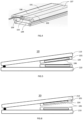
Fig. 1 schematically depicts a heating assembly according to an embodiment of the invention; -
Fig. 2 shows the heating assembly ofFig. 1 from bottom view; -
Fig. 3 schematically depicts a heating assembly ofFig. 1 from A-A cross section view according to an embodiment of the invention; -
Fig. 4 schematically depicts a heating assembly ofFig. 1 from A-A cross section view according to another embodiment of the invention; -
Fig. 5 schematically depicts a styling device according to an embodiment of the invention; -
Fig. 6 schematically depicts a styling device according to another embodiment of the invention; -
Fig. 7 schematically depicts a styling device according to another embodiment of the invention. - The invention will be described with reference to the
Figs. 1-7 . - It should be understood that the detailed description and specific examples, while indicating exemplary embodiments of the apparatus, systems and methods, are intended for purposes of illustration only and are not intended to limit the scope of the invention. These and other features, aspects, and advantages of the apparatus, systems and methods of the present invention will become better understood from the following description, appended claims, and accompanying drawings. It is to be understood that the figures are merely schematic and are not drawn to scale. It should also be understood that the same reference numerals are used throughout the figures to indicate the same or similar parts.
- Referring to
Figs. 5-7 , the invention provides a hair styling device for treating hair. The hair styling device may be for example, ahair straightener 10, orhair volumizer 20, orhair curler 30, etc. - According to an embodiment of the invention, the hair styling device comprises a heating assembly. The heating assembly includes a
heater 104 and aheat conduction unit 105. Theheater 104 is thermally coupled with theheat conduction unit 105 for conducting heat to atreatment surface 106 for receiving and treating hair. - Now referring to
Fig. 1 and Fig. 2 , a heating assembly including aheater 104 and aheat conduction unit 105 is provided according to an embodiment of the invention. Theheat conduction unit 105 comprises afirst part 101 and asecond part 102. Thefirst part 101 is made of a material that has a higher thermal conductivity than the material of thesecond part 102. Advantageously, the material of thefirst part 101 may be cooper, cooper alloy, brass, silver, and silver alloy. Advantageously, the material of thesecond part 102 may be normally used heat conduction material, such as: aluminum or aluminum alloy, etc. - Now referring to
Fig. 3 , the heating assembly further comprises atemperature sensor 103 which is thermally coupled with thefirst part 101 of theheat conduction unit 105 for sensing the temperature of thefirst part 101 of theheat conduction unit 105. As thefirst part 101 has a higher thermal conductivity than thesecond part 102, the temperature of thefirst part 101 changes faster than thesecond part 102 when theconduction unit 105 absorbs heat from the heater, or when the hair absorb heat from theconduction unit 105 viatreatment surface 106. As a result, by coupling thetemperature sensor 103 to thefirst part 101, the hair styling device can sense the temperature change of theheat conduction unit 105 quicker. Thefirst part 101 may be a small strip as long as thetemperature sensor 103 can be coupled to it. - Advantageously, according to another embodiment of the invention, as shown in
Fig.4 , thefirst part 101 can be made thinner than thesecond part 102, and therefore, there is a space/recess to attach the temperature sensor, and the heat conduction speed of thefirst part 101 may be further increased with a thinner strip, and thus thetemperature sensor 103 coupled to it can sense the temperature changing even faster. The thickness of thefirst part 101 may be selected from 0.3~ 1.9mm. - The
conduction unit 105 in an example ofFigs. 1-4 is generally in rectangular shape with a hollow portion.Heater 104 is positioned in the hollow portion ofheat conduction unit 105. - Advantageously, at least a portion of the heater is tightly attached to the
heat conduction unit 105 to enable a good heat conduction, i.e the heater is surrounded by theheat conduction unit 105 and is tightly attached to theheat conduction unit 105 except the portion where the temperature sensor is located. - Advantageously, a
side 108 of the first part of theconduction unit 105 and aside 107 of the second part of theconduction unit 105 together forms thetreatment surface 106. Alternatively, thetreatment surface 106 may be formed by a material coated on or covered on theside 108 of the first part and theside 107 of the second part. With an additional coating or covering layer, thetreatment surface 106 may be smoother and have better integrity. - Advantageously, the
temperature sensor 103 is coupled to aside 109 of the first part that is opposite to thetreatment surface 106, i.e theside 109 is opposite to theside 108 of the first part, while theside 108 is part of thetreatment surface 106 or is covered by thetreatment surface 106. - When the
temperature sensor 103 detects a temperature being lower or higher than a working temperature range, a signal will be provided to a controller (not shown in the figures) of the styling device to turned on theheater 104 to generate heat or to turn off theheater 104 to avoid damaging hair. - According to an embodiment of the invention, the
temperature sensor 103 may be any type of sensor, for example: a negative temperature coefficient (NTC) thermistor. - According to an embodiment of the invention, the
heater 104 may be any type of heater as long as it can generate heat, such as a positive temperature coefficient (PTC) heater. - The heating assembly shown in
Figs. 1-4 may be used in a hair straightener.Fig. 5 shows ahair straightener 10 comprising a heating assembly shown in theFigs. 1- 4 . In this example, thetreatment surface 106 is a flat surface. The hair straightener comprises twoplates 110 hinged together and can move relative to each other (i.e. open and close the two plates) for clamping and treating hair. The heating assembly, comprising aheater 104, aheat conduction unit 105 and atemperature sensor 103 according to an example of the invention, is arranged at one of the plates or arranged at both two plates respectively. - As shown in
Fig. 6 , the hair styling device may be ahair volumizer 20, thetreatment surface 106 is a waved surface. The hair volumizer comprises twoplates 210 hinged together and can move relative to each other (i.e. open and close the two plates) for clamping and treating hair. The heating assembly, comprising aheater 104, aheat conduction unit 105 and atemperature sensor 103 according to an example of the invention, is arranged at one of the plates or arranged at both two plates respectively. - As shown in
Fig. 7 , the hair styling device may be ahair curler 30, thetreatment surface 106 is a curved surface. The hair styling device comprises aheating barrel 310 around which hair is to be wound for curling. The heating assembly, comprising aheater 104, aheat conduction unit 105 and atemperature sensor 103 according to an example of the invention, is arranged at theheating barrel 310. In this example, the heat conduction unit may be in a hollowed cylinder shape. - Variations to the disclosed embodiments can be understood and effected by those skilled in the art in practicing the claimed invention, from a study of the drawings, the disclosure and the appended claims. In the claims, the word "comprising" does not exclude other elements or steps, and the indefinite article "a" or "an" does not exclude a plurality.
- Functions implemented by a processor or controller may be implemented by a single processor or by multiple separate processing units which may together be considered to constitute a "processor". Such processing units may in some cases be remote from each other and communicate with each other in a wired or wireless manner.
- The mere fact that certain measures are recited in mutually different dependent claims does not indicate that a combination of these measures cannot be used to advantage.
- If the term "adapted to" is used in the claims or description, it is noted the term "adapted to" is intended to be equivalent to the term "configured to". If the term "arrangement" is used in the claims or description, it is noted the term "arrangement" is intended to be equivalent to the term "system", and vice versa.
- If the term "first", "second", or "third" are used before "part", "element", or "unit", it does not mean a sequential order, it is used only for giving a different name to different element.
- Any reference signs in the claims should not be construed as limiting the scope.
Claims (13)
- A hair styling device (10, 20, 30), comprising:a heater (104);a heat conduction unit (105) thermally coupled with the heater for conducting heat to a treatment surface (106); the heat conduction unit comprising a first part (101) made from a first material and a second part (102) made from a second material, the thermal conductivity of the first material being higher than that of the second material;a temperature sensor (103) thermally coupled with the first part (101) of the heat conduction unit.
- A hair styling device as claimed in claim 1, wherein the first material comprises any one of the following: cooper, cooper alloy, brass, silver, and silver alloy.
- A hair styling device as claimed in claim 1, wherein the second material comprises any one of the following: aluminum, and aluminum alloy.
- A hair styling device as claimed in claim 1, wherein the temperature sensor comprises a negative temperature coefficient thermistor sensor.
- A hair styling device as claimed in claim 1, wherein the heater comprises positive temperature coefficient heater.
- A hair styling device as claimed in claim 1, wherein the first part is thinner than the second part.
- A hair styling device as claimed in claim 1, further comprising a controller adapted to control the heater based on the sensed temperature.
- A hair styling device as claimed in claim 1, wherein a first side (108) of the first part (101) and a second side (107) of the second part (102) together forms the treatment surface (106).
- A hair styling device as claimed in claim 1, wherein the treatment surface is formed by a material coated on or covered on a first side (108) of the first part (101) and a second side (107) of the second part (102).
- A hair styling device as claimed in claim 1, wherein the temperature sensor is coupled to a third side (109) of the first part (101) that is opposite to the treatment surface.
- A hair styling device as claimed in any of claims 1 to 10, wherein the treatment surface is flat surface, and the hair styling device being a hair straightener.
- A hair styling device as claimed in any of claims 1 to 10, wherein the treatment surface is waved surface, and the hair styling device being a hair volumizer.
- A hair styling device as claimed in any of claims 1 to 10, wherein the treatment surface is curved surface, and the hair styling device being a hair curler.
Priority Applications (1)
| Application Number | Priority Date | Filing Date | Title |
|---|---|---|---|
| PCT/EP2024/081925 WO2025108760A1 (en) | 2023-11-20 | 2024-11-12 | A hair styling device |
Applications Claiming Priority (1)
| Application Number | Priority Date | Filing Date | Title |
|---|---|---|---|
| CN2023132654 | 2023-11-20 |
Publications (1)
| Publication Number | Publication Date |
|---|---|
| EP4555892A1 true EP4555892A1 (en) | 2025-05-21 |
Family
ID=90717098
Family Applications (1)
| Application Number | Title | Priority Date | Filing Date |
|---|---|---|---|
| EP24168106.3A Withdrawn EP4555892A1 (en) | 2023-11-20 | 2024-04-02 | A hair styling device |
Country Status (1)
| Country | Link |
|---|---|
| EP (1) | EP4555892A1 (en) |
Citations (7)
| Publication number | Priority date | Publication date | Assignee | Title |
|---|---|---|---|---|
| US6173718B1 (en) * | 1998-06-29 | 2001-01-16 | Milbon Co., Ltd. | Hair styling iron |
| WO2007000700A2 (en) * | 2005-06-29 | 2007-01-04 | Koninklijke Philips Electronics N.V. | Hair styling appliance |
| KR20100010088A (en) * | 2008-07-22 | 2010-02-01 | 신진전자주식회사 | The hair straightener with cool and hot |
| US20180295961A1 (en) * | 2015-11-25 | 2018-10-18 | Koninklijke Philips N.V. | Hair styling device |
| JP2020536667A (en) * | 2017-10-11 | 2020-12-17 | ダイソン テクノロジー リミテッド | Hair styling equipment |
| CA3067113A1 (en) * | 2019-06-19 | 2020-12-19 | Farouk Systems, Inc. | Lava rock containing hair styling devices |
| CN218008568U (en) * | 2021-05-25 | 2022-12-13 | 思派创品牌公司 | Hair straightener |
-
2024
- 2024-04-02 EP EP24168106.3A patent/EP4555892A1/en not_active Withdrawn
Patent Citations (7)
| Publication number | Priority date | Publication date | Assignee | Title |
|---|---|---|---|---|
| US6173718B1 (en) * | 1998-06-29 | 2001-01-16 | Milbon Co., Ltd. | Hair styling iron |
| WO2007000700A2 (en) * | 2005-06-29 | 2007-01-04 | Koninklijke Philips Electronics N.V. | Hair styling appliance |
| KR20100010088A (en) * | 2008-07-22 | 2010-02-01 | 신진전자주식회사 | The hair straightener with cool and hot |
| US20180295961A1 (en) * | 2015-11-25 | 2018-10-18 | Koninklijke Philips N.V. | Hair styling device |
| JP2020536667A (en) * | 2017-10-11 | 2020-12-17 | ダイソン テクノロジー リミテッド | Hair styling equipment |
| CA3067113A1 (en) * | 2019-06-19 | 2020-12-19 | Farouk Systems, Inc. | Lava rock containing hair styling devices |
| CN218008568U (en) * | 2021-05-25 | 2022-12-13 | 思派创品牌公司 | Hair straightener |
Similar Documents
| Publication | Publication Date | Title |
|---|---|---|
| US8082929B2 (en) | Hair iron | |
| US20190226918A1 (en) | Contact Temperature Sensor | |
| WO2017089152A1 (en) | Hair styling device | |
| EP4555892A1 (en) | A hair styling device | |
| GB2622195A (en) | A heater assembly | |
| CA2800055A1 (en) | Ceramic heating device | |
| WO2025108760A1 (en) | A hair styling device | |
| US20250311057A1 (en) | Cover body including heat-generating element and thermocouple | |
| US4016521A (en) | Thermal limiter | |
| KR200414017Y1 (en) | Temperature Sensing Heater | |
| EP3438592B1 (en) | Temperature calibration system comprising a valve in a closed fluidic system | |
| JPS629673Y2 (en) | ||
| CN216255883U (en) | Hair-beautifying product | |
| JPH0619367A (en) | Temperature detecting device for fixing device | |
| CN218127342U (en) | Hair-dressing device | |
| CN208891090U (en) | A kind of heating tube and the heating device comprising it | |
| JPS5818803Y2 (en) | hair curler | |
| JPS646516Y2 (en) | ||
| JPS6132668B2 (en) | ||
| JPS63293472A (en) | Gas rate sensor | |
| JPS5848679Y2 (en) | heat roll | |
| JP2505841Y2 (en) | Surface temperature detector | |
| CN106231701A (en) | A kind of flexible PCT fire-bar | |
| JPH08114509A (en) | Temperature sensor | |
| JPH0642390B2 (en) | Heating cooker |
Legal Events
| Date | Code | Title | Description |
|---|---|---|---|
| PUAI | Public reference made under article 153(3) epc to a published international application that has entered the european phase |
Free format text: ORIGINAL CODE: 0009012 |
|
| STAA | Information on the status of an ep patent application or granted ep patent |
Free format text: STATUS: THE APPLICATION HAS BEEN PUBLISHED |
|
| AK | Designated contracting states |
Kind code of ref document: A1 Designated state(s): AL AT BE BG CH CY CZ DE DK EE ES FI FR GB GR HR HU IE IS IT LI LT LU LV MC ME MK MT NL NO PL PT RO RS SE SI SK SM TR |
|
| STAA | Information on the status of an ep patent application or granted ep patent |
Free format text: STATUS: THE APPLICATION IS DEEMED TO BE WITHDRAWN |
|
| 18D | Application deemed to be withdrawn |
Effective date: 20251122 |