EP4554232A1 - Verfahren, vorrichtung, vorrichtung und speichermedium zur inhaltsinteraktion - Google Patents
Verfahren, vorrichtung, vorrichtung und speichermedium zur inhaltsinteraktion Download PDFInfo
- Publication number
- EP4554232A1 EP4554232A1 EP24211580.6A EP24211580A EP4554232A1 EP 4554232 A1 EP4554232 A1 EP 4554232A1 EP 24211580 A EP24211580 A EP 24211580A EP 4554232 A1 EP4554232 A1 EP 4554232A1
- Authority
- EP
- European Patent Office
- Prior art keywords
- images
- target video
- time point
- image
- video
- Prior art date
- Legal status (The legal status is an assumption and is not a legal conclusion. Google has not performed a legal analysis and makes no representation as to the accuracy of the status listed.)
- Pending
Links
Images




Classifications
-
- H—ELECTRICITY
- H04—ELECTRIC COMMUNICATION TECHNIQUE
- H04N—PICTORIAL COMMUNICATION, e.g. TELEVISION
- H04N21/00—Selective content distribution, e.g. interactive television or video on demand [VOD]
- H04N21/40—Client devices specifically adapted for the reception of or interaction with content, e.g. set-top-box [STB]; Operations thereof
- H04N21/43—Processing of content or additional data, e.g. demultiplexing additional data from a digital video stream; Elementary client operations, e.g. monitoring of home network or synchronising decoder's clock; Client middleware
- H04N21/431—Generation of visual interfaces for content selection or interaction; Content or additional data rendering
- H04N21/4312—Generation of visual interfaces for content selection or interaction; Content or additional data rendering involving specific graphical features, e.g. screen layout, special fonts or colors, blinking icons, highlights or animations
-
- G—PHYSICS
- G11—INFORMATION STORAGE
- G11B—INFORMATION STORAGE BASED ON RELATIVE MOVEMENT BETWEEN RECORD CARRIER AND TRANSDUCER
- G11B27/00—Editing; Indexing; Addressing; Timing or synchronising; Monitoring; Measuring tape travel
- G11B27/10—Indexing; Addressing; Timing or synchronising; Measuring tape travel
- G11B27/34—Indicating arrangements
-
- G—PHYSICS
- G06—COMPUTING OR CALCULATING; COUNTING
- G06F—ELECTRIC DIGITAL DATA PROCESSING
- G06F16/00—Information retrieval; Database structures therefor; File system structures therefor
- G06F16/90—Details of database functions independent of the retrieved data types
- G06F16/95—Retrieval from the web
- G06F16/953—Querying, e.g. by the use of web search engines
- G06F16/9535—Search customisation based on user profiles and personalisation
-
- G—PHYSICS
- G06—COMPUTING OR CALCULATING; COUNTING
- G06N—COMPUTING ARRANGEMENTS BASED ON SPECIFIC COMPUTATIONAL MODELS
- G06N20/00—Machine learning
-
- G—PHYSICS
- G06—COMPUTING OR CALCULATING; COUNTING
- G06N—COMPUTING ARRANGEMENTS BASED ON SPECIFIC COMPUTATIONAL MODELS
- G06N3/00—Computing arrangements based on biological models
- G06N3/02—Neural networks
- G06N3/04—Architecture, e.g. interconnection topology
-
- G—PHYSICS
- G06—COMPUTING OR CALCULATING; COUNTING
- G06V—IMAGE OR VIDEO RECOGNITION OR UNDERSTANDING
- G06V10/00—Arrangements for image or video recognition or understanding
- G06V10/40—Extraction of image or video features
- G06V10/42—Global feature extraction by analysis of the whole pattern, e.g. using frequency domain transformations or autocorrelation
-
- G—PHYSICS
- G06—COMPUTING OR CALCULATING; COUNTING
- G06V—IMAGE OR VIDEO RECOGNITION OR UNDERSTANDING
- G06V10/00—Arrangements for image or video recognition or understanding
- G06V10/40—Extraction of image or video features
- G06V10/62—Extraction of image or video features relating to a temporal dimension, e.g. time-based feature extraction; Pattern tracking
-
- G—PHYSICS
- G06—COMPUTING OR CALCULATING; COUNTING
- G06V—IMAGE OR VIDEO RECOGNITION OR UNDERSTANDING
- G06V20/00—Scenes; Scene-specific elements
- G06V20/40—Scenes; Scene-specific elements in video content
- G06V20/41—Higher-level, semantic clustering, classification or understanding of video scenes, e.g. detection, labelling or Markovian modelling of sport events or news items
-
- G—PHYSICS
- G06—COMPUTING OR CALCULATING; COUNTING
- G06V—IMAGE OR VIDEO RECOGNITION OR UNDERSTANDING
- G06V20/00—Scenes; Scene-specific elements
- G06V20/40—Scenes; Scene-specific elements in video content
- G06V20/46—Extracting features or characteristics from the video content, e.g. video fingerprints, representative shots or key frames
-
- H—ELECTRICITY
- H04—ELECTRIC COMMUNICATION TECHNIQUE
- H04N—PICTORIAL COMMUNICATION, e.g. TELEVISION
- H04N21/00—Selective content distribution, e.g. interactive television or video on demand [VOD]
- H04N21/40—Client devices specifically adapted for the reception of or interaction with content, e.g. set-top-box [STB]; Operations thereof
- H04N21/43—Processing of content or additional data, e.g. demultiplexing additional data from a digital video stream; Elementary client operations, e.g. monitoring of home network or synchronising decoder's clock; Client middleware
- H04N21/431—Generation of visual interfaces for content selection or interaction; Content or additional data rendering
- H04N21/4312—Generation of visual interfaces for content selection or interaction; Content or additional data rendering involving specific graphical features, e.g. screen layout, special fonts or colors, blinking icons, highlights or animations
- H04N21/4316—Generation of visual interfaces for content selection or interaction; Content or additional data rendering involving specific graphical features, e.g. screen layout, special fonts or colors, blinking icons, highlights or animations for displaying supplemental content in a region of the screen, e.g. an advertisement in a separate window
-
- H—ELECTRICITY
- H04—ELECTRIC COMMUNICATION TECHNIQUE
- H04N—PICTORIAL COMMUNICATION, e.g. TELEVISION
- H04N21/00—Selective content distribution, e.g. interactive television or video on demand [VOD]
- H04N21/80—Generation or processing of content or additional data by content creator independently of the distribution process; Content per se
- H04N21/81—Monomedia components thereof
- H04N21/812—Monomedia components thereof involving advertisement data
-
- G—PHYSICS
- G06—COMPUTING OR CALCULATING; COUNTING
- G06V—IMAGE OR VIDEO RECOGNITION OR UNDERSTANDING
- G06V10/00—Arrangements for image or video recognition or understanding
- G06V10/70—Arrangements for image or video recognition or understanding using pattern recognition or machine learning
- G06V10/82—Arrangements for image or video recognition or understanding using pattern recognition or machine learning using neural networks
-
- H—ELECTRICITY
- H04—ELECTRIC COMMUNICATION TECHNIQUE
- H04N—PICTORIAL COMMUNICATION, e.g. TELEVISION
- H04N21/00—Selective content distribution, e.g. interactive television or video on demand [VOD]
- H04N21/40—Client devices specifically adapted for the reception of or interaction with content, e.g. set-top-box [STB]; Operations thereof
- H04N21/45—Management operations performed by the client for facilitating the reception of or the interaction with the content or administrating data related to the end-user or to the client device itself, e.g. learning user preferences for recommending movies, resolving scheduling conflicts
- H04N21/458—Scheduling content for creating a personalised stream, e.g. by combining a locally stored advertisement with an incoming stream; Updating operations, e.g. for OS modules ; time-related management operations
-
- H—ELECTRICITY
- H04—ELECTRIC COMMUNICATION TECHNIQUE
- H04N—PICTORIAL COMMUNICATION, e.g. TELEVISION
- H04N21/00—Selective content distribution, e.g. interactive television or video on demand [VOD]
- H04N21/40—Client devices specifically adapted for the reception of or interaction with content, e.g. set-top-box [STB]; Operations thereof
- H04N21/45—Management operations performed by the client for facilitating the reception of or the interaction with the content or administrating data related to the end-user or to the client device itself, e.g. learning user preferences for recommending movies, resolving scheduling conflicts
- H04N21/466—Learning process for intelligent management, e.g. learning user preferences for recommending movies
- H04N21/4668—Learning process for intelligent management, e.g. learning user preferences for recommending movies for recommending content, e.g. movies
Definitions
- Example embodiments of the disclosure generally relate to the field of computer technologies, and in particular, to a method, an apparatus, a device, and a computer-readable storage medium for content interaction.
- the Internet provides access to a wide variety of content. For example, various images, audios, videos, web pages, and the like can be accessed through the Internet.
- accessible content further includes specific content related to various object recommendations, such as video advertisements, graphic advertisements, and the like. In this way, users can browse content, obtain more interested information and services as needed.
- a method for content interaction includes: playing a target video associated with a recommended object; in response to a play progress of the target video reaching a predetermined time point, superimposing and presenting, on the target video, a plurality of images corresponding to a plurality of time points of the target video, the plurality of images being associated with the recommended object; and in response to the play progress of the target video reaching a first time point of the plurality of time points, highlighting a first image corresponding to the first time point in the plurality of images, and non-highlighting other images in the plurality of images except for the first image.
- an apparatus for content interaction includes: a video playing module configured to play a target video associated with a recommended object; an image superimposing module configured to, in response to a play progress of the target video reaching a predetermined time point, superimpose and present, on the target video, a plurality of images corresponding to a plurality of time points of the target video, the plurality of images being associated with the recommended object; and a highlighting module configured to, in response to the play progress of the target video reaching a first time point of the plurality of time points, highlight a first image corresponding to the first time point in the plurality of images, and non-highlight other images in the plurality of images except for the first image.
- an electronic device in a third aspect of the disclosure, includes: at least one processing unit; and at least one memory coupled to the at least one processing unit and storing instructions executable by the at least one processing unit. The instructions, when executed by the at least one processing unit, cause the device to perform the method of the first aspect.
- a computer-readable storage medium has a computer program stored thereon, and the computer program, when executed by a processor, implements the method of the first aspect.
- the term “include/comprise” and similar terms should be understood as open inclusion, that is, “include/comprise but not limited to”.
- the term “based on” should be understood as “at least partially based on”.
- the term “an embodiment” or “the embodiment” should be understood as “at least one embodiment”.
- the term “some embodiments” should be understood as “at least some embodiments”.
- Other definitions, either explicit or implicit, may also be included below.
- a prompt message is sent to the user to explicitly prompt the user that the operation requested by the user will need to acquire and use the personal information of user, so that the user can independently choose whether to provide the personal information to the software or hardware that performs the operation of the technical solution of the disclosure, such as an electronic device, an application, a server, or a storage medium, according to the prompt message.
- the manner of sending a prompt message to the user in response to receiving the active request from the user may be in the form of a pop-up window, and the prompt message may be presented in the pop-up window in text.
- the pop-up window may also carry a selection control for the user to select "agree” or "disagree” to provide personal information to the electronic device.
- model may learn an association between corresponding input and output from training data, so that after the training is completed, corresponding output may be generated for a given input.
- the generation of the model may be based on machine learning techniques.
- Deep learning is a machine learning algorithm that processes input and provides a corresponding output using multiple layers of processing units.
- a neural network model is an example of a deep learning-based model.
- a “model” may also be referred to as a "machine learning model”, a “learning model”, a “machine learning network”, or a “learning network”, which terms are used interchangeably herein.
- a "neural network” is a machine learning network based on deep learning.
- the neural network can process input and provide a corresponding output, and usually includes an input layer and an output layer, and one or more hidden layers between the input layer and the output layer.
- the neural network used in deep learning applications usually includes many hidden layers, thereby increasing the depth of the network.
- the layers of the neural network are connected in sequence, so that the output of the previous layer is provided as the input of the next layer, where the input layer receives the input of the neural network, and the output of the output layer is used as the final output of the neural network.
- Each layer of the neural network includes one or more nodes (also referred to as processing nodes or neurons), and each node processes input from the previous layer.
- the machine learning can roughly include three stages, namely, a training stage, a testing stage, and an application stage (also referred to as an inference stage).
- a given model may be trained using a large amount of training data, and the parameter values are updated iteratively until the model can obtain consistent inferences that meet expected goals from the training data.
- the model may be considered to be able to learn an association (also referred to as an input-to-output mapping) from input to output from the training data.
- the parameter values of the trained model are determined.
- test input is applied to the trained model to test whether the model can provide correct output, thereby determining the performance of the model.
- the model may be used to process actual input based on the parameter values obtained through training, and determine corresponding output.
- FIG. 1 shows a schematic diagram of an example environment 100 in which the embodiments of the disclosure can be implemented.
- One or more content providers can use a content management system 120 to manage content to be provided on a content recommendation platform 110.
- One or more terminal devices 130-1, 130-2, 130-3, etc. are associated with the content recommendation platform 110 and can access various types of content provided on the content recommendation platform 110.
- the content recommendation platform 110 is configured to present a recommended content item in a placement opportunity.
- the recommended content item to be recommended may include, for example, one or more recommended content items 122-1, 122-2, ..., 122-M (collectively or individually referred to as recommended content items 122 for ease of discussion) in a content database 120.
- the content recommendation platform 110 may be an application, a website, a web page, and other accessible resources.
- the terminal device 130 may have an application installed thereon for accessing the content recommendation platform 110, or may access the content recommendation platform 110 in a suitable manner.
- the terminal device 130 may access various types of content provided on the content recommendation platform 110 based on a corresponding user 132-1, 132-2, 132-3, etc. (collectively or individually referred to as users 132 for ease of discussion).
- the content recommendation platform 110 may also provide various other content to the terminal device 130, such as content uploaded and published by other users.
- the content provider may provide different content to different terminal devices 130 based on management requirements and user operations at the terminal devices 130.
- the content management system 120 may provide one or more specific content items related to one or more objects to the terminal device 130, for example, one or more content items 142-1, 142-2, ..., 142-M (collectively or individually referred to as content items 142 for ease of discussion) in a content database 140.
- These content items may include, for example, advertisements.
- the object associated with the content item includes, for example, an object targeted by the advertisement, for recommending a specific object to an audience.
- the object herein may include, for example, an entity object, a virtual object, a service, and the like.
- the form of the content item 142 may be in the form of video or graphic and text.
- the content management system 120 may determine the content items 142 to be provided to the one or more terminal devices 130 at least based on a request from an object provider.
- the object provider is sometimes also referred to as an advertiser.
- the terminal device 130 may be any type of mobile terminal, fixed terminal or portable terminal, including a mobile phone, a desktop computer, a laptop computer, a notebook computer, a netbook computer, a tablet computer, a media computer, a multimedia tablet, a personal communication system (PCS) device, a personal navigation device, a personal digital assistant (PDA), an audio/video player, a digital camera/video camera, a positioning device, a TV receiver, a radio broadcast receiver, an e-book device, a gaming device, or any combination thereof, including accessories and peripherals of these devices, or any combination thereof.
- the terminal device 130 may also support any type of user-specific interface (such as a "wearable" circuit, etc.).
- the content management system 120 may, for example, be various types of computing systems/servers capable of providing computing power, including but not limited to mainframes, edge computing nodes, computing devices in a cloud environment, and the like.
- the users may need to spend a long time browsing the complete video to obtain all the recommendation information. Some users may switch the video playing because they fail to learn the interested information within a short time of video playing, thus missing the subsequent interested information.
- streaming content in the video content, it is usually necessary to highlight certain features through special effects, or to set key frames for certain important parts on the progress bar of the video to facilitate the user to select and jump to browse.
- this also brings more challenges for content creation.
- content creation may not always be visible to the user
- an improved content solution is provided.
- a target video associated with a recommended object is played; in response to a play progress of the target video reaching a predetermined time point, a plurality of images corresponding to a plurality of time points of the target video are superimposed and presented on the target video, the plurality of images being associated with the recommended object; and in response to the play progress of the target video reaching a first time point of the plurality of time points, a first image corresponding to the first time point in the plurality of images is highlighted, and other images in the plurality of images except for the first image are non-highlighted.
- image content can be further enhanced at a specific time point during video playing, providing more effective, convenient, and attractive content browsing and interaction.
- object recommendation more features of the object to be recommended can be enhanced through superimposed and sequentially highlighted images, so that the user can learn and expect the presentation of these features at one time while browsing the video, to determine their interests.
- more information about the recommended object can be obtained through the images highlighted at different time points and in combination with the video content, which can meet various needs of the user for content interaction.
- the effect of object recommendation is improved.
- FIG. 2 shows a flowchart of a process 200 for content interaction according to some embodiments of the disclosure.
- the process 200 will be described with reference to the environment 100 of FIG. 1 .
- the process 200 may be implemented in the terminal device 130 in the environment 100.
- the terminal device 130 plays a target video associated with a recommended object.
- the target video may, for example, be a content item 142 in the form of a video for recommending an object.
- the recommended object related to the target video includes, for example, an object targeted by an advertisement, for recommending a specific object to an audience.
- the object herein may include, for example, an entity object, a virtual object, a service, and the like.
- such a target video may also be referred to as a video advertisement.
- the target video associated with the recommended object may focus on displaying and introducing related information of the recommended object, so that viewers can learn more about the object to determine whether to perform related other actions.
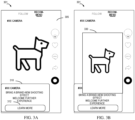
- the user interface 301 may be shown as a page or a page area of an application running on the terminal device 130.
- the application herein is an application that supports video playing, browsing, and/or sharing.
- some operations are described in conjunction with the terminal device 130, it should be understood that these operations may be implemented by an application running on the terminal device 130.
- the pages shown in the drawings are only examples, and there may actually be various page designs. Each graphical element in the page may have a different arrangement and a different visual representation, one or more of the elements may be omitted or replaced, and there may also be one or more other elements.
- the embodiments of the disclosure are not limited in this respect.
- a target video 305 associated with a recommended object is played in the user interface 301.
- the play of the target video 305 may be based on a trigger action of the user or any other appropriate action.
- an entry card when playing the target video, an entry card may be superimposed and presented on the target video, and the entry card indicates an access entry to the recommended object. Through the access entry, a jump can be made from a play page of the target video 305 to a page related to the recommended object.
- the target video and the entry card may be presented in different display layers, and the display layer of the entry card (sometimes also referred to as a floating layer, a superimposing layer, or a sticker layer) may be superimposed on the display layer of the target video to facilitate user operation.
- an entry card 310 is superimposed and presented on the target video 305, and the entry card 310 includes an access entry 312 to the recommended object.
- the entry card 310 includes an access entry 312 to the recommended object.
- a jump can be made to a detail page related to the recommended object.
- the specific trigger manner and trigger position may be configured based on the actual application.
- the presentation timing, presentation manner, and presentation position of the entry card may be configured according to the actual application. The embodiments of the disclosure are not limited in this respect.
- the terminal device 130 in response to a play progress of the target video reaching a predetermined time point, superimposes and presents, on the target video, a plurality of images corresponding to a plurality of time points of the target video, the plurality of images being associated with the recommended object.
- the target video is played for a certain period of time, more image information associated with the recommended object related to the target video is superimposed and presented on the target video.
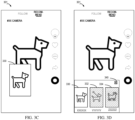
- FIG. 3D after the target video 305 is played to a predetermined time point, a plurality of images 330, 332, and 334 are superimposed and presented on the target video 305. It should be noted that although a specific number of images are shown, the number and display position of the images may be selected and configured as needed in specific applications.
- annotation information respectively associated with the plurality of images may also be superimposed and presented on the target video, and the annotation information is used to describe the recommended object.
- Such graphic and text materials can provide more information about the recommended object, allowing users to obtain richer information.
- the terminal device 130 in response to the play progress of the target video reaching a first time point of the plurality of time points, highlights a first image corresponding to the first time point in the plurality of images, and non-highlights other images in the plurality of images except for the first image.
- the corresponding images can be highlighted respectively at the corresponding time points.
- "highlighting" a specific image means that the specific image is more prominently displayed in a display manner different from other images.
- the highlighting manner may, for example, superimpose a shadow on other images but not on the current image, or enlarge the current image, make the brightness of the current image brighter, superimpose other visual elements, and the like.
- the embodiments of the disclosure do not further limit the specific highlighting manner.
- the image corresponding to each time point may be highlighted for a period of time, or may be highlighted until the image of the next time point is to be highlighted.
- the highlighting in response to the play progress of the target video reaching a second time point after the first time point, the highlighting can be switched from the first image to a second image corresponding to the second time point in the plurality of images, and other images in the plurality of images except for the second image are not highlighted. That is, as the target video is played, the image to be highlighted is switched one by one. In this way, the play of the target video and the graphic and text information to be highlighted at each time point can be linked and presented to the user
- the plurality of images may be superimposed and presented on the target video in an order of the plurality of time points.
- the images corresponding to each time point can be switched and highlighted in sequence (for example, from left to right or from top to bottom), and the images of other time points are not highlighted but can be visible to the user
- the highlighting manner is to make the image 330 highlighted, while the other images 332 and 334 are superimposed with a shadow.
- the highlighting is switched from the image 330 to the image 332, while the images 330 and 334 will be superimposed with a shadow at this time to achieve the purpose of weakened display.
- the highlighting is switched from the image 330 to the image 334, while the images 330 and 332 will be superimposed with a shadow at this time.
- the highlighting manner makes it easier for the user to notice the image associated with the current video play progress, and enables the user to obtain more information associated with the recommended object from the image (and possibly also from the corresponding text information).
- the user can still notice that there may be some important information related to the recommended object in the future. Therefore, the user may be more willing to continue watching the video, or quickly determine whether they are interested in the object.
- the plurality of images, which time points in the target video are respectively associated with the plurality of images, and at which predetermined time point the plurality of images are superimposed and presented may be configured by a provider of the target video.
- Such configuration may be saved as configuration information of the target video, and the configuration information indicates that the plurality of images is respectively associated with the plurality of time points of the target video.
- the provider of the target video may define, as needed, information associated with the recommended object that is expected to be enhanced and displayed at different time points of the target video.
- the configuration information may be used to configure superimposing and presenting the plurality of images on the target video and highlighting the plurality of images respectively when the play progress of the target video reaches the plurality of time points.
- the plurality of images superimposed and presented on the target video will replace an entry card previously superimposed and presented on the target video.
- the plurality of images 330, 332, and 334 in FIG. 3D replace the entry card 310 shown in FIG. 3A .
- the entry card and the plurality of images may also be presented simultaneously.
- the plurality of time points may include the predetermined time point that triggers the superimposing and presenting.
- one of the plurality of images also corresponds to the predetermined time point. In this way, when the target video is played to the predetermined time point, not only the plurality of images is superimposed on the target video, but also the image corresponding to the predetermined time point in the plurality of images is highlighted, so that the user can notice more information related to the recommended object at this time point.
- a predetermined image corresponding to the predetermined time point in the plurality of images may match a video frame of the target video at the predetermined time point.
- the terminal device 130 may present a video screenshot animation indicating that the video frame of the target video at the predetermined time point is captured as a predetermined image corresponding to the predetermined time point.
- a capture effect can make it easier for the user to notice the information at the predetermined time point, and make it easier for the user to be guided and understand the information associated with the recommended object that can be expressed by the plurality of superimposed and presented images.
- the video screenshot animation may be presented as an "instant camera" animation effect to achieve a richer visual browsing experience.
- the plurality of images is superimposed and presented at predetermined positions of a play area of the target video. Further, in response to the play progress of the target video reaching the predetermined time point, the terminal device 130 may move a predetermined image corresponding to the predetermined time point from a center position of the play area to the predetermined position. Such a moving effect can draw the attention of user to the plurality of images to be presented, so that the user can obtain more information associated with the recommended object from these images.
- the video frame at the predetermined time point is captured as a predetermined image 330 corresponding to the predetermined time point.
- the predetermined image 330 may be moved from the center of the play area of the target video 305 to an area to be presented, for example, the lower left corner of the play area, as shown in FIG. 3C .
- the predetermined image 330 may be reduced until it conforms to the display size shown in FIG. 3D . In this process, the attention of user can be guided to the set of a plurality of images shown in FIG. 3D .
- the plurality of images may be superimposed and presented on the target video in a consistent display manner. At this time, there may be no difference between highlighting and non-highlighting in the plurality of images, and the user can notice the plurality of images at one time. As shown in FIG. 3F , after the plurality of images 330, 332, and 334 are respectively highlighted sequentially, the presentation manners of these images are consistent, for example, none of them are superimposed with a shadow.
- a close control may also be provided, such as the close control 340 shown in FIG. 3D to FIG. 3F .
- the user may choose to close the superimposing and presenting of these images (and associated text) as needed.
- the superimposing and presenting of the plurality of images may be cancelled.
- the entry card may continue to be presented, such as the entry card 310 shown in FIG. 3A , or the entry card may no longer be presented.
- the embodiments of the disclosure are not limited in this respect.
- the user may be allowed to select a corresponding image to jump the target video to a corresponding play progress. For example, in response to detecting a selection operation on an image in the plurality of images, the play progress of the target video is switched to the time point corresponding to the selected image.
- all or part of the presentation area of the plurality of images may be set to be capable of triggering a detail page related to the recommended object. In this way, if the user is interested in the recommended object during the play of the target video, they can jump from the current page to the detail page related to the recommended object by triggering or clicking all or part of the presentation area.
- FIG. 4 shows a schematic block diagram of an apparatus 400 for content interaction according to some embodiments of the disclosure.
- the apparatus 400 may be implemented as or included in the terminal device 130 and/or the content recommendation platform 110.
- Each module/component in the apparatus 400 may be implemented by hardware, software, firmware, or any combination thereof.
- the apparatus 400 includes a video playing module 410 configured to play a target video associated with a recommended object.
- the apparatus 400 also includes an image superimposing module 420 configured to, in response to a play progress of the target video reaching a predetermined time point, superimpose and present, on the target video, a plurality of images corresponding to a plurality of time points of the target video, the plurality of images being associated with the recommended object.
- the apparatus 400 also includes a highlighting module 430 configured to, in response to the play progress of the target video reaching a first time point of the plurality of time points, highlight a first image corresponding to the first time point in the plurality of images, and non-highlight other images in the plurality of images except for the first image.
- the apparatus 400 further includes a highlighting switching module configured to: in response to the play progress of the target video reaching a second time point after the first time point, switch the highlighting from the first image to a second image corresponding to the second time point in the plurality of images, and non-highlight other images in the plurality of images except for the second image.
- a highlighting switching module configured to: in response to the play progress of the target video reaching a second time point after the first time point, switch the highlighting from the first image to a second image corresponding to the second time point in the plurality of images, and non-highlight other images in the plurality of images except for the second image.
- the plurality of time points comprises the predetermined time point, and a predetermined image corresponding to the predetermined time point in the plurality of images matches a video frame of the target video at the predetermined time point.
- the apparatus 400 further includes an animation presenting module configured to: in response to the play progress of the target video reaching the predetermined time point, present a video screenshot animation indicating that the video frame of the target video at the predetermined time point is captured as the predetermined image.
- the plurality of images is superimposed and presented at predetermined positions of a play area of the target video.
- the apparatus 400 further includes an image moving module configured to, in response to the play progress of the target video reaching the predetermined time point, move the predetermined image from a center position of the play area to the predetermined position.
- the plurality of images is superimposed and presented on the target video in an order of the plurality of time points.
- the image superimposing module 420 includes an annotation superimposing module configured to: superimpose and present, on the target video, the plurality of images and annotation information respectively associated with the plurality of images, and the annotation information is used to describe the recommended object.
- the apparatus 400 further includes a consistent displaying module configured to: in response to the play progress of the target video proceeding to behind a last time point of the plurality of time points, superimpose and present the plurality of images on the target video in a consistent display manner.
- configuration information of the target video indicates that the plurality of images is respectively associated with the plurality of time points of the target video.
- the configuration information is used to configure superimposing and presenting the plurality of images on the target video and highlighting the plurality of images respectively when the play progress of the target video reaches the plurality of time points.
- the image superimposing module 420 includes a replacement presenting module configured to: replace an entry card superimposed and presented on the target video with the plurality of images, and the entry card indicates an access entry to the recommended object.
- FIG. 5 shows a block diagram of an electronic device 500 in which one or more embodiments of the disclosure may be implemented. It should be understood that the electronic device 500 shown in FIG. 5 is merely an example, and should not constitute any limitation to the function and scope of the embodiments described herein. The electronic device 500 shown in FIG. 5 may be used to implement the terminal device 130, the content recommendation platform 110 or the content management system 120 in FIG. 1 , or the apparatus 400 in FIG. 4 .
- the electronic device 500 is in the form of a general-purpose computing device.
- Components of the electronic device 500 may include, but are not limited to, one or more processors or processing units 510, a memory 520, a storage device 530, one or more communication units 540, one or more input devices 550, and one or more output devices 560.
- the processing unit 510 may be a physical or virtual processor and can execute various processes according to a program stored in the memory 520. In a multi-processor system, multiple processing units execute computer-executable instructions in parallel to improve the parallel processing capability of the electronic device 500.
- the electronic device 500 usually includes a plurality of computer storage media. Such media may be any available media accessible by the electronic device 500, including but not limited to volatile and non-volatile media, removable and non-removable media.
- the memory 520 may be a volatile memory (for example, a register, a cache, a random-access memory (RAM)), a non-volatile memory (for example, a read-only memory (ROM), an electrically erasable programmable read-only memory (EEPROM), a flash memory), or some combination thereof.
- the storage device 530 may be a removable or non-removable medium, and may include a machine-readable medium, such as a flash drive, a disk, or any other medium, which can be used to store information and/or data (such as training data for training) and can be accessed within the electronic device 500.
- a machine-readable medium such as a flash drive, a disk, or any other medium, which can be used to store information and/or data (such as training data for training) and can be accessed within the electronic device 500.
- the electronic device 500 may further include additional removable/non-removable, volatile/non-volatile storage media.
- a disk drive for reading from or writing to a removable, non-volatile disk (such as a "floppy disk") and an optical disk drive for reading from or writing to a removable, non-volatile optical disk may be provided.
- each drive may be connected to a bus (not shown) via one or more data medium interfaces.
- the memory 520 may include a computer program product 525 having one or more program modules configured to perform various methods or actions of various embodiments of the disclosure.
- the communication unit 540 communicates with other electronic devices through a communication medium. Additionally, the functions of the components of the electronic device 500 may be implemented by a single computing cluster or multiple computing machines that can communicate through communication connections. Therefore, the electronic device 500 can operate in a networked environment using logical connections with one or more other servers, network personal computers (PCs), or another network node.
- PCs network personal computers
- the input device 550 may be one or more input devices, such as a mouse, a keyboard, a trackball, and the like.
- the output device 560 may be one or more output devices, such as a display, a speaker, a printer, and the like.
- the electronic device 500 may also communicate with one or more external devices (not shown) via the communication unit 540 as needed, such as storage devices, display devices, and the like, communicate with one or more devices that enable users to interact with the electronic device 500, or communicate with any device (such as a network card, a modem, etc.) that enables the electronic device 500 to communicate with one or more other electronic devices. Such communication may be performed via an input/output (I/O) interface (not shown).
- I/O input/output
- a computer-readable storage medium having stored thereon computer-executable instructions, where the computer-executable instructions are executed by a processor to implement the method described above.
- a computer program product that is tangibly stored on a non-transitory computer-readable medium and includes computer-executable instructions, which are executed by a processor to implement the method described above.
- These computer-readable program instructions may be provided to a processing unit of a general-purpose computer, a special-purpose computer, or another programmable data processing apparatus to produce a machine, such that when the instructions are executed by the processing unit of the computer or another programmable data processing apparatus, an apparatus for implementing the functions/actions specified in one or more blocks in the flowcharts and/or block diagrams is created.
- These computer-readable program instructions may also be stored in a computer-readable storage medium, and these instructions enable a computer, a programmable data processing apparatus, and/or another device to work in a specific manner. Therefore, a computer-readable medium storing the instructions includes a product manufactured, which includes instructions for implementing various aspects of the functions/actions specified in one or more blocks in the flowcharts and/or block diagrams.
- the computer-readable program instructions may be loaded onto a computer, another programmable data processing apparatus, or another device, so that a series of operation steps are performed on the computer, another programmable data processing apparatus, or another device, to produce a computer-implemented process, such that the instructions executed on the computer, another programmable data processing apparatus, or another device implement the functions/actions specified in one or more blocks in the flowcharts and/or block diagrams.
- each block in the flowchart or block diagram may represent a module, program segment, or part of an instruction, and the module, program segment, or part of an instruction contains one or more executable instructions for implementing the specified logical functions.
- the functions marked in the blocks may also occur in an order different from that marked in the accompanying drawings. For example, two consecutive blocks can actually be executed substantially in parallel, or they can sometimes be executed in the reverse order, depending on the functions involved.
- each block in the block diagram and/or the flowchart, and a combination of blocks in the block diagram and/or the flowchart may be implemented by a dedicated hardware-based system that executes specified functions or actions, or may be implemented by a combination of dedicated hardware and computer instructions.
Landscapes
- Engineering & Computer Science (AREA)
- Theoretical Computer Science (AREA)
- Physics & Mathematics (AREA)
- General Physics & Mathematics (AREA)
- Multimedia (AREA)
- Software Systems (AREA)
- Computer Vision & Pattern Recognition (AREA)
- Databases & Information Systems (AREA)
- Evolutionary Computation (AREA)
- Signal Processing (AREA)
- Artificial Intelligence (AREA)
- Data Mining & Analysis (AREA)
- General Engineering & Computer Science (AREA)
- Computing Systems (AREA)
- Medical Informatics (AREA)
- Marketing (AREA)
- Mathematical Physics (AREA)
- Health & Medical Sciences (AREA)
- Computational Linguistics (AREA)
- General Health & Medical Sciences (AREA)
- Business, Economics & Management (AREA)
- Life Sciences & Earth Sciences (AREA)
- Biomedical Technology (AREA)
- Biophysics (AREA)
- Molecular Biology (AREA)
- User Interface Of Digital Computer (AREA)
Applications Claiming Priority (1)
| Application Number | Priority Date | Filing Date | Title |
|---|---|---|---|
| CN202311501416.7A CN117556135B (zh) | 2023-11-10 | 2023-11-10 | 用于内容交互的方法、装置、设备和存储介质 |
Publications (1)
| Publication Number | Publication Date |
|---|---|
| EP4554232A1 true EP4554232A1 (de) | 2025-05-14 |
Family
ID=89819659
Family Applications (1)
| Application Number | Title | Priority Date | Filing Date |
|---|---|---|---|
| EP24211580.6A Pending EP4554232A1 (de) | 2023-11-10 | 2024-11-07 | Verfahren, vorrichtung, vorrichtung und speichermedium zur inhaltsinteraktion |
Country Status (3)
| Country | Link |
|---|---|
| US (1) | US20250157494A1 (de) |
| EP (1) | EP4554232A1 (de) |
| CN (1) | CN117556135B (de) |
Citations (6)
| Publication number | Priority date | Publication date | Assignee | Title |
|---|---|---|---|---|
| US20160239198A1 (en) * | 2015-01-05 | 2016-08-18 | Sony Corporation | Integrated multi-platform user interface/user experience |
| US9769544B1 (en) * | 2007-12-10 | 2017-09-19 | Google Inc. | Presenting content with video content based on time |
| US20220053233A1 (en) * | 2020-08-14 | 2022-02-17 | Global Sports & Entertainment Marketing, LLC | Interactive video overlay |
| CN114511359A (zh) * | 2022-02-17 | 2022-05-17 | 北京优酷科技有限公司 | 显示方法、装置、设备及介质 |
| CN114971386A (zh) * | 2022-06-17 | 2022-08-30 | 北京有竹居网络技术有限公司 | 用于转化评估的方法、装置、设备和存储介质 |
| US20230244362A1 (en) * | 2020-07-06 | 2023-08-03 | Beijing Bytedance Network Technology Co., Ltd. | Display method, apparatus, device and storage medium |
Family Cites Families (15)
| Publication number | Priority date | Publication date | Assignee | Title |
|---|---|---|---|---|
| KR101396998B1 (ko) * | 2007-08-29 | 2014-05-20 | 엘지전자 주식회사 | 영상기기 및 이 영상기기에서 녹화물을 디스플레이하는방법 |
| KR20100028289A (ko) * | 2008-09-04 | 2010-03-12 | 엘지전자 주식회사 | 영상표시기기에서 영상 정보 디스플레이 장치 및 방법 |
| KR102551550B1 (ko) * | 2018-04-20 | 2023-07-06 | 삼성전자주식회사 | 오브젝트에 대한 정보를 검색하기 위한 전자 장치 및 이의 제어 방법 |
| CN108769745A (zh) * | 2018-06-29 | 2018-11-06 | 百度在线网络技术(北京)有限公司 | 视频播放方法和装置 |
| CN112752127B (zh) * | 2019-10-30 | 2022-07-01 | 腾讯科技(深圳)有限公司 | 视频播放位置的定位方法和装置、存储介质及电子装置 |
| CN111541938B (zh) * | 2020-04-30 | 2023-04-07 | 维沃移动通信有限公司 | 视频生成方法、装置及电子设备 |
| CN112188255A (zh) * | 2020-09-30 | 2021-01-05 | 北京字跳网络技术有限公司 | 基于视频的交互、视频处理方法、装置、设备及存储介质 |
| CN112235641B (zh) * | 2020-10-14 | 2022-09-16 | 北京百度网讯科技有限公司 | 一种视频推荐方法、装置、设备和介质 |
| US12418695B2 (en) * | 2020-12-31 | 2025-09-16 | Darabase Canada Limited | Audio synchronisation |
| KR20230022588A (ko) * | 2021-08-09 | 2023-02-16 | 라인플러스 주식회사 | 영상 콘텐츠 시청을 지원하는 방법 및 장치 |
| CN115878838B (zh) * | 2021-09-27 | 2025-09-12 | 北京有竹居网络技术有限公司 | 基于视频的信息展示方法、装置、电子设备及存储介质 |
| CN115967822B (zh) * | 2021-10-12 | 2026-03-31 | 北京字跳网络技术有限公司 | 信息显示方法、装置、电子设备和存储介质 |
| US12154336B2 (en) * | 2022-06-13 | 2024-11-26 | Motorola Solutions, Inc. | Indicating that captured data is associated with an uncompleted task of an incident |
| CN116992073B (zh) * | 2023-09-28 | 2023-12-08 | 北京小糖科技有限责任公司 | 视频片段排序方法、装置、设备及存储介质 |
| CN117014687B (zh) * | 2023-09-28 | 2023-12-08 | 北京小糖科技有限责任公司 | 基于用户播放画像的视频定位播放方法、装置 |
-
2023
- 2023-11-10 CN CN202311501416.7A patent/CN117556135B/zh active Active
-
2024
- 2024-11-07 EP EP24211580.6A patent/EP4554232A1/de active Pending
- 2024-11-08 US US18/942,038 patent/US20250157494A1/en active Pending
Patent Citations (6)
| Publication number | Priority date | Publication date | Assignee | Title |
|---|---|---|---|---|
| US9769544B1 (en) * | 2007-12-10 | 2017-09-19 | Google Inc. | Presenting content with video content based on time |
| US20160239198A1 (en) * | 2015-01-05 | 2016-08-18 | Sony Corporation | Integrated multi-platform user interface/user experience |
| US20230244362A1 (en) * | 2020-07-06 | 2023-08-03 | Beijing Bytedance Network Technology Co., Ltd. | Display method, apparatus, device and storage medium |
| US20220053233A1 (en) * | 2020-08-14 | 2022-02-17 | Global Sports & Entertainment Marketing, LLC | Interactive video overlay |
| CN114511359A (zh) * | 2022-02-17 | 2022-05-17 | 北京优酷科技有限公司 | 显示方法、装置、设备及介质 |
| CN114971386A (zh) * | 2022-06-17 | 2022-08-30 | 北京有竹居网络技术有限公司 | 用于转化评估的方法、装置、设备和存储介质 |
Also Published As
| Publication number | Publication date |
|---|---|
| US20250157494A1 (en) | 2025-05-15 |
| CN117556135B (zh) | 2026-04-28 |
| CN117556135A (zh) | 2024-02-13 |
Similar Documents
| Publication | Publication Date | Title |
|---|---|---|
| US10356466B1 (en) | Providing selectable content creator controls in conjunction with sponsored media content items | |
| US9575934B2 (en) | Systems and methods for adaptive content distribution | |
| CN110765379B (zh) | 加载资源文件的方法、装置、计算机设备及存储介质 | |
| CN113608737A (zh) | 页面生成方法、装置、设备及介质 | |
| CN110780939B (zh) | 加载资源文件的方法、装置、计算机设备及存储介质 | |
| CN106503059B (zh) | 展示页面推送方法及装置 | |
| US12554379B2 (en) | Method, apparatus, device and storage medium for displaying privacy indications for navigation tabs | |
| US20250254399A1 (en) | Method, apparatus, device, and storage medium for content interaction | |
| US20260107036A1 (en) | Method for live streaming interactions, apparatus, device and storage medium | |
| WO2022252513A1 (zh) | 目标展示方法及装置 | |
| WO2026012403A1 (zh) | 用于界面交互方法、装置、设备和存储介质 | |
| US20230388266A1 (en) | Method, apparatus, device and storage medium for reposting | |
| WO2026046251A1 (zh) | 用于信息搜索方法、装置、设备和存储介质 | |
| EP4554232A1 (de) | Verfahren, vorrichtung, vorrichtung und speichermedium zur inhaltsinteraktion | |
| WO2025222893A1 (zh) | 用于多媒体内容控制的方法、装置、设备、介质和产品 | |
| CN118673245A (zh) | 管理应用页面的方法、装置、设备、介质和和程序产品 | |
| CN119415002A (zh) | 图像处理的方法、装置、设备和存储介质 | |
| WO2025039967A1 (zh) | 用于信息处理的方法、装置、设备和存储介质 | |
| EP4738078A1 (de) | Verfahren und vorrichtung zum suchen, vorrichtung und speichermedium | |
| CN118590701A (zh) | 用于视频交互的方法、装置、设备和存储介质 | |
| JP2026506244A (ja) | 情報提示のための方法、装置、デバイス及び記憶媒体 | |
| US20260016933A1 (en) | Interface interaction | |
| US20250370600A1 (en) | Method, apparatus, device, and storage medium for interface interaction | |
| CN115239384B (zh) | 一种媒体信息检测方法、装置及电子设备 | |
| US20250306725A1 (en) | Method, apparatus, device and storage medium for content presentation |
Legal Events
| Date | Code | Title | Description |
|---|---|---|---|
| PUAI | Public reference made under article 153(3) epc to a published international application that has entered the european phase |
Free format text: ORIGINAL CODE: 0009012 |
|
| STAA | Information on the status of an ep patent application or granted ep patent |
Free format text: STATUS: REQUEST FOR EXAMINATION WAS MADE |
|
| 17P | Request for examination filed |
Effective date: 20241107 |
|
| AK | Designated contracting states |
Kind code of ref document: A1 Designated state(s): AL AT BE BG CH CY CZ DE DK EE ES FI FR GB GR HR HU IE IS IT LI LT LU LV MC ME MK MT NL NO PL PT RO RS SE SI SK SM TR |