EP4553151A1 - Verfahren zur kultivierung mesenchymaler stammzellen - Google Patents
Verfahren zur kultivierung mesenchymaler stammzellen Download PDFInfo
- Publication number
- EP4553151A1 EP4553151A1 EP23924256.3A EP23924256A EP4553151A1 EP 4553151 A1 EP4553151 A1 EP 4553151A1 EP 23924256 A EP23924256 A EP 23924256A EP 4553151 A1 EP4553151 A1 EP 4553151A1
- Authority
- EP
- European Patent Office
- Prior art keywords
- mesenchymal stem
- culture
- hair
- stem cells
- culturing
- Prior art date
- Legal status (The legal status is an assumption and is not a legal conclusion. Google has not performed a legal analysis and makes no representation as to the accuracy of the status listed.)
- Withdrawn
Links
Images



Classifications
-
- C—CHEMISTRY; METALLURGY
- C12—BIOCHEMISTRY; BEER; SPIRITS; WINE; VINEGAR; MICROBIOLOGY; ENZYMOLOGY; MUTATION OR GENETIC ENGINEERING
- C12N—MICROORGANISMS OR ENZYMES; COMPOSITIONS THEREOF; PROPAGATING, PRESERVING, OR MAINTAINING MICROORGANISMS; MUTATION OR GENETIC ENGINEERING; CULTURE MEDIA
- C12N5/00—Undifferentiated human, animal or plant cells, e.g. cell lines; Tissues; Cultivation or maintenance thereof; Culture media therefor
- C12N5/06—Animal cells or tissues; Human cells or tissues
- C12N5/0602—Vertebrate cells
- C12N5/0652—Cells of skeletal and connective tissues; Mesenchyme
- C12N5/0662—Stem cells
- C12N5/0666—Mesenchymal stem cells from hair follicles
-
- C—CHEMISTRY; METALLURGY
- C12—BIOCHEMISTRY; BEER; SPIRITS; WINE; VINEGAR; MICROBIOLOGY; ENZYMOLOGY; MUTATION OR GENETIC ENGINEERING
- C12N—MICROORGANISMS OR ENZYMES; COMPOSITIONS THEREOF; PROPAGATING, PRESERVING, OR MAINTAINING MICROORGANISMS; MUTATION OR GENETIC ENGINEERING; CULTURE MEDIA
- C12N5/00—Undifferentiated human, animal or plant cells, e.g. cell lines; Tissues; Cultivation or maintenance thereof; Culture media therefor
- C12N5/06—Animal cells or tissues; Human cells or tissues
-
- C—CHEMISTRY; METALLURGY
- C12—BIOCHEMISTRY; BEER; SPIRITS; WINE; VINEGAR; MICROBIOLOGY; ENZYMOLOGY; MUTATION OR GENETIC ENGINEERING
- C12N—MICROORGANISMS OR ENZYMES; COMPOSITIONS THEREOF; PROPAGATING, PRESERVING, OR MAINTAINING MICROORGANISMS; MUTATION OR GENETIC ENGINEERING; CULTURE MEDIA
- C12N5/00—Undifferentiated human, animal or plant cells, e.g. cell lines; Tissues; Cultivation or maintenance thereof; Culture media therefor
- C12N5/06—Animal cells or tissues; Human cells or tissues
- C12N5/0602—Vertebrate cells
- C12N5/0652—Cells of skeletal and connective tissues; Mesenchyme
- C12N5/0653—Adipocytes; Adipose tissue
-
- C—CHEMISTRY; METALLURGY
- C12—BIOCHEMISTRY; BEER; SPIRITS; WINE; VINEGAR; MICROBIOLOGY; ENZYMOLOGY; MUTATION OR GENETIC ENGINEERING
- C12N—MICROORGANISMS OR ENZYMES; COMPOSITIONS THEREOF; PROPAGATING, PRESERVING, OR MAINTAINING MICROORGANISMS; MUTATION OR GENETIC ENGINEERING; CULTURE MEDIA
- C12N5/00—Undifferentiated human, animal or plant cells, e.g. cell lines; Tissues; Cultivation or maintenance thereof; Culture media therefor
- C12N5/06—Animal cells or tissues; Human cells or tissues
- C12N5/0602—Vertebrate cells
- C12N5/0652—Cells of skeletal and connective tissues; Mesenchyme
- C12N5/0654—Osteocytes, Osteoblasts, Odontocytes; Bones, Teeth
-
- C—CHEMISTRY; METALLURGY
- C12—BIOCHEMISTRY; BEER; SPIRITS; WINE; VINEGAR; MICROBIOLOGY; ENZYMOLOGY; MUTATION OR GENETIC ENGINEERING
- C12N—MICROORGANISMS OR ENZYMES; COMPOSITIONS THEREOF; PROPAGATING, PRESERVING, OR MAINTAINING MICROORGANISMS; MUTATION OR GENETIC ENGINEERING; CULTURE MEDIA
- C12N5/00—Undifferentiated human, animal or plant cells, e.g. cell lines; Tissues; Cultivation or maintenance thereof; Culture media therefor
- C12N5/06—Animal cells or tissues; Human cells or tissues
- C12N5/0602—Vertebrate cells
- C12N5/0652—Cells of skeletal and connective tissues; Mesenchyme
- C12N5/0655—Chondrocytes; Cartilage
-
- C—CHEMISTRY; METALLURGY
- C12—BIOCHEMISTRY; BEER; SPIRITS; WINE; VINEGAR; MICROBIOLOGY; ENZYMOLOGY; MUTATION OR GENETIC ENGINEERING
- C12N—MICROORGANISMS OR ENZYMES; COMPOSITIONS THEREOF; PROPAGATING, PRESERVING, OR MAINTAINING MICROORGANISMS; MUTATION OR GENETIC ENGINEERING; CULTURE MEDIA
- C12N5/00—Undifferentiated human, animal or plant cells, e.g. cell lines; Tissues; Cultivation or maintenance thereof; Culture media therefor
- C12N5/06—Animal cells or tissues; Human cells or tissues
- C12N5/0602—Vertebrate cells
- C12N5/0652—Cells of skeletal and connective tissues; Mesenchyme
- C12N5/0662—Stem cells
-
- C—CHEMISTRY; METALLURGY
- C12—BIOCHEMISTRY; BEER; SPIRITS; WINE; VINEGAR; MICROBIOLOGY; ENZYMOLOGY; MUTATION OR GENETIC ENGINEERING
- C12N—MICROORGANISMS OR ENZYMES; COMPOSITIONS THEREOF; PROPAGATING, PRESERVING, OR MAINTAINING MICROORGANISMS; MUTATION OR GENETIC ENGINEERING; CULTURE MEDIA
- C12N5/00—Undifferentiated human, animal or plant cells, e.g. cell lines; Tissues; Cultivation or maintenance thereof; Culture media therefor
- C12N5/06—Animal cells or tissues; Human cells or tissues
- C12N5/0602—Vertebrate cells
- C12N5/0652—Cells of skeletal and connective tissues; Mesenchyme
- C12N5/0662—Stem cells
- C12N5/0667—Adipose-derived stem cells [ADSC]; Adipose stromal stem cells
-
- C—CHEMISTRY; METALLURGY
- C12—BIOCHEMISTRY; BEER; SPIRITS; WINE; VINEGAR; MICROBIOLOGY; ENZYMOLOGY; MUTATION OR GENETIC ENGINEERING
- C12N—MICROORGANISMS OR ENZYMES; COMPOSITIONS THEREOF; PROPAGATING, PRESERVING, OR MAINTAINING MICROORGANISMS; MUTATION OR GENETIC ENGINEERING; CULTURE MEDIA
- C12N5/00—Undifferentiated human, animal or plant cells, e.g. cell lines; Tissues; Cultivation or maintenance thereof; Culture media therefor
- C12N5/06—Animal cells or tissues; Human cells or tissues
- C12N5/0602—Vertebrate cells
- C12N5/0652—Cells of skeletal and connective tissues; Mesenchyme
- C12N5/0662—Stem cells
- C12N5/0668—Mesenchymal stem cells from other natural sources
-
- C—CHEMISTRY; METALLURGY
- C12—BIOCHEMISTRY; BEER; SPIRITS; WINE; VINEGAR; MICROBIOLOGY; ENZYMOLOGY; MUTATION OR GENETIC ENGINEERING
- C12N—MICROORGANISMS OR ENZYMES; COMPOSITIONS THEREOF; PROPAGATING, PRESERVING, OR MAINTAINING MICROORGANISMS; MUTATION OR GENETIC ENGINEERING; CULTURE MEDIA
- C12N9/00—Enzymes; Proenzymes; Compositions thereof; Processes for preparing, activating, inhibiting, separating or purifying enzymes
- C12N9/14—Hydrolases (3)
- C12N9/48—Hydrolases (3) acting on peptide bonds (3.4)
- C12N9/50—Proteinases, e.g. Endopeptidases (3.4.21-3.4.25)
- C12N9/64—Proteinases, e.g. Endopeptidases (3.4.21-3.4.25) derived from animal tissue
- C12N9/6421—Proteinases, e.g. Endopeptidases (3.4.21-3.4.25) derived from animal tissue from mammals
- C12N9/6489—Metalloendopeptidases (3.4.24)
-
- C—CHEMISTRY; METALLURGY
- C12—BIOCHEMISTRY; BEER; SPIRITS; WINE; VINEGAR; MICROBIOLOGY; ENZYMOLOGY; MUTATION OR GENETIC ENGINEERING
- C12N—MICROORGANISMS OR ENZYMES; COMPOSITIONS THEREOF; PROPAGATING, PRESERVING, OR MAINTAINING MICROORGANISMS; MUTATION OR GENETIC ENGINEERING; CULTURE MEDIA
- C12N2500/00—Specific components of cell culture medium
- C12N2500/05—Inorganic components
- C12N2500/10—Metals; Metal chelators
- C12N2500/20—Transition metals
- C12N2500/24—Iron; Fe chelators; Transferrin
- C12N2500/25—Insulin-transferrin; Insulin-transferrin-selenium
-
- C—CHEMISTRY; METALLURGY
- C12—BIOCHEMISTRY; BEER; SPIRITS; WINE; VINEGAR; MICROBIOLOGY; ENZYMOLOGY; MUTATION OR GENETIC ENGINEERING
- C12N—MICROORGANISMS OR ENZYMES; COMPOSITIONS THEREOF; PROPAGATING, PRESERVING, OR MAINTAINING MICROORGANISMS; MUTATION OR GENETIC ENGINEERING; CULTURE MEDIA
- C12N2500/00—Specific components of cell culture medium
- C12N2500/30—Organic components
- C12N2500/38—Vitamins
-
- C—CHEMISTRY; METALLURGY
- C12—BIOCHEMISTRY; BEER; SPIRITS; WINE; VINEGAR; MICROBIOLOGY; ENZYMOLOGY; MUTATION OR GENETIC ENGINEERING
- C12N—MICROORGANISMS OR ENZYMES; COMPOSITIONS THEREOF; PROPAGATING, PRESERVING, OR MAINTAINING MICROORGANISMS; MUTATION OR GENETIC ENGINEERING; CULTURE MEDIA
- C12N2501/00—Active agents used in cell culture processes, e.g. differentation
- C12N2501/10—Growth factors
- C12N2501/11—Epidermal growth factor [EGF]
-
- C—CHEMISTRY; METALLURGY
- C12—BIOCHEMISTRY; BEER; SPIRITS; WINE; VINEGAR; MICROBIOLOGY; ENZYMOLOGY; MUTATION OR GENETIC ENGINEERING
- C12N—MICROORGANISMS OR ENZYMES; COMPOSITIONS THEREOF; PROPAGATING, PRESERVING, OR MAINTAINING MICROORGANISMS; MUTATION OR GENETIC ENGINEERING; CULTURE MEDIA
- C12N2501/00—Active agents used in cell culture processes, e.g. differentation
- C12N2501/10—Growth factors
- C12N2501/115—Basic fibroblast growth factor (bFGF, FGF-2)
-
- C—CHEMISTRY; METALLURGY
- C12—BIOCHEMISTRY; BEER; SPIRITS; WINE; VINEGAR; MICROBIOLOGY; ENZYMOLOGY; MUTATION OR GENETIC ENGINEERING
- C12N—MICROORGANISMS OR ENZYMES; COMPOSITIONS THEREOF; PROPAGATING, PRESERVING, OR MAINTAINING MICROORGANISMS; MUTATION OR GENETIC ENGINEERING; CULTURE MEDIA
- C12N2506/00—Differentiation of animal cells from one lineage to another; Differentiation of pluripotent cells
- C12N2506/13—Differentiation of animal cells from one lineage to another; Differentiation of pluripotent cells from connective tissue cells, from mesenchymal cells
- C12N2506/1346—Differentiation of animal cells from one lineage to another; Differentiation of pluripotent cells from connective tissue cells, from mesenchymal cells from mesenchymal stem cells
- C12N2506/1376—Differentiation of animal cells from one lineage to another; Differentiation of pluripotent cells from connective tissue cells, from mesenchymal cells from mesenchymal stem cells from mesenchymal stem cells derived from hair follicles
-
- C—CHEMISTRY; METALLURGY
- C12—BIOCHEMISTRY; BEER; SPIRITS; WINE; VINEGAR; MICROBIOLOGY; ENZYMOLOGY; MUTATION OR GENETIC ENGINEERING
- C12N—MICROORGANISMS OR ENZYMES; COMPOSITIONS THEREOF; PROPAGATING, PRESERVING, OR MAINTAINING MICROORGANISMS; MUTATION OR GENETIC ENGINEERING; CULTURE MEDIA
- C12N2533/00—Supports or coatings for cell culture, characterised by material
- C12N2533/50—Proteins
- C12N2533/52—Fibronectin; Laminin
Definitions
- the present invention relates to a method of culturing mesenchymal stem cells.
- Mesenchymal stem cells are also called mesenchymal stromal cells, and are one kind of somatic stem cells present in bone marrow, an adipose tissue, a placenta, an umbilical cord, an egg membrane, a hair follicle, and the like.
- Mesenchymal stem cells are pluripotent cells having a potential for differentiation into a bone, a cartilage, and adipocytes, and have a low risk of canceration. Therefore, mesenchymal stem cells have been studied as a source of cellular medicine, regenerative medicine, and the like to replace induced pluripotent stem cells.
- Mesenchymal stem cells are generally acquired from a tissue with an invasive method.
- bone marrow MSCs BM-MSCs
- AD-MSCs adipose MSCs
- Dermal papilla cells which are mesenchymal stem cells of a hair follicle, are acquired from an excised skin tissue.
- Patent Literature 1 discloses a method of separating and culturing mesenchymal stem cells by excising a hair bulb part from a removed hair and culturing the obtained hair in the bulge region on a Transwell membrane.
- Patent Literature 1 WO 2021/009246 A
- an object of the present invention is to provide a novel technique for easy culture of mesenchymal stem cells from a removed hair.
- the present invention that solves the above problem is a method of culturing mesenchymal stem cells, and the method includes a culture step of culturing a hair acquired by removal and including a hair bulb covered with a dermal sheath tissue in a culture solution.
- mesenchymal stem cells can be acquired by using a hair bulb portion of a removed hair.
- the culture sample can be easily acquired by hair pulling, which is a non-invasive method, and thus the burden on the donor individual at the time of acquiring the sample can be reduced.
- the mesenchymal stem cells are derived from the hair bulb.
- the mesenchymal stem cells can be efficiently obtained by proliferation of mesenchymal stem cells from the vicinity of the hair bulb.
- the culture step includes a static culture step of static-culturing the hair while entire replacement of a medium is not performed and the medium is replenished with a fresh medium.
- the static culture step the proliferation of mesenchymal stem cells from the hair can be promoted.
- a culture period in the static culture step is 6 days or more from a start of the static-culturing.
- the static culture period is set within the above range, the proliferation of mesenchymal stem cells after the static-culturing can be promoted.
- the method of culturing includes a step of bringing the hair that is acquired into contact with an antiseptic solution, before the culture step, for less than 1 minute before the culturing.
- the adhesion of the sample hair to a culture vessel material is improved, and the mesenchymal stem cells can be efficiently acquired from the vicinity of the hair bulb of the hair.
- the method of culturing includes a step of seeding one of the hair in one well in a culture vessel before the culture step.
- the present invention including the above step enables proliferation from one hair to a sufficient amount of mesenchymal stem cells.
- the method of culturing does not include a decomposition step of decomposing a constituent component of an extracellular matrix in the hair before the culture step.
- the decomposition step is a step of treating the hair with a collagenase.
- the mesenchymal stem cells can be efficiently acquired from the vicinity of the hair bulb of the hair, and the step can be further simpler.
- the mesenchymal stem cells are subjected to adherent culture in the culture step.
- the adherent culture is performed on a culture surface coated with laminin or a fragment of laminin.
- the culture solution contains L-ascorbic acid, selenium, transferrin, and insulin.
- the proliferation of mesenchymal stem cells can be efficiently performed by using the above culture solution.
- the culture solution contains a basic fibroblast growth factor (bFGF) and/or an epidermal growth factor (EGF).
- bFGF basic fibroblast growth factor
- EGF epidermal growth factor
- the proliferation of mesenchymal stem cells can be efficiently performed by using the above culture solution.
- the present invention relates to a method of producing mesenchymal stem cells, and this method includes the method of culturing mesenchymal stem cells.
- the present invention also relates to mesenchymal stem cells that are acquired with the method of culturing mesenchymal stem cells.
- the mesenchymal stem cells have a potential for differentiation into one kind or two or more kinds of cells selected from osteoblasts, adipocytes, and chondrocytes.
- the present invention relates to a method of producing differentiated cells, and the method includes the steps of obtaining a cell population containing mesenchymal stem cells with the method of culturing mesenchymal cells, and culturing the cell population containing the mesenchymal stem cells in a differentiation induction medium to obtain a cell population containing one kind or two or more kinds of differentiated cells selected from osteoblasts, adipocytes, and chondrocytes.
- the present invention also relates to differentiated cells that are produced with the method of producing differentiated cells.
- the present invention to solve the above problem is as follows.
- mesenchymal stem cells can be efficiently acquired from a hair acquired from any individual. Furthermore, differentiated cells such as adipocytes can be produced using the mesenchymal stem cells.
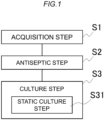
- the method according to Fig. 1 includes an acquisition step S1 of acquiring a hair including a hair bulb covered with a dermal sheath tissue from any individual, an antiseptic step S2 of disinfecting the obtained hair, and a culture step S3 of culturing the hair.
- hair bulb in the present invention refers to a bulged portion of a hair, and the portion is positioned in an inner deep part of the hair in the skin.
- a dermal papilla is present at the center of the hair bulb.
- Dermal papilla cells constituting the dermal papilla are known as a kind of mesenchymal stem cells.
- DS tissue in the present invention refers to a single layer or several layers of dermal tissue enveloping the outermost layer of a hair follicle, and the tissue is configured to surround an epithelial outer root sheath.
- the dermal sheath is connected to the dermal papilla at the lowermost end of the hair bulb part.
- the hair used in the present invention is acquired by removal from any individual, preferably a mammal (for example, human, mouse, monkey, cattle, pig, rat, or dog).
- a mammal for example, human, mouse, monkey, cattle, pig, rat, or dog.
- the hair is preferably acquired from a human.
- a sample can be acquired in which a dermal sheath tissue is adhered to a hair bulb portion. Because a hair available by the non-invasive method is used, the burden can be reduced at the time of collecting the sample from the donor individual.
- the individual (specifically, mammalian individual) from which a tissue for acquisition of the hair is collected is not particularly limited.
- the hair is preferably acquired from the donor or another person having the same genetic polymorphism correlated with drug sensitivity and the like as the donor.
- the hair is preferably acquired from the donor such as a patient, or from another person having the same or substantially the same HLA type as the donor.
- the risk of rejection is avoided, and therefore the obtained mesenchymal stem cells can be suitably used for regenerative medicine.
- the term "another person having substantially the same HLA type” means that the HLA types of the donor and another person match to such an extent that when the obtained mesenchymal stem cells are transplanted to the donor individual by using an immunosuppressive agent or the like, the transplanted cells can engraft.
- HLA for example, three gene loci of HLA-A, HLA-B, and HLA-DR
- the number of hairs removed in the present invention is to be at least one, and is preferably two or more, and more preferably five or more. Specifically, 1 to 10 hairs are preferably used. Then, the lower part of the hair collected from the donor individual is cut out to acquire a hair bulb part covered with a dermal sheath tissue.
- the hair including the hair bulb to be acquired preferably has a length of 0.3 to 5 mm.
- the present invention may include a step of excising a region to which an outer root sheath of the hair is adhered to acquire only the hair bulb part.
- a mode including the acquisition step S1 of acquiring a hair from a donor individual is exemplified, in the present invention, a mode is also preferable in which a hair acquired in advance by removal is optionally subjected to the following antiseptic step S2 and then the culture step S3 is performed.
- the acquired hair is brought into contact with an antiseptic solution before the culture step S3.
- the method of bringing the hair into contact with the antiseptic solution is not particularly limited, and immersing the hair in the antiseptic solution is preferable.
- the contact time with the antiseptic solution is preferably less than 1 minute, more preferably less than 30 seconds, still more preferably less than 10 seconds, and particularly preferably less than 5 seconds.
- the contact time with the antiseptic solution is set within the above range, damage to the hair is reduced, the adhesion of the hair to a culture vessel material is improved, and thus proliferation of the mesenchymal stem cells can be efficiently performed.
- the antiseptic solution used in the present invention is preferably a solution to which an antibiotic is added.
- One kind or two or more kinds of antibiotics are preferably used that are selected from cell wall synthesis inhibitors, protein synthesis inhibitors, and cell membrane function inhibitors. More preferably, one or more kinds of antibiotics are selected from each of cell wall synthesis inhibitors, protein synthesis inhibitors, and cell membrane function inhibitors.
- cell wall synthesis inhibitors include ⁇ -lactam antibiotics.
- ⁇ -lactam-based cell wall synthesis inhibitors include penicillin, ampicillin, and carbenicillin sodium, and in the present invention, penicillin is preferably used.
- Preferred examples of protein synthesis inhibitors include aminoglycoside antibiotics.
- aminoglycoside protein synthesis inhibitors include kanamycin, gentamicin, streptomycin, neomycin, hygromycin, and tobramycin, and in the present invention, streptomycin is preferably used.
- cell membrane function inhibitors include polyene antibiotics.
- polyene cell membrane function inhibitors include amphotericin B, nystatin, and natamycin, and in the present invention, amphotericin B is particularly preferably used.
- the antiseptic solution according to the present invention is preferably a solution containing penicillin, streptomycin, and amphotericin B as antibiotics.
- the culture step S3 is performed in which the acquired hair is cultured in a culture solution.
- mesenchymal stem cells are acquired from the hair bulb portion of the hair.
- a known medium used for culturing mesenchymal stem cells can be used, and suitable examples of the medium include a DMEM medium, a DMEM/F12 medium, Essential 8, AmnioMAX (trade mark) C-100, and StemPro MSC SFM.
- the culture solution used in the culture step S3 is preferably a medium containing L-ascorbic acid, selenium, transferrin, and insulin.
- a medium include Essential 8.
- An Essential 8 medium contains L-ascorbic acid, selenium, insulin, NaHCO 3 , transferrin, bFGF, and a TGF ⁇ family signaling pathway agonist (TGF ⁇ 1 or Nodal) as additives in a DMEM/F12 medium.
- the proliferation of mesenchymal stem cells can be efficiently performed by using such a culture solution.
- the culture solution used in the culture step S3 preferably contains a basic fibroblast growth factor (bFGF) and/or an epidermal growth factor (EGF).
- bFGF basic fibroblast growth factor
- EGF epidermal growth factor
- mesenchymal stem cells can be efficiently acquired while differentiation of the cells is suppressed.
- a basic fibroblast growth factor (bFGF) is contained, the adhesion of the mesenchymal stem cells obtained by proliferation can be improved.
- a first culture solution can be used that is a medium obtained by adding 5 to 15 ng/mL, more preferably 10 ng/mL of bFGF and 5 to 15 ng/mL, more preferably 10 ng/mL of EGF to Essential 8.
- the culture solution used in the culture step S3 is also preferably in a form in which a serum is contained.
- the serum is not particularly limited as long as it is derived from an animal, and is preferably a serum derived from a mammal.
- preferred examples of the serum include a fetal bovine serum and a human serum.
- the culture solution used in the culture step S3 preferably has a calcium concentration of 0.2 mM or more, more preferably 0.5 mM or more, preferably 0.8 mM or more, and more preferably 1.0 mM or more.
- the culture solution used in the culture step S3 can have a calcium concentration of 4.0 mM or less, 3.5 mM or less, or 3.0 mM or less.
- the calcium concentration of the culture solution used in the culture step S3 is preferably 0.2 to 4 mM, more preferably 0.5 to 3.5 mM, and still more preferably 1.0 to 3.5 mM.
- the medium having a calcium concentration described above is used, proliferation of cells other than mesenchymal stem cells, such as keratinocytes, can be suppressed.
- the hair is preferably subjected to adherent culture using a culture vessel to which cells can adhere.
- the culture vessel used for the adherent culture an appropriate culture vessel can be appropriately selected according to the culture scale, the culture conditions, and the culture period.
- the culture vessel adhesive to cells is, for example, a culture vessel having a surface artificially treated for the purpose of improving the adhesion to cells, specifically, a culture vessel having a treated surface or a culture vessel whose inside is coated with a coating agent.
- the hair is preferably cultured using a culture vessel coated with a coating agent.
- the coating agent examples include extracellular matrixes such as laminin, entactin, collagen, gelatin, vitronectin, Synthemax (Corning Incorporated), and Matrigel, and polymers such as polylysine and polyornithine.
- extracellular matrixes such as laminin, entactin, collagen, gelatin, vitronectin, Synthemax (Corning Incorporated), and Matrigel
- polymers such as polylysine and polyornithine.
- an extracellular matrix is preferably used, and laminin or a fragment of laminin is preferably used.
- laminin to be used examples include laminin ⁇ 5 ⁇ 1 ⁇ 1 (laminin 511), laminin ⁇ 5 ⁇ 2 ⁇ 1 (laminin 521), laminin ⁇ 4 ⁇ 1 ⁇ 1 (laminin 411), laminin ⁇ 2 ⁇ 1 ⁇ 1 (laminin 211), and laminin fragments thereof, and laminin 511 or laminin 521 is more preferably used.
- laminin and laminin fragments can also be used.
- the laminin or the laminin fragment preferably has an integrin binding site.
- the laminin fragment more preferably forms a heterotrimer.
- the type of integrin to which the laminin or the laminin fragment binds is preferably integrin ⁇ 6 ⁇ 1, integrin ⁇ 6 ⁇ 4, integrin ⁇ 3 ⁇ 1, or integrin ⁇ 7 ⁇ 1, and more preferably integrin ⁇ 6 ⁇ 1. If laminin or a laminin fragment is used that binds to integrin ⁇ 6 ⁇ 1, the proliferation of mesenchymal stem cells can be promoted.
- the laminin fragment having a binding activity to such integrin include a laminin fragment derived from at least one selected from laminin 511, laminin 521, laminin 411, and laminin 211, and the laminin fragment is more preferably derived from laminin 511 or laminin 521, and more preferably derived from laminin 511.
- Preferred examples of such a laminin fragment include an E8 fragment obtained by digesting laminin with elastase and a recombinant of an E8 fragment.
- laminin 511E8 is more preferably used.
- laminin 511E8 a commercially available product such as iMatrix-511 (manufactured by Nippi, Incorporated) can be used.
- Examples of the specific form of the culture vessel include forms of a flask, a tissue culture flask, a culture dish (dish), a tissue culture dish, a multi-dish, a microplate, a microwell plate, a multi-plate, a multi-well plate, a chamber slide, a petri dish, a tube, a tray, a culture bag, a microcarrier, a bead, a stack plate, a spinner flask, and a roller bottle.
- the culture vessel to be used is preferably a 12-well plate or a 24-well plate for cell culture, and more preferably a 24-well plate.
- the hair is preferably seeded in a plate so that one hair is seeded in one well.
- a sufficient amount of mesenchymal stem cells can be efficiently obtained by proliferation from one hair (one sample). Therefore, there is no need to seed a plurality of hairs in one well, and thus there is an advantage that preparation is sufficient with a smaller amount of hairs than in the existing method of Patent Literature 1.
- the amount of the culture solution at the time of seeding is preferably an amount such that the entire tissue of the cut-out hair is immersed and the liquid level is 1 mm or less above the entire tissue. If the medium at the time of seeding is set in an amount described above, the hair can be adhered to the plate.
- the medium is replenished and the entire amount of the medium is replaced, and thus mesenchymal stem cells are proliferated.
- static culture of the acquired hair is preferably performed first.
- a static culture step S31 of static-culturing the hair will be described in detail.
- the seeded hair is preferably static-cultured while entire replacement of the medium is not performed and the medium is replenished with a fresh medium.
- the number of times of replenishment of the medium is preferably 1 to 4, more preferably 2 to 3, and still more preferably 3.
- the amount of the medium replenished in the static culture step S31 is preferably an amount such that the entire cut-out hair is immersed and the liquid level is 2 mm or less, more preferably 1.5 mm or less above the entire hair.
- the amount of the medium replenished is preferably 0.5 to 3 times, more preferably 1 to 3 times, and still more preferably 1 to 2 times the amount at the time of seeding the hair.
- the medium is preferably replenished with a larger amount of a medium in the third or more replenishment than in the first and the second replenishment.
- the amount of a medium in the third or more replenishment is preferably 1.2 to 3 times, more preferably 1.5 to 2.5 times, and still more preferably 2 to 2.5 times the amount of a medium in the first and second replenishment.
- the amount of a medium in the second or more replenishment is preferably an amount such that the entire tissue of the cut-out hair is immersed and the liquid level is 1 to 2 mm, more preferably 1 to 1.5 mm above the entire tissue.
- a specific mode of the static culture step S31 is preferably, for example, a mode in which the number of times of replenishment of the medium is 3, the medium is replenished with a medium in an amount equal (1 time) to that at the time of seeding once during 20 to 24 hours and once during 100 to 120 hours after seeding of the hair, and the medium is replenished with a medium in an amount 2 times that at the time of seeding once during 140 to 170 hours after seeding of the hair.
- the culture period in the static culture step S31 is preferably 4 days or more, more preferably 6 days or more, and still more preferably 8 days or more. Note that the total culture period in the static culture step S31 refers to a period from the day on which the hair is seeded to entire replacement of the medium.
- the culture step S3 it is preferable that, after the static culture step S31 is performed, replenishment and/or entire replacement of the medium be performed under the above conditions according to the proliferation level of the cells.
- the replenishment and/or the entire replacement of the medium is preferably continued until 50 to 80% of the cells obtained by proliferation are confluent.
- the culture period by the replenishment and the replacement of the medium after the static culture step S31 is preferably 7 to 28 days, and more preferably 14 to 21 days.
- passage is preferably performed before the density of cells becomes too large in the development region of the cells obtained by proliferation from the hair.
- a step is preferably included in which passage is performed at the stage when 50 to 80% of the cells obtained by proliferation from the hair become confluent and the cells are further cultured.
- a culture solution can be appropriately used such as a DMEM medium, a DMEM/F12 medium, Essential 8, AmnioMAX (trade mark) C-100 (Gibco), StemPro MSC SFM (Gibco), or StemFit For MSC (Ajinomoto Co., Inc.), and in the present invention, Essential 8 or StemFit For MSC can be suitably used.
- the culture solution used in the passage is preferably a culture solution containing L-ascorbic acid, selenium, transferrin, and insulin.
- the culture solution used in the passage preferably contains a basic fibroblast growth factor (bFGF) and/or an epidermal growth factor (EGF).
- bFGF basic fibroblast growth factor
- EGF epidermal growth factor
- the culture solution used in the passage preferably has a calcium concentration of 0.2 mM or more, more preferably 0.5 mM or more, preferably 0.8 mM or more, and more preferably 1.0 mM or more.
- the calcium concentration of the culture solution used in the passage is preferably 0.2 to 4 mM, more preferably 0.5 to 3.5 mM, and still more preferably 1.0 to 3.5 mM.
- keratinocyte-like cells generated by proliferation disappear by repeating passage using a culture solution having a calcium concentration within the above range, and thus mesenchymal stem cells can be separated and cultured.
- the method of culturing preferably does not include a decomposition step of decomposing a constituent component of an extracellular matrix in the hair before the culture step S3.
- Patent Literature 1 In a conventional method, as shown in Patent Literature 1, at the time of culturing mesenchymal stem cells or the like from a hair, proliferation of the target cells is generally promoted by decomposing an extracellular matrix such as a collagen fiber adhered to a sample. Meanwhile, in the present invention, mesenchymal stem cells are proliferated from the vicinity of a hair bulb, and thus mesenchymal stem cells can be acquired without decomposing an extracellular matrix. Thus, according to the present invention, treatment of a sample is easier than in a conventional method, and mesenchymal stem cells can be efficiently acquired from a small number of samples.
- a mode is more preferable in which a step of treating the hair with collagenase is not included before the culture step S3. If collagen is not decomposed by collagenase treatment, damage to the sample can be minimized, and mesenchymal stem cells can be efficiently proliferated from the vicinity of the hair bulb.
- a mode can be adopted in which a step of treating the hair with collagenase and/or dispase is not included before the culture step S3.
- a sufficient amount of mesenchymal stem cells can be acquired from one hair acquired from a donor individual. That is, mesenchymal stem cells can be efficiently proliferated with a smaller number of samples than in the conventional culture method using hairs described in Patent Literature 1. Therefore, the burden of acquiring a hair from a donor individual can be reduced, and the time can be shortened that is required to acquire a necessary amount of mesenchymal stem cells.
- the present invention is also a method of producing mesenchymal stem cells, including the method of culturing mesenchymal stem cells.
- the present invention also relates to mesenchymal stem cells that are acquired with the method of culturing mesenchymal stem cells.
- the mesenchymal stem cells according to the present invention are preferably positive for 1 or more, more preferably 2 or more, and still more preferably 3 or more mesenchymal stem cell markers selected from CD105, CD73, CD90, and CD44.
- the mesenchymal stem cells are preferably positive for the above-described mesenchymal stem cell markers, and negative for expression of a molecule whose expression is not observed in mesenchymal stem cells.
- examples of the molecule whose expression is not observed in mesenchymal stem cells include CD45, CD34, CD14, CD11b, CD79a, CD19, and HLA-DR.
- the mesenchymal stem cells according to the present invention have a potential for differentiation into mesodermal cells.
- mesodermal cells into which the mesenchymal stem cells according to the present invention can differentiate include osteoblasts, adipocytes, chondrocytes, osteocytes, cardiomyocytes, tenocytes, dental pulp cells, and odontoblasts, and the mesodermal cells are preferably, for example, osteoblasts, adipocytes, or chondrocytes.
- the mesenchymal stem cells acquired by the present invention preferably have a potential for differentiation into one kind or two or more kinds of cells selected from osteoblasts, adipocytes, and chondrocytes, and more preferably have a potential for differentiation into osteoblasts, adipocytes, and chondrocytes.
- the mesenchymal stem cells acquired by the present invention can be used in a pharmaceutical raw material, a screening material, and the like in various methods.
- cells such as osteocytes or adipocytes can be produced from the mesenchymal stem cells using an existing differentiation inducing method.
- in vitro screening for drug efficacy or toxicity of a drug candidate compound can also be performed using differentiated cells.
- the mesenchymal stem cells obtained by culture from a hair of a donor individual are differentiated into a skin tissue including a hair follicle tissue, and thus the skin tissue or the like can be used for confirmation of the effectiveness of pharmaceuticals, cosmetics, and the like.
- the present invention also relates to a method of producing differentiated cells, and the method includes the steps of obtaining a cell population containing mesenchymal stem cells with the method of culturing mesenchymal stem cells of the present invention, and culturing the cell population containing the mesenchymal stem cells in a differentiation induction medium to obtain a cell population containing one kind or two or more kinds of differentiated cells selected from osteoblasts, adipocytes, and chondrocytes.
- the present invention is a method of producing osteoblasts, and in the method, the differentiation induction medium is an osteoblast induction medium, and the differentiated cells are osteoblasts.
- the present invention is a method of producing adipocytes, and in the method, the differentiation induction medium is an adipocyte induction medium, and the differentiated cells are adipocytes.
- the present invention is a method of producing chondrocytes, and in the method, the differentiation induction medium is a chondrocyte induction medium, and the differentiated cells are chondrocytes.
- the osteoblasts according to the present invention include mature osteoblasts, and in addition, immature osteoblasts such as osteoprogenitor cells and preosteoblasts.
- Differentiation into the osteoblasts can be confirmed by alizarin red staining.
- the osteoblasts can be detected by staining calcium deposited on bone-differentiated or calcified cells with alizarin red. Differentiation of the osteoblasts can also be confirmed by alkaline phosphatase (ALP) staining.
- ALP alkaline phosphatase
- the adipocytes according to the present invention include brown adipocytes, white adipocytes, beige adipocytes, and precursors thereof.
- Oil red is a kind of nonpolar and lipid-soluble azo dye, and when in contact with adipocytes, oil red can be dissolved in a solvent of an intracellular lipid to stain a lipid droplet.
- Differentiation into the adipocytes can also be confirmed by measuring a triglyceride of the cells.
- the chondrocytes according to the present invention include cells that produce an extracellular matrix constituting a cartilage such as collagen, and precursors thereof.
- Alcian blue staining ionically binds to a carboxyl group and a sulfate group of an acidic mucopolysaccharide, and thus can stain an acidic mucopolysaccharide such as chondroitin sulfate or hyaluronic acid contained in the chondrocytes.
- chondrocyte marker such as SOX9 or ACAN.
- Differentiation induction of mesodermal cells can be performed with an existing technique.
- the differentiation can be induced using a medium in which various differentiation-inducing agents are appropriately added to a known basal medium.
- the basal medium include a DMEM medium.
- the induction medium for differentiation into the osteoblasts preferably contains one kind or two or more kinds of components selected from ascorbic acid, ascorbic acid-2-phosphate, ⁇ -glycerophosphate, dexamethasone, and proteins involved in bone formation (such as bone morphogenic protein (BMP)-2, BMP-4, insulin-like growth factor (IGF)-1, a basic fibroblast growth factor (bFGF), transforming growth factor (TGF)- ⁇ 1, parathyroid hormone (PTH), and Wnts).
- BMP bone morphogenic protein
- IGF insulin-like growth factor
- bFGF basic fibroblast growth factor
- TGF transforming growth factor
- PTH parathyroid hormone
- the induction medium for differentiation into the adipocytes preferably contains one kind or two or more kinds of components selected from insulin, dexamethasone, and 3-isobutyl-1-methylxanthine (IBMX).
- the induction medium for differentiation into the chondrocytes preferably contains one kind or two or more kinds of components selected from BMP-2, BMP-6, TGF- ⁇ 3, dexamethasone, ascorbic acid, L-ascorbic acid 2-phosphate, dexamethasone, insulin, an insulin-like growth factor (IGF), L-proline, and a pyruvate.
- differentiated cells of the present invention By the method of producing differentiated cells of the present invention, cells can be obtained that are differentiated into predetermined cells such as osteoblasts, adipocytes, or chondrocytes. That is, the present invention can adopt a mode of differentiated cells (including a cell population) produced with the above-described method of producing differentiated cells.
- the cells to be acquired may be a cell cluster.
- the obtained cells can be further differentiated into various tissues (a bone tissue, a cartilage, an adipose tissue, and the like), and can be suitably used as a material for regenerative medicine.
- a diluent prepared by adding 5 ⁇ L of iMatrix-511 (Nippi, Incorporated) to 1 mL of DPBS (-/-) was added to the bottom surface of a 24-well plate for cell culture in an amount of 300 ⁇ L/well, and the plate was allowed to stand in an incubator at 37°C for 30 minutes or more. Then, the diluent was removed, and the plate was used.
- Hairs of a subject were pulled out and immediately immersed into Antibiotic Mix for a moment. Then, hairs having a hair bulb covered with a dermal sheath tissue were selected, and the hairs were cut so as to include a portion to which the hair bulb part and an outer root sheath were adhered. The acquired hairs were each seeded on one well of the iMatrix-coated 24-well plate, to which 150 ⁇ L of the DS-MSC medium was added.
- the well was replenished with 150 ⁇ L of the DS-MSC medium, and 7 days after the seeding, further replenished with 300 ⁇ L of the DS-MSC medium. Subsequently, replenishment and replacement with the DS-MSC medium were continued according to the proliferation level of the cells.
- the plate was allowed to stand in an incubator at 37°C, and the cells were detached by pipetting. Then, the cells were collected in a 1.5 mL tube, and after centrifugation, the supernatant was removed, the cells were suspended in 1 mL of the DS-MSC medium, and the number of cells was counted. Then, the cells were seeded on an iMatrix-coated 6-well plate at 50,000 cells/well with the DS-MSC medium.
- the cells After seeding the cells, the cells were cultured in an incubator at 37°C. From the day after the seeding, replenishment and total replacement with StemFit for Mesenchymal Stem Cell (Ajinomoto Co., Inc., hereinafter also referred to as StemFit for MSC) were performed, and the mesenchymal stem cells (hair-derived mesenchymal stem cells including a dermal sheath (DS): DS-MSCs) were proliferated.
- StemFit for MSC StemFit for Mesenchymal Stem Cell
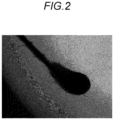
- Fig. 2 shows the state of cells expanded from the vicinity of a hair bulb 7 days after the seeding on the 24-well plate. As shown in Fig. 2 , it was confirmed that a large number of mesenchymal stem cell-like cells were obtained by proliferation from the vicinity of the hair bulb.
- Fig. 3 shows the state of cells expanded from the vicinity of an outer root sheath adhered to a hair 6 days after the seeding on the 24-well plate. As shown in Fig. 3 , the cells expanded from the vicinity of the outer root sheath adhered to the hair did not show a mesenchymal stem cell-like form, but showed a keratinocyte-like form.
- mesenchymal stem cells can be cultured from a hair including a hair bulb covered with a dermal sheath tissue. Keratinocyte-like cells were obtained by proliferation from the vicinity of the outer root sheath adhered to the hair, but when passage was continued, only mesenchymal stem cells were obtained by proliferation. Thus, it can be said that according to the method of culturing of the present invention, mesenchymal stem cells can be separated and cultured without excising a region including an outer root sheath.
- DS-MSCs hair-derived mesenchymal stem cells
- MSC Osteogenic Differentiation Medium PromoCell
- MSC Adipogenic Differentiation Medium PromoCell
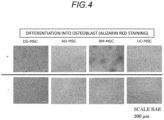
- alizarin red staining was performed on osteoblasts, and oil red staining was performed on adipocytes.
- Alizarin red staining was performed with an Alizarin Red S staining kit (Bio Future Technologies) in accordance with an existing protocol.
- Oil red staining was performed with an Oil Red O staining kit (Bio Future Technologies) using an OR stain diluted to 60% with purified water.
- AD-MSCs adipose tissue-derived mesenchymal stem cells
- BM-MSCs bone marrow-derived mesenchymal stem cells
- UC-MSCs umbilical cord-derived mesenchymal stem cells
- Fig. 4 shows the results of alizarin red staining
- Fig. 5 shows the results of oil red staining.
- the expression levels of SOX9 and ACAN were higher than in the case of culture with the undifferentiation maintenance medium. Also in the DS-MSCs cultured using the differentiation induction medium, the expression levels of SOX9 and ACAN were higher than in the case of culture with the undifferentiation maintenance medium.
- the DS-MSCs according to the present invention were differentiated into chondrocytes.
- the DS-MSCs according to the present invention have a potential for differentiation into osteoblasts, adipocytes, and chondrocytes.
- Fluorescence-activated cell sorting was performed on the hair-derived mesenchymal stem cells (DS-MSCs) cultured in Example 1, with the following procedure.
- the DS-MSCs obtained by three passages were cultured in a T75 flask and proliferated, and the obtained cells were collected by centrifugation.
- the obtained pellet was suspended in DPBS, and the cells were dispensed into a 1.5 ml tube at 1.0 ⁇ 10 6 cells/mL, and centrifuged to obtain a pellet.
- 100 ⁇ L of 2% FBS/DPBS was added, the pellet was suspended, and the following antibodies were added.
- the antibodies and the cells were mixed, shielded from light, and allowed to stand on ice for 30 minutes.
- the cells were collected by centrifugation, and 500 ⁇ L of 2% FBS/PBS was added to suspend and dissolve the pellet.
- FACS was performed on the obtained sample using CELL SORTER SH800S (Sony Corporation), and the fluorescence was compared between the isotype controls and the target sample.
- Example 1 From the above, it was shown that the cells obtained in Example 1 expressed positive markers of mesenchymal stem cells and did not express negative markers.
- mesenchymal stem cells can be efficiently cultured from a removed hair. Furthermore, it has been found that hair-derived mesenchymal stem cells including a dermal sheath, obtained according to the present invention, have a potential for differentiation into osteoblasts, adipocytes, and chondrocytes, which are cells into which mesenchymal stem cells are generally said to be capable of differentiating.
- the present invention can be applied to, for example, development of a pharmaceutical preparation using mesenchymal stem cells.
Landscapes
- Health & Medical Sciences (AREA)
- Engineering & Computer Science (AREA)
- Life Sciences & Earth Sciences (AREA)
- Biomedical Technology (AREA)
- Chemical & Material Sciences (AREA)
- Wood Science & Technology (AREA)
- Organic Chemistry (AREA)
- Bioinformatics & Cheminformatics (AREA)
- Genetics & Genomics (AREA)
- Zoology (AREA)
- Biotechnology (AREA)
- General Health & Medical Sciences (AREA)
- Microbiology (AREA)
- Biochemistry (AREA)
- General Engineering & Computer Science (AREA)
- Developmental Biology & Embryology (AREA)
- Rheumatology (AREA)
- Cell Biology (AREA)
- Molecular Biology (AREA)
- Medicinal Chemistry (AREA)
- Orthopedic Medicine & Surgery (AREA)
- Micro-Organisms Or Cultivation Processes Thereof (AREA)
Applications Claiming Priority (2)
| Application Number | Priority Date | Filing Date | Title |
|---|---|---|---|
| JP2023025297 | 2023-02-21 | ||
| PCT/JP2023/046567 WO2024176612A1 (ja) | 2023-02-21 | 2023-12-26 | 間葉系幹細胞の培養方法 |
Publications (2)
| Publication Number | Publication Date |
|---|---|
| EP4553151A1 true EP4553151A1 (de) | 2025-05-14 |
| EP4553151A4 EP4553151A4 (de) | 2025-12-24 |
Family
ID=91377592
Family Applications (1)
| Application Number | Title | Priority Date | Filing Date |
|---|---|---|---|
| EP23924256.3A Withdrawn EP4553151A4 (de) | 2023-02-21 | 2023-12-26 | Verfahren zur kultivierung mesenchymaler stammzellen |
Country Status (5)
| Country | Link |
|---|---|
| US (1) | US20250354123A1 (de) |
| EP (1) | EP4553151A4 (de) |
| JP (2) | JP7499431B1 (de) |
| KR (1) | KR20250040700A (de) |
| CN (1) | CN119866371A (de) |
Family Cites Families (4)
| Publication number | Priority date | Publication date | Assignee | Title |
|---|---|---|---|---|
| DE10224982A1 (de) * | 2002-06-05 | 2003-12-24 | Rolf Hoffmann | Mesenchymale Stammzellen des Haarfollikels und deren Verwendung |
| TW201534724A (zh) * | 2013-06-12 | 2015-09-16 | Shiseido Co Ltd | 間葉系幹細胞之低氧培養法 |
| EP3766963A1 (de) * | 2019-07-15 | 2021-01-20 | Universität Leipzig | Verfahren zur kultivierung mesenchymaler stammzellen |
| KR20210009246A (ko) | 2019-07-16 | 2021-01-26 | 신동훈 | 갈색거저리 사육장치 |
-
2023
- 2023-12-26 US US18/874,048 patent/US20250354123A1/en active Pending
- 2023-12-26 EP EP23924256.3A patent/EP4553151A4/de not_active Withdrawn
- 2023-12-26 KR KR1020257005465A patent/KR20250040700A/ko active Pending
- 2023-12-26 JP JP2024504541A patent/JP7499431B1/ja active Active
- 2023-12-26 CN CN202380059607.4A patent/CN119866371A/zh active Pending
-
2024
- 2024-06-03 JP JP2024090334A patent/JP2024119065A/ja active Pending
Also Published As
| Publication number | Publication date |
|---|---|
| JP2024119065A (ja) | 2024-09-02 |
| EP4553151A4 (de) | 2025-12-24 |
| JPWO2024176612A1 (de) | 2024-08-29 |
| US20250354123A1 (en) | 2025-11-20 |
| CN119866371A (zh) | 2025-04-22 |
| JP7499431B1 (ja) | 2024-06-13 |
| KR20250040700A (ko) | 2025-03-24 |
Similar Documents
| Publication | Publication Date | Title |
|---|---|---|
| Mauney et al. | Matrix-mediated retention of adipogenic differentiation potential by human adult bone marrow-derived mesenchymal stem cells during ex vivo expansion | |
| Bosnakovski et al. | Chondrogenic differentiation of bovine bone marrow mesenchymal stem cells in pellet cultural system | |
| JP6478428B2 (ja) | 多能性幹細胞の調製方法 | |
| EP2977448B1 (de) | Verfahren zur herstellung von chondrozyten | |
| US7592176B2 (en) | Method of forming mesenchymal stem cells from embryonic stem cells | |
| CN114729313B (zh) | 培养间充质干细胞的方法 | |
| EP2295541B1 (de) | Aus Herzgewebe abgeleitete pluripotente Stammzellen | |
| JP3762975B2 (ja) | 単球由来多能性細胞momc | |
| Gothard et al. | Regionally-derived cell populations and skeletal stem cells from human foetal femora exhibit specific osteochondral and multi-lineage differentiation capacity in vitro and ex vivo | |
| EP4553151A1 (de) | Verfahren zur kultivierung mesenchymaler stammzellen | |
| JP7198524B2 (ja) | スフェロイドの製造方法および多能性幹細胞マーカーを発現させる方法 | |
| WO2024176612A1 (ja) | 間葉系幹細胞の培養方法 | |
| Ude et al. | Isolation and culture of periosteum-derived progenitor cells from mice | |
| 김지윤 | Studies on isolation methods of Sox9 positive cells from chicken femoral region. | |
| MOLL | MULTILINEAGE POTENTIAL OF HUMAN MESENCHYMAL STEM CELLS ISOLATED USING AN IMPROVED PROTOCOL AND CULTURED IN ALLOGENIC SERUM | |
| HK40013193A (en) | Method for preparing pluripotent stem cells | |
| Joshi | Master of Veterinary | |
| Pacitti | Isolation of Mesenchymal Stem Cells Derived from Adult Bone Marrow and Umbilical Cord Blood and Their Potential to Differentiate into Osteoblasts |
Legal Events
| Date | Code | Title | Description |
|---|---|---|---|
| STAA | Information on the status of an ep patent application or granted ep patent |
Free format text: STATUS: THE INTERNATIONAL PUBLICATION HAS BEEN MADE |
|
| PUAI | Public reference made under article 153(3) epc to a published international application that has entered the european phase |
Free format text: ORIGINAL CODE: 0009012 |
|
| STAA | Information on the status of an ep patent application or granted ep patent |
Free format text: STATUS: REQUEST FOR EXAMINATION WAS MADE |
|
| 17P | Request for examination filed |
Effective date: 20250206 |
|
| AK | Designated contracting states |
Kind code of ref document: A1 Designated state(s): AL AT BE BG CH CY CZ DE DK EE ES FI FR GB GR HR HU IE IS IT LI LT LU LV MC ME MK MT NL NO PL PT RO RS SE SI SK SM TR |
|
| A4 | Supplementary search report drawn up and despatched |
Effective date: 20251125 |
|
| RIC1 | Information provided on ipc code assigned before grant |
Ipc: C12N 5/0775 20100101AFI20251119BHEP Ipc: C12N 5/077 20100101ALI20251119BHEP |
|
| STAA | Information on the status of an ep patent application or granted ep patent |
Free format text: STATUS: THE APPLICATION HAS BEEN WITHDRAWN |
|
| 18W | Application withdrawn |
Effective date: 20260310 |