EP4549601A1 - Non-fired pellets for reduction, and method for manufacturing same - Google Patents
Non-fired pellets for reduction, and method for manufacturing same Download PDFInfo
- Publication number
- EP4549601A1 EP4549601A1 EP22953913.5A EP22953913A EP4549601A1 EP 4549601 A1 EP4549601 A1 EP 4549601A1 EP 22953913 A EP22953913 A EP 22953913A EP 4549601 A1 EP4549601 A1 EP 4549601A1
- Authority
- EP
- European Patent Office
- Prior art keywords
- fired pellets
- mass
- reduction
- mgo
- sio
- Prior art date
- Legal status (The legal status is an assumption and is not a legal conclusion. Google has not performed a legal analysis and makes no representation as to the accuracy of the status listed.)
- Pending
Links
Images
Classifications
-
- C—CHEMISTRY; METALLURGY
- C22—METALLURGY; FERROUS OR NON-FERROUS ALLOYS; TREATMENT OF ALLOYS OR NON-FERROUS METALS
- C22B—PRODUCTION AND REFINING OF METALS; PRETREATMENT OF RAW MATERIALS
- C22B1/00—Preliminary treatment of ores or scrap
- C22B1/14—Agglomerating; Briquetting; Binding; Granulating
- C22B1/24—Binding; Briquetting ; Granulating
- C22B1/242—Binding; Briquetting ; Granulating with binders
- C22B1/243—Binding; Briquetting ; Granulating with binders inorganic
-
- C—CHEMISTRY; METALLURGY
- C21—METALLURGY OF IRON
- C21B—MANUFACTURE OF IRON OR STEEL
- C21B13/00—Making spongy iron or liquid steel, by direct processes
- C21B13/0086—Conditioning, transformation of reduced iron ores
-
- C—CHEMISTRY; METALLURGY
- C21—METALLURGY OF IRON
- C21B—MANUFACTURE OF IRON OR STEEL
- C21B13/00—Making spongy iron or liquid steel, by direct processes
- C21B13/0046—Making spongy iron or liquid steel, by direct processes making metallised agglomerates or iron oxide
-
- C—CHEMISTRY; METALLURGY
- C21—METALLURGY OF IRON
- C21B—MANUFACTURE OF IRON OR STEEL
- C21B13/00—Making spongy iron or liquid steel, by direct processes
- C21B13/008—Use of special additives or fluxing agents
-
- C—CHEMISTRY; METALLURGY
- C21—METALLURGY OF IRON
- C21B—MANUFACTURE OF IRON OR STEEL
- C21B13/00—Making spongy iron or liquid steel, by direct processes
- C21B13/10—Making spongy iron or liquid steel, by direct processes in hearth-type furnaces
- C21B13/105—Rotary hearth-type furnaces
-
- C—CHEMISTRY; METALLURGY
- C22—METALLURGY; FERROUS OR NON-FERROUS ALLOYS; TREATMENT OF ALLOYS OR NON-FERROUS METALS
- C22B—PRODUCTION AND REFINING OF METALS; PRETREATMENT OF RAW MATERIALS
- C22B1/00—Preliminary treatment of ores or scrap
- C22B1/14—Agglomerating; Briquetting; Binding; Granulating
- C22B1/24—Binding; Briquetting ; Granulating
- C22B1/2406—Binding; Briquetting ; Granulating pelletizing
Definitions
- the present invention relates to fired pellets for reduction that can be effectively used in a solid reduction furnace, and a method for producing the same.
- Patent Literature 1 proposes a method for covering the surfaces of pellets with, for example, Ca(OH) 2 or Mg(OH) 2 .
- Patent Literature 2 proposes a method for preventing reduction-degradation and obtaining a fired pellet with fewer blisters by covering the surface of sintered agglomerated ore (pellet) with a powdery solid fuel.
- Patent Literature 3 is directed to prevent the occurrence of clustering in a solid reduction furnace as well as reduce heat loss and improve the operation efficiency by covering the surface of a fired pellet with iron ore mixed with cement.
- Patent Literature 4 proposes a method for performing covering with a material containing a calcium-iron compound represented by CaxFeyOz (1 ⁇ y/x ⁇ 2; 1 ⁇ z).
- Patent Literatures 1 to 4 are a method for reducing the contact between metallic irons after reduction, which can cause clustering observed around a high-temperature zone (500 to 600°C) in a solid reduction furnace, such as a shaft furnace, by mainly interposing non-metallic components therebetween.
- clustering prevention methods of the conventional technologies are insufficient. These methods have a problem in that it also requires to adapt a covering step of non-metallic components, which increases the cost, and the addition of a dedicated facility.
- an object of the present invention is to propose, in producing fired pellets for use in a solid reduction furnace, fired pellets that is effective in preventing clustering by reducing the possibility of contact between low-melting-temperature slags and thus preventing the fusion between the slags, and a method for producing such fired pellets.
- the present invention relates to a method that can solve the above problems of the conventional technologies and has been developed to achieve the above object.
- the present invention proposes fired pellets for reduction characterized in that a ratio of high-viscosity slag components (Al 2 O 3 +MgO+SiO 2 ) to total Fe (T.Fe) satisfies the following Expression (1): Al 2 O 3 + MgO + SiO 2 / T . Fe ⁇ 0.09
- the present invention proposes a method for producing the above fired pellets for reduction, comprising performing reduction and firing by using an iron-containing raw material formulated to achieve an average LOI (Loss on Ignition) of 5% or more.
- LOI Loss on Ignition
- fired pellets for reduction of the present invention may include the following feature that is considered to be able to provide a more preferable embodiment.
- the production of the fired pellets for reduction may include the following feature that is considered to be able to provide a more preferable embodiment.
- the fired pellets for reduction of the present invention contain high-viscosity slag components (Al 2 O 3 , MgO, and SiO 2 ) at a high proportion relative to the total iron can reduce the generation of low-melting-temperature slag due to FeO during reduction in a solid reduction furnace and its fluidity. Consequently, it is possible to prevent the possibility of contact or fusion between the pellets due to such interposed slag and thus effectively prevent the above-described clustering in the reduction furnace that is a problem to be solved.
- high-viscosity slag components Al 2 O 3 , MgO, and SiO 2
- the production method according to the present invention involves the use of a high-LOI raw material formulated as an iron-containing raw material, causing the obtained fired pellets to be porous.
- a high-LOI raw material formulated as an iron-containing raw material
- the possibility of contact between the metallic irons is reduced, thereby effectively preventing clustering and increasing the operation efficiency of a solid reduction furnace.
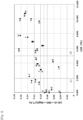
- Fig. 1 is a graph illustrating the relationship between (Al 2 O 3 +MgO+SiO 2 )/T.Fe and LOI of Australian iron ore that is an iron-containing raw material to be mixed.
- a solid reduction furnace used in the present invention is a furnace for reducing fed fired pellets for reduction to Fe having a reduction degree of 90% or more by using a hydrogen gas, etc., as a reducing gas.
- a hydrogen gas etc.
- the properties of raw material fed into the furnace, that is, the fired pellets are important.
- the fired pellets for reduction have a component composition such that the high-viscosity slag components (Al 2 O 3 +MgO+SiO 2 ) are contained in a given ratio relative to the total iron (T.Fe) in the iron-containing raw material. That is, when the fired pellets satisfy the relationship of Expression (1) below. Al 2 O 3 + MgO + SiO 2 / T . Fe ⁇ 0.09
- Al 2 O 3 represents the concentration (mass%) of Al 2 O 3 in the fired pellets for reduction.
- MgO represents the concentration (mass%) of MgO in the fired pellets for reduction.
- SiO 2 represents the concentration (mass%) of SiO 2 in the fired pellets for reduction.
- T.Fe represents the total Fe concentration (mass%) in the fired pellets for reduction.
- Al 2 O 3 represents the concentration (mass%) of Al 2 O 3 in the fired pellets for reduction.
- MgO represents the concentration (mass%) of MgO in thefired pellets for reduction.
- SiO 2 represents the concentration (mass%) of SiO 2 in the fired pellets for reduction.
- T.Fe represents the total Fe concentration (mass%) in the fired pellets for reduction.
- the total Fe in the iron-containing raw material refers to the total value of the iron concentrations including the concentrations of metallic iron (M.Fe) and iron compounds (iron oxide, iron sulfide, calcium ferrite, etc.).
- the high-viscosity slag components refer to the total value of the concentrations of Al 2 O 3 , MgO, and SiO 2 contained in the iron-containing raw material, such as iron ore or ironmaking dust; an auxiliary material (limestone, quicklime, dolomite, etc.); and a binder (bentonite, etc.).
- the porosity of the fired pellets for reduction is also critical to control the porosity of the fired pellets for reduction according to the present invention, That is, when the fired pellets for reduction are made porous (20% or more, preferably 30% or more), the number of contact points between the pellets can be reduced, which can also reduce the contact between metallic irons and prevent fusion, thereby contributing to the prevention of the clustering described above. In this respect, a porosity of less than 20% is not effective in preventing fusion.
- the upper limit is approximately 60% from the viewpoint of strength.
- the method for producing the fired pellets according to the present invention will be described.
- the fired pellets for reduction according to the present invention in order for the fired pellets to satisfy the above relationship between the high-viscosity slag components (Al 2 O 3 +MgO+SiO 2 ) and the total iron (T.Fe), for example, it is possible to use an iron ore originally having a composition of components satisfying the above relationship, or to selectively use and mix a plurality of iron ores to satisfy the above relationship.
- iron ores brands
- a binder such as bentonite
- an auxiliary material such as quicklime
- the iron-containing raw material for the iron-containing raw material to achieve the relation LOI ⁇ 5%, it is preferable to apply a pretreatment such as a process for removing crystal water to the iron ore to be used in advance so as to achieve LOI ⁇ 2%. Since many iron-containing raw materials such as raw material iron ore have a high crystal water content, pellets often burst during granulation due to water vapor generated from the crystal water. Thus, it would be unavoidable to increase the temperature slowly. This would reduce productivity.
- a pretreatment such as a process for removing crystal water
- the pretreatment such as a process for removing crystal water
- the Examples show how the relationship between T.Fe and high-viscosity slag components (Al 2 O 3 +MgO+SiO 2 ) in fired pellets for reduction affects the clustering in a solid reduction furnace.
- iron-containing raw material i.e. iron ore used herein, mainly one or more types of Australian iron ores (A to Z) shown in Fig.1 were mixed with an auxiliary material and reagent (e.g., commercially available Al 2 O 3 reagent) as appropriate.
- auxiliary material and reagent e.g., commercially available Al 2 O 3 reagent
- All raw materials including one or more types of the Australian raw materials described above (exemplified in Fig. 1 ) (A to Z) were ground in a ball mill and then granulated with a pelletizer while adding water to achieve a size of 9 to 16 mm. Then, the pellets after granulation were placed in a dryer to perform drying treatment at 110 °C for 24hr. The pellets were then fed into an electric furnace to be heated at 7 °C/min., held at 1250 °C for 10hr, and then cooled at 7 °C/min. Each of the fired pellets obtained, shown in Table 1, was evaluated using a porosity and a clustering index.
- a sample weighing 500g was fed into a vertical cylindrical furnace with a diameter ⁇ of 100 mm and heated to 1000°C in an N 2 atmosphere.
- a reducing gas was introduced into the furnace at a rate of 24 NL/min.
- the sample was then loaded at a rate of 1 kg/cm 2 and held in this state for three hours, followed by cooling in an N 2 atmosphere, so that reduced iron was produced.
- the reduced iron obtained was then sieved through a 16 mm sieve mesh, which is the maximum size of a single fired pellet, to measure the weight Wa (g) of the fired pellets remaining on the sieve.
- the fired pellets remaining on the sieve were put into a cylindrical shape vessel (132 mm ⁇ ⁇ 700 mmL) of an I-type testing machine and were rotated at a rotational speed of 30 rpm for five minutes, to measure the weight Wb (g) of the fired pellets remaining on the sieve mesh of 16 mm.
- the fired pellets were evaluated based on a clustering index that is proportional to the non-crushing clustering proportion Wb/Wa.
- the porosity of the fired pellets was evaluated by measuring the apparent density of the pellets and then measuring the real density of the pellets. As shown in Table 1, it is confirmed that each of the fired pellets of Examples 1 to 5 in which (Al 2 O 3 +MgO+SiO 2 )/T.Fe is 0.09 or more has a clustering index of less than 7, and thus has excellent properties.
- Table 2 shows the component compositions of the fired pellets obtained in Examples 1 and 2 of Table 1.
- [Table 2] (mass%) T.Fe FeO SiO 2 CaO Al 2 O 3 MgO C/S Example 1 64.9 0.2 3.1 1.2 2.7 0.2 0.4 Example 2 62.5 0.4 4.9 2.9 2.3 0.3 0.6
- Example 5 An evaluation test was conducted to determine whether granulation and firing can be achieved without breakage during granulation, by subjecting the sample in Example 5, shown in Table 1, to a crystal water removal pretreatment. It should be noted that the heating rate was set at 200°C/min.
- Reduced iron (a sample when Wa was measured) obtained by the same method as the method of Comparative Example 2 in Embodiment 1 (clustering evaluation test) was ground into particles with a size of 3 mm or less. The resulting particles were mixed with the unfired raw material of Comparative Example 2. The mixture was used to produce fired pellets by the method of Embodiment 1. The crushing strength of the resulting fired pellets was then measured. The measurement results are shown in Table 4.
- M.Fe is derived from metallic iron (M.Fe) contained in the reduced iron.
- the unit “L” of volume represents 10 -3 m 3 .
- Symbol “N” added to the unit of the volume of a gas represents the volume of the gas in the standard state, that is, at a temperature of 0°C and a pressure of 101325 Pa.
- the unit “rpm” of a rotational speed represents the number of rotations per min.
- the fired pellets for solid reduction according to the present invention are the method that has been developed to be mainly applied to a hydrogen-based direct reduction process, for example.
- such fired pellets can also be used as a raw material for use in a blast furnace, etc.
Landscapes
- Chemical & Material Sciences (AREA)
- Engineering & Computer Science (AREA)
- Metallurgy (AREA)
- Manufacturing & Machinery (AREA)
- Materials Engineering (AREA)
- Organic Chemistry (AREA)
- Geochemistry & Mineralogy (AREA)
- Geology (AREA)
- General Life Sciences & Earth Sciences (AREA)
- Environmental & Geological Engineering (AREA)
- Life Sciences & Earth Sciences (AREA)
- Mechanical Engineering (AREA)
- Inorganic Chemistry (AREA)
- Manufacture And Refinement Of Metals (AREA)
Abstract
Description
- The present invention relates to fired pellets for reduction that can be effectively used in a solid reduction furnace, and a method for producing the same.
- In recent years, various technologies have been developed to reduce CO2 emissions in order to avoid global warming due to an increase in the CO2.
- Under such a circumstance, also in the field of the iron making industry, an ironmaking method performed with a solid reduction furnace, which is a hydrogen-based reduction process, has been gaining attention, and studies have been made on fired pellets used for such a method. Incidentally, it is known that a raw material (fired pellets) fed into the furnace, when passing through a high-temperature zone in such a solid reduction furnace, causes a degradation phenomenon accompanied by volume expansion as the hematite phase in the fired is reduced and transformed into magnetite phases. It is also known to cause contact and fusion between metallic irons and between low-melting-temperature slags. This results in clustering in the furnace, or a hanging phenomenon such that the pellets in the furnace become immovable and thus cannot be removed from the bottom of the furnace. Such clustering is a significant problem to be solved for, in particular, a solid reduction furnace for performing hydrogen-based reduction.
- Under such a circumstance, there have been proposed several prior arts for preventing the clustering observed in a solid reduction furnace as described above. For example, Patent Literature 1 proposes a method for covering the surfaces of pellets with, for example, Ca(OH)2 or Mg(OH)2. Patent Literature 2 proposes a method for preventing reduction-degradation and obtaining a fired pellet with fewer blisters by covering the surface of sintered agglomerated ore (pellet) with a powdery solid fuel. Patent Literature 3 is directed to prevent the occurrence of clustering in a solid reduction furnace as well as reduce heat loss and improve the operation efficiency by covering the surface of a fired pellet with iron ore mixed with cement. Further, Patent Literature 4 proposes a method for performing covering with a material containing a calcium-iron compound represented by CaxFeyOz (1<y/x≤2; 1≤z).
-
- Patent Literature 1:
JP-S59-10411A - Patent Literature 2:
JP-S62-37325A - Patent Literature 3:
JP-S63-262426A - Patent Literature 4:
JP-2017-119910A - Each of the above conventional methods (Patent Literatures 1 to 4) is a method for reducing the contact between metallic irons after reduction, which can cause clustering observed around a high-temperature zone (500 to 600°C) in a solid reduction furnace, such as a shaft furnace, by mainly interposing non-metallic components therebetween. However, according to the inventors' research, such clustering prevention methods of the conventional technologies are insufficient. These methods have a problem in that it also requires to adapt a covering step of non-metallic components, which increases the cost, and the addition of a dedicated facility.
- Accordingly, an object of the present invention is to propose, in producing fired pellets for use in a solid reduction furnace, fired pellets that is effective in preventing clustering by reducing the possibility of contact between low-melting-temperature slags and thus preventing the fusion between the slags, and a method for producing such fired pellets.
- The present invention relates to a method that can solve the above problems of the conventional technologies and has been developed to achieve the above object. First, the present invention proposes fired pellets for reduction characterized in that a ratio of high-viscosity slag components (Al2O3+MgO+SiO2) to total Fe (T.Fe) satisfies the following Expression (1):

- where Al2O3 represents a concentration (mass%) of Al2O3 in the fired pellets,
- MgO represents a concentration (mass%) of MgO in the fired pellet,
- SiO2 represents a concentration (mass%) of SiO2 in the fired pellets, and
- T.Fe represents a concentration (mass%) of T.Fe in the fired pellets.
- Second, the present invention proposes a method for producing the above fired pellets for reduction, comprising performing reduction and firing by using an iron-containing raw material formulated to achieve an average LOI (Loss on Ignition) of 5% or more.
- Note that the fired pellets for reduction of the present invention may include the following feature that is considered to be able to provide a more preferable embodiment.
- (a) A proportion of high-viscosity slag components (Al2O3+MgO+SiO2) to total Fe (T.Fe) satisfies the following Expression (2):

- where Al2O3 represents a concentration (mass%) of Al2O3 in the fired pellets,
- MgO represents a concentration (mass%) of MgO in the fired pellets,
- SiO2 represents a concentration (mass%) of SiO2 in the fired pellets, and
- T.Fe represents a concentration (mass%) of T.Fe in the fired pellets.
- (b) The porosity is 20% or more.
- (c) The porosity is 30% or more.
- In addition, the production of the fired pellets for reduction may include the following feature that is considered to be able to provide a more preferable embodiment.
- (d) The iron-containing raw material has been subjected to a crystal water removal pretreatment in advance so as to achieve an average LOI (Loss on Ignition) of 2% or less.
- (e) The pretreatment for removal of crystal water involves heating and drying using a rotary kiln and using a measurement value of a sample at the exit side of the kiln as the average LOI (Loss on Ignition) of the iron-containing raw material.
- (f) A mixed raw material containing 4 mass% to 24 mass% M.Fe is prepared by mixing a raw material containing M.Fe, and the mixed raw material is granulated and fired.
- (g) The raw material is reduced iron having a particle size of 3 mm or less that has been reduced in a solid reduction furnace.
- (h) The reduced iron contains 78 mass% or more M.Fe. M.Fe hereinafter refers to metallic iron.
- The fired pellets for reduction of the present invention according to the above-described configuration contain high-viscosity slag components (Al2O3, MgO, and SiO2) at a high proportion relative to the total iron can reduce the generation of low-melting-temperature slag due to FeO during reduction in a solid reduction furnace and its fluidity. Consequently, it is possible to prevent the possibility of contact or fusion between the pellets due to such interposed slag and thus effectively prevent the above-described clustering in the reduction furnace that is a problem to be solved.
- In addition, the production method according to the present invention involves the use of a high-LOI raw material formulated as an iron-containing raw material, causing the obtained fired pellets to be porous. Thus, the possibility of contact between the metallic irons is reduced, thereby effectively preventing clustering and increasing the operation efficiency of a solid reduction furnace.
- [
Fig. 1] Fig. 1 is a graph illustrating the relationship between (Al2O3+MgO+SiO2)/T.Fe and LOI of Australian iron ore that is an iron-containing raw material to be mixed. - A solid reduction furnace used in the present invention is a furnace for reducing fed fired pellets for reduction to Fe having a reduction degree of 90% or more by using a hydrogen gas, etc., as a reducing gas. In the operation of such a solid reduction furnace, the properties of raw material fed into the furnace, that is, the fired pellets are important.
- What is most important for the fired pellets is whether the pellets can be prevented from contacting or fusing with each other, which would otherwise result in clustering, in a high-temperature zone (500 to 800°C) of the solid reduction furnace as described above. In response to such demand, in the present invention, studies have been made on the relationship between an iron-containing raw material such as metallic iron, iron oxide such as iron ore, iron sulfide, or ironmaking dust and high-viscosity slag components. As a result, from the viewpoint of the fluidity of the various raw materials in the furnace, it is found preferable to appropriately manage the relationship particularly between the iron-containing raw material and high-viscosity slag components. That is, the high-viscosity slag is always controlled to be generated in the furnace so that an undesirable flow in the high-temperature zone is suppressed. This can prevent the fusion between slags, thereby preventing clustering.
- As described previously, in the present invention, it has been found to be effective to include the high-viscosity slag components in a given ratio in an iron-containing raw material, iron ore, or an auxiliary material to be mixed.
- As the components that can be the high-viscosity slag, focus is placed on (Al2O3, MgO, and SiO2), in particular. When the total content of such components is maintained at a predetermined ratio relative to the total iron
- (T.Fe), it becomes possible to effectively prevent the slag-to-slag fusion caused in the furnace.
- This can be achieved when the fired pellets for reduction have a component composition such that the high-viscosity slag components (Al2O3+MgO+SiO2) are contained in a given ratio relative to the total iron (T.Fe) in the iron-containing raw material. That is, when the fired pellets satisfy the relationship of Expression (1) below.

- In Expression (1) above, Al2O3 represents the concentration (mass%) of Al2O3 in the fired pellets for reduction. MgO represents the concentration (mass%) of MgO in the fired pellets for reduction. SiO2 represents the concentration (mass%) of SiO2 in the fired pellets for reduction. T.Fe represents the total Fe concentration (mass%) in the fired pellets for reduction.
- In the present invention, there exists a more preferable relationship between the high-viscosity slag components (Al2O3+MgO+SiO2) and the total iron (T.Fe) from the viewpoint of preventing the contact or fusion between the slags in the high-temperature range of the furnace, which is Expression (2) below. The relationship indicates that the high-viscosity slag components are contained in a higher amount.

- In Expression (2) above, Al2O3 represents the concentration (mass%) of Al2O3 in the fired pellets for reduction. MgO represents the concentration (mass%) of MgO in thefired pellets for reduction. SiO2 represents the concentration (mass%) of SiO2 in the fired pellets for reduction. T.Fe represents the total Fe concentration (mass%) in the fired pellets for reduction.
- Note that in the present invention, the total Fe in the iron-containing raw material refers to the total value of the iron concentrations including the concentrations of metallic iron (M.Fe) and iron compounds (iron oxide, iron sulfide, calcium ferrite, etc.). Meanwhile, the high-viscosity slag components refer to the total value of the concentrations of Al2O3, MgO, and SiO2 contained in the iron-containing raw material, such as iron ore or ironmaking dust; an auxiliary material (limestone, quicklime, dolomite, etc.); and a binder (bentonite, etc.).
- The Al2O3, MgO, and SiO2 concentrations can be determined as follows. First, the Al concentration, Mg concentration, and Si concentration are measured by elemental analysis such as fluorescent X-ray analysis, for example. Then, each oxide concentration can be determined by multiplying the element concentration thus determined by (the molecular weight of the oxide per element/atomic weight). Specifically, for example, the Al2O3 concentration can be determined by multiplying the Al concentration measured by elemental analysis, such as fluorescent X-ray analysis, by (the Al2O3 molecular weight/2)/the Al atomic weight = 50.98/26.98 = 1.890.
- It is also critical to control the porosity of the fired pellets for reduction according to the present invention, That is, when the fired pellets for reduction are made porous (20% or more, preferably 30% or more), the number of contact points between the pellets can be reduced, which can also reduce the contact between metallic irons and prevent fusion, thereby contributing to the prevention of the clustering described above. In this respect, a porosity of less than 20% is not effective in preventing fusion. The upper limit is approximately 60% from the viewpoint of strength.
- Next, the method for producing the fired pellets according to the present invention will be described. When producing the fired pellets for reduction according to the present invention, in order for the fired pellets to satisfy the above relationship between the high-viscosity slag components (Al2O3+MgO+SiO2) and the total iron (T.Fe), for example, it is possible to use an iron ore originally having a composition of components satisfying the above relationship, or to selectively use and mix a plurality of iron ores to satisfy the above relationship. For example, one or more of iron ores (brands) shown in
Fig. 1 , which are Australian iron ores, may be mixed, followed by granulation with a binder, such as bentonite, and an auxiliary material, such as quicklime, added thereto as appropriate. - When feeding the above fired pellets into the solid reduction furnace and reducing the pellets therein it is critical that these pellets do not have properties that would cause clustering in a high-temperature reducing atmosphere in the furnace. Therefore, in the present invention, focus is placed particularly on LOI (Loss on Ignition), the appropriate value of which has been studied. That is, in the production method according to the present invention, some of the types of iron ore (A to Z) shown in
Fig. 1 are selectively used (mixed) to achieve a LOI (Loss on Ignition) value of 5% or more so that LOI≥5% is satisfied, thereby reducing clustering more effectively. This is because when volatile components, such as crystal water, in the pellets are dissociated and vaporized in the firing process for pellets, and then dissipate to the outside of the pellets, the volume of the mineral phases remaining in the pellets is reduced, resulting in voids between the adjacent mineral phases. - Next, in the production method according to the present invention, for the iron-containing raw material to achieve the relation LOI ≥ 5%, it is preferable to apply a pretreatment such as a process for removing crystal water to the iron ore to be used in advance so as to achieve LOI ≤ 2%. Since many iron-containing raw materials such as raw material iron ore have a high crystal water content, pellets often burst during granulation due to water vapor generated from the crystal water. Thus, it would be unavoidable to increase the temperature slowly. This would reduce productivity.
- In the pretreatment such as a process for removing crystal water, it is preferable to use values measured at the exit side of the granulator such as rotary kiln for LOI evaluation.
- The Examples (including Comparative Examples) show how the relationship between T.Fe and high-viscosity slag components (Al2O3+MgO+SiO2) in fired pellets for reduction affects the clustering in a solid reduction furnace.
- As the iron-containing raw material, i.e. iron ore used herein, mainly one or more types of Australian iron ores (A to Z) shown in
Fig.1 were mixed with an auxiliary material and reagent (e.g., commercially available Al2O3 reagent) as appropriate. Table 1 shows examples of the component compositions of the mixtures. - All raw materials including one or more types of the Australian raw materials described above (exemplified in
Fig. 1 ) (A to Z) were ground in a ball mill and then granulated with a pelletizer while adding water to achieve a size of 9 to 16 mm. Then, the pellets after granulation were placed in a dryer to perform drying treatment at 110 °C for 24hr. The pellets were then fed into an electric furnace to be heated at 7 °C/min., held at 1250 °C for 10hr, and then cooled at 7 °C/min. Each of the fired pellets obtained, shown in Table 1, was evaluated using a porosity and a clustering index. - A sample weighing 500g was fed into a vertical cylindrical furnace with a diameter ϕ of 100 mm and heated to 1000°C in an N2 atmosphere. When the temperature of the sample reached 1000°C, a reducing gas was introduced into the furnace at a rate of 24 NL/min. The composition of the reducing gas was set to a volume ratio of H2:N2=20:80. The sample was then loaded at a rate of 1 kg/cm2 and held in this state for three hours, followed by cooling in an N2 atmosphere, so that reduced iron was produced. The reduced iron obtained was then sieved through a 16 mm sieve mesh, which is the maximum size of a single fired pellet, to measure the weight Wa (g) of the fired pellets remaining on the sieve. The fired pellets remaining on the sieve were put into a cylindrical shape vessel (132 mmϕ × 700 mmL) of an I-type testing machine and were rotated at a rotational speed of 30 rpm for five minutes, to measure the weight Wb (g) of the fired pellets remaining on the sieve mesh of 16 mm. The fired pellets were evaluated based on a clustering index that is proportional to the non-crushing clustering proportion Wb/Wa.
- The porosity of the fired pellets was evaluated by measuring the apparent density of the pellets and then measuring the real density of the pellets. As shown in Table 1, it is confirmed that each of the fired pellets of Examples 1 to 5 in which (Al2O3+MgO+SiO2)/T.Fe is 0.09 or more has a clustering index of less than 7, and thus has excellent properties.
[Table 1] LOI (%) of Iron Ore Before Firing (Al2O3+MgO+SiO2) /T.Fe Porosity (vol%) Clustering Index Comparative Example 1 0.3 0.03 13 52 Comparative Example 2 0.4 0.07 8 25 Example 1 5.1 0.09 22 7 Example 2 7.2 0.12 20 0 Example 3 8.8 0.18 23 0 Example 4 9.1 0.09 33 0 Example 5 10.3 0.09 49 0 - Note that Table 2 below shows the component compositions of the fired pellets obtained in Examples 1 and 2 of Table 1.
[Table 2] (mass%) T.Fe FeO SiO2 CaO Al2O3 MgO C/S Example 1 64.9 0.2 3.1 1.2 2.7 0.2 0.4 Example 2 62.5 0.4 4.9 2.9 2.3 0.3 0.6 - Next, an evaluation test was conducted to determine whether granulation and firing can be achieved without breakage during granulation, by subjecting the sample in Example 5, shown in Table 1, to a crystal water removal pretreatment. It should be noted that the heating rate was set at 200°C/min.
- The result shows that breakage would be caused, when, for example, a number of pores remains in the ores with crystal water removed, rather than when crystal water was removed by the crystal water removal treatment. Meanwhile, breakage would not be caused when the crystal water removal treatment was sufficiently completed, and furthermore, as long as the LOI of the ore before the treatment was sufficiently high, it is possible to produce good quality pellets even if the LOI of the ore after the crystal water removal treatment was low.
[Table 3] LOI (%) of Iron Ore After Crystal Water Removal Treatment Results Porosity (%) Comparative Example 3 10.3 Breakage - Comparative Example 4 5.2 Breakage - Example 6 2 Satisfactory 45 Example 7 0.7 Satisfactory 43 - Reduced iron (a sample when Wa was measured) obtained by the same method as the method of Comparative Example 2 in Embodiment 1 (clustering evaluation test) was ground into particles with a size of 3 mm or less. The resulting particles were mixed with the unfired raw material of Comparative Example 2. The mixture was used to produce fired pellets by the method of Embodiment 1. The crushing strength of the resulting fired pellets was then measured. The measurement results are shown in Table 4.
- In Table 4, "M.Fe" is derived from metallic iron (M.Fe) contained in the reduced iron. In Examples 10 to 12, reduced iron containing M.Fe = 78 mass% was used. In Example 13, reduced iron containing M.Fe = 80 mass% was used. As a result, it was found that mixing M.Fe with the raw material can increase the strength of the resulting pellets. Since clustering is promoted as the amount of powder increases, it is possible to suppress clustering by increasing the strength of the fired pellets. The reason why mixing M.Fe with the raw material can increase the strength of the resulting fired pellets is considered that reduced iron powder is oxidized and generates heat when the pellet is fired, thus promoting fusion between adjacent particles.
[Table 4] M.Fe (mass%) (Al2O3+MgO+SiO2)/T.Fe Pellet Strength (kgf) Comparative Example 2 0 0.07 178 Example 10 4 0.07 218 Example 11 8 0.07 221 Example 12 24 0.07 233 Example 13 8 0.09 255 - In this specification, the unit "L" of volume represents 10-3 m3. Symbol "N" added to the unit of the volume of a gas represents the volume of the gas in the standard state, that is, at a temperature of 0°C and a pressure of 101325 Pa. The unit "rpm" of a rotational speed represents the number of rotations per min.
- The fired pellets for solid reduction according to the present invention are the method that has been developed to be mainly applied to a hydrogen-based direct reduction process, for example. However, as a matter of course, such fired pellets can also be used as a raw material for use in a blast furnace, etc.
Claims (10)
- Fired pellets for reduction,
characterized in thata proportion of high-viscosity slag components (Al2O3+MgO+SiO2) to total Fe (T.Fe) satisfies the following Expression (1): where Al2O3 represents a concentration (mass%) of Al2O3 in the fired pellets,MgO represents a concentration (mass%) of MgO in the fired pellets,SiO2 represents a concentration (mass%) of SiO2 in the fired pellets, andT.Fe represents a concentration (mass%) of T.Fe in the fired pellets.
 - Fired pellets for reduction,
characterized in thata proportion of high-viscosity slag components (Al2O3+MgO+SiO2) to total Fe (T.Fe) satisfies the following Expression (2): where Al2O3 represents a concentration (mass%) of Al2O3 in the fired pellets,MgO represents a concentration (mass%) of MgO in the fired pellets,SiO2 represents a concentration (mass%) of SiO2 in the fired pellets, andT.Fe represents a concentration (mass%) of T.Fe in the fired pellets.
 - The fired pellets for reduction according to claim 1 or 2,
wherein a porosity is 20% or more. - The fired pellets for reduction according to any of claims 1 to 3,
wherein a porosity is 30% or more. - A method for producing the fired pellets for reduction according to any of claims 1 to 4, wherein
reduction and firing are performed by using an iron-containing raw material formulated to achieve an average LOI (Loss on Ignition) of 5% or more. - The method for producing the fired pellets for reduction according to claim 5, wherein
the iron-containing raw material has been subjected to a crystal water removal pretreatment in advance so as to achieve an average LOI (Loss on Ignition) of 2% or less. - The method for producing the fired pellets for reduction according to claim 5 or 6, wherein
the crystal water removal pretreatment comprises heating and drying using a rotary kiln and using a measurement value of a sample at the exit side of the kiln as the average LOI (Loss on Ignition) of the iron-containing raw material. - A method for producing fired pellets for reduction, characterized in that
a mixed raw material containing 4 mass% to 24 mass% M.Fe is prepared by mixing a raw material containing M.Fe, and the mixed raw material is granulated and fired. - The method for producing fired pellets for reduction according to claim 8, wherein
the raw material is reduced iron having a particle size of 3 mm or less that has been reduced in a solid reduction furnace. - The method for producing fired pellets for reduction according to claim 9, wherein
the reduced iron contains 78 mass% or more M.Fe.
Applications Claiming Priority (1)
| Application Number | Priority Date | Filing Date | Title |
|---|---|---|---|
| PCT/JP2022/029423 WO2024028922A1 (en) | 2022-08-01 | 2022-08-01 | Non-fired pellets for reduction, and method for manufacturing same |
Publications (2)
| Publication Number | Publication Date |
|---|---|
| EP4549601A1 true EP4549601A1 (en) | 2025-05-07 |
| EP4549601A4 EP4549601A4 (en) | 2025-12-17 |
Family
ID=89848633
Family Applications (1)
| Application Number | Title | Priority Date | Filing Date |
|---|---|---|---|
| EP22953913.5A Pending EP4549601A4 (en) | 2022-08-01 | 2022-08-01 | UNBURNED PELLETS FOR REDUCTION AND METHOD FOR THEIR MANUFACTURE |
Country Status (4)
| Country | Link |
|---|---|
| US (1) | US20260028688A1 (en) |
| EP (1) | EP4549601A4 (en) |
| CN (1) | CN119677882A (en) |
| WO (1) | WO2024028922A1 (en) |
Family Cites Families (10)
| Publication number | Priority date | Publication date | Assignee | Title |
|---|---|---|---|---|
| JPS5438207A (en) * | 1977-08-31 | 1979-03-22 | Nippon Steel Corp | Purifying method for powder iron source containing nonferrous metals |
| JPS5466314A (en) * | 1977-11-08 | 1979-05-28 | Nippon Steel Corp | Manufacture of reduced pellets |
| JPS5910411A (en) | 1982-07-09 | 1984-01-19 | Toshiba Corp | Controlling device of wall thickness in mandrel mill |
| JPS6237325A (en) | 1985-06-27 | 1987-02-18 | Nippon Kokan Kk <Nkk> | Calcined lump ore and its production |
| JPH0826416B2 (en) | 1987-04-21 | 1996-03-13 | 株式会社神戸製鋼所 | Steelmaking raw material with excellent clustering resistance for direct ironmaking or smelting reduction ironmaking |
| JP2012062505A (en) * | 2010-09-14 | 2012-03-29 | Kobe Steel Ltd | Method for manufacturing agglomerate |
| JP6724678B2 (en) | 2015-12-25 | 2020-07-15 | 日本製鉄株式会社 | Reducing material and method for producing reducing material |
| JP2018127715A (en) * | 2016-03-08 | 2018-08-16 | 株式会社神戸製鋼所 | Manufacturing method of sintered pellet, manufacturing method of reduced iron and sintered pellet |
| CN109055729B (en) * | 2018-09-21 | 2020-07-31 | 中国科学院城市环境研究所 | A kind of method of sludge biochar resource utilization |
| JP7374870B2 (en) * | 2020-09-03 | 2023-11-07 | 株式会社神戸製鋼所 | iron ore pellets |
-
2022
- 2022-08-01 US US18/994,444 patent/US20260028688A1/en active Pending
- 2022-08-01 EP EP22953913.5A patent/EP4549601A4/en active Pending
- 2022-08-01 CN CN202280097420.9A patent/CN119677882A/en active Pending
- 2022-08-01 WO PCT/JP2022/029423 patent/WO2024028922A1/en not_active Ceased
Also Published As
| Publication number | Publication date |
|---|---|
| CN119677882A (en) | 2025-03-21 |
| AU2022472681A1 (en) | 2025-02-13 |
| EP4549601A4 (en) | 2025-12-17 |
| US20260028688A1 (en) | 2026-01-29 |
| WO2024028922A1 (en) | 2024-02-08 |
Similar Documents
| Publication | Publication Date | Title |
|---|---|---|
| RU2492247C1 (en) | Device and method for producing reduced iron from alkaline metal-containing metallurgical dust as initial material | |
| Pal et al. | Development of pellet-sinter composite agglomerate for blast furnace | |
| CN102482730B (en) | Non-fired carbon-containing lump ore for blast furnace and its manufacturing method | |
| CN112301215A (en) | Iron ore concentrate for improving low-temperature reduction degradation rate of iron ore sinter and preparation method thereof | |
| CN1468969A (en) | Carbon-mixed non-sintered massive ore for blast furnace and its manufacturing method | |
| RU2455371C2 (en) | Self-fluxing pellets for blast furnaces and method for their manufacture | |
| Xu et al. | Metallurgical Properties of Vacuum Extrusion Iron‐Rich Dust Briquette and Its Effects on Blast Furnace Soft Melting Zone | |
| JP2024149831A (en) | Manufacturing method of fired pellets for reduction | |
| US20260028688A1 (en) | Fired pellets for reduction and method for producing same | |
| EP4556584A1 (en) | Non-fired pellets for reduction, and method for manufacturing same | |
| AU2022472681B2 (en) | Fired pellets for reduction and method for producing same | |
| Kim et al. | Effects of K2CO3 addition on the physicochemical properties of goethite composite pellets with different basicities (CaO/SiO2) | |
| US4518428A (en) | Agglomerates containing olivine | |
| EP4317464A1 (en) | Raw material particles for production of agglomerate, method for producing raw material particles for production of agglomerate, agglomerate, method for producing agglomerate, and method for producing reduced iron | |
| US4963185A (en) | Agglomerates containing olivine for use in blast furnace | |
| JP7533375B2 (en) | Manufacturing method of non-calcined pellets for reduction | |
| US3682621A (en) | Method of producing sponge-iron pellets from hematitic alumina-containing iron ore | |
| EP4575021A1 (en) | Method for producing iron ore pellet | |
| EP4575004A1 (en) | Reduced iron production method | |
| EP4353840A1 (en) | Agglomerated ore assessing method and agglomerated ore | |
| EP4575020A1 (en) | Iron ore pellet production method | |
| EP4600388A1 (en) | Method for determining high temperature properties of iron ore pellets, method for producing iron ore pellets, and iron ore pellets | |
| JP4501656B2 (en) | Method for producing sintered ore | |
| EP3628753B1 (en) | Process for preparing iron- and chrome-containing pellets | |
| TW202511499A (en) | Blast furnace operation method |
Legal Events
| Date | Code | Title | Description |
|---|---|---|---|
| STAA | Information on the status of an ep patent application or granted ep patent |
Free format text: STATUS: THE INTERNATIONAL PUBLICATION HAS BEEN MADE |
|
| PUAI | Public reference made under article 153(3) epc to a published international application that has entered the european phase |
Free format text: ORIGINAL CODE: 0009012 |
|
| STAA | Information on the status of an ep patent application or granted ep patent |
Free format text: STATUS: REQUEST FOR EXAMINATION WAS MADE |
|
| 17P | Request for examination filed |
Effective date: 20250130 |
|
| AK | Designated contracting states |
Kind code of ref document: A1 Designated state(s): AL AT BE BG CH CY CZ DE DK EE ES FI FR GB GR HR HU IE IS IT LI LT LU LV MC MK MT NL NO PL PT RO RS SE SI SK SM TR |
|
| DAV | Request for validation of the european patent (deleted) | ||
| DAX | Request for extension of the european patent (deleted) | ||
| A4 | Supplementary search report drawn up and despatched |
Effective date: 20251118 |
|
| RIC1 | Information provided on ipc code assigned before grant |
Ipc: C22B 1/16 20060101AFI20251112BHEP Ipc: C21B 13/00 20060101ALI20251112BHEP Ipc: C22B 1/24 20060101ALI20251112BHEP Ipc: C21B 13/10 20060101ALI20251112BHEP Ipc: C22B 1/243 20060101ALI20251112BHEP |