EP4542518A2 - Elektronische lotterie mit verringerndem pool - Google Patents
Elektronische lotterie mit verringerndem pool Download PDFInfo
- Publication number
- EP4542518A2 EP4542518A2 EP25162628.9A EP25162628A EP4542518A2 EP 4542518 A2 EP4542518 A2 EP 4542518A2 EP 25162628 A EP25162628 A EP 25162628A EP 4542518 A2 EP4542518 A2 EP 4542518A2
- Authority
- EP
- European Patent Office
- Prior art keywords
- index value
- permutation
- prize
- key
- lottery
- Prior art date
- Legal status (The legal status is an assumption and is not a legal conclusion. Google has not performed a legal analysis and makes no representation as to the accuracy of the status listed.)
- Pending
Links
Images



Classifications
-
- G—PHYSICS
- G07—CHECKING-DEVICES
- G07F—COIN-FREED OR LIKE APPARATUS
- G07F17/00—Coin-freed apparatus for hiring articles; Coin-freed facilities or services
- G07F17/32—Coin-freed apparatus for hiring articles; Coin-freed facilities or services for games, toys, sports, or amusements
- G07F17/326—Game play aspects of gaming systems
-
- A—HUMAN NECESSITIES
- A63—SPORTS; GAMES; AMUSEMENTS
- A63F—CARD, BOARD, OR ROULETTE GAMES; INDOOR GAMES USING SMALL MOVING PLAYING BODIES; VIDEO GAMES; GAMES NOT OTHERWISE PROVIDED FOR
- A63F3/00—Board games; Raffle games
- A63F3/06—Lottos or bingo games; Systems, apparatus or devices for checking such games
- A63F3/0645—Electric lottos or bingo games
-
- A—HUMAN NECESSITIES
- A63—SPORTS; GAMES; AMUSEMENTS
- A63F—CARD, BOARD, OR ROULETTE GAMES; INDOOR GAMES USING SMALL MOVING PLAYING BODIES; VIDEO GAMES; GAMES NOT OTHERWISE PROVIDED FOR
- A63F3/00—Board games; Raffle games
- A63F3/08—Raffle games that can be played by a fairly large number of people
- A63F3/081—Raffle games that can be played by a fairly large number of people electric
-
- G—PHYSICS
- G06—COMPUTING OR CALCULATING; COUNTING
- G06F—ELECTRIC DIGITAL DATA PROCESSING
- G06F7/00—Methods or arrangements for processing data by operating upon the order or content of the data handled
- G06F7/58—Random or pseudo-random number generators
- G06F7/582—Pseudo-random number generators
-
- G—PHYSICS
- G07—CHECKING-DEVICES
- G07C—TIME OR ATTENDANCE REGISTERS; REGISTERING OR INDICATING THE WORKING OF MACHINES; GENERATING RANDOM NUMBERS; VOTING OR LOTTERY APPARATUS; ARRANGEMENTS, SYSTEMS OR APPARATUS FOR CHECKING NOT PROVIDED FOR ELSEWHERE
- G07C15/00—Generating random numbers; Lottery apparatus
- G07C15/006—Generating random numbers; Lottery apparatus electronically
-
- G—PHYSICS
- G07—CHECKING-DEVICES
- G07F—COIN-FREED OR LIKE APPARATUS
- G07F17/00—Coin-freed apparatus for hiring articles; Coin-freed facilities or services
- G07F17/32—Coin-freed apparatus for hiring articles; Coin-freed facilities or services for games, toys, sports, or amusements
- G07F17/3244—Payment aspects of a gaming system, e.g. payment schemes, setting payout ratio, bonus or consolation prizes
-
- G—PHYSICS
- G07—CHECKING-DEVICES
- G07F—COIN-FREED OR LIKE APPARATUS
- G07F17/00—Coin-freed apparatus for hiring articles; Coin-freed facilities or services
- G07F17/32—Coin-freed apparatus for hiring articles; Coin-freed facilities or services for games, toys, sports, or amusements
- G07F17/3286—Type of games
- G07F17/329—Regular and instant lottery, e.g. electronic scratch cards
Definitions
- the present invention relates to a depleting pool lottery, and especially for determining a prize of an electronic lottery ticket within a set of a predetermined size.
- document EP 1133338 discloses a solution in which a lottery agent determines a size of a set of electronic lottery tickets, and distribution of prizes, and request a lottery press, for example a supervisor, to generate the set of electronic lottery tickets.
- a lottery press for example a supervisor
- a ticket-specific key is generated for each ticket, each ticket is associated with a corresponding prize, which is encrypted using the ticket -specific key by the lottery press, and stored with a ticket identifier to a lottery database, wherefrom the lottery agent sells the lottery tickets, and keeps information on sold lottery tickets.
- the ticket -specific key - ticket identifier pairs are stored in a key database, which is separate from the lottery database.
- a general aspect introduces a solution in which there exists, for a set of lottery tickets, a record, which comprises at least an identifier of the set, prize distribution information and permutation information.
- the information in the record is used to determine, for a bought lottery ticket, an initial index value, which undergoes one or more permutations to a final index value.
- the final index value is used to determine a prize of the bought ticket.
- Figure 1 is a simplified system architecture only showing some elements, functional entities, which are logical units whose implementation may differ from what is shown, and some equipment. It is apparent to a person skilled in the art that the system comprises any number of shown elements, other equipment, and structures that are not illustrated.
- the system 100 illustrated in Figure 1 comprises lottery agency equipment 110, supervisor equipment 120, and player apparatuses 130 (only one illustrated in Figure 1 ), and one or more networks 101, 102 (only two illustrated in Figure 1 ).
- the equipment 110, 120 refers to an information system comprising one or more computing devices (computing apparatuses) that can be configured to perform at least part of functionalities described below.
- the lottery agency equipment 110 comprises, for the electronic depleting pool lottery, a lottery ticket set creation unit (t-c-u) 111-1, a lottery ticket set playing (consuming) unit (t-p-u) 111-2 and a data storage 112 comprising a secret global permutation key 112-1 (YG), or shortly secret global key, and one or more records 112-2 (lottery records), a record comprising for a set of lottery tickets at least an identifier of the set, prize distribution information and permutation information, for example the key required for pseudorandom permutation.
- TAG secret global permutation key
- records 112-2 lottery records
- the prize distribution information comprises a prize tier table, or more precisely prize tier definitions, which may be expanded to be an actual table.
- the prize distribution information may be a pointer to a corresponding definition, shared by two or more sets of lottery tickets.
- a set-specific permutation key (key 1) is derived each time it is required, the permutation information stored comprises the size of the set and a value of a running number. The size of the set may be a pointer to a value shared by two or more sets of lottery tickets. Further examples on the permutation information are given below, for example with Figures 3B and 3C . Below term "agency" is used as a synonym to the lottery agency equipment.
- the agency 110 comprises other units and data records, for example, for player registration, payment verification, player authentication and for games that are not based on depleting pool lottery principles, not illustrated herein. Further, it should be appreciated that the lottery ticket set creation unit 111-1 and the lottery ticket set playing unit 111-2 may be integrated into one unit.
- the supervisor equipment 120 comprises for the electronic depleting pool lottery a permutator unit (r-u) 121, and a data storage 122 comprising a secret global permutation key 122-1 (XG), or shortly secret global key.
- a permutator unit r-u
- XG secret global permutation key 122-1
- supervisor can be seen as a trusted party (trusted third party). However, it should be appreciated that in some implementations there is no separate supervisor but the supervisor is a separate distinct sub-part of the agency, for example, a certified random number generator (RNG) module, in which case the information exchange described below is internal information exchange. It should be appreciated that the supervisor may comprise other units and data records. Further, it should be appreciated that even though the permutator unit 121 is depicted as one unit, its functionality may be split over two or more separate units.
- RNG certified random number generator
- the data storages 112, 122 may be any kind of conventional or future data repository, including distributed and centralized storing of data, managed by any suitable management system.
- An example of distributed storing includes a cloud-based storage in a cloud environment (which may be a public cloud, a community cloud, a private cloud, or a hybrid cloud, for example).
- a data storage 112, 122 may be any computing system, or a sub-system, equipped with one or more memories and comprising computing devices that are configured to appear as one logical data storage for the agency or the supervisor, or unit(s) that store data thereto and/or retrieve data therefrom.
- the implementation of the data storage 112, 122 the manner how data is stored, retrieved and updated, i.e. details how the data storage is interfaced, and the location where the data is stored are irrelevant to the invention.
- the player apparatus 130 refers to any computing device (apparatus, equipment), that is configurable to support electronic gaming, including buying depleting pool lottery tickets.
- the player apparatus may be a portable device or a non-portable device.
- the player device may establish a connection to the agency over one or more of the one or more networks 101.
- the player apparatus need not to be configured, but nevertheless may be configured, to receive an encrypted prize and decrypt it, and the prize may be shown to a user with using any existing and future method, including different animations.
- the implementation of electronic gaming between the player apparatus and the agency needs no modifications, is irrelevant for the disclosed solutions, and therefore the player apparatus is not described in more detail herein.
- Term "player” is used below to cover a combination of the player apparatus and its user.
- the network 101 depicts one or more networks over which the player 130 may connect to the agency 110 for gaming purposes.
- the network 102 depicts one or more networks over which the agency 110 and the supervisor 120 may connect for purposes described below.
- the one or more networks 101, 102 may be based on any wired technology and/or any wireless technology, a network being a local area network or a public network or a private network, or any combination thereof. Further, it should be appreciated that the one or more networks 101, 102 may comprise same physical networks. Further, in case the supervisor 120 is a sub-part of the agency 110, there may be no network 102.
- permutation keys are derived from the secret global keys. However, one or both of them may be replaced by a set-specific key, which may be part of the permutation information in the agency data storage 112-2, or in a set-specific record, called a supervisor record, for example, in the supervisor data storage 122. Still a further possibility utilizes a set-specific permutation list, which may be pre-generated or generated gradually.
- Figures 2A and 2B illustrate examples of information exchange during a gaming process, when a lottery ticket within a set is played, Figure 2A in case there is an external supervisor and Figure 2B when there is no external supervisor, but the agency is configured to comprise the supervisor module.
- Figures 3A, 3B and 3C Different ways of how to create the set are described in more detail below with Figures 3A, 3B and 3C .
- the set has an identifier, prize tier table, and permutation information.
- Figure 2A is not, when the supervisor is an external supervisor, within the scope of claims.
- the agency receives (message 2-2) corresponding information.
- the agency at least assigns in point 2-3 an initial index value i for the bought lottery ticket and updates in point 2-3 the agency record of the set, for example as will be described in more detail with Figures 5A , 5B and 5C .
- the agency sends in message 2-4 at least the identifier of the set and the initial index or a first index value, obtained by performing one or more permutations to the initial index value, to the supervisor.
- message 2-4 may also include also the size of the set.
- the supervisor detects, for example based on header information or message content, that the agency requests an index value. Therefore the supervisor permutes, i.e. performs one or more permutations, in point 2-5, the received index value, the result being a final index value i-f, for example as will be described in more detail with Figures 6A and 6B , and sends, as a response to message 2-4, the final index value in message 2-6 to the agency.
- the agency When the agency receives in message 2-6 the final index value, the agency maps in point 2-7 the received value to a corresponding prize tier using the prize tier table.
- the prize tier table associates an index value to one of the prize tiers (prize categories), including no prize, and the final index value is used to determine the prize tier, and thereby the actual prize (prize amount, win).
- the determined prize is then sent in message 2-8 to the player and displayed (shown) in point 2-9 to the user.
- the agency when a player successfully buys (point 2-1) a lottery ticket, the agency receives (message 2-2) corresponding information. Then the agency assigns in point 2-10 an initial index value i for the bought lottery ticket and updates in point 2-10 the agency record of the set, for example as will be described in more detail with Figures 5A , 5B and 5C . Then the agency permutes, i.e. performs one or more permutations, in point 2-10, to the initial index value, the result being the final index value i-f, for example as will be described in more detail with Figures 6A and 6B .
- the key 1 is used to perform one or more pseudorandom permutations to the initial index value, and the result then undergoes one or more pseudorandom permutations which uses the key 2. Then the agency maps in point 2-10 the final index value to a corresponding prize using the prize tier table, as described above. The determined prize is then sent in message 2-8 to the player and displayed (shown) in point 2-9 to the user.
- first index value is used as a synonym to "a first pseudorandom index value” and with Figures 3C and 5C also as a synonym to an initial index value.
- second index value is used as a synonym to "second pseudorandom index value” and "final index value”.
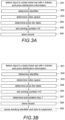
- Figures 3A, 3B and 3C illustrate different examples of a functionality of the agency when a new set of lottery tickets is created, and more precisely examples of a functionality of the lottery ticket creation unit the agency equipment comprises. Steps that are the same in both examples have the same number.
- Figure 3A describes an example in which the creation of a set of lottery tickets results to the record illustrated in Figure 1 .
- the agency is configured to use derive a set-specific permutation key (key 1) each time it is required.
- an input to create a new set of lottery tickets is received in step 301.
- the input also comprises information on the size of the set, i.e. the number n of the tickets, and prize distribution information, such as prize tiers and how many tickets belong to each prize tier.
- the prize distribution information may be that there are two prize tiers, a jackpot and empty, wherein there are 10 tickets with the jackpot (meaning that the rest of the tickets in the set are empty).
- An identifier for the set is determined (generated) in step 302.
- the identifier may, for example, be a combination of the lottery name and a running number or a globally unique identifier (GUID), for example a universally unique identifier (UUID), which is used to identify information in computer systems.
- GUID globally unique identifier
- UUID universally unique identifier
- index space N is determined in step 303, using the size, i.e. the value n.
- N i ⁇ Z 0 ⁇ i ⁇ 1 000 000
- a prize tier table is determined in step 304, using the prize distribution information.
- the only requirement for the prize tier table is that an index value maps unambiguously to a prize tier, and thereby to a prize.
- step 307 the set of tickets has been created in the agency, and corresponding information is stored in step 307 to the data storage as an agency record comprising the identifier, n, N, V(i), r.
- the input detected in step 301 comprises only instructions to create a new set, for example triggered because of a previous set is determined to be sold out.
- steps 303 and/or 304 may be merely adding pointers to memory locations comprising the corresponding information, depending on, for example rules relating to whether or not to combine unsold tickets of the previous set to the new set.
- steps 303 and/or 304 may be merely adding pointers to memory locations comprising the corresponding information, depending on, for example rules relating to whether or not to combine unsold tickets of the previous set to the new set.
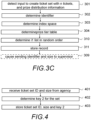
- Figure 3B illustrates an example in which the agency is configured to use set-specific permutation key, permutation key 1.
- the secret global key is not used during the gaming process. Therefore, the process described in Figure 3B differs from the one described in Figure 3A that there exists an additional step and the storing step is a little bit different.
- a permutation key called herein also key 1 and permutation key 1, is determined in step 307.
- the permutation key may be derived from the identifier of the set or part of the identifier, or it may be randomly generated.
- step 308 the set of tickets has been created in the agency, and corresponding information is stored in step 308 to the data storage as an agency record comprising the identifier, n, N, V(i), key 1, r.
- the supervisor may be configured to use its secret global permutation key, or a set-specific key.
- the supervisor is configured to use the set-specific key, sending at least the identifier and possibly the size, i.e. n, to the supervisor is caused in step 309, and the creation process for this set of lottery tickets can be ended.
- step 309 may be performed after step 306 in the process described with Figure 3A .
- Figure 3C illustrates an example in which the agency is configured to create (generate), for example as part of the agency record, a list listing the index space in a random order, for example 999 999, 4, 700 etc. Therefore, the process described in Figure 3C differs from the one described in Figure 3A that no step 305 is performed and the storing step is a little bit different.
- a list called herein "i1 list” is created in step 310.
- index values defined by the index space are listed to the i1 list in a random order, i.e. the index values undergo a permutation.
- a random number generator configured to generate a list of random numbers without repetition, when the amount of numbers in the list and a specified range is inputted, may be used.
- the list may be generated in a form of a table.
- step 311 corresponding information is stored in step 311 to the data storage as an agency record comprising the identifier, N, V(i), and the i1 list created, or a pointer to the i1 list, if stored elsewhere. Further, sending the identifier and possibly the size, i.e. n, to the supervisor may be caused in step 309, as described above with Figure 3B , and the creation process for this set of lottery tickets can be ended.
- the i1 list created in step 311 is the permutation information.
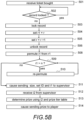
- Figure 4 illustrate an example of a functionality of the supervisor, and more precisely an example of a functionality of the permutator unit the supervisor equipment comprises, when the supervisor is configured to use a set-specific key (set-specific permutation key), and a new set of lottery tickets is created.
- an identifier of a set of lottery tickets and the size of the set are received in step 401 from the agency.
- a permutation key (key 2, or X) for the set is determined in step 402.
- the permutation key may be determined by generating it from the identifier, for example.
- the identifier of the set, the size and the permutation key (permutation key 2, or shortly key 2) are stored in step 403 in a supervisor record for the set of lottery tickets, and the creation process of a new set of lottery tickets ends.
- step 401 only the identifier is received in step 401, and the supervisor record comprises the identifier and the permutation key 2.
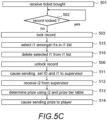
- Figures 5A , 5B and 5C illustrate different examples of a functionality of the agency when lottery tickets are bought, and more precisely examples of a functionality of the lottery ticket playing unit the agency equipment comprises, Figure 5A a process when the agency is configured to use the process of Figure 3A , and Figure 5B , when the agency is configured to use the process of Figure 3B and Figure 5C when the agency is configured to use the process of Figure 3C .
- Steps in Figures 5A , 5B and 5C that are the same have the same number. Further, in the illustrated examples it is assumed, for the sake of clarity, that an attempt to buy a ticket from set of tickets determined to be sold out fails.
- the process continues to calculate (generate) the set-specific permutation key 1 by inputting to a pseudorandom function (PRF) the global permutation key and the identifier of the set, the result being the value of key 1.
- PRF pseudorandom function
- HMAC Hash-based Message Authentication Code
- the key 1 is then used in step 508 to permute from the initial index value r1 a first index value using pseudorandom permutation P(key 1, r1).
- the permuting i.e. performing a pseudorandom permutation, may be performed using a format preserving encryption (FPE) algorithm whose domain is exactly N, i.e.
- FPE format preserving encryption
- FF1 is an FPE algorithm for numerical strings, i.e. FF1 encrypts a given string into another string of the same length and alphabet. For example, a binary string "00110" could be encrypted to "10011" using a certain key. First index value i1 could then be permuted by encoding it as such string, encrypting the string using permutation key 1, and decoding the result back into an integer. For a valid permutation, all indices of a ticket set must be encoded into binary strings of fixed length. The required length can be calculated by ceil(log 2 (n - 1)), and all strings should be left-padded with zeros to this length.
- step 509: yes If the first index value i1 is bigger than n (step 509: yes), a re-permutation is performed (step 510) until the first index value i1 is not bigger than n (step 509: no). This re-permutation process is called cycle walking and it is guaranteed to terminate and to produce a valid permutation.
- step 509 If, or after re-permuting when, the first index value i1 is smaller than or equal to the size of the set (step 509: no), sending of the size, i.e. n, the identifier of the set and the first index value i1 to the supervisor is caused in step 511.
- i means the initial index value r1
- P(Y,i) is a synonym to the first index value i1
- P(X, P(Y,i)) is a synonym to the second index value i2
- Y means the permutation key of the agency (key 1), which is a result of PRF(YG, set ID)
- X means the permutation key of the supervisor (key 2), which may be a result of PRF(XG, set ID). Since the agency does not know the permutation key of the supervisor, prizes are random for the agency. Since the supervisor does not know the permutation key of the agency, the lottery tickets are bought (sold) in a random order from the supervisor's perspective.
- the process may be verified afterwards by sharing the values of the permutation keys used by the agency and the supervisor for the set. If the agency receives the value of the key 2, it can verify the results of the supervisor, and vice versa if the supervisor receives the value of the key 1, it can verify the results of the agency.
- Figure 5B illustrates an example in which the agency record comprises the set-specific permutation key 1. Therefore the process described in Figure 5B differs from the one described in Figure 5A that step 507, i.e. calculating the key 1, is skipped over. The other steps are the same, and hence are not repeated in vain herein.
- Figure 5C illustrates an example in which the agency is configured to create, for example as part of the agency record, a list listing the index space in a random order.
- the first index value i1 is selected in step 515 amongst the index values in the i1 list.
- the selection may be used randomly, or according to a predetermined order. For example, if the i1 list is the content of column P(Y,i) above, and the lottery ticket bought is the first one, and the first one in the i1 list is selected, in step 515 value 793519 is selected to be the first index value. Then, in the illustrated example, the selected first index value is deleted in step 516 from the i1 list.
- step 506 sending of the identifier of the set and the first index value i1 to the supervisor is caused in step 511, and then steps 512, 513 and 514 are performed as described above.
- the values may be marked to be used values. In such a solution the selection is made amongst unused values.
- the list may be generated gradually.
- the list may be a stack of index values and a pointer pointing, when the new set is created, to the topmost index value, for example.
- step 515 may be replaced by the following: changing the index value, to which the pointer points, to any randomly selected index value amongst the pointed index value and any index value below it, and after that selecting the pointed index value to be the first index value.
- the pointer is moved to point to an index value just below the previous index value in the stack.
- the pointer-based solution may be used to create a pre-generated list (i.e. in step 310 in Figure 3C ).
- Figures 6A and 6B illustrate different examples of a functionality of the supervisor and more precisely examples of a functionality of the permutator unit the supervisor equipment comprises, when a lottery ticket has been bought, Figure 6A when the supervisor is configured to use the secret global permutation key, and Figure 6B when the supervisor have supervisor records, a record comprising an identifier and set-specific permutation key 2.
- step 6A an identifier of a set of lottery tickets, its size and a first index value are received in step 601. Then the process continues to calculate (generate) in step 602 the set-specific permutation key 2 by inputting to a pseudorandom function (PRF) the secret global permutation key of the supervisor and the identifier of the set, the result being the value of key 2.
- PRF pseudorandom function
- the step 602 corresponds to step 507 described above, with the difference that different secret global keys are used.
- the second index value is permuted in steps 603 to 605, as described above with steps 508 to 510, with the exception that different inputs, the first index value, and the permutation key 2 calculated in step 602, are used in the pseudorandom permutation, the result being the second index value.
- permutation P(key 2, i1) is performed.
- step 604 If, or after re-permutation when, the second index value i2 is smaller than or equal to the size of the set (step 604: no), sending of the second index value i2 to the agency is caused in step 606.
- Figure 6B illustrates an example in which there is the supervisor record, which comprises the identifier of the set and the set-specific permutation key 2. Therefore the process described in Figure 6B differs from the one described in Figure 6A that instead of calculating the key 2 (step 602), the corresponding supervisor record, and the key 2 in the record, is selected (determined) in step 607 using the identifier received. The other steps are the same, and hence are not repeated in vain herein.
- the supervisor record comprises also the size of the set, there is no need to transmit the size to the supervisor; it suffices that the identifier and the first index value are received in step 601.
- creating a set of lottery tickets does not require pre-generating huge amount of data, such as ticket-specific keys and ticket-specific records.
- the lottery tickets in the set may be bought (sold) in a parallel fashion, with a fixed time per a lottery ticket, enabling horizontal scalability.
- the playing process (buying/selling) is deterministic after the set of lottery tickets has been created. The process is also secure, since neither party, i.e. the agency or the supervisor, cannot independently figure out the selling order (buying order) of lottery tickets of different prize tiers, since the order is determined using two phase cryptographic mapping, one at the agency and one at the supervisor.
- FIG. 7 illustrates an apparatus 700 configured to carry out the functions described above in connection with the agency.
- Each apparatus 700 may comprise one or more processing circuitry, such as at least one processor 702, and at least one memory 703, including one or more algorithms 704, such as a computer program code (software) wherein the at least one memory and the computer program code (software) are configured, with the at least one processor, to cause the apparatus to carry out any one of the exemplified functionalities of the agency.
- the apparatus 700 further comprises different interfaces 701, 701', such as one or more interfaces 701 for communication, for example with the supervisor and with the players, and one or more user interfaces 701' to user interaction.
- the one or more user interfaces 701' may be any kind of a user interface, for example a screen, or other display, a keypad, etc., for interaction with the user.
- FIG. 8 illustrates an apparatus 800 configured to carry out the functions described above in connection with the supervisor.
- Each apparatus 800 may comprise one or more processing circuitry, such as at least one processor 802, and at least one memory 803, including one or more algorithms 804, such as a computer program code (software) wherein the at least one memory and the computer program code (software) are configured, with the at least one processor, to cause the apparatus to carry out any one of the exemplified functionalities of the supervisor.
- the apparatus 800 may further comprise different interfaces 801, 801' such as one or more interfaces for communication, for example with the agency, and one or more user interfaces 801' to user interaction.
- the one or more user interfaces 801' may be any kind of a user interface, for example a screen, or other display, a keypad, etc., for interaction with the user.
- At least one of the processing circuitries in the apparatus 700, 800 is configured to provide the corresponding equipment functionality or the lottery ticket set creation unit and/or the lottery ticket set playing unit, and/or the permutator unit, or any corresponding unit/sub-unit, and to carry out functionalities, described above by means of any of Figures 2A to 6B , by one or more circuitries.
- the memory 704, 804 or part of it may be implemented using any suitable data storage technology, such as semiconductor based memory devices, flash memory, magnetic memory devices and systems, optical memory devices and systems, fixed memory and removable memory.
- the one or more interfaces 701, 801 may comprise communication interfaces comprising hardware and/or software for realizing communication connectivity according to one or more communication protocols.
- circuitry refers to all of the following: (a) hardware-only circuit implementations, such as implementations in only analog and/or digital circuitry, and (b) combinations of circuits and software (and/or firmware), such as (as applicable): (i) a combination of processor(s) or (ii) portions of processor(s)/software including digital signal processor(s), software, and memory(ies) that work together to cause an apparatus to perform various functions, and (c) circuits, such as a microprocessor(s) or a portion of a microprocessor(s), that require software or firmware for operation, even if the software or firmware is not physically present.
- This definition of 'circuitry' applies to all uses of this term in this application.
- the at least one processor, the memory, and the computer program code form processing means or comprises one or more computer program code portions for carrying out one or more operations of equipment (unit) according to any one of the examples of Figures 2A to 6B , or operations thereof.
- Embodiments and/or examples as described may also be carried out in the form of a computer process defined by a computer program or portions thereof. Embodiments and/or examples of the methods described in connection with Figures 2A to 6B may be carried out by executing at least one portion of a computer program comprising corresponding instructions.
- the computer program may be in source code form, object code form, or in some intermediate form, and it may be stored in some sort of carrier, which may be any entity or device capable of carrying the program.
- the computer program may be stored on a computer program distribution medium readable by a computer or a processor.
- the computer program medium may be, for example but not limited to, a record medium, computer memory, read-only memory, electrical carrier signal, telecommunications signal, and software distribution package, for example.
- the computer program medium may be a non-transitory medium. Coding of software for carrying out the examples as shown and described is well within the scope of a person of ordinary skill in the art.
Landscapes
- Physics & Mathematics (AREA)
- General Physics & Mathematics (AREA)
- Engineering & Computer Science (AREA)
- Theoretical Computer Science (AREA)
- Multimedia (AREA)
- Computational Mathematics (AREA)
- Mathematical Analysis (AREA)
- Mathematical Optimization (AREA)
- Pure & Applied Mathematics (AREA)
- General Engineering & Computer Science (AREA)
- Management, Administration, Business Operations System, And Electronic Commerce (AREA)
- Time Recorders, Dirve Recorders, Access Control (AREA)
Applications Claiming Priority (2)
| Application Number | Priority Date | Filing Date | Title |
|---|---|---|---|
| FI20205378A FI129030B (en) | 2020-04-09 | 2020-04-09 | Electronic depleting pool lottery |
| EP21167352.0A EP3893210B1 (de) | 2020-04-09 | 2021-04-08 | Elektronische lotterie mit verringerndem pool |
Related Parent Applications (2)
| Application Number | Title | Priority Date | Filing Date |
|---|---|---|---|
| EP21167352.0A Division-Into EP3893210B1 (de) | 2020-04-09 | 2021-04-08 | Elektronische lotterie mit verringerndem pool |
| EP21167352.0A Division EP3893210B1 (de) | 2020-04-09 | 2021-04-08 | Elektronische lotterie mit verringerndem pool |
Publications (2)
| Publication Number | Publication Date |
|---|---|
| EP4542518A2 true EP4542518A2 (de) | 2025-04-23 |
| EP4542518A3 EP4542518A3 (de) | 2025-07-30 |
Family
ID=75438600
Family Applications (2)
| Application Number | Title | Priority Date | Filing Date |
|---|---|---|---|
| EP25162628.9A Pending EP4542518A3 (de) | 2020-04-09 | 2021-04-08 | Elektronische lotterie mit verringerndem pool |
| EP21167352.0A Active EP3893210B1 (de) | 2020-04-09 | 2021-04-08 | Elektronische lotterie mit verringerndem pool |
Family Applications After (1)
| Application Number | Title | Priority Date | Filing Date |
|---|---|---|---|
| EP21167352.0A Active EP3893210B1 (de) | 2020-04-09 | 2021-04-08 | Elektronische lotterie mit verringerndem pool |
Country Status (3)
| Country | Link |
|---|---|
| US (2) | US12198506B2 (de) |
| EP (2) | EP4542518A3 (de) |
| FI (1) | FI129030B (de) |
Families Citing this family (4)
| Publication number | Priority date | Publication date | Assignee | Title |
|---|---|---|---|---|
| JP2024535885A (ja) * | 2021-09-22 | 2024-10-02 | プリビター リミテッド | トークン化されたデータにデジタルウォーターマークを埋め込むためのプロセス |
| FI20245252A1 (en) * | 2024-02-29 | 2025-08-30 | Veikkaus Oy | Procedure and arrangements for electronic lottery |
| US20260087878A1 (en) | 2024-09-26 | 2026-03-26 | Fennica Gaming Oy | An arrangement and a method for recommending gambling games in a gambling game session for a user of a user device |
| US20260087888A1 (en) | 2024-09-26 | 2026-03-26 | Fennica Gaming Oy | Arrangement and a method for managing an electronic lottery game for a user of a user device |
Citations (3)
| Publication number | Priority date | Publication date | Assignee | Title |
|---|---|---|---|---|
| EP1133338A1 (de) | 1998-11-25 | 2001-09-19 | Oy Veikkaus AB | Methode und system zur durchführung von schnellen elektronischen lotterien |
| US20050096116A1 (en) | 2003-10-29 | 2005-05-05 | Mindes Barry M. | Reverse lottery system and method |
| US20140364187A1 (en) | 2013-06-11 | 2014-12-11 | Real Time Winning System Inc. | Real-time betting, drawing and winning system and method thereof |
Family Cites Families (9)
| Publication number | Priority date | Publication date | Assignee | Title |
|---|---|---|---|---|
| CA2258809A1 (fr) * | 1998-12-23 | 2000-06-23 | Harold Cote | Jeu de hasard et d'argent sur ordinateur |
| US20090194988A1 (en) * | 2004-01-27 | 2009-08-06 | Wright Robert J | Method and apparatus for providing a scratch-off lottery game |
| WO2006124645A1 (en) * | 2005-05-12 | 2006-11-23 | Gtech Rhode Island Corporation | Hybrid instant online lottery game |
| US8202160B2 (en) * | 2006-04-18 | 2012-06-19 | Wms Gaming Inc. | Wagering game with multi-level progressive game |
| US8221215B2 (en) * | 2006-09-26 | 2012-07-17 | Igt | Providing and redeeming partial wagering game outcomes |
| US20090233690A1 (en) * | 2008-03-12 | 2009-09-17 | Aruze Gaming America, Inc. | Gaming Machine |
| US8267766B2 (en) * | 2009-01-29 | 2012-09-18 | Gtech Printing Corporation | Security system and method for lottery tickets |
| US8864578B2 (en) | 2012-10-05 | 2014-10-21 | Scientific Games International, Inc. | Methods for secure game entry generation via multi-part generation seeds |
| EP3195281A1 (de) * | 2014-09-17 | 2017-07-26 | LMS Patents (Isle of Man) Limited | System zum abbildung und umwandlung einer oder mehrerer matrizen |
-
2020
- 2020-04-09 FI FI20205378A patent/FI129030B/en active IP Right Grant
-
2021
- 2021-04-08 EP EP25162628.9A patent/EP4542518A3/de active Pending
- 2021-04-08 US US17/225,741 patent/US12198506B2/en active Active
- 2021-04-08 EP EP21167352.0A patent/EP3893210B1/de active Active
-
2024
- 2024-12-02 US US18/965,359 patent/US20250095454A1/en active Pending
Patent Citations (3)
| Publication number | Priority date | Publication date | Assignee | Title |
|---|---|---|---|---|
| EP1133338A1 (de) | 1998-11-25 | 2001-09-19 | Oy Veikkaus AB | Methode und system zur durchführung von schnellen elektronischen lotterien |
| US20050096116A1 (en) | 2003-10-29 | 2005-05-05 | Mindes Barry M. | Reverse lottery system and method |
| US20140364187A1 (en) | 2013-06-11 | 2014-12-11 | Real Time Winning System Inc. | Real-time betting, drawing and winning system and method thereof |
Also Published As
| Publication number | Publication date |
|---|---|
| FI20205378A1 (en) | 2021-05-31 |
| US12198506B2 (en) | 2025-01-14 |
| FI129030B (en) | 2021-05-31 |
| EP3893210B1 (de) | 2025-05-21 |
| EP3893210A1 (de) | 2021-10-13 |
| EP3893210C0 (de) | 2025-05-21 |
| EP4542518A3 (de) | 2025-07-30 |
| US20250095454A1 (en) | 2025-03-20 |
| US20210319647A1 (en) | 2021-10-14 |
Similar Documents
| Publication | Publication Date | Title |
|---|---|---|
| EP3893210B1 (de) | Elektronische lotterie mit verringerndem pool | |
| AU2004207345C1 (en) | Method of generating unpredictable and auditable random numbers | |
| EP1043862B1 (de) | Erzeugung eines wiederholbaren kryptographischen Schlüssels basierend auf variablen Parametern | |
| US5475758A (en) | User authenticating system and method in wide area distributed environment | |
| JP4216475B2 (ja) | 漏洩抵抗力を有する暗号索引付き鍵の更新方法及びデバイス | |
| US9208491B2 (en) | Format-preserving cryptographic systems | |
| US8926434B2 (en) | Server-based gaming system and method utilizing unique memory environments | |
| US20040034775A1 (en) | Wireless probability ticket method and apparatus | |
| KR940011036A (ko) | 전자 찬스 게엠 장치 | |
| CN117916735A (zh) | 安全元件、注册令牌的方法和令牌参考注册器 | |
| CN103559454A (zh) | 数据保护系统和方法 | |
| CN118646532B (zh) | 一种社区门禁的访客管理方法及系统 | |
| US11631298B2 (en) | System and method for authenticating storage media within an electronic gaming system | |
| WO1999046691A1 (en) | Internet, intranet and other network communication security systems utilizing entrance and exit keys | |
| US9811972B2 (en) | System and method for authenticating storage media within an electronic gaming system | |
| CN120296714A (zh) | 一种基于区块链的用户身份校验方法及系统 | |
| KR102118810B1 (ko) | 암호기법을 사용한 탈중앙화 된 의사 난수발생방법 | |
| JP5231520B2 (ja) | 懸賞管理装置及び方法 | |
| JP4556917B2 (ja) | 判定システム、判定方法、判定装置およびプログラム | |
| Alleman | Randomness and Games on Ethereum | |
| KR20240061002A (ko) | 비대칭 암호화 기반의 복권 위변조 검증 방법 | |
| WO2025181425A1 (en) | A method and an arrangement for electronic lottery | |
| Ohrimenko | Data-Oblivious Algorithms for Privacy-Preserving Access to Cloud Storage. | |
| CN120602162A (zh) | 一种数据安全加解密资源调度方法及系统 | |
| WO2001098912A1 (en) | Recording/reproducing method for classified information such as identity authenticating information and recording medium for classified information such as identity authenticating information |
Legal Events
| Date | Code | Title | Description |
|---|---|---|---|
| PUAI | Public reference made under article 153(3) epc to a published international application that has entered the european phase |
Free format text: ORIGINAL CODE: 0009012 |
|
| STAA | Information on the status of an ep patent application or granted ep patent |
Free format text: STATUS: THE APPLICATION HAS BEEN PUBLISHED |
|
| AC | Divisional application: reference to earlier application |
Ref document number: 3893210 Country of ref document: EP Kind code of ref document: P |
|
| AK | Designated contracting states |
Kind code of ref document: A2 Designated state(s): AL AT BE BG CH CY CZ DE DK EE ES FI FR GB GR HR HU IE IS IT LI LT LU LV MC MK MT NL NO PL PT RO RS SE SI SK SM TR |
|
| PUAL | Search report despatched |
Free format text: ORIGINAL CODE: 0009013 |
|
| AK | Designated contracting states |
Kind code of ref document: A3 Designated state(s): AL AT BE BG CH CY CZ DE DK EE ES FI FR GB GR HR HU IE IS IT LI LT LU LV MC MK MT NL NO PL PT RO RS SE SI SK SM TR |
|
| RIC1 | Information provided on ipc code assigned before grant |
Ipc: G07F 17/32 20060101AFI20250623BHEP |
|
| STAA | Information on the status of an ep patent application or granted ep patent |
Free format text: STATUS: REQUEST FOR EXAMINATION WAS MADE |
|
| 17P | Request for examination filed |
Effective date: 20260122 |