EP4541838A1 - Catalyst for synthesizing polyimide and preparation method therefor, and polyimide compound - Google Patents
Catalyst for synthesizing polyimide and preparation method therefor, and polyimide compound Download PDFInfo
- Publication number
- EP4541838A1 EP4541838A1 EP23822794.6A EP23822794A EP4541838A1 EP 4541838 A1 EP4541838 A1 EP 4541838A1 EP 23822794 A EP23822794 A EP 23822794A EP 4541838 A1 EP4541838 A1 EP 4541838A1
- Authority
- EP
- European Patent Office
- Prior art keywords
- catalyst
- group
- polyimide
- formula
- reaction
- Prior art date
- Legal status (The legal status is an assumption and is not a legal conclusion. Google has not performed a legal analysis and makes no representation as to the accuracy of the status listed.)
- Pending
Links
Images


Classifications
-
- C—CHEMISTRY; METALLURGY
- C08—ORGANIC MACROMOLECULAR COMPOUNDS; THEIR PREPARATION OR CHEMICAL WORKING-UP; COMPOSITIONS BASED THEREON
- C08G—MACROMOLECULAR COMPOUNDS OBTAINED OTHERWISE THAN BY REACTIONS ONLY INVOLVING UNSATURATED CARBON-TO-CARBON BONDS
- C08G73/00—Macromolecular compounds obtained by reactions forming a linkage containing nitrogen with or without oxygen or carbon in the main chain of the macromolecule, not provided for in groups C08G12/00 - C08G71/00
- C08G73/06—Polycondensates having nitrogen-containing heterocyclic rings in the main chain of the macromolecule
- C08G73/10—Polyimides; Polyester-imides; Polyamide-imides; Polyamide acids or similar polyimide precursors
- C08G73/1003—Preparatory processes
- C08G73/1007—Preparatory processes from tetracarboxylic acids or derivatives and diamines
- C08G73/1021—Preparatory processes from tetracarboxylic acids or derivatives and diamines characterised by the catalyst used
-
- B—PERFORMING OPERATIONS; TRANSPORTING
- B01—PHYSICAL OR CHEMICAL PROCESSES OR APPARATUS IN GENERAL
- B01J—CHEMICAL OR PHYSICAL PROCESSES, e.g. CATALYSIS OR COLLOID CHEMISTRY; THEIR RELEVANT APPARATUS
- B01J31/00—Catalysts comprising hydrides, coordination complexes or organic compounds
-
- B—PERFORMING OPERATIONS; TRANSPORTING
- B01—PHYSICAL OR CHEMICAL PROCESSES OR APPARATUS IN GENERAL
- B01J—CHEMICAL OR PHYSICAL PROCESSES, e.g. CATALYSIS OR COLLOID CHEMISTRY; THEIR RELEVANT APPARATUS
- B01J31/00—Catalysts comprising hydrides, coordination complexes or organic compounds
- B01J31/02—Catalysts comprising hydrides, coordination complexes or organic compounds containing organic compounds or metal hydrides
- B01J31/0234—Nitrogen-, phosphorus-, arsenic- or antimony-containing compounds
- B01J31/0255—Phosphorus containing compounds
- B01J31/0267—Phosphines or phosphonium compounds, i.e. phosphorus bonded to at least one carbon atom, including e.g. sp2-hybridised phosphorus compounds such as phosphabenzene, the other atoms bonded to phosphorus being either carbon or hydrogen
-
- C—CHEMISTRY; METALLURGY
- C07—ORGANIC CHEMISTRY
- C07F—ACYCLIC, CARBOCYCLIC OR HETEROCYCLIC COMPOUNDS CONTAINING ELEMENTS OTHER THAN CARBON, HYDROGEN, HALOGEN, OXYGEN, NITROGEN, SULFUR, SELENIUM OR TELLURIUM
- C07F9/00—Compounds containing elements of Groups 5 or 15 of the Periodic Table
- C07F9/02—Phosphorus compounds
- C07F9/28—Phosphorus compounds with one or more P—C bonds
- C07F9/46—Phosphinous acids [R2POH], [R2P(= O)H]: Thiophosphinous acids including[R2PSH]; [R2P(=S)H]; Aminophosphines [R2PNH2]; Derivatives thereof
-
- C—CHEMISTRY; METALLURGY
- C07—ORGANIC CHEMISTRY
- C07F—ACYCLIC, CARBOCYCLIC OR HETEROCYCLIC COMPOUNDS CONTAINING ELEMENTS OTHER THAN CARBON, HYDROGEN, HALOGEN, OXYGEN, NITROGEN, SULFUR, SELENIUM OR TELLURIUM
- C07F9/00—Compounds containing elements of Groups 5 or 15 of the Periodic Table
- C07F9/02—Phosphorus compounds
- C07F9/28—Phosphorus compounds with one or more P—C bonds
- C07F9/50—Organo-phosphines
- C07F9/5022—Aromatic phosphines (P-C aromatic linkage)
-
- C—CHEMISTRY; METALLURGY
- C08—ORGANIC MACROMOLECULAR COMPOUNDS; THEIR PREPARATION OR CHEMICAL WORKING-UP; COMPOSITIONS BASED THEREON
- C08G—MACROMOLECULAR COMPOUNDS OBTAINED OTHERWISE THAN BY REACTIONS ONLY INVOLVING UNSATURATED CARBON-TO-CARBON BONDS
- C08G73/00—Macromolecular compounds obtained by reactions forming a linkage containing nitrogen with or without oxygen or carbon in the main chain of the macromolecule, not provided for in groups C08G12/00 - C08G71/00
- C08G73/06—Polycondensates having nitrogen-containing heterocyclic rings in the main chain of the macromolecule
- C08G73/10—Polyimides; Polyester-imides; Polyamide-imides; Polyamide acids or similar polyimide precursors
- C08G73/1003—Preparatory processes
- C08G73/1007—Preparatory processes from tetracarboxylic acids or derivatives and diamines
- C08G73/1028—Preparatory processes from tetracarboxylic acids or derivatives and diamines characterised by the process itself, e.g. steps, continuous
- C08G73/1032—Preparatory processes from tetracarboxylic acids or derivatives and diamines characterised by the process itself, e.g. steps, continuous characterised by the solvent(s) used
-
- C—CHEMISTRY; METALLURGY
- C08—ORGANIC MACROMOLECULAR COMPOUNDS; THEIR PREPARATION OR CHEMICAL WORKING-UP; COMPOSITIONS BASED THEREON
- C08G—MACROMOLECULAR COMPOUNDS OBTAINED OTHERWISE THAN BY REACTIONS ONLY INVOLVING UNSATURATED CARBON-TO-CARBON BONDS
- C08G73/00—Macromolecular compounds obtained by reactions forming a linkage containing nitrogen with or without oxygen or carbon in the main chain of the macromolecule, not provided for in groups C08G12/00 - C08G71/00
- C08G73/06—Polycondensates having nitrogen-containing heterocyclic rings in the main chain of the macromolecule
- C08G73/10—Polyimides; Polyester-imides; Polyamide-imides; Polyamide acids or similar polyimide precursors
- C08G73/1046—Polyimides containing oxygen in the form of ether bonds in the main chain
- C08G73/105—Polyimides containing oxygen in the form of ether bonds in the main chain with oxygen only in the diamino moiety
-
- C—CHEMISTRY; METALLURGY
- C08—ORGANIC MACROMOLECULAR COMPOUNDS; THEIR PREPARATION OR CHEMICAL WORKING-UP; COMPOSITIONS BASED THEREON
- C08G—MACROMOLECULAR COMPOUNDS OBTAINED OTHERWISE THAN BY REACTIONS ONLY INVOLVING UNSATURATED CARBON-TO-CARBON BONDS
- C08G73/00—Macromolecular compounds obtained by reactions forming a linkage containing nitrogen with or without oxygen or carbon in the main chain of the macromolecule, not provided for in groups C08G12/00 - C08G71/00
- C08G73/06—Polycondensates having nitrogen-containing heterocyclic rings in the main chain of the macromolecule
- C08G73/10—Polyimides; Polyester-imides; Polyamide-imides; Polyamide acids or similar polyimide precursors
- C08G73/1067—Wholly aromatic polyimides, i.e. having both tetracarboxylic and diamino moieties aromatically bound
- C08G73/1071—Wholly aromatic polyimides containing oxygen in the form of ether bonds in the main chain
Definitions
- the present disclosure relates to the technical field of polyimide, and specifically, to a catalyst for synthesizing polyimide and a preparation method therefor, and a polyimide compound.
- Polyimide is a type of polymer material with a molecular chain containing an imide ring, with excellent properties such as high mechanical properties, high-and-low temperature resistance, flame retardancy, and irradiation resistance.
- Polyimide products include films, fibers, resins, foams, composites, and the like, which are widely used in the fields of national defense and military industry, microelectronics, vehicles, chemical industry, and the like.
- amines, quinolines, pyridines, or other nitrogen-containing compounds are usually used as catalysts for the synthesis of polyimide.
- the nitrogen-containing compound is susceptible to a reaction with an uncyclized precursor to form a salt, which leads to the difficulty in removing the catalyst.
- the residual catalyst affects the film-forming property of polyimide, reducing the quality of products.
- the existing catalysts have limited catalytic effect, so that the production process further requires multiple times of heating to accelerate the reaction, resulting in high production costs.
- the present disclosure provides a new catalyst for synthesizing polyimide.
- the catalyst has high reactivity to complete a reaction by one-time heating, greatly reducing production costs.
- the catalyst can crosslink with the molecular chain of polyimide to form a part of the polymer, so that the catalyst free in the system is reduced, thereby ensuring the good film-forming property of products.
- a catalyst for synthesizing polyimide has a structural formula shown in formula (1):
- R 3 is selected from O or NH;
- R 4 is selected from O or NH;
- Ar 2 is a substituted aryl group, and a substituent of the substituted aryl group includes a carboxyl group;
- R 5 is selected from a hydrogen atom, a chlorine atom, a bromine atom, an iodine atom, a cyano group, a nitro group, an ester group, an alkyl group, an alkoxy group, or a haloalkyl group, and n is an integer from 1 to 4.
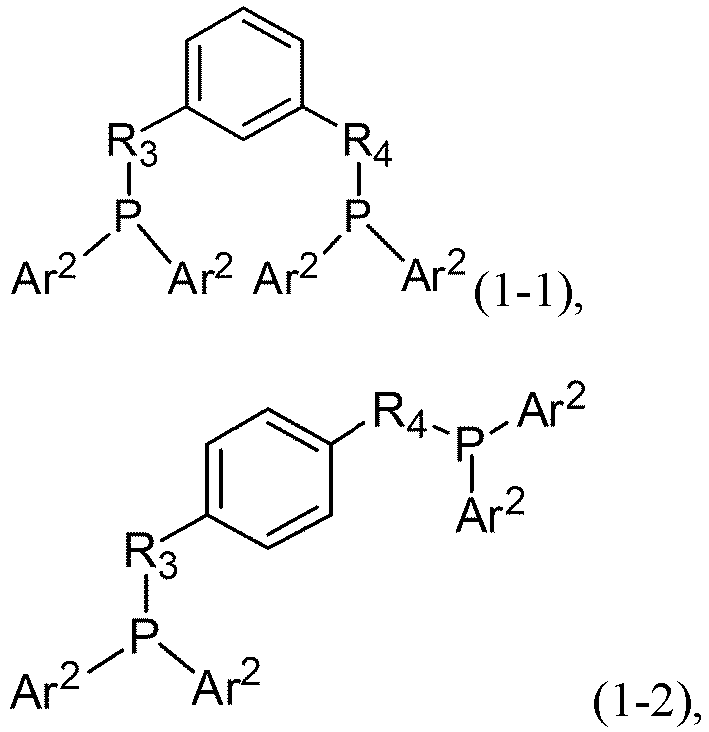
- the catalyst has a structural formula shown in formula (1-1), formula (1-2), or formula (1-3):
- the catalyst has a molecular structural formula shown in formulas (A) to (C):
- R 5 is selected from an alkyl group or an alkoxy group; and one or more of n R 5 s are in an ortho-position or a para-position of and/or one or more of n R 5 s are in an ortho-position or a para-position of
- a number of carbon atoms in the alkyl group ranges from 1 to 10; a number of carbon atoms in the haloalkyl group ranges from 1 to 10; a number of carbon atoms in the alkoxy group ranges from 1 to 10; and a number of carbon atoms in the ester group ranges from 1 to 10.
- the alkoxy group includes one or more of methoxy, ethoxy, propoxy, and butoxy; and the ester group includes one or more of methyl formate, methyl acetate, ethyl formate, or ethyl acetate.
- a method for preparing a catalyst for synthesizing polyimide including the following steps: A first raw material, a second raw material, and a first solvent are mixed to undergo a first reaction to obtain an intermediate product; and the intermediate product is hydrolyzed to obtain the catalyst for synthesizing polyimide.
- a chemical formula of the first raw material is Ar 1 2 PCl, where Ar 1 is a substituted aryl group, and a substituent of the substituted aryl group includes one or more of cyano, 1,3-dioxolane, and methyl formate.
- a structural formula of the second raw material is shown in formula (2): .
- R 1 is selected from OH or NH 2 ;
- R 2 is selected from OH or NH 2 ; and
- R 5 is selected from a hydrogen atom, a chlorine atom, a bromine atom, an iodine atom, a cyano group, a nitro group, an ester group, an alkyl group, an alkoxy group, or a haloalkyl group, and n is an integer from 1 to 4.
- the first solvent includes one or more of tetrahydrofuran or ethyl ether.
- the second raw material includes one or more of o-phenylenediamine, m-phenylenediamine, p-phenylenediamine, m-dihydroxybenzene, p-dihydroxybenzene, and o-dihydroxybenzene.
- a molar ratio of the first raw material to the second raw material to the first solvent is (1.5-2.5):1:(10-300).
- a temperature for the first reaction ranges from 0°C to 80°C, and time for the first reaction ranges from 2 h to 48 h.
- a reaction solution is obtained after the first reaction is completed. Extraction is performed on the reaction solution using a mixture of a non-polar solvent and water, and an extracted organic phase is recrystallized to obtain the intermediate product.
- the non-polar solvent includes one or more of ethyl acetate, ethyl ether, and dichloromethane.
- a reaction solution is obtained after the hydrolysis is completed. Extraction is performed on the reaction solution to obtain an aqueous-phase solution, and an acid is added to the aqueous-phase solution to obtain the catalyst.
- an extractant for the extraction includes a non-polar solvent and an aqueous solution of an alkali
- the non-polar solvent includes one or more of ethyl acetate, ethyl ether, and dichloromethane.
- the alkali includes one or more of sodium hydroxide and potassium hydroxide.
- a method for preparing polyimide including: mixing the catalyst for synthesizing polyimide according to the first aspect or the catalyst obtained by using the method for preparing the catalyst for synthesizing polyimide according to the second aspect, diamine, dianhydride, and a second solvent to undergo a second reaction, to obtain the polyimide.
- a molar ratio of the diamine to the dianhydride to the catalyst to the second solvent is (0.95-1):(0.95-1):(0.0001-0.5):(25-200).
- the diamine includes one or more of o-phenylenediamine, m-phenylenediamine, p-phenylenediamine, 4,4'-diaminodiphenyl ether, 4,4'-diaminodiphenyl sulfone, 1,3-diamino-2-methylpropane, N,N-bis(4-aminophenyl)-1,4-benzenediamine, and 9,9-bis(4-aminophenyl)fluorene.
- the dianhydride includes one or more of 2,3,3',4'-diphenyl ether tetracarboxylic acid dianhydride, 3,3',4,4'-tetracarboxybenzophenone dianhydride, 3,3',4,4'-tetracarboxydiphenylsulfone dianhydride, 2,2-bis(3,4-dicarboxyphenyl)hexafluoropropane dianhydride, 4,4'-bis(3,4-dicarboxyphenoxy)diphenyl ether dianhydride, 4,4'-bis(3,4-dicarboxyphenoxy)benzophenone dianhydride, 4,4'-bis(3,4-dicarboxyphenoxy)diphenylmethane dianhydride, and 4,4'-bis(3,4-dicarboxyphenoxy)diphenylsulfone dianhydride.
- the second solvent includes one or more of dimethyl sulfoxide, N-methyl pyrrolidone, N,N-dimethylformamide, and N,N-dimethylacetamide.
- a temperature for the second reaction ranges from 60°C to 180°C, and time for the second reaction ranges from 1 h to 48 h.
- a reaction solution is obtained after the second reaction is completed.
- a polar solvent is added to the reaction solution to precipitate the polyimide.
- the polar solvent includes one or more of methanol, ethanol, and water.
- a polyimide compound is provided.
- the polyimide compound is obtained by using the method for preparing the polyimide according to the third aspect.
- Polyimide is usually obtained through polycondensation of aromatic dianhydride and aromatic diamine in an organic solution to produce polyamide acid or polyamide ester, and then through imidization (cyclization) of polyamide acid or polyamide ester.
- a nitrogen-containing compound is usually used as a catalyst for the cyclization for polyimide.
- the removal of the catalyst is abandoned due to high costs.
- the residual nitrogen-containing compound hinders the cross-linking of molecular chains, consequently affecting the film-forming property of polyimide.
- the current catalyst has a limited catalytic effect, and the actual production further requires two-time heating at temperatures higher than 300°C to accelerate the cyclization. This increases production costs and reduces production efficiency.
- the catalyst has a structural formula shown in formula (1):
- R 3 is selected from O or NH;
- R 4 is selected from O or NH;
- Ar 2 is a substituted aryl group, and a substituent of the substituted aryl group includes a carboxyl group;
- R 5 is selected from a hydrogen atom, a chlorine atom, a bromine atom, an iodine atom, a cyano group, a nitro group, an ester group, an alkyl group, an alkoxy group, or a haloalkyl group, and n is an integer from 1 to 4.
- a number of carbon atoms in the alkyl group ranges from 1 to 10; a number of carbon atoms in the haloalkyl group ranges from 1 to 10; a number of carbon atoms in the alkoxy group ranges from 1 to 10; and a number of carbon atoms in the ester group ranges from 1 to 10.
- n R 5 s are all selected from H, and the catalyst has a structural formula shown in formula (1-1), formula (1-2), or formula (1-3):
- R 3 is selected from O or NH
- R 4 is selected from O or NH
- Ar 2 is a substituted aryl group, and a substituent of the substituted aryl group includes a carboxyl group.
- Ar 2 may be any one of substituted phenyl, substituted naphthyl, and substituted anthryl.
- Ar 2 is a substituted phenyl group, and a substituent of the substituted phenyl group includes a carboxyl group.
- a structural formula of Ar 2 is shown in formula (1-4): In formula (1-4), the wave bond indicates a linking site.
- an existing polyimide catalyst for example, a pyridine or quinoline catalyst, mainly react through lone-pair electrons in nitrogen atoms.
- nitrogen is the element of the second period and has an orbital more restricted than other elements of the same main group, the lone-pair electrons of nitrogen are relatively less active in the catalytic reaction.
- the catalyst provided in the present disclosure contains phosphorus atoms.
- the phosphorus atoms have an orbital more extended than the nitrogen atoms, which facilitates improving the reaction activity and lowering the temperature required for the reaction, to allow the reaction to be carried out under milder conditions, thereby reducing the production costs and improving the production efficiency.
- the structure of the catalyst has a carboxyl group at the end.
- the carboxyl group can crosslink with an amino group at the end of the polyimide molecule or form a hydrogen bond with imide, so that the catalyst bonds with the polymer chain to form a part of the polymer chain, promoting the tight connection between the polymer chains. This facilitates the removal of the catalyst, thereby implementing stable film-forming.
- R 5 is selected from an alkyl group or an alkoxy group; and one or more of the n R 5 s are in an ortho-position or a para-position of and/or one or more of the n R 5 s are in an ortho-position or a para-position of .
- the alkyl group or the alkoxy group is an electron-donating group, which facilitates further improving the activity of the catalyst when in an ortho-position or a para-position of
- the alkoxy group includes one or more of methoxy, ethoxy, propoxy, and butoxy.
- the ester group includes one or more of methyl formate, methyl acetate, ethyl formate, or ethyl acetate.
- the catalyst has a molecular structural formula shown in formulas (A) to (C):
- the present disclosure further provides a method for preparing the foregoing catalyst, including the following steps:
- a first raw material, a second raw material, and a first solvent are mixed to undergo a first reaction to obtain an intermediate product.
- the intermediate product is hydrolyzed to obtain the catalyst.
- the first raw material is phenylphosphonic chloride with a protecting group
- a chemical formula of the first raw material is Ar 1 2 PCl
- Ar 1 is a substituted aryl group
- a substituent of the substituted aryl group includes one or more of cyano, 1,3-dioxolane, and methyl formate.
- a structural formula of Ar 1 is shown in formula (2-4), formula (2-5), or formula (2-6):
- R 1 and R 2 are independently selected from OH or NH 2 ; and the n R 5 s are independently selected from a hydrogen atom, a chlorine atom, a bromine atom, an iodine atom, a cyano group, a nitro group, an ester group, an alkyl group, an alkoxy group, or a haloalkyl group, and n is an integer from 1 to 4.
- the n R 5 s are all H, and a structural formula of the second raw material is shown in formula (2-1), formula (2-2), or formula (2-3):
- R 1 and R 2 are independently selected from OH or NH 2 .
- the second raw material includes one or more of diphenol and diamine.
- the diamine may be one or more of o-phenylenediamine, m-phenylenediamine, and p-phenylenediamine.
- the diphenol may be one or more of m-dihydroxybenzene, p-dihydroxybenzene, and o-dihydroxybenzene.
- the first solvent includes one or more of tetrahydrofuran or ethyl ether.
- a temperature for the first reaction ranges from 0°C to 80°C, and time for the first reaction ranges from 2 h to 48 h.
- the temperature for the first reaction may be specifically, but is not limited to, 0°C, 10°C, 15°C, 20°C, 25°C, 30°C, 40°C, 50°C, 60°C, or 80°C.
- the time for the first reaction may be specifically, but is not limited to, 2 h, 5 h, 10 h, 20 h, 30 h, or 48 h.
- the method for preparing the catalyst includes the following steps:
- Step 100 The first raw material, the second raw material, and the first solvent are mixed for a reaction.
- a molar ratio of the first raw material to the second raw material to the first solvent is (1.5-2.5):1:(10-300), a temperature for the reaction ranges from 0°C to 80°C, and time for the reaction ranges from 2 h to 48 h.
- a molar ratio of the first raw material to the second raw material to the first solvent is (1.8-2.1):1:(10-300).
- a mixture of a non-polar solvent and water is added to a reaction solution for extraction, and an organic phase on the upper layer is taken and recrystallized to obtain an intermediate product.
- the non-polar solvent includes one or more of ethyl acetate, ethyl ether, and dichloromethane.
- a solvent for the recrystallization may be a mixture of dichloromethane and n-hexane, a mixture of ethanol and water, or a mixture of methanol and water.
- a small amount of triethylamine is added to the mixture of the first raw material, the second raw material, and the first solvent, to adjust the mixture to be weakly alkaline.
- Step 200 The intermediate product is hydrolyzed under acidic or alkaline conditions. After the reaction is completed, a non-polar solvent and an aqueous solution of an alkali are added for extraction, an aqueous solution of an acid is added to an extracted aqueous-phase solution, and a precipitate is filtered and washed to obtain the catalyst.
- the aqueous solution of the alkali may be an aqueous solution of sodium hydroxide or potassium hydroxide in a concentration of 1 mol/L to 5 mol/L.
- the aqueous solution of the acid may be an aqueous solution of hydrogen chloride in a concentration of 1 mol/L to 5 mol/L.
- FIG. 1 is a schematic diagram of a process of preparing a catalyst according to the present disclosure.
- A in FIG. 1 is a schematic diagram of a process of preparing the compound shown in formula (1-1).
- B in FIG. 1 is a schematic diagram of a process of preparing the compound shown in formula (1-2).
- C in FIG. 1 is a schematic diagram of a process of preparing the compound shown in formula (1-3).
- the present disclosure further provides a method for preparing polyimide, including the following step:
- the catalyst provided in the present disclosure is mixed with diamine, dianhydride, and a second solvent to undergo a second reaction to obtain the polyimide.
- FIG. 2 is a schematic diagram of a process of preparing polyimide according to an embodiment of the present disclosure.
- a molar ratio of the diamine to the dianhydride to the catalyst to the solvent is (0.95-1):(0.95-1):(0.0001-0.5):(25-200).
- a molar ratio of the diamine to the dianhydride to the catalyst to the solvent is (0.95-1):(0.95-1):(0.01-0.1):(50-150).
- the diamine, the catalyst, and the second solvent are first mixed, and the dianhydride is then added slowly.
- the compound shown in formula (1-2) is used as the catalyst for the reaction, where a molar ratio of the diamine to the dianhydride to the catalyst to the solvent is (0.95-1):(0.95-1):(0.05-0.3):(25-200).
- the diamine includes one or more of o-phenylenediamine, m-phenylenediamine, p-phenylenediamine, 4,4'-diaminodiphenyl ether, 4,4'-diaminodiphenyl sulfone, 1,3-diamino-2-methylpropane, N,N-bis(4-aminophenyl)-1,4-benzenediamine, and 9,9-bis(4-aminophenyl)fluorene;
- the dianhydride includes one or more of 2,3,3',4'-diphenyl ether tetracarboxylic acid dianhydride, 3,3',4,4'-tetracarboxybenzophenone dianhydride, 3,3',4,4'-tetracarboxydiphenylsulfone dianhydride, 2,2-bis(3,4-dicarboxyphenyl)hexafluoropropane dian
- a temperature for the second reaction ranges from 60°C to 180°C, and time for the second reaction ranges from 1 h to 48 h.
- the temperature for the second reaction may be specifically, but is not limited to, 60°C, 80°C, 100°C, 120°C, 140°C, 160°C, or 180°C.
- the time for the second reaction may be specifically, but is not limited to, 1 h, 2 h, 5 h, 10 h, 20 h, 30 h, or 48 h.
- the method for preparing the polyimide includes the following steps:
- Step 100 Diamine, the catalyst, and the second solvent are added sequentially into a reactor, and stirred and mixed uniformly at -20°C to 25°C.
- Step 200 Dianhydride is added slowly into the reactor, and heated to 60°C to 180°C, to react for 1 h to 48 h.
- Step 300 After the reaction solution is cooled down to room temperature, a polar solvent is added to the reaction system, and then filtered and dried to obtain the polyimide.
- the polar solvent includes one or more of methanol, ethanol, and water.
- the compound shown in formula (1-2) is used as the catalyst for the reaction, a temperature for the second reaction ranges from 60°C to 100°C, and time for the second reaction ranges from 8 h to 15 h.
- the method for preparing polyimide provided in the present disclosure is simple, by which the polyimide can be prepared through a one-step reaction.
- the operation is simple, the conditions are mild, and there is no need to remove impurities after the reaction.
- the product has good performance and good application prospects.
- a method for preparing a catalyst included the following steps: 18.2 g of bis(3-(1,3-bisdioxolane)phenylphosphonic chloride, 20.2 g of triethylamine, and 11 g of m-dihydroxybenzene were dissolved in 250 mL of tetrahydrofuran under nitrogen protection, and stirred at 25°C for 6 h. After the reaction was completed, water and ethyl acetate were added for extraction. An organic phase on the upper layer was taken and dried with anhydrous sodium sulfate, then concentrated using a rotary evaporator, and then recrystallized with dichloromethane and n-hexane, to obtain a light yellow solid, that is, an intermediate product 1.
- the reaction equation of the foregoing reaction was as follows:
- a method for preparing polyimide includes the following steps: 4.810 g of 4,4'-diaminodiphenyl ether, 0.025 g of catalyst 1, and 190 g of N-methyl pyrrolidone were sequentially added into a reactor and stirred, and then cooled down to 0°C.
- the structure of the catalyst 1 was shown in formula (A):
- a method for preparing a catalyst included the following steps: 13.5 g of bis(4-(1,4-cyano)phenylphosphonic chloride, 20.2 g of triethylamine, and 10.8 g of p-phenylenediamine were dissolved in 250 mL of tetrahydrofuran under nitrogen protection, and stirred at 80°C for 12 h. After the reaction was completed, water and ethyl acetate were added for extraction. An organic phase on the upper layer was taken and dried with anhydrous sodium sulfate, then concentrated using a rotary evaporator, and then recrystallized with dichloromethane and n-hexane, to obtain a light yellow solid, that is, an intermediate product 2.
- the reaction equation of the foregoing reaction was as follows:
- a method for preparing polyimide includes the following steps: 4.810 g of 4,4'-diaminodiphenyl ether, 0.025 g of catalyst 2, and 190 g of N-methyl pyrrolidone were sequentially added into a reactor and stirred, and then cooled down to 0°C.
- the structure of the catalyst 2 was shown in formula (B):
- a method for preparing a catalyst included the following steps: 16.8 g of bis(2-(1,2-methyl ester)phenylphosphonic chloride, 20.2 g of triethylamine, and 10.8 g of o-dihydroxybenzene were dissolved in 350 mL of ethyl ether under nitrogen protection, and stirred at 0°C for 6 h. After the reaction was completed, water and ethyl acetate were added for extraction. An organic phase on the upper layer was taken and dried with anhydrous sodium sulfate, then concentrated using a rotary evaporator, and then recrystallized with dichloromethane and n-hexane, to obtain a light yellow solid, that is, an intermediate product 3.
- the reaction equation of the foregoing reaction was as follows:
- a method for preparing polyimide includes the following steps: 4.810 g of 4,4'-diaminodiphenyl ether, 0.025 g of catalyst 3, and 190 g of N-methyl pyrrolidone were sequentially added into a reactor and stirred, and then cooled down to 0°C.
- the structure of the catalyst 3 was shown in formula (C):
- a method for preparing polyimide includes the following steps: The difference between Example 4 and Example 2 was that the amount of the catalyst 2 added in Example 4 was 0.5 g.
- the polyimide solid was prepared by using the same method as in Example 2.
- a method for preparing polyimide includes the following steps: 4.810 g of 4,4'-diaminodiphenyl ether, 0.025 g of isoquinoline, and 190 g of N-methyl pyrrolidone were sequentially added into a reactor and stirred, and then cooled down to 0°C.
- the present disclosure further provides the effect examples.
- the polyimide prepared with the catalyst in the present disclosure has a higher degree of cyclization.
- the catalyst of the structure in Example 2 has more prominent catalytic performance due to the electrical property of the catalyst, so that the polyimide has a higher degree of cyclization.
- the degree of cyclization of the polyimide in Example 3 is lower due to the steric hindrance effect of the catalyst.
- the catalyst as small molecules in Comparative Example 1 hinders the cross-linking of the polyimide, and consequently affects the film-forming effect; while the catalyst of the specific structure in the example of the present disclosure can crosslink with the polymers , which promotes the film formation of the product and improves the film-forming property of the product.
- Example 4 due to an extremely high amount of the catalyst added, under the same conditions, although the catalyst takes effect in crosslinking, the prepared film material is more likely to absorb water due to increased polar groups, and the difficulty in curing the film material is increased due to increased small molecules in the solution, so that the film-forming property of the product is slightly reduced.
Landscapes
- Chemical & Material Sciences (AREA)
- Organic Chemistry (AREA)
- Health & Medical Sciences (AREA)
- Chemical Kinetics & Catalysis (AREA)
- Medicinal Chemistry (AREA)
- Polymers & Plastics (AREA)
- Life Sciences & Earth Sciences (AREA)
- Biochemistry (AREA)
- General Health & Medical Sciences (AREA)
- Molecular Biology (AREA)
- Engineering & Computer Science (AREA)
- Materials Engineering (AREA)
- Macromolecular Compounds Obtained By Forming Nitrogen-Containing Linkages In General (AREA)
Abstract

Description
- The present disclosure claims priority to
Chinese Patent Application No. 202210684716.2, filed on June 16, 2022 - The present disclosure relates to the technical field of polyimide, and specifically, to a catalyst for synthesizing polyimide and a preparation method therefor, and a polyimide compound.
- Polyimide is a type of polymer material with a molecular chain containing an imide ring, with excellent properties such as high mechanical properties, high-and-low temperature resistance, flame retardancy, and irradiation resistance. Polyimide products include films, fibers, resins, foams, composites, and the like, which are widely used in the fields of national defense and military industry, microelectronics, vehicles, chemical industry, and the like. Currently, amines, quinolines, pyridines, or other nitrogen-containing compounds are usually used as catalysts for the synthesis of polyimide. However, the nitrogen-containing compound is susceptible to a reaction with an uncyclized precursor to form a salt, which leads to the difficulty in removing the catalyst. The residual catalyst affects the film-forming property of polyimide, reducing the quality of products. In addition, the existing catalysts have limited catalytic effect, so that the production process further requires multiple times of heating to accelerate the reaction, resulting in high production costs.
- In view of this, the present disclosure provides a new catalyst for synthesizing polyimide. The catalyst has high reactivity to complete a reaction by one-time heating, greatly reducing production costs. In addition, the catalyst can crosslink with the molecular chain of polyimide to form a part of the polymer, so that the catalyst free in the system is reduced, thereby ensuring the good film-forming property of products.
- According to a first aspect of the present disclosure, a catalyst for synthesizing polyimide is provided. The catalyst has a structural formula shown in formula (1):

- In formula (1), R3 is selected from O or NH; R4 is selected from O or NH; Ar2 is a substituted aryl group, and a substituent of the substituted aryl group includes a carboxyl group; and R5 is selected from a hydrogen atom, a chlorine atom, a bromine atom, an iodine atom, a cyano group, a nitro group, an ester group, an alkyl group, an alkoxy group, or a haloalkyl group, and n is an integer from 1 to 4.
- Optionally, the catalyst has a structural formula shown in formula (1-1), formula (1-2), or formula (1-3):


- Optionally, the catalyst has a molecular structural formula shown in formulas (A) to (C):


- Optionally, R5 is selected from an alkyl group or an alkoxy group; and one or more of n R5s are in an ortho-position or a para-position of


- Optionally, a number of carbon atoms in the alkyl group ranges from 1 to 10; a number of carbon atoms in the haloalkyl group ranges from 1 to 10; a number of carbon atoms in the alkoxy group ranges from 1 to 10; and a number of carbon atoms in the ester group ranges from 1 to 10.
- Optionally, the alkoxy group includes one or more of methoxy, ethoxy, propoxy, and butoxy; and the ester group includes one or more of methyl formate, methyl acetate, ethyl formate, or ethyl acetate.
- According to a second aspect of the present disclosure, a method for preparing a catalyst for synthesizing polyimide is provided, including the following steps: A first raw material, a second raw material, and a first solvent are mixed to undergo a first reaction to obtain an intermediate product; and the intermediate product is hydrolyzed to obtain the catalyst for synthesizing polyimide. A chemical formula of the first raw material is Ar1 2PCl, where Ar1 is a substituted aryl group, and a substituent of the substituted aryl group includes one or more of cyano, 1,3-dioxolane, and methyl formate. A structural formula of the second raw material is shown in formula (2):

- Optionally, the first solvent includes one or more of tetrahydrofuran or ethyl ether.
- Optionally, the second raw material includes one or more of o-phenylenediamine, m-phenylenediamine, p-phenylenediamine, m-dihydroxybenzene, p-dihydroxybenzene, and o-dihydroxybenzene.
- Optionally, a molar ratio of the first raw material to the second raw material to the first solvent is (1.5-2.5):1:(10-300).
- Optionally, a temperature for the first reaction ranges from 0°C to 80°C, and time for the first reaction ranges from 2 h to 48 h.
- Optionally, a reaction solution is obtained after the first reaction is completed. Extraction is performed on the reaction solution using a mixture of a non-polar solvent and water, and an extracted organic phase is recrystallized to obtain the intermediate product. The non-polar solvent includes one or more of ethyl acetate, ethyl ether, and dichloromethane.
- Optionally, a reaction solution is obtained after the hydrolysis is completed. Extraction is performed on the reaction solution to obtain an aqueous-phase solution, and an acid is added to the aqueous-phase solution to obtain the catalyst.
- Optionally, an extractant for the extraction includes a non-polar solvent and an aqueous solution of an alkali, and the non-polar solvent includes one or more of ethyl acetate, ethyl ether, and dichloromethane.
- Optionally, the alkali includes one or more of sodium hydroxide and potassium hydroxide.
- According to a third aspect of the present disclosure, a method for preparing polyimide is provided, including: mixing the catalyst for synthesizing polyimide according to the first aspect or the catalyst obtained by using the method for preparing the catalyst for synthesizing polyimide according to the second aspect, diamine, dianhydride, and a second solvent to undergo a second reaction, to obtain the polyimide.
- Optionally, a molar ratio of the diamine to the dianhydride to the catalyst to the second solvent is (0.95-1):(0.95-1):(0.0001-0.5):(25-200).
- Optionally, the diamine includes one or more of o-phenylenediamine, m-phenylenediamine, p-phenylenediamine, 4,4'-diaminodiphenyl ether, 4,4'-diaminodiphenyl sulfone, 1,3-diamino-2-methylpropane, N,N-bis(4-aminophenyl)-1,4-benzenediamine, and 9,9-bis(4-aminophenyl)fluorene.
- Optionally, the dianhydride includes one or more of 2,3,3',4'-diphenyl ether tetracarboxylic acid dianhydride, 3,3',4,4'-tetracarboxybenzophenone dianhydride, 3,3',4,4'-tetracarboxydiphenylsulfone dianhydride, 2,2-bis(3,4-dicarboxyphenyl)hexafluoropropane dianhydride, 4,4'-bis(3,4-dicarboxyphenoxy)diphenyl ether dianhydride, 4,4'-bis(3,4-dicarboxyphenoxy)benzophenone dianhydride, 4,4'-bis(3,4-dicarboxyphenoxy)diphenylmethane dianhydride, and 4,4'-bis(3,4-dicarboxyphenoxy)diphenylsulfone dianhydride.
- Optionally, the second solvent includes one or more of dimethyl sulfoxide, N-methyl pyrrolidone, N,N-dimethylformamide, and N,N-dimethylacetamide.
- Optionally, a temperature for the second reaction ranges from 60°C to 180°C, and time for the second reaction ranges from 1 h to 48 h.
- Optionally, a reaction solution is obtained after the second reaction is completed. A polar solvent is added to the reaction solution to precipitate the polyimide. The polar solvent includes one or more of methanol, ethanol, and water.
- According to a fourth aspect of the present disclosure, a polyimide compound is provided. The polyimide compound is obtained by using the method for preparing the polyimide according to the third aspect.
-
-
FIG. 1 is a schematic diagram of a process of preparing a catalyst according to the present disclosure; and -
FIG. 2 is a schematic diagram of a process of preparing polyimide according to an embodiment of the present disclosure. - The technical solutions in embodiments of the present disclosure are clearly and completely described in the following with reference to the accompanying drawings in the embodiments of the present disclosure. Apparently, the described embodiments are merely some rather than all of the embodiments of the present disclosure. All other embodiments obtained by a person of ordinary skill in the art based on the embodiments of the present disclosure without making creative efforts shall fall within the protection scope of the present disclosure.
- Polyimide is usually obtained through polycondensation of aromatic dianhydride and aromatic diamine in an organic solution to produce polyamide acid or polyamide ester, and then through imidization (cyclization) of polyamide acid or polyamide ester. Currently, a nitrogen-containing compound is usually used as a catalyst for the cyclization for polyimide. In the mass production process, the removal of the catalyst is abandoned due to high costs. However, the residual nitrogen-containing compound hinders the cross-linking of molecular chains, consequently affecting the film-forming property of polyimide. In addition, the current catalyst has a limited catalytic effect, and the actual production further requires two-time heating at temperatures higher than 300°C to accelerate the cyclization. This increases production costs and reduces production efficiency. To improve the production efficiency of polyimide and ensure the good film-forming property of products, the present disclosure provides a new catalyst. The catalyst has a structural formula shown in formula (1):

- In formula (1), R3 is selected from O or NH; R4 is selected from O or NH; Ar2 is a substituted aryl group, and a substituent of the substituted aryl group includes a carboxyl group; and R5 is selected from a hydrogen atom, a chlorine atom, a bromine atom, an iodine atom, a cyano group, a nitro group, an ester group, an alkyl group, an alkoxy group, or a haloalkyl group, and n is an integer from 1 to 4. In some implementations of the present disclosure, a number of carbon atoms in the alkyl group ranges from 1 to 10; a number of carbon atoms in the haloalkyl group ranges from 1 to 10; a number of carbon atoms in the alkoxy group ranges from 1 to 10; and a number of carbon atoms in the ester group ranges from 1 to 10.
- In some embodiments, the n R5s are all selected from H, and the catalyst has a structural formula shown in formula (1-1), formula (1-2), or formula (1-3):


- In formula (1-1), formula (1-2), and formula (1-3), R3 is selected from O or NH; R4 is selected from O or NH; and Ar2 is a substituted aryl group, and a substituent of the substituted aryl group includes a carboxyl group. In some implementations of the present disclosure, Ar2 may be any one of substituted phenyl, substituted naphthyl, and substituted anthryl.
- In some implementations of the present disclosure, Ar2 is a substituted phenyl group, and a substituent of the substituted phenyl group includes a carboxyl group. In some embodiments of the present disclosure, a structural formula of Ar2 is shown in formula (1-4):

- Currently, an existing polyimide catalyst, for example, a pyridine or quinoline catalyst, mainly react through lone-pair electrons in nitrogen atoms. As nitrogen is the element of the second period and has an orbital more restricted than other elements of the same main group, the lone-pair electrons of nitrogen are relatively less active in the catalytic reaction. The catalyst provided in the present disclosure contains phosphorus atoms. The phosphorus atoms have an orbital more extended than the nitrogen atoms, which facilitates improving the reaction activity and lowering the temperature required for the reaction, to allow the reaction to be carried out under milder conditions, thereby reducing the production costs and improving the production efficiency. The structure of the catalyst has a carboxyl group at the end. The carboxyl group can crosslink with an amino group at the end of the polyimide molecule or form a hydrogen bond with imide, so that the catalyst bonds with the polymer chain to form a part of the polymer chain, promoting the tight connection between the polymer chains. This facilitates the removal of the catalyst, thereby implementing stable film-forming.
- In some implementations of the present disclosure, R5 is selected from an alkyl group or an alkoxy group; and one or more of the n R5s are in an ortho-position or a para-position of


- In some specific implementations of the present disclosure, the catalyst has a molecular structural formula shown in formulas (A) to (C):


- The present disclosure further provides a method for preparing the foregoing catalyst, including the following steps:
- A first raw material, a second raw material, and a first solvent are mixed to undergo a first reaction to obtain an intermediate product. The intermediate product is hydrolyzed to obtain the catalyst.
- In an implementation of the present disclosure, the first raw material is phenylphosphonic chloride with a protecting group, and a chemical formula of the first raw material is Ar1 2PCl, where Ar1 is a substituted aryl group, and a substituent of the substituted aryl group includes one or more of cyano, 1,3-dioxolane, and methyl formate. In some embodiments, a structural formula of Ar1 is shown in formula (2-4), formula (2-5), or formula (2-6):

- In an implementation of the present disclosure, a structural formula of the second raw material is shown in formula (2):
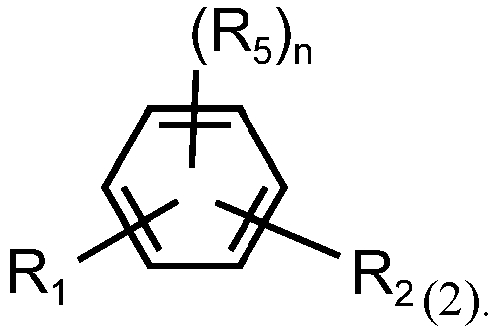
- In formula (2), R1 and R2 are independently selected from OH or NH2; and the n R5s are independently selected from a hydrogen atom, a chlorine atom, a bromine atom, an iodine atom, a cyano group, a nitro group, an ester group, an alkyl group, an alkoxy group, or a haloalkyl group, and n is an integer from 1 to 4. In some embodiments, the n R5s are all H, and a structural formula of the second raw material is shown in formula (2-1), formula (2-2), or formula (2-3):

- In formula (2-1), formula (2-2), and formula (2-3), R1 and R2 are independently selected from OH or NH2. In some embodiments, the second raw material includes one or more of diphenol and diamine. The diamine may be one or more of o-phenylenediamine, m-phenylenediamine, and p-phenylenediamine. The diphenol may be one or more of m-dihydroxybenzene, p-dihydroxybenzene, and o-dihydroxybenzene. In some implementations of the present disclosure, the first solvent includes one or more of tetrahydrofuran or ethyl ether. In some implementations of the present disclosure, a temperature for the first reaction ranges from 0°C to 80°C, and time for the first reaction ranges from 2 h to 48 h. The temperature for the first reaction may be specifically, but is not limited to, 0°C, 10°C, 15°C, 20°C, 25°C, 30°C, 40°C, 50°C, 60°C, or 80°C. The time for the first reaction may be specifically, but is not limited to, 2 h, 5 h, 10 h, 20 h, 30 h, or 48 h.
- In some implementations of the present disclosure, the method for preparing the catalyst includes the following steps:
- Step 100: The first raw material, the second raw material, and the first solvent are mixed for a reaction. A molar ratio of the first raw material to the second raw material to the first solvent is (1.5-2.5):1:(10-300), a temperature for the reaction ranges from 0°C to 80°C, and time for the reaction ranges from 2 h to 48 h. In some embodiments, a molar ratio of the first raw material to the second raw material to the first solvent is (1.8-2.1):1:(10-300). In some implementations of the present disclosure, after the reaction is completed, a mixture of a non-polar solvent and water is added to a reaction solution for extraction, and an organic phase on the upper layer is taken and recrystallized to obtain an intermediate product. The non-polar solvent includes one or more of ethyl acetate, ethyl ether, and dichloromethane. A solvent for the recrystallization may be a mixture of dichloromethane and n-hexane, a mixture of ethanol and water, or a mixture of methanol and water. In some embodiments, a small amount of triethylamine is added to the mixture of the first raw material, the second raw material, and the first solvent, to adjust the mixture to be weakly alkaline.
- Step 200: The intermediate product is hydrolyzed under acidic or alkaline conditions. After the reaction is completed, a non-polar solvent and an aqueous solution of an alkali are added for extraction, an aqueous solution of an acid is added to an extracted aqueous-phase solution, and a precipitate is filtered and washed to obtain the catalyst. The aqueous solution of the alkali may be an aqueous solution of sodium hydroxide or potassium hydroxide in a concentration of 1 mol/L to 5 mol/L. The aqueous solution of the acid may be an aqueous solution of hydrogen chloride in a concentration of 1 mol/L to 5 mol/L.
- Refer to
FIG. 1. FIG. 1 is a schematic diagram of a process of preparing a catalyst according to the present disclosure. (A) inFIG. 1 is a schematic diagram of a process of preparing the compound shown in formula (1-1). (B) inFIG. 1 is a schematic diagram of a process of preparing the compound shown in formula (1-2). (C) inFIG. 1 is a schematic diagram of a process of preparing the compound shown in formula (1-3). - The present disclosure further provides a method for preparing polyimide, including the following step: The catalyst provided in the present disclosure is mixed with diamine, dianhydride, and a second solvent to undergo a second reaction to obtain the polyimide. Refer to
FIG. 2. FIG. 2 is a schematic diagram of a process of preparing polyimide according to an embodiment of the present disclosure. In some implementations of the present disclosure, a molar ratio of the diamine to the dianhydride to the catalyst to the solvent is (0.95-1):(0.95-1):(0.0001-0.5):(25-200). In some embodiments, a molar ratio of the diamine to the dianhydride to the catalyst to the solvent is (0.95-1):(0.95-1):(0.01-0.1):(50-150). In some implementations of the present disclosure, the diamine, the catalyst, and the second solvent are first mixed, and the dianhydride is then added slowly. In some embodiments of the present disclosure, the compound shown in formula (1-2) is used as the catalyst for the reaction, where a molar ratio of the diamine to the dianhydride to the catalyst to the solvent is (0.95-1):(0.95-1):(0.05-0.3):(25-200). - In some implementations of the present disclosure, the diamine includes one or more of o-phenylenediamine, m-phenylenediamine, p-phenylenediamine, 4,4'-diaminodiphenyl ether, 4,4'-diaminodiphenyl sulfone, 1,3-diamino-2-methylpropane, N,N-bis(4-aminophenyl)-1,4-benzenediamine, and 9,9-bis(4-aminophenyl)fluorene; the dianhydride includes one or more of 2,3,3',4'-diphenyl ether tetracarboxylic acid dianhydride, 3,3',4,4'-tetracarboxybenzophenone dianhydride, 3,3',4,4'-tetracarboxydiphenylsulfone dianhydride, 2,2-bis(3,4-dicarboxyphenyl)hexafluoropropane dianhydride, 4,4'-bis(3,4-dicarboxyphenoxy)diphenyl ether dianhydride, 4,4'-bis(3,4-dicarboxyphenoxy)benzophenone dianhydride, 4,4'-bis(3,4-dicarboxyphenoxy)diphenylmethane dianhydride, and 4,4'-bis(3,4-dicarboxyphenoxy)diphenylsulfone dianhydride; and the second solvent includes one or more of dimethyl sulfoxide, N-methyl pyrrolidone, N,N-dimethylformamide, and N,N-dimethylacetamide. In some implementations of the present disclosure, a temperature for the second reaction ranges from 60°C to 180°C, and time for the second reaction ranges from 1 h to 48 h. The temperature for the second reaction may be specifically, but is not limited to, 60°C, 80°C, 100°C, 120°C, 140°C, 160°C, or 180°C. The time for the second reaction may be specifically, but is not limited to, 1 h, 2 h, 5 h, 10 h, 20 h, 30 h, or 48 h.
- In some implementations of the present disclosure, the method for preparing the polyimide includes the following steps:
- Step 100: Diamine, the catalyst, and the second solvent are added sequentially into a reactor, and stirred and mixed uniformly at -20°C to 25°C.
- Step 200: Dianhydride is added slowly into the reactor, and heated to 60°C to 180°C, to react for 1 h to 48 h.
- Step 300: After the reaction solution is cooled down to room temperature, a polar solvent is added to the reaction system, and then filtered and dried to obtain the polyimide.
- In some embodiments, the polar solvent includes one or more of methanol, ethanol, and water. In some embodiments, the compound shown in formula (1-2) is used as the catalyst for the reaction, a temperature for the second reaction ranges from 60°C to 100°C, and time for the second reaction ranges from 8 h to 15 h.
- The method for preparing polyimide provided in the present disclosure is simple, by which the polyimide can be prepared through a one-step reaction. The operation is simple, the conditions are mild, and there is no need to remove impurities after the reaction. The product has good performance and good application prospects.
- The following further describes the technical solutions of the present disclosure with multiple examples.
- A method for preparing a catalyst included the following steps:
18.2 g of bis(3-(1,3-bisdioxolane)phenylphosphonic chloride, 20.2 g of triethylamine, and 11 g of m-dihydroxybenzene were dissolved in 250 mL of tetrahydrofuran under nitrogen protection, and stirred at 25°C for 6 h. After the reaction was completed, water and ethyl acetate were added for extraction. An organic phase on the upper layer was taken and dried with anhydrous sodium sulfate, then concentrated using a rotary evaporator, and then recrystallized with dichloromethane and n-hexane, to obtain a light yellow solid, that is, an intermediate product 1. The reaction equation of the foregoing reaction was as follows:
- 10 g of intermediate product 1 was dissolved in 50 mL of acetone to obtain a solution. 5 g of p-toluenesulfonic acid was added dropwise to the solution, and heated to 50°C and stirred for 3 h. Then, 8 g of chromium trioxide was added and stirred continuously. After the reaction for 18 h, dichloromethane and 1 mol/L aqueous sodium hydroxide solution were added for extraction. An aqueous phase was taken out. 1 mol/L aqueous hydrogen chloride solution was slowly added dropwise to the extracted aqueous-phase solution and then filtered to obtain a filter cake. The filter cake was washed with distilled water for three times and then dried, to obtain a white solid. The white solid was the catalyst 1. The reaction equation of the foregoing reaction was as follows:

- A method for preparing polyimide includes the following steps:
4.810 g of 4,4'-diaminodiphenyl ether, 0.025 g of catalyst 1, and 190 g of N-methyl pyrrolidone were sequentially added into a reactor and stirred, and then cooled down to 0°C. The structure of the catalyst 1 was shown in formula (A):
- 3,3',4,4'-benzophenonetetracarboxylic dianhydride was added slowly into the reactor. The reactor was heated to 120°C, prior to stirring for 36 h. After the reaction system was cooled down to room temperature, methanol was added, filtered, and dried to obtain the polyimide solid.
- A method for preparing a catalyst included the following steps:
13.5 g of bis(4-(1,4-cyano)phenylphosphonic chloride, 20.2 g of triethylamine, and 10.8 g of p-phenylenediamine were dissolved in 250 mL of tetrahydrofuran under nitrogen protection, and stirred at 80°C for 12 h. After the reaction was completed, water and ethyl acetate were added for extraction. An organic phase on the upper layer was taken and dried with anhydrous sodium sulfate, then concentrated using a rotary evaporator, and then recrystallized with dichloromethane and n-hexane, to obtain a light yellow solid, that is, an intermediate product 2. The reaction equation of the foregoing reaction was as follows:
- 10 g of intermediate product 2 was dissolved in 50 mL of 0.5 mol/L dilute hydrochloric acid, and heated to reflux for 18 h. Then, the heating was stopped. After the solution was cooled down to room temperature, dichloromethane and 1 mol/L aqueous sodium hydroxide solution were added for extraction. An aqueous phase was taken out. 1 mol/L aqueous hydrogen chloride solution was slowly added dropwise to the extracted aqueous-phase solution and then filtered to obtain a filter cake. The filter cake was washed with distilled water for three times and then dried, to obtain a white solid. The white solid was the catalyst 2. The reaction equation of the foregoing reaction was as follows:

- A method for preparing polyimide includes the following steps:
4.810 g of 4,4'-diaminodiphenyl ether, 0.025 g of catalyst 2, and 190 g of N-methyl pyrrolidone were sequentially added into a reactor and stirred, and then cooled down to 0°C. The structure of the catalyst 2 was shown in formula (B):
- 3,3',4,4'-benzophenonetetracarboxylic dianhydride was added slowly into the reactor. The reactor was heated to 80°C, prior to stirring for 12 h. After the reaction system was cooled down to room temperature, methanol was added, filtered, and dried to obtain the polyimide solid.
- A method for preparing a catalyst included the following steps:
16.8 g of bis(2-(1,2-methyl ester)phenylphosphonic chloride, 20.2 g of triethylamine, and 10.8 g of o-dihydroxybenzene were dissolved in 350 mL of ethyl ether under nitrogen protection, and stirred at 0°C for 6 h. After the reaction was completed, water and ethyl acetate were added for extraction. An organic phase on the upper layer was taken and dried with anhydrous sodium sulfate, then concentrated using a rotary evaporator, and then recrystallized with dichloromethane and n-hexane, to obtain a light yellow solid, that is, an intermediate product 3. The reaction equation of the foregoing reaction was as follows:
- 10 g of intermediate product 3 was dissolved in 50 mL of 0.5 mol/L dilute hydrochloric acid, and heated to reflux for 18 h. Then, the heating was stopped. After the solution was cooled down to room temperature, dichloromethane and 1 mol/L aqueous sodium hydroxide solution were added for extraction. An aqueous phase was taken out. 1 mol/L aqueous hydrogen chloride solution was slowly added dropwise to the extracted aqueous-phase solution and then filtered to obtain a filter cake. The filter cake was washed with distilled water for three times and then dried, to obtain a white solid. The white solid was the catalyst 3. The reaction equation of the foregoing reaction was as follows:

- A method for preparing polyimide includes the following steps:
4.810 g of 4,4'-diaminodiphenyl ether, 0.025 g of catalyst 3, and 190 g of N-methyl pyrrolidone were sequentially added into a reactor and stirred, and then cooled down to 0°C. The structure of the catalyst 3 was shown in formula (C):
- 3,3',4,4'-benzophenonetetracarboxylic dianhydride was added slowly into the reactor. The reactor was heated to 100°C, prior to stirring for 48 h. After the reaction system was cooled down to room temperature, methanol was added, filtered, and dried to obtain the polyimide solid.
- A method for preparing polyimide includes the following steps:
The difference between Example 4 and Example 2 was that the amount of the catalyst 2 added in Example 4 was 0.5 g. The polyimide solid was prepared by using the same method as in Example 2. - A method for preparing polyimide includes the following steps:
4.810 g of 4,4'-diaminodiphenyl ether, 0.025 g of isoquinoline, and 190 g of N-methyl pyrrolidone were sequentially added into a reactor and stirred, and then cooled down to 0°C. - 3,3',4,4'-benzophenonetetracarboxylic dianhydride was added slowly into the reactor. The reactor was heated to 60°C, prior to stirring for 12 h. After the reaction system was cooled down to room temperature, methanol was added, filtered, and dried to obtain the polyimide solid.
- To verify the properties of the catalyst and polyimide prepared in the present disclosure, the present disclosure further provides the effect examples.
- 1) The structures of the intermediate products and catalysts obtained in Examples 1 to 3 were characterized through nuclear magnetic resonance, to obtain the following results of the hydrogen NMR spectrum:
- Intermediate product 1: 1H NMR (500 MHz, Chloroform-d) δ 7.58 (ddt, J = 7.6, 2.3, 1.2 Hz, 1H), 7.49 - 7.41 (m, 2H), 7.43 - 7.33 (m, 2H), 6.84 - 6.78 (m, 1H), 5.68 (d, J = 0.7 Hz, 1H), 4.08 - 3.95 (m, 6H).
- Catalyst 1: 1H NMR (500 MHz, Chloroform-d) δ 7.99 (td, J = 2.1, 1.2 Hz, 1H), 7.91 (ddd, J = 7.5, 2.1, 1.2 Hz, 1H), 7.64 (ddt, J = 7.8, 2.3, 1.2 Hz, 1H), 7.50 - 7.43 (m, 1H), 6.84 - 6.78 (m, 1H).
- Intermediate product 2: 1H NMR (500 MHz, Chloroform-d) δ 7.70 - 7.62 (m, 2H), 7.57 - 7.51 (m, 2H), 6.89 (s, 1H).
- Catalyst 2: 1H NMR (500 MHz, Chloroform-d) δ 9.85 (s, 1H), 8.04 - 7.97 (m, 3H), 7.54 - 7.48 (m, 3H), 6.89 (s, 1H), 5.85 (s, 1H).
- Intermediate product 3: 1H NMR (500 MHz, Chloroform-d) δ 7.91 - 7.85 (m, 1H), 7.55 - 7.45 (m, 2H), 7.36 - 7.29 (m, 1H), 7.08 - 6.95 (m, 1H), 3.89 (s, 2H).
- Catalyst 3: 1H NMR (500 MHz, Chloroform-d) δ 7.84 (ddd, J = 7.7, 4.0, 1.6 Hz, 1H), 7.57 - 7.49 (m, 1H), 7.43 (dt, J = 7.9, 1.3 Hz, 1H), 7.29 (td, J = 7.5, 1.5 Hz, 1H), 7.08 - 6.95 (m, 1H).
- Polyimide in Comparative Example 1: 1H NMR (500 MHz, THF-d8) δ 8.48 (d, J = 1.7 Hz, 1H), 8.39 (d, 2H), 8.26 (d, 1H), 8.15 (ddd, 3H), 8.04 (d, 2H), 7.45-7.39 (m, 4H), 7.15 -7.09 (m, 4H).
- 2) The film-forming properties of the polyimides obtained in Examples 1 to 4 and Comparative Example 1 were characterized with the specific evaluation criteria and processes as follows: A wet film of a corresponding solution was prepared on a clean glass plate through coating and casting. The wet film was transferred into an oven and heated according to the following heating procedure for imidization: 80°C/2 h, 120°C/1 h, 160°C/1 h, 180°C/1 h, 240°C/1 h, 280°C/1 h, and 350°C/1 h, at a heating rate of 2°C/min. After the glass plate was cooled down to room temperature, the glass plate coated with the polyimide film was soaked in deionized water to peel off the polyimide film, to obtain the corresponding self-supporting PI film. The evaluation of the film-forming property is specifically as follows: If the film is formed into a whole film material on the glass with no cracks on the surface and kept intact after peeling off, the film-forming property is very good. If the film is formed into a whole film material on the glass with no cracks on the surface and cannot be kept intact after peeling off, the film-forming property is average. If the film is formed into fragments on the glass, the film cannot be formed. The test results are shown in Table 1.
- As can be learned from Table 1, compared with the polyimide prepared with the catalyst in Comparative Example 1, the polyimide prepared with the catalyst in the present disclosure has a higher degree of cyclization. The catalyst of the structure in Example 2 has more prominent catalytic performance due to the electrical property of the catalyst, so that the polyimide has a higher degree of cyclization. The degree of cyclization of the polyimide in Example 3 is lower due to the steric hindrance effect of the catalyst. In terms of film formation, the catalyst as small molecules in Comparative Example 1 hinders the cross-linking of the polyimide, and consequently affects the film-forming effect; while the catalyst of the specific structure in the example of the present disclosure can crosslink with the polymers , which promotes the film formation of the product and improves the film-forming property of the product. In Example 4, due to an extremely high amount of the catalyst added, under the same conditions, although the catalyst takes effect in crosslinking, the prepared film material is more likely to absorb water due to increased polar groups, and the difficulty in curing the film material is increased due to increased small molecules in the solution, so that the film-forming property of the product is slightly reduced.
- The foregoing descriptions are exemplary implementations of the present disclosure, but cannot be construed as a limitation to the scope of the present disclosure. It should be noted that a person of ordinary skill in the art may further make several improvements and modifications without departing from the principle of the present disclosure. These improvements and modifications shall fall within the protection scope of the present disclosure.
| Experimental group | Degree of cyclization | Film-forming property |
| Example 1 | 89% | Very good |
| Example 2 | 95% | Very good |
| Example 3 | 78% | Very good |
| Example 4 | 94% | Average |
| Comparative Example 1 | 56% | Average |
Claims (12)
- A catalyst for synthesizing polyimide, wherein the catalyst has a structural formula shown in formula (1):

- The catalyst for synthesizing polyimide according to claim 1, wherein the catalyst has a structural formula shown in formula (1-1), formula (1-2), or formula (1-3):

- The catalyst for synthesizing polyimide according to claim 2, wherein the catalyst has a molecular structural formula shown in formulas (A) to (C):


- The catalyst for synthesizing polyimide according to claim 1, wherein R5 is selected from an alkyl group or an alkoxy group; one or more of the n R5s are in an ortho-position or a para-position of


- The catalyst for synthesizing polyimide according to claim 1 or 4, wherein a number of carbon atoms in the alkyl group ranges from 1 to 10; a number of carbon atoms in the haloalkyl group ranges from 1 to 10; a number of carbon atoms in the alkoxy group ranges from 1 to 10; and a number of carbon atoms in the ester group ranges from 1 to 10.
- A method for preparing a catalyst for synthesizing polyimide, comprising:mixing a first raw material, a second raw material, and a first solvent to undergo a first reaction to obtain an intermediate product; andhydrolyzing the intermediate product to obtain the catalyst for synthesizing polyimide,a chemical formula of the first raw material being Ar1 2PCl, wherein Ar1 is a substituted aryl group, and a substituent of the substituted aryl group comprises one or more of cyano, 1,3-dioxolane, and methyl formate; anda structural formula of the second raw material being shown in formula (2):

- The method for preparing the catalyst for synthesizing polyimide according to claim 6, wherein a temperature for the first reaction ranges from 0°C to 80°C, and time for the first reaction ranges from 2 h to 48 h.
- The method for preparing the catalyst for synthesizing polyimide according to claim 6 or 7, wherein a molar ratio of the first raw material to the second raw material to the first solvent is (1.5-2.5):1:(10-300).
- The method for preparing the catalyst for synthesizing polyimide according to any one of claims 6 to 8, wherein the second raw material comprises one or more of o-phenylenediamine, m-phenylenediamine, p-phenylenediamine, m-dihydroxybenzene, p-dihydroxybenzene, and o-dihydroxybenzene.
- A polyimide compound, wherein the polyimide compound is obtained by mixing the catalyst for synthesizing polyimide according to any one of claims 1 to 5 or the catalyst obtained by using the method for preparing the catalyst for synthesizing polyimide according to any one of claims 6 to 9, diamine, dianhydride, and a second solvent to undergo a second reaction.
- The polyimide compound according to claim 10, wherein a molar ratio of the diamine to the dianhydride to the catalyst to the second solvent is (0.95-1):(0.95-1):(0.0001-0.5):(25-200).
- The polyimide compound according to claim 10 or 11, wherein a temperature for the second reaction ranges from 60°C to 180°C, and time for the second reaction ranges from 1 h to 48 h.
Applications Claiming Priority (2)
| Application Number | Priority Date | Filing Date | Title |
|---|---|---|---|
| CN202210684716.2A CN117285709B (en) | 2022-06-16 | 2022-06-16 | A catalyst for synthesizing polyimide and its preparation method and application |
| PCT/CN2023/090344 WO2023241223A1 (en) | 2022-06-16 | 2023-04-24 | Catalyst for synthesizing polyimide and preparation method therefor, and polyimide compound |
Publications (2)
| Publication Number | Publication Date |
|---|---|
| EP4541838A1 true EP4541838A1 (en) | 2025-04-23 |
| EP4541838A4 EP4541838A4 (en) | 2026-01-21 |
Family
ID=89192168
Family Applications (1)
| Application Number | Title | Priority Date | Filing Date |
|---|---|---|---|
| EP23822794.6A Pending EP4541838A4 (en) | 2022-06-16 | 2023-04-24 | Catalyst for the synthesis of polyimide and manufacturing process therefor as well as polyimide compound |
Country Status (5)
| Country | Link |
|---|---|
| US (1) | US20250109248A1 (en) |
| EP (1) | EP4541838A4 (en) |
| JP (1) | JP2025518360A (en) |
| CN (1) | CN117285709B (en) |
| WO (1) | WO2023241223A1 (en) |
Family Cites Families (27)
| Publication number | Priority date | Publication date | Assignee | Title |
|---|---|---|---|---|
| CA1294731C (en) * | 1986-04-25 | 1992-01-21 | Masakazu Uekita | Copolymeric and amphiphilic polyimide precursor, process for preparing the same and thin film |
| JPH10158247A (en) * | 1996-11-27 | 1998-06-16 | Mitsui Chem Inc | Imidation catalyst and its production |
| US5789525A (en) * | 1997-04-15 | 1998-08-04 | Olin Microelectronic Chemicals, Inc. | Process for making polyimides from diamines and tetracarboxylic diacid diester |
| JP2002212287A (en) * | 2001-01-22 | 2002-07-31 | Hitachi Cable Ltd | Method for producing polyimide |
| US6703450B2 (en) * | 2001-05-15 | 2004-03-09 | Dupont Dow Elastomer, L.L.C. | Curable base-resistant fluoroelastomers |
| US7339009B2 (en) * | 2004-12-16 | 2008-03-04 | General Electric Company | Cross-linked polyimide and method of making them |
| US7795370B2 (en) * | 2005-11-15 | 2010-09-14 | Mitsubishi Chemical Corporation | Tetracarboxylic acid compound, polyimide thereof, and production method thereof |
| US20070219342A1 (en) * | 2006-03-16 | 2007-09-20 | The P. D. George Company | Catalysis of polyimide curing |
| KR100963376B1 (en) * | 2007-02-09 | 2010-06-14 | 주식회사 엘지화학 | Polyimide Manufacturing Method and Polyimide Prepared thereby |
| KR101591539B1 (en) * | 2008-03-31 | 2016-02-03 | 헌츠만 어드밴스드 머티리얼스 아메리카스 엘엘씨 | Storage-stable polymaleimide prepolymer compositions |
| US8080671B2 (en) * | 2008-05-23 | 2011-12-20 | Sabic Innovative Plastics Ip B.V. | Production of low color polyetherimides |
| WO2010095678A1 (en) * | 2009-02-20 | 2010-08-26 | セントラル硝子株式会社 | Fluorinated dicarboxylic acid derivative and polymer obtained therefrom |
| KR101385279B1 (en) * | 2012-03-09 | 2014-04-16 | 한국과학기술원 | Asymmetric diamine compounds containing two functional groups, and polymers therefrom |
| US9127127B2 (en) * | 2012-10-03 | 2015-09-08 | Sabic Global Technologies B.V. | Polyetherimide compositions, methods of manufacture, and articles formed therefrom |
| CN105440285B (en) * | 2016-01-07 | 2018-10-16 | 中国科学院长春应用化学研究所 | Polyimide, and preparation method and application thereof |
| CN111205490B (en) * | 2018-11-22 | 2022-11-04 | 达迈科技股份有限公司 | Method for producing polyimide film |
| CN110041276B (en) * | 2019-04-24 | 2022-09-27 | 吉林大学 | Polyamine monomer of polyimide containing triazole structure, polymer thereof, preparation method and application |
| JP7510414B2 (en) * | 2019-06-04 | 2024-07-03 | 株式会社カネカ | Polyimide resin and its manufacturing method, and polyimide film and its manufacturing method |
| JP2021101002A (en) * | 2019-12-24 | 2021-07-08 | 株式会社カネカ | Polyimide film and production method thereof |
| CN111072964B (en) * | 2019-12-31 | 2022-07-12 | 北京欣奕华科技有限公司 | Polyimide precursor composition and preparation method and application thereof |
| CN111499865B (en) * | 2020-05-27 | 2022-04-26 | 湘潭大学 | A kind of synthetic method of phosphorus-containing polyimide |
| CN111607082A (en) * | 2020-06-05 | 2020-09-01 | 北京大学 | A kind of preparation method of low thermal expansion coefficient polyimide film |
| CN112194791A (en) * | 2020-06-16 | 2021-01-08 | 中国科学院长春应用化学研究所 | A kind of transparent polyimide film and preparation method thereof |
| CN113667120B (en) * | 2021-07-13 | 2022-07-29 | 中化学科学技术研究有限公司 | Polyimide and preparation method thereof |
| CN114231029B (en) * | 2021-12-29 | 2023-08-22 | 山东华夏神舟新材料有限公司 | Cross-linked high-transparency polyimide film and preparation method thereof |
| CN114478278B (en) * | 2022-02-24 | 2023-03-14 | 南京大学 | A carbonyl-containing multi-substituted aromatic diamine monomer and its preparation method |
| CN114479080A (en) * | 2022-03-10 | 2022-05-13 | 东南大学 | Polyimide photocatalyst without triazine ring structure and preparation method of photoelectrode |
-
2022
- 2022-06-16 CN CN202210684716.2A patent/CN117285709B/en active Active
-
2023
- 2023-04-24 JP JP2024571967A patent/JP2025518360A/en active Pending
- 2023-04-24 EP EP23822794.6A patent/EP4541838A4/en active Pending
- 2023-04-24 WO PCT/CN2023/090344 patent/WO2023241223A1/en not_active Ceased
-
2024
- 2024-12-11 US US18/976,809 patent/US20250109248A1/en active Pending
Also Published As
| Publication number | Publication date |
|---|---|
| CN117285709A (en) | 2023-12-26 |
| JP2025518360A (en) | 2025-06-12 |
| US20250109248A1 (en) | 2025-04-03 |
| EP4541838A4 (en) | 2026-01-21 |
| WO2023241223A1 (en) | 2023-12-21 |
| CN117285709B (en) | 2024-09-10 |
Similar Documents
| Publication | Publication Date | Title |
|---|---|---|
| CN113511980A (en) | Aromatic polyimide with main chain containing benzonorbornene structure and preparation method thereof | |
| KR100205962B1 (en) | Novel soluble polyimide resin | |
| JP6145571B2 (en) | Novel acid dianhydride and method for producing the same | |
| CN113480450A (en) | Aromatic diamine monomer containing cyano structure and preparation method thereof, polyimide film and preparation method and application thereof | |
| CN102617857A (en) | Polyimide and preparation process thereof | |
| CN111499865B (en) | A kind of synthetic method of phosphorus-containing polyimide | |
| CN103342678A (en) | Aromatic diamine containing triphenylpyridine and tert-butyl group, soluble polyimide prepared therefrom and preparation method | |
| CN103408442B (en) | Aromatic diamine monomer containing bis(trifluoromethyl), bisisopropyl and fluorenyl structures simultaneously, and preparation method and application thereof | |
| Mochizuki et al. | Preparation and properties of polyisoimide as a polyimide-precursor | |
| US20250109248A1 (en) | Catalyst for Synthesizing Polyimide and Preparation Method Therefor, and Polyimide Compound | |
| TWI602853B (en) | Polyadimide containing adamantane imine preparation | |
| JPS614730A (en) | Production method of organic solvent soluble polyimide compound | |
| CN114349670A (en) | Diamine monomer containing side chain sulfone group structure, polyimide, and preparation method and application of polyimide | |
| CN111349238A (en) | A kind of polyetherimide and preparation process thereof | |
| TW202348597A (en) | Novel diamine, method for producing the same, and polyamic acid and polyimide produced from the diamine | |
| JPS6128526A (en) | Production of organic solvent-soluble polyimide compound | |
| CN104004187A (en) | Polyimide with side chain group and its preparation method | |
| CN101560166B (en) | Method for preparing 1,3-di(2-trifluoromethyl-4-aminophenoxy) benzene | |
| TWI781018B (en) | Dianhydride compound and method of preparing the same | |
| CN118184672B (en) | Cyano group-containing aromatic dianhydride compound and polyimide film | |
| JPS6119634A (en) | Production of organic solvent-soluble polyimide compound | |
| CN117326987B (en) | Diamine monomer and polyimide containing side chain ureido structure, and preparation methods and applications thereof | |
| CN115716990B (en) | Diamine, its preparation method and polyimide film and its preparation method | |
| CN120172907A (en) | Aromatic diamine monomer, polyimide and preparation method and application thereof | |
| KR101971078B1 (en) | Polyamic acid and polyimide |
Legal Events
| Date | Code | Title | Description |
|---|---|---|---|
| STAA | Information on the status of an ep patent application or granted ep patent |
Free format text: STATUS: THE INTERNATIONAL PUBLICATION HAS BEEN MADE |
|
| PUAI | Public reference made under article 153(3) epc to a published international application that has entered the european phase |
Free format text: ORIGINAL CODE: 0009012 |
|
| STAA | Information on the status of an ep patent application or granted ep patent |
Free format text: STATUS: REQUEST FOR EXAMINATION WAS MADE |
|
| 17P | Request for examination filed |
Effective date: 20250110 |
|
| AK | Designated contracting states |
Kind code of ref document: A1 Designated state(s): AL AT BE BG CH CY CZ DE DK EE ES FI FR GB GR HR HU IE IS IT LI LT LU LV MC ME MK MT NL NO PL PT RO RS SE SI SK SM TR |
|
| DAV | Request for validation of the european patent (deleted) | ||
| DAX | Request for extension of the european patent (deleted) | ||
| A4 | Supplementary search report drawn up and despatched |
Effective date: 20251223 |
|
| RIC1 | Information provided on ipc code assigned before grant |
Ipc: C08G 73/00 20060101AFI20251217BHEP Ipc: B01J 31/02 20060101ALI20251217BHEP Ipc: C07D 317/00 20060101ALI20251217BHEP Ipc: B01J 27/14 20060101ALI20251217BHEP Ipc: C07F 9/50 20060101ALI20251217BHEP Ipc: C08G 73/10 20060101ALI20251217BHEP Ipc: B01J 31/00 20060101ALI20251217BHEP |