EP4538366A1 - Erhöhung der zellstabilität von therapeutischen regulatorischen t-zell-produkten - Google Patents
Erhöhung der zellstabilität von therapeutischen regulatorischen t-zell-produkten Download PDFInfo
- Publication number
- EP4538366A1 EP4538366A1 EP23203204.5A EP23203204A EP4538366A1 EP 4538366 A1 EP4538366 A1 EP 4538366A1 EP 23203204 A EP23203204 A EP 23203204A EP 4538366 A1 EP4538366 A1 EP 4538366A1
- Authority
- EP
- European Patent Office
- Prior art keywords
- reg
- cells
- cell
- regulatory
- memory
- Prior art date
- Legal status (The legal status is an assumption and is not a legal conclusion. Google has not performed a legal analysis and makes no representation as to the accuracy of the status listed.)
- Withdrawn
Links
Images





Classifications
-
- C—CHEMISTRY; METALLURGY
- C12—BIOCHEMISTRY; BEER; SPIRITS; WINE; VINEGAR; MICROBIOLOGY; ENZYMOLOGY; MUTATION OR GENETIC ENGINEERING
- C12N—MICROORGANISMS OR ENZYMES; COMPOSITIONS THEREOF; PROPAGATING, PRESERVING, OR MAINTAINING MICROORGANISMS; MUTATION OR GENETIC ENGINEERING; CULTURE MEDIA
- C12N5/00—Undifferentiated human, animal or plant cells, e.g. cell lines; Tissues; Cultivation or maintenance thereof; Culture media therefor
- C12N5/06—Animal cells or tissues; Human cells or tissues
- C12N5/0602—Vertebrate cells
- C12N5/0634—Cells from the blood or the immune system
- C12N5/0636—T lymphocytes
- C12N5/0637—Immunosuppressive T lymphocytes, e.g. regulatory T cells or Treg
-
- C—CHEMISTRY; METALLURGY
- C12—BIOCHEMISTRY; BEER; SPIRITS; WINE; VINEGAR; MICROBIOLOGY; ENZYMOLOGY; MUTATION OR GENETIC ENGINEERING
- C12N—MICROORGANISMS OR ENZYMES; COMPOSITIONS THEREOF; PROPAGATING, PRESERVING, OR MAINTAINING MICROORGANISMS; MUTATION OR GENETIC ENGINEERING; CULTURE MEDIA
- C12N5/00—Undifferentiated human, animal or plant cells, e.g. cell lines; Tissues; Cultivation or maintenance thereof; Culture media therefor
- C12N5/06—Animal cells or tissues; Human cells or tissues
- C12N5/0602—Vertebrate cells
- C12N5/0634—Cells from the blood or the immune system
- C12N5/0636—T lymphocytes
Definitions
- the present invention relates to the field of immunotherapy, in particular, to adoptive T cell therapy with regulatory T cells.
- the invention provides a composition comprising CD4+CD25+CD127low regulatory T cells having an enhanced lineage stability to inflammatory triggers, as well as methods of preparing such compositions, as well as methods producing regulatory T cell products by expanding such compositions.
- Regulatory T cell products obtained according to the method of the invention can be used e.g., for treating a subject having or at risk of having an undesired immune response, such as a subject having an autoimmune disease, an allergy, sepsis or other inflammatory diseases, a transplant recipient, or a recipient of a gene therapy, e.g., an immunogenic gene therapy.
- T REG Regulatory T cells are key players in maintaining immune homeostasis, resolution of inflammation and self-tolerance (1).
- T REG cells employ a variety of molecular mechanisms to control immune responses and therefore have the potential to be used as versatile and adaptable therapeutics for the treatment of autoimmune/inflammatory diseases and unwanted immune responses.
- SOT solid organ transplantation
- HSCT hematopoietic stem cell transplantation
- autoimmunity 2, 3
- T REG cells account for 5% of circulating CD4+ T cells and can - in fixated cells - be identified by the lineage marker Forkhead Box Protein P3 (FoxP3) (4), whose expression intensity has been linked to suppressive function in human T REG populations.
- FluxP3 Forkhead Box Protein P3
- Epigenetic analysis reveals demethylation of a special region in the FoxP3 promoter (T REG -specific demethylated region: TSDR) - a proof for Treg lineage classification.
- T REG cells are incapable of producing IL-2 while expressing high levels of IL-2R ⁇ (CD25), hence, in the absence of IL-2 produced by other cell subtypes, or in the absence of signals from its receptor, there is a decrease in the number and functional activity of T REG cells, leading to inflammation and autoimmunity(5-8).
- Expression of the IL-7 receptor subunit-a (CD127) is inversely correlated with FoxP3 expression and suppressive function of human T REG cells and can be employed in conjunction with CD25 as a phenotypic marker in purifying T REG cells (CD4+CD25+CD127low T cells).
- FoxP3 is also transiently upregulated in non-regulatory CD4+CD25- T cells upon activation, however, the strongest indicator of stable T REG cell lineage is demethylation of the T REG -specific demethylated region (TSDR), an evolutionary conserved non-coding regulatory sequence and CpG-rich element within the FoxP3 locus (9).
- the TSDR is selectively demethylated in permanently differentiated stable FoxP3+ TREG as opposed to effector cells or induced T REG cells (10).
- demethylation of the TSDR cannot be easily determined in living cells.
- CAR chimeric antigen receptor
- T REG master regulator FoxP3 Stable overexpression of the T REG master regulator FoxP3 by gene transfer, gene editing, or epigenetic editing is a recently developed way to overcome T REG instability and to suppress undesired activity of impurities (14).
- the stabilization to strong inflammatory challenges is limited.
- it requires an additional molecular modification step associated with safety, e.g., genotoxicity and cost issues.
- the efficacy of any method of targeted FoxP3 overexpression will not achieve expression in >90% of cells, thus, significant numbers of impurities or instable Treg remain.
- T REG cell subsets depict distinct surface marker expression regarding their proliferation status, thymic emigration and prior activation.
- a T cell receptor (TCR) repertoire analysis reveal disparate TCR repertoire of non-T REG subsets with hints for clonal expansion in effector-memory like T REG subset vs. polyclonal repertoire in the other subsets.
- TCR T cell receptor
- effector memory-like T REG cell forfeit the greatest degree of TSDR demethylation and immunosuppressive function with concomitant production of effector cytokines.
- CD95 + (FasR+) cells was described by the inventors among the CCR7 + CD45RA + T REG cell population, which in principle corresponds to T SCM , and which was designated naive-like memory T REG (T REG NLM).
- This population also has a high lineage stability, and are thus preferably also be comprised in the composition.
- does not comprise cells having a specific phenotype means that essentially no cells of this phenotype are present, e.g., less than 5% of the cells of the composition, preferably, less than 3% of the cells of the composition or less than 1% of the cells of the composition have said specific phenotype. Most preferably, no cells of this phenotype are detectable, e.g., by FACS using labelled antibodies to CD45RO, CCR7 and CD62L.
- said absence of a specific phenotype in the composition of the invention does not mean that said phenotype is also absent or not comprised in T cell products derived from said composition by activation and culture or expansion.
- the composition of the invention can thus be an intermediate product in the production of a regulatory T cell product. Said regulatory T cell product is then typically administered to a patient.
- references to specific cell surface proteins (or markers) such as CD45RA, CD45RO, CCR7, CD62L or CD95 in characterization of cell subtypes or phenotypes does not necessarily mean that any or all of these proteins need to be used for selecting or sorting the cells in the preparation of the composition of the invention, but the presence or absence of them can be used to characterize the cell population.
- the skilled person will be able to detect, using suitable controls, if cells are positive or negative or low or high for a specific marker. Examples of such determinations are found, e.g., in the examples and figures below.
- the recited markers can be used for the selection, preferably, as further disclosed herein.
- the T REG cells of the invention are T cells, i.e., they are not only CD4+CD25+CD127low, but also typically express a TCR, i.e., they are also CD3+ cells. They can alternatively express a CAR, but, often, engineering of cells will be carried out after purification of the composition of the invention. They are further FoxP3+ cells, which was detected in some experiments shown below. However, as FoxP3 is an intracellular marker, other markers such as CD25 and/or CD127 are used for selection of living T REG cells.
- the invention also provides a method for preparing the composition of the invention, comprising selecting CD4+CD25+CD127low regulatory T cells.
- CD4 is a glycoprotein on the surface of a subset of T cells and serves as a co-receptor of the TCR. CD4 is capable of binding to MHC type II. It is expressed by both regulatory and non-regulatory T cells. CD4+ cells can be positively selected, but they are often selected by depletion of CD8+ cells.
- CD25 or IL-2 receptor alpha chain is a protein involved in assembly of a high-affinity IL-2 receptor. It is constitutively and highly expressed in regulatory T cells, but can also be found on other cells, e.g., activated B cells, activated conventional (non-regulatory) T cells, NK cells and other innate lymphocytes, thymocytes or macrophages and dendritic cells. Thus, preferably, other markers are additionally analyzed to select for T REG cells.
- CD127 or IL-7 receptor subunit alpha is a subunit of the functional IL-7 receptor and Thymic Stromal Lymphopoietin (TSLP) receptors.
- TSLP Thymic Stromal Lymphopoietin
- Downregulation of CD127 distinguishes T REG cells from non-regulatory T cells, facilitating both T REG cell purification and their functional characterization, e.g., in humans, or in human diseases.
- CD127 low cells can also be CD127- cells.
- the material from which the cells are selected typically will be a sample derived from a subject, e.g., a human subject.
- the subject can be the patient who is later to be treated with a regulatory T cell product of the invention.
- the subject may be a different subject, optionally, a subject sharing expression of cell surface molecules such as MHC haplotypes with the subject that is to be treated.
- the subject can be a relative of the patient who is to be treated later, e.g., a sibling or a child.
- the subject from which the cells are derived is not a sibling. If MHC haplotypes of donor and recipient are not shared, an immune response may be possible.
- the sample will typically be a blood sample, or a sample derived therefrom, preferably, from a human subject.
- the cells can be selected from PBMC (peripheral blood mononuclear cells).
- the sample can also be a tissue sample, e.g., from spleen, thymus, lymph nodes, Peyer's plaques or other immune-associated tissues.
- the sample can also be derived from a solid tumor or from an inflamed site, e.g., a site affected by an autoimmune response or an allergy.
- the sample comprises T cells.
- the method of the invention comprises selecting for naive regulatory T cells and central memory regulatory T cells and, preferably, naive-like memory regulatory T cells. These cell populations are incorporated into the composition of the invention.
- the selection can be effected in distinct steps, e.g., in sequential magnetic sorting. However, selection can also be in the same step as selecting CD4+CD25+CD127low regulatory T cells.
- Na ⁇ ve regulatory T cells and central memory regulatory T cells and, optionally, naive-like memory regulatory T cells can be, e.g., positively selected, i.e., cells are contacted with antibodies or other specific ligands for the respective cell surface marker and then isolated from other cells based on binding to the antibodies or other ligands.
- antibodies or other ligands may be labelled, e.g., with a fluorescent label. They may also be labelled, e.g., with a magnetic bead, which allows for direct sorting. They may also be bound to a solid support, such as a column or column material, which can also allow for sorting.
- Antibodies or other ligands may also be indirectly bound to a label, to a bead or other solid support, e.g., through association with a secondary antibody, protein A or protein G or biotin-streptavidin or biotin-avidin binding.
- Antibodies to different cell surface markers are typically bound to different labels, so that the expression profile of the cells can be assessed in detail. Thus, cells negative for one of the required markers can be excluded.
- the quantity of expression of markers can also be used for selection, e.g., in FACs-based methods.
- CD45RA+CD95+ and CCR7+ and/or CD62L+ naive-like memory regulatory T cells are preferably also comprised in the composition of the invention.
- CD95 or FasR or APO-1 belongs to the TNF receptor family, and after binding its ligand Fas, apoptosis of the cells expressing CD95 can be induced.
- CD95 is expressed, e.g., by activated T cells, in particular, by T SCM in the CD25-CD4+ T cell population and in the T REG population naive-like memory T REG (T REG NLM) found by the inventors. These cells are expected to have a high capacity for self-renewal, and, as their good stability of regulatory characteristics has been shown herein, it is therefore advantageous to include them in the T cell compositions of the invention.
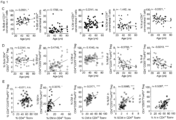
- the recent thymic emigrant marker CD31 significantly decreased from T REG N to T REG NLM to T REG CM to T REG EM.
- the same pattern of CD31 expression was detected in the conventional memory subset counterparts ( Fig. 2E ).
- the cell division marker Ki-67 showed an entirely contrary expression profile with highest expression by EM > CM > NLN/SCM > N ( Fig. 2F ).
- Recent TCR engagement was analyzed by CD134 (OX-40) expression, revealing highest expression among CM and EM, followed by NLM/SCM and very low expression by N ( Fig. 2G ).
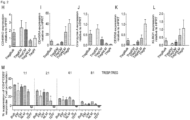
- CD45RA expressed on naive CD4 + T cells on the protein level, likewise shows greatest mRNA expression in naive T REG . Only slightly lower expression is overserved in T REG NLM compared to T REG N. Very low and neglectable CD45RA expression is found on T REG CM and T REG EM, possibly due to minor T REG subset cross-contamination during the FACS process ( Fig. 2I ). Messenger-RNA expression of CD45RO, a hallmark surface molecule of memory T cells, indicates to be lowest in both naive and naive memory-like T REG subsets, followed by greater expression by T REG CM and the highest CD45RO expression by T REG EM ( Fig. 2H ).
- T REG polyclonally stimulated autologous responder T cells
- T RESP polyclonally stimulated autologous responder T cells
- T REG NLM and CM were the most effective inhibitors of T RESP proliferation, especially when co-cultured at ratios 1:1 and 2:1. Na ⁇ ve T REG show the poorest suppressive capacities ( Fig. 2M ).
- T REG NLM and T REG N subsets Particularly remarkable were the clonality measures of the T REG NLM and T REG N subsets. Both populations manifested very low clonalities and therefore presented the two populations with the greatest TCR diversity.
- the T REG NLM subset still had a small, yet considerable larger degree of clonality (0.0027), implying a more oligoclonal TCR repertoire compared to the T REG N population (0.001) ( Fig. 3A ).
- Fig. 3A Considering the productive frequency of the top 10 clones, it was shown that the top clones entailed higher productive frequencies in the T REG EM subset compared to the top 10 clones of the T REG CM > T REG NLM > T REG N subsets.
- the earliest differentiated naive T REG subset shows the demethylation of the TSDR (95.03%), closely followed by the T REG NLM subpopulation of 90.75% demethylation.
- Conventional CD4 + CD25 - T cells/NonT REG display a completely methylated TSDR (0.19% demethylation) ( Fig. 3C ).
- Durek et al. reported a progressive loss of DNA methylation from conventional T N > T SCM > T CM > T EM , which was associated with proliferative history (17). To check whether this phenomenon could be retrieved also among the different T REG subsets, a methylation analysis yielding data about highly methylated domains (HMD) and partially methylated domains (PMD) was also carried out. Whereas differences among HMD were less pronounced, a clear increase in weighted average methylation from T REG EM to T REG CM to T REG NLM to T REG N ( Fig. 3D ) was found, which is completely consistent with the data published for conventional T cell subsets.
- HMD highly methylated domains
- PMD partially methylated domains
- FIG. 4 Single-cell transcriptome and surface epitope analysis (CITE-seq) between CD4 + T cells and T REG cells
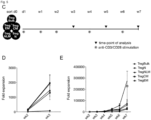
- FIG. 5 Sorting and expansion of T REG memory subsets.
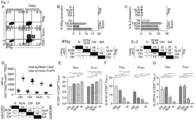
- T REG memory subsets were sorted using FACS ( Fig. 5A, B ) and expanded using weekly bead stimulations ( Fig. 5C ).
- the T REG NLM subset showed greatest expansion, followed by T REG N, T REG CM and T REG EM ( Fig. 5D ).
- T REG CM dominated fold expansion over all other T REG subsets and were followed by T REG NLM and bulk T REG , the latter two expanding similarly well ( Fig. 5E ).
- lowest expansion was observed in isolated T REG N and T REG EM ( Fig. 5E ).
- week 4 and 7 all T REG subsets with the exception of T REG EM demonstrated a decrease in fold expansion.
- T REG CM demonstrate the greatest capacity to proliferate.
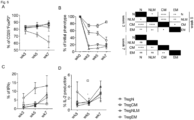
- T REG lineage associated proteins CD25 and Foxp3 With regards to retention of T REG lineage associated proteins CD25 and Foxp3 over a long-term expansion period, all T REG subsets, with the exception of T REG EM, kept their initial CD25 + FoxP3 + expression ( Fig. 6A ). Approximately 40% of T REG EM lost expression of CD25 and FoxP3 at week 7 ( Fig. 6A ). To investigate potential differences between T REG subsets, their change of initial na ⁇ ve/memory phenotype after FACSorting on d0 was monitored over the 7-8 weeks by means of their CD45RA and CCR7 expression.
- T REG NLM 90% and T REG N (80%) most drastically lost their initial phenotype of CD45RA + and CCR7 + to acquire a central memory-like phenotype of CD45RA + CCR7 - .
- 40% of T REG EM also changed their phenotype to an effector memory phenotype of CD45RA - CCR7 + .
- all T REG subsets slightly regained their initial phenotype between week 4 and 7 ( Fig. 6B ).
- T REG integrity In addition to the preservation of their phenotype after in vitro expansion, another central criterion for the assessment of T REG integrity is the lack of conventional cytokine production (IFN ⁇ and IL-2).
- IFN ⁇ and IL-2 producers were negligible (maximum 2.0% IFN ⁇ and 1.21% IL-2 among T REG CM) in all T REG subsets except for T REG EM, which presented an IFN ⁇ and IL-2 production of 6.19% and 3.10% respectively ( Fig. 6C, D ).
- IL-2-producers stayed below 5 % in all cases ( Fig. 6C ). Between week 3 and 7, producers of IFN ⁇ increased, however stayed below 10 % for all memory subsets except for T REG EM ( Fig. 6D ).
- T REG subsets were investigated next. For this, proliferation of freshly isolated autologous CD3 + T RESP , which were co-cultured with different ratios of T REG , was assessed via an in vitro CFSE-dilution assay. After 3 weeks in vitro expansion, T REG Bulk, T REG CM, T REG NLM and T REG N co-cultured with autologous T RESP at a 1:1 ratio demonstrate a great capacity to suppress 80-90% of both CD4 + and CD8 + T RESP . On the other hand, T REG EM only suppressed 57.99% CD4 + and 48.86% CD8 + T RESP ( Fig. 6E ).
- T REG NLM demonstrated greatest suppression of T RESP proliferation over all other T REG subsets, followed by suppression by T REG N and T REG CM and T REG Bulk ( Fig. 6F ).
- T REG subsets were exposed to bisulfite sequencing and qPCR of the TSDR.
- T REG Bulk, T REG NLM and T REG N demonstrated the greatest TSDR demethylation, whereas in comparison, T REG CM presented 20% lower demethylation.
- T REG EM TSDR Only 13% of the T REG EM TSDR was demethylated at this timepoint (Fig. 6H).
- week 5 and 7 the differences of TSDR demethylation between the T REG subsets were comparable with the results of week 3, with less differentiated T REG subsets displaying greatest lineage stability and T REG EM showing a completely methylated TSDR.
- T REG subset products were more heterogeneous to one another with respect to their final phenotype, frequencies at FoxP3/CD25, and TSDR demethylation ( Fig. 7C-E ). Depletion of the T REG EM population reduces the overall heterogeneity between T REG cell products from different donors.
- T REG EM subset permits the generation of stable T REG cell products in different donors without major impact on yield.
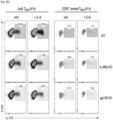
- T REG cells We investigated the propensity of T REG cells to dedifferentiate into T H17 cells in a strong inflammatory environment using a T H17 differentiation protocol based on Koenen et al. (18)
- IL-6 as a proposed key driver of dedifferentiation, we created a targeted gene knock-out to disrupt the IL-6 receptor complex (IL-6R + gp130) in bulk and CCR7 + enriched T REG cells ( Fig. 8A-C ).
- IL-6R + gp130 a targeted gene knock-out to disrupt the IL-6 receptor complex
- CCR7 + enriched T REG cells Fig. 8A-C .
- > 5% of wild-type bulk T REG produced IL-17 post IL-6 challenge
- IL-6Ra or gp130 knock-out bulk T REG showed a markedly reduced expression of about 1% and 2%, respectively.
- composition of subsets defining T cell differentiation stages suggests coherence in memory formation between bulk CD4 + T cells and T REG cells
- T cell T CM , T EM and T EMRA cell subsets were defined according to CD45RA and CCR7 expression, and once having excluded CD45RO + CD62L - memory T cells from the CCR7 + CD45RA + population, the subsets T SCM and T N were defined by means of their differential expression of CD95 and CCR7 (T CM : CCR7 + CD45RA - , T EM : CCR7 - CD45RA - , T EMRA : CCR7 - CD45RA + , T N : CCR7 + CD45RA + CD95 - , T SCM : CCR7 + CD45RA + CD95 + ).
- T REG cell subsets For a comprehensive phenotypical characterization of T REG cell subsets, we assessed the mean fluorescence intensity (MFI) of the T REG lineage determining markers FoxP3 and CD25. Highest intensities of CD25 were observed among T REG EM, which decreased significantly from T REG CM to T REG NLM to T REG N ( Fig. 2D ). No significant differences were found in any subsets regarding the MFI of FoxP3, indicating a similar trend.
- CD31 (PECAM-1) as a marker for recent thymic emigrants decreased significantly from T REG N to T REG NLM to T REG CM to T REG EM. The same pattern of CD31 expression was observed in conventional memory subset counterparts ( Fig. 2E ).
Landscapes
- Health & Medical Sciences (AREA)
- Engineering & Computer Science (AREA)
- Biomedical Technology (AREA)
- Life Sciences & Earth Sciences (AREA)
- Immunology (AREA)
- Zoology (AREA)
- Organic Chemistry (AREA)
- Biotechnology (AREA)
- Chemical & Material Sciences (AREA)
- Bioinformatics & Cheminformatics (AREA)
- Genetics & Genomics (AREA)
- Wood Science & Technology (AREA)
- Microbiology (AREA)
- Cell Biology (AREA)
- Biochemistry (AREA)
- General Engineering & Computer Science (AREA)
- General Health & Medical Sciences (AREA)
- Hematology (AREA)
- Micro-Organisms Or Cultivation Processes Thereof (AREA)
- Medicines Containing Material From Animals Or Micro-Organisms (AREA)
Priority Applications (2)
| Application Number | Priority Date | Filing Date | Title |
|---|---|---|---|
| EP23203204.5A EP4538366A1 (de) | 2023-10-12 | 2023-10-12 | Erhöhung der zellstabilität von therapeutischen regulatorischen t-zell-produkten |
| PCT/EP2024/072156 WO2025078057A1 (en) | 2023-10-12 | 2024-08-05 | Enhancing lineage stability of therapeutic regulatory t cell products |
Applications Claiming Priority (1)
| Application Number | Priority Date | Filing Date | Title |
|---|---|---|---|
| EP23203204.5A EP4538366A1 (de) | 2023-10-12 | 2023-10-12 | Erhöhung der zellstabilität von therapeutischen regulatorischen t-zell-produkten |
Publications (1)
| Publication Number | Publication Date |
|---|---|
| EP4538366A1 true EP4538366A1 (de) | 2025-04-16 |
Family
ID=88412262
Family Applications (1)
| Application Number | Title | Priority Date | Filing Date |
|---|---|---|---|
| EP23203204.5A Withdrawn EP4538366A1 (de) | 2023-10-12 | 2023-10-12 | Erhöhung der zellstabilität von therapeutischen regulatorischen t-zell-produkten |
Country Status (2)
| Country | Link |
|---|---|
| EP (1) | EP4538366A1 (de) |
| WO (1) | WO2025078057A1 (de) |
Citations (1)
| Publication number | Priority date | Publication date | Assignee | Title |
|---|---|---|---|---|
| WO2022034233A1 (en) | 2020-08-14 | 2022-02-17 | Charité - Universitätsmedizin Berlin | Immunosuppressant-resistant t-cells for adoptive immunotherapy |
-
2023
- 2023-10-12 EP EP23203204.5A patent/EP4538366A1/de not_active Withdrawn
-
2024
- 2024-08-05 WO PCT/EP2024/072156 patent/WO2025078057A1/en active Pending
Patent Citations (1)
| Publication number | Priority date | Publication date | Assignee | Title |
|---|---|---|---|---|
| WO2022034233A1 (en) | 2020-08-14 | 2022-02-17 | Charité - Universitätsmedizin Berlin | Immunosuppressant-resistant t-cells for adoptive immunotherapy |
Non-Patent Citations (28)
| Title |
|---|
| AMINI, L.D. L. WAGNERU. ROSSLERG. ZARRINRADL. F. WAGNERT. VOLLMERD. J. WENDERINGU. KORNAKH.-D. VOLKP. REINKE: "CRISPR-Cas9-Edited Tacrolimus-Resistant Antiviral T Cells for Advanced Adoptive Immunotherapy in Transplant Recipients", MOL. THER., vol. 29, 2021, pages 32 - 46 |
| AMINI, L.J. GREIGM. SCHMUECK-HENNERESSEH.-D. VOLKS. BEZIEP. REINKEC. GUILLON-NEAUD. L. WAGNERI. ANEGON: "Super-Treg: Toward a New Era of Adoptive Treg Therapy Enabled by Genetic Modifications", FRONT. IMMUNOL., vol. 11, 2021, pages 611638, XP055983227, DOI: 10.3389/fimmu.2020.611638 |
| BAECHER-ALLAN, C.J. A. BROWNG. J. FREEMAND. A. HAFLER: "CD4+CD25high Regulatory Cells in Human Peripheral Blood", J. IMMUNOL., vol. 167, 2001, pages 1245 - 1253 |
| DIECKMANN, D.H. PLOTTNERS. BERCHTOLDT. BERGERG. SCHULER: "Ex Vivo Isolation and Characterization of Cd4+Cd25+ T Cells with Regulatory Properties from Human Blood", J. EXP. MED., vol. 193, 2001, pages 1303 - 1310, XP002310840, DOI: 10.1084/jem.193.11.1303 |
| DUREK, P., K. NORDSTROM, G. GASPARONI, A. SALHAB, C. KRESSLER, M. DE ALMEIDA, K. BASSLER, T. ULAS, F. SCHMIDT, J. XIONG, P. GLAZAR: "Epigenomic Profiling of Human CD4+ T Cells Supports a Linear Differentiation Model and Highlights Molecular Regulators of Memory Development", IMMUNITY, vol. 45, 2016, pages 1148 - 1161, XP029809251, DOI: 10.1016/j.immuni.2016.10.022 |
| FAN, M. Y.J. S. LOWN. TANIMINEK. K. FINNB. PRIYADHARSHINIS. K. GERMANAS. M. KAECHL. A. TURKA: "Differential Roles of IL-2 Signaling in Developing versus Mature Tregs", CELL REP, vol. 25, 2018, pages 1204 - 1213 |
| GATTINONI, L.E. LUGLIY. JIZ. POSC. M. PAULOSM. F. QUIGLEYJ. R. ALMEIDAE. GOSTICKZ. YUC. CARPENITO: "A human memory T cell subset with stem cell-like properties", NAT. MED., vol. 17, 2011, pages 1290 - 1297, XP055551014, DOI: 10.1038/nm.2446 |
| KOENEN, H. J. P. M.R. L. SMEETSP. M. VINKE. VAN RIJSSENA. M. H. BOOTSI. JOOSTEN: "Human CD25highFoxp3pos regulatory T cells differentiate into IL-17-producing cells", BLOOD, vol. 112, 2008, pages 2340 - 2352, XP002639440, DOI: 101.1182/BLOOD-2008-01-133967 |
| KRESSLER, C.G. GASPARONIK. NORDSTROMD. HAMOA. SALHABC. DIMITROPOULOSS. TIERLINGP. REINKEH.-D. VOLKJ. WALTER: "Targeted De-Methylation of the FOXP3-TSDR Is Sufficient to Induce Physiological FOXP3 Expression but Not a Functional Treg Phenotype", FRONT. IMMUNOL., vol. 11, 2021, pages 609891 |
| LANDWEHR-KENZEL SYBILLE ET AL: "Adoptive transfer of ex vivo expanded regulatory T cells improves immune cell engraftment and therapy-refractory chronic GvHD", MOLECULAR THERAPY, vol. 30, no. 6, 1 June 2022 (2022-06-01), US, pages 2298 - 2314, XP093142003, ISSN: 1525-0016, DOI: 10.1016/j.ymthe.2022.02.025 * |
| LANDWEHR-KENZEL, S.L. MULLER-JENSENJ.-S. KUEHLM. ABOU-EL-ENEINH. HOFFMANNS. MUENCHD. KAISERA. ROEMHILDH. VON BERNUTHM. VOELLER: "Adoptive transfer of ex vivo expanded regulatory T cells improves immune cell engraftment and therapy-refractory chronic GvHD", MOL. THER., vol. 30, 2022, pages 2298 - 2314 |
| LEI, H.L. KUCHENBECKERM. STREITZB. SAWITZKIK. VOGTS. LANDWEHR-KENZELJ. MILLWARDK. JUELKEN. BABELA. NEUMANN: "Human CD45RA- FoxP3hi Memory-Type Regulatory T Cells Show Distinct TCR Repertoires With Conventional T Cells and Play an Important Role in Controlling Early Immune Activation", AM. J. TRANSPLANT., vol. 15, 2015, pages 2625 - 2635 |
| LUETKE-EVERSLOHM., Q. HAMMERP. DUREKK. NORDSTROMG. GASPARONIM. PINKA. HAMANNJ. WALTERH.-D. CHANGJ. DONG: "Human Cytomegalovirus Drives Epigenetic Imprinting of the IFNG Locus in NKG2Chi Natural Killer Cells", PLOS PATHOG, vol. 10, 2014, pages e1004441 |
| MIYARA, M.Y. YOSHIOKAA. KITOHT. SHIMAK. WINGA. NIWAC. PARIZOTC. TAFLINT. HEIKED. VALEYRE: "Functional Delineation and Differentiation Dynamics of Human CD4+ T Cells Expressing the FoxP3 Transcription Factor", IMMUNITY, vol. 30, 2009, pages 899 - 911, XP055479615, DOI: 10.1016/j.immuni.2009.03.019 |
| MONOD, M. Y., V. GIUDICELLI, D. CHAUME, AND M.-P. LEFRANC: "the first tool for the analysis of the immunoglobulin and T cell receptor complex V-J and V-D-J JUNCTIONs", BIOINFORMATICS, vol. 20, 2004, pages i379 - i385, XP055717504, DOI: 10.1093/bioinformatics/bth945 |
| NG, W. F.P. J. DUGGANF. PONCHELG. MATARESEG. LOMBARDIA. D. EDWARDSJ. D. ISAACSR. I. LECHLER: "Human CD4+CD25+ cells: a naturally occurring population of regulatory T cells", BLOOD, vol. 98, 2001, pages 2736 - 2744, XP002310841, DOI: 10.1182/blood.V98.9.2736 |
| POLANSKY, J. K.K. KRETSCHMERJ. FREYERS. FLOESSA. GARBEU. BARONS. OLEKA. HAMANNH. VON BOEHMERJ. HUEHN: "DNA methylation controls Foxp3 gene expression", EUR. J. IMMUNOL., vol. 38, 2008, pages 1654 - 1663 |
| ROBINS, H. S.P. V. CAMPREGHERS. K. SRIVASTAVAA. WACHERC. J. TURTLEO. KAHSAIS. R. RIDDELLE. H. WARRENC. S. CARLSON: "Comprehensive assessment of T-cell receptor beta-chain diversity in alphabeta T cells", BLOOD, vol. 114, 2009, pages 4099 - 107, XP055532718, DOI: 10.1182/blood-2009-04-217604 |
| ROEMHILD ANDY ET AL: "Regulatory T cells for minimising immune suppression in kidney transplantation: phase I/IIa clinical trial", BMJ (CLINICAL RESEARCH ED.), 21 October 2020 (2020-10-21), GB, pages m3734, XP093141820, ISSN: 1756-1833, DOI: 10.1136/bmj.m3734 * |
| ROEMHILD, A.N. M. OTTOG. MOLLM. ABOU-EI-ENEIND. KAISERG. BOLDT. SCHACHTNERM. CHOIR. OELLINGERS. LANDWEHR-KENZEL: "Regulatory T cells for minimising immune suppression in kidney transplantation: phase I/Ila clinical trial", BMJ, vol. 371, 2020, pages m3734 |
| SAKAGUCHI, S.T. YAMAGUCHIT. NOMURAM. ONO: "Regulatory T Cells and Immune Tolerance", CELL, vol. 133, 2008, pages 775 - 787, XP002582219, DOI: 10.1016/j.cell.2008.05.009 |
| SCHMUECK-HENNERESSE, M.R. SHARAFK. VOGTB. J. D. WEISTS. LANDWEHR-KENZELH. FUEHRERA. JURISCHN. BABELC. M. ROONEYP. REINKE: "2014. Peripheral blood-derived virus-specific memory stem T cells mature to functional effector memory subsets with self-renewal potency", J. IMMUNOL., vol. 194, 1950, pages 5559 - 67, XP055435066, DOI: 10.4049/jimmunol.1402090 |
| SHERWOOD, A. M.C. DESMARAISR. J. LIVINGSTONJ. ANDRIESENM. HAUSSLERC. S. CARLSONH. ROBINS: "Deep Sequencing of the Human TCRy and TCRβ Repertoires Suggests that TCRβ Rearranges After αβ and γδ T Cell Commitment", SCI. TRANSL. MED., vol. 3, 2011, pages 90 - 61 |
| TAAMS, L. S., M. VUKMANOVIC-STEJIC, J. SMITH, P. J. DUNNE, J. M. FLETCHER, F. J. PLUNKETT, S. B. EBELING, G. LOMBARDI, M. H. RUSTI: "Antigen-specific T cell suppression by human CD4+CD25+ regulatory T cells", EUR. J. IMMUNOL., vol. 32, 2002, pages 1621 - 1630 |
| WALTER, E. A.P. D. GREENBERGM. J. GILBERTR. J. FINCHK. S. WATANABEE. D. THOMASS. R. RIDDELL: "Reconstitution of Cellular Immunity against Cytomegalovirus in Recipients of Allogeneic Bone Marrow by Transfer of T-Cell Clones from the Donor", N. ENGL. J. MED., vol. 333, 1995, pages 1038 - 1044, XP000605697, DOI: 10.1056/NEJM199510193331603 |
| WENDERING DÉSIRÉE J: "Regulatory T cells in adoptive immunotherapy: from subset characterization to functional testing", 5 March 2021 (2021-03-05), Berliin, pages 1 - 43, XP093141606, Retrieved from the Internet <URL:https://refubium.fu-berlin.de/bitstream/handle/fub188/29149/Wendering_PhD.pdf?sequence=3&isAllowed=y> [retrieved on 20240314] * |
| WENDERING, D. J.L. AMINIS. SCHLICKEISERP. REINKEH.-D. VOLKM. SCHMUECK-HENNERESSE: "The Value of a Rapid Test of Human Regulatory T Cell Function Needs to be Revised", FRONT. IMMUNOL., vol. 10, 2019, pages 150 |
| ZHOU, X.S. L. BAILEY-BUCKTROUTL. T. JEKERC. PENARANDAM. MARTINEZ-LLORDELLAM. ASHBYM. NAKAYAMAW. ROSENTHALJ. A. BLUESTONE: "Instability of the transcription factor Foxp3 leads to the generation of pathogenic memory T cells in vivo", NAT. IMMUNOL., vol. 10, 2009, pages 1000 - 1007, XP055048032, DOI: 10.1038/ni.1774 |
Also Published As
| Publication number | Publication date |
|---|---|
| WO2025078057A1 (en) | 2025-04-17 |
Similar Documents
| Publication | Publication Date | Title |
|---|---|---|
| JP7242761B2 (ja) | キメラ抗原受容体及び他の受容体の発現に対するt細胞 | |
| EP2853590B1 (de) | Verfahren zur herstellung antigenspezifischer t-zellen | |
| US20250283040A1 (en) | Methods to Expand a T Regulatory Cell Master Cell Bank | |
| US20200095547A1 (en) | Methods for manufacturing t cells expressing of chimeric antigen receptors and other receptors | |
| Dons et al. | Induced regulatory T cells: mechanisms of conversion and suppressive potential | |
| JP6422344B2 (ja) | 同種抗原反応性の制御性t細胞を増大させる方法 | |
| US10260042B2 (en) | Compositions and methods for diminishing an immune response | |
| US10857182B2 (en) | Generation and use in adoptive immunotherapy of stem cell-like memory T cells | |
| Takeshita et al. | Polarization diversity of human CD4+ stem cell memory T cells | |
| JP2004527263A (ja) | 免疫抑制活性を有するエクスビボ単離cd25+cd4+t細胞とその使用 | |
| JP2015513403A5 (de) | ||
| WO2017194924A1 (en) | Methods of sorting and culturing t cells | |
| Sharma et al. | Naive T cells inhibit the outgrowth of intractable antigen-activated memory T cells: implications for T-cell immunotherapy | |
| Hippen et al. | Multiply restimulated human thymic regulatory T cells express distinct signature regulatory T-cell transcription factors without evidence of exhaustion | |
| Paul et al. | In vitro assessment of cord blood–derived proinsulin-specific regulatory T cells for cellular therapy in type 1 diabetes | |
| EP4538366A1 (de) | Erhöhung der zellstabilität von therapeutischen regulatorischen t-zell-produkten | |
| WO2018117090A1 (ja) | 制御性t細胞の誘導方法 | |
| WO2012076452A1 (en) | Release of endogenous il7 by the infusion of genetically modified cells for immune reconstitution | |
| Tselios et al. | T regulatory cells in systemic lupus erythematosus: Current knowledge and future prospects | |
| Garnica Caparrós | Transcriptional and epigenetic events underpinning the peptide-MHC-nanoparticle-induced transdifferentiation of T-follicular helper cells into T-regulatory type 1 cells in vivo | |
| Neubert et al. | Analysis of cancer cell-intrinsic immune regulation in response to CD8+ T cell attack | |
| Magnani | Type 1 regulatory T cells: cytotoxic activity and molecular signature | |
| Zanon | Stem cell-like properties of memory T cells in human immune reconstitution | |
| Sirkiä | Small-molecules as regulatory T cell modulators–A pilot |
Legal Events
| Date | Code | Title | Description |
|---|---|---|---|
| PUAI | Public reference made under article 153(3) epc to a published international application that has entered the european phase |
Free format text: ORIGINAL CODE: 0009012 |
|
| STAA | Information on the status of an ep patent application or granted ep patent |
Free format text: STATUS: THE APPLICATION HAS BEEN PUBLISHED |
|
| AK | Designated contracting states |
Kind code of ref document: A1 Designated state(s): AL AT BE BG CH CY CZ DE DK EE ES FI FR GB GR HR HU IE IS IT LI LT LU LV MC ME MK MT NL NO PL PT RO RS SE SI SK SM TR |
|
| STAA | Information on the status of an ep patent application or granted ep patent |
Free format text: STATUS: THE APPLICATION IS DEEMED TO BE WITHDRAWN |
|
| 18D | Application deemed to be withdrawn |
Effective date: 20251017 |