EP4537853A1 - Anti-b7h3 antibody-drug conjugate and use thereof - Google Patents
Anti-b7h3 antibody-drug conjugate and use thereof Download PDFInfo
- Publication number
- EP4537853A1 EP4537853A1 EP23819114.2A EP23819114A EP4537853A1 EP 4537853 A1 EP4537853 A1 EP 4537853A1 EP 23819114 A EP23819114 A EP 23819114A EP 4537853 A1 EP4537853 A1 EP 4537853A1
- Authority
- EP
- European Patent Office
- Prior art keywords
- antibody
- seq
- amino acid
- drug conjugate
- group
- Prior art date
- Legal status (The legal status is an assumption and is not a legal conclusion. Google has not performed a legal analysis and makes no representation as to the accuracy of the status listed.)
- Pending
Links
Images


Classifications
-
- A—HUMAN NECESSITIES
- A61—MEDICAL OR VETERINARY SCIENCE; HYGIENE
- A61K—PREPARATIONS FOR MEDICAL, DENTAL OR TOILETRY PURPOSES
- A61K31/00—Medicinal preparations containing organic active ingredients
- A61K31/33—Heterocyclic compounds
- A61K31/395—Heterocyclic compounds having nitrogen as a ring hetero atom, e.g. guanethidine or rifamycins
- A61K31/435—Heterocyclic compounds having nitrogen as a ring hetero atom, e.g. guanethidine or rifamycins having six-membered rings with one nitrogen as the only ring hetero atom
- A61K31/47—Quinolines; Isoquinolines
- A61K31/4738—Quinolines; Isoquinolines ortho- or peri-condensed with heterocyclic ring systems
- A61K31/4745—Quinolines; Isoquinolines ortho- or peri-condensed with heterocyclic ring systems condensed with ring systems having nitrogen as a ring hetero atom, e.g. phenantrolines
-
- A—HUMAN NECESSITIES
- A61—MEDICAL OR VETERINARY SCIENCE; HYGIENE
- A61K—PREPARATIONS FOR MEDICAL, DENTAL OR TOILETRY PURPOSES
- A61K47/00—Medicinal preparations characterised by the non-active ingredients used, e.g. carriers or inert additives; Targeting or modifying agents chemically bound to the active ingredient
- A61K47/50—Medicinal preparations characterised by the non-active ingredients used, e.g. carriers or inert additives; Targeting or modifying agents chemically bound to the active ingredient the non-active ingredient being chemically bound to the active ingredient, e.g. polymer-drug conjugates
- A61K47/51—Medicinal preparations characterised by the non-active ingredients used, e.g. carriers or inert additives; Targeting or modifying agents chemically bound to the active ingredient the non-active ingredient being chemically bound to the active ingredient, e.g. polymer-drug conjugates the non-active ingredient being a modifying agent
- A61K47/68—Medicinal preparations characterised by the non-active ingredients used, e.g. carriers or inert additives; Targeting or modifying agents chemically bound to the active ingredient the non-active ingredient being chemically bound to the active ingredient, e.g. polymer-drug conjugates the non-active ingredient being a modifying agent the modifying agent being an antibody, an immunoglobulin or a fragment thereof, e.g. an Fc-fragment
- A61K47/6801—Drug-antibody or immunoglobulin conjugates defined by the pharmacologically or therapeutically active agent
- A61K47/6803—Drugs conjugated to an antibody or immunoglobulin, e.g. cisplatin-antibody conjugates
- A61K47/68037—Drugs conjugated to an antibody or immunoglobulin, e.g. cisplatin-antibody conjugates the drug being a camptothecin [CPT] or derivatives
-
- A—HUMAN NECESSITIES
- A61—MEDICAL OR VETERINARY SCIENCE; HYGIENE
- A61K—PREPARATIONS FOR MEDICAL, DENTAL OR TOILETRY PURPOSES
- A61K47/00—Medicinal preparations characterised by the non-active ingredients used, e.g. carriers or inert additives; Targeting or modifying agents chemically bound to the active ingredient
- A61K47/50—Medicinal preparations characterised by the non-active ingredients used, e.g. carriers or inert additives; Targeting or modifying agents chemically bound to the active ingredient the non-active ingredient being chemically bound to the active ingredient, e.g. polymer-drug conjugates
- A61K47/51—Medicinal preparations characterised by the non-active ingredients used, e.g. carriers or inert additives; Targeting or modifying agents chemically bound to the active ingredient the non-active ingredient being chemically bound to the active ingredient, e.g. polymer-drug conjugates the non-active ingredient being a modifying agent
- A61K47/68—Medicinal preparations characterised by the non-active ingredients used, e.g. carriers or inert additives; Targeting or modifying agents chemically bound to the active ingredient the non-active ingredient being chemically bound to the active ingredient, e.g. polymer-drug conjugates the non-active ingredient being a modifying agent the modifying agent being an antibody, an immunoglobulin or a fragment thereof, e.g. an Fc-fragment
- A61K47/6835—Medicinal preparations characterised by the non-active ingredients used, e.g. carriers or inert additives; Targeting or modifying agents chemically bound to the active ingredient the non-active ingredient being chemically bound to the active ingredient, e.g. polymer-drug conjugates the non-active ingredient being a modifying agent the modifying agent being an antibody, an immunoglobulin or a fragment thereof, e.g. an Fc-fragment the modifying agent being an antibody or an immunoglobulin bearing at least one antigen-binding site
- A61K47/6849—Medicinal preparations characterised by the non-active ingredients used, e.g. carriers or inert additives; Targeting or modifying agents chemically bound to the active ingredient the non-active ingredient being chemically bound to the active ingredient, e.g. polymer-drug conjugates the non-active ingredient being a modifying agent the modifying agent being an antibody, an immunoglobulin or a fragment thereof, e.g. an Fc-fragment the modifying agent being an antibody or an immunoglobulin bearing at least one antigen-binding site the antibody targeting a receptor, a cell surface antigen or a cell surface determinant
-
- A—HUMAN NECESSITIES
- A61—MEDICAL OR VETERINARY SCIENCE; HYGIENE
- A61K—PREPARATIONS FOR MEDICAL, DENTAL OR TOILETRY PURPOSES
- A61K47/00—Medicinal preparations characterised by the non-active ingredients used, e.g. carriers or inert additives; Targeting or modifying agents chemically bound to the active ingredient
- A61K47/50—Medicinal preparations characterised by the non-active ingredients used, e.g. carriers or inert additives; Targeting or modifying agents chemically bound to the active ingredient the non-active ingredient being chemically bound to the active ingredient, e.g. polymer-drug conjugates
- A61K47/51—Medicinal preparations characterised by the non-active ingredients used, e.g. carriers or inert additives; Targeting or modifying agents chemically bound to the active ingredient the non-active ingredient being chemically bound to the active ingredient, e.g. polymer-drug conjugates the non-active ingredient being a modifying agent
- A61K47/68—Medicinal preparations characterised by the non-active ingredients used, e.g. carriers or inert additives; Targeting or modifying agents chemically bound to the active ingredient the non-active ingredient being chemically bound to the active ingredient, e.g. polymer-drug conjugates the non-active ingredient being a modifying agent the modifying agent being an antibody, an immunoglobulin or a fragment thereof, e.g. an Fc-fragment
- A61K47/6889—Conjugates wherein the antibody being the modifying agent and wherein the linker, binder or spacer confers particular properties to the conjugates, e.g. peptidic enzyme-labile linkers or acid-labile linkers, providing for an acid-labile immuno conjugate wherein the drug may be released from its antibody conjugated part in an acidic, e.g. tumoural or environment
-
- A—HUMAN NECESSITIES
- A61—MEDICAL OR VETERINARY SCIENCE; HYGIENE
- A61P—SPECIFIC THERAPEUTIC ACTIVITY OF CHEMICAL COMPOUNDS OR MEDICINAL PREPARATIONS
- A61P35/00—Antineoplastic agents
-
- C—CHEMISTRY; METALLURGY
- C07—ORGANIC CHEMISTRY
- C07K—PEPTIDES
- C07K16/00—Immunoglobulins [IG], e.g. monoclonal or polyclonal antibodies
- C07K16/18—Immunoglobulins [IG], e.g. monoclonal or polyclonal antibodies against material from animals or humans
- C07K16/28—Immunoglobulins [IG], e.g. monoclonal or polyclonal antibodies against material from animals or humans against receptors, cell surface antigens or cell surface determinants
- C07K16/2803—Immunoglobulins [IG], e.g. monoclonal or polyclonal antibodies against material from animals or humans against receptors, cell surface antigens or cell surface determinants against the immunoglobulin superfamily
- C07K16/2827—Immunoglobulins [IG], e.g. monoclonal or polyclonal antibodies against material from animals or humans against receptors, cell surface antigens or cell surface determinants against the immunoglobulin superfamily against B7 molecules, e.g. CD80, CD86
-
- A—HUMAN NECESSITIES
- A61—MEDICAL OR VETERINARY SCIENCE; HYGIENE
- A61K—PREPARATIONS FOR MEDICAL, DENTAL OR TOILETRY PURPOSES
- A61K39/00—Medicinal preparations containing antigens or antibodies
- A61K2039/505—Medicinal preparations containing antigens or antibodies comprising antibodies
-
- C—CHEMISTRY; METALLURGY
- C07—ORGANIC CHEMISTRY
- C07K—PEPTIDES
- C07K2317/00—Immunoglobulins specific features
- C07K2317/20—Immunoglobulins specific features characterized by taxonomic origin
- C07K2317/24—Immunoglobulins specific features characterized by taxonomic origin containing regions, domains or residues from different species, e.g. chimeric, humanized or veneered
-
- C—CHEMISTRY; METALLURGY
- C07—ORGANIC CHEMISTRY
- C07K—PEPTIDES
- C07K2317/00—Immunoglobulins specific features
- C07K2317/30—Immunoglobulins specific features characterized by aspects of specificity or valency
- C07K2317/33—Crossreactivity, e.g. for species or epitope, or lack of said crossreactivity
-
- C—CHEMISTRY; METALLURGY
- C07—ORGANIC CHEMISTRY
- C07K—PEPTIDES
- C07K2317/00—Immunoglobulins specific features
- C07K2317/50—Immunoglobulins specific features characterized by immunoglobulin fragments
- C07K2317/52—Constant or Fc region; Isotype
-
- C—CHEMISTRY; METALLURGY
- C07—ORGANIC CHEMISTRY
- C07K—PEPTIDES
- C07K2317/00—Immunoglobulins specific features
- C07K2317/70—Immunoglobulins specific features characterized by effect upon binding to a cell or to an antigen
- C07K2317/77—Internalization into the cell
-
- C—CHEMISTRY; METALLURGY
- C07—ORGANIC CHEMISTRY
- C07K—PEPTIDES
- C07K2317/00—Immunoglobulins specific features
- C07K2317/90—Immunoglobulins specific features characterized by (pharmaco)kinetic aspects or by stability of the immunoglobulin
- C07K2317/92—Affinity (KD), association rate (Ka), dissociation rate (Kd) or EC50 value
-
- C—CHEMISTRY; METALLURGY
- C07—ORGANIC CHEMISTRY
- C07K—PEPTIDES
- C07K2317/00—Immunoglobulins specific features
- C07K2317/90—Immunoglobulins specific features characterized by (pharmaco)kinetic aspects or by stability of the immunoglobulin
- C07K2317/94—Stability, e.g. half-life, pH, temperature or enzyme-resistance
-
- C—CHEMISTRY; METALLURGY
- C07—ORGANIC CHEMISTRY
- C07K—PEPTIDES
- C07K2319/00—Fusion polypeptide
Definitions
- the present invention provides an antibody-drug conjugate specifically binding to B7H3 and a composition comprising the same.
- a method for using the antibody-drug conjugate of the present invention and use thereof are also provided.
- the antibody or the antigen-binding fragment thereof is a humanized antibody or an antigen-binding fragment thereof.
- L 1 is selected from the group consisting of:
- L 1 is selected from the group consisting of:
- the present invention provides use of the antibody-drug conjugate, the pharmaceutically acceptable salt thereof described herein or the pharmaceutical composition described herein in preparing a medicament for treating and/or preventing a B7H3-mediated disease or condition, wherein preferably, the disease or condition is cancer.
- the disease or condition is a disease or condition in which B7H3 is positively expressed.
- the cancer of the present invention is selected from the group consisting of breast cancer, neurological tumors, melanoma, lung cancer, head and neck cancer, colorectal cancer, pancreatic cancer, gastric cancer, renal cancer, bladder cancer, prostate cancer, ovarian cancer, cervical cancer, glioblastoma, esophageal cancer, renal cell carcinoma, endometrial cancer, skin cancer, testicular cancer, thyroid cancer, urothelial cancer, lymphoma (such as non-Hodgkin lymphoma), chronic lymphocytic leukemia, diffuse large B-cell lymphoma, and multiple myeloma.
- lymphoma such as non-Hodgkin lymphoma
- chronic lymphocytic leukemia diffuse large B-cell lymphoma
- multiple myeloma multiple myeloma
- B7H3 is an immune checkpoint molecule that is abnormally overexpressed in a variety of cancers.
- the amino acid sequences of B7H3 proteins include full-length B7H3 proteins (e.g., the human 4IgB7H3 protein or human 2IgB7H3 protein), or the extracellular domain of B7H3 (B7H3 ECD) or fragments containing B7H3 ECD, or B7H3-ECD fusion proteins.
- Exemplary sequences of B7H3 proteins are shown under Uniprot ID: Q5ZPR3 (human 4IgB7H3) and Genebank accession Nos.
- alkyl examples include, but are not limited to, methyl, ethyl, n-propyl, isopropyl, n-butyl, etc.
- Alkyl may be substituted or unsubstituted, replaced or unreplaced.
- substitution with a substituent may be performed at any available linking site, and the substituent may be independently optionally selected from the group consisting of one or more of alkyl, alkenyl, alkynyl, alkoxy, alkylthio, alkylamino, halogen, sulfhydryl, hydroxy, nitro, cyano, cycloalkyl, heterocyclyl, aryl, heteroaryl, cycloalkoxy, heterocycloalkoxy, cycloalkylthio, heterocycloalkylthio, and oxo, and it may, e.g., be hydrogen, protium, deuterium, tritium, halogen, -NO 2 , -CN, -OH, -SH, -NH 2 , -C(O)H, - CO 2 H, -C(O)C(O)H, -C(O)CH 2 C(O)H, -S(O)H
- substitution with a substituent may be performed at any available linking point, and the substituent is preferably independently optionally selected from the group consisting of one or more of alkyl, alkenyl, alkynyl, alkoxy, alkylthio, alkylamino, halogen, sulfhydryl, hydroxy, nitro, cyano, cycloalkyl, heterocyclyl, aryl, heteroaryl, cycloalkoxy, heterocycloalkoxy, cycloalkylthio, heterocycloalkylthio, and oxo, and it may, e.g., be hydrogen, protium, deuterium, tritium, halogen, - NO 2 , -CN, -OH, -SH, -NH 2 , -C(O)H, -CO 2 H, -C(O)C(O)H, -C(O)CH 2 C(O)H, -S(O)
- alkenylene generally refers to a group having a residue derived from an alkene by removal of two hydrogen atoms from a carbon atom.
- alkenylene may be acrol, vinylene, butenylene, pentenylene, hexenylene, etc.
- Alkenylene may be substituted or unsubstituted.
- substitution with a substituent may be performed at any available linking point, and the substituent is preferably independently optionally selected from the group consisting of one or more of alkyl, alkenyl, alkynyl, alkoxy, alkylthio, alkylamino, halogen, sulfhydryl, hydroxy, nitro, cyano, cycloalkyl, heterocyclyl, aryl, heteroaryl, cycloalkoxy, heterocycloalkoxy, cycloalkylthio, heterocycloalkylthio, and oxo, and it may, e.g., be hydrogen, protium, deuterium, tritium, halogen, -NO 2 , -CN, -OH, -SH, -NH 2 , -C(O)H, -CO 2 H, -C(O)C(O)H, -C(O)CH 2 C(O)H, - S(O)
- heterocyclyl contains 3 to 12 ring atoms, 1 to 4 of which are heteroatoms; more preferably, heterocyclyl contains 3 to 8 ring atoms, 1 to 3 of which are heteroatoms; more preferably, heterocyclyl contains 3 to 6 ring atoms, 1 to 3 of which are heteroatoms; most preferably, heterocyclyl contains 5 or 6 ring atoms, 1 to 3 of which are heteroatoms.
- monocyclic heterocyclyl include pyrrolidinyl, tetrahydropyranyl, piperidinyl, morpholinyl, thiomorpholinyl, homopiperazinyl, etc.
- each independently generally means that a variable applies in any case irrespective of the presence or absence of variables having the same or different definitions in the same compound.
- the variable may refer to the type or number of substituents in the compound, the type of atoms in the compound, and so on.
- R occurs twice in a compound and R is defined as "independently carbon or nitrogen”
- both R can be carbon, both R can be nitrogen, or one R can be carbon and the other R is nitrogen.
- the term "compound” generally refers to a substance having two or more different elements.
- the compound disclosed herein may be an organic compound.
- the compound disclosed herein may be a compound having a molecular weight of no more than 500 Da, a compound having a molecular weight of no more than 1000 Da, a compound having a molecular weight of no less than 1000 Da, or a compound having a molecular weight of no less than 10,000 Da or no less than 100,000 Da.
- alkyl alkenyl
- cycloalkyl may be preceded by a notation to indicate the number of atoms present in the groups under particular circumstances as in C 1 -C 4 alkyl, C 3 -C 7 cycloalkoxy, and C 1 -C 4 alkylcarbonylamino and the like, as known to those skilled in the art, and the subscript numeral following "C” indicates the number of carbon atoms present in the group.
- the term "ligand-drug conjugate” generally means that a ligand is linked to a biologically active cytotoxic drug via a stable linking unit.
- the "ligand-drug conjugate” may be an antibody-drug conjugate (ADC), which may mean that an antibody or an antibody fragment is linked to a biologically active drug (e.g., a cytotoxic drug) via a stable linking unit.
- ADC antibody-drug conjugate
- the term "ligand” generally refers to a macromolecular compound capable of recognizing and binding to an antigen or receptor associated with a target cell.
- the role of ligands may be to present the drug to a target cell population to which the ligand binds, and the ligands include, but are not limited to, protein hormones, lectin, growth factors, antibodies, or other molecules capable of binding to a cell, a receptor and/or an antigen.
- the ligand may be denoted as Ab, and a linking bond is formed between the ligand antigen and the linking unit through a heteroatom in the ligand.
- drug loading generally refers to the average amount of cytotoxic drug loaded per ligand and may also be expressed as the ratio of cytotoxic drug to antibody, and the cytotoxic drug loading may range from 0 to 12 (e.g., 1 to 10) cytotoxic drugs per ligand (Ab).
- the drug loading is denoted as DAR, and exemplary values may be an average of 1, 2, 3, 4, 5, 6, 7, 8, 9 and 10.
- the drug loading per ADC molecule after the coupling reaction can be characterized by conventional methods such as UV/visible spectroscopy, mass spectrometry, ELISA assays and HPLC.
- the sterile injectable formulation may also be a sterile injection or suspension prepared in a parenterally acceptable non-toxic diluent or solvent, e.g., a solution prepared in 1,3-butanediol.
- a sterile fixed oil may be conventionally used as a solvent or a suspending medium.
- any blend fixed oil including synthetic mono- or di-glycerides can be used.
- fatty acids such as oleic acid may also be used in the preparation of injections.
- prevention and preventing generally refer to a method of achieving beneficial or desired effects, including but not limited to prophylactic benefits.
- a pharmaceutical composition can be administered to a patient at risk of developing a particular disease, or to a patient who reports they have one or more physiological symptoms of a disease, even if the disease has not yet been diagnosed.
- a therapeutically effective dose refers to the combined amount of active ingredients that produces a therapeutic effect, regardless of whether these active ingredients are administered in combination, sequentially or simultaneously.
- An effective amount of a therapeutic agent will result in an increase in a diagnostic index or parameter by at least 10%, generally at least 20%, preferably at least about 30%, more preferably at least 40%, and most preferably at least 50%.
- the present invention provides an antibody that specifically binds to B7H3, for example, an antibody that specifically binds to human B7H3, mouse B7H3, cynomolgus monkey B7H3 and ECD domains thereof.
- the term "antibody” as used herein is defined above, and includes full-length immunoglobulins and antibody portions thereof that bind to the same antigen.
- the antibody may be, for example, a monoclonal antibody, a polyclonal antibody, a chimeric antibody, a humanized antibody, or a single-chain antibody.
- the antibody portions are Fab fragments or F(ab') 2 fragments.
- the antibody portions retain the ability to specifically bind to B7H3.
- the antibody or the antigen-binding moiety thereof is a chimeric antibody or a murine antibody that specifically binds to B7H3, preferably human 4IgB7H3. In some further embodiments, the antibody or the antigen-binding moiety thereof is a humanized antibody that specifically binds to B7H3, preferably human 4IgB7H3. In some further embodiments, the humanized antibody or the antigen-binding moiety thereof comprises one or more reverse mutations in the framework region.
- the antibody or the antigen-binding moiety thereof described above may comprise: HCDR1 comprising or consisting of SEQ ID NO: 1, HCDR2 comprising or consisting of SEQ ID NO: 2, HCDR3 comprising or consisting of SEQ ID NO: 3, LCDR1 comprising or consisting of SEQ ID NO: 7, LCDR2 comprising or consisting of SEQ ID NO: 5, and LCDR3 comprising or consisting of SEQ ID NO: 6.
- the antibody may further comprise one or more modifications in the CDRs to remove potential PTM sites.
- the antibody or the antigen-binding moiety thereof described above may comprise: HCDR1 comprising or consisting of SEQ ID NO: 1, HCDR2 comprising or consisting of SEQ ID NO: 2, HCDR3 comprising or consisting of SEQ ID NO: 3, LCDR1 comprising or consisting of SEQ ID NO: 4, LCDR2 comprising or consisting of SEQ ID NO: 5, and LCDR3 comprising or consisting of SEQ ID NO: 6.
- the antibody or antigen-binding portion thereof comprises the HCDR1, HCDR2 and HCDR3 of the VH region as shown in SEQ ID No: 8 or 10, and LCDR1, LCDR2 and LCDR3 of the VL region as shown in SEQ ID No: 9 or 11.
- the amino acid sequences of the CDRs may have at least 80%, 81%, 82%, 83%, 84%, 85%, 86%, 87%, 88%, 89%, 90%, 91%, 92%, 93%, 94%, 95%, 96%, 97%, 98%, or 99% identity to the sequences described above.
- the amino acid sequences of the variable regions may have least 90%, 91%, 92%, 93%, 94%, 95%, 96%, 97%, 98%, or 99% identity to the sequences described above.
- One method for reducing the immunogenicity of rodent antibodies includes producing chimeric antibodies, in which the mouse variable region is fused to the human constant region ( Liu et al. (1987), Proc. Natl. Acad. Sci. USA 84:3439-3443 ). However, the preservation of intact rodent variable region in a chimeric antibody may still induce deleterious immunogenicity in patients. Grafting of the complementarity determining region (CDR) loops of the rodent variable domain onto the human framework (i.e., humanization) has been used to further minimize rodent sequences ( Jones et al., (1986) Nature 321:522 ; Verhoeyen et al., (1988) Science 239:1534 ).
- CDR complementarity determining region
- the chimeric or humanized antibodies of the present invention can be prepared based on the sequences of the prepared murine monoclonal hybridoma antibodies.
- DNA encoding the immunoglobulin heavy and light chains can be obtained from a murine hybridoma of interest and engineered to comprise non-murine (e.g., human) immunoglobulin sequences using standard molecular biology techniques.
- the chimeric B7H3 antibodies of the present invention can be obtained by "mixing and matching" a chimeric light chain expression plasmid with a chimeric heavy chain expression plasmid to transfect expression cells.
- the binding of such "mixed and matched" antibodies to B7H3 can be tested using the binding assays described above and other conventional binding assays (e.g., ELISA).
- variable region sequences of the antibody used in the drug conjugate, composition or use of the present invention comprise a heavy chain variable region comprising an amino acid sequence as set forth in SEQ ID NO: 8 and a light chain variable region comprising an amino acid sequence as set forth in SEQ ID NO: 9.
- the antibody used in the drug conjugate, composition, use or method of the present invention comprises a heavy chain comprising an amino acid sequence as set forth in SEQ ID NO: 14 and a light chain comprising an amino acid sequence as set forth in SEQ ID NO: 15.
- the anti-B7H3 antibody W301088-1.145.16-z3-p1-uIgG1KV320 (WBP301088 for short) or the antigen-binding fragment thereof described herein is prepared as described in the examples.
- the CDR sequences of the antibody used in the drug conjugate, composition, use or method of the present invention comprise HCDR1, HCDR2 and HCDR3 comprising amino acid sequences as set forth in SEQ ID NO: 1, SEQ ID NO: 2 and SEQ ID NO: 3, respectively, and LCDR1, LCDR2 and LCDR3 comprising amino acid sequences as set forth in SEQ ID NO: 4, SEQ ID NO: 5 and SEQ ID NO: 6, respectively.
- the present invention provides a pharmaceutical composition, which comprises the antibody-drug conjugate described herein, a pharmaceutically acceptable salt thereof, and a pharmaceutically acceptable carrier or excipient.
- the antibody-drug conjugate, the pharmaceutically acceptable salt thereof or the pharmaceutical composition thereof provided herein can be integrated into a suitable carrier, an excipient and other reagents in a formulation for administration in combination, thus providing improved transfer, delivery, tolerance, etc.
- the pharmaceutical composition or formulation of the present invention can further comprise one or more additional active ingredients which are required for a specific indication being treated, preferably active ingredients having complementary activities that do not adversely affect one another.
- the additional active ingredients are chemotherapeutic agents, immune checkpoint inhibitors, cell growth inhibitors, antibiotics or various known anti-tumor or anti-cancer agents, which are suitably present in combination in amounts that are effective for purpose intended.
- the pharmaceutical composition of the present invention also comprises a composition of a polynucleotide encoding the anti-B7H3 antibody.
- the present invention provides the antibody-drug conjugate, or the pharmaceutically acceptable salt or the pharmaceutical composition thereof described herein for treating and/or preventing a B7H3-mediated disease or condition, wherein preferably, the disease or condition is cancer.
- the cancer of the present invention is selected from the group consisting of breast cancer, neurological tumors, melanoma, lung cancer, head and neck cancer, colorectal cancer, pancreatic cancer, gastric cancer, renal cancer, bladder cancer, prostate cancer, ovarian cancer, cervical cancer, glioblastoma, esophageal cancer, renal cell carcinoma, endometrial cancer, skin cancer, testicular cancer, thyroid cancer, urothelial cancer, lymphoma (such as non-Hodgkin lymphoma), chronic lymphocytic leukemia, diffuse large B-cell lymphoma, and multiple myeloma.
- lymphoma such as non-Hodgkin lymphoma
- chronic lymphocytic leukemia diffuse large B-cell lymphoma
- multiple myeloma multiple myeloma
- the present invention provides a kit, which comprises the antibody-drug conjugate described herein or the pharmaceutical composition described herein.
- routes of administration for the present invention include, but are not limited to, oral administration, intravenous administration, subcutaneous administration, intramuscular administration, intra-arterial administration, intra-articular administration (e.g., in arthritic joints), inhalation, aerosol delivery, intratumoral administration, etc.
- the present invention provides co-administration of an effective amount of one or more therapies (e.g., treatment modalities and/or other therapeutic agents) to a subject.
- the therapies include surgical treatment and/or radiation therapy.
- the inhibitory activity may be an IC50 value (nM) for tumor cells of 10000 nM or less, 5000 nM or less, 4000 nM or less, 3000 nM or less, 2000 nM or less, 1000 nM or less, 500 nM or less, 400 nM or less, 300 nM or less, 200 nM or less, 150 nM or less, 120 nM or less, 110 nM or less, 100 nM or less, 99 nM or less, 98 nM or less, 97 nM or less, 95 nM or less, 90 nM or less, 80 nM or less, 75 nM or less, 70 nM or less, 65 nM or less, 62 nM or less, 60 nM or less, 50 nM or less, 40 nM or less, 30 nM or less, 25 nM or less, 23 nM or less, 22 nM or less, 20 nM or less, 19
- High performance liquid chromatograph Waters e2965 high performance liquid chromatography system.
- the flow rate of the mobile phase is set at 0.5 mL/min, the detection wavelength at 280 nm, and the column temperature at 30 °C.
- the eluted protein was dialyzed into PBS via a dialysis bag (Spectrum-888-10987, MWCO 3.5 kDa). Protein concentration was determined by absorbance at 280 nm on a NanoDrop device. 2 ⁇ g of the purified protein was electrophoresed on SDS-PAGE gel (Invitrogen) with and without a reducing agent. The purity of the purified protein was quantified by HPLC-SEC using a TSKgel G3000SWXL size exclusion chromatography column (Tosoh, 008541). The purified protein was stored at -80 °C. Human 2IgB7H3 was purchased from ACRO (Cat. No. B73-H52E2), and cynomolgus monkey B7H3 was purchased from ACRO (Cat. No. B73-C52Ha).
- a cell line stably expressing human 4IgB7H3 (W3XX088-CHOK1.hPro1.2A5) was obtained by blasticidin selection and limiting dilution, and the expression level was determined by FACS using an anti-B7H3 antibody.
- a cell pool stably and highly expressing cynomolgus monkey B7H3 (WBP3XX088-FlpinCHO.cPro1.pool) was obtained by hygromycin B selection and BD FACSMelody TM cell sorting.
- mice Four 6- to 8-week-old Balb/c mice were immunized with the DNA plasmids encoding human full-length 4IgB7H3 in Example 1.1.3 at 200-400 ⁇ g per mouse.
- the adjuvant mixture includes Adju-Phos, CpG-ODN and GM-CSF.
- the animals were subjected to subcutaneous injection, intramuscular injection and hydrodynamic tail vein injection once every other week. Blood was collected from the mice after the third injection (the 1st blood collection) and after the fifth injection (the 2nd blood collection). The serum titer was measured by ELISA and FACS.
- ELISA assay was used to measure the serum antibody titer against the 4IgB7H3 antigen.
- a Plate (Nunc) was coated with 100 ⁇ L of His tag at 0.5 ⁇ g/mL at 4 °C overnight, and then blocked with a blocking buffer (2% BSA in PBS) at ambient temperature for 1 h. The plate was then washed and incubated with 1 ⁇ g/mL antigen at ambient temperature for 1 h. After washing, mouse serum was 1:3 serially diluted starting at 1:100 dilution in a blocking buffer, added to the culture plate, and incubated at ambient temperature for 2 h.
- the secondary antibody goat anti-mouse IgG-Fc Alexa 647 (Jackson, 109-605-098) was added to the resuspended cells and incubated at 4°C in the dark for 30 min, followed by washing with 180 ⁇ L of 1 ⁇ PBS/1%BSA. Finally, the cells were resuspended in 100 ⁇ L of 1 ⁇ PBS/1%BSA, and the fluorescence intensity was measured by FACS (BD Canto II) and analyzed by FlowJo version software. Serum titer was determined at 2-fold background. Table 3. Serum titer test on binding of cell line expressing human 4IgB7H3 by FACS Antibody titer Mouse #1 Mouse #2 Mouse #3 Mouse #4 Serum from the 2nd blood collection 218700 1968300 1968300 Close to 1968300
- the hybridoma supernatant was then transferred to the plate and incubated at 4 °C for 1 h. After washing, a secondary antibody, i.e., goat anti-mouse IgG Fc PE (Jackson, 115-115-164), was added and incubated with the cells at 4 °C in the dark for 0.5 h. The cells were then washed and resuspended in 1 ⁇ PBS/1% BSA before being analyzed by flow cytometry.
- a secondary antibody i.e., goat anti-mouse IgG Fc PE (Jackson, 115-115-164
- Goat anti-mouse Fc IgG (30 ⁇ g/mL in 10 mM NaAc, pH 4.5) was then injected into the channel at a flow rate of 10 ⁇ L/min for 420 seconds.
- the chip was deactivated with 1 M ethanolamine-HCl. The supernatant was injected into the channel at a flow rate of 10 ⁇ L/min for 30 seconds.
- 200 nM human 4IgB7H3 analyte was injected into the channel at a flow rate of 30 ⁇ L/min for an association phase of 120 seconds, followed by dissociation of 300 seconds.
- Glycine (10 mM, pH 1.5) was injected as regeneration buffer after the dissociation phase.
- the sensorgrams for the reference channel and the buffer channel were subtracted from the test sensorgrams. The data were then fitted with a 1:1 Langmuir binding model.
- T75 flask (CORNING) is commonly used to perform scale-up of hybridoma cell culture.
- Monoclonal hybridoma cells were seeded into the flask at 5 ⁇ 10 6 to 1 ⁇ 10 7 cells/T75 flask. The cells were allowed to grow continuously for about 7-10 days until cell viability reached about 30%-40%. The culture supernatant was harvested, and the cell debris was removed by centrifugation. The supernatant was sterile-filtered and stored for antibody purification.
- RNA of W-301088-1.145.16 hybridoma cell sample was first extracted according to the instructions of the TaKaRa MiniBEST universal RNA extraction kit. The RNA was then converted to cDNA using the SMART RACE cDNA amplification kit from Clonetech. The VH and VL domain DNA sequences were then amplified from the cDNA with 30 cycles of PCR, each cycle involving denaturation at 94 °C for 30 seconds, annealing at 60 °C for 30 seconds, followed by elongation at 72 °C for 30 seconds. The PCR product was then subcloned into a TA-cloning vector and sent to Biosune Biotech (Shanghai, China) for sequencing.
- the DNA sequences of the VH and VL domains were amplified by PCR. Primers were synthesized by Sangon Biotech (Shanghai, China). The DNA segments were then subcloned into a pcDNA3.4 expression vector with human IgG1 constant region with LALA mutations and then sequenced by Tsingke Biotechnology (Beijing, China).
- VH and VL domain sequences of the humanized variants were scanned for several types of critical post-translational modification (PTM) sites: asparagine deamination (N-G and N-S) in CDRs, aspartate isomerization (D-G) in CDRs, unpaired C in the entire length, and N-linked glycosylation sites (N-X-S/T in which X can be any amino acid except for P) in the entire length.
- Point mutations were empirically designed to remove these critical PTM sites in the humanized variants to avoid the potential risk of PTM modification.
- PTM-removed antibodies that did not affect the expression, binding and thermal stability compared to the parent antibody were selected.
- the k off ranking of the filtered supernatants was performed on a Biacore 8K surface plasmon resonance (SPR) equipment.
- the CM5 sensor chip was first activated by 400 mM EDC and 100 mM NHS (GE) at a flow rate of 10 ⁇ L/min for 420 seconds.
- 30 ⁇ g/mL anti-human Fc IgG (Jackson) in 10 mM NaAc (pH 4.5) was then injected into channels 1 to 8 at a flow rate of 10 ⁇ L/min for 420 seconds.
- the chip was then deactivated by 1 M ethanolamine-HCl (GE) at a flow rate of 10 ⁇ L/min for 420 seconds.
- the PTM removal point mutation showing the best k off rate in Example 1.2.11 was combined into the humanized variants with the optimal k off rate by point mutagenesis to construct the final constructs for affinity validation.
- FIGs. 12A-12B show the results of amino acid sequence alignment of VH and VL regions between antibodies W301088-1.145.16-xIgG1KV320 and W301088-1.145.16-z3-p1-uIgG1KV320. Boxed amino acid segments in the figures are the respective CDR regions in the VH and VL regions.
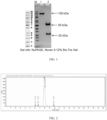
- Example 1.2 The purified antibody sample in Example 1.2 was mixed with a loading buffer and heated at 75 °C for 10 min using a drying bath. After the sample was loaded, SDS-PAGE was run at a constant voltage (200V) for 35 min. The gel was stained and destained with eStain TM L1. SDS-PAGE results were obtained using BIO-RAD imaging system.
- the T m value of the W301088-1.145.16-z3-p1-uIgG1KV320 antibody was defined as the maximum value of the negative derivatives of the fluorescence changes with respect to different temperatures, as listed in Table 10 below. Data profile is shown in FIG. 3 , where the dashed line indicates the position of the T m 1 value in the fluorescence curve.
- the T m 1 of the W301088-1.145.16-z3-p1-uIgG1KV320 antibody was 70.1 °C, indicating that it had good thermal stability.
- the HIC retention time of the W301088-1.145.16-z3-p1-uIgG1KV320 antibody was 23.52 min (Table 10 and FIG. 4 ), indicating that it is an antibody with good hydrophilicity.
- FACS Fluorescence Activated Cell Sorting
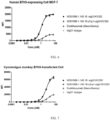
- Anti-human B7H3 reference antibody enoblituzumab (MacroGeneics) was used as a positive control. Human IgG1 isotype antibody was used as a negative control. After washing the cells with 1 ⁇ DPBS/1% BSA, Alexa 647 goat anti-human antibody (diluted in a 1:500 ratio in 1 ⁇ DPBS/1% BSA) was added. The cells were incubated in a refrigerator set to 4 °C for 0.5 h in the dark. The mean fluorescence intensity (MFI) of the cells was measured by a flow cytometry and analyzed by FlowJo. EC 50 values were calculated by four-parameter non-linear regression analysis using GraphPad Prism 7 software.
- MFI mean fluorescence intensity
- FACS was used to detect the binding of antibodies to cynomolgus monkey B7H3.
- FlpinCHO cells were transfected with cynomolgus monkey B7H3 (W3XX088-FlpinCHO.cProl.pool) (1 ⁇ 10 5 cells/well), and the transfected cells were incubated with various concentrations of antibodies (3.16-fold serially diluted with 1 ⁇ DPBS/1% BSA from 50 nM to 0.0005 nM) in a volume of 100 ⁇ L/well in a refrigerator set to 4 °C for 1 h.
- Anti-human B7H3 reference antibody enoblituzumab (MacroGeneics) was used as a positive control.
- the affinity of antibodies for human 4IgB7H3 was determined using surface plasmon resonance (SPR).
- the affinity of antibodies for human 4IgB7H3 was determined by Biacore 8K.
- An activator was prepared by mixing 400 mM EDC and 100 mM NHS (GE) immediately prior to injection into the channel.
- the CM5 sensor chip was activated for 420 seconds with the activator.
- Goat anti-human Fc IgG (30 ⁇ g/mL in 10 mM NaAc, pH 4.5) was then injected into the channel at a flow rate of 10 ⁇ L/min for 420 seconds.
- the chip was deactivated by 1 M ethanolamine hydrochloric acid.
- the antibodies diluted in running buffer (1 ⁇ HBS-EP+) were injected into the channel at a flow rate of 10 ⁇ L/min for 30 seconds.
- Seven concentrations (500 nM, 250 nM, 125 nM, 62.5 nM, 31.25 nM, 15.625 nM, and 7.813 nM) of analyte human 2IgB7H3 were injected sequentially into the channel at a flow rate of 30 ⁇ L/min for an association phase of 120 seconds, followed by dissociation of 300 seconds.
- Glycine (10 mM, pH 1.5) was injected as regeneration buffer after the dissociation phase.
- the sensorgrams for the reference channel and the buffer channel were subtracted from the test sensorgrams.
- the experimental data were fitted with a 1:1 binding model.
- the molecular weight of the human 2IgB7H3 used in the calculation was 25.2 kDa.
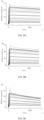
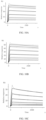
- the affinity of antibodies for cynomolgus monkey B7H3 was determined using surface plasmon resonance (SPR). The affinity of antibodies for cynomolgus monkey B7H3 was determined by Biacore 8K.
- An activator was prepared by mixing 400 mM EDC and 100 mM NHS (GE) immediately prior to injection into the channel.
- the CM5 sensor chip was activated for 420 seconds with the activator.
- Goat anti-human Fc IgG (30 ⁇ g/mL in 10 mM NaAc, pH 4.5) was then injected into the channel at a flow rate of 10 ⁇ L/min for 420 seconds.
- the chip was deactivated by 1 M ethanolamine hydrochloric acid.
- the antibodies diluted in running buffer (1 ⁇ HBS-EP+) were injected into the channel at a flow rate of 10 ⁇ L/min for 30 seconds.
- Nine concentrations (50 nM, 25 nM, 12.5 nM, 6.25 nM, 3.125 nM, 1.563 nM, 0.781 nM, 0.391 nM, and 0.196 nM) of analyte cynomolgus monkey B7H3 were injected sequentially into the channel at a flow rate of 30 ⁇ L/min for an association phase of 180 seconds, followed by dissociation of3600 seconds.
- Glycine (10 mM, pH 1.5) was injected as regeneration buffer after the dissociation phase.
- the experimental data were fitted by a 1:1 binding model bundled with the Biacore 8K evaluation software.
- Table 15 and FIGs. 10A-10C the W301088-1.145.16-z3-p1-uIgG1KV320 antibody showed high binding affinity for cynomolgus monkey B7H3, which was comparable to its binding to human 4IgB7H3.
- the K D value was 5.74E-11 M, which was better than that of enoblituzumab (MacroGenics). Table 15.
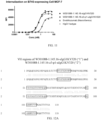
- Antibody internalization was determined by operetta CLS (PerkinElmer), a high-content imaging and analysis system that can collect and analyze images of samples at high speed and high sensitivity.
- MCF-7 cells expressing human full-length B7H3 (1.5 ⁇ 10 4 cells/well) were seeded into a 96-well clear bottom black plate pre-coated with 8 ⁇ g/mL poly-D-lysine. After incubation in an incubator set to 37 °C, 5% CO 2 overnight, various concentrations of the antibodies (3.16-fold serially diluted with 1 ⁇ DPBS/1% BSA from 50 nM to 0.0005 nM) were incubated in a volume of 100 ⁇ L/well in a refrigerator set to 4 °C for 2 h.
- HATU 74 mg, 0.19 mmol was added to a solution of 27f (90 mg, 0.13 mmol), KI-1 (92 mg, 0.19 mmol) and DIEA (50 mg, 0.39 mmol) in DMF (2.5 mL) at 0 °C under nitrogen, and the mixture was reacted at 0 °C for 2 h.
- DS-7300 is composed of a humanized anti-B7-H3 IgG1 monoclonal antibody conjugated to a topoisomerase I inhibitor payload, an exatecan derivative deruxtecan, via a tetrapeptide-based cleavable linker.
- 16 mg of 7.4 mg/mL reference monoclonal antibody (the antibody sequence comprised a heavy chain set forth in sequence No. 9 and a light chain set forth in sequence No. 16 in the patent " CN104755494B "; the antibody was produced by transfection of CHO cells followed by routine antibody expression and purification, with >95% purity) was weighed into a 50 mL centrifuge tube and diluted to 5 mg/mL by adding 30 mM His-HAc, pH 5.5 buffer. The 100 mM aqueous solution of EDTA was added in an amount of 5% of the total volume of the reaction mixture, and the resulting mixture was well mixed by shaking.
- a reducing agent and a protective agent were formulated using ultrapure water: a 2 mg/mL aqueous solution of TCEP (tris-2-carboxyethyl-phosphine, manufacturer: Thermo) and a 100 mmol/L aqueous solution of EDTA (disodium ethylenediaminetetraacetate, manufacturer: Sigma).
- TCEP tris-2-carboxyethyl-phosphine, manufacturer: Thermo
- EDTA sodium ethylenediaminetetraacetate
- Linker-payload X2 prepared in Example 2.1.2 was dissolved in anhydrous DMA ( N,N- dimethylacetamide, manufacturer: Sinopharm) to prepare a 10 mg/mL solution of linker-payload in DMA.
- anhydrous DMA N,N- dimethylacetamide, manufacturer: Sinopharm
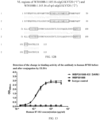
- the plate was then washed 3 times with PBST, and an HRP-labeled anti-human secondary antibody diluted in a 1:5000 ratio was then added at 100 ⁇ L/well and incubated for 1 h. After the incubation was complete, the plate was washed six times with PBST, and TMB (SurModics, TMBS-1000-01) was added for color development. Based on the results of the color development, the reaction was stopped by adding 2M HCl, and the plate was read by a microplate reader (Molecular Devices, SpecterMax 190) at OD450. The results are shown in FIG. 13 , which indicate that there was no significant change in the binding activity of the antibody to the human B7H3 antigen protein before and after conjugation to the drug.
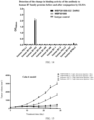
- Human PD-L1 protein Human PD-L1 protein (see the table above), human B7-H2 protein, human B7-H3 protein, human B7-H4 protein, human B7-H5 protein, human B7-H6 protein, human B7-1 protein, human B7-2 protein, human PD-L2 protein, human B7-H7 protein, and human BTNL2 protein were separately immobilized on 96-well plates by incubation at 4 °C overnight. The 96-well plates were then blocked by incubation with 1% BSA in PBS at 37 °C for 1 h. After blocking, the 96-well plates were washed 3 times with PBST (PBS containing 0.05% Tween 20).
- PBST PBS containing 0.05% Tween 20
- Serially-diluted antibody WBP301088, antibody-drug conjugate WBP301088-X2 (DAR6), or isotype control antibody hIgG1 isotype was prepared in binding buffer (PBS containing 0.05% Tween 20 and 0.5% BSA) and incubated with the B7 family proteins immobilized on the 96-well plates at 37 °C for 1 h. After incubation, the 96-well plates were washed 3 times with PBST, incubated with a secondary antibody (see the table above) in binding buffer at 37 °C for 1 h, and then washed again. TMB was added for color development, and the reaction was stopped by 1 M H 2 SO 4 . The results are shown in FIG. 14 .
- Anti-B7H3 ADC WBP301088-X2 (DAR6) and reference molecule ADC-1 were incubated with human tumor cells that positively expressed B7H3 for 7 days, and the inhibitory effect thereof on cell proliferation was assessed through a CellTiter-Glo ® chemiluminescence cell viability assay (i.e., the CTG method).
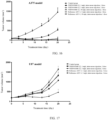
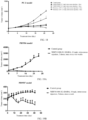
- the experimental results are shown in FIG. 18 , Table 24 and Table 25.
- Table 24 The tumor volume (mm 3 ) of each group at different time points Group Days 0 4 7 11 14 18 21 1 Blank control 154 ⁇ 8 202 ⁇ 10 269 ⁇ 14 382 ⁇ 29 540 ⁇ 40 826 ⁇ 44 1017 ⁇ 59
- Table 26 The experimental results are shown in FIG. 19A, FIG. 19B , Table 26 and Table 27.
- Table 26 Evaluation of anti-tumor efficacy of test antibody-drug conjugate in PR9586 patient-derived xenograft model (calculations based on tumor volumes on day 25 after first administration) Group Administration Dose (mg/kg) Day 25 Tumor volume (mean ⁇ SEM) T/C (%) TGI (%) p value 1 Control group - 2524.01 ⁇ 411.33 - - - 2 WBP301088-X2 10 17.08 ⁇ 6.02 0.68 99.32 0.00562 Note: p values were calculated from tumor volumes ( p > 0.05 indicates no statistical difference, and p ⁇ 0.01 indicates a significant difference). Table 27.
Landscapes
- Health & Medical Sciences (AREA)
- Bioinformatics & Cheminformatics (AREA)
- Engineering & Computer Science (AREA)
- Chemical & Material Sciences (AREA)
- Immunology (AREA)
- Life Sciences & Earth Sciences (AREA)
- Medicinal Chemistry (AREA)
- General Health & Medical Sciences (AREA)
- Veterinary Medicine (AREA)
- Public Health (AREA)
- Pharmacology & Pharmacy (AREA)
- Animal Behavior & Ethology (AREA)
- Epidemiology (AREA)
- Organic Chemistry (AREA)
- Cell Biology (AREA)
- General Chemical & Material Sciences (AREA)
- Nuclear Medicine, Radiotherapy & Molecular Imaging (AREA)
- Chemical Kinetics & Catalysis (AREA)
- Biochemistry (AREA)
- Biophysics (AREA)
- Genetics & Genomics (AREA)
- Molecular Biology (AREA)
- Proteomics, Peptides & Aminoacids (AREA)
- Peptides Or Proteins (AREA)
- Medicines Containing Antibodies Or Antigens For Use As Internal Diagnostic Agents (AREA)
- Medicinal Preparation (AREA)
- Pharmaceuticals Containing Other Organic And Inorganic Compounds (AREA)
Applications Claiming Priority (3)
| Application Number | Priority Date | Filing Date | Title |
|---|---|---|---|
| CN202210638941 | 2022-06-07 | ||
| CN202310391084 | 2023-04-12 | ||
| PCT/CN2023/098596 WO2023236949A1 (zh) | 2022-06-07 | 2023-06-06 | 抗b7h3抗体-药物偶联物及其用途 |
Publications (1)
| Publication Number | Publication Date |
|---|---|
| EP4537853A1 true EP4537853A1 (en) | 2025-04-16 |
Family
ID=89117652
Family Applications (1)
| Application Number | Title | Priority Date | Filing Date |
|---|---|---|---|
| EP23819114.2A Pending EP4537853A1 (en) | 2022-06-07 | 2023-06-06 | Anti-b7h3 antibody-drug conjugate and use thereof |
Country Status (12)
| Country | Link |
|---|---|
| US (2) | US20260224723A1 (enExample) |
| EP (1) | EP4537853A1 (enExample) |
| JP (1) | JP2025523382A (enExample) |
| KR (1) | KR20250021316A (enExample) |
| CN (1) | CN119384296A (enExample) |
| AU (1) | AU2023282410A1 (enExample) |
| CA (1) | CA3254691A1 (enExample) |
| CL (1) | CL2024003681A1 (enExample) |
| IL (1) | IL317340A (enExample) |
| MX (1) | MX2024015163A (enExample) |
| TW (1) | TW202400248A (enExample) |
| WO (1) | WO2023236949A1 (enExample) |
Families Citing this family (15)
| Publication number | Priority date | Publication date | Assignee | Title |
|---|---|---|---|---|
| GB202114938D0 (en) * | 2021-10-19 | 2021-12-01 | Univ Oslo Hf | Her2 variant car |
| AU2024411328A1 (en) * | 2023-12-29 | 2026-07-09 | Sichuan Kelun-Biotech Biopharmaceutical Co., Ltd. | Antibody-drug conjugate, pharmaceutical composition thereof, and use thereof |
| WO2025209279A1 (zh) * | 2024-04-03 | 2025-10-09 | 英诺湖医药(杭州)有限公司 | 一种抗b7h3抗体-艾瑞布林偶联物及其应用 |
| WO2025238587A1 (en) | 2024-05-16 | 2025-11-20 | Daiichi Sankyo Company, Limited | Combination of anti-b7-h3 antibody-drug conjugate and androgen receptor signaling inhibitor |
| WO2025245264A1 (en) * | 2024-05-21 | 2025-11-27 | Briapro Therapeutics Corp. | Anti-b7-h3 antibodies and methods of use thereof |
| TW202607030A (zh) | 2024-06-14 | 2026-02-16 | 德商拜恩技術股份公司 | 癌症治療的組合療法 |
| WO2025256632A1 (zh) * | 2024-06-14 | 2025-12-18 | 长春金赛药业有限责任公司 | 靶向b7-h3和psma的双特异性抗体及抗体-药物偶联物 |
| WO2025256761A1 (en) | 2024-06-14 | 2025-12-18 | BioNTech SE | Combination therapy for cancer treatment |
| WO2025260285A1 (en) | 2024-06-19 | 2025-12-26 | Duality Biologics (Suzhou) Co., Ltd. | Antibody drug conjugate |
| TW202617769A (zh) | 2024-06-19 | 2026-05-01 | 中國大陸商映恩生物製藥(蘇州)有限公司 | 抗體藥物結合物 |
| WO2026063874A1 (en) * | 2024-09-20 | 2026-03-26 | Hummingbird Bioscience Pte. Ltd. | B7-h3 antigen-binding molecules |
| WO2026062200A1 (en) * | 2024-09-20 | 2026-03-26 | Hummingbird Bioscience Pte. Ltd. | B7-h3 antigen-binding molecules |
| WO2026082020A1 (zh) * | 2024-10-15 | 2026-04-23 | 一线医药(杭州)有限公司 | 双特异性抗体和药物偶联物及其用途 |
| WO2026086929A1 (zh) * | 2024-10-24 | 2026-04-30 | 北京科诺信诚科技有限公司 | 靶向人b7h3的纳米抗体及其应用 |
| WO2026165269A1 (en) * | 2025-01-29 | 2026-08-06 | Sutro Biopharma, Inc. | Anti-b7-h3 antibodies, compositions comprising anti-b7-h3 antibodies and methods of making and using anti- b7-h3 antibodies |
Family Cites Families (13)
| Publication number | Priority date | Publication date | Assignee | Title |
|---|---|---|---|---|
| US4816567A (en) | 1983-04-08 | 1989-03-28 | Genentech, Inc. | Recombinant immunoglobin preparations |
| US5225539A (en) | 1986-03-27 | 1993-07-06 | Medical Research Council | Recombinant altered antibodies and methods of making altered antibodies |
| US5530101A (en) | 1988-12-28 | 1996-06-25 | Protein Design Labs, Inc. | Humanized immunoglobulins |
| UA83458C2 (uk) | 2000-09-18 | 2008-07-25 | Байоджен Айдек Ма Інк. | Виділений поліпептид baff-r (рецептор фактора активації в-клітин сімейства tnf) |
| PH12012501751A1 (en) | 2010-03-04 | 2012-11-12 | Macrogenics Inc | Antibodies reactive with b7-h3, immunologically active fragments thereof and uses thereof |
| RS57278B1 (sr) | 2012-10-11 | 2018-08-31 | Daiichi Sankyo Co Ltd | Antitelo-lek konjugat |
| EP3469000A1 (en) * | 2016-06-08 | 2019-04-17 | AbbVie Inc. | Anti-b7-h3 antibodies and antibody drug conjugates |
| CN109843927B (zh) * | 2017-03-06 | 2022-06-21 | 江苏恒瑞医药股份有限公司 | 抗b7-h3抗体、其抗原结合片段及其医药用途 |
| CN109963591B (zh) * | 2017-08-04 | 2023-04-04 | 江苏恒瑞医药股份有限公司 | B7h3抗体-药物偶联物及其医药用途 |
| CN118903456A (zh) * | 2018-09-26 | 2024-11-08 | 江苏恒瑞医药股份有限公司 | 依喜替康类似物的配体-药物偶联物及其制备方法和应用 |
| MX2021003446A (es) * | 2018-09-30 | 2021-06-15 | Jiangsu Hansoh Pharmaceutical Group Co Ltd | Conjugado analogo del anticuerpo anti-bth3 y exatecan, y uso medicinal del mismo. |
| WO2021190586A1 (zh) * | 2020-03-25 | 2021-09-30 | 江苏恒瑞医药股份有限公司 | B7h3抗体-依喜替康类似物偶联物及其医药用途 |
| PL4516357T3 (pl) * | 2020-09-30 | 2026-07-27 | Duality Biologics (Suzhou) Co., Ltd. | Środek przeciwnowotworowy, związek i sposób jego wytwarzania oraz jego zastosowanie |
-
2023
- 2023-06-06 KR KR1020247040682A patent/KR20250021316A/ko active Pending
- 2023-06-06 TW TW112121031A patent/TW202400248A/zh unknown
- 2023-06-06 JP JP2024571141A patent/JP2025523382A/ja active Pending
- 2023-06-06 CN CN202380033800.0A patent/CN119384296A/zh active Pending
- 2023-06-06 EP EP23819114.2A patent/EP4537853A1/en active Pending
- 2023-06-06 WO PCT/CN2023/098596 patent/WO2023236949A1/zh not_active Ceased
- 2023-06-06 CA CA3254691A patent/CA3254691A1/en active Pending
- 2023-06-06 IL IL317340A patent/IL317340A/en unknown
- 2023-06-06 US US18/872,244 patent/US20260224723A1/en active Pending
- 2023-06-06 AU AU2023282410A patent/AU2023282410A1/en active Pending
- 2023-11-16 US US18/511,591 patent/US12138316B2/en active Active
-
2024
- 2024-11-29 CL CL2024003681A patent/CL2024003681A1/es unknown
- 2024-12-06 MX MX2024015163A patent/MX2024015163A/es unknown
Also Published As
| Publication number | Publication date |
|---|---|
| TW202400248A (zh) | 2024-01-01 |
| JP2025523382A (ja) | 2025-07-23 |
| WO2023236949A1 (zh) | 2023-12-14 |
| US20240148892A1 (en) | 2024-05-09 |
| US20260224723A1 (en) | 2026-08-06 |
| CA3254691A1 (en) | 2025-03-18 |
| CL2024003681A1 (es) | 2025-04-21 |
| AU2023282410A1 (en) | 2024-12-05 |
| WO2023236949A8 (zh) | 2024-01-18 |
| KR20250021316A (ko) | 2025-02-12 |
| IL317340A (en) | 2025-01-01 |
| US12138316B2 (en) | 2024-11-12 |
| CN119384296A (zh) | 2025-01-28 |
| MX2024015163A (es) | 2025-02-10 |
Similar Documents
| Publication | Publication Date | Title |
|---|---|---|
| US12138316B2 (en) | Anti-B7H3 antibody-drug conjugate and use thereof | |
| TWI891749B (zh) | 抗體-藥物偶聯物及其醫藥用途 | |
| US20250032630A1 (en) | B7h4 antibody-drug conjugate and use thereof | |
| IL314567A (en) | Drug-conjugated antibody to HER3 and its use | |
| CN119947761B (zh) | 抗b7h3和pd-l1的双特异性抗体药物偶联物及其制备方法和用途 | |
| WO2025157214A1 (zh) | 抗FGFR2b抗体及抗体药物偶联物 | |
| EP4393515A1 (en) | Anti-cldn-18.2 antibody-drug conjugate and use thereof | |
| TWI853393B (zh) | 人源化抗人類神經降壓素受體1抗體及其應用 | |
| HK40118654A (en) | B7h4 antibody-drug conjugate and use thereof | |
| KR20260140575A (ko) | 항-FGFR2b 항체 및 항체 약물 접합체 | |
| WO2026082207A1 (zh) | 抗EGFR和cMET双特异性抗体的抗体药物偶联物 | |
| HK40089485B (en) | Anti-cldn-18.2 antibody-drug conjugate and use thereof | |
| HK40089485A (en) | Anti-cldn-18.2 antibody-drug conjugate and use thereof | |
| EA052527B1 (ru) | Конъюгат лекарственное средство-антитело к b7h4 и его применение |
Legal Events
| Date | Code | Title | Description |
|---|---|---|---|
| STAA | Information on the status of an ep patent application or granted ep patent |
Free format text: STATUS: THE INTERNATIONAL PUBLICATION HAS BEEN MADE |
|
| PUAI | Public reference made under article 153(3) epc to a published international application that has entered the european phase |
Free format text: ORIGINAL CODE: 0009012 |
|
| STAA | Information on the status of an ep patent application or granted ep patent |
Free format text: STATUS: REQUEST FOR EXAMINATION WAS MADE |
|
| 17P | Request for examination filed |
Effective date: 20250102 |
|
| AK | Designated contracting states |
Kind code of ref document: A1 Designated state(s): AL AT BE BG CH CY CZ DE DK EE ES FI FR GB GR HR HU IE IS IT LI LT LU LV MC ME MK MT NL NO PL PT RO RS SE SI SK SM TR |
|
| P01 | Opt-out of the competence of the unified patent court (upc) registered |
Free format text: CASE NUMBER: APP_18500/2025 Effective date: 20250416 |
|
| DAV | Request for validation of the european patent (deleted) | ||
| DAX | Request for extension of the european patent (deleted) |