EP4535832A1 - Verfahren und vorrichtung zur erfassung von positionsinformationen - Google Patents
Verfahren und vorrichtung zur erfassung von positionsinformationen Download PDFInfo
- Publication number
- EP4535832A1 EP4535832A1 EP22943083.0A EP22943083A EP4535832A1 EP 4535832 A1 EP4535832 A1 EP 4535832A1 EP 22943083 A EP22943083 A EP 22943083A EP 4535832 A1 EP4535832 A1 EP 4535832A1
- Authority
- EP
- European Patent Office
- Prior art keywords
- terminal device
- location information
- report
- network side
- information
- Prior art date
- Legal status (The legal status is an assumption and is not a legal conclusion. Google has not performed a legal analysis and makes no representation as to the accuracy of the status listed.)
- Pending
Links
Images



Classifications
-
- H—ELECTRICITY
- H04—ELECTRIC COMMUNICATION TECHNIQUE
- H04W—WIRELESS COMMUNICATION NETWORKS
- H04W4/00—Services specially adapted for wireless communication networks; Facilities therefor
- H04W4/02—Services making use of location information
-
- H—ELECTRICITY
- H04—ELECTRIC COMMUNICATION TECHNIQUE
- H04W—WIRELESS COMMUNICATION NETWORKS
- H04W24/00—Supervisory, monitoring or testing arrangements
- H04W24/02—Arrangements for optimising operational condition
-
- H—ELECTRICITY
- H04—ELECTRIC COMMUNICATION TECHNIQUE
- H04W—WIRELESS COMMUNICATION NETWORKS
- H04W24/00—Supervisory, monitoring or testing arrangements
- H04W24/10—Scheduling measurement reports ; Arrangements for measurement reports
-
- H—ELECTRICITY
- H04—ELECTRIC COMMUNICATION TECHNIQUE
- H04W—WIRELESS COMMUNICATION NETWORKS
- H04W52/00—Power management, e.g. Transmission Power Control [TPC] or power classes
- H04W52/02—Power saving arrangements
- H04W52/0209—Power saving arrangements in terminal devices
- H04W52/0225—Power saving arrangements in terminal devices using monitoring of external events, e.g. the presence of a signal
- H04W52/0229—Power saving arrangements in terminal devices using monitoring of external events, e.g. the presence of a signal where the received signal is a wanted signal
- H04W52/0235—Power saving arrangements in terminal devices using monitoring of external events, e.g. the presence of a signal where the received signal is a wanted signal where the received signal is a power saving command
-
- H—ELECTRICITY
- H04—ELECTRIC COMMUNICATION TECHNIQUE
- H04W—WIRELESS COMMUNICATION NETWORKS
- H04W52/00—Power management, e.g. Transmission Power Control [TPC] or power classes
- H04W52/02—Power saving arrangements
- H04W52/0209—Power saving arrangements in terminal devices
- H04W52/0261—Power saving arrangements in terminal devices managing power supply demand, e.g. depending on battery level
- H04W52/0274—Power saving arrangements in terminal devices managing power supply demand, e.g. depending on battery level by switching on or off the equipment or parts thereof
- H04W52/028—Power saving arrangements in terminal devices managing power supply demand, e.g. depending on battery level by switching on or off the equipment or parts thereof switching on or off only a part of the equipment circuit blocks
-
- H—ELECTRICITY
- H04—ELECTRIC COMMUNICATION TECHNIQUE
- H04W—WIRELESS COMMUNICATION NETWORKS
- H04W64/00—Locating users or terminals or network equipment for network management purposes, e.g. mobility management
-
- H—ELECTRICITY
- H04—ELECTRIC COMMUNICATION TECHNIQUE
- H04W—WIRELESS COMMUNICATION NETWORKS
- H04W84/00—Network topologies
- H04W84/02—Hierarchically pre-organised networks, e.g. paging networks, cellular networks, WLAN [Wireless Local Area Network] or WLL [Wireless Local Loop]
- H04W84/04—Large scale networks; Deep hierarchical networks
- H04W84/06—Airborne or Satellite Networks
Definitions
- the present disclosure relates to the field of wireless communication technology, in particular to a location information obtaining method and an apparatus.
- a network side device configures indication information for a terminal device, and the indication information is used to cause the terminal device to report a measurement result carrying Global Navigation Satellite System (GNSS) location information in a case that a report event is met.
- GNSS Global Navigation Satellite System
- configuration information for causing the terminal device to obtain detailed location information also needs to be configured.
- An object of the present disclosure is to provide a location information obtaining method and an apparatus, so as to reduce the power consumption of a terminal device.
- the present disclosure provides in some embodiments a location information obtaining method executed by a network side device, including: determining, by the network side device, whether or not a condition for obtaining location information is met; and in response to the condition for obtaining the location information being not met, stopping sending first configuration information to a terminal device.
- the first configuration information is used to indicate the terminal device to obtain detailed location information.
- the network side device determines whether or not the condition for obtaining the location information is met, and in a case that the condition for obtaining the location information is not met, stops sending the first configuration information to the terminal device.
- the first configuration information is used to indicate the terminal device to obtain the detailed location information. In this way, the terminal device does not receive the first configuration information, and it is unnecessary for the terminal device to obtain the detailed location information, so it is able to reduce the power consumption of the terminal device.
- the present disclosure provides in some embodiments another location information obtaining method executed by a terminal device, including: receiving first configuration information sent by a network side device.
- the first configuration information is sent by the network side device in a case that a condition for obtaining location information is met, and the first configuration information is used to indicate the terminal device to obtain detailed location information.
- the present disclosure provides in some embodiments a communication apparatus.
- the communication apparatus is used to achieve a part of, or all of, functions of the network side device in the method in the first aspect, e.g., the communication apparatus is used to achieve the functions in a part of, or all of, embodiments of the present disclosure, or separately achieve the function in any embodiment of the present disclosure.
- the functions are implemented through hardware, or through executing corresponding software by hardware.
- the hardware or software includes one or more units or modules corresponding to the functions.
- the communication apparatus includes a transceiver module and a processing module.
- the processing module is configured to support the communication apparatus to achieve the corresponding functions in the method
- the transceiver module is configured to support the communication apparatus to communication with the other device.
- the communication apparatus further includes a storage module coupled to the transceiver module and the processing module and configured to store therein necessary computer programs and data for the communication apparatus.
- the communication apparatus includes: a processing module configured to determine whether or not a condition for obtaining location information is met; and a transceiver module configured to, in response to the condition for obtaining the location information being not met, stop sending first configuration information to a terminal device.
- the first configuration information is used to indicate the terminal device to obtain detailed location information.
- the present disclosure provides in some embodiments a communication apparatus.
- the communication apparatus is used to achieve a part of, or all of, functions of the network side device in the method in the second aspect, e.g., the communication apparatus is used to achieve the functions in a part of, or all of, embodiments of the present disclosure, or separately achieve the function in any embodiment of the present disclosure.
- the functions are implemented through hardware, or through executing corresponding software by hardware.
- the hardware or software includes one or more units or modules corresponding to the functions.
- the communication apparatus includes a transceiver module and a processing module.
- the processing module is configured to support the communication apparatus to achieve the corresponding functions in the method
- the transceiver module is configured to support the communication apparatus to communication with the other device.
- the communication apparatus further includes a storage module coupled to the transceiver module and the processing module and configured to store therein necessary computer programs and data for the communication apparatus.
- the communication apparatus includes: a transceiver module configured to receive first configuration information sent by a network side device.
- the first configuration information is sent by the network side device in a case that a condition for obtaining location information is met, and the first configuration information is used to indicate the terminal device to obtain detailed location information.
- the present disclosure provides in some embodiments a communication apparatus, including a processor.
- the processor is configured to call a computer program in a memory, so as to implement the method in the first aspect.
- the present disclosure provides in some embodiments a communication apparatus, including a processor.
- the processor is configured to call a computer program in a memory, so as to implement the method in the second aspect.
- the present disclosure provides in some embodiments a processor and a memory storing therein a computer program.
- the processor is configured to execute the computer program stored in the memory, so as to implement the method in the first aspect.
- the present disclosure provides in some embodiments a processor and a memory storing therein a computer program.
- the processor is configured to execute the computer program stored in the memory, so as to implement the method in the second aspect.
- the present disclosure provides in some embodiments a communication apparatus, including a processor and an interface circuit.
- the interface circuit is configured to receive a code instruction and transmit the code instruction to the processor, and the processor is configured to execute the code instruction so as to implement the method in the first aspect.
- the present disclosure provides in some embodiments a communication apparatus, including a processor and an interface circuit.
- the interface circuit is configured to receive a code instruction and transmit the code instruction to the processor, and the processor is configured to execute the code instruction so as to implement the method in the second aspect.
- the present disclosure provides in some embodiments a location information obtaining system, including the communication apparatus in the third aspect and the communication apparatus in the fourth aspect, or including the communication apparatus in the fifth aspect and the communication apparatus in the sixth aspect, or including the communication apparatus in the seventh aspect and the communication apparatus in the eight aspect, or including the communication apparatus in the ninth aspect and the communication apparatus in the tenth aspect
- the present disclosure provides in some embodiments a computer-readable storage medium storing therein an instruction for a network side device.
- the instruction is executed to enable the network side device to implement the method in the first aspect.
- the present disclosure provides in some embodiments a computer-readable storage medium storing therein an instruction for a terminal device.
- the instruction is executed to enable the terminal device to implement the method in the second aspect.
- the present disclosure provides in some embodiments a computer program product including a computer program.
- the computer program is executed by a computer so as to implement the method in the first aspect.
- the present disclosure provides in some embodiments a computer program product including a computer program.
- the computer program is executed by a computer so as to implement the method in the second aspect.
- the present disclosure provides in some embodiments a chip system, including at least one processor and an interface, and used to support a network side device to achieve the functions in the first aspect, e.g., determine or process at least one of data or information involved in the above-mentioned method.
- the chip system further includes a memory storing therein necessary computer programs and data for the network side device.
- the chip system includes a chip, or includes a chip and other discrete elements.
- the present disclosure provides in some embodiments a chip system, including at least one processor and an interface, and used to support a terminal device to achieve functions involved in the second aspect, e.g., determine or process at least one of data or information involved in the above-mentioned method.
- the chip system further includes a memory storing therein a computer program and data necessary for the terminal device.
- the chip system includes a chip, or includes a chip and other discrete elements.
- the present disclosure provides in some embodiments a computer program.
- the computer program is executed by a computer so as to implement the method in the first aspect.
- the present disclosure provides in some embodiments a computer program.
- the computer program is executed by a computer so as to implement the method in the second aspect.
- measurement reporting is performed by a commercial terminal device of a subscriber to partially replace a conventional drive test, so as to automatically collect measurement data of the terminal device, thereby to detect and optimize issues and faults in a wireless network.
- the operator performs drive tests of a network coverage routinely each month, and performs drive tests of calling quality with respect to a specific region in response to user's complaints.
- the drive tests in these scenarios may be replaced with the MDT.
- the existing MDT includes the following measurement types.
- the MDT includes a logged MDT and an immediate MDT.
- the immediate MDT is mainly used to measure the terminal device in a RRC connected state (i.e., RRC_CONNECTED), and the network side device indicates the terminal device to perform real-time measurement and reporting.
- the measurement includes Radio Resources Management (RRM) measurement, Physical layer (PH) measurement, uplink (UL) PDCP delay measurement, Quality of Experience (QoE) measurement, Wireless Fidelity (WiFi) measurement, Bluetooth measurement, etc.
- the RRC measurement includes Reference Signal Received Power (RSRP) measurement, Reference Signal Received Quality (RSRQ) measurement, Received Signal Strength Indicator (RSSI) measurement, etc.
- the immediate MDT is usually used to measure a data volume, an Internet Protocol (IP) through, a packet transmission delay, a packet loss rate or a processing delay of the terminal device.
- IP Internet Protocol
- the logged MDT is mainly used to measure the terminal device in a RRC idle state (i.e., RRC_IDLE) or a RRC inactive state (i.e., RRC_INACTIVE).
- Each logged record in a logged MDT measurement result includes a relative time stamp, a New Radio (NR) Cell Global Identifier (NCG), a serving cell measurement result, a neighboring cell measurement result, a Wireless Local Area Network (WLAN) measurement result, a sensor measurement result, etc.
- NR New Radio
- NCG New Radio (NR) Cell Global Identifier
- serving cell measurement result a serving cell measurement result
- a neighboring cell measurement result a neighboring cell measurement result
- WLAN Wireless Local Area Network
- sensor measurement result a sensor measurement result
- each logged record in the logged MDT measurement result further includes location information about the terminal device.
- the serving cell measurement result further includes a Physical Cell Identifier (PCI), a cell RSRP/RSRQ, an optimum beam index, a RSRP/RSRQ of an optimum beam, a quantity of good beams, etc.
- PCI Physical Cell Identifier
- the logged MDT refers to the measurement of the RSRP performed by the terminal device.
- L2 measurements have also been defined in the NR, and they are used by the network side device to count network performance for such functions as radio link management, radio resource management and network maintenance. These L2 measurements are counted with respect to one terminal device, e.g., a service throughput, a service flow, a processing delay of the terminal device, and an air interface delay of the terminal device.
- the MDT measurement initiated by the network side device is a signaling-based MDT or a management-based MDT.
- the signaling-based MDT refers to a MDT for a specific terminal device, and the network side device receives a message sent by a Core Network (CN) for performing the MDT on a certain terminal device.
- the management-based MDT is not a MDT for a specific terminal device, and the network side device receives a message for performing the MDT from an Operation, Administration and Maintenance (OAM).
- OAM Operation, Administration and Maintenance
- the network side device selects, based on a certain policy, a terminal device from the UEs within a coverage of the network side device for the MDT measurement.
- the CN does not initiate the signaling-based MDT on the terminal device.
- the network side device may consider whether or not the terminal device agrees to perform the MDT, e.g., the network side device merely selects the UEs which have already agreed to perform the MDT for the MDT measurement.
- the CN notifies the network side device of whether or not a certain terminal device agrees to perform the MDT.
- the CN notifies the network side device of a Management Based MDT Allowed indication message of the terminal device.
- the CN also notifies the network side device of a Public Land Mobile Network (PLMN) list for the management-based MDT.
- PLMN Public Land Mobile Network
- Each of the two types of MDTs includes the logged MDT and the immediate MDT.
- the CN notifies the network side device of MDT configuration information and a Trace Collection Entity (TCE) IP address.
- the MDT configuration information includes an activation type of the MDT, a range of the MDT, a mode of the MDT, a configuration parameter of the mode of the MDT, a PLMN list for the signaling-based MDT, etc.
- the activation type of the MDT includes Immediate MDT Only, Logged MDT Only, Immediate MDT and trace, etc.
- the configuration parameter of the mode of the MDT includes a measurement event of the immediate MDT, a recording interval of the logged MDT, a duration of the logged MDT, etc.
- the MDT technology (1) it is able to reduce a drive test overhead and shorten an optimization period, thereby to reduce a network optimization and maintenance cost for a mobile communication operator. (2) In addition, it is able to collect measurement information in a region where the conventional drive test cannot be performed (e.g., narrow road, forest or private place), so as to evaluate the network performance more objectively, enable a network evaluation result to be close to the user experience, and improve the users' satisfaction. (3) In addition, the conventional drive test needs to collect data in a measured region through a testing vehicle, so from the perspective of environmental protection, with the MDT, it is able to reduce the emission of carbon dioxide, and protect the environment.
- the SON does not need to be provided with any additional network device, i.e., it may make maximum use of existing devices, so as to reduce an operation cost.
- the SON mainly includes Automatic Neighbor Relation (ANR), PCI selection, Mobility Robustness Optimization (MRO), Mobility Load Balancing (MLB), Energy Saving (ES), MDT, Coverage and Capacity Optimization (CCO), etc.
- ANR Automatic Neighbor Relation
- PCI selection PCI selection
- MRO Mobility Robustness Optimization
- MLB Mobility Load Balancing
- ES Energy Saving
- MDT Coverage and Capacity Optimization
- the existing devices may be utilized to a maximum extent, so as to achieve high performance.
- the coverage optimization may be achieved through load balancing and CCO without any new device, and the performance may be improved using the existing devices through mobility optimization and random access optimization.
- the cost may be reduced through reducing a quantity of maintainers as well as the requirement on skills of the maintainers. It is able to reduce the cost of the artificial drive test through the MDT technology, achieve an energy-saving effect through the ES technology, and improve the system performance through an automatic maintenance process.
- An ultimate goal of the SON technology is to achieve the completely automatic network planning and optimization, thereby to achieve a self-organized network in a real sense.
- network configuration parameters are generated and optimized automatically.
- Some use cases for the researches on the SON have been defined in the 3rd-Generation Partnership Project (3GPP), and these use cases include ANR, PCI selection, MRO, MLB, ES, MDT, coverage, CCO, etc.
- 3GPP 3rd-Generation Partnership Project
- V2X Vehicle to Everything
- a detection mechanism of the RLF includes one or more of the following.
- An issue of a physical layer is detected.
- a RRC layer of the terminal device has received N consecutive Primary Cell (PCell) out-of-synchronization indicators from a bottom layer and does not receive M consecutive PCell synchronization indicators from the bottom layer within a subsequent time period.
- PCell Primary Cell
- MCG Master Cell Group
- the RRC layer of the terminal device has received indication information indicating that a maximum retransmission threshold is reached from a Radio Link Control (RLC) layer of the MCG.
- RLC Radio Link Control
- one terminal device may communicate with a plurality of network side devices, i.e., Dual Connectivity (DC) or Multi-Radio Access Technology Dual Connectivity (MR-DC).
- the plurality of network side devices may be network side devices belonging to a same system (e.g., they are all 4G base stations or 5G base stations), or network side devices belonging to different systems (e.g., one is a 4G base station and the other is a 5G base station).
- the network side device (base station) having the interaction of a control plane signaling with the CN is called as a Master Node (MN), and the other network side device (base station) is called as Secondary Node (SN).
- MN Master Node
- SN Secondary Node
- the MN is called as a master base station, and the SN is called as a secondary base station.
- Cells under the master base station are called as a MCG, which includes a PCell and optionally one or more Secondary Cells (SCells).
- Cells under the secondary base station are called as a SCG, which includes a Primary SCG Cell (PSCell) and optionally one or more secondary SCells.
- MCG which includes a PCell and optionally one or more Secondary Cells (SCells).
- SCells Secondary Cells
- SCG Primary SCG Cell (PSCell) and optionally one or more secondary SCells.
- the PSCell refers to a cell for random access in the SCG cells in a case that a synchronization reconfiguration procedure is performed by the terminal device, or a cell where an initial Physical Uplink Shared Channel (PUSCH) transmission is initiated by the terminal device in a case that a SCG change is performed and the random access procedure does not need to be performed.
- PUSCH Physical Uplink Shared Channel
- NTN Non-Terrestrial Networks
- the NTN communication mode incudes a transparent transmission mode and a regeneration mode.
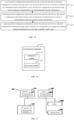
- FIG. 2 shows the transparent transmission mode.
- a NTN ground station sends a base station signal to the satellite, and the satellite converts the signal to be at a satellite frequency band and issues the converted signal to the terminal device. Apart from frequency conversion and signal amplification, the satellite does not demodulate the base station signal.
- FIG. 3 shows the regeneration mode.
- the NTN ground station sends the base station signal to the satellite.
- the satellite demodulates and decodes the signal, recodes and remodulates the signal, and then sends the regenerated signal at the satellite frequency band.
- FIG. 4 is a schematic view showing architecture of a communication system according to an embodiment of the present disclosure.
- the communication system includes, but not limited to, one network device and one terminal device. Quantities and forms of the devices in FIG. 4 are for illustrative purposes only, but shall not be construed as limiting the embodiments of the present disclosure.
- the communication system may include two or more network devices and two or more UEs.
- the communication system includes one network device 101 and one terminal device 102.
- LTE Long Term Evolution
- 5G 5th-Generation
- NR 5G New Radio
- the network device 101 is an entity at a network side for sending or receiving a signal.
- the network device 101 is an evolved NodeB (eNB), a Transmission Reception Point (TRP), a next generation NodeB (gNB) in the NR system, a base station in the future mobile communication system, or an access point in a Wireless Fidelity (WiFi) system.
- eNB evolved NodeB
- TRP Transmission Reception Point
- gNB next generation NodeB
- WiFi Wireless Fidelity
- a specific technology adopted by the network device and a specific device form thereof will not be particularly defined herein.
- the network device in the embodiments of the present disclosure may consist of a Central Unit (CU) and a Distributed Unit (DU), and the CU may also be called as control unit.
- CU Central Unit
- DU Distributed Unit
- a protocol layer for the network device e.g., a base station
- a protocol layer for the network device is divided, i.e., a part of functions of the protocol layer are centrally controlled by the CU, a part of, or all of, the remaining functions of the protocol layer are distributed in the DU, and the DU is controlled by the CU.
- the terminal device 102 is an entity at a user side for receiving or sending a signal, e.g., a mobile phone.
- the terminal device may also be called as terminal, user equipment (UE), Mobile Station (MS), Mobile Terminal (MT), etc.
- the terminal device may be a vehicle having a communication function, a smart vehicle, a mobile phone, a wearable device, a pad, a computer having a wireless transceiver function, a Virtual Reality (VR) terminal, an Augmented Reality (AR) terminal, a wireless terminal device in industrial control, a wireless terminal device in self-driving, a wireless terminal device in remote medical surgery, a wireless terminal device in smart grid, a wireless terminal device in transportation safety, a wireless terminal device in smart city, a wireless terminal device in smart home, etc.
- a specific technology adopted by the terminal device and a specific device form thereof will not be particularly defined.
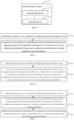
- FIG. 5 is a flow chart of a location information obtaining method according to an embodiment of the present disclosure.
- this method is executed by a network side device, and includes, but not limited to, the following steps.
- the network side device determines whether or not the condition for obtaining the location information is met.
- the condition for obtaining the location information is met in a case that the network side device does not have sufficient location data for troubleshooting network issues, or the network side device needs to obtain the location information about a terminal device in a subsequent process.
- the condition for obtaining the location information includes at least one of: that a purpose of indicating, by the network side device, the terminal device to report the location information is MDT; that a purpose of indicating, by the network side device, the terminal device to report the location information is SON; that the network side device indicates the terminal device to report the location information and the terminal device communicates with the network side device in a mode other than NTN; or that the network side device indicates the terminal device to report the location information in a case that an event other than Event D1 is met.
- the network side device indicates the terminal device to report the location information through sending indication information to the terminal device, e.g., includeCommonLocationInfo/includeLocationInfo.
- the event other than Event D1 includes at least one of Events A1 to A6, CondEvent T1, Events B1 and B2, or Events C1 and C2 (Event A1, Event A2, Event A3, Event A4, Event A5, Event A6, Event B1, Event B2, Event C1, Event C2).
- Event A1 (Serving becomes better than threshold): it indicates that serving cell signal quality is greater than a predetermined threshold.
- Event A2 (Serving becomes worse than threshold): it indicates that the serving cell signal quality is smaller than a predetermined threshold.
- Event A3 (Neighbour becomes offset better than serving): it indicates that intra-frequency/inter-frequency neighboring cell quality is greater than serving cell quality.
- Event A4 it indicates that the inter-frequency neighboring cell quality is greater than a predetermined threshold.
- Event A5 (Serving becomes worse than threshold1 and neighbour becomes better than threshold2): it indicates that the serving cell quality is smaller than a predetermined threshold and the neighboring cell quality is greater than another predetermined threshold.
- Event A6 (Neighbour becomes offset better than SCell): it indicates an offset of the neighboring cell quality relative to secondary cell quality.
- Event B1 (Inter RAT neighbour becomes better than threshold): it indicates that the inter-RAT neighboring cell quality is greater than a predetermined threshold.
- Event B2 (Serving becomes worse than threshold1 and inter RAT neighbour becomes better than threshold2): it indicates that the serving cell quality is smaller than a predetermined threshold and the inter-RAT neighboring cell quality is greater than another predetermined threshold.
- Event C1 (CSI-RS resource becomes better than threshold).
- Event C2 (CSI-RS resource becomes offset better than reference CSI-RS resource).
- Event D1 may also include events other than those listed hereinabove, which will not be particularly defined herein.
- the determining whether or not the condition for obtaining the location information is met includes determining whether or not the purpose of indicating, by the network side device, the terminal device to report the location information is MDT.
- the determining whether or not the condition for obtaining the location information is met includes determining whether or not the purpose of indicating, by the network side device, the terminal device to report the location information is SON.
- the determining whether or not the condition for obtaining the location information is met includes determining whether or not the network side device indicates the terminal device to report the location information and the terminal device communicates with the network side device in a mode other than NTN.
- the determining whether or not the condition for obtaining the location information is met includes determining whether or not the network side device indicates the terminal device to report the location information in a case that the event other than Event D1 is met.
- the network side device stops sending the first configuration information to the terminal device.
- the first configuration information includes first location indication information obtainCommonLocation and/or second location indication information obtainLocation.
- the network side device in a case that the condition for obtaining the location information includes that the purpose of indicating, by the network side device, the terminal device to report the location information is MDT, the network side device sends includeCommonLocationInfo/includeLocationInfo to the terminal device, so as to indicate the terminal device to report the location information.
- the network side device determines that the condition for obtaining the location information is not met.
- the first configuration information is stopped from being sent to the terminal device, and the first configuration information is used to indicate the terminal device to obtain the detailed location information.
- the network side device stops sending the first location indication information obtainCommonLocation and/or the second location indication information obtainLocation to the terminal device. As a result, it is unnecessary for the terminal device to obtain the location information, so it is able to reduce the power consumption of the terminal device.
- the network side device in a case that the condition for obtaining the location information includes that the purpose of indicating, by the network side device, the terminal device to report the location information is SON, the network side device sends includeCommonLocationInfo/includeLocationInfo to the terminal device, so as to indicate the terminal device to report the location information.
- the network side device determines that the condition for obtaining the location information is not met.
- the first configuration information is stopped from being sent to the terminal device, and the first configuration information is used to indicate the terminal device to obtain the detailed location information.
- the network side device stops sending the first location indication information obtainCommonLocation and/or the second location indication information obtainLocation to the terminal device. As a result, it is unnecessary for the terminal device to obtain the location information, so it is able to reduce the power consumption of the terminal device.
- the network side device in a case the condition for obtaining the location information includes that the network side device indicates the terminal device to report the location information and the terminal device communicates with the network side device in a mode other than NTN, the network side device sends includeCommonLocationInfo/includeLocationInfo to the terminal device, so as to indicate the terminal device to report the location information.
- the network side device determines that the condition for obtaining the location information is not met.
- the first configuration information is stopped from being sent to the terminal device, and the first configuration information is used to indicate the terminal device to obtain the detailed location information.
- the network side device in a case that the network side device sends includeCommonLocationInfo/includeLocationInfo to the terminal device to indicate the terminal device to report the location information and the terminal device communicates with the network side device through NTN, the network side device stops sending the first location indication information obtainCommonLocation and/or the second location indication information obtainLocation to the terminal device. As a result, it is unnecessary for the terminal device to obtain the location information, so it is able to reduce the power consumption of the terminal device.
- the network side device in a case that the condition for obtaining the location information includes that the network side device indicates the terminal device to report the location information in a case that an event other than Event D1 is met, the network side device sends includeCommonLocationInfo/includeLocationInfo to the terminal device to indicate the terminal device to report the location information in a case that Event D1 is met, and determines that the condition for obtaining the location information is not met.
- the first configuration information is stopped from being sent to the terminal device, and the first configuration information is used to indicate the terminal device to obtain the detailed location information.
- the network side device in a case that the network side device sends includeCommonLocationInfo/includeLocationInfo to the terminal device to indicate the terminal device to report the location information, and the location information is reported in a case that Event D1 is met, the network side device stops sending the first location indication information obtainCommonLocation and/or the second location indication information obtainLocation to the terminal device. As a result, it is unnecessary for the terminal device to obtain the location information, so it is able to reduce the power consumption of the terminal device.
- the network side device determines whether or not the condition for obtaining the location information is met, and in a case that the condition for obtaining the location information is not met, stops sending the first configuration information to the terminal device.
- the first configuration information is used to indicate the terminal device to obtain the detailed position information.
- the terminal device does not receive the first configuration information, and it is unnecessary for the terminal device to obtain the detailed location information, so it is able to reduce the power consumption of the terminal device.
- the network side device determines whether or not the condition for obtaining the location information is met, and in a case that the condition for obtaining the location information is not met, stops sending the first configuration information to the terminal device.
- the first configuration information is used to indicate the terminal device to obtain the detailed position information.
- the terminal device does not receive the first configuration information, and it is unnecessary for the terminal device to obtain the detailed location information, so it is able to reduce the power consumption of the terminal device.
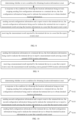
- FIG. 6 is a flow chart of another location information obtaining method according to an embodiment of the present disclosure.
- this method is executed by a network side device, and it includes, but not limited to, the following steps.
- S61 may refer to that in the above-mentioned embodiments, and the same contents will not be particularly defined herein.
- the network side device in a case that the condition for obtaining the location information being not met, stops sending the first configuration information to the terminal device, and in a case that the condition for obtaining the location information being met, the network side device sends the first configuration information to the terminal device.
- the first configuration information includes first location indication information obtainCommonLocation and/or second location indication information obtainLocation.
- the network side device in a case that the condition for obtaining the location information includes that the purpose of indicating, by the network side device, the terminal device to report the location information is MDT, the network side device sends includeCommonLocationInfo/includeLocationInfo to the terminal device, so as to indicate the terminal device to report the location information.
- the network side device determines that the condition for obtaining the location information is not met. Based on the above, the first configuration information is stopped from being sent to the terminal device, and the first configuration information is used to indicate the terminal device to obtain the detailed location information.
- the network side device sends includeCommonLocationInfo/includeLocationInfo to the terminal device, so as to indicate the terminal device to report the location information.
- the network side device determines that the condition for obtaining the location information is met. Based on the above, the first configuration information is sent to the terminal device, and the first configuration information is used to indicate the terminal device to obtain the detailed location information.
- the network side device stops sending the first location indication information obtainCommonLocation and/or the second location indication information obtainLocation to the terminal device.
- the network side device sends the first location indication information obtainCommonLocation and/or the second location indication information obtainLocation to the terminal device.
- the terminal device merely needs to obtain the location information in a case that the condition for obtaining the location information is met, so it is able to reduce the power consumption of the terminal device.
- the network side device in a case that the condition for obtaining the location information includes that the purpose of indicating, by the network side device, the terminal device to report the location information is SON, the network side device sends includeCommonLocationInfo/includeLocationInfo to the terminal device, so as to indicate the terminal device to report the location information.
- the network side device determines that the condition for obtaining the location information is not met. Based on the above, the first configuration information is stopped from being sent to the terminal device, and the first configuration information is used to indicate the terminal device to obtain the detailed location information.
- the network side device sends includeCommonLocationInfo/includeLocationInfo to the terminal device to indicate the terminal device to report the location information.
- the network side device determines that the condition for obtaining the location information is met. Based on the above, the first configuration information is sent to the terminal device, and the first configuration information is used to indicate the terminal device to obtain the detailed location information.
- the network side device stops sending the first location indication information obtainCommonLocation and/or the second location indication information obtainLocation to the terminal device.
- the network side device sends the first location indication information obtainCommonLocation and/or the second location indication information obtainLocation to the terminal device.
- the terminal device merely needs to obtain the location information in a case that the condition for obtaining the location information is met, so it is able to reduce the power consumption of the terminal device.
- the network side device in a case the condition for obtaining the location information includes that the network side device indicates the terminal device to report the location information and the terminal device communicates with the network side device in a mode other than NTN, the network side device sends includeCommonLocationInfo/includeLocationInfo to the terminal device, so as to indicate the terminal device to report the location information.
- the network side device determines that the condition for obtaining the location information is not met. Based on the above, the first configuration information is stopped from being sent to the terminal device, and the first configuration information is used to indicate the terminal device to obtain the detailed location information.
- the network side device sends includeCommonLocationInfo/includeLocationInfo to the terminal device so as to indicate the terminal device to report the location information.
- the network side device determines that the condition for obtaining the location information is met. Based on the above, the first configuration information is sent to the terminal device, and the first configuration information is used to indicate the terminal device to obtain the detailed location information.
- the network side device in a case that the network side device sends includeCommonLocationInfo/includeLocationInfo to the terminal device to indicate the terminal device to report the location information and the terminal device communicates with the network side device through NTN, the network side device stops sending the first location indication information obtainCommonLocation and/or the second location indication information obtainLocation to the terminal device.
- the network side device sends includeCommonLocationInfo/includeLocationInfo to the terminal device to indicate the terminal device to report the location information and the terminal device communicates with the network side device in a mode other than NTN
- the network side device sends the first location indication information obtainCommonLocation and/or the second location indication information obtainLocation to the terminal device.
- the terminal device merely needs to obtain the location information in a case that the condition for obtaining the location information is met, so it is able to reduce the power consumption of the terminal device.
- the network side device in a case that the condition for obtaining the location information includes that the network side device indicates the terminal device to report the location information in a case that an event other than Event D1 is met, the network side device sends includeCommonLocationInfo/includeLocationInfo to the terminal device to indicate the terminal device to report the location information in a case that Event D1 is met, and determines that the condition for obtaining the location information is not met.
- the first configuration information is stopped from being sent to the terminal device, and the first configuration information is used to indicate the terminal device to obtain the detailed location information.
- the network side device sends includeCommonLocationInfo/includeLocationInfo to the terminal device to indicate the terminal device to report the location information in a case that the event other than Event D1 is met, and determines that the condition for obtaining the location information is met. Based on the above, the network side device sends the first configuration information to the terminal device, and the first configuration information is used to indicate the terminal device to obtain the detailed location information.
- the network side device in a case that the network side device sends includeCommonLocationInfo/includeLocationInfo to the terminal device to indicate the terminal device to report the location information, and the location information is reported in a case that Event D1 is met, the network side device stops sending the first location indication information obtainCommonLocation and/or the second location indication information obtainLocation to the terminal device.
- the network side device sends includeCommonLocationInfo/includeLocationInfo to the terminal device to indicate the terminal device to report the location information, and the location information is reported in a case that the event other than Event D1 is met
- the network side device sends the first location indication information obtainCommonLocation and/or the second location indication information obtainLocation to the terminal device.
- the terminal device merely needs to obtain the location information in a case that the condition for obtaining the location information is met, so it is able to reduce the power consumption of the terminal device.
- the network side device determines whether or not the condition for obtaining the location information is met, and in a case that the condition for obtaining the location information is not met, stops sending the first configuration information to the terminal device.
- the first configuration information is used to indicate the terminal device to obtain the detailed position information.
- the network side device sends the first configuration information to the terminal device.
- the terminal device merely needs to obtain the location information in a case that the condition for obtaining the location information is met, so it is able to reduce the power consumption of the terminal device.
- FIG. 7 is a flow chart of another location information obtaining method according to an embodiment of the present disclosure.
- this method is executed by a network side device, and it includes, but not limited to, the following steps.
- S71 may refer to that in the above-mentioned embodiments, and the same contents will not be particularly defined herein.
- Step 72 in response to the condition for obtaining the location information being not met, first configuration information is stopped from being sent to a terminal device.
- the first configuration information is used to indicate the terminal device to obtain detailed location information.
- S73 second configuration information is sent to the terminal device.
- the second configuration information is used to indicate the terminal device to report a measurement result carrying the location information.
- the network side device sends the second configuration information to the terminal device, and the second configuration information is used to indicate the terminal device to report the measurement result carrying the location information.
- the second configuration information may be a new Information Element (IE) for indicating the terminal device to report the measurement result carrying the location information, or it may reuse a measurement report configuration (ReportConfig), or reuse includeCommonLocationInfo and includeLocationInfo in the measurement report configuration.
- the measurement report configuration indicates the terminal device to report the measurement result carrying the location information, or includeCommonLocationInfo indicates the terminal device to report the measurement result carrying the location information, or includeLocationInfo indicates the terminal device to report the measurement result carrying the location information.
- the network side device sends a report event to the terminal device, and the second configuration information is used to indicate the terminal device to report the measurement result carrying the location information in a case that the report event is met.
- the network side device sends the report event and the second configuration information together to the terminal device, or sends the report event and the second configuration information separately.
- the network side device sends the report event and the second configuration information together to the terminal device
- the network side device sends the measurement report configuration (ReportConfig) to the terminal device
- the measurement report configuration includes the second configuration information and the report event.
- the report event includes a periodic measurement report event and/or an event-triggered report event.
- the periodic measurement report event is used to report the measurement result in a case that a periodicity requirement is met.
- the event-triggered report event is used to report the measurement result in a case that an event is met.
- the report event includes at least one of Events A1 to A6, Event D1, CondEvent T1, Events B1 and B2, or Events C1 and C2 (Event A1, Event A2, Event A3, Event A4, Event A5, Event A6, Event B1, Event B2, Event C1, Event C2).
- Event A1 (Serving becomes better than threshold): it indicates that serving cell signal quality is greater than a predetermined threshold.
- Event A2 (Serving becomes worse than threshold): it indicates that the serving cell signal quality is smaller than a predetermined threshold.
- Event A3 (Neighbour becomes offset better than serving): it indicates that intra-frequency/inter-frequency neighboring cell quality is greater than serving cell quality.
- Event A4 it indicates that the inter-frequency neighboring cell quality is greater than a predetermined threshold.
- Event A5 (Serving becomes worse than threshold1 and neighbour becomes better than threshold2): it indicates that the serving cell quality is smaller than a predetermined threshold and the neighboring cell quality is greater than another predetermined threshold.
- Event A6 (Neighbour becomes offset better than SCell): it indicates an offset of the neighboring cell quality relative to secondary cell quality.
- Even D1 it indicates that the neighboring cell quality is superior over quality of a best cell in a candidate cell list and a difference between the two is greater than a first threshold.
- Event B1 (Inter RAT neighbour becomes better than threshold): it indicates that inter-RAT neighboring cell quality is greater than a predetermined threshold.
- Event B2 (Serving becomes worse than threshold1 and inter RAT neighbour becomes better than threshold2): it indicates that the serving cell quality is smaller than a predetermined threshold and the inter-RAT neighboring cell quality is greater than another predetermined threshold.
- Event C2 (CSI-RS resource becomes offset better than reference CSI-RS resource).
- the report event includes Event D1.
- the network side device sends the second configuration information and the report event to the terminal device.
- the second configuration information is used to indicate the terminal device to report the measurement result carrying the location information in a case that the report event is met.
- the report event includes Event D1, and the second configuration information is used to indicate the terminal device to report the measurement result carrying the location information in a case that Event D1 is met.
- the network side device sends the second configuration information to the terminal device, and the second configuration information is used to indicate the terminal device to report the measurement result carrying the location information.
- the network side device stops sending the first configuration information to the terminal device, and the first configuration information is used to indicate the terminal device to obtain the detailed location information.
- the first configuration information incudes first location indication information obtainCommonLocation and/or second location indication information obtainLocation.
- an order of sending the first configuration information and the second configuration information to the terminal device may be adjusted based on the practical need.
- the second configuration information may also be sent before the first configuration information.
- FIG. 8 is a flow chart of another location information obtaining method according to an embodiment of the present disclosure.
- this method is executed by a network side device, and it includes, but not limited to, the following steps.
- S82 may refer to that in the above-mentioned embodiments, and the same contents will not be particularly defined herein.
- the network side device sends the second configuration information and the report event to the terminal device, and the second configuration information is used to indicate the terminal device to report the measurement result carrying the location information in a case that the report event is met.
- the network side device stops sending the first configuration information to the terminal device, and the first configuration information is used to indicate the terminal device to obtain the detailed location information.
- the network side device sends the first configuration information to the terminal device.
- the terminal device obtains the coarse-grained, complete GNSS location information or the complete GNSS location information based on the second configuration information, the first configuration information and the report event. Then, in a case that the report event is met, the terminal device reports the measurement result, and the measurement result includes the complete GNSS location information.
- the terminal device may selected to, or not to, report an available detailed location in the measurement result, e.g., based on user's willingness.
- the measurement result includes the indication information indicating that there is no available location.
- the network side device sends the second configuration information and the report event to the terminal device, and the second configuration information is used to indicate the terminal device to report the measurement result carrying the location information in a case that the report event is met.
- the network side device stops sending the first configuration information to the terminal device, and the first configuration information is used to indicate the terminal device to obtain the detailed location information.
- the network side device sends the first configuration information to the terminal device, and receives the measurement result reported by the terminal device in a case that the report event is met.
- the terminal device merely needs to obtain the location information in a case that the condition for obtaining the location information is met, and report the measurement result in a case that the report event is met, so it is able to reduce the power consumption of the terminal device.
- FIG. 9 is a flow chart of another location information obtaining method according to an embodiment of the present disclosure.
- this method is executed by a network side device, and it includes, but not limited to, the following steps.
- the report event may refer to the relevant description in the above-mentioned embodiments, and the same contents will not be particularly defined herein.
- the terminal device reports the measurement result carrying the coarse-grained GNSS location information in a case that the report event is met.
- a method for obtaining the coarse-grained GNSS location information by the terminal device may refer to the relevant description about the method for obtaining the location information by the terminal device in the above embodiments, and thus will not be particularly defined herein.
- the terminal device upon the receipt of the first indication information sent by the network side device and indicating the terminal device to report the measurement result carrying the coarse-grained GNSS location information, in a case that the report event is met, the terminal device reports the measurement result carrying the coarse-grained GNSS location information to the network side device. However, in a case that the terminal device does not receive the first indication information sent by the network side device and the report event is met, the terminal device reports the measurement result carrying the complete GNSS location information to the network side device.
- the network side device sends the second configuration information and the report event to the terminal device, and the second configuration information is used to indicate the terminal device to report the measurement result carrying the location information in a case that the report event is met.
- the network side device stops sending the first configuration information to the terminal device.
- the network side device sends the first configuration information to the terminal device, and the first configuration information is used to indicate the terminal device to obtain the detailed location information.
- the network side device sends the first indication information to the terminal device, and the first indication information is used to indicate the terminal device to report the measurement result carrying the coarse-grained GNSS location information.
- FIG. 10 is a flow chart of another location information obtaining method according to an embodiment of the present disclosure.
- S101 may refer to that in the above-mentioned embodiments, and the same contents will not be particularly defined herein.
- S103 second configuration information and a report event are sent to the terminal device, and the second configuration information is used to indicate the terminal device to report a measurement result carrying the location information in a case that the report event is met.
- S104 third configuration information is sent to the terminal device, and the third configuration information is used to indicate the terminal device to obtain the detailed location information in a case that a specific event is met.
- the specific event includes at least one of: triggering a recording of a RLF report; reporting MCG failure information; reporting SCG failure information; triggering a recording of Random Access (RA) report; triggering a recording of a handover success report; triggering a recording of PScell addition success report; or triggering a recording of a PScell change success report.
- triggering a recording of a RLF report includes at least one of: triggering a recording of a RLF report; reporting MCG failure information; reporting SCG failure information; triggering a recording of Random Access (RA) report; triggering a recording of a handover success report; triggering a recording of PScell addition success report; or triggering a recording of a PScell change success report.
- RA Random Access
- the network side device after the network side device has sent the first configuration information to the terminal device, or has sent the first configuration information and the second configuration information to the terminal device, the network side device sends third configuration information.
- the third configuration information is used to indicate the terminal device to obtain the detailed location information in a case that the specific event is met.
- the third configuration information may also be sent independent of the first configuration information and/or the second configuration information, i.e., S104 may be implemented independent of S101 to S103.
- the network side device sends the third configuration information to the terminal device, and the third configuration information is used to indicate the terminal device to obtain the detailed location information in a case that the recording of the RLF report is triggered.
- the network side device sends the third configuration information to the terminal device, and the third configuration information is used to indicate the terminal device to obtain the detailed location information in a case that the MCG failure information is reported.
- the network side device sends the third configuration information to the terminal device, and the third configuration information is used to indicate the terminal device to obtain the detailed location information in a case that the SCG failure information is reported.
- the network side device sends the third configuration information to the terminal device, and the third configuration information is used to indicate the terminal device to obtain the detailed location information in a case that the recording of the handover success report is triggered.
- the network side device sends the third configuration information to the terminal device, and the third configuration information is used to indicate the terminal device to obtain the detailed location information in a case that the recording of the PScell addition success report is triggered.
- the network side device sends the third configuration information to the terminal device, and the third configuration information is used to indicate the terminal device to obtain the detailed location information in a case that the recording of the PScell change success report is triggered.
- the third configuration information may reuse the first location indication information obtainCommonLocation or the second location indication information obtainLocation.
- the third configuration information includes a plurality of second indication information. In a case that there is a plurality of types of specific events, each second indication information corresponds to one type of specific event; or in a case that there is a plurality of types of specific events, the plurality of types of specific events is divided into a plurality of specific event groups, and each second indication information corresponds to one specific event group.
- the third configuration information includes a plurality of second indication information, and the plurality of second indication information is IEs independent of each other.
- each second indication information corresponds to one type of specific event.
- the network side device configures different second indication information for the terminal device, so as to indicate the terminal device to obtain the detailed location information in a case that the specific event corresponding to the second indication information is met.
- the plurality of types of specific events is divided into a plurality of specific event groups, and each second indication information corresponds to one specific event group.
- the network side device configures different second indication information for the terminal device, so as to indicate the terminal device to obtain the detailed location information in a case that the specific event group corresponding to the second indication information is met.
- the IE1 corresponds to the specific event 4, and the IE2 corresponds to the specific event 5.
- the network side device sends the third configuration information to the terminal device.
- the terminal device is indicated to obtain the detailed location information in a case that the specific event 4 is met.
- the terminal device is indicated to obtain the detailed location information in a case that the specific event 5 is met.
- this method is executed by a terminal device, and it includes, but not limited to, the following step.
- S111 first configuration information sent by a network side device is received.
- the first configuration information is sent by the network side device in a case that a condition for obtaining location information is met, and the first configuration information is used to indicate the terminal device to obtain detailed location information.
- the network side device determines whether or not the condition for obtaining the location information is met.
- the condition for obtaining the location information is met in a case that the network side device does not have sufficient location data for troubleshooting network issues, or the network side device needs to obtain the location information about a terminal device in a subsequent process.
- the network side device indicates the terminal device to report the location information through sending indication information to the terminal device, e.g., includeCommonLocationInfo/includeLocationInfo.
- Event A1 (Serving becomes better than threshold): it indicates that serving cell signal quality is greater than a predetermined threshold.
- Event A2 (Serving becomes worse than threshold): it indicates that the serving cell signal quality is smaller than a predetermined threshold.
- Event A3 (Neighbour becomes offset better than serving): it indicates that intra-frequency/inter-frequency neighboring cell quality is greater than serving cell quality.
- Event A4 it indicates that the inter-frequency neighboring cell quality is greater than a predetermined threshold.
- Event A6 (Neighbour becomes offset better than SCell): it indicates an offset of the neighboring cell quality relative to secondary cell quality.
- Event B2 (Serving becomes worse than threshold1 and inter RAT neighbour becomes better than threshold2): it indicates that the serving cell quality is smaller than a predetermined threshold and the inter-RAT neighboring cell quality is greater than another predetermined threshold.
- Event C2 (CSI-RS resource becomes offset better than reference CSI-RS resource).
- Event D1 may also include events other than those listed hereinabove, which will not be particularly defined herein.
- the determining whether or not the condition for obtaining the location information is met includes determining whether or not the purpose of indicating, by the network side device, the terminal device to report the location information is MDT.
- the network side device in a case that the condition for obtaining the location information includes that the purpose of indicating, by the network side device, the terminal device to report the location information is MDT, the network side device sends includeCommonLocationInfo/includeLocationInfo to the terminal device, so as to indicate the terminal device to report the location information.
- the network side device determines that the condition for obtaining the location information is not met. Based on the above, the first configuration information is stopped from being sent to the terminal device, and the first configuration information is used to indicate the terminal device to obtain the detailed location information.
- the network side device sends includeCommonLocationInfo/includeLocationInfo to the terminal device to indicate the terminal device to report the location information.
- the network side device determines that the condition for obtaining the location information is met. Based on the above, the network side device sends the first configuration information to the terminal device, and the first configuration information is used to indicate the terminal device to obtain the detailed location information.
- the network side device sends includeCommonLocationInfo/includeLocationInfo to the terminal device, so as to indicate the terminal device to report the location information.
- the network side device determines that the condition for obtaining the location information is met. Based on the above, the first configuration information is sent to the terminal device, and the first configuration information is used to indicate the terminal device to obtain the detailed location information.
- the network side device sends includeCommonLocationInfo/includeLocationInfo to the terminal device to indicate the terminal device to report the location information and the terminal device communicates with the network side device in a mode other than NTN, the network side device sends the first location indication information obtainCommonLocation and/or the second location indication information obtainLocation to the terminal device.
- the terminal device merely needs to obtain the location information in a case that the condition for obtaining the location information is met, so it is able to reduce the power consumption of the terminal device.
- the network side device in a case that the condition for obtaining the location information includes that the network side device indicates the terminal device to report the location information in a case that an event other than Event D1 is met, the network side device sends includeCommonLocationInfo/includeLocationInfo to the terminal device to indicate the terminal device to report the location information in a case that Event D1 is met, and determines that the condition for obtaining the location information is not met.
- the first configuration information is stopped from being sent to the terminal device, and the first configuration information is used to indicate the terminal device to obtain the detailed location information.
- the network side device sends includeCommonLocationInfo/includeLocationInfo to the terminal device to indicate the terminal device to report the location information in a case that an event other than Event D1 is met, and determines that the condition for obtaining the location is met.
- the first configuration information is sent to the terminal device, and the first configuration information is used to indicate the terminal device to obtain the detailed location information.
- the network side device in a case that the network side device sends includeCommonLocationInfo/includeLocationInfo to the terminal device to indicate the terminal device to report the location information, and the location information is reported in a case that Event D1 is met, the network side device stops sending the first location indication information obtainCommonLocation and/or the second location indication information obtainLocation to the terminal device.
- the network side device sends includeCommonLocationInfo/includeLocationInfo to the terminal device to indicate the terminal device to report the location information, and the location information is reported in a case that an event other than Event D1 is met
- the network side device sends the first location indication information obtainCommonLocation and/or the second location indication information obtainLocation to the terminal device.
- the terminal device merely needs to obtain the location information in a case that the condition for obtaining the location information is met, so it is able to reduce the power consumption of the terminal device.
- the first configuration information sent by the network side device is received, and the first configuration information is sent by the network side device in a case that the condition for obtaining location information is met, and the first configuration information is used to indicate the terminal device to obtain detailed location information.
- the terminal device merely needs to obtain the location information in a case that the condition for obtaining the location information is met, so it is able to reduce the power consumption of the terminal device.
- this method is executed by the terminal device, and it includes, but not limited to, the following steps.
- S122 second configuration information sent by the network side device is received, and the second configuration information is used to indicate the terminal device to report a measurement result carrying the location information.
- the terminal device receives a report event sent by the network side device, and the second configuration information is used to indicate the terminal device to report the measurement result carrying the location information in a case that the report event is met.
- the report event includes a periodic measurement report event and/or an event-triggered report event.
- the periodic measurement report event is used to report the measurement result in a case that a periodicity requirement is met.
- the event-triggered report event is used to report the measurement result in a case that an event is met.
- the report event includes at least one of Events A1 to A6, Event D1, CondEvent T1, Events B1 and B2, or Events C1 and C2 (Event A1, Event A2, Event A3, Event A4, Event A5, Event A6, Event B1, Event B2, Event C1, Event C2).
- Event A1 (Serving becomes better than threshold): it indicates that serving cell signal quality is greater than a predetermined threshold.
- Event A2 (Serving becomes worse than threshold): it indicates that the serving cell signal quality is smaller than a predetermined threshold.
- Event B2 (Serving becomes worse than threshold1 and inter RAT neighbour becomes better than threshold2): it indicates that the serving cell quality is smaller than a predetermined threshold and the inter-RAT neighboring cell quality is greater than another predetermined threshold.
- Event C1 (CSI-RS resource becomes better than threshold).
- Event C2 (CSI-RS resource becomes offset better than reference CSI-RS resource).
- the report event includes Event D1.
- the network side device sends the second configuration information and the report event to the terminal device.
- the second configuration information is used to indicate the terminal device to report the measurement result carrying the location information in a case that the report event is met.
- this method is executed by a terminal device, and it includes, but not limited to, the following steps.
- the measurement result includes at least one of: coarse-grained GNSS location information; complete GNSS location information; or indication information indicating that there is no available location.
- the terminal device receives the second configuration information and the report event sent by the network side device, and the second configuration information is used to indicate the terminal device to report the measurement result carrying the location information in a case that the report event is met.
- the terminal device receives the first configuration information sent by the network side device in a case that the condition for obtaining the location information is met, and the first configuration information is used to indicate the terminal device to obtain the detailed location information.
- the terminal device obtains the coarse-grained, complete GNSS location information or the complete GNSS location information based on the second configuration information, the first configuration information and the report event. Then, in a case that the report event is met, the terminal device reports the measurement result, and the measurement result includes the complete GNSS location information.
- the terminal device receives the second configuration information and the report event sent by the network side device, and the second configuration information is used to indicate the terminal device to report the measurement result carrying the location information in a case that the report event is met.
- the terminal device receives the first configuration information sent by the network side device in a case that the condition for obtaining the location information is met, and the first configuration information is used to indicate the terminal device to obtain the detailed location information.
- the terminal device obtains the coarse-grained, complete GNSS location information or the complete GNSS location information based on the second configuration information, the first configuration information and the report event. Then, in a case that the report event is met, the terminal device reports the measurement result, and the measurement result includes the indication information indicating that there is no available location.
- the network side device sends the first indication information to the terminal device, so as to indicate the terminal device to report the measurement result carrying the coarse-grained GNSS location information.
- the terminal device reports the measurement result carrying the coarse-grained GNSS location information in a case that the report event is met.
- a method for obtaining the coarse-grained GNSS location information by the terminal device may refer to the relevant description about the method for obtaining the location information by the terminal device in the above embodiments, and thus will not be particularly defined herein.
- the terminal device upon the receipt of the first indication information sent by the network side device and indicating the terminal device to report the measurement result carrying the coarse-grained GNSS location information, in a case that the report event is met, the terminal device reports the measurement result carrying the coarse-grained GNSS location information to the network side device. However, in a case that the terminal device does not receive the first indication information sent by the network side device and the report event is met, the terminal device reports the measurement result carrying the complete GNSS location information to the network side device.
- the terminal device receives the second configuration information and the report event sent by the network side device, and the second configuration information is used to indicate the terminal device to report the measurement result carrying the location information in a case that the report event is met.
- the terminal device receives the first configuration information sent by the network side device in a case that the condition for obtaining the location information is met, and the first configuration information is used to indicate the terminal device to obtain the detailed location information.
- the terminal device receives the first indication information sent by the network side device, and the first indication information is used to indicate the terminal device to report the measurement result carrying the coarse-grained GNSS location information.
- the terminal device reports the measurement result to the network side device, and the measurement result includes the coarse-grained GNSS location information.
- the terminal device merely needs to obtain the location information in a case that the condition for obtaining the location information is met, receive the first indication information sent by the network side device, and report the measurement result carrying the coarse-grained GNSS location information in a case that the report event is met, so it is able to reduce the power consumption of the terminal device.
- this method is executed by a terminal device, and it includes, but not limited to, the following steps.
- S152 second configuration information sent by the network side device is received, and the second configuration information is used to indicate the terminal device to report a measurement result carrying the location information.
- the specific event includes at least one of: triggering a recording of a RLF report; reporting MCG failure information; reporting SCG failure information; triggering a recording of RA report; triggering a recording of a handover success report; triggering a recording of PScell addition success report; or triggering a recording of a PScell change success report.
- the terminal device receives the third configuration information sent by the network side device, and the third configuration information is used to indicate the terminal device to obtain the detailed location information in a case that the MCG failure information is reported.
- the terminal device receives the third configuration information sent by the network side device, and the third configuration information is used to indicate the terminal device to obtain the detailed location information in a case that the SCG failure information is reported.
- the terminal device receives the third configuration information sent by the network side device, and the third configuration information is used to indicate the terminal device to obtain the detailed location information in a case that the recording of the handover success report is triggered.
- the third configuration information includes first location indication information obtainCommonLocation or second location indication information obtainLocation.
- the third configuration information includes a plurality of second indication information, and the plurality of second indication information is IEs independent of each other.
- each second indication information corresponds to one type of specific event.
- the network side device configures different second indication information for the terminal device, so as to indicate the terminal device to obtain the detailed location information in a case that the specific event corresponding to the second indication information is met.
- the network side device sends the third configuration information to the terminal device.
- the terminal device is indicated to obtain the detailed location information in a case that the specific event group 1 including the specific event 1, the specific event 4 and the specific event 5 is met.
- the terminal device is indicated to obtain the detailed location information in a case that the specific event group including the specific event 2 is met.
- the communication apparatus 1 may be a terminal device, or an apparatus in the terminal device, an apparatus capable of being used in combination with the terminal device.
- the communication apparatus 1 may be a network side device, an apparatus in the network side device, or an apparatus capable of being used in combination with the network side device.
- the communication apparatus 1 is a network side device, it includes a transceiver module 11 and a processing module 12.
- the transceiver module 11 is further configured to, in response to the condition for obtaining the location information being met, send the first configuration information to the terminal device.
- the condition for obtaining the location information includes at least one of: that a purpose of indicating, by the network side device, the terminal device to report the location information is MDT; that a purpose of indicating, by the network side device, the terminal device to report the location information is SON; that the network side device indicates the terminal device to report the location information and the terminal device communicates with the network side device in a mode other than NTN; or that the network side device indicates the terminal device to report the location information in a case that an event other than Event D1 is met.
- the transceiver module 11 is further configured to send second configuration information to the terminal device, and the second configuration information is used to indicate the terminal device to report a measurement result carrying the location information.
- the report event includes a periodic measurement report event and/or an event-triggered report event.
- the first configuration information is first location indication information obtainCommonLocation or second location indication information obtainLocation.
- the transceiver module 11 is further configured to send third configuration information to the terminal device.
- the third configuration information is used to indicate the terminal device to obtain detailed location information in a case that a specific event is met.
- the specific event includes at least one of: triggering a recording of a RLF report; reporting MCG failure information; reporting SCG failure information; triggering a recording of RA report; triggering a recording of a handover success report; triggering a recording of PScell addition success report; or triggering a recording of a PScell change success report.
- the third configuration information includes a plurality of second indication information.
- each second indication information corresponds to one type of specific event; or in a case that there is a plurality of types of specific events, the plurality of types of specific events is divided into a plurality of specific event groups, and each second indication information corresponds to one specific event group.
- the third configuration information is first location indication information obtainCommonLocation or second location indication information obtainLocation.
- the transceiver module 11 is configured to receive first configuration information sent by a network side device.
- the first configuration information is sent by the network side device in a case that a condition for obtaining location information is met, and the first configuration information is used to indicate the terminal device to obtain detailed location information.
- the condition for obtaining the location information includes at least one of: that a purpose of indicating, by the network side device, the terminal device to report the location information is MDT; that a purpose of indicating, by the network side device, the terminal device to report the location information is SON; that the network side device indicates the terminal device to report the location information and the terminal device communicates with the network side device in a mode other than NTN; or that the network side device indicates the terminal device to report the location information in a case that an event other than Event D1 is met.
- the transceiver module 11 is further configured to receive a report event sent by the network side device, and the second configuration information is used to indicate the terminal device to report the measurement result carrying the location information in a case that the report event is met.
- the report event includes Event D1.
- the transceiver module 11 is further configured to receive first indication information sent by the network side device, and the first indication information is used to indicate the terminal device to report the measurement result carrying the coarse-grained GNSS location information.
- the communication apparatus 1 in the embodiments of the present disclosure, a specific mode of performing the operations by each module has already been described in details in the above-mentioned method embodiments, which will not be particularly defined herein.
- the communication apparatus 1 provided in the embodiments of the present disclosure has a same or similar beneficial effect as the location information obtaining method mentioned herein above, which will not be particularly defined.
- FIG. 17 is a schematic view showing another communication apparatus 1000 according to an embodiment of the present disclosure.
- the communication apparatus 1000 may be a network side device, a terminal device, or a chip, a chip system or a processor which supports the network side device to achieve the above-mentioned method, or a chip, a chip system or a processor which supports the terminal device to achieve the above-mentioned method.
- the communication apparatus 1000 is used to achieve the above-mentioned method, which will not be particularly defined herein.
- the communication apparatus 1000 further includes one or more memories 1002 storing therein a computer program 1004.
- the computer program 1004 is executed by the processor, so that the communication apparatus 1000 executes the above-mentioned method.
- the memory 1002 further stores therein data.
- the communication apparatus 1000 is arranged independent of, or integrated with, the memory 1002.
- the communication apparatus 1000 further includes one or more interface circuits 1007.
- the interface circuit 1007 is configured to receive a code instruction and transmit it to the processor 1001.
- the processor 1001 executes the code instruction, so that the communication apparatus 1000 implements the above-mentioned method.
- the transceiver 1005 is configured to execute S111 in FIG. 11 , S121 and S122 in FIG. 12 , S131, S132 and S133 in FIG. 13 , S141 and S142 in FIG. 14 , and S151, S152 and S153 in FIG. 15 .
- the processor 1001 stores therein a computer program 1003, and the computer program 1003 is executed by the processor 1001, so that the communication apparatus 1000 implements the above-mentioned method.
- the computer program 1003 may be programmed in the processor 1001, and in this case, the processor 1001 may be implemented through hardware.
- the communication apparatus 1000 includes a circuit for implementing the above-mentioned transmission, reception or communication function.
- the processor and the transceiver described in the embodiments of the present disclosure may be implemented in an Integrated Circuit (IC), an analog IC, a Radio Frequency IC (RFIC), a mixed-signal IC, an Application Specific Integrated Circuit (ASIC), a Printed Circuit Board (PCB) or an electronic device.
- IC Integrated Circuit
- RFIC Radio Frequency IC
- ASIC Application Specific Integrated Circuit
- PCB Printed Circuit Board
- the interface 1103 is configured to receive a code instruction and transmit the code instruction to the processor.
- the processor 1101 is configured to execute the code instruction so as to implement the location information obtaining method in some embodiments mentioned hereinabove.
- the present disclosure further provides in some embodiments a computer program product.
- the computer program product is executed by a computer so as to achieve the functions in any of the above-mentioned method embodiments.
- the computer program may be stored in a computer-readable storage medium, or transferred from one computer-readable storage medium to another computer-readable storage medium, e.g., transferred from one website, one computer, one server or one data center to another website, another computer, another server or another data center in a wired manner (e.g., through a coaxial cable, an optical fiber, or a digital subscriber line (DSL)) or a wireless manner (e.g., infrared, cordless or microwave).
- the computer-readable storage medium may be any available medium capable of being accessed by a computer, or a data storage device, e.g., a server or a data center including one or more available mediums.
- At least one is used to indicate one or more, e.g., two, three, four or more, which will not be particularly defined herein.
- the words “first”, “second”, “third”, “A”, “B”, “C” and “D” are used to differentiate these technical features, without indicating any sequence or sizes thereof.
- predefined in the embodiments of the present disclosure may be understood as “defined”, “defined in advance”, “stored”, “pre-stored”, “prenegotiated”, “preconfigured”, “programmed” or “pre-programed”.
Landscapes
- Engineering & Computer Science (AREA)
- Computer Networks & Wireless Communication (AREA)
- Signal Processing (AREA)
- Mobile Radio Communication Systems (AREA)
Applications Claiming Priority (1)
| Application Number | Priority Date | Filing Date | Title |
|---|---|---|---|
| PCT/CN2022/094805 WO2023225877A1 (zh) | 2022-05-24 | 2022-05-24 | 位置信息获取方法和装置 |
Publications (2)
| Publication Number | Publication Date |
|---|---|
| EP4535832A1 true EP4535832A1 (de) | 2025-04-09 |
| EP4535832A4 EP4535832A4 (de) | 2026-04-01 |
Family
ID=88918271
Family Applications (1)
| Application Number | Title | Priority Date | Filing Date |
|---|---|---|---|
| EP22943083.0A Pending EP4535832A4 (de) | 2022-05-24 | 2022-05-24 | Verfahren und vorrichtung zur erfassung von positionsinformationen |
Country Status (3)
| Country | Link |
|---|---|
| EP (1) | EP4535832A4 (de) |
| CN (1) | CN117461327A (de) |
| WO (1) | WO2023225877A1 (de) |
Family Cites Families (7)
| Publication number | Priority date | Publication date | Assignee | Title |
|---|---|---|---|---|
| JP6324319B2 (ja) * | 2012-01-09 | 2018-05-16 | サムスン エレクトロニクス カンパニー リミテッド | ロギング方法及び装置 |
| CN109842924B (zh) * | 2017-11-27 | 2021-01-12 | 维沃移动通信有限公司 | 一种位置获取的控制方法、用户终端和装置 |
| CN110139314B (zh) * | 2018-02-09 | 2022-11-08 | 中国移动通信集团终端有限公司 | Mdt终端测量位置信息的方法、装置、设备及介质 |
| CN111866970B (zh) * | 2019-04-30 | 2021-12-28 | 华为技术有限公司 | 上报位置信息的方法和装置 |
| CN112243198A (zh) * | 2019-07-16 | 2021-01-19 | 大唐移动通信设备有限公司 | 一种终端位置信息上报方法、装置、终端及网络侧设备 |
| CN113411740A (zh) * | 2020-03-17 | 2021-09-17 | 海能达通信股份有限公司 | 一种终端位置信息的上报方法及装置 |
| US20240397283A1 (en) * | 2021-09-29 | 2024-11-28 | Beijing Xiaomi Mobile Software Co., Ltd. | Location-related information reporting and receiving methods and apparatuses |
-
2022
- 2022-05-24 CN CN202280001741.4A patent/CN117461327A/zh active Pending
- 2022-05-24 WO PCT/CN2022/094805 patent/WO2023225877A1/zh not_active Ceased
- 2022-05-24 EP EP22943083.0A patent/EP4535832A4/de active Pending
Also Published As
| Publication number | Publication date |
|---|---|
| CN117461327A (zh) | 2024-01-26 |
| WO2023225877A1 (zh) | 2023-11-30 |
| EP4535832A4 (de) | 2026-04-01 |
Similar Documents
| Publication | Publication Date | Title |
|---|---|---|
| US12250594B2 (en) | History information recording method and apparatus, and computer-readable storage medium | |
| KR102434605B1 (ko) | 통신 방법 및 통신 장치 | |
| CN111034256B (zh) | 用于处理用户设备的移动性测量的方法和装置 | |
| EP4408070A1 (de) | Messverfahren, messkonfigurationsverfahren und zugehörige kommunikationsvorrichtung | |
| US9860778B2 (en) | Method and system for optimization of measurement reporting in wireless networks | |
| WO2020078318A1 (zh) | 通信方法及装置 | |
| EP3996416B1 (de) | Umschaltverfahren und kommunikationsgerät | |
| EP3197202B1 (de) | Verfahren und vorrichtung zur referenzsignalempfangsqualitätsberichterstattung | |
| CN106211204A (zh) | 一种获知非授权频谱无线环境的方法及其装置、终端 | |
| MX2012014875A (es) | Metodos y aparatos para reportar informacion de medicion. | |
| US20250330844A1 (en) | Information transmission method and communication apparatus | |
| AU2020220897B2 (en) | Information reporting method and apparatus, and device | |
| WO2021218820A1 (zh) | 测量方法、装置及系统 | |
| KR20250004618A (ko) | 공중 사용자 장비와의 무선 통신을 위한 무선 통신 방법 | |
| WO2019160083A1 (ja) | ユーザ装置 | |
| US20260046009A1 (en) | Sidelink (sl) beam configuration method and apparatus, device and storage medium | |
| WO2023123355A1 (zh) | 信息上报方法、装置、设备、存储介质及程序产品 | |
| WO2024044991A1 (zh) | 测量上报方法和装置 | |
| US20250392940A1 (en) | Measurement acquisition method and device | |
| EP4468789A1 (de) | Messverfahren und -vorrichtungen | |
| US20250113226A1 (en) | Communication method and communication apparatus | |
| EP4535832A1 (de) | Verfahren und vorrichtung zur erfassung von positionsinformationen | |
| US20250317762A1 (en) | Communication method and apparatus, device, storage medium, chip, product, and program | |
| WO2024065429A1 (zh) | 一种通信方法、终端设备以及网络设备 | |
| WO2025138270A1 (zh) | 信息发送、接收方法和装置、终端、网络设备和存储介质 |
Legal Events
| Date | Code | Title | Description |
|---|---|---|---|
| STAA | Information on the status of an ep patent application or granted ep patent |
Free format text: STATUS: THE INTERNATIONAL PUBLICATION HAS BEEN MADE |
|
| PUAI | Public reference made under article 153(3) epc to a published international application that has entered the european phase |
Free format text: ORIGINAL CODE: 0009012 |
|
| STAA | Information on the status of an ep patent application or granted ep patent |
Free format text: STATUS: REQUEST FOR EXAMINATION WAS MADE |
|
| 17P | Request for examination filed |
Effective date: 20241216 |
|
| AK | Designated contracting states |
Kind code of ref document: A1 Designated state(s): AL AT BE BG CH CY CZ DE DK EE ES FI FR GB GR HR HU IE IS IT LI LT LU LV MC MK MT NL NO PL PT RO RS SE SI SK SM TR |
|
| DAV | Request for validation of the european patent (deleted) | ||
| DAX | Request for extension of the european patent (deleted) | ||
| REG | Reference to a national code |
Ref country code: DE Ref legal event code: R079 Free format text: PREVIOUS MAIN CLASS: H04W0004020000 Ipc: H04W0064000000 |
|
| A4 | Supplementary search report drawn up and despatched |
Effective date: 20260304 |
|
| RIC1 | Information provided on ipc code assigned before grant |
Ipc: H04W 64/00 20090101AFI20260226BHEP Ipc: H04W 4/02 20180101ALI20260226BHEP Ipc: H04W 24/02 20090101ALI20260226BHEP Ipc: H04W 24/10 20090101ALI20260226BHEP Ipc: H04W 52/02 20090101ALI20260226BHEP Ipc: H04W 84/06 20090101ALN20260226BHEP |