EP4534679A2 - Verfahren zur verbesserung des mittleren trockensprossgewichts, des mittleren trockenkorngewichts und zur unterdrückung von samenbürtiger infektion in einem getreide - Google Patents
Verfahren zur verbesserung des mittleren trockensprossgewichts, des mittleren trockenkorngewichts und zur unterdrückung von samenbürtiger infektion in einem getreide Download PDFInfo
- Publication number
- EP4534679A2 EP4534679A2 EP24213673.7A EP24213673A EP4534679A2 EP 4534679 A2 EP4534679 A2 EP 4534679A2 EP 24213673 A EP24213673 A EP 24213673A EP 4534679 A2 EP4534679 A2 EP 4534679A2
- Authority
- EP
- European Patent Office
- Prior art keywords
- seq
- seed
- endophyte
- plant
- fungal
- Prior art date
- Legal status (The legal status is an assumption and is not a legal conclusion. Google has not performed a legal analysis and makes no representation as to the accuracy of the status listed.)
- Withdrawn
Links
Images


Classifications
-
- A—HUMAN NECESSITIES
- A01—AGRICULTURE; FORESTRY; ANIMAL HUSBANDRY; HUNTING; TRAPPING; FISHING
- A01C—PLANTING; SOWING; FERTILISING
- A01C1/00—Apparatus, or methods of use thereof, for testing or treating seed, roots, or the like, prior to sowing or planting
- A01C1/06—Coating or dressing seed
-
- A—HUMAN NECESSITIES
- A01—AGRICULTURE; FORESTRY; ANIMAL HUSBANDRY; HUNTING; TRAPPING; FISHING
- A01C—PLANTING; SOWING; FERTILISING
- A01C1/00—Apparatus, or methods of use thereof, for testing or treating seed, roots, or the like, prior to sowing or planting
- A01C1/08—Immunising seed
-
- A—HUMAN NECESSITIES
- A01—AGRICULTURE; FORESTRY; ANIMAL HUSBANDRY; HUNTING; TRAPPING; FISHING
- A01H—NEW PLANTS OR NON-TRANSGENIC PROCESSES FOR OBTAINING THEM; PLANT REPRODUCTION BY TISSUE CULTURE TECHNIQUES
- A01H17/00—Symbiotic or parasitic combinations including one or more new plants, e.g. mycorrhiza
-
- A—HUMAN NECESSITIES
- A01—AGRICULTURE; FORESTRY; ANIMAL HUSBANDRY; HUNTING; TRAPPING; FISHING
- A01N—PRESERVATION OF BODIES OF HUMANS OR ANIMALS OR PLANTS OR PARTS THEREOF; BIOCIDES, e.g. AS DISINFECTANTS, AS PESTICIDES OR AS HERBICIDES; PEST REPELLANTS OR ATTRACTANTS; PLANT GROWTH REGULATORS
- A01N63/00—Biocides, pest repellants or attractants, or plant growth regulators containing microorganisms, viruses, microbial fungi, animals or substances produced by, or obtained from, microorganisms, viruses, microbial fungi or animals, e.g. enzymes or fermentates
- A01N63/30—Microbial fungi; Substances produced thereby or obtained therefrom
-
- A—HUMAN NECESSITIES
- A01—AGRICULTURE; FORESTRY; ANIMAL HUSBANDRY; HUNTING; TRAPPING; FISHING
- A01N—PRESERVATION OF BODIES OF HUMANS OR ANIMALS OR PLANTS OR PARTS THEREOF; BIOCIDES, e.g. AS DISINFECTANTS, AS PESTICIDES OR AS HERBICIDES; PEST REPELLANTS OR ATTRACTANTS; PLANT GROWTH REGULATORS
- A01N63/00—Biocides, pest repellants or attractants, or plant growth regulators containing microorganisms, viruses, microbial fungi, animals or substances produced by, or obtained from, microorganisms, viruses, microbial fungi or animals, e.g. enzymes or fermentates
- A01N63/30—Microbial fungi; Substances produced thereby or obtained therefrom
- A01N63/36—Penicillium
-
- C—CHEMISTRY; METALLURGY
- C12—BIOCHEMISTRY; BEER; SPIRITS; WINE; VINEGAR; MICROBIOLOGY; ENZYMOLOGY; MUTATION OR GENETIC ENGINEERING
- C12N—MICROORGANISMS OR ENZYMES; COMPOSITIONS THEREOF; PROPAGATING, PRESERVING, OR MAINTAINING MICROORGANISMS; MUTATION OR GENETIC ENGINEERING; CULTURE MEDIA
- C12N15/00—Mutation or genetic engineering; DNA or RNA concerning genetic engineering, vectors, e.g. plasmids, or their isolation, preparation or purification; Use of hosts therefor
- C12N15/09—Recombinant DNA-technology
- C12N15/63—Introduction of foreign genetic material using vectors; Vectors; Use of hosts therefor; Regulation of expression
- C12N15/79—Vectors or expression systems specially adapted for eukaryotic hosts
- C12N15/82—Vectors or expression systems specially adapted for eukaryotic hosts for plant cells, e.g. plant artificial chromosomes (PACs)
Definitions
- the plant and seeds are in low-nutrient conditions. In one embodiment, the plant and seeds are in high-nutrient conditions. In one embodiment, the plant and seeds are in drought-stressed conditions. In one embodiment, the plant and seeds are in multiply-stressed conditions.
- the composition for increasing tolerance to the development of seed-borne fungal infections on germinated and ungerminated seeds planted in low-nutrient, drought-stressed or multiply-stressed conditions comprises a combination of the fungal root endophytes having a nuclear ribosomal internal transcribed spacer as defined by SEQ ID NO 6, or a variant thereof, and one or more of the endophytes having a nuclear ribosomal internal transcribed spacer as defined by SEQ ID NO: 1, SEQ ID NO: 2, SEQ ID NO: 3, SEQ ID NO: 4, SEQ ID NO: 5, SEQ ID NO: 7, SEQ ID NO: 8, SEQ ID NO: 9, SEQ ID NO: 10, SEQ ID NO: 12, SEQ ID NO: 13, SEQ ID NO: 14 or SEQ ID NO: 15, or the variants thereof.
- the composition for increasing grain yield and dry shoot weight in a plant found in low-nutrient, drought-stressed or multiply-stressed conditions comprises a combination of the fungal endophyte isolates having a nuclear ribosomal internal transcribed spacer as defined by SEQ ID NO: 7, or a variant thereof, and at least one or more of the endophytes having a nuclear ribosomal internal transcribed spacer as defined by SEQ ID NO: 1, SEQ ID NO: 2, SEQ ID NO: 3, SEQ ID NO: 4, SEQ ID NO: 5, SEQ ID NO: 9, SEQ ID NO: 10, SEQ ID NO: 12, SEQ ID NO: 13, SEQ ID NO: 14 or SEQ ID NO: 15, or variants thereof.
- the composition for increasing grain yield and dry shoot weight in a plant found in low-nutrient, drought-stressed or multiply-stressed conditions comprises a combination of the fungal endophyte isolates having a nuclear ribosomal internal transcribed spacer as defined by SEQ ID NO: 6, SEQ ID NO: 7 and SEQ ID NO: 8, or variants thereof, and at least one or more of the endophytes having a nuclear ribosomal internal transcribed spacer as defined by SEQ ID NO: 1, SEQ ID NO: 2, SEQ ID NO: 3, SEQ ID NO: 4, SEQ ID NO: 5, SEQ ID NO: 9, SEQ ID NO: 10, SEQ ID NO: 12, SEQ ID NO: 13, SEQ ID NO: 14 or SEQ ID NO: 15, or variants thereof.
- the composition for increasing grain yield and dry shoot weight in a plant found in low-nutrient, drought-stressed or multiply-stressed conditions comprises at least one of the fungal endophyte isolates having a nuclear ribosomal internal transcribed spacer as defined by SEQ ID NO: 6, SEQ ID NO: 8, SEQ ID NO: 13, SEQ ID NO: 14 and/or SEQ ID NO: 15, or variants thereof.
- the carrier medium is selected from water, distilled water, sterilised water, sterilised distilled water, an emulsified suspension (for example, a mixture of polyvinyl alcohol (PVA), a graft copolymer and a plasticiser), wettable powder, encapsulation of spores of the fungal endophyte(s) in alginate beads, or film-coating of seeds.
- an emulsified suspension for example, a mixture of polyvinyl alcohol (PVA), a graft copolymer and a plasticiser
- the carrier medium is alginate beads.
- a method of preparing a seed with increased tolerance to the development of seed-borne fungal infections on germinated and ungerminated seeds comprising the step of inoculating the seed with a fungal root endophyte isolated from a root of a plant which produced said seed, wherein the endophyte is characterised in having a nuclear ribosomal internal transcribed spacer (nrITS) with at least a 90% sequence identity to any one of SEQ ID NOs: 3 to 15.
- nrITS nuclear ribosomal internal transcribed spacer
- the step of inoculating the seed comprises applying the inoculum directly on a surface of the seed or encapsulating the seed with the inoculum.
- the inoculum is a composition or compositions as described above.
- the method for preparing a seed with increased tolerance to the development of seed-borne fungal infections on germinated and ungerminated seeds comprises inoculating the seed with a fungal root endophyte having a nuclear ribosomal internal transcribed spacer as defined by SEQ ID NO 6 or SEQ ID NO: 11, or variants thereof.
- the method for increasing grain yield and dry shoot weight in a plant comprises inoculating the seed with at least one of the fungal endophyte isolates having a nuclear ribosomal internal transcribed spacer as defined by SEQ ID NO: 6, SEQ ID NO: 7 or SEQ ID NO: 8, or variants thereof.
- the method for preparing a seed with increased tolerance to the development of seed-borne fungal infections on germinated and ungerminated seeds comprises inoculating the seed with a fungal root endophyte having a nuclear ribosomal internal transcribed spacer as defined by SEQ ID NO 6, SEQ ID NO: 8, SEQ ID NO: 13, SEQ ID NO: 14 or SEQ ID NO: 15, or variants thereof.
- the concentration of the fungal endophyte isolate is between 0.001% (w/v) to 1.0% (w/v).
- the carrier medium is selected from water, distilled water, sterilised water, sterilised distilled water, an emulsified suspension, wettable powder, encapsulation of spores of the fungal endophyte in alginate beads, or a film-coating.
- a seed coating composition for increasing tolerance to the development of seed-borne fungal infections on germinated and ungerminated seeds, the composition comprising a mixture of a fungal root endophyte isolated from a root of a plant sprouted from said seeds and a carrier medium for application of said composition to a target seed, wherein the endophyte is characterised in having a nuclear ribosomal internal transcribed spacer (nrITS) with at least a 90% sequence identity to any one of SEQ ID NOs: 3 to 15, wherein the variant is capable of increasing tolerance to the development of seed-borne fungal infections on germinated and ungerminated seeds.
- nrITS nuclear ribosomal internal transcribed spacer
- a method of preparing a seed with increased tolerance to the development of seed-borne fungal infections on germinated and ungerminated seeds comprising the step of inoculating the seed with a fungal root endophyte isolated from a root of a plant which produced said seed, wherein the endophyte is characterised in having a nuclear ribosomal internal transcribed spacer (nrITS) with at least a 90% sequence identity to any one of SEQ ID NOs: 3 to 15, wherein wherein the variant is capable of increasing tolerance to the development of seed-borne fungal infections on germinated and ungerminated seeds.
- nrITS nuclear ribosomal internal transcribed spacer
- the term "variants thereof, should be understood to mean polynucleotides sequences which are substantially identical to the full nuclear ribosomal internal transcribed spacer of an isolated endophyte.
- the term should be taken to include polynucleotides that are altered in respect of one or more nucleic acids.
- such alterations involve the insertion, addition, deletion and/or substitution of 15 or fewer nucleic acids, more preferably of 12 or fewer, even more preferably of 9 or fewer, most preferably of 3 or 6 nucleic acids only.
- the variant may have conservative nucleic acid changes, wherein the nucleic acid being introduced does not change the structure or activity of the translated nucleic acid sequence.
- any sequence which has been altered by substitution or deletion of catalytically-important nucleic acids will be excluded from the term "variant".
- the variant will have at least 70% sequence identity, preferably at least 80% sequence identity, more preferably at least 90% sequence identity, and ideally at least 95%, 96%, 97%, 98% or 99% sequence identity with the wild-type nuclear ribosomal internal transcribed spacer of the isolated endophyte as depicted in SEQ ID NOs 3 to 15; and wherein the variant is capable of increasing grain yield and/or dry shoot weight and/or tolerance to the development of seed-borne fungal infections on germinated and ungerminated seeds.
- a plasticiser such as, for example, glycerol, propylene glycol, PEG( Polyethylene glycol ), phthalate esters, dibutyl sebacete, citrate esters, triacetin, castor oil, acetylated, monoglycerides, fractionated coconut oil
- a carrier generally, water or organic solvents such
- ITS nuclear ribosomal DNA
- ITS1 forward primer
- ITS4 reverse primer
- the ten selected endophyte isolates of SEQ ID NOs: 3 to 12 were subcultured from single spores and incubated for 28 days on each of the five media.
- 40 mg of fungal material (conidia/spores and mycelia) from each of the ten isolates were mixed together by magnetic bar stirring in 100 ml of sterile water for 3 hours at 35°C.
- Fifteen unblemished and sterilised seeds of the barley cultivar ⁇ Propino' (Goldcrop Seeds, Cork, Ireland) were surface-sown on separate culture dishes of each medium and inoculated with 250 ⁇ l of the fungal mixture.
- the inoculant was applied directly onto each seed.
- a further set of 15 culture dishes for each medium, containing no seeds, were inoculated with 250 ⁇ l of the endophyte solution.
- 15 culture dishes for each medium were surface sown with seed and no inoculant applied.
- Seeds were surface-sterilised by soaking in 5% NaClO for 15 min, rinsing three times with 70% ethanol and then rinsing five times with pure water.
- the growth compost consisted of sterilised coarse vermiculite to which was added 1.43g P4 broadleaf water absorbing polymer granules (Agricultural Polymers International Ltd.) per 1.5 litre of vermiculite.
- the compost was dry mixed, moistened with tap water and placed into 1.5 litre washed and sterilised (soaked for 2 hours in 5% NaClO then rinsed ⁇ 5 with tap water) plastic pots.
- the environmental settings were programmed to produce a 13hr photoperiod at a compost surface illumination of 210 ⁇ mol.m -2 s -1 , a photoperiod temperature of 15°C, a dark period temperature of 8°C and 70% relative humidity.
- the photoperiod was extended by two hours at 21 days from date of sowing and to 17hr at day 42. The temperature was raised by 2°C at day 21 and by a further 2°C at day 42.
- the seedlings were thinned to 3 plants per pot when the last seedling in each pot had reached Zadoks stage 10 (first leaf unfolded).
- the final planting density was 106 plants m 2 , which is within the normally recommended field planting density for barley.
- Soil moisture was measured daily using a Delta-T Devices HH2 WET sensor kit (www.delta-t.co.uk) and soil moisture content at a depth of 50 mm was maintained at 25% ⁇ 10% (representing field capacity) from germination until 14 days after germination by watering with tap water. Plants were given a liquid fertiliser (Bayer Phostrogen ® ) at each watering after germination.
- the HI treatment contained the recommended input of fertiliser for hydroponically-grown plants (2g Bayer Phostrogen ® per 5 litres water, see http://www.phostrogen.co.uk/gardenerscorner/guides). However, even for the HI treatment the amounts of N, P and K were much less than the recommended inputs (lower by 18%, 44% and 42% respectively) for barley growing on low-nutrient soils (http://www.teagasc.ie/crops/winter/fertilisers/winter_cereals_fertiliser_requirements.pd f). To ensure healthy growth, the plants were sprayed with plain water once a week and the aggregate washed through with plain water monthly to remove any accumulation of nutrient salts. The growing compost was kept moist and the total water input was 6.1 litres per plant.
- Zadoks stage 85 The number of days to reach selected Zadoks stages was recorded for each plant. Plants were grown for 98 days (14 weeks) from date of sowing, by which time over 75% of plants had reached full maturity, then harvested and processed over a period of 2 days. Pots were selected for processing in random order. All of the grains had at least reached the soft dough stage (Zadoks stage 85). Measurements were made for each plant of fresh and dry weights of grains, shoots and roots; mean height of heads to tip of highest grain; number of heads; number of tillers and number of grains per head. All plant parts were separately dried in ovens for 3 days at 65°C before dry weights were measured.
- the five fungal root endophytes were isolated from wild populations of Hmm in Ireland and DNA from the nuclear ribosomal Internal Transcribed Spacer (nrITS) region was sequenced, as previously described (Murphy et al. 2014).
- the isolate sequences SEQ ID NO: 6, SEQ ID NO: 8, SEQ ID NO: 13, SEQ ID NO: 14 and SEQ ID NO: 15 were compared with GenBank accessions using the Basic Local Alignment Search Tool (BLAST), and identified using morphological and DNA characters.
- BLAST Basic Local Alignment Search Tool
- the nearest named matches from BLAST were investigated using internet searches for any reported human or plant toxicity and for any extant patents for utilisation of the organisms. Pure cultures of the isolates were prepared from single spores, following Murphy et al. (2014).
- Untreated seeds of the barley cultivar ⁇ Propino' (supplied by Goldcrop Seeds, Cork, Ireland) were used. Seeds were surface-sterilised by soaking in 5% NaClO for 15 min, rinsing three times with 70% ethanol and then rinsing five times with pure water.
- the growth compost of John Innes No.3 formulation (Westland Horticulture Limited, www.gardenhealth.com) was placed into 120 ⁇ 1.5 litre washed and sterilised (soaked for 2 hours in 5% NaClO then rinsed ⁇ 5 with tap water) plastic pots.
- inoculation treatment For each inoculation treatment (including a control), fifty seeds of barley, five per pot, were sown at 30 mm depth and inoculated with one of the five endophytes.
- the inoculant solution was prepared by mixing 10 mg of each fungal culture with 5 ml of pure water and stirring with a magnetic bar for 2 hr at 35°C. 250 ⁇ l of the solution was directly inoculated onto each seed.
- the seeds were inoculated with 250 ⁇ l pure water.
- the seedlings were thinned to three plants per pot seven days after germination.
- Soil moisture was measured daily using a Delta-T Devices HH2 WET sensor kit (www.delta-t.co.uk) and soil moisture content at a depth of 50 mm was maintained at 25% ⁇ 10% (representing field capacity) from germination until 14 days after germination by watering with tap water.
- half of the plants were given lower water inputs (LO) and half were given higher (HI) water input; for the HI treatments, the soil moisture content was maintained at approximately 25% as before; for LO treatments, pots were only watered when the soil moisture content was between 2% and 5%, when the pots were watered until soil moisture content was again at field capacity ( ⁇ 25%).
- Nearest BLAST search matches for ITS sequences obtained from ten endophyte isolates derived from wild populations of wall barley.
- Toxicity refers to known (+) human or plant toxicity.
- Isolate Nearest BLAST match % Identical Toxicity 040207(3) Paecilomyces marquandii JQ013003 98.6 040406(3) Viridispora alata JF832678 94 040605(2) Cladosporium sp.
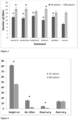
- endophyte isolates appeared at least once, and the endophyte isolate 040901(3) (having an nrITS of SEQ ID NO: 6) was the only endophyte present on all media for germinated and ungerminated seed.
- the most successful medium for supressing seed-borne infections was Czapek Dox with 75% of culture dishes containing no seed-borne infections; the least successful was Malt extract agar with 50% containing no seed-borne infections.
- results presented herein clearly demonstrate that a co-inoculant of 10 fungal root endophyte isolates as defined by SEQ ID NOs: 3 to 12, as well as two individual isolates, derived from a wild barley species effectively suppressed the development of seed-borne infections in a barley cultivar.
- the results are important because the seed-borne infections that emerge from control seeds with no inoculant (probably due to the seeds being untreated as supplied) are some of the most devastating pathogens of barley. Therefore, this indicates that where suppression of seed-borne infections occurred, up to five potential pathogens have been suppressed.
- the LO treatment produced the greatest number of significant differences compared with the control - 22 versus 7 for the HI treatments.
- the parameters that differed most significantly between the endophyte-inoculated plants and the control for both treatments combined were (in order of importance): mean dry grain weight, mean number of grains and mean dry shoot weight. The mean number of mature heads, mean height and mean dry root weight each had only one value significantly greater value than the control.
- the mean dry grain weight was the parameter with the most significantly greater values than the control (three for the LO treatment and five for the HI), and the mean number of mature heads and mean height had the least significantly greater values than the control (1 each for the LO treatment). Only one of the endophyte isolates produced no significant differences for any parameter compared with the control.
- Untreated seeds of the H. vulgare cultivar Propino (Goldcrop Seeds, Cork, Ireland) were used. Seeds were surface-sterilised by soaking in 5% NaClO for 15 min, rinsing three times with 70% ethanol and then rinsing five times with pure water.
- the growth compost of John Innes No.3 formulation (Westland Horticulture Limited) was sterilised by autoclaving and placed into 1.5 litre washed and sterilised plastic pots (soaked for 2 hours in 5% NaClO then rinsed ⁇ 5 with tap water).
- each inoculation treatment including a control
- twenty five seeds of barley, in 5 pots containing 5 seeds each were sown at 30 mm depth and inoculated with one of the five endophytes.
- the inoculant solution was prepared by mixing 10 mg of each fungal culture with 5 ml of sterile ultra-pure water and stirring with a magnetic bar for 2 hr at 35°C. 250 ⁇ l of the solution was directly inoculated onto each seed.
- the seeds were inoculated with 250 ⁇ l of pure water.
- Pots were placed into two controlled environment chambers, then randomly relabelled with a single number by a third party, to produce a double-blind and randomised setup.
- the pots were moved to a new position in blocks of 5 pots every 3 days.
- the environmental settings of the growth cabinet (Conviron PGR14) were programmed to produce a 14 hr photoperiod at a compost surface illumination of 220 ⁇ mol.m -2 s -1 , a photoperiod temperature of 23°C reducing to 12°C in the dark period and a constant 70% relative humidity.
- Three covered culture dishes containing five sterilised barley seeds on malt extract agar (Fluka 38954) were kept in the growth chamber during the experimental period to test for seed surface sterilisation success and to monitor any contamination that may be present from seed-produced fungal infection.
- GI Germination Index
- the thermal cycling parameters were programmed to optimise primer annealing, consisting of: 3 min at 95°C; 9 cycles of 1 min at 94°C, 1 min at 56°C, 2 min at 72°C; 20 cycles of 30 sec at 94°C, 1 min at 56°C, 3 min at 72°C; a final extension for 7 min at 72°C.
- PCR products were cleaned up using Exonuclease (New England Biolabs) and Shrimp Alkaline Phosphatase (ExoSAP; Roche).
- Pots were selected for processing in random order. Measurements were made for fresh and dry weights of grains, shoots and roots; mean height of tillers to tip of highest awn; number of heads; number of tillers and number of grains per head. All plant parts were separately dried in ovens for 7 days at 65 C before dry weights were measured. Treatment identity was only revealed after all measurements had been made. Data analysis was carried out using single and two-factor ANOVA with Bonferroni correction and Pearson's correlation statistical analyses supplied with the Data Analysis module within Microsoft Excel ⁇ .
- GI Germination Index
- Zadoks et al. 1974 The number of days to reach selected Zadoks stages (Zadoks et al. 1974) was recorded for each plant. Plants were grown for 90 days (13 weeks) from date of sowing, then harvested and processed in one day. Before processing the plants, four 5 mm pieces of mid-section root from each plant were surface-sterilised and incubated on half-strength malt extract agar at 25°C in the dark to test for endophyte presence. Endophyte emergence was recorded over the next 35 days, and emergents were identified by morphological examination and by sequencing of the internal transcribed region (ITS) of nuclear ribosomal DNA (nrDNA).
- ITS internal transcribed region
- PCR products underwent cycle sequencing using the reverse ITS4 primer (4 pmol; SEQ ID NO: 2) or forward ITS1 primer (4 pmol; SEQ ID NO: 1) in separate reactions with the ABI BigDye 3.1 kit (Foster City, CA). The products were further purified using a BigDye XTerminator purification kit and protocol. DNA was sequenced using an Applied Biosystems 3130xL Genetic Analyzer. The recovered sequences from the roots of each treatment were compared to the sequences of the original inoculants.
- the root dry weight for the control plants was greater than all endophyte-inoculated plants in the OC treatment, whereas in the MS plants the root dry weight for all endophyte-inoculated plants was greater than the control.
- Final overall comparisons between control and endophyte inoculated plants revealed a significant overall improvement over the control in agronomic barley traits for the MS plants (P ⁇ 0.01) but with no detectable differences for the OC plants.
Landscapes
- Life Sciences & Earth Sciences (AREA)
- Health & Medical Sciences (AREA)
- Engineering & Computer Science (AREA)
- Zoology (AREA)
- Microbiology (AREA)
- General Health & Medical Sciences (AREA)
- Environmental Sciences (AREA)
- Biotechnology (AREA)
- Wood Science & Technology (AREA)
- Genetics & Genomics (AREA)
- Mycology (AREA)
- Plant Pathology (AREA)
- Virology (AREA)
- Pest Control & Pesticides (AREA)
- Agronomy & Crop Science (AREA)
- Dentistry (AREA)
- Soil Sciences (AREA)
- Chemical & Material Sciences (AREA)
- Bioinformatics & Cheminformatics (AREA)
- Organic Chemistry (AREA)
- General Engineering & Computer Science (AREA)
- Biomedical Technology (AREA)
- Botany (AREA)
- Biochemistry (AREA)
- Tropical Medicine & Parasitology (AREA)
- Developmental Biology & Embryology (AREA)
- Cell Biology (AREA)
- Physics & Mathematics (AREA)
- Biophysics (AREA)
- Natural Medicines & Medicinal Plants (AREA)
- Molecular Biology (AREA)
- Pretreatment Of Seeds And Plants (AREA)
- Medicinal Chemistry (AREA)
- Physiology (AREA)
Applications Claiming Priority (3)
| Application Number | Priority Date | Filing Date | Title |
|---|---|---|---|
| EP14182893 | 2014-08-29 | ||
| PCT/EP2015/069809 WO2016030535A1 (en) | 2014-08-29 | 2015-08-29 | A method for improving the mean dry shoot weight, mean dry grain weight, and suppressing seed-borne infection in a cereal crop |
| EP15770818.1A EP3185673A1 (de) | 2014-08-29 | 2015-08-29 | Verfahren zur verbesserung des mittleren trockensprossgewichts, des mittleren trockenkorngewichts und zur unterdrückung von saatgutbürtiger infektion in einem getreide |
Related Parent Applications (1)
| Application Number | Title | Priority Date | Filing Date |
|---|---|---|---|
| EP15770818.1A Division EP3185673A1 (de) | 2014-08-29 | 2015-08-29 | Verfahren zur verbesserung des mittleren trockensprossgewichts, des mittleren trockenkorngewichts und zur unterdrückung von saatgutbürtiger infektion in einem getreide |
Publications (2)
| Publication Number | Publication Date |
|---|---|
| EP4534679A2 true EP4534679A2 (de) | 2025-04-09 |
| EP4534679A3 EP4534679A3 (de) | 2025-04-30 |
Family
ID=51421987
Family Applications (2)
| Application Number | Title | Priority Date | Filing Date |
|---|---|---|---|
| EP15770818.1A Withdrawn EP3185673A1 (de) | 2014-08-29 | 2015-08-29 | Verfahren zur verbesserung des mittleren trockensprossgewichts, des mittleren trockenkorngewichts und zur unterdrückung von saatgutbürtiger infektion in einem getreide |
| EP24213673.7A Withdrawn EP4534679A3 (de) | 2014-08-29 | 2015-08-29 | Verfahren zur verbesserung des mittleren trockensprossgewichts, des mittleren trockenkorngewichts und zur unterdrückung von samenbürtiger infektion in einem getreide |
Family Applications Before (1)
| Application Number | Title | Priority Date | Filing Date |
|---|---|---|---|
| EP15770818.1A Withdrawn EP3185673A1 (de) | 2014-08-29 | 2015-08-29 | Verfahren zur verbesserung des mittleren trockensprossgewichts, des mittleren trockenkorngewichts und zur unterdrückung von saatgutbürtiger infektion in einem getreide |
Country Status (5)
| Country | Link |
|---|---|
| US (1) | US10765084B2 (de) |
| EP (2) | EP3185673A1 (de) |
| AU (2) | AU2015308351A1 (de) |
| CA (1) | CA2959736A1 (de) |
| WO (1) | WO2016030535A1 (de) |
Families Citing this family (3)
| Publication number | Priority date | Publication date | Assignee | Title |
|---|---|---|---|---|
| EP3723474A1 (de) | 2017-12-15 | 2020-10-21 | University College Dublin | Endophyten aus wilden populationen von gerste zur erhöhung des ernteertrags |
| CN115226580B (zh) * | 2022-06-16 | 2023-08-15 | 河北工业大学 | 一种防治小麦纹枯病生物源方法及应用 |
| AR133152A1 (es) * | 2023-07-05 | 2025-09-03 | Aphea Bio Nv | Productos y métodos para mejorar características del crecimiento de las plantas |
Citations (2)
| Publication number | Priority date | Publication date | Assignee | Title |
|---|---|---|---|---|
| GB2490249A (en) | 2011-04-20 | 2012-10-24 | Exosect Ltd | Compositions for growth and vigour in monocot plants |
| WO2014121366A1 (en) | 2013-02-05 | 2014-08-14 | University Of Saskatchewan | Endophytic microbial symbionts in plant prenatal care |
Family Cites Families (2)
| Publication number | Priority date | Publication date | Assignee | Title |
|---|---|---|---|---|
| JP4313980B2 (ja) | 2002-04-10 | 2009-08-12 | 社団法人農林水産先端技術産業振興センター | 共生菌を用いたイネ科植物の病虫害防除方法、防除剤および防除剤を結合した種子 |
| US8975489B2 (en) * | 2010-12-02 | 2015-03-10 | The Samuel Roberts Noble Foundation | Grass fungal endophytes and uses thereof |
-
2015
- 2015-08-29 WO PCT/EP2015/069809 patent/WO2016030535A1/en not_active Ceased
- 2015-08-29 EP EP15770818.1A patent/EP3185673A1/de not_active Withdrawn
- 2015-08-29 EP EP24213673.7A patent/EP4534679A3/de not_active Withdrawn
- 2015-08-29 AU AU2015308351A patent/AU2015308351A1/en not_active Abandoned
- 2015-08-29 US US15/507,585 patent/US10765084B2/en active Active
- 2015-08-29 CA CA2959736A patent/CA2959736A1/en active Pending
-
2021
- 2021-12-20 AU AU2021290228A patent/AU2021290228A1/en not_active Abandoned
Patent Citations (2)
| Publication number | Priority date | Publication date | Assignee | Title |
|---|---|---|---|---|
| GB2490249A (en) | 2011-04-20 | 2012-10-24 | Exosect Ltd | Compositions for growth and vigour in monocot plants |
| WO2014121366A1 (en) | 2013-02-05 | 2014-08-14 | University Of Saskatchewan | Endophytic microbial symbionts in plant prenatal care |
Non-Patent Citations (8)
| Title |
|---|
| MURPHY BRDOOHAN FMHODKINSON TR: "Fungal root endophytes of a wild barley species increase yield in a nutrient-stressed barley cultivar", SYMBIOSIS, vol. 65, 2015, pages 1 - 7, XP035467665, DOI: 10.1007/s13199-015-0314-6 |
| MURPHY BRDOOHAN FMHODKINSON TR: "Media manipulations and the culture of beneficial fungal root endophytes", INTERNATIONAL JOURNAL OF BIOLOGY, vol. 7, no. 3, 2015, pages 94 - 102 |
| MURPHY BRDOOHAN FMHODKINSON TR: "Persistent fungal root endophytes isolated from a wild barley species suppress seed-borne infections in a barley cultivar", BIOCONTROL, vol. 60, 2014, pages 281 - 292, XP035473213, DOI: 10.1007/s10526-014-9642-3 |
| MURPHY BRDOOHAN FMHODKINSON TR: "Yield increase induced by the fungal root endophyte Piriformospora indica in barley grown at low temperature is nutrient limited", SYMBIOSIS, vol. 62, 2014, pages 29 - 39 |
| MURPHY BRNIETO LMDOOHAN FMHODKINSON TR: "Fungal endophytes enhance agronomically important traits in severely drought-stressed barley", JOURNAL OF AGRONOMY AND CROP SCIENCE, 2015 |
| MURPHY BRNIETO LMDOOHAN FMHODKINSON TR: "Profundae diversitas: Genetic diversity of the culturable fungal root endophytes of wall barley (Hordeum murinum)", MYCOLOGY, 2015 |
| MURPHY BRNIETO LMDOOHAN FMHODKINSON TR: "The difference between life and death: Fungal endophytes improve survival and increase biomass in multiply-stressed barley", GLOBAL JOURNAL OF SCIENCE FRONTIER RESEARCH, vol. 15, no. 5, 2015, pages 1 - 9 |
| ZADOKS ICCHANG TTKONZAK CF: "A Decimal Code for the Growth Stages of Cereals", WEED RES, vol. 14, 1974, pages 415 - 421 |
Also Published As
| Publication number | Publication date |
|---|---|
| EP4534679A3 (de) | 2025-04-30 |
| CA2959736A1 (en) | 2016-03-03 |
| EP3185673A1 (de) | 2017-07-05 |
| AU2015308351A1 (en) | 2017-03-23 |
| US20170273271A1 (en) | 2017-09-28 |
| AU2021290228A1 (en) | 2022-02-03 |
| WO2016030535A1 (en) | 2016-03-03 |
| US10765084B2 (en) | 2020-09-08 |
Similar Documents
| Publication | Publication Date | Title |
|---|---|---|
| Murphy et al. | Yield increase induced by the fungal root endophyte Piriformospora indica in barley grown at low temperature is nutrient limited | |
| US9961904B2 (en) | Compositions and methods related to isolated endophytes | |
| US20110059048A1 (en) | The fungus fusarium solani strain 'fs-k' and its use in the biological control of plant pathogens and in the enhancement of plant growth and productivity | |
| Rokni et al. | The tripartite consortium of Serendipita indica, Trichoderma simmonsii, and bell pepper (Capsicum annum) | |
| AU2021290228A1 (en) | A method for improving the mean dry shoot weight, mean dry grain weight, and suppressing seed-borne infection in a cereal crop | |
| CN116555068A (zh) | 一株内生铜绿假单胞菌hb-10及其应用 | |
| CN111801005A (zh) | 来自野生大麦种群的内生菌提高作物产量 | |
| Motallebi et al. | Pathogenicity and mycotoxin chemotypes of Iranian Fusarium culmorum isolates on durum wheat, and comparisons with Italian and Syrian isolates | |
| Peerajade et al. | Studies on variability, identification of Xanthomonas axonopodis pv. punicae isolates and screening of gamma (γ) irradiated seed derived progenies and germplasms of pomegranate | |
| Priyadarshani et al. | Effect of fungal endophytes of rice variety Ld 368 on growth and brown spot disease incidence of rice | |
| EP2821478B1 (de) | Glomus iranicum var. Tenuihypharum var. nov.-Stamm und seine Verwendung als Bionematizid | |
| Schena et al. | Integrated management of Rosellinia necatrix root rot on fruit tree crops | |
| Sunkad et al. | Impact of temperature, moisture and CO2 on growth of pathogen and severity of emerging dry root rot disease of chickpea in Karnatak | |
| Probst | Cylindrocarpon black foot disease in grapevines: identification and epidemiology | |
| JP6824519B2 (ja) | ダイズ黒根腐病防除剤、ダイズ黒根腐病を抑制する微生物資材、及びダイズ黒根腐病防除方法 | |
| Lops et al. | Biological methods to control parasitic weed Phelipanche ramosa L. Pomel in the field tomato Crop | |
| Shivran et al. | Evaluation of environmental factors for optimum growth of Rhizoctonia solani causing root rot of cluster bean (Cyamopsis tetragonoloba) | |
| EP2630859B1 (de) | Wiederaufforstung eines Bodenbereichs mit Co-Anpflanzung von Baumarten und Ammenpflanzen | |
| Khalil et al. | Efficacy of some biocontrol organisms, animal manures and fungicides on controlling of potato black scurf and stem canker disease | |
| EP3622822B1 (de) | Dominikia-tenuihyphara-stamm, zusammensetzungen, die den stamm enthalten, und deren verwendungen | |
| Murphy et al. | The difference between life and death: Fungal endophytes improve survival and increase biomass in multiply-stressed barley | |
| Karadzhova et al. | Study of the immune response of pepper varieties to infection with the pathogen Sclerotinia sclerotiorum. | |
| Sunkad et al. | Effect of Temperature, Soil Moisture and Elevated CO 2 on Growth of Rhizoctonia bataticola and Dry Root Rot Disease of Chickpea in Karnataka State. | |
| Hossain et al. | Morphological and Molecular Characterization of the Pathogen Associated with Infected Leaf and Fruits of Tomato | |
| EP4725313A1 (de) | Pseudomonas-stamm und seine verwendung als biokontrollmittel und als biostimulans in pflanzen |
Legal Events
| Date | Code | Title | Description |
|---|---|---|---|
| PUAI | Public reference made under article 153(3) epc to a published international application that has entered the european phase |
Free format text: ORIGINAL CODE: 0009012 |
|
| STAA | Information on the status of an ep patent application or granted ep patent |
Free format text: STATUS: THE APPLICATION HAS BEEN PUBLISHED |
|
| REG | Reference to a national code |
Ref country code: DE Ref legal event code: R079 Free format text: PREVIOUS MAIN CLASS: C12N0015820000 Ipc: A01H0005100000 |
|
| PUAL | Search report despatched |
Free format text: ORIGINAL CODE: 0009013 |
|
| AC | Divisional application: reference to earlier application |
Ref document number: 3185673 Country of ref document: EP Kind code of ref document: P |
|
| AK | Designated contracting states |
Kind code of ref document: A2 Designated state(s): AL AT BE BG CH CY CZ DE DK EE ES FI FR GB GR HR HU IE IS IT LI LT LU LV MC MK MT NL NO PL PT RO RS SE SI SK SM TR |
|
| AK | Designated contracting states |
Kind code of ref document: A3 Designated state(s): AL AT BE BG CH CY CZ DE DK EE ES FI FR GB GR HR HU IE IS IT LI LT LU LV MC MK MT NL NO PL PT RO RS SE SI SK SM TR |
|
| RIC1 | Information provided on ipc code assigned before grant |
Ipc: C12N 15/82 20060101ALI20250324BHEP Ipc: A01C 1/08 20060101ALI20250324BHEP Ipc: A01C 1/06 20060101ALI20250324BHEP Ipc: A01H 5/10 20180101AFI20250324BHEP |
|
| STAA | Information on the status of an ep patent application or granted ep patent |
Free format text: STATUS: THE APPLICATION IS DEEMED TO BE WITHDRAWN |
|
| 18D | Application deemed to be withdrawn |
Effective date: 20250520 |