EP4531442A1 - Kommunikationsverfahren und -vorrichtung sowie kommunikationsknoten und speichermedium - Google Patents
Kommunikationsverfahren und -vorrichtung sowie kommunikationsknoten und speichermedium Download PDFInfo
- Publication number
- EP4531442A1 EP4531442A1 EP23848946.2A EP23848946A EP4531442A1 EP 4531442 A1 EP4531442 A1 EP 4531442A1 EP 23848946 A EP23848946 A EP 23848946A EP 4531442 A1 EP4531442 A1 EP 4531442A1
- Authority
- EP
- European Patent Office
- Prior art keywords
- message
- terminal
- downlink
- base station
- proprietary
- Prior art date
- Legal status (The legal status is an assumption and is not a legal conclusion. Google has not performed a legal analysis and makes no representation as to the accuracy of the status listed.)
- Pending
Links
Images


Classifications
-
- H—ELECTRICITY
- H04—ELECTRIC COMMUNICATION TECHNIQUE
- H04W—WIRELESS COMMUNICATION NETWORKS
- H04W72/00—Local resource management
- H04W72/20—Control channels or signalling for resource management
-
- H—ELECTRICITY
- H04—ELECTRIC COMMUNICATION TECHNIQUE
- H04W—WIRELESS COMMUNICATION NETWORKS
- H04W76/00—Connection management
- H04W76/40—Connection management for selective distribution or broadcast
-
- H—ELECTRICITY
- H04—ELECTRIC COMMUNICATION TECHNIQUE
- H04L—TRANSMISSION OF DIGITAL INFORMATION, e.g. TELEGRAPHIC COMMUNICATION
- H04L5/00—Arrangements affording multiple use of the transmission path
- H04L5/003—Arrangements for allocating sub-channels of the transmission path
- H04L5/0044—Allocation of payload; Allocation of data channels, e.g. PDSCH or PUSCH
- H04L5/0046—Determination of the number of bits transmitted on different sub-channels
-
- H—ELECTRICITY
- H04—ELECTRIC COMMUNICATION TECHNIQUE
- H04W—WIRELESS COMMUNICATION NETWORKS
- H04W4/00—Services specially adapted for wireless communication networks; Facilities therefor
- H04W4/06—Selective distribution of broadcast services, e.g. multimedia broadcast multicast service [MBMS]; Services to user groups; One-way selective calling services
Definitions
- the present application relates to the field of communications, for example, a communication method and apparatus, a communication node and a storage medium.
- the communication process between a radio-frequency identification (RFID) tag and an accessor can be divided into three phases: selection, inventory, and access.
- Selection This phase is the process in which the accessor selects an RFID tag for the subsequent inventory process or verifies an RFID tag for the subsequent authentication process.
- Inventory This phase is the process in which the accessor identifies RFID tags. The accessor starts to perform inventory according to an inventory command, and one or more RFID tags may respond. When multiple RFID tags respond at the same time, a conflict may be caused, and the accessor may not be able to identify a response command. The accessor solves the conflict according to the inventory command and identifies the tags one by one.
- 3) Access This stage is the process in which the accessor processes tags. The accessor individually and uniquely identifies the tag before accessing. The access process contains several access commands such as a read command, a write command, a lock command and the like.
- the present application provides a communication method and apparatus, a communication node and a storage medium to effectively solve terminal conflict such that the base station can identify more terminals with higher identification efficiency.
- an embodiment of the present application provides a communication method.
- the communication method is applied to a base station and includes the following.
- a first broadcast message is sent to a terminal, where the first broadcast message includes at least one of the following: a message type, terminal selection information or resource indication information; and a response message, which is sent by one or more target terminals and in response to the first broadcast message, on a resource indicated by the resource indication information is received, where the response message includes at least one of the following: a message type or terminal information.
- an embodiment of the present application further provides a communication method.
- the communication method is applied to a terminal and includes the following.
- a first broadcast message sent by a base station is received, where the first broadcast message includes at least one of the following: a message type, terminal selection information or resource indication information; and if terminal information of the terminal matches the terminal selection information, a response message is sent to the base station on a resource indicated by the resource indication information, where the response message included at least one of the following: a message type or terminal information.
- an embodiment of the present application further provides a communication apparatus.
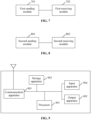
- the communication apparatus includes a first sending module and a first receiving module.
- the first sending module is configured to send a first broadcast message to a terminal, where the first broadcast message includes at least one of the following: a message type, terminal selection information or resource indication information.
- the first receiving module is configured to receive a response message, which is sent by one or more target terminals and in response to the first broadcast message, on a resource indicated by the resource indication information, where the response message includes at least one of the following: a message type or terminal information.
- an embodiment of the present application further provides a communication apparatus.
- the communication apparatus includes a second sending module and a second receiving module.
- the second receiving module is configured to receive a first broadcast message sent by a base station, where the first broadcast message includes at least one of the following: a message type, terminal selection information or resource indication information.
- the second sending module is configured to, if terminal information of the terminal matches the terminal selection information, send a response message to the base station on a resource indicated by the resource indication information, where the response message includes at least one of the following: a message type or terminal information.
- an embodiment of the present application provides a communication node.
- the communication node includes a storage apparatus.
- the storage apparatus is configured to store one or more programs, and the one or more programs, when executed by the one or more processors, cause the one or more processors to implement the communication method described in the first aspect and the second aspect of the present application.
- an embodiment of the present application provides a storage medium.
- the storage medium is configured to store a computer program, and the computer program, when executed by a processor, causes the processor to implement any communication method in the embodiments of the present application.
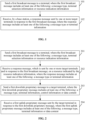
- FIG. 1 is a first flowchart of a communication method according to an embodiment of the present application.
- the method may be executed by a communication apparatus or a base station.
- the communication apparatus or the base station may be implemented by software and/or hardware and may be integrated into any intelligent device having a network communication function.
- the communication method may include S101 and S102.
- a first broadcast message is sent to a terminal, where the first broadcast message includes at least one of the following: a message type, terminal selection information or resource indication information.
- the base station may send the first broadcast message to the terminal.
- the first broadcast message includes at least one of the following: a message type, terminal selection information or resource indication information.
- the first broadcast message may include a preamble sequence and check information.
- the resource indication information in the embodiment of the present application is used for informing the terminal of the resource on which the terminal sends a response message to solve a terminal conflict.
- the resource indication information may be information through which the base station indicates a frequency domain-related resource to the terminal.
- the resource indication information may include a frequency interval of a sub-carrier or a frequency interval of a sub-channel, an available sub-carrier range or an available sub-channel range, information related to a time domain for sending a response message, a format of a response message, and a modulation and coding scheme of a response message.
- the base station may send terminal selection information by sending one broadcast message to select some terminals.
- the format of the broadcast message may be preamble sequence + message type + terminal selection information + check information.
- the base station may then send inventory information by sending another broadcast message to trigger the inventory process.
- the format of the broadcast message may be preamble sequence + message type + inventory information + check information.
- the base station may also send the terminal selection information and the inventory information at the same time by sending one broadcast message.
- the format of the broadcast message may be preamble sequence + message type + terminal selection information + inventory information + check information.
- the broadcast message in the embodiment of the present application has the function of terminal selection and/or the function of inventory trigger.
- the base station sends a broadcast message to a terminal
- all the terminals within the coverage of the base station can receive the broadcast message, and if a terminal satisfies the selection condition, then the terminal sends a response message to the base station, where the response message may be a paging message.
- the base station receives a response message sent by one or more target terminals in response to the first broadcast message, where the response message includes at least one of the following: a message type or terminal information.
- the terminal after the terminal receives the first broadcast message carrying terminal selection information, the terminal sends the response message to the base station if the terminal satisfies the response condition.
- the response message may include at least one of the following: a message type or terminal information.
- the response message may also include a preamble sequence and check information.
- the format of the response message is preamble sequence + message type + terminal information + check information.
- the base station may send the first broadcast message to the terminal again, and the above operations are repeated until the one or more target terminals no longer conflict with each other.
- the base station may send a first downlink proprietary message to the target terminal to inform the target terminal that the response message has been successfully received, thereby completing the identification process. If the base station has downlink data, the base station may also send the downlink data to the target terminal or request the target terminal to report data.
- the first downlink proprietary message in the embodiment of the present application includes at least one of the following: a message type, terminal information, control information or data content. Further, the first downlink proprietary message may also include a preamble sequence and check information. In an embodiment, the format of the first downlink proprietary message is preamble sequence + message type + terminal information + control information + data content + check information.
- the target terminal may send a first uplink proprietary message to the base station to report data according to the requirements of the base station.
- the first uplink proprietary message in the embodiment of the present application includes at least one of the following: a message type, terminal information or data content. Further, the first uplink proprietary message may also include a preamble sequence and check information. In an embodiment, the format of the first uplink proprietary message is preamble sequence + message type + terminal information + data content + check information.
- the base station first sends a first broadcast message to a terminal, where the first broadcast message includes at least one of the following: a message type, terminal selection information or resource indication information, and then the base station receives a response message, which is sent by one or more target terminals and in response to the first broadcast message, on a resource indicated by the resource indication information. That is, in the solution of the present application, the base station may carry the terminal selection information and the resource indication information when sending a broadcast message to the terminal such that the terminal, when receiving the broadcast message, may first detect whether the terminal information of the terminal matches the terminal selection information carried in the first broadcast message. If the terminal information matches the terminal selection information, the terminal sends a response message to the base station.
- the base station may carry the terminal selection information and the resource indication information when sending a broadcast message to the terminal such that the terminal, when receiving the broadcast message, may first detect whether the terminal information of the terminal matches the terminal selection information carried in the first broadcast message. If the terminal information matches the terminal selection information, the terminal sends a response message to the base station
- the terminal does not send the response message to the base station.
- the terminal may also send the response message on a resource indicated by the resource indication information.
- an accessor solves the conflict through an inventory command to identify tags one by one, and the inventory process is inefficient. Therefore, compared with the related art, the communication method provided in the embodiment of the present application can effectively solve terminal conflict such that the base station can identify more terminals with higher identification efficiency.
- the solution of the embodiment of the present application is simple and convenient to implement, is easy to popularize and can be broadly applied.
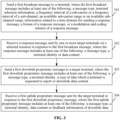
- FIG. 2 is a second flowchart of a communication method according to an embodiment of the present application. The embodiment is further optimized and extended on the basis of the solution described above and can be combined with the optional implementations described above. As shown in FIG. 2 , the communication method may include S201 to S204.
- a first broadcast message is sent to a terminal, where the first broadcast message includes at least one of the following: a message type, terminal selection information or resource indication information.
- a response message which is sent by one or more target terminals and in response to the first broadcast message, on a resource indicated by the resource indication information is received, where the response message includes at least one of the following: a message type or terminal information.
- a first downlink proprietary message is sent to a target terminal, where the first downlink proprietary message includes at least one of the following: a message type, terminal information, control information or data content.
- a first uplink proprietary message sent by the target terminal in response to the first downlink proprietary message is received, where the first uplink proprietary message includes at least one of the following: a message type, terminal information or data content.
- the base station may first send the first downlink proprietary message to one target terminal, and if the base station receives the first uplink proprietary message sent by the target terminal and does not have downlink data, the base station may access the next target terminal. If the base station does not receive the first uplink proprietary message sent by the target terminal, the base station may re-send the first downlink proprietary message to the target terminal.
- the base station first sends a first broadcast message to a terminal, where the first broadcast message includes at least one of the following: a message type, terminal selection information or resource indication information, and then the base station receives a response message, which is sent by one or more target terminals and in response to the first broadcast message, on a resource indicated by the resource indication information. That is, in the solution of the present application, the base station may carry the terminal selection information and the resource indication information when sending a broadcast message to the terminal such that the terminal, when receiving the broadcast message, may first detect whether the terminal information of the terminal matches the terminal selection information carried in the first broadcast message. If the terminal information matches the terminal selection information, the terminal sends a response message to the base station.
- the base station may carry the terminal selection information and the resource indication information when sending a broadcast message to the terminal such that the terminal, when receiving the broadcast message, may first detect whether the terminal information of the terminal matches the terminal selection information carried in the first broadcast message. If the terminal information matches the terminal selection information, the terminal sends a response message to the base station
- the terminal does not send the response message to the base station.
- the terminal may send the response message on a resource indicated by the resource indication information.
- an accessor solves the conflict through an inventory command to identify tags one by one, and the inventory process is inefficient. Therefore, compared with the related art, the communication method provided in the embodiment of the present application can effectively solve terminal conflict such that the base station can identify more terminals with higher identification efficiency.
- the solution of the embodiment of the present application is simple and convenient to implement, is easy to popularize and can be broadly applied.
- FIG. 3 is a third flowchart of a communication method according to an embodiment of the present application. The embodiment is further optimized and extended on the basis of the solutions described above and can be combined with the optional implementations described above. As shown in FIG. 3 , the communication method may include S301 to S304.
- a first broadcast message is sent to a terminal, where the first broadcast message includes at least one of the following: a message type, terminal selection information, a frequency interval of a sub-carrier or a frequency interval of a sub-channel, an available sub-carrier range or an available sub-channel range, information related to a time domain for sending a response message, a format of a response message, or a modulation and coding scheme of a response message.
- the terminal may support multi-carrier technology or multi-frequency domain technology, so the inventory process may be based on frequency-division multiplexing (FDM). It is assumed that an air interface resource has multiple available sub-carriers or sub-channels.
- the base station sends a first broadcast message.
- the first broadcast message may include: a message type, for indicating what the message is, for example, the message is a broadcast message; terminal selection information, for example, an identity of the terminal or a part of the identity; a frequency interval of a sub-carrier or a frequency interval of a sub-channel; an available sub-carrier range or an available sub-channel range, for example, sub-carriers or sub-channels that are idle, the total number of sub-carriers or sub-channels, or a bitmap of the idle sub-carriers or sub-channels; information related to a time domain for sending a response message, for example, a delay range for the feedback of a response message; a format of a response message, for example, the content to be carried by a response message; or a modulation and coding scheme of a response message.
- a message type for indicating what the message is, for example, the message is a broadcast message
- terminal selection information for example, an identity of the terminal or a part of the identity
- the base station sends a second broadcast message to the terminal, where the second broadcast message includes at least one of the following: a message type, terminal selection information or resource indication information.
- the base station sends a second downlink proprietary message to a target terminal, where the second downlink proprietary message includes at least one of the following: a message type, a terminal identity, a random number generated by a terminal or a type of data which a terminal is requested to report; and the base station receives a second uplink proprietary message sent by the target terminal in response to the second downlink proprietary message, where the second uplink proprietary message includes at least one of the following: a message type, a terminal identity, data content or a designated sub-carrier or a designated sub-channel.
- the first broadcast message, the second broadcast message, the first downlink proprietary message or the second downlink proprietary message is a downlink signal
- the response message, the first uplink proprietary message or the second uplink proprietary message is an uplink signal.
- the downlink signal is a signal which is sent by the base station on a downlink carrier or a downlink channel and received by a terminal on the downlink carrier or the downlink channel.
- the uplink signal is a signal which is sent by a terminal on an uplink sub-carrier or an uplink sub-channel and received by the base station on the uplink sub-carrier or the uplink sub-channel.
- a bandwidth of the downlink carrier or a bandwidth of the downlink channel is greater than or equal to a bandwidth of the uplink sub-carrier or a bandwidth of the uplink sub-channel.
- a center frequency point of the downlink carrier or a center frequency point of the downlink channel is the same as or different from a center frequency point of the uplink sub-carrier or a center frequency point of the uplink sub-channel.
- the first broadcast message or the second broadcast message is a broadcast message signal
- the first downlink proprietary message or the second downlink proprietary message is a downlink proprietary signal
- the response message, the first uplink proprietary message or the second uplink proprietary message is an uplink signal.
- the bandwidth of a downlink carrier or a downlink channel of the broadcast message signal is greater than or equal to the bandwidth of a downlink carrier or a downlink channel of the downlink proprietary signal.
- the center frequency point of the broadcast message signal is the same as or different from the center frequency point of the downlink proprietary signal.
- the bandwidth of the downlink carrier or the downlink channel of the broadcast message signal is greater than or equal to the bandwidth of a sub-carrier or a sub-channel of the uplink signal.
- the center frequency point of the broadcast message signal is the same as or different from the center frequency point of the uplink signal.
- the base station when the base station sends a downlink signal on a downlink carrier or a downlink channel and the terminal receives the downlink signal on the downlink carrier or the downlink channel and sends an uplink signal on an uplink sub-carrier or an uplink sub-channel, the base station may designate a sub-carrier or a sub-channel for the terminal.
- the bandwidth of the downlink carrier or the downlink channel may be greater than or equal to the bandwidth of the uplink sub-carrier or the uplink sub-channel, and the center frequency point of the downlink carrier or the downlink channel may be different from the center frequency point of the uplink sub-carrier or the uplink sub-channel.
- the base station may send the first broadcast message on the downlink carrier or the downlink channel, and the first broadcast message may carry an available sub-carrier range or an available sub-channel range for the feedback of a response message and information related to the time domain for sending a response message.
- the terminal randomly selects an available sub-carrier or an available sub-channel according to the sub-carrier-related or sub-channel-related information in the first broadcast message and selects an occasion for feeding back a response message according to the information related to the time domain for sending a response message.
- the terminal feeds back a response message at the selected sub-carrier or sub-channel and on the selected occasion.
- the base station receives the response message, sends a first downlink proprietary message on the downlink carrier or the downlink channel to a terminal and may designate a sub-carrier or a sub-channel for the terminal in the first downlink proprietary message.
- the terminal which receives the first downlink proprietary message feeds back a first uplink proprietary message on the designated sub-carrier or the designated sub-channel.
- a response message sent by one or more target terminals on a selected resource in response to the first broadcast message is received, where the response message includes at least one of the following: a message type, a terminal identity or data content.
- the terminal may select a resource for responding and send a response message on the resource.
- the response message includes at least one of the following: a message type, for indicating what the message is, for example, the message is a response message; a terminal identity, for example, an identity of the terminal or a part of the identity; or data content, for example, data to be reported by the terminal.
- a first downlink proprietary message is sent to a target terminal, where the first downlink proprietary message includes at least one of the following: a message type, a terminal identity, a type of data which a terminal is requested to report or downlink data content.
- the base station may send to the target terminal the first downlink proprietary message which is specific to the target terminal, where the first downlink proprietary message includes at least one of the following: a message type; a terminal identity, for example, a terminal identity reported by a terminal; a type of data which a terminal is requested to report; or downlink data content, for example, a write command.
- a first uplink proprietary message sent by the target terminal in response to the first downlink proprietary message is received, where the first uplink proprietary message includes at least one of the following: a message type, a terminal identity, data content or feedback information of downlink data.
- the target terminal reports data through the first uplink proprietary message according to the content of the first downlink proprietary message.
- the first uplink proprietary message includes at least one of the following: a message type; a terminal identity, for example, an identity of the terminal or a part of the identity; data content, for example, a feedback message of a write command; or feedback information of downlink data. If the base station receives the first uplink proprietary message sent by the target terminal and has no downlink data to be sent to the target terminal, the base station may access the next terminal. If the base station does not receive the first uplink proprietary message sent by the target terminal, the base station may re-send the first downlink proprietary message to the target terminal.
- the base station selects a terminal through the first broadcast message to trigger the inventory process.
- the terminal selects a resource (including a frequency-domain resource and a time-domain resource) for sending a response message according to the first broadcast message and feeds back the response message.
- the base station receives the response message and if the base station has downlink data to be sent to the terminal, the first downlink proprietary message sent by the base station to the terminal may carry the downlink data; if the base station has no downlink data to be sent to the terminal, the first downlink proprietary message sent by the base station to the terminal may not carry downlink data.
- the first downlink proprietary message may also carry the type of data which the terminal is requested to report. If the base station neither has downlink data to be sent to the terminal nor needs the terminal to feed back uplink data, the base station may terminate the process.
- the base station first sends a first broadcast message to a terminal, where the first broadcast message includes at least one of the following: a message type, terminal selection information or resource indication information, and then the base station receives a response message, which is sent by one or more target terminals and in response to the first broadcast message, on a resource indicated by the resource indication information. That is, in the solution of the present application, the base station may carry the terminal selection information and the resource indication information when sending a broadcast message to the terminal such that the terminal, when receiving the broadcast message, may first detect whether the terminal information of the terminal matches the terminal selection information carried in the first broadcast message. If the terminal information matches the terminal selection information, the terminal sends a response message to the base station.
- the base station may carry the terminal selection information and the resource indication information when sending a broadcast message to the terminal such that the terminal, when receiving the broadcast message, may first detect whether the terminal information of the terminal matches the terminal selection information carried in the first broadcast message. If the terminal information matches the terminal selection information, the terminal sends a response message to the base station
- the terminal does not send the response message to the base station.
- the terminal may also send the response message on a resource indicated by the resource indication information.
- an accessor solves the conflict through an inventory command to identify tags one by one, and the inventory process is inefficient. Therefore, compared with the related art, the communication method provided in the embodiment of the present application can effectively solve terminal conflict such that the base station can identify more terminals with higher identification efficiency.
- the solution of the embodiment of the present application is simple and convenient to implement, is easy to popularize and can be broadly applied.
- FIG. 4 is a fourth flowchart of a communication method according to an embodiment of the present application. The embodiment is further optimized and extended on the basis of the solutions described above and can be combined with the optional implementations described above. As shown in FIG. 4 , the communication method may include S401 to S407.
- a first broadcast message is sent to a terminal, where the first broadcast message includes at least one of the following: a message type, terminal selection information, a frequency interval of a sub-carrier or a frequency interval of a sub-channel, an available sub-carrier range or an available sub-channel range, information related to a time domain for sending a response message, a format of a response message, or a modulation and coding scheme of a response message.
- the terminal may support multi-carrier technology or multi-frequency domain technology, so the inventory process may be based on FDM or FDM + TDM. It is assumed that an air interface resource has multiple available sub-carriers or sub-channels.
- the base station sends the first broadcast message.
- the first broadcast message includes at least one of the following: a message type, for indicating what the message is, for example, the message is a broadcast message; terminal selection information, for example, an identity of the terminal or a part of the identity; a frequency interval of a sub-carrier or a frequency interval of a sub-channel; an available sub-carrier range or an available sub-channel range, for example, sub-carriers or sub-channels that are idle, the total number of sub-carriers or sub-channels, or a bitmap of the idle sub-carriers or sub-channels; information related to a time domain for sending a response message, for example, a delay range for the feedback of a response message; a format of a response message, for example, the content to be carried by a response message; or a modulation and coding scheme of a response message.
- a message type for indicating what the message is, for example, the message is a broadcast message
- terminal selection information for example, an identity of the terminal or a part
- a response message sent by one or more target terminals in response to the first broadcast message is received, where the response message includes at least one of the following: a message type, a terminal identity or a random number generated by a terminal.
- the terminal may select a resource for feeding back a response message according to inventory information, including a frequency-domain resource and a time-domain resource. If the sending occasion selected by the terminal is not the current occasion, the terminal needs to wait for the base station to send a second broadcast message carrying the inventory information. If the sending occasion selected by the terminal is the current occasion, the terminal feeds back the response message on the selected resource.
- the response message includes at least one of the following: a message type; a terminal identity, for example, an identity of the terminal or a part of the identity; or a random number generated by the terminal, for example, RN16.
- a first downlink proprietary message is sent to a target terminal, where the first downlink proprietary message includes at least one of the following: a message type, a terminal identity, a random number reported by a terminal or a designated sub-carrier or a designated sub-channel.
- the base station may then send the first downlink proprietary message to the target terminal, where the first downlink proprietary message includes at least one of the following: a message type; a terminal identity, for example, a terminal identity reported by the terminal; a random number reported by the terminal; or a designated sub-carrier or a designated sub-channel, for example, an index of the sub-carrier or the sub-channel, or a bitmap.
- a first uplink proprietary message sent by the target terminal in response to the first downlink proprietary message is received, where the first uplink proprietary message includes at least one of the following: a message type, a terminal identity, a random number generated by a terminal, a capability of a terminal or uplink data content.
- the terminal when a terminal receives the first downlink proprietary message, it can be considered that the base station has identified the terminal.
- the terminal may then send the first uplink proprietary message, where the first uplink proprietary message includes at least one of the following: a message type, a terminal identity, a random number generated by the terminal, a capability of the terminal, or uplink data content, for example, the data to be reported by the terminal.
- a second broadcast message is sent to a terminal, where the second broadcast message includes at least one of the following: a message type, terminal selection information or resource indication information.
- a second downlink proprietary message is sent to a target terminal, where the second downlink proprietary message includes at least one of the following: a message type, a terminal identity, a random number generated by a terminal or a type of data which a terminal is requested to report.
- a second uplink proprietary message sent by the target terminal in response to the second downlink proprietary message is received, where the second uplink proprietary message includes at least one of the following: a message type, a terminal identity, data content or a designated sub-carrier or a designated sub-channel.
- the target terminal receives the second downlink proprietary message and reports data through the second uplink proprietary message according to the content of the second downlink proprietary message.
- the second uplink proprietary message includes at least one of the following: a message type, a terminal identity, data content or a designated sub-carrier or a designated sub-channel, where the terminal identity may be an identity of the terminal or a part of the identity, and the data content may be a feedback message of a write command.
- the second downlink proprietary message and the second uplink proprietary message in the embodiment of the present application may further include a preamble sequence and check information.
- the base station may perform inventory and access on the next terminal. For example, the base station may send a second broadcast message or a third broadcast message. If the base station does not receive the first uplink proprietary message or the second uplink proprietary message, the base station may re-send the first downlink proprietary message or the second downlink proprietary message. The base station sends a second broadcast message or a third broadcast message.
- the second broadcast message or the third broadcast message includes at least one of the following: a message type; information of a selected terminal, for example, an identity of the terminal or a part of the identity; a state of a terminal; a frequency interval of a sub-carrier or a frequency interval of a sub-channel; an available sub-carrier range or an available sub-channel range, for example, sub-carriers or sub-channels that are idle, the total number of sub-carriers or sub-channels, or a bitmap of the idle sub-carriers or sub-channels; information related to a time domain for sending a response message, for example, a decrease or increase in a delay range for the feedback of a response message; a format of a response message, for example, the content to be carried by a response message; or a modulation and coding scheme of a response message.
- the base station selects a terminal through the first broadcast message to trigger the inventory process.
- the target terminal selects a resource (including a frequency-domain resource and a time-domain resource) for sending a response message according to the first broadcast message and feeds back the response message.
- the base station may send the first downlink proprietary message to the target terminal.
- the target terminal feeds back the first uplink proprietary message, thereby completing the mutual identification of the base station and the target terminal. If the base station has downlink data to be sent to the target terminal, the first downlink proprietary message may also carry the downlink data.
- the second downlink proprietary message may not carry the downlink data. If the base station needs the target terminal to feed back uplink data, the second downlink proprietary message may also carry the type of data which the target terminal is requested to report. If the base station neither has downlink data to be sent to the target terminal nor needs the target terminal to feed back uplink data, the base station may terminate the process.
- the base station may also send an acknowledgement message to the target terminal, where the acknowledgement message is an acknowledgement of the response message, the first uplink proprietary message or the second uplink proprietary message from the base station.
- the base station sends the first broadcast message
- the target terminal may feed back the response message on different occasions or in different frequency-domain resources according to the first broadcast message. If a terminal conflict occurs, the target terminal waits for the base station to re-send the first broadcast message carrying the inventory information to solve the conflict. When the conflict of the target terminal is solved, the target terminal feeds back the response message to the base station.
- the response message may carry a random code.
- the target terminal receives the first downlink proprietary message sent by the base station.
- the first downlink proprietary message may carry the random code reported by the target terminal in the response message.
- the target terminal may then acknowledge that the base station has received the response message, and the identification of the base station and the target terminal has also been completed.
- the target terminal feeds back the first uplink proprietary message to the base station.
- the first uplink proprietary message may carry an identity of the terminal.
- the one or more target terminals should wait for the base station to re-send the first broadcast message or the first downlink proprietary message, and the base station needs to re-perform an inventory operation on the one or more target terminals.
- the target terminal makes an error or does not receive an acknowledgement message from the base station in the following case: the target terminal sends the response message to the base station but does not receive the first downlink proprietary message from the base station over a period of time; or, the target terminal sends the first uplink proprietary message to the base station but does not receive the acknowledgement message from the base station over a period of time.
- the target terminal may wait for the base station to re-send the first broadcast message or the first downlink proprietary message in a predetermine manner: the terminal enters a first state, where the first state is inconsistent with a state of the terminal when the terminal first receives the first broadcast message or the first state is inconsistent with a state of a terminal which does not make an error or receives the acknowledgement message within the predetermined duration; the terminal enters a second state, where a frequency-domain resource or a time-domain resource occupied by the terminal for sending the response message in the second state is inconsistent with a frequency-domain resource or a time-domain resource occupied for sending the response message by a terminal which does not make an error or receives the acknowledgement message within the predetermined duration; or an inventory identity is set in the second state, where the inventory identity is inconsistent with an inventory identity of a terminal which does not make an error or receives the acknowledgement message within the predetermined duration.
- the base station may send the second broadcast message carrying terminal selection information and only performs selection on the terminal with a first state.
- the state of a selected terminal is A.
- the terminal selection information may carry an indication bit of the state of the selected terminal, and the indication bit is set to A.
- the base station sends the first broadcast message, and the state of the selected terminal is set to B.
- the terminal does not receive a first downlink proprietary message or a completion message sent by the base station, and the state of the terminal is set to A.
- the second broadcast message may carry the terminal selection information, and the state of the selected terminal is A. In this way, the terminal with the state A is selected to perform the following processes such as the inventory and access processes.
- the base station may send the second broadcast message carrying inventory information of the state of the selected terminal and only perform inventory on the terminal with the state A.
- the state of the selected terminal in the inventory information is A.
- the inventory information carries an indication bit of the state of the selected terminal, and the indication bit is set to A.
- the base station sends the first broadcast message, and the state of the selected terminal set is set to B.
- the terminal does not receive the first downlink proprietary message or a completion message sent by the base station, and the state of the selected terminal is set to A.
- the base station sends the second broadcast message
- the second broadcast message carries the inventory information
- the state of the selected terminal is A.
- the terminal with the state A is selected to perform the following processes such as the inventory and access processes.
- the base station may inventory the above terminal in different time domains or different frequency domains.
- the base station sends the first broadcast message, and the selected terminal selects according to the inventory information in the first broadcast message a time-domain resource or a frequency-domain resource for feeding back a response message.
- the terminal does not receive the first downlink proprietary message or the completion message sent by the base station, and the terminal re-selects a time-domain resource or a frequency-domain resource for feeding back a response message; or, when the base station sends a second broadcast message, the terminal re-selects a time-domain resource or a frequency-domain resource for feeding back a response message.
- the base station may also only perform inventory on the terminal set with an identity.
- an inventory information identity is sent.
- the inventory information may carry an indication bit of an identity of a selected terminal, and the indication bit is set to G or 0.
- the base station sends the first broadcast message, the state of the selected terminal is set to B, and the inventory identity is set to E.
- the terminal does not receive the first downlink proprietary message or the completion message sent by the base station, and the state of the terminal is set to B, and the inventory identity is F.
- the base station sends the second broadcast message, the second broadcast message carries the inventory information, and the inventory identity of the selected terminal is F.
- the terminal with the inventory identity F is selected to perform the following processes such as the inventory and access processes.
- the base station when the base station receives the response message or the first uplink proprietary message sent by the target terminal, the base station may send to the target terminal a completion message corresponding to the response message or a completion message corresponding to the first uplink proprietary message.
- the base station in the access process, the base station sends the first downlink proprietary message, for example, a read message, to the terminal, and the terminal completes the message according to the first downlink proprietary message and feeds back an uplink proprietary message, for example, a response message of the read message, to the base station.
- the base station sends a downlink proprietary message to the terminal, and the terminal sends an uplink proprietary message to the base station.
- a completion message from the base station may be introduced in the embodiment of the present application, and the completion message may include an identity of the terminal, for example, an Electronic Product Code (EPC); information reported by the terminal, for example, a random number reported by the terminal; and an indication bit of a result, for example, a success or a failure.
- EPC Electronic Product Code
- the terminal considers a process successful: if the process is the inventory process and the terminal receives the completion message, the terminal considers the inventory process successful and sets the state of the terminal to an inventory completion state or an access state; if the process is the access process and the terminal receives the completion message, the terminal considers the access process successful, sets the state of the terminal to an access completion state or an idle state, and identifies the process as an access completion process.
- the terminal considers a process unsuccessful: if the process is the inventory process and the terminal does not receive the completion message, the terminal considers the inventory process unsuccessful; if the process is the access process and the terminal does not receive the completion message, the terminal considers the access process unsuccessful and sets the state of the terminal to an access state; if the process is the access process and the terminal does not receive the completion message, the terminal considers the access process unsuccessful, and the terminal falls back to the state before receiving the downlink proprietary message.
- the base station if the base station does not receive the response message, the first uplink proprietary message or the second uplink proprietary message sent by the target terminal, the base station sends a retransmission message to the target terminal such that the target terminal re-sends the response message, the first uplink proprietary message or the second uplink proprietary message.
- the base station may not be able to receive the message sent by the terminal due to, for example, deterioration of the signal quality.
- a message that triggers retransmission is introduced in the embodiment of the present application.
- the terminal After the terminal sends a first message to the base station, the terminal needs to store the first message.
- the base station may send a second message (the retransmission message) to trigger the terminal to re-transmit the first message.
- the terminal After the terminal receives the second message, the terminal re-transmits the first message.
- the retransmission message may include a retransmission indication bit, for indicating that the message is for triggering the terminal to perform a retransmission; a message type for retransmission, for indicating which message needs to be re-transmitted by the terminal; the number of retransmissions, for indicating how many times the terminal needs to send the message; a terminal identity for retransmission, for indicating which terminal needs to perform the retransmission. If the terminal receives the retransmission message within a certain period of time after the terminal sends the first message, the terminal performs the message retransmission. If the terminal does not receive the retransmission message within a period of time after the terminal sends the first message, the terminal releases the stored message.
- the terminal does not perform the message retransmission.
- the terminal performs the retransmission according to the indication of the retransmission message, and the re-sent message may be a message indicated in the retransmission message or may by default be a message recently sent by the terminal.
- the second broadcast message may further include an operation identity, an operation state or an identity assigned to the terminal by the base station.
- the base station may, according to the operation identity corresponding to each terminal, identify among all the terminals in the coverage the terminals that have been operated and the terminals that have not been operated, and perform an inventory operation on the terminals that have not been operated without repeating the inventory operation on the terminals that have been operated.
- the base station may, according to the operation completion state corresponding to each terminal, identify among all the terminals in the coverage the terminals that have been operated and the terminals that have not been operated, and perform an inventory operation on the terminals that have not been operated without repeating the inventory operation on the terminals that have been operated.
- the base station may, according to the identities assigned by the base station to the terminals that have been operated, identify among all the terminals in the coverage the terminals that have been operated and the terminals that have not been operated, and perform an inventory operation on the terminals that have not been operated without repeating the inventory operation on the terminals that have been operated.
- the terminals move between base stations.
- the base station performs operations (including sending broadcast messages or proprietary messages)
- some terminals enter the coverage of the base station, and these terminals also need to be operated.
- the base station performs operations on these terminals, the terminals that have been operated cannot be affected or the operations cannot be repeated on the terminals that have been operated.
- Each terminal needs to maintain one operation identity for indicating whether the terminal has been operated.
- selection information the base station may perform selection according to the operation identity.
- the base station sends the first broadcast message carrying the selection information, selects terminals, and sets the operation identities of these terminals to A.
- the operation identities of the terminals are set to B.
- the terminal receives an indication from the base station for indicating that the operation identity of the terminal is set to B.
- the base station then sends the second broadcast message carrying the selection information and selects terminals among the terminals whose operation identities are A. In this way, the terminals that have been operated are not selected.
- Each terminal needs to maintain an operation completion state for indicating that the terminal has been operated.
- selection information the base station may perform selection according to the state. First, the terminals are all in the initial state.
- the base station sends the first broadcast message carrying the selection information and selects terminals.
- these terminals enter the operation competition state. For example, if a terminal receives a downlink proprietary message and successfully feeds back an uplink proprietary message or if a terminal receives a downlink proprietary message from the base station and successfully feeds back an uplink proprietary message in the inventory process, the terminal receives an indication from the base station for indicating that the state of the terminal is the operation competition state, and the terminal enters a state related to the access process.
- the base station then sends the second broadcast message carrying the selection information and selects terminals among the terminals which are in the initial state or are not in the operation competition state. In this way, the terminals that have been operated are not selected.
- Each terminal needs to maintain an identity assigned by the base station for indicating that the terminal has been operated.
- the base station may assign an identity to the terminal in the downlink proprietary message, and after the terminal receives the downlink proprietary message, the terminal maintains the identity. If a terminal does not have such an identity, it is indicated that the terminal has not been operated and may be considered a newly accessed terminal.
- the terminals are all in the initial state.
- the base station sends the first broadcast message carrying selection information and selects terminals. When the base station completes the identification on these terminals, the base station assigns an identity to each terminal in the first downlink proprietary message or the second downlink proprietary message.
- the terminals all maintain the identity, and the identities of these terminals are set to A or these terminals are considered the terminals which have been accessed.
- the base station then sends the second broadcast message carrying the selection information and selects terminals among the terminals whose identities are B or which are newly accessed. In this way, the terminals that have been operated are not selected.
- the base station may send a state indication message to the target terminal such that the target terminal transitions from a current state to a target state or from a current indication bit to a target indication bit or clears the terminal identity assigned by the base station, where the state indication message includes a state indication, an indication bit, a terminal identity, and whether to clear the terminal identity assigned by the base station.
- the terminal may choose to enter a state according to the performed process.
- the base station may indicate the terminal through a first message, where the content carried by the first message may include: a state indication, for indicating which state the terminal should be set to; an indication bit, for indicating which indication bit the terminal should be set to; a terminal identity, for indicating which terminals are to be set; whether to clear the assigned terminal identity, for indicating whether the terminal clears the identity assigned by the base station.
- the first broadcast message, the second broadcast message, the first downlink proprietary message or the second downlink proprietary message may further include a group identity.
- the base station when the base station sends the first downlink proprietary message and if one message is sent to only one terminal, the base station needs to send many messages to multiple terminals.
- a group message may be introduced in the embodiment of the present application, and one single group message may be sent to multiple terminals.
- the group message may be a downlink proprietary message carrying data.
- the base station may assign a group identity to the terminal.
- the first downlink proprietary message may further include a group identity; a terminal identity in the group, for indicating the identity of a terminal in the group having the group identity; and a sub-carrier or sub-channel for feeding back the uplink proprietary message in response to the group message.
- the terminal may store the above information.
- the group message may carry one group identity.
- the group message may include a group identity, a type of data which a terminal is requested to report, and downlink data content such as a read command.
- the terminal receives the group message, and if the terminal satisfies the group identity, the terminal feeds back the first uplink proprietary message on the sub-carrier or sub-channel designated in the first downlink proprietary message.
- the terminal terminates the current process, clears the maintained information, for example, the previously maintained cell identity, the terminal identity assigned by the base station or the set terminal state or identity, and executes the broadcast message for the new cell.
- the sender-related information is carried in an uplink message.
- the uplink message may be a response message or an uplink proprietary message.
- the sender-related information may be a cell identity, a base station identity or a random number generated by the base station, received by the terminal.
- the terminal After the terminal executes the downlink message carrying the sender-related information, the terminal carries the sender-related information in the uplink message. If the base station receives the sender-related information and the sender-related information matches the sender-related information of the base station, the base station assumes that the terminal executes the previously sent message.
- the terminal does not send the response message to the base station.
- the terminal may also send the response message on a resource indicated by the resource indication information.
- an accessor solves the conflict through an inventory command to identify tags one by one, and the inventory process is inefficient. Therefore, compared with the related art, the communication method provided in the embodiment of the present application can effectively solve terminal conflict such that the base station can identify more terminals with higher identification efficiency.
- the solution of the embodiment of the present application is simple and convenient to implement, is easy to popularize and can be broadly applied.
- the above communication apparatus can execute the method provided in any embodiment of the present application and has functional modules and effects for executing the method.
- the above communication apparatus can execute the method provided in any embodiment of the present application and has functional modules and effects for executing the method.
- the communication method provided in the embodiments of the present application.
- the communication node further includes a communication apparatus 903, an input apparatus 904 and an output apparatus 905.
- the processor 901, the storage apparatus 902, the communication apparatus 903, the input apparatus 904 and the output apparatus 905 in the communication node may be connected via a bus or in other manners, and the connection via a bus is illustrated as an example in FIG. 9 .
- the input apparatus 904 may be configured to receive inputted digital or character information and generate key signal input related to user settings and function control of the communication node.
- the output apparatus 905 may include a display device such as a display screen.
- the storage apparatus 902 may be configured to store software programs, computer-executable programs, and modules such as program instructions/modules corresponding to the communication method described in the embodiments of the present application (for example, the first sending module 701 and the first receiving module 702 in the communication apparatus).
- the storage apparatus 902 may include a program storage region and a data storage region.
- the program storage region may store an operating system and an application program required by at least one function.
- the data storage region may store data created depending on the use of the device.
- the storage apparatus 902 may include a high-speed random-access memory and may further include a non-volatile memory such as at least one magnetic disk memory, a flash memory or another non-volatile solid-state memory.
- the storage apparatus 902 may further include memories which are remotely disposed with respect to the processor 901. These remote memories may be connected to the communication node via a network. Examples of the preceding network include, but are not limited to, the Internet, an intranet, a local area network, a mobile communication network, and a combination thereof.
- An embodiment of the present application further provides a storage medium.
- the storage medium is configured to store a computer program, and the computer program, when executed by a processor, causes the processor to implement any method in the present application.
- the storage medium is configured to store a computer program, and the computer program, when executed by a processor, causes the processor to implement any method in the embodiments of the present application.
- a first broadcast message is sent to a terminal, where the first broadcast message includes at least one of the following: a message type, terminal selection information or resource indication information; and a response message, which is sent by one or more target terminals and in response to the first broadcast message, on a resource indicated by the resource indication information is received, where the response message includes at least one of the following: a message type or terminal information.
- the computer storage medium in the embodiments of the present application may adopt any combination of one or more computer-readable media.
- the computer-readable medium may be a computer-readable signal medium or a computer-readable storage medium.
- the computer-readable storage medium may be, but is not limited to, an electrical, magnetic, optical, electromagnetic, infrared or semiconductor system, apparatus or device, or any combination thereof.
- Examples (a non-exhaustive list) of the computer-readable storage medium include: an electrical connection having one or more wires, a portable computer magnetic disk, a hard disk, a random-access memory (RAM), a read-only memory (ROM), an erasable programmable read-only memory (EPROM), a flash memory, an optical fiber, a portable compact disc read-only memory (CD-ROM), an optical memory, a magnetic memory, or any suitable combination thereof.
- the computer-readable storage medium may be any tangible medium that can contain or store a program for use by or in connection with an instruction execution system, apparatus or device.
- the computer-readable signal medium may include a propagated data signal with computer-readable program codes embodied therein, for example, in a baseband or as a part of a carrier wave.
- the data signal propagated may be in multiple forms, including but not limited to an electromagnetic signal, an optical signal or any suitable combination thereof.
- the computer-readable signal medium may be any computer-readable medium that is not a computer-readable storage medium and can communicate, propagate or transport a program for use by or in connection with an instruction execution system, apparatus or device.
- the program codes included on the computer-readable medium may be transmitted via any suitable medium which includes, but is not limited to, a wireless medium, a wire, an optical cable, a radio frequency (RF) or any suitable combination thereof.
- a wireless medium includes, but is not limited to, a wireless medium, a wire, an optical cable, a radio frequency (RF) or any suitable combination thereof.
- RF radio frequency
- Computer program codes for performing operations of the present application may be written in one or more programming languages or combinations thereof.
- the programming languages include object-oriented programming languages such as Java, Smalltalk, and C++, and further include conventional procedural programming languages such as C language or similar programming languages.
- the program codes may be executed entirely on a user computer, partly on a user computer, as a stand-alone software package, partly on a user computer and partly on a remote computer, or entirely on a remote computer or a server.
- the remote computer may be connected to the user computer through any type of network, including a local area network (LAN) or a wide area network (WAN), or may be connected to an external computer (for example, through the Internet using an Internet service provider).
- LAN local area network
- WAN wide area network
- Internet service provider for example, AT&T, MCI, Sprint, EarthLink, MSN, GTE, etc.
- user terminal covers any suitable type of wireless user device, for example, a mobile phone, a portable data processing apparatus, a portable web browser or a vehicle-mounted mobile station.
- the embodiments of the present application may be implemented in hardware or special-purpose circuits, software, logic or any combination thereof.
- some aspects may be implemented in hardware while other aspects may be implemented in firmware or software executable by a controller, a microprocessor or another computing apparatus, though the present application is not limited thereto.
- the embodiments of the present application may be implemented through the execution of computer program instructions by a data processor of a mobile apparatus, for example, implemented in a processor entity, by hardware, or by a combination of software and hardware.
- the computer program instructions may be assembly instructions, instruction set architecture (ISA) instructions, machine instructions, machine-related instructions, microcodes, firmware instructions, state setting data or source or object codes written in any combination of one or more programming languages.
- a block diagram of any logic flow among the drawings of the present application may represent program operations, may represent interconnected logic circuits, modules, and functions, or may represent a combination thereof.
- Computer programs may be stored in a memory.
- the memory may be of any type suitable for a local technical environment and may be implemented using any suitable data storage technology, such as, but not limited to, a read-only memory (ROM), a random-access memory (RAM) or an optical memory device and system (for example, a digital video disc (DVD) or a compact disc (CD)).
- Computer-readable media may include non-transitory storage media.
- the data processor may be of any type suitable for the local technical environment, such as, but not limited to, a general-purpose computer, a special-purpose computer, a microprocessor, a digital signal processor (DSP), an application-specific integrated circuit (ASIC), a field-programmable gate array (FPGA) and a processor based on a multi-core processor architecture.
- a general-purpose computer such as, but not limited to, a general-purpose computer, a special-purpose computer, a microprocessor, a digital signal processor (DSP), an application-specific integrated circuit (ASIC), a field-programmable gate array (FPGA) and a processor based on a multi-core processor architecture.
- DSP digital signal processor
- ASIC application-specific integrated circuit
- FPGA field-programmable gate array
Landscapes
- Engineering & Computer Science (AREA)
- Signal Processing (AREA)
- Computer Networks & Wireless Communication (AREA)
- Multimedia (AREA)
- Mobile Radio Communication Systems (AREA)
Applications Claiming Priority (2)
| Application Number | Priority Date | Filing Date | Title |
|---|---|---|---|
| CN202210928946.9A CN115843001A (zh) | 2022-08-03 | 2022-08-03 | 一种通信方法、装置、通信节点及存储介质 |
| PCT/CN2023/091108 WO2024027235A1 (zh) | 2022-08-03 | 2023-04-27 | 通信方法、装置、通信节点及存储介质 |
Publications (2)
| Publication Number | Publication Date |
|---|---|
| EP4531442A1 true EP4531442A1 (de) | 2025-04-02 |
| EP4531442A4 EP4531442A4 (de) | 2026-06-03 |
Family
ID=85574773
Family Applications (1)
| Application Number | Title | Priority Date | Filing Date |
|---|---|---|---|
| EP23848946.2A Pending EP4531442A4 (de) | 2022-08-03 | 2023-04-27 | Kommunikationsverfahren und -vorrichtung sowie kommunikationsknoten und speichermedium |
Country Status (6)
| Country | Link |
|---|---|
| US (1) | US20250365813A1 (de) |
| EP (1) | EP4531442A4 (de) |
| JP (1) | JP2025520782A (de) |
| CN (1) | CN115843001A (de) |
| AU (1) | AU2023319292B2 (de) |
| WO (1) | WO2024027235A1 (de) |
Families Citing this family (4)
| Publication number | Priority date | Publication date | Assignee | Title |
|---|---|---|---|---|
| CN115843001A (zh) * | 2022-08-03 | 2023-03-24 | 中兴通讯股份有限公司 | 一种通信方法、装置、通信节点及存储介质 |
| CN121128300A (zh) * | 2024-04-03 | 2025-12-12 | 北京小米移动软件有限公司 | 通信方法、第一设备、第二设备、通信系统和存储介质 |
| JP2026093593A (ja) * | 2024-11-28 | 2026-06-09 | 京セラドキュメントソリューションズ株式会社 | 情報処理システム、画像処理装置、及び情報処理方法 |
| CN119865774A (zh) * | 2025-01-06 | 2025-04-22 | 中国联合网络通信集团有限公司 | 通信方法、装置、存储介质及程序产品 |
Family Cites Families (9)
| Publication number | Priority date | Publication date | Assignee | Title |
|---|---|---|---|---|
| GB201006907D0 (en) * | 2010-04-26 | 2010-06-09 | Cambridge Entpr Ltd | RFID TAG interrogation systems |
| CN104766032B (zh) * | 2015-01-23 | 2018-07-06 | 北京信息科技大学 | 一种基于多接收天线同时识别多个标签的q参数实现方法 |
| WO2017000324A1 (zh) * | 2015-07-02 | 2017-01-05 | 华为技术有限公司 | 关联的建立方法及装置 |
| JP2018534862A (ja) * | 2015-10-23 | 2018-11-22 | インターデイジタル パテント ホールディングス インコーポレイテッド | 高効率wlan用の同時リンクセットアップおよびダウンリンクデータ取得のための方法 |
| WO2018205095A1 (zh) * | 2017-05-08 | 2018-11-15 | 北京小米移动软件有限公司 | 资源配置的方法及装置 |
| CN111294965A (zh) * | 2019-01-11 | 2020-06-16 | 展讯通信(上海)有限公司 | 一种上行传输资源选择方法、终端和存储介质 |
| WO2020194924A1 (ja) * | 2019-03-27 | 2020-10-01 | パナソニック インテレクチュアル プロパティ コーポレーション オブ アメリカ | 端末及び送信方法 |
| US20210368439A1 (en) * | 2020-05-19 | 2021-11-25 | Qualcomm Incorporated | Wlan wake up radio with backscattering |
| CN115843001A (zh) * | 2022-08-03 | 2023-03-24 | 中兴通讯股份有限公司 | 一种通信方法、装置、通信节点及存储介质 |
-
2022
- 2022-08-03 CN CN202210928946.9A patent/CN115843001A/zh active Pending
-
2023
- 2023-04-27 JP JP2024576416A patent/JP2025520782A/ja active Pending
- 2023-04-27 WO PCT/CN2023/091108 patent/WO2024027235A1/zh not_active Ceased
- 2023-04-27 EP EP23848946.2A patent/EP4531442A4/de active Pending
- 2023-04-27 AU AU2023319292A patent/AU2023319292B2/en active Active
- 2023-04-27 US US18/873,915 patent/US20250365813A1/en active Pending
Also Published As
| Publication number | Publication date |
|---|---|
| AU2023319292A1 (en) | 2025-02-06 |
| US20250365813A1 (en) | 2025-11-27 |
| JP2025520782A (ja) | 2025-07-03 |
| WO2024027235A1 (zh) | 2024-02-08 |
| EP4531442A4 (de) | 2026-06-03 |
| CN115843001A (zh) | 2023-03-24 |
| AU2023319292B2 (en) | 2026-02-12 |
Similar Documents
| Publication | Publication Date | Title |
|---|---|---|
| US20250365813A1 (en) | Communication method and apparatus, and communication node and storage medium | |
| US10986670B2 (en) | Random access feedback method, random access processing method, base station and terminal | |
| KR101863520B1 (ko) | 다운링크 캐리어 집합을 위한 harq 프로세스 번호 관리 | |
| EP4221023A1 (de) | Verfahren zur erzeugung eines rückkopplungscodebuchs, verfahren zum empfangen eines rückkopplungscodebuchs, kommunikationsknoten und speichermedium | |
| WO2018133720A1 (zh) | 反馈信息传输方法及装置 | |
| WO2018176226A1 (zh) | Harq反馈方法、装置及系统 | |
| US20220271865A1 (en) | Communication Method, Network Device, and Terminal | |
| EP4102861A1 (de) | Verfahren und vorrichtung zum empfangen von multimedia-broadcast-multicast-service (mbms) | |
| US12273208B2 (en) | HARQ feedback technique for communication systems | |
| CN113285789B (zh) | 辅链路控制信息的资源指示方法与装置、终端设备 | |
| CN114642033B (zh) | 数据接收方法、装置、设备及存储介质 | |
| JP2001044927A (ja) | 同報通信方法、その同報通信方法を用いる移動通信システム、及び移動局 | |
| EP3836669A1 (de) | Verfahren und vorrichtung zum senden von informationen und speichermedium, endgerät und basisstation | |
| US20250380301A1 (en) | Communication method, apparatus, and device, and readable storage medium | |
| CN111436156B (zh) | 调度处理方法、装置、设备及计算机可读存储介质 | |
| KR20220126289A (ko) | 정보 피드백 방법 및 관련 장치 | |
| CN109392137B (zh) | 一种数据发送、接收方法及装置 | |
| CN115604839B (zh) | 切换调度部分带宽bwp的方法、装置、基站及电子设备 | |
| US11770849B2 (en) | Random access method, base station, user equipment and device with storage function | |
| US12244429B2 (en) | Methods for communicating between a terminal and a base station, corresponding terminal, base station and computer program | |
| CN113811011A (zh) | 非授权载波数据传输方法、装置、bbu、基站及介质 | |
| WO2023115358A1 (zh) | Harq反馈方法、装置、设备及存储介质 | |
| WO2026031716A1 (zh) | 一种通信方法以及相关设备 | |
| CN116548045A (zh) | 反馈信息的发送方法、接收方法、装置、设备及介质 |
Legal Events
| Date | Code | Title | Description |
|---|---|---|---|
| STAA | Information on the status of an ep patent application or granted ep patent |
Free format text: STATUS: THE INTERNATIONAL PUBLICATION HAS BEEN MADE |
|
| PUAI | Public reference made under article 153(3) epc to a published international application that has entered the european phase |
Free format text: ORIGINAL CODE: 0009012 |
|
| STAA | Information on the status of an ep patent application or granted ep patent |
Free format text: STATUS: REQUEST FOR EXAMINATION WAS MADE |
|
| 17P | Request for examination filed |
Effective date: 20241224 |
|
| AK | Designated contracting states |
Kind code of ref document: A1 Designated state(s): AL AT BE BG CH CY CZ DE DK EE ES FI FR GB GR HR HU IE IS IT LI LT LU LV MC ME MK MT NL NO PL PT RO RS SE SI SK SM TR |
|
| DAV | Request for validation of the european patent (deleted) | ||
| DAX | Request for extension of the european patent (deleted) | ||
| A4 | Supplementary search report drawn up and despatched |
Effective date: 20260507 |
|
| RIC1 | Information provided on ipc code assigned before grant |
Ipc: H04W 4/06 20090101AFI20260429BHEP |