EP4531385A1 - Verfahren zur anzeige einer bildschirmhintergrundbeleuchtung und elektronische vorrichtung - Google Patents
Verfahren zur anzeige einer bildschirmhintergrundbeleuchtung und elektronische vorrichtung Download PDFInfo
- Publication number
- EP4531385A1 EP4531385A1 EP23870229.4A EP23870229A EP4531385A1 EP 4531385 A1 EP4531385 A1 EP 4531385A1 EP 23870229 A EP23870229 A EP 23870229A EP 4531385 A1 EP4531385 A1 EP 4531385A1
- Authority
- EP
- European Patent Office
- Prior art keywords
- wallpaper
- electronic device
- pattern
- description information
- parameter
- Prior art date
- Legal status (The legal status is an assumption and is not a legal conclusion. Google has not performed a legal analysis and makes no representation as to the accuracy of the status listed.)
- Pending
Links
Images






Classifications
-
- G—PHYSICS
- G06—COMPUTING OR CALCULATING; COUNTING
- G06F—ELECTRIC DIGITAL DATA PROCESSING
- G06F9/00—Arrangements for program control, e.g. control units
- G06F9/06—Arrangements for program control, e.g. control units using stored programs, i.e. using an internal store of processing equipment to receive or retain programs
- G06F9/44—Arrangements for executing specific programs
- G06F9/451—Execution arrangements for user interfaces
-
- G—PHYSICS
- G06—COMPUTING OR CALCULATING; COUNTING
- G06T—IMAGE DATA PROCESSING OR GENERATION, IN GENERAL
- G06T13/00—Animation
- G06T13/80—Two-dimensional [2D] animation, e.g. using sprites
-
- G—PHYSICS
- G06—COMPUTING OR CALCULATING; COUNTING
- G06F—ELECTRIC DIGITAL DATA PROCESSING
- G06F3/00—Input arrangements for transferring data to be processed into a form capable of being handled by the computer; Output arrangements for transferring data from processing unit to output unit, e.g. interface arrangements
- G06F3/14—Digital output to display device ; Cooperation and interconnection of the display device with other functional units
- G06F3/1454—Digital output to display device ; Cooperation and interconnection of the display device with other functional units involving copying of the display data of a local workstation or window to a remote workstation or window so that an actual copy of the data is displayed simultaneously on two or more displays, e.g. teledisplay
-
- H—ELECTRICITY
- H04—ELECTRIC COMMUNICATION TECHNIQUE
- H04M—TELEPHONIC COMMUNICATION
- H04M1/00—Substation equipment, e.g. for use by subscribers
- H04M1/72—Mobile telephones; Cordless telephones, i.e. devices for establishing wireless links to base stations without route selection
- H04M1/724—User interfaces specially adapted for cordless or mobile telephones
- H04M1/72403—User interfaces specially adapted for cordless or mobile telephones with means for local support of applications that increase the functionality
- H04M1/72409—User interfaces specially adapted for cordless or mobile telephones with means for local support of applications that increase the functionality by interfacing with external accessories
- H04M1/72412—User interfaces specially adapted for cordless or mobile telephones with means for local support of applications that increase the functionality by interfacing with external accessories using two-way short-range wireless interfaces
-
- H—ELECTRICITY
- H04—ELECTRIC COMMUNICATION TECHNIQUE
- H04M—TELEPHONIC COMMUNICATION
- H04M1/00—Substation equipment, e.g. for use by subscribers
- H04M1/72—Mobile telephones; Cordless telephones, i.e. devices for establishing wireless links to base stations without route selection
- H04M1/724—User interfaces specially adapted for cordless or mobile telephones
- H04M1/72403—User interfaces specially adapted for cordless or mobile telephones with means for local support of applications that increase the functionality
- H04M1/72427—User interfaces specially adapted for cordless or mobile telephones with means for local support of applications that increase the functionality for supporting games or graphical animations
-
- G—PHYSICS
- G06—COMPUTING OR CALCULATING; COUNTING
- G06T—IMAGE DATA PROCESSING OR GENERATION, IN GENERAL
- G06T2200/00—Indexing scheme for image data processing or generation, in general
- G06T2200/24—Indexing scheme for image data processing or generation, in general involving graphical user interfaces [GUIs]
-
- G—PHYSICS
- G06—COMPUTING OR CALCULATING; COUNTING
- G06T—IMAGE DATA PROCESSING OR GENERATION, IN GENERAL
- G06T2210/00—Indexing scheme for image generation or computer graphics
- G06T2210/61—Scene description
Definitions
- Embodiments of this application relate to the field of terminal device technologies, and in particular, to a screen wallpaper display method and an electronic device.
- a computing capability and a hardware capability of an electronic device are improved, and the electronic device can display a wallpaper and the like on a screen.
- an embodiment of this application provides a screen wallpaper display method.
- the method is applied to a system including a first electronic device and at least one second electronic device, where the first electronic device is communicatively connected to the at least one second electronic device.
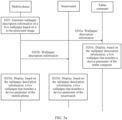
- the method includes: The first electronic device separately sends at least one piece of wallpaper description information to the at least one second electronic device, where any piece of wallpaper description information includes parameter information used to describe a live wallpaper; and each electronic device in the system displays a respective live wallpaper on a screen of the respective device based on respective wallpaper description information, where animation effect of live wallpapers displayed by different electronic devices in the system is different.
- the mobile phone when generating the wallpaper description information, may change an initial state of at least one pattern in the wallpaper description information.
- the mobile phone may change an initial value of any description parameter of the pattern, to achieve the foregoing effect.
- the pattern includes a combined pattern, and patterns in the combined pattern have an array relationship.
- the wallpaper description information separately sent by the first electronic device to the at least one second electronic device is different.
- the wallpaper description information separately received by the at least one second electronic device from the first electronic device matches a device parameter of the respective device.
- the method before the first electronic device separately sends the at least one piece of second wallpaper description information to the at least one second electronic device, the method further includes: The first electronic device generates the at least one piece of wallpaper description information (the first wallpaper description information or the second wallpaper description information may be included).
- wallpaper description information generated at least twice by the first electronic device based on a same image is different.
- the wallpaper description information may be the first wallpaper description information and/or the second wallpaper description information.
- live wallpapers displayed at least twice by a same electronic device (which may be the first electronic device, the second electronic device, or the like) on a screen of the electronic device based on same wallpaper description information are different.
- the first electronic device is communicatively connected to at least one third electronic device, and the first electronic device separately generates, based on third wallpaper description information (which may be the same as or different from the first wallpaper description information, and may be the same as or different from the second wallpaper description information, which is not limited herein), a display result of a live wallpaper that matches a device parameter of the at least one third electronic device, where the display result includes a frame sequence or a frame of static wallpaper image.
- the first electronic device sends the corresponding display result corresponding to the at least one third electronic device to the corresponding third electronic device; and the at least one third electronic device displays, on a screen of the respective device, the corresponding display result received by the at least one third electronic device.
- any piece of the wallpaper description information (the first wallpaper description information, or the second wallpaper description information, or the third wallpaper description information) includes an animation effect parameter acting on a pattern, where the animation effect parameter indicates a change rule of the pattern in the live wallpaper.
- the pattern includes a combined pattern, and patterns in the combined pattern have an array relationship.
- the array relationship of the patterns in the combined pattern remains unchanged.
- the animation effect parameter of the combined pattern includes parameter information used to change a target array parameter of the array relationship.
- the combined pattern in the live wallpaper changes based on the corresponding animation effect parameter
- a ratio relationship between the target array parameter of the combined pattern and a candidate parameter of the combined pattern remains unchanged
- the candidate parameter is a parameter that is of the combined pattern and that is changed by the animation effect parameter of the combined pattern.
- animation effect of live wallpapers displayed on different displays of a same electronic device is different.
- animation effect of live wallpapers displayed on different displays of a same electronic device matches parameters of the displays of the electronic device.
- the second aspect and any one of the implementations of the second aspect respectively correspond to the first aspect and any one of the implementations of the first aspect.
- For technical effect corresponding to the second aspect and any one of the implementations of the second aspect refer to the technical effect corresponding to the manners applied to the first electronic device in the first aspect and any one of the implementations of the first aspect. Details are not described herein.
- an embodiment of this application provides a screen wallpaper display method.
- the method is applied to a second electronic device.
- the method includes: The second electronic device receives wallpaper description information sent by a first electronic device; and the second electronic device displays a live wallpaper on a screen of the second electronic device based on the wallpaper description information, where animation effect of the live wallpaper displayed by the second electronic device is different from animation effect of a live wallpaper displayed by the first electronic device based on the wallpaper description information.
- the animation effect of the live wallpaper displayed by the second electronic device matches a device parameter of the second electronic device.
- the device parameter includes at least one of the following: device performance, a device form, a device interaction manner, and application data.
- the second electronic device displays a live wallpaper on a screen of the second electronic device based on the wallpaper description information includes: In response to a received first user operation, the second electronic device plays the animation effect of the live wallpaper on the screen of the second electronic device based on the wallpaper description information, where the first user operation is a user operation corresponding to the device interaction manner.
- the wallpaper description information received by the second electronic device from the first electronic device may be the same as or different from the wallpaper description information based on which the first electronic device displays the live wallpaper on a screen of the first electronic device.
- the wallpaper description information received by the second electronic device from the first electronic device matches the device parameter of the second electronic device.
- the second electronic device receives a display result sent by the first electronic device, where the display result is a display result of a live wallpaper that matches the device parameter of the second electronic device and that is generated by the first electronic device based on any piece of the wallpaper description information; and the display result includes a frame sequence or a frame of static wallpaper image; and the second electronic device displays the received display result on the screen.
- the wallpaper description information includes an animation effect parameter acting on a pattern, where the animation effect parameter indicates a change rule (an example of the animation effect) of the pattern in the live wallpaper.
- the pattern includes a combined pattern, and patterns in the combined pattern have an array relationship.
- the array relationship of the patterns in the combined pattern remains unchanged.
- the animation effect parameter of the combined pattern includes parameter information used to change a target array parameter of the array relationship.
- the combined pattern in the live wallpaper changes based on the corresponding animation effect parameter
- a ratio relationship between the target array parameter of the combined pattern and a candidate parameter of the combined pattern remains unchanged
- the candidate parameter is a parameter that is of the combined pattern and that is changed by the animation effect parameter of the combined pattern.
- animation effect of live wallpapers displayed on different displays of the second electronic device is different.
- the animation effect of the live wallpapers displayed on different displays of the second electronic device matches parameters of the displays of the electronic device.
- an embodiment of this application provides a screen wallpaper display system.
- the system includes the first electronic device and the at least one second electronic device in the first aspect and any one of the implementations of the first aspect.
- system may further include the third electronic device in the first aspect and any one of the implementations of the first aspect.
- an embodiment of this application provides a screen wallpaper display apparatus.
- the apparatus is configured to perform the screen wallpaper display method in the second aspect and any one of the implementations of the second aspect, or perform the screen wallpaper display method in the third aspect and any one of the implementations of the third aspect.
- an embodiment of this application provides an electronic device.
- the electronic device includes a memory and a processor, where the memory is coupled to the processor.
- the memory stores program instructions, and when the program instructions are executed by the processor, the electronic device is enabled to perform the screen wallpaper display method in the second aspect and any one of the implementations of the second aspect, or perform the screen wallpaper display method in the third aspect and any one of the implementations of the third aspect.
- an embodiment of this application provides a computer-readable medium.
- the computer-readable medium is configured to store a computer program, and when the computer program is run on an electronic device, the electronic device is enabled to perform the screen wallpaper display method in the second aspect and any one of the implementations of the second aspect, or perform the screen wallpaper display method in the third aspect and any one of the implementations of the third aspect.
- an embodiment of this application provides a computer program product including instructions.
- the computer program product runs on a computer, the computer is enabled to perform the screen wallpaper display method in the second aspect and any one of the implementations of the second aspect, or perform the screen wallpaper display method in the third aspect and any one of the implementations of the third aspect.
- an embodiment of this application provides a chip.
- the chip includes one or more interface circuits and one or more processors.
- the interface circuit is configured to: receive a signal from a memory of an electronic device, and send the signal to the processor, where the signal includes computer instructions stored in the memory.
- the processor executes the computer instructions, the electronic device is enabled to perform the screen wallpaper display method in the second aspect and any one of the implementations of the second aspect, or perform the screen wallpaper display method in the third aspect and any one of the implementations of the third aspect.
- a and/or B may represent the following three cases: Only A exists, both A and B exist, and only B exists.
- first the terms “first”, “second”, and the like are intended to distinguish between different objects, but are not used to describe a particular order of the objects.
- a first target object, a second target object, and the like are used for distinguishing between different target objects, but are not used for describing a specific order of the target objects.
- a word “example” or “for example” is used to represent giving an example, an illustration, or a description. Any embodiment or design scheme described as an “example” or “for example” in embodiments of this application should not be explained as being more preferred or having more advantages than another embodiment or design scheme. Exactly, use of the word “example”, “for example”, or the like is intended to present a related concept in a specific manner.
- a plurality of means two or more than two.
- a plurality of processing units refers to two or more processing units
- a plurality of systems refers to two or more systems.
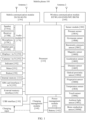
- FIG. 1 is a diagram of a structure of an electronic device 100. It should be understood that the electronic device 100 shown in FIG. 1 is merely an example of an electronic device, and the electronic device 100 may have more or fewer components than those shown in the figure, or may combine two or more components, or may have different component configurations. Various components shown in FIG. 1 may be implemented in hardware including one or more signal processing and/or application-specific integrated circuits, software, or a combination of hardware and software.
- the electronic device 100 may include a processor 110, an external memory interface 120, an internal memory 121, a universal serial bus (universal serial bus, USB) interface 130, a charging management module 140, a power management module 141, a battery 142, an antenna 1, an antenna 2, a mobile communication module 150, a wireless communication module 160, an audio module 170, a speaker 170A, a receiver 170B, a microphone 170C, a headset jack 170D, a sensor module 180, a button 190, a motor 191, an indicator 192, a camera 193, a display 194, a subscriber identity module (subscriber identity module, SIM) card interface 195, and the like.
- a processor 110 an external memory interface 120, an internal memory 121, a universal serial bus (universal serial bus, USB) interface 130, a charging management module 140, a power management module 141, a battery 142, an antenna 1, an antenna 2, a mobile communication module 150, a wireless communication module 160, an audio module 170,
- the sensor module 180 may include a pressure sensor 180A, a gyroscope sensor 180B, a barometric pressure sensor 180C, a magnetic sensor 180D, an acceleration sensor 180E, a distance sensor 180F, an optical proximity sensor 180G, a fingerprint sensor 180H, a temperature sensor 180J, a touch sensor 180K, an ambient light sensor 180L, a bone conduction sensor 180M, and the like.
- the processor 110 may include one or more processing units.
- the processor 110 may include an application processor (application processor, AP), a modem processor, a graphics processing unit (graphics processing unit, GPU), an image signal processor (image signal processor, ISP), a controller, a memory, a video codec, a digital signal processor (digital signal processor, DSP), a baseband processor, a neural-network processing unit (neural-network processing unit, NPU), and/or the like.
- Different processing units may be independent components, or may be integrated into one or more processors.
- the controller may be a nerve center and a command center of the electronic device 100.
- the controller may generate an operation control signal based on instruction operation code and a time sequence signal, to complete control of instruction fetching and instruction execution.
- a memory may be further disposed in the processor 110, and is configured to store instructions and data.
- the memory in the processor 110 is a cache.
- the memory may store instructions or data just used or cyclically used by the processor 110. If the processor 110 needs to use the instructions or the data again, the processor 110 may directly invoke the instructions or the data from the memory. This avoids repeated access, reduces waiting time of the processor 110, and improves system efficiency.
- the processor 110 may include one or more interfaces.
- the interface may include an inter-integrated circuit (inter-integrated circuit, I2C) interface, an inter-integrated circuit sound (inter-integrated circuit sound, I2S) interface, a pulse code modulation (pulse code modulation, PCM) interface, a universal asynchronous receiver/transmitter (universal asynchronous receiver/transmitter, UART) interface, a mobile industry processor interface (mobile industry processor interface, MIPI), a general-purpose input/output (general-purpose input/output, GPIO) interface, a subscriber identity module (subscriber identity module, SIM) interface, a universal serial bus (universal serial bus, USB) interface, and/or the like.
- I2C inter-integrated circuit
- I2S inter-integrated circuit sound
- PCM pulse code modulation
- PCM pulse code modulation
- UART universal asynchronous receiver/transmitter
- MIPI mobile industry processor interface
- GPIO general-purpose input/output
- the USB interface 130 is an interface that conforms to a USB standard specification, and may be specifically a mini USB interface, a micro USB interface, a USB type-C interface, or the like.
- the USB interface 130 may be configured to be connected to a charger to charge the electronic device 100, or may be configured to transmit data between the electronic device 100 and a peripheral device, or may be configured to connect to a headset, to play audio by using the headset.
- the interface may be further configured to connect to another electronic device like an AR device.
- an interface connection relationship between the modules shown in this embodiment of this application is merely an example for description, and does not constitute a limitation on the structure of the electronic device 100.
- the electronic device 100 may alternatively use an interface connection manner different from that in the foregoing embodiment, or use a combination of a plurality of interface connection manners.
- the charging management module 140 is configured to receive a charging input from a charger.
- the charger may be a wireless charger, or may be a wired charger.
- the charging management module 140 may receive a charging input of the wired charger through the USB interface 130.
- the charging management module 140 may receive a wireless charging input through a wireless charging coil of the electronic device 100.
- the charging management module 140 supplies power to the electronic device by using the power management module 141 while charging the battery 142.
- the power management module 141 is configured to connect the battery 142, the charging management module 140, and the processor 110.
- the power management module 141 receives an input from the battery 142 and/or the charging management module 140, and supplies power to the processor 110, the internal memory 121, the external memory, the display 194, the camera 193, the wireless communication module 160, and the like.
- the power management module 141 may further be configured to monitor parameters such as a battery capacity, a battery cycle count, and a battery health status (electric leakage or impedance).
- the power management module 141 may alternatively be disposed in the processor 110.
- the power management module 141 and the charging management module 140 may alternatively be disposed in a same device.
- a wireless communication function of the electronic device 100 may be implemented by using the antenna 1, the antenna 2, the mobile communication module 150, the wireless communication module 160, the modem processor, the baseband processor, and the like.
- the antenna 1 and the antenna 2 are configured to transmit and receive electromagnetic wave signals.
- Each antenna in the electronic device 100 may be configured to cover one or more communication frequency bands. Different antennas may also be multiplexed to improve antenna utilization.
- the antenna 1 may be multiplexed as a diversity antenna of a wireless local area network. In some other embodiments, the antenna may be used in combination with a tuning switch.
- the mobile communication module 150 may provide a wireless communication solution that is applied to the electronic device 100 and that includes 2G, 3G, 4G, 5G, and the like.
- the mobile communication module 150 may include at least one filter, a switch, a power amplifier, a low noise amplifier (low noise amplifier, LNA), and the like.
- the mobile communication module 150 may receive an electromagnetic wave through the antenna 1, perform processing such as filtering or amplification on the received electromagnetic wave, and transmit the electromagnetic wave to the modem processor for demodulation.
- the mobile communication module 150 may further amplify a signal modulated by the modem processor, and convert the signal into the electromagnetic wave for radiation through the antenna 1.
- at least some functional modules in the mobile communication module 150 may be disposed in the processor 110.
- at least some functional modules of the mobile communication module 150 and at least some modules of the processor 110 may be disposed in a same device.
- the modem processor may include a modulator and a demodulator.
- the modulator is configured to modulate a to-be-sent low-frequency baseband signal into a medium-high-frequency signal.
- the demodulator is configured to demodulate the received electromagnetic wave signal into a low-frequency baseband signal. Then, the demodulator transmits the low-frequency baseband signal obtained through demodulation to the baseband processor for processing.
- the low-frequency baseband signal is processed by the baseband processor and then transferred to the application processor.
- the application processor outputs a sound signal by using an audio device (not limited to the speaker 170A, the receiver 170B, and the like), or displays an image or a video by using the display 194.
- the modem processor may be an independent component.
- the modem processor may be independent of the processor 110, and is disposed in a same device as the mobile communication module 150 or another functional module.
- the wireless communication module 160 may provide a wireless communication solution that is applied to the electronic device 100 and that includes a wireless local area network (wireless local area network, WLAN) (for example, a wireless fidelity (wireless fidelity, Wi-Fi) network), Bluetooth (Bluetooth, BT), a global navigation satellite system (global navigation satellite system, GNSS), frequency modulation (frequency modulation, FM), a near field communication (near field communication, NFC) technology, an infrared (infrared, IR) technology, or the like.
- the wireless communication module 160 may be one or more devices integrating at least one communication processor module.
- the wireless communication module 160 receives an electromagnetic wave through the antenna 2, performs frequency modulation and filtering on the electromagnetic wave signal, and sends a processed signal to the processor 110.
- the wireless communication module 160 may further receive a to-be-sent signal from the processor 110, perform frequency modulation and amplification on the signal, and convert the signal into an electromagnetic wave for radiation through the antenna 2.
- the antenna 1 and the mobile communication module 150 in the electronic device 100 are coupled, and the antenna 2 and the wireless communication module 160 in the electronic device 100 are coupled, so that the electronic device 100 can communicate with a network and another device by using a wireless communication technology.
- the electronic device 100 may implement a display function through the GPU, the display 194, the application processor, and the like.
- the GPU is a microprocessor for image processing, and is connected to the display 194 and the application processor.
- the GPU is configured to: perform mathematical and geometric computation, and render an image.
- the processor 110 may include one or more GPUs, which execute program instructions to generate or change display information.
- the display 194 is configured to display an image, a video, or the like.
- the display 194 includes a display panel.
- the display panel may be a liquid crystal display (liquid crystal display, LCD), an organic light-emitting diode (organic light-emitting diode, OLED), an active-matrix organic light-emitting diode (active-matrix organic light-emitting diode, AMOLED), a flexible light-emitting diode (flexible light-emitting diode, FLED), a mini-LED, a micro-LED, a micro-OLED, a quantum dot light-emitting diode (quantum dot light-emitting diode, QLED), or the like.
- the electronic device 100 may include one or N displays 194, where N is a positive integer greater than 1.
- the electronic device 100 may implement a photographing function through the ISP, the camera 193, the video codec, the GPU, the display 194, the application processor, and the like.
- the camera 193 is configured to capture a static image or a video. An optical image of an object is generated through the lens, and is projected onto the photosensitive element.
- the external memory interface 120 may be configured to connect to an external memory card, for example, a micro SD card, to expand a storage capability of the electronic device 100.
- the external memory card communicates with the processor 110 through the external memory interface 120, to implement a data storage function, for example, store files such as music and a video in the external memory card.
- the internal memory 121 may be configured to store computer-executable program code.
- the executable program code includes instructions.
- the processor 110 runs the instructions stored in the internal memory 121, so that the electronic device 100 performs the method in embodiments of this application.
- the internal memory 121 may include a program storage area and a data storage area.
- the program storage area may store an operating system, an application required by at least one function (for example, a voice playing function or an image playing function), and the like.
- the data storage area may store data (such as audio data and an address book) created during use of the electronic device 100, and the like.
- the internal memory 121 may include a high-speed random access memory, or may include a nonvolatile memory, for example, at least one magnetic disk storage device, a flash storage device, or a universal flash storage (universal flash storage, UFS).
- the electronic device 100 may implement audio functions such as music playing and recording by using the audio module 170, the speaker 170A, the receiver 170B, the microphone 170C, the headset jack 170D, the application processor, and the like.
- the audio module 170 is configured to convert digital audio information into an analog audio signal for output, and is also configured to convert an analog audio input into a digital audio signal.
- the audio module 170 may be further configured to encode and decode an audio signal.
- the audio module 170 may be disposed in the processor 110, or some functional modules of the audio module 170 are disposed in the processor 110.
- the button 190 includes a power button, a volume button, and the like.
- the button 190 may be a mechanical button, or may be a touch button.
- the electronic device 100 may receive a button input, and generate a button signal input related to user setting and function control of the electronic device 100.
- the motor 191 may generate a vibration prompt.
- the motor 191 may be configured to provide an incoming call vibration prompt and a touch vibration feedback.
- touch operations performed on different applications may correspond to different vibration feedback effect.
- the motor 191 may also correspond to different vibration feedback effect for touch operations performed on different areas of the display 194.
- Different application scenarios for example, a time reminder, information receiving, an alarm clock, and a game
- Touch vibration feedback effect may be further customized.
- the indicator 192 may be an indicator light, and may be configured to indicate a charging status and a power change, or may be configured to indicate a message, a missed call, a notification, and the like.
- the SIM card interface 195 is configured to connect to a SIM card.
- the SIM card may be inserted into the SIM card interface 195 or removed from the SIM card interface 195, to implement contact with or separation from the electronic device 100.
- the electronic device 100 may support one or N SIM card interfaces, where N is a positive integer greater than 1.
- the SIM card interface 195 may support a nano-SIM card, a micro-SIM card, a SIM card, and the like.
- a plurality of cards may be inserted into a same SIM card interface 195 at the same time.
- the plurality of cards may be of a same type or different types.
- the SIM card interface 195 may be compatible with different types of SIM cards.
- the SIM card interface 195 may be further compatible with an external memory card.
- the electronic device 100 interacts with a network through the SIM card, to implement functions such as conversation and data communication.
- the electronic device 100 uses an eSIM, that is, an embedded SIM card.
- the eSIM card may be embedded into the electronic device 100, and cannot be separated from the electronic device 100.
- a software system of the electronic device 100 may use a layered architecture, an event-driven architecture, a microkernel architecture, a micro service architecture, or a cloud architecture.
- an Android system with a layered architecture is used as an example to describe a software structure of the electronic device 100.
- FIG. 2 is a block diagram of a software structure of the electronic device 100 according to an embodiment of this application.
- a layered architecture of the electronic device 100 software is divided into several layers, and each layer has a clear role and task.
- the layers communicate with each other through a software interface.
- the Android system is divided into four layers: an application layer, an application framework layer, an Android runtime (Android runtime) and system library, and a kernel layer from top to bottom.
- the application layer may include a series of application packages.
- the application packages may include applications such as Camera, Gallery, Calendar, Phone, Maps, Navigation, WLAN, Bluetooth, Music, Videos, and Messages.
- the application framework layer provides an application programming interface (application programming interface, API) and a programming framework for applications at the application layer.
- the application framework layer includes some predefined functions.
- the application framework layer may include a window manager, a content provider, a view system, a phone manager, a resource manager, a notification manager, and the like.
- the window manager is configured to manage a window program.
- the window manager may obtain a size of a display, determine whether there is a status bar, perform screen locking, take a screenshot, and the like.
- the content provider is configured to: store and obtain data, and enable the data to be accessed by an application.
- the data may include a video, an image, audio, calls that are made and answered, browsing history, a bookmark, an address book, and the like.
- the view system includes visual controls like a control for displaying a text and a control for displaying an image.
- the view system may be configured to construct an application.
- a display interface may include one or more views.
- a display interface including a notification icon of Messages may include a text display view and an image display view.
- the phone manager is configured to provide a communication function for the electronic device 100, for example, management of a call status (including answering, declining, or the like).
- the resource manager provides, for the application, various resources like a localized character string, an icon, an image, a layout file, and a video file.
- the notification manager enables the application to display notification information in the status bar, and may be configured to convey a notification type message, which may automatically disappear after a short stay without user interaction.
- the notification manager is configured to notify download completion, give a message notification, and the like.
- the notification manager may alternatively be a notification that appears in a top status bar of a system in a form of graph or scroll bar text, for example, a notification of an application that is run in the background, or may be a notification that appears on a screen in a form of dialog window.
- text information is displayed in the status bar, an alert tone is given, the electronic device vibrates, or an indicator light blinks.
- the system library and runtime layer includes a system library and Android runtime (Android runtime).
- the system library may include a plurality of functional modules, for example, a surface manager (surface manager), a media library (media library), a three-dimensional graphics processing library (for example, OpenGL ES), and a 2D graphics engine (for example, SGL).
- the 3D graphics library is configured to implement three-dimensional graphics drawing, image rendering, composition, layer processing, and the like.
- the Android runtime includes a core library and a virtual machine.
- the Android runtime is responsible for scheduling and management of the Android system.
- the core library includes two parts: a function that needs to be called in Java language and a core library of Android.
- the application layer and the application framework layer run on the virtual machine.
- the virtual machine executes java files of the application layer and the application framework layer as binary files.
- the virtual machine is configured to implement functions such as object lifecycle management, stack management, thread management, security and exception management, and garbage collection.
- the surface manager is configured to manage a display subsystem and provide fusion of 2D and 3D layers for a plurality of applications.
- the media library supports playback and recording of a plurality of commonly used audio and video formats, static image files, and the like.
- the media library may support a plurality of audio and video encoding formats, for example, MPEG-4, H.264, MP3, AAC, AMR, JPG, and PNG.
- the three-dimensional graphics processing library is configured to implement three-dimensional graphics drawing, image rendering, composition, layer processing, and the like.
- the 2D graphics engine is a drawing engine for 2D drawing.
- the kernel layer is a layer between hardware and software.
- the kernel layer includes at least a display driver, a camera driver, an audio driver, and a sensor driver.
- the electronic device 100 may include more or fewer components than those shown in the figure, or some components may be combined, or some components may be split, or different component arrangements may be used.
- a static wallpaper can be generated, but a live wallpaper with animation effect cannot be generated, and consequently, user experience is poor.
- device parameters of different electronic devices are greatly different.
- adaptive display of a same wallpaper on a plurality of devices is not supported.
- this application provides a wallpaper generation method and an electronic device, to resolve the foregoing technical problem, so that a live wallpaper may be generated, and the live wallpaper may be adaptively displayed on a plurality of devices.
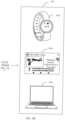
- FIG. 3A and FIG. 3B are a diagram of an example of an application scenario of a screen wallpaper generation method of an electronic device according to this application.
- the application scenario may include a first electronic device (for example, a mobile phone 101) and at least one second electronic device that is communicatively connected to the first electronic device.
- the at least one second electronic device may include a smartwatch 102a, a tablet computer 102b, and a notebook computer 102c.
- a quantity of second electronic devices is not limited in this application, and there may be one or more second electronic devices. A specific quantity may be determined based on an application scenario.
- device types of the first electronic device and the second electronic device may be electronic devices that have a screen display function, such as a mobile phone, a tablet computer, a wearable device, a vehicle-mounted device, a notebook computer, a personal computer (personal computer, PC), a netbook, and a personal digital assistant (personal digital assistant, PDA).
- a specific type of the first electronic device or the second electronic device is not limited in embodiments of this application.
- the first electronic device and any second electronic device may be electronic devices of a same type.
- both the first electronic device and the second electronic device are mobile phones.
- the first electronic device and any second electronic device may be electronic devices of different types, for example, the mobile phone 101, the smartwatch 102a, the tablet computer 102b, and the notebook computer 102c shown in FIG. 3A and FIG. 3B .
- the first electronic device may generate wallpaper description information based on a user input, where the wallpaper description information is a description parameter of a live wallpaper, and the wallpaper description information may be used to generate the live wallpaper.
- the first electronic device may send the wallpaper description information to the second electronic device.
- the first electronic device and the second electronic device may separately generate, with reference to device parameters of the respective devices and based on the wallpaper description information, live wallpapers applicable to the respective devices for display.
- the first electronic device when the first electronic device is configured to generate the wallpaper description information, the first electronic device may be an electronic device with high device performance (for example, a high CPU configuration).
- the first electronic device may be a mobile phone, a tablet computer, a personal computer, or the like.
- the second electronic device when the second electronic device displays the live wallpaper based on wallpaper description information received from another electronic device, the second electronic device may be an electronic device whose device performance is lower than that of the first electronic device.
- the second electronic device may be a head unit (for example, a smart cockpit), a smartwatch, a smart band, a smart screen, or the like.
- the first electronic device and the second electronic device may establish a communication connection to each other in various possible manners, for example, through Bluetooth, a local area network, or by logging in to a same account. This is not limited in this application.
- manners of communication connections between the first electronic device and different second electronic devices may be the same or different. This is not limited in this application.
- the first electronic device may generate a set of wallpaper description information based on a to-be-processed image, and the wallpaper description information may be used to generate a wallpaper with animation effect.
- the first electronic device processes the to-be-processed image to determine a pattern, a color of the pattern, and animation effect of the pattern, and generates the wallpaper description information based on the pattern, the color of the pattern, and the animation effect of the pattern.
- the first electronic device may generate, based on the generated wallpaper description information, a live wallpaper applicable to the device parameter of the first electronic device.
- the first electronic device may further send the generated wallpaper description information to some or all of the second electronic devices that are connected to the first electronic device or that are logged in to by using a same account as the first electronic device, so that some or all of the second electronic devices may generate, based on respective device parameters, for example, at least one device parameter like a device form, device performance, an interaction manner, or application data, live wallpapers applicable to the device parameters of the respective devices.
- respective device parameters for example, at least one device parameter like a device form, device performance, an interaction manner, or application data, live wallpapers applicable to the device parameters of the respective devices.
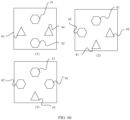
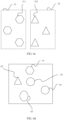
- the combined pattern when the combined pattern is defined by using the array structure, the combined pattern may alternatively include one kind of patterns of different sizes, for example, triangles of different sizes.
- An implementation principle may be combined with any one of Example 6 to Example 8.
- the mobile phone may configure translation animation effect for the combined pattern.
- the mobile phone may configure rotation animation effect for the combined pattern.
- adjustment policies that match the device parameters of the electronic devices may be configured in different electronic devices, and the electronic device may adjust the wallpaper description information based on a corresponding adjustment policy, to obtain the adjusted wallpaper description information that matches the device parameter of the electronic device, and display a corresponding live wallpaper.
- An implementation process of adjusting the wallpaper description information by the mobile phone that generates the wallpaper description information or by the smartwatch or the tablet computer that is configured to display the live wallpaper, to apply to a corresponding device is similar, and details are not described herein.
- a principle of adjusting the wallpaper description information by the device refer to a specific process in this example.
- each device adaptively displays a live wallpaper based on wallpaper description information with reference to a device parameter of the device.
- S203a The mobile phone displays, based on the wallpaper description information, a live wallpaper that matches a device parameter of the mobile phone.
- a combined pattern described in a rectangular array structure is defined in the wallpaper description information, and the combined pattern includes only circular patterns of one size.
- the wallpaper description information includes a pattern parameter like a size and a location of the circular pattern, a color parameter, and an animation effect parameter.
- the mobile phone may adjust the color parameter in the wallpaper description information, for example, reduce brightness and saturation.
- the color parameter corresponding to the combined pattern may be a color in which brightness and saturation are reduced, to improve identifiability of the icon on the mobile phone interface.
- a specific color may be flexibly determined based on an application scenario. This is not limited herein.
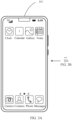
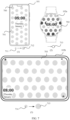
- an initial size of the circular pattern is defined in the wallpaper description information of the combined pattern, which may be less than a size of a circular pattern 711 shown in (1) in FIG. 7 .
- the mobile phone 101 may adjust the wallpaper description information based on a screen size, a display aspect ratio, and a screen shape (which is a vertical rectangle herein) in a device form.
- a display manner of an array structure of the combined pattern is adjusted to vertical display, so that the wallpaper 701 conforms to a device form of the home screen 700 of the mobile phone 101.
- the mobile phone 101 may zoom in, based on the screen size, the initial size of the circular pattern to the size of the circular pattern 711 shown in (1) in FIG. 7 , so that when the mobile phone 101 displays the live wallpaper, a size of each circular pattern in the wallpaper on the home screen 700 of the mobile phone 101 may be gradually zoomed in from the initial size (which is a size obtained after zooming in) of the pattern 711 shown in (1) in FIG. 7 to a size of a target zoom in/out multiple, for example, a size of the pattern 712, to display the wallpaper 701 shown in (1) in FIG. 7 .
- the array structure including the circular patterns remains unchanged, and is still a rectangular array. In this way, in a scenario in which a screen size is large, a pattern in the wallpaper displayed in this application may change from a large initial size, so that a pattern size of the wallpaper can apply to the screen size.
- the mobile phone 101 may vertically display, by using a color with low brightness and saturation, circular patterns in a rectangular array layout, and maintain the array layout in a process of displaying the live wallpaper.
- Each circular pattern may be zoomed in from a small size to a large size at different rhythms for display.
- the smartwatch may perform S203b.
- an initial size of the circular pattern in the wallpaper description information may be set to a small size, for example, zero, based on the screen size, so that when the smartwatch 102a displays the live wallpaper, an initial image of the watch face of the smartwatch 102a is empty, and then a size of each circular pattern is gradually zoomed in to a size of a target zoom in/out multiple, for example, a size shown in a pattern 713, to display a wallpaper 702 shown in (2) in FIG. 7 .
- an array structure including circular patterns remains unchanged, and is still a circular array.
- initial sizes of some or all of patterns in the wallpaper may be adjusted to (for example, randomly adjusted) smaller initial sizes, so that sizes of the patterns are more suitable for the small screen device.
- adjustment of an initial size of the pattern does not change the array structure.
- initial sizes of all patterns in the combined pattern may be adjusted, or initial sizes of patterns in an entire row (one row or a plurality of rows) in (2) in FIG. 7 may be adjusted.
- the small screen device may adjust initial sizes of one or more of the separate patterns to smaller sizes. This is not limited herein. In this way, in the live wallpaper displayed on the watch face of the smartwatch 102a, circular patterns combined in an array structure may be displayed from a size that is not zoomed in to a size of the target zoom in/out multiple.
- different triggering occasions of animation effect sequences may be set for patterns in the combined pattern, or different animation effect sequences may be set for different patterns in the combined pattern.
- the combined pattern includes only one type of patterns of one size, the animation effect of the patterns may be changed at different rhythms.
- colors of circular patterns in different rows in the wallpaper 702 are different.
- different grayscales are used for illustration.
- the color parameter herein includes only three colors.
- color layouts of circular patterns in different rows are not limited to color layouts in the wallpaper 702, and may alternatively be another color layout. This is not limited herein.
- the smartwatch 102a may display, by using a bright color, the circular patterns in the rectangular array layout.
- a screen shape of the smartwatch 102a is a circle, an array shape of the rectangular array does not need to be adjusted to a circle.
- the smartwatch 102a may draw the pattern based on the screen shape, to draw the wallpaper 702 of the circular watch face shown in (2) in FIG. 7 .
- a shape of the circular watch face may be maintained, and each circular pattern may be adjusted from a small size to a target size at different rhythms for display.
- the tablet computer may perform S203c.
- the tablet computer displays, based on the wallpaper description information, a live wallpaper that matches a device parameter of the tablet computer.
- the tablet computer 102b may zoom in, based on the screen size (belonging to a large screen device) in the device form and based on the screen size, an initial size of a circular pattern to a size of a circular pattern 714 shown in (3) in FIG. 7 , so that when the tablet computer 102b displays a live wallpaper, a size of each circular pattern in the wallpaper on the screen of the tablet computer 102b may be gradually zoomed in from an initial size (which is a size obtained after zooming in) of the pattern 714 shown in (3) in FIG. 7 to a size of a target zoom in/out multiple, for example, a size of the pattern 715, to display a wallpaper 703 shown in (3) in FIG. 7 .
- an initial size which is a size obtained after zooming in
- a target zoom in/out multiple for example, a size of the pattern 715
- an array structure including the circular patterns remains unchanged, and is still a rectangular array.
- a pattern in the wallpaper displayed in this application may change from a large initial size, so that a pattern size of the wallpaper can apply to the screen size.
- different triggering occasions of animation effect sequences may be set for patterns in the combined pattern, or different animation effect sequences may be set for different patterns in the combined pattern.
- the combined pattern includes only one type of patterns of one size, the animation effect of the patterns may be changed at different rhythms.
- initial sizes of some or all of patterns in the wallpaper may be adjusted to (for example, randomly adjusted) larger initial sizes, so that sizes of the patterns are more suitable for the large screen device.
- the pattern is a combined pattern defined by using an array structure
- adjustment of an initial size of the pattern does not change the array structure.
- initial sizes of all patterns in the combined pattern may be adjusted, or initial sizes of patterns in an entire row (one row or a plurality of rows) in (3) in FIG. 7 may be adjusted.
- the large screen device may adjust initial sizes of one or more of the separate patterns to larger sizes. This is not limited herein.
- the tablet computer 102c in FIG. 3A and FIG. 3B also belongs to a large screen device, and a principle of an adjustment policy of the tablet computer 102c for the wallpaper description information may be similar to that of the adjustment policy of the tablet computer 102b, and may be specifically different based on a requirement.
- an adjustment amount of a size ratio of the zooming in/out animation effect is a relative value relative to an initial size of a pattern, for example, a zooming in/out multiple.
- initial sizes of circular patterns corresponding to the devices are different, so that although the devices zoom in the circular patterns to the size of the target zoom in/out multiple based on a same animation effect parameter, sizes of the patterns that are zoomed in by the target zoom in/out multiple are different.
- the size of the pattern 712, the size of the pattern 713, and the size of the pattern 715 are display effect of sizes of the circular patterns in wallpapers currently displayed on respective devices.
- the mobile phone 101 in (1) in FIG. 7 may alternatively be a foldable mobile phone.
- the mobile phone 101 in (1) in FIG. 7 may be in a folded state shown in FIG. 8 .
- the mobile phone 101 may include a home screen 700 and a back surface 706 opposite to the home screen 700, the back surface 706 may include a camera module 704 and a circular display 705.
- the mobile phone 101 may display, on the display 705, a live wallpaper obtained after adaptation display is performed on the generated wallpaper description information.
- the display 705 shown in FIG. 8 shows an example of a frame of static image of the live wallpaper, for example, a wallpaper 707.
- the display 705 shown in FIG. 8 has a small size and a circular shape.
- the mobile phone 101 may use a specific manner of adjusting the wallpaper description information by the smartwatch 102a described in the implementation of (2) in FIG. 7 , to implement display of the live wallpaper on the circular display 705.
- a specific principle and process refer to related descriptions in (2) in FIG. 7 . Details are not described herein.
- the electronic device may flexibly adjust the wallpaper description information based on a parameter (for example, a screen size, a screen shape, or a display aspect ratio) of a display of a to-be-displayed screen wallpaper, to generate a live wallpaper that can be adaptively displayed on the display.
- a parameter for example, a screen size, a screen shape, or a display aspect ratio
- FIG. 7 and FIG. 8 are merely examples in which the electronic device adjusts the wallpaper description information.
- the electronic device may further adjust another description parameter of the wallpaper description information with reference to a device parameter, for example, adjust an animation effect type.
- the wallpaper description information may include a plurality of animation effect types.
- live wallpapers displayed on different electronic devices or different displays of a same electronic device may separately correspond to different animation effect types.
- an animation effect type of the live wallpaper displayed on the home screen 700 of the mobile phone 101 shown in (1) in FIG. 7 is zooming in/out animation effect
- an animation effect type of the live watch face of the smartwatch 102a shown in (2) in FIG. 7 is rotation animation effect
- an animation effect type of the live wallpaper of the tablet computer 102b shown in (3) in FIG. 7 may be translation animation effect
- an animation effect type of the live wallpaper displayed on the display 705 of the mobile phone 101 shown in FIG. 8 may be color changing animation effect.
- the electronic device may adjust, based on device performance, a description parameter that is in the wallpaper description information and that is related to the device performance, so that a live wallpaper generated based on the adjusted wallpaper description information can match the device performance.
- the electronic device may disable some animation effect in the wallpaper description information, add some animation effect, or adjust animation effect parameters of some animation effect.
- the electronic device may properly select, based on an element category (a primary element, a secondary element, or a background element) to which a pattern in the wallpaper description information belongs and the device performance, a pattern of a corresponding element category for drawing and displaying.
- the electronic device may disable blurring animation effect in the wallpaper description information, to ensure that when the device with low computing power plays a live wallpaper, a display process of the animation effect is smooth.
- the low-performance smart band may choose to draw and display only the primary element in the wallpaper description information based on a description parameter of the primary element, and cancel display of the secondary element and the background element.
- the electronic device may adjust, based on the device form, a description parameter (for example, a size of a pattern and a color parameter of the pattern) that is in the wallpaper description information and that is related to the device form, so that a live wallpaper generated based on the adjusted wallpaper description information can match the device form.
- a description parameter for example, a size of a pattern and a color parameter of the pattern
- the electronic device may adjust, based on an interaction manner of the device, a description parameter that is in the wallpaper description information and that is related to the interaction manner of the device.
- a description parameter that is in the wallpaper description information and that is related to the interaction manner of the device.
- which candidate parameter or candidate parameters of a pattern changed by the animation effect is/are related to the interaction manner of the device may be defined in the animation effect parameter.
- a specific interaction manner related to the candidate parameter is not specified.
- the electronic device may associate (for example, bind) the candidate parameter changed by the animation effect with a specific interaction manner, so that a parameter value of the candidate parameter may change with triggering of the interaction manner of the device.
- the mobile phone 101 in (1) in FIG. 7 may associate a pattern size changed by the zooming in/out animation effect of the live wallpaper with an unlocking operation of the home screen 700 of the mobile phone 101.
- the mobile phone 101 may play the zooming in/out animation effect corresponding to the wallpaper 701 on the home screen 700 in response to the user operation.
- a specific change process of an animation displayed by the animation effect refer to the description in (1) in FIG. 7 . Details are not described herein.
- the mobile phone 101 is a foldable mobile phone.
- the mobile phone 101 may associate a pattern size changed by the zooming in/out animation effect of the live wallpaper with a screen folding operation of the mobile phone 101.
- the mobile phone 101 may play, in response to the user operation, the zooming in/out animation effect corresponding to the wallpaper 707 on the display 705 shown in FIG. 8 .
- the zooming in/out animation effect corresponding to the wallpaper 707 on the display 705 shown in FIG. 8 .
- the smartwatch 102a in (2) in FIG. 7 may associate a pattern size changed by the zooming in/out animation effect of the live wallpaper with a rotation operation of a watch crown of the smartwatch 102a.
- the smartwatch 102a plays the zooming in/out animation effect corresponding to the wallpaper 702 on the screen of the smartwatch 102a in response to the user operation.
- a specific change process of the animation displayed by the animation effect refer to the description in (2) in FIG. 7 . Details are not described herein.
- the smartwatch 102a may associate the pattern size and a pattern angle that are respectively changed by the zooming in/out animation effect and the rotation animation effect of the live wallpaper with the rotation operation of the watch crown of the smartwatch 102a.
- the smartwatch 102a plays the zooming in/out animation effect and zooming in animation effect that correspond to the wallpaper on the screen of the smartwatch 102a in response to the user operation, to present the kaleidoscope animation effect shown in FIG. 6g , and present blooming effect on the watch face of the watch.
- FIG. 6g For a specific change process of an animation displayed by the animation effect, refer to the foregoing descriptions of FIG. 6e , FIG. 6f, and FIG. 6g . Details are not described herein.
- the electronic device may adjust, based on application data of the device, a description parameter that is in the wallpaper description information and that is related to the application data of the device.
- a description parameter that is in the wallpaper description information and that is related to the application data of the device.
- which candidate parameter or candidate parameters of a pattern changed by the animation effect is/are related to the application data of the device may be defined in the animation effect parameter.
- a specific type of application data is not specified for the application data related to the candidate parameter.
- the electronic device may associate (for example, bind) the candidate parameter changed by the animation effect with specific application data, so that a parameter value of the candidate parameter may change with a change of the application data of the device, and the animation effect is related to the change of the application data.
- the mobile phone 101 shown in (1) in FIG. 7 may associate a candidate parameter (for example, a color parameter) that is in the wallpaper description information and that may be associated with application data with specified application data (for example, a quantity of movement steps herein), and add an animation effect sequence related to the quantity of movement steps to the animation effect sequence in the wallpaper description information.
- a candidate parameter for example, a color parameter
- specified application data for example, a quantity of movement steps herein
- an animation effect sequence related to the quantity of movement steps may describe a change degree of the color parameter of the pattern in cases of different quantities of movement steps.
- the quantity of movement steps may be processed after normalization.
- the animation effect sequence may include that when the quantity of steps is in an interval of [0, 0.3), a corresponding color value is 1; when the quantity of steps is in an interval of [0.3, 0.5), the corresponding color value is 2; and when the quantity of steps is in an interval of [0.5, 1], the corresponding color value is 3.
- the interval corresponding to the quantity of movement steps changes, a color of the circular pattern in the live wallpaper of the mobile phone 101 may change.
- the electronic device may adjust the initial sizes of some or all of patterns in the wallpaper description parameter not only based on the device form, for example, based on the screen size and the screen shape of the device, so that when a same set of wallpaper description information is applied to different electronic devices to display live wallpapers, live wallpapers finally displayed are not completely the same.
- the electronic device may also adjust a parameter value of a description parameter in the wallpaper description information within a small range, so that even if the user uses a same photo to generate a live wallpaper on the mobile phone each time, the live wallpaper generated each time is different. In this way, richness of the live wallpaper displayed by the electronic device does not completely depend on richness of the to-be-processed image, so that diversity of the live wallpaper can be improved.
- the electronic device may fill a color of a corresponding pattern in the wallpaper description information based on the color parameter, and display a dynamic change of the pattern based on the animation effect parameter.
- the live wallpaper in this application is superimposed effect in which each pattern (which may be a single pattern or a combined pattern) or each element (a primary element, a secondary element, or a background element) in the wallpaper description information has a motion change based on an animation effect corresponding to the pattern or the element.
- a pattern of a corresponding color is displayed, and some or all of patterns may change according to a motion rule defined in a corresponding animation effect parameter, to obtain complex display effect of the live wallpaper.
- the electronic devices may display, with reference to respective device parameters, live wallpapers that match the respective device parameters.
- the mobile phone may use a photo taken by the mobile phone, including but not limited to a wearing photo, a landscape photo, and the like, and identify a pattern type in the photo by using a pre-trained model, for example, identify a type (a line, a grid, or the like) of a pattern on clothes in the wearing photo, or identify a type of an object (for example, a mountain or a tree) in the landscape photo.
- a pre-trained model for example, identify a type (a line, a grid, or the like) of a pattern on clothes in the wearing photo, or identify a type of an object (for example, a mountain or a tree) in the landscape photo.
- the mobile phone may match, based on a predefined matching relationship between a pattern type and an image, the pattern type identified from the photo with an image in Gallery, to obtain one or more images (also referred to as one or more "image templates") that match the pattern type in the photo.
- the matched image may include a complex pattern, and a pattern in the image may be used as a combined pattern (a scalable vector pattern herein) in the wallpaper description information.
- the matched image may be considered as a unique pattern in the wallpaper description information.
- the image already has information about a shape, a size, and a location of the pattern, and the information about the location and the size of the pattern does not need to be separately defined for the image.
- the mobile phone may further define at least one initial transformation operation of initial zooming in/out, translation, and rotation for the image, to change the pattern included in the image or information such as the size and the location of the pattern.
- the mobile phone may generate a set of wallpaper description information for each matched image.
- a plurality of sets of wallpaper description information may be generated, and the user selects which set of wallpaper description information is used as a data basis of the live wallpaper.
- the mobile phone only needs to define a color and animation effect for the image, to generate a set of corresponding wallpaper description information.
- the mobile phone may further extract color information from the photo taken by the user (referred to as an "original image” for short).
- the mobile phone may perform a series of processing operations on the extracted color information to obtain a color list.
- the processing operation includes but is not limited to: operations such as removing an unsuitable color, combining similar colors, improving contrast and brightness of a color, selecting a plurality of candidate colors based on a quantity of colors in the original image, and generating an adjacent color, a contrast color, and a gradient color by using the candidate colors, so that the mobile phone obtains the color list.
- the mobile phone may alternatively use a color rule specific to the image template to assign coloring objects to colors in the color list. For example, if the image template is a flower pattern, after the mobile phone sends the wallpaper description information to the smartwatch, when generating the live wallpaper, the smartwatch may select a warm color and a cold color from the color list to respectively fill a petal and a leaf of the flower pattern.
- the mobile phone may use a color list processed based on the foregoing color processing process as color information of the image template.
- the mobile phone may further define an animation effect parameter for the pattern template. In this way, wallpaper description information of the image template is generated.
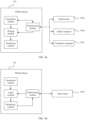
- the mobile phone may further generate a sequence frame of the live wallpaper or an image of the static wallpaper by using an agent module in the mobile phone, to send the sequence frame or the image to the smartwatch as the watch face for display.
Landscapes
- Engineering & Computer Science (AREA)
- Theoretical Computer Science (AREA)
- Human Computer Interaction (AREA)
- Physics & Mathematics (AREA)
- General Physics & Mathematics (AREA)
- Computer Networks & Wireless Communication (AREA)
- Software Systems (AREA)
- General Engineering & Computer Science (AREA)
- Signal Processing (AREA)
- User Interface Of Digital Computer (AREA)
Applications Claiming Priority (2)
| Application Number | Priority Date | Filing Date | Title |
|---|---|---|---|
| CN202211197258.6A CN117793241A (zh) | 2022-09-29 | 2022-09-29 | 屏幕壁纸的显示方法及电子设备 |
| PCT/CN2023/117297 WO2024066990A1 (zh) | 2022-09-29 | 2023-09-06 | 屏幕壁纸的显示方法及电子设备 |
Publications (2)
| Publication Number | Publication Date |
|---|---|
| EP4531385A1 true EP4531385A1 (de) | 2025-04-02 |
| EP4531385A4 EP4531385A4 (de) | 2025-10-15 |
Family
ID=90398661
Family Applications (1)
| Application Number | Title | Priority Date | Filing Date |
|---|---|---|---|
| EP23870229.4A Pending EP4531385A4 (de) | 2022-09-29 | 2023-09-06 | Verfahren zur anzeige einer bildschirmhintergrundbeleuchtung und elektronische vorrichtung |
Country Status (4)
| Country | Link |
|---|---|
| US (1) | US20250225710A1 (de) |
| EP (1) | EP4531385A4 (de) |
| CN (1) | CN117793241A (de) |
| WO (1) | WO2024066990A1 (de) |
Families Citing this family (2)
| Publication number | Priority date | Publication date | Assignee | Title |
|---|---|---|---|---|
| TWI902226B (zh) * | 2024-04-16 | 2025-10-21 | 華碩電腦股份有限公司 | 電子裝置與其動態桌布顯示方法 |
| WO2025263728A1 (ko) * | 2024-06-21 | 2025-12-26 | 삼성전자주식회사 | 대상 이미지로부터 생성된 변환 이미지를 표시하는 방법 및 장치 |
Family Cites Families (8)
| Publication number | Priority date | Publication date | Assignee | Title |
|---|---|---|---|---|
| US8786517B2 (en) * | 2012-02-21 | 2014-07-22 | Blackberry Limited | System and method for displaying a user interface across multiple electronic devices |
| US9961293B2 (en) * | 2014-12-05 | 2018-05-01 | Lg Electronics Inc. | Method for providing interface using mobile device and wearable device |
| AU2015376591A1 (en) * | 2015-01-06 | 2017-08-24 | Huawei Technologies Co., Ltd. | Desktop sharing method and mobile terminal |
| CN105867921A (zh) * | 2016-03-29 | 2016-08-17 | 乐视控股(北京)有限公司 | 一种壁纸的共享使用方法和终端 |
| WO2018124689A1 (en) * | 2016-12-29 | 2018-07-05 | Samsung Electronics Co., Ltd. | Managing display of content on one or more secondary device by primary device |
| CN111258464A (zh) * | 2018-11-30 | 2020-06-09 | 上海擎感智能科技有限公司 | 屏幕壁纸切换方法及系统 |
| CN109729423A (zh) * | 2018-12-27 | 2019-05-07 | 麒麟合盛网络技术股份有限公司 | 一种桌面壁纸设置方法及装置 |
| CN114222021B (zh) * | 2020-09-03 | 2023-01-17 | 荣耀终端有限公司 | 灭屏显示方法和电子设备、存储介质 |
-
2022
- 2022-09-29 CN CN202211197258.6A patent/CN117793241A/zh active Pending
-
2023
- 2023-09-06 EP EP23870229.4A patent/EP4531385A4/de active Pending
- 2023-09-06 WO PCT/CN2023/117297 patent/WO2024066990A1/zh not_active Ceased
-
2025
- 2025-03-12 US US19/077,108 patent/US20250225710A1/en active Pending
Also Published As
| Publication number | Publication date |
|---|---|
| CN117793241A (zh) | 2024-03-29 |
| WO2024066990A1 (zh) | 2024-04-04 |
| EP4531385A4 (de) | 2025-10-15 |
| US20250225710A1 (en) | 2025-07-10 |
Similar Documents
| Publication | Publication Date | Title |
|---|---|---|
| CN115658191B (zh) | 一种生成主题壁纸的方法及电子设备 | |
| CN109496423B (zh) | 一种拍摄场景下的图像显示方法及电子设备 | |
| CN111738122B (zh) | 图像处理的方法及相关装置 | |
| US20230419570A1 (en) | Image Processing Method and Electronic Device | |
| CN114115619B (zh) | 一种应用程序界面显示的方法及电子设备 | |
| CN111768416B (zh) | 照片裁剪方法及装置 | |
| US12020472B2 (en) | Image processing method and image processing apparatus | |
| US20250225710A1 (en) | Screen wallpaper display method and electronic device | |
| WO2020093988A1 (zh) | 一种图像处理方法及电子设备 | |
| EP4109879A1 (de) | Verfahren und vorrichtung zur bildfarbretention | |
| CN115686700A (zh) | 渲染方法及电子设备 | |
| US20250123861A1 (en) | Live wallpaper display method and apparatus, and electronic device | |
| CN116700655B (zh) | 一种界面显示方法及电子设备 | |
| WO2025209372A1 (zh) | 壁纸显示方法和电子设备 | |
| EP4116811A1 (de) | Anzeigeverfahren und elektronische vorrichtung | |
| CN117724574A (zh) | 一种显示方法、电子设备和计算机可读存储介质 | |
| CN118885239A (zh) | 一种显示方法及设备 | |
| CN113986406A (zh) | 生成涂鸦图案的方法、装置、电子设备及存储介质 | |
| CN118103809A (zh) | 页面显示方法、电子设备及计算机可读存储介质 | |
| CN114793283A (zh) | 图像编码方法、图像解码方法、终端设备及可读存储介质 | |
| CN117707364A (zh) | 窗口显示方法、设备及存储介质 | |
| CN117152022B (zh) | 图像处理方法及电子设备 | |
| US20240056677A1 (en) | Co-photographing method and electronic device | |
| EP4726520A1 (de) | Tapetenverarbeitungsverfahren und elektronische vorrichtung | |
| CN120471816A (zh) | 图像显示方法和电子设备 |
Legal Events
| Date | Code | Title | Description |
|---|---|---|---|
| STAA | Information on the status of an ep patent application or granted ep patent |
Free format text: STATUS: THE INTERNATIONAL PUBLICATION HAS BEEN MADE |
|
| PUAI | Public reference made under article 153(3) epc to a published international application that has entered the european phase |
Free format text: ORIGINAL CODE: 0009012 |
|
| STAA | Information on the status of an ep patent application or granted ep patent |
Free format text: STATUS: REQUEST FOR EXAMINATION WAS MADE |
|
| 17P | Request for examination filed |
Effective date: 20241225 |
|
| AK | Designated contracting states |
Kind code of ref document: A1 Designated state(s): AL AT BE BG CH CY CZ DE DK EE ES FI FR GB GR HR HU IE IS IT LI LT LU LV MC ME MK MT NL NO PL PT RO RS SE SI SK SM TR |
|
| A4 | Supplementary search report drawn up and despatched |
Effective date: 20250915 |
|
| RIC1 | Information provided on ipc code assigned before grant |
Ipc: H04M 1/72427 20210101AFI20250909BHEP Ipc: G06F 3/14 20060101ALI20250909BHEP |
|
| DAV | Request for validation of the european patent (deleted) | ||
| DAX | Request for extension of the european patent (deleted) |